










WEDNESDAY, JULY























WEDNESDAY, JULY

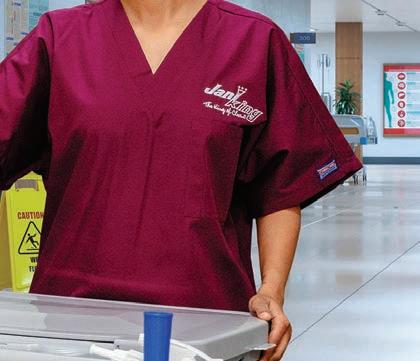
In healthcare environments, environmental services go far beyond cleaning, they are a critical component of patient safety. Jani-King’s EVS programs are built around infection prevention protocols, proper chemical usage, and rigorous training standards designed to reduce healthcare-associated infections (HAIs).





BY SAM OLESON AIRVENTURE TODAY STAFF



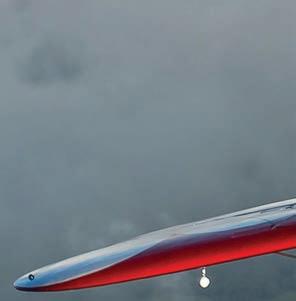
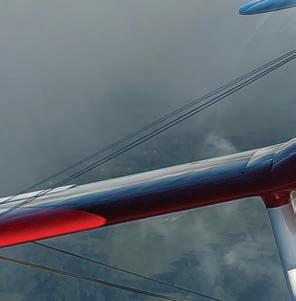
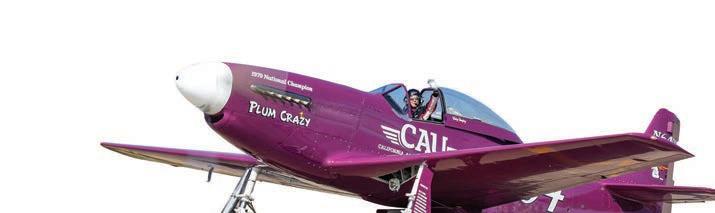
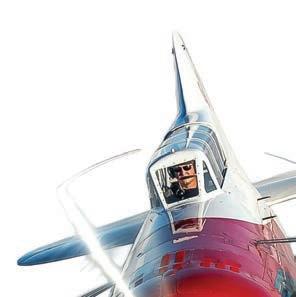
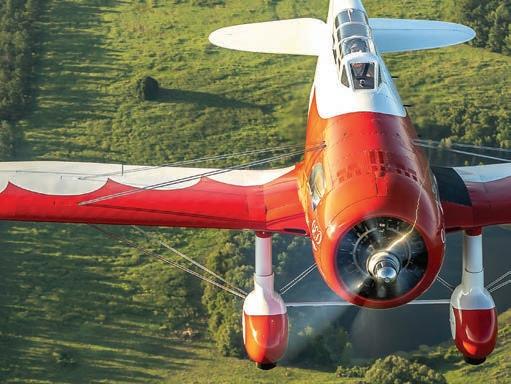
NEARLY A QUARTER of a century ago, the late Jim Moss set out to complete a massive project, literally and figuratively. He was going to build one of the most iconic air racers ever designed — the Gee Bee R-6H QED.

Originally built in 1934 by Granville Brothers Aircraft of Springfield, Massachusetts, the R-6 was designed for high-altitude and long-distance flight (at least for the 1930s). Powered by a 700-hp Pratt & Whitney Hornet engine, the QED was purchased by Floyd B. Odlum for his future wife, Jackie Cochran, and shipped to England to compete in the the 1934 London to Melbourne, Australia, race. Unfortunately, the airplane experienced mechanical problems and was unable to finish the race, and Cochran ended up selling the airplane.
and rudder surface areas, as well as spreading the landing gear two feet further apart and installing a 1,400-hp Wright R-1820 engine. Sadly, Jim died two weeks before his airplane first flew in 2014. The Super QED visited EAA AirVenture Oshkosh in 2014 and was placed on display at Paine Field, Washington, later that year.
Trading hands a couple of times, the QED eventually ended up in Mexico with Francisco Sarabia, who competed in a Mexico City to New York City race in 1939, winning in 10 hours and 43 minutes. Tragically, on his return trip to Mexico, Sarabia decided to make a stop in Washington, D.C., and experienced an engine failure that forced him to crash land in the Potomac River, an incident that he did not survive. The airplane was recovered from the river and sent to Sarabia’s hometown in Mexico, and is currently on display at Museo Francisco Sarabia in Ciudad Lerdo, Durango.
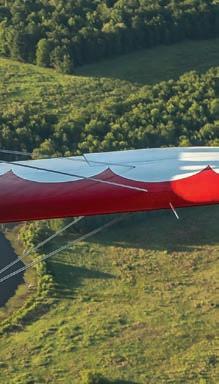
In 2002, Jim began his build of the Gee Bee R-6H “Super QED II,” which took him and his volunteer team until 2013 to finish. Jim made some modifications to the original design along the way, increasing the wing, vertical stabilizer,
In 2023, the Mid America Flight Museum, located in Mount Pleasant, Texas, purchased the airplane and transported it to its restoration shop at Grimes Field in Urbana, Ohio. Led by Mid America Flight Museum Restoration Manager Doug Smith, EAA 540107, a team of museum sta and dedicated volunteers worked to return the QED to airworthy status.
“The airplane had to leave the premises [at Paine Field], and so the wings were taken off of it and it moved to Arlington, Washington, and was put in a gentleman’s T-hangar,” Doug explained during a Vintage in Review presentation on Monday. “And I think at this point, the [Moss] family was ready to part with the airplane. And Kelly [Mahon] and I both worked for Mid America Flight Museum. The price finally got to the point where
PUBLISHER: Jack J. Pelton, EAA CEO & Chairman of the Board
VICE PRESIDENT OF PUBLICATIONS, MEMBERSHIP SERVICES, RETAIL, SAFETY AND SECURITY, AND EDITOR IN
CHIEF: Jim Busha
MANAGING EDITOR: Hal Bryan
SENIOR EDITOR: Sam Oleson
EDITORIAL STAFF: Robbie Culver, Emme Hornung, Jim Roberts, Angela Satterlee, Barbara A. Schmitz
SENIOR COPY EDITOR: Colleen Walsh
COPY EDITOR: Jennifer Knaack
the gentleman we worked for, Scott Glover, decided he wanted to purchase the airplane. And so he called me one day out of the blue and said, ‘Hey, Doug, I just bought a new airplane.’ I said, ‘Well, that’s fantastic. What’d we get?’ He said, ‘It’s big, red, and white.’ I went, ‘You got the QED, didn’t you?’”
“Once we got into the airplane a little bit, we found some things that we wanted to modify.” — Doug Smith
Doug mentioned that there were a few issues with the airplane he knew would need to be addressed, notably the canopy, landing gear, and balancing the ailerons.
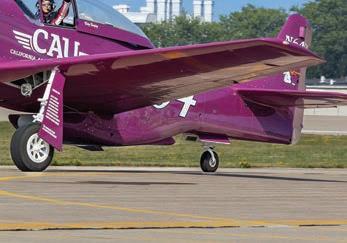
“Once we got into the airplane a little bit, we found some things that we wanted to modify,” Doug explained. “So we made a whole new canopy system for the Gee Bee. The landing gear was quite extensive. So there’s a spreader bar between the landing gear down here. And many, many people ask, especially
PRINT PRODUCTION TEAM LEAD/GRAPHIC DESIGNER: Marie Rayome-Gill
GRAPHIC DESIGNERS: Amber Fabian, Brandon Wheeler
SOCIAL MEDIA MANAGER: Holly Chilsen
SOCIAL MEDIA COORDINATOR: Michael Sullivan
SOCIAL MEDIA INTERN: Madeline Wooten


if you have opinions on the internet, and there’s lots of those, ‘Why in the world did you put that there?’ Well, if you … look at the pictures of the original R-6 down in Mexico, it has the spreader bar between the landing gear. It’s the only Gee Bee that has one of those. And the size of the airplane and the way the landing gear articulates, it needs that spreader bar.”


The QED made its first postrestoration flight on May 12, 2026, with Mid America Flight Museum Director of Operations Kelly Mahon, EAA 571419, at the controls.
with
“Let’s first just say it’s a very nice-flying airplane,” Kelly said. “We had a lot of concern. It’s a Gee Bee. There’s nothing good we can say about [original] Gee Bees for stability or anything like that. They’re always beautiful. We had to look at this one a little bit di erent. The history was di erent. Multiple pilots had flown the airplane successfully, and the airplane never had any structural failures or problems. We felt like we were starting with something good.
“I also have a lot of faith in Doug. We’ve done a bunch of first flights together. And he takes airplanes that are nice and takes them to fantastic. So let’s start with a good airplane. Let’s have Doug go through it. I think that we’re going to have a good airplane. We always had questions. We were always concerned. But it really didn’t take three minutes after takeo to realize we had an airplane. And I think it was five minutes into the flight and I made a high-speed pass down the taxiway.”
Kelly and the QED arrived at EAA AirVenture Oshkosh 2026 on Sunday evening. For those interested in getting an up-close look at this art deco masterpiece, the airplane is parked near the Vintage Red Barn just south of Boeing Plaza.
SENIOR SALES AND ADVERTISING EXECUTIVE: Sue Anderson
OSHKOSH MOMENTS

BY EMME HORNUNG AIRVENTURE TODAY STAFF
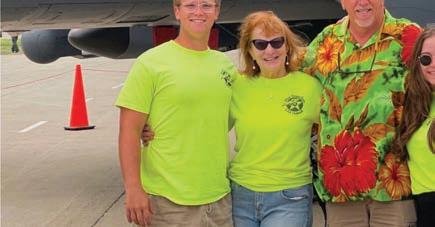
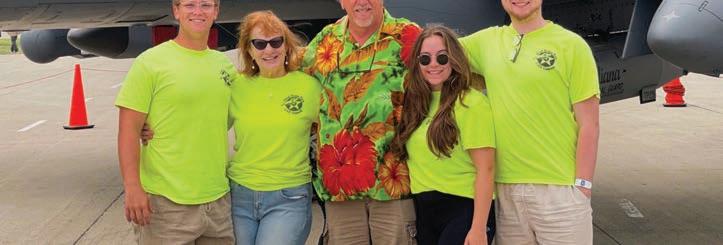
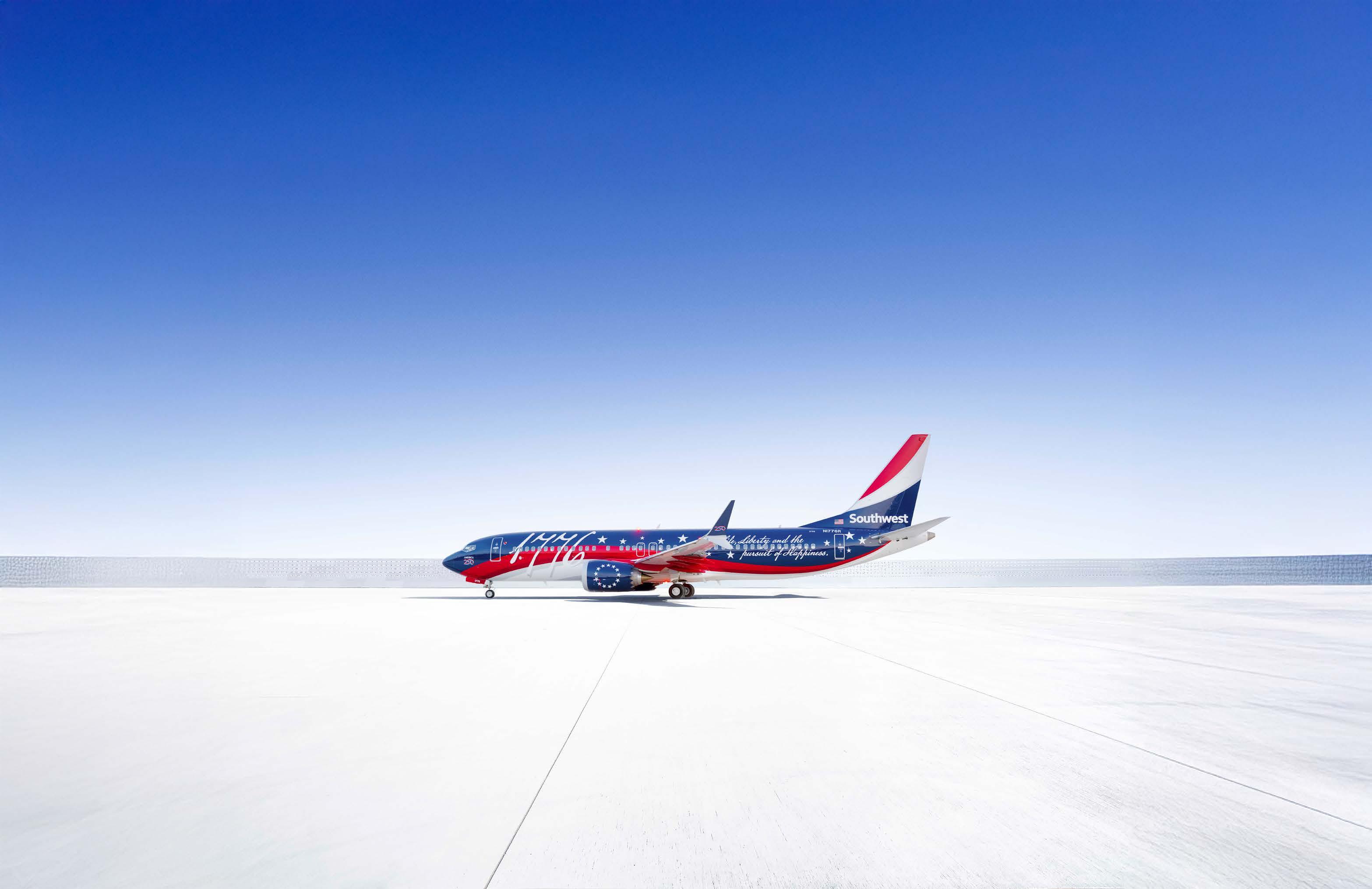
BOEING PLAZA, THE central display area at AirVenture, is home to some of the biggest and most iconic aircraft featured each year. With featured aircraft rotating on a nearly daily basis, coordinating it all is no small feat. Part of the team that makes it happen is Vice Chairman James “JJ” Hechtl, EAA Lifetime 854852, who has been recognized as one of EAA’s 2026 Volunteers of the Year.
JJ knew at just 10 years old that he wanted to be a pilot. After high school, he followed the military route and was selected to go to the Air Force Academy, graduating in the early 1980s. He then completed pilot training in Columbus, Mississippi, before moving to the Strategic Air Command headquarters in Omaha, Nebraska, flying the C-21. He then moved to Travis Air Force Base in California to fly the massive C-5.
JJ retired from the Air Force after 30 years of active and reserve duty, and this
past June, he retired as a captain from Southwest Airlines after 33 years.
In 1992, while serving in the Air Force Reserve, he was assigned to bring the C-5 to a “little air show in Wisconsin,” bringing with him 30 Tuskegee Airmen and their wives to what he quickly realized was the EAA Oshkosh fly-in.
The folks running the plaza at the time ended up inviting JJ to come back as a volunteer the following year, and he’s been part of the team ever since. Today, he helps lead a group of more than 100 volunteers with Chairman Bob Hillary and Vice Chairman Mike Williams.
“I have the pilot brain. Bob has the mechanic brain as a mechanic for American Airlines. And Mike, he has the people brain,” JJ said. “We’ve kind of purposefully built up our volunteer group with a bunch of aviation professionals, and then young people that are interested in aviation careers.”
Though JJ starts coordinating well before AirVenture begins, the group starts placing aircraft on the plaza just days


prior to the convention, in addition to remote sites east of the airport for demo and jet teams, and near the Wittman terminal for the fifth-generation military fighters.
“We’re all over the field. We work closely with air operations and airport management, the FBO, tower, taking all sorts of airplanes, all sizes, on and o the field,” he said. “Every airplane is unique and has its own unique operating characteristics. Towing, steering, weights, capabilities. So, it’s a big team e ort to make this all work in concert with minimum impact on visitors, aircraft arrivals, aircraft departures, tower controllers, and the FAA.”
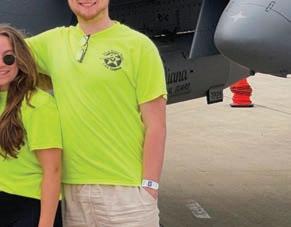
He’s welcomed many di erent aircraft in his time volunteering, but he remains loyal when asked his favorite. “The C-5, of course. It’s an air show in and of itself,” he said. “I’ve been fortunate enough in that airplane to have been to all seven continents.”
Airplanes aside, the Boeing Plaza volunteer group has become a second family, which makes coming back each year worth it. “It’s really not about me. It’s about all the volunteers. I just happen to be the guy that does some coordinating,” he said. “It’s been a privilege, really.”
Thank you, JJ, for all you do for EAA, the aircraft and crews that visit us, and for all AirVenture guests!








WEDNESDAY NIGHT AIRSHOW
July 22, 2026 EAA AirVenture - Oshkosh
BY ABIGAIL KAPLAN
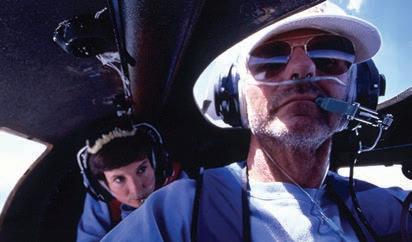
“YOU DON’T NEED an airliner to do great work with an airplane,” said Tom Haines, former editor in chief of AOPA for 29 years. Tom has flown over 100 di erent models of aircraft and has always had a passion to give back to the public with airplanes.
For instance, he has flown for Pilots N Paws, helping the public rescue and find homes for dogs, which was very rewarding.
In 2017, Tom flew supplies to survivors of Hurricane Irma. The pilots were able to take o and land on private, shorter airstrips that couldn’t accommodate larger aircraft. He has also volunteered with the Orbis flying eye hospital.
Before retiring and having more free time, he received a phone call from ERP, Elephants, Rhinos &
People. The organization was looking for assistance with establishing a small fleet of airplanes in Namibia. ERP works to combat the slaughter of elephants and rhinos in South Africa.
Identifying possible threats to wildlife and providing anti-poaching awareness are just a few of their tactics. The organization would like to purchase more Cessna 182s and other models of aircraft as needed and
“There is no limit to what you can do for public benefit flying.”
— Tom Haines
p.m.
if funded. They also hope to build a hangar in Swakopmund, Namibia.
The poaching levels are currently decreasing in South Africa as their government has become more involved. The animals are more protected, and as a result, their numbers are increasing.
How can you get more involved? The Air Care Alliance can help you locate ways to get involved and volunteer with your background in general aviation.
“There is no limit to what you can do for public benefit flying,” said Tom.
Volunteering in South Africa with ERP may include a few weeks’ commitment and flying around volunteers and providing support.














BY ANGELA SATTERLEE AIRVENTURE TODAY STAFF
WHEN ALINA SCOTT landed her Aerolite 103 at EAA AirVenture Oshkosh in 2023, she was only 14 years old. After flying nearly 1,000 miles from South Carolina over six days and 42 airport stops, many people focused on her age and the remarkable journey.
Alina remembers something else entirely. She remembers the lessons of patience and perseverance that came long before the trip.
Her aviation journey began in 2021 with powered paragliding. Excited to get started, she quickly realized enthusiasm wasn’t enough. Progress didn’t come easily.
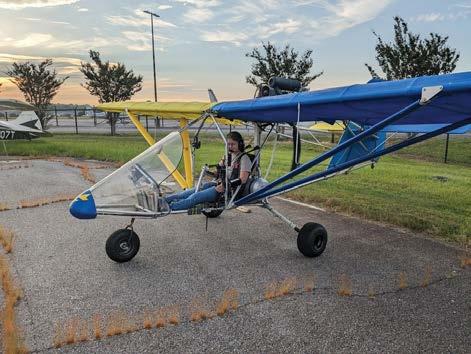
The motor was too heavy for her to manage, and despite repeated attempts, she realized she simply wasn’t strong enough yet. She worried she had let her dad down, but instead of disappointment, he encouraged her to keep going.
“My dad said to me, ‘Having trouble doing something is one thing. Worrying about it is another. Don’t make more problems for yourself.’”
The following year, she came back stronger. After plenty of frustration, and more than a few tears, she finally completed her first solo powered paraglider flight.
“You can’t let your emotions stop you,” she said.
That breakthrough opened the door to flying the Aerolite 103, but learning the skills to make the trip to Oshkosh meant following a disciplined process.
Training was divided into three phases. The first focused on mastering the aircraft itself, beginning with understanding the controls and emergency procedures before progressing to taxiing, wheel lifts, takeo s, landings, and low-altitude flight. It took nearly two months and about 60 takeo s and landings before she advanced.
“Since it was just me in the aircraft, I needed to learn each skill in order. And I had to clearly demonstrate my ability in order to move onto the next phase,” Alina said.
The second phase introduced air work, including stalls, slow flight, emergency procedures, and o -airport
landings. The final phase covered navigation, airspace, radio communication, airport procedures, and everything needed to safely complete cross-country flights. Her first cross-country flight was 4 nautical miles.
“If I could do a 4-mile flight, then I could do a 40-mile flight,” she said. “All that was left was to link 42 airports together with short flights and I’d be in Oshkosh.”
Along the way, she learned that preparation builds confidence. Before every flight, she completed a detailed preflight inspection while her dad checked the aircraft alongside her.
Even after all that preparation, unexpected challenges still happened. She dealt with engine issues and her mu er broke while arriving at AirVenture. Instead of panicking, she relied on the training she had spent months building.
Today, at 17, Alina is working toward her private pilot certificate and hopes to one day fly military bombers or fighters.
Looking back, she says success never came from natural talent. It came from showing up, trusting the process, and refusing to quit when progress felt slow.
For young people who dream of flying she hopes they know: “You have to be putting in the work. It doesn’t come quickly or naturally so you need to be patient.”



BY BARBARA A. SCHMITZ AIRVENTURE TODAY STAFF
PILOT. MECHANIC. INSTRUCTOR. Inspector. Writer. Parts assistant. Security specialist.
The list of positions goes on, as does the locations where the jobs are available.
No matter what type of job you’re looking for or just wondering what career options are available, the Aviation Job Fair at EAA AirVenture Oshkosh can help make it happen.
Various AirVenture exhibitors participate in the annual Aviation Job Fair, meeting with prospective applicants and







networking face-to-face in their booths this week. The majority of employers on site can be found in the Education and Career Center, located in Aviation Gateway Park.
Job seekers can visit prospective employers at their exhibit booth any time during AirVenture to ask questions, share résumés, and learn more about a particular organization or company.
Kaleb Bruce, EAA 1250822, was at the job fair on Monday morning, handing out his résumé and asking potential employers how to make himself more competitive.
“I’ve been coming to the job fair for about five years, but only for the past two years do I have the required minimum hours,” he said. “I’m here to learn and ask questions and see what the job market is looking like so I can move up in the world.”
He currently works as a flight instructor to build his hours.
Jared Grove, a recruiter with Piedmont, said they are looking for people to work as pilots and flight attendants, as well as in maintenance and corporate. Each year, they do hire people whom they met at AirVenture.
At the Envoy booth, recruiter Clint Covarrubias said they have been busy since opening and have received a steady flow of résumés. “The main questions I’m getting is how people can make themselves stand out, when is a good time to apply, and how our cadet program works,” he said.
His advice to job seekers wanting to become professional pilots is to not stop flying. “Don’t just hit the minimums. You need to keep flying.”
In addition, more than 28,000 aviationrelated jobs are posted online at EAA.org/ JobFair. Information is updated daily.























































































































www.icomamerica.com/aviation
insidesales@icomamerica.com








BY ROBBIE CULVER AIRVENTURE TODAY STAFF
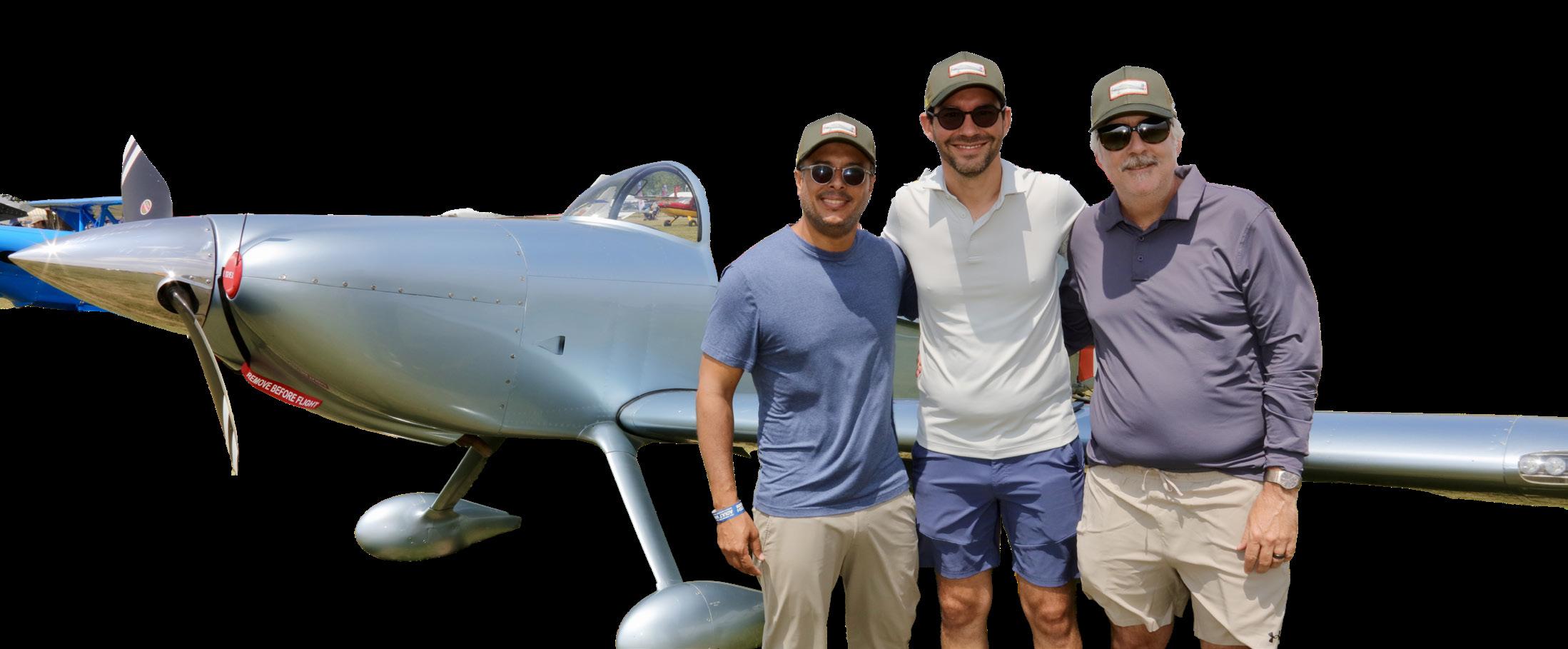
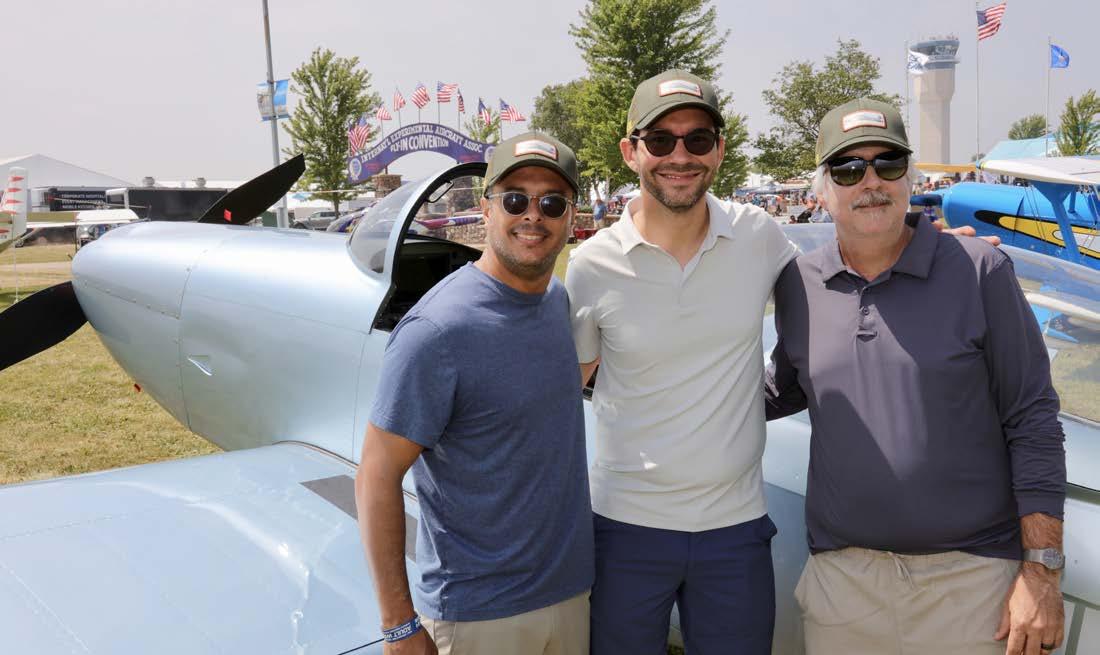
CARLOS SANLLEY, EAA 1429208; Alejandro Marranzini, EAA 1286806; and Andrés Sánchez built a Van’s RV-8 in the Dominican Republic (DR). Carlos and Andrés flew it to EAA AirVenture Oshkosh 2026, arriving on Sunday,
A brief geography lesson may be in order here. The Dominican Republic is a nation in the Caribbean that is on the eastern half of the island named Hispaniola, with the other half being Haiti. Getting to the U.S. requires exten-
international customs, and overcoming the challenges of the weather.
Carlos told AirVenture Today, “It was the first RV-8 and the first Van’s aircraft that was built in the Dominican Republic. The process took us five years. It was a quick-build fuselage and wing. And it’s
registered under the Dominican Aviation Authority.”
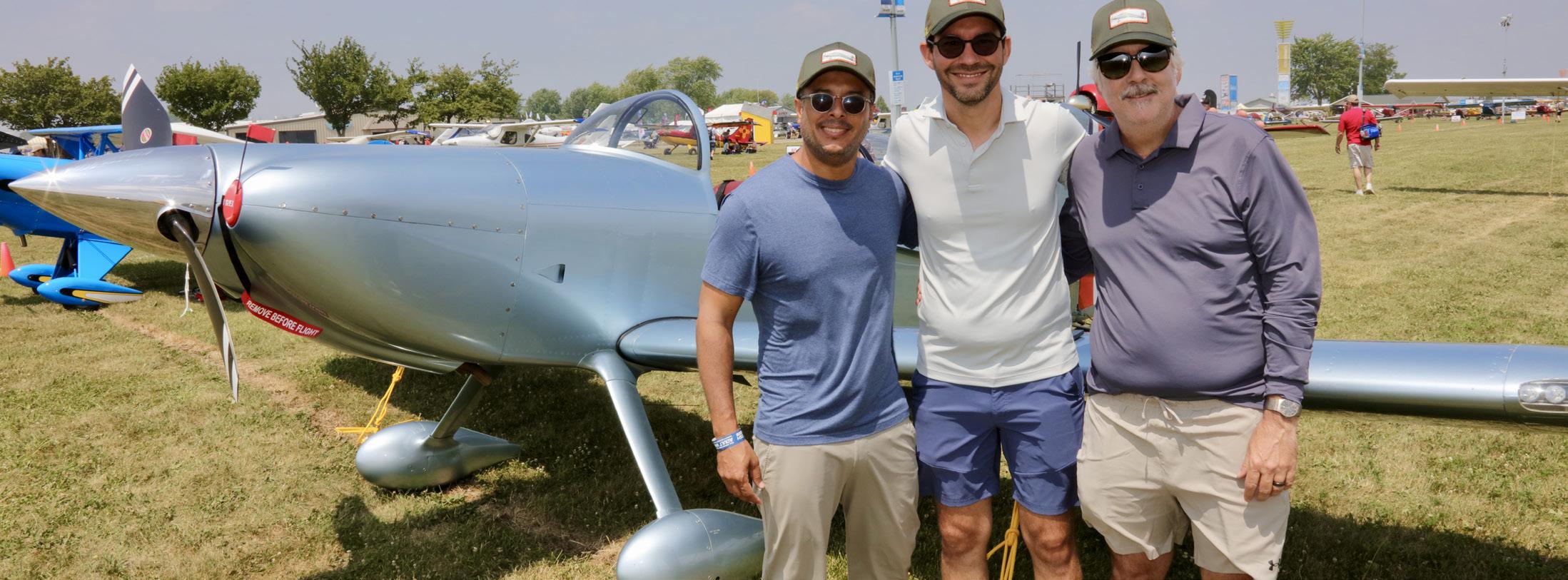
Completing a project is an accomplishment, but building and completing an airplane in the DR is a different adventure altogether. There are no EAA chapters, and there are very few experimental amateur-built (E-AB) aircraft built there. There are also different rules.
EAA chapters play a huge part in the success of builders, providing the community, support, and sometimes even the tools required to complete a project. We build aircraft for our own education and recreation. To qualify as an E-AB in America, we must “construct and assemble the majority of the aircraft” — 51 percent to be exact, which the FAA measures by defined tasks.
Carlos said, “Even though the Dominican rules are about the same as the FAA rules regarding aviation, we don’t have this type of community down
RV-8 / PAGE 14





there. This was probably the third air craft to be built in the Dominican Republic. We don’t have a streamlined process to get it registered. So we had to involve the aviation authority from early on the process; we had to review the similar process that you have here in the FAA.”




It is easy to take for granted the freedom we have in the United States when we build air craft. Thanks in no small part to EAA, there is a large community for support and advice, the rules and regu lations allow us the freedom to build without strong oversight, and the tools and materials are readily available. Carlos said just ordering parts could take a week and a half to receive them. In some jurisdictions, even closing or covering a structure requires an inspection.


Completing a homebuilt in other countries is a testament to the dedication and commitment required for such a project.

Carlos said, “We constantly had a visit from the Dominican Aviation Authority inspectors to review the
process of the build. This was also new for them. So I guess we were both learning about this process. They went basically in three phases of our build. The first phase was when we were
More reliable, better performing, and reduced tendency to trip flap motor circuit breakers. FAA-PMA for Cessna, Piper, and Beech.
dealing with the main structures, and they wanted to see the process of riveting, review the instructions, the
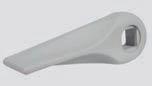
Stronger materials, longer lasting, and better lock mechanisms. FAA-PMA for many Piper PA-28-140 thru PA-44-180T aircraft.

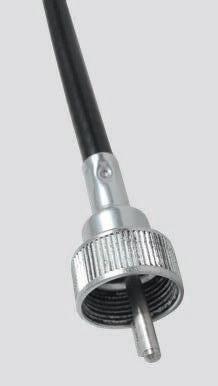
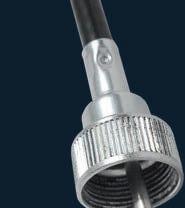
Replace worn or binding tachometer cables with our stronger, smoother, longer lasting cables. FAA-PMA for many Cessna aircraft.

Prevent cracking and premature failure! Improved design absorbs vibration and lasts longer. FAA-PMA for Piper PA-28 aircraft.
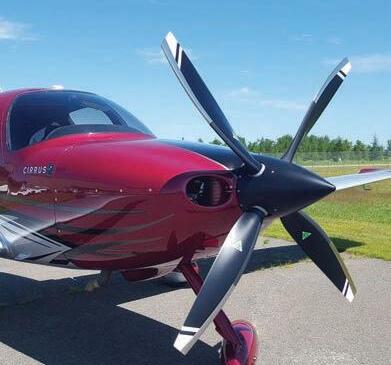
Several new products for SR20, SR22, and SR22T aircraft, including engine controls, door hinges, and ba es. Flight control cables coming soon!

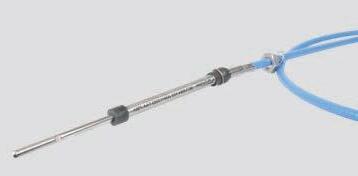

New throttle, propeller, mixture, and quadrant style controls available for homebuilt and experimental aircraft, including Vans.









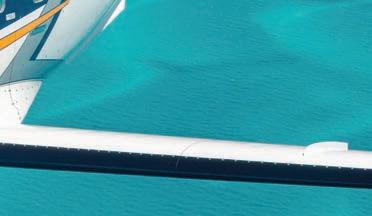




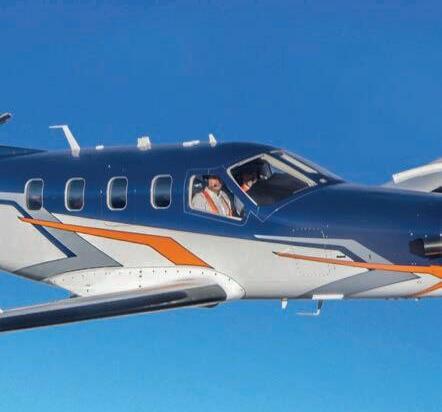
The TBM 980 is refining the travel experience for pilots and their passengers.
Its Garmin 3000® PRIME avionics places everything at the pilot’s fingertips through a highly intuitive interface, enhancing cockpit ergonomics while significantly reducing workload.
For passengers, the Prestige cabin delivers a distinctive onboard experience, including satellite-based internet connectivity when equipped with a Starlink







Meet Daher at AirVenture
BOOTH #387-392








14 / RV-8
plans, and that process of the metal sheet work.
“The second process was when we were building the avionics [package]. Our aircraft has a Garmin G3X. So they wanted to see what the manual says from Garmin, the connections, the di erent options that we could do with those setups.
“And the third inspection was the final inspection prior to the first flight. They wanted to see engine runs. They wanted to see the procedure on how we calibrate the fuel and how we assured that we were going to … get enough fuel flow. So they were very, very specific, everything related to the engine and power related.”
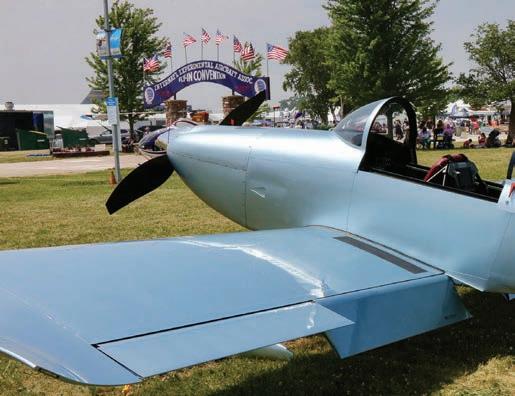
The aircraft has a Lycoming IO-390 and a Hartzell composite prop with a 15-inch spinner. It features the showplane cowling with the round intakes. Carlos said, “The process of getting that engine with that cowling, I can say it took us probably a year, additionally, in the build process because we didn’t have the specifics for all the accessories on the engine. So we had to make custom throttle, prop, and mixture cables, we had to make a custom exhaust to get proper clearance from the
control cables. We had to change the oil cooler. Obviously, the oil lines, fuel lines, and so, yeah, we had a bit of deviation from the standard plans from Van’s, but everything at the end worked perfectly.”
Flying into Oshkosh requires planning, precision, and persistence. Flying into Oshkosh from the DR takes this to a di erent level. Their route to took them to the Bahamas, Florida to clear customs, then Georgia, Illinois, and on to Oshkosh via the Fisk approach. In the smoke.
Carlos said, “We went through the higher route, 2,300 feet at 135 knots. At 135, the plane flies very happy. They gave us instructions to come to 36. So we went there, and we had a 172 below us. It was a bit more slow, but we ended up landing without any major issues.”
And then there’s that moment — “Welcome to Oshkosh!” Carlos stated, “I can say that I’m still on a high. I don’t think we are acknowledging what we have done. Coming from five years ago, the idea of making a plane, building it in the DR, that was a challenge. We didn’t have this community that the States have. We have no EAA chapter.
“It was a challenge because every time that we face it with something that we
“I can say that the best advice that I can give to someone building a plane is to have consistency.”
— Carlos Sanlley
didn’t feel comfortable with, we needed to spend a lot of time researching, looking through the webpages, the foreign, calling people, asking for recommendations, and yes, it was a challenge.”
Carlos’ advice to other builders: “I can say that the best advice that I can give to someone building a plane is to have consistency. You’ll have great days, and you’ll have low, low days. On the low days, you still need to go to the workshop, even though you don’t do anything, but to spend time with the plane and to make it a routine. This is a matter of enjoying the process, but you need to take into account that some days you’re not gonna be as, let’s say, fluent.”
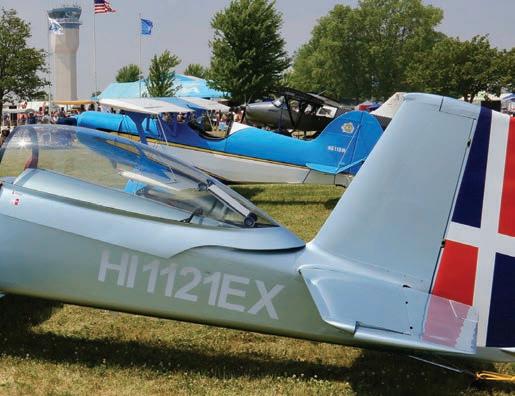
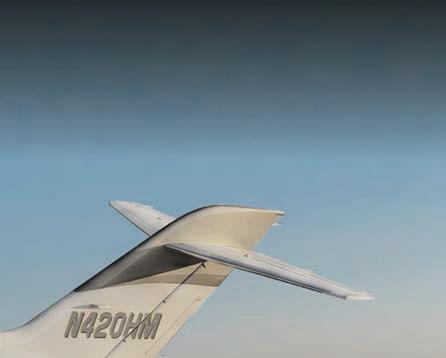
You can find the RV-8 in Row 382 of homebuilt parking, just northeast of the Brown Arch. Look for the unique registration number and the Dominican Republic flag decal on the tail.




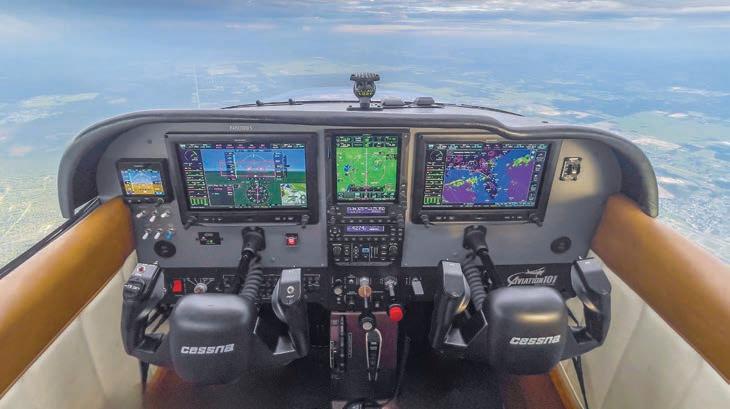
Reimagine your panel with bigger, sharper screens, advanced safety-enhancing features and an optional integrated IFR GPS/NAV/COMM and audio panel that streamlines your installation. You’ve never seen anything like this because there’s never been anything like this. AXIS is truly the center of your aircraft panel in every way. Learn more at the Garmin exhibit on Celebration Way.




BY ABIGAIL KAPLAN
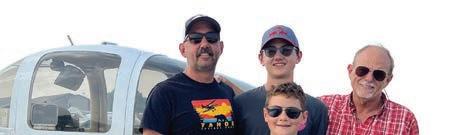
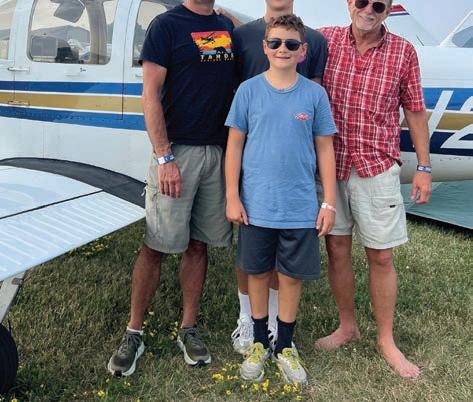
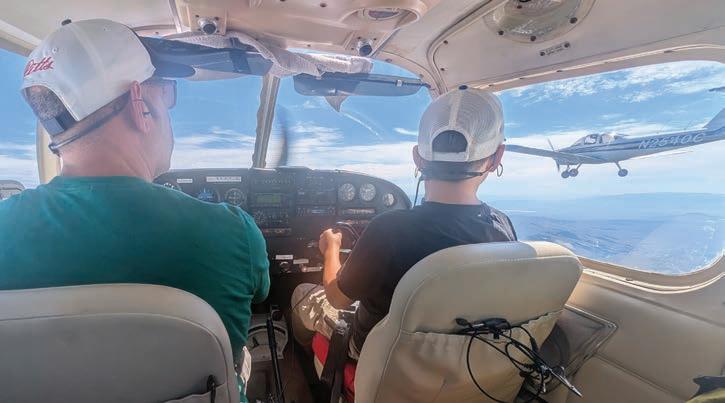
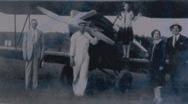
DASH SPEIDEL, 17, earned his private pilot certificate just six weeks ago and experienced the thrill of flying into EAA AirVenture Oshkosh from his family’s home in Carmel, California, by himself this week. Dash’s father, Jake Speidel, exposed Dash and his two siblings, Boden (12) and Riley (21), to flying from birth.
Dash flew solo in a Tomahawk while brother Boden, dad Jake, and close friend Kim flew in formation in the family’s Cherokee 6.
Jake said they practiced flying in formation, as well as landing side by side, to prepare for the journey to Oshkosh. Since he has a diverse flying background and is currently an airline pilot, he has enjoyed all kinds of flying with his kids since they were babies.
“It was fabulous and great to watch these guys do their thing. What this family has is rare,” Kim said.
Through exposure from a young age and support from their family, all three children are actively pursuing their dreams in aviation. They even had the opportunity to help their grandfather build an RV-14. Jake said, “I am lucky all three kids fly and enjoy it.”
“Camping along the way to EAA AirVenture and staying in the [North 40] was one of the best parts,” Dash said.
Thankfully, there were no technical issues during their cross-country flight. Dash planned the trip, and Jake oversaw him taking the lead. They decided to fly a more northern route, flying through Oregon, Montana,











































































































and South Dakota. Jake said there was a lot of smoke heading toward Oregon, and then it was smooth sailing. After about 20 hours and three nights they safely arrived.
Dash graduated high school three years early and is currently attending community college, preparing to pursue a degree in engineering. He is currently working on his instrument rating in an RV-12. His goal is to become an airline pilot and/or pursue a career in engineering. A few goals he has are earning his commercial certificate, getting some tailwheel time, and flying biplanes and aerobatics.

Dash said he always knew he wanted to be a pilot and attested some of that to Riley, who earned her glider certificate at a young age. The siblings enjoy
spending time together and flying RC airplanes in their free time.
Dash has earned many of his hours via cross-country flying. There are frequent crosswinds at his home airport in Carmel, and Jake appreciates how well that has prepared him for flying in various weather conditions. Dash soloed in the family’s Tomahawk on his 16th birthday. Right after the checkride, his brother, Boden, had the honor of being his first passenger.
Boden said he started learning to fly from watching his brother and dad. “Getting introduced was my favorite part. Aerobatics makes me really happy,” he said.
Dash is growing his career in aviation and sharing with those he loves.
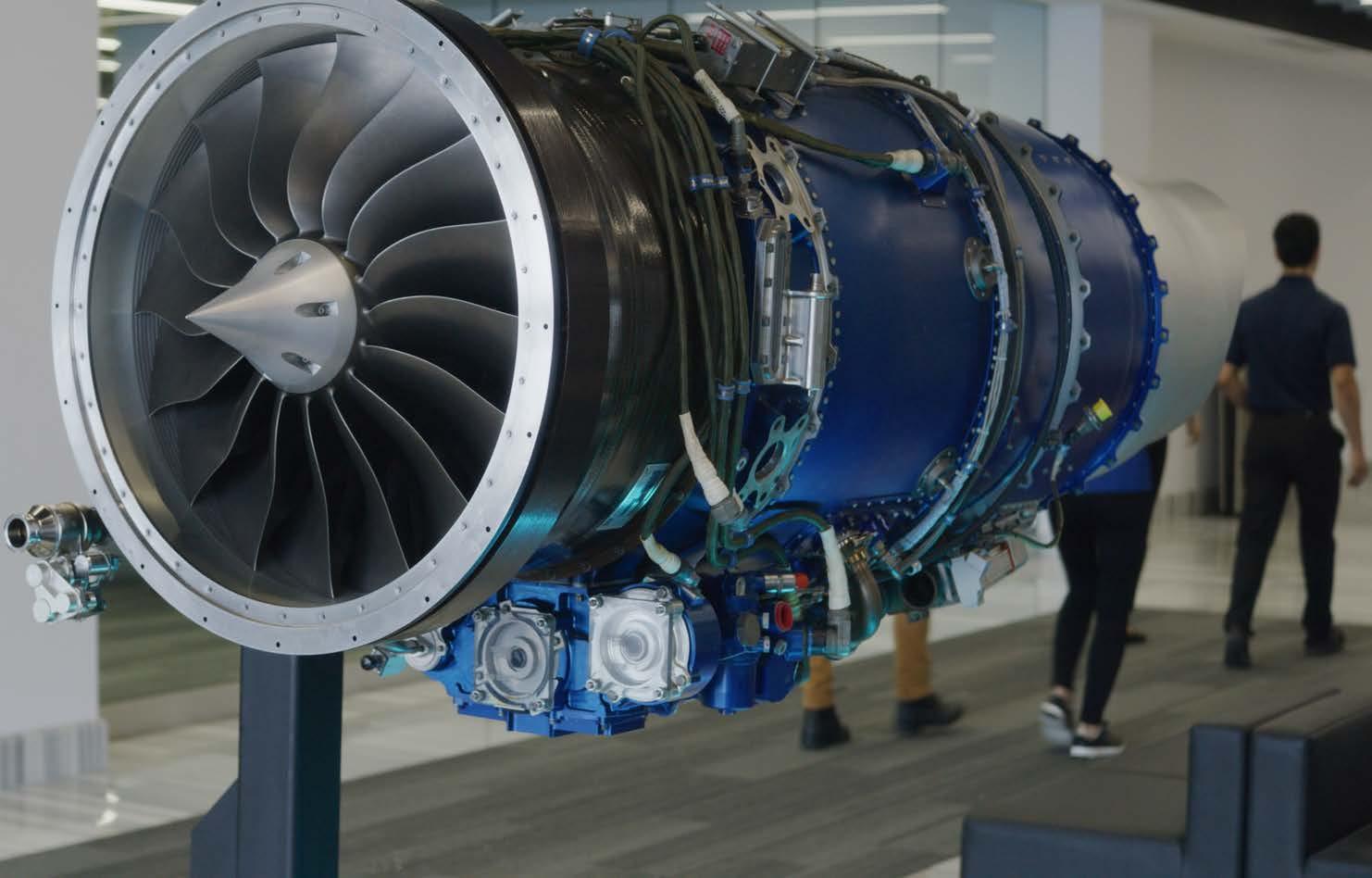
The world leader in the development, manufacture, and support of gas turbine engines.
• 8,700 FJ33®/FJ44® engines delivered
• 23 million hours of flight time
• #1 in Product Support for 30 years
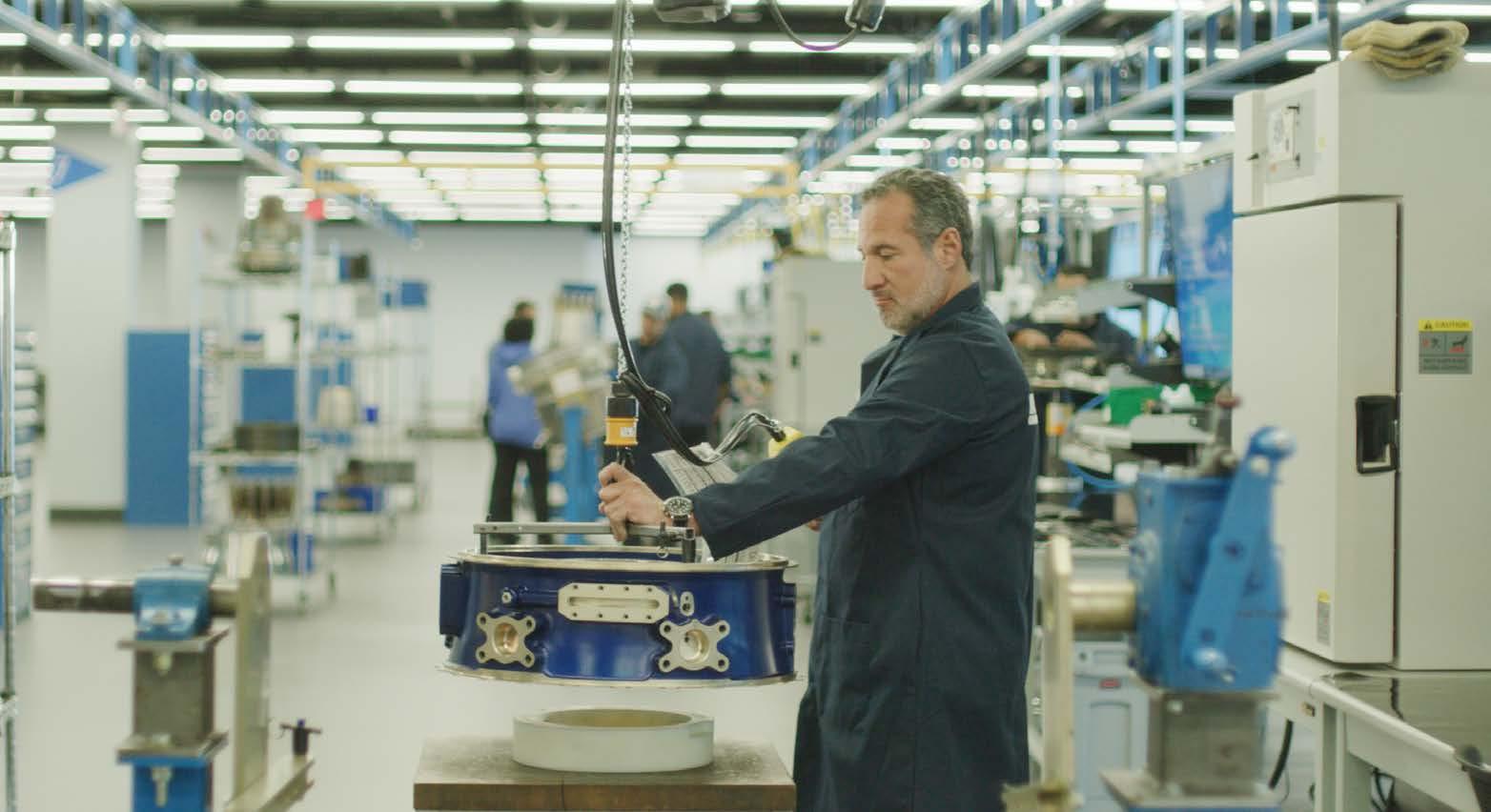
• Our TAP Blue program covers ALL engine maintenence
• Industry leading employment opportunities and benefits



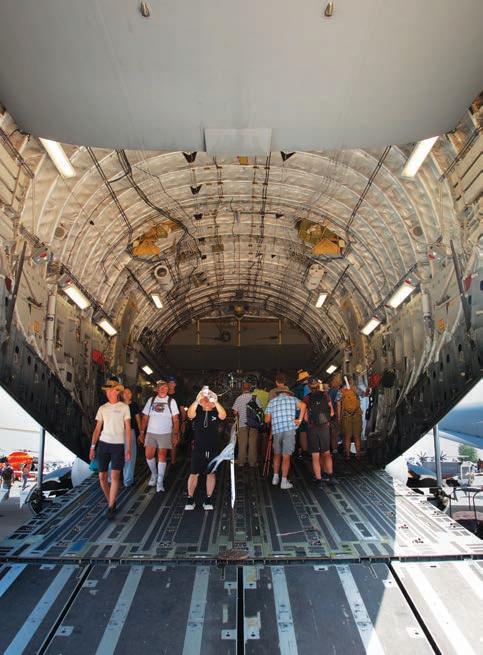
IF YOU’VE NEVER stood beneath a C-5M Super Galaxy, it’s difficult to appreciate just how large it really is. At nearly 250 feet long and standing more than 65 feet tall, the Air Force’s largest aircraft has a way of making everything parked nearby seem a little smaller.
That’s one of the reasons bringing a C-5M to EAA AirVenture Oshkosh is so special — it’s an opportunity to get up close to an aircraft that spends most of its life moving the people and equipment that keep the Air Force operating around the globe. The C-5M provides the United States Air Force with the ability to transport oversized cargo virtually anywhere in the world, for both combat support and humanitarian relief.

Assigned to Dover Air Force Base, Delaware, this C-5M Super Galaxy represents more than impressive size; it represents Dover’s commitment to projecting airpower and delivering hope around the world. Dover’s C-5M fleet provides the strategic reach needed to respond whenever and wherever it is called.
The original C-5 Galaxy first entered service in 1970, and today’s C-5M Super Galaxy builds upon more than five decades of proven performance through extensive modernization. The “M” designation represents the aircraft’s modernized configuration, which includes new engines, updated systems, and improvements designed to increase reliability, increase performance, and extend the fleet’s service life well into the future. The re-engining program replaced the aircraft’s original engines with more powerful and e cient engines, significantly improving takeo performance, climb rate, fuel eciency, and overall mission capability.
Perhaps the most recognizable feature of the C-5M is its ability to “kneel.” The aircraft’s landing gear can be lowered to reduce the cargo floor height, making it easier to load and unload oversized equipment. Combined with a nose that opens upward and aft cargo doors that open simultaneously, the C-5M allows
vehicles and cargo to drive straight through the aircraft, dramatically increasing loading e ciency.
The cargo compartment itself is remarkable. Measuring more than 120 feet long, 19 feet wide, and 13.5 feet high, it provides enough space to transport everything from helicopters and armored vehicles to satellites, humanitarian supplies, and multiple military trucks in a single mission. The aircraft can carry more than 280,000 pounds of cargo while also accommodating passengers in an upper troop compartment, giving commanders flexibility to move equipment and personnel on the same mission.
While many aircraft are measured by speed or maneuverability, the C-5M’s strength lies in its unmatched carrying capacity. It has the unique ability to transport outsized cargo that simply cannot fit inside most other military aircraft. This capability gives military planners
Perhaps the most recognizable feature of the C-5M is its ability to “kneel.” The aircraft’s landing gear can be lowered to reduce the cargo floor height, making it easier to load and unload oversized equipment.
flexibility during contingency operations and allows rapid movement of equipment that would otherwise require multiple aircraft or lengthy sea transport.
The C-5M embodies Dover Air Force Base’s motto: “Project Power, Deliver Hope.” Beyond military operations, the aircraft has played a significant role in humanitarian assistance and disaster response around the globe. Following hurricanes, earthquakes, and other natural disasters, Super Galaxys have delivered emergency medical supplies, search-and-rescue equipment, vehicles, generators, and relief personnel to communities in need.
The C-5M is flown and maintained by a team of highly trained professionals. Pilots, loadmasters, flight engineers, maintainers, aircrew support personnel, and numerous specialists work together to





From the eld to the front lines and beyond, our PT6 turboprop engine has powered critical missions for six decades and counting. With unmatched reliability and more than 500,000 ight hours, our PT6 continues to set standards in versatility and performance.
Learn more at rtx.com/prattwhitney/PT6



















safely launch, recover, and sustain every mission. Each sortie represents thousands of hours of planning, maintenance, and coordination before the aircraft ever leaves the runway.



















For more than eight decades, Dover Air Force Base has played a vital role in global mobility. Today, the 436th Airlift Wing and the 512th Airlift Wing operate alongside one another to provide strategic airlift capability around the world. Dover’s airmen routinely support missions across six continents, often launching with short notice to move critical cargo, equipment, and personnel wherever they are needed.
As visitors explore AirVenture Oshkosh, the C-5M Super Galaxy o ers an opportunity to experience one of the world’s premier strategic airlifters up close. Every panel, cargo compartment, and flight deck tells part of the story of an aircraft designed to overcome distance, deliver hope during times of crisis, and provide global mobility whenever the nation calls.
For the airmen who operate and maintain the C-5M, the aircraft is more than a collection of impressive statistics. It represents countless hours of teamwork, preparation, and dedication. From the maintainers who ensure every system is ready, to the aircrew who deliver cargo across continents, every mission is made possible by the people behind the scenes.

For aviation enthusiasts, the C-5M o ers no shortage of impressive statistics. It stands approximately 65 feet tall, about the height of a six-story building, and stretches nearly 248 feet from nose to tail. Its wingspan extends more than 222 feet, wider than the length of many commercial airliners. Four high-bypass turbofan engines produce nearly 200,000 pounds of combined thrust, powering an aircraft with a maximum gross weight approaching 840,000 pounds.




For more than five decades, the C-5 family has connected continents, supported countless missions, and carried cargo that no other aircraft could. Today, Dover’s C-5M Super Galaxy continues that legacy, projecting power, delivering hope, and showcasing the dedication of the airmen who make global mobility possible.






















Throughout her career, Loni Unser has devoted herself to excellence in sports car racing and nonprofit advocacy. Professional racing driver



First 50 people receive a free tumbler. July 22 at 11 AM Visit PenFed booth #382.










See you there!

OSHKOSH MOMENTS

BY JIM ROBERTS AIRVENTURE TODAY STAFF
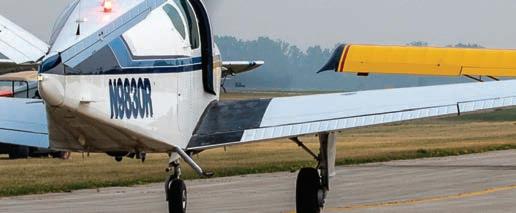
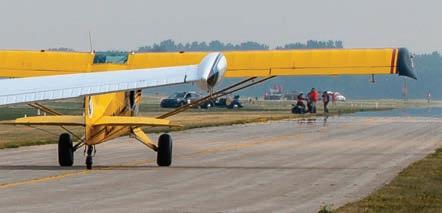
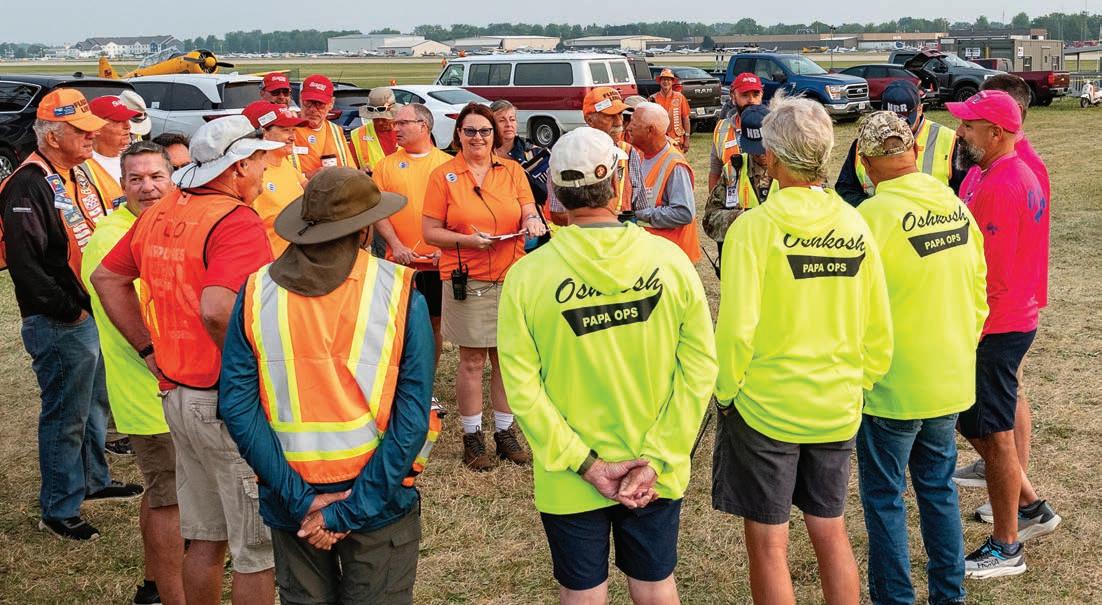
FOR ONE WEEK every year, the Oshkosh control tower is among the busiest in the world, handling nearly 10,000 aircraft during EAA AirVenture. Many of those aircraft touch Taxiway Papa, the 6,600-foot parallel taxiway west of Runway 18R-36L. Keeping all that metal moving, including aerobatic, vintage, military, airline, and air show aircraft, is a real juggling act. The volunteer crew keeping all those balls in the air is known as “Papa Ops,” a band of six retired air traffic controllers who apparently can’t get enough of the Oshkosh action.
The “Papas,” as they call themselves, include Don Kruse, Scott Strader, Chuck Howard, John Moore, Don Medernach, and Bill Casey. They’re a tight-knit bunch, and every year they commission a new Papa Ops challenge coin with their heritage “Once FAA Now EAA” on one side, and their proud motto “We Bring the Field Together” on the other.
Bill Casey, a founding member, is a veteran of 36 years behind the mic. From his 23 summers of controlling at AirVenture, Bill recalled the days before Papa Ops began: “Along Runway 18 on the Papa Taxiway, we’ve got at least five entities, from warbirds and homebuilt and aerobatic and vintage and antique classic. We had radio communication with a person at each of those entities, but they didn’t talk to each other. So sometimes Papa Taxiway would get really congested, to the point that we couldn’t move airplanes and had to stop arrivals. I mean, literally there was a mile and a half of backed-up airplanes on the taxiway.”
And snarled tra c wasn’t the worst of it; in 2006, a Grumman Avenger southbound on Taxiway Papa rear-ended an RV-6, and EAA and FAA agreed changes were needed. One suggestion was for Oshkosh ATC to handle all ground tra c, but that was dismissed as unworkable. Then Doug Powers, a retired controller, stepped up. Bill Casey recalled, “He approached EAA and FAA and said, ‘If you give me a radio and a Gator, I will take care of all that coordination.’ And more importantly, he already had their respect because he was a longtime EAA member and a longtime contributor when they came up with new procedures.”
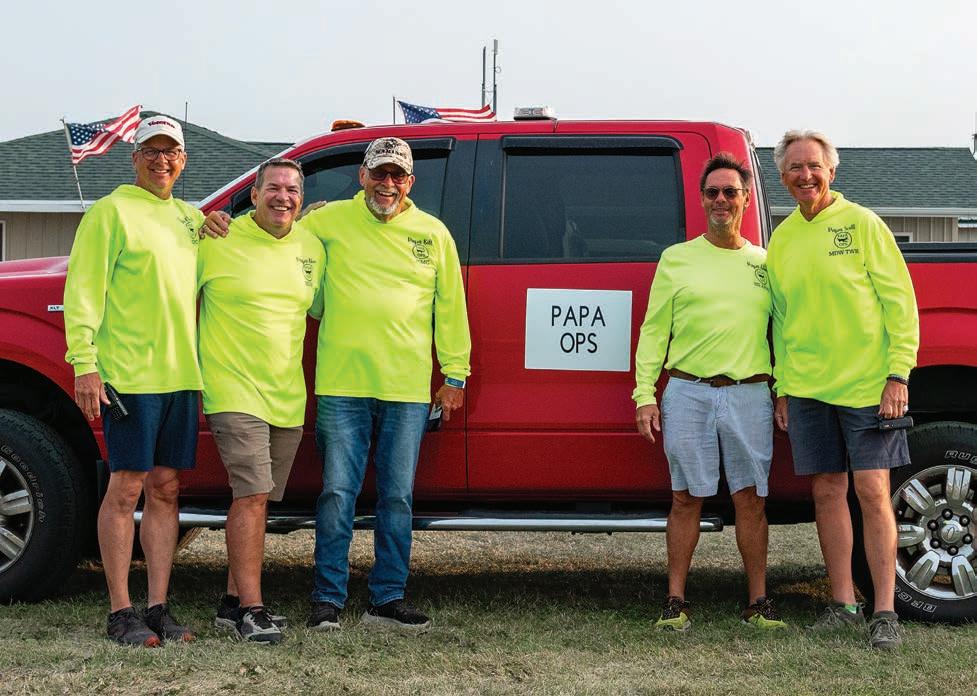
Bill continued, “He always had the ability, the uncanny ability, to be exactly where he needed to be at the time he needed to be there. So when he brought me on board it was great getting to meet these people [EAA volunteers], because from the lofty tower we say, ‘Follow the EAA flagman.’ We have no idea who those people are. So then I get to be down there amongst them, and I tell the controllers, ‘You need to be with these people because they have the ballet. They’re very good at what they do.’”
From a one-man band begun nearly 20 years ago, Papa Ops has grown to a sta of six, all with extensive
AirVenture experience. Bill Casey summed it up: “With EAA and FAA experience, between us we have around 65 years of EAA time in the Oshkosh Tower. And when added up with the Papa Ops volunteering, we passed 100 years a couple years ago.”
I spoke with Don Medernach who explained their operation: “We do not do any controlling; we’re EAA volunteers. Safety and bringing all the di erent entities into a cohesive group is our primary goal. We have communication with all the entities north and south, and we’ve created relationships. We are a go-to between the control tower and the volunteers.”
Their day starts early, as Don related: “We meet at flightline ops the first thing at sunrise for the morning briefing to see what their operation sounds like. And then we listen to the yodeler, and come back generally to homebuilt and we brief the homebuilt side and give them an idea what runway operations are expected and the other field conditions, how much parking’s available or not. And then we come to the main operations building at center [Boeing] Plaza, and we also attend that briefing just to listen in and share any info we might be able to pass along.”
manner. Don noted, “Any incident in the past used to close the entire airport down. We keep working to try to refine it, that if only one runway needs to be closed, we can keep the other one operational and get things open faster than in the old days. So one of the benefits of our operation is hopefully minimizing closures to the airport and then expediting the reopening if possible.”
Don remembered when one aircraft in a mass arrival drifted o the edge of the runway while landing, resulting in a runway closure. “So I’m monitoring the radio call, and by the time I hear that the runway is closed, I’m authorized to get on. So I

just drive down the runway and get out and talk to the pilot real quick, and make sure it’s fine to touch and push his airplane from the wing strut. And then just tell him once he’s back on the runway, just taxi all the way o the north end of it.”
It’s not all serious moments out there, as Bill Casey recalled from his early days at Oshkosh: “There was a Curtiss Pusher that came out to depart. And it was an older guy with a silk scarf and the leather helmet and everything. I flagged him for takeo , and he’s gone, and he’s making a right turn, and he’s coming back around, and we’re warning the tower, ‘Hey, this Curtiss Pusher’s coming back to land. Is he okay?’ ‘We don’t know. He doesn’t have a radio.’ Here he comes back



AirVenture 2026
Monday
10:00am Engine Leaning Made Simple
TUESDAY

8:00am Ring Gap and Cylinder Life
10:00am Compression Testing
WEDNESDAY
10:00am Engine at TBO Options
THURSDAY
10:00am Proactive Approach to Aircraft Engine
Maintenance
FRIDAY
10:00am Oil Changes as a Diagnostic of Engine Health
SATURDAY
10:00am Choosing the Right Aviation Mechanic

STOP BY for a free copy of Engine Management 101


Hosted by Bill Ross, A&P I/A 2023 GAA National Aviation Technician of the Year Award Winner!


*Each seminar qualifies for 1 hour of IA Renewal Crdit & FAA Wings Credit

around to land, and he gets on the ground and he pulls o almost right in front of me, and I said, ‘Hey, are you okay? Everything okay?’ He goes, ‘Yeah,’ he says, ‘I got to go back into Vintage.’ And I find out the story was, and I swear to God, he forgot his teeth. He left his teeth back in the one of the showers.”
Whether they’re helping direct the ballet, responding to aircraft mishaps, or just helping out a forgetful pilot, the Papas are on duty from the moment the airport opens in the morning until the last engine winds down at night. So while watching the action on Runway 18R-36L, when you spot a vehicle with “Papa Ops” on the side, give them a “thank you” wave for helping keep AirVenture the safe and smooth operation we all enjoy.

BY JESSICA SCHAEFER
A PIPER PA-11 will get its wings this week on the Oshkosh grounds.
Visitors can stop by the Oratex exhibit throughout the week to watch a certified Piper PA-11 receive new fabric covering, following the project from bare metal fuselage to finished airplane as the week unfolds.
Watch the process as it happens, ask questions, and come back later in the week to see how far the project has progressed. The demonstration uses the Oratex covering system under the Lanitz Aviation Design Change STC, including installation without traditional rib stitching. The Oratex system is a nontoxic, environmentally friendly covering system that comes ready to use with all necessary coatings already applied.
Whether you’re restoring your own airplane, dreaming about a future project, or simply curious how those smooth wings come together, you’ll enjoy watching the process unfold at the Oratex tent.
Builders and restorers can compare techniques and materials, and visitors new to fabric covering can get a behindthe-scenes look at a process that’s rarely on public display. Stop by once, then come back later in the week to see the progress on the Piper PA-11.
The project takes place at Oratex’s Booth 300 on Knapp Street, on the runway side of Hangar A near the control tower. The team will also host workshops and seminars throughout the week for visitors interested in learning more about aircraft covering methods, restoration techniques, and the decisions that go into bringing a fabric-covered airplane to life.




BY RAUL CISNEROS
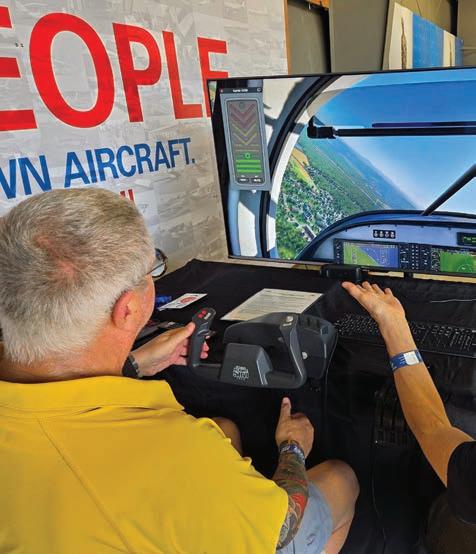
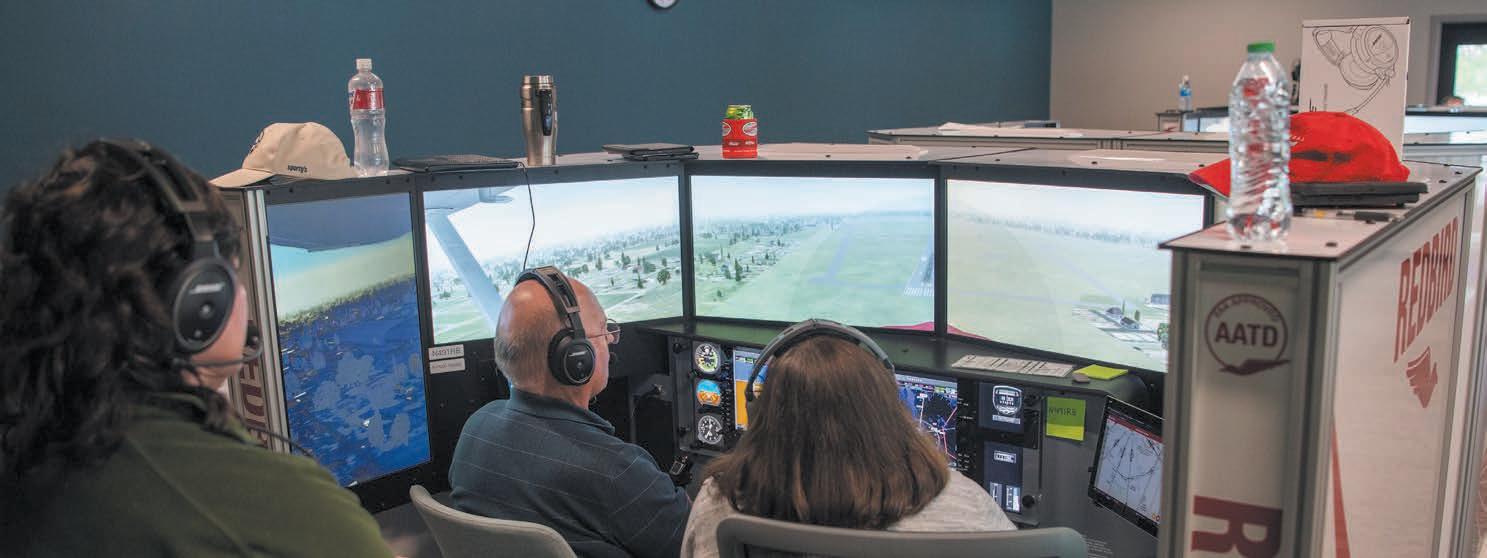
IN AN EFFORT to raise awareness of the value of angle of attack indicators (AOAs), AirVenture 2026 attendees can fly an AOA simulator in the Homebuilders Hangar. The simulator is being made possible by a collaboration between EAA’s Safety Committee/AOA Workgroup and Laminar Research, developer of XPlane.
“The Safety Committee has recognized that installing an AOA indicator is a top safety enhancement and is an opportunity to reduce accident rates of experimental aircraft even further,” said AOA Workgroup Co-Chair and decades-long EAA volunteer Sue Gardner.
EAA worked with Ben Myburgh at Laminar Research on the simulator. “EAA reached out and said, ‘Hey, we want to teach people AOAs,’” Ben said. “And so we took an internal developer team and we said, ‘Alright, let’s put together this project.’”
For the past three years, pilots have also been able to receive AOA training on Redbird simulators at the Pilot Proficiency Center. “We were actually amazed at how many would say at their very first introduction to an AOA indicator, ‘Where do I get one of these? I absolutely need this. This is a lifesaving technology,’” Sue said.


Another partner on AOA training has been the National Association of Flight Instructors (NAFI). “We determined a lot of pilots were not familiar with angle of attack indicators because it’s fairly new technology, and this also applies to many of our long-term and dedicated instructors who haven’t been introduced to AOA indicator use,” said NAFI Chair Karen Kalishek. “What we’re trying to do is also raise awareness in the instructional community because there’s the ripple e ect. If the instructors learn the technology, and examiners as well, of course, then it’s going to start to embed itself and permeate throughout the entire community of general aviation.”












BY ANGELA SATTERLEE AIRVENTURE TODAY STAFF
FOR CHARLEY DIERINGER, volunteering at EAA AirVenture Oshkosh 2026 is a chance to give back to the organization that helped launch his aviation journey.
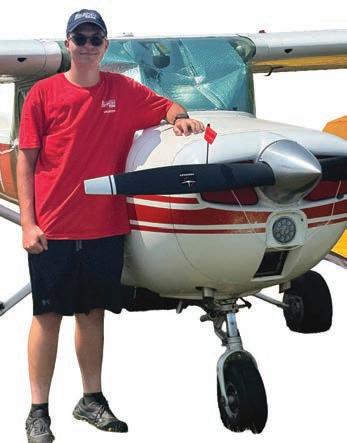
This year marks Charley’s second AirVenture, but several firsts came with it. He volunteered for the first time with North 40 Flight Operations and also made his first flight into Oshkosh arriving solo in his 1975 Cessna 150 at just 18 years old.
As a member of EAA Chapter 260 in Monee, Illinois, Charley has immersed himself in aviation from an early age.
Although his grandfather and other family members shared a love of airplanes, he became the first pilot in his family. Fascinated by planes, trains, and automobiles as a child, that lifelong passion led him to complete his first solo on May 23, 2025, before receiving his private pilot certificate just three days before his 18th birthday — all before graduating high school.
Training out of Bult Field, Charley’s path was accelerated through EAA scholarships. He was selected as a Ray scholar in 2025 before earning the Citation Max Scholarship this year, bringing his scholarship support to $17,000. The awards recognized not only his commitment to flight training but also his leadership within EAA and dedication to inspiring the next generation of aviators.
“It was awesome because I was only flying once a week because that’s all I could a ord working part time. And then I got the scholarship, which gave me a huge boost in helping me finish up with my private.”
Today, Charley gives back in nearly every way he can. He serves as mentor for his chapter’s current Ray scholar, coordinates youth outreach activities, hosts an annual movie night, and volunteers as a Young Eagles pilot. Just three days after passing his private pilot checkride, he flew his first Young Eagles mission.
“I wanted to kind of give back to EAA. I’ve gotten so much out of the organization,” he said.
Helping young people discover aviation has become one of Charley’s biggest passions.
“It’s always good to bring the younger generation in and get them involved because there’s so much potential. Whether you want to fly, work on the planes, whatever, design them, build them, whatever it is.”
He’s now working toward his instrument rating before pursuing commercial and flight instructor certificates, with hopes of eventually flying a Boeing 787 Dreamliner. He wants to make a career out of his lifelong passion. But no matter
where his aviation career takes him, Charley hopes his own journey encourages other young people to get involved in aviation and discover the same opportunities EAA provided for him.






















BY HAL BRYAN
IN THE LATE 1800S, not all that long after the United States celebrated its first 100 years, scientists, engineers, inventors, tinkerers, and adventurers around the world spent time and other resources trying to solve what was then widely known as “the flying machine problem.” While some of the most impactful innovations in history, from antibiotics to the internet, weren’t necessarily widely anticipated, the idea of controlled, powered, manned flight was, for some, almost impatiently expected.
Yes, there were plenty of skeptics, notably including an editor at the New York Times who wrote in October 1903 that “… the flying machine which will really fly might be evolved by the combined and continuous efforts of mathematicians and
mechanicians in from one to ten million years.” By that time, though, people had been successfully flying gliders for more than 50 years, and rubber-powered model airplanes had been around since 1870. So, instead of a surprising innovation, the Wrights’ success, coming just two months after the Times’ pessimistic prediction, was seen (eventually, once word got around and people were convinced that it had happened) as a solution to a known problem. What nobody could have anticipated, however, was the impact of airplanes on civilization, nor the incredible rate of innovation that would take place. This year at EAA AirVenture Oshkosh 2026, we’re highlighting the first two dozen years of that innovation. Each day, we’ll highlight one of
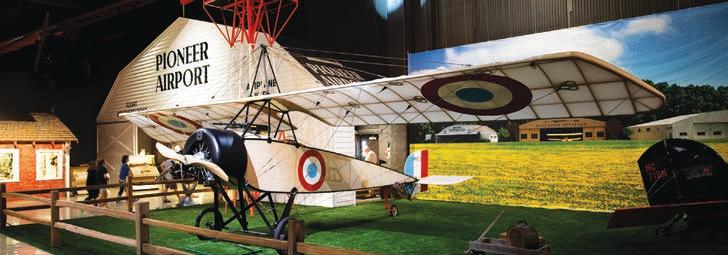
the aircraft on display as we celebrate the “Pioneers of Flight.”
aircraft company Aéroplanes
Morane-Saulnier was founded in 1911 by brothers Léon and Robert Morane, and Raymond Saulnier. The company produced a number of aircraft, including the MoraneBorel monoplane that was flown to victory in a race from Paris to Madrid in 1911. Turning its attention to military aircraft, Morane-Saulnier built a single-seat fighter, the Type N, and then modified the Type H to a parasol wing creating the Type L. The Type
LENGTH: 22 feet, 7 inches
WINGSPAN: 36 feet, 9 inches
HEIGHT: 12 feet, 11 inches
MAX SPEED: 71 mph
ENGINE (ORIGINAL):
L first flew in 1913 and was used during WWI as a scout and early fighter aircraft by the French Aéronautique Militaire, as well as the Royal Flying Corps and Royal Naval Air Service. EAA’s example is a reproduction handcrafted by volunteers, including employees of Daher and the original Morane-Saulnier company.

FAA will be interviewing and extending job offers on the spot to quali ed:
• Aviation Safety Inspectors
• NAS Technicians
• Aerospace, Electronics and Other Engineers
• Pilots Aircraft Certi cation
• Physicians Aerospace Medicine
• Other Aerospace Safety Professionals




We offer hot coffee, doughnuts, fresh fruit, salads, sandwiches, and much more. Red One Market has everything you need to make your stay more enjoyable.

EAA WEARHOUSE
9-10 a.m. Pam Ward, Miss Blue! The Pilot Maker
10-11 a.m. Erin Miller Book 1: Final Flight, Final Fight; Book 2: What Grandma Did 11 a.m.-12 p.m. Eileen Collins, Through the Glass Ceiling to the Stars
12-1 p.m. Steve Lambrecht, Boundless Brothers: Two Warriors from the Heartland, One Mission for the Homeland
1-2 p.m. Bill Ross, Superior Air Parts, Engine Management 101
2-3 p.m. Bill Ross, Superior Air Parts, Engine Management 101
3-4 p.m. Roy “Deacon” Qualls, Pilot’s Edge: Think, Train, and Fly Like a Pro
4-5 p.m. Mary Shipko Book 1: Aviatrix: First Woman Pilot for Hughes Airwest; Book 2: The Firsts: Women Pilots and How They Changed the Airlines; Book 3: Daring Mary: Aviation Pioneer
4-5 p.m. Stephen Chapis, Poor Little Lambs: The Baa Baa Black Sheep Story 5-6 p.m. Steve Church, Fighter Combat World War Two







BY HAL BRYAN
EVERY YEAR, MORE than 10,000 aircraft fly to Wisconsin for AirVenture. Of those, nearly 3,000 are showplanes — vintage aircraft, warbirds, homebuilts, aerobatic airplanes, etc. — that are displayed around the grounds. But some visitors may notice other airplanes parked here and there that didn’t fly in at all, because they’re part of the EAA Aviation Museum collection. Because our museum exhibits rotate, many of these aircraft are only viewable by the public during AirVenture, spending the rest of the year in long-term storage on the convention grounds. Here’s a guide
to some of these airplanes that you’ll see as you wander the neighborhoods of AirVenture.
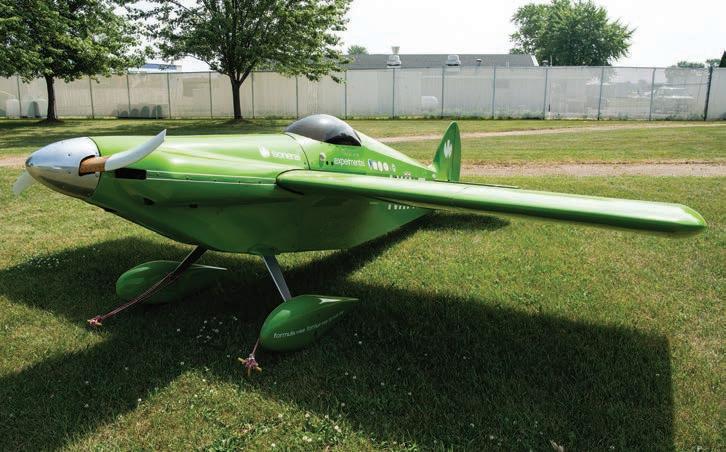
Aircraft: 1971 Monnett Sonerai I
Designer John Monnett of Oshkosh’s own Sonex Aircraft built this prototype of his Sonerai I in just eight months after he was inspired by a lecture given by Steve Wittman in the late 1960s. Built to comply with the Formula Vee racing standards, the airplane is powered by a Volkswagen engine, and plans are still available.
View all auction packages and bid at EAA.org/SilentAuction or scan the QR code.
Auction is open July 1–23. View auction items in person on Thursday, July 23, 12–3 p.m. at the EAA Aviation Museum™ Founders’ Wing.
Mobile Bidding Sponsor


VISIT US AT BOOTH 463
WEDNESDAY SCHEDULE
8 AM - 9:30 AM
FOUNDATION DONOR
APPRECIATION BREAKFAST
10 AM - 10:45 AM THE KINGS ON STRAIGHT TALK ABOUT AVIATION SAFETY WHAT PILOTS NEED TO KNOW
JOHN AND MARTHA KING, KING SCHOOLS
11 AM - 11:45 AM
PILOT TOWN HALL
AOPA CO-PRESIDENTS, AOPA SENIOR LEADERS, AOPA BOARD MEMBERS
1 PM - 1:45 PM
AOPA AT WORK: HOW WE PROTECT YOUR AIRPORT
AOPA AIRPORTS AND STATE ADVOCACY TEAM MEMBERS; LEON JACKLER, KYLE LEWIS, SEAN COLLINS

8:30 AM - 9:30 AM
COFFEE AND CONVERSATIONS ON THE MEMBER DECK
2 PM - 2:45 PM
WHAT YOUR CFI NEVER TOLD YOU
JASON MILLER, THE FINER POINTS, ATP/CFII
3 PM - 3:45 PM
AOPA REGULATORY AFFAIRS UPDATE
LEON JACKLER, VP OF AOPA AIRPORTS AND STATE ADVOCACY, GOVERNMENT AFFAIRS
4 PM - 4:45 PM
HOW TO BUY AN AIRPLANE
BRIAN MACBEAN, DIRECTOR OF AOPA FINANCE; IAN ARENDT, AOPA SENIOR ATTORNEY; CHER CLARE, GALLAGHER; TAYLOR LEE, AERO-SPACE REPORTS
6:30 PM - 9:30 PM NIGHT AIRSHOW MEMBER PARTY
MEET & GREETS
1 PM - 1:45 PM
TODD GILLES | @ snowbirdthemooney
2 PM - 2:45 PM
JIMMY WEBB | @ therealjimmysworld
3 PM - 3:45 PM
JASON MILLER | @learnthefinerpoint



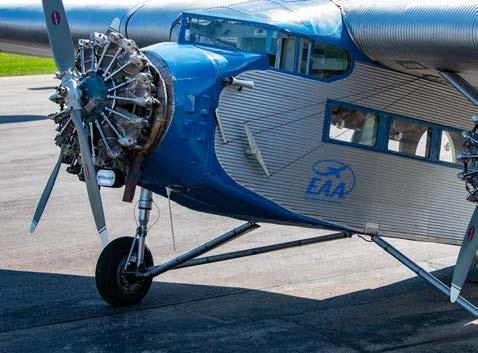
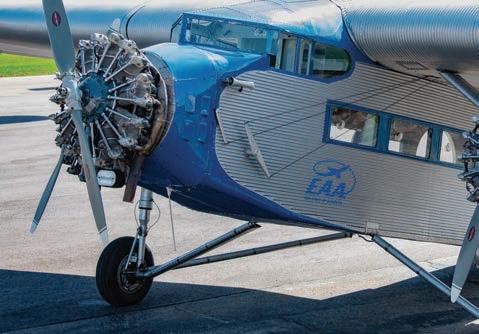

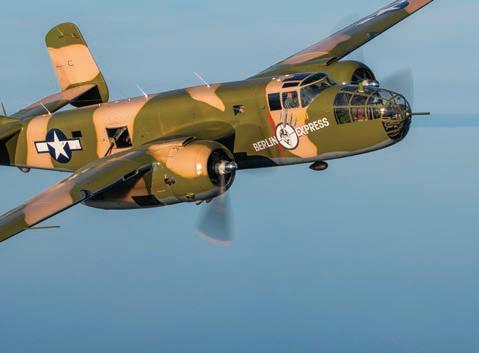







AS WORLD WAR II came to an end, people of the free world looked ahead to an era that held the promise of unprecedented peace and prosperity. Rough estimates indicate that, at the start of the war in September 1939, there were roughly 30,000 pilots, both civilian and military, in the United States. By war’s end in August 1945, the estimated number had ballooned to more than half a million. It seemed patently obvious that the previous generation’s “chicken in every pot” would be supplanted in 1946 by “an airplane in every garage.” Manufacturers went to work, introducing new aircraft and updating (and more actively marketing) existing designs. Sadly, this was the boom that wasn’t. A lot of wartime pilots moved on from flying, and, while commercial air travel grew steadily, general and recreational aviation didn’t attain the hoped-for ubiquity.
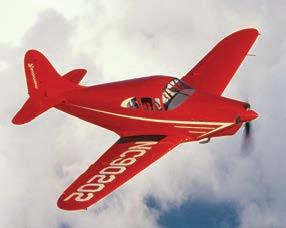
FIRST FLIGHT: 1945
LENGTH: 21 feet, 7 inches
WINGSPAN: 31 feet
SEATS: 2
CRUISE SPEED: ~185 mph
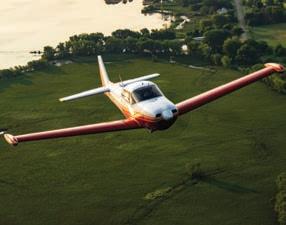
FIRST FLIGHT: 1946
LENGTH: 27 feet, 6 inches
WINGSPAN: 33 feet, 5 inches
SEATS: 4
CRUISE




Still, 1946 was a remarkable year for GA, and that optimism, however impractical, gave us so many classic aircraft that remain beloved today. You’ll note that, unlike most aircraft anniversaries, this one isn’t exactly hard and fast. We’re not strictly celebrating first flights or introductions; rather, we’re looking back at the airplanes that were in production and on the market in that first full year of postwar peace. As you wander the Vintage neighborhood on the AirVenture grounds,
~150 mph
you’ll likely see lovingly restored examples of a variety of types being celebrated as part of the Class of ’46. When you do, try to imagine what it was like 80 years ago, with the horrors of war well and truly behind us, a world in love with aviation, and nothing but blue skies ahead. That’s the context to have in mind as we celebrate the Class of ’46.
Loving your time at AirVenture® ?
Join EAA®, and take a piece of Oshkosh home with you! An EAA membership will give you year-round access to all things aviation.
Enjoy member benefits such as:
•Monthly issues of EAA Sport Aviation® magazine
•Discounts while you’re here at AirVenture ®
•Free access to nearly 400 museums and science & technology centers, including the EAA Aviation Museum™








































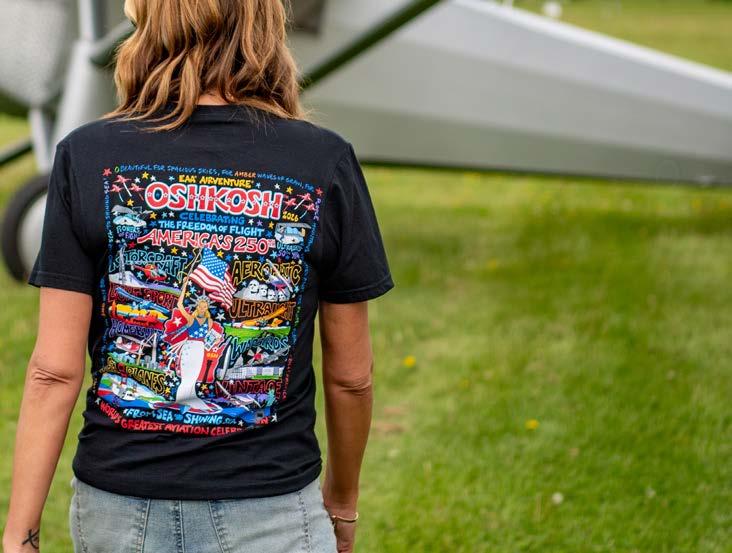






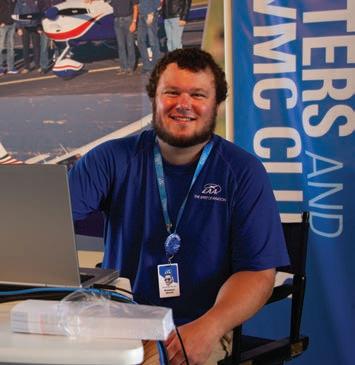
From first-time visitors to seasoned attendees, new EAA members to Lifetime, and aviation enthusiasts and pilots, the EAA Four Corners has something for everyone!
EAA Member Center
•Join, renew, or become an EAA Lifetime Member™
•Explore EAA’s many member programs and benefits
•Photo opportunities and airshow performer meet and greets
•Speak to an EAA Advocacy rep about Sport Pilot 2.0 (MOSAIC)
EAA Learn to Fly Center
•Enjoy daily “Learn to Fly” forums
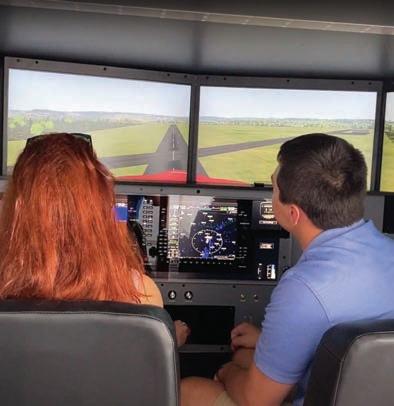
•Take an introductory flight lesson on a Redbird flight simulator
•Apply for your student pilot certificate
•Ask our friendly volunteers all your “Learn to Fly” questions!
EAA Youth Welcome Center
•Learn about youth activities on the AirVenture ® grounds

Delve
•Delve into interactive aviation activities and rivet your own keychain
•Explore EAA’s youth education opportunities
EAA Merchandise
•Shop official AirVenture event merchandise
•Find event apparel, mini windsocks, aviation
•EAA members receive 10%
•Each purchase helps support
programs

and more


























































6:30






















JULY 25–28, 2027


The EAA® GirlVenture Camp is an aviation experience during EAA® AirVenture ® Oshkosh™ for young women in grades 9-12.






















Aircraft Specialties Services, Inc.
Rinehart Fine Arts and Historic Collectibles
Adept Propulsion Technologies
AeroCreeper
Air Line Pilots Association, Int’l
ALSIM
AeroConversions, LLC
Alpha Systems Engineering & Mfg, LLC.
Design, Analysis and Research Corporation
General Aviation
Modifications Inc
Astronics/PECO Inc
BLR Aerospace LLC
Bridger Manufacturing
David UHL Studios, Inc.
Progressive Air Group
Sonex Aviation, LLC
1331 Custom Decor & Goods
9er Systems
Aero Endeavors
AeroPlex Labs
AIAA
AIG Aerospace Insurance Services, Inc.
Air Rhoades LLC
Aircraft Consoles, LLC
Airhart Aeronautics Inc
AirLogbooks
Amazon Prime Air
Americans for Safe Aerospace
AOPA Electric Aviation Division
Apex Realty Advisors, LLC
Art Cave Company
Atmos Avionics
Avalon Precision Castings
AvBrief.com
Aviate Pilot Apparel
Aviation Bar Cart
Aviation Detailing Association
Aviation Safety Solutions
Avion Research Corporation
AvTech Exams
BEC Defense
Belt Bonanza
Big Sky Dynamics
Blackstar Flight Simulation
Bliss Mobil USA
C R Stuff
California Baptist University
Castleberry Instruments & Avionics
CheckPrep
Christen Industries, Inc.
Circuit Board Medics
CityDogTech.com
Coastal Range Equipment
CoolFly (Zhejiang) Aircraft
Technology Co. Ltd
Cru Social Inc
Custom Aircraft Builders
Custom Engraving Ltd
Dassault Systemes
Dean’s Parts & Collectibles
Delta Strut
Double Line Marketing LLC
DTA
EcoTrikes LLC
Elevation Off Grid
Enhanced Radar
Epic Flight Academy
Everdry Waterproofing
EyeLights
Fairmont State University
Fargo MC Services
Fellowship of Christian Airline
Personnel (FCAP)
Fit-Ear
Fivestar Leather GmbH
Fly ORKA, Inc.
Fox Cities Flix
Fox City Psychic
Freefly Systems Inc.
Friday Dog Cartooning
Friends of British Aviation Heritage
Fuzzbutt Boutique
GeoSpatios Inc
Gold Seal Online Ground School
Good Boy Vodka
H6 Aviation Service
Hangar 8
HISC
Honor Flight Network
House of Rags (The)
IFR6
Innovative Aerosystems
Jack Walters & Sons Corp
James Aircraft
Jediwoods
Jump Aero
Keyed Dynamics Inc.
Kinzie Foods
KO Construction
LamVec Technology Ltd
Legit Avionics
Level Up Aviation
Light Shadow Color
Liquified RV Toilet Treatment
M4 Ranch Group
MACHINE AGE LAMPS
Mankiewicz Coatings LLC
M-B Companies
Merlin Labs
Midwest Flying Machines LLC
Minky Girl LLC
Morningside University
Mountain Air Realty
MR-VFR
MX Ledger LLC
My Brother’s Keeper Aviation Academy
NFuture
Northwest Aviation Medicine
OnTraxx
Open Road Harley-Davidson
Ozarks Relaxed Living
Pants for Birds LLC
Paradox Aviation
Paralyzed Veterans of AmericaWI Chapter
Patriot Aircraft
Patriotic Shop, Inc.
Petal & Prop Designs
Pilot Circle
Pilot Reach
Pilotbase
PilotDuty
Piper Flyer Association
Plane Crazy Life & Roger Reaves
Pray Aviation, Inc.
Precision
Predator Powered Parachutes
ProAm Steel
Professional Asian Pilots
Association Inc (PAPA)
Red Bull Flying Bulls
RED RDD, LLC
ResNexus
Richard I Bong Veterans
Historical Center
Rise Vertcal
River Valley Remodelers
Roamcraft Co.
Robinson Helicopter Company
Rogue Labs
ROKit Oxygen
Runway 31
SEAL Aviation
SeatCraft LLC
See The Bravo
Shenzhen Smart Drone UAV Co., Ltd
Simplistic Sensations Rock Shop/Boutique
Society of Women in Engineering - Wisconsin Chapter
Solid Ground Aviation
Solidstrip
STOL Creek Aviation LLC
T-Bird Sport Flight Aircraft
Ten Works
Texas State University
Thorp Aircraft
Thunderbird Aviation, LLC
Titan Aerobatic Team
Turtleback Trailers
United Companies Air Center
Universal Windows Direct
Veterans Airlift Command
Vetterman Exhaust Inc
Victory Jukebox
Virtual Ground School
ViscoTec America
V-Space
Wacko Products
You Can Fly PPG
Zhejiang Taxus Aircraft Parts
Technology Co


We’ve built a training catalog which includes:
Test your stick-and-rudder skills, judgment, and situational awareness. Requires 30 PIC hours in the last 12 months.*
Build your own experience one-on-one with an EAA instructor. You set the goals; we’ll help you crush them. Requires a student pilot certificate or higher.*
Sharpen your decision-making in the system. Requires IFR currency or within the six-month grace period.*
Check out the full schedule of EAA® Pilot Proficiency Center events here! * Registration required
WEDNESDAY, JULY 22, 2026
ACROSS
2. A standard airspeed indicator uses this system (two words).
3. As America turns 250, we’re celebrating the _______ of flight.
6. When you bank an airplane left and the nose wants to go right, thank this (two words).
7. Some pilots love glass, others are happy with ___________ (two words.)
8. Pitching rotates the aircraft around the _______ axis.
10. Developed from a C-97, NASA’s Super Guppy was built by Aero __________.
DOWN
1. If the ball is centered then the turn is ___________.
2. The Collings Foundation has the only flyable example in the country.
4. They’re here for the first time ever this year (two words).
5. MiG-29 pilot, NASA administrator, and EAA Lifetime member.
7. The _____ SE-1 made its surprise debut here last year.
9. Say hello to ___ Aerospace, makers of the eFlyer 2.
TUESDAY, JULY 21, 2026 ANSWERS
ACROSS
2. Mong
3. Heath
5. Poberezny
6. Spencer

9. Deuce 11. Rans
12. Composites 13. Fly 14. Sonex
DOWN
1. Volksplane
4. Tungsten
5. Parrakeet
7. Cruzer
8. Barrows
10. Cozy






















Try your hand at these trivia questions and find out. The answers, along with a new question, will be in tomorrow’s paper.

Q: Officially established in 1964, the Royal Air Force Aerobatic Team, or Red Arrows, currently operates BAE Hawk T1 fast-jets. Prior to the Hawk, what aircraft type did the Red Arrows use for the first 15 years of their existence?
TUESDAY, JULY 21, ANSWERS
Seattle, Boston, Chicago, New Orleans
See Bernie’s distinguished warbird performance in today’s air show!
“My playlist is a crazy list from rock to rap to country. I just pick what mood I’m in before the show and hit play from there. Music sets the tempo for me.”
Intergalactic — Beastie Boys
Leave a Light On — Papa Roach
Need a Favor — Jelly Roll
Now or Never — Kendrick Lamar, Mary J. Blige
WEDNESDAY, JULY 22, 2026
Free youth admission ages 18 and under is supported in part by
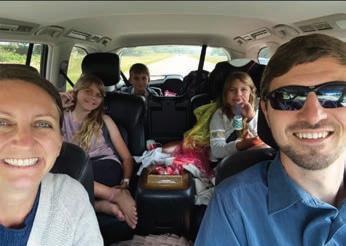
@Brad_hoblit SUV over Fisk, rock your wings.” #osh26-bound.
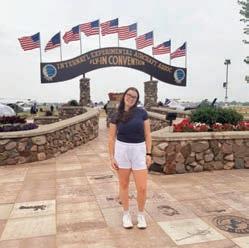
@cassidy.eckhardt1 welcome to oshkosh #osh26

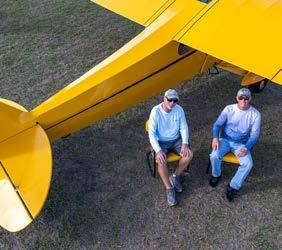
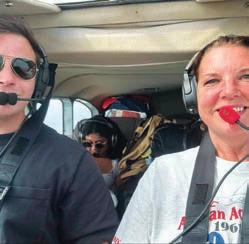
@jeribarrientos
First Osh arrival with ZERO traffic at 6pm last night! First VOR approach into Osh in a 195 in IMC due to the Canadian wildfire smoke. 2nd 195 arrival for the week. For now, I can say I have the prettiest 195 at Osh!
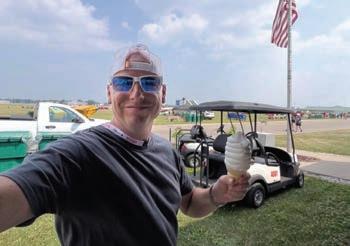
@Pilotfun101
My home for the week and I found my Ice Cream spot #PilotFun101 #OSH26 #AirVenture #MyHappyPlace
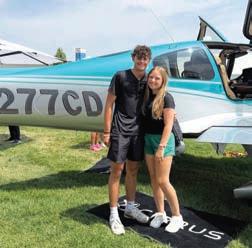
@Bradenlueck14
Some of my favorites from EAA AirVenture Oshkosh
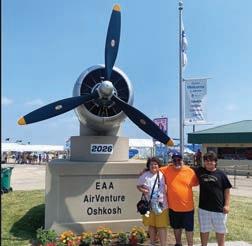
@Ealiptrap
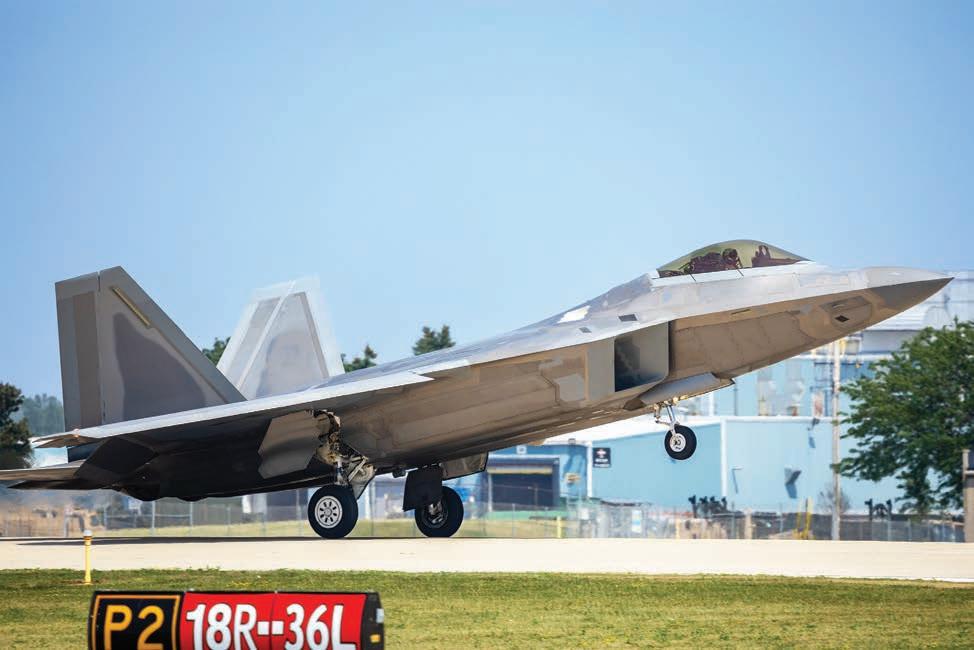
We made it just in time to catch the F22’s kick off the week.

GOLD
DeltaHawk Engines
Embry-Riddle Aeronautical University
Honda Aircraft Company
Lightspeed Aviation
Lycoming
Mars Wrigley
PenFed
Phillips 66
Piper Aircraft, Inc.
Redbird Flight
Victor Sierra
Aircraft Owners and Pilots Association (AOPA)
Aircraft Specialties Services
Aspen Avionics, an AIRO Group Company
Cirrus
Dynon
Epic Aircraft
Goodyear Tire & Rubber Company
Icom America
Junkers Aircraft
Oshkosh AeroTech
PowerLift Hangar Doors
Riesterer & Schnell
RTX
Wipaire
BRONZE
AeroShell
Ballweg Implement Co, Inc
Blackhawk
Bose Aviation
Continental Aerospace Technologies
Covington Aircraft
CubCrafters
Delta Air Lines
Diamond Aircraft
Elixir Aircraft
GE Aerospace
Green Bay Austin Straubel Int.
Airport
Gulf Coast Avionics / Pacific Coast Avionics
Hangar 22 Coffee
Jani-King
Jeppesen ForeFlight
JP Instruments
magniX
NATCA
Pepsi
Piedmont Airlines
Pilatus Aircraft USA Ltd.
Poly Fiber, Inc
Robinson Helicopter Company
Rotax iService and Training
Centres
SiriusXM Aviation
Southwest Airlines
Superior Air Parts, Inc.
SureFly Electronic Ignition
Tecnam
True Blue Power
uAvionix
United Airlines
Van’s Aircraft
VOLARE HANGARS
Whelen Aerospace Technologies
Williams International
Wing Aviation
Women in Aviation International (WAI)
Zenith Aircraft
4imprint
Airbus
ASA (Aviation Supplies & Academics)
Avfuel
B & C Specialty Products Inc.
Barnstormer
Bristell Aircraft
CiES Incorporated
DATC
General Aviation Manufacturers Association (GAMA)
Gridiron Air
Horizon Hobby
Lincoln Electric
PlaneWX
SOFTIE PARACHUTES by ParaPhernalia, Inc.
Starr Aviation
Teledyne Aerospace Electronics, Gill Aircraft Batteries
UND Aerospace
Arena Americas
Banyan Group Ventures
Chicago Executive Airport
David Clark Company

Endeavor Air
EnerSys®
Flight Outfitters
Flite Test
GES
Global Aerospace
Gulfstream Aerospace
Honda Power Equipment
JSfirm.com
MATCO ALS
Metro Sales Inc.
Mountain Air Realty
Ninety-Nines, Inc (The)
Old School Model Works
Pilotsmith
PS Engineering Inc
SCHEELS
Scheme Designers, Inc
Sherwin-Williams Aerospace
Small Town EV
Target Oshkosh
The Yalanis Private Wealth
Management Group of Wells
Fargo Advisors
Walkabout Hats
WILCO
Zipline
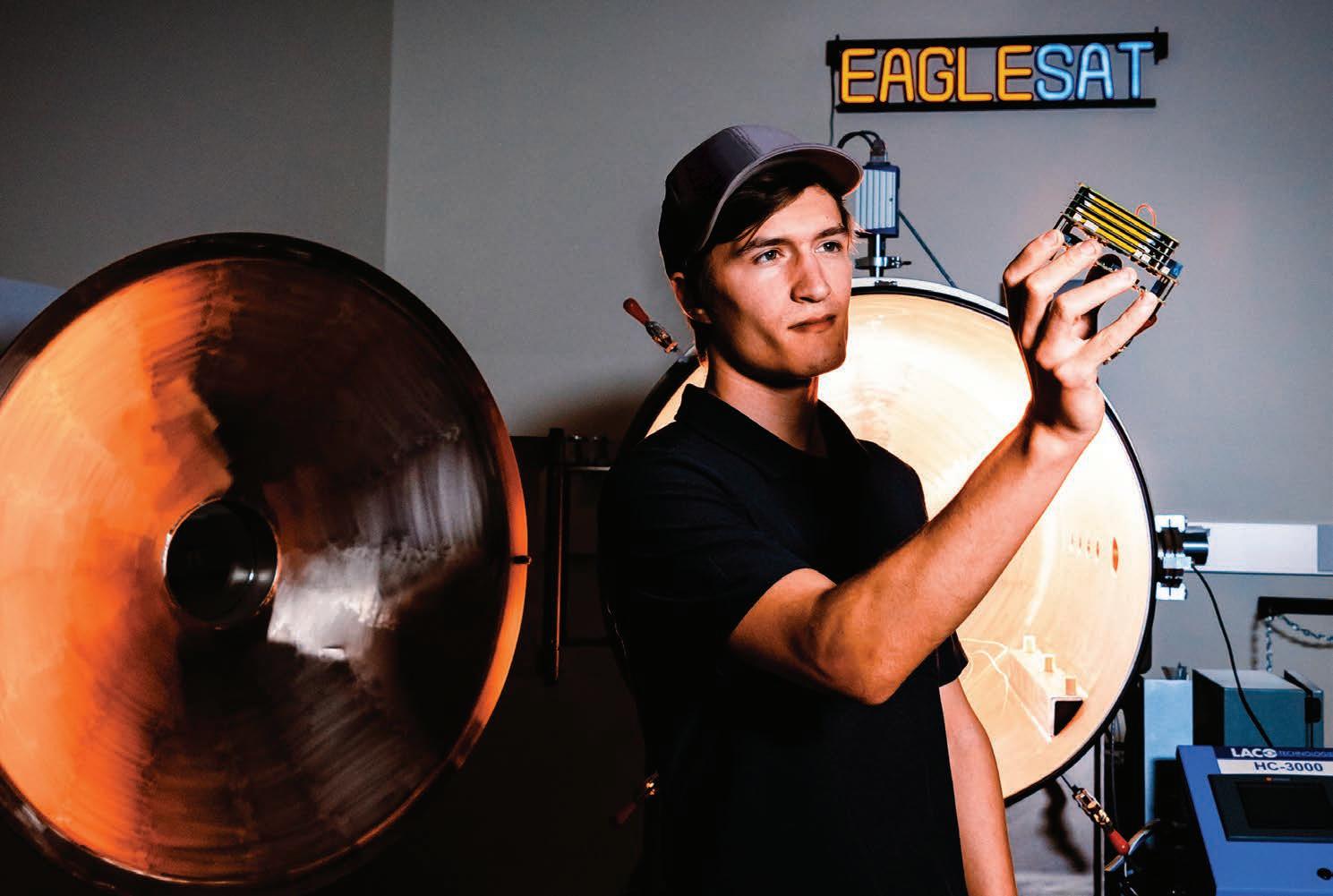
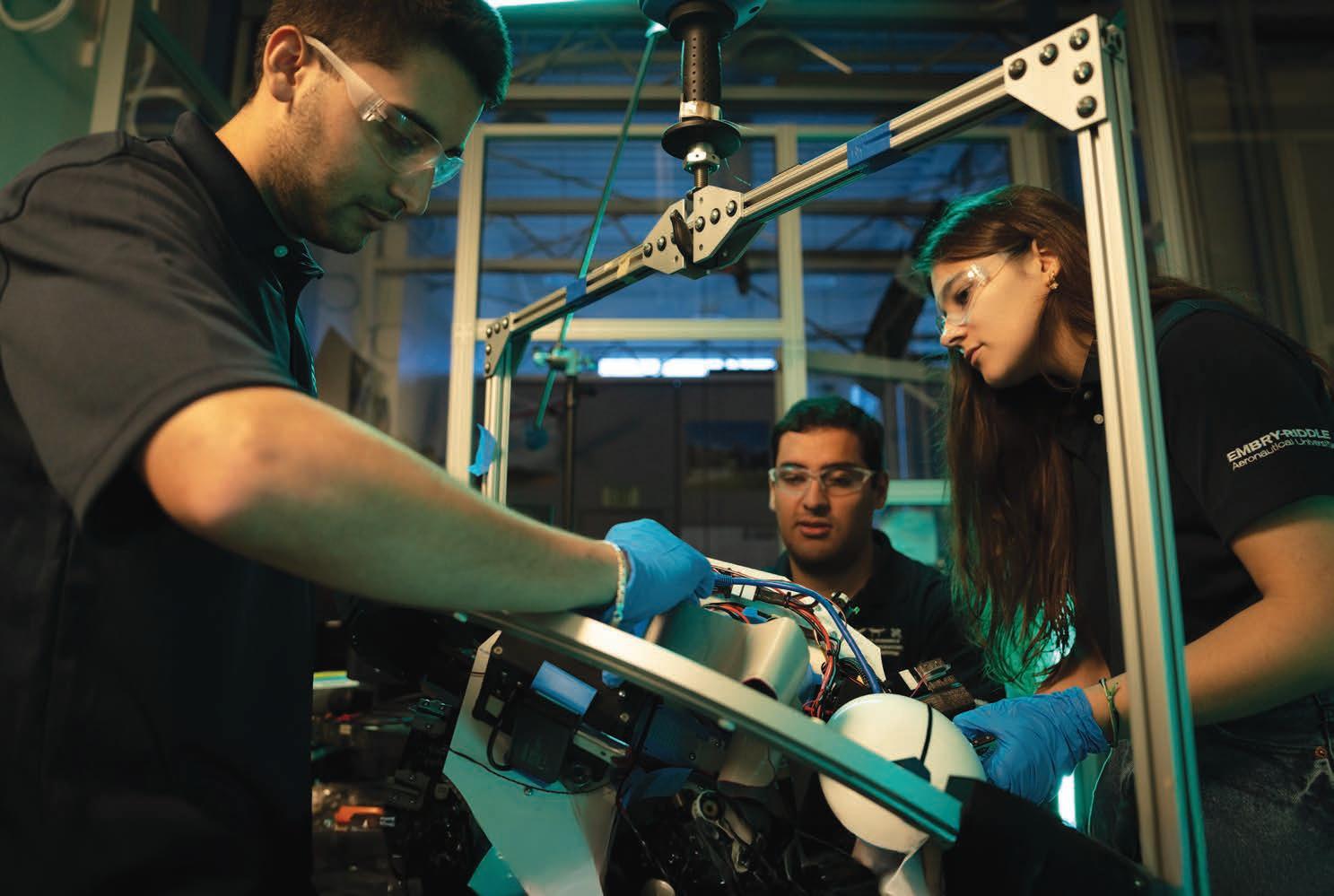
Embry-Riddle Aeronautical University puts you on the leading edge
As the nation’s leading institution for aerospace engineering education, Embry-Riddle offers practical, hands-on training across a variety of engineering disciplines. Our graduates are well-prepared to tackle the most complex design and operational challenges in aviation, aerospace and other fields.
Embry-Riddle students attend classes in dynamic engineering labs, gain valuable experience through research and other real-world activities and can choose from specialized degrees in engineering fields that include civil, computer, electrical, mechanical, software and systems.
Ready to engineer your future? Find out how Embry-Riddle helps you design and build what’s next.
erau.edu/oshkosh