Mobile Payments 101
How do they work?
Richard A. Gibbs
Karen Ross
Andrew Lorentz
June 1, 2011


How do they work?
Richard A. Gibbs
Karen Ross
Andrew Lorentz
June 1, 2011
What is a mobile payment?
Mobile payment technology
Near field communications Value proposition and challenges Critical issues

Mobile payment
a payment (transfer of funds in return for a good or service) where the mobile device is involved in the initiation and confirmation of the payment
includes P2P transfer of funds
Mobile banking
access to banking functionality (query + transaction) via the mobile device
includes the provision of part or all of the banking functionality already provided by banks over the Internet in the form of online banking
Mobile transaction
transaction where the mobile phone is used simply to initiate an order but not make a payment or to receive delivery of goods or services (e.g., event ticket bar code)
Short Message Service (SMS)
SMS is a communication protocol allowing interchange of short text messages
Problems as a mobile payment platform
Slow, store-and-forward operation
No security or encryption, sent in clear text only (except during transmission over the air)
No inherent proof or confirmation of receipt or delivery
Generally used to purchase digital goods (ringtones, avatars, games) or send money P2P or P2B
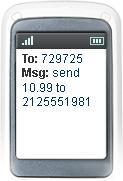
Send money
Send a text to 729725 (PAYPAL). Specify the amount and the recipient’s phone number or email address.
Send money
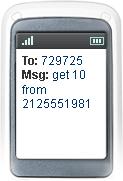
Request money Send a text to 729725 (PAYPAL). Include the words get and from, and then specify the amount and the phone number of the person you’re requesting money from.
Unstructured Supplementary Service Data (USSD)
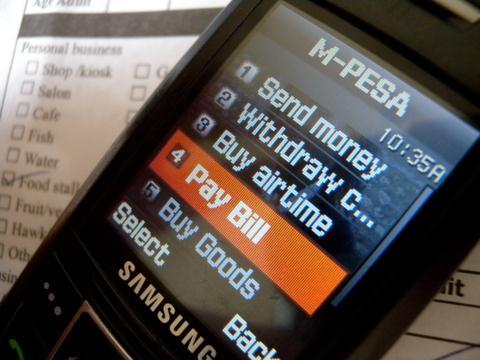
USSD is a mechanism for transmitting information via a GSM network
Unlike SMS, USSD offers a real-time connection during a session which makes it faster
Used extensively overseas for mobile financial services such as remittances and bill payment
Examples: M-Pesa in Kenya, TchoTcho Mobile in Haiti
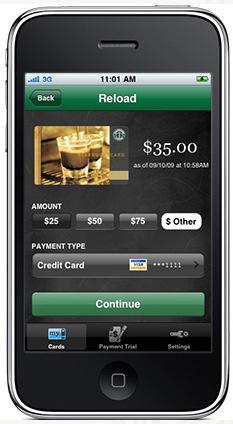
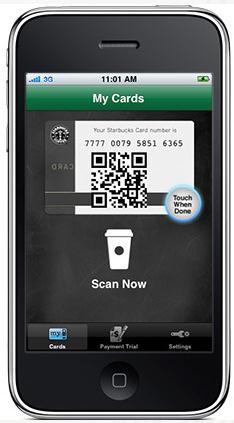
Quick response (―QR‖) two-dimensional barcodes
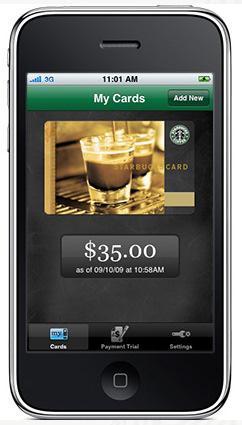
Popular for closed-loop applications
Starbucks, Target, other retailers

Near field communication (NFC)
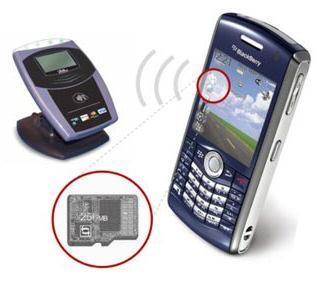
NFC is a short-range high frequency wireless communication technology that enables the exchange of data between devices over about a 4 cm. distance
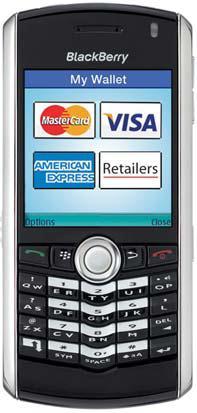
Allows emulation of existing contactless payment standards (MasterCard PayPass, Visa payWave, American Express ExpressPay, Discover Zip)
Allows P2P transfers (NFC device to NFC device)
Can read ―tags‖ from smart posters for offers or coupons

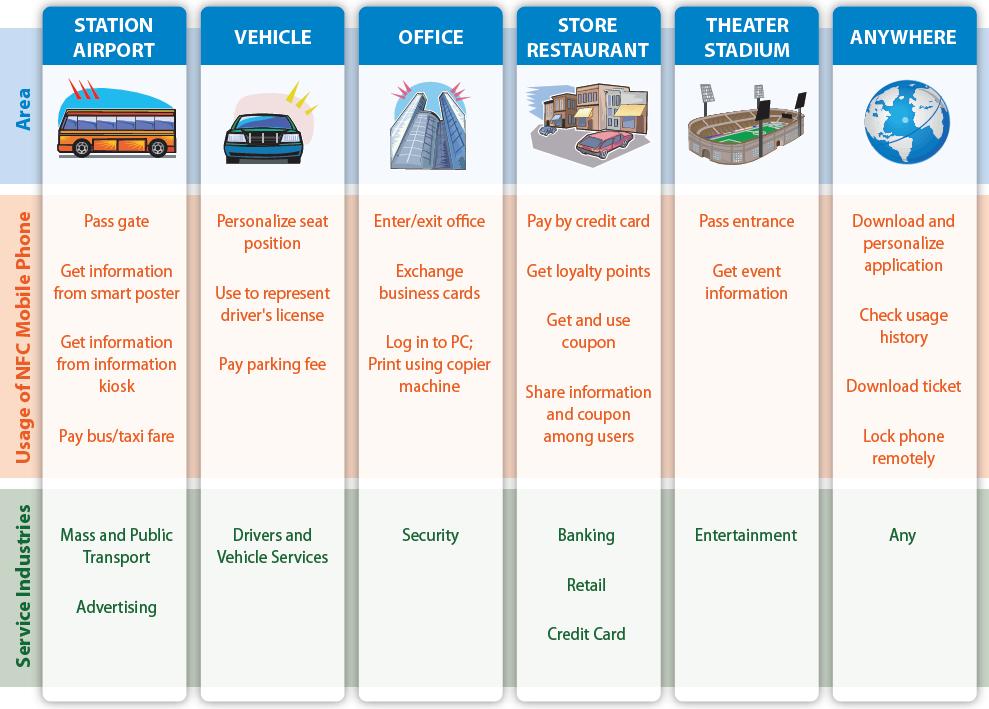
Source: Essentials for Successful NFC Mobile Ecosystem, NFC Forum (Oct. 2008)
Mobile network operator centric model
MNO independently deploys mobile payment service
Can bypass financial institutions or develop open ―wallet‖ application
Challenged by lack of connection to existing payments networks
Generally limited to remittances and P2P
Financial institution centric model
Financial institution develops a mobile payment application to be used on any mobile device
Ensures merchants have necessary POS capabilities
MNO involvement may not be necessary
Collaborative model
Financial institutions, MNOs, and trusted service managers collaborate to deliver mobile payment
Model favored by the Federal Reserve
P2P model
Third party develops application to provide P2P or other form of mobile payment
Key Stakeholders
Consumer
Financial Institutions (FI)/Banks
Mobile Network Operators (MNO)
Merchants
Trusted Service Managers (TSM)
Supporting Stakeholders
Payment Card Associations
Handset Manufacturers
Secure Element Manufacturers
Technology Providers (NFC Chipset, POS Terminals)
Third Party Application Providers
Standard Bodies
Chip/Handset Manufacturers
―You have banks competing with carriers competing with Apple and Google, and it’s pretty much a goat rodeo until someone sorts it out.‖ Drew Sievers, chief executive of mFoundry (developer of mobile payment software for merchants and banks)

Consumers who use the mobile payment device
Issuers and Acquirers who are regulated financial institutions with access to payment networks (banks and money transmitters)
Merchants who can accept contactless payments
Mobile network operators who ensure a supply of NFC-capable mobile devices and may be gatekeepers for secure elements
Payment networks who set standards and promote acceptance of payment cards
Chip and handset manufacturers of NFC-capable mobile devices who comply with standards
Trusted service managers who provision and manage the applications on NFC-capable mobile devices
Issuing and acquiring payment processors who process payments on behalf of issuing and acquiring banks
Application issuers who offer applications for specific purposes (e.g., proximity payment cards, transit, vending, person-to-person payments)
Application developers who develop applications for use on NFC-capable mobile devices

Develops, maintains, and drives adoption of its programming language and APIs, which provide an open and interoperable infrastructure for applications and secure communications within devices.

Engages in technical, commercial, and public policy initiatives to ensure that mobile services are interoperable worldwide.


Develops specifications for NFC devices that are based on ISO/IEC standard 18092 for contactless interfaces, ensuring interoperability among devices and services.


Maintains, evolves, and promotes standards for payment account security.
Drives adoption of its technical standards, which provide an open and interoperable infrastructure for transactions performed using smart cards, systems, and devices.
Establishes international standards, including standards applicable to financial transactions and contact and contactless smart cards.

Develops mobile serviceenabler specifications to promote interoperability.
Cellular & WiFi Modem
NFC DEVICE
User Interface Operating System Environment
UICC/ SIM
Secure Element Application Secure Domains
Root Secure Domain
Transit Application Secure Domain
Bank Application Secure Domain
P2P Interface Tag R/W Interface Card Emulation Interface NFC Controller
Security critical applications that require payment and account credentials need secure hardware storage and a secure execution environment
Role is handled by the secure element (SE)
A secure element is a platform where applications can be installed, personalized and managed, which consists of hardware, software, interfaces, and protocols that enable the secure storage of credentials and execution of applications for payment, authentication, and other services
On the universal integrated circuit card (or UICC)
Typically this is the phone’s subscriber identity module or SIM.
MNOs have control of the UICC.
On a separate chip or SD card inserted in the phone.
Financial institutions have the option to be MNO independent.
Embedding the secure element in the phone itself.
Preferred option for the location of the Secure Element
Simple Mode—A MNOcentric model where only the MNO performs SE lifecycle management functions but TSM can monitor and verify loading of applications
Delegated Mode—TSM is authorized to load applications and perform application lifecycle management functions
Delegated Mode
Authorized Mode—Several entities are authorized to load applications and perform application lifecycle management functions
Authorized Mode
TSM delivers card account information over mobile network to secure element
TSM interfaces with mobile network via OTA platform
Subscriber’s NFC Device
Use card stored in handset
Account information download
Authorization and settlement through existing financial networks
GlobalPlatform Secure Channel Protocol + TLS/SSL + MNO air encryption
GlobalPlatform Secure Channel Protocol + TLS/SSL
TLS/SSL or VPN
Subscriber’s NFC Device
Dynamic encryption
Financial Institutions Merchant
Existing security technology
Security
Multiple layers of security (secure element, PIN, additional authentication factors [phone number, SMS challenge], information never passed as clear text
Lower merchant liability costs
Mag-stripe data exposure is eliminated
Lower issuer costs
No physical card distribution
Reduced fraud due to lost cards
Customer is always ―on-line,‖ which allows for
Improved customer relationship management
Receipts sent to phone after purchase
Increased yield from marketing spend
Co-marketing – purchase concert ticket and get a e-gift card for purchase of music on iTunes
Targeted offers
Messages and offers can be sent to customer in conjunction with a transaction (e.g., rebate coupons, map to event just purchased)
Paperless coupons
Smart offers – customized offers sent to customers based on customers’ demographics and transaction history
Stakeholders have varying motives for pursuing mobile payments
Financial institutions
Mainly a defensive play to protect current payment products
Prevent further disintermediation of the financial institution by keeping financial institution involved in any solution developed
Reduction of transaction costs of existing payment methods, especially cash and checks
Mobile network operators
Provision of value-added services to subscribers to reduce churn and increase average revenue per unit through associated increases in airtime and data usage
Merchants
Faster checkout
Ability to send directed marketing messages
Reduced transaction costs and fraud liability
Increased customer satisfaction and loyalty through offers and reward programs
Consumers
Faster checkout
Security
Convenience
High cost for merchants
POS terminal updates or replacement
New systems may need development
Adoption by consumers
Consumers averse to change
No incentive to use contactless payment card (even if they have such a card)
What is the revenue model?
More players in the revenue food chain
Untested technology
Whose customer is it?
Whose data is it?
How can I market to these customers?
How can I help others market to these customers?
Google Offers, mobile couponing
How can I use information about these customers?
Geo-location, etc
Who controls collection?
Who controls communications with customers?
Who safeguards the customer data? (liability for breach)
Who powers the payments and how?
What payment instruments? Debit instruments subject to possible Fed rate cap
What authority? (bank or money transmitter)
How does the financial institution meet its compliance obligations?
If the MNO wants control – how does it comply with financial services laws and regulations?
How should the solution be implemented?
Whose intellectual property is used?
Is the business model financial institution- or mobile operator-centric?
Who manages the secure element and applications on the secure element?
Will the application be open or closed (or somewhere in the middle?)
Consumer choice and ubiquity
What are some possible revenue models?
Incremental revenue attributable to NFC
Pay-as-you-go model
MNO or TSM obtains revenue from application issuers for personalization and provisioning
Landlord-tenant model
MNO obtains revenue from charging application issuer ―rent‖ for space of secure element
Interchange and transaction revenue
Banks obtain revenue through current interchange process no matter which business model is chosen, however, interchange usage fee must be shared with more parties
MNO obtains revenue from increased data usage