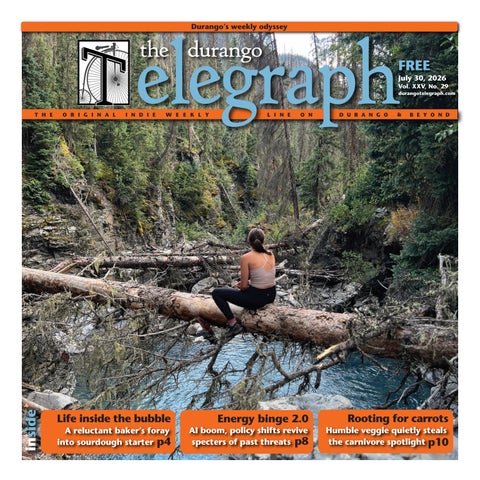
Sourdough nonstarter
Look, I recognize that I’m over here in a bubble. No one in my bubble lets AI do my writing for me, and no one here likes how we have to disclaim that now. But this bubble isn’t entirely, “Oh no, the machines are coming for us all.” This bubble also always has mixed nuts in a jar, and stashes of chocolate, and two dogs, and it seems like it would be off grid, which it is, but only when the power goes out because wind blew over the electricity, and boy it could really use a haircut.
It’s me. I’m the bubble.
Now I know you’re probably thinking: This is precisely the kind of dude to make his own sourdough. That’s what you get for presuming anything. And it’s why I regret to inform you that you are correct.
I held off making sourdough for a long time. Not even a global pandemic, during which EVERYONE baked bread, convinced me that I should make food that relies on hand bacteria. When I want bread, I can purchase a loaf for, like, $6 (or, increasingly, $31). And then I eat it in my bubble, and I don’t need to acquire any loaf pans or parchment paper.
But, this spring, even my strongly anti-social bubble could not protect me from a well-intentioned gift of sourdough starter.
This little jar, I was assured, preceded Covid by decades. The hand bacteria in this puppy dates back to some French Foreign Legionnaire and had been smuggled out of one colony or another under fire, even if it was 19th-century fire and thus not terribly accurate. Men might have died for these glutenmunching hand bacteria. An active family lineage was sworn by blood to ensure its perseverance.
Somehow, I had presented myself as a worthy keeper of this offshoot jar.
I accepted the gift, because saying no was rude. Not as rude as forcing a living entity on me, one that requires constant care and feeding and yet will outlive me and my chocolate stashes – but still rude. Also, I said yes, because if those claims of lineage were true, then the starter predates even the most rudimentary AI and thus cannot be questioned.
Thumbin’It

The imperiled razorback sucker has been downlisted from endangered to threatened, representing some 30 years of collaborative work. It may never be cute, but we’re glad it has a fighting chance at survival.
They may have not won podiums in the 2026 Tour, but Durango riders Quinn Simmons and Sepp Kuss did the hometown –and country – proud with Simmons named “best teammate” and Kuss finishing as the top American rider.
A “hot bed” of avocado varieties has been discovered in the Nicaraguan jungle which could prove valuable if – god forbid – disease ever wipes out the now-dominant Hass variety. We can all sleep a little bit easier knowing our toast won’t be naked.
So now I’m responsible for the life forms in my refrigerator. The best news here is that they turn themselves into bread. The worst news here is that they need assistance. A lot of assistance.
From me.
Yeah, sure, I have to buy the flour and acquire the bread pans and feed the little legionnaires and mix the ingredients and stretch the dough and temperaturecontrol my home and set many different timers and wash my hands a whole lot more than people did back in Napoleonic days. But none of that is the real work. The real work is the cleanup. Sourdough dough sticks to everything.
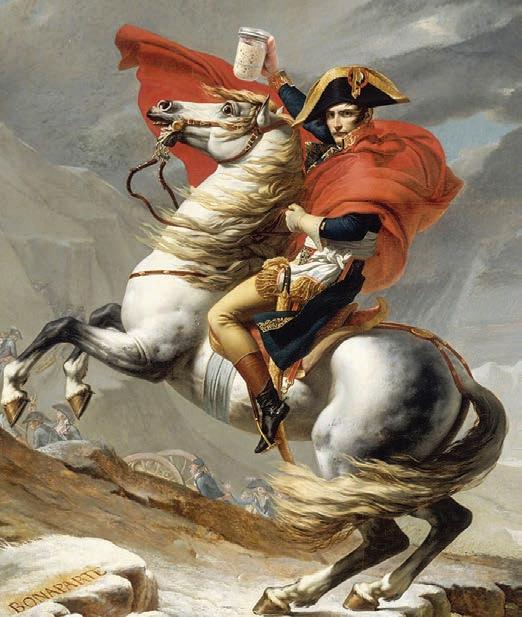
That’s why I have resigned myself to permanent traces of hardened sourdough dough all over my bubble. I could clean it up with a little warm water, but all this bread-making effort wears me out. I need my overnight rest – just like the sourdough dough does.
Fortunately, when I wake up, there’s more work to be done! I’m enlisted, first thing, for hours of shaping dough, and creating a tense surface on the dough, and letting the dough rest again while I simmer in envy, unable to go back to sleep lest I miss the next timer for this needy, needy colony plopped on my countertops.
If there is one consolation, it is that many of the little flour fiends are about to perish at 450 degrees in a fiery cave.
And if there is a second consolation, it is that I have butter and a fresh jar of jam. I will enjoy devouring that which I have been feeding all this time. Seems fair. Honestly? I see why people do this. It’s not about the time saved – good lord, it’s not about the time saved. Nor is it about the money saved either, once you realize that bread pans are reusable.
No, it’s about these savory moments with the product of your own efforts. It’s about reaching back to a simpler time, when of course creative things were made by humans. It’s about buying yourself several more days of not having to take your bubble out to the grocery store. At least, not until the starter gets hungry.
And when it does, trust me – you feed it.
SignoftheDownfall:

Jackie, the internet famous matriarch of the Big Bear Valley bald eagle clan, was attacked by two younger eagles recently. She was rescued by wildlife officials and taken to a rehab facility. We know it’s the animal kingdom, but we hope she’s spreading her wings again soon.
We aren’t the only ones grappling with wildfires and heat. The largest fires in France’s and Spain’s modern histories are threatening Madrid and Bordeaux. Last month was also the hottest June on record for Western Europe.
In another heartbreaking loss, last week, Nathan Matthews, 43, of Lincoln, Neb., became the fourth firefighter caught in the deadly Knowles Fire “blowover” in late June to die from his injuries.

– Zach Hively
A Faker’s Dozen McDonald’s was crushing it in the ’80s with their Quarterpounder, so A&W released a third-pounder to compete. But it failed; Americans thought quarter-pounders were bigger than thirdpounders, because four is bigger than three. This advertising failure is still used in marketing classes to show how stupid Americans can be, and it’s been the best example for nearly five decades. But Coke might’ve just outdone it. When their 15-pack debuted a while back, the company decided to point out that there are three more cokes in a 15-pack than in a regular 12er, because they knew math like that would be difficult for most Coke drinkers. People are flooding social media with pics of the new packaging, some of which include bananas for scale, presumably to show the size of our education deficit.
SoapBox
Ban e-bikes from River Trail
Editor’s note: The following letter was sent to Durango Mayor Dave Woodruff and various city officials and also shared with the Telegraph
My partner and I live in Tucson but have been spending the summers in Durango for the past three years. We are very active seniors: We hike the Colorado Trail to Gudy’s Rest three or four times a week. The trail is shared by thru-hikers, families with small children, other hikers, trail runners with dogs and mountain bikers. Never have we felt the others who share the trail with us were a danger.
Another activity we enjoyed were walks along the Animas River Trail. I use the past tense, because we no longer feel safe on this trail and with great reluctance have decided to walk it no more. The danger we feel comes from e-bikes.
I understand the City Council considered restrictions on e-bikes but finally decided not to impose them. I’m sure you heard from various users of the trail before that decision was made, but I’m asking you to reconsider.
Please, Mayor, take a walk on the trail some morning. You will see legions of bike riders who have no knowledge of bicycle courtesy, rules of the road or just simple manners. You hear the whine of the e-bikes coming up behind you, passing within inches at high speeds. God forbid, if one of those e-bikes hits a walker, adult or child, the result would be catastrophic. E-bikes must be banned for public safety.
We understand that the Council decided to focus on steps like posting speed limits, enforcement patrols, etc. Yet the four times we used the trail this year, we saw none of those steps being implemented. In the past three summers we were in Durango using the trail, we saw a bicycled officer only once.
Let me also mention that we are not recommending regular bicycles be banned. Just as mountain bikers respect other users of trails like the Colorado Trail, it seems to us that traditional bikers have an understanding of courtesy and rules of the road.
Hoping that these recommendations by two fans of Durango will be given due consideration.
– Larry & Jackie Linderman, Tucson, Ariz.
Cutting through outbreak noise
The recent cyclospora outbreak linked to lettuce left many families unsure of whom or what to trust. Career epidemiologists at the CDC followed the same rigorous process used in past outbreaks: tracing reported infections back through restaurants to a single supplier. That process didn’t change; a single inconclusive lab test did. This was quickly seized on in a public statement from Taylor Farms’ CEO to cast doubt on the findings that career scientists still stand behind. There was no FDA apology as was implied in the CEO’s statement. Notably, the same supplier was linked to a cyclospora outbreak back in 2013.
This year’s outbreak, the largest on record, hit while

the CDC and FDA are both without permanent directors and running on reduced staff, tighter budgets and fewer working labs. With reorganization under way, it’s no surprise that solid science has struggled to cut through the noise. That’s exactly why independent, evidencebased sources matter. For clear answers on navigating the cyclospora outbreak, Your Local Epidemiologist (yourlocalepidemiologist. substack.com/) covers the top 10 questions families are asking.
Measles cases nationwide have already surpassed last year’s total with five months still to go, putting 2026 on pace for a 35-year high. According to Johns Hopkins, 93% of cases are in unvaccinated people. For clear guidance, visit immunize.org.
And with air quality reaching dangerous levels in many regions this summer, lung.org offers trusted information on wildfire smoke and respiratory health.
Bureaucratic caution, opaqueness and possible corporate or political influence only deepen confusion. Trust in institutions is earned through transparency and consistency. Until it’s restored, reliable resources can help families make informed decisions for themselves.
– Jan Phillips, Durango
‘Dammed’
Once flowing rivers
Now stopped from reaching the sea
We are also damned



– Karen Carver, Durango

RegionalNews
by Shannon Mullane / The Colorado Sun
Like water managers around the Colorado River Basin, Max Wilson spent Monday waiting for a new federal report outlining the river’s future – and future water cuts.
Water resources management advisor for the city of Phoenix, Wilson watched the federal website where the report would be published, which appeared to be temporarily down. He sat in his ninthfloor office, talking about how the city has prepared for this moment, while looking out on the Arizona Capitol and the sprawling metropolis below.
“I would certainly say it is tense,” said Wilson. “We are waiting with bated breath for the federal government to speak.”
Federal agencies are expected this week to release the report, which outlines the government’s plan for how to manage the Colorado River Basin’s key reservoirs in coming years. It’s one of two reports that represents three years of gridlocked negotiations over how to manage key reservoirs after the current management rules expire this fall.
But water managers and officials had a host of concerns and only a few positives to share after seeing early glimpses of the plan.
“While this will be the culmination, we anticipate, of some bad news and frankly a flawed process, I don’t think any of us are expecting to be surprised by the content,” Wilson said.
Colorado River officials have been working since 2023 on a new set of rules
Floating a plan
for how to release and store water in two immense reservoirs, Lake Powell on the Utah-Arizona border and Lake Mead on the Arizona-Nevada border.
But the negotiations have been gridlocked, in part because of politics and in part because of challenging water con-

ditions. Without a firm consensus from basin states over how to manage the reservoirs, the federal government has put together its own plan.
Water officials will decide how much water to release in two-year intervals and will renegotiate the plan every two years

for the next 10 years, according to early descriptions of the federal plan.
The basin would have to operate within certain bounds. The Lower Basin states – Arizona, California and Nevada –would have upper limits on how much water they’d be asked to cut, maybe 3


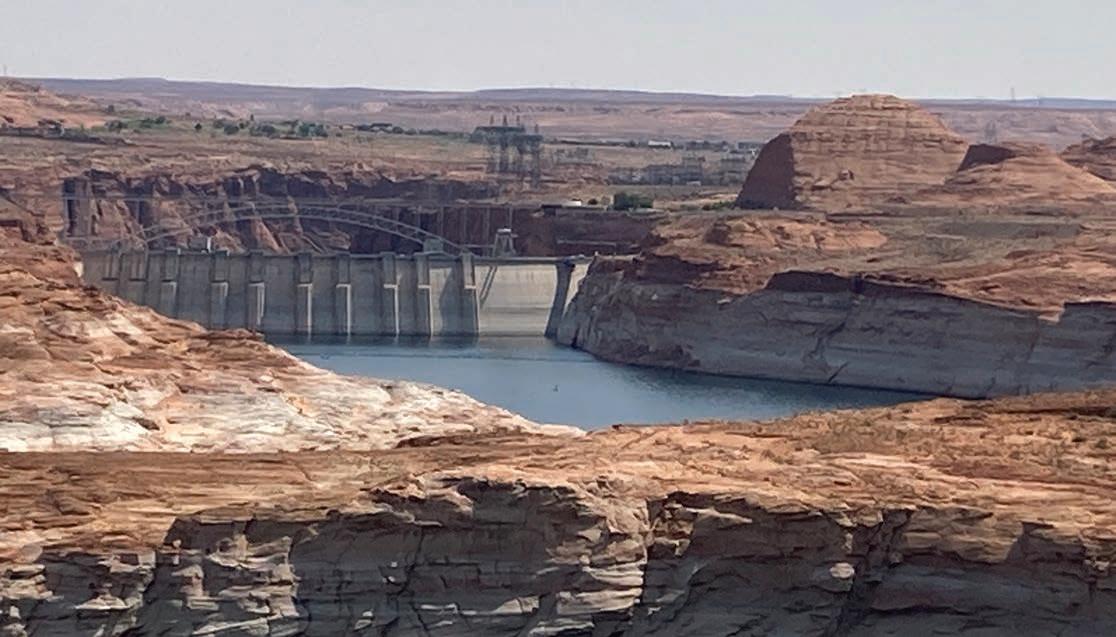
Glen Canyon Dam holds back what remains of Lake Powell. In lieu of an agreement among Colorado River Basin states, the federal government is expected this week to release a plan outlining how to manage the basin’s key reservoirs –Powell and Lake Mead – in coming years. / Telegraph file photo
million acre-feet in some years. Lake Powell’s releases could be limited to a range of 5 million to 12 million acre-feet. (One acre-foot roughly equals the annual water use of two to four households.)
More uncertainty
It’s a loose framework, water experts say. But the two-year timeline might help people respond more quickly to changing water conditions, said Anne Castle, a former Colorado River official for the Department of the Interior.
Constant negotiations will take staff, time and money away from actually adapting to the new rules, experts said.
“I struggle to find many pros,” Wilson said. “We’re looking at a 10-year period of essentially forever negotiations where the valley and southern Arizona will be at immense risk of losing … access to a significant water supply that we have grown on and we depend on.”
Water storage in Lakes Mead and Powell is at a historic low. Plus, the Colorado River has been shrinking. Over the last 27 years, its flows have dropped by 20% compared with the 20th century average, said Brad Udall, senior water and climate research scientist at Colorado State University’s Colorado Water Center.
Since 2020, the river’s flow has been about 10.2 million acre-feet on average
per year – that’s a 33% decline, he said.
“That’s a stunning drop. There’s nothing like it in the historical record” dating back to 1906, Udall said.
The expiring agreement, established in 2007, at least set up a plan that would last 20 years, Castle said. That gave cities, irrigation districts, dam managers, farmers and businesses more certainty about what to expect each year and how to plan.
“We don’t know exactly what the effect will be on individual states, on individual water users and the various economies in the Lower Basin states, in particular,” Castle said.
Impacts upstream & downstream
Colorado water officials and utility managers could not be reached or declined to comment on the preliminary plan, described in several state meetings, conferences and in front of Congress.
The implications for Colorado are less direct than for downstream states. Blue Mesa Reservoir, a federal water project and the largest reservoir in Colorado, is on the table as a bargaining chip. The Lower Basin wants that water to be more accessible, while the Upper Basin doesn’t want to drain upstream reservoirs.
Castle will be watching for details about how federal reservoirs will be used and how reservoir storage will be recov-

ered under the new plans. Once upstream reservoirs like Blue Mesa are drained, they’ll need a good winter or more to refill, she said.
“Releases from (those reservoirs) are only a temporary solution,” Castle said. “They might buy us another year or two. But if we don’t eliminate the gap between supply and demand, we’re just draining those reservoirs.”
States have also been making legal threats. Arizona said in May that upstream states – Colorado, New Mexico, Utah and Wyoming – will be out of compliance with a century-old agreement by the end of September. The agreement, the Colorado River Compact of 1922, says upstream states “will not cause” the flow of the river to be depleted below a certain level.
Upstream states, like Colorado, have a very different legal interpretation, saying they aren’t using their full share so therefore couldn’t be causing any depletions.
Some people also argue climate change is the cause, not water use.
“This is this enormous gray area around how climate change affects the law of the river and how arguably there are no clear answers,” Udall said.
Experts will also be scouring the reports for anything that would waive or
trigger potential lawsuits.
Colorado and other upstream states could also be called on to conserve water in the new federal plan.
In Phoenix, Wilson is looking at years when the city might receive all of its Colorado River water or none.
Phoenix, plus some cities, tribes and other water users, draws from long canals that are part of the Central Arizona Project. The water system is junior in the basin, which means it would be cut first in time of shortage. Phoenix can normally use up to 190,000 acre-feet of water from the project.
The city has been preparing for years, building new pipelines and wells to move water from other river basins and to access water underground. But it’s a lot of water to replace. By the end of this year, the city could be asking residents to cut back on their water use in addition to voluntarily conserving, he said.
“I don’t think that ultimately folks have come to terms with the fact that this is a water supply that Arizona needs to be able to thrive,” he said.
this story was edited for length. The Colorado Sun is a nonprofit, award-winning news outlet covering Colorado. Sign up for their newsletters, and follow them on Twitter, Instagram, Facebook and Bluesky. ■


TheLandDesk Energy binge 2.0
A 1970s warning echoes as data centers and policy shifts revive old threats
by Jonathan P. Thompson
“We are, in short, on an energy binge, which, like all binges, can only end in disaster.”
This warning was delivered to a congressional committee in 1971 by Harvey Mudd, then director of a Santa Fe-based environmental group. The “we” on the energy binge was the growing population of the Western U.S., and their rapidly accumulating number of electrified gadgets – from air conditioners to stoves to can openers and toothbrushes. The resulting disaster was just getting underway: The Big Buildup of giant coal power plants and their mines across the Colorado Plateau, along with the resulting pollution.
Mudd’s quote, and others from the hearing on “Problems of Electrical Power Production in the Southwest,” have come to mind in recent weeks, for seemingly unrelated reasons: data centers and Trump’s national monument shrinkage.
America is once again on an energy binge, this one primarily driven by the Big Data Center Buildup. These facilities guzzle up so much electricity that Southwestern utilities are expecting their power demand to double or triple within the next decade. And even if these projections are overblown, the utilities are still using them to justify building new natural gas plants or even nuclear reactors and to keep old coal plants running, saying that solar, wind and geothermal can’t come online fast enough.
One of the proposed coal plants Mudd was worried about was slated for the Kaiparowits Plateau, in what would become Grand Staircase-Escalante National Monument in 1996. Meanwhile, that 1970s energy binge was also spurring nuclear reactor development. And for a time in the 1980s, the Gibson Dome in southeastern Utah was one of the prime candidates for the nation’s spent reactor fuel, i.e. a radioactive waste dump. When President Barack Obama established Bears Ears National Monument in 2016, he included the Gibson Dome site.
When Trump issued a proclamation
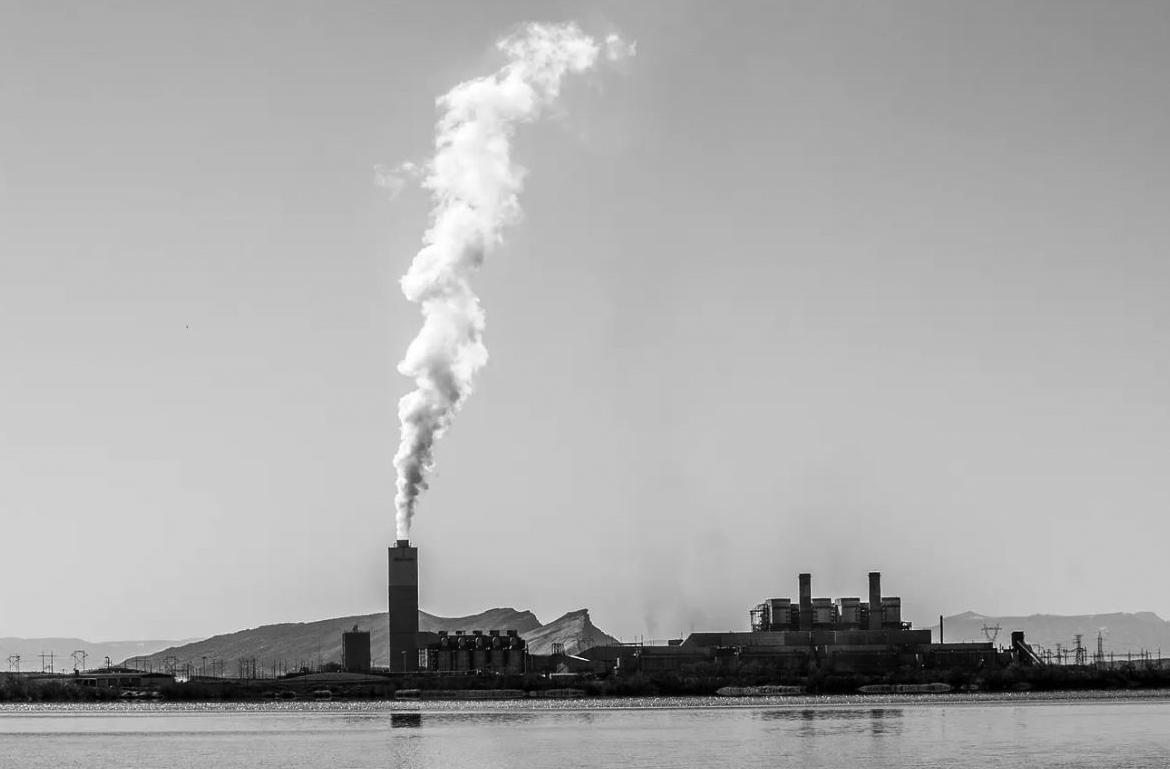
The Four Corners Generating Station, the flagship of the Big Buildup of coal plants on the Colorado Plateau during the 1960s and 1970s. Plans also included building an even bigger coal plant on the Kaiparowits Plateau in the middle of what later would become Grand Staircase-Escalante National Monument. The majority owner of the Four Corners plant, Arizona Power Service, is no longer committing to its planned 2031 retirement of the plant amid an “electricity reliability crunch.”
this month shrinking both monuments, he redrew the boundaries to exclude both the Kaiparowits and the Gibson Dome sites, opening those places back up to coal and oil and gas leasing, new mining, and other developments –maybe even waste repositories, power plants or, yes, data centers.
I’m not saying that Gibson Dome and the Kaiparowits project are going to be revived in any shape or form. Both were soundly rejected back in their day for a variety of reasons. These projects make even less sense now.
But it’s worth remembering that in the past, parts of these monuments were drilled and mined – extensively in some places – and were targeted for projects
that would have industrialized large swaths of land. When the monuments were originally established, the lines were drawn to include these sites to fend off future development. And when the current administration redrew the lines, it intentionally left out those same sites in the hope of luring future development. Whether that actually happens will depend on economics, how the legal battle over the shrinkage goes, whether Congress finally makes these national monuments permanent and where they draw the boundaries, and on what a future administration decides to do.
To help you imagine what things could have looked like, here are sum-
maries of the aforementioned projects. Kaiparowits Power Project
In the early 1970s, Southern California Edison, San Diego Gas & Electric, Arizona Public Service, and Salt River Project proposed the Kaiparowits Power Project to help meet growing power demand.
The project, which would have included the largest coal plant in the world at the time, would have been centered at the Fourmile Bench site, about 36 miles north of the community of Big Water, Utah, (née Glen Canyon City) and Highway 89. The coal mines would have been to the southeast of Fourmile Bench.
The project would have included (per
the 1975 draft environmental impact statement):
• A 3,000-megawatt coal-fired generating station, projected to burn about 9 million tons of coal per year and pull 41,400 acre-feet of water per year from the Colorado River via Warm Creek Bay on Lake Powell. The four smokestacks would each emit an estimated 12 tons of particulates, 34 tons of sulfur dioxide and 250 tons of nitrogen oxides – per day.
• Four underground coal mines projected to produce about 12 million tons of coal annually. The complex would also include a 7-mile-long conveyor belt to move coal to the plant. The mine complex would use about 3,100 acre-feet of water annually, also from Lake Powell.
• Nearly 1,500 miles of high-voltage transmission lines and 1,900 miles of new permanent and temporary roads.
• A limestone quarry in Cannonville, 16 miles northwest of Bryce Canyon National Park.
• A gravel mine in the upper Wahweap Creek stream bed.
• A brand new town with a projected population of up to 15,000 on the East Clark Bench on Hwy. 89.
• A new, 67-mile highway from the new company town (near Big Water/Glen Canyon City) to the power plant and on to the limestone quarry, where it would link up with Hwy 12. The highway would cut straight across the heart of what would become Grand Staircase-Escalante National Monument.
The project was met, as one can imagine, with intense opposition from environmental groups and other residents of the Colorado Plateau. And, over time, the projected cost kept ballooning, even as demand for electricity stopped growing so rapidly. In April 1976, the proponents cancelled the project, citing costs, lawsuits, bureaucracy and environmental opposition.
The project’s demise, coming coincidentally at about the same time Congress passed the Federal Land Policy and Management Act and changed the government’s notion of public lands, added fuel to southern Utah’s budding Sagebrush Rebellion. Soon after the cancellation, hundreds of Kane County residents gathered in Kanab and burned an effigy of Robert Redford, who was probably the project’s most famous opponent.
Many years later, Andalex would lease land nearby and propose its own major coal mine, albeit without an accompanying power plant. When President Bill Clinton established Grand Staircase-Escalante in 1996, he included Andalex’s proposed project site in the national monument, and the feds bought out the company’s leases, killing the project for good. That land has now lost national monument status, meaning it could be leased out once again.
Gibson Dome Repository
In 1982, Congress passed the Nuclear Waste Policy Act, requiring the Department of Energy to come up with a national repository for spent nuclear reactor fuel and other waste. This launched a search for a permanent, national repository. The long list of possible sites included Yucca Mountain in Nevada, the Hanford Site in Washington, a couple of sites in Texas, and the Paradox Basin in southeastern Utah.
The Paradox possibilities included the uranium mining hub of Lisbon Valley; Elk Ridge – the home of the Bears Ears buttes; the Salt Valley north of Moab; and a place called Gibson Dome, near the junction of
Lavender and Davis canyons and the Six-Shooter Peaks. Of these, only Gibson Dome made the short list, and an effort to establish America’s nuclear waste dump on Canyonlands’ doorstep commenced.
Many Utahns, having lived through decades of nuclear fallout from weapons testing and suffering from illness due to uranium mining and milling, were appalled. However, the commissioners of San Juan County, especially a former uranium miner named Cal Black – sometimes called the Original Sagebrush Rebel – were delighted.
Construction of the facility would employ more than 1,000 people, and the operation nearly as many. Black believed that with a waste dump in place, the nuclear power industry – and therefore San Juan County’s uranium mining industry – would be revived. In an open letter published in the San Juan Record in March 1982, the San Juan County commissioners wrote: “We support such a facility and are opposed to Canyonlands National Park or archaeological sites in the area used to preclude the repository.”
Black then went on to tell a Salt Lake Tribune reporter that tourists would enjoy visiting a nuclear waste dump, just as they reveled in seeing the gargantuan Bingham Canyon open-pit copper mine and visiting the Mormon Temple in heavily polluted Salt Lake City: “If pollution hurt tourism, then Temple Square in the heart of the state’s worst pollution, and Kennecott, one of the worst blights on the environment, wouldn’t be the state’s number one and number two tourist attractions.”
Even with that kind of marketing, Black wasn’t able to enlist much support from outside the county. Former uranium boomtown Moab had by then grasped on to the tourism and recreation economy, and many of its citizens were not too psyched about having a nuke dump on their doorstep and wasteladen trucks or trains rolling through town. It wasn’t
just about the radioactivity, either: the facility likely would require its own coal-fired power plant and rail line from Moab and would use as much as 1.5 million gallons of water per day.
The Sierra Club, Earth First!, no-nuke activists, and national park advocates launched a campaign, “Don’t Waste Utah,” to rally opposition to the plan. Utah Governor Scott Matheson, a Democrat, went from being skeptical to outright opposed; his Republican successor ended up in opposition, as well.
Black and his colleagues were enraged, and the county staked 2,000 mining claims in the repository study area out of spite. It didn’t work. Opposition to the dump continued, and in 1986, the final environmental assessment was released, effectively killing the Canyonlands site, moving the Yucca Mountain site to the top of the list. The Chernobyl disaster and the end of the Cold War further diminished Utah’s uranium mining industry. Cal Black, known for wearing a uranium-clasped bolo tie, died of lung cancer in 1990.
Congress designated Yucca Mountain as the nation’s nuclear waste repository in 1987 and spent billions of dollars developing it. But in 2009, bowing to pressure from Sen. Harry Reid, the powerful Nevada Democrat, the Obama administration axed funding for the project, putting it into dormancy. Now the administration is reportedly planning to move away from a single repository like Yucca Mountain and instead recruit willing states to store the nation’s nuclear waste. Utah’s current leadership, I’d guess, is willing to do whatever it can to boost nuclear power and kiss up to Trump. And Trump just took away national monument protections from that old Gibson Dome site.
The Land Desk is a newsletter from Jonathan P. Thompson, author of “River of Lost Souls,” “Behind the Slickrock Curtain” and “Sagebrush Empire.” To subscribe, go to: www.landdesk.org. ■
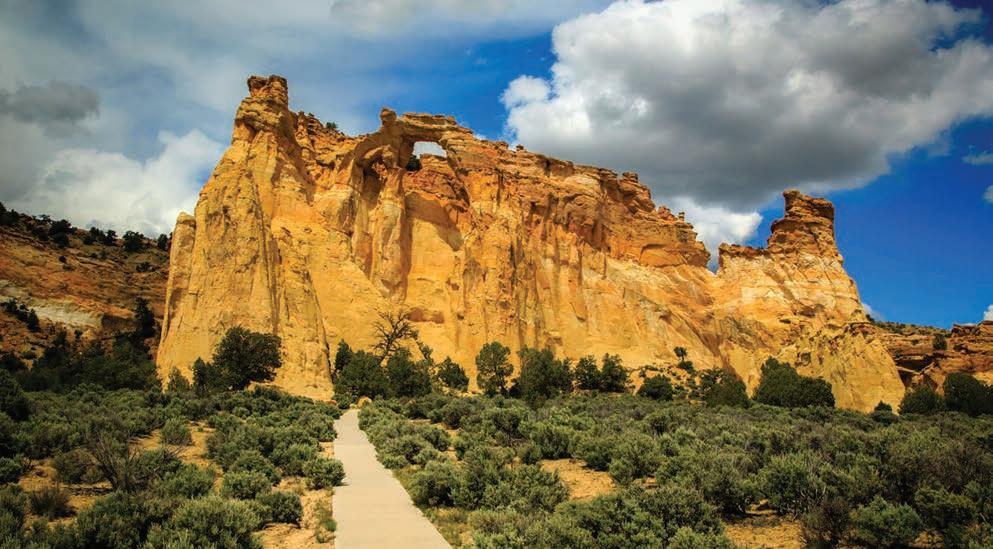
Grosvenor Arch, located on the Kaiparowits Plateau, is among the land features recently cut from Grand Staircase-Escalante National Monument by the Trump Administration. Without protections, the area is now open to potential oil, gas and mining development. Ironically enough, this photo comes from the Visit Utah tourism site.
Thursday30
Thursday Morning Cribbage, 8-10 a.m., Just the Drip Coffee Shop, 1600 Florida Rd.
Elmore’s Farmers Market, 8 a.m.-1 p.m., 306 Florida Grange, 656 CR 172
Reunion for Petitioners and Supporters, 5 p.m., 11th St. Station, 1101 Main Ave.
Green Drinks featuring Durango Trails, Bears Smart Durango and Sierra Club SWCO, 5-7 p.m., 11th St. Station, 1101 Main Ave.
Chuck Hank plays Ska-B-Q, 5-7 p.m., Ska Brewing, 225 Girard St.
Leah Orlikowski plays, 5-8 p.m., El Rancho Tavern, 975 Main Ave.
Jessee Lee plays Concert Hall at The Park, 5:30 p.m., Buckley Park
Dart Tournament, 5:30-9 p.m., Union Social House, 3062 Main Ave.
“Andrew Litton: A Life in Music,” Music in the Mountains benefit dinner & concert, 6 p.m., Strater Hotel, 699 Main Ave.
Durango Brewer’s Trail Race, sponsored by Trestle Brewing, 6 p.m., Test Tracks Falcon Way trailhead
Jeff Solon Jazz, 6 p.m., Lola’s, 725 E. 2nd Ave.
“Stories Written in Stone: A Life in Paleontology,” 6-7:30 p.m., Durango Public Library, 1900 E. 3rd Ave.
Rockin’ Randy plays, 6-9 p.m., 11th St. Station, 1101 Main Ave.
Sean O’Brien plays, 6-9 p.m., Office Spiritorium, 699 Main Ave.
Thursday Night Rides, 6:30 p.m., Durango Harley-Davidson, 750 S. Camino Del Rio
Trivia Night, 6:30-8:30 p.m., The Powerhouse, 1333 Camino Del Rio
Natalie Brooke with HorseShirt, 8 p.m., Animas City Theatre, 128 E. College Dr.
Friday31
Veterans Friday Morning Coffee, 8-10:30 a.m., American Legion, 878 E. 2nd Ave.
San Juan Nature Hike, 10 a.m.-12 noon, Andrews Lake upper parking lot
For the Bears pop-up art exhibition, 4-9 p.m., FA Contemporary, 600 Main Ave., #208
Leah Orlikowski plays, 5-8 p.m., El Rancho
Pete Giuliani plays, 5:30-7:30 p.m., Barons Creek Vineyards Tasting Room, 901 Main Ave.
Matt Rupnow plays, 6-8 p.m., Lola’s Place, 725 E. 2nd Ave.
Devin Scott plays, 6-9 p.m., Fox Fire Farms, 5513 CR 321, Ignacio
3 Way Street plays, 6-9 p.m., Union Social House, 3062 Main Ave.
Dustin Burley plays, 6-9 p.m., Office Spiritorium, 699 Main Ave.
“A New Sheriff in Town,” musical by Durango Youth Theater, 7 p.m., Durango Arts Center, 802 E. 2nd
“Gluzman Plays Bruch,” Music in the Mountains Chamber Orchestra concert, 7 p.m., Community Concert Hall at FLC
Agave plays, 7-10 p.m., 11th St. Station, 1101 Main Ave.
Saturday01
Durango Farmers Market, 8 a.m.-12 noon, TBK Parking Lot, 259 W. 9th St.
Buckley Park Arts & Crafts Festival, 9 a.m.-3 p.m., Buckley Park
Colorado Day Celebration and Open House, 10 a.m.-4 p.m., Animas Museum, 3065 W. 2nd Ave.
Colorado Birthday Party with music by Yes, No, Maybe, 11:30 a.m.-1:30 p.m., Pine River Library, 395 Bayfield Center Dr., Bayfield
Tibetan Buddhist Practice Group, 4 p.m., Dreams of Tibet, 988 Main Ave.
Jason Thies and Jeff Haspel play, 5 p.m., Meadow Market, 688 Edgemont Meadows Rd.
Jeff Solon plays, 6-8 p.m., Lola’s, 725 E. 2nd Ave.
Adult Disco Roller Skating Jam, 6-8 p.m., Chapman Hill Rink
Yes, No, Maybe plays, 6-9 p.m., Dera Deli & Bar, 1124 Greene St., Silverton
Contra Dance, 6-9 p.m., Union Social House, 3062 Main Ave.
Matt Rupnow plays, 6-9 p.m., Office Spiritorium, 699 Main Ave.
“Mardi Gras Madness,” Music in the Mountains Pops Night, 6:30 p.m., Sky Ute Event Center, 14324 Hwy 172, Ignacio
“A New Sheriff in Town,” musical by Durango Youth Theater, 7 p.m., Durango Arts Center, 802 E. 2nd
New Mexico Comedy Showcase, 8 p.m., The Subterrain, 900 Main Ave.
BabyDel & Friends “Surrender,” 9 p.m.-1 a.m., Animas City Theatre, 128 E. College Dr.
Sunday02
Sunday Record Brunch Club, 12 noon-3 p.m., 11th St. Station, 1101 Main Ave.
“A New Sheriff in Town,” musical presented by Durango Youth Theater, 2 p.m., Durango Arts Center, 802 E. 2nd Ave.
“Gershwin, Bernstein and the New World,” Music in the Mountains Grand Finale Orchestra concert, 5 p.m., Community Concert Hall at FLC
Matt Lewis plays, 6-9 p.m., Office Spiritorium, 699 Main Ave.
Blue Moon Ramblers play, 6-9 p.m., Diamond Belle Saloon, 699 Main Ave.
West Coast Swing Dance Party, 8-9:30 p.m., 69:30 p.m., Smiley Building Room 15, 1309 E. 3rd Ave.
Monday03
Happy Hour Yoga, 5:30 p.m., Ska Brewing, 225 Girard St.
Anuraag Pendyal plays, 5:30-10 p.m., Diamond Belle Saloon, 699 Main Ave.
Chuck Hank plays, 6-9 p.m., Office Spiritorium, 699 Main Ave.
Jazz Church, 7:30-9:30 p.m., 11th St. Station, 1101 Main Ave.
Tuesday04
Cowboy Tuesdays, 12 noon-3 p.m., Diamond Belle Saloon, 699 Main Ave.
CreativiTEA, 3:30-5:30 p.m., Sunnyside Library, 75 CR 218
Durango Prostate Cancer Support group, 7-8 p.m., via Zoom, prostategroupdurango@gmail.com
National Night Out Durango and Grill with Rotary Club of Durango, 5-7:30 p.m., Buckley Park
Durango Real Estate Meetup, 5:30 p.m., Union Social House, 3062 Main Ave.
Group mountain bike ride, 5:30-7:30 p.m., Twin Buttes Trailhead
Anuraag Pendyal plays, 5:30-10 p.m., Diamond Belle Saloon, 699 Main Ave.
Book Club: “The Wide Wide Sea,” 6-7:30 p.m., Durango Public Library, 1900 E. 3rd Ave.
AskRachel
Pink hydrants, the 130-second rule and Hydroflask margs
Interesting fact: Every color on a fire hydrant means something, unless it doesn’t, and the colors are generally standardized, except for every community being able to set their own standards.
Dear Rachel,
As I walk the streets of Durango, I see fire hydrants of many colors. Red, white, green and now one at 11th Street and 2nd Ave., next to the county offices, that is pink. Can you find out why? Government pressure?
– Fire Fly
Dear Water Pressured,
Should I rebrand this segment “Ask Rachel to Google crap for me?” Fire hydrant colors are actually codes for firefighters. Other times, the colors are municipalities showing solidarity for a cause, I guess when that cause is more important than conveying information to a firefighter. For instance, pink is likely a breast cancer awareness thing. AKA, absolutely deep state government pressure to treat women as human.
– Your broken water main, Rachel
Dear Rachel,
I spilled the last of my coffee beans on the kitchen floor. Normally I’d sweep them up and toss them. But this was my only chance
Black Velvet Trio plays, 6-8 p.m., Three Springs Plaza, 175 Mercado St.
Tuesday Trivia, 6-8:30 p.m., 11th St. Station, 1101 Main Ave.
Karaoke, 6-9 p.m., Weminuche Woodfire Grill, 18044 CR 501, Vallecito
Randy Crumbaugh plays, 6-9 p.m., Office Spiritorium, 699 Main Ave.
“Building the Colorado Trail,” film by RMPBS, 6:30-8 p.m., Durango Arts Center, 802 E. 2nd Ave.
Adult Disco Roller Skating, 6:30-8:30 p.m., Chapman Hill Rink
Nik Parr & The Selfless Lovers play, 8 p.m., Animas City Theatre, 128 E. College Dr.
Wednesday05
La Plata County Fair, 8 a.m.-7 p.m., La Plata County Fairgrounds
Wild New Way Women’s Collective Open Gathering, 8:30-10 a.m., Durango Collective, 1315 Main Ave.
Twin Buttes Farm Stand, 3-6:30 p.m., 165 Tipple Ave.
for a cup of coffee. I picked some of them up super fast, and others took me a minute or two to get to. Does the 10-second rule apply to much-needed coffee beans? Or can I take more of an aggregate score? (I did remove the cat hair before running them through the grinder, for the record.)
– Grounds for Removal
Dear Hair of the Cat,
You know that the rule is entirely arbitrary, right? You’re supposed to exclaim the rule for a few seconds longer than your food was on the floor. In your case, it’s something like the 130-second rule. You’re safe! Besides, the boiling water ought to take care of at least the weakest germs from your cat-covered floor. What’s the worst you could be drinking?
– Spill the beans, Rachel
Dear Rachel,
I tried very hard to give myself a staycation this summer; it felt important to kick back and relax. The problem is, I didn’t truly relax until the last Sunday before going back to work … and then bam! Except I was stubborn about staying in vacation mode. Any tips to keep this feeling with me until my vacay?
– Overworked
Group Ride, 5-7:30 p.m., Purgatory Sports Downtown, 2615 Main Ave.
Mushroom and Plant Walk with SJMA, 5:30-7:30 p.m., La Plata Canyon Road intersection with Miners Cabin Campground
Hotel Draw plays Community Concert Series benefiting Durango Montessori, 5:30-8 p.m., The Powerhouse, 1333 Camino del Rio
Word Honey Free Poetry Workshop, 6-7:30 p.m., The Hive, 1175 Camino Del Rio
“On the Road” public meetings with the LPC Board of County Commissioners, 6-7:30 p.m., Animas Valley Grange, 7271 CR 203
Anuraag Pendyal plays, 6-9 p.m., Diamond Belle Saloon, 699 Main Ave.
Terry Rickard plays, 6-9 p.m., Office Spiritorium, 699 Main Ave.
Ongoing
Dementia/Alzheimer’s Caregivers Support Group, 1st, 3rd & 5th Wednesday of each month, 10:30 a.m.-12 noon, La Plata Senior Center, 2424 Main Ave.
Durango Botanic Gardens Bulb Sale, Aug. 1-14, dbgbulbsale.org

Dear Burned Out,
The trick is always to find something remarkable about your day to stay present and in the moment. For instance, you could be sure to enjoy your first cup of hard-earned floor-blend coffee. Or, pay attention to the conspiracies behind fire hydrant paint choices. My preferred trick, though, is to run away to a Mexican beach and never come back. Barring that, margaritas in your water bottle while you work?
– Salud, Rachel
“Colorado: Beyond 150,” juried exhibit, thru Aug. 15, Durango Arts Center, 802 E. 2nd Ave.
“The Moments That Made US,” exhibit, thru Sept. 30, Animas Museum, 3065 W. 2nd Ave.
Upcoming
Spanish Conversation Hour, Thurs., Aug. 6, 5:306:30 p.m., Durango Public Library, 1900 E. 3rd Ave.
The Badly Bent plays, Thurs., Aug. 6, 5:30-8 p.m., James Ranch, 33826 Hwy 550
’80s/’90s Party, Thurs., Aug. 6, 6-9 p.m., Just the Drip Coffee, 1600 Florida Rd
Glassblowing Demonstration & Artist Social, Fri., Aug. 7, 5:30-7 p.m., Smiley ArtRoom Collective, 1309 E. 3rd Ave.
Nuages du Desert plays, Sat., Aug. 8, 6-9 p.m., Union Social House 3062 Main Ave.
“How to Stay Out of a Nursing Home: Planning Your Future,” Tues. Aug. 11, 1 p.m., Durango Senior Center, 2424 Main Ave.
Money Talks, casual personal finance meetup, Wed., Aug. 12, 5:30 p.m., 11th St. Station, 1101 Main Ave.
Veterans Benefit Fish Fry, Fri., Aug. 14, 5-7 p.m., VFW Post 4031, 1550 Main Ave.
FreeWillAstrology
by Rob Brezsny

ARIES (March 21-April 19): Aries artist Vincent van Gogh lived in Arles, France, for 15 months in 1888 and 1889. It was the most prolific time of his career. His buoyant genius overflowed, pouring out more than 200 paintings, including the lavish Sunflowers series. I suspect you will enjoy your own surge of splashy productivity in the coming months. It may not be as manically generative as van Gogh, though. I think your creativity will be rather relaxed and deeply healing. Start planning now for how you want to channel all this imaginative exuberance.

TAURUS (April 20-May 20): I invite you to clear out every fixed idea about where you are “supposed” to be. Once you have uncluttered that inner space, begin a fresh inquiry into the nature of your real home. Use questions like these: 1. What’s the first place you think of when you come across the word “sanctuary”? 2. Which environments reliably bring out your brightest, truest qualities? 3. Do you have what you would call power spots? If so, how do they make you feel in your body and psyche? 4. Which locations on Earth fascinate you, even if you have never visited them? 5. Could there be a future dwelling that offers a more peak-level experience of home than the familiar place where tradition now soothes you?

GEMINI (May 21-June 20): The brain doesn’t multitask. It rapidly shifts attention between tasks, creating the illusion of simultaneity. For many people, each interchange costs mental energy and reduces efficiency. But some brains can switch faster with lower energy, making them better at sustained task-switching. I’m sure you can guess the identity of the zodiac’s No. 1 task-switcher: you, of course! In coming weeks, you will be even more adept than usual in wielding your superpower. You will be a master of seamless, effective and meaningful transitions.

CANCER (June 21-July 22): Astronomers know that many stars don’t travel alone. Binary stars orbit each other for eons, their mutual gravity shaping each partner’s destiny. I propose we make this your featured metaphor in the coming months. It will be a favorable time to de-emphasize the notion that strength and creative power require autonomy. I suspect that flexible interdependence will generate far better results than lonely self-sufficiency. Which alliances and relationships will expand your orbit rather than shrink it? Invest in them.

LEO (July 23-Aug. 22): Neurologists say when you vividly imagine performing an action like shooting a basketball or playing piano, your brain activates many of the same networks it uses in real practice. In other words, mental rehearsal can improve your actual performance. Many athletes use this trick. But here’s an interesting twist: Such visualizations work for emotional and social skills, too. We can enhance our resilience and better regulate our moods if we practice doing so in the privacy of our imaginations. I bring this to your attention, because you’re in a period when your fantasy life has robust practical power. Rehearse being who you want to be in the theater of your mind.

VIRGO (Aug. 23-Sept. 22): Your assignment: Compose a vigorous prayer in which you ask life for something you fear you don’t deserve or are not supposed to want. What is the blessing, healing, or freedom that feels “too much,” “too selfish,” “too late,” or “too impossible” for you to yearn for? Name this prize and how you imagine it might allow you to give more, love more, or live more honestly. You could begin your appeal with these words: “Dear Great Mystery, I’m nervous about asking for this, but I will ask anyway,” and then let your heart speak without editing. Do this at least once every day for ten days.

LIBRA (Sept. 23-Oct. 22): In 1848, a Libra-born carpenter named James Marshall discovered a few glittering flakes of gold floating on the American River in California. His find ignited the Gold Rush, drawing hundreds of thousands of people westward. Alas, Marshall himself never became rich from the discovery, though many other people did. I’m hoping and predicting a different outcome when you locate treasure in the coming weeks, Libra. In this instance, you will share in the spoils.

SCORPIO (Oct. 23-Nov. 21): The lyrebird can imitate almost any sound, including chainsaws, car alarms, camera shutters and other birds’ songs. But they don’t just mimic sounds randomly. They compose elaborate performances, weaving a variety of imitations into complex acoustic tapestries. In a sense, they are remix artists. During coming weeks, I hope you give yourself permission to resemble a lyrebird. Sample freely from everything you’ve absorbed. Weave your influences into new configurations. Express your imaginative concoctions of repurposed ideas and enchantments. The voice isn’t less yours because it borrows from other voices. Originality is in part about arrangement, not just source material.



SAGITTARIUS (Nov. 22-Dec. 21):
Astronauts who have orbited Earth describe the “overview effect.” Viewing the entire globe from high above triggers rich epiphanies and cognitive shifts, providing a visceral sense of the planet’s fragility and unity. Borders dissolve. Conflicts seem absurd. I surmise you are ripe for a similar blessing, Sagittarius. You’ll be able to see your current dramas from expansive vantage points that make their true scale and significance obvious. Armed with these perspectives, you will naturally clarify your priorities and allow petty concerns to fade away.

CAPRICORN (Dec. 22-Jan. 19): You are the result of an ancestral crowd: two parents, four grandparents and eight greatgrandparents. Without these 14 lives weaving together in the precise ways they did, your unique destiny would never have taken shape. Their choices and challenges helped sculpt your gifts and your rough edges, your cravings and your turn-offs. The coming weeks will be a ripe astrological moment to get more intimate with this lineage. As you delve into your family’s stories, you may uncover vital clues for refreshing your views on dilemmas that have dragged on for a while. Are you daring enough to let your sense of “where I come from” evolve – and, with it, your sense of what kind of future you want to create?

AQUARIUS (Jan. 20-Feb. 18): According to my investigations, there’s a place you need to go, but fear or timidity is holding you back. Where is it? Is it a physical location, a creative risk, a complicated conversation or a spiritual threshold? Visualize it. Who would you be if you appeared there in your full glory? What do you worry might happen if you do? What interesting future might never bloom if you don’t? I hope you formulate a feisty plan. To begin, write these words: “If I decide to go there anyway, acknowledging my fear but not being controlled by it, what first step will I take, and what help will I seek?”

PISCES (Feb. 19-March 20): Professional athletes sometimes talk about “winning ugly.” That’s when they achieve a victory, even though they haven’t played their best. I foresee you using that phrase for yourself soon, after you notch a less-than-pretty success. There’s another expression you might also exemplify: “ugly ripe.” Officially, it’s the name of luscious heirloom tomatoes whose lumpy, offbeat forms contrast with the smooth, bland specimens in most supermarkets. In coming weeks, it will describe the nonstandard yet succulent flavor of your life.
Summummer is heaeatiting up up!
Great selection of shorts, sandals, swimwear, sundresses and hats from Carve, Patagonia, Chacos, Anthropologie and Free People