




Protect Our Winters launches chapter in SWCO

Are Colorado tourism taxes killing the golden goose?





Using the parable of the liars,
tellers and BS-ers to explain ICE by David Feela
Utah’s plan to cull mountain lions to save deer shortsighted, wrong by Ted Williams

taxes on vacationers starting to strangle tourism in Colorado? by Jason Blevins / The Colorado Sun
National environmental/climate advocacy group starts local chapter by Missy Votel

On the cover
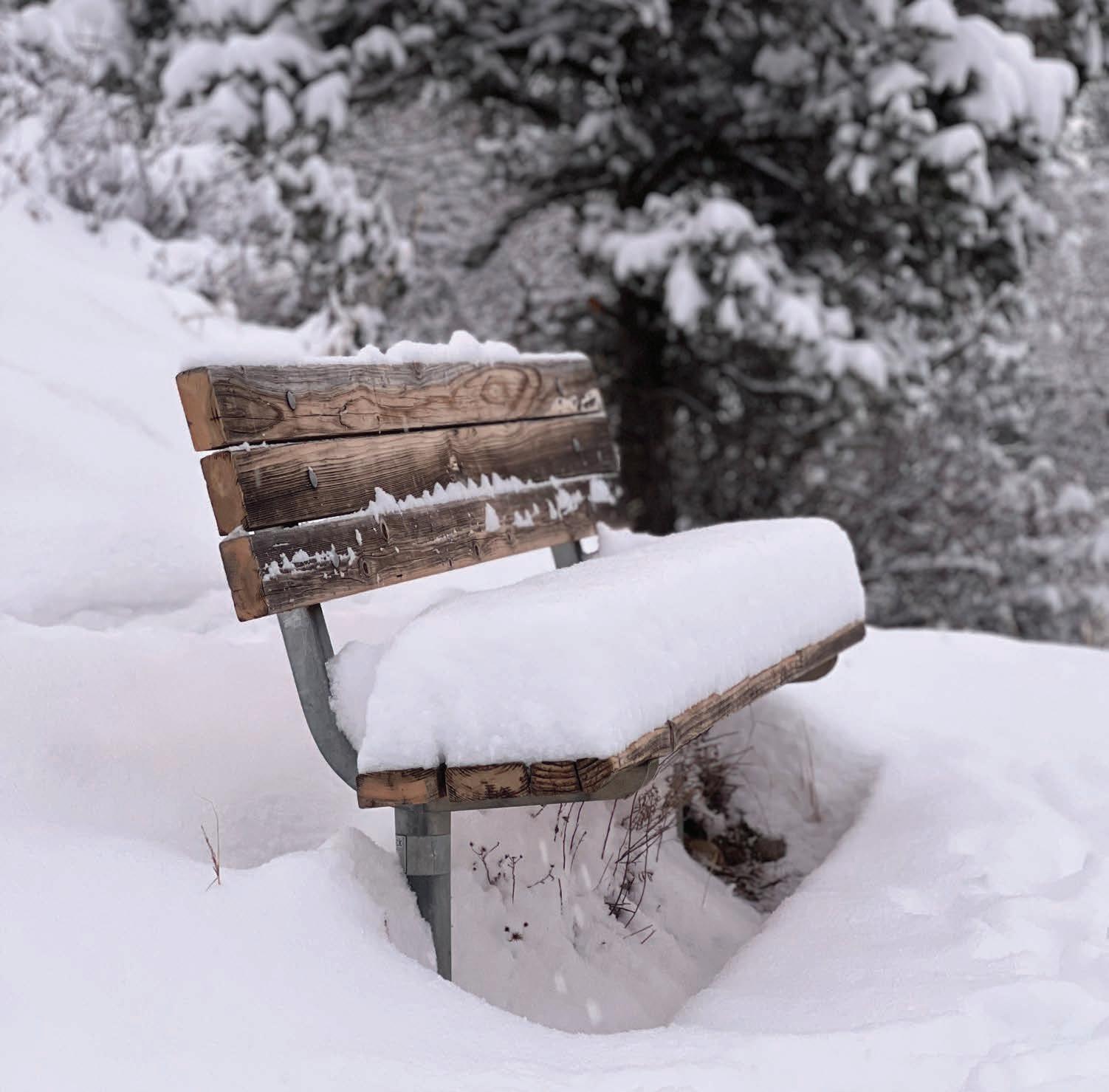
In case last week’s storm is already a distant memory, here’s a recap of the few glorious days when winter returned to Southwest Colorado./
Photo by Missy Votel
“What horrible things do you suppose Nate McKinnon did to that poor Olympic stuffy?”
“Hopefully, he used it as a voodoo doll for Kash Patel.”
– Victory is sweet, but so is revenge
The beloved local story slam event “Raven Narratives” returns this weekend, this time with a twist.
Going this time with the theme “luck,” the event takes place at 7 p.m., Sat., Feb. 28, at the Durango Arts Center. However, instead of having folks going up on stage to read their stories, organizers are soliciting one-page stories from the community on the theme. Those selected will be read by the Raven Narratives crew.
“We are trying to get different types of voices (ones that might not bring their bodies up on stage) to the stage,” organizer Sarah Syverson said.
In addition, folks can submit a haiku the night of the event or put their name in the Cracker J Box to be chosen to tell a story from the stage.
The event also takes place Fri., Feb. 27, at the Sunflower Theatre in Cortez.
For tickets or info., visit: sunflowerthea tre.org. To submit your one-page story, email: ravennarratives@gmail.com. Best of luck!
Westerners’ love of public lands is only growing, according to Colorado College’s latest “State of the Rockies Conservation in the West” poll.
Released last week, the poll, which surveyed voters in Arizona, Colorado, Idaho, Montana, Nevada, New Mexico, Utah and Wyoming, found that Western voters across party lines prioritize conservation, recreation and renewables over fossil fuel development heading into this year's midterms.
Highlights from the poll include:
• 84% of Western voters say the rollback of environmental protections is a serious problem, a sharp increase from prior years.
• 85% of respondents say issues involving public lands, water and wildlife are important in deciding who to vote for.
• 86% of Western voters deem funding cuts to public lands a serious problem, including 76% of Republicans.
• 70% of respondents oppose fast-tracking oil, gas and mining projects reducing environmental review and public input.
• 72% prefer expanding renewable energy over drilling and mining.
• 91% say existing national monument designations should be kept in place.
To read more of the report, go to: tiny url.com/5pcahb9j
Too many mornings with my first cup of coffee the news reports another outrageous incident on America’s city streets instigated by ICE, justified by lies: a 5-year-old is taken from his home; migrants are slammed to the ground and trussed up like calves – as if immigration enforcement is a rodeo; protestors are blinded by tear gas or senselessly shot and killed. My head throbs. It disrupts my sleep. I clench my teeth all night only to wake up with a sore jaw.
Medically speaking, nitrous oxide – also known as laughing gas – is a safe and effective sedative, allowing patients with dental problems to remain conscious and relaxed while the dentist drills and fills, but for me, oblivion is no solution, and there’s nothing funny about what’s happening. As a nation, it’s time to wake up and smell the coffee.
Maybe you understand what I’m saying. Accepting this version of our government rationalizing its armed occupation of American cities will not make the pain go away. It’s a truthache that starts with the head of state and, like an infection, contaminates the body politic.
ICE’s deployment by executive order under the guise of border control was initiated with campaign rhetoric, describing immigrants as “criminals,” “rapists,” “gang members” and “animals.” More lies, designed to mislead and manipulate the public. Trump’s troops have sworn to serve a racist and self-serving political narrative. Their perfunctory oath to the Constitution illuminates the lie. Their actions demonstrate their insurgent intent: raiding homes by battering down doors, seeking no warrants issued by judges, detaining and deporting people previously granted asylum, seizing immigrants at courthouses, denying detainees’ access to legal counsel and arresting U.S. citizen protestors as they gather to voice their objection to this takeover of their streets.
tims ICE killed during its White House-sponsored occupation of American cities. These storm troopers are responsible for at least eight documented deaths between July 2025 - January 2026. Another nine people who survived were injured by ICE-initiated gunplay. No agent has faced accountability.
The agreed-upon default response from federal agents, Homeland Security, the DOJ and the White House for deaths at the hands of ICE agents has been “self-defense.” It brings to mind that infamous photo of China’s Tiananmen Square with a lone man blocking the path of a military tank during pro-democracy protests. Yanked from the scene by two men in 1989, his whereabouts will forever be unknown. During 2025, an additional 35 detained people died while in ICE custody, or as The Prospect put it, “in Trump concentration camps.” Since ICE doesn’t share information about its operations, the detainees will likely be blamed for their own deaths. Federal immigration agents are given carte blanche for their lawless actions. The Prospect concludes, “There is no doubt that the regime is working overtime to hide the full scope of the terror campaign spreading across our country.”

Established practice when investigating shootings is for federal officers to “assist” –not block – local authorities from the shooting scene as evidence is gathered and assessed.
The Investigative Assistance for Violent Crimes Act of 2012 (IAVCA) is just one more legal safeguard that Homeland Security and the DOJ flagrantly ignores. Minneapolis officials describe the Feds’ original “self-defense” claim for the officers who fired the shots as “bullshit.” After their indifferent “investigation,” the FBI still refuses to release its results.
Let us be clear: ICE is the instigator – not the immigrants – of this radical unrest. They are lawlessly, violently and anonymously snatching people off the street, shattering car windows, inciting a state of terror reminiscent of Germany’s Kristallnacht, or the “Night of Broken Glass,” which marked an escalation in the Nazis’ campaign of persecution.
Of the 10 targeted American cities, eight – led by elected Democratic governors and mayors – openly rejected the federally imposed deployment of troops. Two southern cities with large Black populations, Memphis and New Orleans – led by Republicans – actually requested deployments in their cities – a black and white lie, which no one needs to see written in blood.
Online newspaper The American Prospect (prospect.org) keeps tabs on vic-

University of Wisconsin hockey player
Laila Edwards became the first Black woman to win Olympic gold in hockey last week. And she did it all without the help of jock-sniffer Kash Patel or his even bigger jock-sniffing boss

Hey, something resembling winter just happened! Better late than never.
Why is it that a fantasy novel can describe our struggle with the truth better than our own government? A young girl named Lyra in Phillip Pullman’s “His Dark Materials” series remembers how deceit works: “Mr. Scoresby taught me. He told me there were truth tellers, and they needed to know what the truth was, so as to tell it. And there were liars, and they needed to know what the truth was, so they could change it or avoid it. And there were bullshitters, who didn’t care about the truth at all. They weren’t interested. What they spoke wasn’t the truth and it wasn’t lies; it was bullshit. All they were interested in was their own performance.”
I know it’s not just me; America isn’t sleeping soundly either. Truth tellers are frustrated, because so many people won’t pay attention; liars are nervous and desperate not to be caught in their own fictions. Is it right that the bullshitters are sleeping just fine?
– David Feela
This shouldn’t be a surprise, but Trump’s “State of the Union” wasn’t so much a snapshot of the nation as a trip to the “Land of Make Believe,” where 2.4 million Americans have been “lifted” off food stamps, and Jeffrey Epstein, inflation and ICE don’t exist.
Kash Patel finally got to party with the cool kids when he crashed the U.S. Men’s Olympic Hockey Team’s locker room. We are thinking this was the first time he actually went into a locker room and wasn’t stuffed into a locker. And he even got to drink some alcohol (don’t tell his mom.)

Most people think William Shatner (who wasn’t in The Files, btw) peaked with “Star Trek” or “Unsolved Mysteries.” Personally, I didn’t think he could climb any higher than the moment he became a “fiber ambassador” for Raisin Bran during that Superbowl commercial when he adopted the nickname “Shat” to promote healthy bowel movements. But we were all wrong: the 94-year-old announced last week that he’s partnering with artists like Henry Rollins to release a heavy metal album “forged in cosmic fire.” Sure, he’s holding his guitar upside-down in the marketing image, but I guarantee his music will be better than Kid Rock’s. Live long and rockstar!
Not only does killing mountain lions to save deer not work, it will
by Ted Williams
This year, in what it calls a “study,” Utah’s Division of Wildlife Resources is killing off mountain lions in an effort to increase mule deer herds. It has hired trappers from the Utah Department of Agriculture and Food, authorizing them to dispatch lions with any method, including banned traps and neck snares.
The study, covering roughly 8.6 million acres in six management units, will run for at least three years with the goal of indiscriminately exterminating “as many (lions) as possible.”
Buying into this ancient predator-prey superstition are the nonprofits Sportsmen for Fish and Wildlife and Utah Wild Sheep Foundation. Each has contributed $150,000 to the cull.
Wildlife managers have no idea how many mountain lions roam the state because estimating populations is essentially impossible. Lions are solitary, elusive and range over vast territories they defend. Unlike ungulates that compensate for mortality with fecundity, predators don’t “overpopulate,” and they’re much slower to recover from culling or hunting.
I asked veteran mountain lion researcher Rick Hopkins, board president of the Cougar Fund, what science supports a claim that killing mountain lions generates more deer. “None,” he replied. “For years, agencies have made such claims, but when pushed to provide evidence, they can’t. Predator control has never worked anywhere.”
Utah’s Division of Wildlife Resources estimates the state’s mule deer population at 295,200 – 73% of the “long-term goal.” That goal is based more on desired hunting-license sales than science. Still, considering the natural ebb and flow of deer populations, 73% isn’t bad.
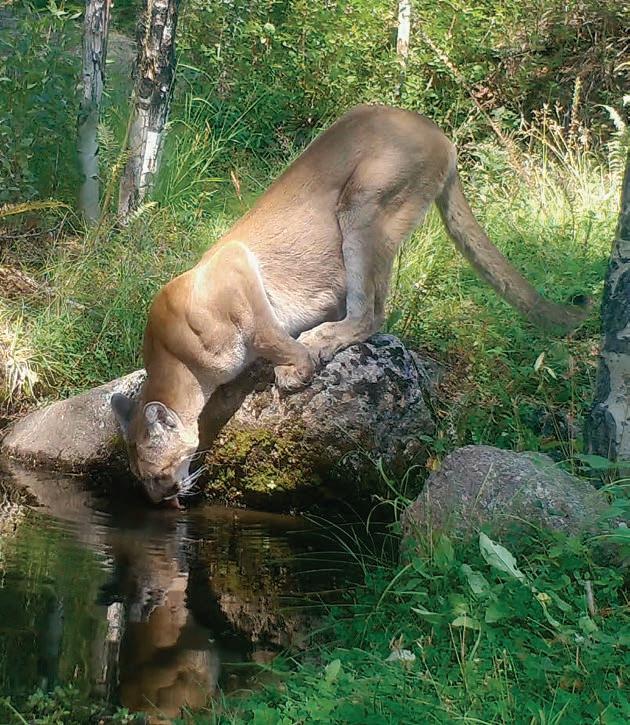
Mountain lions have little or nothing to do with the decline of Utah’s mule deer. Predator populations are limited by available prey. What we learned in Biology 101 –that predators control prey – is incorrect: Prey controls predators. Utah has experienced prolonged drought, which peaked in 2022. Reduced forage starved female deer so that fewer fawns were born, and those fawns were sickly and therefore less likely to survive winters. When record-breaking snowfall occurred during the winter of 2022-23, there were massive mule deer die-offs.
Utah’s mountain lion cull follows hard upon a 2023 state law that opened up year-round, mountain lion killing without permits. Both this law and the current cull outrage environmental and animal wellness communities. The Western Wildlife Conservancy and Mountain Lion Foundation have filed a lawsuit (ongoing), asserting that the law violates the state’s Right to Hunt and Fish Act, which requires a “reasonable regulation of hunting.”
The Mountain Lion Foundation dismisses the moun-


tain lion cull study as a “lethal program without rigorous science” and reports: “Decades of peer-reviewed research across the West shows that intensive predator removal rarely delivers sustained or landscape-scale recovery of prey populations. Instead, it often destabilizes predator populations, leading to younger, transient animals, increased conflict and little long-term benefit for deer.”
And this from Wayne Pacelle, president of Animal Wellness Action: “The science shows that healthy lion populations create robust and healthier deer herds, with lions selectively removing deer afflicted with the 100% fatal and highly contagious brain-wasting scourge known as Chronic Wasting Disease (CWD) caused by malformed, selfreplicating proteins called ‘prions.’”
All threats to mule deer pale in comparison with CWD. The Theodore Roosevelt Conservation Partnership, a hunter-support group, calls it “the No. 1 threat to deer hunting.”
In Utah, CWD has been detected in 356 of the few mule deer checked. Symptoms include fearlessness and loss of coordination, behaviors inviting lion predation and thereby removal of disease vectors.
What’s more, mountain lions are resistant to CWD. They deactivate prions through digestion, removing them from the environment. That further protects mule deer as well as possibly protecting people. In 2022, two hunters who ate venison from a CWD-ravaged deer herd in Texas died from prion disease. Given the rarity of human prion infections, this seems an unlikely coincidence.
The Idaho Capital Sun quoted Dr. Michael Osterholm, director of the Center for Infectious Disease at the University of Minnesota, as follows: “We are quite unprepared. If we saw a (CWD) spillover right now, we would be in free fall. There are no contingency plans.”
Mark Elbroch of Panthera, a nonprofit dedicated to conserving wild felines, told me this: “Heaps of science show the beneficial contributions of mountain lions. Humans are healthier when we live with mountain lions.”
So are mule deer.
Ted Williams, a longtime environmental writer, is a contributor to Writers on the Range, writersontherange.org, an independent nonprofit dedicated to spurring lively conversation about the West. ■
Check
The first time a license-plate reader helped solve a violent felony, the lead came in minutes, not weeks. The community celebrated justice but also voiced unease about who might be watching, who had access and if tools built for public safety could drift beyond their purpose. At community meetings, fears surfaced that ICE had access to ALPR data, which wasn’t true, but the concern was real. Today, debates about technology often hinge less on what it does than what people fear it might become.
Since the adoption of body cameras, law enforcement has undergone one of its most significant technological shifts. Recently, policing tools have advanced more quickly than contextualizing them. Political narratives, frequently driven by emotion and misunderstanding, now shape technology policies faster than evidence ever did.
As technology and community concerns evolved, so did my vision as a chief. I quickly reawakened to a fundamental truth: policing isn’t about mechanisms; it’s about preventing harm. Technology changes the how, not the why. I returned to what had worked for more than 25 years: proactive, results-based policing based on actionable intelligence and decisive enforcement. Outcomes, not data, mattered most.
One of the best compliments I received as a police chief sounded like a criticism when a councilor said that she never heard much about the police depart-
ment. To me, that meant success. The most important outcomes in policing are never measured because they never happen, crimes are prevented and victims never created. When policing works, there’s no headline, just a community that remains safe.
Measurement is essential, but the realization of prevention changed how we measure success. Crime rates show what has happened; clearance rates tell offenders what will happen. The difference isn’t academic; it’s behavioral. As the National Institute of Justice notes, “The certainty of being caught is a far more powerful deterrent than the severity of punishment.” Deterrence works when consequences feel inevitable, not abstract.
The New York Times reached a similar conclusion, noting that “criminals tend to think in the short term, responding more to the likelihood of getting caught than to long-range punishment.” Focusing exclusively on crime totals is a trap. Offenders don’t study dashboards; they calculate immediate risk. And good investigators leverage technology. Used correctly, it multiplies effectiveness and builds legitimacy.
Tools like license-plate readers favor precision over intrusion. They don’t broaden policing, they narrow it –reducing guesswork, shortening investigations and lowering repeat offenses. Catching someone early, when the offense is small, often matters more than apprehending them dramatically after the crime has grown.
Public fear often imagines policing technology as a dragnet, but it works more like breadcrumbs. A camera hit isn’t probable cause, it’s an investigative lead.


Human judgment, supervision, audit trails and judicial oversight remain central. Data is retained briefly, accessed narrowly and governed by policy. The goal is restrained, targeted access. This is why governance matters more than ideology. Intentional contracts, training, cybersecurity, communication and access controls determine whether technology earns trust or erodes it. When social trust fractures, fear fills the gap. When national frustration rises, efforts at change tend to focus where action is easiest, not where authority actually lies. A single viral moment can rewrite policy overnight, often far from where reform would have real impact. The New York Times reported that several cities experienced sharp increases in violent crime following rapid pullbacks in proactive policing after 2020, even as reform goals remained unmet. Symbolic resistance can feel righteous, but policy reactions outpace practical outcomes and carry real costs.
Privacy is a fundamental human right, alongside the right to move freely and feel safe. Protecting privacy requires deliberate limits, not just good intentions. Ethical technology is intentional, built through transparent policies and community dialogue. Contracts must clearly define data ownership and limit secondary sharing.
Violence is a human problem, not a political one, but it is often exploited, amplifying division instead of understanding. In that noise, policing technology becomes a stand-in for national debates, distracting from the shared goal of safety. What endures is the harder


work of building trust through communication, transparency and facts.
As a police chief, I’ve learned that public safety carries unavoidable obligations to prevent crime, not merely respond to it. Deterrence works when policing is proactive and enforcement is fair, swift, proportional and the message is clear: if you commit a crime, you will be caught. Communities are safest when technology serves people, not politics and trust has room to grow.
– Durango Police Chief Brice Current
While rifling through aging files last week, I oddly discovered a copy of the front page of the New York Times dated Jan. 21, 1961 – the day after the inauguration of John F. Kennedy. Finding this specific front page wasn’t particularly surprising, as it fit with my current musings about country and leadership at this juncture in our nation’s trajectory. Still, it was a timely motivator to write –especially after my multiple re-readings of Kennedy’s, “Ask not what your country can do for you, ask what you can do for your country.” A further kicker was the headline exclaiming “REPUBLICANS AND DIPLOMATS HAIL ADDRESS” –gee, an era when there was bipartisan and universal acclamation to look and act beyond one’s own self-interest.
For many years, I endeavored to teach and inspire future educators of various backgrounds and circumstances to develop community-oriented leadership qualities grounded within an ethical and humane foundation. Research and my personal discoveries indicate that profound life experiences and strong mentorships are the foundations of ethical, effective and compassionate leadership, though we certainly know that leadership approaches can and do stray from being moral and humane. Within the past century, we have witnessed leadership morph into immoral, insular, unethical, repressive and even violent behaviors causing deliberate harm to humanity and the planet. Unfortunately, we have too many examples – Hitler, Idi Amin, Pol Pot, Stalin, etc. While this cast of catastrophic characters (note they are all males in national ruler roles) can be categorically grouped as particularly vile, we are seeing the “strongmen” descriptor now aptly applied to national leaders such as China’s Xi and Russia’s Putin. Unfortunately, our president seems hell-bent on going mano-y-mano with Xi and Putin in a contest of dictatorial,
self-aggrandizing, truth-denying and vindictive behaviors to hold and wield power. The three exhibit the triumvirate of “strongmen” – power, control and dominance (wealth and corruption are stirred into the mix, too). Regrettably, the U.S. president is apparently keen on not just a competition for the “international strongman crown” but also actively engaged in what he can learn from these two peers to finetune his autocratic and mean-spirited pursuits.
The current resident of the White House (or what’s remaining of that building) personifies a “resume” of unethical, immoral and illegal power that he continues to double-down on as troubling news stories detail week after week. The question before us is now clear: how will we individually and collectively engage to change the deeply troubling national trajectory?
If we want to stop short of the Chinese dissidents’ actions in Tienanmen Square or of the Black Americans who bravely withstood the attacks of police dogs in the American South, then we need to move firmly, effectively and quickly. Recent events such as Minnesotans standing up to ICE agents to protect immigrants as well as local events, including citizens attempting to prevent the kidnapping of a Durango family legally seeking asylum, are more than adequate wake-up calls to the increasingly power-hungry resident of the White House.
There are everyday actions in which all of us concerned about the direction of an increasingly dehumanizing federal government can engage: phone calls and emails to elected officials; letters to the editor (while we still have a free press); protesting ICE’s illegal and aggressive detentions; conversations with neighbors; supporting general strikes/walk-outs; pushing back against governmental surveillance (hello Flock cameras!); and more. Showing up is what it’s all about.
If it seems like a lot of effort and courage, consider what the Chinese dissidents facing tanks took on. It’s now clear that an open, free, fair, moral, ethical and compassionate society will not be served on a platter. Rather, we each need to set aside time to gather the ingredients, find collaborative community cooks, generate a new menu and get to work creating a more just, humane, compassionate and stable future than the one being maliciously crafted and deviously implemented.
Please recall what JFK emphasized to his fellow citizens and ask what you can do for your country. It’s even more applicable now than six decades ago.
– Jimbo Buickerood, Durango



by Missy Votel
In a season when snow has been scarce, Durango is about to get an infusion of POW of a different kind.
Protect Our Winters, the snowboarder-born climate activism group turned national juggernaut of political change is launching a chapter in Southwest Colorado.
The group will hold its first meeting today, Feb. 26, from 5:30-6:30 p.m. at the Durango Public Library.
“The idea behind it is, for one thing, building community and having that stoke and support around the environment, which everyone who is going to be showing up cares about,” POW’s Western Slope Field Organizer Leda Stinson Ebert said Tuesday. “It’s about finding ways to make it fun and engaging but also learning what POW can do to support the Western Slope and specifically, La Plata County, in taking action around sustainable initiatives, whether that’s supporting solar, voting in local electric co-op races or signing petitions to protect public land.”
Stinson Ebert, a resident of Ridgway, said the new chapter will cover La Plata, Montezuma, San Juan, San Miguel, Dolores and Ouray counties. Unlike POW’s wellknown and larger political lobbying arm, she said this latest effort is a grassroots initiative launched by POW last year to create activism around smaller, local or regional issues. Similar “micro” chapters, if you will, are also being launched in California, Montana, Nevada and New Hampshire.
“This is a very localized focus. So people are like, ‘this is relevant to me,’” she said. “This has not existed before, so it’s kind of exciting. Historically, POW has been a lot of lobbying and taken a top-down approach. This is coming from change at the other end, like local, small-scale elections, local outreach and education.”
She said across the Western Slope, POW is already working on several initiatives, like advocating for utility-scale solar projects, and working to combat misinformation and provide people with facts and up-to-date information. However, she also said the group wants to hear what’s important to locals. “It’s going to be up to the people who show up and what they want to do,” she said, adding that the ultimate shape of the group depends on that. “If there’s people who are excited to be doing event outreach and education at local events, we’ll provide them with the resources and training to do that. There’s a lot of flexibility and a lot of opportunity.”
The plan is to have the meetings, which are free to attend, move around to various towns from month to month, with the ability to attend in person or via Zoom. She would also like to eventually hold them at small businesses, such as breweries or coffee shops, to support local economies.
Stinson Ebert said after the last few dismal winters, people are starting to feel the effects of climate change up close and personal and want to do something to help. “I feel like people in the San Juans are feeling it

and seeing it very much on the ground,” she said. “There’s a lot of potential for some great turnout and some great community growing around this.”
A native of Delta who went to college in the Midwest and later returned to Colorado to work on a small farm for several years, Stinson Ebert said she, too, has seen the effects of climate change firsthand.
“Just in the last 10 years, I’ve seen changes in winters from being consistently cold to having these extreme weather shifts of a blizzard one day and then 60 degrees the next, and all the snow melts,” she said. “I remember as a kid, it was like, you got snow and then snow was on the ground for weeks and weeks after that.”
She has also seen “a lot of scary changes” from an agricultural standpoint. “Having worked in agriculture for a long time, I’ve seen a difference in fruit trees. Things are budding out way too soon, and then they’re getting frosted, and then we just don’t have crops,” she said. “It’s really alarming, seeing the impact of a warm winter, as well as water insecurities around that, whether it’s not having enough snow to go skiing or in the summer, having droughts and wildfires.”
For those who may not be familiar with POW or haven’t seen its bold snowflake logo festooned on Subarus, trucks or hats, it was started in 2007 by pro snowboarder Jeremy Jones, who was driven to action by the ways cli-
mate change was impacting his sport. “(Climate change) was very clearly going to only continue, so he started POW as an organization to involve athletes and outdoor recreationalists in making a change toward preserving the outdoors that everyone loves,” Stinson Ebert said. “It’s really grown. There’s people all over the U.S. who work for POW in various capacities.”
In addition to its millions of outdoors-loving supporters, POW also includes outdoors brands, scientists and athlete ambassadors (including Durango’s own Christopher Blevins) in what it calls its “Outdoor State” bipartisan voting bloc. The goal is to push for clean air, water, public lands protections and reduced carbon emissions not only by helping pass legislation but driving political will and highlighting the science and economic upside of climate progress.
“There’s a lot of power behind name recognition,” said Stinson Ebert. “There is so much potential if you have a big, supportive base. The work that POW has done in connecting big-name athletes to the environmental movement, and getting everyday people on the ground involved and invested in environmental work, I think that has a huge potential for significant change.”
For more information on how to get involved, contact Stinson Ebert at: leda@protectourwinters.org. ■
Taxes have never been higher for Colorado tourists, but are we killing the golden goose?
by Jason Blevins / The Colorado Sun
Colorado’s tourism industry is in a slump. Two years of slowing traffic and flat spending have left visitor-reliant businesses limping. This winter – with a snowpack looking to make the 2025-26 season the second worst in 50 years – will certainly add to the industry’s woes.
A few years ago, the state’s destination marketing pros would have been crafting persuasive campaigns to shift the tide. They would have planned flashy videos and banner ads and targeting vacationers. But those campaigns are not happening. The Colorado tourism marketing machine is slowing as millions of dollars in new and diverted lodging taxes that once funded destination promotion are now going toward housing, child care, recreational, roads and police.
Two laws passed in 2022 and 2025 allow communities to increase or divert lodging taxes from tourism marketing. A recent tally of 39 towns, counties and marketing districts shows more than $256.6 million in lodging taxes were raised for purposes other than tourism promotion since 2022. New and redirected lodging and short-term rental taxes collected in 2026 are expected to reach $76.9 million, with all of that supporting housing, child care, roads and public safety.
“This means visitors are paying a lot more for lodging, and we are not getting more money to work with to market our destinations,” Dave Santucci, of Denver marketing firm Mission 2 Market, said.
Santucci has tracked lodging tax allocations since 2022. He points to a majority of states increasing tourism marketing budgets while the roughly $20 million annual budget for the Colorado Tourism Office has largely remained flat since 2016. And advertising costs have climbed as much as 40% in the last five years.
“The point of destination marketing organizations is to spread out traffic and create resiliency. The funding that goes into DMOs comes back in multiples of return on investment,” Santucci said. “That marketing is tied to economic development and a community’s ability to attract and retain residents. We are setting ourselves up for trouble by raising our prices and cutting our marketing.”
Colorado seems to be leading the nation in declining skier traffic in this snowdeprived season. Hotel occupancy tracked by DestiMetrics – which follows bookings in 17 Western mountain communities –shows Colorado and Utah bearing the brunt of the declining traffic. The latest DestiMetrics report pins winter occupancy in Colorado and Utah down 6.7% compared with this time last year, with five other Western states seeing an occupancy decline of 0.5% so far this season.
Shor-term rentals in Colorado mountain towns are leading a national decline in ski bookings, according to a January report from AirDNA, a Denver firm that tracks short-term rental data. While STR bookings at all ski resorts are down about 5%, Colorado resorts are down anywhere from 5% in Vail to 35% in Telluride.
“As destinations wrestle with the impacts of changing climate and weather patterns, I suspect that new playbooks are being written,” Tom Foley, tourism economist with Inntopia, which owns DestiMetrics, said. “Along with seemingly interminable economic uncertainty, we are also reminded that snow, our ace in the hole, can be frustratingly fickle.”
Of course, funding for housing, infrastructure and child care is critical as municipalities and counties face federal funding cuts. The state is asking more of counties, too, with new laws around jails, human services, Medicaid and more. That is forcing many governments to squeeze tourists for more revenue. Most of the time, voters can be easily swayed to increase taxes on visitors. But not always. Last year, Cañon City, Chaffee County, Manitou Springs, Vail and Telluride rejected tax increases on lodging and activities
“The state will not allow counties to raise funds in any way other than property taxes,” Chaffee County Commissioner P.T. Wood said. “We are really handcuffed, and our populations continue to grow and our demands for services continue to grow, and the state continues to restrict our abilities to increase revenues.”
Wood was one of several county commissioners earlier this month urging lawmakers to pass legislation that would allow local communities to create a new tax on homes that are left vacant for portions of the year. Lawmakers killed that bill after

vehement opposition from tourism businesses, homebuilders and others.
The idea behind the tax was to fund affordable housing. Five years ago, the measure likely would have sped through committee. But the lodging industry has unified in recent years.
In testimony before the House Finance Committee on Monday, real estate brokers, county treasurers, homebuilders and others argued against a vacancy tax. The hearing mirrored others in recent years where lawmakers considered increasing regulations and taxes on vacation homes.
“This is sort of a result of … spreading awareness about the role the lodging industry plays in this economy and how vital it is,” Julia Koster, head of the nascent but surging Colorado Short Term Rental Association, or COSTRA, said.
Koster points to a shifting tide in the defeat of legislation in 2024 that would have quadrupled property taxes on short-term rentals, and then last fall, when voters rejected increased lodging taxes in Chaffee County and Vail. “People are seeing that if you target the lodging and tourism industries, there will be downstream impacts,” Koster said. “We are shooting ourselves in the foot by raising our rates and turning more people away. If we keep raising the cost of a Colorado vacation, we will keep losing visitors.”
Travel spending in Colorado is flat and not keeping pace with inflation, increasing only 0.5% in 2024 to $28.4 billion. Wages
from travel spending increased 7.1%, indicating tourist-reliant businesses are paying workers more while collecting less.
State tourism studies from 2024 show about $1.9 billion in taxes paid by tourists, a 1.3% increase from 2023. About 40.5% of that comes from sales taxes paid by visitors, and more than 15% – close to $290 million – comes from lodging taxes.
No one in the tourism industry is blasting lodging taxes. They know residents can grow weary of too many visitors. They also know vast swaths of local economies rely on those visitors.
It’s a delicate dynamic, said Cynthia Eichler, president of the Colorado Association of Destination Marketing Organizations. “When the tourism bucket is filling, a lot of other buckets are filling too,” Eichler said.
There is growing concern that increased lodging taxes and higher hotel rates to compensate for waning traffic could be pricing Colorado out of the vacation market. “We need to be mindful about that. We do not want to be a luxury vacation state filled with communities purely reliant on wealthy visitors. We do not want to get too close to the tipping point where we lose our appeal.”
This story was edited for length. The Colorado Sun is a nonprofit, award-winning news outlet covering Colorado. Sign up for their newsletters, and follow them on Twitter, Instagram, Facebook and Bluesky. ■ telegraph Feb. 26, 2026 n 9
by Jennaye Derge
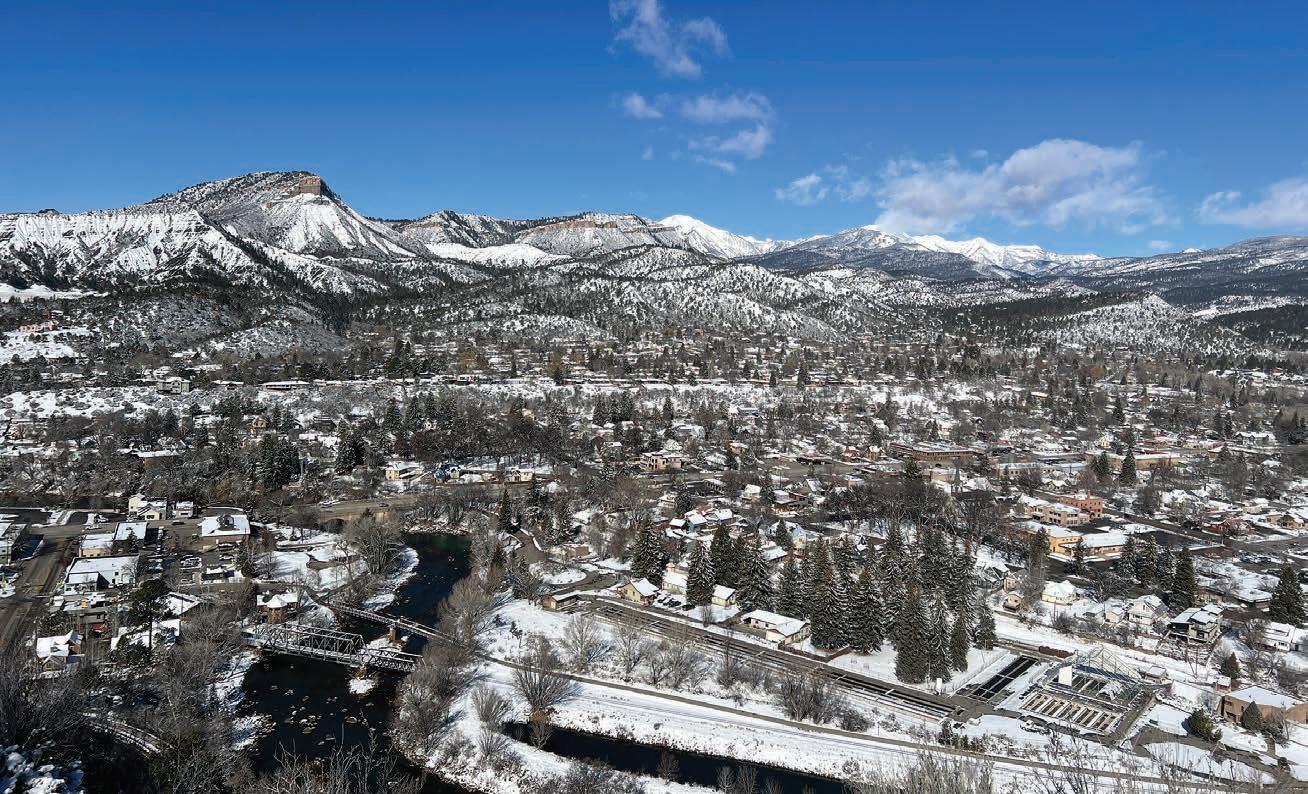
Durango isn’t necessarily a weak town, but it isn’t a strong town, either. For all its good points, it still has a high cost of living, shortage of affordable housing and lack of well-paying jobs, among other drawbacks. And for the nonprofit organization Strong Towns, that is a problem.
Founded in 2009 by Charles Marohn, the Minnesota-based organization has created a system to objectively measure if a town is strong – or weak. Marohm, whose background was in engineering and city planning, often faced the same frustrations as anyone advocating for civic improvements: stubborn officials resisting change and financial roadblocks. Which, to be fair, are often one in the same.
Since starting, Small Towns has exponentially grown and serves communities around the world, in-
cluding a chapter recently launched in Durango. The local arm was started by Alan Millar, a life-long bicycle commuter who has spent time bike touring in Europe. Those experiences made him realize that the United States is severely lacking in a lot of things, specifically bicycle/pedestrian infrastructure. Things here, he thought, could be done differently.
About four years ago, he found out about Strong Towns, did some research and reached out to see how he could get involved. Trying to change the whole country at once was a little out of his league, so he decided to help his local community first.
Millar got the local chapter off the ground last fall and held the first monthly meeting at Anarchy Brewing, where it has taken place the first Thursday of the month ever since. The group (which includes yours truly) meets to talk about things that make Durango a strong town and, more specifically, what can be done
to make it stronger. So far, topics have included: bicycle and pedestrian infrastructure and safety; the proposed (and now defunct) mall acquisition; and economic strengths. Meetings have also tied in environmental impacts and issues, and pointed out the importance of cohesive advocacy.
“I think every town needs some version of a Strong Towns initiative,” Millar said. “Durango has all the problems of mountain communities in Colorado, but we also have a chance to remain a working and college town that relies on tourism but is not consumed by it.”
In all, Strong Towns is based upon five pillars:
• Housing: This includes more affordable housing, obviously, but also less governmental restrictions on building housing. Strong Towns believes that if it’s easier to build high-density and/or multi-family homes, housing becomes more approachable for everyone. Lo-
cally, this means less building restrictions, fees and ordinances as well as more restrictions on short-term housing. In Durango, we recently saw one step toward this with a win for ADUs and the elimination of minimum parcel requirements.
• Streets: This is probably the most discussed, because it is so layered and, disappointingly, so controversial. Working toward safer streets makes a lot of people angry for some reason. But Strong Towns has a great approach, in that they try to make street safety as easy, simple and innovative as possible. They often take examples from the world’s safest streets (not surprisingly, usually in Europe) and apply those ideas here. Many of the suggestions don’t include major construction or deep budgets, but instead promote simple things like different striping patterns, better placed stop signs or more street lighting. Of course, permanent infrastructure like bike lanes and pedestrian paths are acknowledged, but, holistically, the goal is to “prioritize human movement, not automobile movement.” And sometimes even a stop sign or two will help do that.
Additionally, according to Strong Towns, streets are also a direct picture of a town’s economic vitality. If done properly, safe streets enable folks to spend
money, make money and create community. The easier it is to get around, the more likely people are to keep local dollars moving.
• Accounting: Strong Towns calls for transparency when it comes to government spending, and more so, to create a clear outlook for what future spending will look like. It advises to take care of what you have and think about the long-term costs for what you might build. For example: if a city builds new infrastructure, that development brings in some quick revenue. But the longterm cost of maintaining that infrastructure is far greater than the revenue generated. When the bills come due, the city doesn’t have the money, so it approves more development on the edge of town to get another hit of short-term cash. And the cycle repeats. If you want a clear picture of this, think of all the strip malls and big box stores that were built and have since been abandoned or roads and highways that are in desperate need of repair. In other words, if you can’t make it last, don’t build it to begin with.
• Parking: Honestly, any time I hear this word, my eyes roll 720 degrees. It’s not because of parking itself, it’s because of the people who fight tooth and nail, at the expense of their own sanity and


relationships, to preserve their right to VIP parking. I can’t tell you the number of city meetings I’ve attended where folks scream at city staff because a couple parking spots might go away. And yes, that’s me scowling at you from across the room.
Anyway … Strong Town’s approach to the “P” word is to – hold onto your knickers – get rid of parking requirements. This is so developers aren’t forced to spend time and money paving over land that could otherwise be used for housing, green spaces or other things that benefit quality of life.
Fighting for your life about parking is one thing, but forcing businesses and homeowners to provide a certain number of parking spaces is a whole other thing.
Honestly, all bad signs point to parking. Let’s just get rid of it all together.
• Highways: Highways are grosslooking, and we all know it, but they also are a huge sunken cost because of upkeep and requirements to keep things moving. Studies show that they don’t actually bring in any money because, if you think about it, you’re usually on a highway to quickly move in or out of a city, not necessarily stop at the local bookstore or coffee shop. This isn’t a major problem for Durango – yet. Ho-
wever, it does help identify what infrastructure we should spend our money on in order to get a return; i.e. infrastructure that prioritizes humans, not cars just passing through.
Millar hopes the conversations around these topics become a collection point not just for the group, but other organizations around town, and that Strong Towns can help bring about positive change.
“Other neighborhood and community groups have discovered our meetings and joined in at times,” he said. “This may be because we meet at Anarchy. But I think it is really because there are lots of folks in our town who want to make it a better place.”
He also said city councilors and staff have joined in on the meetings to work on the next, incremental improvements, which is what Smart Towns is all about. “I know it’s not an easy process to change the way our city operates … The Strong Towns approach is to figure out what the smallest incremental change would be and organize to try and make that happen,” Millar said.
Durango Strong Towns meets the first Thursday of each month at 4:15 p.m. at Anarchy Brewing. The next meeting is March 5. To find out more, email: strongtownsdurango @gmail.com ■

Thursday26
No Secret Police Petition Drive: no-mask, visible ID for law enforcement, 2:30-4:30 p.m., Durango Public Library, 1900 E. 3rd Ave.
“Thinking Like Water,” five-part docuseries, 5 p.m., Sunflower Theater, 8 E. Main St., Cortez
Green Drinks, 5-7PM at 11th Street Station, 1101 Main Ave.
POW West Slope Chapter Launch Meeting, 5:30-6:30 p.m., Durango Public Library, 1900 E. 3rd Ave.
“Hey Girl, Let’s Talk Investing,” 5:30-7 p.m., Kelly Miranda Studio, 194 Bodo Dr., Ste. G
Poetry Open Mic, 5:30-8 p.m., The Subterrain, 900 Main Ave., Ste. F
Dart Tournament, 5:30-9 p.m., Union Social House, 3062 Main Ave.
Ben Gibson plays, 6-9 p.m., Diamond Belle Saloon, 699 Main Ave.
Bluegrass Jam, 6-9 p.m., Durango Beer and Ice Co., 3000 Main Ave.
Rob Webster plays, 6-9 p.m., Office Spiritorium, 699 Main Ave.
Open Mic Night, 6-9 p.m., American Legion, 878 E. 2nd Ave.
Tony Furtado and Luke Price in concert, 710:30 p.m., Durango Arts Center, 802 E. 2nd Ave.
Chapman Chats with Durango Parks & Recreation Dept., 9-10 a.m., Chapman Hill Rink
Dave Spencer Classic Kick-Off Party and packet pickup, 5-7 p.m., Adaptive Sports Association, 463 Turner Dr., #105
Larry Carver and High Altitude Blues play, 5:30 p.m., Diamond Belle Saloon, 699 Main Ave.
“Finding My Line:” Identity, Access and Mountains with Philip Henderson, 6-7:30 p.m., Nobel Hall Room 130, Fort Lewis College
Power to Act Dignity First Dinner fundraiser, 6-8 p.m., FLC Ballroom, Student Union
Ingvar’s Last West Coast Swing Dance Party, 6-9 p.m., Lower Left Studio, 835 Main Ave., Ste. 209
Dustin Burley plays, 6-9 p.m., Office Spiritorium, 699 Main Ave.
Stand-Up Comedy with Olivia Carter (“The Tonight Show,” Laugh Factory), 6:30-9 p.m., Durango
Arts Center, 802 E. 2nd Ave.
“An American Overture,” with Southwest Civic Winds celebrating the 150/250 anniversaries, 7 p.m., Ignacio High School Performing Arts Center, 315 Ignacio St.
Fusion Bloom Dance Weekender, 7 p.m., Stillwater Music Lightbox, 1316 Main Ave., Ste. C
Breakfast on Us free breakfast, audio workshop and bingo presented by the Christian Motorcyclists Association, 9 a.m.-3 p.m., Durango Harley-Davidson, 750 S. Camino Del Rio
USASA Giant Slalom, 9 a.m.-4 p.m., Purgatory Resort, Upper Hades
Dave Spencer Ski Classic, 9 a.m.-4 p.m., Purgatory Resort
Winter Market, 10 a.m.-1 p.m., Four Seasons Green House, 26650 Road P, Cortez
Uncle Clyde’s Run and Slide, 11 a.m.-2 p.m., Purgatory Resort
Fusion Bloom Dance Weekender, 12 noon-12 midnight, Stillwater Lightbox, 1316 Main Ave., Ste. C
Bayfield Pie Auction with music from Richard Espinoza, fundraiser for Pine River Heritage Society, 5 p.m., Church of Christ, 2011 E. Bayfield Parkway, Bayfield
Adam Swanson plays, 5:30 p.m., Diamond Belle Saloon, 699 Main Ave.
Matt Rupnow plays, 6-9 p.m., Office Spiritorium, 699 Main Ave.
Karaoke with Kimmy, 6-9 p.m., Durango Beer and Ice Co., 3000 Main Ave.
“Luck” Raven Narratives Story Slam, 7 p.m., Durango Arts Center, tickets/info: sunflowertheatre.org
Durango Contra Dance, 7:30 p.m., La Plata Senior Center, 2424 Main Ave.
Veterans Benefit Breakfast, 9-11 a.m., VFW, 1550 Main Ave.
USASA Giant Slalom, 9 a.m.-4 p.m., Purgatory Resort, Upper Hades
Irish Jam, 12 noon-3 p.m., Durango Beer and Ice Co., 3000 Main Ave.
Fusion Bloom Dance Weekender, 12 noon-12 midnight, Stillwater Music Lightbox, 1316 Main Ave., Ste. C
“An American Overture” with Southwest Civic Winds celebrating the 150/250 anniversaries, 3 p.m., Community Concert Hall at FLC
Blue Moon Ramblers play, 6-9 p.m., Diamond Belle Saloon, 699 Main Ave.
“The Ballad of Madelyne & Therese,” by singer-songwriter Rachel Garlin, proceeds benefit the Armida Huerta Adventure Fund, 6:30 p.m., Durango Arts Center, 802 E. 2nd Ave.
WRC Extraordinary Woman Award Dinner, 12 noon, Doubletree Hotel, 501 Camino Del Rio
Sign Waving peaceful gathering, 4 p.m., corners of Camino del Rio and College Dr.
Happy Hour Yoga, 5:30 p.m., Ska Brewing, 225 Girard St.
Terry Rickard plays, 6-9 p.m., Office Spiritorium, 699 Main Ave.
Joel Racheff plays, 6-9 p.m., Diamond Belle Saloon, 699 Main Ave.
Great Decisions Durango Discussion Group “Ukraine and the Future of European Security” with Guinn Unger, 11:30 a.m.-1:30 p.m., Durango Public Library, 1900 E. 3rd Ave.
No Secret Police Petition Drive: no mask, visible id for law enforcement, Tues., March 3, 2:304:30 p.m., Durango Public Library, 1900 E. 3rd Ave.
CreativiTEA meetup, 3:30-5:30 p.m., Sunnyside Library, 75 CR 218
Community Open Table Dinner, a chance for single diners or pairs to meet and share dinner with others, 5:30-8:30 p.m., Carver Brewing, 1022 Main Ave.
Rotary Club of Durango meeting with St. Mark’s Church Historian Kip Boyd speaking about William Kirkpatrick, the “Fish Prince” of Durango, 6-7 p.m., Strater Hotel, 699 Main Ave.
Tuesday Trivia, 6-8:30 p.m., 11th St. Station, 1101 Main Ave.
Nathan Schmidt plays, 6-9 p.m., Diamond Belle Saloon, 699 Main Ave.
Randy Crumbaugh plays, 6-9 p.m., Office Spiritorium, 699 Main Ave.
Barbershop Tryouts, every Tues., 6:30 p.m., Christ the King Church, 495 Florida Rd.
Interesting fact: You all started asking this Rachel questions in September 2016. Pretty sure this year’s journalism graduates were in seventh grade at that point.
Dear Rachel,
There’s now a ‘Dear Rachel’ in the other paper in town. What the sheet? They either don’t pay attention to the back half of the Tele (which is the sexy half anyway, if you’re into that sort of thing) or else it’s a direct shot across your bow. Not even across it: through it. Don’t let the bastards take you down! How long have you been doing this, Rachel, and how are you going to defend your honor and your name?
– Team Rachel
Dear Team Me, I just looked, and now I feel archaic: I’ve been doing this for coming up on 10 years. That means I have as many seasons as (and more episodes than) “Friends.” That means I have more years in office than any president since FDR. And I’ll have more years in office than any president in my lifetime, because I’ll be damned if I step down and let some other Rachel be the longest-running active advice columnist in town. Female solidarity – but this far and no further.
– The OG, Rachel
No Secret Police in Durango March Forth! Petition Signing Party, 5-7 p.m., Gazpacho Restaurant, 431 E. 2nd Ave.
“Learning the Language of Birds,” presentation by ornithologist Aimee Way, 6 p.m., FLC Education Business Hall
Durango Daybreak Rotary Club with historians Susan Jones and Charles DiFerdinando, 7-8 a.m., La Plata County Fairgrounds
Word Honey free poetry workshop, 6-7:30 p.m., The Hive, 1175 Camino Del Rio
Chuck Hank plays, 6-9 p.m., Office Spiritorium, 699 Main Ave.
Durango Independent Film Festival, 6:30 p.m., Durango Arts Center and Gaslight Twin Cinema 802 E. 2nd Ave. and 102 E. 5th
Dementia/Alzheimer’s Caregivers Support Group, 1st, 3rd & 5th Wednesday of each month, 10:30 a.m.-12 noon, La Plata Senior Center, 2424 Main Ave.
Dear Rachel,
I’m finally going to hire someone to do my taxes this year. It’s always been easy enough –just fill in some boxes and I’m good to go. But now there’s extra forms in the mail besides my W-2, and I started panicking. This is the wise course of action, right? Trust a professional? Or am I just throwing money down the pipe when it’s something that me and a six-pack of Ska could handle in an afternoon?
– Grown-Ass Man
Dear Big Boy,
A single W-2? The rest of us are cobbling it together with jobs that all fall under certain reporting thresholds – not on purpose, but because that’s just the only choice we have. I mean, it’s not the ONLY choice we have. We also have the choice to apply for two or three real jobs at a time. But we’re not doing that. Not when we have the chance to start a spinoff advice column where we pretend we’re going to answer people’s questions seriously. As if. Can you imagine?
– Accepting cash, Rachel
Dear Rachel, I live with a self-narrator. My roommate walks around all day, talking through his inner monologues: “Hm, I think I’ll carry the groceries in first when I get home, because I’m getting milk, and then I’ll carry in the office
Durango Independent Film Festival, March 4-8, Durango Arts Center and Gaslight Twin Cinema 802 E. 2nd Ave. and 102 E. 5th
Trivia Night, Thurs., March 5, 6:30-8:30 p.m., The Powerhouse, 1333 Camino Del Rio
McDonald’s Cardboard Derby, Fri., March 7, 10 a.m.-1 p.m., Purgatory Resort
Durango First Friday, Fri., March 6, 4-7 p.m., various locations, downtown Durango
Artist Showcase Meet & Greet: Andy Mathews, Fri., March 6, 5-8 p.m., Durango Winery
Disability Art Show, Fri., March 6, 4-6 p.m., Durango Arts Center, 802 E. 2nd Ave.
Diamond Belle Saloon Belle Girls Room Dedication, Fri., March 6, 4-6 p.m., Strater Hotel, 699 Main Ave.
Powder Hounds Art Auction, Fri., March 6, 5-7 p.m., The Powerhouse, 1333 Camino del Rio
Envisioning a Changing DurangoScape 2026, Fri., March 6, 5:30-8 p.m., DoubleTree, 501 Camino Del Rio

Email Rachel at telegraph@durango telegraph.com
supplies. Do you think the restaurant will be open by then? I’ll check.” It’s harmless, but also distracting and low-key aggravating. I asked him to please talk less, and his feelings got hurt. He’s oblivious. What can I do?
– No Peace, No Quiet Dear Sounding Board, Ooh, that sounds like a serious question. Do you want a serious answer? Pavlovian training. Interrupt every non-essential sentence with a bell. Eventually, instead of talking, he’ll start salivating. I think that’s how that works? Ask me over at the Herald, and I’ll do some research before I answer.
– La la la la la, Rachel
Banff Mountain Film Festival, Fri., March 6, doors 5:45 p.m., Community Concert Hall at FLC
La Plata Dems Caucus & Assembly, Sat., March 7, 1-4 p.m., Durango Public Library, 1900 E 3rd Ave.
Euchre, Sat., March 7, 5:30-8:30 p.m., Union Social House, 3062 Main Ave.
Women’s Hockey Classic, Durango Betties take on the Durango U19 girls, Sat., March 7, 5:30 p.m., Chapman Hill Ice Arena. Proceeds benefit girls hockey.
Big A$$ Variety Show, Sat., March 7, 8 p.m., The Subterrain, 900 Main Ave.
State of the Animas and local rivers presented by 5RTU, Tues., March 10, 5:30 p.m., Hillcrest Golf Club
Weekly Community Open Table, a chance for single diners or pairs to meet and share dinner with others, Tues., March 10, starting at 5:30 p.m., Union Social House, 3062 Main Ave.
HOA Board Education Series: Reserve Studies & Maintenance Excellence, March 11, 4-5:15 p.m., Virtual, reliancemanagement.co
Fresh Bits Comedy Open Mic, Thurs., March 12, 6:30-9 p.m., The Subterrain, 900 Main Ave. Feb. 26, 2026 n 13 telegraph
by Rob Brezsny

ARIES (March 21-April 19): In woodworking, “spalting” occurs when fungi colonize wood, creating dark lines and patterns that make the wood more valuable, not less. The decay creates beauty as long as it isn’t allowed to progress too far. Here’s the metaphorical moral of the story: What feels like a deteriorating situation might actually be spalting. Are you experiencing the breakdown of a routine, a certainty or a plan? It could be creating a pattern that makes your story even more interesting and heroic. So keep in mind that an apparent decomposition may be transforming ordinary into extraordinary beauty. My advice is to play along.

TAURUS (April 20-May 20): I suspect you will soon be invited to explore novel feelings and unfamiliar states of awareness. As you wander in the psychological frontiers, you might experience mysterious phenomena like the following. 1. An overflow of reverence and awe. 2. Blissful surprise in the face of the sublime. 3. Sudden glimmers of eternity in fleeting moments. 4. A soft, golden resonance that arises when you hear arousing truths. 5. Amazingly useful questions that could tantalize and feed your imagination for months and even years to come.

GEMINI (May 21-June 20): If I were your mentor, I’d lead you up a trail to a peak where your vision is clear and vast. If I were your leader, I’d give you a medal for all the ways you’ve been brave, then send you on a sabbatical to a beautiful sanctuary to rest and remember yourself. If I were your therapist, I’d guide you through a meditation on your entire life up until now. But since I’m just your companion for this brief oracle, I will instead advise you to slip out of any silken snares of comfort that dull your spirit, cast off perks and privileges that keep you small, and commune with influences that remind you of how deeply you treasure being alive.

CANCER (June 21-July 22): Biologist Barbara McClintock won the Nobel Prize by developing what she called “a feeling for the organism.” She cultivated an intimate, almost empathic relationship with the corn plants she studied. She didn’t impose theories on her subjects. She listened to them until she could sense their hidden patterns from the inside. When you’re not lost in self-protection, you Cancerians excel at this. Here’s what I see as your task in coming weeks: Transfer your empathic genius away from people who drain you and toward projects, places or problems that deserve your devotion and give you blessings in return.


LEO (July 23-Aug. 22): Sufi writers describe heartbreak, grief and longing as portals through which divine love enters. They say that a highly defended ego and a hardened heart can’t engage with such profound and potent love. In this view, suffering that makes the heart ache strips away illusions and fixations, allowing greater receptivity, humility and tenderness toward all beings. I’m not expecting you to get blasted by an influx of poignancy in the near future, but I’m very sure you have experienced such blasts in the past. And now is an excellent time to process those old breakthroughs disguised as breakdowns. You are likely to finally harvest the full power they offered you.

VIRGO (Aug. 23-Sept. 22): In traditional Balinese culture, “Tri Hita Karana” is a concept that means there are three causes of well-being: harmony with God, harmony with people and harmony with nature. When one is out of balance, all suffer. I’m wondering if you would benefit from meditating on this theme now. Have you been focused on one dimension at the expense of the others? Are you, perhaps, spiritually nourished but socially isolated? Or maybe you’re maintaining relationships but ignoring your body’s connection to the earth? Here’s your assignment: Do a Tri Hita Karana audit. Which harmony is most neglected? Add to your altar, call a friend or go walk in the great outdoors – whichever one you’ve been shortchanging.

LIBRA (Sept. 23-Oct. 22): You are a diplomat in the struggle between beauty and inelegance. Your aptitude for creating harmony is a great asset that others might underestimate or miss completely. I hope you will always trust your hunger for classiness even if others dismiss it as superficial. One of your key reasons for being here on earth is to keep insisting on loveliness in a world too quick to settle for ugliness. These qualities are especially needed right now. Please be gracefully insistent on expressing them wherever you go.

SCORPIO (Oct. 23-Nov. 21): The bad news: You underestimate how much joy and pleasure you deserve – and how much you’re capable of experiencing. This artificially low expectation has sometimes cheated you out of your rightful share of bliss and fulfillment. The good news: Life is now ready to conspire with you to raise your happiness levels. I hope you will cooperate eagerly. The more intensely you insist on feeling good, the more cosmic assistance you will garner. Here’s a smart way to launch this holy campaign: Renounce a certain lackluster thrill that diverts you from more lavish excitements.


SAGITTARIUS (Nov. 22-Dec. 21): In classical music, a “rest” isn’t the absence of music. It’s a specific notation that creates space, tension and meaning. The silence is as much a part of the composition as the sound. I suggest you think of your current pause this way, Sagittarius. You’re not waiting for your real life to resume. You’re in a rest, and the rest is an essential part of the process you’re following. It’s creating the conditions for what comes next. So instead of anxiously filling every moment with productivity or distraction, try honoring the pause. Be deliberately quiet. Let the silence accumulate. When the next movement begins, you’ll understand exactly why the rest was necessary.

CAPRICORN (Dec. 22-Jan. 19): Interesting temptations are wandering into your orbit. You may be surprised to find yourself drawn toward entertaining gambles and tricky adventures. How should you respond? Maybe you should say “Yes! Now! I’m ready!” Or maybe open-minded caution is a wiser approach. Conditions are too slippery for me to arrive at definitive conclusions. What I can tell you is this: Merely considering and ruminating on these invitations will awaken uplifting and inspiring lessons. PS: To get the fullness of the blessings you want from other people, you must first give them to yourself.

AQUARIUS (Jan. 20-Feb. 18): The engineer Nikola Tesla (1856–1943) said he envisioned his inventions in intricate detail before building them. He didn’t need literal prototypes because his mental pictures were so vivid. I suspect you now have extra access to this power. What scenarios are you dreaming of? What are you incubating in your imagination? I urge you to boldly trust your thought experiments. Your mental prototypes may be unusually accurate. The visions you’re testing internally are reconnaissance missions to futures you have the power to build. Regard your imagination as a laboratory.

PISCES (Feb. 19-March 20): Sufi mystics tell us that the heart has “seven levels of depth,” each one bearing progressively more profound wisdom. You access these depths by feeling deeper, not thinking harder. Let’s apply this perspective to you. Right now, you’re being called to descend past surface emotions (irritation, worry, mild contentment) into the layers beneath: primal wonder, the wild joy you’re sometimes too cautious to express, and the sacred longing that can lead you to glory. This dive might feel risky. It means you’re going deep enough. What you discover will reorganize everything above it for the better.

Deadline for Telegraph classified ads is Tuesday at noon.
Ads are a bargain at 10 cents a character with a $10 minimum.
Prepayment is required via cash, credit card or check. (Sorry, no refunds or substitutions.)
Ads can be submitted by emailing: classifieds@ durangotelegraph.com

Bar D Chuckwagon Employment
We are hiring motivated, responsible and capable workers in all positions (kitchen/retail/driver for summer). Grounds/maintenance starts ASAP. Summer employees follow a Western appearance and dress code when in view of customers. On the job training provided. Contact: employment@bardchuckwagon .com 970-247-5753
Ready to make a difference close to home? The University of Denver GSSW Four Corners Program is now accepting applications for the 2026–2028 MSW cohort! Classes meet Fridays in Durango, so you can keep working while earning your MSW. Learn more at du.edu/socialwork/fourcorners. Change your community. Change your future. Start with DU!
Looking for Living/Property
Caretaking opportunity in Durango area. If interested please call 970-7998950 ask for Charlotte.
Books Wanted at White Rabbit Donate/Trade/Sell 970 259-2213
Reruns Home Furnishings
Time to refresh your indoor space. Rol-

ling wooden bar, nightstands, mirrors, lamps, cool artwork and lots more! Also looking to consign smaller pieces. 572 E. 6th Ave. Open Mon.-Sat. 385-7336.
Massage by Meg Bush LMT, 30, 60 & 90 min., 970-759-0199.
Aikido Crash Course
Slow learner? Two left feet? Kind heart? Aikido may be your jam! Try the fast, fun $8 weekly crash course Mondays 5:30-615pm. Must register online: duran goaikido.com
Yard Work, Ranch Work
General labor, snow removal, basic handyman. Dependable and trustworthy. $30/hour. Contact 970-799-5155

Electric Repair
Roof, gutter cleaning, fence, floors, walls, flood damage, mold, heating service.

Boiler Service - Water Heater
Serving Durango over 30 years. Brad, 970-759-2869. Master Plbg Lic #179917
Man2Man Prostate Cancer Support Group of Durango will meet 7-8 p.m.,
Tues., March 3, via Zoom. Group includes survivors of prostate cancer and men who have been diagnosed with prostate issues including BPH and cancer. Participants discuss experiences, resources, diagnosis and treatments. Anyone is welcome. For more information and/or a Zoom invitation, please email: prostate groupdurango@ gmail.com
Applications Now Open for the 2026 Durango Farmers Market. Vendors can apply for the full season or choose to apply for 2nd Saturdays only. Details and applications at: durangofarmers market.com.
Free Tax Preparation Services VITA (Volunteer Income Tax Assis-
‘Honey Don't' Plaza, Evans and Qualley make this neo-noir film fun and sleazy – Lainie Maxson
tance) will be preparing tax returns for individuals and families with income less than $68,000. The service is free, held at the La Plata County Fairgrounds Extension Building on Mondays and Saturdays, thru April 13. Volunteer tax preparers are certified by the IRS. Appointments are required. For more info. and to schedule, go to www.durangovita.org.

New kid on the block?
(Don’t worry – the Telegraph is here for you step by step.)
50% OFF one month of display ads* *1/8th page or larger • Ads start at just $80/week! Get your business in front of thousands of adoring fans each week to make sure you’r not a one-hit wonder

For details email: missy@durangotelegraph.com