




Before billionaires Dropping the puck
Remembering a mountain town’s dirtbag heyday

Feasibility study first step in exploring new ice rink


Hope on the horizon
Will Super El Niño, monsoons deliver drought relief?




Before billionaires Dropping the puck
Remembering a mountain town’s dirtbag heyday
Feasibility study first step in exploring new ice rink
Hope on the horizon
Will Super El Niño, monsoons deliver drought relief?
APRIL 18 ♦ 9AM-5PM
HYSIDE & AIRE RAFTS
• OARS & BLADES
PFDS • HELMETS • PADDLES
INFLATABLE KAYAKS
305 S. Camino Del Rio, Ste. V 970-259-8313
DURANGORIVERGEAR.COM

Before billionaires
Remembering Jackson’s dirtbag era through the eyes of Tim Sandlin by Angus Thuermer Jr / Writers on the Range
Feasibility study to explore options for
ice facility by Missy Votel


Data centers, Trump administration throw wrench in coal’s demise by Allen Best / Big Pivots
Hope on the horizon
Will super El Niño, monsoons bring relief to drought-stricken Southwest? by Shannon Mullane / The Colorado Sun
missy@durangotelegraph.com
PIT CREW: JENNAYE DERGE jennaye@durangotelegraph.com
STAFF REPORTER: SCOOPS MCGEE telegraph@durangotelegraph.com
The Durango Telegraph publishes every Thursday, come hell, high water, tacky singletrack or
A small local company has made a splash around the world – literally. Aztec’s very own Jack’s Plastic Welding, well-known purveyor of rafts, paco pads, dry bags and other essential river gear, was tapped to supply the recovery rafts following splashdown of the Artemis II mission on Fri., April 10, on the waters off San Diego.
More than 500 hours of work went into each of the orange raft platforms, with Jack’s employees working alongside NASA engineers. “We’ve been working on this for four years, so it’s truly been an honor to actually see it being used,” Jack’s CEO TJ Garcia told Albuquerque KOAT News last week.

After splashing down, divers assisted astronauts in exiting the capsule and guided them onto the rafts. From there, they were lifted by helicopter to a nearby ship for medical evaluation, which fortunately meant they did not have to deal with groover duty or de-rigging.
The fastest man on two skis in the United States will be making a quick stop in Durango this Sunday. Of course we’re referring to former resident Ross Anderson, who holds the U.S. speed skiing record of 154.06 mph, which was set in 2006 in Les Arcs, France.
On the cover
Can you ever have too many spring bloom photos? We think not./
Photo by Missy Votel
To commemorate the 20th anniversary of Ross’ feat, the City of Durango is declaring this Sun., April 19, “Ross Anderson Day” with a celebration starting at 10 a.m. at Rotary Park. Anderson grew up in Durango and honed his need for speed in the surrounding San Juan Mountains, where he was known to train in Velocity Basin.
The celebration also carries cultural significance. In addition to being the U.S. record holder, Ross – a member of the Cheyenne and Arapaho Tribes and of Mescalero Apache and Choctaw descent – is also the first Native American to be inducted into the U.S. Ski and Snowboard Hall of Fame. He also has dedicated his time working to introduce Native youth to skiing.
In addition to an appearance by Ross, the event will feature a traditional acknowledgment, cultural performances and a proclamation from Durango Mayor Gilda Yazzie. Anderson was born May 8, 1971, at Holloman Air Force Base in N.M. but grew up in Durango. He now lives in Albuquerque.
I think we can all agree that Tucson, Ariz., brings to mind one image first and foremost, and that image is one of buff old women.
Where would we be without these ripped ladies of Tucson? I’ll tell you: we would be still unloading boxes at the Tucson Festival of Books, and we would be doing so on principle at this point, because the festival was five weeks ago.
My little sister and I rolled into town with the tailpipe dragging on my soul. Also on my Kia Soul, because books are heavy, and we brought a lot of ’em. But my soul-soul had the weight of earning back my vendor fee, and also of questioning every choice that led me to becoming – and remaining – a book publisher.
This is my day job, book publishing. It is also, let’s be real, my night job. And my weekend job. I had the genius idea several years ago to jump into an industry widely perceived to be contracting if not outright decomposing, and to carve a niche as a Southwestern publisher. The Southwest region is many things; among them is not “populous.” Not with people, in any case, and thus not with readers of books.
At least not readers with long remainders on their life expectancy. I hear a lot that kids don’t read anymore, as if it’s their fault and not an entire systemic problem.
So, to recap: I scraped into Tucson with a bunch of unsold books to set up at a vendor tent at the University of Arizona, where the students can’t read anyway, hoping to sell them all (the books, not the students) to my target demographic who tend to retire in Phoenix, not Tucson, but it doesn’t matter because in a decade my industry, my audience and heck, probably my planet, will be dead anyway.
In this chipper state, tailpipe grinding, my sister and I drove to the U of A mall to load in. Not many people were around, just a couple security guards and someone directing traffic, which was only us at this early hour when the sky was light but the sun was not yet up. Every other book-slinger, by the look of it, had loaded in the day before.
authors and my little sister in her press-branded T-shirt. I cried because our tent was not adjacent to the roadway, and we had to schlep all these boxes with all these books from here to there.
But remember: this is Tucson.
We hadn’t even emerged from the Soul, my sister and I, when a pack of orangeshirted volunteers swarmed us. These women could have schooled the Last of Us zombies on technique. Not a one of them could have been under 80. They insisted on loading us in.

am not making you carry my books!” I said, looking around to see if anyone but my sister was around to judge. (My sister would not balk at making the elderly carry books.)

We eased along the mall, the long grassy quad that wasn’t a mile but let’s say it was. Past tents, and tents, and more tents, labeled with the names of presses whose books I read, whose publishers I follow. And there, at the far end, there it was: My tent.
I’m man enough, and humanities major enough, to acknowledge that I cried. I cried because, after years of copy editing and being audited by the state, this press – my press – had made it. I cried because we belonged here, me and my

Colorado lawmakers are finally putting teeth into reducing human-bear conflicts, with a newly introduced bill that would raise penalties for repeat trash scofflaws to $5,000 and enact fines up to $200 for first-time offenses.

The City of Durango is declaring this Saturday “Ross Anderson Day” in honor of the hometown hero who has laid claim to being the fastest U.S. man on skis for 20 years and helped inspire young Native Americans to chase their ski dreams, too.
Signs that the weather gods are going to start smiling in our favor, with forecasts calling for a strong monsoon season this summer followed by a “super” El Niño (which also makes us a little scared.)
One of the women looked me dead in the eye. She flexed her biceps at me. Yes, at me. I didn’t know biceps could be so directional.
“We got this,” she said.
The Festival of Books didn’t get any better than this moment – of belonging among my peers, of Making It, of being outgunned by the mutual aid society. But it wasn’t downhill from there, either. Not at all. In fact, we sold a lot of T-shirts. The books, at this point, are loss leaders for my booming T-shirt business.
We also had some meaningful encounters with people without purchasing power. Like this one 8-foot-tall college student who lingered by the poetry table. He asked me, with a welcome lack of awareness of my ability to talk at length about things I care about, “So, what do you like about poetry?”
He went on to say he was “just living life today,” had heard about this book festival thing, thought he’d check it out. “I’m not really a reader,” he said. “I just have Steinbeck by my bed, and I read it before going to sleep, because what else am I going to do?”
He regretted not bringing his wallet because he’d just gone to the gym and didn’t understand what he was about to walk through. I sent him home with something anyway. But it was the free bookmark that really lit him up.
The kids are going to be alright.
Frankly, so are the old people. Lifting books – maybe even reading some of them – looks like it’ll keep my demographic around for decades yet. Doing an annual Tucson Festival of Books workout might keep me capable and spry, too. That’s why, at the end, I loaded out all the unsold books my own damn self.
My soul was lifted, my biceps jacked. And my sister, cooked.
While busy playing Jesus, Trump continued his revenge tour against Colorado, denying $41 million in FEMA aid for the state’s natural disasters in 2025, including areas in La Plata and Archuleta counties affected by last October’s historic floods
Speaking of playing God, Trump is trying to roll back the Endangered Species Act, which has protected vulnerable species for more than 50 years, including the bald eagle and humpback whale. But hey, his pals will enjoy unfettered energy extraction and carbon emissions.
Emperor penguins have joined the list of endangered species, driven largely by drops in sea ice levels and food availability linked to global warming (see above.)

– Zach Hively
Nacho Vidal was a Spanish porn star, but he had to quit thanks to “performative issues” caused by reactive arthritis. So, he started selling scented candles shaped like his penis, but when that didn’t pay the bills, he tried being a shaman who led mystical rituals wherein guests would inhale toad venom. It was working until he killed a fashion photographer by miscalculating his dosage, so Nacho was arrested and charged with manslaughter in 2020. But then it was discovered that the photographer was also super high on cocaine, so Nacho was cleared in 2022, only to be re-arrested late last year after new evidence emerged. He entered another not-guilty plea, but he’ll probably end up behind bars because Nacho’s inability to mount a stiff defense is what led to this mess in the first place. SignoftheDownfall:
Nacho Pleas
by Angus M. Thuermer Jr.
Before Wyoming’s Jackson Hole valley became the province of the ultra-rich, it drew mountain athletes and outdoor enthusiasts enthralled by the Teton Mountains and the wild forests around them. Starting in the 1960s, legions of young people settled in the cowboy community, found ways to make a living and helped it grow into an international ski resort.
In this period between buckskin and billionaires, novelist Tim Sandlin, who died March 29, spun decades of living into 11 novels. Born in Oklahoma in 1950, Sandlin moved to Jackson Hole to build a life, and once there, he established a writers’ coalition and conference, raised a family and wrote regularly at the back table of Pearl Street Bagels on Pearl Avenue.
He plucked his characters’ eccentricities from the skiers, carpenters, cowboys, waitresses, motel maids and climbing and river guides he lived among. He worked more than 40 entry-level and service jobs, including elk skinner, dishwasher, cook at the Lame Duck restaurant, and copy editor and columnist at the Jackson Hole News & Guide
The New York Times called his last novel, “Lit,” “slightly unhinged.” It’s about book burning, a coffee shop and a dead preacher. Readers shouldn’t be too bent on solving a murder, author Sarah Weinman wrote. “Spending time with the quirky, unforgettable characters is a lot more important.”
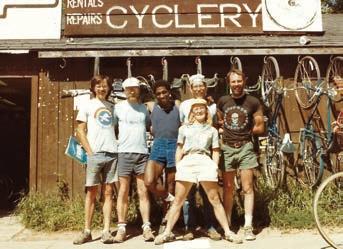
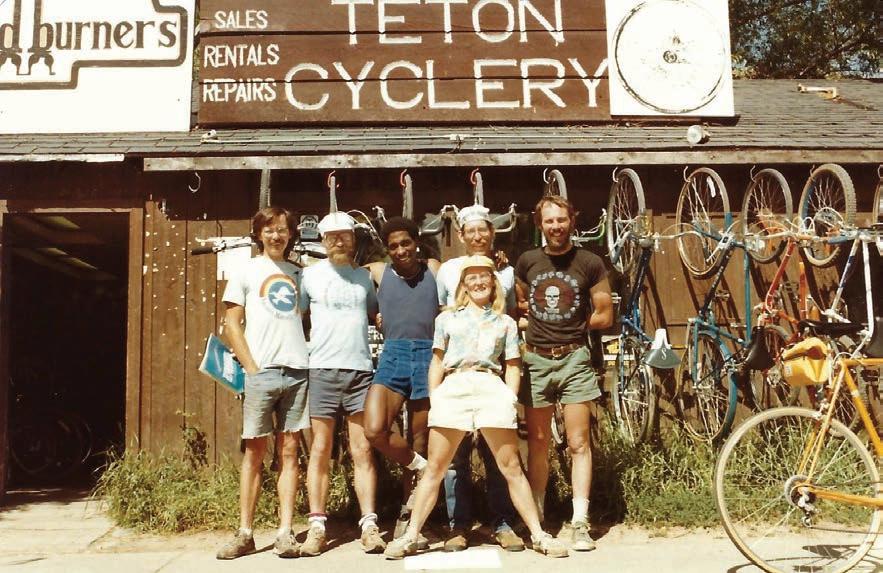
Sandlin fashioned many of his dramatis personae from real souls of the ’60s, ’70s and ’80s West. He lived in the Glenwood Arms, an aging warren of nine apartments originally built for nurses at St. John’s Hospital. Over time, the Arms morphed into a compound contained by the back wall of the Jackson Hole News & Guide and encompassing Teton Cyclery, plus the headquarters of Jackson Hole Mountain Guides.
Sandlin adopted the slopeside patois of linguistic shortcuts and nicknames that became kind of a local code. “Every idea Sandlin had, he saw from his window at the Glenwood Arms,” K.B., former coowner of the Cyclery, said. The Arms’ residents included a master glassblower, a virtuoso luthier, artists, musicians, resort workers, and the astrologer and gemologist Janet Planet, whose window flower box fed the neighborhood moose.
From his perch at the Arms, Sandlin could witness the annual departure of the editor of the Jackson Hole News & Guide, which had a sack-happy publisher. He

might also have seen two police actions at the compound, one with guns trained on a knife-wielding resident, who was perhaps the third part of a love triangle. The other raid responded to reports of illicit smoke.
Cyclery mechanic Marty lived nearby in a singlewide with walls covered by sarcastic artwork. Three bike riders – known locally as Hajji, the Emir and Peter – left through one door of the Cyclery in 1980, then came back through the other door 6½ years later. They’d ridden around the world.
Jim Stiles, then editor and publisher of Moab’s Canyon Country Zephyr, spent several desert summer interregnums at The Arms. Moseying to the Town Square one day, he caught sight of “the ugliest man I’d ever seen.” It was the villain of the nightly shootout melodrama, one-eyed Clover the Killer, who never wore an eye patch.
Other compound characters left their mark. Dr. Liu built the first machine to mass-produce Croakies, the neoprene strap that saves your spiffy sunglasses when rolling a kayak. Cyclery co-owner Wendell’s special

Jackson Hole author Tim Sandlin fashioned many of his dramatis personae from real town characters from the ’60s, ’70s and ’80s. He lived in the Glenwood Arms, an aging compound that encompassed the Teton Cyclery. / Photo by Angus Thuermer
quesadilla is still on the Merry Piglets menu. Flat Ed got his name after his ’69 VW bus slipped off its jack while he worked underneath.
Today, “The Glenwood” stands at the site of the razed Glenwood Arms. It offers three-bedroom townhomes for $6.5 million. Just across the street there’s the Browse ’n Buy thrift store. Second-hand Ralph Lauren button-downs are now up to $8.
Sandlin’s career tells of a just-gone era, reminding me that imagination and literature enrich us as we learn about the humanity just outside our windows. There’s more about him in the Jackson Hole News & Guide, where they drop the paywall for obituaries to allow the living to keep up with the dead. You can find a collection of his newspaper columns that reflect the valley’s weekly dramas in his book The Pyms.
Angus M. Thuermer Jr. is a contributor to Writers on the Range, writersontherange.org, an independent nonprofit dedicated to spurring lively conversation about the West. He is a reporter at the nonprofit WyoFile and former editor of the Jackson Hole News. A decades-long Jackson Hole resident, he is also a graduate of Sandlin’s Write Your Novel class. ■

LPEA members deserve transparency, accountability and a voice in major decisions. That is why I support John Purser for the District 4 board seat.
Over the past several years, LPEA has made some of the largest financial decisions in its history, including leaving Tri-State, taking on major new debt and selling cooperative assets. Regardless of where members stand on those decisions, we should all agree that member-owners deserve a vote and a full financial explanation. LPEA has stated that rates will remain flat in 2026 in part because the budget includes $8.4 million for “rate stabilization,” raising questions about whether current rates are being supported by reserve funds rather than a sustainable long-term financial plan.
John Purser has spent years attending meetings, asking hard questions and demanding transparency. He is not tied to political interests or special groups. He is running to make sure members know how their money is being spent and that future major decisions follow
the cooperative’s bylaws and include member input.
Members were never allowed to vote on leaving Tri-State, taking on hundreds of millions in new debt, or selling FastTrack Communications. In a member-owned cooperative, decisions of that size should not happen without a member vote.
LPEA is a member-owned cooperative. The board should answer to its members. John Purser is the candidate most likely to restore that principle.
– Kristin Dallison, Bayfield
In time of war, traditionally our nation has turned to our president for words of strength, reassurance and vision so that we may continue our lives, though nervous, in unity and hope. How has Trump met that responsibility? The following are notably insightful quotes from him, examples of how he has bolstered the Nation’s psyche in our time of uncertainty.

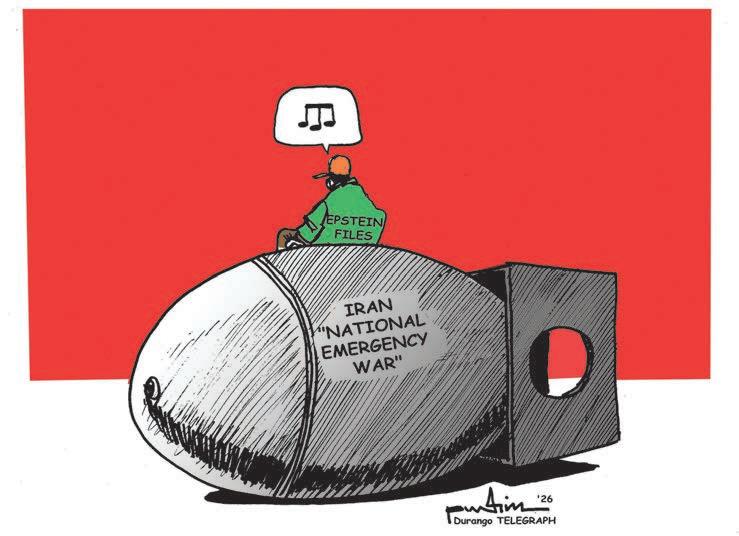
This is from when he was scheduled to address our nation and the world about the need for and status of the war in Iran: “See that nice drape?” Trump said, pointing to gold drapery behind
him. “When that comes down right now you see a very, very deep hole, but in about a year and half from now, you’re gonna see a very, very beautiful building. And there’s your entrance to it


right there … I think I’ll even, I’ll save money on the doors because you can’t get more beautiful than that (the gold drapes). I picked those drapes … I always liked gold, but I think we can save a lot of money. I just saved, I just saved curtains.
“It’ll be spectacular; it’ll be the most beautiful ballroom … I believe it’s going to be the most beautiful ballroom anywhere in the world.”
Gold drapes that he himself picked with his eye for tacky opulence and magnificent ballrooms that he himself oversees the construction of, those were his restorative words on the Iran War. We heard that and knew that anyone who has actualized his potential in interior decorating surely has the skills to lead us through armed conflict.
A further attempt at reassurance was given when he said proudly: “The United States is the largest oil producer in the world, by far, so when oil prices go up, we make a lot of money.” Need a reason to start a war?
There’s one. “We make a lot of money.”
Time was that war profiteering was not only seen as unpatriotic but was a punishable offense. But wait, it actually still is a punishable offense, if the DOJ chooses to enforce the 2007 War Profiteering Prevention Act. The question is: Who is the “we” who is going to make a lot of money? It sure is not you and I paying at the pump. Evidently “we” would be the Trump family and all their closest amigos at Exxon, Chevron, Conoco Phillips and Marathon Petroleum, now raking it in since their costs of production have not risen while the price of their product has soared. Now there’s a business model. All you need is a war, and profits go through the roof. If that is not considered prosecutable under

the 2007 War Profiteering Prevention Act, what is?
And finally there is Trump the seer. Fox News Radio asked The Oracle-in-Chief about how long the war would last, to which he replied that he didn’t think the war “would be long” which arguably gave him some open-ended wiggle room. But sensing that, he got real and reassured listeners that only he, no one else, only he will know when it is over, and that will be “when I feel it, feel it in my bones.”
You will not find osteo-clairvoyance as a component of any accepted military strategy. Neither Sun Tzu or Von Clausewitz highlighted it in their renown works on war, nor is it taught in any of our military academies. Will West Point, the U.S. Naval Academy, the Air Force Academy and all three war colleges now be required by Pete Hegseth to incorporate that hitherto overlooked discipline of “Feeling it in my bones” into their mandatory curriculums?
So it has come to this: our President babbling about drapery, oil profits and marrow vision. If the White House conducted a poll of people who had heard these Consoler-in-Chief profundities, would a majority of MAGA voters share this opinion: “What, me worry?” Or would they rush to the I Ching?
– Josh Joswick, Bayfield
It is with a heavy heart that I pass along the news of the loss of longtime local William (Willie) Heimlich. He apparently died peacefully in his sleep on Fri., March 27, at his home at the “Hotel Royale” on North Main Avenue in Durango. I think he was

around 77 years old.
The residents at the Royale only know a few details about Willie, and I was hoping that some of his friends in the area would reach out and help to fill in the blanks.
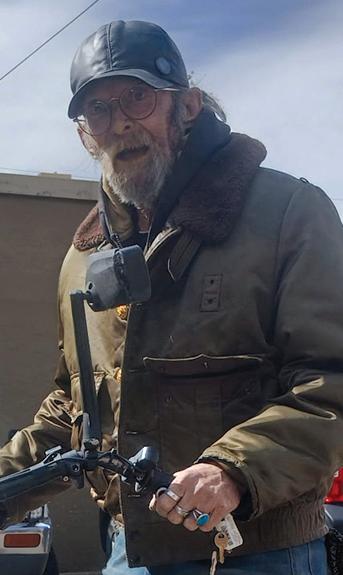
Willie was a fiddle player who, up until recently, still enjoyed a street session with likeminded musicians. Back in the day, he performed as backup fiddle player for the likes of Willie Nelson and Waylon Jennings. He spent years down in Austin, Texas, and was a regular with the music scene there.
He’s got a friend, Ryan, who lives in Bayfield who I hope might be in touch, who might know more about him. We’re mainly interested in reaching out to the next of kin so he can have a decent internment.
My cell number is 970-760-8122. If you can help us track down his relatives, then we can work on putting together a little musical memorial service for him.
I think that would be nice.
– Pete Vance, Durango


The Chapman Hill Ice Rink has served the city well for nearly 25 years. However, growing demand and the inability to have yearround ice, among other things, has led the city to explore options for a new facility./
by Missy Votel
The ice has barely melted at Chapman Rink for the summer, but dreams for a new, year-round ice facility are still alive.
Last month, the City of Durango put out a request for bids for a new ice rink feasibility study. The study will evaluate the need, viability and options for one or two new year-round and/or seasonal sheets of ice.
“Chapman Hill users have expressed the need for a second sheet of ice for many years,” city of Durango Assistant Recreation Director Kelli Jaycox said. “During the 2025 budget process, City Council approved $50,000 to complete a feasibility study, which is currently out to bid.”
Among other things, the study will assess market demand, programming needs, site options, financial feasibility, governance and operations, and implementation. The RFP went out March 17, with applications due April 23 and the bid expected to be awarded in May.
The news was welcomed by the Durango Rink Project, a local nonprofit that has been pushing the city to explore the idea of a new ice facility for the last few years.
“I think it's good that things are moving forward. We
need more ice,” DRP president Ashleigh Tucker said. For the last few years, Tucker and a dedicated group of volunteers, made up of hockey players, hockey parents and figure skaters, have been attending city meetings to promote the idea of a new rink. “Chapman is good right now, but it's not good for the long run,” Tucker said.
For starters, the current rink – which was built in 2002 – is only partially enclosed and operable for ice skating about half of the year. Although there has been talk over the years of enclosing it for year-round use, permafrost under the rink – which requires annual defrosting to avoid structural damage – has stymied that idea. Furthermore, there is a natural spring running under the rink, which has led to issues with concrete and sloping of the ice surface. However, Jaycox said after some initial problems, the situation does not seem to be worsening.
“It has remained relatively stable over the past five years, based on three separate surveys,” she said. “We plan to continue conducting surveys each summer to monitor any changes. While the rink is not perfectly level, we have not observed significant movement or deterioration that would indicate an immediate concern.”
Another thing that can’t be remedied easily is the size
of the rink, which is about 10 feet short of an NHL regulation-sized rink. There is also a shortage of parking, particularly when the ski and hockey seasons are in full swing, with cars often overflowing into the nearby gun club lot.
But perhaps the biggest crunch is with ice time. With only one rink, the Durango Adult Hockey League, Durango Area Youth Hockey Association, figure skating program and city-run programs like house hockey and public skate are constantly dueling it out for slots. Most days, the rink is booked solid from 6:30 a.m. to midnight.
In addition, most figure skating competitions take place in the summer, with local skaters having to travel to Albuquerque, Denver or other cities to train and compete.
“We need more ice for the programs to grow and continue to grow, because right now, there's not enough ice time for the kids' programs and the adult programs to really do much else,” said Tucker, a lifelong hockey player who has two boys, 10 and 8, who play as well as a 3-year-old daughter who will likely be lacing up next year. “Two sheets of ice is kind of necessary to grow the programs, both ice hockey and figure skating.”
According to the City, there were 18,400 paid entries into the Chapman Hill Ice Rink in 2025, reflecting open skates, drop-ins and stick-and-pucks. Although this is slightly down from recent years, the number of ice hours rented –mostly by adult hockey teams and DAYHA – has remained steady over the last three years, at about 1,100. Jaycox noted that each hour can entail two teams with as many as 16 players, meaning there are some 32 people on the ice at any given time. The numbers also do not include spectators.
“Overall usage at Chapman Hill is significantly higher than what these figures alone represent,” she said. For example, last weekend’s Spring Celly adult tournament included approximately 40 hours of rental time but involved around 25 teams with 14–16 players each, totaling roughly 400 participants, she said.
For the 2025-26 season, there were 27 teams in the Durango Adult Hockey League, spread out over four divisions and about 450 kids enrolled in DAYHA. There were another 50 or so participants in the figure skating program.
“Another factor on numbers is the amount of ice time available to use,” Jaycox said. “As we know, the rink is booked morning until night.”
More ice would not only help alleviate
pressure on the existing rink but would add economic benefits, proponents say. A year-round facility could bring more tournaments to town, which means more people staying in hotels, eating at restaurants and shopping at stores.
Of course, in a town like Durango, with its dizzying array of outdoor recreation opportunities, a new state-of-the-art indoor ice facility may be a big ask. And, there is also the thorny issue of land and money –both of which are in short supply.
Early estimates put the cost of a new facility with two NHL-sized rinks at $20$35 million, which includes land, construction, ice systems, equipment and other costs.
However, rink proponents believe a public-private partnership, an increasingly popular model with rinks across Colorado and the country, could help solve that issue. Another selling point is that a new facility could be used for other purposes, with, say, one rink used in the summer to host conventions and events.
As for the Chapman Rink, it could be utilized by other city programs, such as gymnastics or pickleball.
In addition, the new rink could also be built in a developed area, such as the empty Durango Mall parcel, that already has facilities, parking and other infrastructure in place.




“There are so many possibilities,” said Tucker. “The idea would be that we could have year round ice on one rink, and then the other rink would be seasonal, so it could change into roller derby, roller hockey, convention center, whatever.”
Of course, the feasibility study is just the first puck drop in a long game. And
only time will tell if a new rink is a hot idea or, well, it gets put on ice.
“The feasibility study is just the first step, to get our foot in the door, get the city on board and make sure that it's something Durango could utilize,” said Tucker.
For more info. or to get involved, email: durangorinkproject@gmail.com. ■

Once a foregone conclusion, the death of coal is being dragged out
by Allen Best
In Craig, the foremost coal town in Colorado, a sign a decade ago hung on a garden railing: “Coal Keeps the Lights On!” it insisted proudly, defiantly.
Coal really isn’t needed to keep the lights on. Maybe air conditioners. But coal-burning units in Craig, as well as Hayden, Colorado Springs and Pueblo, may linger past scheduled retirements because of growing demand from data centers and possibly wild, wacky and way-warm weather. Ninety degrees across parts of Colorado on the first day of spring? What does that mean for summer?
Most curious is the potential delayed retirement of coal units at Hayden. There, Xcel Energy had planned retirement of the two units in 2027 and 2028. But in a March 2 filing with the Colorado Public Utilities Commission, the company suggested it might want to delay retirement of the two units by a year or even until 2030. The company won’t say formally until June.
Then there’s Pueblo. Xcel was scheduled to close the second of three units there at the end of 2025. That was before Comanche 3, the state’s largest and youngest coal-burning unit, went down – again – last August. The company now says it can’t get the unit operating until this coming August. PUC commissioners wonder whether Comanche 3 will be available even then.
So much for coal being the reliable fuel. Unlike the sun, coal doesn’t set at night. However, Megan Gilman, a PUC commissioner from Edwards, noted this week that the coal unit at Pueblo has been down two of the six years she has served on the PUC.
Incidentally, Xcel has not publicly reported the estimated cost of repairing Comanche 3. Boulder’s Leslie Glustrom rightly asks why this information needs to be confidential. So far, the PUC has rebuffed her.
Xcel, said Eric Blank, the PUC chair, will likely have a shortfall of 492 megawatts of generating capacity this summer. He and other PUC commissioners want Xcel to step up its demand-side management, for example,
getting large-demand customers to shift their use.
PUC commissioners were clearly unnerved by March’s high temperatures.
“Given that Denver metro temperatures were 30 to 40 degrees above normal, it may provide more urgency in the company’s contingency planning for 2026,” said Blank.
Growth in electrical demand has been sluggish for a couple decades. However, during the last 18 months, Xcel has been making noise about needing more electricity to meet demands, particularly those of data centers. But just how much of that projected growth is real can’t be said right now.
Colorado legislators are debating whether to implement tax subsidies in an attempt to lure more data centers. A competing bill would erect tall guardrails regarding energy and water use.
No one really knows where this will end up. The two bills might cancel each other. A major consideration is whether Colorado can afford additional tax breaks during a time of relative fiscal austerity. The state’s budget gap has grown to $1.5 billion. That’s $500 million more than when the legislative session began.
Subsidies are always an awkward subject. Why tax cuts for data centers? Big tech is America’s wealthiest sector. Just seven companies are responsible for a third of the S&P 500.
Many people also object to tax subsidies for renewables. Meanwhile, fossil fuel companies have long enjoyed subsidies, this time for data centers. A case in point: Craig.
Nearly a decade ago, Tri-State Generation & Transmission planned to close one of its coal-burning units there on Dec. 31, 2025. But on Dec. 30, Energy Secretary Chris Wright cited an “emergency” in ordering the unit to stay open. That so-called emergency has caused head-scratching far and wide. People responsible for ensuring resource adequacy, i.e. keeping the lights on, said there were no worries this winter. It took Tri-State about a month to get the plant running again. Alas, it has not been
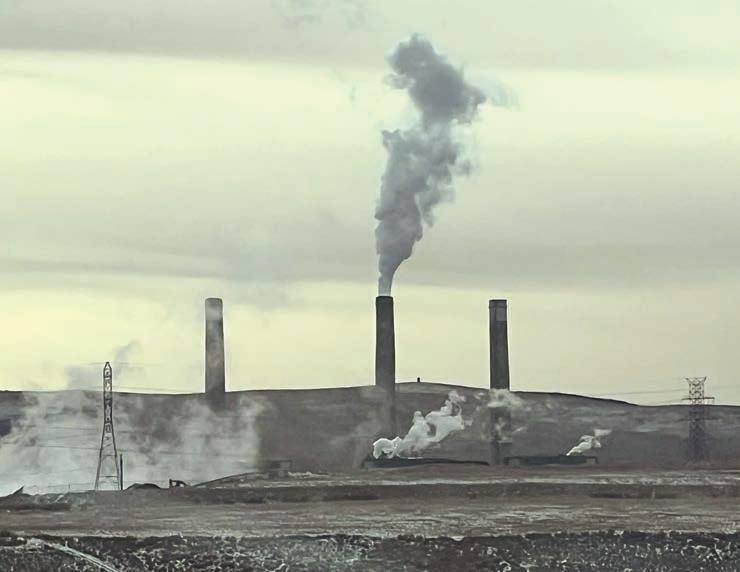
used since.
Based on similar orders in Washington state and elsewhere, Wright issued another 90-day order on March 30.
Tri-State has not objected to Wright’s order but has challenged the cost. Why should it pay? It doesn’t need the power. Wright, at a recent press conference in Weld County, dodged the question. Instead, he cited revenues for a coal plant in Michigan exceeding the expense of keeping the plant open.
President Donald Trump, in his executive orders clearing the way for Wright’s emergency, cited “the expansion of artificial intelligence data centers.”
At a March 9 press conference, Wright was even more forthright about the need for coal: “If we’re going to lead in artificial intelligence, we have to lead in electricity production. In the last 20 years, we’ve tripled our oil production, doubled our natural gas production and barely grown our electricity production, because electricity is the part that’s been infected with politics, with overregulation, with bureaucracy.”
So, to correct the problem, Wright is over-regulating with his bureaucracy in a decidedly political push.
Colorado Attorney General Phil Weiser, the Sierra Club and two other environmental groups appealed Wright’s order. Wright’s agency rejected it. In
filings with a federal court in Washington, D.C., the Colorado organizations argued that the federal government had delivered no evidence of an emergency. Long-term concerns about power are beyond the scope of the law. Wright was out too far over his skis. The court case will likely take many months to resolve.
As for Colorado Springs, it was to have closed the Ray Nixon coal plant by the end of 2030. Now, it says it just can’t do so. It cites supply-chain problems and transmission constraints.
Supply-chain kinks and transmission are very real problems. Funny thing, to the north about 100 miles, United Power built a gas plant and has added a ton of batteries plus solar. It has Colorado’s most significant growth in demand. That includes power for new data centers. Still, United has figured out a way to move forward. So why does Colorado Springs think it needs to burn coal until 2035, even 2040?
No doubt, we all use data centers, be it storage of our photos or transcribed notes. The question is, what subsidies do these data centers require? Right now, it seems obvious that we plan to burn coal – and pollute the atmosphere – further into the future for this shortterm gain.
Allen Best publishes Big Pivots, which tracks Colorado’s energy and water transitions. See more at BigPivots.com ■
El Niño, monsoons in forecast, but will they be enough?
by Shannon Mullane / The Colorado Sun
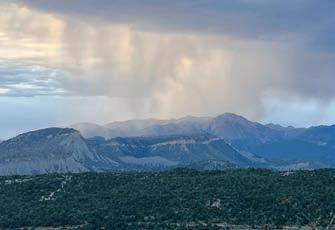
As Colorado grapples with a recordlow snowpack, a “super” El Niño and strong monsoon season could provide some relief.
Colorado’s weather is impacted by everything from temperature changes in the Pacific Ocean to pressure patterns over Texas – not to mention rising temperatures around the globe. This year’s La Niña conditions, created by cooler water in the Pacific, should at least have brought snow to Colorado’s northern mountains. Instead, the state ended the winter early, with record hot days and rapid snowmelt, prompting water restrictions and cutbacks around the state.
As of last week, however, La Niña is declared to be over, and the odds are increasing for a strong El Niño, later in 2026. The climate pattern, caused by warm waters in the Pacific, has historically brought wetter winter conditions to Colorado, according to the National Weather Service.
It’s a dose of hope for residents looking for a reprieve from record-breaking drought, Colorado state climatologist and Colorado State University professor Russ Schumacher said.
“I don’t think we’re going to be stuck in just dry, dry, dry for many, many more months to come,” said Schumacher. “I think there is some reason for optimism.”
A lot of Colorado’s bad drought years have come during La Niñas, and Colorado has had multiple La Niña years in a row. “It doesn’t guarantee that things are going to improve in the near term,” Schumacher added, “but we have a better chance if La Niña is in the rearview mirror.”
El Niño and La Niña are opposing climate patterns in the Pacific that can affect weather worldwide. Together, they’re called the El Niño-Southern Oscillation cycle, or ENSO for short.
The patterns vary based on water temperatures in the central and eastern Pacific Ocean that are influenced by the trade winds circling the Earth near the equator. Meteorologists watch a specific region in the Pacific near the equator to determine whether the water temperature is warmer or cooler than normal, said Erin Walter, a hydrologist for the National Weather Service in Grand Junction.
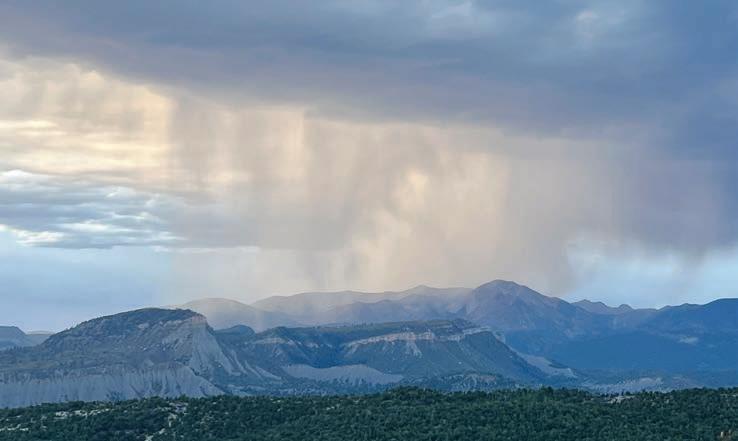
If the region’s water is more than 0.5 degrees Celsius warmer than usual, then scientists call it an El Niño. If the temperature is more than 0.5 degrees Celsius cooler, it is a La Niña.
“They’re basically like opposite waves,” Walter said. “They ebb and flow together. And they’re more irregular than one would think.”
The warmer or cooler temperatures need to persist for months before scientists will shift the classification from neutral into El Niño or La Niña territory. The climate patterns typically last nine to 12 months but can sometimes last for years.
El Niño and La Niña events occur every two to seven years, on average, but they don’t occur on a regular schedule. Generally, El Niño occurs more frequently than La Niña, according to the National Oceanic and Atmospheric Administration.
The temperature fluctuations in the Pacific impact how and where jet streams flow, delivering cold and wet conditions to some areas and dry, warm conditions elsewhere. The ENSO events also can lead to flooding, heavy rains, landslides and drought. They change where fish can find nutrients in the ocean, and La Niña can lead to a more severe hurricane season, according to NOAA.
During an El Niño in the United States, a subtropical jet stream moves ac-
ross southern states, like California, Texas and Florida, making them cooler and wetter than usual. Northern states tend to be warmer and drier, Schumacher said. Conversely, during La Niña, the jet stream comes out of the Northwest across the western United States. The Pacific Northwest and Midwest are cooler and wetter, while the Southwest is warmer and drier.
Colorado sits in the middle, which makes it harder to predict clear impacts of ENSO events and separate them from other climate variations, Schumacher said.
Typically, El Niño tends to bring wetter-than-average conditions, particularly to southern Colorado and in the fall and spring. During La Niña, the conditions flip. Colorado’s northern mountains often receive more snow while southern areas are warmer and drier.
But that doesn’t always happen. This winter was an example of a La Niña that did not drop much snow on the northern part of the state – or anywhere. And the season of 2022-23 was a La Niña that brought significant snowfall to southern Colorado and the San Juan Mountains.
So, which team should Coloradans be on? Definitely El Niño, Schumacher said.
“It tilts the odds toward things being wetter,” he said.
This year, the equatorial water temperature has been more than 2 degrees
Celsius warmer for multiple months –prompting scientists to dub it a super El Niño. They expect neutral conditions between April-June, and after that, conditions could stay neutral or transition into a strong El Niño.
This is a reason for optimism later in the summer and the coming winter, Schumacher said. The last really strong El Niño was in 1997, which brought moisture to most of Colorado in the summer and fall. There were floods along the Front Range and Eastern Plains.
But just because that happened one other time doesn’t mean we will see the same conditions again.
“It would be speculation to read too much into that,” Schumacher said. “The short answer is, we don’t really know.”
Climate and weather researchers only have a few similar years in history to analyze, and that’s not enough data to identify clear trends. There have been only five strong El Niños since 1950, with the last taking place from 2015-16.
“In terms of what that’s going to mean for … what kind of precipitation we get in Colorado?” Schumacher said. “I think it’s too early to say.”
In addition to this, there is one other weather phenomenon that will come into play this summer: monsoons. This year’s forecast indicates monsoons are likely for July-September, Schumacher said.
“The outlooks are pointing toward an active monsoon season, so that’s probably the thing to keep a closer eye on in the near term,” he said.
Different from ENSO patterns, monsoons are local seasonal circulations that develop every summer in the Southwest. They arise when shifting wind patterns bring moisture from the eastern Pacific and the Gulf of California that produce afternoon thunderstorms. Although an active monsoon will offer some relief from drought and wildfires, the short bursts of rain will not refill reservoirs.
“Monsoon rains just aren’t nearly enough to fill up reservoirs or even bring them back up from really low levels,” Schumacher said.
This story was edited for length. The Colorado Sun is a nonprofit, award-winning news outlet covering Colorado. Sign up for their newsletters, and follow them on Twitter, Instagram, Facebook and Bluesky. ■
April 16, 2026 n 11 telegraph
Thursday16
Connect & Celebrate Women’s Resource Center, 5:30 p.m., Union Social House, 3062 Main Ave.
Dart Tournament, 5:30-9 p.m., Union Social House, 3062 Main Ave.
Expert Arborist & Specialists Panel Talk, 6-7 p.m., Durango Recreation Center, 2700 Main Ave.
Powerhouse Trivia Night, 6:30-8:30 p.m., The Powerhouse, 1333 Camino Del Rio
Darryl Kuntz plays, 6-9 p.m., Diamond Belle Saloon, 699 Main Ave.
Bluegrass Jam, 6-9 p.m., Durango Beer and Ice Co., 3000 Main Ave.
Open Mic Night, 6-9 p.m., American Legion, 878 E. 2nd Ave.
Stand Up Comedy: April’s Fools Local Showcase, 7p.m., Black Heron Lounge, 726 Main Ave.
Friday17
Veterans Friday Coffee, 8-10:30 a.m., American Legion, 878 E. 2nd Ave.
Arbor Day Celebration, 1-4 p.m., Durango Recreation Center
Darryl Kuntz play, 5:30 p.m., Diamond Belle Saloon, 699 Main Ave.
“Languages in All Directions: A Celebration of Indigenous Languages,” 5:30-8 p.m., Skyhawk Station at FLC
Trivia Fridays, 6-8:30 p.m., Durango Beer & Ice Co, 3000 Main Ave.
Dustin Burley plays, 6-9 p.m., Office Spiritorium, 699 Main Ave.
Steve Labowskie & Friends play, 7 p.m., 11th St. Station, 1101 Main Ave.
FLC Artist in Residence with Christopher Moore on trumpet and Valerie Trujillo on piano, 7-9 p.m., Roshong Recital Hall, Jones Building, FLC
Saturday18
“Languages in All Directions: A Celebration of Indigenous Languages,” 8:30 a.m.-5:30 p.m., Skyhawk Station, FLC
Treasure Auction, 9 a.m., La Plata County Fairgrounds Pavilion
“Happy Brain, Happy Child: Limiting Beliefs,” 10-11 a.m., Durango Public Library, 1900 E. 3rd Ave.
“Procession of the Species” Earth Day Celebration Parade, 10:30 a.m., down Main Avenue to Buckley Park
Earth Day Celebration, 11 a.m.-3 p.m., Buckley Park
Women’s Pinball Tournament, 11 a.m., J. Bo’s Pizza & Rib Co., 1301 Florida Rd.
Acoustic Jam, 1-2 p.m., Durango Public Library, 1900 E. 3rd Ave.
Dog Adoption Event, 3-5 p.m., Creature Comforts, 305 S. Camino del Rio, Ste. O
Euchre, 5:30-8:30 p.m., Union Social House, 3062 Main Ave.
Leah Orikowski plays, 6-8 p.m., EsoTerra Arboretum, 270 CR 303
Darryl Kuntz plays, 6-9 p.m., Diamond Belle Saloon, 699 Main Ave.
Matt Rupnow plays, 6-9 p.m., Office Spiritorium, 699 Main Ave.
Karaoke with Kimmy, 6-9 p.m., Durango Beer and Ice Co., 3000 Main Ave.
FLC Jazz Ensemble, 7-9 p.m., VFW Post 4031, 1550 Main Ave.
The Original Vypers play, 7-10 p.m., 11th St. Station, 1101 Main Ave.
Durango Contra Dance, 7:30 p.m., La Plata Senior Center, 2424 Main Ave.
Lawn Chair Kings: 25 Years and Counting anniversary concert, 7:30 p.m., American Legion, 878 E. 2nd Ave.
Veterans Benefit Breakfast, 9-11 a.m., VFW Post 4031, 1550 Main Ave.
RAD: Ross Anderson Day, 20th Year Record Anniversary Celebration, 10 a.m., Rotary Park, Durango
Irish Jam, 12 noon-3 p.m., Durango Beer and Ice Co., 3000 Main Ave.
Roller Derby Skate Clinic, 2-4 p.m., La Plata County Fairgrounds
America, We Sing! Presented by Durango Choral Society, 3 p.m., Christ the King Lutheran Church, 495 Florida Rd.
Cowboy Concert on the Mountain, 4-8 p.m., Destination Ranch, 355 Destination Rd
Blue Moon Ramblers play, 6-9 p.m., Diamond
Belle Saloon, 699 Main Ave.
FLC Choir and Orchestra Concert, 6-9 p.m., Community Concert Hall at FLC
Adaptive Sports Association Outreach Event, 12 noon-4 p.m., Santa Rita Park, 111 S. Camino Del Rio
Sign Waving peaceful gathering, 4 p.m., corners of Camino del Rio and College Dr.
Happy Hour Yoga, 5:30 p.m., Ska Brewing, 225 Girard St.
Terry Rickard plays, 6-9 p.m., Office Spiritorium, 699 Main Ave.
Joel Racheff plays, 6-9 p.m., Diamond Belle Saloon, 699 Main Ave.
“How to Build a Bluebird House,” 6:30 p.m., Animas Valley Grange, 7271 CR 203
Great Decisions Durango: “Multilateral Institutions in a Changing World Order,” 11:45 a.m.1:45 p.m., Durango Public Library, 1900 E. Third Ave.
Cowboy Tuesdays, 12 noon-3 p.m., Diamond Belle Saloon, 699 Main Ave.
Trout Unlimited Monthly Meeting, 5:30-7 p.m., Berkshire Hathaway Home Services, 842 Main Ave.
Rotary Club of Durango: Roger Ptolemy speaks about his 2025 trip to Indonesia, 6-7 p.m., Strater Hotel, 699 Main Ave.
Book Club: Nature Writing, 6-7:30 p.m., Bread Downtown, 135 E. 8th St.
“Voting is Your Superpower,” presented by the League of Women Voters, 6-8 p.m., Durango Public Library, 1900 E. 3rd Ave.
Author Event with Brianna Madia “Homesick Nomad,” 6-8 p.m., The Rochester Hotel Garden, 726 E. 2nd Ave.
Tuesday Trivia, 6-8:30 p.m., 11th St. Station, 1101 Main Ave.
Open Mic Poetry, 6-9 p.m., American Legion Hall, 878 E. 2nd Ave.
Jason Thies plays, 6-9 p.m., Diamond Belle Saloon, 699 Main Ave.
Sean O’Brien plays, 6-9 p.m., Office Spiritorium, 699 Main Ave.
Interesting fact: The U.S. tax filing date used to be March 15, but it’s possible that (unofficially, of course) the Ides of March made Congress antsy.
Dear Rachel,
My friends just started a podcast, along with everybody else on the planet. I want to support them by listening, but it’s just eavesdropping. They don’t say anything at all. They just record a regular conversation for 30 minutes or so, pluck one juicy phrase as the title and post it. It’s so, so boring. They want me (a marketing pro) to help them get sponsors. I actually love podcasts for driving, but this one is just so bad. No one will give them money. How do I tell them?
– Tuned Out
Dear Unsubscriber,
Let he who is without bad ideas podcast the first stone. That’s exactly the sort of thing I would say if I had a podcast and let myself record the first thing that comes out of my mouth. See why I don’t? Which is to say, yeah, I agree with you. I’d rather spy on a conversation in public. But people must like this junk! They keep listening! So maybe just give your friends a referral to a willing sponsor-finder. And if it works, hey, let’s talk about sponsoring Ask Rachel.
– Dropping eaves, Rachel
Barbershop Tryouts, every Tues., 6:30 p.m., Christ the King Church, 495 Florida Rd.
Wednesday22
Durango Daybreak Rotary meeting Jacob BranchBoyle speaks about DHS Southwest Conservation course, 7-8 a.m., La Plata County Fairgrounds
Electronics Recycling Event, hosted by Durango Montessori, 8 a.m.-5:30 p.m., La Plata County Fairgrounds
Great Garden Series, 4:30-6 p.m., Durango Public Library, 1900 E. 3rd Ave.
Understanding Behaviors and Responding Effectively, presented by Team Up, 5:30-7:30 p.m., Pine River Library, 395 Bayfield Center
“Bernardo de Miera y Pacheco Domínguez and Escalante’s Unruly Cartographer,” presentation on the Dominguez-Escalante expedition, 6-7:30 p.m., Durango Public Library, 1900 E. 3rd Ave.
Trivia Night, 6-8 p.m., Zia Cantina, 2977 Main Ave.
Chuck Hank plays, 6-9 p.m., Office Spiritorium, 699 Main Ave.
Donny Johnson plays, 6-9 p.m., Diamond Belle Saloon, 699 Main Ave.
Dear Rachel,
I messed up real big on my taxes. I panicked at first, but turns out you can just file an amendment. Best part? You have three years to do that. So wait. If taxes are so laid back that you can fix your whoopsies for three years, why the big push for April 15?
– Red-Lined and Deadlined
Dear Filed Down,
It’s all about gubmint control, innit? We could all be like New Zealand, where tax filings are reportedly super simple and low stress. But NO. We have to hire professionals and still spend days on top of days hustling for receipts and scrambling to file on some arbitrary day. It’s all made up anyway, so why not a scary Day of Doom mitigated only by the proper forms?
– Your annual extension, Rachel
Dear Rachel,
I cannot get my dog to stop scratching himself. Chewing on his legs, rubbing his eyes, itching whatever you call the armpit on a dog. Allergy meds aren’t working. Can’t figure it out. Any recommendations for getting him to leave himself alone?
– Doggone It
Artist Talk with Diné curator and photographer Rapheal Begay, 6:30-8 p.m., FLC Center of Southwest Studies-Lyceum, Room 120
Dementia/Alzheimer’s Caregivers Support Group, 1st, 3rd & 5th Wed. of each month, 10:30 a.m.12 noon, La Plata Senior Center, 2424 Main Ave.
Read-a-Thon Fundraiser, April 10-20, 10 a.m.-8 p.m., Maria’s Bookshop, 960 Main Ave.
“Stations of the Cross,” exhibition by Mike Brieger, thru April 12, Studio & Gallery, 1027 Main Ave.
“Still Coloring Outside the Lines,” group exhibit featuring artists Elizabeth Gallagher, Corrine Nichols and Lauri Schell, thru April, Dancing Spirit Center for the Arts, 465 Goddard Ave., Ignacio
“Beauty or Bondage: Exploring Feminism,” art exhibit, thru May 9, Durango Arts Center, 802 E. 2nd Ave.
Jesse Littlebird and Chris Pappan, contemporary Indigenous art, thru April 24, Blue Rain Gallery, 934 Main Ave., Unit B
Guided Bird Walks every Wednesday, thru Sept. 30, 8-9:30 a.m., meet by the painted wall in the Botanic Gardens at Durango Public Library, 1900 E. 3rd Ave.

Dear Dog Scratch Fever, You know what they say: if you can’t change it, monetize it. There are people out there – probably more than one – who would listen to a podcast of your dog licking and scratching himself. One upfront investment in a quality ASMR microphone, and you’ll have advertisers lined up for miles. Makes me wonder why we put so much effort into a newspaper when we could just give our dogs fleas and go to town. – Scratch that, Rachel
Edible Books book club, Thurs., April 23, 3 p.m., Sunnyside Library, 75 CR 218
Headwaters Drought Resilience Game Night, Thurs., April 23, 6-8 p.m., The Powerhouse, 1333 Camino Del Rio
Voice Studio Recital, Thurs, April 23, 6-8 p.m., FLC Roshong Recital Hall Jones Building
Monthly Poetry Open Mic, Thurs., April 23, 5:30 p.m. doors, The Subterrain, 900 Main Ave., Ste. F
LPEA CommunityPowerX: The Regional Energy Future Forum, Thurs., April 23, 5:30 p.m., Durango Arts Center, 802 E. 2nd Ave.
“Happy Brain, Happy Child: Memory & Supporting Learning,” Sat., April 25, 10-11 a.m., Durango Public Library, 1900 E. 3rd Ave.
Meditation and Dharma Talk, Mon., April 27, 5:30 p.m., Durango Dharma Center, 1800 E. 3rd Ave., Ste. 109 or online at www.durangodharmacenter.org
Kelly Willis “What I Deserve” Anniversary Tour, Tues., April 28, 7:30 p.m., Community Concert Hall at FLC
“Bigs & Beyond” Big Brothers Big Sisters Gala, Wed., April 29, 5:15-8 p.m., Riverbend Ranch, 27846 HWY 550
by Rob Brezsny

ARIES (March 21-April 19):
Anthropologist and author Clifford Geertz loved to use “thick description” – detailed reports that captured deeper levels of meaning. Here’s an example of thin description: “He winked.” Thick description: “He quickly closed and opened his right eyelid in a culturally specific gesture of playfully conspiratorial communication.” I invite you to enjoy the sumptuous pleasures of thick description. Unleash your wild curiosity as you dig down into rich, complex truths. Gleefully explore how the cultural, personal, and historical contexts give each moment specific, nuanced significance.

TAURUS (April 20-May 20): New beginnings and final chapters will overlap in coming weeks, and they’ll push you in the direction of robust growth. It won’t always be obvious which is which, so you’ll need to sharpen your discernment to read the signs. Here are two contemplations to steer you: 1. Which long-running sagas in your life have finally played themselves out? 2. Which struggling, half-forgotten dreams are yearning to rise again and blossom as if they were brand new? Once you’ve listened deeply enough to answer those questions, move boldly: Feed and protect whatever is being born, and actively assist in the graceful dismantling of whatever is ready to end.

GEMINI (May 21-June 20): One of your go-to tools or assets is still functioning but now is exactly the time to repair or refurbish it – before it breaks. Furthermore: A power outage of sorts may be looming unless you move to head off an impending overload. Wait, there’s even more! The monster in your closet is still deeply asleep, which is why now is the perfect moment to summon an exorcist or exterminator, before it stirs. Are you getting the picture, Gemini? The very fact that you’re reading this horoscope gives you all the advance warning you need to sidestep potential glitches and diversions.

CANCER (June 21-July 22): Asking the BIG questions is advisable right now, because you are likely to get really good answers to those BIG questions. Want a nudge to get started in this enterprise? Here are three recommended queries: 1. “What is the wild meaning of my precious life?” 2. “Who the #@$%&!* am I, anyway?” 3. “Where is this so-called ‘God’ I hear so much about?” Dear Cancerian, I will also urge you
to formulate humorous, satirical BIG questions that inspire life to be playfully revelatory with you. Here are three: 1. “How can I fine-tune my friends and loved ones to perfection?” 2. “Are there shortcuts to getting absolutely everything I want?” 3. “How do I sign up for a life of nonstop pleasure, free from all discomfort?”

LEO (July 23-Aug. 22): When people grasped how radical Einstein’s theory of relativity was, a journalist asked him how he had arrived at such a breakthrough. Einstein said it was simple: He ignored supposedly fundamental truths. Please notice what that might imply for you in coming weeks. Einstein didn’t dismiss a mere opinion or fashionable theory; he set aside theories so deeply accepted that everyone treated them. He didn’t waste energy fighting them but simply proceeded as if they didn’t exist. Consider doing the same: Set aside at least one seemingly incontestable assumption and be alert for new realities.

VIRGO (Aug. 23-Sept. 22): The International Space Station orbits Earth every 90 minutes, so astronauts see 16 sunrises and sunsets every 24 hours. It’s a challenge to maintain their circadian rhythms. But there’s a wonderful trade-off: witnessing the rapid cycling of darkness and light, which provides a visceral sense of life’s deep cadences. Your routine may seem similarly unsettled these days. Transitions are coming faster than feels natural. But this disruptive blessing is giving you access to patterns that aren’t intelligible when you’re moving slowly. You’re beholding the way things change as well as the changes themselves. This is a valuable gift.

LIBRA (Sept. 23-Oct. 22): You Libras sometimes get accused of indecision, as if your careful weighing of possibilities were a weakness. But I see a different truth: You aspire to be fair-minded as you honor all the legitimate claims on your attention. So the problem isn’t your capacity for considering multiple sides of each story. Rather, I find fault with the culture you live in, which is obsessed with one-dimensional certainty. If I were your coach or therapist, I would give you permission to take your time and resist the rush to resolution. The most honest thing you can say may be, “I’m still deciding,” or “Both of these feel true.”

SCORPIO (Oct. 23-Nov. 21): You’re not a flaming expert at turning tension into treasure, but you have modest skills at that art. And now I’m predicting you will grow these skills. I’m not implying you will be

immersed in stressful melodrama. I’m suggesting you will handle differences of perspective with increasing aplomb and curiosity. Instead of treating conflict as a debilitating hassle, you’ll find value in it. Some debates may even feel stimulating and fun rather than tiring. To take maximum advantage, enjoy the controversies as exploratory missions rather than showdowns.

SAGITTARIUS (Nov. 22-Dec. 21): I hope and predict that you will be wildly resourceful as you wisely experiment with love in the coming weeks. I hope and predict that you will research the art of tender, inspiring intimacy in new frontiers. Reinvent passion, you subtle intensity freak! Be a bold explorer who breaks the boring old rules! Dare to break open new varieties of sweetness and companionship that require you to innovate and improvise!

CAPRICORN (Dec. 22-Jan. 19): If you were on a walk and spied a dime on the ground, would you bend down to grab it? Probably not. Would you feel differently about a quarter? Maybe you have decided that nothing under a dollar is worth your effort. But in the coming weeks, you will be wise to break such rules. Symbolically speaking, the act of stooping down to pick up a dime will set off a chain reaction that ends with you acquiring a hundred-dollar bill. By saying yes to small, unexpected blessings, you’ll position yourself to receive larger ones down the line.

AQUARIUS (Jan. 20-Feb. 18): The coming weeks will be an excellent time to begin a building project on the scale of Egypt’s Great Pyramid or India’s Taj Mahal. You should at least initiate work toward some magnificent masterpiece or creation, Aquarius. According to my analysis, there’s a chance you could coax an armada of helpers to work on your behalf. And as you set out to accomplish your labor of love, I bless your quest.

PISCES (Feb. 19-March 20): Artists who specialize in origami can create structures far stronger than the flat paper they’re folded from. The weakness of being made from thin, fragile material is overcome through strategic creasing. Engineers now use origami principles to design everything from solar panels to artificial blood vessels. Let’s extrapolate these facts into a lesson for you in the coming weeks, Pisces. We’ll assume that your flexibility is a strength, not a liability. You will wield your pliability to produce a high degree of structural integrity.

Deadline for Telegraph classified ads is Tuesday at noon.
Ads are a bargain at 10 cents a character with a $10 minimum.
Prepayment is required via cash, credit card or check. (Sorry, no refunds or substitutions.)
Ads can be submitted by emailing: classifieds@ durangotelegraph.com
Ready to make a difference close to home? The University of Denver GSSW Four Corners Program is now accepting applications for the 2026–2028 MSW cohort! Classes meet Fridays in Durango, so you can keep working while earning your MSW. Learn more at du.edu/socialwork/fourcorners. Change your community. Change your future. Start with DU!
Notice of Public Sale to enforce self-service storage facility lien. “Personal Property,” stored at Unit B15 of The Animas Mini Storage at 20995 Highway 160, Durango, CO 81301, described as: Skis, propane tanks, chop saw, boxes/bins/bags of misc., which are stored under a Rental Agreement between The Animas Mini Storage and Nathan Pease, will be sold to the highest cash bidder unless all rents and fees are paid in full prior to the auction. Date and time of sale: April 25, 2026, at 9:30 AM. Terms of sale: cash. Place of sale: The Animas Mini Storage, 20995 Highway 160, Durango, CO. All bidders must present a valid stateissued picture ID to place bids.
Mill Street Bistro is looking to hire a line cook. Full or part time, pay negotiable. Send resume to: millstreetbistro@gmail.com or stop in for an interview: 135 W. Mill St., Bayfield.
Animas Chocolate Dishwasher/Kitchen Support - Tuesday - Saturday, 4pm-9pm. Bring resume to 920 Main Ave. or email Retail@AnimasChocolateCompany.com
Now Hiring Downtown Ambassadors
Do you love Durango? The Durango Business Improvement District is seeking friendly, outgoing, and knowledgeable people who love our community to serve as Downtown Ambassadors. We are seeking candidates with strong interpersonal skills, a passion for engaging with people, and familiarity with our community. This is a seasonal, part-time position. Candidates should be able to fill 2-3 shifts a week. Shifts are 2½ to 4 hours in length. This is a great job to supplement with other part-time employment. Teachers are encouraged to apply! $18-20 per hour. To apply, visit: www.downtowndurango.org/ jobs. Deadline to apply is April 22.
White Rabbit Spring Book Sale
5/2, 11–4 (5/3 if rain), 128 W. 14th St., White Rabbit Garden. Lots of great books – take what you need, pay what you want! Tell your friends!
Urgently Needed
Affordable, electromagnetically-quiet living space (room, ADU or RV space) to rent close to town for electrosensitive senior and two (quiet, well-behaved, indoor) dogs starting around April 1. Fenced yard for dog use a couple of times a day (or fenced dog park/area nearby) *needed*. Can also help with yardwork, housework, minor repairs, elder care, pet care, etc. Terms negotiable – please call if you'd like to discuss 970-508-0326 and leave a voice message.
Massage by Meg Bush LMT, 30, 60 & 90 min., 970-759-0199.
Sunny 2nd Floor Furnished Studio apartment Highpoint Tamarron.
$1200/mo. Utilities WiFi TV included. Jacuzzi tub, deck with views. No pets, no smoking. Text 5057282057 or email: mmayer4823@gmail.com.
Cool Under Fire
A workshop (for ages 8-80) treating burnout from stress & anxiety. Learn how to feel centered and keep calm despite daily dumpster fires. VFW 5:30-7:30pm on 5.15.26. Info and tickets online: durangoaikido.com
Reruns Home Furnishings
Furniture, mirrors, lamps, cool artwork and more! Looking to consign smaller pieces. 572 E. 6th Ave. Open Mon.-Sat.
Child Guidance-Storybook Gardens 970-403-3347

Electric Repair
Roof, gutter cleaning, fence, floors, walls, flood damage, mold, heating service.

‘Mississippi Grind’
A gambler and a big handsome leprechaun try their luck on the road – Lainie Maxson

Boiler Service - Water Heater Serving Durango over 30 years. Brad, 970-759-2869. Master Plbg Lic #179917
Dog Fosters Needed Parker’s Animal Rescue needs fosters to provide temporary homes for rescued dogs. We supply crates, food, leashes, toys, support and vet visits. Apply at: parkersanimalrescue.com.
SW Community Justice Coalition
Support restorative justice in Southwest Colorado. Learn more at southwestjus tice.org or southwestjustice.org.
by thousands of discerning eyeballs every week. (*And a few that just look at the pictures.)