
Susie Byers
Head of Prep sby@hchnet co uk
Katy Deacon
Vice Principal Academic skde@hchnet co uk
Rob Armiger
Assistant Principal | Director of Studies rwa@hchnet co uk
Imogen Stone
Assistant Principal | Teaching & Learning ist@hchnet co uk
Paul Pearce
Senior Vice Principal | Operations pgp@hchnet co uk
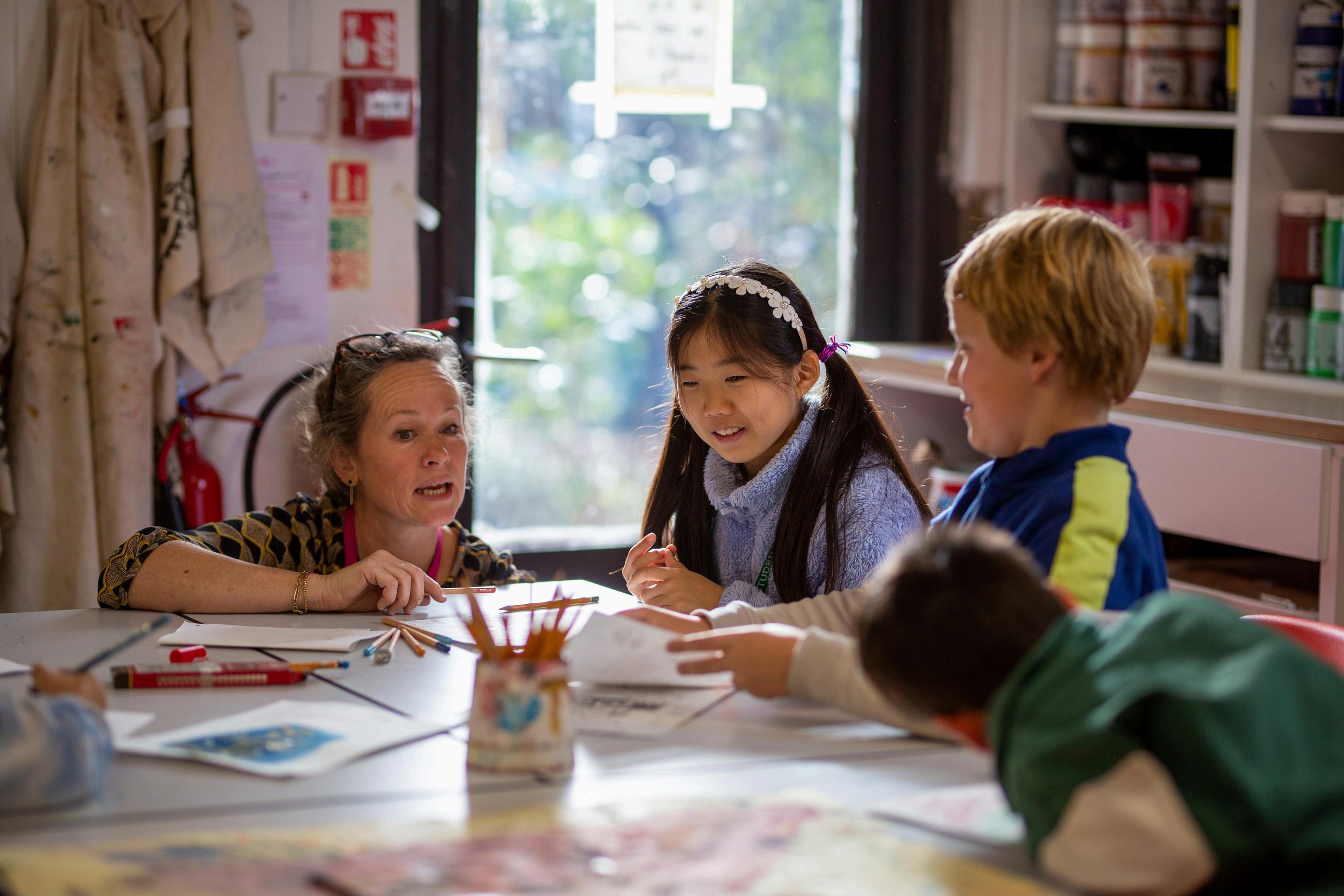
Students will each complete a 3D sculpture of a head, based on the theme of the Chinese Terracotta army They will use traditional clay sculpting techniques and tools, and learn how the anatomy of the skull and its proportions relate to individual facial features
Term
Autumn 1
Autumn 2
Spring 1
What are we studying?
Students study the formal elements of line, tone, texture and composition, creating an illustrated book They use pen and ink, acrylic paint and frottage, and study the way Van Gogh, Victor Hugo and Max Ernst respectively used these materials
Students are introduced to further colour theory through the historical context of Egyptian pigments They explore complementary contrast through watercolour and wax resist
Stencilled Clock project: Historical context of early stencil use in various cultures, and their use today Students will look at historical timekeeping methods, and some famous examples of decorated clocks and create their own stencil design They will cut and print their stencil design to create a clock face for their own clock
Spring 2 Spring 1 continued
Summer 1and 2
Students will each complete a 3D sculpture of a head, based on the theme of the Chinese Terracotta army They will use traditional clay sculpting techniques and tools, and learn how the anatomy of the skull and its proportions relate to individual facial features
The Year 6 curriculum is broad and covers a range of genres, interests and styles.
We start the summer term by reading the book ‘Holes’ and exploring character, setting and atmosphere. The book covers themes of friendship, fate and perseverance – areas of special interest for the Year 6 pupil and beyond. This is a longer unit of study which will prepare the children for their transition to year 7 and the demands of the KS3 curriculum.
We then look at a variety of poems with a strong environmental theme from the anthology, ‘Poems from a Green and Blue Planet’. The unit will focus on a range of poetic features and language and their effect on the reader. After half term the children will enjoy a really interesting Non Fiction unit. The children will discover more about Kings and Queens of Britain and write an information text about their chosen monarch.
In the final weeks of Year 6 the children will be involved in their end of year production but will also be exploring a transition unit to help them practise some of the skills used in Year 7.
How it will be assessed
Assessment will be through daily marking and feedback. Through discussion and questioning. At the end of each unit the children will be writing in the style of the author or poet they have been reading. There will also be informal assessment of writing, reading and SPaG at the end of each term.
Term
Autumn 1
Autumn 2
Spring 1
Spring 2
Summer 1
Summer 2
What are we studying?
Northern Lights by Philip Pullman Explanation Texts
Macbeth and The Tempest The Highwayman
War Horse by Michael Morpurgo. Non Fiction Reports Poems of self expression
Greek Myths Blogs
Performance Poetry
Holes by Louis Sacher
Poems from a Green and Ble Planet
Tony Robinson’s Kings and Queens by Tony Robinson Transition Unit .
Foundation group: Sesame 1
Advanced group: DELF Skills
This term, we have focused on learning how to situate ourselves in a city and describe the area we are in. We looked at asking for directions and learn directional language. We have also been studying the film “une vie de chat”. During the analysis, we focused on learning and using new tenses, the near future tense and we began using the perfect past tense.
Throughout the course of the term, both Y6 groups will be working on talking about their summer holidays, talking about the first days at school and their timetable. They will ask their peers about what they like and dislike. They will also learn how to describe someone physically and to talk about their personality. Students will also learn to describe their experience of school and their homelife. As the terms progress the different groups will do some different in order to embed and consolidate French language skills in a way appropriate to their level. The details of the year for each group are below.
How it will be assessed:
Students will have regular vocabulary tests to guarantee appropriate knowledge and progress, and at the end of each half term they will have a written assessment that will cover reading, listening, grammar, translation and writing.
Foundation set: Sesame 1
Term
Autumn 1
Autumn 2
What are we studying?
In the first half term, students will begin their French language journey using Décimel 1. They will focus on the following topics:
Students will learn how to greet others and introduce themselves in French, using the verb s’appeler and the concept of verb conjugation by changing the endings to match the subject (e.g., je m’appelle, tu t’appelles, etc.).
They will also practice numbers from 1 to 15, enabling them to talk about their age and express how they are feeling.
In terms of grammar, students will focus on the two most essential regular verbs in the curriculum, être (to be) and avoir (to have), and will learn to conjugate them in the 1st, 2nd, and 3rd person singular (je, tu, il/elle).
During this period, we will continue with Décibel 1 and focus on learning how to talk about school. Students will expand their vocabulary to include school materials, school subjects, the days of the week, numbers up to 31, and food. They will also practice using the verbs aimer (to like), adorer (to love), and détester (to hate). In terms of grammar, students will learn about the gender of nouns in French and the use of different articles, including definite articles (un, une, des, le, la, l’, les), indefinite articles (du, de la, de l’, des), and possessive articles (mon/ma, mes/tes). At the end of the term, there will be an assessment to review their progress.
Foundation set: Sesame 1 continued
Advanced set: DELF Skills
Modules 3 and 4
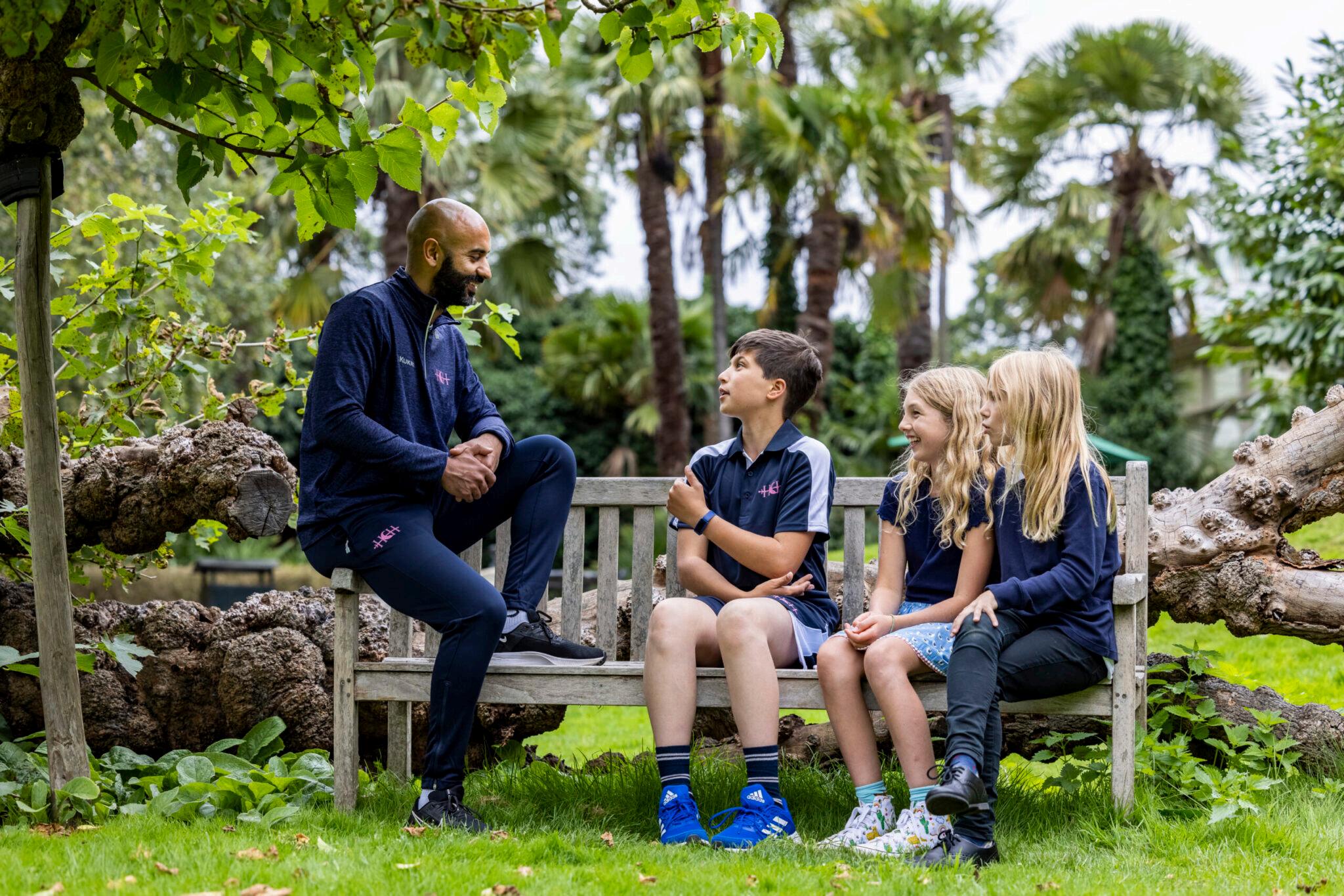
In these modules, pupils will strengthen their verb grammar by learning to conjugate in the imperfect and past simple. They will also work on spelling rules, focusing on adjective agreements, plural forms, invariable words, and imperfect tense endings. In vocabulary, they will learn to recognise word families, while grammar lessons will help them identify verb groups and complements. Reading comprehension will focus on extracting explicit and implicit information and interpreting literary texts. In writing, they will practise structuring a short narrative with coherence and correct spelling. For oral language, they will memorise and recite a poem with expression, choosing between "Melancholia" by Victor Hugo and "Une baleine à bicyclette" by Claude Roy.
Module 5
Pupils will deepen their grammar skills by learning to recognise and use sentence complements and identify adverbs. In spelling, they will focus on invariable words, words with [in] sounds, adverbs ending in -ment, and verb endings (-é, -er, -ait). In writing, they will explore dialogue structure, while in vocabulary, they will practise adding prefixes and suffixes to create word families, using verbs of dialogue, transforming direct speech into indirect speech, and recognising different language levels. Reading comprehension will focus on understanding dialogue features, while verb grammar will cover the passé composé and past/present participles. For oral language, they will choose a poem to interpret from "Le Glacier" by B. Clavel or "Le Rhume de l’ours" by A. Hajnal, and for oral reading practice, they will read "Les Chaussettes de madame Michat" by Bernard Friot aloud.
How it will be assessed?
The programme includes follow-up assessments to gauge and measure students' proficiency and progress, ensuring they develop strong reading and writing abilities, a deeper appreciation for literature, and improved expressive skills.
Students will be asked to write and present one book review this term on the 20th April.
Year 6 will focus mainly on tectonics, but with some extra attention given to maps, particularly world maps, including location skills.
The students will be introduced to a range of foundational knowledge in the field of earth science, including considering what we know about the structure of the earth, how and why the plates move, and what causes earthquakes and volcanoes.
We will locate some of the world’s most seismically active regions, and where there are active volcanoes and why. There will be an opportunity for students to find out more at home and bring their knowledge into lessons for their peers. By focusing more heavily on volcanoes than earthquakes, there should be greater opportunity to engage with the dangers and benefits of living near to volcanoes, and gain greater insight into why eruptions can differ so wildly.
How it will be assessed?
Students will be asked to produce the results of some online research at home on a volcanic eruption of their choice.
There will be an end of year assessment, which will include questions of a range of lengths, covering the content taught in the Spring and Summer terms. This will include 1-, 2-, 4- and 6-mark answers, some knowledge recall and some resource-response questions.
Sustainable thinking across the curriculum
Year 6 Curriculum Overview
These lessons introduce children to the Principles of Harmony in Nature and highlight the importance of maintaining balance within natural systems. The key principles explored include Interdependence, Natural Cycles, Diversity, Adaptation, Health, Geometry, and Oneness.
Students explore these ideas through inquiry-based learning. They read and discuss stories, take part in exploratory walks in nature, and complete creative activities that support a deeper understanding of harmony in the natural world.
Each half term, these enquiries are carefully linked to the wider curriculum, drawing on knowledge from Art, Maths, English, and Science. This approach helps students recognise the connections between different subjects while developing a stronger appreciation of balance and patterns in nature.
Themes by term will be:
Autumn: My Environment
Spring: My Health and the Environment
Summer: My Place in the World.
Term
Autumn 1
Autumn 2
What are we studying?
Cycles
Inquiry question: What is the life cycle of materials around us?
Students will learn about the life cycle of materials that will help them appreciate the journey of everyday objects from raw materials to disposal. By understanding the life cycle of materials and their suitability for various applications, students can make informed decisions about the products they use and their impact on the environment.
Adaptation
Inquiry question: What is Symbiosis? (The Art of Living Together)
Students will learn that symbiotic relationships are interactions between two different organisms living in close physical proximity. They will explore that these relationships can be mutual, parasitic, or commensal to the organisms involved. By observing these symbiotic relationships in nature and engaging in practical activities like making ink from oak galls, students will develop a deeper understanding of the interconnectedness of living organisms and the practical applications of natural resources.
Term
Spring 1
Spring 2
Summer 1
Summer 2
What are we studying?
Inquiry Question: How do our choices affect our health?
Students will learn about the circulatory system and how our bodies transport nutrients and water. They will investigate the effects of diet and exercise and identify strategies to look after their health. They will explore the healing power of words to support their mental well-being. These lessons will empower them to make informed decisions that promote their physical and mental well-being.
Inquiry Question: How can we use energy in a sustainable way?
Students will explore how can they use their body’s energy in a sustainable way and learn about the importance of allowing their body to regenerate. They will learn about the energy of language, how do words/ tone make us feel. By exploring the concept of renewable energy and engaging in practical activities, students will gain a comprehensive understanding of sustainable energy use, both in terms of personal health and environmental impact. They will learn to appreciate the interconnectedness of their actions and the environment, fostering a mindset of sustainability and responsibility.
Inquiry Question: How carbon is important to all life on Earth?
Students will learn about carbon as the basic building block of all living organisms on Earth. They will explore its importance by examining fundamental cellular, biochemical and energy storage processes. Students will be introduced to the carbon cycle and develop an understanding of how it regulates Earth's climate and sustains ecosystems, while innovative thinking about carbon storage and use offers solutions to address climate change and transition to a more sustainable future.
Inquiry Question: How do I belong to my environment?
Students will explore how belonging to their environment involves developing a sense of connection, stewardship, and responsibility towards the natural world and the communities they are part of. They will explore how evolution theory and the inheritance of genetic information explain the unity and diversity of life on Earth. Through art, students will explore how local conditions cultivate a sense of belonging and influence the characteristics of a place.
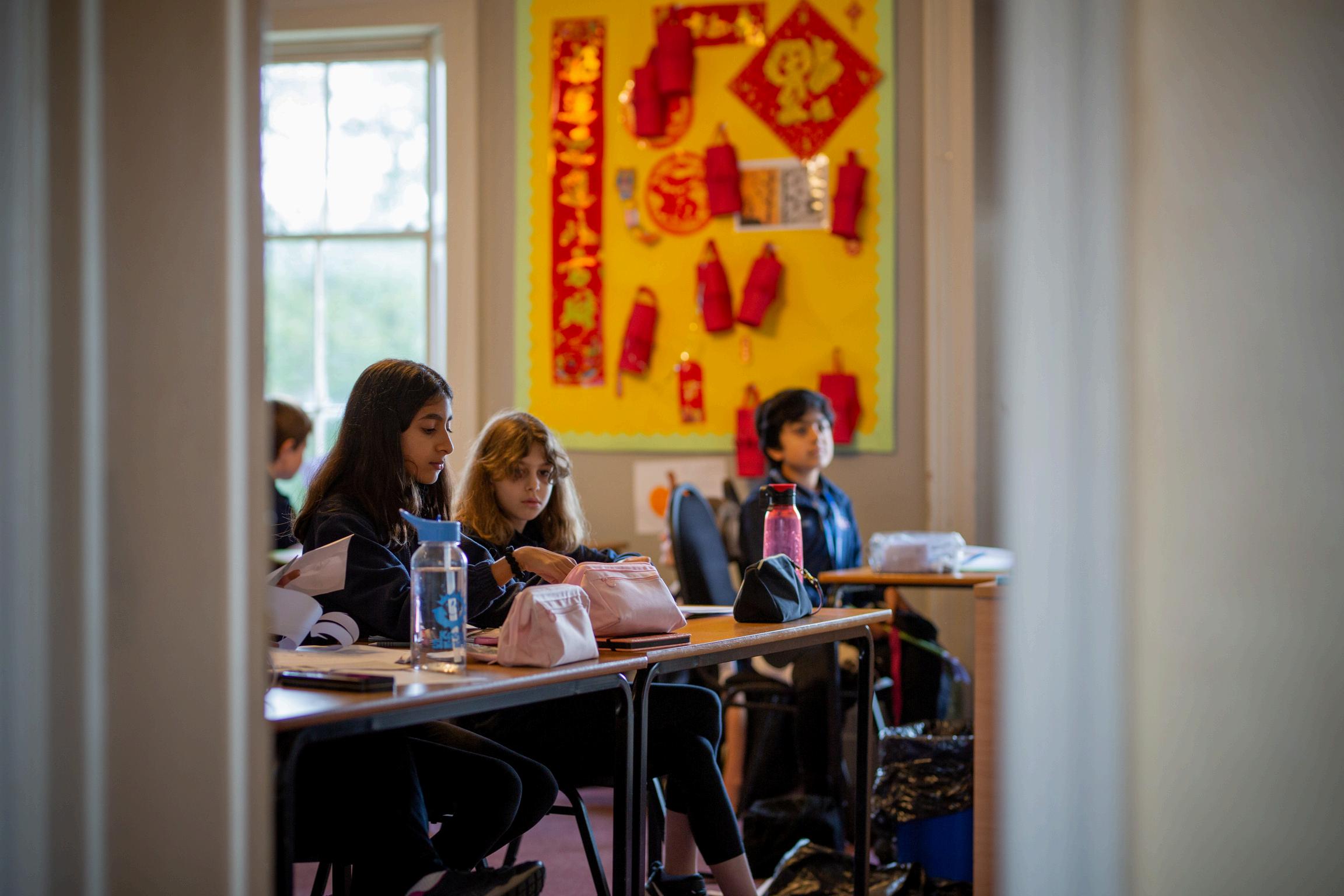
During the Summer term, Year 6 Mandarin students will expand their language skills by learning to talk about different means of transport after revising time and daily routine topic. They will also explore colours, clothing, and body parts through engaging activities, including songs and revision exercises to reinforce their learning. Additionally, students will have the opportunity to learn about and experience Duan Wu Jie (Dragon Boat Festival), discovering its history and traditions while participating in cultural crafts and storytelling. This term promises to be an exciting and enriching experience, helping students build confidence in their language skills while deepening their understanding of Chinese culture.
Term
Autumn 1
Autumn 2
Unit 1
Learn Chinese spelling - Pinyin Practice basic strokes Learn numbers.
Learn basic greetings Practise the characters Revision and test.
Unit 2
Spring 1
Spring 2
Summer 1
Learn the days of the week Learn to talk about age Telephone number.
Talk about family members Self - introduction Talk about occupation.
Unit 3
Means of transport Learn and revise about colours
What are we studying?
Summer 2
Talk about clothing Body and song Revision and Exam.
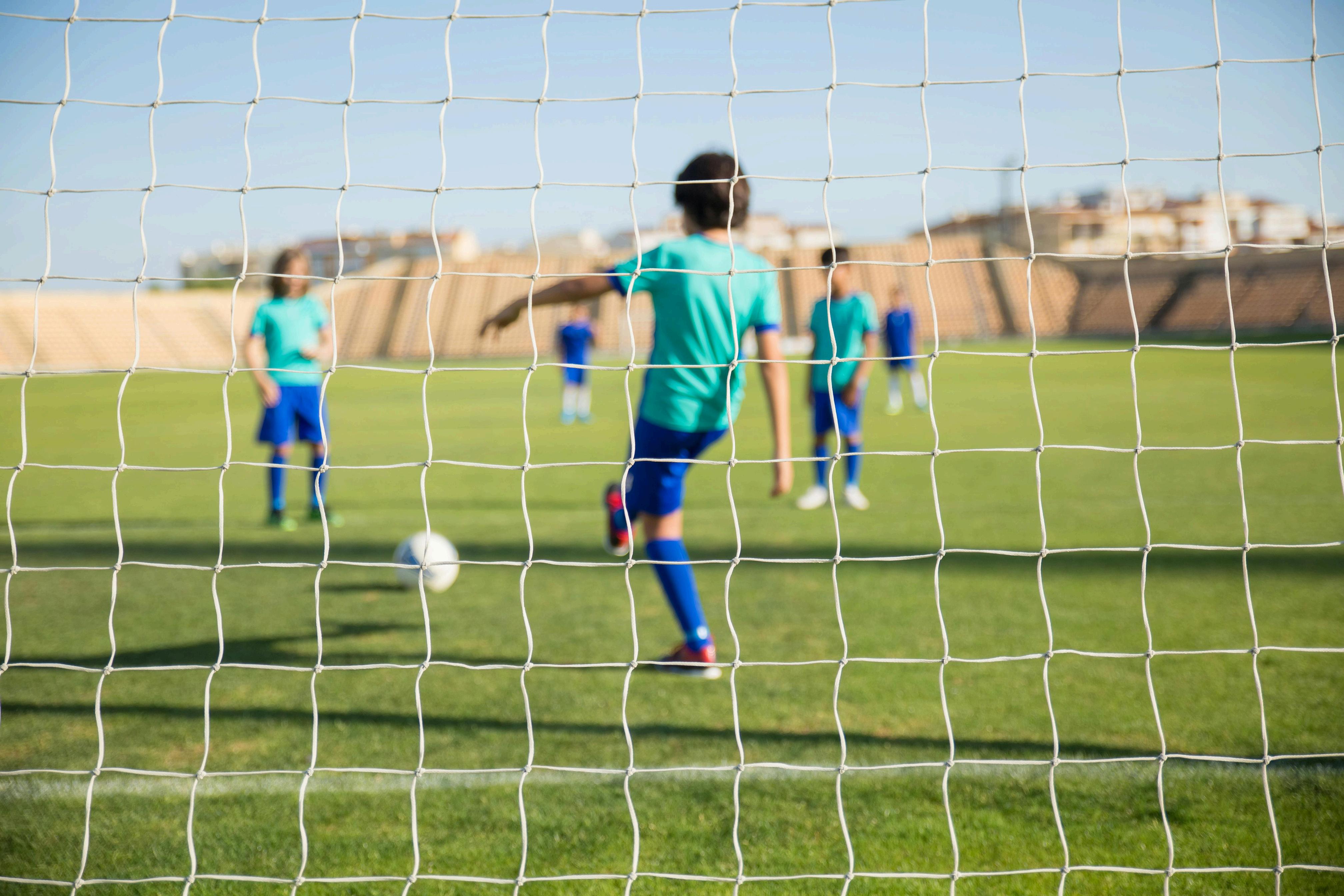
During the Summer Term of 2026, Year 6 students will engage in outdoor activities as part of their Physical Education (PE) curriculum, with a primary focus on enhancing their athletic skills. This initiative aims to promote enjoyment, participation, and achievement in athletics, culminating in a Sports Day during the final half term.
Students will be introduced to fundamental techniques for running, jumping, and throwing, alongside an understanding of the basic rules that govern each event. They will differentiate between short-distance sprints and long-distance running, acquiring insights into the specific skills required for each discipline. The curriculum will encompass a blend of individual and team activities, including relay races.
Furthermore, students will participate in cricket, where they will cultivate essential skills in bowling, batting, and fielding.
The curriculum underscores the importance of enjoyment in sports and encourages students to adopt an active lifestyle. A significant focus will be placed on the setting and achievement of personal goals related to their performance, such as improvements in timings and distances. Throughout the lessons, there will be a strong emphasis on competition and fair play.
Term
Autumn
Spring 1
Spring 2
Summer 1
Summer 2
What are we studying?
Football: passing, shooting, dribbling, conditioned games.
Netball: passing, shooting, attack vs defence, positions and conditioned games. Games: balance, coordination, agility, stuck in the mud, octopus tag, capture the flag.
Gymnastics: balances, body shapes, travel, jumps and rolls. Hockey: passing, shooting, dribbling, conditioned games. Benchball: throwing, catching, positions and attack vs defence.
Gymnastics: balances, body shapes, travel, jumps and rolls. Hockey: passing, shooting, dribbling, conditioned games. Benchball: throwing, catching, positions and attack vs defence.
Cricket: throwing, catching, batting, bowling and fielding. Athletics: shuttle relay, 60m sprint, 200m sprint, hurdles, long jump, javelin throw and shot-put throw.
Cricket: throwing, catching, batting, bowling and fielding. Athletics: shuttle relay, 60m sprint, 200m sprint, hurdles, long jump, javelin throw and shot-put throw.
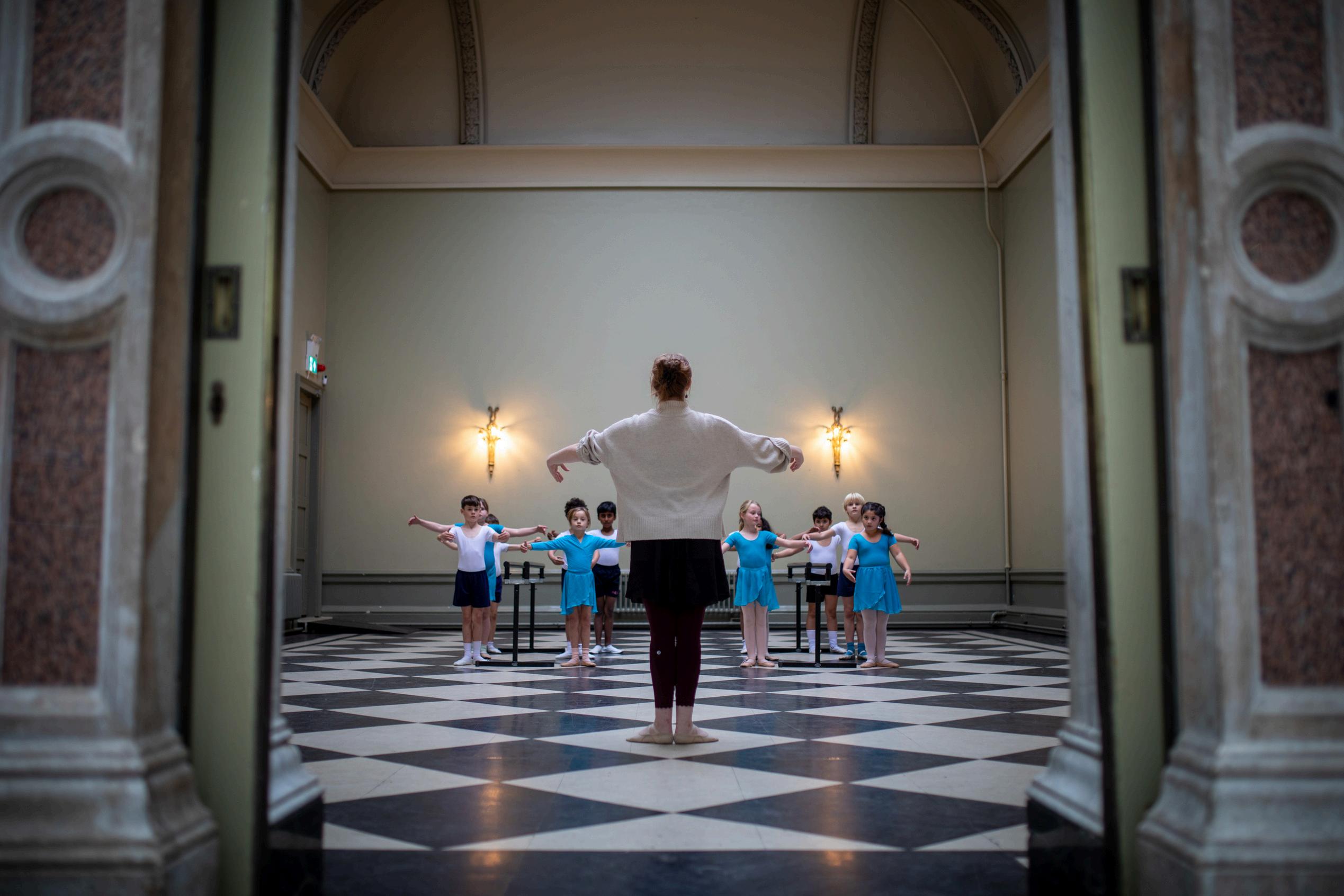
At Hampton Court House, we believe that the performing arts are integral to our school community Therefore, our curriculum is built around students actively participating in various performances throughout the year We are committed to offering inclusive opportunities that allow every student to showcase their talents
In our lessons, to prepare for these performances students will focus on developing spatial awareness, musicality, vocal, physical, and character skills to enhance their performance abilities They will learn stage craft and understand how to engage an audience
Additionally, we place a strong emphasis on collaborative and creative skills, which are essential for every child's growth Our classes incorporate engaging games and activities designed to foster teamwork, improve peer interaction, and develop the ability to follow directions Students are encouraged to contribute creative suggestions through music, movement, and dialogue, ensuring a wellrounded arts education at Hampton Court House
This term, Year 6 students have the exciting opportunity of working on a Musical Which this year will be ‘Aladdin’ performed on Wednesday 20th and Thursday 21st May They will use their Dance, Drama and Music lessons to prepare for this learning about stage presence, blocking, choreography and ensemble work This is a wonderful experience for our year 5 & 6 students who work together on the show
By the end of the production, students not only showcase their talents but also forge new friendships and strengthen their sense of belonging within our school community, united in achieving a common goal
Throughout the year, there will also be numerous recitals and concerts, providing students with platforms to display their musical abilities and talents
Y