


Aatif Hassan, Founder and Chairman of Dukes Education, reveals how dyslexia has shaped a love of poetry
Learning to read is often described as a simple linear process. Letters become sounds. Sounds become words. Words become meaning. For many children, this journey unfolds naturally. For others, especially those with dyslexia, it is more complicated. It requires resilience. It requires support. It requires belief.
Dyslexia challenges many of the assumptions we make about literacy. Reading is not a single skill. It is a combination of memory, attention, sound-processing and confidence. When one element is under strain, the whole system feels fragile.
‘Many dyslexic learners are strong verbally. They think in pictures. They grasp stories instinctively.’
As a child with dyslexia, I found reading disorientating. Letters moved. Words shifted. A word I knew on Monday could defeat me on Tuesday. Reading aloud was the hardest part. By the time I had decoded the sentence, I had forgotten its meaning. Mistakes were public. Confidence drained quietly.
The emotional toll is real. Children know when they are behind — they feel it. School can become a place of waiting; waiting to be asked to read, to spell, to perform. Waiting to be exposed. Over time, that waiting can turn into withdrawal. A quiet shrinking from the very thing that should open doors.
But dyslexia is not a lack of intelligence — quite the opposite. Many dyslexic learners are strong verbally. They think in pictures. They grasp stories instinctively. They often notice connections others miss. The task is not simply to correct weakness, but to build on strength.
For me, the turning point was poetry. Poetry brought structure. Rhythm. Repetition. Pattern. Words did not stand alone. They travelled together in a sequence of sound. I could lean on that structure. Rhyme gave clues. Rhythm slowed the pace. Reading felt guided rather than chaotic.
Recitation mattered most. Memorising poems reduced the strain of the page. It strengthened sound and stress. It built fluency through the ear. And it rebuilt confidence. Standing up and delivering a poem from memory was a rare moment of certainty. A moment where I was not the struggling reader, but the assured speaker.
At school, I was also required to memorise Latin poetry. It was incredibly hard. The vocabulary was unfamiliar — the grammar unforgiving. I struggled but I persisted. Line by line. Sound by sound. Repeating verses under my breath. Testing myself again and
again. When I finally recited those lines in full, I felt something shift. It was not just about language. It was about discipline and endurance. About discovering that difficulty does not mean impossibility. About proving to myself that I could master something demanding.
We sometimes fail to recognise that many of our greatest institutions understand the power of rhythm and memory. The British Army, one of the most respected institutions in the country, relies heavily on mnemonic devices, cadence and repetition. During my time in the Army Cadet Force at school, and later through officer training and leading men in the Army, I learnt drills, codes and procedures through rhythm and chant. Instructions were spoken in unison. Movements repeated until instinctive. Pattern builds recall. Sound builds unity. Memory is strengthened through repetition and voice — particularly when that voice is a troop 30-strong — you’ll have seen it in many war films! Poetry works in much the same way.
Poetry also gave me emotional access. Poems are brief. Vivid. Concentrated. I did not have to fight through pages of text to grasp meaning. I could understand. I could interpret. The feelings of utter devastation at the loss of my eldest son, and the trauma of surviving a multi-fatality car accident some years later, were, to an extent, soothed through the power of poetry. In moments when prose felt too heavy, a few well-chosen lines carried truth without overwhelming it.
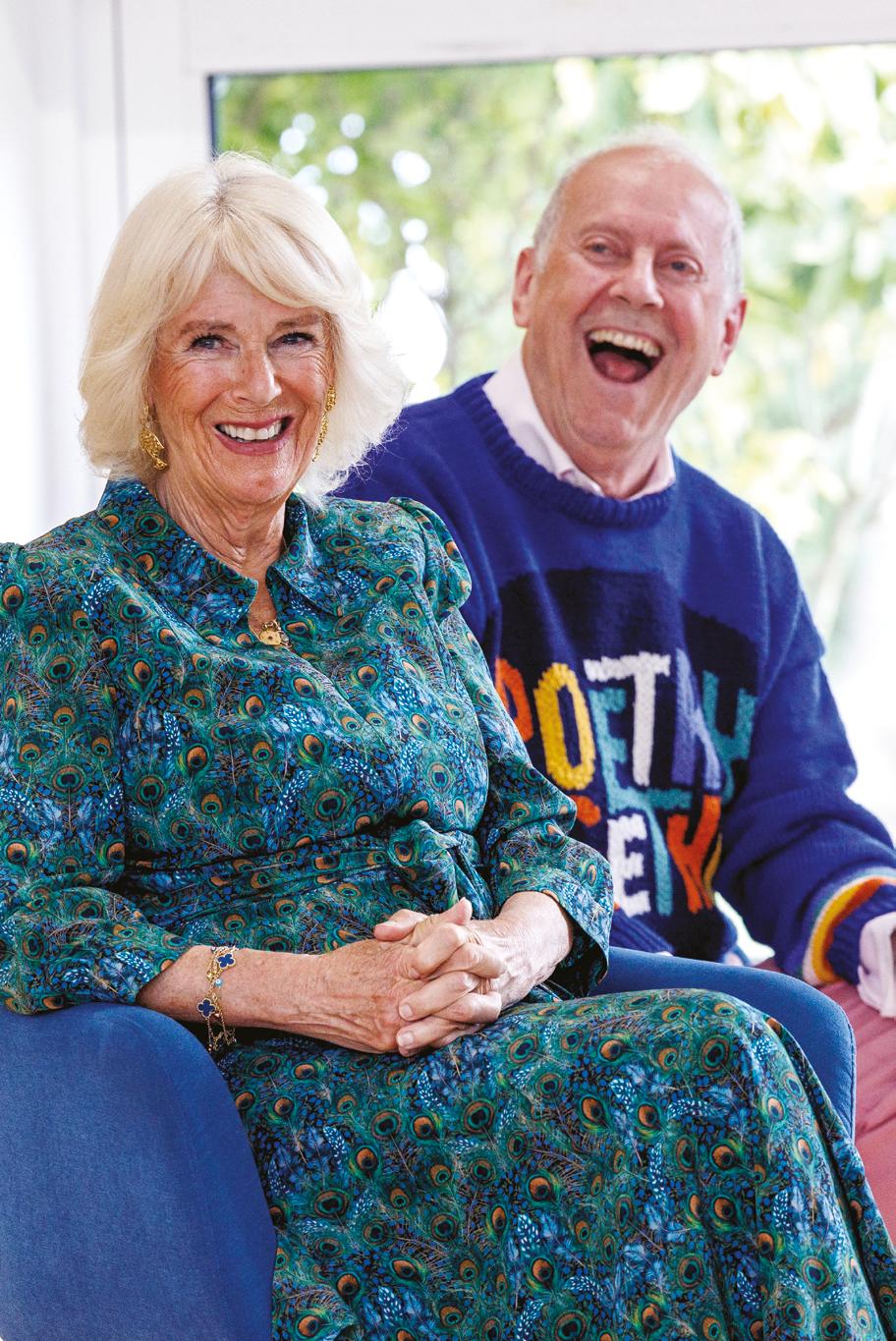
Years later, a conversation with author and broadcaster Gyles Brandreth brought these memories back sharply. We were discussing poetry, memory and childhood. Almost casually, one of us said, “Wouldn’t it be wonderful if generations learned poems together again?” It felt like a crazy idea. Old and young. Tea and cake. Recitation for pleasure.
The more we spoke, the less crazy it seemed — and that conversation sparked what became Poetry Together.
Today, Poetry Together brings children and older adults into the same room to read, learn and recite poems. It is simple. It is joyful. And it works. Poetry is communal. It lives in the voice. For dyslexic learners, that matters

‘Memory is strengthened through repetition and voice — particularly when that voice is a troop 30-strong’
‘Looking back, poetry did more than improve my reading. It changed my belief’
deeply. It validates oracy skills and shifts the emphasis from the page to the person.
From an educational standpoint, poetry aligns with multisensory practice. Through nursery rhymes for very young children, we know that clapping the rhythm, chanting the line and performing the movements, help to engage the body as well as the brain. Building neural pathways through sound and movement. Most importantly, they create moments of success. Small wins that slowly rebuild belief.
Poetry is not a replacement for structured phonics. Explicit teaching remains essential. But poetry complements it. It builds motivation. It builds resilience. It builds joy.
Looking back, poetry did more than improve my reading. It changed my belief. The issue was never comprehension. It was access. It showed me that language could be rhythmic, alive and shared. It offered voice before fluency.
Learning to read with dyslexia is not a deficit story. It is a different route. Poetry taught me that literacy does not begin only with the eye. It begins with the ear. With the voice. With repetition. And sometimes, with what first sounds like a slightly crazy idea — the pleasure of a poem well-learned. ■