

Melanie Saunders, Chief Education Advisor, High Performance Learning, discusses the link between language and understanding
We have known about ‘The Word Gap’, for 20 years. Risley and Hart1, in their ominously titled study, The Early Catastrophe, found that children from disadvantaged backgrounds hear, on average, 30m fewer spoken words by the age of three than their more advantaged peers. Unsurprisingly, that is mirrored in the way children speak and interact in school, with a vast disparity between the number of new words children use, their confidence in speaking and their willingness to listen.
Language and understanding are intrinsically linked. Words and their meanings underpin thinking and reasoning and better language skills lead to a stronger working memory and faster ‘processing speed.’ Put simply, talking helps us to make sense of the world and to participate in it.
But what will our children be talking about? Despite the removal of speaking and listening

from GCSE grades in 2023, most teachers recognise the intrinsic importance of talk and do their best to plan suitable opportunities for children. However, in this, as in so much else, those students who already have the skills gain the most. Confident speakers not only use extensive vocabulary and have greater self-confidence but they have material to draw on from beyond their own lived experience. They can say how they feel and are beginning to make connections between what they know and what they think.
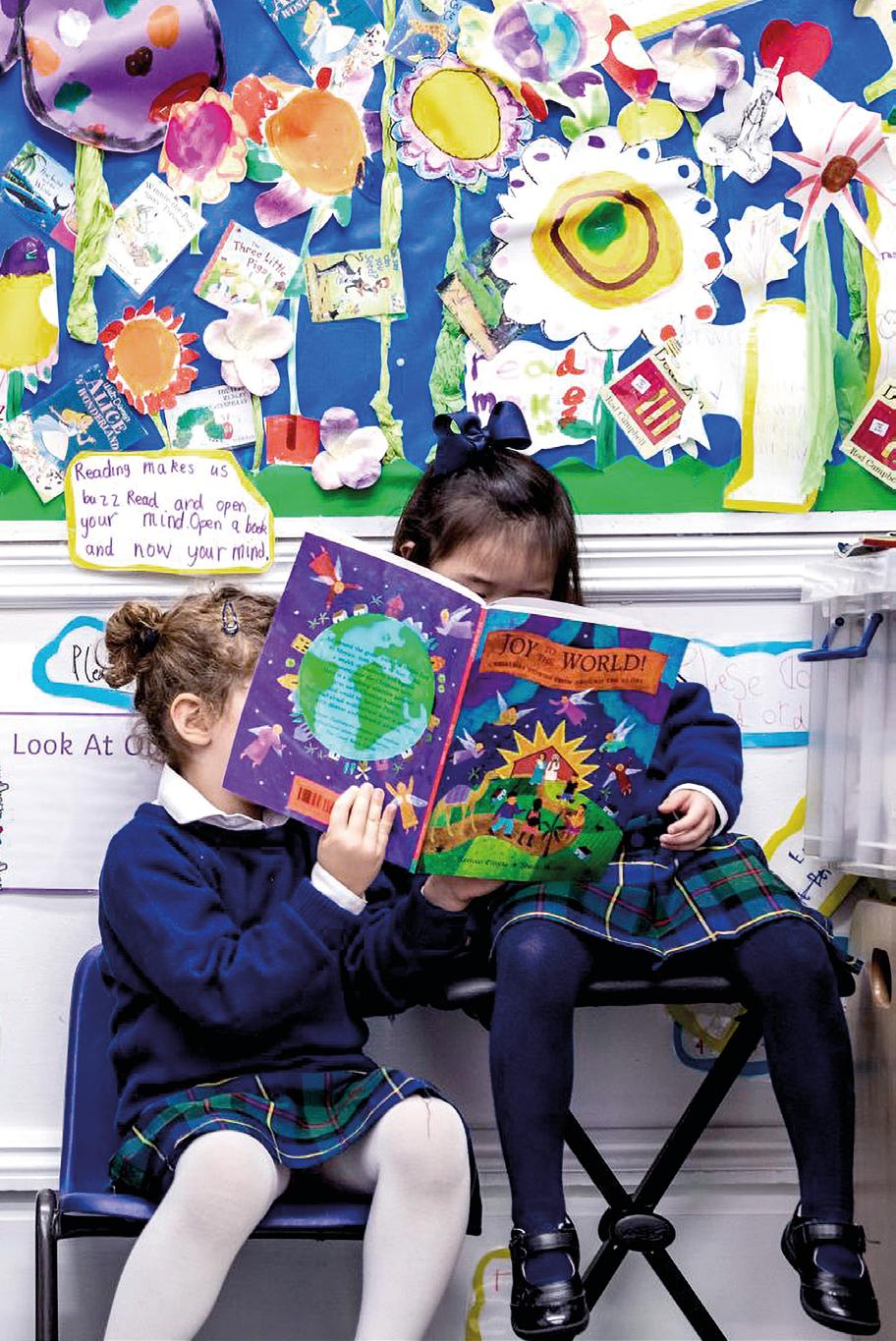
This is in part about those back-and-forth conversations which are the lingua franca of middle-class households, but it’s also to do with the status of reading. Is reading a pleasurable activity, linked with thinking, chatting, laughing and the exploration of, ‘strange new worlds’, or is it a painful chore which brings nothing but stress and embarrassment?
In 2012, the then Education Secretary, Michael Gove, championed Synthetic Phonics as the tool to drive up basic literacy standards in schools and introduced the phonics screening check (PSC), ‘to confirm whether individual pupils had grasped the basics of phonic decoding by the end of Year 1.’
The Department for Education claims that, ‘since the introduction of the phonics screening check in 2012, the percentage of Year 1 pupils meeting the expected standard in reading has risen from 58% to 82%2.’ However, a report published by Education Policy Institute in November 20243 found there to be ‘no evidence that Key Stage 1 or 2 reading results have improved since the introduction of the PSC and no evidence that the PSC has impacted positively to narrow gaps at Key Stage 1 or Key Stage 2.’ England’s PISA reading scores remain virtually unchanged since 2006. Obviously, we need children to be able to decode. GCSEs are first and foremost a reading test. GCSE maths and science require a reading age of 15 years and seven months, history and English 15 years and eight months, yet the average reading age of students sitting GCSEs is 13 years, with 20% of students having a reading age below 11 years. Being able to decode the words on the page is important, both individually and nationally.
‘Teaching your brain how to manage cognitive load is essential for longterm memory and for learning’
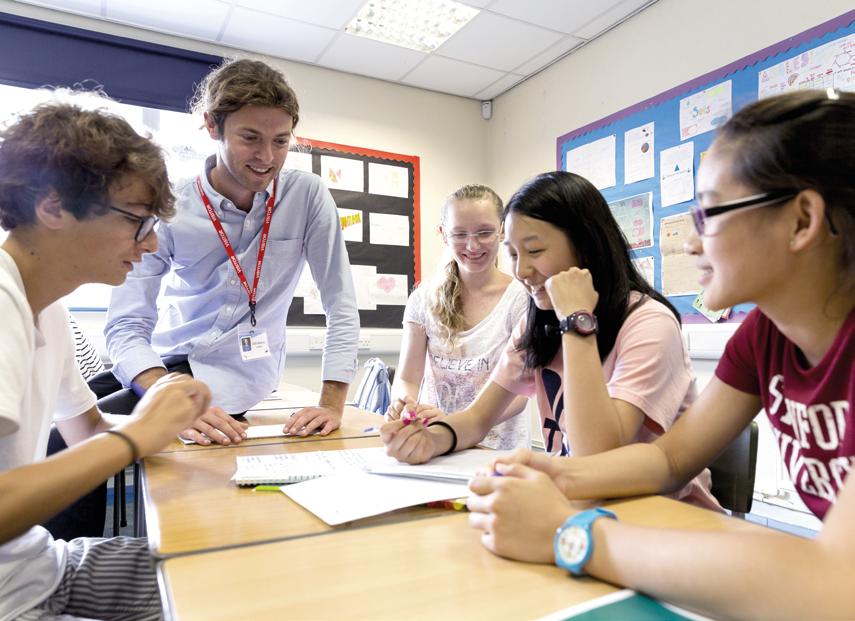
St Peter’s Primary School (quoted by the DfE in 2023) said, ‘We have found that one of the key benefits of using a consistent phonics scheme is that it reduces cognitive load for children. When children are learning to read, they have to decode words, understand their meaning and remember them. This can be a lot of cognitive load for an early reader.4’
Perhaps this is the problem — cognitive load is the mental effort it takes for the brain to organise and assimilate new material and to connect it with existing knowledge and ideas. Teaching your brain how to manage cognitive load is essential for long-term memory and for learning. Wrestling with challenge, the element of desirable difficulty, is what makes learning stick. Professor Deborah Eyre talks about the importance of helping young children make connections through advanced learning opportunities which ‘although they are demanding, should also be enjoyable and interesting so as to stimulate curiosity.5’
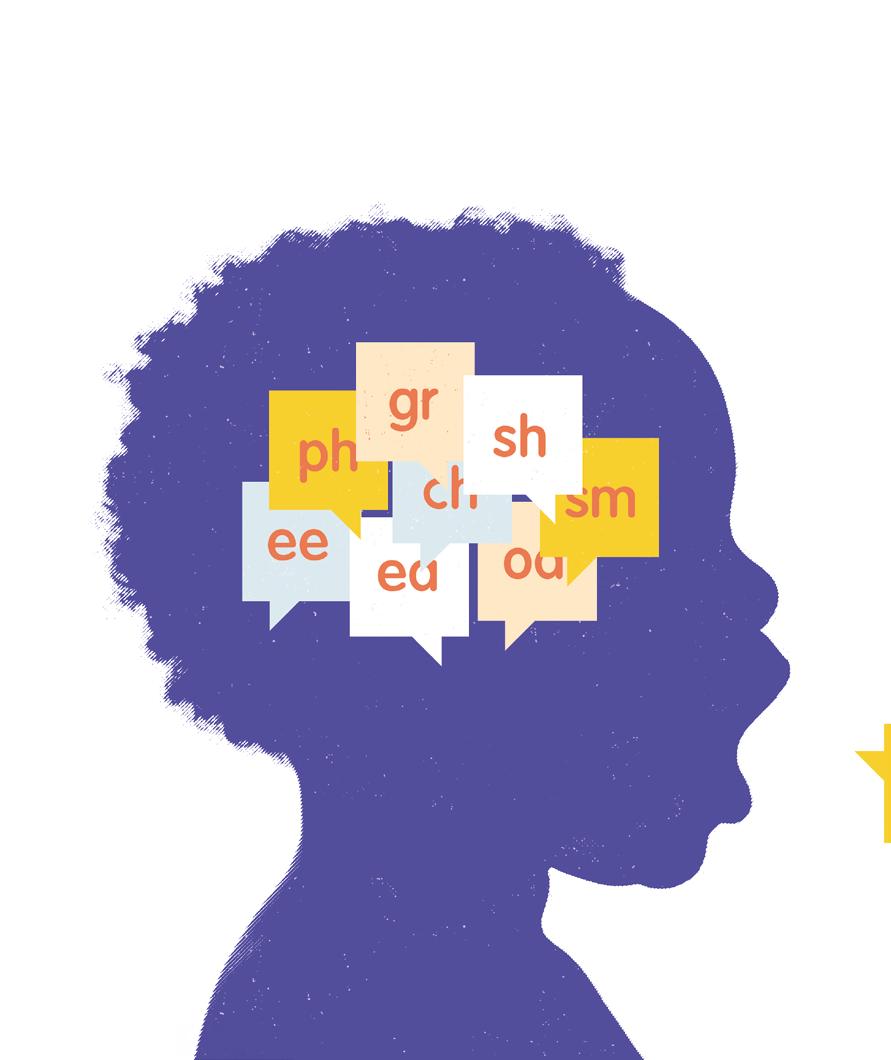
A study of more than 10,000 young adolescents in the US (June 2023) found a strong link between reading for pleasure at an early age and a positive performance in adolescence on cognitive tests that measured such factors as verbal learning, memory and speech development, and at school academic achievement.6 Phonics helps children identify different sounds and distinguish different words. If writing is a code, knowing the sounds of different letters and how they sound when they’re combined, gives children the key to decoding words as they read. However, if that’s as far as a child gets, they are unlikely to choose to do the very thing which would not only improve their vocabulary and written English but would also open a world of possibility and imagination — read for pleasure!
The National Literacy Trust Reading Report 2025, Rethinking Reading for Pleasure in Schools7, found that just 1 in 3 (32.7%)
of children between the ages of eight to 18 said they enjoyed reading in their free time. A 36% decline since the National Literacy Trust started asking that question in 2005. It is challenging to note that this decline is particularly steep amongst primary-aged children, and those on Free School Meals. Children who begin reading for pleasure early in life tend to perform better at cognitive tests and have better mental health when they enter adolescence. However, to access these benefits, texts need to be of sufficient quality to challenge and engage the reader and make them want more. Good books ask us to put ourselves in someone else’s shoes, to imagine how it feels to live in another place or another time, to engage with values and opinions which are not ours and to ask questions about our own attitudes and expectations. It also shows us that we aren’t alone in how we feel and gives us the words to talk about these feelings with others.
‘ Texts need to be of sufficient quality to challenge and engage the reader and make them want more’
Professor Barbara Sahakian, from the Department of Psychiatry at the University of Cambridge, said: ‘Reading isn’t just a pleasurable experience — it’s widely accepted that it inspires thinking and creativity, increases empathy and reduces stress... it’s linked to important developmental factors in children, improving their cognition, mental health, and brain structure, which are cornerstones for future learning and well-being.8’
Children who aren’t introduced to reading for pleasure at home, who are hampered by uncertain oracy and limited vocabulary and, consequently, presented with simplistic, irrelevant and uninteresting texts suitable for their ‘ability’ at school, are unlikely ever to get to the point when reading is anything other than an unfortunate necessity. That is more than a challenge for teachers — it’s a tragedy. ■
Annotations:
1 Risley and Hart https://bit.ly/4rCUhjN (The Early Catastrophe pdf)
2 ...the percentage of Year 1 pupils meeting the expected standard in reading has risen from 58% to 82% https://bit.ly/4aojGqm (gov.uk)
3 However, a report published by Education Policy Institute in November 2024 https://bit.ly/3O52Cys (epi.org.uk)
4 This can be a lot of cognitive load for an early reader https://bit.ly/3OauqRW (gov.uk)
5 ...should also be enjoyable and interesting so as to stimulate curiosity https://bit.ly/4aqcz0G (taylorfrancis.com)
6 ...memory and speech development, and at school academic achievement https://bit.ly/4rGIpNK (cambridge.org)
7 ...Rethinking Reading for Pleasure in Schools https://bit.ly/3Oi9Yyu (literacytrust.org.uk)
8 ...which are cornerstones for future learning and well-being https://bit.ly/4kvUvXK (www.cambridge.org)