A month. That is the amount of time I have between the spring semester’s end and day one of my internship. A month of blissfully free leisure time. Also a month of stagnancy, with no purpose or aim forcing me to emerge from my bedroom before noon.
This is the life I dreamed of as I was locked away in Perkins, staring down coffee number three and agonizing over my finals. Yet, as I am about halfway into this transitory period and growing restless, my bright spot has been a renewed appreciation for the very ethos of Recess: arts, entertainment and media.
Despite being a pop culture fanatic, during a typical semester at Duke, reliably the first thing to leave my routine is the long-form content that I have always cherished. The thought of picking up a book after I tackle hundreds of assigned reading pages for class is unappealing, and fitting a one-hour television show
— let alone a movie — between work, class, exercise and social life feels like an unattainable feat. Throughout the semester, it became a regular joke between my roommate and me that, despite relishing the novelty of having a TV in Swift, we would go back and forth declaring that tonight was the night we’d finally watch something, yet the night always seemed to get away from us.
I would fill this void of substantive media with short-form content, taking incremental breaks throughout the day to scroll on TikTok or Instagram. These dopamine hits may have been relaxing entertainment, but that kind of social media content induces a sort of amnesiac numbing, leaving me with no thoughts, ideas or even memories about the messages I just consumed. Not a new observation, but an evergreen one: it’s all just so mindless.
At the outset of May, suddenly facing long, unscheduled stretches of day in my liminal period between school and work, I returned to old friends. The screen-time limits on TikTok are, for the first time in a while, being followed, and instead I’m binging my beloved shows: some better (“From”), some worse (“Euphoria”), some terrible (“Off Campus”) and some in-between (“The Boys”). My love of reading has been reawakened by Caro Claire Burke’s “Yesteryear,” and I’ve devoured books in a way that’s reminiscent of the middle school-era nights I stayed awake until 3 a.m. because I couldn’t bear to put a book down.
I’ve been listening to two-plus-hour YouTube video essays on politics and culture that piled in my algorithm after I abandoned them at school, and I’m keeping up with my favorite erudite pop culture podcasts such as The New Yorker’s “Critics at Large.” I’ve experienced a renaissance of delving into the indulgent yet meaty internet phenomena that have historically induced my own reflections and takes, like Logan Paul’s interview with Clavicular — thoughts on that incoming.
All this goes to say is that I’ve had the luxury of time to revive my passion for pop culture, and it’s something that I am urging myself not to take for granted when my Google Calendar gets cluttered. This is one reason among many why I am so excited to be Recess editor for Volume 122 — I’ll be obligated to remain in the world of arts and entertainment because it’s my job to do so.
I encourage anyone to take advantage of the slower season of summer and return to some long-form media, as it’s a worthwhile endeavor that spurs creativity and introspection. My inbox is open for any and all recommendations (I’m serious!).
- Olivia Prusky, Recess Editor
IMMERSE YOURSELF IN DUKE MUSIC
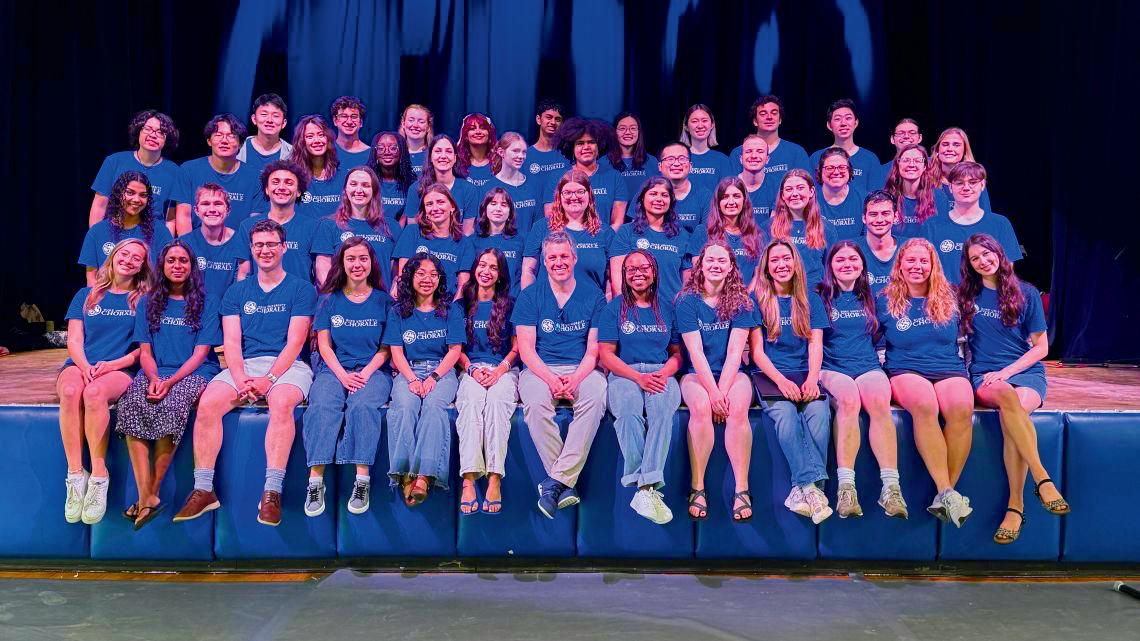
The Duke Department of Music brings students together through creativity, exploration, and connection. From ensembles and performances to collaborations across musical genres, students from all backgrounds and majors find opportunities to engage, grow, and build community through music.
MUSIC ENSEMBLES
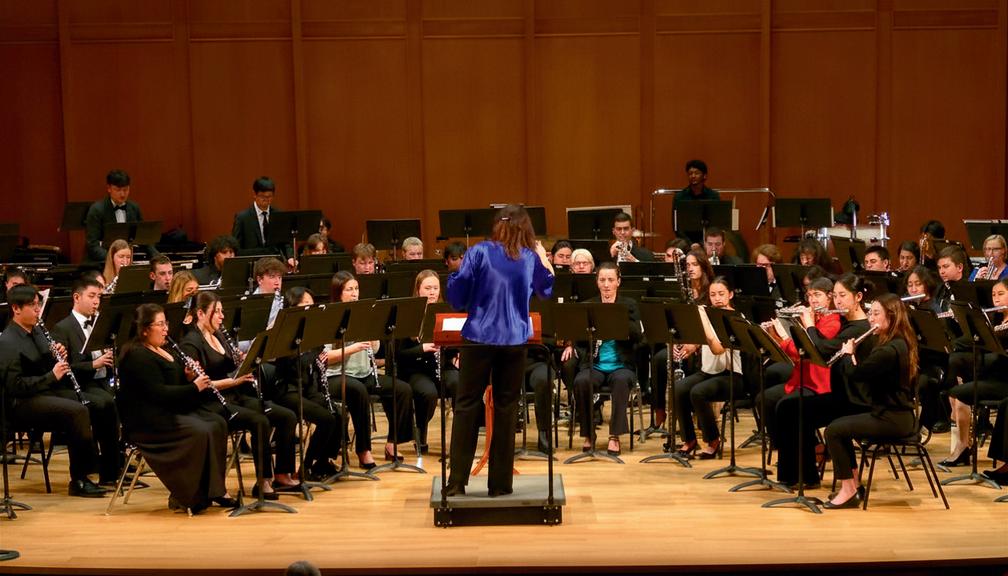
jazz, chamber music, choral singing, or global traditions, Duke offers dynamic ensembles for musicians of various backgrounds. Discover new repertoire, perform on stage, and find your musical home in the Duke Department of Music.
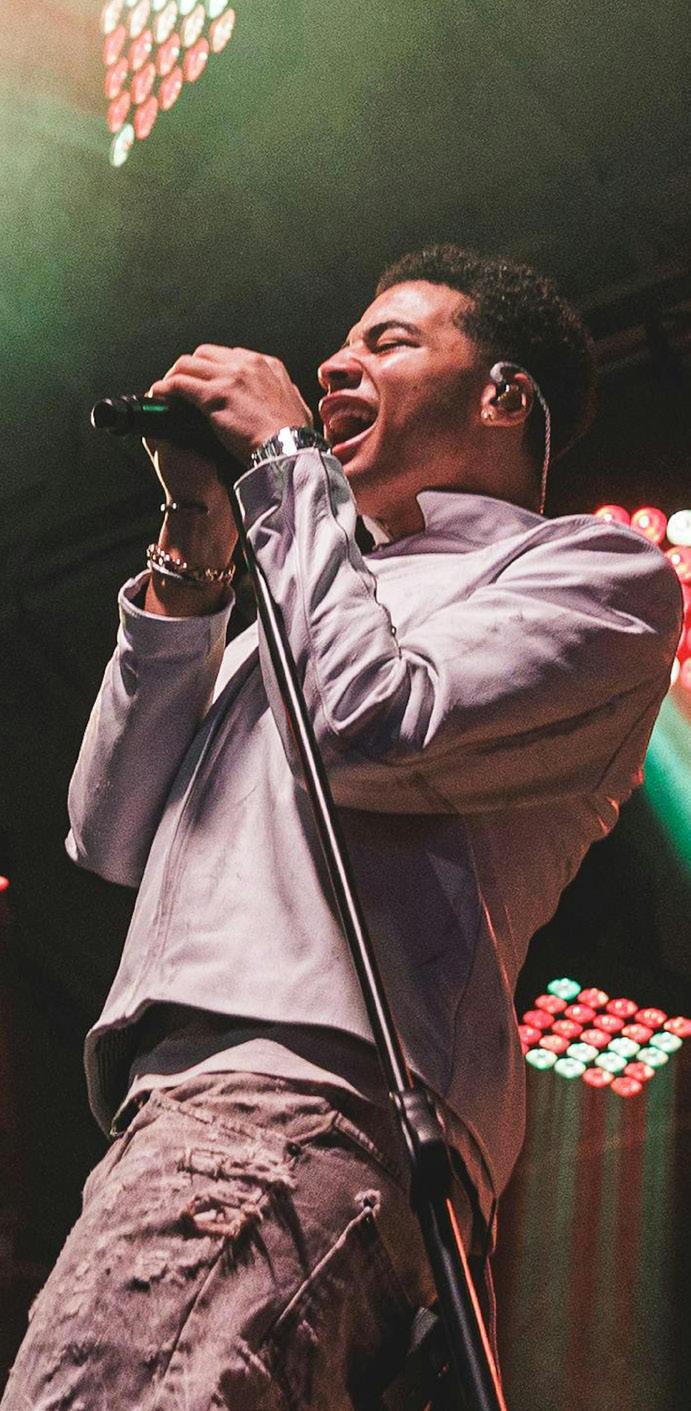
perform alongside a vibrant community of artists. From contemporary works to cross-genre experimentation, Duke Music gives students the freedom to create boldly and discover new ways of making music together.
community, and shared experiences. Rehearsals, concerts, tours, and late-night practice sessions bring students together from across campus through a shared passion for and commitment to music.
By Evan Poradzisz Feb. 24, 2026
Checking the luster on 24kGoldn’s P-Checks performance
On Feb. 20, 2026, San Francisco rapper 24kGoldn headlined Duke’s annual P-Checks festival, celebrating the homestretch of the long tenting season in Krzyzewskiville.
The venue was primarily empty for about an hour and a half after entry began. According to sophomore Sophia Solomon, it was a different story last year. “There were absolutely more people. I remember at 6 p.m. there were people lining up. I was kind of shocked that it was such a big deal,” she reports on 2025 P-Checks, featuring New York rapper A Boogie Wit da Hoodie. It seemed this year’s show was shaping up to be a step down from last.
24kGoldn enjoyed massive success in the late 2010s and early 2020s with a few singles that blew up across social media platforms like TikTok. Most notably, his song “Mood,” released in 2019, currently has over 2 billion streams on Spotify. Of the limited sample of interviews I conducted, almost all interviewees knew “Mood,” either by name or just by its infectious opening guitar riff. However, few were excited to hear any other songs from 24k.
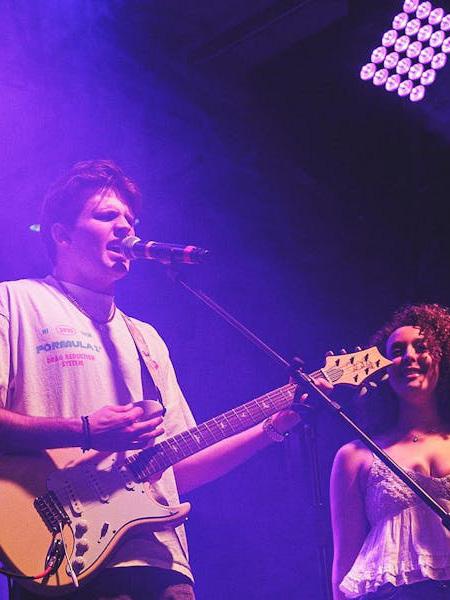
Thankfully, any lack of enthusiasm was instantly dissolved when Jack Stapleton of STR took the stage. He and his supporting band, Outback, kicked off the night with a well-curated slew of crowd-pleasing poprock tunes. Their covers of “Iris” by The Goo Goo Dolls, “Valerie” by the Zutons and
“Mr. Brightside” by the Killers were especially enjoyed, with much of the audience singing along. Coldplay’s “Adventure of a Lifetime” served as a fantastic closer, with all members of the band nailing their individual performances and keeping the energy high for the main act.
When 24kGoldn first took the stage, hype was high. He kicked off his set with “Good Intentions” and “3, 2, 1,” the latter of which was recognized by a good portion of the audience. Both songs channeled a similar energy that kept the crowd engaged, regardless of how popular the songs were. He kept it going with “Love or Lust” and “City of Angels.”
However, shortly after, 24k began moving into his newer material that didn’t resonate with the audience quite as much. The show was clearly in support of his latest studio album, “Icarus II,” released in November of last year. He played all seven songs from that album, all of which received very mediocre reception from the crowd.
The climax of this stretch, as a viewer, occurred when 24k asked, “Mind if I slow things down?” This was met with scattered “no”s — and plenty of calls for the 2019 single “Valentino,” way more upbeat than anything off “Icarus II.” Yet, he slowed things down anyway, much to the boredom of some audience members.
Others, on the other hand, enjoyed some of the slower songs. First-year Gabriella Phillips lauded his cover of Frank Ocean’s “Pink Matter,” “even though he forgot the lyrics.” Clearly, the rapper was able to ven-
ture into slower territory and still make that all-important audience connection with at least some of us.
Luckily, things picked up before the show was wrapped. “Valentino” elicited a massive crowd response, prompting 24k to play another minute or so of it after it was over. Splitting the crowd in half for the call-andresponse chorus of 2021’s “Coco” proved to be another good move, keeping hype high. But nothing compared to the collective excitement that could be felt when “Mood” was revealed as the encore performance. It was the one song that everyone had heard before, and there was a real feeling of Duke community in that fenced-off section of the K-ville parking lot.
When I arrived, I was under the impression that the show would be underwhelming. However, after the performance, I talked with a few students that felt exactly the opposite. “I thought it was so fun that people got so hyped for Valentino,” Junior Mills Howell told me. “I was definitely more entertained than what I saw last year.”
Overall, it’s clear that 24kGoldn knows how to put on a great show. One of the things I most appreciated was how tapped in he was with the happenings at Duke. He learned about what P-Checks was before showing up, and even reported that he had a fantastic meal at Devil’s Krafthouse in Brodhead Center (with some sides from Farmstead, of course). Though his set lagged in the middle, his first few songs were super engaging, and his last few songs served as amazing closers.
We won’t know who’s headlining PChecks 2027 until next year, but they’ll certainly have big shoes to fill
Eric Wang The Chronicle
Signed, Yours: A story of film, love and Durham
By Jenna Arafeh
May 19, 2026
Burnout thrives in haste. Nowadays, we move too quickly to leave traces. We scroll, document, consume — often so fast that our lives begin to feel unpreserved, even as we post them online constantly.
Perhaps this is why the concept of “going analog” appears to be making its comeback. People yearn for the smell of fresh ink on paper, the sound of a flip phone snapping shut and just about anything that rejects modernity’s algorithm-driven life. For film photography in particular, that means opposing the modern con -
sumption of meticulously curated images, endlessly edited and uploaded only after careful deliberation over their reception. Film photography, the analog process of capturing images through light-sensitive and chemically activated strips rather than electronic sensors, leaves less room for control, and perhaps that is where its beauty lies.
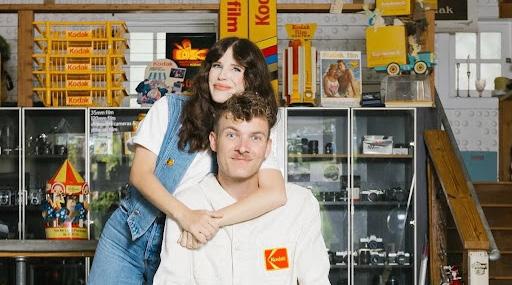
This delicate balance between modernity and antiquity resides within Yours, Durham: a film studio downtown, a mere 15-minute walk from Duke’s East Campus. Inside, vintage Kodak memorabilia lines the sunlit walls, warm laughter carries across the cozy space and wide win -
dows overlooking downtown Durham make the studio feel less like a storefront and more like a gathering place. Justin and Averie Eisner, the dynamic couple behind the space, describe film photography not simply as an artistic medium, but instead as a “vehicle for relationships.” What begins as a transaction often transforms into something more enduring for the shop’s customers.
“The thing I’ve found is … you buy a camera and we talk for a little bit … and it’s this thing where you create friendships,” Justin said. The relationship “may start as business, but it’s not predicated.”
An instinct toward preservation is what first drew the pair to photography. For Justin, it was discovering his grandfather’s film archive. “My grandfather was a lot of things, but for a long part of his life he was a journalist,” Justin said. “I have tens of thousands of film slides from over forty years and probably over fifty countries.”
Hidden within boxes of slides were memories preserved long enough to outlive the moment they were taken. Through digitizing and projecting the images for his family, Justin found himself bridging the distance between generations.
“There was one Valentine’s Day,” Averie recalled, “We had Justin’s mom and grandma in here. He set up his slide projector, and she was like, ‘I’ve never seen these before!’”
For Averie, photography first took shape through weddings. Long before learning film herself, she spent years documenting fleeting moments, already conscious of their future nostalgia: vows, glances, embraces, fragments of a day people hope to hold onto forever.
Averie mostly worked with polaroid, and the immediacy of the format fascinated her. But, learning the process of film photography still felt elusive and out-of-reach. Rather than approaching film as something to master perfectly, though, Averie described it as a continual journey, one rooted in experimentation and community.
Somewhat ironically, Justin and Averie’s story began online. In 2016, Justin was working with Unsplash, a thengrowing photography platform where users could upload royalty-free images and track how widely their work traveled across the internet. Somewhere in the endless circulation of photographs, he came across Averie’s work. After using one of her images for an Instagram takeover he was doing, he recognized her profile again later and followed her on Instagram. Soon after, she added him on Facebook.
The next day, they spoke on the phone for nearly five hours. Days later, he booked a flight to Texas to meet her in person. He
Photo courtesy of Yours, Durham
By
Wind Symphony’s 51st Viennese Ball brings Austria to Duke
May Hsu and Emily Cui
March 18, 2026
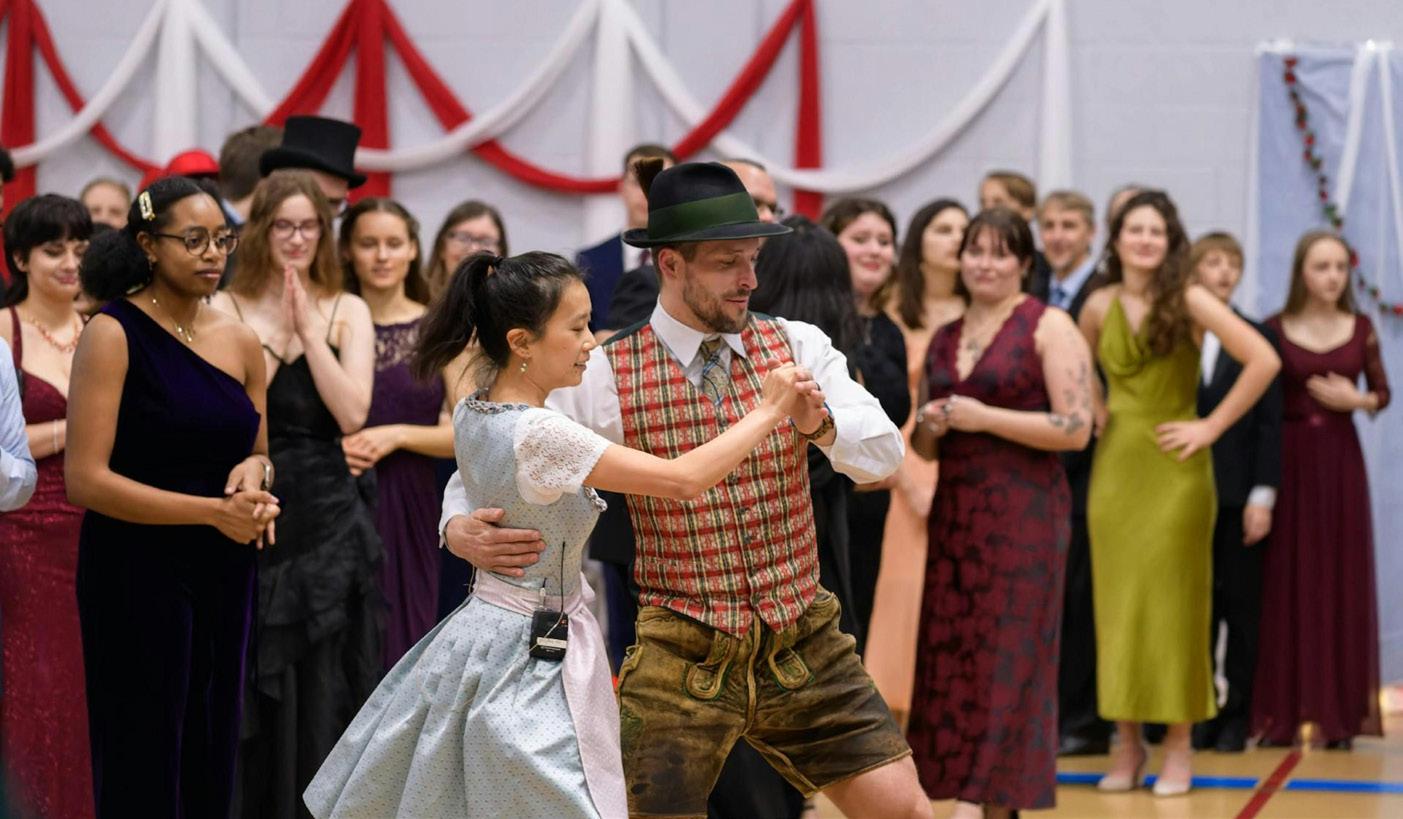
In an evening of lively chatter, tw irling gowns and live dance music, the Grey Stone Church Family Life Center was decked with tulle ribbons of Austrian red and white, marking the Duke Wind Symphony’s (DUWS) 51st Viennese Ball last month. A long-cherished social and musical tradition at Duke, the ball not only brings the Durham community together to celebrate the Austrian cultural and musical tradition but also provides students in the DUWS opportunities to showcase their hard work and talents.
Dr. Verena Moesenbichler-Bryant, the chair of the department of music and the director of the DUWS, shared with The Chronicle behind-the-scenes of the 51st Viennese Ball and how it came to be.
Under former director Professor Emeritus Paul Bryan from the 1970s to 80s, the DUWS used to spend semesters abroad in Vienna, performing concerts mainly in Austria, but also in other European countries such as Italy, Budapest, Germany and Czechoslovakia. They wanted to “bring those traditions home,” and one of their favorite events happened to be the grand Viennese balls. Consequently, the DUWS began hosting the annual Viennese Ball, not just as a fundraising opportunity for their next trip, but as a way to
CONVENIENCE. THE DUKE WAY.
Located inside The University Store, The Lobby Shop is your go-to stop for everyday essentials and Blue Devil fuel. From grab-and-go snacks and beverages to frozen foods, canned goods, natural snacks, and health and beauty must-haves, it’s everything you need—right where you need it.
Open evenings and weekends, The Lobby Shop is here for late-night study sessions, game day prep, and life on campus. Go Duke.
share the joy and energy of Austrian culture with the Durham community.
“The balls in Austria are just embedded in our tradition, and it’s a fun evening out with dancing, with just being together, socializing, with food ... That formal atmosphere was something that the [DUWS] members back then really enjoyed,” Dr. Moesenbichler-Bryant said, noting her surprise as an Austrian herself when she discovered this particular Duke tradition when she first came to teach in 2009.
Quite a love letter to Austrian culture, the DUWS has taken great care to create a “truly Austrian” ball. The dance workshop instructors and several guests wore traditional Austrian lederhosen leather breeches for men and dirndl dresses for women. With guidance from beginner-friendly workshops, guests dance the waltz and polka in traditional Austrian style to the accompaniment of the Polka Band and Waltz Orchestra, a collaborative effort between the DUWS and string instrument players from the Duke Symphony Orchestra, Durham Medical Orchestra and the wider Durham and Triangle community.
Among the total of nine pieces performed by the Waltz Orchestra, five were beloved classics by the Austrian composer Johann Strauss II: “The Blue Danube, Wiener Blut” (Viennese Blood), “Kaiser-Walzer” (Emperor Waltz), “Unter Donner und Blitz” (Under Thunder and Lightning), and “Frühlingsstimmen” (Spring Voices). The “Radetzky March” by John Strauss I, described by Dr. Moesenbichler-Bryant as “a
secondary national anthem” to Austrians, was included as the only “march” music in the repertoire that otherwise consisted of traditional dance music. The Polka Band, on the other hand, chose to play “Zillertaler Hochzeitsmarsch,” a wedding march that “everyone in Austria knows how to dance,” according to Dr. Moesenbichler-Bryant. Over the evening, the four hundred guests at the ball learned to gallop and twirl to the increasingly fastening pace of the tune.
Among the Polka Band’s eleven pieces, other notable ones included “Polka im Galopp” (Klaus Rustler, arr. Holzhauser), “Für Meine Liebsten” (Sebastian Höglauer) and “Eine Letzte Runde” (Markus Nentwich).
To Dr. Moesenbichler-Bryant, providing a space for students to shine is just as central to the meaning of the Viennese Ball as spotlighting the traditions. With herself only taking a supervisory role, the ball was fully hosted and run by a student committee that had a say in not just the logistics but also the musical components of the event. The students, for instance, chose the two iconic Tchaikovsky pieces — “Waltz of the Flowers” and “Sleeping Beauty” — to add to the mix of music they perform.
“For me, what’s important is that the students really embrace this event,” Dr. Moesenbichler-Bryant shared. “It’s an opportunity for my conducting students to actually get time on the podium. So, I [conducted] one piece during the ball, but it’s truly the students [who] have opportuni-
See WIND SYMPHONY on Page 10
Photo courtesy of Eric Xu
PristZine machine: The new addition to downtown Durham (and your bucket list!)
By Jenna Arafeh Jan. 27, 2026
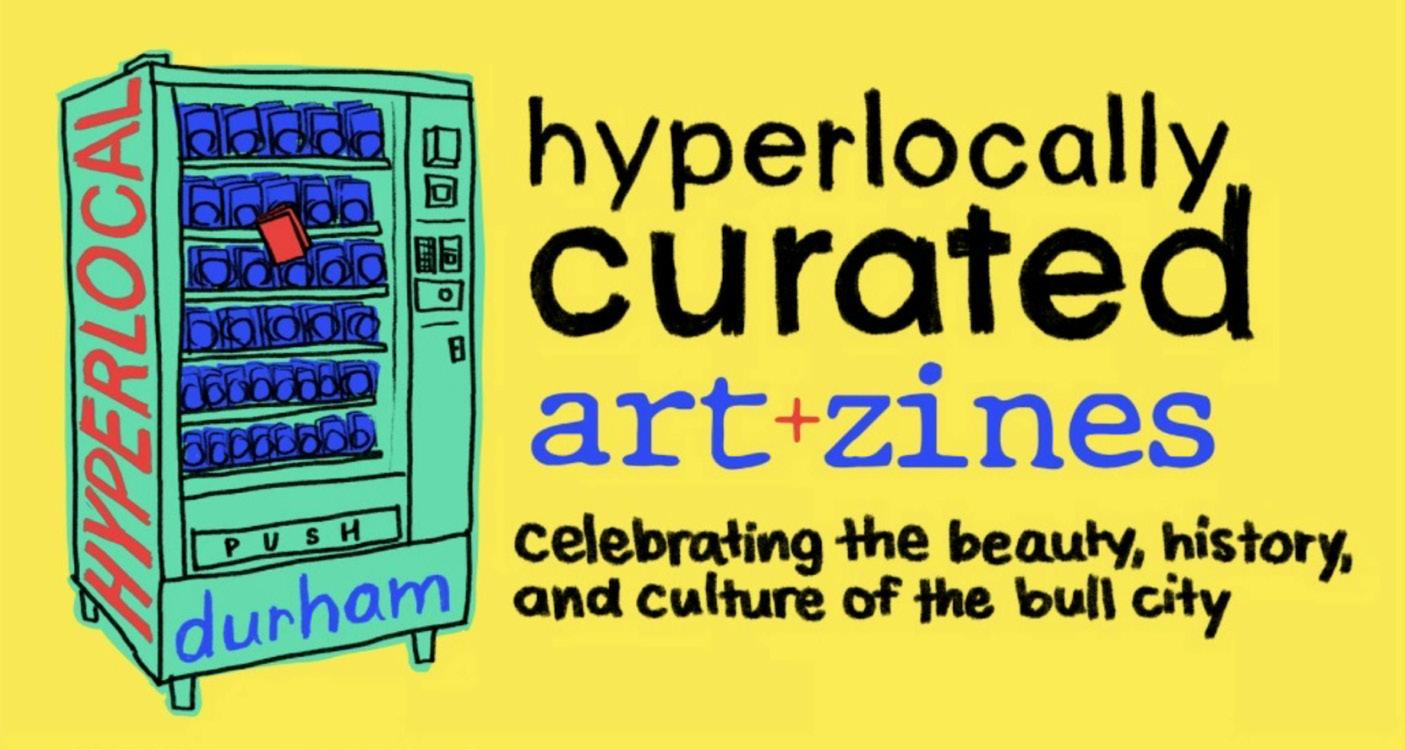
Within the historic atmosphere of Downtown Durham, nestled inside the cozy hum of the Durham Food Hall, rests a monumental piece of living art: the Hyperlocal Durham art vending machine, created by multidisciplinary artist (and Duke alumnus!) Kelsey Graywill, Trinity ‘18, stands as a vibrant celebration of the city’s creative ecosystem.
Offering bite-sized zines, mini-prints and interactive guides, the machine informs and entertains through a sharp emphasis on local history, storytelling and community connection. It became the Food Hall’s newest addition Oct. 28 of last year, providing Durham locals with a playful incentive to leave the house, linger downtown and support small businesses. For Duke students, however, it represents something even bigger: an ingenious, low-pressure invitation to puncture a hole in the infamous “Duke Bubble” and explore the city beyond campus borders (preferably with friends!)
The concept of zines themselves has recently been basking in a cultural resurgence. These handmade, self-published booklets, often scrappy and deeply personal, have quickly become a beloved medium in the art world. They offer creators a way to reject traditional publishing routes and emphasize creativity over profit. The Hyperlocal Durham vending
machine leans fully into this ethos, stocking zines that span an impressive range of topics. From maps of local food spots, to must-try cafes and even a zine dedicated to “Bull City Crybabies,” which charts Durham’s best public crying spots, the machine seems determined to have something waiting for everyone.
More than a novelty, this installment creates space for meaningful reflection on the importance of tangible art: art that can be held, flipped through and digested. In an era saturated by bright white screens and artificial graphics, Graywill’s brainchild is a breath of fresh air. The machine forms a microcosm of interconnected artworks, each one rooted in place
and designed to live on through its fusion with the city itself.
These zines are essentially gifts that keep on giving. Crafted by local Durham artists, they are created with the explicit intention of serving the Durham community: educating readers, amplifying marginalized histories, supporting local culture and raising awareness about the city’s past and present. By housing them in a vending machine, the project also radically increases accessibility, fostering a space where curiosity is not only welcomed but actively encouraged.
A closer look at the selection reveals just how expansive this creative vision is. One zine, for example, is titled
“Queer History and Culture in Durham,” and traces stories often left out of mainstream narratives. Another, “Dairy Durm: Ice Cream, Urbanism, and Civil Rights in the Bull City,” blends sweetness and substance to explore how something as simple as ice cream intersects with deeper histories.
There is even a zine for foraging fiends, “Oh the Figs You’ll Forage:” a guide for the adventurous to see the city through a greener, albeit atypical, lens. Clearly, the machine harbors art that transcends narrow definitions, reinvigorating what artwork can look like and how its incorporation into daily life can be seamless. Perhaps best of all, the collection is impermanent: the zines rotate constantly, ensuring that each visit offers a new surprise and a new reason to come back for more.
So, while this installment is undeniably a win for Durham’s art aficionados, its impact feels especially monumental for the Duke population. It gently nudges us students to step beyond campus gates and venture downtown to engage with the city on a more intentional level. Visiting the machine is not just for the sake of buying a zine, but rather it is about learning the ways in which Durham remembers and creates. Maybe it is something we should all consider crossing off our
See ZINE MACHINE on Page 10
Graphic courtesy of Kelsey Graywill
A ‘Ruby’ in the not so rough — Everything to know about
By Sydney Cortina
Oct. 22, 2025
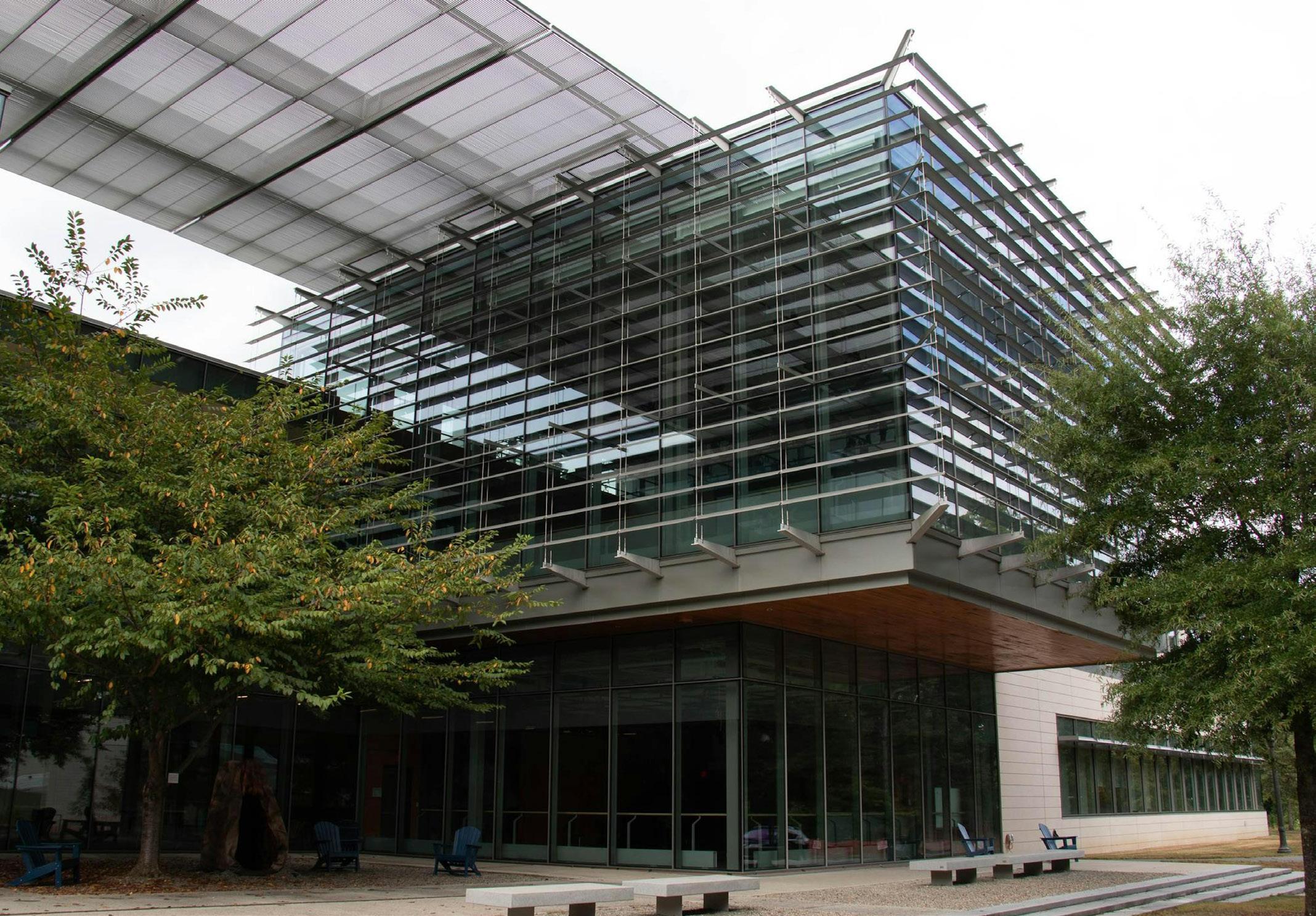
The Rubenstein Art Center, fondly known as “the Ruby,” shines as a landmark as much as it dazzles as a creative hub. Situated along Chapel Drive across from the Nasher Museum, the Ruby is the heart of arts programming on campus. From premiering films and showcasing live performances to exhibiting visual art installments and airing WXDU 88.7 FM radio broadcasts — the Ruby has it all.
Since 2018, the Rubenstein has become a notable stop along the C1 bus route. The vision of such a dynamic, artistic hub was brought to life in 2015 thanks to the generosity of philanthropist David Rubenstein, Trinity ‘70. Since then, the Ruby has expanded arts infrastructure on campus as well as brought the Dance and Cinematic Arts programs under one interdisciplinary roof.
Designed and built by William Rawn Associates, a Boston based architectural firm, the building boasts over 70,000 square feet of space with 12 mutable studio “modules.” The collaborative aspirations of Duke Arts leadership was pivotal in creating nondepartmental-specific work spaces that could change and evolve over time.
Ruby Lounge
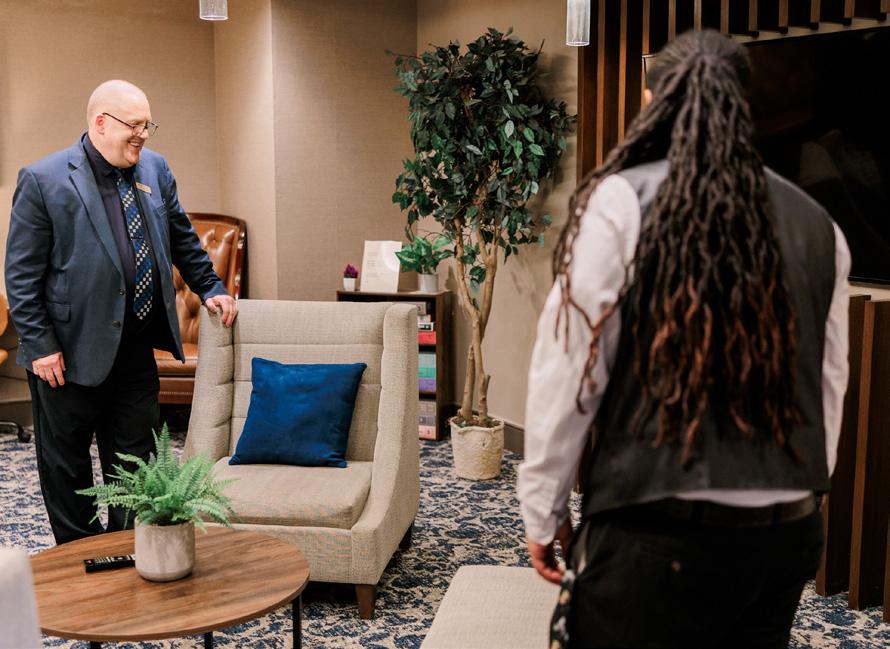
Beyond its panoramic glass exterior, the Ruby Lounge provides a multiuse performance and event space. A flexible grid ceiling system allows for various lighting fixtures, along with soundproofing and sliding glass doors welcoming visitors to see artists at work. The lounge is also a quiet, inviting setting for students campuswide to study, gather and even play the piano.
Von der Heyden Studio Theater
The Ruby offers the von der Heyden Studio Theater for a wide range of performances. Better known as the “Black Box” theater, the facility is centered among the numerous creative studios on the Ruby’s first floor. The theater has a seating capacity of over 140 in-the-round, proscenium and thrust seating styles. Its unique ambient lighting and tension-wire ceiling grids allow for innovative productions across disciplines.
Quadiriah McCullough, operations director of the Rubenstein Arts Center and the Arts Annex, shares the unseen efforts behind each production, stating that “creating a successful event at the Ruby involves much more than what the audience sees. Behind every seamless experience is a team deeply engaged in space stewardship, emotional labor and intentional coordination.” The open, adaptable space of both the Ruby and von der Heyden has supported both student and faculty lead projects, as well as other outside events including the American Dance Festival.
the Rubenstein Arts Center
Dance
studios
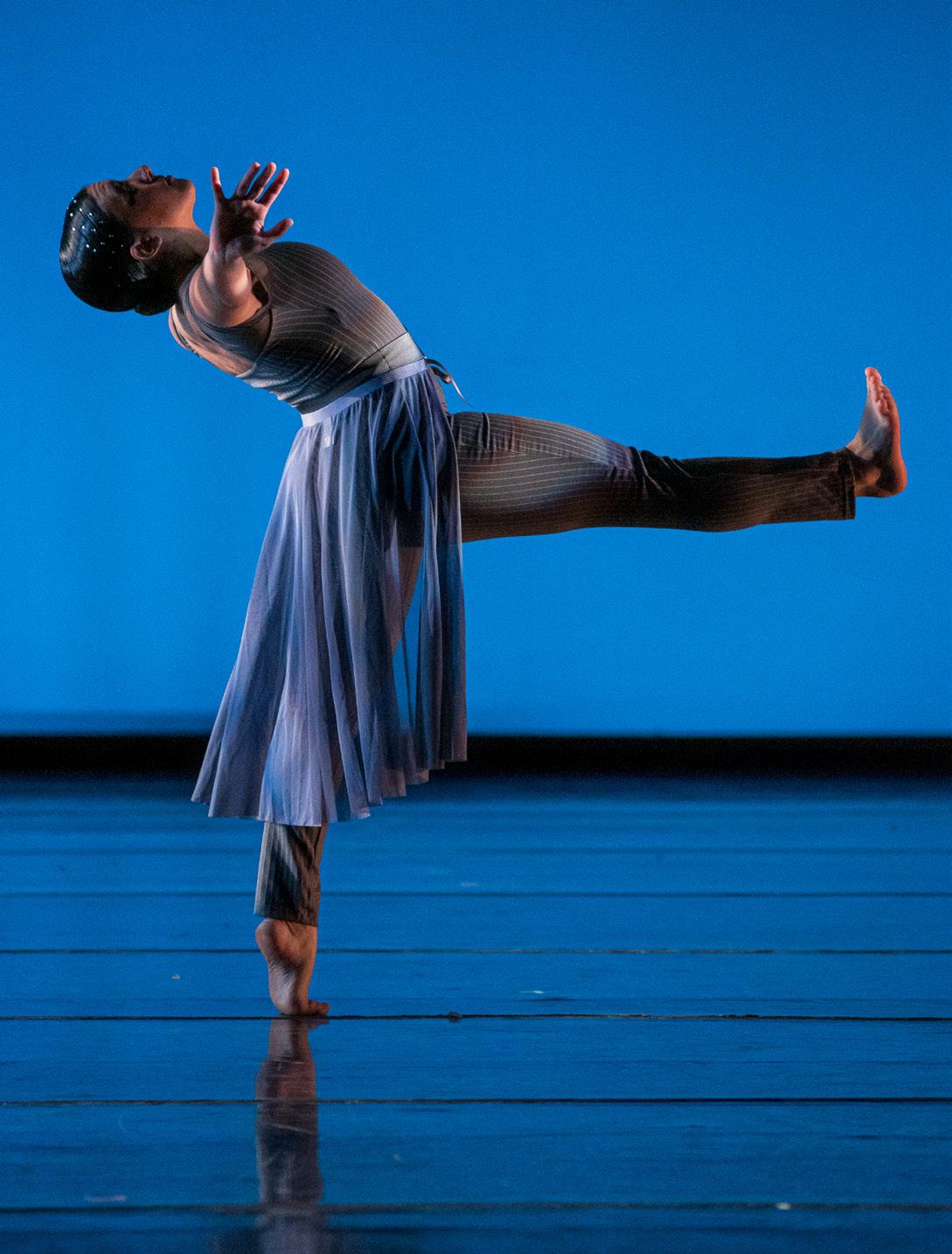
Perhaps its most notable space, the Ruby’s Hymowitz Family Dance Cube, is a truly unique floor-to-ceiling windowed studio that allows Chapel Drive passersbys to get a sneak peak of the Dance Program’s latest projects.
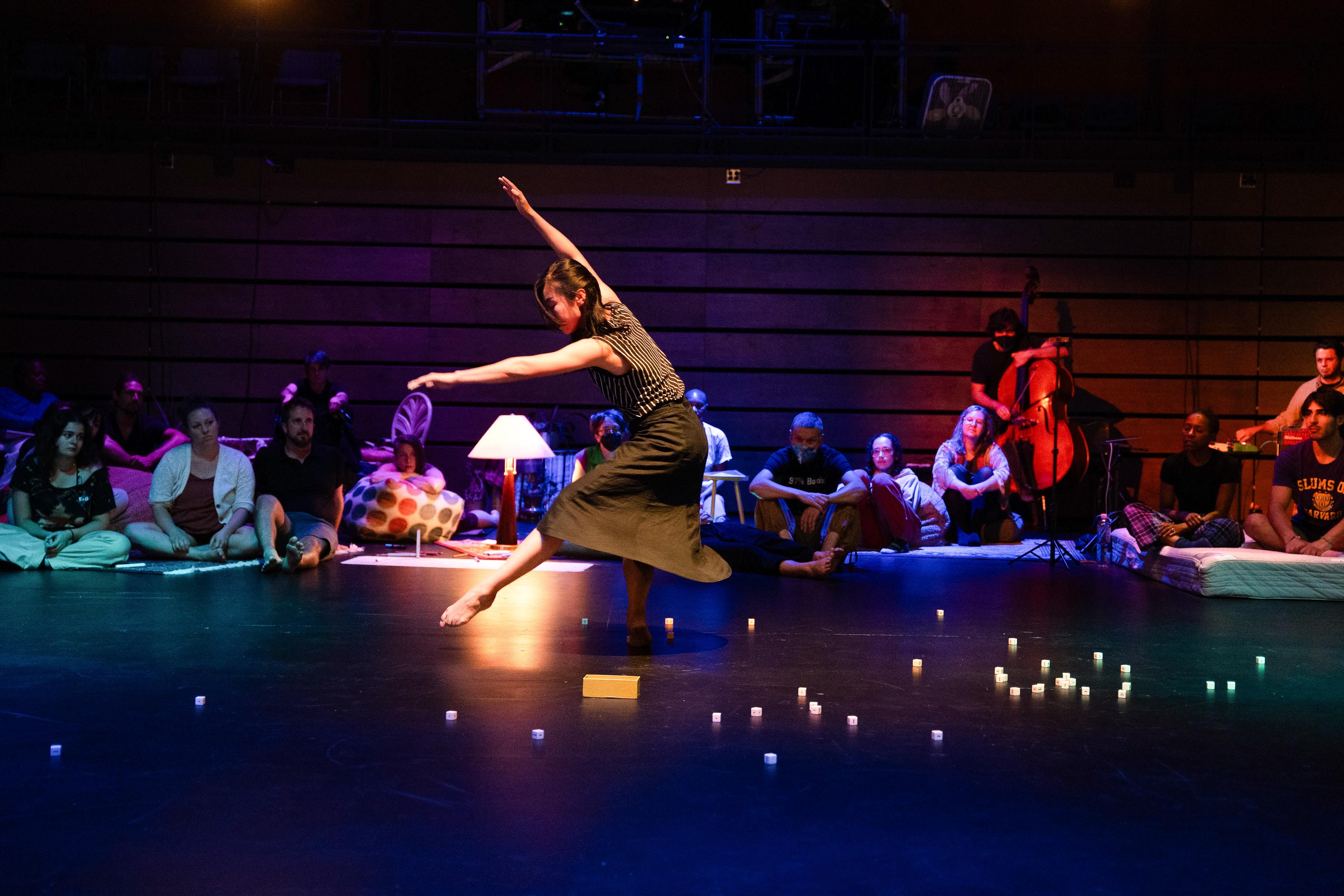
Andrea E. Woods Valdés, director of the Duke Dance Program, said, “It’s a really well-equipped space, and we use [it] thoroughly for undergraduate[s], including courses, student projects and performances.” Sprung vinyl flooring, mirrors, curtains and a suspended lighting system allow the space to hold practice and performance.
Drum kits and a baby grand piano also allow dance classes to offer live music. Sophomore Haynes Lewis said, “It’s really special because you form a relationship not only with your dance teacher but also the musician who’s there. Oftentimes, they’ll play pop songs or songs from musicals we know, and it is a very personalized experience when you have a musician there.”
Studios 124, 202 and 101 also support adaptable practice and gallery space that are available for student and faculty use when classes are not in session.
WXDU Studio
A long-standing art form and tradition, WXDU 88.7 FM has been broadcasted across the Durham and greater Triangle community for decades. What began as WCDC (“We cover Duke campus”) in 1947 has found its new home in the Ruby. The new studio features a soundproofed control and
recording room as well as streaming equipment, music mixers and transmitters, as well as archival CDs and records. Ran by students and overseen by DUU, WXDU is one of the most open and collaborative spaces for students to share and explore their interest in broadcasting or music mixing.
Film theater
The Ruby also has a highly technical film theater, “an intimate, 100-seat theater with a full array of archival projection. You can project 16 mm, 35 mm, DCP, almost anything,” said Shambhavi Kaul, associate professor of the practice of art, art history & visual studies. Screen/Society, a free weekly film showing invites cinema enthusiasts to join such a community centered around a shared passion for cinema.
Students are also welcome to rent high-performance film equipment from the Equipment Cage, shoot in the green room and edit their projects in the digital editing studio.
Galleries
Adjacent to the multipurpose painting studio, the Ruby Gallery and the Murthy Agora Project Studio have become valuable gallery space open to students. Bill Fick, lecturing fellow of art, art history & visual studies said, “before the Rubenstein, there really wasn’t anywhere [to show art] … It definitely has provided more opportunity for exhibiting.” Exhibitions from undergraduate and graduate students along with visiting artists are dynamic displays held throughout the year.
Co-Lab
Nearby, the Co-Lab studio invites all with a Duke NetID to explore their creativity with 3D printing, laser cutting, digital fabrication and art and clothing design. Designed for experimentation and learning, “if [students] walk away with something that they didn’t quite expect, but they learned some lessons, that’s positive as well,” according to Co-Lab Studio Manager George Breeden.
Looking ahead, faculty and staff envision even more engagement and collaboration at the Ruby. Kaul pictures the space becoming a social hub stating, “I think they should have a little cafe, can’t have artists without coffee … It would attract people to come and hang out. And then when they come and hang out, they’ll find out all the cool stuff that’s happening there and it’ll just be like a kind of snowball effect.”
As the Ruby continues its eighth year of operation, its impact on the Duke Arts community only shines brighter, providing a space for artistic intersection and exploration. Along with its grandeur, the Ruby owes its vibrancy to the exceptionally talented students and faculty who fill the space each day. As Valdés said, “We’re going to bring life to this place. Any building is just a building, but this one is exceptional.”
Mentha Sivaraman | The Chronicle
From Labubus to matchas, Duke’s ‘Performative Male Competition’ blurs satire and sincerity
By Claire Cranford
Sept. 12, 2025
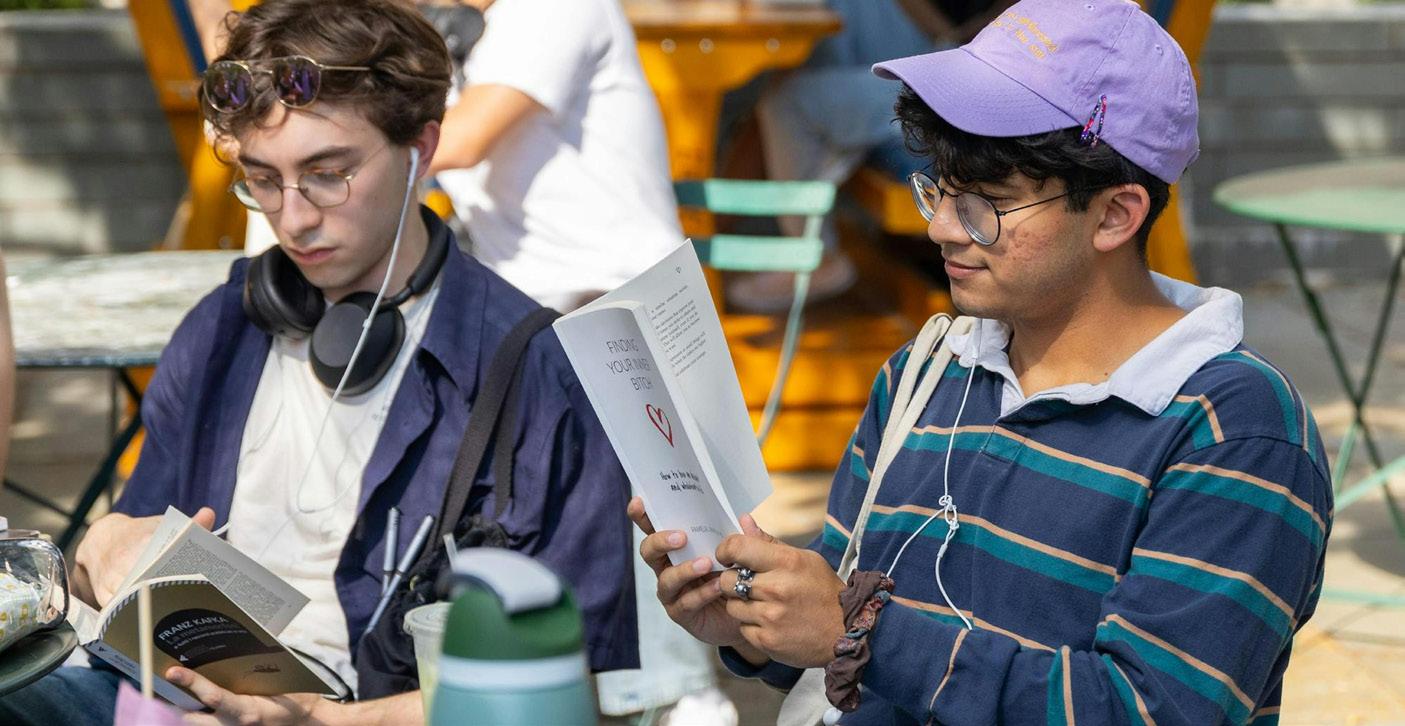
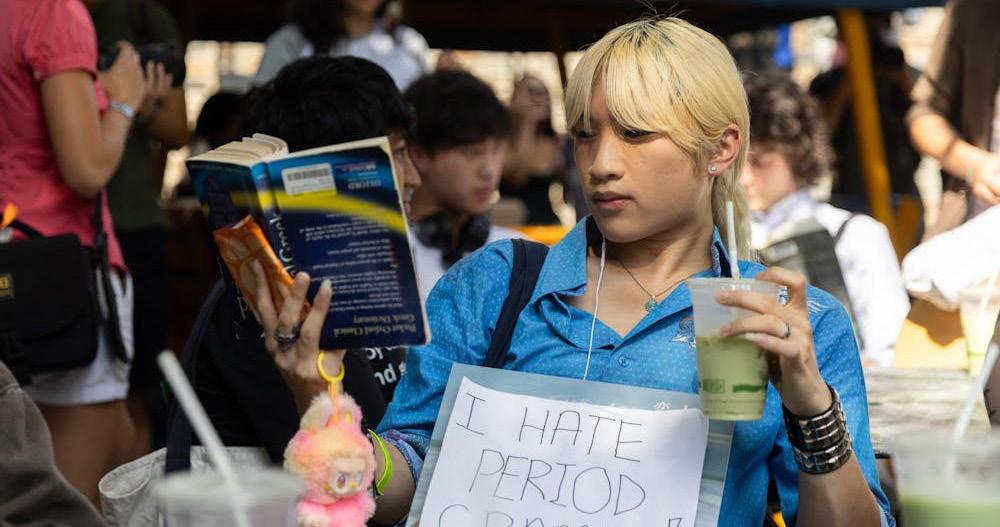
Eleven matchas, handfuls of tampons, three upside-down books, one cat, one skateboard, one guitar and at least three Labubus.
These are just some of the items Duke students hauled to the Bryan Center Plaza for the campus’ first “performative male competition.” Many contestants also carried the essentials: over-ear headphones, tote bags weighed down by trinkets and vinyl records.
The contest was dreamed up on Fizz, the anonymous campus social media app, where posts satirizing “performative men” — a now common internet archetype — racked up traction. The “performative man” is easy to spot: he quotes bell hooks or Joan Didion between sips of matcha, wears chunky headphones everywhere and may or may not skateboard with a guitar slung over his back.
Duke’s contest was evidently inspired by events held around the country last month, such as in public parks in Seattle, New York and Los Angeles. Similar contests popped up at universities around the country last week, including the University of North Carolina at Chapel Hill, Yale University and Binghamton University.
The competition had a slow start with no emcee in sight 15 minutes past the scheduled start time; it seemed the event might collapse under the weight of its own irony.
The “performative men” sat scattered across the plaza, sipping their drinks and pretending to peruse feminist literature — three with their books deliberately upside-down. Then, sophomore DT Akinyelu stepped forward. He hadn’t planned on hosting, but decided someone had to take the mic.
Some contestants leaned into parody.
“Imagine, these are your period cramps,” first-year Kenji Tran, one of the contestants, announced, hurling an orange Always brand pad onto the ground and stomping theatrically. The plaza erupted in laughter and applause. Others went subtler, pulling feminist texts from their bags and playing Clairo from their Spotify. One sang “Iris” by the Goo Goo Dolls, while strumming his guitar.
What started as a tongue-in-cheek gathering morphed into something closer to performance art. Students passing through BC Plaza stopped to watch, unsure whether to treat it as satire, critique or community theater.
The crowd played as judges, measuring each act’s success by the volume of their cheers.
In the end, junior Kuzi Goora claimed victory. Sporting an Adrienne Lenker tshirt and trailed by his cat, Zombie Ruth Gaydar Binsburg, he leaned into sincerity rather than parody. His tribute to all women drew the loudest reaction of the day — he was Duke’s most performative man.
Photo credit: Cammel Hurse
Cynthia Canabal Comabella The Chronicle
Raul Ng Tang The Chronicle
SIGNED, YOURS
FROM PAGE 5
told her, “One day I’m gonna marry you, but first you’ve got to be my girlfriend.”
Their relationship began through photographs, but it unfolded in letters. Before they built a life together in person, they captured pieces of themselves for one another across distance through handwritten letters containing small fragments of daily life, always signing them with “Yours.”
When the pair found the Durham space in April 2022 that would become their studio, the word resurfaced naturally. “I didn’t want it to be just like… some boxed-in thing,” Justin said. The name just made sense. “It has the nostalgia between us.” Eventually, “Yours” also found its way engraved into their wedding bands when the pair got married in October 2022.
That nostalgia seems to define the philosophy behind Yours. The space resists the speed of modern image culture, where photographs are often created and forgotten within seconds. Instead, the studio embraces photography as something slower and more intentional, an experience rather than content.
“In an age where everything is on a computer, and everything is AI, and crypto and all these buzzwords … [film is] a breath of fresh air,” Justin said.
There are, objectively, easier ways to produce photographs. Film is expensive, unpredictable and it slows people down. Yet, perhaps that is exactly the point. “In
all these reasons not to, [film is] just an experience, “ Justin said. “People, I think, really crave experiences.”
More than anything, the pair emphasizes that film photography is rarely about technical perfection; rather, they return to the idea of community. Photography becomes an excuse to gather, wander, exchange ideas and create memories while simultaneously capturing them.
This intentionality shapes the way they encourage newcomers to approach film as well. Their advice is notably free of elitism or technical gatekeeping: shoot often, make mistakes, learn alongside others.
“YouTube videos will only get you so far,” Justin said. Film photography, they insist, is fundamentally communal. “It’s a subjective endeavor that is helped by being in community. … Do it with a friend.”
Even their philosophy toward mistakes reflects this broader understanding of photography as process rather than product. “Flaws don’t have to be seen as flawed,” Averie said. In digital photography, errors are often erased instantly, corrected before they can fully exist. Film offers less control and, with it, more grace. Light leaks into frames. Focus slips. Grain obscures detail.
Yet, instead of diminishing the image, those become evidence of its humanity: proof that someone was there, working within the limitations of a physical medium and trying to preserve something before it disappeared. Justin said, “When you put a box around yourself and intentionally create difficulty with the process,
that’s where people truly challenge themselves to their full artistic potential.”
In the end, one cannot stop time from moving forward by taking a photo. But, these photographs serve as a reminder that, for a moment, we were here. To go analog today is to choose presence over convenience, believing that some moments deserve more than instant consumption. They deserve care, patience and the possibility of lasting long enough to become part of someone else’s history someday.
WIND SYMPHONY
FROM PAGE 6
ties at the ball to perform, to conduct.”
One of the event’s most memorable moments was the student promenade. Traditionally, an Austrian promenade is the formal opening ceremony where young debutante couples march out and perform a choreographed formal dance. Some of the DUWS members drew upon this tradition in an elegant performance as one of the closing acts, which Dr. MoesenbichlerBryant noted as a key highlight.
While pulling off an event as large as the Viennese Ball is no easy task, it was precisely this collective effort that made the process so meaningful. As DUWS members spent the entire day together decorating, performing and cleaning, it gave them the rare opportunity to really connect and speak with each other, something which
wasn’t always possible during their busy rehearsals. For both performers and participants alike, beyond the grand outfits and soulful music, the Viennese Ball was about socializing, trying something new and simply having fun.
As the DUWS students took their last bows and their countless hours of effort drew to a close, the guests eventually began to disperse. Whether it was “exploring different cultures” as an attendee learning the waltz and polka or embracing leadership as a DUWS member, Dr. MoesenbichlerBryant hoped everyone who attended had the opportunity to simply live in the moment — in a shared night of music, dance and laughter.
ZINE MACHINE
FROM PAGE 7
2026 bucket lists. And as for the Duke artists interested in distributing their own zines, Hyperlocal Durham actively invites participation in the project. So, Blue Devils, go forth: explore, learn and help tell the stories that make this city what it is.
WELCOME
DEPARTMENT OF ROMANCE STUDIES
Check out these courses for Fall 2026!
FRENCH 172CCS From Page to Protest: The Global Lives of Les Misérables
Prof. Anne-Gaëlle Saliot (R) (HI) (ALP) Century Course. This course is taught in English. TuTh 11:45AM - 1:00PM
SPANISH 331S Introduction to Literature, Film, and Popular Culture
Prof. Katryn Evinson (FL) (HI) (LG) (ALP) Recommended prerequisite: Spanish 301, or AP score of 5 on Spanish Language exam, or SATII score of 660+, or other equivalent experience. MoWe 10:05AM - 11:20AM