COMMENCEMENT 2026






Commencement
‘Give yourself the grace to adjust’ Class of 2026 passes advice to new Blue Devils
By Luca Gragnoli University News Editor
The Class of 2026 has experienced Duke through a period of monumental change. From the full integration of QuadEx into campus life and brand new coaches in top sports to a year of cost-cutting and federal pressure on higher education, graduating seniors have seen it all.
The Chronicle asked four members of the Class of 2026 to share advice and lessons they have learned with incoming first-years. Here is what they said:
What would you say to first-years at orientation week who are just getting their bearings in this new place?
Lizzy Glazer: It’s normal to feel intimidated and stressed at first, but if you follow your passions and make decisions based on your values, you’ll end up finding people who are willing to support you and become your cheerleaders.
Abigail Bergan: Give yourself the grace to adjust. It’s a big transition from high school to college, especially if you’re coming from far away. It can take a little while for you to get your feet under you — that’s super normal … You are not the only one feeling overwhelmed by this transition.
Aiden Lo: Duke has done a great job with orientation and honestly the people that you meet at orientation will become your first friend group … But, don’t stress if you can’t find your people in orientation first, because there’s going to be so many chances for you to meet new people through Marketplace or your Constellation classes or otherwise.
Kaitlyn Williams: Embrace the uncertainty … No one expects you to know exactly what your 10-year plan looks like post-Duke, and it’s going to change. That is completely ok.
How would you recommend spending time outside of class?
Glazer: Duke has so much to offer. It can often feel overwhelming, since you could live so many lifetimes and never really be able to do everything that Duke has … I would encourage [first-years] to start out by recognizing what makes them happy and by dedicating time to things that bring them joy and are aligned with their interests.
Bergan: Some of the best things that I’ve done outside of the classroom at Duke have happened spontaneously. Give yourself some free time to relax, to take care of yourself. Self care is really important, so definitely have fun and also enjoy your precious free time.
Lo: Definitely attending as many events as possible … One thing that I regretted in my freshman year was not going to enough clubs and events because I was scared or I didn’t have anyone to go with … If you go to enough events, you start meeting the same people and then that’s how you start to make friends … Just go do it because you never know what you may find.
Williams: Take advantage of all the free opportunities that Duke has … There are so many fun things that go on every day that students don’t even know about … I’ve met some of my best friends by magically appearing at events or wandering through dorms, and I simply cannot encourage enough to just say ‘yes.’ You don’t need to spend all of your hours in Perkins [Library]. That does not make a successful Duke student.
Any advice on balancing academics with extracurriculars, social life, hobbies and everything else?
Glazer: You don’t get a grade on life in the end, so it’s really important to learn how to balance your education with the Duke experience. The best part of Duke is truly the people, and so your Duke experience really would not be fully appreciated if you aren’t spending time getting to know humans and forming connections.
Bergan: The people are the best part of Duke … You’re going to be juggling a lot of balls in college and in life in general; inevitably, some of them are going to fall. It’s just up to you to figure out which ones are rubber and which ones are glass.
Lo: Duke really is one of the most flexible schools when it comes to academics. In terms of the credits that you have to accumulate, it’s not as limiting as other schools, and you can choose your major so late. So, that really means that you should … pick classes that you find interesting first, then really delve into the social aspect, making sure you have a group of friends that you’re comfortable with and that you could do things with.
Williams: Be realistic about budgeting your time. You are going to want to do 500 trillion things, and that’s so normal, but you have to set up hours to be productive … It was always really important to me to set out a good chunk of the day … where I’m going to do work and then the rest of the day is allowed to do whatever I would like.
What do you wish you could have done or known more about before graduating?
Glazer: Everything ends up working out. Everyone is working hard and doing their best and there’s no point in comparing yourself to anyone else … As long as you’re making decisions that align with your values and the things that are important to you, you’re doing everything right.
Bergan: I wish I could have explored more of Durham. It’s pretty hard to get too far into Durham without a car, but it’s a great city … I also wish I’d known how fast the time was going to fly. People say that the time goes by really fast, but I don’t think that hits you until you’re a month out from graduation. It feels like East Campus move-in was yesterday.
Lo: One of the things that I missed was professor relationships. Duke has a really good professor-to-student ratio and it would be a shame to not utilize it. FLUNCH is a really nice system and a lot of people don’t utilize it often. Freshman year you get introduced to that system, so you use it a lot, but I slowly started FLUNCHing less. That’s something that I regretted not doing as much, because the professors here are very willing to help you.
Williams: I wish I had known more about all of the free travel opportunities that you can suck out of Duke … There are so many opportunities like that all over campus that you just have to be willing to spend a little bit of time looking [to find]. It is such a privilege to go to a place like this, where there are so many pockets and holes to find money and find opportunities and make really cool memories.
What are the most important lessons you learned at Duke, or any words of wisdom you’ve carried with you throughout these past four years?
Glazer: Y ou’re enough just the way you are — there’s something special about each individual here at Duke. Everyone brings something unique, whether it’s their previous life experiences or their opinions … Also, there’s so much learning that occurs outside of the classroom … Particularly at Duke, getting to have those unique experiences whether it be travel or getting to know somebody who’s lived different lives than you have is where people end up learning the most.
Bergan: Long-term planning is overrated … Life’s a lot more fun when you don’t have it all planned out by the time you’re 18. Most of the value and most of the lessons that I’ve learned from Duke have come from unexpected places or unexpected people: things I did, classes I took or experiences I had that would never have been a part of my plan at 18 … At the end of the day, college is a place where we’re taught how to be grown ups, but there’s still a lot of mechanisms for us to be able to make mistakes and be totally ok with that.
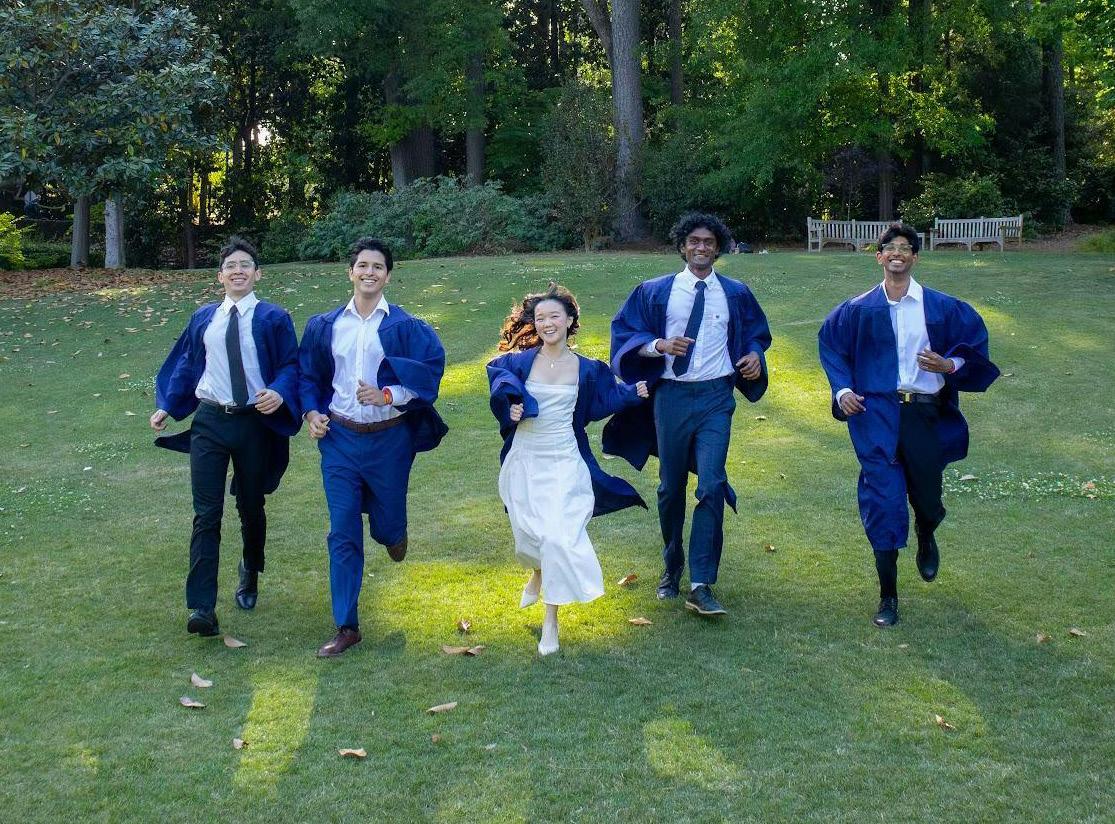
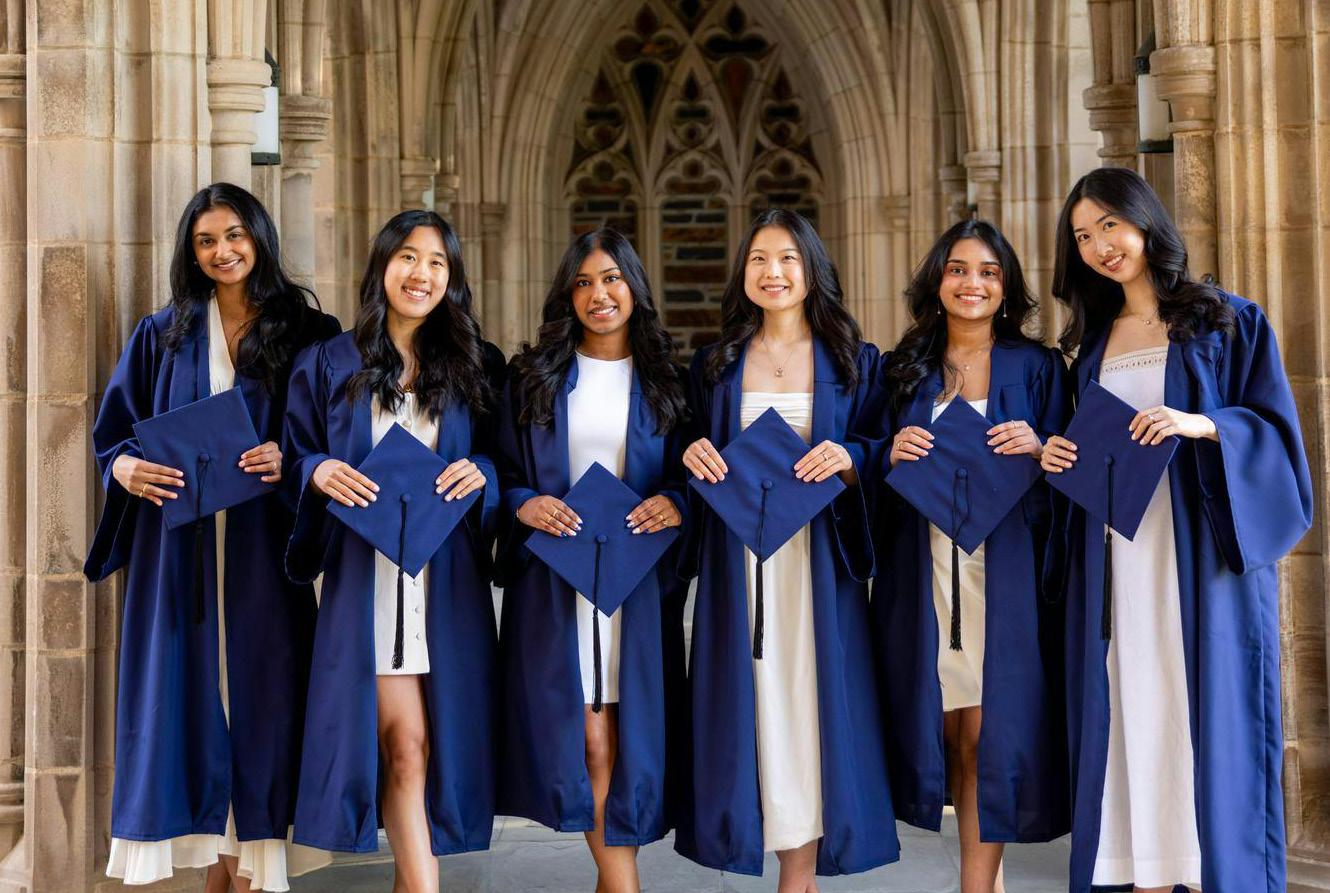
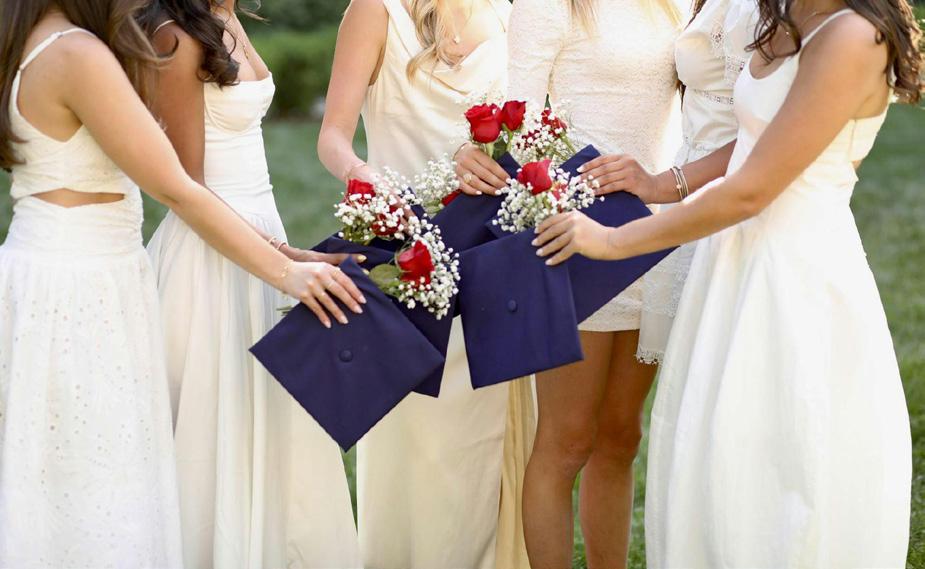
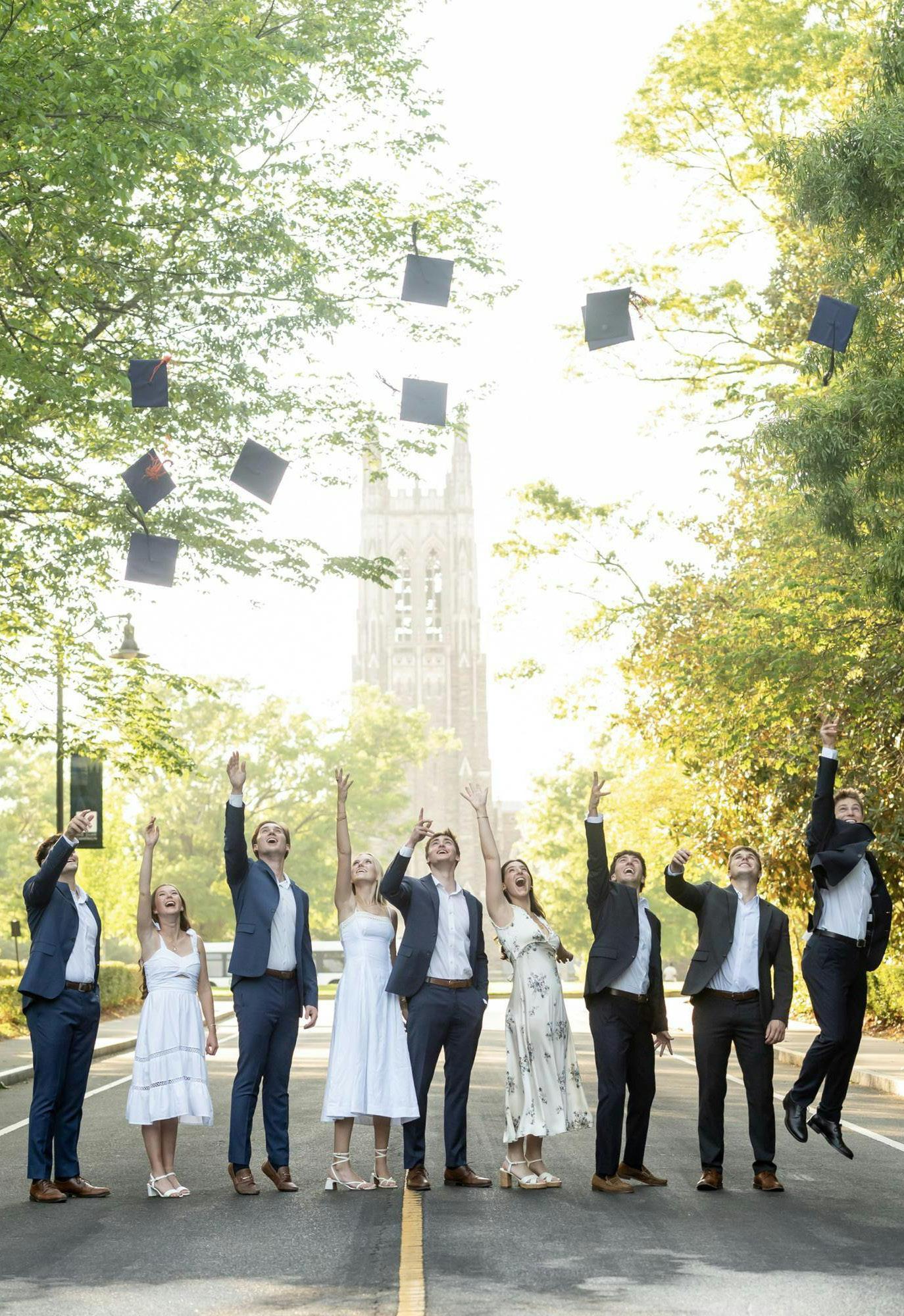
From top to bottom, graduation photos courtesy of April Lee, Sanjana Kalagara, Katalina Guma and Carson Lender
‘As long as you’re making decisions that align with your values and the things that are important to you, you’re doing everything right.’
Microsoft CFO Amy Hood to speak at Class of 2026 Commencement
By Ana Despa April 8, 2026
Duke alumna and Microsoft Chief Financial Officer Amy Hood will return to Wallace Wade Stadium on May 10 to deliver the Class of 2026 Commencement address.
Hood, Trinity ‘94, has served as Executive Vice President and CFO for Microsoft since 2013. She is the first woman to serve as CFO in the company’s history, and her leadership has positioned Microsoft as a dominant force in cloud computing, artificial intelligence and gaming.
women in the world as early as 2013. She climbed to No. 16 on that list by 2025. She has regularly appeared on Fortune’s and Barron’s annual rankings of the most influential women in business and finance.
“I am delighted that Amy Hood will address the Class of 2026 at Commencement,” President Vincent Price said in the press release. “Amy is a thoughtful and visionary leader, and I am confident her address will resonate with our graduates and inspire them as they celebrate this milestone.”
Lo: Duke is a unique college for three factors. Only Duke does all three really well. It’s secluded: You get to see familiar faces all the time. The school spirit is absolutely insane: Even people who don’t like sports get dragged into sports. I never watched a basketball game in my life before coming here, and I became a line monitor … Then the third one is the selectivity of everything. So there’s only one club per industry. I find that to be really cool, because if you want to find your group of people, you know exactly where to look for them.
Williams: Something that I was really hit with recently is that Duke is the last time in your life where people are really paid to support you and to get you where you need to be. Once you enter the workforce, that dynamic looks very different. There is no one to push you in that same manner, so take advantage of all those resources. The most valuable thing that I’m gaining with my degree is the network of mentors and friends that I made at this University, and individuals who, even if we don’t talk until our five-year reunion, I know that I will be so excited to see and catch up with and just be so proud of for everything that they have accomplished.
In Hood’s first five years as CFO, the company’s stock value surged nearly 300%. She has overseen many highstakes deals including a $7.5 billion acquisition of GitHub, a $26 billion purchase of LinkedIn and a $69 billion Activision Blizzard deal. Hood sits at the center of Microsoft’s decisions to invest billions of dollars into data centers, keeping pace with the growing AI industry, and has simultaneously championed the company’s commitment to becoming carbon negative, even as data center investments raise the company’s energy consumption and emissions.
According to a Duke press release, Hood has said that “Every step, every risk I took, built confidence.”
And, indeed, she has come a long way from her Morehead, Ky., roots.
After earning her economics degree from Duke in 1994, Hood attended Harvard Business School for her MBA, and then began a career at Goldman Sachs in investment banking and capital markets. She joined Microsoft in 2002, working her way through investor relations and the strategy and business development team before being named CFO in 2013.
Hood has been consistently recognized for her work, with Forbes ranking her among the 100 most powerful
Hood will receive an honorary Doctor of Humane Letters degree at the ceremony. Dianne McIntyre, Abby Wambach and Cass Sunstein will also re ceive honorary degrees.

2026 GUIDE TO COMMENCEMENT
By Seyun Park University News Editor
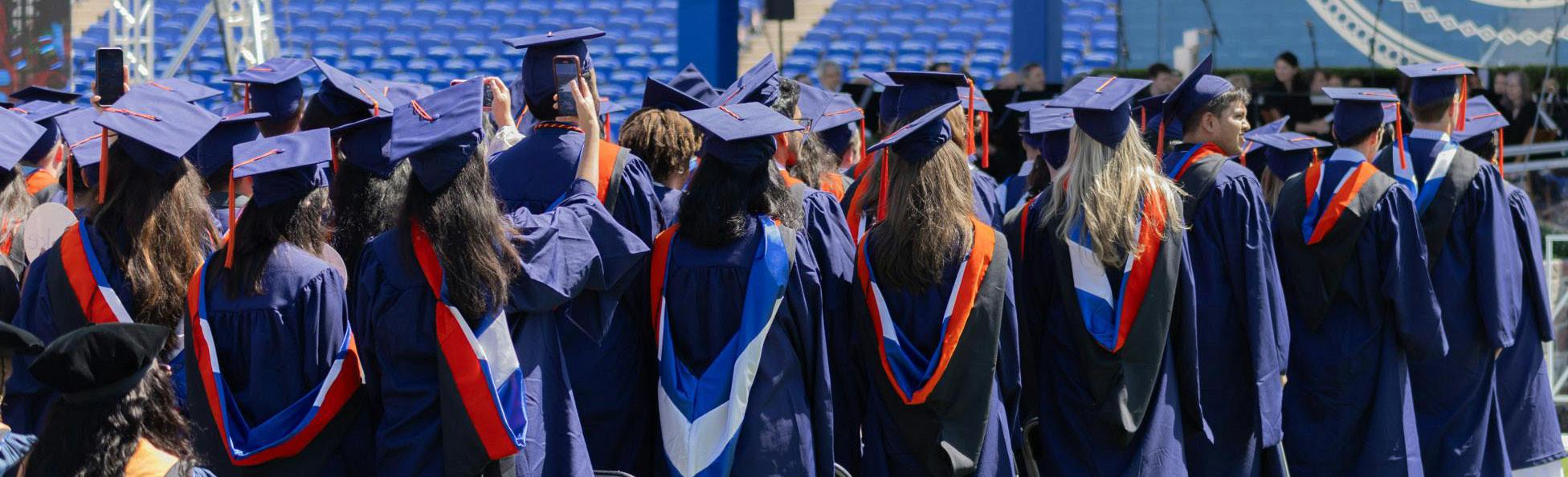
Graduates of Duke’s 10 schools will be awarded degrees Sunday, May 10, in the University’s commencement ceremony. Commencement will take place in Wallace Wade Stadium, starting at 9 a.m. with the procession of candidates. President Vincent Price will preside over the ceremony, and Microsoft Chief Financial Officer Amy Hood, Trinity ‘94, will deliver the commencement address. The ceremony, which is scheduled to conclude by 11 a.m., will be livestreamed on the commencement website and Duke’s Youtube channel.
Gates to Wallace Wade will open at 7:30 a.m., and the University encourages guests to be in their seats by 8:30 a.m. All guest seating is unassigned. Graduates must report to Pascal Field House via the Blue Zone 7 or Grounds parking lots no later than 8:15 a.m.
Parking is free on campus all weekend and available on a firstcome, first-served basis. On Sunday, shuttles will run to the Bryan Center and Science Drive garages from 7:30 a.m. to 1 p.m.
Graduates can pick up their commencement gift during the Forever Duke kickoff on Thursday at the Karsh Alumni and Visitors Center. There, they will toast to graduate and professional students at 5 p.m. and undergraduates at 6 p.m. Students are encouraged to arrive 45 minutes before their toast.
The University will hold two baccalaureate services at 1 p.m. and 4 p.m. on Friday in the Duke Chapel. The multi-faith services will include prayer, music, readings from various religious traditions as well as remarks from Price and Dean of the Chapel Luke Powery. Overflow seating will be available in Page Auditorium and the services will be livestreamed from the Duke Chapel YouTube channel.
Many schools and departments will hold smaller ceremonies and receptions throughout the weekend.
The Divinity School will hold its baccalaureate service and hooding ceremony at 6:30 p.m. on Saturday in the Duke Chapel, with overflow seating in the 00 level of the Westbrook Divinity Building. The service will include a Divinity School faculty member’s sermon and graduates receiving their academic hoods.
The Fuqua School of Business will hold a ceremony for recipients of its Health Sector Management Certificate at 1 p.m.
on Friday in the Fuqua building. At 5 p.m., the School will honor graduates of its Master of Management Studies and Master of Quantitative Management programs in Cameron Indoor Stadium. Additionally, at 9 a.m. on Saturday, graduates of the Master of Science in Quantitative Management, Global Executive Master of Business Administration and Weekend Executive MBA programs will have a commencement ceremony in Cameron Indoor Stadium, followed by a ceremony for Daytime MBA graduates at 1 p.m. in the same location.
The Nicholas School of the Environment will host an undergraduate recognition ceremony at 9 a.m. on Saturday at the Wilson Recreation Center. The school will also recognize graduates of the International Master of Environmental Policy at 4:30 p.m. on Thursday in Grainger Hall. Doctoral students will be honored at 10 a.m. on Friday in the Levine Science Research Center’s Love Auditorium and Hall of Science, followed by a recognition ceremony for professional program graduates at 4 p.m. at the Wilson Recreation Center.
The Pratt School of Engineering will hold a diploma ceremony for undergraduates at 2:45 p.m. on Sunday in Cameron Indoor Stadium. Doctoral students will be recognized at a ceremony at 11 a.m. on Friday in Schiciano Auditorium and on the ground floor atrium of the Fitzpatrick Center.
The ceremony for graduates of the Institute for Enterprise Engineering will be at 10 a.m. on Saturday in Page Auditorium, followed by a graduation ceremony for Master of Engineering and Master of Science graduates at 2 p.m. and Master
of Engineering Management graduates at 5 p.m., both also in Page Auditorium.
The Sanford School of Public Policy will honor all graduates, including undergraduate, master’s, and doctoral students, in one ceremony at 9 a.m. on Friday in Cameron Indoor Stadium.
The Law School will host its convocation ceremony at 5:30 p.m. on Saturday in Cameron Indoor Stadium.
The School of Medicine will host a Hippocratic Oath ceremony for Doctor of Medicine graduates at 7 p.m. on Friday in the Duke Chapel. The school will recognize graduates of its Master of Biomedical Sciences program at 10 a.m. on Saturday in the Duke Reynolds Industries Theater.
On Sunday, Master of Management in Clinical Informatics graduates will have a ceremony at 11 a.m. on the 10th floor of Hock Plaza. Doctor of Physical Therapy graduates will be recognized at 9:30 a.m. on Monday in Cameron Indoor Stadium.
The School of Nursing’s hooding and reception ceremony will take place at 6 p.m. on Sunday in Cameron Indoor Stadium.
The Graduate School and Trinity College of Arts & Sciences will host ceremonies by department and other organizations, including religious and affinity groups and scholars programs, will host ceremonies and receptions throughout the weekend. A full list of ceremonies and receptions can be viewed on the Duke commencement website.
Meet the 2026 Commencement honorary degree recipients
Cass Sunstein
Duke University will honor a pioneering choreographer, a leading legal scholar and a world champion soccer player at its Class of 2026 Commencement ceremony on May 10.
Dianne McIntyre, Cass Sunstein and Abby Wambach will each receive honorary degrees in recognition of their trailblazing careers.
Dianne McIntyre
McIntyre is the founder of Sounds in Motion, a Harlembased dance studio and touring company. Her ensemble of dancers and musicians have performed across the United States and Europe for over 20 years, including at major venues like The Joyce Theater, The Brooklyn Academy of Music and The Kennedy Center.
Beyond her dance company, McIntyre has mentored and inspired generations of dancers for the past 50 years. Since 1972, she has choreographed four Broadway shows, 30 regional theatre productions, two feature films and three television productions, among other dramatic pieces. Her work has been commissioned by notable institutions such as the Alvin Ailey American Dance Theater and the American Dance Festival.
McIntyre was awarded with the Doris Duke Impact Award in 2016 and was welcomed by the Duke Dance Program for a development residency in February 2022. She has also received additional accolades such as three Bessie awards, a John S. Guggenheim Fellowship and a Kennedy Center Master of African American Choreography Medal.
Sunstein is the founder of the program on behavioral economics and public policy at Harvard Law School and a recipient of the prestigious Holberg Prize. He is a leading legal scholar with work spanning behavioral economics, environmental law and political administration.
Sunstein currently serves as the Robert Walmsley University Professor at Harvard. This semester he is teaching courses on the intersection of behavioral economics, law and public policy as well as the politics of social change. His current projects focus on the regulatory state, administrative burdens, fake news and freedom of speech.
Sunstein has authored New York Times bestselling books “Nudge: Improving Decisions about Health, Wealth, and Happiness” and “The World According to Star Wars.” He has also written hundreds of articles for law reviews and journals across the country.
Sunstein worked under the Obama and Biden presidential administrations. From 2009 to 2012, Sunstein served as the administrator of the White House Office of Information and Regulatory Affairs, before serving on the President’s Review Board on Intelligence and Communications Technologies and on the Pentagon’s Defense Innovation Board. In 2024, Sunstein won the Distinguished Public Service medal for his work as the Senior Counselor to the Secretary of Homeland Security under the Biden administration.
Sunstein previously served as Chair of the Technical Advisory Group on Behavioural Sciences for Better Health with the World Health Organization. He has also advised officials at the United Nations, European Commission and World Bank and served as an adviser to the Behavioural Insights Team.
Wambach is an internationally recognized soccer player, coach and World Cup champion.
She made four career appearances in the World Cup, during a period when USA women’s soccer began growing in popularity. Her veteran leadership helped Team USA win its third title in 2015, the first since 1999. Wambach and her team came in third place in 2003 and 2007, and were the runners ups in 2011. She also played for the U.S. women’s national soccer team in the Athens 2004 and London 2012 Summer Olympics, racking up gold medals in both.
With 184 career goals, Wambach is the leading scorer of all time on the U.S. women’s team. She was inducted into the National Soccer Hall of Fame in 2019.
Now retired from soccer, Wambach is an advocate for women’s rights and equality.
During the 60th session of the UN Commission of the Status of Women, Wambach spoke against soccer’s gender pay gap. She shared that after winning the 2015 FIFA Women’s World Cup, her team received “17 to 18 times less” compensation than the men’s champions from the year prior. After Wambach — alongside with other players — spoke out for years about the need for wage equality, the U.S. women’s national soccer team reached a $24 million settlement in an equal pay lawsuit in 2022.
In 2019, Wambach released her New York Times Best Selling novel “WOLFPACK: How to Come Together, Unleash Our Power, and Change the Game.” She is also the cofounder and partial owner of Angel City FC, the first-ever majority female owned soccer club.
By Annie Eilers and Sarah Diaz April 8, 2026
Abby Wambach
Tiffany Chen
By Staff Reports
2022-2023 First Year
The Class of 2026’s first year was one of new beginnings — a year marked by the implementation of QuadEx, the first seasons of two head coaches and the lifting of COVID-19 protocols.
Duke made national headlines this year. Following the Class of 2022’s graduation, The Chronicle reported that the student commencement speech closely resembled a 2014 Harvard student address. In late August, Duke volleyball player Rachel Richardson reported that she was “racially heckled” during a game at Brigham Young University. The incident resulted in the banning, then unbanning of a fan after the school’s investigation did not find evidence of racial slurs directed at Richardson.
The University implemented the QuadEx residential program in the fall of 2022, which saw the introduction of Faculty Fellows and the creation of Quad Arches. The Class of 2026 was the first to experience Experiential Orientation, another QuadEx program, which marked an overhaul in orientation programming that cost $1 million more than the traditional Orientation Week experience. The Chronicle spoke with alumni who advocated for housing reform and examined the differences between QuadEx and other peer institutions’ residential systems.
At the same time, students had mixed reactions to the new housing system. Under QuadEx’s “all-gender housing model,” the Baldwin Scholars lost their female-only section. The future of selective living groups on campus remained uncertain. Some chapters of Duke-affiliated Greek life were still recovering from the effects of the COVID-19 pandemic while adjusting to QuadEx, and non-Greek SLGs received conflicting messages from the administration regarding recruitment.
The University slowly removed COVID-19 protocols that had become a part of campus life. By late September, masks in classrooms were no longer required. By March, masks on buses were no longer required. In April, Duke ended its COVID-19 vaccine requirement for most students, faculty and staff.
As a monumental midterm election season came and went, The Chronicle spoke with candidates, voters and journalists before, during and after Election Day. After all the votes were tallied, the Republican Party fell just one seat short of a supermajority in the General Assembly chambers. In April, North Carolina state
Rep. Tricia Cotham changed her party affiliation, shifting the supermajority in the Republican Party’s favor.
In December, Duke accepted 800 Early Decision applicants, making the 16.5% acceptance rate the lowest in Duke’s history. Duke admitted 4.8% of its Regular Decision applicants in March.
The Class of 2026’s first year also saw a new dawn for football culture. Under the leadership of new head coach Mike Elko, the ACC Coach of the Year, the Blue Devils ended the regular season 8-4 and defied expectations to become Military Bowl Champions.
In December, line monitors announced a pilot program providing financial aid through tenting supplies. Cameron Indoor Stadium was packed once again, the Blue Devils went undefeated at home and Duke completed a sweep of North Carolina after losing to the Tar Heels in the Final Four the previous year. And despite early road struggles and a controversial no-call against Virginia, the Blue Devils rallied to win the ACC Tournament before losing in the second round of the NCAA Tournament.
Women’s basketball enjoyed a special season of its own, falling just short of the ACC regular-season title and earning a No. 3-seed for the NCAA Tournament. Men’s lacrosse won the 2023 ACC title after defeating Syracuse in the Blue Devils’ conference finale. Men’s tennis went to the NCAA Sweet 16 for the first time since 2015 after achieving its best-ever ACC record.
Duke Athletics wasn’t the only part of Duke that experienced a changing of the guard. Gary Bennett, vice provost for undergraduate education, was named the next dean of Trinity College. Provost Sally Kornbluth was named the next president of the Massachusetts Institute of Technology and will be replaced by Alec Gallimore. Suzanne Barbour joined the Graduate School as its new dean in September.
Duke also saw several losses. Peter Nicholas, the Nicholas School of the Environment’s namesake, passed in June. John Burness, former senior vice president for public affairs and government relations, passed in December. Samar Zora, a fourthyear doctoral candidate in the cultural anthropology department, passed away in February. Basketball and baseball legend Dick Groat passed in April. Beloved campus pets Nugget and Peaches died over the summer.
As the Bryan Center prepares for renovations that could cost up to $110 million, cultural and identity groups are asking for more equitable space allocations for their organizations. As student groups shared their grievances and sought solutions, the Center for Multicultural Affairs celebrated its 50th anniversary and held its first multicultural graduation.
Campus labor unions saw major developments this year. In August, the Duke University Press Workers Union officially won its union. The Duke Graduate Students Union filed for an election with the National Labor Relations Board in March after launching a campaign for formal recognition in September. In response, the University is challenging a 2016 NLRB decision affirming the legal right for graduate students to unionize.
This was a big year for climate activism on campus. Duke announced its Climate Commitment, which aims to increase the role of the University in tackling the climate crisis. The Undergraduate Environmental Union — a subcommittee within Duke Student Government — voiced that they believed the Climate Commitment does not go far enough and called for more student input.
At the same time, several Duke centers and affiliates have struggled. Duke Student Affairs saw a series of staffing shortages, hampering student group funding and planning for cultural events. The Center for Documentary Studies, a nonprofit affiliate of Duke, has undergone a programmatic overhaul over the past year. A year after the establishment of the Center for Gender Violence Prevention and Intervention, the Center still lacks a permanent director.
On the academic side, Duke’s Asian American Diaspora Studies minor saw its first year, while the School of Medicine and the School of Law announced that they would withdraw from US News and World Report’s rankings in January. The Curriculum Development Committee also began thinking about what Trinity College’s new curriculum will look like.
Undergraduates chose junior Isaiah Hamilton to be the next DSG president, while senior Sydney Hunt was chosen as the next Undergraduate Young Trustee nominee. Seniors Shreyas Hallur and Qi Xuan Khoo were named Rhodes Scholars.
A glimpse into Duke’s new Experiential Orientation
By Katie Tan, Kathryn Thomas, Milla Surjadi and Ishani Raha
August
28, 2022
First-year Sammy Marks stood at the foot of the Chapel Aug. 22 alongside his new friends, waiting to climb up the 239 winding steps to the top.
It was Marks’ third day on campus. As part of an orientation program called Project Discover, he prepared himself for his first chapel climb, the time-honored Duke tradition.
But with each step up the tower, Marks would also be blazing a new trail. The Class of 2026 is the first to experience an orientation re-design, an initiative administrators have hailed as the most significant change in Duke’s new student programming since 1995.
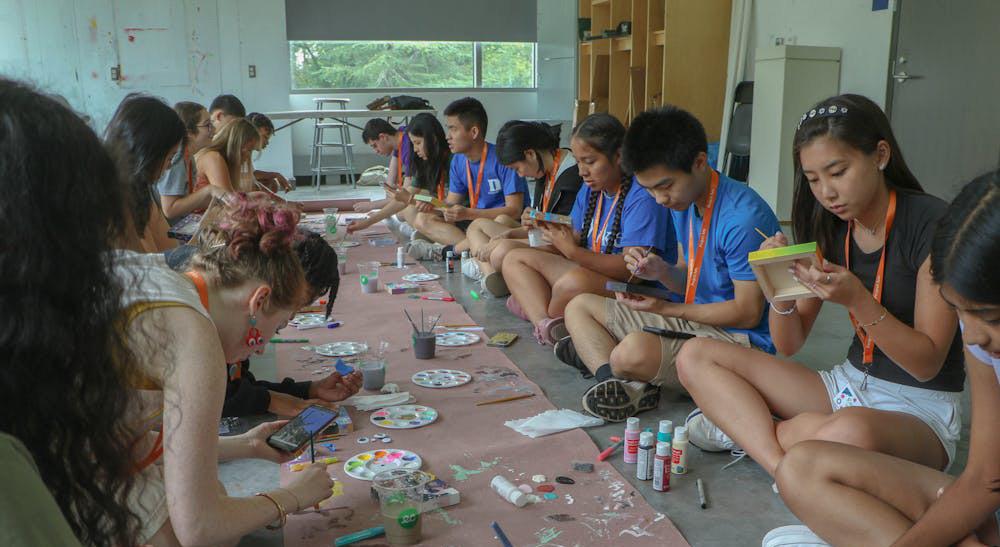
Part of Duke’s new QuadEx living/learning initiative, Experiential Orientation splits 1,740 first-years into 18 week-long thematicallybased programs, ranging from exploring the city of Durham to conducting independent research. In line with QuadEx’s goal of building a more inclusive Duke community, administrators say that orientation programs will strengthen first-years’ sense of belonging.
The change, announced by New Student Programs last fall, was not without its critics. For decades, Duke hosted six pre-orientation programs that occurred before orientation and lasted more than a week. Students could apply to these optional programs, and there was a fee to attend.
After the announcement, orientation leaders feared the loss of traditions, grew concerned that they would be understaffed
Kathryn Thomas
with all first-years in attendance and questioned why they weren’t consulted earlier.
Administrators say the new model is meant to emulate those beloved pre-orientation programs. And all six prior programs— Project BUILD, Project Waves, Project Wild, Project Arts, Project Edge and Project Search—have been redesigned as shorter Experiential Orientation programs with the same names.
Program directors for pBUILD and pWild noted that their programs have historically succeeded at creating community among first-years and were excited to share that experience to a greater number of students.
“Experiential Orientation is built on the success of our preorientation programs, which were excellent at fostering places of
inclusion and belonging for their participants,” wrote Ben Adams, interim associate dean of students and director of new student and family programs, in an email to The Chronicle.
So far, for Marks, pDiscover, which gets Duke students acclimated to their new home by exploring the University and Durham’s bestkept secrets, has succeeded at doing so.
“It feels like we have a leg up over all the other people coming to Duke,” he said.
Chapel Quad, 9:30 a.m.
Faces flushed from the exertion of their early morning workout, a group of students descended from the highest point on Duke’s campus.
“How was it? How was it?” one student on the grass yelled. Despite the Chapel’s steep and narrow winding stairs, the group was all smiles.
Standing next to Marks, first-year Nate Krall waited for his group’s turn. He’s directionally challenged, he admitted, but pDiscover lets him get to know campus and Durham before classes start next week.
“It’s almost relieving a bit, you can familiarize yourself with what’s around you before you start up college,” Krall said.
Rubenstein Arts Center, 11:00 a.m.
You could feel the creative energy buzzing through the Ruby. On the top floor, twenty students crouched on the ground, dipping
Revisiting student perceptions of QuadEx, one year later
By Alison Korn and Madeleine Berger April 21, 2023
As QuadEx’s inaugural year comes to an end, The Chronicle returned to the students who shared their initial reactions to the new residential living system with us in 2021.
The articles, titled “‘We haven’t gotten the chance to develop a so-called Duke norm’: Students talk new QuadEx system,” and “‘People should have a choice of the identity that they want to create here’: How first-year students feel about QuadEx,” were published days after The Chronicle reported that Duke would be rolling out QuadEx. At the time, many first-years felt overwhelmed about being thrown into a new system. Upperclassmen pointed out its restricting features and questioned the draw of quad events, but identified QuadEx’s potential to build a more inclusive Duke community.
This year, though students’ thoughts on QuadEx as a system varied, they still tended to agree on the fact that it was restricting specific groups, such as non-Greek selective living groups, from finding community on campus. They also pointed out a lack of tangible change in students’ social habits despite the increased presence of quad-related events.
Sophomore Vibhav Nandagiri expressed uncertainty about QuadEx last year.
“It’s definitely a lot of pressure to be the first class to get these quad communities going. Whether we will embrace that challenge or not is yet to be seen,” Nandagiri said in 2021. “People should have a choice of the identity that they want to create here. It seems like those choices are disappearing.”
Now, as Nandagiri reflects on his first two years at Duke, he has valued joining the selective living group Roundtable in
‘I just don’t think there is enough momentum to really foster that sense of belonging to a dorm just yet.’
addition to forming close friendships within his Keohane Quad, for which he serves on Quad Council.
“I’m very close with the people in my block, and I generally like them, so I guess in a way, if it weren’t for QuadEx, we wouldn’t have been together,” Nandagiri said. “So I think it’s fortunate, but I know that my case is definitely not in the majority.”
The Classes of 2023 and 2024 experienced the University’s transition to QuadEx more indirectly, as their first-year dorms were not tied to their sophomore-year living arrangements. However, sophomores last year still spoke about their opinions on QuadEx.
Last year, junior Jack Dugoni, who did not live on East Campus as a first-year due to COVID-19 policies, said, “My first question would be, who did they talk to about this, and where did it come from? … I think that the idea of sticking you with people that you’re pretty much randomly assigned to seems slightly problematic.”
He still feels that the first-year experience varies greatly from person to person, making it difficult to argue that QuadEx would be universally beneficial.
“I think it’ll definitely vary across campus in terms of people that are really satisfied with what they end up with and who they live with. But I think there’s also gonna be a good healthy chunk of people that are not,” Dugoni said recently. “I think it’s a little bit tricky to assume that people are just going to buy into it, that it’s going to work well for everyone.”
As a member of the selective living group Wayne Manor, Dugoni last year said, “I think SLGs should definitely be able to have blocks on campus. That’s kind of what makes them ‘SLGs’ instead of just ‘SGs.’”
He still stands by that, noting that he dislikes the way QuadEx has pushed back on the existence of SLGs, and hopes that two systems can co-exist.
“It’s tricky to justify how SLGs could continue to exist at the same time as QuadEx is taking shape. So I wish that would change. I wish they could somehow do both. But if you can’t provide a living space, at least support their existence because it’s not like you could just wipe SLGs away,” Dugoni said.
Junior Amanda He, who rushed Maxwell House as a sophomore, said in the 2021 article that she was “curious if Duke is trying to slowly do away with SLGs, and Greek life as a byproduct.” However, she did not think they would ever be phased out due to the fact that “Greek life is a big enough community … that it’ll still be here for years and years as long as Duke is allowing it to persist.”
Now, however, she has a slightly more “disheartening” view of the future of SLGs specifically, predicting that in a few years, SLGs will be “completely wiped” and Greek Life will continue to persist.
DUKE LIFTS CLASSROOM MASK MANDATE
By Milla Surjadi and Kathryn Thomas September 16, 2022
After two years of requiring masks in classrooms, Duke announced that the classroom mask mandate will be lifted next Thursday, Sept. 22. Unvaccinated individuals will also no longer be required to wear masks indoors.
By then, Durham’s community level will have been below the Centers for Disease Control and Prevention’s high-risk category for two consecutive weeks, allowing Duke to “take this next step towards more normalcy on campus and in classrooms,” according to a Friday email sent to the Duke community from Provost Sally Kornbluth and Russell Thompson, interim vice president of operations and emergency coordinator.
Faculty members will be allowed to request that students continue to wear masks in their individual classrooms and “should clearly communicate those expectations to the class” if they wish to do so, the email read.
“Medical experts caution that we are not out of this pandemic yet, and we can expect ongoing variants to emerge that may prove more elusive to vaccines and antibodies and could lead to increases in severe illness and hospitalizations,” the Friday email read. “If so, we must be ready to embrace a return to familiar restrictions and requirements, including indoor masking, that have proven effective in safeguarding our community.”
Professors and students react
Although masks are no longer required in classrooms, some professors are still requiring students to wear them, citing health risks due to their age, while others are taking a middle ground.
Berndt Mueller, James B. Duke distinguished professor of physics, is still requiring masks in Physics 142L, General Physics II. A major consideration for him is that he, along with
another instructor teaching the class alongside him, are over the age of 65.
“We [are in] the vulnerable age bracket and although we are vaccinated and boosted, we feel it’s an unnecessary risk because quite a few students in our class have come down with COVID,” Mueller said. “So the best thing we can do under these circumstances is that everybody wears masks.”
Campbell Harvey, J. Paul Sticht distinguished professor of international business in the Fuqua School of Business, has been outspoken in the past about the University’s policies regarding COVID-19. In September’s Academic Council meeting, Harvey expressed concern about the accuracy of Duke’s COVID-19 testing data. He has previously advocated for the use of higherquality KN-95 masks in classrooms and long-term solutions like upgrading air filtration systems in classrooms.
But now that Durham is no longer in the high-risk category, Harvey said that he would choose not to mandate masks in class if he were teaching this semester because it makes in-class communication and forming connections with students a lot easier.
Harvey said that he was recently at a conference where a former student approached him. He didn’t recognize who the student was because it was the first time he saw the student without a mask.
“It is very hard to have that kind of personal interaction when you’re looking at eyes,” Harvey said. “I much prefer teaching when people can actually see me rather than just my eyes.”
In Computer Science 230, Discrete Math for Computer Science, Bruce Donald, James B. Duke distinguished professor of computer science, is taking a middle ground. His policy balances the in-class experience of students with health and safety concerns.
Although students must still wear a mask in class, they are welcome to remove it when asking a question because it’s easier to see and hear them, according to Donald. He also allows his students to remove their masks to eat or drink in class.
Donald wrote in an email to The Chronicle that he will “generally remove [his] mask to make it easier for [students] to see and understand [him] while lecturing.”
“Personally, this is the first time I have taught without a mask in nearly two years so I do find that invigorating,” he wrote.
Harvey said that he understood that “different faculty [members] are in different positions” with their masking policies, due to their age and risk for COVID-19. If Durham were to return to the high-risk category, he would also require students to wear a high-quality mask in classrooms if the policy doesn’t shift back.
He also added that given the six-week length of courses at the Fuqua School of Business where he teaches, it makes sense that professors want to mitigate their risk of missing class due to isolating from COVID-19.
“At the business school, our courses are six weeks long. So if you’re out for a week, or a week and a half, that’s a huge chunk of the course gone,” he said.
Mueller felt similarly about his class, which has both a lecture and a discussion component.
“In a physics class of that type, if you miss two lectures, and maybe one discussion session, you are seriously behind,” he said.
Mueller added that while what students do outside of the classroom is outside of his control, his goal is to “deliver the best and safest service to the students.”
Senior Zach Furie took a contrary view and said that he wasn’t sure how effective the classroom mask requirement was in mitigating the spread of COVID-19 among students, but also understood why professors may choose to implement a policy to protect themselves.
“It seems a little silly to force people to wear masks in lectures while everyone knows that people are going to go to different parties later that night, while we’re all triply vaccinated,” senior Senior Ronan Tegerdine wrote in a message to The Chronicle.
Katie Tan
Non-Greek selective living groups held a non-recruitment open house Sept 4 after administrators banned SLG recruitment events.
By Staff Reports
2023-2024 Sophomore Year
Sophomore year saw Duke celebrating its 100th year, demonstrations over the Israel-Hamas war and the effects of the Supreme Court’s decision to strike down affirmative action in higher education.
Duke rose to No. 7 in the U.S. News and World Report’s Best National Colleges Ranking, the highest in the University’s history. During the admissions cycle, Duke saw a 28% increase in Early Decision applicants and accepted a record low 12.9%. In the Regular Decision round, Duke admitted another record low 4.1% of applicants, resulting in an overall acceptance rate of 5.1% for the Class of 2028.
In January, Duke kicked off its centennial celebrations in Cameron Indoor Stadium, hosting student dance groups, former men’s basketball coach Mike Krzyzewski and actor Ken Jeong, Trinity ‘90. The University also received a $100 million award from the Duke Endowment, which will be used to provide financial aid for students from the Carolinas and underrepresented backgrounds; to increase student support, community engagement and experiential learning initiatives; and to remodel the Reuben-Cooke building. The award is the single largest in Duke’s history.
Following the Oct. 7 attacks in southern Israel, protests erupted on college campuses across the country. At Duke, pro-Israel vigils honored the victims of the attacks and demanded a return of the hostages. Meanwhile, pro-Palestinian protesters also demanded that Duke call for a ceasefire and that it divest from its holdings in Israel. In an effort to encourage civil discourse, Provost Alec Gallimore launched the Provost’s Initiative on the Middle East, a year-long initiative hosting an array of experts to discuss the conflict in the region.
In November, Durham County hosted its municipal general election, which decided Durham’s mayor, Leonardo Williams, and three new City Council members: Javiera Caballero, Nate Baker and Carl Rist. Williams gave his inaugural State of City address in April, emphasizing the importance of investing in education in Durham. In the March 5 primary election, Durham voters set up a gubernatorial race between Democrat Josh Stein and Republican Mark Robinson. Former president Donald Trump came out victorious over Nikki Haley after both candidates campaigned in North Carolina ahead of Super Tuesday.
Duke made national headlines in September after a New York Times Magazine article named Duke among the “least economically diverse” of the elite colleges. In response to the article, President Vincent Price characterized it as portraying the University “in a rather harsh light.” However, students resoundingly agreed with the article’s findings.
‘Goosebumps’:
The University received national backlash again after it announced plans to close its herbarium after over 100 years of operations. According to Duke biology professors, the decision holds serious implications for research in climate change and biodiversity.
Following the Supreme Court’s June 2023 ruling ending racebased affirmative action, the University announced the end of the Reginaldo Howard Memorial Scholarship Program, a fullride scholarship for select Black students. The scholarship will be replaced with the Reginaldo Howard Leadership Program and will be open to all undergraduate students, regardless of race.
The University also faced a number of lawsuits, ranging from allegations that the Alice M. Baldwin Scholars program engaged in “reverse discrimination” to a class-action lawsuit charging the University with practicing need-aware admissions, which it settled by paying $24 million.
Duke football had a whirlwind of a season this year. Students rushed the field in excitement after the team upset No. 9 Clemson during its season opener at Wallace Wade Stadium, the squad rose to an all-time high No. 16 in the AP Poll and College Gameday came to Duke’s matchup against Notre Dame where students watched the beginning of the end of the Elko Era. After an end-ofgame injury for junior quarterback Riley Leonard, the season hit a downward spiral, as a number of players entered the transfer portal following coach Mike Elko’s surprise departure to Texas A&M. Incoming coach Manny Diaz would mark a new era of Duke football.
Duke men’s basketball had a season of ups and downs, dropping from its No. 2 preseason ranking after an early loss to the No. 12 Arizona Wildcats. The team eventually found its groove, yet still fell to North Carolina during both match-ups at the Dean E. Smith Center and Cameron Indoor Stadium. Throughout the season, freshman guard Jared McCain dominated both on the court with his stellar 3-point shooting performance and off the court with his TikTok dances — most notably to “2 Days Into College” by Aimee Carty. With the top-ranked recruiting class, the team also experienced a transfer craze, with only two starters remaining for the next year’s roster.
The Cameron Crazies experienced changes to tenting in Krzyzewskiville this year with the implementation of a Wellness Week and a decision to raise the “grace” temperature from 25 degrees Fahrenheit to 32 degrees Fahrenheit. The policy changes were made in response to complaints from last year’s tenters that tenting was “too mentally and physically overwhelming.”
Duke women’s basketball also experienced an electric season, dancing its way past No. 7 Ohio State in the Elite Eight to earn a spot in the Sweet 16 for the first time since 2018. Duke softball also had itself a season, climbing to No. 1 for the first time in program history in April. Duke field hockey found its way to the Final Four in its Cinderella season, falling in a heartbreaker to Northwestern.
Divestment was a hot topic on campus this year. Climateconscious students built on a decade-long campaign to get the University to divest from fossil fuels, holding multiple demonstrations and publishing a report about fossil fuel-funded research at Duke. The Advisory Committee on Investment Responsibility published a report in February recommending Price and the Board of Trustees against divestment.
The Duke community also mourned the loss of some of its members this year. Angela Risi, a second-year master of fine arts student, died in October. Hans Joris Van Miegroet, professor of art and art history, died in February. Joseph Izatt, chair of the department of biomedical engineering and Michael J. Fitzpatrick professor of engineering, died in April.
After plans to revise the Trinity curriculum beginning in February 2022, the Arts & Sciences Council approved a new curriculum in April to take effect in fall 2025. The new curriculum places a greater emphasis on the humanities amidst declines in humanities enrollment nationwide.
The Mary Lou Williams Center for Black Culture reopened in March following a nearly 18-month closure after a burst chilled pipe in the Flowers Building forced the center to relocate to the Bryan Center. The reopening was originally slated to occur in fall 2023 yet was postponed to spring 2024 due to delays in constructions.
Duke continued its construction efforts, announcing plans to begin a two-year renovation of Lilly Library. Renovations were initially slated to start in 2020 but were delayed due to COVID-19.
Another one of Duke’s East Campus facilities was also shut down indefinitely, this time due to lead dust being detected in various parts of the Brodie Recreation Center. The University notified 2,800 people who had entered the facility when the lead dust was exposed.
In this year’s student elections, junior Heather Raslan pulled out victorious in a field of three candidates vying for Duke Student Government president, replacing senior Isaiah Hamilton. Senior Drew Greene was selected as the undergraduate Young Trustee.
On the last day of classes, students celebrated their achievements with a live concert headlined by Swae Lee and performances by Weston Estate and Elley Duhé.
How students remember Duke football’s field storming after upset win against Clemson
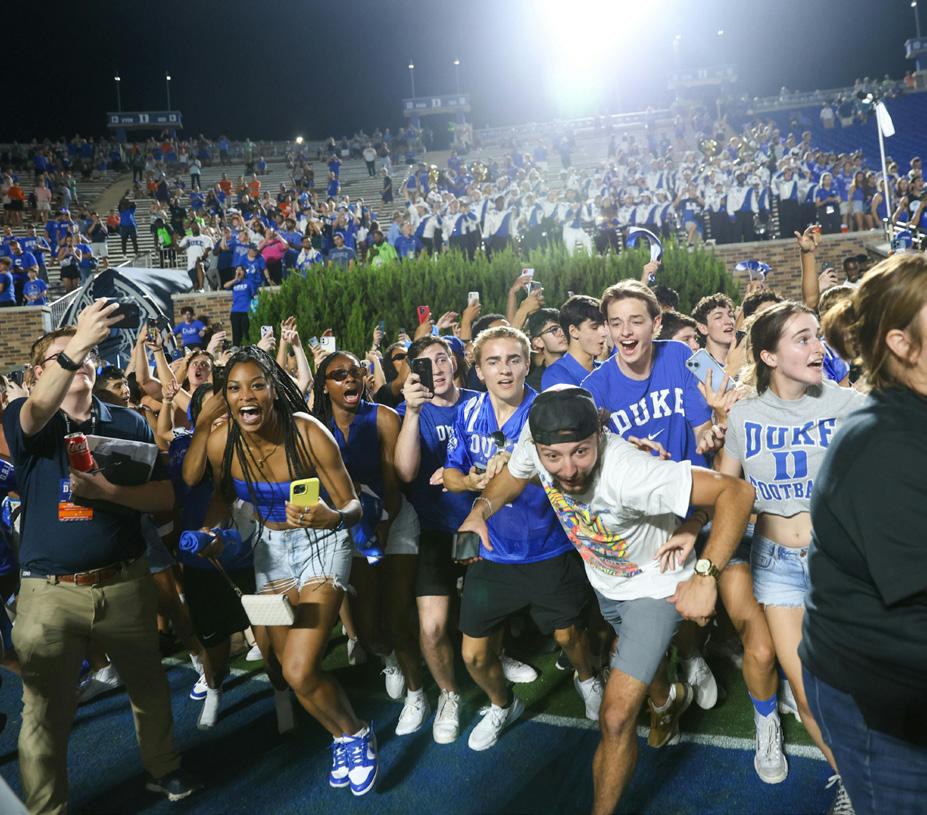
Less than a minute was left. A historic victory against then-No. 9 Clemson was just clinched for Duke. Thousands of fans were waiting on the sidelines at Wallace Wade Stadium for the first time since 2013, ready to burst onto Brooks Field.
As fireworks exploded above the cheers of the crowd, students leapt over the ledge and hoisted themselves onto each other’s shoulders. Parents carried their children down into the action, and football players found themselves surrounded by a sea of cameras, smiles and applause.
Photographs will always show that there was a crowd of thousands that rushed the field Monday. But thoughts, emotions, the feel of those photographs — those are harder to capture.
“I have goosebumps just remembering it,” said sophomore Gabriel Reis. “We were chanting and expecting for the moment we would be allowed to rush, and the moment we did was pure adrenaline.”
“It was honestly one of the best moments at Duke so far,” said sophomore Thomas Dean. “It [was] just a sea of people. But everyone was just so excited and celebrating it together. It felt like everyone on the field was friends.”
“I just started running, and I just didn’t want to fall,” said sophomore Ben Childress. “Nobody really knew what was happening, because nobody could believe that we had just beat Clemson.”
Childress, whose high school best friend, sophomore kicker Todd Pelino, scored two field goals and two extra points during Monday’s game, recalled Pelino telling him that it was “the first game he’s ever been nervous for.”
“We took a whole bunch of photos, everyone was cheering, every few seconds you would see a player walk by and congratulate them,” said junior Caitlin Dougherty. “Because as much as it was our moment, I can’t even imagine what it was like as their moment.”
By Andrew Bae, Holly Keegan and Adway Wadekar September 6, 2023
Jerry Zou
DUKE KICKS OFF CENTENNIAL CELEBRATIONS
By Jazper Lu and Mia Penner
January 9, 2024
Thousands of Duke community members packed into Cameron Indoor Stadium Tuesday for Duke’s Centennial Celebration Kickoff, marking the first of a series of events celebrating the 100th anniversary of the Duke endowment’s establishment.
The event was hosted by actor and comedian Ken Jeong, Trinity ‘90, Lisa Borders, former president of the Women’s National Basketball Association and Trinity ‘79, and former men’s basketball coach Mike Krzyzewski. It also featured performances from student dance groups and appearances by select Duke community members.
With giant video screens displaying “1924” and “2024” in the background, the show began with short performances from On Tap, Nakisai, Dhamaka, Street Med, Duke Chinese Dance and Devils en Pointe. A succession of videos and speakers followed, highlighting various stories that celebrated many of Duke’s achievements.
Jeong took the stage first, crediting Duke with his decision to become an actor after taking an introductory acting course his sophomore year.
“Being at Duke gives you opportunities you never thought you’d have,” he said. “It honestly made me who I am. Duke is home.”
Jeong joked that another “Ken-tennial” celebration would be held next week, earning laughter from the crowd. After a short introductory video showing shots of Duke throughout its history, Borders reminded the crowd that “we are all part of Duke’s future.”
“Duke is a place where each of us has the opportunity to make our own mark to be ourselves and to make an impact,” she said. “... Making an impact doesn’t always mean making a splash, like a lot of impacts, it starts out small.”
Borders proceeded to show a short video highlighting the stories of senior Isaiah Hamilton, president of Duke Student Government, and Keanu Valibia, a master’s student studying public policy and environmental management. Hamilton and Valibia then shared the stage with Borders.
Hamilton spoke about his and his classmates’ experiences navigating the uncertainty of the COVID-19 pandemic.
‘Being at Duke gives you opportunities you never thought you’d have. It honestly made me who I am. Duke is home.’
By Abby Spiller September 14, 2023

“It was the ability that we had to learn to embrace that unknown and persevere through those tough times that I think is going to be surmounting any other lesson,” he said.
A second video featured Anna Gassman-Pines, director of graduate studies in the Sanford School of Public Policy and professor of psychology and neuroscience, along with Felipe De Brigard, Fuchsberg-Levine Family associate professor of philosophy. After they both joined Borders on the stage, Gassman-Pines and Brigard spoke about how Duke’s fostering of interdisciplinary scholarship helped further their research.
“I’m a philosophy professor that works in the psychology and the clunky neuroscience of memory and forgiveness with a research project that has potential feedback for public policy,” Brigard said. “I need a place like Duke because I need a place that values and fosters both the philosophy and the science.”
The next video subject and stage guest was Shree Bose, School of Medicine ‘23. Now pursuing her medical residency at the University of Chicago, Bose stated that Duke remains a large part of her identity.
“Duke is where you grow up,” she said. “It’s where you find your best friends. It’s where you find your mentors. It’s where you figure out what matters to you, what really makes you who you are.”
Another video then recounted the journey of director of residential dining Barbara Stokes, who first came to Duke as an undergraduate student and held a work-study job as an egg cook. Stokes spoke to the crowd about developing her employees personally and professionally by listening to and understanding their “concerns and needs.”
The final video featured the Sinnamon Family, whose two-yearold son Easton was the first person to receive a combination heart transplant and allogeneic processed thymus tissue implantation. The video chronicled how Joseph Turek, chief of pediatric cardiac surgery and Mary Louise Markert, professor emeritus of pediatrics, collaborated to pioneer the historic operation at Duke University Hospital.
Following a brief choir and dance performance, the Sinnamon family was brought out to a standing ovation. Jeong then brought out President Vincent Price, who said he was “incredibly moved” by the speakers before him.
“Our centennial is a gift to us,” he said. “It’s a chance to pause and reflect on our past. It’s an opportunity to appreciate the present and to plan for the future.”
Krzyzewski, the final speaker, spoke about the values that embody Duke, telling a story about a play made by former Duke men’s basketball player Grayson Allen in the 2015 men’s basketball championship game. Krzyzewski described how, despite being the eighth player on the roster, Allen dared to dive for a loose ball and draw a foul in front of millions of people. Allen then screamed, “Let’s go!”, shifting the momentum in Duke’s favor and helping secure the team’s most recent national championship.
“No one knew that we were going to be as good as we were,” Krzyzewski said. “The thing is, they have no clue about how much better we’re going to be.”
‘Wealth is ubiquitous’
Students react to NYT article naming Duke as among ‘least economically diverse’ elite colleges
Beyond the numbers, some students believe the socioeconomic divide is most evident in the social scene.
few affordable on-campus dining options, further limits food choices for low-income students.
Following a Sept. 7 article in the New York Times Magazine that described Duke as falling substantially behind peer universities in socioeconomic diversity, several students resoundingly agreed with the article’s findings but remained uncertain on whether it will push the University to increase socioeconomic diversity in future student bodies.
The article, which described Duke as the “exception to the exception” among top-ranked universities, cited a July research study published by Opportunity Insights, a nonprofit organization run by Harvard economist Raj Chetty, which stated that only 12% of Duke students in “recent years” were Pell Grant eligible.
President Vincent Price wrote in a message responding to the article that 17% of the Class of 2027 is Pell Grant-eligible, and that the University remains “firmly committed to building on our recent recruitment efforts.”
However, sophomore Caroline Joo said that although Duke promotes racial and ethnic diversity, she has yet to meet many students who are on financial aid. Even among students she knows who are on financial aid, Joo does not believe that she has met anyone in the bottom 50th percentile of household income.
“I definitely agree with the sentiment that wealth is ubiquitous on Duke’s campus,” sophomore Carly Pyles said. “As a student and child of a faculty member at a private high school in Brooklyn, I thought I had already been exposed to the highest levels of affluence. In my opinion, Duke is at a whole new level.”
For junior Anjali Kapadia, socioeconomic disparities on campus are most apparent across dominant extracurricular activities, including Greek Life, club sports and other selective groups where students are required to pay dues to participate. These barriers to entry, she said, emphasize the lack of accessibility on campus for low-income students.
Junior Victoria Ely, a first-generation student, pointed out a dilemma many first-generation students at Duke feel upon joining the campus community.
“You want to be involved, and you want to feel like a normal Duke student, but there are just so many obstacles to doing so,” she said. “Yes, I got in. But what happens after?”
In navigating her time at Duke, Ely said that the Duke Low-Income First-Generation Engagement office has helped positively shape her experience. Older Duke LIFE students gave Ely and other incoming Duke LIFE students tips on how to navigate Duke’s expensive social life, which they would have otherwise not known.
Kapadia and Joo said, aside from Duke LIFE, they are unaware of the resources available for low-income students at Duke.
“Even just the very small things that happen, I just feel that, not necessarily personal attacks to low-income students, but you’re really just trying to make it so much harder,” Ely said. She added that the replacement of Panda Express, which students viewed as one of the
Despite a desire to see change, Kapadia and Joo emphasized the concept of Duke as a “business” that seeks to maximize its profits. They are unsure of whether the administration is both willing and able to truly increase socioeconomic diversity.
“One thing the Times article said is how if [Duke] increased to 25% of Pell Grant recipients, [Duke] would end up losing around $10 million per year in tuition money,” Kapadia said.
Despite optimism from University administration, Kapadia said she is not surprised that progress continues to be stagnant. Students must make persistent efforts to ensure that the administration actually keeps their word, she added.
Ely noted that after the release of the New York Times Magazine’s article, she felt like the focus shifted to the “optics of admitting more lower-class students.” However, she notes that there “also has to be a focus on what you do [to help] those students.”
“We are at the worst of the elite, but in [the] aggregate, everyone needs to be better … I think what Duke could take this as is a chance to be the best,” Kapadia said. “I think we will all look back as a university and be like, ‘Wow, we should be proud that we took this step that was needed long ago, but at least we were the ones to be at the forefront of change.’”
Holly Keegan contributed reporting.
Jerry Zou
By Staff Reports
2024-2025 Junior Year
The Class of 2025’s senior year saw a high-stakes presidential election, a monumental basketball season and the beginning of sweeping changes in higher education.
The academic year began in high spirits. In celebration of Duke’s Centennial, singer-songwriter Ed Sheeran gave a rainy Founder’s Day performance to students and alumni in Wallace Wade stadium. Sheeran’s “Castle on a Hill” might have been an omen of the good to come, as the next day, Duke football rallied to a nail-biting last-minute win over archrival North Carolina.
As the election season intensified throughout October, North Carolina emerged as one of the most contested battleground states. Duke saw prominent political figures on campus as eyes turned to the college-aged voter bloc, with then-Democratic vice presidential nominee Tim Walz rallying students in the Bryan Center and former Republican congresswoman Liz Cheney announcing in Page Auditorium that she would vote for Democratic presidential nominee Kamala Harris.
The election was ultimately called in favor of President Donald Trump, sparking mixed reactions across campus. Just days later, Durhamites who voted third party took to the streets to speak against the two-party system, with many pointing to the ongoing Israel-Hamas war as a key factor in their voting decision.
The Israel-Hamas war remained a subject of activism on campus. Exactly one year after the Oct. 7, 2023, attack on southern Israel by Hamas militants, pro-Palestinian and pro-Israel student groups organized vigils and demonstrations calling for the end of the “genocide” and the release of hostages, respectively.
Following the uptick in student activism and rising political polarization on campus, Duke faculty organized to petition the University to adopt a stance of institutional neutrality and safeguard freedom of speech. As of April 18, 140 faculty members have signed the petition, although Duke has not yet publicly acknowledged it. The Chronicle’s April 2024 inaugural faculty survey found that over 60% of faculty respondents expressed support for the University to officially commit itself to institutional neutrality.
Despite the football season coming to a close and the basketball season just beginning, Duke still managed to make headlines in the sports world. At the end of 2024, Crystal Mangum admitted that she fabricated the infamous 2006 Duke lacrosse scandal in which she falsely accused students David Evans, Collin Finnerty and Reade Seligmann of rape.
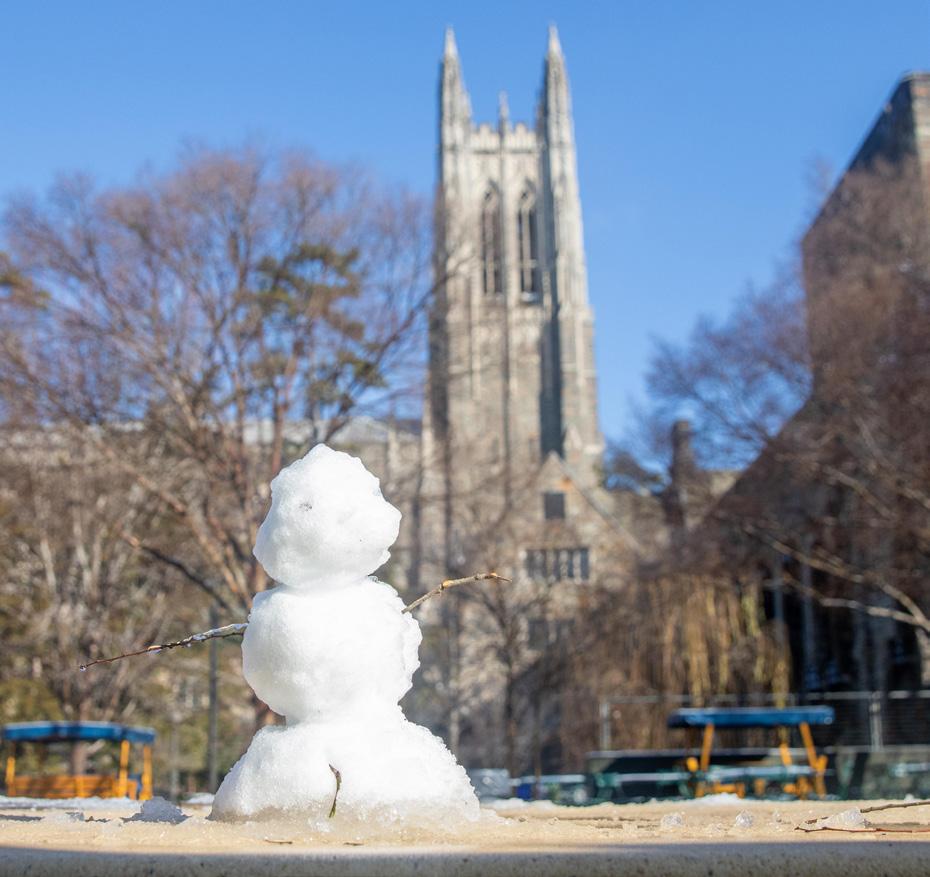
The start of the spring semester came with something Durham had not experienced in more than 1,000 days — snow! Duke campus was coated in white, turning Duke Gardens and Abele Quad into playgrounds for sledding and snowman-building.
That was not the only snow that Dukies saw. Another major snowstorm hit just as the Cameron Crazies were set to participate in the Race to the Secret Spots in hopes of securing a white or flex tent in K-Ville. The race proceeded despite the conditions, although Duke enacted its severe weather and emergency conditions policy shortly after the race’s end.
Tenting interest was at an all-time high, with record numbers of students packing Cameron Indoor Stadium to take the tenting entry exam. For those who earned a spot, their “locking-in” paid off, as the Blue Devils thrashed the Tar Heels 87-70.
Both men’s and women’s basketball went on to become ACC champions. Duke men’s basketball went deep into the NCAA Tournament, advancing to the Final Four after winning the East Region. However, the team was defeated in a heartbreaking lastminute comeback from Houston. Women’s basketball fell in the Elite Eight.
Trump took office in January, and subsequently initiated attacks on higher education institutions. The administration announced a slew of federal funding cuts to universities in February, including slashed funding from the National Institutes of Health, National Science Foundation and the elimination of the United States Agency for International Development. Duke received around $194 million in funding from the NIH alone, and professors who received such funding said that the policies will have a “chilling effect” on academia for years to come.
Campus was fraught with uncertainty regarding the impact of Trump’s executive orders, which also included attacks on diversity, equity and inclusion and academic freedom.
That uncertainty began to materialize in March. Duke announced its first round of cost-cutting measures and a sweeping review of administrative efficiency March 13, which included a staff hiring freeze and the suspension of capital spending. A few weeks later, the Duke Center for International Development, which relied extensively on USAID funding, shuttered its doors, accelerating the University’s costreduction efforts. Administrators told The Chronicle that Duke is planning for a future “with a very different funding model [than] in the past.”
International students across the United States also felt the impact of the federal government’s crackdown. The Trump administration revoked visas for students involved in proPalestinian activism and activities that “run counter” to U.S. interests. The administration also threatened to implement a travel ban, prompting concerns from Duke’s international community.
The visas of three Duke community members — two Duke graduate students and one alumnus on Optional Practical Training — were terminated in April. They were, however, returned to active
‘First time I’ve ever seen snow’
By Michael Austin January 11, 2025
Scenes from a wintry weekend at Duke
“Work hard, play hard” has long been a mantra of the Duke student body. But this weekend, during Durham’s first measurable snow in over 1,000 days, it was all play.
Though Friday’s blanket didn’t quite amount to the anticipated three inches, it was the first time many Blue Devils saw their Gothic campus dressed in white.
“It’s somehow prettier in the snow,” said sophomore Oscar Twining.
East Campus, Friday 6 p.m.
Dozens of students filed out of Brodie Recreation Center, which had been shuttered early in anticipation of the winter weather. Students skipped on the sidewalks adorned in thin white dust,
their subtle imprints soon hidden by the falling snow. Any moods dampened by a truncated workout were lifted by the crystals swirling through the air.
Duke Chapel, 6:30 p.m.
Duke’s hallmark stretches of luscious grass now gleamed white.
It was not pristine, though.
Hundreds of footprints had already been left behind by passerby Blue Devils. Muddy paths lead up to fat spheres of snow, where undergraduates have begun to build a student body of snowmen.
Those who weren’t sprawled out making snow angels or chucking snowballs posed before Duke’s iconic stone architecture.
“I really like the way that it looks on the rooftops,” said sophomore Alexis Ashley of the snow. S ee SNOW on P age 15
status nearly a month later, after the Trump administration reversed its decision to terminate legal status for many international students.
Duke has issued travel guidance to its international students, which remains unchanged even after the visa reactivation. The guidance included avoiding non-essential travel outside the country and a warning that students should “be mindful of their digital footprint and recognize its potential impact on their immigration status.”
On April 30, Duke drastically escalated its cost-cutting measures, announcing that it would offer eligible employees three-year buyouts, the first among its peers to do so. University administrators said the move was done in an effort to cut 10% of Duke’s total expense base. The rollout of the offers is set to begin May 7.
Over the last academic year, the Duke community mourned the loss of some of its members. The community lost graduate student Jiani Yu in December and undergraduate student Ian Hyun Kim in May.
Joel Fleishman, founder of the Sanford School of Public Policy and namesake of Duke’s Fleishman House, died in September. Fleishman, who also led Duke’s first capital campaign, is remembered as “a model for how to live life.” John Feinstein, sports journalism star and former sports editor of The Chronicle, died in March.
Professor of Romance Studies Fredric Jameson died in September; Professor of Physics Tom Mehen died in December and Sayan Mukherjee, research professor of statistical science, died in March.
The University lost several professors emeriti including Professor Emeritus of Sociology Edward Tiryakian; Orrin Pilkey, James B. Duke professor emeritus of geology; Michèle Longino, professor emerita of romance studies; Richard Hays, George Washington Ivey distinguished professor emeritus of New Testament; Gerald Wilson, senior associate dean emeritus of the Trinity College of Arts & Sciences; Valentin-Yves Mudimbe, Newman Ivey White distinguished professor emeritus of literature; and Jesse Cavenar, professor emeritus of psychiatry and behavioral sciences.
As the year drew to a close, students leaders prepared to shape the University’s future. In the Duke Student Government presidential elections, junior Tara Singh was chosen to succeed senior Heather Raslan. Senior Jax Nalley was selected as the Undergraduate Young Trustee and Austin Beason was selected to be the Graduate/Professional Young Trustee.
The year ended with a last day of classes concert headlined by “Unwritten” singer Natasha Bedingfield and supported by artists Penelope Road and Rich The Kid.
Amy Zhang
CASTLE ON THE HILL, BEATING CHAPEL HILL
Scenes from Founders’ Day, Homecoming celebrations
By Samanyu Gangappa and Lucas Lin September 29, 2024
From Ed Sheeran’s Friday night performance in Wallace Wade Stadium, where he called for a Duke football victory, to a nail-biting final minute win against North Carolina Saturday, the University community had a lot to celebrate this past weekend.
Whether it was braving the rain during the concert, rushing the field after Duke’s historic comeback or attending the Chapel service, the Duke community rejoiced in a celebration of the University — past, present and future — during the Founders’ Day and Homecoming Weekend events. Take a look at some of the scenes from the festivities.
Founders’ Day concert
Thousands of students and alumni streamed into a packed Wallace Wade Stadium at 6 p.m. ahead of Sheeran’s highlyanticipated performance. Long lines of eager students formed as animated chatter arose from the stadium.
First-year Bomin Kim was surprised to see Sheeran at Duke. With midterms approaching, he felt the concert was a muchneeded “stress-reliever.”
“It shows that [the University] really care[s] about the students, and that they’re willing to put so much for the students here,” he said of the concert.
The event was hosted by stand-up comedian and actress Retta, Trinity ’92, and was opened with a performance by 9th Wonder, hip-hop producer and lecturing fellow in the department of African & African American studies, and producer Give Em Soul. The DJ set was accompanied by a video slideshow highlighting pivotal moments and figures from Duke’s past 100 years.
Retta then introduced President Vincent Price, who defined the Centennial as celebrating the “small moments, iconic moments, the Duke moments.” A short video followed, similarly revisiting the University’s most iconic moments, from its founding to Nobel Prize achievements and NCAA victories.
“That is what this Centennial celebration is all about. We look back to honor the successes from the past. We identify ways to grow. We unite around a sense of deeply held purpose, and we act in service to each other, to our campus, to our city and to the entire world,” Price said. “What a journey the last 100 years have been, and what a story the next 100 years will be.”
The night sky was then illuminated by a drone show displaying “Let’s Go Duke,” “Forever Duke” as well as images of the Blue Devil and the Duke Chapel in shining lights.
‘A Once-in-a-Century Musical Performance’
Branded as “A Once-in-a-Century Musical Performance,” the much-anticipated event peaked with a high-energy performance by Sheeran.
However, not everyone got to see the singer up close. Many students and employees with teal tickets were seated behind the stage, only able to watch the night’s performance through the stadium’s video board. The stage was built on the sidelines to preserve the field ahead of the following day’s homecoming football matchup.
Anabel Howery
Sophomores Jennifer Wang and Vickie Kim were turned away at the gate to the student section in front of the stage because their tickets were teal instead of pink or purple. They described themselves as “spectators to the spectators,” only able to view the performance on the stadium’s video board from the remote side of the stage.
“It’s very FOMO-y to see everyone having such a fun time with the lights flashing, and then all you see is the side of the stage,” Kim said.
Sheeran performed as a one-man band, sampling sounds and syncing beats using loop stations on the spot. Wallace Wade stadium lit up with thousands of cell phone lights during the chorus of “Perfect.” The 90-minute set closed with an encore performance of “Bad Habits,” which was met with applause from all corners of the stadium.
Despite brief showers of rain, the charged atmosphere showed no signs of waning. According to first-year Bernard Liang, the weather only made the live experience better.
“The rain came during a sad song with perfect timing and the rain just made it so much more fun,” he said.
For junior Angelli Garibaldi, the experience was a dream come true, which she said was “like [her] whole childhood coming to life.”
For others, it was the sense of nostalgia and the company of friends that defined the night. Despite not securing the best seats, junior Catherine Pyne believed that being closer to the stage would not have made the experience the same if it meant sitting without her friends.
“I’ve met some of my greatest friends here. I know I’m going to keep in touch with them for the rest of my life,” she said.
A tailgate to remember
Ahead of kickoff against North Carolina, the Blue Devil community rallied for a tailgate in K-Ville, featuring a big screen monitor, a DJ, free food from Quad Councils and tents with games.
“It’s pretty hype. It looks like everyone’s having a great time, and it’s just getting started,” said first-year Raahim
Hashmi. Although it wasn’t his first football game and tailgate, he expected “a whole different level of energy.”
Eric Savage, Trinity ’92, flew from India to attend the concert, meet old friends and cheer on the Blue Devils.
“As a student, you’re there with all your friends and you’re pre-gaming, and it’s very social,” Savage said. “As an alumni, it’s just a bit different, but still great.”
Duke parents also joined the festivities alongside their children. For Dan Savitt, a Pennsylvania State University alumnus, he was excited to see football head coach Manny Diaz in his new position at Duke.
Sweet victory
Students rushed the field and fireworks erupted at Wallace Wade after the Blue Devils snatched a 21-20 victory in a suspenseful second half comeback. While UNC fans left Wallace Wade dejected, Duke fans left in shouts of victory.
“First it was nauseating,” said senior Eliza Moore of the beginning of the game. “I was a little scared at the half, I won’t lie, but our team really pulled it together.”
Her friend, senior Kennedy Rouser, agreed, saying she “knew we would make a comeback.”
They recounted how they stormed the field, speedwalking with other students from Devils Deck to the field at the 2-minute mark. They expressed gratitude that what may have been their last time storming the field was memorable and energetic.
“I’ve never felt more connected to the rest of Duke than storming that field,” Rouser said.
Chapel services
The University hosted a service of worship at the Duke Chapel on Sunday morning, featuring speeches by Price and sermons from religious leaders on campus.
The event started at 11 a.m. and included prayers delivered in Hindi, Spanish, Mandarin and Korean, as well as a selection of hymns.
“I love that they talked about how in the Pentecostal day, they heard God in many different languages,” Karla Pena Guerra, a doctoral candidate, said of the service. She said that hearing part of the service in Spanish made her feel “more connected.”
For alumni, the event brought back poignant memories from decades past.
“I saw Terry Sanford, right there in front of the James B. Duke statue, talk and negotiate with student strikers who had closed the library in [19]69,” James Johnson, Graduate School ’74 said, pointing with his walking stick to the statue. “He walked out there by himself with a bullhorn, nobody else, no security, no anything. Spent two hours talking with them.”
Johnson said the service brought back old memories, including of friends being married in the Chapel, seeing former UNC basketball head coach Dean Smith attend services, watching theater troupes deliver performances and listening to various preachers over the years.
‘Hopefully tomorrow will be a better day’ Duke, Durham react to the 2024 election results
By Sarah Diaz November 10, 2024
For Zander Pitrus, a junior and president of Duke College Republicans, President-elect Donald Trump’s victory marked a moment forcing Democrats to recognize the “elitism” that runs through their party.
“Working-class people are so tired of the establishment and the elitism, they want somebody who’s going to stand up for their rights, for their ability to provide for themselves,” he said.
The conclusion of the 2024 presidential election marked the end of a heated campaign cycle defined by the unusual rise of Vice President Kamala Harris to the top of the Democratic ticket, a surge in political violence and a slew of legal cases facing the Republican candidate.
With the electoral votes fully distributed, Trump secured 312 in comparison to Harris’ 226 — capturing all seven swing states. As of 11 p.m. Sunday, he also led the popular vote 50.4% to 48%.
However, in contrast to Pitrus’ excitement, Trump’s decisive victory was not viewed with the same energy by many other Duke students and Durham residents — several of whom expressed worries for their rights under a MAGA presidency.
First-year Christopher Tarro, while nervous about Trump winning the election, recognized that the results would likely not substantially alter his daily life. He explained how he felt “blessed” that his “rights aren’t going to be abridged as a man, no matter who wins this election.” Still, he acknowledged that many women at the University might not feel that same sense of security.
Ethan Cho
By Staff Reports
2025-2026 Senior Year
During its senior year, the Class of 2026 witnessed a year of cost-cutting in response to federal policy changes, historic wins for the University’s sports teams and the rise of artificial intelligence.
Before students returned to campus, the Trump administration began to target Duke. In May, the federal government terminated $129 million in funding dedicated to HIV vaccine development led by the University. Then, in July, the Trump administration froze $108 million in National Institutes of Health funding to Duke after two federal agencies launched investigations into the University for alleged racial discrimination and violations of the Civil Rights Act.
Alongside pressure from the federal government, Duke spent the summer initiating an array of cost-cutting measures that had been announced in March of the Class of 2026’s junior year. Nearly 600 staff members departed the University through a voluntary separation incentive program, with involuntary layoffs soon following.
Campus started to feel different in the fall as the full effects of Duke’s cost-cutting program — which produced $229 million in savings for the fiscal year 2026 budget — started to take root. Subject librarians were quietly laid off and graduate student programs were shuttered.
The academic year also began with a new curriculum for the Class of 2029 in the Trinity College of Arts & Sciences, which drew mixed reactions from first-years. The new class had to participate in either the FOCUS program or join a Constellation, a set of three courses exploring an interdisciplinary topic over the course of the academic year.
In November, Durham held its municipal elections, in which Mayor Leonardo Williams and Councilmember Chelsea Cook were reelected while newcomers Matt Kopac and Shanetta Burris defeated incumbents DeDreanna Freeman and Mark-Anthony Middleton, respectively, for spots on the council.
The impact of the federal government’s policy changes went far beyond higher education, reaching Duke’s international and immigrant community members. As international students and faculty faced visa delays, beloved C1 driver Luis Juaréz lost his immigration status, had it restored and then lost it again, prohibiting him from driving his “party bus” across campus. Margoth Erazo, a former University housekeeper, also lost her immigration status and was forced to stop working. Duke Kunshan University, the University’s flagship campus in China, also came under scrutiny, with its future unclear.
Right before Thanksgiving, Border Patrol agents entered Durham, sparking fear among community members and encouraging some students to protest monthly to call on Duke to become a “Fourth Amendment Campus.” In a spring referendum, over 90% of students endorsed the demand.
Cameron Crazies break
By Abby DiSalvo February 18, 2026
The Cameron Crazies sat on the wooden bleachers of Section 17, eying the familiar championship banners hanging from the rafters. Over the course of their Tuesday evening, they would add another title to Duke basketball’s long list of accolades — not a national championship, but a Guinness World Record.
Seven hundred and eleven students crowded Cameron Indoor Stadium to participate in the largest game of knockout basketball officially recorded. After 158 minutes and five seconds, they beat the decade-old mark set by the Dallas Mavericks in 2015.
Four Duke basketball players — Nikolas Khamenia, Maliq Brown, Taina Mair and Delaney Thomas — kicked off the action by demonstrating the rules of the classic backyard game. Competitors line up at a free-throw line, with the first two holding basketballs. The first player shoots, quickly followed by the second. If the second player makes a basket before the first, the
The new semester kicked off with a series of snow days after winter weather swept through North Carolina. Students fanned out across campus to go sledding in the Duke Gardens and partake in frosty fun. As the campus warmed up, community members returned to the Gardens to see the iconic cherry blossoms, breaking visitation records.
In the athletics world, Duke saw many successes during the 2025-26 season. The academic year marked the first in which an ACC school won the men’s basketball, women’s basketball and football conference championships in a single year. Men’s fencing also won the ACC Championship, its third of all time.
Hundreds of students camped out for five weeks in Kryzyzewskiville to see men’s basketball take on North Carolina in Cameron Indoor Stadium. Cameron Crazies broke the Guinness World Record for the largest knockout game, with 711 participants. The long wait in tents was worth it as the Blue Devils got revenge against their rivals after February’s loss in a buzzer-beater upset to the Tarheels at the Dean E. Smith Center.
Both men’s and women’s basketball went to the Elite Eight in their respective NCAA tournaments this year, with each losing heartbreakers to UConn and UCLA, respectively. Football took home the Tony the Tiger Sun Bowl trophy after defeating Arizona State, and head coach Manny Diaz earned a contract extension through 2031.
Two years after the Oct. 7, 2023, Hamas attack on southern Israel, activism around the war quieted down. However, Duke made national headlines for two controversies in this area. In September, comedian Jerry Seinfeld compared the “Free Palestine” movement to the Ku Klux Klan in a surprise appearance on campus. In the spring, Student Affairs initially froze the status of Duke’s Students for Justice in Palestine chapter, then restored it following an investigation.
The University tried to capitalize on the expansion of artificial intelligence this year, launching a Provost’s Initiative on AI over the summer that led to a March report discussing how the University can lead on AI. Duke granted all undergraduates unlimited free access to ChatGPT-4o and even developed its own AI model, DukeGPT. Professors found increasingly innovative ways to use AI in the classroom, while the University’s libraries looked to protect their collections against developers.
As the federal government cracked down on diversity, equity and inclusion initiatives across America, particularly in higher education, Duke took notice. It announced a new approach, known as “inclusive excellence.” As part of this transition, the University made changes to key programs, including opening Baldwin Scholars to male applicants and
halting the Black Student Alliance Invitational and Latino Student Recruitment Week for admitted students.
Duke slipped to No. 7 in the U.S. News and World Report’s Best National Colleges Ranking. During the admissions cycle, the University saw a 7% decrease in Early Decision applicants and accepted 13.1%. In the Regular Decision round, Duke received a record high 55,776 applications, admitting 3.7%, resulting in an overall acceptance rate of 4.7% for the Class of 2030.
During the March primary elections, North Carolina voters set up a U.S. Senate race to replace retiring Republican Sen. Thom Tillis, choosing former Democratic Governor Roy Cooper and Republican Michael Whatley as the nominees. Closer to home, Durham Democratic primary voters narrowly renominated incumbent Rep. Valerie Foushee after a heated challenge from Durham County Commissioner Nida Allam.
Over the course of the year, several new administrators took the helm, including Deborah Rutter, vice provost for the arts; Mary Frances Luce, dean of the Fuqua School of Business; David Zaas, CEO of the Duke University Health System; and JR DeShazo, incoming Joel L. Fleishman dean of the Sanford School of Public Policy. Departing Duke were Dean of Undergraduate Admissions Christoph Guttentag; Colin Duckett, executive vice dean for basic and preclinical science; Ed Balleisen, senior vice provost for interdisciplinary programs and initiatives; and Greg Victory, assistant vice president of student affairs and Fannie Mitchell executive director of the Career Center.
The Duke community also lost valued members, including junior Olivia Ayiku, senior Abigail Yohannes and Bradley Simmons, instructor of music and director of the Duke Djembe and Afro-Cuban Ensembles.
The University mourned a number of emerita community members this year, including two deans emerita of the School of Nursing, Marion Broome and Mary Champagne. Others who died this year include Sheridan Johns, professor emeritus of political science; George Christie, James B. Duke professor emeritus of law; Daniel Kaplan, former assistant professor of medicine; Robert Sawyer, founding executive director of the Duke Talent Identification Program; and former Professor of Medicine Robert “Jess” Peter.
In this year’s student elections, junior Angela Chen was chosen to succeed senior Tara Singh as Duke Student Government president. Senior Kaitlyn Williams was selected as the undergraduate Young Trustee.
On the last day of classes, students celebrated with a live concert headlined by Quavo and featuring performances by Slayyyter and WHATMORE.
first player is eliminated. Otherwise, the first player passes to the next and rejoins the back of the line. Play continues until only one person remains. Thomas won the demonstration after a long duel with Khamenia, earning loud approval from the Crazies.
The eager participants then formed a line, snaking single-file up the stairs on the south side of Cameron Indoor Stadium before wrapping through the concourse and back down to the entrance on the north side of the court. Patrick Ngongba II took the game’s first shot at 7:07 p.m., launching the record attempt into action.
It took over an hour to complete the first round. Participants passed the time by munching on pizza, collecting swag and answering trivia for cash prizes. Hundreds donned “Certified Crazies” shirts and orange sweatbands provided by the Dollar Shave Club, shuffling across the court in sneakers, loafers, Crocs, Birkenstocks and the rare pair of basketball shoes. In order to speed up the game, any player that shot an airball was instantly eliminated.
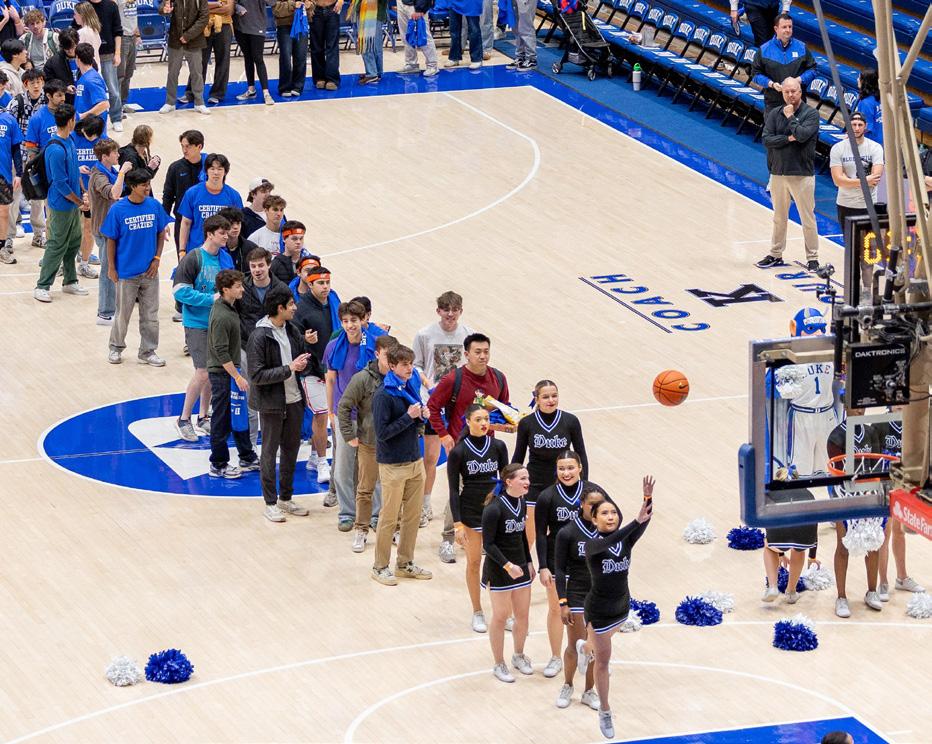
Andy Jiang
Nearly 600 staff to depart Duke under voluntary program, layoffs to follow
By Ana Despa July 25, 2025
Nearly 600 staff members are leaving Duke through the University’s voluntary separation incentive program, with involuntary layoffs scheduled to begin in August.
The announcement came in a Friday morning email to faculty and staff from Executive Vice President Daniel Ennis, Provost Alec Gallimore and Mary Klotman, executive vice president for health affairs. The sweeping personnel cuts are expected to significantly reshape University operations, with some departments more heavily affected than others.
Duke administration has not responded to The Chronicle’s requests for comment on the breakdown of departures by department. However, The Chronicle has received multiple reports of broad cuts across the libraries, student affairs, Office of Information Technology and communications.
The VSIP targeted staff across a range of seniority levels and tenures, The Chronicle confirmed. Several of those departing have publicly announced departures on LinkedIn, including longserving and well-known members of the Duke community.
“We are sad to see these valued colleagues and members of our community leave Duke, and we thank them for their many contributions and dedicated service,” the administrators wrote.
The program was first announced April 30, with offers extended in early May. Staff receiving the offers had 45 days to accept or decline, during which they were largely prohibited from discussing the terms or their decisions with anyone outside their family or legal counsel. Legal support could be sought but
was not provided by Duke and much of the severance package was covered by a non-disclosure agreement, multiple sources told The Chronicle.
A total of 599 staff accepted a VSIP offer, and many are leaving the University this week.
Under the VSIP, positions eliminated through the program cannot be reinstated by their departments or units for up to three years. This restriction is compounded by a staff hiring freeze, limiting the ability of departments to replace lost labor. The Chronicle confirmed reports of remaining staff being asked to assume multiple roles and responsibilities to compensate for departing colleagues.
In addition to the staff departures, about 250 eligible faculty members have been offered retirement incentives under a separate program.
According to the email, all schools and units are now reassessing their budgets. Employees impacted by the upcoming reduction-in-force will be contacted by their managers between Aug. 5 and 19.
“We recognize and are sorry for the impact these changes will have on our colleagues,” the email said. It added that because of the “high number” of VSIP participants, fewer employees will be affected by the RIF, although the email did not specify a target number, and administrators did not respond to The Chronicle’s request for that information.
The email attributed the need for cuts across both VSIP and layoffs to “dramatically lower research support and increased tax rates on [the] endowment.” The Chronicle previously reported significant research funding losses across the School of Medicine
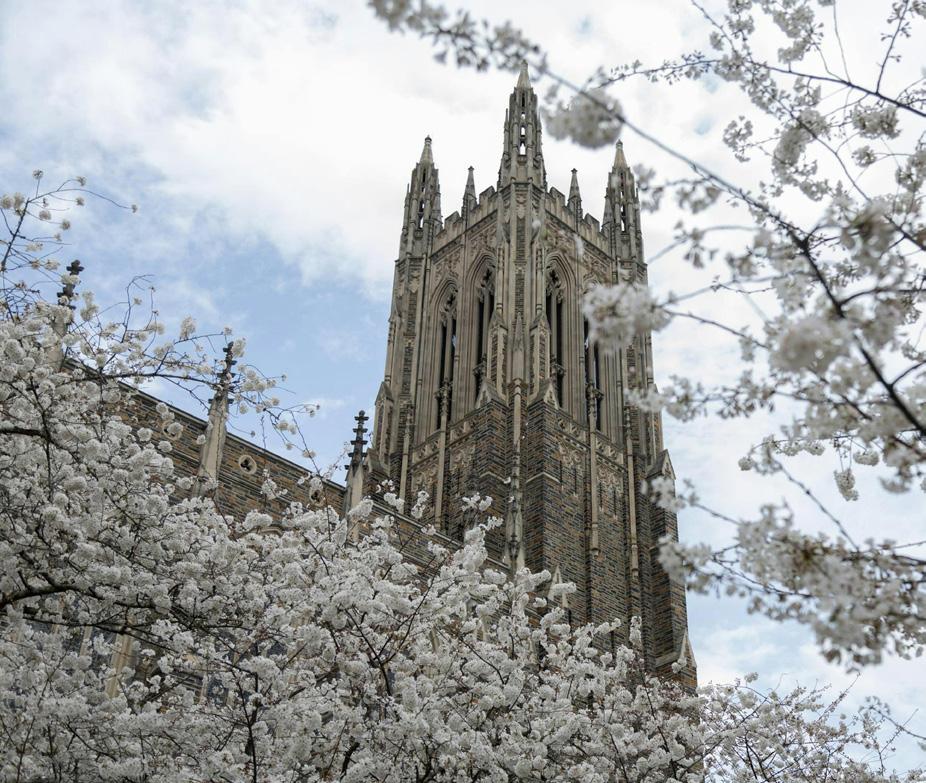
since the Trump administration took office in January. However, according to Chris Simmons, vice president for government relations, Duke is expected to remain in the 1.4% endowment tax bracket under the “One Big Beautiful Bill Act,” which is the rate it currently pays.
The email further noted that for staff who are funded by research grants, “reductions in force occur regularly through the year based on availability of research funding.”
‘Everyone needs to embrace it’
Professors use AI to facilitate teaching, aid student learning
By Dylan Halper
January 26, 2026
Higher education has become awash in debates over how to regulate students’ use of generative artificial intelligence tools since the launch of OpenAI’s ChatGPT in 2022. However, these conversations often overlook professors’ use of AI to aid with their teaching or to create assignments for their students.
Over the summer, Duke debuted a Provost’s Initiative on AI, which included a partnership with OpenAI to provide all undergraduate students and some faculty, staff and graduate and professional students free unlimited access to ChatGPT’s default model. Since then, professors have started to get creative about how to bring generative AI into their classrooms.
“It’s just evolving so fast that everyone needs to embrace it on some level,” Lecturer of Biology Lindsay Saunders said.
AI assignments
Eric Green, associate professor of the practice of global health, noticed that students’ level of engagement with assigned reading material has declined in recent years. Although he could have implemented reading quizzes or tests to measure comprehension, Green did not prefer that approach.
Instead, this semester, he created an AI voice agent named “Cameron,” which is trained on the course readings. Green requires his students to have 10-minute conversations with Cameron about the reading. The AI tool analyzes the transcripts and gives Green anonymized information on what parts of the course students understand well and areas where they need help.
“The goal isn’t just to bring AI in. It’s trying to meet some identified need: that students haven’t in years past been preparing like they had years ago,” Green said.
Professor of Physics Ying Wu took a similar approach this semester, introducing a custom chatbot within ChatGPT trained on his Physics 122, General Physics II, course material. Students can ask the bot for summaries of the week’s key concepts, practice problems or common misconceptions from the material. Importantly for Wu, he was able to constrain the tool to not simply provide answers to students, but instead help them actually learn the concepts.
“The challenge is on the user to maintain [engagement] and ask interesting and thoughtful questions to explore their
ranges of understanding,” Wu said. “We shifted learning back to students again.”
To both incentivize his students to use the AI tool and teach them about AI’s shortcomings, Wu requires students to identify three examples of where it was incorrect about a concept and try to prove to the AI that it was wrong. He sees it as a way to encourage students to really “get ahead of the curve” by outsmarting AI.
Although it is still early in the semester, Green and Wu’s students have given positive feedback. Wu noted that some of his students have started referring to his chatbot as “my tutor.”
Other professors like Lecturing Fellow in Philosophy Shanna Slank have started requiring students to maintain an “AI log,” where they are expected to write reflections about their interactions with AI tools related to their coursework.
However, for Slank the rollout of required AI usage has not always gone smoothly. A few students said they do not use AI, so she had to offer an alternative assignment. Still, Slank felt it was her responsibility to encourage her students to use the technology.
“This stuff is going to be there when you leave college and when you get a job, and it’s very likely that you are going to be interacting with generative AI in whatever career path you choose,” Slank said.
Professors also use AI to help them complete tedious tasks to prepare for class. For instance, Green uses Claude, a large language model developed by Anthropic, to help write in-class examples or exercises.
Saunders relies on AI to polish up letters of recommendation, asking it to help her tighten up the language while maintaining her voice. As a result, she has been able to agree to writing more letters of recommendation than in years past.
Reducing
AI “stigma”
Both Saunders and Slank expressed that one goal of introducing AI into their teaching has been to encourage students to be honest about their own AI use in return.
“My sense of my students has been that they’re just really apprehensive to talk about [AI], because I think so much of the narrative has been like, ‘AI is destroying higher education,’” Slank said.
Saunders shared that last year, even though she told students that they could use AI for light editing of assignments as long as they cited it, no one admitted that they used AI. She hopes that being transparent about her own use of the software, can reduce the stigma.
“I’m using it too, and I’m not looking down on anybody who’s using it in an appropriate way,” Saunders said.
An ongoing debate
Although the Provost’s Initiative on AI includes a pillar of “Teaching with AI,” Duke has largely left it up to departments and individual faculty members to craft their own AI policies.
For some professors, like Green and Wu, the new initiative has been crucial in helping them implement their new AI tools. Others are not ready to bring AI into the classroom.
Instructor of Classical Studies Catharine Judson does not use generative AI at all in her teaching, expressing philosophical objections to it as a “shortcut” for learning. She views it as relatively ineffective, especially in her field of archaeology, which relies on core research and analysis skills such as close reading, bias identification and data synthesis.
“It gets in the way of what I want students to get out of the class,” Judson said.

Tiffany Chen
PICTURE PERFECT
Grad photo submissions from the Class of 2026
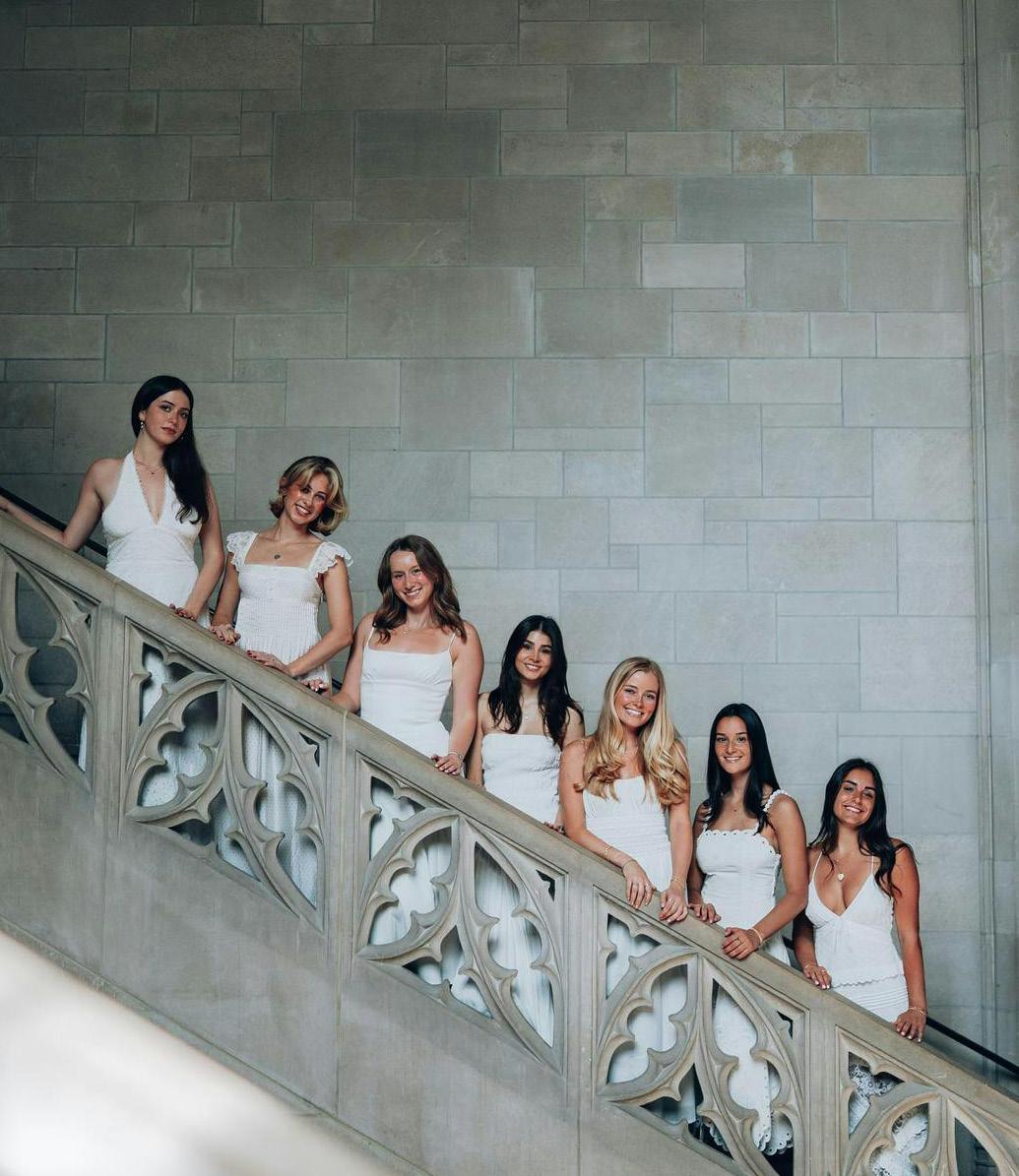
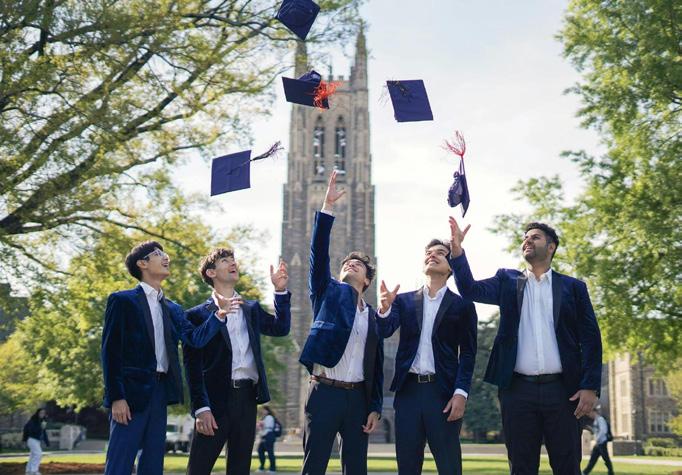
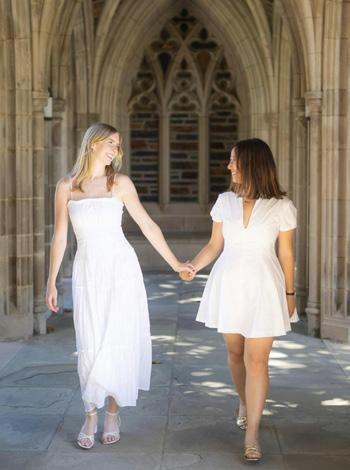
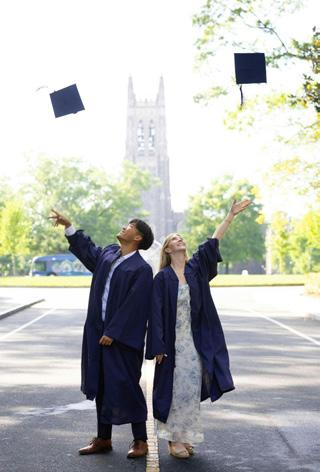
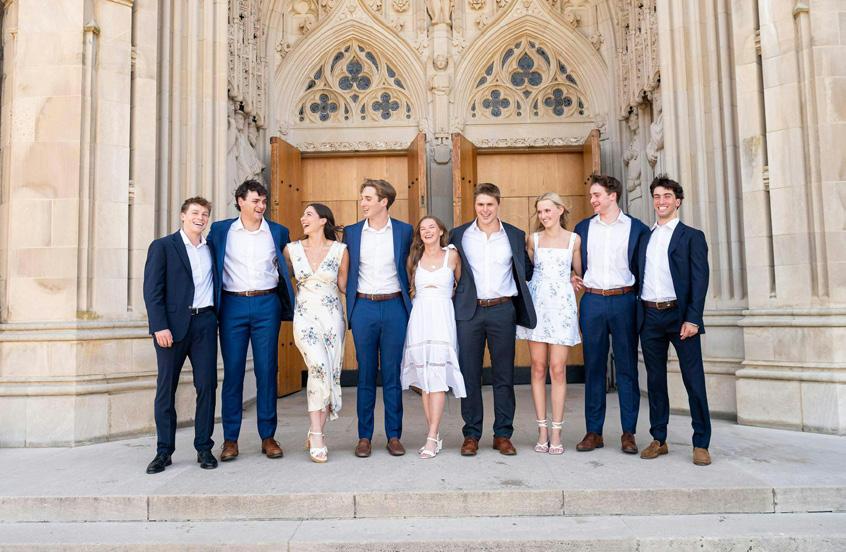
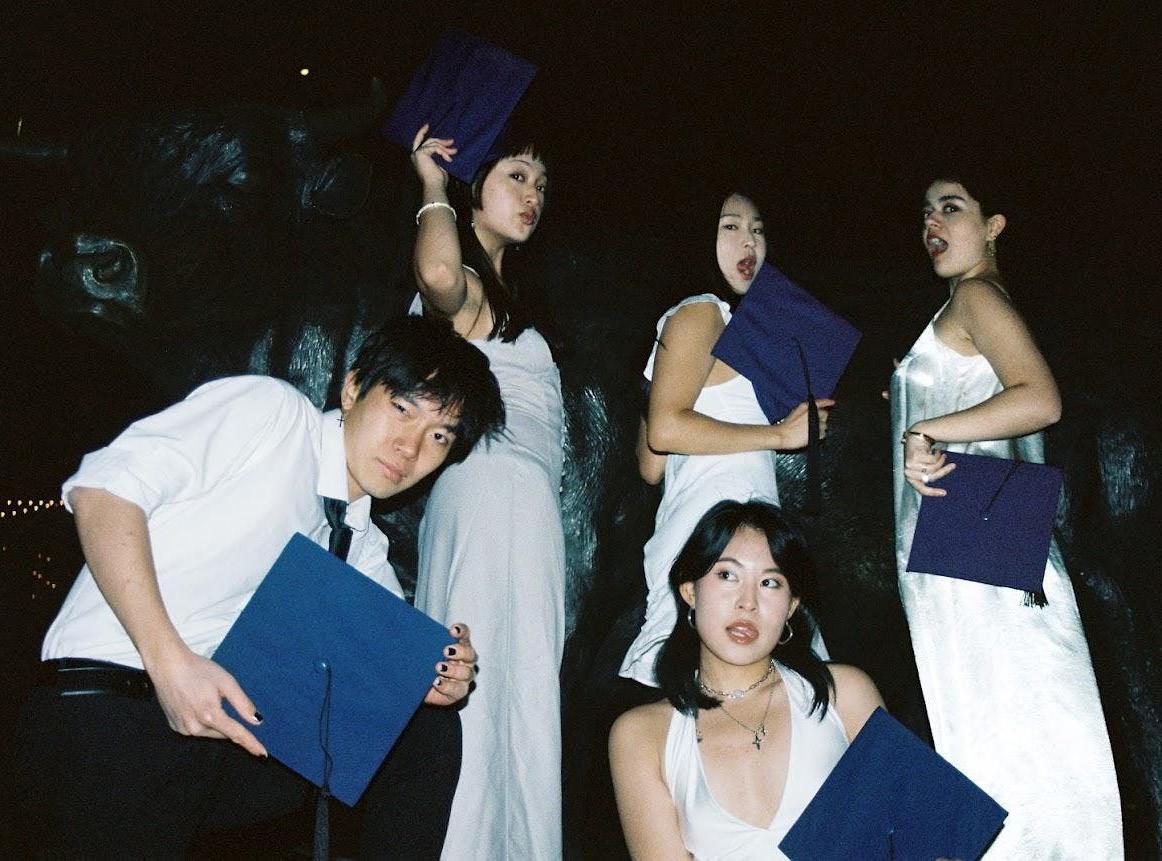
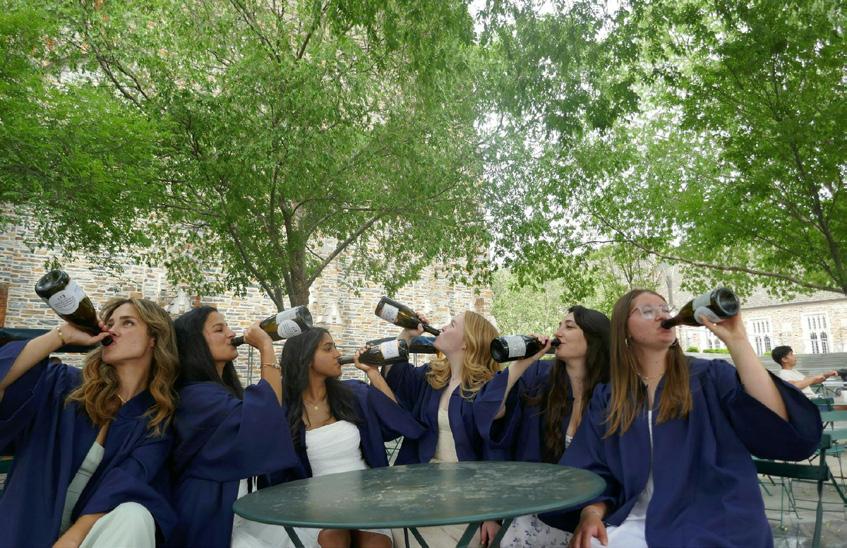
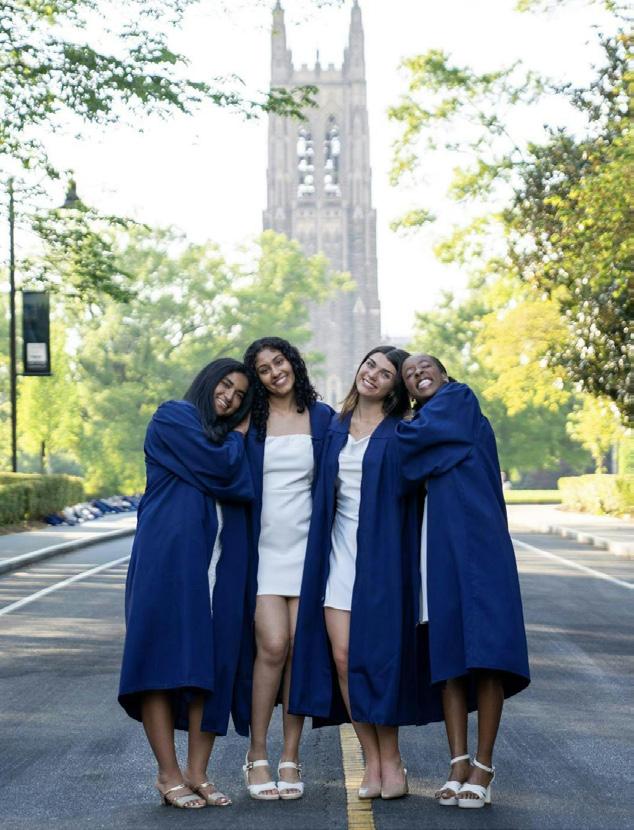
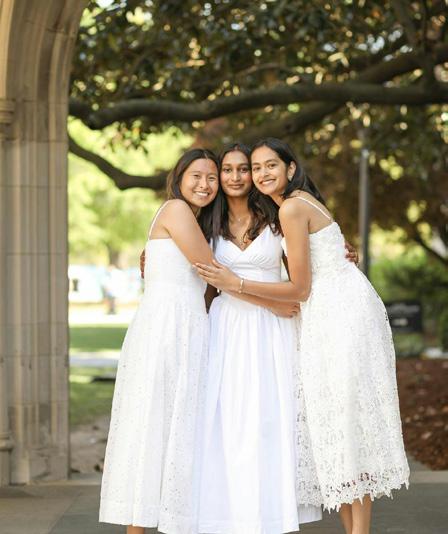
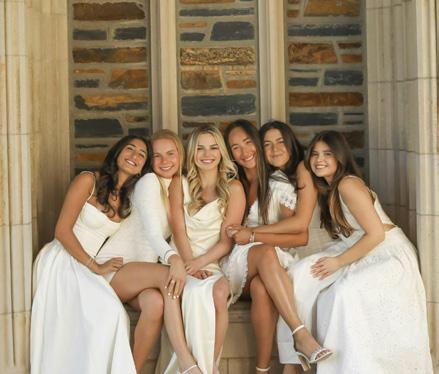
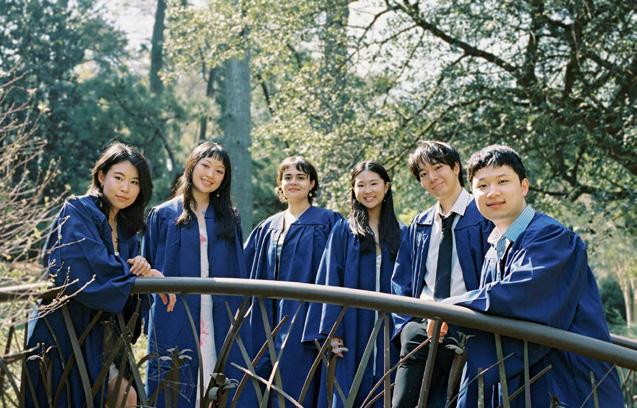
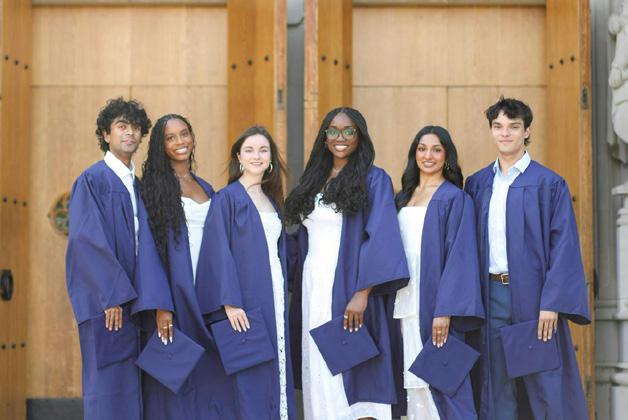
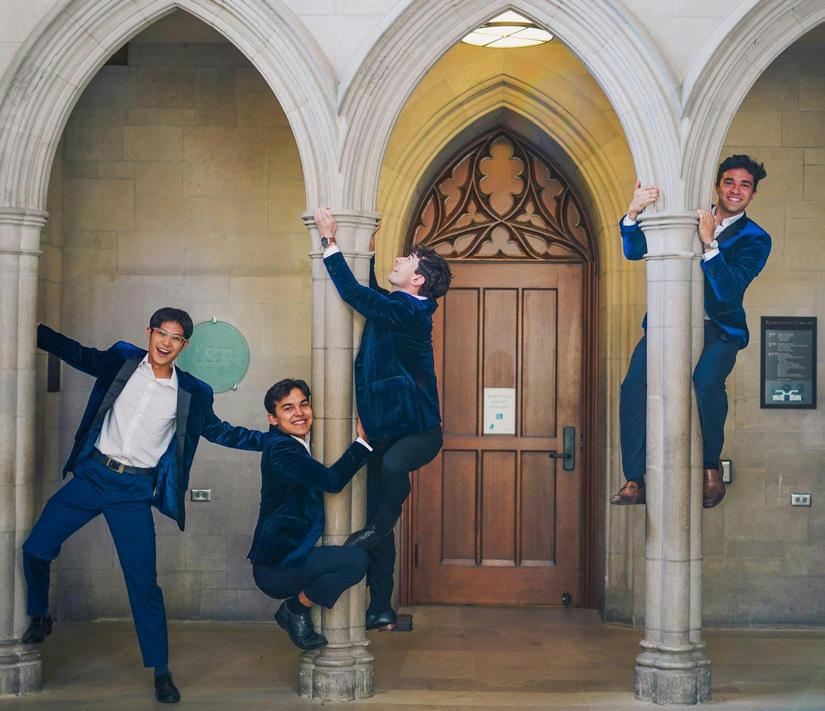
Meet other 2026 Commencement speakers
By Jackson Kitts Multimedia Editor
Microsoft Chief Financial Officer Amy Hood, Trinity ‘94, will headline Duke’s main commencement ceremony on May 10, but she will not be the only notable name at a podium this spring.
Across campus, individual schools and departments are hosting their own graduation ceremonies, with some also inviting a speaker of their own. Two of those are worth noting: Maurice “Mo” Green, who will address Duke Law School graduates, and Lorie Logan, who will address Duke economics graduates.
Maurice “Mo” Green, Duke Law School
The North Carolina Superintendent of Public Instruction is coming home. A double Duke graduate, Trinity ‘88 and Law School ‘91, Green received his bachelor’s degree in political science and economics as well as his law degree from the University.
Green, a Democrat, took office in January 2025 after narrowly defeating Republican Michele Morrow in the 2024 election. Since taking office, Green has embarked on a statewide tour to push his plan to make N.C. public schools the “best in the nation.”
Before assuming his current role, Green served as superintendent for Guilford County Schools, the third-
largest district in North Carolina, for more than seven years, during which the district saw improved academic performance, increased graduation rates and a heightened emphasis on character development.
He then led the Z. Smith Reynolds Foundation as executive director from 2016-23, where he helped develop a grantmaking and learning framework aimed at strengthening democracy, advancing public education and promoting social and economic justice across North Carolina.
Green has been recognized for educational leadership with awards such as the Bob Grossman Leadership in School Communications Award in 2011 and the Distinguished Educator of the Year by the N.C. Association of Supervision and Curriculum Development in 2014.
The Law School’s convocation will take place from 5:30 to 7:30 p.m. on May 9 in Cameron Indoor Stadium. It is open to all graduating law students and their guests.
Lorie Logan, Duke economics department
Taking the stage for the economics department, Logan is the president and CEO of the Federal Reserve Bank of Dallas. As the Bank’s 14th president, Logan is the first woman to permanently hold the role.
Since taking office in August 2022, Logan has led nearly 1,400 people in the Eleventh Federal Reserve District, which covers Texas, northern Louisiana and southern New Mexico. Logan represents the district on the
Federal Open Market Committee, the body that sets national monetary policy. This year, she holds a voting seat.
In that role, Logan has been cautious about cutting interest rates due to concerns of persistent inflation.
Separate from voting on the FOMC, Logan oversees all Bank functions: economic research, banking supervision, financial stability, community engagement and economic development. Under Logan’s leadership, the Bank launched its Global Institute, which conducts policydriven economic research with a focus on the relationship between the U.S. and Mexico.
Before assuming her current position, Logan spent more than two decades at the Federal Reserve Bank of New York, rising to the role of executive vice president. She managed the Federal Reserve’s securities portfolio and led the implementation of monetary policy for the FOMC. She also played a crucial role in the Fed’s response to both the Great Recession and the COVID-19 pandemic.
She holds a bachelor’s degree in political science from Davidson College and a master’s in public administration from Columbia University.
The economics department will hold its graduation ceremony from 12 to 1:30 p.m. on May 10 in Cameron Indoor Stadium. The event is open to all graduating economics majors, master’s students, doctoral students and their guests.
Graduation photos courtesy of Aiden Lo, Charlotte Caddell, Ella Sheehan, Katalina Guma, Jeanie Jia, Irene Biju, Lauren Shiell, Carson Lender, Maddie Morrison and Ariha Mehta
QUADEX RETURN
FROM PAGE 7
She agrees with her statement in the 2021 article that Greek life will continue to thrive due to both its current existence as a large community and the fact that students who would have rushed for SLGs will now look to sororities and fraternities for community. However, she foresees a few dangers that might come with restricting SLGs on campus.
“It’s even more harmful to people with specific identities, like those who are LGBTQ+. Those communities will definitely be affected because some of the SLGs on campus have particularly made efforts to welcome those identities,” he said.
FIELD STORM
FROM PAGE 8
This moment had been a long time coming. In 2013, Duke was an entirely different program. Former head coach David Cutcliffe had turned the Blue Devils around after a long down period. In many ways, this moment echoed what happened in 2013.
But none of the students at Wallace Wade would’ve remembered that — they were nine, 10, 11 years old at the time. For them, those final seconds solidified what students had hoped for since they arrived on campus: a renewed football program that could compete with teams of national prominence under head coach Mike Elko.
As Monday’s game entered its final minutes, crowds of students swarmed towards the field, ready to soak in the chance to charge into the heart of the stadium.
“In the middle of the fourth quarter, I looked over and I kind of got the feeling that people were going to rush the field,” said sophomore Hannah DiMaggio. “My first thought [was] ‘Wow, I never thought this would happen at Duke.’”
“It was just a matter of waiting those last five minutes of the game,” said senior Suraj Dhulipalla. “The anticipation was electric.”
But those last five minutes? No one was willing to wait. Students got out of their seats and crowded down as far as they could.
“The security staff came up to us and said ‘Make sure you don’t storm the field when there’s still time on the clock. Make sure you wait till the game’s completely over,’’’ Dean said.
The crowd became more and more congested as the clock wound down.
“My immediate thought was ‘Oh, my God, I might get stampeded,’” DiMaggio said. “We all just started sprinting and running. We jumped onto the field. I fell in the bush. It was so, so exciting.”
Dougherty compared Monday’s celebration to what students had hoped for during last season’s home game against North Carolina, when students anxiously hoped to storm the field only for the Blue Devils to fall agonizingly short in a nail-biting 38-35 battle against the Tar Heels.
“I have never stormed a college field before, and so to get to actually follow through with it, it felt like a full-circle moment,” Dougherty said.
Full circle, indeed.

WHERE DUKE GRADS START THEIR NEXT CHAPTER
CENTENNIAL
FROM PAGE 9
As the event came to a close, the featured performers and speakers returned to the court, accompanied by the cheerleading team and the Dancing Devils. Blue and white balloons fell from overhead as the audience members danced and sang along to “Everytime We Touch.”
Duke will be hosting a variety of centennial events throughout the year, the next being a commemoration of civil rights leader Martin Luther King Jr. The event, hosted by the Office of Institutional Equity, will take place on Jan. 14 at 4 p.m. in the Duke Chapel.
SNOW
FROM PAGE 10
Abele Quad, 8:30 p.m.
Dozens of students were scattered across Abele Quad, most wearing thick winter coats. As a snowball fight broke out in front of Kilgo Quad, many students were pelted — some happier about it than others.
Sophomore Sahil Patel watched from nearby, so far spared from the icy projectiles. He’s from Wilmington and said he hasn’t seen snow in North Carolina since he was young. Patel remained a bystander, but admitted that there would likely be some snowball-chucking in his future.
Across the frozen quad, two friends were crouched down packing snow. It was seniors Hanna Lavi and Liel Ezroni, who, keeping busy with their gloves in the snow, described campus as “a winter wonderland.”
Minutes later, their creation was complete: a “snowwoman,” they called it.
Duke Gardens, 8:30 p.m.
By 8:30 p.m., Ashley, who hails from Florida, had been walking around outside for hours.
“This is the first time I’ve ever seen snow,” she said. “… It’s really gorgeous. I was not expecting it to actually stick today at all, so I’m really happy that it did.”
She was snapping photos and building snowmen, she said, when her friends “ambushed” her with snowballs. In her fifth hour in the snow, Ashley and her friends said they planned to go sledding.
Meanwhile, Twining took in the sights of campus around him and the community brought together by the snowfall.
“I love how everyone is outside and together,” he said. “… I’m really enjoying it.”
Twining also spent his evening sledding. His toboggan of choice? Large cardboard boxes found behind Perkins Library.
Duke Gardens, 11 a.m.
The sledding festivities continued. Countless grassy tracks cut through the ice-caked hill in the gardens. Most were straight, but some veered to the side — likely wipe-outs. Junior Shivam Jain and his friends seemed to have mastered the slopes, wielding a plastic sled, complete with handles and a paint finish.
“It’s pretty cool to be able to have this snow day here in Durham,” he said. “We built a lot of snowmen and we [had] a lot of snowball fights, [which] was a lot of fun.
They planned to head to Cameron Indoor Stadium to catch the men’s basketball game against the University of Notre Dame. There, much of the remaining snow would melt while red-hot Cooper Flagg set the ACC freshman scoring record.
Ana Despa contributed reporting

livevanalen.com

brushes in paint. A few doors down, ten students spun on their toes, working on a dance number. It was only their third day on campus, but many were already feeling burnt out.
“They run us ragged. Like 9 a.m. to 9 p.m., you’re doing stuff,” first-year Clare O’Sullivan said. “You get back to your dorm at 10 p.m., you just want to crash, but there’s still more events to go to. You feel like you’re missing out if you don’t go to them.”
On the first floor, piano chords, trombone glissandos and snare drum beats filled the air. The Project Arts music group was hard at work preparing for their Friday showcase, where they’ll perform an arrangement of one of Elvis Presley’s most famous songs, “Hound Dog.”
Starting with the original “Hound Dog,” written by Big Mama Thornton in 1952, the group plans to transition into a chorus and verse from Presley’s version, and then a section from Doja Cat’s “Vegas,” which is inspired by Presley’s.
pArts, one of the prior pre-orientation programs, aims to expose first-years to a variety of art opportunities on campus. Last year’s music group had seven first-years, according to Alan Wang, a sophomore and group leader. This year, participant counts have more than doubled.
In the front of the room, first-years Daniel Rodriguez-Florido and Andrew Spong squeezed onto a piano bench, four hands churning blues scales out from one keyboard. They were creating the piano accompaniment for the Big Mama Thornton portion of the performance.
Rodriguez-Florido was brutally honest about their progress. “Yesterday we had nothing, but today we have a starting point,” he said.

“I taught this man the blues scale yesterday!” Spong laughed. “Yesterday I was really worried, but it’s getting better and better today.”
Both Rodriguez-Florido and Spango are Pratt students. But they’re also experienced piano players and joined pArts because they wanted a brief break before they dive into their STEMheavy course loads.
“I wanted to do something not engineering because I’m gonna be doing it for four years,” Rodriguez-Florido said. But after pArts, he’s considering playing in a chamber group at Duke.
The pair continued to run through blues scales, chuckling at a joke one cracked.
The Devil’s Krafthouse, 8:00 p.m.
For the first time since March Madness, The Devil’s Krafthouse was packed with rowdy Duke students focused around one allimportant screen. But this time, the screens weren’t projecting Paolo Banchero winking into the camera while up by five in the Sweet Sixteen game. It was time for Project Play’s sports trivia.
First-year Ben Childress, decked out in a Duke Athletics t-shirt, leaned into his group’s table and joked that trivia would “get [them] ready for tenting.”
pPlay, designed to expose first-years to wellness and athletics at Duke, had raised the trivia stakes—the winning group will secure the first spot in the freshman walk-up line for the freshman basketball game later this semester.
When the first set of questions asked for the weight of a golf ball, Childress’ group turned to the golf player at the table. He guessed 12 ounces. The correct answer? 1.62 ounces.
No matter. The group had bigger matches to win later in the week: schoolyard basketball games against the men’s basketball team.

Duke Chapel, 8:30 p.m.
Twelve hours later, another group of firstyears and their program leaders stood on the grassy patch at the base of the Chapel. Sunset was giving way to the ink-colored night.
One student began clapping, slowly at first. The rest followed, each clap faster than the last, until they devolved into whoops and cheers.
“Duke! Duke! Duke!” they chanted, their voices echoing across Abele Quad and electrifying the entirety of West Campus.
Then they dispersed, still laughing and clapping, heading to the bus stop, onto the C1 and back to their dorms on East Campus.
KNOCKOUT
FROM PAGE 12
Michael Empric, a Guinness World Record Adjudicator, observed from the sidelines of Coach K Court. He wore a navy blue vest and turquoise tie, carrying an official clipboard that held the Mavericks’ prior record of 701 participants.
Though Empric followed the game with a careful eye, he also paused to chat and take pictures with the hundreds of students that suffered early elimination. Having adjudicated everything from the longest slingshot cornhole attempt (151 feet, failed) to the most wine bottles uncorked simultaneously (308, successful), a trip to Durham was far from atypical.
“When you work for Guinness World Records, nothing is really crazy, because you’re exposed to so many things,” Empric said. “I know the shortest woman, I know the tallest man, I know the fingernail people. You get very desensitized.”
Ironically, Cameron Indoor still managed to offer a surprise.

“I have never watched a college basketball game a day in my life, and this arena is much smaller than I expected,” Emperic said.
Under the basket, Dollar Shave Club CEO Larry Bodner rebounded for participants. His company had recently relocated its headquarters to Durham — just under two miles from Duke’s campus — and the Fuqua graduate spearheaded the event as part of an advertising campaign targeted at college students.
“I’m a little bit of the instigator. I thought it’d be a lot of fun to break a record here at Duke. And I love Cameron, and I love the University and the students,” Bodner said. “... It’s great to have this for Duke. The excitement over basketball is so great.”
While Bodner tossed basketballs to the Cameron Crazies, other Dollar Shave Club staff busied themselves with organizing company signage and handing out free razor kits. Slowly but surely, the knockout game began to dwindle to its strongest competitors.
After 113 minutes, the line could wrap around Coach K Court. Twenty minutes later, just 60 participants remained. It took 157 minutes to reach the final three players, who battled for the win over the course of 40 seconds as spectators cheered and sighed between every shot.
Sophomore Dash Hort eventually emerged triumphant with a swished free throw, beating out his Duke wrestling teammate Owen McGrory. Having attended the event on a last-minute impulse, he saw his win and the $1,000 grand prize as a bonus.
“I think I’m an above-average knockout player. But it just comes down to who makes the shot at the right time,” Hort said.
A short ceremony at half-court capped the night as Emperic, Bodner, Hort and other participants posed for photos with the official Guinness World Record plaque. The title offered the Crazies brief reprieve as they continue hoping for a sixth banner in Cameron.

Duke Cardea Fellows | Class of 2026
Sarah Allen
Luma Barreto
Ava Byrd
Alyssa Chavis-Wanson
Melanie Espinoza-Carmona
Destiney Green
Wigdan Hissein
Deborah Lendore
Hibatoullah Mokhtari
Juliet Penaranda
Cody Powell
Hanna Regassa
Shaiyan Sanchez
Angela Sapu
Nikol Trajkovski
Ariana Vaida
Fernanda Villalva Moreno
Jaqueline Villanueva Govea
Chidimma Umerah
Demi Wilson
ELECTION
“I’m glad that I didn’t have to experience it, but I felt terrible for those who were feeling this anxiety about the election, about a lot of questions about their own bodily autonomy,” Tarro said.
He also noted that he was particularly concerned about Republicans having control of all three branches of the federal government. Although not all U.S. House of Representatives races have been called, as of 11 p.m. Sunday, the GOP led with 214 seats to the Democrats’ 203 with just 18 more races left undecided.
“We have a Republican Congress and now a Republican second-term president, which, historically speaking, second-term presidents are also more willing to take actions that are more politically polarized because they have no reason to appeal to moderate voters because they don’t have to get reelected,” Tarro said. “So I’m worried that that might push some more uber conservative measures.”
However, he still expressed his hope that a Republican-controlled country will “strive for what the collective thinks is best.”
Britt, a member of the Socialist Alternative party, explained that they had voted for Green Party candidate Jill Stein because of the BidenHarris administration’s record on the war in Gaza. Still, Britt stated that Trump would be “worse” than Harris on many issues.
“Trump is going to be worse for not just Americans who want abortion access, Americans who are trans or immigrants, but he’s going to be worse for the international community,” they said.
Allie Jackson, an attendee of the Wednesday “Rally for Gaza” in downtown Durham, also
shared that she voted for Jill Stein despite knowing that, as a transgender woman, she might be negatively impacted.
“I’m a trans woman, and I have skin in this game too,” she said. “I just had a baby with my partner, and it was difficult, and we are potentially planning on trying to bring another human into the world in the future, so the abortion stuff directly affects me and my partner.”
Jessica, a Raleigh-Durham Lyft driver, described the range of emotions she has experienced since the election was called.
“I’m disappointed. I have spent today kind of just gathering my own thoughts about what the next four years could look like,” she said. “Up until this point, I hadn’t really considered it, actually, because I thought [Harris] was going to win, and it’s actually quite scary to think about what could happen. So that’s kind of where I’m at right now. I haven’t really processed all of it. It’s been a crazy and pretty awful election cycle.”
In contrast to Jessica, Tarro predicted that Trump would win the election but was surprised by his overwhelming victory in both the Electoral College and popular vote, as well as Republicans’ performance in both the U.S. House of Representatives and Senate.
Like Tarro, Pitrus also predicted Trump would win the presidential election. He expressed the view that this election marks a moment where Duke will be forced to recognize conservative students on campus.
“To have a Republican president who wants to challenge the establishment also sends a big message for free speech on campus and to all these elitist institutions that, ‘sorry, your prevailing opinion is no longer prevailing, and you need to accept the fact that Republicans do exist,’” he said. “You need to be able to converse with them and engage in civil discourse and constructive disagreement.”



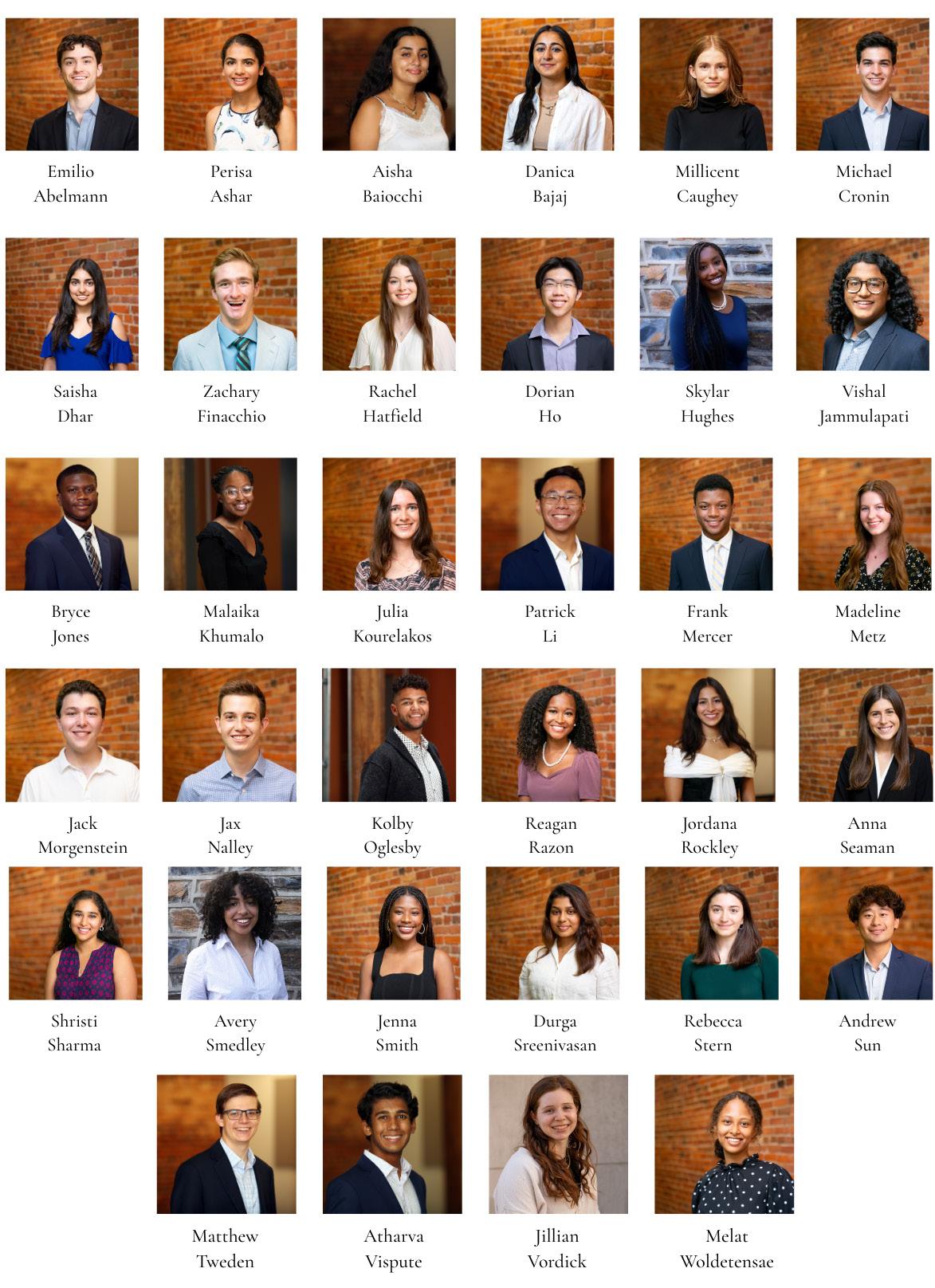
Following the election results, Pitrus noted that he felt more comfortable expressing his support for the GOP, choosing to wear his Make America Great Again hat for two days after the election. He said he was met with a few unpleasant stares, but he thought it was important for students to recognize that he wasn’t an anomaly, since Trump was “elected by over 50% of the American population.”
Trump was elected by over 50% of American voters, approximately 74.8 million as of Sunday at 11 p.m. The U.S. population is roughly 337.4 million, according to the U.S. Census.
Despite the results not swaying in the direction she had hoped, Jessica expressed the importance of having productive discussions and staying positive.
“[Although] a lot of people were disappointed and upset with the conclusion, there [were] a fair number of people, at least locals, who were really excited about the governor’s race and were really excited about the flip with the Republican majority,” she said. “There was a little hope out there.”
Democrats won key elections in North Carolina, most notably Josh Stein in the gubernatorial race, and broke the Republican supermajority in the state House of Representatives.
Tarro emphasized the importance of elections, asserting that they “matter” and that “people [who] say they don’t are wrong.” However, he shared his hope in humanity and for the country to make it through the next four years.
“No matter if you’re celebrating a victory or mourning a defeat, we’ll make it through, and hopefully tomorrow will be a better day,” he said.
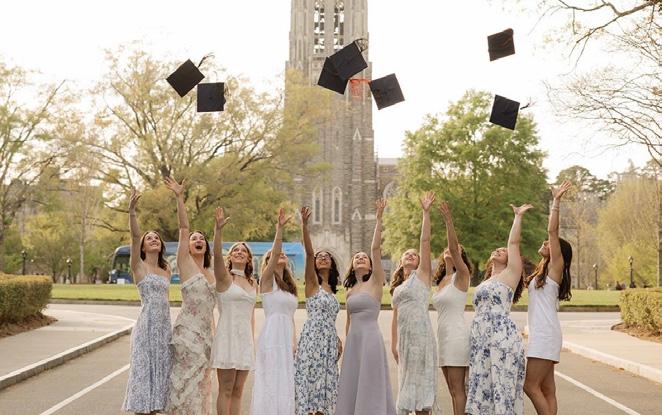
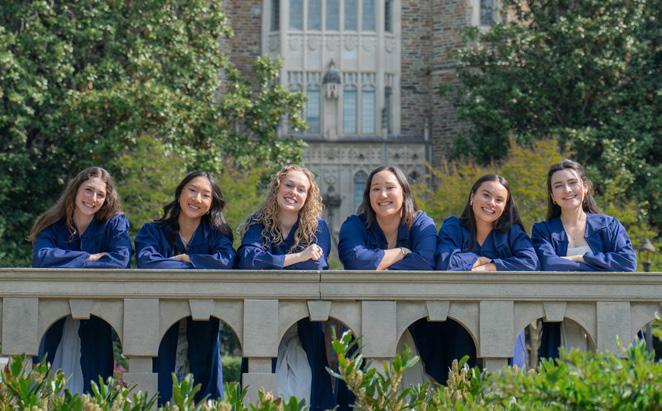
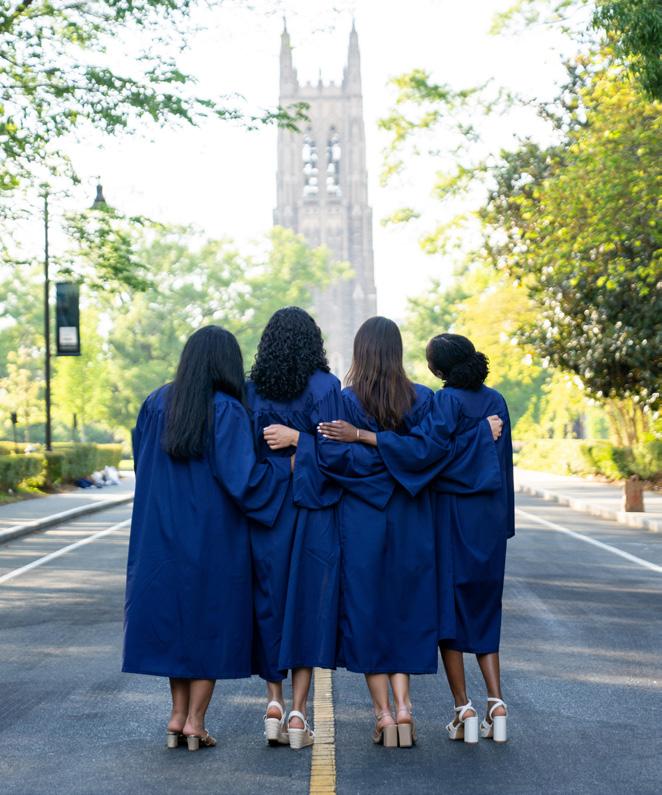
CONGRATULATIONS TO THE CLASS OF 2026 FROM THE DUKE UNIVERSITY LIBRARIES with special appreciation to student employees of the Libraries
RUBENSTEIN LIBRARY
Tye Landels, Ph.D.
Mina Moon-Black, Ph.D.
Lauren Neefe, M.F.A.
PERKINS & BOSTOCK LIBRARIES AND SMITH WAREHOUSE
Gaby Almonte
Yu-lin (Jess) Chen, M.Q.M.
Tyler Doan
Joya Schreurs Engen, M.T.S.
Zoe Finiasz, Ph.D.
Anna Fitzgerlad-Peters, M.T.S.
Prisha Gupta
Susan Han, M.Q.M.
J’adore L. Harris-Tavita
Macie Nantze
Jacob Perry
Ayden Schirmacher, M.E.M.
Sneha Sengupta
Yurina Shirai
Veena Shirsath
Linda (Yiran) Zou
LILLY LIBRARY AT BISHOP’S HOUSE
Yaa Bame
MUSIC LIBRARY
Vittoria Corvelli
DIVINITY LIBRARY
Hannah Auddino
Humza Zaheer Chouhdry
Naomi Francois, M.Div.
Keon Hak Lim, M.T.S.
FORD LIBRARY
Youngjun Lee, M.Div.
Emily Magen, M.P.P. & M.Div.
Teresa Meloni, M.P.P.
Kelly Palacios, M.P.P.
Alexandra Pool
Michael Schmitz, M.P.P.
Pauline Wakudumo, M.P.P.
Julia Young
MEDICAL CENTER LIBRARY
Melina Marjani
GOODSON LAW LIBRARY
Yumu Chen, LL.M. & J.D.
Solange Hackshaw, J.D.
Christiana Haynes
Camille Herring, J.D.
Hailey Kasney
Josie Liu, J.D.
Jack Massih, J.D.
Chaim Moore, M.T.S.
Jingyao Shan, J.D.
Olivia Smith, M.P.P.
From top to bottom, graduation photos courtesy of Ella Cariello, Ina Ding and Diya Patel




best food on any planet


1920 1/2 Perry St. @ Ninth Street
Just a block from East Campus
From Duke to Your Next Home.
Graduation isn’t the finish line— it’s the upgrade.
At NOVEL Morrisville, your day starts steps from an onsite coffee shop, flows through coworking and wellness spaces, and ends in a modern apartment designed for life after college. Choose from studio, one‑, or two‑bedroom floor plans featuring contemporary finishes, smart layouts, and room to settle in and make it yours. And when you need a reset? Scale our full‑size indoor climbing wall— because post‑grad life should still be fun.
Editor-in-Chief: Dylan Halper
Sports Editor: Alex Min
Managing Editor: Abby DiSalvo
News Editors: Ella Moore, Claire Cranford, Ryan Kilgallen
Senior Editors: Winston Qian, Ana Despa, Sarah Diaz (spring), Mia Taubenblat (spring)
Photography Editors: Alex Long, Wanyu Zhang
Opinion Editor: Devyn Deschamps
Recess Editor: Olivia Prusky
Multimedia Editors: Jackson Kitts, Dylan Wang
Features Editor: Elle Chavis
Investigations Editor: Lucas Lin
Directors of Staff Development: Ananya Pinnamaneni, Nikhil Sethi
Elections Editor: Max Tendler
Health/Science Editors: Vikram Sambasivan, Ahilan Eraniyan (fall)
Sports Managing Editors: Ryan Hamner, Colton Schwabe
Editors-at-Large: Rebecca Fan, Kate Haver, Aviv Stabinsky, Claire Chen (spring), Annie Eilers (spring)
Data Editor: Amy Zhang
University News Editors: Luca Gragnoli, Seyun Park
Local/National Editors: Lila Cohen, Eileen (Leyuan) Zhang
Features Managing Editors: Lila De Almeida, Leena Mirchandani
Health/Science Managing Editors: William Gim, Anjali Reddy
Associate News Editors: Sophie Augustine, Jackson Kitts, Tom Sun, Yashraj Vishwakarma, Karly Hairston (spring), Addison Smith (spring)
Blue Zone Editors: Asa Ostrow, Ella Bilu, Lucie Ansell, Spencer Oshins
Crossword Editor: Jeffrey Broms
Social and Diversity, Equity and Inclusion Chair: Aseel Ibrahim
Recruitment Chair: Madera Longstreet-Lipson
Audience Engagement Directors: Anabel Howery, Michelle Voicu
Senior Reporter: Ava Littman
General Manager: Chrissy Murray
Advertising Manager: Megan Haven
Managing Director: Kyle Fox
Creative Manager: Julie Moore
The Chronicle is published by the Duke Student Publishing Company, Inc., a non-profit corporation independent of Duke University. The opinions expressed in this newspaper are not necessarily those of Duke University, its students, faculty, staff, administration or trustees. Columns, letters and cartoons represent the views of the authors.
To reach the editorial or business staff, you can find contact information on dukechronicle.com. To reach the Advertising / Business Office at 1517 Hull Avenue call 919-684-3811. @ 2026 Duke Student Publishing Company



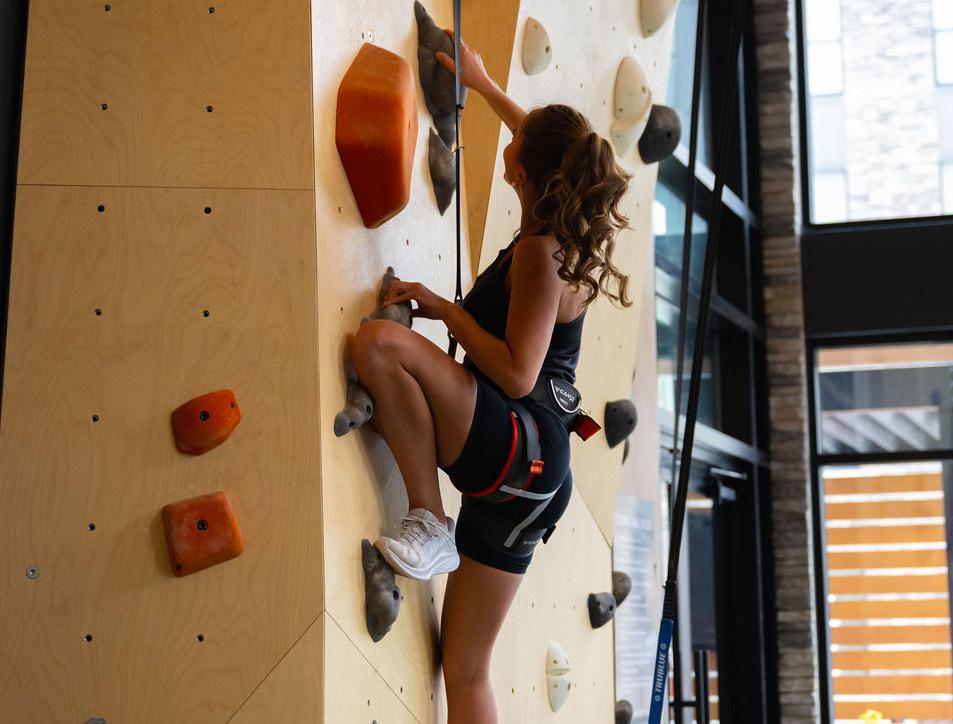
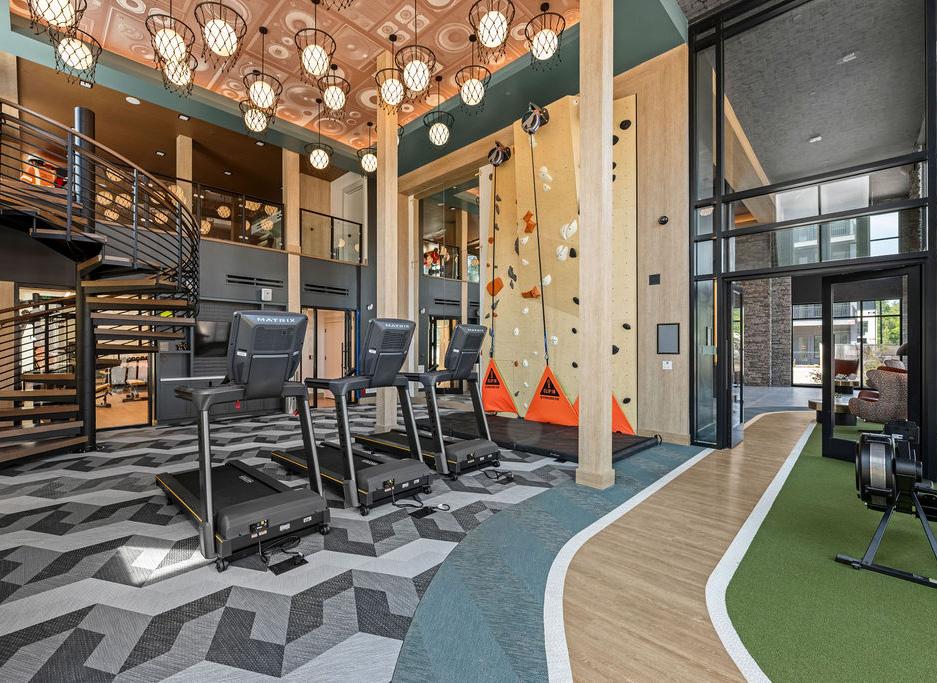
Nestled in Morrisville, but moments from Cary, RTP, and Raleigh, this is where the next chapter begins.
CONGRATULATIONS!
DUKE SPIRE FELLOWS | CLASS OF 2026
Ella Alan
Josh Andrews
Damilola Awofisayo
Dani Castillo
Jaden Coward
Lily Jarosz
Arielle Kim
Jennifer Lee
Sophia Liu
Nathan Maldonado
Hala Mohammed
Bella Myer
Samuel Obeng
Carlos Penzini
Emma Podol
Victoria Quimper
Erika Rispoli
Nia Robinson
Caitlin Tuttle
Kaitlyn Williams

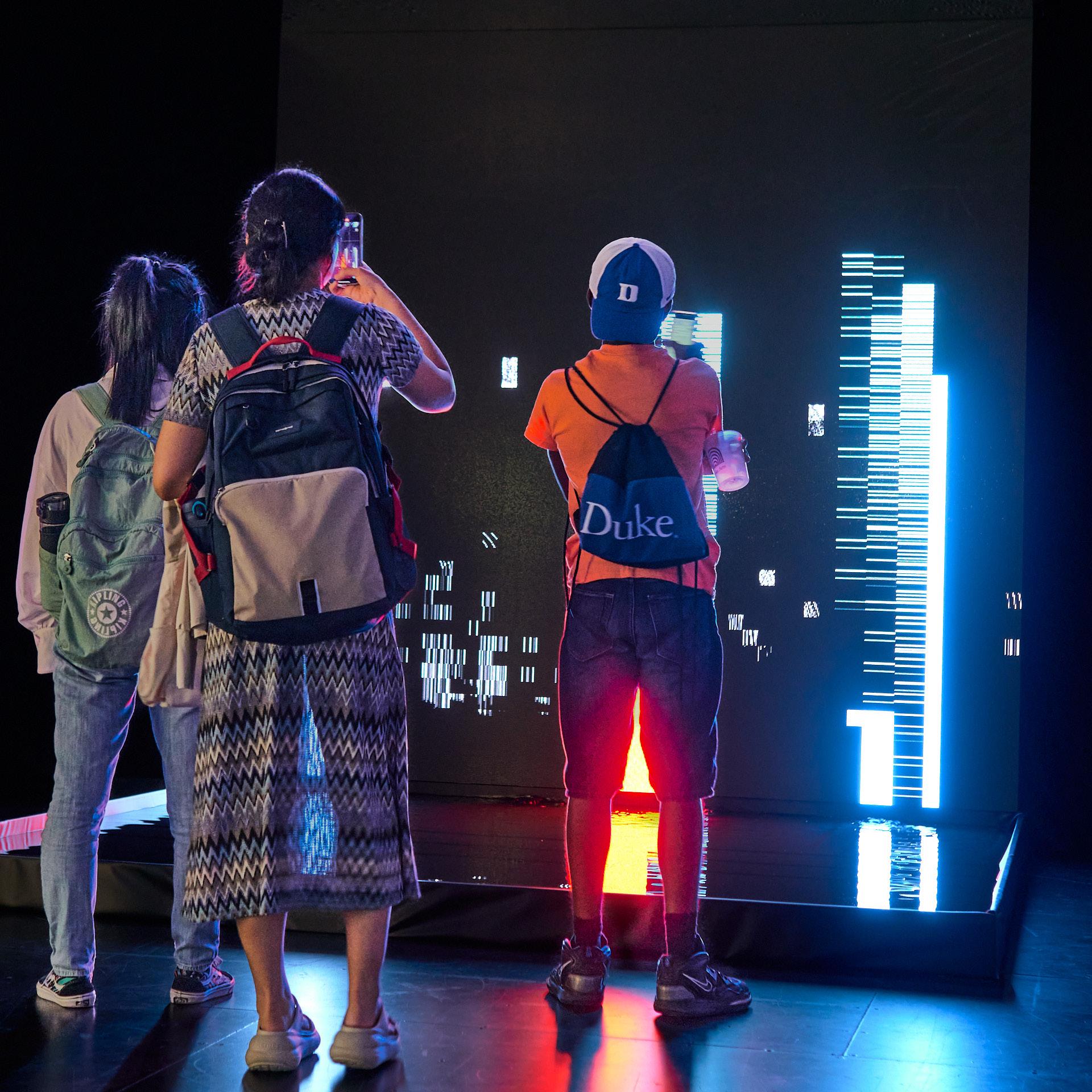

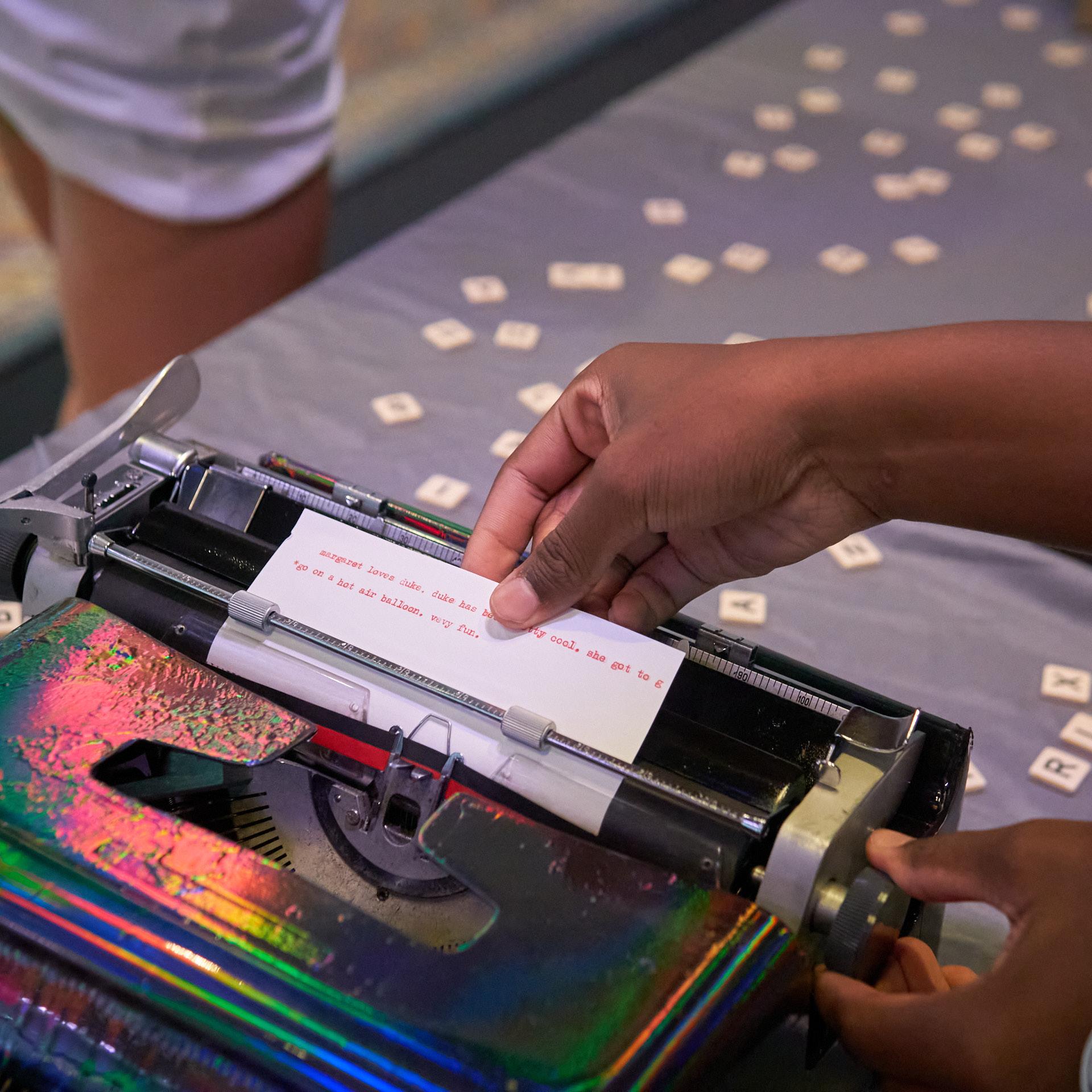

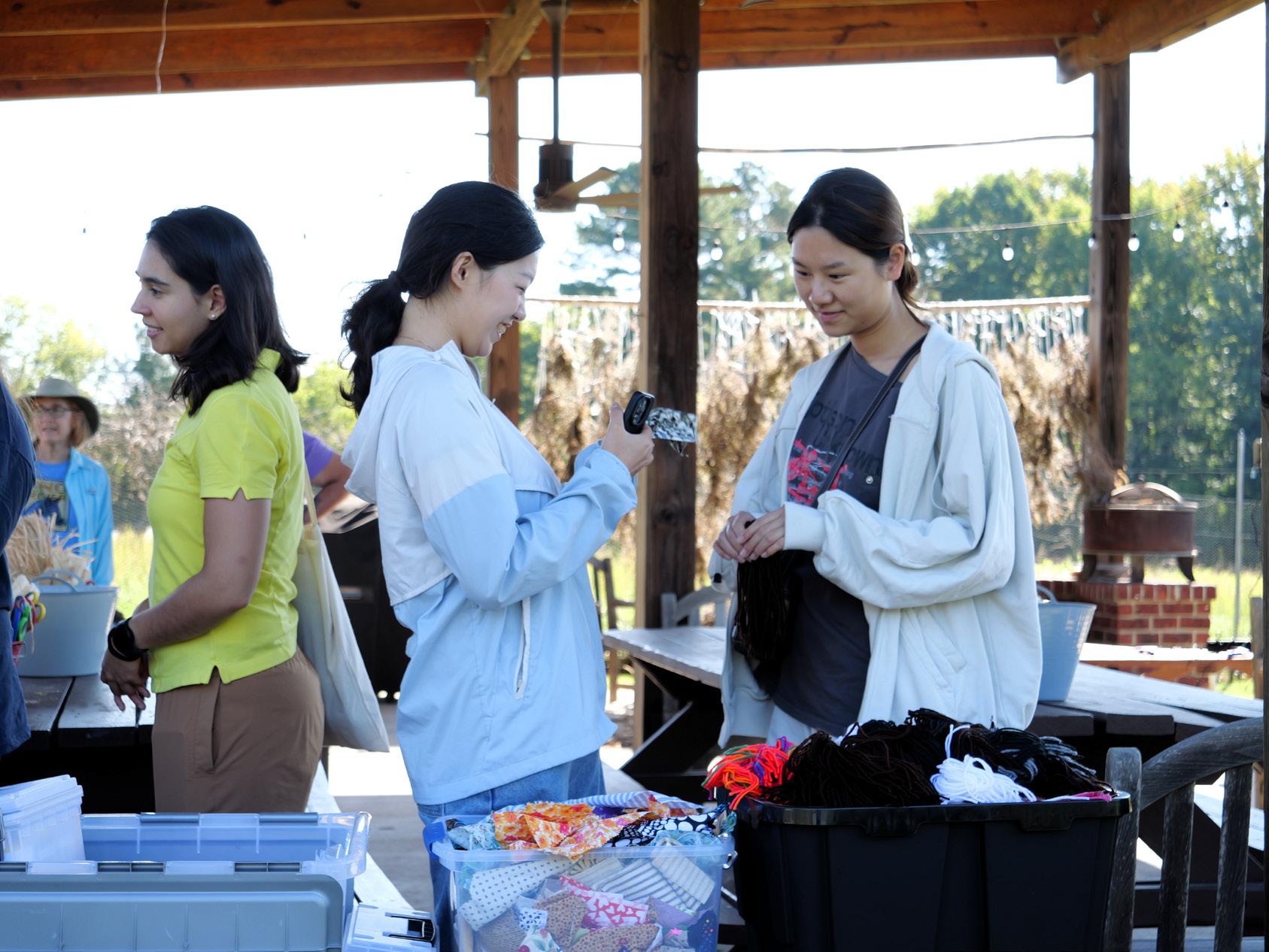
DYANI WHITE HAWK


LISTEN
D�ani White Hawk: LISTEN is organized b� Marshall N. Price, Chief Curator and Nanc� A. Nasher and David J. Haemisegger Curator of Modern and Contemporar� Art.
This exhibition is made possible b� The Duke Endowment and the Maril�n M. Arthur Fund.
D�ani White Hawk, Razelle Benall�, LISTEN (still), 2020. MP4 Eight-channel HD video with sound, edition 1/5. Collection of the Nasher Museum of Art at Duke Universit�, Durham, NC. Museum purchase with funds provided b� Marjorie (P’16, P’19, P’19) and Michael Levine (’84, P’16, P’19, P’19) and Benjamin Wiener, 2024.8.1. ©D�ani White Hawk.
Image courtes� of the Artist, Bockle� Galler�, and Various Small Fires.
nasher.duke.edu ON VIEW THROUGH JUL 5, 2026