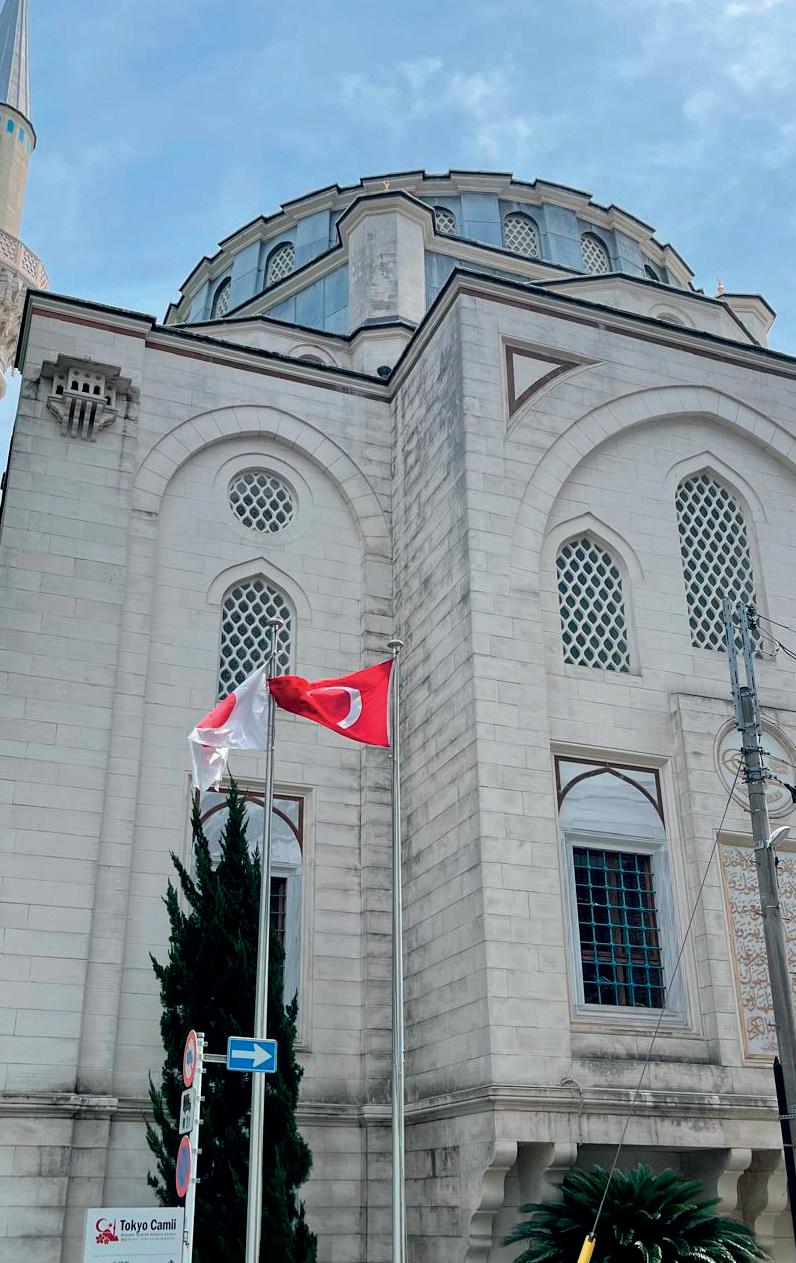

about the cover
The Tokyo masjid is a mosque with an adjoining Turkish cul ture center located in the Ōya ma-chō district of Shibuya in Tokyo, Japan. It is the largest masjid in Japan that was origi nally built in 1938.
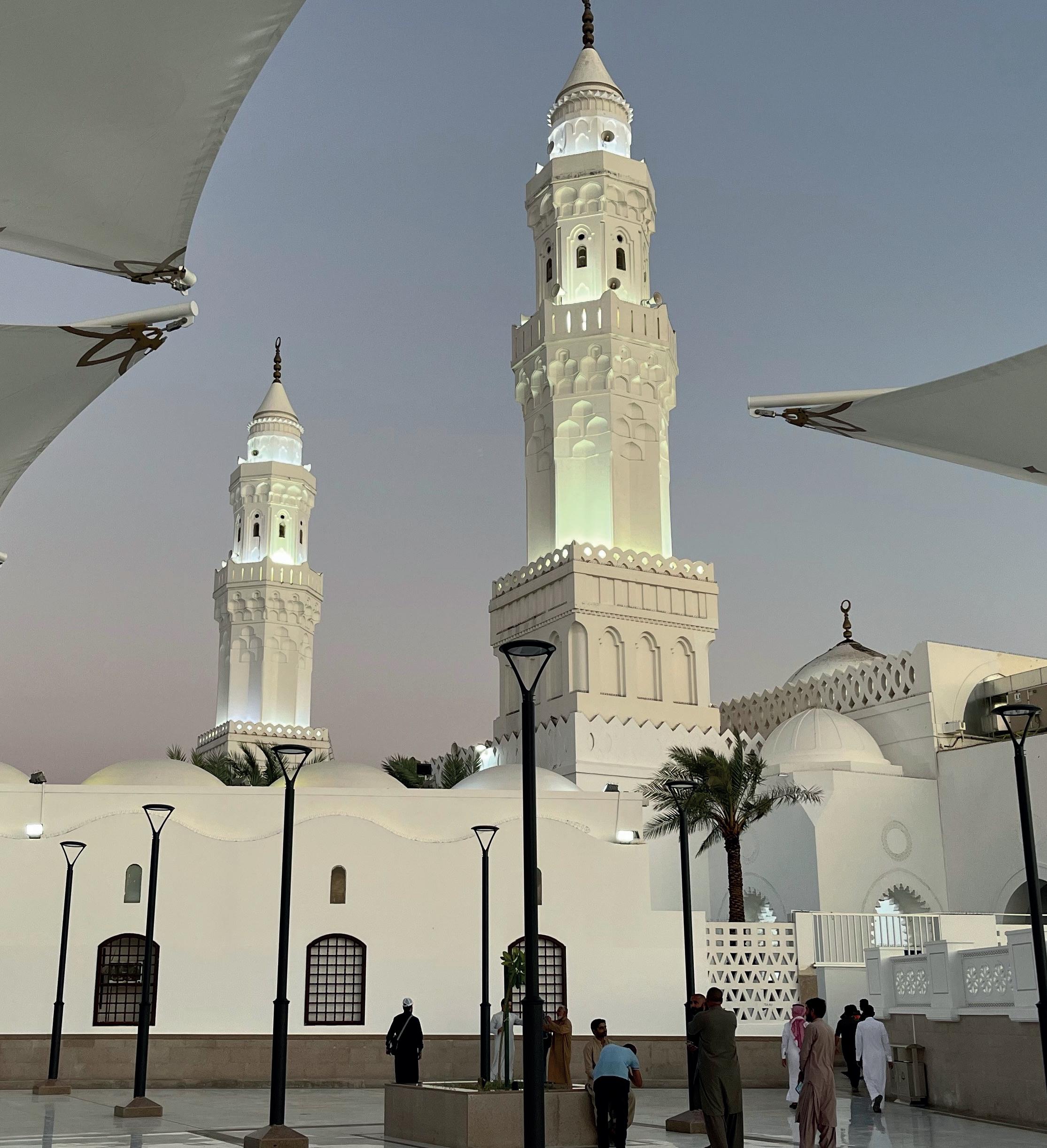

The Tokyo masjid is a mosque with an adjoining Turkish cul ture center located in the Ōya ma-chō district of Shibuya in Tokyo, Japan. It is the largest masjid in Japan that was origi nally built in 1938.

The battle of Badr in 2 A.H. paved the way for the spread of Islam. 313 unarmed men didn’t stand a chance against an army three times their number who were armed to the teeth and ready to go to war. Badr became the ‘decision’ from Allah which proved that the victorious were on haqq while the defeated on falsehood. Abu Jahl invoked the divine decision before he came out to Badr calling upon Allah to separate haqq from batil and to bring victory to the people of haqq. He was sure that they would win because he saw Islam pitting family members against each other and the Prophet s migrating from the Holy City while the pagans were the custodians of the House of Allah and the keepers of ties in Quraysh, among other things. After Badr, Allah revealed, “If you were looking for a decision, the decision has come upon you. And if you give up, it is better for you. And if you repeat, We shall repeat” (8:19). Shaykh Dr. Mateen vividly brings to life the scenes of Badr and how it became a day of reckoning for the people of batil.
In his article Imagining Artemis II, Dr. Kamran Karatela flies on a mission to the moon all the while gravely reflecting on another more daunting trip that we all must make from which there is no return; the journey to Allah after death. May Allah protect us all and grant us death in the state of iman.
Patron
Hazrat Dr. Ismail Memon
Fatawa
Mufti Husain Ahmad Badri
Contributors
Mufti Omar Baig
Maulana Dr. Mateen Khan Dr. Kamran Karatela
Khadija Karatela
Editor
Asim Ahmad
Attribution lutz-stallknecht-unsplash pexels-saptashwa-mandal feliphe-schiarolli-unsplash. Shutterstock.
office@ducanada.org
Website www.ducanada.org
Address
51 Prince St. N, Chatham, ON N7M 4J7, Canada
The views expressed in the columns of Insight magazine do not necessarily represent those of Darul Uloom Canada.
The articles published in this magazine may be reproduced with due acknowledgment.




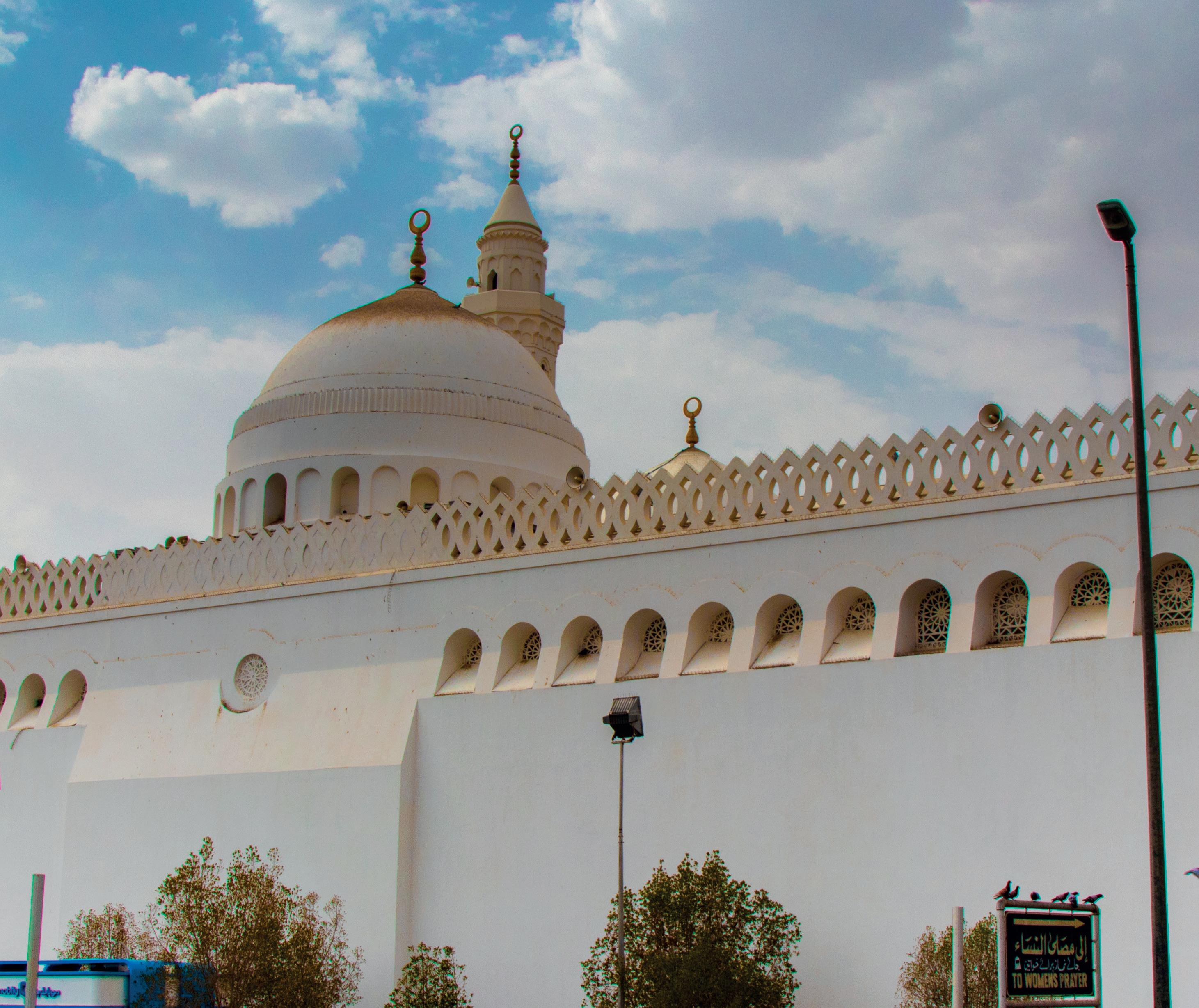
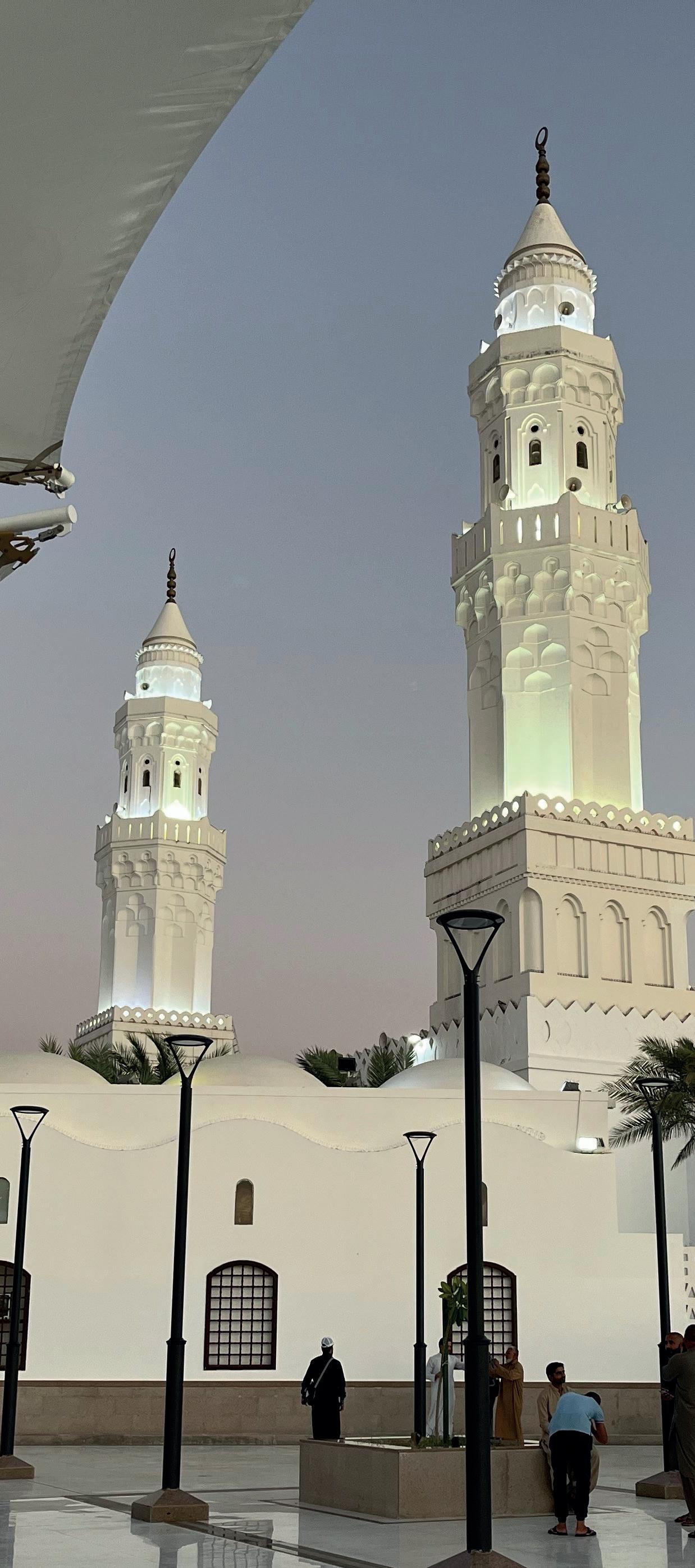
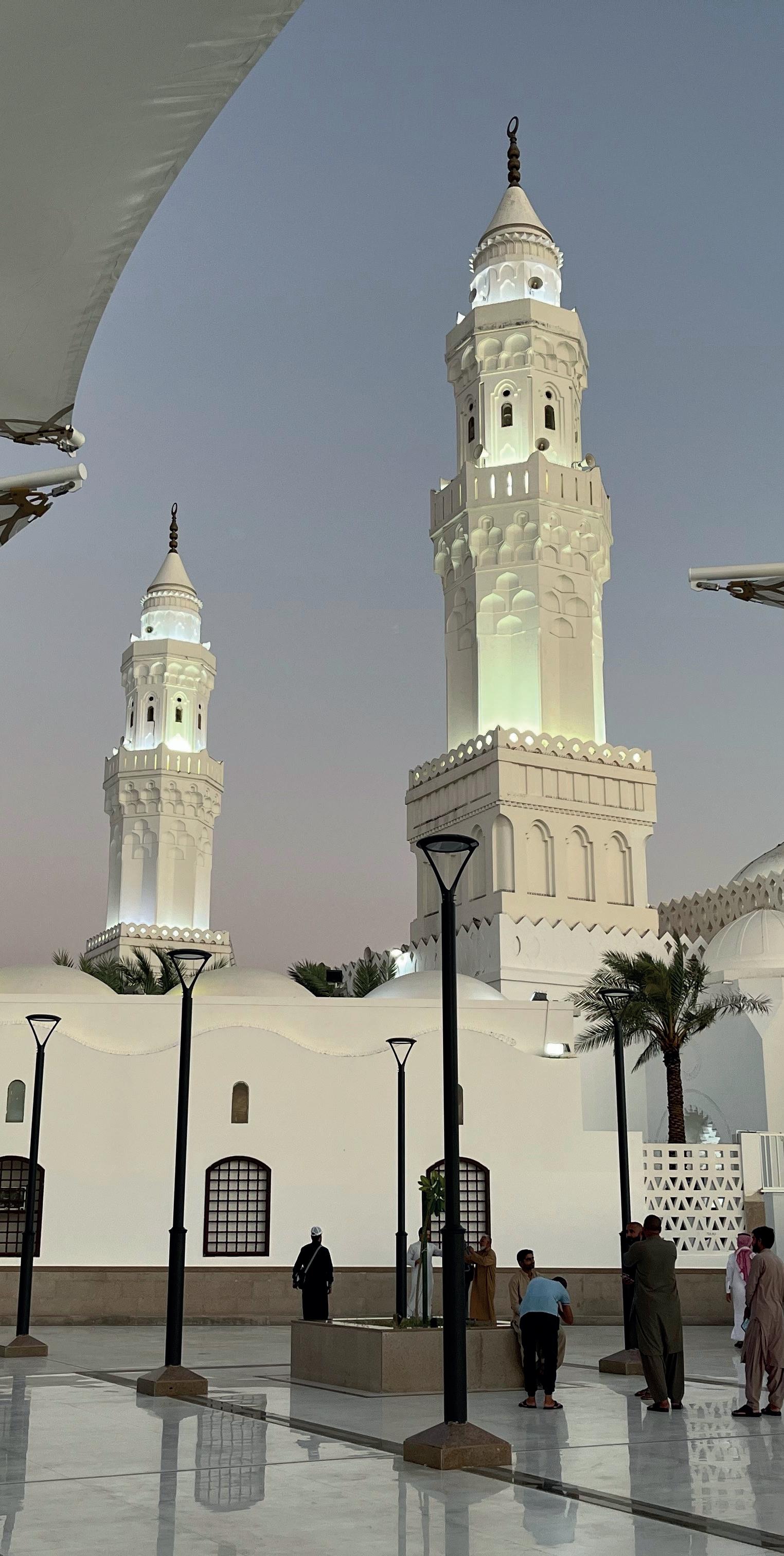
The Muslims began to settle into their new lives. The Emigrants sowed roots, and the Anṣār extended their branches over them, offering shade during their trials. To an onlooker, it may have resembled nothing more than a gathering of displaced people. In reality, Madinah was something else entirely, a beacon drawing the lost from the wasteland of worldliness toward Allah; a spiritual project to build a community that called to good in this world while its eyes were fixed on the next. Those who sought a connection with their Lord trickled into the city, a sanctuary for hearts pulled by divine longing.
The Prophet s understood that a community is not built on shared geography alone. Shortly after his arrival, he forged something deeper: a brotherhood between the Emigrants and the Anṣār, pairing each man who had left Makkah with a counterpart from Madinah. These
bonds were not ceremonial. They carried the weight of inheritance and mutual obligation. When Sayyidunā ʿAbd al-Raḥmān ibn ʿAwf g arrived in Madinah with nothing to his name, his Anṣārī brother Saʿd ibn al-Rabīʿ goffered to divide his home, his wealth, and his family in two. ʿAbd al-Raḥmān, moved but too dignified to accept, asked only to be directed to the marketplace. Within a year, he had built his own prosperity. The Anṣār had offered a hand; the Emigrants grasped it and then found their own footing. This was prophetically guided community.
During the Miʿrāj, Allah had honored the Prophet s with the five obligatory prayers, a path to His presence, an ascent offered to the faithful each day and night. In the second year of the emigration, now in Madinah, He bestowed upon them the fast of Ramadan to draw them yet closer in piety (taqwā): "O you who believe, fasting has been prescribed for you as it was prescribed for those before you, that you may
attain piety."
That same year, the qiblah itself shifted from Jerusalem to Makkah, as if Allah were turning His community's face toward the heart of Ibrāhīm's legacy and their own. He also gifted them the ʿĪd prayer and ṣadaqat alfiṭr, spreading joy and comfort among the Believers. Through the blessing of zakāt, wealth grew, the distance between rich and poor narrowed, and the community was fortified against the corrosion of unchecked greed. The future was full of promise, though the horizon still held shadows.
This project did not go unnoticed. Those who feared its success stirred with envy and malice. Among them were some of the Madinan Jews, the hypocrites who wore the face of Islam while harboring something else beneath, and the Arab
polytheists led by the Quraysh. They communicated with one another, conspiring to extinguish this flame while it was still young.
The Quraysh had plundered the wealth of the emigrant Muslims, raided the outskirts of Madinah, and propped up the enemies of Islam from within and without. They were not quiet rivals; they were open aggressors. In response, the Muslims prepared a small strike against an unguarded Qurayshī caravan led by the hostile Abū Sufyān. Allah, however, had destined something far greater.
Word of the strike reached the Quraysh, and Abū Jahal mobilized a military expedition in response. Hearing of the advancing army, the Prophet s turned to the Anṣār. Their original pledge had bound them to defend him within Madinah, and they had already exceeded
that pledge generously. Now, with war advancing beyond the city's limits, they were not obligated. The Emigrants, for their part, had pledged their lives to the Prophet s and to this cause without reservation. In that charged moment, the Anṣār chose bravery. They cast their fate beside his s and distinguished themselves from every faint-hearted nation before them, declaring they would not say what the children of Israel had once said to Sayyidunā Mūsā: "O Mūsā, we will never enter it as long as they are there. Go, you and your Lord, and fight. We will stay right here."
The combined Muslim force amounted only to 313. Severely limited in mounts and supplies, they marched toward the encounter, many armed with little. The Prophet s himself was no better equipped than the humblest among them. Across from them stood a thousand, well-armed, confident, and arrogant.
The night before the battle, the Muslims camped on loose sand while the Quraysh held firmer terrain and the water wells. Exhausted and restless, sleep claimed the Muslims like a mercy; a tranquility descended from their Lord to quiet their hearts and prepare their limbs. Then the sky, ever a servant to its Maker, offered another quiet mercy: a light rain descended, hardening the sand beneath the Muslims' feet while it muddied and encumbered the ground under the Quraysh. "He sent down
rain from the sky upon you to purify you with it, to remove the filth of Shayṭān from you, to fortify your hearts, and to steady your feet."
Meanwhile, Abū Sufyān had slipped away with the caravan. The original provocation was gone. One would have hoped Abū Jahal would turn his army home. Instead, arrogance carried him forward. He saw before him an opportunity to uproot the movement that had done nothing more than call mankind to the worship of one Allah. He pressed on.
As the battle lines took shape and the stakes came into full view, the Beloved s pressed his forehead to the earth. His blessed tears dropped into the dust. There was no delusion that morning, no false confidence about the odds. He knew their numbers. He knew their weapons. He knew what
hung in the balance. This was existential. If the Muslims were to perish this day, this fragile lamp of tawḥīd would be snuffed out, such heavy scales being weighed next to a small mount in a small land on a small island in the vastness of the universe.
his Lord: "O Allah, fulfill what You promised me. O Allah, grant me what You promised me. O Allah, if this band of Muslims perishes, You will no longer be worshipped on the earth."
If you keep faith with Muḥammad s, then We are yours
What is this world worth? The Tablet and the Pen are yours.
(M. Iqbal)
Yet the Messenger s understood what much of the world has not learned since: that empiric means alone have never been the true cause of anything, and that the real Cause is Allah alone. He turned to face the qiblah, raised his hands, and called out to
Sayyidunā Abū Bakr g watched this scene from close by until he could bear no more. He approached and said: "O Prophet of Allah, enough of your pleading to your Lord, for He will indeed fulfill what He has promised you."
The battle opened, as was the Arab custom, with single combat. Three of the Quraysh's most formidable warriors, ʿUtbah ibn Rabīʿah, his brother Shaybah, and his son al-Walīd, stepped out from the ranks. Three of the Anṣār bravely rose to meet them but were called them back. In their place, he s sent Sayyidunā Ḥamzah, Sayyidunā ʿAlī, and Sayyidunā ʿUbaydah
ibn al-Ḥārith l. This was merely the prelude.
When the Prophet s charged forward, bravery made flesh, the Muslims drew from him a strength they did not know they possessed. At one moment he reached down, lifted a handful of pebbles, turned toward the Qurayshī ranks, and cast them with the words, "May their faces be disfigured." Not a man among the enemy escaped without some of those stones striking his face and eyes. Allah would later confirm: "You did not throw when you threw; rather, it was Allah who threw."
The army of heaven, never distant from those it loves, was not absent. Angels descended from the third sky on horseback, weapons in hand, and struck the Qurayshī ranks. For the angels are not indifferent to the Believers: "Those who carry the Throne and those around it glorify the praises of their Lord, believe in Him, and seek forgiveness for those who believe: 'Our Lord, Your mercy and knowledge encompass all things. Forgive those who repent and follow Your path, and protect them from the punishment of the Hellfire.'"
When the dust settled, fourteen Muslims had given their lives as shuhadāʾ. Seventy of the Quraysh lay dead, among them Abū Jahal, the
Pharaoh of his age, brought down by two young Anṣārī boys who had each raced to be his end. Seventy more were taken captive. Even here, the mercy of the Beloved s extended over his enemies. The disbeliever Abū ʿAzīz ibn ʿUmayr would later recall that the Anṣār family charged with his custody fed him while leaving themselves hungry, until shame overtook him. Those captives whose families could pay their ransoms, paid. Those who were literate but
could not afford their freedom each taught ten Anṣārī children to read and write, earning their release in kind. The poor and unlettered were simply set free.
Allah named that day Yawm alFurqān, the Day of Distinction. It was the moment the fledgling community of Madinah announced itself to history, not through its numbers, but through its bond with the One who holds the outcome of all things. From this day forward, whenever jihād
became necessary, it would carry with it a covenant of justice and mercy, one that shields the innocent rather than abandons them. The prophetic command was clear: "Set out in the name of Allah, with Allah, and
upon the way of the Messenger of Allah. Do not kill a frail elder, a child, an infant, or a woman. Do not seize spoils unlawfully, gather your war gains, and make peace and do good, for indeed, Allah loves those who do good."
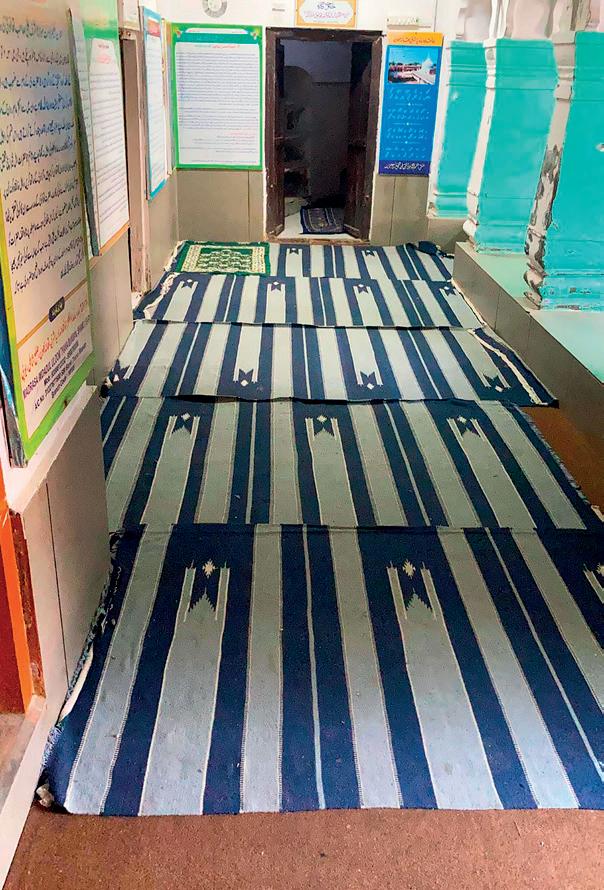
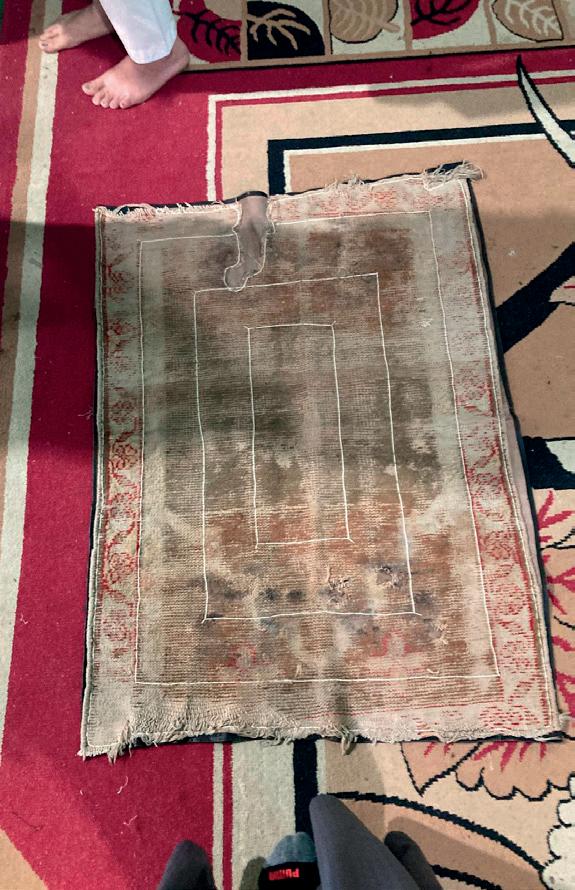
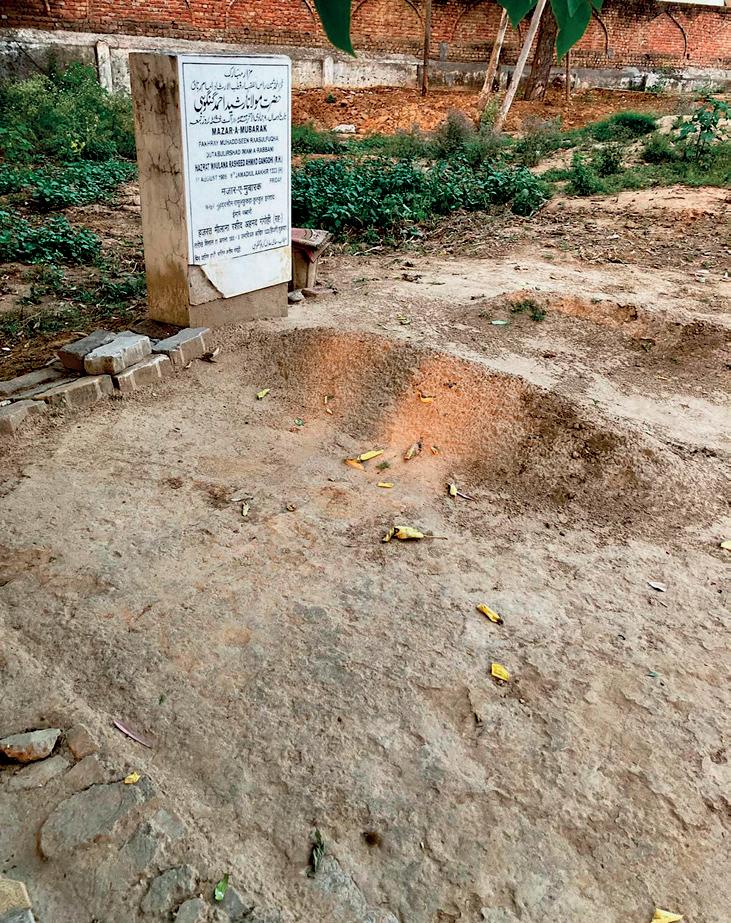

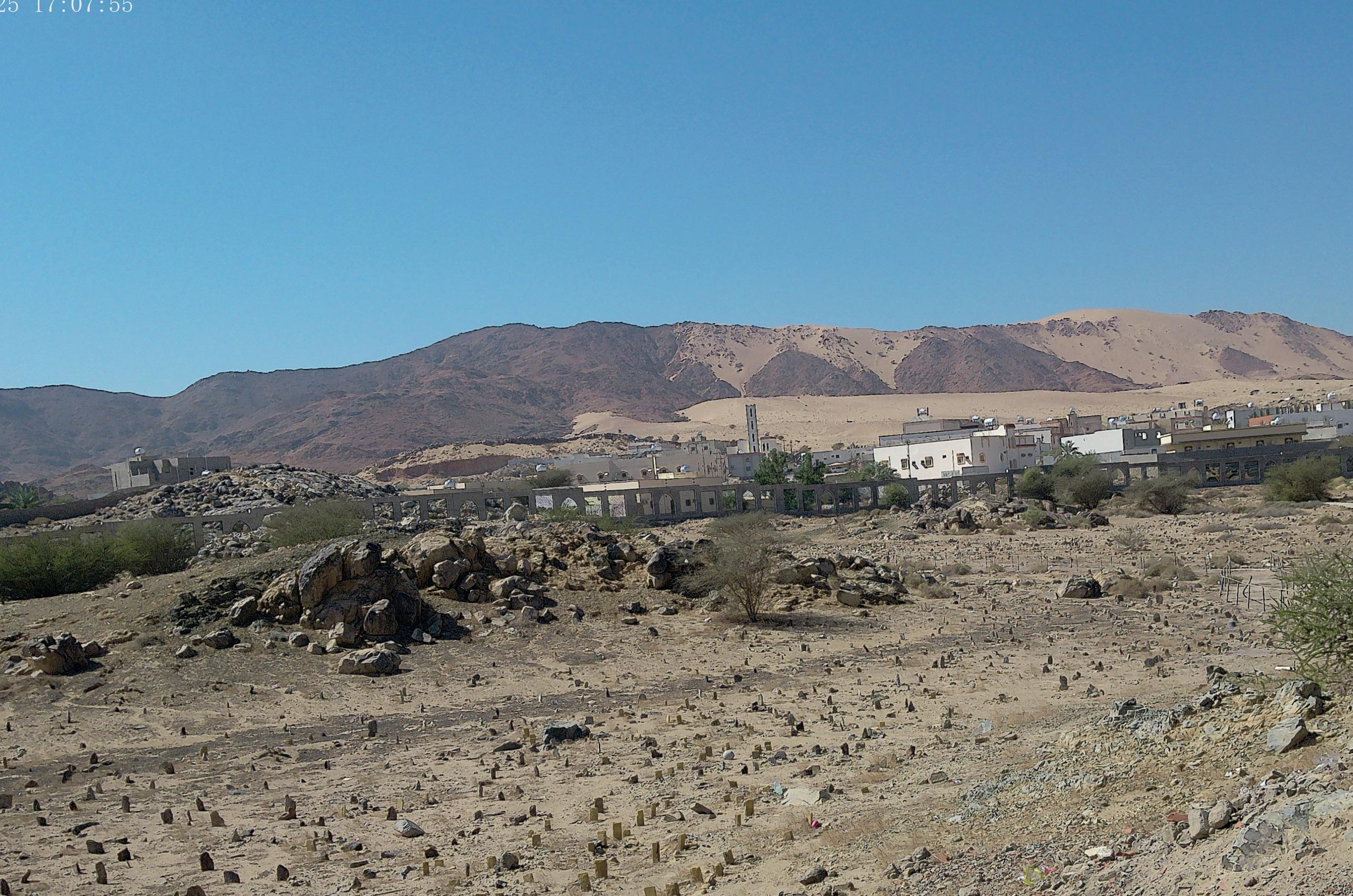
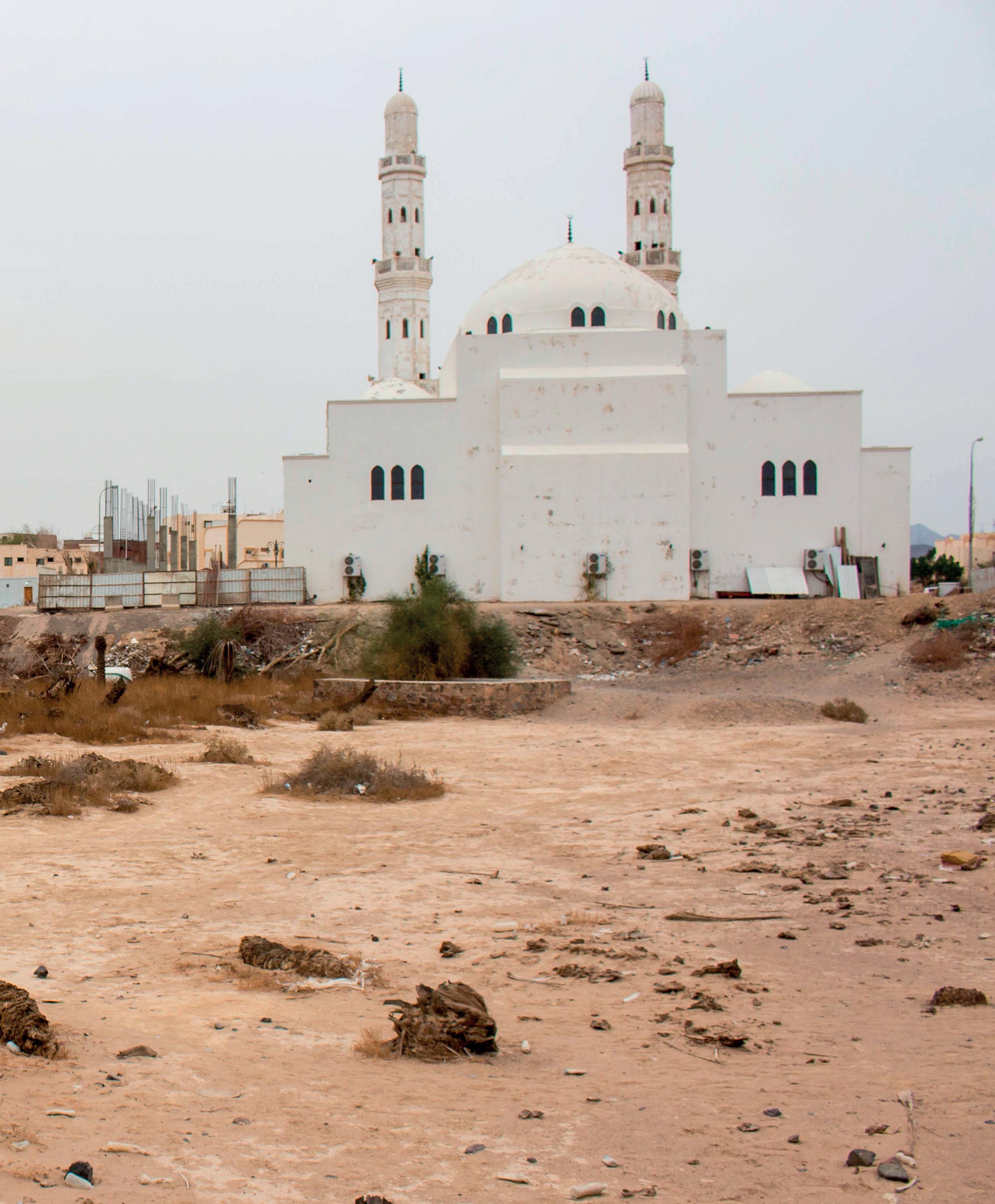
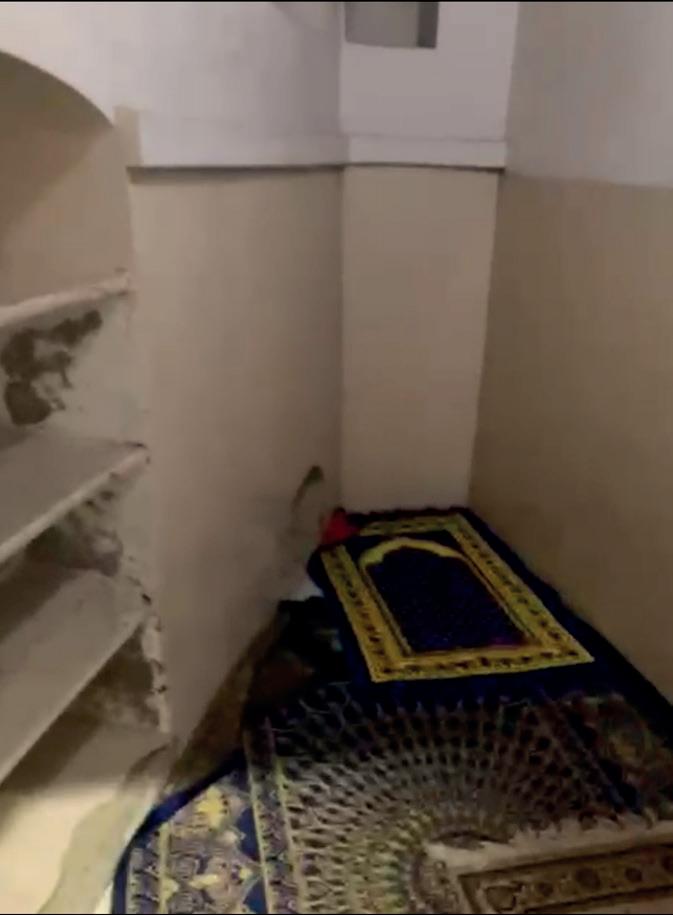
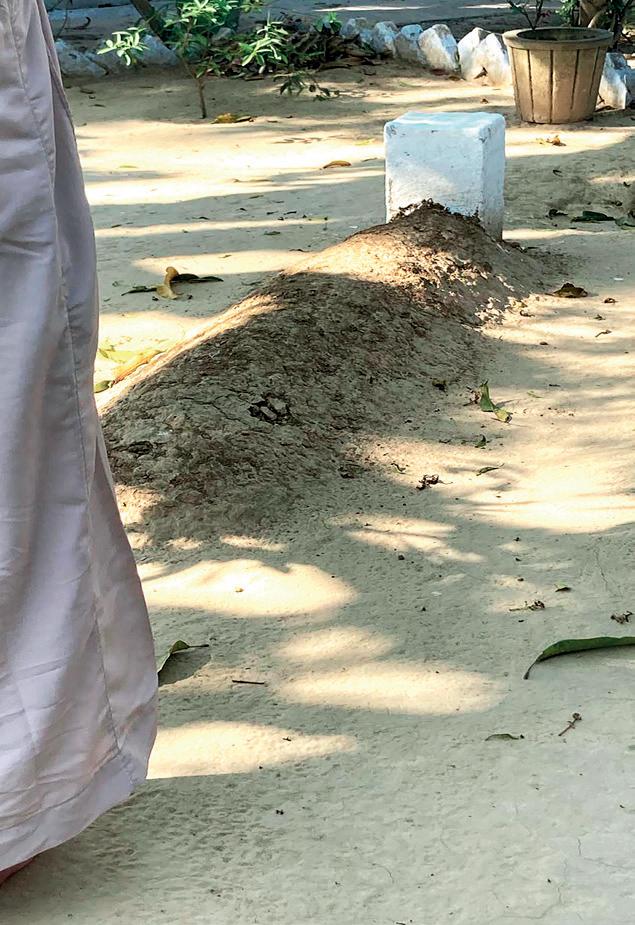
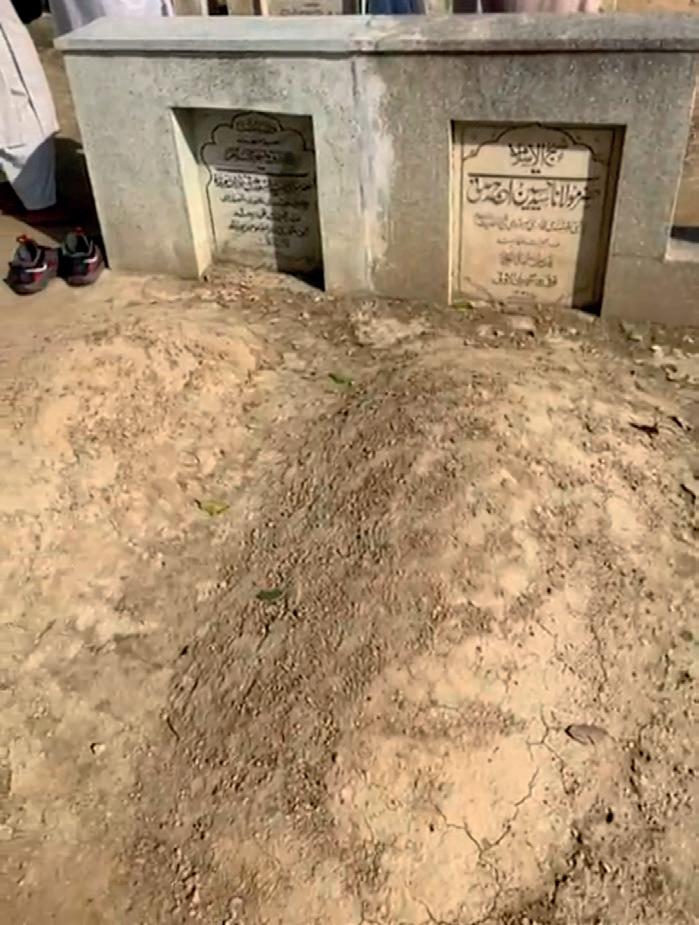
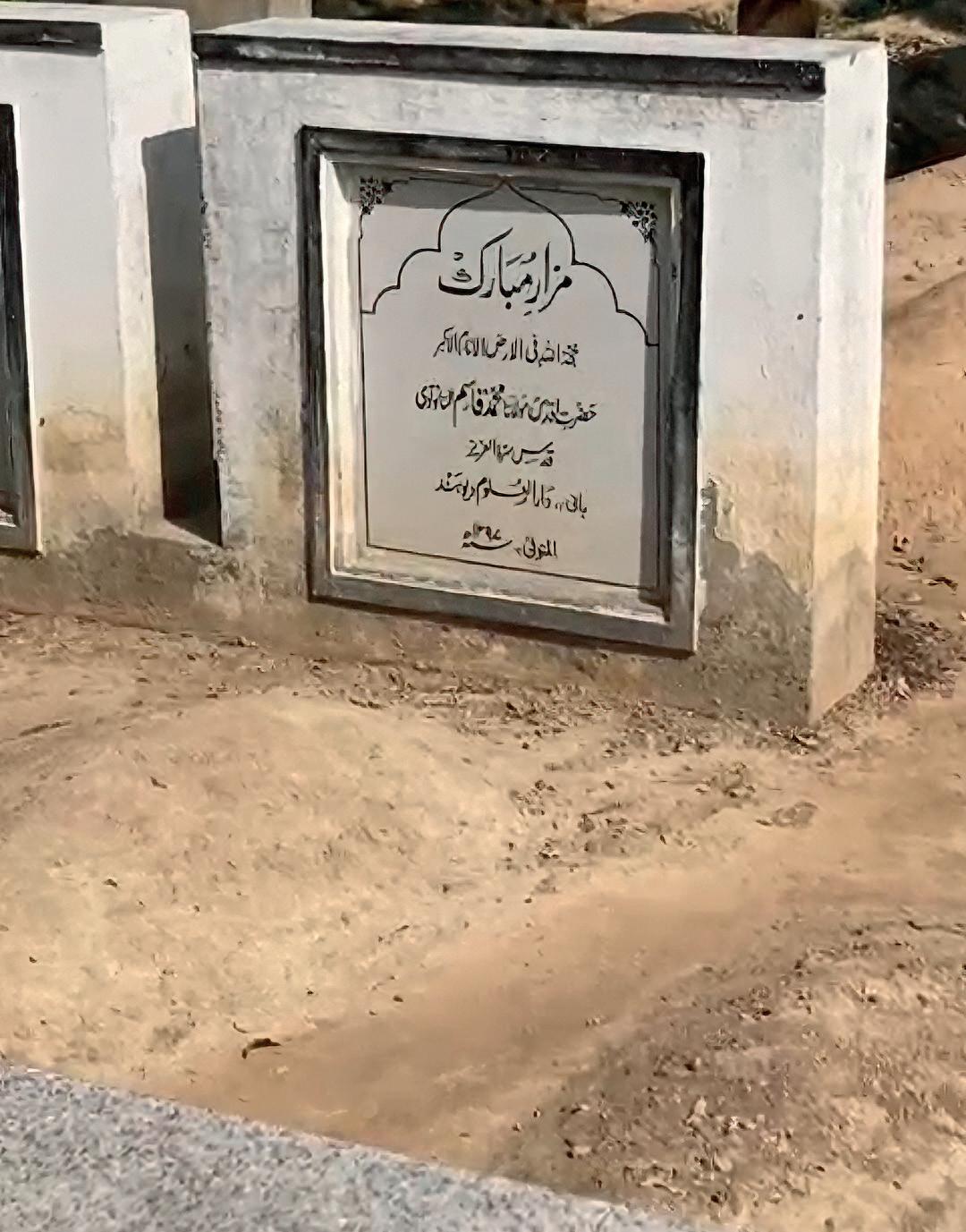
From left (counter-clockwise): khanqah of Hazrat Maulana Ashraf ‘Ali Thanawi r; musalla of Hazrat Thanawi r; grave of Maulana Rasheed Ahmad Gangohi r; room of Haji Imdadullah Muhajir Makki r; grave of Maulana Hussayn Ahmad Madani r; sitting area of Hazrat Shaykh al-hadith Muhammad Zakariyya r; grave of Maulana Ashraf ‘Ali Thanawi r; grave of Maulana Qasim Nanautawi r photos courtesy of Khalid Sajid Samrodia
Raising objections is easy. All you have to do is open your mouth and move your lips and that’s it. But to read into a situation and understand it as an authority (muhaqqiq) is far more difficult, which is why hundreds of objections are raised against the authority in a field. He looks at a topic from every angle while the average person is only looking at it from one angle. Obviously, it is much harder to look into a matter from all sides.
Once, the lexical and juridical definition of the word zindiq (a disbeliever who disguises himself as a believer) was being discussed in a panel of scholars. One scholar in the gathering said, “Zindiq is someone like Muhiuddin Ibn al-’Arabi.”
Another scholar in that gathering kept silent, but someone asked him in a private gathering [that took place sometime after] about the meaning of a Qutb (Pole of the Elders). He replied, “Muhiuddin Ibn al-Arabi.” The man said, “Shaykh, someone called him a zindiq in the other gathering, but you said nothing.” The shaykh said, “It was a gathering of scholars. To rebut him would cause a fire that would consume everyone (i.e., it would get everyone involved and cause discord among the scholars) and break down the order of the gathering. Now that we are in a private gathering, we have no such worries. The people of the zahir (outward) lack depth and scope of understanding, which is why they raise objections against the people of knowledge even
though it is nothing more than their own short-sightedness.”
The only way to make the wife obedient is to keep her happy. the same goes vice versa, i.e., it is the only way to make the husband happy with his wife.
Someone came to Hazrat (Thanwi) and said, “Hazrat, my wife has been sick for a long time. We received treatment from the hakeem, but we haven’t seen any improvement. Hazrat, make du‘a and give us some devotional prescription (‘amal) that we can do.” Hazrat said, “I will make du‘a; I am not an ‘amil (spiritual healer), but I have heard from the elders that if you recite Sura Fatiha 41 times after Fajr salat and blow it on water and then give that water to the sick, insha’Allah, it will benefit them.”
The Sahaba were the synthesis of polar opposites, which is the highest attainable rank (for humans). Their love for the Prophet s was so much that before the Prophet’s wudu water hit the ground, they would rub it over themselves. But at the same time, they were so open with him that the Prophet s once poked a sahabi on his side. The sahabi sought requital and the Prophet s relented. The sahabi then proceeded to kiss the Prophet s on his side instead. The companions of other prophets loved their prophets too but it was incomparable to the the Sahaba for the Prophet s. And it was this beloved nature of the Prophet s which made them zealous in
their love for him. People raise the objection that Islam spread by the sword. Hazrat Maulana Qasim Naunatawi gave the best reply to this absurdity saying, “The sword does not just swing and cut on its own. Someone has to hold and swing it. So who held the sword to the first Muslims who spread Islam by the sword?” Thus, we understand that it is some other force that brought the first Muslims to Islam, and that was the beloved nature of the Prophet s and his beautiful character. This is the case with humans, but it applies equally to animals. In Hajjat al-wida’, the Prophet s slaughtered the camels, but they were competing with each other to be the first to be slaughtered by him. What sword was hanging over the heads of these camels that made them want to outdo each other to be the first to be slaughtered by the Prophet s?
One of the most beautiful qualities of Shaykh al-Hind Mufti Mahmood Hasan was his aversion to the wealthy and powerful. If any such person came to sit in his company, he would be uptight until they had left. Usually, when such people sit with the ulema, the ulema would serve them and ingratiate themselves to them.
Contentment can only be attained when you stay within your needs. The moment you exceed your needs and strive to fulfill your wants, contentment becomes out of reach.
-Malfuzat of Hazrat Thanawi

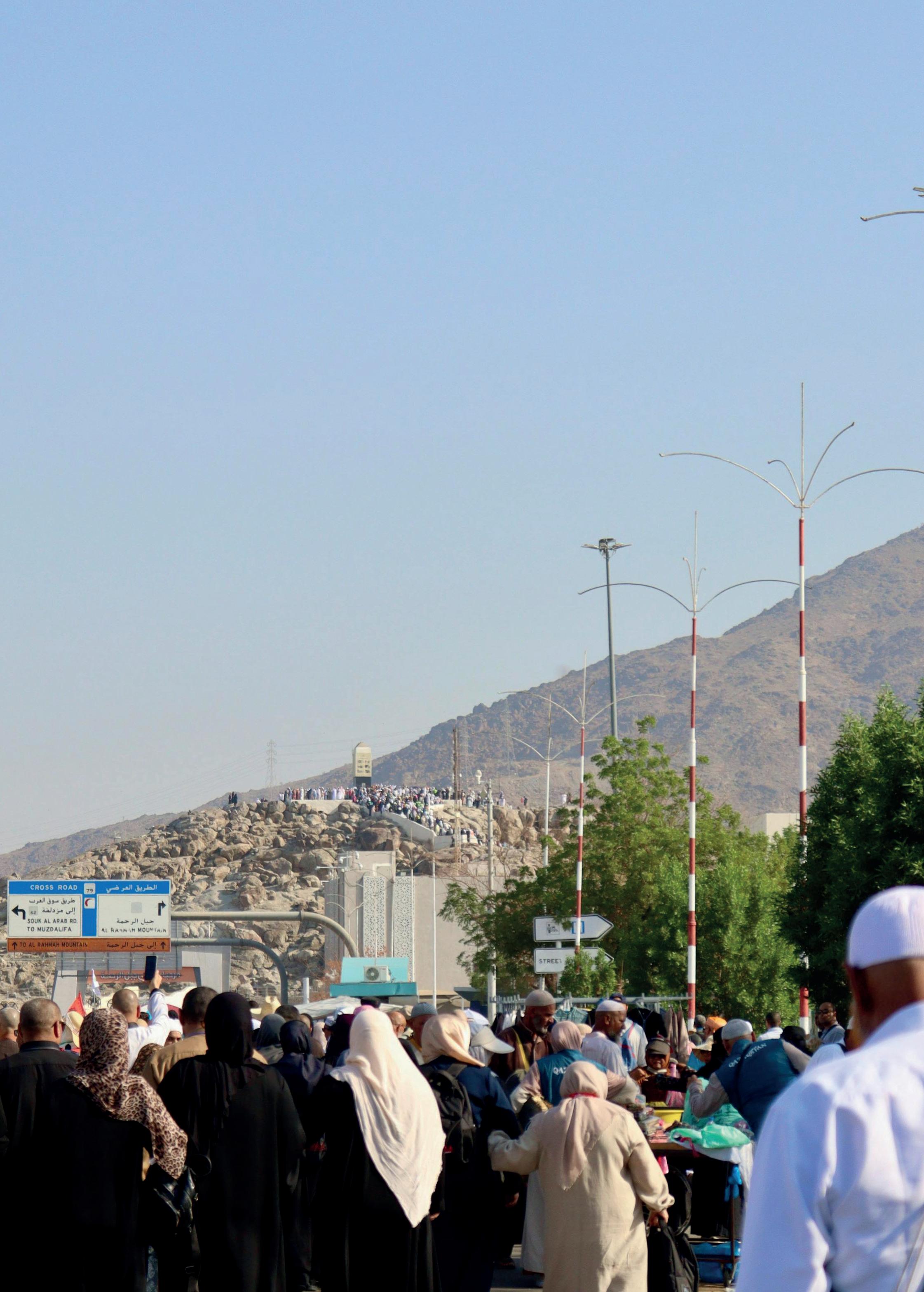
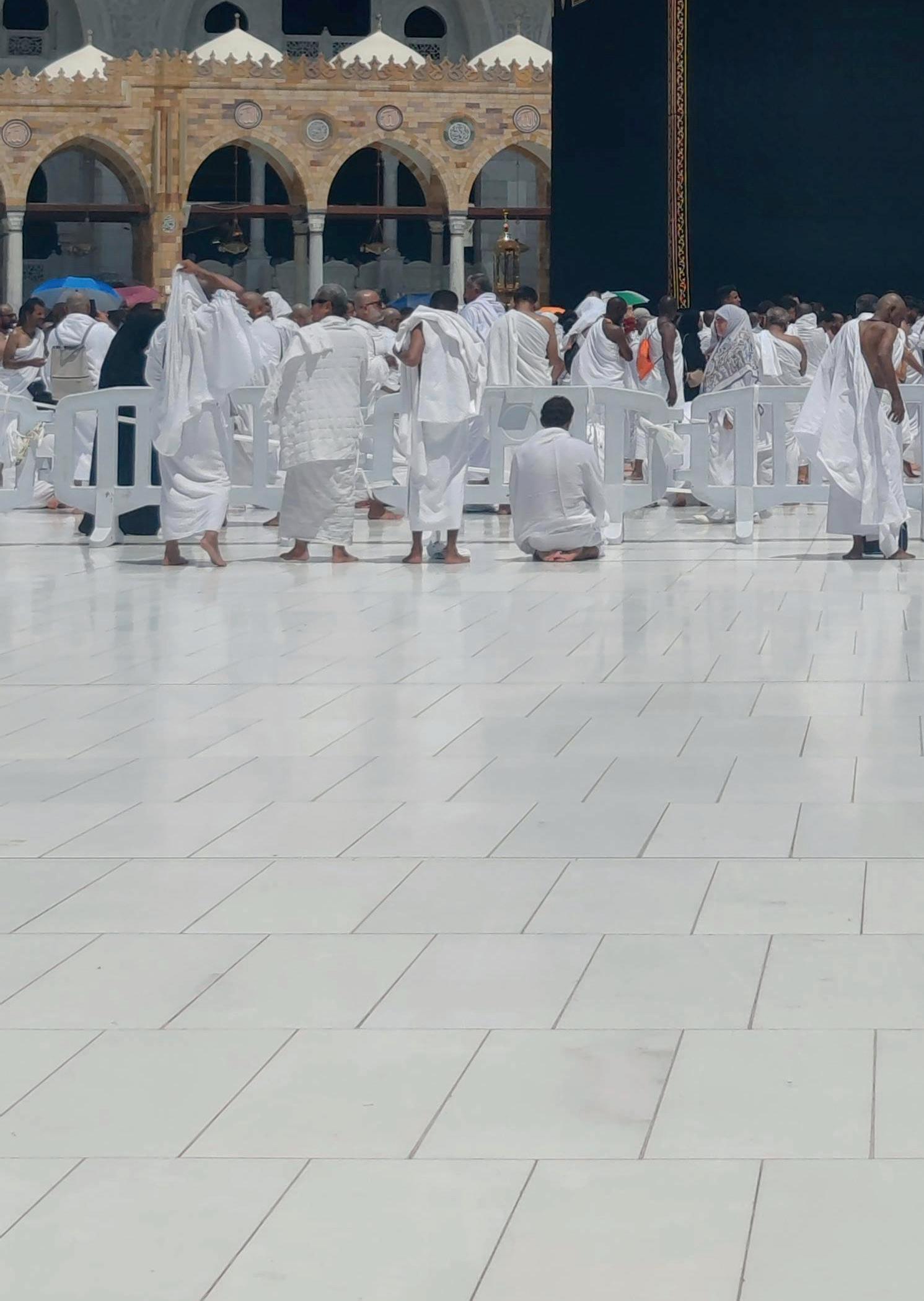
Hajj season is in and many are preparing for the epic journey. But what does hajj even mean, what are its roots, and what other words derive from the same root that are found in the Qur’an and Sunna?
Hajj derives from the root ha-ja-ja, which means qasada, or to intend.
Hajja ilayna means ‘he came to us,’ I.e., he acted out his intention to come and so, he came. Since hajj is about strug- gle and sacrifice, there has to be firmness of intention to navigate one through the strug- gles associated with the epic journey. This is why hajja is used in the meaning of ‘to intend’ but also ‘to come for hajj.’
Hajjaj
A person who has performed many hajj as opposed to hujjaj which is plural of haajj, the person who has performed hajj.
Hijja and hajj
Hijja is a year (pl. is hijaj, or years).
Hajj is also the month of Shawwal, Dhu alQa’da, and first ten days of Dhu al-Hija in which hajj is performed. Allah says, “al-Hajju ash-hur ma’lumat (Hajj is the well-known months).”
Hujja proof; evidence, or the statement that silences an adversary. Al-tahaajj is a dispute. A man who is argumentative is mihjaaj.
Hajja yahujju is a verb which means ‘to prevailed in a dispute.’ In a hadith: hajja Adamu Musa (Adam prevailed over Musa in a dispute).
Hajeej is the person who de- fends another by dis- puting and ultimately prevailing over the adversary. The Prophet s said, “If Dajjal appears while I am among you, I will be his hajeej.”
Hajj and hijj (root words)
Hajj is a visit to the House of Allah while hijj is annual commute to a place. For example, hajajtu fulanan from hijj means I went to him from time to time throughout the year.
Dr. Kamran Karatela, MD
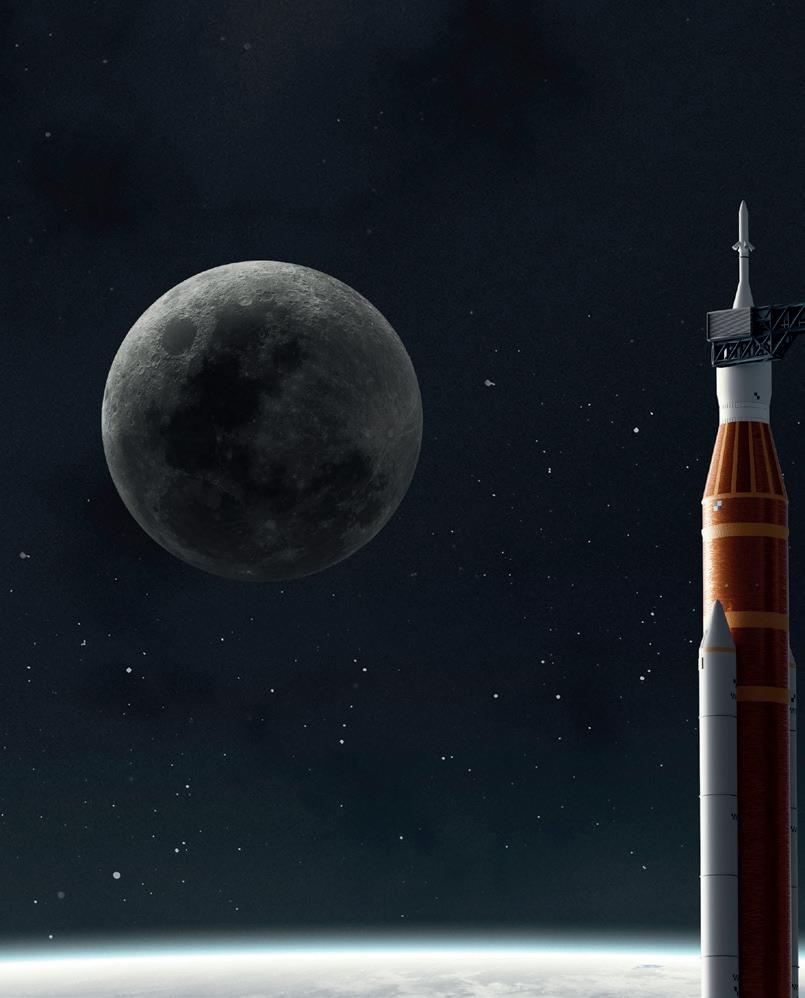
Ihad to pinch myself again and again. Okay, I wasn’t dreaming. I received news that I was selected to join the first crewed mission of the Orion, the spacecraft traveling beyond the low orbit of the earth since the Apollo. That would put me farther from the earth than any human have ever traveled. For a moment the world felt too small to hold the feeling. Fascinated with poetic descriptions of the beauty of the moon, it was an utmost thrilling moment to imagine that I would actually “flyby” the moon, viewing parts of the lunar far side with the naked eye for the first time in human history. Our Artemis II mission spanned 10 days and would involve launching from the Space Launch System, translunar injection, lunar flyby, return trajectory to earth with high speed (about 40,000 km/hr) re-entry and then finally ocean splash down. That re-entry speed would make it one of the fastest human spaceflights ever.
How exciting!
But fear didn’t lag behind. It crept in during quiet moments.
Space isn’t just beautiful; it’s indifferent. One mistake, one failure, and there’s nothing out there to catch you. The distance alone is enough to make your chest tighten. You’re not just going somewhere far—you’re leaving everything you’ve ever known, your family, your friends and 8.3 billion fellow human beings! The feeling that I would not be part of this world even for a brief time was indescribable.
The news stunned everyone. My wife stood there motionless not knowing how to react. The children shouted jubilantly, “Baba is going to the moon!” The 18-month-old clung to me demanding that I take him with me.
But the mix of awe and worry was evident through their eyes. There was a strange split inside me. One part was already out there, racing ahead

SPACE ISN’T JUST BEAUTIFUL; IT’S INDIFFERENT. ONE MISTAKE, ONE FAILURE, AND THERE’S NOTHING OUT THERE TO CATCH YOU.
toward the rocket, toward the black sky, toward the moon. The other part was still standing there, not quite ready to let go. Fear was holding me back, while excitement propelled me forward. The thought of a lifetime experience ahead of me mellowed down the apprehensions.
I pondered how it would be to leave this world permanently, an event destined to happen one day. The ayah of Surah Ankabut, “Every soul will taste death” echoed in my mind. A day when suddenly I would be summoned back. A journey not speculative but definitive. No time to
plan. No time to say goodbyes. No means of returning. Just a one-way ticket.
Then I thought of the second portion of this ayah, “…. then to Us you will be returned.” The thought of uniting with your Lord is enticing. A lover is always yearning to meet his Beloved. It withers away the fear of death with the anticipatory joy of meeting the Rabb who too is eager to meet His servant. As Rumi says, No distance left, no fear to hold onto— only a presence vast and gentle, recognizing me before I could speak.
In that moment,
THE HEART IS A PLACE FOR IMAN (FAITH), MARIFAT (AWARENESS), AND THE MUHABBAT (LOVE) OF ALLAH—NOT FOR HATRED AND RESENTMENT.”
I would not ask, “Where are You?”
Because I would finally understand—
I had never been apart.
I remember my Shaikh, Dr. Mohammad Ismail Memon, few months before his passing away said to me, “I have outlived the age of our elders. I wish Allah calls me to Him. It is time for me to go, so let me go.” His poignant words carried so much yearning to meet his Rabb that a trembling goblet rose in my throat, and my eyes filled with tears. Certainly, the awliya of Allah have no fear to depart this world and in fact are looking forward to the meeting with their Rabb.
During my final days of preparation everything felt heavier than it should have, like each second was being stretched thin. I noticed details I had never paid attention to before—the way someone smiles, the sound of their voice, the feeling of a simple hug. How many things you take for granted. How meaningful certain moments are, but you never take time to feel the weight of them as they pass, only realizing their depth when they’ve already slipped into memory. I began to reflect how good of a husband have I been. As Alllah says, “And among His signs is that He created for you mates from among yourselves, that you may find tranquility in them and He
But Allah sent down His tranquility upon His messenger and upon the believers and imposed upon them the word of righteousness (taqwa), and they were more deserving of it and worthy of it. And Allah knows everything.
placed between you affection and mercy. Indeed, in that are signs for people who reflect.”
Have I upheld this affection and mercy? I felt I’m known to the world as measured, fair, even noble in my ways—but that image feels incomplete when I turn inward. I asked myself quietly: who was I in the small, unseen moments at home? The truest measure of me wasn’t in how I was perceived outside, but in how I’ve spoken, listened, and shown patience to the one closest to me. If the best of men are those who are best to their wives as per the hadith, then my real character was written there—and I’m still learning how to live up to it. How I wished I had told her how much I loved her, not in words but in my actions.
And the countless people for whom I had quietly carried ill feelings and grudges within my heart. I remembered the words of Haji Imdadullah Muhajir
Makki: “The heart is a place for Iman (faith), marifat (awareness), and the muhabbat (love) of Allah—not for hatred and resentment.”
How I wished I had more time to clear away that inner dust and cleanse my heart before my departure. My shaikh taught that the path to cleansing the heart lies in the company of the righteous and in the remembrance of Allah.
Finally, the bags were packed. The schedule was real. Only hours to it, saying
goodbye was nothing like I had imagined. I told myself it was just another trip. But it wasn’t. I was going to depart not from a town, not from a country, not from a continent but from this earth. In knowing that as proud my family could be, I could see that mixed flicker of admiration and fear in their eyes. They know where I was going. They knew what it meant. And so, did I.
It was an ordinary morning. The earth had already started to feel strange to me as in about few minutes I would detach myself from it.
The vibration started before I even realized it.
It was subtle at first—just a low hum under your boots, like standing on a giant machine that’s spluttering up. The cabin of Orion began to tremble, every surface alive with energy. I glanced across at my crewmates; no one said much. There was nothing to say.
Then ignition.
The push was immediate and absolute. My body sank into the seat as the rocket climbed, faster and faster, a controlled explosion carrying me away from Earth. The sound wasn’t just something you hear—it was something you felt, deep in your chest. I tried to focus on my breathing, on the checklist, on the calm voice in my headset.
“Max Q.”
The shaking intensified briefly, then smoothed out. I was leaving the thickest part of the atmosphere. The sky outside— what little I could see through the small window—had already shifted from blue to a deep, endless black.
And then, suddenly, the engines cut. Silence.
My straps loosened slightly as I began to float. A pen drifts past my face, escaping someone’s checklist.
We were in the orbit.
Once in orbit, there was no true silence as fans hummed and electronics whispered—but compared to the violence of launch, it felt like the universe itself had gone still.
In this silence, I found myself wondering what it would feel like when my soul leaves my body. It is said that the more deeply one is attached to this world, the harder it is for the soul to part from it—while a stronger connection to the Hereafter makes that departure gentle and easy.
Our spacecraft was destined to reach low Earth orbit (which we just did). The next step was to perform a translunar injection burn to escape Earth’s gravity. The total energy required by the Space Launch System was 1–1.3 terajoules (TJ) which is like powering 50,000–100,000 homes for an entire day or driving tens of thousands of cars non-stop for a full day requiring 2 million liters of fuel. In other words, sending Orion to the Moon took as much energy as running a small city


for a day—just burned all at once to break free from Earth.
Once in orbit, there was not true silence as there were fans humming and electronics whispering—but compared to the violence of launch, it felt like the universe itself had gone still.
I recalled a well-known story about Farid ud-Din Attar, from the time when he was still a prosperous perfume seller, surrounded by delicate bottles of scent and worldly comfort.
One day, an old dervish entered his shop—simple in appearance, carrying nothing of value. He looked around at the rows of fine perfumes and then fixed his
The old man asked quietly, “Tell me, when your time comes… how will your soul leave you, surrounded by all these things you love?”
Attar, slightly taken aback, replied, “And how will yours depart?”
The dervish said nothing more. He lay down on the ground, turned his face toward the heavens, and uttered the name of Allah. Within moments, his soul slipped away—peacefully, effortlessly.
Attar stood frozen.
The question that had seemed so simple now struck him with full force. He looked around at his shop—the fragrances, the wealth, the attachments—and realized how deeply bound he was to them.
That moment changed him.
He abandoned his trade, his comfort, and his possessions, and devoted himself fully toward the path of spiritual seeking. In time, he became one of the great voices of Sufism, reminding others that the heart must be freed from attachment if it is to return to its Lord in peace.
It reminded that what we cling to in this world may be what holds us back when it is time to let go. Would I let go the things that I have clung my heart to? For my soul to depart as smoothly as Orion, not only I would need tremendous amount of “ Imanic“ energy but also would have to detach myself from the worldly affairs. What is my connection uld it be a smooth transition? My shaikh taught me that the path to attain this was frequent remembrance of death.
Translunar injection came hours later. I was strapped back in as the engine fired again, pushing me out of Earth orbit and onto a path to the Moon. This burn was steadier, longer—less violent but more profound. We were not just going up anymore.
We were leaving.
The first time I looked back at Earth, it caught me off guard.
It was not just a view—it was a presence. A bright, curved horizon glowing with blues and whites, wrapped in a thin, fragile atmosphere. No borders. No noise. Just… whole.
I thought I’d be prepared for this. I

wasn’t.
The glimpse reverberated with verses of the Qur’an in my mind, inviting me to pause and reflect—not just to see the earth, but to truly notice its balance, beauty, and purpose.
“And the earth—We spread it out and cast therein firmly set mountains and caused to grow therein every beautiful kind.” (50:7)
Yet, in that same moment of awe, there arose a quiet sorrow, remembering how this beautiful trust has been disturbed by human hands. The Qur’an reminds us that ‘corruption has appeared on land and sea because of what the hands of people have earned’ (30:41), and indeed, from above, one can almost sense the scars of that imbalance. n
Hunger, wars, injustice, and mischief— each one a wound upon the face of a world once created in perfect balance. What was meant to be a place of harmony and stewardship has, in so many ways, been burdened by human hands. We look at this Earth, so vast and beautiful, and yet we see children who go to sleep hungry, nations torn apart by conflict and genocide. Systems that fail to uphold even the most basic sense of justice. It leaves one to wonder how far we have drifted from the trust placed upon us. This Earth, so carefully shaped and sustained, feels like a mirror now reflecting both its divine beauty and our neglect of it. The harmony intended for the earth feels disrupted, as though we have forgotten the command, “Do not cause corruption on the earth after its reformation” (7:56).
From the horizon, the Earth looked bright and full of life, yet somehow thirsty for love—quietly calling us back, urging us to repair, to mend what is broken and to honor the trust we have been given. Indeed, the solution to restoring har-

mony in the world lies in returning to the guidance of the Creator and following the teachings brought by the Prophet Muhammad s, which were meant to instill justice, mercy, and balance to humanity. When these principles are lived with sincerity—honesty, compassion, and responsibility—the corruption of the world begins to heal, and hearts and societies are drawn back toward peace.
There was a quiet awareness in the cabin by then. Earth was already shrinking behind us slowly but unmistakably. The Moon, at first just a distant shape, began to grow.
Time changed out there. Without the usual markers— sunrise, sunset, gravity—everything felt both faster and slower. You eat, sleep, run procedures, but a part of your mind is always aware: you are farther from home than any human has been in over 50 years.
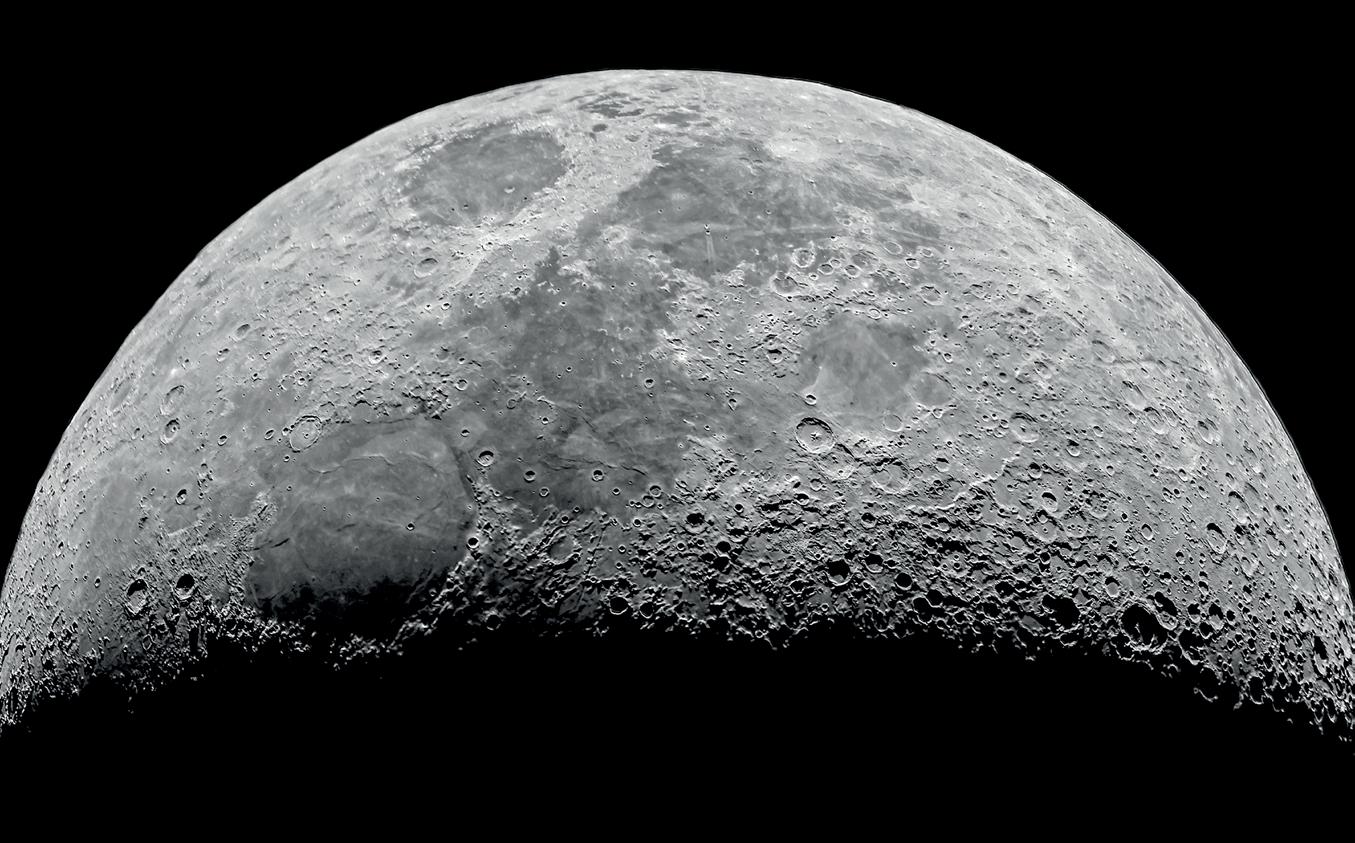
By the second day, the Moon dominated the window. It was not the small, familiar disk I had seen my whole life. It was massive. Textured. Real. I could see craters casting long shadows, ridges cutting across the surface, a world that suddenly felt close enough to touch.
It brought to mind a familiar argument often raised by secular, Islam-averse voices—those who pride themselves on “modern enlightenment.” They mock the Sunnah of the Prophet s, saying, “Humanity has reached the moon, yet you remain occupied with outdated practices.”
And yet, here I was—so close to the Moon, witnessing what many would call the pinnacle of human achievement. It was, no doubt, the accomplishment of a lifetime. But a deeper realization settled within me: this was never the true purpose of my existence. I was not created mere-
ly to traverse distances or reach celestial bodies, but to worship Allah—to live in obedience to His commands and to follow the blessed teachings of the Prophet s. If even at such a height—standing at the edge of the heavens, with the Moon within my reach—I failed to recognize my Creator, then what value did any of it truly hold?
For what is the worth of conquering distances in the universe, if one remains distant from the One who created it all?
A single Sunnah of my beloved Prophet s had more value than all of this voyage combined.
I am not opposed to human progress— indeed, it is remarkable and worthy of admiration that humanity continues to make leaps in scientific discovery, reaching farther into space and uncovering what once seemed unimaginable. These achievements reflect the intellect and potential that Allah has placed within us.
Yet a troubling question remains: what is the intention behind this advancement? If the driving force of nations and competing powers is not the betterment of humanity, but dominance over one another, then such progress risks losing its moral foundation. We already witness how the same powers capable of great innovation can also bring immense harm—through conflict, exploitation, and the neglect of justice—not only upon people, but upon the Earth itself.
If we have struggled to care for this world entrusted to us, while simultaneously waging wars to control and overpower, what then does it mean to extend our reach to other worlds? The concern is not the expansion itself, but the mindset we carry with us. Without responsibility, humility, and moral guidance, even the most extraordinary achievements can become instruments of harm rather than

I felt the G-forces press me down, heavier and heavier, as if Earth itself was reclaiming me.
sources of good for humanity.
The return journey began with another burn, sending us back toward home. The Moon receded, the Earth grew, and gravity— absent for days—summoned us back.
Re-entry was its own kind of trial.
The spacecraft slammed into the atmosphere at incredible speed. Plasma built outside, glowing orange and red, cutting off communications once again. The cabin heated, shook, roared. I felt the G-forces press me down, heavier and heavier, as if Earth itself was reclaiming me.
Then parachutes deployed.
A jolt. A sudden, welcome deceleration. The ocean rose up to meet me.
Splashdown.
When the hatch finally opened and fresh air rushed in, it smelled different than I remembered. Stronger. Richer. Alive.
I took a breath and realized something simple but overwhelming: I went to the Moon… and I came home.
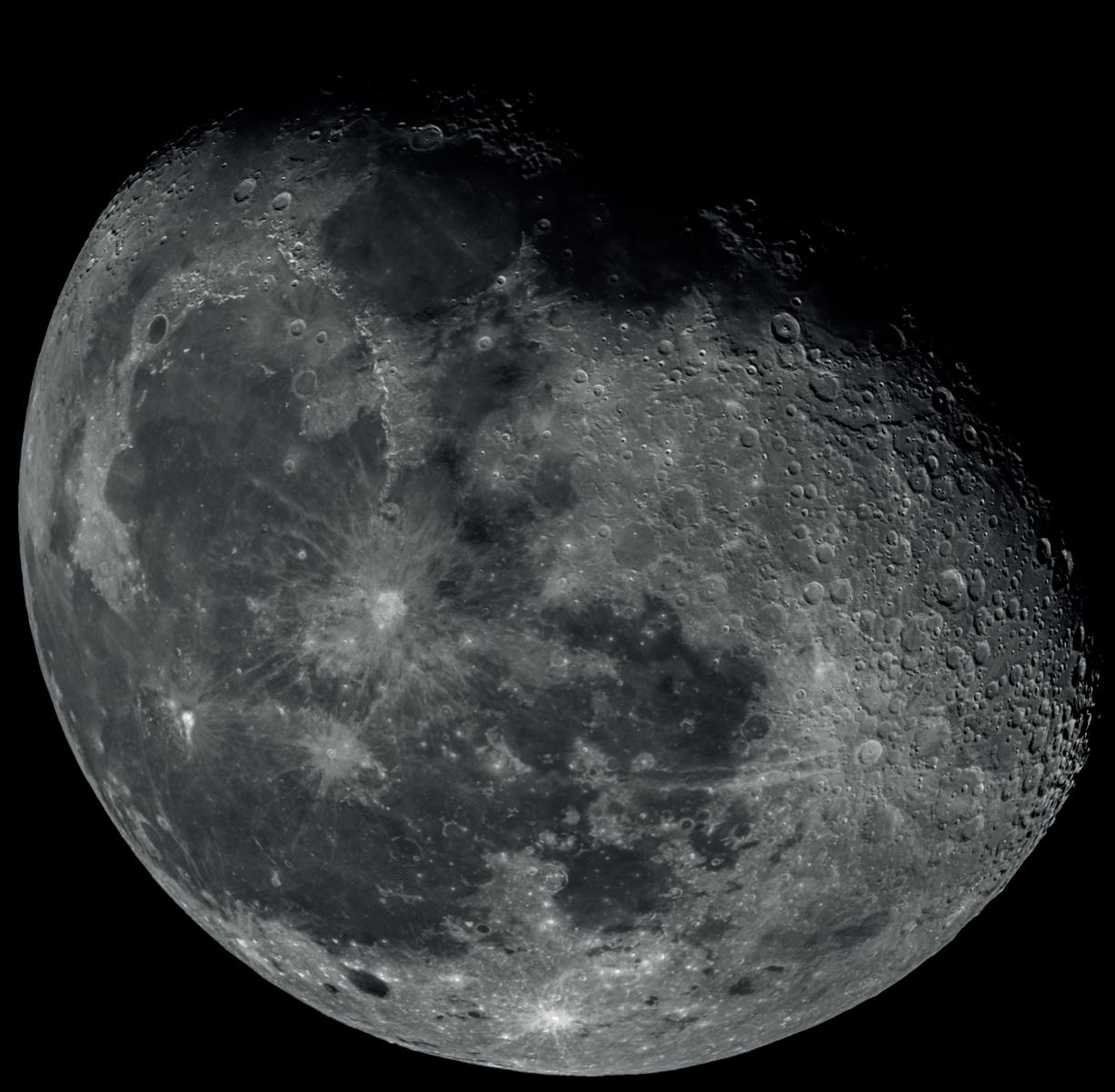




The Day of Judgment will not happen until time will be compressed, a year will be like a month and a month like a week.
Tirmidhi: 4/363
Q: If an individual is to drink any flavored beverage and then proceeds to pray salah while the taste of the drink remains in his mouth, does this invalidate the prayer? Would it be necessary for one to rinse/gargle his mouth prior to starting salah?
A
: The mere presence of the taste from a flavored drink in the mouth does not invalidate the prayer. In such cases where the amount of drink is little, his prayer will be valid, and he will not be required to rinse his mouth beforehand. If the flavor is greater than the amount of saliva after starting the salah, and he swallows it, his prayer will be invalid. Although it is not obligatory to rinse or gargle one’s mouth before beginning salah, there are narrations that
support this practice, indicating that it is preferable. Ibn ‘Abbas g narrates, Allah's Messenger s drank milk and then rinsed his mouth and said, "It contains fat/greasiness" (Bukhari and Muslim).
Q: A couple of years ago, I did not have basic knowledge of the deen and thought that I didn’t have to give udhiya. I realized later that I was wrong in my thinking. Now, what should I do about the few years
The mere presence of the taste from a flavored drink in an individual’s mouth does not invalidate prayer. In such cases where the amount of drink is not significant, his prayer will be valid.
I missed giving udhiya when it was incumbent upon me?

A
: If a person failed to perform udhiya in previous years due to a lack of knowledge regarding its obligation, they should sincerely repent to Allah for this shortcoming. Furthermore, they must compensate for any missed udhiya by giving its equivalent value in charity to the poor for each year it was missed.
Q
: If a person is to hear the adhan from multiple masjids at the same time, or at separate times, which adhan should they respond to?
A: While it is recommended for a person to respond to every adhan they hear, it is only necessary to respond to the first adhan that they came to hear.
will not be wajib (necessary) upon him.
Q: What is locust bean gum? Does it actually derive from locusts? Will a
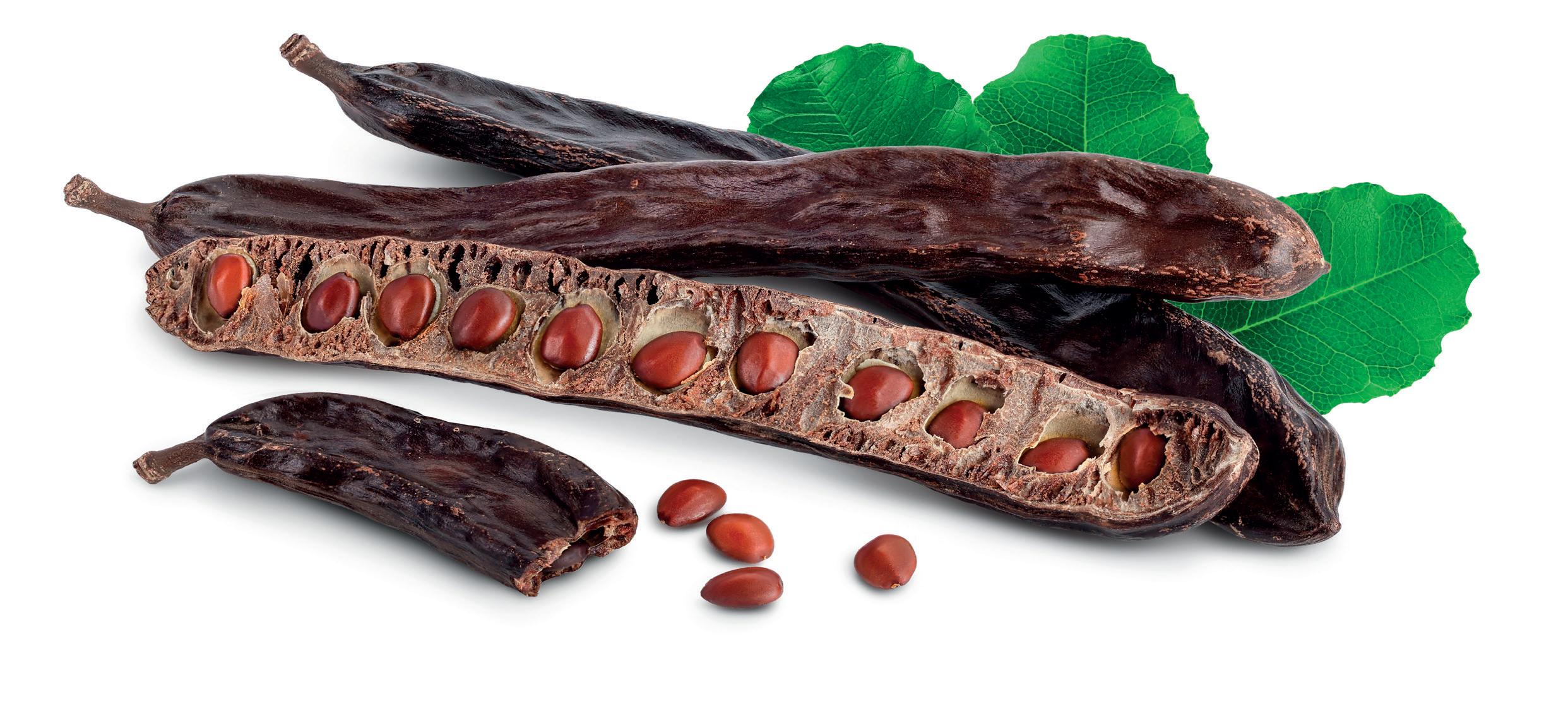
product having this ingredient be halal to consume?
Q: What is the nisab of udhiya?
A: In principle, the nisab of udhiya is equivalent to two hundred dirham (612.36 grams of silver). This amount excludes the value of essential personal belongings, such as one’s home, food, clothing, and similar necessities. If a person does not have the nisab during the days of Nahr- 10th, 11th, 12th of Dhul Hijjah, udhiya
A: Locust bean gum is 100% plant-based, derived from the seeds of the carob tree. It is not related to the insect known as a locust. It is used as a stabilizer, emulsifier, and thickener in food products like ice cream, cream cheese, yogurts, and plantbased milks. Therefore, a product containing locust bean gum will be halal and permissible to consume.
Locust bean gum is 100% plant-based, derived from the seeds of the carob tree. It is not related to the insect known as a locust.
Q: Do I need wudu to perform sajda tilawat?
A: It is a requirement to be in the state of wudu to perform sajdah tilawah.
Q
: can one perform sajdah tilawah at any time of the day? Are there any timings that are makruh or impermissible as is the case with salah?
A: Sajdah tilawah may generally be performed at any time, except during three
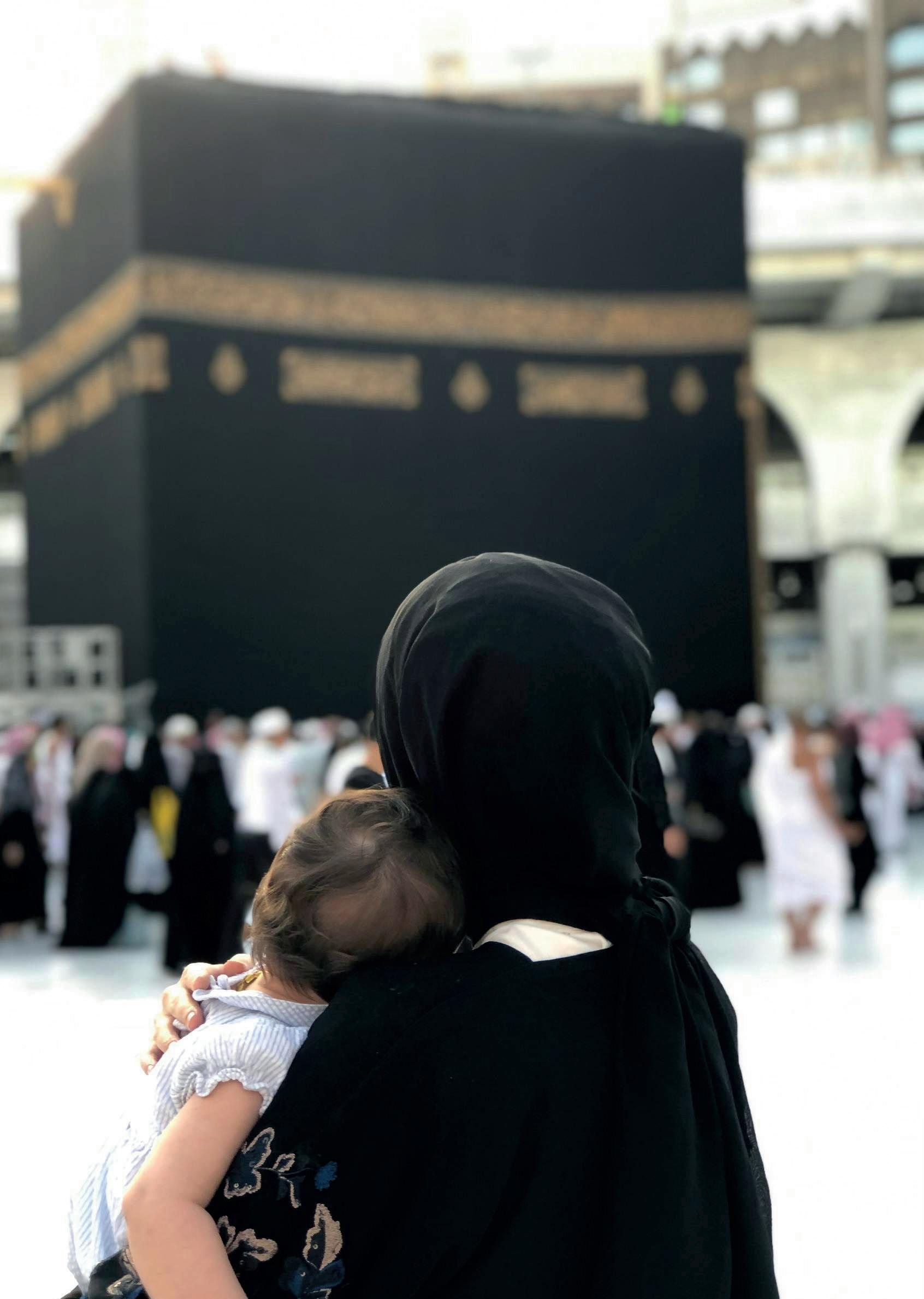
prohibited periods: at sunrise, sunset, and solar noon (the sun is directly overhead). Unlike salah, it is permissible to perform sajdah tilawah from the time after Fajr salah until sunrise and after Asr salah until sunset, and doing so is not considered makruh.
Q: If a woman’s menstrual period begins before performing tawaf al-wiyarah, what options are available to her, and would her hajj still be considered valid or allowed if she is unable to perform this tawaf at that time? Are there any medications that can be safely used to delay or stop menstruation during hajj, and when should such a medication be started and discontinued for its efficacy?
A
: In principle, tawāf al-ziyārah is fard (obligatory) in hajj. A pilgrim’s hajj will be incomplete until tawāf al-ziyārah has been performed. Furthermore, there are certain restrictions of ihram such as intimacy until the tawāf al-ziyārah is completed. Accordingly, it is not permissible for a woman to perform tawāf while in menstruation. Therefore, if a woman experiences menses at the time of tawāf al-ziyārah, it is incumbent upon her to make every reasonable effort to delay her departure and perform the tawāf after attaining purity.
Where appropriate and upon consultation with an experienced Muslim physician, she may also use medication to delay or suppress menstruation.
If, after exhausting all reasonable means, she performs tawāf al-ziyārah in a state of menstruation, her tawāf will
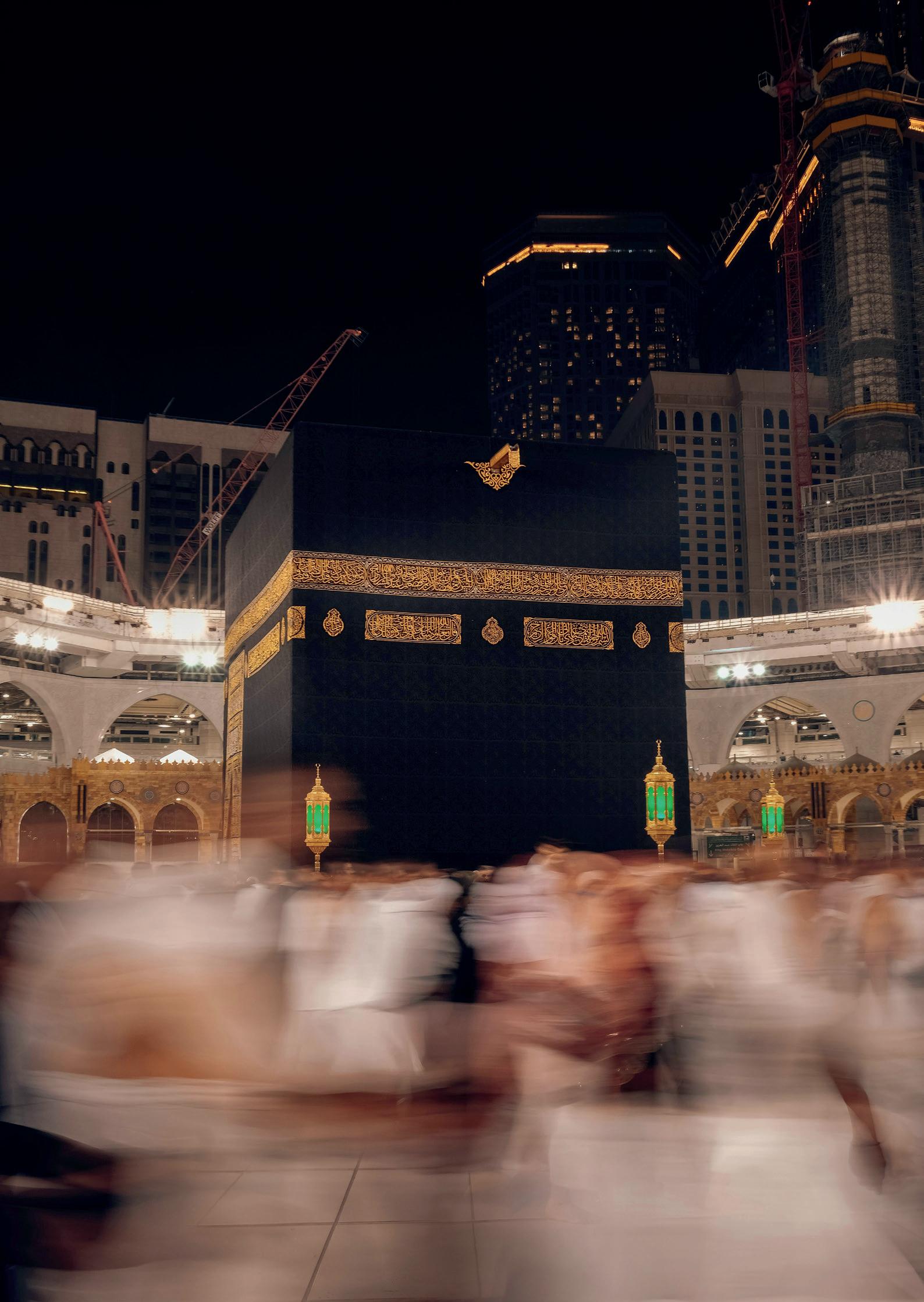
be valid, however she will be liable to offer the sacrifice of a camel (damm) as a penalty, and she must seek forgiveness from Allāh. If her menstruation ends before leaving Makkah, it will be compulsory for her to repeat tawāf al-ziyārah in a state of purity, in which case the penalty will be waived.
Note: generally delaying tawāf al-ziyārah beyond its prescribed time ordinarily necessitates a damm. However, delay caused specifically by menstruation does not make a damm necessary, as a menstruating woman is legally excused from performing tawāf during that period.
Q: I would like to understand the Shariah rulings regarding the iddat (waiting period) that must be observed after khula. If you could please list them for me, that would be appreciated. ‘Umar
A: In principle, khul‘a is a type of irrevocable divorce. The shar’ī rulings for the iddat after a irrevocable divorce would also be applicable to khul‘a. Namely the following: She must spend her ‘iddat in the matrimonial home, not leave the house unless it is out of dire necessity, nor can she make nikah with anyone else. Once she completes three menstrual cycles, her ‘iddat will be complete and she can now stay wherever she wishes. The following are some rules to keep in mind about ‘iddat:
1. If a woman is divorced while she is menstruating, the menstrual cycle in which she is divorced will not count toward her ‘iddat. Her ‘iddat



51 Prince St N, Chatham
Allah there is no deity but Him, the Ever-Living, the Self-Sustaining. He has sent upon you the Book in truth, confirming what was before it. the Torah and the Gospel (3:1-3).
: Nazzala and anzala are translated as ‘sent down’ and ‘revealed’ respectively in this ayah. But is there any difference between why Allah uses one word [anzala] to describe revelation of the previous scriptures and another : both words mean revelation, but there is a difference in the mode of revelation, which is not conveyed in the translation. Nazzala means to be revealed little by little while anzala means to be revealed all at once. This is clarified in another ayah in which Allah says: And those who disbelieve say, “Why was the Quran not revealed [nazzala] to him all at once? Thus, [it is] that We may strenghten thereby your heart. And We have spaced it distinctly [25:22]. Again, Allah uses the word nazzala to convey that the Quran was not revealed at once and highlights the benefit of revealing the Quran in parts.
Note: Please send your address to office@ducanada.org for receipt IRS REGISTERED CHARITY 93-3974437 ALL DONATIONS ARE TAX DEDUCTIBLE!



A bu Hurayra g narrated that the Prophet s said, “Whoever obeys me has obeyed Allah. Whosoever disobeys me has disobeyed Allah. And, whoever obeys my successor has obeyed me, and whoever disobeys my successor has disobeyed me.”
Note: the Prophet s knew that a leaderless nation is an orphan nation and an orphan nation is always vulnerable to exploitation. Even though many of the Umayyad [and Abbasid caliphs] were corrupt, which the Prophet s himself highlighted in many prophesies, he enjoined allegiance to them because a nation with a corrupt leader is better than a nation with no leader at all.
Today, our umma is an orphan. We grovel for recognition and support from the very powers that conspire against us. Due to our orphan-like need to please, we are quick to jump the bandwagon with parties who share the same moral values but are hostile to our faith. We are also too willing to compromise with movements who stand in our defense in our time of need but who also espouse perverted attitudes that oppose the tenets of our faith.
The lack of leadership has created other problems too. It has given rise to opportunist impostors and false messiahs trying to fill a void and leading the umma astray.
This is why it is necessary for the Umma to be cautious of any movement, group or elected leaders that come across as

51 PRINCE STREET NORTH, CHATHAM, ON N7M 4J7 CANADA


MASJID - ISLAMIC BOARDING SEMINARY - DAY SCHOOL - TAHFEEDHUL QURAN (QURAN MEMORIZATION) - ALIMIYYAH (ISLAMIC SCHOLARSHIP) - IFTAA (ADVANCED JURISPRUDENCE) - ISLAMIC DAY SCHOOL (JK - GRADE 8)
OUR PROGRAMS:



CAMPUS AMENITIES: - EXPANSIVE 70,000 SF FACILITY - GYMNASIUM
- STUDENT FRIENDLY MENU - COMPREHENSIVE LIBRARY - COMFORTABLE DORMITORIES - SOCCER FIELD - SWIMMING POOL - FITNESS CENTER & MORE!
Abu Hurayra narrated that the Prophet said, “My entire umma shall enter paradise except for the rejecter.”
He was asked, “Who could reject [paradise]?”
The Prophet said, “The one who has obeyed me will enter paradise and whoever has disobeyed me has rejected [paradise].”
Abdullah bin ‘Amr narrated that the Prophet said, Whatever (retribution) struck Bani Israel will surely strike my umma. (The likeness of my umma to Bani Israel is) like [the example of] a pair of shoes that each is the same as the other. So, if someone from Bani Israel openly fornicated with his mother, there will be in my umma one who will do the same. And [if] Bani Israel was divided into seventy-two sects, my umma will become divided into seventy-three sects; and all but for one, the other sects will enter the Hellfire.
The Sahaba asked, “O Messenger of Allah, which sect would that be?”
The Prophet said, “The one that follows the path of my Sahaba and me.”
Note: this famous hadith teaches a vital les son: the distinction of (falsehood) is of greater importance than the establishing of unity. Had unity been a priori ty, the Prophet importance of unity and putting our sectari an differences aside. Instead, he notes the two defining characteristics of the people of haqq that distinguishes them from the rest. The name Ahl Sunna wa al-Jama‘a (People of the Sunna and the Community) derives from the last words of this hadith: “the one that follows the path of my Sahaba and me.”
The main takeaway from this hadith is that we must focus our energies on adhering to the way of the Prophet not expend it on settling sectarian differences

and making pretensions of unity where unity can never exist. If such unity requires compromising belief and practice to sue for peace with other sectarian groups, than it is not unity, but fitna.
Irbad bin Sariya narrated, “One day the Prophet led us in salat. Then, he turned his radiant face toward us and delivered a powerful sermon which brought tears to the eyes and made the hearts tremble.”
One person asked, “O Messenger of Allah, your sermon appears to be the advice of one who is
[from this world]. Then, what do you entrust upon us?” The Prophet said in response, I advise you to fear Allah, and to listen to and obey the orders of the caliph even if he is an Abyssinian slave, because whoever among you will live on after me, will witness many conflicts. In that time, you must continue to adhere to my Sunna and the Sunna of the Guided Caliphs. Hold fast to it and keep it clenched between your teeth. Beware of innovations (in the deen) because every innovation is a bid‘a and every bid‘a is a misguidance.


Note: The term ‘Qur’an and Sunna’ is widely used in our times to mean literal adherence to the Qur’an and Sunna. Ironically, the Qur’an itself never calls toward literal adherence. Instead, it enjoins us to follow, “The path of those whom You blessed (1:7),” an ayah we recite umpteen times a day. The Prophet further elaborates on the meaning of this ayah, “Follow my Sunna and the Sunna of my Guided Caliphs; and in other hadith, the pious ones from the khayr al-qurun (Golden Era).” In another hadith, he says, “In my umma, there will always be a group that will establish the deen of Allah; they will not be harmed by those who disgrace or oppose them until the Day of Judgment; and, they will always prevail over the people [i.e., they will not be silenced from speaking the haqq].”
The above hadith is saying precisely the same that in order to follow the Qur’an and Sunna, we must study the lives of the Sahaba, the Salaf, and all the predecessors and their successors whom Allah blessed to walk the Straight Path, and follow their way. This is true adherence to the Qur’an and Sunna. Umar narrated that the Prophet said, I asked my Lord regarding the conflicts my Sa-
haba will face after me. So, Allah sent this revelation to me saying ‘O Muhammad! Your Sahaba in my opinion are like the stars. In every star there is light, but some stars shine brighter than others. When the opinions of the Sahaba differ in any matter, then whoever acts upon any one of the opinions is guided according to Me.’
The Prophet said, “My Sahaba are like stars; whichever of them you follow, you will be guided.”
Note: Differences of opinion do not necessarily sow discord. As long as there is unity in the lofty objective to please Allah, disagreement is healthy discourse in our faith. One of the many benefits of a difference of opinion is that it saves against the ‘my way or highway’ complex, which is often born out of a literal and superficial interpretation of religious text.
The hadith prohibits any form of polemics on the mushajarat (disagreements) of the Sahaba (e.g. disagreement between Ali and Mu‘awiya ); we may incline to one more than other, and that is fine, but we cannot demonize the

The hadith also clarifies that anyone who is blessed like the Sahaba with taqwa, devotion to the Sunna, and profundity of the Qur’an and Sunna and ‘ilm ladunni (the bestowed knowledge) is entitled to an opinion on matters of the deen.
Hudhayfa narrated that the Prophet said, “I do not know how much longer I will be with you.” He then said, “Follow these two after me [indicating Abu Bakr and ‘Umar ], and adopt the way of ‘Ammar, and whatever Ibn Mas‘ud tells you, believe in it.”
Note: the madh-hab of Imam Abu Hanifa incorporates the rulings of Ibn Mas‘ud . This is because Imam Abu Hanifa hailed from Kufa where Ibn Mas‘ud was sent by ‘Umar bin al-Khattab to establish centers of sacred knowledge.
Two of Ibn Mas‘ud’s top students were ‘Alqama and Aswad. Their student, Ibrahim Nakha‘i, was the teacher of Hammad bin Abi Sulayman who was the teacher of Imam Abu Hanifa under whom Imam Abu Hanifa studied for 18 years. Thus, the knowledge and hermeneutics of Ibn Mas‘ud was embodied in the madh-hab of Imam Abu Hanifa.
Bilal bin Harith narrated that the
Prophet said, Whoever revives a Sunna of mine that has gone extinct will receive the reward of every believer who practices upon that Sunna without anything being subtracted from their reward. Whoever paves the way to any type of deviance which Allah and His Messenger are displeased with, will receive the sin of all those who act upon it, without anything being subtracted from the sin of the people [who showed the way to

that deviance].
Anas narrated that the Prophet said to him, “O my son! If you can always keep your heart in the [pristine] state in which you do not hold spite against anyone, then do so.”
Then he said to him, “O my son! This is my Sunna, and whoever loves my Sunna has expressed love for me, and whoever loves me will be in paradise.”
Note: this hadith expands our understanding of the meaning of Sunna. We often restrict the scope of Sunna to the mundane acts, but here we see that the Sunna relates to the states of the heart too. Humility, compassion, and love, for example, also fall under the Sunna as much as entering the masjid with the right foot and using a miswak before wudu (ablution). It seems strange why the definition of Sunna is so restrictive in our modern Islamic discourse to the outward deeds, especially when one of the components of the prophetic mission was purification of the heart as stated in the Qur’an [and cleanse them of all impurities (2:129)]. This attitude may have to do with a concerted effort to undermine the Islamic science of Tazkiya which was developed to uphold this component the way tajweed, fiqh, tafseer and hadith and
their branches were developed to uphold the components of “reciting Your verses, and teach them the book and wisdom” (2:129). A
Ibn ‘Abbas narrated that the Prophet said, “Whoever holds fast to my Sunna during the time of depravity in my umma will receive the reward of a hundred martyrs.”
The hadith of Bayhaqi and Tabarani state that the reward will be of one martyr.
Note: the reward of a hundred martyrs proves that adhering to the Sunna in the Last Times will be difficult. The aforementioned hadith, “So, if someone from Bani Israel openly fornicated with his mother, there will be in my umma one who will do the same,” indicates that assimilation to the Yahud and Nasara will lead to collective abandonment of the Sunna and isolate adherents of the Sunna from the rest of the umma. It will be the time which the Prophet predicted, “The deen started as a strange thing, and it will return to being strange [in the end times] as it once was when it started.”
Abu Hurayra narrated that the Prophet said, “Whoever holds fast to my Sunna during the time of depravity in my umma will receive the