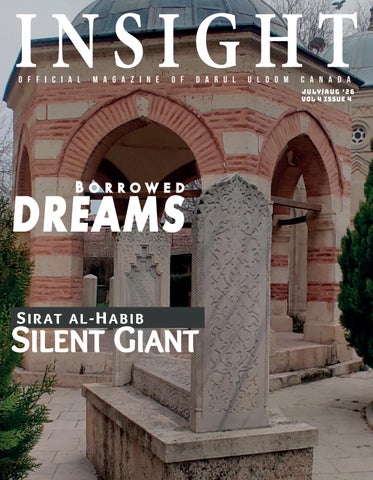
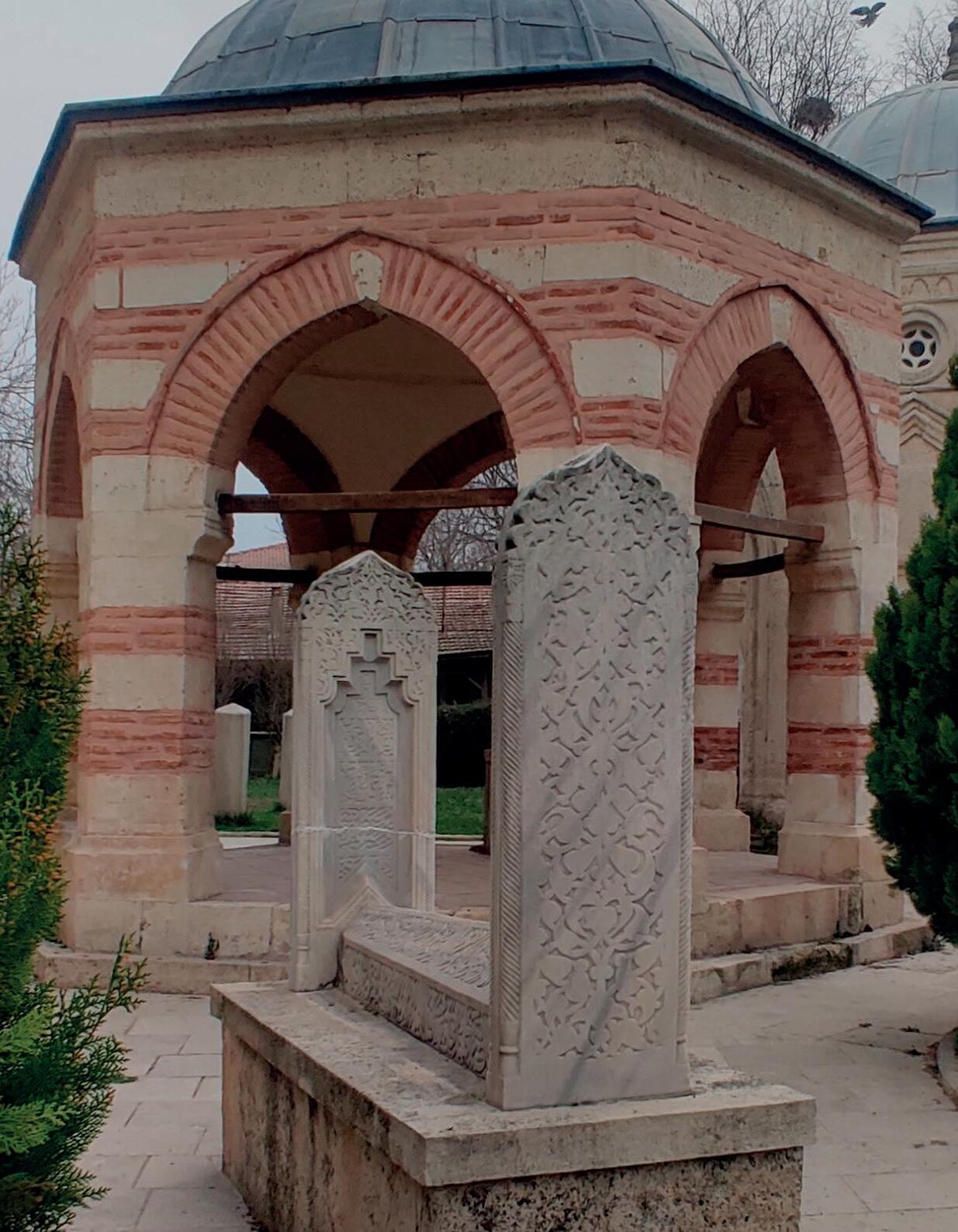
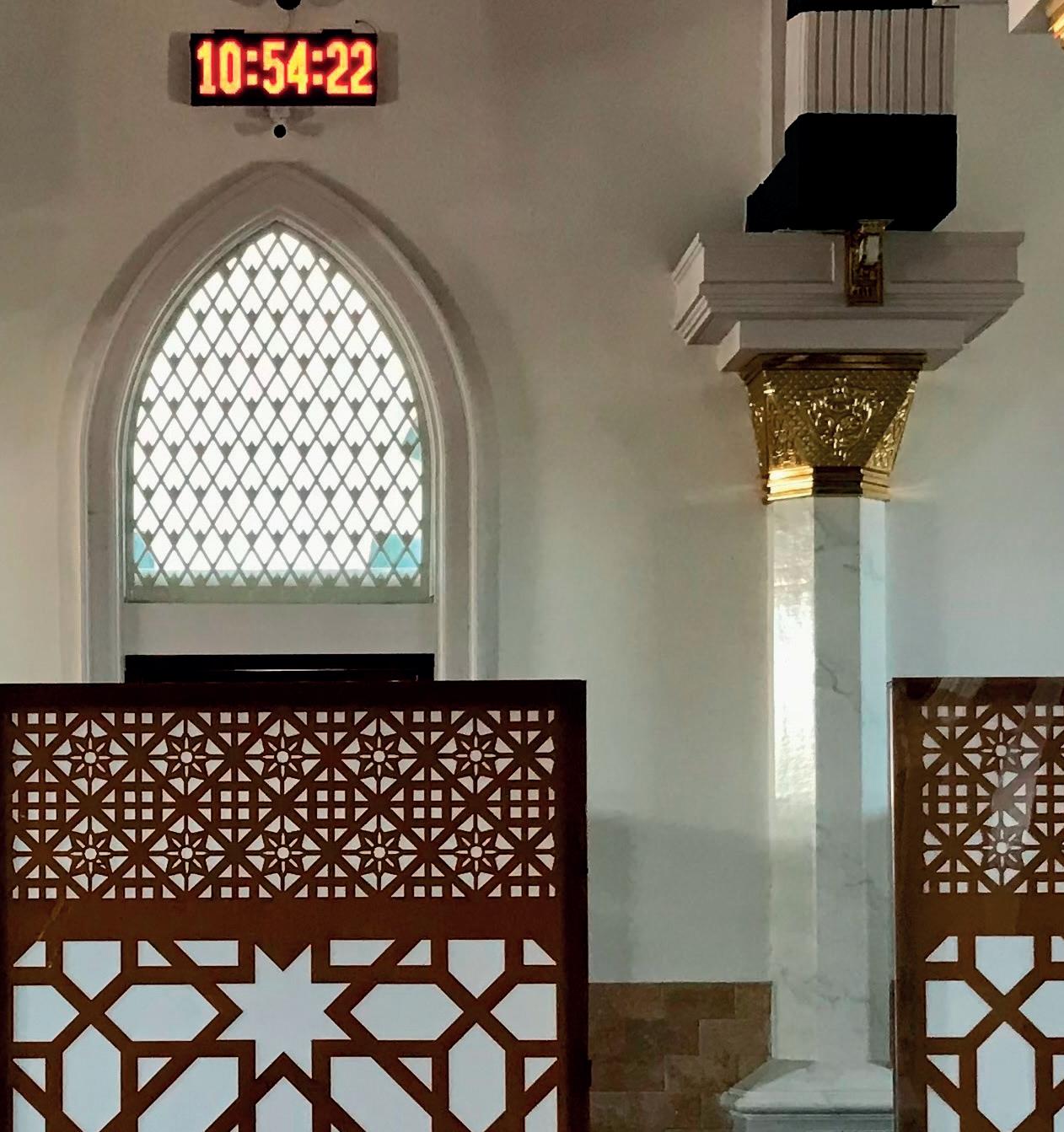
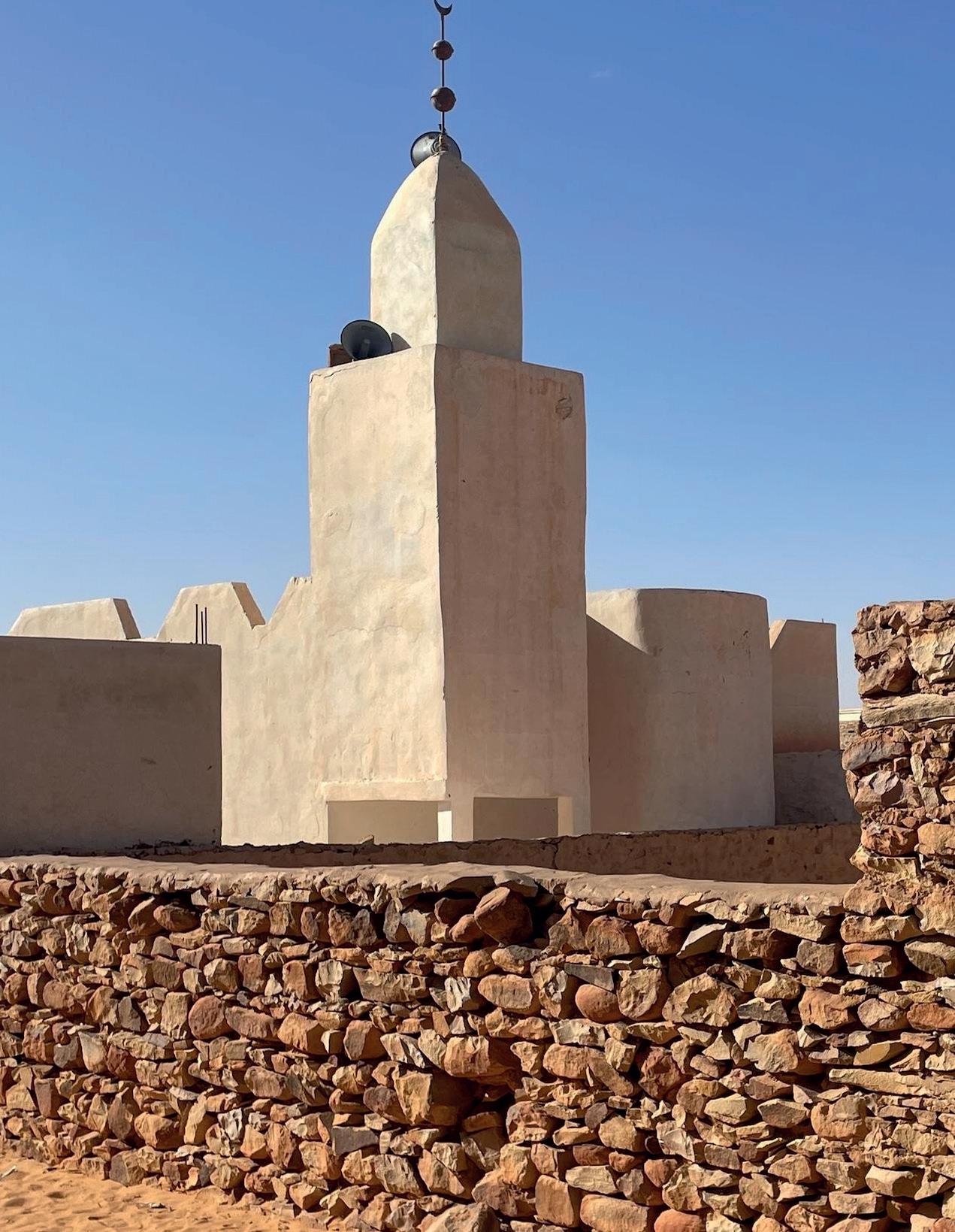
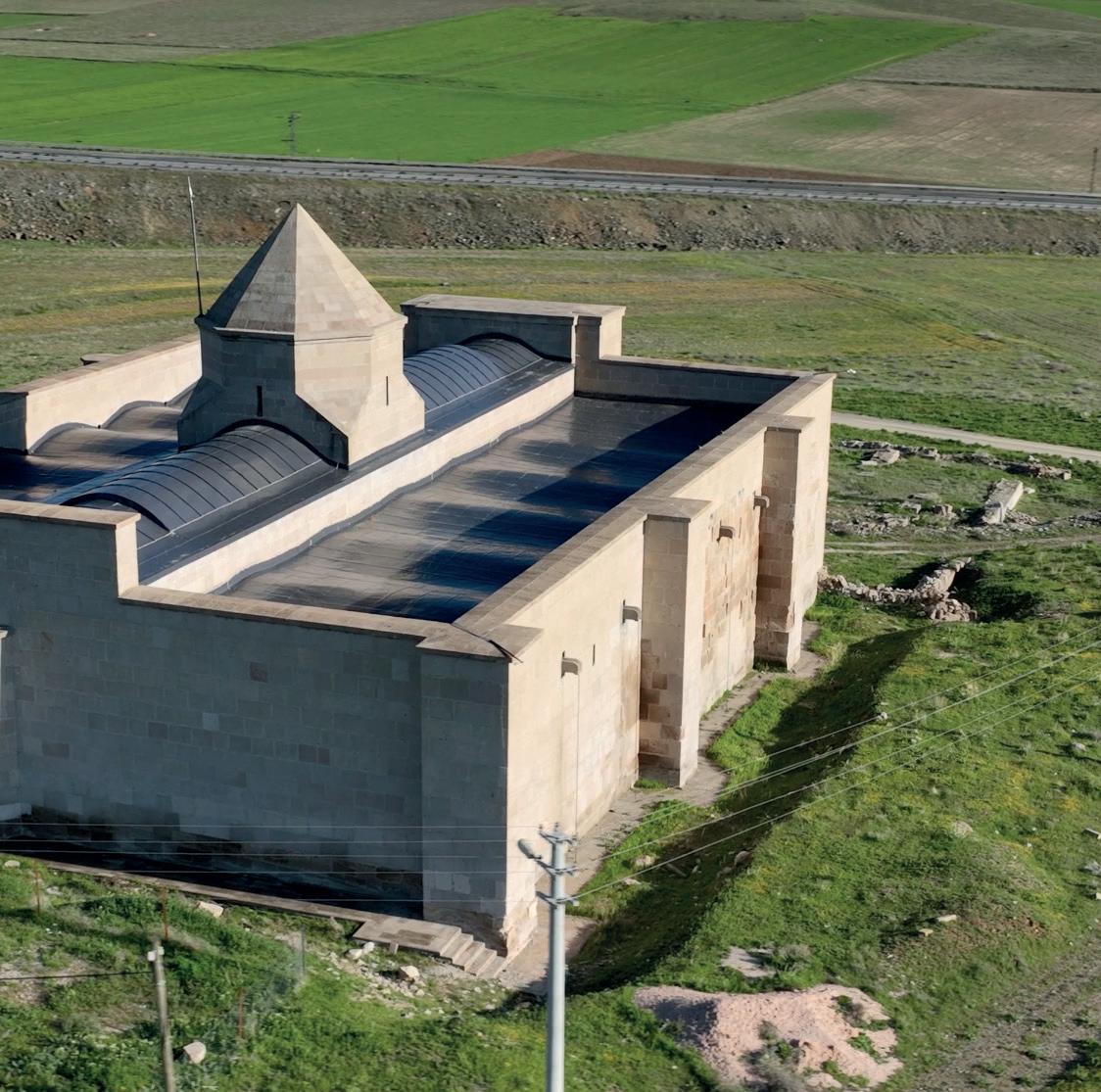
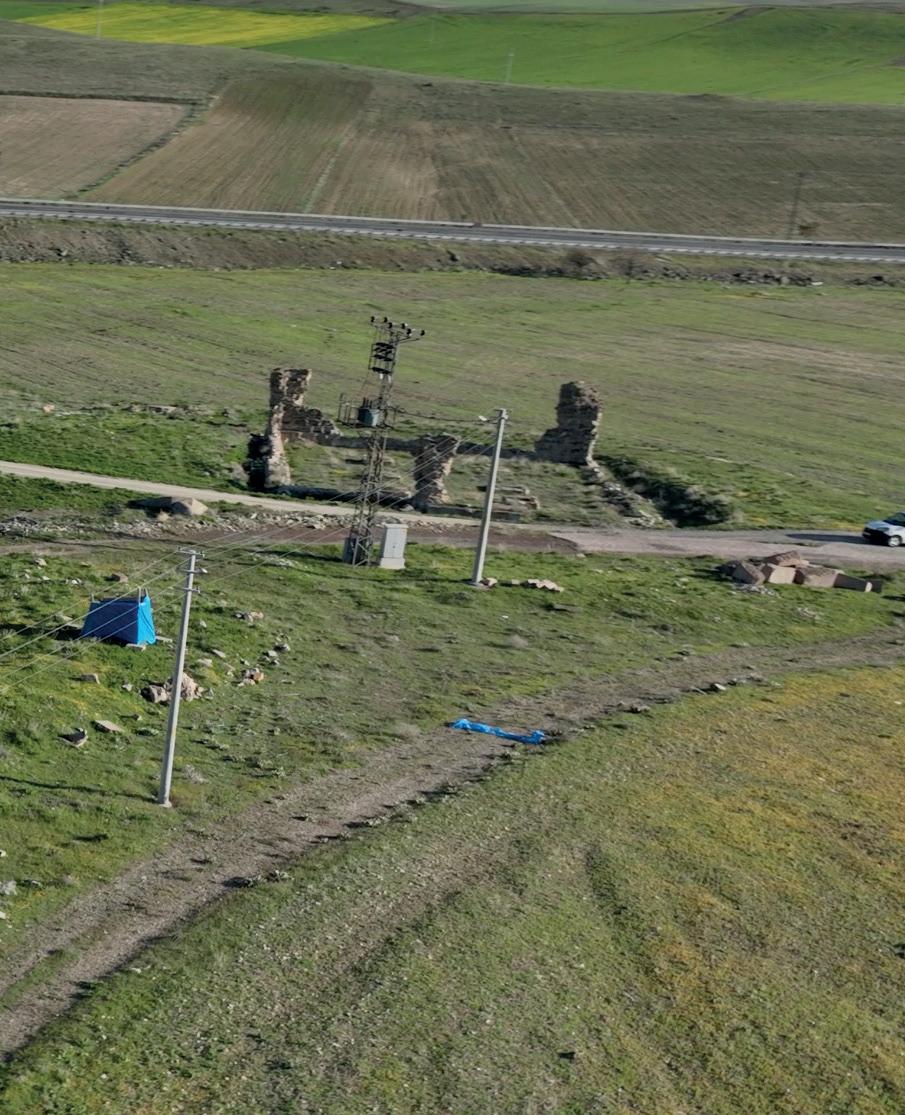
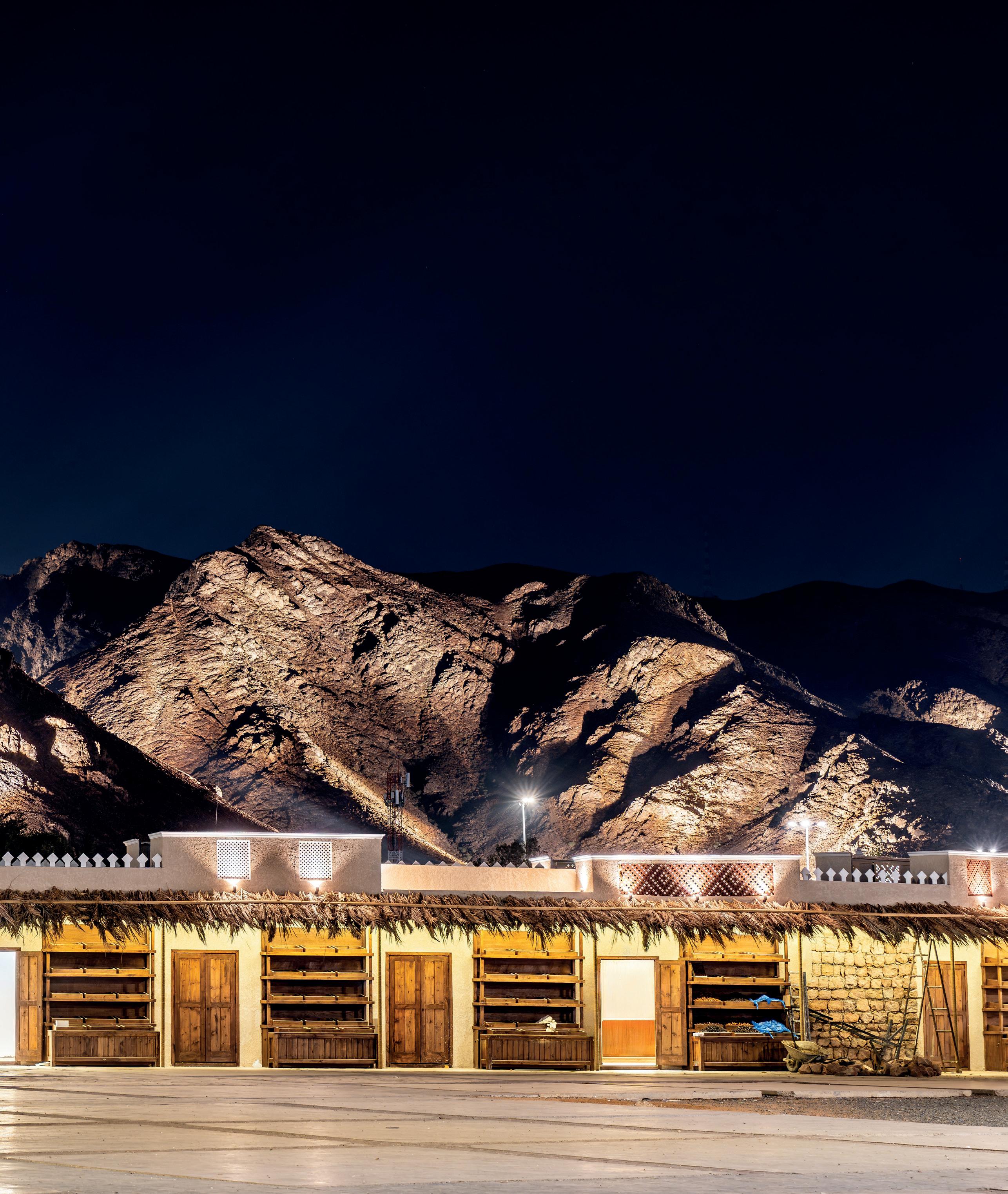
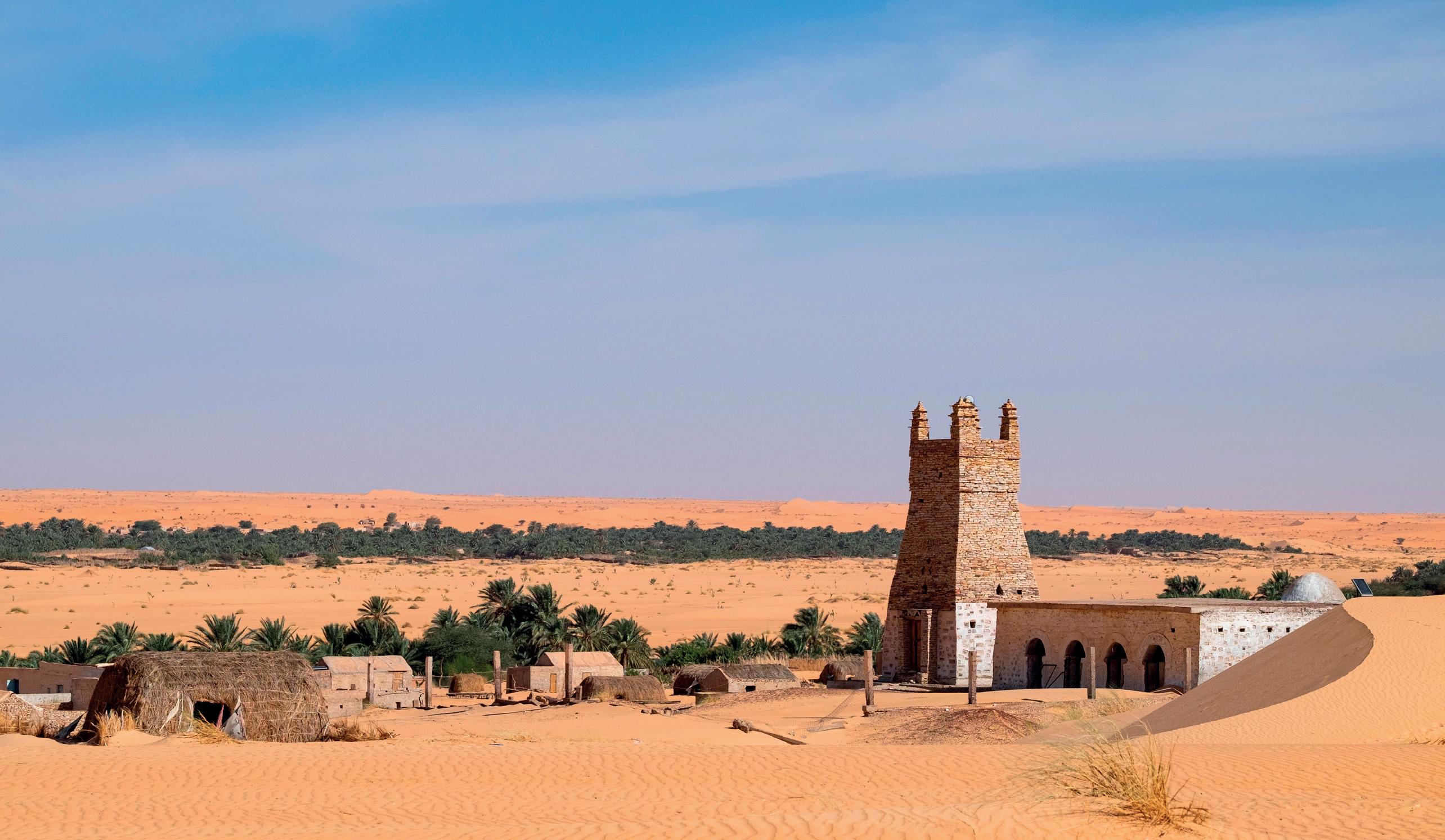
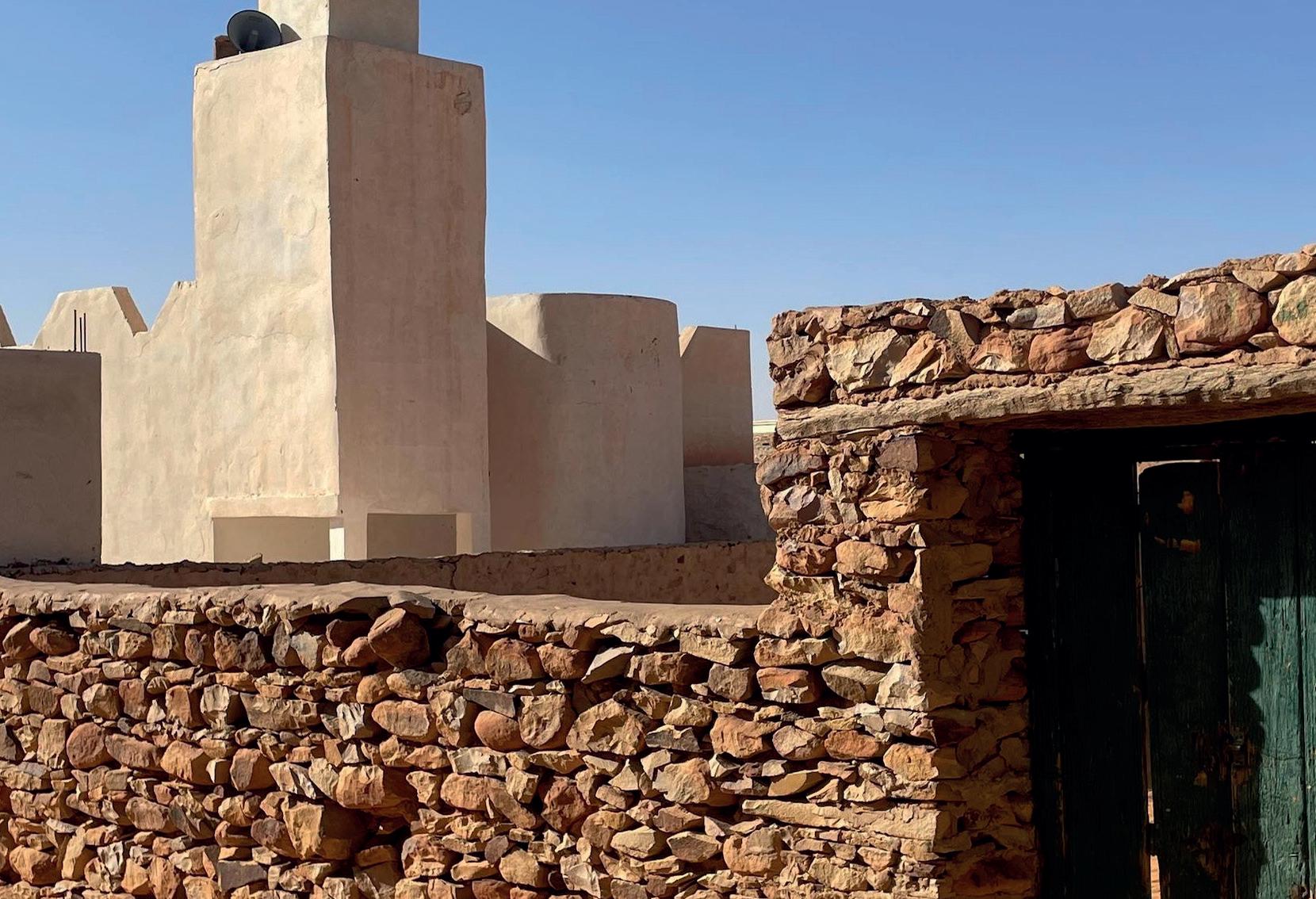
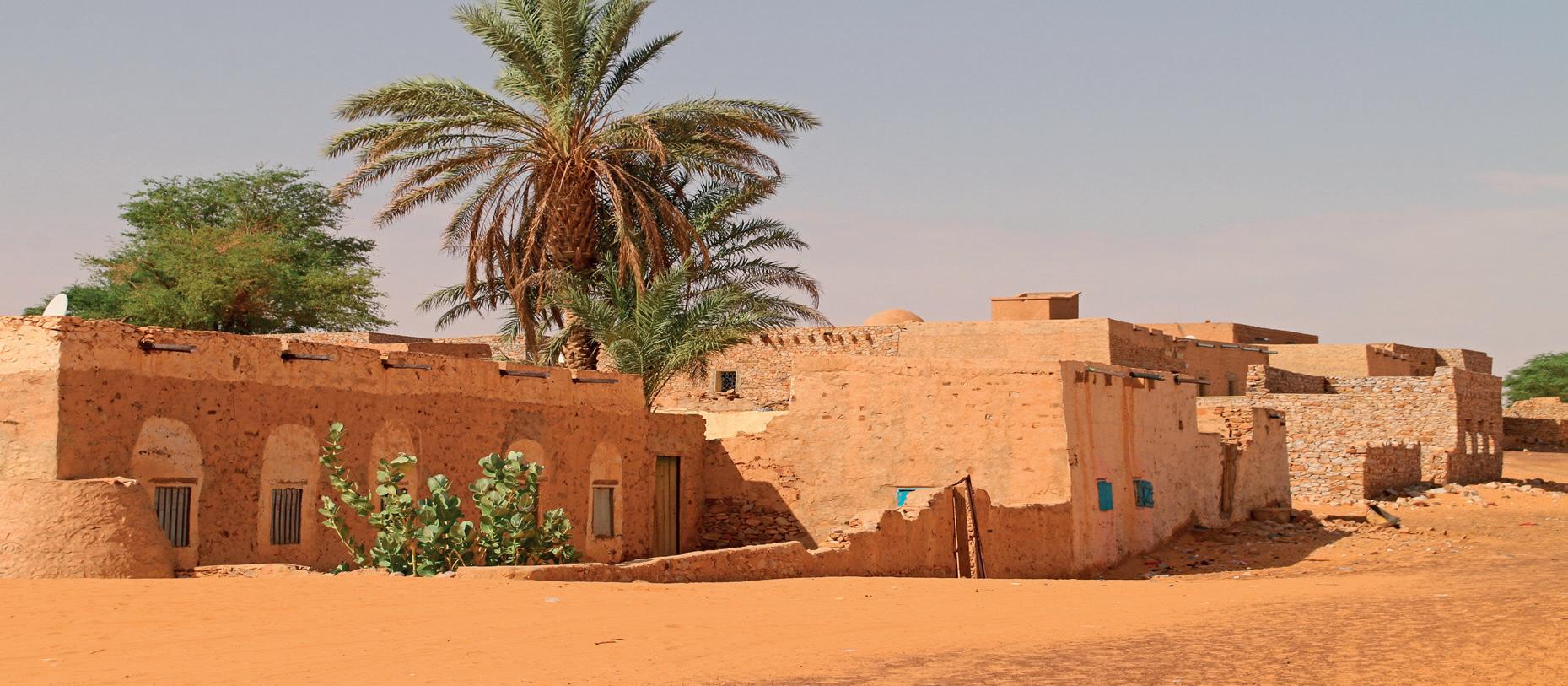
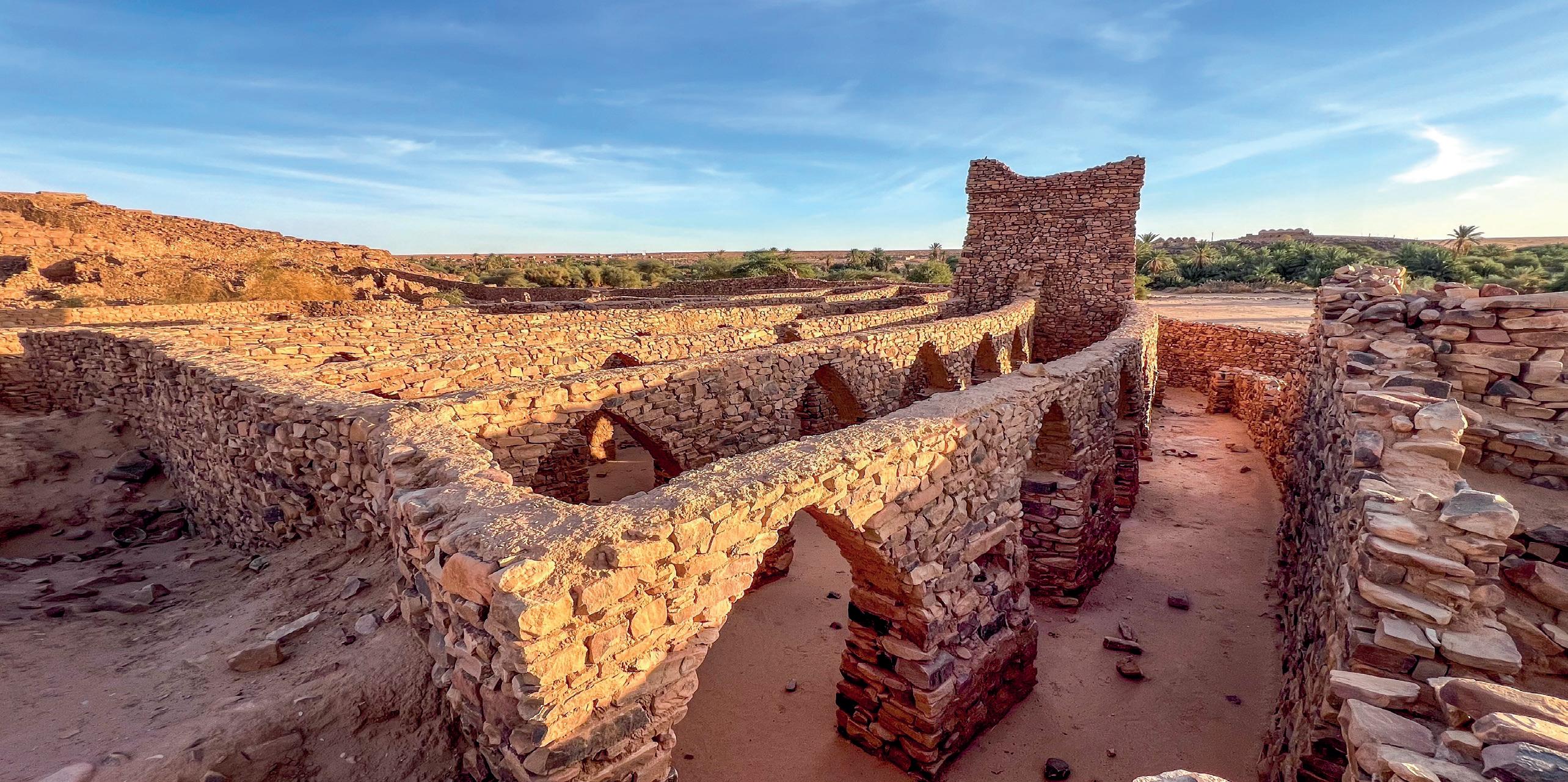
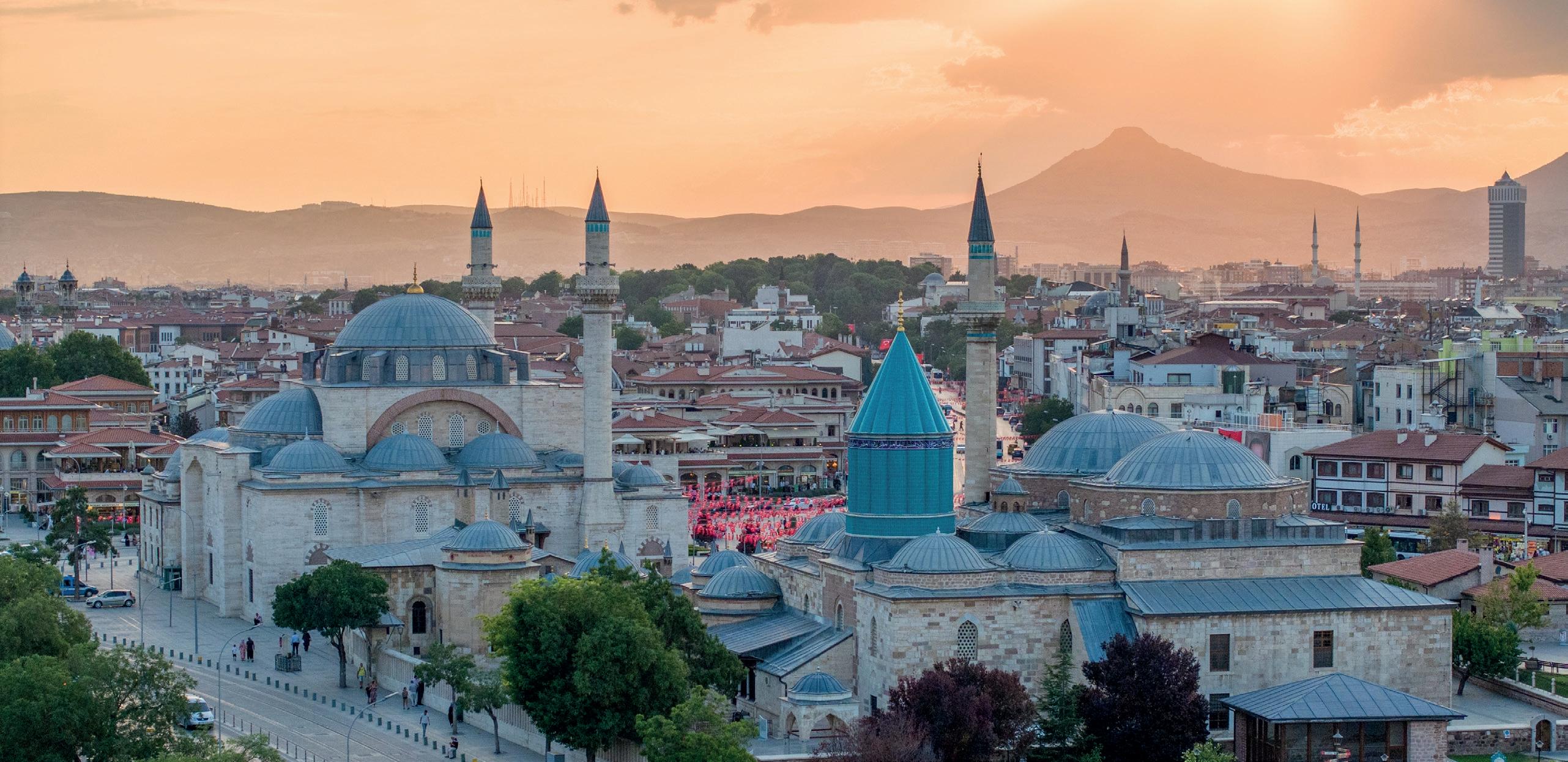
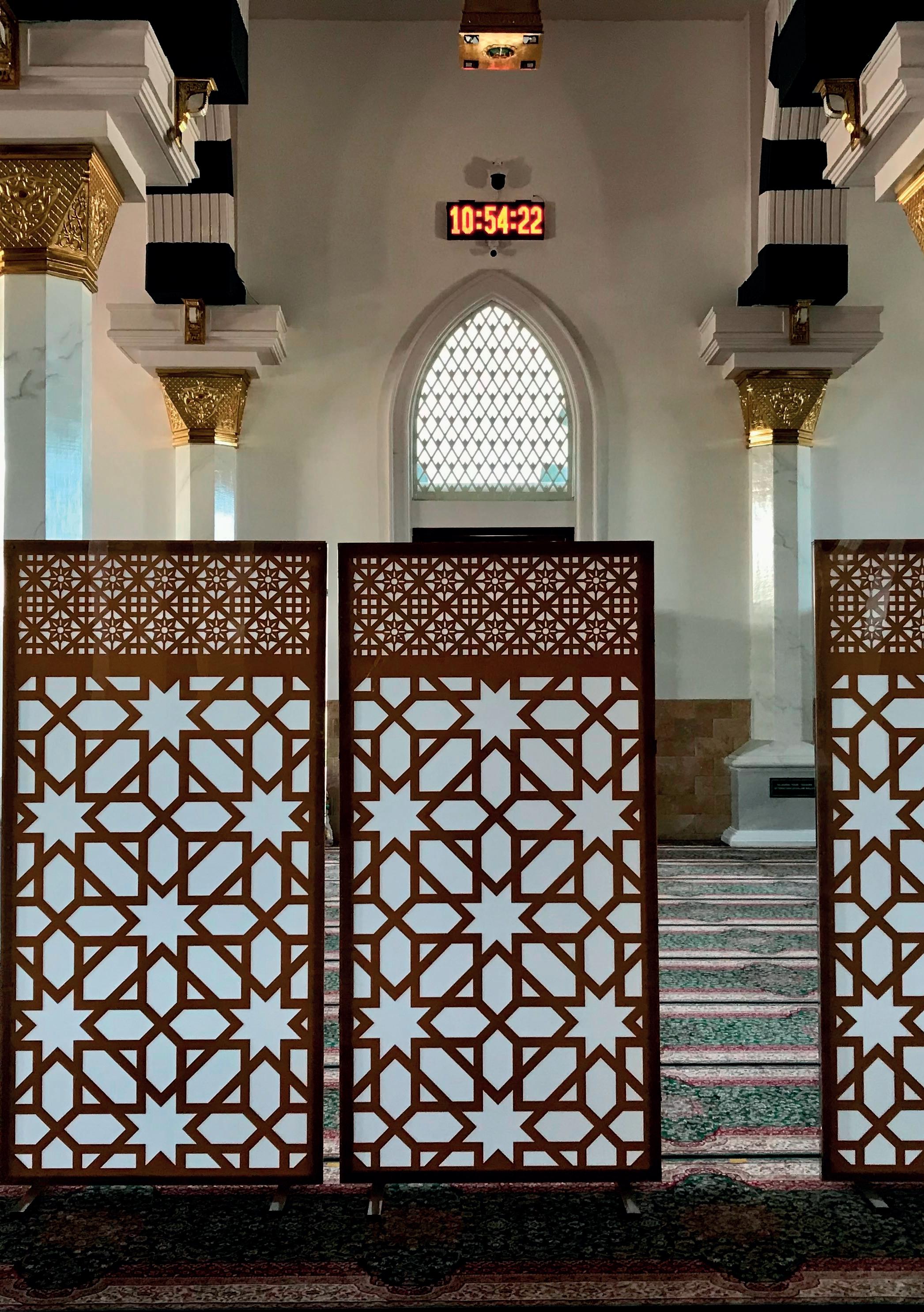
about the cover Grave of the Shaykh ul hadith at Darul Hadis Masjid In Edirne (Turkey), capital of the Ottoman empire until the conquest of Constantinople in 1453. The masjid was most likely commissioned by Sultan Murad II, father of the conqueror Sultan Muhammad Fatih.
The views expressed in the columns of Insight magazine do not necessarily represent those of Darul Uloom Canada.
The articles published in this magazine may be reproduced with due acknowledgment.
In Borrowed Dreams, our regular contributor, Khadija Karatela, talks about the alarming effects of assimilation to a toxic and godless society. She touches on how the growing phenonemon of disenchantment, especially of the new generation with their faith, is directly linked to bad parenting and not instilling the Islamic values (e.g.,love for Allah and love for the Prophet s) that build the framework for our worldview and how we respond to challenges in life. Without securing the iman during the early developmental stages, exposure to an increasingly corrupt and decadent society is bound to endanger the iman, or in the least, create doubts that force deviation from the Sirat Mustaqeem.
May Allah protect us and our next generation from the End times.
Sirat al-Habib s
MCh. 13
The Silent Giant
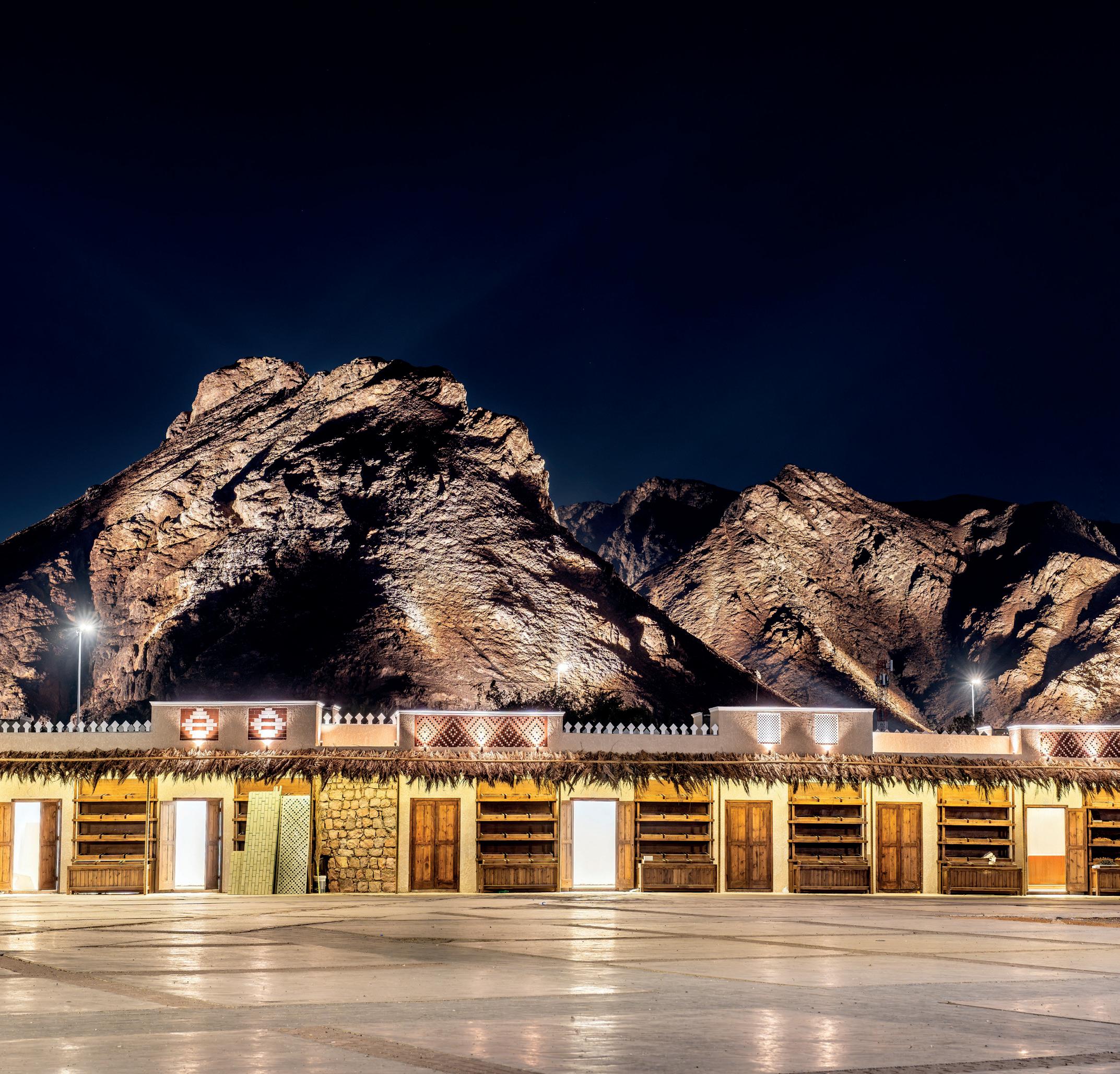
ount Uḥud rests just north of al-Masjid al-Nabawī. Some 700 million years ago, molten magma cooled beneath the Earth's surface, and the mountain arose from it. To see it is to behold an expansive and impressive formation, wide-shouldered as if to hold up the sky and firm-footed as if to hold down the land. Since then, it has stood guard over the area, long before people, property, and the Prophet s arrived there. Allah created it majestic and firmly rooted in red-pink rhyolite and light gray dacite, which give it strength.
by Maulana Dr. Mateen Khan
It’s hard not to admire a formation that waited inconceivable eons for its beloved. How many lonely sunsets had it waited in anticipation of its beloved, in an area
uninhabited for most of its existence? How long did it look over a patch of Earth from which the Messenger was created, knowing he would return there? The Prophet s said of it: “Uḥud is a mountain which loves us, and we love it.”
Provoking the Populace
Previously, the Battle of Badr saw the death of many of the Qurayshī nobility, and the remnants of that army retreated back to Makkah, dejected. As they trickled into the town, the poets, the propagandists of that time, whipped up emotions, acting as the agents of psychological warfare and political agitation.
One of them, Abū ʿAzzah al-Jumaḥī, was captured at Badr but gained the Prophet’s clemency after mentioning his own poverty and dependent daughters. One imagines a thin, greying man begging the very person he swore to kill. And a Prophet ever-trusting, rooted in ḥusn al-ẓann (a good opinion of others), was true to his words when he said: “The believer is unsuspecting and magnanimous.”
He s, a mercy to his enemies, released him without ransom on the condition that he would never raise a hand or a word against the Muslims. Unfortunately for him, he was swayed by one of the Qurayshī leaders, Ṣafwān ibn Umayyah, to begin composing lines. How could the noblest tribe of Makkans let such a lucky defeat by ragtag “rebels” go unpunished? Thus, tribalism, the precursor to nationalism, demanded close-minded vengeance.
The proceeds of Abū Sufyān’s caravan were allotted for this cause, and fresh recruits were brought to the fore. The voices of Hind bint ʿUtbah and Jubayr ibn Muṭʿim stoked the Makkans, and separately, the two enticed Waḥshī, the skilled javelinist, to assassinate Sayyidunā Ḥamzah, the Prophet’s s devoted uncle.
The March to Uḥud
On a regrettable day in Shawwāl of 3 AH, the Makkan army set out, well-equipped and funded, with three thousand soldiers, including Hind along with many other
women. They marched until they encamped outside of Madinah.
At first, the Prophet s took a defensive posture and waited in Madinah for their attack. Ibn Ubayy, a hypocrite but a leader to many, agreed with the Prophet s on this. A group, particularly among the youth and those who had missed Badr, wished to meet their enemies face-to-face and urged him to do so. The Prophet s was eventually swayed to put on his own armor, and they headed out towards Uḥud.
The Muslim army of 700 men stood with their backs against Uḥud, about three kilometers outside of Madinah, with 50 archers on a small, nearby mount. He instructed the former not to attack until the order was given, and the latter not to leave their stations under any circumstances.
Despite their victory at Badr, the Madinan community was
still nascent. The Battle of Uḥud was another existential crisis. As the Prophet s set out, everyone, old and young, wanted to join. Samurah and Rāfiʿ were just teenagers, wanting nothing more than to stand by his side. Initially, the Prophet s felt for them, and the two were dismissed from joining, like many others. His mercy initially sent them back, but he later allowed them to join when they showed they could handle themselves, moved by their resounding sadness at the prospect of being left out.
The Sacrifices of the Companions
The battle soon started. Each group sent its finest to the forefront. Sayyidunā Ḥamzah, a staunch defender of the Prophet s, killed many Qurayshī leaders. However, Waḥshī stalked him from behind the formations. Jubayr promised him freedom
and Hind riches in exchange for Ḥamzah’s life. He watched closely, without blinking, with steadied arms, until a window opened between them. His javelin hit its mark.
Ḥamzah’s body falling must have been like a shockwave through the Muslim lines, unsteadying their feet. However, the same javelin that gave Waḥshī his freedom from bondage gave Ḥamzah his freedom from the world’s hardship, the grave’s trials, and Jahannam’s fire. Later, Hind, still lacking prophetic morality and composure, mutilated his body further by cutting into him and attempting to eat his liver. This profoundly scarred the heart of the Prophet s.
Another of the hundreds of accounts that day was that of Sayyidunā Muṣʿab ibn ʿUmayr. Prior to Islam, he was born into a life of extravagance and was known for his opulent clothing. After meeting the Messenger s, he exchanged falsehood for truth, riches for poverty. That day, he was the standard-bearer for the Muslims. He fell in defense of the Prophet s. With a heavy heart, the Prophet s eulogized him: “I saw you in Makkah, and there was no one in it with a finer garment or a more handsome head of hair than you. Yet here you are, your head disheveled, wrapped in a simple cloak.”
Sayyidunā Khabbāb added, “Muṣʿab ibn ʿUmayr was martyred on the Day of Uḥud, and we found nothing to
shroud him in except a burdah (a short woolen cloak). If we covered his head with it, his feet were exposed, and if we covered his feet, his head was exposed.”
A Costly Mistake
These are just two Companions among hundreds who fought so valiantly that the Qurayshīs broke
was injured, and the remaining Companions surrounded him.
Abū ʿUbaydah, Abū Dujānah, Saʿd, Qatādah, Ṭalḥah, Ziyād, and ten others were martyred in the process as the disbelievers threw everything and everyone at him s.
During the most intense moments of the battle, Abū Dujānah stood before
and began running, men and women. Seeing this rout and thinking the war over, the archers abandoned their post, forgetting the prophetic command, and joined the rest. The Muslims rejoiced prematurely and exposed a passage for attack by the disbelievers.
Like a dark storm, the disbelievers descended swiftly upon them. The Companions scattered. Through the tempest, a rumor spread of the Prophet’s demise. In actuality, he
the Prophet s with his back facing the enemy. He absorbed scores of arrows into his own back, refusing to budge an inch out of fear that a single arrow might bypass him and strike the Prophet s. Similarly, Qatādah intentionally directed his face toward the enemy to bear the brunt of the arrows instead of the blessed face of the Prophet s. This act of devotion resulted in an arrow striking him with
such force that his eye was dislodged from its socket. The Prophet s, in a profound moment of love and healing, miraculously restored the eye and supplicated for Qatādah's beauty and handsomeness.
Each is a story of requited love, never to be forgotten in the annals of history. Finally, the Muslims planted their back feet and turned, as one soldier, to protect him s. Allah the Exalted strengthened them and routed the disbelievers once more.
Beyond the Battlefield
Beyond the clash of swords, there were at least two women in the fray. Sayyidah Fāṭimah, the Prophet’s daughter, rushed to her father’s side. She found his face profusely bleeding. One would rather their heart bleed than watch it flow from him. When her husband, Sayyidunā ʿAlī, was unable to stop the bleeding by washing it, she stepped in to tend to his injuries by applying ash from a burnt straw mat to pack the wound. She became calm only when the bleeding stopped.
Likewise, the Sīrah informs us of an unnamed female Companion who, despite the catastrophic loss of her father, husband, and brother that day, repeatedly demanded, “Tell me about the condition of Allah’s Messenger!”
and we gaze upon it today as the Prophet s and his Companions did then. Now, no longer waiting for its beloved, the silent giant stands humbly before him, its shuhadāʾ, and those fortunate enough to reside in its shade. n
Allah bears witness that you are martyrs in the sight of Allah on the Day of Resurrection.”
And standing over all of this was Mount Uḥud. Another fourteen centuries have passed over it,
Borrowed Dreams, Fading Boundaries
How cultural assimilation quietly reshapes the Muslim heart
by Khadija Karatela
A“young Muslim woman named Sara sat before her parents and told them she wished to marry a Hindu man. She explained that he was polite, educated, successful in his career, and well-respected by his colleagues. He would treat her well, she said, and her feelings should matter. In her eyes, that ought to be enough.
Her parents were devastated. How, after years of raising her as Muslim, could she believe this was acceptable?
In another home, Yusuf returned from university and informed his family that he no longer called himself Muslim. He insisted he had spent years thinking about religion, philosophy, and identity. Islam, he said, no longer reflected what he believed. His parents were shocked. They had taught him to pray as a child and ensured he attended Islamic classes. Yet, somehow, the faith they assumed had taken root seemed to have slipped away.
Islam
does not provide answers; it provides the framework through which questions themselves are formed.
Elsewhere, Layla sat quietly wrestling with questions she had never voiced aloud. The existence of Allah no longer felt certain to her. Years of exposure to skeptical worldviews, secular assumptions, and endless streams of online content had left her doubting truths she once accepted without hesi-
tation. She had not formally abandoned Islam, but she found herself wondering whether she truly believed at all.
At first glance, these appear to be entirely different circumstances. One concerns marriage. Another apostasy. The third is about doubt itself. Yet, beneath the surface they often share a common root: a worldview that was gradually formed long
before the final outcome became visible. Because such mindsets rarely emerge overnight. They are seldom the product of a single friendship, conversation, book, or moment of rebellion. More often, they are cultivated gradually—emotionally, culturally, and psychologically—throughout a person’s upbringing.
Long before these decisions were made, each had already absorbed assumptions about life, identity, and purpose—often without conscious awareness. Assumptions that taught them that personal fulfilment is life’s highest aim. That emotional satisfaction outweighs religious boundaries. That individual autonomy takes precedence over submission to divine guidance. That being a “good person” is sufficient. And perhaps most importantly, that
Islam is merely an aspect of life rather than the lens through which all of life is understood.
And this is where many conversations become skewed.
The issue is not ultimately about whom someone wishes to marry, whether someone abandons the faith, or whether someone begins to doubt. These are outcomes. The deeper question is what worldview produced them.
Islam is not merely a collection of rituals, cultural customs, or inherited beliefs. It is a comprehensive way of understanding reality. It shapes how truth and falsehood, right and wrong, purpose and meaning, freedom and responsibility, love and sacrifice are perceived. Islam does not provide answers; it provides the framework through which questions themselves are formed.
When that framework is strong, life is evaluated through Islam. When it weakens, Islam is no longer the governing framework of life, but exists in ceremonial form rather than the structure that shapes decisions, relationships, and aspirations.
Contemporary Western liberal culture, however, increasingly promotes a profoundly different framework. It conditions people to believe that personal fulfillment is the highest goal, that authenticity means following one’s desires, and that individual autonomy should take precedence over inherited traditions, religious principles, and moral restraint. Many Muslim children
absorb these assumptions long before adulthood—not necessarily through explicit instruction, but through atmosphere, aesthetics, entertainment, and repeated exposure to what is admired, romanticized, and normalized.
From an early age, many Muslim children today are immersed in lifestyles heavily shaped by Western consumer culture—not because parents consciously wish to abandon Islam, but because imitation often arrives disguised as sophistication, beauty, harmless celebration, or modernity itself.
Extravagant “Pinterest-worthy” engagement parties. Baby showers and gender reveals modelled after celebrity culture. “Fairytale” weddings shaped by Hollywood romance. Valentine aesthetics repackaged as innocent fun. An endless stream of films, influencers, and curated online lifestyles presenting life as a carefully designed fantasy centered around romance, luxury, self-expression, and emotional fulfillment.
Eventually, even Islamic occasions themselves begin reflecting Western-inspired ideals and emotional frameworks.
The nikah—once understood primarily as a sacred covenant before Allah—has increasingly become an aesthetic production. White gowns beneath elaborate floral stages, perfectly choreographed entrances, and “dream wedding” imagery are often romanticized long before the sanctity, responsibility, and spiritual grav-
ity of marriage itself are understood. The now-iconic white wedding dress, popularized through Queen Victoria’s 19th century wedding traditions, has become globally embedded as the unquestioned symbol of bridal beauty—including among many Muslims who adopt such aesthetics without reflecting on the cultural ideals attached to them.
Even Eid celebrations increasingly mirror commercialized holiday culture: decorative backdrops overflowing with gifts, meticulously staged photographs, coordinated outfits, curated tablescapes, and carefully orchestrated moments designed more for presentation than reflection. In some homes, people now decorate “Eid trees” modelled after Christmas trees—another example of how easily foreign traditions can be repackaged, aestheticized, and absorbed into Muslim life without serious reflection on the values and symbolism attached to them.
None of these examples may appear cataclysmic in isolation. That is precisely why cultural assimilation spreads so effectively. It rarely announces itself openly. It arrives attractively—emotionally, aesthetically, and gradually. Foreign values are made to appear beautiful long before they are critically examined.
And slowly, almost imperceptibly, the emotional centre of life begins to shift.
Islam remains present, but increasingly in ceremonial form rather than as the governing framework of life.
The tragedy is that many parents unknow
ingly participate in this transformation while believing they are preserving religion. They teach their children Qur’an while immersing them in cultures whose moral assumptions fundamentally contradict Qur’anic priorities. They speak about modesty while glorifying extravagance, performance, and public validation. They warn against impermissible relationships while consuming entertainment industries built almost entirely upon romantic obsession and unrestricted desire.
Children internalize contradictions far more deeply than verbal instruction.
Perhaps the outcome should not surprise us as much as it often does.
If someone sets out to bake a cake but neglects to add sugar while steadily adding salt instead, no one is astonished when the finished product lacks sweetness. The result reflects the ingredients that were repeatedly added throughout the process.
Worldviews develop in much the same way. The ideas, values, aspirations, and assumptions repeatedly fed into a child’s heart inevitably shape the person they become. If Islamic convictions are only lightly cultivated while competing values are constantly reinforced, it should not be surprising when those values eventually exert the stronger pull. What emerges later in life is often a reflection of what was most consistently nourished. Because values are not primarily taught through lectures. They are taught through admiration.
Children observe what excites their parents, what they praise, what they imitate, what they spend on, and what they celebrate. They notice which lifestyles are presented as beautiful, sophisticated, desirable, and successful.
Parents, in Islam, are not merely providers. They
Beauty in Islam is rooted in meaning, modesty, gratitude, dignity, and obedience—not performance, imitation, and emotional excess.
“
are shepherds of hearts.
The Prophet s said, “Each of you is a shepherd, and each of you is responsible for his flock” (Abu Dawud).
Parenting in Islam was never meant to be passive. Nor was it merely about raising children who are educated, accomplished, or socially integrated. It was about nurturing souls upon Islam—shaping worldview, protecting hearts, and cultivating within children a deep love for Allah, reverence for truth, and confidence in Islamic identity.
Because if parents do not intentionally shape a child’s worldview, the surrounding culture will inevitably do it for them. And contemporary culture is never neutral; it continuously communicates ideas about morality, identity, success, gender, and purpose. Allah says, “O you who believe, enter into Islam completely and per-
fectly, and do not follow the footsteps of Shaytan” (2:208).
The connection within the verse is striking: enter Islam completely, and do not follow the footsteps of Shaytan. Because deviation rarely occurs all at once. It unfolds gradually—one imitation after another, one normalization after another, one compromise after another—until the heart is desensitized to what once would have shocked it, and Islamic boundaries themselves begin to feel excessive, outdated, or unnecessarily restrictive.
This is why the issue extends far beyond interfaith marriage.
The marriage, the abandonment of faith, and the emergence of deep religious doubt are often visible symptoms of a deeper crisis: a crisis of identity.
A generation raised with Muslim names but not always with deeply rooted Islamic consciousness. A generation taught Islam as information, but not allamic lifestyles presented as more beautiful, romantic, emotionally fulfilling, and aspirational than Islam itself.
For years, many Muslims feared appearing “too strict,” “too conservative,” or “too different.”
So distinctions softened. Boundaries blurred. Imitation came to be viewed as sophistication, and assimilation as progress. Until preserving Islamic distinctiveness itself began to feel embarrassing.
Yet Islam never called Muslims to dissolve into surrounding civilizations.
Allah says, “And whoever desires other than Islam as religion—never will it be accepted from him” (3:85).
And the Prophet s warned, “Whoever imitates a people is one of them” (Abu Dawud).
Not because Islam opposes beauty or joy, but because imitation shapes admiration, admiration shapes attachment, and attachment gradually reshapes identity.
The early generations of Muslims understood this deeply. Umar ibn al-Khattab g famously said, “We were a people whom Allah honored through Islam. If we seek honor through anything else, Allah will humiliate us.”
The statement reflects a timeless reality: when a community begins seeking its identity, validation, and ideals primarily from outside its own religious framework, it gradually risks losing confidence in the worldview that once distinguished it.
Islam was never meant to be a decorative label attached to lives already shaped entirely by another civilization. It was meant to shape the structure of life itself.
A Muslim is not simply someone who believes privately. A Muslim is someone whose beliefs govern their loves, limits, celebrations, priorities, aspirations, and loyalties. Islam does not exist to decorate desires. It exists to discipline them, purify them, and anchor them to Allah rather than the constantly shifting ideals of society.
This does not negate beauty, joy, or celebration. Islam contains all of these. But beauty in Islam
is rooted in meaning, modesty, gratitude, dignity, and obedience—not performance, imitation, and emotional excess.
The problem is not celebration itself. The issue arises when Muslims borrow emotional frameworks from cultures grounded in secularism, materialism, and individualism, until even sacred occasions begin reflecting values they were meant to transform. What is unfolding is not merely moral decline, but a deeper process of spiritual assimilation.
Not because Muslims lacked intelligence, but because many underestimated how powerfully culture shapes the heart through repetition, aesthetics, and emotional conditioning. Human beings naturally crave identity, beauty, meaning, and belonging. If Muslims do not confidently provide these values through Islam, the surrounding world will provide them through something else.
The solution is not anger alone, nor harshness bereft of wisdom. The solution begins with rebuilding homes where Islam is not
merely taught, but genuinely loved.
Homes where obedience to Allah is associated with dignity. Where Islamic traditions are celebrated confidently rather than replaced with imported fantasies. Where simplicity is not viewed as backward. Where modesty is honored rather than apologised for. Where parents actively cultivate Islamic character instead of outsourcing moral formation to entertainment culture and social media. Where the Prophet s, his Companions, and the righteous scholars of this Ummah are admired more deeply than celebrities and influencers.
Because children who genuinely love Islam are far less likely to seek identity elsewhere. Ultimately, this conversation was never merely about Sara, Yusuf, or Layla. It is about an Ummah deciding whether Islam will remain its governing compass—or whether it will slowly become little more than a fading label attached to lives increasingly shaped by another worldview. n
51 PRINCE STREET NORTH, CHATHAM, ON N7M 4J7 CANADA
MASJID - ISLAMIC BOARDING SEMINARY - DAY SCHOOL - TAHFEEDHUL QURAN (QURAN MEMORIZATION) - ALIMIYYAH (ISLAMIC SCHOLARSHIP) - IFTAA (ADVANCED JURISPRUDENCE) - ISLAMIC DAY SCHOOL (JK - GRADE 8)
OUR PROGRAMS:
CAMPUS AMENITIES: - EXPANSIVE 70,000 SF FACILITY - GYMNASIUM
- STUDENT FRIENDLY MENU - COMPREHENSIVE LIBRARY - COMFORTABLE DORMITORIES - SOCCER FIELD - SWIMMING POOL - FITNESS CENTER & MORE!
Big flame, small flame
A small sin is like a small flame while a big sin is like a big flame. Now, if someone -
There is only one way of living any and all expectations from anyone or anything in creation. kind, to do your work for you you in your time of difficulty. Allah alone. If you do not hold but you will also not be hurt if
First step to purification
Suppressing anger is the first controlling his anger before he
of wealth and treasures. One day, he came to the vault to inspect his treasures without informing the warden ahead of time because he also wanted to check on the warden and see if he was trustworthy. He pulled out his own keys, opened the vault and walked in. The warden had no idea that his boss was inside inspecting his treasures. When he saw the vault door wide open, he quickly shut it and locked it from outside. The Yahudi continued inspecting the rooms that were piled up high with his treasures. Once he was satisfied, he came to the door but saw that it was closed. He called out but it was a thick vault door and his voice did not get out. The vault is filled with diamonds and rubies, gold and silver, but he couldn’t use them to get rid of his hunger. He was thirsty but the treasures could do nothing for his thirst. Days went by and no one came to open the door. He eventually died of thirst and hunger and the very treasures he was so proud of became his death.
If He is happy, I am too
Someone once came to visit an elder and asked, “How are you doing? How are you feeling?”The Shaykh replied, “I am doing well, alhumdulillah. How can I not be the happiest man in the world when
everything in this world happens according to my wish and desire.”
The visitor was startled and asked, “Hazrat, even the prophets didn’t have this quality that everything in the world happened according to their wish. How does everything happens according to your wish?” Hazrat replied, “I have subordinated my wish to the wish of Allah. I want what He wants and am pleased with what pleases Him; and, in this world nothing happens without His wish, and I have effaced the self, so now my wish is His wish and I want what He wants. Since everything happens by His pleasure, I am happy with everything that happens.”
Major or minor
People are always so curious to know whether some act is a minor or major sin. They ask because if it is a minor sin, they see no harm in doing it but if it is a major sin, they feel some constraint and fearful of doing it. The example of the two is like a large and a small flame. Would anyone take a small flame and throw it in their luggage thinking that it is only a small flame and won’t causes any issues?
-Malfuzat
of Hazrat Thanawi
‘Ibra derives from the root ‘a-ba’-ra and means ‘to cross from one side to another’ as in ‘abara al-nahra (he forded the river).
‘Ibra also means to learn a lesson because learning a lesson takes one from ignorance to knowledge and from darkness to light. The meaning of crossing from one side to another can be found in the different verbal forms of this root.
Ta’beer
Ta’beer is used in the meaning of interpretation of dreams because the interpreter like the person crossing the river has to look at every side and understand the dream from every angle before making the final interpretation.
‘abira ya’baru mean to mourn or to shed tears. ‘Abra means a tear while a’baratun means shedding of many tears.
I’tibar
I’tabar means to consider take a lesson from the of another as in al-sa’eedu
i’tabara bi ghayrihi
nate one is he who learns son from others) and
“Fa’tabiru ya uli al-absar” take a lesson from this of insight) (59:2).
consider and the example al-sa’eedu man ghayrihi (the fortulearns a lesand Allah says, al-absar” (So. this O people
Lives of the Companions
Unity of the Sahaba and Their Cautioning Against Division
Sermon of Abu Bakr g
It is reported that Abu Bakr g gave a sermon on the day of Saqifa following the demise of the Prophet s. In it, he said, “It is not appropriate for the Muslims to have two leaders at the same time. It would create divisions in their affairs, differences in opinion, and a breakdown of unity, leading to disputes and each group following its own leader. This would lead to the abandonment of the Sunna, the emergence of innovations, and the proliferation of discord. There would be no harmony under such circumstances.”
Statement of Umar g Regarding Disagreement
Salim Bin ‘Ubayd g narrates that during the incident of Saqifa, a man from the Ansar proposed the appointment of two leaders, one from the Ansar and the other from the Muhajirun. Upon hearing this, Umar g said, “That will never work. Two swords cannot be
sheathed in the same scabbard”.
Sermon of Ibn Mas’ud g Warning Against Division Abdullah Ibn Mas’ud g once addressed the people, saying, “O people, you must remain committed to obedience and unity for they are the rope of Allah that He has commanded you to hold firmly to. Truly, what you may dislike in unity is better than what you may love in division. Allah has not created anything except that He has appointed a destined time for it. The strength of Islam has already reached its pinnacle, and it will soon enter a period of decline. It will rise again thereafter, only to recede once more, continuing in this cycle until the Day of
WHAT YOU MAY DISLIKE IN UNITY IS BETTER THAN WHAT YOU MAY LOVE IN DIVISION.
Judgement.
And among the signs of this will be widespread poverty and degradation that the poor will find none to assist them. The wealthy will no longer be content with what they possess, such that a man will complain to his brother or cousin, but receive no response. Even a beggar will pass between the two Friday prayers without anything being placed in his hand.
Then, earth will sound like a
cow, and every household will witness the ground sinking within their courtyards. Thereafter, it will subside as Allah wills. Then the earth will vomit out its most precious resources [lit. pieces of liver]. It was asked, ‘O Abu Abd al-Rahman, what are its precious resources?’ He replied, ‘Pillars of gold and silver.’ From that day onward, neither gold nor silver will be of any benefit until the Day of Resurrection.”
Abu Dhar’s g Statement in Disagreement
Ahmad narrates from a man who says: We had brought something
as a gift for Abu Dhar g and traveled to Rabadha to find him. Upon arrival, we were informed that he was not there; it was said that he had been granted permission to perform haj. We eventually found him in Mina.
While in his presence, someone mentioned to him that Uthman g had led praying four rak‘a instead of two, despite being a traveler which required him to pray only two. This deeply troubled Abu Dhar g and he spoke sternly saying: ‘I prayed behind the Messenger of Allah, and he prayed two rak‘a. I prayed behind Abu Bakr and Umar g, and they too prayed two rak‘a.’
Then, Abu Dhar g stood and prayed four rak‘a. It was said to him, ‘You have just criticized the Ameer alMu’mineen for this very act, and now you do the same?’ He responded, ‘Disagreement is a more dangerous matter.’ He then recounted, ‘The Messenger of Allah once addressed us, saying, “There will be a ruler after me. Do not humiliate him. Whoever seeks to
humiliate him has removed the yoke of Islam from his neck. No repentance will be accepted from him until he repairs the breach he has made—and he will not do so—until he returns and aligns himself with those who support the ruler.”
The Messenger of Allah commanded us regarding three matters saying that no ruler should force us to do otherwise: that we enjoin what is right, forbid what is wrong, and teach the people the Sunnah and the way of the Prophet s.’
Disagreement is the Worst of All
Qatada g narrated that the Messenger of Allah s, Abu Bakr, Umar, and
Uthman—during the early part of his caliphate—used to pray two rak‘a while in Makkah and Mina. However, Uthman g later began to pray four.
When this reached Ibn Mas’ud g, he sought refuge in Allah, then he stood and performed four rak‘a. Someone objected, “You sought refuge in Allah, and then prayed four rak‘a yourself?” He replied,
“Disagreement is worse.”
Ali’s g Disapproval of Division
It is reported that Ali g said: “Judge as you used to judge”—that is, continue to apply the earlier ruling—“for I dislike disagreement, unless the people unite upon a matter, or I die as my companions did (without division).”
Ibn Sireen held the view that the majority of reports transmitted by the Shiites concerning Ali’s g opposition to Abu Bakr and Umar k were fabrications, aimed at inciting greater hostility toward them.
Ali’s g statement on innovation and sectarianism
Ibn Kawwa once asked Ali g about the Sunnah, innovation, and the jama‘a. Ali g said, “O Ibn Kawwa, you have fully memorized the question, so listen carefully to the answer. By Allah, the Sunnah is the way of Muhammad s, and anything that strays from it is innovation. By Allah, the jama‘a (Community) is adhering to the people of truth, even if they are few. And division is being with the people of falsehood, even if they are many.”
Prophet’s s demise and the Sermon of Abu Bakr g
‘Urwa narrates:
Abu Bakr g arrived from Sunh (in the outskirts of Madinah), riding his mount until he stopped at the door of the masjid. He entered in a state of deep sorrow and distress and sought permission to enter his daughter’s house, ‘A’isha j, and she permitted him.
He then entered and found the
BY ALLAH, THE SUNNAH IS THE WAY OF MUHAMMAD, AND ANYTHING THAT STRAYS FROM IT IS INNOVATION. BY ALLAH, THE JAMA‘A (COMMUNITY) IS ADHERING TO THE PEOPLE OF TRUTH, EVEN IF THEY ARE FEW.
Messenger of Allah s lying upon his bed, having already passed from this world while some women were gathered around him. They covered their faces and veiled themselves from Abu Bakr g, except ‘A’isha.
Abu Bakr g then uncovered the face of the Prophet s, knelt down, kissed him, and wept. He said: “What Ibn Khattab says is not true”—referring to what Umar g said that the Prophet s would not pass away until Allah eradicates the hypocrites. “Indeed, the Messenger of Allah has passed away. May the mercy of Allah be upon you, O Messenger of Allah. How noble you were—both in life and in death.” He covered him with his garment and quickly left for the masjid, making
In time, he became one of the great voices of Sufism, reminding others that the heart must be freed from attachment if it is to return to its Lord in peace.
his way through the people until he reached the pulpit. When Umar g saw Abu Bakr g approaching, he sat down.
Abu Bakr g stood beside the pulpit and called the people to gather. They sat in silence, listening. He began by reciting the testimony of faith, and then said, “Indeed, Allah informed the Prophet of his own death while he was still among you, and He has also made it known to you that you too shall die. It is a decree from which no one is exempt besides Allah who says in the Qur’an, “Muhammad s is no more than a messenger; messengers have passed away before him” (3:144).
Umar g replies, ‘Is this verse truly in the Qur’an? By Allah, I did not know it had been revealed until this moment.’ Abu Bakr g further continues: Allah also said, ‘Indeed, you are to die, and indeed, they are to die’ [39:30], and, ‘everything will perish except His Face. His is the judgment, and to Him you will be returned’ [28:88]. And He said, ‘everything upon it will perish, and the Face of your Lord, Possessor of Majesty and Honor, will remain’ [55:26–27].
And He said, ‘every soul shall taste death, and you will only be given your full reward on the Day of Resurrection’
[3:185].
Then he said, “Allah granted Muhammad s a life and allowed him to live until he fulfilled the mission and established the religion of Allah, made His command manifest, conveyed it, and strove in His cause. Thereafter, Allah caused him to pass away, leaving
you upon a clear path. None will be destroyed except one who has turned away after the truth has been made clear, and who opposes the Quran. Whoever worships Allah—then know that Allah is Ever-Living and never dies. But whoever worships Muhammad a and has taken him as a deity—his deity has passed.”
So fear Allah, O people! Hold fast to your religion and place your trust in your Lord. Verily, the religion of Allah stands firm, and the Word of Allah is complete. Allah supports those who support His cause and elevate His religion.
The Book of Allah remains among us—it is a light and a healing. Through it, Allah guided Muhammad s, and within it is what Allah has permitted and what He has forbidden.
By Allah! We pay no heed to those who attack us among His creation. Indeed, the swords of Allah remain unsheathed—we have not yet put them back in their scabbards. We will surely fight those who rise against us just as we fought alongside the Messenger of Allah. And whoever transgresses does so only against himself.”
Then the Muhajireen returned with him to the room of the Messenger of Allah where his blessed body lay.
Pledge of Allegiance to Abu Bakr g
Anas ibn Malik g narrated that he heard the final sermon of Umar ibn Khattab g, delivered as he sat upon the pulpit on the day following the demise of the Messenger of Allah. Umar g recited the testimony of faith, while Abu Bakr g remained silent.
Umar g then said, “I had long hoped that the Messenger of Allah would remain among us to manage our affairs
himself, or appoint for us a successor. However, if Muhammad s has passed away, then Allah has left among you a light and a guidance by which you will be rightly guided as He guided Muhammad s. Verily, Abu Bakr is the companion of the Messenger of Allah, the second of the two,”—referring to the verse revealed regarding the Prophet gand Abu Bakr g when they sought refuge in the cave during the migration to Madina.
He continued:
“He is the most deserving among the Muslims to assume your leadership. Therefore, come forth and pledge your allegiance to him.”
Now, a number of the Companions had already pledged allegiance to Abu Bakr g at the Saqifa; on this day, the pledge of allegiance was renewed at the pulpit for the public.
Anas ibn Malik g says:
I heard Umar g say to Abu Bakr g, “Ascend the pulpit.” Thus, Abu Bakr g proceeded until he ascended it, and the people then pledged to him a public allegiance.”
Pledge of Allegiance to Abu Bakr g at Saqifa
Anas ibn Malik g says: When the baya was first made with Abu Bakr g at the Saqifa on the day after the demise of the Prophet s, Abu Bakr g sat upon the pulpit. Umar g stood before him and addressed the people. He praised Allah then said, “O people! Verily, I spoke to you yesterday, words that I did not find in the Book of Allah, nor were they part of any covenant established by the Messenger of Allah. However, Allah has left among you His Book, by which He guided His Messenger. If you hold firmly to it, Allah shall guide you to what He guided him. Indeed, Allah has united your affairs around the best among you—the companion of the Messenger of Allah, and the second of the two when they were in the cave. Therefore, rise and pledge allegiance to him.”
Thus, the people took the general baya with Abu Bakr g following the pledge that took place at the Saqifa.
Then Abu Bakr g addressed the people, praising Allah and glorifying Him as He is worthy. Thereafter, he said: “O people! I have been appointed over you, though I am not the best
among you. If I act rightly, then support me; but if I stray, then correct me. Truthfulness is a trust while lying is a betrayal. The weak among you is strong in my sight until I restore his right, if Allah wills; and the strong among you is weak in my sight until I seize from him what is due, if Allah wills. No people abandon
struggling in the path of Allah except that Allah humiliates them, and no people spread immorality among themselves except that Allah afflicts them with trials. Obey me as long as I obey Allah and His Messenger s ; but if I disobey Allah and His Messenger, then there is no obedience due to me. Now stand up for your salat (as the time has begun).” n
Of the signs before the Day of Judgment is instant death.
al-Sunan al-Warida: 3/690
Q: Is it permissible for one to recite one surah multiple times within a single rak‘ah, or to recite the same surah in both rak‘ahs of a fard or nafl prayer?
A: In principle, repeating one surah multiple times in one or both rak‘aats of a fard prayer is undesirable. However, there is no issue in doing so in nafl prayers.
Q: If a person lives in a city where he hears multiple adhans being given at the same time, or one after the other, is it necessary for him to respond to each adhan, or would replying to one adhan be sufficient for him?
one masjid or multiple masajid, irrespective of the timespan between the adhans, responding to just one adhan is sufficient to fulfill the sunnah.
Q:What is the ruling regarding one who does not perform his four rak‘ats sunnah before zuhr in order to join the congregational prayer? If these four rak‘ats are
When one hears the adhan multiple times, whether it be from one or multiple masajid, irrespective of the timespan between the adhans, responding to one adhan is sufficient.
A:When one hears the adhan multiple times, whether it be from
prayed after the congregational prayer, will this salah be considered sunnah or nafl? Can he pray
these four before the two rak‘ats sunnah, or should they be performed afterward?
A: In principle, if zuhr fard salah has already begun, the person should join the congregation and perform these sunnah rak‘ats after. These four rak‘ats will be considered sunnah. There is also no harm in performing the post-salah sunnahs before making up these four or after them. It should also be noted that one should make preparations for salah in accordance to time so that one
is always able to perform sunnahs.
Q:I am aware that it is extremely virtuous to fast on the 10th of Muharram. However, I also heard that a person cannot only fast on the 10th and must fast either the day before or the day after. Is this true? Would I be sinful for fasting on only the 10th?
A: It is mustahab (desirable) to fast either the day before or the day after the 10th of Muharram along with fasting on the 10th. However,
It is desirable to fast either the day before or the day after the 10 th of Muharram along with fasting on the 10 th .
fasting on the 10th alone is permissible, and one would not incur any sin for doing so. One will also attain the virtue of having the minor sins of the previous year forgiven.
Q: Can a person give up their share of inheritance and settle on a lesser amount? Would it be permissible to forsake one’s share completely?
A: In reference to your question, if an heir forgoes their share in inheritance and settles for a lesser amount, they will be given their new share and the rest of the wealth will be distributed amongst the remaining heirs in proportion to their respective shares. However, if an heir forfeits their share completely and does not make a settlement, their portion of the wealth will still be their right, which they can demand at a later time. In other words, the right of inheritance may not be waived by simply abandoning it. Rather, if they wish to give up their share, they may do so after receiving it in their possession. This is particularly even more important these days when people are sometimes pressured or coerced into giving up their share.
Q: Is it true the angels of mercy do not enter a home in which a woman has her hair uncovered? Is there any basis for this?
A: The statement that angels don’t enter the room of a woman who has her hair uncovered is not established by any reliable hadith. Some have deduced this idea based on their misunderstanding regarding the following wellknown incident narrated in
books of sīrah: Khadija j once asked the Messenger of Allah s to inform her whenever he met Jibrāil. The next time Jibril arrived, the Messenger of Allāh s informed her. Upon being informed, Khadija asked the Messenger s to put his blessed
head in her lap. As she placed his head in her lap, she removed her scarf, exposing her head. She then asked the Messenger if Jibrail was still visible. When he replied in the negative, she remarked, “May glad tidings be unto you! This is surely an angel. Otherwise, if this was shaytān, he would not have been as bashful (Ibn Hishām).
However, deducing from the above that angels of mercy do not enter a room in which there is a woman with her hair exposed is problematic for the following reasons:
1. The aforementioned incident has been narrated with a weak chain and is not suitable to establish a legal ruling.
2. The aforementioned narration only mentions Jibrīl leaving. It does not mention anything about all of the angels of mercy leaving. Furthermore, the reasoning for Jibrāīl leaving was out of modesty and bashfulness in front of the wife of the Messenger s as alluded towards at the end of the narration.
3. The Messenger s clearly mentioned the actions which hinder the angels of mercy from entering in various ahādīth such as keeping pictures, having dogs, etc. There is no such explicit hadīth regarding a woman not covering her hair.
4. For it to be sinful or discouraged for a woman to expose her
hair in front of her husband while in seclusion (such as in the aforementioned narration) would contradict other teachings of Islām. Rather than covering and hiding one’s beauty, a woman is actually encouraged to expose her beauty in front of her spouse.
As such, the aforementioned statement in the query would be incorrect due to the reasons mentioned above. It should be noted, however, the jurists have mentioned that it is desirable for women to adopt modest dress, such as wearing a light scarf and loose clothing in the presence of mahram male relatives other than their husband. Similarly, it is desirable for a woman to cover her hair even in such areas which only consist of women.
Q:I am currently living in a university where many of my non-muslim friends, and sometimes, even the school employees and staff
like to share meals and lunches and other typed of food with me. Often, vegetarian dishes and other options that do not contain meat, are prepared separately during events as a gesture of respect for muslims. Would it be permissible for me to accept and consume such food that is given by them?
A:In principle, any dish that was prepared without any haram ingredients in the food or any form of contamination with anything haram during the preparation of the food, will be permissible to eat. This ruling will remain the same if the food is prepared or distributed by non-Muslims.
Therefore, if there is no reasonable concern for contamination, and the food being offered only contains halal ingredients, it would be permissible for you to accept and consume such meals. However, if one has reasonable doubts about their methods of preparation, it will be best to clarify by asking or exercise caution by avoiding.
If there is no reasonable concern for contamination, and the food being offered only contains halal ingredients, it would be permissible for you to accept and consume such meals.
Allah there is no deity but Him, the Ever-Living, the Self-Sustaining. He has sent upon you the Book in truth, confirming what was before it. the Torah and the Gospel (3:1-3).
: Nazzala and anzala are translated as ‘sent down’ and ‘revealed’ respectively in this ayah. But is there any difference between why Allah uses one word [anzala] to describe revelation of the previous scriptures and another : both words mean revelation, but there is a difference in the mode of revelation, which is not conveyed in the translation. Nazzala means to be revealed little by little while anzala means to be revealed all at once. This is clarified in another ayah in which Allah says: And those who disbelieve say, “Why was the Quran not revealed [nazzala] to him all at once? Thus, [it is] that We may strenghten thereby your heart. And We have spaced it distinctly [25:22]. Again, Allah uses the word nazzala to convey that the Quran was not revealed at once and highlights the benefit of revealing the Quran in parts.
Note: Please send your address to office@ducanada.org for receipt Bank Transfer
CHASE BANK Account number: 566050897 Routing Number: 083000137