

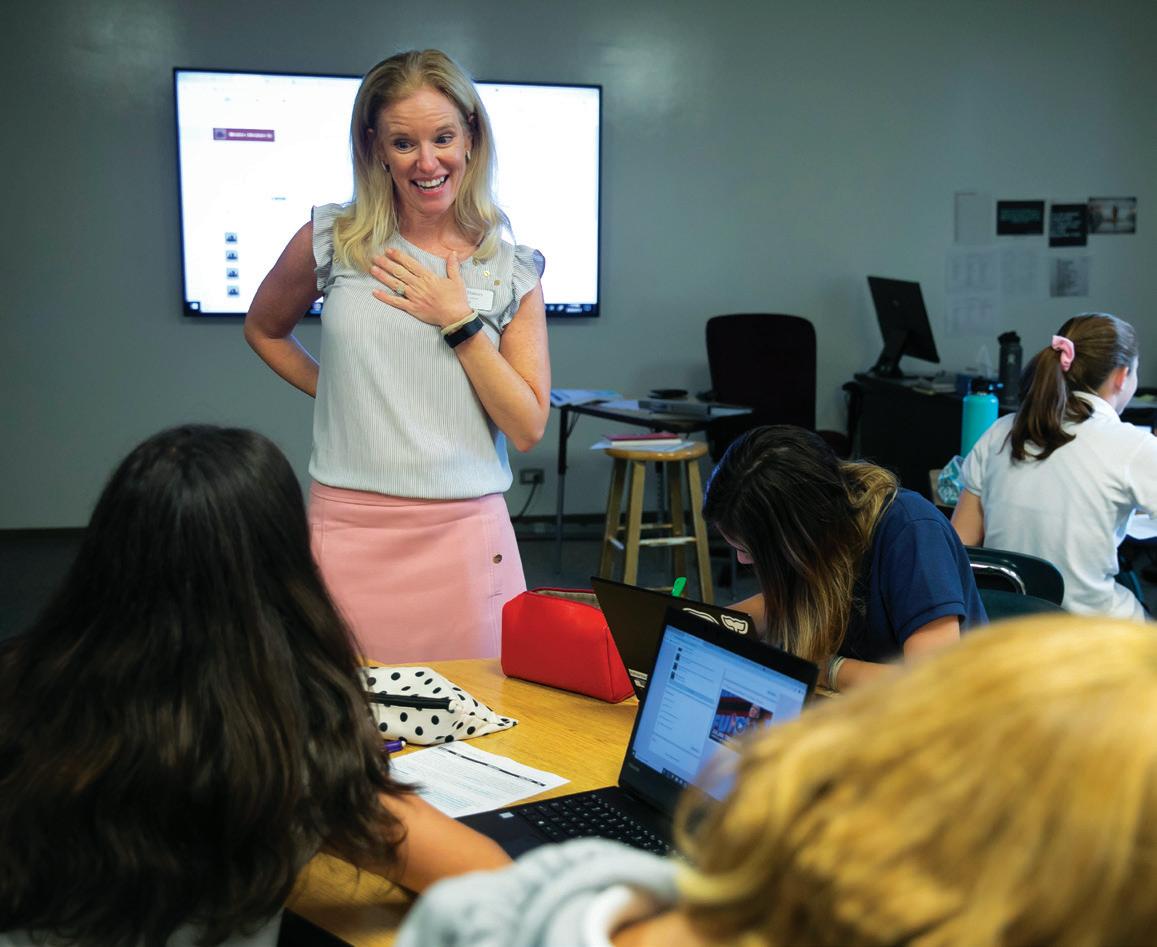
In the fall 2020, Duchesne Academy implemented a six-term modular ("mod") schedule in a continued effort to ensure that our students receive an education that is transformational and engages each learning style and ability. Our intention is to provide electives chosen by the students, coupled with core academic courses, in order to motivate their love of learning.
The mod schedule provides curriculum and experiential learning opportunities unlike any other school in Texas. Each year, the course offerings are updated to provide more choices and adapt to student interests.
A mod schedule is a way of organizing a school schedule into multiple terms that each have fewer, but longer class periods. A module, or mod, is the period of time the academic year is divided into. The Duchesne school year will be divided into six mods, each lasting 28 to 30 school days or about six weeks total. Think of a "mod" as a term or a mini-semester.
• Mod 1: Aug. 9 - Sept. 17
• Mod 2: Sept. 20 - Oct. 28
• Mod 3: Nov. 2 - Dec. 17
• Mod 4: Jan. 4 - Feb. 11
• Mod 5: Feb. 16 - Apr. 1
• Mod 6: Apr. 5 - May 19
A bin is time spent each day in class or an activity. The Upper School day is divided into five bins. Think of a "bin" as a class period. A, B, C, and D bins are 80 minutes. The 0 bin is 45 minutes and will be held in the morning before regular classes begin at 8:30 a.m.

We believe an important part of the scheduling process is you taking ownership of your schedule. The questions on page 4 should help you decide what courses to register for. You should reflect on your responses and be true to yourself. These courses will help define your high school experience and your college aspirations.
It is not easy to make schedule changes in the mod system. Therefore it is imperative that you notify your Academic Dean if you wish to drop or change classes within the first two days of mod 1 and mod 2. While some situations may work, your overall schedule may make some changes difficult or impossible. Thus, please be thoughtful, thorough, and realistic when you determine your schedule.
In the mod system, students will take fewer classes at one time. Therefore, a student will typically be managing homework for fewer courses at one time. This shift to studying and learning more intensely in fewer areas at a time will reduce the homework burden on students.
A year-long course is three mods, so an AP course is covered over three mods. Each department uses its own expertise to design their courses and determine the appropriate length of their bins and AP courses.
A free period could be replaced by elective classes that are being offered due to popular interest from the student body. With potential free periods and breaks built into the schedule, we are intentionally slowing the pace of the day in order to create a more balanced experience for students while retaining academic rigor. We also believe that this schedule will allow students to make better use of the time they spend in class interacting with their peers and teachers.
Are the course offerings and the scheduled times set in stone?
The course offerings, mods, and bins are all subject to change. If you have specific questions, you are always encouraged to seek out your Academic Dean.
College advisors will have allotted times to work with students both in groups and individually, as they do now. The college advising curriculum will be woven into the junior and senior year. Please see English electives as possible interests specific to the college process.
*All schedules are subject to change
As you consider your schedule for next year, we invite you to participate in a reflection on your ambitions and how your class schedule will support your goals and personal growth.
Duchesne’s mod schedule is all about choices. We offer a vast array of class options to allow you to identify and pursue your passions, even if they change over the course of your high school career. What area of study interests you the most and motivates you to learn?
Achieving goals is also about trying new things. Perhaps it’s taking an elective in a subject you know nothing about, trying out for a sports team, or participating in a new co-curricular activity. What is a new academic or co-curricular experience that you want to pursue in high school?
Personal growth is all about challenging yourself to do things and take classes that will stretch you in ways that will ultimately serve you well. What is something in Upper School you know will be difficult but that you want to tackle because it will be good for you?
Perhaps you participate in off-campus activities such as dance or club sports. Maybe you plan on joining a time-intensive club such as speech and debate, or playing on a sports team. As you build a class schedule consider your seasonal commitments. What are your commitments outside of class?
These progress bars show a distibution of graduation requirements. The check marks represent a typical student's progress before the start of each school year. However, each student's schedule may be different and will not necessarily follow these exact paths. Each check mark represents a bin, with most courses requiring 3 bins per year. The numbers in parentheses show the number of bins required for graduation in that subject. Students must take at least 18 bins per academic year and a total of at least 84 bins to graduate. Refer to the course descriptions for required courses at each grade level.
FRESHMAN: 21 Bins This Year / 63 Bins Remain
English (12)
Math (9)
Science (12)
Social Studies (12)
Theology (12)
World Languages (9)
Fine Arts (3)
Computer Science (3)
PE (3)
Research Paper (1)
Electives (8)
JUNIOR: 21 Bins This Year / 21 Bins Remain
English (12)
Math (9)
Science (12)
Social Studies (12)
Theology (12)
World Languages (9)
Fine Arts (3)
Computer Science (3)
PE (3)
Research Paper (1)
Electives (8)
SOPHOMORE: 21 Bins This Year / 42 Bins Remain
English (12)
Math (9)
Science (12)
Social Studies (12)
Theology (12)
World Languages (9)
Fine Arts (3)
Computer Science (3)
PE (3)
Research Paper (1)
Electives (8)
SENIOR: 21 Bins This Year / 0 Bins Remain
English (12)
Math (9)
Science (12)
Social Studies (12)
Theology (12)
World Languages (9)
Fine Arts (3)
Computer Science (3)
PE (3)
Research Paper (1)
Electives (8)
An essay is not five paragraphs with an introduction, three body paragraphs, and a conclusion. Its purpose is not to persuade, argue, or inform. Rather, the essay is a journey through one’s thoughts in search of truth and meaning in life. Michel de Montaigne, a French writer during the 16th century, coined the term essais which means “little attempts.” Although his essays are often autobiographical, they transcend his own personal experiences and explore the human condition. In this course, we will deconstruct the essay, processing our own experiences into “little attempts” at not only understanding ourselves, but on a larger scale, connecting with others and uncovering new layers of truth or life lessons. Prerequisite: none
Grade Level: 9th Offered: 1A, 1C, 2B, 2C Length: 1 Bin
Authentic analysis inspires us. It is passionate and captivating, evoking emotions and making us think. Although literary analysis papers are a hallmark of the English classroom and certainly important, they are not the only form of analytical writing. In fact, if we take a close look at published writing that permeates our world today, it examines music, movies, television, art, politics, sports, psychology, science, philosophy, and much more! In this course, the tools of analysis will be examined: passion, ideas, structure, and authority. Students will learn how to write like an expert about topics that interest them, examining key characteristics common to professional writing pieces, and they will develop their own voices. Prerequisite: Demystifying the Essay
Grade Level: 9th Offered: 3B, 3C, 4A, 4C, 4D Length: 1 Bin
It all starts with an idea. One that ignites interest and drives the writer to dig for a deeper understanding. What are ideas and why do they matter? Where do they come from? How can we generate effective ideas? With time and cultivation, we all have ideas worth exploring. In this course, students will learn how to develop an idea into a clear and concise focus, research it, and craft an MLA (Modern Language Association) research paper. Working with the Upper School library, students will understand the importance of utilizing scholarly sources as well as perusing the library database and book collection in order to effectively research. Additionally, students will practice the research paper writing process, from gathering information, to organizing it, and finally composing a paper in the proper format. Prerequisite: Now Analyze This
Grade Level: 9th Offered: 5A, 5C, 6A, 6D
Length: 1 Bin
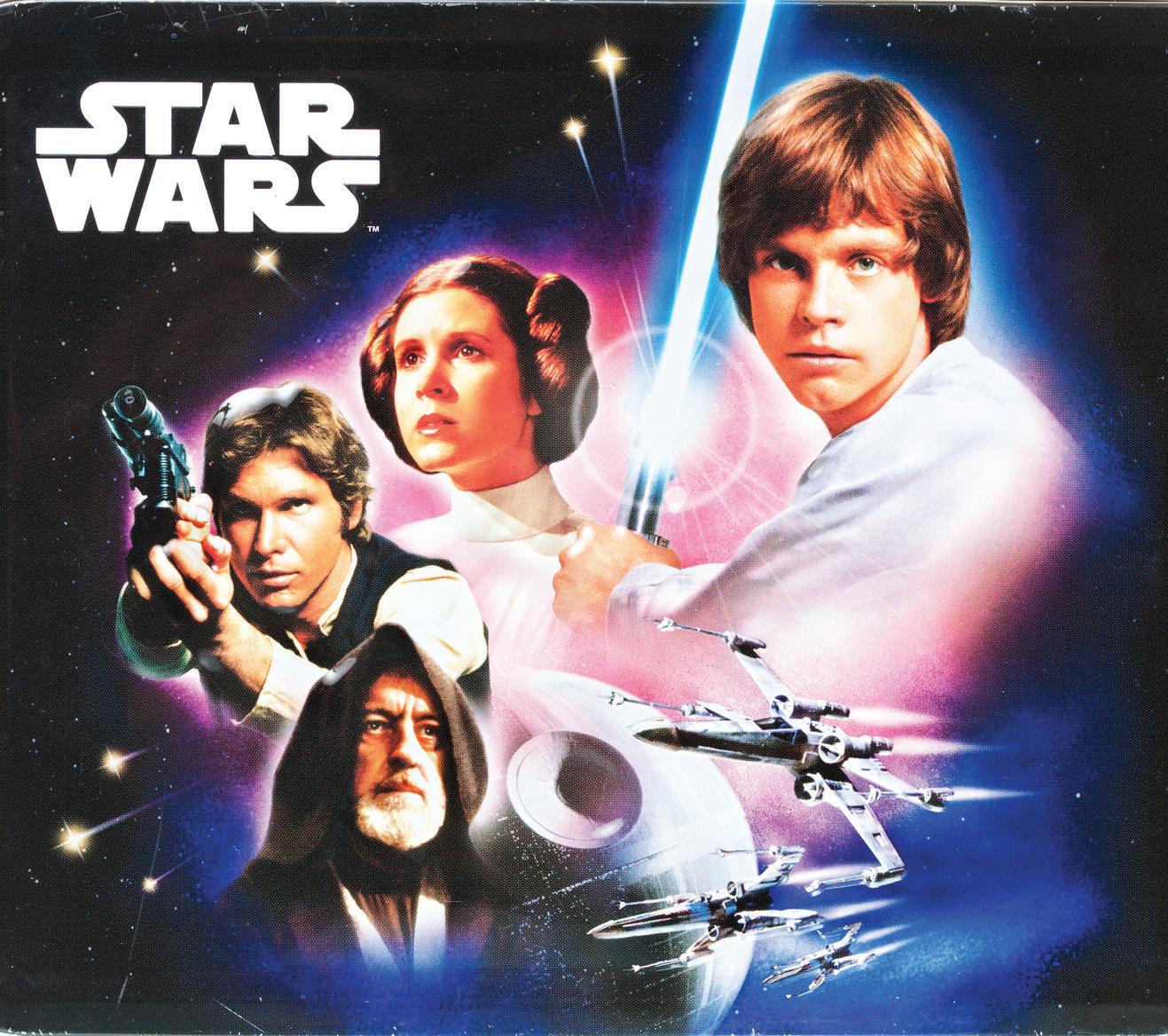
From A New Hope to The Rise of Skywalker, students will learn to analyze and apply a variety of critical literary lenses to the iconic Star Wars film saga. Understanding critical theory broadens students’ ability to critique literature and culture. Emphasis will be placed on an examination of the traditions of literary theory (Archetypal, Psychoanalytic, Gender/Feminist, Deconstruction, Post-Colonialism, Marxism, and Eco-Criticism) and the practical applications to the study of media-based literature. Students will compose a substantial critical essay based on research and the application of their preferred perspective on understanding and evaluating an installment of the Star Wars saga. Prerequisite: none
Grade Level: 10th Offered: 1C, 1D, 2B, 2C, 2D
Length: 1 Bin
Sophomores will choose two of the following courses from pages 6-7:
In this course, students will savor the rich complexity and timeless beauty of Shakespeare’s romantic language. We will start with his sonnets, including “Shall I compare thee to a summer’s day?” and “My mistress’ eyes are nothing like the sun.” We will discuss how the sonnets are more than just love poetry—they also deal with mortality and how poetry affords the poet the chance to “cheat” death. From there, we will consider Macbeth, the twisted tale of an ambitious married couple dealing with unexplained supernatural forces, and numerous romantic comedies. Students will engage in storytelling workshops as they seek to demystify Shakespeare for younger audiences. Prerequisite: In Theory...it's Star Wars!
Grade Level: 10th Offered: 3A, 3D, 4C
Length: 1 Bin
In search of ourselves, we will read and analyze stories of exploration and how authors connect the earth to an understanding of the very essence of humanity. In this class we will read fiction and nonfiction texts to explore authors’ arguments and stylistic strategies to present compelling arguments about how we come to understand ourselves through our ties to the earth and travel. Students will read contemporary authors as well as classic narratives and poetry. Suggested readings: Life of Pi (Martel), Into Thin Air (Krakauer), Wild (Strayed), Old Man and the Sea (Hemingway), poetry by Keats and Frost. Prerequisite: In Theory...it's Star Wars!
Grade Level: 10th Offered: 4A
Length: 1 Bin
Students will study the novels of Anne, Charlotte, and Emily Brontë alongside works (fiction and film) influenced by or creating a contrast to their authorial visions: Wide Sargasso Sea (Rhys), Rebecca (Du Maurier/Hitchcock), Harry Potter and the Sorcerer’s Stone (Rowling), and Twilight (Meyer). Among other questions, we will discuss the role of Romanticism and Gothic genres, imagination, and feminism. Students will study historical context to evaluate how the Brontës shaped English Literature for ages to come. Prerequisite: In Theory...it's Star Wars!
Grade Level: 10th Offered: 6A
Length: 1 Bin
In The Ocean at the End of Lane by Neil Gaiman, a character tries to explain monsters to a small child: “Monsters come in all shapes and sizes. Some of them are things people are scared of. Some of them are things that look like things people used to be scared of a long time ago. Sometimes monsters are things people should be scared of, but they aren’t… monsters are scared… That’s why they’re monsters.” This bin will explore how literature grapples with these monsters among us and, perhaps more frightening, the monsters within us. If literature helps us deal with problems, then the literature in this course (including Beowulf, Grendel, Paradise Lost, and the poetry of Robert Browning) deals with the problems of evil and what makes someone or something monstrous. As Disney’s Beauty and the Beast so elegantly puts it, “We don’t like what we don’t understand; in fact, it scares us.”
Prerequisite: In Theory...it's Star Wars!
Grade Level: 10th Offered: 6B
Length: 1 Bin
What does it mean to “throw like a girl?” This course will interrogate the notion of female outliers and outsiders within society. We will examine literature—both prose and poetry—from various time periods to determine how society and authors perceive women who are relegated as social misfits and “other.” What voice emerges as uniquely feminine through these works? How does society shape our assumptions, reactions, and practices where social deviance is concerned? Students will study biblical stories as well as canonical female authors and even some on the “fringes.” Biblical studies: Eve, Ruth, and the Marys, Poetry: Plath, Shelley, Keats, Rich, Olds, Authors: Austen, Honeyman. Prerequisite: In Theory... it's Star Wars!
Grade Level: 10th Offered: 4D, 5B
Length: 1 Bin
This course will study Native American authors from various tribal nations. Often marginalized or completely left out of “American” literature studies, this course will seek to orient you with the rich history, literature, and folklore of indigenous peoples of America. We will read poetry and stories from a small sampling of Native American authors, while also looking at Native American representation in film and pop culture. Students will consider the long-term effects of ongoing colonization, Native sovereignty, and political rights. Prerequisite: In Theory...it's Star Wars!!
Grade Level: 10th Offered: 5A
Length: 1 Bin
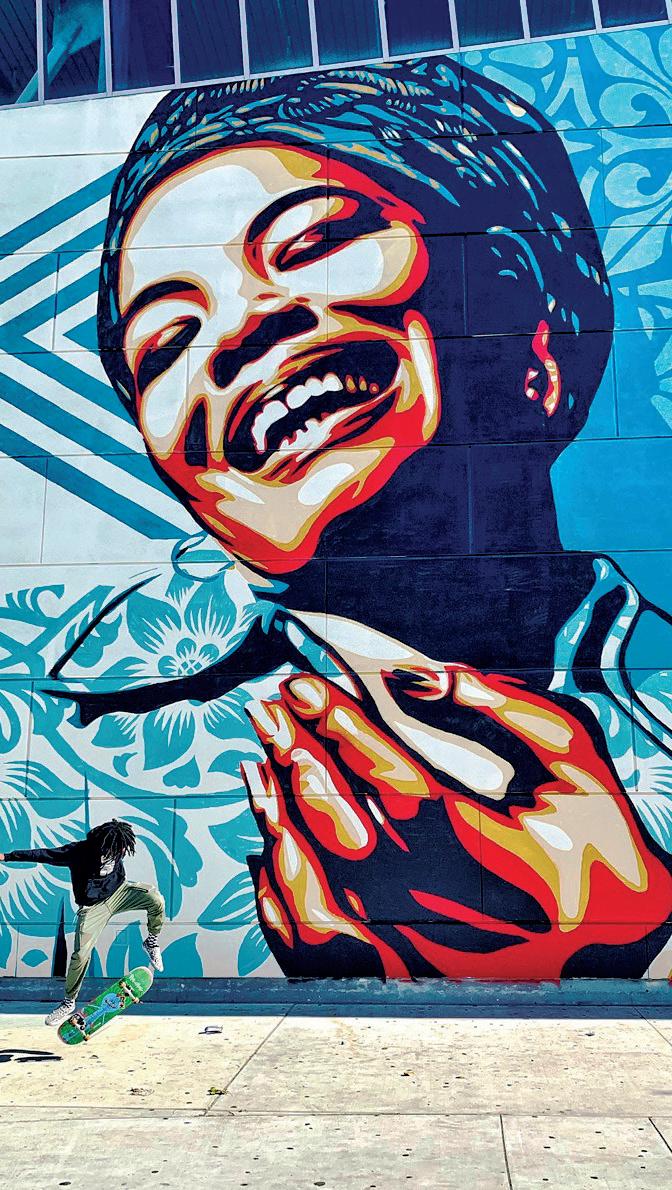
The American Dream is a powerful part of our country's mythology. The promise of a better life inspires people to work hard and to achieve greater things. But what exactly is The American Dream? Is it a guaranteed feature of our "land of opportunity," which is founded upon "life, liberty, and the pursuit of happiness"? Or is it simply an illusion with no connection to reality? This course examines how The American Dream has shaped our country and considers how—or whether—we should believe in the dream today. In addition to visual imagery and poetry, we’ll read F. Scott Fitzgerald's The Great Gatsby Prerequisite: none
Grade Level: 11th Offered: 2B, 2C
Length: 1 Bin
Language can be powerful. It can express incredible ideas, change the way people think, and persuade masses of people to do things. In this course, we’ll examine literature, speeches, and media and analyze how they influence their audiences. For example, how did Martin Luther King persuade his audience to continue to have hope, despite the discrimination they faced? And why do we feel “patriotic” when we listen to the national anthem? It’s due in part to the way the writers used language effectively. We’ll also look at everyday situations to consider how messages influence us. For instance, how does a pop-up ad convince us to prefer one brand of shoes over another one? Once you learn the strategies, you can use them to persuade your own audiences. Prerequisite: The American Dream
Grade Level: 11th Offered: 4C, 4D
Length: 1 Bin
Novelist and journalist Anna Quindlen called America “an improbable idea” because it’s a nation of vast differences “held together by a notion” of equality. The differences threaten to pull us apart, but our core beliefs somehow manage to keep us together. This course will focus on the vast differences and on those American writers bold enough to express them. The pieces we’ll read will make us think about our own era’s culture and expectations, and most importantly, they’ll demand that we think for ourselves rather than simply doing what others tell us to do. Readings are taken from the 19th and 20th century, starting with Thoreau’s famous “Civil Disobedience” essay. Other authors include Hawthorne, Whitman, Frederick Douglass, and Kate Chopin. Prerequisite: Rhetoric: Language & Persuasion
Grade Level: 11th Offered: 4A, 6A Length: 1 Bin
English class is more than just literary analysis. In this course, students will identify a problem in their local, regional, national, or global community and find a means to educate people about that problem and propose possible solutions. Besides writing traditional papers, students will educate and inspire change in a variety of media including videos or podcasts. With college around the corner, students will ultimately have to confront where they fit within the world and how they want to impact that world. They will choose how they want to live Goal III: “A social awareness which impels to action.” Prerequisite: none
Grade Level: 12th Offered: 1A, 2B Length: 1 Bin
Seniors not taking AP must choose two of the following courses on pages 8-9:
This course covers seminal works of Western Literature and explores their resonance in today’s globalized and technologically changing world. Texts include canonical works, such as A Study in Scarlet, coupled with more modern works, such as The Namesake, Jurassic Park, or The Handmaid’s Tale. Students will investigate the importance and the impact of selected readings, analyzing film or television adaptations and how performed texts differ from the written word. Is the series Sherlock retelling Arthur Conan Doyle’s stories or creating something totally new? For that matter, what makes Doyle’s novels and short stories so remarkable? In this class, students will debate such questions and consider what is gained and lost in the afterlives of great texts. Prerequisite: Writing for Change
Grade Level: 12th Offered: 2C, 2D Length: 1 Bin
“Irish eyes are smiling” as we discuss the works of some of the greatest Irish poets and novelists. Students will explore the wacky genius of James Joyce (focusing on some of the short stories in Dubliners), the imaginative poetry of W.B. Yeats, the hilarity of Oscar Wilde (particularly The Importance of Being Earnest), and the lyrical majesty of Seamus Heaney. We will end the course with students picking a novel to study from a contemporary Irish author (suggestions include Sally Rooney, Colum McCann, or Tana French). Prerequisite: Writing for Change
Grade Level: 12th Offered: 6A
Length: 1 Bin
An exceptional hero, encounters with monsters, and a trip to the underworld are all features of traditional epics (including The Odyssey, The Aeneid, Paradise Lost), but they are also the features of the iconic 1980s Indiana Jones film series. Using Raiders of the Lost Ark, Indiana Jones and the Temple of Doom, and Indiana Jones and the Last Crusade as core texts and supplementing with readings from traditional epics, students will explore the style of an epic narrative and make critical arguments about the longevity of the genre. Students will ultimately explore why the epic genre continues today and why a form once so popular in oral and later written tradition has now become more synonymous with film. And then, of course, there’s another question to answer: “Snakes. Why did it have to be snakes?” Prerequisite: Writing for Change
Grade Level: 12th Offered: 4D
Length: 1 Bin
In her poem, “Still I Rise,” Maya Angelou powerfully captures her worth in a country that tries to devalue and oppress her: “You may shoot me with your words, / You may cut me with your eyes, / You may kill me with your hatefulness, / But still, like air, I’ll rise.” Starting with this poem and the poetry of Claudia Rankine, we will explore some of the rich literature (poetry and novels) from prominent Black American women writers. Together as a class we’ll analyze and discuss a novel from Toni Morrison or Zora Neale Hurston, and then students will have the opportunity to work in small groups on books by Jesmyn Ward, Austin Channing Brown, Alice Walker, or Brit Bennett. Prerequisite: Writing for Change
Grade Level: 12th Offered: 5A Length: 1 Bin
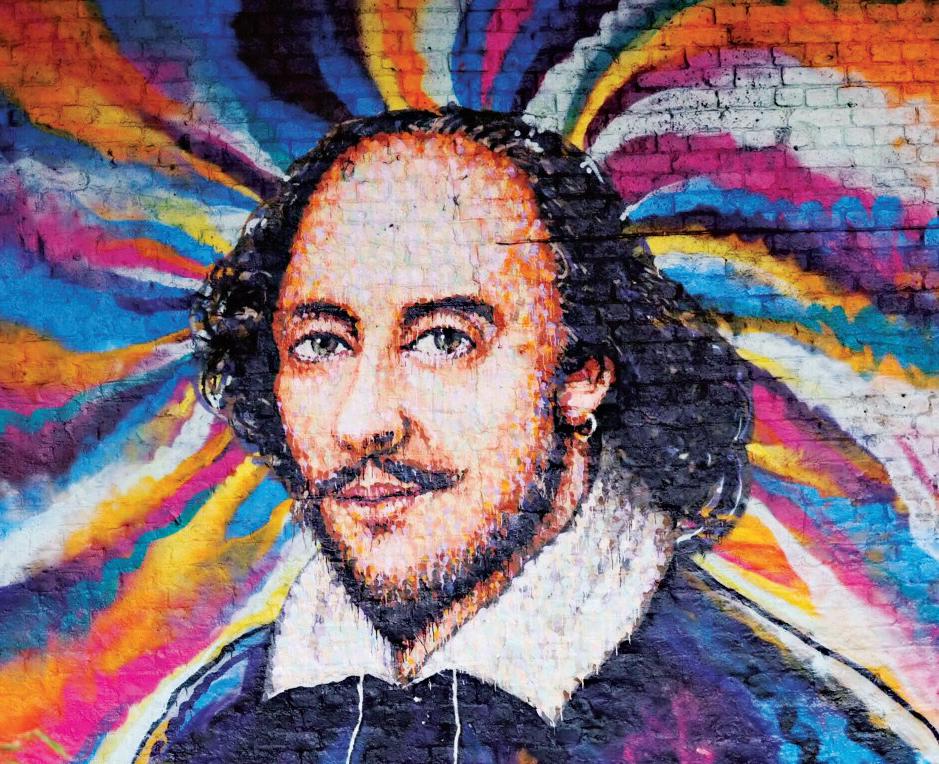
In the 1623 First Folio of Shakespeare’s works, contemporary playwright Ben Jonson wrote, “Reader, look not on his picture, but his book.” Although unkind about Shakespeare’s face, Jonson clearly respected the talent of his friend Shakespeare as he urged readers to read the plays of one of the greatest writers of all time. Because of the focus placed on Shakespeare, however, we often miss the talent of Shakespeare’s friends (and enemies), not only Jonson (probably even better at writing comedy than Shakespeare), but also Thomas Kyd, Christopher Marlowe, and John Webster. This course invites students to explore these other Renaissance writers, considering plays as varied as The Alchemist (Jonson), The Spanish Tragedy (Kyd), Tamburlaine (Marlowe), and The Duchess of Malfi (Webster) as well as reading poetry from the time period. Prerequisite: Writing for Change
Grade Level: 12th Offered: 3B, 4B
Length: 1 Bin
What must an author do in a short story that is different from a novel? How do you develop a character in 40 pages, 20 pages, 10 pages, or even fewer? How do you capture a setting in a few lines or paragraphs? In this course, students will explore short stories from writers like Jhumpa Lahiri, Ernest Hemingway, Eudora Welty, James Baldwin, Shirley Jackson, Nathaniel Hawthorne, Franz Kafka, and Gabriel Garcia Marquez. After reading these model texts, students will try writing their own stories. Prerequisite: Writing for Change
Grade Level: 12th Offered: 6B
Length: 1 Bin

AP English Language combines a survey of American Literature and a systematic preparation for the Advanced Placement English Language and Composition Exam. In this course, students learn to read complex texts analytically and to construct effective arguments efficiently. Readings range from classic American texts to contemporary pieces, with a focus on persuasive prose. Students will also study two short American classics: The Scarlet Letter and The Great Gatsby. Part 1 focuses on the AP rhetorical analysis and argument essays and multiple-choice questions. Part 2 introduces the AP synthesis essay. Part 3 reviews all AP essay types, along with the multiple-choice questions. Prerequisite: none
Grade Level: 11th Offered: 1B-3C-5D, 1D-3A-5B Length: 3 Bins
Exploring the wealth of literature coming from and about Africa, students will be introduced to the fundamental ideas of AP English Literature: character, setting, structure, narration, and figurative language. We will explore how American and European authors have written about Africa (Barbara Kingsolver’s Poisonwood Bible and Joseph Conrad’s Heart of Darkness) and how African authors like Chinua Achebe (Things Fall Apart) have responded. We will consider the portrayal of African women in the works of Chimamanda Ngozi Adichie (Purple Hibiscus) and Yaa Gyasi (Homegoing). We will conclude with the recent film portrayal of Africa in Black Panther. This course will satisfy one bin of AP English Literature and Composition.
Grade Level: 12th Offered: 1B, 1D Length: 1 Bin
“To be or not to be. That is the question.” Shakespeare’s most famous line captures Hamlet at a particularly low point; should he revenge his father’s death if it means he must kill his own uncle and his king? In asking “To be or not to be,” Hamlet asks, “What’s the point?” – not just the point of his revenge, but also, even more significantly, of his life. This course will tackle Hamlet, one of Shakespeare’s greatest dramas and one of the greatest pieces of literature. As we explore Hamlet’s complicated and emotional journey, we will ask essential questions about “the meaning of life.” After studying Hamlet, students will work on some contemporary metaphysical poetry and Shakespeare’s sonnets. This course will satisfy one bin of AP English Literature and Composition. Prerequisite: AP Literature: Studies in Africa
Grade Level: 12th Offered: 3A, 3C Length: 1 Bin
What makes a novel, a play, or a movie popular? Students will read and watch a variety of “blockbusters” to analyze how characters, narrators, settings, or language have spoken to their contemporary audiences but have also resonated with later audiences. This course not only asks students to consider what defines viewers or readers, but also what defines the texts themselves. Why was The Spanish Tragedy by Thomas Kyd the third most performed play during the English Renaissance, far surpassing the performances of his fellow playwright William Shakespeare? Why did Tim Burton’s 1989 Batman smash box office records and usher in a new era of superhero movies (a genre still thriving more than 30 years later)? Why have Lord of the Rings and Harry Potter each sold more than 100 million copies? This course will satisfy one bin of AP English Literature and Composition. Prerequisite: AP Literature: Shakespeare and the Meaning of Life
Grade Level: 12th Offered: 5B, 5D Length: 1 Bin
Literature of the Holocaust
This course will look at 3 iconic works of the Holocaust: Night by Elie Wiesel, Man’s Search for Meaning by Victor Frankel, and The Periodic Table by Primo Levi. Class discussion will be a major driver of this course and students will have the opportunity to pick a relevant topic, research it, and present it to the group.
Grade Level: 12th Offered: 2A
Length: 1 Bin
Common app essays, supplemental essays, personal statements. . . College admissions can be stressful for anyone, and this course will help you navigate through the process. Taken during junior year, this course will provide practical tips to writing your essays and providing colleges with a complete picture of you beyond your transcript. By the end of the course, students should have several skills to tackle their essays efficiently and effectively.
Grade Level: 11th Offered: 1D, 4B
Length: 1 Bin
SAT, ACT, IDK!! College admissions testing is confusing, but it doesn’t have to be. Once you know which test to take and how to approach it, you’ll be able to enter the testing room with confidence. In this course, you’ll get an overview of the SAT and ACT so you can decide which one suits you best. You’ll also learn helpful hints for taking each exam, as well as practice with questions from the different sections of the tests. You’ll also learn about the essay sections: are they really optional? This course will arm you with all the skills you need to conquer the test. You’ll be able to relax and smile, LOL.
Grade Level: 10th - 12th Offered: 2A, 4B Length: 1 Bin
Writing takes practice. To build writing stamina, it is important to write every day without restrictions. In this course, we will explore our imaginations by stream of consciousness writing. Using a variety of writing prompts, from photographs to poetry to artwork, every day will be devoted to the craft of writing and the process necessary to develop a polished piece.
Grade Level: 9th - 12th Offered: 3A Length: 1 Bin
Inspired by photographer Brandon Stanton’s Humans of New York (HONY) photoblog and book, this bin will explore human interest stories in the Duchesne Academy community through photojournalism. Learn how to effectively interview a subject, ask the right questions, craft an insightful story caption, photograph the person in his or her element, and tie it all together to create a powerful personal story.
Grade Level: 9th - 12th Offered: 5D Length: 1 Bin
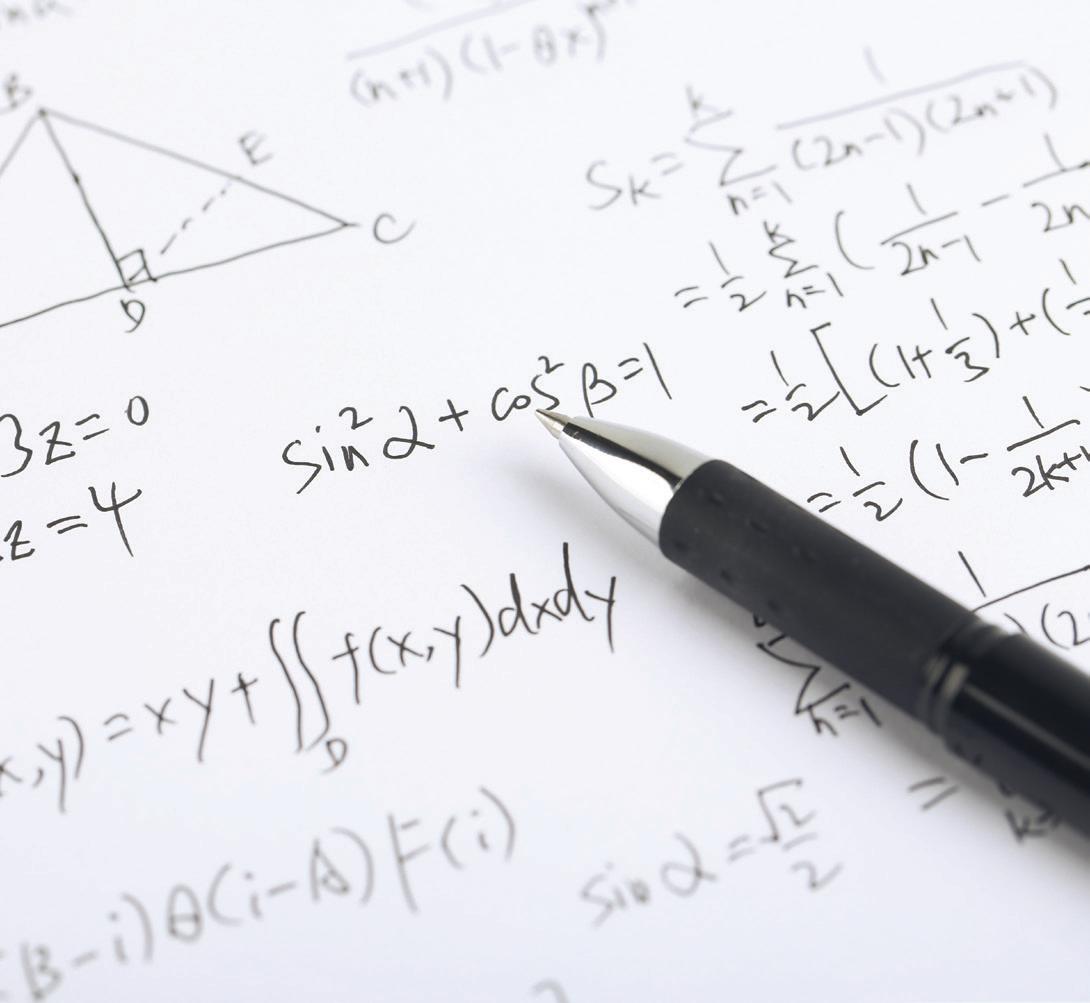
Algebra I, often defined as the language of physics where physics is the explanation of life, gives students a foundation for all future mathematics courses by emphasizing the study of multiple representations of linear and non-linear functions. Students will explore the fundamentals of algebraic problem-solving: solving equations, solving inequalities, exponents, polynomials and factoring, quadratic equations, and radical expressions and equations. Throughout the course, students will learn how to apply these concepts to real-life situations. Prerequisite: none
Grade Level: 9th Offered: 1A-3B-5C, 1C-3D-4A Length: 3 Bins
Geometry is a place for students to showcase their algebra skills through logic and spatial reasoning. Students encounter real-world scenarios and use deductive reasoning to guide them through the problem-solving process. The course includes a thorough treatment of the foundations of geometry: points, lines, and planes, properties of polygons and circles, as well as areas of figures and volumes of solids. Prerequisite: Algebra I
Grade Level: 9th, 10th Offered: 2B-4C-6D, 2C-4D-6A, Length: 3 Bins 2D-5A-6B
Students will showcase their algebra skills using logic, spatial reasoning, and problem-solving in collaborative real-world scenarios. When working through challenging problems, students will formulate a simpler problem, work backwards, and recall strategies from previous scenarios. This course includes foundations of geometry: inductive and deductive reasoning, properties of polygons and circles, and volume calculations. Prerequisite: Algebra I
Grade Level: 9th, 10th Offered: 2D-5A-6B Length: 3 Bins
Algebra II provides a conceptual bridge for topics from Algebra I and Geometry. Some of the concepts covered will include functions, equations and inequalities, logarithmic and exponential relationships, conics, quadratic and polynomial equations, and matrices. Topics that were introduced in Algebra I will be expanded and applied to questions that require higher-order thinking skills where students will need to justify and explain their thought processes. Additional topics will be introduced through independent activities, group projects and presentations, and teacher-led discussions. Computers and graphing calculators will be used to introduce and expand upon these concepts. Prerequisite: Geometry
Grade Level: 10th, 11th Offered: 1A-3B-5C, 2B-4C-6D, Length: 3 Bins 2C-4D-6A
The second year of Advanced Algebra focuses intensely on the study of types of numbers and functions. The goal of the course is to develop a strong numerical, algebraic, and graphical sense while building a verbal fluency of the mathematics. We will go beyond the linear and quadratic to explore radical, rational, exponential, logarithmic functions, and the topics of probability and statistics. Our analysis will include a wide range of applications from carbon-dating to space exploration. Prerequisite: Geometry
Grade Level: 10th, 11th Offered: 2B-4C-6D, 2C-4D-6A Length: 3 Bins
Pre-Calculus is designed to intertwine and deepen understanding of topics from Algebra and Geometry in preparation for further mathematical studies in Calculus. With a focus on numerical, graphical, algebraic, and verbal analysis, we will explore three main themes:
Bin 1: The Function Machine: Linear, Polynomial, Radical, and Rational Functions
Bin 2: Thinking in Circles: Analytical Geometry and Trigonometric Functions
Bin 3: Explaining Nature with Mathematics: Exponential and Logarithmic Functions, Conic Sections, Probability
Students will work collaboratively and learn via a combination of direct instruction, discovery, and project-based inquiry. Prerequisite: Algebra II
Grade Level: 11th, 12th Offered: 2A-4B-6C, 1D-3A-5B
Length: 3 Bins
In Advanced Pre-Calculus, students will study the theoretical aspects of polynomial, exponential, logarithmic, and trigonometric functions, and get a sense of how these functions are lurking in the world around us. Attention is given to precise communication of mathematical ideas in proofs and written and oral explanations. Students will move easily between graphical and algebraic representations of solutions and they will be able to articulate why an answer makes sense in more than one way. Upon the completion of all three bins, students will have acquired a strong foundation for the study of AP Calculus. Prerequisite: Algebra II
Grade Level: 11th, 12th Offered: 2C-4D-6A
Length: 3 Bins
To study Calculus is to study how quantities change. You have already studied the linear relationship that occurs when a quantity changes at a constant rate. In this course, you will learn how to determine instantaneous rates of change of quantities that do not vary at a constant rate. You will use technology as a primary tool for discovery of rules, properties, and theorems about the derivative and the integral. Prerequisite: Pre-Calculus
Grade Level: 12th Offered: 2A-4B-6C
Length: 3 Bins
AP Calculus: AB
The AP Calculus AB course answers the questions “How fast…?” and “How much …?” by an in-depth study of the derivative and the integral. In the process, we will study curve properties, optimization, rate of change, motion, and what it means to accumulate change. Students will work with functions represented in numerical, graphical, tabular, and algebraic forms and they will learn to connect these representations. Students will be taught to present their findings in clear verbal and written format. We will use many types of software and technology to visualize the calculus concepts. Upon completion of all three bins, students are prepared to take the AP Calculus AB exam. Prerequisite: Pre-Calculus
Grade Level: 11th, 12th Offered: 1D-3A-5B
Length: 3 Bins
AP Calculus BC covers all the topics of AB Calculus along with the addition of several topics that include sequences and series, vectors and parametrics, polar area and arc length, as well as extension of integration techniques. The major topics of derivative (rate of change) and integral (accumulation of changes) are emphasized throughout the course. As with the AB course, AP Calculus BC emphasizes not only procedures but also the reasons and understandings behind the procedures. This course pushes for connections between topics and fosters the learning of a variety of mathematical techniques with which to analyze problems with diverse contexts. Prerequisite: Pre-Calculus
Grade Level: 12th Offered: 1B-3C-5D Length: 3 Bins
The news and media are filled with numerical information. Have you ever wondered where the information comes from, and if it is even valid? AP Statistics is a course designed to give you a thorough understanding of random events, probability, data collection and its analysis. Each day we look at a real-world scenario and come closer to finding the truth. Does Beyoncé write her own lyrics? Can some people really smell Parkinson’s Disease? Does the store brand have as many chocolate chips as the name brand? Let’s find out! By the end of the class, you’ll be 99% confident and prepared for the AP exam. Prerequisite: Algebra II
Bin 1: Collecting and Describing Data and its Distributions
Bin 2: Probability, Sampling Distributions, and Statistical Inference for One Group
Bin 3: Statistical Inference for Two or More Groups, and Review for the AP Exam
Grade Level: 11th, 12th Offered: 1A-3B-5C Length: 3 Bins
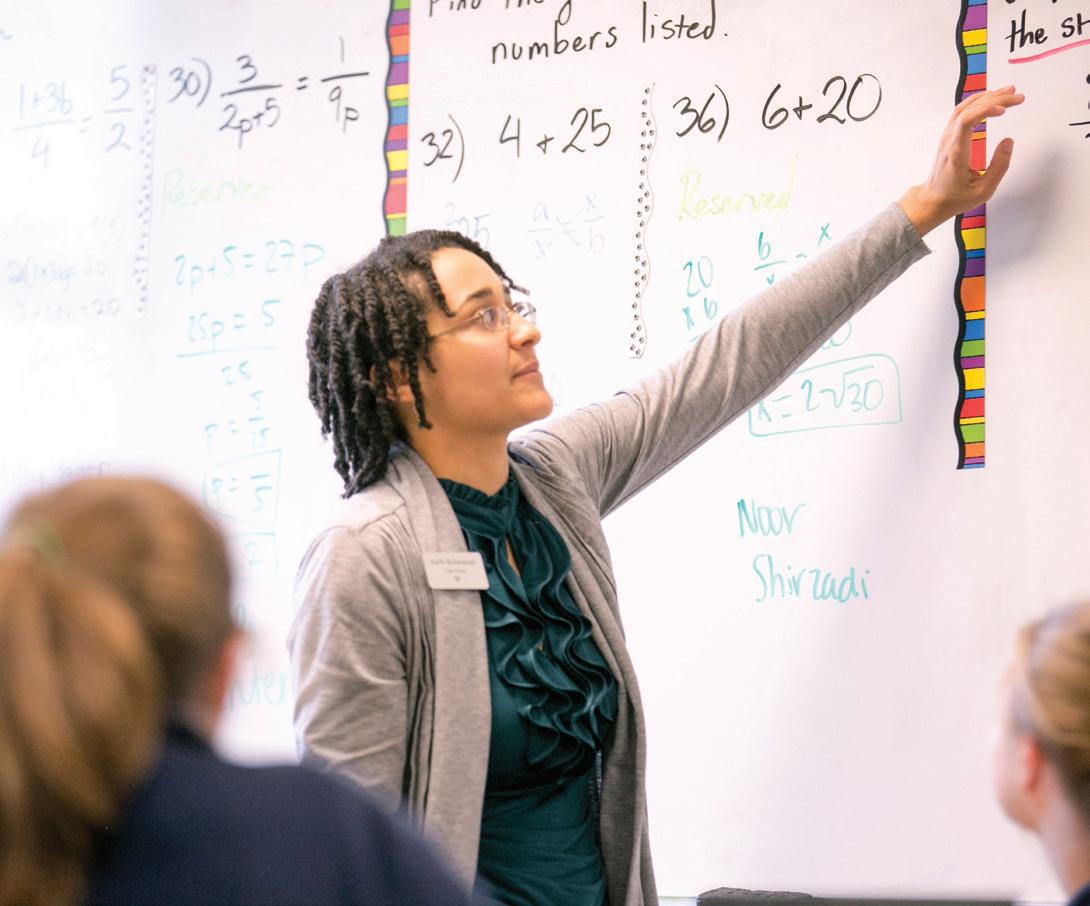
How often have we heard a student ask, “When will I need to know this math concept?” The answer is “Every day!” On any given day, you might need to know how much gas is needed for a trip; what to tip a waiter; how to calculate withholding on a W2 form; which discount offers the most; how much can be spent on the purchase of a car or home; which stock is the best buy; or how to complete the 1040 tax form. These are only a few of the situations that you encounter daily where you need a strong understanding of decimals, percentages, proportions, and fractions. Prerequisite: Algebra II
Grade Level: 12th Offered: 5B
Length: 1 Bin
Mount Everest’s peak is 29,029 feet above sea level, but how does anyone actually measure this? In Trigonometry, students will encounter the type of functions that make this measurement possible. In addition to reinforcing concepts encountered on the ACT, the skills practiced in this bin have applications in naval and aviation industries, cartography, and satellite systems. Prerequisite: Algebra II
Grade Level: 12th Offered: 1D-3A
Length: 2 Bins
The course will explore major mathematical developments beginning with ancient Babylonians and Greeks and tracing the development through Hindu-Indian mathematics, Arabic mathematics, and European mathematics up to the 20th century. Very little is known about mathematics of the Mayan culture as well as Far East. The course will also allow the research into those lesser known works. Prerequisite: Algebra II
Grade Level: 10th-12th Offered: 4A
Length: 1 Bin
Linear algebra is heavily used in modern mathematics, particularly in statistics and data science, with applications in many fields, including economics, physics and engineering. In this course, we will learn to solve systems of linear equations with matrix operations, and provide an understanding of the processes used in computer software designed to solve systems. Students will learn not just how to calculate them, but also why they work the way that they do. Students will learn formal mathematical proof techniques such as induction, and work with powerful mathematical computational software such as Mathematica. We will explore applications of matrices and linear algebra with a combination of traditional direct instruction and project-based learning. Prerequisite: Algebra I, Geometry, and concurrent enrollment in or previous completion of Algebra II
Grade Level: 10th-12th Offered: 3D
Length: 1 Bin
Biology is a field of inquiry and investigation. The underlying themes of continuity and diversity, as well as the common threads of evolution and genetics, unify the fields of study. Students explore the cell, the way cells interact to produce the many forms of successful organisms, and how these organisms interact with the environment. Biochemical and physiological studies highlight the fundamental relationship of form and function. Both individual and group research and laboratory work are integral to the course. In part one, students will explore biochemistry and cell biology, while part two will focus on genetics, both Mendelian and molecular. The course will conclude with a third unit of study with topics including evolution, ecology, and human body systems. Prerequisite: none
This course is a study of the concepts and models upon which modern chemistry is based. In the footsteps of the scientists before them, students will explore the concepts integral to chemistry, such as properties of matter, chemical reactions, behavior of gases, stoichiometry, and the energy involved in chemical systems. Models are then developed to help explain and understand those concepts. Our work is guided by three main questions: 1. How do we view matter (from a particle standpoint); 2. How does matter behave; and 3. What is the role of energy in the changes we observe? As we work toward answering these questions students will improve their ability to measure, organize, and communicate scientific information as well as increase development of critical thinking skills. Prerequisite: Biology, Algebra, and concurrent enrollment in Geometry or Algebra II
Grade Level: 9th Offered: 1D-3A-5B, 2B-4C-6D, Length: 3 Bins
2C-4D-6A, 2D-5A-6B
This course provides an introduction to the study of living things and the natural environment. The goals of the course are to develop an understanding of the earth as a system, its components, and how those components interact. Topics include landscape geography, basics of geology and plate tectonics, biotic and abiotic factors, photosynthesis and respiration, energy flow and trophic levels, species interactions, evolution, succession, seasons and climate, species diversity, endangered species, and invasive species. Prerequisite: Biology
Bin 1: Environmental Geography & Geology
Bin 2: Population Ecology
Bin 3: Community Ecology
Grade Level: 10th Offered: 2B-4C-6D Length: 3 Bins
Grade Level: 10th, 11th Offered: 1D-3A-5B, Length: 3 Bins 2B-4C-6D, 2C-4D-6A
Advanced Chemistry I is an accelerated version of Chemistry I. Scientific problem solving, the properties of matter, energy changes in chemical systems, gas laws, chemical reactions, and stoichiometry are the main topics, with additional focus on acids and bases, periodicity, and solution stoichiometry. Our guideposts are three main questions: 1. What does matter look like (from a particle standpoint); 2. How does matter behave; and 3. What is the role of energy in the changes we observe? As we work toward answering these questions students will improve their ability to measure, organize, and communicate scientific information as well as increase development of critical thinking skills. Prerequisite: Biology, Geometry, and concurrent enrollment in Advanced Algebra II
Grade Level: 10th, 11th Offered: 2A-4B-6C Length: 3 Bins
The Physics course investigates the essentials of mechanics (including kinematics and dynamics), energy, momentum, circular motion, and gravitation. Additional topics of heat and thermodynamics, harmonic motion, optics, electricity, magnetism, and modern physics will be examined. A variety of methods, tools, and technology will be used to model mental constructs of ideas and apply those models to real-world problems. Mathematical and conceptual relationships will be used as guides for thinking and in all aspects of scientific inquiry. Students will use a variety of techniques, including real and virtual laboratory investigations, inquiry, and scientific problem-solving, to make informed decisions and think critically and logically about physics concepts. Emphasis will be on designing and conducting scientific investigations to gather, interpret, and analyze data, and to form relationships between evidence and explanations Prerequisite: Chemistry or Advanced Chemistry and concurrent enrollment in Algebra II or higher
Grade Level: 11th, 12th Offered: 1B-3C-5D, 2B-4C-6D, Length: 3 Bins 2C-4D-6A
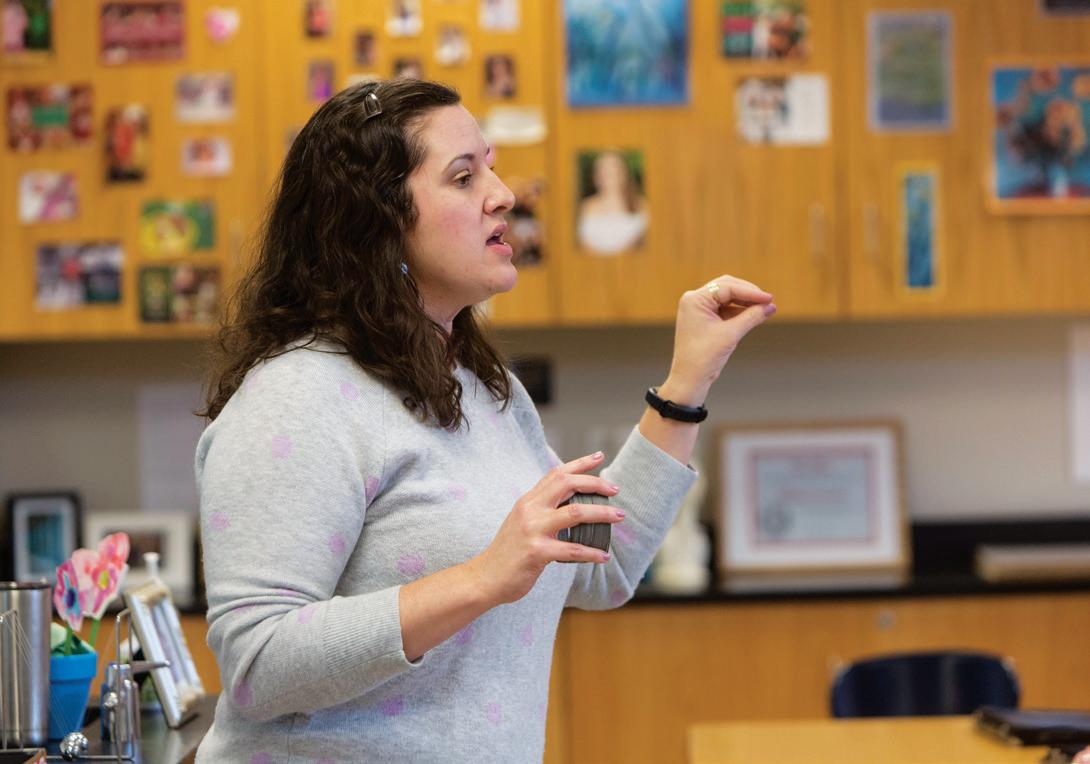
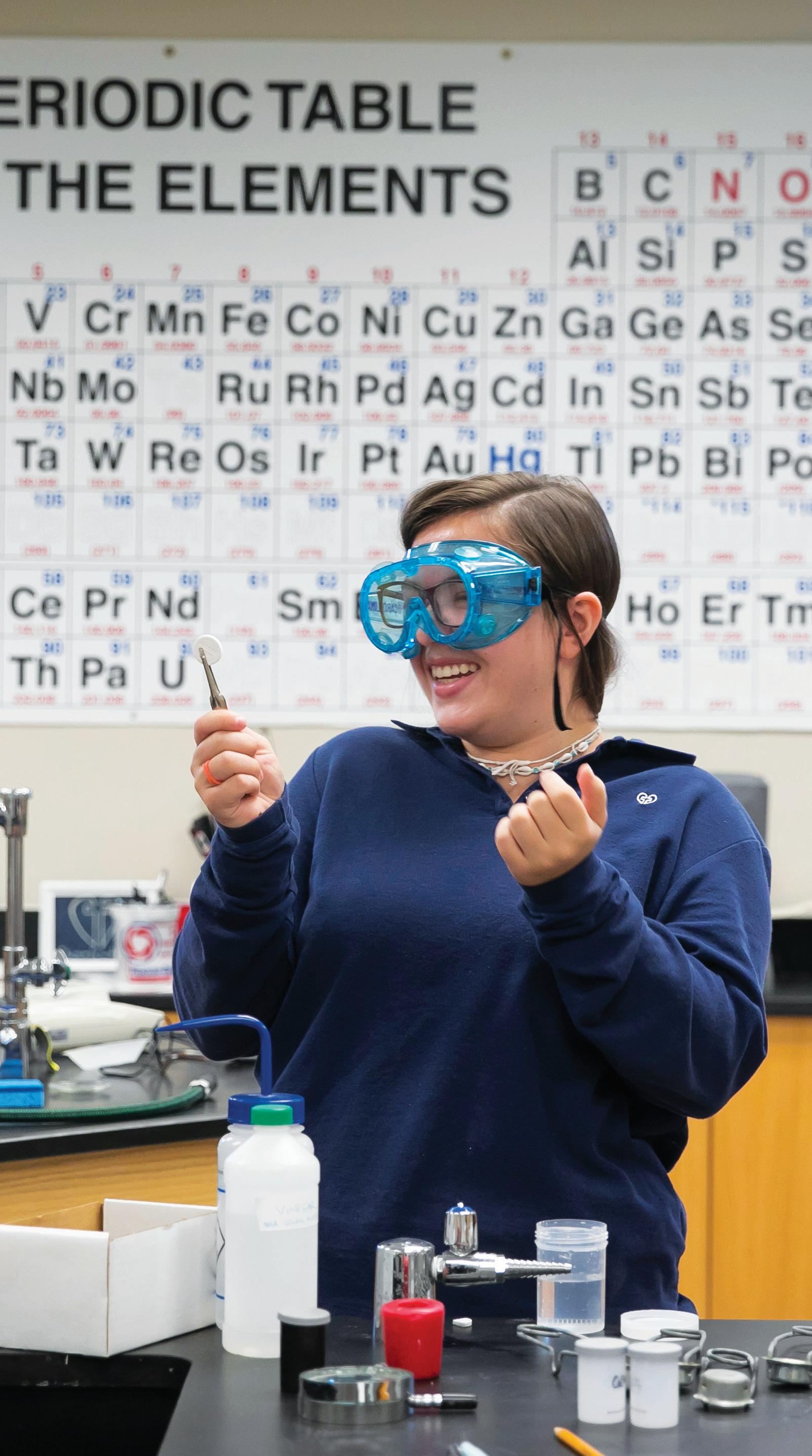
AP Biology is an accelerated course designed to integrate and enhance the skills and knowledge acquired in Biology I. Emphasis is placed on evolution, genetics, and the physiological and biochemical interactions of organisms within the environment. Students will develop an understanding of key science practices as well as advanced reasoning and inquiry skills through course work and laboratory investigations. Prerequisite: Biology, Chemistry, Algebra II
Grade Level: 11th, 12th Offered: 1B-3C-5D
Length: 3 Bins
AP Chemistry is designed to be equivalent to a first-year chemistry course at the college level where students build a foundation of chemical knowledge through both traditional and inquiry-based investigations that allow them to collect and analyze data and connect concepts across the Big Ideas. Students will: use models to describe scientific phenomena and solve problems; use appropriate mathematics; engage in scientific questioning to extend thinking and guide chemical investigations; plan and implement data collection strategies based on scientific questions; hone their abilities to create a scientific claim, based on evidence and scientific reasoning; and connect knowledge across the various content areas both within, and outside, the course. In this Algebra-based course, students will use theoretical and physical models, simulations, and mathematical relationships to process information and expand their understanding of chemistry. Prerequisite: Biology, Chemistry, Algebra II, and concurrent enrollment in Advanced Pre-Calculus or higher
Grade Level: 11th, 12th Offered: 1A-3B-5C
Length: 3 Bins
The AP Physics I course is an algebra-based, introductory college-level physics course. Students will cultivate their understanding of physics through classroom study, inclass activity, and hands-on, inquiry-based investigations as they explore concepts of systems, fields, force interactions, change, conservation, and waves. The mathematical basis of this course is Algebra and Trigonometry (functions and equations). Mathematical relationships will be used as guides for thinking and in all aspects of scientific inquiry. Students will use a variety of techniques, including real and virtual laboratory investigations, inquiry, and scientific problem-solving, to make informed decisions and think critically and logically about physics concepts. Emphasis will be on designing and conducting scientific investigations to gather, interpret, and analyze data, and to form relationships between evidence and explanations. Prerequisite: Advanced Chemistry and concurrent enrollment in Advanced Pre-Calculus or higher
Grade Level: 11th, 12th Offered: 1C-3D-4A
Length: 3 Bins
The goal of the AP Environmental Science course is to provide students with the scientific principles, concepts, and methodologies required to understand the interrelationships of the natural world, to identify and analyze environmental problems both natural and human-made, to evaluate the relative risks associated with these problems, and to examine alternative solutions for resolving and/ or preventing them. Specific topics include ecosystems, biodiversity, populations, Earth systems and resources, land and water use, energy, air pollution, aquatic and terrestrial pollution, and global change. Prerequisite: Chemistry, Algebra II
Grade Level: 11th, 12th Offered: 1C-3D-4A
Length: 3 Bins
This course provides an introduction to the study of the environment. The first bin focuses on ecology: Earth’s components, how living and non-living things interact, and the impact of human societies on the natural environment. The second bin revolves around human population growth and agriculture, and how humans use the natural environment. Students must take a third bin, Current Events in Environmental Science or Marine Biology, to receive full credit for Environmental Science as a fourth-year science elective. Prerequisite: Chemistry
Bin 1: Ecology
Bin 2: How Humans Use the Environment
Bin 3: Current Events in Environmental Science or Marine Biology
Grade Level: 11th, 12th Offered: 2D-5A
Length: 2 Bins
This course utilizes current scientific reporting in newspapers, journals, blogs, and websites to review, analyze, and critique current events in environmental science. Topics may include water resources, water pollution, air pollution, global climate change, hazardous substances, epidemiology, human health effects from environmental exposures, solid waste disposal, recycling, and/or energy issues. This course is one of two options following two bins of Environmental Science, one of which is required to complete credit for Environmental Science. Prerequisite: Environmental Science
Grade Level: 11th, 12th Offered: 6B
Length: 1 Bin
Have you ever wanted to study marine biology? They say that we know more about the moon than we do about the oceans. In this course, we will learn about sharks, humpback whales, the Hawaiian Islands, predator and prey relationships, plate tectonics, hurricanes, and more. We’ll study animals found in the deep ocean and on coral reefs while learning how sunlight and ocean temperature affect their habitats. By using the novel, MEG, by Steve Altman, we will study the mystery of a body of water that covers 70% of our earth. Prerequisite: Environmental Science
Grade Level: 11th, 12th Offered: 6B
Length: 1 Bin
This course will introduce students to the Engineering Design Process utilizing the Engineer Your World curriculum developed by The Cockrell School of Engineering at The University of Texas at Austin. The students will focus on developing authentic engineering practices through constructing and analyzing data in a project-based learning environment. Past projects have included designing a camera, reverse engineering a product, creating a coffee maker, constructing an earthquake proof tower, programming digital music, and producing a mechanism to conduct aerial imaging. Students who want to earn dual credit for this course must register and enroll independently with UT. Prerequisite: Algebra II and Chemistry
Grade Level: 10th - 12th Offered: 1D-3A-5B
Length: 3 Bins
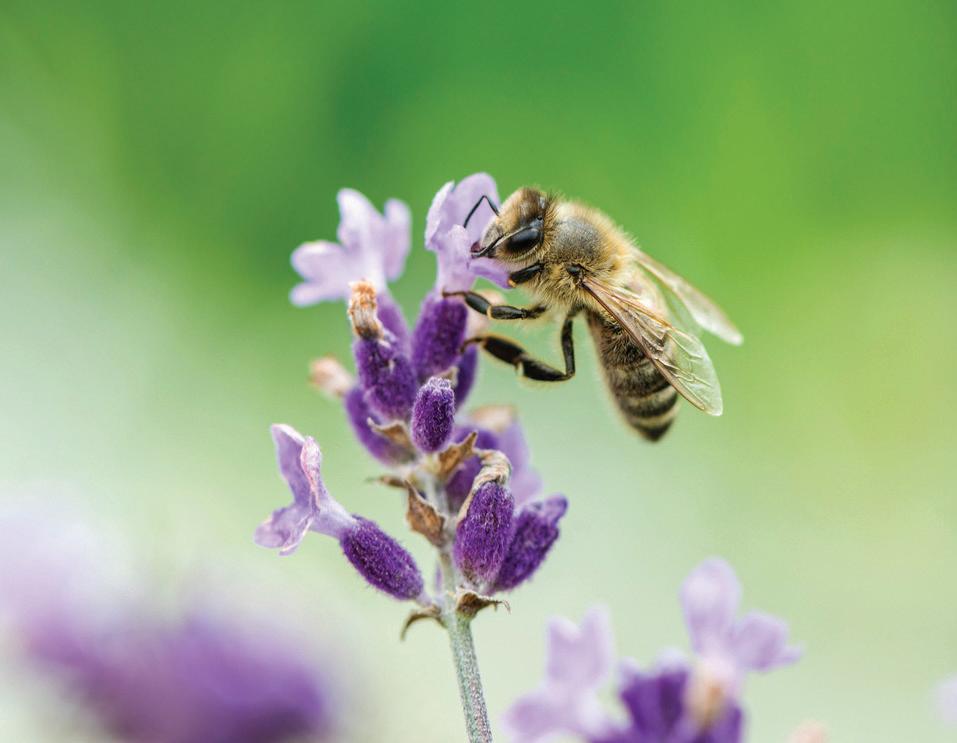

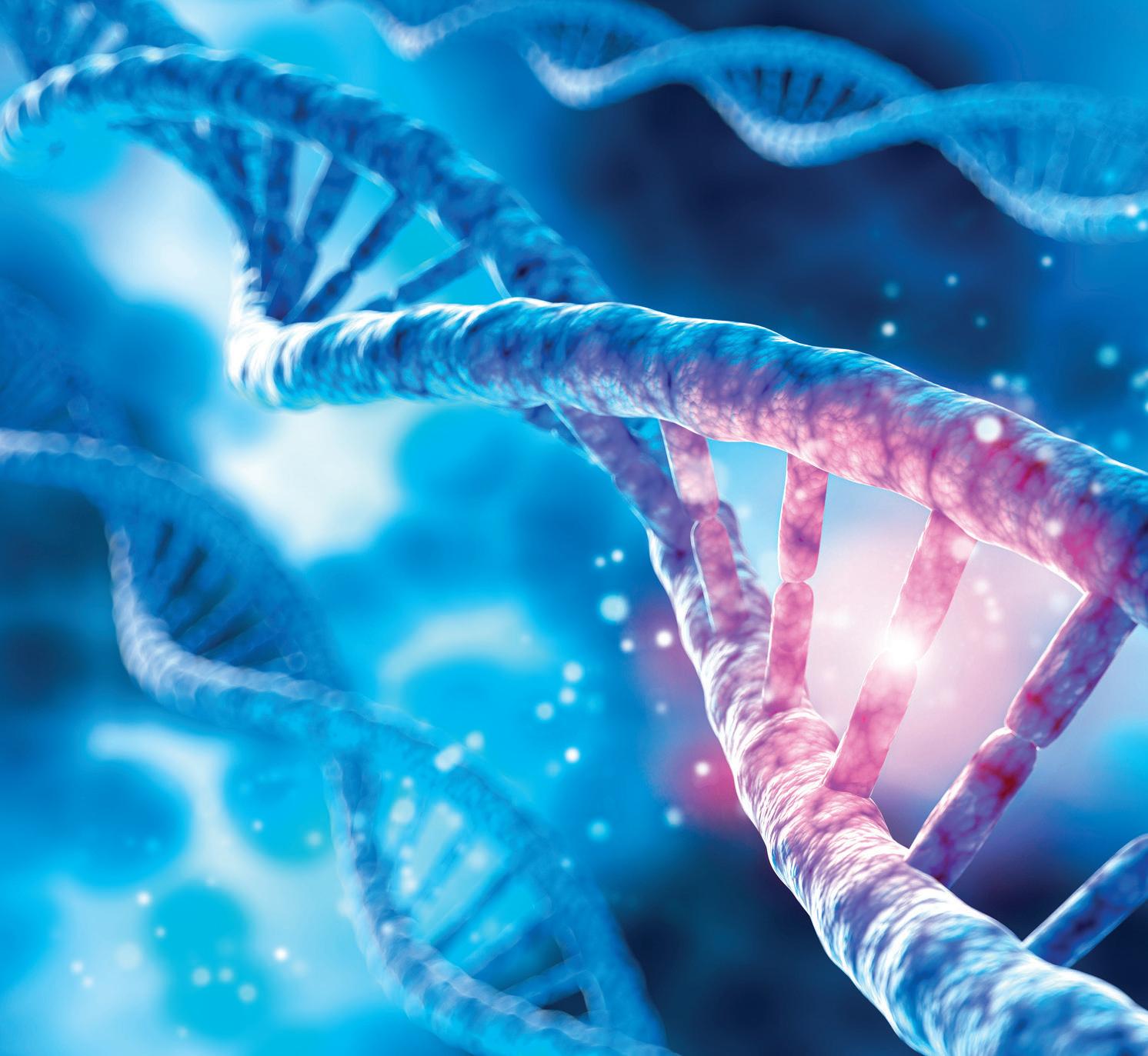
The Physics of Harry Potter course evaluates the scientific validity of various aspects of the world of Harry Potter, including the Sorcerer’s Stone (as related to alchemy), Hermione’s Time Turner (time travel), prophecy (entropy and chaos), Winguardium Leviosa (levitation and flying), herbology and potions (plant chemistry and pharmacology), the Pensieve (memory transfer and teleportation), Lumos (behavior of light), and the invisibility cloak (camouflage and refraction), among other proposed magical ideas. A variety of methods, tools, and technology will be used to develop students’ understanding of scientific ideas to arm them to answer the question, “Is this scientifically possible?” Students will utilize a variety of techniques, including whole class discussion, research-based arguments, written reflections, small group problem solving, and experimental design to make informed decisions and think critically and logically about science in the real world. Emphasis will be on examining scientific evidence to form fact-based explanations for seemingly “magical” occurrences. Prerequisite: Chemistry
Grade Level: 11th, 12th Offered: 2D
Length: 1 Bin
There are endless possibilities for the pattern of one’s genetic material, but how do genetic disorders appear when the chances of them are quite rare? In this course, students will unravel the genome and discover how mutations in DNA sequence can greatly affect an individual. Students will use knowledge of DNA, protein synthesis, cellular processes, and inheritance patterns to study the cause of various genetic disorders and the physical effects they have on an individual. Prerequisite: Chemistry
Grade Level: 11th, 12th Offered: 4A
Length: 1 Bin
Forensic Science is the application of science (chemistry, physics, and biology) to the criminal and civil laws that are enforced by police agencies in a criminal justice system. It includes the investigation of fingerprinting, fiber analysis, ballistics, arson, trace evidence analysis, poisons, drugs, blood spatters, and blood samples. Students are taught the proper collection, preservation, and laboratory analysis of various samples. Prerequisite: Chemistry
Grade Level: 11th, 12th Offered: 4B
Length: 1 Bin
Have you ever wondered how diseases can suddenly appear and quickly affect populations? Epidemiology is the study of diseases in populations of humans or other animals, specifically how, when, and where they occur. Students enrolled in this course will study and research infectious diseases to determine what factors are associated with diseases and what factors may protect people or animals against diseases. Prerequisite: Chemistry
Grade Level: 11th, 12th Offered: 3D
Length: 1 Bin
The global studies course is an introduction to the vast discipline of Social Studies. By approaching global studies through the lens of history, geography, economics, political science, anthropology, etc., students will develop the tools to identify relevant connections between the historical foundations of the modern world and current global issues. Foremost, the class will cultivate the skill sets needed to bolster their academic readiness beyond their freshman year, meaning students will have extensive practice with evaluating evidence in support of argumentation and inquiry, writing complex and creative thoughts, interpreting historical events and their outcomes, synthesizing information and analysis, and hopefully, developing a joy and deep understanding of the discipline.
The United States is uniquely comprised of immigrants from around the world, and this course provides students with the opportunity to conduct research on their family heritage and study American immigration through the lens of their ancestors. Students will conduct research, chart their family history, and then examine the waves of immigration that are pertinent to the time periods their ancestors arrived in the United States. By exploring America’s complex origins, students will develop an understanding of how the nation is a cluster of immigrants comprised from many origins, appreciate historical trends across the time periods examined, and develop research and analytical skills through this hands-on history course. Students will subscribe to an account with Ancestry.com, or sign up for the site’s free trial.
Grade Level: 11th Offered: 2A, 2C, 2D
Length: 1 Bin
This course examines the American economy from a historical perspective to gain an appreciation of how pertinent the largest economy in the world has been in shaping our lives and America’s position in the modern world. This class uses basic economic concepts to describe and explain overall economic growth and developments in specific sectors of the economy, such as agriculture, transportation, industry and commerce, money and banking, and public policy. The course focuses on events, trends, and institutions that fostered or hindered the economic development of our nation. By course end, the student should have a better understanding of how the United States rose to prominence, how it has changed over time, and what drives the economy today. Prerequisite: American History Through Film
Grade Level: 11th Offered: 6A, 6B, 6C
Length: 1 Bin
Grade Level: 9th Offered: 1A-3B-5C, 2B-4C-6D, Length: 3 Bins
1C-3D-4A, 2C-4D-6A
The past five centuries have been an incredibly dynamic era in our history, which has been marked by periods of immense political, social, cultural, and economic change in nations across the world. The class will analyze key historical themes, concepts and patterns to understand the history of our world and recognize the significance of the daily application of this knowledge. Understanding of the material covered in this course serves as a building block for understanding current and future international affairs and will help the Duchesne Academy student to take an active role in the world around her.
Grade Level: 10th Offered: 1B-3C-5D, 1C-3D-4A, Length: 3 Bins 2C-4D-6A, 2D-5A-6B
Since Thomas Edison patented America’s first motion picture camera in 1891, interpreting America’s history through film has become a large part of our culture, and for many people it is how they have come to narrate our nation’s story, irrespective of the accuracy of the films. This is not an eat popcorn and watch movies class; rather the course will focus on analyzing what the films conveyed from an academic perspective. By examining a collection of films that interpret our history, students will be exposed to themes of the past – lifestyles, values, and beliefs. They will also become familiar with the concept of historiography — the history of history — because the relatively simple motivational depiction of the stories reveals how people interpreted historical personalities and events during different time periods. Prerequisite: Ancestry and Immigration
Grade Level: 11th Offered: 4B, 4D, 5A
Length: 1 Bin

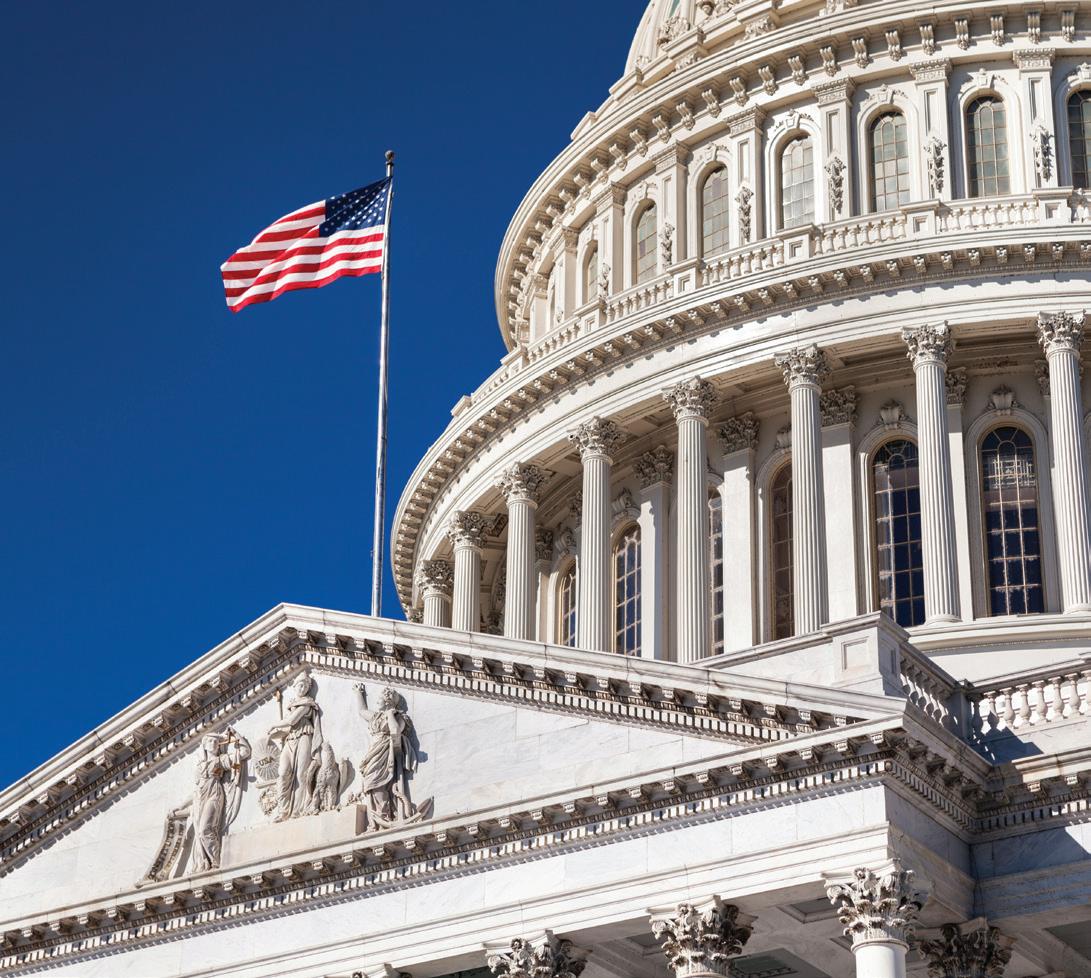
Beginning with an essential question of their choice in American History, students will work closely with the Upper School librarian and American History teacher to research a topic, develop a thesis, and complete a college level argumentative research paper in Chicago Turabian style. The carefully guided process will teach students the essential skills in research, writing, and documentation. This course is required for all juniors.
Grade Level: 11th Offered: 1B, 2D, 3D, 4A, 5D, 6C
Length: 1 Bin
A group of citizens once approached Benjamin Franklin as he was leaving the Constitutional Convention in 1787 and asked him what form of government the new American country would adopt. He famously replied “A Republic, if you can keep it.” This course will examine the foundation, structure, and modern-day workings of that Republic. You will develop a robust understanding of our government system including the three branches and their institutions, the role of political parties and interest groups, your fundamental civil rights and liberties, and the many layers and institutions that help make our government function. We will explore considerable connections to modern current events in the United States so that after this class, you will be a more informed and civic-minded American.
Grade Level: 12th Offered: 1D, 2B
Length: 1 Bin
Fundamentally, economics is the study of choice and constraints. This course will serve as a broad introduction to the field of economics (macro and micro), but the course is ultimately designed to expose students to the thinking, tools, and wonder of economics. Students will complete this course with a fuller understanding of economics as it applies to their lives, their government, and their future. Students will develop a framework of core macroeconomic principles and their application to current problems and issues faced by policymakers. The course will emphasize the macroeconomic policy challenges faced by governments and central banks and describe the various tools available to meet these challenges. Students will also develop the tools of personal financial literacy in order to become competent and capable economic actors. Prerequisite: American Government
Grade Level: 12th Offered: 3A, 4C
Length: 1 Bin
This course is a culmination of both government and economics to round out the credit requirement students need in addition to their American Government and Economics courses. It is impossible to divorce politics from economics, and America is no exception. This class examines some of the fundamental pillars of American society that mesh the dual institutions of democracy and the market system. Some of the issues explored by the class include: What is fiscal policy? What does the Federal Reserve do? What does it mean to be a citizen in the world’s largest economy? How does money impact our government elections and policy decisions? In order to address these questions, we will identify and evaluate key features of the American experience including: the market system, macroeconomic indicators, role of lobbyists, national and personal budgets, etc. Prerequisite: Economics
Grade Level: 12th Offered: 5B, 6D
Length: 1 Bin
This is a college-level survey course that covers modern European history, beginning with the later Middle Ages and continuing through the Cold War and into the contemporary world. The course is designed to promote critical thinking and writing skills and is organized around seven historical themes, ranging from political, social and economic developments to national and international relationships and intellectual and technological innovations, and four time periods, spanning 1450 to the present. In addition to preparing the student for the AP European History exam, the course will provide her with a foundation for understanding current and future political, economic, intellectual and social issues. Prerequisite: 9th Grade History
Grade Level: 10th Offered: 1D-3A-5B
Length: 3 Bins
This is a college-level survey course designed by the College Board that covers the foundations of our nation, continuing through the rise of the United States as a world power, and into the contemporary world. AP US History places extra emphases on persuasive writing, critical thinking, and document analysis skills which will be tested on the AP US History exam in May. In addition to preparing the student for the AP exam, the course is designed to prepare thoughtful citizens that have a cultivated appreciation for how our nation has the trends that shape current and future political, economic, intellectual and social issues. Prerequisite: 10th Grade History
Grade Level: 11th Offered: 1C-3D-4A
Length: 3 Bins
A comparative study of six countries form the core of the course: China, Great Britain, Iran, Mexico, Nigeria, and Russia. Examining these countries allows students to move beyond concepts of abstract definition to concrete example. The Comparative Government and Politics course introduces students to fundamental concepts used by political scientists to study the processes and outcomes of politics in various countries. The course aims to illustrate the diversity in international political life, to show available institutional alternatives, to explain differences in processes and policy outcomes, and to communicate to students the importance of global political and economic changes. Comparison assists in identifying problems, analyzing types and effectiveness of policymaking, and in explaining differences between countries, which allows students of U.S. Government to look at the politics of their own country differently, inspiring them to reflect and interpret with greater depth and understanding. Prerequisite: 11th Grade History
Grade Level: 12th Offered: 2D-5A
Length: 2 Bins
This course provides an opportunity to study the foundation of the U.S. political system; to analyze the political institutions, processes, and values of the system; to trace the development of the United States governmental system; and to analyze the structure and functions of government on local, state, and federal levels. This course will also give students a thorough understanding of the principles of economics that apply to an economic system as a whole as well as to individuals and firms. It is designed to encourage critical analysis and economic literacy and enable us to become more informed participants in our governmental system. Prerequisite: 11th Grade History
Grade Level: 12th Offered: 1A-3B-5C, 1C-3D-4A
Length: 3 Bins
The term genocide wasn’t formally defined until 1948 by the United Nations Genocide Convention, but genocide has unfortunately defined geopolitics in the 20th and 21st centuries. In this course, we will examine some of the most tragic and dark chapters in modern history, so that by learning from this horrific past and its present impacts we may be best prepared for our future. We will begin by exploring the Holocaust during World War II, but also consider instances of genocide in Cambodia, Rwanda, Bosnia-Herzegovina, Soviet Union, and China. We will utilize film, literature, philosophy, psychology, religion and history as we grapple with a world that is still imprinted by genocide.
Grade Level: 10th - 12th Offered: 5A Length: 1 Bin
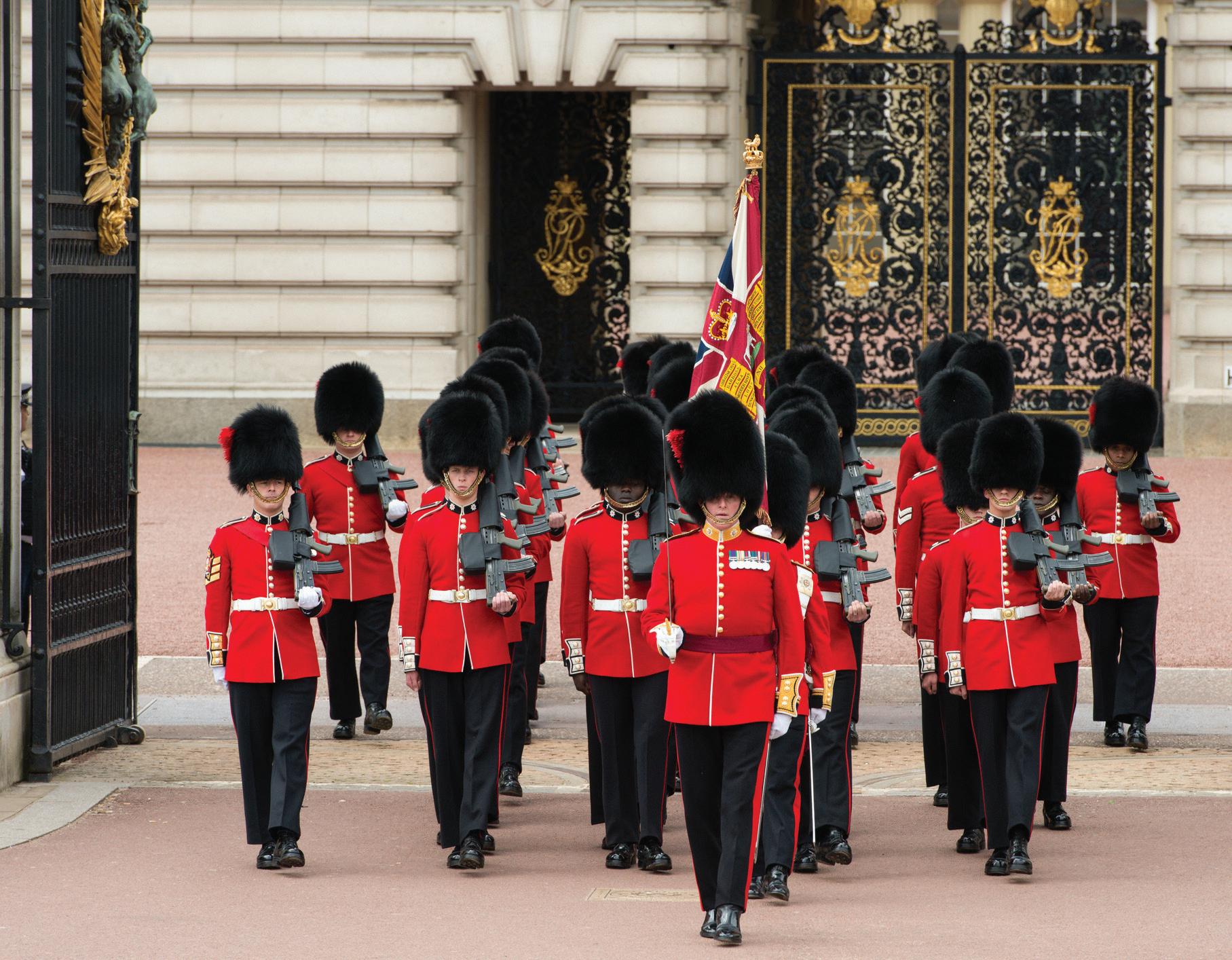
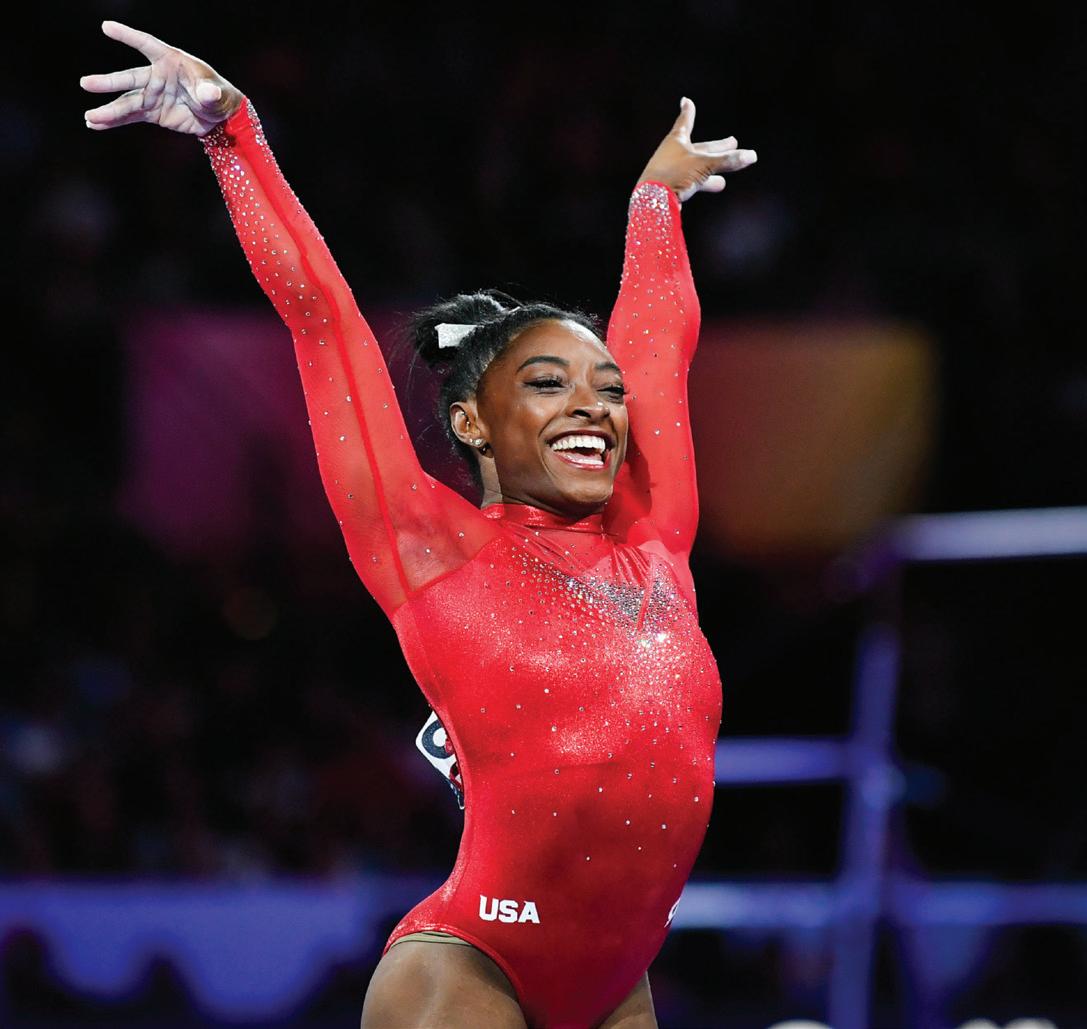

Have you ever wondered how eyewitness testimonies can be so flawed? Or whether nature or nurture has more sway over how you turned out? This course is designed to introduce you to the fascinating world of psychology and inspire you to take more psychology courses in college. By the end of this mod, you will have a broad overview of many interesting psychological topics and have completed a deep dive project on a specific area of research that especially interests you.
Grade Level: 11th, 12th Offered: 5D, 6C
Length: 1 Bin
Sports make the world go around. Throughout history important women have made a huge impact on sports. Their determination, hard work, and advocacy have paved the way for future generations. In this course we will learn about these important women in their respective sports and how they changed the game for all of us.
Grade Level: 9th - 12th Offered: 5A
Length: 1 Bin
What is going in the world today? What major political, social, intellectual, and economic upheavals are occurring that are shaping our world and our future? Why is it important to understand what is happening not only in the United States, but around the world? In this course, we will examine current events in the news around the world so that we may better understand our place in the world. We will trace the development of key issues in modern geopolitics (e.g. Israel/Palestine, Brexit, China’s Belt and Road Initiative, global elections, climate change) and what current issues engage the world in 2022.
Grade Level: 10th - 12th Offered: 6C
Length: 1 Bin
In this course, we’ll travel to different destinations around the world that can offer us other perspectives of culture, style, and reality that differ from Hollywood depictions. Next, we’ll explore different elements of storytelling and various narrative styles as well as cinematographic aspects and how those elements are reflected in acclaimed international films. By the end, students will have had their eyes and feelings opened to the world through the artistic interpretation of the camera lens.
Grade Level: 10th - 12th Offered: 2D
Length: 1 Bin
Work as an intern for Duchesne and get real-world experience! You'll work with staff from the offices of Marketing & Communications and Admissions. Projects will include writing articles for the Duchesne website, creating content for Duchesne's social media platforms, taking photos, managing assets in Duchesne's media database, and assisting with admissions events. Participation in this internship course is selective and requires teacher recommendation and approval.
Grade Level: 11th - 12th Offered: Scheduled based Length: 1 Bin on availability
Launch your business! In this course students will be provided with practical insights into basic aspects of leadership, business, and marketing. A market research template will be used to spark an idea, in hopes of creating a reality. With the use of a well thought out business model, students will be able to execute a possible business launch. Dream BIG!
Grade Level: 10th - 12th Offered: 4D
Length: 1 Bin
A logical foundation is important to all students who want to study computer science. By following Code.org's fundamental course, students will gain a better understanding of logic and structured sequential thinking. Using BlueJ, students will practice text-based coding with Java to build a platform of fundamentals in an industry standard programming language.
Grade Level: 9th - 12th Offered: 1A, 2A, 2D, 5A
Length: 1 Bin
Using a data driven approach to creating 3D objects, students will gain a better understanding of the fundamental requirements of 3D space, computer-aided design software, technical sketching, and 3D printing. With emphasis on Design Thinking processes and exploring how different products are constructed, students will apply these concepts to their own design challenges. Students will use Fusion 360 made by Autodesk to design and CURA to print their 3D objects.
Grade Level: 9th - 12th Offered: 1C, 3D
Length: 1 Bin
By exploring the design process and a variety of applications for 3D modeling, students create 3D objects, and learn to apply the proper 3D animation techniques used in professional video games and animated movies. Students will learn to transform their 3D creations into 3D animations to bring their characters to life, using lighting, settings, camera angles, and the industry standard program 3DS Max made by Autodesk. Prerequisite: Foundations of 3D Design
Grade Level: 9th - 12th Offered: 6C Length: 1 Bin
Games are an interactive medium that vary from a learning tool to a form of entertainment. We will investigate how some of your favorite games are designed and use that knowledge to create and design our very own board game and video game. The topics that will be covered in this course include: story construction, psychological aspects of game design, world and character building, game mechanics, study of randomness, discussion of the design for “Esports” and competitive play, depth vs. complexity, and a glance at the thematic use of music in video games. Prerequisite: Foundations of Computer Science or approval of instructor.
Grade Level: 9th - 12th Offered: 4A
Length: 1 Bin
Explore software development practices and create a foundation of logical and systematic problem-solving processes. Foundational concepts including variables, conditionals, loops, strings, arrays, and functions will be learned and practiced. Using a popular tool, Processing, we will create user interfaces and program within the context of the visual arts with graphical representations of our programs. Prerequisite: Foundations of Computer Science or instructor approval
Grade Level: 9th - 12th Offered: 4B Length: 1 Bin
Working hands-on with Arduino technology to learn the basics of electrical engineering and create circuit schematics, students will design and program their own circuit-based microcontroller and apply their programming skills to the hardware. Further design challenges will be to program and to customize the functionality of their Arduino microcontrollers. Prerequisite: Foundations of Computer Science or approval of instructor.
Grade Level: 9th - 12th Offered: 6B
Length: 1 Bin
This course will foster students' creativity and innovation by presenting opportunities to design and implement meaningful robotic solutions through helping the greater community. The design team will collaborate with one another to identify needs which could be solved by applying robotics. Using the Design Thinking Process, students will select the technology appropriate for the task, synthesize their knowledge, design and create solutions, and evaluate the results. The goal of this course is for students to form an understanding of the principles of robotics design through the study of electrical, fabrication, automation, engineering design concepts, and project management. Prerequisite: Foundations of Computer Science or Foundations of 3D Design
Grade Level: 9th - 12th Offered: Scheduled based on Length: 2 Bins availability
AP Computer Science A is an introductory, college-level course that looks into the world of Computer Science. This course is intended for both students who are curious about computer science and those who are seriously considering a career in the field. Students will learn the concepts of object-oriented programming and be able to implement them in Java, the industry standard language. In addition, students will also learn how to design, implement, debug, and document computer programs. Students learn how to use and create their own programming algorithms as well as methodologies on how to approach programming related problems. Also covered are the ethical and social implications of computer science. This course will be a mixture of lecture and hands-on lab experiences. Prerequisite: Algebra II
Grade Level: 10th - 12th Offered: 1B-3C-5D
Length: 3 Bins
Have a flair for writing, love photography, or interested in journalism? Be on the L'Esprit yearbook staff and help capture your high school years in print. You will learn the basics of desktop publishing using page layout software and photo composition using Adobe Photoshop. You will plan page production for specific deadlines, coordinate the distribution of books, and help to organize staff coverage of all-school events. Participation on the yearbook staff requires a commitment of time after school for photography and interviews, as well as organizational skills, a strong sense of personal responsibility, and the ability to work both independently and on a team. Students will be required to attend a two-day training workshop, on campus, in August. The course may be taken multiple times for credit. Scheduling is subject to teacher and student availability.
Grade Level: 9th - 12th Offered: Scheduled based Length: 1, 2, or 3 Bins on availability
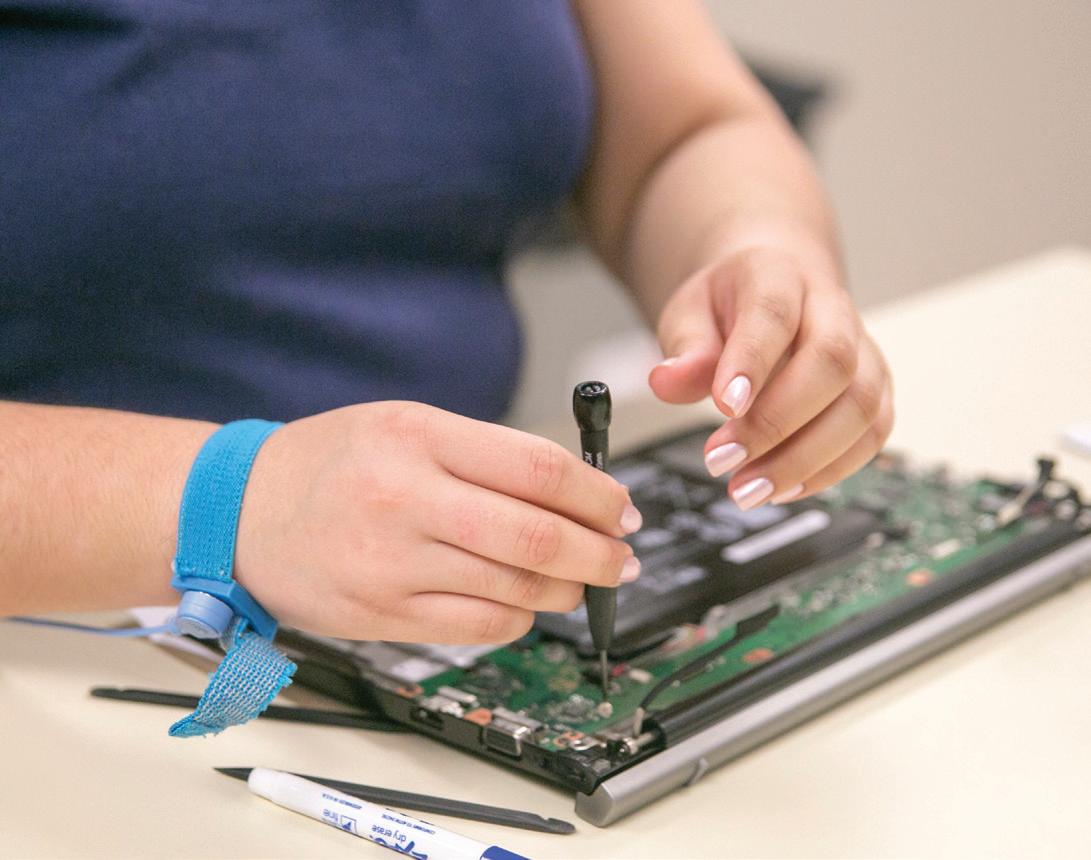
Gain foundational knowledge and skills in several multimedia fields: digital photo editing and drawing, video production, desktop publishing, as well as project management skills and experience working with clients under specifications. Students will create projects using the following applications in the Adobe Creative Suite: Photoshop, Illustrator, Premiere Pro, Audition, After Effects, and InDesign.
Grade Level: 9th - 12th Offered: 1D, 5B
Length: 1 Bin
Explore the elements of graphic design in both print and digital projects using Adobe Photoshop and the principles of graphic communication. Typography, page design, and the supporting vocabulary are practiced through a variety of projects styled to reflect professional graphic design works. The significance of both print and digital mediums as a form of communication, marketing, information, and digital citizenship are discussed. This class may be taken for Fine Arts or Computer credit and may be repeated for credit. Prerequisite: Foundations of Digital Media
Grade Level: 9th - 12th Offered: 3A Length: 1 Bin
Students will create original products employing digital design principles including typography, color, rule of thirds, balance, emphasis, movement, and perspective. The course will use Adobe Premier, Audition, and After Effects to teach video and sound editing. Students will learn to edit their film incorporating sound and video sources, using proper citation. Considering their target audience and purpose, students will work singly or in production teams to create projects employing script writing, storyboarding, videography, and critique. This class may be repeated for credit. Prerequisite: Foundations of Digital Media
Grade Level: 9th - 12th Offered: 4A Length: 1 Bin
Running a helpdesk takes patience, focus, teamwork, independence and strong customer support skills, all which will be learned and practiced by our student IT interns when running the CAVE (Computer Audio Visual Education) helpdesk. IT Interns are responsible on a daily basis for staffing the CAVE help desk and for performing regular maintenance and service of campus computers and audio/visual equipment. Participation in this course requires strong organizational skills, a strong sense of personal responsibility, the ability to work both independently and with a group, and a strong desire to learn the technical aspects of the computer. IT Interns must demonstrate respect and patience, as they will be working with both faculty and students. Interns will be required to attend a week-long training workshop in August and a day-long workshop over the summer, where they build a desktop computer to learn fundamentals of computer design, construction and processing.
IT Interns will be immersed in the fundamentals of information technology, work in the helpdesk, maintain the CAVE outreach resources, and are responsible for special projects as needed. This class may be repeated for credit. Prerequisite: 1+ years in Duchesne's 1:1 program or approval from technology department.
Grade Level: 9th - 12th Offered: Scheduled based Length: 2 or 3 Bins on availability
IT Apprentices will deepen their knowledge of fundamentals of information technology while working at the helpdesk and pursuing a Microsoft or Comp TIA certification. Prerequisite: Information Technology Internship
Grade Level: 10th - 12th Offered: Scheduled based Length: 3 Bins on availability
This is an introductory fitness course that will include 10 minutes of anaerobic activity, 10 minutes of muscle toning, and 10 minutes of abdominal strengthening in each class session.
Grade Level: 9th - 12th Offered: 2C
Length: 1 Bin
This workout is designed to sculpt and lengthen your muscles from head to toe. Barre Fusion is an intense cardio workout designed around dance, with a focus on ballet, and formatted to be a heart pumping good time that will help you take your fitness to the next level. This workout will increase your cardiovascular strength while helping you tone and push your flexibility limits.
Grade Level: 9th - 12th Offered: 1B
Length: 1 Bin
Bowling is a lifelong sport that everyone can enjoy at any age. So why not learn it all now? This class will introduce the fundamental skills of bowling including form and technique. Students will also learn terminology, rules, strategies, and scoring procedures. Most of the class will be conducted at an off-campus bowling alley.
Grade Level: 9th - 12th Offered: 3B
Length: 1 Bin
You don’t have to be an athlete to join this class and learn all about some of the most interesting summer Olympic games! Archery, badminton, canoeing, beach volleyball, cycling, fencing, rhythmic gymnastics, table tennis, trampoline, and more! These are just a few of the summer Olympic activities we will explore!
Grade Level: 9th - 12th Offered: 5B
Length: 1 Bin
“The divine in me acknowledges the divine in you.” Need a place to relax, destress, and connect with something other than schoolwork? Are you able to truly connect to yourself and your worthiness? In this course, we will deepen our mental, spiritual, and physical health by practicing mindfulness and meditation through different types of yoga, stretching, pilates, napping, foods, daydreaming, petting pups, and more! You will leave this course with a greater sense of self-awareness and the ability to clear your mind and heart of anything that causes undue tension or worries. Namaste.
Grade Level: 9th - 12th Offered: 4C
Length: 1 Bin
By the end of this class, you will understand how to better track caloric intake and expenditure. Each student will learn the proper way to track calories, understand the concept of healthy eating, and properly balance physical activity. The ease of working out can be as simple as a 30-minute video or a brisk walk. This class will show you how easy it can be to maintain good health and wellness from high school into the transition to college life.
Grade Level: 9th - 12th Offered: 4B
Length: 1 Bin
A combination of Pilates and Yoga, PiYo is a low-impact workout that strengthens and sculpts the body and enhances flexibility. PiYo classes will include a mix of five themes: heat building, lower body, full body fusion, power flow core, and stretch and strength building exercises. Traditional yoga moves as well as dance and flexibility training will be combined into a fast-paced workout, strengthening your powerhouse abdominal, oblique, and lower back muscles.
Grade Level: 9th - 12th Offered: 1C, 5C
Length: 1 Bin

In this course, students will learn many different yoga asanas (postures) and how to connect them into one long-flowing sequence. Alignment, proper breathing technique, and attention will be the keystones to performing the asanas and their sequencing safely and effectively, with the aim of purifying and strengthening the body. Every day we will come in and stretch, then start an online instructional yoga video. The difficulty will increase as the class progresses.
Grade Level: 9th - 12th Offered: 3C, 6B
Length: 1 Bin
This course focuses on cardiorespiratory endurance for students using Zumba dance techniques set to upbeat and energetic music. Zumba develops general endurance of the respiratory and circulatory systems, reduces or maintains body fat levels, and provides knowledge in safe and sound activity principles.
Grade Level: 9th - 12th Offered: 6C
Length: 1 Bin
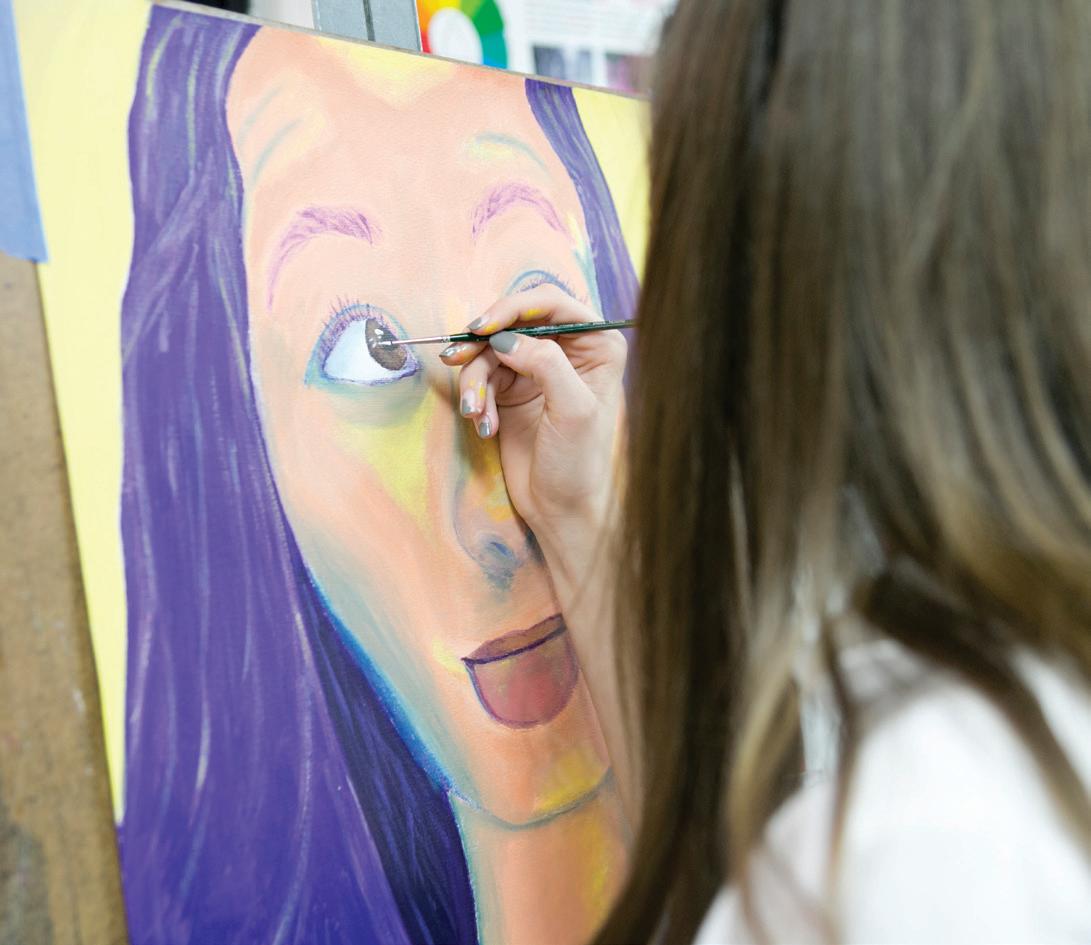
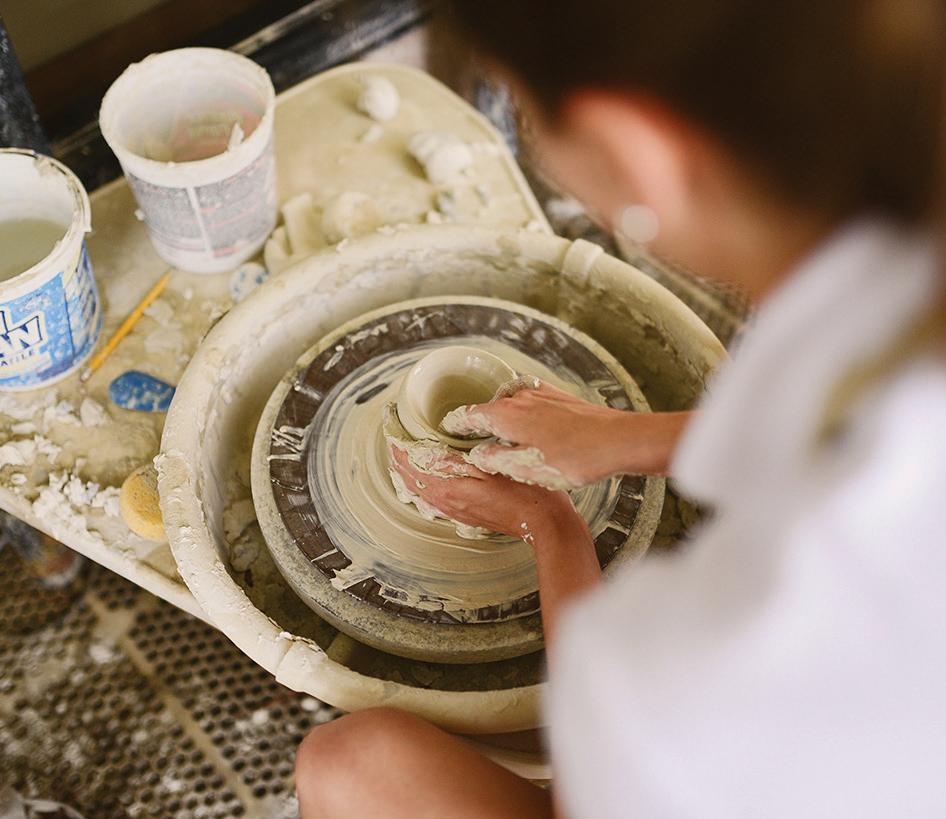
Foundations of Art is a course that provides a basic introduction to Visual art. This course teaches the key elements of drawing and painting. In drawing, students will explore graphite and colored pencils. Students will learn the various steps to developing a detailed drawing. Painting will be primarily focused on watercolor and serve as the foundation of color studies. The elements of art and principles of design will be introduced and reinforced throughout this course. Students will create artist statements and document ideas in their sketchbooks. We will explore several art movements that will be inspirations for some of the art images that the students will create throughout the course.
Grade Level: 9th - 12th Offered: 1C, 1D, 2B, 2C
Length: 1 Bin
This course builds on the knowledge gained in the foundations of art class and reinforces the use of elements and principles of design to create strong compositions. This course teaches the basics of 2D and 3D design through drawing, painting, ceramics and sculpture. In drawing students will explore the use of charcoal, conté crayon and graphite. Knowledge of color theory will be developed through the use of colored pencil and acrylic paint. Ceramics and sculpture will include hand building techniques and modeling. Students will engage in critiques of their art images and learn the vocabulary needed to discuss, create, and appreciate different types of visual art in a formal setting. Prerequisite: Foundations of Art
Grade Level: 9th - 12th Offered: 3A, 4C, 5A
Length: 1 Bin
Students will increase their perceptual skills while using a variety of drawing tools and techniques. The primary focus of this course is drawing from life and learning how to look at spatial relationships to transfer knowledge onto a two-dimensional plane. Types of drawings will include contour, gesture, still life, linear perspective, and portrait. Media will include graphite, charcoal, conté crayon and ink. Outside of class sketchbook assignments are part of this course. Prerequisite: Concepts of Art and Design
Grade Level: 9th - 12th Offered: 3C
Length: 1 Bin
Building upon skills learned in Drawing I, students will further study compositional elements while working both realistically and abstractly. Increased figurative work will provide opportunities for content considerations and greater technical skills. Historic, modern, and non-traditional approaches to drawing will be explored. Students’ media choices will expand to mixed media, pastels, and colored pencils. Assignments will be aimed at producing larger scale and more detailed work. Research and sketchbook documentation are a key part of this course. Prerequisite: Drawing I
Grade Level: 10th - 12th Offered: 5D Length: 1 Bin
Students will gain experience using acrylics to paint from observation. This course will focus on color theory and composition, reinforce the understanding of the elements and principles of design, and develop the student’s perceptual skills. The painting experience will be enhanced through exposure to historic precedents and modern approaches to painting. Students will create 2-3 finished paintings. Prerequisite: Drawing I
Grade Level: 9th - 12th Offered: 2D Length: 1 Bin
Students will continue to develop perceptual and technical skills using acrylic or watercolor. Further exploration of painting styles and art movements will be included. Students will have more choice in the subject matter they choose to paint. Sketchbook research beyond the classroom is required. Students will create 2-3 finished paintings. Prerequisite: Painting I
Grade Level: 10th - 12th Offered: 6B Length: 1 Bin
In this beginning digital photography class, students will learn the basics such as the exposure triangle, the purpose of the camera settings, optimal natural light situations, and composition techniques. Students will need to use their own DSLR cameras that include AV, TV, ISO, and manual settings. Assessments will be various photo assignments that focus on skills learned in class. Prerequisite: Concepts of Art and Design
Grade Level: 10th - 12th Offered: 6D Length: 1 Bin
Explore the history of stained glass from early churches to Louis Comfort Tiffany to modern artists. Students will use their knowledge of design to create a 2-dimensional stained-glass piece using the copper-foil method. Starting with their design, students will work through the process of patterning, cutting glass, grinding and foiling, assembling, soldering, and waxing to create a beautiful work of art. This course may be repeated for credit. Repeat students can advance their skills with 3-D projects (such as lamps) or lead construction. Prerequisite: Concepts of Art and Design
Grade Level: 10th - 12th Offered: 4D
Length: 1 Bin
This course will offer in-depth exploration of techniques and new ways to see, use, and interpret found objects. Students will create multi-directional compositions with a variety of materials, images, found objects, and drawing & painting media. Techniques will include collage, printing, drawing, painting, assemblage, stamping, modelling, etc. The elements of art and design will be reinforced with a particular emphasis on color, mood, texture and composition. Students will develop technical skills and personal style. Projects include art journals, upcycling, found objects, and mixed media on canvas. This course may be repeated for credit. Prerequisite: Concepts of Art and Design
Grade Level: 10th - 12th Offered: 4A
Length: 1 Bin
Ceramics students explore a variety of construction and glazing techniques for building three-dimensional artwork in clay. Functional and sculptural forms will be explored. Some art history of sculpture and clay is included. Students will learn to analyze their work by incorporating the elements and principles of design as a guide. This course may be repeated for credit. Prerequisite: Concepts of Art and Design
Grade Level: 10th - 12th Offered: 2A
Length: 1 Bin
In this course, ceramics students explore technical skills needed to create functional forms using the potter’s wheel. Students will use a variety of glaze techniques to create different finished effects. Some art history of sculpture and clay is included. Students' work will be showcased in the Jones Gallery at Duchesne in a culminating show. This course may be repeated for credit. Prerequisite: Hand-Built Ceramics
Grade Level: 10th - 12th Offered: 6C
Length: 1 Bin
Students will learn how to envision and create art in the 3rd dimension. Students will design and construct realistic and abstract sculptural forms using a variety of materials, tools, and techniques. Their understanding of the elements and principles of design are reinforced as they examine, analyze, and interpret traditional and contemporary works of art and artifacts. Students will document ideas, process, problems, and solutions in a visual journal. Prerequisite: Drawing I
Grade Level: 9th - 12th Offered: 3D
Length: 1 Bin
Students will sculpt with clay, plaster, wood, wire, and found objects using additive, subtractive, casting, carving, and construction techniques. Coursework will focus on the human form and natural environment, as well as cultural and historical contexts. Students will document ideas, process, problems, and solution in a visual journal. Students will be responsible for developing a digital portfolio to showcase their work and providing written artist statements. Prerequisite: Sculpture I
Grade Level: 10th - 12th Offered: 4B
Length: 1 Bin
Students will continue to develop techniques and processes while learning to use more advanced materials and tools to construct larger outdoor works. Emphasis will be on developing student’s personal style, completing larger scale works, and working more independently. Study will focus on the role of sculpture in society, application of techniques, and a completed body of artwork. Students will document ideas, process, problems, and solutions in a visual journal. Prerequisite: Sculpture II
Grade Level: 10th - 12th Offered: 6D
Length: 1 Bin
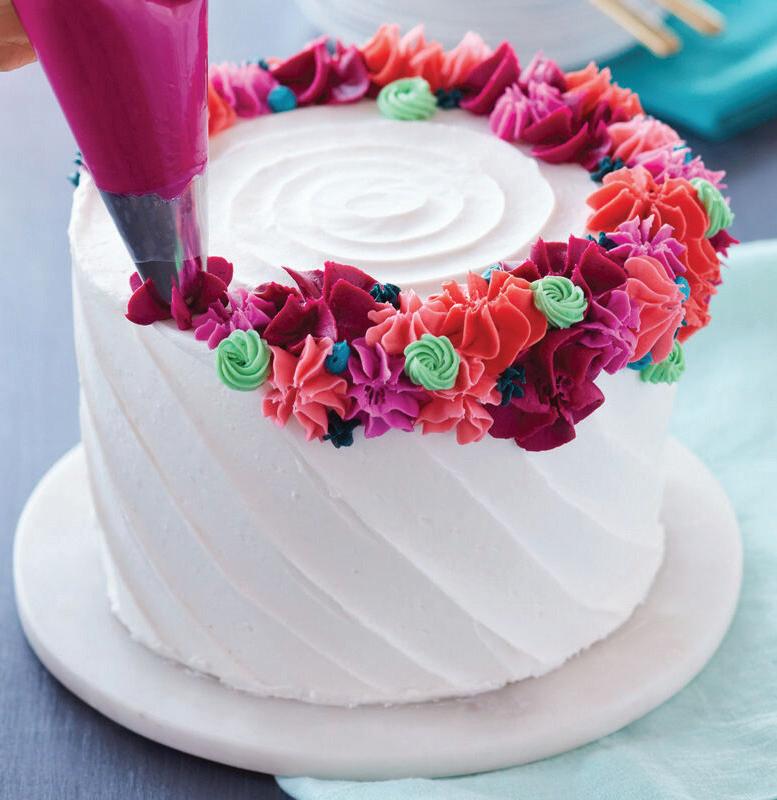
Students will continue to explore and develop techniques and processes learned in their studio classes. Students will independently design and impement a body of work that synthesizes their knowledge of media, tools and techniques. Artist voice and demonstration of skill are the main focus. Students will document ideas, process, problems, and solutions in a visual journal. The ‘Final’ for this class is a mini Portfolio submission consisting of 3-4 finished works of art from a selected theme or concept. All work done will be original in conception. Prerequisite: Five bins of studio art courses excluding Foundations and Concepts
Grade Level: 11th, 12th Offered: 5B, 6A Length: 1 Bin
Through studio practice, application of design concepts, and informed decision making, students will assemble a body of artwork demonstrating a high level of knowledge of technique and process, quality, and evidence of growth. Students should have previously been exposed to basic skills including drawing, design, and creative thinking. Students will address two components in their portfolios: quality and concentration. Students will submit this body of work to the College Board for grading and possible college credit in May. Students are expected to display artistic integrity throughout the course. Students will have the opportunity to showcase some of their work in the Jones Gallery at Duchesne in a culminating show. Prerequisite: Idea Development
Grade Level: 11th, 12th Offered: 1A-3B-5C Length: 3 Bins
Students in this course will take their foundational knowledge of design to a new level using cake as their medium. As with other forms of three-dimensional art, students will learn about creating sound cake structures that will hold their shape without collapsing, and will apply the elements of art (color, value, texture, balance, movement, pattern, etc.) to their creations. Students will learn the basics of baking, filling, shaping, icing, and cake decorating (such as, but not limited to, piping, flowers, fill-ins, fondant) to create tasty art! This course fulfills a general elective, not a fine arts requirement.
Grade Level: 10th - 12th Offered: 1B
Length: 1 Bin
The course will be an introduction to classical and modern cuisine. Through a combination of hands-on and theory/ lecture, students will learn the basics of food safety and preparation. The course will allow students to explore cultural and social aspects of food, including social issues, mass food production vs. organic sustainable farming, food waste, accessibility, and more. This course fulfills a general elective, not a fine arts requirement.
Grade Level: 10th - 12th Offered: 6A
Length: 1 Bin
Christmas Concert, ISAS Fine Arts Festival, Combined Pop Concert with St. Thomas HS Choir, Region and State Choir, Solo and Ensemble contest, singing the anthem at the Houston Astros game—these are just a few of the performance opportunities for the Treble Choir! Experience the benefits of singing with a large group. Students are taught proper vocal technique and sight-reading skills while learning to sing as an ensemble. Open to all Upper School students.
Grade Level: 9th - 12th Offered: 0 period (T, Th)
Length: 1 Bin
This ensemble is an auditioned performing group of 16-24 singers. It is open to students who have one or more years of experience in the Duchesne Treble Choir. This ensemble will perform highly challenging 4-part (SSAA) music, most of which is sung acappella. Students are required to submit an audition for the TPSMEA All-State competition as well as prepare a vocal solo and ensemble for the TPSMEA Solo & Ensemble competition. Concurrent enrollment in Treble Choir required. Prerequisite: Treble Choir
Grade Level: 10th - 12th Offered: 0 period (T, W, Th)
Length: 1 Bin
Guitar
Have you ever wanted to be able to play along to your favorite song on the radio? This course introduces the student to basic acoustic guitar skills. Students will be taught basic strumming patterns, chords, and chord progressions. We will explore music of the Beatles, folk, classic rock, country, and modern pop. No prior knowledge needed.
Grade Level: 9th - 12th Offered: 3A, 5B
Length: 1 Bin
Do you like to perform? How would you like to write your own songs and be able to perform them in front of a live audience? Or maybe get your song recorded? Sign up and learn how to take control of your musical destiny in this songwriting course! Join the fun as we learn how to construct a song. We will explore elements of theory, form, melody, instrumentation, lyric writing and more. Once we complete our songs, we will perform them live.
Grade Level: 9th - 12th Offered: 3C
Length: 1 Bin
Students receive instruction in advanced vocal technique, posture, breathing, diction, foreign language, and music theory. Performance and audition techniques and opportunities are explored. A variety of genres will be studied concluding with a solo recital at the conclusion of the class. Instructor permission required. This course is repeatable for credit.
Grade Level: 11th, 12th Offered: 2D
Length: 1 Bin
Have you ever wanted to be in a musical ensemble and perform in an instrumental group? No prior music skill is needed, just a desire to learn a new skill. This course is designed for students who wish to develop basic ringing skills or to expand their existing skills. Emphasis will be placed on learning proper ringing methods as well as key musical elements. The handbell choir will perform at various liturgies and concerts throughout the year.
Grade Level: 9th- 12th Offered: 2C
Length: 1 Bin
Curious about all the symbols and markings in a piece of music? Learn to speak the language of written music. This course covers the foundations of beginning music theory. Topics center around melody, harmony, rhythm, and dynamics. Included will be analysis from music literature to show how music theory functions in all styles of music.
Grade Level: 10th - 12th Offered: 3C
Length: 1 Bin
AP Music Theory is an introductory college-level music theory course. Students cultivate their understanding of music theory through analyzing performed and notated music as they explore concepts like pitch, rhythm, form, and musical design. Prerequisite: Must have taken 2 years of Choir/Advanced Choir OR be actively studying with an outside private instrumental teacher.
Grade Level: 11th, 12th Offered: 1C-3D-4A
Length: 3 Bins
Theatre is the art of collaborative storytelling and has a history going back thousands of years. Students in this course will learn about theatre traditions, explore a variety of acting techniques, experience various movement and vocal techniques, and try their hand at design and production work. The skills and knowledge acquired will enable the student to go on to more advanced theatre courses and excel onstage and backstage.
Grade Level: 9th - 12th Offered: 2C, 5C
Length: 1 Bin
Explore your creative self through the art of musical theatre. Training in acting and singing, specific to the musical theatre genre, as well as the opportunity to build individual repertory/audition pieces, is included. Topics focus on vocal and body awareness for stage and public settings; acting (intention, obstacles, use of movement, focus, pace, timing); singing (including placement, pitch, and sight reading), as well as adding to cultural knowledge and appreciation for musical theatre and shows. Field trips to live shows may be included. Students are encouraged to participate in the all-school musical. Prerequisite: Introduction to Theatre, Treble Choir, or Dance I
Grade Level: 10th - 12th Offered: 4D
Length: 1 Bin
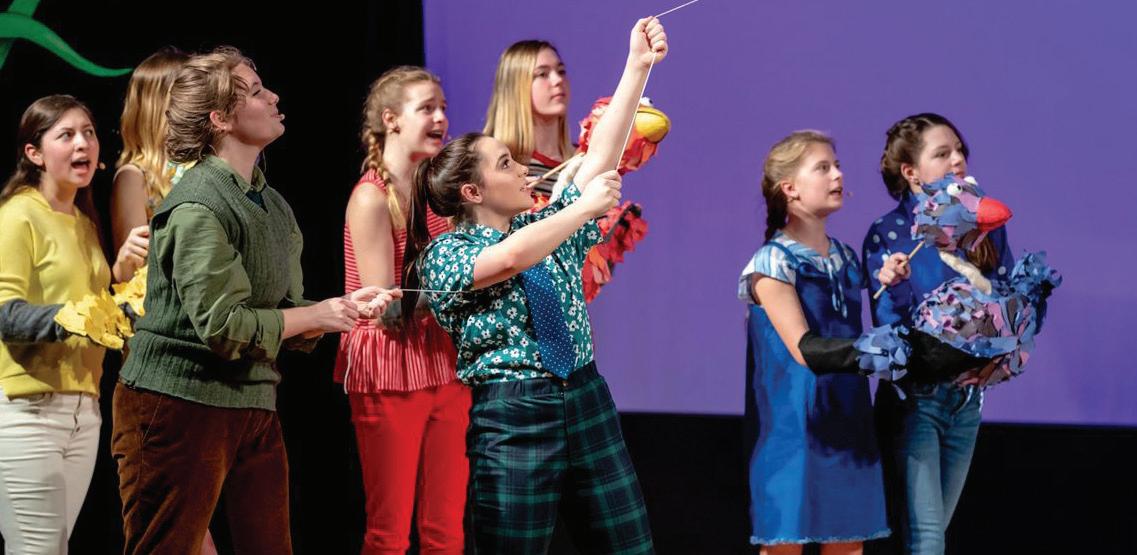
Are you a singer, actor, or dancer? In Cabaret, we will blend all these musical theatre performance elements into a production that will be performed at the end of the mod. Students will have the chance to showcase their skills and collaborate with students from different artistic backgrounds. Prerequisite: Introduction to Theatre, Treble Choir, or Dance I
Grade Level: 9th - 12th Offered: 6B
Length: 1 Bin
This class will dive headfirst into the materials and styles of modern puppet making. We will design and build puppets with cardboard, fabric, foam, wood, and all manner of found objects. The goal of the class is to get you working with your hands and get you thinking about problem solving in a physical space. Students will work individually and as a group to make puppets from scratch in any number of styles. The culmination of the class will be a rapid build of a giant carnival style puppet to be performed in and around the school. Let’s make some stuff. Prerequisite: Introduction to Theatre
Grade Level: 9th - 12th Offered: 5C
Length: 1 Bin
This course is for the theatre student who wants to build their acting skills. We’ll spend our six weeks together selecting, analyzing, memorizing, rehearsing, and presenting a series of scenes drawn from the theatrical genres and periods that most interest the class. Students will learn how to create characters and tell stories effectively in collaboration with a partner or ensemble. The class will include a performance for friends and family.
Prerequisite: Introduction to Theatre
Grade Level: 9th - 12th Offered: 2A
Length: 1 Bin
In this course students will learn the art of acting through a song performance. Students will be assigned musical theater and pop repertoire and will be coached through each song throughout the course, getting the songs to performance level by the end of the mod. Prerequisite: Introduction to Theatre or Treble Choir
Grade Level: 9th - 12th Offered: 1B
Length: 1 Bin
Let’s put on a show! This class is centered on the production of a full-length play as part of the Duchesne Fine Arts Season. As a curricular production, this show and production process will be designed to put the creative process in the hands of the student ensemble, so that they can learn and grow as artists. Prerequisite: Introduction to Theatre
Grade Level: 9th - 12th Offered: 6D
Length: 1 Bin
In this course, students learn basics of theatrical lighting and sound, with an emphasis on supporting events in the Cameron Theatre. Students operate and repair a range of lighting equipment, program and run our Ion XE light board, and create sound designs in QLab, the same software used on Broadway. Assessment is primarily through a series of equipment qualification tests, at the end of which the students are fully qualified Cameron Technicians (CamTechs) eligible to design and run events like the pop concert, all-school musical, and the Concert for Uganda. This course involves working independently in the booth and catwalk and using a range of electrical and rigging tools. Accordingly, students must demonstrate a high level of personal responsibility to be successful. Instructor permission required. Prerequisite: Introduction to Theatre
Grade Level: 9th - 12th Offered: 1B
Length: 1 Bin
In this course, students apply the skills learned in Theatre Tech and Design to events like the all-school musical, US theatre productions, the Concert for Uganda, US and MS pop shows, and LS Christmas. Students work as lighting and sound designers and technicians and learn advanced techniques and additional skills in both areas. Students may also engage in class-specific design projects. Students take an active role in maintaining and improving the equipment in the Cameron Theatre. Note – this course involves working independently in the booth and catwalk and using a range of electrical and rigging tools. Accordingly, students must demonstrate a high level of personal responsibility to be successful in this course. Instructor permission required. Prerequisite: Theatre Technology and Design I
Grade Level: 10th - 12th Offered: 0 period (M, F)
Length: 1 Bin
This course is for beginner to advanced beginner level dancers, or dancers with a little experience who are wanting a review of the basics. Experience is not required, only an excitement and interest in dancing! Students will learn a foundation of technique and dance terminology, how to count music for dance, and beginner level choreography. Dancers will learn a variety of styles such as jazz, contemporary, jazz funk, and musical theater.
Grade Level: 9th - 12th Offered: 5B
Length: 1 Bin
Dance II is for dancers who are ready to build upon their existing foundation of dance at an Adv. Beginner/ Intermediate Level. In this course dancers will develop a strong foundation of technique through ballet warm-ups, strengthening and conditioning. Dancers will also build their technical repertoire of turns, jumps, and leaps, such
as double pirouettes, chaines, pique turns, jetes, and more. Dancers will learn a variety of dance styles, such as jazz, jazz funk, contemporary, and musical theater at an Adv. Beginner/Intermediate Level. Dancers will improve their ability to pick up choreography quickly as well as their ability to understand nuances of style. Participation in the Fall Dance Show is required. Prerequisite: Permission from instructor
Grade Level: 9th - 12th Offered: 2C
Length: 1 Bin
Dance III is for dancers who are ready to build upon their existing foundation of dance at an Intermediate/Advanced Level. In this course dancers will develop a strong foundation of technique through ballet warm-ups, strengthening and conditioning. Dancers will also build their technical repertoire of turns, jumps, and leaps, working on skills such as fouettes, a la seconde turns, arabesque leaps, leg grab turns, and more. Dancers will learn a variety of dance styles, such as jazz, jazz funk, contemporary, and musical theater at an Intermediate/Advanced Level. Dancers will improve their ability to pick up choreography quickly as well as their ability to understand nuances of style. Participation requires participation in the Fall Dance Show. Prerequisite: Permission from instructor
Grade Level: 9th - 12th Offered: 1C
Length: 1 Bin
Have you ever wanted to dance in a music video? Now is your chance! In Music Video Dance, dancers will learn choreography for a Music Video that will be performed and filmed at the end of the class. Dancers will learn what it takes to make a music video from choreography to sets, costumes, shot lists and more. Dancers may be asked to meet outside of school hours occasionally for certain film shoots, but the majority of filming will be in class.
Grade Level: 9th - 12th Offered: 4C
Length: 1 Bin
In Storytelling Through Dance, dancers will dive deep into the world of storytelling. From mythical worlds, to real human stories, going back in time, or soaring into the future, we will tell a new story every year in Storytelling through Dance. Dancers will learn what it takes to build a world, a character, and a story effectively so that we can transport audiences to a new place and time. Dancers will learn how to fully embody the world we are portraying by connecting our minds, body, and spirit. Participation in the Fall Dance Show is required. Prerequisite: Permission from instructor
Grade Level: 9th- 12th Offered: 2B
Length: 1 Bin
Introduction to Debate provides students an overview of the fundamentals of speech and debate, preparing students to be adept practitioners in argumentation, rhetoric, logical reasoning, and effective communication. Students build a foundation of speech and debate skills in class through research, practice, and reflection. Then, students further develop those skills through a variety of speech and debate events that introduce numerous topics ranging from social issues to domestic and international events. Students in the course will be invited to participate in the nationally ranked Duchesne speech and debate program, involving competition at local, regional, and national travel tournaments. Ultimately, it is the goal that students leave the course more prepared, more competent, and more comfortable in any academic or professional setting where effective communication is necessary.
Grade Level: 9th - 12th Offered: 2A
Length: 1 Bin
What is the history of the Bible? Who wrote it, and what do we know about its purpose for its earliest readers? After learning about the Bible’s foundations, students will delve deeper into the Old Testament, surveying the stories of the Patriarchs, Twelve Tribes of Israel, kings, and prophets. Along their journey, they’ll learn to tell these stories in their own way, creating a children’s book on Salvation History.
Grade Level: 9th Offered: 1A, 1B, 1D, 2C, 2D Length: 1 Bin
Central to freshmen Theology is the Gospel of Jesus Christ. We begin with the Nativity stories in Matthew and Luke, before studying Mark, the framework for the Synoptic Gospels. By comparing the Parables in the various Gospels as well as the Crucifixion stories, students will deepen their understanding of Jesus’ message, and what that timeless message means to them today. Prerequisite: History and the Bible
Grade Level: 9th Offered: 2A, 3B, 3C, 3D Length: 1 Bin
Freshmen now have a wealth of stories to call upon from their study of Scripture, and this class gives them the opportunity to tell their story in a unique way through film. First, they will learn the basics of filmmaking –camera angles, framing a scene, shot design, script-writing, lighting… This isn’t TikTok, this is serious filmmaking, and your masterpiece will be pulled together with a real, professional editing program, Premier. Fun yet demanding, you may need some weekends to make this project come to life. If you’re not afraid of a little work and want to learn how to really make a quality video, this class is for you! Prerequisite: Jesus' Message
Grade Level: 9th Offered: 5D, 6A, 6B Length: 1 Bin
How did the Apostles go from weak and often clueless fishermen to powerful, brilliant preachers willing to die for their faith in Christ? Follow their path as they move from a tiny sect within Judaism to the worldwide Church we know today. Prerequisite: Jesus' Message
Grade Level: 9th Offered: 5B, 6D Length: 1 Bin
This course explores several different questions about love, freedom, and redemption. God created us in God’s own image which is to love and be loved. ‘Relationship’ with God, each other, and all of creation is the foundational structure and purpose of our lives. We will also consider the foundational pattern of God’s mercy in the redemption of creation and what freedom means and what keeps up from being free to be who God has created us to be. God liberates us so that we may be truly free to participate in the covenant with God and with God’s People. The prophets continually remind us to live this covenant, not just give lip service to it. Finally, we explore how God promises to send a Messiah who brings about the reconciliation of humanity and God, and ushers in the fulfillment of God’s plan in creation: the Reign of God.
Grade Level: 10th Offered: 1C, 2B, 2C, 2D Length: 1 Bin
The life and public ministry of Jesus embodies the reconciliation of humanity and God. Through the Paschal Mystery of Jesus Christ, we are transformed and we participate in his suffering, death and resurrection by the working of the Holy Spirit. As disciples, we carry forward the messianic ministry of Christ. Prerequisite: Restorative Justice and Redemption
Grade Level: 10th Offered: 3D, 4C, 4D, 5A Length: 1 Bin
Jesus Christ continues his messianic ministry and presence in the world through the Church as the Sacrament of Christ and the People of God who experience the presence of Christ in community and participate in his redemptive ministry. Students will read and analyze texts from the Bible and Church tradition in order to grow in their understanding of the nature and mission of the Church as well as its relationship with other traditions and faiths. Students will also reflect on the importance of community in their own lives. Prerequisite: The Gospel and What it Means for Us
Grade Level: 10th Offered: 4A, 6A, 6B, 6D Length: 1 Bin
From service learning in the Greater Houston community to domestic and international travel opportunities, students will take part in fulfilling Goal III of Duchesne’s Sacred Heart Goals and Criteria, which invites them to develop a "social awareness that impels to action." This course aims to fulfill two main objectives: 1) to create a reciprocal link between students and "people who are poor, marginalized, and suffering from injustice"; and 2) to "prepare and inspire students to be active, informed, and responsible citizens locally, nationally, and globally." With this in mind, students will engage in a variety of service-oriented opportunities that span from local volunteerism at a wide array of organizations to service-learning tours within the United States and abroad. Each service opportunity will include a reflection and expository component so that students have the chance to both show and tell the ways in which their experiences have allowed them to live out Goal III. Required for all 11th and 12th graders.
Grade Level: 11th, 12th Offered: 2A, 2B, 2C, 2D, Length: 1 Bin 5A, 5B, 5C, 5D
This course focuses on the Scriptural basis and Church teachings involving morality. What does it mean to honor your parents as you finish high school and go off to college? How does one continue to develop her conscience in a world dominated by celebrity and social media? What are our responsibilities to those less fortunate? In a world where everyone strives to belong, how do we recognize and reach out to those who feel like outcasts? Students begin by studying Church teachings on morality and justice and later apply those teachings to issues in poverty, immigration, and human trafficking.
Grade Level: 11th Offered: 4B, 4C, 4D, 5A
Length: 1 Bin
This course is designed to improve students' understanding of the seven sacraments of the Catholic Church. At the end of the course students should be able to: (1) recognize the sacramental elements and sacramental moments in everyday life though written work and presentations while acquiring a deeper sense of appreciation for the sacraments; (2) identify key symbols used in each sacrament; (3) identity major developments in the symbolic action of each sacrament; (4) link the symbols and rituals to their foundations in Scripture and Tradition; and (5) recognize the roots and parts of the Catholic Mass and the Liturgical Year.
Grade Level: 11th Offered: 5B, 6A, 6B, 6C
Length: 1 Bin
This course seeks to introduce the students to basic ideas, worldviews, and practices of the main Asian religious traditions. First, the students explore central concepts and methodologies in religious studies, as well as the basic philosophical differences between Western and Eastern religious traditions. Traditions examined in this course are selected from Hinduism, Buddhism, Taoism, and Confucianism. We will discuss some primary texts, as well as participate in creative projects intended to engage the students’ imagination.
Grade Level: 12th Offered: 3A
Length: 1 Bin
We will study the stories of some indigenous traditions and discuss how these worldviews differ from our own Abrahamic traditions. Then, we inquire into Judaism, its history, practice, and diversity. Finally, we will survey central holy texts and teachings of Islam, how it has developed historically, and how it is lived today.
Grade Level: 12th Offered: 4B
Length: 1 Bin
We will start with an analysis of the meaning of peace, and then learn how to analyze conflicts and the roots of conflict. From there, we will consider various strategies that are necessary for peacebuilding. Next, we develop our understanding of these principles as we identify and analyze a current conflict/crisis and suggest appropriate, concrete, meaningful strategies for moving forward to build a sustainable peace. Finally, we will consider how to become peacemakers ourselves, because it is one thing to engage in intellectual analysis, and it is another thing to actually practice peace.
Grade Level: 12th Offered: 1D, 3B
Length: 1 Bin
How are you called to pray? Are there different ways of worship? Do you have a plan for continuing your prayer life as you go off to college? What are different styles of prayer? Can technology be incorporated in your prayer life? Prayer and Worship centers around the theology of prayer and prayer traditions that have evolved over the centuries. Students will explore the writings of many people seeking God throughout the ages to learn what these seekers can teach us about our own search for God.
Grade Level: 12th Offered: 4B, 4C, 6C
Length: 1 Bin
The course examines the ethical dimensions of critical beginning of life issues raised by contemporary advances in the fields of medicine, bio-technology, and genetics. Some of the issues we tackle are genetic engineering, prenatal development, stem cell research, cloning, and artificial reproductive technologies, including IVF, preimplantation genetic diagnosis, surrogacy, and gamete donation. We will explore moral development and offer the students the moral guidelines and teachings of the Church as a framework within which they can examine the facts, conflicts, and implications of these issues.
Grade Level: 12th Offered: 3C, 6B
Length: 1 Bin
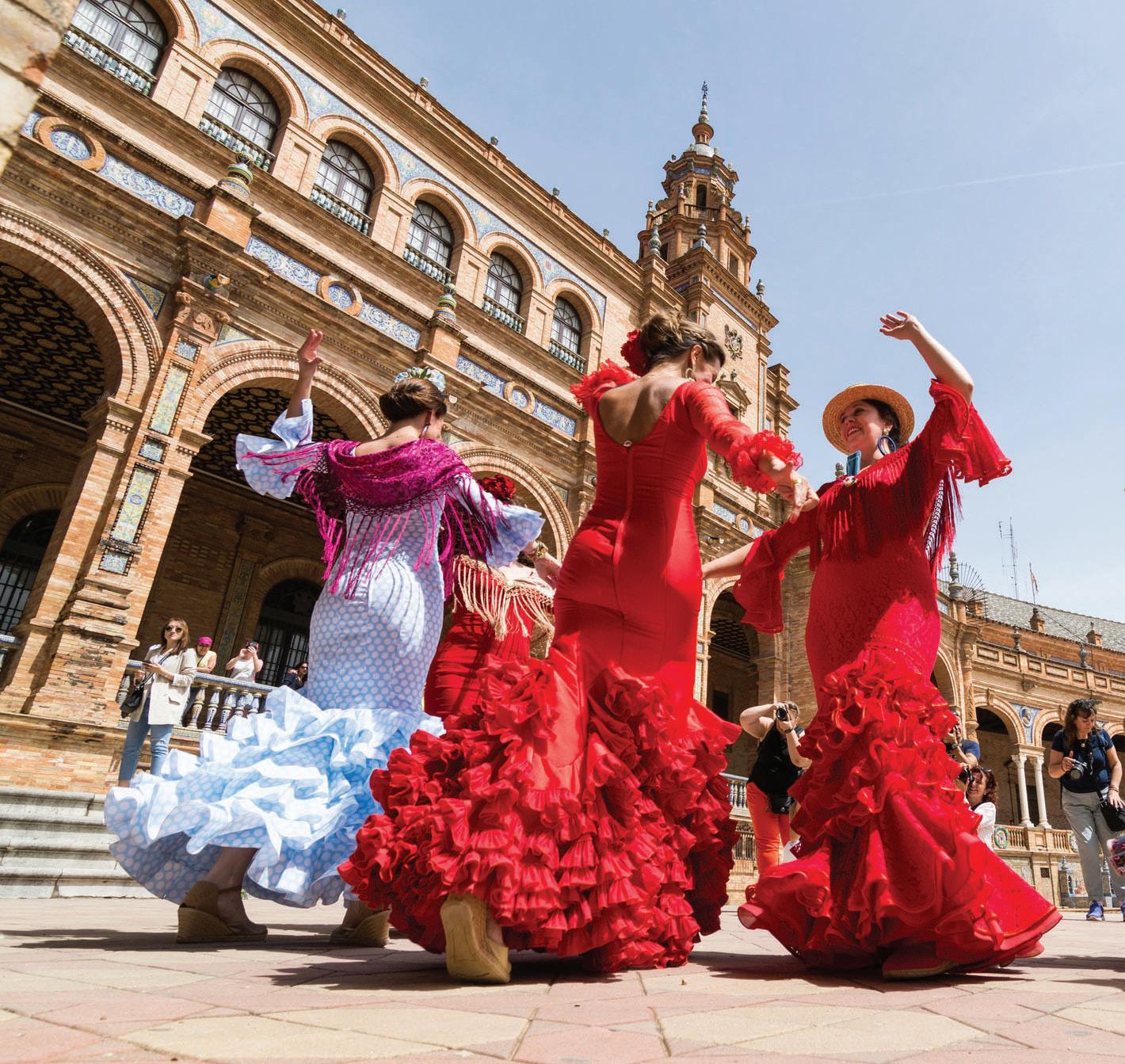

Did you know Houston has a huge francophone (French speaking) community? French is also the only language other than English spoken on every continent. Most excitingly, French 1 is all about you! Learn how to introduce yourself, talk about the things you like, your family, your home, your classes, your favorite foods, and your hobbies while you learn about the same in francophone communities.
Grade Level: 9th Offered: 1D-3A-5B
Length: 3 Bins
Expand your understanding of our lifestyle in Houston & in francophone communities. Design your dream house, plan a party, and lay out your ideal city. This class takes what you learn in French 1 and broadens it: learn about your neighborhood, how to make plans, about your body, and traveling. This course offers a less intense pace than French 2 Avancé. Prerequisite: French I
Grade Level: 9th, 10th Offered: 2A-4B-6C
Length: 3 Bins
Take a look at how your life in Houston compares to the life of a French-speaking teenager. Compare your community to a Francophone one, learn about what it means to be healthy in other cultures, plan a holiday party, and see what hanging out with your friends looks like around the world. This is a more in-depth French 2 course that prepares you for the AP track and French 3 Avancé. Prerequisite: French I
Grade Level: 9th, 10th Offered: 1C-3D-4A
Length: 3 Bins
Why not learn how to express feelings in the language of love? Students of French III will explore the world of personal relationships and its presence in film, music and photography. The girls will get to practice their creative writing skills writing their own French love story. We will travel abroad to Africa and other not so distant francophone destinations such as Louisiana, Québec, and Haiti. We’ll conclude our trip in the marvelous universe of Le Petit Prince, a must-read of modern French literature. Prerequisite: French II
Grade Level: 10th, 11th Offered: 1A-3B-5C
Length: 3 Bins
During class, French is spoken exclusively. Students become more acquainted with classical French literature and are required to read a French novel. The study of French and francophone history, culture, and geography is also an important component of the course. Students are expected to research and report on a variety of topics with written submissions and oral presentations. Prerequisite: French II
Grade Level: 10th, 11th Offered: 1B-3C-5D
Length: 3 Bins
Paris! Montreal! Geneva! Planning on leaving on vacation? Experience the French life through real situation dialogues. Learn how to order from a menu, make a reservation in a hotel, ask for directions, buy a baguette, go shopping, try new clothes on, and much more! Oh là là! Throughout the course, there will be plenty of opportunities to ask all the questions that need to be answered so your trip can be fun and relaxing! Prerequisite: French III
Grade Level: 11th, 12th Offered: 2A
Length: 1 Bin
From the origins of film making with the Lumière brothers to more contemporary and charming movies like Amélie, we’ll explore the evolution of French and other French-speaking cinema. Watching and analyzing movements like avant-garde and new wave and themes like French feminism will help us to better understand francophone societies. Plus, the variety of perspectives should stimulate everyone’s curiosity! Prerequisite: French III
Grade Level: 11th, 12th Offered: 4B
Length: 1 Bin
The French have always excelled in the arts with important contributions to painting. It would be impossible to talk about France without mentioning Monet, Cezanne, or Renoir. In this class you will discover different art movements like impressionism, cubism, or pointillism. Join the artists in their Parisian lives and grab a coffee with them discussing the next exhibition. Follow their love stories and meet their muses, and follow them on their inspirational travels around the world. Prerequisite: French III
Grade Level: 11th, 12th Offered: 6C
Length: 1 Bin
Art, traditions, and identities: three mods, three AP topics, a triangle of multiple connections. From French impressionists to marionettes and symmetrical French gardening, we’ll start our year exploring different manifestations of art in our first AP theme of beauty and aesthetics. Our second theme, the family and the community, will bring many cultural questions to the table such as how family roles can change according to the community or how traditions can reflect years of heritage in a society. The simple question of what makes you feel like
part of a community will make a link with our last theme, public identities, where we’ll tackle the relations between language, culture, and geography. Prerequisite: French III
Grade Level: 11th, 12th Offered: 2B-4C-6D
Length: 3 Bins
As the crème de la crème (best of the best), take the equivalent of a sophomore-level college course to expand your horizons! In this discussion-based course, make connections between your personal experience and that of the francophone world regarding technology, environmental concerns, systematic challenges to society, and other contemporary real-world issues. Hone your AP skills with plenty of practice and feedback. This course specifically prepares you to excel on the AP French Language and Culture Exam in May. Prerequisite: French IV: Pre-AP
Grade Level: 11th, 12th Offered: 1A-3B-5C
Length: 3 Bins
Embark on a beautiful new journey in Spanish and be part of the second most spoken language in the world. Share with us everything about you, tell us what you like, and learn about your friends’ hobbies. Let’s go visit a restaurant and learn how to order from a menu. Let’s follow that up by spending birthday money to find the perfect gift for you and your friends.
Grade Level: 9th Offered: 1D-3A-5B, 2A-4B-6C
Length: 3 Bins
This course will guide you through the process of learning Spanish to increase comprehension and fluency. Find your way around Madrid using the internet and maps, and discover the city underground by taking a tour in the subway. After this long journey in Madrid, treat yourself with a nice afternoon at the spa and learn how to give yourself a break and talk about your well-being. Prerequisite: Spanish I
Grade Level: 9th, 10th Offered: 1A-3B-5C, 1B-3C-5D, Length: 3 Bins 2B-4C-6D
Engage in conversations to increase your comprehension and fluency in Spanish and develop skills to understand and be understood. Write reports, tell stories, and watch a TV series completely in Spanish. In this Spanish class, one day you will become a real estate agent and will sell us our dream house, and another day you will become the best advisor for your friends. Tell us the story of your life and learn about your friends’ lives and experiences… maybe even learn some secrets. Prerequisite: Spanish I
Grade Level: 9th, 10th Offered: 1D-3A-5B, 2A-4B-6C Length: 3 Bins
This is a culturally enriched Spanish program that allows students to improve conversation skills and communicate through conversation, language, and grammar. Enter the worlds of artists and learn how to talk about painting, music, and cinema. After talking about their work, learn how to talk about your future dream job and immerse yourself in the professional world. Prerequisite: Spanish II
Grade Level: 10th, 11th Offered: 2D-5A-6B Length: 3 Bins
Embark on Spanish and Latin American short stories and be involved in class discussions; get into real life situations; watch short movies and “El tiempo entre costuras” series to expand language and culture knowledge of the Hispanic world, while reviewing essential grammatical structures. Have you ever wanted to be part of a fairy tale? Well, here’s your chance! Be part of a wonderful class where you write a fairy tale in which you can be the main character. We’ll talk about love, friendship, and adventures, and you could also meet with Sira, a Scarlett O’Hara type lady during the Civil War in Spain. Prerequisite: Advanced Spanish II
Grade Level: 10th, 11th Offered: 1A-3B-5C Length: 3 Bins
We will spend time discovering culture through short stories, listening to authors and seeing the beauty of Spanish speaking countries. Here’s your chance to experience community life, and how to make connections through comparison and communication. This course is designed to help you learn how Spanish is your key to knowledge. Prepare yourself to go on different trips where you will see beautiful places and enjoy new cultures, food habits, and scenery. Embrace nature and the outdoors and explore its nurturing aspects. Identify world problems to start making a difference and recommend solutions.
Prerequisite: Advanced Spanish III
Grade Level: 11th, 12th Offered: 2C-4D-6A Length: 3 Bins
Expand your vocabulary and learn to communicate efficiently in both writing and speaking. Use the Spanish language in meaningful, creative, and engaging contexts. Read magazine and newspaper articles, and analyze literary works as well as short lectures. Watch the Spanish Series “Gran Hotel” and get ready to enter a world of love, mystery, and suspense set in the early 1900s Spain. In this class you will also create oral presentations and share with the class your own analysis of current world topics. Prerequisite: Advanced Spanish III or heritage speaker
Grade Level: 11th, 12th Offered: 2D-5A-6B Length: 3 Bins
Do you speak Spanish but never had a formal Spanish language education? This class is for you! Discover different periods of Spanish literature. Read, analyze, and discuss in a comfortable class setting, and learn how to express your thoughts in writing. Prerequisite: heritage speaker and teacher recommendation
Grade Level: 11th, 12th Offered: 2C-4D-6A
Length: 3 Bins
In this course, students study original texts from Spain, Latin America, and U.S. Hispanic Literature on the required College Board list. These texts include works from the Medieval and Golden Age to the 19th and 20th centuries. The course prepares students to demonstrate proficiency in the three modes of communication and the five goals: communication, cultures, connections, comparisons, and communities (5 C’s) determined by the Standards for Foreign Language Learning in the 21st Century. Prerequisite: Advanced Spanish IV or heritage speaker
Grade Level: 11th, 12th Offered: 1B-3C-5D
Length: 3 Bins
In this course, students develop skills in the three modes of communication (Interpersonal, Interpretative, and Presentational) defined in the Standards for Foreign Language Learning in the 21st Century. This is a second-third semester college level course and students will study, discuss, and analyze texts based on the six core themes determined by the College Board. Students write essays as well as perform oral presentations on a weekly basis. Prerequisite: Spanish IV
Grade Level: 11th, 12th Offered: 1C-3D-4A
Length: 3 Bins
American Sign Language (ASL 1) introduces students to the language and culture of Deaf people in the United States. The course will focus on specific language and cultural behaviors, as well as introduce students to the grammar of ASL.
Grade Level: 9th - 12th Offered: 2A-4B-6C
Length: 3 Bins
This course utilizes functional and skill-building upon classroom instruction, real-life scenarios, and an increase in fluidity within a signed-only conversation. ASL II is designed to gain a deeper knowledge of Deaf culture, grammar, and an increase in vocabulary. This course will also emphasize differences in dialogue, language learning, oral v. non-oral, occupations, and family life. Prerequisite: American Sign Language I
Grade Level: 9th - 12th Offered: 1A-3B-5C
Length: 3 Bins