DTU Compute


Researchers from DTU Compute are working to develop an algorithm to ensure the quality of EEG scans so that more epilepsy patients in low middle income countries can receive treatment.
DTU Compute is working with the Danish company BrainCapture, established in 2019 as a spinout from research conducted at DTU Compute. BrainCapture is developing a low-cost mobile EEG scanning method based on artificial intelligence (AI), which health professionals without training can use locally in low middle income countries.
The equipment consists of a cap with electrodes that is placed on the patient’s head and measures the differences in voltage between the electrodes. Data is sent via a smartphone/tablet app to a computer, where the neurologist can read it as curves and make the diagnosis based on them.
In the eGAP project, DTU Compute intends to develop an AI algorithm that can be built into the app to ensure the quality of the scan. It automatically analyses data in real
time so that any interference with the measurements from eye movements, blinking and muscle contractions, which mix with the neural signals that show whether the patient is ill, can be identified during the scan itself.

The eGAP project is supported by the EU program Eurostars.
Contact
Tobias Andersen, Associate Professor at DTU Compute, toban@dtu.dk
Per Bækgaard, Associate Professor at DTU Compute, pgba@dtu.dk
Lars Kai Hansen, Professor and Head of Section at DTU Compute, lkai@dtu.dk
Tue Lehn-Schiøler, CEO at BrainCapture, tls@braincapture.dk
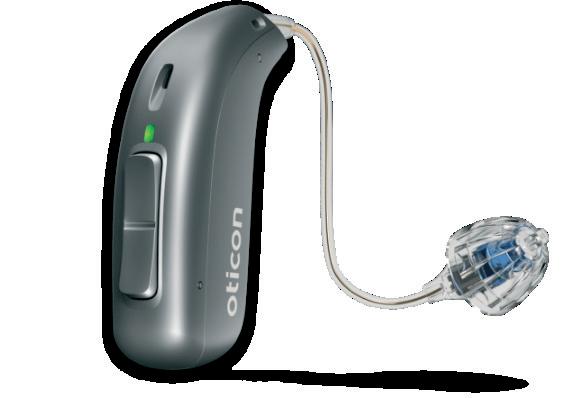
Artificial intelligence represents a new approach to sound processing that can both improve and provide new functionality for hearing aids. Unfortunately, the neural networks that bring the “intelligence” require a lot of processing power. A traditional software implementation far exceeds what is possible in a hearing aid, where there are strict limitations on both storage (RAM) and energy consumption.
Oticon and DTU Compute are working together on a industrial PhD project to solve this problem. Work is being done on two fronts: (1) To develop algorithms that, for a moderate reduction in accuracy, achieve a significant reduction in both energy consumption and storage space. (2) To develop custom hardware – called domain-specific hardware accelerators – that can reduce energy consumption by a further factor of 10-100 compared to a software solution.
Together, the optimized algorithms and, in particular, the specialized hardware solutions make it possible to
Oticon
implement artificial intelligence in hearing aids, thereby continuing to develop towards improved user-friendliness and sound quality.
Contact
Zuzana Jelčicová, PhD student at DTU Compute and Oticon, zuje@dtu.dk
Anders Hebsgaard, Head of Digital IC Design, Oticon, aheb@demant.com
Jens Sparsø, Professor at DTU Compute, jspa@dtu.dk
Energy renovations that reduce energy consumption are a crucial factor for achieving ambitious climate targets.
DTU Compute has developed AI solutions for the financial sector such as data-driven solutions to characterize a building’s sustainability with a view to provide qualified advice on green loans for improvements to buildings.
The research is being conducted as a collaboration that includes Nordea, Swedbank, Sustainable Digital Finance (Geneva), Copenhagen Economics and Center Denmark, a national hub for research into smart energy systems.
Smart energy systems make it possible to monitor heating and electricity consumption patterns with precision and identify the potential energy savings in a building,
e.g. through better insulation, new windows, heating electrification or a switch to district heating.
Our AI solutions are based on data from energy meters in the buildings, and the data is compared to local weather data. Elements of the new solution can be described as a digitalized energy label. The solutions provide the financial sector with new opportunities to offer green loans.
Contact Henrik Madsen, Professor and Head of Section at DTU Compute, hmad@dtu.dk

Jonas Bjarke Jensen, Senior Economist at Copenhagen Economics, jbj@copenhageneconomics.com

At DTU Compute, we conduct research into using Machine Learning algorithms to strengthen cyber security in the project called SecDNS. In collaboration with the private company CSIS Security Group, researchers from DTU and Aalborg University are working to find new solutions to prevent accidental disclosure of information to criminals or visits to malicious, virus-infected websites.
The researchers specialise in trust management and Machine Learning and will develop a system based on artificial intelligence that can review the so-called DNS lookups, which convert the site names (domain names) we enter on our computers into the numerical codes of the IP addresses used by the computers.
All computers/devices use DNS lookups to access a malicious domain, whether that domain is used for websites,
hosting malware, phishing emails or otherwise. Via these DNS lookups, the algorithms, based on large amounts of data, recognise patterns that characterise malicious websites by checking whether links to websites are harmful or whether an email contains a malicious link, in which case the system will block them.
SecDNS shall provide a high level of protection against all attacks that require communication between hacker/malware and victim, and this applies to the majority of cyber attacks that take place at present and in the foreseeable future. The solution will cover all connected devices, including Internet of Things (IoT) devices, industrial control systems, etc.
Contact Christian D. Jensen, Associate Professor at DTU Compute, cdje@dtu.dk
Sajad Homayoun, Postdoc at DTU Compute, sajho@dtu.dk

A group of researchers at DTU Compute is working to develop an artificial pancreas for people with type 1 diabetes. This condition prevents the pancreas from producing insulin, a hormone that helps to transfer sugars (glucose) from food into the cells, where they are converted into energy.
The inability to control insulin is life-threatening for patients. This is where an app can help by automatically injecting insulin and other hormones (such as glucagon) at the right times,
using mathematical models and artificial intelligence. This makes patients’ everyday lives significantly easier, and in the long term will also reduce a series of severe comorbidities that result from fluctuations in blood sugar.
The system is being tested on patients in cooperation with Steno Diabetes Center, and the experience from these trials will be used in cooperation with Novo Nordisk to develop similar systems based on insulin pens instead of pumps fixed to the body, as in the case of the artificial pancreas.
Contact
John Bagterp Jørgensen, Professor at DTU Compute, jbjo@dtu.dk
Good information on the movement of sea ice is essential to society in Greenland, where fishing is the most important industry, and to other maritime traffic in Greenland’s waters, which is continuing to increase. Sea ice is highly dynamic, however: it grows, melts and moves with the weather, wind and current. At the same time, as an Arctic nation, Denmark has an obligation to monitor sea ice and to issue reliable maps for maritime navigation.

In the ASIP project, DTU Compute and DTU Space have helped DMI to develop a safer and more effective method of delivering more frequent and detailed maps of the spread of sea ice. The parties have used the freely available satellite data from the EU’s earth observation programme, Copernicus (Sentinel satellites), and from the
Japan Aerospace Exploration Agency’s GCOM-W1 satellite. At DTU Compute, we have developed AI algorithms to analyse and combine satellite sensor data so that a map of sea ice can be created directly from the data. The project replaces an intensive manual process with an automated one which provides more reproducible and precise maps much faster, much more often, and over much larger areas, which benefits the safety of navigation and the security of supply in Greenland while also saving ship fuel.
FACTS:
The project is called ‘Automated Sea Ice Products for Greenland’s Waters (ASIP)’. It will run for three years and is receiving DKK 5 million in funding from Innovation Fund Denmark. The total budget is DKK 6.5 million.
Henning Skriver, Director at DTU Space, hs@space.dtu.dk
Anders Bjorholm Dahl, Professor and Head of Section at DTU Compute, abda@dtu.dk
DTU Compute has collaborated with the company EasyPark in an innovation project to develop a feature (Find & Park) that allows drivers to easily find vacant parking spaces in cities. The feature has been implemented in EasyPark’s parking app, which drivers can also use to deal with other parking-related matters such as paying for parking in city zones.

DTU Compute has developed the AI algorithms through a comprehensive analysis of data such as residents’ licences, paid car parks, parking behaviour and parking patterns in high-traffic areas.
Reducing the time drivers spend looking for a vacant parking space not only saves time and avoids stress, but also reduces traffic and pollution from cars in cities, which benefits the local environment and the climate.
“Cars looking for a parking space make up 30% of the traffic in large cities during rush hour.”
– Ingeniøren
Bjarne Kjær Ersbøll, Professor and Head of Section at DTU Compute, bker@dtu.dk
WriteReader has developed a learning tool (app.writereader.com), which is used to teach children to read by writing their own small digital books.
An important part of the learning process is that teachers ‘translate’ the students' writing attempts (child text) into conventional writing (educator text). This is a time-consuming process, but a new AI algorithm based on data from the Danish version of the app now aims to streamline this process in order to make the teachers’ work easier and support the students' learning even more. The new AI algorithm is being developed by DTU Compute.
The project is funded by Innovation Fund Denmark and carried out as a collaboration between DTU and DPU. Today, WriteReader’s app is used in more than 40 countries.
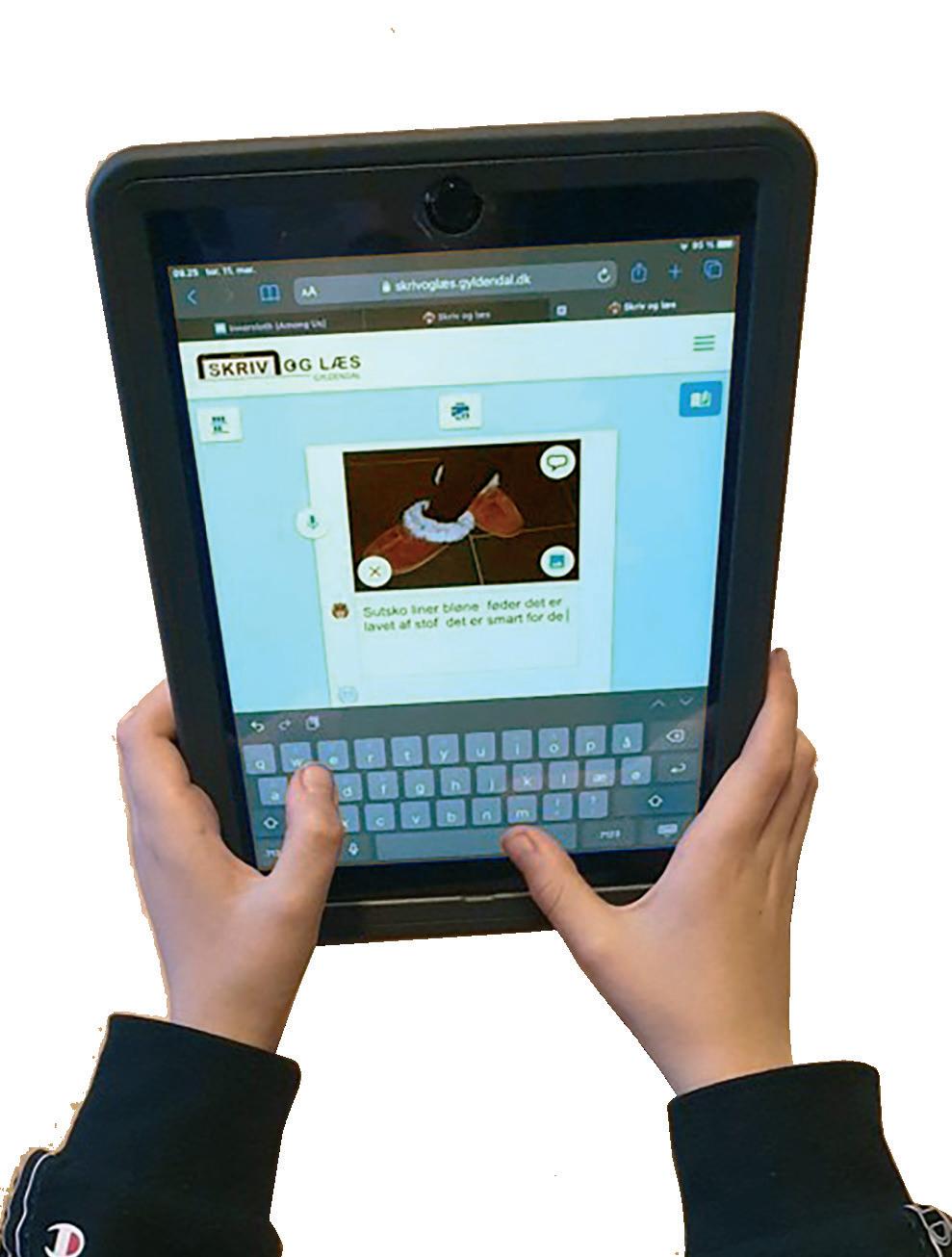
Photo WriteReader
“Educational technology is a particularly important scientific challenge, and the project’s planned AI (red. Artificial Intelligence) solutions will make a significant contribution to the development of Danish language technology.” – Lars Kai Hansen, Professor and Head of Section at DTU Compute, to Innovation Fund Denmark
Contact Michael Riis Andersen, Assistant Professor at DTU Compute, miri@dtu.dk
Lars Kai Hansen, Professor and Head of Section at DTU Compute, lkai@dtu.dk
Janus Madsen, Founder and COO at WriteReader, jm@writereader.com
The weather-driven energy systems of the future are calling on a range of new AI solutions. For example, researchers at DTU Compute, in cooperation with the DTU spinout company ENFOR A/S, have developed software to predict wind and solar energy production.
These solutions are being used today to predict 20-25% of the total wind energy production in the world, particularly in Europe but also in Australia and North America. These AI solutions are therefore helping to ensure the effective integration of wind and solar energy. One of the projects (EUROGRID) received the 2021 Innovation Prize, awarded by Energy Cluster Denmark.

Similar solutions are in development for district heating systems, where solutions for prediction and optimization have
been tested with great success at a number of district heating plants. In the future, the solutions will be implemented as AI cloud solutions at Center Denmark, a national digitalization hub for smart energy systems.
"The collaboration with DTU Compute is crucial to ensure that we at ENFOR can continue to deliver leading solutions for the forecasting of wind and solar energy production on the global market," says Mikkel Westenholz, CEO of ENFOR A/S.
Contact Henrik Madsen, Professor and Head of Section at DTU Compute, hmad@dtu.dk
Mikkel Westenholz , CEO at ENFOR, miw@enfor.dk
Søren Skov Bording , CEO at Center Denmark, soren@centerdenmark.com
Photo Colourbox
The transport sector can provide a significant share of the carbon reductions that Denmark has pledged to make by 2030. We normally think about this in terms of fuel, but switching from manual to automatic transport planning could save the industry many kilometers of driving – which can be converted into carbon savings.
This is what DTU Compute is working on in the GREENFORCE project. The service vehicles at TDC NET, which is expanding Denmark’s digital infrastructure with transmission lines up and down the country, drive around 80,000 kilometers a day. The goal is for TDC NET, with help from DTU Compute, DTU Management and the company QAMPO, to reduce the number of kilometers driven by 25% by 2025.
DTU Compute, together with DTU Management, is developing a new piece of software that uses artificial intelligence combined with advanced algorithms, computing power and service design to analyse data from TDC NET and its service vehicles.
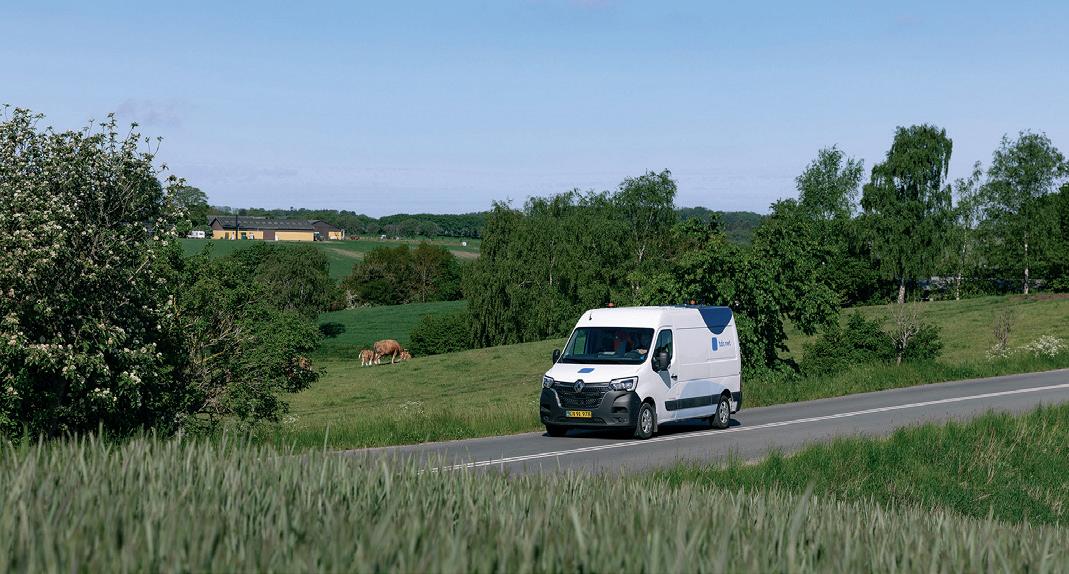
The solution is expected to improve technicians’ day-today route planning in real time, enable them to solve many customer issues remotely and determine when the digital network itself needs to be maintained.
Contact
Bjarne Kjær Ersbøll, Professor and Head of Section at DTU Compute, bker@dtu.dk
Modern cars are equipped with a variety of sensors, which collect many different types of data while driving. The sensors may be directly or indirectly affected by the condition of the road. DTU Compute is a partner in the LiRA project (Live Road Assessment), and together with the Danish Road Directorate, SWECO, DTU Civil Engineering and GreenMobility - with support from the Innovation Fund Denmark -, we are developing a system, which has the potential to revolutionise the way road infrastructure is managed and maintained, thereby not only saving money on maintenance costs but also reducing the time spent on maintenance.

We have access to sensor data from several hundred electric cars from the car
rental company GreenMobility in the Copenhagen area. Based on this data, we are not only developing machine learning models at DTU Compute that enable us to assess the physical condition of the road network, we are also designing a cloud-based system that integrates both the data collection and machine learning models.
The expectation is that with the help of sensor data we will be able to detect road wear earlier so that, e.g. municipalities can repair road damage before it becomes excessive, costly and time-consuming to repair.
Contact
Ekkart Kindler, Associate Professor at DTU Compute, ekki@dtu.dk
Tommy Sonne Alstrøm, Associate Professor at DTU Compute, tsal@dtu.dk
Matteo Pettinari, Special Consultant at Danish Road Directorate/Vejdirektoratet, map@vd.dk
Physicians may sometimes recognise symptoms of diseases based on patients' behaviour, such as breaking or repeating a particular pattern of behaviour. For example, a change in the habits of a person with dementia may be a sign that the disease is getting worse, or that a new disease is emerging.
In the project PACE (Proactive Care for the Elderly with Dementia), DTU Compute collaborates with Aalborg University Copenhagen, the nursing homes Skovhuset and Ryetbo and SIF Gruppen A/S, on developing AI/Machine
Learning methods to gather and analyse data from various welfare technologies. In an overall system, we search for patterns that may indicate incipient disease in the individual resident. If patients receive treatment faster, they may be able to avoid hospitalisation, which is very stressful for citizens suffering from dementia.
We use data from intelligent floors, where sensors registers steps, position, pace and any falls, as well as data from biosensors, which can measure in the infrared spectrum, and together, indicate if something unusual is taking place. Exactly because PACE utilizes data from simultaneous features, we are able to create finer-meshed predictors than what is currently available.

Colour Colourbox
PACE is funded by Innovation Fund Denmark. The ambition is to set standards for nursing homes of the future, where technology will contribute to increased welfare for the residents, and presumably decrease costs to hospital admissions. PACE therefore also collaborates with citizens, relatives, staff and decision makers to provide optimal knowledge of technological options.
Contact
Anders
Stockmarr, Associate Professor at DTU Compute, anst@dtu.dk
Lars Mejlby, CEO for SIF Gruppen A/S, lms@sif.dk
Poor sound conditions and noise indoors – also called building or spatial acoustics – play a key part in determining how pleasant the experience of being inside a building is, and sound can be absolutely crucial for the ‘product’ in conference rooms, concert halls and classrooms, for example.
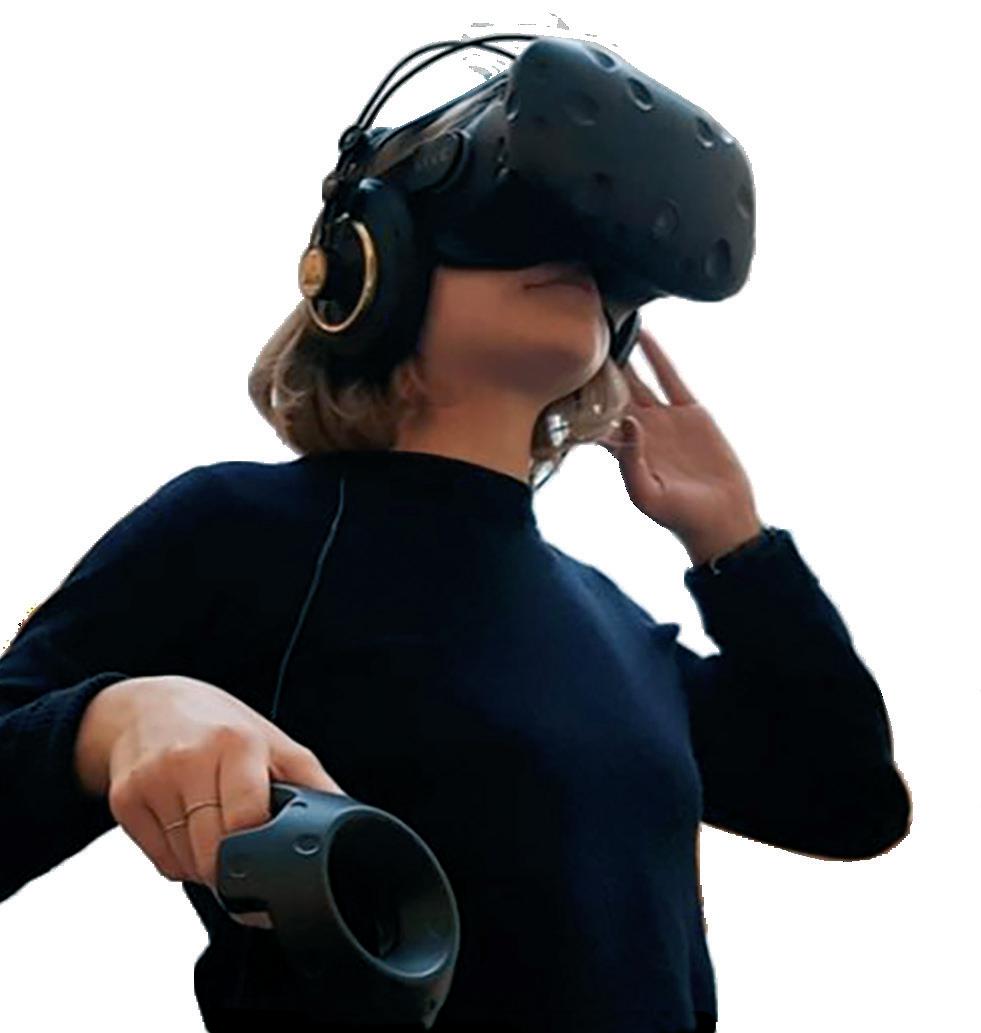
Researchers from DTU Compute and DTU Elektro have joined Henning Larsen Architects/ Rambøll in several
industrial PhD projects to develop new data-driven simulation tools for spatial acoustic calculations. This is achieved in part through machine learning, and we are exploiting the raw computing power of modern processors such as GPUs via GPULAB in the DTU Compute Center (DCC).
The results of the research are being published on an ongoing basis.
In 2020, one of our industrial PhD graduates started the company Treble in Iceland, focusing on the development of new calculation technologies for precise acoustic calculations.
Contact
Allan Peter Engsig-Karup, Associate Professor at DTU Compute, apek@dtu.dk
With the help of responsible artificial intelligence, a large research project is aiming to develop the digital news experience to be more personal and relevant.
DTU Compute is working on the research and development of new recommendation systems that can suggest news for users to read.
The large data science project PIN is able to use algorithms on a large user base, because the project has access to a large quantity of anonymised data from Ekstra Bladet’s users. The project aims to develop ethical and responsible algorithms that can help to influence what hundreds of thousands of users read every day. The university cannot execute this set up on its own.
The project ‘Platform Intelligence in News’ (PIN) is a Grand Solutions research project supported by Innovation Fund Denmark and executed in collaboration with Ekstra Bladet/Politikens Hus, CBS, the University of Copenhagen and DTU.

Photo Colourbox
“What we can do together with Ekstra Bladet and Politikens Hus is to develop algorithms that are tested and used in real life, which is really fascinating.”
– Jes Frellsen, Associate Professor in machine learning and signal processing at DTU Compute.
Contact
Jes Frellsen, Associate Professor at DTU Compute, jefr@dtu.dk
Climify started as a research project at DTU in 2018. At the start, Climify was a tool for monitoring indoor climate in schools. The aim was to lower energy use and minimize the carbon footprint of buildings while also improving the indoor climate, thereby increasing pupils’ well-being and concentration.
During the first year, researchers at DTU Compute developed Climify so much that it went from being a small, limited platform, Skoleklima, to being a modern visual tool. Today, Climify is an independent business that works on indoor climate monitoring in many different types of buildings, including office buildings, campus areas, sports halls and hospitals.
Sensors collect data on temperature, humidity and CO2 in the indoor space, and the data is analyzed using software and algorithms that DTU Compute has helped to develop.
The Climify platform visualizes the indoor climate in a graphical form that is easy for users to understand.
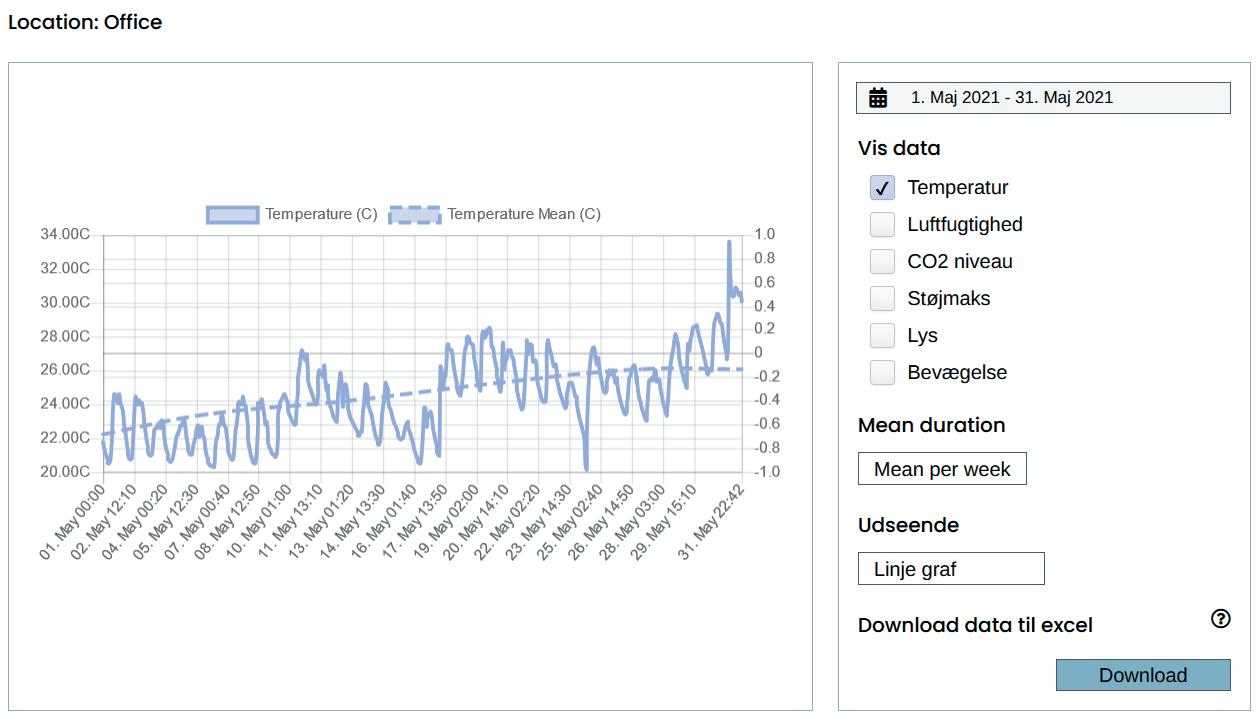
Operating personnel can see if the climate control system is running optimally. The climate control system can be set to heat up when there is a lot of residual energy in the system and to turn itself down when the energy is fossil-based, without affecting the level of comfort in the buildings.
Contact Davide Cali, Researcher at DTU Compute, dcal@dtu.dk

DanSpeech is a scalable digital speech recognition platform that primarily consists of signal processing and machine learning modules. Among other things, it can be used as an indexing service in speech databases, where it can handle large quantities of data and process it faster than real time.
The platform has a broad range of possible applications, such as sound and podcast services, where it could enable searching in libraries and recommendations for users. There are also interesting development opportunities in the healthcare and finance sectors, for example, with a view to improving communication and safety.
DanSpeech originated in a DTU Compute thesis and was developed by Martin Carsten Nielsen and Rasmus Arpe Fogh Egebæk, and it has benefited hugely as a project from DTU’s support network, where a good thesis idea has proved to be a good business idea. Thanks to support from a DTU Discovery Grant, DTU Proof of Concept Grant (POC) and InnoExplorer Grant, DanSpeech has been able to work further on developing a product and business plan.
Martin Carsten Nielsen, Scientific Assistant at DTU Compute, mcni@dtu.dk
Rasmus Arpe Fogh Egebæk , Scientific Assistant at DTU Compute, rafje@dtu.dk
Lars Kai Hansen, Professor and Head of Section at DTU Compute, lkai@dtu.dk
A patient’s first entry to the healthcare system happens through a consultation with a healthcare professional in which the slightest misunderstandings can lead to fatal outcomes.
Corti provides an artificial intelligence (AI) trained on millions of patient consultations to help provide better advice and guidance.
For example, when patients call the emergency number 112 in the Capital Region of Denmark, Corti’s AI technology helps call-takers to detect the type of emergency faster and more accurately.
By listening in and understanding the dialog, the AI provides feedback on the display of the healthcare professional while conveying the consultation. The AI
Graphic Corti
also assists with running quality assurance across the millions of conversations and alleviates the administrative burden of documentation.
“Corti can identify patterns of anomalies or conditions of interest with a high level of speed and accuracy. In the case of out ofhospital cardiac arrest (OHCA), Corti can reduce the number of undetected OHCAs by more than 40%.”
– Corti
Corti was founded in 2016 and has around 100 employees today. In 2020 they won the European Commission’s Future Unicorn Award. Today, Corti is in production across the globe, including Denmark, Sweden, France, UK, and across the US. In 2021, they raised $27 million Series A to cover more than 100 million patients.
Contact
Lars Maaløe, CTO at Corti and Adjunct Associate Professor at DTU Compute, larsma@dtu.dk

Spektral – isolates images in real time
Spektral is an app that uses augmented reality to create a green screen effect.
The company’s co-founder has a PhD from the Cognitive Systems Section. Using machine learning and advanced algorithms, Spektral has devised a new way to isolate image subjects in real time.
DTU STARTUP:
“In 2018, the tech giant Apple bought Spektral for DKK 200 million.” – Børsen
Contact
DTU Compute, compute@compute.dtu.dk

Peergrade - students correct each other's assignments
The DTU startup Peergrade is an online platform where the students can correct each other’s assignments.
An algorithm finds the bad evaluations and submissions.
“A PhD student at DTU Compute has developed the software Peergrade.io, which students can use to evaluate each other’s work. This relieves the pressure on teachers and can also produce better evaluations.” – DTU
Contact
David Kofoed Wind, CEO at Peergrade, david@peergrade.io
DTU Compute, compute@compute.dtu.dk
DTU
DTU
compute@compute.dtu.dk
www.compute.dtu.dk/english