There has never been a more exciting time to be in packaging.
Marc
Chiron Sales, Marketing and Innovation Director – Packaging Division
The world today
While global environmental challenges such as climate change, pollution and waste are escalating, the demand for raw materials continues to increase. As a society, we’re becoming more aware and consumers are demanding more, of the products and services they buy. They expect companies and governments to lead the way by radically reducing their impact on the natural world and by offering more sustainable solutions.
Our Now and Next Sustainability Strategy focuses on the sustainability challenges we are facing today, as well as those that will impact future generations. Starting from our circular business with packaging solutions, recycling and papermaking, we want to lead the way and help our customers prepare for the circular economy.
Top 5 environmental issues around the world1
Global warming / climate change
Air pollution
Dealing with the amount of waste we generate De-forestation Water pollution
What is the Circular Economy?
We live in a linear economy, where we take natural resources and turn them into products ultimately destined to become waste because of poorly considered design. A process that can be summarized as “take, make, waste”.
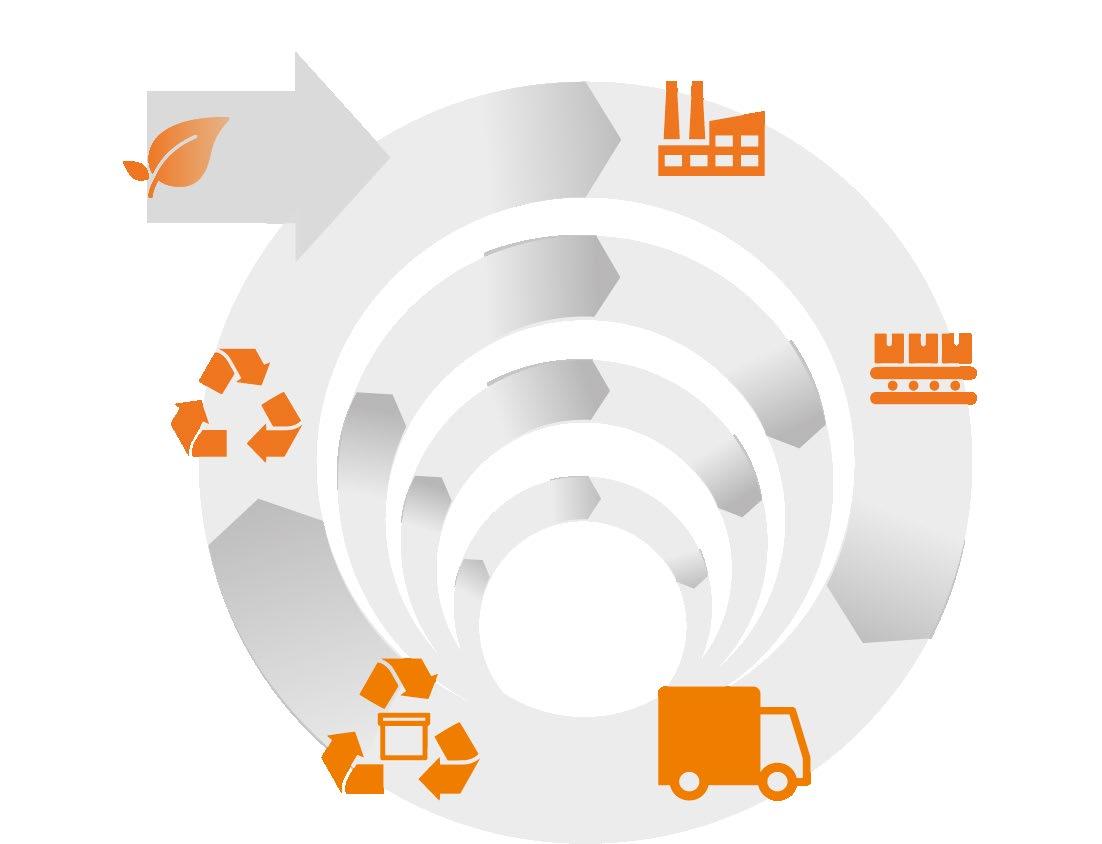
By contrast, the circular economy is based on the principles of designing out waste and pollution, keeping products and materials in use for longer and regenerating natural systems. By closing the loop through reuse, sharing, repair, refurbishment, remanufacturing and recycling, we can minimize the use of resources and eliminate the creation of waste and pollution.
The circular economy also helps to tackle global challenges such as biodiversity loss and climate change.
The top 3 issues for consumers when purchasing products in general, in order of importance2
Produced in my country In the minimum possible amount of packaging Packaged in recyclable materials
Looking beyond the current take-make-dispose extractive industrial model, a circular economy aims to redefine growth, focusing on positive society-wide benefits. It entails gradually decoupling economic activity from the consumption of finite resources and designing waste out of the system. Underpinned by a transition to renewable energy sources, the circular model builds economic, natural and social capital.
Ellen McArthur Foundation’s Definition of the Circular Economy
Shaping our future through design
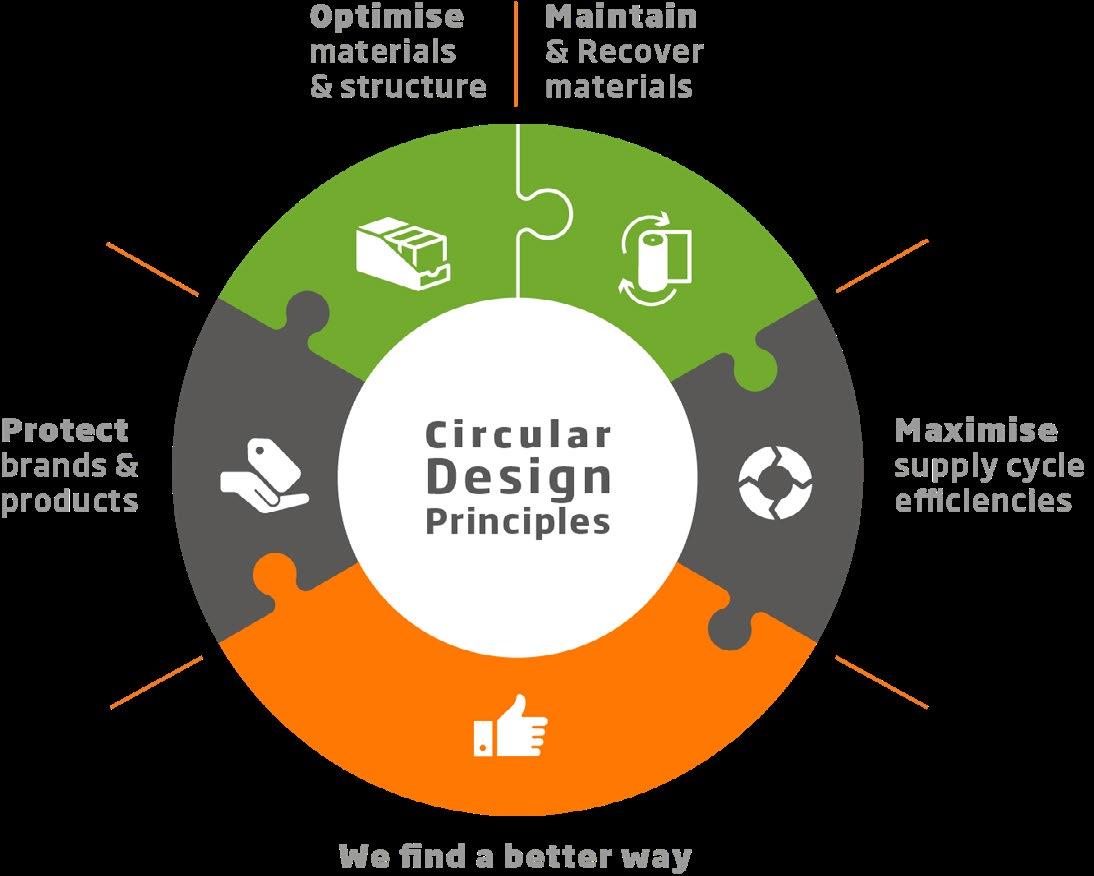
There is an enormous opportunity to do more with cardboard to accelerate the transition to the circular economy. Circular by nature, our cardboard is produced from fibres that can be recycled multiple times, sourced from responsibly managed forests. We have over 700 designers and innovators who think and create with Circular Design Principles, principles we have developed in collaboration with the Ellen MacArthur Foundation.
Launched in 2020, our Circular Design Principles enable our designers to create for circularity, helping our customers reduce their packaging impact and meet their sustainability targets.
Over 80% of a product’s environmental impact is determined at the design stage.3 i
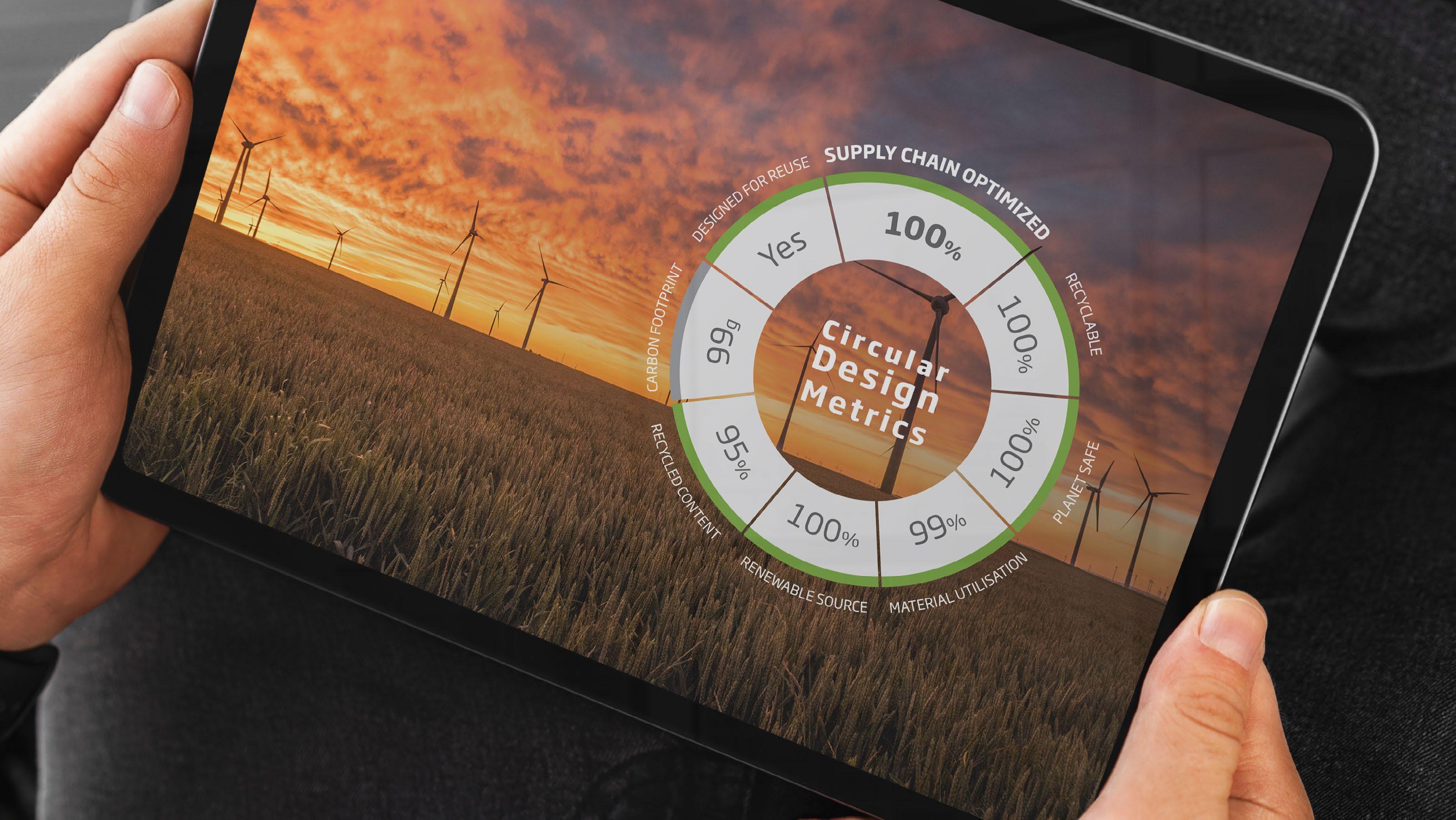
Our Circular Design Metrics
Our Circular Design Principles have helped us develop metrics to rate and compare the environmental performance of packaging designs.
The Circular Design Metrics – an industry first – identifies a design’s sustainability.
Supply Chain Optimized
Recyclable
Planet Safe
Material Utilisation
Renewable Source
Recycled Content
Carbon Footprint
Designed for Reuse
The Circular Design Metrics quickly highlight and quantify all opportunities for potential improvement and shows just how circular our customers’ packaging solutions are right now.
Chris Else Head of Design
Value for the end-consumer
According to recent studies:
The modern consumer is highly engaged and wants to have a say in the future of our world and our resources. They see their purchasing choices as a way to have influence and will actively seek out products and companies offering sustainable solutions.
Four out of five people (80%) say climate change is an important issue for them.4 64% of consumers are willing to pay more for sustainable packaging.5 78% of people are more likely to purchase a product that is clearly labeled as environmentally friendly. 6
The average European has thrown away a whopping 41% or their recyclable goods into the rubbish bin.
What’s in it for you?
When it comes to achieving sustainability targets across a supply chain, packaging is naturally an area of focus for our customers.
The Circular Design Metrics give brands a unique opportunity to drive sustainability performance through their packaging, by helping reduce waste and pollution, keeping materials and products in use for longer and regenerating natural systems.
Sustainability is very important for our customers’ business strategies as we transition towards a circular economy.
Liz Manuvelpillai, Head of Strategic Accounts – UK Packaging
01 Supply Chain Optimized
What level of data do we have?
Only by understanding our customer’s unique supply chains can we optimize performance along every touchpoint, including: Not using any more fibres than necessary. Eliminating empty void space.
Optimizing box size for most efficient product fill.
Palletization and on-shelf efficiency. Removing lorries from the road.
We apply our leading packaging performance programme PACE (Performance, Assurance Consistency, Environment) to identify opportunities for optimization, without ever compromising on performance. P erformance A ssurance C onsistency E nvironmental Efficiency
Today, the fibre use in almost 1 in 4 of our new packaging solutions are fully optimized for individual supply chain. 7 i
Supply Chain Optimized
This metric is evaluated by reviewing an individual supply chain against the BSIR pyramid and checks what level of data is available. Only by collecting valuable data from each touchpoint of a customer’s individual supply chain can we fully optimize performance.
Every new packaging solution we develop for each customer needs to be designed right the first time.
Liz Manuvelpillai Head of Strategic Accounts – UK Packaging
Supply Chain Optimized
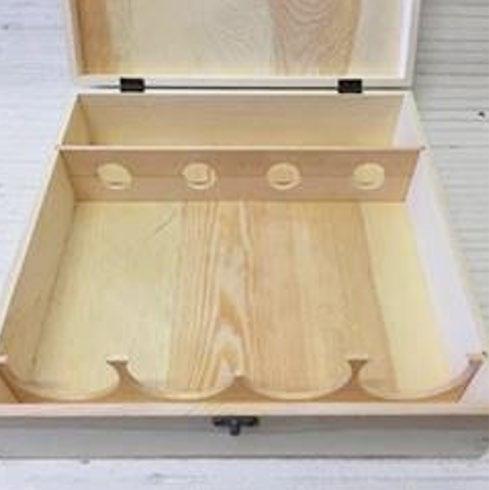
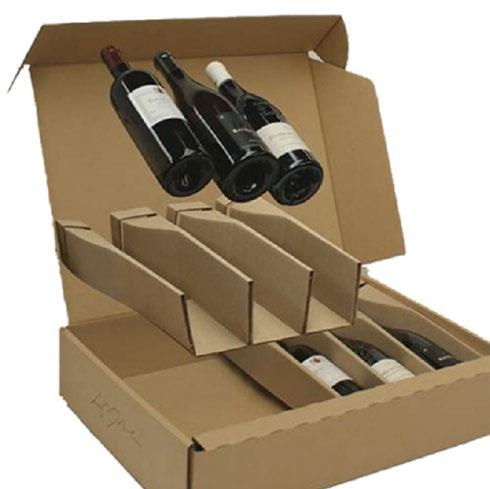
New wine packaging for Laithwaite’s
With Laithwaite’s Wine, the UK’s No.1 destination for buying wine online, we demonstrated a fully traceable closedloop model for cardboard arriving at their distribution centre.
We can close the loop on over 1,000 tonnes of cardboard packaging, ensuring materials are kept in the supply cycle for as long as possible and that maximum value is obtained.
As well as removing plastic, our redesigned packaging offers protection from all the jolts and impacts of the courier delivery network.
Recyclable
How recyclable is your packaging?
Does the packaging solution have non-recyclable elements like plastic clips, correx, foam or any polymer-based item?
Or is the design purely corrugated board, in which case the percentage of recyclability is 100%.
This metric is used to identify non-recyclable articles for which recyclable alternatives need to be found.
DS Smith aims to manufacture 100% recyclable or reusable packaging. Today, we are at 99.2%.7
99.2% 100%
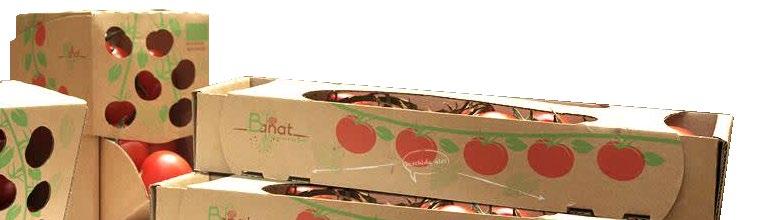
Bio Fresh Banat –Cherry
tomato packaging
Bio Fresh Banat is a certified producer of BIO vegetables in Romania. Concerned about the impact on the environment, they wanted a sustainable packaging that provided a complete consumer experience.
The cooperation resulted in a new lightweight and 100% recyclable solution that delivered more sales through differentiation in supermarkets.
CASE STUDY
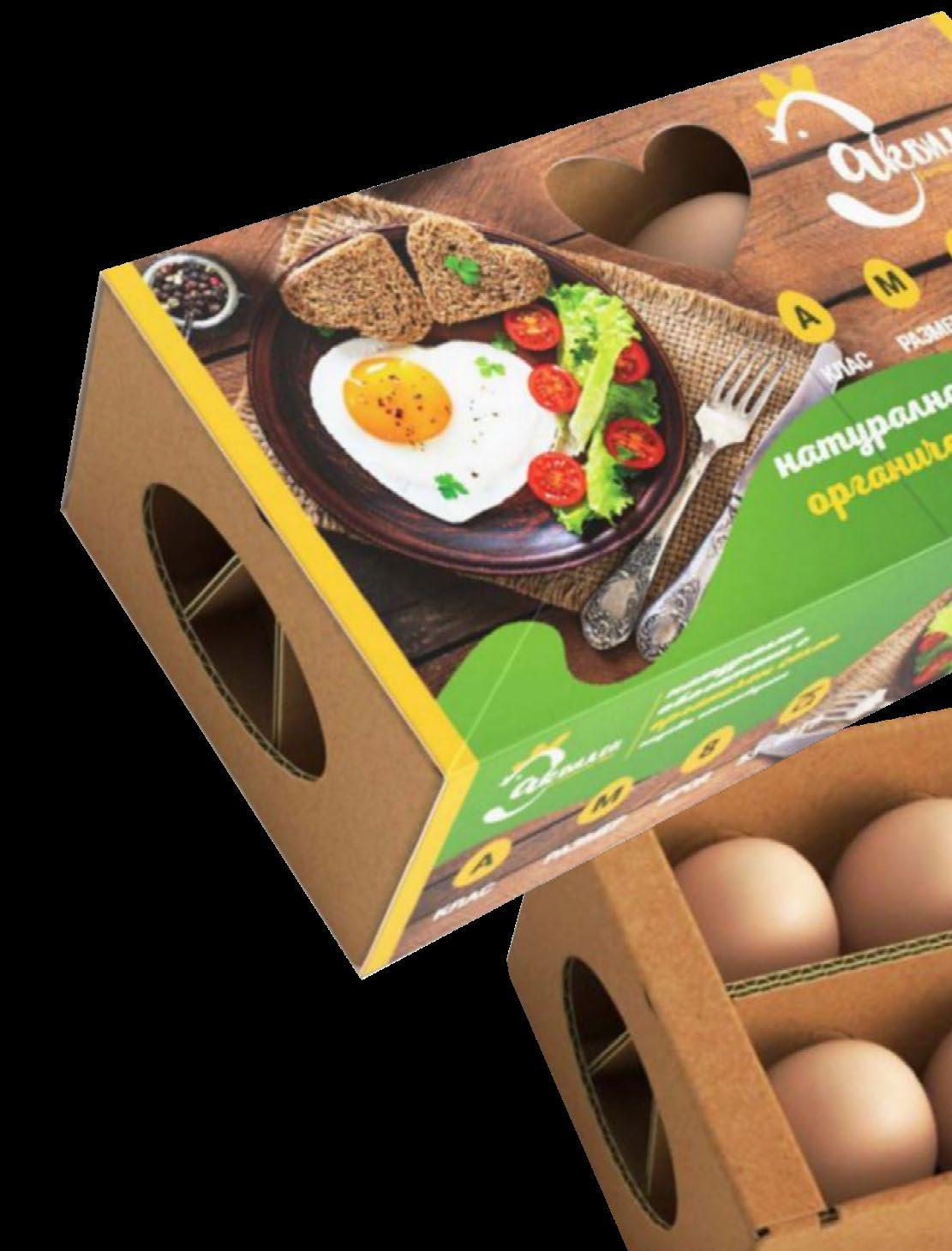
Akvilon – Premium packaging for fresh eggs
Akvilon-AM, a leading distributor of chicken eggs in Bulgaria, decided to replace their plastic egg packaging with intelligent cardboard solutions that are 100% recyclable.
DS Smith’s team of packaging strategists and designers cooperated with Akvilon-AM to develop a fully sustainable and eye-catching packaging design that stands out on the shelf, bringing higher visibility.
This unique packaging concept was awarded not only by consumers, but also by a professional jury at the “Prize Pack Award” for innovative packaging in Bulgaria.
Learn more
* No data to rate
How biodegradable is your packaging?
If the packaging doesn’t reach the recycling process, does it break down naturally in the environment?
Corrugated board is naturally biodegradable. This metric determines which components in the design are not planet safe, so that safer alternatives can be found.
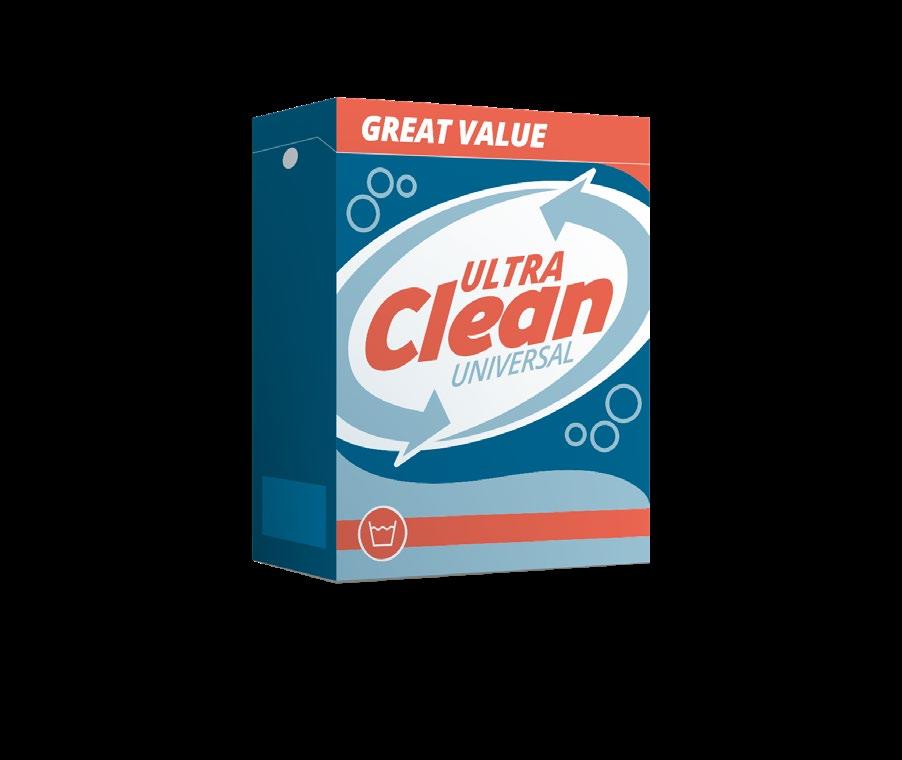
For instance, a 3 mm ripper tape in a washing powder box is considered a non-recyclable element.
To improve the bio-degradable qualities of this packaging design, solutions are considered to eliminate the ripper tape.
CASE STUDY
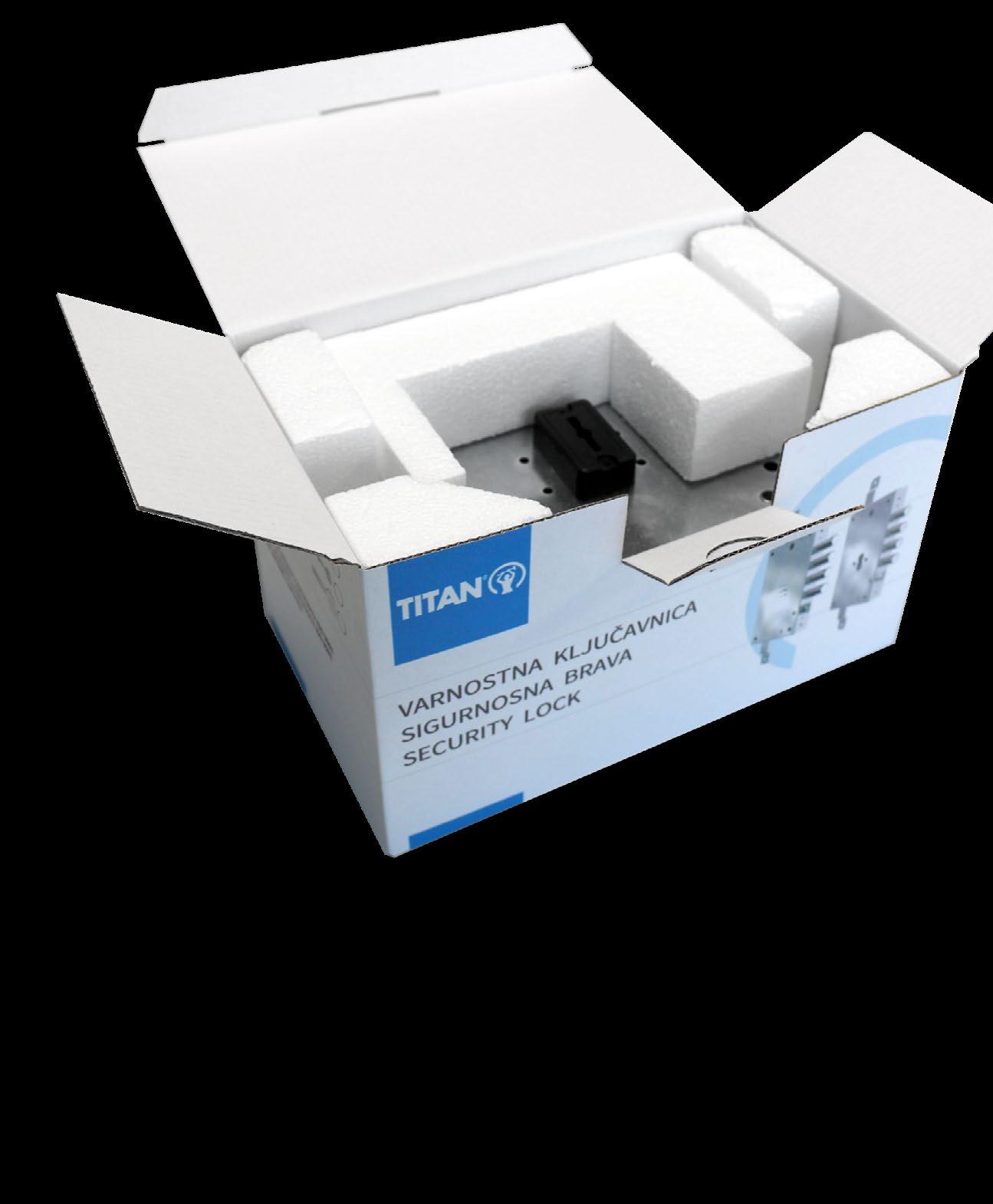
Dom-Titan – Plastic replacement
Dom-Titan, a Slovenian leader in the field of mechanical security protection of doors and locks for furniture, turned to DS Smith to switch to circular packaging. By replacing the existing styrofoam filler with a new 100% recyclable packaging filler, they removed 1.7 tonnes of styrofoam per year. And by optimizing pallet loading in the supply chain, the carbon footprint was reduced by 20%.
Learn more
Material utilisation 04
How much of a design is ‘wasted’?
This metric is about production waste.
What is the percentage of waste during the die cut process, proportionate to the overall area of the cut blank? This waste is naturally part of the production process and is recovered and recycled. However, the goal remains to minimise and eliminate excessive waste by focusing design on a better solution.
Over 98% of our production waste is recycled.7 i
Die cut
Renewable source
Are there non-renewable elements in the design?
This metric shows how much of the entire packaging solution comes from renewable sources.
Any component not produced from a renewable source detracts from the 100% value attributed to corrugated material.
This metric is used to identify non-recyclable solutions for which renewable alternatives need to be found.
Wood fibre used in paper is a renewable resource8
100 % of our papers are recycled, or chain of custody certified7
3 trees are planted for every tree that is harvested in our supply chain8
Growing trees absorb CO2 from the atmosphere, with young growing trees absorbing the most8
Recycled content
Are nonrecycled materials really required?
A key principle of the circular economy is to keep materials in use for longer. Our packaging is primarily manufactured from recycled fibres. To reduce non-recycled content further, an accurate and reliable paper and board database is used. This provides a precise recycled-content value for the corrugated element of the packaging design. It can question the requirement of non-recycled materials, even in virgin fibre, for everything that is produced.
More than 80 % of the fibres we use to make new corrugated packaging are recycled content.7 i
The carbon footprint 07
What is the CO2 impact of the packaging?
Lifecycle analysis is a very complex business and it is approached in two ways:
1
Cradle to Gate
This is the value of CO2 emissions used in the production of a packaging solution from the raw materials to the processes of manufacture right to our factory gate.
2
Cradle to Cradle
This is the measure of CO2 emission for a packaging solution from the raw materials (which also includes usage) up to end of life.
This is where the metrics value tool comes in, to quantify the CO2 impact of packaging solutions right across the supply cycle.
CRADLE TO GATE TO CRADLE
The concentration of carbon dioxide (CO2) in our atmosphere, as of May 2021, is the highest it has ever been.9 i
Designed for reuse
Has the packaging been designed to be used several times?
A key principle of the circular economy is to keep products and materials in use for longer. How can this be applied for corrugated packaging?
Different ways to reuse include: Maintain Reuse Redistribute Refurbish Remanufacture
Designed for reuse
CASE STUDY
Through design and innovation, we reimagine solutions for all sorts of e-commerce. By using extra strong, reusable, corrugated e-commerce solutions, we can save tonnes of packaging material.
For Delhaize, the challenge was to optimize increased demand for home deliveries while cutting delivery volumes and meeting ambitious sustainability targets.
We created an innovative, new, e-commerce packaging that incorporates a 100% reusable corrugated tray and built-in, extra strong reinforced handles.
By creating the new ‘Direct Box’, DS Smith has saved this Belgian supermarket chain 160 tonnes of packaging material each year, reduced truck numbers and storage space in the supply chain and reduced CO2 emissions by 30% on inbound transport.
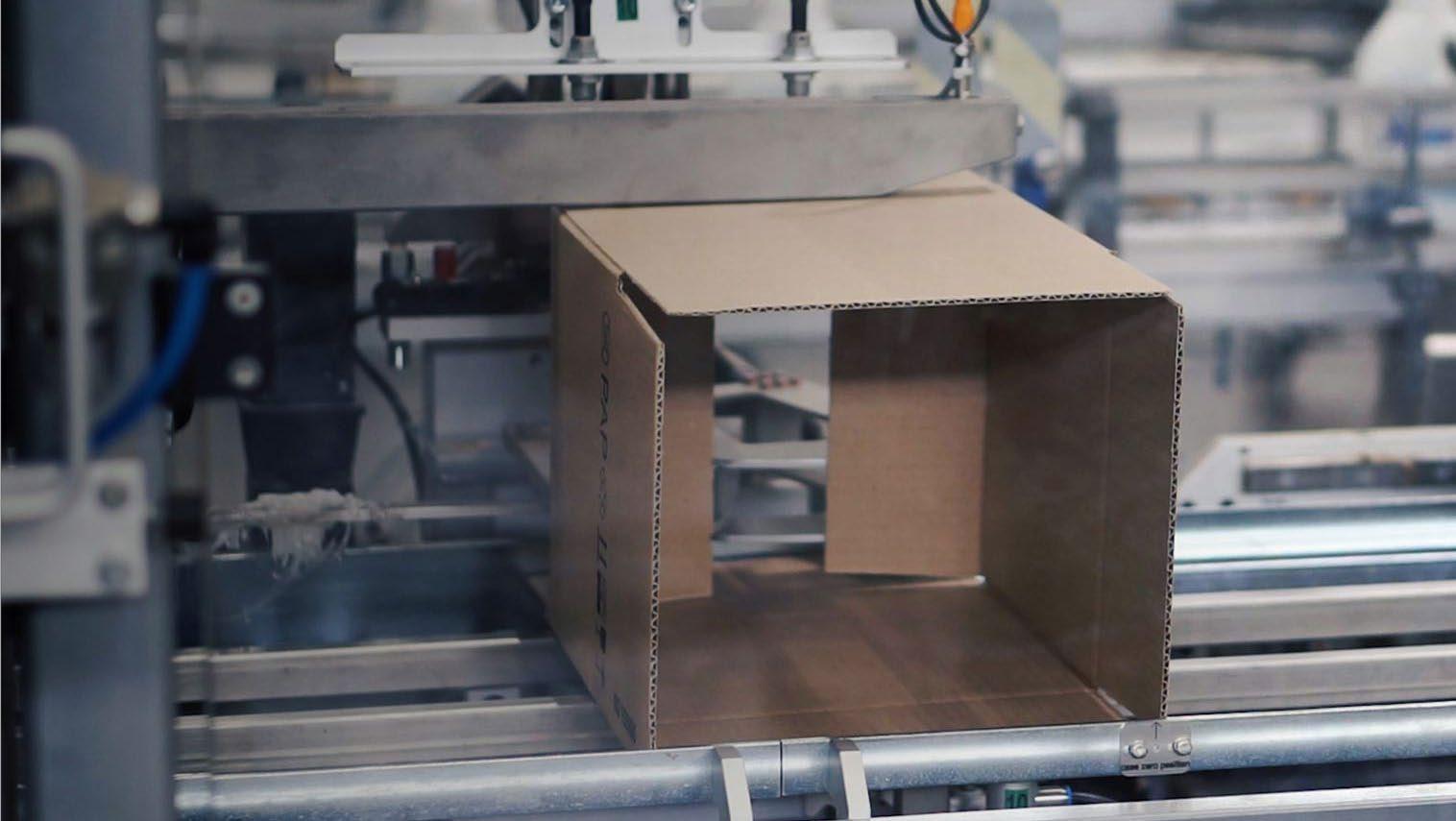
To respond to increasing demand, an automated box erecting machine was also introduced to ensure efficient delivery to homes and shops across Belgium.
Growing sales with circular packaging solutions
There is no need to compromise between:
Protecting your product.
Making your entire supply cycle more efficient.
Boosting your environmental performance.
Delivering a better customer experience.
We can help you achieve all four. By understanding your business and your supply chain, we can design the right packaging solutions for your business.
If you have ambitious packaging and supply chain targets or have not considered your packaging impact yet, our Circular Design Metrics will give unique insight to develop more circular solutions. Contact us at dssmith.com/packaging/contact/contact
2. Sustainable Packaging in a Post COVID World, October 2020 – Research by DS Smith and Ipsos MORI –https://www.dssmith.com/uk/packaging/about/media/news-press-releases/2020/11/sustainable-packaging-covid19
3. EU Commission – https://ec.europa.eu/jrc/en/research-topic/sustainable-product-policy
4. PEW Research Center – https://www.pewresearch.org/fact-tank/2019/04/18/a-look-at-how-people-around-the-world-view-climate-change/