Restylane® Lyft mid-face filler/cheek boost 10% Of when you buy 2 syringes - $1,170 (Save $130)
SkinPen Microneedling 2 treatments of the face
$590 (Save $68)
IPL Face + Neck Photo Rejuvenation 1 treatment for face and neck
$350 (Save $150) or upgrade to a series
VI Peel® + BOTOX® Package 1 VI Peel® and 20 units of BOTOX® *must be completed in same visit. $560 (Save $49)
Also, ask about our Fall
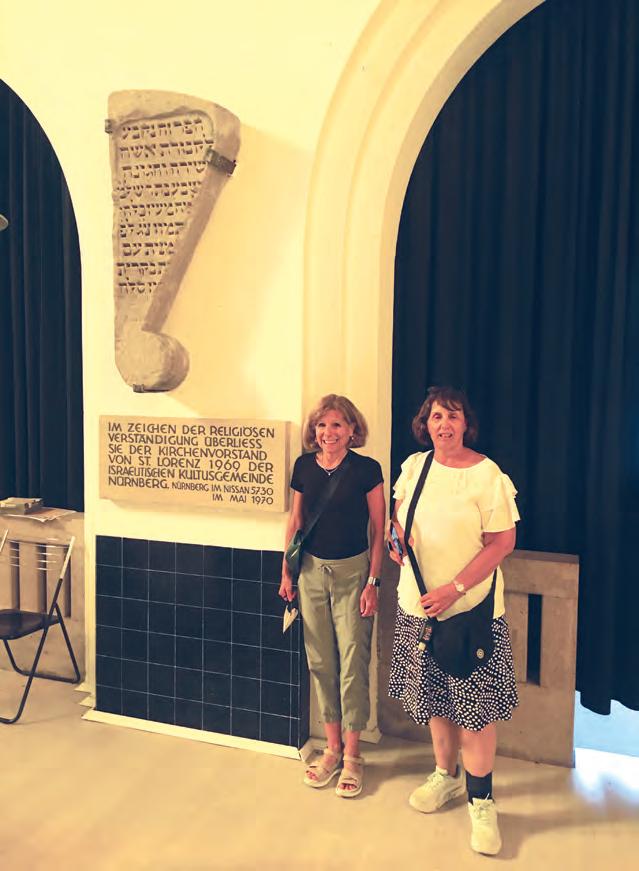
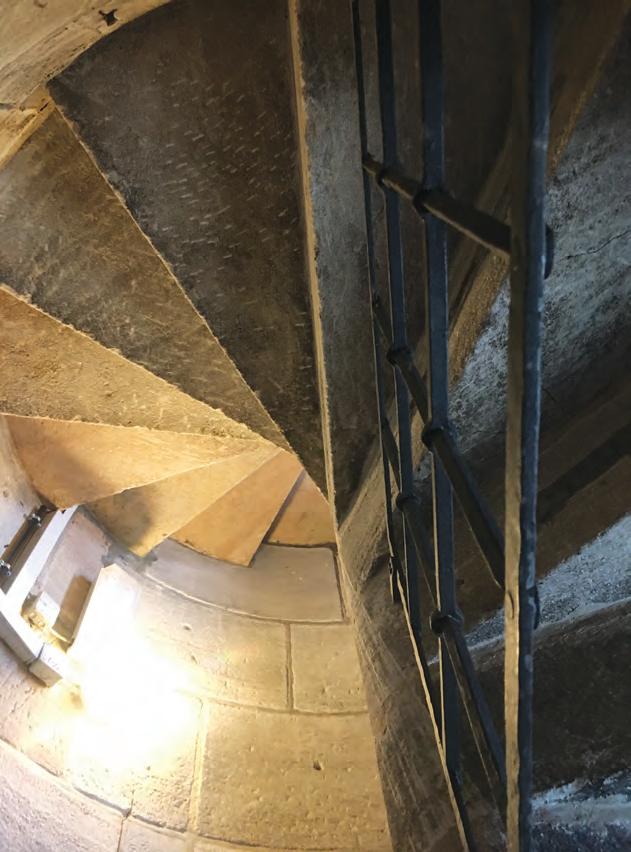
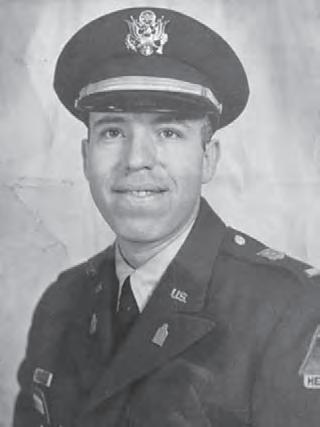
28 Laying Four Medieval Nuremberg Jews to Rest
How a Sinai Hospital rabbi found and helped rededicate Jewish gravestones used to build a Nuremberg church.
Local
The
30 Recent Attacks Leave U-M Jewish Students Wary Jewish Resource Center to offer walking buddies and selfdefense training.
KIPPUR 32 What Is Tzedakah — Justice, Righteousness or Charity?
The answer is all three 33 Yiddish Limerick 34 Forgive and Let Go
It’s what we’re asked to do for Yom Kippur.
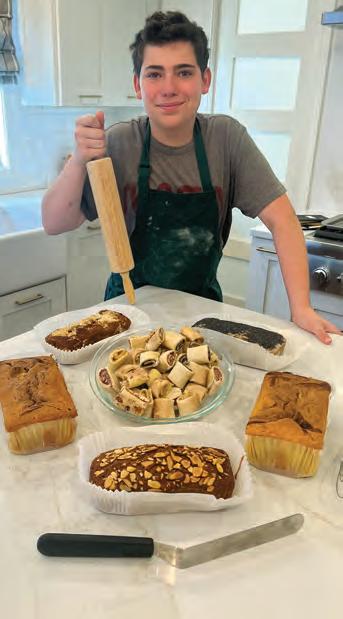
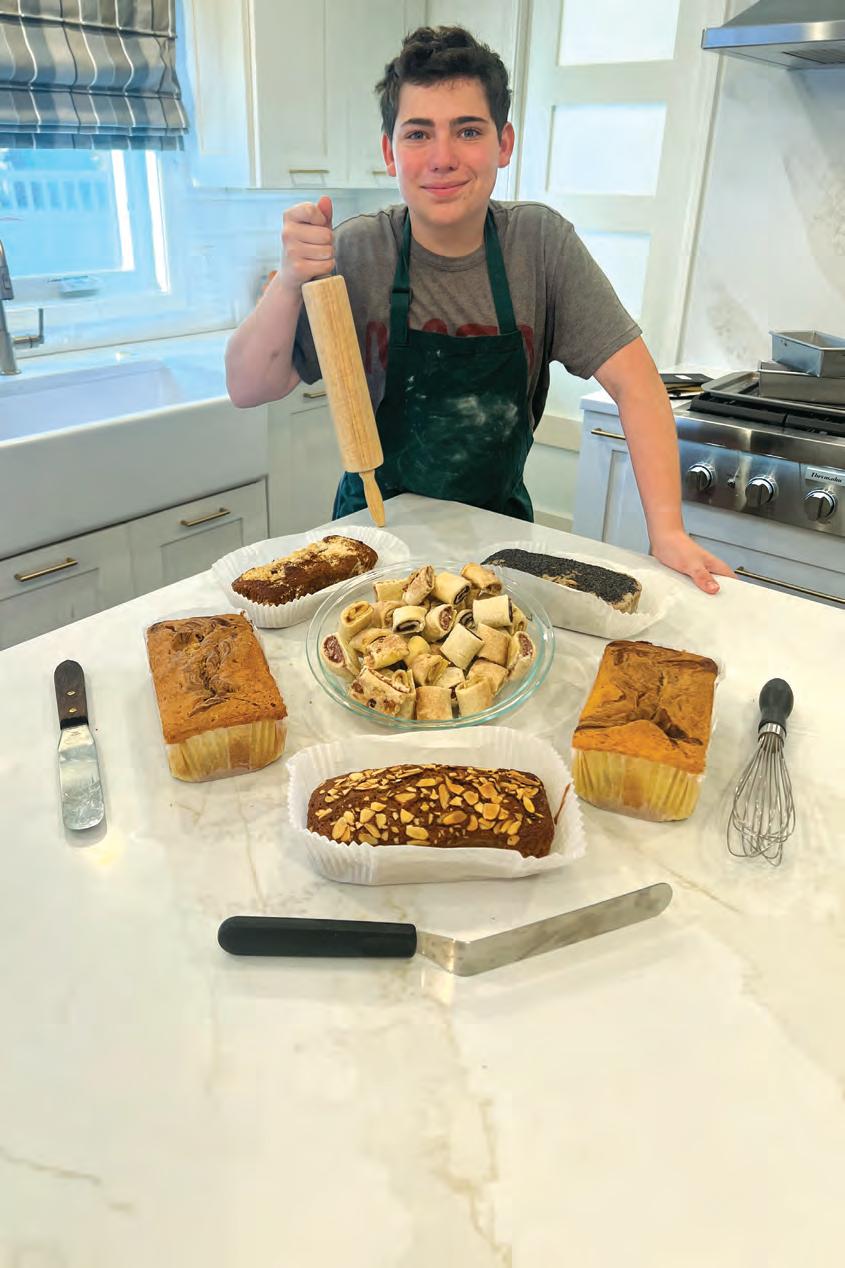
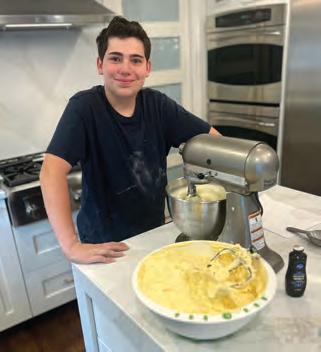
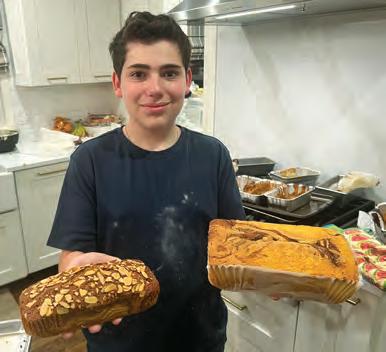
36 Meet Blake the Baker
My 15-year-old neighbor makes a mean seven-layer cake for the holidays.
38 Finding the Perfect Apology
Local author’s new paperback describes a four-step plan.
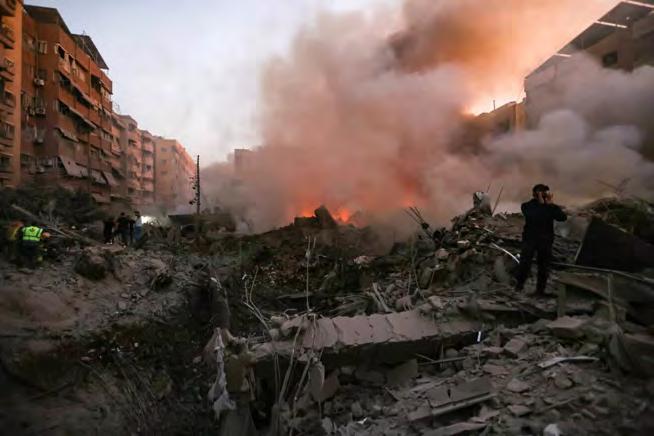
39 Israel Kills Hezbollah Terror Chief Longtime terrorist Hassan Nasrallah assassinated in air attack.
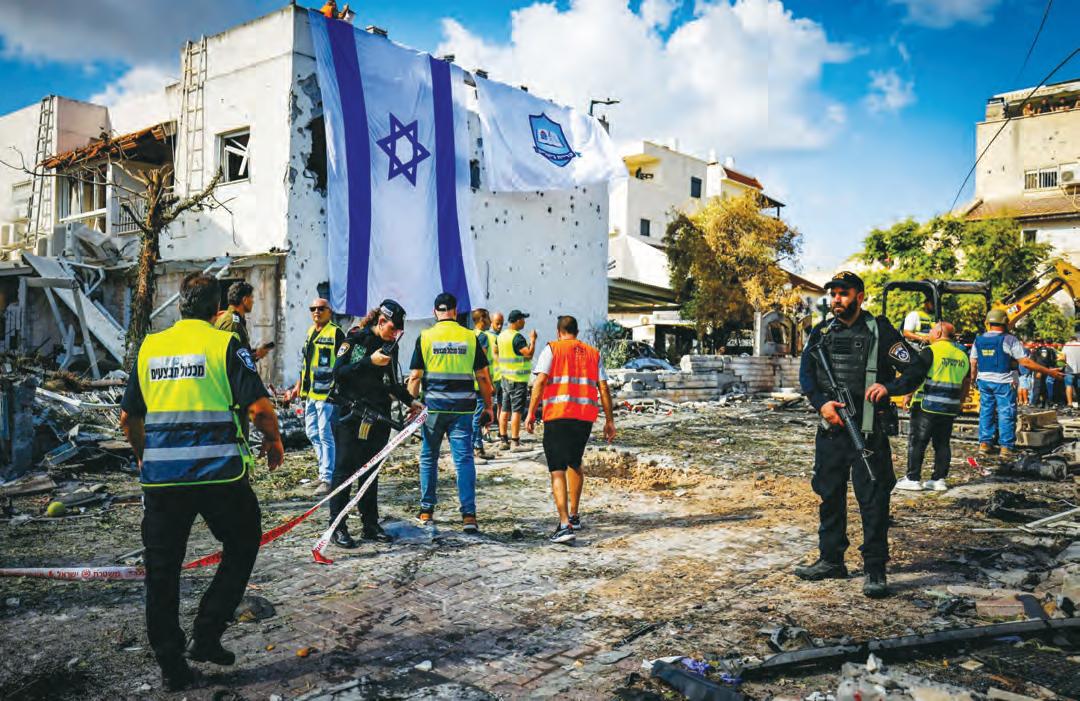
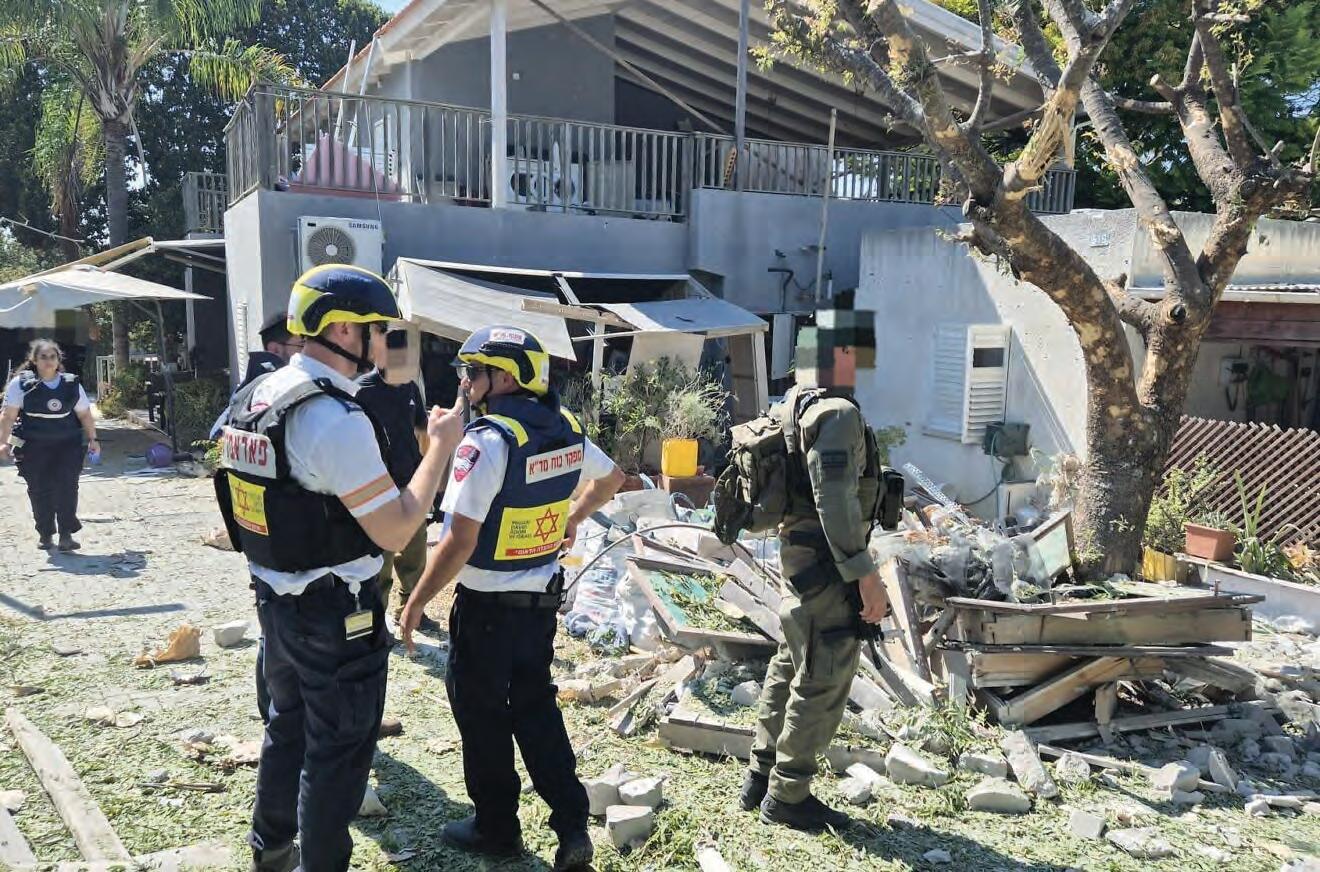
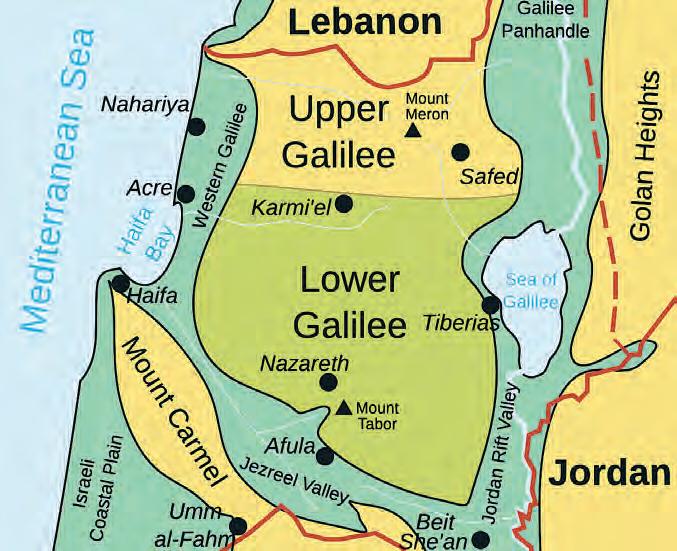
40 Rockets’ Red Glare Israelis still living near the border are diligent about being close to bomb shelters and stocking up on supplies.
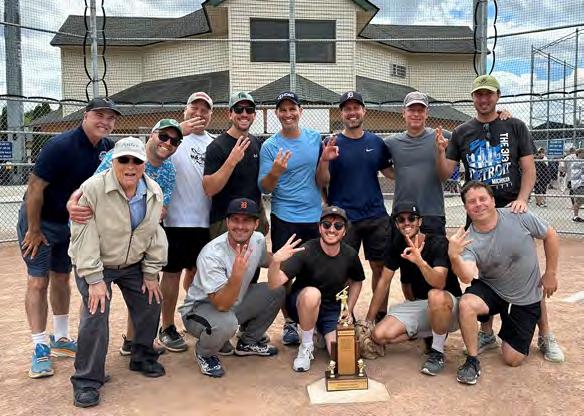
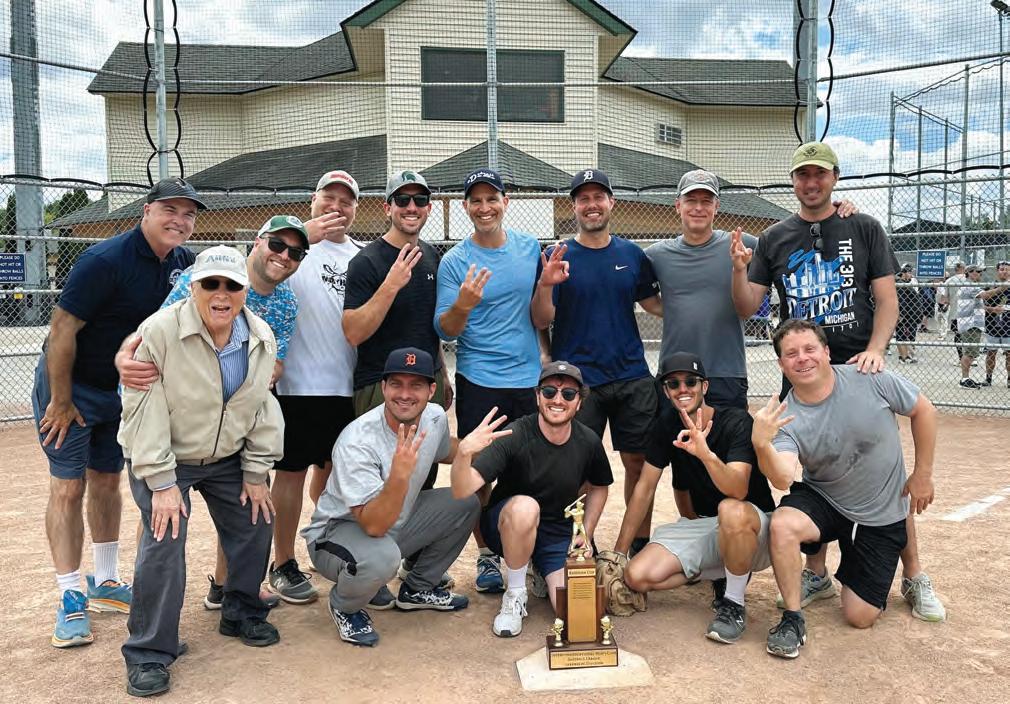
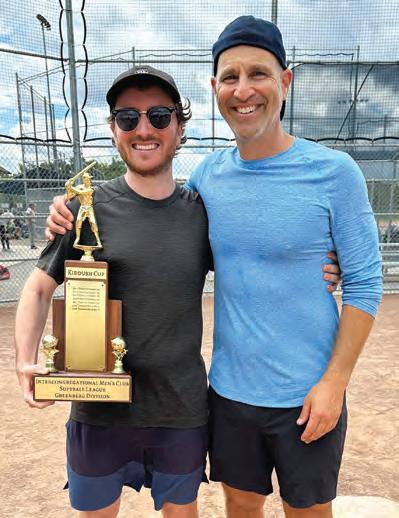
42 Near Perfect Three-Peat Temple Beth El No. 1 wins its third straight Greenberg Division championship in the InterCongregational Men’s Club Summer Softball League.
SPIRIT 44 The Inheritance that Belongs to Everyone
Torah Portion
Synagogue Directory
Being Alive
Mandy Patinkin and Kathryn Grody talk art, family and politics.
Shabbat ends: Saturday, Oct. 5, 7:48 p.m. Fast of Gedaliah Sunday, Oct. 6, 6:24 a.m.-7:47 p.m.
* Times according to Yeshiva Beth Yehudah calendar.
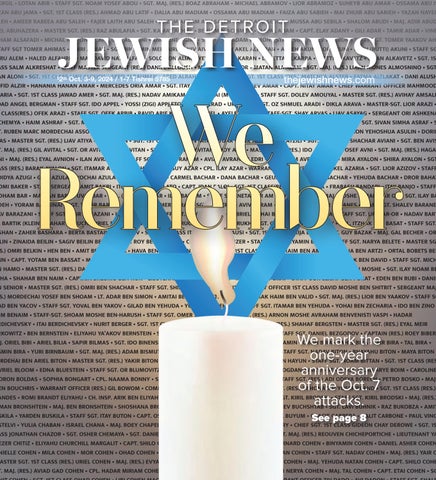
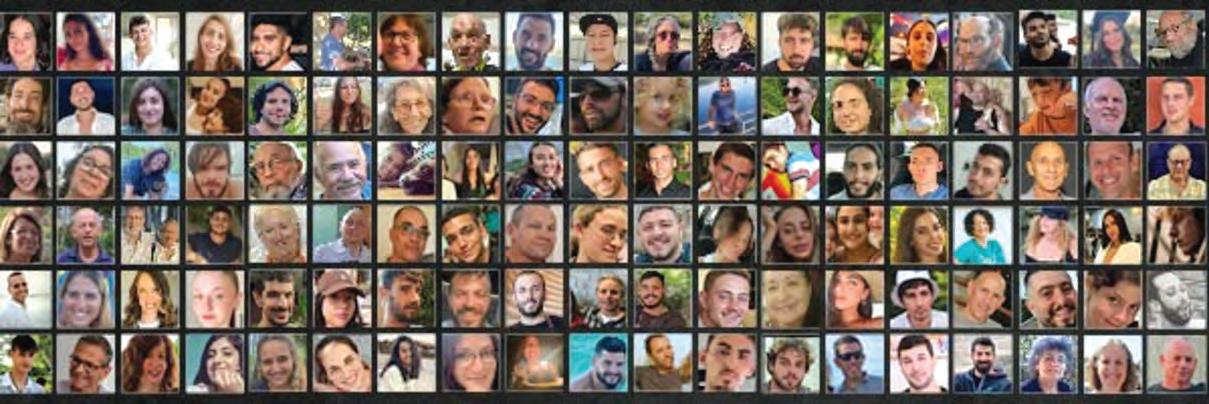
Cover photo: The names of those slain in Israel since Oct. 7, 2023, compiled by Don Cohen.
Cover design: Michelle Sheridan
Follow Us on Social Media:
Finding Our Way from Grief to Light
Jewish tradition has a series of guidelines and steps that helps mourners through the initial, overwhelming and surreal pain of first losing a loved one to the period at the end of a year, when they can once again begin to live meaningfully and joyfully. They still carry the feeling of loss, but hopefully it is a little lighter because the community is carrying it with them.
Each of these stages of mourning come in succession. The period of time between the death of a loved one and the funeral is known as aninut, wherein the only responsibility of the mourners is to plan the funeral and take care of themselves, so they are not completely depleted before the service. There is shivah, where the mourner sits surrounded by loved ones after the funeral and shares the stories that will slowly bring healing. There is shloshim, the 30-day period that represents a re-emergence into the world. There is Yahrzeit and the end of Kaddish, where we reflect on our loved ones and fully re-embrace our lives.
Ever since Oct. 7, we have been locked in an endless cycle of all these stages of grief at the same time, and it is hard to see a way out.
We weep every day for those whose lives were lost and for those who we don’t know whether they are alive. We weep for their families who know their loved ones will never return and for those who are shattered by waiting for any news. We weep for those whose home will never be the same and for those who no longer feel they have a home. We weep for our children in America who are experiencing the hatred we thought had vanished years ago, and we weep for all innocent children. We weep
for those who do not know how to protect their children. We weep because so many that we stood with now stand against us.
I am filled with fear and anger and deep sadness more often now than almost any other time in my life. Rabbi Nachman, one of my core spiritual guides, teaches that all of the world is a narrow bridge, but the essence of life comes from not living by our fears.
We are so angry and hurt. We are filled with rage. We want vengeance and revenge. I feel the same way.
My role is to remind us that though the desire for vengeance is understandable, acting on it destroys societies.
Vengeance is reserved for God alone. People who commit terror must be brought to justice and must pay for what they did. This includes Jews who commit crimes. One law. Mishpat echad
I refuse to live by my anger and fear, though they are real, and instead choose to live by love, understanding, compassion and kindness. It is what gives me strength to get through each day and to help others do so, too.
Leonard Cohen wrote, “There is a
crack, a crack in everything. That’s how the light gets in.”
Our hearts are broken, our assumptions are shattered, but there is light within us waiting to get out, to unite with each other and to create a world where we are safe and free. Our ancestors never gave up. We will never give up. We will never give in to hate. We will never forget who we are. Let us hold each other up.
It is really hard to always try to do the right thing, to show compassion when none is offered us, to give of our gifts when they are not appreciated, to stand with others when they abandon us.
There are things we can do. Support organizations you believe in. Support politicians who reflect your values. Go to Israel if you love it. Go to Israel if you don’t. You might be very surprised. Go to services, even if it is just to be together. We come together so our hearts can beat together. It doesn’t matter whether you understand all or any of the words. As my late beloved teacher Rabbi Kagan said, “The heart understands even when the head does not.”
When the world feels like a dor chorban, a generation of destruction,
we can be a dor binyan, a generation that builds for the future. We may never see the outcomes of our decisions in our lifetimes, but I know they will make the world better for those who come after us.
This is a painful time for us, but we have to remember it is still a beautiful time to be Jewish. We are a community and a people that has gone through so much, yet still prays for peace, that still works every day to make the world better not only for ourselves and our descendants, but for all people. As long as we remember that, our descendants will remember us as a blessing.
In Israel, Shemini Atzeret, the day of Yizkor and mourning, and Simchat Torah, the day of rejoicing in the Torah, are both celebrated on the same day. On Oct. 7, we mourned, but our celebration turned to horror and fear.
We will continue to sit with our pain and sorrow, not knowing when it will end. But it will end, and we will rise up and dance again. Never give up. Am Yisrael Chai.
Rabbi Aaron Bergman is a spiritual leader at Adat Shalom Synagogue in Farmington Hills.
Rabbi Aaron Bergman
Connect with other parents and access expert insights
Join our toddler parenting series and learn strategies to help you navigate the joys and challenges of these formative years with confidence. Childcare provided by Hillel’s Early Childhood Center Staff.
SPONSORED BY:
27 OCTOBER Sleep Training
Sasha Croswell, Over the Moon Sleep Consulting Potty Training
Dr. Kimberly Rubin, Ph. D. Licensed Psychologist
1 DECEMBER Nutrition for Toddlers
Julie Feldman, MPH, RDN, Thrive Nutrition and Wellness Meeting Milestones
Dr. Jon Lauter, M.D. Child Health Associates, P.C.
26 JANUARY Boundaries and Discipline Forest Levy Wolfe, Teaching Circle Introduction of a New Sibling
2
MARCH Keeping Your Marriage Strong Travel Tips Forest Levy Wolfe, Teaching Circle
30 MARCH Developing a Parent/Child Bond
Dr. Linda Seltzer-Sucher, Ph. D. Management of Parental Stress
4 MAY Infant/Toddler Safety Renee Lieberman
Destroy the Jews, Destroy the World
As a 32-year-old American Jew, it didn’t take long after Oct. 7 to realize that my entire life had been predicated on one fantastical belief: Antisemitism was, on the whole, eradicated from Western society.
Like many people, my first personal interaction with wildfire antisemitism was online. As my Instagram timeline became consumed with anti-Zionist rhetoric, my good friend from college reposted a video that shattered me. She shared a feature by a queer Jew expounding on all the reasons we Jews have been lied to by our own community. My friend, who is not Jewish, then wrote, “Jews who believe in Israel should take a hard look at themselves and get on the right side of history.”
Publisher
The Detroit Jewish News Foundation
| Board of Directors:
Chair: Gary Torgow
Vice President: David Kramer
Secretary: Robin Axelrod
Treasurer: Max Berlin
Board members: Mark Davidoff, Michael J. Eizelman, Larry Jackier, Jeffrey Schlussel, Mark Zausmer
Executive Director:
Marni Raitt
Alene and Graham Landau Archivist Chair:
Mike Smith
Founding President & Publisher Emeritus: Arthur Horwitz
Founding Publisher
Philip Slomovitz, of blessed memory
The Detroit Jewish News Foundation Giving Society
The Rebecca and Andrew Hayman Giving Fund
Nancy and James Grosfeld
The Honorable Bernard Friedman
I immediately ached for the days growing up as a Jewish kid during the turn of the 21st century. This was a time when we learned about tikkun olam while trying to emulate Kobe Bryant on the basketball court. Where my non-Jewish classmates in Tampa, Florida, embraced my Judaism with curiosity and love, joining my
Editorial
Director of Editorial: Jackie Headapohl jheadapohl@thejewishnews.com
Contributing Editors: David Sachs, Keri Guten Cohen
Senior Staff Reporter: Danny Schwartz dschwartz@thejewishnews.com
Editorial Assistant: Sy Manello smanello@thejewishnews.com
Digital Manager: Elizabeth King eking@thejewishnews.com
Contributing Writers: Nate Bloom, Rochel Burstyn, Suzanne Chessler, Shari S. Cohen, Louis Finkelman, Samantha Foon, Yevgeniya Gazman, Stacy Gittleman, Gary Graff, Esther Allweiss Ingber, Barbara Lewis, Jennifer Lovy, Rabbi Jason Miller, Alan Muskovitz, Karen Schwartz, Robin Schwartz, Steve Stein, Nathaniel Warshay, Julie Smith Yolles, Ashley Zlatopolsky
family for Chanukah celebrations and becoming proud members of our school’s Jewish Awareness Club. No stranger called me sick for supporting a “genocidal, apartheid state.” No former crush marched down the street chanting threatening slogans manufactured by terrorist organizations. No friend brazenly and self-righteously
Advertising Sales Director of Advertising: Keith Farber kfarber@thejewishnews.com
| Business Office Director of Operations: Amy Gill agill@thejewishnews.com
Operations Manager: Ashlee Watkins Circulation: Danielle Smith
Billing Coordinator: Pamela Turner
| Production By Farago & Associates Manager: Scott Drzewiecki
Designers: Kaitlyn Iezzi, Kelly Kosek, Michelle Sheridan
claimed to understand my own history better than me.
This was also a time when Holocaust survivors shared the hell they somehow managed to survive, and non-Jews remembered that they, too, had fought an existential threat to everything they value. Unfortunately, Jews don’t have the luxury of forgetting. From slavery in Egypt to Oct. 7, millions of our ancestors have been humiliated, chased from their homes, tortured, raped and brutally murdered. And yet, we Jews survive. And not only survive — we thrive. We dream, create, educate ourselves and have a knack for turning coal into the most soughtafter diamonds on Earth. Men like Hungarian-American film-industry executive William Fox and the four Warner brothers built Hollywood. Ruth Bader Ginsberg advanced gender equality as the first female Jewish U.S. Supreme Court Justice.
Northwestern Hwy. Suite 205, Farmington Hills, MI 48334 248-354-6060 thejewishnews.com
Daphna Shull JNS.com
Levi Strauss invented a jean company in 1853 that Beyoncé just wrote a banger about.
So, if Jewish people provide so much good and progress in the world, why are we eternally demonized and persecuted?
In Mark Twain’s 1899 essay “Concerning the Jews,” he deduces that through centuries of economic exclusion “… the one tool which the law was not able to take from him [the Jew]— his brain — have made that tool singularly competent” and others were “unable to compete with the average Jew.”
David Wolpe, emeritus rabbi of Sinai Temple in Los Angeles and a scholar on antisemitism, states that “Jews committed the unforgivable act of introducing conscience to the world … for most of human history up to Sinai, what the gods cared about was how you treated them … The Ten Commandments said God cares about how you treat each other. And that call to conscience means a call to sin and guilt.”
Or maybe the answer is analogous to Lord Voldemort’s contempt of Harry Potter. As Dumbledore explains to Harry, “If there is one thing Voldemort cannot understand, it is love. He didn’t realize that love as powerful as your mother’s for you leaves its own mark … It was agony to touch a person marked by something so good.”
Sometimes, amid the whiplash of antisemitism, we become disoriented to the fact that this hate is not about us. The Jewish people have been, and will always be, a mirror reflecting the jealousy, self-loathing and
bitterness in the souls of man. Oct. 7 was my painful orientation to this Jewish legacy. We are a nation destined to confront the worst of humanity and, in turn, understand the ultimate blessing of peace.
Is this what it means to be God’s “chosen people?” To receive the highest highs and lowest lows? To be the intergenerational model of joy and grief? To, as Wolpe noted, be the eternal conscience of human morality? If there’s any proof of this, one must look to arguably the most evil human being in history: Adolf Hitler. An ounce of Jewish blood was a threat he could not tolerate. He said, “Conscience is a Jewish invention,” and he spent his life trying to destroy it by any means necessary.
So, if consciousness is the liberator of the human mind and murdering the Jews is the annihilation of consciousness, then destroying the Jews is the intentional destruction of selfawareness. If the Jews are gone, the ability to know oneself is compromised. Objective reality would be subject to endless manipulation, and the inversion of truth would be sacrosanct.
Progress and freedom would cease to exist. Kindness and love would lose their meaning. Good would disappear, and the light that guides nations would be extinguished.
If you destroy the Jews, you destroy yourself. If you destroy the Jews, you destroy the world.
Daphna Shull is a writer, visual artist, musician and photographer who works as the creative producer for The Braid.
We mark the one-year anniversary of the Oct. 7 attacks and remember those lost to the violence.
RIVKA BEN HORIN • MICHAEL BEN MOSHE • MAJ. ARIEL BEN MOSHE • SGT. ILAY NOAM BEN MUHA • SHAHAR BEN NAIM • (RES.) OMRI BEN SHACHAR • STAFF SGT. SHIMON ALROY BEN SHITRIT • PETTY OFFICER 1ST CLASS DAVID MOSHE BEN SHITRIT • SERGEANT MAJOR (RES.) MORDECHAI YOSEF SGT. YOVAL BEN YAKOV • GILAD BEN YEHUDA • YUVAL BEN YEHUDA • STAFF SGT. ITAMAR BEN YEHUDA • YOHAI
ZECHARIA • IDO
ZINO • HAIM BENAIM • STAFF-SGT. NURIT BERGER • SGT. 1ST CLASS (RES.) NICHOLAS BERGER • SGT. MAJ. (RES.) SHAHAF BERGSTEN • MASTER SGT. (RES.) EYAL MEIR BERKOWITZ • BEN BERNSTEIN • ELIYAHU • SGT. IDO BINENSHTOCK • RON BINYAMIN • CAPT. (RES.) NIR BINYAMIN • ORON BIRA • TAHEL BIRA • TAIR BIRA • TAL BIRA • YASMIN BIRA • YURI BIRNBAUM • SGT. MAJ. (RES.) YAKIR BITON • SGT. SHIR BITON • SGT. MAJ. (RES.) SHAY BITON HAYUN • STAFF SGT. NOAM BITTAN • SGT. 1ST CLASS (RES.) GAVRIEL BLOOM • EDNA BLUESTEIN • STAFF SGT. OR BONNY • STAFF SGT. AMIT BONZEL • LIAM BOR GALON • STAFF SGT. (RES.) ADI ODEYA BORECH • PETRO BOSKO • MAJ. CHEN BOUCHRIS • WARRANT OFFICER (RES.) GIL BOWOM ELIYAHU • DANIEL BRASLEVSKI • SHIRAZ BRODASH • SGT. KIRIL BRODSKI • STAFF SGT. KIRIL BRODSKI • MAJ. (RES.) ROMAN BRONSHTEIN • MAJ. BEN BRONSHTEIN • SHOSHANA OSHRI MOSHE BUTZHAK • INBAR BUYUM • YUVAL BUYUM • GRACIE CABRERA • GALIT CARBONE • PAUL VINCENT CASTELVI • YULIA CHABAN • ISRAEL CHANA • MAJ. ROEY DANIEL CHEMU • SGT. 1ST CLASS (RES.) ZIV CHEN • SGT. MAJ. (RES.) REOUVEN CHICHEPORTICHE • LIEUTENANT YARON ELIEZER CHITIZ • ELIYAHU CHURCHILL MARGALIT • CAPT. COHEN • PESSIA (PESSI) COHEN • YONA COHEN • SGT. ILAN COHEN • STAFF SGT. NADAV COHEN • MAJ. (RES.) YAIR COHEN • MASTER SGT. 1ST CLASS (RES.) URIEL COHEN • MAJ. MIRIAM COHEN • SGT. ITAMAR COHEN • STAFF SGT. AVRAHAM NERYA COHEN • MAJ. TAL COHEN • CAPT. ETAI COHEN • SGT. DANIT COHEN • SGT. 1ST CLASS OHAD COHEN • LIBI DAHAN • SGT. SHAKED DAHAN • DAN DAMARI • MASTER SGT. (RES.) MATAN DAMARI • KIM DAMTI • CARMELLA DAN • NOYA DAN • ADI DANAN • STAFF-SGT. ADI DANAN • ALEX DAPHNE • AWAD DARAWSHE • DANIEL DARLINGTON • SGT. ACHIA DASKAL • SGT. YOSEF DASSA • AMIT YITZHAK DAVID • HODAYA DAVID • CAPT. OMRI YOSEF DAVID • BARAK DEKEL • NATALIA DEMIDOVA • SGT. 1ST CLASS (RES.) SAADIA YAAKOV DERY • YEHONATAN DEUTSCH • SHON DEUTSHVILI • NAOMI DGANI • LIVIA DICKMAN • MASTER SGT. MASTER SGT. (RES.) JOSEPH AVNER DORAN • YUVAL DORON KASTLEMAN • FIRST SERGEANT NOAM DOUEK • STAFF SGT. HANAN DRORI • LT. YOHAI DUKHAN • STAFF SGT. BORIS • IDAN EDRI • LT. (RES.) IDO EDRI • NOAM LIEL EFRAIM • YARIN MOSHE EFRAIM • HAGAI EFRAT • CAPT. (RES.) RON EFRIMI • CAPT. SHIR EILAT • SGT. MAJ. (RES.) TAL EILON • ELCARIM EL-NASASRA • SGT. 1ST CLASS ADI ELDOR • OREN ELFASI • SHLOMO ELFASI • LIZ ELHARAR HALFON • LT. YAACOV ELIAN • SGT. YEHONATAN ELIAS • STAFF SGT. ROY
continued from page 9
OCTOBER 7, 2023 6:30AM
Oct. 7, 2023 – at 6:30 a.m., the terrorist organization Hamas fired over 5,000 rockets into southern Israel and approximately 6,000 Gazans, both Hamas military units and civilians, breached Israeli border defenses and attacked Israeli citizens and IDF defenders. Over 1,200 Israelis and others died in the attack, and 251 hostages were abducted. It marked the most Jews killed in a single day since the Holocaust and the worst single-day death toll in Israeli history.
Oct. 8 – Israel declares a formal state of war for first time since the 1973 Yom Kippur War.
OCT. 8
Oct. 8 – 300,000 IDF reservists are called up for active duty, the largest in Israeli history. Hezbollah in Lebanon begins rocket attacks on the north of Israel in solidarity with Hamas.
Oct. 9 – A Solidarity with Israel gathering is held at Congregation Shaarey Zedek, organized by the Jewish Federation of Detroit. Over 2,000 attend, including Michigan Gov. Gretchen Whitmer and U.S. Sen. Gary Peters.
OCT. 9
Oct. 9 – A rally to support Israel is held at Orchard Lake and Northwestern Highway; throughout Metro Detroit and Michigan, synagogues and other local communal organizations stage vigils and symbolic displays for hostages held by Hamas and to support Israel at war. From this time until today, many Detroiters participate in solidarity and volunteer missions to Israel.
Oct. 10 – First shipment of advanced weapons from U.S. arrives in Israel.
OCT. 10
OCT. 14
Oct. 14 – Israel states that the war could take months; a record 360,000 reservists reported for duty.
TAMIR BARAK • STAFF SGT. TOMER BARAK • SGT. MAJ. (RES.) AVIV BARAM • NOA BARANES • NIR BARANES • STAFF SGT. SHALEV BARANES • STAV BARAZANI • STAFF SGT. DVIR • URIEL BARUCH • CAPTAIN IDO BARUCH • CPL. EDAN BARUKH • SGT. OSHER SIMHA BARZILAY • COL. ITZHAK BEN BASAT • STAFF SGT. OREL BASHAN • ZAHER BASHARA • BERTA BEILIN BEN ZVI • CPT. ROY BEIT YAAKOV • CORPORAL NIK BEIZER • STAFF SGT. BENYAMIN BELAY • STAFF SGT. NARYA BELETE • MASTER SGT. (RES.) OMRI BELKIN • HEN BEN • • MAYA BEN DAVID • MAJ. (RES.) AMISHAR BEN DAVID • STAFF SGT. NERIA BEN DAVID • STAFF SGT. BARAK BEN DAVID • STAFF SGT. MICHAEL BEN HAMO • MASTER SGT. (RES.) CAPTAIN SHLOMO BEN NUN • LIEUTENANT SHAHAR BEN NUN • MOSHE BEN PORAT • STAFF SGT. ELISAF BEN PORAT • EDEN BEN RUBI • DANIEL BEN SENIOR • MASTER SGT. BEN SHOAM • LT. ADAR BEN SIMON • AMITAI BEN TZVI • SGT. MAJ. (RES.) BARAK HAIM BEN VALID • SGT. MAJ. (RES.) LIOR BEN YAAKOV • STAFF SGT. YAAD BEN YACOV • STAFF SHOAM MOSHE BEN-HARUSH • STAFF SGT. OMER SARAH BENJO • CAPT. (RES.) ARNON MOSHE AVRAHAM BENVENISTI VASPI • HADAR BERDICHEVSKY • ITAI BERDICHEVSKY • YA’AKOV BERNSTEIN • SGT. REEM MEIR BETITO • AMNON BETZALEL • STAFF SGT. DANIEL BEZGODOV • CAPTAIN (RES.) ROEY BIBER • MAJ. ORIEL BIBI • ARIEL BILIA • SAPIR BILMAS ADAM BISMUT • SGT. 1ST CLASS(RES.) OMER NISSIM BITAN • STAFF SGT. NADAV BITON • BNAYAHU BITON • MAYA BITON • MORDEHAI BEN ARIEL BITON • MASTER SGT. (RES.) BLUMOVITZ • NETA BOAZIZ MORELLI • STAFF SGT. DAVID BOGDANOVSKYI • STAFF SGT. GILAD ARYE BOIM • CAROLINE BOL • DORON BOLDAS • SOPHIA BONGART • CPL. NAAMA • COMMAND SGT. MAJ. HADAS BRANCH • MASTER-SGT. (RES.) YEHONATAN YOSEF BRAND • SGT. 1ST CLASS (RES.) OR BRANDES • ROMI BRANDT ELIYAHU • CH. INSP. ARIK BEN BROSH • STAFF SGT. JOSEF ITAMAR BRUCHIM • YAGEV BUCHSHTAB • SGT. LAVI BUHNIK • RAZ BUKOBZA • AMIT BUSKILA • YARDEN BUSKILA • STAFF SGT. ITAY BUTON • CAPT. CHAPELL • JAROON CHATDUMDEE • ASHISH CHAUDHARY • CHIEF SGT. 1ST CLASS GIDEON CHAY DEROWE • SGT. 1ST. CLASS JONATHAN CHAZOR • SGT. OSHER CHEMAYA • SGT. SHILO COHEN • AMIT COHEN • AMIT HAIM COHEN • BERNARD COHEN • BINYAMIN COHEN • DANIEL ASHER COHEN • DANIELLE COHEN • MILA COHEN • MOR COHEN • OHAD (RES.) EVYATAR COHEN • MASTER SGT. (RES.) ILAY ELIYAHU COHEN • MAJ. YEHUDA NATAN COHEN • CAPT. SHILO COHEN • SGT. MAJ. (RES.) AVIAD GAD COHEN • CPL. HADAR
COHEN MAGURI • AMIRAM COOPER • YITZHAK COZIN • WARRANT OFFICER ZIV DADO • AVI DADON • STAFF SGT. SHALEV DAGAN • STAFF SGT. SUFIAN DAGASH • YITZHAK ITZIK DANCYG • GAL DANGURI • SGT. OZ DANIEL • MASTER SGT. (RES.) GIL DANIELS • STAFF SGT. DANIEL MOSHE DANINO • MASTER SERGEANT ORI DANINO • RINA DANIV • LYNN DAVIDI • CPL. OFIR DAVIDIYAN • KARINA DAVIDOV • SHLOMI DAVIDOVITCH • TAIR DAVIS • STAFF-SGT. ROEI DAWI • SGT. MAJ. (RES.) JONATHAN DAVID DEITCH • SGT. NAHMAN DAVID (DUDI) DIGMI • CHERKPAN DIOTAISONG • STAFF SGT. EYTAN DISHON • RONEN DITCHMAN • MOHAMED DIV ALKARAN • MASTER SGT. (RES.) TOMER DOLEV • IDAN DOR • DUNAVETSKI • STAFF SGT. ROTEM DUSHI • GIORA DUVDEVANI • SGT. MAJ. (RES.) KOBI DVASH • MATAN ECKSTEIN • ASSAF MORDECHAI EDBERG • STAFF SGT. HAIM MEIR EDEN SGT. MAOR COHEN EISENKOT • MASTER SGT. (RES.) GAL MEIR EISENKOT • LT. NETHANEL MENACHEM EITAN • SGT. MAJ. MHAMAD EL ATRASH • CPL. YONATAN ELAZARI • ABED ELIAS • TOMER ELIAZ ARAVA • SHAI SHALOM ELIOR MUTZAFI • AVIV ELIYAHU • YEHONATAN ELIYAHU • SGT. 1ST CLASS(RES.) YEDIDYA ELIYAHU • SGT. ARIEL ELIYAHU • EINAV
Oct. 16 — Hezbollah launches rockets at Israel in solidarity with Hamas. Twenty-eight communities are evacuated from northern Israel; 14 additional Israeli communities near the Lebanon Border are evacuated a week later.
OCT. 16
OCT. 17
Oct. 17 – Hamas blames the IDF for a large explosion at Al-Ahli Hospital in Gaza. News media around the world reports the same. The explosion is soon proved to be caused by a failed Palestinian rocket launch.
Oct. 18 – U.S. President Joe Biden makes a surprise visit to Tel Aviv to express support for Israel. A day later, Biden called the war “an inflection point in history,” that there were also “legitimate aspirations of Palestinian people,” but he did not call for a ceasefire.
OCT. 18
OCT. 19
Oct. 19 – Iran-backed Houthi movement in Yemen launches missiles and armed drones at Israel.
OCT. 21
Oct. 21 — Two American Israeli hostages are released by Hamas to the International Red Cross.
NOV. 14
Nov. 14 – The “March for Israel” in Washington, D.C., draws massive crowds; an estimated 300,000 people from around the U.S participate. The Detroit Jewish Federation sponsors more than 900 participants. Some, however, never left their planes at the airport because bus drivers refused to transport them to the March.
Nov. 25 — 105 hostages are freed during a weeklong truce.
NOV. 25
continued on page 12
DEC. 5
Dec. 5 – U.S. Secretary of State Antony Blinken announced visa restrictions would be imposed on Israelis and Palestinians responsible for attacks in the West Bank for contributing to “undermining peace, security or stability in the West Bank.”
SGT. MAJ. (RES.) YAIR KATZ • AVRAHAM (RAMI) KATZIR • DAVID KATZIR • ELAD KATZIR • 1ST SGT. (RES.) REFAEL KAUDERS • SRITHAT KAWAO • ARENTHIT KAYSON • ARNATIT KESLASI • GILAD KFIR • WARRANT OFFICER IBRAHIM KHARUBA • SAKSIT KHOTMEE • PONGSATORN KHUNSREE • PATTI KIATISK • SGT. HABIB KIEAN • OFEK KIMHI • STAV KIMHI • SGT. 1ST CLASS(RES.) ELHANAN ARIEL KLEIN • CAPT. EYAL KLEIN • SGT. 1ST CLASS (RES.) ALON KLEINMAN • MASTER SGT. (RES.) NADAV ELCHANAN KNOLLER • MASTER SGT. KORIN • ZELTA KOSOVSKI • STAFF SGT. STANISLAV KOSTAREV • YLENA KOSTIZIN • STAFF SGT. BETZALEL ZVI KOVACH • SGT. MAJ. (RES.) ARIEL KRAUNIK • SHACHAF KREIF • YONATAN KUTZ • SGT. ROTEM KUTZ • SGT. NATIV KUZARO • AMIT LAHAV • SGT. ALEKSANDR LAKIMINSKYI • YULIA LAMAI • STAFF SGT. ADI LANDMAN • TIFERET LAPIDOT • SGT. TOMER LEIBOVITZ • SGT. YAEL LEIBUSHOR • MAJ. (RES.) MOSHE YEDIDYAH LEITER • STAFF-SGT. ADI LEON • CAPT. YEDIDYA ASHER LEV • STAFF-SGT. YONADAV RAZ ROTEM RAHEL LEVI • SIGAL LEVI • ZION LEVI • SGT. YAKIR YA’AKOV LEVI • MASTER SGT. (RES.) YOAV LEVI • STAFF SGT. NEHORAY LEVI AMITAY • SGT. YAIR LEVIN • ALLYSIA LEVINE • EITAN LEVY • LIDOR LEVY • SGT. DANIEL LEVY • MAJ. ILAY LEVY • STAFF SGT. TAL LEVY • CPL. LIOR LEVY • ELYAKIM LIBMAN • NIZAN LIBSTEIN • OFIR LIBSTEIN • MASTER SGT. • ORIAH LITMAN RICARDO • HAIM LIVNE • SGT. ITAY LIVNY • EDEN LIZ • STAFF SGT. ELISHA YEHONATAN LOBER • SGT. URI LOCKER • STAFF SGT. BENJAMIN LOEB • VITALI FURMAN • CPT. ELAY ELISHA LUGASI • SGT. SHIMON LUGASI • SGT. ASIF LUGER • ALON LULU SHAMRIZ • IGOR LUSOV • MARINA LUSOV • LEONID LUZOVSKI • SGT. NATHANE MASTER SGT. (RES.) ROI AVRAHAM MAIMON • SGT. YEHONATAN MAIMON • CPL. LIDOR MAKAYES • STEVEN MAKRACHENKO • LT. YOAV MALAYEV • SGT. DOLEV MALCA • EDNA MAMAN • SHAHAR MANSOUR • NOREL MANSOURI • REVAYA MANSOURI • CAPT. ITAY MAOR • ADRIAN MARCELO PODZAMCZER • STAFF SGT. ITAY-ELIYAHU MARCHIANO • CPL. • MASTER-SGT. (RES.) URIAH MASH • NETANEL MASKELCHI • REFALE MEIR MASKELCHI • STAFF SGT. ALEXANDER MASLIY • ANTONIO MASSIAS MONTENO • CAPT. ASAF MASTER • MEIDANI • DORON MEIR • MOR MEIR • MASTER SGT. (RES.) MATAN MEIR • MAJ. (RES.) DAVID HAIM MEIR • ZOHAR MEIRI • ADI RIVKA MEISEL • MASTER SGT. (RES.) NITAI MEISELS
continued from page 11
Dec. 29 – South Africa filed a case against Israel at the International Court of Justice, alleging that Israel’s conduct in Gaza amounted to genocide.
DEC. 14
SHULAMIT MERENSTEIN • ADIR MESIKA • SGT. 1ST CLASS (RES.) NITAI METODI • YORAM METZGER • YORAM METZGER • SGT. MAJ. OMRI MICHAELI • CAPTAIN ROY MILLER • EREZ MISHLOVSKY • SGT. DAVID MITTELMAN • STAFF SGT. SHAHAR COHEN MIVTACH • STAFF SGT. OR MIZRACHI • BEN MENASHE MIZRAHI • ELIRAN MIZRAHI • RAZ MIZRAHI • MOR • SGT. SHIREL MOR • LT. COL. ROEE YOHAY YOSEF MORDECHAY • MATAN LIOR MORDEHAI • RAFFI MORDO • STAFF SGT. MAOZ MORELL • MASTER SGT. (RES.) ITAI MORENO • MEIR MOYAL • URI MOYAL • COMMAND SGT. MAJ. URI MOYAL • MICHAEL MOZRAKOV • MILAD MUADAD ALSHA’AR • NAAMA MUALEM • ABRAHAM MUNDER • MASTER SGT. AARON NAGARI • CAPT. ROI NAHARY • DAVID NAHUM • STAFF SERGEANT AGAM NAIM • MAI NAIM • MAJ. (RES.) AMIR NAIM • BAR LIOR NAKMOLI • ISEEL NASHA’AT AYOUB • MAJ. • MAJ. (RES.) EITAN MENACHEM NEEMAN • MAJ. (RES.) RAM NEGBI • MAJ. (RES.) ROEE NEGRI • DEAN NEHORAI BAR • ROTEM NEIMAN • STAFF SGT. SHACHAF NESANI • ADRIENNE SGT. YAIR NIFOUSY • NIR NIKITA POPOV • CAPT. EDEN NIMRI • WARRANT OFFICER (RES.) YUVAL NIR • MICHEL NISENBAUM • JENNY NISENBOIM CARMELLI • LIRAZ NISSAN • • SGT. ARIEL OHANA • ELIAD OHAYON • MOSHE OHAYON • SYLVIA OHAYON • STAFF SGT. EVYATAR OHAYON • DROR OR • YONAH OR • MORIAH OR SWISSA • AVIEL OREN • OVITZ • SGT. 1ST. CLASS (RES.) YAACOV OZERI • SERIYUT PANKITWANITCHIRNM • SOMKHOUN PANSA-ARD • KOBI PARYANTE • DANIELLA (DANA) PATRENKO • YOAD PE’ER • SGT. PENKITWANITCHARON • ZIV PEPE SHAPIRA • ARIK (ARIE) PERETZ • IDO PERETZ • MARK PERETZ • MARK (MORDECHAI) PERETZ • RUTH HODAYA PERETZ • MAJ. RAZ PERETZ • CAPT. • NANTHAWAT PINJAI • SGT. MAJ. (RES.) GIL PISHITZ • SGT. 1ST CLASS (RES.) SHAY URIEL PIZEM • EMMA POLIAKOV • CPL. MAYA VILLALOBO POLO • RONI POLVANOV • PAPONTANEI RAN POSLUSHNI • EVGENI POSTEL • STAFF SGT. SHIREL HAIM POUR • STAFF SGT. NOA PRAIS • THANAKRIT PRAKOTWONG • CAPT. ALINA PRAVOSUDOVA • HADAR PRINCE • RAHEL RACHEL DEB • AVIEL SHALOM RAHAMIM • DVIR RAHAMIM • RABBI BINYAMIN RAHAMIM • CELINE RAHEK BEN DAVIV NAGER • NITZAN RAHUM • DIPASH RAJ BISTA • OMRI STAFF SGT. LIOR RAVIV • STAFF SGT. IDAN RAZ • MASTER SGT. (RES.) MOSHE YEDIDYA RAZIEL • YEHEZKEL (HEZI) RAZILOV • CHAI RECSANUN • DR. HAGIT REFAELI MISHKIN • ELI • STAFF SGT. AVIAD REVLIN • YONATAN RICHTER • DOR RIDER • MOSHE RIDLER • SUDTHISAK RINTHALAK • MEECHAI RITTHIPHON • JANA RODERMAN • MICHAL ROIMI • SGT. RON • NIRA RONEN • MATAN ROSENBURG • CHIEF WARRANT OFFICER IDO ROSENTHAL • STAFF SGT. AFIK ROSENTHAL • STAFF SGT. EITAN DOV ROSENZWEIG • STAFF SGT. AMICHAY SHIMON RUBIN • STAFF SGT. BEN RUBINSHTAIN • YVONNE EDEN PATRICIA RUBIO VARGAS • LIOR RUDAEFF • MAJ. (RES.) URI SHIMON RUSSO • SGT. MICHAEL RUZAL STAFF SGT. NEHORAY SAID • TZUR SAIDI • MOSHE (MOSHIKO) SAIDIAN • MAJ. PELEG SALEM • STAFF SGT. ASCHALWU SAMA • MIKHAIL SAMARA • YONATAN SAMERANO • TAMAR • YANIV SARUDI • ALMOG SARUSI • AVIV SASSI • SGT. 1ST CLASS ELAD MICHAEL SASSON • STAFF SGT. DAVID SASSON • CAPT. SAHAR SAUDIAN • SGT. 1ST CLASS YONNATAN SGT. 1ST CLASS (RES.) DAVID SCHWARTZ • SGT. SEGEV SCHWARTZ • DAVID ALBERTO SCHWARTZMAN • ORLY SCHWARTZMAN PINKO • SGT. 1ST CLASS (RES.) LIAV SEADA • HAVIK • SGT. MAJ. (RES.) NERIYA SHAER • YIRMIYAHU (YIRMI) SHAFIR • ANANDA SHAH • MAJ. IFTAH SHAHAR • MASTER SGT. (RES.) AMIT SHAHAR • MASTER SGT. (RES.) YARON VICTOR ALMOG SHALOM • NOAM SHALON • ELIA SHAMETZ • MAJ. MORDECHAY SHAMIR • ALON SHAMLI • MAJ. SHAY SHAMRIZ • CAPT. (RES.) GAVRIEL SHANI • SGT. MAJ. (RES.) ADI SGT. 1ST CLASS(RES.) SHALEV ZION SHARABI • SIVAN SHARHABANI • DUDI SHARON • CAPT. (RES.) HAREL SHARVIT • STAFF SGT. BETZALEL DAVID SHASHUAH • ROBERT SHAULOV MAJ. BEN SHELLY • INBAR SHEM TOV • STAFF SGT. ITAMAR SHEMEN • RON SHEMER • SGT. RON SHERMAN • STAFF SERGEANT DOTAN SHIMON • BEN SHIMONI • MARK SHINDEL SGT. (RES.) SERGEY SHMERKIN • STAFF SGT. ITAY SHOHAM • CAPT. TOMER SHOHAM • SGT. SHIRA SHOHAT • ZIV SHOPEN • MAJ. NOY SHOSH • SGT. 1ST CLASS (RES.) ELYASSAF MIRA SHTAHL • SGT. 1ST CLASS (RES.) TAL SHUA • MAJ. EYAL SHUMINOV • SEGEV SHUSHAN • SGT. KARIN SHWARCHMAN • LIEUTENANT OMRI SHWARTZ • SGT. EYAL SHYNES VIVIAN SILVER • ARBEL SIMAN TOV • CAROL SIMAN TOV • OMER SIMAN TOV • SHACHAR SIMAN TOV • YEHONATAN (JOHNNY) SIMAN TOV • MAJ. (RES.) NETZER SIMCHI • STAFF CLASS VITALY SKIPAKEVICH • MAJ. AMIR SKOURY • RUDY SKRZEWSKI • MASTER SGT. YISHAY SLOTKI • SGT. MAJ. (RES.) NOAM SLOTKI • SGT. 1ST CLASS (RES.) OMER SMADGA • AVRAHAM SOMECHI • NADEJDA SPRAVCHIKOV • COL. YEHONATAN STEINBERG • KARLA STELZER
Jan. 26 – It is reported that the United Nations Relief and Works Agency (UNRWA) is investigating allegations that 12 of its employees participated in Hamas’ Oct. 7 attack on Israel. Various intelligence findings suggest that as many as 1,200 UNRWA employees have connections to Hamas and Islamic Jihad.
DEC. 29
JAN. 11, 2024
Dec. 14 – The JN publishes “To Be Jewish on Campus” after Jewish students on American university campuses are confronted by ProPalestinian/Pro-Hamas protesters who harass and threaten Jewish students and university administrations. Many protesters are not students, but from outside organizations. Incidents continue throughout the year.
Jan. 11, 2024 — U.S. and British warplanes, ships and submarines launch dozens of airstrikes across Yemen, attacking rocket launchers and other Houthi military facilities, the first of several military operations to come.
JAN. 26
Feb. 29 – The “Flour Massacre” occurs as Gazans go on a rampage trying to get food and other supplies. The IDF opened fire to protect its soldiers from a deadly threat as 188 Gazans die and over 700 are injured. Some died from gunshots; others were crushed by the mob of people.
FEB. 29
APR. 1
Jan. 26 — The International Court of Justice issued a ruling on South Africa’s genocide case against Israel over the Gaza conflict, ordering Israel to do all it can to prevent death, destruction and acts of genocide, but it did not order Israel to stop military operations in Gaza.
April 1 – Israel conducted an airstrike on the Iranian embassy complex in Damascus, Syria.
KAYSON • TAMAR KEDEM SIMAN TOV • OFRA KEIDAR • SAMI KEIDAR • LINOR KEINAN • LILY KEIZMAN • JONATHAN MEIR KEN-DROR • TAL KEREN • MASTER SGT. (RES.) IDO • DANIEL KIMMENFELD • EVIATAR KIPNIS • LILACH KIPNIS • SAVYON CHEN KIPPER • SEGEV ISRAEL KISHNER • PATHAY KIYATISSEK • THEERAPONG KLANGSUWAN • HILA KLEIN (RES.) DOV MOSHE KOGAN • IRIT KONDEROV • SGT. MAJ. (RES.) MARK KONONOVICH • CPT. (RES.) EITAN KOPLOVICH • IGOR KORCHER • SGT. MAJ. (RES.) ABRAHAM GABRIEL CHANA KRITZMAN • SGT. MAJ. ALON KUDRIASHOV • GANESH KUMAR NEPALI • RAJ KUMAR SWARNAKAR • SHANI KUPERVASER • AVIV KUTZ • LIVNAT KUTZ • YIFTAH KUTZ • MASTER SGT. MAOR LAVI • OMRI LAVI • MASTER SGT. (RES.) TZVIKA LAVI • SGT. AMIR LAVI • LT. NAVE ELAZAR LAX • SGT. MAJ. (RES.) MATAN LAZAR • STAFF SGT. DOR LAZIMI • LEVENSTEIN • STAFF SGT. YAKIR LEVI • AMIT LEVI • DR. DANIEL LEVI • GUY GABRIEL LEVI • ITZHAK LEVI • LIDOR LEVI • LIVNAT LEVI • NAOR LEVI • NISSIM LEVI • RONNIE LEVI • • MASTER SGT. ELISHA LEVINSHTERN • SGT. SHAY LEVINSON • BRAHA LEVINSON • CAPT. (RES.) ROTEM YOSEFF LEVY • COL. ROY JOSEPH LEVY • STAFF SGT. EDEN ALON LEVY (RES.) OFIR LIBSTEIN • ILAN LIPOVSKY • OLEG LIPSCHITZ • STAFF-SGT. LAVI LIPSHITZ • DAVID LISCHOV • SGT. DVIR LISHA • ANITA LISMAN • SVETLANA LISUBOY • YURI LISUBOY LOGVINCHENKO • JOSHUA LOITU MOLLEL • ALEXANDRE LOOK • SGT. 1ST CLASS (RES.) YOVAL LOPEZ • SHANI LOUK • SHANI NICOL LOUK • ALEX LUBNOV • LAURA LUDMILLA HAI LYARD • LT. COL. SAHAR ZION MACHLOF • SHAHAK YOSSEF MADAR • NIR MADMON • SHALEV MADMONI • AMIT MAGNAZI • CPT. WASSEM MAHMOUD • LIOR MAIMON • MALEKMO • AMITAI MALIHI • DOR MALKA • MEIR MALKA • SGT. 1ST CLASS (RES.) YEHONATAN MALKA • SGT. MATAN MALKA • STAFF SGT. OR MALKA • SGT. MAJ. (RES.) TAL NOA MARCIANO • SGT. MAJ. SALMAN EBEN MAREI • ADI MARGALIT • SGT. MAJ. (RES.) SAAR MARGOLIS • LT. PDAYA MENACHEM MARK • JAKE MARLO • STAFF SGT. ROEI MAROM SHAHR MATTIAS • SHLOMI MATTIAS • NOY MAUDI • PATNIBIN MAXWELL • SGT. MAJ. ZEED MAZARI • AVI MEGUIRA • MASTER SGT. (RES.) KALKIDAN MEHAR • STAFF SGT. SAHAR • SGT. ERMIYAS MEKURIYAW • MAJ. ROEI MELDAS • SGT. 1ST CLASS AVIEL MELKAMU • STAFF SGT. OFIR MELMAN • SGT. SHALOM MENACHEM • SHULAMIT MERENSTEIN • ABLUM (ALBERT) MILLS • CAPTAIN DANIEL MIMON TOAFF • STAFF SGT. EYAL MIMRAN • SYLVIA MIRENSKI • STAFF SGT. GAL MISHAELOF • ANNA ELLA MISHEYEV • STAFF-SGT. STAFF SGT. OR MIZRAHI • STAFF SGT. TOMER YAAKOV MIZRAHI • MASTER SGT. (RES.) GILAD MOLCHO • AYELET MOLKO • SHLOMI MOLKO • ROIE MONDER • AVI MOR • MAAYAN • YA’AKOV MORTOV • CAPT. OR MOSES • EDEN MOSHE • SAID (DAVID) MOSHE • STAFF SGT. OREL MOSHE • SGT. MAJ. (RES.) RAFAEL ELIAS MOSHEYOFF • STAFF SGT. AMIT MOST (RES.) TOMER SHLOMO MYARA • STAFF SGT. DANIEL NACHMANI • STAFF SGT. ITAY NACHMIAS • MASTER SGT. ETAN NAEH • EDEN NAFTALI • SGT. TOMER NAGAR • CPL. NERIA ISACHAR NATAN • SERGEANT ELKANA NAVON • NETIV NAVE MAAYAN • GAL NAVON • ILKIN NAZAROV • CAPTAIN (RES.) YAKOV NEDLIN • SGT. BINYAMIN YEHOSHUA NEEDHAM NETA • NARAYAN PRASAD NEUPANE • MORDEHAI NEVE • SGT. 1ST CLASS (RES.) ELKANA NEWLANDER • SGT. SHUHAM SHLOME NIDAM • HANANI NIDGALSKI GLAZER • STAFFSUJITH NISSANKA • STAFF-SGT. GILAD NEHEMYA NITZAN • SHIFRA NOY • SONTHAYA OAKKHARASRI • ADI OHANA • DANIEL OHANA • MASTER SGT. (RES.) ELIYAHU MEIR OHANA SERGEANT MAJOR (RES.) YANIV ITZHAK OREN • ELIYAHU ORGAD • SGT. 1ST CLASS (RES.) AMICHAI YISRAEL YEHOSHUA OSTER • MICHAEL OSTROVSKY • SGT. IDO OVADIA • ZIVA 1ST CLASS (RES.) DANIL PECHENYUK • SGT.1ST CLASS AMIT PELED • DANIEL PELED • GILA PELED • IZHAR PELED • STAFF SGT. YARIN MARI PELED • TAMMY PELEG ZIV • SARYUT
April 13 – In retaliation for the airstrike on its embassy in Damascus, Iran launched an attack of approximately 300 drones and missiles aimed at Israel. Almost all of them are destroyed by the IDF with help from the U.S., the UK, France and Jordan.
APR. 13
JULY 19
July 19 - One person was killed, and 10 others were injured in a drone attack in Tel Aviv. The Houthis claimed responsibility.
July 24 — Israeli Prime Minister Benjamin Netanyahu pledged to achieve “total victory” against Hamas in a scathing speech to the U.S. Congress.
JULY 24
AUG. 5
Aug. 5 — The United Nations completed its investigation into UNRWA employees participating in the Oct. 7 attack on Israel. Of the 19 staffers investigated, one was exonerated, nine were found guilty and terminated; no action was taken against the remainder.
Aug. 9 — Hamas highranking official Samer al-Hajj and another Hamas member were killed in an Israeli drone strike near Sidon, Lebanon.
AUG. 5
AUG. 15
Aug. 15 — The IDF claimed that 17,000 of the Palestinians killed since the start of the IsraelHamas War were militants or members of Palestinian militant groups.
Aug. 19 – Hamas leadership announced a return to the strategy of suicide attacks in Israeli cities.
AUG. 19
AUG. 28
Aug. 28 — Israel launched a largescale military operation in the occupied West Bank.
continued on page 14
DANIEL PEREZ • STAFF SGT. OMRI PEREZ • CHAIM PERI • SGT. ROEI PERI • HAIM PERRY • SGT. MAJ. (RES.) ETAY PERRY • OREL PESSO • RONI PETROVSKI • ARNAN PHETRKAEO PONGKRUEH • NIR POPKO • SOFIA POPOV • VLADIMIR POPOV • NADAV POPPLEWELL • ROI POPPLEWELL • NADAV POPPLEWELL • LT. (RES.) ADIR PORTUGAL • SGT. MAJ. (RES.) KARINA PRITIKA • CAPTAIN EDEN PROVISOR • ABU QRENAT • NOAM RABIA • OFEK RABIA • YUVAL RABIA • STAFF SGT. MAX RABINOV • CAPT. (RES.) ADI BAHARAV RABINOVITZ • RAM • MAJ. OR YOSSEF RAN • YONATAN RAPAPORT • STAFF SGT. DANIEL RASHED • STAFF SGT. DAVID RATNER • CAPT. SHILO RAUCHBERGER • MORIAH RAVIV • NIV RAVIV • REFAI • SHARON REFAI • SHAI REGEV • CAPT. ARIEL REICH • ELIYAHU (ELIKO) REICHENSTEIN • MAJ. (RES.) ARYEH REIN • CHAYA REKSANON • STAFF SGT. SHLOMO RESHETNIKO YAIR ROITMAN • STAFF SGT. NOAM ELIMELECH ROJTENBARG • YEHONATAN ROM • OLGA NOAMI ROMASHKIN • OFER RON • TZVI SHLOMO RON • STAFF SGT. ITAY AVRAHAM DVIR HAIM ROSSLER • SGT. 1ST CLASS (RES.) OMRI ROT • SGT. 1ST CLASS OFEK ROUSSO • STAFF SGT. GILAD ROZENBLIT • STAFF SGT. BAR ROZENSHTEIN • YAEL ROZMAN • SGT. • STAFF-SGT. ITAY SAADON • STAFF SGT. HALLEL SHMUEL SAADON • STAFF SGT. HAIM SABACH • CPT. ALON SACGIU • CAPT. DOR SADE • STAFF SGT. ROTEM SAHAR-HADAR • SAMET • STAFF SGT. YEHONATAN YITZCHAK SAMO • ALEXANDER SAMOILOV • SGT. EMIL SAMOYLOV • ELAZAR SAMUELOV • CHAIRAT SANUSAN • STAFF-SGT. ROEI SARGOSTI SAVITSKY • DUEH SAYAN • SUMCHAI SAYANG • TAWACHI SAYTU • SGT. YAKIR YEDIDYA SCHENKOLEWSKI • SGT. 1ST CLASS (RES.) NITZAN SCHESSLER • TATIANA SCHNITMAN • SEGAL • SGT. URIEL SEGAL • TOMER SEGEV • CAPT. ITAI SEIF • RAM SELA • ORIT SELA SVIRSKY • STAFF SGT. ILYA SENKIN • MASTER SGT. ANWAR SERHAN • MAJ. GAL SHABBAT SHAHAR • NOAM SHAI • STAFF SGT. GALI ROY SHAKOTAI • 1ST SGT. RONI SHAKURI • MAJ. DAVID SHAKURI • DAVID SHALEV • SHAI SHALEV • TAL SHALEV • RAM SHALOM • SGT. SHANI • CAPT. ORI MORDECHAY SHANI • MAJ. IDO ISRAEL SHANI • STAFF SGT. ANER ELYAKIM SHAPIRO • LIAN SHARABI • NOYA SHARABI • YAHEL SHARABI • YOSSI SHARABI • • MAJ. TAL PSHEBILSKI SHAULOV • STAFF SGT. TAL SHAVIT • STAFF SGT. YARON OREE SHAY • YOHANAN SHCHORI • BAR SHECHTER • RAN SHEFER • DANIEL SHEINKERMAN • • RONI SHITRIT • NAOMI SHITRIT AZULAY • ASSAF SHLESINGER • CAPT. ROM SHLOMI • SGT. SHIR SHLOMO • STAFF SGT. SIMON SHLOMOV • YAAKOV (KOBI) SHMAIYA • MASTER SHOSHAN • STAFF SGT. OFIR SHOSHANI • MOSHE SHOVA • STAFF SGT. DANIEL SHPERBER • TOMER SHPIRER • WARRANT OFFICER (RES.) ALEXANDER SHPITS • LIAM SHREM • • STAFF SGT. NAOR SIBONI • TAWATCHAI SIETO • CAPT. (RES.) NETANEL SILBERG • MARGIT SILBERMAN • YOSSI SILBERMAN • SGT. 1ST CLASS (RES.) URIEL AVIAD SILBERMAN • SGT. GUY SIMHI
ARIEH UZAN • ELIYAHU UZAN • EYAL UZAN • DANIEL VADAI • SGT. LIEL VAINSHTEIN • MICHAEL VAKNIN • OREN AHARON VAKNIN • STAFF SGT. NACHMAN MEIR HAIM VAKNIN • LIMOR VAKNIN PERMUTTER • BRONA VALENO • STAFF SGT. AMICHAY YAACOV VANINO • LORI VARDI • IGAL VAX • WARRANT OFFICER (RES.) AMIT VAX • CAPT. (RES.) DENIS KROKHMALOV VEKSLER • ALON VERBER • KARIN VERNIKOV • AVIV VERTHEIM • DORIT VERTHEIM • SIMON VIGDORGAZ • YAHAV VINER • STAFF SGT. MATAN VINOGRADOV • ADI VITEL KAPLON • MASTER SGT. (RES.) ISRAEL AMICHAY VITZEN • MASTER SGT. ELKANA VIZEL • JOHNNY WADEEA IBRAHIM • YOSSEF WAHAB • MOSHE WAHADI • SGT. 1ST CLASS SIVAN WAIL • CAPT. BENI WAIS • MASTER SGT. (RES.) DAN WAJDENBAUM • DANIEL WALDMAN • RABBI ELIMELECH WASSERMAN • RON WEINBERG • JUDY WEINSTEIN-HAGGAI • SENIOR STAFF SGT. MAJ. (RES.) ELON WEIS • STAFF SGT. ROEY WEISER • REUVEN WEISMAN • AMIR WEISS • ILAN WEISS • MATTI WEISS • SHMUEL SHMULIK WEISS • YEHUDIT WEISS • ALINA WEISSBERG • LIOR WEIZMANN • DANI WOBAK • ZISHOM WOHN • CAPT. OMER WOLF • STAFF-SGT. ROEI WOLF • CAPT. (RES.) ARIEL MORDECHAY WOLLFSTAL • ZISHON WON • STAFF SGT. AVRAHAM WOVAGEN • SHUVAL YA’AKOV • ILAN MOSHE YAAKOV • YAIR YAAKOV • STAFF SGT. ORIYA YAAKOV • HANAN YABLONKA • STAFF SGT. EFRAIM YACHMAN • MAJOR (RES.) CHEN YAHALOM • MARIA YAHENGILOV • YIFTAH YAHENGILOV • DAVID YAIR • ORI YAISH • SGT. 1ST CLASS (RES.) ORI YAISH • SAN AMNON YAKOBOV • CPL. SHIRAT YAM AMAR • SGT. BAR YANKILOV • CAPT. (RES.) ELIYA YANOVSKY • STAFF SGT. DOR YARHI YARHI • SHIR YARON • SGT. MAJ. (RES.) OFIR MORDECHAI YARON • SHIRAZ-SHIRAN YASHMIRENI(TAMAM) • SGT. MAJ. (RES.) AKIVA YASINSKIY • SGT. MAJ. RAN YAVETZ • CAPT. YIFTAH YAVETZ • ROSA YEDGAROV • YURI YEDGAROV • SGT. MAJ. (RES.) ELIRAN YEGER • MASTER SGT. (RES.) ITAY YEHOSHUA • MAJ. IDO
Sept. 1 – Hundreds of thousands of Israelis protest in the streets of Tel Aviv and other Israeli cities, calling for a ceasefire and return of remaining hostages.
SEPT. 1
SEPT. 6
Sept. 6 — TurkishAmerican activist Aysenur Ezgi Eygi was killed while participating in a protest against Israeli settlement expansion. The IDF later says that errant fire from its troops was the likely cause of her death.
Sept. 9 — The IDF revealed after months of investigation that three Israeli hostages, Nik Beizer, Ron Sherman and Elia Toledano, were “mistakenly” killed in an IDF operation.
SEPT. 9
Sept. 10 — Hamas executed six hostages the night before the IDF reached the tunnel where they were being held.
SEPT. 10
Sept. 10 — Defense Minister Yoav Gallant declared that “Hamas as a military formation no longer exists.” However, Hamas and other Palestinian guerillas remain active.
SEPT. 11
Sept. 11 – The UNWRA reported that more than half a million children in Gaza had been vaccinated against polio during Israeli military pause.
They are so loved. They are so missed. May their memory be a blessing.
Sept. 17 – Pagers used by Hezbollah militants across Lebanon simultaneously exploded; a day later, walkie-talkies used by Hezbollah also explode. Overall, Lebanese authorities report that 42 are killed and over 3,500 are injured. Although Israel does not comment, it is widely assumed that the Mossad was responsible for the action.
SEPT. 17
SEPT. 19
Sept. 19 — It is believed that 97 of the 251 hostages abducted by Hamas on Oct. 7 remain in Gaza, including the bodies of at least 33 confirmed dead by the IDF. Along with the 105 civilians freed during a weeklong truce in late November, Hamas released four hostages before that. Eight hostages have been rescued by troops alive, and the bodies of 37 hostages have also been recovered, including three mistakenly killed by the military as they tried to escape their captors.
Hamas is also holding two Israeli civilians who entered the Strip in 2014 and 2015, as well as the bodies of two IDF soldiers who were killed in 2014.
Sept. 22 — Several people were hurt when Hezbollah launched more than 100 rockets and drones at northern Israel in waves of attacks.
SEPT. 22
SEPT. 23
Sept. 23 – After sending text messages and phone calls to Lebanese citizens who were housing Hezbollah rockets in their homes, giving them two hours’ notice that strikes were coming. The IAF made over 300 strikes into southern Lebanon as Hezbollah fired rockets on northern Israel.
At the time this timeline was written, over 23,000 rockets have been fired at Israel since Oct. 7. There have been 1,620 Israel deaths and 15,000 injured, including those serving in the IDF; 86,000 Israelis have been displaced from their homes; at least 97 people of the 251 taken hostage on Oct. 7 are believed to still be in Gaza, with around a third of them, or at least 33 people, believed to be dead. Victims’ names on these pages are current as of Sunday, Sept. 22.
B’NAI B’RITH INTERNATIONAL GREAT LAKES REGION COMMEMORATES OCTOBER 7, 2023
THE DEADLIEST ATTACK ON THE JEWISH PEOPLE SINCE THE HOLOCAUST
We remember those murdered. We support the people of Israel. We stand strong with our community until every hostage is home.
The Aftermath of Oct. 7
Local Jews share how the world has changed for them since that fateful day.
The world turned upside down for all of us on Oct. 7, 2023. You will always remember where you were when the first details of an attack on a music nature festival somewhere in the Negev came trickling in — accounts of 20-something party revelers hiding in trees from hundreds of Hamas attackers, of women being raped and the terrified young people recording goodbye messages to their families on their phones.
There was that initial paralyzing shock when you learned the unimaginable, that Hamas terrorists and many of their Palestinian enablers tore through security fences in the early morning hours of Simchat Torah and mercilessly attacked dozens of kibbutzim in southern Israel.
The term terror attack seemed too mild. Only one word from Jewish history could describe what had
happened: This was a pogrom
For Jews in Israel and in the diaspora, the covenant of “Never Again,” those black-and-white grainy images of the Holocaust atrocities we thought we had put in our past, came roaring back in realtime, full-color Instagram posts. Then came a renewed 21st-centurystyled hatred for Jews that flooded cities and college campuses.
We have been denied breathing room to process this grief over the last year as we see Jewish hatred intensify around the globe. Yet, Oct. 7 also strengthened and mobilized us. At a time when alliances and friendships from the wider community seemed to melt away, we leaned on each other harder. We embraced our Judaism, learned more about Israel, supported it with record-breaking fundraisers, and booked trips to visit and volunteer. Leading up to this grim first
like ‘Jewish Lives Matter.’” —
Laurie Golden,
West Bloomfield
“My Jewish life has not changed since Oct 7. I still sit on the Hadassah Greater Detroit executive board, deliver food for Kosher Meals on Wheels weekly, visit elderly people through Jewish Family Service and regularly attend Shabbat services. What has changed is that I wake up every morning and think about Israel, its people and our hostages.”
— Rhonda Rich, West Bloomfield
“I was quite upset upon hearing the news of the Oct. 7 attack. I attended many events in the community and took to heart the message: ‘Choose life, choose courage over fear and choose faith over despair.’ I have contacted relatives and friends in Israel and flew to Washington, D.C., in November to attend the rally for Israel with the Jewish Federation.
anniversary, The Detroit Jewish News asked its readers: How has Oct. 7 changed you? Here are some of your answers:
“I live in a bubble with mostly Jewish friends and never felt the antisemitism until Oct. 7, 2023. Now, the more I am aware of the growing antisemitism, I am an even prouder Jew and Zionist. I was always a Zionist, but supporting the right for the Jewish people to live free and stay in our ancestral homeland is even more important to me now.
“Since Oct. 7, I have begun to read more about Israeli history. I am sure I learned about this in Hebrew school but have long forgotten and need to relearn it. I proudly wear my yellow ribbon and blue square. I began wearing my Jewish star, which I have not worn in years. We need to get out there and create a movement
“Although I retired from the Jewish Community Relations Council six years ago, since Oct. 7, I have encouraged Israeli advocacy by communicating with several lay and professional leaders of our major Jewish organizations, including the Jewish Federation, the JCRC, Hadassah and the National Council of Jewish Women.
“I posted important articles and other information on Facebook to further educate individuals and Facebook groups about the war. I contacted our local media in both praise and criticism of their coverage, pitched story ideas and submitted letters to the editor.” —
Allan Gale, West Bloomfield
“Everything changed on Oct. 7. The minute I took to my Instagram account and shared how I was feeling, my life changed forever. I describe myself as an ‘accidental
STACY GITTLEMAN CONTRIBUTING WRITER
Rhonda Rich
Allan Gale
Rebecca Starr volunteering with her good friend Hila Schwartz in Detroit’s Partnership2Gether region.
activist.’
“I have spent much of the last 11 months standing up and speaking out for the Jewish community. In addition to my fulltime business as a marketing consultant, I am now traveling the country and giving talks to groups about the importance of doing what’s right.
“This has also changed the makeup of my client base, as now, many Jewish-owned businesses and causes have come to me for projects. Additionally, as the owner of a small business mentorship for women, many Jewish women have joined my group mentorship because they feel connected to me. My community has expanded greatly.
“What the last 11 months have shown me is that the Jewish community is stronger than ever. We must commit to continuing to make it even stronger. I grew up in the Detroit area and have lived in Chicago for the past 23 years. My Jewish advocacy has kept me tied and connected with the Detroit Jewish community in a way that I am forever grateful for.” — Lindsay Pinchuk, marketing consultant and Instagram social media influencer
“It is difficult to put into words how my life has changed since Oct. 7. I’ve become more careful with being outwardly Jewish and, at the same time, more public with my Judaism. I want to express my support for Israel and be my whole Jewish self, and I know that sometimes it is best to show up halfway.
“I have felt more attached to Israel, and my emotions toward the country have turned into a mixture of sadness, confusion and shock. The situation there has made me question my opinions about Israel, which go back and forth between
harshness and compassion and understanding.
“As a rabbi, I feel I must speak up more about the challenges in Israel and that I have to have an answer. But I do not always have an answer. If I did, I don’t think it would necessarily be the right one.
“I know it is important to protest the treatment of the hostages, and I also appreciate the importance of visiting Israel during this difficult time. However, I do not feel compelled to visit or protest as I have many safety concerns.
“Unfortunately, I don’t see any changes coming as a result of those protests. Sadly, it feels like where we are now has become homeostasis for Israel and for me. I don’t want to feel this way and yet, I have no control over it.”
— Rabbi Natalie Shribman, Temple Kol Ami
“Our everlasting loyalty and commitment to Israel has become that much stronger since Oct. 7. We now recite Avinu Shebashamayim [the prayer for the state of Israel] each morning; we routinely incorporate additional prayers for the IDF and our Israeli brothers and sisters during tefillah.
“When it comes to security, we have become extra vigilant, even on top of our top-notch security before Oct. 7. We are committed to sending our eighth graders to Israel this spring for their culminating Hillel Day School experience.” — Darin Katz, head of school, Hillel Day School
“AISH is a vibrant organization whose programs reach 6,000 unique participants. Still, since Oct. 7, we have been compelled to significantly up our game even more.
“Our mission of connecting Jews to Judaism has become more urgent. People want
to know, ‘Why do the Jewish people matter so much to the world? How can we tell our children the value of being Jewish when the world says we are not valuable?’
“We have tripled our programming and run constant Israel events and campaigns to address these questions. There has never been a better or prouder time to be Jewish. If we cannot communicate that to our communities and our children, and in our schools, we are failing at an incredible opportunity.” — Rabbi Simcha Tolwin, Director, AISH Detroit
“I don’t have much respect for Jews who hide in the corners, don’t speak up or believe that nothing we do can change anything. We must
try. If we don’t try, then there is a 100% chance that nothing will change. But if we speak up, fight and educate, then there’s a chance that this hypocritical world will come to its senses.
“Life after Oct. 7 showed me who the friends and supporters of the Jews are. I started donating more generously but was selective on where I gave my money. I have become more religious and began reciting more prayers, mostly for our soldiers and hostages. I do see miracles happen, and I continue to hope for even more miracles to come our way.” — Tamara Poberesky, West Bloomfield
continued on page 18
Darin Katz
Lindsay Pinchuk
Tamara Poberesky
Rabbi Simcha Tolwin
Rabbi Natalie Shribman
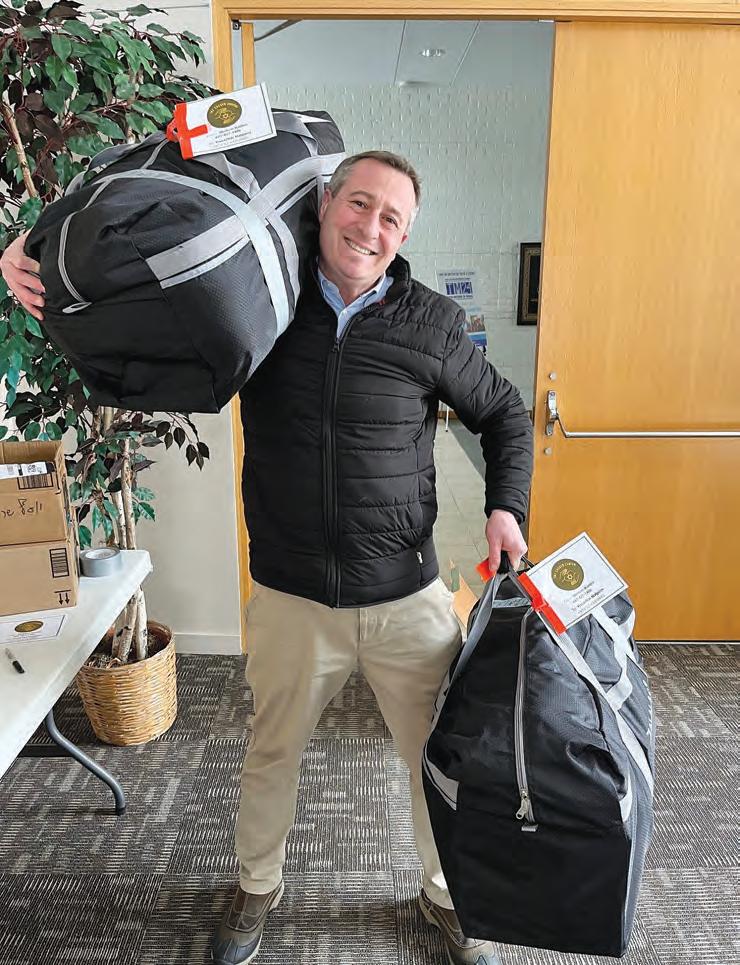
Rabbi Shalom Kantor took bags of supplies to Israel after Oct. 7 on a rabbis’ mission.
OUR COMMUNITY
continued from page 17
“There is no going back to my previous life. Oct. 7 has cemented in my mind that nothing is more important to me than speaking out loud to educate my American friends. If there is any silver lining, it is that American Jews are finally aware of the dangers we face.
“Many here live in a bubble where they have never heard the words intifada or caliphate. While some have woken up, others still choose to hide their heads in the sand.
“I no longer leave my window blinds open at home when I light Shabbat candles. I am afraid that there is a mezuzah on my door. My Israeli children have lost dozens of friends in the last year. But still, they think it is more dangerous to be Jewish in America than Israel.
“Overall, I have been depressed. I have lost all will to pursue the dreams I set for myself when I moved back to Michigan from Israel. I long for the days of not living in fear. When I was growing up, and even as recently as Oct. 1, 2023, there were times when Jews could go to Dearborn, go into an Arab restaurant and they w ould put on Israeli music for us and we could all eat, drink and enjoy life together. I fear those days are gone.” — Erit Gill, Farmington Hills
“My life has changed both personally and professionally since Oct. 7. My family in Israel is hurting and I feel their pain. When your family is in mourning, or in a dark place, their sadness transfers to you. I’ve felt like I’ve been carrying around their sorrow, frustration and anger all year.
“I decided to go to Israel in December to hug them and to volunteer. Honestly, it did more for me than it probably did for them. I needed to see them and check on them and, in some cases, to pay a
shivah visit.
“Professionally, my work at the Shalom Hartman Institute has been a place to channel my energy to make me feel like I’m doing something to help the community locally and beyond. As Jewish educators and professionals, many things we thought we knew before Oct. 7 became no longer true. Israel was safe. Liberal institutions were safe spaces for identity expression. We perceived that Jews are integrated into American society, and our allies would always be there for us. All of these assumptions were incorrect.
“It is now incumbent on all Jewish professionals and lay leaders to help the community absorb and process what we thought we knew and to build a path forward. My time in Israel this summer at the Hartman Institute allowed for some of that work to begin, but the task is a longterm project. Mostly, I’m sad that my children will now carry the tragedies of Oct. 7 with them as they grow. Their obligations as Jewish leaders are heavy and their responsibilities great. I hope we have prepared them.” — Rebecca Starr, vice president of Educational Operations and Regional Strategy for the Shalom Hartman Institute of North America
“We have been so slammed busy and thank G-d for that. There have been so many students who have come to us at the center or wanted to meet with us out on campus ever since Oct. 7. It keeps us busy 24/7. We see the growth and the soulsearching of even the most secular Jewish students. They want to be more involved with Jewish life, with doing mitzvot, with being more Shabbat observant. For years, we had tefillin at the Jewish Resource Center that were hardly used.
After Oct. 7, we had students come begging for them, and we gave them out and needed more. The students are shaken up, but they want to get more involved.” — Rabbi Fully Eisenberger, the Jewish Resource Center at the University of Michigan
“I feel even more connected to the land and people of Israel. I now read Israeli news every day. I check in with my Israeli friends more often. And I offer sermons about Israel much more than I used to. I have been to Israel on one solidarity mission with a group of rabbis and hope to return again.” —
Rabbi Shalom Kantor, Congregation B’nai Moshe
“Oct. 7 and the ensuing conflict have deeply affected me, both as a Jewish communal professional and as a proud Jewish Detroiter. It’s not the first time I’ve witnessed the strength and solidarity that emerge in times of crisis, but I am profoundly inspired by the incredible unity and generosity our community has shown over the past year.
“Having spent time in Israel over the past year on two Solidarity Missions, bearing witness to the atrocities and meeting with many of the victims’ families, this experience has brought forth a wave of emotions — grief for the tragic losses, concern for the future, but, above all, a tremendous desire to do everything I can to support the people of Israel. Despite the challenges, I know that we are a resilient people, and together we will navigate these very difficult times and emerge stronger.” — Steven Ingber, CEO of Jewish Federation of Detroit
Rabbi Fully Eisenberger
Rabbi Shalom Kantor
Rebecca Starr
Steven Ingber
Oct. 7 One-Year Commemoration Event
The event will be at a central location to be shared prior to the event. Pre-registration is mandatory.
DANNY SCHWARTZ SENIOR STAFF REPORTER
Oct. 7, 2023, was a day of tragedy for the Jewish people around the world. On Oct. 7, 2024, the Jewish people will be doing everything they can to make it a day of hope and unity — including right here in Detroit.
The Michigan Board of Rabbis, Michigan Board of Cantors and the Jewish Federation of Detroit are teaming up for a one-year commemoration event of the deadliest day in Israel’s history. The event, which takes place on
Monday, Oct. 7, from 7-8 p.m., invites the entire community to join together and honor the resilience, hope and unity of the Jewish people, while remembering the spirit and vitality of the bright lights lost.
“The community will gather to mark the terrible tragedies of Oct. 7 and to share in solidarity, prayer and hope as we reflect on this last year,” says Rabbi Aaron Starr of Congregation Shaarey Zedek. “We will hear testimonials, offer memorial prayers, listen to the stories of
survivors, mourn the victims, raise our voices in song and reflect on the impact of the last 12 months.”
The event will be at a central location, to be shared prior to the event. Pre-registration is mandatory. Seating is limited, and there will be no walk-ins allowed. Register now at http://jewishdetroitcalendar.org/ Oct7.
The event is suitable for children and adults ages 13+.
Organizers are committed to the
safety of the community and will be providing comprehensive security measures for this event.
“As one Jewish family, we will mourn together and memorialize together,” Rabbi Starr says. “We will bear witness, and we will offer comfort to those in need. We will show our solidarity with Israel and with each other. In coming together as one community, we remember that we are stronger and safer together.”
At least 97 people taken hostage by Hamas are still in Gaza.
COMPILED BY JACKIE HEADAPOHL EDITORIAL DIRECTOR
n. Oct. 7, the terrorist group Hamas abducted at least 251 people from Israel. According to Israel Defense Forces, 154 have been released by Hamas, rescued by the IDF, recovered dead or killed in encounters.
The majority of the released hostages — 105 — were freed during a brief temporary cease-fire in November, in exchange for hundreds of Palestinian prisoners held by Israel; eight were rescued alive in IDF operations.
As of last week, at least 97 people taken hostage on Oct. 7 are believed to still be in Gaza, with around a third of them, or at least 33 people, believed to be dead, according to the Hostages and Missing Families Forum, a volunteer-based organization focused on the safe return of the hostages.
See above for the names of the missing as of Sept. 26. The staff of the Jewish News joins the Metro Detroit Jewish community in praying for their safe return.
At least seven people with American citizenship remain in Hamas captivity, and at least three of them are believed to be dead, according to Israeli officials. Among those believed to still be alive are Keith Siegel, 65; Sagui Dekel-Chen, 36; Edan Alexander, 20; and Omer Neutra, 22. American hostages believed to be dead, whose bodies are being held in Gaza, are Itay Chen, 19; and married couple Judith Weinstein, 70, and Gadi Haggai, 73.
AlZayadni• Yosel AlZayadni• Liri Albag• Edan Alexander• Baruch• Ohad Ben Ami• Agam Berger• Gali Berman• Ziv
Elkana Bohbot• Rom Braslavski• Itay Chen• Sagui Dekel Chen•
David Cunio• Evyatar David• Itzhak Elgarat• Ronen Engel• Goldin• Romi Gonen• Ran Gvili• Gad Haggai• Judi Weinstein
Iair Horn• Tsachi Idan• Guy Illouz• Bipin Joshi• Ofer Kalderon•
Levi• Shay Levinson• Naama Levy• Or Levy• Oded Lifshitz• Miran• Joshua Loitu Mollel• Eitan Abraham Mor• Gadi Moshe
Alon Ohel• Avinatan Or• Dror Or• Daniel Oz• Daniel Peretz•
Oron Shaul• Omer Shem Tov• Tal Shoham• Idan Shtivi• Keith
Sasha Troufanov• Ilan Weiss• Omer Wenkert• Yair Yaakov• Zangauker
God have mercy on them, and bring them from distress to comfort, from darkness to light, from slavery to redemption, now, swiftly, and soon.
THURSDAY, OCTOBER 24
12:00-2:00PM
A Survivor ’s Story
One woman’s experience at the Nova Music Festival.
RONELLE GRIER CONTRIBUTING WRITER
After a joyous night of dancing and partying with friends at the Nova Music Festival in southern Israel, Amit Ganish decided to take a brief rest before the long drive back to her home in the north. She had barely dozed off when she was jolted awake by the sounds of gunshots, anguished screams and shouts of “Terrorists … run, run!”
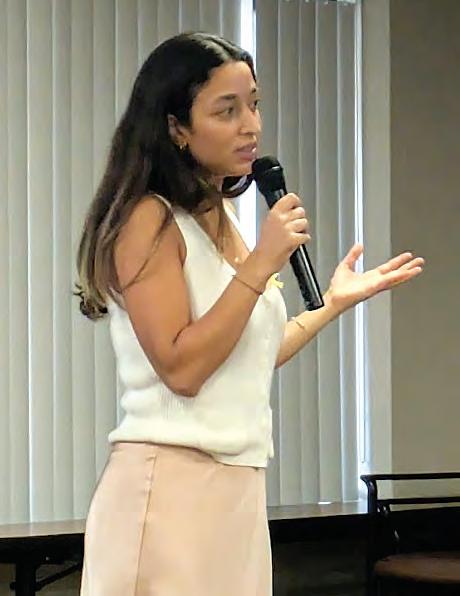
Ganish, 24, told her story to a group of local elected officials at the Jewish Federation of Detroit on behalf of “Faces of October Seventh,” an international organization that connects survivors with communities around the world.
As a survivor of one of the worst massacres carried out by the Hamas terrorist organization on Oct. 7, she wants to provide a firsthand perspective of the horrors she and hundreds of others endured that day.
“Whatever you have heard, the reality is much worse,” she told the audience.
Ganish, a law student at Bar-Ilan University, had a “bad feeling” the night before the festival, but she shrugged it off when her mother urged her to go and have fun before the new semester began.
Once she arrived, her misgivings dissipated as she and her best friend, Zohar, joined in the dancing and revelry that continued throughout the night. They met up with Zohar’s boyfriend, Mataan, who was running the sound and electrical equipment for the festival.
“My bad feelings disappeared; there was so much energy and excitement,” she said.
Around 6:30 a.m., the music stopped as the revelers looked toward the sky and saw multiple rockets coming from the direction of Gaza. Frightened by the continuing explosions, many of the attendees hurried to grab their belongings and pile into cars.
Ganish and Zohar stayed to help Mataan dissemble his equipment.
“I felt OK,” Ganish said. “We are used to rockets where I live, and I assumed they would stop.”
As the rockets continued, Ganish and Zohar decided to take a short rest before driving home. Finding chairs near the main stage, their eyes had just closed when they heard gunshots and terrified screams. They awoke to a nightmarish scene of armed terrorists shooting at people as they ran toward the woods or scrambled under the stage for
cover.
Joining hands, the two friends literally ran for their lives, following a group that was heading toward the forest. They had not gone far when a car carrying other survivors pulled up and motioned them to get in.
Mataan, who was unable to fit in the small vehicle, told Zohar he loved her, assured her he would be fine and waved good-bye.
heard people being murdered and kidnapped. The terrorists were happy; they were excited to be killing.”
After nine grueling hours, they heard a man with an Arabic accent say, “Is anyone alive in there?”
Unable to remain in the bush a moment longer, Zohar ventured out. Ganish followed, knowing they could be walking into a terrorist trap, followed. To their immense relief, the man was Rami Davidian, an Israeli father of four who became an international hero after rescuing more than 700 people who were hiding out after fleeing the site of the music festival.
After all the survivors were taken to safety, Davidian returned to the site of the party where more than 360 people had been brutally killed. There he tended to the dead, covering the naked corpses of young women and praying over the bodies.
At a passenger’s direction, the driver made a right turn and Ganish felt bullets flying past her neck and under her legs. As terrorists surrounded the car, the women jumped out and began running zigzag to avoid being shot. The first semblance of shelter they found was a bush, so they jumped in and hid themselves as best they could beneath the foliage.
Ganish, thinking “this is it,” sent texts to her mother and boyfriend.
She and Zohar remained crouched in the bush for nine hours without access to food, water or bathroom facilities while the mayhem continued around them.
“We had to be very tiny and silent,” said Ganish, who prayed continuously throughout the ordeal. “We
Davidian ushered Zohar and Ganish to a waiting car that drove them to a safe place where other survivors were sheltering. Ganish’s family, fearing the worst after so many hours had passed without a word, learned she was alive when they saw her brought to safety on the local
After spending the night at Zohar’s, Ganish went home the next day to reunite with her family. It took days to learn the full extent of the damage perpetrated by the terrorist attacks, which killed more than 1,000 Israelis, including Mataan and several friends. Many of the 250 hostages taken that day have since been murdered; others are still missing.
“I feel I had a lot of luck … the terrorists just didn’t see me,” she said, adding that the experience has changed her profoundly. “I’m different; I’m 1,000 miles away from the girl I was.”
Despite her ordeal, Ganish is optimistic about the future, including her career as a lawyer.
“In that bush, I promised God a lot of things,” she said. “I promised to do something that will help children. They did not kill me then, and they will not kill me now.”
When asked her opinion on a cease-fire in Israel, she declined to talk about politics or military strategy.
“I’m here as the voice of those who cannot speak, the hundreds of people who were murdered, raped and kidnapped,” she replied.
Amit Ganish
OUR COMMUNITY
GKolot ‘Restart’ Members Visit Detroit
artist Elyasaf Miara is painting roadside bomb shelters, turning them into calming oases. Vered Glass is helping families coping with crisis to create networks of communal support. Adi Rozen is putting together pampering gift packages with offerings of Israeli products from communities bordering the Gaza strip. Yarin Sultan has created a forum to help Israelis influence policy makers and implement strategic policy changes.
They are among the 15 Israelis from cities and villages near the Gaza border whose projects are being funded by Kolot, an Israel-based nonprofit dedicated to helping the State of Israel realize core Jewish ethical principles and spiritual ideals. The Restart program aims to help revitalize Israeli communities on the border with Gaza.
In mid-September, a delegation of Restart participants spent a week visiting Chicago, Ann Arbor and Detroit, where they shared information about their projects and learned how American Jewish communities have responded to the Hamas attacks of October 7, 2023.
Kolot (“voices” in Hebrew) was started in 1997 after the assassination of the late Prime Minister Yitzchak Rabin. The organization invites leaders into its beit midrash (house of study) to learn from Jewish sources, to engage in constructive disagreement and to share with one another responsibility for Israeli society. Participants represent both religious and secular Jewish, Bedouin, Druze and Muslim Israelis, who work together to ensure that Israel maintains its identity as both a Jewish and a democratic state.
Kolot CEO Shlomo Weinish said that after Oct. 7, the group’s leaders decided to focus on projects in the Otef, sometimes called the “Gaza Envelope.” They put together the Restart group to help promote healing. Launched in mid-May, Restart honors the memory
and a graduate of Kolot’s local government leadership program who lost his life on Oct. 7.
The Restart members are civic leaders and entrepreneurs from different backgrounds committed to rebuilding the region through innovative social initiatives empowered by Jewish values. Their projects include business development, educational outreach, tourism, welfare, community building and the arts.
AN IMPROMPTU MURAL
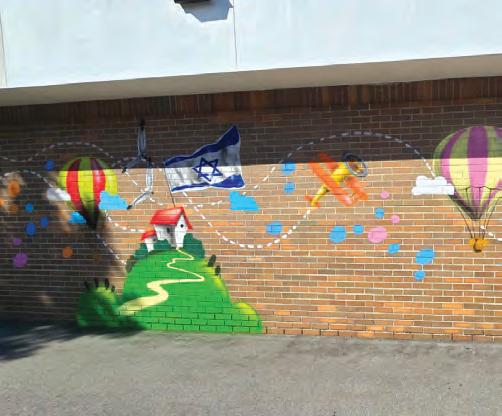
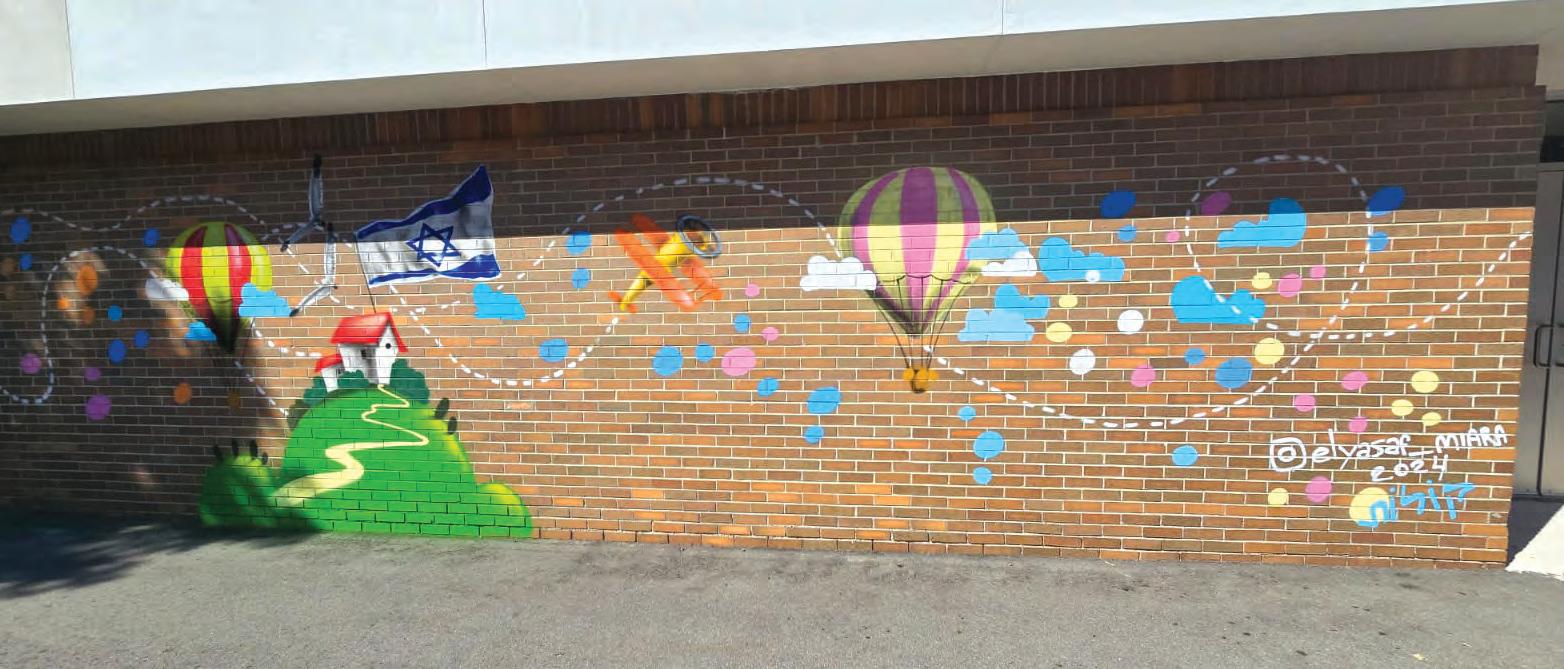
Fourteen Restart members (the 15th was unable to travel at the time), along with Weinish and Kolot Beit Midrash Director Leon Wiener Dow, arrived in Chicago on Sept. 9 and traveled to Detroit on Sept. 12. They spent the following day in Ann Arbor. On Sept. 14, they met with leaders of the Jewish Federation of Detroit. Adat Shalom Synagogue, Chabad of West Bloomfield and Temple Beth El hosted the group for Shabbat, and they spent Saturday evening with The Well (see story on page 26.). On Sunday, they toured Jewish sites in the city of Detroit, and on Monday they visited Hillel Day School, where, in an impromptu move, Elyasaf Miara painted a mural on a wall. They also met with a team from the Michigan Israel Business Accelerator before flying back to Israel.
Weinish said the trip was intended to help Israelis learn about American Jewish life, to enable American Jews to hear stories about life in the Otef and to create partnerships.
Federation CEO Steve Ingber told the group that Detroit’s emergency fundraising campaign in the wake of Oct. 7 brought in $28 million from 3,800 donors; nearly 40% of the donations came from what he described as “non-traditional donors,” including many non-Jews.
Elyasaf Miara painted a mural on a wall at Hillel Day School. In Israel, she paints roadside bomb shelters, turning them into calming oases. She was here with a cohort from Kolot, an Israel-based nonprofit dedicated to helping the State of Israel realize core Jewish ethical principles and spiritual ideals.
of
David Kurzmann, Federation’s senior director of community affairs and Federation’s liaison to Jewish Community Security Inc., noted that there has been a big uptick in antisemitic incidents in the United States since October, making Federation’s community relations efforts more important than ever.
He lamented the fact that Jewish-Muslim interfaith work, traditionally strong in Southeastern Michigan, has pretty much frozen since Oct. 7, with poisonous language and no public engagement between the two groups.
Daniel Buxbaum, community relations associate for Federation, said bringing Israeli voices to non-Jewish communities was a priority.
Rabbi Asher Lopatin, director of the Jewish Community Relations Council of Ann Arbor, said one of the greatest tragedies of Oct. 7 is that it greatly diminished American Jews’ belief in the possibility of a shared society in Israel.
But Lopatin said he feels interfaith dialogue is not a lost cause. “We have to keep trying,” he said. “I don’t think there’s a choice.”
During their meetings, the Israelis distributed honey from Israel and bumper stickers and pins featuring the red poppy anemone (kalaniyot in Hebrew), Israel’s national flower, which symbolizes renewal, resilience and the vibrant spirit of the Israeli people.
raffiti
of Ofir Libstein, the mayor of the Sha’ar HaNegev Regional Council
Visiting artist creates mural at Hillel Day School.
BARBARA LEWIS CONTRIBUTING WRITER
The inaugural meeting
Restart, a program focused on rebuilding the Gaza Envelope through innovative social initiatives and leadership empowered by Jewish values.
COURTESY OF KOLOT
Bridging Communities:
A reflection from The Well’s gathering with Israeli social entrepreneurs from the Gaza Envelope.
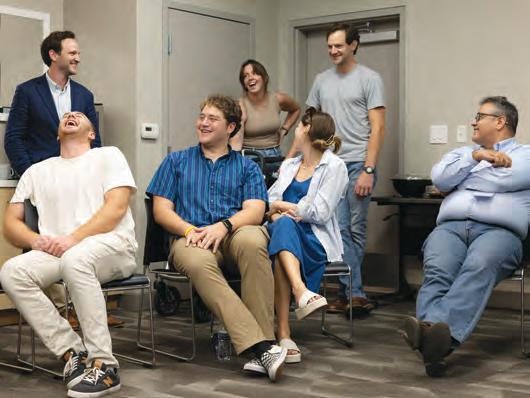
On Sept. 14, The Well had the honor of hosting a delegation of Israeli social entrepreneurs from the Gaza envelope who survived the attacks of Oct. 7. These individuals, ages 35-55, are seasoned activists working on rebuilding their communities following the tragic events of Oct. 7. For many of them, this work is deeply personal, having lost close relatives and friends to the violence. Their resilience and commitment to social change embody the power of community-driven responses to crises.
war-torn homeland, and on the other, young American Jews seeking spaces where their identity and questions about the future can be explored openly. Together, these groups engaged in a powerful and inspiring conversation about grief, love and the complexities of Jewish life today.
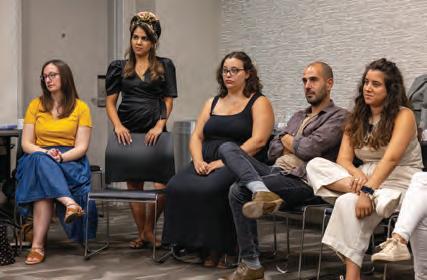
The delegation sought out The Well specifically because of our unique role outside traditional Jewish institutions. Our gathering brought together not just these inspiring social entrepreneurs but also a group of young adults from our Detroit community — individuals who, like many in our circles, don’t necessarily find their place within established Jewish organizations. These young adults represent a voice of Jewish identity that is, in many ways, in search of a home.
The event was a meeting of two groups on the periphery of their respective Jewish communities: On the one hand, Israeli activists grappling with the social fabric of their
We began the evening with introductions and an exercise that allowed each participant to present themselves and share a burning question. These questions set the tone for the deep and meaningful dialogue that followed. They ranged from, “What is Israel’s role in the broader Jewish community?”
to “Where are all the children in American Judaism, and what will the next generation of Jewish families look like?”
Some of the questions went straight to the heart of identity and trauma:
“Why are our experiences minimized or deemed untrue by the media?”
“How are Israelis coping with the ongoing trauma, and how are they caring for their mental health?”
Others addressed broader concerns:
“Are we still connected as a global Jewish people? How can we reconnect?”
Following the question-sharing, we split into smaller groups to explore themes of American Jewish life, the visitor experience in Israel and how
both communities manage trauma. One group, free of agenda, simply connected with one another, allowing space to process and share. This act of connection was itself significant. Together we noted how in times of trauma, it’s difficult to maintain the capacity to form relationships, even within the Jewish community. By flexing that muscle of connection across distance and culture, we witnessed the profound importance of building bridges in times of crisis.
CELEBRATING TOGETHER
Together the group marked the end of Shabbat with Havdalah, but our time
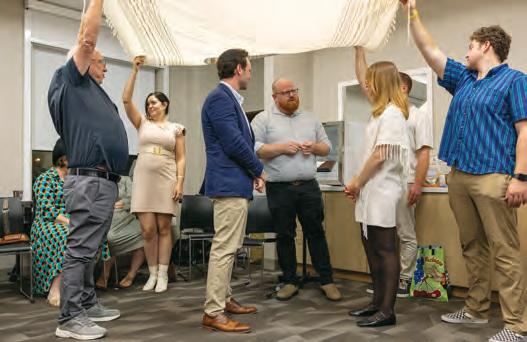
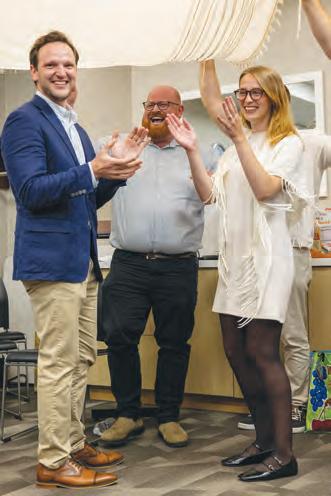
together was far from over. What followed was a beautiful, symbolic and non-traditional wedding ceremony for a young couple, Andrew and Anna, who had met in Israel, got married this past August in Prague and were finalizing their marriage documentation in Michigan. When Andrew and Anna went out to their car to get the necessary paperwork, Israelis
Rabbi Jeff Stombaugh Special to the Jewish News
PHOTOS BY YEVGENIYA GAZMAN
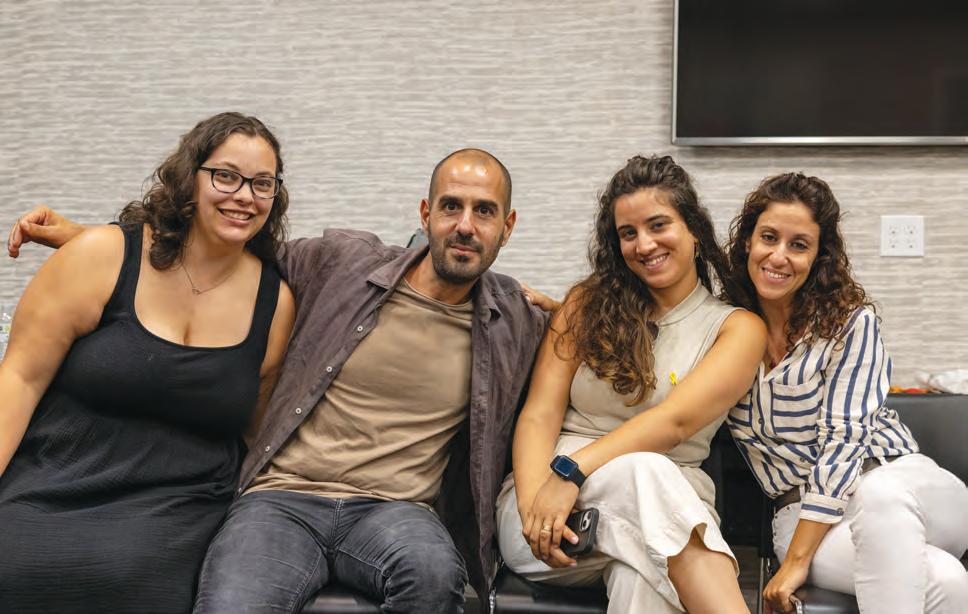
Hannah Berger, Rafael Kolot, Sapir Efraim and Orly Pelet Aharon
Andrew Kaufman and Anna Cihlova are under the chuppah with Rabbi Jeff.
Even during an evening recalling trauma and our struggle, the group found joy in being together.
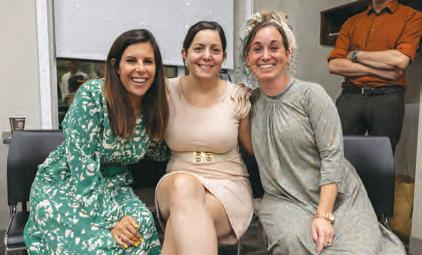
Laura Rosen, Yarin Sultan, Hannah Berger, Rafael Kolot and Sapir Efraim
Adi Rozen, Yael Shelli and Vered Glass
Guests hold up a tallis as a chuppah over Andrew and Anna as they take their marriage vows.
and Americans volunteered to hold up a tallis to make a chuppah, while others prepared to welcome them back into the room with traditional songs. All language barriers fell away as we sang and danced together for this completely joyous capstone to the evening, marking our transition from grief to celebration in a deeply Jewish way!
Reflecting on the event, I’m struck by the urgency to create more spaces where American Jews can freely and openly discuss Israel. There is a profound need for environments that allow individuals to process their emotions and questions without fear of judgment or dismissal. That need is not always being met in our existing institutions.
Personally, this event brought me a sense of connection to Israel that I’ve been yearning for since Oct. 7. While I haven’t been able to travel to Israel due to family obligations and financial constraints, hosting these Israeli social entrepreneurs felt like a taste of Israel that I desperately needed. This delegation represented the best of Israel — those who, in the face of unspeakable and horrific tragedy, have emerged with purpose to spread light through loving action. Whether it’s mobilizing civil leadership to reimagine the future of the Gaza Envelope, building a one-stop women’s health center or pairing struggling business owners with seasoned mentors, these entrepreneurs are spearheading innovative projects that are reshaping their region in the wake of immense trauma. They reminded me what it feels like to love Israel’s infinite complexity with unconditional love.
According to group leaders: “We traveled back to Israel with an understanding of how Oct. 7 has profoundly impacted the American Jewish community, of the amazing diversity and a model for how committed Jews of different denominations/approaches don’t just co-exist but cooperate and have deep respect for each other … There was so much celebration and joy. It was such a special opportunity for them to see a really powerful moment, for them to see the way in which a fully committed Jew can meet someone non-Jewish and their
lives can naturally be bound together. It was a really important moment for them to see and experience.”
I often describe Jewish identity as a puzzle made up of many pieces — our values, roles and experiences. As American Jews, it’s not always simple to feel connected to the “Israel piece.”
Over the past year, as a rabbi working with young adults, I’ve seen how the realities of war challenge their sense of Jewish identity, making it difficult to keep that piece secure. But through events like this, where Israeli voices and experiences are at the forefront, I’m reminded of how essential Israel is, not just to my identity, but to who we are as a community.
This gathering also underscored the Jewish strength of holding both deep grief and profound joy at the same time. As Rabbi Alan Lew writes in This Is Real and You Are Completely Unprepared: “Joy is a deep release of the soul, and it includes death and pain. Joy is any feeling fully felt, any experience we give our whole being to. We are conditioned to choose pleasure and to reject pain, but the truth is, any moment of our life fully inhabited, any feeling fully felt, any immersion in the full depth of life, can be the source of deep joy.”
What we witnessed was more than just an exchange of ideas; it was the embodiment of what it means to be Jewish today — with joy. To hold onto grief, to celebrate joy and to build community even in the face of overwhelming challenges. In that sense, the work we are doing at The Well, and the work these Israeli social entrepreneurs are doing in their communities, is one and the same: building bridges that allow us to heal, to connect and to continue forward together.
And in holding Israel with love and moral clarity, as was so evident in the stories and work of our guests, there is a path forward toward peace, understanding and even redemption. It’s a journey worth undertaking, despite the pain, because of the immense potential for joy and life that lies ahead.
Rabbi Jeff Stombaugh is executive director of The Well.
9th, 10th, & 11th, 2024
200+ Lots of Fine Estate Jewelry
Featuring the Estate of Carol Minowitz of Bloomfield Hills, MI
Afra And Tobia Scarpa (Italian) Glass Top End Tables
Over 1,000 Lots This Month Including Paintings, Prints, Sculpture, MCM, & More
Pablo Picasso Terracotta Plate ‘Profil De Jacqueline’ Ca. 1956
70+ Handwoven Oriental Rugs
OIFeaturing items from the Estate of Alan Schwartz of Birmingham, MI
Laying Four Medieval Nuremberg Jews to Rest
How a Sinai Hospital rabbi found and helped rededicate Jewish gravestones used to build a Nuremberg church.
ASHLEY ZLATOPOLSKY CONTRIBUTING WRITER
While stationed in Nuremberg, Germany, in 1969, the late Allan Blustein made a surprising discovery. It would set in motion a chain of events to forever change Nuremberg Jewish history.
The army chaplain and rabbi, who eventually settled in Michigan and worked at the now-defunct Sinai Hospital in Detroit, saw something he would have never imagined embedded in the stone steps of the St. Lorenz Church, a magnificent cathedral in downtown Nuremberg.
Below his feet was Hebrew writing — and to be more precise, remnants of Jewish gravestones that were cut into shapes that allowed them to be used as part of a spiral staircase in the south dome of the church. Blustein, who was touring the church with fellow chaplains, couldn’t believe his eyes, especially only two short decades after the Holocaust had ended.
The significance was unprecedented. Here were glimpses of Nuremberg Jewish life not long after Nuremberg Jews had essentially been wiped out by the Nazis and their collaborators.
Blustein did some digging and discovered records tracking the transfer of the gravestones. They
were taken from a medieval Jewish cemetery in 1352 and transferred to the church to be used in its construction. Blustein shared the incredible discovery with the Jewish religious community of Nuremberg, who then put into motion the process of rededicating the stones.
Still, while both Christian and Jewish religious leaders were supportive of the effort, there were concerns about the integrity of the stones and the St. Lorenz Church staircase itself. Many feared it would collapse if disturbed. Yet after consulting with experts on stone edifices, all were assured that both the cut Jewish gravestones and staircase would remain intact.
More than 600 years later, the gravestones were returned to the local Jewish community in 1970 and laid to rest within the funeral chapel of Nuremerg’s New Israelite Cemetery.
A HISTORY OF PERSECUTION
While the original cemetery site of the 1300s was known, it was no longer in use.
According to Blustein’s records, the original burials of the four Jewish community members took place just prior to the outbreak of the Black Death, which killed an
estimated 25 to 50 million people across Europe between 1346 and 1353.
The Jews of Nuremberg were accused of poisoning the wells and causing the plague to spread throughout the city. Due to this false accusation, the Jewish community was expelled from Nuremberg, and many moved into the neighboring city of Furth, in addition to other parts of Germany.
Today, the gravestones themselves are incomplete, but resting back within their Jewish community. Only one has a partial name intact of a woman whose name ended in “sheba” (likely Elisheba or Basheba). Two are indicative of a male, while the fourth gravestone is illegible.
While the gravestones are a stark reminder of centuries-long desecration of Europe’s Jewish
community, they’re not the only such occurrence in Nuremberg. Excavations inside the Frauenkirche Catholic Church in 1986 uncovered foundations of a Jewish synagogue, while plaques throughout Nuremberg recall where Jewish community institutions once stood. Still, if it hadn’t been for Blustein, the gravestones may have remained embedded in the steps of the St. Lorenz Church for decades or even centuries to come, forever lost to time and history.
A DISCOVERY THAT LIVES ON
Fifty-five years after the chain of events occurred, Blustein’s daughters, Naomi Blustein Levine and Karen Blustein Friedman, who were 8 and 10 at the time of the gravestones’ discovery, returned to Nuremberg in summer 2024 to pay homage to their late father’s
Naomi Blustein Levine and Karen Blustein Friedman at the funeral chapel of Nuremberg’s New Israelite Cemetery, where the rededicated gravestones are now.
incredible discovery.
The city’s mayor held a reception in their honor. Even pastors came to greet them and said it was a collective responsibility to ensure Israel continues to thrive, Levine, 63, of Farmington Hills, explains. Of course, the sisters also paid a visit to the 600-plus-year-old gravestones.
“I get chills thinking about it,” Levine says. “These stones are what you look at as somebody is speaking in the chapel, like you might experience at Ira Kaufman or Hebrew Memorial Chapel.”
Yet the late Allan Blustein, who passed away in 1992, never wanted to take credit for the discovery, Levine explains. Blustein, who wrote an article for Detroit Jewish News on the subject
in 1970, never mentioned that he was the one responsible for finding the gravestones.
Today, however, Levine hopes her father’s discovery will live on for many years to come.
“You were literally stepping on the memory of Jews,” she says of the gravestones. Their rededication and return to the Jewish community, however, was the “ultimate triumph.”
The staircase in the St. Lorenz Church where the gravestones were originally found
Allan Blustein
Recent Attacks Leave U-M Jewish Students Wary
Jewish Resource Center to ofer walking buddies and self-defense training.
STACY GITTLEMAN CONTRIBUTING WRITER
The University of Michigan and Ann Arbor Police reported two incidents of assault involving Jewish students and Jewish residences over the weekend of Sept. 21-22. However, both stated that at this time, it is inconclusive that the incidents were biased or antisemitic in nature.
ed by antisemitism.
Earlier in September, a 19-year-old male student was attacked late one evening when he was approached by a group of individuals who asked if he was Jewish. When he said yes, he was physically and verbally assaulted. This investigation is ongoing, and no suspects have been apprehended.
In a letter released to the University of Michigan community Monday, Sept. 23, University of Michigan President Santa Ono gave the following details:
“At 1:20 a.m. on Saturday, Sept. 21, a brief verbal exchange took place between a male student and an individual who was with a larger group on the front porch of an off-campus house occupied by members of a historically Jewish fraternity. The male student was punched once by the suspect, who then fled.
“At approximately 1 a.m. Sunday, Sept. 22, a group returned and threw glass bottles at the house.”
Ono stated that both incidents are being thoroughly investigated and that, at this time, there is no indication that either incident was motivat-
He wrote: “I pledge to you all that I will do everything in my power to stand up against antisemitism and protect our Jewish community. I’m fully engaged in this matter. I have received regular updates throughout the weekend and, along with my leadership team, treat any allegation of identity-based violence with the utmost of seriousness.”
Ono wrote that, because the incidents took place off campus, the Ann Arbor Police Department is taking the lead in the investigation, and the University of Michigan Division of Public Safety and Security is providing support. Both agencies are significantly increasing patrols in the area and deploying additional security tools, including video surveillance.
the University of Michigan. A group of individuals in front of a residence confronted the students. At this point, the reasons and motives for these assaults have yet to be determined.”
AAPD on Sept. 24 on X stated: “Over several weeks, the Ann Arbor Police Department and the University of Michigan Police Department collectively met with representatives from the Anti-Defamation League, University of Michigan, Chabad House of Ann Arbor, the Jewish Resource Center and its students to
“I PLEDGE TO YOU ALL THAT I WILL DO EVERYTHING IN MY POWER TO STAND UP AGAINST ANTISEMITISM AND PROTECT OUR JEWISH COMMUNITY.”
— SANTA ONO, UNIVERSITY OF MICHIGAN PRESIDENT
ANN ARBOR POLICE STATEMENT
On Sept. 23, the Ann Arbor Police Department (AAPD) announced on X that it is “actively investigating two assaults over the weekend within the 1000 block of East University. In both incidents, the victims were students of
reaffirm our commitment to ensuring the safety of students and the broader community. Both departments will continue coordinated efforts to increase patrols in the areas surrounding the campus to enhance security and provide additional support.”
‘SHMIRA’ SECURITY GROUP
On Sunday afternoon, Sept. 22, the University of Michigan Jewish Resource Center released the following statement on its Instagram account:
“This weekend, on Friday evening, a Jewish student was assaulted outside of a Jewish fraternity senior house. The attack resulted in the student needing to go to the hospital to receive stitches. The Jewish Resource Center rabbis have been in contact with the student and are providing him with any support he needs. The police have been involved and are investigating the details of this targeted attack.”
The Jewish Resource Center also announced on Instagram it would be holding an emergency meeting to organize a “shmira” security group to support Jewish students.
It stated: “The Center is seeking 50-100 volunteers who are willing to walk or drive people to and from buildings and homes on campus.”
Rabbi Fully Eisenberger of the JRC said a WhatsApp group will be created where students can join and volunteer to walk other Jewish students on and off campus at night so they will not have to walk alone.
Eisenberger said he and his staff have been “jammed” with requests for
Rabbi Fully Eisenberger
University of Michigan
Ann Arbor Police
What Is Tzedakah — Justice, Righteousness or Charity?
The answer is all three.
In the midst of the High Holidays, Jews around the world are focused on three key elements of this period of reflection and renewal: tefillah, prayer; teshuvah, repentance to return to the truest and most holy version of ourselves; and tzedakah, righteousness. Together, it is hoped that achieving these will help achieve a favorable decree when the Book of Life is closed on Yom Kippur.
According to Rabbi Yechiel Morris, rabbi of Young Israel of Southfield, this concept was mentioned in the Jerusalem Talmud in Taanit (9b) in the fifth century, citing a verse in Chronicles 2 (7:14).
Today, tzedakah is often taken
to mean charity — the donation of money to synagogues, nonprofit organizations and to the needy. But within Biblical texts and the views of contemporary rabbis, tzedakah is based on deeper, core Jewish values.
Rabbi Jeff Stombaugh, executive director of The Well, says, “A family needs to think about what tzedakah means. It is mistranslated as charity. There are a lot of different layers to what tzedakah is. Righteousness and justice come to mind first.”
Rabbi Morris points out an article titled “Tzedakah: The Untranslatable Virtue” by Rabbi Lord Jonathan Sacks, the late chief rabbi of Great Britain. Rabbi Sacks described tzedakah as “distributive
justice” — a means of leveling society’s inequities when some have more than needed and others lack basic necessities.
He stated in the article: “The nearest English equivalent to tzedakah is the phrase that came into existence alongside the idea of a welfare state, namely social justice … Behind both is the idea that no one should be without the basic requirements of existence, and that those who have more than they need must share some of that surplus with those who have less.
“This is fundamental to the kind of society the Israelites were charged with creating, namely one in which everyone has a basic
right to a dignified life and equal worth as citizens in the covenantal community under the sovereignty of God.”
Today, tzedakah during the High Holidays may entail a special campaign for synagogue charity funds and donations to Jewish nonprofits such as Yad Ezra. “This year Israel is a major focus,” Rabbi Morris says. He points out that charity is a form of righteousness.
But tzedakah is not only monetary contributions. It can mean helping someone find a job, volunteering for a nonprofit organization and other good deeds.
Rabbi Sacks turned to Maimonides to explain the essence of tzedakah as helping individuals achieve independence.
“Maimonides lists the various levels of giving-to-others, all except one of which involve philanthropy. The supreme act, however, does not: According to Maimonides, ‘The highest degree, exceeded by none, is that of one who assists a poor person by providing him with a gift or a loan or by accepting him into a business partnership or by helping him find employment — in a word by putting him in a situation where he can dispense with other people’s aid.’”
While not everyone can facilitate another person’s financial independence, all are capable of working toward justice and achieving a generosity of spirit. The Torah provides laws for a just society and, as Rabbi Sacks stated, Jews are obligated not only to follow them but also to pursue tzedakah in various ways, as we are reminded at Rosh Hashanah and Yom Kippur.
Rabbi Yechiel Morris
Rabbi Jeff Stombaugh
Rabbi Lord Jonathan Sacks
SHARI S. COHEN CONTRIBUTING WRITER
Eyb mir shtayn oder eyb mir zitzn
On Yom Kippur, mir dertzayln nisht vitzn.
Oh, ich bin hungerik, ich vil shayn essn, Ober dos is Yom Kippur, hob ich fargessn?
Un ich bin zayer hays, davenen un shvitzn.
Eyb mir shtayn oder eyb mir zitzn - If we stand or if we sit mir dertzayln nisht vitzn - we don’t tell jokes
ich bin hungerik, ich vil shayn essn - I am hungry, I already want to eat.
Ober dos is - But this is hob ich fargessn? - did I forget?
Un ich bin zayer hays - And I am very hot davenen un shvitzn - praying and perspiring.
BY RACHEL KAPEN
Forgive and Let Go
To err is human, to forgive Divine …” Alexander Pope, “An Essay on Criticism,” 1711.
Pope, a Catholic poet and satirist who was banned from attending public schools by prejudicial English laws, had more in common with Judaism than one might expect, especially regarding the concept of forgiveness.
The 10 Days of Repentance, which fall between Rosh Hashanah and Yom Kippur, are traditionally a time to engage in self-reflection and seek forgiveness from the people we have hurt during the past year. The Hebrew word for repentance is teshuvah, literally translated as “return.” This means we are expected to turn away from past mistakes and return to the spiritual person living inside. This is accomplished by repenting for our wrongs and forgiving the people who have caused us harm.
Putting this seemingly simple concept into practice is more challenging than it appears. In addition to swallowing our pride and admitting we were wrong, we must also let go of old resentments and forgive those who have hurt us. This can seem like a daunting task, but Jewish law obliges us to make things right between ourselves and the people in our lives, and to do so in a meaningful way that goes beyond superficial apologies or insincere expressions of forgiveness.
This was the timely subject of a pre-holiday presentation featuring Susan Shapiro, native Detroiter and bestselling author of the insight-
It’s what we’re asked to do for Yom Kippur.
RONELLE GRIER CONTRIBUTING WRITER
ful memoir, The Forgiveness Tour: How to Find the Perfect Apology (Skyhorse Publishing, 2023, see story on page XX) and Gary Weinstein, the Farmington Hills man who publicly forgave the drunk driver who killed his wife and two young sons in 2005. The program, which took place at Temple Israel in West Bloomfield, was moderated by longtime Detroit News columnist Laura Berman.
Motivated by her inability to forgive a betrayal by a central person in her life, Shapiro set out to learn about forgiveness from spiritual leaders, mental health professionals and everyday people across the country who had grappled with forgiving those who had wronged them, often in irreparable, life-altering ways.
According to Shapiro, there are four essential components of a meaningful apology, a concept she discovered in the book On Apology by Dr. Aaron Lazare, who attributes the idea to Maimonides, the 12th century Jewish scholar:
• Acknowledge and take responsibility for your mistake
• Explain why it happened
• Confirm that it won’t happen again
• Offer reparations for healing
The concept is akin to the apologies Jews are expected to proffer on Yom Kippur, and it also bears a strong resemblance to the amends proce-
dure outlined in the Twelve Step program used by Alcoholics Anonymous and other fellowships. Recovering addicts and alcoholics conduct a “searching and fearless moral inventory” that includes fears, resentments and harm they have caused to others. The ultimate goal is to identify the character defects that caused the negative behavior and work toward self-improvement, much like the self-examination we perform in the days leading up to Yom Kippur.
LIVING AMENDS
Reparations is an equally important part of the amends process outlined in the Twelve Steps.
The most basic examples involve money or material items, such as returning stolen funds or goods, or establishing a payment plan for an overdue debt. However, most reparations are not that tangible, and many wrongs can never be righted. Weinstein’s family cannot be brought back to life, no matter how sincerely the driver apologized. The damage caused by an abusive parent or spouse cannot be undone, and the hurt a child suffers at the hands of a bully can last a lifetime. However, it is possible to repent for harms that cannot be undone by making a “living amends.”
According to Rabbi Benny Greenwald, recovery rabbi at the Daniel B. Sobel Friendship House in West Bloomfield, which provides support for people recovering from
Rabbi Benny Greenwald
Gary Weinstein
Susan Shapiro
addiction, this is accomplished by pledging to never repeat the hurtful action or behavior and making the changes necessary to keep the commitment and become a positive force in the world.
“We have to start living differently,” Rabbi Greenwald said, “and we have to look forward, not back.”
HOW TO FORGIVE
The Twelve Step program involves making amends to people the individual has harmed. Often, after recognizing their own role in a conflict, the recovering person ends up apologizing to someone on their “resentment list,” which leads to mutual forgiveness and ends lingering grudges.
“It takes courage to forgive,” Rabbi Greenwald said, “to give up control and let go of anger and resentment.”
One year after the crash that took the lives of Weinstein’s wife, Judy, and sons, Sam and Alex, Weinstein visited the driver, Tom Wellinger, in a local prison where he was serving a 19- to 30-year sentence for three counts of second-degree murder.
The first thing he did was ask about his kids. When Wellinger apologized and asked for forgiveness, Weinstein asked him whether he could forgive himself. For Weinstein, forgiveness was necessary to move on with his life. When Wellinger was eligible for parole, Weinstein recommended his release.
“The weight of holding onto resentment is far heavier than the benefits of releasing yourself and forgiving,” Weinstein said. “I’m freed up.”
Weinstein said it was easy to forgive Wellinger because he had alcoholism, a medically recognized disease.
“It’s hard to hold resentment toward someone who is sick,” he said.
He admitted it might be more challenging with someone who caused harm intentionally, but he believes he would ultimately find a way to forgive in that situation as well.
“I’m basically a lover, not a fighter,” he said, “and forgiveness is the grace you’re giving yourself.”
Rabbi Tamara Kolton, Ph.D., offers a broader perspective on forgiveness, believing it is essential to our survival as a species.
“We live in a world where people are increasingly angry and have increasing access to weaponry,” she said, “and forgiveness, while it feels incredibly personal, is also global and it is the biggest challenge that we face today. But for life to persist there
must be forgiveness.”
She lauded the compassion expressed by Jonathan Polin and Rachel Goldberg-Polin, whose son, Hersh, was taken hostage on Oct. 7 and subsequently executed by Hamas-led terrorists.
“I do not know how a family whose child has been murdered can forgive, but I saw that kind of stellar human being in Hersh’s parents when they spoke before the Democratic convention and in our own Gary Weinstein,” she said.
She also wants people to understand that forgiveness does not always come quickly or easily.
“There is this idea that all of a sudden, we have to forgive, but I don’t think forgiveness works that way. I think forgiveness is a long process that takes time, certainly if there’s been a significant wound,” she added.
Children forgive more quickly than adults because they would rather be happy than right, according to the late Rabbi Menachem Mendel of Lubavitch.
“Forgiveness does not take away responsibility and accountability when a person hurts someone else,” Kolton said. “What it does do, however, is take away the pain and suffering that you are feeling over being hurt.”
The same concept can apply to making an apology, even when you believe you are right. Shapiro used the example of a family member who was hurt by the way she portrayed him in one of her books. Instead of arguing about whether she was entitled to decide what she writes, she chose to listen as he explained how blindsided and hurt he felt. She then apologized and promised to show him anything she wrote about him in the future before it was published.
FORGIVENESS WITH BOUNDARIES
Some people balk at forgiving a person who continues to be hurtful, but Rabbi Greenwald said it is possible to forgive without becoming a victim or remaining in a toxic relationship.
The Twelve Step program suggests treating individuals who are abusive or detrimental the same way one would treat someone who is physically ill, with compassion rather than criticism. This is also a powerful way to let go of resentments, which harm the angry person more than the recipient.
However, forgiving does not mean putting oneself in harm’s way. Sometimes it is necessary to set boundaries, create distance or even cut off contact with certain people without anger or resentment.
FORGIVING OURSELVES
Rabbi Greenwald believes it is important to include ourselves in the process of granting and seeking forgiveness, to realize the things we (or others) do are not always a reflection of our true essence.
“When we come to a point where we can look back and realize our bad experiences made us better, we experience joy,” he said.
Kolton agrees it is essential to treat ourselves with the same compassion we afford others by practicing self-forgiveness.
“We are so hard on ourselves. I believe we are all doing the very best we can do on any given day,” she said. “We’re not doing the best; we’re doing our best. And one of the greatest gifts you can give yourself for the New Year is compassion and understanding.”
Rabbi Tamara Kolton
Gary Weinstein, Laura Berman and author
Susan Shapiro
Meet the Baker Blake
Iwill never forget the moment my neighbor’s 13-year-old son informed me that he makes homemade seven-layer cake. “Wait, wh, wh, what did you just say, Blake?” I said to him on that momentous day a couple of years ago, as I struggled to find the right words to express my excitement.
Alan Muskovitz Contributing Writer
I could barely contain myself. I was trying to process the fact, that while for many years I have frequented our community’s wonderful Jewish bakeries, I quite possibly had a new source for my favorite dessert within only footsteps of my front door.
Anyone who knows me knows that I’ve had a lifelong love affair with seven-layer cake. I went public with that passion in the June 7, 2018, edition of the JN As a follow up to my column, the JN asked if I would be interested in traveling around to area bakeries being filmed doing a taste test. Would I? Duh.
Within just a few days, my “Tour de Seven Layer Cake” video was posted on the JN Facebook page. It has close to 8,000 views. Go to YouTube and search “Tour de Seven Layer Cake.” I just did and it was the first video to show up!
Surprisingly, I wouldn’t taste Blake’s version of seven-layer until just a few days ago. Now 15 and a 10th grader at Frankel Jewish Academy, he hand-delivered a lovely loaf of layers to yours truly. It was well worth the wait. Delicious. The real deal. I devoured it in less than a week.
Blake’s been in full baking mode for the High Holidays, pumping out traditional Jewish breads and pastries. By the time the dust, or should I say flour, has settled, he will have mass produced rye and pumpernickel breads, an assortment of cakes, fruit and cheese Danishes, knishes, rugelach, schnecken,
kolacky cookies and Blake’s favorite — kichel.
BLAKE THE BAKER
Blake is the son of Lindsey and Greg Weitzman of West Bloomfield. It turns out he can’t recall a defining moment in his life that frosted, excuse me, fostered, his passion for pastry preparation. He doesn’t even watch any of the popular baking shows on television.
“Baking is just something fun I started to do one day,” he said. “But I have been inspired by all the Jewish bakeries in our community.”
Turns out that Diamond Bakery in West Bloomfield and Star Bakery in Oak Park have proven to be invaluable mentors to him over the last few years. More on that in a moment.
Dad Greg claims that his son’s “love for baking comes from his huge sweet tooth. He was decorating cupcakes in our kitchen when he was just 2. He loves to bake for the holidays, and his favorite is baking cakes for his younger cousins. And as much as he enjoys the process, he enjoys it that much more when he’s baking for someone’s birthday. In his eyes, it’s a unique gift to someone special.”
Mom Lindsey added, “I’m so happy that Blake has found something that he’s passionate about. Our house is constantly filled with both sweet and savory aromas. I especially love how his baking and cooking connects to Judaism.”
PREPPING WITH THE PROS
Over the years, the Detroit Jewish community has been home to numerous beloved Jewish bakeries. As Mike Smith wrote in researching Metro Detroit bakeries in the July 19, 2023, edition of the JN: “I must admit until this search, I did not know there was a Jewish Master Bakers Association of Detroit, 1920s-1970s. Its ad lists 22 Jewish bakeries in the city.” Blake has become quite the
Rolling in dough: Blake Weitzman after a full day of baking in the family kitchen.
Blake’s homemade seven-layer cake.
Jewish bakery historian. It was he, in fact, who asked me to include the name of some of those beloved bakery owners from the past out of respect to their contributions. Blake’s a baker, but he’s also a mensch.
Among those Blake paid an homage to were David and Leo Mertz of Mertz Bakery, Martin “Marty” Weiss of Modern Bakery, Charles “Charlie” Nicles of Miami Bakery and Hyman “Hy” Nerenberg of Jewel Bakery, all of blessed memory. Their delicacies still linger in the memories of our taste buds.
I grew up on the seven-layer cake at Zeman’s on Greenfield, which to this day is still serving its Oak Park community and beyond.
Blake Weitzman is grateful to both Diamond and Star Bakeries, who at various times over the last few years have welcomed him with open arms, and pans and whisks — playing a pivotal role in nurturing Blake’s passion for baking Jewish pastries.
“I’ve learned so much from just watching their bakers,” Blake said.
But he’s done a lot more than just observe. As he began to master some culinary techniques, the baked goods that Blake has had a hand in making at the bakeries have made their way into the display cases.
“I was given the opportunity to make the mixes for sour cream cake, chocolate and yellow cake, fudge icing, Danishes, coffee cake doughs, butter cream and almond cookies, icebox cookie dough, just to name a few,” he said.
One of the bakers that Blake has had a special connection with was former owner of Diamond Bakery,
Gina Rowley. Gina is not the original founder of Diamond, but her family has a long history with the store. Up until Gina sold the bakery to current owners Daniel Buckfire and David Schechter in 2022, it was owned and managed at different times for nearly 40 years by her family, including her sister Donna Smielewski.
It was evident in talking with Gina, who has since moved to Florida, that she cherished her time spent with Blake on the floury frontlines at Diamond.
“When I met Blake,” Gina said, “I had just sold the bakery but was still putting in some time there. He told me his grandfather used to bring him into the bakery to get little cookies.
“From the moment I met him he was just curious about everything, the whole process — how do you do this, how do you do that, do you have any pictures? He did some of his own research and actually found out information that I didn’t even know about,” she said.
“He’s really very intelligent and just so young to have that passion. I loved offering him tips. He just soaked everything up like a sponge.”
(Sponge? Hmmm, I wonder if Blake makes sponge cake? I’ll let you know.)
“Gina was so helpful, friendly and patient with me,” Blake said. “She not only gave me so many baking tips, but she also taught me the do’s and don’ts around a bakery and how to maintain the baking area properly. And she also reminded me to put out the best product you can. Never settle for less than your best and stick with high-quality ingredients.”
BEYOND BAKING
It turns out that Blake’s equally passionate about cooking and it wouldn’t be surprising if some of his dishes found their way on to the family’s Rosh Hashanah dinner table.
“Blake has made the best chicken soup I’ve ever had,” said Greg Weitzman. “He’s made it from scratch and not from a recipe. He made brisket a few weeks back — he had two recipes and couldn’t decide which to make, so he made both. A couple of weeks ago he tried his first baked apricot chicken, also amazing.”
Mashed potatoes and gravy and kreplach are also among the dishes Blake has prepared. Plus, he’s proud to have been given some help in the kitchen from his grandmothers who have shared some of their recipes.
“It’s really a blessing that Blake is able to share his passion with his grandmothers. Hopefully, he will carry these holiday food traditions into future Jewish holiday meals and celebrations,” Lindsey said.
I can’t think of any downside to having a built-in baker in your household, other than the calories. Although Greg and Lindsey both agree that if Blake struggles with one part of baking, it’s the clean-up. “Nobody can make a mess like Blake!” Greg said.
With Blake baking during the High Holidays, one thing is for certain, the Weitzman family is most definitely in for a sweet New Year.
For more history about Detroit’s great bakeries over the years, look up Esther Allweiss Ingber’s Feb. 24, 2022, column and Mike Smith’s July 19, 2023, feature in the DJN William Davidson Foundation Archives (digital.bentley.umich.edu/ djnews).
A Q & A with the Culinary Kid
Alan: “Do you see yourself as a professional baker one day?”
Blake: “No, I’m thinking maybe of becoming a lawyer.”
Alan: “Well, there’s dough in that too. (Sorry) You make so many things, is there anything you don’t like?”
Blake: “I love baking with honey but, believe it or not, I’m not a huge fan of the taste myself.”
Alan: “Well, I guess you won’t be dipping any apples into honey during Rosh Hashanah. And what about your sister, Aria, 11, is she a big fan of your baking?”
Blake: “Sometimes,” Blake said hesitantly while laughing. “Actually, she does have a favorite … my cinnamon pastry sticks.”
Alan: “If I owned a bakery, there’s no doubt I would eat up the profits. Is it tempting for you to constantly nibble on your creations?”
Blake: “I bake once a week and make so many things that eating it all doesn’t appeal to me like it used to.”
Alan: “I certainly can’t relate to that. Do you bake for other holidays?”
Blake: “I’ve made hundreds, if not thousands of hamantaschen for Purim, donuts for Chanukah, macaroons for Passover, and I’ve baked pumpkin pie for Thanksgiving.”
Alan: “Are you still learning new tricks of the trade? Is there anything you still want to master?”
Blake: “I haven’t perfected making challah yet. I find it one of the hardest things to do. You have to make sure the yeast proofs properly and trying to braid the bread is really challenging for me.”
LEFT TO RIGHT: Blake prepares the batter for a variety of marble and honey loaf cakes. Blake’s assortment of small cookies. Loaf cakes hot out of the oven.
Finding the Perfect Apology
Local author’s new paperback describes a four-step plan.
SUZANNE CHESSLER CONTRIBUTING WRITER
Susan Shapiro grew up in Michigan, moved to New York after graduating from the University of Michigan and married TV and film writer Charlie Rubin. In the midst of all that, she has written articles for widely read periodicals and text for some 20 books while also teaching adult writing classes.
Susan Shapiro
Throughout her varied experiences, Shapiro has kept Judaism as a significant part of her thinking and practices and has written about that as well.
During this High Holiday season, Shapiro is addressing issues surrounding the topic of Yom Kippur (Day of Atonement). Her recently released paperback book, titled The Forgiveness Tour: How to Find the Perfect Apology, has been a matter of discussion at Temple Israel.
The author-teacher, who usually returns to her home state in summers to visit family, returned this year to discuss follow-up experiences that affect what is covered in both the hard and softcover editions of the book with a subject pertinent to Yom Kippur.
Although the only change in the paperback is the cover illustration, she wants people to know the essence of her research and experiences at the time of writing and since then.
“The hardcover book came out in the middle of the pandemic in 2021, and we were restricted in doing in-person events,” Shapiro said. “It was kind of limited. When we talked about doing a paperback, we talked about it being more relevant now.
“With so much divisive political stuff in the country, I made the argument that this was even a better time for the book to come out. I had time to focus on it, and I think the paperback is doing much better than the hardcover did.”
While Shapiro describes a four-step plan for apologizing and saving relationships, she also describes believing there are occasions when apologies should not be considered. Avoiding apologies can be appropriate, she has expressed, when the persons involved present possible dangers in the future.
In preparing her book, Shapiro interviewed religious leaders, therapists and people affected by the lack of satisfactory apologies. Important to her
“I LEARNED THAT IF YOU WANT TO FIX AN ESTRANGEMENT, A FULL-FLEDGED APOLOGY CAN HELP A TON.”
— SUSAN SHAPIRO
topic were talks with Rabbi Joseph Krakoff, who holds a leadership position with the local Jewish Hospice and Chaplaincy Network, and Gary Weinstein, a local forgiveness activist who forgave the drunk driver who killed his wife and two children.
“I spent 10 years writing and researching this
book, and I’m very pro-therapy,” she said, explaining that during the holiday time, Oct. 2-15, the price will be 99 cents below its usual selling price of $18.99.
“It took a long time for me to shape the book into something that could help people. The nuances of forgiveness became more prominent, and I just wrote a piece for the Washington Post on times that you should not forgive.”
FOUR STEPS TO APOLOGIZING
The four apology tiers involve not being aggressive. People can’t base an apology on being defensive if they want to generate a healing process, she explained.
Instead, it is recommended that those offering apologies describe how they really messed up in terms of the incident, reveal the personal circumstances that made that happen, show how it will never happen again and offer a reparation.
“I learned that if you want to fix an estrangement, a full-fledged apology can help a ton,” she said and offered an example from her own life.
A friend asked her to read and edit the woman’s memoir about surviving cancer, and when Shapiro refused based on being too busy, the friend slipped away.
“After I realized what a full-fledged apology is and how healing it is, I decided to apologize to her in a better way,” Shapiro said. “I explained I’m so sorry I blew you off when you were telling me something really important. I was having a rough time myself, and that made me less sensitive than I normally am.
“I would never want to undermine your achievement, and I’m proud of you for writing this book. I would love to see it and, as a reparation, I have these classes of writing groups. Would you be able to come? We would be able to workshop some of your pages, and I could help you with it.
“She said, ‘Susie, I’d love to,’ using my childhood nickname. We were OK again.”
Shapiro’s book offers many details on incidents of apologies and forgiveness.
“If you really decide that you want to reconcile, there’s a way to do it,” she said. “It happens when you’re really listening and caring about the other person’s hurt.”
Israel Kills Hezbollah Terror Chief
BEN SALES, JTA, AND YAAKOV LAPPIN, JNS
As the anniversary of Hamas’ Oct. 7 massacre approached, Israel assassinated Hassan Nasrallah, the head of Hezbollah, in an airstrike in Beirut on Friday, Sept. 27. Since joining the war in support of Hamas a day after the Oct. 7 massacre, Hezbollah has fired more than 9,500 rockets, missiles and drones at Israel causing the evacuation of upwards of 70,000 of Israeli residents.
IDF International Spokesperson Lt. Col. Nadav Shoshani said, “We hope this will change Hezbollah’s actions. Hezbollah has started this war on Oct. 8. They have been firing at us ever since. And we have been looking for solutions, looking for change in reality, that will bring our civilians home [to northern Israel].”
For three decades, Nasrallah was one of the most powerful leaders in the Middle East. As the head of Hezbollah, he led the best-equipped terror group threatening Israel and the region’s largest Iranian proxy, with control of southern Lebanon and a reach that spanned the globe.
The development marks an enormous strategic achievement for Israel. Under Nasrallah’s leadership, Hezbollah transformed into a formidable force, going from terror organization to terror army, and carrying out attacks across Israel and the world.
In a statement on Saturday, Israeli Prime Minister Benjamin Netanyahu said Nasrallah was “not just another terrorist, he was the terrorist.”
Netanyahu added that the assassination, reportedly carried out as the prime minister gave a speech in New York to the United Nations General Assembly, could presage more conflict in the days ahead.
“The elimination of Nasrallah is a necessary condition in achieving the objectives we have set: Returning
U.S. LEADERS REACT TO NASRALLAH’S DEATH
President Joe Biden on Saturday praised Israel’s targeted killing of Nasrallah, saying the development had brought justice to his thousands of victims.
“Hassan Nasrallah and the terrorist group he led, Hezbollah, were responsible for killing hundreds of Americans over a fourdecade reign of terror. His death from an Israeli airstrike is a measure of justice for his many victims, including thousands of Americans, Israelis and Lebanese civilians,” he said.
the residents of the north safely to their homes and changing the balance of power in the region for years,” Netanyahu said.
The unprecedented series of blows delivered by the Israel Defense Forces to Hezbollah’s leadership and arsenal has severely harmed the Iranian-backed terror army’s ability to attack.
Recent airstrikes have not only taken out almost the whole of Hezbollah’s command structure but have also strategically crippled its ability to fire rockets and missiles, reducing its planned mass barrages to much smaller attacks.
Hezbollah has long menaced Israel, including since Nasrallah, who was 64, took the reins of the group in 1992. Hezbollah was founded in the 1980s to combat Israel’s occupation of southern Lebanon, where it also killed hundreds of American troops.
The two sides fought a monthlong war in 2006 that ended with Hezbollah retaining control of much of southern Lebanon. Hezbollah also played a significant role in
helping Bashar Assad survive the Syrian civil war beginning in 2011.
It has also killed Israelis and Jews far from the Middle East. It was behind the 1994 bombing of the AMIA Jewish center in Buenos Aires, which killed 85 people, as well as a 2012 attack on Israeli tourists in Burgas, Bulgaria that killed six.
IDF’s Shoshani said, “Nasrallah was one of the world’s strongest and most influential terrorists … and he was a real threat with the blood of thousands of people on his hands.
“Under his leadership, Lebanon became an armed base with advanced precision weapons of various ranges aimed at Israel and in the entire region.”
The IDF has confirmed that alongside Nasrallah, numerous other senior Hezbollah leaders have been killed, further dismantling the group’s ability to function effectively. When Israel’s airstrikes in recent weeks are taken together, the toll on Hezbollah’s command structure appears to be catastrophic for the terror organization.
“The strike that killed Nasrallah took place in the broader context of the conflict that began with Hamas’ massacre on Oct. 7, 2023. Nasrallah, the next day, made the fateful decision to join hands with Hamas and open what he called a ‘northern front’ against Israel,” the statement continued.
Speaker of the House of Representatives Mike Johnson (R-La.) also released a statement on Saturday praising Nasrallah’s assassination.
“Hassan Nasrallah’s reign of bloodshed, oppression and terror has been brought to an end. A puppet of the Iranian regime, he was one of the most brutal terrorists on the planet, and a coward who hid behind women and children to carry out his attacks,” read the statement, co-authored with House Majority Leader Steve Scalise (R-La.) and Rep. Elise Stefanik (R-N.Y.).
“Thanks to the brave men and women of the Israeli military, justice was delivered for Israeli victims of his heinous crimes, their families and the United States.
“The world is better off without him,” the statement continued.
Bypassers and rescuers gather near the rubble of a building destroyed in an Israeli airstrike in the Haret Hreik municipality in Dahiyeh, in Beirut’s southern suburbs, on Sept. 27, 2024.
Rockets’ Red Glare
Israelis still living near the northern border are diligent about being close to bomb shelters and stocking up on supplies.
NATHANIEL WARSHAY CONTRIBUTING WRITER
While much of the world’s attention is focused on Israel’s response to the thousands of missiles fired by Hezbollah from Lebanon, some 67,500 of Israel’s 100,000-plus internally displaced citizens are evacuees from 28 communities along the Lebanese border, according to news reports. Some have defied orders to evacuate, yet other communities just a few miles south are fully populated and functioning mostly normally.
“There are some people who have left, but no one was evacuated,” said Sim Zacks, a former Southfield resident who lives in Ma’alot.
“We’re on the second mountain range from the border, about 7 kilometers or about a 15-minute drive,” he said.
Claude Schochet of Yishuv Bar Yocha said, “There’s been no evacuation, not in this area, Merom Galil, and not a lot has happened here, as
compared to 29 little villages in the central part of the upper Galilee, some around (but not including) Tzfat (Safed) and some further west, like Bar Yochai, which is near the village of Meron and the kever (tomb) of Rabbi Shimon bar Yochai. Those villages have pretty much been destroyed.”
EVERYDAY LIFE NEAR THE BORDER
What is not normal about life for Schochet, Zacks and their neighbors?
“Currently, there are no schools since Sunday [Sept. 22], everywhere north of Haifa,” Zacks said.
Chaim Linden, who lives in Chisnim in the southeastern part of the Golan Heights, said, “My wife, Chava, teaches kindergarten in a nearby vil-
lage, so she’s been home all week.”
According to Zacks, “At the moment, no gatherings — social events — are allowed, and we’re told to stay close to bomb shelters. The supermarket and mall are open, but you always want to know where the shelter is and be within range of it.”
On Sunday, Sept. 22, Israel’s Homefront Command raised the “alert level” along the Lebanese border and in Haifa, Tiveria (Tiberius), the Golan and Tzfat to Level 3, which calls for canceling all agricultural work in the area. Schools are closed until further notice, and workplaces can remain open where a protected space is no more than one minute away from staff. Indoor gatherings are limited to 10 people and 100 in the open.
Schochet’s village was able to hear Hezbollah missiles landing in nearby Kadita. “This past Shabbat, there was a siren. Motzei (after) Shabbat, we found out that a house was hit in Kadita, and fires have occurred in the forests around us,” he said.
PARTNERSHIP2GETHER REGION
Further south in Migdal HaEmek, Nof Haglil and Jezreel Valley in Detroit’s Partnership2Gether region, “We were targeted three times early Sunday morning, Sept. 22, and we went into safe rooms,” said Einat Adir-Sapir of Detroit’s Partnership2Gether field staff. “We could hear the ‘boom’ and waited for the ‘all-clear’ to leave shelter.”
Linden, 37, notes that Chisnim is not too far south from Katzrin, also in the Golan Heights, which has been hit by shells from Lebanon. “But in our area, we’re not getting many attacks from the north, but from the east in Iraq.”
He recalls, “At the beginning of the war, we had quite a lot of sirens. During the first few weeks, we sheltered regularly for at least an hour each time. People didn’t know what was going on, what was happening, what to do.”
To the west in the central Galilee, Schochet, a visiting professor of mathematics at the Technion University in Haifa and retired from Wayne State University, noted, “We’ve had about 20 sirens since Oct. 7 in our community. We do hear sirens around us, probably because the missiles go over other villages on their way to their destinations,” he said.
“We do hear a lot of booms, missiles, interceptors and artillery. You feel them sometimes. You feel the windows shake. In fact, one time today [Sunday, Sept. 22], the boom was so strong, and there wasn’t a siren, but I went into the mamad (bomb shelter),” he added.
LIVING WITH UNCERTAINTY
“You never know what’s going on. That’s what causes all the tension,” Zacks said.
“All around us, there are sirens regularly. But Ma’alot itself has been very lucky this time. Perhaps, they don’t find us a strategic target. But we hear
LEFT: A giant Israeli flag covers the hole left by a rocket that terrorists from Lebanon fired at Kiryat Bialik, Israel, on Sept. 22, 2024.
Chaim Linden with his daughters Rinanah and Geula
Claude Schochet
Einat Adir-Sapir
Sim Zacks
A Note from Federation
lots of explosions in the background from both sides. When one shoots, the other shoots back, but Iron Dome knocks down the vast majority of missiles,” he added.
Yishuv Bar Yochai, where Schochet lives, is located in the Meron Galil, which is between Tzfat and Nahariya on the Mediterranean coast. “The eastern and western areas have more military bases, but not here, which are mostly farms. My personal guess is that there is nothing interesting to them. It also may be where Hezbollah has rocket bases,” he said.
Through Monday, Sept. 23, there were three or four sirens, according to Zacks. “Sometimes the app will go off because there’s something in the general area, but there won’t be a siren outside.”
Schochet and his wife, Rivka, who made aliyah in 2013, have three grandchildren serving in the Israeli Defense Forces. “One is in Givati, and now is in a secret unit in his reserve duty,” he said. “Another one is in Handasa Kravit (combat
engineering), and one now in basic training. The first two spent most of the war in Gaza,” he said.
Zacks, 49, and his wife, Golda, have five children. “Our oldest, Naomi, lives in Kiryat Shemona, but was evacuated to the Kineret (Sea of Galilee) area,” he said.
“Number four, Naftali, is in the army, an elite paratrooper unit in the 98th Division, which was just redeployed to the north. They’re based in Beit Lid but are now along the border in an undisclosed location. He fought
in Gaza the past few months,” Zacks said.
“Number three, Yehuda, was in South America on his post-army trip when Oct. 7 happened, and he hitched a ride on a donated charter to Israel. He was reactivated on an emergency recruitment and served for a number of months,” he said, noting that Yehudah, who is working as a security guard for a factory in the north presently, is to be reactivated in November. Their other two children are post-Army or still in high school.
The Iranian-backed terrorist organization Hezbollah launched a barrage of rockets into Israel, striking deep into the nation. An area that came under heavy assault was Federation’s Partnership region in the Central Galilee. Fortunately, most of the rockets were intercepted by the Iron Dome, and we believe there have been no civilian casualties. However, the region was heavily damaged, with several fires threatening the local communities.
We are proud to share that one of our Israel Emergency Campaign grants funded a fire vehicle in the Jezreel Valley (one of our Partnership municipalities) that we now know has been put to good use. We deeply appreciate the ongoing support of our Detroit Jewish community, which has meant so much to the Israeli people over the past year.
We remain in close contact with our staff and partners on the ground in Israel, as we remain steadfast in our commitment to supporting Israel during this time of war with terrorist aggression. Our hearts are with our many family members and friends in the region, as well as with all the citizens of Israel.
ABOVE: Emergency medical personnel and soldiers inspect the scene of a Hezbollah rocket strike in Kibbutz Sa’ar in northern Israel on Sept. 25, 2024.
The north of Israel
Near Perfect Three-Peat
Temple Beth El No. 1 wins its third straight Greenberg Division championship in the Inter-Congregational Men’s Club Summer Softball League.
STEVE STEIN CONTRIBUTING WRITER
Pitching and defense usually aren’t written in the same sentence as championship softball team.
But Temple Beth El No. 1 used those skills once again this summer to win its third straight Greenberg Division championship in the InterCongregational Men’s Club Summer Softball League.
“It’s always defense for us,” said Temple Beth El No. 1 manager Billy Wiseman.
“And then there’s our ace pitcher, Seth Gorback. He’s unbelievable. He spins the ball so well and puts it where it needs to go on command. Even the best hitters in the league have problems hitting the ball hard against him.”
Another big reason for Temple Beth El No. 1’s string of success is team chemistry, Wiseman said.
The same core of players has been together for the championship run.
“We love and care about each other,” he said.
“We hang out when we’re not playing softball. Trying to win a third straight championship motivated us this season. It was a rallying cry. There were a lot of smiles when we talked about it during the season. Then we went out there and grinded out wins.”
Temple Beth El No. 1 is only the second team in the league’s 28-year history to win three straight titles. Temple Shir Shalom won four in a row from 2009-12, before league teams were divided into divisions.
Temple Beth El No. 1 went 3-0 in the double-elimination Greenberg Division playoffs in 2022 and 2023. The team faced post-season adversity this season, losing a playoff
game.
In showdown games against Temple Israel No. 6 on Aug. 11 for the division championship, Temple Beth El No. 1 lost the first game 5-3, but won the winner-take-all second game 3-1.
A week earlier in the doubleelimination playoffs in the five-team division, Temple Beth El No. 1 beat Temple Israel No. 2 11-1 and Temple Israel No. 1 10-8 to move into the championship round.
Temple Israel No. 6 was upset in its first playoff game, won two straight to stay alive, then battled it out with Temple Beth El No. 1 for the championship.
“Winning your first playoff game is huge. If you lose, you have to win four straight games to win the championship,” Wiseman said. “That’s why I always go with our
best lineup in our first playoff game.” Gorback pitched all four playoff games for Temple Beth El No. 1. He allowed Temple Israel No. 1 to score eight runs but gave up just seven runs in his team’s other three playoff games.
Kevin Jacobs had a huge hit in the championship game for Temple Beth El No. 1. His two-out, RBI single in the sixth inning with his team up 2-1 gave Temple Beth El No. 1 an insurance run.
Wiseman, who leads Temple Beth El No. 1 with bench coach Julian Prince, is an outfielder along with Jordan Fershtman, Brad Steel and Jacobs. Gorback and Jeff Hollander are the team’s pitchers and Jared Gorback is the catcher.
The infield consists of first baseman Max Surnow, second baseman Sean Seid, shortstop Brad Seid and third baseman Fred Stibor. Jared Hocking, Mike Barnett and
LEFT: Temple Beth El No. 1 celebrates its third straight Greenberg Division championship in the Inter-Congregational Men’s Club Summer Softball League.
BELOW: Manager Billy Wiseman (left), fellow Temple Beth El No. 1 outfielder Brad Steel, and the coveted Kiddush Cup.
Storm Kirschenbaum are utility players.
Seth and Jared Gorback are a brother pitcher-catcher battery. Jared was new to Temple Beth El No. 1 this season, but he has played with several Temple Beth El No. 1 players in other softball leagues.
Sean and Brad Seid also are brothers. They patrol the middle of the diamond for Temple Beth El No. 1.
Wiseman said it’s a blessing to have Prince, who is in his 80s, on the bench.
“We all lean on Julian, and I appreciate him keeping the scorebook. He’s my right-hand man,” Wiseman said. “He’s always saying ‘hit it down and hard’ when we come up to the plate.”
Congregation Shir Tikvah went 4-0 in the league’s Koufax Division playoffs in August and won the championship of the seven-team division.
The recipients of the league’s Jeff Fox Sportsmanship Award, nominated by managers and selected by league directors Matt Bassin, Michael Betman and Mitch Kline, were Adam Weiner of Temple Israel No. 1 in the Greenberg Division and Joe Lipman of Shir Shalom No. 3 in the Koufax Division.
Michael Yendick Pure Heart Award winners, selected by the league’s umpires, were Sean Seid in the Greenberg Division and Roger Lewis in the Koufax Division.
Bassin received the Steve LeVine Step Up to the Plate Award for becoming a league director this year and doing the league scheduling. He was chosen for the award by Betman and Kline, the other league directors.
“We want to make sure the league continues well in the future. It’s important to have new leaders like Matt,” Kline said.
Send sports news to stevestein502004@ yahoo.com.
The Inheritance that Belongs to Everyone
Commenting on a key verse from this week’s parshah, a Midrash tells a pointed story:
Once Rabbi Yannai was walking along the way when he met a man who was elegantly dressed. He said to him, “Will the master be my guest?” He replied, “As you please.”
Rabbi Yannai then took him home and questioned him on the Bible, but he knew nothing; on Talmud, but he knew nothing; on Aggadah, but he knew nothing. Finally, he asked him to say grace. The man, however, replied, “Let
Yannai say grace in his house.”
Rabbi Yannai then said to him, “Can you repeat what I tell you?” The man answered, “Yes.” Rabbi Yannai then said: “Say a dog has eaten Yannai’s bread.”
The guest then rose up and seized Rabbi Yannai demanding, “Where is my inheritance that you have and are keeping from me?”
“What inheritance of yours do I have?”
He replied, “The children recite, ‘Moses commanded us the Torah, an inheritance of the congregation of Jacob’ (Deuteronomy 33:5). It is not written, ‘congregation of Yannai,’ but ‘congregation of Jacob.’” Vayikra Rabbah 9
It’s a powerful story. Rabbi Yannai sees an elegantly dressed stranger and assumes that he must be well educated. He takes him home and discovers the man has had no Jewish education whatsoever. He knows nothing of the rabbinic literature. He can’t even say grace after meals.
Rabbi Yannai, a Torah scholar, looks down at the guest with contempt. But the stranger, with great dignity, says to him in effect: “The Torah is my inheritance as well as yours. Since you have much, and I have none, share a little of what you have with me. Instead of dismissing me, teach me.”
T0RAH KNOWLEDGE BELONGS TO US ALL
Few ideas in the history of Judaism have greater power than this: the idea that Torah knowledge belongs to everyone; that everyone should have the chance to learn; that education should be universal; that everyone should be, if possible, literate in the laws, the history and the faith of Judaism; that education is the highest form of dignity, and it should be accessible to all.
This idea goes so far back and so deep in Judaism that we can easily forget how radical it is. Knowledge — in the famous phrase of Sir Francis Bacon — is power. Those who have it are usually reluctant to share it with others. Most societies have had
Rabbi Lord Jonathan Sacks
literate elites who controlled the administration of government. To this day, many professions use a technical vocabulary intelligible only to insiders, so that their knowledge is impenetrable to outsiders.
Judaism was different, profoundly so. I have speculated that this is connected with the fact that the birth of Judaism happened at roughly the same time as the birth of the alphabet — protoSemitic, appearing in the age of the patriarchs, and whose earliest traces have been discovered in the Sinai desert in areas where slaves worked.
Mesopotamia, from which Abraham came, and Egypt in the days of Moses, had the world’s two earliest forms of writing, cuneiform and hieroglyphics, respectively. But these systems — pictograms, ideograms and syllabaries in which symbols stood for whole words or syllables — involved too many signs to be taught to everyone. The alphabet, with its mere 22 symbols, for the first time opened up the possibility of a society of universal literacy.
Judaism bears the mark of this throughout. Abraham was chosen to be a teacher
“For I have chosen him, so that he will direct his children and his household after him to keep the way of the Lord.” Gen. 18:19
Moses repeatedly speaks about education. “Teach them to your children, talking about them when you sit at home and when you walk along the road, when you lie down and when you get up.” Deut. 11:19
The verb l-m-d, “to teach,” occurs no less than 17 times in the book of Deuteronomy, making it a motif of the book as a whole.
Above all is the personal example of Moses himself. Deuteronomy, as a whole, is a massive adult education experience, the Master Prophet taking the whole people
as his disciples and teaching them both the law — the commands, statutes and judgments — and, no less importantly, the history that lies behind it.
This rises to a climax at the end of the book, in the form of the “song” of Ha’azinu, this week’s parshah, which is preceded and followed by these words:
“Moses recited the words of this song from beginning to end in the hearing of the whole assembly of Israel.” Deut. 31:30
“This is the blessing that Moses the man of God pronounced on the Israelites before his death . . . Moses commanded us the Torah, an inheritance of the congregation of Jacob.” Deut. 33:1, Deut. 33:4
Note the insistence, in the first of these two verses, on the fact that Moses is speaking to everyone, not an elite. The second passage contains the famous line quoted by Rabbi Yannai’s guest as proof that Torah belongs to everyone. It is the possession not of the learned, the elect, the specially gifted, not of a class or caste. It is the inheritance of the entire congregation of Jacob.
Not until relatively modern times did this idea of universal education spread beyond Judaism. It did not exist even in England, then the premier world power, until the Education Act of 1870. It has taken the internet revolution — Google and the rest — to make it a reality throughout the world. Even today, some 70 million children are still deprived of education in countries like Somalia, Eritrea, Haiti, Comoros and Ethiopia.
That education is the key to human dignity and should be equally available to all is one of the most profound ideas in all of history, and it was born in those powerful words, immediately following this week’s parshah: “Moses commanded us the Torah, an inheritance of the congregation of Jacob.”
Spiritual Growth
When Moshe asks in his final speech, at the opening of Parshat Haazinu, that his words “come down like rain, his speech as the dew, like showers on young growth and droplets on the grass,” he is invoking a common trope in Jewish thought — the Torah should be like water. For this to be a meaningful simile we must understand both what is Torah and what is water.
and penetrating enough to not just water us but grow us.
Water in Genesis 1:2 serves as the foundation of Creation. “The earth being unformed and void, with darkness over the surface of the deep and a wind from God sweeping over the water.” Water is mutable and mobile. It typifies the interconnectedness of all creation. And all living things need water to survive.
Parshat Haazinu: Deuteronomy 31:1-52; Hosea 14:210; Joel 2:15-27.
Torah, meanwhile, is more than the book or the scroll. Like water, it is foundational, mutable, mobile and the source of our interconnectedness. It is what we are meant to drink, and it is our life.
To some, the Torah might seem it is trapped on the page or in the distant past. Others recognize the Torah in the stories, rituals and practices that have given life meaning and guided them through good and bad times.
Moshe’s plea is that his words will be like rain and dew — gentle
In Avot de Rebbi Natan we receive an origin story for the great Rabbi Akiva. How did Rabbi Akiva start out? He was 40 years old and had never studied. Once he stood at a well. He said, “Who engraved this stone?” They told him, “The water, which drips upon it every day.” And they said to him, “Akiva, are you not familiar [with the verse], ‘As the waters wear away the stones’?” On the spot, Rabbi Akiva made the following deduction: “If something soft could chisel its way through something hard, then surely the words of Torah, which are as hard as iron, can penetrate my heart, which is flesh and blood!” Immediately, he returned to studying Torah.
Like Rabbi Akiva, we may feel like we love parts of being Jewish but not the whole. We love the holidays but not the prayers. The Kiddush but not the services. The food but not the people. The people but not the politics.
Rabbi Akiva was right, living interconnected by Torah is hard. But it is meant to be the kind of hard that grows our souls.
May you be blessed to be shaped by the living waters of Torah in 5785.
Rabbi Blair Nosanwisch is a rabbi at Adat Shalom Synagogue in Farmington Hills.