Autopsy Myths Uncovered: Separating Facts From False Beliefs By Dr. Thomas Beaver Forensic Pathologist
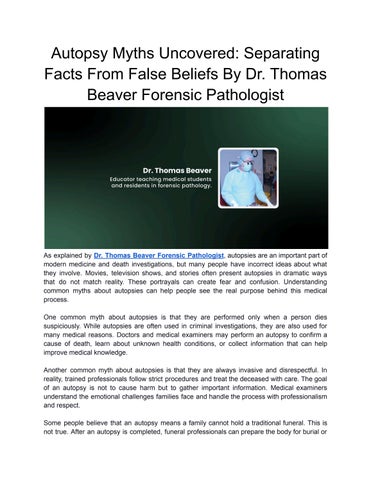
As explained by Dr. Thomas Beaver Forensic Pathologist, autopsies are an important part of modern medicine and death investigations, but many people have incorrect ideas about what they involve. Movies, television shows, and stories often present autopsies in dramatic ways that do not match reality. These portrayals can create fear and confusion. Understanding common myths about autopsies can help people see the real purpose behind this medical process. One common myth about autopsies is that they are performed only when a person dies suspiciously. While autopsies are often used in criminal investigations, they are also used for many medical reasons. Doctors and medical examiners may perform an autopsy to confirm a cause of death, learn about unknown health conditions, or collect information that can help improve medical knowledge. Another common myth about autopsies is that they are always invasive and disrespectful. In reality, trained professionals follow strict procedures and treat the deceased with care. The goal of an autopsy is not to cause harm but to gather important information. Medical examiners understand the emotional challenges families face and handle the process with professionalism and respect. Some people believe that an autopsy means a family cannot hold a traditional funeral. This is not true. After an autopsy is completed, funeral professionals can prepare the body for burial or
viewing. Many families are still able to follow their preferred funeral traditions. The process is handled carefully to support the wishes of loved ones. A widely believed myth about autopsies is that they are required after every death. However, not every person who passes away needs an autopsy. The decision depends on several factors, including the cause of death, legal requirements, and medical concerns. Some deaths are fully explained through medical records, while others need a closer examination. Many people also think that autopsies always reveal the exact reason someone died. Although an autopsy is a valuable tool, it cannot answer every question. Sometimes the available evidence does not provide a complete explanation. Medical experts combine autopsy findings with medical history, laboratory tests, and other information to reach the most accurate conclusion. Another myth about autopsies is that families have no say in the process. In some situations, families may discuss concerns, ask questions, and learn about the findings. Rules can vary depending on location and the type of examination. Communication with medical professionals can help families better understand why an autopsy is recommended. Learning the truth about common myths about autopsies can make the topic less frightening. Autopsies are not only connected to crime or mystery. They are scientific procedures designed to discover important facts and provide answers. They help medical professionals, families, and communities understand causes of death and improve future healthcare. By replacing myths with accurate information, people can develop a more balanced view of autopsies. The process serves an important purpose in medicine and public safety. With proper understanding, autopsies can be seen as a respectful and valuable tool for discovering the truth.