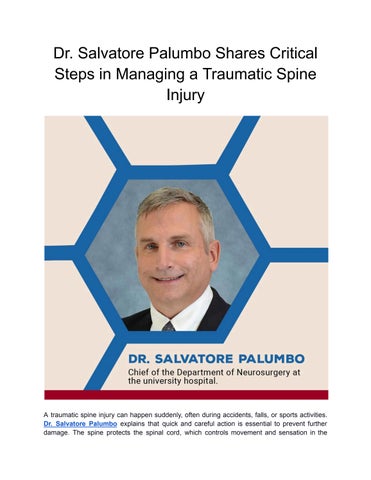
Dr. Salvatore Palumbo Shares Critical Steps in Managing a Traumatic Spine Injury

A traumatic spine injury can happen suddenly, often during accidents, falls, or sports activities. Dr. Salvatore Palumbo explains that quick and careful action is essential to prevent further damage The spine protects the spinal cord, which controls movement and sensation in the
body When an injury occurs, even small mistakes can make the situation worse Understanding the right steps early on can make a major difference, especially when it comes to spinal injury emergency care
One of the first things to do is recognize the signs of a serious injury. These may include severe back or neck pain, as well as numbness, tingling, or weakness in the arms or legs In some cases, a person may have trouble moving or may lose control of bladder or bowel function. These symptoms should always be treated as urgent
Once the signs are recognized, it is very important to keep the person still. Movement can worsen the injury and cause more harm to the spinal cord The head and neck should be supported in a neutral position If the person is lying down, they should not be moved unless there is immediate danger. Calling emergency services right away is the safest step.
When medical professionals arrive, they use special tools to stabilize the spine. Devices like neck braces and backboards help keep the spine aligned during transport This step is critical because even small movements during this time can affect recovery
At the hospital, doctors begin a detailed evaluation Imaging tests such as X-rays, CT scans, or MRIs are used to see the extent of the injury These tests help doctors understand whether the damage involves bones, discs, or the spinal cord itself. A clear diagnosis allows for better treatment planning
Treatment depends on the severity of the injury. In some cases, non-surgical care, such as braces and medications, can help reduce pain and support healing These methods aim to protect the spine while it recovers. Pain management is also important, as it helps patients stay comfortable
In more serious cases, surgery may be needed. Surgery can help stabilize the spine, remove pressure from the spinal cord, or repair damaged areas Modern surgical techniques have improved outcomes and recovery time for many patients
Recovery does not end with treatment Rehabilitation plays a key role in helping patients regain strength and mobility. Physical therapy helps improve movement, while occupational therapy supports daily activities. Recovery can take time, and progress may be slow, but consistent care is important
Emotional support is also very important A traumatic injury can be stressful for both the patient and their family Counseling and support groups can help people cope with these changes and stay positive during recovery.
In the end, knowing how to respond and what to expect can make a meaningful difference
Learning about traumatic spine injury treatment can help individuals and families feel more prepared and hopeful during the recovery journey