Enhancing Safety Compliance in Mining Using Drone Monitoring
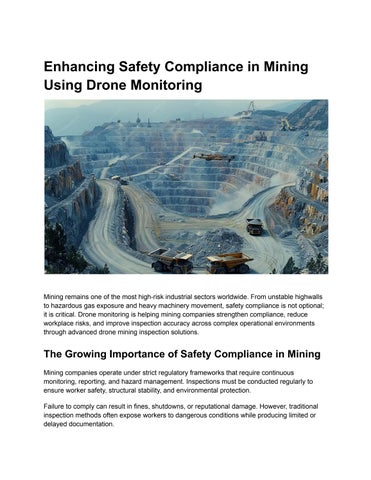
Mining remains one of the most high-risk industrial sectors worldwide. From unstable highwalls to hazardous gas exposure and heavy machinery movement, safety compliance is not optional; it is critical Drone monitoring is helping mining companies strengthen compliance, reduce workplace risks, and improve inspection accuracy across complex operational environments through advanced drone mining inspection solutions
The Growing Importance of Safety Compliance in Mining
Mining companies operate under strict regulatory frameworks that require continuous monitoring, reporting, and hazard management Inspections must be conducted regularly to ensure worker safety, structural stability, and environmental protection
Failure to comply can result in fines, shutdowns, or reputational damage. However, traditional inspection methods often expose workers to dangerous conditions while producing limited or delayed documentation.
Regulatory Requirements and Risk Exposure
Safety regulations require documented inspections of highwalls, tailings storage facilities, stockpiles, processing plants, and heavy equipment. Manual inspections often involve climbing unstable terrain or entering confined spaces Drone monitoring reduces this exposure by enabling remote data collection while maintaining compliance standards through reliable drone mining inspection workflows.
How Drone Monitoring Improves Site Inspections
Drone monitoring transforms inspection workflows by providing fast, high-resolution aerial data collection. Equipped with advanced cameras, thermal sensors, and LiDAR systems, drones can safely survey large areas in a fraction of the time ground teams require
Many mining companies now adopt the Drone as a Service (DaaS) model, which allows them to access professional drone operations, certified pilots, and advanced data analytics without investing in in-house equipment or training
Highwall, Tailings, and Equipment Monitoring
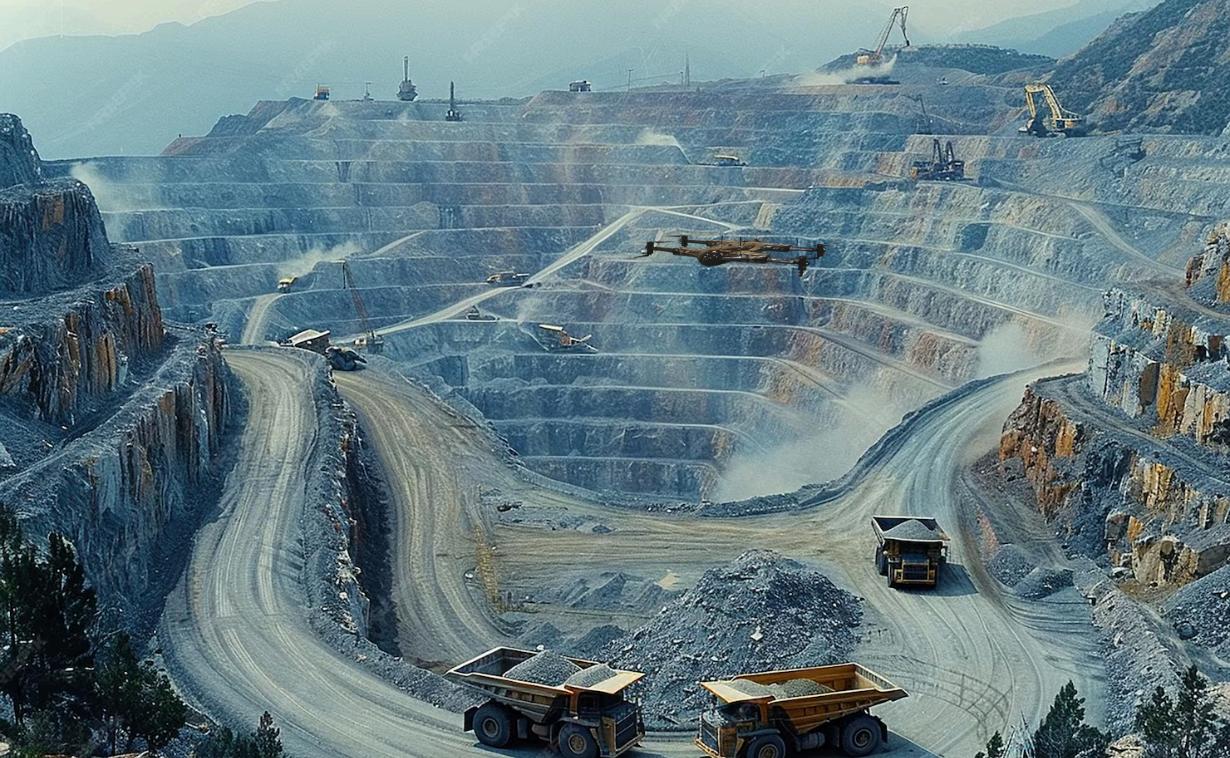
Drones are particularly effective in high-risk areas such as highwalls and tailings dams They can detect structural cracks, slope instability, erosion patterns, and water accumulation. Thermal imaging also identifies overheating machinery, preventing potential equipment failures or fire hazards
When delivered through a Drone as a Service (DaaS) provider, inspections are standardized, repeatable, and fully documented to support compliance audits
Real-Time Data for Proactive Risk Management
One of the key advantages of drone monitoring is the ability to transmit data in real time. Safety managers can receive live video feeds and rapid imagery analysis, enabling immediate decision-making.
Instead of reacting to incidents after they occur, mining operators can identify warning signs early and implement corrective measures. This proactive approach strengthens regulatory compliance while enhancing overall operational safety.
Accurate Documentation and Reporting
Regulatory audits require clear documentation of inspections and corrective actions. Drone systems generate geo-referenced imagery, 3D site models, and automated reports that serve as verifiable compliance records
Digital documentation improves transparency, simplifies reporting, and creates a historical safety database that supports long-term risk management strategies.