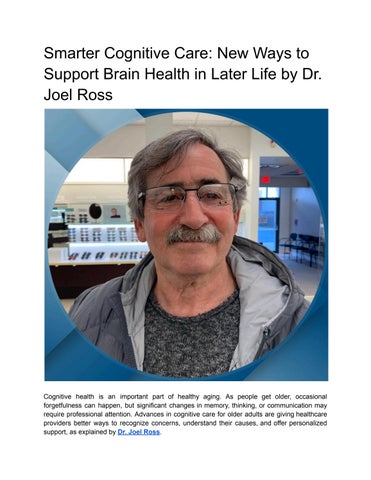
Smarter Cognitive Care: New Ways to Support Brain Health in Later Life by Dr. Joel Ross
Cognitive health is an important part of healthy aging. As people get older, occasional forgetfulness can happen, but significant changes in memory, thinking, or communication may require professional attention. Advances in cognitive care for older adults are giving healthcare providers better ways to recognize concerns, understand their causes, and offer personalized support, as explained by Dr. Joel Ross.
One major change is the growing focus on early assessment. Healthcare professionals can use cognitive screenings and detailed evaluations to identify changes in memory and thinking. Early evaluation does not always mean that a person has a serious cognitive disorder. It can help identify other factors that may affect mental performance, including sleep problems, medication effects, depression, nutritional concerns, or certain medical conditions. Personalized care is also becoming more important. Older adults have different health histories, lifestyles, and daily needs, so cognitive care cannot follow exactly the same plan for everyone. Doctors may consider physical health, emotional well-being, medications, social connections, and everyday abilities when developing a care strategy. Technology is creating additional opportunities for cognitive support. Digital assessment tools can help healthcare teams monitor certain changes over time, while telehealth can make some appointments more convenient. Technology may also help caregivers communicate important observations to healthcare professionals. These tools work best when they support, rather than replace, professional medical care. Lifestyle factors remain an important part of protecting overall brain health. Regular physical activity, good-quality sleep, balanced nutrition, social engagement, and mentally stimulating activities can support general well-being. Managing conditions such as high blood pressure and diabetes is also important because long-term health problems can affect brain health. Medication reviews are another valuable part of modern cognitive care. Some medicines can cause drowsiness, confusion, or other unwanted effects, particularly when several medications are taken together. Healthcare professionals can review prescriptions and over-the-counter medicines to identify possible concerns and make changes when medically appropriate. Caregivers are also receiving greater attention. Family members often notice changes in memory, mood, or daily behavior before an older adult does. Sharing these observations with healthcare professionals can provide useful information and support more complete care. Modern cognitive care is moving toward earlier evaluation, personalized treatment, technology-assisted monitoring, and greater attention to overall wellness. These advances can help older adults and their families better understand cognitive changes and make informed healthcare decisions. With appropriate professional support, cognitive care can become a proactive part of healthy aging rather than something addressed only after serious problems appear.