
Capturing









































































































FRANCE
Zara Durrani
Beyond the iconic châteaux, discover a more intimate side of France’s Loire Valley through riverside moments, floral artistry, living heritage, and meaningful encounters with the people preserving one of Europe’s most enchanting regions.
ZIMBABWE
Allison Foat
3 6
Set on a secluded island in Zimbabwe’s Zambezi River, Tsowa Safari Island offers a slower, water-shaped safari where river rhythms, wildlife encounters, and immersive nature experiences redefine the traditional African wilderness escape.
PHOTOGRAPHIC JOURNEY
Koushik Chatterjee
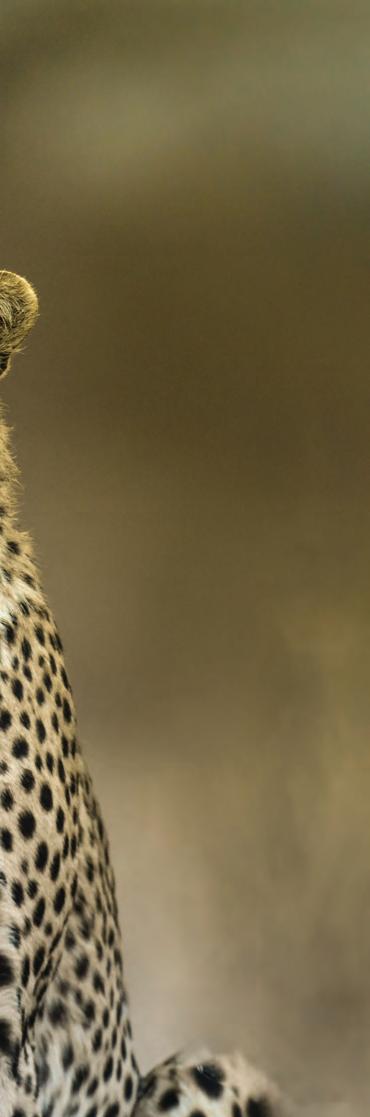
Journey into Kenya’s untamed wilderness through the lens of wildlife photographer Koushik Chatterjee, whose striking images capture Africa’s raw beauty—from powerful predator encounters to breathtaking migrations and unforgettable sunsets across the savannah.
PERU
Matthew Schueller
From world-class ceviche and cliffside bike rides to bohemian neighborhoods and unforgettable cultural moments, discover why Lima is far more than a gateway to Machu Picchu—it’s a destination that lingers long after departure.
Diane Tierney
Norwegian Cruise Line’s new Luna brings a celestial twist to cruising, blending spaceinspired design, thrill rides, standout dining, luxe accommodations, and Caribbean escapes that feel worlds away from the ordinary.
Sergi Reboredo
Travel across India in royal style aboard the Maharajas’ Express, where opulent rail journeys connect iconic landmarks, tiger safaris, palace dinners, and unforgettable cultural encounters from Delhi to Mumbai.
ROUNDUP
Steve Drake
6 2
From sleeping in a historic university and cliffside glass capsules to waking beside giraffes and staying in an ice hotel, these extraordinary properties prove where you stay can define the journey.
EXTRAORDINARY BRANDS DESERVE REMARKABLE PHOTOGRAPHS
Bespoke Professional Photography for Hotels, Resorts & Luxury Brands
Clients Worldwide:
TRAVEL + TOURISM
Fairmont Hotels & Resorts | Four
Seasons Hotels & Resorts | Ritz Carlton
Hotels | Accor Hotels | Melia Hotels
Ovolo Hotels | Sunwing Travel | Tourism
Barbados | Tourism Grand Cayman
LUXURY BRANDS
Helly Hanson | Lincoln Luxury Vehicles
Bugatti | Swissgear | Lole | Ford Motors | Samsung | Tiffany & Co.


Available worldwide. Request our photoshoot destination calendar: email: portfolio@glossy.media web portfolio: glossy.media
BURND SPF 41
getburnd.com
Designed for travelers who spend more time outdoors than indoors, Burnd SPF 41 Broad Spectrum Sunscreen Lotion delivers serious sun protection without the usual sunscreen drawbacks. This clear-drying, non-greasy formula offers broad-spectrum SPF 41 coverage with 80-minute water resistance, making it ideal for beach escapes, hikes, and pool days. TSA-friendly and fragrance-free, it’s built for adventure.

THE NORTH FACE ALTAMESA
thenorthface.com

GURUNANDA
gurunanda.com
Compact, convenient, and designed for life on the move, GuruNanda Ready-to-Go Butter on Gums Pre-Pasted Toothbrushes 70 Count delivers effortless oral care wherever your travels take you. Each disposable brush features ultra-soft bristles, pre-pasted fluoride-free toothpaste, and a built-in toothpick. Individually wrapped and waterfree, they’re ideal for flights, road trips, and quick refreshes anytime.
For those who like their adventures a little more rugged, the The North Face Altamesa 500 V2 Shoes deliver comfort far beyond the pavement. Lightweight yet highly cushioned, these trail-ready runners feature responsive DREAM midsole foam, grippy 4mm lugs, and durable traction for everything from mountain hikes to city explorations. A smart pick for active getaways where comfort matters.


TRAVEL GEAR
CARRYX PERSONAL DUFFEL 27L
carryx.co
Skip baggage fees without sacrificing organization, the CARRYX Personal Duffel 27L is built for smarter carryon travel. Sized to fit under most airline seats, this sleek 27L bag features a padded laptop sleeve, wet pocket, collapsible bottle holder, and multiple quick-access compartments. Durable, water-resistant materials and versatile carry options make it ideal for weekend escapes.


ATLAS TRAVEL CHINO
missionworkshop.com
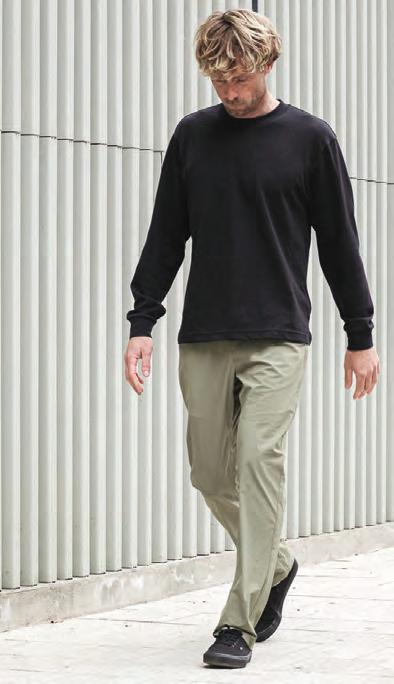
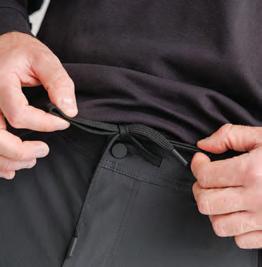
Built for travelers who prefer to pack light without sacrificing style, the Atlas Travel Chino from Mission Workshop blends polished looks with performance-driven design. Made from lightweight Italian four-way stretch fabric, these quick-drying, wrinkle-resistant pants feature secure zip storage for essentials and even pack into their own pocket— ideal for flights, city breaks, and life on the move.

COLUMBIA RAIN GEAR
columbiasportswear.ca
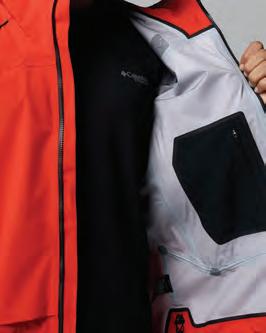
Built for travelers who don’t let bad weather derail the journey, Columbia’s Saudan Pro 3L Shell delivers serious protection in unpredictable conditions. Featuring Columbia’s new Omni-Tech™ Pro construction with an elite 30K/30K waterproof-breathable rating, this lightweight shell is designed for heavy rain, alpine adventures, and urban downpours alike. Underarm venting, a wire-brimmed hood, and waterproof zippers make it a reliable companion when the forecast turns fast.


REAL TECHNIQUES DOUBLE TIME BRUSH + LASH SET
realtechniques.com
Want a polished beauty routine without overpacking, the Real Techniques Double Time Retractable Brush Set keeps essentials compact and carry-on friendly. Featuring three dual-ended eye brushes and an eyelash curler, this spacesaving set handles blending, defining, concealing, and brow shaping with ease. Retractable handles protect bristles in transit, making touch-ups effortless anywhere.

TRAVEL GEAR

MONOS LUGGAGE COVER
Frequent flyers know baggage handlers aren’t always gentle. The Monos Washable Luggage Cover adds a smart layer of protection for hard-shell suitcases, shielding against scratches, scuffs, dirt, and travel-day wear. Made from durable MonoWeave™ fabric, it features precise handle cutouts, a secure fit, and machine-washable convenience—helping your luggage look newer, longer. monos.com
Orbitkey is proving that smarter travel starts with better organization. The brand’s latest trio of essentials is designed to eliminate the chaos of life on the move—from airport security lines to hotel check-ins. The Hanging Toiletry Pouch keeps grooming essentials neatly visible with a built-in hook and dedicated wet zone, while the Orbitkey Pro Leather Key Organizer transforms noisy keys into a sleek, silent carry essential. Completing the set, the Orbitkey Daily Tote helps organize daily carry items with thoughtfully designed compartments, making this collection ideal for travelers who appreciate streamlined packing and stress-free journeys.




SPOTLIGHT
HILTON LAKE COMO
MODERN LAKESIDE LUXURY ON ITALY’S MOST GLAMOROUS SHORELINE
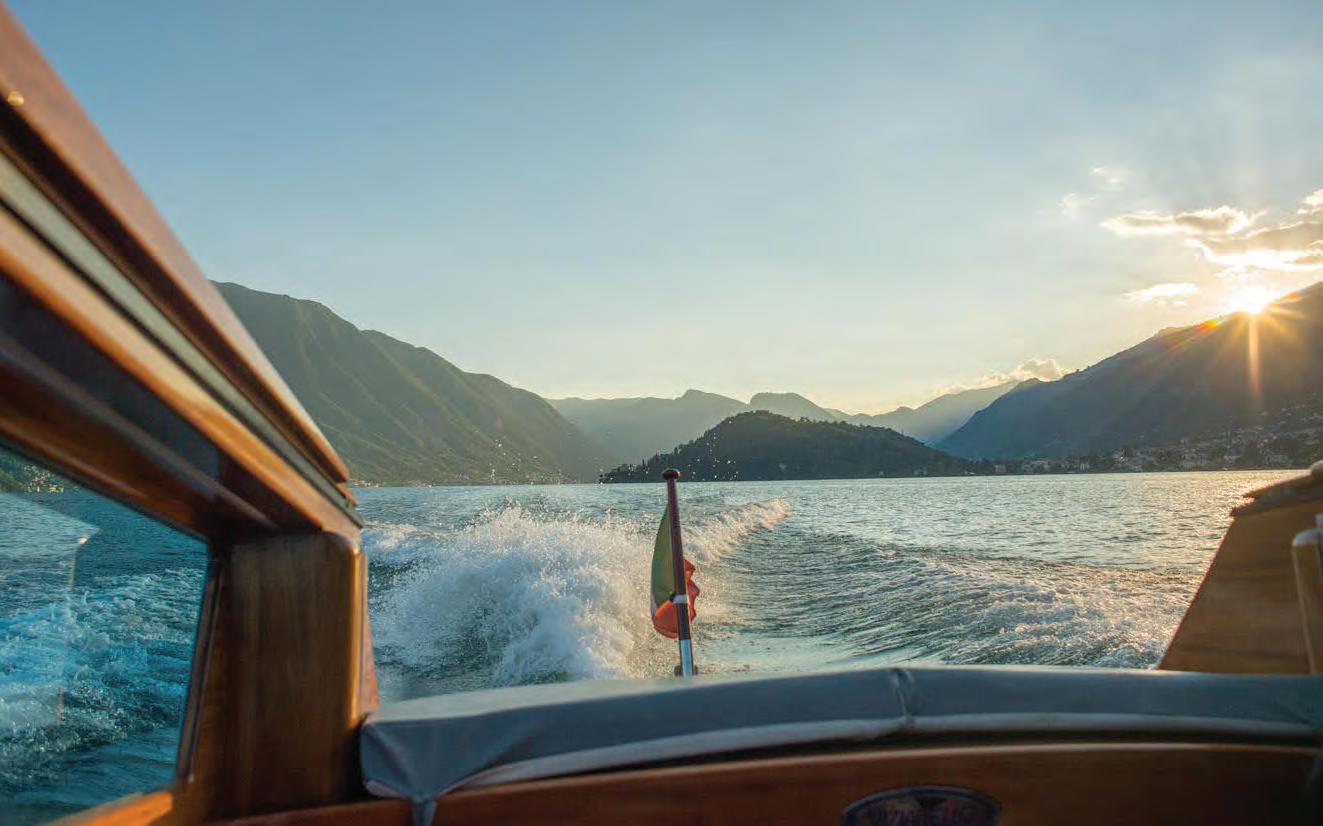
Set on the edge of one of Europe’s most iconic destinations, Hilton Lake Como offers a fresh perspective on Lake Como luxury. Just steps from the lakefront promenade and a short walk from the historic heart of Como, the hotel blends sleek contemporary design with the timeless romance that has drawn travelers to this storied destination for generations.
Surrounded by dramatic alpine peaks, elegant villas, and shimmering waters, Lake Como has long been synonymous with Italian sophistication. While the region is known for its historic palaces and old-world grandeur, Hilton Lake Como introduces something refreshingly modern—a stylish retreat where clean architectural lines, expansive glass windows, and rooftop views create a distinctly elevated sense of place.
The hotel’s location offers the best of both worlds: peaceful lakeside relaxation with easy access to Como’s charming streets, designer boutiques, historic piazzas, and ferry connections to postcard-perfect villages like Bellagio, Varenna, and Tremezzo.
Like Lake Como itself, the experience feels effortlessly cinematic.

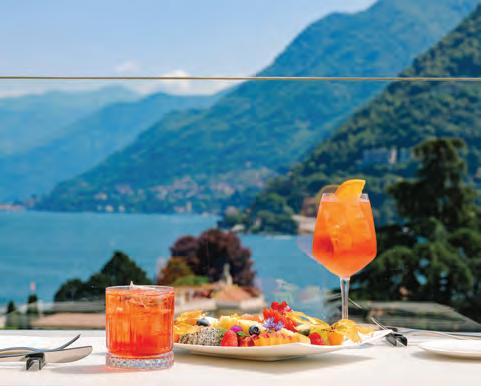
A Rooftop Above Lake Como
One of the hotel’s standout features is its spectacular rooftop terrace, home to an infinity pool that has quickly become one of the most sought-after vantage points in Como. From here, guests can take in panoramic views of the lake, surrounding mountains, and terracotta rooftops while relaxing in a private cabana or enjoying an aperitivo as the sun begins to set.
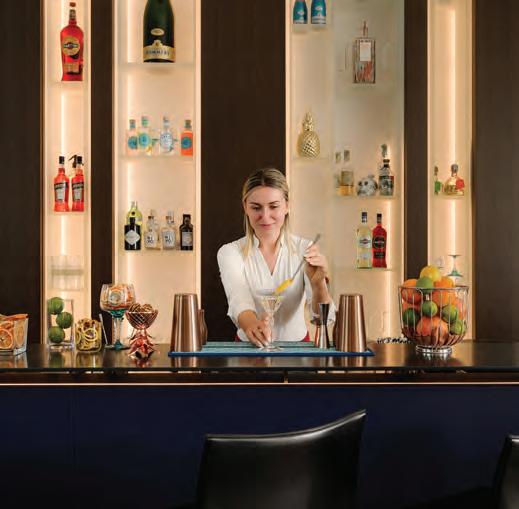
The rooftop bar creates a lively yet refined atmosphere, where handcrafted cocktails, Italian wines, and light bites pair perfectly with golden-hour views. Whether spending the afternoon poolside or watching the lights reflect across the lake at night, this elevated space captures the glamour Lake Como is known for.
Wellness Inspired by Italian Relaxation
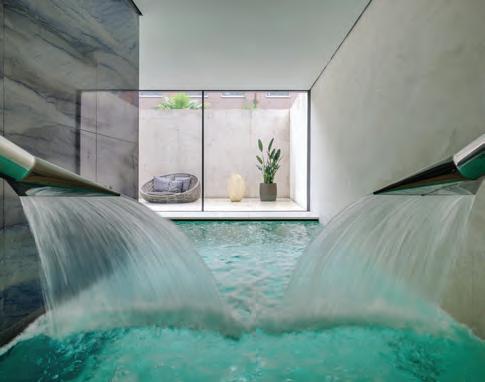
The hotel’s eforea Spa offers a restorative escape after a day exploring the lake. Designed with relaxation in mind, the wellness space includes a hydrotherapy circuit, sauna, steam room, whirlpool, and personalized treatments that encourage guests to slow down and recharge.
Guests can enjoy massages, facials, and wellness rituals before unwinding in tranquil lounge spaces that feel far removed from the bustle of nearby town streets. It’s a welcome contrast to the excitement of sightseeing and a reminder that Lake Como is equally suited for relaxation.
Dining with an Italian Twist
Dining at Hilton Lake Como reflects the region’s appreciation for fresh ingredients and effortless elegance. The hotel’s signature restaurants and bars serve elevated Italian cuisine, handcrafted cocktails, and relaxed all-day dining experiences.
Terrazza 241 offers rooftop dining with spectacular lake views, while Satin provides sophisticated cocktails in a chic setting. Guests can begin the day with leisurely breakfasts, enjoy long lunches after lake excursions, and settle into elegant evenings filled with regional wines and beautifully prepared Italian dishes.
A Contemporary Icon on Lake Como
Hilton Lake Como delivers something rare on Lake Como: contemporary luxury that feels both stylish and approachable in a destination known for tradition. With its rooftop pool, wellness offerings, exceptional dining, and prime lakeside location, it offers travelers a sophisticated base for experiencing one of Italy’s most beautiful destinations.
/12
BEYOND THE CHÂTEAUX: DISCOVERING A MORE INTIMATE LOIRE VALLEY FRANCE
BY ZARA DURRANI
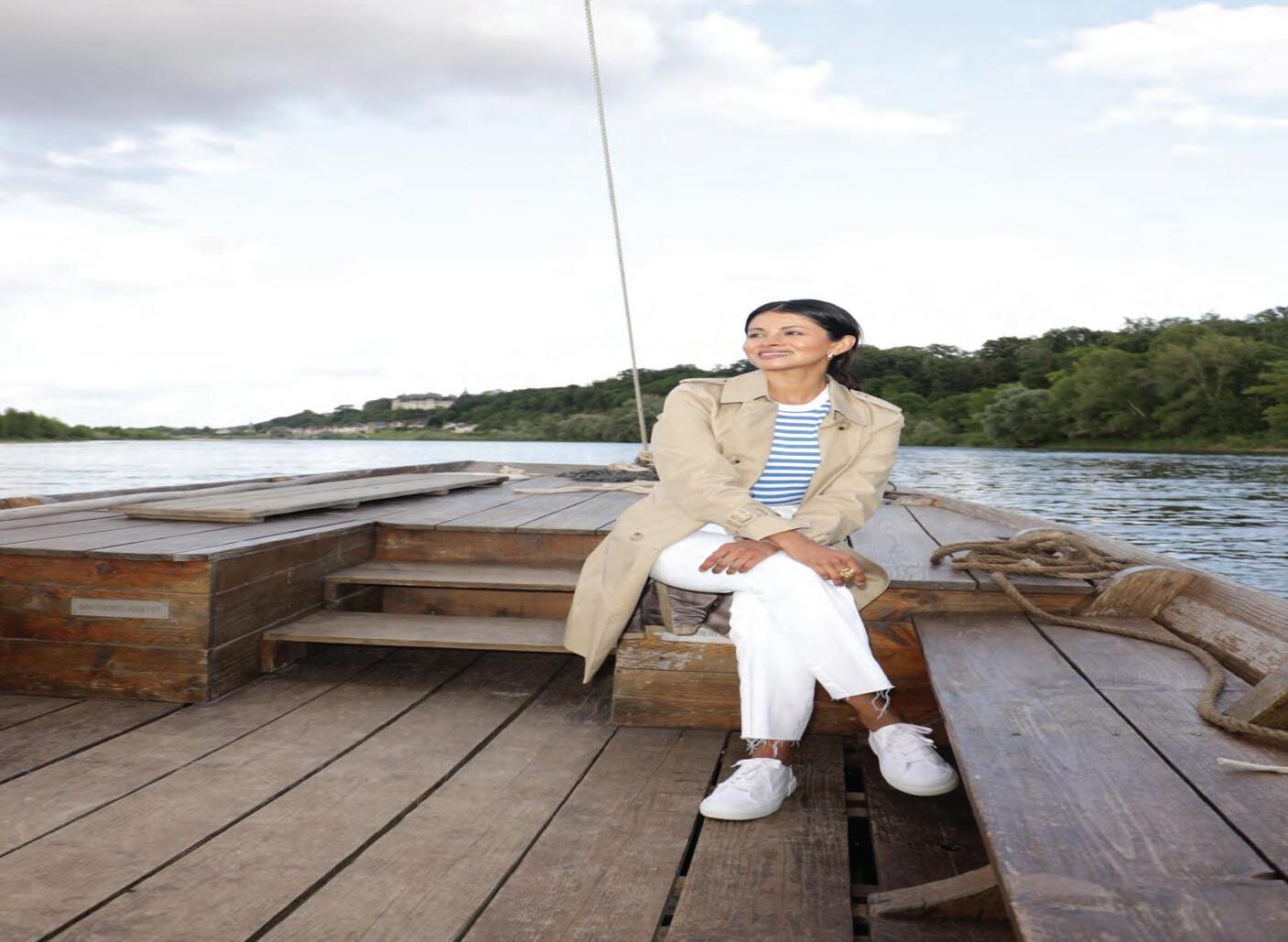
As part of my Wanderlusting in France series, this chapter of the Loire unfolded as a deeper immersion into a region that had already begun to surprise me.
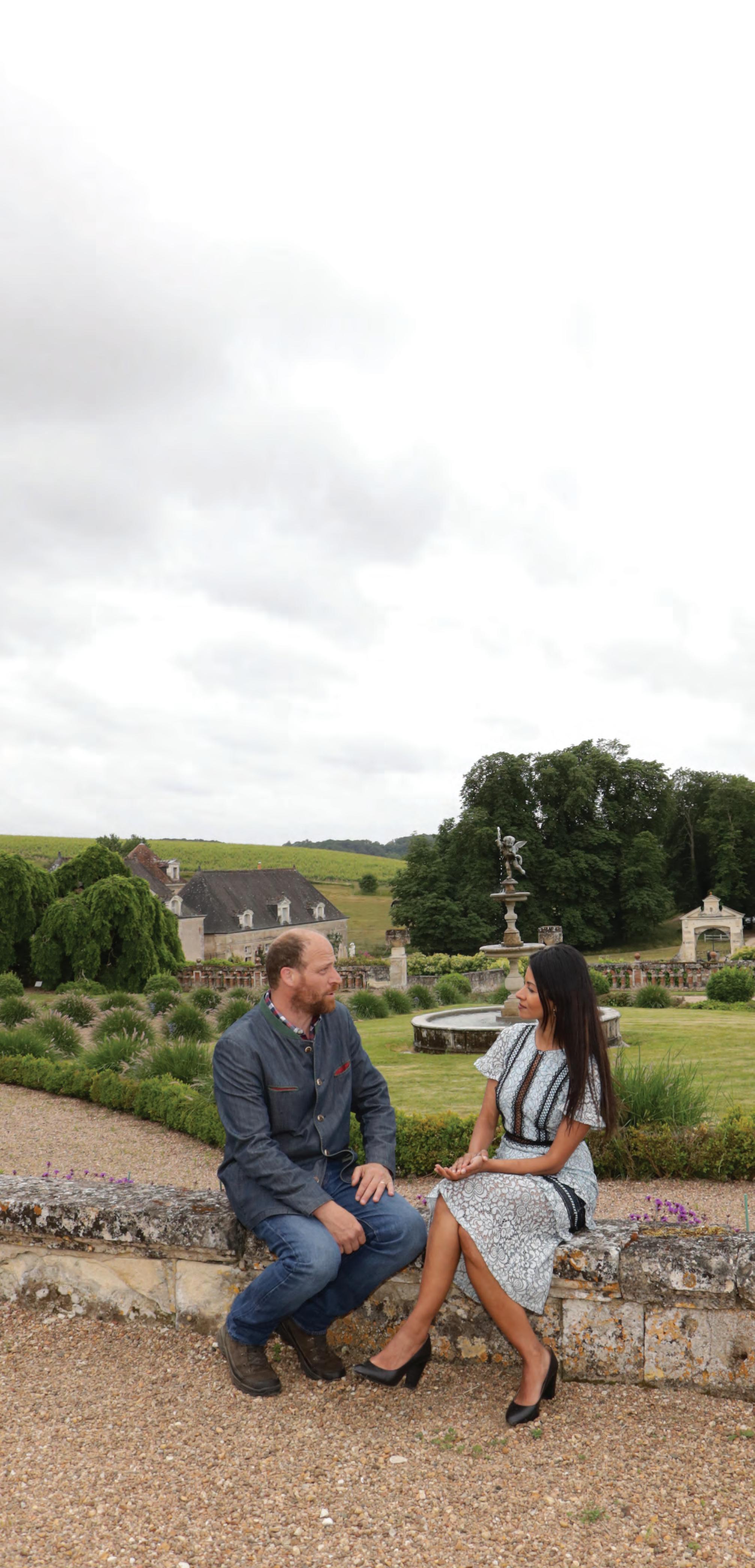
By the time I arrived at Château de Valmer under grey, atmospheric skies, I had already spent several days moving through the Loire’s storied landscapes. Yet something shifted here. The visit felt less about observing history from afar and more about entering into its living presence.
Spending time with Jean de Saint Venant offered a deeply personal lens into that. What stayed with me most was not simply the beauty of the estate’s celebrated Renaissance gardens, but the quiet pride with which he inhabited the place. He introduced me not only to the château and its history, but to the horses and dogs on the property, spoke of generations of family life there, and shared stories of parents and
grandparents whose lives were rooted in this land.
There was something profoundly moving in watching him, descendant and steward, also casually pouring wine for visitors who had come to experience the estate. It spoke to a kind of hospitality that felt inseparable from the Loire itself, where grandeur and intimacy coexist.
On that moody day, with the gardens softened sunless skies, I felt what makes this region so distinct. The Côte d’Azur captivates with light and glamour, but the Loire beckons differently. It draws you inward through greenery, rivers and a quieter kind of enchantment. Its beauty feels lived in.

That spirit of living heritage would become one of the defining threads of this chapter of the journey.
Like many travelers, I had long associated the Loire Valley with its celebrated châteaux. But exploring the region more deeply for the first time, I discovered something richer and more personal: a living cultural landscape shaped not only by grand architecture, but by artists, gardeners, boatmen, hoteliers and storytellers preserving its spirit in deeply human ways.
What made this chapter so memorable was hearing from local voices and experiencing the Loire through those who know it intimately. There was an extraordinary generosity in those encounters, and a sense that history here is not something sealed behind museum glass, but something still actively lived.
THE LOIRE OFFERS SOMETHING RARER THAN SPECTACLE IT OFFERS GRACE.
One of my most inspiring introductions to the Loire came at Domaine de Chaumont-sur-Loire, where I had the privilege of being shown around by Chantal ColleuDumond, the visionary director behind the estate and its celebrated International Garden Festival. Listening to her speak about the dialogue between landscape, art and heritage transformed the visit into something far more personal than a tour. Through her eyes, the gardens felt less like designed spaces and more like living works of poetry.
Overlooking the Loire River, Chaumont carries centuries of history, but it was its creative pulse that surprised me most. During my visit, I explored the International Garden Festival, where landscape design becomes a form of storytelling. Walking through these imaginative gardens, some poetic, some playful, some quietly provocative, I was struck by how they invited contemplation as much as admiration.
There was something deeply moving about seeing a historic estate embrace contemporary artistic expression so fluidly. It challenged the notion of heritage as static, revealing instead a Loire that continues to evolve.
Lunch at the domain extended that sense of immersion. Surrounded by greenery and the calm of the estate, it felt less like visiting an attraction and more like stepping briefly into a way of life.
If Chaumont offered a gateway into the Loire’s artistic imagination, the river itself revealed its soul.
One of the most memorable experiences of the journey came aboard a traditional outing with Moments de Loire. Gliding along the river at a gentle pace, tasting local specialties on board while hearing stories of the waterway’s historic role in shaping the region, I began to understand why the Loire is often described as the thread connecting everything.
There is something almost meditative about being on the river. The shifting light on the water, the quiet movement of the boat, and the rhythm of conversation it creates the kind of travel moment that lingers long after photographs are put away.
It also offered a more intimate perspective on the region, one not always captured in classic Loire narratives focused solely on castles and wine routes. Here, the river itself became a character.
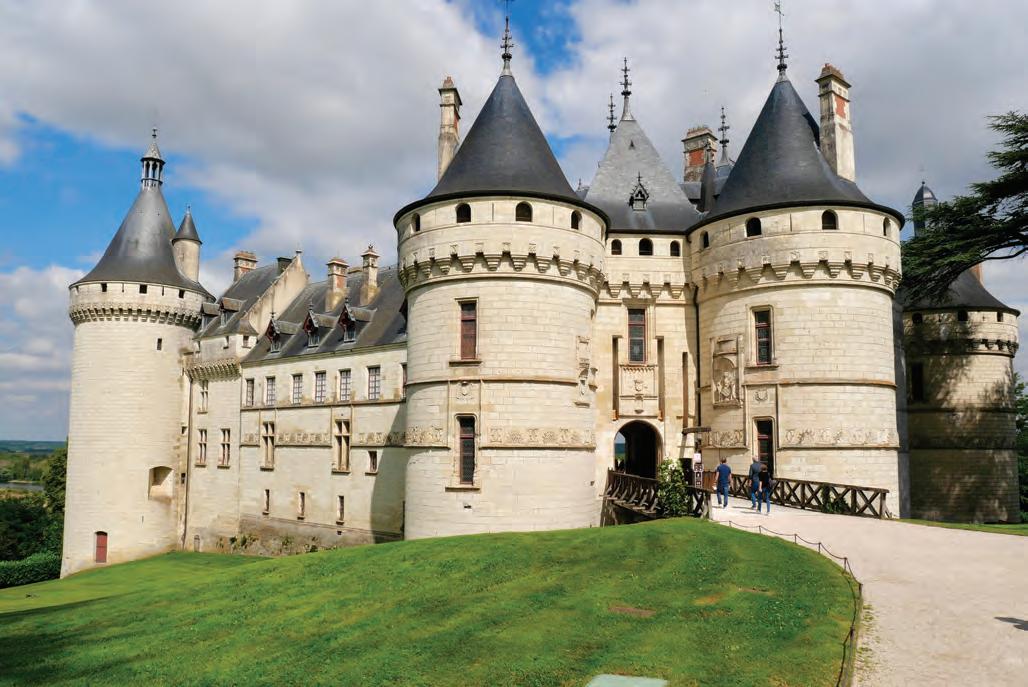
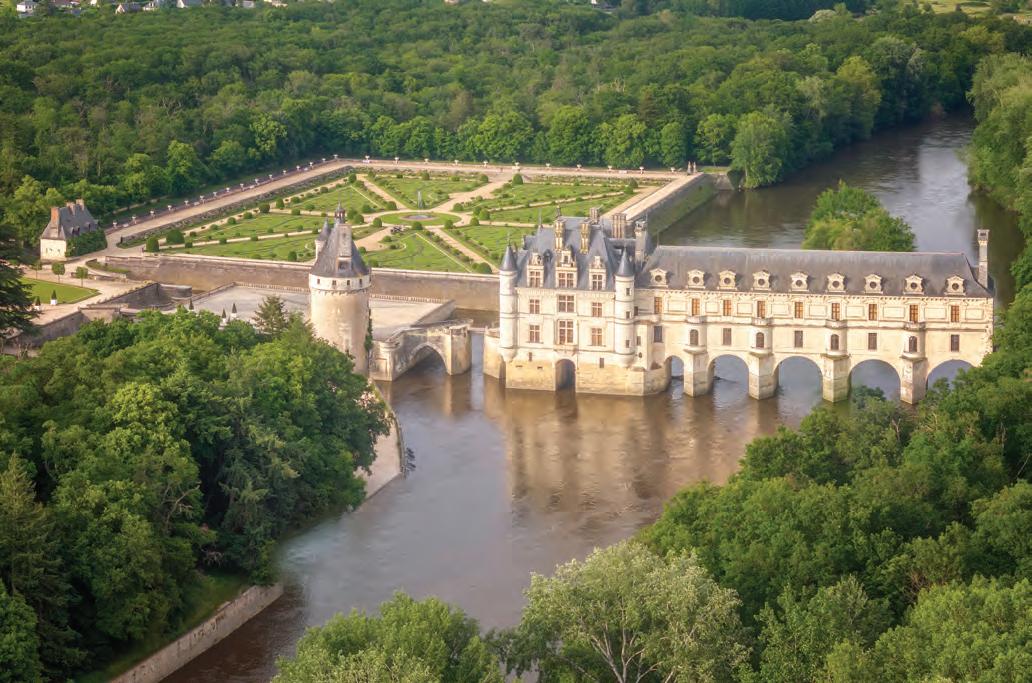
Another unforgettable chapter unfolded at Château de Chenonceau, often called one of France’s most elegant châteaux.
Spanning the Cher River with almost dreamlike grace, Chenonceau carries layers of history shaped by remarkable women, and that feminine legacy felt especially present during my visit.
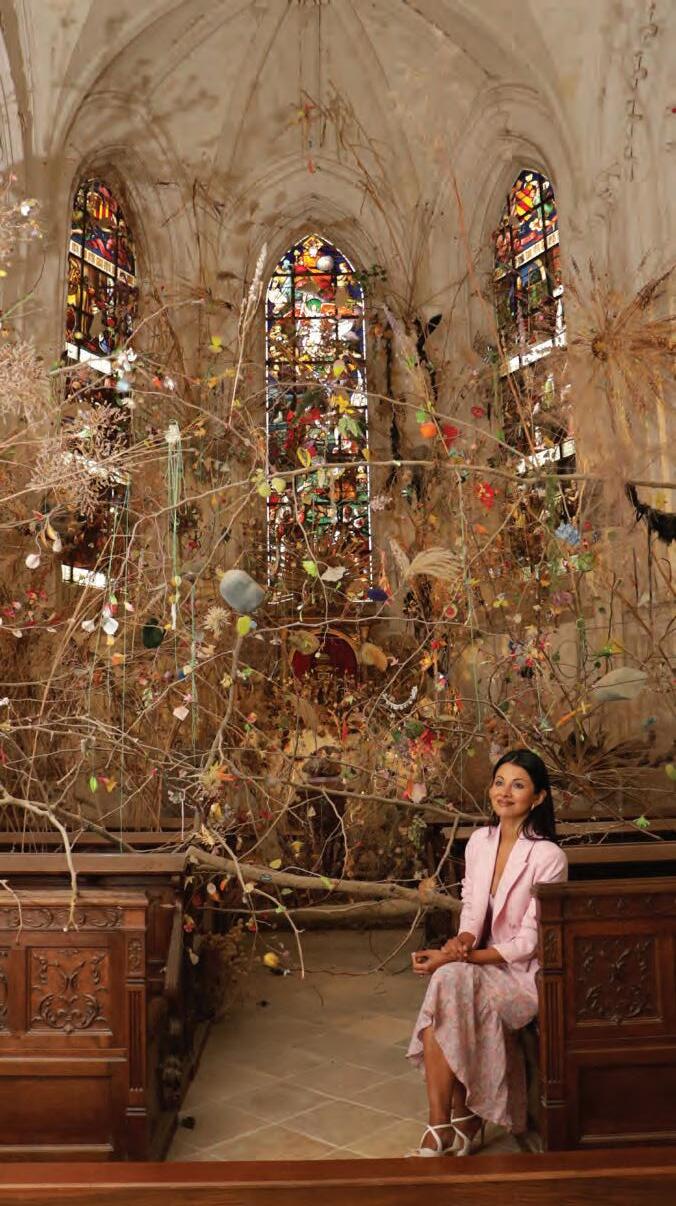
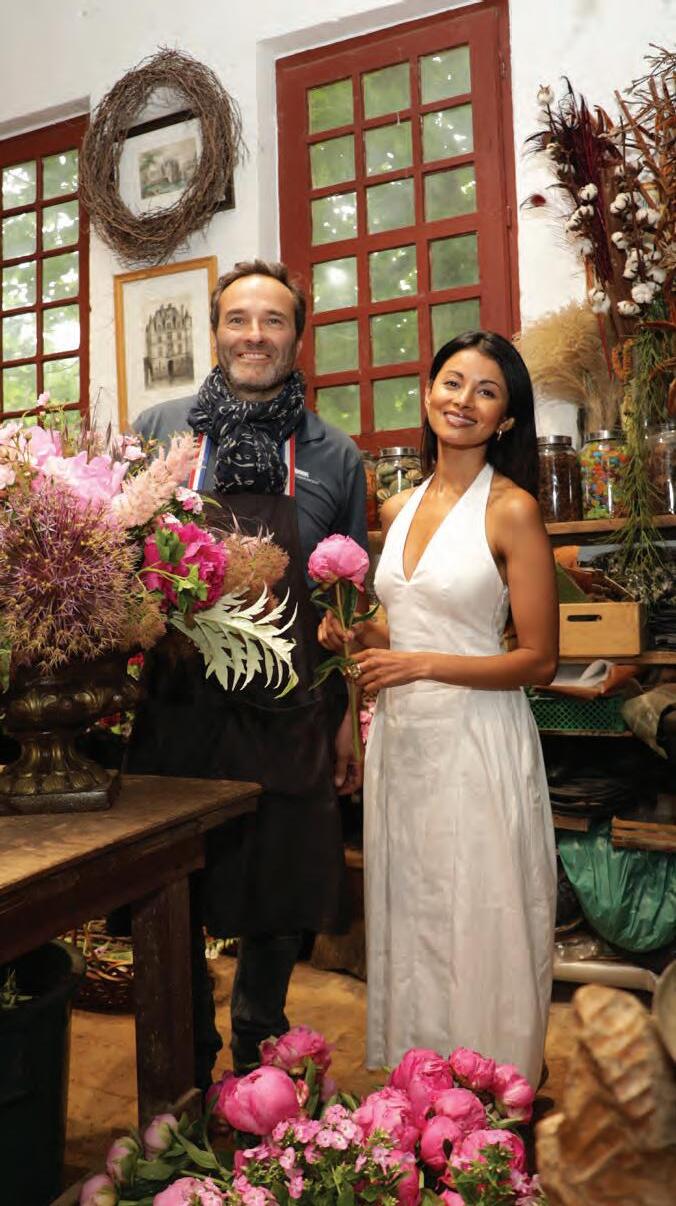
Rather than approaching the château solely through its architecture, I had the opportunity to engage with one of its enduring traditions: floral artistry.
Participating in a floral workshop inspired by the château’s botanical heritage offered a beautiful and unexpected way into the story of Chenonceau.
Surrounded by blooms gathered with care, learning how floral arrangements have long played a role in expressing the spirit of the château, I felt momentarily woven into that tradition.
Even the rain that day seemed to heighten the atmosphere. The gardens, softened by mist and spring showers, carried a quiet romance that made the experience feel almost cinematic.
It reminded me how often the most memorable travel moments are not the grand panoramic ones we anticipate, but the intimate ones we stumble into.
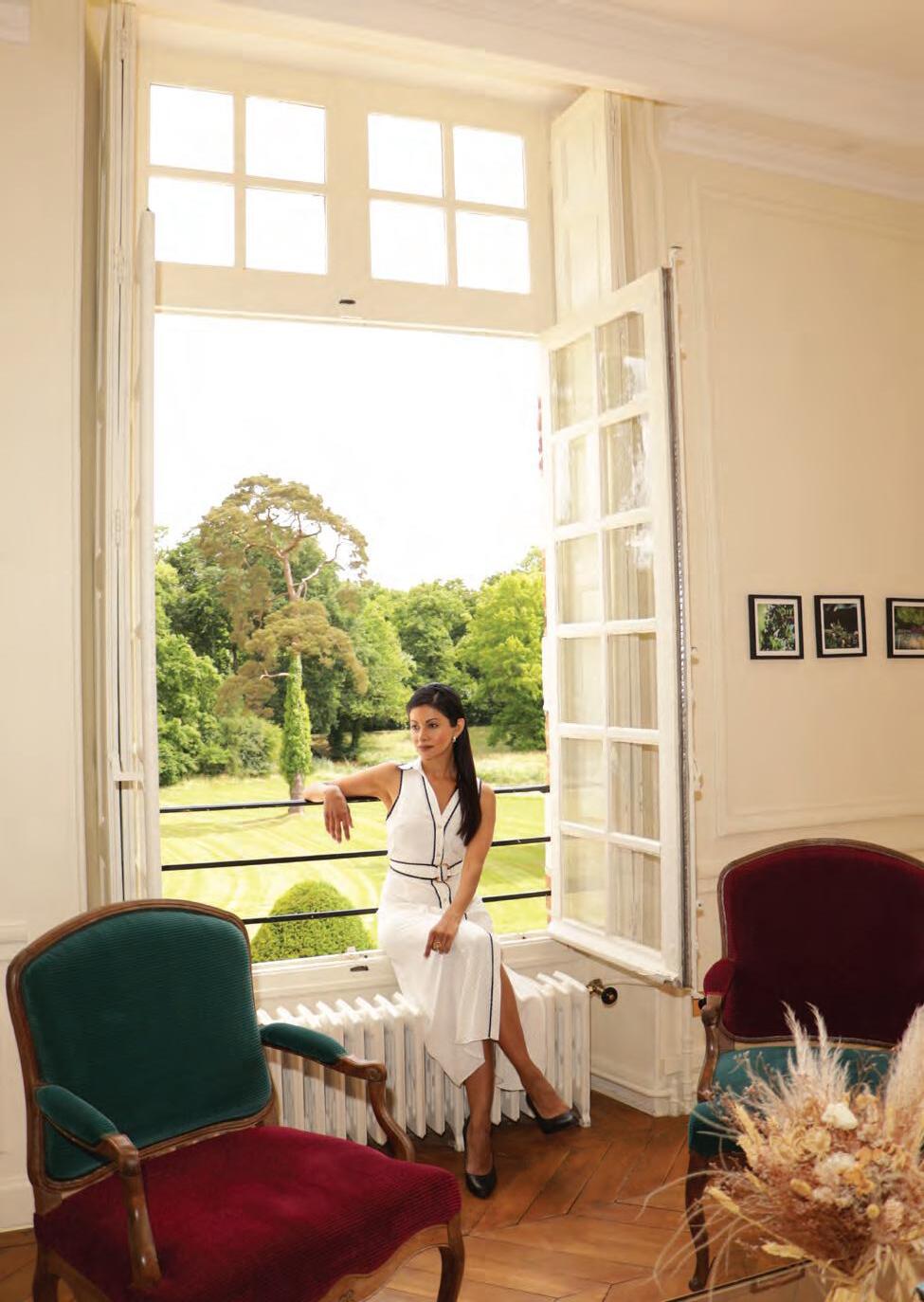
Later in the journey, that sense of intimacy continued at La Borde en Sologne Hôtel & Spa, where the Loire’s grandeur gave way to another kind of luxury - stillness.
Surrounded by forested countryside, the retreat offered a slower register altogether. Here, the pleasures were understated: elegant interiors, restorative calm, long meals and the simple luxury of lingering.
After days of moving through gardens, river landscapes and historic estates, it felt like an exhale. And perhaps that, more than anything, is what this chapter of the Loire Valley revealed to me:
that its beauty lies not only in what is monumental, but in what is quietly felt.
In conversations with locals, in traditions passed down through gardens and floral artistry, in the cadence of life along the river, I encountered a Loire that felt deeply layered and alive.
What an honor it was to experience the region in this way, to hear its history told by those who live it, and to discover a side of the Loire beyond postcard expectations.
For travelers willing to look beyond the iconic châteaux alone, the Loire Valley offers something rarer than spectacle. It offers grace.
And, finally, it became one of the most unexpected and meaningful chapters of Wanderlusting in France.


KOUSHIK CHATTERJEE
A PHOTOGRAPHIC JOURNEY

A PROFESSIONAL WILDLIFE PHOTOGRAPHER BASED IN INDIA FOR OVER A DECADE, EXCELS AT CAPTURING NATURE’S GRANDEUR. NOW, AS HE EXPANDS HIS HORIZONS, HE EMBARKS ON AN INTERNATIONAL JOURNEY, STARTING WITH THE DIVERSE LANDSCAPES OF KENYA.
INSTAGRAM: @WILDEARTH_IMAGES
CANON 6D MARK II & NIKON D7500
TAMRON SP 150-600MM F/5-6.3 DI VC USD G2
TAMRON SP 15-30MM F/2.8 DI VC USD G2
NIKON AF-S NIKKOR 200-500MM F/5.6E ED VR
CHATTERJEE
/19 AFRICA
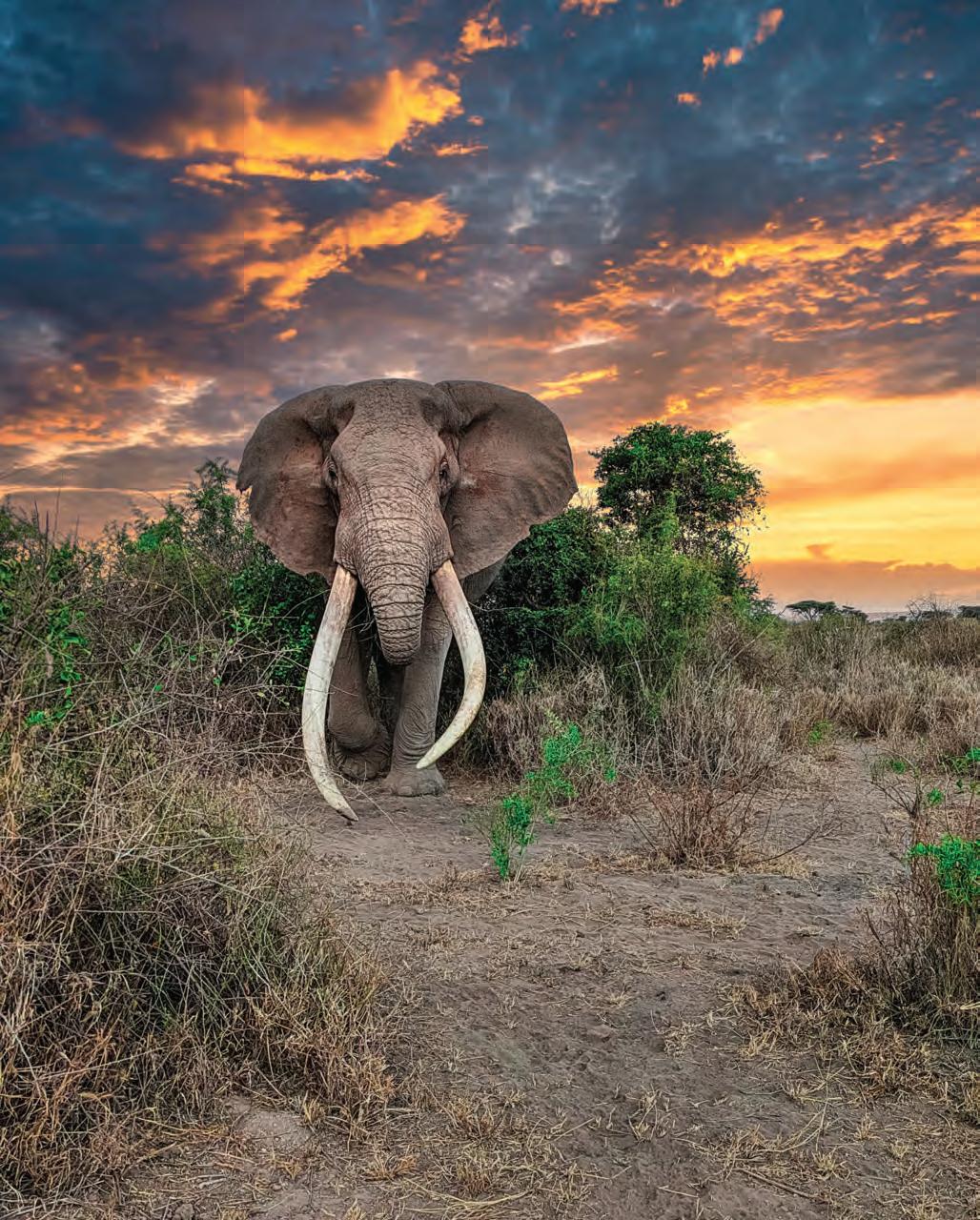
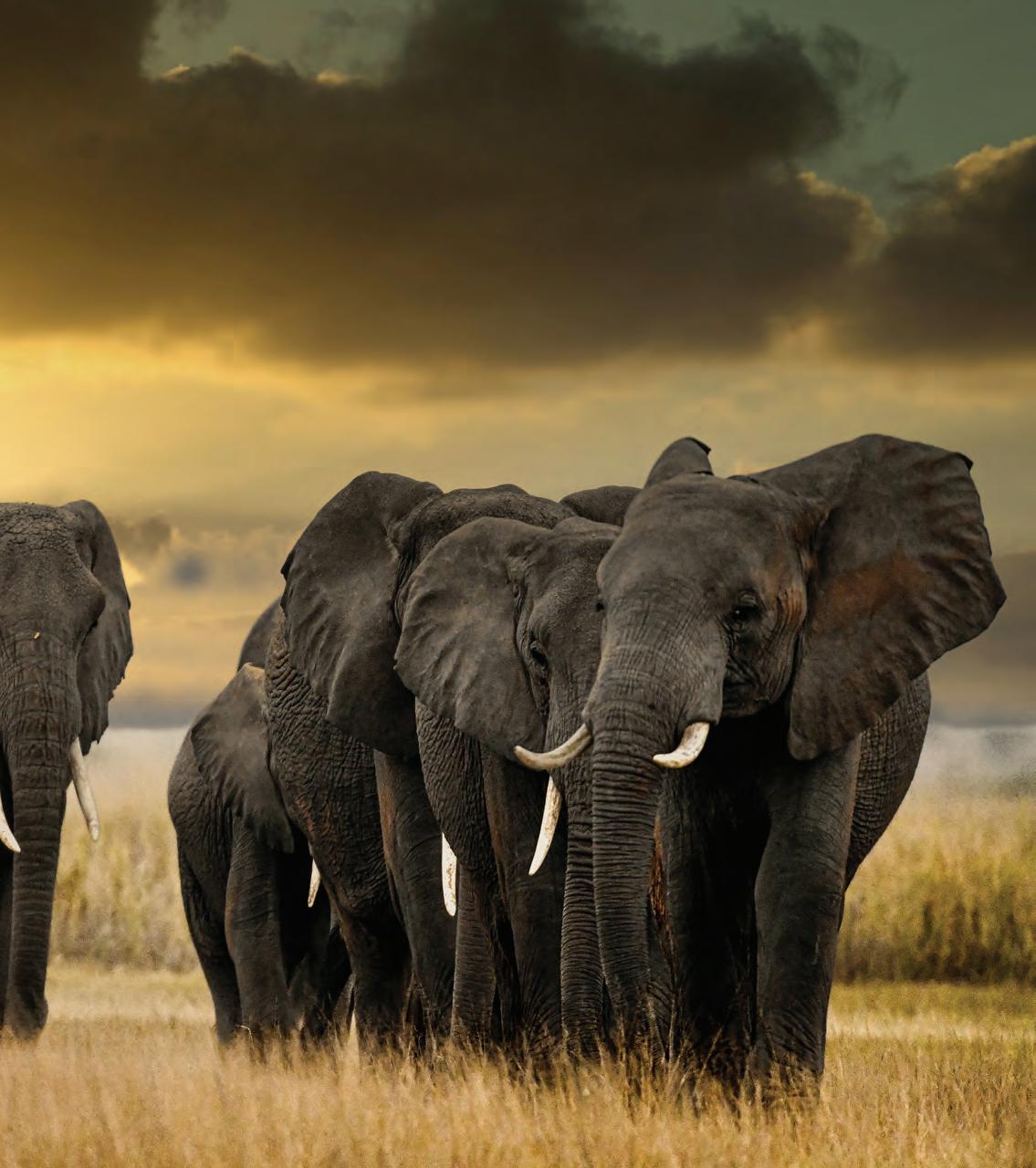
Craig, an iconic titan of Kenya’s wilderness, stands immortalized against a resplendent sky, his monumental tusks narrating epochs of survival, a revered relic of diminishing giants, whose passing marks an irreplaceable void in Earth’s living heritage.

The hippopotamus erupts in aqueous exuberance, shattering stillness with formidable force, a paradox of mass and vitality, embodying latent aggression beneath apparent indolence, as water becomes both sanctuary and stage for primal expression.
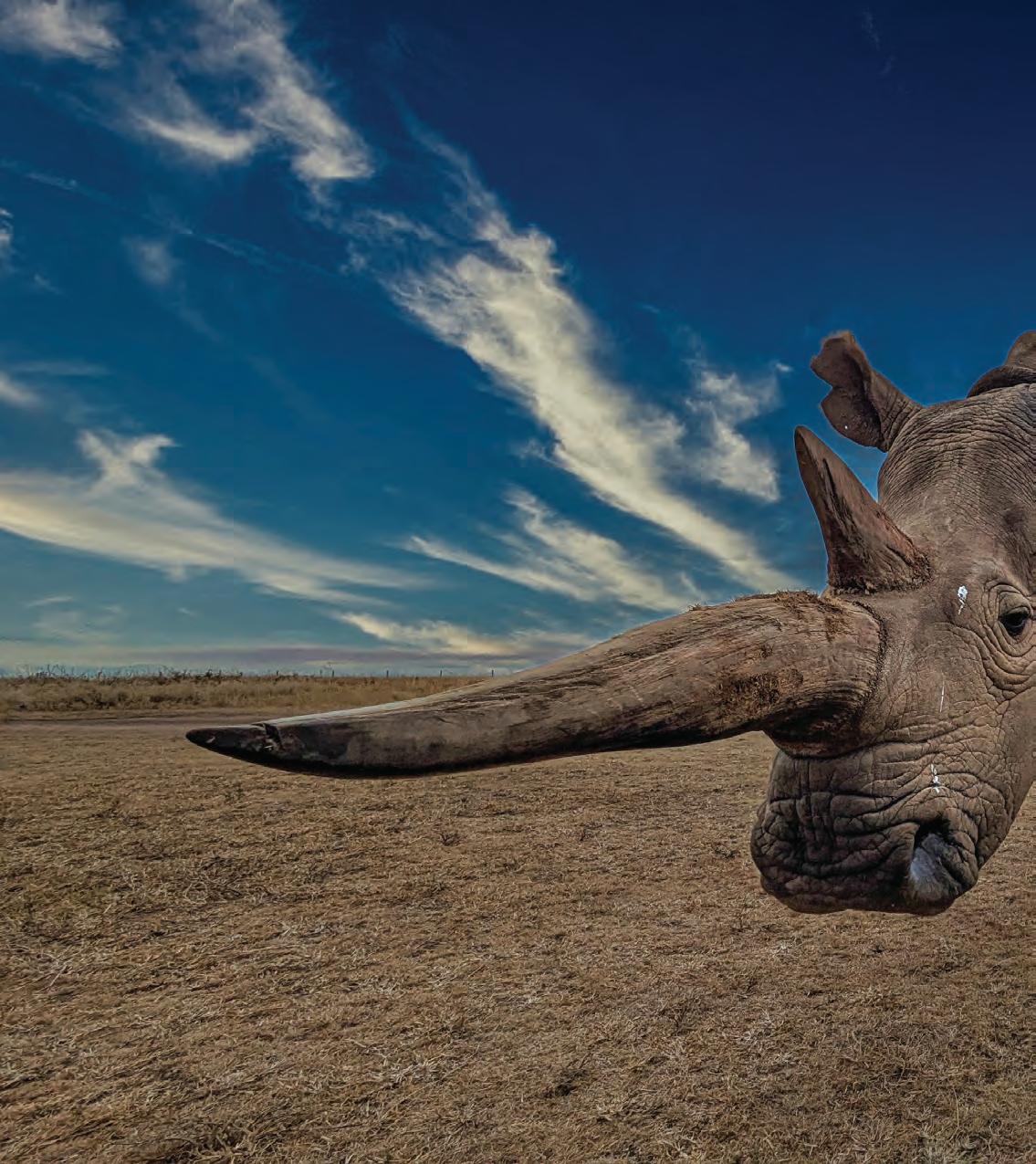
Najin, among the last vestiges of the northern white rhinoceros, embodies both fragile hope and profound loss, her existence a solemn elegy to extinction, where humanity confronts its irreversible transgressions against the sanctity of life.

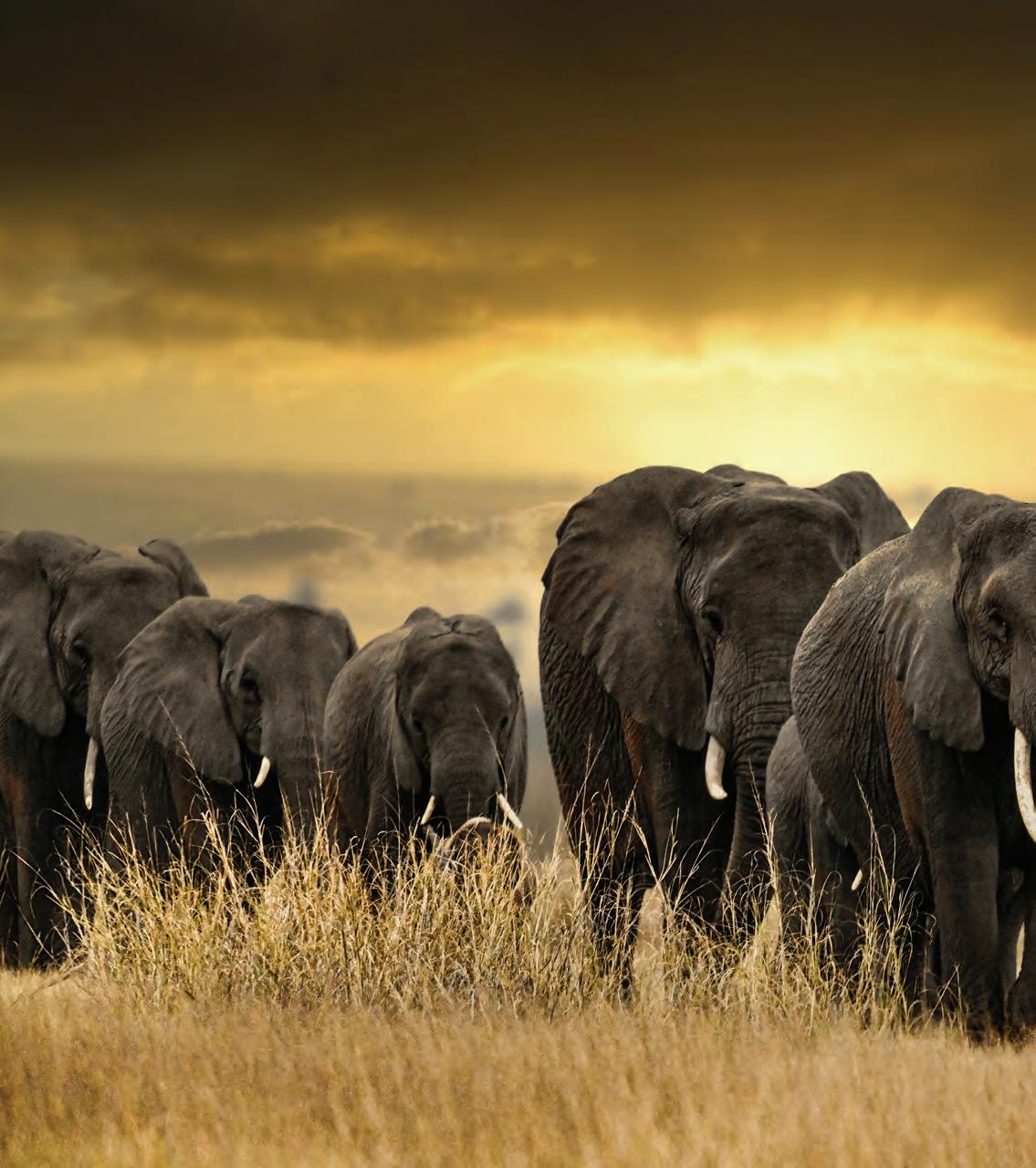
A solemn procession of elephants advances beneath a brooding sky, their silhouettes etched against fading light, embodying ancestral memory, terrestrial dominion, and the enduring gravitas of Africa’s untamed wilderness.

Two oryx collide in ritualistic combat, horns clashing with resonant intensity, a spectacle of strength and hierarchy, where survival intertwines with dominance, and the unforgiving terrain demands both resilience and uncompromising resolve.

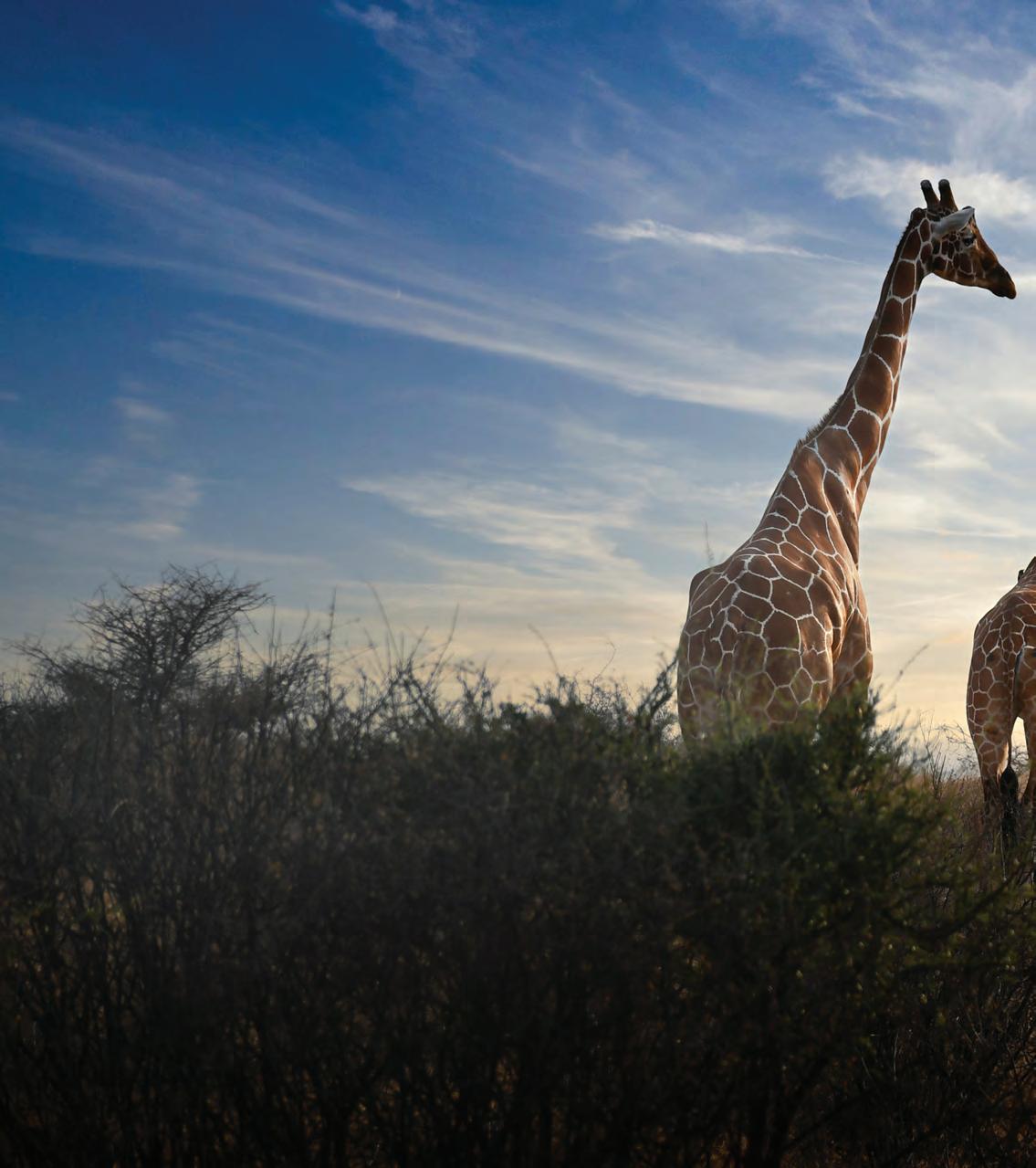
A procession of giraffes traverses the savannah, their towering frames punctuating the horizon, embodying a tranquil majesty, as they navigate a world defined by vastness, resilience, and the subtle rhythms of untamed existence.

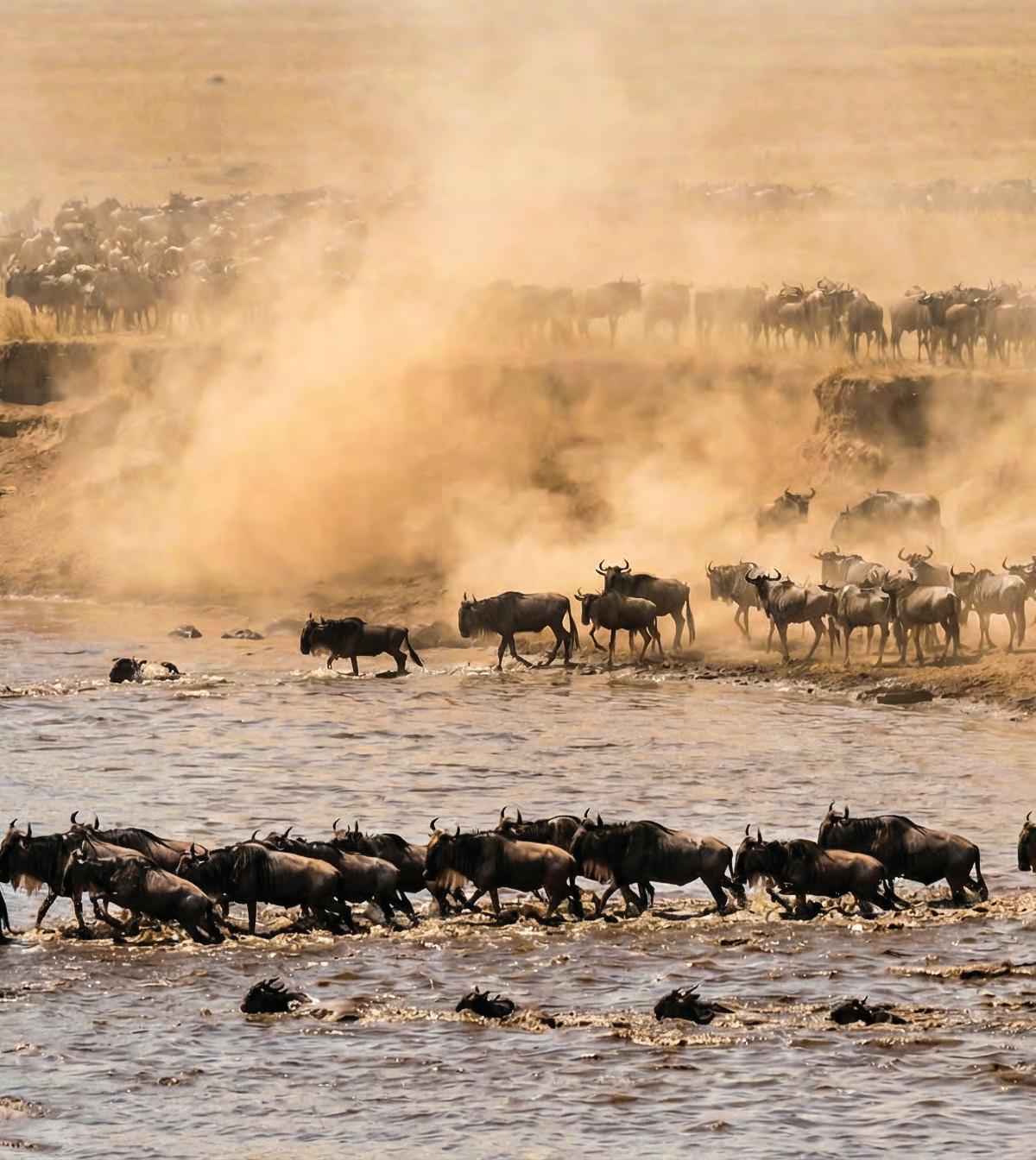
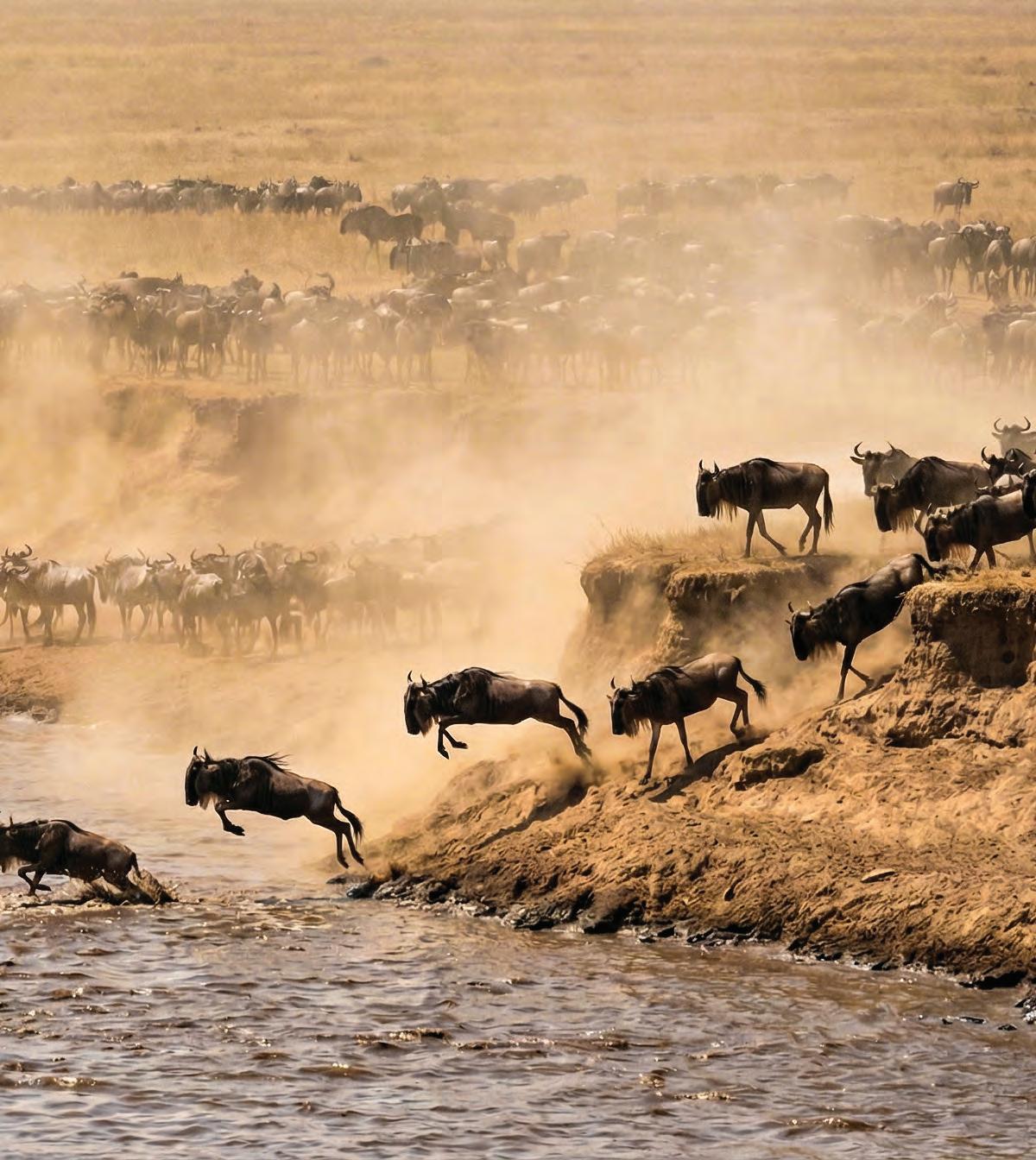
A tumultuous congregation of wildebeest surges forward, driven by ancient instinct, their collective movement echoing primordial rhythms, as survival orchestrates a relentless migration across perilous terrains, defying exhaustion, predation, and the tyranny of distance.
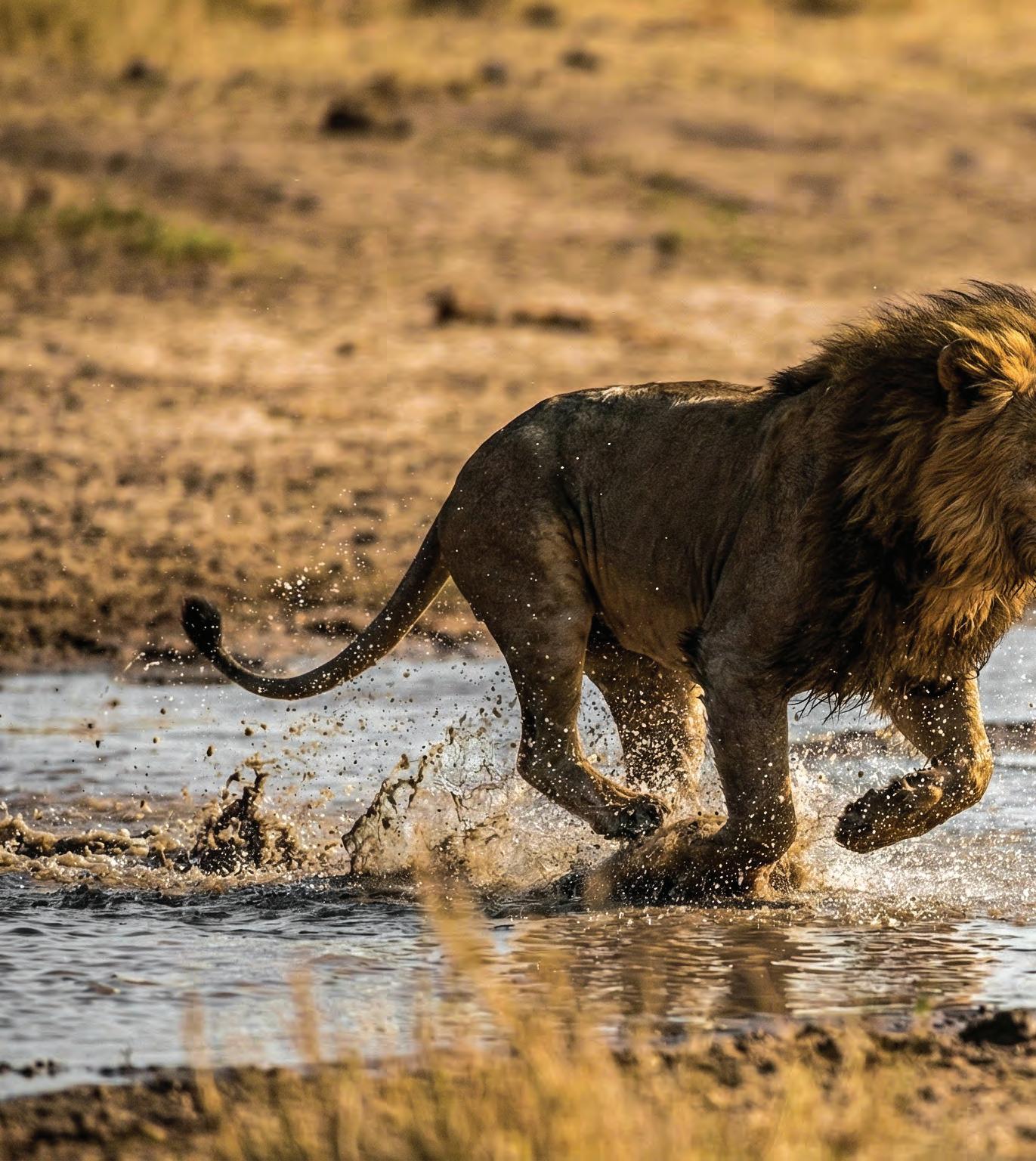
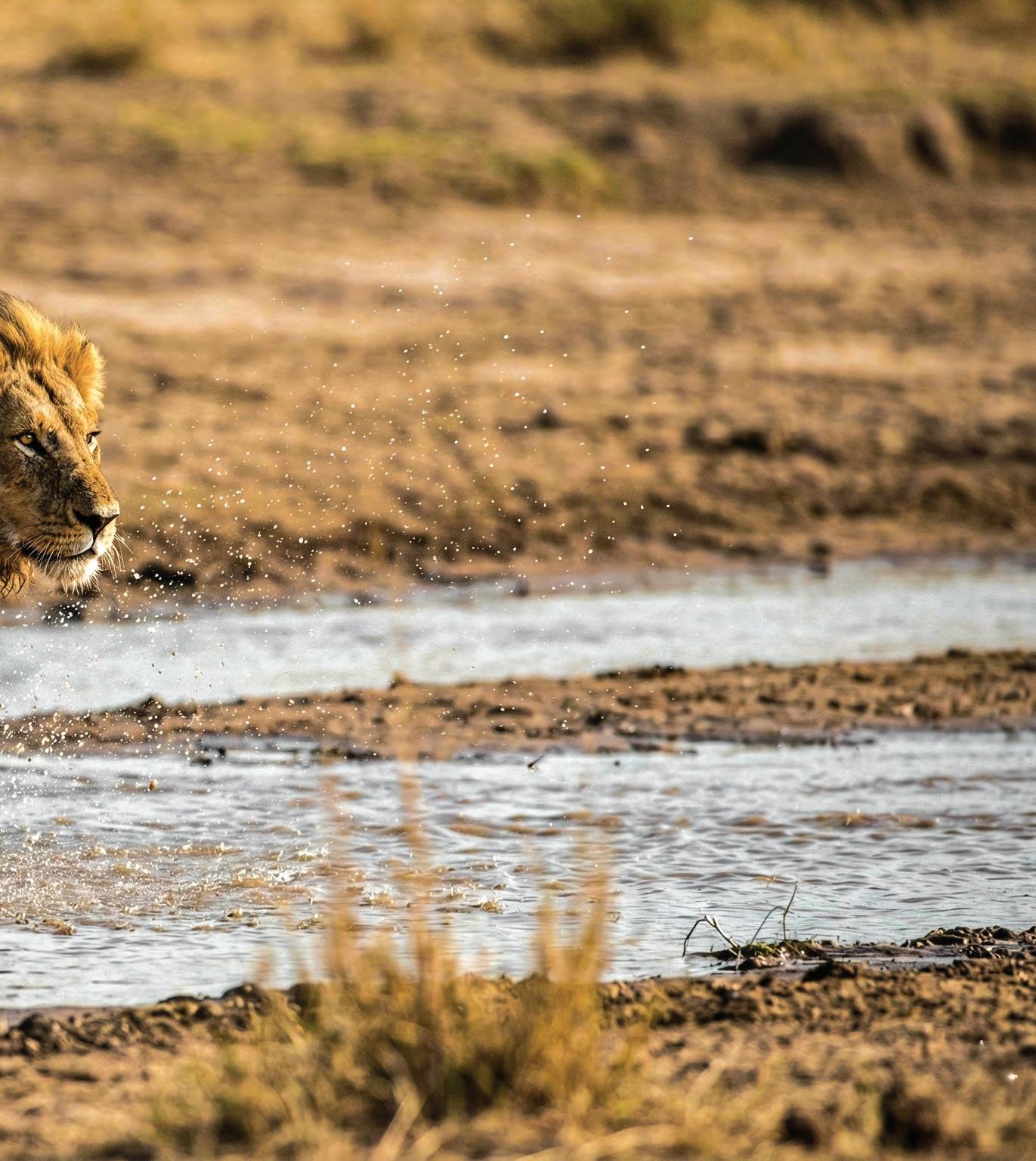
The lion advances with measured resolve, water yielding beneath its weight, an emblem of quiet sovereignty, where strength is neither ostentatious nor hurried, but expressed through deliberate, inexorable movement across the mutable landscape.

An incandescent sun descends into a horizon ablaze, saturating the firmament with sanguine intensity, evoking both cosmic finality and cyclical rebirth, where silence deepens and the earth exhales beneath a dying celestial ember.

THE ISLAND IN THE STREAM A SAFARI SHAPED BY WATER ZIMBABWE AFRICA
BY ALLISON FOAT
Safaris are mercurial and for me, that’s part of the appeal. Before jetting off, anticipation typically runs high, centered mostly around dream encounters with the Big Five. Yet there are factors to consider that will influence your wilderness escape, in one way or another. Take the rainy season, when wide open spaces are transformed as the saturated earth exhales in tall grasses and luxuriant habitats - good for the land but a tad challenging when it comes to locating the beasts of the bush. Such was the scenario that greeted us in Zimbabwe - my Tsowa Safari Island experience was clearly going to be one shaped by water. What unfolded did not disappoint.
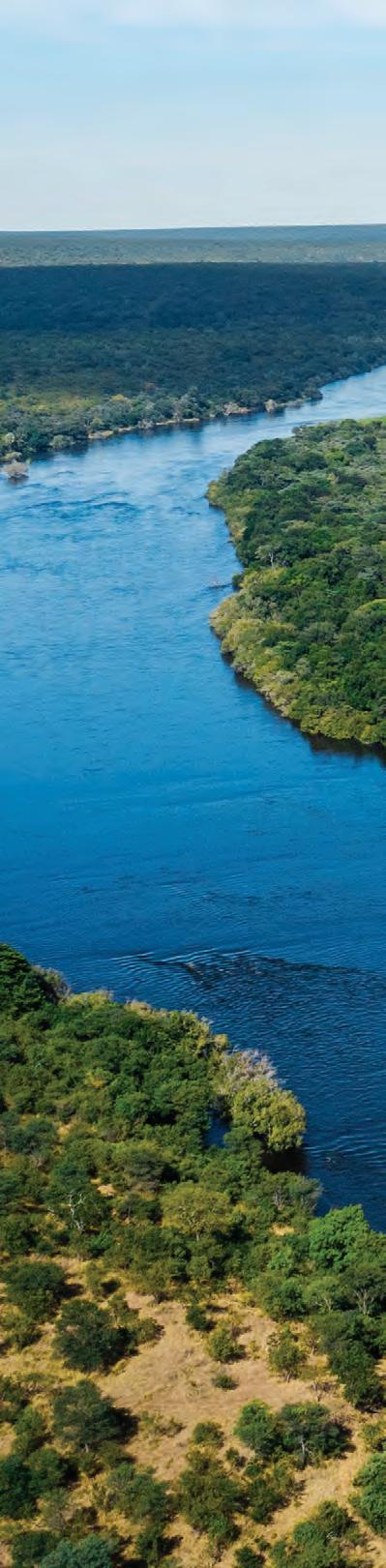
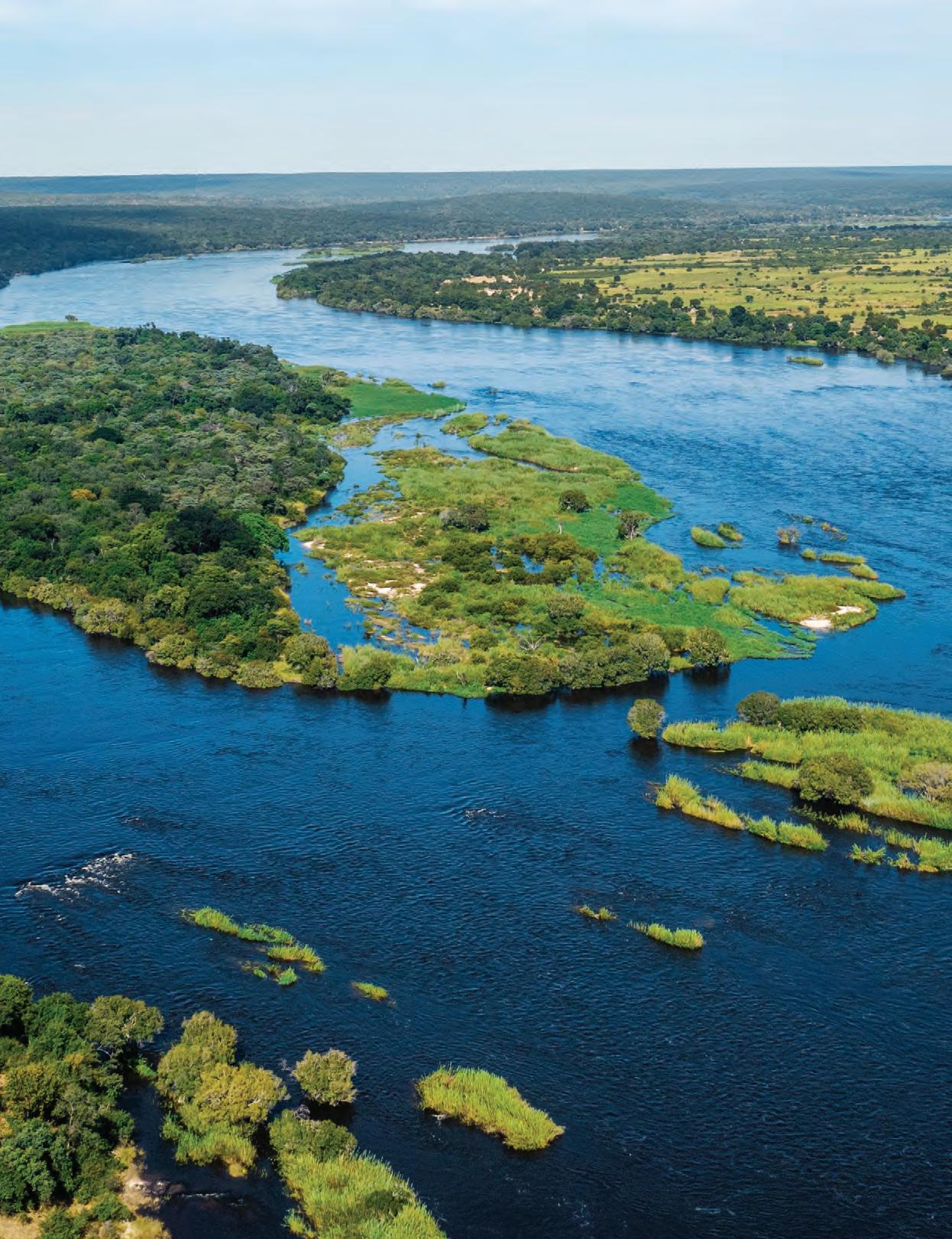
I slipped easily into the rhythm of the river, the steady, unobtrusive flow softening pace and perception. Tsowa sits midstream in the Zambezi, an oasis approximately 40 kilometers upstream from Victoria Falls, on a sliver of an island barely two hectares and stretching a few hundred meters from end to end. The lodge itself is on a river-facing edge beneath a dense canopy, while the middle- the uninhabited part- is a mass of rambling riverine vegetation, anchored magnificently by a cluster of centuries-old baobabs. A guided walk along the sandy paths of this natural garden is rejuvenating and highly recommended.
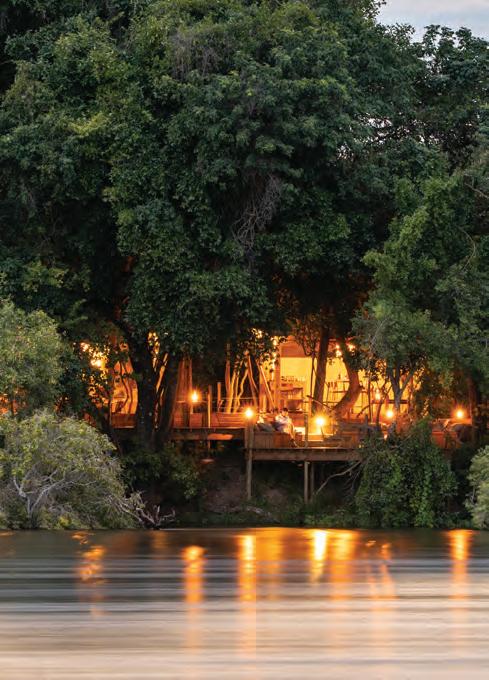
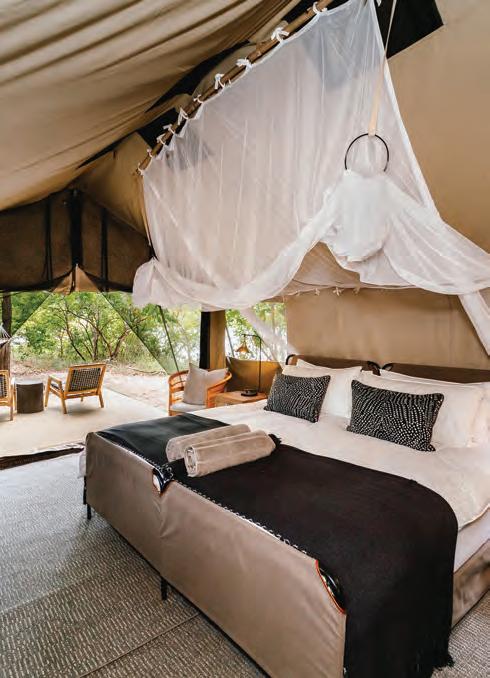
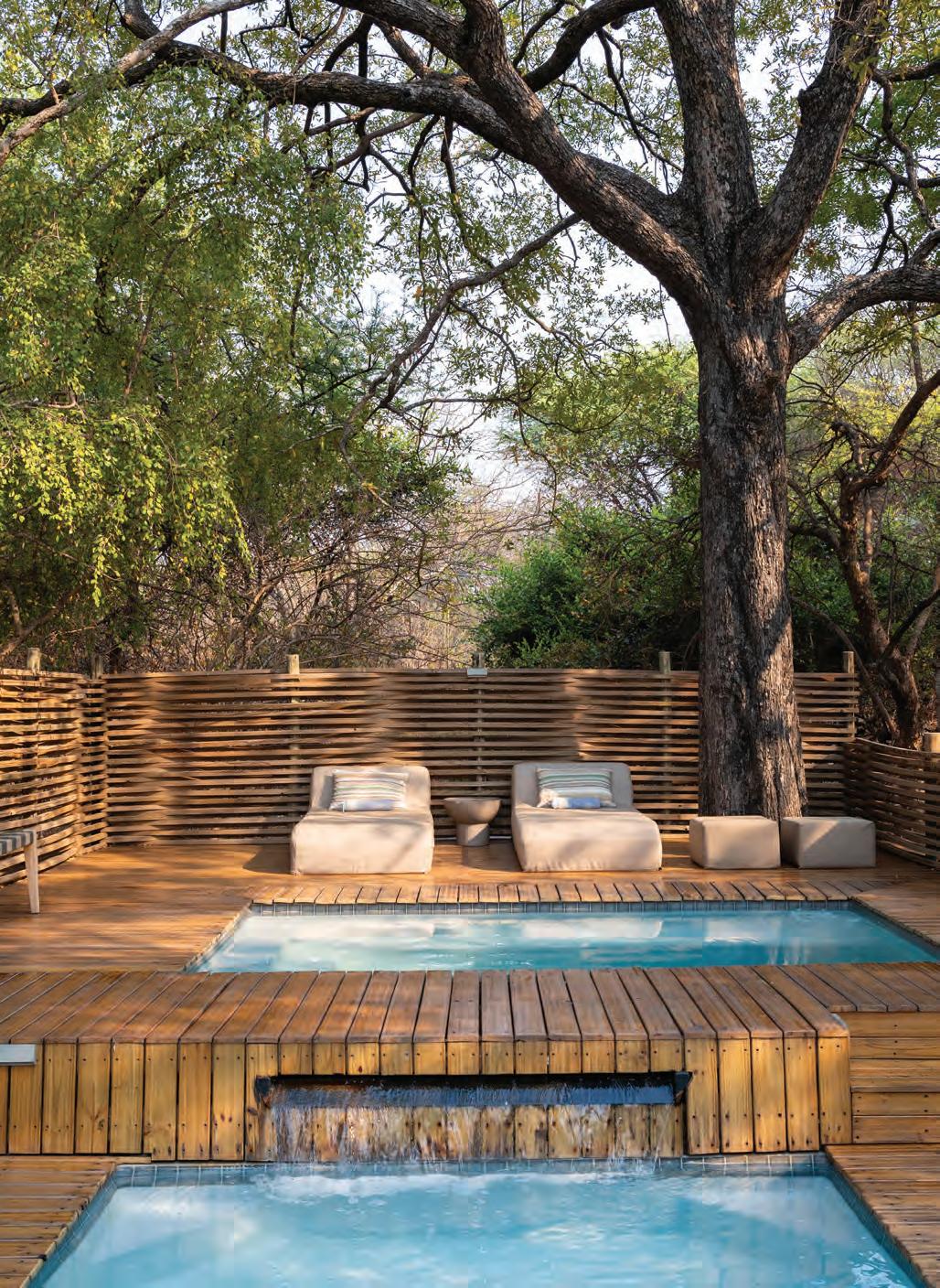
Eight river-facing tents, elevated and spaced generously apart, offer both seclusion and a sense of openness. Light filters through the surrounding groves and the décor, never superfluous, is grounded in natural fibers, from woven floor mats to textural linens and earthy embellishments in wood and copper, touch points chosen to align with the locale. Mesh windows running along each side of the tent ensure the outdoors is ever-present, so that one feels sheltered rather than separated from the soothing milieu. It is an unfettered aesthetic that well informs all the communal spaces in camp.
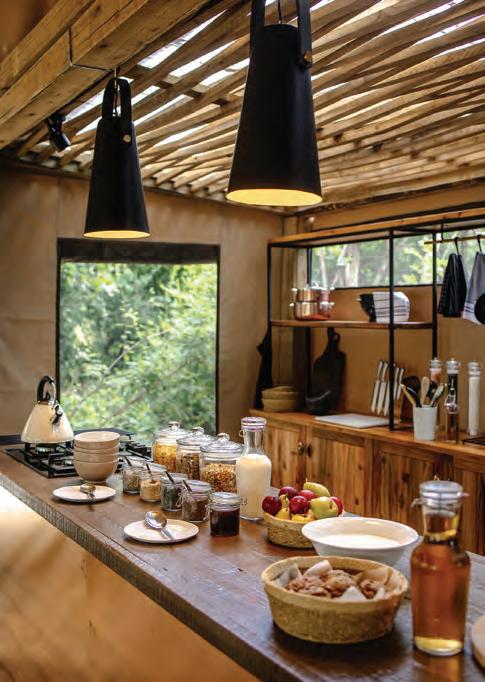
Cocktails and banter around a roaring fire jumpstart each evening, with a mass of stars above and the river below shimmering like a charcoal ribbon in the moonlight. Summertime sees meals served al fresco, a long table arrangement that encourages conversation with strangers. Those who prefer a more intimate set-up are graciously accommodated, but I’ve always embraced the chance to meet new people who may well become friends. Such is the safari way - making connections birthed in a shared love of nature. (Young family, I’m looking at you!) Back in my tent, the nocturnal discourse took a new directionthe bark of a baboon, the sweet hoots of a wood owl and most thrilling of all, the reverberating grunts of lions, in the far-off distance. The incomparable joy of falling asleep to the ballad of the African outback.
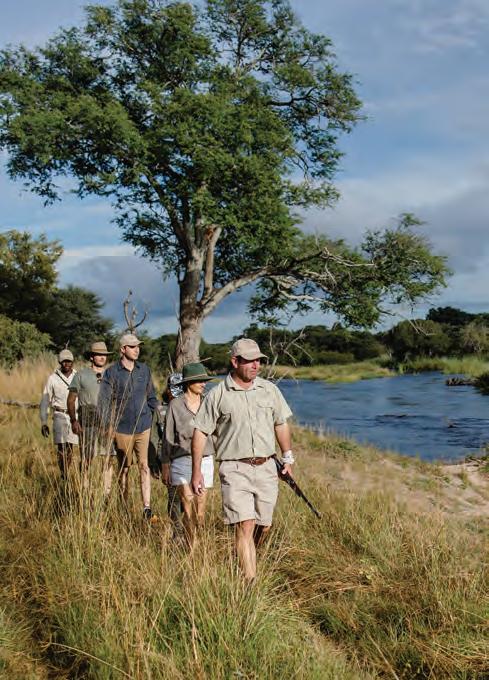
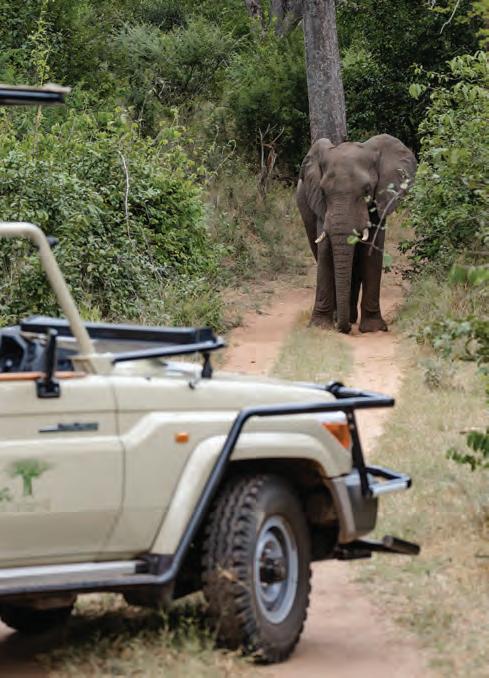
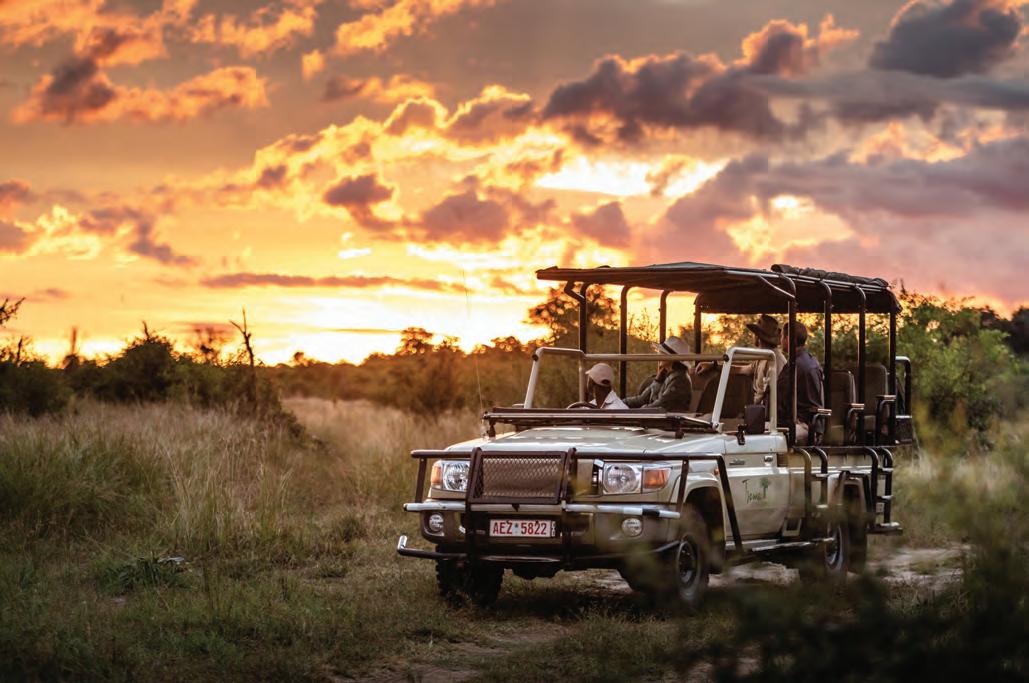
Mornings on safari begin early, as they should. Sleep in, and you forfeit the bewitching spectacle that accompanies golden hour- it’s too much to lose. So before the day is even out of the starting blocks, I’m on my deck with coffee, in full observation mode as the forest begins to stir, cued by birdsong. Departure is usually around 06h00 and after a quick transfer to the opposite bank, we found ourselves in the Zambezi National Park for the game drive, in the capable hands of our intuitive guide. It proved a rewarding few hours, with memorable sightings: a spirited pack of wild dogs, giraffe in impressive numbers, giving us the once-over from beneath impossibly long lashes, and exquisite lilac-breasted rollers that flitted between the branches in flashes of vivid color.

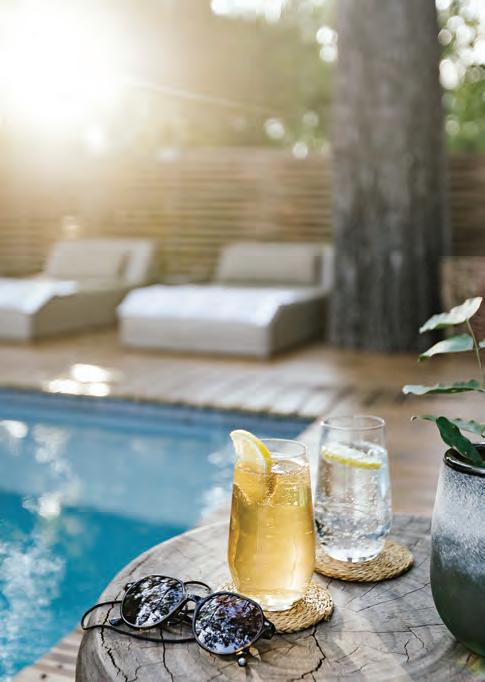
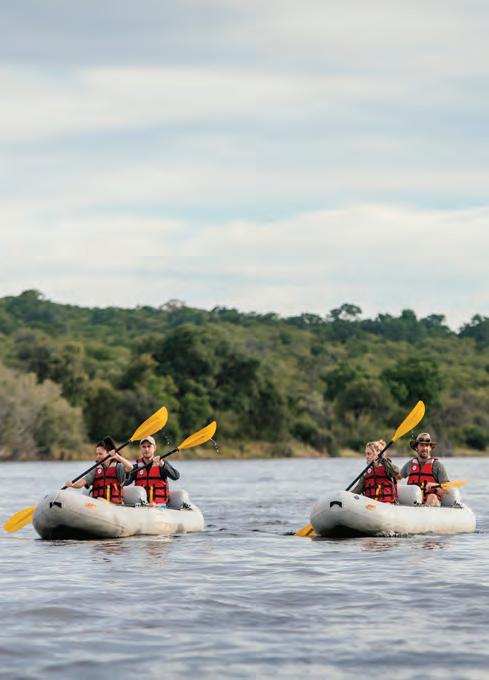
The Mighty Zambezi is Africa’s fourth-longest river that begins its journey in northwestern Zambia and travels over 2,500 kilometers through six countries before finally emptying into the Indian Ocean in Mozambique. Tsowa, taking full advantage of its unique position, offers boat cruises, which were a highlight. At dawn, we would push quietly into the channel, early enough to witness wisps of water vapor rising from the surface, dispersed by the sun’s warmth. Several kingfisher species - Malachite, Pied and Pygmy - graced us with their presence, motionless and magnificent. After a full day, we sailed again at sunset, a vermillion flare across the sky as wire-tailed swallows scooped up midges flushed out by the wake. A quintessential gin and tonic brought our sailing soirée to a picture-perfect close.

Hospitality at the lodge is on point and considerate, and across the board, the team is attentive and generous. One sip of our arrival drink —a creamy concoction of baobab and Amarula - and I knew we were in for innovative cuisine. Seasonal menus throughout Isibindi Africa Lodges - Tsowa’s managing outfit that is celebrating 30 years in 2026- are curated by group executive chef Carl Moller and executed skilfully at Tsowa by a talented crew and each meal was a memorable one.
At the end of it all, it was the river, trees, and birds that took center stage at Tsowa. The signature quintet may have been elusive, but that enabled a different dialogue with nature that was sensorial and gratifying. Said GM Gary Koen, himself a professional guide, “You come to Tsowa to chill, to notice different things. I’ve been to many lodges and the minute I walked in, I knew this was a place that offered something special.” It was exactly all that, and more.
tsowasafariisland.co.za
LIMA
BY MATTHEW SCHUELLER
There’s a particular kind of city that doesn’t immediately hand itself over to you. And after a decade of carrying it around with me, I was finally back.
This past September, I led a small LGBTQ+ group through one of the most storied travel itineraries in South America. That’s right, exploring the ancient Inca capital of Cusco through the Sacred Valley and up to Machu Picchu. But before any of that could happen, before
THIS CITY DOESN’T HAND ITSELF OVER EASILY
the altitude hit us and the Andes swallowed us whole, we had Lima. A few days along the Pacific coast to ease our way in, eat impossibly good food, and let this massive, sprawling, complicated city do its thing and maybe even surprise us.
I first came here in 2015, not as a tourist or a tour host, but as a young, naive, and very ambitious photographer. I was working as a photographer and videographer for a nonprofit, and for four months I lived here. I really soaked up the city as much as I could. Don’t get me wrong, I love Lima now… but when I first arrived in 2015, I had trouble knowing how to experience the city properly. I spent my days traveling out to the pueblos jóvenes on the outskirts, these young neighborhoods that seemingly appear overnight as thousands continue to flock to Lima daily, coming from every corner of Peru– the jungle, mountains of the Andes and the desert. People come for all
kinds of reasons, chasing economic opportunity, fleeing oppression or poverty or violence, or simply following the possibility of getting out of the village and turning their life into something more. After work, I’d grab a combi, these little sprinter vans decked out in flashing lights and blaring music, and for under a dollar I could catch a ride across town to bustling Miraflores.
The city has changed so much in the last ten years. It now holds over ten million people and sprawls across a massive stretch of the Pacific coast. The dry climate at sea level is miles different from the high-altitude, quick-changing storms of Cusco and the Andes. Lima can be baked into a system of clouds and fog, a microclimate that is entirely its own thing. Drive just twenty miles north or south of the city and you’ll be drenched in sunlight, but from June through September, it can be quite cool and cloudy. It’s moody and atmospheric in a way that I now genuinely appreciate, like the city is perpetually keeping something to itself.
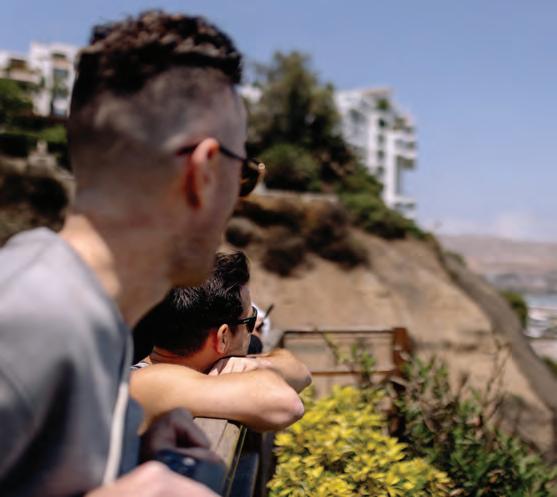
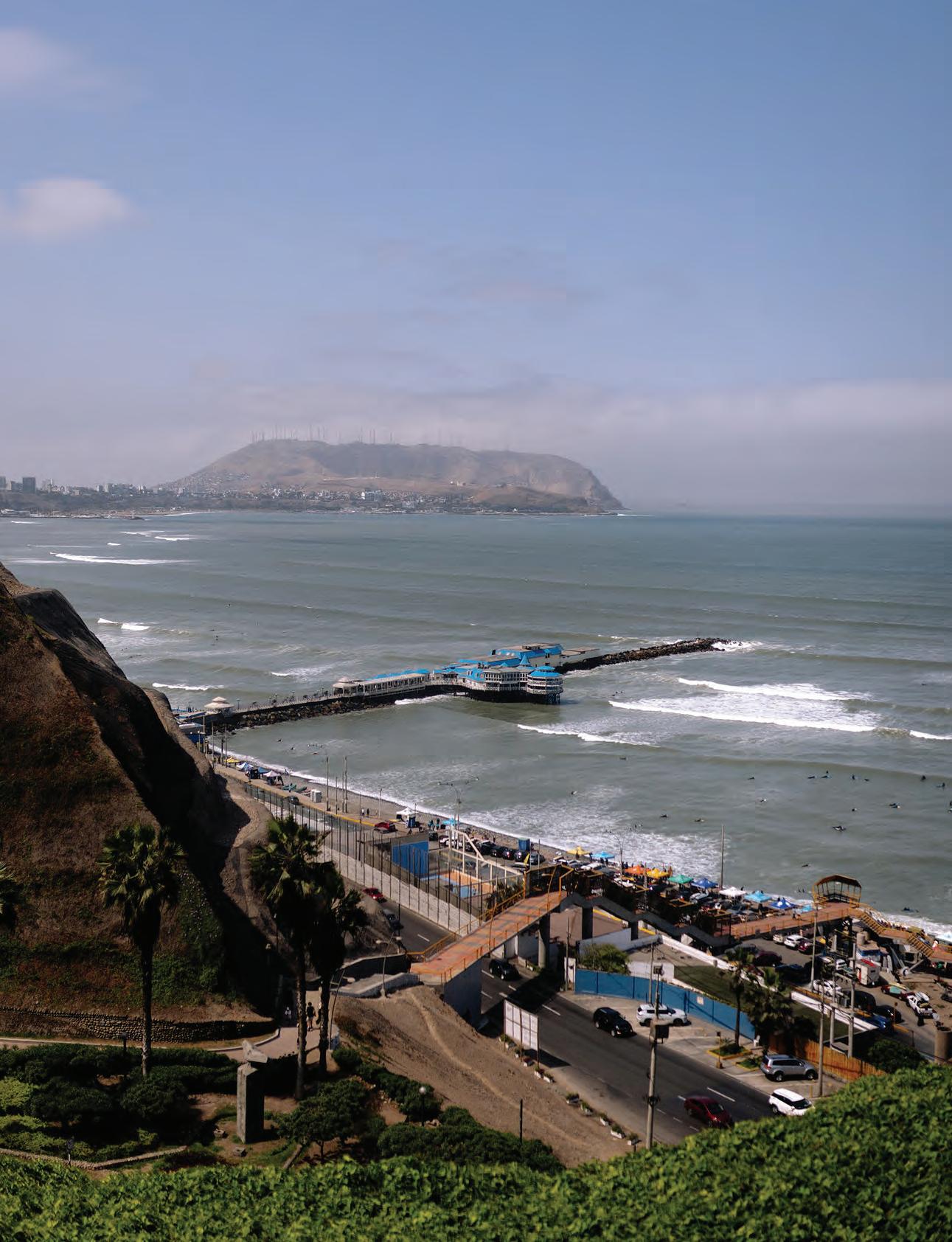
Head to Miraflores for the most vibrant and exciting experience Lima has to offer. If you want something fancy, the JW Marriott sits right at the edge of Larcomar, a huge outdoor multilevel shopping mall with designer brands, delicious restaurants serving Peruvian classics, and sprawling views of the coastline. The Malecón is the long, paved walkway along the cliffs that winds for miles from San Isidro down to Barranco, and the views are just stunning. You can bike, roller skate, jog, or walk along the gorgeous gardens for hours. I stayed at the Casa Andina Premium in the heart of Miraflores and it was exactly what I needed.

Before anything else, though, coffee. Grab it at Puku Puku. What started as a tiny hole-in-thewall single-origin coffee shop in Miraflores has grown into many locations around Lima, and the company still serves the same high-quality single-origin espresso drinks that I fell in love with on my first visit years ago. It’s beautiful to see how this small local business has grown into something fabulous over the years. Some things scale well and Puku Puku is one of them!
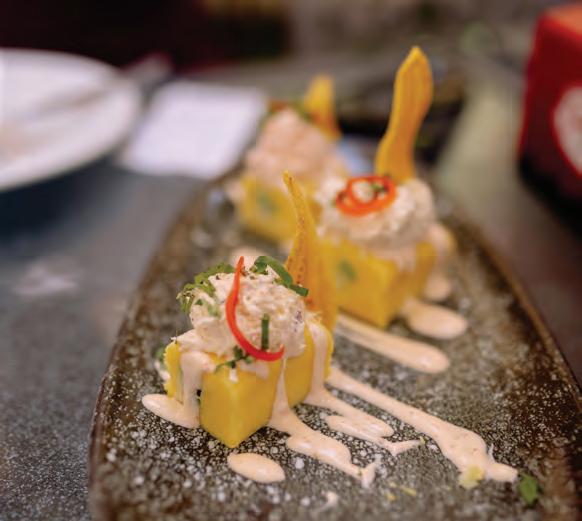
I met my group at Punto Azul for our first dinner together, and I need you to understand something: Peruvian ceviche cannot be replicated anywhere else. You won’t find it this fresh, this layered, this perfectly right anywhere outside of Peru. Layers upon layers of causa, leche de tigre, mariscos mixtos, and classic ceviche with fresh cuts of sea bass, grouper, and sole. Marinated in lime juice, salsa criolla, a little rocoto pepper slice–all served over sweet potato and large kernels of choclo corn. The group was quiet for a few minutes after the first bites, letting the flavors set in… then, WOW. People loved it. Of course they did! It’s my favorite dish for good reason. There’s nothing else like it and this is the reason you build extra days into Lima.
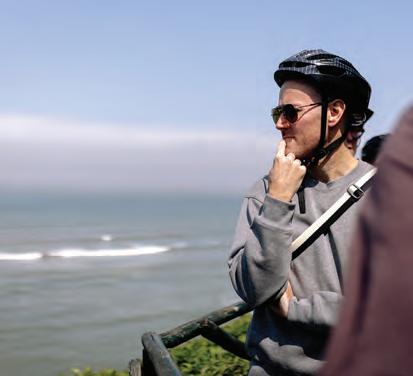
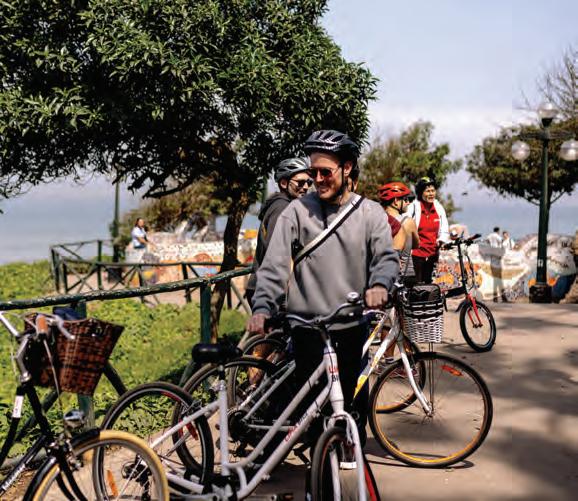
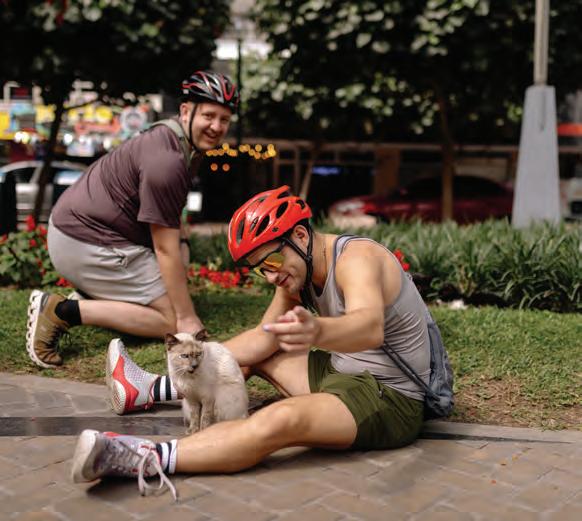
The next day was the main event. We went on an epic bike tour through Miraflores, cycling first to Parque Kennedy, the heart of the neighborhood and home to hundreds of cats. Yes, it’s as chaotic as it sounds. Cats are everywhere and it’s beautiful. This large triangular park spans several blocks, and the cat
community is friendly and well cared for by a network of local volunteers who provide shelter and food and water for the colony. They were originally introduced to the park in the 1990s to control a rat infestation, with priests from the nearby Virgen Milagrosa Church often credited with bringing in the first cats to manage the rodent population. Now they’re just beloved fixtures of the neighborhood, blinking slowly at you from park benches like they own the place, which honestly… they really do. We borrowed the park for a short visit.
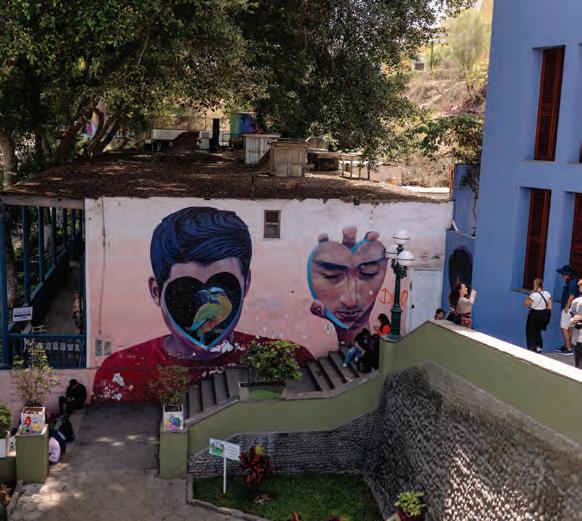
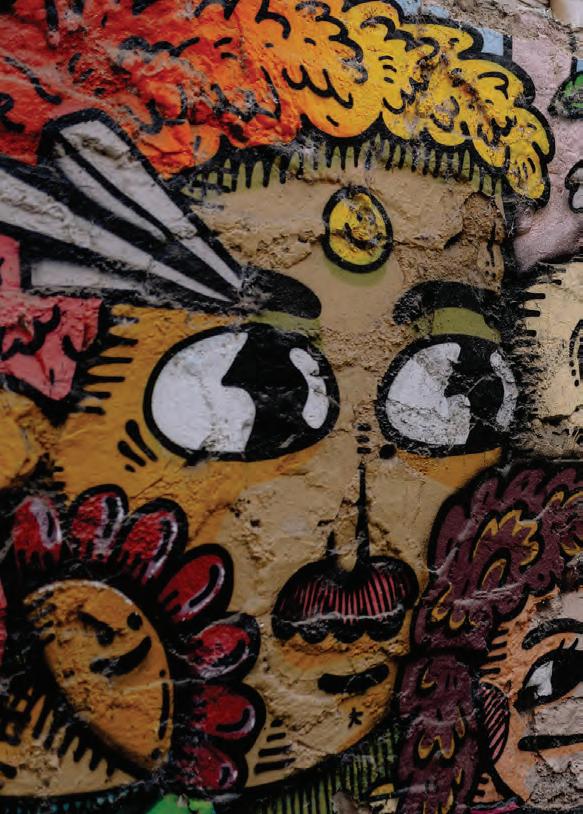
We cycled onward to the Park of Love, admired the view from the Malecón, and then made our way to Barranco, the bohemian, more relaxed sister neighborhood just adjacent to Miraflores. Street art and graffiti highlight the rugged beginnings and ends of buildings here. Narrow pathways work through the elevation change downward toward the beach. And dotted throughout are giant Victorian homes transformed into bars, restaurants, and clubs that come alive in the evening with eclectic, brilliant garden parties and events. Barranco is the place to see and be seen, and it has an energy that Miraflores, for all its polish, could never replicate.
We stopped at Canta Rana, a beloved local establishment that has been here longer than I’ve been around and serves premium ceviche and fish dishes. You will see far more locals than tourists here, which tells you everything you need to know. This kind of no-nonsense

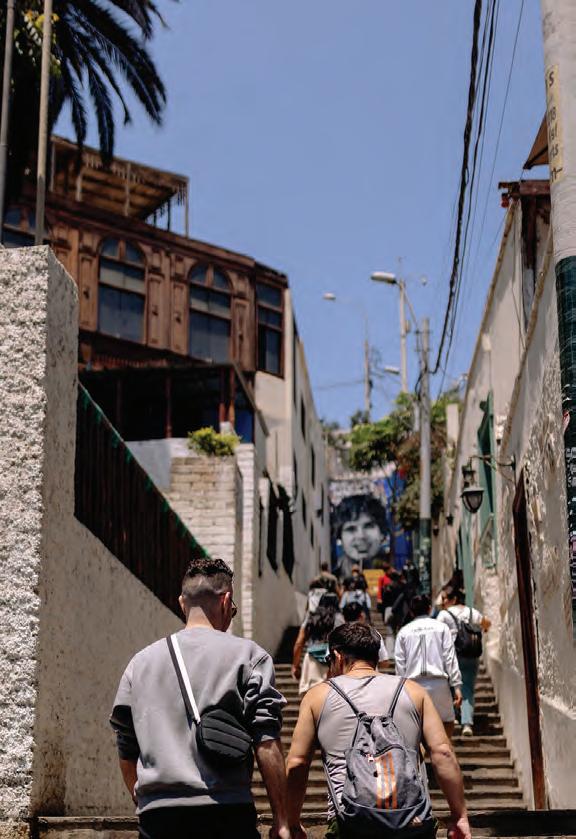

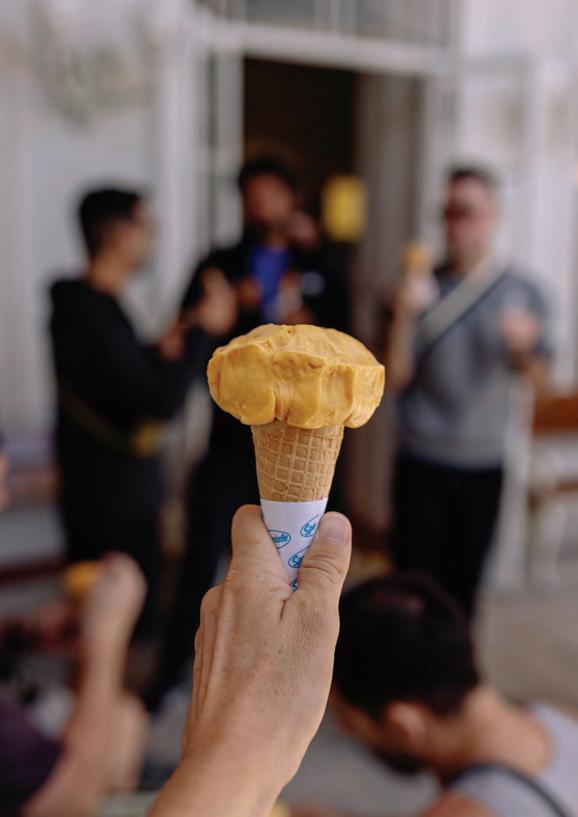
eatery is the place where you really taste the neighborhood. Then on to Restaurant Javier for a variety of small Peruvian plates: anticuchos with chicha morada, arroz con pollo, aji de gallina, a whole tasting spread on this biking and eating tour that just kept delivering. With an outdoor patio table overlooking the ocean, you can’t go wrong. Finally, we stopped at Heladería Speciale for lucuma and guanábana ice cream, tropical fruits with quintessential Peruvian flavor. Lucuma and chocolate together is a combination I will never forget–that will live rentfree in my mind forever. I’m still thinking about it.
That evening, a small group of us went to Panchita Miraflores for dinner and it was such a wonderful, cultural and warm experience. At Panchita, they take the Peruvian classic homecooked dishes and turn them into something masterful, served in a highly decorative, extremely comfortable and lively environment with live performances woven throughout the night. I ordered the seco, a prime cut of beef roasted and stewed in a cilantro-infused slurry that you’ll wonder how you’ve never known this to exist until now. It blew my mind. It’s all around a fantastic experience for someone who wants a real taste of the culture and has a genuinely great time doing it. I cannot recommend stopping here enough.
Here’s the honest truth about Lima: there’s so much to do and see that it can feel overwhelming, especially if it’s your first time. But for accommodations, you cannot go wrong between Miraflores and Barranco. For LGBTQ+
travelers specifically, these are the most welcoming, most comfortable parts of the city by a significant margin. Lima has a growing and visible queer scene here, and while Peru as a whole is culturally conservative in many ways, you will feel at home in these neighborhoods.
Of course, seeing the historic city center is an absolute must, and I highly recommend going with a guide. It is a long distance from the tourist hub along the coastline; there’s a lot of ground to cover, and it can be a bit tricky with petty theft and navigating the crowds safely. A local guide transforms the whole experience and gives it the context it deserves.
After a few days of exploring, we were off to the airport and on to Cusco, the Sacred Valley, and Machu Picchu. I would have stayed longer if I could. I always want to stay longer.
Lima truly has a special place in my heart. It’s held that spot since 2015, since the combis and the days in the pueblos jóvenes and those nights in Miraflores that felt like small surprise gifts to myself. For some people, it’s an acquired taste, and I get that… many great things in life are acquired tastes–like red wine and dark chocolate! But give the city a little time and a little patience. Let Lima be big and foggy and complicated and extraordinary, and then on a sunny day, you’ll begin to understand. This city will surprise you.
CRUISES
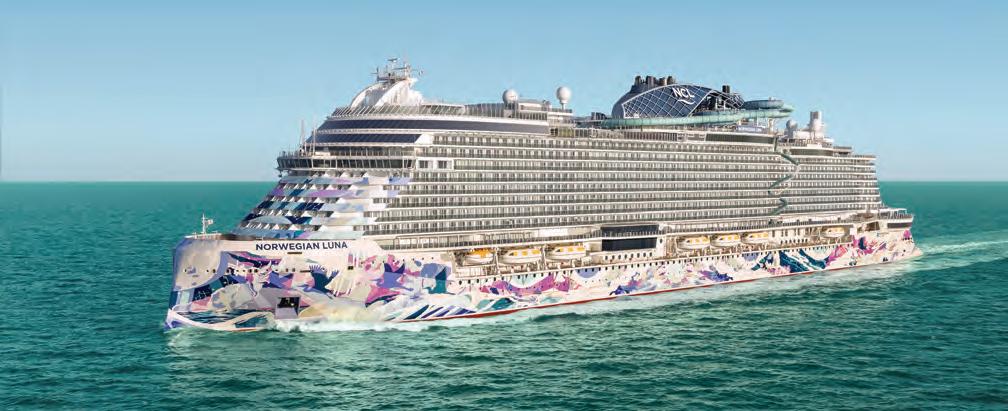
NORWEGIAN CRUISE LINE’S NEW SPACE-THEMED LUNA CRUISE SHIP
BY DIANE TIERNEY
Just days before the world watched NASA’s Artemis II spaceship launch to orbit the moon, Norwegian Cruise Line’s newest 3,500-guest cruise ship named Luna – with a space theme of her own – was christened. The timing was perfect and both ships had successful ‘splashdowns’ in their own style.
When you first lay eyes on Luna, the exterior hull design showcases a celestial mural created by the globally-acclaimed street artist known as “Elle” who is also the ship’s godmother. The art depicts a moon surrounded by stars and constellations inspired by the relationship between lunar cycles and ocean tides.
The space theme continues in a variety of aesthetically pleasing ways. An enormous silver sculpture of a crescent moon is featured on the Ocean Boulevard deck for an Instagram-worthy photo. The Moon Climb is a sky-high ropesstyle obstacle course surrounded by netting. Young children have a splashpad with a rocket-shaped play structure.
For thrill-seekers, the most popular ride is the Aqua Slidecoaster. This water slide uses mechanical propulsion to launch riders on inner tubes into the waterslide and down its many twists and turns.

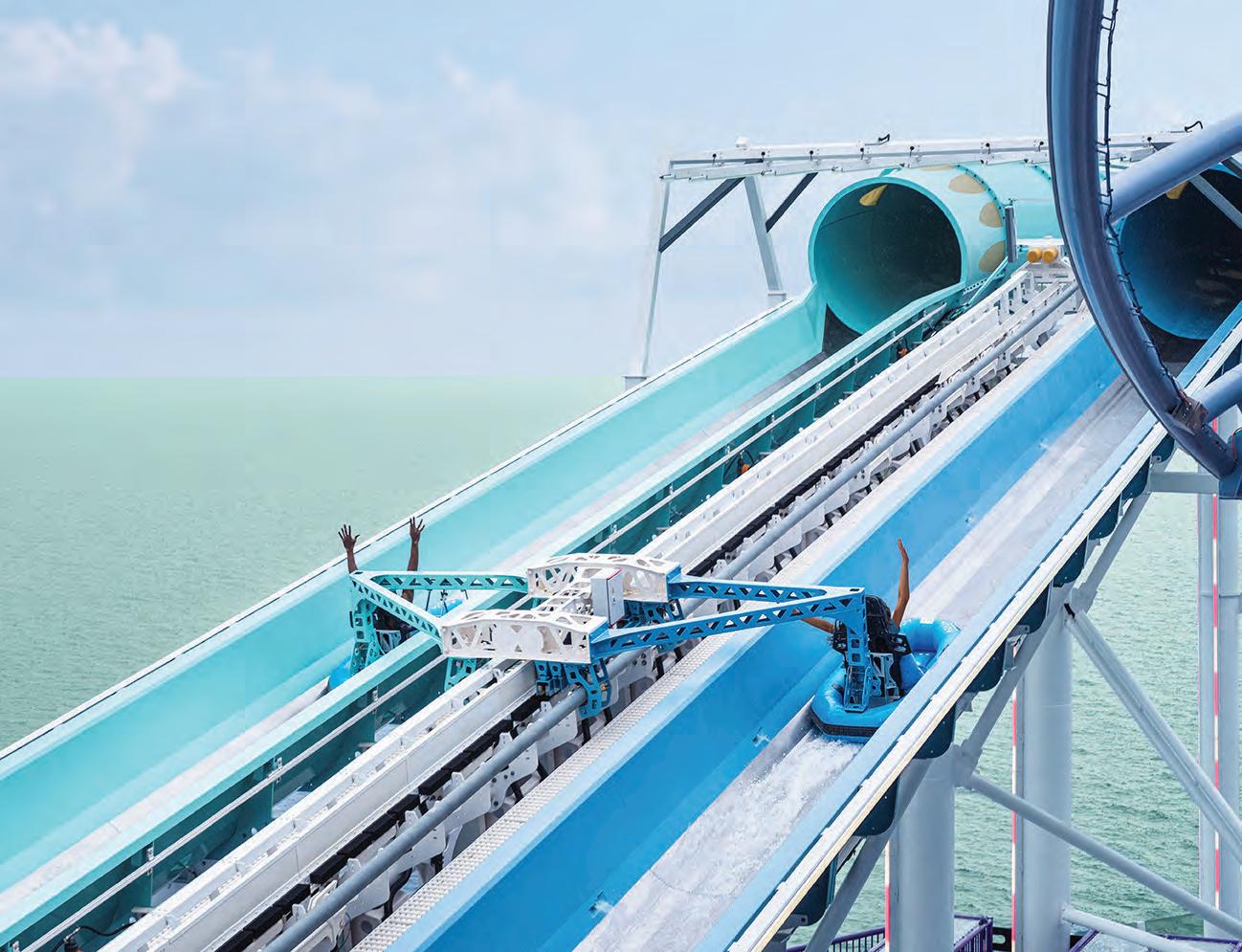
LUNA LAUNCHES GUESTS INTO A GALAXY OF FUN AT SEA
The Drop is another adrenaline-rush attraction. It’s a 10-story, nearvertical, spiral slide that gives guests a G-force experience.
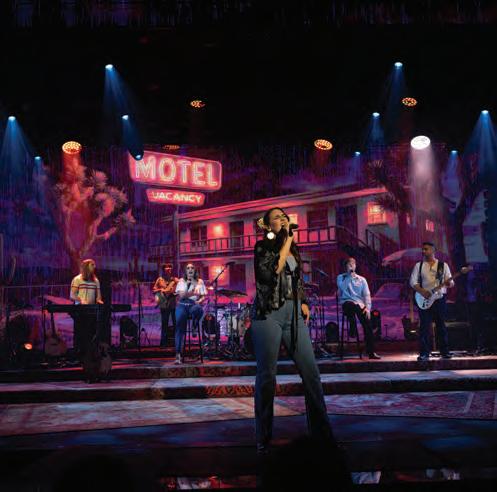
Even the entertainment has a space connection. Headlining the magnificent shows is “Elton: A Celebration of Elton John”, an original production featuring singers, dancers and amazing aerial acrobats to hit tunes like “Rocket Man”. The show receives standing ovations. An Eagles tribute show also receives accolades. Smaller venues around the ship feature excellent comedians, bands and DJs.
The atrium design also has a spaceship feel with curvy white walls and sky-blue and cream carpet and furnishings. The hot spot of the atrium is a ‘star’ coffee shop of course – Starbucks.
Beyond space-oriented elements, there’s a Game Zone with immersive entertainment featuring virtual reality experiences and retro arcade games. Glow Court functions as a digital sports arena by day and a nightclub at night, using floor and wall lights to shift the mood. Pickleball and the Luna Midway for mini golf fun are other options.
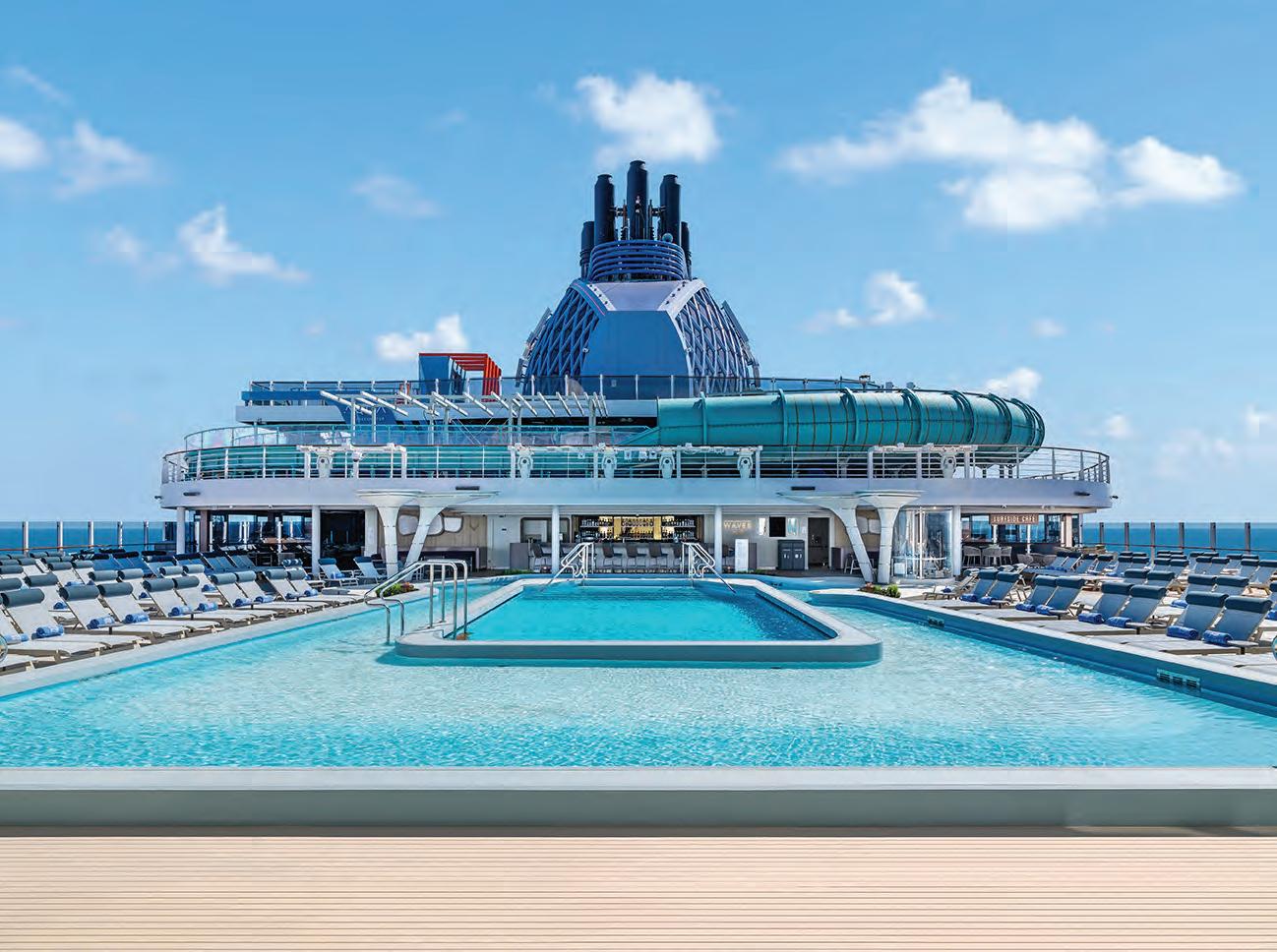
Beautifully designed spaces inspire guests to spend as much time outside as possible, whether lounging, strolling the decks or enjoying a meal alfresco. There are also five pools and numerous hot tubs with ocean views. The Vibe Beach Club is an especially popular adults-only sundeck with padded loungers, cabanas, pools and a bar for an extra fee.
DINING
Luna has about 17 dining venues reflecting Norwegian’s ‘freestyle dining’ style. Complimentary restaurants include Hudson’s for contemporary dishes, Commodore Room with international classics, Surfside casual buffet with comfort foods, Local Bar & Grill for pub fare, and Observation Grab-and-Go for light bites and pastries. However, guests rave most about Indulge Food Hall, with its food-truckstyle setup and offerings ranging from barbecue favorites to plantbased options.
For upscale specialty venues that charge a fee, the most talked about addition is Sukhothai, NCL’s first Thai specialty restaurant. It highlights authentic flavors while expanding the line’s global culinary goals. Other favorites include Cagney’s
Steakhouse, Le Bistro French cuisine, Onda by Scarpetta for Italian and Nama Sushi, Los Lobos, Palomar and Hasuki top up the choices. There are about 15 cuisines in total on board.
BARS
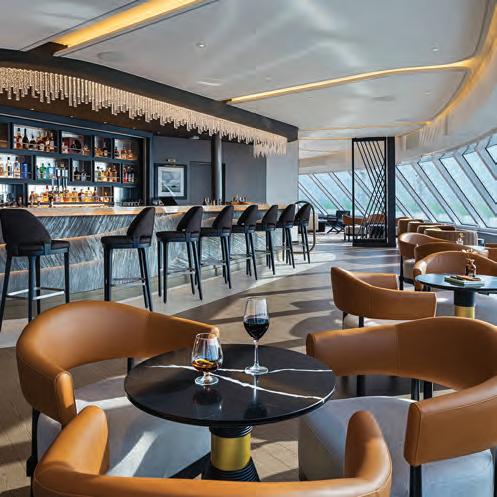
More than a dozen bars and lounges range from casual gathering spots that inspire conversation to quiet reflection and relaxation.
The Metropolitan Bar has sustainable cocktails highlighting zero-waste practices. Belvedere is an elegant lounge. The Whisky Bar has rare whiskies and premium spirits. Swirl Wine Bar has curated selections. Crafted cocktails are available at the Bull’s Eye Bar. The Local Bar is a casual pub.
SPA
Enjoy being spoiled at the Mandara Spa that’s modern and darkly lit, so relaxing and calm. An enormous vitality pool with warm water and jets is a great place to soak, alongside a gorgeous two-story waterfall wall. There are thalassotherapy loungers, a flotation salt pool, charcoal sauna, clay sauna, salt and steam rooms – and an Ice Room if you need to ‘chill’. A full gym and salon round out the offerings and extensive treatments available.

STATEROOMS
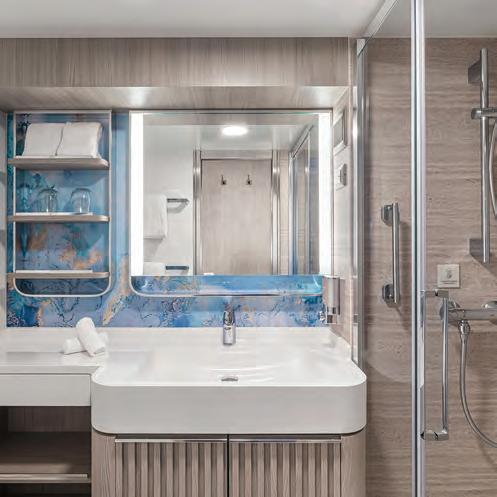
Staterooms – from solo cabins to penthouses – are bright and modern with pale wood furnishings and blue and cream decor palettes. They have efficient layouts with small but clever space-saving storage, such as a padded desk stool that holds items and doubles as a footstool. Balconies feature wicker furnishings with cushions. If there isn’t a bathrobe and slippers already in the closet, just ask your cabin steward.
For guests seeking a truly upscale and exclusive experience, the Haven neighborhood is a private enclave of suites from 430 to 2,100 square feet. Enjoy perks such as butler service, secluded sun deck and designated dining and lounge spaces.
A cruise on Luna, especially with a beach day at the cruise line’s private island Great Stirrup Cay in the Bahamas, will complete your mission in style.
INDIA
FROM DELHI TO MUMBAI ABOARD ONE OF THE MOST LUXURIOUS TRAINS IN THE WORLD. GLAMOUR, ELEGANCE, GASTRONOMY, AND ROMANCE THAT RECALL THE OPULENCE ONCE ENJOYED BY THE INDIAN MAHARAJAS.
BY SERGI REBOREDO
Only 1,400 kilometers separate Delhi from Mumbai. By road, it would take about 25 hours to drive along National Highway 48, and by air, there are more than 30 daily connections to travel between the two cities in about 2 hours. These are the fastest options, but they lack the romance of living like a true maharaja aboard a luxury train for 8 days.
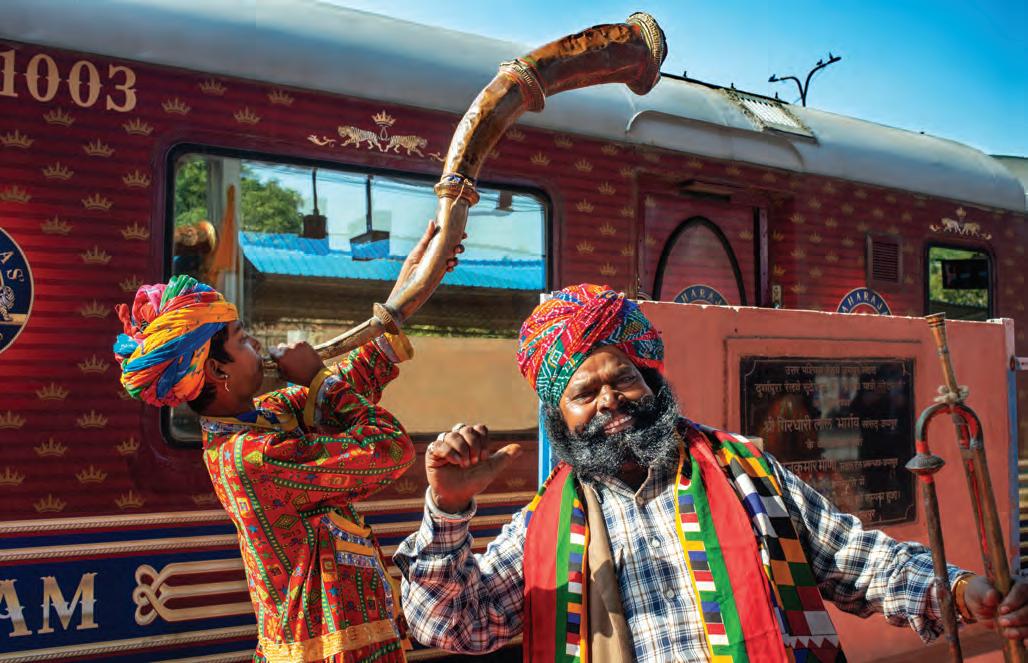
This journey from the capital, New Delhi, heading southwest to one of its megacities, Mumbai, aboard a luxury train over 1,500 km, offers just one glimpse of the countless facets of this multifaceted country. The Maharajas’ Express combines glamour, elegance, comfort, gastronomy, and romance, evoking an era of past splendor. More than a hotel on
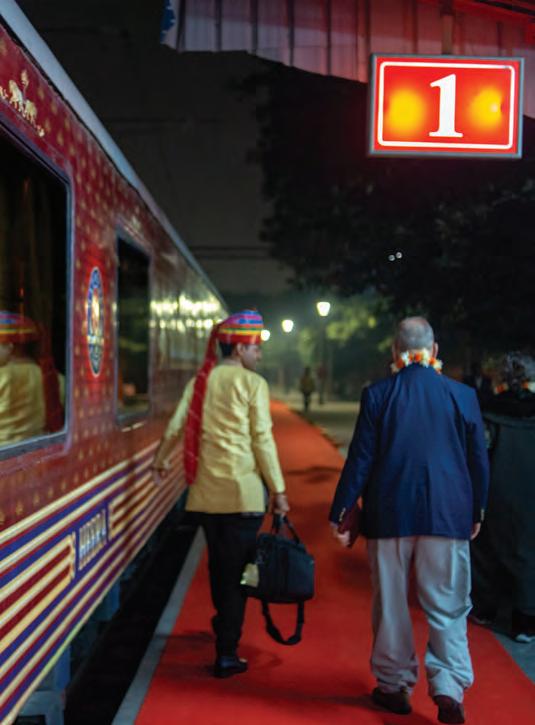
wheels, the Maharajas’ Express is, as the first train of its kind was once described, a palace on rails. Its décor recalls the golden age of British colonial rule in Hindustan, when maharajas—princes or rulers of Indian states—traveled the country with great opulence and pomp. Each maharaja could possess a dozen noble titles, several wives and concubines, countless children, servants, palaces, horses, elephants, private train carriages… and, of course, a few Rolls-Royces.
New Delhi, start of the journey
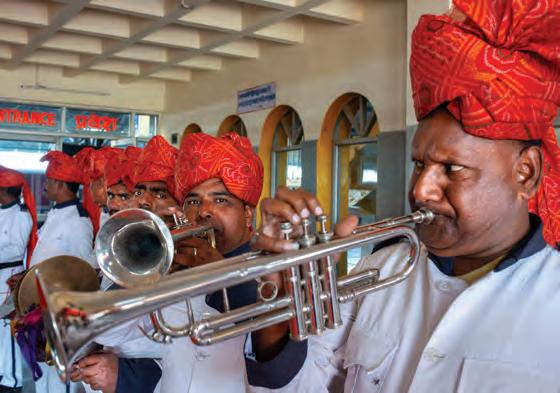
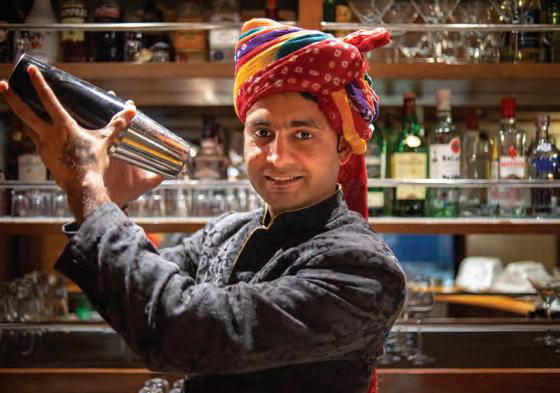
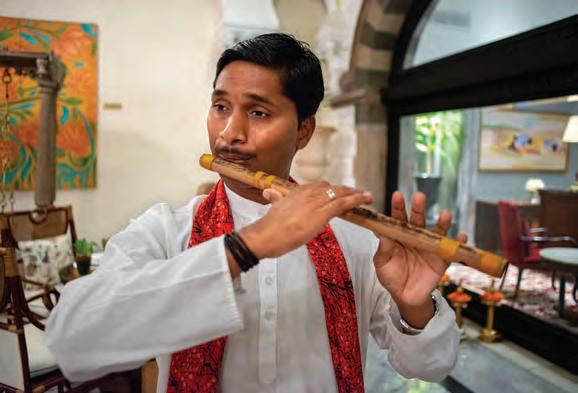
A red carpet, the ultimate symbol of distinction, marks the path to follow at Safdarjung station in India’s capital. It is a small station with only two platforms, minimalist when compared to the chaotic New Delhi station. It is adorned for the occasion with spectacular floral decorations. Glasses of French champagne and mystical melodies performed by local musicians make the departure time more pleasant. At 10 p.m., slowly and amid sharp screeches, the train sets off.
Behind the locomotive are 22 carriages, each accommodating a maximum of 4 passengers across different spaces and categories. The presidential suite occupies an entire carriage and includes a living room, two bedrooms, and a stunning bathtub. The train also features four 20 m² suites— equivalent to half a carriage—18 junior suites of

13.9 m², and 20 luxury cabins. All are extremely comfortable and equipped with a desk, safe, and hot shower. Each carriage is named after the former Rajput states and blends the aesthetics and interiors of a royal past: Alwar, Bharatpur, Bikaner, Bundi, Dholpur, Dungargarh, Jaisalmer, Jaipur, Jhalawar, Jodhpur, Kishangarh, Kota, Sirohi, and Udaipur.
With hardly any time to unpack, dinner is served. The train has two restaurant cars, Mayur Mahal and Rang Mahal, decorated in pure Indian art deco style, where chef John Stone combines a menu of international dishes with others rooted in local culinary tradition. The recommendation is, without a doubt, to try the various local delicacies prepared with a spicy touch.
Taj Mahal and Red Fort
At night, amid rattles and clatters, the train makes its way along the 200 km that separate Delhi from Agra. The railway line winds alongside our interests, following the course of the Yamuna River, the largest tributary of the Ganges, which flows through the city of Agra, famous for housing one of the Seven Wonders of the World: the Taj Mahal.
In the morning, we wake up early to be among the first to enter the Taj Mahal. The city is still asleep, and the streets are nearly deserted as the sun has not yet risen.
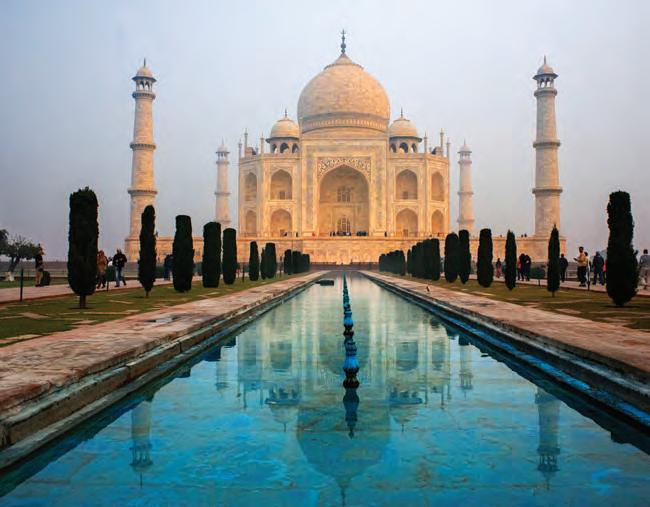
Declared a UNESCO World Heritage Site in 1983, the Taj Mahal is India’s most visited architectural icon. Emperor Shah Jahan built it in the 17th century as a mausoleum for his wife, Mumtaz Mahal, who died while giving birth to the couple’s fourteenth child. Shah Jahan commissioned marble from Rajasthan for its construction, said to have a unique quality: it appears pink in the morning, white in the afternoon, and creamcolored at night. During our visit, the morning mist envelops it in an aura of magic and mystique. It is estimated that more than 2,000 men from Persia, China, and Russia were hired to transport and work the white marble, which was carved by the finest craftsmen of the time.


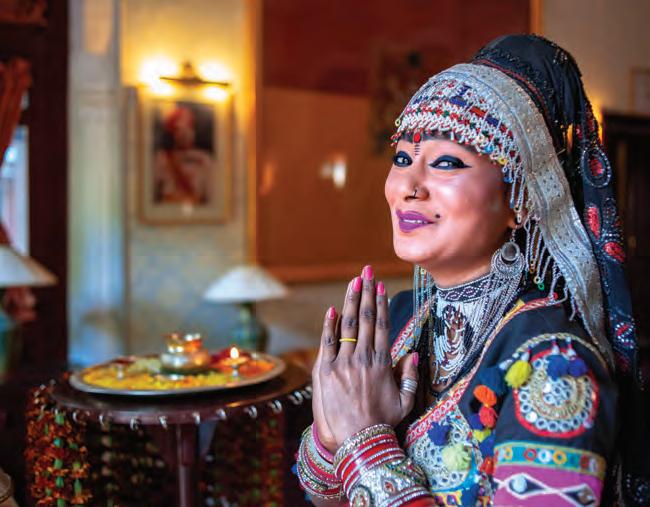
In the afternoon, we visit the Agra Fort, on the banks of the Yamuna River. It was here that Shah Jahan was confined after the death of his wife. From its windows, the king spent his final years gazing at his wife’s resting place, the Taj Mahal, across the river. The fort was built between 1565 and 1573 as a military outpost and is named for the red sandstone used in its construction. To preserve it, only part of the fort can be visited, but stepping inside is like entering a white forest of multilobed arches where monkeys roam freely.
In the Footsteps of the Tiger
The following day, passengers split into several off-road vehicles to explore Ranthambore National Park and go on a safari in hopes of spotting the Bengal tigers that still live there. The park, one of the largest in the country, was once a private hunting reserve of the Maharaja of Jaipur. At that time, tigers were hunted without restraint and were prized trophies. Of the thousands that once lived here, only about 70 remain today, and poachers still threaten them. Seeing a tiger is difficult, but the breathtaking landscape and the encounter with a sambar deer make the experience worthwhile. The sambar is an endemic species of large deer. Only the males have antlers, which can grow up to 1 meter long. They often hide among vegetation to avoid becoming prey to tigers.
Other notable animals include the leopard, nilgai, hyena, sloth bear, and chital, along with countless birds and reptiles. Due to its vast size, the park encompasses diverse habitats, including natural jungle and open grasslands. The combination of different landscapes is what gives it its main appeal.
Jaipur, the Pink City
As the meal is served, the train continues toward Jaipur, the Pink City, capital of Rajasthan. At every station, a red carpet, along with local music and dances, enlivens the transfer from the train to the support bus that accompanies us on all excursions. In Jaipur, we visit Jantar Mantar, an 18th-century astronomical observatory. It is one of the largest solar observatories in the world and is still in operation. It is not exactly a building, but rather a courtyard filled with extravagant sculptural monuments whose shapes and dimensions are ideal for studying the sky. The most impressive structure is a gigantic sundial whose shadow moves at 4 meters per hour.
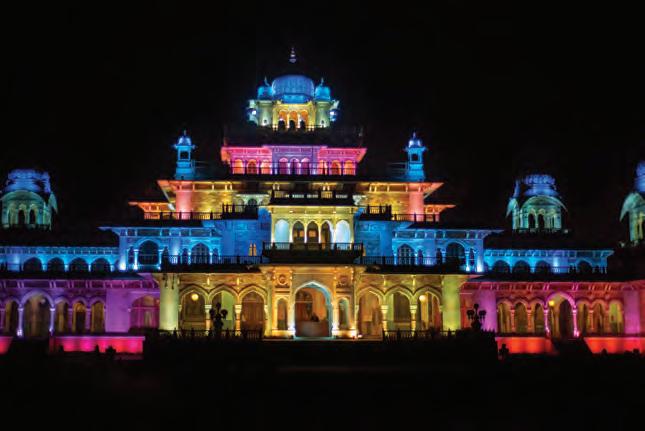
After the visit to the observatory, we are taken by the support bus to a gala dinner at the City Palace, currently inhabited—at certain times—by the royal family itself. Located within the city walls, it features several buildings, courtyards, gardens, and walled areas. The palace was built between 1729 and 1732 by Maharaja Jai Singh II, a Rajput, although modifications were later made. Its architecture is a blend of traditional Rajasthani and Mughal styles, bearing witness to the city’s past grandeur.
Bikaner, by Moonlight
The following day, the train arrives in the city of Bikaner, where there is a curious tradition among men of not cutting their mustaches. The lengths they reach are remarkable—some even exceed 7 meters!
Among the city’s notable landmarks is the Junagarh Fort, decorated with countless impressive 16th-century mural paintings in Hindu style, as well as inlays of precious stones.
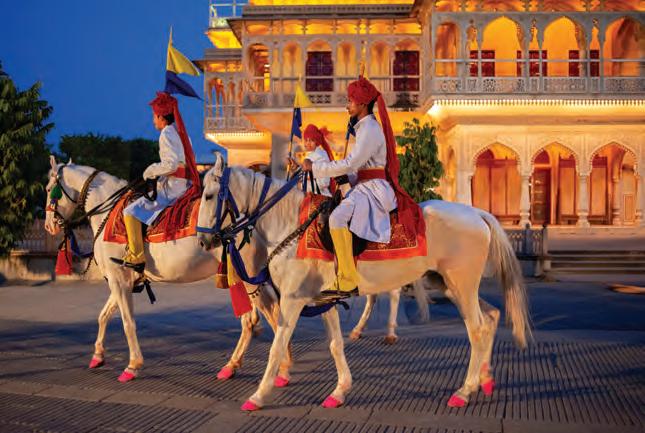
In the afternoon, camel-drawn carts transport travelers to dunes in the middle of nowhere for a dinner by moonlight. Through this desert, caravans of camels, men, and horses once carried precious stones and spices along the so-called Great Silk Road. The city of Bikaner was an essential stop along the route that connected Central Asia with the maritime ports of Gujarat.

The Blue City of Jodhpur
On the fifth day, the train arrives in Jodhpur, the largest city in Rajasthan. Here, we visit the Mehrangarh Fort, one of the most impressive in all of India, perched 122 meters above the ground. From any point in the city, its walls—over 36 meters tall—can be seen. A museum inside the fort houses a rich collection of miniatures, musical instruments, clothing, and furniture. Particularly noteworthy is a selection of old royal palanquins. Its interior also preserves part of the original cannons in excellent condition, along with landscaped inner courtyards and balconies adorned with large latticed screens.
From the top of the fortress, there is a panoramic view of the city, also known as the “Blue City,” since many of its houses are painted this color. In the past, only Brahmin homes were painted blue, but other castes soon adopted the color, believing it repelled mosquitoes and reduced heat. Today, some newer buildings continue to paint their walls blue, though mainly for tourism.
After visiting the city’s old quarter, the sunset promises a memorable experience. Passengers are treated to a private cocktail dinner at Hanwant Mahal, featuring an entertaining puppet show.
Udaipur, the Venice of the East
During the night, the train heads toward the beautiful Udaipur, a city that retains the charm of fairy tales. In the morning, visitors take a boat ride on Lake Pichola and visit its palaces. The lake is famous for the stunning landscapes surrounding its islands and for being a filming location—along with some palace interiors—for Octopussy (1983), a film in the James Bond saga that helped introduce the beauty of this place to the world.
The boat tour passes by the Lake Palace, a white, three-story rectangular building notable for its location on an island. It was built on Jagniwas Island about 250 years ago as a summer residence for Prince Jagat Singh II, and today it houses the luxurious five-star Taj Lake Palace hotel.
Afterward, the boat stops for an hour at Jagmandir Palace Island, which is explored on foot. This palace, also known as the “Lake Garden Palace,” was built on another natural island by Maharana Karan Singh II in 1620 and served as a leisure retreat for the royal family. Today, it is also a romantic seven-room hotel, although its restaurant, bar, and spa are always open to tours arriving by boat from the city. The most striking features include its entrance flanked by a row of enormous elephant sculptures, a 17th-century ornamental tower called Gol Mahal carved in stone, as well as a beautiful garden and excellent views of the lake.
Sevaliya, Land of Dinosaurs
On the seventh day, the train stops at Sevaliya station to visit this dinosaur fossil park, one of the most important in Asia. Numerous prehistoric remains embedded in the rocks provide evidence of the existence of real Narmada dinosaurs. The experience becomes even more fascinating when visitors are allowed to touch an egg from these creatures that became extinct 65 million years ago.
Afterward, lunch is served at the Garden Palace of Balasinor, with the royal family in traditional attire. Several traditional dances enliven the meal, although the most memorable dances are reserved for the final dinner on board the train.
Glasses of champagne and lively Bollywood-style music have everyone moving to the waiters’ rhythm. The journey is drawing to a close, and the train will not stop again until the following morning.
Finally, Mumbai
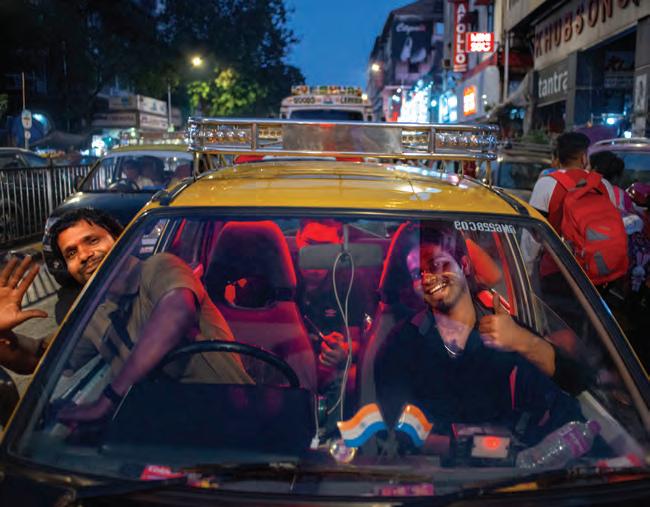
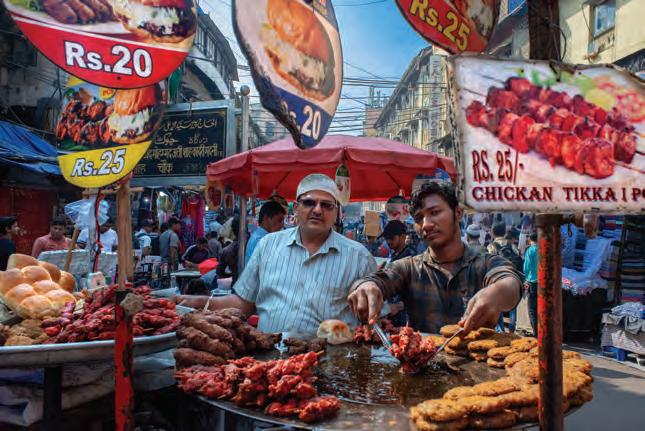
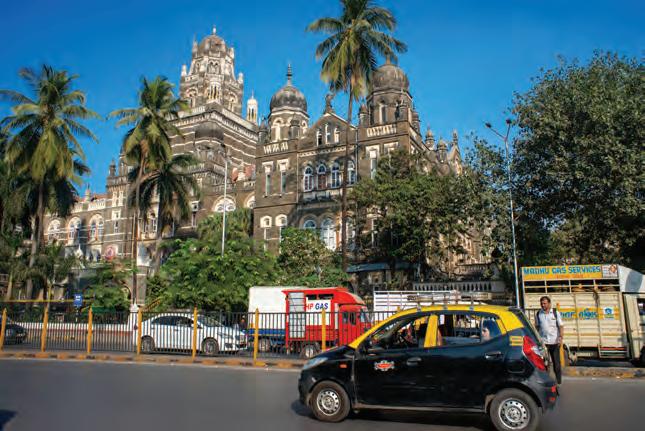
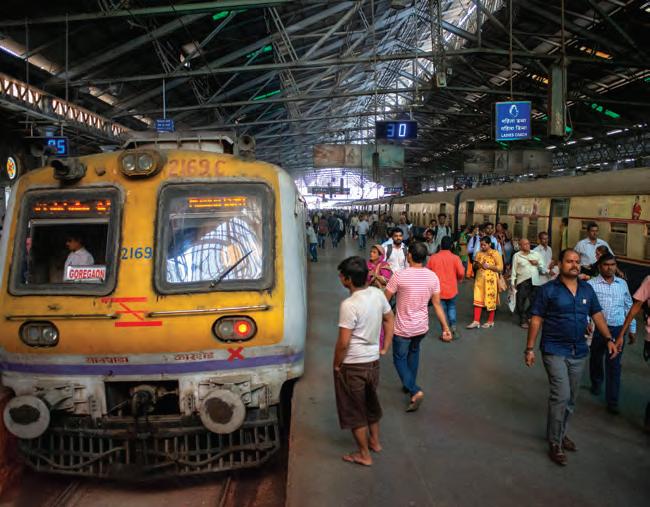
The face of Mumbai—formerly Bombay, with more than 15 million inhabitants— is that of a Western-style metropolis where all kinds of businesses coexist in a relatively small space. Tall buildings, chaotic traffic, and the constant flow of people resemble any major Asian or European city.
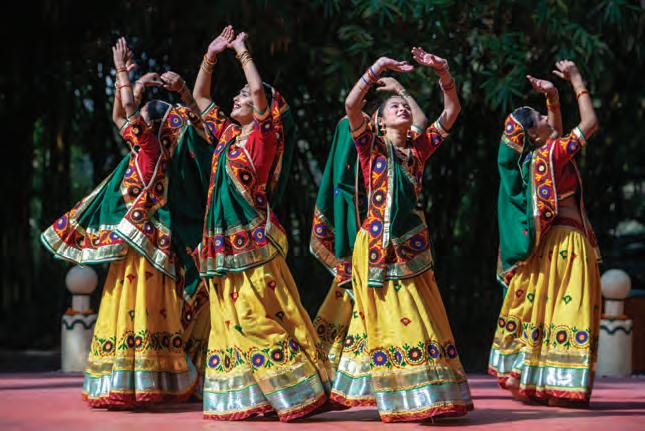
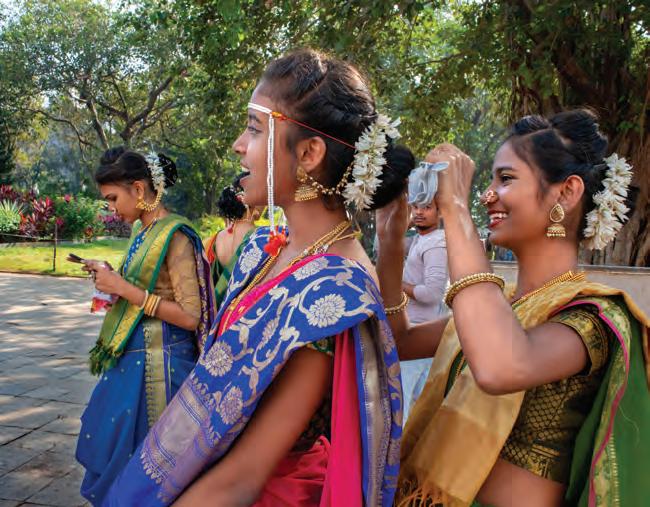
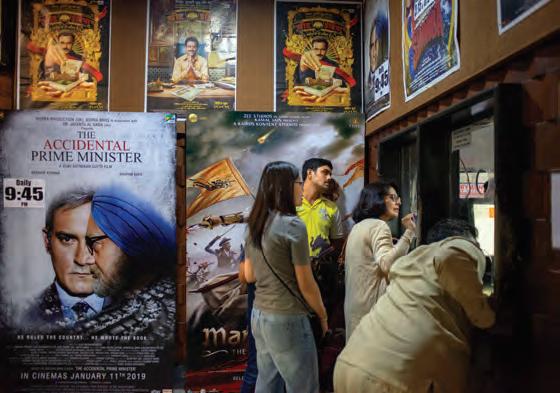
The city is as attractive as it is vast, so it is best explored at a relaxed pace, visiting its different neighborhoods and points of interest one by one. Many landmarks—such as the Gateway of India—bear witness to the long years of British presence in the country. If there is one thing that defines this city, it is undoubtedly Bollywood. As is well known, the word is a blend of Hollywood and Bombay, referring to one of the world’s largest film industries. Bollywood produces around a thousand films each year and reaches an audience of 3.6 billion people. Its melodramatic plots are combined with dance sequences featuring elaborate choreography and colorful costumes.
This unique train journey could not have a better ending than Mumbai—a city excessive in many ways, where tradition and modernity, ancient spirituality and cosmopolitan life come together. A journey that seeks to recreate the luxuries and pleasures once enjoyed by the maharajas, the wealthiest, most capricious, and extravagant rulers of past centuries.
ROUNDUP
BY STEVE DRAKE
There are places you visit—and then there are places you inhabit. The latter linger. They reshape how a destination is experienced, transforming a trip into something far more immersive, more personal, and often more unforgettable.
Across the globe, a new kind of stay is quietly redefining luxury— not through excess, but through originality. These are destinations where history, landscape, and imagination converge in ways that surprise even the most seasoned traveler.

SEVEN UNEXPECTED STAYS THAT REDEFINE THE ART OF TRAVEL
Luxury, in its most compelling form, is no longer about predictability—it is about perspective.
These stays invite travelers to sleep inside history, nature, and imagination itself. They remind us that the most meaningful journeys are not defined by where we go, but by how deeply we experience them.

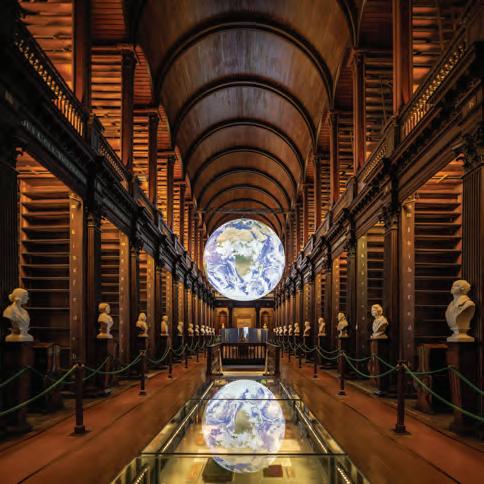

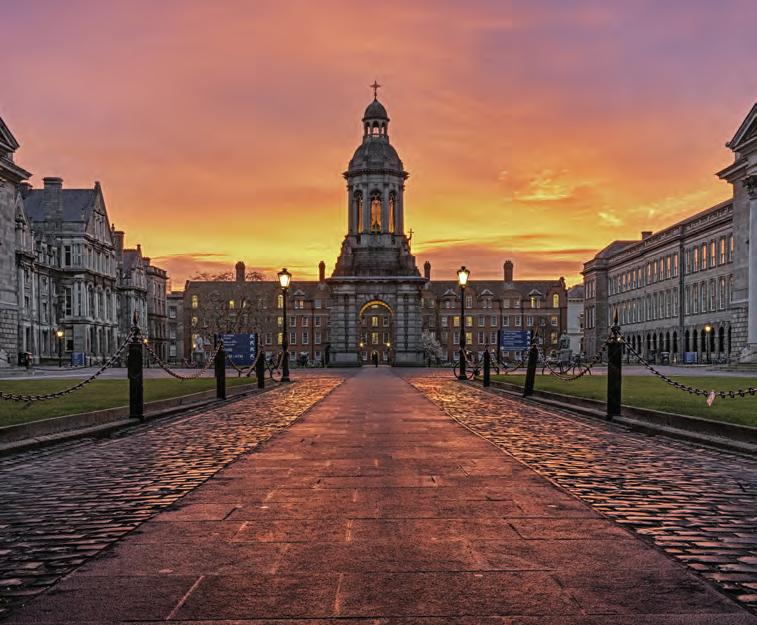
Trinity College Dublin Summer Accommodation — Ireland
Each summer, Trinity College Dublin quietly opens its doors to overnight guests, offering a rare opportunity to sleep within one of Europe’s most storied academic institutions.
Founded in 1592, the campus unfolds like a living archive—its cobbled squares, stone staircases, and centuries-old buildings carrying the quiet weight of time. Guests may find themselves staying in heritage residences such as the 17th-century Rubrics, where original doors, narrow corridors, and worn steps hint at generations of scholars who passed through before.
But the experience extends beyond architecture. Walking across Front Square after midnight, then knocking on the ancient Front Gate to be let back in, feels almost theatrical—like stepping briefly into another century.
Skylodge Adventure Suites — Sacred
Valley, Peru
Few hotels require as much commitment as Skylodge Adventure Suites—and fewer reward it so completely.
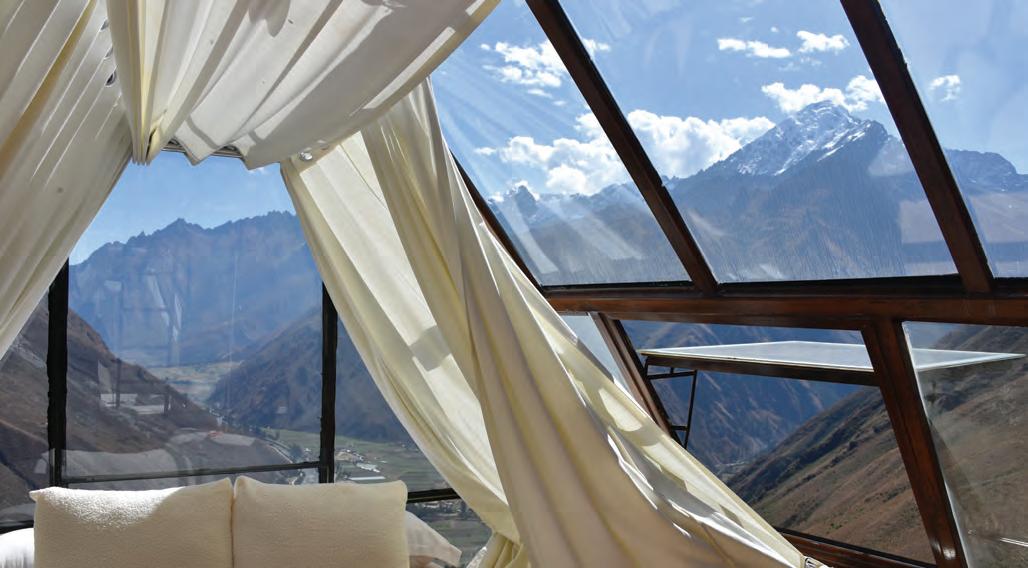
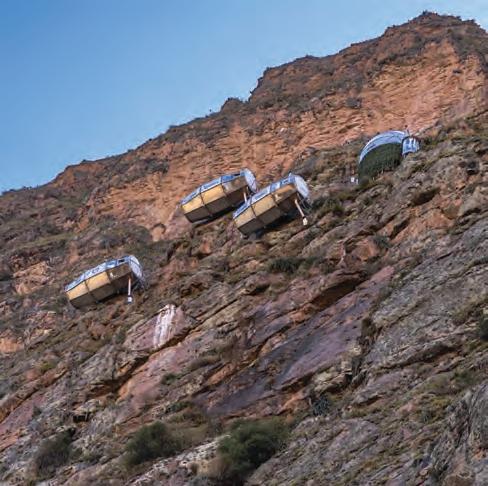
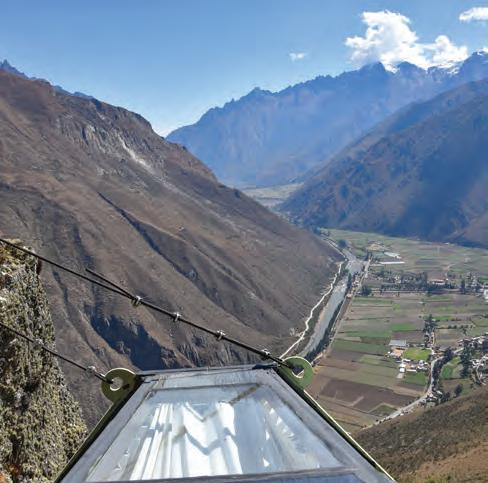
Suspended high above Peru’s Sacred Valley, these transparent capsules cling to a vertical cliff face, accessible only via a via ferrata climb or a demanding hike. Arrival is part of the story.
Once inside, however, the experience softens into stillness. The Andes stretch endlessly in every direction, and at night, the sky reveals itself in extraordinary clarity. Suspended between earth and sky, guests are left with little but silence, perspective, and awe.
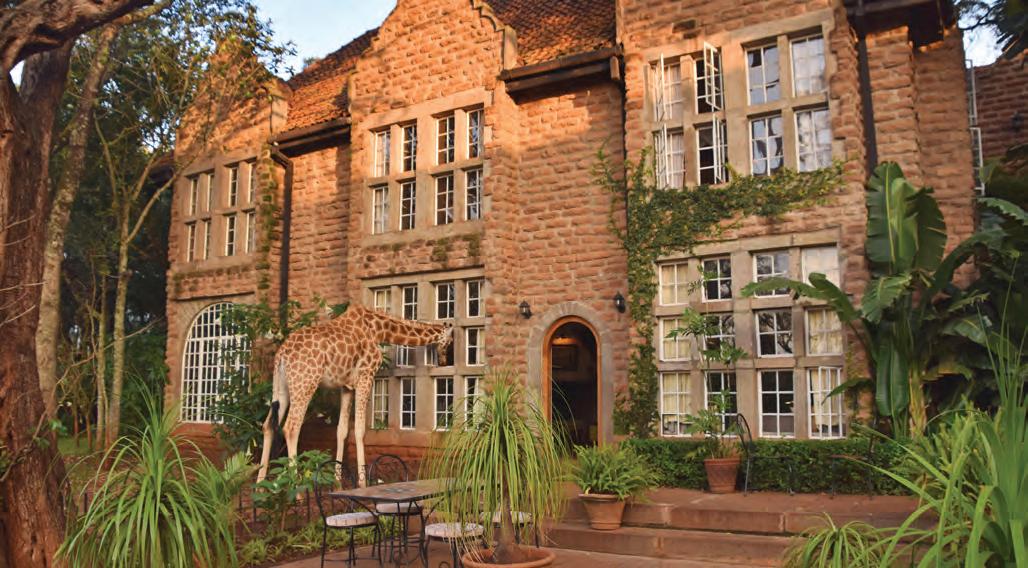
Giraffe Manor — Nairobi, Kenya
At Giraffe Manor, the line between the wild and the refined disappears in the most delightful way.
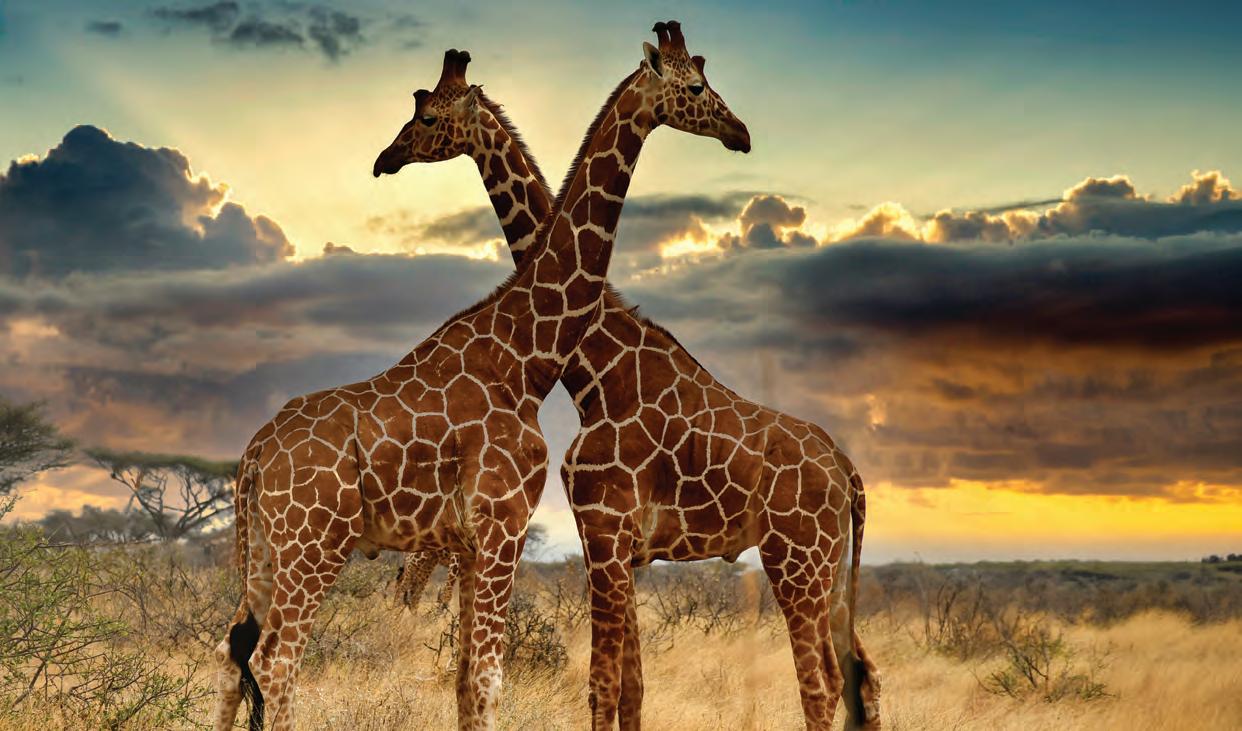
This ivy-covered manor is home to a resident herd of Rothschild giraffes who wander freely across the grounds—and frequently join guests at breakfast, stretching their long necks through open windows in search of treats.
Inside, the property retains a sense of colonial elegance, while outside, nature dictates the rhythm of the day. It is intimate, playful, and entirely unlike any traditional safari lodge.


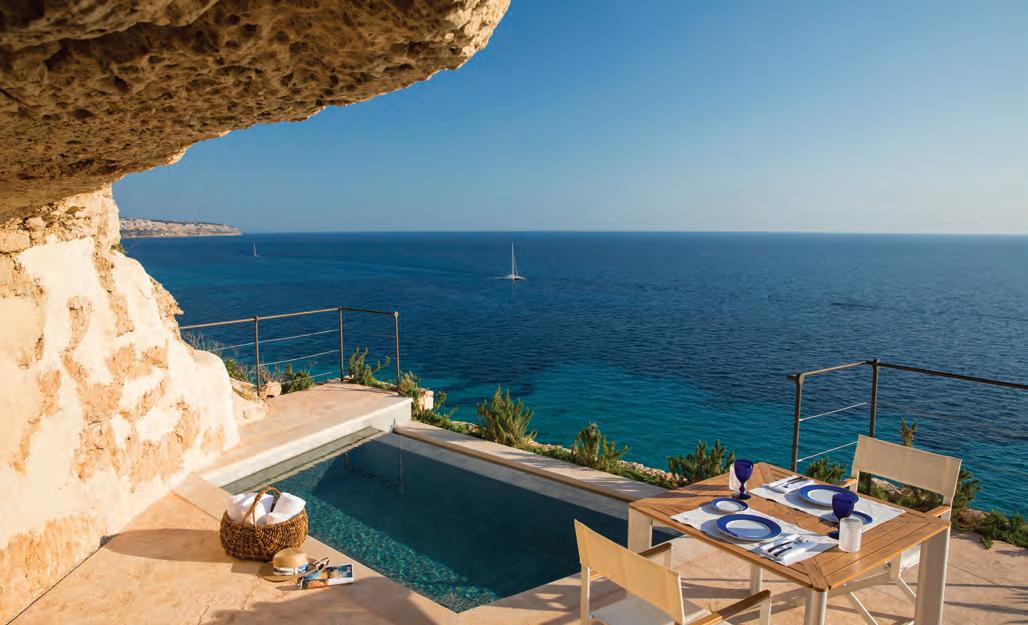
Cap Rocat — Mallorca, Spain
Hidden within a restored fortress overlooking the Bay of Palma, Cap Rocat offers a rare sense of privacy and place.
Suites carved into stone battlements open to sweeping Mediterranean views, while the property’s understated design preserves its military past without sacrificing comfort.


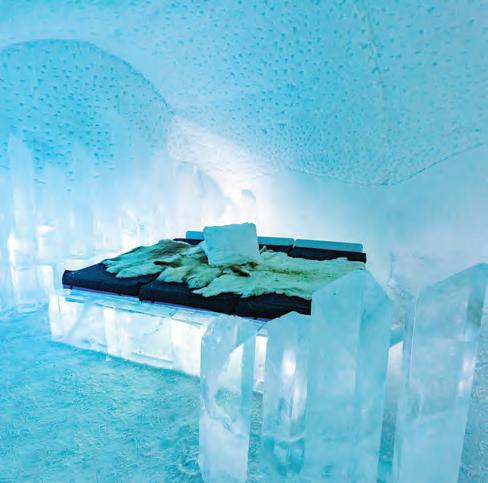
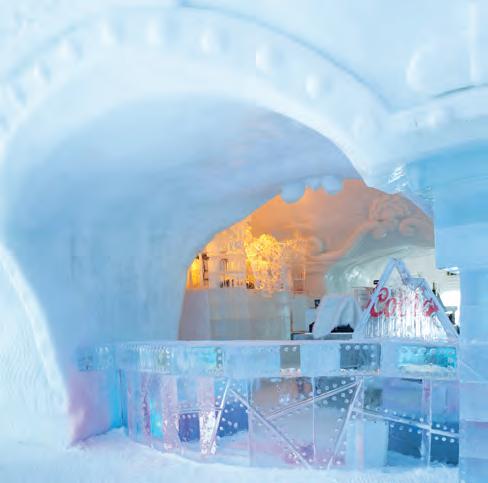
Hôtel de Glace — Québec, Canada
Each winter, Hôtel de Glace rises anew—an architectural work of art sculpted entirely from snow and ice.
With themed suites, an ice chapel, and glowing corridors, the experience is both immersive and ephemeral. Guests embrace the cold for a night unlike any other before retreating to warmth nearby.

UNITED KINGDOM /68
20 OF THE BEST PAR-3’S IN THE BRITISH ISLES
BY ANDREW MARSHALL
Every golfer loves a great par-3 - and there’s something magical about hitting a crisp wedge close to the pin on a short hole, or a towering hybrid to the green on a long one. Par-3’s are often the most picturesque holes on a course, and in many cases can be the most difficult ones. Whether it’s an elevated tee, a heart-pumping carry over water, a hidden green, or one encircled by deep pot bunkers, it’s often tricky to make par. What follows are 20 memorable par3’s throughout the British Isles (Scotland, England, Wales, Northern Ireland and Ireland). Some have earned their reputation as original and influential holes, while others are just waiting to be played on your next golf trip away.
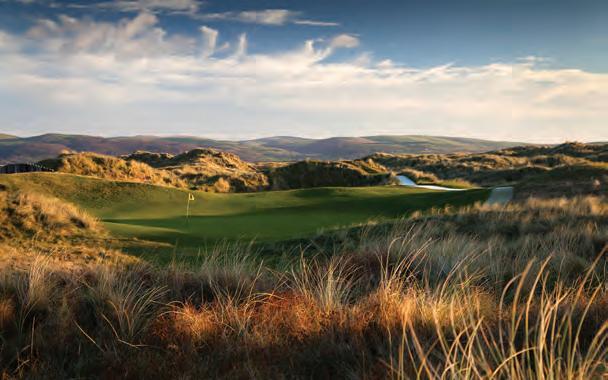
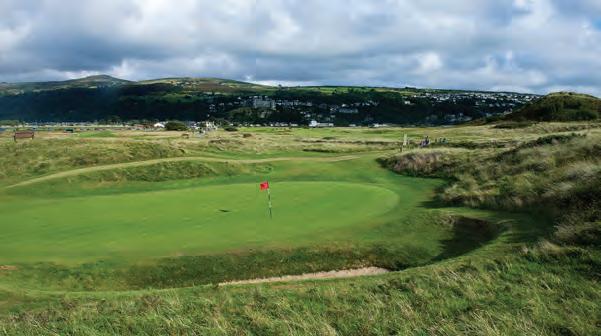
Legendary golf architects Herbert Fowler, James Braid, and Harry Colt have all played a part in shaping this historic out-and-back links nestled beautifully between the beach on one side and rolling hills and the railway on the other. The blind par-3 3rd, named Cader, featuring a punchbowl green, is arguably Aberdovey’s most famous hole.

This must-play Old Tom Morris design, dating from 1899, bursts into life at the enchanting 4th, named Port Erroll. Anything that reaches the putting surface is a triumph, as short tee shots are destined to be swallowed up by a steep false front that feeds into the hollow below. Anything long will require an awkward chip from the dunes.
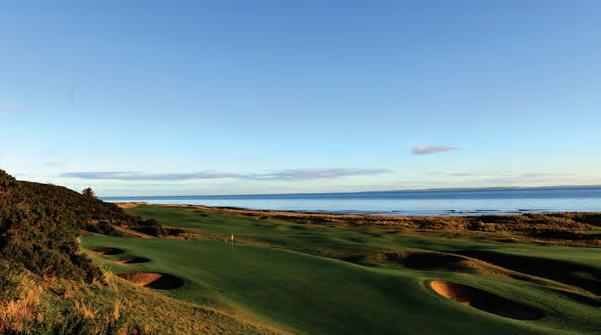
This top-drawer layout with links characteristics overlooking the Moray Firth is a delight to play, offering beautiful views and endless photo opportunities. You will be reaching for the camera rather than a club at the 4th, played towards the beautiful Castle Stuart and the inspiration for the course name. It’s a really super par-3 whose glorious location just gets better as you approach the green.

HOLE 3: WALES, ABERDOVEY, 167 YARDS.
HOLE 4: SCOTLAND, CRUDEN BAY, 196 YARDS.
HOLE 4: SCOTLAND, CASTLE STUART, 191 YARDS.
This must-play Old Tom Morris design, dating from 1899, bursts into life at the enchanting 4th, named Port Erroll. Anything that reaches the putting surface is a triumph, as short tee shots are destined to be swallowed up by a steep false front that feeds into the hollow below. Anything long will require an awkward chip from the dunes.
At 161 yards, Whinny Brae isn’t the longest, but it’s probably the most difficult of Royal Dornoch’s par-3’s. While the others are all raised plateau greens, the left-hand side of the 6th has a steep hillside going up from the green that is covered in whin bushes. With this being the narrowest green on the course, finding the putting surface requires great control over distance and line, as missing on either side exacts a severe penalty.

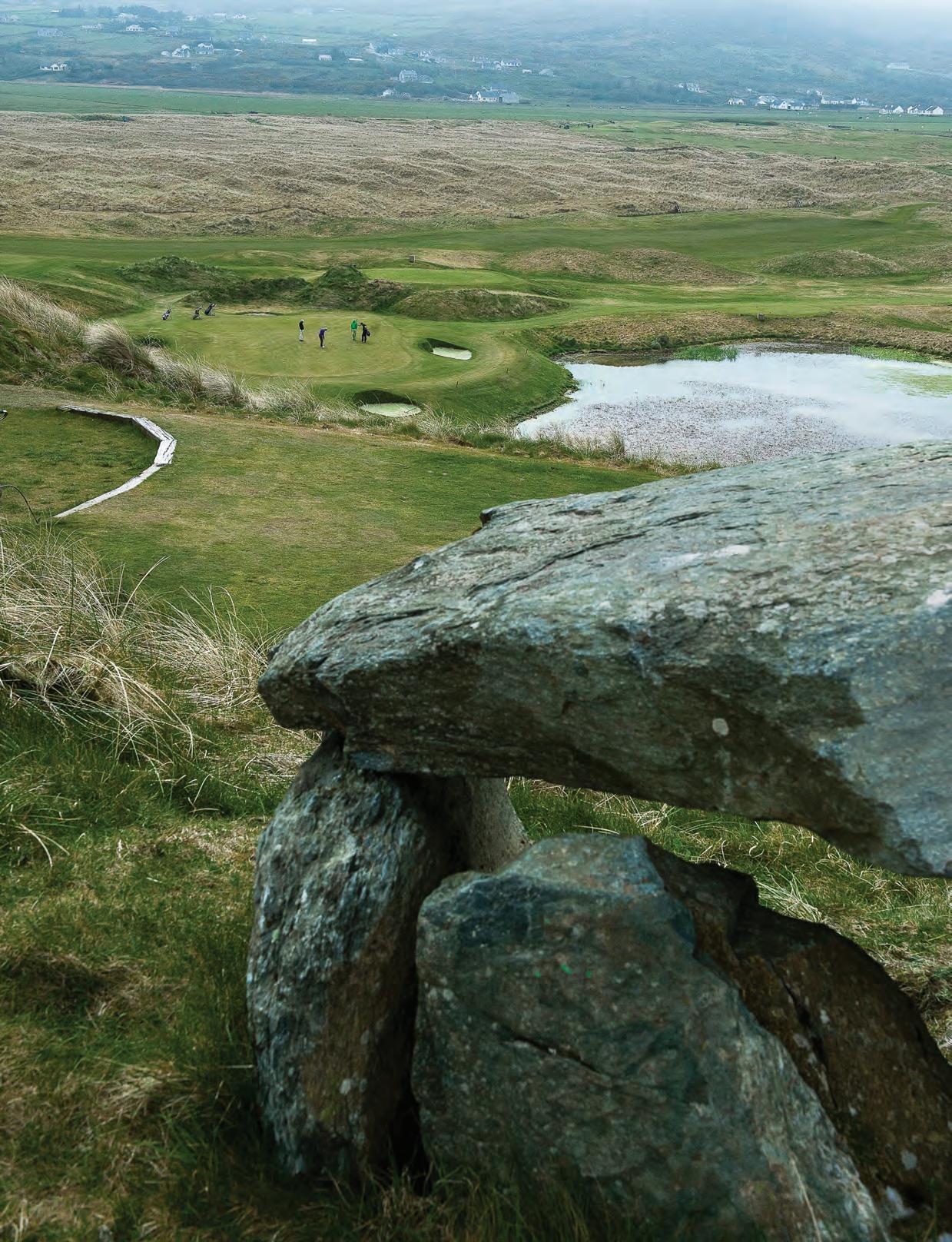
It’s little wonder that the par-3 7th on Ballyliffin’s Glashedy Links drew so much attention when the Irish Open was held here in 2018. Played from the course’s highest point to a green sited 100 feet below, with a marshy pond to the right of a green defended by four pot bunkers, one of Ireland’s finest short holes really sticks in
mind.
the
HOLE 6: SCOTLAND, ROYAL DORNOCH, 161 YARDS.
HOLE 7: IRELAND, BALLYLIFFIN (GLASHEDY), 174 YARDS.
HOLE 4: SCOTLAND, SHISKINE, 137 YARDS.
HOLE 7: WALES, ROYAL PORTHCAWL, 122 YARDS.
The shortest hole on this traditional links is the 7th - Royal Porthcawl’s answer to Royal Troon’s Postage Stamp. While the hole is short in stature, it is also treacherous with a narrow entrance to an equally narrow putting surface well-guarded by small hillocks and a necklace of six pot bunkers. Land in one of these and making par will be far from easy.

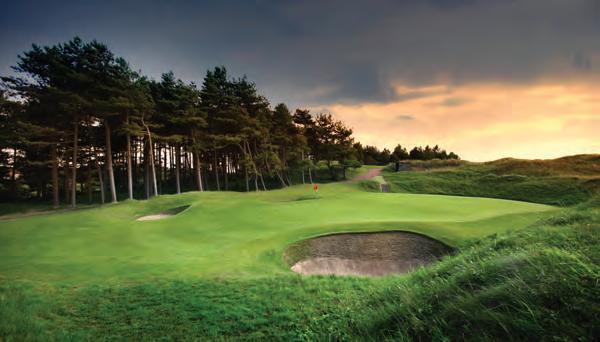
Lying a stone’s throw from Royal Birkdale, amid a stretch of sandhills on the outskirts of Southport on England’s Golf Coast, Hillside’s explosive back nine features a series of holes that will linger long in the mind after playing. Taking you up and into the dunes, the short, yet testing par-3 10th, surrounded by devilishly deep pot bunkers, starts the memorable run for home.
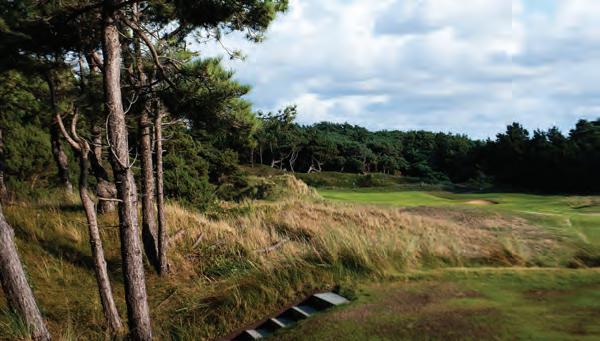
HOLE 10: ENGLAND, FORMBY, 215 YARDS.
With its part-links, part-heathland, partparkland and part-woodland layout, Formby on England’s Lancashire coast is a unique championship test that’s well worth playing. A well-struck tee shot is required at the long par-3 10th, situated in an attractive and secluded setting. Pay particular attention to the wind when selecting your club as the tee can be sheltered, plus the three greenside bunkers gather the ball well, so making par is a good score.
HOLE 10: ENGLAND, HILLSIDE, 172 YARDS.
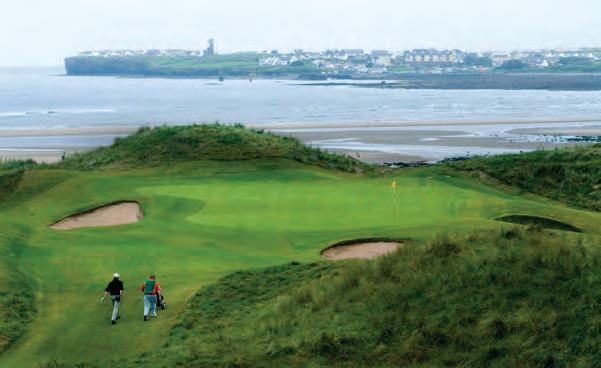
Situated next to the lovely beach of Liscannor Bay on the County Clare coastline, this enchanting out-and-back links boasts the work of Old Tom Morris and Dr. Alistair MacKenzie in its design. Tucked into the dunes at the mouth of the estuary with wonderful Atlantic Ocean views, the green of the stunning par-3 11th is one of only three original MacKenzie greens that remain.
As you play this excellent Welsh links, you’ll enjoy splendid views of the brooding 13thcentury Harlech Castle and the Snowdon Mountains beyond. The 11th hole is a gorgeous par-3 through a gap in the dunes to a blind green. It offers a good chance of a birdie but can easily result in a bogey or worse if you miss the putting surface.
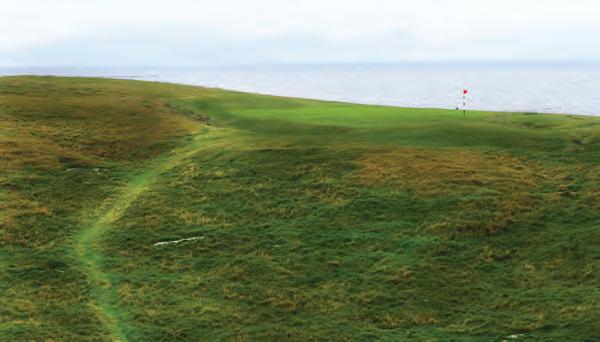
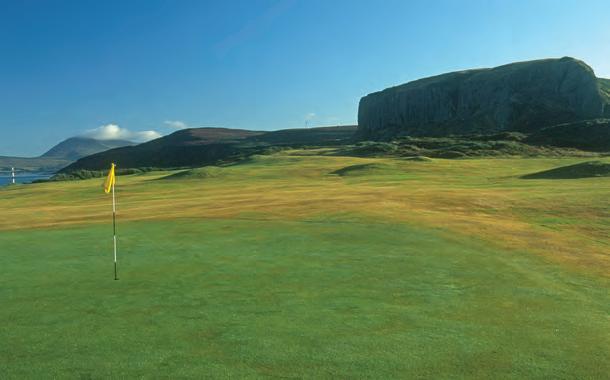
A round at this long-lost Old Tom Morris design on the Hebridean island of South Uist is the kind of place where you can imagine the Scottish golfing forefathers striding the sheep-cropped turf with their hickory shafts and a pocketful of guttapercha. The standout 11th is played over a deep gully to a large green and directly into a sea breeze, and when you stand on the tee of Barra Sight, it looks like you’re hitting straight into the Atlantic Ocean.
HOLE 11: WALES, ROYAL ST. DAVID’S, 152 YARDS.
HOLE 11: SCOTLAND, ASKERNISH OLD, 197 YARDS.
HOLE 11: IRELAND, LAHINCH (OLD COURSE), 170 YARDS.
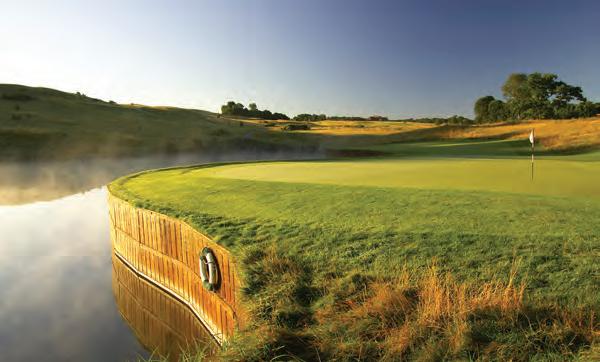
The London Club’s International course features several daunting shots over water, including the nerve jangler from the 12th’s elevated tee. The hole plays over a large lake to an elongated green held back with boards that sits sideways to the tee. Trust your club selection and swing, or this par-3 could be a real card wrecker.
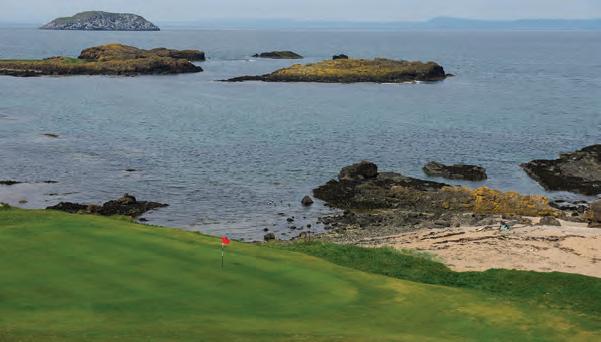
Every hole of this East Lothian clifftop links offers spectacular panoramas and different perspectives of the Firth of Forth and iconic Bass Rock. The course is typified by the signature 13th, simply known as the Sea Hole. With the North Sea crashing against the rugged coastline below, it calls for a blind tee shot over sand dunes to a green guarded on three sides by the beach and rocks.
ENGLAND, Dunstanburgh Castle, 127 yards.
One of the best moments on this 1877 Northumberland links arrives at the 13th aptly named Castle - where the ruins of the 14th century Dunstanburgh Castle form an atmospheric backdrop, framed perfectly on a clifftop beyond the green. A sweetly struck 8 or 9-iron should do the trick on one of the most evocative short holes in the British Isles.

HOLE 13:
HOLE 12: ENGLAND, THE LONDON CLUB, 190 YARDS.
HOLE 13: SCOTLAND, GLEN GOLF CLUB, 148 YARDS.
HOLE 13: ENGLAND, DUNSTANBURGH CASTLE, 127 YARDS.
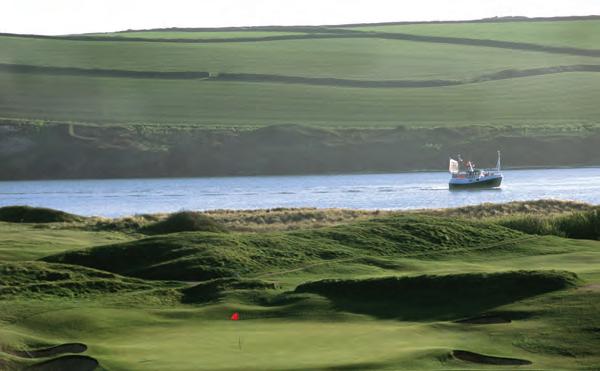
There are many terrific holes on this classic Cornish links and the 15th is one of the best, offering wonderful views of the Camel Estuary from the tee as you prepare to hit off. A deep ravine lies between the tee and the green on this beautiful downhill par3, and anything slightly mishit or underclubbed is destined to be in the bottom of it.
It may be a long way from anywhere, but that’s the special charm of Carne on the west coast of the Emerald Isle. The signature par-3 on this classic Eddie Hackett design is the 16th, which drops steeply from an elevated tee to a green encircled by dunes. It’s a great three-shot hole that typifies this wild and rugged layout that makes a lasting impression on all who play it.
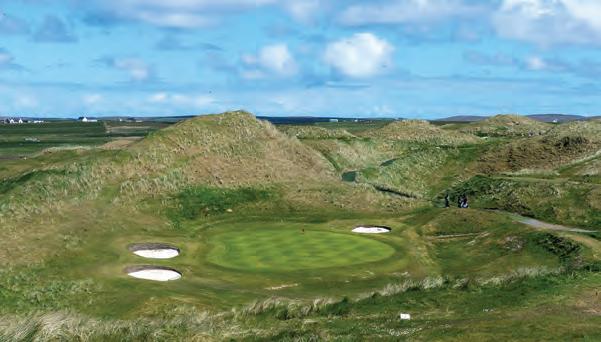

Built on a 220-acre diamond of land, jutting out over two miles into the Atlantic Ocean, Old Head has developed into one of the planet’s must-play courses. The pick of the short holes is Coosgorm, a top-notch par-3 set tight to the ocean. With the coast and water’s edge to the right, the left side is a popular but not always rewarding choice and the wind usually plays a key part in club selection.
HOLE 16: IRELAND, CARNE, 168 YARDS.
HOLE 16: IRELAND, OLD HEAD, 186 YARDS.
HOLE 15: ENGLAND, ST ENODOC, 168 YARDS.
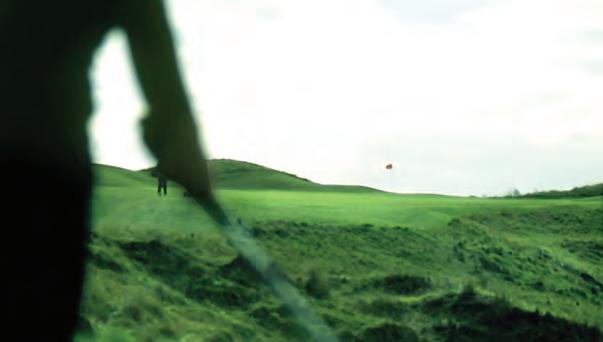
There are plenty of great holes on this Harry Colt classic, which hosted the 2025 Open Championship won by Scottie Scheffler, but there’s one that will be etched in the memory long after you leave – the 16th known as Calamity Corner. To slice or push the ball will earn you an almost sure double bogey, because the links land falls away severely down a steep slope. Take plenty of club and hit to the back left of the green. Don’t be ashamed of taking a four at Calamity Corner- threes are as rare as an unfriendly Irishman.
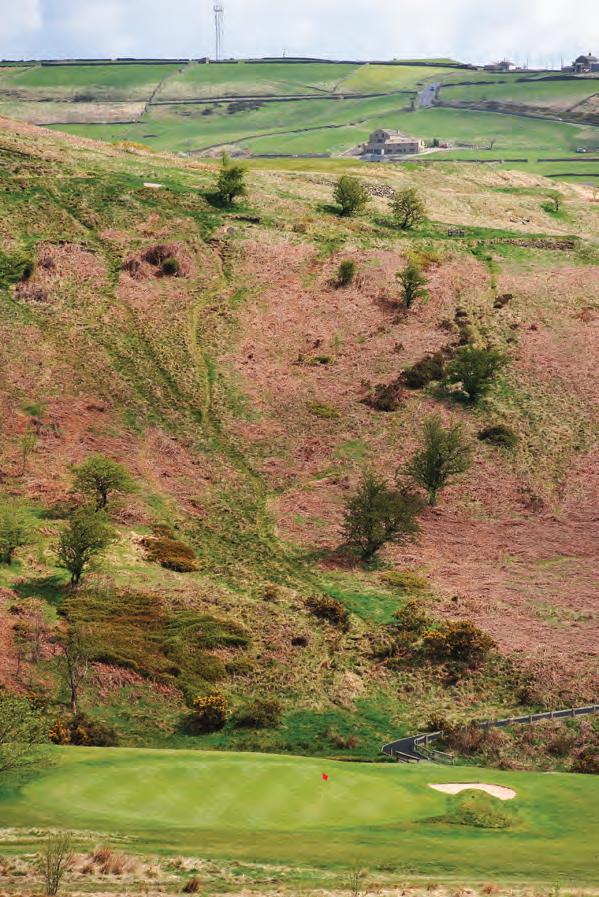
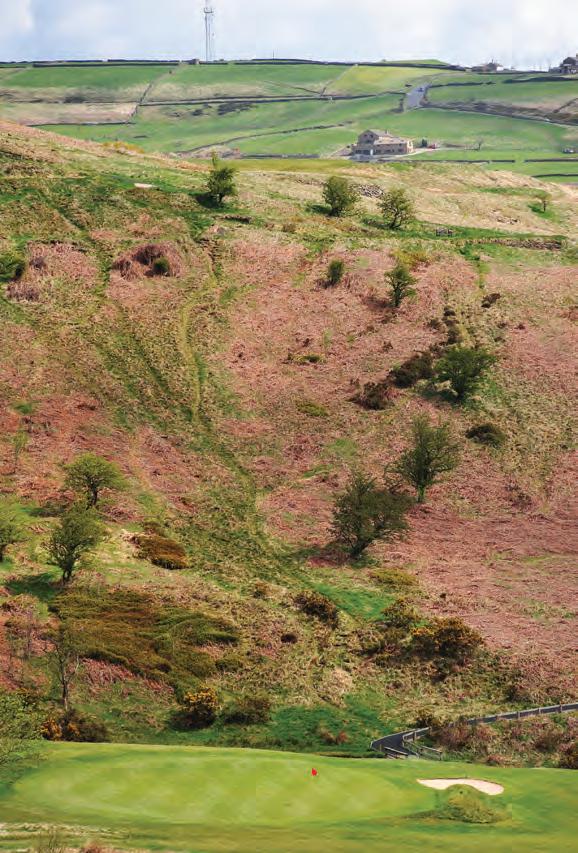
A highlight of this little-known moorland layout draped across Ogden Valley near Haworth in West Yorkshire’s Bronte country is the 17th hole, aptly named Bagott’s Leap. Played from an elevated tee high up on the hillside, across heather and a brook to a green sitting 62 ft below, club selection on Halifax’s penultimate hole is of paramount importance.
HOLE 16: NORTHERN IRELAND, ROYAL PORTRUSH, 236 YARDS.
HOLE 17: ENGLAND, HALIFAX GOLF CLUB, 176 YARDS.







Your buzz could kill.



Buzzed driving is drunk driving.





DRIFT is available on PressReader