








































































































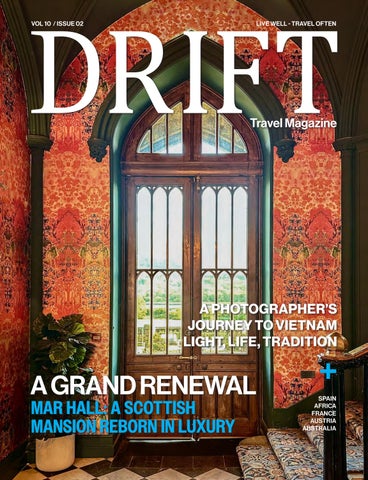
Steve Drake
Step inside Mar Hall, Scotland’s reborn mansion where historic grandeur meets bold modern luxury. From lavish suites and falconry displays to championship golf and a tranquil spa, discover how this Clyde-side estate has been reimagined.
Zara Durrani
2 0
Beyond the yachts and celebrity glamour, discover the quieter soul of Saint-Tropez. From market mornings and artisan traditions to hidden gardens and seaside cafés, this story reveals the village’s authentic heart after the spotlight fades.
Sergi Reboredo
2 6
Just a short ferry ride from Ibiza, Formentera reveals a Mediterranean world of turquoise waters, hidden coves, bohemian history, and timeless calm. Discover the island where pristine beaches, nature, and slow living still define paradise.
Mariaserena Bucci
3 2
Through the lens of photographer Mariaserena Bucci, this photo essay captures the quiet poetry of Vietnam—from lantern-lit nights in Hoi An to riverside life, rice fields, and everyday moments that reveal the country’s vibrant culture and enduring traditions.
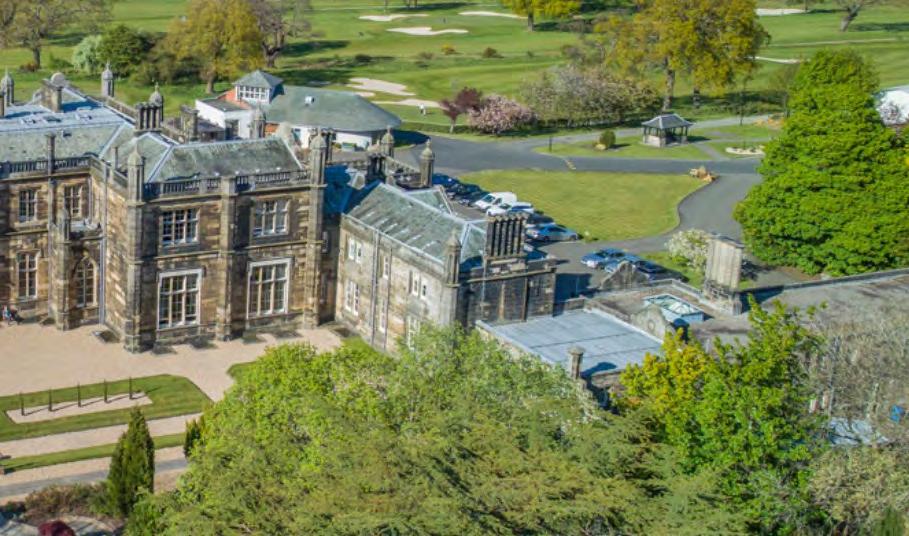
Russ Walsh
From trail running and cycling to spring skiing and café-lined streets, discover how Innsbruck blends Alpine adventure with historic charm. This 48-hour itinerary reveals why spring is the perfect time to explore Austria’s mountain city.
Allison Foat
High above Botswana’s wild Mashatu Reserve, Euphorbia Safari Lodge blends striking architecture with extraordinary wildlife encounters. From elephant sightings to design-led villas, discover a safari retreat where nature, luxury, and stillness meet.
Andrew Marshall
From rugged outback ranges to rainforest peaks and dramatic coastal cliffs, explore Australia’s most remarkable national parks. This journey across six states and two territories reveals the wild landscapes that define the continent.
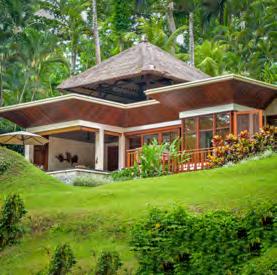
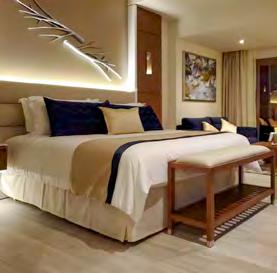
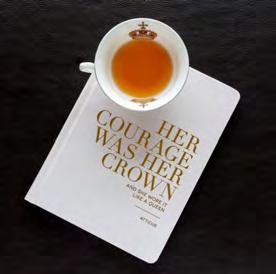
EXTRAORDINARY BRANDS DESERVE REMARKABLE PHOTOGRAPHS
Bespoke Professional Photography for Hotels, Resorts & Luxury Brands
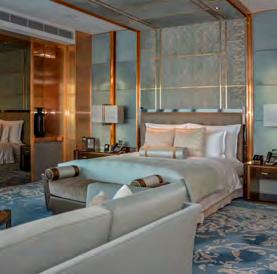
Clients Worldwide:
TRAVEL + TOURISM
Fairmont Hotels & Resorts | Four
Seasons Hotels & Resorts | Ritz Carlton
Hotels | Accor Hotels | Melia Hotels
Ovolo Hotels | Sunwing Travel | Tourism
Barbados | Tourism Grand Cayman
LUXURY BRANDS
Helly Hanson | Lincoln Luxury Vehicles
Bugatti | Swissgear | Lole | Ford Motors | Samsung | Tiffany & Co.
Available worldwide. Request our photoshoot destination calendar: email: portfolio@glossy.media web portfolio: glossy.media

staples.ca
This set of five lightweight, durable polyester cubes includes multiple sizes to separate clothes, accessories, and essentials, with mesh panels for visibility and a reinforced top handle for easy removal from luggage. Designed to tame overstuffed suitcases and maximize space, these cubes help keep gear tidy and accessible from city breaks to long vacations—making every trip smoother and stress-free.


staples.ca
This is a travel must-have for families on the go. With 100 vibrant, washable markers and a carrying case, kids can draw, doodle, and stay entertained on long flights, road trips, hotel stays, or downtime between adventures. The durable design and easy-grip tips help keep little hands busy and creative, turning travel wait time into fun, mess-free moments everyone will enjoy.
damianibooks.com
This book by by photographer Jon McCormack, exploring the geometric rhythms that shape Earth’s landscapes and ecosystems. Spanning six continents—from Iceland’s volcanic coasts to Antarctica’s ice fields—the book reveals nature as a living system of patterns. Released for Earth Day 2026, all proceeds support Vital Impacts, a women-led conservation nonprofit founded by Ami Vitale.


sharkninja.ca
A powerful yet travel-friendly blender designed for life on the move. With a 1200-watt motor and stainless-steel blades, it quickly crushes ice and blends smoothies, shakes, and frozen drinks directly in its 26-oz leak-proof travel tumbler. One-touch Auto-iQ programs make blending effortless, while the detachable lid and straw let you sip on the go. Perfect for road trips, RV travel, or extended hotel stays, it helps travelers keep up healthy routines by preparing fresh drinks anywhere. Compact, powerful, and easy to clean, the BlendBOSS turns hotel rooms, vacation rentals, or campsites into instant smoothie bars—making it an ideal companion for wellness-focused adventures.



bluffworks.com
Ideal for travelers moving between climates, the Icebreaker Merino Blend 300 RealFleece™ Descender Long Sleeve Zip Jacket offers exceptional warmth without bulk. Made with a soft merino fleece interior, it naturally regulates temperature, resists odors, and breathes during active days. The full-zip design layers easily for flights, city exploring, or mountain trails, while durable construction and comfortfocused details make it a reliable, pack-friendly essential for extended journeys.


airback.store
The ultimate travel bag for modern explorers. Ingeniously combining a backpack and rolling carry-on with built-in vacuum compression, it expands packing space while staying within airline size limits. Effortlessly transition from wheels to shoulder straps as you move through airports and city streets. Durable, organized, and designed for efficiency, FLEX keeps clothes neat and accessible—perfect for weekend getaways or longer trips when you want maximum capacity without checked-bag hassles.



limitlessinnovations.com
BoostHero Portable Car Battery Jump Starter is a compact road-trip essential designed to keep travelers prepared for the unexpected. This all-in-one device combines a powerful 800A jump starter, a bright multi-mode LED flashlight, and a 6,000mAh power bank for charging phones and devices on the go. Lightweight and easy to store in a glove box or luggage, it can revive vehicles up to 6.0L gas or 4.0L diesel engines, making it perfect for road trips, remote adventures, and everyday peace of mind when exploring new destinations.






trotpets.com
This is a thoughtfully designed travel essential for pet owners who refuse to compromise on convenience or cleanliness while on the move. Featuring durable stainlesssteel food and water bowls, a non-slip silicone mat, and airtight lids, it prevents spills and messes in cars, hotel rooms, or campsites. Easy to pack, quick to clean, and stylishly compact, it keeps pets comfortable and feeding routines consistent wherever the journey leads.
clevetura.com
Clevetura Gesture Keyboard for Mac reimagines portable productivity for travelers who work on the road. This sleek wireless keyboard integrates a full-size Mac layout with an embedded gesture-sensitive touchpad right on the keys, so you can swipe, scroll and click without switching devices—ideal for tight airplane trays and café workstations. It pairs with up to four devices via Bluetooth or USB-C, with customizable RGB backlighting and touch sliders that adapt to your workflow. With long battery life and wireless convenience, CLVX 1 cuts down desktop clutter and keeps your creative and office tasks flowing smoothly wherever you roam. Windows version also available.


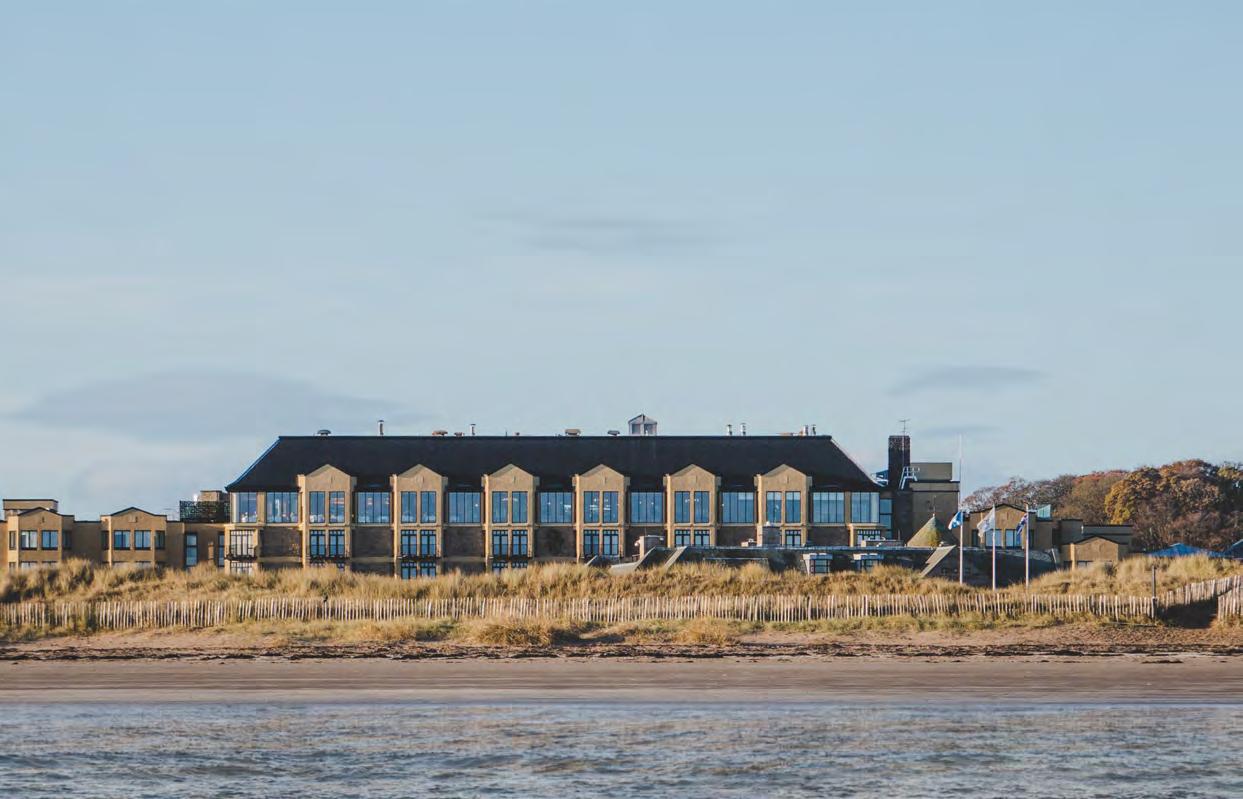
ICONIC LUXURY OVERLOOKING THE HOME OF GOLF
Set along the legendary fairways of St Andrews’ Old Course and overlooking the sweeping sands of West Sands Beach, the Old Course Hotel, Golf Resort & Spa occupies one of the most coveted addresses in the world of golf. Here, history and luxury converge in a setting that feels both timeless and exhilarating. With panoramic views of the iconic Swilcan Bridge and the North Sea beyond, the hotel places guests at the very heart of the sport’s most revered landscape.
St Andrews has long been known as the “Home of Golf,” drawing players and enthusiasts from across the globe. Yet the destination offers far more than legendary tee times. Medieval streets, centuries-old university buildings, and dramatic coastal scenery create an atmosphere steeped in tradition and character. The Old Course Hotel captures that spirit perfectly—offering refined comfort while celebrating the heritage of this remarkable town.
Few hotels in the world can claim such proximity to a sporting icon. The Old Course Hotel sits directly beside the 17th hole of the Old Course—famously known as the “Road Hole,” one of golf’s most challenging and celebrated holes.
For golfers, the experience is unforgettable. Many rooms and suites feature sweeping views across the fairways, allowing guests to watch players navigate the course throughout the day. The hotel’s expert concierge team can assist with coveted tee times, private lessons, and access to nearby championship courses including the Jubilee Course and Kingsbarns Golf Links.
Whether stepping onto the course or simply enjoying the view from the terrace, the sense of being immersed in golf’s living history is unmistakable.
Inside, the Old Course Hotel blends classic Scottish elegance with modern sophistication. Rooms and suites are designed to showcase views of the Old Course or Fife’s rugged coastline, with refined furnishings, warm textures, and calming palettes inspired by the surrounding landscape. Marble bathrooms, plush bedding, and thoughtful details add comfort, while subtle touches—from tartan accents to coastal artwork—reflect the heritage of Scotland.
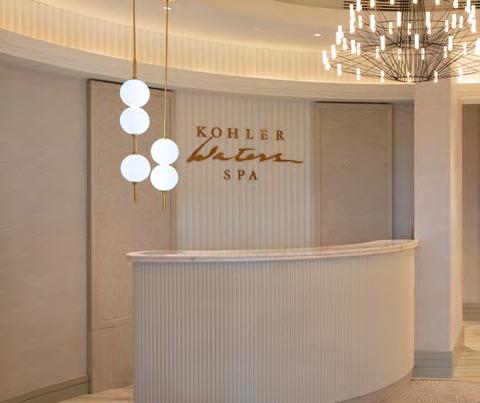
One of the hotel’s most remarkable features is the Kohler Waters Spa, the only spa of its kind outside the United States. Designed around the restorative power of water, the spa offers a deeply immersive wellness experience overlooking the North Sea.
Guests can unwind in hydrotherapy pools, rejuvenating thermal suites, and rooftop hot tubs with sweeping coastal views. Signature treatments incorporate waterbased therapies, soothing rituals, and personalized wellness journeys that help guests fully relax after a day on the links.
With its tranquil atmosphere and spectacular setting, the spa transforms the Old Course Hotel into not just a golf destination, but a place of renewal and restoration.
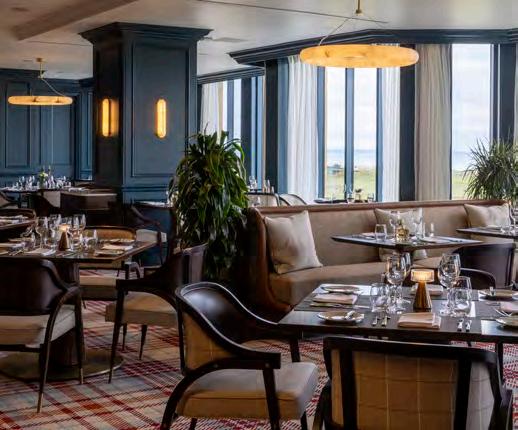
Dining at the Old Course Hotel celebrates Scottish produce and global flavors, paired with sweeping views of the legendary fairways. The Road Hole Restaurant offers refined Scottish cuisine overlooking the famous 17th hole, while the Road Hole Bar serves classic cocktails above the course. Additional venues provide relaxed lunches and elegant afternoon tea, all set against the dramatic coastal scenery of Fife.
The Old Course Hotel, Golf Resort & Spa is more than a luxury hotel—it is an essential part of the St Andrews experience. With its unrivaled location beside the Old Course, exceptional spa, world-class dining, and panoramic coastal views, it offers guests the rare chance to stay within one of golf’s most storied landscapes.
For golfers and travelers alike, few places capture the romance and tradition of Scotland quite like this. At the Old Course Hotel, every sunrise over the fairways feels like a moment in sporting history.
oldcoursehotel.co.uk
BY STEVE DRAKE
Arriving at JA Mar Hall Golf & Spa Resort feels less like checking into a hotel and more like stepping into a grand Scottish story that has been unfolding for centuries.
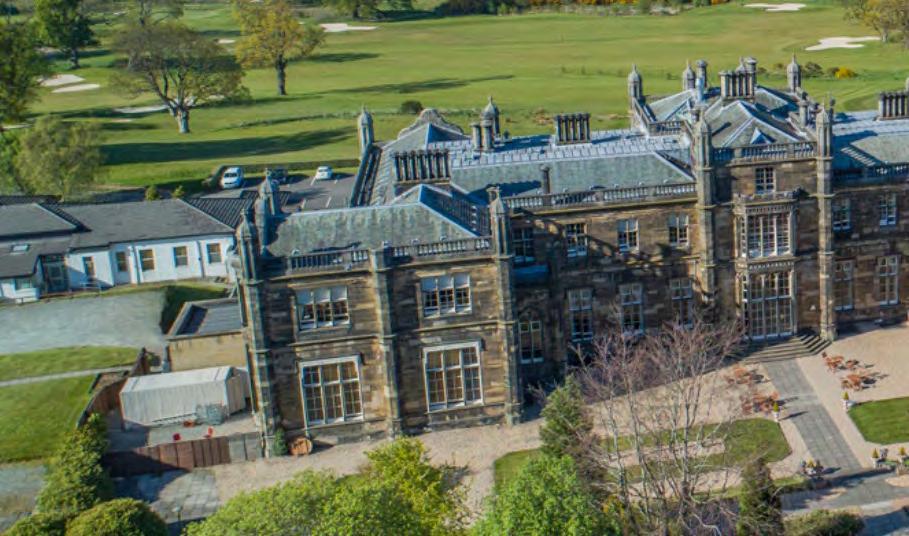
The long drive winds through towering trees before revealing the stately mansion set high above the River Clyde. Even before stepping through the doors, there is a sense that this is a place where history and luxury exist in equal measure. Yet Mar Hall today is not simply a preserved relic of Scotland’s aristocratic past—it is a remarkable rebirth. Following an extensive restoration and reinvention, the estate has emerged as one of Scotland’s most striking luxury retreats, seamlessly blending its historic character with bold contemporary design.
During my stay, I quickly realized that Mar Hall is not just about beautiful rooms and sweeping landscapes. It is about atmosphere—the feeling that every corridor, salon, and garden carries a story while still embracing the comforts of modern luxury travel.
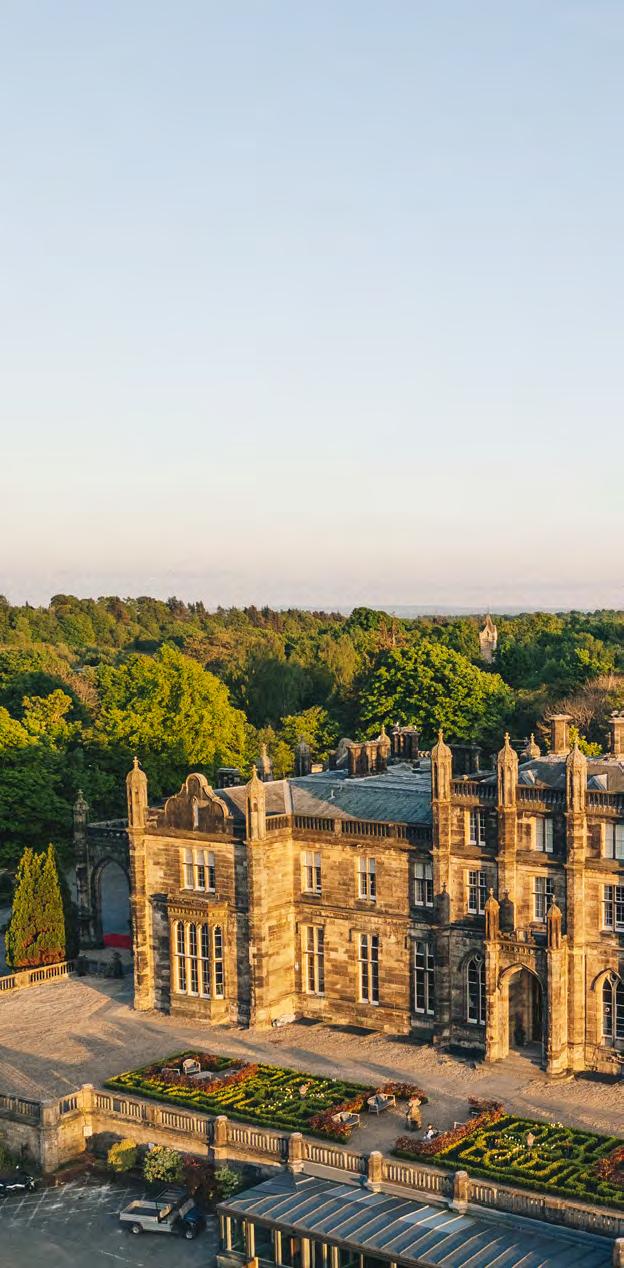
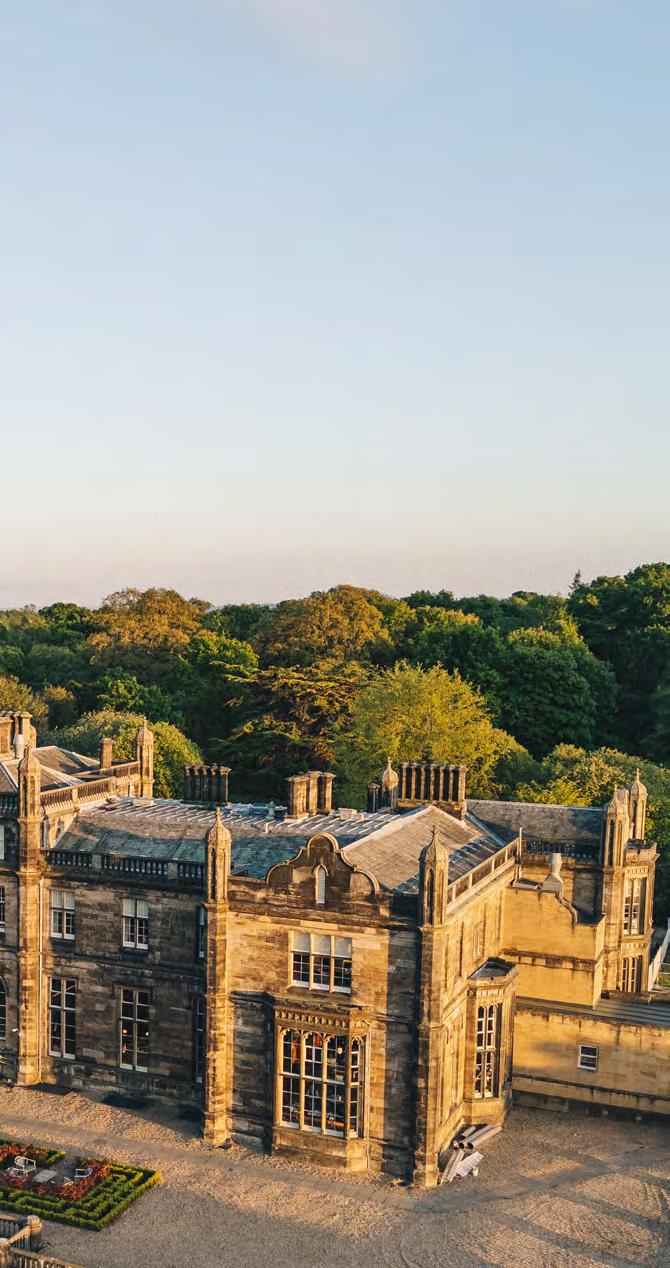
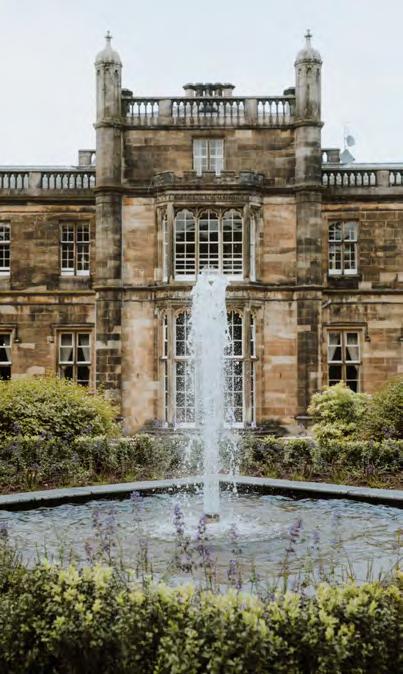
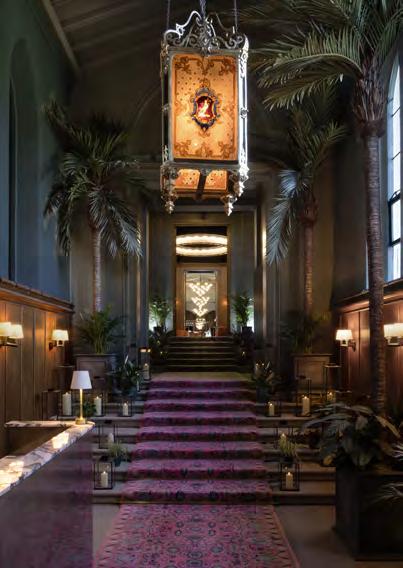
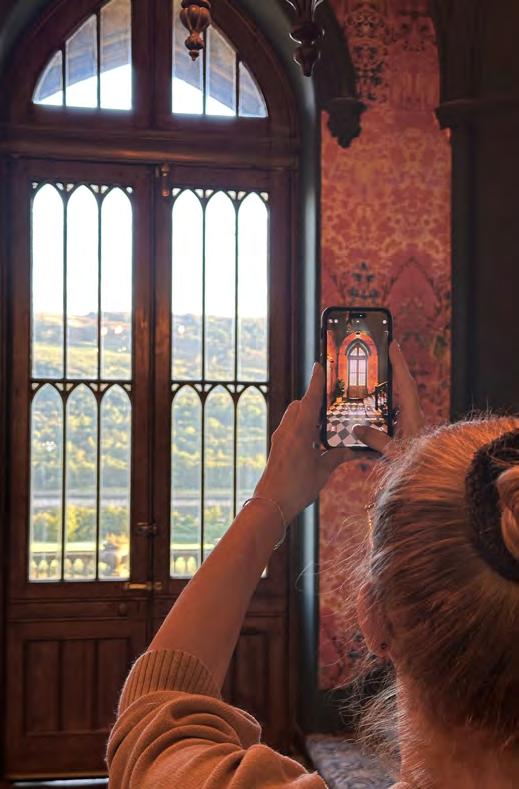
The history of Mar Hall stretches back to the early 19th century, when the grand mansion was built for the Earl of Mar. Designed in 1828 by renowned architect Sir Robert Smirke— best known for designing the British Museum—the house was conceived as a stately residence befitting the Scottish aristocracy.
Over the years, the estate evolved through many chapters. It served as a noble residence, a training college, and eventually a hotel. Yet despite these transitions, the essence of the mansion remained intact: soaring ceilings, intricate plasterwork, sweeping staircases, and tall windows framing views across the Clyde Valley.
Walking through the halls today, the building’s heritage is unmistakable. Ornate fireplaces anchor many of the public spaces, while dramatic chandeliers illuminate richly detailed ceilings. But what is perhaps most impressive is how thoughtfully the historic architecture has been integrated into the hotel’s modern redesign.
Rather than feeling like a museum, Mar Hall feels alive again—vibrant, stylish, and unmistakably luxurious.
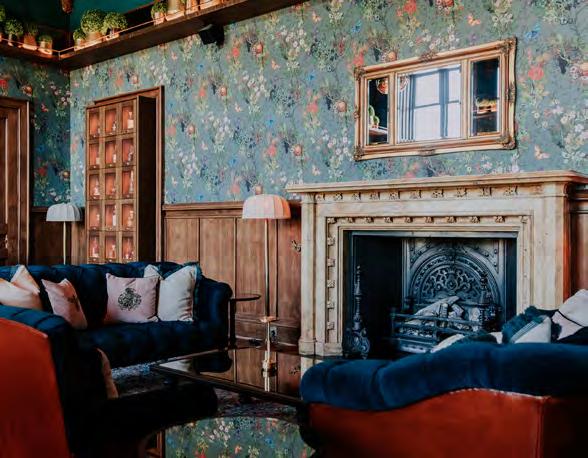

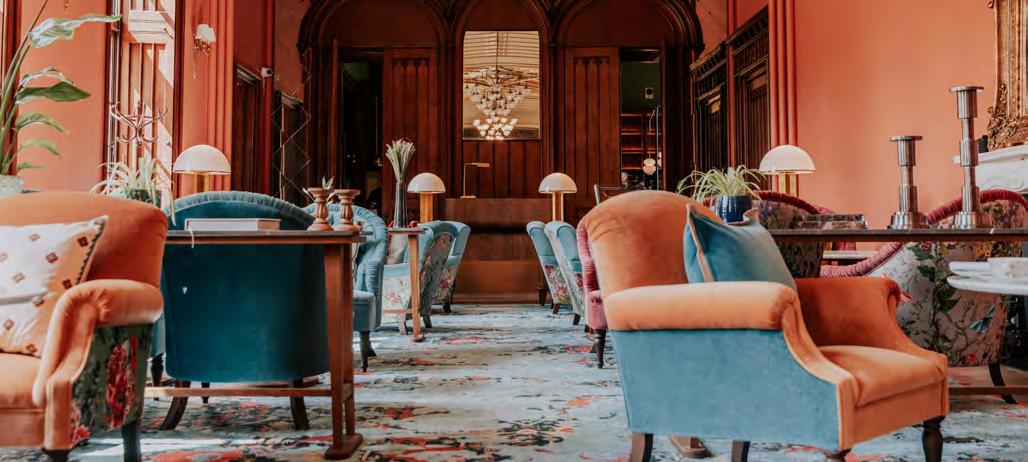
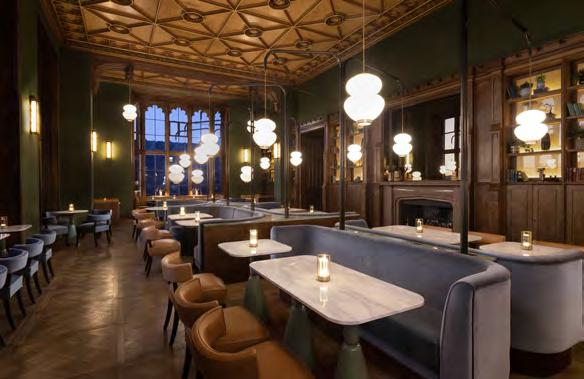
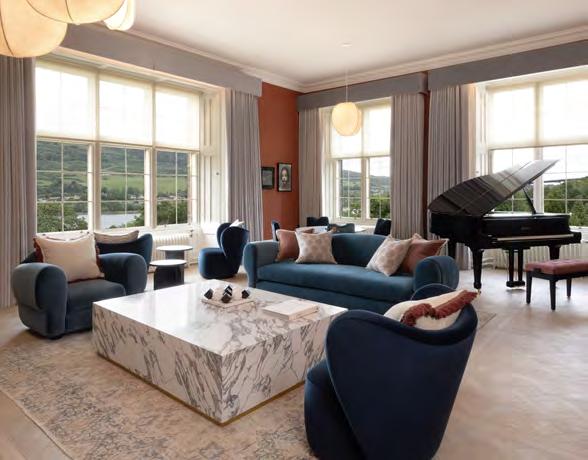
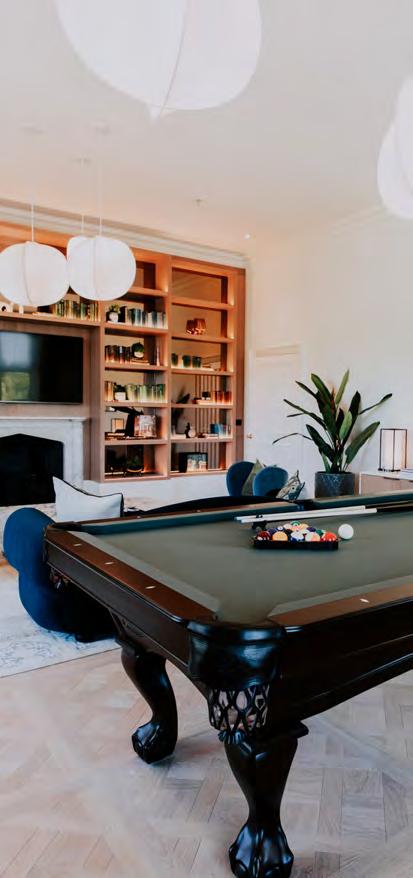
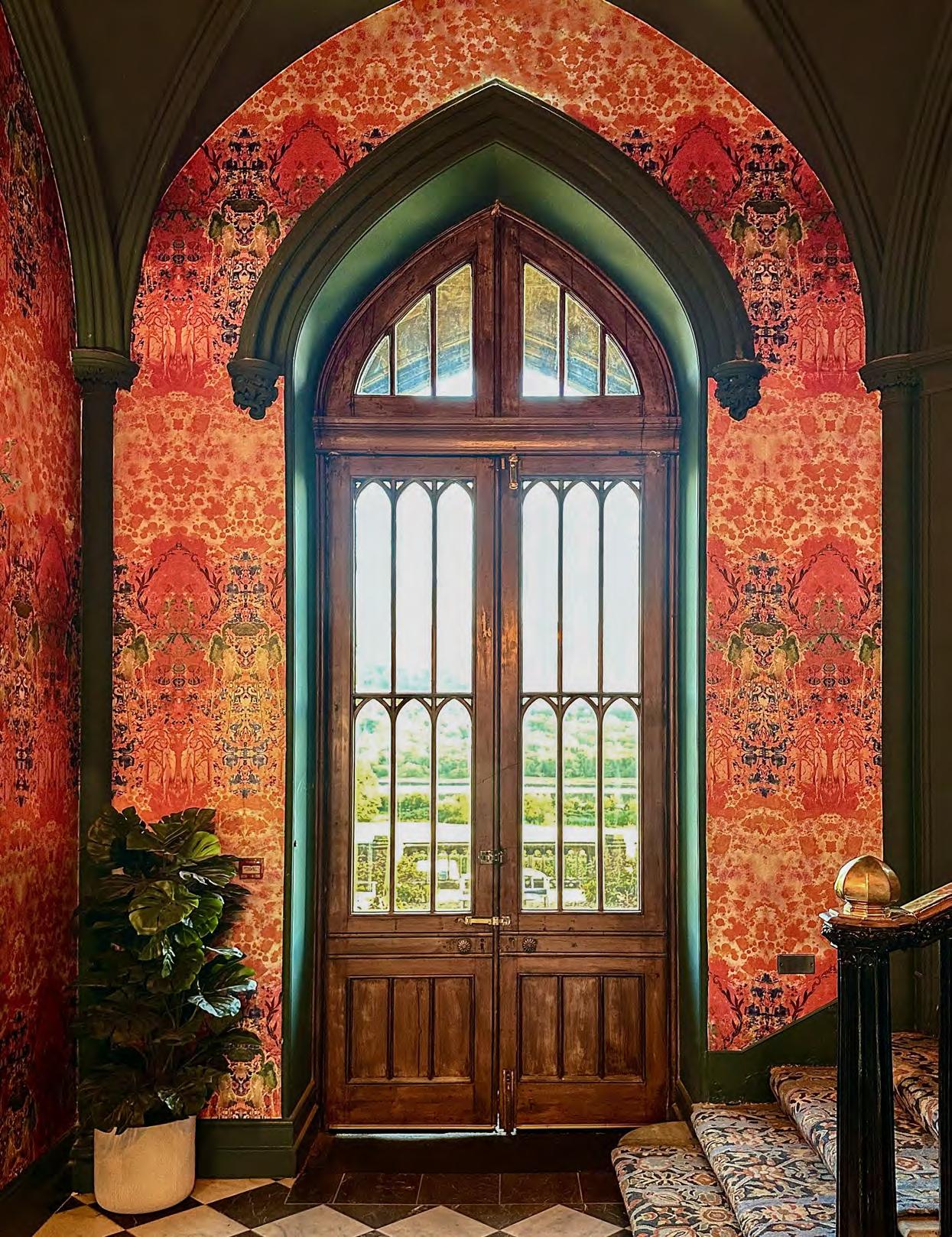
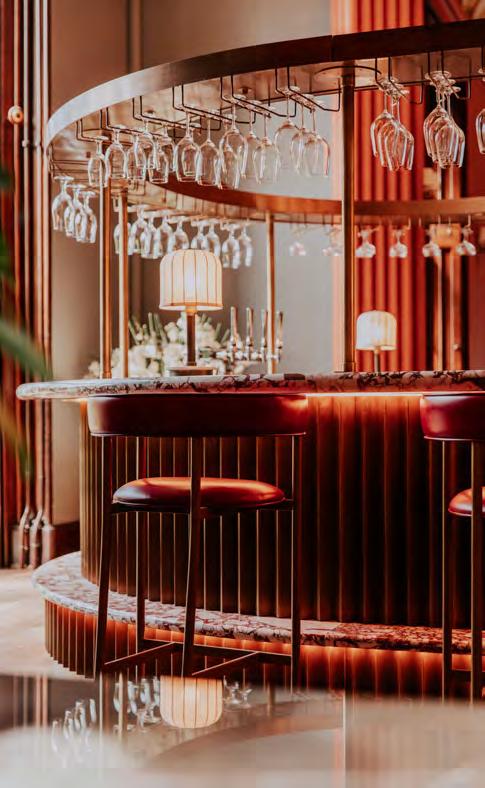
One of the most striking elements of Mar Hall’s rebirth is its interior design. The hotel has embraced a confident, contemporary aesthetic while preserving the grandeur of the original architecture.
Throughout the mansion, classic Scottish elements meet bold modern styling. Deep jewel tones, textured fabrics, and sculptural lighting create spaces that feel both elegant and expressive. Traditional paneled walls might be paired with dramatic wallpaper or modern artwork, while antique furnishings sit comfortably beside sleek contemporary pieces. The suites are where this design philosophy truly shines.
Each suite feels entirely unique, blending heritage details with luxurious modern comforts. Large windows flood the rooms with natural light, while plush beds, bespoke furnishings, and carefully curated décor give each space the feel of a private residence rather than a traditional hotel room.
Bathrooms are equally indulgent, often featuring freestanding soaking tubs, marble finishes, and generous rain showers—perfect for unwinding after a day exploring the estate. It is rare to find a property that balances historical elegance with modern design so confidently. At Mar Hall, the combination feels effortless.
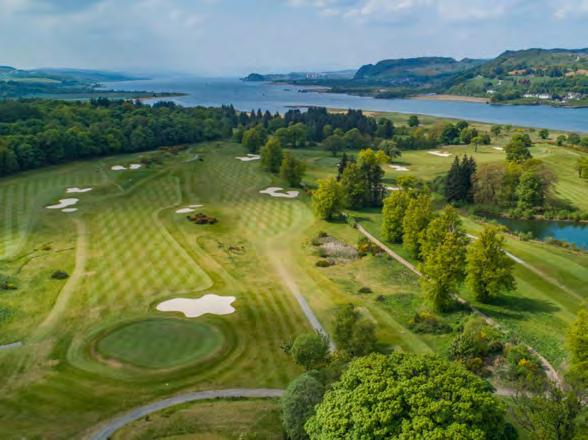
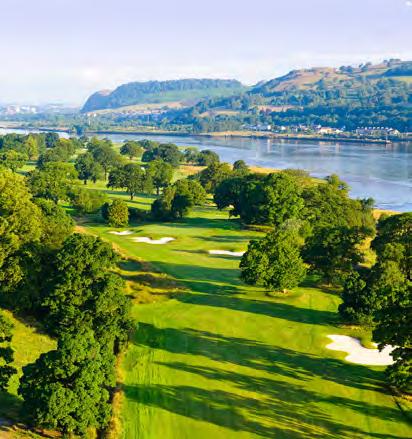
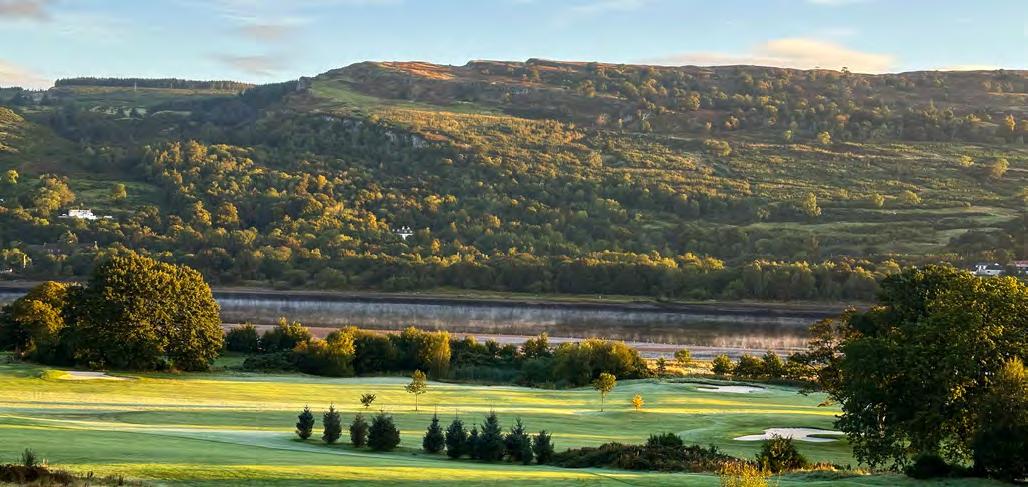
For golfers, Mar Hall offers an experience that is as scenic as it is enjoyable. The estate’s 18-hole championship golf course was designed by legendary golfer Dave Thomas and takes full advantage of the rolling landscape surrounding the mansion. Fairways wind through mature woodland before opening to panoramic views of the River Clyde and the Kilpatrick Hills beyond.
Even for those who don’t regularly play golf, the course is impressive to walk. The layout feels natural within the landscape, with subtle elevation changes and carefully placed hazards creating a challenge without overwhelming casual players.
Standing on the tee boxes, the sense of space is remarkable. The Clyde glimmers in the distance, while the historic mansion occasionally appears through the trees—a reminder that this is golf played within a truly grand estate.
For guests who enjoy combining luxury travel with a round of golf, Mar Hall delivers an experience that feels distinctly Scottish.
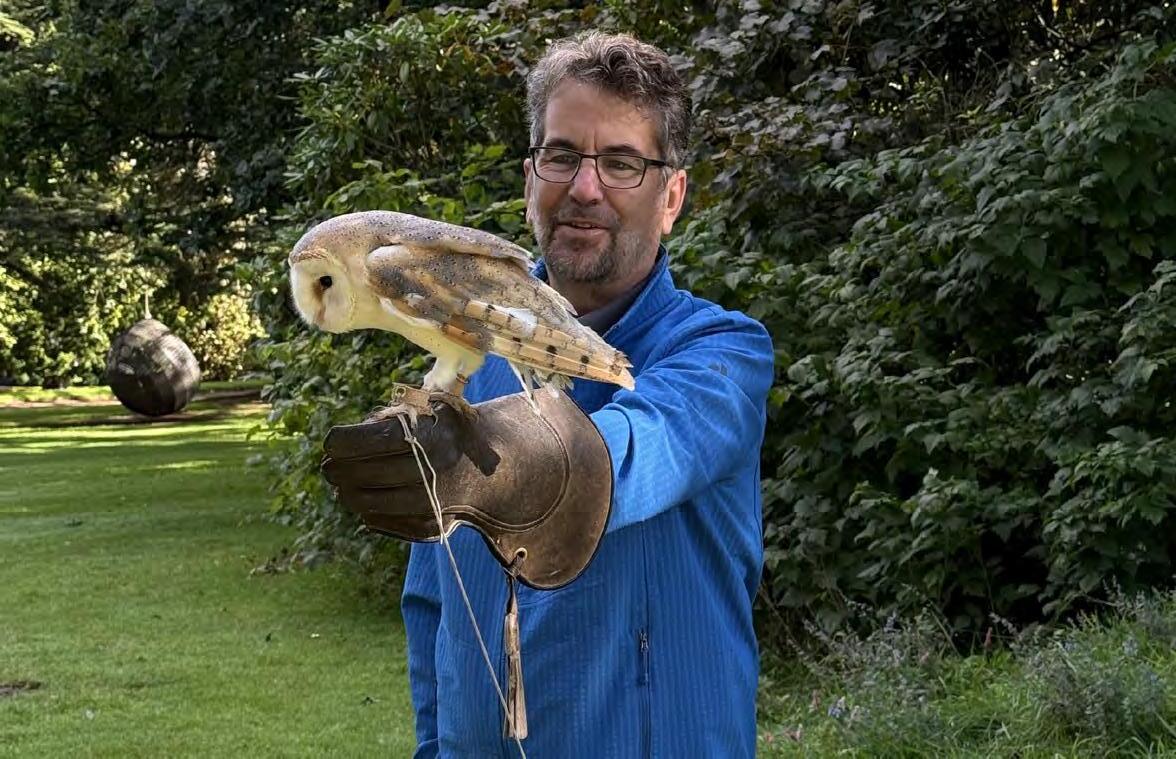
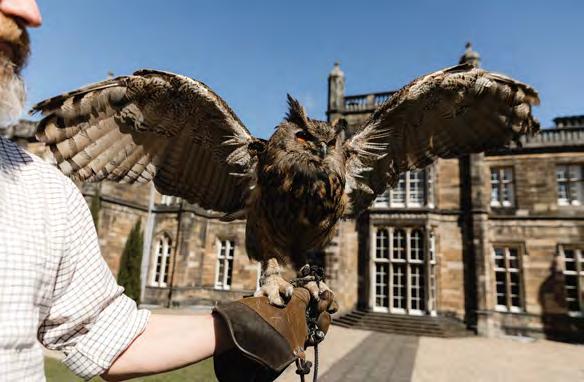
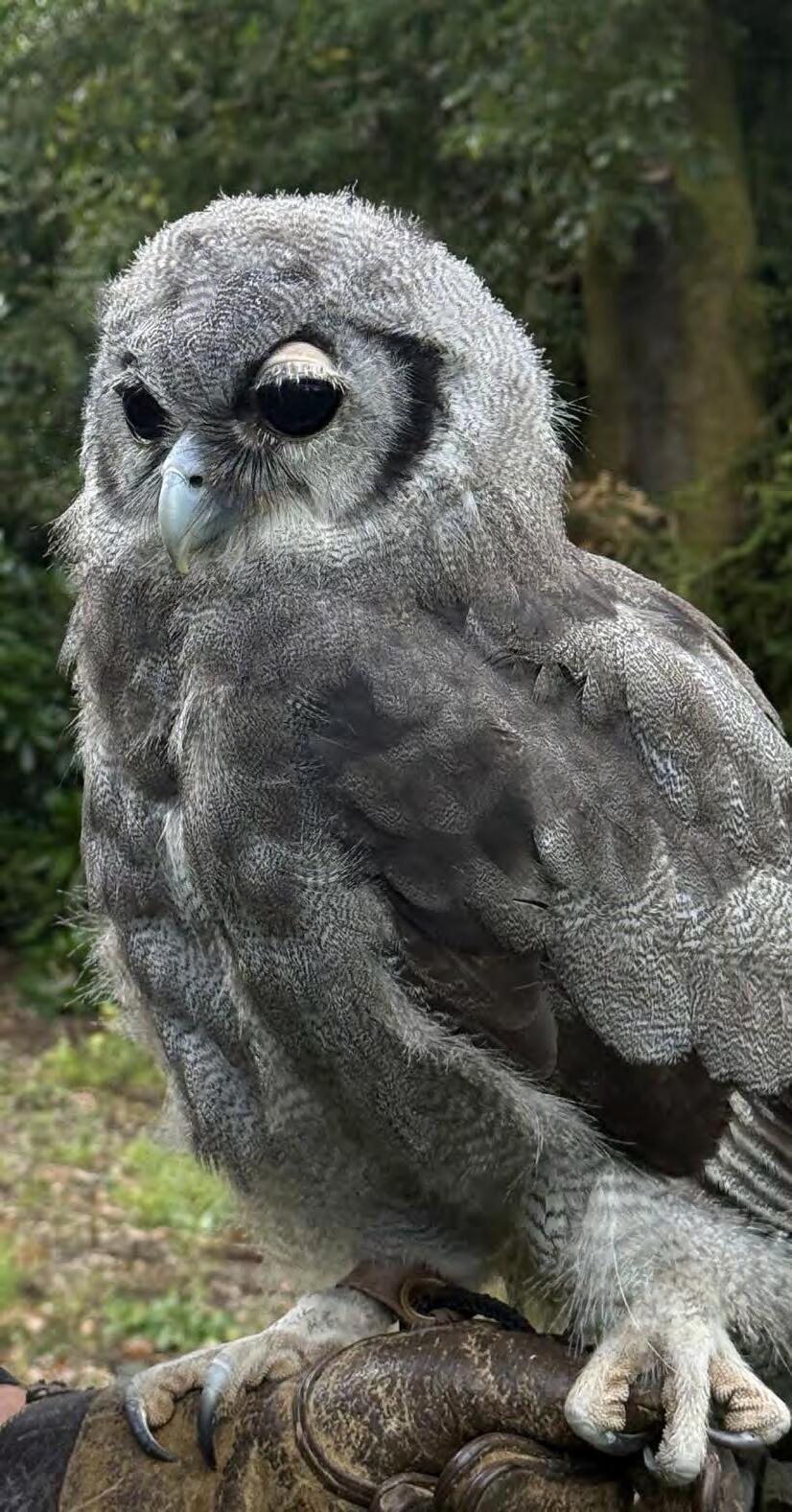
One of the most memorable moments during my visit was the falconry demonstration held on the estate grounds.
Falconry has deep roots in British and Scottish tradition, once practiced by nobility across estates like this one. Watching the birds of prey soar across the lawns of Mar Hall felt like witnessing a centuries-old ritual come to life again.
The demonstration began quietly as the falconer introduced the birds, explaining their characteristics and hunting instincts. But once the birds took flight, the experience became truly mesmerizing.
A hawk launched from the glove and swept across the grounds in a graceful arc before returning with astonishing precision. Another bird skimmed just above the grass before rising sharply into the air. Each movement felt powerful and elegant—nature’s own display of speed and control.
Standing there on the lawn with the mansion behind us and the birds circling above, it was impossible not to feel connected to the long traditions of the estate.
Moments like these are what make Mar Hall feel more like a living country estate than simply a luxury hotel.
After a morning exploring the grounds, the hotel’s spa offered the perfect counterbalance to the estate’s outdoor adventures.
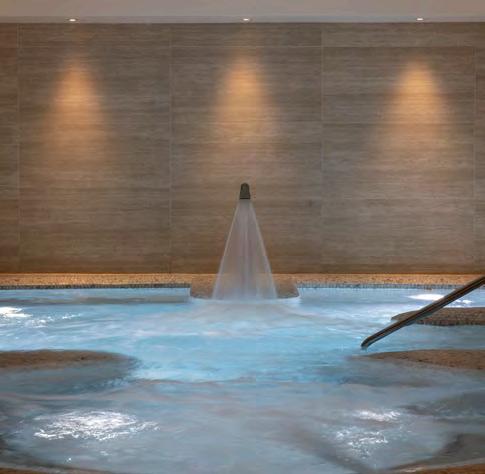
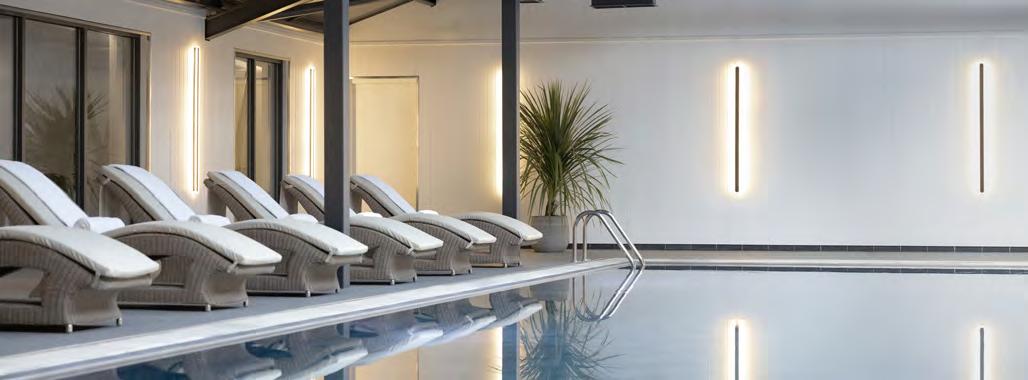
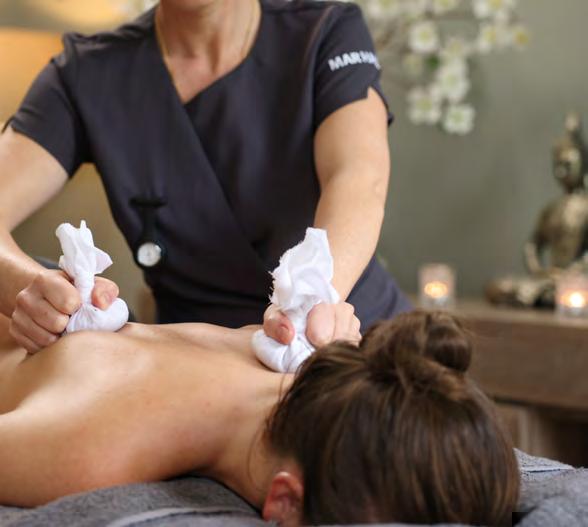
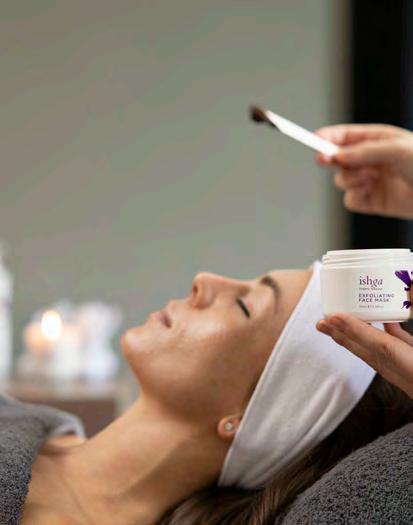
The spa at Mar Hall feels like a quiet sanctuary tucked within the larger grandeur of the mansion. Soft lighting, calming textures, and subtle aromatherapy scents immediately create an atmosphere of relaxation.
Facilities include a tranquil swimming pool, thermal experiences, and treatment rooms offering a wide range of therapies—from restorative massages to rejuvenating skincare treatments.
What I appreciated most was the sense of calm that permeates the space. Even though the estate itself feels grand and expansive, the spa provides an intimate, restorative environment where time seems to slow down.
After a treatment and a few peaceful moments beside the pool, stepping back out into the wider estate felt like returning to the world refreshed.
What ultimately makes Mar Hall so compelling is its balance.
Many historic estates struggle to bridge the gap between preservation and modern luxury. Some feel too formal and museum-like, while others lose their historic character entirely during renovation.
Mar Hall has managed to achieve something rare: a property that honors its heritage while embracing the expectations of today’s luxury traveler.
The architecture tells the story of Scotland’s aristocratic past. The décor introduces bold contemporary flair. The suites offer the comfort and privacy of a modern luxury retreat. Experiences like falconry and golf connect guests to centuries-old traditions, while the spa and dining experiences provide the indulgence one expects from a world-class hotel.
As evening settled over the estate during my visit, I stood outside the mansion watching the last light fade over the River Clyde. The windows of Mar Hall glowed warmly behind me, and the quiet grounds seemed to hold echoes of generations who had walked these same paths.
Yet at the same time, the hotel felt entirely alive—vibrant, stylish, and ready to welcome a new generation of travelers.
Mar Hall is not simply a restored mansion. It is a grand Scottish estate reborn.
BY ZARA DURRANI
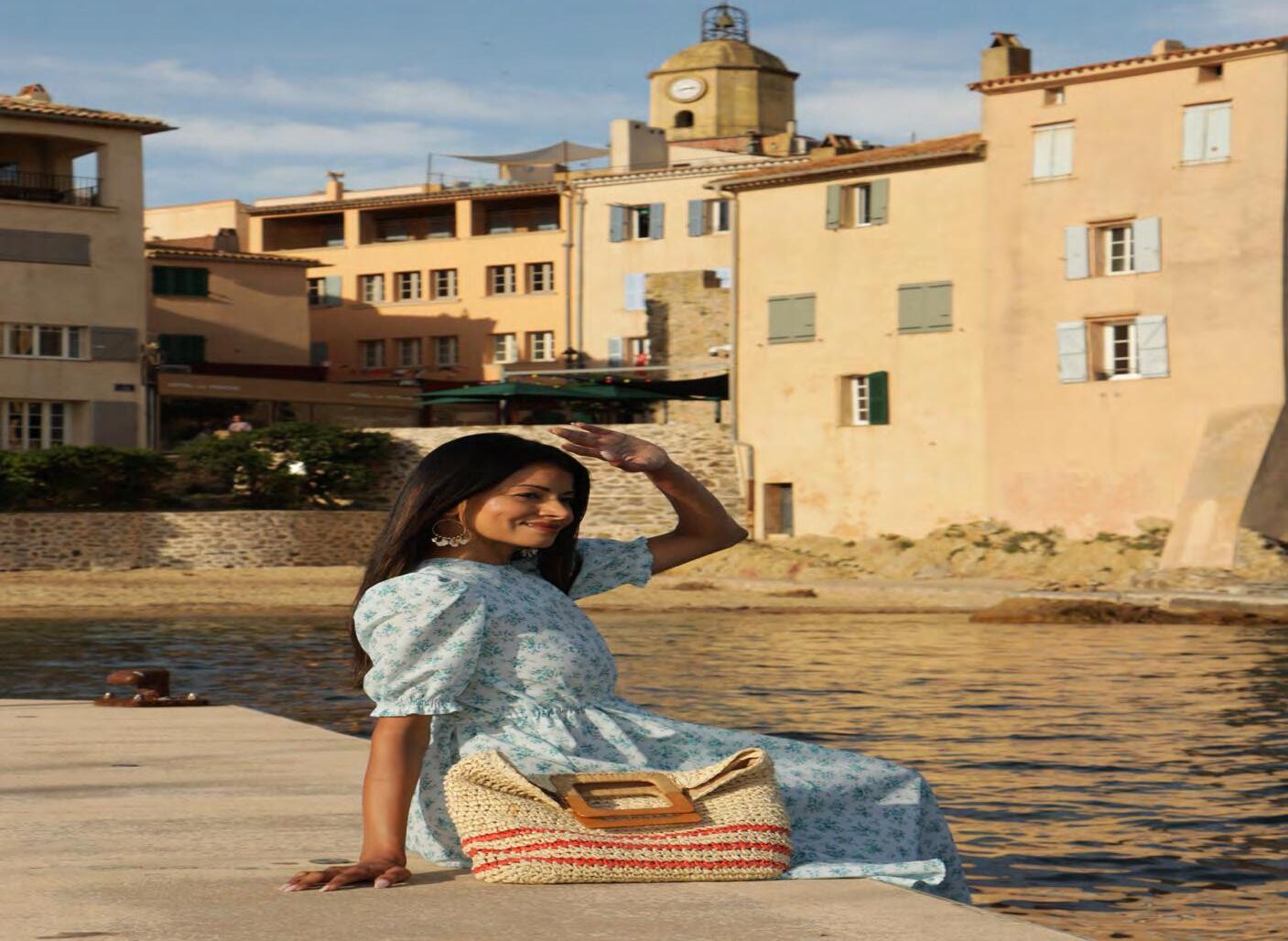
I arrived in Saint-Tropez just after the Cannes Film Festival.
In Cannes, the air buzzes camera flashes, premieres, gowns brushing red carpet. The Mediterranean becomes a backdrop for spectacle. When I left, I thought I knew what awaited me in Saint-Tropez: more glamour, more yachts, more headlines.
Instead, I found something softer. The drive from Cannes felt like an exhale. The light shifted. The coast curved inward. By the time I arrived at Hôtel Les Lauriers, tucked just behind Place des Lices, the noise of festival week felt far away.
The owner greeted me herself. No velvet rope, no polished performance
just warmth. My room carried small nods to Saint-Tropez’s spirit: coastal hues, woven textures, photographs of Brigitte Bardot pinned like quiet memories. In the garden the next morning, breakfast was served at small round tables beneath trees. The owner moved from table to table with coffee and fresh croissant and orange juice, remembering preferences, asking gentle questions.
It felt intimate.
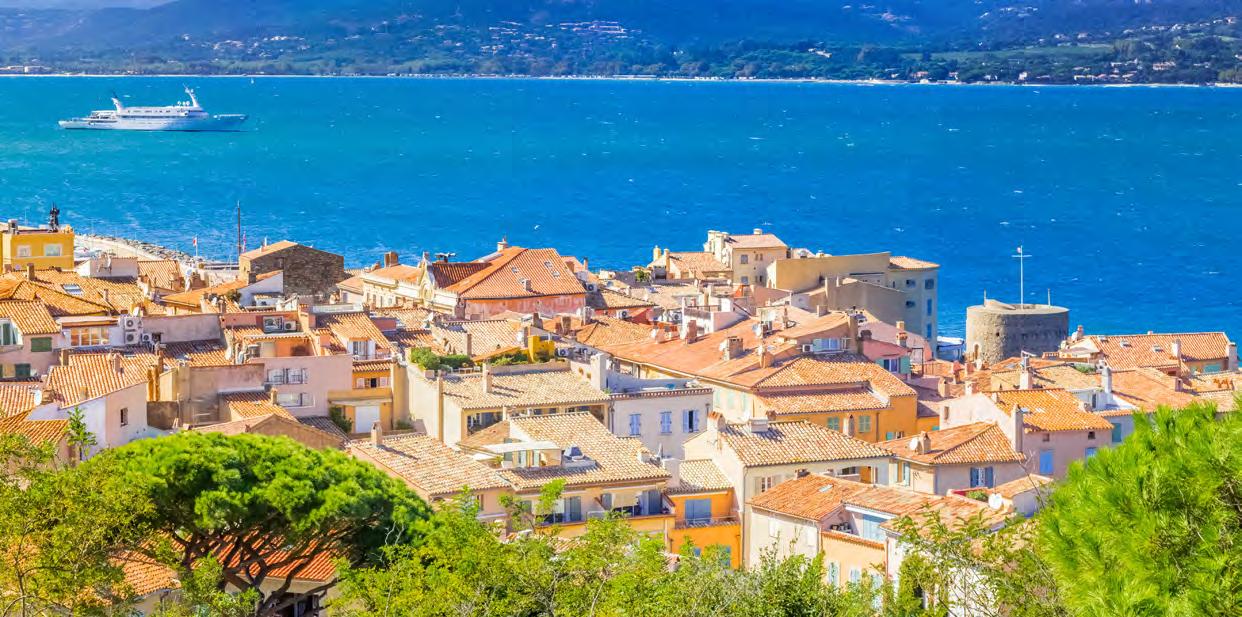
In the afternoon, I climbed to the Citadelle with a local guide who spoke passionately about invasions, resilience, and the town’s strategic past. From above, Saint-Tropez looks small - terracotta roofs clustered beside a luminous stretch of sea. The Southern Alps hover faintly in the distance. You begin to understand how fiercely this place has guarded itself.
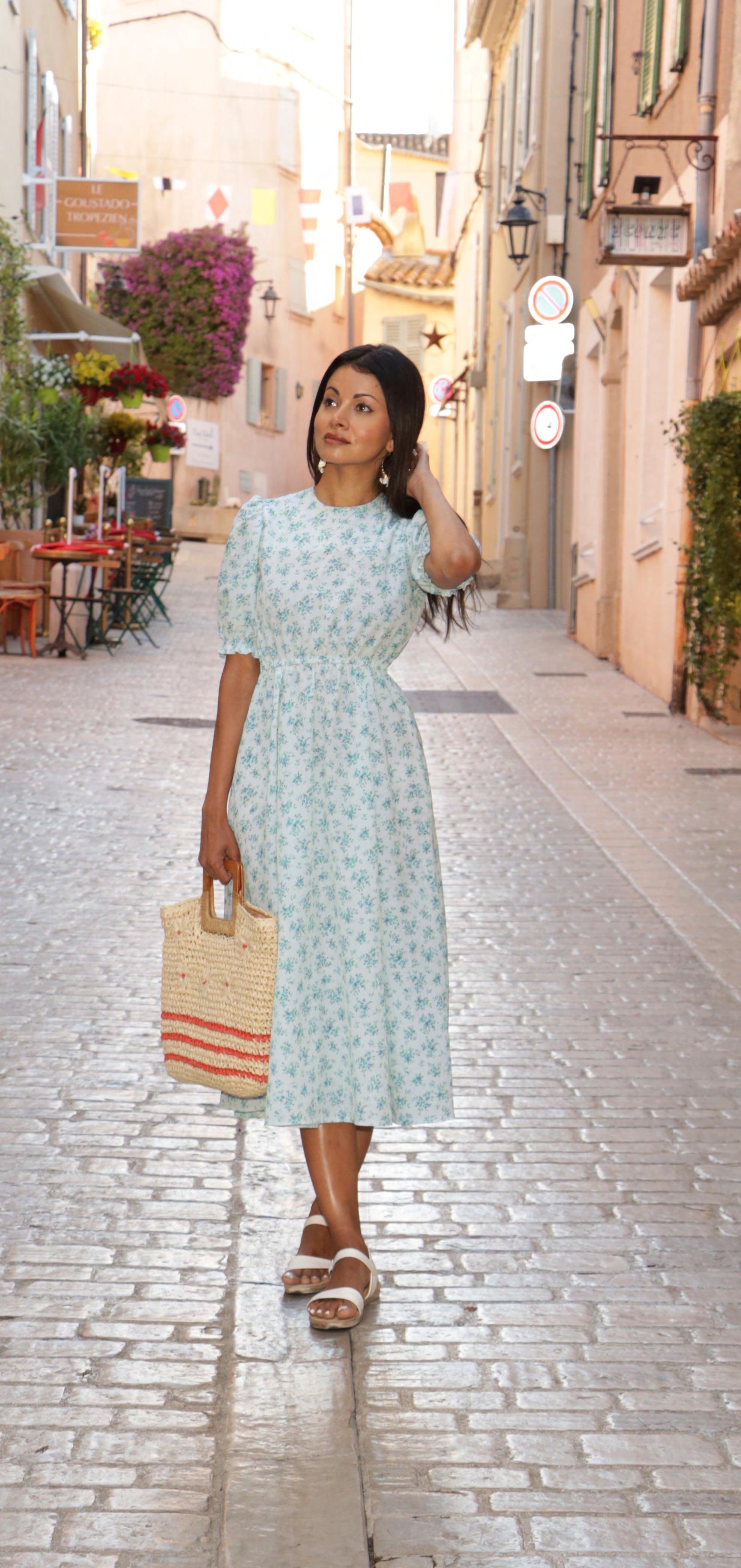
Later, Frédérique, another guide, walked me through the village, sharing stories of fishermen, saints, artists, and tradition. She spoke about the necklace worn by SaintTropezians a symbol of belonging and protection. At one point she smiled and told me I was becoming an honorary Saint-Tropezienne.
I laughed but I also felt it.
In May, before the height of summer, Saint-Tropez has time.
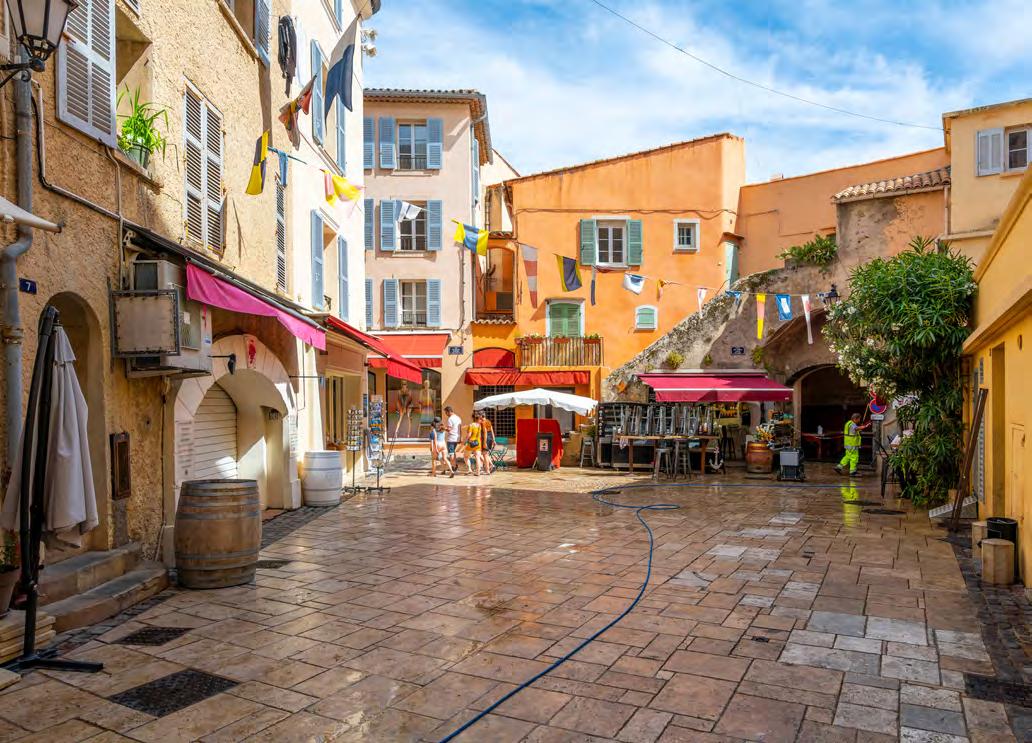
I woke early and wandered the streets before the market opened. Shutters lifted slowly. The harbor was still. The town wasn’t posing yet. I wanted to see it before it performed.
Later that morning, at the market in Place des Lices, I met Loïc.
He is a goat cheese producer and sheep herder, a fixture in SaintTropez. Through translation, he told me about his flocks, about the land beyond the harbor, about waking before dawn. He showed me photos of his dogs. I showed him photos of mine. My Franglish met his French, and somewhere between gestures and laughter, we understood each other perfectly.
He invited me to visit his sheep one day. I so badly wanted to join him for that adventure.
There was pride in him not loud, not theatrical but rooted. He told me that if he misses a market day, customers wait. They don’t want to buy from anyone else. They come for him.
In a town often defined by celebrity sightings the likes of Beyoncé, Mariah Carey, Jay Z, super yachts docking for the weekend this felt like the real story. A shepherd whose presence matters more than spectacle.
Saint-Tropez has always been more than its image.
In 1637, locals defended the town against Spanish forces an act of courage still commemorated today during Les Bravades. Residents wear medallions honoring Saint
Torpes, the martyr for whom the town is named. Pride here isn’t new. It’s inherited.
That same sense of lineage lives inside Rondini.
The sandal boutique has been familyrun since 1927. When I stepped inside, the scent of leather wrapped around me. Monsieur Rondini fitted me personally, measuring and adjusting with practiced hands. Upstairs, in the atelier, his daughter and nephew were at work cutting, stitching, shaping each pair by hand. In 2027, they will celebrate 100 years.
Yes, celebrities wear Rondini, fabs include Kate Moss, Orlando Bloom, Katy Perry. But watching a family craft something that has endured nearly a century felt far more compelling than any red carpet moment.
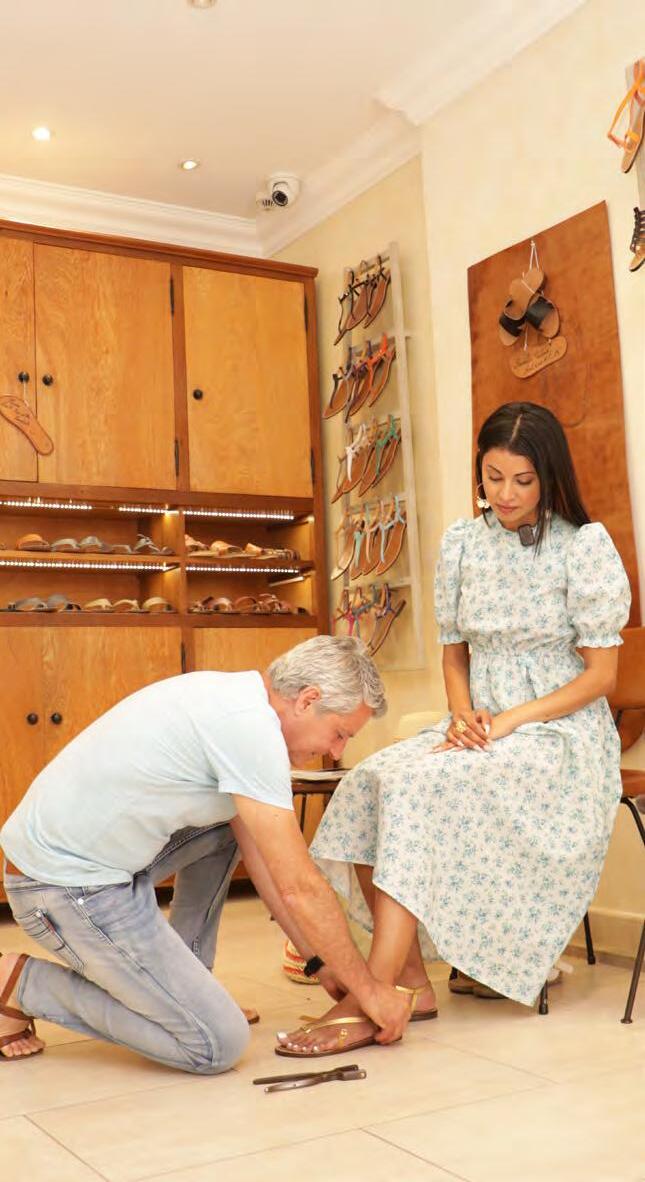
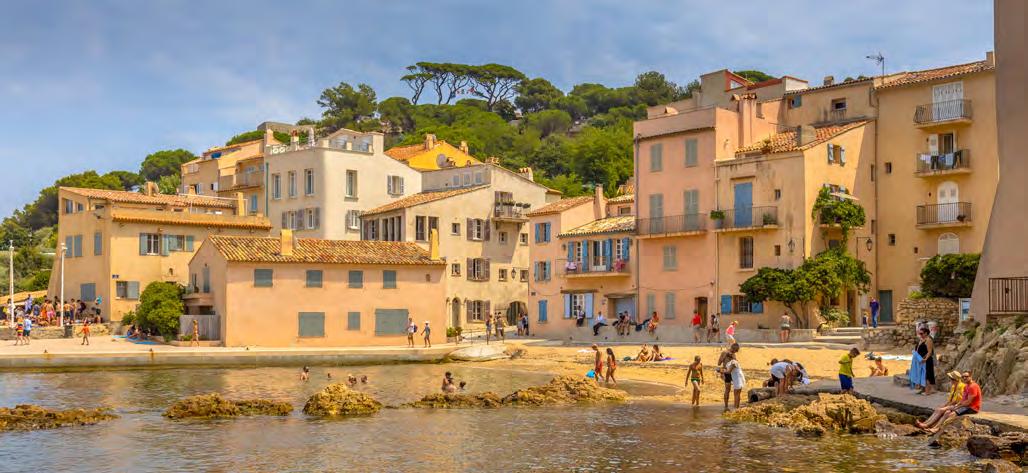
Art has long been part of this identity. At the Musée de l’Annonciade, a two-level museum overlooking the harbor, I stood before paintings by Paul Signac and others who first transformed SaintTropez into a haven for artists at the end of the 19th century. The light here is unmistakable soft, almost liquid, dissolving harshness. Artists came before influencers. Of course, there is glamour.
Lunch at La Bouillabaisse brought fresh fish and sweeping sea views framed by cacti. Guests could move from table to water in a single afternoon. Another afternoon I spent at Hôtel de Paris Saint-Tropez, the rooftop pool overlooks the harbor in cinematic fashion sun glinting off boats below.
And then there is Hotel La Bastide de Saint-Tropez, a Relais & Châteaux sanctuary just ten minutes from the center. Palm trees, birdsong, a serene pool a world apart from the pulse of the harbor. Dinner unfolded slowly in the garden, reminding me that Saint-Tropez can be both vibrant and deeply calm and tranquil.
But what stayed with me most were the conversations.
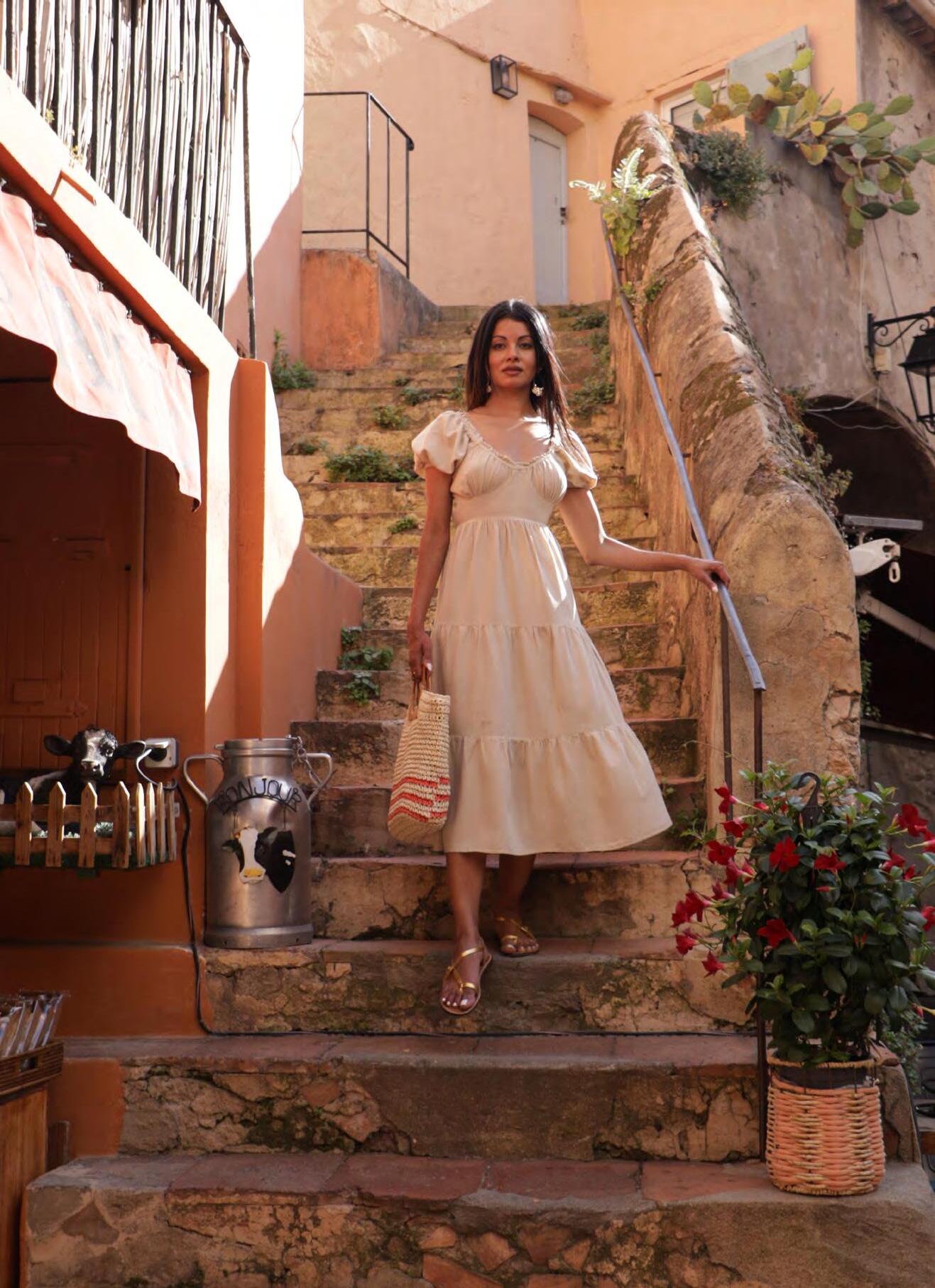
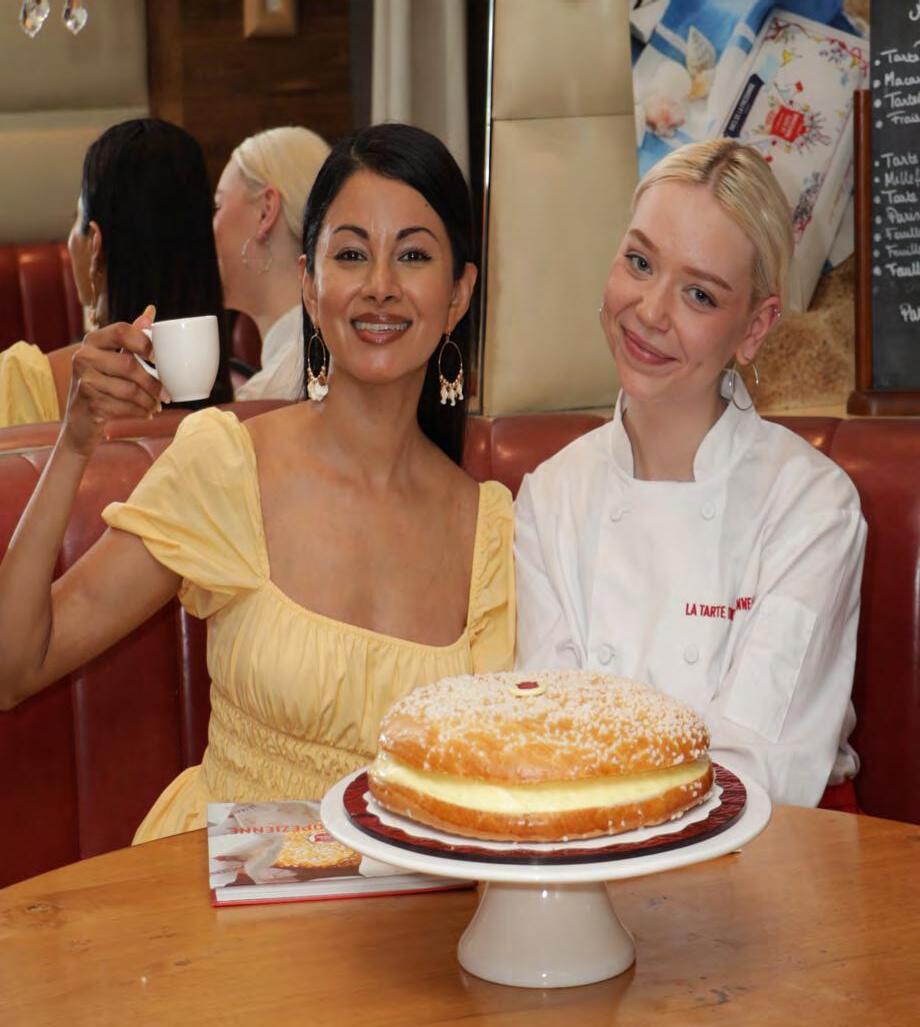
The manager who spoke about seasons like chapters. The artisans who talked about craft instead of fame. The shepherd who showed me photos of his dogs and welcomed me to his home.
Saint-Tropez understands its glamour. It doesn’t deny it. Luxury brands line the streets. Yachts will always arrive.
But beneath that sheen lives something steadier people who are deeply proud of their village, who carry its history forward, who welcome you not as a headline, but as a guest.
When I left Cannes, I was stepping away from the spotlight. In Saint-Tropez, I stepped into something quieter.
And in that quiet in May, before the crowds I felt a connection that surprised me. A reminder that behind every myth is a community. If you come only in high summer, you will see the spectacle. If you come when the town still has time to breathe, you may meet its heart.
And that heart generous, proud, enduring is what makes Saint-Tropez unforgettable.
BY SERGI REBOREDO
I arrive at the port of La Savina in just over half an hour from Ibiza and with the comfort of doing it accompanied by my car on a ferry from the Trasmapi shipping company. Perhaps this is one of the most significant changes that has occurred on the island in the last 40 years. Not so long ago, the only way that existed to get to the island was by making the “Young Dolores” through the wooden felucca. The boat has remained in the collective imagination of Ibizans, Formentera and all the tourists who came to the island in search of the hippy Mediterranean Mecca back in the 60s. Currently, boats continue to be the only alternative to save the twelve nautical miles that separate it from Ibiza. My uncle Miguel was one of those hippies who arrived to the island in the mid-60’s in search of fun, happiness, peace and love. There he met my aunt on a beach in La Mola after a memorable party under the light of the full moon. His American friends, who have come to the island fleeing the Vietnam War,
called him The Bear because he was always driving his motorcycle of the brand “Ossa”, a word that in Spanish with a single “s” means bear woman. In his few visits to Barcelona years later, I remember how he explained funny anecdotes about the island. He said that even stars like Bob Dylan, King Crimson or Pink Floyd were regulars of the island. I always knew that sooner or later I would visit this island to experience in first person so many things that he had explained to me. Now is the time.
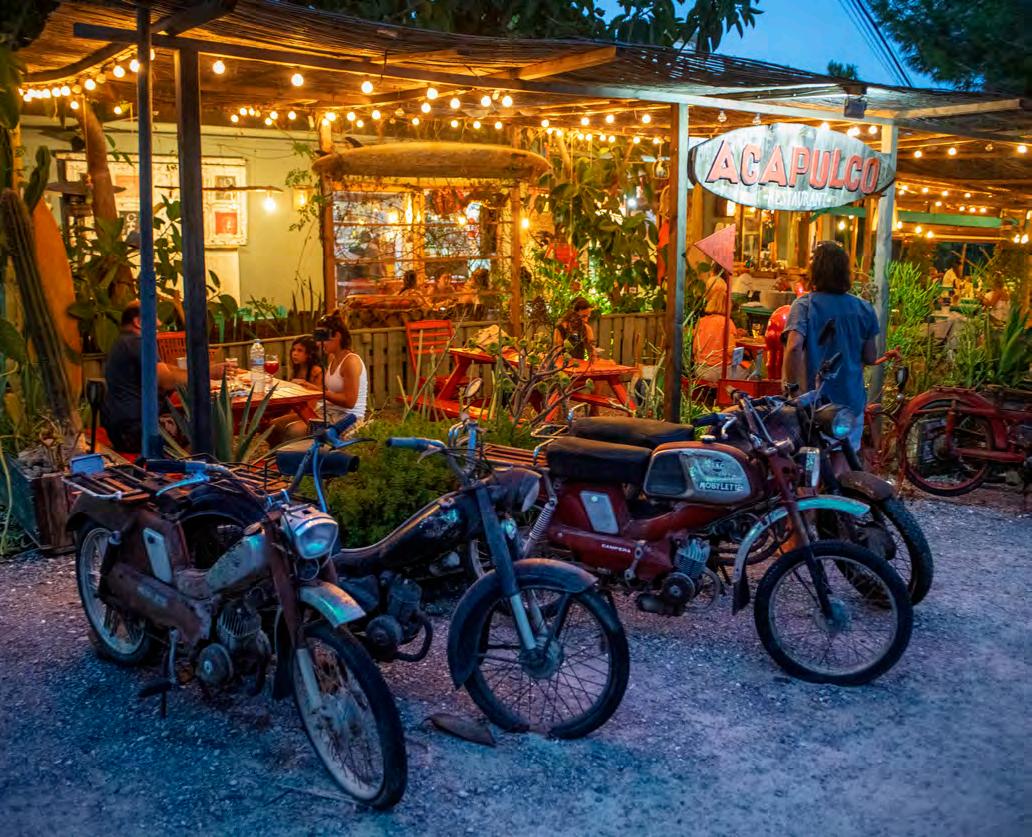
From the hippy movement, it has passed to the yoga-feng shui moment, although it is still possible to find some reminiscences, such as the Fonda Pepe de Sant Ferran, an obligatory meeting point in the past where the interior decoration
has not changed much and in which some clueless hairy man still drops. The La Mola mill, which had been a hippy commune, has been completely remodeled and has been opened to the public.
Not far away, in the nearby Pilar de La Mola flea market, time still seems anchored, and artisans continue to sell their personal creations while live music from a local guitarist entertains the crowd. Feng shui, peace and harmony are diluted during the month of August, when hordes of Italian tourists invade the Pitiusas Islands in droves, so it is recommended to visit it in any other month.
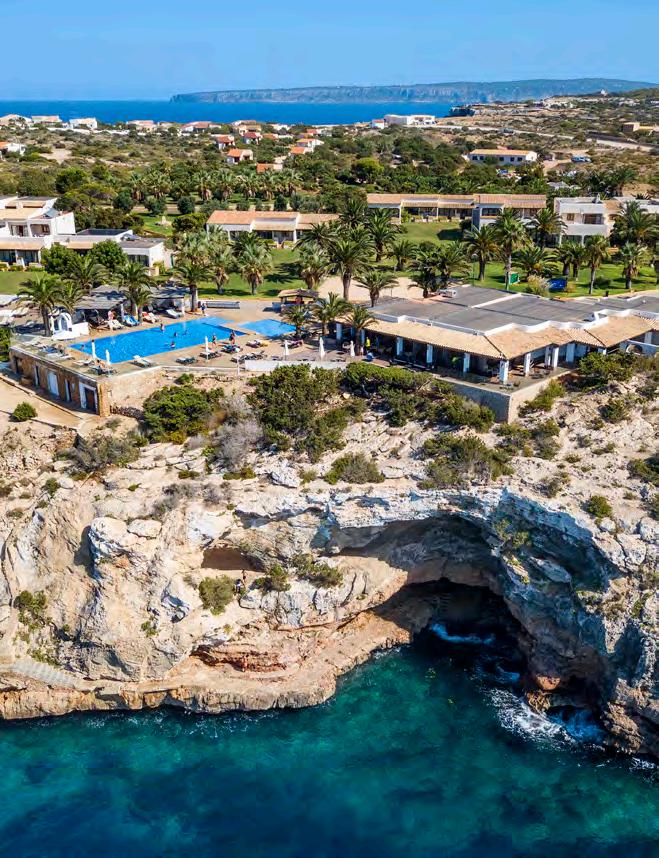
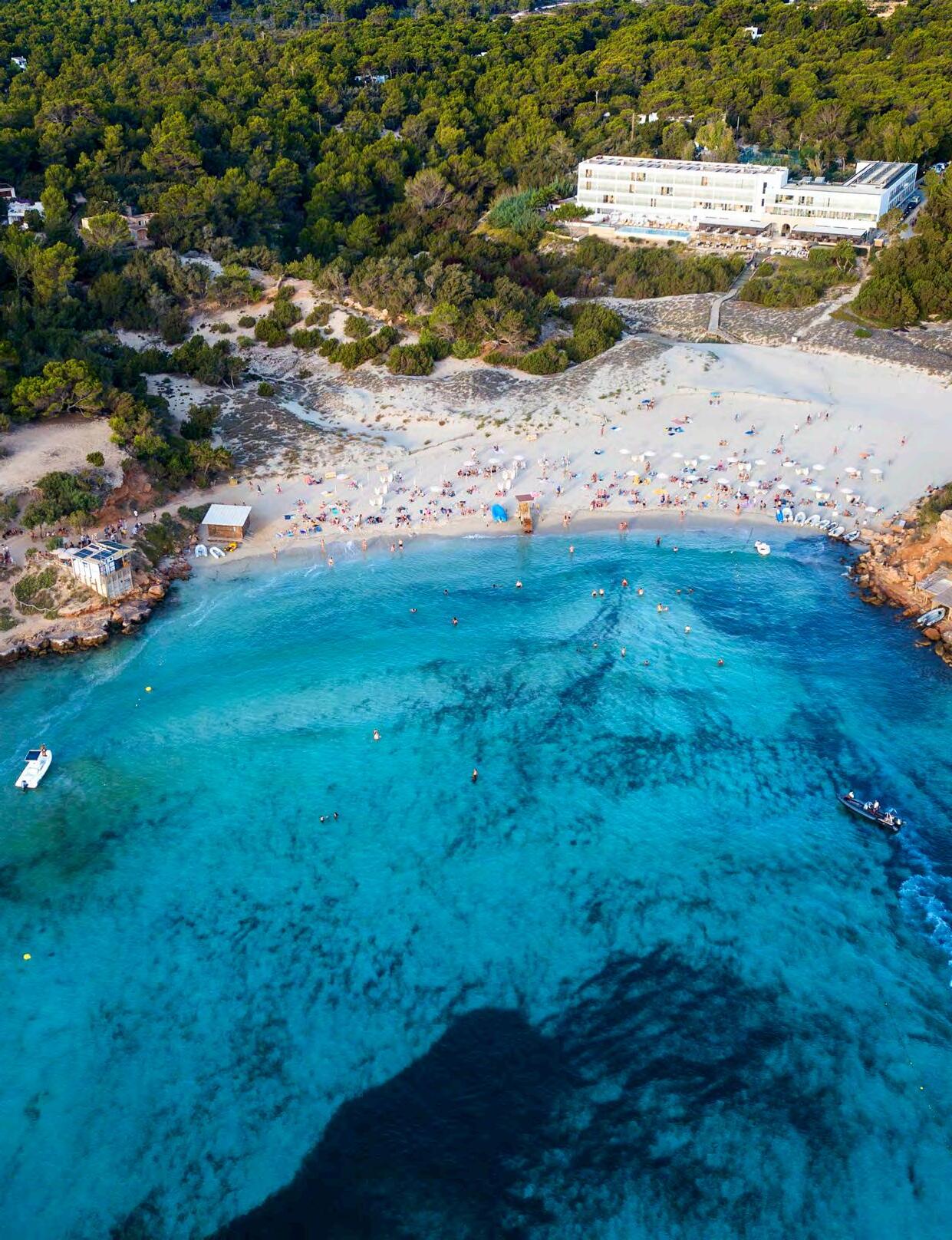
One of the main reasons for many of those who visit the island is its beaches, which have nothing to envy those of the Caribbean. There are for all tastes, from solitary and rocky in which to practice nudism to long dreamy sandy beaches. Es Truncadors is a long stretch of sand that narrows from south to north and in which, on its east side is the Levante beach, on the west, to the south, that of Es Cavall d’en Borrás and, then Illetes beach. This is, without a doubt, the most visited by tourists, for its white and fine sand, as well as its calm turquoise waters. Migjorn is the other great sandy area on the island, five kilometers of beach that covers practically the entire south of Formentera. It is not difficult to find solitary corners where you can enjoy the sun and the bath.
In fact, this is one of the beaches most frequented by the island’s inhabitants and numerous families. Below Migjorn, protected by a rocky and steep area, lies one of the most captivating corners of Formentera, Caló des Mort. Its beauty lies in the boathouses and in the mountain that protects it. Without forgetting Cala Saona, a very familiar corner, with shallow waters.
Another natural luxury of Formentera is its horseback riding routes. There are two that start from the Equestrian Center located between La Savina and Sant Francesc, the island’s capital. The shorter route (one hour) borders the Estany del Peix; the longer one (two hours) reaches Cala Saona.
Formentera is meant to be enjoyed with all five senses. And one of them, hearing, has a powerful natural magnet: its birding routes, where you can listen to the celestial symphony of migratory birds. This year, a new one has been inaugurated — the ‘Camí des Brolls Ornithological Trail’, a 4.3-kilometer path that follows the perimeter of the Estany Pudent, with eight information panels and a viewing platform to observe and understand one of the wetlands with the greatest biological value.
But the island’s greatest allure lies in its beaches and coves, scattered along its 69 kilometers of coastline. Among them, Ses Illetes, in the northwest, always ranks among the best in the world. Yet there are
many more to choose from. In the same area: Llevant Beach, facing east; or Cavall d’en Borràs, to the west, much quieter and wilder. To the north, Es Pujols and Sa Roqueta, located in the municipality with the largest hotel and leisure offerings. To the south, Migjorn, the longest—five kilometers divided among several beaches and coves. And to the northeast, Ses Platgetes, sheltered by Es Caló, which still preserves its essence as an old fishing village. And all of them share a common denominator: the unique “Formentera blue.” The transparency of its waters is due to the Posidonia oceanica (a UNESCO World Heritage Site since 1999 and the oldest living organism on the planet, estimated to be 100,000 years old) that thrives beneath the Mediterranean Sea.
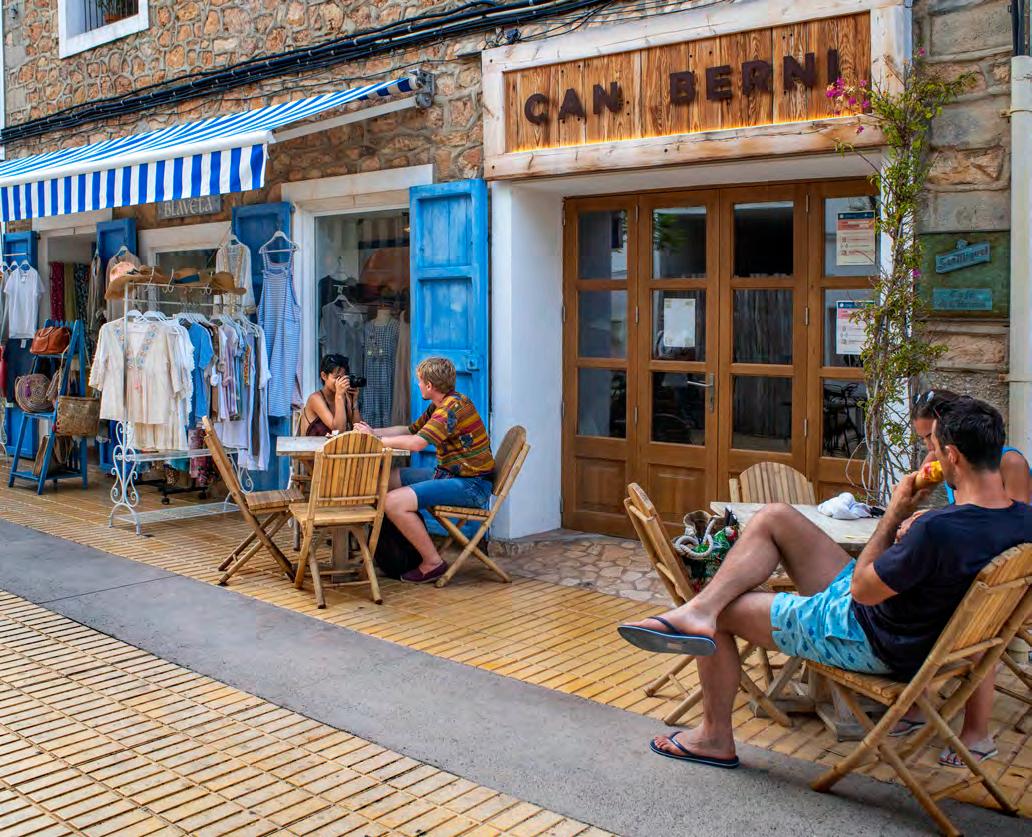
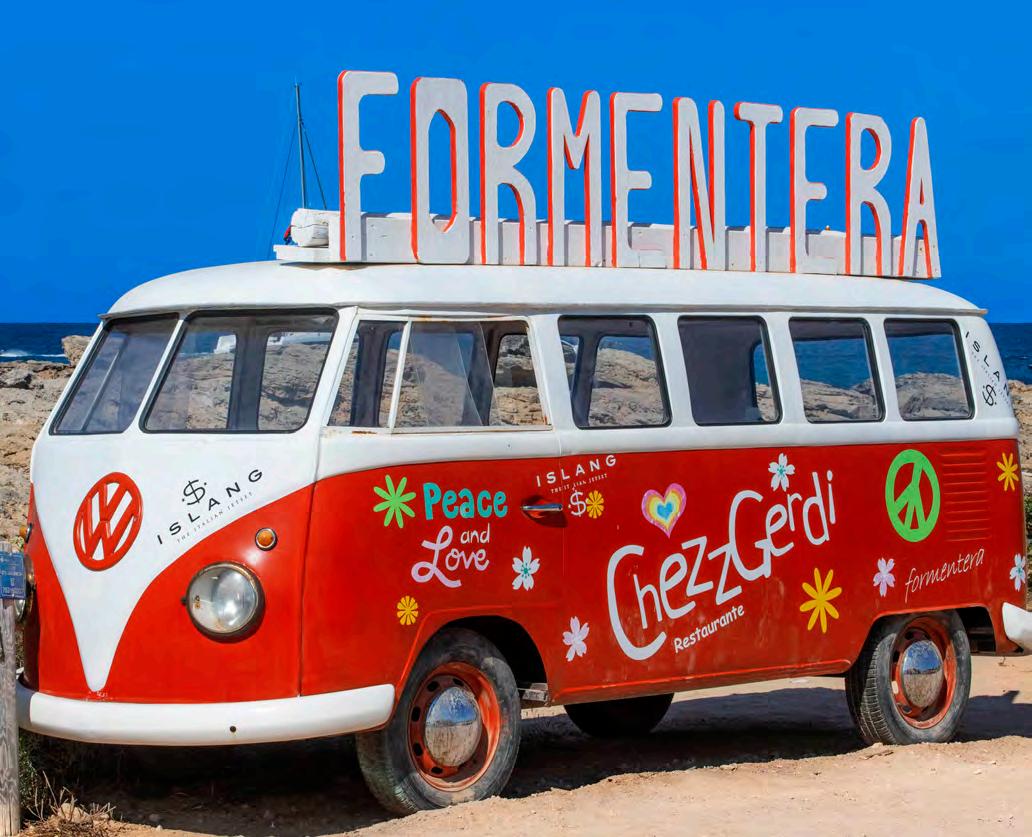
The island’s gastronomy also captivates visitors and delights their palates. Traditional cuisine made with locally sourced products is available to everyone, thanks to the Slow Food Map, created in 2019, which identifies 16 spots across the island where these products can be found.
And as the icing on the cake, there’s the magical natural spectacle of sunrises and sunsets. To watch the sunrise, there’s no better place than the La Mola Lighthouse, in the east, at the island’s highest point. There you’ll also find the village of El Pilar de la Mola, home to a handicraft market every Wednesday and Sunday afternoon. It’s pure bohemian spirit, preserving the hippie vibe that musicians like
Pau Riba and the rock band King Crimson brought in the 1960s when they composed the iconic song ‘Formentera Lady’. La Mola Lighthouse is a magical place that inspired one of Jules Verne’s novels, ‘Hector Servadac’ (1877), as confirmed by a plaque honoring the famous French writer.
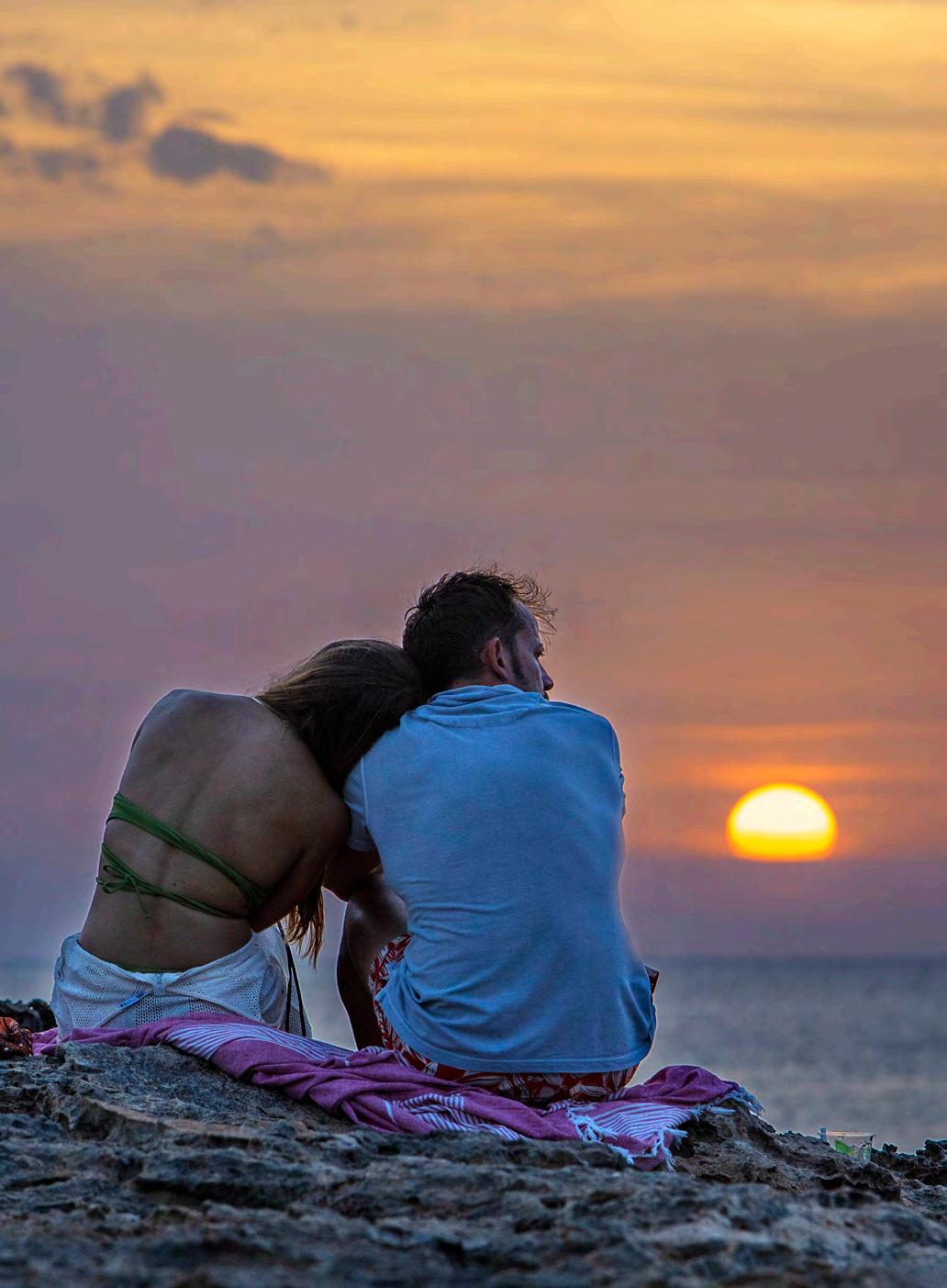
And to end the day, there’s no better plan than heading to Cap de Barbaria, in the southwest. Amid a semi-lunar landscape, the towering cliffs become, at sunset, an improvised grandstand from which to watch the sun cradle itself on the Mediterranean horizon until it disappears, leaving the sky painted with its reddish trail.
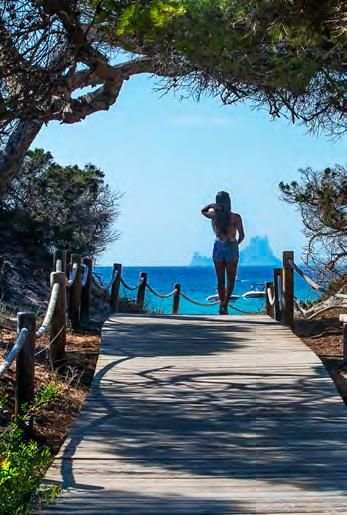
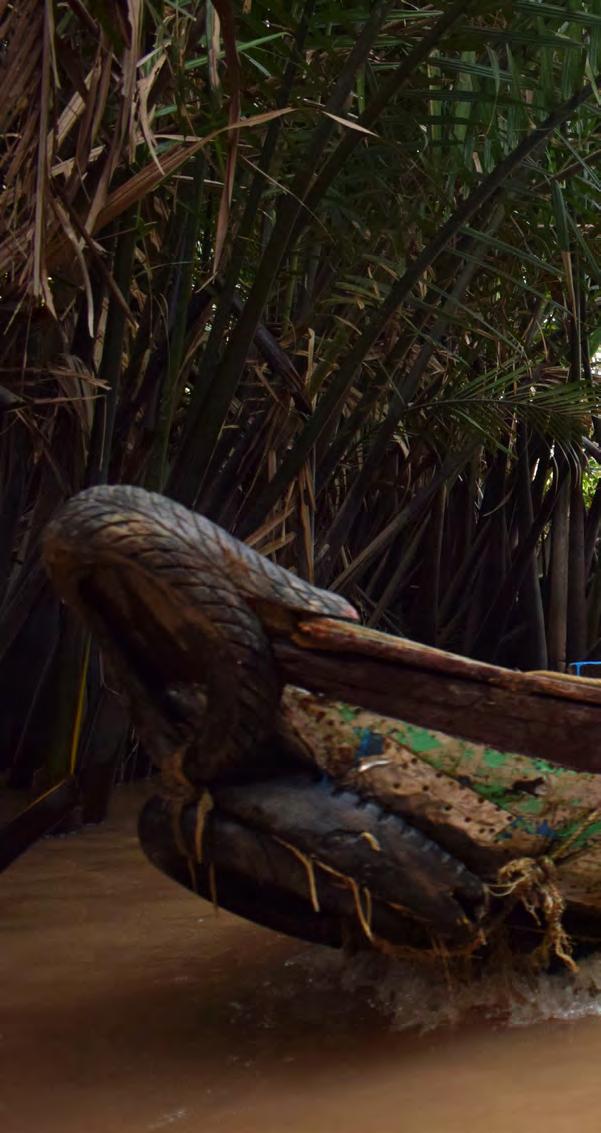
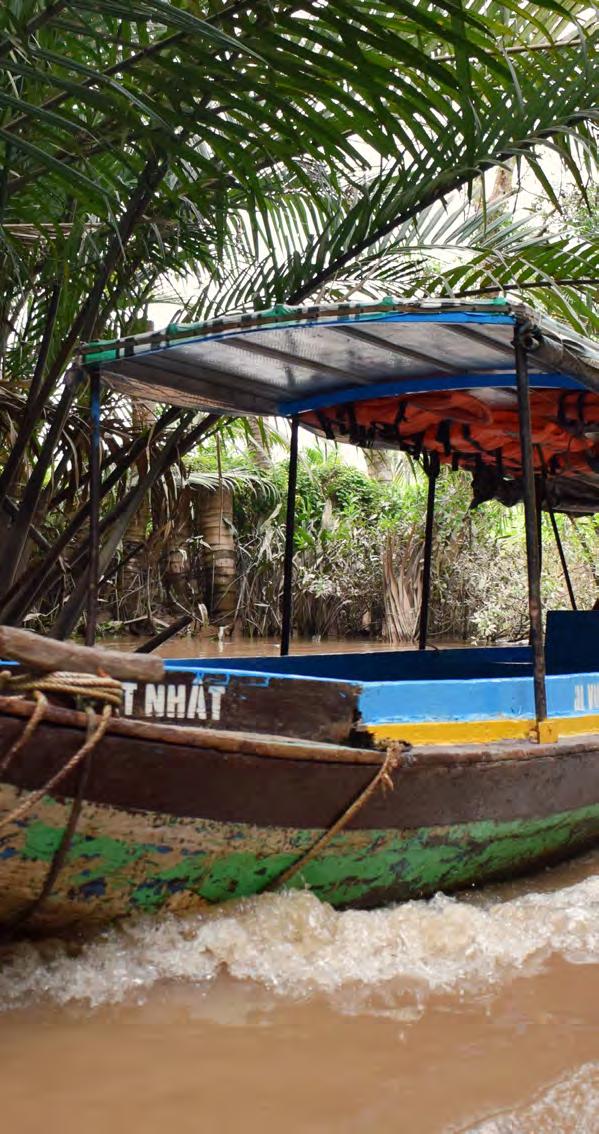
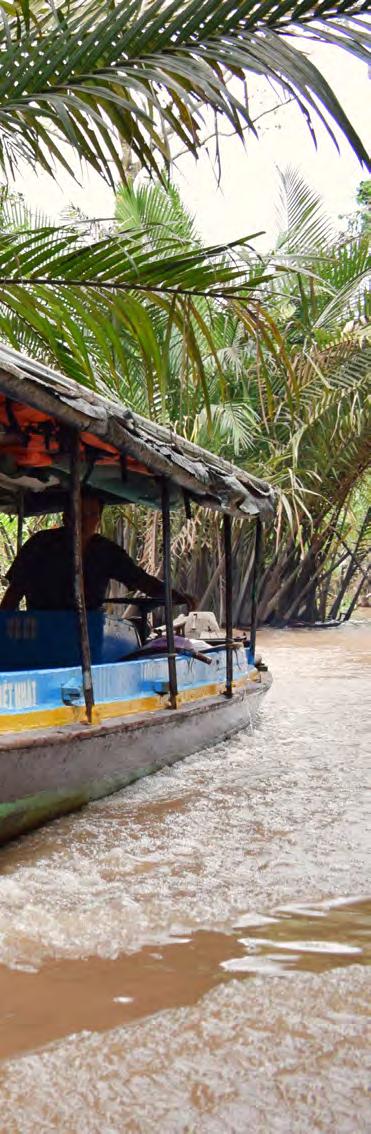

A RELENTLESS BACKPACKER AND PHOTOGRAPHER SINCE 2019, I TRAVEL THE WORLD CAPTURING FLEETING MOMENTS, AUTHENTIC ENCOUNTERS, AND THE QUIET POETRY OF EVERYDAY LIFE. MY CAMERA IS DRAWN TO SIMPLE GESTURES, RESILIENT ROUTINES, BREATHTAKING LANDSCAPES, AND THE EMOTIONS THAT LINGER LONG AFTER THE SHUTTER CLICKS.
INSTAGRAM: @STARSNSTRIPED
/33 VIETNAM
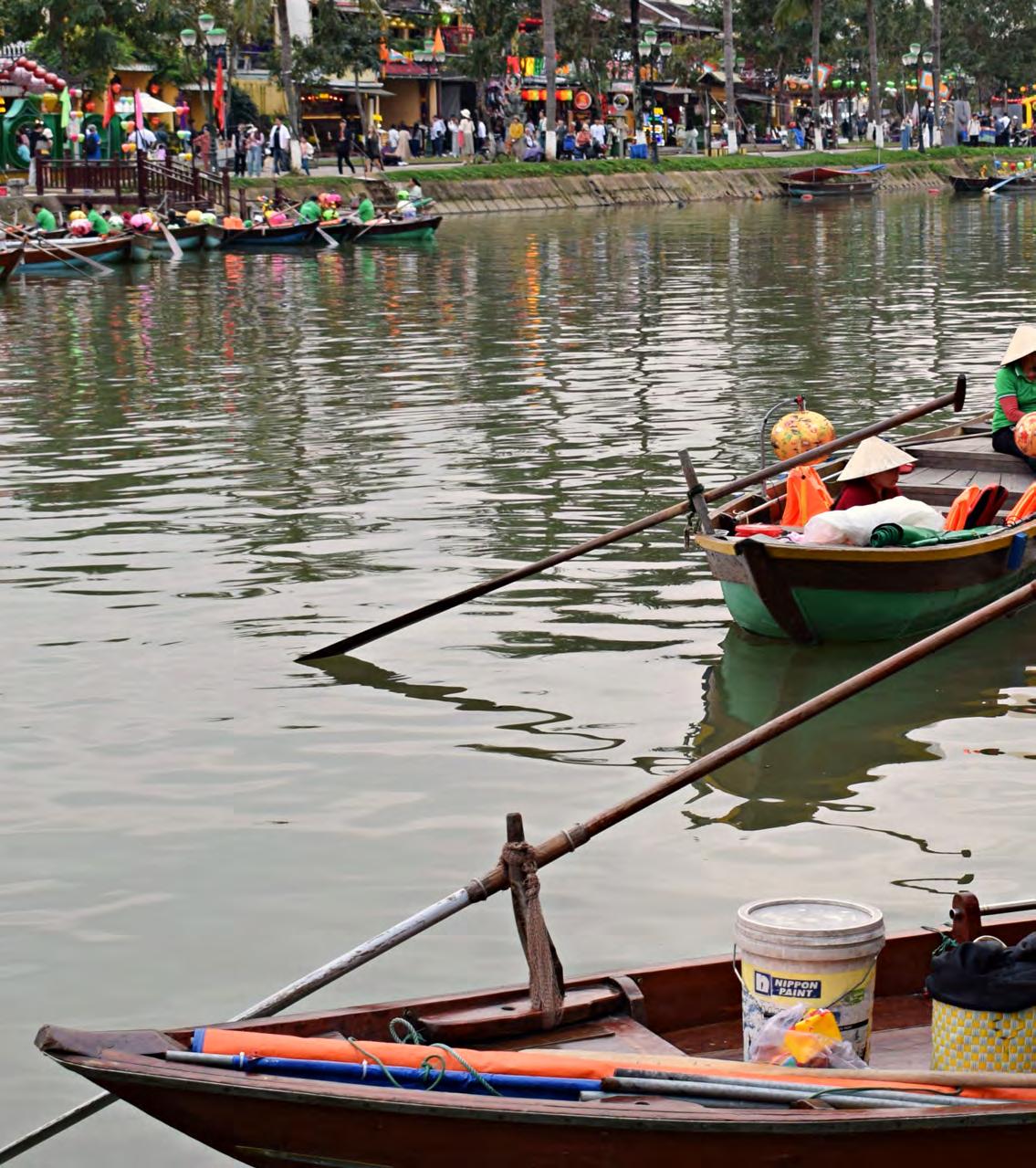
The little town of Hoi An prepares itself for the famous “Lantern festival”, held every year following the lunar calendar.
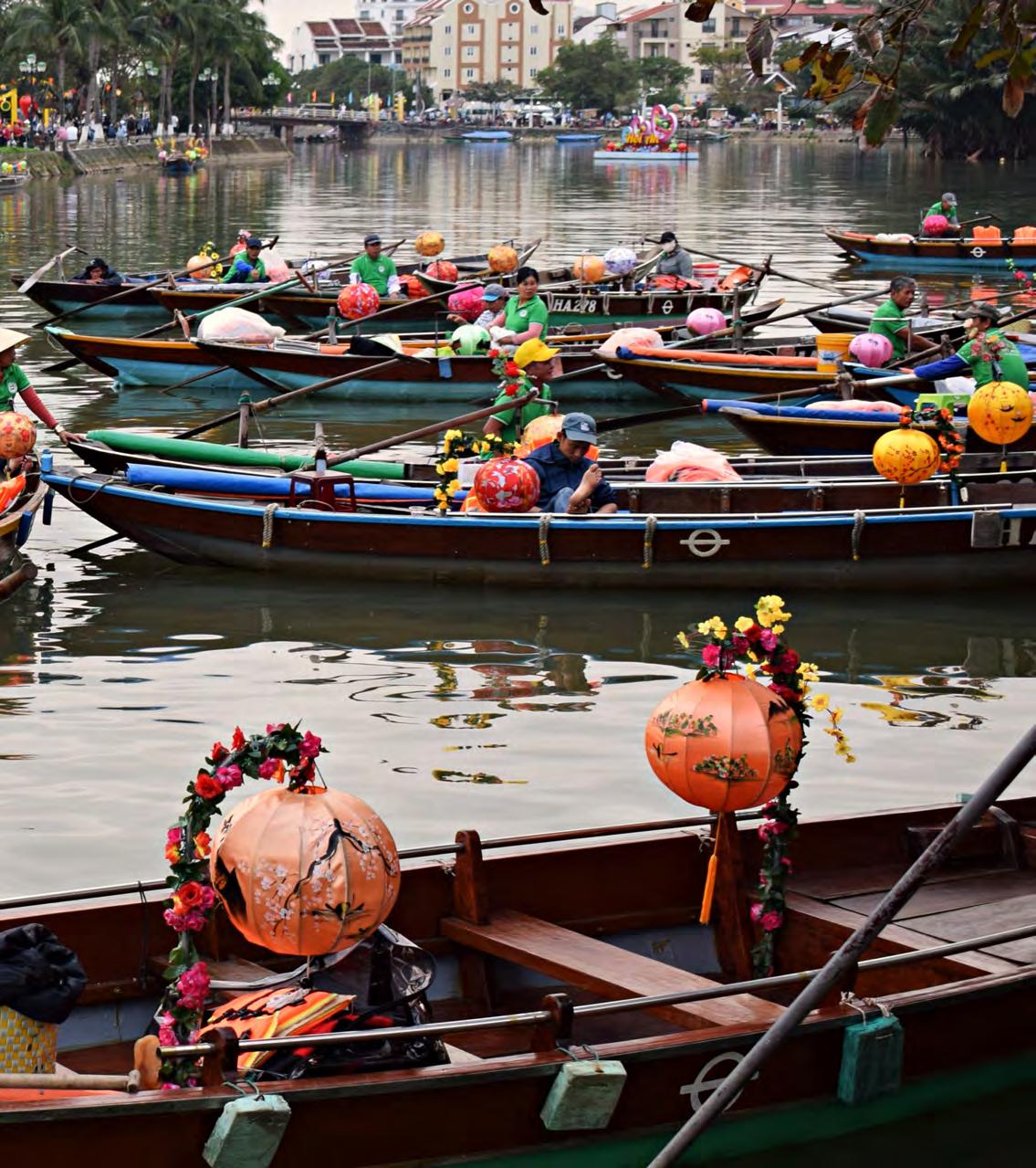
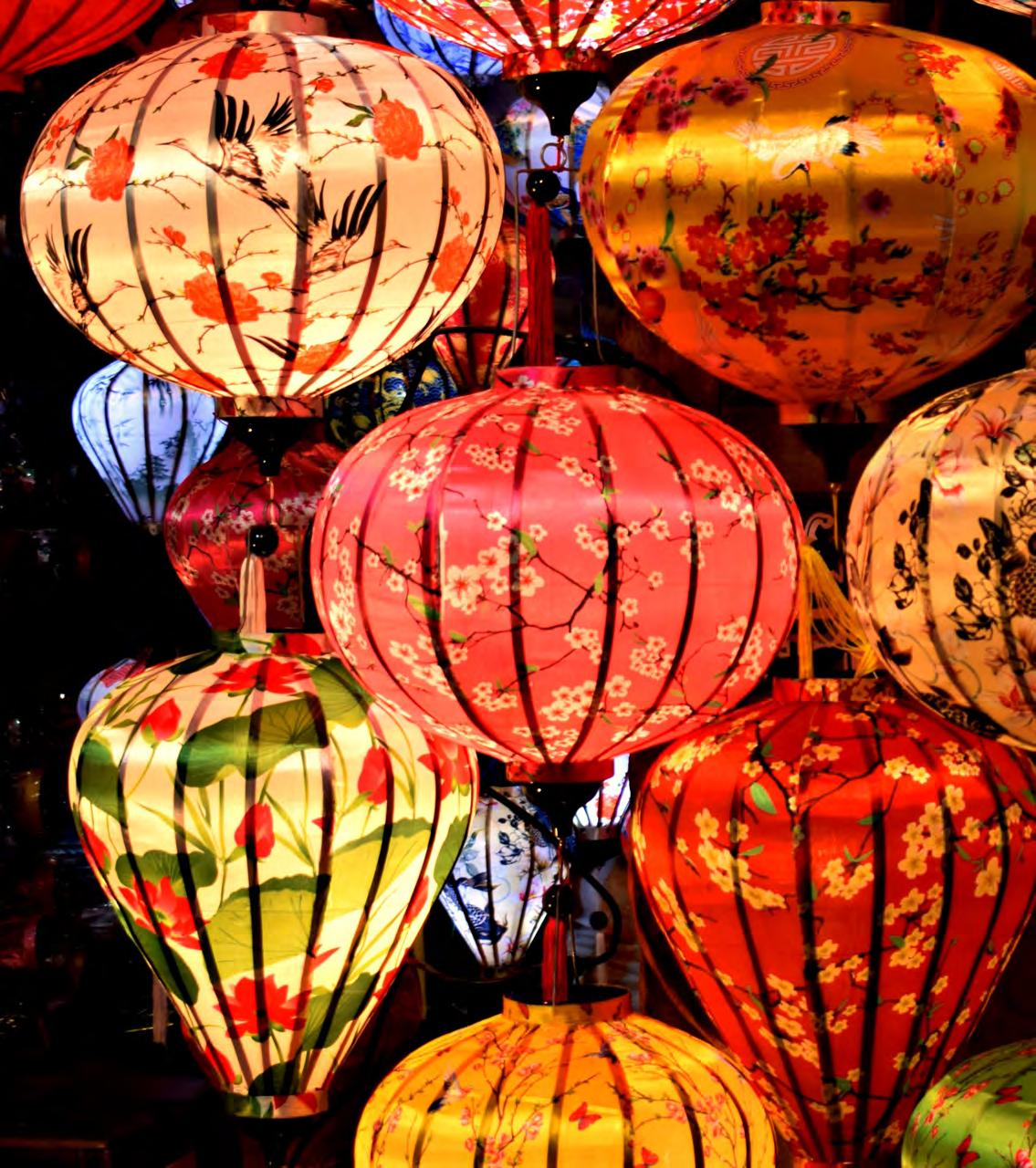
Details of lanterns found in a cozy little shop along the river. They represent prosperity, happiness and good fortune.
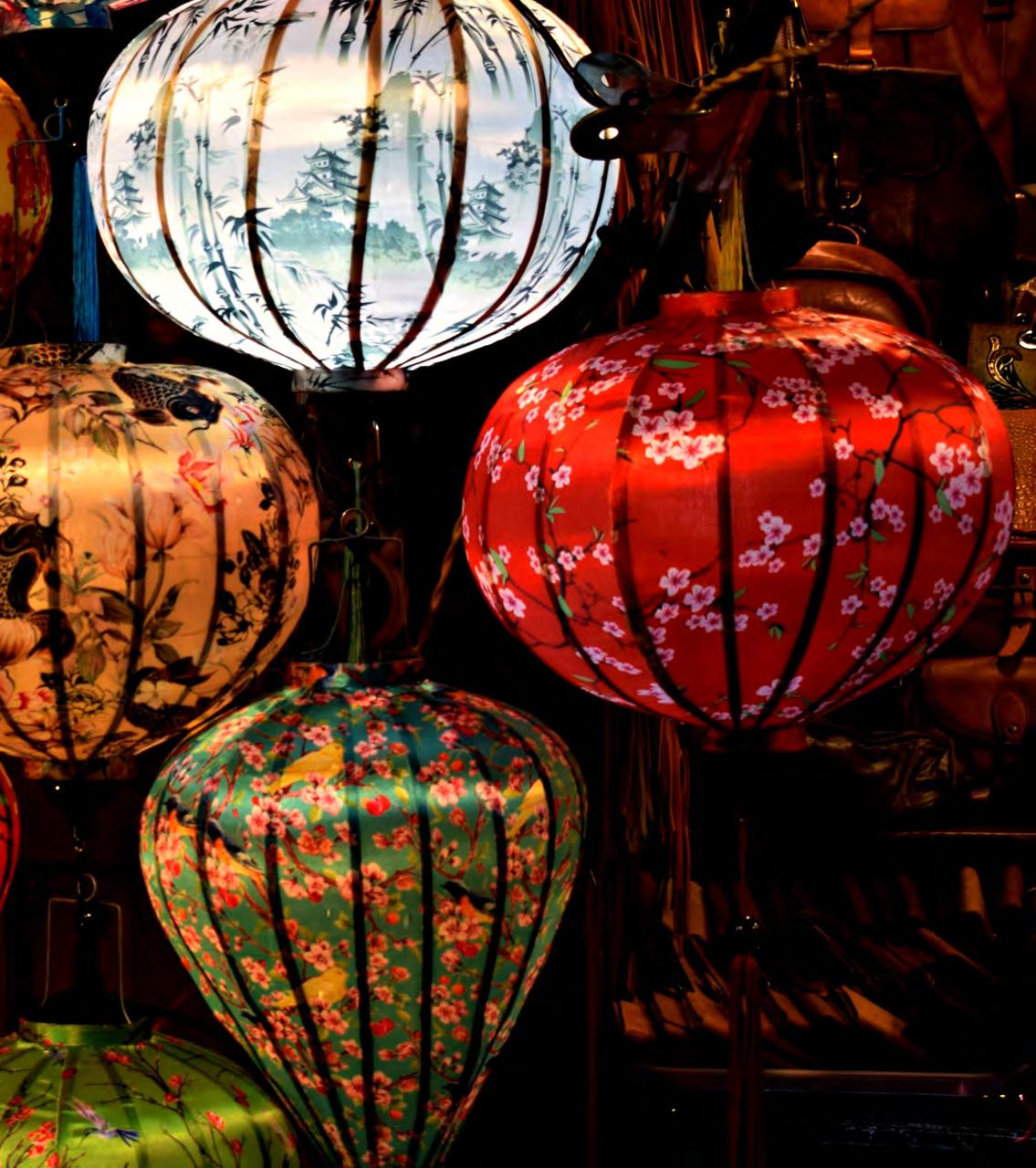
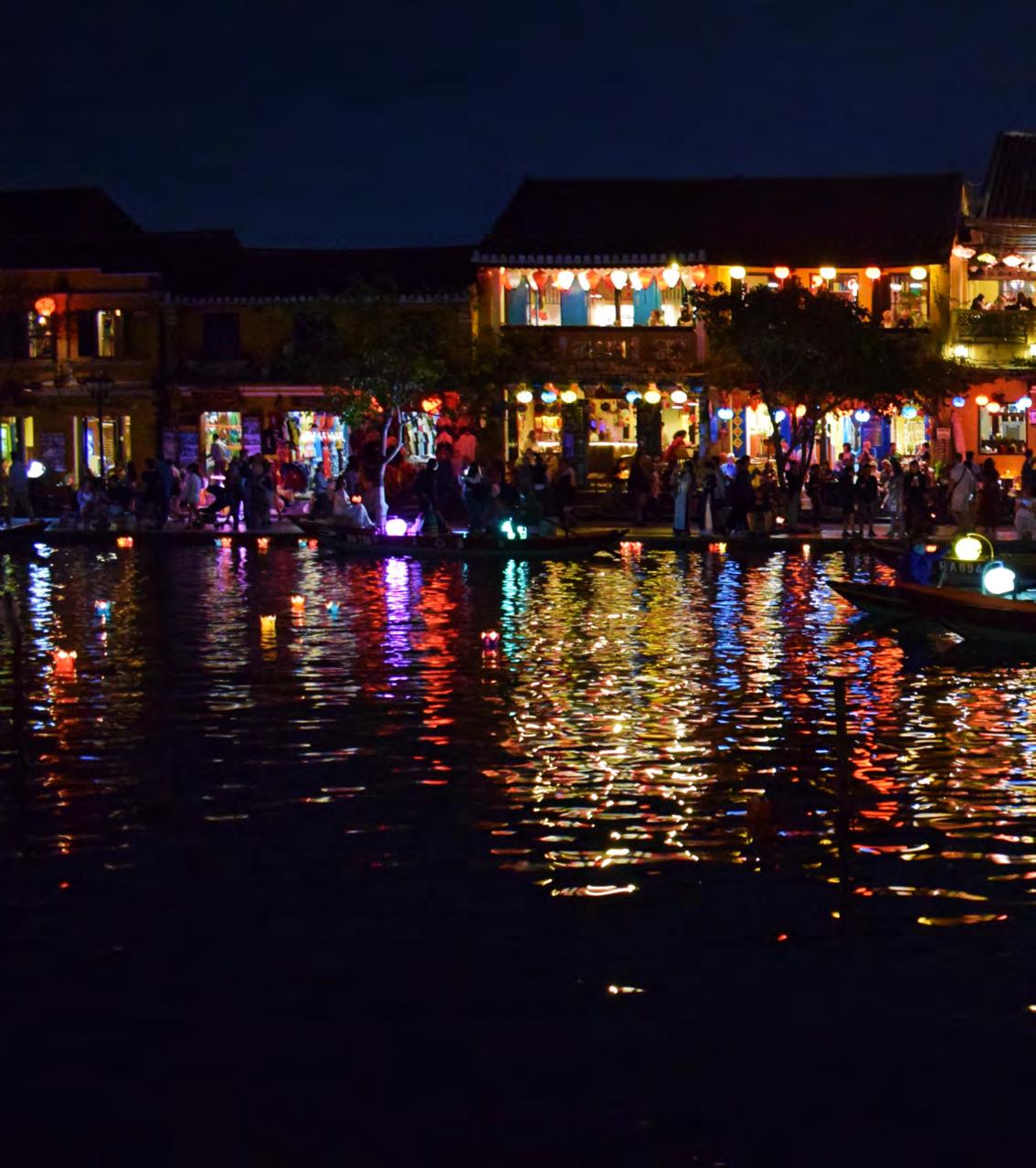
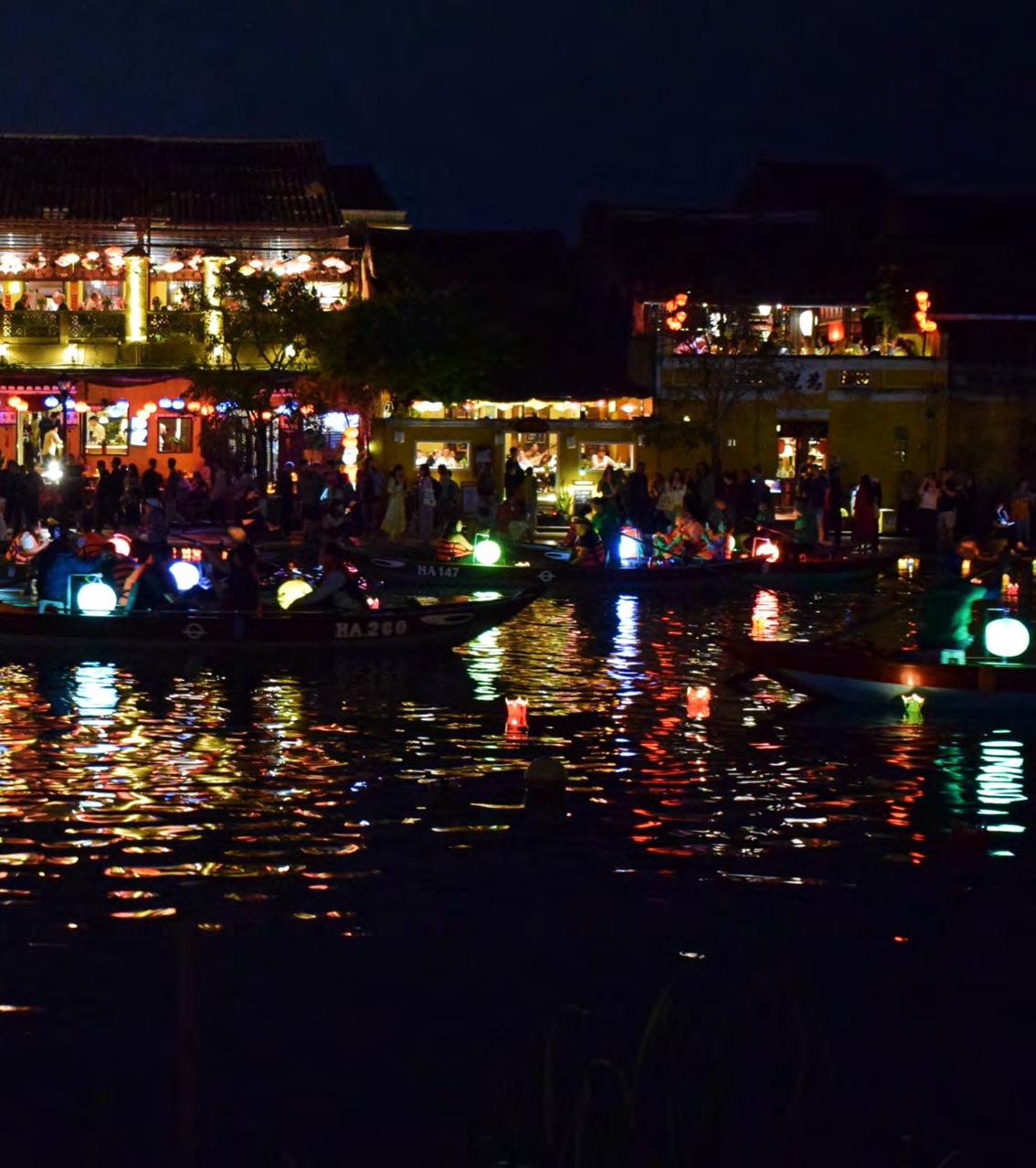
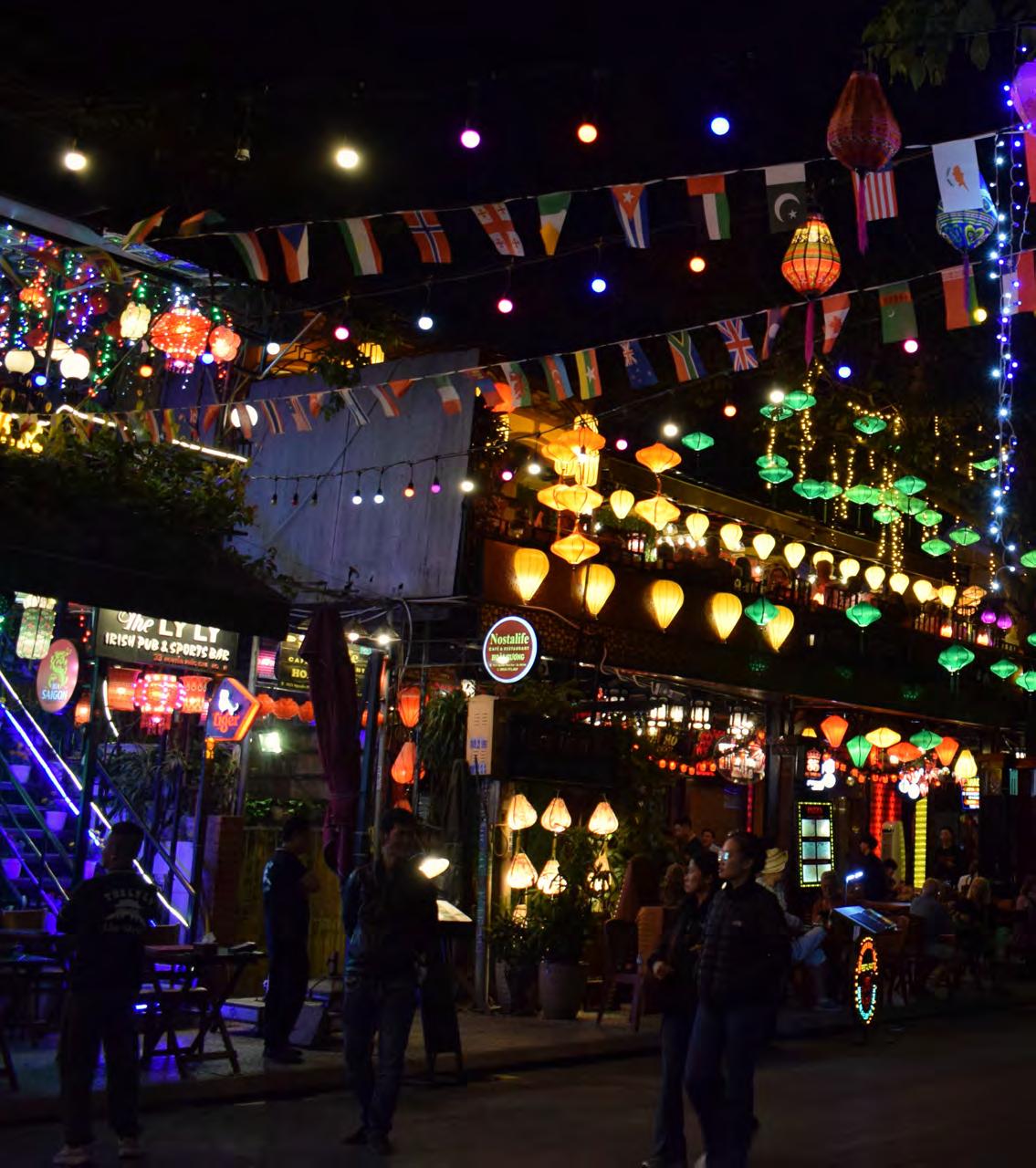
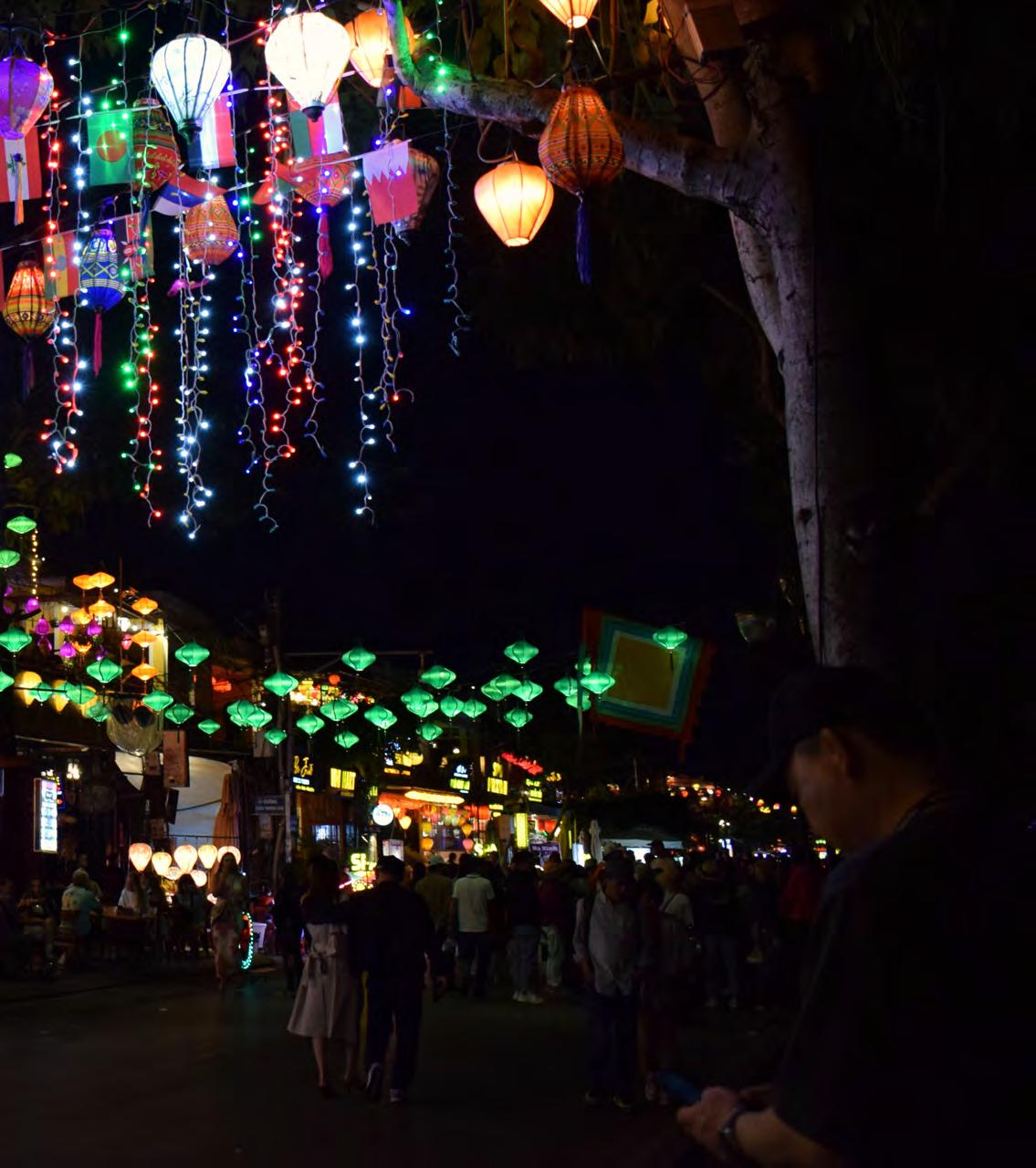
When darkness arrives, the city rises in light with lanterns and colors dancing above the streets.
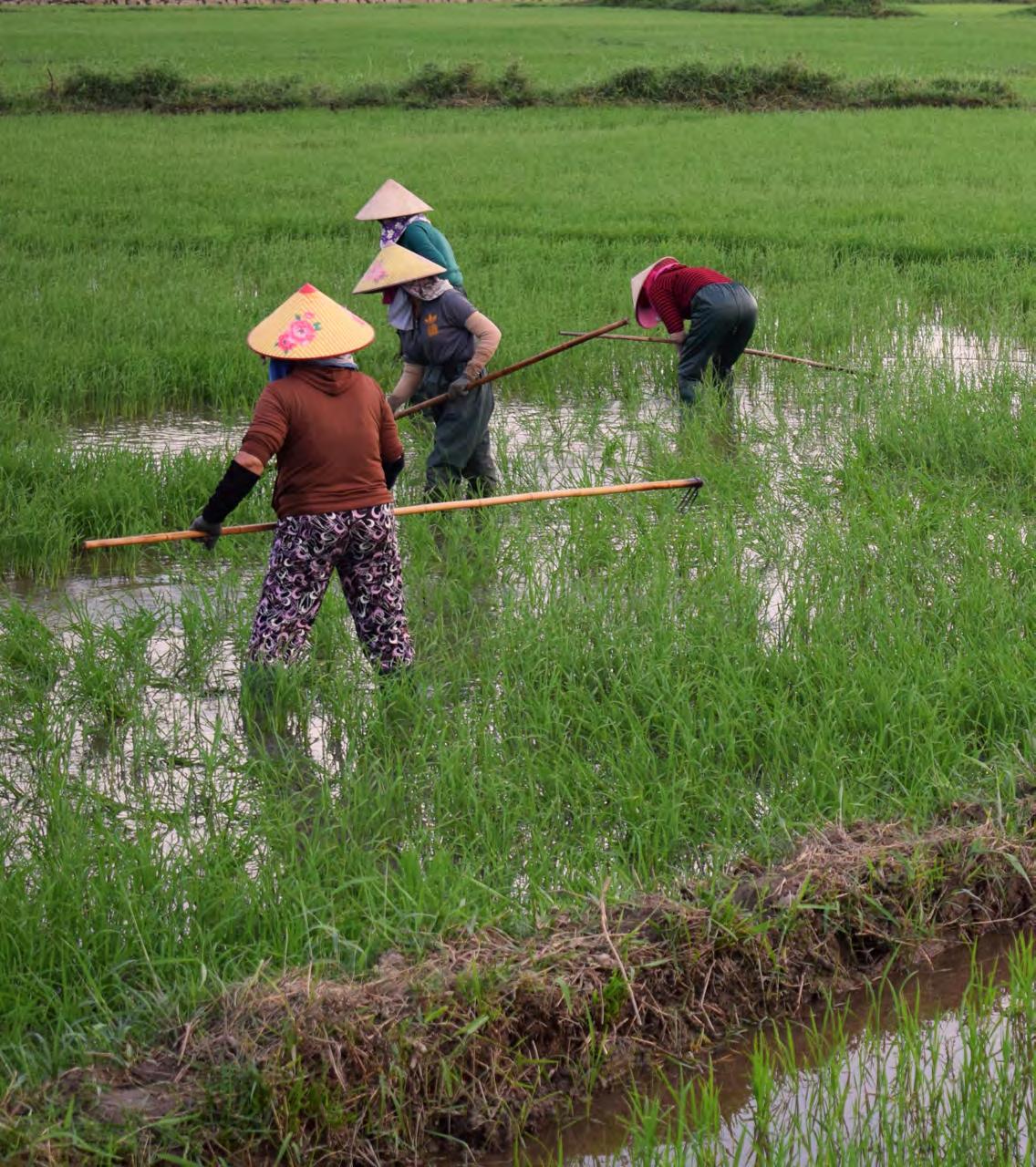
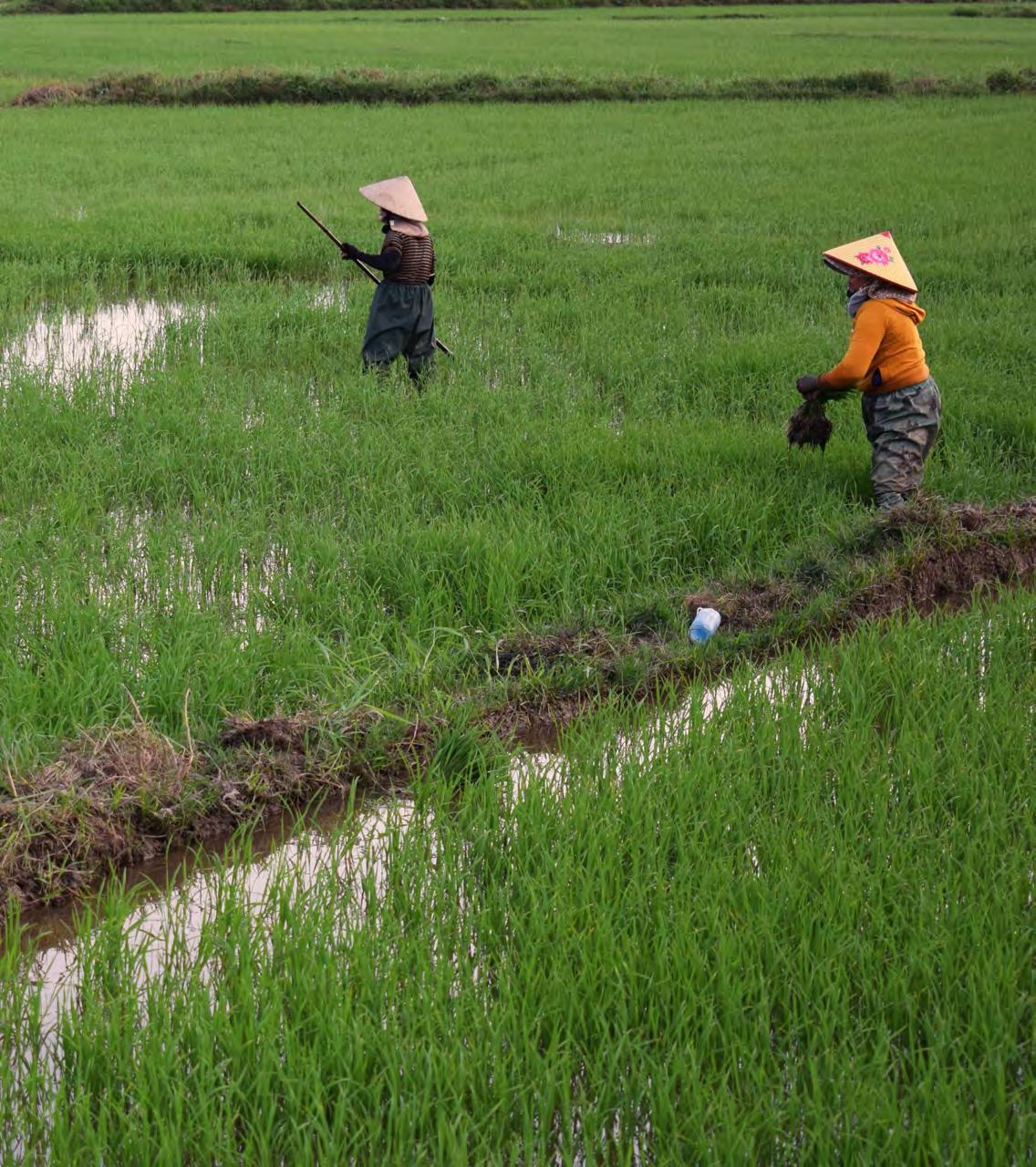
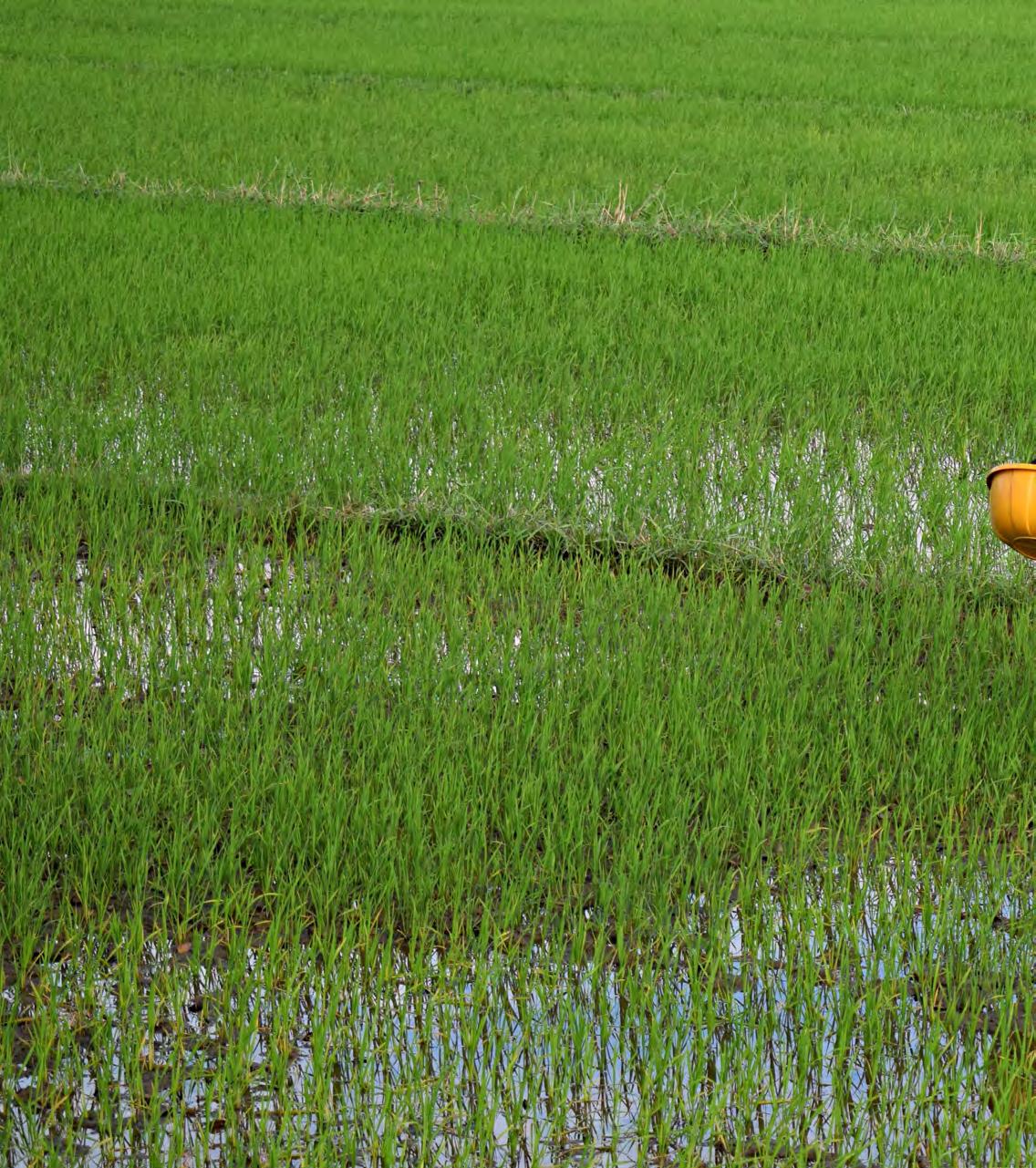
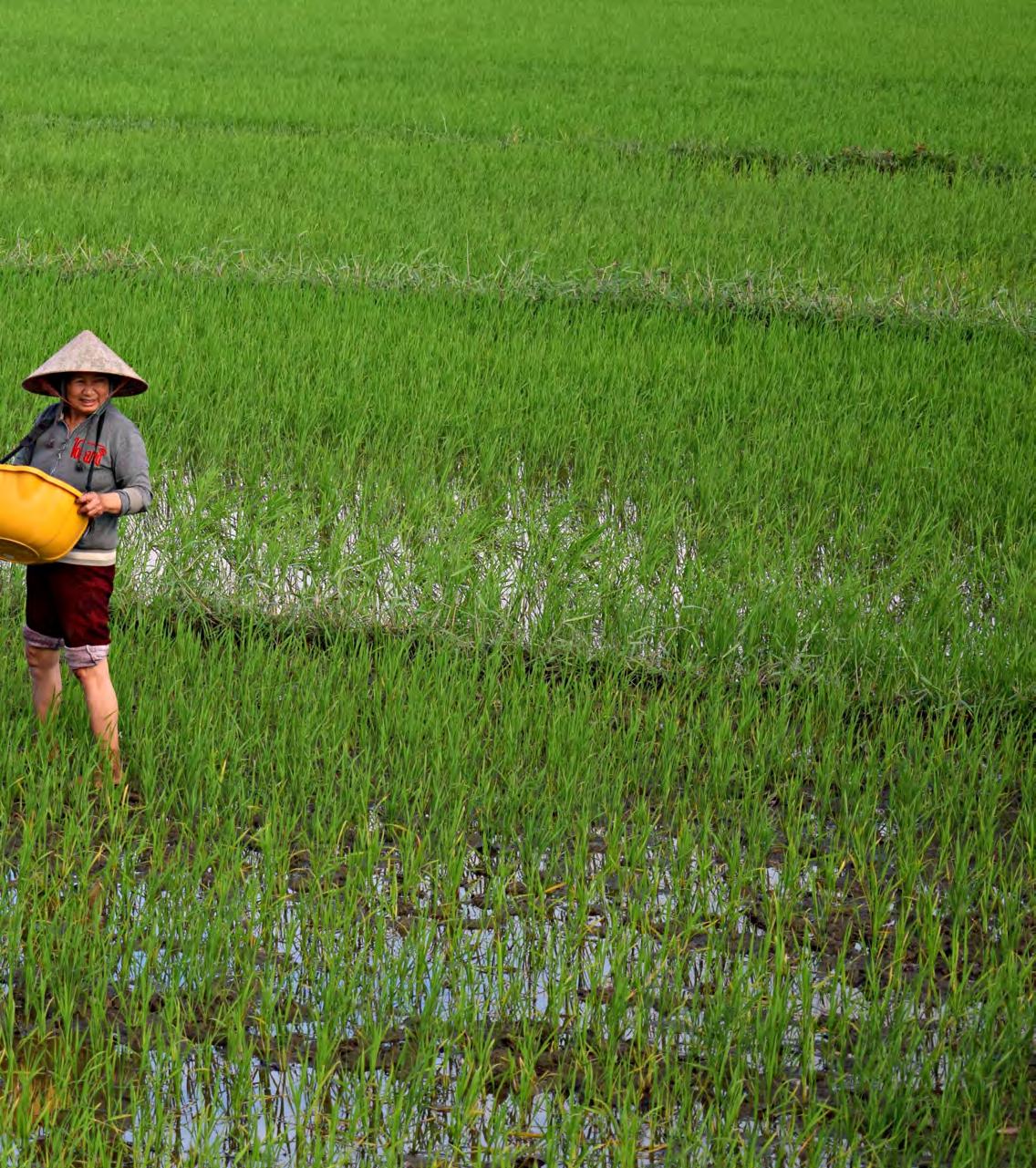
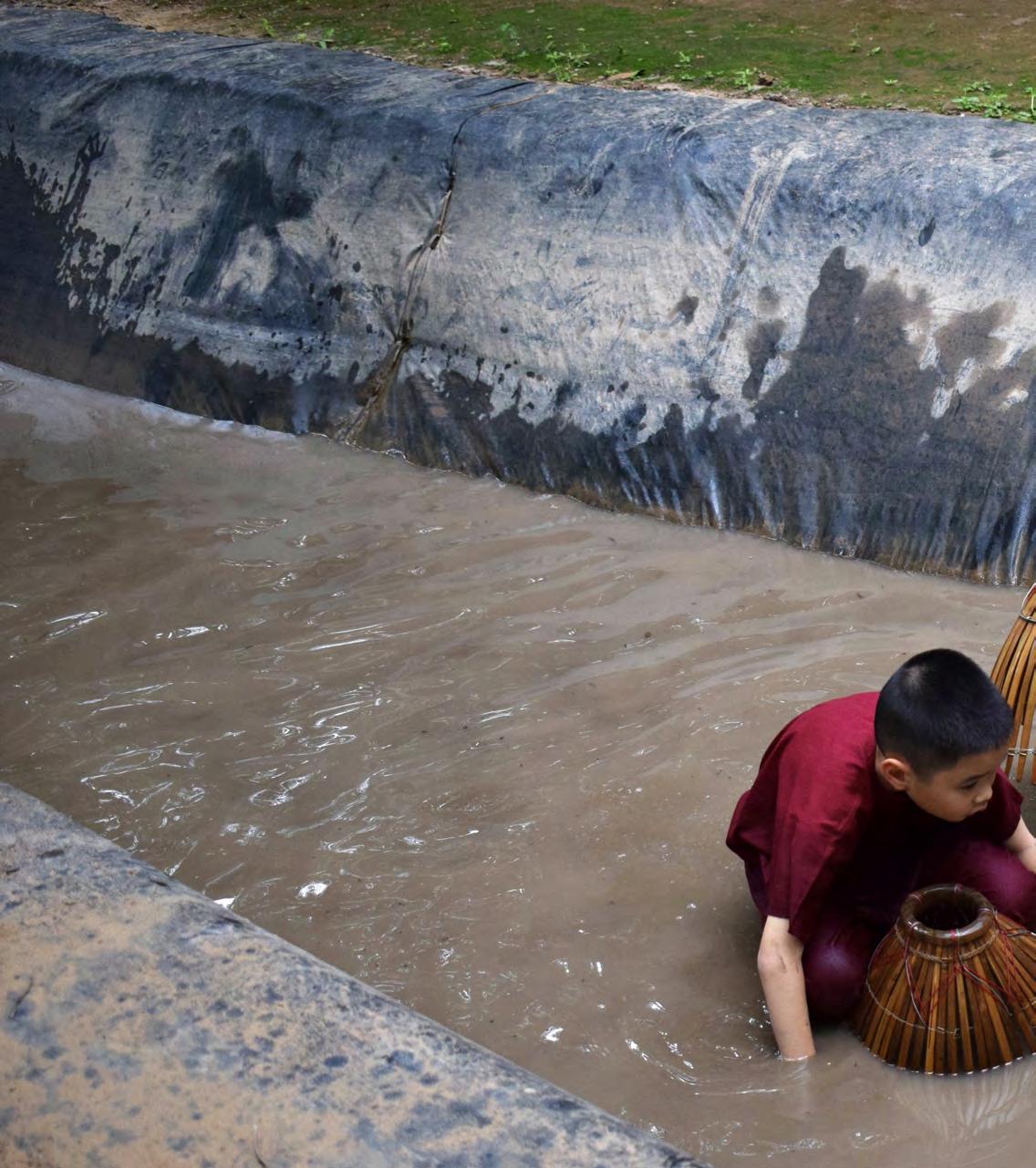
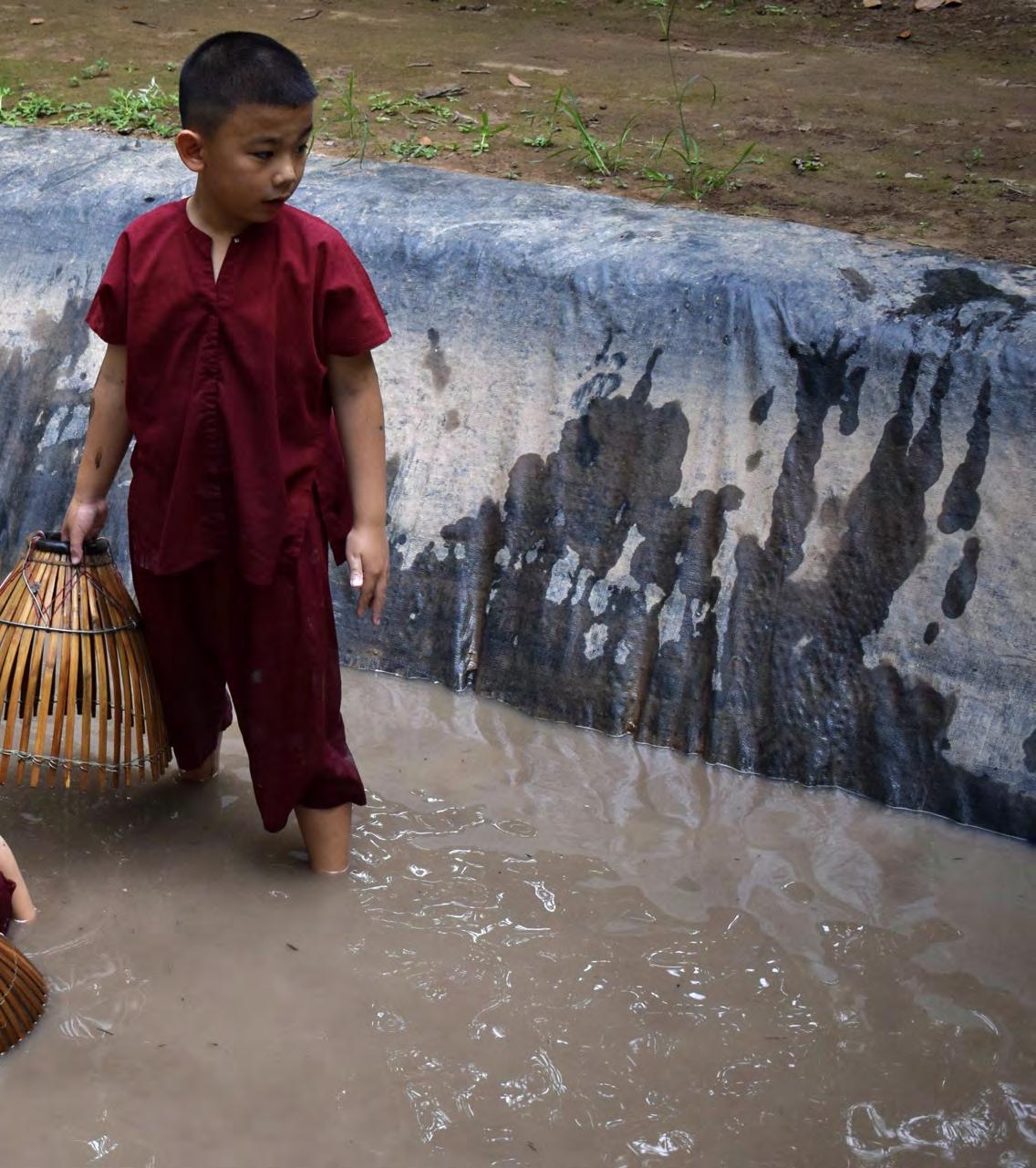
Team work, restless group of women spending their day working to create the best conditions for the rice to be ready, collected and sold.

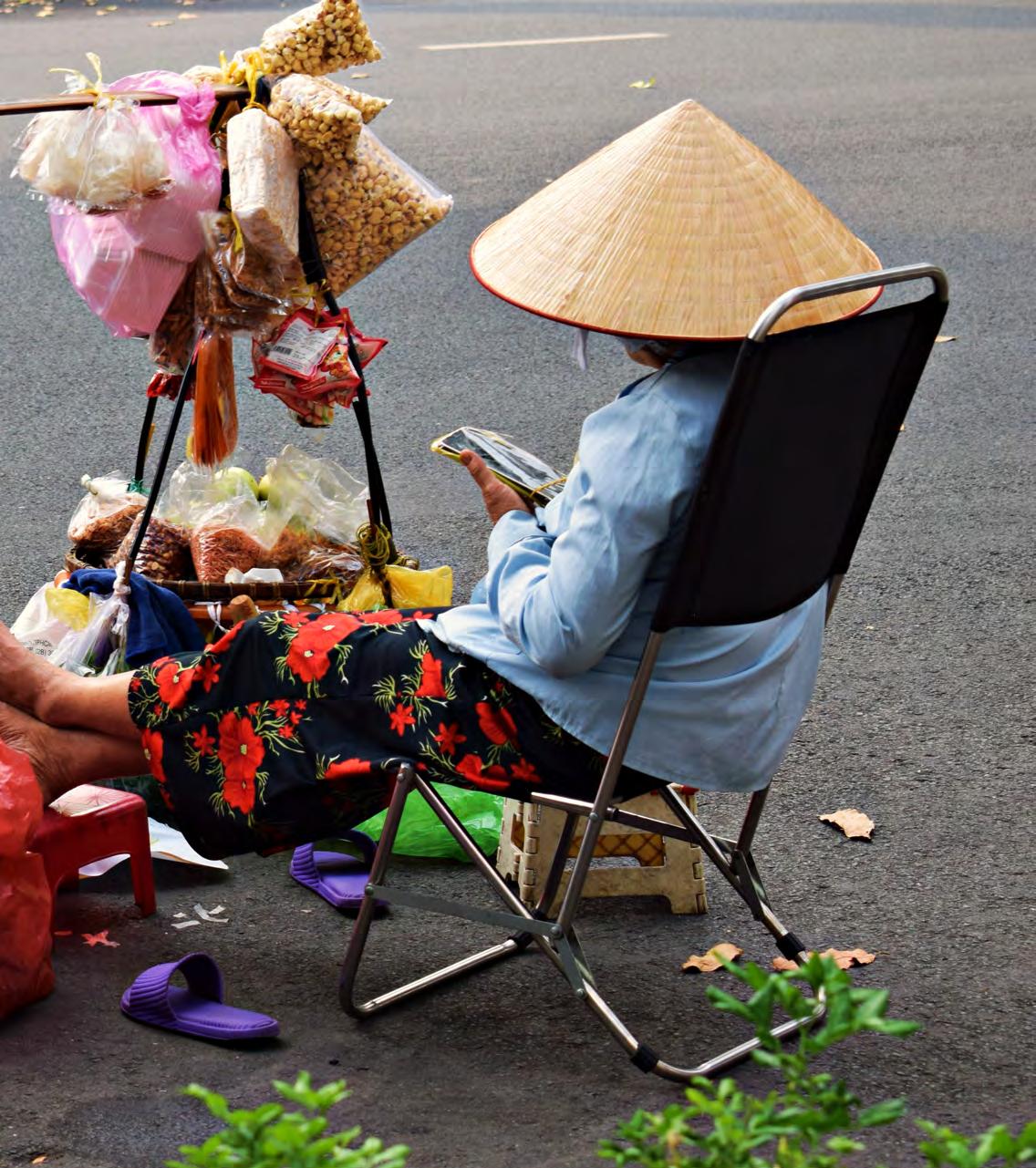
Far from the western “developed world” this business owner reviews some of her goods, waiting for the next interested visitor. Ho Chi Minh City
BY RUSS WALSH
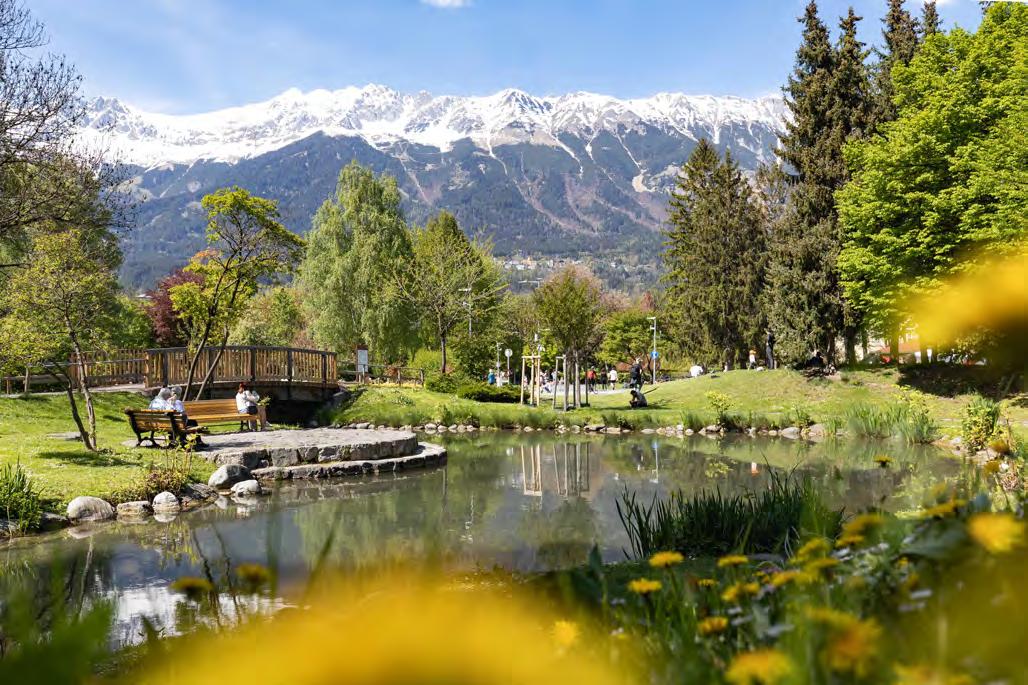
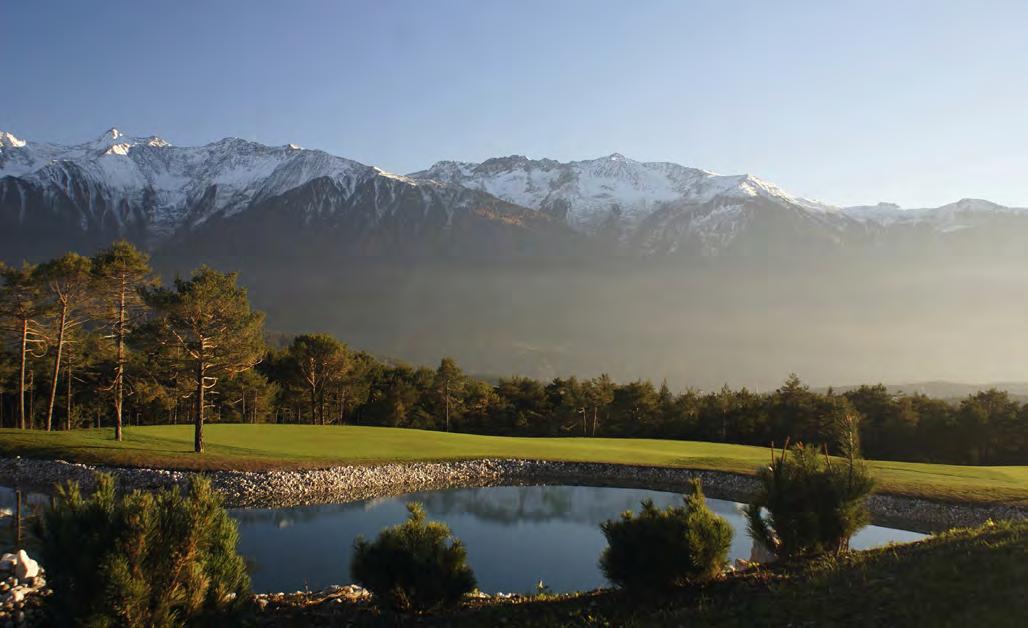
Spring is a season of contrast and possibility in Innsbruck. While snow still lies on the Alpine peaks, the valley below is filled with café culture, cycling routes, and sun-kissed streets. In a rare find among European travel destinations, you can trail run in the morning, ski in the afternoon, and dine in a historic old town at night within 48 hours. In Innsbruck, the contrast and possibility of a spring season come alive through a range of outdoor activities and urban attractions. This itinerary is designed for travelers who wish to explore and experience Innsbruck at its most dynamic.
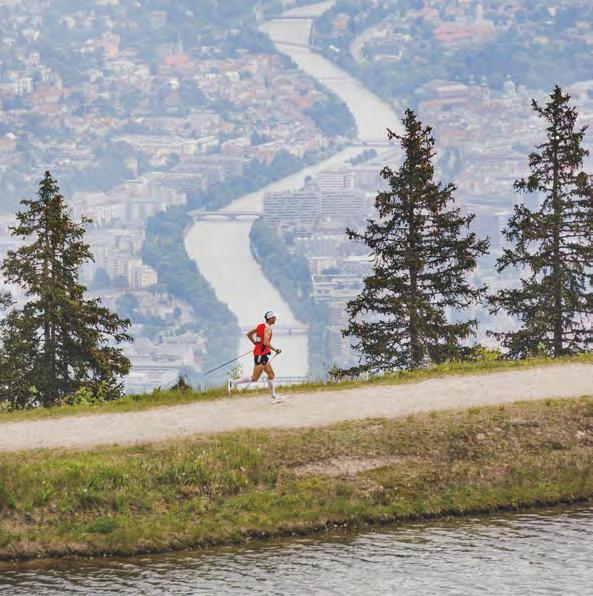
The day begins with movement. As the temperatures rise and days grow longer with the coming of spring, trail running season is back in the Innsbruck region. The season starts on the gentle trails along the Inn River and the Sill, which offer a flat, easy run through the Alpine landscape and a chance to breathe in some of that fresh Alpine air. The lower trails run through parks, streams, and neighborhood green spaces that come alive with spring.
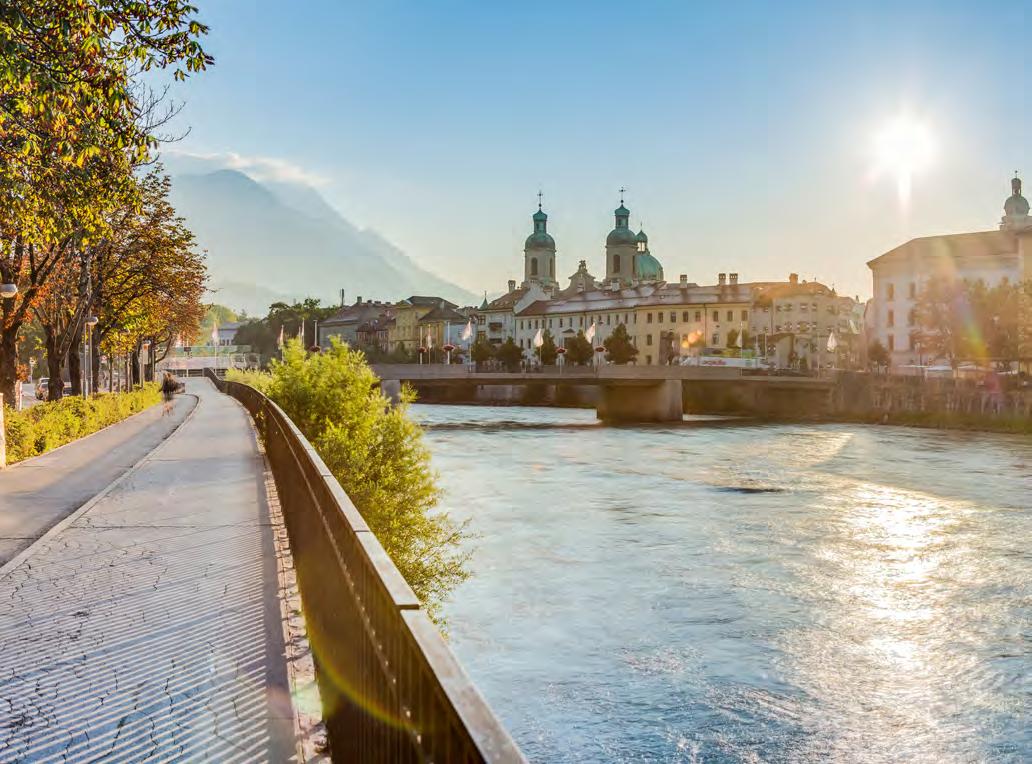
The morning run is over, and it’s time to take a more leisurely pace through Innsbruck’s Old Town. Spring is a season of renewal and rebirth, and Innsbruck’s medieval streets and architecture take on a fresh beauty as the season approaches. The café culture is alive and kicking on Maria-Theresien-Strasse, Innsbruck’s elegant main street.
Take a break at the market square with a view of the Inn River, with the colorful Mariahilf houses nestled between the Nordkette Mountains, a pictureperfect combination of urban and mountain landscapes.
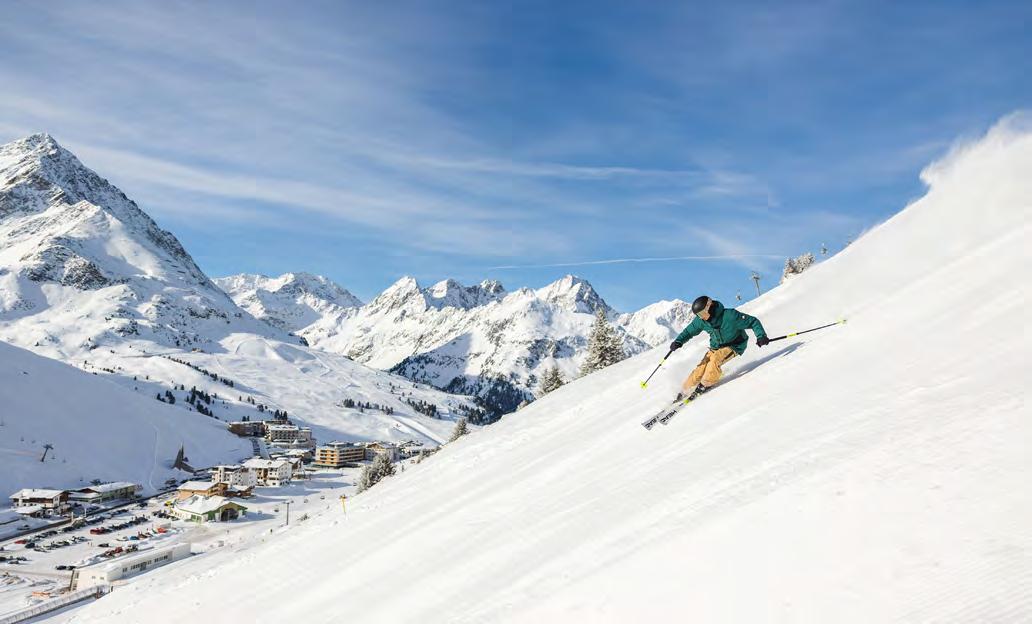
The beauty of Innsbruck in the spring is that it stretches the ski season by a few weeks. Head to Axamer Lizum, which offers skiing until mid-April. The ski runs are softer in the spring, making them perfect for those who want to enjoy skiing rather than focus on speed.
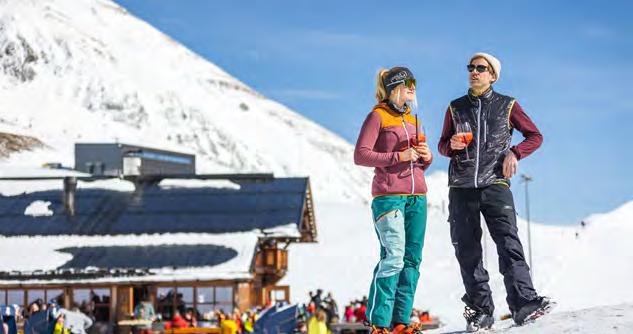
The après-ski is fun and laid-back, especially towards the end of the ski season, making it an ideal place to bid farewell to winter.
End the day with dinner at a restaurant that serves Alpine cuisine with a modern twist. Finish the day with a romantic riverfront stroll as the sun sets, with the mountains fading into the background and the twinkling lights of Innsbruck reflecting on the calm river surface.
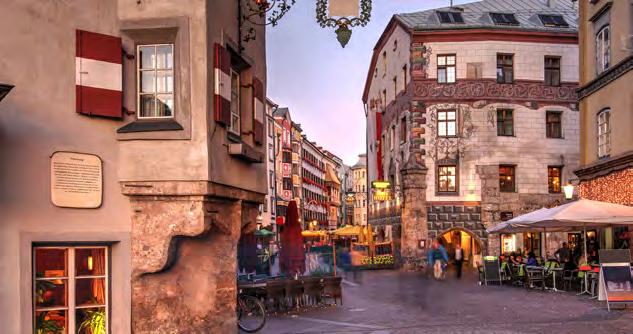
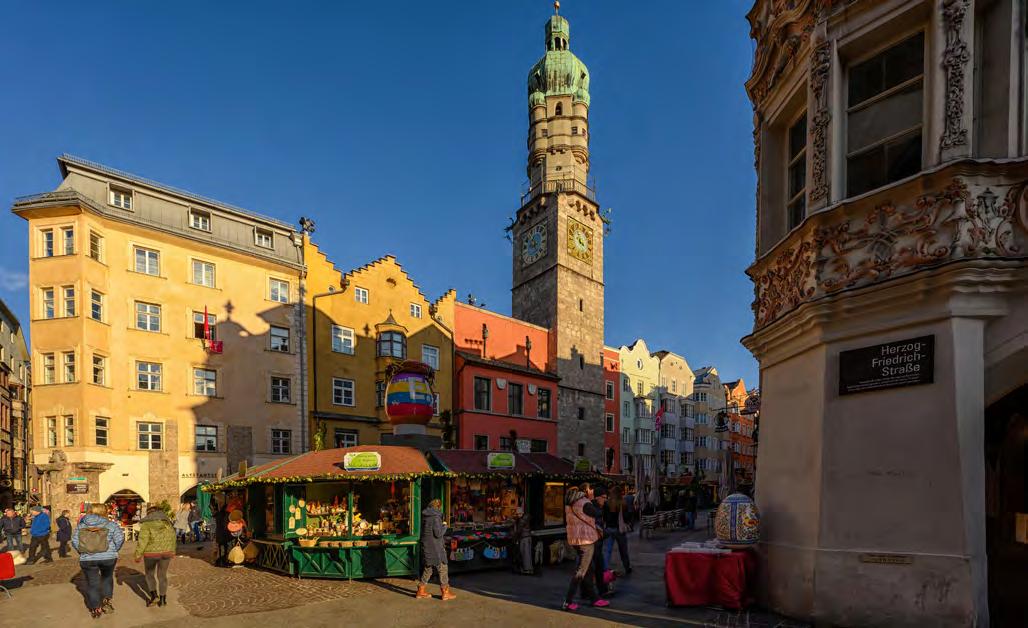
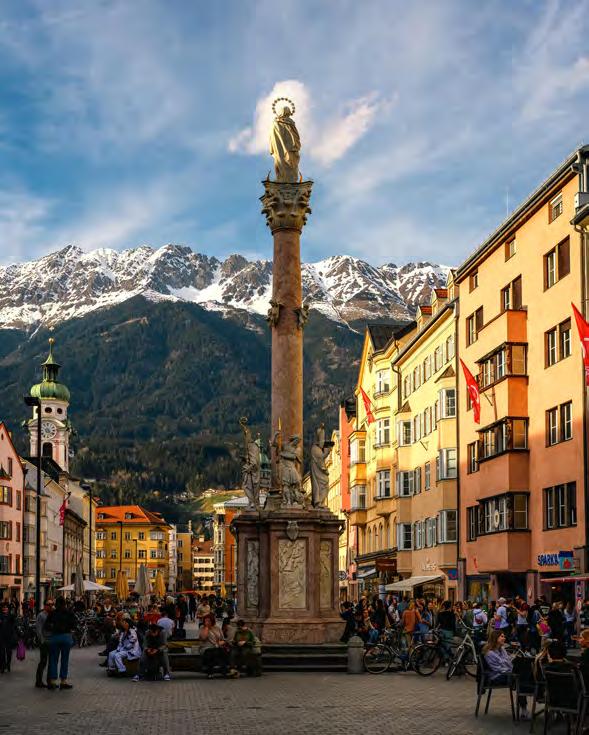
Day two begins with a cycling tour. The Inn Cycle Path is a popular cycling route that passes through Austria, Germany, and Switzerland. The route west of Innsbruck is ideal, offering a taste of Austrian cuisine, from fresh bread to local specialties, as you glide along the river path.
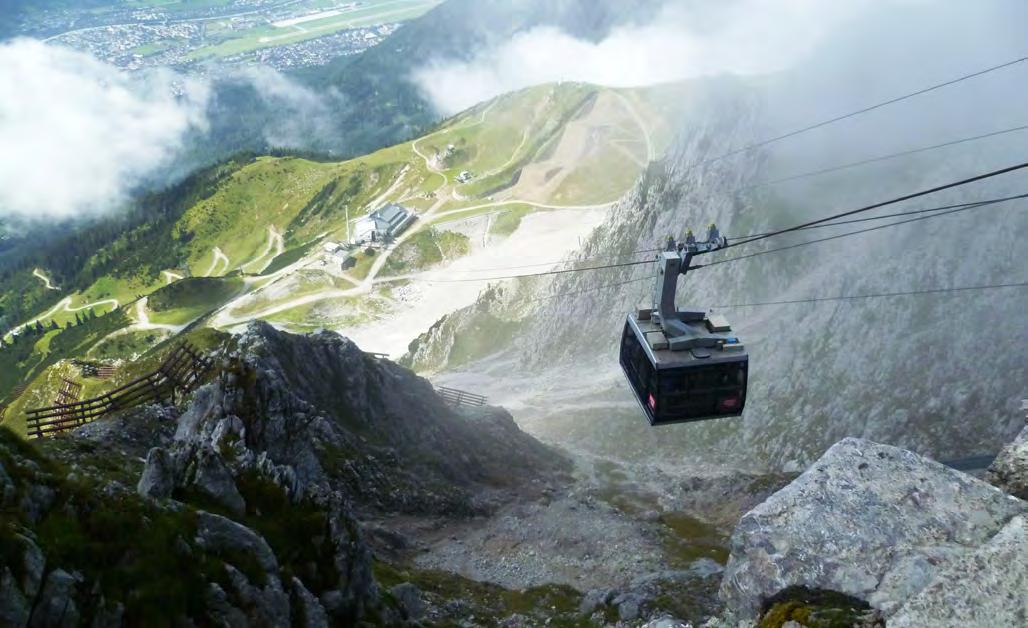
Ride or return to the city and ascend effortlessly into alpine surroundings by cable car to the Nordkette. Innsbruck from above consists of rooftops, the valley, forest, and peaks, and it is from here that you can best appreciate the way the city blends into its surroundings.
If you’re seeking one final fix of winter action, there’s only a short trip required to access the Stubai Glacier, where you can still ski in May. The high altitude guarantees snow, and the sunshine means restaurant balconies provide breathtaking views.
Alternatively, you can stay in the city and explore its many cultural attractions, shop, or simply grab a long lunch. Springtime is a great time to explore Innsbruck, and there’s never a shortage of activities to suit your mood.
Finish off your two-day exploration of Innsbruck with a drink at sunset, either overlooking the city or alongside the River Inn. With long days ending late into the evening, there’s never a feeling of constraint, and movement and stillness go hand-in-hand in Innsbruck’s expansive, yet intimate, environment.
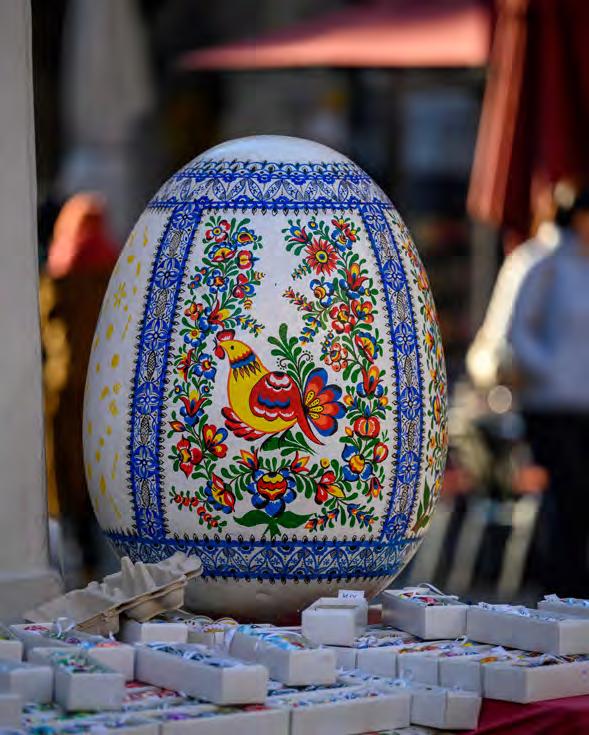
There are few places where you can experience such diversity within one season. Whether you’re a fan of running, biking, skiing, or history, there’s never a feeling of hurry, and there’s so much to explore within such a short time frame. It’s when Innsbruck feels most alive, most balanced, and most rewarding.
BY ALLISON FOAT
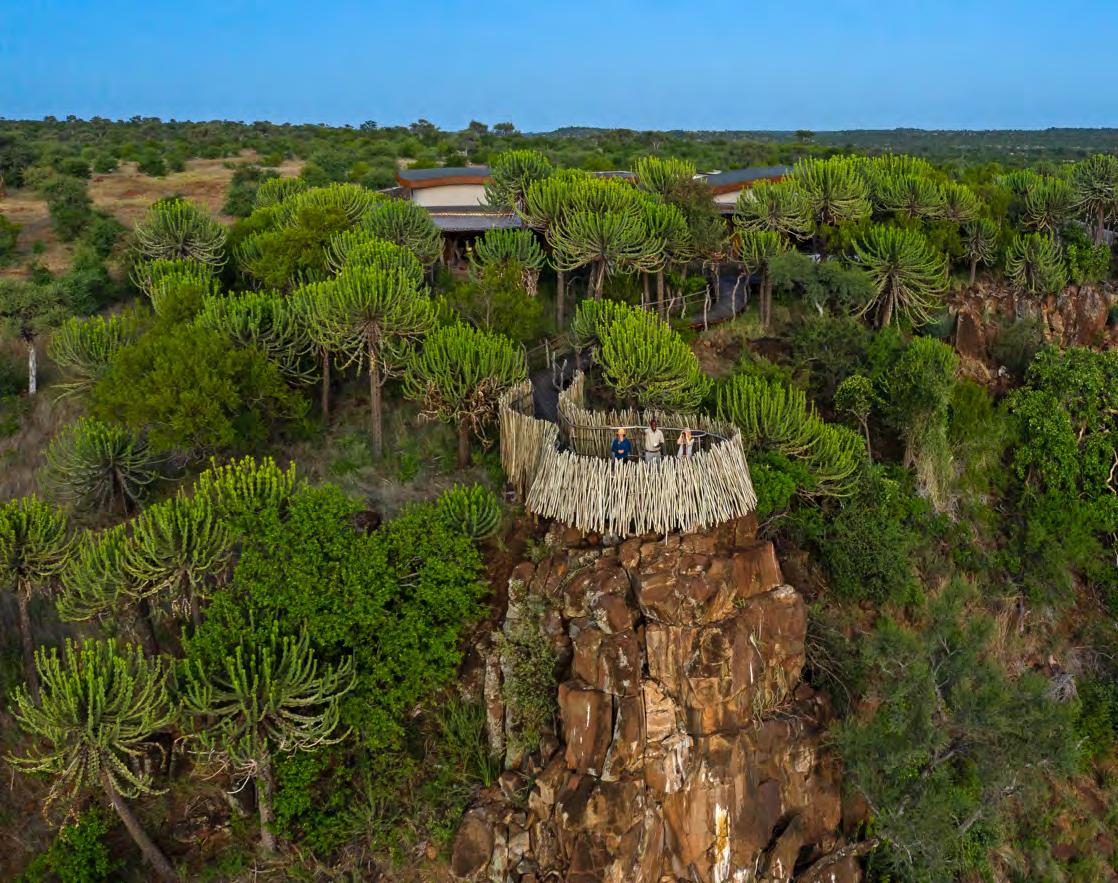
Poised theatrically above a sinewy ravine, Euphorbia Mashatu stands as a design-led destination that has staked a claim in my top five safari stays for its compelling aesthetic and monumental natural assets.
Located in the eastern corner of Botswana’s largely unheralded Tuli Block, Euphorbia, named for the towering botanicals on the property, lies unobtrusively within Mashatu, an expansive game reserve frequently referred to as the ‘Land of the Giants’. The evocative moniker comes not from myth but from the remarkable scale of life there, specifically the colossal baobab trees that anchor the veld and the largest free-roaming elephant herds on private land in Southern Africa. In their wake are upwards of 350 bird species, a stunning A list of Big Cats — lion, leopard, and cheetah — and burgeoning populations of zebra, giraffe, kudu, and eland, among others. Tuli stands as an ecological jewel in an ancient environment framed by the confluence of the Limpopo and Shashe Rivers and bordered by Botswana, South Africa, and Zimbabwe.
Local flora, fauna, and geography inform every aspect of the splendid architecture, a seamless interplay between fabrication, the environment, and the visionists who steered the concept. The result is a string of elemental structures that do way more than endure the locale — they belong to it. It’s an inspiring biometric approach that has given Euphorbia such a singular identity and a life of its own.
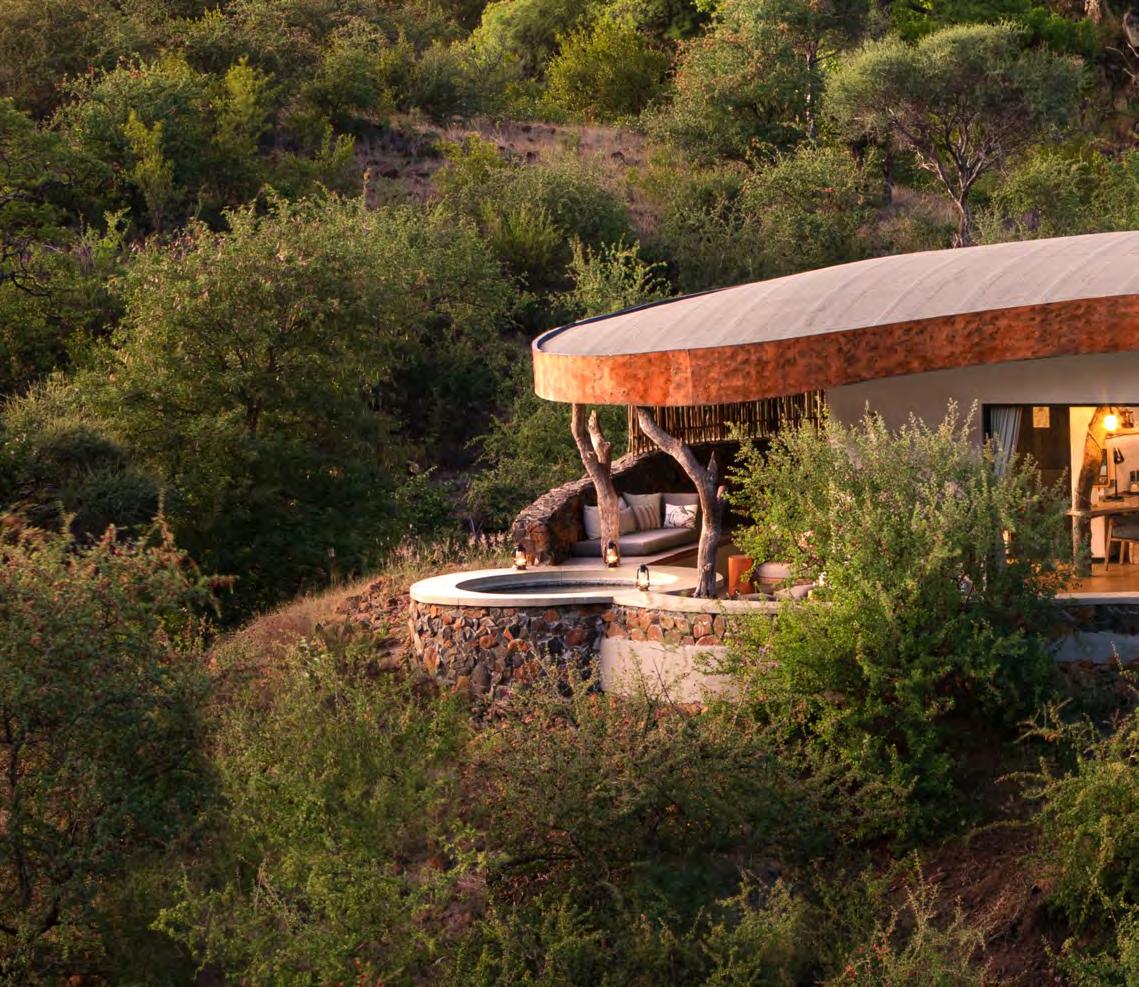
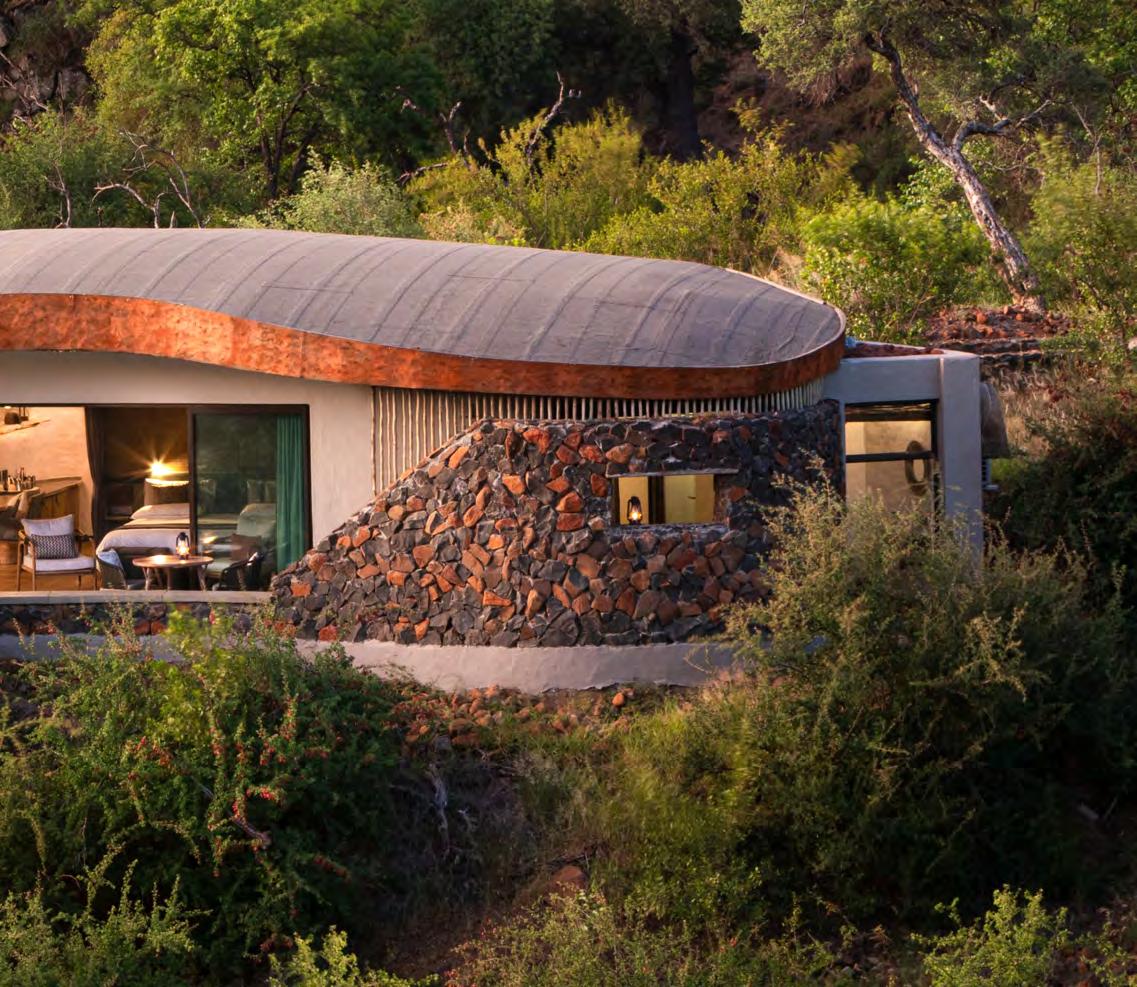
Accommodation comprises a clutch of eight secluded villas, each an exceptional interpretation of the semi-circular shaped pod of the Mopane, the hugely significant tree that sustains numerous creatures that call the region home and depend on it for survival. Suites are lavish, and the décor is top
“EUPHORBIA MASHATU STANDS AS A DESIGN-LED DESTINATION THAT HAS STAKED A CLAIM IN MY TOP FIVE SAFARI STAYS.”
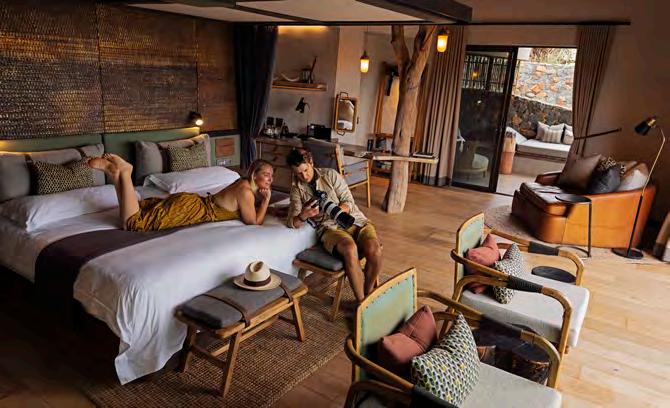
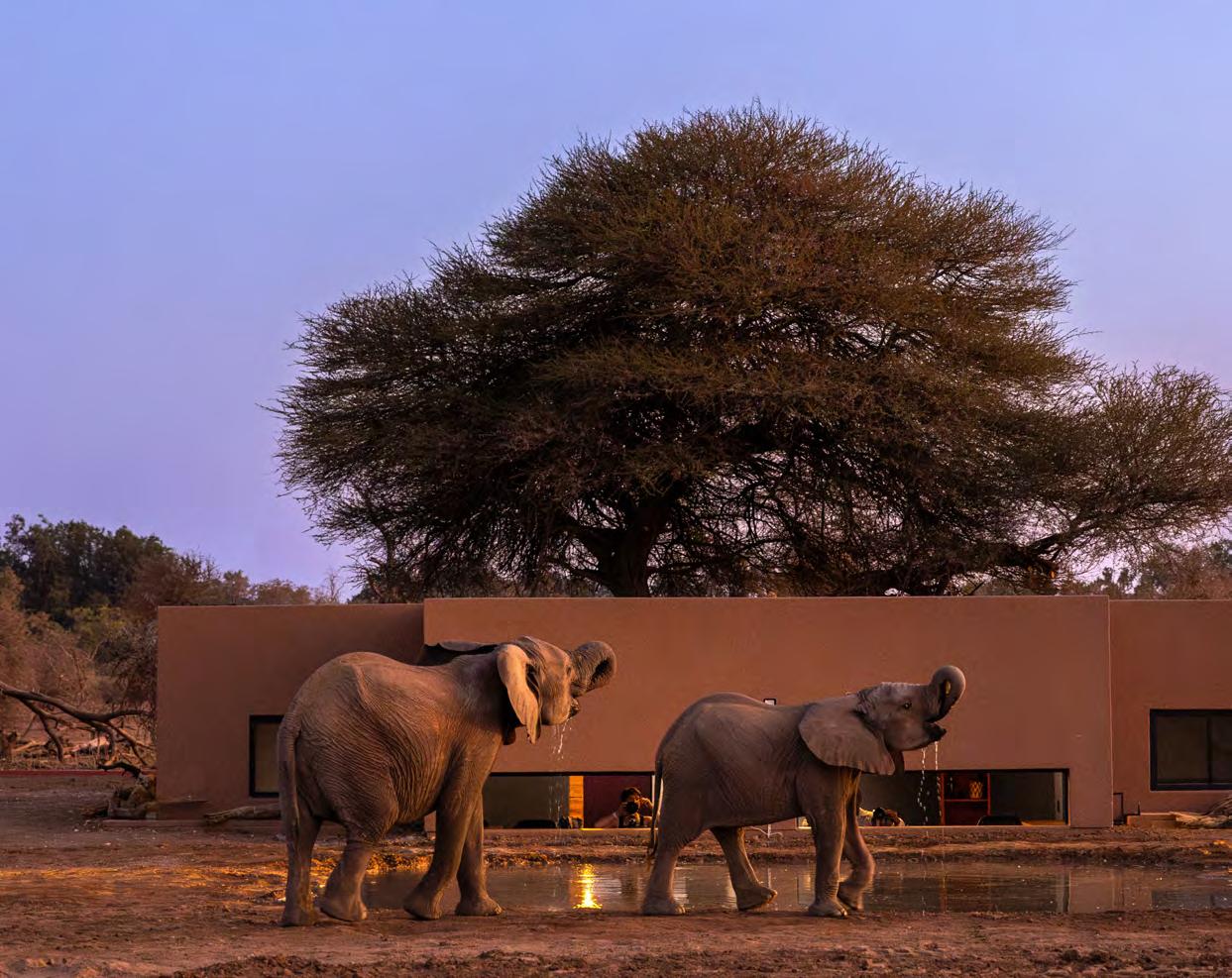
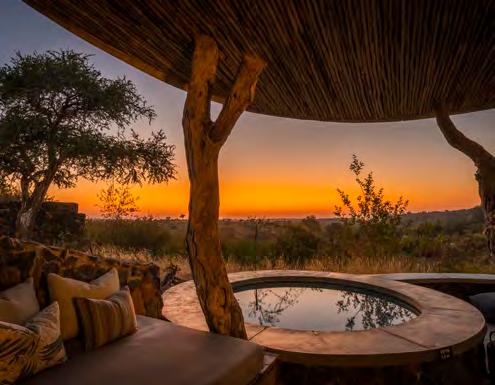
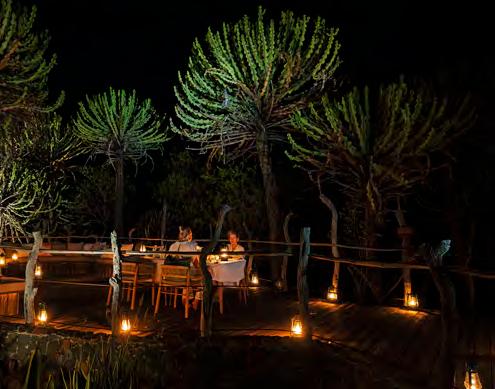
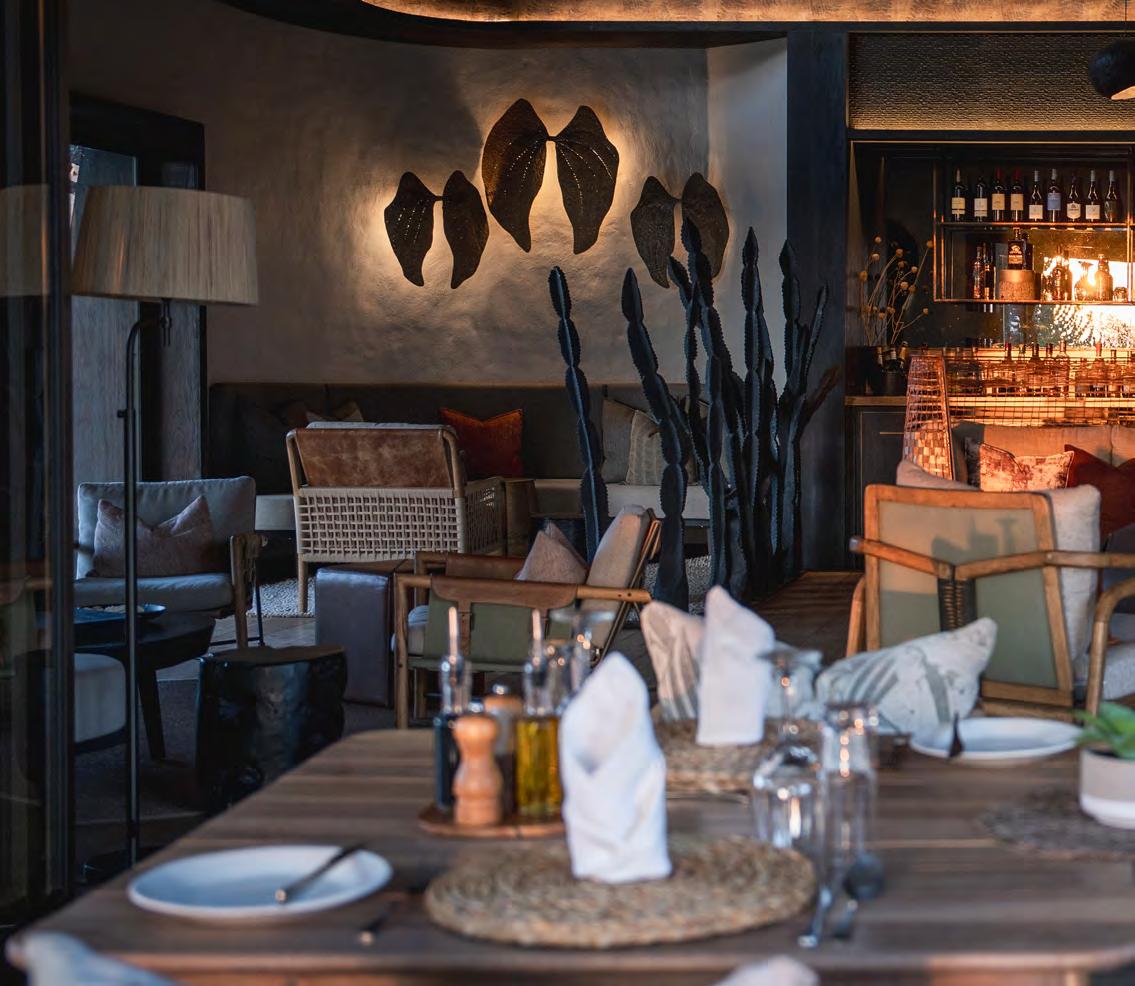
drawer, with interiors spilling onto a patio complete with a private plunge pool, easy chairs, and an outdoor tub. An immense bed, centrally positioned, capitalizes on the cinematic, omnipresent savannah that commands attention and admiration, floor-to-ceiling windows doing the outlook justice, 24/7. Color palettes are richly layered with earthy shades of umber, ash, and chocolate brown, in sync with all things natural. Underfoot, cool surfaces ground the space and plush touch points satisfy with an enveloping comfort. Early mornings in the bush are, as always, a bewitching spectacle, and I never miss one when on safari. It’s those pastel skies, the melodic dawn chorus, and the sweet scent of wild sage drifting in on the cool air that seduces me every time, and imagine my delight when a family of elephants sauntered casually into view as I was sipping my espresso—a pillow safari before I’d even thrown back the covers.
The Euphorbia design brief has been exquisitely executed by
industry frontrunners Savile Row, a multidisciplinary practice with a portfolio of blue-chip clients. “We made generous use of local materials to echo the setting — rock and raw stone, roughhewn timber — and our architect worked closely with the client to carefully map out the buildings and walkways to minimize the impact on the site and retain its raw beauty. Green technology was incorporated into the design, including thermal insulation, solar power, and gray water recycling systems,” said Adrian Davidson, the project lead. To that, concrete contours and soft curves replace rigid lines, and organic silhouettes supplant stark geometry, giving rise to atypical structures that have re-framed the construct narrative and showing how limitations fuel possibility.
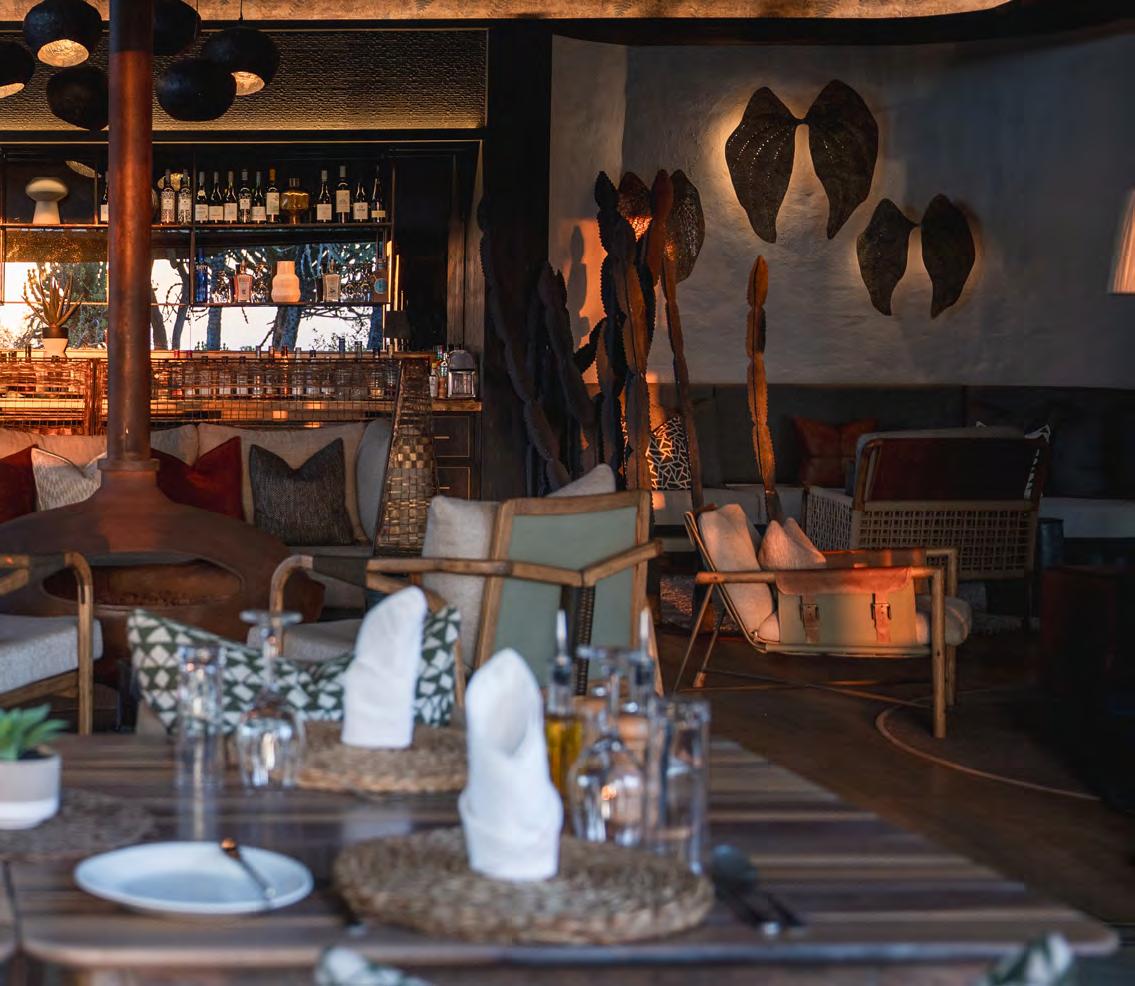
The reception area is another showcase of the curvilinear approach, and chic statement pieces -think ribbed copper chandeliers and warm wooden embellishments - finesse the space.
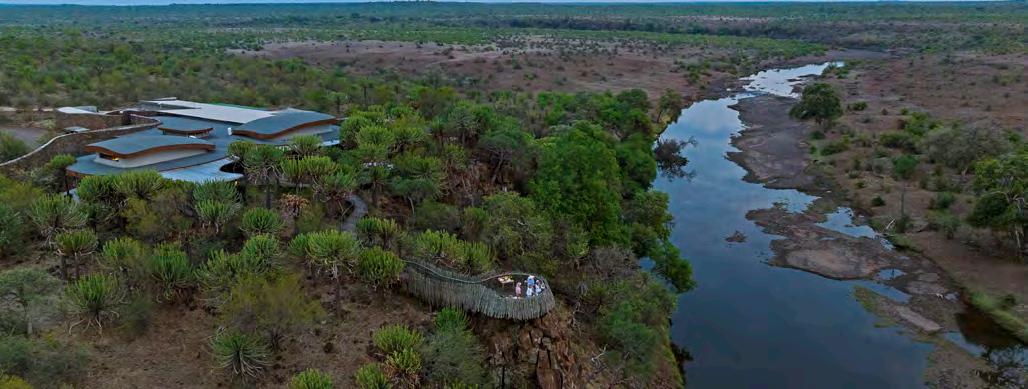
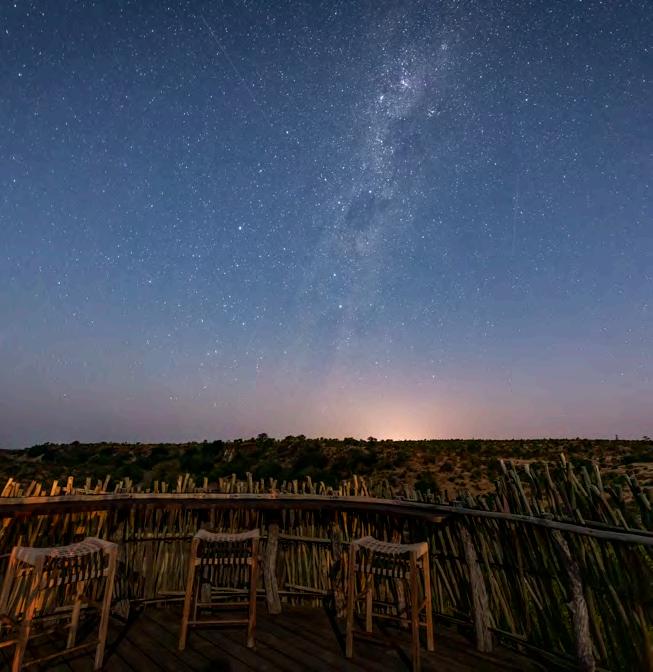
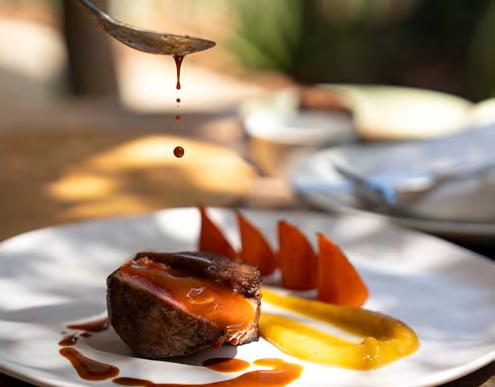
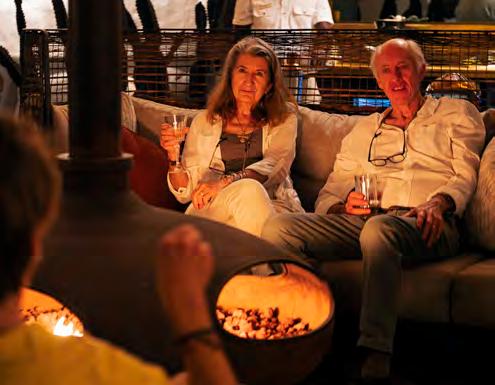
Beyond the entrance arcade, open-sided lounges look out over the euphorbias, and a walkway snakes off to a lofty viewing deck known as ‘the nest’. The Majale River below provides an unrivaled vantage point for game-watching, leisurely breakfasts, and pre-dinner cocktails. Evenings shift the mood, and guests gather in the cozy lounge, where a flickering fireplace serves as the room’s glowing heart. It is here, with the euphorbia forest silhouetted against the fading light, that the experience turns culinary as fine dining of the highest order brings each day to a memorable close.
Out-of-lodge activities include a sleep-out in the Lala Limpopo hide that offers a one-of-a-kind immersive experience with an active waterhole right outside the window, a rare opportunity to witness nocturnal creatures from a front-row seat. Nature walks and twice-daily drives with an expert guide are a given, and shutterbugs revel in Mashatu’s award-winning sunken hide on the edge of another pool that lures high volumes of animal traffic. From this quiet, earthen chamber, sightings of varied species are frequent and immensely satisfying.
One of my highlights came during a sunset drive when we stopped for sundowners on a rocky ridge crowned by a solitary baobab. From that vantage point, drink in hand, the reserve opened in every direction, the lush valley stretching away as the sun dipped toward the horizon in a last hurrah of deepening crimson—the simplest of safari rituals in an African setting that never fails to deliver on the extraordinary.
“You haven’t been to Botswana unless you’ve been to Mashatu,” says Stephen Lansdown, CBE, Euphorbia co-owner and conservationist, and I concur. More than a lodge, Euphorbia is a meditation on place, scale, and stillness, a safari experience distilled to its purest form — immersive and unforgettable.
mashatu.com/euphorbia
AUSTRALIA’S
BY ANDREW MARSHALL
Ever since the Royal National Park (Australia’s first and the world’s second oldest) was established in New South Wales in 1879, an enormous number of national parks have been declared in each state and territory, becoming more and more important in protecting and preserving what remains of the natural environment. With over 600 national parks, Australia leads the list of countries with the most national parks by some distance, and for the adventurous traveler, these sectors of green marked on maps of the country create marvelous stepping stones, offering the chance to experience the best of what this huge and diverse continent has to offer. From
tiny pockets of tropical rainforest to expansive areas of desert, dramatic gorges and coral cays, the variety of national parks in “the Land Down Under” is astounding.
National ParkSOUTH AUSTRALIA (established 1945)
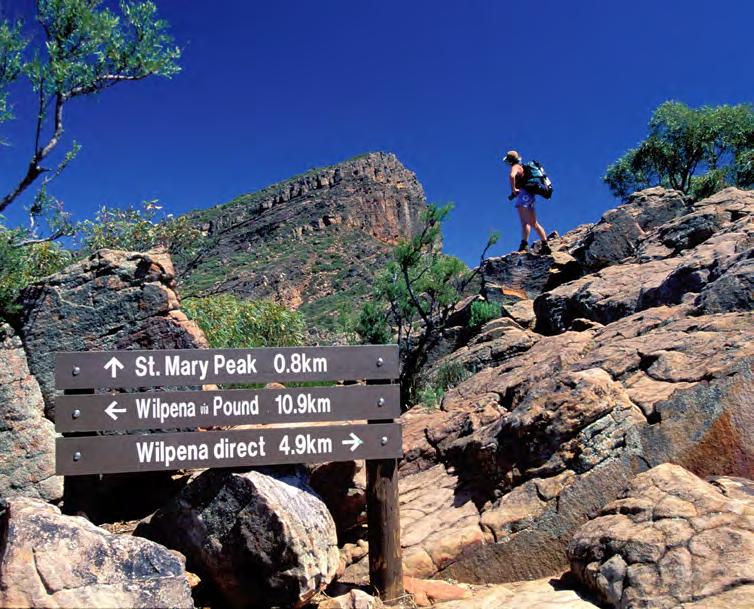
“The bones of nature laid bare,” was how the famous Australian artist Hans Heysen described the rugged saw-toothed ridges that make up the fabulous walking country of the Flinders Ranges. A network of trails weave throughout the IkaraFlinders Ranges National Park and
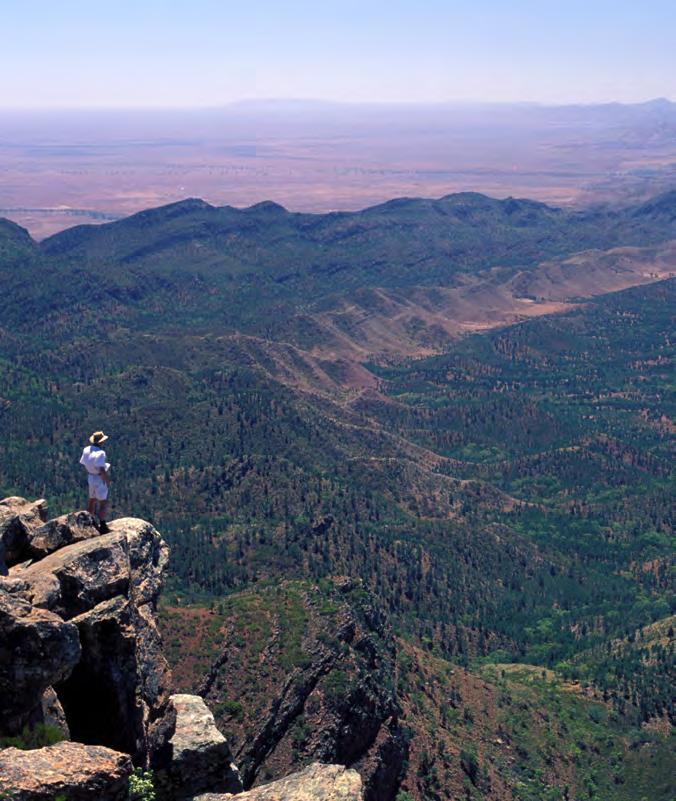
provide access into many of the more remote areas - to deep-red gorges where traces of Aboriginal art lie hidden on the walls of overhangs, along dry creek beds lined with majestic red gums, and across old station properties where old ruins speak of the hardships faced by the early settlers.
A national park highlight is the hike to the highest peak in the Flinders Ranges - St Mary’s Peak at 1622 meters boasting arguably the best view in South Australia. Looking out over Wilpena Pound is inspiring - a 35km ringed circumference of jagged outcrops forming the geological phenomenon that once had scientists thinking it was the site of a meteorite hit.
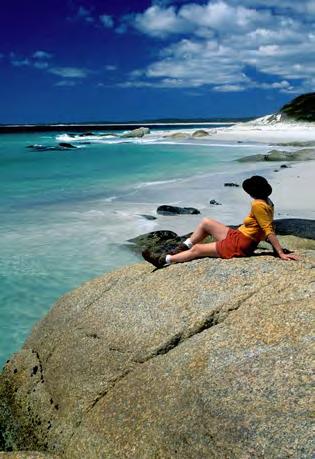
One Tasmanian National Park guidebook suggests that Mount William, situated in the north-east of the state, is Tasmania’s least visited national park. There are kilometers of wild beaches, punctuated by boulder-strewn headlands offering sheltered swimming and snorkeling and where the only footprints likely to be found are those of wallabies and Tasmanian devils. The Eddystone Lighthouse is an impressive sight and was built of local granite in 1887 after a series of shipwrecks along the coast. Close by, is a small child’s grave which stands testimony to the isolation and hardships endured by lighthouse keepers and their families in the 19th century.
“BDI CORE QUE EOS SA CONSEQUE PE NOS ET ESTRUM DI VOLORAT BEARCIU NTIUNDICI.”
Port Campbell National Park situated just beyond Peterborough is a highlight along The Great Ocean Road - one of the world’s most inspiring coastal journeys offering all the haunting drama and windswept magnificence of Victoria’s ‘Shipwreck Coast’. From serene bays, rugged cliffs and intriguing rock formations, to the lush dripping rainforests and towering eucalypts of the Otway Ranges.
Tens of thousands of years of erosion by the powerful forces of the Southern Ocean on the soft limestone cliffs have gone into creating the spectacular natural coastal sculptures such as the London Bridge, the Arch, the Blowhole and the famous Twelve
Apostles - one of Australia’s most famous landmarks. An alternative to driving and sightseeing along the Great Ocean Road is going for a hike on the Port Campbell Discovery Walk, a designated path that runs adjacent to the coast, where you experience a different perspective of the many coastal landmarks, colorful flora and bird life.
Most think of Australia as a young, vibrant nation, at the forefront of a brave, new world. But under the surface of this hot, dry land lies a different tale. Over millions of years, the grindingly slow forces of sun, wind, frost, snow and water have gnawed away at the land, creating extraordinary gorges, rock structures and sculptures. No wonder then that the ‘red continent’ has an abundance
of inspiring landscapes that attract travelers and photographers from all over the globe. Seen from an aircraft, the Australian landscape may seem flat and monotonous. But, with startling regularity, the bleached bones of the continent are exposed in a variety of rockscapes.
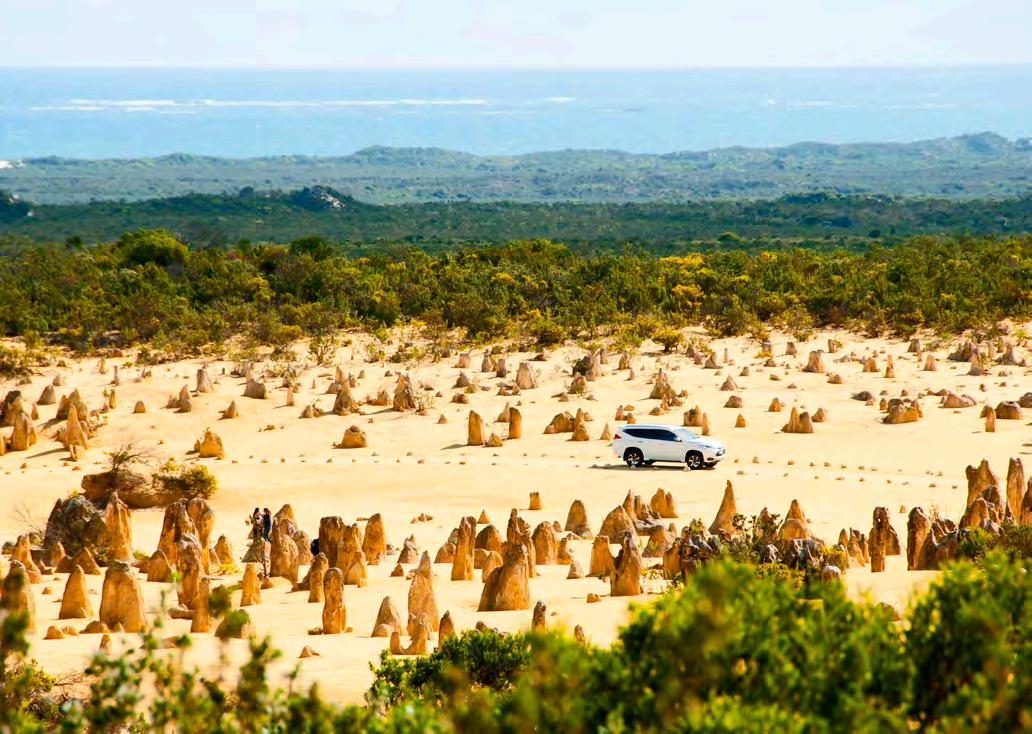
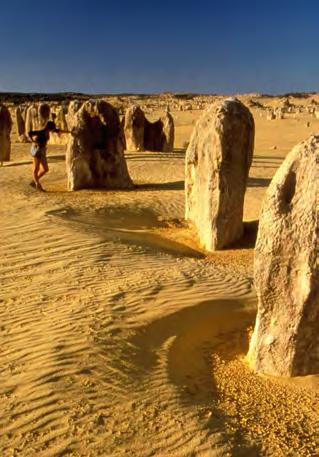
A case in point is Nambung National Park in Western Australia and its main drawing card - the stone pillars known as the Pinnacles Like an army of limestone soldiers, the Pinnacles were formed between 15,000 and 80,000 years ago beneath an ancient dune system. Water seeping through cracks in the underlying limestone layer eroded cavities, leaving the more resilient remnants - the Pinnacles. Prevailing winds have since blown the overlying quartz sand away, to expose these surreal and bizarre rock formations that are a delight to wander amongst and photograph.
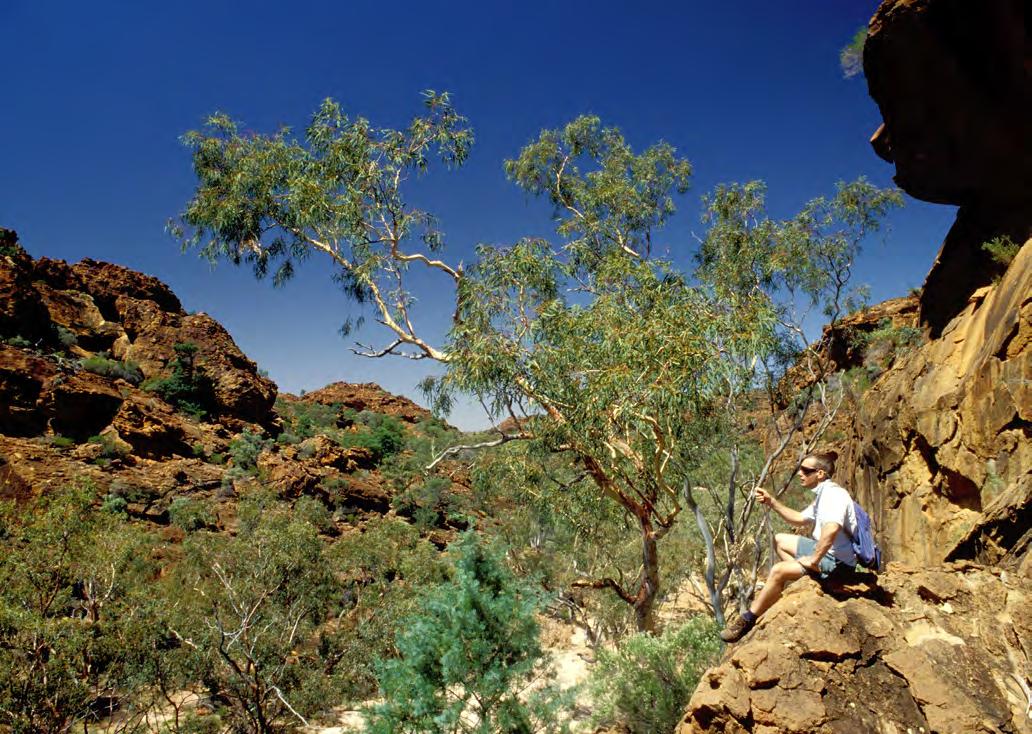
A wilderness of rugged beauty, a rich canvas of towering red cliffs and deep secluded gorges dissecting the knobbly Bynguano Range, 130 km north of Broken Hill. For thousands of years the Aboriginal people were drawn to the abundant wildlife and semi-permanent water holes of this desert mountain range, leaving behind them extensive galleries of cave paintings and rock engravings. Like a treasure trail, the park’s system of walking tracks lead to some of Mutawintji’s 300 Aboriginal sites and offer visitors the chance to explore this remote and magnificent corner of outback New South Wales on foot. The Homestead Creek camping area situated close to the mouth of the Homestead Gorge provides an excellent base for exploring the park.
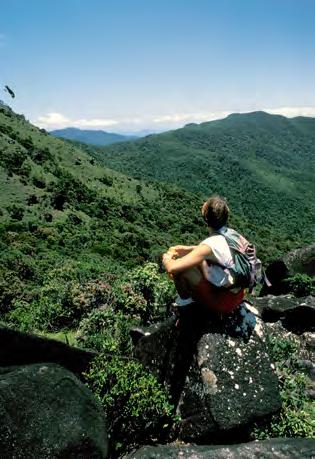
Situated one hour south of Cairns, this huge wilderness park covers most of the Bellenden Ker Range, which includes Queensland’s highest mountain, Mount Bartle Frere at 1622 metres. It is the single largest tract of upland rainforest left in Australia. Unlike the Daintree, which receives the major slice of tourist attention, Bellenden Ker, being upland rainforest, harbors a far greater diversity of flora and fauna. Although virtually untouched, a number of well signposted walks offer a unique glimpse of this biological treasure. Highlights of the Wooroonooran National Park include a visit to Josephine Falls and the arduous but rewarding hike to the summit of Mt Bartle Frere.
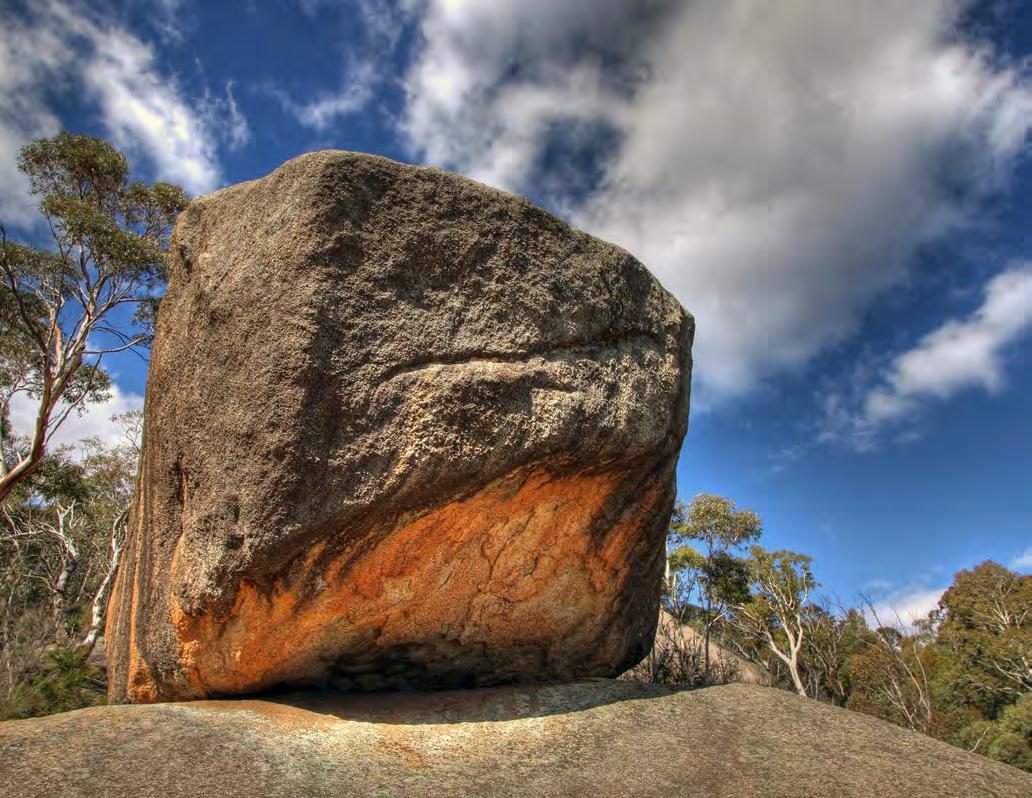
The only national park in the Australian Capital Territory (ACT) is largely made up of wilderness areas in the south-west and occupies almost half of the territory. It has eight peaks higher than 1700 meters and offers challenging bushwalking. There are picnic grounds and bush campsites by the Orroral River and near Mount Clear in the south. The Visitors Centre 3 km south of Tharwa has displays and videos about the park and also provides guided tours on request as well as detailed information on bushwalking tracks.
Travelers motoring between Katherine in the Northern Territory and Kununurra in West Australia or vice versa shouldn’t miss the great opportunities to experience this little developed region in their hurry to cover the kilometers. The Judbarra National Park (previously known as Gregory National Park) borders the Victoria Highway around Victoria River Crossing and again close to the small township of Timber Creek. At 10,500 sq km, this is the NT’s second largest national park after Kakadu and offers a bounty of wonderful camping spots, fabulous walks, plus a unique insight into the region’s wealth of Aboriginal and pastoral history.
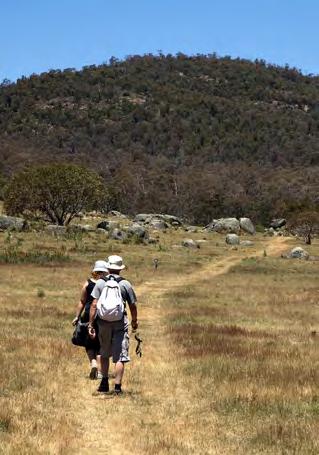
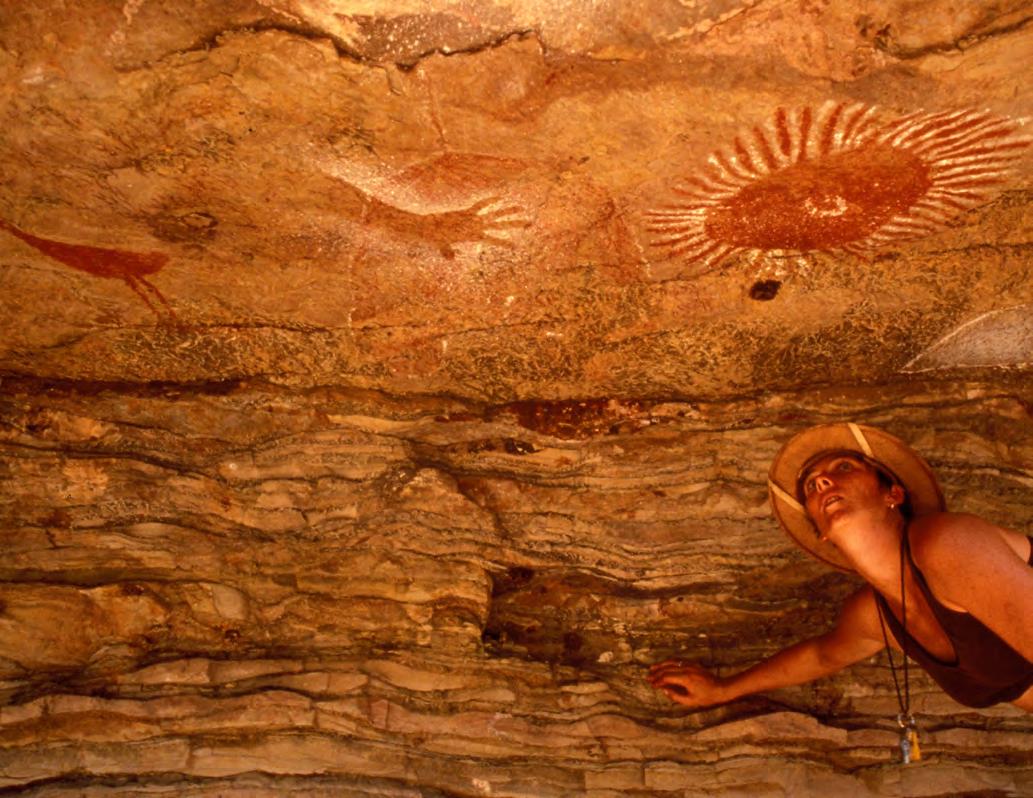
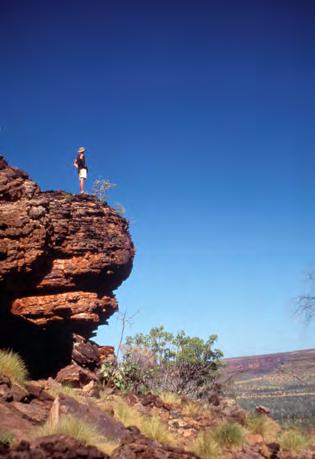
The western sector of the park is famous for its challenging fourwheel drive (4WD) routes, the Bullita Stock Route and Humbert Track, although two-wheel drive (2WD) vehicles can get as far as the old Bullita Homestead on the Bullita track accessed from the Victoria Highway 19km east of Timber Creek. Road conditions can be checked at the Park Rangers Station in Timber Creek. Today’s explorers can wander through the now empty stockyards and visit the homestead. There are several lovely campsites to be found for both 2WD and 4WD vehicles at the nearby homestead campground alongside the pandanus-fringed East Baines River, where you can swim in the shallows of the crossing downstream.
Limestone Gorge located 60 km south of Timber Creek is another lovely campsite surrounded by fluted and eroded limestone karst, the Limestone Creek runs close by, deep and clear and has been given the okay for swimming, but it is always advisable to check first. There is a self-guided walk that climbs up and over the surrounding limestone escarpments and signboards explain the various uses of the surrounding vegetation for medicinal purposes and native bush tucker.
BY BEN SOUTHWORTH
It’s fairly safe to say we could all use a holiday. Work is demanding, the news is undeniably stressful, and the idea of escaping to a destination far, far away from regular life is more appealing than ever. But here’s the irony--traveling itself can often feel like work when it’s done at the most popular times of the year. Long lines, overpriced everything, and the exhaustion of navigating through dense crowds can turn what should be a break into just another source of dread.
The world’s most sought-after destinations are no longer just expensive; they’re exclusive in the worst way, gatekept by demand, making peak-season travel feel unattainable for the average explorer. But what if the secret to reclaiming the magic of travel isn’t about spending more--what if it’s about choosing when to go?
For decades, vacationers have followed the same seasonal script: summer in Europe, winter in the Caribbean, and spring break in Cancun. But lately, something’s changed. More travelers are stepping outside that predictable rhythm, discovering a richer, calmer way to see the world.
According to a recent travel trends report from Forbes, a continued rise in demand for low-season travel is anticipated in 2025. The reasons vary, but the pattern is clear: people are tired of overpriced flights, packed streets, and the feeling of being herded through a city instead of exploring it.
That’s not to say that the shoulder season in your favorite destination will suddenly become overrun with tourists. In fact, a similar study from SkyScanner observed a return to traditional seasonality from travelers who booked their trips extra early.
While slower off-peak travel is the obvious choice for many, historically good weather and aligned schedules mean summer will always remain a top draw for family holidays.
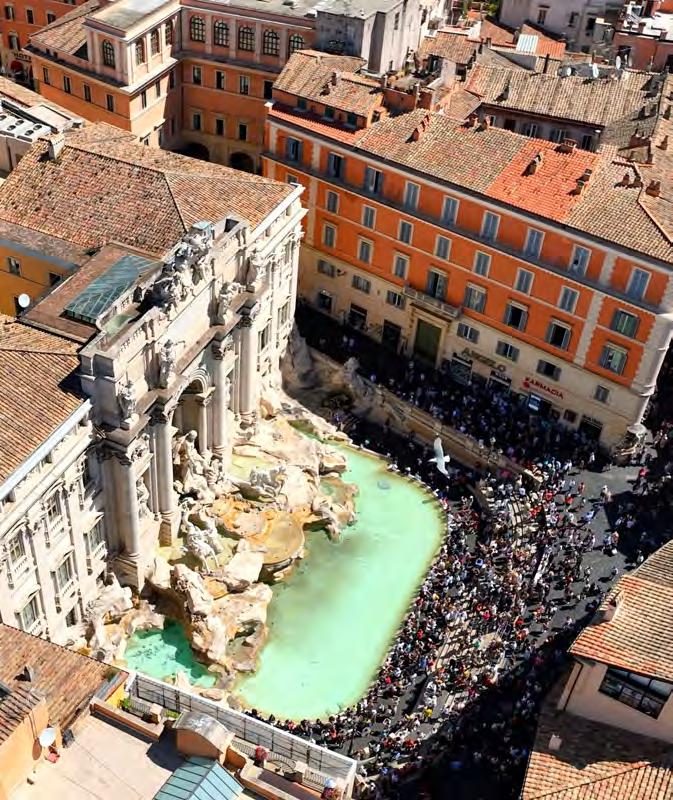
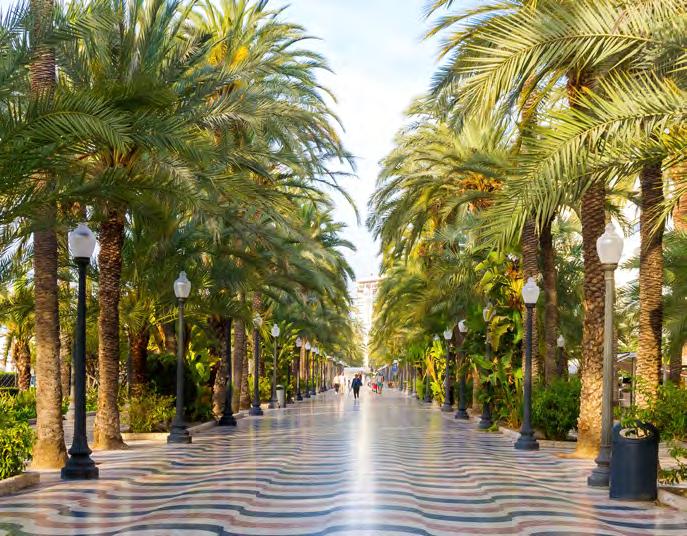
Off-peak travel isn’t just about saving money--it’s also about discovering how a place feels when it isn’t performing for tourists. Rome in July buzzes with urgency. Rome in October, however, sighs with relief. There’s a different energy when shopkeepers have time to chat, when locals aren’t exhausted by crowds, when the pulse of a city beats at its natural pace.
Beyond that, there’s the delight of unpredictability. A Parisian café where the waiter isn’t rushing you out, an empty stretch of Santorini’s coastline, a Kyoto temple where the only sound is rustling bamboo. These are the moments that get lost when travel is dictated by a calendar rather than curiosity.
Let’s not ignore the practical side. Off-peak travelers enjoy drastically lower prices--sometimes by as much as 50%. A flight to Tokyo in cherry blossom season can drain your wallet, but in November, you’ll find the same one at a fraction of the cost. Five-star hotels suddenly feel reasonable, and Michelin-starred restaurants have open tables. You’ll spend less, of course, but much of the value can be found in upgrading your experience without the premium price tag.
Know your seasons. Every destination has its rhythm. The Amalfi Coast in July is chaotic, but shift your travel dates by a couple of months to late September and you’ll find the sweet spot. Research the best shoulder seasons--those in-between months when weather, cost, and crowd levels strike the perfect balance.
Be flexible. Mid-week flights, lastminute deals, alternative airports-these little tweaks can make all the difference. Apps like Google Flights help track the dips in airfare, nudging you toward the best times to book.
Seek the local pace. Instead of packing an itinerary with tourist-heavy stops, lean into the unexpected. A slow afternoon at a neighborhood café; a quiet hike just outside the city; a market where the vendors actually have time to talk.
Travel isn’t only about seeing places, but about feeling them too. And the best way to do that? Go when they’re not busy putting on a show. Off-peak travel isn’t a hack--it’s a mindset. One that swaps urgency for ease, checklist tourism for deep connection. And in a world that moves fast, that kind of slow, intentional travel might just be the greatest luxury of all.
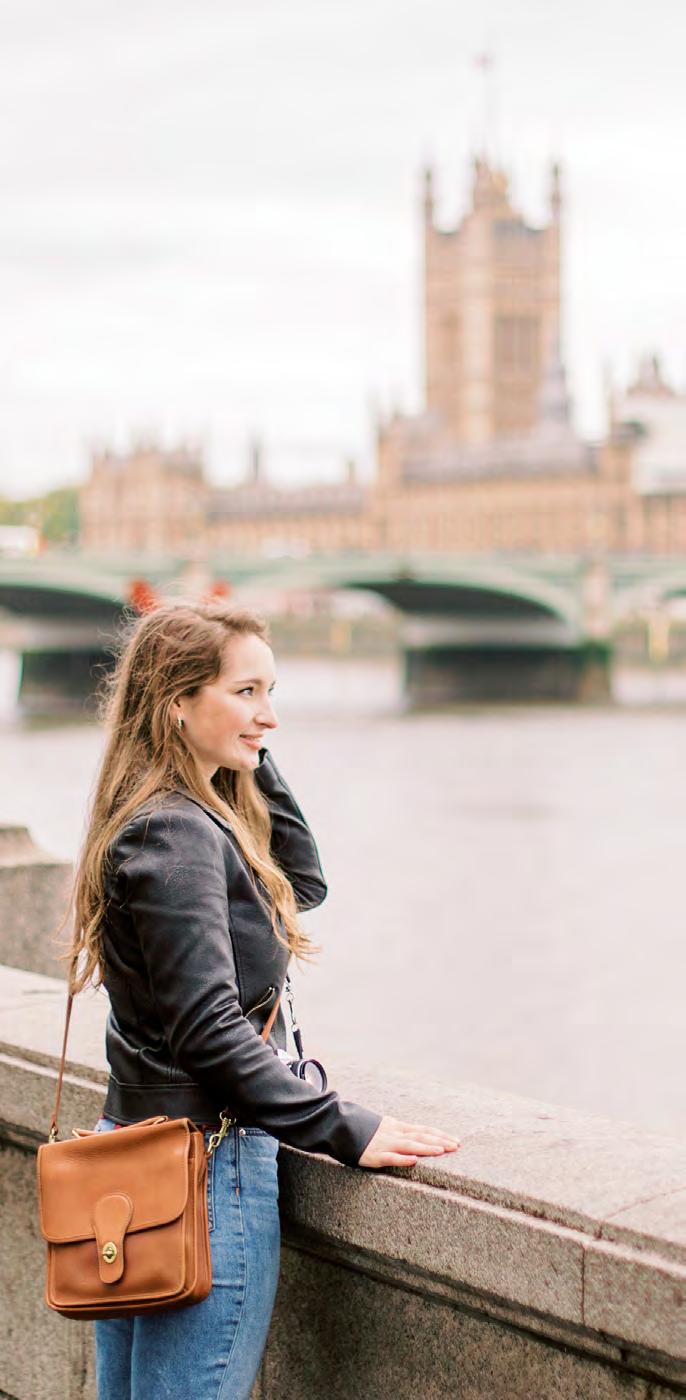
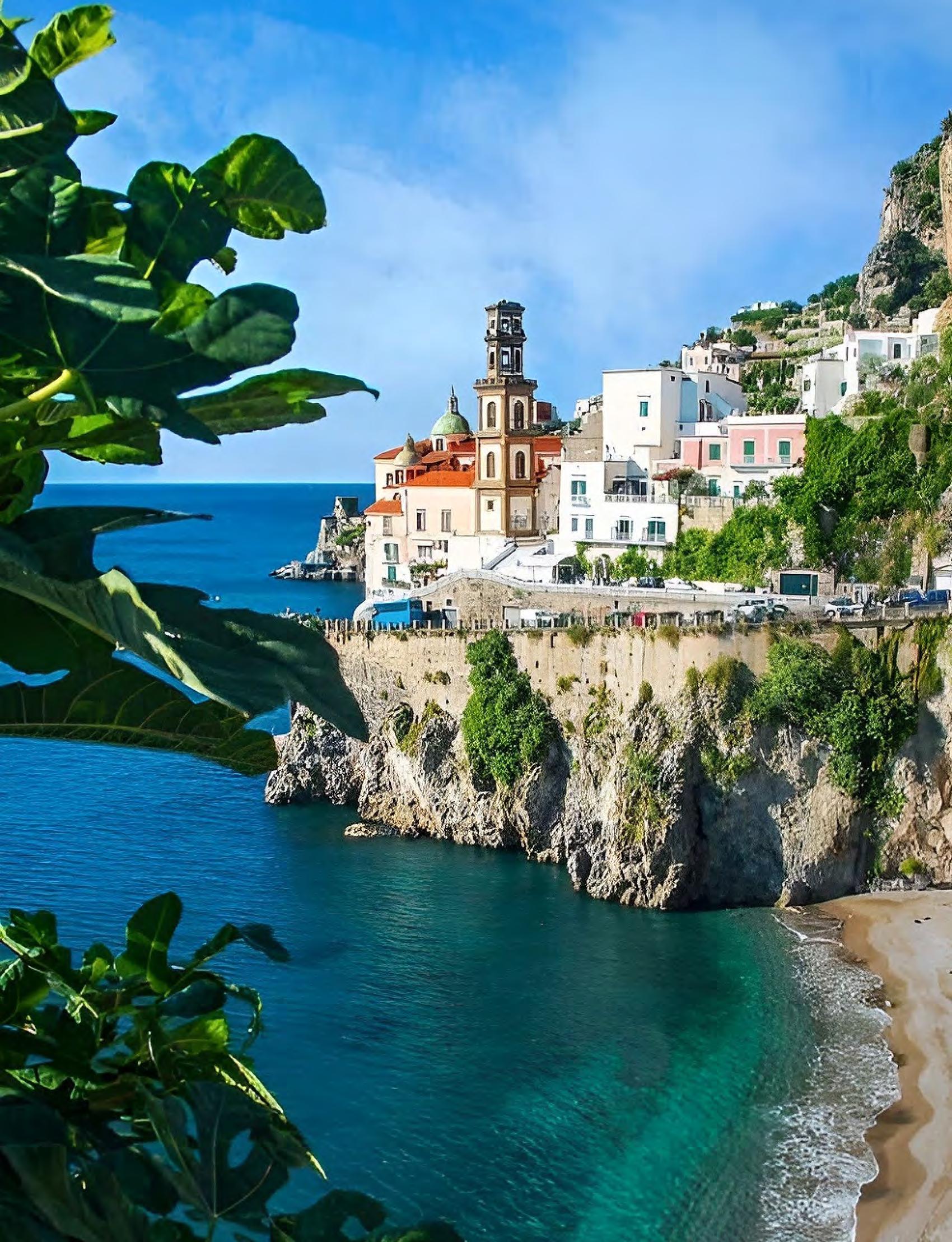
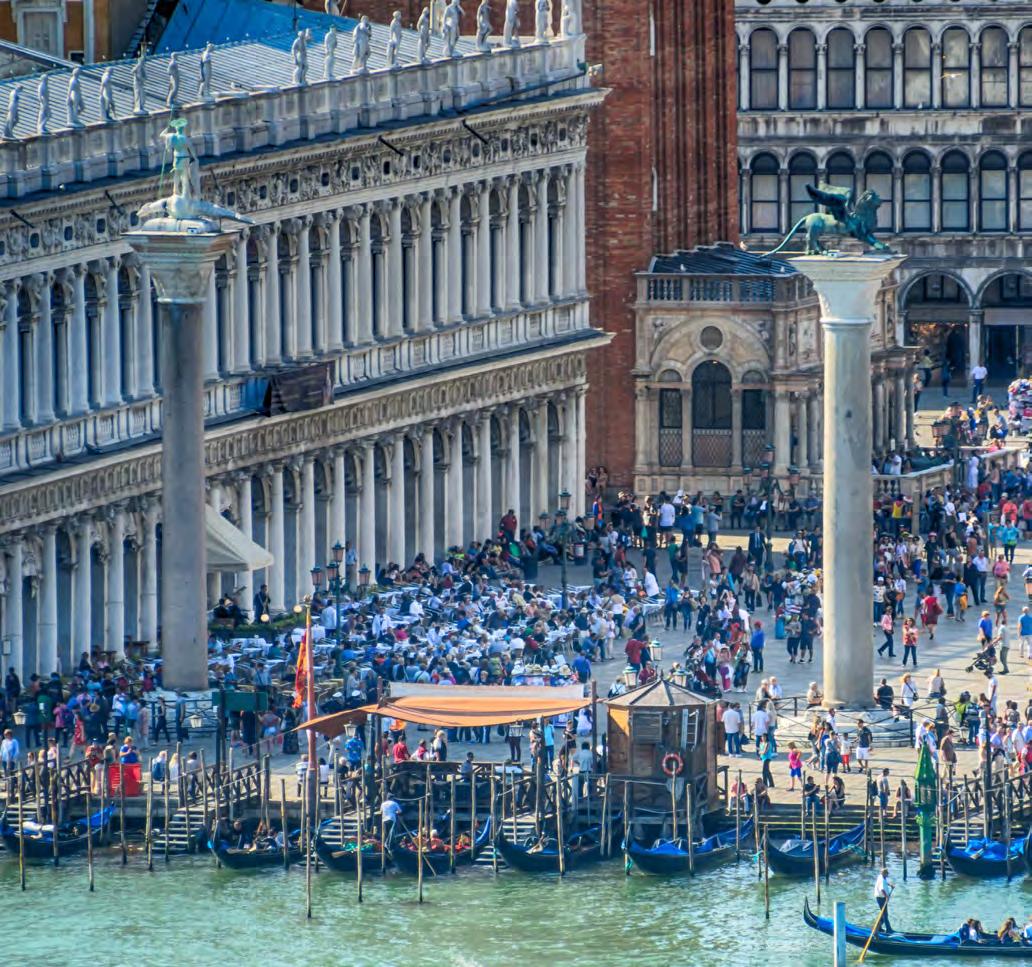
Summer in Europe brings sunlit plazas, coastal breezes, and café-filled afternoons. Wander cobblestone streets, linger over wine at sunset, and savor the simple joy of exploring timeless cities.