
Prizes this week are from the Spring Grove Family Swim Center, details inside.
The broccoli breakthrough


Cole
Family creates common ground across cultures
By Amy Kyllo Staff Writer for Dairy Star Newspaper“All dairy, all the time.”
A bimonthly dairy newspaper covering Minnesota, Wisconsin, Iowa, South Dakota and North Dakota. Published with Dairy Star permission; visit dairystar.com for more Dairy Star articles.
As Mike Johnson met his employee Raphael’s daughter, Ashley, it was a special moment. Holding Ashley in his arms for a photo, Johnson had the privilege of doing something Raphael has never done: meet Ashley in person.
“Raphael has been employed with me a long, long time, and I’ve known a lot about this girl,” Johnson said. “To get to meet her in person was pretty special.”
Johnson, a dairy farmer from Fountain, Minn., was part of a recent trip to Mexico with Puentes Bridges, a nonprofit organization that works with dairy farmers and their employees from Mexico. The organization plans trips so dairy farmers can learn the culture and meet the families of their employees.
Johnson, Cole Hoscheit, a


dairy farmer from Caledonia, Minn., and Mercedes Falk, director of Puentes Bridges, shared details from their trip April 17 during an event hosted by the Lions Club in Preston.
Johnson encountered a sense of commonality between the rural Mexican culture he experienced and his own rural midwestern culture. Values like family, work ethic, frugal living and agriculture were all traits Johnson said he connected with.


“I always knew a family was important, but to be there … and see that … kind of took it to a different level for me,” Johnson said.
Many farm employees invest their money in their families in Mexico, working to give them a better life. Johnson shared the conditions of one family they visited.

“There’s no way to get more money in that area,” Johnson said. “They’re just subsistence farmers. They just live on what they grow and that’s it.”
Some former employees of members on the trip had taken their earnings and invested in starting their own small businesses like a restaurant, technology store, school supply store and taxi business.
Ishmael, a former employee who Johnson visited, shared the difference his job on Johnson’s farm made.
“Before he worked on our farm, he had barely any education,” Johnson said. “Working for us and helping us, he had been able to build a house to provide for his family.”
The scene was emotional as Johnson and Ishmael gave each other a long hug amid tears.
Some employees leave behind spouses and children as they sacrifice to create a better future for their families. Falk met the mother of one of her students, Gustavo. Falk shared what Gustavo’s mother told her about him working in the U.S.
“Gustavo’s mother told me, ‘Even though he’s gone, Gustavo makes sure that we always have tortillas on the table,’” Falk said. “‘His siblings can keep going to school. He calls us every two days, and we are never lacking anything because of him. We would love for him to be here with us, but because he’s there, we have enough down here.’”
ReRooted Connections, Decorah
Growing up, I was never a fan of broccoli. The overcooked mush from the school cafeteria went best stuffed in an empty milk carton (evading the cafeteria veggie police), and the rubbery raw stuff at potlucks and holiday parties was just a vehicle for ranch dressing. Needless to say, broccoli was rarely on the menu once I had any say in the matter.
When our twins were born, my husband and I were advised to eat what we wanted our kids to eat. Determined to raise healthy eaters, we dutifully cooked, smashed and ate up (sometimes with feigned delight) all the veggies we could think of – including broccoli. And of course, the veggie that took hold with my two little darlings – became a first word, even – was broccoli.
It seemed I was going to have to learn to like broccoli - if not for my health, at the very least to be a good parent. I tried growing it in my garden, knowing that the magic of homegrown veggies often helped develop a taste for them. But in the Iowa heat, the heirloom varieties I chose always went to seed before producing any heads. So I continued to chew on the
Rachael Munn’s twins are eager to see the broccoli forming in the garden – it’s their favorite vegetable! (submitted)

store-bought broccoli that came strangled in plastic, saying to my kids through giant mouthfuls: “mmm” and “yum,” and “good, huh?” — all the while wishing I had one of those cardboard milk containers to spit it into. How could I ever consider myself to be a good parent while living such a lie?
When my family moved to Decorah to become the caretakers at ReRooted Connections, we took on the responsibility of growing and maintaining the Edible Landscape at Winneshiek Medical Center, from which produce is used by Nutrition Services in the cafeteria. It was here that I was introduced to a selection of bolt-resistant hybrid broccolis. For the first
time, I successfully grew from seed those beautiful tightly bound heads of broccoli that looked just like the pictures in the seed catalogs. And it was delicious! Perfectly crisp and so sweet, with just the tiniest hint of bitterness to bring all the flavors together. It wasn’t that I didn’t like broccoli – it’s just that I hadn’t had the right kind: fresh and filled with local flavor.
My family of broccoli lovers continues to eat it voraciously in all forms: cooked, steamed, raw – even frozen. One of my favorite recipes is from the
Field to Fork


continued on page 6

Court Appointed Special Advocate (CASA) seeking local volunteers

CASA advocates are ordinary people who care about children.
They volunteer their time and talents to help make sure that children who have experienced abuse or neglect aren’t negatively affected by the state system intended to protect them.
Iowa CASA is affiliated with the National Court Appointed Special Advocate (CASA)/ Guardian Ad Litem (GAL) Association for Children, which, together with its state and local members, supports and promotes court-appointed volunteer advo-



cacy so that every child in crisis can be safe, establish permanence and have the opportunity to thrive.
Kerry Brennan, CASA Program Coordinator and CAMS Specialist reported there is an urgent need for CASA advocates in northeast Iowa. “We need volunteers in this area to join us in supporting children in the foster care system by becoming a Court Appointed Special Advocate (CASA). Make a difference in a child’s life by providing them with a voice in court and advo-
cating for their best interests.”
What does a CASA volunteer do?
CASA volunteers advocate for children who are in Iowa’s child welfare system due to abuse and/ or neglect. They are assigned one case at a time, focusing solely on that one child or sibling group and their family. CASA volunteers provide a consistent presence in a child’s life. They visit their assigned child or sibling group at least once a month, interact with others involved in
the case, and write reports for the juvenile judge. CASA volunteers stay with the child for the duration of the case, advocating for their needs to be met.
“This program was started by a district judge in 1976 who saw there was a need for more advocacy for the children affected by these cases. The reports provided by the CASA volunteers are 100 percent read and taken into consideration by the judges. It helps them know the childrens’ interests are being represented,” added Brennan.
“Historically, we see a big increase in case referrals when school begins. Currently we have four case referrals for children in your area who really need a CASA,” said Brennan.
Anyone interested in becoming a CASA should contact Brennan at 515-725-5350 or 563-5681049. Please leave a message if the call is not answered immediately. Anyone can go online to https://iowachildadvocacymatch.com/csp/icasa/scrVolunteerAppPublicPreScreen.csp to fill out a pre-screening applica-
tion to begin the volunteer process as well.
Brennan also added, “Even if you know of anyone who would make a good advocate, please refer them to us. Our goal is to have a CASA for every child who needs one. Right now, we just don’t have enough volunteers.”
For more information, visit the Iowa Child Advocacy Board website at childadvocacy.iowa. gov, or nationalcasagal.org, or call their main information line at 866-448-4608.

driftless www.driftlessjournal.com | news@driftlessjournal.com | 563-382-4221 | Tuesday, June 27, 2023 | Vol. 5 Issue 26 US POSTAGE PAID DECORAH, IA PERMIT #6 POSTAL CUSTOMER Common ground continued on page 3 BLUFFSIDE GARDENS STAY. GROW. EXPLORE. 1020 PARK ST., DECORAH, IA www.bluffsidedecorah.com OPEN HOUSE THURSDAY, JUNE 29 BEAUTIFUL GARDEN RETREAT LOCATED ON HIGHWAY 9, DECORAH Decorah’s newest way to stay! OPENSBOOKINGJUNE30
Hoscheit is pictured with the crew on his Caledonia, Minn. dairy farm (submitted photo)
(This is not the winning ticket!)















































2 Driftless Journal Tuesday, June 27, 2023 3 Lucky Readers will find a Golden Ticket attached to their Driftless Journal this week! This week’s winners can redeem their Golden Ticket for Three Day Passes at the Spring Grove Swim Center! See WinningTickets for redemption details. Golden Ticket Search SPRING GROVE SWIM CENTER HOURS: OPEN DAILY 1-5 P.M. FRIDAY NIGHT SWIM 6-8 P.M. FOR MORE INFO VISIT OUR FACEBOOK PAGE: SPRING GROVE SWIM CENTER 600 Maple Dr, Spring Grove, MN | 507-498-7946 MUSIC Live FRIDAY, JUNE 30 • 6:00PM Open WednesdaySunday at 4PM Scan THEPIZZAJULYOFMONTH JALAPEÑO POPPER 134 N. Elm St., Cresco, IA 563-547-4902 www.atomicpizzapub.com Over 35,000 Square Feet of Fully Accessorized Displays! www.drurysfurniture.com 100 Main Street Fountain, MN 507-268-4363 OUR 98th YEAR! STORE HOURS: Monday & Friday, 9 am–8 pm, Tuesday–Thursday & Saturday 9 am–5 pm, Sunday Noon–4 pm SALE STARTS FRIDAY! 4th July OF July INDEPENDENCE DAY Southern Motion • Flexsteel La-Z-Boy • Hooker • Ekornes Canadel • Sam Moore • Serta Smith Brothers • Daniel’s Amish • Palliser Storewide Sale Prices! 1 Save BIG storewide, including Special Orders. 1 2 Restrictions Apply 1 3 We’ll pay for your gas –just for shopping Drury’s! FREE Gas! No Interest for 48 Months with Equal Payments* ©2023 Drury’s *Minimum Purchase $2,999. No Interest from date of eligible purchase until paid in full. Monthly payment is the purchase amount divided by the number of months in the offer. Last payment may vary due to rounding. On-time payments will pay off the promotional balance. Other transactions and charges affect total monthly payment amount. Prior purchases excluded. Account standard Purchase APR 29.99%. Minimum interest charge $1. Existing account, see your Cardholder Agreement for applicable terms. Subject to credit approval. Home Inspiration financing account issued by TD Bank, N.A. • PROFESSIONAL DELIVERY • INTERIOR DESIGN SERVICE • FREE IN-HOME SET-UP • CUSTOMIZED CREDIT PLANS during Harmony’s 4th of July Celebration! Check out our specials! 55 Center Street West, Harmony 507-886-2225 Harmony 4th of July Celebration on Tuesday, July 4, including pancake breakfast, pork chop lunch, music, parade at 3 p.m. and fireworks at dusk. Lansing Fireworks Tuesday, July 4, at 10 p.m. McGregor-Marquette Independence Day Parade and fireworks held Saturday, July 1. Monona Fireworks Tuesday, July 4, at dusk. Celebrating Independence in the Driftless Festina Tuesday, July 4: 10:30 a.m. parade, 11-1 p.m. drive thru chicken dinner, fireworks at dusk. Guttenberg Stars & Stripes Celebration and fireworks Saturday, July 1. Bluffton Saturday, July 1: Live music followed by fireworks at dusk. Cherry Grove Tuesday, July 4: 11 a.m. parade, followed by lunch. Eitzen Tuesday, July 4: Eitzen Family Fun Fest, fireworks at dusk. 3 WINNERS WILL FIND A GOLDEN TICKET TAPED TO THIS ADVERTISEMENT! A business built on service...since 1973 ™ $2,999 ™ $649 ™ $999 ™ $1,538 $1,458 INDEPENDENCE DAY star spangled sales! MORE DEALS IN-STORE & ONLINE! GET UT & PLAY Spillville Independence Day Celebration, Saturday, July 1. Gates open at 12 p.m. 5k Fun Run, games, Community Band, food. Fireworks at dusk. Spend the day with ! Harmony’s 4th of July Celebration FIRST SOUTHEAST BANK
Decorah Altfillisch Project given statewide award
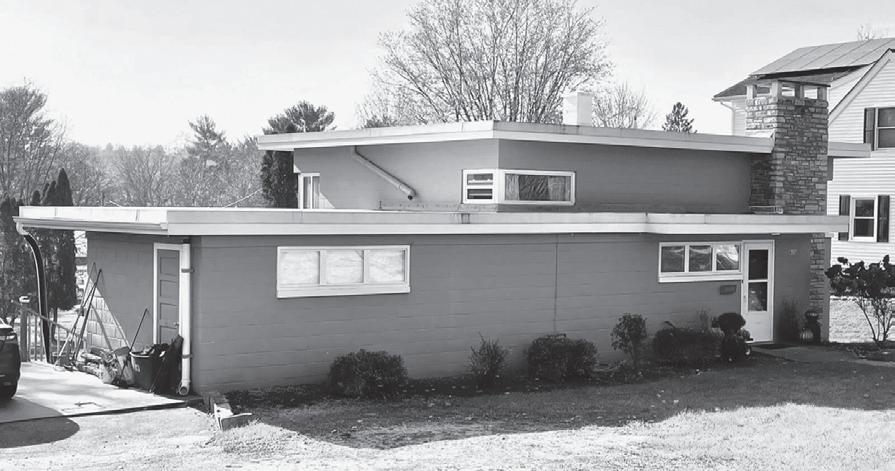
A home designed by Charles Altfillisch for Adrian and Orene Docken in 1948, located at 605 North Street in Decorah.
DHPC Chair Mark Z. Muggli, Preservation

Iowa Vice President

Laura Carstens and DHPC Vice Chair
Hayley Jackson.
(submitted photo)
Common ground

continued from front
As director of Puentas Bridges (www.puentesbridges.org), Falk shared the outcome of these trips.
“Farmers get to see the homes (of their employees) and really wrap their mind around the sacrifices that their employees are making,” Falk said. “They have this renewed sense of understanding and connections with their employees.”

Hoscheit has visited Mexico three times. Like Johnson, he appreciates the cultural focus on family.
The Decorah Historic Preservation Commission’s Charles Altfillisch project won a “Preservation at its Best” award at the Preserve Iowa Summit in Sioux City June 1-3.

The “Special Project” award citation cited “the ambitious volunteer effort that resulted in extensive online resources,” including a biography, details on 60 properties organized into four tours, and information on other Altfillisch and misattributed non-Altfillisch properties. The award was presented by the statewide non-profit Preservation Iowa.
Decorah Commission member Judy Van Der Linden noted, “Our small printed brochure, available at the Decorah Chamber of Commerce, leads to city
website materials that provide an affordable format for preserving the rich historical information gathered by the commission’s seven members.”


A nod to volunteerism
Decorah hotel/motel taxes and city historic preservation funds covered the project’s modest cost.

Chamber of Commerce personnel Jessica Rilling and Amanda Streeper provided design, layout and project oversight. City Engineer Jeremy Bril created the maps. IROC Web Design Services of Calmar formatted the internet materials.
Decorah Commission members Hayley Jackson and Mark Z. Muggli also presented a conference session titled “A
Big Architect in a Small Town: Charles Altfillisch in Decorah.”
They outlined the challenges and opportunities in a project conceived and executed by volunteer members, rather than professional consultants.
At the end of the Jackson and Muggli presentation, Preservation Iowa Vice President Laura Carstens said, “Now you know why we presented this project with an award.”


The Decorah Historic Preservation Commission is a state-certified city board established in 2007 to promote the public’s educational and economic welfare through the recognition of historic sites. Contact historicpreservation@ decorahia.org for more information.
Kids Lunch Club adding distribution site


Kids Lunch Club is growing.
In previous years, Kids Lunch Club has distributed nutritious meals throughout the summer at two locations – Freeport Park and John Cline Elementary School, Decorah.
Starting Wednesday, July 5, a third distribution location is being added at the Mobile Home Community in Freeport.
A Kids Lunch Club member will bring “Grab and Go” lunches to the Mobile Home commu-



nity from 12 (noon) to 12:10 p.m., on weekdays throughout the remainder of the summer.


All children and youth (ages 18 and under) are welcome to get lunch. The lunches will be set up near the community mailboxes (near the intersection of Old Stage and Dogwood Road).
Due to the addition of a new distribution site, the Kids Lunch Club schedule will be adjusted as follows for the remainder of
the summer:


12-12:10 p.m. - Distribution at the Mobile Home Community


12:15-12:35 p.m. - Distribution at Freeport Park

12:50-1:10 p.m. - Distribution at John Cline Elementary School
In addition to supporting food insecurity, Kids Lunch Club supports family and community engagement throughout the summer months.
Waukon Library summer reading program begins

Robey Memorial Library’s
“Find Your Voice” Summer Reading Program begins Saturday, July 1, and runs through Monday, July 31. Activities include reading challenges with prizes for all ages – kids and teens grab and go activity bags, craft events and fine forgiveness.
Kids: Infant thru 6th grade (completed)

4-Week Reading Challenge: Register at the front desk, pick up or print from our website a reading log that features reading and activity challenges. Earn prizes and books by participating. The more you participate the more prizes you will receive! Participants can display a “Library Champion” sign in their yard.
Make & Take Crafts: Held every Wednesday in July, stop by between 1:30-3:30 p.m., to make a craft to take home.
• July 5, Sidewalk Chalk
Painting • July 12, Bugmallows
(marshmallow bugs)

Grab and Go Activity Bags: Fun, challenging projects to create at home. Available on the second Wednesday of each month while supplies last.
Summer Explorers Series: from 10:30-11:30 a.m.
• July 5, Design Your Own Pin
• July 19, Twig Monogram
Passport to Reading: Book club for kids in 4th-6th grade. Register at the Kids Summer Programs link at www.waukon. lib.ia.us or contact RML at 563568-4424.
Teens: 7th thru 12th grade
(completed)


Reading Challenge: Register at the front desk, pick up or print from our website a Reading Challenge Brochure.
Teen Book Clubs:
• Teen Summer Book Club: July’s book selection is “The Floating Islands” by Rachel Neumeier. Join us Wednesday, July 12, from 10:30 to 11:30 a.m., for snacks and discussion.
• Classic Book Club for Teens: Read and discuss classic books including “Man’s Search for Meaning” by Viktor E. Frankl on Monday, July 10, at 5 p.m.
Adults

Adults who participate in the 2023 Adult Reading Challenge through July will be entered into a special drawing for a birdfeeder or a Kindle device. Read a title from one of 12 reading categories. Complete an entry at www.waukon.lib. ia.us or at RML.
The world is so much better with you. If you’re having problems, let’s talk. We are here for you 24/7.


“One thing that I really appreciate about the Hispanic culture is it reminds me of my grandparents,” he said. “They grew up back in the ‘30s and ‘40s. Same thing, they always took care of each other.”
Both Hoscheit and Johnson met the families and visited the towns and villages their current or former employees came from. Hoscheit said the people they saw were grateful they took the time to visit.
Johnson said many of their visits had to be more brief than their hosts desired.
“It was really hard when they had prepared a large meal and they had their finest china out,” Johnson said. “They probably spent their whole three months’ worth of money they had on that meal to say, ‘I’m sorry we have to leave.’”


One mountainside village they visited had made a pit-roasted lamb barbacoa and were waiting for the group to arrive before unveiling the culinary delight.

Falk said the Puentes Bridges trips began in the late 1990s and originally focused on learning the language and culture. Today, the focus has shifted from language learning to relationship building.
“There are a lot of connections that can be made,” Falk said. “When you have the desire to want to understand another person, … you don’t necessarily have to have all the right words or all the right translation.”


Hoscheit sees the part his farm has in improving lives in Mexico. He said because of their U.S. income, his employees are building houses in five years that would perhaps take them a lifetime to build without.
“We work hard to take care of them – to take care of our people,” Hoscheit said.


Driftless Journal Tuesday, June 27, 2023 3 DINING GUIDE La Rana Bistro 120 Washington, Decorah (563) 382-3067 Now open for dine-in. Tuesday-Saturday. Lunch 11:30-2. Dinner 5-close. Scratch kitchen and craft cocktails featuring local producers in a classic and cozy setting. Seasonal menu available at laranadecorah.com. Advance reservations strongly recommended. Koreana Sushi Cafe & Japanese Cuisine 207 W. Water, Decorah (563) 382-6262 Open Mon. - Sat for Lunch 11-2 p.m. and Dinner from 4:30-9 p.m. Sunday 4:308:30p.m. for dine-in or carry-outs. Appetizers, large variety of entrees, Koreana Rolls, Sushi and Sashimi. Don Jose Mexican Family Restaurant 201 E. Water St., Decorah (563) 382-6052 Open for indoor dining: Tues, Wed, Thur, Sun 11-9; Fri & Sat 11-9:30; Closed Mondays. Still encouraging take out orders. Homemade, fresh Mexican food. T-Bock’s Sports Bar & Grill 206 West Water St., Decorah (563) 382-5970 Kitchen hours: SunMon 11 a.m.-9 p.m.; Wed-Sat 11 a.m10 p.m.; Closed Tues. Bar may stay open later if there’s a game or crowd. Daily lunch specials. Large variety of tap and local beers! Great Bloody Marys! Best wings around! Great place to bring the family! Lots of TVs! View menus at www.tbocks.com. The Landing Market 211 College Dr., Decorah (563) 277-1893 Open Daily 8 a.m. - 9 p.m. Check out our website, www. thelandingmarket.com, for online ordering, individual vendor hours and menus. The Landing Market is a modern food hall. We are home to local vendors such as The Buzz Cafe, Justin’s, Root 43, assorted craft beverages, grab-and-go options and so much more! U-2 BBQ & Catering 1676 Hwy. 52, Calmar Doug (563) 419-3997 Full-line catering & custom meals for breakfast, lunch or dinner; traditional meals; BBQ; available for graduation parties, weddings, reunions, company picnics. Succulent salads, wholesome veggies & potatoes, delicious desserts, deluxe catering, party planners and trays. The Old Rossville Store 851 Volney Rd., Rossville, between Waukon & Marquette (563) 535-7272 Open TuesdayThursday 4-7, Friday & Saturday 4-8. Closed Sunday & Monday. Nightly Specials: Tuesday - Jumbo Shrimp or Ham Steak; Wednesday - 1/2 Broasted Chicken; Thursday - Baby Back BBQ Pork Ribs; Friday - Beer Battered or Broiled Cod; Saturday - Prime Rib. ROSSVILLE CALMAR DECORAH Scan the QR codes to view menus Thank You Sponsors: Bieber Insurance & Real Estate (Waukon), Carquest Lansing Auto Parts (Lansing), Clark Tire Pros (Waukon) D&J Expresso (Lansing), Elliott Jewelers (Waukon), Nightingale Drug (Waukon), Farm Bureau Financial Services, Nick Wilz, Agent (Decorah), LA Communications (Decorah), Riverland Expressions (Lansing), Weis Buick GMC (Decorah) Switchback Fans are Family TJ HUNTERS 377 MAIN ST., LANSING, IA DOORS OPEN 7:30 PM • SHOW 8:00 PM Advance Tickets Available at WAYGOODMUSIC.COM First 200 Ticket Holders Get Free Commemorative T-shirt & Entry for Switchback Swag! Printed Tickets Available at Carquest Auto Parts (Lansing), Village Farm & Home (Waukon), Riverland Expressions (Lansing), Oneota Community Co-Op (Decorah) Advance Tickets $20. Tickets at the Door $25. St. Pat’s Thrift Store 10 E. Main St., Waukon CLOSED REG. HOURS RESUME WED., JULY 5 PLEASE NO DROP OFFS JULY 1 - 4! THANKS REGULAR HRS.: MON., WED. & FRI. 11 AM TO 4 PM & THE FIRST SAT. OF THE MONTH 9AM-NOON SATURDAY & MONDAY JULY 1 & 3
yourlifeiowa.org 207 West Water Street • Downtown Decorah • 563-382-6262 Monday - Saturday 11 am - 2 pm & 4:30-9:30 pm; Sunday 4:30-8:30 pm KOREANA ROLLS Love sushi? Try our exclusiveoriginal, rolls. AMAZING ENTREES Likesalmonteriyaki or Mongolian beef. TASTY APPETIZERS Try our classics like edamame & gyoza. Traditional Japanese dishes and original menu items created by our chef Dine-In or Carryout!
Marquette Community Center 102 North St., Marquette, IA Emma Big Bear c. 1869 - 1968 © Joan Liffring-Zug Bourret EmmaBigBearFoundation.org • 563-880-9190 Presented by Emma Big Bear Foundation WINNEBAGO HISTORY DAY SAT., JULY 1 • 10AM-3PM Historic Presentations & Exhibit Hall are FREE to Public 17th Annual Event Learn About: Emma Big Bear’s Family Life and Living by Traditional Tribal Means in Northeast Iowa, Elgin Historical Society Tribes of the Turkey River Project, Sub-Agency Indian Schools, Local Winnebago Villages and Chiefs, Traditional Arts and Crafts Demonstrations by Indigenous Artists. Exhibit Hall Open 10AM-3PM: Speakers’ presentations run from 11AM-2PM. Historic Preservation Experts to Share Important Facts, Personal Stories, and Tales About Emma Big Bear and Her Beloved Winnebago Family. OSA Archaeologists Will Be On Hand for Artifact ID (limit 2 please) Learn catalog & care tips. Con dentially record artifact nd locations as sites for the Iowa Site File. SEE EMMA BIG BEAR & WINNEBAGO BASKETS, JEWELRY, PHOTOS, ARTIFACTS & MORE IN THE EXHIBIT HALL HARMONY UNITED METHODIST CHURCH Smoked Pork Chop Dinner TUESDAY, JULY 4 11AM-1:30PM or until sold out Meal includes Smoked Pork Chop, Baked Potato w/Topping, Baked Beans, Bun, Applesauce & Beverage at Selvig Park Shelter, Harmony, MN $15/meal Served in a carry-out container
Join Vesterheim for the ‘Sámi Dreams’ exhibit opening July 1








Celebrate “Sámi Dreams:








Portraits of Resilience in the Norwegian Arctic,” the newest exhibition at Vesterheim, the National Norwegian-American Museum and Folk Art School, on Saturday, July 1, from 1 to 3 p.m., with a special reception and gallery talk by exhibit curator Randall Hyman. There will be free museum admission during the event.
The reception will take place in the lobby of the museum’s Main Building, welcome and exhibit comments by Randall Hyman will be at 1:30 p.m., in the third-floor exhibit gallery.


Hyman will tell the stories behind the pictures and describe the portrait sitters, their interviews, their role in the overall theme of the exhibit and how the photos were taken.


This exhibit is open through











Oct. 31 and features 18 photographic portraits of Sámi men and women in Scandinavia along with recorded interviews by researcher Randall Hyman that touch on indigenous rights, climate change, reindeer husbandry, art and other topics.

“Sámi Dreams: Portraits of Resilience in the Norwegian Arctic” exhibit is open at Vesterheim through Oct. 31. (submitted photo)
Mural showcases Decorah’s culture


Hyman has traveled the globe on magazine assignments for nearly four decades covering natural history and travel topics from Northern Europe to South America, Asia to Africa. Connect at vesterheim.org or 563382-9681.



Walmart Community Mural Program is a celebration of communities across America and an important part of a new or newly-transformed facility. Inspired by the community and together with every store manager, each mural reflects the local diversity and cultural references. The artist who created the Decorah Walmart Mural is Andrew Houser of Bozeman, Mont., who worked with local references provided by store manager, Luke Wilkins. The mural can be found above the store’s grocery entrance showcasing many local landmarks, the community’s Norwegian heritage and natural attractions. (submitted photo)

Driftless Journal Tuesday, June 27, 2023 5 MAYTAG AMANA ELECTROLUX SAMSUNG SPEED QUEEN KITCHENAID DANBY SUB-ZERO FRIGIDAIRE WHIRLPOOL BOSCH VIKINGLG WOLF MAYTAG AMANA ELECTROLUX SAMSUNG SPEED QUEEN KITCHENAID DANBY SUB-ZERO FRIGIDAIRE WHIRLPOOL BOSCH LG VIKING WOLF MAYTAG AMANA ELECTROLUX SAMSUNG FRIGIDAIRE WHIRLPOOL BOSCH LG VIKING WOLF MAYTAG AMANA ELECTROLUX SAMSUNG SPEED QUEEN KITCHENAID DANBY SUBZERO FRIGIDAIRE WHIRLPOOL BOSCH LG VIKING WOLF MAYTAG AMANA ELECTROLUX SAMSUNG SPEED QUEEN KITCHENAID DANBY SUB-ZERO FRIGIDAIRE WHIRLPOOL BOSCH LG VIKING WOLF • 5.0 Cu. Ft. Capacity • Freestanding Design • Wire Basket • Adjustable Temperature Control • Manual Defrost EFRF5003 • Variable-Speed Compressor • Frost-Free Design • Flexible Interior Organization System • Auto-Close Doors FFUF2021AW • Window-Mounted Installation w/ 2-Way Directional Air Louvers • Mechanical Rotary Controls w/ 2 Fan Speeds • 5,000 BTU 115V • Cools up to 150 sq. ft. WHAW050DW WASHER • Dual Action Agitator • Porcelain Tub • Large Capacity • Late Lid Lock • Removes up to 22 pints of moisture from the air per day • Designed to dehumidify a room up to 3000 sq. ft. • Use in the attic, bedroom, basement, or bathroom of your home • 35 pint, last years 50 pint KSTAD354D • EvenTemp™ Cooling System • Spacious Interior Storage Options • Humidity-Controlled Crisper Drawers • Auto-Close Doors FFTR1814WW ROCKWEILER APPLIANCE & TV • 3 Year Manufacturer Warranty • Motion Rate 120 • Built-In Chromecast • Google Assistant Voice Remote • Slim Bezel Design $12995 32A45FH • 300 FREE CHANNELS! • Real 4K Display w/ 4K UHD Resolution • Quad Core Processor 4K • TruMotion 120 (Native 60Hz) • webOS 55” UHD 4K SMART TV 18.3 CU. FT. TOP FREEZER REREFRIGERATOR 20 CU. FT. UPRIGHT FREEZER $89995 FROST FREE! $22995 CHEST FREEZER $49995 NTW4516FW/ NED4655EW DRYER • Automatic Dryness Control • Wrinkle Prevent Option • 6.5 Cu. Ft. Capacity • 11 Dryer Cycles DEHUMIDIFIER $17995 18 MONTHS INTEREST FREE FINANCING* KeepitCoolthisSummer In Home Service After The Sale 1789 Hwy 9 East, Decorah (563) 382-9000 M-F 8:30 - 6 Sat: 9-4, Sun: 11-4 17 W Main St, Waukon (563) 568-3888 M-F: 9-5, Sat: 9-2 Sun: Closed 1100 E. Lapointe, Prairie du Chien (608) 326-8788 M-F: 9-6, Sat: 9-3 Sun: Closed 123 S Main, Viroqua (608) 637-7347 M-F: 8-6, Sat: 9-3 Sun: Closed Home of Quality Service & The Lowest Price Guarantee ROCKWEILER APPLIANCE & TV * with approval **Low price guarantee anywhere you can walk in and see it! Let Rockweiler’s Save You MONEY! rockweilerappltv.com TOP LOAD WASHER & DRYER ownedFamilyfor 50years 32” 1080P 2X HDMI SMAR • EvenTemp™ Cooling System • Fresh Storage Crispers • Large Capacity with Flexible Organization • Bright LED Lighting FRSS2623AS SIDE BY SIDE REFRIGERATOR $58895 $41895 GUARANTEED LOWEST PRICE** FOR SAVINGS JUNE 30 - JULY 5 Get Fired Up AIR CONDITIONER $19995 $49995 $109995
tsp apple cider vinegar

2 tsp dijon mustard


1 tsp maple syrup or honey
1 garlic clove, minced
1/4 tsp sea salt


Splash of fresh lemon juice

1/3 c. diced red onions


1/3 c. dried cranberries
Smoked Almonds (Candied black walnuts and sunflower seeds are delicious locally sourced alternatives.)
1/2 cup whole almonds
1/2 cup pepitas
1 tbsp tamari


1/2 tsp maple syrup
1/4 tsp smoked paprika
In a large bowl, combine chopped broccoli, onions and cranberries.
Whisk together olive oil, mayo, mustard, syrup, garlic and salt.
Pour onto the broccoli mixture and toss to coat.
While the salad is marinating, preheat oven to 350 degrees.
Toss almonds and pepitas in tamari, syrup, and paprika mixture.
Spread on a baking sheet and bake for 10-14 minutes. Let cool completely before combining with the rest of the salad.
The Winneshiek County Fair is July 11-15 this year, and the Ted Schrandt Memorial Barrel Race, open to both men and women, is scheduled for Saturday, July 15, at the Horse Arena on the Winneshiek County Fairgrounds.


The event begins with Exhibition Barrels beginning at 9:30 a.m., followed by the 4D Barrel Race at 11 a.m., with added


Winneshiek County Fair updates




The Winneshiek County Fair Board has provided changes to the 2023 fair information distributed last week.
The Thunder Rode Horse Drill will be held at the Horse Arena Tuesday, July 11 at 1 p.m.


Entry fees for the open dairy shows are $10, not $8 as previously published. Watch for a fair schedule to publishing in an upcoming Driftless Journal.


the Winneshiek County Fair
Decorah’s Get-2-Gether


(G2G) Committee and Decorah Parks and Recreation invite adults with special needs to the Winneshiek County Fair Friday, July 14, for music by Easton Corbin.


Participants should meet at the new “deck” area on the south side of the Community Building at 5 p.m. A number of designated parking spots will be available for G2G participants just outside the new community building. Participants will enjoy rides, food, and activities.
Participants will receive ride tickets for the midway, and at 6:30 p.m., the gates open and G2G participants will have a designated spot on the track to enjoy the concert that begins at 7:30 p.m.


Participants must register by Wednesday, July 12. Registration can be completed online at www.get2g.com or by calling the Decorah Parks & Recreation Office at 563-382-4158. Participants that have a 2023 Winneshiek County Fair Button or wristband should wear it to the event.




money each year. This year offers PeeWee Jackpot Barrels for children eight and under. Each division will have awards plus payment, with the entry fee 100 percent jackpotted for participants.


The 4D Barrel Race is a benefit for the Pony Express Riders of Iowa. For more information, contact Edna Schrandt at 563382-2019.
Cowboy Church July 2
The monthly Cherry Grove Cowboy Church service will be Sunday, July 2, and feature special music by Jim Pries. Musicians begin at 5:45 p.m., and the service will follow. Guests are invited to stay for fellowship after the service.


Cowboy Church is nondenominational. The service includes a mix of country, Christian country, cowboy and southern gospel and bluegrass music. Musicians are welcome and should contact Cindy Seabright at seabright.cindy@ gmail.com or 507-272-1682 one week prior to the first Sunday-of-the-month service.


July 4 parade
The Cherry Grove parade will be held Tuesday, July 4, at 11 a.m., with lunch served after at the church.


The Cherry Grove United Methodist Church is located at 18183 160th Street in the small community of Cherry Grove, rural Spring Valley, Minn. Cherry Grove Church is handicap accessible.

6 Driftless Journal Tuesday, June 27, 2023 Comprehensive Skilled Care & Swing Bed Services 20-50 % OFF* LEUTHOLDS MEN’S & WOMEN’S FASHIONS 202 North Elm., Cresco 563-547-4041 leutholdsclothing.com M, T, TH, F: 9-5:30pm W: 9-8pm | SAT: 9-5pm Simmering Summer Savings! *SOME EXCLUSIONS MAY APPLY WE HAVE ALL THE SUMMER WEATHER CLOTHING ESSENTIALS! Apparel • Toys • Gifts • Furniture Redo Upholstery Your local children's clothier & more! WE REPAIR UPHOLSTERY! 215 N Elm St., Cresco 563-547-1007 littlebirdsfurnitureredo.com FURNITURE REPAIR! CALL US FOR Are you paying more than $25/mo for your internet? Come talk to us! Visit us at 110 West Water Street in Decorah (563) 387-0700 | bemobile.com Reward you for supporting us! REWARDS Reader Every month we will pick a subscriber at random to receive a FREE 6 Months Extension to their current Public Opinion subscription. Send payment to: Driftless Multimedia LLC PO Box 350, Decorah, IA 52101 Or call 563-382-4221 to start receiving the Decorah Public Opinion! Visa & Mastercard accepted. Don’t have a subsc ption to the Public Opinion? Name Address City State ________________ Zip Winneshiek, Howard, Allamakee, Fayette, Clayton, Chickasaw Co., Iowa: $47 Everywhere else: $60 Decorah Public Opinion | Driftless Journal decorahnewspapers.com | driftlessjournal.com Congratulations! JUNE READER REWARDS WINNER: Joy Whitney, Decorah Ted Schrandt 4D Barrel Race to be held at Winn. Co. Fair The Ted Schrandt Memorial Barrel Race, open to both men and women, is scheduled for Saturday, July 15. G2G at
Driftless Livemusic &more Jams Steven Schroeder Friday, July 30, 6-9 p.m. Toppling Goliath, Decorah Low Rats, Black Widows & Light 45 Friday, July 30, 6 p.m. Fins & Films, Spring Valley, MN Avey Grouws Band Friday, Aug. 6, 6-9 p.m. Toppling Goliath, Decorah Jake Manders Friday, Aug. 13, 6-9 p.m. Toppling Goliath, Decorah Decorah Municipal Band Thursday, June 29, 7pm Washington St., downtown Decorah Live Music Friday, June 30, 6 p.m. Atomic Pizza, downtown Cresco Abby Towne & Avey Grouws Band Saturday, July 1, 4-9:45pm Bluffton Resort & Bar, Decorah Switchback Friday, July 21, 8 p.m. TJ Hunters, Lansing To get your jam on the list call 563-382-4221 or email megan.warner@ driftlessjournal.com online food blog, Love and Lemons. Nearly everything in this recipe can be grown at home or sourced locally, and I don’t even have to lie about how good it is. Field to Fork continued from front Broccoli Salad Ingredients 1 pound chopped broccoli crowns (2-3 heads) 3 tbsp extra virgin olive oil 3 tbsp mayo 1-1/2
Jams
Special
CD CD
THE DECORAH CHAMBER AG DRIVE THRU meal was June 15 at the fairgrounds in Decorah. Chamber Executive Director Jessica Rilling, at left, and Amanda Streper, Chamber Director of Operations and Member Services, were accepting drive-thru orders from the hundreds attending the fundraiser. After placing their orders, folks made their way to the Winneshiek County Cattlemen’s Stand for hamburgers or steak sandwiches and to the Dairy Producer’s Moo Mobile for milkshakes.

(Driftless Multimedia photo by Roz Weis)


BITES & SITES SCAVENGER HUNT


50 POINT FEATURED DESTINATIONS
Visit these featured destinations and send us a selfie with your snack, sip or swag.
STORE 29476 Co. Rd. 29, Utica, MN
HOW TO PLAY:

• Take a selfie visiting locations or completing actions on this Bites and Sites Scavenger Hunt List. Photos are worth 10, 20 or 50 points.


• Collect 200 points to earn your first entry into the grand prize drawing. Each additional 100 points collected earns players additional grand prize drawing entries.
• All photos must be emailed to contest@driftlessjournal.com by 9/7/23 at 5:00 p.m. to be entered into the Grand Prize Drawing.
20 POINT SELFIE SITES


Solve the clues, visit the sites, send us your selfies.


His angel on the hilltop at the end of the row, Onstine’s town sits below.
Of Decorah’s three, you’ll get points for a selfie at Malanaphy. About a half-mile HP Trail trek will lead you to this deck. Down the steps you’ll stroll to overlook the hole.
The name of this lookout matches the color of the big muddy river. Oh what a sight it will deliver!


Take an Oak-ay selfie high above Minnesota’s city of parks, trees and trails.
Our town’s oldest and largest provides breathtaking sights from Trollkor’s heights.
Where Water and River meet, find a sight to fawn over in this county seat.
Visiting this former stagecoach inn, you’ll be taken back some years. It was built in 1857 by some of the first MN pioneers.
Lions, tigers, bears, oh my. Under the big top, acrobats fly! Find a few felines behind rivertown bar(s), they were always the superstars.
Hide Away in Allan Magee country and snap a selfie at this cedar adventure land.
A hop and a skip from the Turkey River, you may feel the roar of the mill dam quiver. Tucked away in the back pocket of this town is a little park, with a peace-on-earth mark.
Long before the distillery and soda pop, another brew was made here, and stored in a place where the temp stays the same year-round.
East and west of where Main St. meets the Mississippi, a clear selfie from either site with the same name will do.
Ring the bell when you arrive, don’t worry about the neighbors, they aren’t alive. Maybe one of the smallest in the state, grab a seat, there’s room for eight.
Built in 1879 to take on grains such as maize, stands this historic structure at the intersection of two MN highways.
Between the brick city and Iowa’s swiss land, your selfie game will get a boost when you step inside a raptor’s roost.


BARNEY’S BAR & GRILL 3607 236th Ave. Burr Oak, IA

BIG BUOYS TIKI BAR 101 Front St., McGregor, IA
BLUFFTON RESORT & BAR 2619 W Ravine Rd., Decorah, IA

BOUTIQUE STATION 41178 MN-16, Peterson, MN
CENTER STREET BAR
N’ GRILL 103 E Center St., Monona, IA


JALAPEÑOS MEXICAN
CUISINE 142 S Lawler St., Postville, IA
LETTERWERKS SIGN CITY 2957 US-52, Decorah, IA
LITTLE RIVER GENERAL STORE 105 Coffee St. E, Lanesboro, MN
ONEOTA COMMUNITY


FOOD CO-OP 312 W Water St., Decorah, IA
SAXON HALL PIZZA & PUB 702 Main St., Brownsville, MN
SEED SAVERS EXCHANGE 3074 North Winn Rd., Decorah, IA
ST. OLAF TAVERN

106 S Main St., St. Olaf, IA
TD’S SPORTS BAR & GRILL 203 Main St SW, Elkader, IA


THE BRIM COFFEEHOUSE 110 W Bridge St., Elkader, IA


THE CREAMERY/ NORDIC LANES 407/403



S. Mill Street, Rushford, MN
TWIN SPRINGS
SUPPER CLUB 149 Twin Springs Rd., Decorah, IA
VESTERHEIM
NORWEGIAN AMERICAN MUSEUM 312 W Water St., Decorah, IA
WINNESHIEK
WILDBERRY WINERY 1966 337th St., Decorah, IA
Driftless Journal Tuesday, June 27, 2023 7 5.10 5.20 % % APY* APY* Luana Ossian New Hampton 100 Harvest Drive Luana, IA 52156 123 E. Main Street Ossian, IA 52161 22 W. Main Street New Hampton, IA 50659 *(APY) Annual Percentage Yield. Rates effective as of publication date. Minimum opening deposit to obtain APY is $5,000. Rates and terms may change without notice. Early withdrawal penalties may apply. 563-539-2166 563-532-7022 641-394-2116 $5,000 Minimum Deposit 11 MONTH 17 MONTH CD Specials Grow your savings with our View all CD rates at LuanaSavingsBank.com MUSIC NEWS SPORTS WEATHER GIVEAWAYS & PROMOTIONS Listen on air, online around the world! BITES & SITES SCAVENGER HUNT Scan this QR code for the complete Scavenger Hunt List! TRY THIS SOUTHERN DRIFTLESS ROUTE TO SCORE SOME POINTS A hop and a skip from the Turkey River, you may feel the roar of the mill dam quiver. Tucked away in the back pocket of this town is a little park, with a peace-on-earth mark. (20 POINT SITE) 106 S Main St., St. Olaf, IA (50 POINT DESTINATION) 203 Main St SW, Elkader, IA (50 POINT DESTINATION) Between the brick city and Iowa’s swiss land, your selfie game will get a boost when you step inside a raptor’s roost. (20 POINT SITE) 110 W Bridge St., Elkader, IA (50 POINT DESTINATION) EITZEN 507-495-3326 CHATFIELD 507-867-4910 HARMONY 507-886-2255 RUSHFORD 507-864-2845 www.HammellEquipment.com B&B’S FREMONT
We are looking for a





STORAGE SALE
On July 4, 2023 at 4:00 p.m.
a sale of personal property of Lori Bakken will be held at Unit 16, Store-it Storage, 2340 East Ridge Road, Decorah, IA. The item will be sold to the highest bidder and who must be present. Item




GARAGE SALE
On July 4, 2023 at 4:30 p.m. a sale of personal property of Dave Coulter will be held at Unit 108, Store-it Storage, 2340 East Ridge Road, Decorah, IA. The item will be sold to the highest bidder and who must be present. Item includes: warehouse storage shelving, other shelving, wooden desk, wooden rocking chairs, wood file cabinet, golf club, car ramps, work bench and etc.


STORAGE SALE
On July 4, 2023 at 4:00 p.m.





STORAGE SALE


On July 4, 2023


a sale of personal property of Dave Coulter will be held at Unit 108, Store-it Storage, 2340 East Ridge Road, Dec orah, IA. The item will be sold to the highest bidder and who must be present. Item includes: warehouse storage shelving, other shelving, wooden desk, wooden rock ing chairs, wood file cabinet, golf club, car ramps, work 25-2-J-1
a sale of personal property of Lori Bakken will be held at Unit 16, Store-it Storage, 2340 East Ridge Road, Decorah, IA. The item will be sold to the highest bidder and who must be present. Item includes but not limited to: Bissell carpet cleaner, kitchen items, laundry items, chairs, shelves, children’s, clothes, rugs, tools, lamps, boom box and other household items.
AUCTION CALENDAR



TUESDAY, JUNE 27 - 9 a.m. Sale held at Sweeney Auction Center, Waukon. Sweeney Auction Service. www.sweeneyauctionservice.com Waukon. 563568-2464.





THURSDAY, JUNE 29 - 1 p.m. Online Only grain bin, bulk, truck & bulk bins auction. Winco Farm Supply, 203 E Main St., Calmar. Sweeney Auction Service. www.sweeneyauctionservice.com Waukon. 563-568-2464.

8 Driftless Journal Tuesday, June 27, 2023 HOMES FOR SALE 2 BEDROOM 1 BATH HOMES FOR SALE WAUKON MOBILE HOME COMMUNITY $5,000-$6,000 LOT SPACE FOR RENT Monthly lot rent $330 Water and Sewer Included Contact Catina Dahlstrom @ 563-217-5089 for more information Join our community! TO BUY RECREATIONAL VEHICLES PERSONALS WANTED TO RENT COMMERCIAL OFFICE SPACE $475/month Includes all utilities Parking available Non-smoking 563-379-4557 FOR RENT 25-2-PJ-pd-9 Learn Woodcarving Starting June 20 6:30-9:30 at Turkey River Cultural Center LLC. 435 County St., Ridgeway Call 563-737-2624 or 507-251-0546 for more information. Ages 8-80 welcome! LAND AUCTION 26-2-JP-8 www.burkecresco.com Mark Burke 563.380.2868 78 ACRES WINNESHIEK CO., IA Located NE of Cresco Thurs., July 13 • 10 am Featherlite Center, Cresco, IA 124 N Elm., Cresco 77.35 TILLABLE ACRES Malcom Enterprises GARBAGE PICK UP Tuesday, July 4, customers will be picked up on MONDAY, JULY 3. There will be NO pickup on Tuesday, July 4, due to the holiday. 26-2-JP-17 110 Court St., Decorah D.J. Friest, Broker Kevin Gossling • Al Peake Randy Iverson • Dave Huinker Our Sole Business is Listing & Selling Real Estate! View our other listings at www.friest.com PENDING! Very nice, completely refurbished 3+bedroom, 2 bath, 1 1/2 Story home w/ lots of great old house charm! Handy location, in easy walking distance to downtown! Hardwood floors, refurbished kitchen w/ new appliances and enclosed porches, front and back. New furnace, central air, mostly new windows, electrical and plumbing also updated! What more could you ask, all the work is done, just waiting for you to move in and enjoy! Call today before this one gets away. $229,000.00 PENDING! Cozy 2 story home on almost half acre lot. 4 Bedroom, 1 Bath. With 600 sf attached garage. One block to Edmund's City Park with playground. New steel roof. New water heater 2022. Shared well. Main floor has 1 bedroom, living room, kitchen, full bath. All ready for new owners. Call today for a chance to see this home! WE NEED LISTINGS We have qualified buyers acreages, farms, condos and residential properties. If you’re thinking of selling give us a call for a no hassle consultation. 2 Bdrm, 2 Bath Condo Full furnished, move-in ready Stunning views of Mississippi HOA shared pool 605 Sandy Point Dr., Harpers Ferry 1513 Elon Dr., Waterville 3 Bdrm, 2 bath Just under 2 acres Sunroom and Large Deck Fenced-in Yard 301 4th St. NW, Ft. Atkinson 3 Bdrm, 2 Bath Large backyard Attached garage Detached shed Willing to divide or build out Locate Your Business Here! Prime Downtown Location Beautiful Brick Building 303 W. Water St., Decorah FORRENT Turn-key 9,000 Sq. Ft. Event Center, Large Gathering Area, Bar, Industrial Kitchen, Storage Area, 350 person capacity, Equipment, Furniture and Fixtures included 110 W. Main St., Ossian Previous Good Sam Long-term care Facility 55 rooms 400 Hardin Dr., Postville Commercial Listings 303 S. Charles St., Calmar 2 Bdrm, 2 Bath All on one level 2 Stall Garage 712. E Broadway St. Decorah, IA 563-382-2020 harman2020.com Summer Days are for fun! Relax & let Harman Realty handle your next move! Ben Harman 563-380-8530 Mike Harman 563-380-9136 Elise Skellenger 563-380-1388 Jenny Harman 563-379-8127 Sara Milburn 641-780-6092 Katie Schweinefus 563-380-4882 1003 Nordic Dr., Decorah 4 Bdrm, 4 Bath Large Screened Porch/Deck New Roof Oversized 2-Stall Garage SALEPENDING! 1502 Locust Rd., Decorah 4 Bdrm, 3 Bath Ranch Style Home Bright 4 Season Room 2 Car Garage NEWLISTING! www.sweeneyrealestate.com • 563-568-4170 • 600 Rossville Road, Waukon, IA SWEENEY REAL ESTATE Licensed in Iowa & Minnesota LAND/FARMS • RESIDENTIAL • COMMERCIAL Bringing thousands of buyers and sellers together since 1960! STEVE EVANSON Agent JACKIE COOPER Agent JACK SWEENEY Broker BONNIE SWEENEY Team Member JOHN SWEENEY ALC & Broker Associate STACIE COOPER Broker Associate REAL ESTATE FOR SALE REAL ESTATE FOR RENT SERVICES HELP WANTED FARM MARKET FARMS FOR SALE FARMS FOR RENT WANTED TO BUY RECREATIONAL VEHICLES PERSONALS ANNOUNCEMENTS AUTOMOTIVE CARDS OF THANKS ENTERTAINMENT BUSINESS OPPORTUNITY MISCELLANEOUS LOST AND FOUND
includes but not limit ed to: Bissell carpet cleaner,
SALE
STORAGE
June 16 9-5 Saturday, June 17 8-noon 409 Hillcrest Drive, DECORAH Girls L and XL clothes. Junior clothing-small (lots of name brand athletic clothes). Girls ball cleats- asst. sizes. Household Decor. Scooters, Pogo sticks, MUCH MORE! Next door neighbor sales, too! code 25-2-J-1 FOR SALE GARAGE SALES This M-1 zoned 2.7 acre commercial property is appropriate for a variety of businesses such as a body shop, plbg & htg. business, contractor’s base, or maybe just warehouse space. Multiple overhead doors of different heights. Office space as well. 802 Pole Line Rd., Decorah $895,000 COMMERCIAL Billy Connor This fabulous mid-century modern 3 bdrm, 2 bath ranch located on Pleasant Hill is move-in ready! Great entertainment space in the lower level, including pool table. Great yard and rear deck to enjoy with guests! 125 Pleasant Hill, Decorah NOW $349,900 NEWPRICE! Jeanne Gullekson If you have dreamed of a Queen Ann Revival home, this house is for you. The home is solid Decorah brick with lighter brick to accent the doors, elongated windows and corners of the house. There are sculptured posts on the front porch. This 4 bdrm, 2 bath home sits on a level, corner lot on the “flats” area of Decorah, with only a short walk or bike ride to any downtown location. Relax and enjoy your morning cup of coffee in the screened porch on east side of house. The living room is very spacious with built-in book shelves. Definitely a historic “gem” waiting for you! NEWLISTING! Janice Numedahl 509 Decorah Ave., Decorah $239,900 This wooded 50+ acre parcel is a riverfront property located just northeast of Decorah on Drake Hill Road. Potential of multiple building sites with stunning views. Let us show you! 50+/-ACRES! Mike Kelly Drake Hill Rd., Decorah NEW PRICE! $895,000 1870 State Hwy 9 P.O. Box 8 Decorah, IA 52101 e-mail: kelly@davekelly.com (563) 382-8406 or 1-800-246-8406 Mike Kelly, Broker 563-380-2266 Ron Juve 563-379-0927 Marcia Madrigal, 563-379-3824 Broker Associate Janice Numedahl, 563-380-4084 Broker Associate Jayme Folkedahl 563-380-6424 Jeanne Gullekson 563-419-3916 Keegan Steinlage 563-380-7031 Trent Ostby 563-419-6103 Billy Connor 563-920-7362 Broker Associate Happy 4TH OF JULY! OPEN HOUSES 106 College Dr. Decorah, IA 563-382-3627 401 Highland Dr., Decorah Qualifies for the 5 year tax abatement! The interior is completed! Enjoy easy living in this newly constructed condo in Decorah’s newest subdivision! Vaulted ceilings lift your spirits as you welcome family and guests to your great room! The kitchen features custom Alderwood cabinets with quartz countertops with the bonus of all the kitchen appliances are included. The master bedroom features an en suite with double sinks in the custom vanity, custom tiled walk in shower and large walk in closet. The guest bedroom is conveniently located next to the guest bathroom. Luxury Vinyl plank has been used throughout to cover the floors warmed with in floor radiant heat. LP Smart siding in a deep gray finishes the exterior. Relax on the partially covered patio at the end of the day! Scheduled completion end of March, first of April. Anne Dykstra 563.380.4357 201 Hilltop Dr., Decorah Location! Location! Location! Beautifully remodeled 3 bedroom home across from Decorah’s swimming pool and playground! An abundance of natural light fills the large living room. This home features a gourmet kitchen with granite countertops, large island and walk in pantry! Upstairs the Master suite features a newly added master bath with walk in shower and a laundry closet. Two more bedrooms and a full bath complete the upstairs. The basement is waiting for your finishing touches with a roughed in bathroom. The plumbing and mechanicals were updated in the remodel. A large yard and a back yard patio complete this home. Anne Dykstra 563.380.4357 SATURDAY, JULY 1 • 10A TO 12P SUNDAY, JULY 2 • 12 TO 2P NEW PRICE! TAX ABATEMENT June 29-July 1 Thursday Noon-7 pm Friday 8 am-7 pm Saturday 8 am-2 pm 3445 Bear Creek Rd., Rural Decorah ReDoux 232 furniture, vintage, and repurposed sale. Includes tools, hunting, fishing & more. Many free items. No early sales! Yard and Vintage Sale! 26-2-JP-pd-2 ENTERTAINMENT BUSINESS OPPORTUNITY MISCELLANEOUS LOST AND FOUND FOR SALE GARAGE SALES
Friday,
new house to rent. At minimum it must be a 3 bed, 1 bath house with a basement (which can be unfinished). We also have 4 very well-behaved cats that must come with us. Looking to start renting between July 1st-September 1st. Trying to stay under $1000/ month. Please call if you have anything available! 612-816-4695. 23-4-J-pd-10 For Sale: Transportation items from Decorah CSD bus garage. There are 11 lots of miscellaneous items too long to list. Please see list and pictures at our school website: https://decorah.k12. ia.us/2023/06/for-sale-transportation-items-from-the-decorah-csdbus-garage/ Silent bids due to 510 Winnebago Street, Decorah, IA 52101 by noon on Tuesday June 27th, 2023. Items must be picked up by noon on June 29, 2023. If interested in viewing in person, please call (563) 382-4165 or (563) 382-4208 to set up a time. 25-2-J-1 Deadline for Driftless Journal Classified advertising: Thursday at 12 p.m. Contact 563-382-4221 Sponsored by Humane Society of NE IA and the Driftless Journal Looking to give a dog or cat in need, a loving home? Visit our website: HSNEI.org Sponsored by Humane Society of NE IA (formerly PAW) and Decorah Newspapers Looking to give a dog or cat in need a loving home? Visit our website: www.iowapaw.petfinder.com ADOPT A Sponsored by Humane Society of NE IA and Decorah Newspapers Sponsored by Humane Society of NE IA (formerly PAW) and Decorah Newspapers Looking to give a dog or cat in need a loving home? Visit our website: www.iowapaw.petfinder.com ADOPT A Looking to give a dog or cat in need, a loving home? Visit: HSNEI.org Sponsored by Humane Society of NE IA and Decorah Newspapers Sponsored by Humane of NE IA (formerly PAW) and Decorah Newspapers Looking to give a dog or cat in need a loving home? Visit our website: www.iowapaw.petfinder.com ADOPT A Looking to give a dog or cat in need, a loving home? Visit: HSNEI.org
Accounting Clerk


Luther College is seeking a full-time Accounting Clerk. Clerk is responsible for administering the purchase card program, processing journal entries, performing reconciliations, assisting with accounts payable functions of processing invoices/vouchers for payment, backup check processing duties periodically, and institutional loan administration backup. High school diploma with at least one-year experience in accounts payable position is required. Associate degree in accounting is helpful. Also required is an understanding of an integrated general ledger accounting system, general computer skills with proficiency in spreadsheet usage. Accuracy of data and communication skills are very important to this position. Must be proficient at using an administrative software program, word, excel, email, web browser applications.
Luther College offers an excellent benefit package including competitive health insurance premiums, generous retirement contribution, short- and long-term disability, life insurance, and tuition benefits for employee, spouse and dependents. Additionally, Luther College offers an outstanding PTO program. New full-time employees can earn up to 30 days of PTO per year, in addition to time off for holidays which includes a full week of holiday pay between Christmas and New Years’ Day.
Luther College seeks to build a culturally diverse community of faculty, staff, and students. Luther College is an Affirmative Action/ Equal Opportunity Employer. Women and persons of diverse ethnic backgrounds are especially encouraged to apply. We value the input of multiple viewpoints and perspectives to create an academic community rich with cultural, social, and intellectual diversity. Candidates are encouraged to identify their strengths or experiences that will contribute to this goal. To view the complete job description and apply for this position and all current openings, please go to the employment website at www.luther.edu/offices/hr/careers
CHANGING YOUR ADDRESS?
DON’T MISS AN ISSUE!
Please notify us immediately of address changes at subscribe@ decorahnewspapers.com or 563-382-4221
Admissions Visit
Coordinator
25-2-J-12
Residence Hall Director


Luther College seeks applications for the position of Resident Director for Ylvisaker Hall. The director is responsible for coordinating the student learning and personal development program in a coeducational residence hall housing approximately 250 students. Duties include: supervision of undergraduate student staff; administering housing operations and hall program budget, advising hall government, and serving as a conduct officer. This is a live-in position. Weekend leaves (up to two per month) and overnight absences require prior approval.
Master’s degree is preferred, Bachelor’s degree required. Previous residence life experience strongly preferred.
Costume Shop Supervisor
Luther College is seeking a part-time Costume Shop Supervisor. This position manages and supervises the costume shop, costume storage and student workers, carries out the construction, alterations, purchasing, and rentals of costumes for each production, including wardrobe and wigs/ hair and assists with technical and dress rehearsals. This position will work approximately 32 hours per week 9 months out of the year.


B.A. or B.F.A. in Theatre/costuming or equivalent experience, as well as knowledge of costume design practices, materials and methods of costume construction, including fabrics, pattern development and tailoring techniques. Excellent organizational and time-management skills and knowledge of Excel, Word, and Google docs and valid driver’s license also required.
Luther College offers an excellent benefit package including competitive health insurance premiums, generous retirement contribution, short- and long-term disability, life insurance, and tuition benefits for employee, spouse and dependents. Additionally, Luther College offers an outstanding PTO program. New full-time employees can earn up to 30 days of PTO per year, in addition to time off for holidays which includes a full week of holiday pay between Christmas and New Years’ Day.
SUBSCRIBERS:
Luther College is seeking a full-time Admissions Visit Coordinator to coordinate all aspects of a campus visit for prospective students beginning with the initial contact via phone/electronic request. Coordinator arranges all activity requests including, but not limited to campus tours, admissions counselor meetings, class/rehearsal/athletic practice observations, and faculty/coach/staff meetings. Position also creates all necessary paperwork and reminders to those involved in the visit and assists in the supervision of student workers, and completes other duties as assigned.
DON’T MISS AN ISSUE!
Luther College offers an excellent benefit package including competitive health insurance premiums, generous retirement contribution, short- and long-term disability, life insurance, and tuition benefits for employee, spouse and dependents. Additionally, Luther College offers an outstanding PTO program. New full-time employees can earn up to 30 days of PTO per year, in addition to time off for holidays which includes a full week of holiday pay between Christmas and New Years’ Day. Luther College seeks to build a culturally diverse community of faculty, staff, and students. Luther College is an Affirmative Action/ Equal Opportunity Employer. Women and persons of diverse ethnic backgrounds are especially encouraged to apply. We value the input of multiple viewpoints and perspectives to create an academic community rich with cultural, social, and intellectual diversity.
When looking for information about local things to do, consumers rank newspapers as the most useful source of information more than double the next closest source
High school diploma or equivalent required. Bachelor’s degree or advance business courses preferred. Minimum of two years office/customer service is required as well as a thorough knowledge of Microsoft Office. Must be comfortable meeting and interacting with campus visitors and oncampus constituents.
Please notify us immediately of address changes at subscribe@ decorahnewspapers.com or 563-382-4221


CALL OUR ADVERTISING DEPARTMENT FOR DETAILS!
Luther College offers an excellent benefit package including competitive health insurance premiums, generous retirement contribution, short- and long-term disability, life insurance, and tuition benefits for employee, spouse and dependents. Additionally, Luther College offers an outstanding PTO program. New full-time employees can earn up to 30 days of PTO per year, in addition to time off for holidays which includes a full week of holiday pay between Christmas and New Years’ Day.
563-382-4221
NEW LOGO!!!!


Luther College seeks to build a culturally diverse community of faculty, staff, and students. Luther College is an Affirmative Action/ Equal Opportunity Employer. Women and persons of diverse ethnic backgrounds are especially encouraged to apply. We value the input of multiple viewpoints and perspectives to create an academic community rich with cultural, social, and intellectual diversity. Candidates are encouraged to identify their strengths or experiences that will contribute to this goal. To view the complete job description and apply for this position and all current openings, please go to the employment website at www.luther.edu/offices/hr/careers 25-2-J-12
Registered Nurse

RECEIVE A $5,000 SIGN-ON BONUS when you join WinnMed as a Registered Nurse.

WinnMed is seeking to hire a part-time Registered Nurse to join our hospital Med/Surg Team! Med/Surg RNs provide patient care to a variety of hospital patients including infant, pediatric, adolescent, adult, and geriatric patients. RNs coordinate care in collaboration with the patient, family, nurses, peers, physicians, and allied health care providers. 12-hour rotating shifts (7:00a-7:00p/ 7:00p-7:00a), primarily overnights. Every 3rd weekend, and rotating holidays. Part Time available (.75 FTE, 30 hrs/week). Eligible for Full Time benefits

Requirements:
• Current license to practice as an RN in the state of Iowa
• American Heart Association BLS required
• American Heart Association ACLS and PALS required within 6 months of hire
WinnMed offers a comprehensive benefits package that includes: Health Insurance, Dental Insurance, Life Insurance, Short & Long Term Disability, IPERS Pension, and Generous PTO accrual. Please visit https://www.winmedical.org/careers/ for additional information, and to apply. Pre-employment drug screen and background screen required. Influenza and COVID-19 vaccine required upon hire.
23-4-J-12
you focus on your physical and emotional health, to tools that will help you maintain your financial and social wellbeing. We offer something for everyone in all stages of life.
Luther College seeks to build a culturally diverse community of faculty, staff, and students. Luther College is an Affirmative Action/Equal Opportunity Employer. Women and persons of diverse ethnic backgrounds are especially encouraged to apply. We value the input of multiple viewpoints and perspectives to create an academic community rich with cultural, social, and intellectual diversity. Candidates are encouraged to identify their strengths or experiences that will contribute to this goal. To view the complete job description and apply for this position and all current openings, please go to the employment website at www.luther.edu/offices/hr/careers
26-1-J-12
Academic Assistant
The Academic Assistant will facilitate the smooth and efficient operation of department activities including scheduling appointments for the dean, recording meeting minutes, maintaining the filing system and processing confidential information. 3 years of recent administrative assistant work experience OR appropriate diploma or associates degree in related fields required. Benefits include health, dental and vision insurance (for full-time), vacation, sick leave and 14 paid holidays, retirement and tuition exempt NICC classes. Must be able to clear background checks.
Learning Center
Instructional Specialist
Seeking three part-time positions. 15-28 hours per week. Two positions are face-to-face on the Calmar campus, one to provide instruction and academic support in the areas of writing and study skills and the other in the area of math. One position is fully online to provide instruction and academic support in the area of writing. Bachelor’s degree preferred. Previous teaching experience at the secondary or post-secondary level preferred. Education, direct applicable experience, or a combination of both in the content areas of Writing and Study Skills or Math is required. The successful candidate will possess the ability to engage, inspire, and challenge students through their commitment and passion for excellence in teaching and student achievement. Please access https://nicc.peopleadmin.com to complete the online application. For more information about NICC, visit the NICC website at www.nicc.edu or the Human Resources office at 844-642-2338 ext. 1402 or email simj@nicc.edu NICC is an Equal Opportunity/Affirmative Action Employer 26-1-J-12
Driftless Journal Tuesday, June 27, 2023 9
Candidates are encouraged to identify their strengths or experiences that will contribute to this goal. To view the complete job description and apply for this position and all current openings, please go to the employment website at www.luther.edu/offices/hr/careers 25-2-J-12 FULL-TIME FAMILY EDUCATOR 25-2-J-12 A full-time Family Educator position is open at Helping Services working under a grant funded through Early Childhood Iowa. We are looking for someone who is positive, motivated, and passionate about working with families with children birth to three years old. Family Educators need to be willing to become trained in Parents as Teachers curriculum. Minimum education: BA/BS in Social Work, Psychology, Nursing, Health Promotion, Education or related field or two year degree with commensurate years of experience. Send resume and cover letter to Barb Fjelstul at bfjelstul@helpingservices.org. Position open until filled. EOE FIND
When you join the Sodexo team, you'll have access to programs and resources to support you - no matter who you are. From benefits to help
Sodexo benefits begin on your date of hire! Part-time & Full-time Openings. Bakers, Cooks, Chefs, Catering Staff, Dishwashers, Dining Room Attendants, Shift Supervisors The benefits listed are for standard plan offerings and give a general overview for full-time non-temporary salaried and hourly employees (working an average of 30 hours per week over a 52-week measurement period who are not covered under the terms of a collective bargaining agreement (CBA). Certain employees subject to a CBA are only eligible to participate in these plans to the extent provided for in the applicable CBA. If there is a difference between the information in the Plan Document or contract governs. The Plan Administrator reserves the right to resolve any ambiguity in this document. Sodexo is an EEO/AA/Minority/Female/Disabled/Veteran employer. Apply at jobs.us.sodexo.com Search Hourly < Search Decorah or call 563-387-1460 to schedule an interview. Four national Aetna Health Plans that cover preventative care, medical needs and come with an integrated pharmacy benefit. Dental coverage Vision coverage No-cost surgery with Carrum Health Virtual physical therapy with Hinge Health Teladoc Health For Your Health When enrolled in an Aetna Health Plan, you can also take advantage of programs like: 401(k) Savings Plan: Sodexo matches $0.50 for every dollar you save, up to 6% of your salary Health Savings Account (HSA) $500 Wellness Credit Flexible Spending Accounts Supplemental Insurance Plans Disability Life & Accident Insurance: Free Basic Life Insurance for full-time employees, no enrollment necessary Identity Protection Pro Plus For Your Wallet Time off in multiple ways: sick leave, holidays, vacation leave, & more Employee discounts on cell phones, computers, mortgages, gyms, universities, rental cars, travel and more Direct deposit into your personal account or a Money Network Service free account, which you can access through checks or a no-fee debit card Rewards and recognition programs and career development opportunities For Your Life 700 COLLEGE DRIVE, DECORAH, IOWA 52101 26-3-J-12 NOW HIRING PRESCHOOL DIRECTOR Nisse Preschool is accepting applications for Preschool Director. The director is responsible for maintaining the daily business of Nisse Preschool. This includes answering phone calls, updating/maintaining files, bookkeeping/paying bills and helping with day-to-day business. This is a part-time position of approximately 20 hours/week. REQUIREMENTS • Knowledge of DHS licensing requirements and ratios • Certified in CPR, Child Abuse and First Aid • Experience with QuickBooks • Associates Degree preferred or experience in daycare or preschool setting TO APPLY Please send resume, cover letter and references to president@nissepreschool.org or mail to the following address: Nisse Preschool, Attn: Jen Bliven, 311 College Drive, Decorah, IA 52101 26-1-J-12
A CAREER AND MORE At Luther College Dining Services
Source: 2013 Scarborough Research– CNA Consumer Media Usage Study
2013 Scarborough Research– CNA Consumer Media Usage Study
Source:
source * CALL OUR ADVERTISING DEPARTMENT FOR DETAILS! 563-382-4221 { your ad here } The Decorah Newspapers 563-382-4221 107 E. Water Street Decorah IN PRINT AND ONLINE! YOU CAN SUBSCRIBE & PAY ONLINE for PRINT and/or ONLINE SUBSCRIPTIONS at DECORAHNEWSPAPERS.COM ALL THE NEWS, SPORTS, ENTERTAINMENT, SPECIAL SECTIONS, PROMOTIONS, & SO MUCH MORE... 563-382-4221 107 E. Water Street., Decorah, IA 52101 CALL TO PLACE YOUR AD TODAY! 563-382-4221 Find more sports coverage in the Public Opinion Find more sports coverage in the Driftless Journal
When looking for information about local things to do, consumers rank newspapers as the most useful source of information more than double the next closest
Timed Online-Only Auction


Dairy Princess competition favors northeast Iowa
While Turkey Valley’s Regan Kime enjoyed her reign as Iowa Dairy Princess for 2021-22, this year’s Iowa Dairy Princess and Dairy Princess Alternate is Naomi Scott and Emily Manweiler, both from the northeast corner of the state. They were crowned at the Iowa State Fair Aug. 10, 2022.
DECORAH SALES COMMISSION



June 30-July 2 Indiana Jones and the Dial of Destiny (PG13) Visit sgmovietheater.com or call 507-498-SHOW for schedule. 620 2nd Ave. SE (HWY 9 East) Cresco 563-547-2240 sheikha44@yahoo.com SPECIAL WEEKLY RATE for regional workers & contractors * Daily rates also available * All equipment will be at Gehling Auction Co. – 27741 State Hwy 16 Preston, Minnesota – for inspection Bidding opens Tuesday, Aug. 8, at 10:00 AM Bidding starts closing Tuesday, Aug. 15 10:00 AM TUESDAY, AUG. 15, 2023 DEALER - LENDER - CONSIGNMENT Preston, MN 800-770-0347 www.gehlingauction.com matt@gehlingauction.com

NOW LEASING


Naomi Scott, a 19-year-old from Westgate, was crowned the 69th Iowa Dairy Princess. Naomi, daughter of Mike and Kathleen Scott, has spent much of the year serving as a goodwill ambassador for Iowa’s dairy farmers. Throughout her year-long reign, she has made public appearances to connect with consumers and help them
understand the dedication of dairy farm families to their cows, their land and the milk they produce. Naomi represented the Iowa Holstein Association in the contest and was also named Miss Congeniality in the contest held last fall.
Emily Manweiler, 18, of Sumner, was named Iowa Dairy Princess Alternate. Emily, the daughter of William and Karen Manweilier, shares duties with the princess. She represented the Iowa Jersey Cattle Club and was a graduating senior at New Hampton High School this spring. Emily is serving as a goodwill ambassador for Iowa’s dairy farm families, sharing information about dairy farming
with audiences across the state.
To keep the northeast Iowa trend going, just a reminder that Iowa Dairy Princess applications are due June 30. In Minnesota, the contest is to become Princess Kay of the Milky Way, and be sculpted in butter at the Minnesota State Fair.

The Iowa Dairy Princess program is a great leadership opportunity for young women to gain interview experience, expand public speaking skills and meet other young dairy advocates leading up to the Iowa State Fair.
Find more information and application materials for both programs at https://tinyurl.com/ dairysalute.


Echoes of the Past By Roz Weis

Decorah Class of ’23 boasts 47 grads
1923





ONE HUNDRED YEARS



AGO: The Decorah High School graduating class of 1923 numbered 47. There is one from Hesper, one from Spillville, one from Burr Oak, one from Locust, one from Calmar, and a number from rural routes outside the Independent School District of Decorah., So, our citizens may take satisfaction not only in having provided excellent facilities for our own young people, but in having made those facilities available to others in the area. The commencement is Thursday night at 8 p.m., in the high school auditorium. The graduating seniors presented their class play on Wednesday evening prior to graduation and it was one of the best ever put on by a graduating class here.

…One law that is often violated every night on Water Street is the automobile dimmer law. Drivers carelessly drive the entire length of Winneshiek County’s most crowded thorofare with the full glare of their lights blinding approaching motorists. It is a condition that invites accidents, and drivers are reminded to obey the dimmer law of this state, and the rule of reason.
…Buttermakers of this region recently met in Calmar. About 50 buttermakers and creamery officials were in attendance. Quality cream was the meeting topic.

…The closing exercises of the Immaculate Conception School were conducted recently in the parlors of St. Benedict’s Catholic Church. The parochial school was opened here in Dec-

…Miss Genevieve Sobolik was the spelling champion of all Winneshiek County Schools. The contest was held at the high school auditorium in Decorah. The Ossian girl won out over Walter Tekippe of Fort Atkinson, who placed second. There were 53 contestants from across the county. The winner attends the Catholic parochial school at Ossian. Walter is a student at Fort Atkinson’s parochial school.
…M.T. Grattan of this city has been employed to start the horses at the Fayette County Fair in late August.
…The Decorah School Board will offer for sale at public auction this month the following in the block west of the public school in town: four frame houses, one brick house, some barns, garages and other outbuildings too numerous to mention. All buildings are to be removed from the premises before August 1st.
…Mr. and Mrs. James Hislop are rejoicing over the arrival of a fine healthy bouncing baby boy last month, weighing 10 ½ pounds. The popular young plumber is surely all smiles. A fine baby boy also was born the other day to Mr. and Mrs. Alfred Olson at their home on West Main Street.

…William Zigelmeyer, the barber, is a minus a fine minnow can that he had tied in the willow bushes over at Reum’s pasture. The party who took it can save a little trouble for themselves by returning it and nothing more will be said about it.


…Alvin Renaas has accepted a position as messenger for the Winneshiek County State Bank. He graduated from Decorah High School.
…The formal opening of Oneota Golf and Country Club occurred recently. A delicious supper was served to about 100 guests by an unusually efficient committee. After the supper, a business meeting, presided over by Club President Leytze, was held. M.J. Soukup and L.K. Knight were voted into mem-
bership. There are now a whopping 77 resident members, and it is freely predicted that the full membership of 100 will be achieved before the golfing season has concluded. Mayor Conover made a short talk on “rules” of the club, filled with sound advice and pleasantly flavored with several good stories. A dance concluded the evening, with Mrs. B.M. Graham and Mrs. Ruth Downie furnishing some enjoyable music.
NINETY YEARS AGO: Winneshiek Board of Supervisors have started a worthwhile road improvement project here, with the surfacing with crushed rock of the Frankville Road running from paved Highway 9 to Frankville. This is a distance of about five miles.
…The Decorah Board of Education has selected new teachers for next year: A.F. Hancer, mathematics and assistant coach; Geo B. Kjome, political science, physical training and assistant coach; and Ruth Hanson, grade school music and English in the high school. It is reported that the payroll for all the teachers in the school here has been reduced to a total of $43,975 for the entire staff.
…The L. Tatro Products Corporation of the town, the manufacturers of the L. Tatro Radios, has a new working schedule for these summer months. The employees will start work at 7 a.m., and quit at 5 p.m., and if there are any employees with a garden to take care of, it will give them one more hour of daylight, which should work out very agreeable for all concerned.
…There are 36 plots in the free garden space provided to local residents by the Chamber of Commerce. So far, 29 have been applied for. The plots are 48x70 feet and are located in the vacant lot northwest of the greenhouses owned by the Tavener Estate.
10 Driftless Journal Tuesday, June 27, 2023
Alverno Apartments - Dubuque, IA Senior and Physically Disabled Housing This community offers a variety of featured amenities. These include high-speed Internet access, & balconies. CALL TODAY! Department of Housing and Urban Development (HUD) 62 Plus or Physical Disabled housing. VISIT OUR WEBSITE TO LEARN MORE! allegiantpropertymgmtllc.com 1 BEDROOMS AVAILABLE CALL 563-582-2364 Allegiant Property Management, LLC RENT IS 30% OF ADJUSTED INCOME TO QUALIFIED HOUSEHOLDS VISIT US ON FACEBOOK! PART-TIME
OPPORTUNITY • Are You Looking for a Fun & Exciting Change in Your Life? • Do You Like to Drive? • Do You Want to See the United States? • Short & Long Haul Trips Available • Do You Want Excellent Pay? • Passengers Allowed We Offer: A Flexible Schedule No High Pressure Driving • Great Equipment One Ton & Medium Duty Trucks All Expenses Paid, Excluding Meals Class A CDL License, or We Can Assist You In Obtaining the Proper License. Some Lifting Required. Experience Preferred. APPLY IN PERSON, EMAIL: ALUMLINE@ALUMLINE.COM OR FAX: 563-547-5366 Hwy 9 West, Cresco, IA 52136 563-547-3247 or 1-800-446-1407 PAYTOPPER MILE PHONE (507) 467-2192 1947 - 76 YEARS OF SERVICE - 2023 Family Owned & Operated WEDNESDAY SLAUGHTER CATTLE AUCTION, JUNE 14, 2023 TOP CONSIGNMENTS FATS Jansen Dairy, Danube, MN Christopher Drenckhahn, Altura, MN Peters Wingert, Plainview, MN HOLSTEIN STEERS Pete Weis, Plainview, MN Paul Burfeind, Lake City, MN Don Schliep, Zumbrota, MN TOP COW Nick Echard, Farmersburg, IA TOP BULL Allen & Kevin Marzolf, Preston, MN We sold 963 head of slaughter cattle with Choice Beef steers and heifers sold $2 lower. Choice Holstein steers sold steady to $1 lower. Market cows and bulls sold lower as well. High Choice Beef Steers & Heifers 187-196 Choice Beef Steers & Heifers 178-187 Select & Choice Beef Steers & Heifers 160-178 High Choice & Calf Fed Holstein Steers 157-166 Choice Holstein Steers 154-157 Select & Choice Holstein Steers 147-154 Market Cows 60-103 High Dressing Market Cows 103-118 Market Bulls 115-131 FRIDAY REGULAR LIVESTOCK AUCTION, JUNE 16, 2023 Choice Holstein Springin Heifers up to 1800 Open Holstein Heifers up to 145 Beef Cows up to 1900 Cow Calf Pairs up to 2000 Good take home Holstein veal calves up to 430 Colored veal calves up to 595 70-90 Lb. Feeder Lambs up to 145 110-140 Lb. Fat Lambs up to 120 Market Ewes & Bucks up to 80 Market & Dairy Goats up to 250 Feeder Cattle: 300-500 Beef Steers 215-250 500-700 Beef Steers 200-245 700-900 Beef Steers 193-238 300-500 Beef Heifers 200-225 500-700 Beef Heifers 168-220 700-900 Beef Heifers 150-199 200-400 Holstein Steers 180-230 400-600 Holstein Steers 135-212.50 600-1000 Holstein Steers 127-197 Market Cows 51-100 High Yielding Cows 100-120 Market Bulls 107-119 BEEF FATS Jay Graves, Decorah Carl Schmitt, Ft. Atkinson Jim/Nick Donlon, McGregor HOLSTEIN FATS Vern Dietzenbach, Ft. Atkinson Carl Schmitt, Ft. Atkinson Dan Dietzenbach, Ft. Atkinson TOP COW Moravits Farms, Bloomington TOP BULL Beau Wold, Mabel
High Choice Beef Steers & Heifers 184-193.50 Choice Beef Steers & Heifers 182-187 Select & Choice Beef Steers & Heifers 170-180 High Choice Holstein Steers & Heifers 155-162 Choice Holstein Steers & Heifers 150-155 Select & Choice Holstein Steers & Heifers 140-150 Thinner Shelly Cows 70-90 High Yielding Market Cows 90-117 Market Bulls up to 80-127.50 Good Take Home Holstein Baby Calves up to 220 Good Take Home Colored Baby Calves up to 260 MARKET REPORT Monday, June 19, 2023 Slaughter Sale Every Monday at 9 am along with Regular Sale at Noon Decorah, Iowa (563)382-4203 TOP CONSIGNMENTS yourlifeiowa.org
DRIVING
you
you
of Iowans over 45 from alcohol have Central Boiler OUTDOOR WOOD FURNACE & WOOD PELLET STOVES NORTHEAST IOWA MECHANICAL 563-426-5144 • centralboiler.com
DEATHS NEARLY DOUBLED 26% tax credit* on qualified models & installation
. As
age, think before
drink.
Vintage photo from 1940
This photograph from 1940 was taken at the Watkins factory (Winona, Minnesota). The trip was made by local Watkins representatives and customers (unidentified). They were escorted by the Decorah Watkins salesman, identified as a Mr. Ingvoldson (pictured front and center). (Photo from the Driftless Multimedia archives)
1933
orah 38 years ago and has been conducted successfully all these years.
CONSIGN EARLY TO TAKE ADVANTAGE OF OUR COMPLETE ADVERTISING PROGRAM > > > Advertising Deadline Friday July 28, 2023 < < < To consign a complete farm line or a single item or for more information call Gehling Auction Company 1-800-770-0347 or Email denny@gehlingauction.com
SW pounds Pirates in two-game series
It was a busy stretch for the South Winn softball team (1613, 12-1 UIC) last week with a slew of games as the regular season soon wraps up.
No contest
Big innings led to the twogame sweep over Postville (0-12, 0-12 UIC) Wednesday on the road, 21-2 and 12-0, in shortened games.
In game one, the Warriors opened with 11 runs in the first frame. After going scoreless in the second, third and fourth, South Winn bats ignited again in the fifth for another 10 runs.
Game two saw South Winn get after it early again with eight runs crossing home plate in the first inning, adding three in the second and one in the third to close the game in three frames.
Morgan Kleve got the double
win on the mound with an inning in the circle in each game. In game one, freshman Alyssa Holthaus finished the game with 10 strikeouts, while Aubree Gesing pitched two frames in game two with one. At the plate, the Warriors combined for 21 hits in the two contests. In game one, Izzy Kuboushek was 3-for-4 with Rachel Meyer and Katie Shimek each rapping out a pair of hits. Kleve hit a home run in game two and drove in two runs, while Morgan Kriener connected for a triple.
Tough finish to week for TV
By Logan ManderfieldThe Turkey Valley softball team (9-17, 8-2 UIC) had a tough conclusion to the week, dropping three games.
Non-conference
Wednesday night, the Trojans hosted the North Fayette Valley TigerHawks (14-12, 10-2 UIC) in a conference doubleheader for their last two home games of the season, falling in both.
NFV got out to an early 5-0 lead in game one, which would remain the score of the game for three full innings. At the top of the fourth inning, the TigerHawks scored three more times, extending their lead to eight runs. However, the Trojans would not stay silent. At the bottom of the fifth inning, the Trojans were able to bring the lead down to just three runs, making the score 8-5. At the top of the sixth inning, NFV scored twice. Though Turkey Valley was shutout at the bottom of the sixth inning, they were able to prevent the visitors from extending their lead at the top of the seventh. Unfortunately, TV was only able to score three runs at the bottom of the seventh, making the final score 10-8 in favor of NFV.
TV rapped out five hits with Alison Leibold going 2-for-4 with a double. Others collecting hits were Olivia Snyder, Maici Weber and Jacqlyn Schmitt. In the pitcher’s circle was Sierra Morris who went the distance, giving up eight hits and five strikeouts.

The second game also started off with NFV getting out to an early, albeit smaller, lead. However, the TigerHawks would extend their lead to four runs at the top of the second inning, and once again to six runs at the top of the fourth inning.
TV finally broke through at the bottom of the fourth inning and scored their first (and only) run of the game, making the score 6-1. At the top of the fifth inning, the TigerHawks were able to score three more times, making the score 9-1, which held to the end.
Clare Courtney, M. Weber, Leibold and Aubrey Hoffert had the Trojans’ four hits in game
At
Thursday, the Warriors traveled to Oelwein to take on the Huskies (10-13) in non-conference action. Oelwein won the game, 8-1, scoring two in the second, two in the fourth and four in the fourth.
South Winn’s lone score of the game came from a solo homer by Abby Wagner in the fourth inning. Two other Warriors had hits in the game including a double by Kleve and single by Avery Luzum.
The loss went to Kleve who went the six innings, giving up 14 hits with two strikeouts.
Postseason starts this week
The season has been a fast one as area softball and baseball teams wrap up the regular season early this week and move right into the postseason Friday and Saturday.
Softball
Regional softball pairings for all five classes were released last week. Decorah is in Class 4A. The Vikes will host Charles City Thursday, July 6, at 7 p.m., in the first round of Region 8 action. The winner will face No. 8 Western Dubuque Saturday, July 8, at 7 p.m., in Epworth. The regional championship is Tuesday, July 11, at 7 p.m., at the highest remaining seed. Teams on the other side of the bracket are No. 13 Maquoketa, Marion and Independence.

is Friday, July 7, at 7 p.m., at North Linn, with the regional finale Monday, July 10, at 7 p.m., at the highest remaining seed. Also competing in Region 7 are Edgewood-Colesburg, Starmont, Kee, West Central, Springville, North Cedar, Central City, Maquoketa Valley, Midland and Calamus-Wheatland. State softball will be held in Fort Dodge July 17-21.
Baseball Postseason brackets for Class 2A and 1A for the baseball tournaments were released last week
South Winn and Turkey Valley are both in the Class 1A District 4 bracket and will play in Calmar Saturday, July 1.
Friday recap
The Warriors had a tough go at the plate Friday as Sumner-Fredericksburg (21-6) finished the game in four innings, 11-0.
South Winn garnered just two hits — singles by Kriener and Kleve in the non-conference contest with Wagner suffering the loss, giving up nine hits and striking out two.
Dunkerton tourney Saturday, the Warriors were in action at a tournament in Dunkerton, playing a close game with Charles City that went the Comets’ way, 4-0. Squaring of with the hosts, SW defeated Dunkerton 18-4, before the tournament was cancelled due to lightning in the area. Stats from the tournament are available online at www.driftlessjournal.com.
Final week
The final week of the regular season got underway Monday as the Warriors hosted Turkey Valley. South Winn will host Kee Wednesday, June 28, at 5 p.m.
South Winn is in Class 2A Region 6 and has a first-round bye. The Warriors first game will be at Osage Wednesday, July 5, at 7 p.m. The regional semifinal will be held at Wapsie Valley
Friday, July 7, at 7 p.m., with the regional final scheduled for Monday, July 10, at 7 p.m., at the highest remaining seed. Other teams in the bracket include Clayton Ridge, MFL MarMac, No. 4 Lisbon, Alburnett, East Buchanan, Denver, Postville and Wapsie Valley.
Turkey Valley is in Class 1A and will host Central Elkader Friday, June 30, at 7 p.m., in Jackson Junction. The winner will face North Linn Wednesday, July 5, at 7 p.m., in Troy Mills. The regional semifinal
The Trojans will take the field first versus Kee at 5 p.m., while the Warriors will take their home field against Clarksville at 7 p.m. The winners of the two contests will face each other in the district semifinal Wednesday, July 5, at a location and time to be determined.
The district final is Saturday, July 8, at 7 p.m. Decorah is in Class 3A. Those brackets will be released this week.
The state baseball tournament runs July 17-21. Class 1A and 2A will be at Merchant Park in Carroll while Class 3A and 4A will compete at Duane Banks Field in Iowa City. The Class 1A and 3A quarterfinals are July 17, semifinals July 19 and championship game will take place July 21.
of the Week Preps
two. Throwing for TV were M. Weber and Halle Weber.
By Logan ManderfieldThe Turkey Valley baseball team (11-12, 9-6 UIC) remains at .500 with five games remaining in the regular season.
Playing the Charles City Comets (12-16) Friday, the non-conference foe took advantage of errors to win 6-2.
Chase Hayek
Chase Hayek is a senior on the Turkey Valley baseball team who also participated in football, basketball, track and choir as a Trojan.
Through 22 games, Hayek has a .230 batting average and an on-base percentage of .342 and a .262 slugging clip. In 61 at-bats, he has 11 runs scored, two doubles and five RBI.
On the road
Closing out the week, the Trojans traveled to Cresco to battle the Crestwood Cadets (13-12), dropping the game 10-1.
The game started out with the Trojans failing to score a run over the course of the first three innings. Fortunately, the Cadets were only able to score twice over the same time period. At the top of the fourth inning, Turkey Valley cut Crestwood’s lead in half by scoring their first run of the game, making the score 2-1. However, the Cadets’ lead would soon grow. At the bottom of the fourth inning, Crestwood scored five runs, giving them a six run lead. Neither team would score until the bottom of the sixth inning, when Crestwood once again increased their lead, this time making the score 10-1. The Cadets were able to prevent the Trojans from scoring at the top of the seventh in-
ning, giving Crestwood a ninerun victory over Turkey Valley. Morris took the loss with three Ks and gave up eight hits. Four Trojans garnered a hit apiece including Snyder, M. Weber, Morgan Vsetecka and Hoffert with Hoffert having the lone RBI. R
Crest
Sierra Morris (LP) – 6IP, 10R, 8H, 3BB, 3K 1B – Snyder 1; M. Weber 1; Morgan Vsetecka 1; Hoffert 1; RBI – Hoffert 1

This week
The UIC season wraps up at Clayton Ridge Wednesday, June 28, at 4 p.m., with the final regular season game set for Thursday, June 29, against Sumner-Fredericksburg at 7 p.m.
The game started off in the first inning with both teams scoring once. The Trojans scraped their run across when Carson Busta was walked and stole second. A pass ball put the senior on third setting up the RBI for Oliver Schmitt on a fielder’s choice.
In the bottom of the third inning, Turkey Valley made the score 2-1, giving the Trojans their first lead of the game with C. Busta scoring again.
At the top of the fourth inning, Charles City tied the game after scoring a single run. Unfortunately for the Trojans, it would not end there.
Over the next two innings, the Comets crossed the plate four times, while Turkey Valley failed to score over the course of the same two innings. Both Turkey Valley and Charles City would fail to score in the seventh inning.
Turkey Valley had just two hits in the contest with one each from C. Busta and Schmitt. On the hill for the Trojans were Schmitt and Calvin Bodensteiner.
Monday the Trojans were at Postville and will play South Winn in Calmar Tuesday, June 27, with JV starting the night at 5 p.m. The regular season wraps up with a JV/varsity twinbill at Riceville Wednesday, June 28, at 5 p.m.

“Chase made the move to the outfield after playing first base for a couple of years. He’s turned into a pretty right fielder, it’s a tough position with ball slicing off of right hander’s bats,” said TV Coach Dan Stepan. “He’s also settled into the five-spot in our batting order. He’s started several rallies this year which led to wins. He’s a humble kid that’s earned his excellent senior year in many sports with his with ethic.”
Chase is the son of Phil and Amanda Hayek.
Ali Heying
Ali Heying is the shortstop on the South Winn softball team that is leading the Upper Iowa Conference. Throughout her time as a Warrior, the senior was also active in volleyball and basketball.


Having played 27 games, Heying has posted a .308 average and .416 on-base percentage with a .554 slugging mark. She leads the team in triples with five, along with a home run and three doubles among her 20 hits for the Warriors. Heying has driven in a team-high 23 runs and scored 18.
“Ali has really settled in defensively at shortstop for us and provided leadership for the team,” said South Winn Coach Ken Buchheit.
Ali is the daughter of John and Dee Heying.
Cade Olson
Cade Olson is for the Decorah baseball team who has also been involved in cross country and track and field.

Serving as a designated hitter for the Vikings, Olson has been a valuable asset to the team. Through 11 contests he’s played, he’s hitting .273, with a .333 on-base percentage and .273 slugging mark. He has nine hits, with three RBI. He has also worked his way on base with three walks and moved around the base paths with eight steals.

“Cade has been a very integral part of the success of our baseball team this season with his hustle and commitment to do whatever is needed to help his teammates win a game. Most importantly, Cade’s positive energy this season has been contagious both on and off the field. He loves to play the game and it shows to everyone around him,” said Decorah Coach Adam Riley. Cade is the son of Matt and Karla Olson.
It’s
provided by Mayo Clinic Health System family medicine and specialty physicians.
Full coverage at driftlessjournal.com & in the Decorah Public Opinion | Sports Editor: Becky Walz, becky.walz@driftlessjournal.com DRIFTLESS SPORTS TUESDAY, JUNE 27, 2023
You’d go anywhere for the right care.
WinnMed.org Family Medicine & Specialty Clinic Call for an appointment 563.382.2911
right here,
R H SW 11 0 0 0 10 x x 21 15 Post 0 0 1 1 1 x x 3 2 Morgan Kleve (WP) – 1IP, 1H, 2K; Alyssa Holthaus (RP) – 4IP, 3R, 1H, 10K 2B
Kuennen 1; 1B – Izzy
1;
1; Hailey Riehle 1; Addison Timp 1; SB –Abby Wagner 1; Ali Heying 1 R H SW 8 3 1 x x x x 12 6 Post 0 0 0 x x x x 0 0 Kleve (WP) – 1IP, 3K; Aubree Gesing (RP) – 2IP, 1K HR – Kleve 1; 3B – Kriener 1; 1B –Ella Willey 2; Wagner 1; Avery Luzum 1; RBI – Kleve 2; Avery Humpal 1; SB – Holthaus 1
– Addisen
Kuboushek 3; Rachel Meyer 2; Katie Shimek 2; Morgan Kriener 1; Britney Hageman 1; Holthaus 1; Adrienne Winings
Isabella Opperman
Oelwein
R H SW 0 0 0 1 0 0 0 1 3 Oel 0 2 0 2 4 0 x 8 13 Kleve (LP) – 6IP, 8R, 14H, 1BB, 2K HR – Wagner 1; 2B – Kleve 1; 1B –Luzum 1; RBI – Wagner 1
R H SW 0 0 0 0 x x x 0 2 S-F 4 1 5 1 x x x 11 9 Abby Wagner (LP) – 4IP, 11R, 9H, 3BB, 2K 1B – Kriener 1; Kleve 1
R H NFV 5 0 0 3 0 2 0 10 8 TV 0 0 0 0 5 0 3 8 5 Sierra Morris (LP) – 7IP, 10R, 8H, 3BB, 5K 2B – Alison Leibold 1; 1B – Olivia Snyder 1; Maici Weber 1; Leibold 1; Jacqlyn Schmitt 1; RBI – Snyder 1; Clare Courtney 1; M. Weber 1; Halle Weber 1; SB – Snyder 2 R H NFV 1 3 0 2 3 0 0 9 7 TV 0 0 0 1 0 0 0 1 4 M. Weber (LP) – 2IP, 4R, 1H, 4BB, 1K;
H. Weber (RP) – 5IP, 5R, 6H, 1K
1B – Courtney 1; M. Weber 1; Leibold 1; Aubrey Hoffert 1
H
0 0 1 0 0 0 1 4
TV 0
1 0 5 0 3 x 10 8
1
R H E TV 1 0 1 0 0 0 0 2 2 3 CC 1 0 0 1 2 2 x 6 8 2 Oliver Schmitt (LP) – 4-1/3IP, 4R, 6H, 1K; Calvin Bodensteiner (RP) –1-2/3IP, 2R, 2H, 2BB, 1K 1B – Carson Busta 1; Schmitt 1; RBI – Schmitt 2; SB – C.
2;
1
Busta
Schmitt
Trojans sit at .500 with one week leftAbby Wagner gets advice at first base from SW assistant coach Taylor Lensing. (Driftless Multimedia photo by Becky Walz) Winding up for a hit last week was South Winn senior Isabella Opperman. (Driftless Multimedia photo by Becky Walz) TV’s Jacqlyn Schmitt quickly gets the ball to the infield after making a catch. (Driftless Multimedia photo by Becky Walz) Mariah Throndson swings for a hit in a recent home Trojan softball game. (Driftless Multimedia photo by Becky Walz)
Vikings split with Go-Hawks, continue to lead NEIC
With an 8-3 record in the Northeast Iowa Conference, the Decorah softball team (12-11, 8-3 NEIC) remains on top of the league standings despite a split with Waverly-Shell Rock
Thursday night at home. Friday, the Vikes saw some non-conference action as North Fayette Valley came to Decorah and returned to West Union defeated.
At home
Thursday night, the Vikes hosted Waverly-Shell Rock (816, 6-6 NEIC), dropping game one in eight innings and winning the second.
An error in the first led to a run by the visitors with the Go-Hawks adding one run in the fifth. The Vikings scored both of their runs in the sixth to tie the game at 2-2 on a Dylin Thompson double and Bryar Duwe triple and forced an extra frame.
W-SR got its first three batters on the basepaths with an error leading to the Go-Hawks scoring the go-ahead run, 3-2. Looking to keep the game going, Decorah’s Clara Hjelle knocked out a single to start the bottom half of the eighth, only to be left on base.
Hjelle took the loss, throwing all eight frames, collecting five strikeouts. Decorah had four hits in the contest with Hjelle have a pair of singles to go with Duwe’s triple and Thompson’s double.
Decorah wasted no time scoring in game two with one in the first and two in the second. W-SR got on the board with two in the sixth but was no threat as the Vikes rattled off five in the bottom of the sixth. Three of the five scored on an Autumn Schaller double.
The win went to Sydney Kipp in the circle with Hjelle throwing in relief.
The Vikes garnered 14 hits with Schaller and Lillian Olson each going 3-for-4 with three RBI. Lani Hubka and Kipp had two hits and drove in a run apiece.
Warriors clinch UIC title
Cody
Non-conference
A rally late in the game gave the Vikes a 7-4 win over North Fayette Valley (14-12) Friday at home.
The visitors struck for two in the first inning with Decorah putting up four in the second with two coming off a Lani Hubka single up the middle of the field.
The Vikes padded their lead with one in the fourth with the TigerHawks slicing into that advantage with two in the fifth. With Paige Werner hit by a pitch and an error with Dylin Thompson at the plate, a Bryar Duwe double drove in the final two runs of the game in the sixth for the win.
Kipp got the win with Hjelle as the relief pitcher. Decorah had six hits in the contest. Hubka was 2-for-3 at the plate with three RBI and three stolen bases. Duwe had a double while Hjelle and Werner also had hits.
Home tourney
Amid the rain showers that graced northeast Iowa Saturday, the Vikings played Riceville twice, falling to the Wildcats, 4-0 and 4-1.
No other stats or information was available at a press time and will be published online at www.driftlessjournal.com when it is presented.
This week
Decorah is at North Linn Tuesday, June 27, then travel to Dike-New Hartford Wednesday, June 28. Both nights are junior varsity/varsity twinbills that start at 5 p.m. Thursday, June 29, the Vikes have a varsity doubleheader at Crestwood with the first pitch at 5:30 p.m. The week concludes back in Decorah Friday, June 30, versus Mason City with JV in action at 5:30 p.m., followed by a varsity contest.
ABOVE: The Viking infield gets pumped up before the game on the pitcher’s mound.
RIGHT: Second baseman Autumn Schaller steps into a throw to first for an out.

(Driftless Multimedia photo by Becky Walz)
Decorah looking to get back on track
In a busy conclusion to the week, the South Winn baseball team (18-8, 14-1 UIC) clinched the Upper Iowa Conference title with a win over Postville Thursday. South Winn moved to 14-1 in the league with just three games remaining to secure their fifth conference championship in the past six years.
Just one
The Warriors used four pitchers over four innings allowing just one run on one hit in their 16-1 win over Postville (0-15, 0-15 UIC) Thursday.
SW scored once in the first before the batters went to work with seven runs in the second, two in the third and closed the game with a six-run fourth inning by the mercy rule.
Carson Streeter hit his first career home run and Keagen Streeter and Kole Hageman pounded out three hits each.
“One of our goals going into the season was to compete for a conference championship and our guys put together a great run in the league to put us in a position to win it with three games still remaining.
I’m proud of their efforts this season and look forward to our tough remaining regular season schedule to get us set for postseason play,” said Coach Alex Smith.
R H E
SW 1 7 2 6 x x x 16 11 0
Post 0 0 0 1 x x x 1 1 3
Parker Timp (WP) – 1IP, 2BB, 2K; Carson Wenthold (RP) – 1IP, 1H;
On the road Friday, South Winn faced off against another high level non-conference opponent in Sumner-Fredericksburg (16-4) on the road.
It was a pitchers dual, and unfortunately a lone run by Sumner-Fred proved to be the difference as the Cougars won 1-0. Keagen Streeter and Jamie Kuennen tossed six quality innings, but S-F’s Noah Henderson was that much better allowing just three hits and striking out nine Warriors. Parker Timp nearly tied the game in the top of the seventh hitting a ball of the center field fence in what turned out to be a double.
“We want to continue to test ourselves against solid teams and prep ourselves by seeing good pitching and being tested defensively. While we struggled at the plate, a bright spot of this game was making zero errors, especially when we only struck out two batters on the hill. Our guys are pretty resilient so I’m confident we will bounce right back,” said Coach Smith.
R H E
SW 0 0 0 0 0 0 0 0 3 0
S-F 0 1 0 0 0 0 0x 1 4 1
K. Streeter (LP) – 3IP, 1R, 3H, 4BB, 1K; Kuennen (RP) – 3IP, 1H, 1BB,
1K 2B – Timp 1
At home Saturday
The Warriors hosted the South Winn Classic on Saturday, going 1-1.
In game one the Warriors pulled out the 6-4 win over Osage (10-10) with two big home runs by Parker Timp and Brody Tieskoetter. Braiden Todd picked up the win on the mound throwing five solid innings while Carson Streeter picked up the save throwing the final two innings.
South Winn dropped the sec-
Coming up in varsity sports
June 27 – SW bb vs. Turkey Valley, 7 p.m.
June 28 – TV sb at Clayton Ridge, 4 p.m.; TV bb at Riceville, 5 p.m.; SW bb vs. Janesville, 5 p.m.; SW sb vs. Kee, 5 p.m.; Dec bb vs. LinnMar, 7 p.m.; Dec sb at Dike-New Hartford, 7 p.m.
June 29 – Dec sb at Crestwood, 6 p.m.; SW bb at Waverly-Shell Rock, 7 p.m.; TV sb vs. Sumner-Fred, 7 p.m.
June 30 – SW bb vs. Charles City, 5 p.m.; Dec bb at West Delaware, 7 p.m.; Dec sb vs. Mason City, 7 p.m.; SW sb at regionals (TBA), 7 p.m.; TV sb at regionals (TBA), 7 p.m.
July 1 – SW/TV bb at district quarterfinal (TBA), 5 p.m.
ond game of their day to Williamsburg (17-16) by a score of 7-2. Jamie Kuennen homered in the game to produce the two runs.
“We continued to face good competition on the day. We benefited from the long ball with Parker (Timp) and Brody (Tieskoetter) coming up with big hits. I was very pleased with how we pitched and played defense in both games and know as we continue to face good arms, we will be well prepared for the playoffs,” concluded Coach Smith.
It was a long bus ride home for the Decorah baseball team Wednesday as the Vikes (108, 15-12 NEIC) fell to Independence; however, Decorah sprang back into action with a win over Clear Lake Thursday and before taking the home field against Waukon Friday.
Non-conference
Decorah had limited baserunners against Independence (12-16) Wednesday leading to the Viking 3-2 loss in the defensive matchup. The Mustangs had taken the early 2-0 lead in the game, but that lead was cut in half on single and stolen base by Mason Avila in the third who gave Decorah its first run of the game. In the sixth, Independence took advantage of two Viking errors to score again, leaving Decorah trailing 3-1. Cade Olson reached first on an error and eventually scored on an Avila sacrifice fly, but Decorah would leave two baserunners stranded in the inning.
2K; Cash Riehle (RP) – 4IP, 1R, 2H, 1K
1B – Fisher Tweten 1; Ben Wymer 1; Mason Avila 1; RBI – Avila 1; SB – Avila 1
At home again
After a challenging Wednesday, the Vikes bounced back Thursday with a win over Clear Lake (11-9) at home Thursday, 5-1.
The visiting Lions were on the board with a run in the fourth before Decorah’s initial score in the bottom half of the same frame. Back-to-back singles by Caleb Meyer and Ethan Holthaus produced two more for the Vikes with two insurance runs scoring in the sixth by Ben Wymer and Avila.
Decorah’s batters produced nine hits. Wymer had three of them while Meyer knocked out a pair.

Avila and Brayden Wemark combined for the seven-inning contest with Avila striking out four.
R H E
Final week
The Warriors hosted MFL MarMac Monday and will have Turkey Valley visit Calmar Tuesday, June 27, for the JV/ varsity twinbill at 5 p.m. South Winn will wrap up the regular season at Waverly-Shell Rock Thursday, June 29, with the junior varsity playing at 5 p.m., followed by the varsity squad.
July 3 – Dec sb vs. Charles City, 5:30 p.m.
July 5 – Dec bb vs. Waterloo West, 7 p.m.; SW/TV bb at district semifinal (TBA), 7 p.m.; SW sb at regional quarterfinal (TBA), 7 p.m.; TV sb at regional quarterfinal (TBA), 7 p.m.
July 6 – Dec sb at regional quarterfinal (TBA), 7 p.m.
July 7 – Dec bb at district quarterfinal (TBA), 7 p.m.; SW sb at regional semifinal (TBA), 7 p.m.; TV sb at regional semifinal (TBA), 7 p.m.
July 8 – Dec sb at regional semifinal (TBA), 7 p.m.; SW/TV bb at district final (TBA), 7 p.m.

10 –
bb at district semifinal (TBA), 7
final (TBA), 7 p.m.
Brady Bohner took the loss. He went two innings with Cash Riehle throwing four in relief. The Vikes produced just three hits — singles by Fisher Tweten, Ben Wymer and Avila.
North Winn tribute
Playing in North Winn Mustang uniforms and the gold and black, the Vikes had the hits just not the runs against Waukon (15-15, 8-10 NEIC) at home Friday night.
A trio of Indian bunts in the third opened the scoring for the night. Then it was Decorah’s turn to put the bats to work. With two outs, the Vikes loaded the bases, setting up Caleb Meyer to drive in three runs on a double. After Waukon scored 10 runs in the fifth, Decorah’s Kaden Alstad hit a shot out of the park for a pair of RBI, cutting into the Indians’ lead. The Vikes managed to scratch just two more runs across home plate as the Indians took the win, 13-9.
Game two also went the visitors’ way as the Indians scored two in the second, two in the third, one in the sixth and two in the seventh. Decorah managed a run in the second and two in the sixth, falling short, 7-3.
CL 0 0 0 1 0 0 0 1 4 1
Dec 0 0 0 1 2 2 x 5 9 1
Avila (WP) – 4IP, 1R, 3H, 1BB, 4K;
Brayden Wemark (RP) – 3IP, 1H, 4BB, 1K 1B – Wymer 3; Caleb Meyer 2; Casey Brickley 1; Kaden Alstad 1; Ethan Holthaus 1; Avila 1; RBI –
Brayden Hartl 1; Brickley 1; Cade Olson 1; Avila 1; SB – Wymer 1; Garrett Waskow 1; Holthaus 1
This week Decorah hosted New Hampton Monday in a NEIC varsity doubleheader. Wednesday, June 28, the Vikes will welcome Linn-Mar to town for a junior varsity game at 5 p.m., with a varsity contest to follow. Finishing off the week, Decorah will travel to Manchester Friday, June 30, for a JV/varsity twinbill versus West Delaware at 5 p.m.



12 Driftless Journal Tuesday, June 27, 2023 MORE DRIFTLESS AREA SPORTS AT DRIFTLESSJOURNAL.COM
R H E W-SR 1 0 0 0 1 0 0 1 3 6 0 Dec 0 0 0 0 0 2 0 0 2 4 5 Clara Hjelle (LP) – 8IP, 3R, 6H, 1BB, 5K 3B – Bryar Duwe 1; 2B – Dylin Thompson 1; 1B – Hjelle 2; RBI –Duwe 1; Lani Hubka 1 R H E W-SR 0 0 0 0 0 2 0 2 7 2 Dec 1 2 0 0 0 5 x 8 14 3 Sydney Kipp (WP) – 5-1/3IP, 2R, 7H,
SB – Hubka 2; Schaller 1
2BB; Hjelle (RP) – 1-2/3IP 2B – Autumn Schaller 1; 1B –Lillian Olson 3; Hubka 2; Schaller 2; Kipp 2; Lauren Luzum 1; Hjelle 1; Paige Werner 1; Thompson 1; RBI –Olson 3; Schaller 3; Hubka 1; Hjelle 1;
R H E NFV 2 0 0 0 2 0 0 4 8 4 Dec 0 4 0 1 0 2 x 7 6 3 Kipp (WP) – 3IP, 4R, 5H, 2BB; Hjelle (RP) – 4IP, 3H, 7K 2B – Duwe 1; Schaller 1; 1B –Hubka 2; Hjelle 1; Werner 1; RBI – Hubka 3; Duwe 2; Hjelle 1; SB –Hubka 3; Duwe 2; Werner 2
Meyer (RP) – 1IP; Dylan Taylor (RP) – 1IP, 1R, 1H, 1BB, 1K HR – Carson Streeter 1; 2B –Kole Hageman 1; 1B – Keagen Streeter 3; Hageman 2; Wenthold 1; Jamie Kuennen 1; Timp 1; Brody
Tieskoetter 1; RBI – C. Streeter
3; Tieskoetter 2; Wenthold 1; K. Streeter 1; Kuennen 1; Timp 1; Meyer 1; Kaden Bullerman 1; Braiden Todd 1; Jordan Baumler 1; SB – K. Streeter 2; C. Streeter 2; Timp 1; Tieskoetter 1; Meyer 1
R H E Osage 2 0 0 0 0 0 2 4 6 2 SW 0 1 0 2 1 2 x 6 2 2 Todd (WP) – 5IP, 2R, 4H, 3BB, 3K; C. Streeter (RP) – 2IP, 2R, 2H, 1BB HR – Tieskoetter 1; Timp 1; RBI –Tieskoetter 3; Timp 2 R H E SW 2 0 0 0 0 0 0 2 2 1 Will 3 0 0 4 0 0 x 710 2 Hageman (LP) – 4IP, 7R, 8H, 3BB, 1K; Timp (RP) – 2IP, 2H, 2K HR – Kuennen 1; 1B – Kuennen 1; RBI – Kuennen 2
July
p.m.; SW sb at
Dec
regional
R H E Dec 0 0 1 0 0 0 1 2 3 2 Indee 2 0 0 0 0 1 x 3 6 1 Brady Bohner (LP) – 2IP, 2R, 3H,
R H E Wauk 0 0 2 010 0 1 13 14 2 Dec 0 0 5 0 2 1 1 9 9 4 Fisher Tweten (LP) – 4-2/3IP, 12R, 13H, 1BB, 3K; Landon Kuennen (RP)
1R, 1H, 1BB, 1K HR – Alstad 1; 2B – Meyer 1; 1B – Brickley 2; Hartl 1; Meyer 1; Holthaus 1; Olson 1; Avila 1; RBI –Meyer 3; Alstad 2; Hartl 1; Brickley 1; Holthaus 1; Tweten 1; SB –Holthaus 1 R H E Wauk 0 2 2 0 0 1 2 7 11 4 Dec 0 1 0 0 0 2 0 3 7 5 Bohner (LP) – 6IP, 7R, 10H, 3K; Kuennen (RP) – 1IP, 1H, 1BB, 1K 2B – Alstad 1; 1B
Holthaus 2; Wymer 2;
–Tweten 1;
1
– 2-1/3IP,
–
Hartl 1; Tweten 1; RBI
Wymer
Stepping on second for the force out as the ball enters his glove is Warrior Carson Wenthold. (Driftless Multimedia photo by Becky Walz)
Viking third baseman Kaden Alstad reaches to tag the Waukon runner before he reaches the bag to no avail. (Driftless Multimedia photo by Becky Walz)
South Winn’s Lukas Weiss preps for a long throw from left field in a recent home baseball game. (Driftless Multimedia photo by Becky Walz)
Waiting for the ball at first base is Decorah senior Ethan Holthaus as the Waukon races down the baseline Friday night. (Driftless Multimedia photo by Becky Walz)
FULL TIME POSITIONS
Enjoy working outside and looking for a change? We provide on the job training! Class A or B CDL desirable. No CDL, no problem, we will help you get one. Decorah, IA • 563-382-2953 www.olsonexplosives.com info@olsonexp.com Equal Opportunity Employer 7-tf-JP-12

BILLING COORDINATOR




Winneshiek County Public Health has an immediate






NOW HIRING
most often done in an office setting and is a mix of independent work and working with others. Hours are Monday-Friday, and benefits include vacation and sick time, IPERS and insurance. Applications can be picked up at the Public Health office or found online at www.winneshiekhealth.org


Book Shop Staff/Union Cashier


Luther College seeks candidates for a full-time Book Shop Staff position.
Duties include the day-to-day operations of the bookstore, including assisting in the textbook department, cash register operation, all aspects of customer service and wherever attention needs to be focused at a particular time of year. Also, counting and balancing the Mail Center and Book Shop cash drawers.

High school diploma or equivalent, retail experience and customer service skills preferred, strong customer service and computer skills preferred. In addition, ability to lift and move 50 pounds and standing for extended periods is required.


Luther College offers an excellent benefit package including competitive health insurance premiums, generous retirement contribution, short- and long-term disability, life insurance, and tuition benefits for employee, spouse and dependents. Additionally, Luther College offers an outstanding PTO program. New full-time employees can earn up to 30 days of PTO per year, in addition to time off for holidays which includes a full week of holiday pay between Christmas and New Years’ Day.
Luther College seeks to build a culturally diverse community of faculty, staff, and students. Luther College is an Affirmative Action/Equal Opportunity Employer. Women and persons of diverse ethnic backgrounds are especially encouraged to apply. We value the input of multiple viewpoints and perspectives to create an academic community rich with cultural, social, and intellectual diversity.
Candidates are encouraged to identify their strengths or experiences that will contribute to this goal. To view the complete job description and apply for this position and all current openings, please go to the employment website at www.luther.edu/offices/hr/careers 26-1-J-12

Driftless Journal Tuesday, June 27, 2023 13 Looking for a rewarding job? Apply at: www.fullcircleneia.applicantpro.com/jobs/ or call Jared Morriss at 563-277-2029, jared.morriss@fullcircleneia.com FULL TIME & PART TIME C ommunity Assistants FLEXIBLE SCHEDULING to accommodate all types of work, school & social schedules. Full Circle Services offers sick, vacation a nd personal time to our part time staff. DAYTIME HOURS AVAILABLE! 26-4-JP-12 •Faith Based •Small Class Sizes •Dedicated Teachers •Friendly Families Please call Katie Schmitt at 563-419-6152 for more info: Notre Dame Catholic School, Mrs. Katie Schmitt, 221 2nd Avenue East Cresco, Iowa 52136 Two Upper Elementary Teachers We are currently hiring for the 2023-2024 School Year to continue our great tradition of Excellence in Education! WE’D LOVE TO WELCOME YOU TO OUR NOTRE DAME FAMILY! $6000 Sign-on Bonus 26-4-JP-12 FULL-TIME OVERNIGHT FULL-TIME DAY/EVENING Join our team at Opportunity Homes, Inc.! $1,000 SIGN-ON BONUS! DIRECT SUPPORT PROFESSIONALS in Decorah EXCELLENT wage, health/dental/life insurance, pension & PTO benefits Must possess a minimum of a high school diploma or equivalent, valid driver’s license and be 18 years of age or older. Apply at Opportunity Homes, Inc. www.opportunityhomes.org 606 Iowa Avenue, Decorah EOE 26-1-J-12 • • • ® An Employee-Owned Corporation New Hampton 26-2-JP-12 JOIN OUR TEAM TO RECEIVE A $2,000 SIGN-ON BONUS! Captive-Aire, the nation’s leading manufacturer of commercial kitchen ventilation systems, is currently accepting applications for the following Full-Time positions for 1st and 2nd shifts: General Assembly HVAC Technician Route Truck Driver Captive-Aire offers competitive wages as well as the following benefits: 48-tf-J-12 •$2,000 Sign-On Bonus •401k with employer match •Medical/Dental/Vision •Disability and Life with the election of Medical •Flexible Spending Account (FSA) •Paid holidays in addition to paid vacation (based upon tenure) •Monthly Bonus • Perfect Attendance Award Program •Uniform Shirt Allotment •Safety-Toe Footwear Annual Allowance •Gym Membership Visit our website for more information or to apply online at www.captiveaire.com, OR fill out at our facility located at: 101 N. Industrial Parkway, West Union, IA 52175 Satisfactory background check and negative drug screen required upon hire. Captive-Aire is an Equal Opportunity Employer Rupp Air is a division of Captive-Aire Customer Support Specialist Cresco Heat & Vent is accepting applications for a full-time Customer Support Specialist. Duties Greet walk-in customers and address their needs; take notes from incoming calls and create technician dispatches; bill customers for work completed; unload freight trucks with a forklift as needed; enter and pay bills monthly; process credit card statements and receipts; make daily bank deposits and other duties as assigned. to apply Applicants should send their letter of interest and resume to Brad Kuboushek via email at brad@marvsmithelectric.com or mail attention Brad to 112 West 2nd Street, Cresco, IA 52136
112 2nd St W, Cresco • 563-547-2982 25-2-J-12
(2)Elementary/ Middle School Custodian PM Positions •12 noon – 8:00 p.m. •4:00 p.m. – 12:00 midnight $14.00/hour starting wage w/benefits Applications available in the Superintendent’s office 1000 Schroder Drive, Cresco, IA 52136 EOE/AA 25-4-PJ-12
Howard-Winneshiek CSD
opening for a Billing Coordinator. Qualified candidates will promote and support home health and public health by providing a variety of clerical, administrative and technical support services. Duties include coordinating and submitting billing for nursing services, Medicare, Medicaid, MCO billing and other insurances; maintain client records; authorizations and approvals for services; collecting client financial information; assisting staff with answering phones and scheduling appointments; and assisting customers and filing practices. Knowledge of basic bookkeeping principles, state and federal guidelines and computers required. Applicant should be skilled in interpersonal relations, oral and written communications, problem solving, prioritization and planning. Work is
26-1-J-12
at
4PM on Friday, June
305 Montgomery St., Ste #3, Decorah,
(top floor of the Smith Building)
Completed applications with a list of references will be accepted
the agency until
30, 2023.
IA 52101
$1,000 SIGNING BONUS
Full or Part-time
Days, Nights & Weekends Apply in person at the 817 S. Mechanic St., Decorah 25-tf-J-12 co ee]
COOKS
Lawn Chair Night series continues


The 2023 Lawn Chair Night Concert Series opened in downtown Decorah in June and continues in the coming weeks.
The Lawn Chair Night series is a free, family friendly event every Thursday night during the summer months.
The series continues through Aug. 31 with the following performances and sponsors:

June 29: Decorah Municipal Band is sponsored by West Music at 7 p.m. at


the courthouse square.
July 6: Michael McElrath is brought to Washington Street at. 6 p.m. by Oneota Community Food Co-op.


July 13: Kristen Ford performs at 6 p.m. on Washington Street. Sponsor is Decorah Pride.

July 20: Decorah’s Nordic Dancers are sponsored by Decorah Bank and Trust at the courthouse square at 7 p.m.

July 27: Nordic Fest.


Aug. 3: Washington Street plays host to the Ronley King Blues Band
at. 6 p.m. Harman Realty is the concert sponsor.


Aug. 10: Clare Doyle performs at 6 p.m. on Washington Street. Mabe’s Pizza is sponsor in celebration of 70 years in business in Decorah. A pizza box competition also is planned.


Aug. 17: Jake Manders and Gretta Hunstiger perform at 6 p.m. on Washington Street. Inspire(d) Media is the sponsor.
Aug. 24: Buck Hollow Band will perform on Washington Street at 6

p.m. The concert is sponsored by Harman Realty.


Aug. 31: Holding Hemlock performs at 6 p.m. on Washington Street. The Getup with support from KWLC Radio. The event is also a welcome back event for Luther College students.
Lawn Chair Night in Decorah is made possible by Downtown Decorah Betterment, Visit Decorah and Impact Coffee with contributions from top sponsor AJ Realty and more than 10 area sponsors.


14 Driftless Journal Tuesday, June 27, 2023 MEGA COUPONS! June 26thJuly 4th, 2023 LU 18410 LU 18470 LU 18460 LU 18500 LU 18490 LU 18480 mega coupon mega coupon mega coupon mega coupon mega coupon mega coupon Limit 1 total with coupon. Limit 1 coupon per customer. Good from June 26th to July 4th, 2023. Limit 1 total with coupon. Limit 1 coupon per customer. Good from June 26th to July 4th, 2023. Limit 1 total with coupon. Limit 1 coupon per customer. Good from June 26th to July 4th, 2023. Limit 1 total with coupon. Limit 1 coupon per customer. Good from June 26th to July 4th, 2023. Limit 1 total with coupon. Limit 1 coupon per customer. Good from June 26th to July 4th, 2023. Limit 1 total with coupon. Limit 1 coupon per customer. Good from June 26th to July 4th, 2023. 1.68 Bush's Best Grillin' or baked beans select varieties 22 to 28 oz. (limit 2) 2/$7 Gourmet steakhouse burgers select varieties 6 oz. 2.77 Hormel Black Label bacon 12 oz. 1.48 Oscar Mayer franks select varieties 14 or 16 oz. (limit 2) 2.48lb. St. Louis style spare ribs Hormel Always Tender, previously frozen 3.88 Whole seedless watermelon (limit 1) 1.77lb. Bone-in pork shoulder roast Hormel Always Tender 1.99lb. Table Makers boneless skinless chicken breast sold in 2.5 lb. frozen pkg. for 4.98 2.99lb. Hy-Vee Choice whole beef brisket 1.49ea. with purchase of 6 Oscar Mayer Lunchables or P3 select varieties 2 to 4.4 oz. 1.77ea. with purchase of 3 Frito-Lay Lay's, Kettle Cooked or Rold Gold select varieties 4.75 to 16 oz. 4.99 Grill ready chicken kabobs select varieties 8 oz. Choice Reserve beef & vegetable kabobs select varieties 8 oz. 8.99 2.49ea. with purchase of 4 Pepsi products 6 pack bottles 16.9 fl. oz. (limit 4) 8/$12 Our Special Recipe bratwurst links or patties regular or skinless, select varieties 3.75 oz. 4.99 Kraft Miracle Whip select varieties 19 or 30 fl. oz. 1.28 Hy-Vee Marshmallows 16 oz. .88 SunnyD select varieties 64 fl. oz. 3.99 Hy-Vee Short Cuts Sweet Corn 4 ct. 1.68 Hy-Vee Pickles select varieties 16 to 32 fl. oz. .99 Hy-Vee Baked Beans select varieties 28 oz. WEEKEND Friday 6/30 - Sunday 7/2 ONLY! RED H T Ad effective June 26th - July 4th Happy 4th Of July! MEGA SALE MEAT Steakhouse Burgers! Friday, June 30, 4pm to 7pm Saturday, July 1, 11am to 2pm TRY IT! OFF PERGALLON EARN 40¢ 1 DAY ONLY Thursday, June 29th WITH EVERY $60 PURCHASE MINIMUM $60.00 PURCHASE REQUIRED. SOME EXCLUSIONS APPLY. SEE STORE FOR DETAILS. THE MORE YOU PURCHASE, THE MORE CENTS OFF PER GALLON YOU EARN. HOT deals OFF FUEL SAVER PERGALLON EARN 16¢ 2.98 Fresh ground beef 80% lean, 20% fat 16 oz. roll or Jennie-O ground turkey 85% lean, 15% fat 16 oz. roll (limit 3) 5.99lb. Fair Trade cooked marinated shrimp select varieties ◆ 4TH OF JULY WEEKEND ◆ Friday 6/30 - Sunday 7/2 ONLY 4.99 Old Dutch Triple Pack Potato Chips 15.88 with $5 purchase in meat Busch or Busch Light 30 pack cans 12 fl. oz. LOWEST PRICE IN TOWN! 19.99 Bud or Bud Light 24 pack 12 oz. cans 28.99 Dr McGillicuddy's 1.75 L. 16.99 Black Velvet 1.75 L. 27.98 Captain Morgan 1.75 L. 17.99 Black Box 750 ml. 9.99 Stella Rosa 750 ml. 12.99 Kim Crawford 750 ml. 6.99 Andre 750 ml. 13.99 with instant savings Simply Spiked 12 pack cans 12.99 when you buy 2 Twisted Tea 12 pack cans. 12.99 Smirnoff Vodka 750 ml. 915 Short St #107, Decorah
Michael McElrath will perform on Washington Street Thursday, July 6. (submitted)