Double Platinum Vol. 4: Celebrating Drexel Alumnae Shaping the Music Industry
l a ti n u m
4
2026
CELEBRATING DREXEL ALUMNAE SHAPING THE MUSIC INDUSTRY
Now in its fourth year, Double Platinum returns with a new series of student-led interviews featuring Drexel University alumnae who are transforming the music industry. Since launching in 2023, Double Platinum has now featured 50 Drexel alumnae who are shaping the industry across a variety of roles, sectors, and career stages — from emerging professionals in the early stages of their careers to seasoned executives and leaders.
One of the defining themes of this issue is selfadvocacy and confidence. Many of the women featured in these pages speak about the importance of trusting their skills, expertise, and instincts. They discuss speaking up, resisting the urge to minimize themselves, and asserting themselves in spaces where they may be the only woman in the room. Their stories serve as an important reminder for women and other underrepresented groups in the industry to take up space and recognize that their ideas, perspectives, and contributions are valuable. Creating space for more diverse voices in this industry is one of the ways we continue making meaningful progress toward better representation and a more inclusive future.
This issue also marks the first time that former student interviewers from past editions of Double Platinum now have interviews featured in the publication themselves. It’s a full-circle moment that reflects not only the impact these alumnae are already making in the music industry, but also their willingness to pay it forward and continue building a supportive community between current students and alumnae. It’s so special to witness this continued cycle of connection, mentorship, and advocacy across generations of Drexel students and alumnae.
The stories, perspectives, and advice shared in these pages are for everyone, regardless of identity. They are meant to inspire, to help people feel seen, and to bring visibility to some of the challenges underrepresented groups continue to face in the music industry so that we can all play a role in making the industry better and uplifting others when they need support. Double Platinum is one small way to celebrate individuals making meaningful contributions to the music industry while giving their stories a platform that can empower others.
Monika Julien Assistant Teaching Professor
@ Music Industry Program
B.S. Music Industry ‘12
Pauline Autard
Ash Bird
@ Ground Control Touring Class of ‘24
@ Emcee Artist Management Class of ‘24
Scarlet Brigham
Andrea Castro Lauren Docteroff
@ Ground Control Touring Class of ‘25
@ Universal Music Group Class of ‘16
@ Peloton Class of ‘15
Samantha Haynie
Ciara Hegli
Parker
@ Famehouse Class of ‘24
@ Linkin Park Class of ‘21
@ WMMR & Breakdown Media Class of ‘11
Marissa Putney
Shirk
@ Gold Theory Artists Class of ‘07
@ Rock Lititz & Rock Nashville Graduate Class of ‘04
Soliman Raagavi Venkatesh
@ Sony Music Entertainment Class of ’24 & Graduate Class of ’25
@ William Morris Endeavor Class of ‘25
Sara
Andrea
Jenna
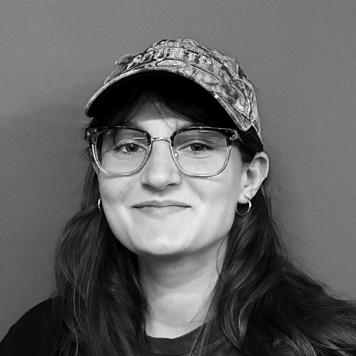
Pauline Autard
Music Agent @ Ground Control Touring
Music Industry ‘24
New York City
Based on your experience, do you feel like the music industry is becoming more inclusive?
I think the music industry is becoming more inclusive. At the company I work at, Ground Control Touring—it’s a boutique music agency—we work with a lot of independent artists. It’s a lot of indie rock, alternative rock, and smaller acts. We’re not representing any Justin Biebers or Ariana Grandes or anything like that.
At least from what I can see at the company I work at, I work with a lot of women and a lot of non-binary people, which is awesome. Going into the music business when I was a little younger, that was something I was really worried about—being a woman in
what felt like a very traditionally older, white male-dominated industry.
I definitely think that’s still true in the grand scheme of things. There are a lot of older men with more traditional music industry backgrounds who are higher up, but they’ve also just been around a lot longer. But in terms of support staff and people who are up-and-coming, I do see a lot of my counterparts being women and non-binary people. There are a ton of extremely successful women in the music business, especially as music agents. I think that’s really important to see.
Have there been any moments in your career where being a woman really shaped your experience, and how did you handle that?
I remember when I first started in the role that I’m in now—I work on a pretty small team. It’s just me, the agent I work for, and another coworker who also works under that same agent. The two of them are both men, and I’m the only woman on the team.
When I first started, there were these different happy hours we’d go to as a company. We went to the Live Nation office in New York—they were having a happy hour during some conference. And I met Stacy George, who works at Live Nation. She’s awesome. She’s an executive in the touring field and also does talent buying on that side.
When I met her, it was just an awesome experience. I felt a really strong
connection with her. She went to Drexel and was part of the DIY music scene, going to basement shows and everything. So we really connected over that.
I remember that was one of the first times I really felt like, “Wow, this is something I could actually be successful in.” Around me, I saw men who were successful in the field, but then here was this woman—an executive at a huge company—who was also incredibly successful. That was really inspiring. It was such a meaningful connection, and while it wasn’t only because we were both women, that definitely added to how important that moment felt.
How did you go from Drexel’s Music Industry Program to working at Ground Control Touring? Were there any unexpected challenges?
I started at Ground Control during my Junior year co-op. I interned there from around late June 2023 to early September 2023. After that, they offered me a fulltime role—an entry-level administrative position under the agent I currently work for.
I kind of got there through a mix of networking and persistence. It started at World Cafe Live during Philly Music Fest. There was a music industry panel. Originally, an agent from Ground Control named Merrick was supposed to be there, so I prepared a bunch of questions and went to the event. Merrick ended up not being able to make it, but another agent, Geoff McGovern, was there instead. I talked to Geoff a lot, asked him a ton of questions, and mentioned that I needed an internship. I asked if I could send my resume, and he said yes.
After that, I stayed in touch with him. I sent my resume, and whenever he had shows in Philly, I would go and meet up with him and keep that connection going. From there, I just kept following up—honestly, I was kind of bugging them, asking about the summer internship program over and
over until finally, when they started doing interviews, I got the chance to interview. It went really, really well, and they offered me the internship, which then turned into a full-time position.
The main challenge I faced once I started full-time was that I was still in school. I had a full-time job at Ground Control while also finishing my senior year of college. I was commuting to the office in Dumbo, in Brooklyn, about two to three times a week. The commute alone from where I lived to Dumbo was about two and a half hours door-to-door one way.
That was definitely a lot. It was difficult balancing everything, but thankfully my professors were very understanding and flexible. They recognized that I had a real opportunity in the industry and wanted to follow through on it. I was essentially using my degree in real time and getting a head start on building my skills.
In the end, it all worked out really well, but it was about eight to nine months of being in school full-time while also working full-time, which was really intense.
What’s something you wish you knew when you were in college that would have helped you break into touring or agency work?
They tell you this your freshman year, and I remember hearing it, but I didn’t really grasp it at the time—they say you’re sitting around people who you’ll likely work with in the future or who will go on to be successful in different areas of the industry. Now I see how true that is. A lot of my classmates are doing similar work— some are assistants at agencies, others are at record labels doing marketing, or at management companies helping with day-to-day operations. Some were in bands that have since gotten signed and are now looking for agents.
What I didn’t realize back then was how interconnected the music business community is. In college, it just feels like you’re all friends studying the same thing. But later, you realize those relationships can really matter. I wish I had made deeper connections with more people—not just because they’re successful now, but because I could have learned so much from them during that shared experience.
Interview conducted by
Cailyn Watters (Class of ‘28)
Sophia Cipra (Class of ‘28)
Aidia Rivera (Class of ‘28)
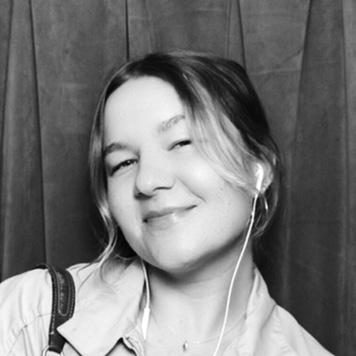
Ash Bird
Day-to-Day Manager
@ Emcee Artist Management
Music Industry ‘24
Los Angeles
What does your role entail and how long have you been a manager? What made you want to become a manager?
I’ve been working with Emcee for 4 years now. I got my start with the company during my sophomore year co-op. I work on the comprehensive day-to-day needs, as well as short and long term projects for Emcee’s eight artist roster. The work can include anything from touring (routing, rider development, advancing), marketing (social media, ads, ticket sales), logistics (booking travel, calendar upkeep), and more. I coordinate daily with agents, promoters, tour and production managers, artists, and more.
I also work with the artists Kuomo, Karlia, and intrepid.fox independently.
I love that management touches every sector of the music industry. Whether or not you’re working on something directly, you get to see how all of the individual pieces come together behind the scenes. I also learned quickly that I enjoy a role that is artistfacing—knowing that I’m supporting someone’s ability to make a career out of making art helps keep me motivated and passionate about the work and I think that is something you find easily within management.
How did your time at Drexel help prepare you for the realities of the music business, and were there any courses, professors, peers, co-ops, or other opportunities that helped open doors for you early in your career?
The coursework at Drexel and within the Music Industry Program was definitely valuable when I was first stepping into the industry and trying to apply that knowledge into real practice. However, I think the most important thing that Drexel gave me was the ability to learn to use any and all resources presented to me and to always think comprehensively. The Music Industry Program mixes academics with practical experience and helps you think strategically, but also with heart. I enjoyed having professors that I could learn from in the classroom, but that I
knew would be happy to expand on ideas and answer any questions I had outside of class.
I became connected with my current company through one of my professors. Your professors are HUGE resources and can also be friends and confidants. Being a part of the live music student organization Flux (I served as President for 2 years) also allowed me to meet so many industry professionals and students from so many majors which has helped me build such a strong network of amazing people across music, business, photography, design, and more.
What progress have you seen in creating more inclusive spaces for women and underrepresented voices?
I am so happy to see that more organizations like Women in Music are being supported and platformed by larger institutions. I feel that even since I first entered college in 2020, I see so many more women-led companies and female-identifying execs of major labels, firms, and agencies. I cannot stress enough how important strong female mentorship is for young women entering the industry. When Kaisha Blackstone and Monika Julien joined the faculty in the Music Industry Program, I remember feeling so grateful to have these awesome women to look up to and learn from. I hope that going forward individuals and organizations in positions of power can use their resources to platform more female educators and allow more young women to have those types of role models to guide them into their careers.
As a woman in the music industry, what challenges or opportunities have you encountered throughout your career so far?
I am very lucky to work with a staff of all women and to work under a boss who has been chasing her dreams of being a manager since she was a teenager. I have felt very seen and supported by many women in the industry and have also been lucky to have great male professors, advisors, and bosses. But I know that is not the common experience. Again, I think it is extremely important for young women to learn how to advocate for themselves early, and in order to do that they need to hear the stories of other successful women and feel like they have people to go to and trust. I think often times with this industry, we are trained to accept the terrible jobs and deal with what we’re given in order to make impressions and connections; however, there is a huge difference between hard work and abuse of power. Having strong female mentors and a network of professional women to turn to when you do face challenges is so so so important!
What accomplishment from your career so far are you most proud of?
I feel proud of myself for being able to hold my own as a day-to-day manager so early in my career. I feel that management can sometime be an area of the industry with a higher barrier to entry and more based on who you know, and I feel proud that I found a company that truly cares about my career development and trusts me to carry out projects independently.
If you could give advice to a current Drexel student, women or not, what would you say?
My biggest piece of advice, forever and always: your classmates and peers are the most important thing you’ll take away from Drexel. Those are the people you’ll be emailing with when you’re trying to get your artist booked. Being a good person and putting ego aside as an aspiring music industry professional goes a long, long way post-grad.
Interview conducted by
Toby Mack (Class of ’26)
Heath Cashton (Class of ’27)
Henry Persky (Class of ’28)
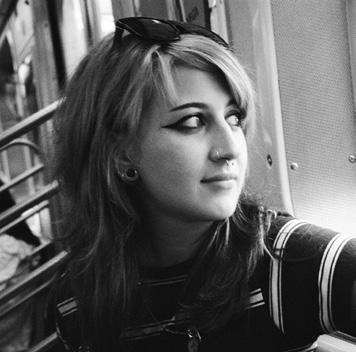
Scarlet Brigham
Administrative Assistant
@ Ground Control Touring
Music Industry ‘25
New York City
How has being a woman in touring and artist management shaped your day-to-day work and the way you think about your long-term career goals?
Funny enough, I don’t notice it affecting my day-to-day as much as I thought I would. I will say that right from the bat, I kind of had to learn not to email in a stereotypically feminine way—like using fewer exclamation points in emails type of thing. But so far, being a woman in the music industry hasn’t felt much different than it did in school and in Philly. I think that’s mostly because I work at a really cool
Were there any woman-focused initiatives that you were a part of that helped prepare you for your career?
I took the Women in the Music Industry class in college, and I was also a casually a member of the Women in Music club. I think both really helped prepare me for the industry just by way of surrounding myself with other industry professionals. It kind of got me used to the idea of networking happy hour-type vibe or a networking session. It familiarized me with those types of settings where you’re going to be meeting people that work in your industry. I feel like it helped build my confidence in the industry—in terms of operating within it, going in for the interview for my job, meeting people in the industry now when I go to shows when we have networking events—I feel like having those experiences really helped. I also think it’s really helpful to know there are other women in the industry who are doing well for themselves.
company that’s pretty good about that kind of thing. We don’t have very many female agents at the company, but it makes me hopeful that a lot of my coworkers are girls. I can see other women becoming agents, and I can see myself following in their footsteps. I feel like I can very much see the future and my career as part of that. There are going to be a lot of really sick female agents in the next five to 10 years, which is really cool.
Are there any women you look up to or have looked up to in your career that you’d like to shout out?
My manager, Sophie. She just got promoted to Junior Agent, which is really cool. She has been a really great mentor for me, not only in terms of being my manager, but also as a fellow woman in the industry. She’s given me a lot of really good advice about how to operate as a woman in the industry and to hold myself as a woman so I am taken seriously.
And then—this isn’t someone I work with directly very often—but Allison Crutchfield just moved into management from A&R at ANTI- Records, and she also makes music herself. I just really admire her ability to be both a prolific musician in the indie scene and also a prolific music industry professional. She’s highly respected for both her music and her skills in the industry, so I think she’s really awesome.
How did your co-op experiences affect your views, attitude, and work ethic?
I think my co-ops were really helpful in influencing my attitude and work ethic toward the industry. I think particularly my second co-op with Rising Sun Presents was really beneficial. I worked under Anna Ready, who is the main booker for MilkBoy. I’ve since been able to communicate with her in my job now. She was a really great mentor. She explained a lot of really interesting aspects of booking to me and was a good guide, even though I was just an intern
Being able to go into the office in person was also really great, just to hang out with everybody and know them all. I feel like being able to hang out with that whole talent buying team has really influenced how I communicate with promoters now, because I’ve been able to communicate with them directly since I started my job. It’s really cool because it’s like, “Oh, I know
Are there any women you look up to or have looked up to in your career that you’d like to shout out?
My manager, Sophie. She just got promoted to Junior Agent, which is really cool. She has been a really great mentor for me, not only in terms of being my manager, but also as a fellow woman in the industry. She’s given me a lot of really good advice about how to operate as a woman in the industry and to hold myself as a woman so I am taken seriously.
And then—this isn’t someone I work with directly very often—but Allison Crutchfield just moved into management from A&R at ANTI- Records, and she also makes music herself. I just really admire her ability to be both a prolific musician in the indie scene and also a prolific music industry professional. She’s highly respected for both her music and her skills in the industry, so I think she’s really awesome.
these people. I know how they are in real life,” and now I’m seeing how they’re working. I’ve been on both sides of the coin, which is really cool.
My first internship also gave me a really good foundation for my second one. That was with Dave Kiss, and I think it gave me a good general idea of being a promoter in a market like Philly—how shows get booked, how they get promoted, and that kind of thing. I think that was a good foundational co-op. I also had a job at a venue working front-of-house, which wasn’t through co-op, but that experience helped too.
Working as a promoter, seeing that side of things, and now being at an agency, I feel like it was really valuable experience. It truly gave me a well-rounded perspective going into this job.
Interview conducted by
Paul Awdisho (Class of ‘27)
Lev Sterling (Class of ‘26) Jeyline Vallejo-Valdez (Class of ‘26)
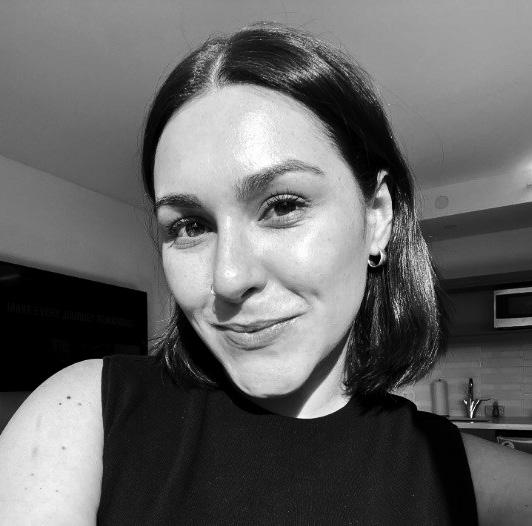
Andrea Castro
Senior Store Manager @ Universal Music Group
Music Industry ‘16
New York City
Tell us about your background and how you got to e-commerce at Universal Music Group.
I started at Drexel in the fall of 2012. Since I was little, I had said I was going to be a dancer and an actor and a singer. Music was always on in my house. I have very visceral memories tied to whatever music my parents were playing or what was on the radio. I think that carried me up until it came time for college, and I was like, “Okay, am I going to become a psych major, or am I going to explore this really cool opportunity in something called a music industry program in Philly?”
I am first generation—my parents are immigrants from Costa Rica—and it was a challenge to get them to understand what I wanted to do. My dad was just like, “You just want to go to concerts all the time,” and I was like, “yeah, I know,” but I just knew that I wanted to be a part of the music
industry in whatever way it would have me. So I somehow got them to understand and support what it was that I wanted. I didn’t have a fully fleshed-out dream—I just wanted to be in the music industry so badly.
An opportunity at Fame House was brought to me once I had graduated. It was a very small company back in 2016—it was being acquired by Universal Music Group at that point—and it was primarily a digital marketing agency. An old professor forwarded me a job listing for what is now Fan Services, the customer service team, that’s where I got my start. I haven’t looked back since. It’s been almost 10 years of moving up, finding what works for me, what I’m good at, who I am within music, and still trying to find time to be a fan overall.
What skills do you think have been the most helpful to you as you have advanced in your career?
I think being scrappy is definitely a benefit— kind of willing to try anything, willing to not have the full knowledge of what you’re jumping into and just being like, “Alright, we’re going to figure it out. We’re going to get this done.”
I don’t have all the book smarts, or I didn’t study a specific thing in college, but just being down to ride the wave—doing as much as you can, learning as much as you can, and also being like, “I’m going to make myself available. I’m going to do whatever it takes. I’m going to do whatever you need.” Customer service was not my end goal or even my starting goal, but it was the door cracking open, so I just went to it, and then I went on from there. It’s kind of like being a jack of all trades, or honestly just being open to experiences, and learning curves, and always learning.
How do you approach leadership and team management in a space that can be very male dominated?
My department is very women-led, and I’m so proud to be a part of it. We outnumber the men by a bit, and it rules. The people that are in positions of leadership are people I’ve come up with over the last 10 years— starting from smaller beginnings and seeing them develop into these forward-thinking leaders, but also still being approachable and a resource for you, is so comforting.
I think across all parts of Fame House, there’s always been a heavy female presence, and it’s really—rather than man, woman, or non-binary—it’s just about how hungry you are and what you’re bringing to the overall mission, rather than who’s bringing it. There will still be moments—I’ve definitely been in rooms where people have spoken over one another or maybe don’t realize that they’re being condescending in the way that they’re speaking to someone who isn’t a man—but that doesn’t last very long. The work is really what speaks, rather than the people speaking.
What advice would you give to a current Drexel student about how to approach networking?
I would say just do it—just reach out. If you have someone’s LinkedIn, make sure that they’re active on it first of all, because your message might get missed. You want to make sure that they’re active on the channels that you’re reaching out to. I think it depends on the person and their approach, but you really just have to go for it. And if you don’t get an answer, you don’t get an answer, but you did it. It gives you more confidence for the next time you reach out to someone else. Or even that person you reached out to, you might cross paths in the future, or they might find that message in their inbox and be like, “What was this missed opportunity?”
For me, speaking personally, “Hey, how are you?” goes a long way. I love a direct message. I love a “Hey, this is who I am. This is why I’m reaching out.” But also remembering that every person is human is so important, and leaving a personal touch makes you stand out. I’ll talk to anyone in any industry and I’ll say, “Hey, how are you?” They’ll be surprised that I asked. I’m a person and you’re a person too. I think that goes a really long way.
Also, be direct. Just tell me what you need from me, and then we’ll figure something out. And if we can’t, then I’ll point you to someone who can.
What initiatives or approaches do you think are most impactful—or could be—in advancing equity for women and underrepresented groups in the music industry?
I feel that women and non-men coming together to network and align, and forming their own support systems—it doesn’t have to be a formal organization—is really what drives change. I think that everyone keeping tabs on each other and having their own network of support is what drives change, because we’re vocalizing what’s happening every day.
There are so many organizations—UMG has their own entities that highlight diversity, equity, and inclusion—and that’s so sick that we have it internally, but I think it really starts with the people. My department is very woman-heavy, and that’s so cool, but
that doesn’t mean that I live in a bubble. We still have to think about other people who are right outside or who may want to come in, and how we keep making it better.
Just not being satisfied with what we currently have, and asking for more— vocalizing what we want as far as equity—I think is super important. I think we just have to stick together and keep the conversation going until everyone is thought of on the same level. And that goes beyond us—who knows how long that takes. I really think it’s about raising your voice and not shutting up.
Interview conducted by
Megan Spragis (Class of ‘27)
Kaci Franklin (Class of ‘26
Charlotte Bentrim (Class of ‘26)
Lauren Docteroff
Senior Manager of Music Programming @ Peloton
Entertainment & Arts
Management ‘15
New York City
In your role leading Peloton’s artist series, how do you actively work to include more women and underrepresented artists in your programming?
The artist series is a program that celebrates an artist’s catalog on the platform. Standard Peloton programming during the day can include things like a 20-minute run, a 30-minute cycling class, or a yoga flow, but the artist series is more of an event that we do twice a month now, where we celebrate one artist.
Keeping the artist series diverse is one of the biggest things we talk about as a team. It’s always at the forefront when we’re pitching and planning and looking at the calendar year. For me personally, as a music lover first and foremost, it’s really exciting to bring underrepresented and up-and-coming artists to the platform and introduce them to our members because I feel like they don’t necessarily get the same visibility on something like Spotify, where there’s just so much music.
That goes beyond just the artist series. Even in our day-to-day programming, whether that’s a 20-minute strength class or a 20-minute hip-hop run, our team is always looking for ways to uplift upcoming artists who might be underrepresented. It’s also really important, as you mentioned, to celebrate female artists year-round. We don’t like pigeonholing them into something like Women’s History Month or another cultural moment. That’s always on our minds. I’m always looking at the month as a whole and making sure there’s balance between gender and music genre, whether it’s a catalog artist or a new artist. That’s always important to us, and as music lovers on my team, it’s huge for us.
In working with artists, labels, and management teams, have you noticed differences in how women are treated or represented? How do you navigate or challenge those dynamics in your day-to-day work?
I have noticed in the last 5 to 10 years— especially in the most recent 5 years at Peloton—that there has been a massive shift in how many women are in the room, whether that’s in-person meetings or Zoom meetings. That applies to internal Peloton meetings and external meetings with labels.
I had a call yesterday with a PR company, and it was me, my director—who is a woman—and four women from that company. It was cool to look around and realize it was all women. I grew up thinking the music industry was kind of a boys’ club because that’s what you hear about. At the top, you often see men running teams. But in both of my professional salaried roles, at Peloton and Sony, the head of my team has been a woman, which has always been really inspiring for me. It also makes me feel more confident speaking up because there is a woman at the top. It always feels really good to have that support.
I would say the only challenge I’ve really faced with that dynamic is reminding myself that I am the authority in the room and that I know what I’m talking about. Sometimes I’ve met with men who don’t necessarily assume that I’m the authority, and they may direct their attention to someone else in the room. I have to remind myself that I’m the person they should be speaking to. That’s definitely challenged me to become more confident in those moments.
Honestly, if I walked you around my floor right now, where I sit with our content team, about 90% of the team are women, which is crazy to see. It’s such a change from 10 years ago, and I love that. I’m very proud to see it changing.
You have led major initiatives like Britney Spears Week and the Taylor Swift album classes. What goes into selecting artists for these largescale programs?
We’re always trying to keep things balanced and diverse with the artist series while also paying attention to what members are excited about, what instructors are excited about, and making sure we stay culturally relevant.
When we’re talking with Universal Music Group and they have an artist like Taylor Swift, we know that’s someone we want to tap into. But it’s also exciting to identify up-and-coming artists who suddenly have a viral moment that we need to jump on. In most cases, we’re planning five to six months in advance, especially for the artist series, but sometimes a spot opens up last minute, and that gives us the opportunity to celebrate someone like Chappell Roan in the summer of 2024 when she was blowing up and impossible to ignore. The same thing happened this year when something fell through and we were able to add Olivia Dean.
It’s all about keeping your ear to the ground and knowing what’s gaining momentum. We also know at Peloton that pop music is the most popular genre. People love Britney Spears, Christina Aguilera, the Backstreet Boys, and other throwback artists. We always want to include those moments because they bring everyone together.
For women interested in your line of work, what are some practical steps they can take now to build confidence and strong professional relationships in an industry that can feel competitive and male-dominated?
The first thing that comes to mind when giving advice to women in music is being kind, friendly, and approachable. Being nice to people throughout my career and focusing on making connections in every room I’ve been in is something I really credit for my growth.
At my internship after college, I made strong connections, and they asked me to stay on for another six months because of that. While I was there, I got the call to go to Sony. When I was at Sony, Peloton became one of my accounts, and my current boss came in for a meeting and called me the next day to offer me a job here. Making those connections has always been really special to me.
I think back to my first internship at an artist management company, and so many of the people I interned with are now in different places throughout the music industry. One of my friends is at UTA, and others are still at that management company. Having those long-term connections and rapport is valuable in my current role. So, my biggest advice is to be kind and build relationships.
Another thing I always think about is being modest. I remember when I was at that same artist management company, and they asked me to come back for a second term. I was grateful for the opportunity and prepared to move on to the next step because I thought that was what you were supposed to do. Some other people I worked with were aggressively trying to stay on. Because I was appreciative but not pushy, they told me they would love for me to stay. That always stuck with me because they saw that as a positive quality. So modesty is definitely another thing I value.
Interview conducted by
Eliya Ben-Ezra (Class of ’28)
Tessie Bunnell (Class of ’28)
Mia LoCascio (Class of ’28)
Samantha Haynie
Platform Administrator @ Famehouse (a Division of Universal Music Group)
Music Industry ‘24
Philadelphia
What is your role at Famehouse?
I graduated from Drexel in 2024, and I started at Fame House this past December. I’m a Platform Administrator at Famehouse. It’s mainly focusing on the backend of the different platforms we use to make our Shopify stores and the different artists’ merch stores.
I do a lot of the backend work for that. There’s only me and one other Platform Administrator, who is the senior above me, so it’s a very small team. We handle all of the U.S. and some additional territories like Japan, parts of Germany, and other things like that.
In college, we often hear horror stories about how women were treated in the music industry years ago. Have you noticed differences in how women are supported when starting out in the industry today compared to what you had heard before entering it?
Definitely. I think that especially in the last 10 years, maybe even 20 years. And here at Drexel, being able to hear from other women who are ahead of me in the industry, it definitely seems like there’s so much more of an effort from other women to support new women coming into the industry. There are these other women who are paving the way and are ready to turn around and pull you along with them because they want more women in the industry, and they want to create a better place than what they stepped into. I think
women are taking it more upon themselves to really create a better experience for anyone coming up behind them.
It felt really special to me when I was interviewing for this position and got into my second interview and saw that there were two women interviewing me. One of them was also a Drexel alum, so she really knew where I was coming from and knew how to make me feel welcome and supported coming into this.
How would you describe equity and representation within the label space? Do you feel it’s different from other parts of the music industry, and do you think it’s improving?
I would definitely say that in the Famehouse office, there are a lot of women working here. Other than my direct boss, who is the other platform admin, the next three bosses above us are all women. The first interview I did was with my direct boss, Brett, and then after that I did interviews with two women, one of whom is in the office I’m sitting in now. Especially within the “pods” that I’m mostly working with—the store management team—they’re the people in charge of our different artist stores. Almost all of our store managers are female, which is incredible.
The first time I walked in here, I was like, “Okay, this is good. This is going to be good.” There are people who look like me, people who don’t look like me, people who are much older than me, and people who are around my age. I know there are also other current artists and college students here doing internships, so there’s a very diverse group. And it’s definitely very accepting. It’s only been a short time since I started working here, but I haven’t had any issues with men or experienced any discrepancies because I’m a woman.
What advice would you give to young women trying to break into fields like fan engagement, marketing, or platform management?
I think that being yourself and showing up as yourself very authentically. I think some people feel the need to dull down who they are a little bit to try and enter a corporate environment, but I feel like it’s really important to bring your authentic self and who you are into these positions. obviously, your skills and your experience are things that they look at to be able to determine your qualifications to be able to do a job, but also a big thing that they are going to look for is your ability to
just show up as a person in the office and be someone who is a good person to work with. You want to be able to bring a good vibe. If you are bringing in your authentic, happy aura of yourself, it’s going to be bringing in joy to everybody else. Don’t let any corporate experience or any job experience make you feel like you need to dull down who you are. I think it’s really important to just be yourself and especially a woman. Don’t let any men be like, “You’re too much.” You’re not. Be more. Do more.
Do you feel like Drexel prepared you well for entering the music industry? Were there any areas you wish you had been more prepared for?
Honestly, I do feel like I was pretty prepared for everything that was coming at me. I think when I graduated and was getting into really looking for a job, I was kind of like, “Am I prepared? I don’t know. I don’t think I can do this. I don’t know if I’m really ready for this.” And then I just trusted myself. I know what I did, other people know what I did, and I know what I can do. I remember when I was interviewing for this position, right after I got it, my boss and I were talking about it, and he was like, “Your interview was so good. It was
like I gave you the questions ahead of time and you were able to practice and script it out because you were not nervous. You were so set. You were so ready.” Meanwhile, during the interview, my heart was racing and I was sweating, but I had practiced so many times having to do all these co-op interviews and all of that preparation that I could just get in there and trust that I know what I’m was doing. I think hearing that feedback from other people helped me realize, “Oh, I do know what I’m doing,” and I can feel confident in that.
Interview conducted by
Maddie Ruhoy (Class of ’26)
Gabby McIlhinney (Class of ’26)
Jake Vedova (Class of ’27)
Ciara Hegli
Touring Screens Director
@ Linkin Park
Music Industry ‘21
Philadelphia / Worldwide
What was your path to becoming a touring screens director?
I fell into it accidentally because I studied audio stuff in the Music Industry Program at Drexel. I was falling out of love with that quickly in school when I was learning about the freelance nature of getting income doing that type of thing.
Then the pandemic hit and I needed to get my second co-op credit to graduate. I had an internship lined up where I was going to be sitting behind somebody at a studio watching them do session stuff, but since the pandemic hit, they were like, “we’re not going to do anything in the studio.” So I found an alumni, Aaron Ruxbin, who was working at Creep Records and he was starting a podcast type project. He got me running around with my laptop and my Scarlett Focusrite interface and a little microphone interviewing people. There would be live performances on the art museum steps and I would try to capture that.
Then it turned into video stuff. I had some background experience in video, so I knew how to edit videos and they got me posting YouTube videos. Then Aaron introduced me to somebody who had been his intern. This guy, Drew Mercadante, made my connection to everything else. Drew had gone on to have a huge career doing lighting and video for Rage Against the Machine and other big artists. With the pandemic, everything got canceled, so he was just stuck at home in Philly. Him and his friends all played Dungeons & Dragons and made music videos. I wanted to play Dungeons & Dragons, so I said, “I’ll make music videos with you guys if I get to play games and let me escape this reality for a second.”
He saw I had some skill with video, so he put me at Warehouse on Watts here in Philly. They were doing DJ live streams, and it
would be a green screen, a table with the DJ decks, the DJ, and then a GoPro into OBS into Twitch. Another laptop would be running visuals that you would put on the green screen. The visuals were on this program Resolume, which is my bread and butter now. He put a couple VJ graphics in there with a MIDI controller. He taught me how to hit the buttons and it all made sense. So, he leaves me to do these live streams and I keep coming back every night of the week. And in two weeks I’ve built a lot more shit, I’ve brought some of my own stuff, and I’ve imported things I found on the internet.
This made Drew realize I actually enjoyed doing this, and so we figured out a way to make money. The band Disco Biscuits were live streaming on their own platform. He would send his gear out with me and he would teach me how to livestream them and get it networked up and cut between four different cameras. I would work with the camera guy and audio guys. It turned into hitting real venues too as the pandemic ended.
Then Drew gets a call about a tour that needs a video person really badly. It’s Caroline Polachek, she’s opening for Dua Lipa and they’re having all sorts of problems. They needed a video person to go out right now and fix it. It was all the same programs and materials I was used to. It was totally within my wheelhouse, but I’d never toured before. The tour was stopping in Philadelphia for two days, so then I left my house with a backpack and luggage full of stuff, and I’ve been on tour basically ever since. I’ve just increasingly said yes to cooler video and lighting based gigs, for whatever artist excites me the most. Usually I pick the gig where I have to learn more going into it instead of something that’s stagnant.
How do you feel being a woman has impacted your time in the music industry, especially as a woman whose job revolves around touring?
I’m a beneficiary of these tours looking for women specifically. There’s a huge benefit to that, but I look forward to getting to a point in my career where I stop hearing that and I’m hired solely for my skills. It feels tokenizing I guess, but at the same time, I think it is inspiring to see tours with huge groups of women on them. I’ve been recently surrounded by women, which has been so lovely and that’s the case on lots of tours. My first ever tour was a female artist opening for another female artist. There were women everywhere in Dua Lipa’s camp, and then there were women in the band with Caroline, and we were all on the same tour bus together. I was the only woman crew member and it was sometimes a little bit isolating to be the only girl, under the stage wrapping cables, but it kind of gives you the main character syndrome. No one was weird to me, so I loved it. I think the female positivity of having other women around helps a bunch.
Then on my second-ever tour, I was the only woman on a tour bus with 12 other people that was totally overstuffed. But it was a good experience for me to go through that and learn what questions to ask next time about what treatment I was going to get. I did have to learn how to stand up for myself sometimes as the only woman in the room. Most of the dudes were at least 10 years older than me, so it was super isolating and I learned that I don’t want to do that again.
Nothing’s been too crazy. Sometimes I have to lie and pretend I have a boyfriend just so people get off my back. In my role people often expect a middle-aged dude, and when they find out I’m not some people act out initially. I have to set a boundary that I haven’t usually been comfortable setting, but now I’m pretty firm and good with that. Working with Paramore, I was with them for so long, and everyone was so lovely that I felt totally genderless at work.
What advice do you have for women trying to enter more male-dominated positions within the industry?
I’d love to pretend like I could just be genderless, but this is a thing that needs to be addressed sometimes. Just be safe. Google the names of the people you will be working with. I’ve said yes to a gig, and it’s only been phone calls and emails and I’ve never met the people. It’s kind of scary, so if you have any opportunity to know who you’re going to work with, Google them. If you know people that have worked with them, ask if they’re chill. If you think there’s any concern in a person’s mind about your gender, double-check if that’s the kind of person that you’d like to work
with. Also, if you really want an opportunity and you think that there’s like a bunch of boys that might be up for it, just be like, “I am one of the boys. In fact, I’m probably going to perform better than half of these boys.” I’ve certainly benefited from the people looking for women out there because there’s a lot of awesome tours that are looking for women. If they have women in their production office and if the artist is a woman, I think you’re going to have a better time because they’re just thinking on a different level.
Interview conducted by
Molly Angelov (Class of ‘27)
Harper Risch (Class of ‘27)
Anthony Collucci (Class of ‘26)
Sara Parker
On Air Talent
@ WMMR & Breakdown Media
Co-Founder of Breakdown Media
Music Industry ‘11
Philadelphia
How did your time at Drexel prepare you for your career as an on-air personality at WMMR?
Oh my gosh, it was everything. It really prepared me more for just getting in the door and learning how to interact with people in the industry. When I was between my sophomore and junior year, I had my first co-op. My first co-op was with The Morning Show at WMMR, and then my second co-op was with The Morning Show at WMMR. I just stayed. I just stayed because I loved it so much. It was not easy to wake up at 4:15 a.m. two or three times a week. I didn’t have a car—I lived on campus and I didn’t have a car—so I would walk down to the 30th Street Station bus stop and get on a bus around 5 a.m. and then that bus would take me to a different bus station that wasn’t
even my end destination because it was so early. The regular schedule didn’t run yet. And then I would wait for another bus. And then I would finally get to the studio around 6 a.m. I would be there until 10:30, 11 o’clock, maybe even noon. And then I would go back to campus and do all my classes. But I loved it because I really was getting a great experience and applying the skills that I learned in the classroom in real time on the radio. It took a few years for me to actually get on the air, but by then the interactions that I had in the classroom and the way that my professors helped me and taught us about networking was so incredibly valuable.
So how has your experience been working as a female in the music industry, and also the radio industry more specifically?
It’s getting better. It comes with some obvious challenges, but I do truly believe that the industry and society as a whole is moving in a good direction. But it’s taking time. It’s going to continue to take time. For me, my background is in rock radio specifically, which is traditionally is very male and masculine driven. So finding my voice and being taken seriously was something that didn’t come easily at first. There were times, not with the people that I worked with directly, but when I interacted with label reps because I was Music Director for a time or I would be on someone else’s show or podcast. Sometimes as a woman, I would end up being the punchline.
Like I said, it’s getting way better, and really I’m very confident in myself so I’m able to punch back. I’m able to show facts and back up my projects when I need to. Unfortunately, I know not everyone has that
same confidence, so I feel sad for the women who get into the industry and they have one bad experience and then they leave.
Part of what has made me successful in the industry is sitting with my discomfort. So for example, if I see something in the workplace or something that’s going over the air that doesn’t align with my values or I believe is not reflective of the female part of my audience, I will talk to somebody about it. Whereas someone else might be like, “I can’t believe this is happening,” and get exasperated and just maybe exit the conversation or exit that workplace entirely. There have been times in my career where I’ve had to have really uncomfortable conversations that ended up being productive. But if I didn’t have the conversation in the first place, nothing would have changed.
What are you most proud of in your career?
One of many things that I am most proud of in my career is launching my own business. I am still at WMMR and have been for 17 years now, but I also have a creative content and marketing agency called Breakdown Media. I launched it with my friend Nick, who I met working at WMMR With it, we’ve worked with a bunch of different clients, both within and outside of the music industry. I hope that it can be another way that I can work with all different types of artists on creative projects as the musical landscape—and particularly the digital landscape—evolves.
My second—there’s a lot of standout moments in my career, I’m very lucky and proud to say—what comes to mind are the times that I have been in a concert audience and the band has shouted out WMMR. Being part of an institution that’s been a part of Philly, the city of Brotherly Love, since 1968—and I’ve only been a part of it for a fraction of that. I’m so proud that bands like Pearl Jam and Metallica and the Foo Fighters acknowledge this entity that means so much to so many people, and then to see the audience react to it in kind—that’s core memories right there. It’s incredible to feel like a part of something so much bigger than yourself.
What is your advice for anyone who wants to go into a career working on music as well as like radio in general?
You will hear the word “no.” You’ll hear it a lot and it will make you better because it will teach you how to interact with others with grace, it’ll teach you how to state your case, and it will also teach you how to go back to the drawing board and get
better. It’ll teach you how to revamp what you’re doing and evaluate what you’re doing and come back stronger and then stronger and stronger and stronger and stronger each time. “No’s”—they’re going to happen, but they are opportunities.
How did you work through that nervousness of being on air?
I started on air as a sort of a co-host and a sidekick and a producer like an on-mic producer, so I would get comfortable having conversations on air. When it came to being solo on air, that’s where I was nervous and unsure of myself. But you just have to learn by doing. So I did it and I didn’t sound great at first, but I just kept doing it and doing it and listening to air checks, and eventually I realized that I was being so stiff because I wanted to get everything right, I didn’t want to stumble over my words, I wanted to get all of the album names right when I was talking about the artists or promote everything with gusto. And that’s just not how people talk to each other in real life. So once I started approaching it
as a natural conversation with the mom who’s taking her kids to soccer practice on a Saturday morning or the guy who just got out of a long day at work and he’s stuck in rush hour and he just wants to hear his favorite Red Hot Chili Peppers song is when it became a conversation. Host to listener, friend to friend, rather than me making an announcement to everyone. That’s when I really started to relax and come into my own. It took a while. I will admit that I was not born with that trait, but realizing that and also being surrounded by the best of the best—at WMMR, those are like radio hall of famers— so learning from them has been incredible and I wouldn’t have that experience without Drexel. Full circle, mic drop.
Interview conducted by Niko Mena Zucker (Class of ‘26)
Lizzie Cosgrove (Class of ‘26) True McCullogh (Class of ‘26)
Marissa Putney
Marketing @ Gold Theory Artists
Music Industry ‘07
New York City
Can you walk us through your career path from Drexel to your current role at Gold Theory?
I feel like I talk a lot about the early years that I had in the music business, and a lot of that came from the drive and the motivation that I had to want to be in the industry—working with artists, working with music that I loved. Drexel was really helpful in the sense that it did provide a lot of avenues for me to explore as a student. Being able to understand the recording side of things, getting a little bit into the business, and I say that because the very beginning stages of my career was through the summer programs or the summer internships that I had to do with Drexel.
I was hired as a street team student for Sony Music and I got to flyer for upcoming shows, go to the different record stores in Philly, and be a representative for artists that were coming into the market. In meeting the folks who helped me shape my time within the street team, they let me know of openings at RED Distribution and Sony. When I graduated, my very first job was working at Sony Music.
I was very fortunate to have started in distribution in the very first part of my career with RED Distribution. They worked with a lot of indie labels but were owned through Sony. I had a little bit of that experience of being able to see things through the lens of an independent label
and artist and how that’s set up, as well as how distribution works for those particular projects. But then I also got to see how the Sony ecosystem worked as a result of that. I then moved into another role with another distributor, The Orchard—I worked with the Orchard for about 12 years.
In my time at The Orchard I was able to work with a lot of international music. We’re coming from an age of working with physical music into digital music. Seeing the transformation in the way people consume music has been very interesting through the span of my time in the industry. Going into The Orchard was really eyeopening because things started to become more relevant on a global landscape. It was just more accessible. People were able to find new music and learn about new music that maybe weren’t in their language that was from a different country.
So I was able to spend a good portion of my career growing and developing with The Orchard until more recently I moved into artist management with Gold Theory, which I’m super excited about and have learned a tremendous amount.
What are your thoughts on equity and representation in today’s music industry? Do you feel things are improving and where do you think more progress is needed?
People are talking about it more. I feel that it’s a slow progression, but I do feel that change in some areas has happened. However, more can be done for sure. I do feel that the conversation is happening and people are bringing it to the attention of big corporations and small businesses alike.
The conversation is becoming more widely discussed, and that’s great. I definitely hope that continues to be the case because traditionally that has not always been the way that the industry has operated. While we see some small progress happening, there’s absolutely room for more change to happen.
If you could give one piece of advice to your Drexel self, knowing everything you know now about the industry, what would it be?
Things come in due time. When I found myself in distribution, I ended up staying there for a very long time—almost 18 years—before I made a change. So if I were to advise myself or others, I would say just take your time. It’s not a rush to the finish line.
Learn, ask questions, be around others who inspire you, who motivate you, who can empower you to really take in the information. A lot of what you will learn within music is going to be some technical parts and some more operational bits, but then there’s going to be all this other stuff that you kind of have to learn as you do—when you actually do something, you’ll absorb the information. So be patient in
that process. As long as you show up and you’re authentic and you are empowered by what is happening, then things will open up for you. And that may not necessarily mean working for a company, it could mean doing something on your own, being a freelancer, consulting, finding other avenues, doing something different and unique that can change the way that the industry operates. It’s the innovators, it’s the thinkers, the people who kind of take their time and see what’s out there and ask those questions and be in rooms with folks that empower them. Those are really great ways to find what you want to do and how you want to move forward in your career. So that’s what I would tell myself—don’t rush.
Do you think there are certain strengths or perspectives women bring to the music industry that are often overlooked or undervalued?
A thousand percent. I think women have a really great way of bringing in a new perspective. I will say that, and this may not always be true for everyone, but I think women come into the industry not wanting to have the big name or have the big seat at the table. They want fairness— at least the women that I’ve encountered. In my experience, at least in the career path that I’ve had and the women that I’ve
encountered, I find that women do really bring sort of different perspective, a different approach, a different way of working, and can really provide another way of creating more collaboration and participation amongst a larger team. I think that women have that opportunity of bringing in more of a holistic approach and bringing everybody to the table.
Interview conducted by
Hinda Goldstein (Class of ‘28)
Hannah Peddy (Class of ‘28)
Dio Daniel (Class of ‘26)
Andrea Shirk
President & CEO
@ Rock Lititz & Rock Nashville
Graduate Class ‘04
Lititz, Pennsylvania
You started your career at Lockheed Martin as a program manager, then moved to Bose, Clair Global, and now Rock Lititz. What challenges have you faced in executive roles across these companies, and how is Rock Lititz addressing them?
When I was at Lockheed, I was working in defense. Then I moved over to Bose, where I was working in automotive, and then live events. I feel like those are probably the top three industries that are maledominated, so it’s been very common for me to be the only woman in the room. I’ve gotten fairly used to that environment and figuring out how to navigate it. I think live entertainment certainly cares very much about this conversation, but the reality is, based on my experience, I would say 90% of executives are men—at least in live event production. If you zoom out and say ‘live event business,’ it might change, but in live event production it feels more like 90% male in the executive space.
I think the key piece for me, when I look at how you bring folks of diverse backgrounds and perspectives into an industry, is that you have to think about how we attract them and how we keep them. How do we make sure they feel safe and comfortable? This industry was pushing to be like, “Hey, come on, women—you can work in this industry, it’ll be fine.” But what were we doing to actually make sure women felt safe and supported?
An example is when I started at Clair, there actually was not a women’s restroom—
there were just restrooms. And then I had kids, and I was like, “Hey, where is a nursing room?” And they said, “Oh, we don’t have that here.” So you can’t just say, “We really want women to be here,” but then not have the policies, processes, or environments where they can feel successful.
I will say, when Clair started working with me, I loved it. They were like, “Oh my gosh, what can we do? How can we learn from this? What can we do better?” They really wanted to close that gap, which is incredible. But those gaps still very much exist. When you look at live event touring, you’re living on a bus—you’re with a bunch of guys. We can say, “Yeah, women should come on this tour, we’re going to be really supportive,” but what are we doing to make sure they feel comfortable, safe, and supported?
At Rock Lititz, we’re about 70% female, and we are very intentional in hiring the best people for the job but getting in a lot of perspectives and voices. Rock Lititz is not necessarily a technical company—we’re a service company at the core and soul of who we are, and a community-building company. If you think about some of the more traditional traits often associated with women—community and service-building—those perspectives are extremely valuable.
How have you navigated being the only woman in the room as an executive?
The first phase of my career—and I don’t regret it, it was the right choice at that time—was to show up and be like, “I’m just going to be one of the guys. I’ll fit in, and I’m not going to celebrate my uniqueness as a female. Instead, I’m just going to be very much part of the team.” And that was fine. That worked well for some phase of my career.
Then I entered this next phase where I was like, “Oh, wait—there’s a lot that is actually my style or my background.” I don’t think all women are alike and all men are alike, but there are more traditional characteristics that a female might bring— like being super organized, I’m super empathetic, I think a lot about the team. I do have sort of a servant leadership mindset in the way I approach things, and so I was more like, “Oh, Andrea, those are great skills. Don’t hide them. Don’t be one of the guys.” I got just more comfortable and confident in my voice.
Then—without ego and very humbly—I started to go, “Wait a second. I shouldn’t just celebrate those skills. You’re lucky to have those perspectives—you should feel fortunate to have what I’m bringing to the table.” It might be different, and it might feel uncomfortable sometimes, but ultimately it’s going to add value. There are also times where I know those skills can hold me back,
so I have to talk to some of the guys and be like, “Okay, I’m feeling really emotional about this. Help me figure out how to get grounded in it.” So I feel like I’ve gone through those phases, and I celebrate what I bring to the table.
I’m hitting almost a fourth phase, which is sometimes exciting and sometimes hard. I’m different, and sometimes that’s amazing and people should celebrate it. Other times, I still feel that moment of the “good old boys’ club.” Guys can show up and do something that, if I did it, everyone would be like, “What’s Andrea’s problem today?” No one’s discussing why the guy is being an asshole in the meeting—they’re like, “Oh, it’s fine, he’s just having a day.” So I have to hold myself to a higher standard, which I’ve always done. While that can be really challenging or painful, it makes me better. I’m lucky that I have to hold myself to that standard, which forces me to constantly learn and grow.
I can only control myself. I cannot control anyone else. Therefore, I can only take responsibility for how I choose to show up in a moment and how I choose to navigate it. I try to always pull myself up and be grateful that that experience taught me something and made me a stronger person.
What accomplishments you are most proud of in your career?
I think Rock Lititz in general. When I started, I was the first and only employee here. The higher-ups were like, “We have some land that we should buy. What should we do with it?” Creating a brand and a concept and a team that I think are world-class and really influencing the live entertainment space in a positive way makes me super proud.
I am proud of the fact that I have created a safe pathway for women. Probably one of the biggest challenges for females is when they choose to leave the workforce to raise children, so I have some folks on my team who have come back from that after not working for a while, or several women on my team who are going through creating families and finding that balance. I’m really proud of helping incredible female
leaders who want to find a way to still have a family and create that balance and still find successful careers.
Rock Nashville, that was kind of a dream that we were like, “Oh, this should happen. What could it be?” We did in 18 months in Nashville what took us probably 10 years in Lititz. I look at it as if we took time to learn a foundation—and I’m proud that we took the time to learn that foundation— and then went on to do it in a much more effective way.
So I am very proud of what we’ve created here in Lititz, the unique community, and then being able to go to Nashville. I think we’ve created a foundation that has exponential opportunity ahead.
Interview conducted by
Alanna Bell (Class of ‘28)
Nicolas Kelly Caputo (Class of ‘28)
Peter Baran (Class of ‘28)
Jenna Solimon
Coordinator, Music for Brands & Advertising @ Sony Music Entertainment Music Industry ‘24 (Undergraduate), ‘25 (MBA)
New York City
How important has female mentorship and representation been in shaping your experience in the music industry so far?
I’ve been very lucky in my career so far— which is only just beginning in the grand scheme of things—to have really awesome female supervisors, managers, and bosses, which I feel really grateful for. It’s something that I’ve definitely prioritized in my career so far: being around women in music and learning from them, especially women who have established themselves in various parts of the industry.
When I was working at DMG, Deborah MannisGardner, who owns DMG, is a powerhouse woman in the music industry. I look up to her so much, and she’s been an incredible mentor to me in my career so far. Working for her and seeing the no-BS way that she goes about moving in the music industry has been really inspiring to me.
My current boss at Sony, Jessica Shaw, is also incredible. She’s a mom, and getting to
see what it’s like to be in a high-powered industry position at a record label while also being a parent and navigating those kinds of things has been really interesting for me to see.
I think it’s been really cool to interact with those aspects of what it’s like to be a woman in the music industry now and what it could be like later on in my career. Obviously, the music industry is maledominated, even though I think things have changed a lot in recent years. But you still walk into spaces where you’re one of a few non-male voices in the room—or sometimes the only non-male voice in the room. My hope is that things continue to change and that people like the women I’ve gotten to work for continue to be uplifted in the industry. But it’s definitely still an ongoing battle.
You landed a job at Sony so quickly after graduating with your MBA. What helped you get there, and what advice would you give to students trying to break into the industry?
In terms of getting my role at Sony, it definitely was about the people that I knew and had connected with in the industry up to that point. The music industry is a people business—it’s a cliché because it’s true—and the people you know will be the thing that helps you stand out in an industry that’s so saturated with people trying to enter it.
Being at DMG Clearances, having that experience, and building a connection with my supervisor helped me get my internship at Universal Music Group, and that’s ultimately what helped me get my foot in the door at Sony. The people I interned with at DMG knew the people I’m now working with at Sony. That’s especially common in sync, but I think it’s probably true across a lot of different areas of the industry. The industry feels big, but it’s small, and the sectors within it are even smaller. If you know one person, you know all these
other people that they know too, so taking advantage of that was super helpful.
I will also say that I applied to other sync roles before this one that I thought I was 100% qualified for. I had done the LinkedIn research, I did my interviews, and I thought I crushed it. I really connected with the people I was interviewing with and had the experience to get these jobs, and then I didn’t get them. Looking back, for various reasons, those jobs just weren’t for me. And you never really know the reason you’re not getting a job. You can feel like you have all the qualifications and are doing everything you possibly can to get an internship or a role, and then it just doesn’t work out for whatever reason—and it’s usually not because of you. That mindset has definitely been helpful for me as I’ve navigated applying for things.
In your experience, what is the reality of navigating the music industry as a non-man, and how can people advocate for themselves without being dismissed or negatively labeled?
Nobody wants to be unprofessional, but at the same time it’s hard to deal with those situations. I think one of the things you’re touching on is that there’s been a lot of change and a lot of women have entered the music industry. Sync in particular is a field where there are a lot of women, along with marketing. There are certain sectors of the industry that are definitely a little bit more femaledominated than areas like A&R or working in live music, so there have definitely been shifts in certain parts of the industry.
Powerful women absolutely exist in the industry, but at the same time there’s still inequality, and all you have to do is look at the statistics or the numbers. You could probably ask any non-man in the music industry about their experiences, and they’ve probably had a negative interaction based on their gender identity or had their opinion discounted.
I think that can be even harder when you’re younger and coming up in the industry. You’re trying not to step on any toes, and you don’t totally feel like you know everything yet, which is definitely where I am. I definitely feel like there’s so much I have to learn. And no matter how much you learn, I think you have never learned enough. When you’re younger, it can be a challenge to navigate because you don’t want to be looked at a certain way or seen as a problem.
So one thing I would say is that your opinions are valid. Your voice is valid. And frankly, I think being tapped into what’s actively going on in the industry—and in the parts of the industry you’re interested in—is really valuable in an industry that’s always changing.
Something I remember hearing when I was first applying to internships and jobs was that men tend to apply to jobs they’re underqualified for, while women typically statistically only apply to jobs where they feel 100% or almost 100% qualified. I always try to keep that in mind too. Even when I was applying to jobs— I applied to tons that I felt like I was very qualified for—but there were also moments where I thought, “Oh, I don’t necessarily know how to do that yet,” or “I might need to learn how to do that.”
You should still apply. Even if a new skill comes up and you don’t necessarily know how to do it, put yourself forward and say, “I can learn how to do that.” Go on YouTube, look it up, figure it out, or talk to someone on your team—or even an adjacent team—who can help you do it.
I think it’s easy to feel like you’re not qualified enough or to let people make you think that your experience or your voice or opinions don’t matter as much as other people in the room. So it can be especially important for non-men to remember that when entering spaces where they may be in the minority, which is often the case.
Interview conducted by
Zoe Lazaros (Class of ’28)
Miles Toppen (Class of ’28)
Alexis Stenella (Class of ’28)
Raagavi Venkatesh
Agent Assistant, Country Music
@ William Morris Endeavor
Music Industry Program ‘25
Nashville, Tennessee
How is your experience with WME?
WME’s great. I work in the Nashville office, so I work in country music. The national office has Country, Contemporary, American Roots, Folk. I work in country specifically, and it’s awesome. You get opportunities to see such high-level things because it’s such a big company. I feel like you get exposure to a lot of big deals that you normally wouldn’t get exposure to if you were working at a smaller agency. And even though I just started, you start working for an agent and you’re booking clients that are making $1,000,000. It’s crazy.
I was an intern in their Nashville office 2 years ago — I got the internship sophomore year into junior year. It was a competitive program to get into. Getting an internship there is a great way to set you up for a job after because, normally if you do well as an intern, they try to bring you back full time. That’s what happened with me and I had that conversation about coming back when I left my internship to start junior year of college. So I still had 2 years to go, but we already had the conversation of me coming back. It’s a great opportunity, I learned so much from that internship.
As a woman working in music, what has your experience been like navigating through the industry? Have you ever felt like you had to prove yourself more or work harder to be taken seriously in certain spaces?
I think the most important thing about being a woman in the music industry is leading with confidence and leading with your skills and knowing what you are capable of and knowing that you are equal to a man. I’ve never doubted myself in that and I’ve never been like, “oh, maybe a man could do this better.” No—I can do it better. And maybe a man could do certain things better, but I always had that confidence in myself and I think when you lead with that confidence and when you lead with your skill set and what you actually can bring to the table, you naturally can earn that respect.
I work in Nashville, I’m working in country music, it’s very different from working in New York or LA. It’s different when people
think about it, but what I found is it’s really not different. Assistants switch desks pretty often because you get pulled and poached. My first boss was a male agent, he was amazing, one of the best mentors I could have had starting off with a company. Now I’ve gotten promoted to work with the co-head of the company, and she’s a female, and she’s amazing. She has accomplished so much, and she’s a co-head in country music—a female co-head in country music is amazing. I think she leads with confidence, and I think that is the most important part to get yourself at the table is to just lead with your skills and what you can bring. Naturally people will see that you have what it takes.
What does meaningful representation for women in music look like to you beyond just being included in the room?
Jumping back to my previous point of “you always lead with your ideas,”—I think having a seat at the table is the most important part. And when you have that seat, take advantage of it, and put in your ideas, even when you’re not always asked what your ideas are. If you sit in a room and you’re at the table, but you’re not saying anything and you’re waiting for somebody to ask you, no one’s going ask you. It’s cutthroat, the industry is hard. You either make it or you don’t, and the way to make it is to make what your ideas are known to everyone.
The Nashville office has a lot of females. Most assistants are females and most agents are males, but we’re kind of counteracting that right now—there are more female agents coming up. And I think the most important thing when you’re in that room full of people that are doing really cool stuff—
which sometimes can be a little intimidating if you don’t always talk to them or are in touch with them—the most important part for me has been putting in my ideas wherever I can, whenever it’s not disrespectful to. I think that also having mentors that lead with such confidence and have done such cool things in the industry and their work speaks for them, that is also something that’s played a part in being able to represent myself at those tables. Seeing people that can do it is extremely motivating and you can look at them and find a way to reflect your actions in the way that they do, and I think that automatically gains respect. People see that, “Oh, okay, she knows what she’s talking about. She has thoughts on this,” and it’s not just beginner, stupid thoughts, but it’s things that you actually spent time mulling through—it’s not an initial thought, it’s a developed thought.
Any advice that you would give to current Drexel students, especially young women who want to build confidence and advocate for themselves in music?
Leading with your skills and leading with your confidence is the biggest part of it. Anyone can achieve anything, they just need to have the mind and the heart for it. If you really want to do something, then put yourself out there, be brave to make mistakes. I think that’s really important. I can’t say I’ve gotten everything perfect every single time that I’ve tried to do it.
One thing I’ve noticed is that you don’t always get validation. When we’re in school, we’re like, “Oh, I got an A on this assignment, I got an A on this project.” But when you’re at work, I could have sent a long email and written all this stuff out to managers and sent it out and you don’t get that validation where your boss is like, “great job on this.” You might occasionally get a good job, but you don’t get that all the time. I think that it’s important to build that confidence of, “Okay, I know I did a good job on this, I know that this is the right way to do it.” It’s okay to make
Interview conducted by
Amber Anfuso (Class of ‘26)
Noah Bensusan (Class of ‘27
Christian Carrera (Class of ‘26)
mistakes, but try to build that confidence as much as you can when you’re in college. When you get into the workforce, if you’re like, “Oh, wait, did I do this, right? Did I do this right?” you’re really going piss somebody off because they’re going be like, “I’m not here to tell you if you did something right, just do it right.” If you do it right and you hear nothing, that’s a good sign. If you hear something it’s when it’s bad. You don’t want to be the person that’s doubting themselves and being confused about their skills.
My biggest point is just to be confident in yourself. Even if that’s hard to do in college, figure it out by the end of it— four years and get to the point where you can say, “yeah, I can fucking do that. I’m not afraid to do that.” If someone asks you to take on a task, and you don’t know how to do it, say yes and figure it out because it’s what you’re going have to do when you start working every day.
About the Designer
Fiona Tran / Graphic Design ‘23 fionatdesign.com
Brand Designer @ Meta
Philadelphia / New York City
Fiona Tran is a PHL + NYC brand designer crafting community-focused stories through physical and digital design. Currently, she is a Brand Designer at Meta.
This year’s edition of Double Platinum highlights women in the music industry through a bold, colorful, yet elegant lens and positions them as strong, dominant forces within the music space.
Double Platinum Vol. 4 was made possible due in part to the generous support of The Philip and Muriel Berman Foundation.