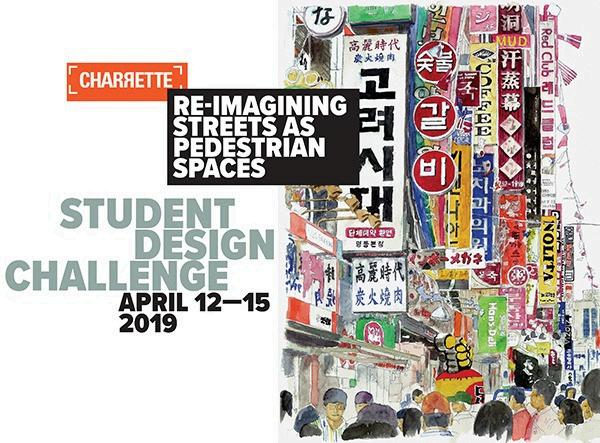
2019 Drexel Student Design Challenge
Re-Imagining Streets as Pedestrian Spaces

Led by Studio GAON
Charrette Brief Contents
Readings and Resources
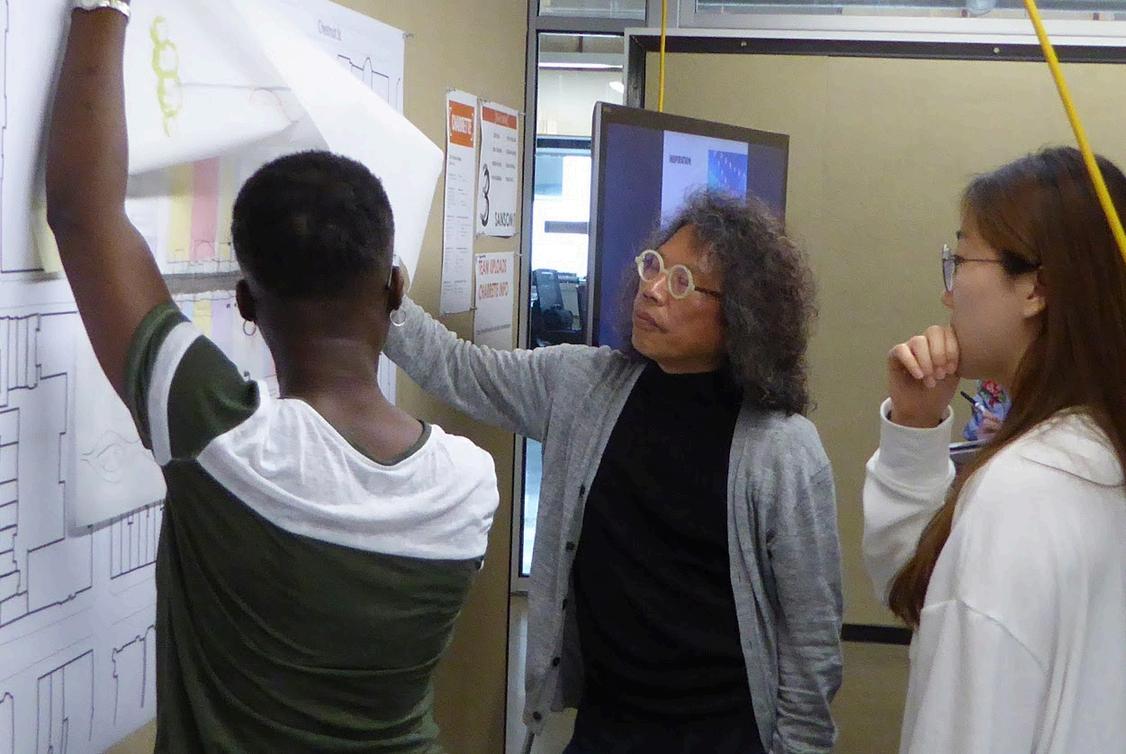
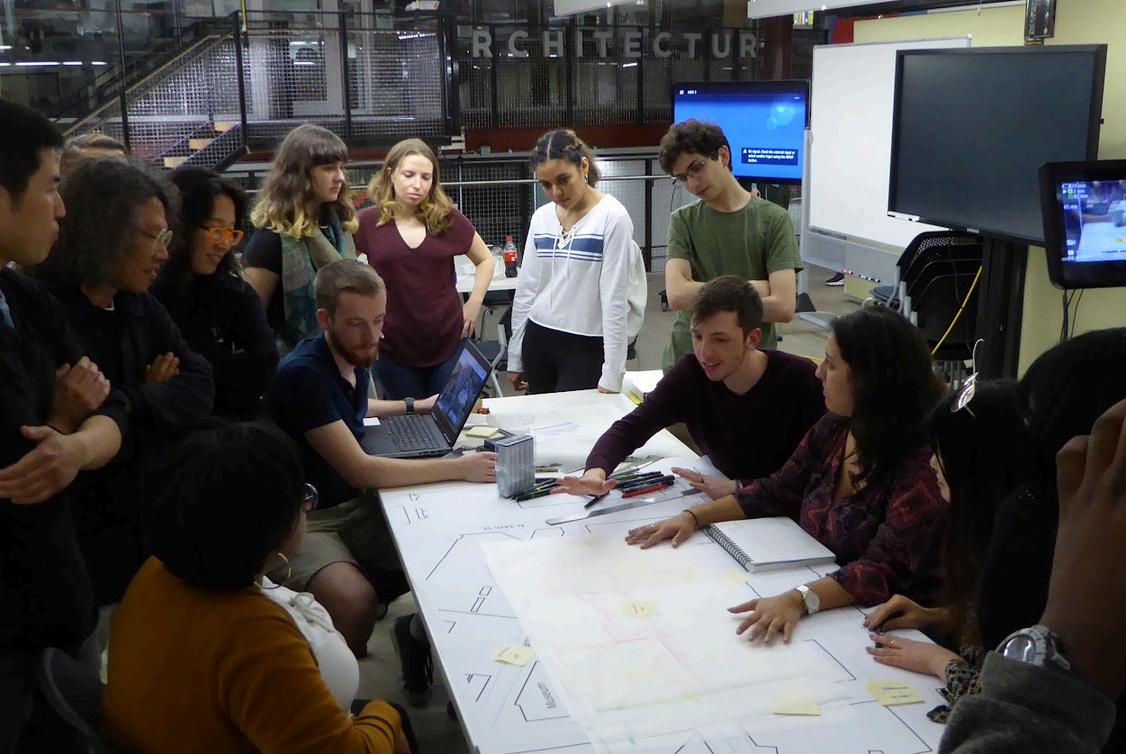
Since 2008, the Department of Architecture, Design & Urbanism has organized an annual interdisciplinary design charrette. Drexel students from all majors and departments can participate, be part of a design team, and contribute their expertise and unique point of view. The charrettes typically draw 50 to 100 students and require three to four days of intense, creative brainstorming and collaborative design.
Cameron Sinclair (co-founder of Architecture for Humanity) orchestrated the first charrette in 2008 and it considered health and educational facilities for the desperately poor in selected locations across the globe. In the succeeding years, faculty have organized the charrette, selected projects for disadvantaged neighborhoods in Philadelphia, and invited outside experts and faculty to assist the students and critique their final projects. In 2011, the charrette was coordinated with the professional designers who were hired to create the Drexel campus master plan. The 2017 charrette was led by the partners of Snohetta, and focused on sites located along the 34th Street corridor linking Drexel to the Powelton and Mantua neighborhoods.
Faculty members observed that architecture and interiors students often assume leadership positions on their design teams while integrating the strengths and assets of other team members whose backgrounds can range from nursing to film to law. Through their design abilities, they become advisors and facilitators while respecting various viewpoints and approaches. They are able to negotiate the needs of different users or stakeholders and convince people without design backgrounds of the importance and the positive impact successful design can have on the environment. Many students comment in their post-charrette evaluations that their participation was one of the most enjoyable and empowering learning experiences of their college career.
Introduction
Over the past several years, the Department of Architecture, Design, and Urbanism and the Department of Design have hosted a series of weekend charrettes aimed at engaging students with ways in which design can address public space and community dynamics at both local and global scales. Previous projects have looked at water access, campus connections, transportation networks, and community identity. Notable figures in design such as Cameron Sinclair and Snøhetta have participated and shared their expertise in past years.
This year, Lim Hyeung-Nam and Roh Eun-Joo, partners in the award-winning design firm studio GAON will be guiding the charrette which will focus on modifying the urban fabric of Philadelphia to create areas of pedestrian-only access. The intent is to recognize the existing characteristics of the areas and propose design interventions that are appropriate and feasible, while also forward-looking and imaginative.
Sites have been chosen in Center City and University City in areas that allow for new narratives and transformation of the pedestrian fabric of the city. Within each site, the goal is to create urban interventions that are useful to the local area and could be realized. Each site encourages its own set of design constraints and design potential. For each of the sites, designs should consider:
Potential to transform the urban fabric
Narrative of the site
Cost, sustainability, and maintenance
Community identity and graphic branding
Accessibility
Charrette Site Information
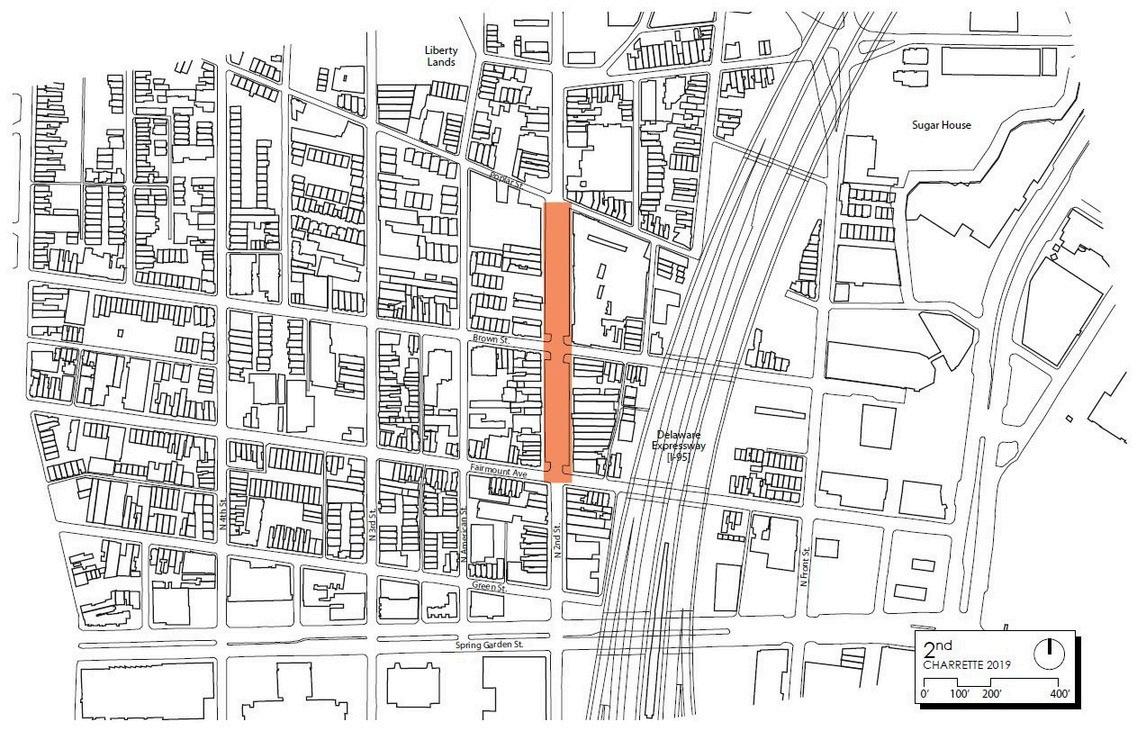
Site 01 2nd Street
Between Fairmount Avenue and Poplar Street
Charrette Site Information
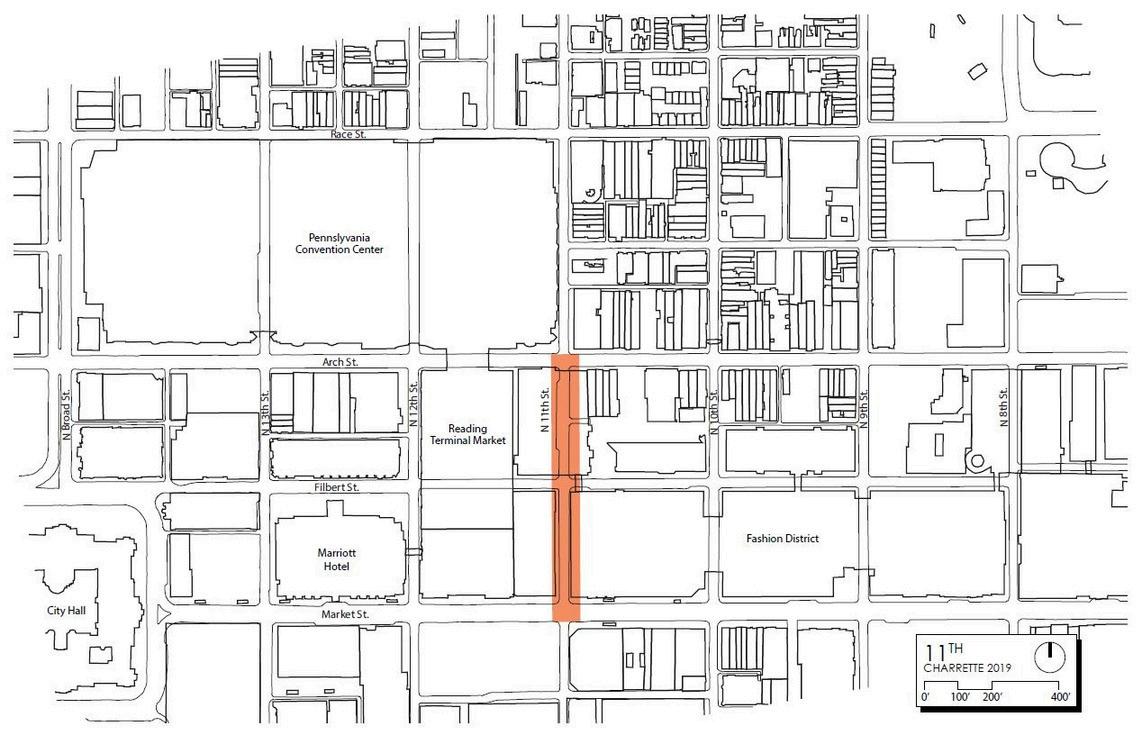
Site 02 11th Street
Between Market Street and Arch Street
Charrette Site Information
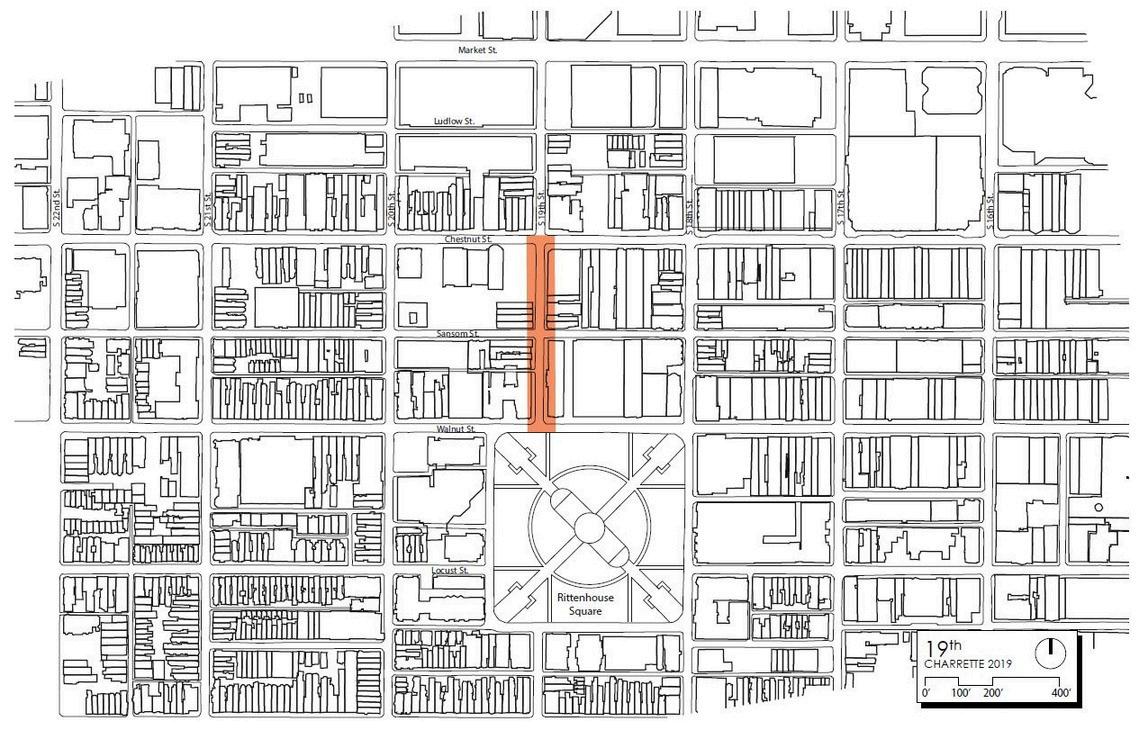
Site 03 19th Street
Between Walnut Street and Chestnut Street
Charrette Site Information
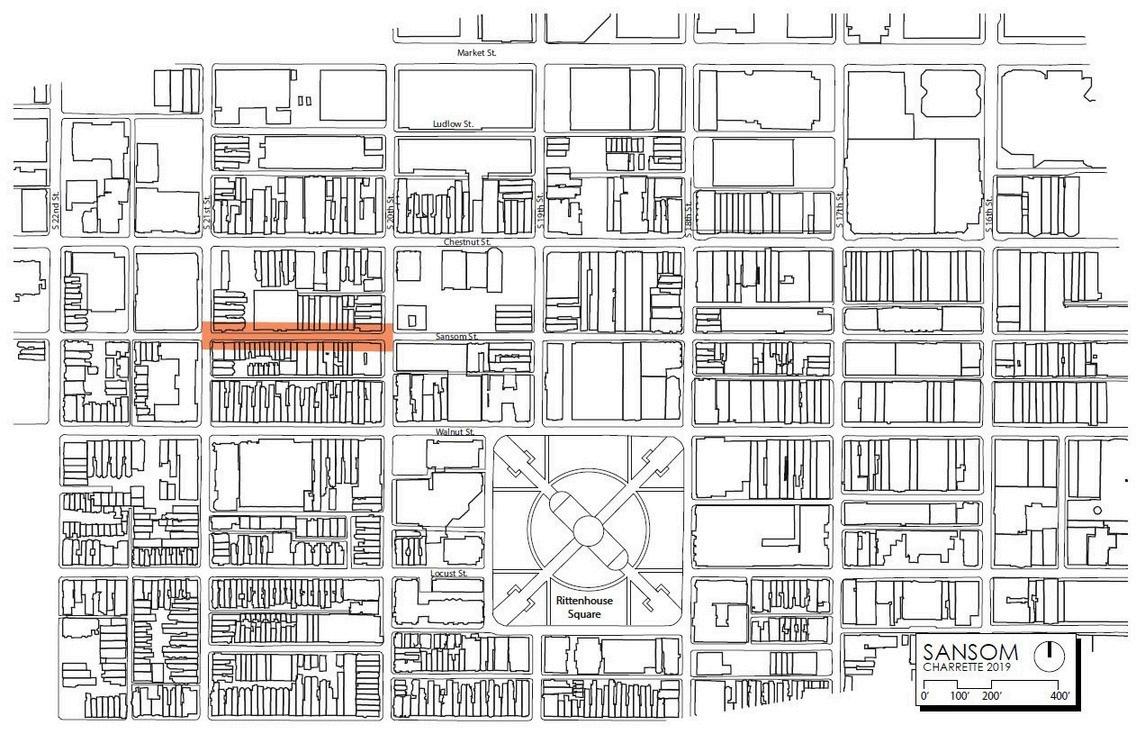
Site 04 Sansom Street
Between 20th and 21st Street
Format and Presentation
Final Presentation
Final work will be presented in the 1st floor gallery of the URBN Center on the evening of Monday, April 15th. Each team will be assigned a wall space where they will display their work and discuss their design proposal with the jury teams. Teams will be given 5 minutes to present their work and all team members are encouraged to speak. Please rehearse your presentation in advance.
Presentations shall address (1) the main idea of the design proposal, (2) the potential impact the proposal will have on the site and the local area, and (3) the design process the team used to develop the proposal.
The verbal and visual narrative shall address the new pedestrian connection and how the experience of the site will be transformed or enhanced by the design intervention. Also indicate ways in which the design affords or encourages civic engagement, within the site and beyond.
Presentation Format
Teams are expected to format their work on one 3’x6’ plot of the street and up to eight (8) color 11x17 sheets. Teams are encouraged to show process development sketches and models. Presentation documents should include a written narrative of the design proposal; site plan; detailed plans and sections as required; perspective views; and process documentation.
Digital Submission & Printing
All teams are required to submit digital files of their presentation work by 10am on Monday April 15. Files should be uploaded to the SharePoint site “Charrette 2019” and saved in the appropriate folder under “Team Submissions.”
2019 Charrette Schedule
Thursday, April 11, 2019
Studio GAON Arfaa Lecture
Friday, April 12, 2019
Introduce charrette Team/site assignments
Site exploration / Dinner
Introductory design exercise Wrap-up
Saturday, April 13, 2019
Site visits in teams
Lunch
Site exploration pin-up
Work time
Dinner break
Work time
Sunday, April 14, 2019
Morning kickoff
Work time
Lunch break
Work time
Dinner break
Work time
Arfaa Lecture 6:30 Mandell Theater
Charrette Kickoff 5:00 URBN Center 4th Floor 6:00 7:00 8:00 Filbert Street
URBN Center 4th Floor
Charrette Workday 9:00-12:00 12:00-1:00 2:00 3:00-6:30 6:30 7:00-9:00
Lunch provided, URBN Center 4th floor
Team alcoves
Informal comments from faculty
Dinner provided
Charrette Workday (9:30-7:30, URBN Center 4th Floor) 9:00 9:00-12:00 12:00-1:00 1:00-6:30 6:30 7:00-9:00
Coffee/breakfast snacks provided
Lunch provided
Dinner provided
Prepare for presentation
*all work must be submitted to print queue by 10am on Monday 4/15
Monday, April 15, 2019
Submit print and digital files
Charrette team presentations
Reception
Charrette Presentation (4:00-7:00, URBN Center Lobby)
10:00am 4:00-6:00 6:00-7:00
URBN Center Lobby
URBN Center Lobby
About Studio GAON
Lim Hyoung-Nam and Roh Eun-Joo founded studio GAON in Korea in 1998. They have designed and built numerous projects that attempt to achieve a precise balance of the traditional with the contemporary, the natural and the artificial and only consider their works to be finally completed by the passage of time.
Process
Studio GAON have developed a design process rooted in understanding site, expressly through drawing. Their work is not defined stylistically but by a sensitivity to place. They are attentive to the physical features and the patterns of occupation especially as they change or develop over time. In their built work they highlight connections and separations between spaces, creating nuanced sequences and layers of movement. They are interested in harmonies with nature and urban history, understanding that places are completed by time.
As a way of understanding the work of studio GAON, the Charrette will begin with an introductory exercise on the block of Filbert Street directly behind the URBN Center. Students will observe and document the block through drawing and, working in teams, will develop design proposals for the street to be closed to automobiles.
Readings and Resources
Required Reading to Frame and Focus the Charrette
J. H. Crawford, “Wicked Cars,” from Carfree Cities, 2000. Jan Gehl, “First We Shape the Cities –Then they Shape Us,” from Cities for People, 2010. Jan Gehl, “Sitting,” from Cities for People, 2010. Jan Gehl, “Beautiful Cities, Good Experiences” from Cities for People, 2010. Gehl Institute, “Twelve Quality Criteria” (guide to evaluating quality of places) Project for Public Space, “What Makes a Great Place” (diagram of place-making attributes) https://www.restreets.org (guide to issues concerning successful street/space design that features best practices and case studies) https://en.wikipedia.org/wiki/Car-Free_Days (world-wide effort to encourage life without cars)