

EDiTor-in-ChiEf / courtney denton
arT DirECTor / julie parladé
EDiToriaL EDiTorS / danielle brief + victoria sibalich
aDvErTiSing DirECTorS / hannah cohen + adrienne mireau
phoTography DirECTor / shan cerrone
STaff / jessica blatz, lindsay brock, lisa desantis, giuliana marcucci, jessica mattern, taylor murphy, amanda rosenthal, hilary waks + maeve walker
phoTographErS / megan dehmelt , bonnie saporetti, julia silva + lacee toyama
faCULT y EDiTorS / catherine byers + nick cassway


Luvaas said. “When you’re talking about something that happens primarily online...that becomes rather difficult to do.” Urban Fieldnotes became an outlet for Luvaas to do experientially what anthropologists do in order to develop a greater understanding of what it means to be a street style blogger.
When asked if his blog was an extension of his research, Luvaas insisted they were two integral halves of the same whole. He uses his blog to study the more inaccessible facets of the profession of street style blogging. At the same time, his blog is used to highlight individuals who represent elements of their respective subcultural grouping through the way they dress.
“In some ways there’s no separating of the two,” Luvaas said. “From the very beginning, the purpose of the blog was to use it as a research vehicle for an investigative study of street style bloggers, how they do what they do, the networks that they form amongst one another.”
Words Courtney Denton photos Shan Cerrone
a
Bill
Cunningham. Scott Schuman. Tommy Ton. These are a select few of the photographers who have worked to redefine the formula of street style photography as it has grown in prominence over the past 50 years. These visionaries seek to capture the defining values and attitudes that characterize modern society, values that become apparent through the way people dress.
Brent Luvaas, an anthropology professor at Drexel University and the man behind the blog Urban Fieldnotes, examines the vehicle of street style photography through a rather different lens.
Luvaas began publishing his Philadelphia-based street style blog in March of 2012. As both the sole writer and photographer, Luvaas assumes the role that many have taken before him, but the information he seeks to cull is of a distinctly different nature. On Urban Fieldnotes, the subject becomes secondary to the process.
“I really wanted to do something that’s much closer to what anthropologists traditionally do, which is participant observation, where you’re directly involved with the people that you’re studying for a long period of time,”
Luvaas describes his previous work as focusing on what he calls cultural production under a condition of massive globalization and new media technologies. He spent the last 10 years examining the growth of Indonesian designers and musicians who developed networks outside of conventional channels of production and distribution. This means that rather than using major record labels and existing department stores to distribute their work, these designers and producers distributed their work through their own collectively founded shops or pooled their own resources to host a concert or festival. The bulk of that research was published in his 2012 publication “DIY Style: Fashion, Music, and Global Digital Cultures.”
Luvaas studied as an undergraduate exchange student in Indonesia in 1996, where he discovered an arts and production oriented subculture that had forayed into the digital realm. It was within this collective of young creatives that Luvaas noted the growth of blogs, and personal style blogs in particular. He immediately recognized how street style blogging was similar to traditional anthropological practices, especially concerning his own research, which sought to determine how his subjects’ personal style fit into larger social processes. Luvaas unwittingly embarked on his first street style project when he began to document stylistic examples of the subcultures that emerged from the creative communities of Indonesia.
Luvaas said he has seen the same explosion of stylistic references here in the United States. In decades past, an individual could be associated with a specific subculture or cultural movement by the way they dressed. The current generation is much more educated and diverse, Luvaas said, and this is due in no small part to their access to the internet.
“ i try to . . not question why it is that i ’m taking somebody’s picture, but simply to react to something that is apparent about them that strikes me in some way”
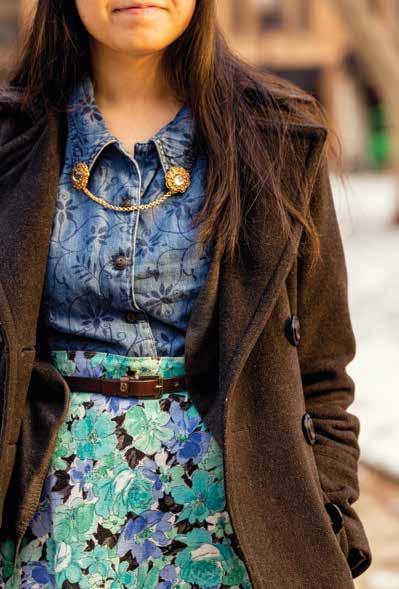
l uvaas stresses the importance of relying on instinct over any and all visual cues .
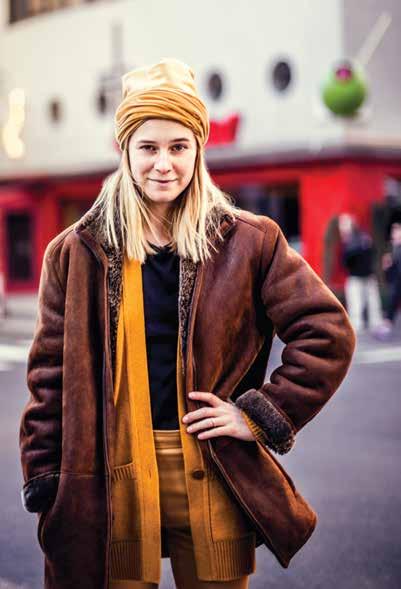
“Just as in Indonesia, the people that I end up photographing... almost always end up being involved in creative production in some way or another,” Luvaas said. He cited artists, musicians, designers and even individuals who work in retail as falling into a niche where a particular amount of effort is put into personal appearance. According to Luvaas, a deep connection exists between these subcultures of creative production and a desire to look cool or cutting edge.
“Most people have kinds of jobs that don’t allow that experimentation and certainly don’t encourage them,” Luvaas said. “The kinds of people who get shot in street style are the kinds of people who are involved in these larger processes of cultural production.” According to Luvaas, cultural production is defined as fields or activities through which a society’s shared ideas, beliefs, values and perceptions about the world are shaped. Mass media, art and literature are all examples.
When scouting for street style subjects, Luvaas said he tends to go through phases. Often he looks to feature individuals who adhere to a subcultural visual standard, such as the selfproclaimed sneaker heads who perch themselves on the window of UBIQ on Walnut Street. Other times he is drawn to people who simply look put-together or dressed with intention. However, Luvaas stresses the importance of relying on instinct over any and all visual cues.
“What I try to do is what other street style photographers have told me they do, which is just to depend on instinct, and to not be thinking about what it is I’m looking for at all,” Luvaas said. Instead of questioning why he is taking someone’s picture, he reacts to the initial, pre-articulate energy emitted by his subjects.
He has dubbed this instinctual, discerning sense his “style radar.”
New York Fashion Week was the perfect venue for Luvaas to observe some of the most established street style photographers in action. He spent his first day loitering outside of Lincoln Center, and from there he followed the pack of photographers from show to show. Luvaas said he knew he was at the right place at the right time when he saw well-known photographers like Scott Schuman of The Sartorialist and Phil Oh of Street Peeper waiting with their cameras poised.
“When I’m out shooting in Philadelphia, I’m just kind of wandering the streets until I find people that strike me for some reason,” Luvaas said. The process is time-consuming and not consistently rewarding, with some excursions yielding only a single subject, he said. On the other hand, fashion week is populated by a constant stream of individuals posing and waiting to be photographed. There is almost no time to address that initial instinct, Luvaas said.
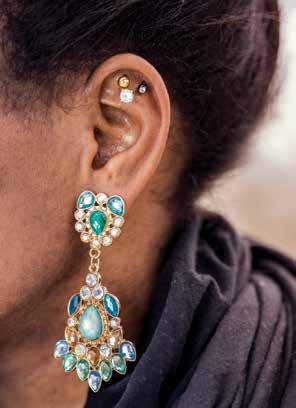
“You are in some ways reacting more to other photographers than you are to the person themselves,” Luvaas said.
“My project is very much about emulating what other street style photographers and bloggers are doing,” Luvaas said. He cites Scott Schuman of The Sartorialist as inspiration, both due to Schuman’s pioneering efforts in the concept of street style photography and his consistency. Cinder and Skylark, a blog out of Cape Town, South Africa, and On The Corner out of Buenos Aires are two of several blogs Luvaas looks to for a more diverse global perspective.
“By and large, I try to… not question why it is that I’m taking somebody’s picture, but simply to react to something that is apparent about them that strikes me in some way,” Luvaas said. He admits certain motifs appear to exist in his work, but those themes are analyzed at a later point. What Luvaas does admit is that there is a universally accepted concept of cool, one that spans cultures and social classes, and he is on the hunt to find out exactly what that is.
To both fully understand Luvaas’ findings and put them to the test, the d&m Magazine team scoured the streets of Philadelphia in search of their own street style subjects. With our instincts as our guiding force, we came across the individuals you see featured here. Just as Luvaas predicted, an overwhelming majority of these individuals were involved in a field of creative production, with their professions ranging from art collector to dancer, actor and entrepreneur.
t he story of a ahana: a nonprofit organization started by d rexel student
r ina p atel
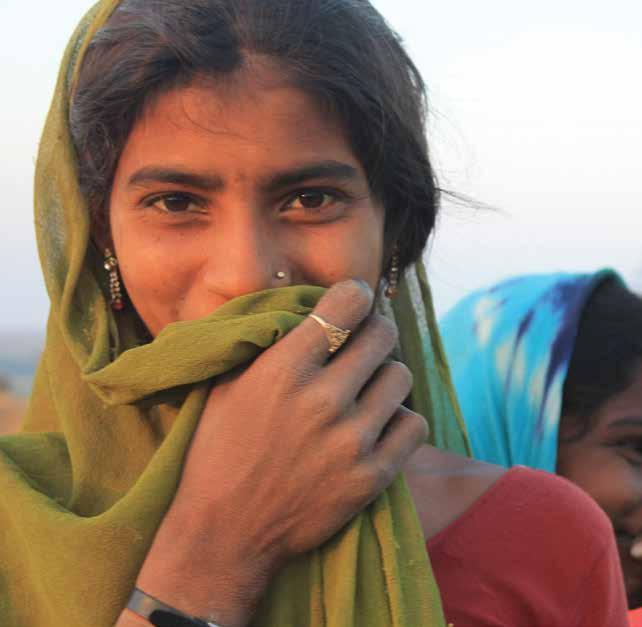
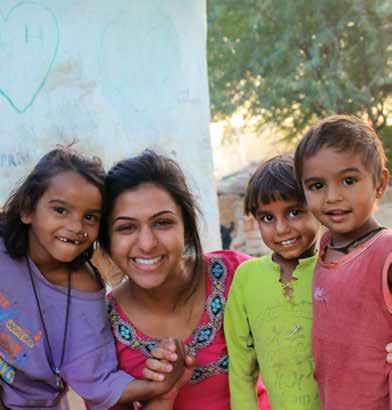
Aahana, a female name of Hindu origin, means “first rays of the sun,” which inspired the name of the nonprofit organization started by Drexel pre-junior, Rina Patel. The driving force of Aahana is to benefit impoverished women and children in India. Patel chose the name of the organization because of her belief that each child deserves equal opportunity and is as bright as the first rays of the sun.
Patel’s parents were born and raised in poverty in India. Her mother experienced firsthand a lack of education after being pulled out of school in seventh grade and then marrying Patel’s father at the age of 15. After witnessing the same kind of poverty her parents struggled with during a trip to India, she was determined to make a difference in the lives of the underprivileged.
“When I go to India, I see how bright these kids are and how much potential they have. The only thing they need is the inspiration and the resources.”
Patel spoke of a “nagging feeling” that she would have each time she returned to the United States after a trip to India. She explained the feeling: “It made me want to get up and run back to India and do something, do anything.” This inspired the birth of Aahana and formed the essence of Patel’s compassion.
“trying to understand our cultural differences has always been something that will motivate me to move further ”
The biggest struggle for Patel with Aahana is the distance between Philadelphia and India. Patel goes to India for one month each year, which according to her, isn’t enough time. Another issue is the cultural barrier. Patel explained, “Although I am Indian, I was born and raised in a completely different culture. My parents taught me everything there is to possibly know about our religion, culture and language, but it still isn’t the same. The mentality, especially in the more impoverished parts of India, is very different from what I am used to.”
Aahana has grown far beyond Drexel’s campus and is an active student organization at nine universities nationwide. To date, Aahana has donated approximately $17,000 to Mamta School in Gujarat, which deals primarily with orphaned and disabled children. Since Aahana has gotten involved in the past year, the school’s enrollment has risen from 30 to 55 students.
“The school uses its money for food, clothes, bedding and pretty much anything else the school needs. We help fill in the gaps of any donations the school has not yet gotten in India.” Although Patel is pretty close to being superwoman, she doesn’t do all of the work for Aahana by herself. Patel’s dad makes a lot of the phone calls to India, assisting with the cultural differences. Patel’s mom goes to India with her each year, and Patel’s sister, Mita, handles all social media and public relations.
Patel has given a lot of thought to what lies ahead for Aahana. She hopes to one day expand the school and provide girls with lessons on nutrition, women’s history and empowerment. Eventually she hopes to begin financing initiatives to help the community prosper. She plans to spend at least six months in India after graduation then start a career in the states, and eventually return to India and dedicate herself entirely to Aahana.
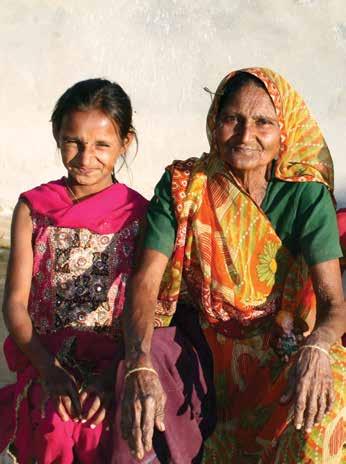
Patel’s inspiration comes from her family and from the children she has worked with in India. She has forged a lifelong relationship with Usha, one of six sisters who grew up uneducated in a village stricken by poverty. “Girls like Usha are barely given encouragement to do anything past get married, do farm work or housework.” She is determined to help girls like Usha discover the joy of education, a dream that is realized through nonprofits like Aahana.
The moments that Patel spends with the people of India are the most precious. She says she treats her months there like gold because she knows how much they mean to the community. Her time spent in India witnessing the impact of her organization far outweighs the difficult work that goes into running a nonprofit. The recognition in people’s faces when they see Patel upon her arrival is priceless.
“My decision to start a nonprofit organization is probably the best decision that I have made and will make in my life. I absolutely love what I do and hope that I can inspire others to do the same.”
N
with amy stoltzfus
Words
a fashion design student shares her skills with an island village in africa
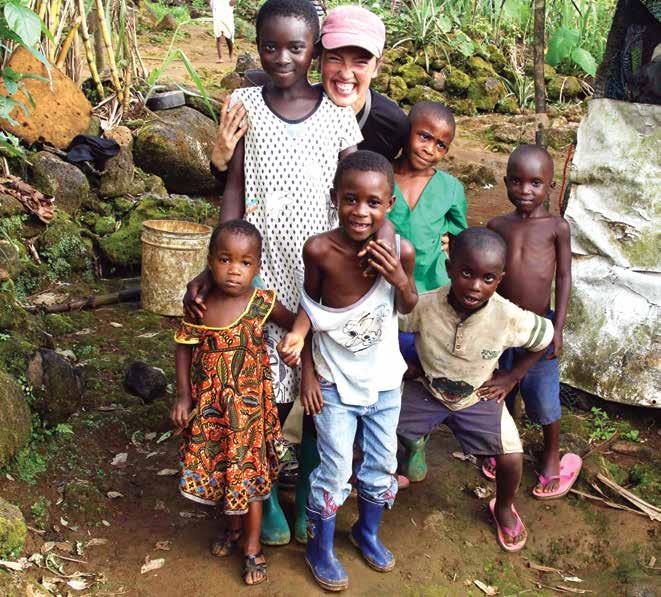
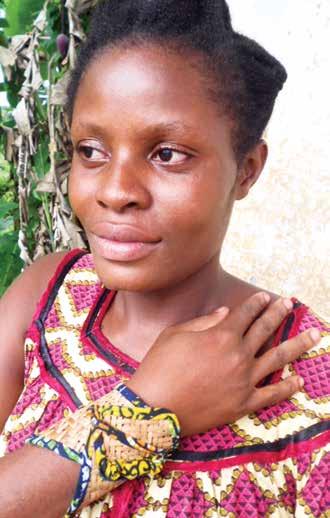
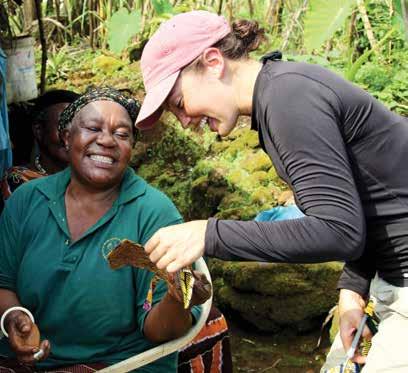
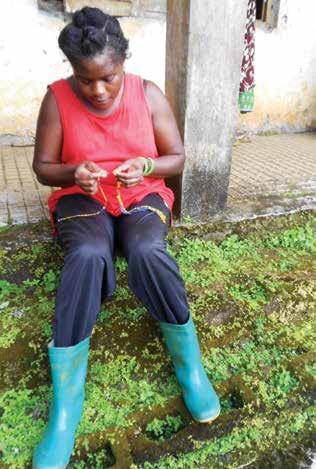
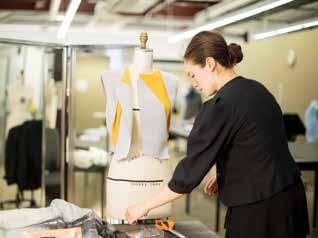
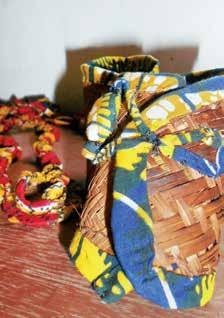
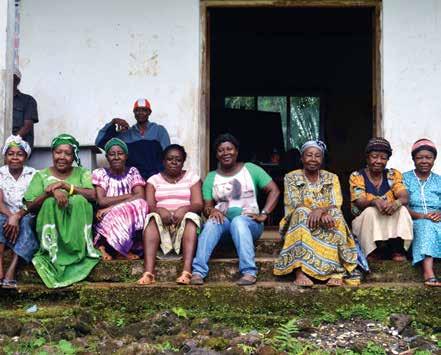
Amy Stoltzfus instantly grabs your attention with her charisma and contagious smile. Along with her compassion and desire to help others, she has a knack for design and creativity. She was able to use all of her skills while on her co-op with a special program in Bioko, an island 17 miles west of the African coast. The Bioko Biodiversity Protection Program is part of an academic partnership between Drexel and Universidad Nacional de Guinea Ecuatorial, which focuses on conservation and research in Bioko. The BBPP incorporates many projects, including the Bioko Heirloom Project in which Stoltzfus worked diligently for six months. The mission of the project was for women of the village Ureca to handcraft jewelry from indigenous materials and sell them on the island. These materials are all-natural or recycled and do not include animal products. Stoltzfus worked with the local women to promote both traditional and contemporary design concepts. She shared her experience and offered a new way to look at what it means to be a fashion designer.
t ell me a little about your background.
I’m from Lancaster, in between the urban part and the farmland. When I graduated from high school, I went to Messiah College to be an art teacher. I had to double major in education and art. I played field hockey, did jazz and sang in gospel choir. That was from 2006 to 2008. After that I still had this core desire to do something in fashion, so I left Messiah and got my associate degree at the Art Institute for marketing in fashion design. Then, the economy tanked and I had a lot of problems trying to find a job.
h o W did you make your Way to d rexel?
Thanks to my family, I was given the opportunity to go back to school for fashion design, which is where my heart has always been. As soon as I visited Drexel’s campus, I knew this is where I wanted to be. I loved the diversity and having all the different colleges in the city. I’m so happy I chose this school.
h o W do you like being a Fashion d esign major? What are the pros and cons?
Oh boy… well it is definitely time intensive. You’re always going and constantly thinking. It’s like your brain doesn’t turn off! For example, I saw a bowl of cigarette butts the other day. I had to take a picture because the texture was so eye-catching and I wanted to use it for a print. In fashion design, you are stimulated by everything. It can be exhausting at times. I’m definitely sleep deprived, but it’s totally worth it.
h o W did you F ind out about the bbpp ?
Shaya Honarvar is a research biologist here at Drexel, and is one of the first field biologists of BBPP. She came to the Fashion Design department and approached us about the program. I wasn’t sure if I could afford to go. I told her I’d be able to put 100 per cent of myself into it if I had the funds. Thankfully, they were able to finance me, and I got the co-op abroad scholarship.
What made you pick that co-op program compared to ones in other countries or even here in the u . s .?
I was always interested in international co-ops, not just a business environment. I love working one-on-one with people, and I didn’t think I would have gotten that in a corporate job. I wanted to really apply myself and help people, so the BBPP program was perfect.
Was there a typical day F or you in aF rica?
No, not at all! My job there was to show women how to sew and make jewelry out of all-natural materials. It was to help them do work while they were at home. They weren’t allowed to go out and join the workforce, which was strictly for men. This program helps create sustainable jobs for women so they could make souvenirs for the island.
What Was the best and W orst part about being abroad F or six months?
Seriously roughing it and camping for six months was tough. It was such a culture shock. When we first got there we had to haul the food from the boat to the campsite, which took two days. The boat to get off the island rarely came. We got there in September, and it didn’t come again until Christmas. You have more free hours because you don’t have technology right at your fingertips. We had a satellite phone, and got to make one phone call for the entire trip. I was only able to have a two-minute conversation with my parents. I actually loved it. To be honest, it felt very liberating to not deal with technology and things like that.
What is the island’s dynamic like?
The capital of the island is prosperous, even for a third-world country. The main parts of the island include the capital, then you travel down to the farms and agriculture. Finally, there was the reserve and the rainforest where I stayed in a place called Ureca village.
h o W Was your initial meeting W ith the W omen o F the village?
When I first got there, Shaya Honarvar told me I had full-rein on the project. The first time I brought my sketches over, it was mayhem. I eventually was able to sit down with the women and Shaya told me to just show them something. I showed them my sketches and how we were going to take the basket and shape it around the wrist and make a bracelet and other types of jewelry. You could tell they were initially very standoffish and hesitant.
h o W Was your F irst day W ith them?
The first day, I realized how slow they were with their sewing skills and basic hand stitching skills. We had to make it a step-by-step process and reorganize how we were going to work this. For example, they didn’t recognize that a 1” stitch length, a ¾” stitch and a ⅜” stitch length were inconsistent. We had to make them conscious of the little things that they wouldn’t have noticed. The first day made me realize we weren’t able to do as many things as we thought. However, if we were able to teach them a few basic skills they could grasp and be comfortable with, we would be able to work better.
What Was your most success F ul project W ith the W omen?
The necklace which was made with basket parts. We made a strand with some of the pebbles of the island, which was cool because they were volcanic. We tied and twisted fabric around them to create links. When the women saw that, they understood and it made it their most successful project.
Was there a material you used the most W ith them or Was it a variety o F materials?
We had to have some consistency with them so they knew what to look for, otherwise it would be overwhelming for them and too time-consuming. We recycled ideas so there was that consistency which they needed. We worked with the basketry, pebbles, fabric and needle and thread throughout the project.
What did you do in the village besides W ork?
I felt really fortunate because I was able to do a lot on the island. I got to stay with people from the embassy. I got to visit the compounds of the oil workers because that’s who funded the program. It was weird because I had to dress up and be professional for these trips in a totally different way than I had to be at work. I went out with people and co-workers in the evening and would meet so many different people from other countries.
c an you provide a ny insight on your senior collection?
I want to focus on textiles and pattern design, while incorporating recycled products and materials. My goal is for the garments to reflect different types of people like couture, maternal, disabled, etc., all while having the unifying theme of textiles and patterns.
h as being in aF rica in F luenced your senior collection?
I’ve always been interested in reusable materials and being in Bioko influenced that even more. In the southern part of the island, due to the currents, waste would wash up on shore so the locals would reuse and recycle whatever products they found there. There would be people walking around with two different shoes on simply because that’s what they found. I definitely want to somehow incorporate that in my collection.
d o you have any plans a F ter d rexel? a re there any areas you are particularly interested in?
I’m really into research in design, designing samples and prototypes, textiles and expanding materials. I’m looking at jobs all over the world and am looking into working visas in other countries. There are many technicalities depending on U.S. public relations and specific companies in that country.
do you have a place in mind?
I would love to surround myself in eastern European countries because I love their culture and textiles. Geneva, Isabel, Toledo or even Japan would be amazing. Commes des Garçons is my favorite brand too. The are quirky and odd and play with every aspect of design.
go to bioko.org to find out how you can be a part of it and make a difference
Words + photos Shan Cerrone
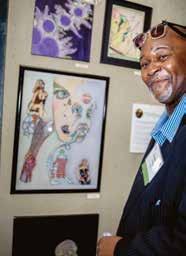
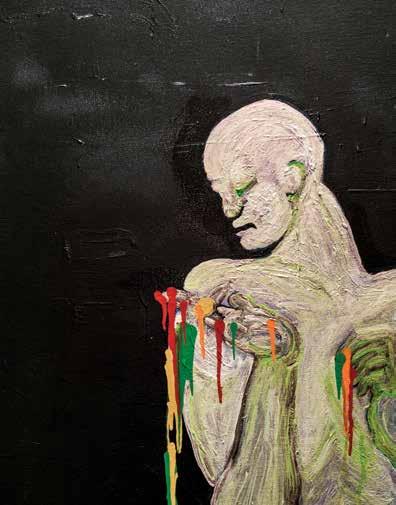
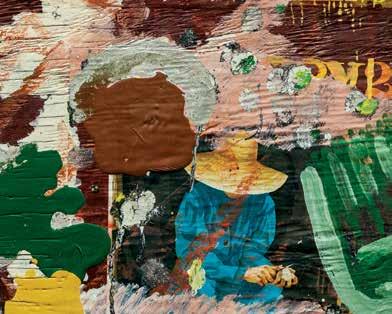
Homelessness is a terrible thing. No matter where you live, people are struggling to get by. Humanity is resilient, but even in the 21st century more people are fighting to survive than ever. In Philadelphia, there are many organizations trying to change that, but there’s one program that’s taking it even further. Located at 1515 Fairmount, Project Home strives to get people shelter for life. What makes Project Home even more special is its art program. As just one of its many services, the open format art program provides a community where residents can escape and express themselves through drawing, painting, sculpting or working in mixed media using the program’s resources. Shihee Walker is just one of the people who bring the program to life and has found his path through it.
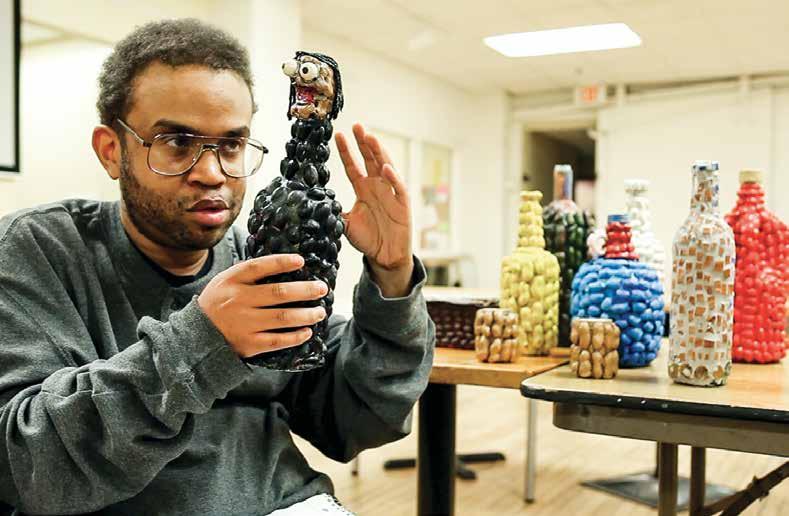
At the Project Home art program, there’s an artist for every form of media, from photorealistic pencil drawing to watercolor to graphic design. For Walker, the media is found and recycled object sculpture. While many paint away on a canvas, Walker spends his time finding discarded materials like old bottles and vases, which he builds upon until they become exactly what he wants.
Walker takes his craftwork very seriously, and he takes a spiritual approach to his work. Each item he chooses has incredible significance to him. “Basically, the inspiration for me making the work is, when I see the items I feel as though God gives me the vision to make these pieces,” he says. Giving his life to the church as a convert in 2008, Walker believes God shows him the final product of the object he has found before it’s even set on the work table. Walker says that creating his art through spiritual motivation has helped him achieve his dreams in life. Less concerned with money, Walker sees everything he creates as an expression of praise.
The physical process Walker takes to create his sculptures starts with different recycled bottles and jars, then coating them in various textures. He finds an object, then covers it in earthy clay to use as a “canvas” to create upon. The process is timed, letting the clay sit to dry just enough to be firm, but still malleable enough to form and change depending on the coating. Once the clay is at the perfect moment, Walker begins adding texture through the use of glue combining with the malleable clay. Sometimes the textures are created from chunks of
tiling or rocks, but a common theme has been to give the sculptures an organic look by using split nut shells, tightly packed against each other. Once the shells have set, the painting process begins with coating the bottle either entirely or selectively in Walker’s chosen colors, which are usually vibrant. Once painted, the process is completed. Walker often names his pieces, sometimes by the spiritual motivation behind them: Shades of Gray, Prayer Box, My Flag, Yellow Jacket and Angel Hair. One piece in particular Walker holds dear is his Prayer Box. Unlike many others appropriated from abandoned bottles, this piece was created from a child’s shoebox. Adding a cross on the lid, the box serves as an object of reverence, where Walker puts thoughts of loved ones or wishes for safe keeping and prayer unto the Lord that he cherishes. Walker has great aspirations for his artwork, outside of the personal and spiritual goals it has helped him achieve. Through Project Home he has great resources to show his artwork and collaborate with other artists, but his next goal is to pitch his projects to the Art League of Philadelphia. Describing his particular style of craft as “Folk Art,” Walker wants to work with others sharing his point of view in the city and ultimately have his sculptures shown in galleries.
At the end of the day, Walker places his faith in God, knowing no matter what success his art finds, God has a plan for him. “I know that he has a plan for me. When it comes to things in general, I know who has my best interests at heart, and who doesn’t have my best interests at heart. But I have to remind myself, it’s not about them, it’s not about me. It’s about glorifying God because at the end of the day it is him who gets the glory and nobody else.”
How to Volunteer: To help make a difference, create an account on the volunteer page of Project Home’s website (projecthome.org), fill out a volunteer application, and attend an orientation. Group sessions are on Mondays from 3-5 pm, where you can mentor residents with their art and keep them company while they work. You can also volunteer setting up galleries of Project Home artwork, which occur throughout the year at various venues throughout Philadelphia.
“ i feel as though god gives me the vision to make these pieces . ”
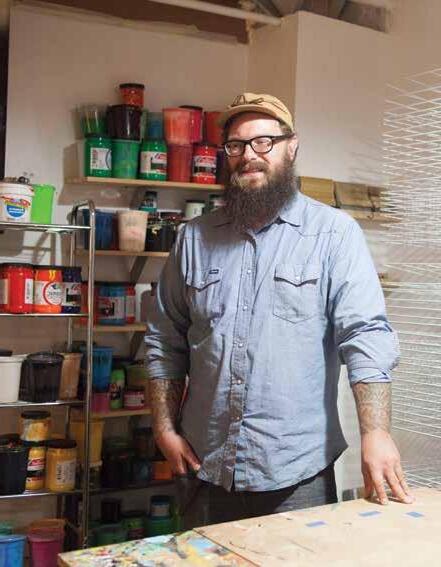
More commonly known as Pink Bike Ralph, Ralph Stollenwerk is a screen printer located in Philadelphia. He currently runs a personal screen printing company under the name Pink Bike Ralph along with the popular Awesome Dudes Printing, both located in South Philadelphia.
At the start of his career he was hired and worked for a design company in Philadelphia. Within a year he learned this career path wasn’t for him, leading him to quit and work independently. He began to print posters and t-shirts for bands and concert venues and his business has grown to be an established screen printer known throughout Philadelphia.
He opened Awesome Dudes Printing in 2007 on South Street. Since its inception, Awesome Dudes Printing has relocated multiple times in order to accommodate the ongoing growth of the business. They are now located on the corner of 6th and Reed Streets. When asked about the growth of his business, Stollenwerk said there are both positive and negative aspects. As the company grew larger, an increase in the number of employees was needed which also meant an increase in salary costs. At the same time, he said one perk to this success was the ability to hire friends and provide them with jobs.
Stollenwerk prints for companies both in Philadelphia and in other parts of the country. In the summer of 2013 he was hired to print shirts for Mumford & Sons, which required him to travel away from Philadelphia and join them on their tour. He has also printed for Florence Welch, lead singer of Florence and The Machine, a connection which led him to the Mumford & Sons gig. He also attends music festivals each year where he sells independent prints at a booth.
Aside from printing for bands and concert venues, he also prints for restaurants, bars, tattoo shops, walks and anything else you could imagine. According to Stollenwerk, several benefits of printing for local Philadelphia-based companies include free drinks from bars he prints for and the joy of walking down the street and seeing people wearing his shirts.
Stollenwerk believes that Philadelphia is a hub for screen printing. His friends include several local screen printers. He said it is possible to make a living screen printing as long as you have the ability to set your own deadlines and make sure to follow them. He advises, “Never say no to a job no matter how small it could be.”
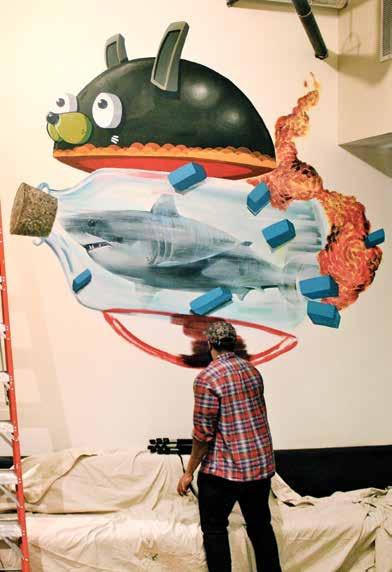
In the past two years he has had work exhibited in Philadelphia, New York, Houston, California, and Newcastle in the United Kingdom. He says, “I get to travel, meet new people, and it just builds and builds. I love even the negative things of being tired and having a lot to complete. I love that challenge of accomplishing it and it feels good when you do, which you always do because you care about it.”
Aside from doing mural and gallery art, he has been hired to do artwork for companies such as Federal Donuts, Converse, Adidas Philly, Nickelodeon and was recently commissioned to do a piece for Drexel. When asked about working for different size companies he says there are ups and downs to both. For larger companies the budget is bigger which is a positive. According to Goodwin, larger companies offer more exposure and more compensation. On the other hand, smaller companies offer artists the opportunity to bond with them. They are more passionate about the work being done, which is something that’s more rewarding in the long run.
Yis Goodwin, also known as Nosego, is a Philadelphia-based artist with a passion for illustration and media art.
Growing up in Philadelphia, he attended both high school and college for art. While in school he tried to benefit as much as possible from class and took advantage of the opportunities of educating himself at a young age. Since then Goodwin has been involved with the Mural Arts program in Philadelphia by teaching younger artists. He expressed his desire to give back to the younger generation the way others gave to him, and hopes that the people he helps will continue the cycle of giving.
Nosego creates both large-scale murals as well as smaller scale artwork to be featured in gallery spaces. He noted the differences of scale throughout his body of work: even though murals are larger, they provide a stress relief for him. It’s an artform he’ll continue to pursue no matter what, because it’s a way of life. The ability to have his public artwork impact the community and inspire people is something that he enjoys.
In terms of Philadelphia, he thinks that the art scene in this city is just about to take off. According to Goodwin, he will be involved with an international art festival in 2014 that will feature several artists from all over the world.
As for his thoughts on leaving Philadelphia because of the growth of his career, Goodwin said it’s a question he’s frequently asked, but Philadelphia is his home. He feels Philadelphia is an underdog city and, like a family, it offers tremendous support. He wouldn’t move to New York because he thinks artists can stay in Philadelphia and still be successful; it just depends on how motivated they are. Years back, a friend told Goodwin that he could not be an artist living in Philadelphia and had to move to New York City. If it had been the 1980s, he said might have been forced to do so, but looking back he has no regrets. “Nowadays, it’s easier to make work from anywhere, especially with technology which allows you to show your work to people all over the world even if you’re just sitting on your couch,” he says.
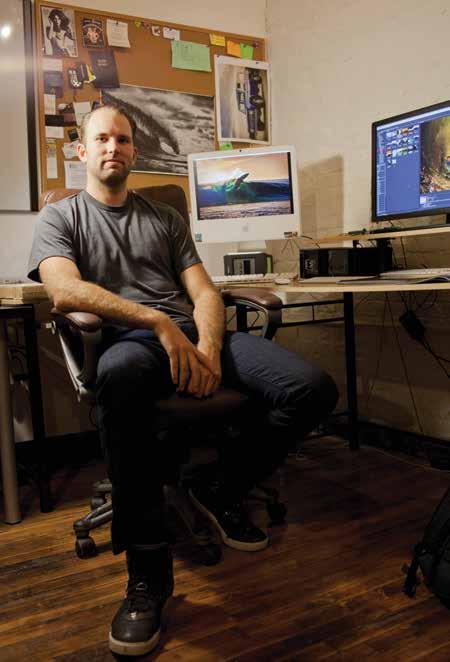
Trevor Moran is a Drexel University graduate who has been working in Philadelphia since graduating with a degree in photography in 2001.
After co-op, he was able to continue to work for his boss Pier Nicola D’Amico, a photographer who is based in Northern Liberties and shoots sports, entertainment and other types of advertising photography. He said there’s only so much that school can teach you, so he felt it was important to continue with the job in order to learn as much as possible. He worked for D’Amico for about six years on nearly every project. Moran says he owes a great deal to her and all the people he met through his former boss during their years together.
According to Moran, he currently spends half of his time traveling for surf photography. However, he shoots for Urban Outfitters when he is in Philadelphia. He says it allows him to work in a creative environment with people from many different artsoriented backgrounds who are interested in sharing ideas while also helping each other grow.
Surfing, however, is what drew Moran to photography. During his teen years, he began traveling the world to go surfing in new or strange locations. While at Drexel, and for the years following, Moran maintained that interest but wanted to experience other forms of photography as well. After spending years honing his skill sets and business savvy, he felt more prepared to pursue his passion in surfing photography.
Moran says that surf photography requires him to work harder than other jobs. He wakes up at 6 a.m. every morning, potentially risking his life in big waves, and he often gets sick while traveling to remote countries. He works 15-hour days for weeks in a row, often spending thousands of dollars on a trip. However, it’s both the challenge and the adventure that Moran is most excited about.
He recently won the Follow the Light grant, which is awarded each year to one aspiring surf photographer. It’s a $5,000 cash prize, funded in the name of Larry Moore who was a photographer and editor at Surfing magazine for over 30 years- the most prestigious publication in the world of surf related journalism. Trevor told me he made it a personal goal to win this award, not so much for the money, but for the respect and possibilities it can open up down the road.
In terms of the future, Moran’s first goal is to be recognized as one of the hardest working photographers in the game. He believes that if he works as hard as he possibly can at something he’s deeply passionate about, only good things can happen. He would love to get to a point where he’s running a sustainable business and is using an art form to ensure financial security, but that’s all further down the line.
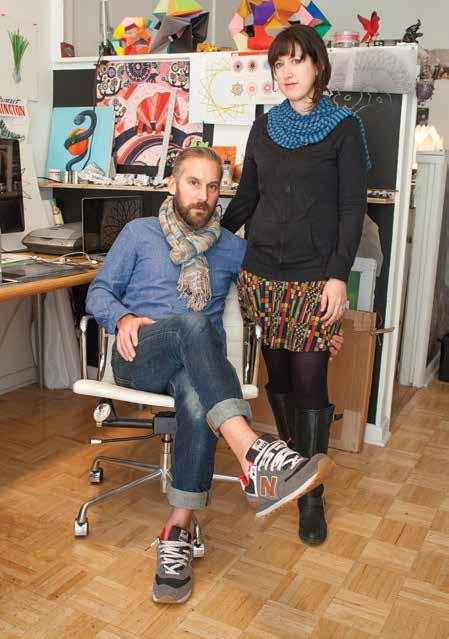
Gina and Matt Curtius are two illustrators who successfully live and work in Philadelphia. After attending Maryland Institute College of Art, they originally moved to New York City. After living in Brooklyn for several years, they decided to relocate to Philadelphia. Philadelphia offered cheaper rent, an easy gateway to New York by train or bus and a respectable art community to help them grow.
Though Gina and Matt are independent illustrators, they work through an agent who finds them projects that allow them to live anywhere. With the advancement and conveniences of technology, most of their business is handled by email and over the Internet. They discussed the simplicity of doing business today without relying on fax machines and being close to a Fed Ex location in order to ship work quickly to clients.
With the current elevated rent prices in Brooklyn, the Curtius don’t think they would have been able to live the way they do now. Overall, the lack of stress over the cost of living is one of the great benefits of living Philadelphia.
As for the art community in Philadelphia, Gina and Matt said it was important for them to be located in a community with artists who would inspire them. Since moving here years ago, the art community has steadily grown to include a number of locally based illustrators. Aside from being inspired by the other local artists, the small community they live in here also animates them. Matt noted that a simple trip to Philadelphia’s Italian Market inspired one of his recent illustrations.
As for advice for younger artists, they feel that Philadelphia is a great place to immerse yourself, especially for people aspiring to be entrepreneurs and work independently in their field.
t hroughout p hiladelphia exist a handful of smaller museums that are unknown even to many p hiladelphians .
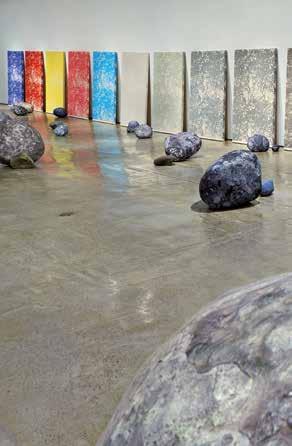
i. ThE fabriC workShop + MUSEUM
1214 a rch s treet
While the Fabric Museum and Workshop was founded with a focus on textiles, today the organization has broadened its vision to include a wide array of materials and media. The museum incorporates both display areas and workshops and offers residencies to emerging and established artists. The museum’s entrance is unassuming. You might pass by without noticing. But stop and go in. There’s also a fine gift shop on the first floor.
m on- f ri 10-6
s at & s un 12-5
ii. ThE MüTTEr MUSEUM
19 s outh 22nd s treet
m on-sun 10-5
Fascinated by bones, skeletons or the mystery of the human body? The Mütter Museum is a gem in Philadelphia that offers visitors this and much more. Donated by Dr. Thomas Dent Mütter in the mid-19th century, the Mütter Museum is considered America’s finest museum of medical history. Mütter originally created the museum to improve medical education. The Mütter Museum also displays the mysteries and beauty of the human body and focuses on the history of diseases by showcasing beautifully preserved anatomical specimens, including the Hyrtl Skull Collection. Anyone that has an interest in human anatomy or for learning more about science should visit the Mütter.
2027 Fairmount avenue
m on-sun 10-5
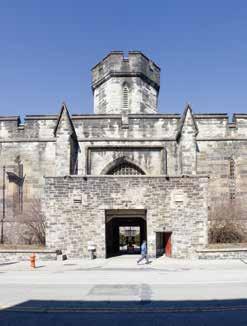
When it opened in 1829, the Eastern State Penitentiary was groundbreaking for its architecture and the way inmates were treated, which was less harsh than earlier in the 19th century. The prison became a model for prisons throughout the world. During its history, the prison housed notorious criminals, including Al Capone and robber Willie Sutton. In 1971, Eastern State became an historic site, offering tours and special events. Be sure to visit in late October for “Terror Behind the Walls,” one of the scariest Halloween tours in the city.
118 s outh 36th s treet
The Institute of Contemporary Art (ICA) at the University of Pennsylvania is a popular museum that features relevant contemporary artists. The ICA’s philosopy is that the viewer should have an experience beyond that of simply observing a piece on display. The visitor’s experience should be aesthetic, intellectual, political and social. In order to help accomplish this, the ICA is admission-free.
m on & t ue closed
w ed 11-8
t hu & f ri 11-6
sat & sun 11-5
2008 d elancey p lace
m on closed tues & f ri 10-5 w ed & thu 10-6 sat & sun 12-6
The Rosenbach Museum and Library in Center City was built in an 1860s townhouse and features the two Rosenbach brothers’ collection of rare books, manuscripts, furniture, silver, paintings, prints, drawings and sculpture. This collection of rare books includes James Joyce’s manuscript for “Ulysses,” original drawings by children’s book author and illustrator, Maurice Sendak, who created “Where the Wild Things Are,” and rare photographs by Lewis Carroll. A key element to The Rosenbach Museum and Library is the homey atmosphere of the townhouse and the staff who lead you through, sharing their insights about items on display and their former owners. This is an internationally recognized museum that is a perfect spot for people interested in literature, art and history.
Words Taylor Murphy

i n a d ream by Jeremiah Zagar documents the Philadelphia-based artist Isaiah Zagar between 2001 and 2008, when he created the complete mosaic work of the Magic Gardens located on South Street. Throughout this film the viewer is exposed to both Zagar’s mosaic art work, his inspiration and the personal family details that had a major impact on Zagar’s body of work.

t he a rt o F the s teal by Don Argott follows the controversial decision to move the Barnes Foundation art collection from the Philadelphia suburbs to a new museum on the Benjamin Franklin Parkway. Respected cultural organizations and many local politicians are painted as villains who undo the wishes of the collection’s original owner, Dr. Albert C. Barnes. The film is filled with intrigue, and at times seems like a classic art heist noir caper.

m ade in a merica by Ron Howard documents the ‘Budweiser Made in America’ music festival that has been produced in Philadelphia since 2012. The film explores the development and thought process behind this festival which was spearheaded by Jay-Z. The film showcases the artists who performed and the benefits both the city and the people attending the concert experienced.
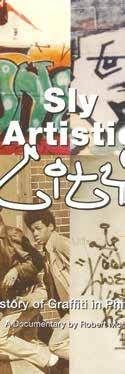
s ly a rtistic c ity by Robert Moran documents graffiti originating in Philadelphia and the figures who played a key part in creating it. This film is composed of interviews with taggers who discuss the culture of the city at their time of tagging, the format and style they were known for and how they view their art today. Interviews include graffiti artists such as Cool Earl, Kool Klepto Kid and the former mayor, W. Wilson Goode. This is a unique look at the roots of graffiti and the impact it had on a city.

l et the Fire b urn by Jason Osder tells of the conflict between the radical liberation group MOVE, which advocated a back-to-nature lifestyle and preached against technology, and the local police action that took place in West Philadelphia in the mid 1980s. Conflicts between these two groups included a police raid in 1978 of the group’s Powelton Village home and a bomb dropped by police on MOVE’s house in 1985. By creating a historical documentary with only found-footage from the past, Jason Osder is able to accurately show the sequence of events that occurred during this time. Let the Fire Burn is a non-biased trip through controversial events that would eventually lead to 11 deaths and the subsequent questionable actions by local authorities.

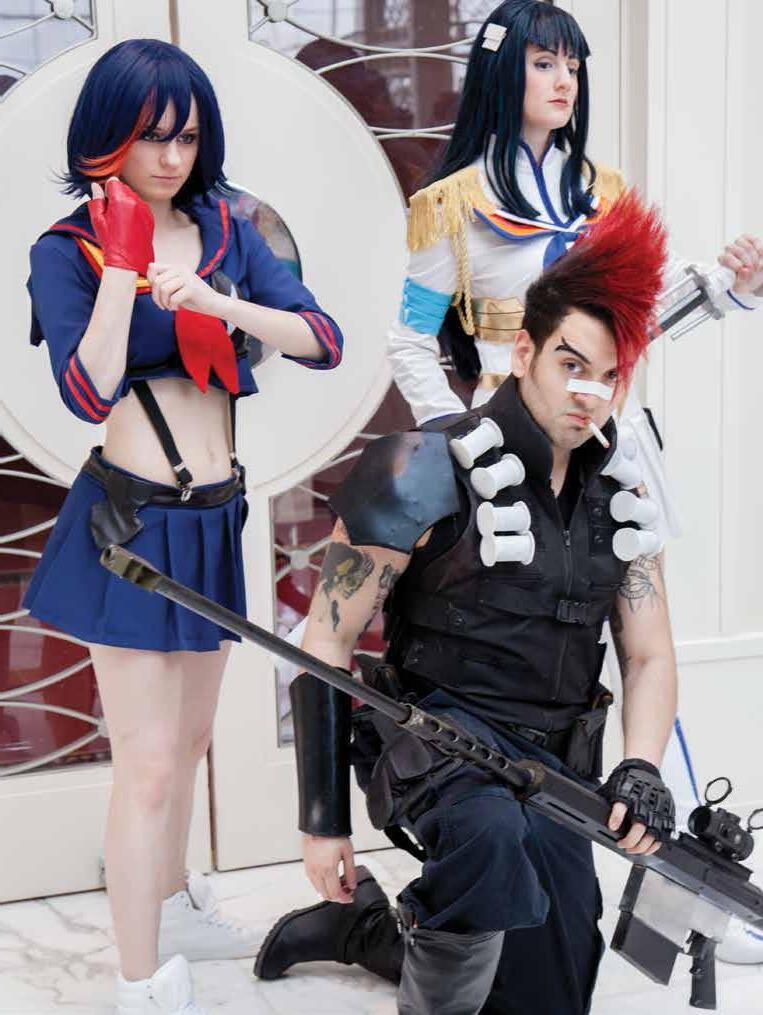
CARtoonS, CoMICS, SCIenCe FIC tIon A nd vIdeo gAMeS: It LookS LIke the geekS h Ave tA ken oveR.
People are role-playing right and left. Have you ever wondered why people dress up as comic book characters or strange cartoons? Or do your classified nerdy friends go to conventions and follow on social media women and men dressed up in costumes? If so, they are following the trend of cosplay.
What is c osplay?
Cosplay is simply the short word for “costume play.” It is an art that started in Japan as a pop subculture in the 1980s. Both women and men dress up in costumes and various accessories that originated in comic books, anime, science fiction and even popular video games.
d o c osplayers j ust b uy t heir c ostumes?
Cosplayers are actually participating in the world of fashion. Many cosplayers design and sew their costumes themselves. Cosplayers such as Jessica Nigri and Monika Lee, both famous in this realm, are examples. They hand-make each costume they wear. There are cosplayers who will purchase the costumes rather than crafting themselves. If the cosplayer is a professional, it is likely that they have done the crafting themselves, even down to making their own patterns. Some of the fantasy-lovers have no prior experience sewing or designing, but their costumes still win awards.
Where d o c osplayers c osplay?
These men and women take on the different roles of the characters that they portray. In order to showcase their work, they attend conventions. Every year there are over one hundred fan conventions worldwide. The most famous convention is Comiket held in Japan, which draws hundreds of thousands of fans from all over the world. There are also very famous conventions in the United States: New York Comic-Con, San Diego Comic-Con (which is the largest outside Asia), and Anime Expo in LA. At these conventions, fantasy fans intermingle with one another and enter into competitions to win awards for their costumes and role-playing. World Cosplay Summit, held appropriately in Japan, is the largest of those competitions.
Why d o p eople c osplay?
Cosplayers become passionate about masquerading as someone else. They appreciate the character for its attitude, back story or physical appearance. Sometimes, the character resonates with the personality of the cosplayer. Melissa Murray, known as Lissie Rose online, discovered her love for cosplaying when she saw cosplayers at a convention. Her explanation really sums it up, “I’m sure any cosplayer will tell you that they love being able to just be someone else for a little bit. You’re in a different city, wearing different clothes, among people with whom

you have things in common. It’s a freeing experience.” They might even become famous. As Andrew Wendl, a cosplayer new to the scene, experienced when he and his roommate dressed as Dinkleberg from The Fairly Odd Parents, “We were a hit. We had people come from all over to take pictures of us.”
Cosplaying has become a paying profession in which women and men will invest all of their time into the creative process. They are paid to make appearances at events through sponsorships from specific gaming companies. For example, Nigri, a cosplay celebrity, designed a costume after Juliet Starling from LolliPop Chainsaw as a result of the character’s parent company sponsorship.
Why s hould y ou c are?
Believe it or not, cosplay is an ever-growing business. Several costume companies have become specialized in cosplay. They create costumes directed at video gamers, comic readers and anime watchers. These companies, such as Limebarb, make the costumes to-order. Limebarb is a company started by Barb Staples, a fashion designer that the New York Times covered in 2010. For some cosplayers, the passion has become a profession. Murray says, “Last fall I was hired as the costume designer for Cardinal O’Hara High School’s fall show ‘Curtains.’ It was the best experience I could have asked for and I’ve already been asked back to costume.” She has done seven commissions. Companies thrive on cosplaying with costumes ranging from $20 to $800. Conventions and events have been created to serve the needs of cosplayers and their fandom. Professionals have emerged, becoming cosplay models who hire photographers and graphic artists to create posters for them to sell. A single cosplayer can create his or her own online store and sell out within just a few hours – just ask Lee, Nigri or Nicole Jean Marie (all cosplay celebrities) who constantly restock. Fans will spend over $200 at conventions in order to purchase tickets to see their favorite actors, characters and game creators talk at panels. Statistics show that cosplay has become, and continues growing as, a multi-million dollar industry. Next time you see people dressed up, remember there is an entire subculture and business solely based on costume play.
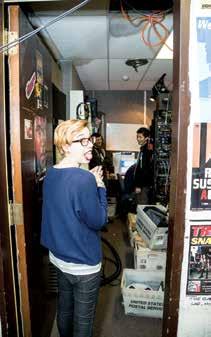
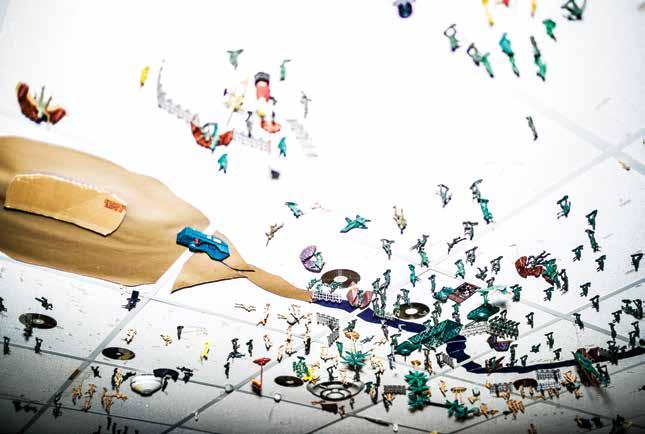
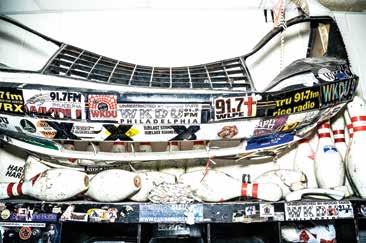
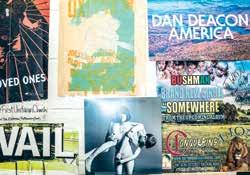
radio and events that are geared toward meeting fellow radio station personnel. WKDU competes for the annual awards with thousands of other stations – and in 2010 and 2011, it was awarded with Champion of the Local Scene and Station of the Year.
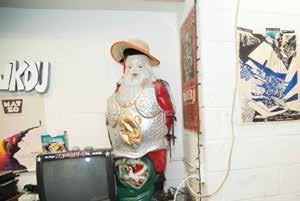
a final on-air test that is pass/fail and finally, an interview with a few members of the executive staff.
Once a student becomes a DJ at WKDU, there are many opportunities for moving up. There are appointed positions as well as elected positions on the executive staff. The appointed positions include Music Director, Logs Director and Public Affairs Director. These jobs are extremely important to the station’s everyday functions. The elected officials include Treasurer, Public Relations Director, Personnel Director, Production Director, Program Director, Station Manager and General Manager. Each executive has very specific powers and duties that help the station run at its best.
“ i believe in student-run radio, and this is my way of keeping it going ”
WKDU 91.7 FM is Drexel University’s (and Philadelphia’s only) freeformat non-commercial radio station. Even after deciding to come to Drexel University, incoming students might not be aware of this radio station, despite the fact it has been a Philadelphia institution for over 40 years.
The programming at WKDU is different every day. With breakfast, enjoy some records from alumni DJs playing punk and noise rock. From morning drive time onward, a mixture of indie rock and pop keeps the listener feeling upbeat. On the drive home, hear lively R&B and hip hop music along with a talk show. Prime-time hours are full of electronic music, for exercising or partying. Because WKDU doesn’t have humans behind the board 24/7, there is an automatic DJ to keep listeners company even in the wee hours of the night when insomnia hits.
WKDU has won multiple awards for Best Radio Station from Philadelphia Magazine, as well as CityPaper. WKDU is also well known for its Caribbean and Jamaican music, providing wins from 2003-2009 for Best Local Jamaican Radio station.
Most notably, WKDU has won prominent awards at CMJ. CMJ is an annual weeklong conference showcasing radio stations and bands from all over the country. There are panels discussing the future of
WKDU was started in 1958 as WMAX, a “carrier-current” station, meaning that it broadcast as a very low-frequency AM station that didn’t even need an FCC broadcasting license. It was renamed WXDT in 1962, in preparation to be transitioned to an FM station. In 1971, WXDT was granted ability to share the 91.7 FM frequency with WPWT. WPWT was Philadelphia’s Wireless Technical School, which used the frequency from 2 pm-10 pm Monday through Friday, so WXDT DJs could occupy all other time.
Between 1972 and 1973, WXDT officially became WKDU. Since then, WKDU has increased its power from 10 watts to 110 watts, and then from 110 to 800 watts. The wattage ultimately determines the coverage within the city of Philadelphia. 800 watts means WKDU reaches to City Avenue in the North, the Navy Yard in the South, Overbrook in the East and Cherry Hill in the West. In 1990, WPWT stopped broadcasting, giving WKDU full access to the 91.7 FM frequency. WKDU is owned by Drexel University and operated by Drexel students and alumni.
Getting involved at WKDU is a relatively easy process. It requires eight hours of listening to new music that comes in from the music director and performing service to the station. Service involves cleaning, sorting CDs, organizing paperwork or helping out the music director. Simultaneously, a new member has to fulfill three sit-ins, learning the procedure of how to work the board and filling out logs required by the FCC. The process culminates with a log test,
Jamie Crymes is the current General Manager of WKDU. His job involves overseeing all DJs, appointed officials and executives, while curating new leads on events and connections. Crymes has been a DJ for three years, playing indie rock and punk music. Most importantly, he acts as a liaison between the station and Drexel University, along with WKDU advisor Larry Epstein, a faculty member in Westphal College.
Epstein’s job is to maintain communication with the student executive staff, offers guidance based on aligning with the University and help the station make big decisions.
As for the future of WKDU, Epstein sees that there will be many internal and external challenges, but has great hope for the future of the station. With technology changing on the outside and fewer people listening to FM stations, WKDU has to adapt.
“The whole secret to surviving on the radio, or in media in general, is to do something compelling that is also unique that you can’t get anywhere else,” Epstein explains. By differentiating their programming and offering listeners unique experiences, WKDU will continually attract and maintain an audience.
WKDU stands for so much more than college radio. It is an outlet for creativity, freedom and unbiased opinions. As many other media forms move to the Internet or fade into irrelevance, WKDU is still thriving. DJs support musical movements and events, inspire a community that inspires each other and promotes originality. The music community in Philadelphia would not be the same without WKDU – and with luck, that will stay the same for many years to come.
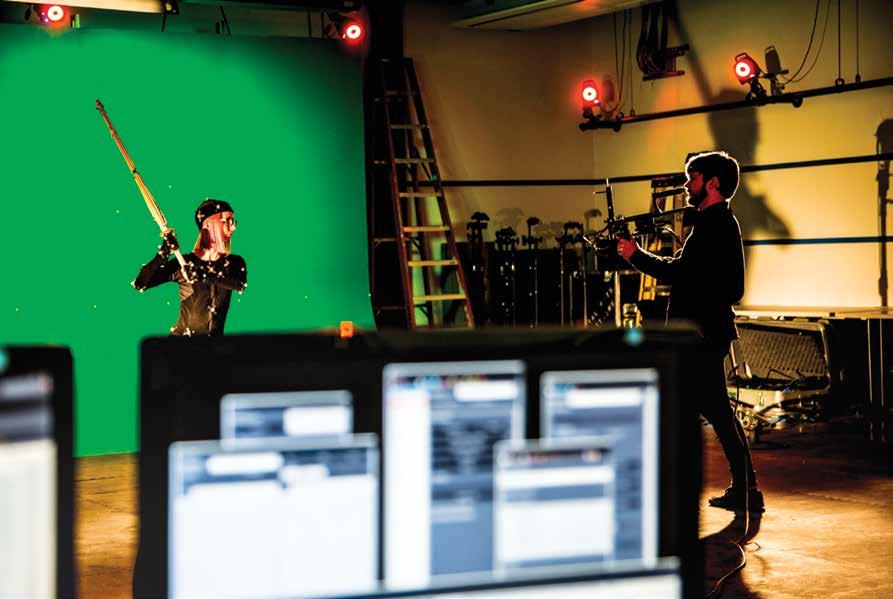
a l ook i nside t he m otion c apure l ab
Words
The arts are full of beautiful entropy, always changing and growing to reinvent themselves. Artists are constantly looking for a new form of expression, a new way to create. This is one of the most exciting things about art: it is fluid, it has movement. Art is motion. In a changing world of art determined to break the norms, how do you capture that motion? At Drexel, faculty and students are finding a way. The 21st century has brought new advances in technology, and along with them some amazing tools that are changing how we make and think about art through Digital Media.
Digital Media (DIGM) is the creative science that explores every form of entertainment these days, and Drexel is at the forefront of research. From critically acclaimed blockbuster animation and compositing to videogame design, and even biological skeletal paleontology recreation, the DIGM program explores it all. Boasting multiple collaborations with Intel, industry-founding professors, and the first ever NSF grant in gaming, Drexel’s DIGM program is one of the most-sought majors at the Westphal College.
The Motion Capture Lab, also known as ACE (Animation, Capture,
& Effects) serves both undergraduate and graduate programs in game arts and animation. Associate Program Director Nick Jushchyshyn gives us a tour of the facility.
“Here in DIGM we’ve got a multi-purpose lab, combining live action video and lighting on green screen with 16 high-frame-rate cameras feeding live data to a computer. We put a performer in the space wearing a black suit with reflector markers, akin to GPS markers. The cameras act like GPS satellites to track the location of the markers, which then get plotted to an environment in the computer and mapped through software to digital 3D models to perform the same movements in real time.”
With this technology, the lab puts students and research faculty ahead of the competition for creating the most realistic animations and recreations. Beyond animation, the lab has helped university wide research in fashion design, biometrics, and even paleontology. Visit replay.drexel.edu/about.html for more information about the program.
In early 2002, director Barry Sonnenfeld and effects artist Rick Baker were on the set of a soon to be summer blockbuster, looking for someone to stand in as an alien working in a post office. It went something like this: “Hey, who looks like an alien… Oh, get John!” The next thing he knew, the VFX supervisor for Industrial Light and Magic – John Berton – was laughing in costume making a cameo appearance in “Men in Black II.” This fun and slightly quirky guy is one of the biggest names in computer graphics and visual effects and whose creativity and talent has helped shape the industry of digital media from its very roots.
Drexel Assistant Professor Berton’s story starts in the 1970s studying communications and film at Denison University and dabbling in radio DJ’ing. With his film background, he started working on analog video synthesis as a grad student at Ohio State, beginning to explore emerging technology fields. His peers were captivated by what he worked on but equally perplexed, and pointed him towards a man on campus named Chuck Surrey who had been discovering what computer graphics were capable of since the early ’60s.
“I had a massive revelation, because while people were looking at those [simple digital] pictures of a glass sphere bouncing on a mirror, it looks real but you’re telling me it’s not real and just a computer simulation of what’s real… At that point most of the people just said ‘What?’ My reaction was, ‘Wait a minute, you could make any movie you wanted with this.”
In an emerging technology, this kind of thinking is where Berton started to make his mark on the industry. Instead of creating models for research or defense industry applications like many of his peers, he took a completely cinemagraphic approach to Computer Graphics (CG). In a virtual world where you can place the “camera” anywhere you want, he took a Film 101 approach to how he would use this technology to tell stories rather than create overly flashy visuals, utilizing cuts and edits with creative narratives. His creative thinking about the industry allowed him early success right out of grad school, including some award-winning art film work in Germany. Just a few years later, this led to his tenure with Industrial Light & Magic (ILM), debatably the most successful and powerful motion picture visual effects house to this day. As a division of Lucasfilm, it was responsible for groundbreaking effects in the industry, beginning with “Star Wars.” At ILM, Berton used his talent to help shape some of the biggest films of the era, including “Terminator 2” and “Jurassic Park. “ In Berton’s own words, “Terminator 2” was the first film that entirely depended on CG to happen.
“Cameron took a big risk on it, it was an exciting thing to be a part of. Everyone in LA wanted a piece of it. ILM did it all on its own. Everyone thought that was a dangerous idea – but we hired good smart people and made it happen.”
Berton and that same smart group of people turned around two years later and made “Jurrasic Park,” proving that CG has the potential to work for more than a robot sci-fi flick – you could make “Avatar” with this.
In those days, Berton says that the learning curves were steep. They were just figuring out animation and creating this brave new world of filmmaking. When you have the ability to create an experience in theatre that can’t ever exist in reality, there is no limit to what you can create. For Berton, this doesn’t mean creating something so outlandish and glamorous that smacks you in the face with shock and awe. It means creating something that tells a story only your imagination can tell. Since the early days, he views things as somewhat flat-lining; the industry has hit a certain point of photo-realism in which an audience can’t really perceive the difference between 90 per cent and 100 per cent. “It used to be every film was a leap up, and now it doesn’t need to be”. With this in mind, Berton sees CG and VFX as tools paired explicitly with the narrative, tools which can’t truly exist on their own without greater motive. Citing “Life of Pi,” he says:
“These days the big leaps in the industry come in examples like ‘Life of Pi,’ which didn’t have any groundbreaking VFX, but what it had was incredibly well achieved VFX working in concert with a vision and story. It produced an amazing result and rightfully won the Oscar for it. It was more than a one trick pony. It was designed to tell a story. You don’t need to have 20 million spaceships to tell a story, you just need one target. That’s where the real artistry in VFX is today, it doesn’t need to be flaunted.”
With a career outlook about making the images that tell the story, Berton’s motives for coming to Drexel are all about shaping the next generation of digital artists and working on something beyond today’s technology. His message to his classes is simple: It’s a growing industry. You don’t want the jobs he had 20 years ago, those are in the past. It’s the job that doesn’t exist now that will exist in five years that their new skills here will prepare them for.
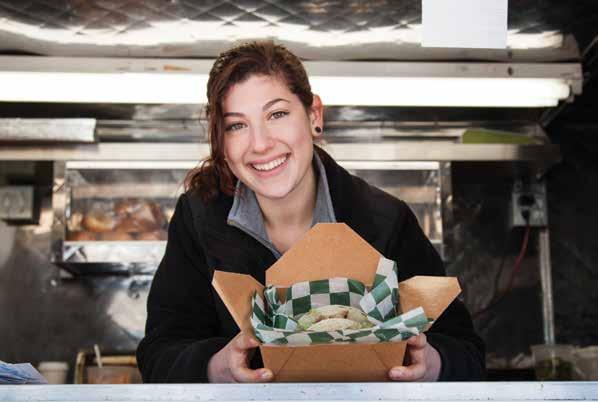
Words Lindsay Brock photos Megan Dehmelt
Food and trucks, such an unlikely combination. But for Drexel students, and many Philadelphians, they offer great food at great prices. But who and what are inside those trucks? Forget thinking that these are just dirty grills in the back of an abandoned school bus. One Drexel Culinary Science major, Perri Steinfeld, took us behind the scenes of one of Philly’s finest trucks.
Steinfeld is a Culinary Science major currently in her junior year at Drexel. Steinfeld has always loved baking and appreciates the science behind it. “By using specific measurements and following a step-by-step recipe, you can create something so sweet and delicious,” said Steinfeld. Her dream job would be to work in product development for a food corporation or to be a recipe tester for a food magazine. “I would be the person coming up with new flavors of Oreos or ice cream.,” she said.
Steinfeld got started in the lunch truck business by becoming friendly with the owner of her favorite truck, Street Food Philly. She used to frequent the truck about once a week for lunch, and would always order the truffle oil and parmesan French fries with the house-made ketchup. Mike Sultan, one of the coowners, was always very friendly to Steinfeld and she noticed his great customer service.
One day Steinfeld was waiting for her lunch and having a casual conversation with Sultan when he offered her a job working on his truck. She accepted the offer because she saw this as a good opportunity for experience and growth, even though she was reluctant to work in the culinary arts industry. She feared it would be overwhelmingly stressful. After letting her
new boss know that she was a Culinary Science major and had taken several kitchen classes, he asked if she would be interested in doing some of the prep work for the truck. Preparations begin around 9 a.m. on Sunday mornings.
“My typical assignments include chopping vegetables and meats, sautéing mushrooms, fire grilling peppers, pickling jalapeños and making sauces such as aioli,” said Steinfeld. One of her first assignments working for Street Food Philly was chopping an entire case of jalapeños. While she was working, several co-workers passing by her stopped and told her she should put on some gloves. She thought as long as she didn’t touch her eyes after working with the spicy peppers she would be fine and didn’t understand everyone’s concern for her wearing gloves. That night when she got home from work, Steinfeld remembers experiencing an overwhelming burning sensation on her beet-red hands. Immediately she jumped in the shower to try to calm the pain, but the warm water only made the sensation worse. After searching for “jalapeño burn remedies” online, she proceeded to fill rubber gloves with ketchup and stick her hands inside. Steinfeld said, “I smelled like a fast food restaurant but the ketchup worked to cool the pain”.
In addition to food preparations, Steinfeld works on the trucks Street Food Philly and Taco Mondo, assisting with food assembly and taking customer orders. Her favorite meal from Philly Street Food is a dry aged burger with French fries, and from Taco Mondo she loves the barbeque brisket tacos. “I work on both trucks but I only get to wear one t-shirt,” Steinfeld laughed.
Words Jessica Mattern photos Meghan Dehmelt
While Alex DiFabio was enjoying a coffee, we were interrupted three times by passersby who wanted to say hello. DiFabio’s charisma has given her a group of friends that extends far beyond campus. To be precise, DiFabio, a Drexel Design & Merchandising student, has over 140,000 followers on her YouTube channel, “aleexandraaxo,” over 19 million total views on her beauty and fashion videos and partnerships with renowned companies such as Tarte, Origins Makeup and Tresemmé. The magic behind this prominent YouTube channel is not a team of marketers or talented scriptwriters, but a down-to-earth Philly girl with an aim to be authentic.
“A lot of people actually tell me they think I’m relatable, I’m not one of those ‘YouTubers’…I’m a normal girl, I’m on a budget, I don’t spend hundreds and hundreds of dollars on clothes,” said DiFabio. She added that she also offers advice and tips, and she knows from her own obsession with YouTube personalities that people appreciate relatable advice over unrelatable glitz and glam.
DiFabio’s YouTube channel began as strictly beauty tutorials but has since evolved to include fashion lookbooks, “hauls” (unpacking recent purchases), videos focusing on her favorite products and even a spontaneous documentation of her new tattoo.
When DiFabio started her videos in 2007, teenagers putting their thoughts on a digital platform and posting them for the world to see was strictly a means of expression. But by 2014, DiFabio had a notable YouTube presence complete with profitable contracts, a manager to get her “gigs,” as well celeb-like spottings in public places. “There never used to be such cool partnerships you could get with companies…it’s a great way to advertise, and since it is so popular now, lots of companies go to YouTubers to advertise their product,” she said. “It wasn’t like that when I first started…now there are so many successful YouTubers that have made this into careers and have worked at great companies.”
DiFabio never thought she would be working with such big names in the fashion and beauty industry. Along with companies such as Origins, Glamour magazine and Tarte, she has participated in Google Hangouts with fans, completed virtual partnerships and was even featured in a national campaign with JCPenney, which DiFabio said was her biggest opportunity thus far. She and two other beauty YouTubers were flown to the JCPenney headquarters in Dallas, Texas to lead a Haul Campaign. This led to lots of free merchandise, an abundance of screen time and even a billboard featuring DiFabio’s face in Times Square.
DiFabio is more than a YouTuber, she’s an entrepreneur. “I guess I am an entrepreneur in a sense, in the loosest definition of the term,” she said modestly. “I am doing something that not everyone else does so I guess that’s entrepreneurial.”
DiFabio is sure that this is more than a hobby, it’s also a stepping stone in her career. “I try not to think of it as a ‘big deal.’ I don’t think of it like ‘oh this is going to advance me’…those were not my intentions when I started, and they’re not my intentions now,” she said. Her dream job would be something involving social media, and she pointed out that she enjoys interacting with her subscribers through comments on her videos, as well as her Facebook page and Twitter account. When in need of inspiration, DiFabio turns to her 14,000 Twitter followers. “People can tweet at me and give me an idea or tell me what they want to see on the channel.” Perhaps another reason why she has a strong fan baseshe listens to her subscribers.

Visualize a beautiful spring day. You’re holding your diploma, posing for pictures in your cap and gown on top of Drexel’s Dragon statue, and you have a job offer from your dream company. This may sound like the last scene of a four-year long fairy tale. To help prove that your education will be a huge asset as you embark on the next leg of the journey, we interviewed two successful Westphal graduates to see where they are today.
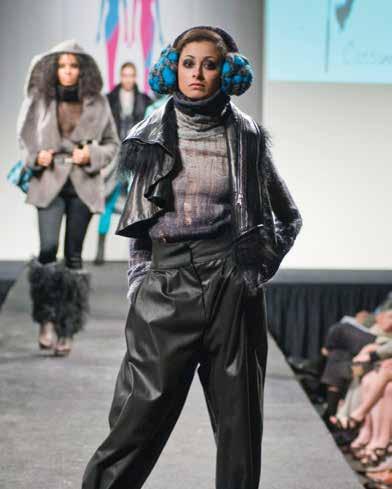
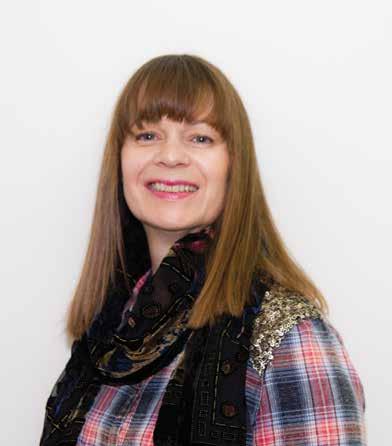
Meet Cassandra Kane, leather and fur designer for Elie Tahari, and Eileen Rittenhouse, merchandise manager for Tween Brands including its retail chain, Justice. Both know the value of the Drexel co-op program even though they graduated three decades apart. Kane graduated from the Fashion Design program in 2011, and Rittenhouse completed her Design & Merchandising degree in 1981.
What made you choose d rexel?
ck : It was my mom who wanted me to consider Drexel and kept bringing me back to visit. It was not until I sat in on a senior critique that I knew I wanted to go to Drexel. I was just blown away with what I saw. Especially in fashion design, experience speaks louder than education, so the co-op program was extremely important to me.
er : Curriculum and co-op program. I felt work experience would help get me a job. I chose Design & Merchandising because I had a passion for fashion and thought I wanted to be a designer or buyer.
h o W did your education impact your career path?
ck : I learned to look at fashion design as a business, not as a creative outlet. These companies still have to make a profit, while applying creativity with business. At Drexel I learned the tools and perfected skills that are needed to work in today’s industry. It is not all about draping - I learned to create tech packs and utilize (Adobe) Illustrator.
er : Every day demands that I think critically and visually. Drexel’s design program was priceless. It helped mold who I am and solidified my interests. It helped me learn how to work with different types of people. Of course my education was a critical stepping stone in the advancement in my career.
What W as your F irst job out o F college?
ck : My first job out of college was at Dennis Basso. I technically never left after co-op. I would go to New York any chance I could, for the weekend, a fashion show or anything I could. They officially hired me right after graduation. I was given the position of design development coordinator, which is the liaison between production and design. Also I did lifestyle collection design, which helped me get the job at Elie Tahari.
er : Video production services sales. I realized real quickly that I wanted to be in fashion and buying, not in video production.
What is your current job title? describe your responsibilities.
ck : I am a leather and fur designer and was hired because I knew the limitations of fur. I am in charge of all designs for the women’s collection, the sourcing for all the brands and material development. I work with production and design, signing off on all production qualities and final products, construction, pricing and workmanship. Designers have a lot of freedom within the creation process. We have no specific way of sketching, so there is more creativity. We look at bestsellers, what Elie Tahari is looking for, collaborations of styles that work and up-andcoming trends.
er : I am a merchandise manager. I oversee all casual bottoms, which encompasses shorts, skirts, denim and pants for Justice. I have buyers and assistants reporting to me. I work with a lot of cross-functional partners including design, visual, tech design and planning and allocations. My main focus is identifying trends appropriate for our Tween customer, planning a financial strategy, overseeing the design and choices to support the financial plan, and working with our sourcing partners to price and produce the product.
d o you have any advice F or current d rexel students hoping to enter the Fashion industry?
ck : If you know you want to work high end after school, do your co-op at a high end company. Prospective employers want to see the experience on your resumé, more specifically experiences that are applicable to what you want to be doing. If you want to go to New York for co-op, try any and every way to figure out how to make it work, even if it is only working three days a week and picking up a part-time job. When you are in New York, you make so many more connections. When you finally get a job, especially in fashion design, do not expect that you will have a nine-to-five job and make tons of money. You’ll be doing so many things, under crazy time constraints and pressure. Do not let peoples’ egos get the best of you, know who you are and don’t get discouraged when people try to bring you down. In school, specifically for Fashion Design students, pay attention in your technical design classes. Master as many computer skills as you can. Most importantly, stay in touch and keep in contact with the people you meet. This is so important, do not write anyone off.
er : Work hard. Don’t feel like the world owes you, you need to earn your way. Definitely go in with the attitude that you are going to have to work hard, and nothing is beneath you. Entry level jobs can be initially very clerical. Be a sponge...in other
words, observe and learn as much as possible from the people you are working for. Ask lots of questions and demonstrate your curiosity! Don’t be a afraid to share or make suggestions. Don’t be a wallflower. People are looking for someone who can contribute! Teamwork is also critical. Demonstrate your ability to work with others. Usually success is measured as a whole, not on an individual basis.
“exprerience speaks louder than education, so the co-op program was extremely important to me”
Words
Giuliana Marcucci p hotos courtesy of Danielle Green
She didn’t have a clear idea. She didn’t know any entrepreneurs. She had no startup capital. So why did Danielle Green decide to abandon her stable job at 23 years old and start her own business?
Philadelphia, a city often overshadowed by New York and Washington D.C., is overlooked by the rest of the country as a place that offers arts and culture on a large scale. But Green is determined to change all of that, and in 2011, Indigo Bleu Design Concepts was born.
“I’ve always known that I wanted to work in the field of art,” said Green. “I also have always had an independent spirit and did not desire the structure, order and lack of creativity that comes with a nine-to-five job. That’s where the idea for IBDC came from.” Needless to say, it was a huge risk.
Today, IBDC is a design marketing and management firm working with creative professionals, social entrepreneurs, startups and nonprofits. With this wide variety of clients, Green does everything from business planning and management to branding and marketing. Her primary clients are artists and designers, including Jerry Adam Puryear, a Philadelphia-based visual artist. She has also worked with the local nonprofit People’s Emergency Center as well as Hotel Monaco on special projects.
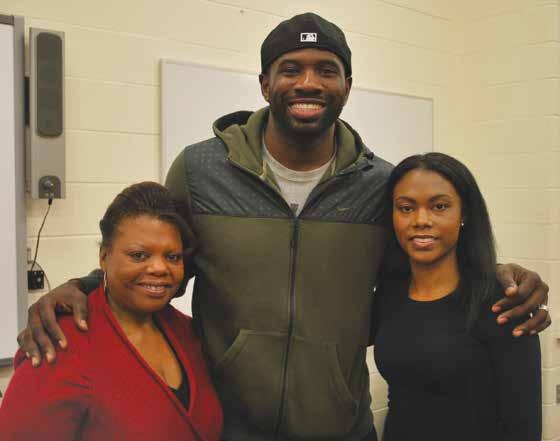
Since starting IBDC two years ago, the opportunities and excitement for Green have been endless. In addition to her traditional clients, she started a partnership last year with Philadelphia 76ers star Jason Richardson (pictured with Green,
above) to create a philanthropy initiative called Dream Without Limits. Green has organized events where Richardson has visited local middle schools to inspire underserved youth to follow their dreams. This is an ongoing partnership and has led to future IBDC events with the entire Sixers team, incorporating arts and philanthropy. Recently, Green has also been recognized for being an emerging business leader and social entrepreneur, as well as someone who gives back to the community. In 2014, she was nominated for Philadelphia Business Journal’s 40 Under 40 business leader award.
Aside from all of that, Green’s business still continues to grow. In Spring 2014, IBDC will be launching its Design and Cultural Center in West Philadelphia, not far from Drexel’s campus. It is going to be a mixed-use space consisting of artist studios, offices and event space open for the public to utilize. Companies and individuals will be able to lease these spaces to showcase their talents and design work and expand their businesses. “I am always looking for businesses and other organizations to partner with, as well as new, talented individuals to intern and volunteer with my business,” Green added. When asked if she had any advice for young professionals and entrepreneurs, she offered seven points of guidance. Do what you love and what you are good at. Be fearless. Find a mentor. Be passionate. Partner with others. Seek out opportunities. Give Back. With the accelerated growth of Green’s company, it looks like her advice is working. It won’t be long before Philadelphia’s favorite colors are Green and Bleu.
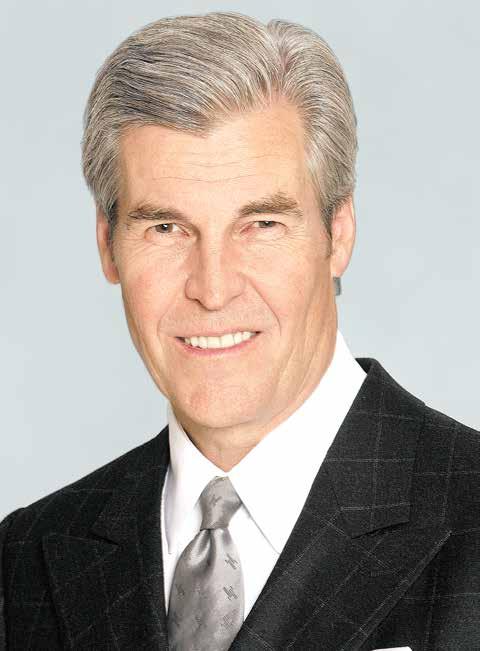
When Terry Lundgren speaks, the fashion world listens. Students, faculty, alumni and guests got to hear first-hand his insights on fashion, merchandising and the world of retail at this year’s Distinguished Speaker lecture on May 28.
Lundgren has served as chairman, president and CEO of Macy’s, Inc., since 2004. He is known as a visionary and innovator in the world of retail. His current strategy in women’s apparel is to focus on the Millenials (who make up much of Drexel’s student body) as renewed interest in clothing offers new opportunities for retail growth. The company is expanding its mobile and online presence, offering the customer increasingly new and different ways to shop.
At the same time, Macy’s is not ignoring the immense draw of its flagship store in New York City and is in the process of a $400 million renovation, the largest in retail history. As the world’s biggest department store, this landmark is one of New York’s most popular tourist destinations, drawing more than six million visitors a year.
Lundgren began his retailing career in the mid-1970s at Bullock’s in Los Angeles and worked in buying, store management and human resources before moving into senior leadership roles. In the late 1980s, he left (then) Federated to serve as chairman and chief executive office at Neiman Marcus. He rejoined Macy’s in 1994.
During his visit, Lundgren received the Westphal Award, named in honor of Antoinette Westphal, a Drexel graduate and longtime supporter of the College. The Westphal Award honors a leader in one of the many fields of design, media and arts taught at the Westphal College of Media Arts & Design. The award is given to honor not only the recipients’ business and creative process, but also their humanitarian efforts to inspire and nurture the next generation of leaders.

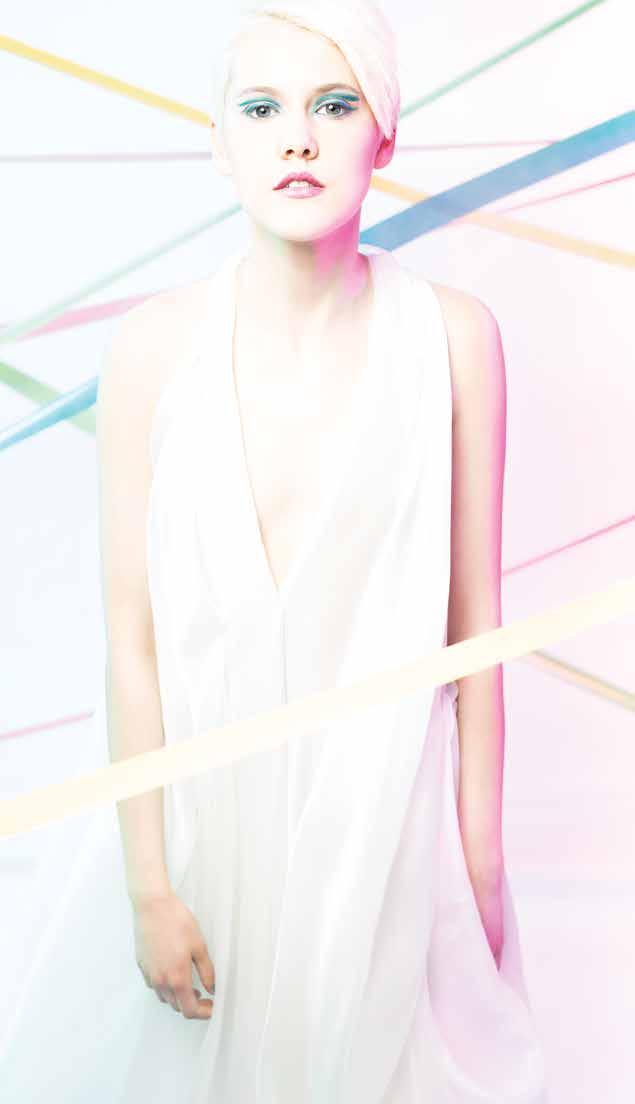
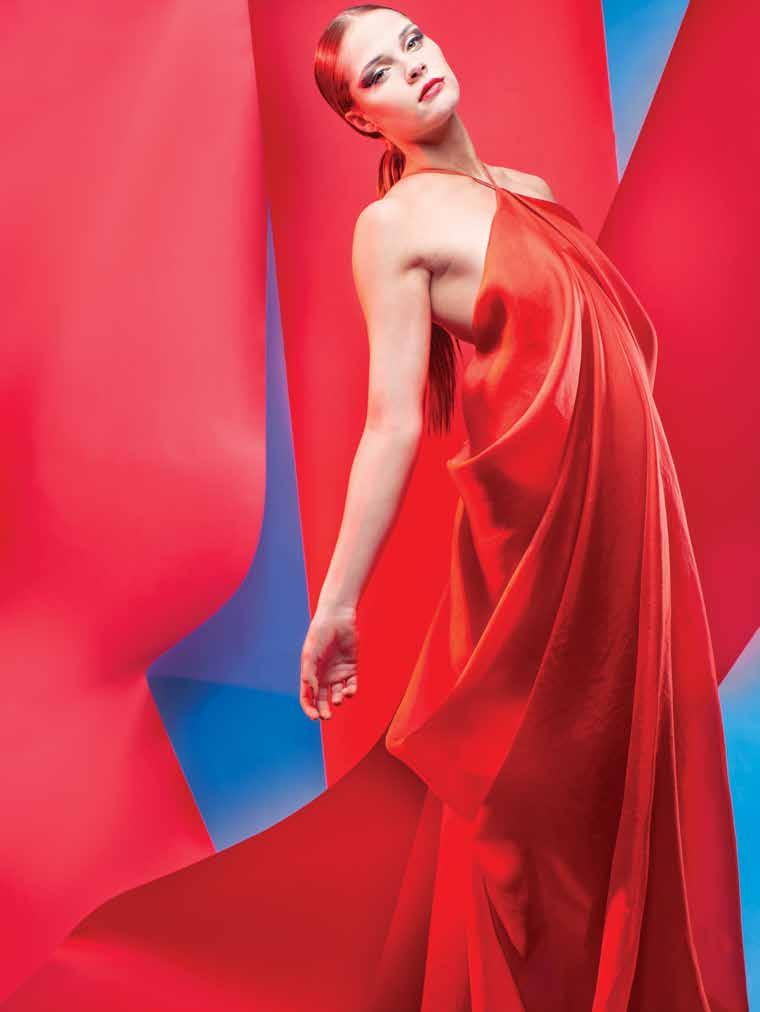
LoSE yoUrSELf in ThE SLivEr of SpaCE bETwEEn rEaLiT y anD fanTaSy, pLUngE inTo ThE Unknown anD DiSCovEr whErE yoU arE
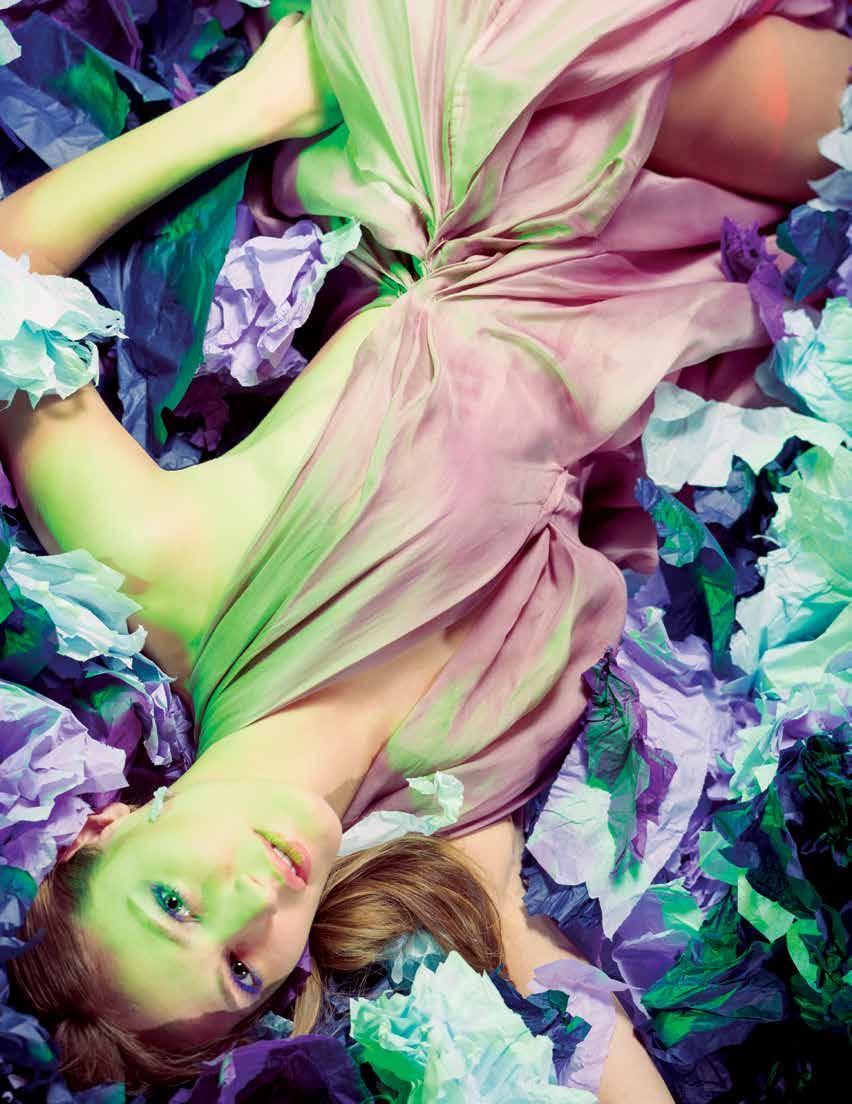
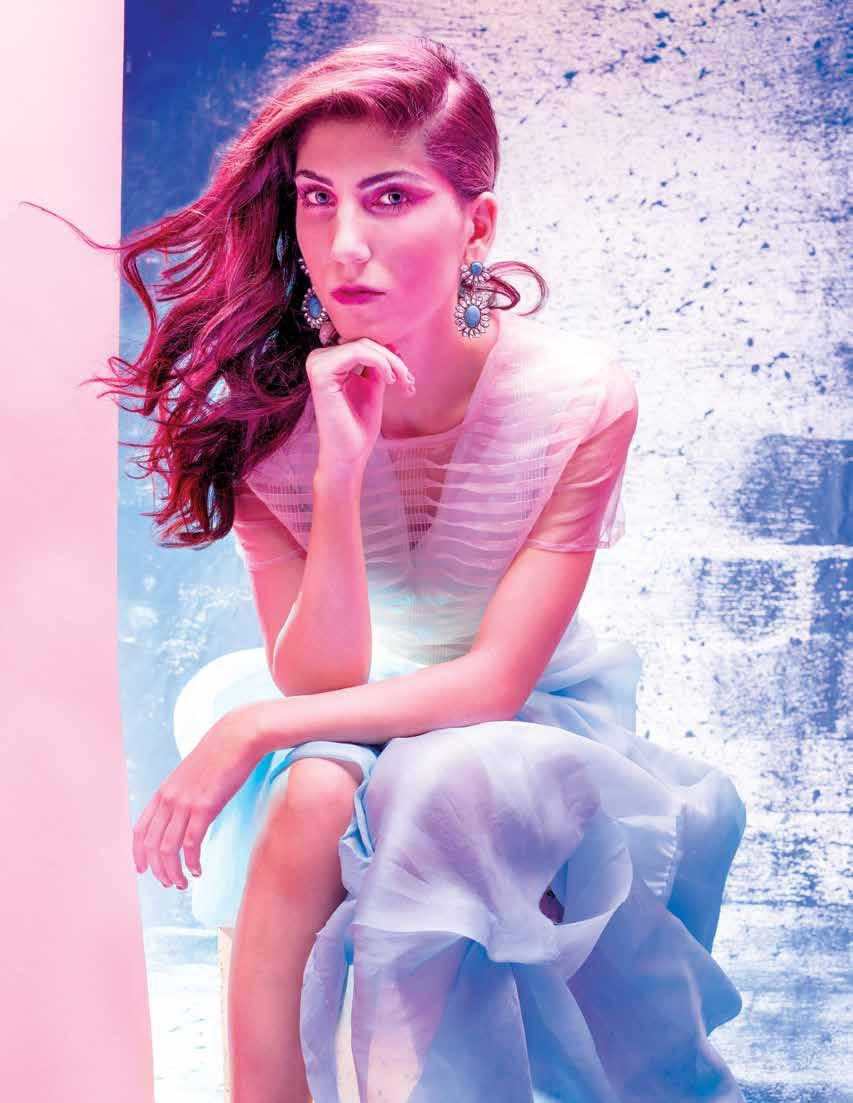
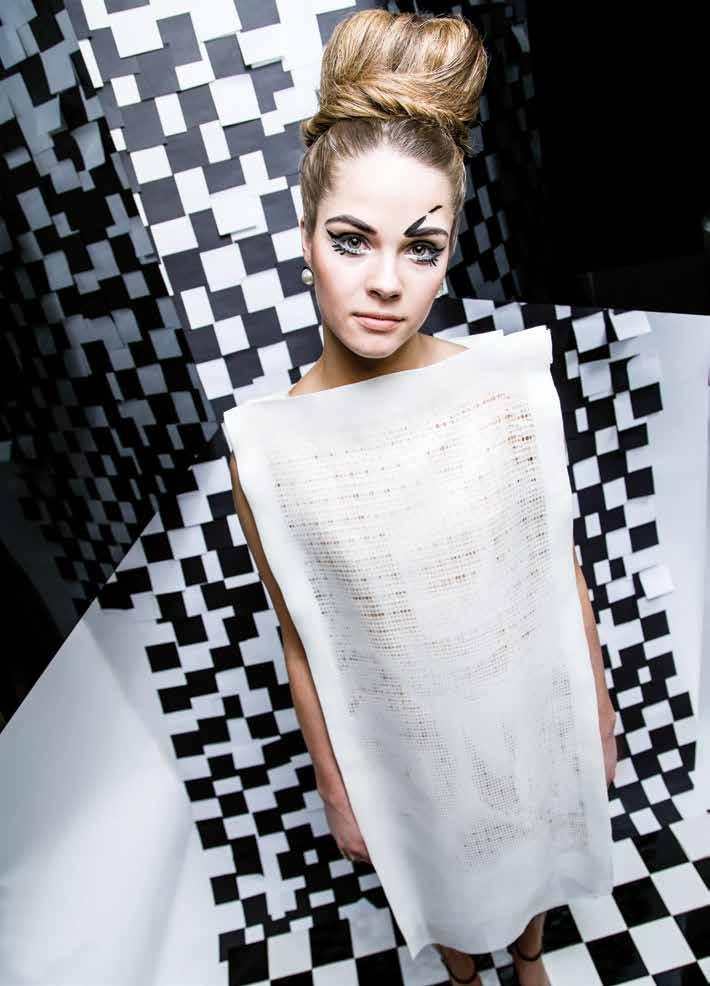
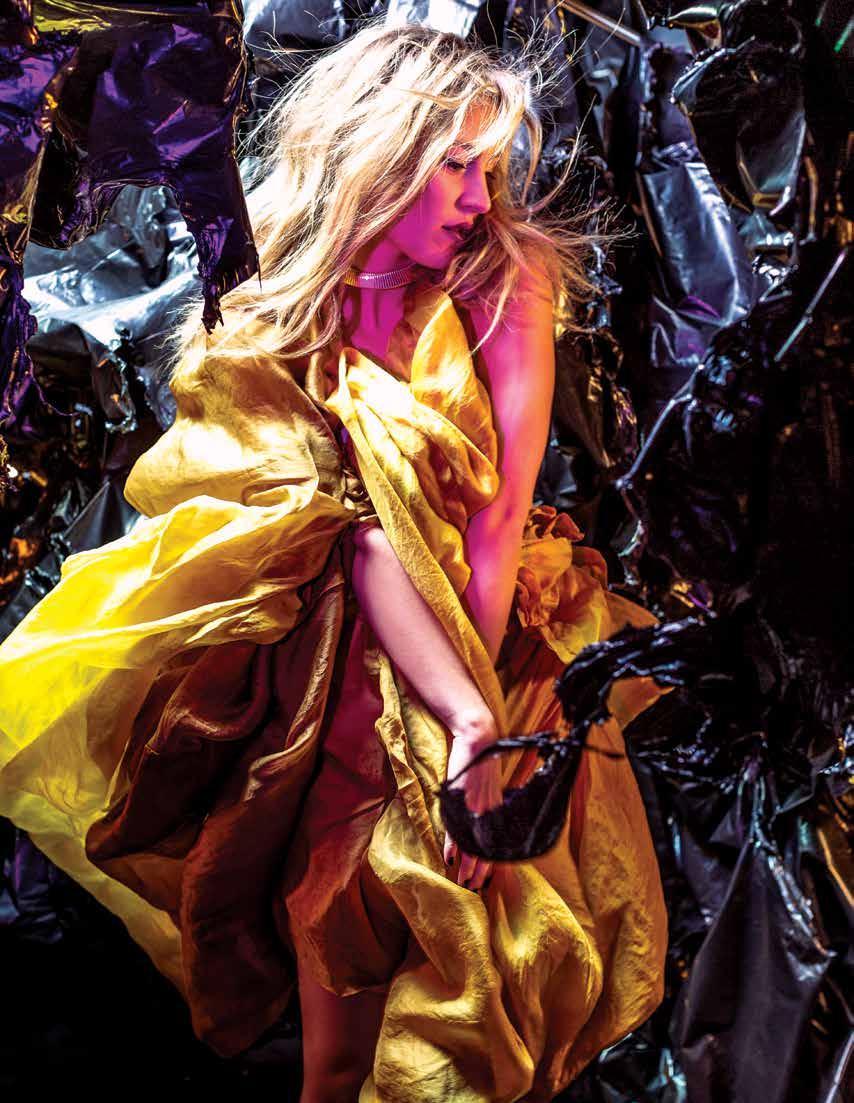
DRess DesigneRs
kaiTLin ConovEr (45)
aMbEr CUff (42)
EvELyn Jia (43)
JEannE parEnTE (40)
aLoDiE roSario (41)
aMy SToLzfUS (44)
DiReCtion
JESSiCa bLaTz
TayLor MUrphy
hiLary wakS
PhotogRaPheR
Shan CErronE
assistanCe
DaniELLE briEf
anThony whiTE
haiR/MaKeUP
kriSTa boyD
nEka braTTEbo
CaiTi MCCorMiCk
MoDeL s
briTTany LiEb (43 + 45)
aLix MCCabE (40)
anna o’LEniC (42)
Moira TUMaS (41 + 44)
Words Danielle Brief photos Shan Cerrone
College represents the four year landscape where it’s possible to experiment, fall in love, travel abroad, gain work experience and meet as many friends as possible. Students are encouraged to try everything once, stand up for something, have a voice and pursue every opportunity. With a strong emphasis on professional and academic success, does the modern college student have time to engage in religious pursuits? Can belief in God translate on a resumé? Does spirituality have a place on campus, and if not, are we willing to make room for it?
A recent study conducted by Trinity College found that 32 per cent of college students are devout believers, 32 per cent consider themselves to be spiritual but not religious, and 28 per cent are secular. Who knows if this ratio holds true on Drexel’s campus, where the mentality of finding a job and building a resumé is the key focus, and
spiritual needs often go unfulfilled. In a setting where the number of co-op interviews you attain is more important than the number of times you went to church last term, it’s refreshing when a Drexel student actively carves out time to lead a religious life. It’s true that the balance between academic, social and religious pursuits is a difficult one to maintain. Interestingly enough, the individuals who most encourage finding the right balance aren’t clergy members. Today, the resurgence in religious communities on campus is driven by the students themselves. As college students face big questions, they’re seeking answers and making personal discoveries, but on their own terms. To uncover why, how and when college students uphold and mold their intrinsic belief systems, we asked student leaders of Drexel’s religious organizations to talk about God, college and everything in between.
“ i am proud to have cultivated a deep appreciation for my c ulture . ”
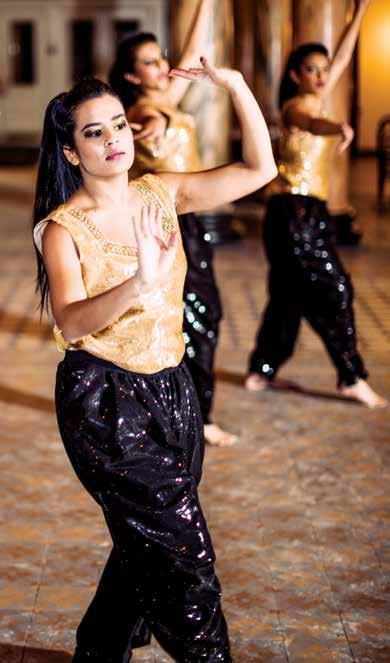
Devika Krishnamoorthy, a junior Physical Therapy major, doesn’t consider herself to be super religious, but she knew she wanted to stay connected to Hinduism while in college. She prays before studying and in the stressful moments before taking an exam, which “serves as an anchor,” to keep her calm and focused.
Krishnamoorthy is confident that her faith “will always stick” through the ups and downs of young adulthood. She’s a hardworking student who also finds the time to serve as the president of the Hindu Student Association, organizing events and holiday celebrations. Her favorite festivals are Diwali, Holi and Spring Garba, which allow Hindus and non-Hindus alike to take a step back from the hustle of campus life and celebrate together.
“We explore the qualities and uniqueness of the Hindu Religion and aim to celebrate Hindu festivals while also emphasizing the meaning behind them,” Krishnamoorthy said.
Sanjana Raj, a choreographer and dancer for Drexel’s Jhalak dance team, explained that traditional Indian dance forms such as Bharatanatyam enact stories from Hindu mythology. Jhalak, which is Hindi for “glimpse,” fuses classical Indian dance with Bollywood and hip-hop. Drexel Jhalak is ranked as the number one all-female fusion dance team in the nation. The choreography’s core source of inspiration is classical Indian dance, which emphasizes elaborate hand gestures, varied facial expressions and graceful forms.
“Classical Indian dance instills discipline in the dancer and the ability to embody one’s metaphysical beauty, expression, and self-confidence. I am proud to have cultivated a deep appreciation for my culture and heritage through dance and to have continued to connect with my roots and expand my dance repertoire as a member of Jhalak.”
Both Raj and Krishnamoorthy take pride in their culture and have incorporated it into their social and academic lives.
Krishnamoorthy says that her continued involvement with Drexel’s Hindu community has provided her with her own little family. She urges students who don’t associate with any faith to “be involved, see what other religions are like, and keep an open mind.”
Kelcie Marquardt, a junior Graphic Design major, is still trying to figure out how to talk with people about God. As the President of the Drexel Newman Catholic Community who also balances Greek life and schoolwork, she has found a way to integrate prayer into her daily routine. Marquardt said she firmly believes you can have a social life and be holy at the same time. She said that she strives to overcome the “head-down” mentality that prevails on Drexel’s campus by looking up and recognizing the beautiful “God moments.” According to Marquardt, many students get swept up in the Drexel culture and forget to appreciate the small miracles that happen everyday. For her, Catholicism has been the one constant that she could count on to keep her grounded, which serves as a moral compass.
Sure, religion may not be “cool” or “sexy,” but Drexel Newman helped Marquardt learn to have another perspective. “It’s not a club, it’s a lifestyle,” she said, which means that you “consciously make God a priority.” On a weekly basis, Newman facilitates a group sharing experience called Connections, where a small group of students meet to discuss the week’s gospel and relate it to their lives. Aside from the educational component, members of Drexel Newman attend mass together every Sunday at St. Agatha St. James, a local parish. On specific holidays, mass is held at home on Drexel’s campus. Last year, 400 students gathered in Behrakis Grand Hall for Ash Wednesday mass. Twice a year, the Newman community plans a retreat off-campus to break out of the Drexel bubble.
“It’s a chance to reset. You turn your phones off, turn your computers off, everything. You disconnect and take time to get to know each other,” Marquardt said.
Marquardt recalled a specific memory when she went canoeing on a lake with a group of students, a guitar and a Bible. Together, they peacefully coasted along, which is something you can’t really do at Drexel. Marquardt said that the beauty of being involved in any religious group on campus is finding more value in everything that you do and finding a different way of looking at the world. She urged fellow Drexel students to “stay open, stay humble and seek peace, especially in the chaos of Drexel.”
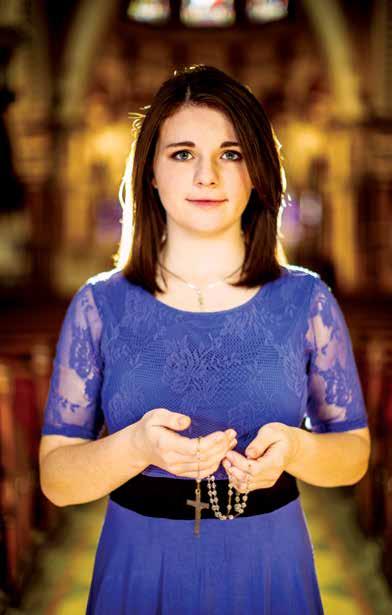
“ we ’ re called to always be in prayer . ”
“ you learn how to search for truth in college . ”
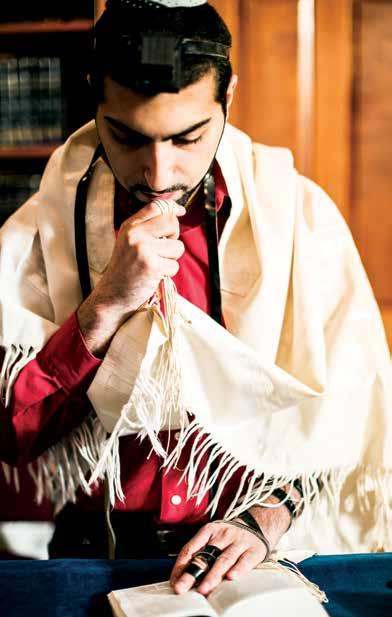
Ava Skolnik was drawn to the Jewish community of Drexel Hillel during her first year of college. She knew she had found her home away from home during a life-changing Alternative Spring Break trip to Los Angeles with Drexel Hillel, which showed her the power of “repairing the world.” This Kabbalistic concept known as tikkun olam is something that has had a profound impact on Skolnik’s collegiate life. As the president of Drexel Hillel, she coordinates community service work, plans holiday celebrations and leads Reform Shabbat services every Friday night. She does all of this with the support of the Hillel board, whose goal is to create an engaging Jewish community for anyone who wants to be involved.
“There’s a place for everyone in Drexel’s Jewish community,” Skolnik said, “and I think we’re very fortunate to have a community that’s so open and welcoming.”
Her journey with Drexel Hillel brought her to Israel twice, where she embarked on a Birthright trip and participated in a volunteering expedition where she helped build a garden in the southern town of Netivot, working alongside children from Potchim Atid, a program for potentially at-risk youth. Drexel Hillel helped her build a connection with Israel through service learning, an eye-opening experience that has had a huge impact on Skolnik’s life and the lives of so many other Jewish college students.
Like Skolnik, Ariel Arbely had the opportunity to travel to Israel thanks to religious programming offered at Drexel. A junior Finance and Legal Studies major who grew up in a religious household, he always knew he wanted to have a religious experience in college. As the vice president of Drexel Chabad and a brother of Alpha Epsilon Pi, he’s an active cultivator of Jewish life on campus. According to Arbely, Jewish life is thriving because there are passionate, committed students who want to build a strong community while in college.
“These are the years where I think it’s incredible to be Jewish at Drexel,” Arbely said.
Quoting Rabbi Hillel, Arbely asked, “If not now, when?” He went on to explain that at this stage in life, students are defining who they want to be as a person, and religion is a part of that process. He explained that he prays every day and is always seeking opportunities to learn more. He meets with two local Rabbis on a weekly basis to review and discuss the week’s Torah portion. He also looks forward to Shabbat, Judaism’s weekly day of rest. Both Drexel Hillel and Chabad offer weekly Shabbat services and dinner, which provide a relaxing atmosphere for discussion, prayer and community building.
It’s clear that students like Skolnik and Arbely are solidifying their ideas and building a strong foundation of beliefs, friendships and experiences that will carry them forward. Arbely admits that it’s a balancing act to grow spiritually while in a college environment.
“Whether you pray everyday or not, it’s a part of who you are. It’s like your soul.”
The executive board of the Drexel Muslim Student Association (DMSA) gathered for a lively panel discussion about faith, giving a new perspective on how students integrate prayer into their daily lives. Sarmin Iskun, a pre-junior Biology major, plans her class schedule around the five daily prayer times. Drexel’s Muslim community prays in the Intercultural Center (ICC), the home to many religious organizations. This center has been important to Drexel’s Muslim students, providing a convenient location to pray between classes and at the weekly Jummah, or Friday congregational prayer. Nooruddin Wahab, a senior Business and Engineering student and president of DMSA, explained that by dedicating 10 minutes of prayer five times a day, he fulfills his spiritual duty in less than an hour a day. Fathema Ibrahim, secretary of DMSA, added that taking the time to pray actually acts as a stress reliever.
“Taking five minutes out, you can ask God for help. Whenever I’m going through a bad week, I think it’s mandatory to take five minutes a day, at least, just to pour out your emotions,” said Ibrahim.
Ibrahim hated college until she became involved in DMSA, which she said enhanced her academic performance and provided her with a close-knit family to rely on. Hamsa Farooq, a sophomore Engineering major, related prayer to study breaks when he studies for finals.
Farooq also said that DMSA is putting Drexel on the map, earning respect and attracting prospective students who are looking for a strong Muslim community to join. Last year, Drexel MSA won the annual “Battle of the MSAs” competition, a city-wide Jeopardy-style contest, proving that they’re the best and most involved Muslim Student Association in Philly. They also plan a yearly Muslim Awareness Week to promote Islam to the public and to break down misconceptions.

“ we form a family , and that ’ ll continue to grow even beyond college ”
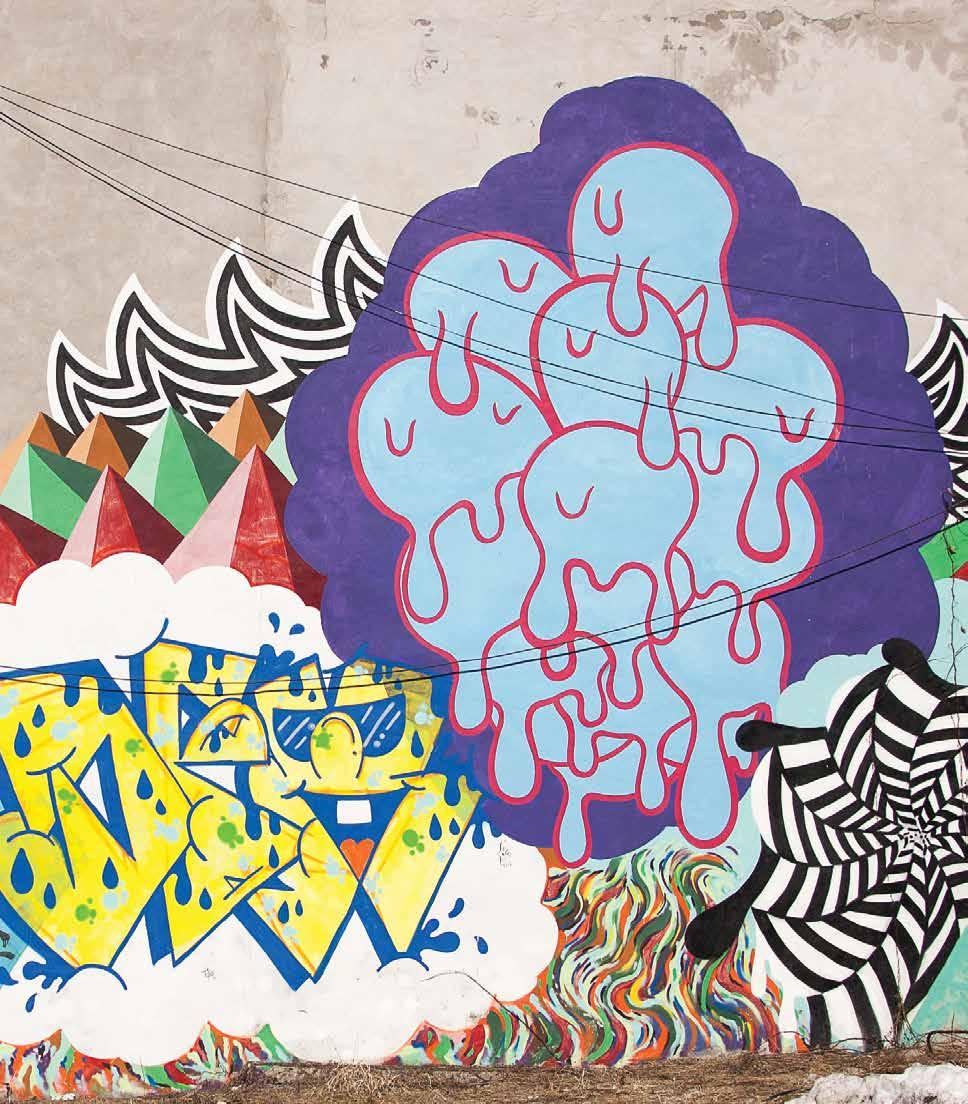
Street art is an umbrella term, one that can be loosely defined as any piece of visual art executed outside the context of a traditional venue. One may argue that this, of course, does not inherently diminish the artistic merit of these often satirical, politically charged and strikingly relevant epigrams. Conrad
Benner, the discerning eye behind the blog Streets Dept., has taken it upon himself to create a digital venue for these often ephemeral works of art.
“When I started my blog there was not a single blog devoted to highlighting all the amazing street art that was popping up all over Philly,” Benner said. “Even Philly’s main media outlets rarely highlighted this stuff. So I wanted to bring more attention to it.”
Benner, a Fishtown native, began working as the editor and curator for streetsdept.com in January of 2011. His mission from the beginning was to bring to light the hidden gems of Philadelphia’s rich street art scene. He first began documenting his discoveries with his flip phone. Eventually, he graduated to a point-and-shoot camera until he saved up for his first DSLR. He currently serves as the primary photographer and writer for the site, but he openly welcomes contributions from local artists and photographers.
“I’ve been lucky enough to attract artists who will sometimes send me their own photos of their new work, as well as some amazing Philadelphia-based photographers, who’ve also
sent me photos of street art they’ve found and various urban explorations they’ve taken,” Benner said. About once or twice a week, he also receives emails from people looking to contribute photos to the blog.
“Over the years I’ve had dozens upon dozens of photographers contribute to the site,” Benner said. “But needless to say, Philadelphia is an amazing artistic city.”
Benner, who had been working as a freelance writer since 2007, spent three years working as the editor of Philthy Mag. His decision to focus on his own creative work is what spurred the creation of Streets Dept.
“I wanted to start my own blog focused on my photography and the main focus of my photography: Philly street art.”
Benner admits he lacks a definitive system for finding new subject matter, but with the exception of urban exploration sites, almost all of the work on his blog is executed in a public space.
“Walking around so much is really what sparked my interest in photography in the first place,” said Benner. “A few years ago, towards the end of my three years at Philthy Mag, I was hit by a van while biking to work, and I broke my leg.” That incident made him wary to get back on his bike, so he returned to walking.
“Those long walks got me looking at things a bit differently than I did when I was just buzzing by on a bike,” Benner said. Benner does not discriminate, and it is for this reason
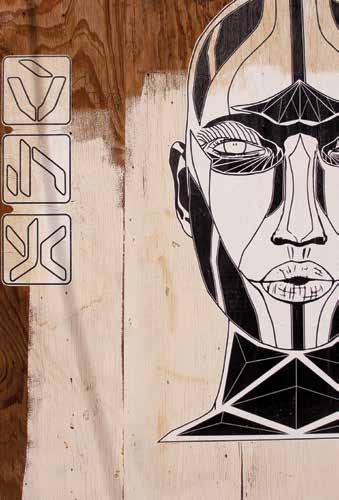
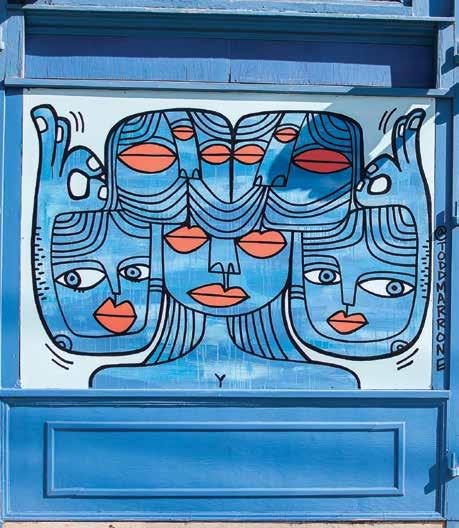
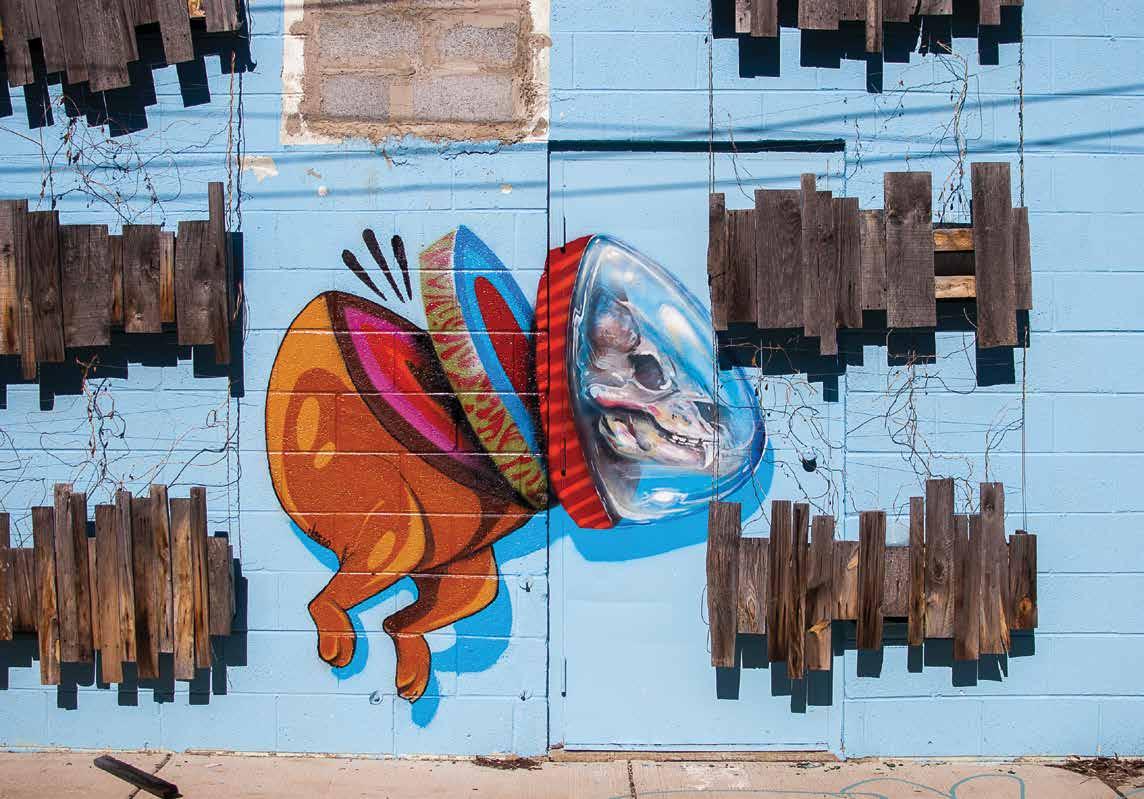
many of his followers consider him one of the most reputable photojournalistic sources the city has to offer. Everything from stickers on the side of mailboxes to 30-foot murals and life-size wheatpastes garner their own digital space on Streets Depts. Traditionally, urban art consists of painted surfaces, both largescale murals or simple tagging. Wheatpastes involve pasting detailed images, often illustrations printed on paper, to various surfaces using a glue mixture of water and flour. Cutout stencils create templates that can be used to easily reproduce an image without the artist having to spend much time at the installation scene. Sticker tagging is an inexpensive way to disseminate a series of messages, and these messages are often politically or socially charged. Aside from comprising a category of graffiti, sticker art is even considered to be a proper subcategory of modern art.
One of the blog’s first posts to gain major publicity offered a behind-the-scenes look at an installation by Ishknits, a Philadelphia-based yarn-bomber, as she wrapped a pair of seats on the Market-Frankford SEPTA line in a knit casing. Ishknits, otherwise known as Jessie Hemmons, also partnered with Benner for a formal exhibition in the spring of 2012. The Yarnbombing 101 exhibition was hosted in the Art Gallery in City Hall and featured photo documentation of Hemmons’ work by Benner himself.
Another Philadelphia-based installation artist who has worked closely with Streets Dept. is the anonymous Kid Hazo. Kid Hazo’s trademark is inconspicuous street signage which may look ordinary at first glance, but often has a satirical twist.
In June 2013, Benner featured a sign on Powelton Ave., just outside of a row of Drexel fraternity houses, that cautioned passersby to “fist pumping ahead.” He also added a humorous complement to the standard signs urging Rittenhouse Square Park patrons against locking their bike to the perimeter fence. Hazo’s sign featured a squirrel on a penny-farthing, complete with a miniature high-wheeler chained to the fence below it. According to Benner, his images of Kid Hazo issuing an oversized ticket to the Philadelphia Parking Authority was the most viewed street art post on his blog in 2013.
In December of 2013, Streets Dept. partnered with the Los Angeles based artist Paige Smith, who installed a series of sculptures from her Urban Geodes project around Philadelphia. Smith hid these organic crystalline sculptures in various public places: over door frames, inside a destroyed pay phone booth and in a wall in place of a missing brick. Smith and Benner collaborated with the Paradigm Gallery Community Arts Program and offered a custom Urban Geode to the first two people to Instagram and tag four of the new pieces installed in Philadelphia.
However, street art as a more alternative form of expression is not without its critics. In December of 2013, Benner engaged in a spirited debate with Joey Sweeney of philebrity.com on Twitter over the legitimacy of street art. A tweet from @ philebrity insisted that “Philly should pay less attention to Street Art and more to ART art.” Benner defended street art as being more democratic, accessible and therefore relevant to the general public, whereas Sweeney insisted the recent movement drew focus from centuries of more deserving work made with intellectual rigor.
Benner, who acknowledged the important role of social media marketing for his blog’s success, communicates with artists, readers and local media outlets through Twitter and Instagram. Because his content is primarily visual, he often uses his Instagram to tease his audience with upcoming features, and Benner also admitted that over half of the people who contribute to his site have found him through Instagram. His accounts boast over 5,000 and 6,000 followers respectively. Going forward, Benner said he hopes to work even more closely with artists from all over the city to promote their work.
“Philly is in a bit of a renaissance right now,” Benner said, “so the opportunity to grow the blog, work with artists and really showcase the incredible talent in this city is really exciting.”
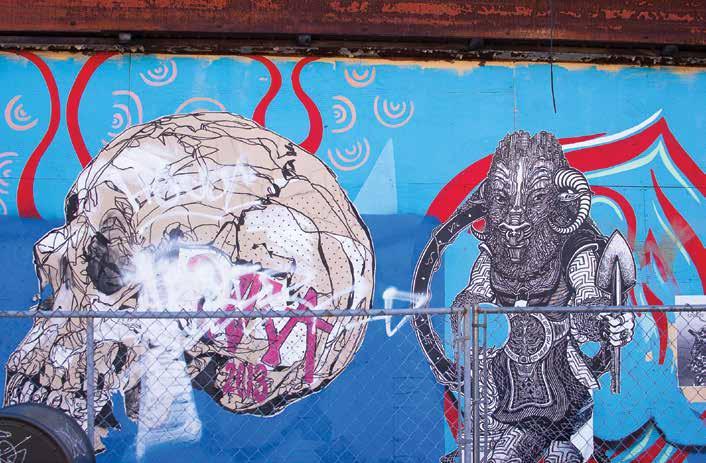
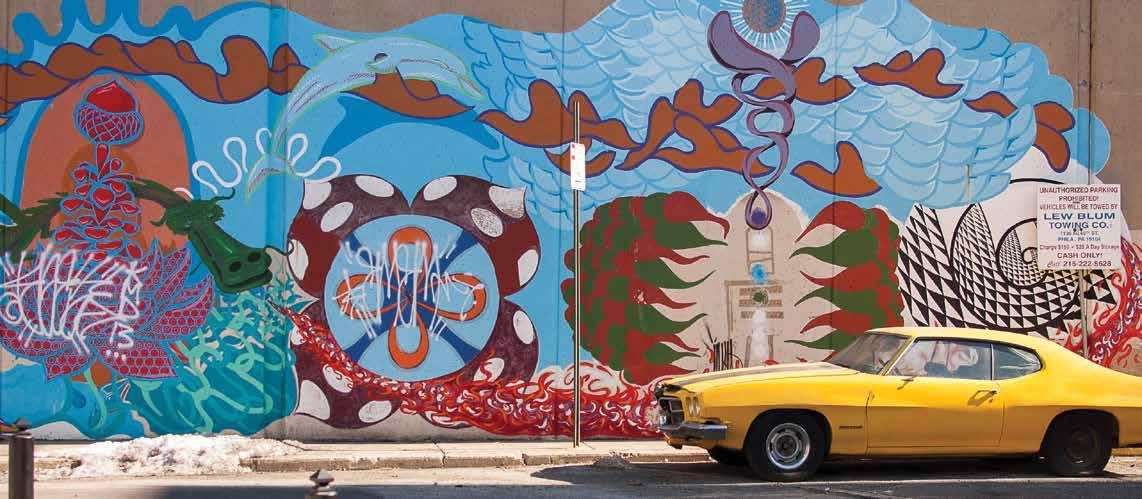
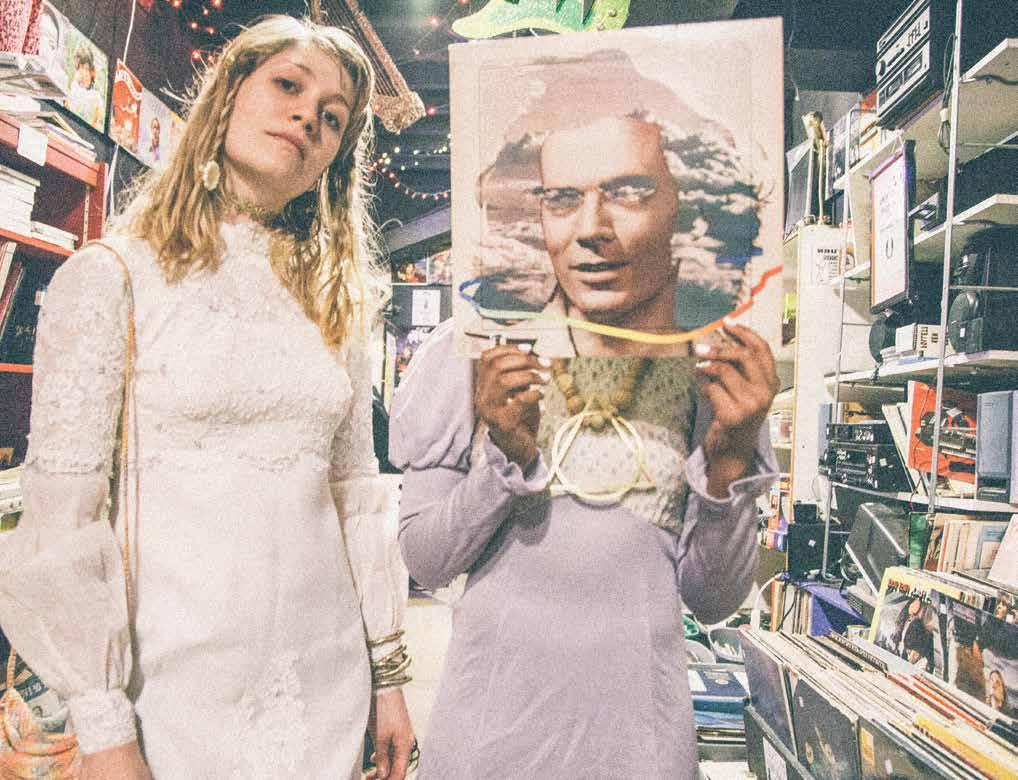
disorient yourself with a trip into the thrift
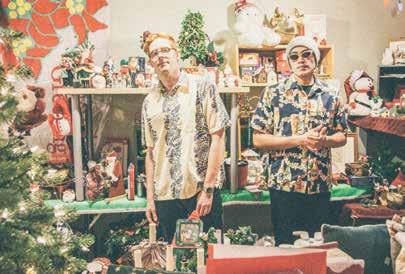
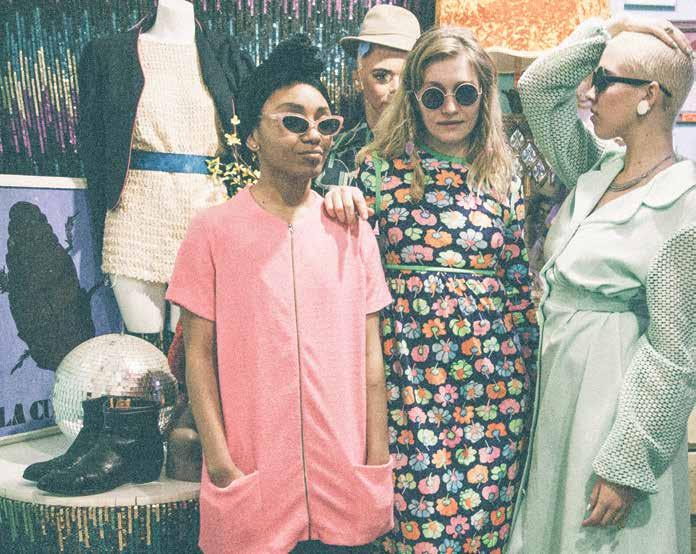
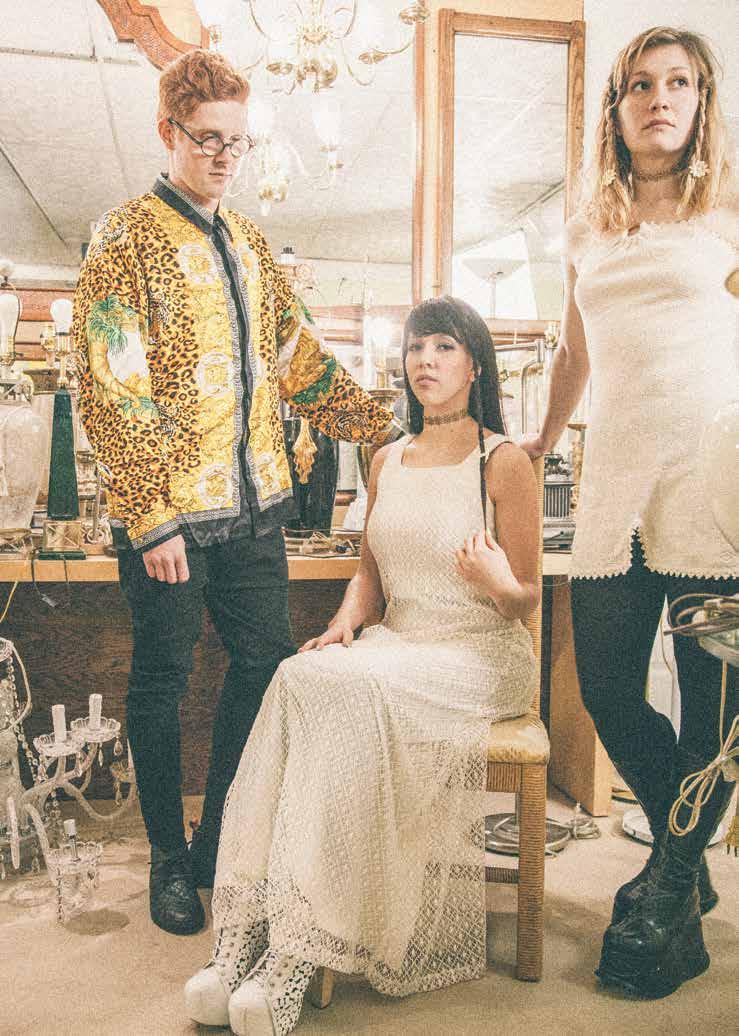
Philly AIDS Thrift, or PAT, is a completely non-associative charity-based consignment shop that donates an average of $17,500 a month to the AIDS Fund. All the money donated from PAT along with funds from the annual AIDS walk is distributed to 29 organizations in Philadelphia that help with prevention, outreach and case management of HIV and AIDS. PAT has continued to grow in its eight years of existence and has recently expanded its store, which employs 14 staff members and around 120 volunteers. The shop is open seven days a week.
PAT is a wonderland of all things silly, unusual and playfully sardonic. Its treasure trove of relics is limitless and abounds with history, from their mint copy of John Lennon and Yoko Ono’s first LP “Two Virgins” to their permanent not-for-sale life-size version of drag queen Divine. However, more than its incredible assortment of anything under the sun is the importance of maintaining a safe and welcoming community. While breaking stereotypes, everyone involved at Philly AIDS Thrift, whether they are a shopper, donor or volunteer, wants to be a part of something wholly bigger than themselves. They are the backbone of Philly AIDS Thrift and are the reason it is able to function. Their dedication and relentless devotion to supporting those affected by HIV and AIDS is what makes Philly AIDS Thrift a gem of Philadelphia.
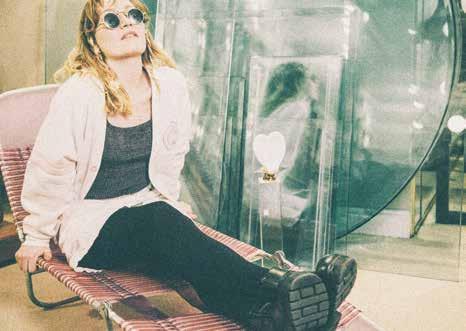
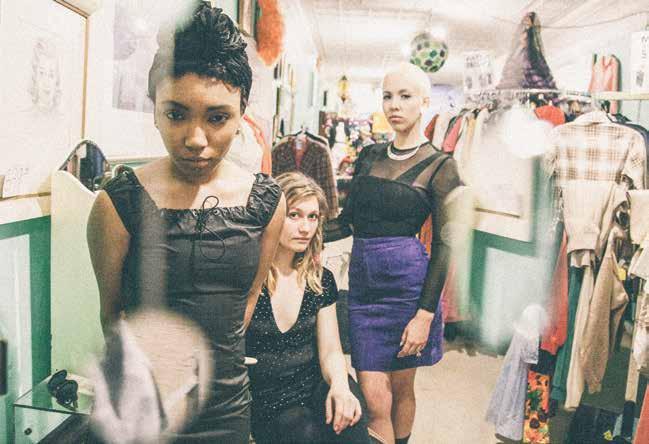
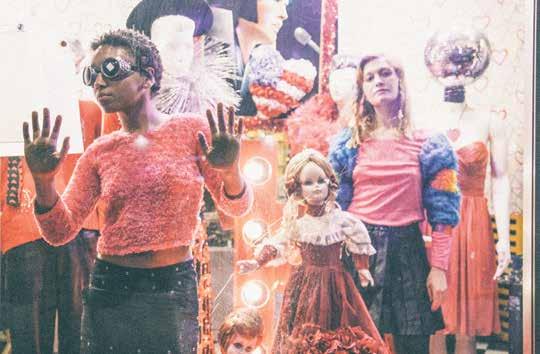
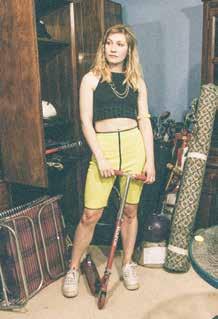
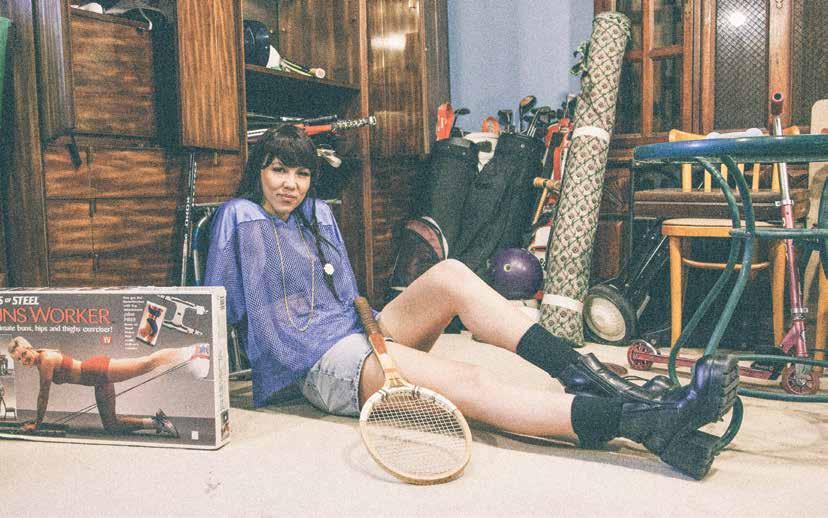

Words Maeve Walker photos Bonnie Saporetti
You’re crammed in a basement that smells like sweat, cigarettes and beer. Everyone is pushing you and music is pounding loudly in your ear. It’s so hot that you’re sweating, even though it’s December.
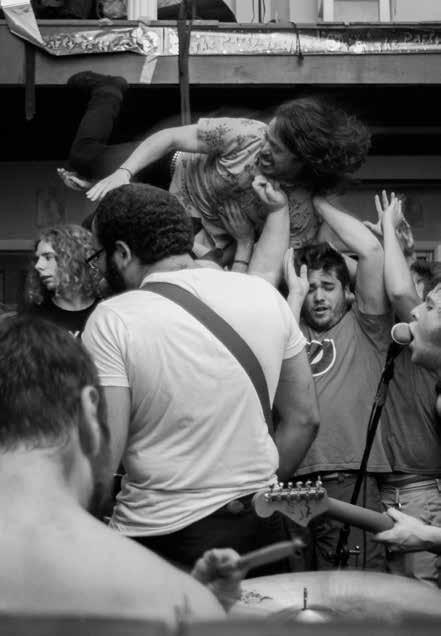
Yet, you’re exactly where you want to be: a punk basement show in West Philadelphia. The year could be anywhere from 1970 until today, but the feeling is still the same. Places may come and go, names and bands rotate constantly, but what has not changed is the ethos and message that punk has to offer to Philadelphians.
Punk emerged at a time when peace, love and ballads by boys with long hair just weren’t cutting it anymore. Vietnam was taking teens into a war they didn’t believe in. The Watergate scandal rocked our country. Overall, the government was doing things that teens and college students didn’t want to put up with anymore. Young people wanted to rebel against how things were being run, and they took a stance.
“Punk is a rejection of mass culture and what is going on in the world,” says Anne Cecil, Program Director of Design & Merchandising at Drexel University. Cecil has first-hand knowledge of the Philadelphia punk scene from its earliest days, and she is now the area chair of the Popular Culture Association’s Punk Chapter.
Punk is an ideology and lifestyle not defined by music or fashion.
Cecil says that punks are “like-minded people who have a very specific world view and try hard to live their life creating the world they want to live in.”
In Philadelphia, the first wave of punk appeared around 1976, and the second-wave came around 1980, bringing with it New Wave. Once 1984 hit, hardcore and straight edge lifestyles became very popular. Hardcore music is a heavier version of punk, involving angrier, younger kids who were fed up with current punk music. This spawned the straight edge scene, which came from a Minor Threat song about moving away from the excess of the punk rock scene. Being straight edge involves refraining from using alcohol, tobacco and other drugs. In the extreme, it can also involve a vegan or vegetarian diet, a strict abstinence from promiscuous sex and a refusal to use caffeine.
Each city has its own unique and highly localized punk experience. Philadelphia has been described as a very race-inclusive punk scene, even incorporating many international members.
“w E a LL T ho
’
by now”
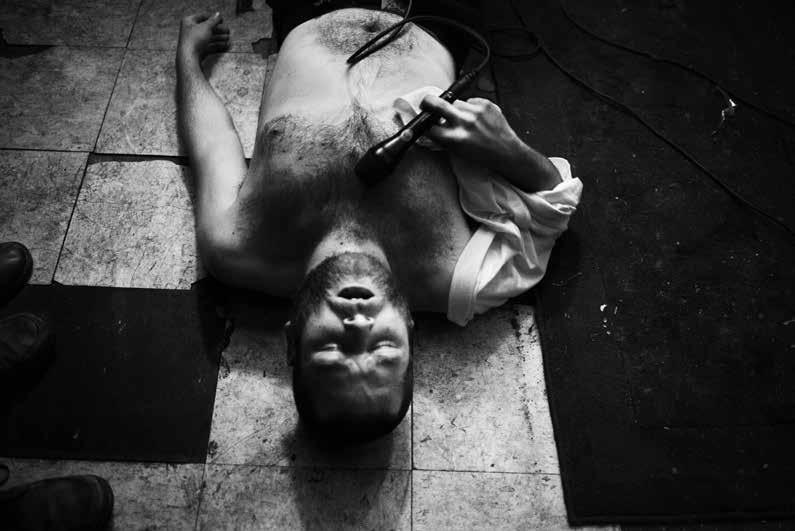
When punk style emerged, many women wore thrift dresses, boots, leather jackets and oversized sweaters. Men wore jeans, band tees, flannels and boots. Zipperhead was the key store to purchase punk-style clothing from, although many people who didn’t have money shopped at thrift stores. There were also lots of shaved heads, ripped jeans and big baggy t-shirts for both guys and girls. Punk fashion itself consisted of many different subgroups. Some members dressed in a “crusty” style, which involved a lot of dirt, patches and black clothing. There was also the style dubbed 90s “emocore,” which involved tight floods, thrifted shirts or button-ups. The “straight edge” community wore large and baggy clothing with giant sneakers. Fighting among subcultures was much more common in the mid-1980s and 1990s. Race, sexual orientation, even just looking different was suspect. There were often fights between subcultures, particularly when several were together in the same venue. Their members dwindled and groups lost their own spaces. When they merged together in new venues, tempers rose. There were few gender issues in Philadelphia in the 1980s, because according to Cecil, two key bookers for shows in the city were women. This was very different from other cities and other music genres in the city, where women were typically marginalized in a male-dominated business.
“I’ve always been especially interested in talking to women because I think they’re often written out of histories of underground music, and their contributions can be marginalized. If I may reveal a secret wish, it’s that girls and young women will at some point listen to the voices of the women I’ve had the pleasure to interview and draw some inspiration from what they’ve done,” said Joseph Gervasi, a prominent punk figure in Philadelphia.
Some of the key venues to see shows in the 1980s and 1990s were J.C. Dobbs, the Khyber, the East Side Club, the Love Club, City Gardens and Club Pizazz (which were both all-ages clubs once hardcore came around). Others were The Astrocade, 3105 Hamilton, Group Motion and Revival, which is now National Mechanics.
Upstairs, above Nick’s Roast Beef on 2nd St., was a bar that hosted a ton of great WKDU style shows in the 1990s.
The crowds at shows really depended on the band. Many of the bands in the 1990s were all about the live show experience – for example, at a Serial Killers show at the Crypt (basement in the now-Restaurant School), the band threw cow intestines out into the crowd. Other times, they put a pig’s head on a stake on stage.
Because many venues were restricted to ages 21 and up or were too expensive, basement and warehouse shows were around from the very beginning of the punk movement in Philadelphia. Different houses would just pop up at random times, others were very well-known. The main warehouse venues were Fakehouse/ Fakehaus, Killtime and Stalag13. All three warehouses were located right next to each other on 38th and Lancaster.
“Stalag13 will always be my favorite. It was like a second home for many of us,” says Johnpaul Golaski, WKDU alumnus DJ and a local punk old head. Stalag13 was co-founded by a WKDU alumnus named Mikey Brosnan. It was, in essence, an old carriage house with two rooms upstairs and, eventually, a half pipe in the backyard. Stalag13 was located between the Killtime and Fakehouse, both of which also hosted shows for decades.
“When Mikey had a vision to open what would become Stalag13, he had traveled the country and seen shows all over the place. When he decided to move back to Philly, he declared that he was going to find a warehouse space and open the Gillman Street of the East Coast,” said Brosnan. “That’s pretty much what happened. It wasn’t legal or official, but it was a place for unknown and known touring bands to come play and have a blast.”
Many of the venues from the 1980s and 1990s don’t exist anymore, but as things close, new venues and houses open.
In that time period, the main punk areas were in Old City, Center City and South Street, with occasional parties in West Philadelphia.
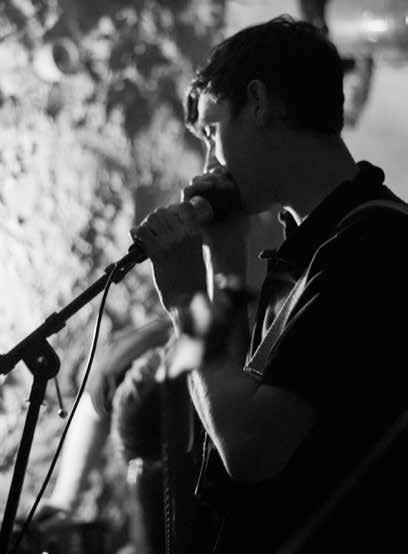
WKDU was a huge part of the punk and hardcore scene in Philadelphia. Most people in the scene knew each other through the station or could trace themselves back to someone there. Many of the WKDU’s members stuck together at concerts and shows – they were a pack that had their own distinct style.
“We never dressed like punks – usually, we showed up in oversized cardigans and jeans and people would say, ‘Oh, it’s just those weird KDU kids again,’ and no one ever bothered us,” said Nathalie Shapiro, alumnus of Drexel and WKDU DJ.
“There were years of my life that I would go out of my way to listen to WKDU’s Philly Happenings to find out if there were any all-ages shows,” says WKDU DJ and expert on Philadelphia punk, Golaski. Golaski is knowledgeable about warehouse shows and DIY events because he was constantly a part of them. Hooked on recording and media, Golaski had many punk blogs and websites dedicated to the scene, as well as his own record label, Schuykill Records, that released compilations and full albums by local artists. He even produced a legendary compilation called Philly Shreds, which contains a great representation of the DIY scene in Philadelphia in the
mid-1990s. Now, as a sound mixer, his life continues to revolve around digital media.
The Cabbage Collective was a group of people, including Gervasi, who booked shows. They eventually moved from New Jersey to West Philadelphia and found the Calvary Church at 48th and Baltimore. They hosted Saturday afternoon shows at that location for a few years, and later moved operations to the First Unitarian Church. The Cabbage Collective eventually moved on to other things and Sean Agnew made the Church the regular home of R5 Productions after he had been using all sorts of venues around West Philadelphia.
As Killtime and Stalag13 shut down in the early 2000s, the punk movement dwindled in Philadelphia, waiting for someone to keep it from falling flat. Sean Agnew was that person. He came along with R5 Productions, hosting shows at the First Unitarian Church, as well as helping present shows at Killtime and Stalag13 before they closed. Agnew, a former WKDU DJ and Drexel student, became well-known in the city for putting together excellent lineups, and R5 Productions grew rapidly. The First Unitarian Church helped Agnew get involved in booking at other popular bars in the city, such as Johnny Brenda’s and The Barbary. Agnew’s empire today books shows for nearly all major venues in Philadelphia, not including the sporting arenas. In 2012, Agnew purchased Union Transfer on 12th and Spring Garden Streets, becoming a venue that filled a much-needed hole in the Philadelphia concert scene. He also established Morgan’s Pier, an outdoor bar and venue on the Delaware waterfront. R5 continues to grow, last year re-opening South Philly’s Boot and Saddle and The Dolphin. Agnew also employs many young people, empowering them to learn about booking and running shows and preparing the future of punk in Philadelphia.
Agnew is preserving the DIY and punk movement in Philadelphia by keeping venues and small to medium shows alive. However, there are some efforts that are moving towards the future without trying to preserve the past.
House shows have been a part of Philadelphia punk culture since the beginning, but with cameras and film equipment being so expensive, not much of the time period was documented.
“We all thought we’d be dead by now,” said Cecil. She explained that no one thought about preserving anything, like pictures or videos from the time period, because punk is all about transformation. Everything constructed as part of the punk lifestyle is not meant to last. Instead, it’s meant to change with the times. When mainstream culture adopts something that once belonged to the punks, it is not punk anymore.
Luckily, there are people like Gervasi and Mike Eidle who currently see the need for preservation and are looking to accommodate young people’s cravings for old videos and pictures.
Gervasi is the curator of LOUD! FAST! PHILLY!, a selfdescribed “anti-documentary” that captures the voices and faces of the DIY punk scene in Philadelphia. His website boasts 48+ hours of interviews at length with prominent individuals in the punk scene from the 1980s to the present day. These interviews are unedited and give the listener an accurate look into what Philadelphia was like at that time.
“Action is the apotheosis of punk. Like certain key works that inspired a young me, I want these interviews to get listeners to get excited and active,” said Gervasi.
Gervasi explained that even though the scene changes, the consistent factor is the DIY ethos of punk.
“The apotheosis of punk...is the DIY ethos and a sense of selfsupporting community,” said Gervasi. “A world where the value of the individual matters and the social and political thrust is progressive-mind. Not always progressive in terms of left versus right...but in having ideals for alternative living and then, most importantly, acting upon them.”
Eidle is also making an effort to preserve 1990s Philadelphia punk culture. Another alumnus DJ from WKDU, Eidle discussed his methods of preservation and his experiences of house shows and punk music. ‘Freedom Has No Bounds’ is a website developed by Eidle to share local bands and post MP3s of recorded shows from the 1990s. There are also occasional videos, and plenty of written information about where these media files were taken, sometimes even a show flyer. It is truly a treasure, preserving band history for young people trying to learn about Philadelphia’s punk history. Gracing these pages are 20-year-old sets from big names like Guided By Voices, Black Flag, Fugazi and Dinosaur Jr.
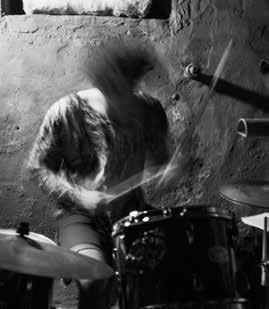
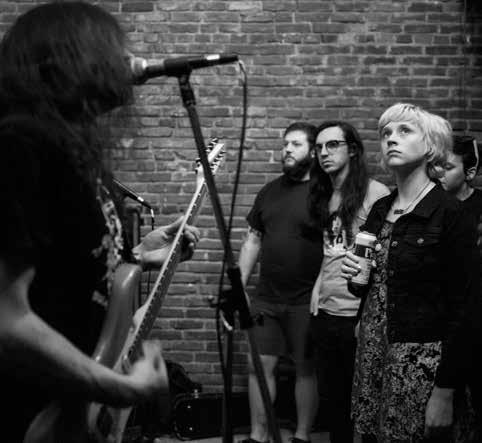
Shows and events have changed in Philadelphia, but Golaski doesn’t always see it in a positive way.
“Going to a show because of some good local bands led to us seeing some awesome out of town bands before they released anything,” Golaski said. “It was a regular thing to be blown away by a band I had never heard of before. I kind of miss the mystery that the Internet has eliminated.”
Punk has grown in the DIY aspect, with even more house shows being hosted today. West Philadelphia is still a popular place to do so, with many centering around the Drexel community. Besides DIY, members of the LGBT community have also become a well-accepted part of the current punk community in Philadelphia.
Music is a part of each person. Some can take it or leave it, but for others, it is so much more than just the instruments. Punk is a community, full of support for each member and their endeavors. It is politics, dress, lifestyle and an entire life ethos. It is so much more than what can be written down, because it’s a spirited movement that simply will never die. Basements will remain crowded and pulsing with music, full of like minded people feeling the moment together. Though places and bands change, the same ethos remains. Each place in the world has a unique history, and Philadelphia’s history has been shaped by the punks.
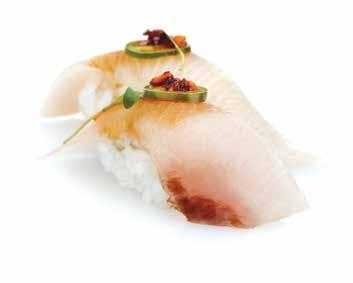
We have a serious obsession in America with sushi. Think about it once, and you’ll have a real craving for it that just will not go away. Twenty minutes later, you’re online ordering a California roll and shrimp tempura to be delivered to your doorstep. Just saying the word ‘sushi’ in casual conversation gets people bubbly and excited, and suddenly you and your friend have dinner plans to grab sushi the following week. There are more and more sushi restaurants popping up, making it readily available whenever those cravings show up. So why don’t people get this excited over lasagna or burritos? What is it about sushi that makes so many people wild over it? The appeal is partially due to the taste and flavors, but what sets it apart from any other cuisine is how a plate of sushi is in its own way an unusual piece of art.
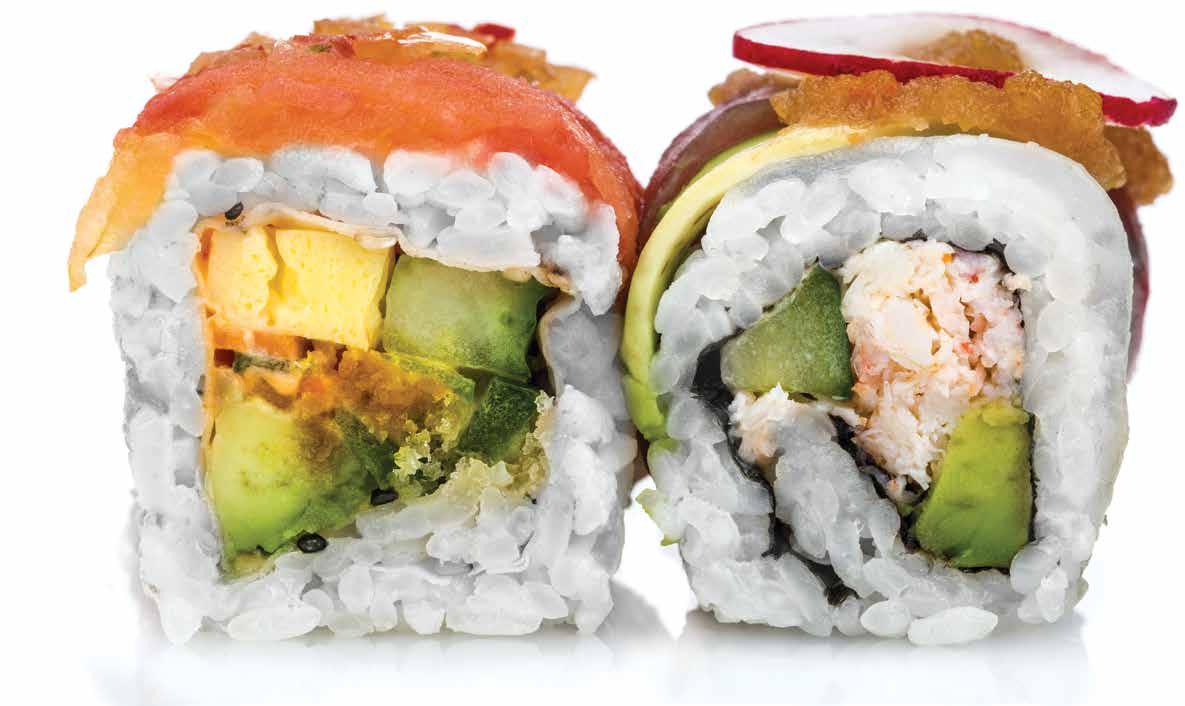
Sushi originated more than 1,000 years ago, but it wasn’t until the 1800s when the first sushi stall was opened in Japan. Traditional Japanese sushi is called nigiri sushi, a ball of rice topped with a layer of fish. It wasn’t until sushi became popular in the 1970s across the United States that western sushi chefs started to experiment by making sushi rolls, adding other ingredients like cream cheese, avocado or spicy mayo. The westernized sushi rolls are the kind people in the United States crave. But whether it’s western sushi rolls or traditional nigiri, the creation of sushi is something that these chefs take very seriously, many stating that after years and years of practice they are still learning, still perfecting their skills, and always feeling that the best sushi they can make is yet to come.
There are many considerations for creating sushi. Chefs have to think about the colors, flavors and textures that blend well together. They also consider the rolls ordered by customers and how to arrange them in presentation. Crazy Sushi in Center City truly lives up to its name in their presentation. Many of their specialty rolls have five or six different ingredients, but the real show stopper is their presentation. Crazy Sushi literally takes their presentation to new heights, incorporating bamboo sculptures, fake bonsai trees and martini glasses. Guests all over the restaurant can be seen laughing and taking pictures, shaking their heads in disbelief at the feast before their eyes.
Not only do sushi chefs have to keep the design of the sushi in mind, they also consider the orientation of the rolls and any extra design on the plate itself. To Kai, a restaurant in Northeast Philadelphia, is known for its plate art that accompanies the sushi it serves. A lot of these drawings are nature related, with flowers and butterflies created in edible sauces. Kai has a sushi chef whose job is to create these works of art, working on one plate after another so when a customer comes in, the plate is already ready to go.
So much work and effort goes into creating and designing sushi, but the chefs make it look natural, like they can make a sushi roll in their sleep. When talking with James Park, a sushi chef in training at Blue Fin, he says “It’s not even the sushi making that is hard, it’s the preparation. Making sushi is 80 per cent prep.” Training to be a sushi chef takes years of practice training under one master chef. Currently, Park has been training for four years and his sole job is to make spicy salmon rolls that are incorporated into many of the dishes. On a typical night at Blue Fin, Park makes about 180 spicy salmon rolls. It’s the years and years of practice that makes sushi look so effortless – it’s almost become second nature to them.
Sushi is beyond food. It’s an art form and an experience. Next time you’re in a sushi restaurant, ask to be seated at the sushi bar. You’ll get a first-hand view of how much effort goes into making the perfect sushi plate.
Juice cleanses have captivated the minds of dieters everywhere. While juicing and cleansing are not new, big name presseries as well as local juice bars have exploded onto the scene with a series of shortterm cleanses that promise to free your system of toxins left over by processed foods.
Traditionally, juice cleanses or juice fasts are short-term diets during which a person consumes only juice made from raw fruits and vegetables. These cleanses can last anywhere from three to seven days, but there is also a period of several days leading up to the cleanse when the dieter is urged to wean themselves off processed foods and practice a raw, vegan diet.
Over the past two years, entrepreneurs and health nuts alike have jumped on the juicing bandwagon, but many are viewing juicing in a new light and are helping to remove the stigma commonly associated with dieting fads. One of the juice shops to pop up in the last year belongs to Ryan Crown, owner of Ryan Crown’s Juice Club in Philadelphia. Crown’s personal juicing journey began after he paid a visit to Los Angeles.
“I lost my juicing virginity [by] accident. I ran into this juice shop to use the restroom. I had never before seen a juicer in my life. I figured, this is LA, I have to give it a try!” From there, he was hooked on juicing. Crown explained that he came off of the standard “meat and potatoes diet” and started to create his own juice mixes.
After attending a nutrition school in Florida, Ryan now practices a low-acidity, high alkaline diet that consists almost entirely of raw, nonfire food. “My main foundation is to watch out for fire.” According to Crown, anything that is heated over 107 degrees changes the chemistry and erases most of the nutrients in the food that our bodies need, including pasteurized foods. “Think about it, you plant a raw apple and a tree grows, providing hundreds of new apples. When you cook an apple and try to plant it, it just sits there, nothing happens. Imagine what these fire cooked foods are doing to our bodies.”
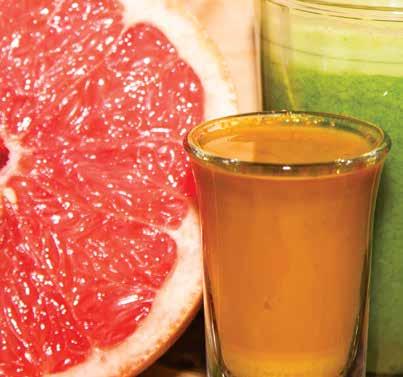
Another integral element of Crown’s juicing regimen is his effort to integrate solid but still raw foods. His cleanses consist of three to six juices a day supplemented with solid foods. Fruits, vegetables, nuts, seeds and herbs are all allowed in their whole, natural form during the cleanses.
Juicing, like many other natural remedies, is by no means a cureall diet option, but is a great, fast way to infuse vital nutrients into your body. If looking to lose weight, homemade juices may contain a high number of natural sugars with equally high calorie content. Because weight loss is affected by the amount of calories consumed and burned, some dieters gain back the weight they lose after juicing if returning to a diet consisting of high cholesterol, processed foods. However, Crown believes juicing is the best way to fight the fire we put into our body, balance out our pH level and address any toxins we may be holding onto. Author of “The Detox Miracle Source Book,” Robert Morse, N.D. agrees that the balance of alkalies to acids is key and the body “should be 80 per cent alkaline to 20 per cent acidic.”
Morse also explains that unhealthy lifestyles can cause a higher acidity in the blood and result in stone formation anywhere in the body (liver, gallbladder etc.) and inflammation. This can be reversed through consuming anti-inflammatory alkaline electrolytes that are found in raw fruits and vegetables.
Equinox Boston’s Brandon Kolar affirmed that fruits and vegetables contain a high fiber content that the body needs, which traditional processed juices eliminate. Crown’s method of blending whole fruits and vegetables keeps in all of the good stuff. Overall, the healthiest way to incorporate juice into your diet is to balance out your current diet with fresh juice or non-fire foods. It is important to talk to professionals like Ryan Crown to develop a well-rounded diet that fits into your lifestyle and to get the most benefits out of your juice cleanse. Most importantly, take care to educate yourself as you embark on your juicing mission.
t he week before the cleanse it is important to try eating mainly vegetarian, switch from coffee to green tea, and start the cleanse with a fully stocked colorful fridge! t he body truly does thrive off of earth’s natural treats, so it is important to make sure to never let yourself get too hungry during this cleanse h aving someone like c rown to help walk you through a cleanse is also really helpful h e texted us throughout the cleanse to check up on us and provided us with samples of natural teas and veggies to try .
day 1: The first juice of my cleanse was Crown’s most popular and detoxifying juice, the LGB (lemon ginger blast). The combination of green veggies, ginger, lemon and habanero pepper gave me an instant energy boost. I did feel a bit of tiredness throughout the day due to lack of caffeine. I supplemented my three servings of juice with lots of fruit and a large kale and brussel sprout salad for dinner.
day 2: On day 2, Crown personally delivered my juice to my apartment at 7:30 am. This juice was a sweeter juice called the Alternative. It had a lemon iced-tea essence. It was good to have a more fruit based juice after drinking a green juice the day before. I had a busy day of classes so I made sure to pack snacks such as bananas and mixed raw nuts. I felt a little bit foggy when I began to get hungry, but as soon as I got my blood sugar levels up, I felt much better.
day 3: This morning I was craving something warm, so I made a few green and herbal teas to start my day. Today’s juice was a green juice, but had a fruity essence from sweet mangos. For dinner, I made a gazpacho (cold soup) in the blender, I topped it with chopped avocado, cucumber and some spice. It was so flavorful and delicious. day 4: It was Day 4 and I was feeling proud of myself that I surpassed the three-day challenge, my body felt great! Ryan mixed up a juice for me with grapefruit and lots of fresh parsley and cilantro. He explained that these herbs helped to extract any metals that had found their way into my body. I had berries and bananas for breakfast. I made a wonderful dinner of raw zucchini “spaghetti” in a walnut arugula pesto sauce.
day 5: I couldn’t believe I was actually fueling through week 7 at Drexel without my usual 8 a.m. and 4 p.m. coffee breaks. I felt awake, aware and motivated. My last juice was so delicious, fruity and gingery, super refreshing! I felt so much better this time around after pushing through Day 3.
day 1: During the first day of the cleanse I had a purely green juice with a slight kick of habanero pepper. The juice was so fresh and very flavorful but the bite of habanero got old by the end of the day. In addition to the juices, I ate raw throughout the day like apples, bananas, a nut bar, and a big salad for dinner. I felt satisfied during the day, but at night I was unable to completely finish my last serving of juice. Because of all the juice I was drinking I also had to pee frequently!
day 2: Today’s juice was an all fruit juice that tasted like sweet lemonade. I was noticeably more hungry today than I was yesterday and decided to add a little more substance to my diet by eating hummus with the veggies I was snacking on. This was a very busy week for me, and without the caffeine I usually consume, I was able to sleep through the night without a problem.
day 3: On the last day I woke up with a slight headache. I was doing fine without the regular foods I eat, but I wanted a cup of coffee more than ever. The juice of the day was a green juice again, but it had a more fibrous consistency than the previous days and I was struggling to put it down. After only drinking a single serving of the juice, I decided to continue to eat raw for the remainder of the day and forgo the rest of the juice.
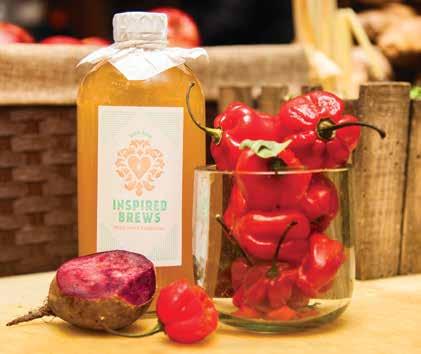
In a culture where more is more, the strikingly simple concept of a blow dry bar has beauty junkies fawning. To put it simply, a blow dry bar is a salon where clients can have their hair blown out and styled to perfection, and in most cases you can sip a cocktail while doing so. That means the main tool these stylists use is a blow dryer. Many women have had a moment when they wish that their hair could be done with a snap of their fingers, and blow dry bars are about as close as one can get to magic.
The blow dry bar phenomenon began in 2005 in New York City, and since then they have begun popping up all over. This boutique salon craze is not just limited to blow-outs. Some beauty bars offer only make-up, nail or waxing services with the same concept in mind: to be quick and affordable for women on the go. In most cases a woman can either make an appointment or even walk in — these bars are designed to be of the utmost convenience. A stylist will offer a “menu” of the different styles along with a drink. On average, the styling session lasts about thirty minutes depending on the length and texture of the woman’s hair. Prices also vary from business to business, but most services range from $25–$50.
Drybar, one of the forerunners in the beauty bar craze, originated in Los Angeles but now has locations in nine states. Drybar customers are presented with a menu of hairstyles, each one named after a wellknown cocktail. Clients can choose from the Straight Up, Manhattan, The Cosmo, The Mai Tai, Southern Comfort or Hot Toddy. The Shirley Temple is specifically for girls 10 and under, and an Up-Tini is also known as an up-do. Extra services include hair shots, a treatment added to shampoo to strengthen dry or weak hair, floaters, a tenminute scalp massage, or even an at-home blowout called Dry-on-theFly. Drybar’s slogan is, “No Cut. No Color. Just Blowouts.”
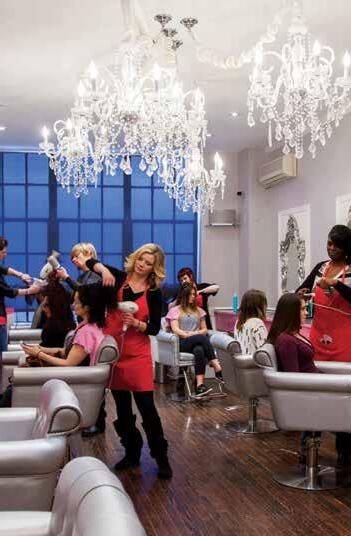
Philadelphia’s first blow dry bar, Blo/Out, is located at 18th and Chestnut Streets in Rittenhouse Square. The beauty bar occupies the second and third floors of its building. Blo/Out’s interior offers a distinctive atmospheric experience with silver styling chairs and vintage-inspired mirrors. The third floor is where the hair washing sinks are as well as another area for blow-drying. The menus at Blo/ Out are displayed on pink iPads with descriptions and images of each style. Clients can choose from the full-bodied Astoria, beachy Zoey, or the sleek and straight Emma, to name just a few. Like Drybar, Blo/Out offers the Sofie for girls 12 and under as well as up-dos and braided styles. Each blowout is $35 and, like Drybar, takes only about thirty minutes depending on the length of a woman’s hair. Blo/Out will even send stylists to your home or office or host private parties in preparation for weddings or a girl’s night out. There are currently four “Blo/cations” in Pennsylvania. The founder of Blo/Out, Avi Shenkar, said, “We’re not asking you to cheat on your stylist. Get your cut, get your color everywhere that you go, but when you need that last minute fix-up, come on in here and get it done. I’m not competing with salons.”
To say that these beauty bars are addictive would be an understatement. There are women who go two or more times a week for a blowout because it is convenient and they feel that they cannot achieve the same look produced by a stylist on their own. When done correctly, a blowout will last several days. The allure of blow dry bars is that they offer a simple service with no additional hassle. No cut, no color, just blowouts. Perhaps less really is more.
m eet n eka b rattebo, a beautiful young woman with a successful career . a t 22, n eka has earned herself a chair as a hair colorist at a dolf b iecker, a respected salon in r ittenhouse s quare, p hiladelphia . s he shared her J ourney of becoming established in a career at such a young age
Instead of taking the common path of going to college, Brattebo decided to attend an 11-month program at the Jean Madeline Cosmetology school in West Philadelphia, where she learned the art of styling and coloring hair. After going to class for seven hours a day, five days a week, she transitioned from mannequins in the classroom to real client consultations. The professional acceleration she experienced through real-world experience closely aligns with the Drexel co-op mentality. After landing a job at Adolf Biecker less than a week after her graduation, she began her professional ascent. Although her formal education was complete, she continued to learn under the supervision of two senior colorists and commuted between two salons. She also was fortunate enough to have not just one, but two mentors. She recalled, “My mentors were so different, but I was able to combine the best qualities from each of them into me. They were always so patient when I made mistakes and pushed me through it…I owe them so much.”
Brattebo may be settled in her career at a young age, but she’s still growing and learning everyday. The discipline she obtained from jumping right into a career has secured her a chair at the prestigious Adolf Bieker salon, working for a company that has been around for over 80 years. The salon’s clientele, which includes a laundry list of celebrities who have requested the salon’s services during their travels through Philadelphia, has remained loyal even through difficult times. Brattebo explained, “People who were laid off still sat in our chairs, confided in us, and made us realize how grateful we should be for having such a reliable career.” During the recent recession, the salon’s revenue actually increased by 8 per cent.

As the youngest hair colorist at the salon, Brattebo’s maturity and ability to handle responsibility far exceeds most 22-year-olds. She says, “I just want to be the best that I can be always. It’s intimidating to be the youngest because a lot of people translate a young age to inexperience, but I’m confident and I continue to learn.” She knows that she’s just at the beginning of her career, and works hard to emulate the senior colorists of the salon and build her client portfolio. Her career path may seem somewhat untraditional, but one thing is absolutely clear: Her creativity, passion and drive to succeed make her a force to be reckoned with.
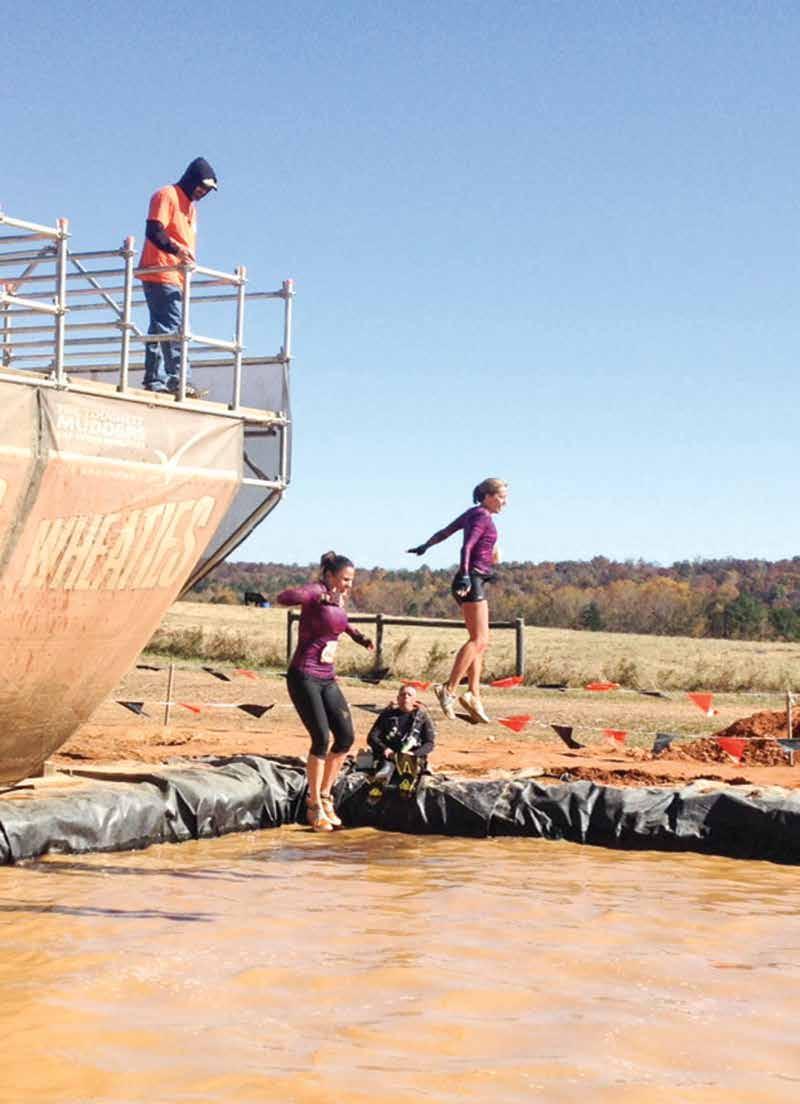
The first obstacle was called “Kiss of Mud,” so I knew my face would end up covered in brown muck. There were rows of people crawling military style, one right behind the other, through mud and under barbed wire only a few inches off the ground. I got on my stomach after the rest of my teammates and started crawling too, immediately regretting my decision to ever sign up for a Tough Mudder event.
It was the middle of April in the Poconos, and although all the frost on the ground had thawed by 9 a.m., I could still feel the frozen earth skinning my knees and elbows each time I slipped trying to move forward. There was yelling, grunting and cheering coming from all sides, but I tuned them out as I clawed my way through the mud. I tried to keep low to the ground so the barbed wire wouldn’t knick my shirt and head. Water droplets from the sprinklers above us were frozen on the wire to remind us just how cold it was outside. After about 30 feet, I emerged from the wire, drenched headto-toe in mud.
Sound miserable? In reality, Tough Mudder is growing in popularity each year. A 10-12 mile race made up of climbing, crawling, swimming and running, Tough Mudder feeds our appetite to test ourselves and push our limits. For Jordan Jobs, a first-time runner who participated in April 2014, competing in Tough Mudder is all about the challenge. “I wanted to see if I still have the drive to push myself and finish,” she says. “It’s the ultimate race.”
Tough Mudder not only tests your physical strength, but your grit and determination as well. The organizers throw you into some of the hardest obstacles in the very beginning, and by the time you get to mile three, you feel like you should have been at mile six. You have to be just as tough mentally as you are physically to get through these races. While physical strength is key to competing, many people underestimate the value of grit and determination to push through to the end. Competing in Tough Mudder requires a team to encourage each other through the hardest moments.
There is a strong sense of community and camaraderie built around the entire Tough Mudder race, from the bus ride to the course to the finish line with a beer waiting for you at the end. The organizers emphasize again and again that this is not a race, but a challenge, and this challenge cannot be completed on your own. You need teammates to help you up walls and push you to finish strong. You start as a team, end as a team and meet new friends along the way. Some participate for the challenge, or to boast to their friends, or use it as a way to get back into shape, but in the end, everyone completes it together with the orange sweatbands to prove it.
The popularity of mud runs like Tough Mudder has been increasing in part because they appeal to our primal side. Crawling through mud and scaling walls shakes people from their everyday routines. You feel alive and energized even when you have more obstacles to face, at mile 10 with a sign underneath that says “Remember, you signed a death waiver.” Tough Mudder boasts that their obstacles are designed by British special forces to test you in every way. These runs are for thrill seekers and by facing these obstacles, they allow participants to ‘play hero.’ The added bonus to all this is what you have to show for it after: a bunch of pictures of yourself covered in mud with cuts and bruises on your arms and legs, along with the prized orange sweatband that is only given out at the finish line. Not only do you feel proud of yourself for enduring such a grueling race, you get to brag to all your friends on Facebook and prove to them how badass you are.
The racers are first-time runners, people who have run two and three times before, and even wounded warriors. Tough Mudder supports the Wounded Warrior Project, a program that provides adaptive sports programs and recovery programs for soldiers returning from combat. Those who have lost limbs and wear prosthetics finish these challenges as well, proving their abilities despite all the odds against them and inspiring others to push themselves as well.
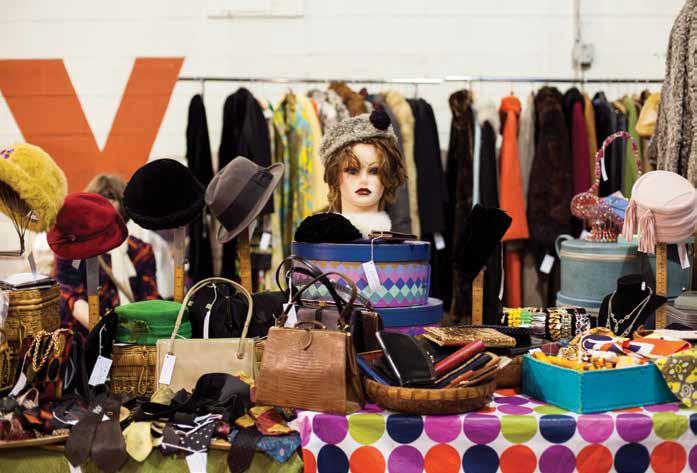
There’s a rush that everyone has felt in their lives, finding the perfect object you’ve been looking for, or finding something you didn’t even know existed but suddenly need. Right now. And you’re never going to find anything like it again. You resist and walk around for a little bit, weaving in and out of crowds, but your thoughts keep wandering to that necklace or teapot or that piece of artwork. What you find at a flea market could be a vintage, homemade or original piece – something that you won’t ever find at the nearby mall. Think of someone buying it before you, and before you know it, you’re back at that stand and shelling out the cash.
This rush is a frequent occurrence for those visiting the many flea markets in Philadelphia, like the Philly PHAIR or Franklin Flea. Markets like these have been popping up all over Philadelphia in the past few years, bringing with them a new way for consumers to shop and a new outlet for entrepreneurs to sell their products. Most of these operate during the warmer months in open air markets, a refreshing change from shopping in stores and online. The participating vendors operate as weekly mini pop-up shops, setting up their food carts and jewelry stands each morning, and closing up shop each evening. Many of the flea markets in Philadelphia were started to support local vendors that sell antiques, vintage clothing, homemade products and artisan food.
PHAIR, short for Philadelphia Open Air Market is one of the newest markets in Philly. Having opened its first market in 2013, PHAIR is focused on supporting what co-founder Jennifer Schick calls “creative entrepreneurs” including artists, crafters and DIY vendors. PHAIR has vendors that sell a whole variety of photography, furniture, sauces and accessories, many who sell their items on Etsy as well. One vendor, Rock The Roll, is a small, Philly-based business that makes a honey BBQ sauce for grilling made with locally sourced ingredients. Many of the shop owners use practices like Rock The Roll, making homemade products that use local materials or are produced in an environmentally conscious way. “If you were to mix a craft market with a farmer’s market and the Brooklyn Flea, that is basically what PHAIR is,” says Schick.
For all the night owls in Philadelphia, the Night Market is a mecca of Philly food trucks for people to taste and enjoy an immense variety of food. What’s more is the electrified energy at this nomadic market, which moves to different parts of the city each year. With jam-packed crowds, music and community performances, the Night Market becomes more than a quick dinner, but an entire evening out for families, students and dates. The Night Market offers items like gourmet cupcakes, traditional Asian kimchi and chili dogs with more toppings than most people can name.
Another new flea market venture starting up is the Franklin Flea, an indoor, wintertime market located in the old Strawbridges store in the heart of Center City. Franklin Flea is a curation of vintage, repurposed, handmade goods and artisan foods, and to top it all off, live jazz music enhancing the ambiance. Found, one of the vendors in the Franklin Flea, is a business dedicated to creating new home furnishings from vintage ones. There is also Rise n’ Shine, an artisan sandwich shop started by two recent FIT graduates, with Franklin Flea as their first shop outlet in Philadelphia. They create seasonal items like their featured sandwich, a heavenly mix of roasted butternut squash, ricotta, sage, and brown sugar. Just by visiting flea markets, you become a part of a community that supports each other. Flea markets are a symbiotic relationship. They’re beneficial for both the local vendors trying to make a profit and the consumers who would rather purchase unique products than anything poor quality or mainstream.
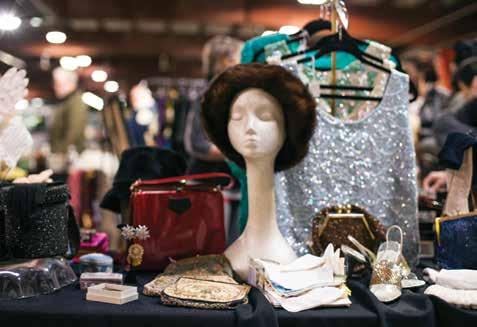
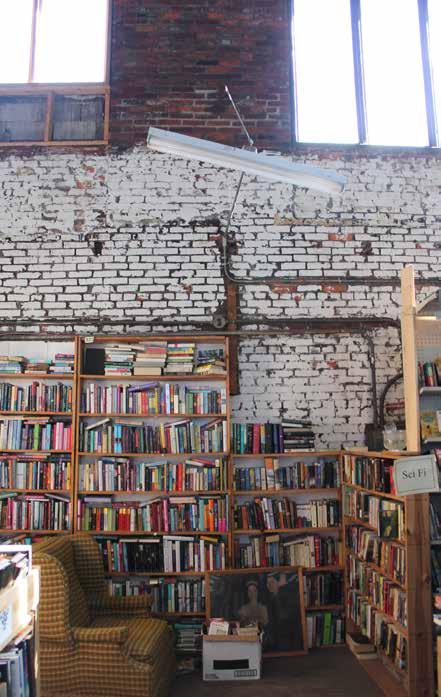
if you don’t know , now you know
Words Julie Parladé
photos Julie Parladé + Megan Dehmelt
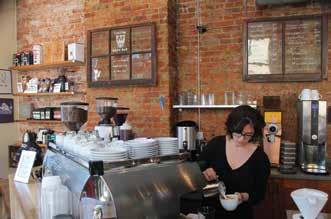
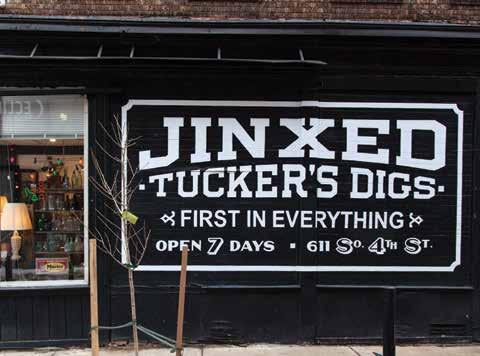
South Philadelphia has a long history of attracting a variety of pioneers, a tradition that can be traced to the Industrial Revolution when early Italian and Irish immigrants were drawn to the area by the prospect of greater prosperity. Generation after generation, this trend has continued, allowing an amazing diversity of individuals to establish communities in this area of the city. To them, it seems to be a haven for the outcasts who hope for little more than a chance at the American Dream. These people have formed what is now a vibrant hub of artists, creatives, entrepreneurs, blossoming urban families and immigrants representing a multitude of countries.
However, as is the fault of many Americans who like to simply sum up an entire culture into a neatly commodified image, South Philly has undeservingly come to be represented by cheesesteaks, South Street and Rocky. Undoubtedly, all three icons are valid in Philadelphia’s culture as a whole, but they are not the only attractions.
It goes without saying that cheesesteaks are pretty much sacrosanct in Philadelphia. Non-South Philadelphians who flock to the long established “name brand” cheesesteak joints on Passyunk end up foolishly paying around $10 for a less than satisfying meal. Pat’s and Geno’s are equally overpriced, obnoxious and overrated. Often, those who choose to take sides in the futile debate over Philly’s best cheesesteak are so disillusioned as to what good Philadelphia food is that they may never experience what South Philadelphia really has to offer.
Nevertheless, hordes of ignorant and confused tourists block traffic and crowd both the streets and sidewalks surrounding these heavily lit up Wildwood-style eateries.
In reality, South Philly is home to such an enormously eclectic mix of cuisines, to order from a place known to reprimand cheesesteak-hungry individuals for not placing their order in a specific and seemingly arbitrary manner, is just silly. South Philadelphia’s diverse population and authentic community atmosphere offers some of the best Mexican and Vietnamese food. Nothing feels better on a rainy day than going to Washington Avenue, a little east of Broad Street, and ordering a
bowl of warm phở. Travel a bit further east down Washington Avenue and the best food the Italian Market has to offer can be found at the many hole-in-the-wall Mexican restaurants, such as El Costeño. The Italian Market is also great for buying affordable produce. An early morning open air market takes place daily down Ninth Street and has done so for decades. (If you really happen to be jonesing for a cheesesteak, A & H Food Market on the corner of 20th and Federal makes the best cheesesteak in Philadelphia. Not only is it the least greasy, the 12-inch sandwich comes with a very generous side of fries for a mere $4.50!) South Street, once a groovy, happening hangout for counterculture hippies in the mid ’60s and ’70s, followed by punks in the ’80s, is now a sad, hollow version of its former self. With soaring property values and the commercialization of its previously authentic, local storefronts, South Street is now home to gaudy retail stores, lousy chain restaurants, and a slew of naughty shops. As a result, the only thing worth walking down South Street for is its surprisingly robust selection of “tobacco accessory” stores. Once off the forever congested street of shoobies, a revival of alternative stores that have been ousted from the touristy, expensive South Street have formed a community in Queen’s Village and Bella Vista that are well worth exploring.
Fabric Row on Fourth Street once flourished with fabric stores, but began to fade in the past decade due to the decline of the garment industry in Philadelphia. Replacing them, though, have been many vintage stores and boutiques popping up. One noteworthy example is Moon & Arrow, where stunning vintage clothing and minimalist “raw” jewelry create a one-of-a-kind shop. For the gentlemen, Armour takes on a similar vibe as Moon & Arrow but with more of an industrial emphasis. Bus Stop, located on 4th as well, is a fine shoe boutique whose distinct English-centric curation of footwear is a must visit for shoe lovers who may want to discover lesser-known designer brands.
For the money conscious, Fabric Row offers an array of thrift stores as well. Although one will not find clothing at Jinxed, the Northern Liberties transplant has collected a substantial amount of good to high quality antique and vintage goods of every variety. From beautiful metal candelabras to delicate ’50s cateye glasses, the fairly priced wares will always remind you of something you didn’t know you needed. Wilbur is also a fantastic little store that has been crammed to near-capacity with a thoughtfully selected array of clothing and accessories from every era imaginable. Philly AIDS Thrift and Fleischmann’s, across the street, are also amazing for thrifting. While their prices are some of the lowest around, a bit more searching and sifting through their wares is required. For the type with a more
scholarly inclination, further south of South Street is one of Philadelphia’s best used book stores, Mostly Books, where room after overflowing room of ancient and contemporary texts give the sense that the store has no end.
Once night falls and the surrounding cute shops close for the day, South Street transforms itself and quickly becomes overrun by Hot Topic teens and gangs of loud Ducati bikers, making it an absolute no-go for nightlife. If anything, Passyunk Avenue has become the new South Street, hosting myriad independently owned small businesses and bars that actually offer a fun dayto-night experience. Sporadically interspersed between the authentic Italian shops and boutiques that have maintained their existence on Passyunk for generations, some equally interesting new additions such as Urban Jungle and Fabric Horse have popped up. With city living in mind, Urban Jungle caters to the urchin with a green thumb, selling horticultural goods ranging from terrariums to a total rooftop garden experience. Fabric Horse, another one of Philadelphia’s many well established companies on Passyunk, sells bicycle related accessories such as u-lock carriers, utility belts and bags. Here, a crop of young Philadelphia artists, designers and entrepreneurs have found a home on the Avenue.
When happy hour comes around, Passyunk Avenue opens itself up to a healthy crowd of people that flock to the dive bars such as P.O.P.E., Ray’s, and the most recent addition, The Garage. Also open on Passyunk is the Bottle Shop which, like the Garage, has a wide selection of obscure beers that appeal not only to the palate of a connoisseur, but to anyone interested in trying something new.
The morning after, Mexican style brunch and a bloody mary al fresco at Cantina on Passyunk is the best way to freshen up for the next night of dancing at the Dolphin or seeing a show at the newly refurbished Boot & Saddle, both on Broad Street below Washington. Although the weekly dance nights at the Dolphin, such as Snax on Thursdays hosted by DJ regular Dave P., tend not to pop off until after midnight (if they do at all), what redeems and makes the Dolphin relevant are the nights when they invite musicians who are performing in Philadelphia to host their own DJ set after party. For $5 entry, the cozy dance floor allows you to get intimately close to artists such as Animal Collective and Chvrches who have DJ’ed there since its opening. In the same vein as the Dolphin, Boot & Saddle has a story of revitalization and metamorphosis, leaving behind its traditional South Philly Bar past, it’s now an R5 associated music venue/ restaurant/bar. Once Philadelphia’s only country bar, Boot & Saddle retains its charming cowboy folk motif while boasting one of the best sound systems a small, 160-person capacity show space can have.
Finally, a trip to South Philly is not complete without picking up a cup of coffee at any one of the numerous cafes that have sprouted up all throughout the neighborhoods. As a testament to the growing success of businesses in South, Ultimo coffee shop, located in Point Breeze, was named the number one coffee shop in the country this past year. The freshly styled, naturally lit corner shop on 15th and Mifflin Streets exudes a certain Brooklyn pomp, but legitimately has the flavor to back it up. Most notable is their use of Counter Culture coffee, sustainable and ethically harvested coffee from around the world. Additionally, unlike their second location in Graduate Hospital, their Point Breeze location also sells quality bottles of beer.
Grindcore House, around Dickenson Park in Pennsport, is another great destination for coffee. Along with a vegged-out lunch menu, what sets this café apart is their commitment to healthy vegan practices which include an array of complimentary soy, rice and coconut milks and creams, and biodegradable cups and cutlery. One last stop at Federal Donuts on 2nd and Federal Streets for a vanilla-lavender donut, and maybe a half order of the best fried chicken in the city, will complete the best breakfast Philadelphia has to offer.
Pennsport, Point Breeze, Passyunk Square, Bella Vista, Queen Village, Grad Hospital. South Philadelphia is so much more than a two-bit cheesesteak joint and a Bob Marley t-shirt. Visiting South Street during the day is fine, just don’t be afraid to venture off course. A cheesesteak is a definite must every once in a while, but save some money and hit up a corner store instead. The best way to experience Philly below South Street is to get a bike (Drexel rents them out) and to actively pursue the unfamiliar. The true nature of South Philadelphia must be found with very much the same spirit as its pilgrim founders – journeying beyond the easy and into the exhilarating unknown.
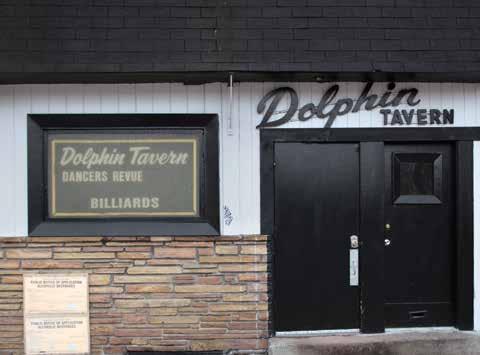
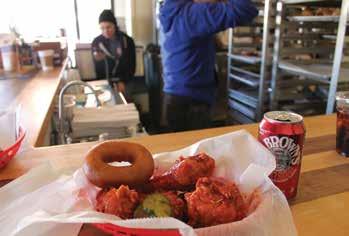
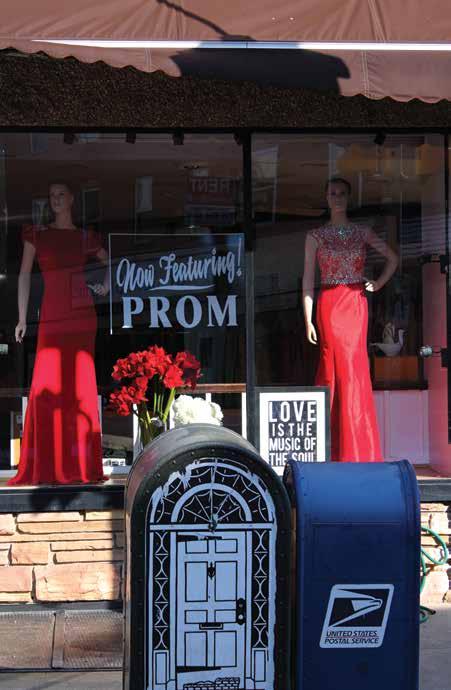
c raft brewing is viewed as both an art form and a science, and it is taken very seriously by p hiladelphia natives t his city has had a long history for its love of locally brewed beer and is a destination for those who share this passion
b rewery & r estaurant
701 s outh 50th street philadelphia
Dock Street Brewery & Restaurant was established in 1985 and is home to one of the first brew-pubs in Philadelphia. It reopened on 50th and Baltimore in an old firehouse in West Philly. Its ambiance is soothing, with rustic floors, industrial pipes and local artists’ work displayed. Customers have the option to sit outside during the warmer months and enjoy one of their seasonal brews, but sitting inside is highly recommended in order to experience and inhale the delicious aromas coming from their wood-fired pizza oven. Dock Street is perfect for vegans and vegetarians with many options, including the fig pizza and trio fries. A handwritten chalkboard displays all seasonal, permanent and future beers that are in the making. A large glass window reveals the brewery. An artisan by nature, Rosemarie Certo is the brains and artist behind the Dock Street operation. Her inspiration – and the mission statement – for Dock Street: “To elevate the status of beer in America.”
b rewing company
420 a corn l ane d o W ningto W n
Victory Brewing Company is only five blocks away from Lancaster Avenue in Downingtown, PA — perfect for an excursion out of the city. Victory is known for using whole flower hops, which gives Victory Beers their unique and familiar taste and aroma. The upper-west part of the Brandywine Creek supplies them with high quality water used for brewing. Hop Devil IPA, an American India pale ale, is their most famous brew and has a refreshing citrusy and spicy taste. Golden Monkey, another local favorite, is a BelgianStyle tripel with herbal and fruity notes. At 9.5 per cent ABV, one of these might be enough to enjoy! Don’t forget about their fried pickles with sriracha dipping sauce to go along with your beer of choice.
b rewing company
901 n orth d ela W are a venue p hiladelphia
Yards Brewing Company is located in the Northern Liberties neighborhood on Delaware Avenue. Ever since 1994 when they were located in Manayunk, Yards has produced handcrafted ales that are a staple in most Philadelphia bars. Every beer on tap is only five dollars, and the tours are free – the ultimate deal for college kids on a budget. The Brawler, one of their newer ales, features flavors of baked bread and caramel. This brew is featured all year long and pairs well with margarita pizza and anything BBQ. The rustic decor creates a cozy atmosphere and the friendly, informative service fits in perfectly with the Northern Liberties neighborhood vibe. Locals gather to enjoy a game of shuffleboard and imbibe a beer or two together. Even though it’s right off of I-95, one can tell that this is a local spot for Philadelphia beer lovers.
t here are two things that p hiladelphians love: cheap, delicious food and their favorite alcohol. For those reasons, the BYOB (Bring Your Own Bottle) culture in Philadelphia was born. You would be hard pressed to walk down any street in any neighborhood of this city and not find an ethnic eatery inviting you to walk in with your own bottle. But with an oversaturation of these establishments, too many amazing places get overshadowed by larger, high-profile restaurants and chains. Here is a list of seven BYOBs that may be relatively unknown but definitely deserve your attention.
cuisine: La T in aME ri C an neighborhood: f air M o U n T
Look for the neon feline lighting up Fairmount Avenue and you’ll know you’ve found BlueCat. The unique Latin-fusion cuisine is matched by the fun interior ambience, especially the artwork on the walls and the outrageously friendly staff. Perfect for a casual night out, BlueCat offers a variety of interesting platters like salmon with tropical fruit and some of the best fish tacos around. Finish your meal with one of the desserts listed on the chalkboard. 1921 Fairmount avenue / 267 519 2911
cuisine: aME ri C an/J E wi S h neighborhood: n or T h E rn Lib E r T i ES & g ra DU a TE h o S pi T a L
Your search for the best brunch in Philadelphia is over. This Southern Homestyle menu with Jewish influence will brighten up the start to any day. As if the full menu wasn’t enough, keep an eye out for the specials, dishes which are often regularly featured, especially the Whole Wheat Carrot Cake Pancakes and the Turkey Croquette with mashed potatoes. Don’t forget a bottle of champagne so you can enjoy a mimosa with your meal!
800
cuisine: M E xi C an neighborhood: n or T h E rn Lib E r T i ES
Delicious and dirt cheap. If you love margaritas but don’t own a blender, grab a group of friends, a bottle of tequila, and head to Pura Vida. They provide the margarita mix along with a choice of salt, sugar or spicy sugar (and they do mean spicy) for your glass. Snack on the most heavenly guacamole while enjoying the authentic Mexican atmosphere and keeping your wallet happy. 527 Fairmount ave / 215 922 6433
cuisine: aUST ra L ian neighborhood: g ra DU a TE h o S pi T a L
If you’ve ever wondered what Australian cuisine is like, try Ants Pants Cafe. On a chilly fall afternoon, the line may be out the door, but the hot Aussie drinks at APC are worth the wait. Cozy up with the Flat White, a double espresso with steamed milk. It is some of the best and strongest coffee in town, and the wait staff will ensure your cup is never empty. Choosing a meal to go with your beverage isn’t easy, but you can’t go wrong with the Brekkie Platter- three eggs, bacon, fried mushrooms and honey wheat toast. If you’re too late for brunch, the dinner options are just as mouthwatering and offered Wednesday through Sunday. The space is small so get comfortable with the table next to you, and don’t forget to hit the ATM before you go; it’s cash only. 2212 s outh s treet / 215 875 8002
cuisine: Japan ESE
neighborhood: C E n TE r Ci T y
Far from your average sushi restaurant, Crazy Sushi is one of the city’s younger BYOBs but definitely one of the hottest. With exposed brick walls and changing colored lights, the atmosphere screams young, hip, and expensive taste. But the menu prices are just the opposite. An eight-piece roll won’t cost more than $8, and it will blow you away. In addition to the classic favorites, Crazy Sushi’s menu includes eccentric rolls with combinations including fried banana, mango and avocado, and crab meat and apple. If you’re looking to spend a little more, the house specialty rolls are just as creative and delicious, especially the France Roll - shrimp tempura topped with shrimp, avocado, and sesame dressing. Located right in Center City, it’s accessible from almost anywhere. 1837 c hestnut s treet / 215 988 0398
cuisine: f r E n C h neighborhood: bELL a v i ST a
Fancy French food that won’t break the bank, Bibou offers one of the best meals in Philadelphia. This is not your average menu; with eclectic items like escargots, foie gras and pied de porc, Bibou is one of the more upscale BYOBs in the city. If you’re not too adventurous with food, the hanger steak or sea bass are both delicious options. The chef will even come and greet you at your table, adding to the romantic environment. It’s not the cheapest BYOB, but definitely one of the best.
1009 s outh eighth s treet / 215 965 8290
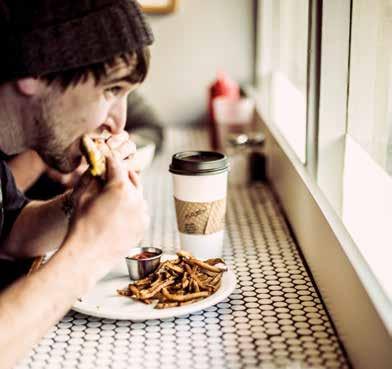
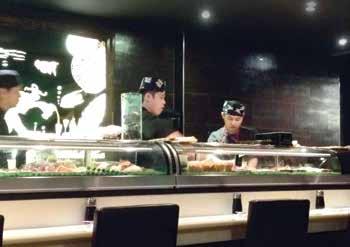
cuisine: iT a L ian neighborhood: Q UEE n v i LL ag E
In the quaint neighborhood of Queen Village, you’ll know you’ve found Hostaria da Elio when you run into the precious Italian man calling you into his restaurant as you walk down S. 3rd Street. The menu is concise and offers a mix of traditional Italian food with some unique dishes. For a classic meal, the Penne Alla Vodka has the perfect amount of cream and flavor while the Penne Alla Norma offers a more adventurous taste with eggplant, tomatoes and basil. For anyone on a budget, this is the place to go. A dish of pasta won’t cost you more than $13! 615 s outh third s treet / 215 925 0930
our staff fills you in on philly’s best boutiques, shop local y’all!
With so many small shops in Philadelphia, picking a best is almost impossible, but to many in the Fishtown area, there’s one that stands out. On the corner of Girard and Columbia Streets you’ll find a small vibrant looking café; a simple shop with a small menu of breakfast sandwiches, burritos and some stellar lattes. While that’s a great start, Milkcrate’s got so much more to offer. With a giant orange outdoor mural that’s hard to miss, the café has a quaint but modern atmosphere. Minimalist furniture is a contrast to the classic music memorabilia on the shelves. Just around the corner from the trendy, low-cost iPad which serves as a cash register is a stairway. Walk down the stairs to find a low-ceilinged basement, walls lined with classic posters and hundreds of vinyl records, both old and new. In an age where it’s almost cliché for a coffee shop to sell music, Milkcrate puts the two together seamlessly. The record shop isn’t just an addition, it’s its own entity on the music scene.
400 east g irard avenue mon-fri 7-7, sat 8-7 + sun 8-5
— Shan Cerrone
Amidst the rows of little quaint stores is something a little bolder: Long in the Tooth. Located at 20th and Sansom, the store has been an ideal location to go in Rittenhouse for years. The selection there is impeccable; they have a very large selection of used vinyl and CDs, as well as a pretty notable new music section. They also carry a small selection of books and DVDs – really, this place is the full package for any music lover. The people that work here are very knowledgeable and helpful. They will try their best to assist, and will even try and get a record into the store by request. It’s small and cozy in there on most days. Walking to Long and the Tooth on Record Store Day is different though – the line forms halfway down the block. They can only allow a certain amount of people in the store at a time. It becomes a fun wait, making new friends and daydreaming about the new releases to acquire. Even if that super-rare release sells out, coming back to Long in the Tooth many more times during the year is bound to happen. Just milling in the environment and exploring new finds is enough to keep Long in the Tooth a destination for music lovers for many years to come.
2027 s ansom s t reet tue-thu 12-8, fri-sat 12-10 + sun 12-6
— Maeve Walker
Art Star, a Philadelphia gallery and boutique, is the shining star of Northern Liberties. The carefully curated art gallery features artist collaborations, unique prints, apparel, baby clothes, paper goods, housewares, accessories and knick-knacks galore. Walking into their store is like walking into an art studio. Your senses become overwhelmed by the textures, colors and sheer breadth of merchandise available. Aside from a retail space, Art Star doubles as a venue for private parties and trunk shows. Next time you’re free on First Friday, be sure to check out this wonderland of brightly colored products.
623 n orth second s t reet
tues-sat 11-7 + sun 12-6
— Danielle Brief
Looking for clothing that’s hasn’t been mass-produced and is instead being recycled? What about something original and fashion forward? Retrospect at 508 South Street offers clothing that fits all of those needs while still being affordable. With its racks of vintage treasures, this is the perfect place to shop for anyone who likes making a statement while still being on a budget. Retrospect offers a variety of clothing from the 60s to modern day. Customers will get an instant feeling of nostalgia whether they’re picking up a vibrant graphic printed t-shirts from the ’90s or a cute suede skirt from the 70s.
508 s outh s treet
mon-sat 12-9 + sun 12-8 Taylor Murphy
Upon entering Vagabond, located just north of Market on Third Street, the smell of patchouli and aged tobacco welcomes you to a shop full of treasures. The cozy interior of the boutique makes use of largely natural materials that house the fine selections of independent designer goods mixed with meticulously selected vintage finds. From thick branches hang an assortment of their artisanal wares, which includes a tasteful selection of minimal geometric jewelry from designers including Iacoli & McAllister and Hey Murphy. Deeper in the store, one will find their wide selection of Baggu bags and Sven Clogs are displayed throughout, complementing their wide assortment of stylish threads that range from more well-known companies such as Cheap Monday and Dolce Vita, to the more unusual such as Ace & Jig, Base Range and Loup Windor.
A few favorites from this store are their digitally printed bags made by Lee Coren in Israel, and their amazing selection of Paddywax Apothecary soy candles, which come in fragrances like Vetiver & Cardamom and Verbena & Eucalyptus. This store is a must for those who appreciate hand crafted beauty using natural materials and modern design.
37 north thi rd s t reet mon-sat 11-7 + sun 11-5
Julie Parladé







































Words + photo Shan Cerrone
In today’s technological world, fueled by feature-rich buzz of the moment social networking, everyone is a content provider. It’s never been easier to update your status about that burrito you just ate, tweet about how much you love James Franco, write a blog post on how your cat got stuck in a shoebox or Instagram that drunk picture. For most people, posting on social networks has become second nature: get a thought, open an app on your phone, post and forget. It sure doesn’t seem like a big deal on the surface, and to be fair 90 per cent of it really isn’t. However, something most people don’t think about is, who owns what you post?
Every time you sign up for an account, you fill out your information and skim through a whole bunch of condensed paragraphs you don’t care about reading, click an agreement box, and off you go. However, hidden in all those words are the “terms of service” that you agree to whether you read it or not, just by opening an account. Sure, the social media behemoths might not care about your burrito, but what about when you want to share some art or photography you took?
Regardless of what you post, the internet’s a scary place for copyrights. In social networking, nearly every site that hosts user-generated content as one of its operating features claims a non-exclusive license in the site’s terms of service to all content posted to the site by its users. With technical consideration to how social networking sites display user content, usage licenses serve the base purpose of legally allowing the social network in question to host the content and to share the content with those you connect with on the site. This ranges from displaying the content on the user’s page and in news feeds akin to Facebook’s, and extends to manipulative actions required to resize and duplicate the content to be hosted and viewed. However, from this basic non-exclusive license, each site places its own additional terms and license considerations. In positive cases this can include specific wording that the content cannot be displayed outside of the purpose of submission by its owner, and in negative cases can grant the social network the ability to transfer and sublicense the content.
For social networking, content licensing in terms of service presents serious concern, prompting the question of what “ownership” really

means to image copyright holders. For users who might not ever post anything serious (or maybe if you don’t hold burritos as close to your heart as I do) this may be of little concern. However, an important consideration when uploading content is that while a non-exclusive license does not prevent further licensing of the content to any other party thereafter, the content owner has lost the ability to grant exclusive licensed rights to any other party.
Scary? Maybe. There’s a lot to think about, but for most people things like this should just stand as a caution. If you’re going to post something more important than what you had for lunch, consider the following: Who really owns the content? How can the content be shared? How extensively is the content licensed or sub-licensed? Does the licensee care about profiting from the license?
Even under optimal terms of service, a line in Tumblr’s legal policy makes a very strong point in regard to posting anything online, no matter how important what you’re posting is: When you make something publicly available on the Internet, it becomes practically impossible to take down all copies of it. Be careful what you post!
fa CE book By uploading content, the user retains ownership and grants a license to the site, as well as sub-licensing rights. Though Facebook’s intentions and abilities are vague on what this license means in regard to public posts, this license is subject to the user’s privacy settings.
T wi TTE r By uploading content to Twitter, you retain ownership rights to the content, but grant the site licenses and sub-licensing rights to the use and manipulation of the content.
in ST agr aM : By uploading content to Instagram, the user grants the site extensive licensing privileges to manipulate the images in line with Instagram’s functions. The terms also include rights to sub-license, unless the content is private.
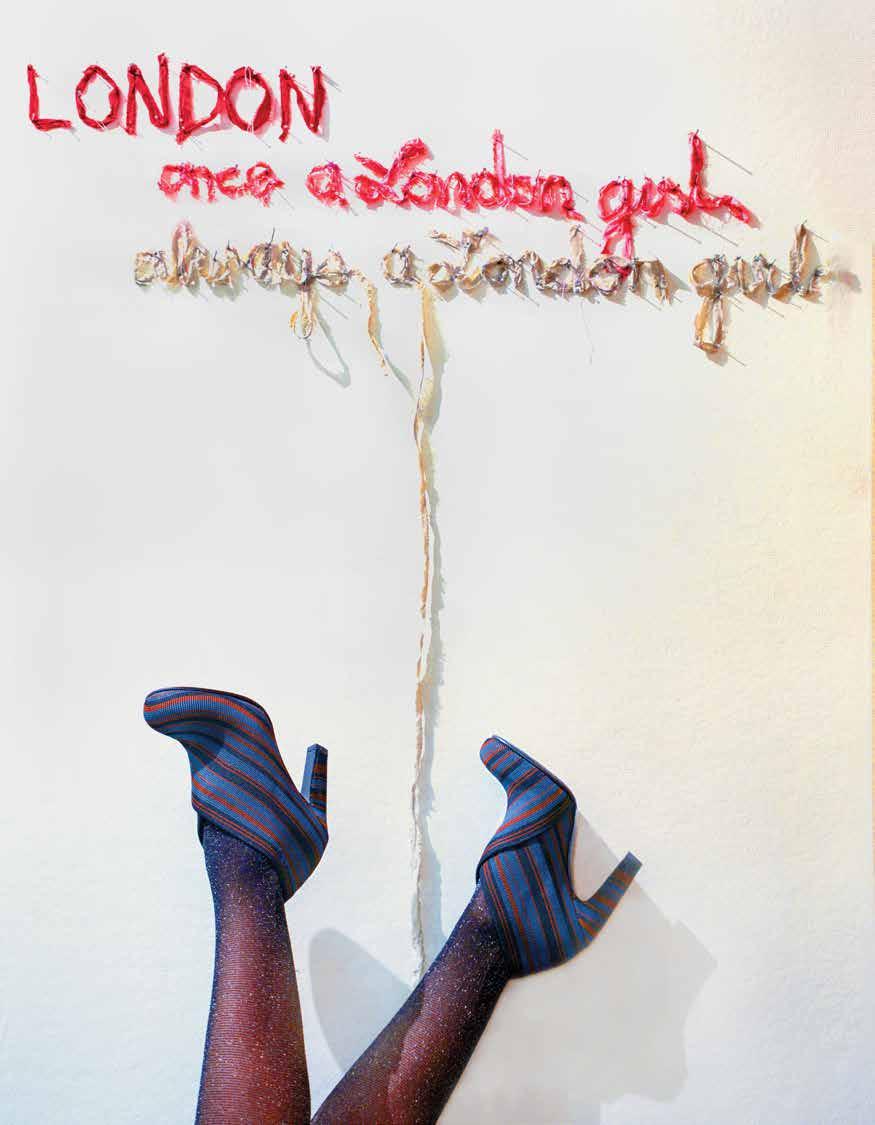
Words Jessica Mattern
i. obsessed with cell phones
yES o U r CELL
phon ES ar E a L way S in han D ’ S r E a C h an D w E M ay no
needy for instant gratification
i. We are eager and fearless when it comes to new technology. We are social and desire to stay connected to our peers and friends. We appreciate a flow and ease of communication and sharing new ideas.
iv. opposed to tradition
v. lacking Focus
S U r E w E M igh T no T
hav E T h E L ong EST
a TTE n T ion S pan
an D w E C an’ T fo CUS
wi T h a LL of o U r
T w EET ing, TE x T ing, MESS aging, an D C onn ECT ing.
We are eager, fearless and ready to respond to the critics.
vii. selFcentered
yES , w E wan T JUST a S MUC h va C a T ion T i ME a S o U r bo SS
ii.We are concise and witty writers (in less than 140 characters to be exact), we know how to engage a community and market ourselves through these platforms.
iii. We are open to feedback and ideas from everyone. We know the marketplace is competitive and we must work hard to keep up.
iv. We think outside the box. We are colorblind and look past sexual orientation. The millennials are paving the way toward equality for races and genders.
v.We want to get a lot done in one day. We are aware that the competition is high and we’re ambitious to keep up with peers and industry standards.
vi. We share our information and we are open to collaboration. We work best when there is a constant flow of ideas and knowledge. We are known to break down barriers and be innovative in our ideas.
vii. We believe life comes first, work comes second, which means we won’t regret the life we created. We see life and work integrating (thank you technology for making it possible). We have an entrepreneurial spirit and are pursuing our passions to make them profitable.
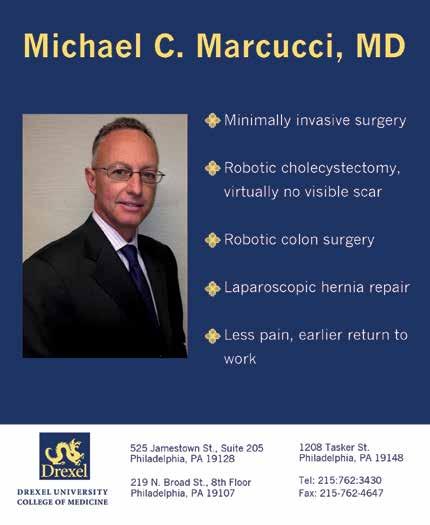

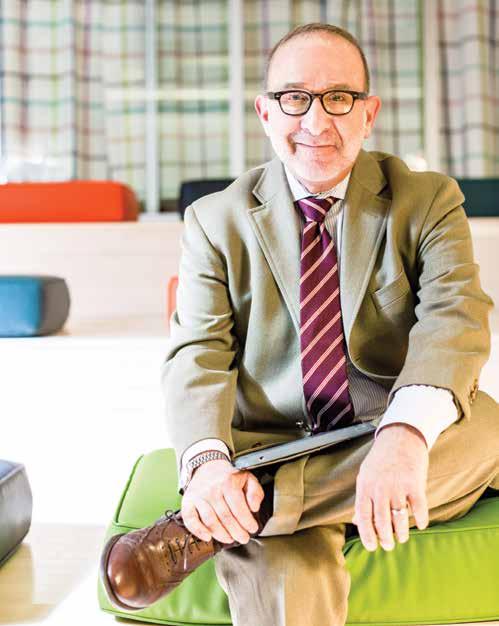
Words Danielle Brief photo Shan Cerrone
The life of a Westphal student is a whirlwind of design projects, developing business acumen, creating a personal branding strategy and continuing to absorb new technology applications that constantly change the way we learn and display our craft. Multiply this by 2,000 –the number of students in Westphal’s 16 undergraduate and 6 graduate degree programs. Now add 130 faculty members and 50 staff members into the equation. Divide by the number of college-sponsored programs such as the performing arts department or DUTV. Factor in a new black box theater, screening room, art gallery and the URBN Center. Consider the number of alumni, co-op employers, guest lecturers and the media and design communities of the greater Philadelphia area. From the portfolio of a single student to the larger design landscape that they will one day join, the inner workings of Westphal are not a simple equation. It’s an evolving, interactive, calculated formula that requires great finesse to maintain. The man responsible for balancing this equation is Allen Sabinson, the Dean of the Westphal College of Media Arts & Design. The Dean has the multifaceted position of supporting all of the
working parts of the College, envisioning Westphal’s future and scouting out the top faculty to fuel our creativity. Dean Sabinson says that his job is “to enable creative people.” To name just a few responsibilities, he’s in charge of the College’s finances and facilities, he leads the team that markets all of the College’s events, plans open houses, writes and edits the newsletter, develops fundraising efforts and tells the story of the College to prospective students. His commitment to the growth and longevity of the visual and performing arts programs at Drexel helps to establish a beacon of creativity within an engineering-minded University.
“We have a place at the table with the scientists and engineers,” proclaims Sabinson, who fully understands the importance of collaborative design. He continually reminds the University to embrace the arts and to cultivate design thinking. In this interview, he explains what inspires him, gives advice to prospective and graduating students and shares the story of how a man who thought he’d be the next great American writer found himself a home in academia.
Was there one de F ining moment in your career that has brought you to W here you are today?
I don’t believe there was one defining moment. Prior to Drexel, I worked for over 30 years in the film and television industry. What I learned and who I am today is the result of endless experiences, some good and some bad, some big and some small, all of which contributed to my skill sets and belief systems. And, one of the great joys for me is that I continue to learn and grow here at Drexel.
What’s a typical day like as the d ean?
A dean’s job is multifaceted. There really is no typical day other than to say I pretty much run from the time I get in to the time I go home, which is frequently 10 o’clock at night. I’m fielding 150 to 250 emails a day. If a student writes to me, that’s the first one I’m going to answer. My default position is work. Pretty much all of the creative fields demand tremendous commitment, passion. If you’re making a movie, you shoot when the sun is there and the cast is there. And the key to this is you better like it and enjoy it. I’ve been incredibly fortunate that I have always been able to pursue careers and positions that I love, so it never felt like work. Because there are so many facets, this is the first job I’ve had where you cannot win all the time. I try to remember that I want to have a very high winning percentage, but I’m not going to be perfect.
t here has been some debate on W hether or not m anhattan is the best place to learn and intern. Why should a prospective college student choose to study design in p hiladelphia?
Philly and New York are two great cities, both loaded with arts and culture. The critical mass may be greater in NY, but you could never consume all of the theater, dance, music, art and design that are available here in Philadelphia. The scope and rise in quality of Philadelphia’s cultural offerings over the past 10 years is fantastic, as hundreds of young artists have moved here because NY is prohibitively expensive.
What inspires you to keep doing W hat you do everyday?
The URBN Center is the best tonic for my spirit. Nesbitt (from which the college moved in 2012) was a depressing building. It didn’t look like a design building and everybody was isolated, so you never saw all the great things going on and students from one program never saw anyone else. If you were in Design & Merchandising, you never met an interior designer. So now, everyday when I come and see this
building and the annex, I say, “Look what we’ve accomplished.” It lifts my spirits.
What do you W ant prospective students and their Families to kno W about Westphal?
I think this is a very special place. I think it’s a very caring place. The faculty are outstanding, I really think they care tremendously about their students. They’re close to their fields and they want to assist in every way possible. The co-op is life-changing – you look at students before and after their co-op and they’re different people. About 40 percent of our students end up with their first job as a result of their co-op. We present incredible opportunities outside the classroom, whether it’s making this magazine, staging the fashion show, working on the D&M Shop, producing for DUTV, or working for Mad Dragon Records. We’re also not a conservatory school...we buy into that you need to be well-rounded in your education.
iF you can give one piece o F advice to the entire Westphal community, W hat W ould it be?
The student that does best here is the student that does more. Take advantage of all this College, this University and this city have to offer. Westphal students work incredibly hard just keeping up with classwork, but those that do best here also pursue minors in disciplines outside of their major and participate in some of the University’s nearly endless opportunities to be a part of a performing arts ensemble, to work at the University television or radio station, on the Smart House or Sierra Club, to attend guest lectures, symposiums and workshops. In the end, the more you put into your Drexel experience, the more you’ll benefit from your time here.
What W ords o F W isdom do you have F or the c lass o F 2014?
Never make the mistake that your first job is your final job. People look for that great first job —the prestige, good salary— it’s the wrong way to look at it. You build a career by building a network of connections, skills and experiences. So look at your initial job for where you’re going to learn something, where they’re going to give you responsibility, where is there a chance for advancement. Don’t look at the size of your office, don’t look at the size of your salary. That comes with time. And always remember to keep growing and never be satisfied.
“a great university has to have great arts”
filli N g i N t H e B l ANK s of yo UR f U t UR e
Words Danielle Brief
n ot sure what you’re doing after graduation and afraid you’ll never land your dream J ob? t o avoid unecessary stress during your J ob search, simply fill in the m ad l ib below because sometimes, life is easier when all you have to do is fill in the blanks

Dear compANy
I’m a Adjective college graduate from the Westphal College of Media Arts & Design at Drexel University. After four years of studying NoUN and veRB for six months at compANy I have truly veRB the value of hard work in a fast-paced industry. It has come to my attention through your corporate career site that an opportunity is available in the NoUN department. I know I’d veRB into the company culture and veRB new NoUN to your leadership team.
With my extensive experience producing a NoUN and veRB funds for my NoUN I believe I am well equipped to join your NoUN team. I hope that I will be considered because I am more than just the sum of my experiences. I am Adjective a driven innovator, and a Adjective creator. It has been my dream since childhood to help veRB the next big NoUN . After developing the NoUN on Drexel’s campus, I know that I have what it takes to veRB myself to my full potential.
When I think of the NoUN industry, I veRB that there is a place for me and there are an infinite number of ways to carve out a Adjective career if I put blood, sweat, and type of liqUid into my work. Thank you for your consideration and I veRB that I will hear from you soon. Please veRB me at yoUR UseRNAme @drexel.edu for further discussion regarding this job position or any other opportunities you deem fit.
Best Regards,
yoUR NAme