Artificial Intelligence, Real Implications: Preparing Clinical Educators for the AI Era

Rex Hermansen, MD
Eve Merrill, MD
Eric Burnett, MD
April 21, 2026


Rex Hermansen, MD
Eve Merrill, MD
Eric Burnett, MD
April 21, 2026
Rex Hermansen
Associate Clerkship Director, Inpatient Medicine
Icahn School of Medicine
Eve Merrill
Clerkship Director, Inpatient Medicine
Icahn School of Medicine
Eric Burnett


Associate Program Director, Internal Medicine Residency
Columbia University Irving Medical Center


We have no conflicts of interest or financial relationships to disclose.
We believe at the center of every decision is the learner: advancing medical education while guiding the responsible and safe use of AI in clinical training.
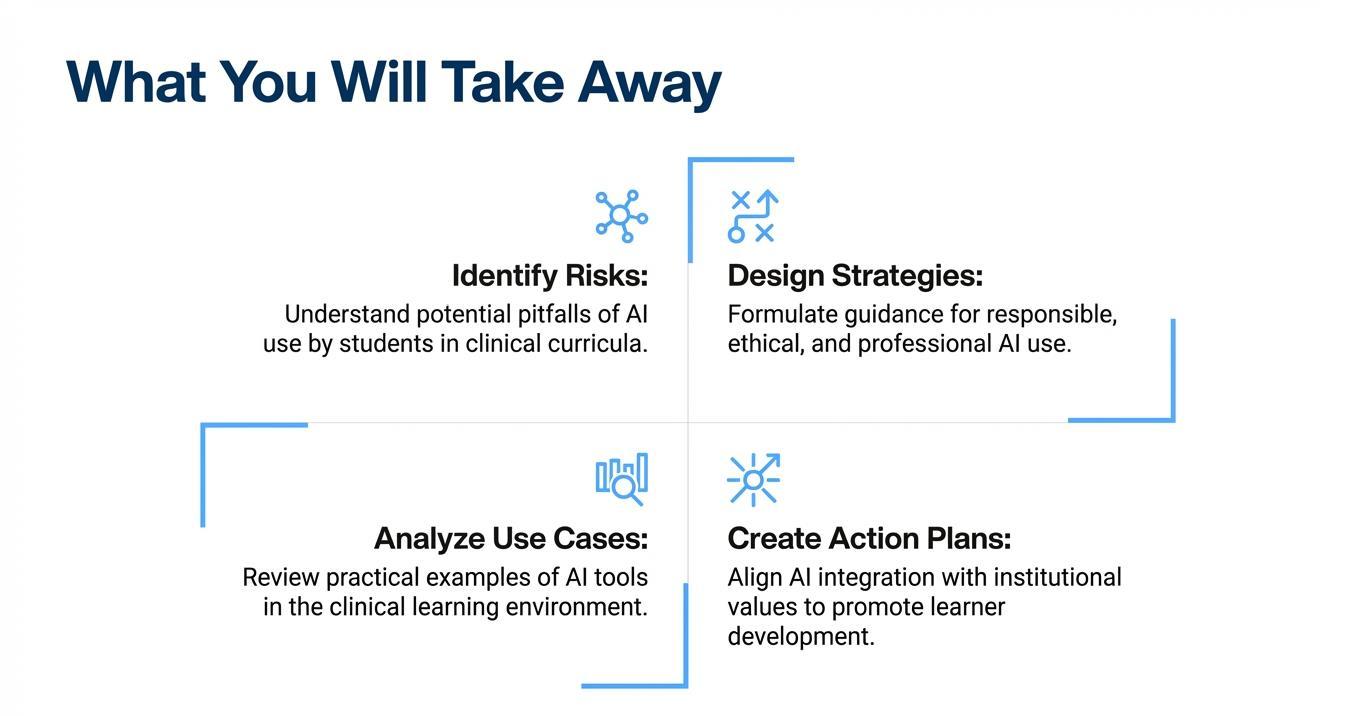
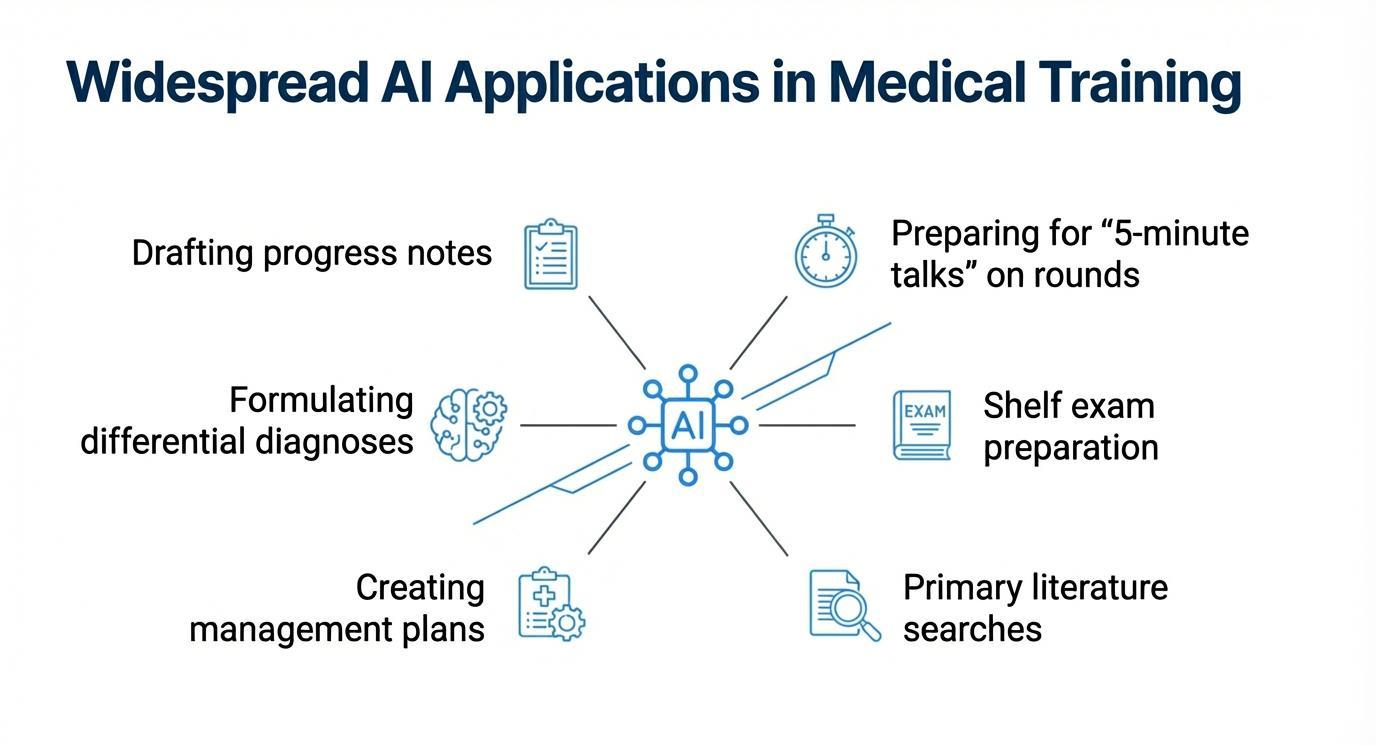
How many believe their students are using AI on their clerkships on a regular basis to answer clinical questions?
How many believe that their institution adequately prepares students to responsibly use AI in the clinical environment?
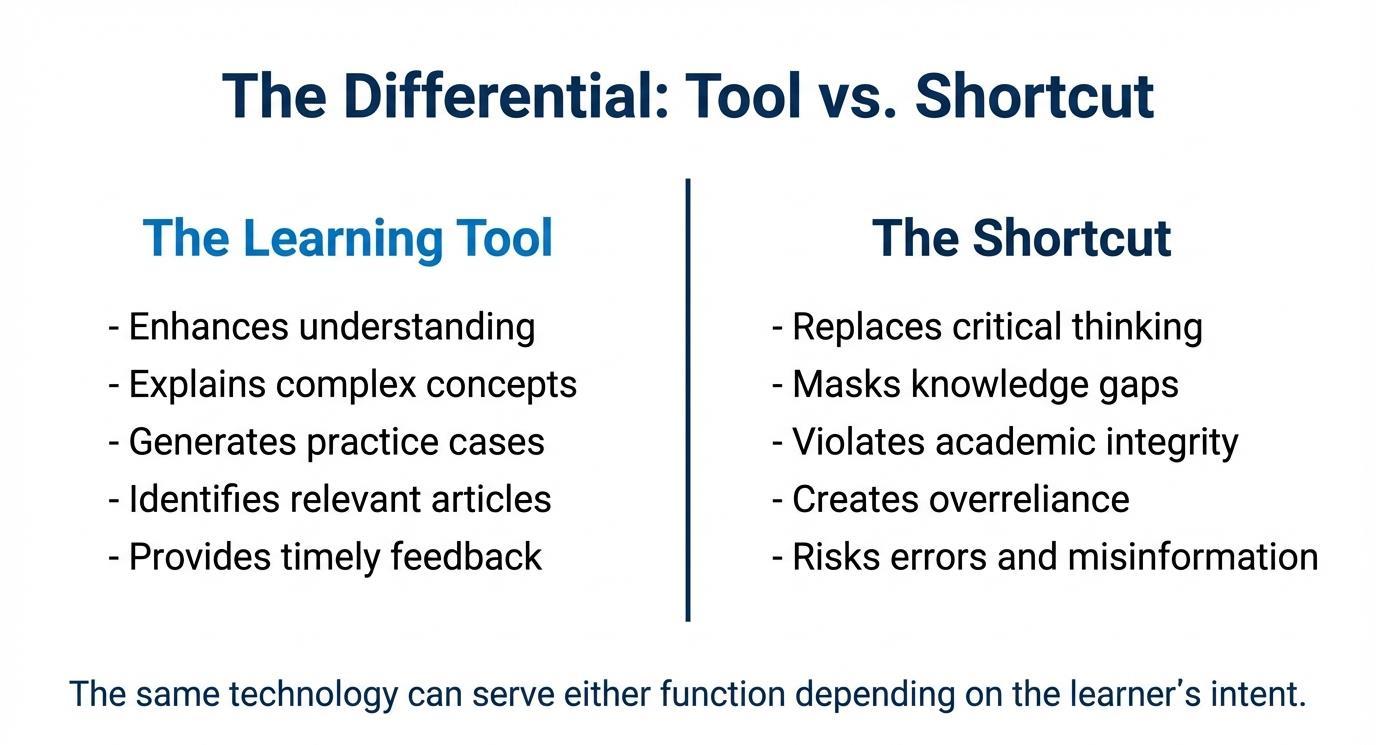
• Uneven role modeling
• Policing rather than teaching
• "AI shaming"
• Difficulty assessing authentic student work
• Pace of change
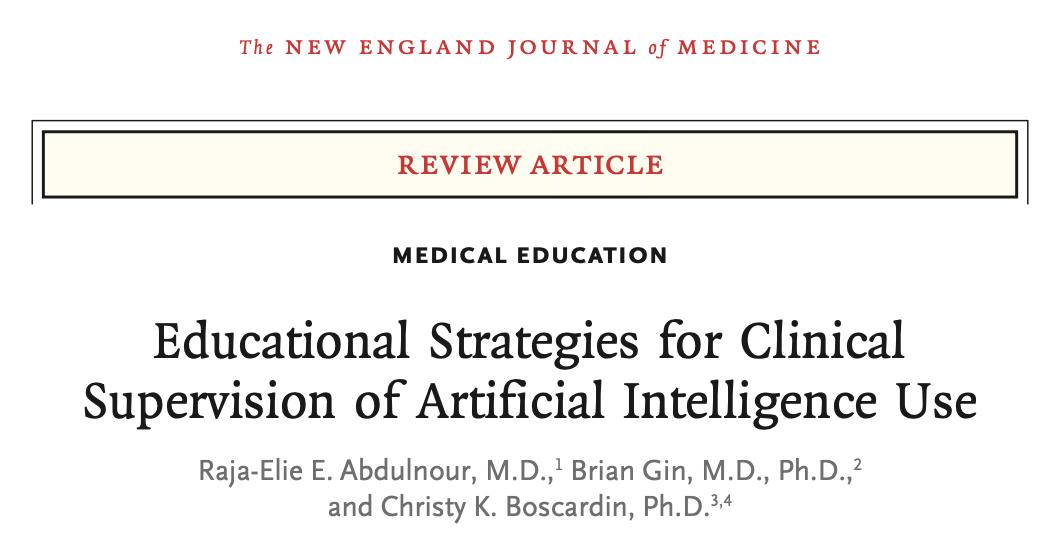
August 20, 2025
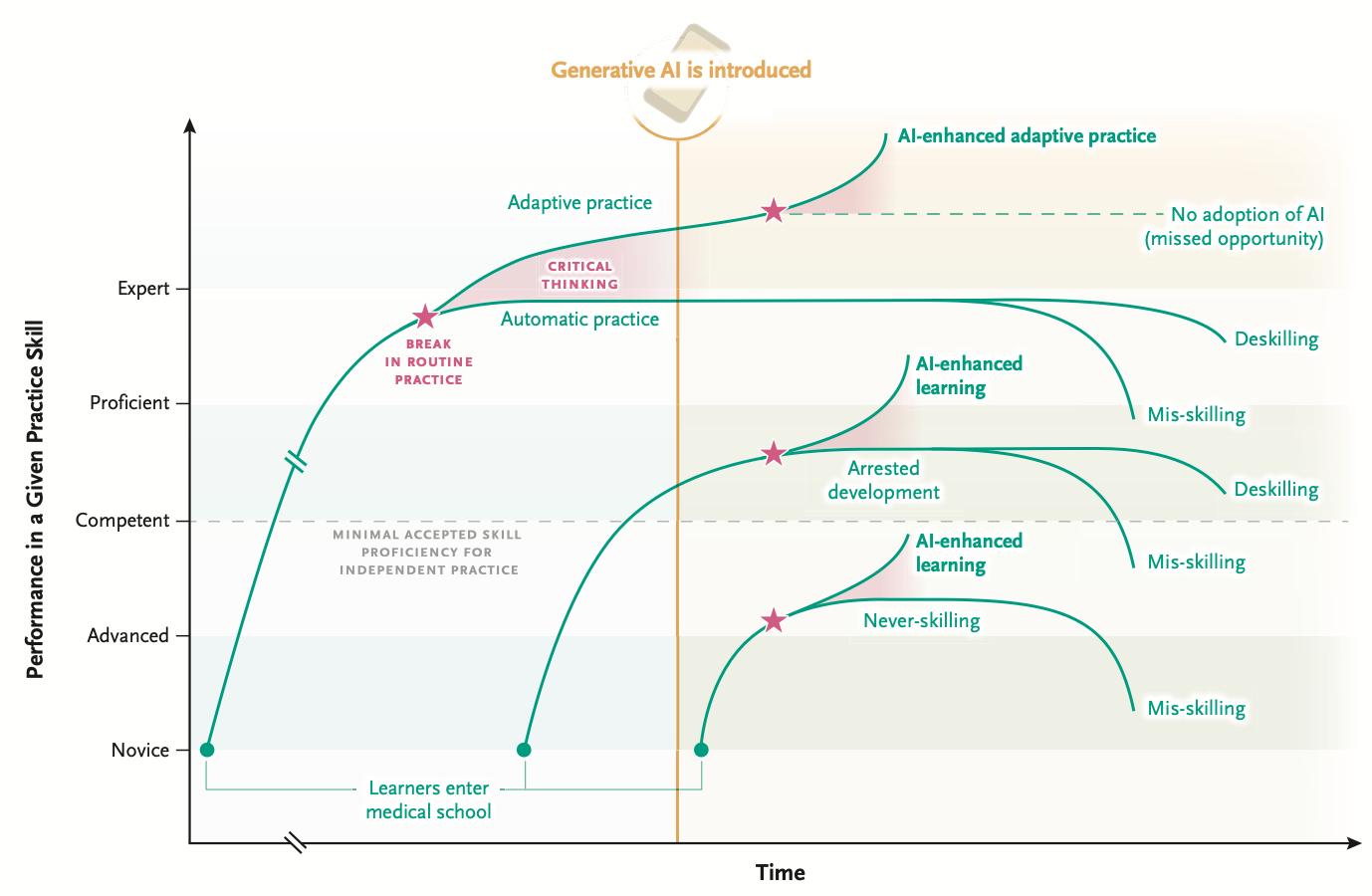
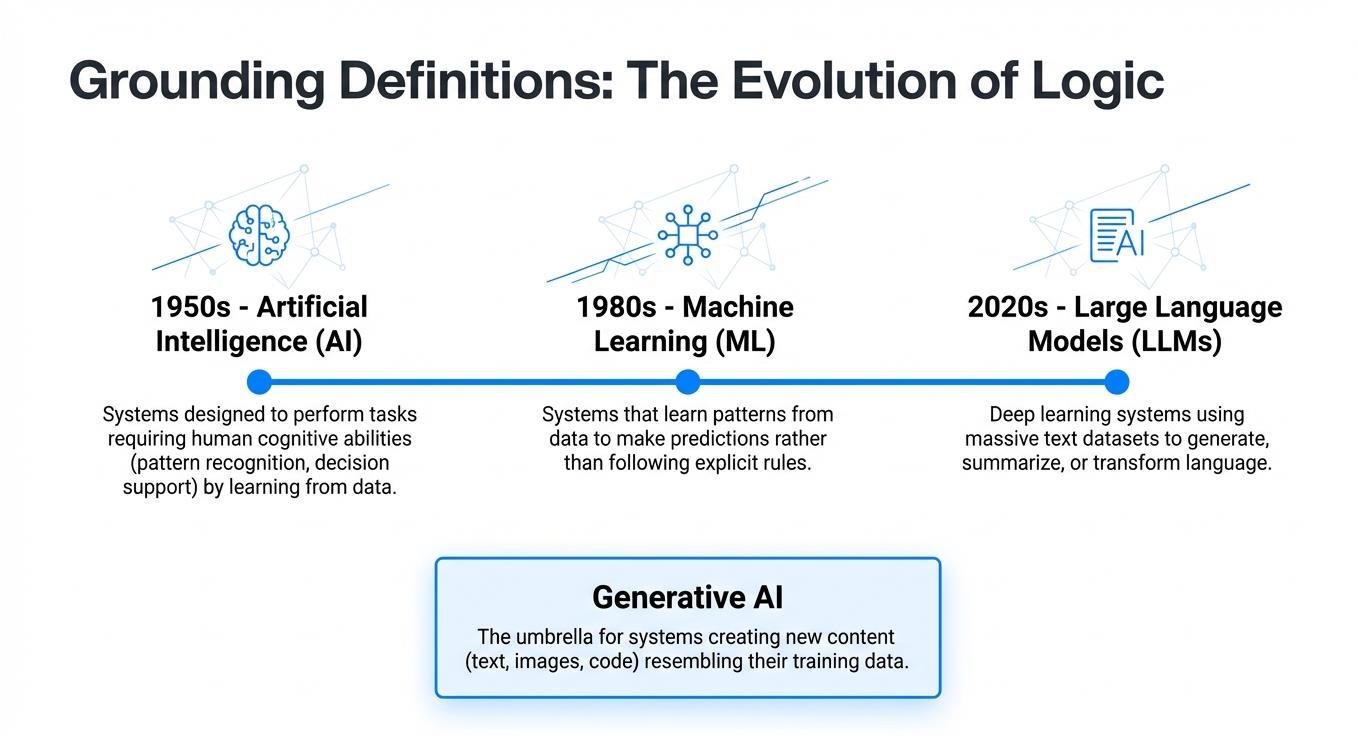
What's the current state of AI policies in US medical schools?
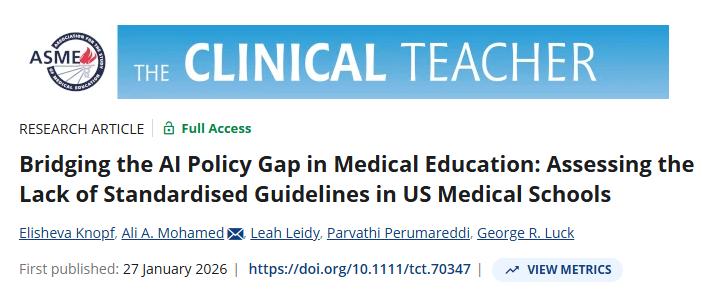
Results:
• Out of 199 US medical schools, 121 (61%) had an AI policy
• Majority of policies (n=90) originated from a larger university system (LUS)
• LUS policies were typically generic and applied to all university students
• AI is allowed as a tool, but not as a replacement for student thinking
• Academic integrity and disclosure are central
• Faculty or course leadership set the boundaries
• Patient confidentiality is paramount
• Validation, bias awareness, and user responsibility are expected
• Institutional or approved platforms matter (if available)
• Stronger on "what not to do" vs "how to use AI responsibly"
• Will not keep the pace with rapid change
• "Ask permission" sounds straightforward on paper but in reality is difficult
• Validation required, but rarely operationalized
• May under-address professional identity formation
• Equity and access are underdeveloped
• Perceived relevance of AI policies from students
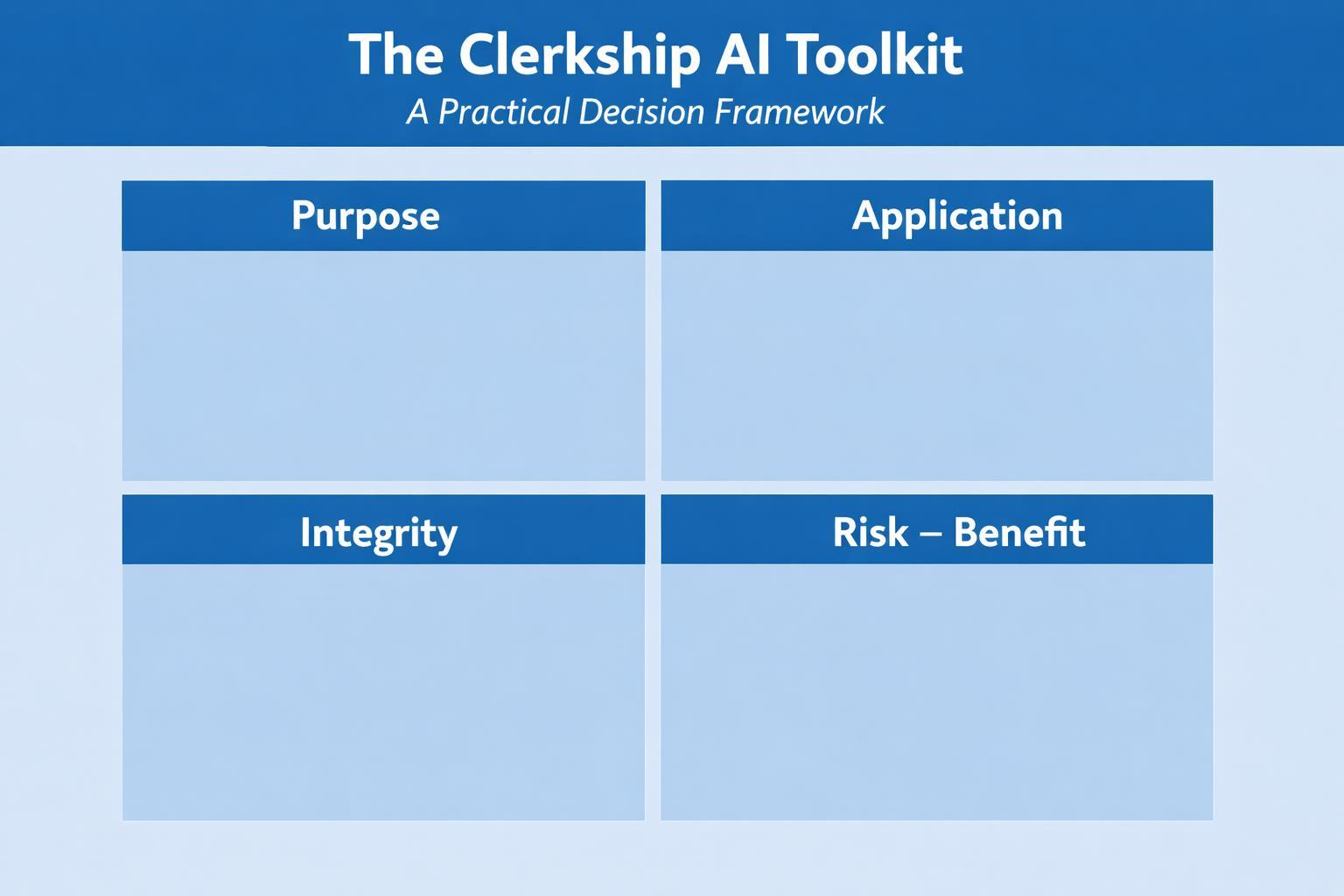
• Adaptive over time
• Individualized
• Can complement institutional policies
• Shared-decision making with student
• Fill a knowledge gap
• Increase efficiency
• Identify relevant literature
• Explain a concept
• Independent study
• Documentation drafting
• Patient communication
• Real time clinical decision making
Does it directly affect patient care?
What is the clinical setting?
Does the use of AI preserve transparency, professionalism, and accuracy?
Integrity of the learner:
• Representation of one's work
• Does the learner disclose how/if they used AI?
Integrity of the product:
• Alignment with institutional policy (if present)
• Was the correct input given to the LLM?
• Has the output been validated independently for accuracy?
Could this cause harm? What is the benefit?
To the patient:
Risks: patient privacy, outdated info, bias, lack of accountability of outputs
Benefits: Expanded knowledge access, standardization, more time spent at bedside
To the learner:
Risks: weakens independent thinking, over-reliance, false confidence
Benefits: Fill knowledge gaps, enhance reflection, provide feedback
Why is the learner using AI?
How is AI being used?
Does the use of AI preserve transparency, professionalism, and accuracy? Could this cause harm? What is the benefit?
After your PAIR assessment, how do you advise your learner to proceed?
A third-year medical student is pre-rounding on their patient admitted with decompensated cirrhosis. They notice that the patient has developed hyponatremia on their AM labs and know their attending will ask about it on rounds.
They type into a LLM “Explain hyponatremia management in cirrhosis at a medical student level”
The student repeats some of the key phrases from the LLM on rounds but struggles to answer targeted questions from you, the attending.
A fourth-year medical student is working on an admission H&P for a patient with decompensated CHF. He reviews clinical notes from the Emergency Department which he synthesizes into a LLM prompt:
“Refine this into a comprehensive assessment and problem-based plan to present on internal medicine rounds.” He then uses this as the basis for his note in the EMR.
A student is preparing for rounds on his 42-year-old patient with Enterococcus bacteremia on linezolid who developed a pulmonary embolism and was placed on a heparin drip. He notes the platelet count is decreasing on morning labs.
Concerned, he asks a LLM for guidance on next steps. The LLM responds with Heparin products should be stopped immediately

The student then proposes an argatroban drip on rounds.

A student on their internal medicine rotation is taking care of a patient admitted with abdominal pain. A CT abdomen and pelvis is ordered which reveals an "indeterminate 4.3cm mass located in the head of the pancreas. Tissue sampling is advised to determine etiology."
Unsure of how to communicate this to the patient, the student asks a LLM to generate a sample script she can use to relay this information clearly and effectively.
Traditional policies are challenging to apply to rapidly evolving technologies.
• AI capabilities change faster than policies can be written or updated
• Static rules cannot anticipate novel use
pAIr can be useful a framework for an adaptive, flexible approach for student use of AI that promotes self-reflection
Overly rigid policies risk: Over-restriction (stifling beneficial use), or Under-guidance (unsafe or inappropriate use)
Clinical environments require real-time judgment
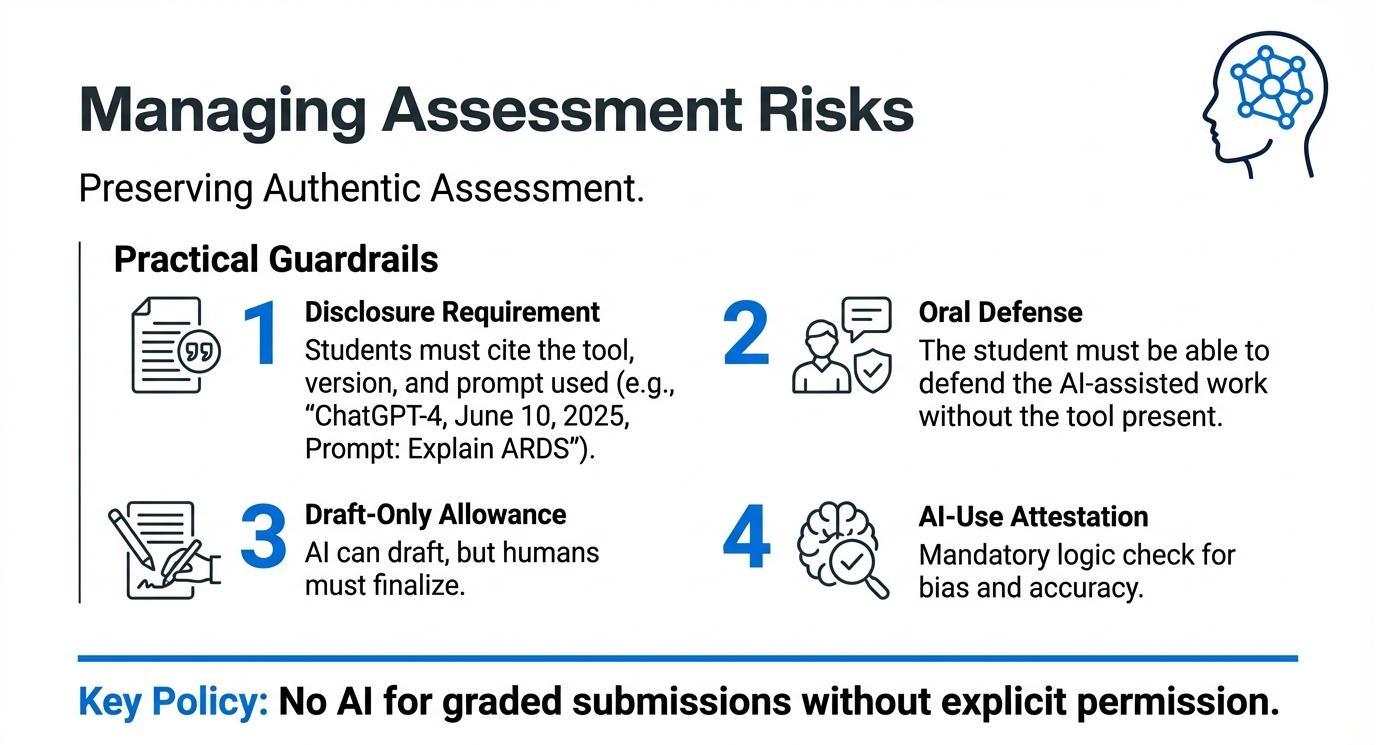
When AI during clerkships, students should:
• Clarify purpose
• Think about its application
• Maintain integrity and accuracy
• Consider risk to themselves, to their patients, to their colleagues
Medical educators should:
• Set clear expectations for AI use and explain their rationale
• Discuss AI openly
• Model responsible use of AI
• Help students critically evaluate AI outputs
• Create assignments that emphasize reasoning over information retrieval
Medicine is entering a period where:
• AI will be increasingly integrated into clinical workflows
• Clinical judgment and human oversight will remain essential
• We will not be replaced!



Our goal is not to make students fearful of AI or hide its use, but to help them apply it responsibly while maintaining strong professional integrity.
Aligning AI use with ACGME competency domains:
• Patient Care
• Medical Knowledge
• Practice-Based Learning and Improvement
• Inter-Personal and Communication Skills
• Professionalism
• Systems-Based Practice