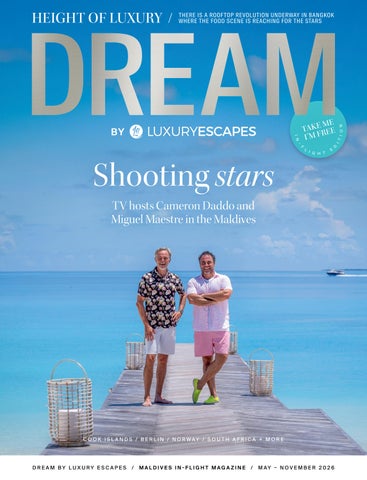

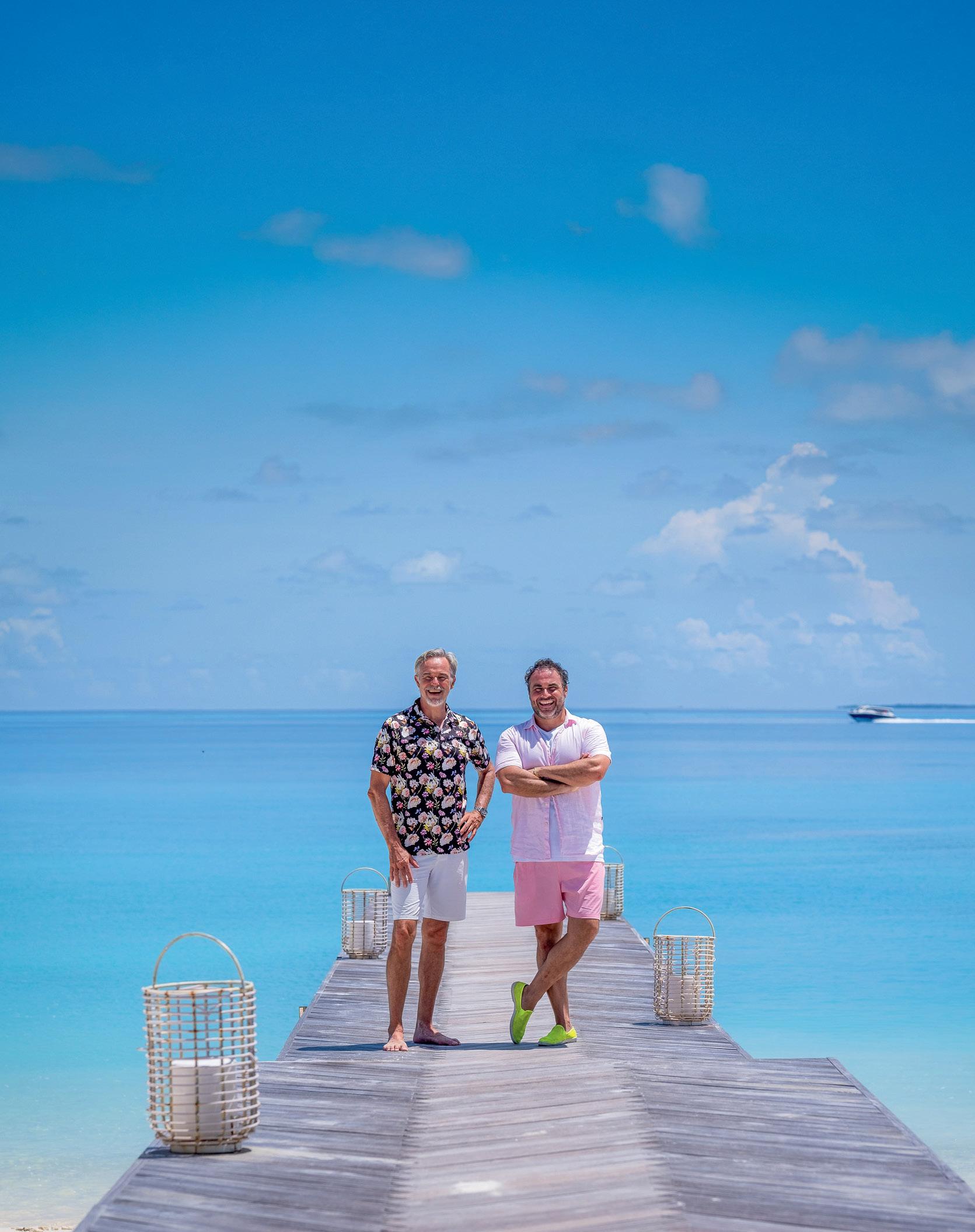
Shooting stars
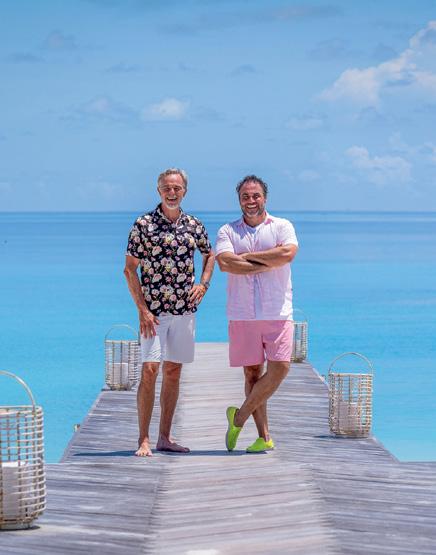
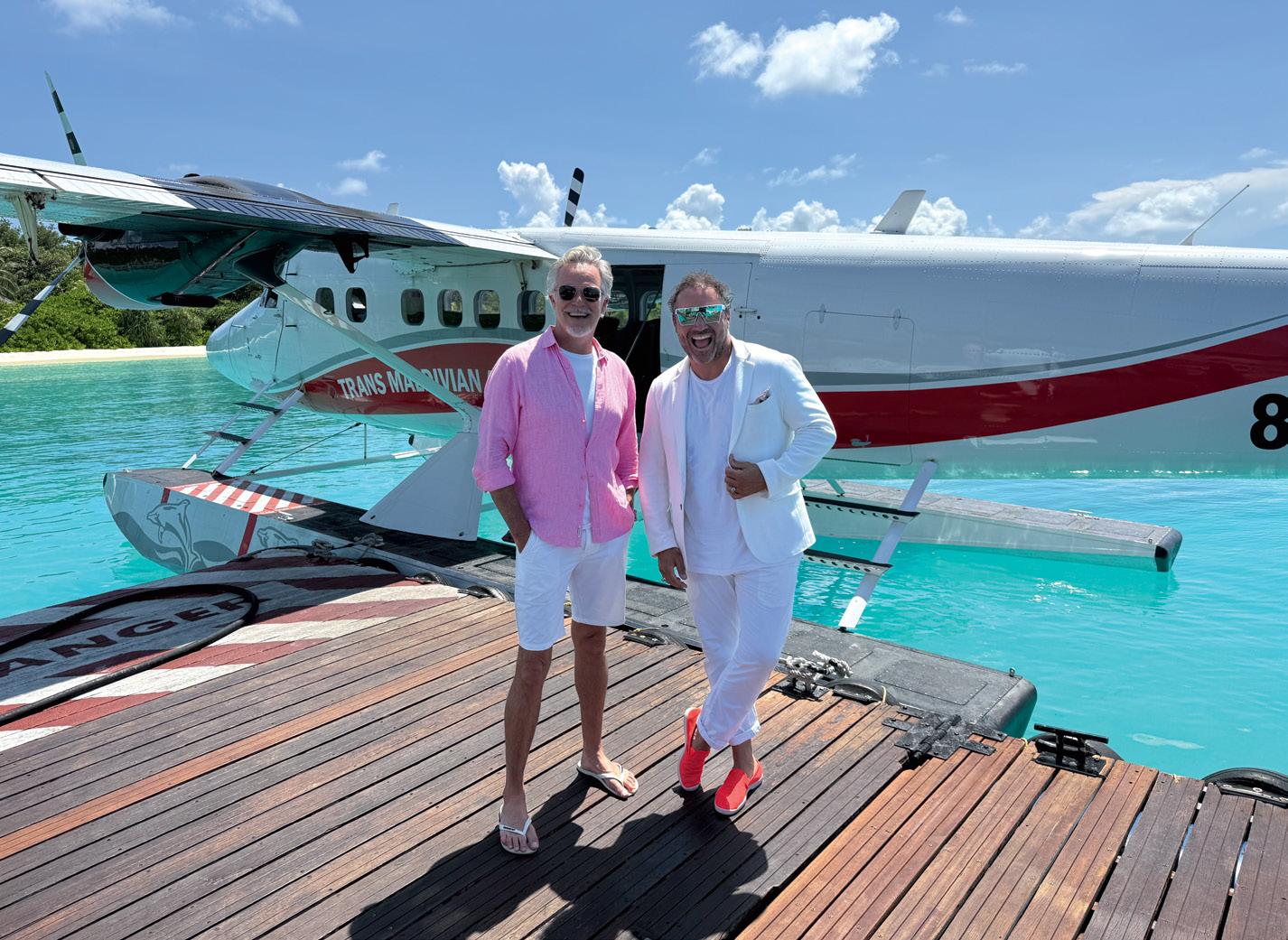
TV hosts Cameron Daddo and Miguel Maestre in the Maldives
COOK ISLANDS / BERLIN / NORWAY / SOUTH AFRICA + MORE

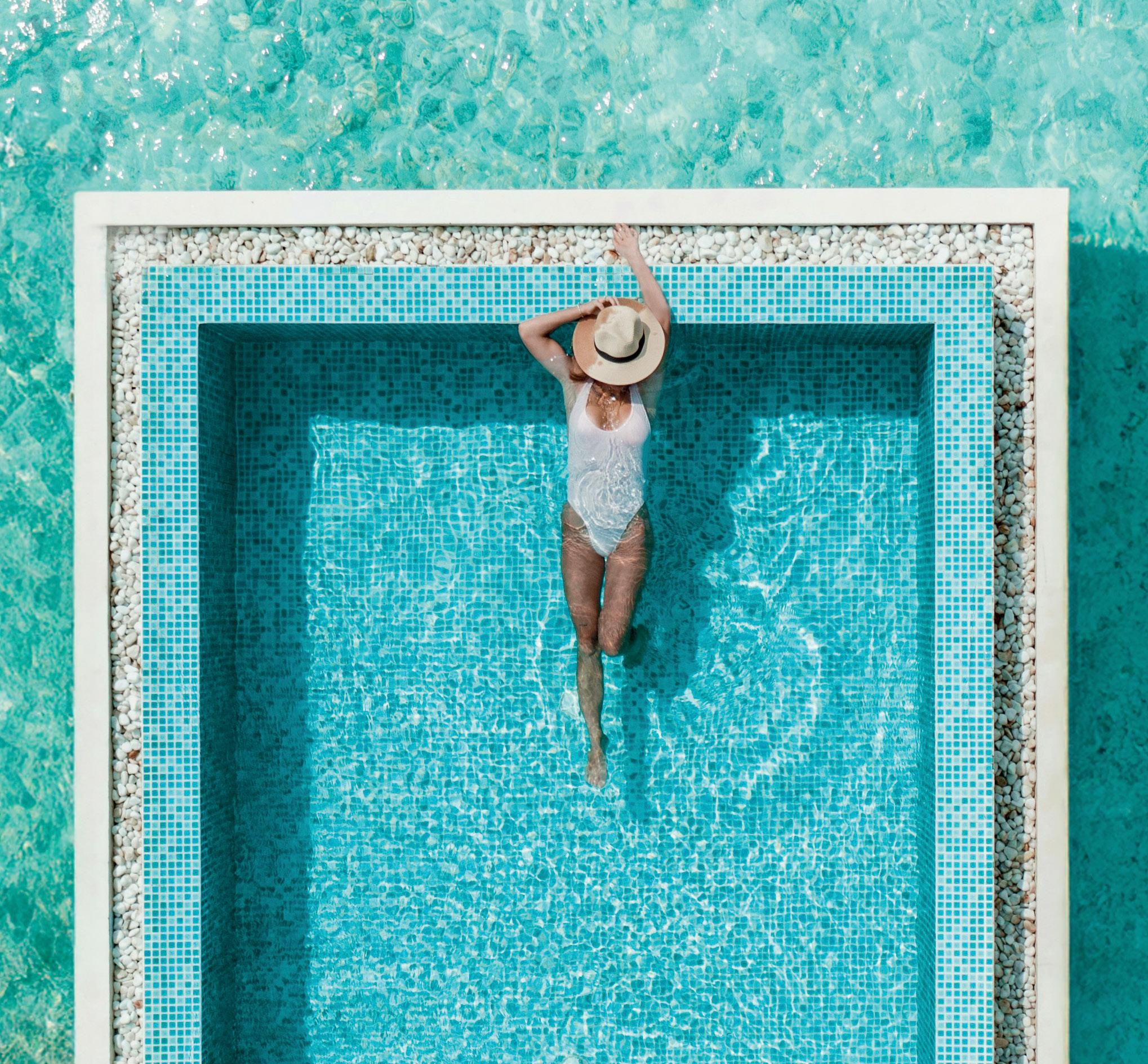
e way of water in the Maldives
Conquering a fear of snorkelling in paradise at JA Manafaru resort.
One night out in Melbourne
A picture-perfect stay at Fiji’s VOMO resort in the Mamanuca Islands. 14
Our nightlife column featuring an action-packed evening in the Victorian capital.
16 20 22 e perfect family getaway in Fiji
Behind the scenes of Luxury Escapes TV
What the hosts get up to on Luxury Escapes: The World’s Best Holidays
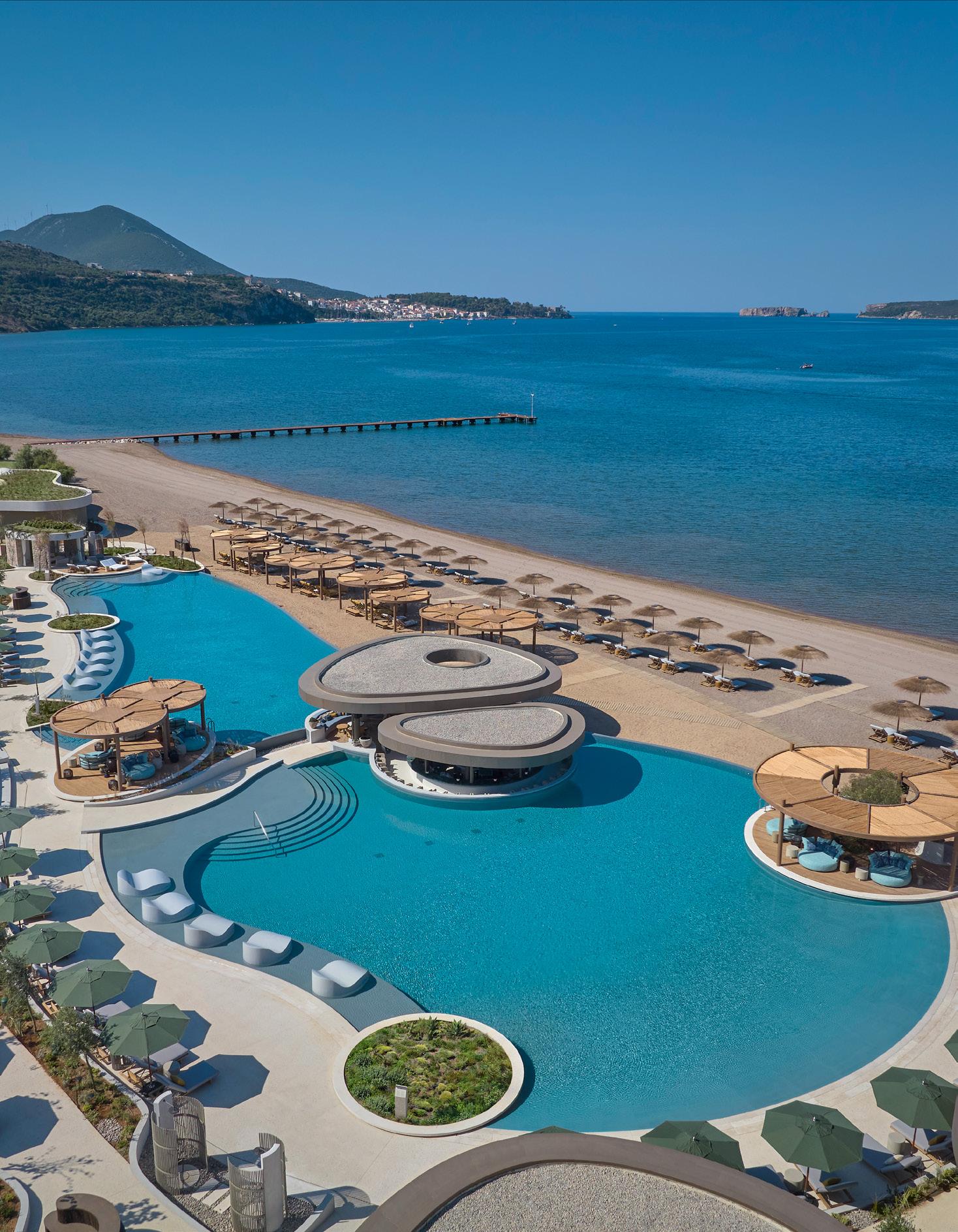
It’s all Greek at the new Mandarin Oriental
The brand’s newest Hellenic hero arrives on the shores of the Pelloponese.
Snap decisions: Cook Islands
Salty Luxe, aka Sarah Royall, gives us a photo essay on her favourite island escape.
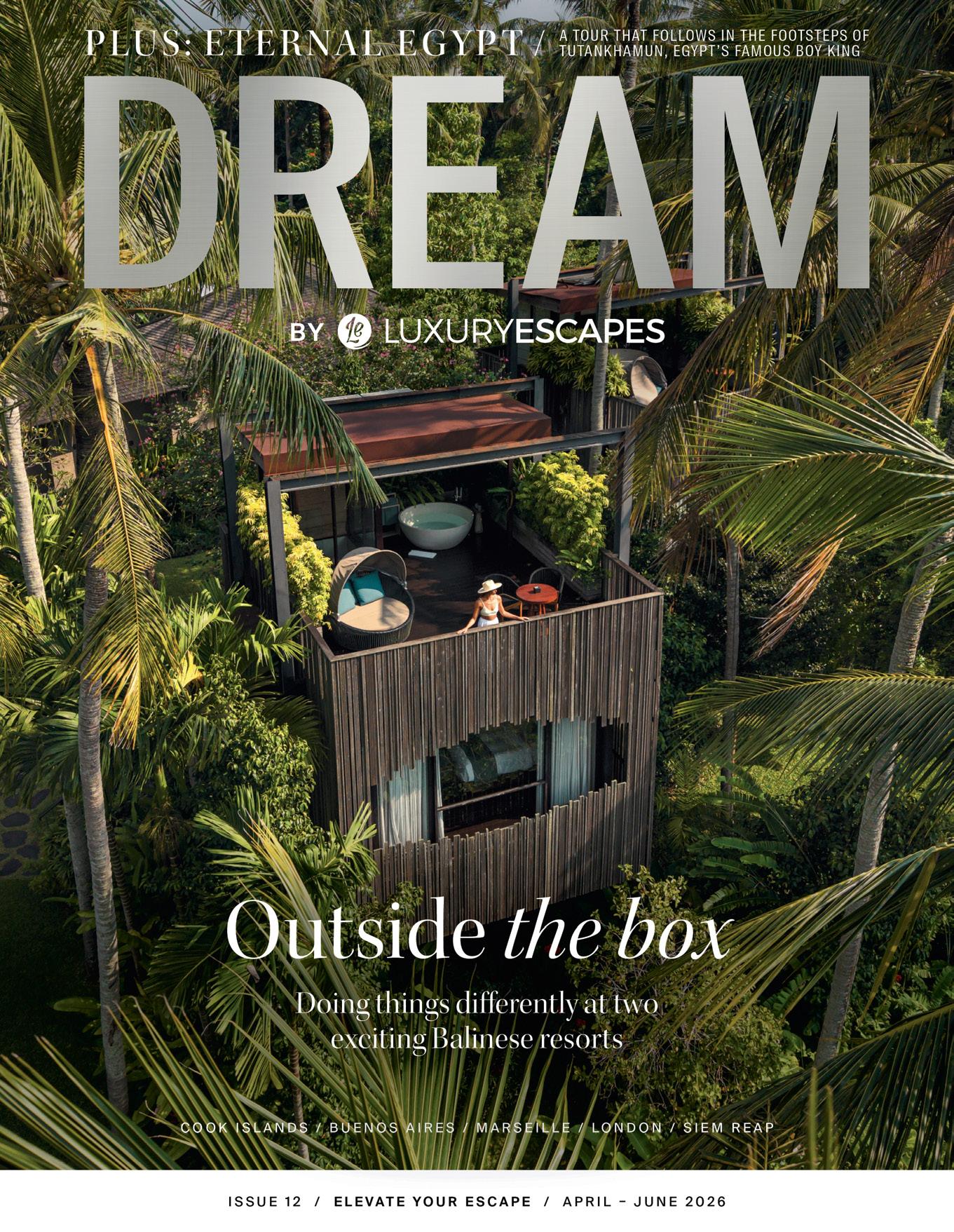
Cover image
Cameron Daddo and Miguel Maestre in the Maldives.
Sky high fun in the ai capital
Bangkok’s dining scene has gone next level with amazing new rooftop restaurants.
On
your
bike on a trip through Sri Lanka
Staring down elephants and seeing things differently on a cycling tour.
Less hippie and more hip in Ubud
The once-sleepy Balinese jungle getaway sees a range of new luxury resorts.
Editorial
Head of Content
Penny Cordner-Maas
Managing Editor
Paul Chai
Creative Lead
Natalie Meneghetti
Content Manager
Stephanie Mikkelsen
For all editorial enquiries, contact editorial@luxuryescapes.com
Advertising
GM Media & Brand Partnerships
Chris Neill
Strategic Partnerships
Executive
Contributing writers
Nate Robinson, Adam Schwab, Belinda Jackson
Design team
Elise Ackland, Audrey Campkin-Smith, Nathan Pascual, Veronica Sam
Annika Rothschild Tourism Boards Partnerships Manager Jodie Collins
For all advertising enquiries, contact mediasales@luxuryescapes.com
Luxury Escapes
CEO and Co-founder Adam Schwab Chief Marketing Officer Ben Connell
is
(ACN 150 650 927), Level 4, 68 Clarke Street, Southbank, VIC 3006. Ph: 1300 88 99 00. Printed in partnership with Ive Group.
Embracing the silence in Norway
A unique cruise that indulges in the tranquility and remoteness of the Norwegian fjords.
Ghosts of the past in Berlin
When the wall came down 35 years ago, the city was changed forever.
Dream by Luxury Escapes
published by Luxury Escapes
Do more dreaming online
Be inspired by wanderlustworthy destinations, travellers’ tales and the latest travel trends online at Dream by Luxury Escapes.
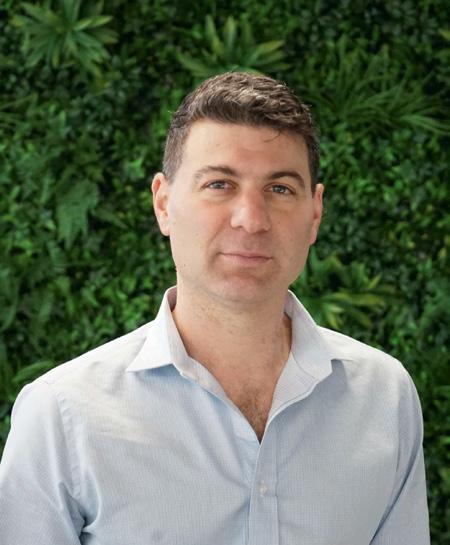
From the Luxury Escapes CEO
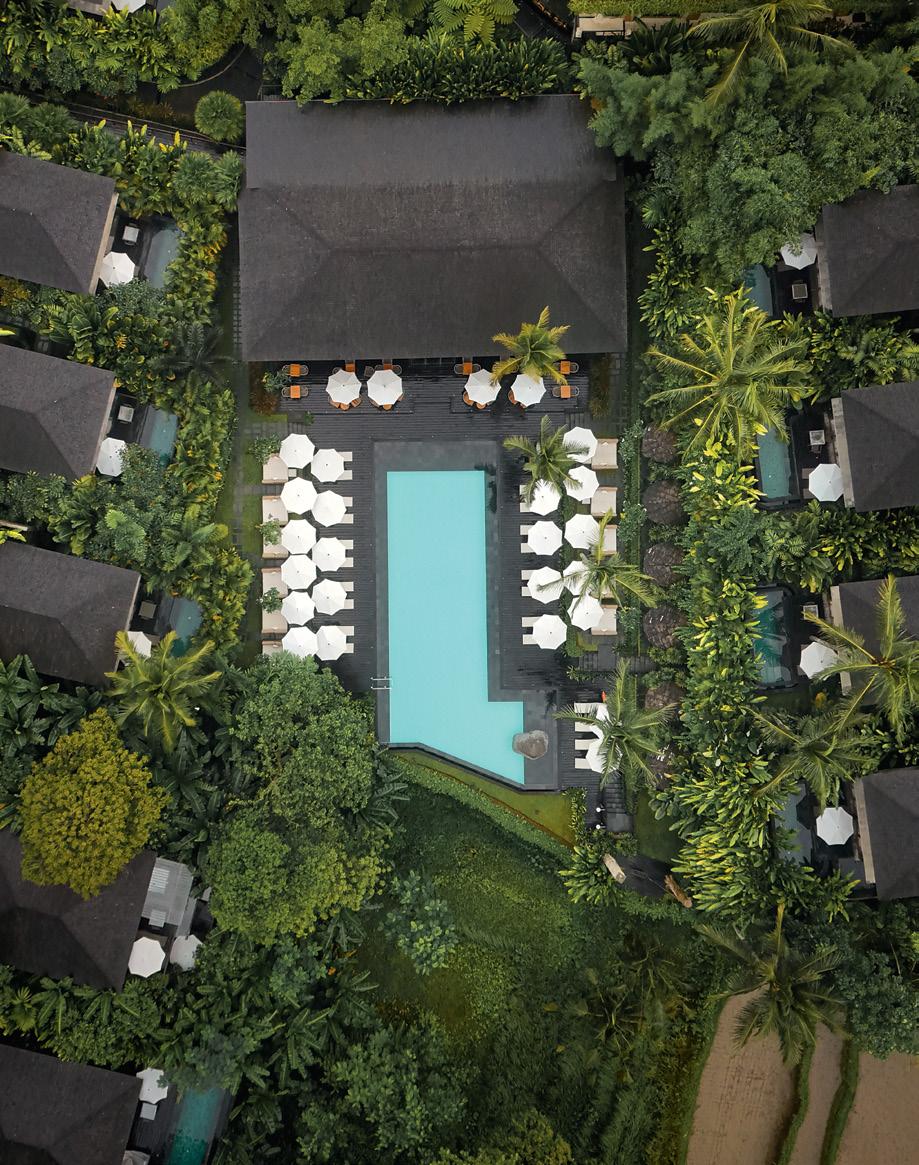
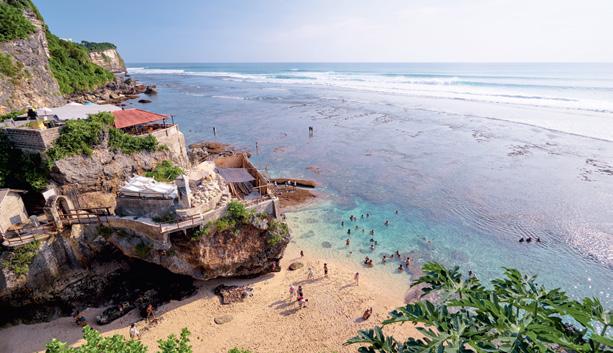
Bali high: why this Indonesian island is so popular
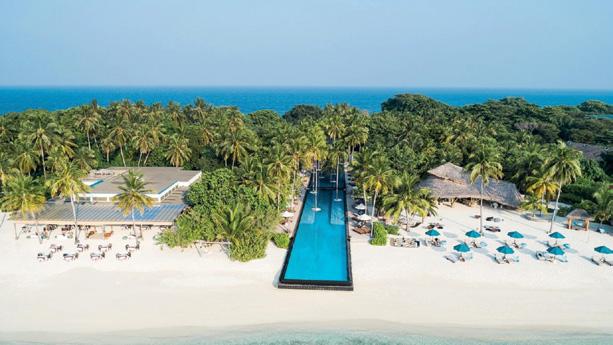
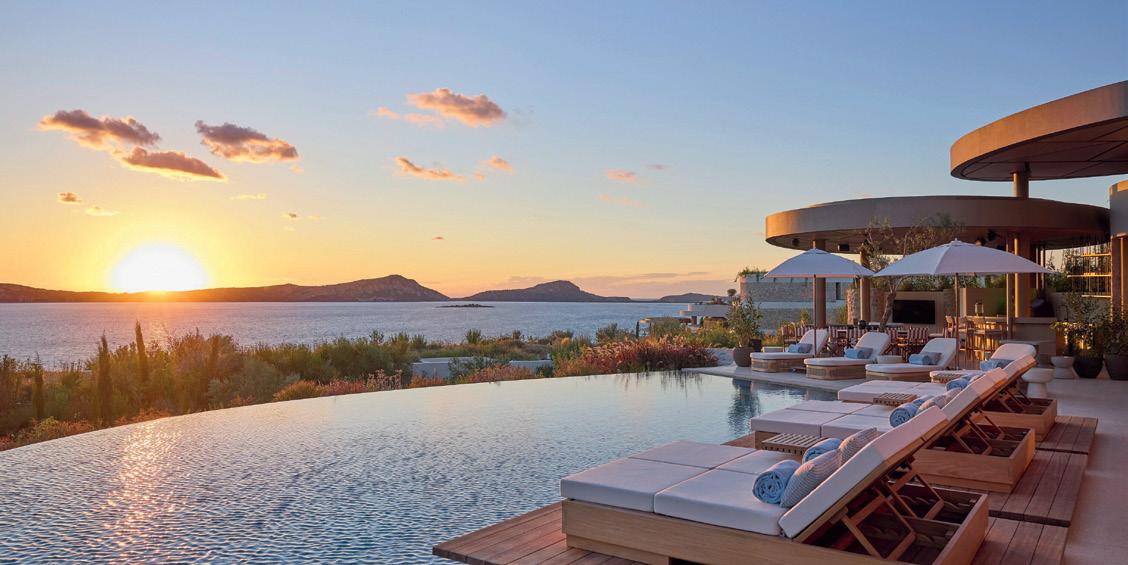
Melbourne to Malé: why our new direct ight is a gamechanger
Welcome to the launch of Luxury Escapes’ direct flights from Melbourne to Malé.
When we started Luxury Escapes over ten years ago we did so with a simple premise: making high-end travel available to people who want to experience it.
One of our biggest selling destinations is the Maldives, in fact Luxury Escapes sends one in two people who travel to the Maldives from Australia. But what we were hearing from members was that the indirect flights, which often left at inconvenient times and had long stopovers in places like Kuala Lumpur or Singapore, put them off booking.
If we can take away hassle from our members we will, even if it means expanding into aviation. This is how Luxury Escapes started Australia’s first direct flight to the Maldives in partnership
with Maldivian Airlines. Creating this inaugural route has meant that you are saving about 12 hours on arrival and another 12 hours when you depart, giving you another full day in paradise. We save you a day, we save you a connection and we save you money on the resort when you arrive. We continue with our mission of making luxury travel more accessible.
In this special in-flight edition of Dream by Luxury Escapes, we also look at one of our other favourite destinations, Bali, with a feature on how Ubud has changed over the years (“Jewel of the north”, page 40).
We check out Bangkok’s exciting new dining and drinking scene taking place in new and improved rooftop bars (“The sky’s the limit”, page 28) and celebrate the 35th anniversary of the fall of the Berlin Wall (“Wonder wall”, page 50).
We hope you enjoy the flight.
Adam Schwab
CEO and Co-founder Luxury Escapes
Join Société to earn and use points on Luxury Escapes
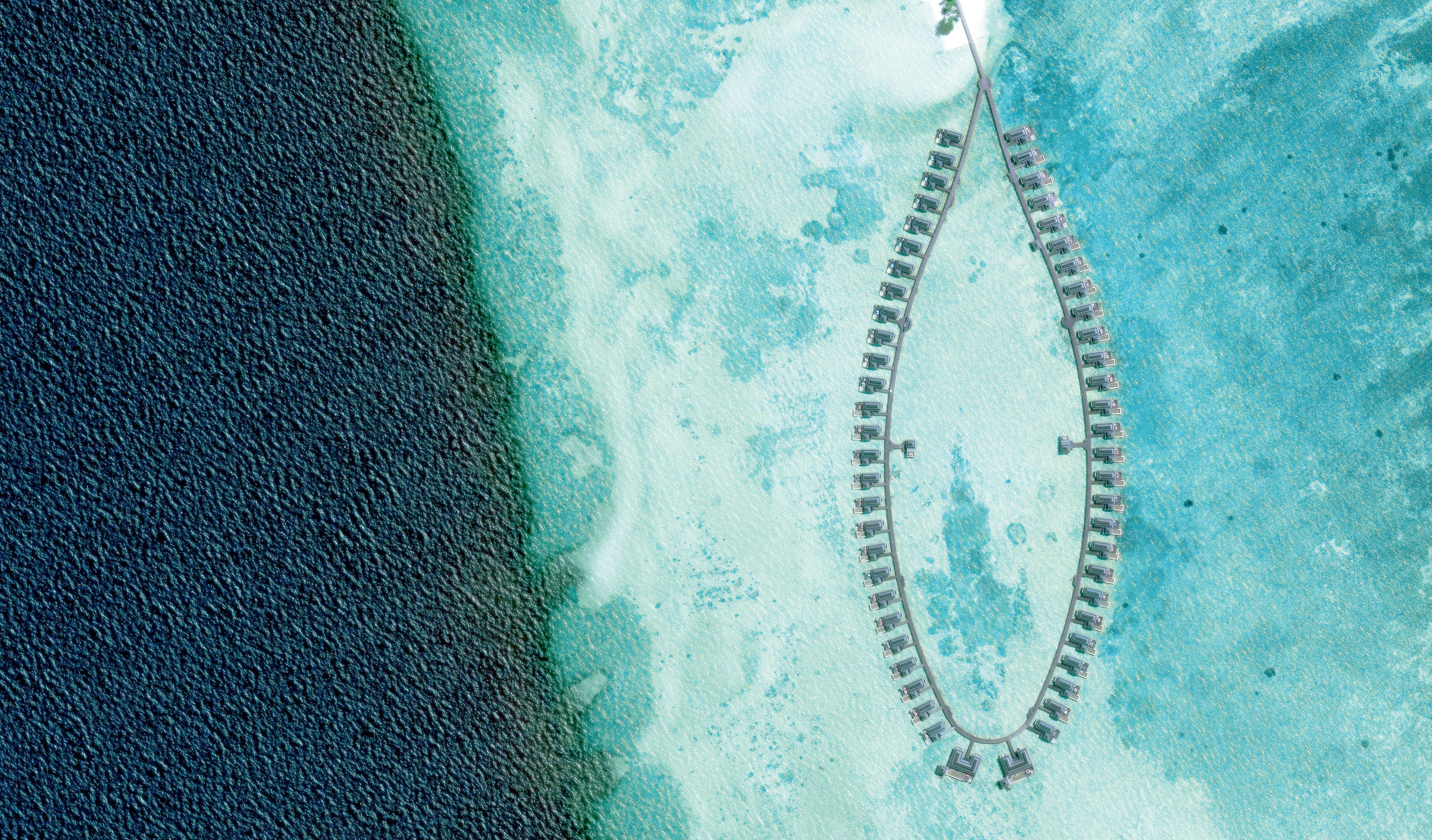
The Pullman Maldives Maamutaa is situated on one of the Maldives’ deepest lagoons. Photo: Overview
Maui and Sicily are no strangers to the siren call of Hollywood – in particular the popular resort-based series The White Lotus – but the evolution of these islands beckons visitors to explore beyond what has graced the silver screen. Volcanoes and valleys abound, intermingling with intrinsically ingrained cultures, gastronomy to get excited about and sights worth going o -script for.
STAY
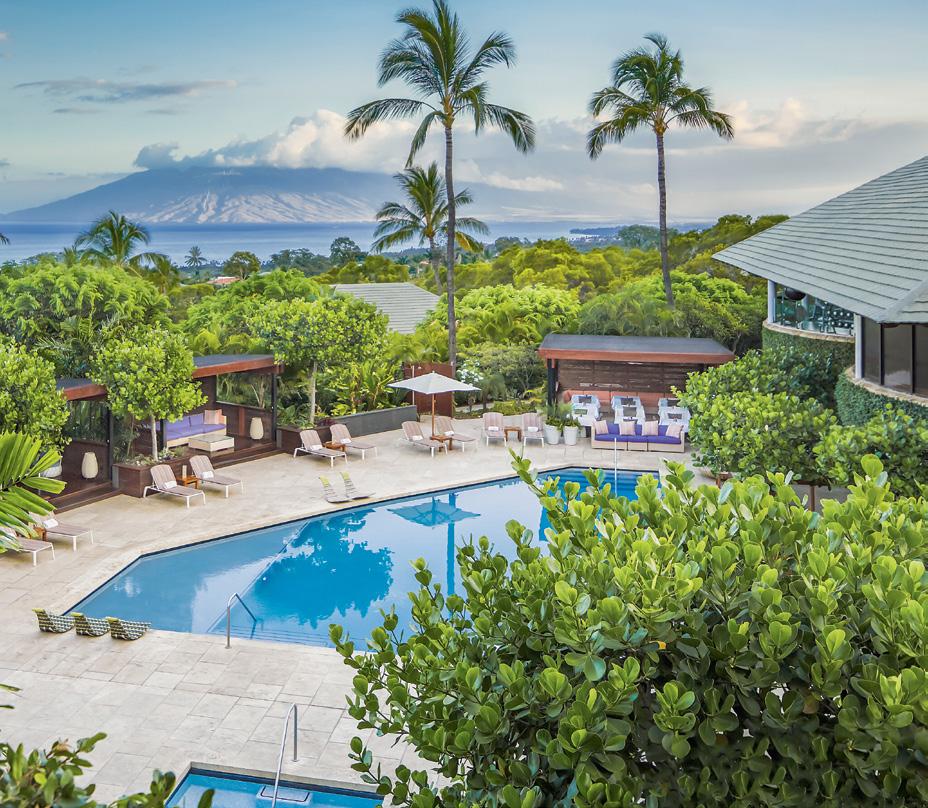
Hotel Wailea, Relais & Châteaux
This intimate adults-only resort, set among 15 acres of manicured tropical gardens, feels more like a private sanctuary than a typical hotel thanks to its exclusive enclave address. This all-suite stay is the sole Hawaiian hotel to be inducted into the prestigious Relais & Châteaux collection and offers its guests elegantly styled accommodations, a cabanafringed swimming pool, hyper-local and internationally influenced dining options, and views of neighbouring islands from every vantage point.
DRINK
Tikehau Lounge
A newcomer to Wailea Village, Tikehau Lounge is a local haunt with unassuming service, clever cocktails and excellent bar snacks. Try garnish-led libations like The Hawaiian Samurai (Nikka whisky, Averna, charred pineapple), served with a collectible miniature Katana sword, or embrace tropical vibes with a Rum Cannonball (Plantation pineapple rum, Hawaiian vanilla, lilikoi, lemon, bitters). Zero-proof options are also available. If you do want to sip like the stars of The White Lotus, stop by The Lobby Lounge at Four Seasons Resort Maui at Wailea.
Maui
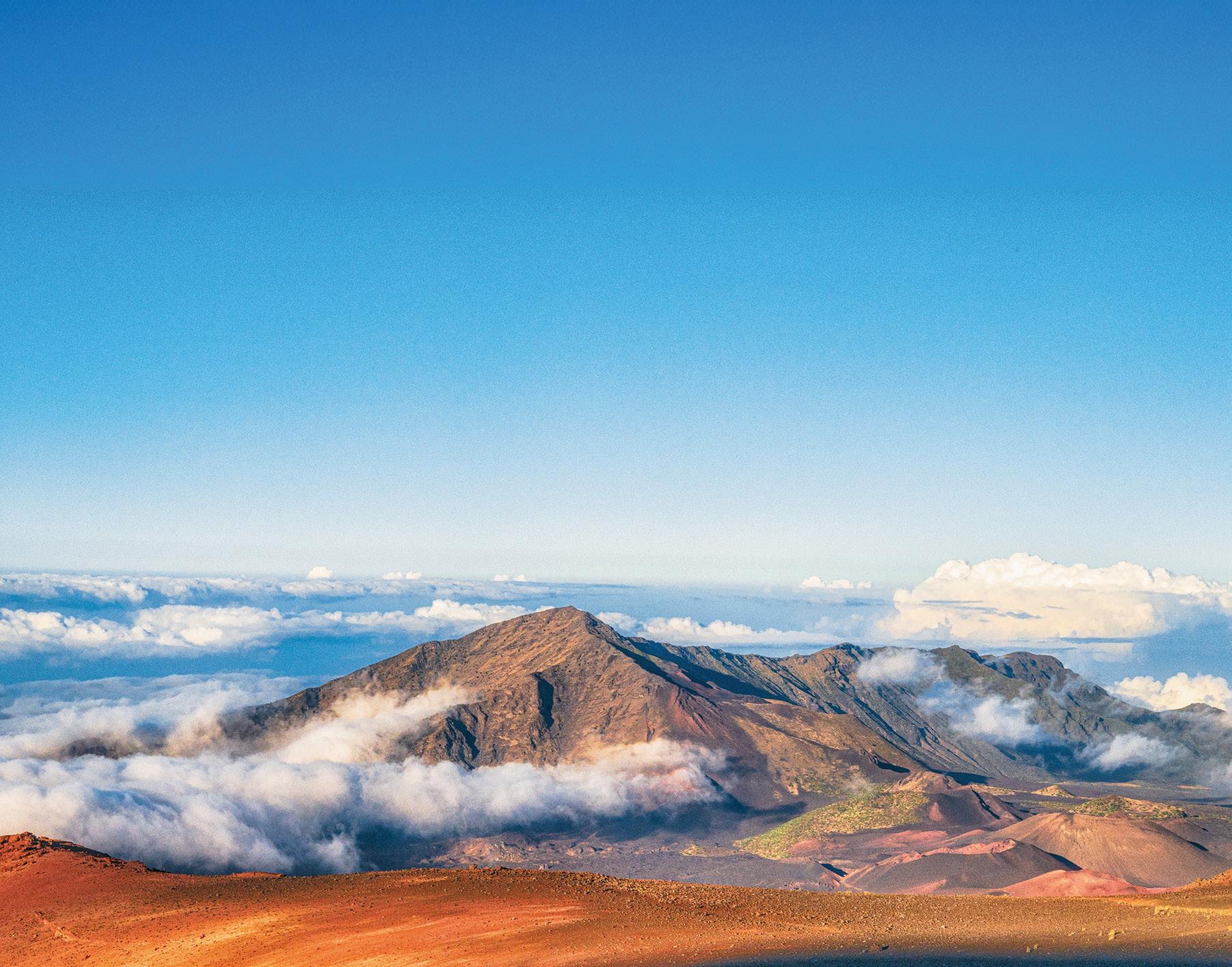
Said to have been hauled from the bottom of the sea by a demigod’s magical hook, it is little wonder Maui is dubbed “the magic isle”. It’s the archetypal postcard thanks to its staggering natural beauty, but frolicking whales, towering volcanoes and black-sand beaches aren’t the only drawcards that keep visitors coming back. From its mountains to the sea, Maui’s bewitching spirit is impossible to ignore.
DO
Farm Tour
From chocolate to pineapple, the best way to explore some of Maui’s most distinctive tastes is right at the source. Head into Maui’s Upcountry to tour tropical fruit plantations, learn about native botanicals and flowers, shop at roadside farm stalls and food trucks, and sit down to paddockto-plate lunches. Find farms for macadamias, dragon fruit, coffee, coconut, berries and more.
EAT
Tin Roof
Helmed by Top Chef alum Sheldon Simeon and his wife, Tin Roof is a takeout-only lunch spot easily identifiable by the lines that snake out the door. Comfort food is on the menu here, with customisable rice or noodle bowls topped with pork belly, garlic shrimp, chopped sirloin steak or double-fried chicken. Chef’s specials and sandos are on rotation too. There is limited bench seating out front or take your bowl to enjoy at one of the benches at nearby Kanaha Beach.
EXPLORE
Kaanapali
The former go-to retreat of Hawaiian royalty, Kaanapali is also Maui’s first resort town. Its threemile stretch of white-sand beach is one of its calling cards, as are the line-up of oceanfront hotels. On the beach’s north end is Black Rock, a large outcrop with cultural significance for ancient Hawaiians and where 18th-century monarch King Kahekili II loved to cliff dive. Whale-watching, snorkelling and sailing tours depart Kaanapali, or try off-roading excursions, golfing and day trips to nearby Lahaina, or shopping at Whaler’s Village.
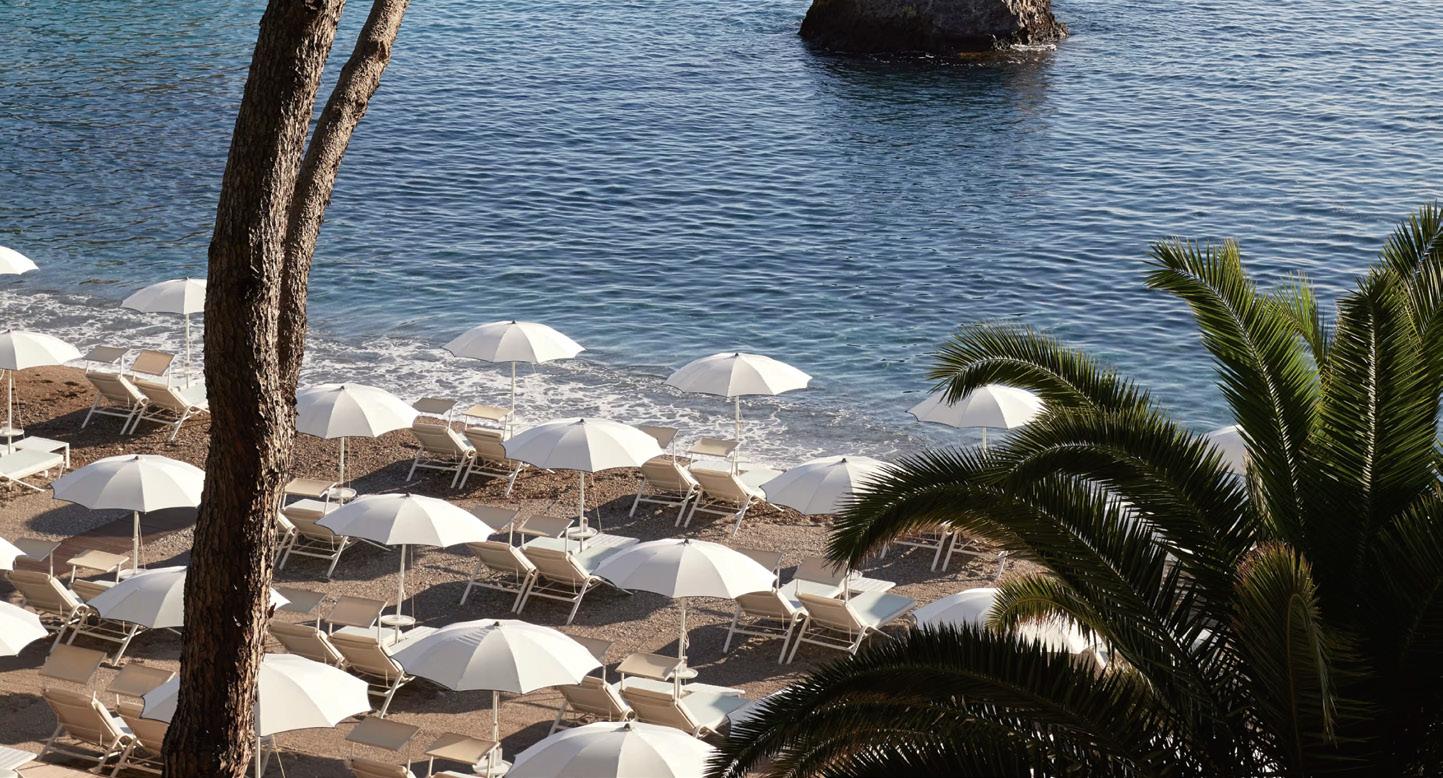
FROM TOP: Maui mountains; Hotel Wailea. OPPOSITE PAGE: Sicily; Grand Hotel Timeo.
Stay at Hotel Wailea
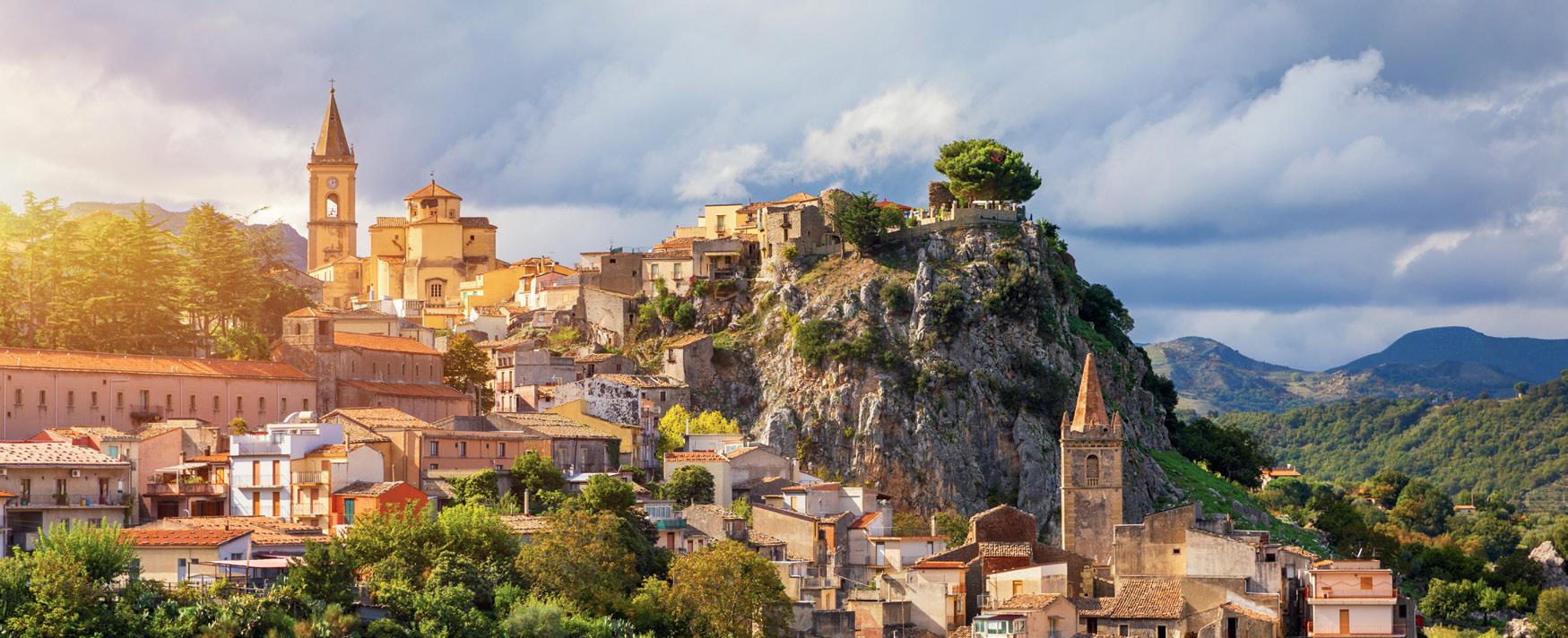
Sicily
Cannoli and Corleones aside, Sicily is an island shrouded in myth – be it culinary, cultural or otherwise. is is an isle that has seen civilisations come and go, each leaving its mark in a way that has seen Sicily emerge with an inimitable identity. From its beguiling coastal cities and gritty urban streets to its countryscapes speckled with olive groves and orchards, Sicily rewards the exploration of its extremes.
STAY
Grand Hotel Timeo, A Belmond Hotel
DRINK
DO
Catania Fish Market
It’s hard to miss Catania Fish Market. Its sprawl of stands, crowded into the streets around the city’s Duomo, can be heard (and smelled) before rounding the corner to the official entry point just behind Amenano Fountain. The market is open Mondays through Saturdays and is a snapshot of the island’s connection to the ocean. Embrace the cacophony as vendors shout about their morning catch, and amble by displays of swordfish, sardines, octopus and more. Food stalls serving fried anchovies and calamari make a visit here a true feast for the senses.
EAT
Trattoria La Foglia
The quirky, mismatched interiors at Trattoria La Foglia are unlikely to win any beauty pageants, but diners don’t come here solely to eat with their eyes. Down a quiet side street in Syracuse, this homely restaurant feels like stepping into someone’s living room, and on the menu are classic Sicilian flavours that wouldn’t look out of place in nonna’s kitchen: swordfish with onion, tagliatelle with pine nuts and raisins, and sugo-topped polpette. Coeliacs take note, some items are available gluten-free.
EXPLORE
Ortigia
Tenuta di Fessina
This spectacular pile was the first luxury hotel in Taormina and, much like a fine wine, is only getting better with age. It dazzles from the inside out, from its unabashedly lavish rooms to its breathtaking views that extend across terracotta rooftops and terraced gardens to Mount Etna and the Mediterranean. Time here is time spent embracing la dolce vita; moving between sun-dappled pool lounges and cosseting wellness treatments to Michelin-starred cuisine and alfresco aperitifs. Stay at Grand
Located on the slopes of the mighty Mount Etna, this family-owned winery is one of the newer estates to make its name in Sicilian wine. Visitors to the estate are welcomed with a sommelier-led tour of the vineyards and historic barrel cellar, before sampling varietals and vintages through one of the tasting experiences – some with charcuterie platters, others with chef-prepared larger plates. Elsewhere along Sicily’s eastern coast, try Bar Timeo for sundowners with outstanding views or Enoteca Solaria in Ortigia for natural wines.
With its Baroque good looks, 3,000 years of inhabitation and pasticcerias around every corner, Ortigia hits the Italian trifecta: architecture, history, food. The small isle is easily walkable with elegant piazzas, ancient Greek sites and narrow cobbled alleyways. Pick up one of the famed arancini from Antica Giudecca, explore the former fortifications of 13th-century Castello Maniace and meander the promenades that snake along the crystalline waterfront.
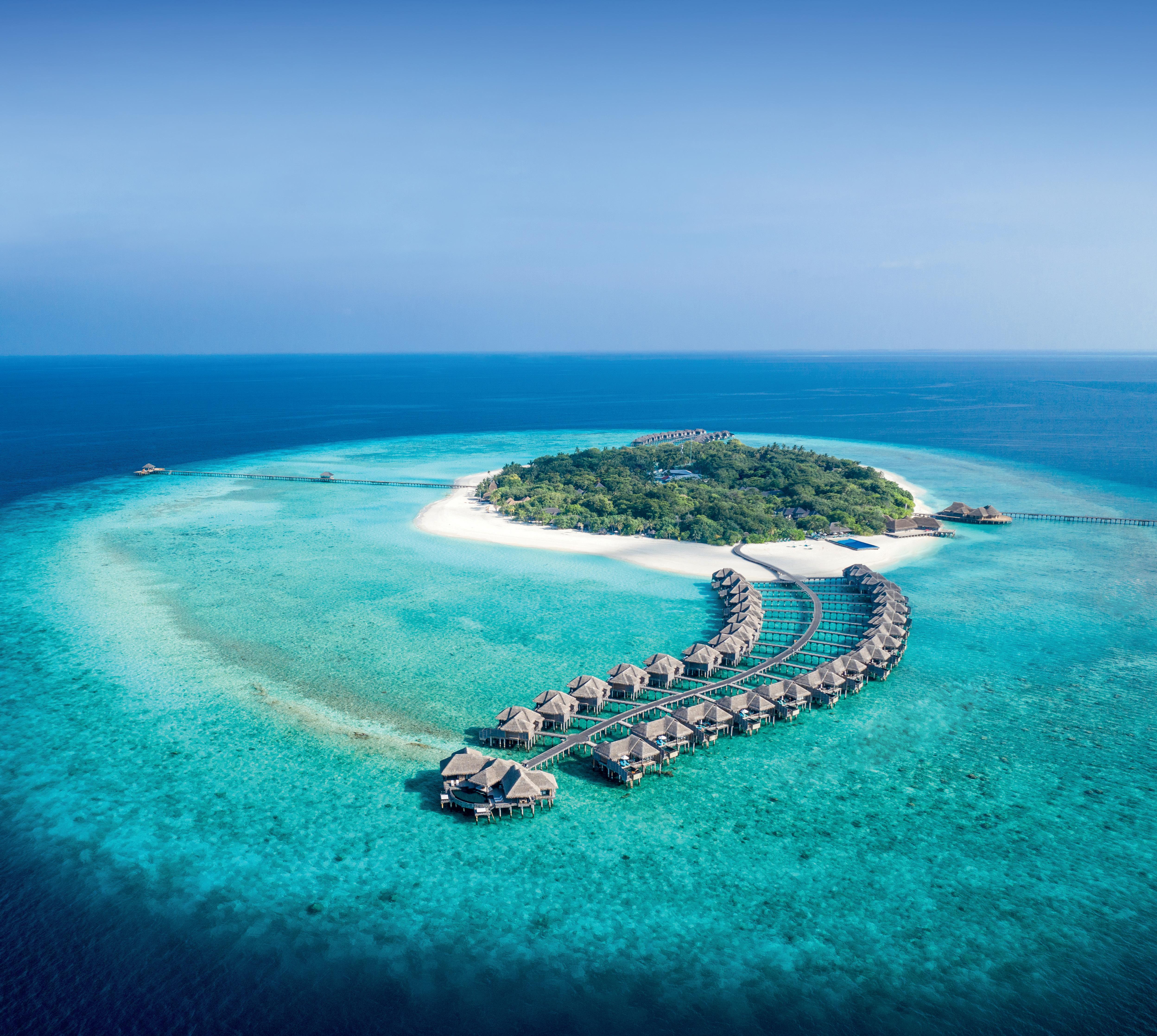
e wayof water
Nate Robinson knew that taking his water-shy wife to a remote Maldivian atoll could put a dampener on their honeymoon, but instead the wonders of the Indian Ocean whet her appetite for the undersea world.
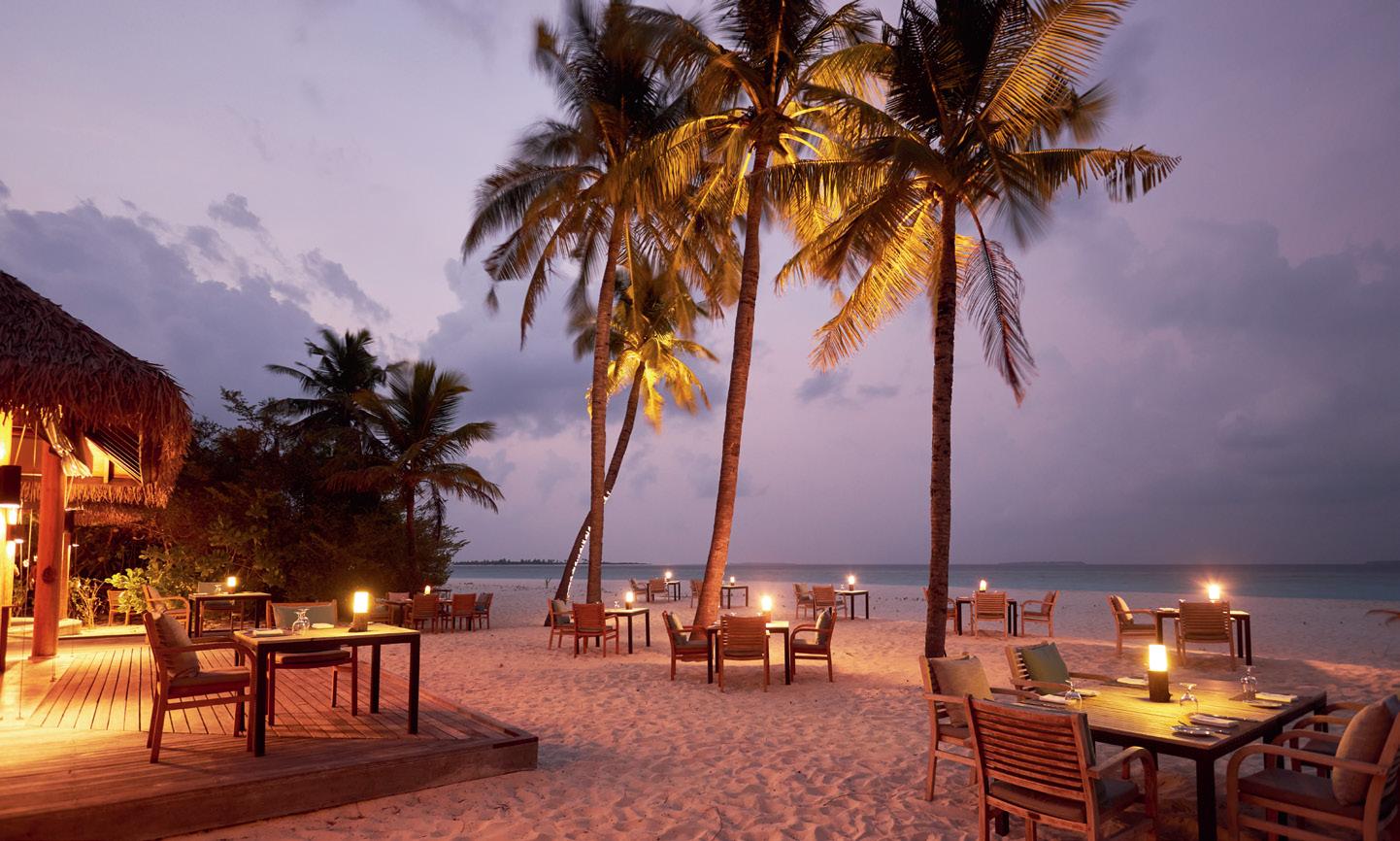
It’s impossible not to be swept up in the magic of the Maldives, and that’s why we chose it as our honeymoon destination. The water is so brilliant-blue it sometimes feels like your vision is glitching; the island’s white sands, home to bashful hermit crabs and secretive banyan trees, invite endless exploration. On our first night’s dinner, at the Ocean Grill at JA Manafaru resort in the north of the country, waiters walk barefoot through the sands, clad entirely in white with brilliantly tart mojitos in tow. We are surrounded by dense jungle and the endless whispers of the sea and despite tonight’s fat, yellow moon, it’s so dark that we can’t stop gazing at the stars. Our menus are accompanied by a torch.
Our entrée arrives – red snapper ceviche, fresh from the atoll that morning, served with mango and coriander – delivered by Rafu, our dedicated guest experience host. He’s affable, charismatic and passionate, and, when I ask him what brought him to Manafaru, adamant: “The diving,” Rafu says. “There are so many places underwater, so many beautiful spots to dive. I’m not going anywhere.”
“We continued to meet the atoll’s inhabitants, moorish idols, convict surgeonfish and blacktip reef sharks”
ABOVE: The Ocean Grill at JA Manafaru resort in the northern atolls of the Maldives.
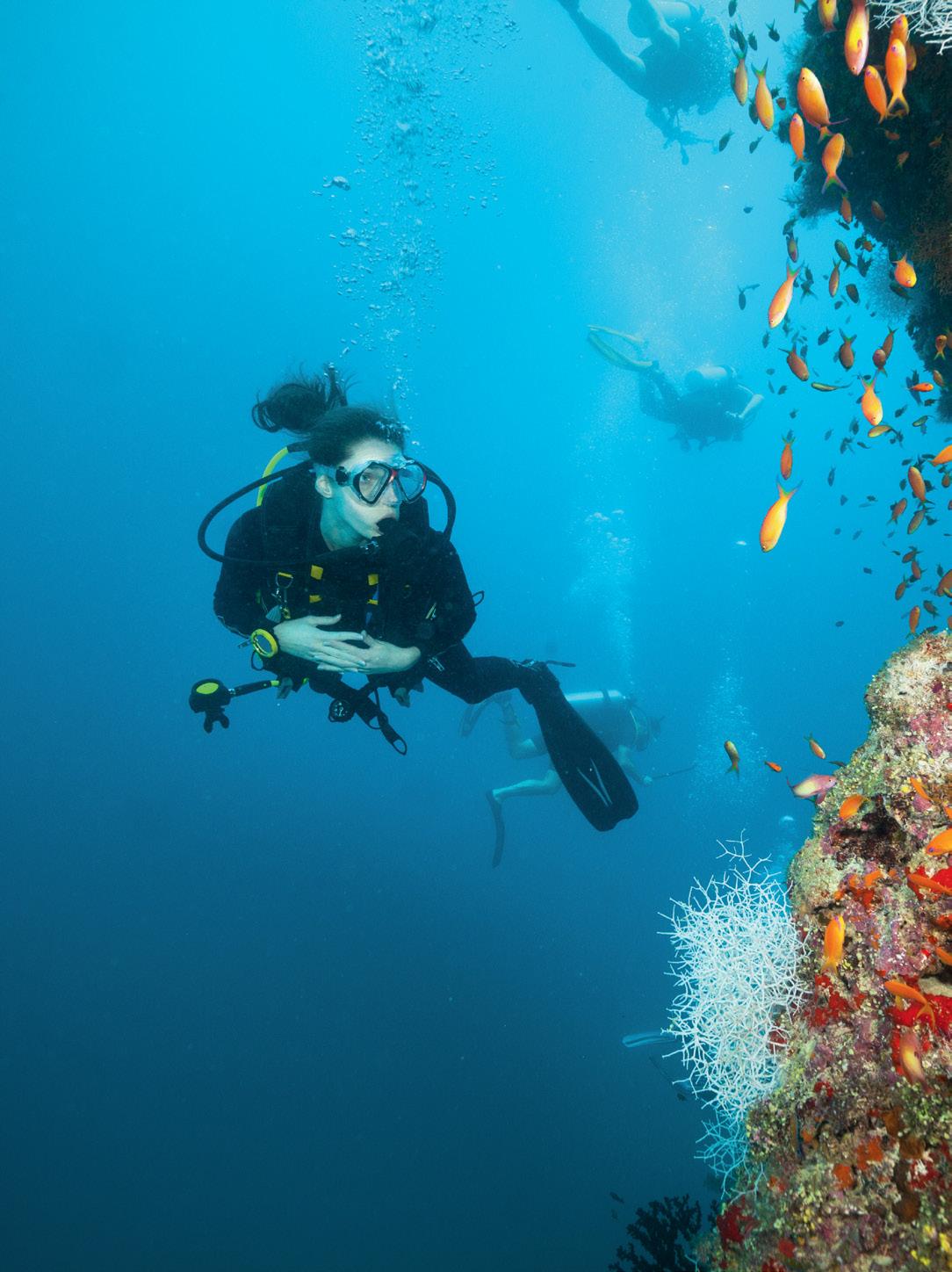
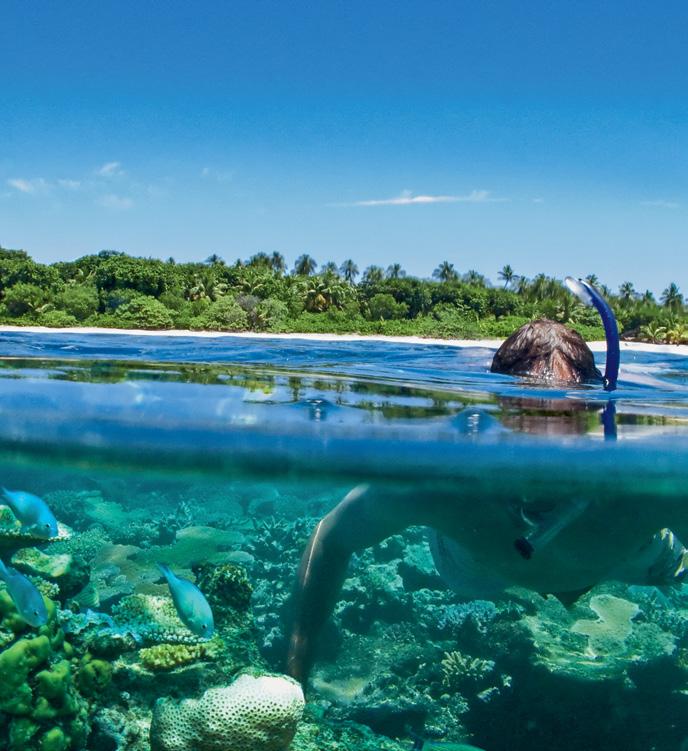
LEFT: The resort is located on a shallow house reef that is ideal for learning to snorkel and meeting a host of varied marine life.
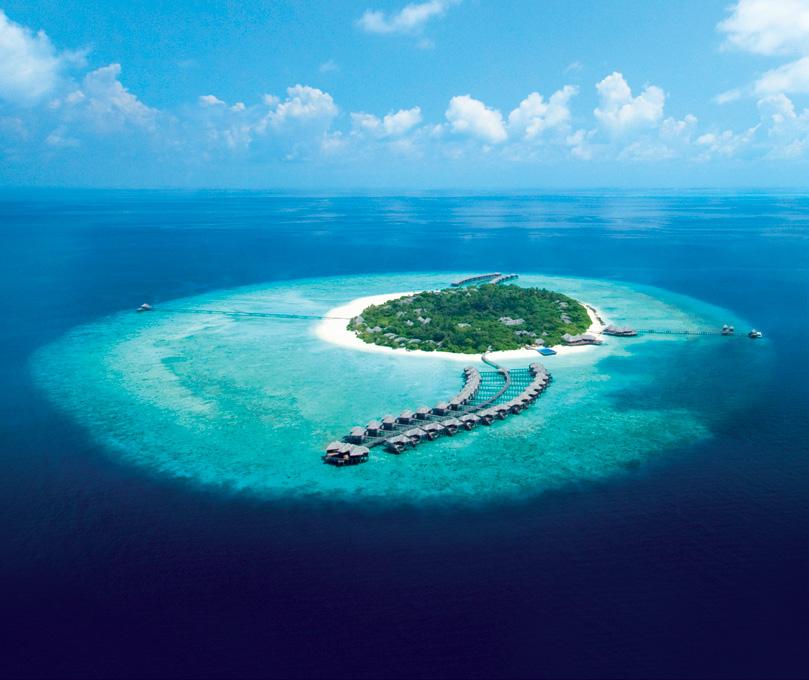
JA Manafaru
Located on the private island of Manafaru in the Haa Alif Atoll, JA Manafaru is perfect for honeymooners and families alike. The resort has breathtaking views of the Indian Ocean, porcelainwhite sands and crystalline lagoons making for superb snorkelling and diving.
BELOW: If you are not
on
you
Surrounded by endless miles of Indian Ocean, this provides a problem for us. My wife is famously water-shy, struggling even with the deep end of the pool.
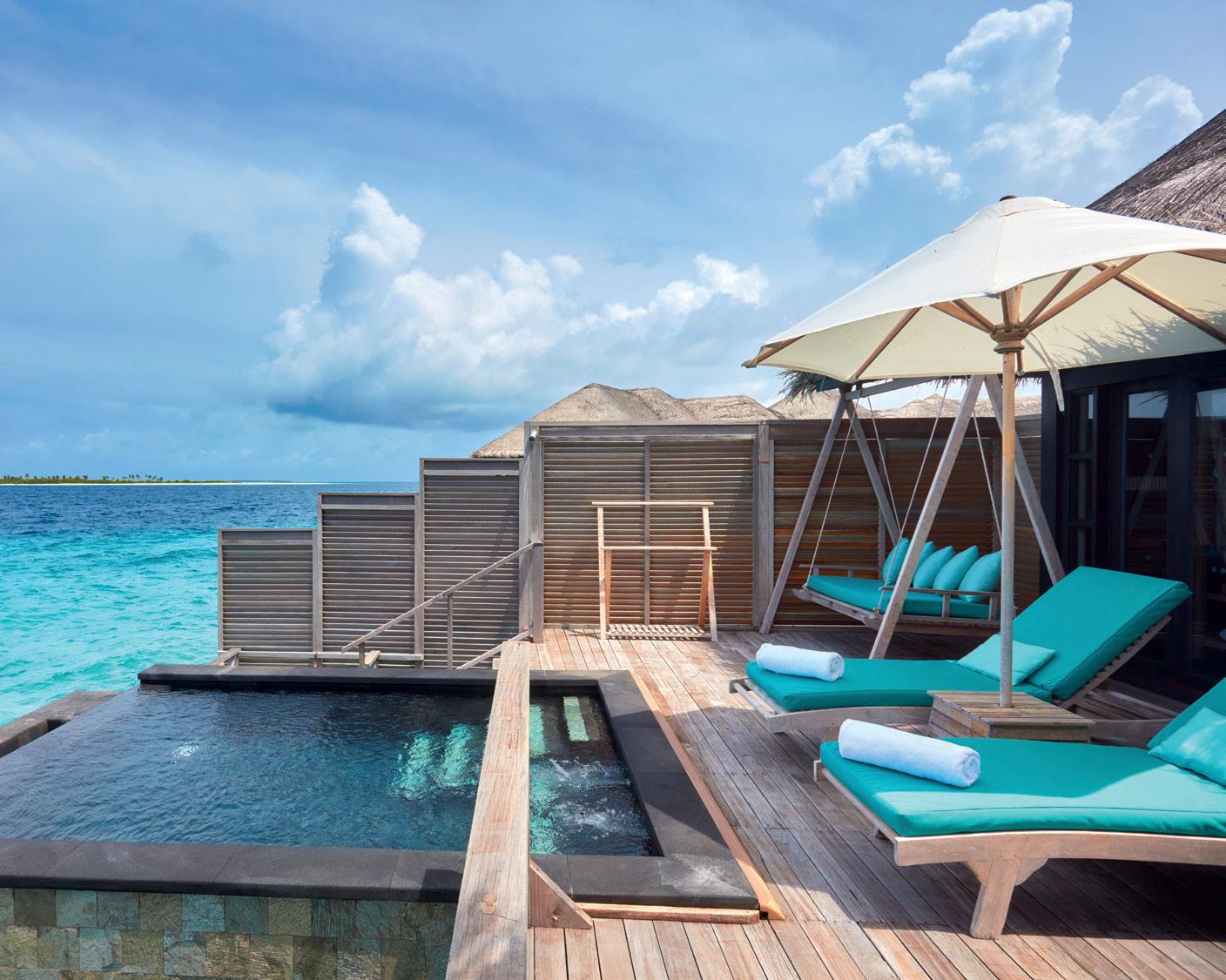
On our first day we tried to descend our overwater villa’s ladder and dip into the mirage-like blue waters below. As reef squid and boxfish smugly drifted past, my wife hesitated above the water, unable to take a single step lower. Finally, she asked me to grab her and help her return to the deck.
I saw conviction and determination as we recovered on the warm wood of our villa’s private deck. She knew that she couldn’t just see the Maldives from above the water – we had to go further.
We visited the resort’s dive centre the following day. The instructors were encouraging, offering us use of a life vest and complimentary snorkelling gear, and with a little work we savoured her first moments upright in the atoll.
The mask and mouthpiece required constant readjustment; the fins flapped awkwardly. She persevered.
Each morning, we clambered down the villa’s ladder in fins. Each afternoon, we splashed from the beach into the atoll. The water was as still as blown glass. Our progress was deliberate, unhurried; we first submerged our faces, just a few moments at any time. But each miraculous, underwater vision
encouraged us – tiny trumpetfish played peek-a-boo behind algaecovered ladders, endless coral shimmered below like sunlit porcelain and mighty parrotfish, undisturbed by our hard-won success, nibbled at rocks nearby.
Buoyed by what we’d seen, we continued to meet the atoll’s inhabitants, including shy moorish idols, convict surgeonfish and baby blacktip reef sharks, left utterly alone to fend for themselves in the vast waters. Eventually, I stopped having to hold my wife’s hand. She glided outward independently, hungry to see it all for herself. Then, as her confidence grew, she decided it was time to tackle Manafaru’s cherished house reef. It was a revelation.
As we went from the subaqueous to the sublime, an endless technicolour parade of marine life marched joyously through the water. Sharks played tag with smaller prey, finger coral twinkled in the sunlight, honeycomb eels twisted, starfish lazed. Seeing my wife, exploring alone and awestruck, my heart swelled.
We snorkelled until our honeymoon’s final moments. After each session, we’d sit on the pier’s bench, dumbstruck. My wife had never considered snorkelling –she’d long thought it beyond her. Turns out all she needed was time, perseverance – and a little of that Maldives magic.
LEFT: Diving, or snorkelling, with the inhabitants of the house reef is a highlight.
keen
the ocean,
can always take a plunge in your villa pool.
The world’s best destinations, experienced like never before
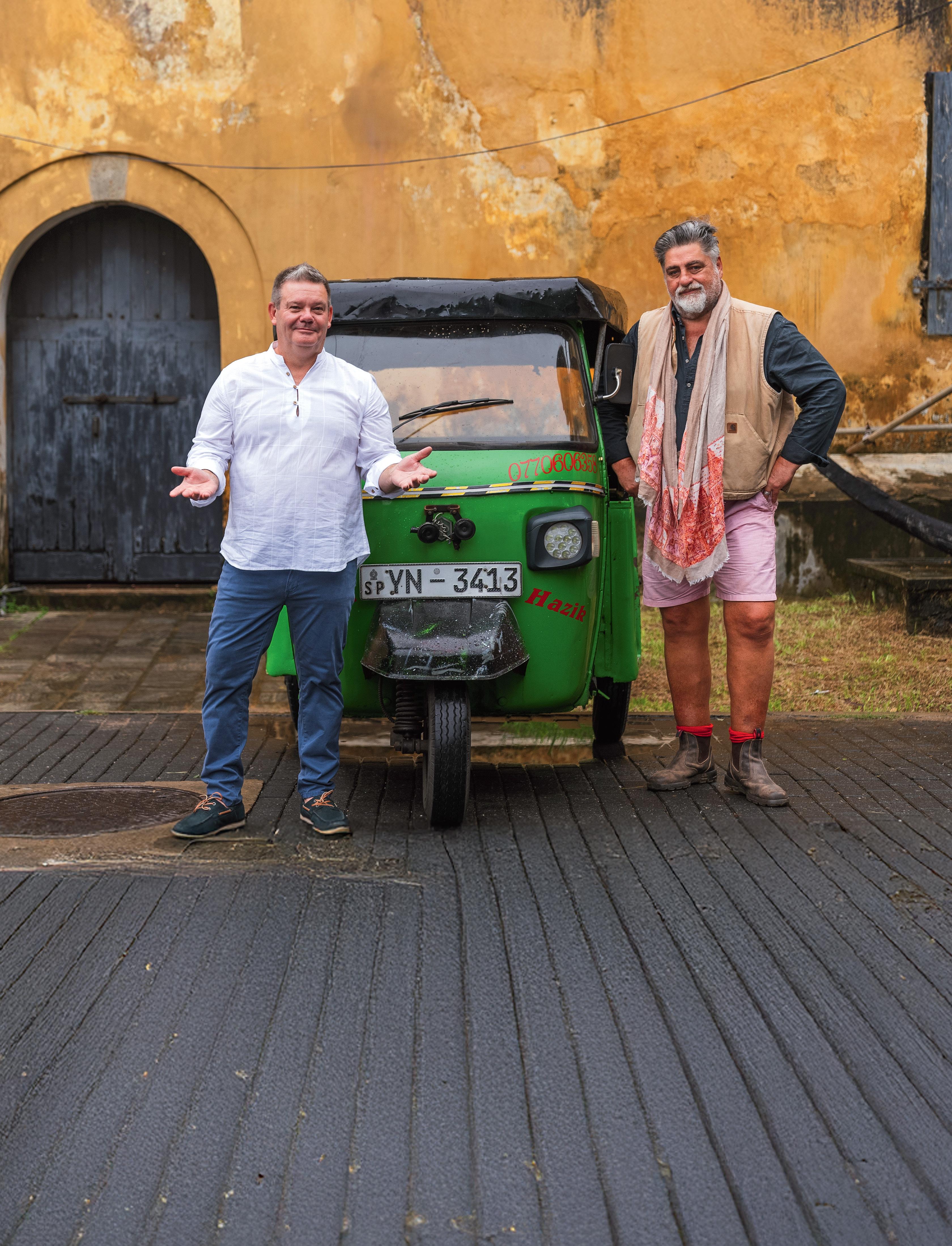
Celebrity & Expert Hosts
Designed and hosted by well-known experts who share their passions for a truly unforgettable adventure.

On-the-Ground Research Trips
Our expert hosts undertake dedicated research trips to design each itinerary, ensuring a highly curated journey.
One Departure Only Iconic Itineraries
Each tour has just one departure date, ensuring that every trip is a unique, oncein-a-lifetime experience.
Travellers will enjoy iconic bucket-list experiences, capturing moments that go beyond ordinary travel expectations.
Unmatched Luxury
All hotels and resorts are meticulously handpicked for their exceptional quality, comfort, location, and service.
ONE NIGHT IN...
Melbourne
Melburnians love a night out, and with intimate classic cocktail bars, dirty rock ‘n’ roll and a martini that was nine months in the planning, who can blame them.
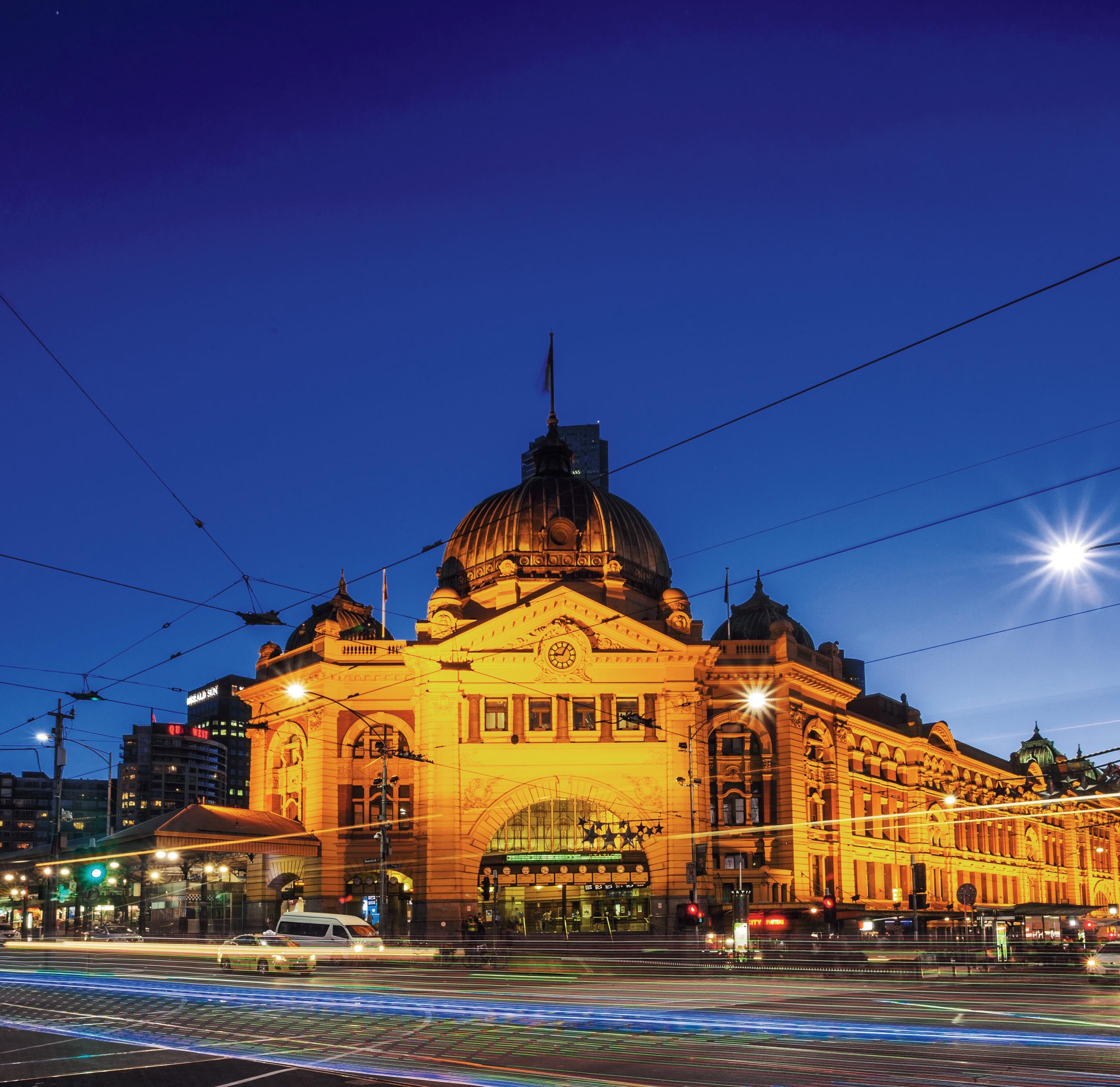
Here is your planner for a perfect night in Melbourne.
6pm Behind the curtain
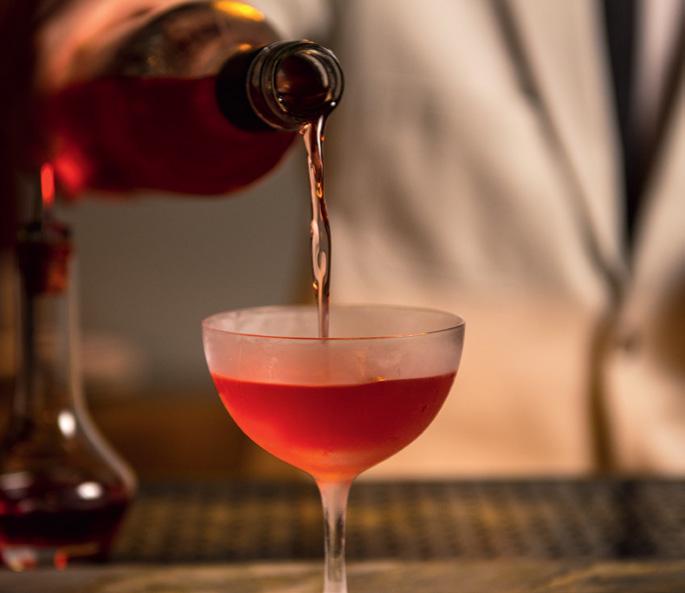
There’s a frisson of excitement as you wait for the thick red curtains at the entrance of Apollo Inn to be opened for you. With a heavy swoosh, the curtains are closed after you enter and time passes differently: the moody surrounds, unexpected flavours and service that comes before you even know you need it speak to a different age of bartending (it’s named after an 1844 public house) and a single cocktail feels like an event to be savoured. Order the rosy Lucien Gaudin.
7pm Dining perfection
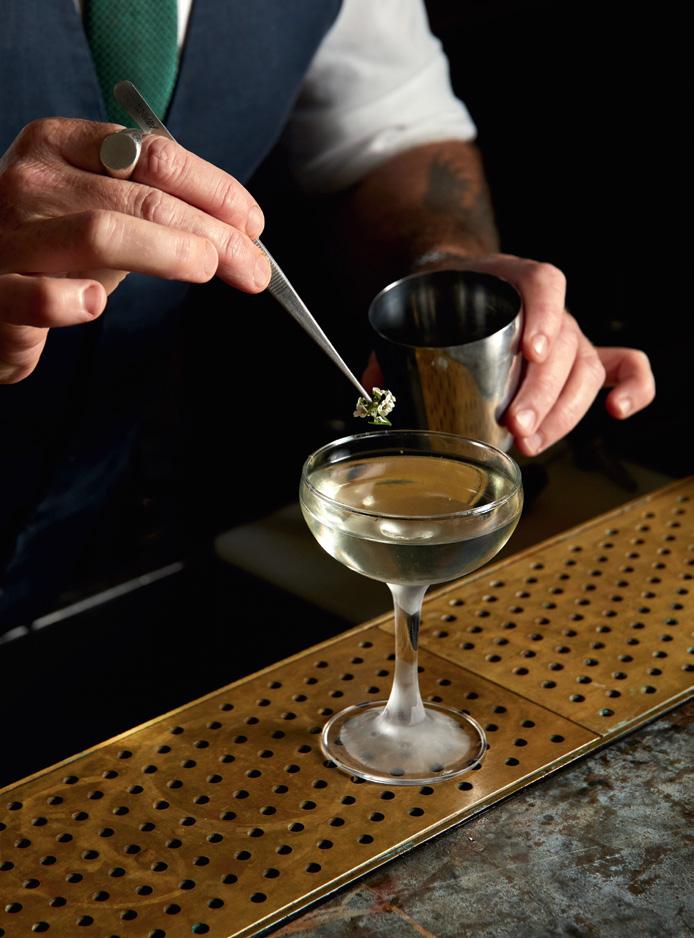
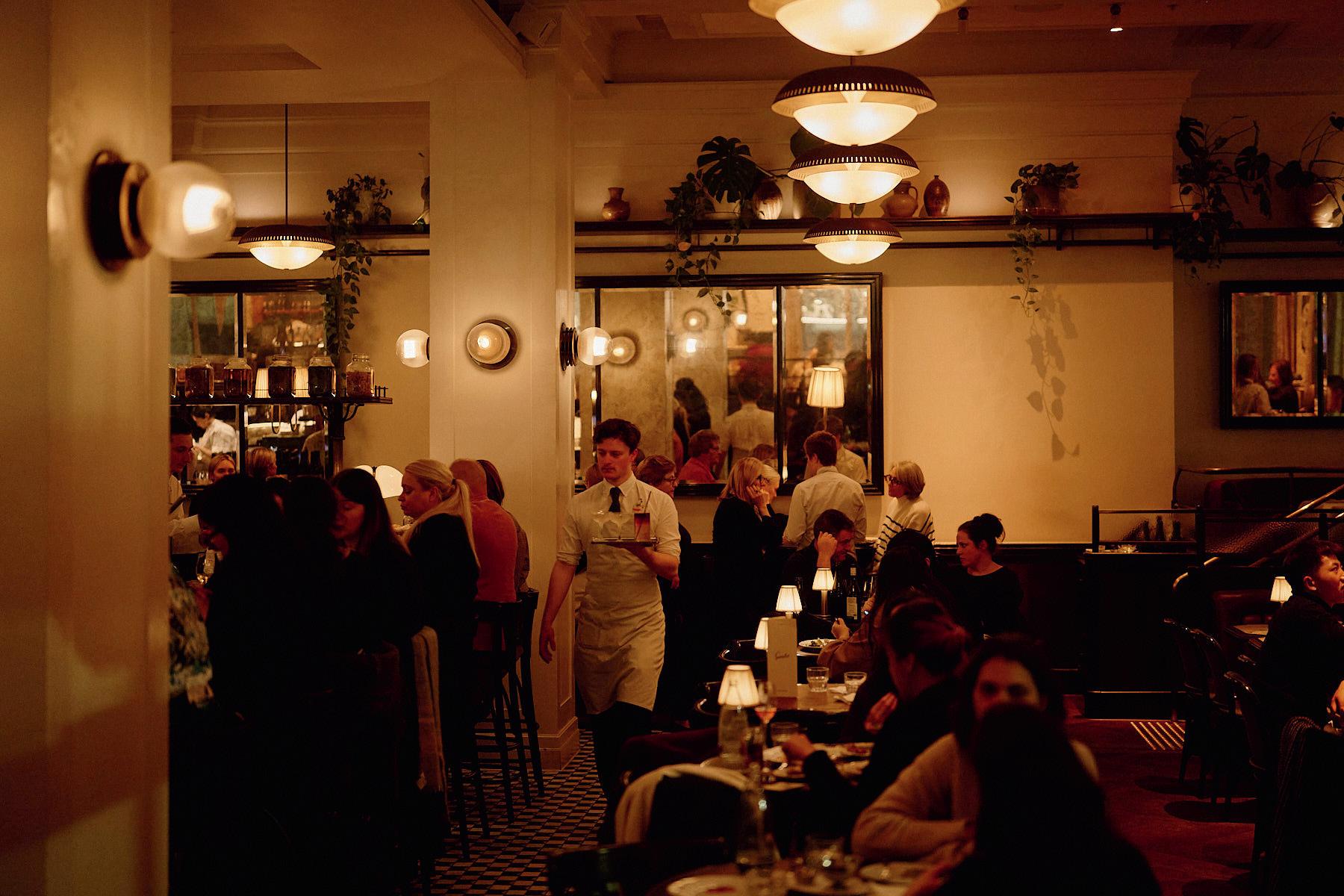
The Never Never Triple Dry Martini at Gimlet is billed as the world’s driest martini and took nine months of research to perfect. Served tableside from a decanter next to a pile of fresh lemons and with a dash of seasonal tincture, in that first sip you can taste the months of finessing. Every mouthful at Gimlet feels this curated whether it is the famous gnocco fritto with bresaola and parmesan or buffalo mozzarella, anchovy and chilli on toasted sourdough; or a main of John Dory with artichoke and fennel. Then it’s time to get that tableside trolley back to your gilded booth for the sgroppino, where lemon gelato, Meletti limoncello and DOC prosecco are whisked together in a frozen bowl and topped with more bubbly. Gimlet is the pinnacle of Melbourne dining.
9pm Live and loud
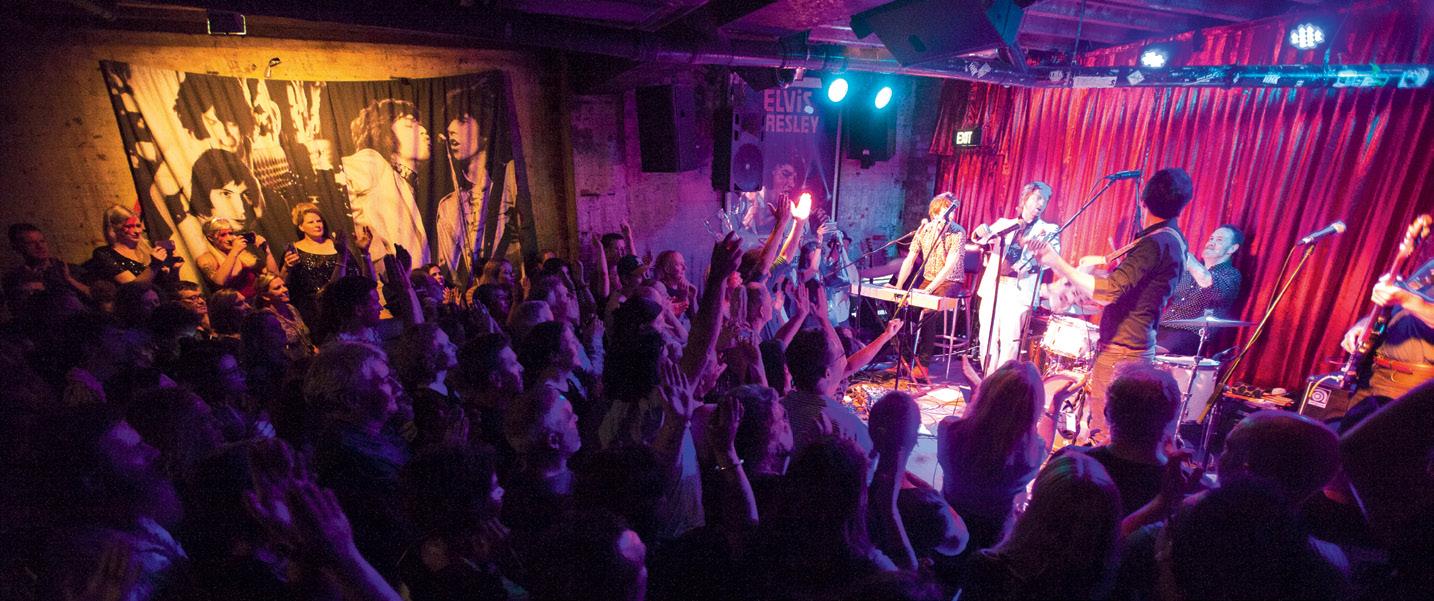
It’s a change of pace, but squeeze yourself out of the Gimlet booth and into the heaving mass of humanity at The Old Bar in Fitzroy. This shambolically charming rock joint has live music seven nights a week in a skinny brick building that looks like it is held together by the old rock posters on the walls. There’s a tiny stage, vintage pinball machines and a toilet covered from head to cistern in band stickers and graffiti. It’s the type of venue that makes names for local bands so they can hit the bigger stages.
10pm
Nice slice
Deep End Pizza is the passion project of chef Paul Kasten and celebrates regional pizza styles from around the US. Pop in for Pequod’s Chicago Deep Dish by the slice, the traditional pizza pie with more cheese than an ’80s sitcom.
11pm Ginner sanctum
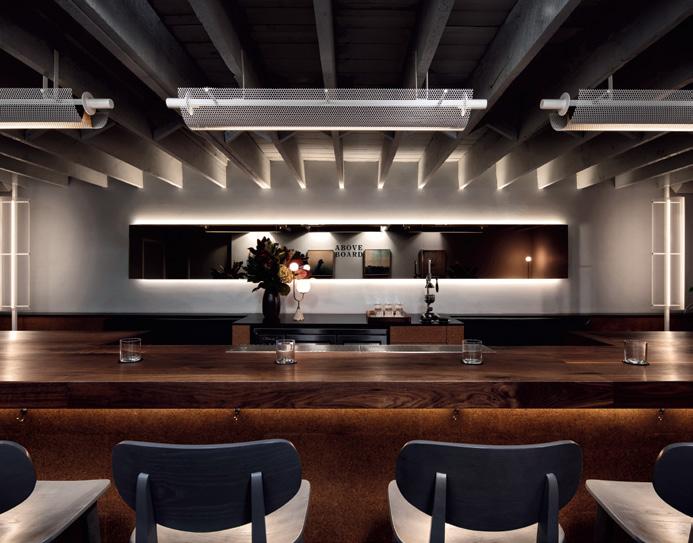
Calm things back down again at Above Board, Hayden Lambert’s almost austere cocktail bar that keeps all its bottles tucked away in drawers. This lack of distraction allows you to fully appreciate the skill on display as Hayden serves up a shaken concoction with a side of bartender banter. Seating just 12 this bar offers a memorable drink in a town that is not short on competition. Try the H.S.L. Special, amaro Montenegro, Creme de Mure, lime juice and a dash of absinthe.
12am Cherry on top
Back in the city, drop into Cherry Bar, where you can get one for the road (or the Highway to Hell). Dark, loud, no-frills and no-dills it’s a Melbourne institution and completes a night where you have been wined, dined, rocked and rolled, and explored the full breadth of the city.
OPPOSITE: Flinders Street Station; a Lucien Gaudin at Apollo Inn. CLOCKWISE FROM TOP: the marble-topped bar at Apollo Inn; the austere surrounds of Above Board; squeezing in to Old Bar; the elegant Gimlet dining room.
perfect Picture
With accommodation that is some of the most lavish in all Fiji and a focus on gourmet cuisine, VOMO in the Mamanuca Islands is a postcard brought to life. Luxury Escapes co-founder Adam Schwab discovers Maldivian-style extravagance just four hours from Sydney.
FIJI
Fiji’s tourism sector, for decades a mainstay of the island nation, has had its biggest three years ever. Easy and fast access to Australia and New Zealand (the island is well serviced by Fiji Airways, Qantas, Virgin, Air New Zealand and Jetstar) has led to an almighty and mostly unexpected tourist boom, contributing almost half the nation’s GDP. And few have benefited more than the ultra-luxe five-star haven of VOMO – the resort regularly books out almost a year in advance, with regular guests often booking their next stay before they leave the island.
Located within the Mamanuca Islands near the famous Yasawa Islands, VOMO is a triangular volcanic island home to 28 Hillside and Beachfront villas (plus six brandnew two-bedroom family villas) as well as six incredible residences.
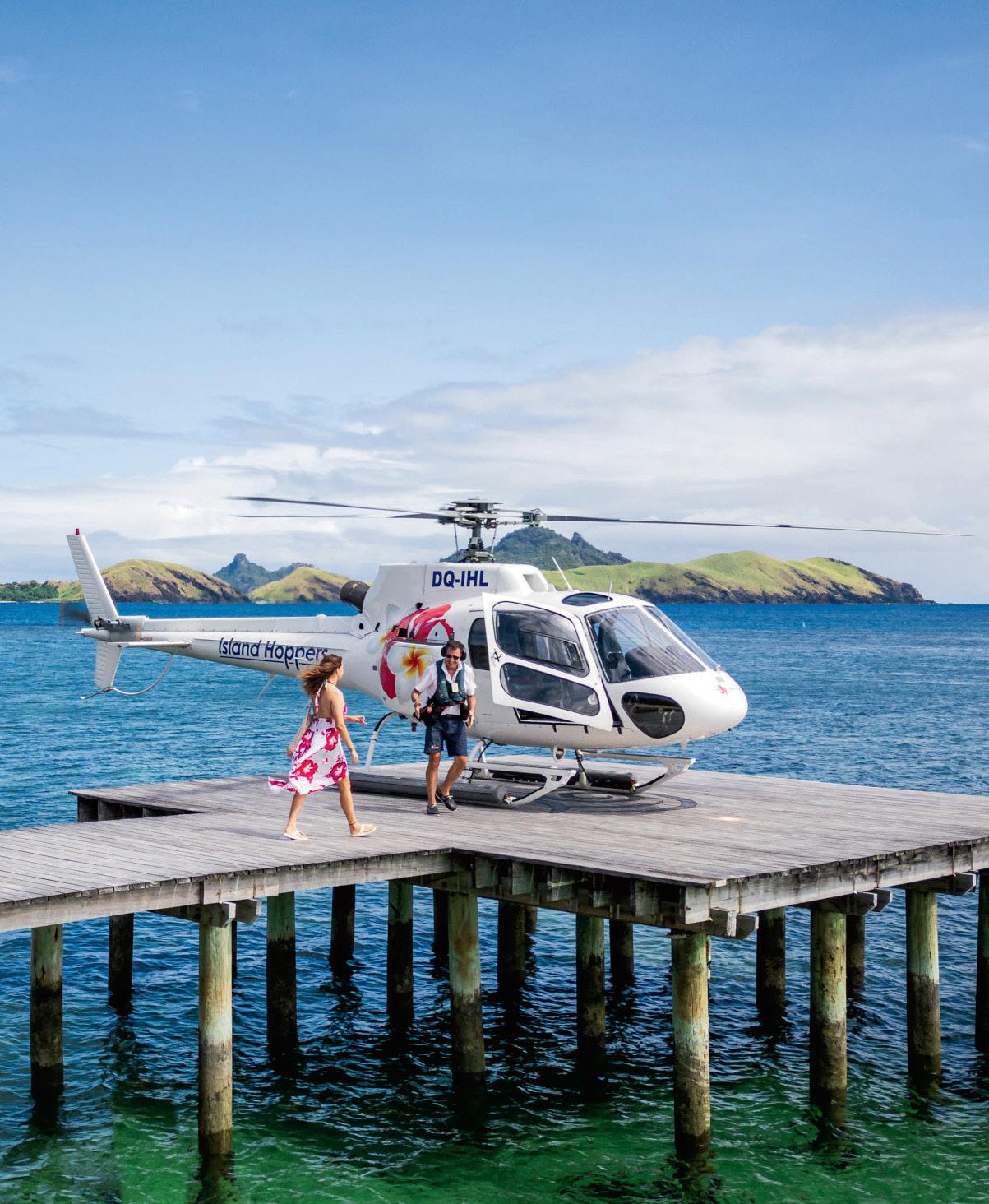
Guests can get to VOMO by a 40-minute boat ride or, for the well-heeled, a 15-minute helicopter transfer from Nadi Airport. We took the latter, sprinted away on a twominute car ride by Island Hoppers to their private terminal adjacent to the airport. Island Hoppers, Fiji’s bespoke helicopter and charter plane provider, is run by
New Zealand-born Craig Keighley (who still flies), who runs a fleet of helicopters and private planes (to carry people to further away Fijian islands).
After a briefing (like most high-end charter operators, Island Hoppers prioritise safety), we jumped on the chopper and were walking off the VOMO helipad within 15 minutes (remarkably, we got from plane to resort in under 40 minutes, a huge time saving on the usual three hours). The convenience and beauty of the helicopter ride left me wondering how we will ever travel by boat again, but that’s a concern for another day.
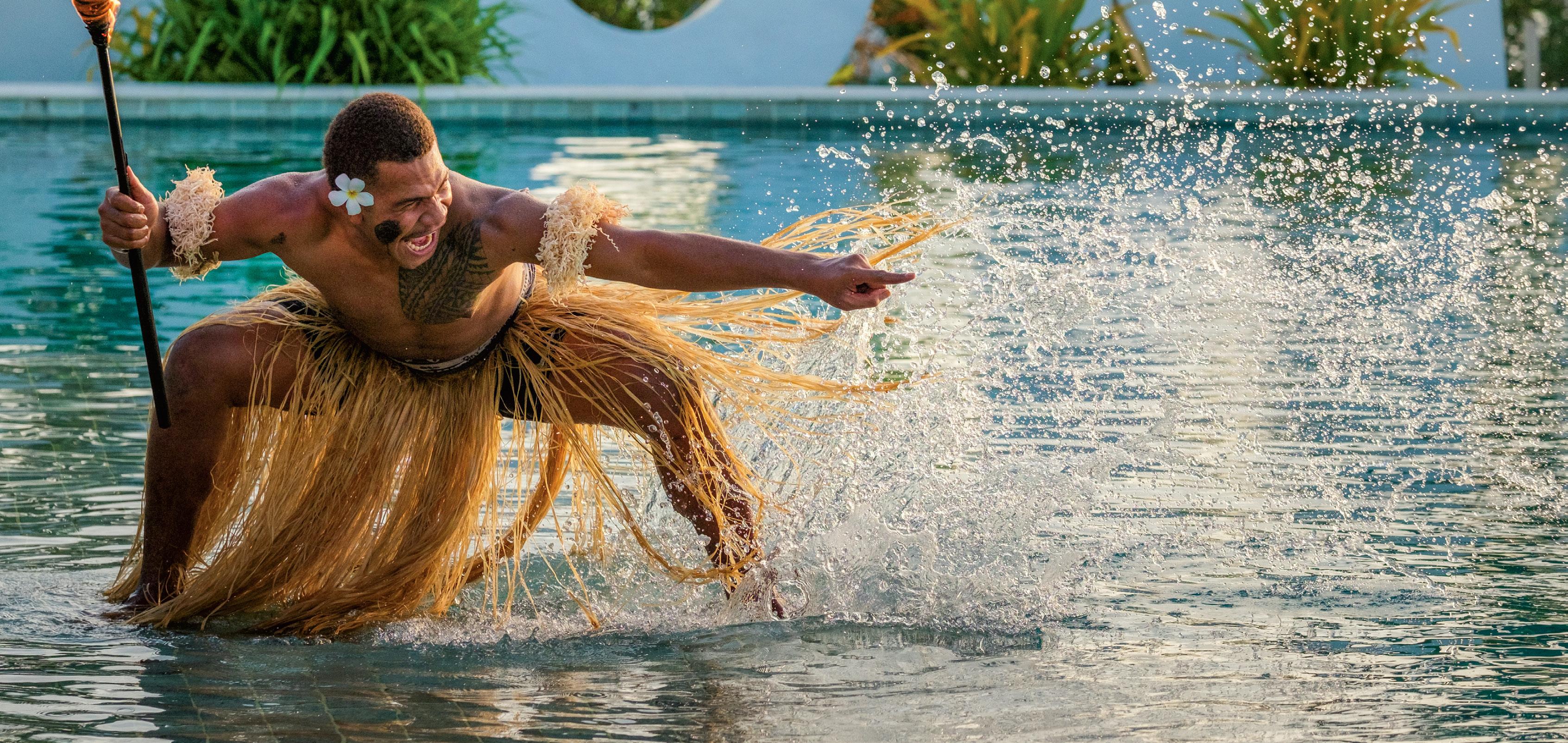
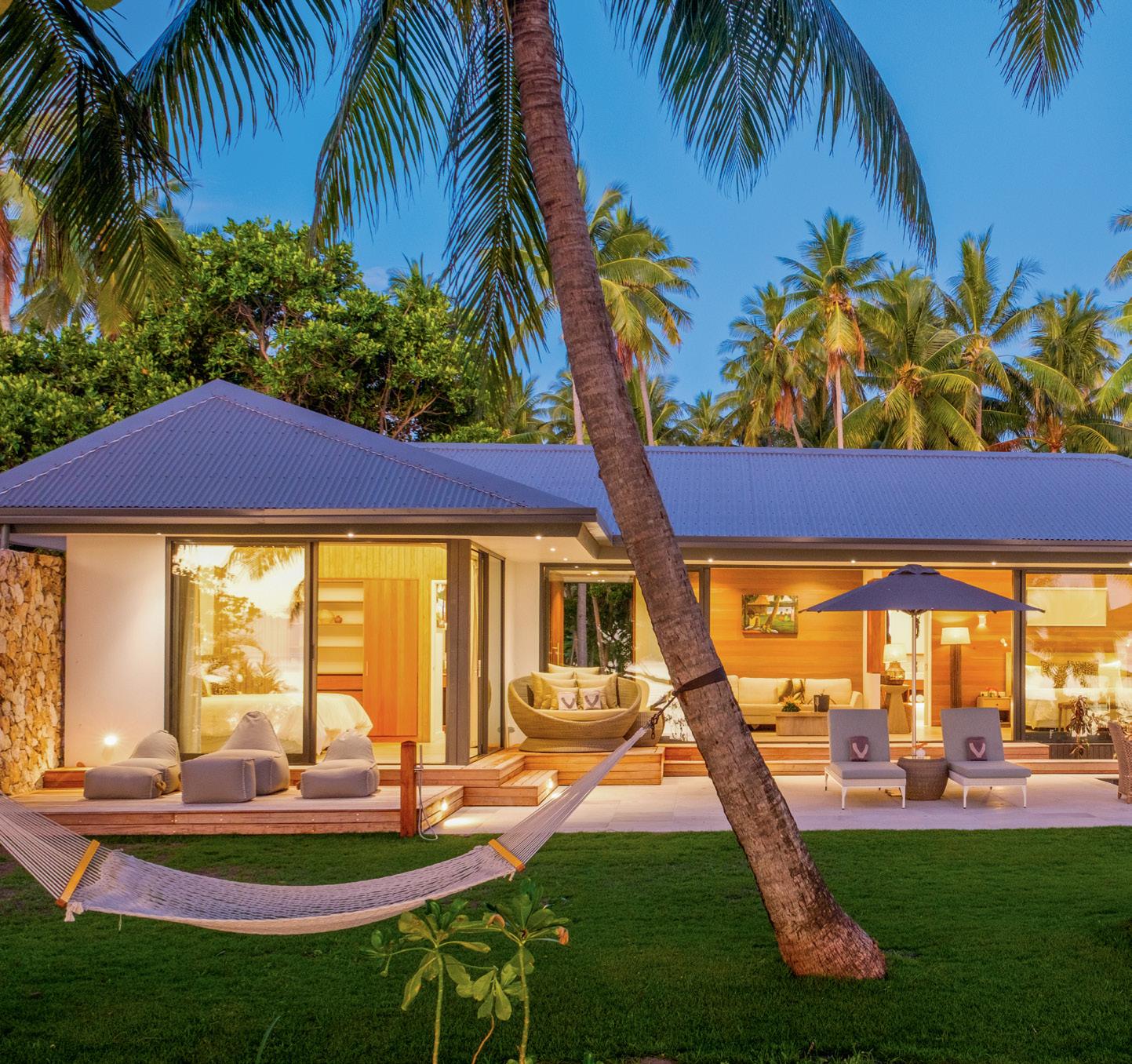
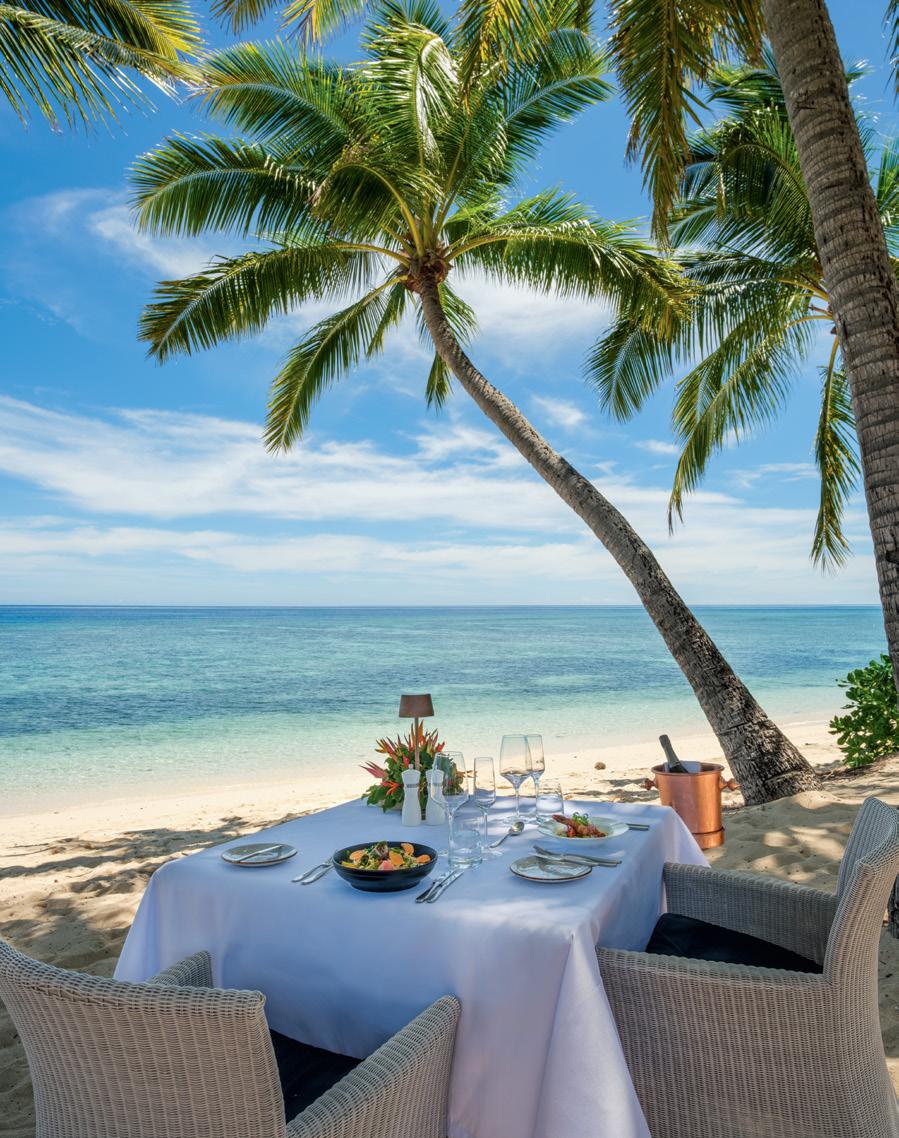
LEFT: Fijian warrior. CLOCKWISE FROM ABOVE: VOMO’s villas; dining by the beach; travelling in style with Island Hoppers.
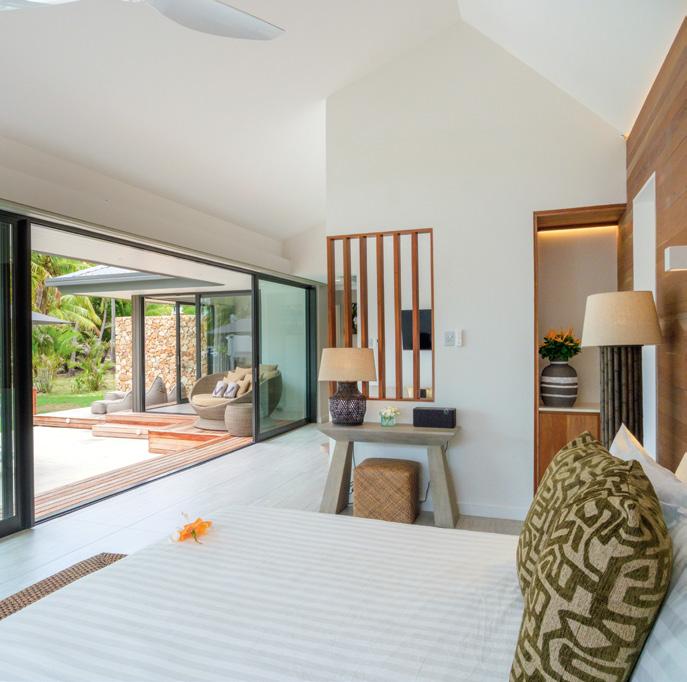
We were driven straight to our Two-bedroom Family Pool Villa, which was huge, similar to what you’d expect from a Maldivian beach villa. Both master and kids’ bedrooms had full views of the lush garden and stunning Fijian waters. It was actually better than a postcard.
Each family villa has its own private pool (well sized, at 18 square metres) along with two bathrooms and a generous living room. The VOMO room product is one of the best in Fiji.
VOMO’s Hillside and Beachfront villas are located just metres from the stunning reef, where guests are likely to encounter the odd turtle or friendly black tip reef shark (the resort also runs a turtle rehabilitation project
– while we were staying a turtle was released back into the ocean, with the entire resort and all guests present for the ceremony). The resort has 40 villas in total including residences that are among the most lavish in Fiji (they usually sell out a year in advance and can cost upwards of $8,000 a night inclusive of all meals, so book early).
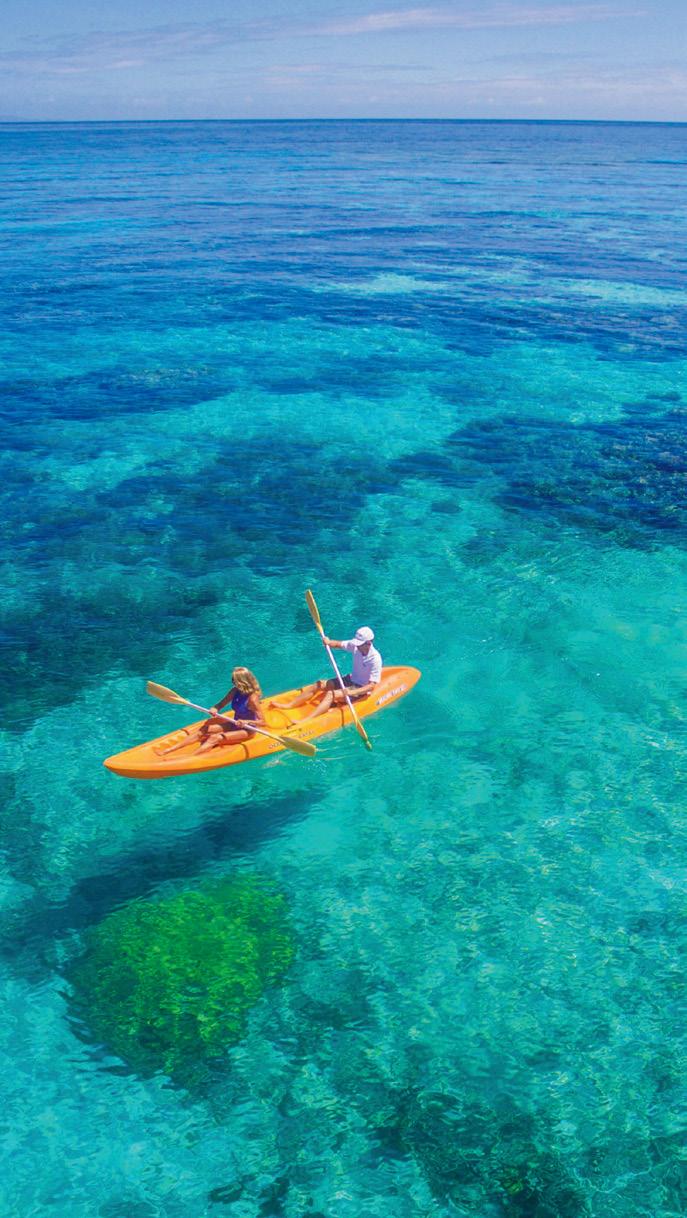
Four of the new family villas are located on the quiet side of the island (another two are near The Rocks pool). You can swim from the villas to one of the two house reefs on either side of the island. The resort also runs daily snorkel trips for guests every morning. This is the closest I’ve had to a Maldivian reef experience but is four hours from Sydney.
Slice of paradise
Guests are welcomed to the resort in traditional Fijian style by staff with magnificent Fijian song, and you immediately feel part of the VOMO family.
VOMO is among the luxury resorts leading Fiji’s pitch as a gourmet destination. Guests dine on an a la carte breakfast (augmented by a refrigerated pastry and cheese room). Lunch and dinner are a choice of the resort’s two restaurants (the Rocks Restaurant is an “adults only” affair, but rest assured, kids can dine in the kids’ club while adults kick back and enjoy the sunset). Meals are three courses with a choice of four options for each course (dietary requirements are well catered for). Seafood is a highlight, with VOMO serving fresh, locally sourced prawns, lobster, oyster and of course the Fijian kokoda, the nation’s signature dish of fish in coconut cream.
While many luxury resorts charge eye-watering amounts for laundry, VOMO
offers a free laundry service for all guests –remarkably, the laundry is returned within five hours looking more perfect than when it was even purchased. I wasn’t able to work out how the team were magically able to achieve this, and soon regretted not bringing every article of clothing I had to Fiji.
Fiji is famous for being family friendly and VOMO’s Kids’ Club is no exception. Open from 9am to 9pm, kids are regularly spoiled with activities including snorkelling, fish feeding, t-shirt or chocolate making and, of course, traditional Fijian dance.
Families are even offered a “baby butler” for four hours a day, giving parents some welldeserved relaxation.
The only thing you can fault VOMO for is the difficulty in booking. The boutique resort books out early, especially in school holidays, so lock in your small slice of paradise well in advance.
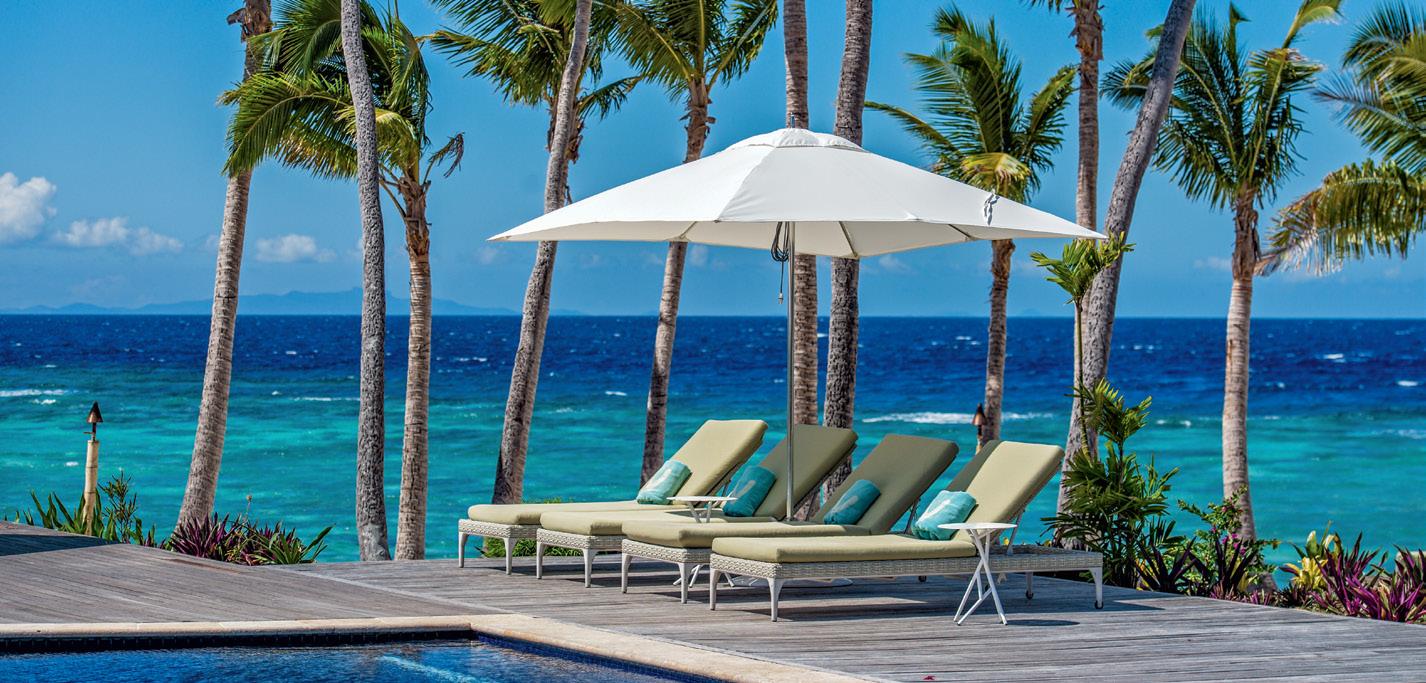
CLOCKWISE FROM TOP: snorkelling the clear water of Vomo Island on a complimentary daily trip; the VOMO pool deck; sunset is a magic time on VOMO; inside the villas.
Members of our VIP travel club are saving thousands Unlimited benefits all year round*

Save hundreds every year
With member-only pricing on our best limited-time hotel offers & tours

Early access
To our bestselling offers to secure the best availablity & rooms

Bonus inclusions
Hotel credit, daily breakfast, room upgrades & more
Exclusive access
To hidden offers, just for members

Worry-free travel
Save 40% on Travel & Cancellation Protection for stress-free trips

Jump-the-queue
With priority access to 24/7 customer support
See what members are saying about LuxPlus+ and its exclusive benefits



*Terms and conditions apply.
Candid camera
CLOCKWISE FROM ABOVE: resorts like Finolhu Baa Atoll and Park Hyatt in the Maldives make a great backdrop for the TV season; hosts Cameron Daddo and Miguel Maestre get set to get wet; the pair arrive in the Maldives on a seaplane.
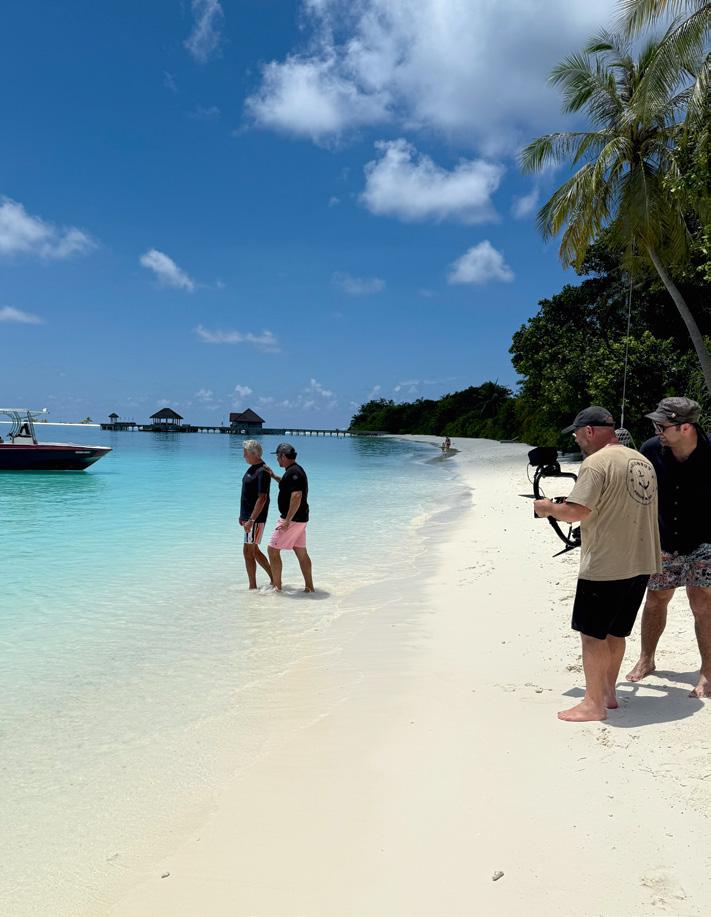
Come behind the scenes of the last season of Luxury Escapes: The World’s Best Holidays where our hosts explored destinations including Fiji, Europe, Iceland, New Zealand, the Maldives, Bali and Australia.
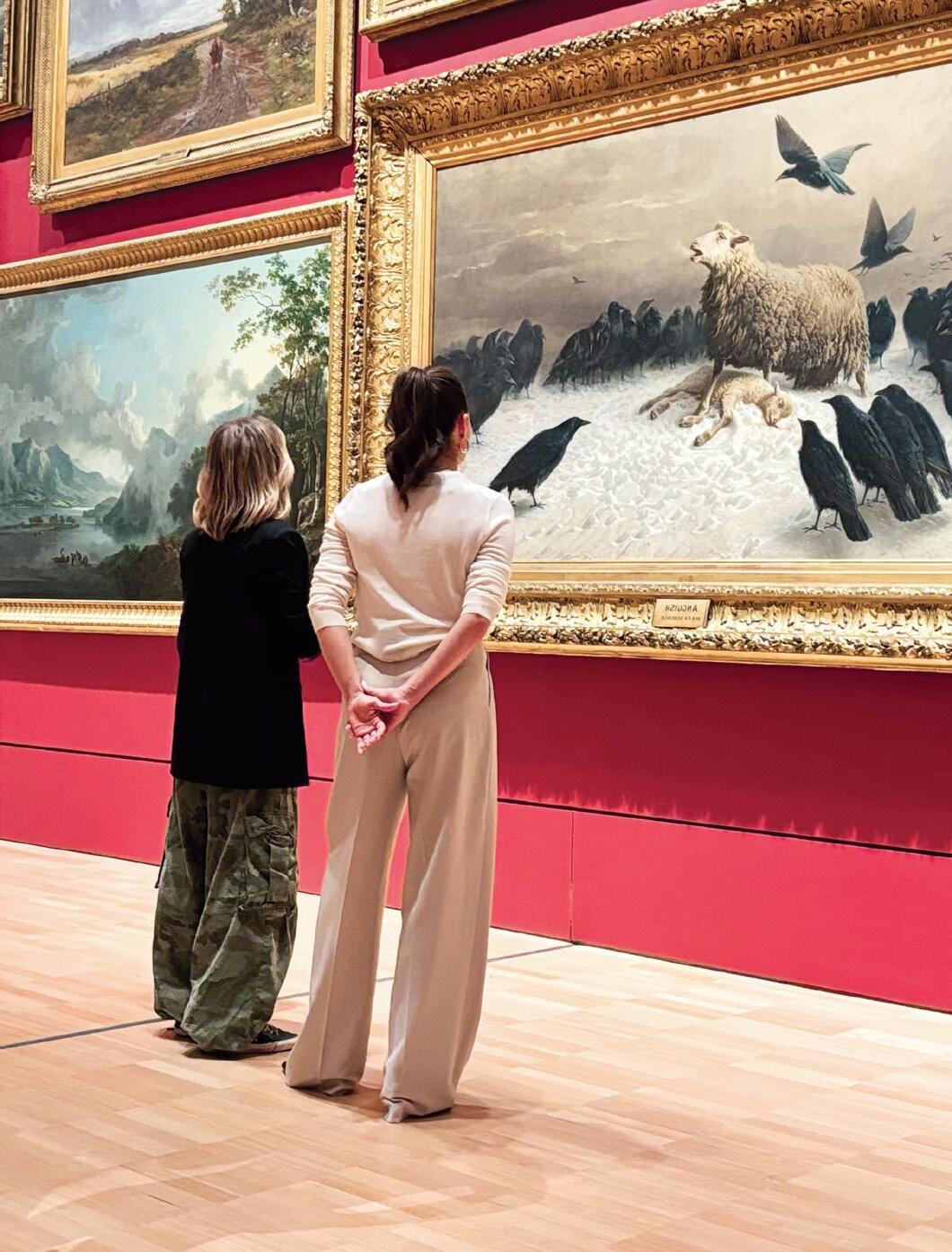
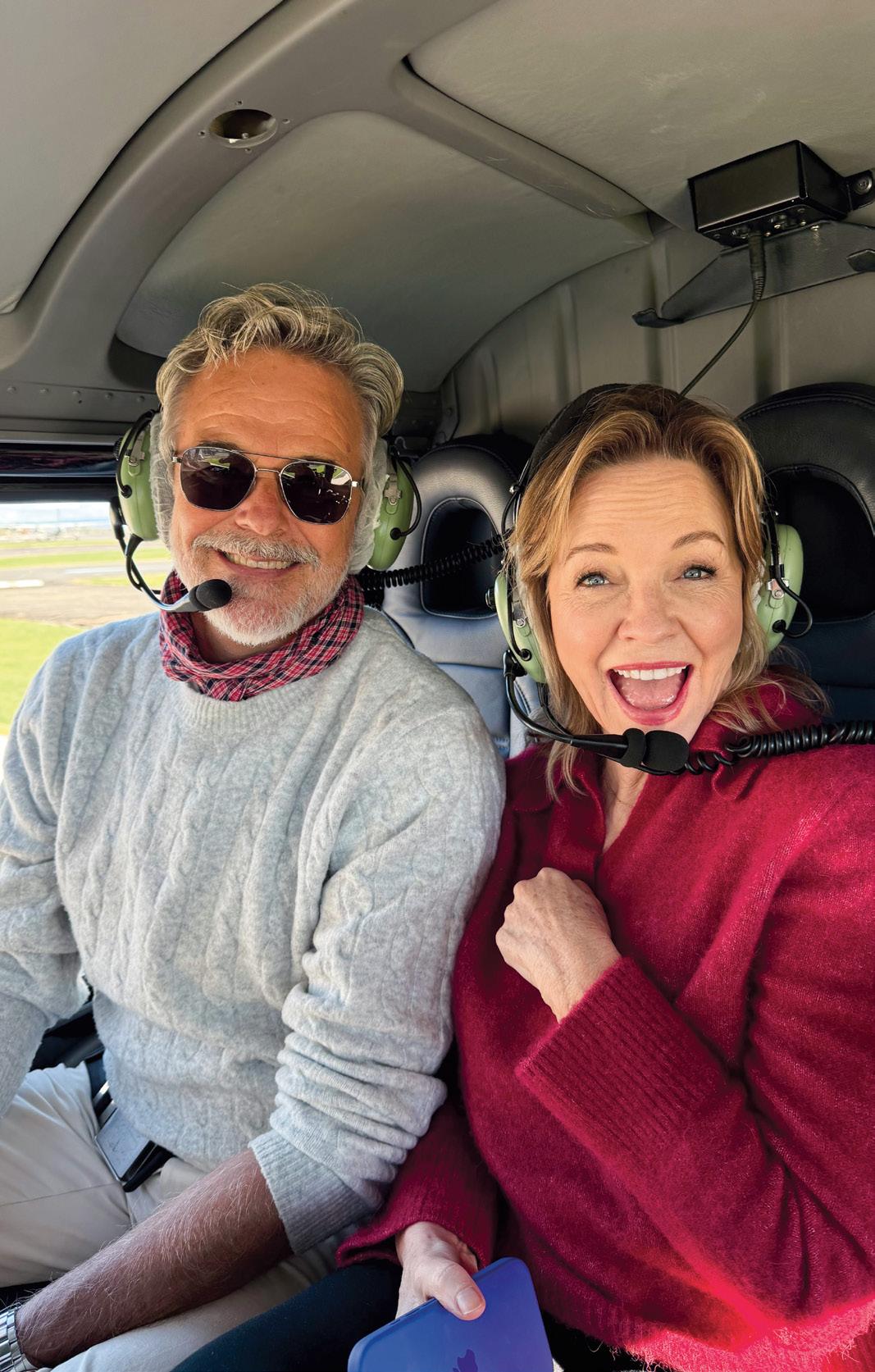
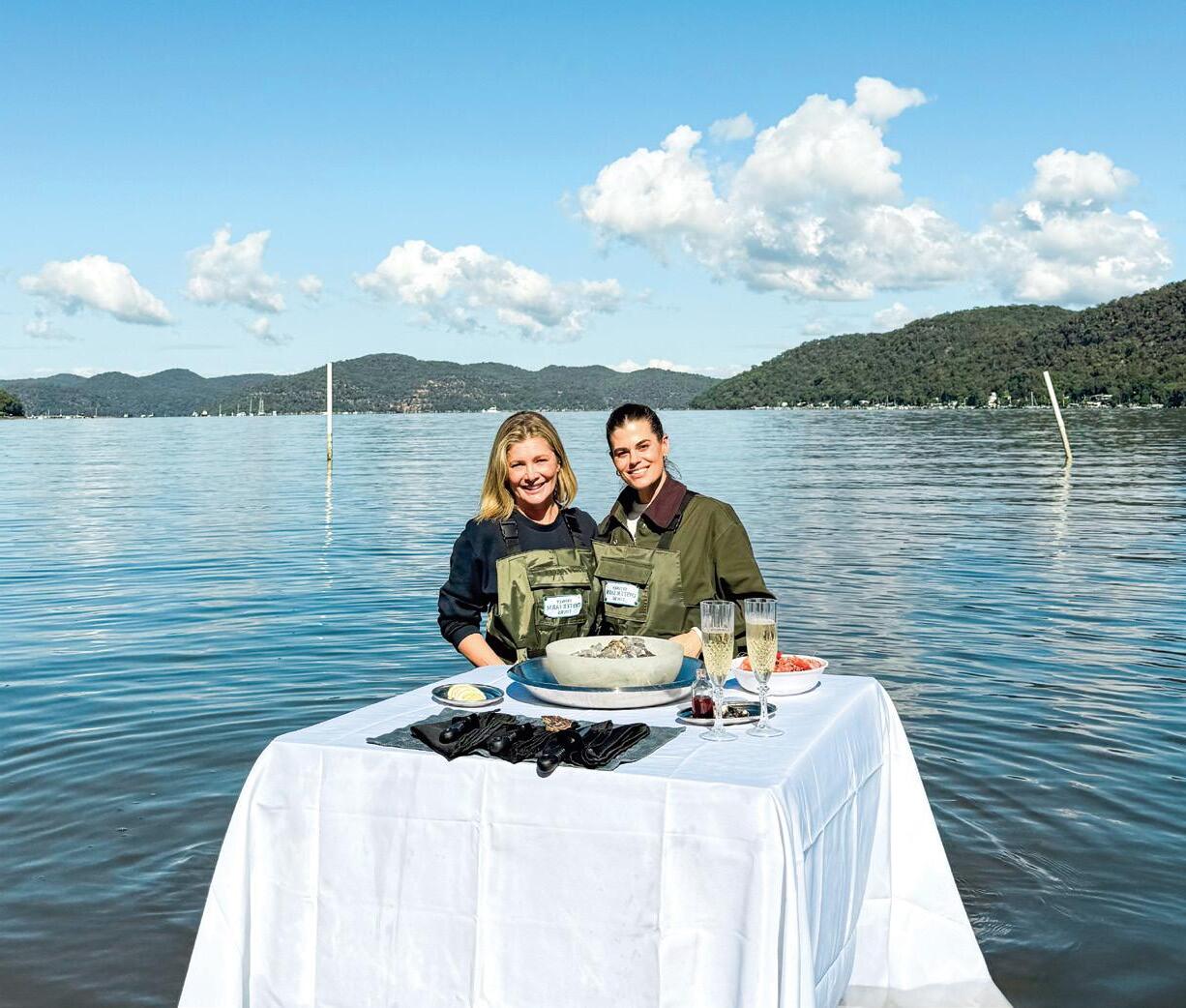
BELOW LEFT: hosts Natalie Bassingthwaite and Hannah Hollis toured The National Gallery of Victoria for an episode of Luxury Escapes: The World’s Best Holidays RIGHT: hosts Cameron Daddo and Rebecca Gibney take to the sky.
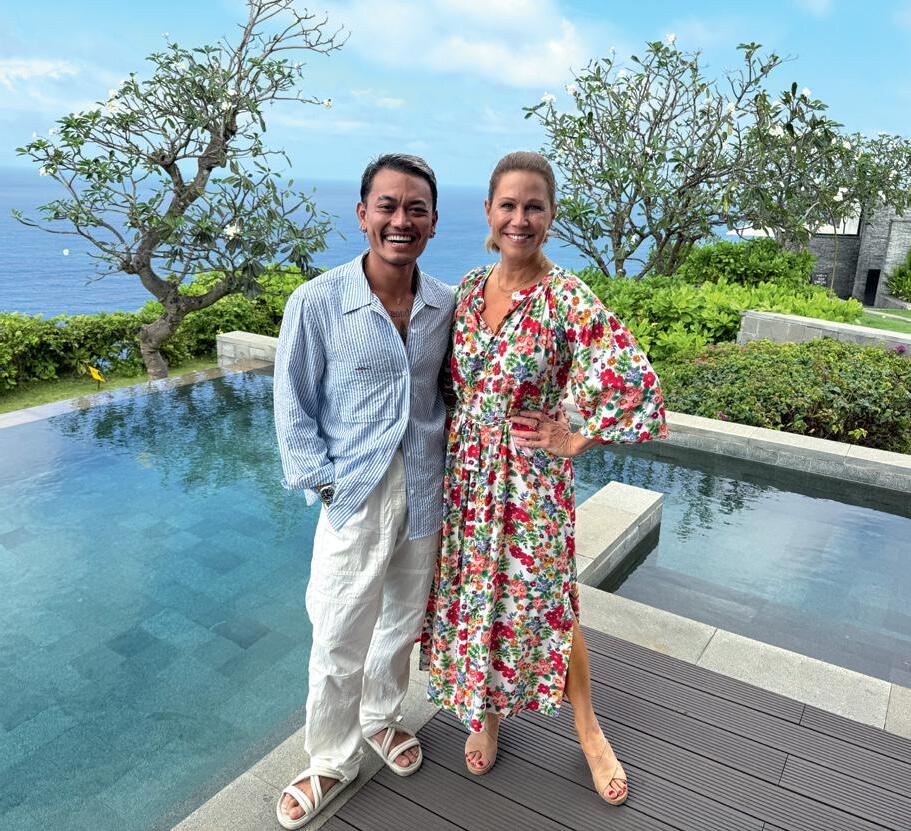
ABOVE: Khan Ong and Pia Miranda celebrating the wonders of Bali; in this case Anumana Ubud. RIGHT: Nat and Hannah taste oysters direct from the ocean off the New South Wales coast.
GREECE
Hellenic hero
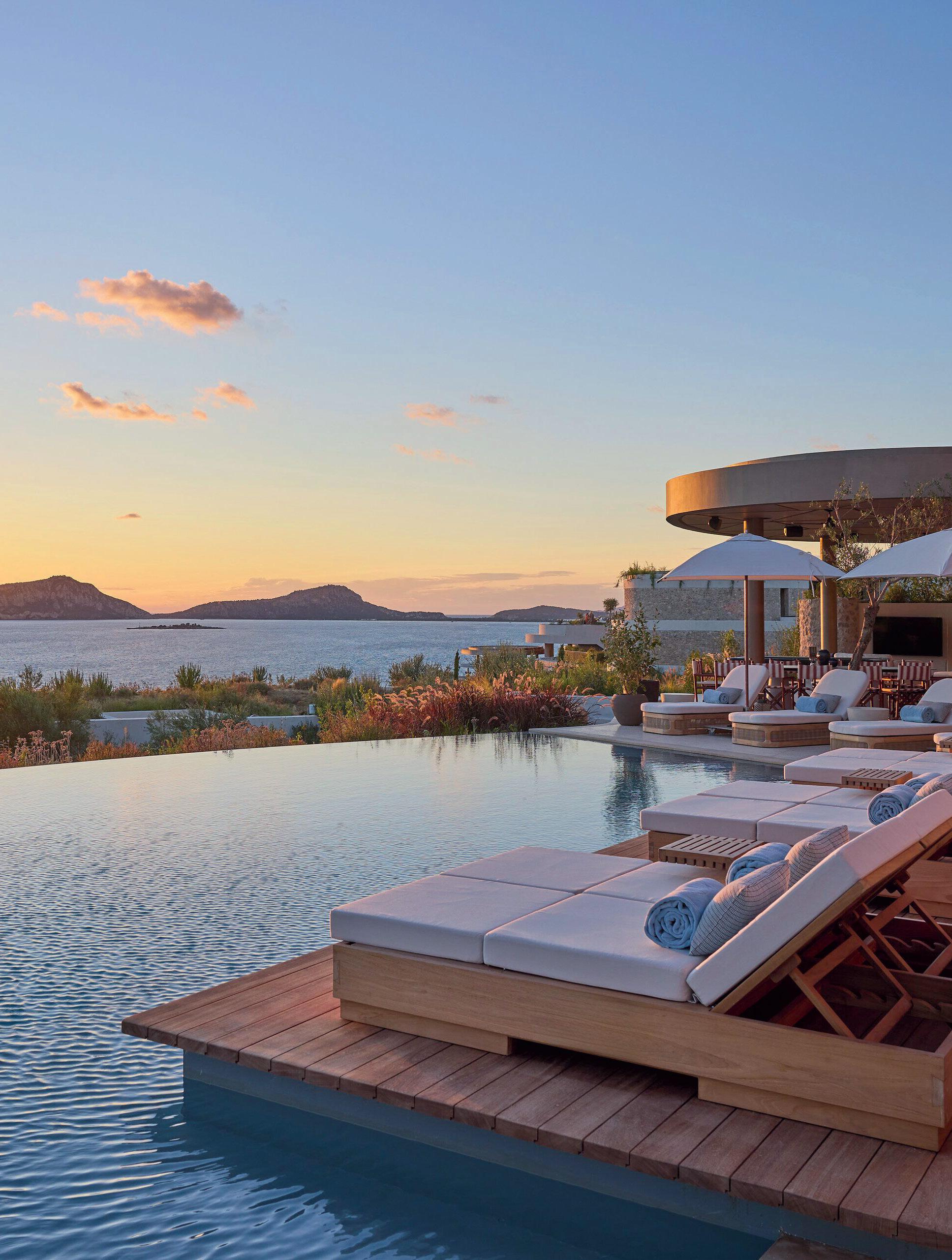
Amidst olive groves and stories from ancient history, Belinda Jackson discovers that the Mandarin Oriental’s debut Greek property is born from the myths and provenance of the Peloponnese peninsula.
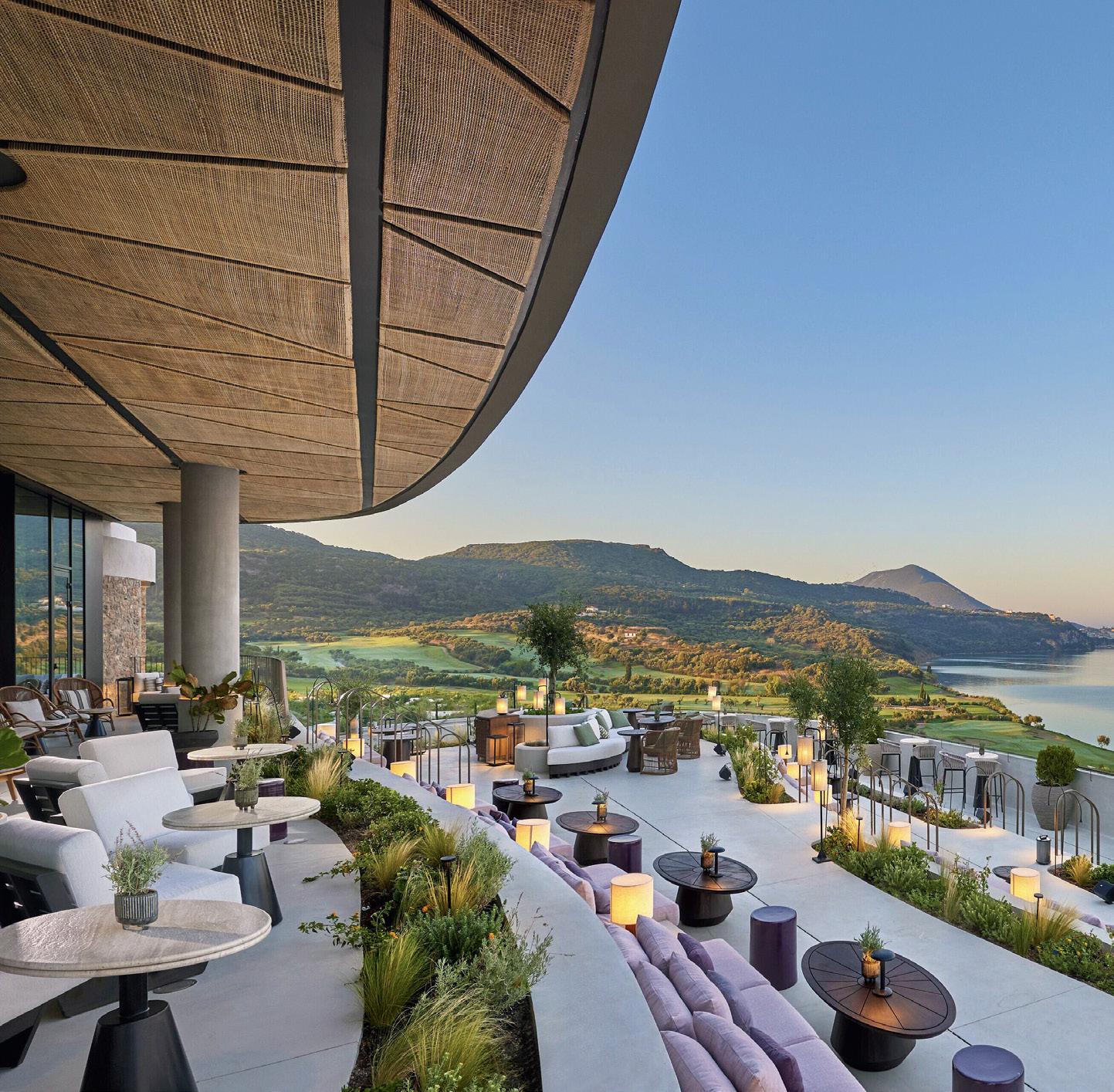
It’s not often you’re served a dish inspired by a naval battle; even rarer is being served that victory dish while overlooking the battleground.
The historic site is the sparkling Bay of Navarino, and the dish is lamb Navarin. It was invented the day an armada including French ships drove the Ottoman ships out of this beautiful bay, a decisive moment in 1827 during Greece’s War of Independence.
“This dish was created here, just two kilometres from us,” says Bertrand Valegeas, executive chef of the Mandarin Oriental Costa Navarino. “Centuries later, we’re taking it back,” he adds, as the classic French ragout is served with all-local produce.
And what a beautiful battleground it is. The bay is both the backdrop and the hero of the Mandarin Oriental Costa Navarino, now in its second season here on the Peloponnese peninsula, to the very south of mainland Greece.
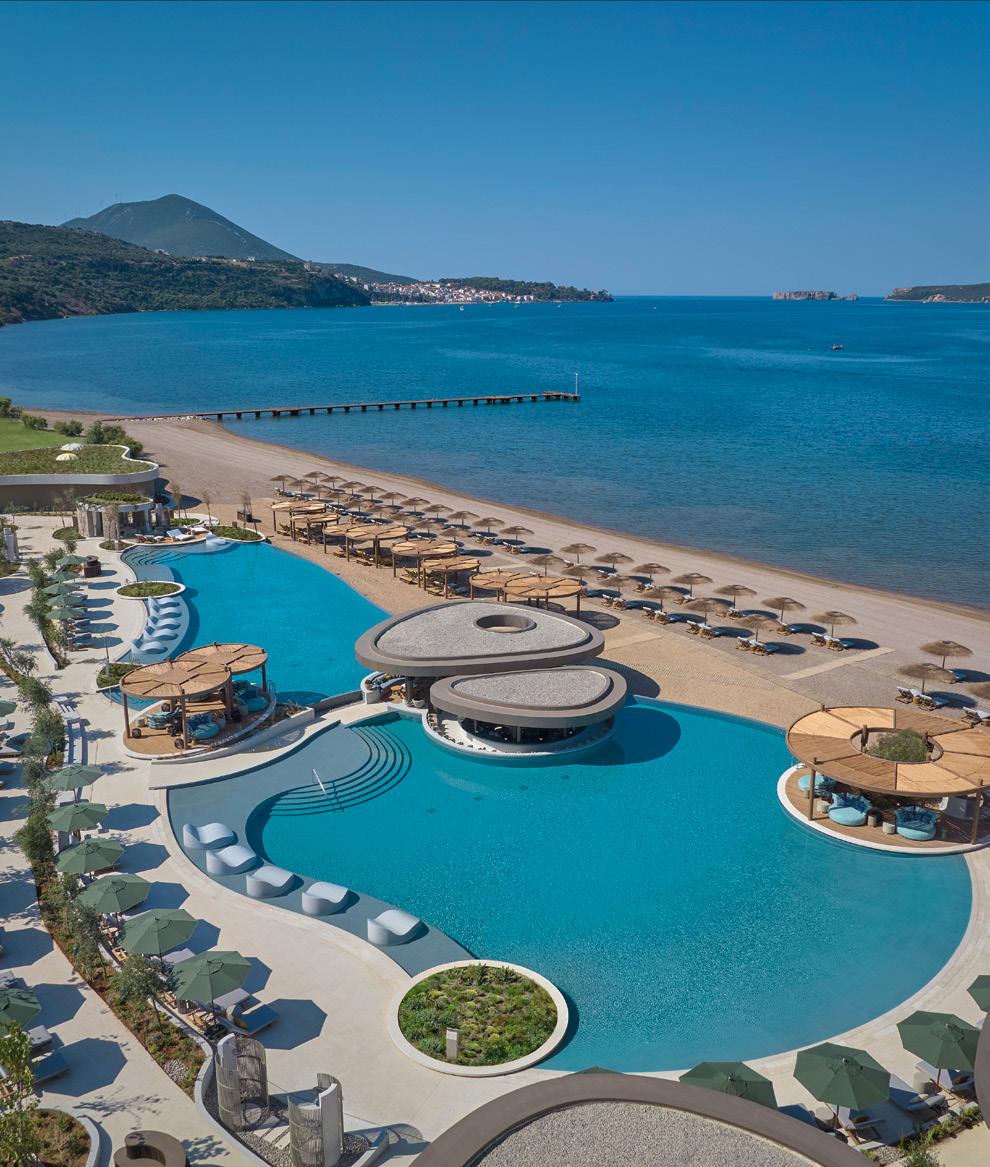
The bay is genuinely mesmerising. I watch as yachts loop lazily around its curve from a lounger at the beach club, with Greek salad and spritzer in hand. I watch the sun set over its islands from the rooftop pool at the spa, my skin soft from the olive sauna, massaged with the oils and herbs drawn from the
land around me. And I listen to the rise and fall of its waters, which lull me to sleep each night, my pool villa’s doors open, inviting the scents of the land into my room of stone and timber.
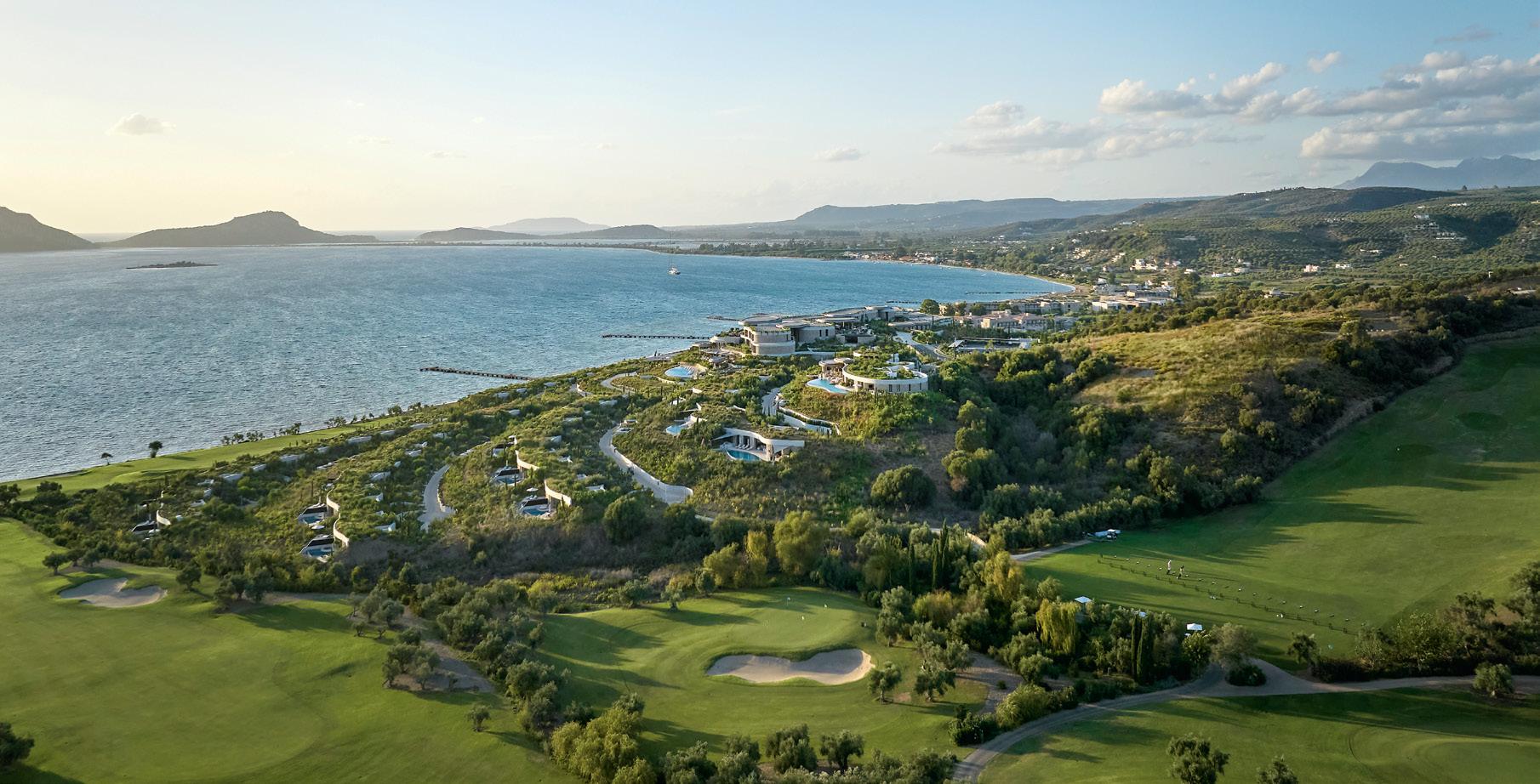
Built from local stone, the hotel is totally embedded into its landscape. The resort’s reception is at the top of a hill, and each step down leads you to a new discovery – the Olivera restaurant where I have my lamb Navarin epiphany; a relaxation pool; the spa and wellness centre; and the 99 villas hidden in the hillside, rooftops landscaped with 2700 olive trees and local shrubs for privacy, soundproofing and temperature control.
Another evening, 12 of us are lucky enough to take a seat at Pizza Sapienza, a tiny pizza degustation experience from the Michelinstarred Mandarin Oriental Tokyo chef Daniele Cason. Here, in the warm night, we work our way through nine courses of exquisite pizza adorned with cauliflower and caviar, six cheeses with truffle honey, or the bonanza dolce pizza with local yoghurt and berries.
Along the way, I’m getting an education in Greek wines: moschofilero, malagousia, vidiano, xinomavro – my vocabulary expanding with every glass.
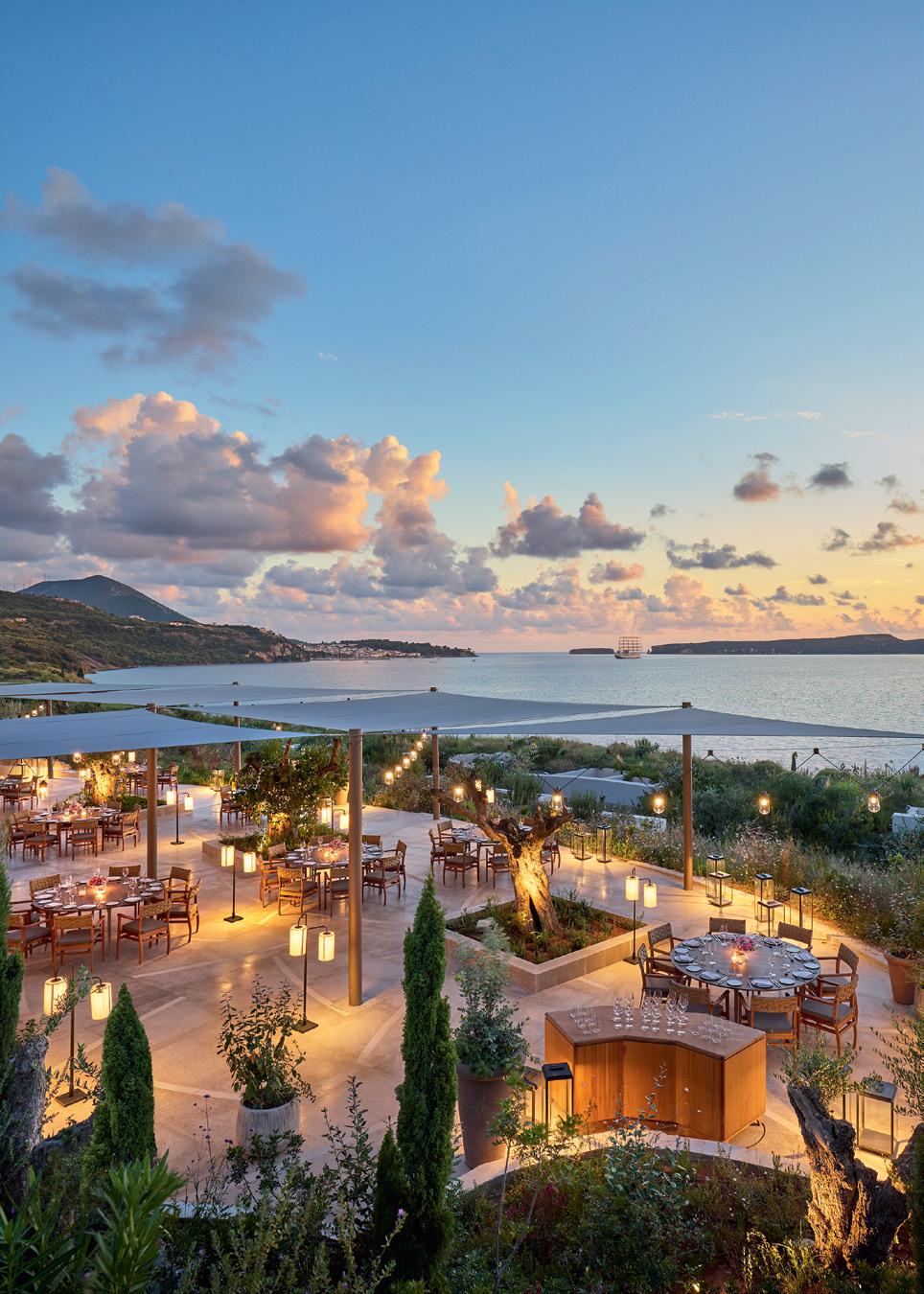
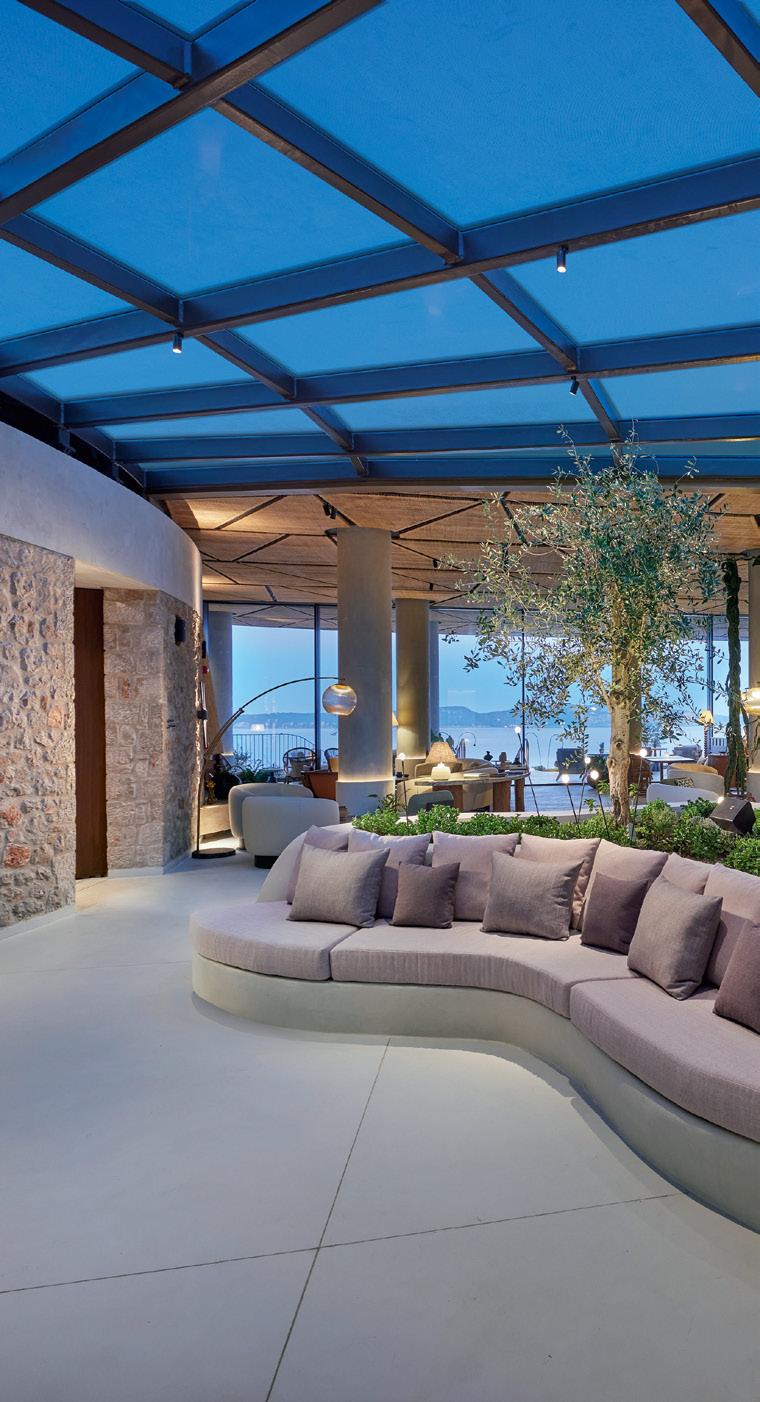
OPPOSITE: the pool at Mandarin Oriental Costa Navarino. THIS PAGE FROM TOP: the amazing dining included lamb Navarin, named after a famous battle; the views; the Mandarin Oriental Costa Navarino is built from local stone.
Book your stay now
Mandarin Oriental Costa Navarino
The 99-villa hotel is set on Navarino Bay, part of the greater Costa Navarino resort, which includes four golf courses lined by olive trees and the Navarino Agora, a resort village with additional dining, shopping and adventure activities. Located four hours’ drive from Athens, guests can opt to fly from Athens to Kalamata airport to meet a hotel transfer. The hotel closes each winter (November–March).
Castle by the sea
Early one morning, I meet Anna from the wellness centre for a lazy jog around the hotel and the surrounding golf courses. Ours is the newest and top hotel in the greater Costa Navarino resort, which includes a marina, golf courses designed by Hall of Fame golfer Bernhard Langer, José María Olazábal and Robert Trent Jones Jnr, as well as Westin and W hotels.
And each morning, before I go exploring by e-bike or further afield by car to find Bronze Age tombs or palaces of antiquity, I’m offered an agonising choice of breakfast dishes. Should I choose the classic Greek breakfast pastry of bougatsa? Kagianas, the local take on scrambled eggs, with the addition of syglino (smoked local pork)? Maybe I should try the open, boat-shaped peinirli pie with yellow kasseri sheep’s cheese? Whatever I choose, I always add a serve of Greece’s simplest and most perfect breakfast dish: a dreamy goat’s-milk yoghurt, twice strained
and served with fresh honeycomb and a handful of walnuts.
According to Bertrand – who himself is married into a Greek family – 75 per cent of the produce served is local or from the Peloponnese. The remainder is from Greece, with few aberrations such as beef or chocolate, part of the hotel’s extraordinary drive for sustainability and authenticity.
And if you were following online reviewers, the drawcard beach for visitors to the Messenia peninsula is Voidokilia Beach, also known as Omega beach. Thumping my hire car along roads so corroded that locals wave me over to caution me of the potholes ahead, I finally understand the name. The beach’s perfect curve mimics the last letter in the Greek alphabet. It is busy with northern Europeans in various shades of crimson or leather brown. Far better, I think, is the almost empty beach at Methoni, on the other side of the bay.
It’s reached via the chi-chi village of Gialova and its string of humble, waterfront cafes and busier Pylos, with streets are so narrow they’re a danger to rental cars’ wing mirrors. Finally, I reach my destination, Greece’s largest castle. Tousled by soft sea breezes, the 13th-century Methoni castle’s turreted watchtower is connected to the main keep by a stone bridge that is doused by the sea at high tide.
Built when this peninsula was under the Venetian Empire in the early 1200s, I’d choose Methoni over the far more ancient Nestor’s Palace for a day visit, no matter Nestor’s vaulted place in the Trojan Wars and Homeric sagas. It is impossibly romantic.
“It’s incredible, yet almost nobody’s here,” says the Englishman I meet on the turret. “Few signs, no maps… it’s like they just don’t know what they’ve got.”
I’m happy to keep it that way.
FROM TOP: playing
a round of golf at this incredible coastal course looking out at the Bay of Navarino; the public pool at the resort. .
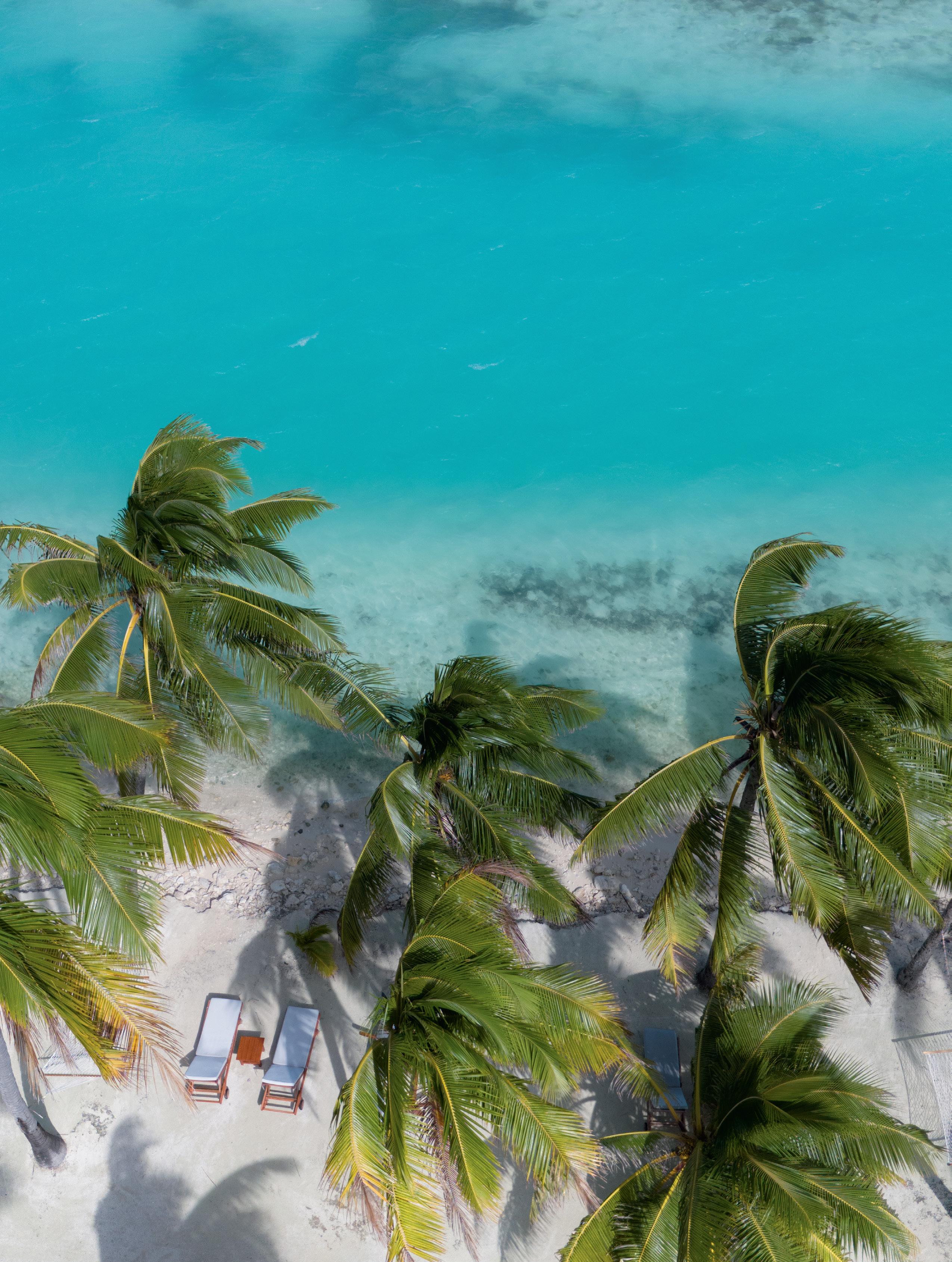
A PHOTOGRAPHIC JOURNEY THROUGH
The Cook Islands
On an idyllic retreat to this tropical paradise, Sarah Royale (aka Salty Luxe) spends some time on Aitutaki Lagoon and goes island hopping in a region that is not overrun by tourists.
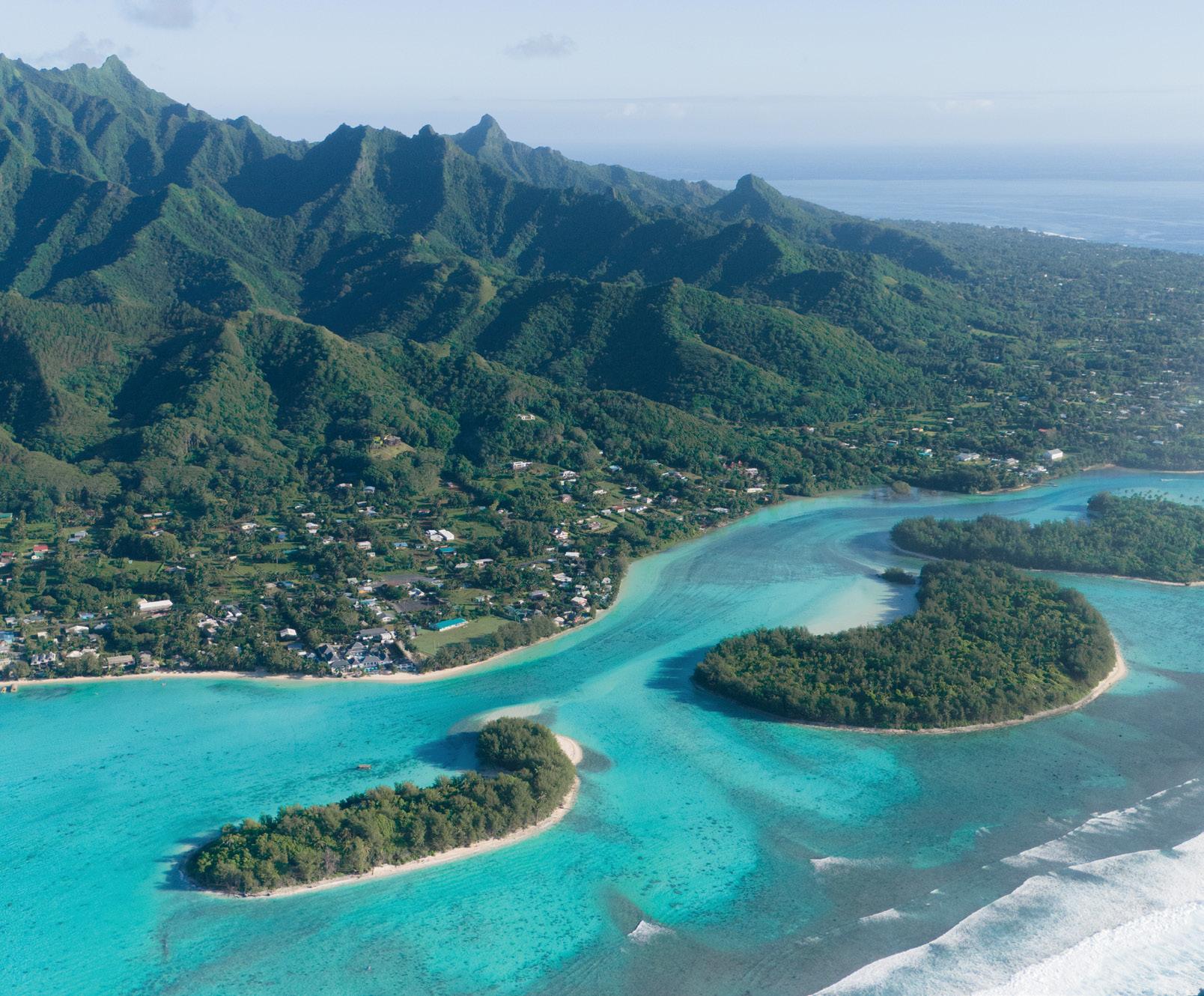
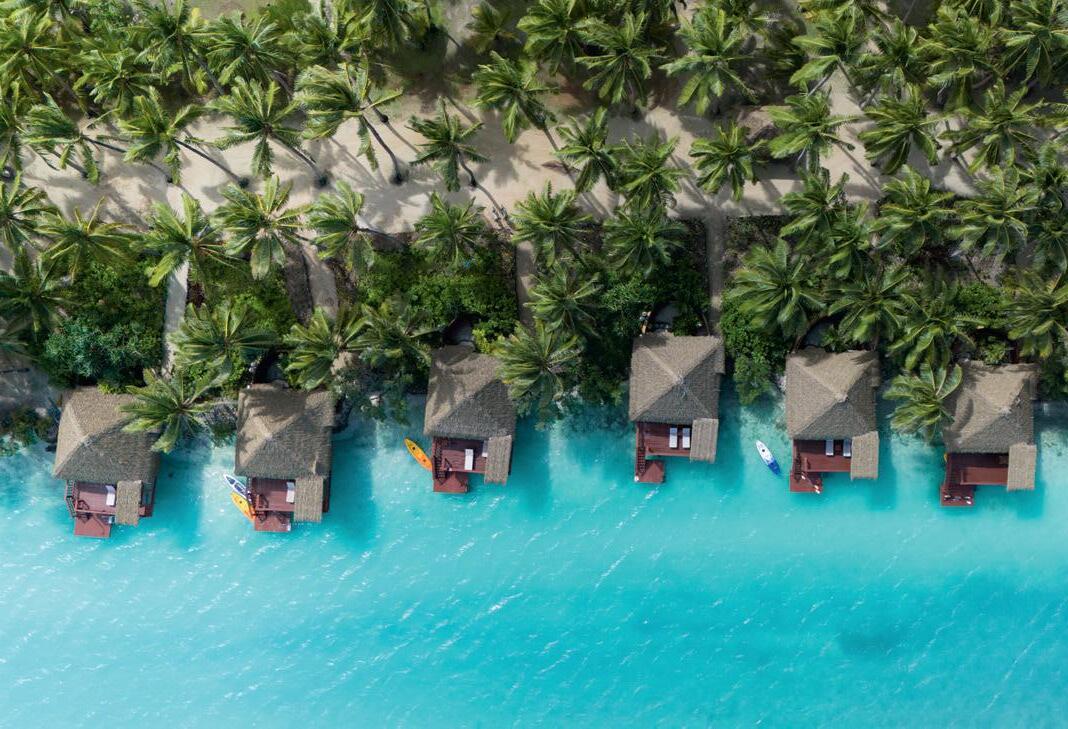
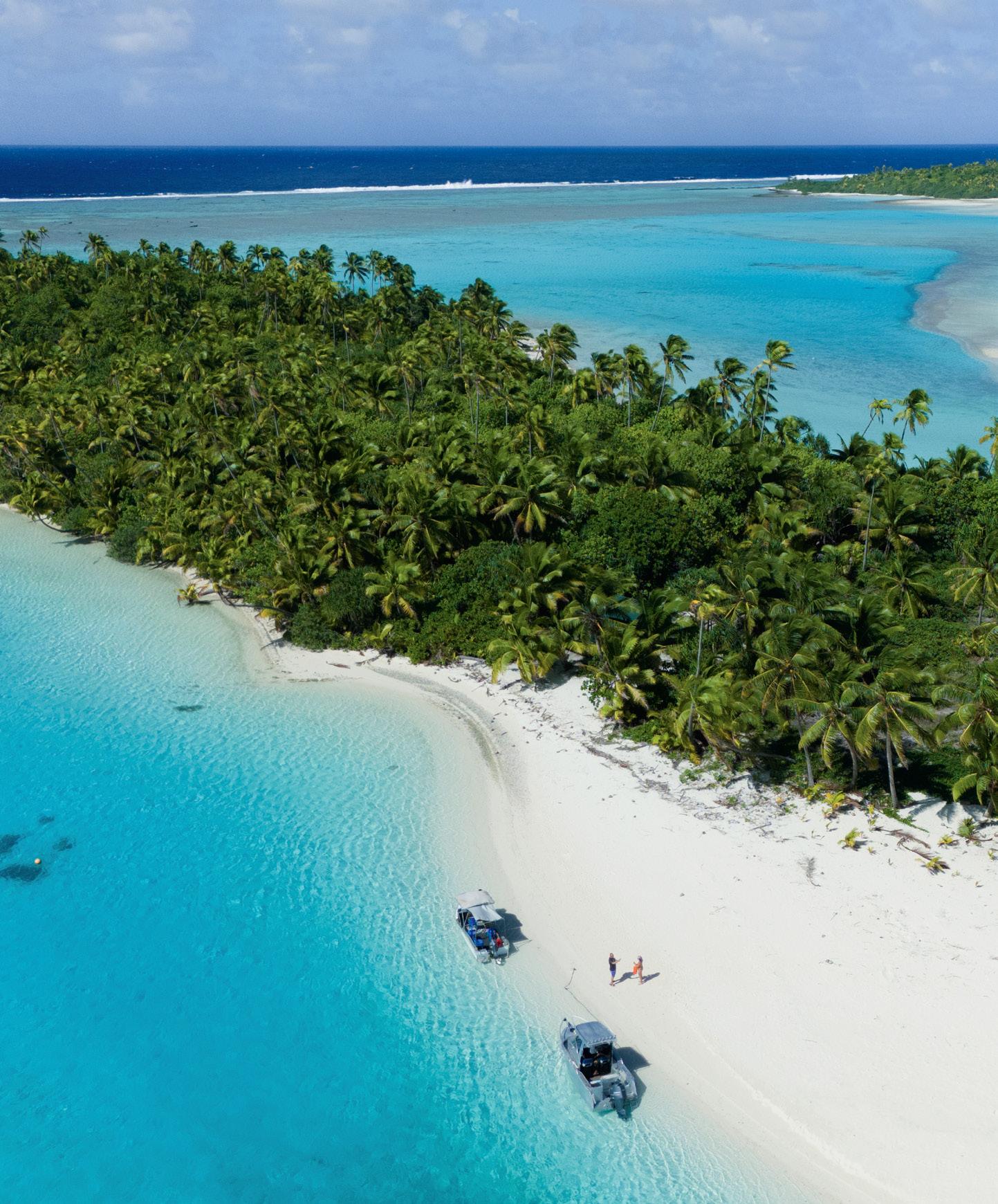
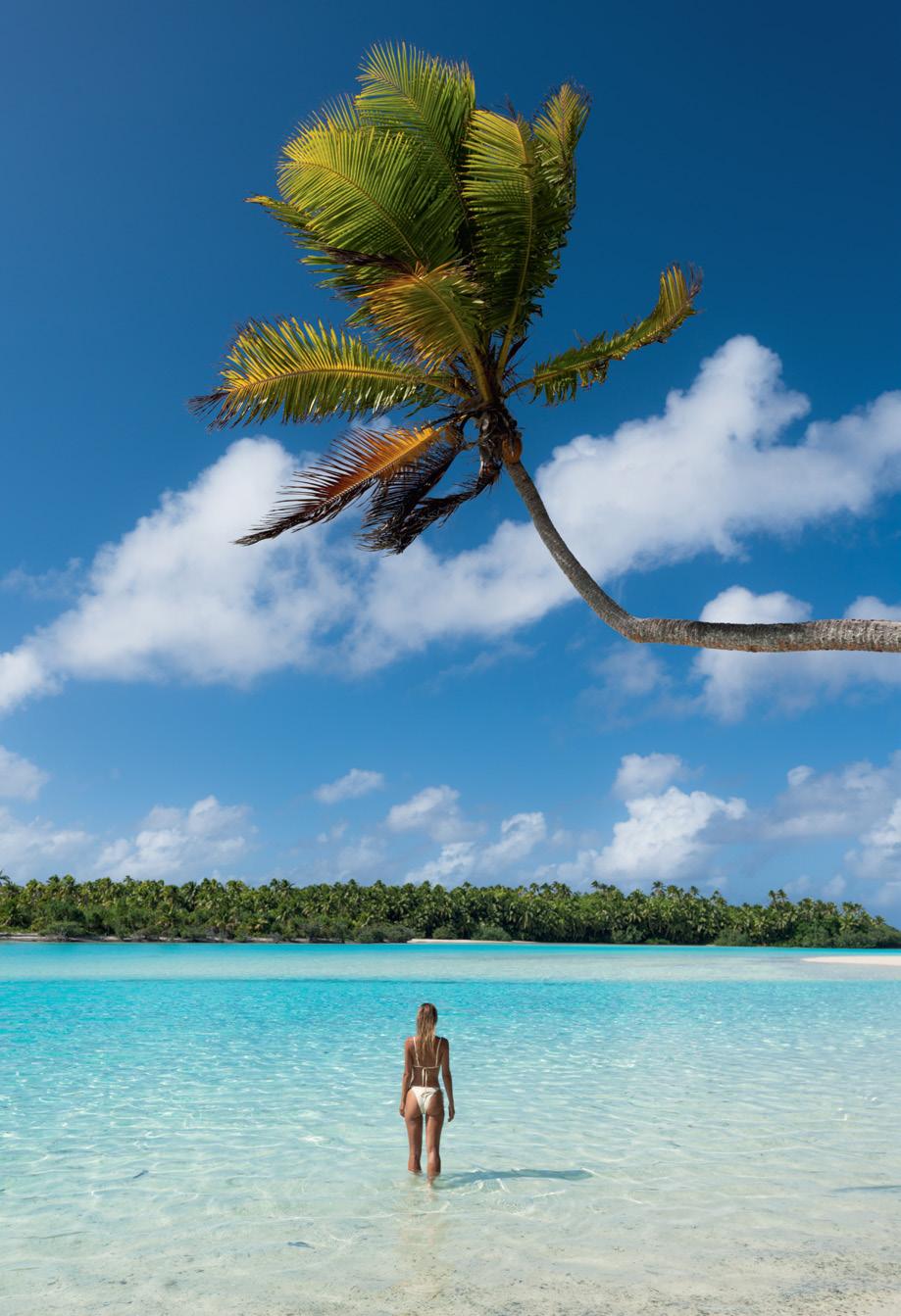
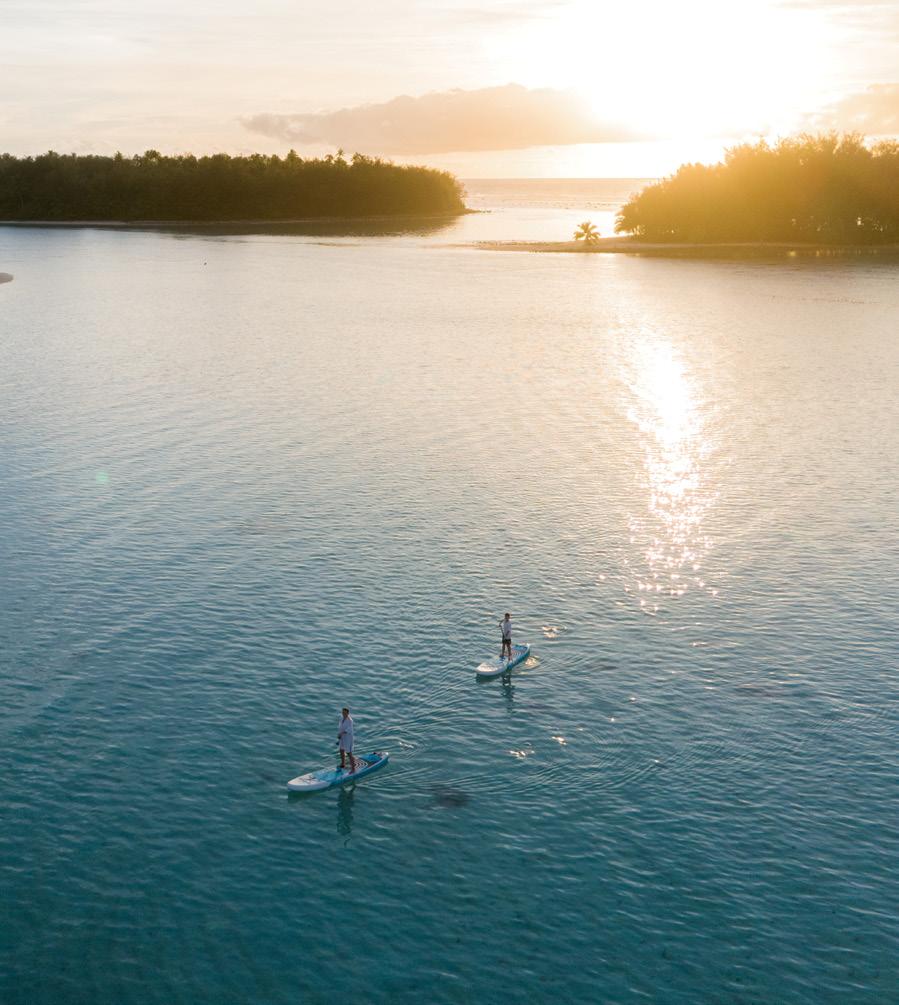
CLOCKWISE FROM TOP: Rarotonga is a tropical paradise; wading the warm waters of the Cook Islands; paddleboarding around Rarotonga; perfect beaches; the overwater villas at Aitutaki Lagoon Resort. OPPOSITE: the Cook Islands remains relatively undiscovered.
DREAM BY LUXURY ESCAPES
The sky’s the limit
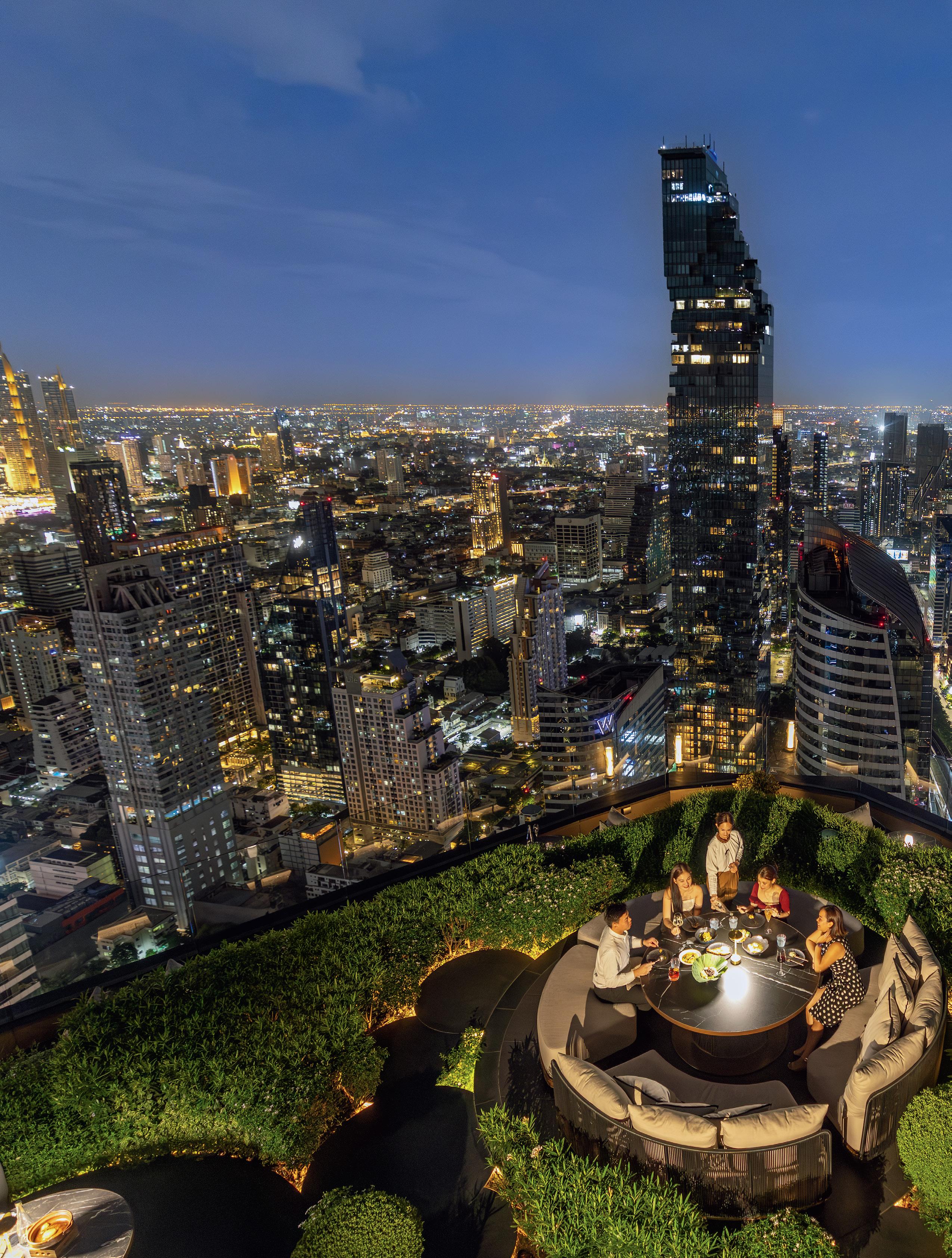
Rooftop party spots, the world’s highest Nobu, new luxury hotels and the top-ranked restaurant in the whole of Asia: Bangkok is booming. Ron Gluckman chronicles how the city’s food and hotel scene is reaching for the stars.
At sky-high Empire Tower the sunset vibes are electric and contagious: DJs spin tunes, terraces pack for photos and spectacular food is served in the world’s most elevated fine-dining food court.
This space on the 58th floor overlooks a thicket of high-rises in Bangkok stretching to the Chao Phraya River and is home to the world’s highest Nobu as well as Le Du Kaan, the newest restaurant from superstar Thai chef “Ton” Thitid Tassanakajohn. This is a bigger, bolder version of Chef Ton’s Le Du, which topped Asia’s 50 Best Restaurants list in 2023. This tower of culinary power also boasts more flashy fine dining with K by Vicky Cheng (famed for Hong Kong’s VEA and Wing) and Sartoria by multiple Michelinstarred chef Paulo Airaudo.
A short walk away, special gold elevators whisk diners to another high-flying food paradise near King Power Mahanakhon, which showcases Ojo from celebrated Guadalajara chef Francisco “Paco” Ruano, the best modern Mexican in Southeast Asia, on its top floors, and exquisite Chinese at Mott 32 – all inside the flagship Standard Hotel. Mahanakhon is Bangkok’s secondtallest building, but the most iconic: a pixelated-looking skyscraper. On the roof is
a glass Skywalk, an observation deck with the highest views over the city, plus the tallest rooftop bar in Bangkok; the Thai capital boasts more of them than anywhere in the world.
“Bangkok has totally transformed,” Ton tells me at sunset on his Empire Tower veranda 2,227 metres in the sky. A Bangkok native, he worked in New York at Michelinstarred restaurants Eleven Madison Park and Jean Georges. “You see places like this in cities like New York,” he says, as Thai couples pose in gilded light bathing terrace gardens. “Bangkok has changed tremendously in recent years,” he adds. “Places like this really put Bangkok on the map.”
Most of Bangkok’s new food and beverage has appeared over the last 5–10 years, when this long-popular tourist city began a jump that has since made it the world’s most visited city, attracting 34 million international visitors last year. Thai excitement accelerated with the frenzy over The White Lotus, which recently aired the third season of the smash travel series, filmed in Thailand. It’s clearly Thai prime time: visitors are staying longer, feasting in one of the world’s hottest food cities, partying harder, and higher, in Bangkok than ever before.
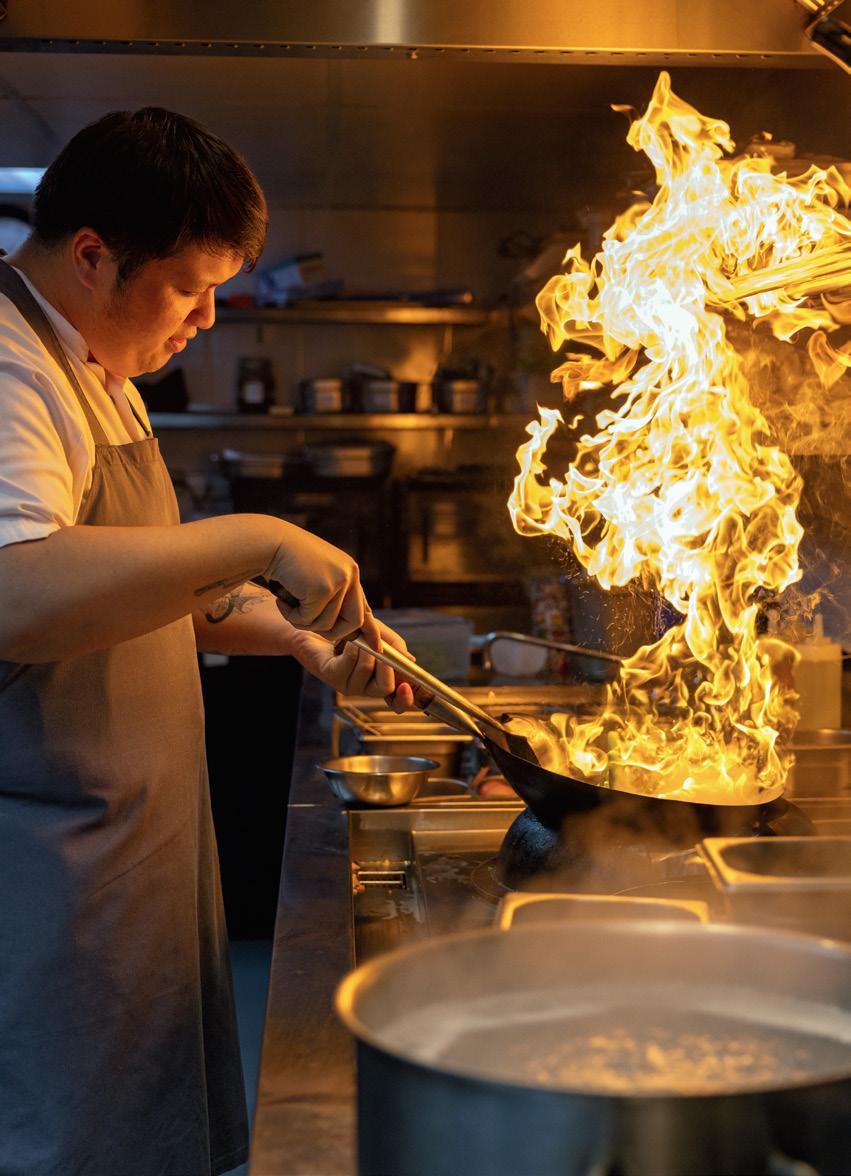
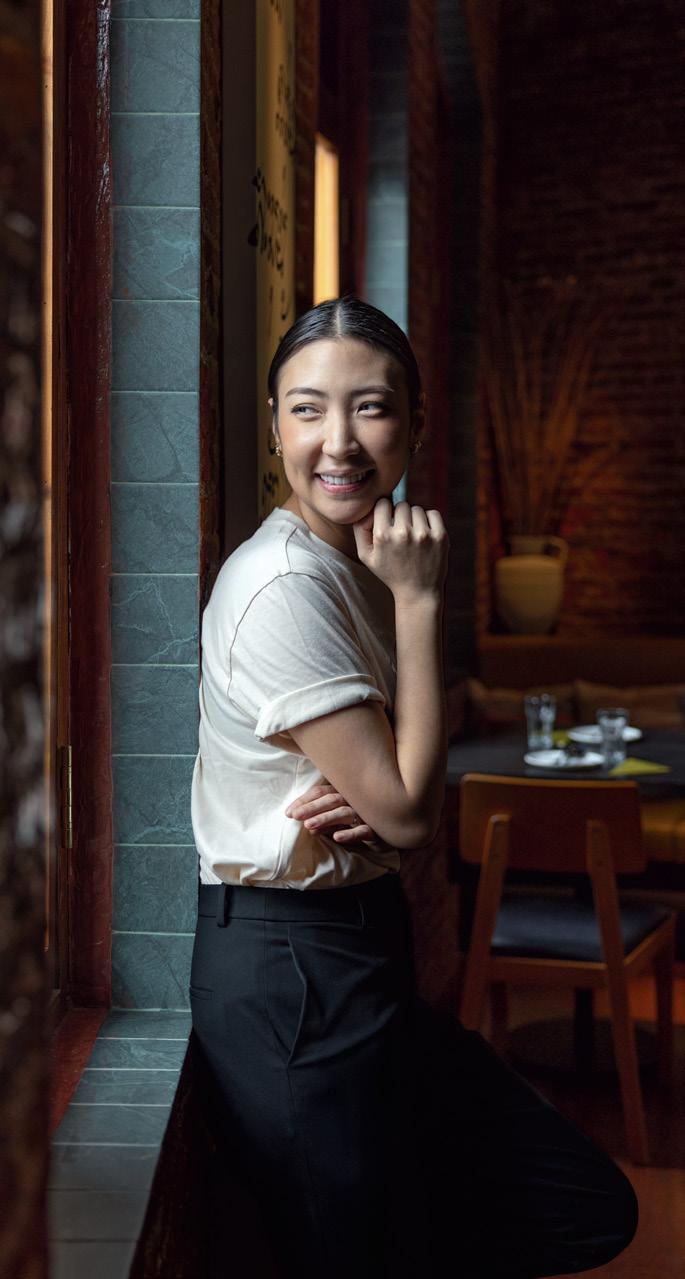
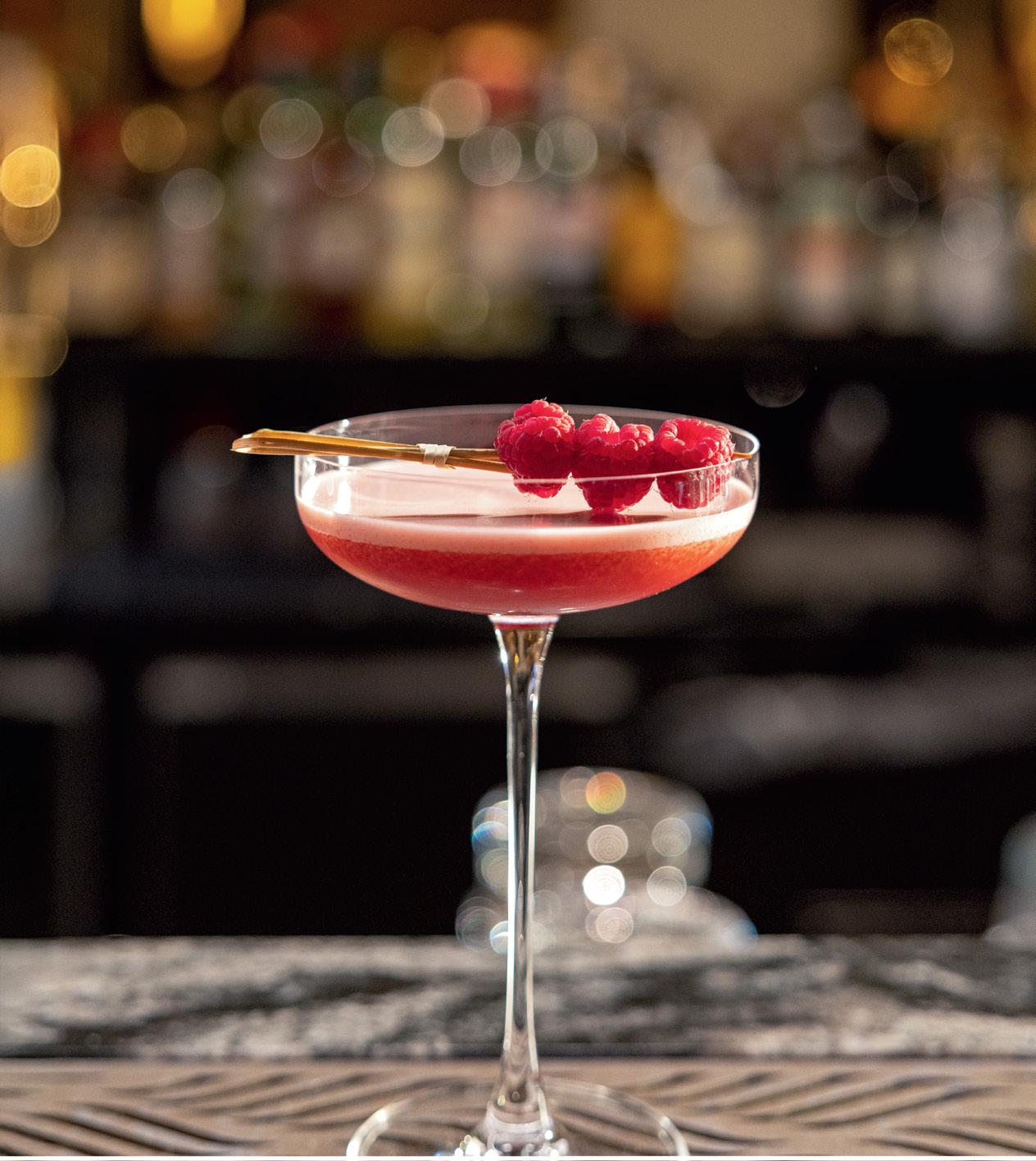
LEFT: Le Du Kaan from superstar chef “Ton” Thitid Tassanakajohn looking on to King Power Mahanakhon tower. CLOCKWISE FROM TOP: Thai chef Pichaya “Pam” Soontornyanakij from new restaurant Khao San Sek; a cocktail at Le Du Kaan; the kitchen at Le Du Kaan.
e rockstar chef
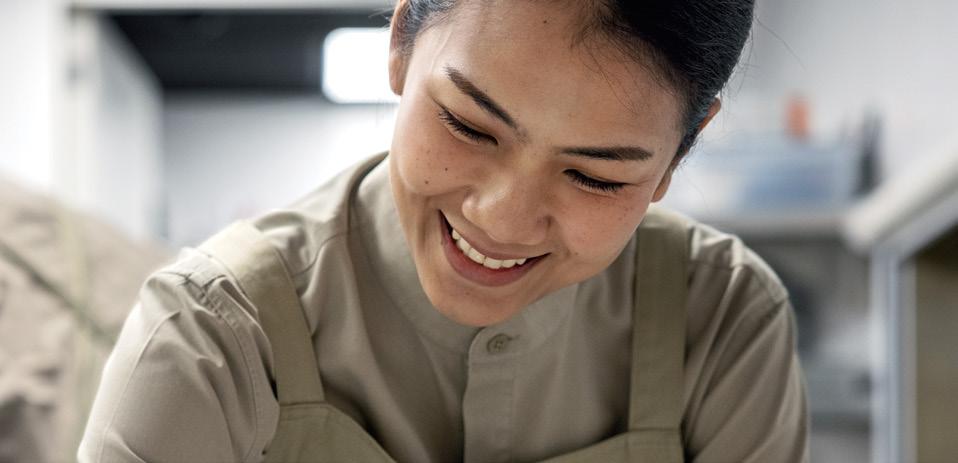
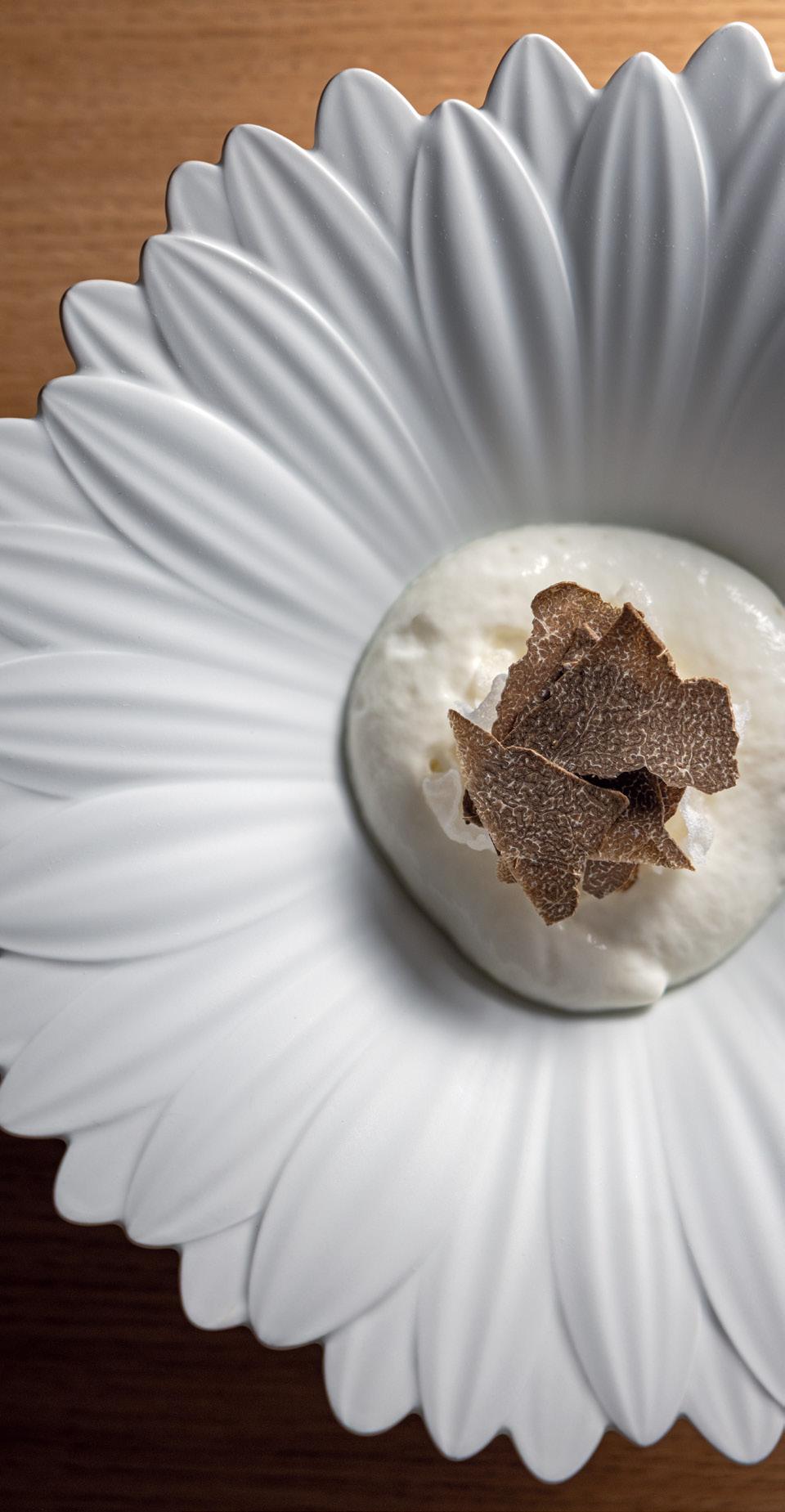
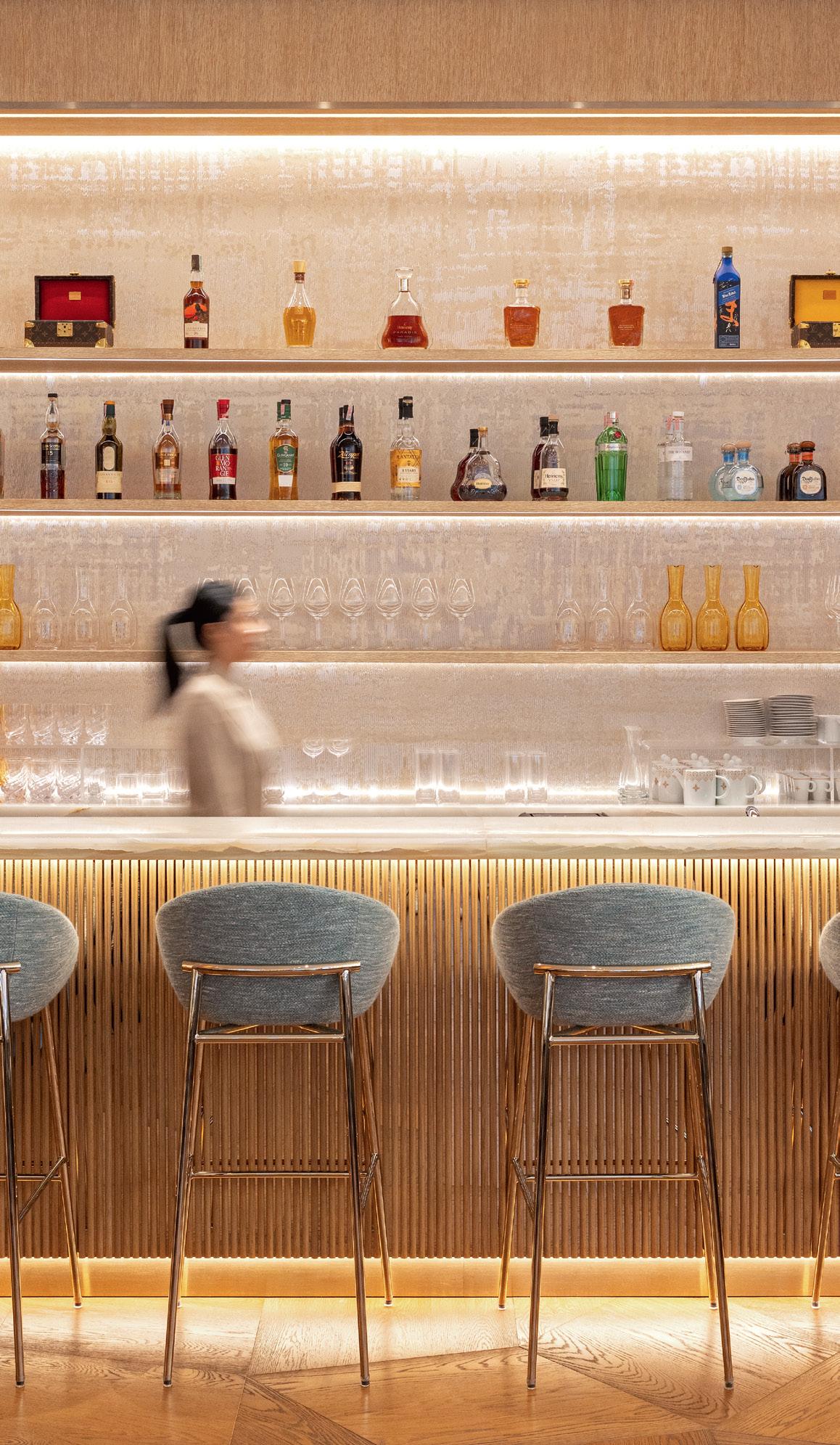
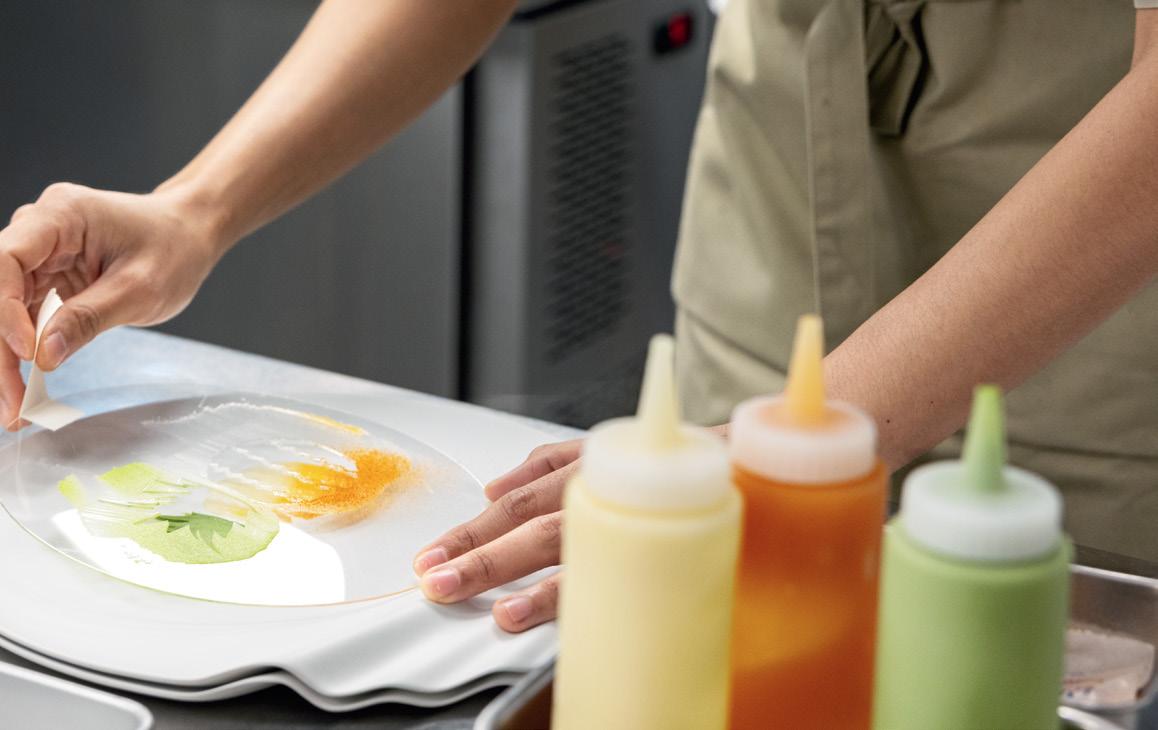
THIS SPREAD: scenes from Gaggan at Louis Vuitton, chef Gaggan Anand has helped shape modern Bangkok dining. Before the arrival of his signature Gaggan restaurant, ranked number 1 by Asia’s 50 Best Restaurants, the culinary scene was largely centred around local Thai food.
It’s a huge change from the past, when travellers typically touched down for a couple of days in the Thai capital city, before heading north to Chiang Mai, or to the UNESCO World Heritage-listed temples of Cambodia’s Angkor, then perhaps on to the beach in Phuket, or Vietnam.
Much of this new surge can be attributed to the expansive local food scene. Once centred around Thai food, Bangkok has morphed into an international gastropowerhouse, topping restaurant lists with global gourmands jetting in for famed molecular Indian cuisine by Gaggan Anand, ranked number 1 by Asia’s 50 Best Restaurants list an unprecedented four years in a row at his original Gaggan, and currently number 1 again at his new Gaggan offering.
This rockstar chef serves 24-course menus over several hours at his “food theatre” for about $500 – and seats sell out months ahead. But food lovers also
fly to Bangkok and wait in line for hours hoping to try a crab omelette cooked by the world’s most famous street chef, Jay Fai, the goggle-wearing octogenarian with the Michelin star, featured in the Netflix series Street Food: Asia
Gaggan moved from India to Bangkok in 2010 and recalls a totally different city, with scant options beyond hotel restaurants. It was a fun, grungy city with few skyscrapers or rooftop drinking and dining beyond Lebua at State Tower, best known from The Hangover Part II featuring Bradley Cooper on a drunken, drug-crazed romp by tuk tuk from Chinatown to Soi Cowboy. Such stereotypical views of Bangkok have been upstaged by this rapidly developing Asian metropolis with elevated dining options, loads of luxury hotels, shopping and entertainment.
Opportunities and innovation also expanded dramatically, he notes. Last year, he opened Gaggan at Louis Vuitton, a surprising but scrumptious partnership with the French luxury fashion house. It’s inside the lavishly renovated Gaysorn mall where LV operates a separate cafe, design showroom, and spectacular interactive museum – only the second in the world outside of Paris.
Gaggan reckons it’s a logical trend for Bangkok’s soaring tourism sector to embrace collaborations with so many new hotels, shops and other attractions. Sure enough, soon after the opening, LV had a new neighbour up the road: Dior Gold House, showcasing ultra-luxe goods in a glittering golden palace. It’s close by Central Embassy, one of the city’s swankiest malls.
Nearby, Gaggan recently opened another restaurant, E-San. The name is a play on Isan, the northeastern Thai province with a fiery cuisine. Partnering with chef Chalee Kader (100 Mahaseth and Wana Yook) they give Isan cuisine the izakaya treatment with open grill and colourful, manga-inspired decor. It’s a fun, unpredictable venue in the banking district that few locals know about.
Gaggan is not the only star chef surfing the wave of insatiable demand for Bangkok gastronomy. Many are opening multiple outlets. Chef Pichaya “Pam” Soontornyanakij came to fame with Potong, serving brilliant Thai-Chinese cuisine in an old shophouse in Bangkok’s Chinatown – the largest in the world. Over a century old, the building was the home, and Chinese medicine shop, of her ancestors who immigrated from China. Last year, Pam was proclaimed the region’s best female chef by Asia’s 50 Best Restaurants. This year she added two more achievements: Pam became the first Thai
named world’s best female chef by World’s 50 Best Restaurants. And she opened her second restaurant, Khao San Sek. It’s in nearby Song Wat, an historic district sandwiched between Chinatown and the Chao Phraya River. Perhaps nowhere better encapsulates Bangkok’s boomtown magic than this old trading district, where docks, shops and warehouses sat derelict for decades. Then boutiques, bars and restaurants began sprouting, and Time Out named it one of the world’s coolest neighbourhoods in late 2023. It continued its slow reawakening for a while, with small street parties and quirky openings like a cocktail bar named for California beat poet Charles Bukowski. Now, it’s heaving with galleries and riverside bars. Ironically, such forgotten areas, especially on the riverside, are what give Bangkok much of its unique mojo. For decades, the city centre has moved incrementally up the main street of Sukhumvit to party districts like Thong Lo. Yet so much of Bangkok’s appeal is rediscovering historic areas, including Charoen Krung, the first High Street a century ago. That’s the area where the city’s grand dame of hotels, the Mandarin Oriental, opened in 1876. Soon it will have illustrious company: a Nobu Hotel in the renovated East Asiatic Company building and a Langham Hotel in the Old Customs House which has been shut for decades. Both date back to the 1880s.
New hotels in storied locations
In the meantime, Bangkok’s hotel scene continues to bubble with brilliant additions. They include another historic property and homecoming for Aman, which launched in Thailand in 1987 with Amanpuri in Phuket. Aman Nai Lert is in central Bangkok on the estate of entrepreneur Phraya Bhakdinoraseth, or Nai Lert. A businessman in the early 20th century, he’s famous for many innovations including the first bus and taxi services. He also opened one of the city’s pioneer lodges, Hotel de La Paix, in his seven-storey trading building on Charoen Krung Road, Bangkok’s tallest building upon completion in 1927.
The new Aman occupies the first 19 storeys of an elegant 36-storey tower offering 52 massive suites, starting at 94 square metres. The Aman Suite occupies an entire floor, with its own gym, cinema and spa. The property features the Aman spin on luxury – lots of art and unique handicrafts, interior pools and minimalist architecture with ample Zen. The food is spectacular, and venues overlook the lush estate that was one of the largest parks in Bangkok.
Two other new properties have reoriented the city around Lumpini, the Central Park of Bangkok. The Ritz-Carlton is in a dazzling Art-Deco
building modelled on European-influenced mansions of old Wireless Road. The 51-floor building has fabulous park views at One Bangkok, the largest development in the country. It is the first of five luxury hotels to open on the site of the old Suan Luam Night Bazaar, which closed in 2001. Next to come will be an Andaz hotel, along with office buildings, shopping, a concert hall and the tallest tower in Thailand.
Directly across the park is Dusit Thani, reviving the city’s first modern hotel, and tallest building when it opened in 1970. The Dusit was more than a hotel, really the centre of the city, where stars stayed, concerts and balls were held and deals were sealed.
Closed in 2019, it was razed and totally rebuilt while incorporating many original features, like carved beams, trees and signature ponds.
The iconic golden spire of the original Dusit is now part of the new Spire Rooftop Bar on the 39th floor of the hotel where other venues offer some of the best views, not only of Lumpini, but the entire heart of the city.
Call it Dusit 2.0, in a city that keeps spiralling higher, but embraces its storied past, ensuring a glowing future.
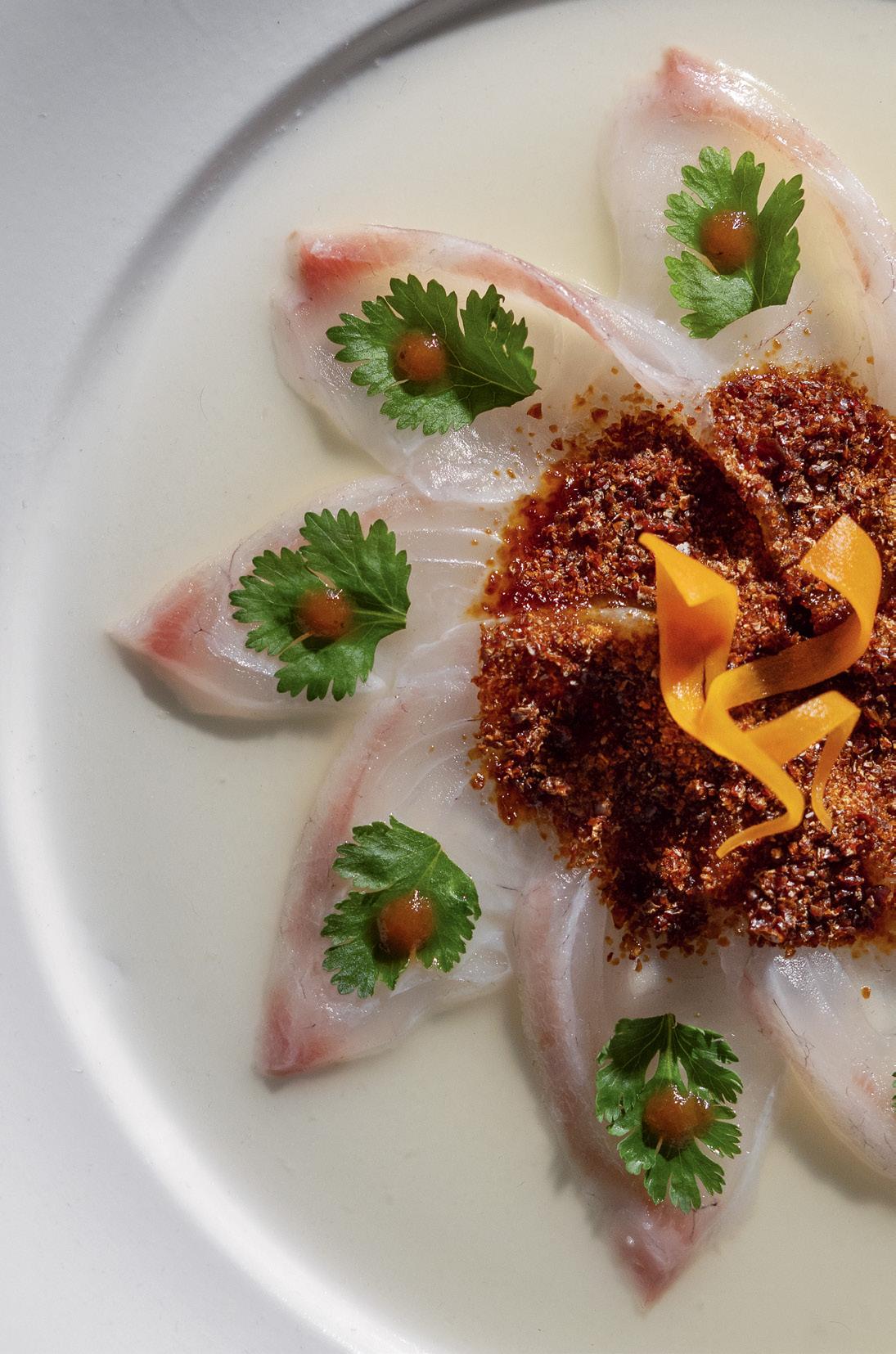
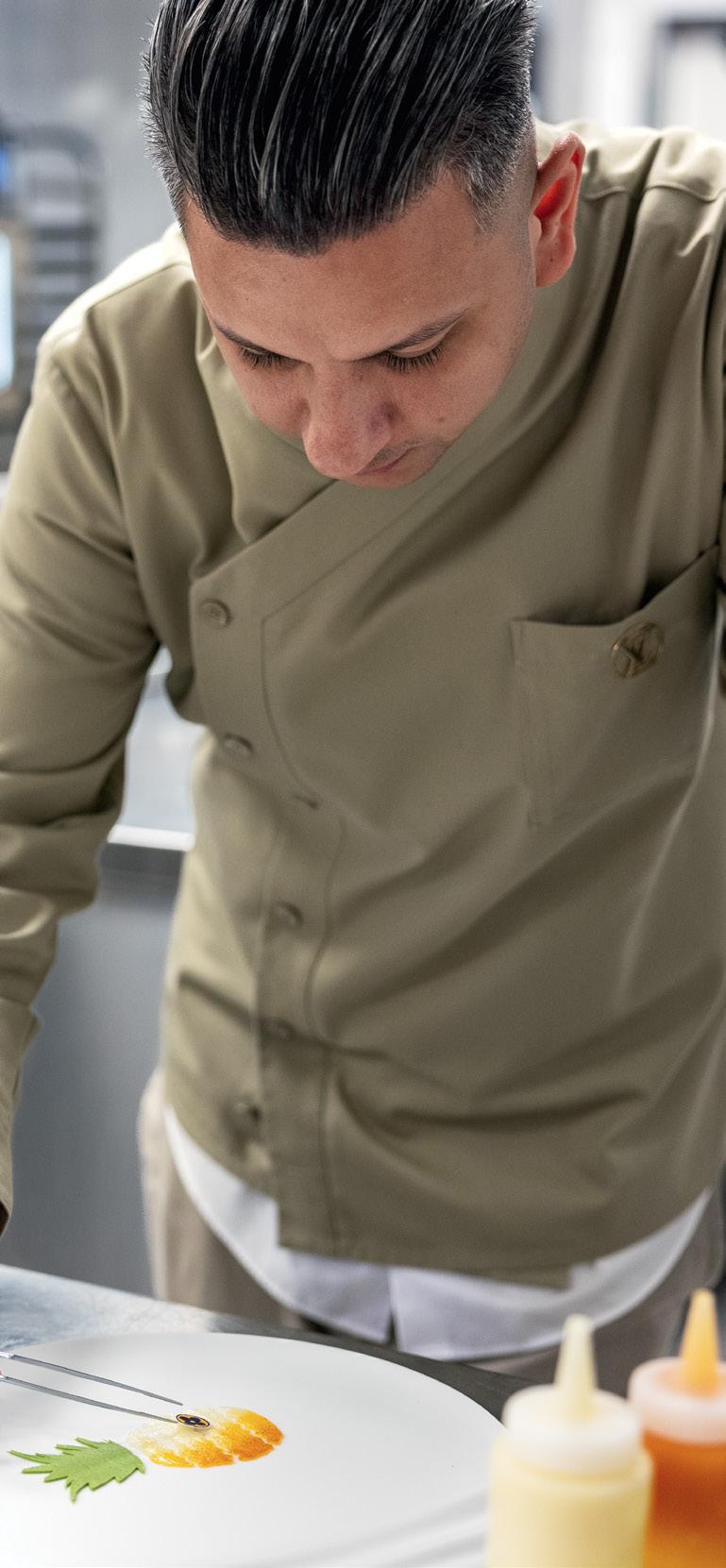
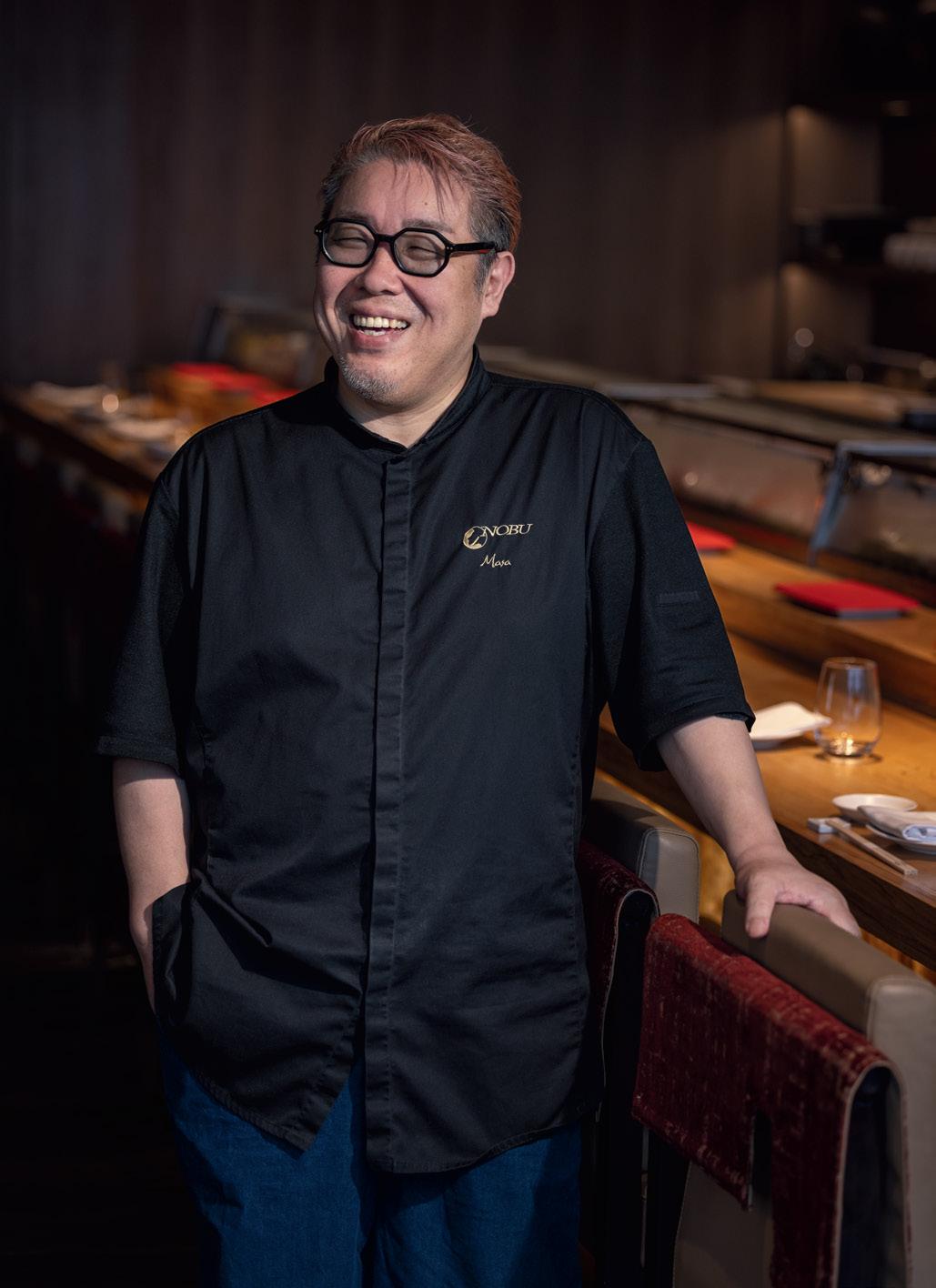
ABOVE: staff at Nobu Bangkok are working in the highest Nobu in the world, producing stunning plates of food like this tiradito, sliced white fish with yuzu, lemon juice and coriander, and dotted with rocoto and a sprinkle of soy salt. OPPOSITE: Nobu’s position on the 58th floor of Empire Tower has made it a hotspot for golden-hour selfies.
Explore Dusit Thani
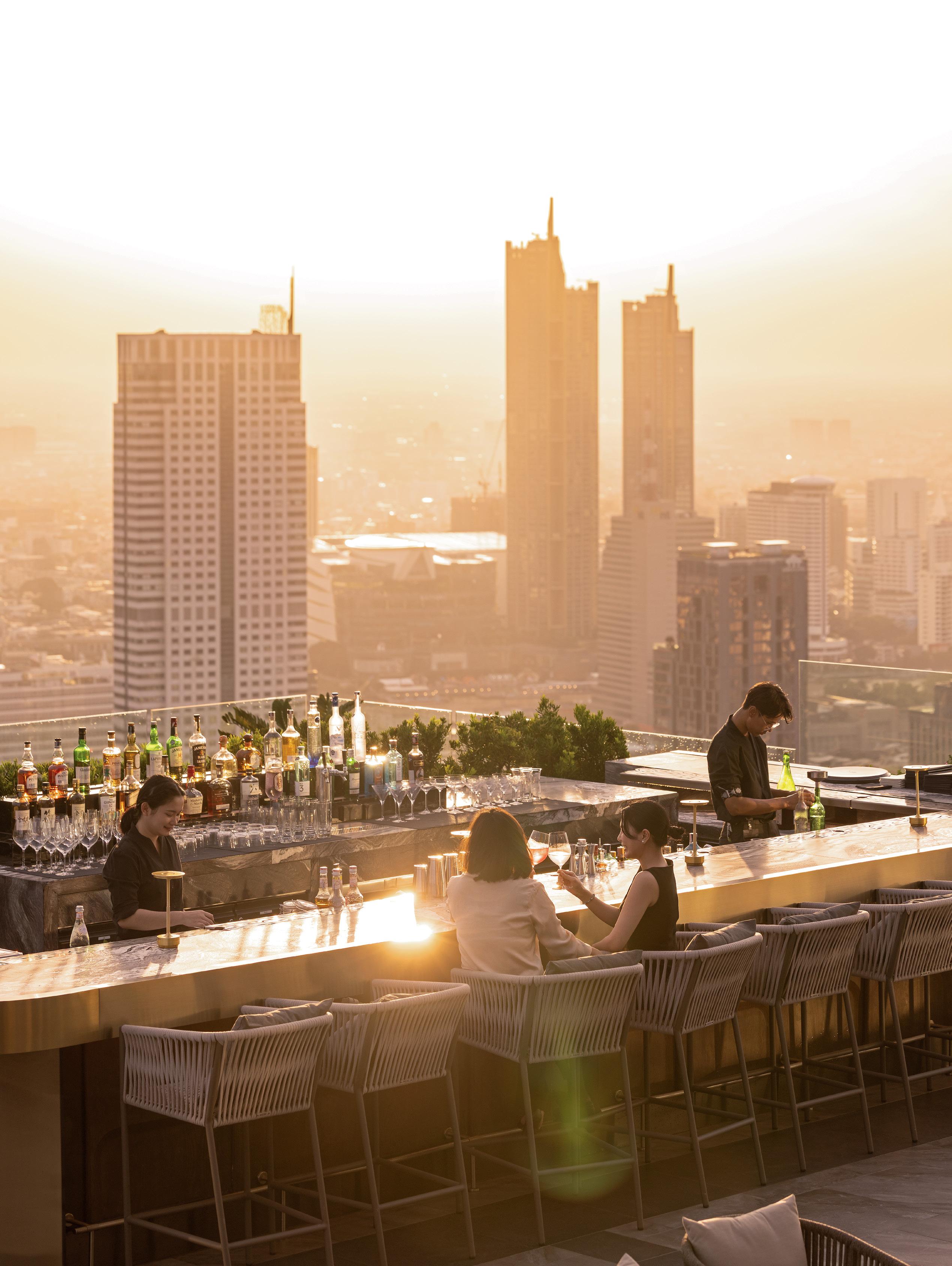
Bangkok’s rooftop revolution
Nobu Bangkok
The world’s highest and largest Nobu has 360-degree views of the city atop Empire Tower in the heart of Sathorn, the city’s CBD. The restaurant is split across the 57th and 58th floors and is the current go-to selfie spot in the city.
Le Du Kaan
Also in the Empire Tower, this is the newest offering from celebrity Thai chef “Ton” Thitid Tassanakajohn.
K by Vicky Cheng
This high-concept restaurant is the first overseas offering from feted Hong Kong chef Vicky Cheng. It is based around the idea of the kilin, a gentle and benevelont Chinese spirit; it is located below Nobu on Empire Tower’s 56th floor.
Sartoria by Paulo Airaudo
A modern interpretation of classic Italian by multiple Michelin-star chef Paulo Airaudo this restaurant is an incredible international addition to the local dining scene. This shares space on the 56th floor of Empire Tower with K by Vicky Cheng.
Ojo
Mexican chef Francisco “Paco” Ruano produces the best modern Mexican in Southeast Asia at the highest restaurant in Bangkok on the 76th floor of the Standard Hotel.
Mott 32
Also in the Standard Hotel, but not as high up, Mott 32 celebrates the cuisine of Canton, Shanghai and Beijing.
Gaggan
On the ground, but with stellar cuisine that helped kick off this sky-high revolution, Gaggan Anand is one of the chefs who helped propel Bangkok’s cuisine boom.
Wild
ride
A bike tour of Sri Lanka takes in tea plantations, elds of colourful butter ies and the occasional rogue elephant. Duncan Forgan puts the pedal to the metal on the island nation and discovers a destination made for slow discovery.
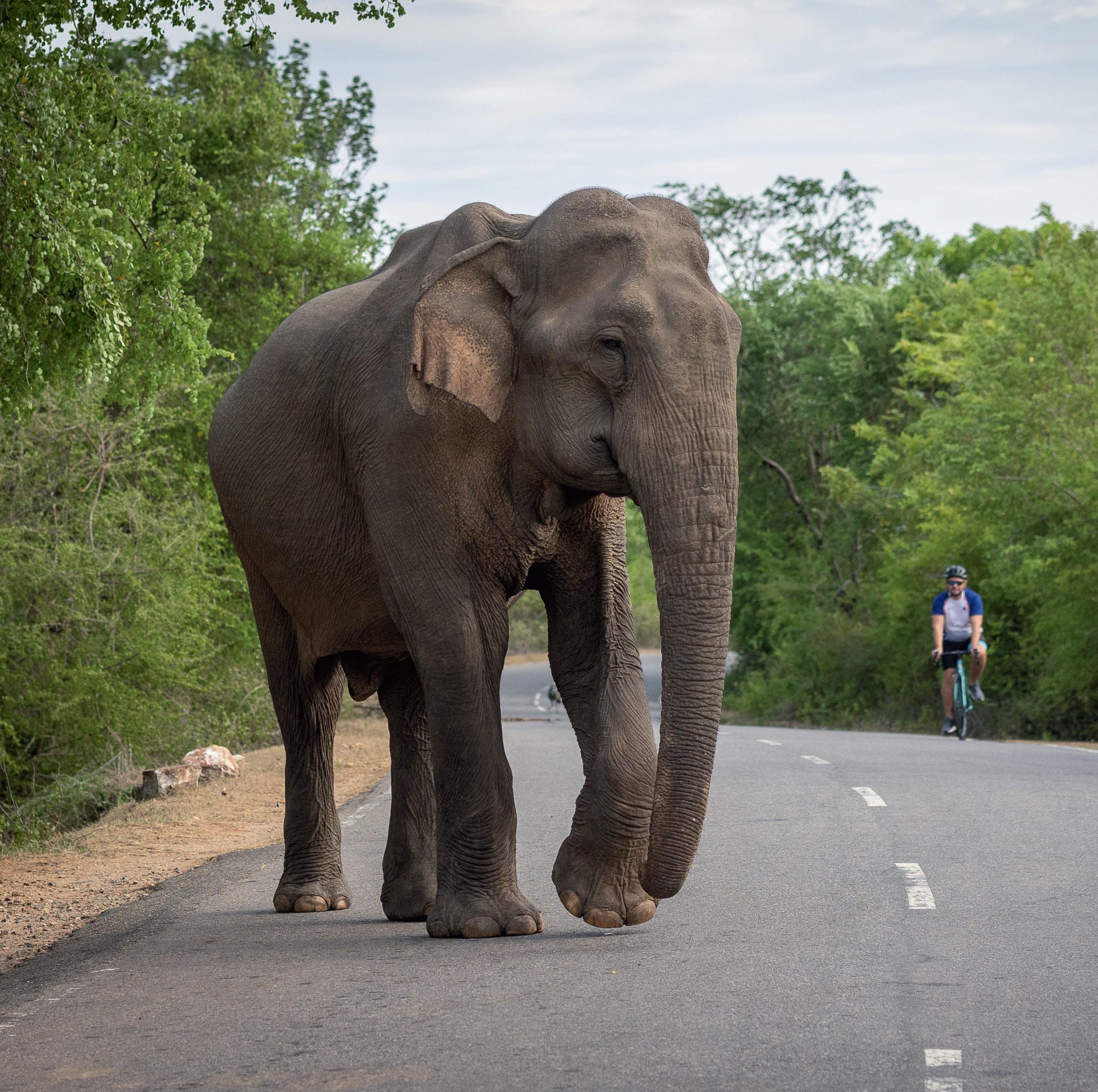
LEFT: wild elephants are one of the more unusual road hazards
e rst rule of bike club in Sri Lanka is to talk about bike club in Sri Lanka.
The South Asian nation is as culturally and visually abundant as any place on earth, making it hard to keep quiet about its endless golden beaches, emerald mountains, ancient civilisations and glorious cuisine.
The second rule is to be wary of the fumebelching public buses.
The third, perhaps most important, edict is to give the widest possible berth to the wild elephants who patrol the highways near protected wildlife areas such as Yala National Park.
“Be careful,” yells Rajith Jaywardana, my guide and founder of bike tour operator Across Ceylon, as the rush of adrenaline I get from spying a beast ahead on the road translates into increased pedal speed.
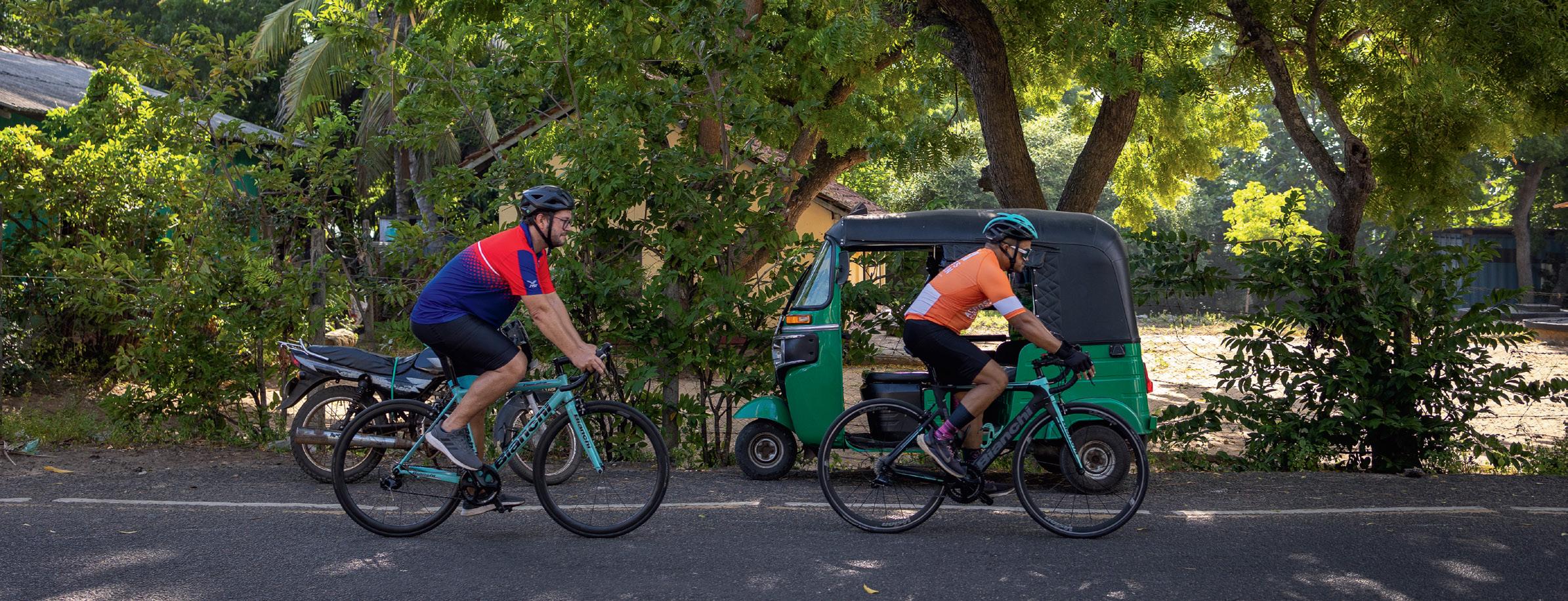
The pachyderm lifts its leg as I hurtle towards it, a sign it might be unenamoured at the prospect of getting too close to a 100kg Scotsman clad in Lycra and perched atop a Bianchi road bike.
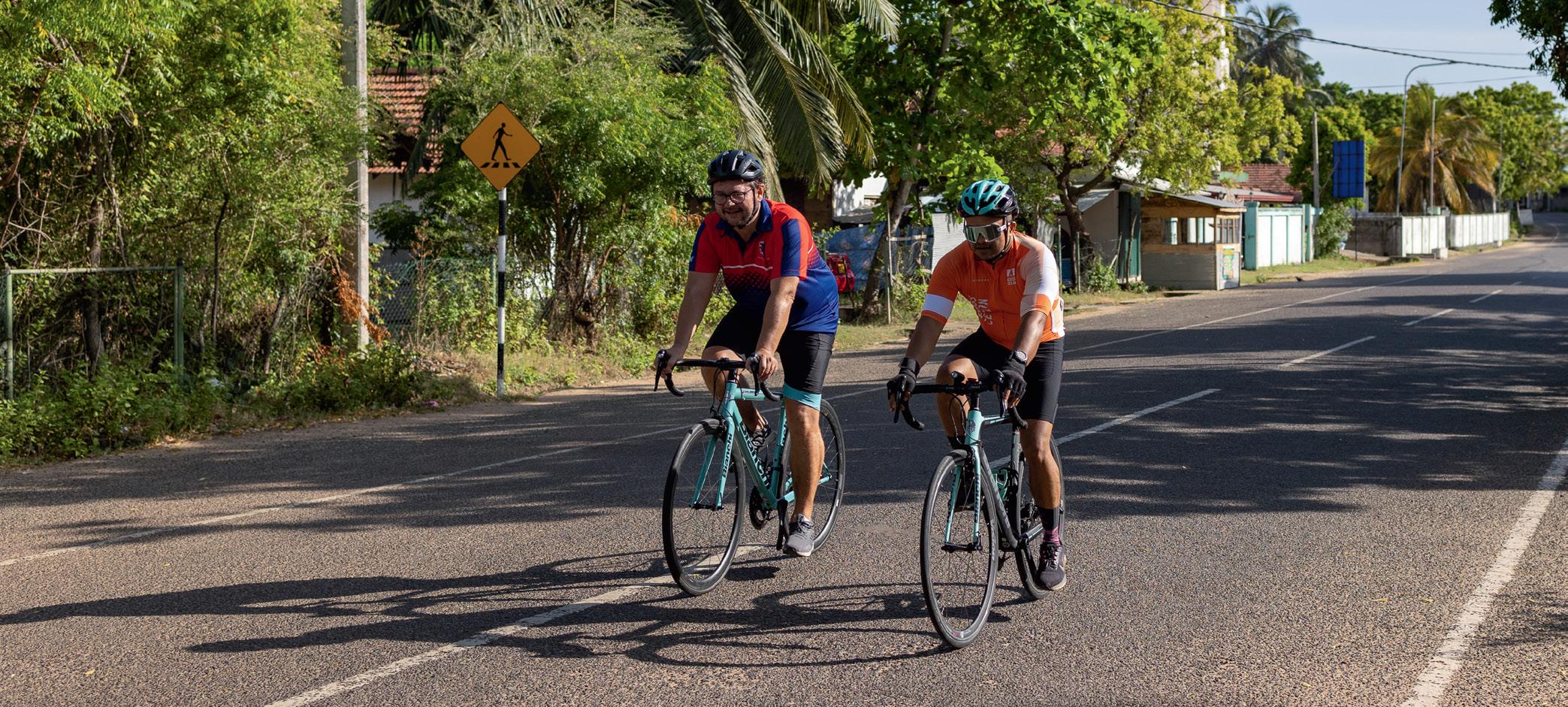
I’m in Sri Lanka, testing my calves and nerves on choice sections of the Tour de Resplendent, a new biking adventure linking five properties run by Resplendent Ceylon, the luxury hospitality arm of tea giant Dilmah.
Launched late last year, the Tour – a collaboration between Resplendent Ceylon and Across Ceylon – allows cyclists to cover the ground on the west-to-east south coast stretch
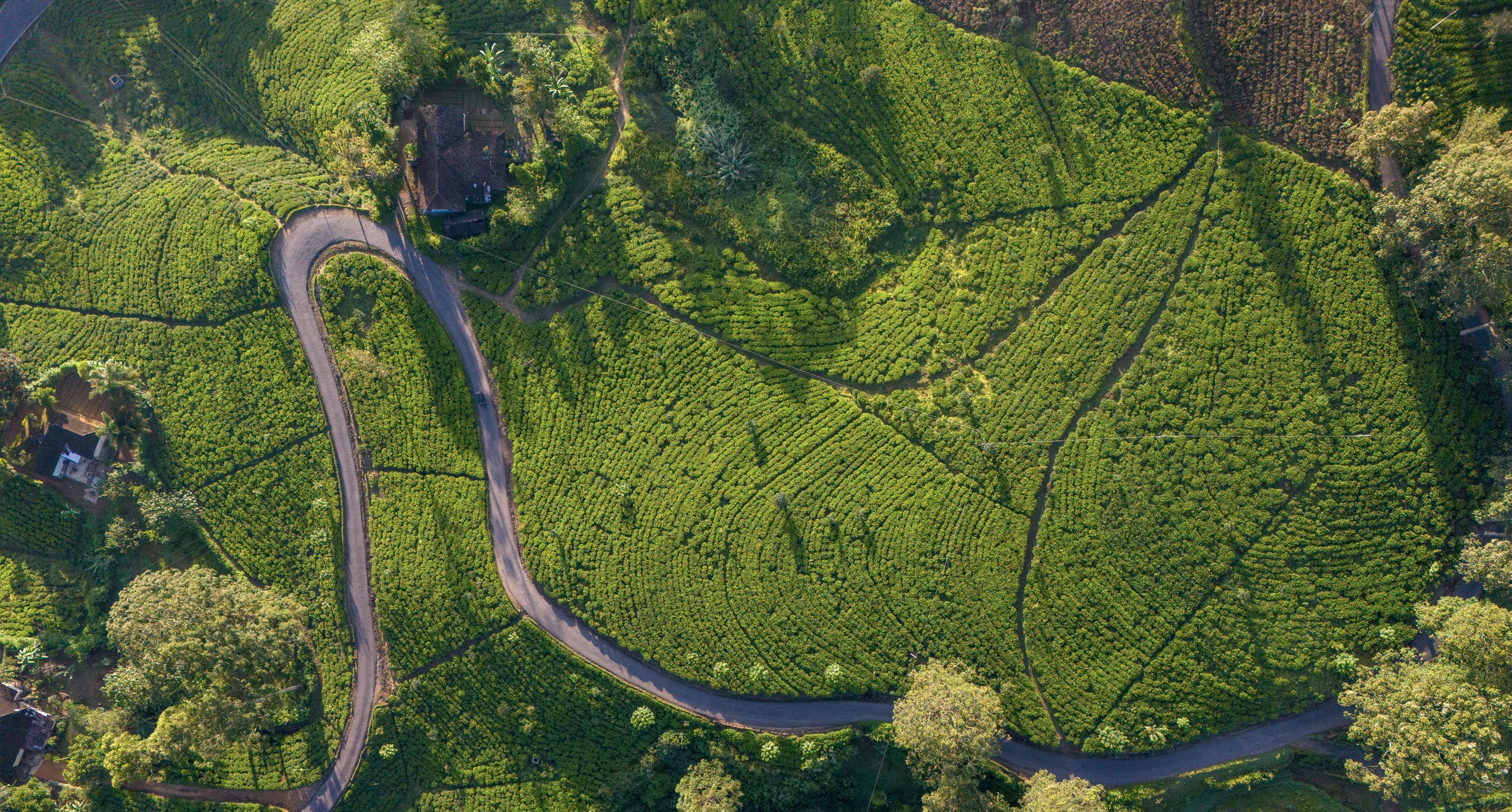
between Ahu Bay, Cape Welligama, Kaayam House and Wild Coast Tented Lodge. The route then leaves the gentle coconut-palm-studded flatlands to wind up and along precipitous switchback roads to Ceylon Tea Trails, a collection of five sumptuously converted former tea-planter bungalows in the heart of Sri Lanka’s tea country, scattered around Castlereagh Lake.
It’s an adventure typically undertaken over nine days, one that transports bikers past giant bell-shaped white stupas, and through peaceful villages and rural landscapes so lush and verdant you’d believe that monsoon season never stopped.
Due to time constraints, I’m enjoying a taster of the Tour, transferring from Kaayam House at Tangalle to Wild Coast Tented Lodge in Yala National Park. It’s a truncated pedal, but I’ve enough ride time to gulp countless cups of energising sweet milk tea and assess the potential of the cycling product in Sri Lanka. The verdict: immense.
When Rajith outlined some of the safety hazards on the Sri Lankan highways, he was clear about the need for vigilance when it came to rogue tuk-tuks and bullying lorries and buses. He neglected to mention grouchy wild elephants.
Thankfully the flicker passes, and the beast shuffles off and back into the undergrowth.
Tour Sri Lanka with us
Kaayaam House
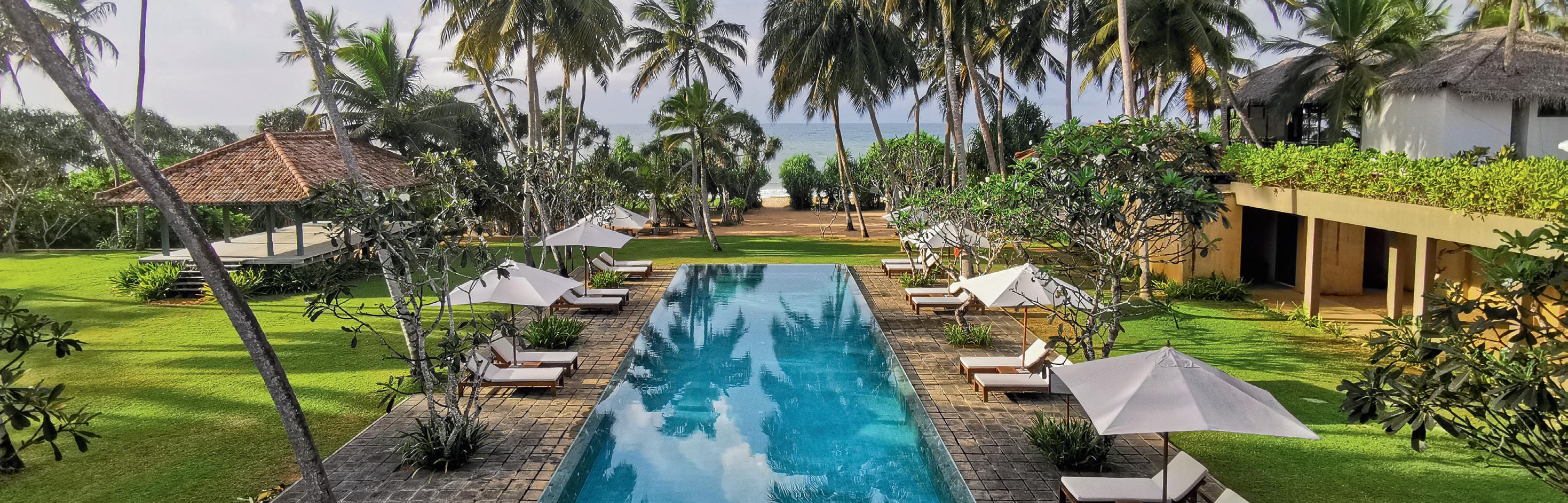
Kaayam House enjoys a prime location along Tangalle’s golden coastline sandwiched between the lush hinterland and the ocean. Housed in a bright white colonial-style building with airy open arches, the design blends tropical modernism, traditional Sri Lankan architecture and Buddhist influences to create a tranquil atmosphere. Reclaimed wood and turquoise accents evoke the ocean, connecting the interiors to their surroundings. At Kayaam House, wellness is embraced through a slower, more mindful pace of life. This philosophy is promoted via Ayurvedic treatments at the intimate spa, laps of the frangipani-lined infinity pool, yoga at a serene shala or simply finding inner Zen on a near-deserted beach pounded by surf.
DREAM
A road to recovery
One swiftly averted potential stomping aside, my experience in the country is as idyllic as one could wish for. But Sri Lanka’s tourism industry has suffered more than a few unnerving moments of late. There has been civil unrest, a pandemic and a government that exhausted its foreign currency reserves, sending inflation through the roof.
A public appetite for a new broom was sated in September last year with the landslide victory of Anura Kumara Dissanayake, whose anti-corruption platform played well with a populace weary of political avarice.
Travelling in the aftermath of the election, I’m struck by the optimism among the people I encounter.
“We hope the worst is behind us now,” confirms Rajith. “We are at peace and live in a land of plenty.”
As I pedal past peaceful lagoons and swaying palms on the south coast, and later luxuriate at Ceylon Tea Trails amidst a cathedral of lush greenery, I get an idea of why Sri Lankans might have cause for positivity. I can also
see why the timing is right for the Tour de Resplendent, which adds the thrill of an adventure to the already considerable draw of experiencing the full variety of the Resplendent Ceylon portfolio.
“I’m biased of course,” says Rajith as we take a break from the bikes at a tea shop on the outskirts of Yala National Park. “But I think Sri Lanka has all the ingredients to make it a leading road-bike destination. There’s a lot of quiet minor roads, and there’s a huge diversity of landscapes and terrain to keep cyclists interested.”
I can vouch for this visual stimulus. On the back roads near Tangalle, dragonflies and multihued butterflies flit through the verdant grasslands and between the tamarind and fig trees. Lazy buffalos park themselves in shallow lily-pad-covered lagoons. In the paddy fields, women sporting bright saris harvest the rice that is the staple of the Sri Lankan diet.
Ceylon Tea Trails
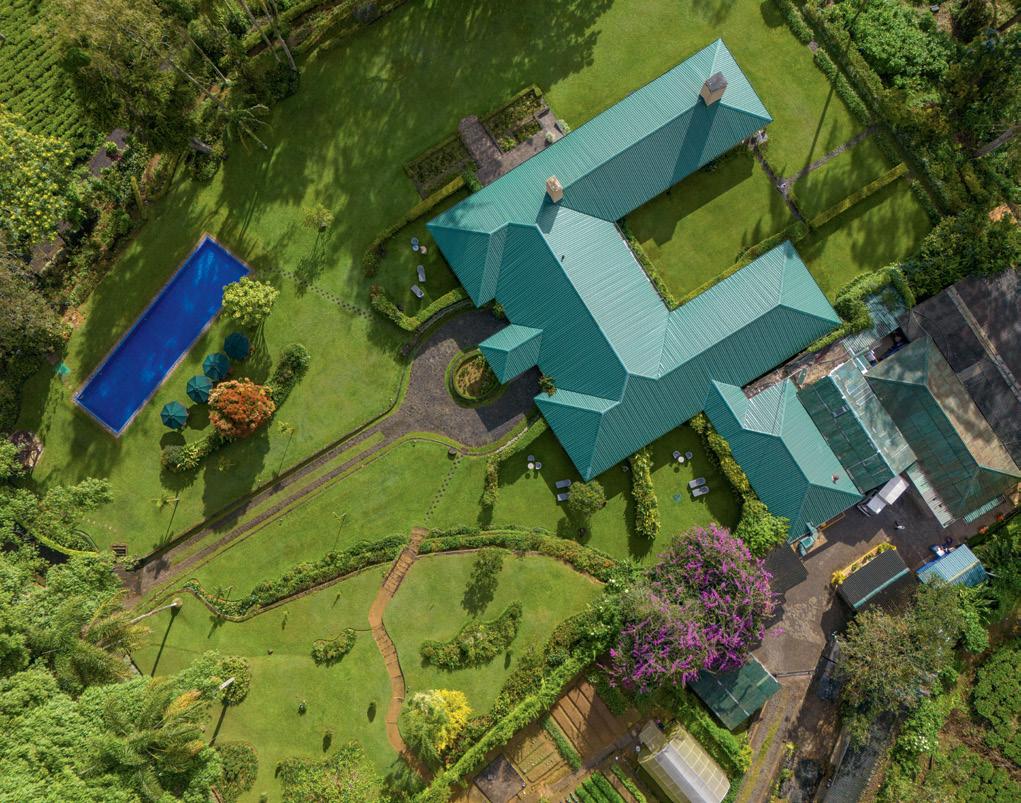
Ceylon Tea Trails encompasses four meticulously restored colonial-era bungalows originally built for British tea estate managers during the time of the Raj. Tucked away amidst manicured grounds over 4,000 feet in the highlands near Hatton, these historic residences offer a rare glimpse into life on a working tea estate. Guests can explore well-maintained trails that grant stunning views of the surrounding hills and tea plantations. Glean additional insight on the area’s flora and fauna by engaging the services of one of the resident naturalists. Each bungalow is serviced with a dedicated manager, chef, butler and house staff. Meals and afternoon tea, prepared by a private chef using gourmet ingredients, can be enjoyed indoors or alfresco on the lawn.
FROM TOP: Sri Lanka has the makings of a leading road-bike destination; Ceylon Tea Trails is made up of four restored colonial-era bungalows.
Wild Coast Tented Lodge
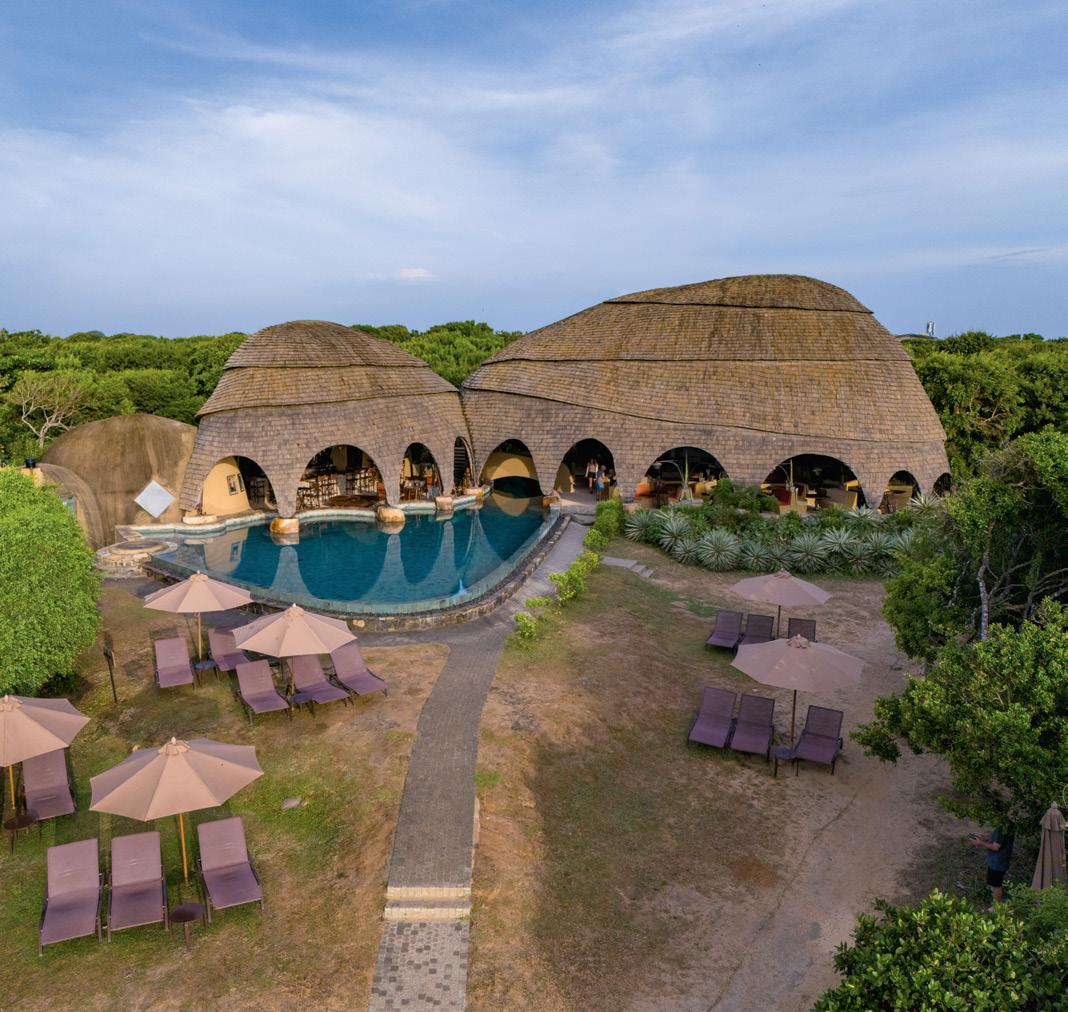
Yala National Park, bordering the Indian Ocean and home to one of the densest leopard populations on the planet, is one of Sri Lanka’s treasures. Wild Coast Tented Lodge does justice to its location by offering Asia’s most spectacular stays. The resort’s unique design features structures that integrate with the surrounding wilderness. From above, the lodge’s 28 luxury tents form the shape of a leopard’s paw print, a tribute to the park’s famed residents. Inside, the tent interiors combine the elegance of colonial-era expedition style with modern design innovations. Teak floors, canvas walls, dark leather accents and metallic hardware create a chic, fashionable aesthetic. Alluring trimmings include a free-form infinity pool, daily postsafari sundowners overlooking the ocean and outstanding F&B that ranges from delicious curry spreads to a seafood platter that is arguably Sri Lanka’s best.
Food is a highlight of the trip, both on the road and at the Resplendent Ceylon properties. Hoppers, bowl-shaped pancakes, are the ideal receptacle for spicy curries and fiery relishes. Highlights of the post-ride repast at the properties include a tea-infused tasting menu at Ceylon Tea Trails and – at Wild Coast Tented Lodge –a seafood platter of fresh lobster, crab and reef fish, dished up under the stars at a beachside table a few metres from the pounding Indian Ocean surf.
Another upside of the truncated ride time is the opportunity to kick back and relax at three of Sri Lanka’s most alluring locations. At Tangalle, I leave the sanctity of the T-shaped pool at Kaayam House for a sunrise paddle around Rekawa Lagoon and long walks along the deserted beach.
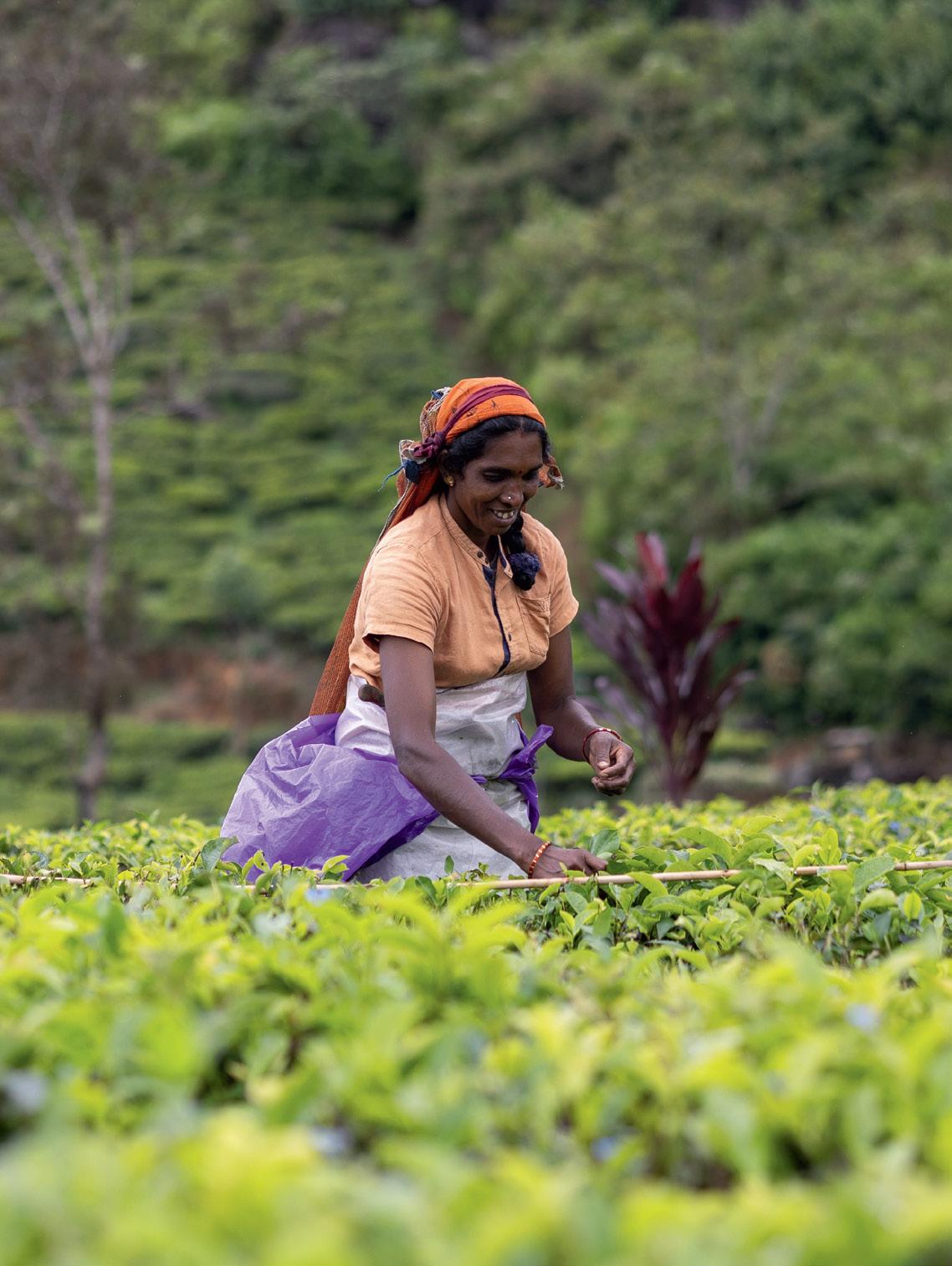
Up in tea country at Ceylon Tea Trails, I hike through the tea fields with naturalist Wasantha where I learn about Ayurvedic herbs, wildflowers, and the planters – many of them my Scottish forebears – who introduced tea to this part of Sri Lanka. Back at Norwood Bungalow, where I’m staying, I while away days in the crisp mountain air with time by the pool and gin and tonic-fuelled games of speed croquet on the lawn.
The pinnacle of the trip comes during a jeep safari from Wild Coast Tented Lodge into Yala National Park. Over a dusty but dazzling afternoon, we spot sambars, spotted deer, peacocks, wild elephants and mugger crocodiles. But with under an hour left until park closing time, it looks like the park’s prize quarry – the leopard – will elude us.
Suddenly, a call comes in to our driver and our jeep lurches forward. “There’s been a sighting,” says Rehan, our guide. We speed along the tracks amidst a cloud of soot, before stopping at a clearing. Rehan points. “Over there,” he says, directing our eyes towards a female leopard stretching and yawning in the late afternoon light.
We exit the park exhilarated and motivated to hop back on the saddle early the following morning. Bike club in Sri Lanka is an epic that gets its claws in you.
FROM TOP: Wild Coast Tented Lodge; tending the tea plantations that have made Sri Lanka famous.
of the Jewel north
Ubud in Bali is having its moment in the sun. Claire Turrell discovers the mountain town is home to immersive new hotels, innovative Balinese cuisine and a jewellery workshop where visitors can create with local artisans.
e volcanic mountains of Bali have long been part of myth and legend, but perhaps they have been hiding one of the biggest secrets of them all. Once viewed as a day trip from the south, the mountain town of Ubud has now evolved into a destination of its own. Restaurateurs, fashion designers and hoteliers have taken the road north to help make this cultural capital the hottest spot in Bali.
Lose yourself among its leafy lanes and you’ll discover some of Asia’s 50 Best Restaurants, fashion-forward boutiques and artists’ studios that you can explore. And it’s no surprise that some of the biggest hotel brands are now opening their doors in the area to help you stay a little longer.
One of the latest hotels to launch in the Balinese mountainside is Anantara Ubud Bali Resort. Taking inspiration from the UNESCO-heritage-listed rice fields, this six-storey hideaway descends down the mountain. Guests enter the lobby on its uppermost floor to make the most of views of Mount Batur. The hotel’s sleek walls are draped in vines, and it sits in a forest filled with teak wood, eucalyptus and jackfruit trees. The aim of the hotel is for you, like it, to blend into the surrounds.
One way that you can do this is with the help of its naturalist Made Ganendra. The 36-year-old multihyphenate is a Silat athlete, energy healer and even a judge for body building competitions in Bali. But what makes him the secret sauce at Anantara Ubud is that he has been immersed in the culture of Ubud since the day he was born. A descendant of priests, he knows what
makes Ubud so special. The reason why guests can now venture into the heart of a sacred forest near the original Balinese village of Taro is because of Made.
He grew up in the mountain village of Begawan. The date-like soap nut plucked from the jungle that the therapists in the spa lather into a foam for guests’ footbaths was introduced to them by Made. The forest leaves that act as a nest for one of the dishes in the degustation menu at the Amerta restaurant is thanks to Made’s knowledge of the wild. The campaigns to look after the fireflies and the Bali Starling at Anantara are because Made wants to protect his home.
He wants people to make a connection to Bali. His only request is that guests don’t tag the images, so the waterfalls and forests he takes people to remain free of crowds.
“As an Ubudian person, I really want people to know that Ubud is not just a small local district in Bali,” says Made. He wants people to understand that this is a place that is rich in heritage and culture, and embodies the Balinese way of life.
Made’s village is where the famed jeweller John Hardy honed his craft. The Canadian
sculptor arrived on the island in the 1970s and worked alongside Balinese silversmiths. While the brand has grown dramatically, and since moved to Mambal, at the root it remains the same.
The bamboo workshops levitate on stilts above the rice fields, while the brick buildings wrap around the trees and match the undulating land. The babbling brook that runs through the centre of the Willy Wonkalike village they’ve created makes it seem as if it’s been plucked out of a fairytale, but it’s not been created just for looks. “It’s not like a Disney setup,” says senior director of heritage, Polly Purser. “This is how we make the jewellery.”
Visitors to the John Hardy Workshop in Ubud can not only learn how to make a piece of jewellery, but also wind their way from the design studio to the workshop before they enjoy a family-style lunch with the artisans in the thatched long house.
While John Hardy could use 3D printers instead of wax carvers to create the moulds, Utami Sri, who has worked for the brand for nearly two decades, said this won’t happen at John Hardy. The aim is to support the artisans, not replace them.
ABOVE: once considered only day-trip material, Ubud is now a thriving destination in itself with high-end restaurants, fashion and leafy green scenery to explore. OPPOSITE: Kappa Senses.
Travel to Bali with Luxury Escapes
Only an hour’s drive from Kuta, Ubud is Bali’s cultural heart and it draws yogis and retreat-seekers eager to detox Western stresses with holistic traditions. Luxury Escapes has a range of incredible accommodation across Ubud and all of Bali.
Explore hotels & more
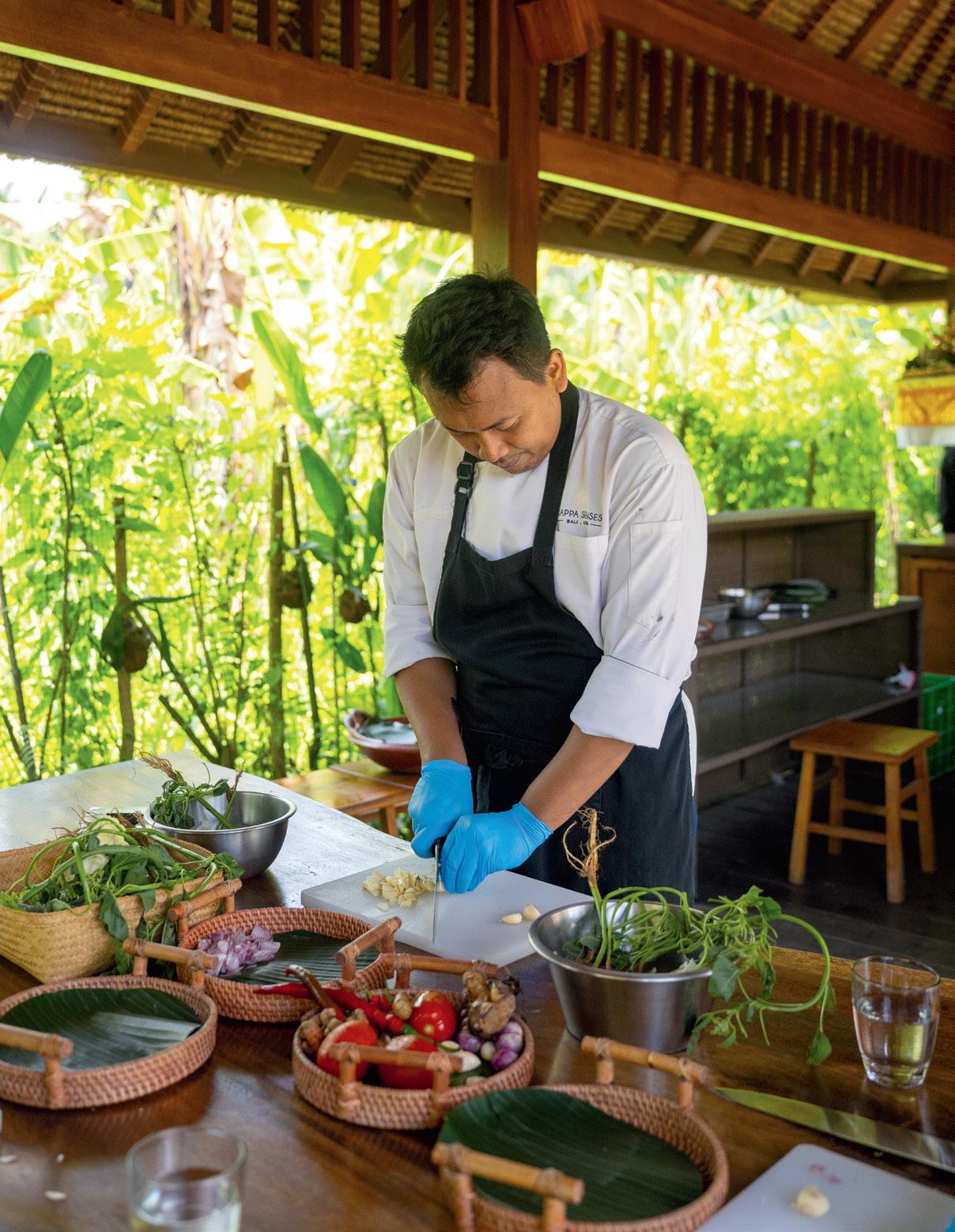
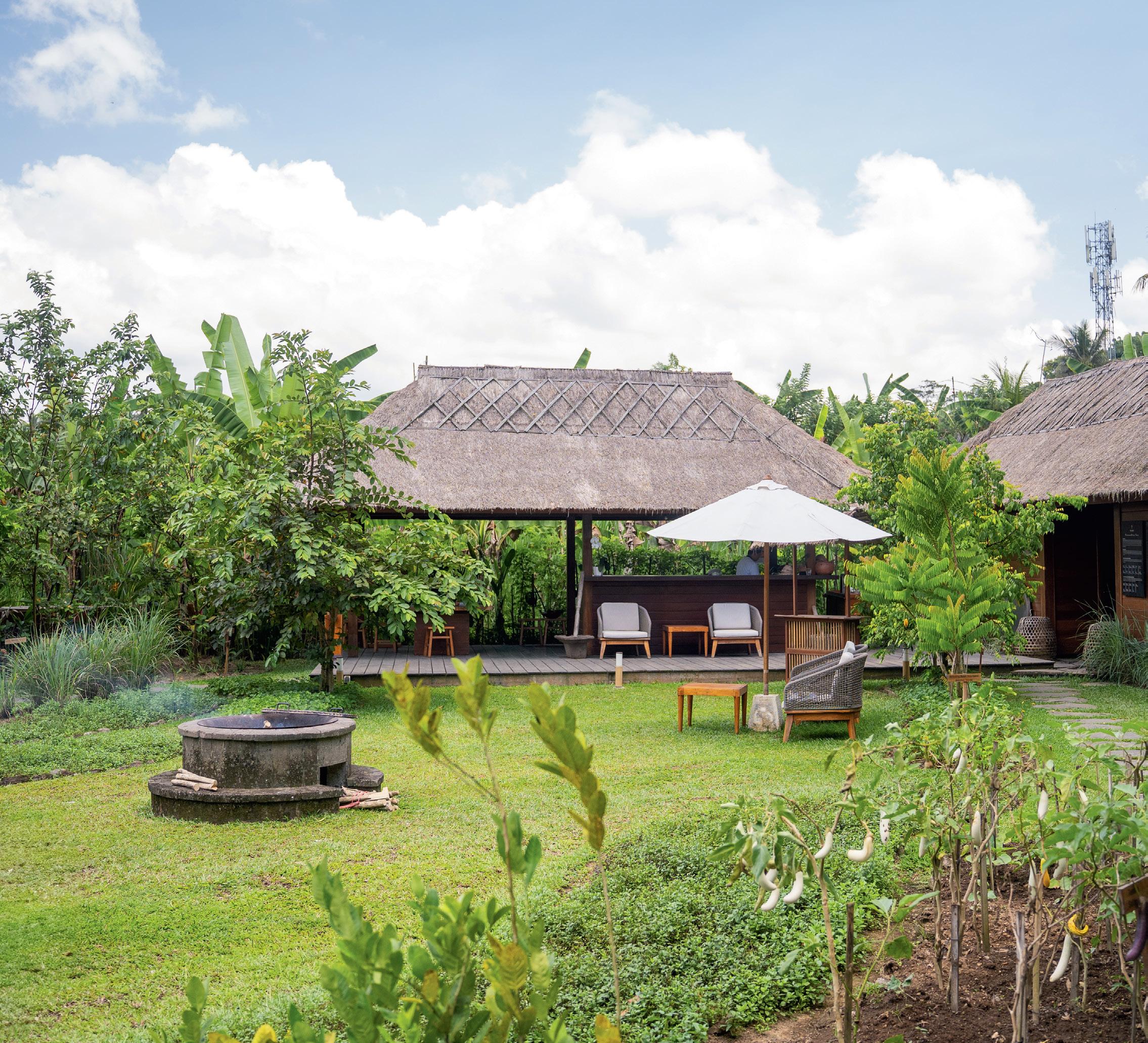
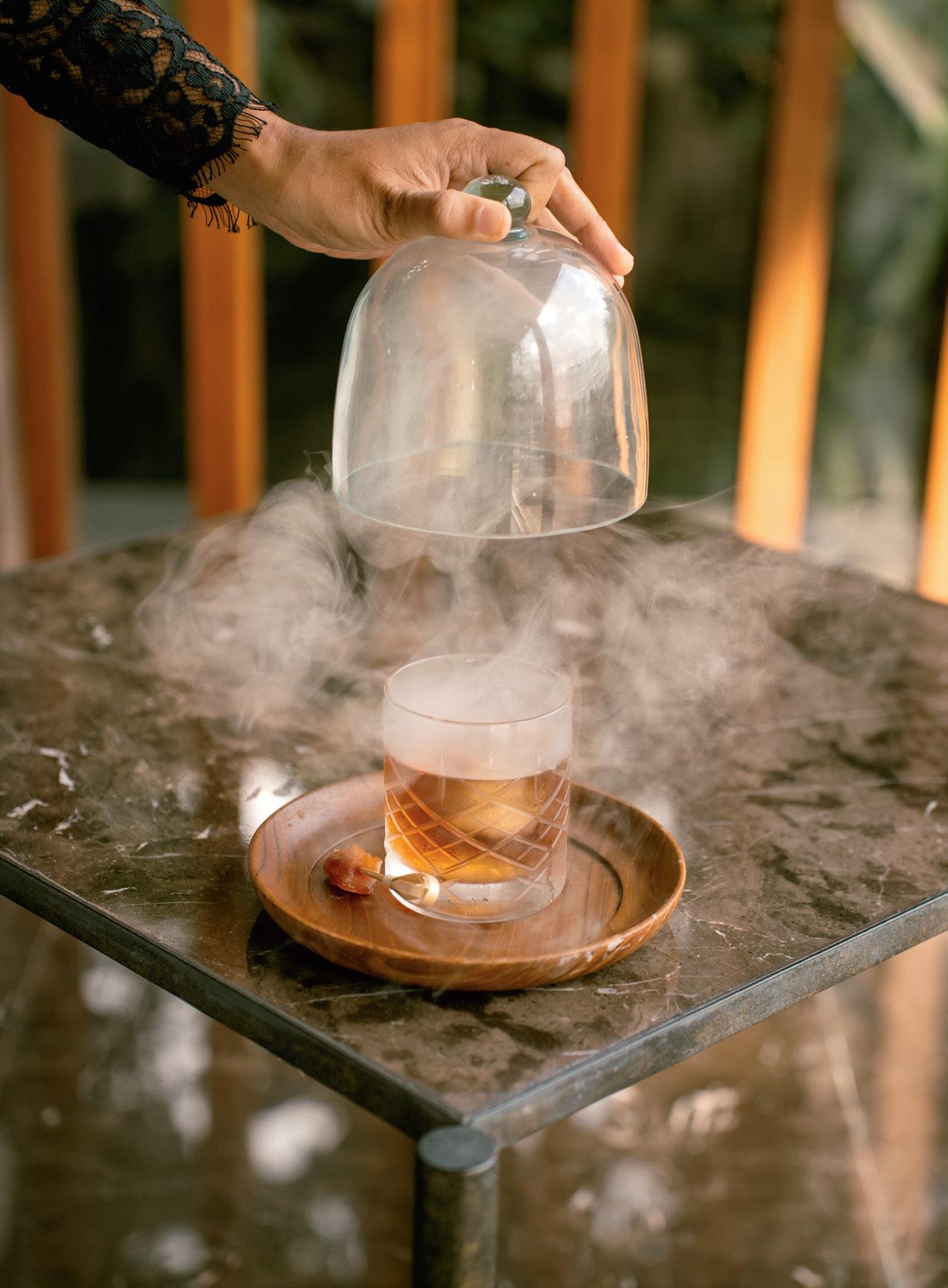
CLOCKWISE FROM TOP LEFT: Kelapa restaurant in Kappa Senses serves traditional Balinese dishes; the grounds of Kappa Senses; Kappa Senses chef Eka Arsana is Balinese-born and aims to marry the cuisines of his home with France. OPPOSITE: the hotel also serves dramatic cocktails at the bar.
IMAGES: JOEFIKAR. KAPPA SENSES (TOP LEFT)
NXT-level dining
Ubud isn’t short of homegrown brands. Strict local laws have kept international fast-food joints at bay and Ubud is a place where innovative chefs can flourish. Locavore NXT shows how cutting-edge Ubud has become.
Helmed by Indonesian chef Ray Adriansyah and Dutch chef Eelke Plasmeijer, the restaurant, which opened in December 2023, focuses on hyperlocal produce. Guests enjoy a 20-course tasting menu surrounded by a food forest and koji fermentation lab. Their first restaurant Locavore was a regular on Asia’s Best 50 list; now they are pushing the boundaries again. “It’s fair to say that the culinary landscape in Ubud has changed a fair bit over the last couple of years,” says Eelke. “When we opened the old Locavore 11 years ago there were only 100 or [so] restaurants in and around town, now there are over 1,000.”
Dining has risen to the next level among the mountains of Bali. When chefs would try and cater to different tastes it wasn’t unusual for them to serve an eclectic array of dishes from
Indonesia, Japan, Mexico and France on the same menu. “Restaurants [are] simply better than they used to be,” says Eelke. “Now there is a lot more focus on doing one cuisine in one restaurant and I think that’s a good thing. For chefs, it means there’s a lot more competition and we all had to [raise] our game.”
Other brands entering Ubud include Kappa Senses – from the same family as the Kappa Club in Nusa Dua, Kappa Senses aims to create an elevated experience. While its goal is to trigger all the senses with its 1,000-metre squared Clarins spa, yoga classes and Instagram-worthy swing that ascends over the rice fields, gourmands for one won’t be disappointed. Alongside its villas and jungle split-level suites, you’ll find five restaurants including Kokokan, which serves up Balinese roast pork, the Kelapa poolside restaurant that serves nasi goreng and the Bale Gourmet with fresh French pastries and a wine cellar.
At the heart of the resort is an organic permaculture garden where guests can join chefs for a tour among the lines of
sour starfruits, plump chillies and edible flowers. Then they can join a cooking class and make banana-leaf-wrapped parcels of tilapia fish, which they cook over hot coals. Balinese-born executive chef Eka Arsana, who would watch his chef parents cook as a child and then followed in their footsteps by becoming a chef at the Four Seasons in Singapore and Hawaii, has made it his goal to take the gastronomy of France and marry it with the tastes of Bali.
He sweetens dishes with a small mushroom found inside a coconut and is now searching for seaweed flowers that, when combined with grated coconut. taste just like corn. “I want to bring back forgotten ingredients and introduce them to people coming to Bali,” says Eka.
The gastronomic approach has also been taken with the cocktails. Not only do they clarify the liquids in the same way as a chef would do with sauce or stock, but they pick herbs from the permaculture garden and with the sous vide machine create infusions of ginger and whisky.
e place to just be
Health and wellness is part of Ubud’s DNA. It attracted the hippies and healers in the 1970s, and now a new wave of health seekers is looking to the cultural capital to help them regenerate their mind, body and soul.
The Maya Ubud Resort & Spa in Ubud gives people the chance to do just that. From offering forest walks dusted with the cotton from kapok trees to flower-filled statement baths that hang over the river, this mountainous retreat, based upon a traditional village, helps you find your own space within this much-loved island.
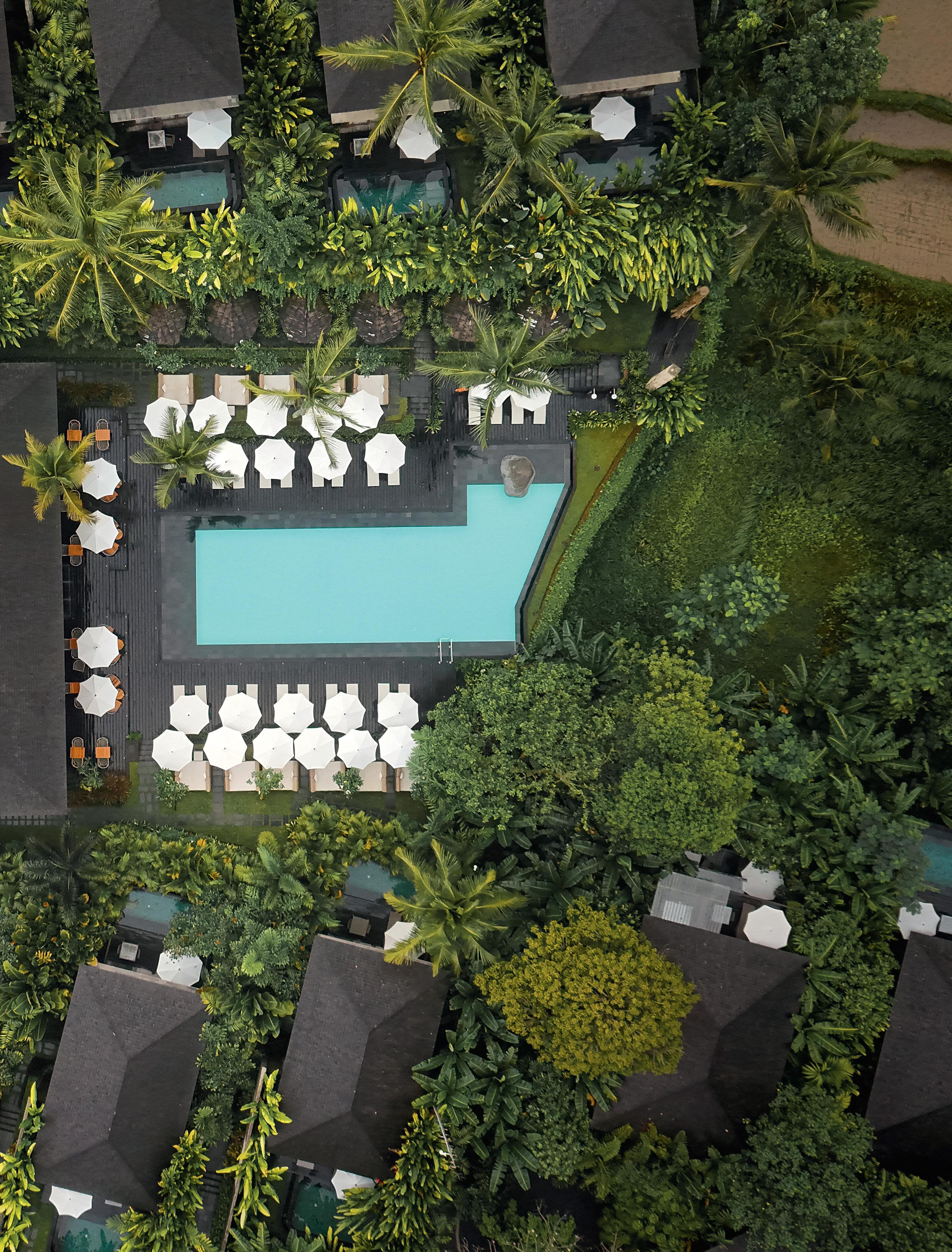
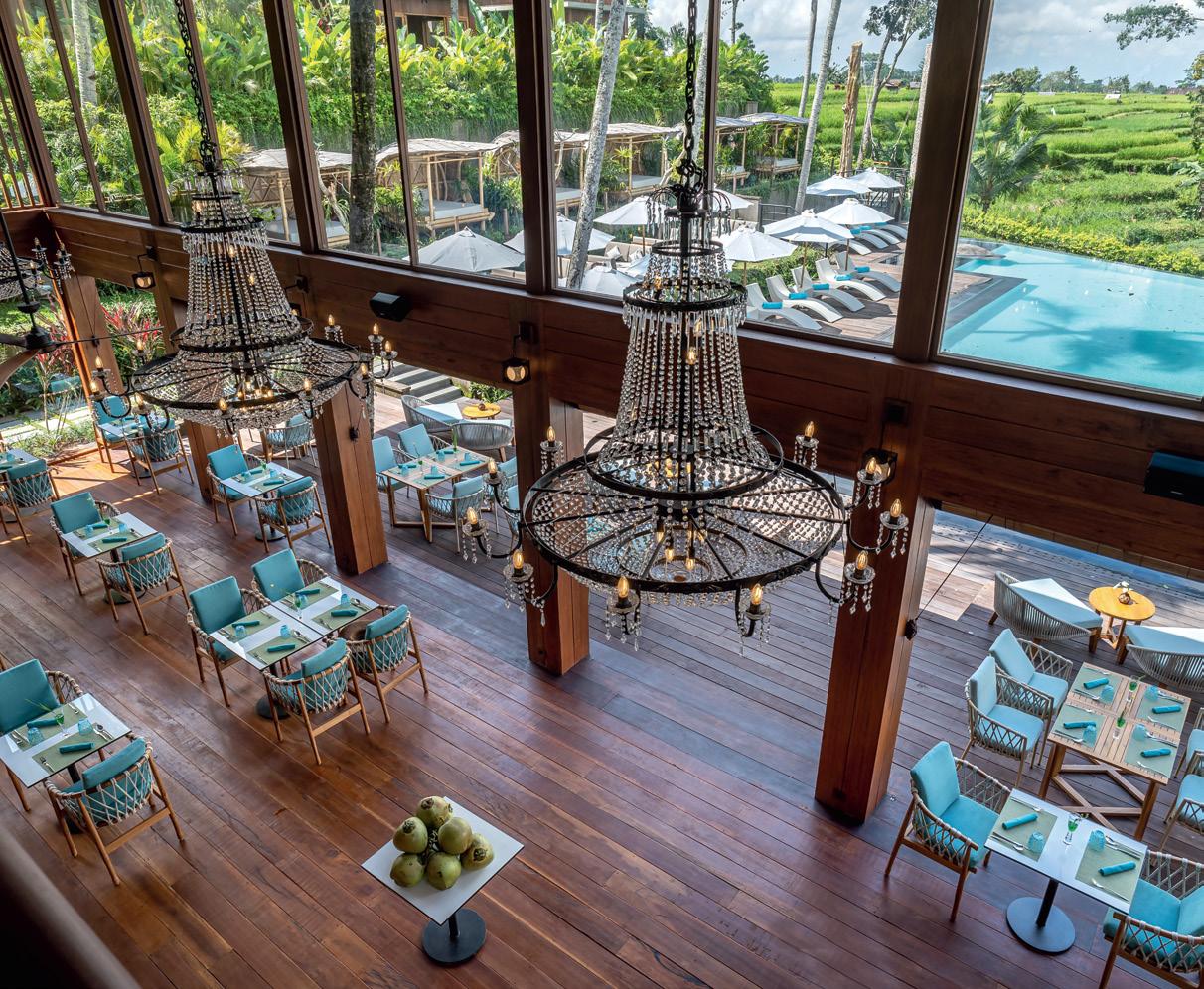
Guests can choose from newly renovated private villas and suites that offer garden views or expansive scenes of the forest. Its two infinity pools are where most of the guests like to spend their time. Either on a lounger or in a cabana at the rice terrace-inspired Riverside Pool that overlooks the Petanu River or in the sleek Forest Pool that gives you a bird’s-eye view from the top of the resort.
Ubud-born yoga teacher Dewa Gede Bawa has watched the rise of his home. Each morning the rooftop pavilion where Dewa’s clients slip into a Zen-like state to the sound of singing bowls is filled with yoga mats. As a young boy Dewa could count how many visitors would enter his village; now he says they arrive every minute. “The thing we can’t avoid is change, it’s going to happen. But I wish that we can slow it down a little bit,” he says.
Yet he understands the attraction. “Most people come to Ubud because they want to relax. The word ubud means ‘medicine’,” says Dewa. “Ubud is more for the people who want to do nothing – just be.”
One stalwart that is getting ready for the influx of new visitors is the luxury resort of Tanah Gajah. The former summer home of the celebrated Indonesian architect Hendra Hadiprana is about to launch new pool villas overlooking the rice fields and designed by his granddaughter Sekaraya. What started as a Balinese-style compound for a family still holds true to its traditions –complimentary afternoon tea is still served at 4pm to club guests, but so are floating breakfasts in the resort’s main pool.
The late architect, who was behind The Legian Seminyak and the InterContinental Bali Resort, wanted to create a hotel that offered unique moments for his guests. From his collection of artworks that grace the walls and the black and white swans that grace the lake, to the traditional Kecak dance performed in front of the statuesque Elephant Gate. That same philosophy continues with the next generation, with guests being able to enjoy a hot-air balloon ride above
the rice fields or dine by torch light in the amphitheatre. They can even enjoy a romantic picnic on a wooden boat in its sister hotel, the Dua Dari Ubud.
Bali has long been a favourite with holidaymakers, but those who have lived in Ubud since being a child say that this mountaintop getaway is extra special. “It’s something that people can’t put their finger on. Whether it’s the healing or just the energy that’s like a magnet,” says Polly Purser.
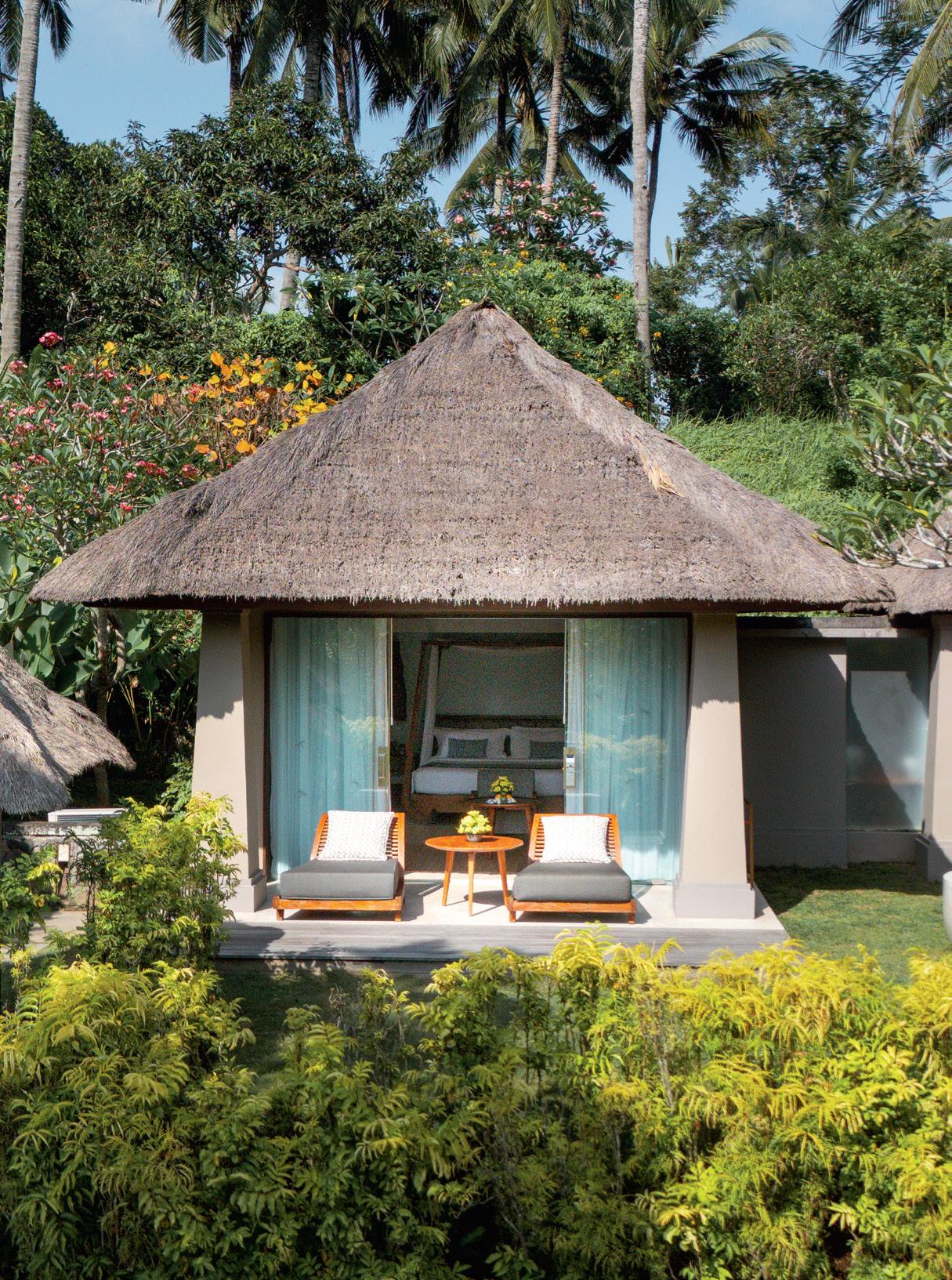
RIGHT: Maya Ubud Resort & Spa villas offers guests the chance to switch off and unwind.
WITHOUT LEAVING HOME
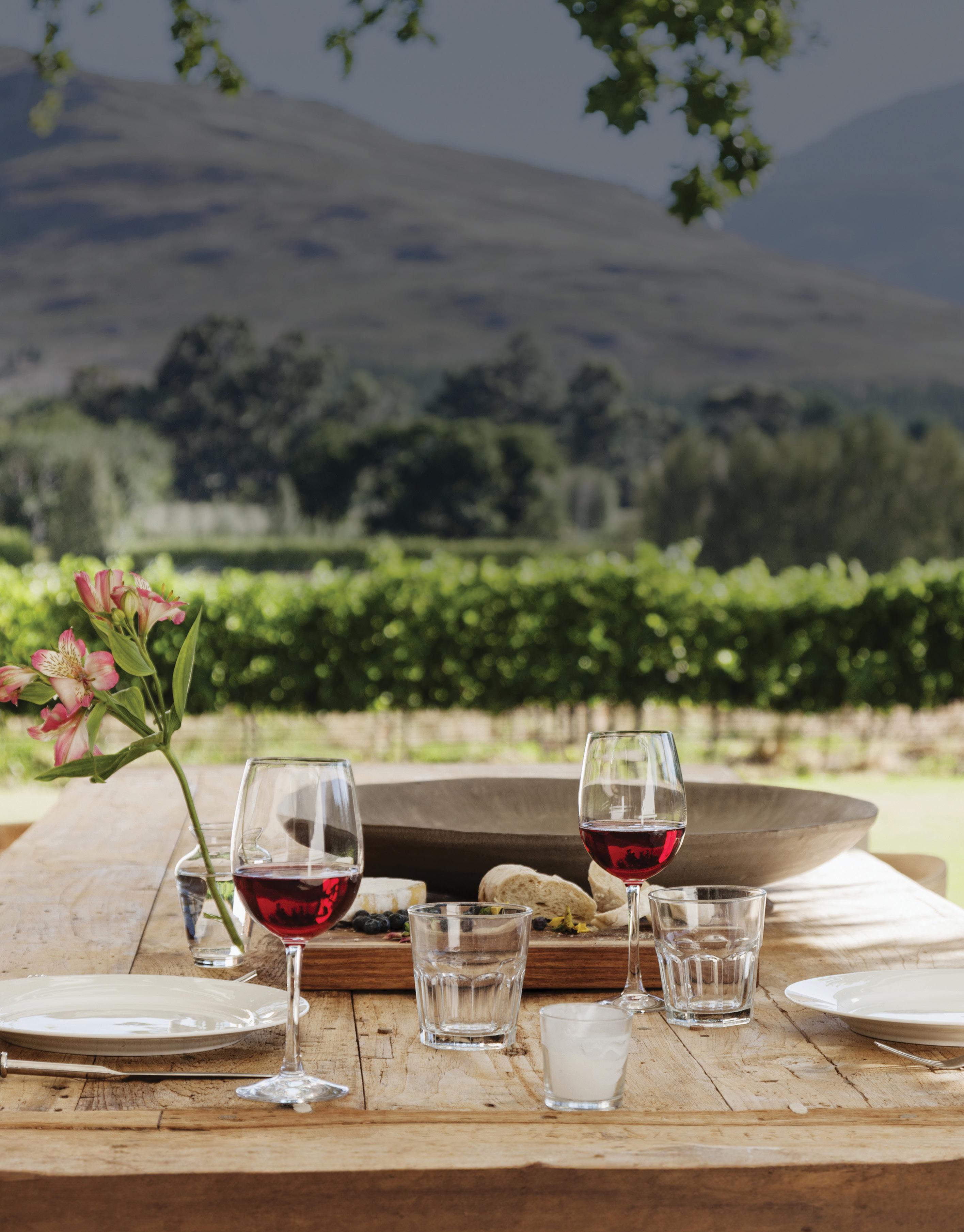
PREMIUM, HAND-SELECTED AUSTRALIAN WINES DELIVERED TO YOUR DOOR
Hush hour
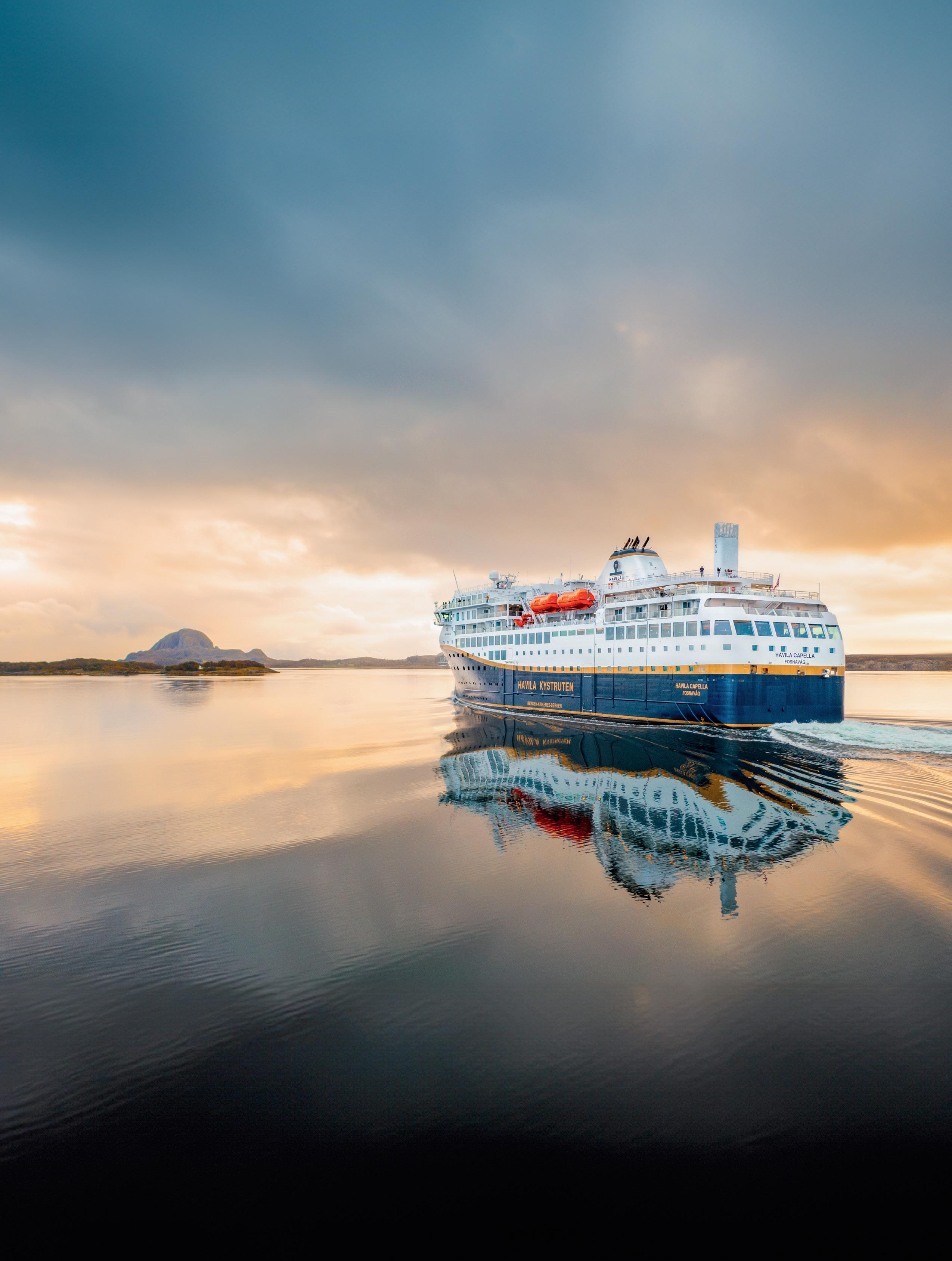
Gliding noiselessly through the Norwegian fjords, the Havila Capella is part ferry, part mail run, part cruise ship. Stephanie Mikkelsen discovers dramatic coastal waterfalls, experiences life in remote Scandinavia and realises that silence really is golden.
Crossing the imaginary line of the Arctic Circle isn’t like I expected. The night before, I’d heard the PA reminder about a competition for guests to guess the exact time Havila Capella would cross the Circle’s marker. It’s so discreet – more suggestion than announcement – that I forget to submit my entry, a travesty for someone known for their competitive streak. My luck isn’t any better when the time comes: I miss it completely. One hurried dash to my cabin for a jacket and I’m up on deck eight to see the Northern Polar Circle Globe, the crossing’s marker on Vikingen island, in the ship’s wake.
The real ceremony comes in the form of an Arctic baptism that happens right after – equal parts light-hearted fun and Viking ritual. We pay our respects to Njord (or Njörðr), Nordic god of the sea and wind, summoning him with our shouts. “Njord!” we chorus. A bearded figure in full theatrical garb appears on a balcony above and offers his blessing. Then comes the catch: a ladle of icy water, cubes and all, dumped down the shirt backs of anyone willing to brave the shock. I step forward, not wanting to incur Njord’s wrath. The shot glass of something gingery I’m passed afterward helps stave off the chill.
Three days earlier, I’d stepped aboard Havila Capella in Bergen, setting out on a seven-day coastal journey to Kirkenes, a far-flung
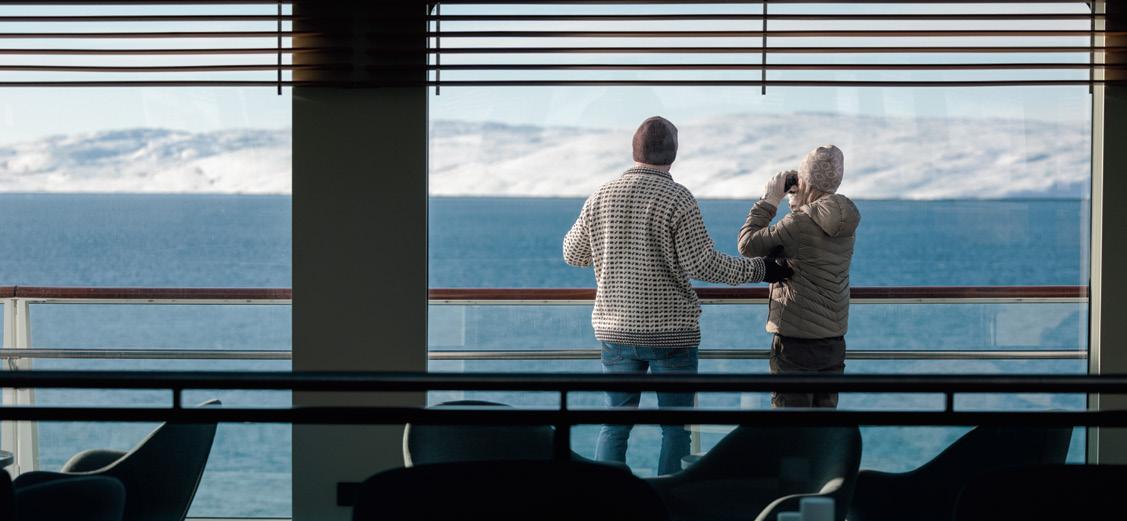
town in northeastern Norway less than 20 kilometres from the Russian border. This is my first real cruise, unless you count Sail Croatia during a gap year. I expect bingo and buffets, perhaps some towel animals. But those assumptions are immediately cast overboard. Inside, it’s all pale timber, soft lights and massive windows. Classic Scandi minimalism, but warm. No chandeliers, no music. Just footsteps, ice cubes clinking and the distant hum of engines. It takes only an hour of cutting laps around the decks to realise Capella isn’t a floating resort; it’s a working vessel with purpose. Part ferry, part mail carrier, part Arctic slow-travel machine.
That evening at Havrand, the ship’s main restaurant, I meet June from Melbourne, and Pascale and Marieke, her friends from Belgium. All three remark on how unusual the calm is – something they hadn’t expected but are already appreciating. “The fact it is a working vessel does not take anything away from the beautiful surrounds, if anything it reminds us of the people living and working here,” June says.
After a smooth first night in my Seaview Superior Double cabin –no-fuss Nordic design, picture window and enough quiet to knock me out – I wake ready. The calm onboard makes it easy to switch off, which comes in handy because the day’s main event demands full attention: Geirangerfjord.
Havila Voyages
Havila Voyages sails the historic Norwegian coastal route, stopping off at 34 ports between Bergen and Kirkenes to deliver mail, cargo and passengers. There are four ships in the fleet – Havila Cappella, Havila Castor, Havila Polaris, Havila Pollux – each with 179 cabins, two seated restaurants, bar, casual cafe, gym, sauna and Jacuzzis.
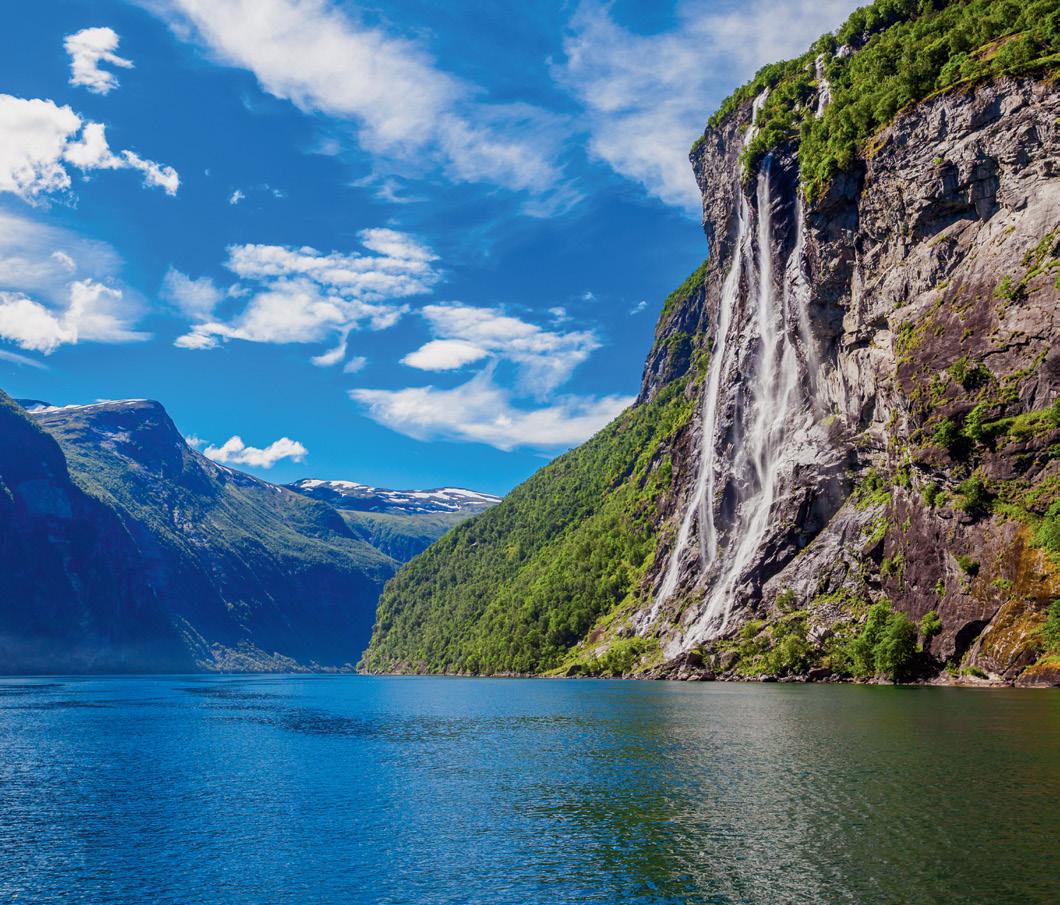
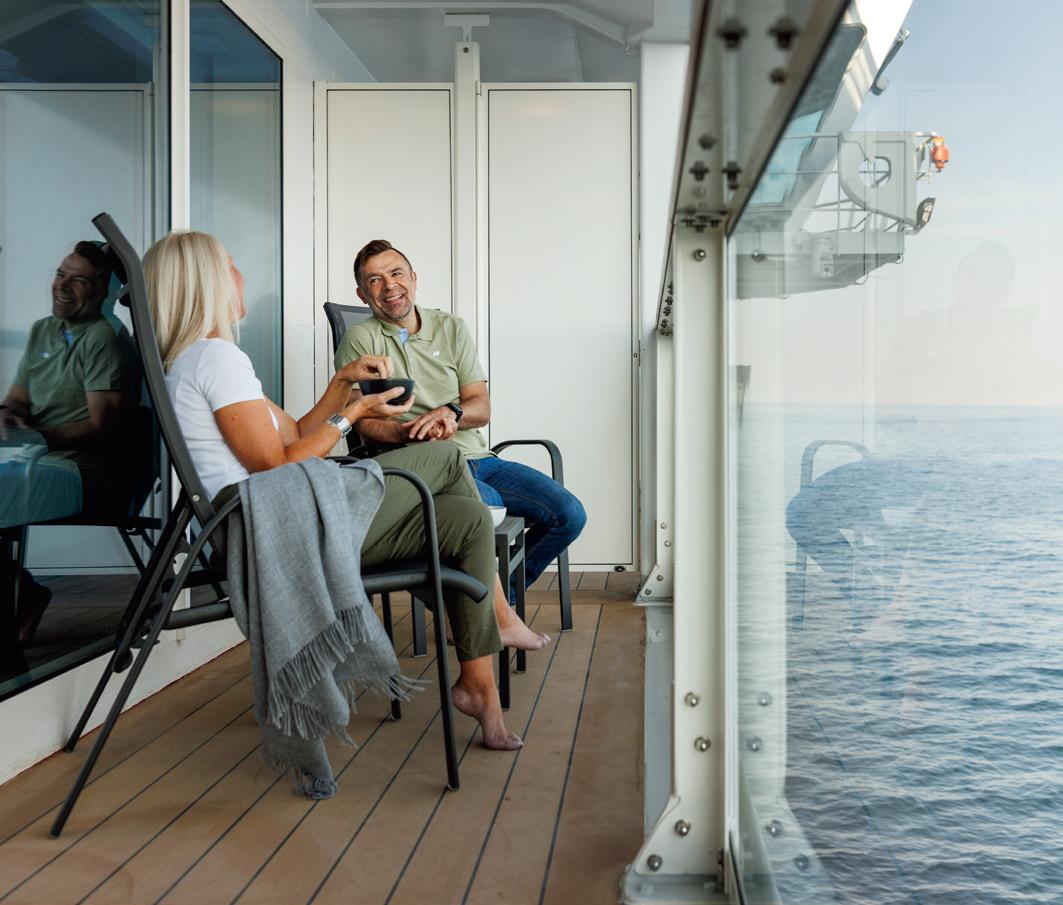
ABOVE FROM TOP: dramatic waterfalls at Geirangerfjord; life on board the ship that is part cruise and part ferry.
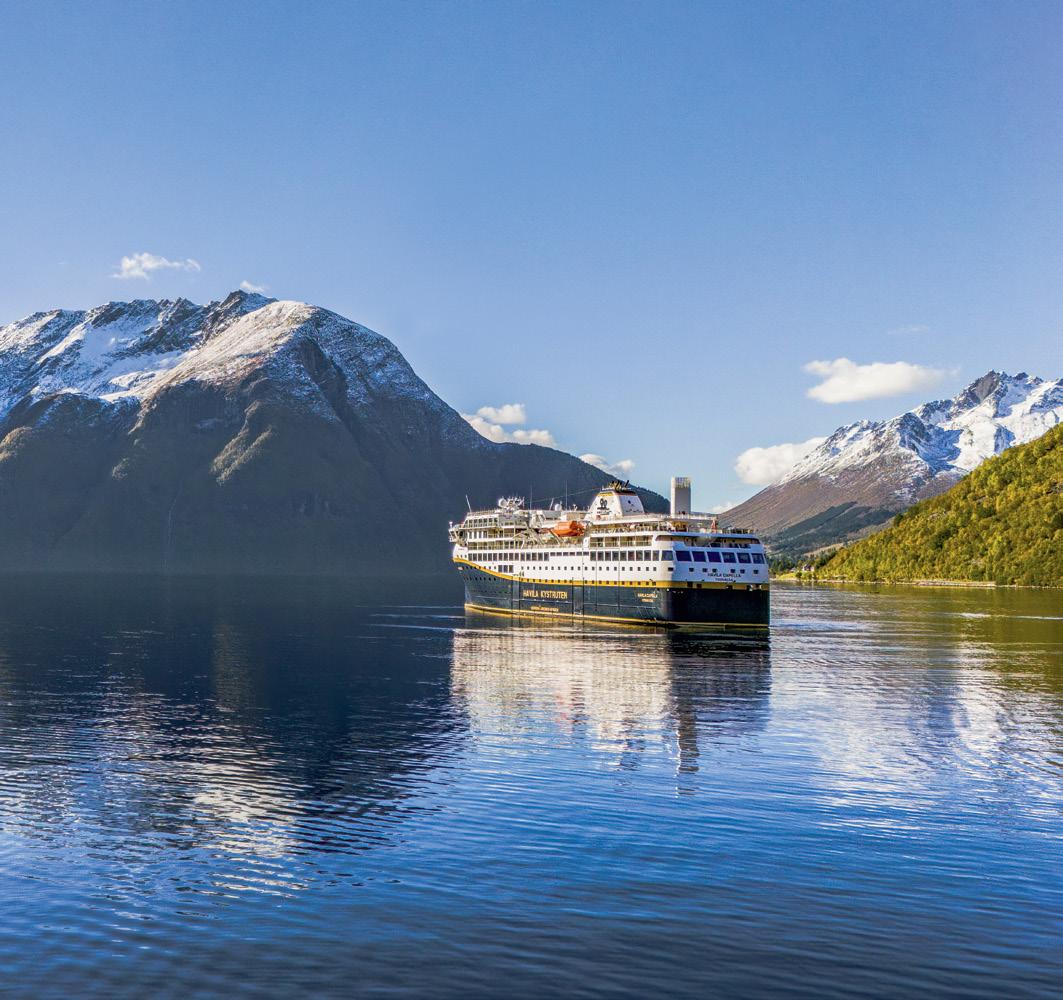
OPPOSITE: the Havila Capella cruising the fjords;
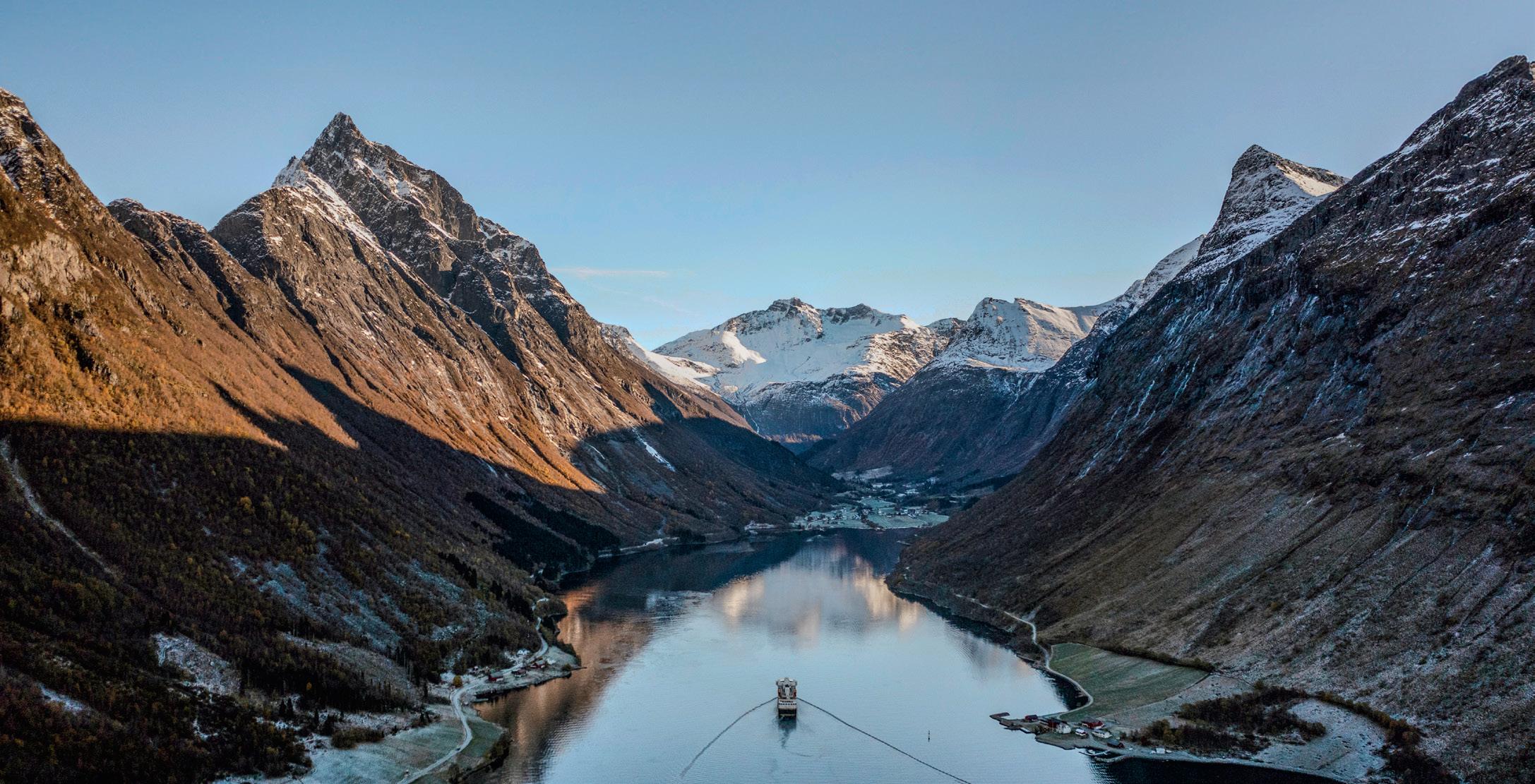
Here, silence takes centre stage. e captain cuts to battery power as we approach and the ship seems to oat in near-total silence.
Capella’s batteries push us through the fjord with almost no waves, no wake; only a mirrored ribbon of water marking where we’ve been.
Sheer cliffs rise on either side, streaked with waterfalls that tumble into water the colour of polished jade.
Out on the blond timber deck, the air hits like a chilled shot of aquavit, and it’s so peaceful I half expect Loki to pop up just to ruin it. The only sounds are wind buffeting around my ears and the squeak of my rubber soles as I ping-pong between starboard and port, trying not to miss a thing.
Between these moments of natural theatre, Capella maintains its working rhythm. Day and night, it stops at tiny ports – some barely bigger than a single shed. I’m unreasonably pleased when I spot crates labelled “smoked salmon” being loaded aboard – if the rate I’m eating it every morning at breakfast is anything to go by, the ship’s stores could run low. Some stops last more than an hour; others don’t break 20 minutes. I watch some passengers board with groceries and handbags, and others wheel on suitcases and backpacks.
Throughout the week, I see friends and family embrace hello, and watch as others wave goodbye. These moments capture something essential about the journey: there’s no performance, no polish – it’s functional, and that makes it strangely intimate.
I wasn’t alone in noticing the ship’s unusual atmosphere. “The lack of noise is something you forget about,” says Moira Richardson, who I get talking to in one of the many guest lounges. “Up on deck is where I feel it most – just hearing the waves. It’s very peaceful. Sometimes it’s so quiet it’s noisy.”
The fjord huts we pass tell a story of Norwegian travel traditions. Norwegians have long understood the power of unplugged, silent travel – not a new trend, but a way of life hundreds of years old. It’s clear from the scattered farms and hiking huts that this is a country far ahead of the curve when it comes to appreciating stillness and nature without distraction.
Dining rituals and snow hotels
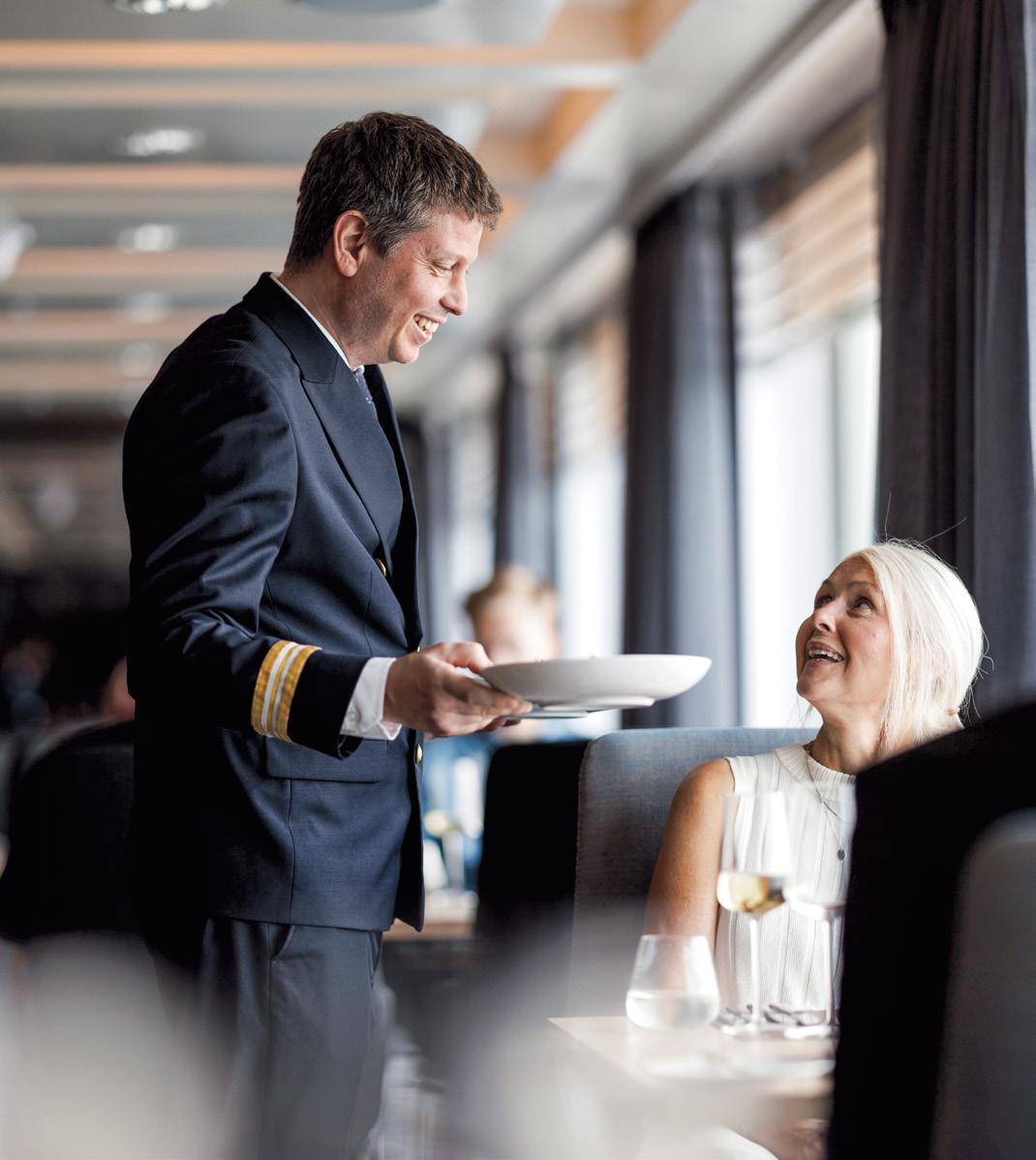
Dining onboard reflects Havila’s thoughtful approach to travel and the environment. Minimising waste is a focus, and the cruise line has set itself the ambitious target of reducing food waste to a mere 75 grams per passenger per day. This mindful approach extends to the entire experience. Lunch is served as small plates, with passengers encouraged to order three – though some days I find myself nudging four or five. Dinner is three-course a la carte. Both menus change every three days, reflecting the stretch of Norway we’re currently sailing by. Throughout the voyage, I never have the same dish twice.
Dining with June, Pascale and Marieke becomes a favourite evening ritual. We share bottles of wine, adventures from the day and an easy rapport with the restaurant crew. The only nights we don’t dine together are when we, separately, book into the ship’s formal restaurant. Hildring takes its name from a rare optical illusion – when light bends in the atmosphere, making ships or islands
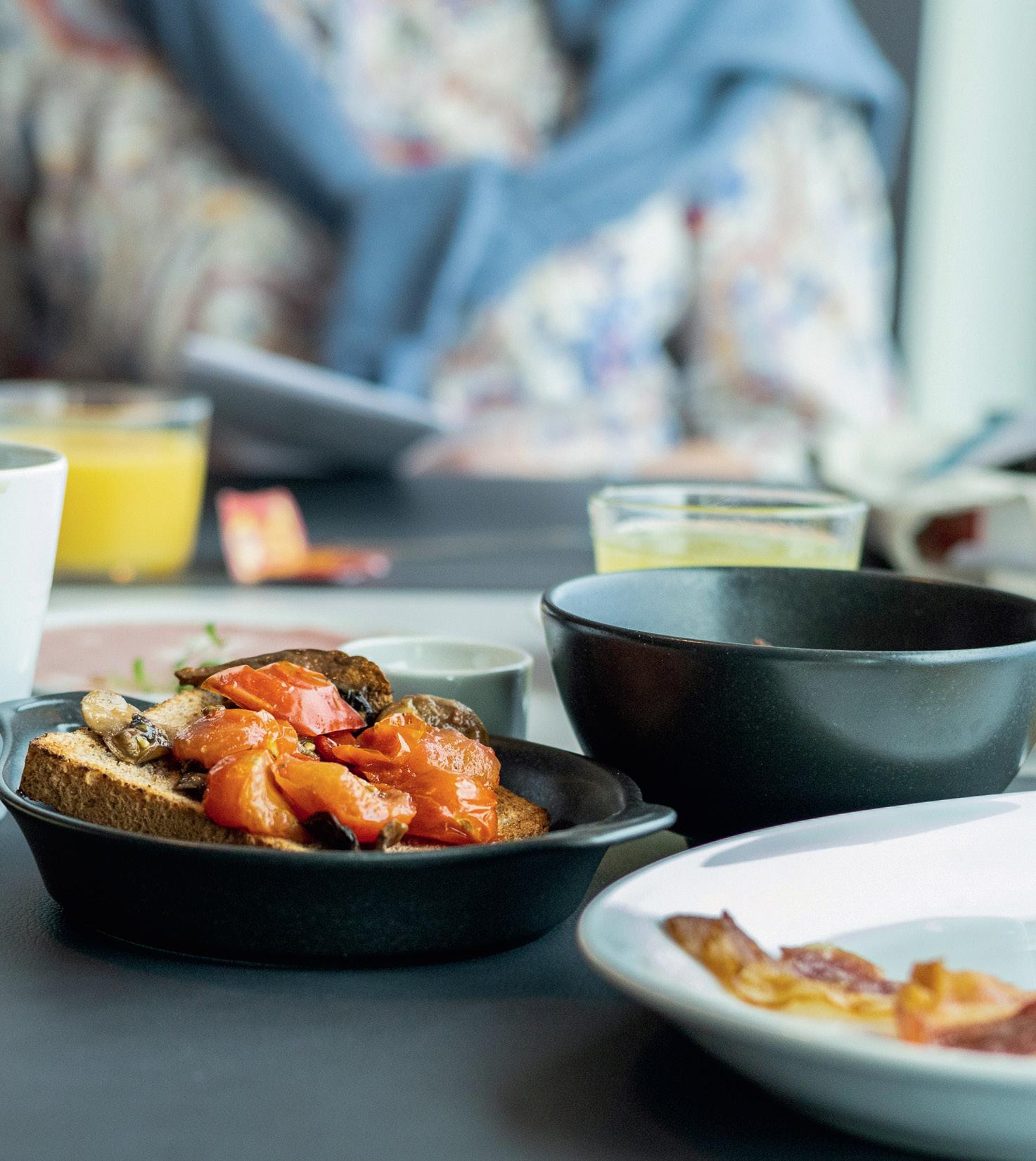
appear to float above the horizon. In the restaurant of the same name, multi-course dinners hover between fine dining and home comfort. Another phenomenon: it’s the only place where I encounter background music. With only a dozen tables and a single waiter gliding between them, Hildring feels like a private dinner party.
The restaurant offers alternating seafood and meat menus, as well as special king crab or wine-pairing evenings. I opt for the seafood tasting option. King crab from Varanger arrives brightened with Arctic ponzu, followed by cod from Lofoten in a silky crayfish stock. Dessert is the dish I’ve thought about ever since: sea buckthorn cream with cloudberries and a herb crumble. The sea buckthorn hits like passionfruit or pineapple, the cloudberries pop in the mouth like tiny fireworks, and the buttery savoury crumble reins in the sweetness perfectly.
Even our excursions reflect the philosophy of presence over rush. I wake at 5am for breakfast at the North Cape, enjoying having
the plateau almost entirely to myself. In Kirkenes, I visit a snow hotel and make friends with huskies. Each outing feels like a natural extension of the voyage’s emphasis on being present.
But the rigid inflatable boat (RIB) safari from Stamsund deliberately shatters the week’s established rhythm. My cheeks go numb, my lips taste like salt, and I half-shriek, half-swear every time another blast of frigid Arctic seawater plasters my hair across my face like seaweed. I cling to the seat in front of me as our RIB skims over the Nordic chop, landing with an abrupt thwack with every swell. We launch from Stamsund, zipped into flotation suits thick enough to survive a dunking, with a quick safety pep talk: don’t fall out. Then comes the ride. At one point I swallow a mouthful of ocean. Minutes later, I’ve forgotten about my numb toes – too busy with laughter. The contrast makes me appreciate how the vessel’s designers understood that real luxury isn’t about noise –it’s about the absence of it.
Wonder wall
On November 9, 2024, Berlin commemorated the 35th anniversary of the fall of the Berlin Wall. Nate Robinson travels to Berlin on a mission to peek behind the (iron) curtain, discovering re ection, renewal and freedom in Germany’s boisterous capital.
During the height of the Cold War, Berlin was called the City of Spies (in German, less atteringly, it was Agentsumpf, or “agent swamp”). Today it’s still a city of secrets, teeming with ghost stations, underground art bunkers, hidden wildernesses and echoes from the city’s past.
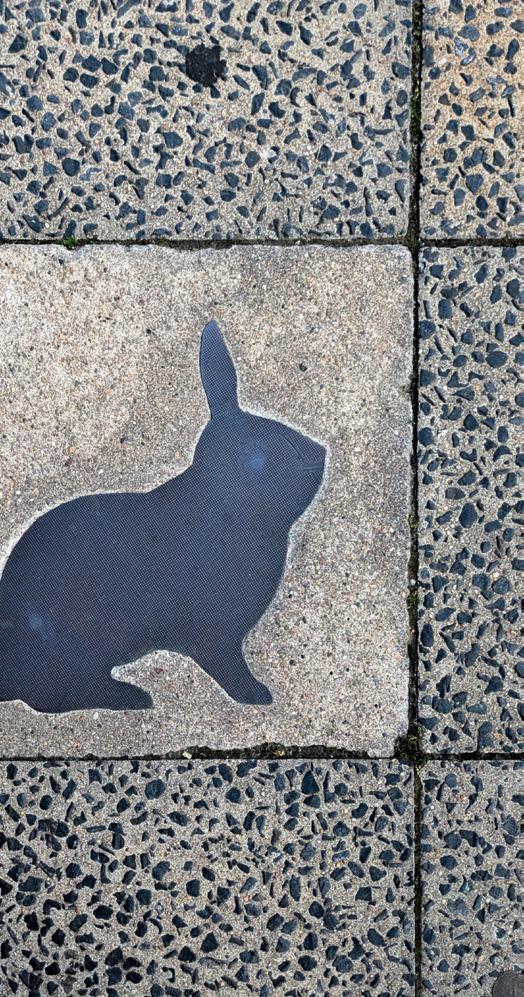
Here’s a secret: spend the day cycling around Berlin and you’re bound to eventually recognise the uncomfortable bump that signifies crossing the double-bricked line marking the perimeter of the Berlin Wall. If you’re riding down Chausseestrasse – a street once so factory-packed it was named the Land of Fire – it’s worth stopping once you feel it. Look down and you’ll find small brass rabbits immortalised in asphalt and cobblestone. This is the Kaninchenfeld (“rabbit field”), a tribute to the only creatures who were able to freely cross the border between East and West Berlin.
“It’s good that you stopped,” says Oleg Bogdanov, my guide. “Most people don’t even notice.”
Though he formally moved from St. Petersburg in 1992 – eager to get involved with the city’s exploding techno scene – as a young anthropology student Oleg had been visiting East Berlin since the early 1980s. He has vivid memories of staring at the West Berliners at the iconic Brandenburg Gate, visited constantly by tourists from both sides. It’s in the Kaninchenfeld, less than a minute away from the headquarters of Germany’s foreign intelligence service, that Oleg tells me that as a young student he’d been interrogated twice by the KGB, the Soviet Union’s notoriously ruthless secret police force. Both times it turned out they’d been after someone else.
“Pretty lucky,” I say.
“Extremely.” A thought crosses Oleg’s face. “Hey, you want to see something cool?”
We’re off again, past the shining, jewel-like Sapphire building, a new symbol of Berlin’s resilience. We pass through a narrow metal gate and another secret unfurls itself: a sprawling sea of tall, wild grasses, confined by old
brick and juvenile birch. The sounds of the city drop away; I can hear the buzz of fat bumblebees working lazily in the fields.
We’re at Nordbahnhof Park. It occupies the site of the wide “death strip” that separated Berlin’s twin barriers. During the time of the Berlin Wall, the strip was continuously doused with herbicides; soldiers on both sides required unobstructed views. The fields are allowed to grow wild again, an urban allegory of the city’s healing. Colourful alfalfa beds and yellow-flowered celandine replace barbed wires and beds of nails; the watchtowers’ demolished territories are quickly occupied by greedy blackberry bushes.
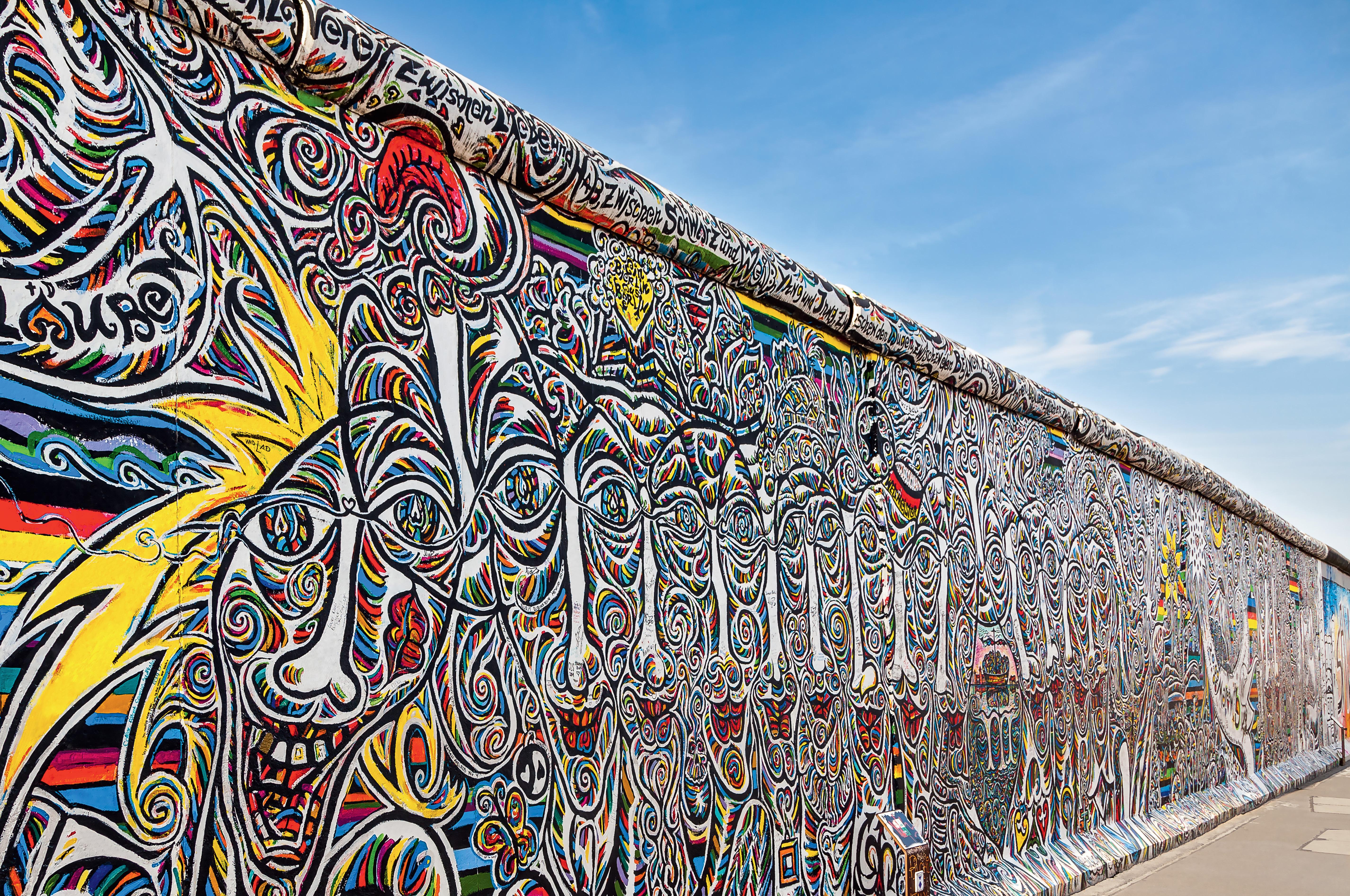
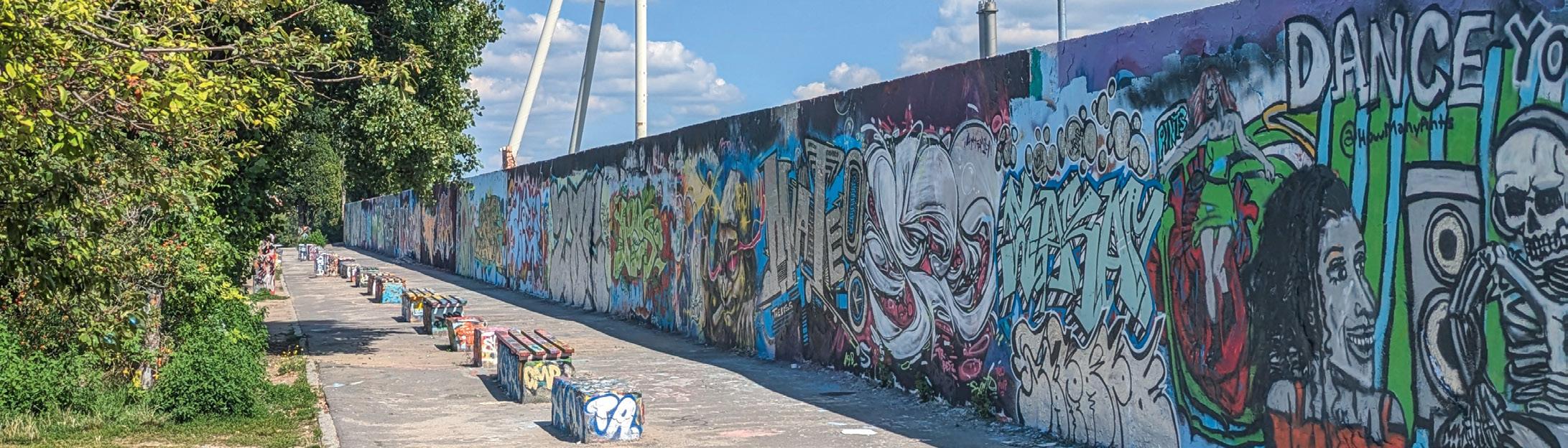
The remains of the Wall stand behind us. Instead of soldiers with rifles, two German artists with spray cans replace one street art mural with another. This is the North Side Gallery: opened in 2023, it’s the city’s newest concrete canvas.
The Berlin Wall is famously the world’s greatest openair gallery. It’s also the world’s greatest palimpsest: always changing, art constantly superimposed on art, you’ll never experience the same gallery twice. The rhythmic click-click-click-hiss of the artists’ work feels as at home here as the wild calls of insects and birdlife; the smell of fresh paint mingles with the tea-like aroma of blooming speedwell.
You can’t keep Berlin down.
“You’re seeing it,” Oleg says. “The Wall itself is something that, when created, it changed us forever. This park preserves Berlin’s spirit of resistance using only the language of the landscape. Some things you can only experience in Berlin.”
FROM TOP: Mauerpark (‘Wall Park’), once a part of the Wall and now an open-air gallery; the tribute to the Kaninchenfeld (“rabbit field”). OPPOSITE: The Humboldt Forum; the dining room at CHIARO, Hotel de Rome’s elegant Italian restaurant.
Echoes of the East
Oleg’s taught me something important: while Berlin’s network of trams, trains and buses are efficient, the best way to discover the spirit of the city is to walk or cycle.
Follow the Wall through central Berlin and you’ll find secrets on every street corner.
A minute’s walk from Checkpoint Charlie, the city’s best-known border crossing, you’ll find perfumer Frau Toni’s flagship store. The brand has famously reimagined one of the city’s lost fragrances, the scent worn by legendary Berlin actress Marlene Dietrich.
Wander further into West Berlin, past the city’s sprawling Tiergarten (Berlin’s answer to Central Park) and you’ll find the massive InterContinental Berlin. Built in 1958 on designs by notable architecture firm Pereira & Luckman, the hotel was originally meant to be Germany’s first Hilton. Look up: the hotel’s chessboard facade, a protected heritage work, wryly hints at the city’s future as a den of espionage. Guests have included Bill Clinton, Alfred Hitchcock and Michael Jackson – presumably drawn to Berlin InterContinental’s extraordinary pool, sauna and spa, with adjoining gardens designed to blend seamlessly into the Tiergarten behind.
An hour’s stroll north to east, past Berlin Zoo, Tiergarten and under the Brandenburg Gate, and I’ve crossed back in the East. I’m at the Humboldt Forum, one of Berlin’s newest museum complexes. Built on the site of the Palace of the Republic – itself erected on the ruins of the Kingdom of Prussia’s Berlin
Palace – it features exhibits devoted to showcasing life in East Berlin and the greater Deutsche Demokratische Republik.
Colloquially called “The People’s Palace”, the Palace of the Republic was the city’s major social hub – always completely open to every citizen, it held beer halls, cocktail bars, a cinema, discotheque, casino, theatre and 13 restaurants. The Palace was demolished in 1990, ostensibly due to asbestos concerns. Among the casualties were the beloved Glass Flower, the main hall’s central feature, and the Milchbar, a sundae house that featured 20 flavours of ice-cream and gleefully poured irresponsibly sized portions of iced chocolate. For the children of East Berlin, a visit would have been an extraordinary luxury.
“The Palace of the Republic was a symbol of regular life in East Berlin,” says Judith Prokasky, senior curator, Humboldt Forum. “And it wasn’t all bad. You told me earlier you think luxury is rooted in freedom. For the people of the Deutsche Demokratische Republik, luxury was in security.”
I think about that as I cross the River Spree, check in to the Hotel de Rome and celebrate my arrival at one of Berlin’s finest five-star hotels with a glass of French champagne. Overlooking the historic Bebelplatz, the hotel’s building was originally constructed in 1899 to be the headquarters of the Dresdner Bank; after the Second World War it was repurposed as the State
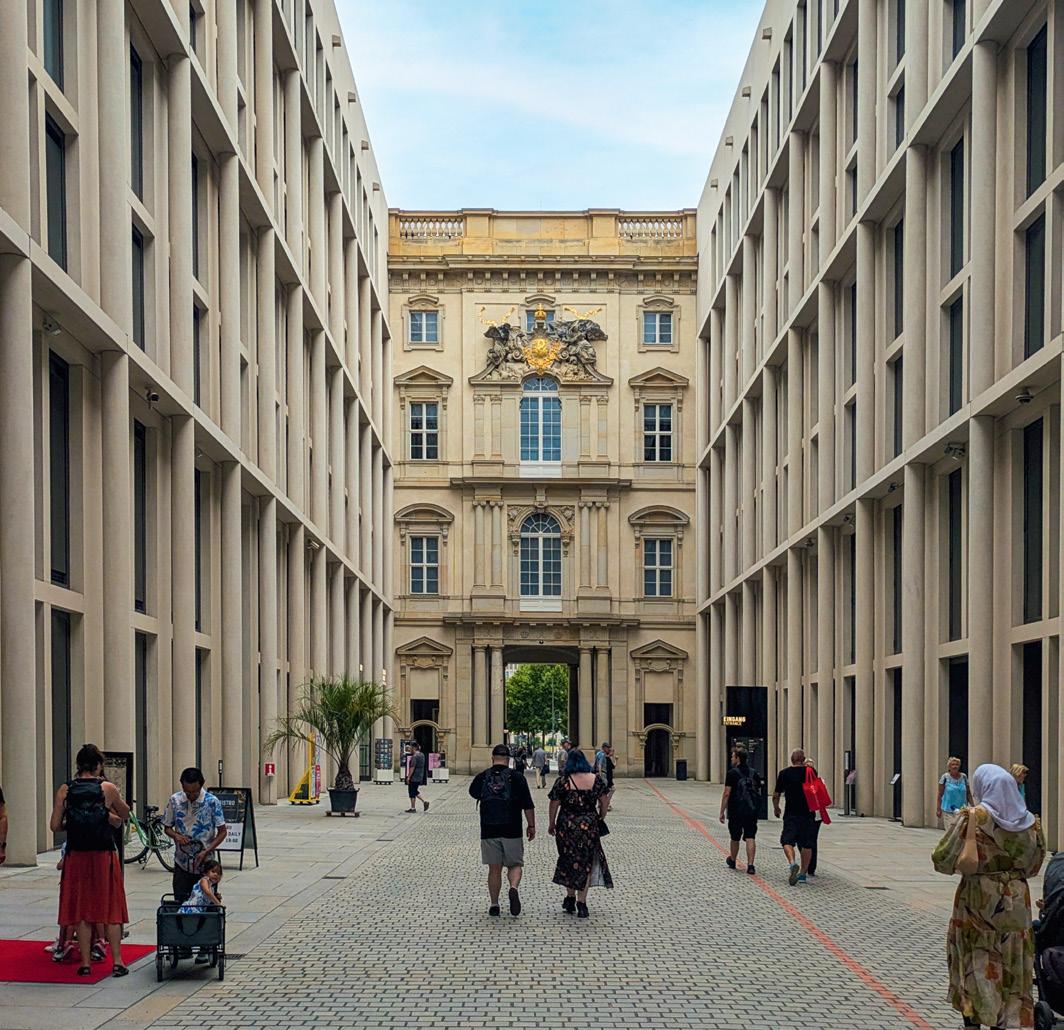
Bank of East Germany. Hotelier Sir Rocco Forte painstakingly preserved whatever remained before opening Hotel de Rome in 1996, including installing Hotel de Rome’s subterranean pool in the bank’s old jewellery vault. Marble pillars and mosaics of gold leaf perfectly frame the pool’s beauty.
It’s after I’ve been gawking at the pool that Stine Kreitel, Hotel de Rome’s assistant guest relations manager, stops me. We’re in front of a huge green door; four keyholes encircle a golden lever. “I’ll tell you a secret: we only have three of the keys to this door,” Stine says. A key was misplaced during reunification. “To this day we have no idea what’s inside.”
A city, divided
On the morning of August 13, 1961, Berliners awoke to discover their city divided by a barbed wire fence, physically and ideologically carving the city in two. Originally built to stop Soviet-controlled East Berliners from escaping to West Berlin, the Berlin Wall eventually came to include guard towers, anti-vehicle trenches and vicious traps. As protests and political pressure reached fever pitch, the Berlin Wall finally fell on November 9, 1989. In that period, at least 140 people were killed as they attempted to cross the Wall.
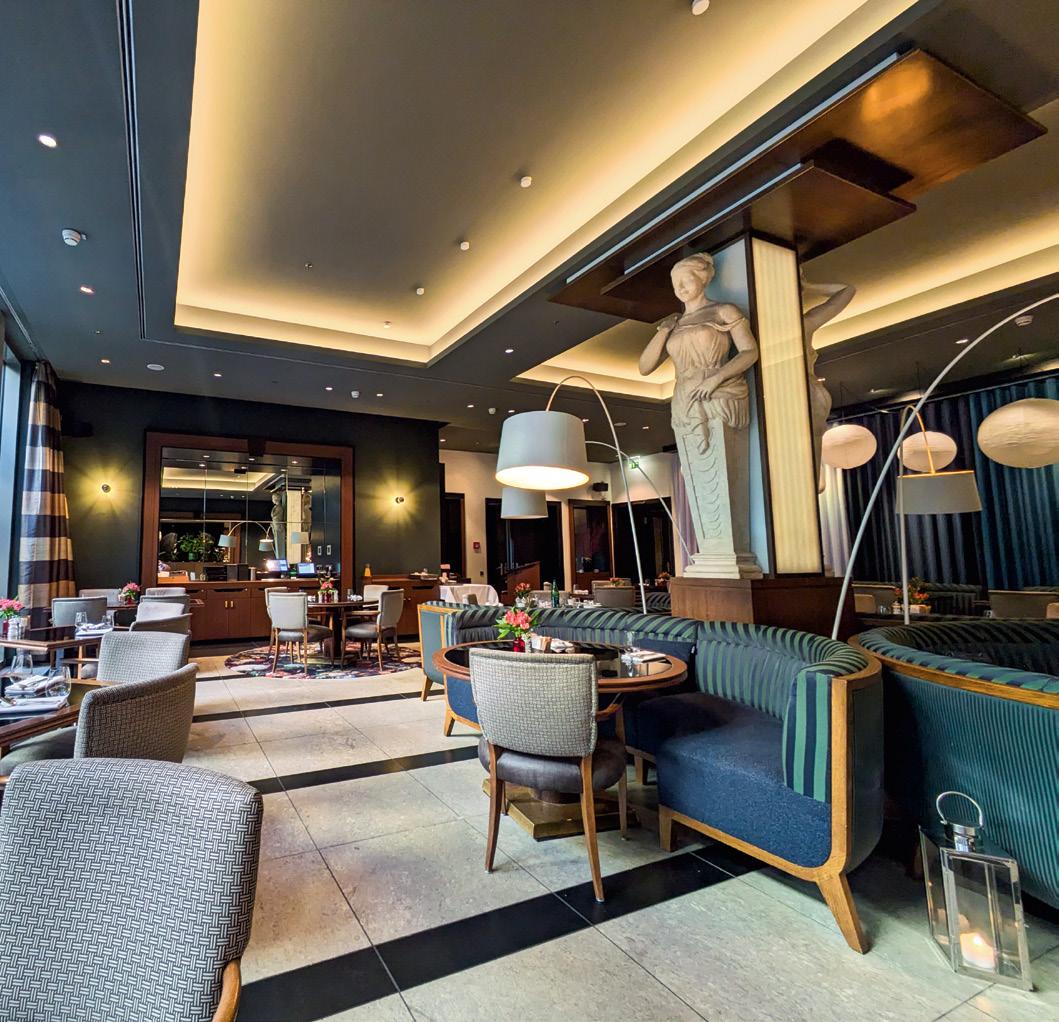
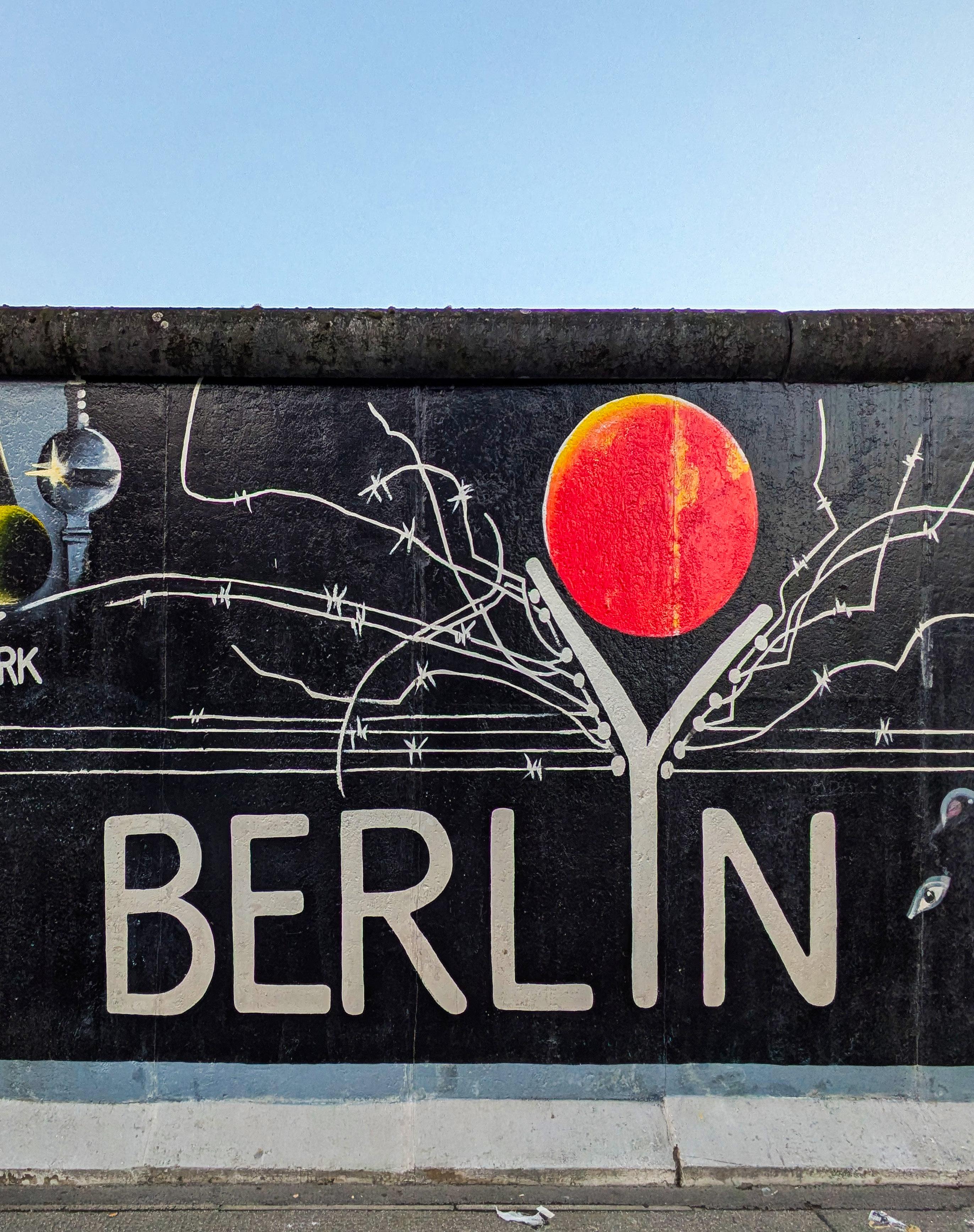
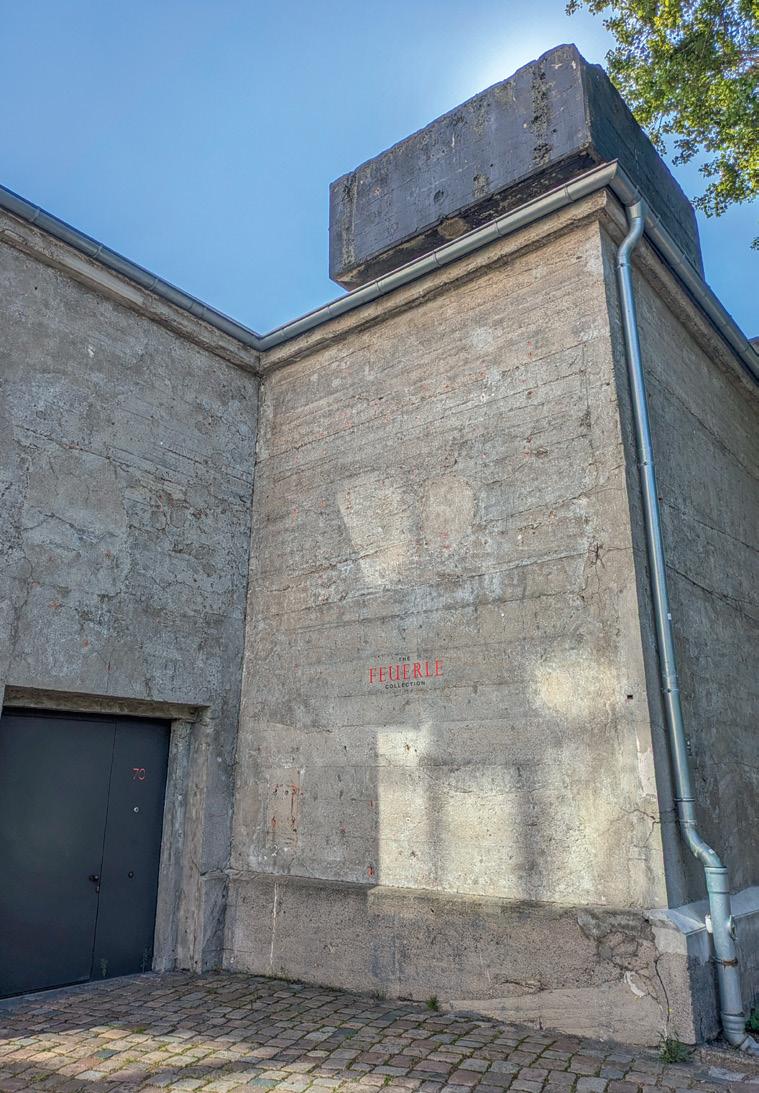
Going underground
Hotel de Rome’s shimmering masterpiece beneath the city inspires me to seek out more of Berlin’s underground treasures. A walk down the Zimmerstrasse – still following the brick remains of the Wall, past Checkpoint Charlie and a park dedicated to the Trabant, the East Berliner’s automobile of choice – leads me to The Feuerle Collection.
“We have a few rules,” says our guide. She emerges from behind the bunker door like a famous Berlin Wall rabbit crawling out of a warren, blinking and big-eyed. “No phones and no talking. Try to be as quiet as you can. We’ll get you when it’s time to move on.”
There’s only myself and another woman on today’s tour; access is by appointment only. We both agree immediately, eager to discover whatever secrets lie below.
Berlin has a proud tradition of bunkersturned-galleries, places transformed from spaces of terror to spaces of awe. The Feuerle Collection inhabits a massive subterranean space originally designed to house telecommunications equipment during the Second World War. Despite
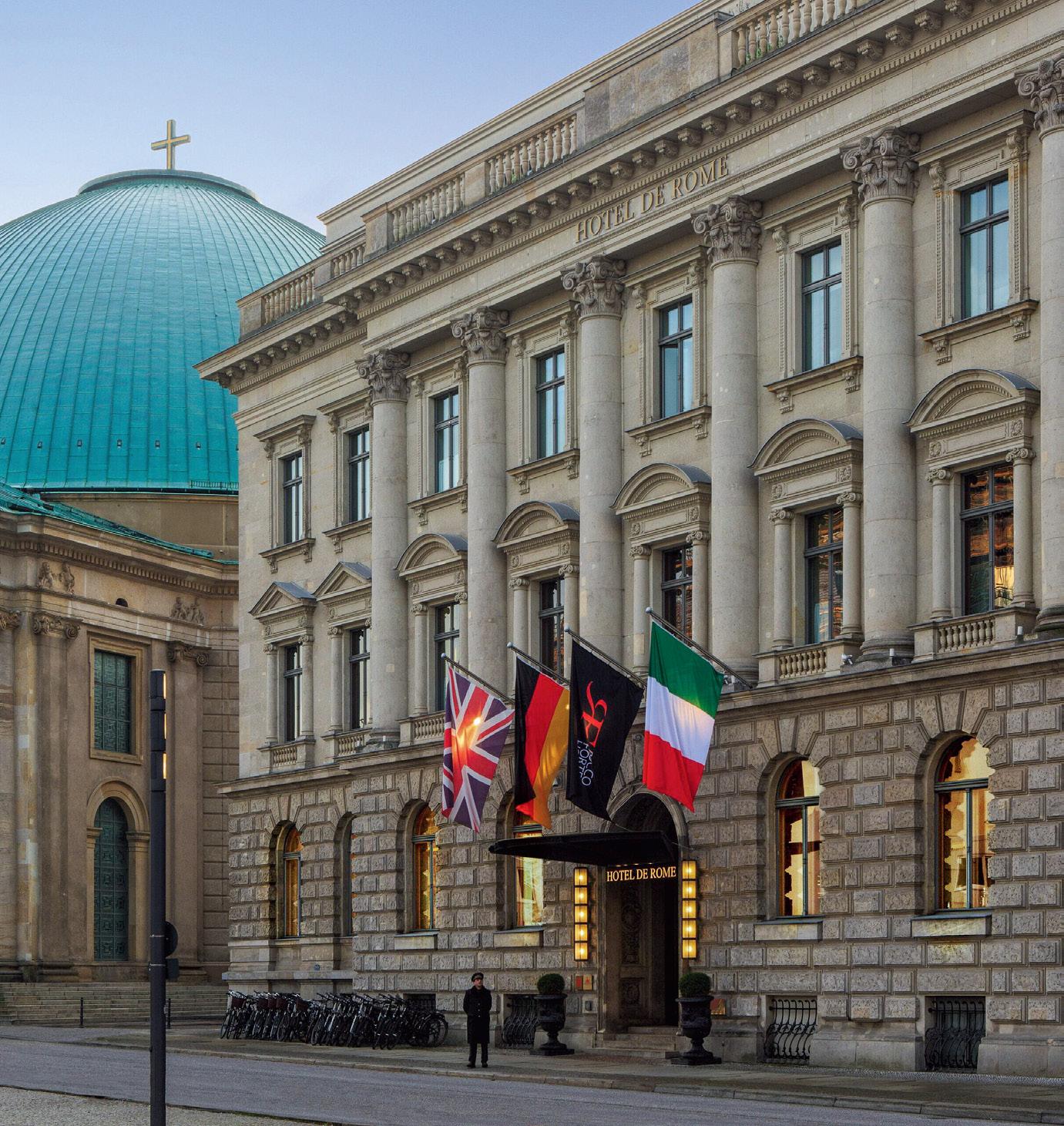
its West Berlin address, the bunker was owned by an East Berlin train company; it was jealously contested for decades before being purchased and restored by German art obsessive Désiré Feuerle.
The temperature immediately drops as we descend into the collection’s underworld.
The bunker could have existed yesterday, years ago or tomorrow: the space is timeless, hugged by concrete and heavy beneath the weight of division and strife. I stop to stare at a vast subterranean lake – the waters are so still and so clear that I wonder if it’s somehow a sleight of mind, my own consciousness playing tricks on me.
Pieces are lit dramatically; light and shadow are as key to the exhibit as the artefacts themselves. I learn quickly that juxtaposition is a major theme. A gleaming Anish Kapoor sculpture stands against Ming-dynasty Imperial Chinese furniture; ancient Khmer Buddhist relics, white as snow in the gloom, are set against a backdrop of deliberately scandalous photography by renowned Japanese shutter-maverick
Nobuyoshi Araki. Deep inside his secret palace, Désiré Feuerle has strived to demolish all boundaries, all walls within.
There’s a sigh and whispering from behind me. I wheel around, shocked – my companion is kneeling in front of a Khmer statue, praying quietly. The guides ignore her transgression. After a moment’s hesitation, I do the same. This is between her and the art.
When we finally emerge into the sunlight she immediately apologises. “I’ve just never... I quit my corporate job to study for a few months in a Cambodian monastery,” she says as way of explanation. “I wasn’t expecting anything like that.”
How could you? We chat for a while in the sunlight – about her time in Cambodia, about my time in Berlin. I ask her for her name, and she asks for mine; it turns out that we have a close personal connection, and the coincidence leaves me speechless.
“I don’t know if I loved it,” she says. “If I’m being honest, I don’t even know if I liked it. But I’ll tell you one thing – this is the kind of thing you can only experience in Berlin.”
ABOVE: the entrance to The Feuerle Collection, an art exhibit in a bunker (left); Hotel de Rome occupies the old State Bank of East Germany. OPPOSITE: the wall as art canvas.
Wildest dreams
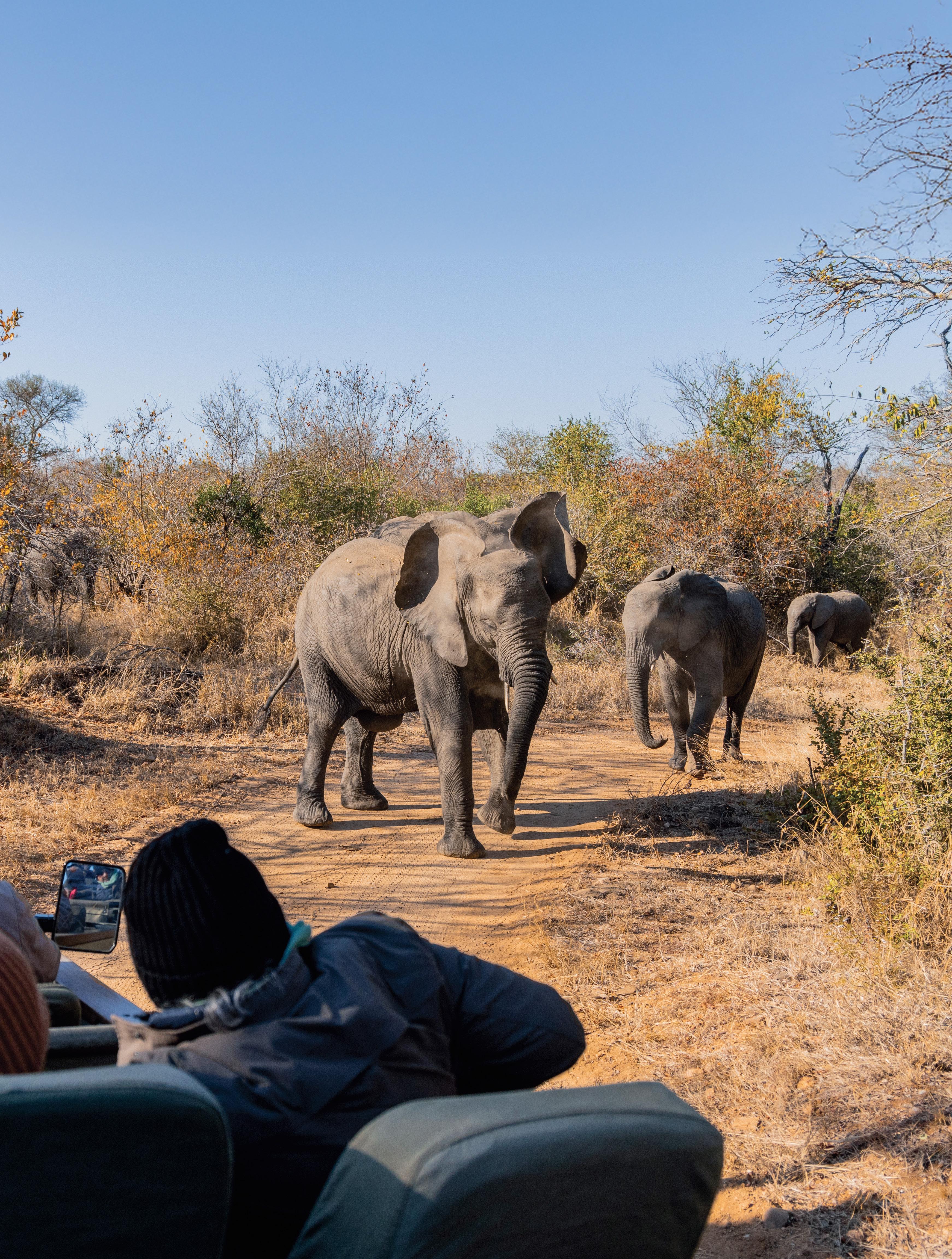
On a private game reserve near Kruger National Park, a keen-eyed Stephanie Mikkelsen becomes a novice tracker, comes within trunk length of a herd of elephants, and gets very emotional in front of a gira e. She also argues that making safari a once-in-a-lifetime event may be doing it a disservice.
It has been less than 10 minutes since we left Hoedspruit Airport and already, I am a mess.
Tervin Mdluli, our guide for the next two days at Kapama Private Game Reserve, has made me cry. I had warned Tervin I might tear up when I saw my first giraffe, the animal I was most looking forward to seeing on my first safari. And those tears came on cue when he pulled off the road leading to the lodge for us to get closer to a big male he spotted through the trees. “I told you I would!” I say, trying to salvage my game face. “I’m not the first person to cry, right?” He is watching the giraffe, too, and turns around in his seat to look at me. “No, it happens for many guests. Not so soon though.”
I am also surprised with how quickly safari has affected me. For many, safari is the stuff of daydreams, savings plans and “one day” conversations and over the next few days I lose count of how many times I hear fellow khaki-clad guests telling one another “this trip was a long time in the making.”
For Craig and Janet Sherwood, who I meet at my first afternoon tea over a blush-pink macaron and cup of rooibos tea, the journey to Kapama was somewhat different – booked only three months prior – but it was no less significant.
“I’d always wanted to do it as a kid, but never thought it was a realistic dream,” Craig says. “Originally we had even been talking about European river cruises, but we both felt
pulled to South Africa.” As one of the younger guests at the lodge, my safari dreams began with The Lion King on VHS but, by the time I depart Kapama, I know the bucket lists have it wrong: safari should not be a once-in-alifetime experience. As soon as you go on safari, you want to come straight back and do it again.
Our game drive vehicle, an open-sided Toyota with more grunt than a warthog, roars along the track, cutting through the bushland. The sharp eyes of Tervin and Phillip, our assistant tracker, scan the dense scrub looking for hints an animal is nearby. Every now and then, they point out something on the road: “a pride of lions went this way” or “a rhino slept here last night”. My lack of tracking prowess does nothing to deter me from announcing I want to spot an animal before Phillip. They both laugh heartily. Game on. I know I have no chance against Tervin’s and Phillip’s skill at reading the bush, but the easy camaraderie into which we’ve fallen makes me feel comfortable throwing down the challenge. And to my delight, it takes less than an hour for me to see something moving in the brush. “There!” I point. “Behind that tree!”. It’s a black-backed jackal! Tervin nods. “Well done. You can have Phillip’s job now,” he says. He’s joking but I would be in Phillip’s spotter seat in a flick of that jackal’s tail if I was allowed.
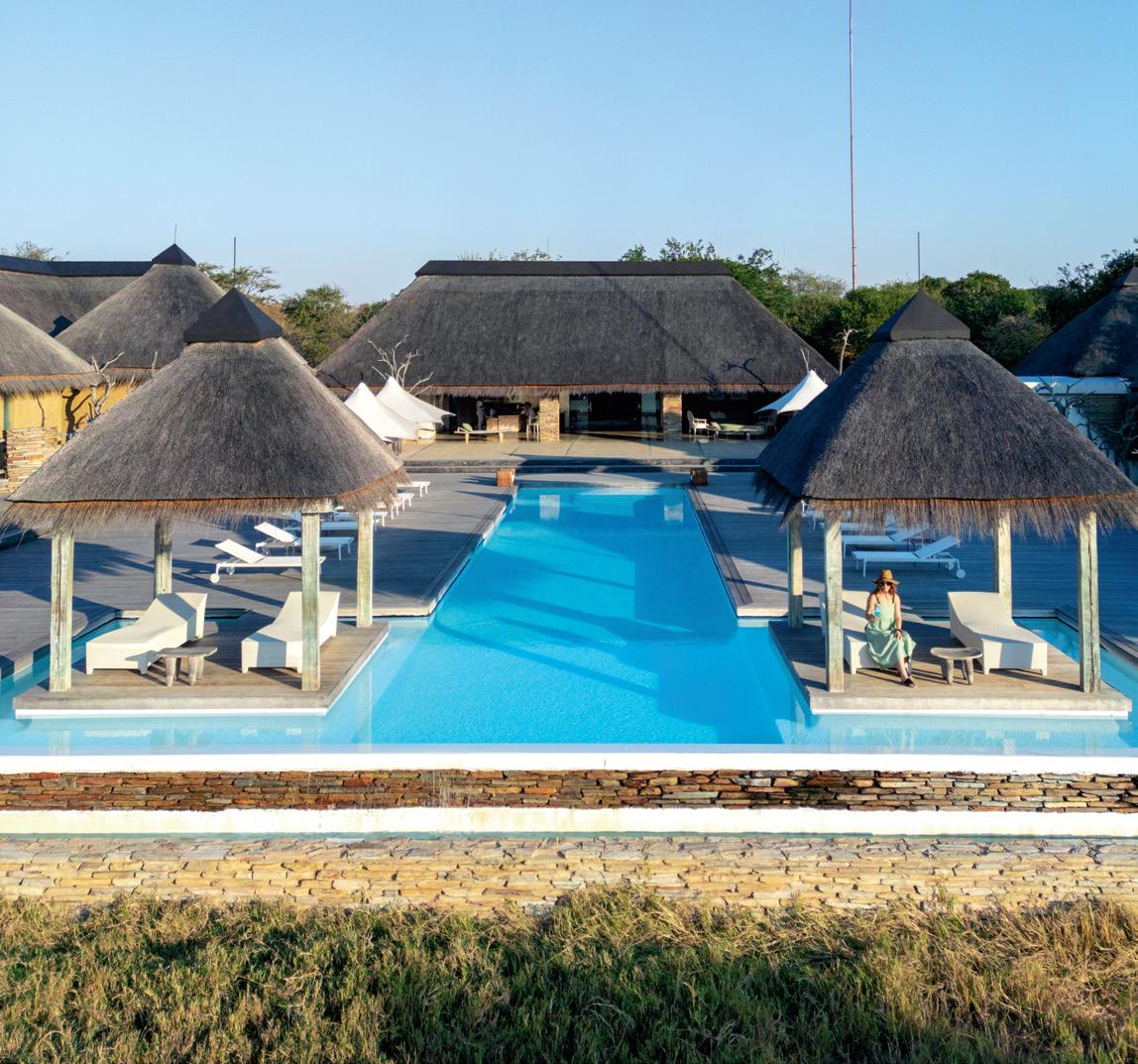
Finding the animals of Kapama is work. The reserve covers some 13,000 hectares of African bushveld, from
low-laying grasslands to tangled scrub, and the vehicles mostly keep to rough tracks for sightings of the reserve’s Big Five (lion, elephant, African buffalo, leopard and rhino). The drive is never boring, every sense is heightened with nervous excitement. On our first morning drive, we spend over an hour searching for an elephant herd, zigzagging across the south east corner of the reserve, looking for any clue that tells us where they might be. We see African buffalo, kudu, giraffe, impala (there are always impala) but we get no closer to the pachyderms. Patience is a virtue on a South African safari and waiting is just a part of the, ahem, game and ours is rewarded when a call comes over the radio.
We drive to a new area of the reserve, Tervin kills the engine, and we wait, listening. Rustles, harrumphs and the snapping of twigs come from dense foliage on both sides. I see a flash of trunk snake around a branch, pulling it and its sage-green leaves into an open mouth. It belongs to what is, in that second, the biggest elephant I have ever seen. That is, until another elephant, then another and then five more emerge from the trees. The longer we are here, the more elephants appear, including two babies who lumber out of the foliage, bumbling by our vehicle and towards the matriarch of the herd. Soon, we are surrounded. It would be a lie to say I’m not a little nervous. It is a strange vulnerability to be so exposed and aware that nothing but a car-length is between me and some of the largest mammals on the planet. The closeness that the vehicles can get to the wildlife never failed to thrill me.
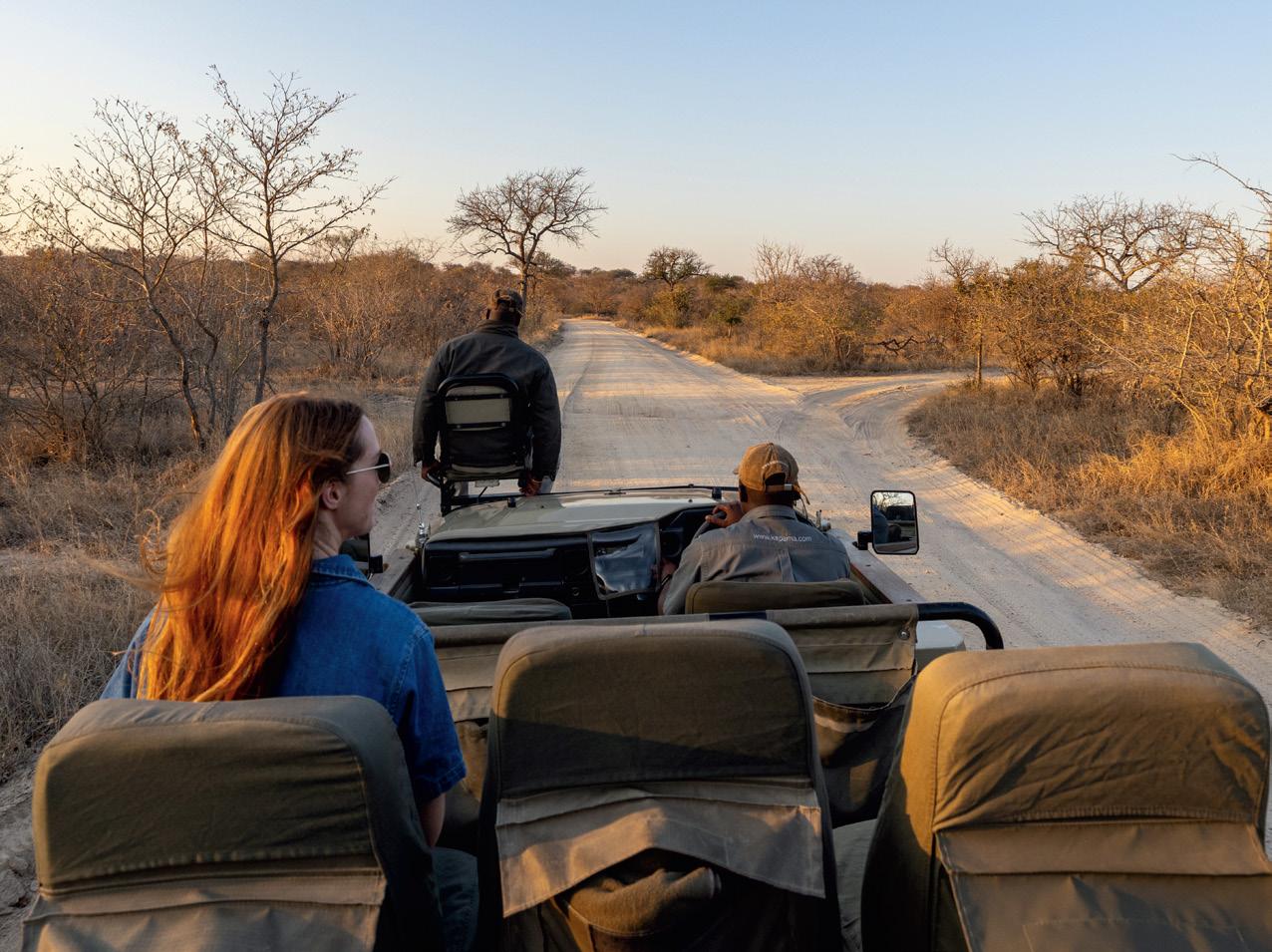

Making connections
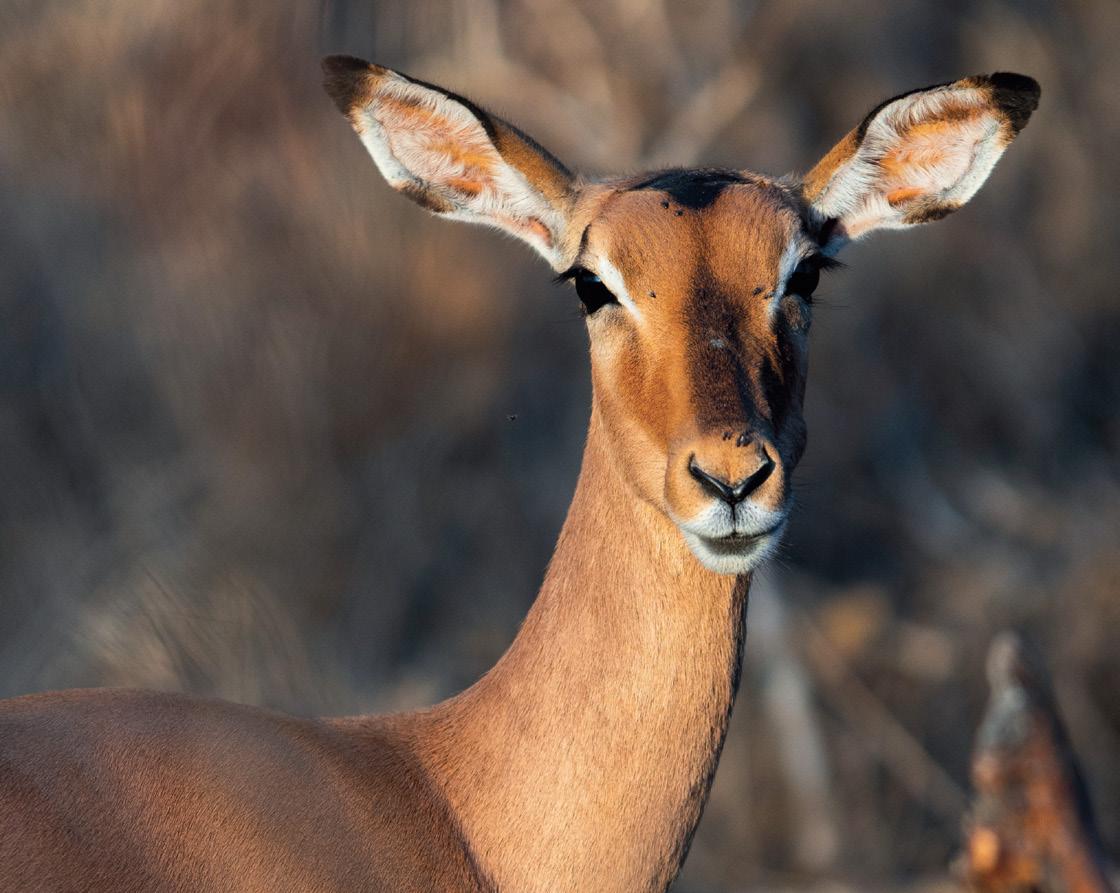
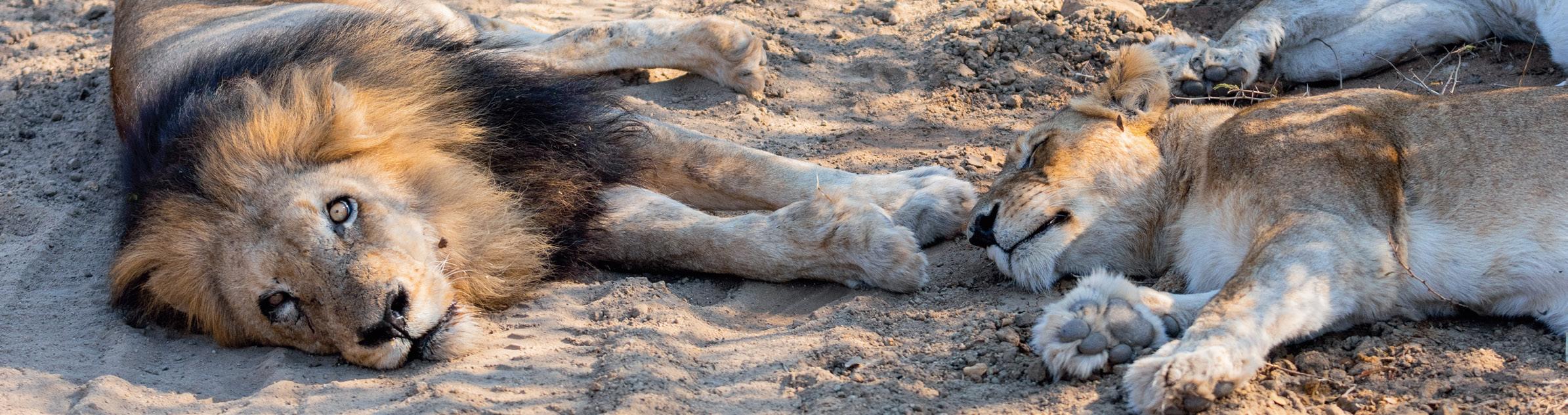
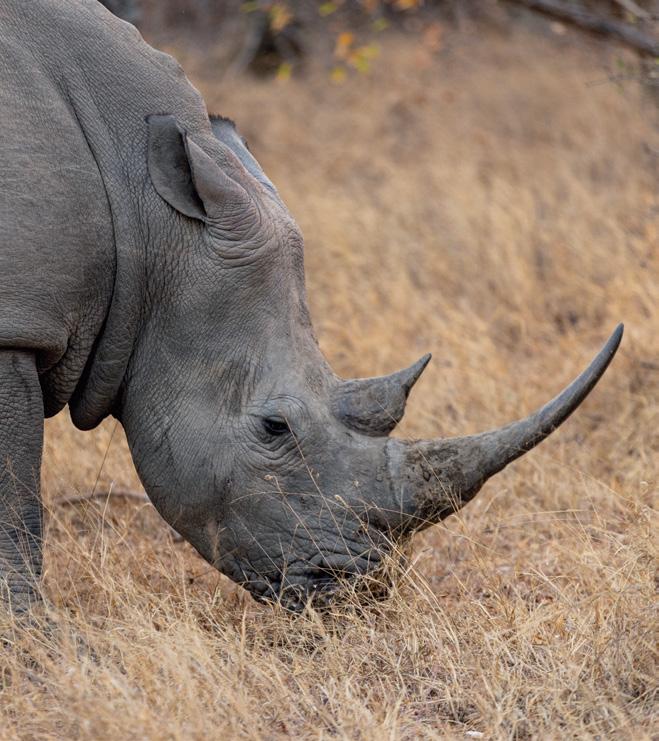
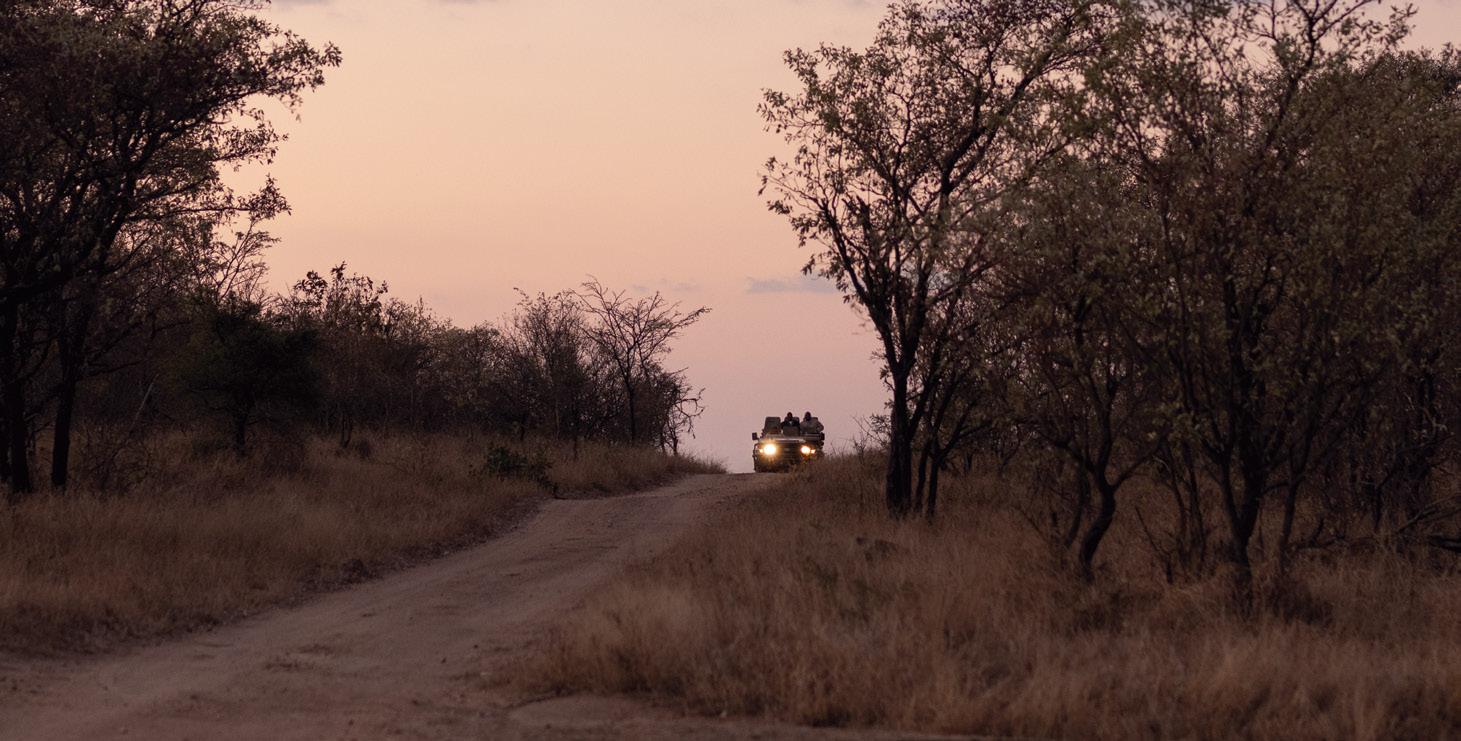
PREVIOUS PAGE, FROM LEFT: poolside at Kapama River Lodge; on the game trail with guides Tervin and Phillip. CLOCKWISE FROM TOP LEFT: the writer on safari in South Africa; an impala; a pair of lions; a sunset game drive at Kapama Private Game Reserve; a white rhinoceros.
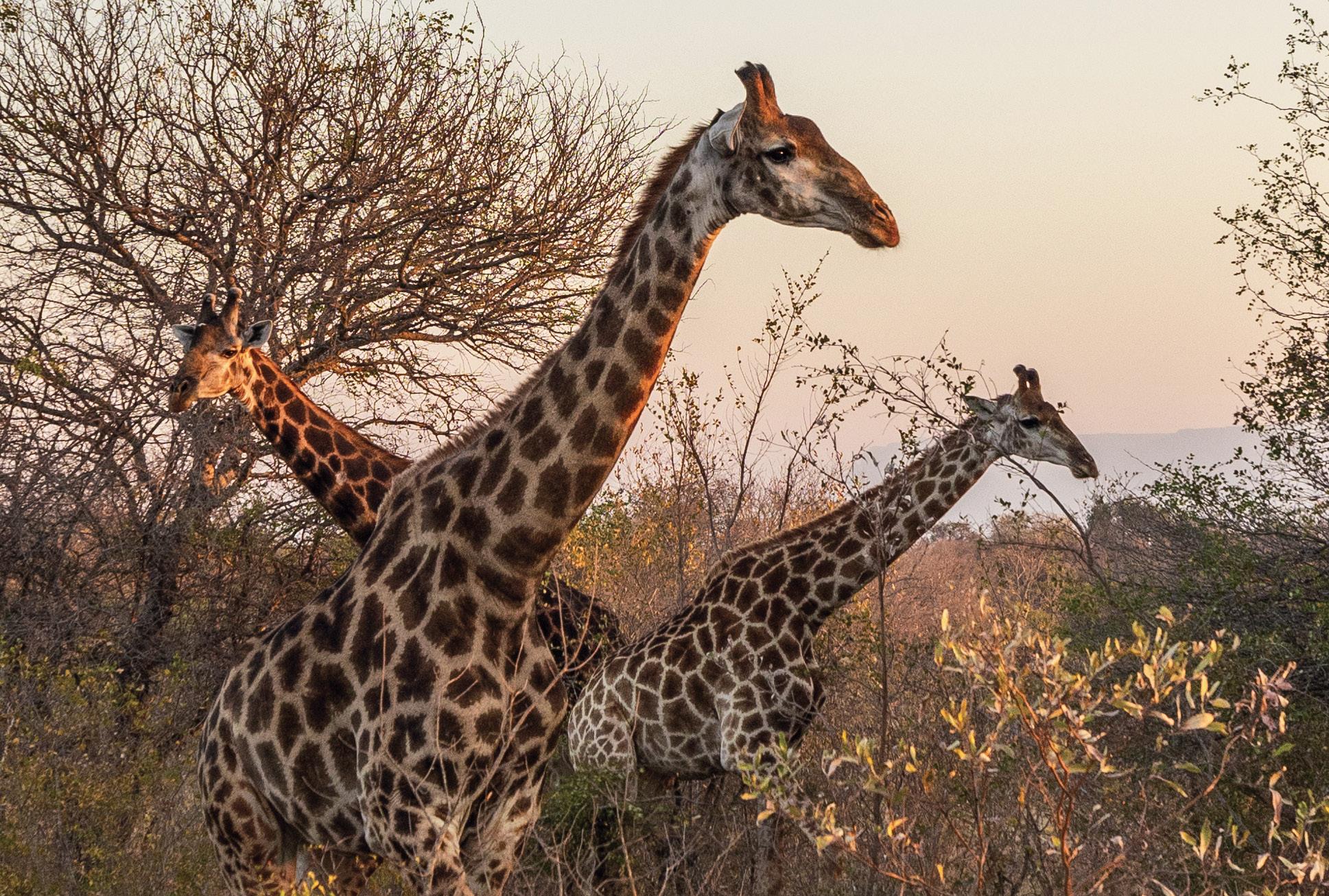
e wildness of safari demands you never have the same experience twice.
On one drive, it’s three lionesses lazing by a watering hole, sleeping off a big meal. Another day, we cross paths with a different trio, this time on the hunt. They take little notice of us, their attention instead on their next feed.
Even the quiet moments and missed encounters are memorable. “We had stopped for sundowners,” Janet Sherwood recalls. “And we heard a lion roar in the distance, but our guide was saying it was probably a kilometre, two kilometres away. Well, a few minutes later we hear an absolute stampede of hooves, and our guide is suddenly hurrying us in the car, telling us ‘Get in, get in!’ and that we have to leave. It was incredible, so amazing how quickly things change.”
Even to a seasoned guide like Tervin the sightings never lose their sparkle. “We never face the same situation twice, it keeps us motivated,” he says. “Picking someone up [from Hoedspruit Airport] without a clue and seeing their expressions when they see something like an impala is the best. Like yours.”
Kapama River Lodge has one main restaurant, and, after each game drive, it becomes a stage for guests to share.
Mealtimes, especially breakfast, are a regular show-and-tell event. A pair of women, friends from America, tell another couple how an elephant got too close for comfort that morning. Janet and Craig share their experience about lions feeding on a zebra, and I watch a little girl flick through photos on her mother’s smartphone, more interested in that morning’s memories than the freshbaked pastries on her plate.
While the feathery and four-legged occupy a bulk of my own camera roll, the time I have with the people of Kapama is no less memorable. “When guests arrive here, we as a team already understand that people may have saved up for quite some time,” explains Kinty Tshuketana, assistant lodge manager. “We want each guest to feel they have a personalised experience.”
The beauty of this approach becomes clearest on our final night. Guides join their guests for dinner every night but tonight we are not at our table, instead being drawn to a crackling fire pit on a sunken terrace lounge. For a split second I worry if Tervin will find us, forgetting that if he can spot a leopard in the brush, we are easy fodder. He appears two minutes later and takes a seat. We spend the next 30 minutes talking,
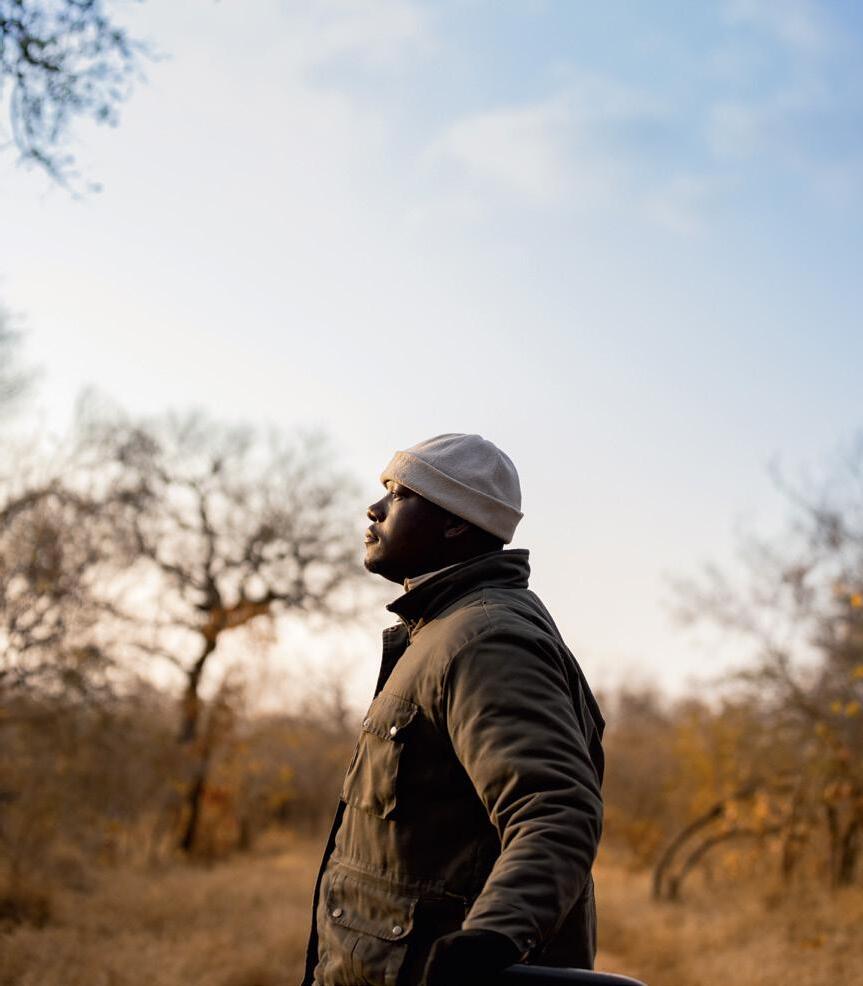
learning as much about Tervin as we have about wildlife: he and Phillip are cousins, their grandparents lived in Kruger National Park before it was designated such, and he hates snakes. He also, somewhat shyly, admits his favourite part about being a guide. “When you drop guests off, you’ve turned their world upside down and they are telling you things that you don’t even remember saying, because what you have shown them and what they have seen is so amazing.” He pauses for a moment. “It makes me happy being in photos that are so special to them.”
Kinty believes the connection guests make with their guides is one of the reasons the lodge sees so many return guests. “The safari experience is quite emotional, and the little bits that happen in the lodge, that is just the cherry on top,” she says. “It warms our hearts to know that people from overseas actually come back to see us.”
Two days at Kapama River Lodge has me knowing I will be one of those returning guests. Why should the animals be the only ones to undertake an annual migration? Until then, safari is struck from my bucket list and the game plan for the next one begins.
ABOVE: giraffes in the early morning light; Phillip, assistant tracker at Kapama Private Game Reserve.
DESTINATION: Brainpower
Put fuel on (fire) Fuss
Most conceited
Bucketing
Solitary person Pewter metal
Bonkers
Daily grind, ... race
Army manoeuvres
Glinted
Posy
Optic hair
Henna or indigo
Make love not ...!
ACROSS
Look in wonder Ivy League university
Rivals
Number of cat’s lives
Delivered unreturnable serve
Data
Female zebra Notice
Distillery tank
Neither
Morose
Have existence
Yellowstone’s ... Faithful
Ballerina’s skirt
Skinflint
Ice-free Norwegian port
Compared to
Groups of labourers
Stationed Jewels
Loose
Primary
Forbidden (2-2)
Ledger entry
Slippery fish
Illegal drug (1,1,1)
... or daughter
Drily humorous
Wow!
Harbour work boat ... & flow
Mellowed & ripened
Verbal
Nominate
Barks shrilly
Life & death matters
Lather
Garden hut