
e new wave of Moroccan food
Marrakech’s chefs are taking inspiration from traditional dishes, but switching things up.
Digging into Phuket’s tin-mining history
Coolies Club is a new venue that is celebrating a little-known part of the Thai region’s past.
Getting your guru on in Bali’s Ubud
At Anantara Ubud Bali Resort you can heat things up with a traditional fire ritual.
Peak loyalty on the slopes of Mt Buller
Are Melburnians as loyal to their favourite mountain as they are to their football team?
Pirate tales and a sunken city in Jamaica
Port Royal has a lot of maritime history, and part of the city is even underwater these days.
Melbourne’s laneway culture writ large
Hannah St Hotel has taken an overlooked location and turned it into a must-visit destination.
The best drinking, dining, sleeping and fun on this muchloved island destination.
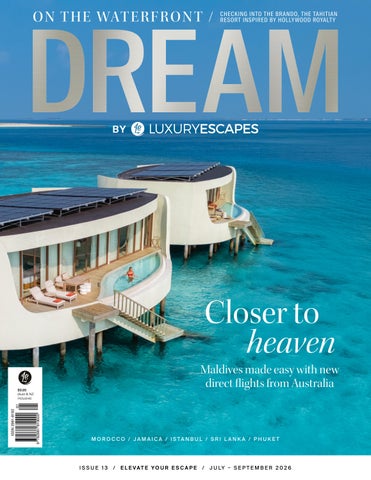
Taking the inaugural Luxury Escapes’ direct flight from Melbourne to Malé.
Fifty ways to celebrate the 250th anniversary of the United States of America.
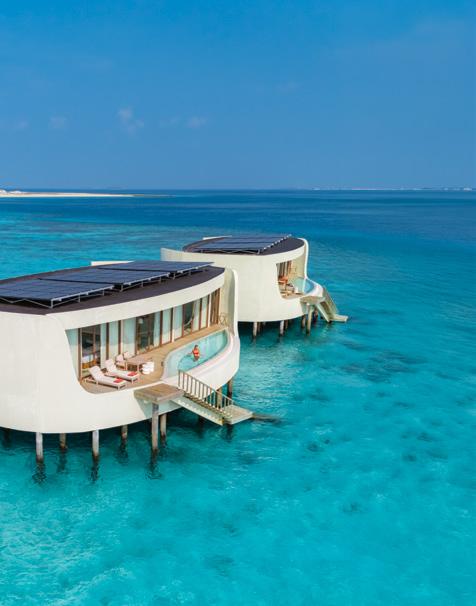
The Brando is an ultra-luxury resort on an isle that enchanted Hollywood actor Marlon Brando.
Whistler-Blackcomb has such epic apres-ski that hitting the slopes can seem an imposition.
Head of Content
Penny Cordner-Maas
Managing Editor
Paul Chai
Creative Lead
Natalie Meneghetti
Content Manager
Stephanie Mikkelsen
For all editorial enquiries, contact editorial@luxuryescapes.com
Strategic Partnerships
Leader
Chris Neill
Tourism Boards
Partnerships Manager
Jodie Collins
Contributing writers
Nate Robinson, Adam Schwab, Jessica Bedewi, Rebecca Elwood, Craig Tansley
Design team
Elise Ackland, Sabrina Gigliotti, Nathan Pascual, Veronica Sam
Strategic Partnerships
Executive
Annika Rothschild
For all advertising enquiries, contact mediasales@luxuryescapes.com
CEO and Co-founder
Adam Schwab
Chief Marketing Officer Ben Connell
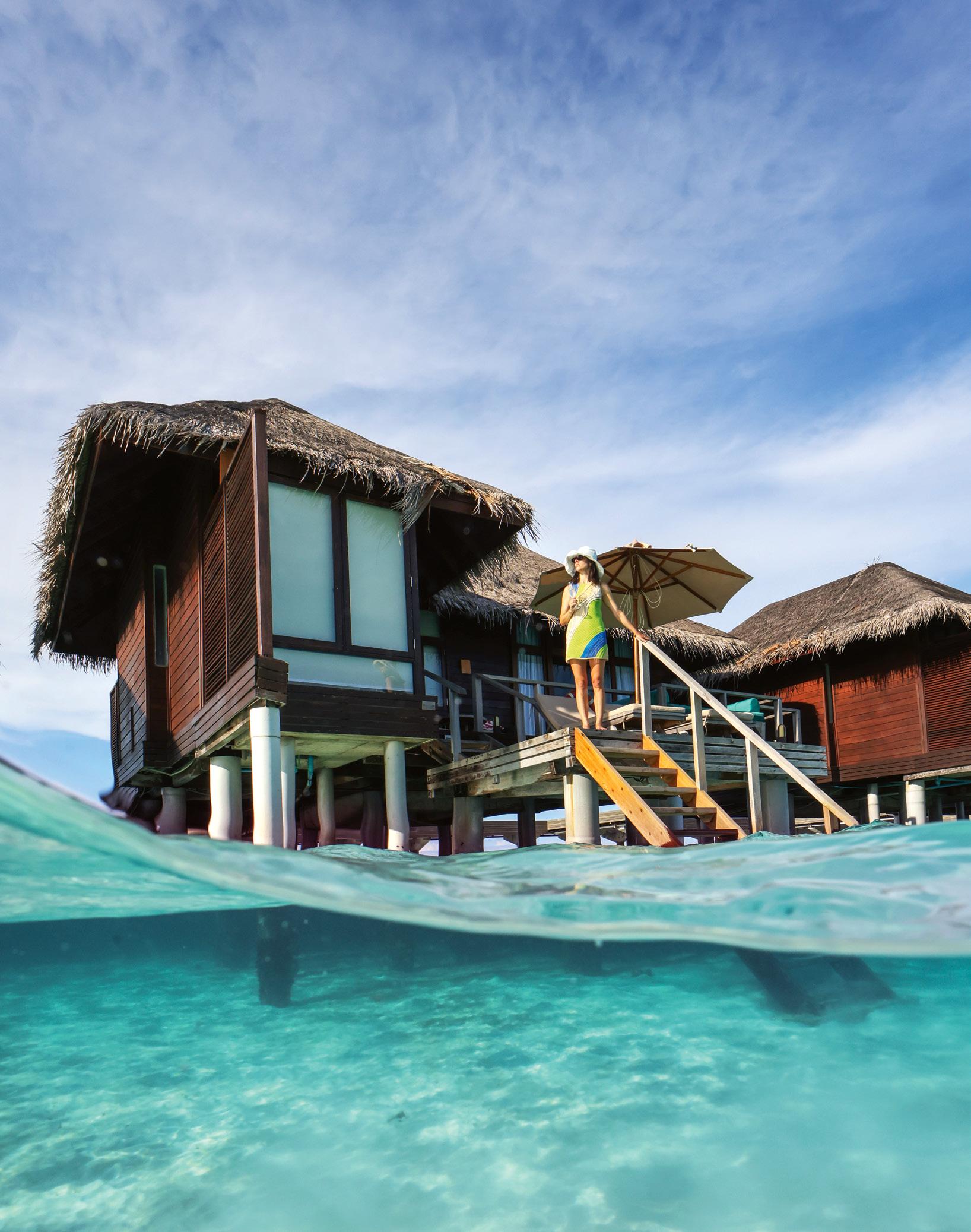

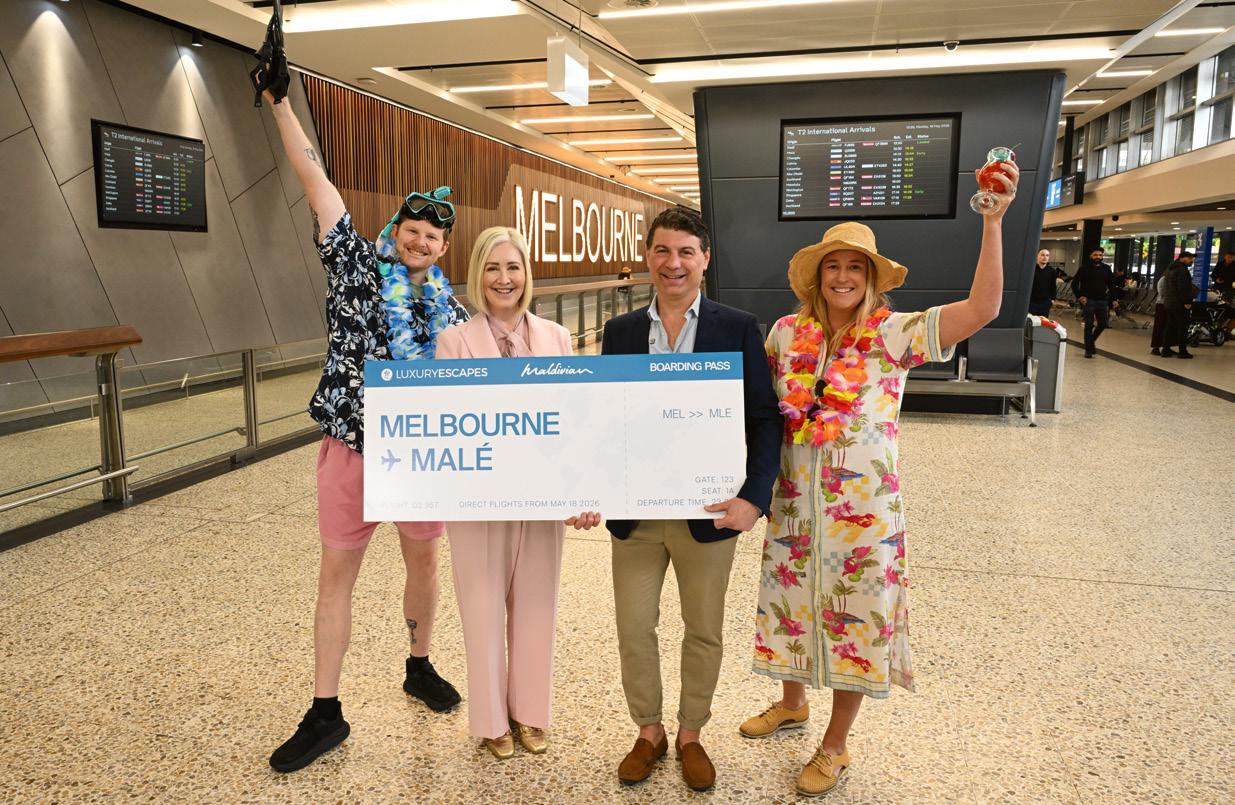
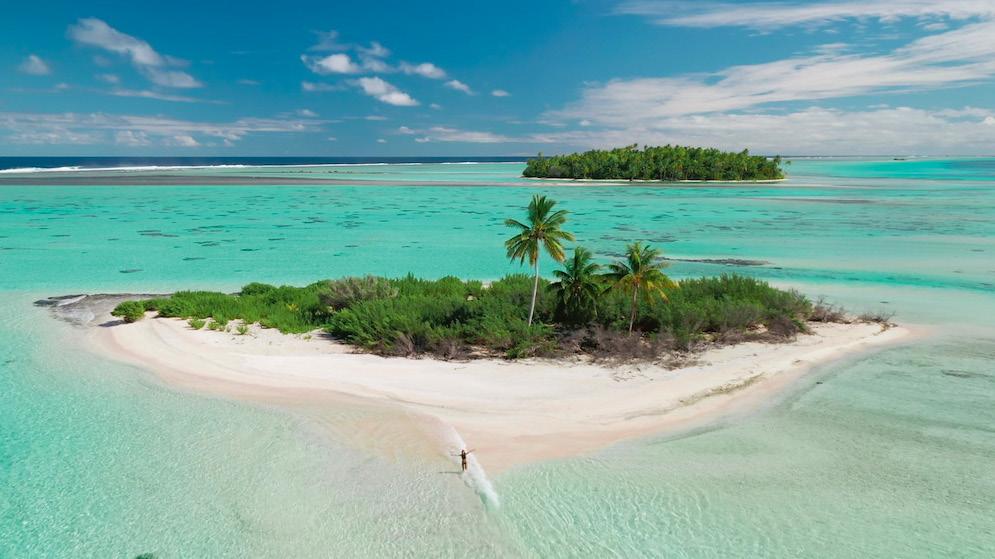
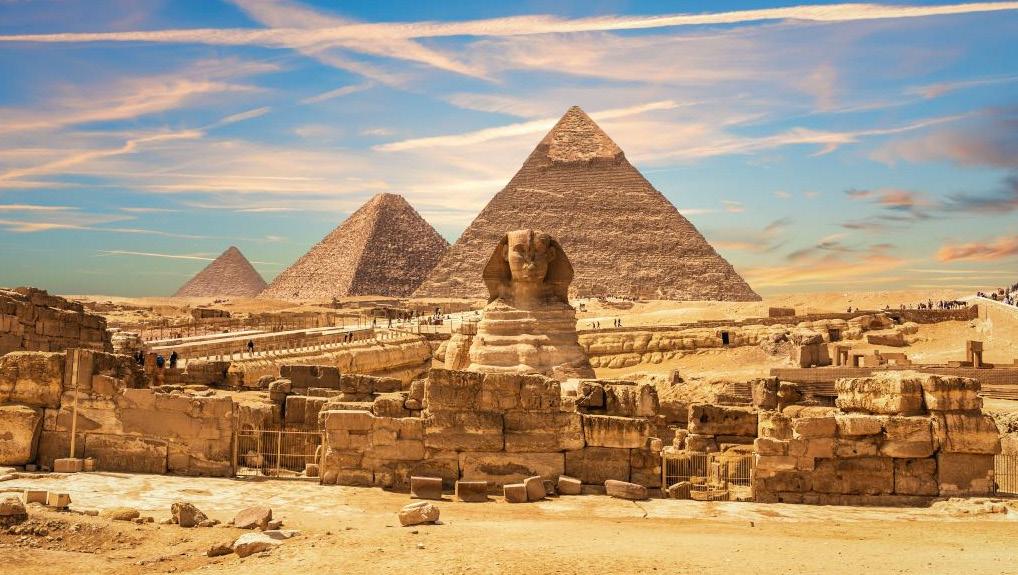
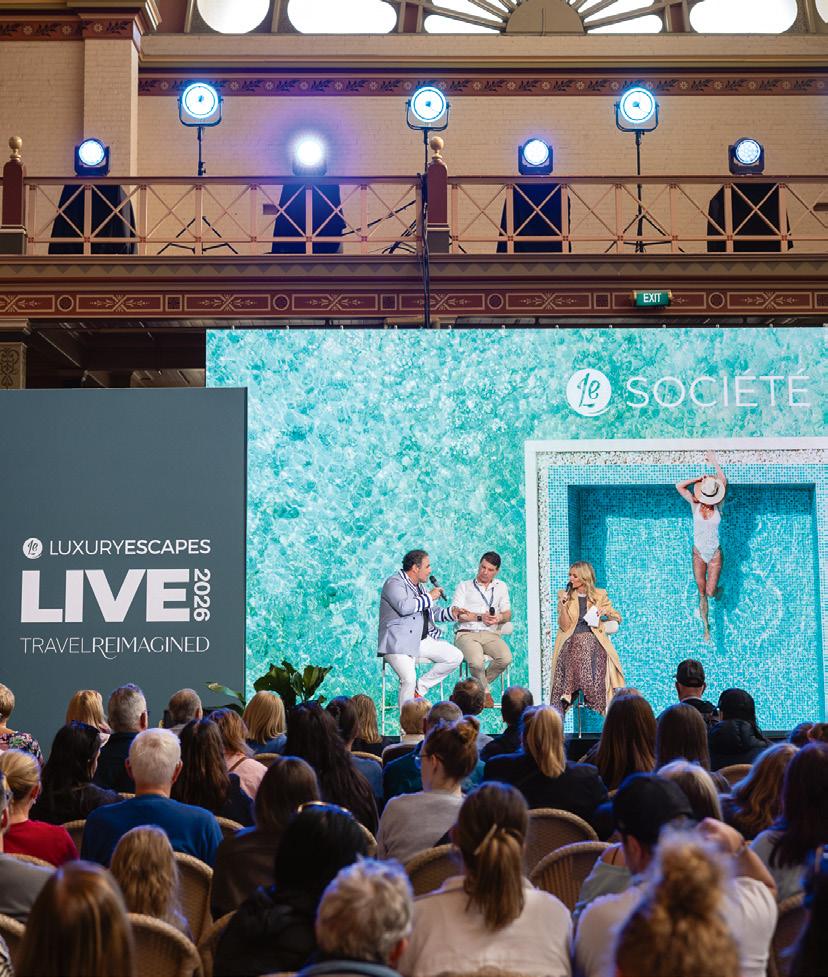
It has been a busy time at Luxury Escapes with the rollout of two of our most ambitious projects to date. In the space of just a few days we debuted Luxury Escapes Live, our first-ever travel expo, at Melbourne’s historic Royal Exhibition Building and our inaugural flight from Australia to the Maldives took off.
Over two days in Melbourne, Luxury Escapes Live saw more than 13,000 avid travellers file through the doors of the Royal Exhibition Building and speak to over 100 of our most trusted travel partners to help them book the ideal luxury escape. On our main stage we had cooking demonstrations from Miguel Maestre and Shane Delia, and expert panels with a range of travel professionals; we also gave away some amazing prizes and got to engage with some of our most passionate travellers over coffee, Hong Kong dim sum and Champagne.
The following day, it was all hands on deck for the inaugural flight from Melbourne to Malé in partnership with Maldivian. We have always been a passionate exponent of this little slice of paradise, but we often heard how
inconvenient the connecting flights were, so we decided to charter our own A330-200 and start Australia’s first-ever direct flight to the Maldives. The inaugural departure had a real buzz about it with live music at check-in, giveaways and the traditional water cannon salute that airports give to a new route when we touched down in Malé. We took some of Australia’s best-known media to a handful of Maldives resorts and the rest of the plane was full of Luxury Escapes customers who had eagerly booked this history making flight. You can read all about the flight and the resorts in our cover story “Isle be seeing you” on page 80.
In this issue, we also celebrate the USA’s 250th birthday with “Hip, hip, hooray, USA” on page 88 and get exclusive access to Tahiti’s The Brando resort on page 98. Elsewhere in the magazine we take to the ski slopes in Victoria (“Peak loyalty”, page 36) and Whistler (“Let us apres”, page 104) and check out Jamaica’s chequered history (“Pirate life”, page 42).
We hope to see you soon on one of our flights to the Maldives.
Adam Schwab
CEO and Co-founder Luxury Escapes

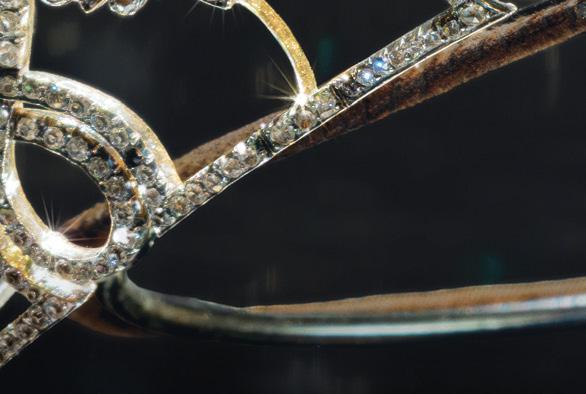
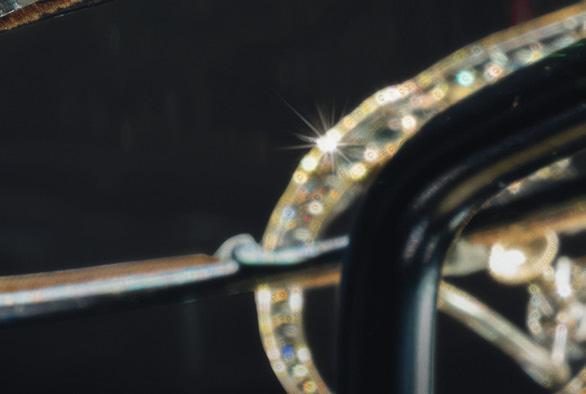


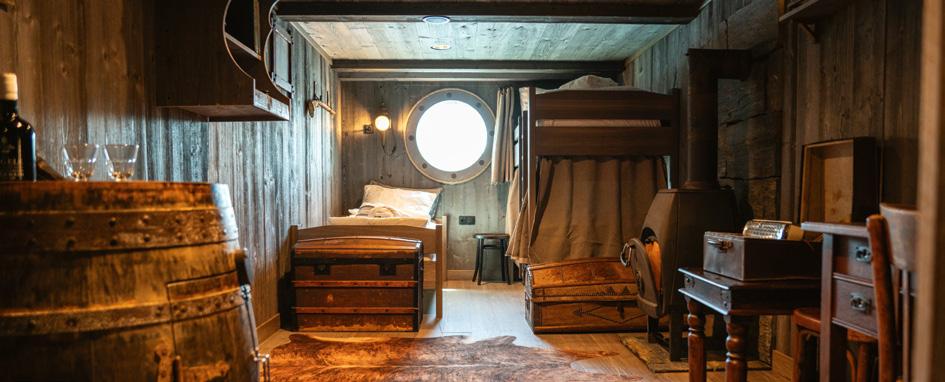
HX Expeditions, the world’s longest-running expedition cruise company, is seeking to tap into that nostalgia with the launch of its 1896 Cabin.
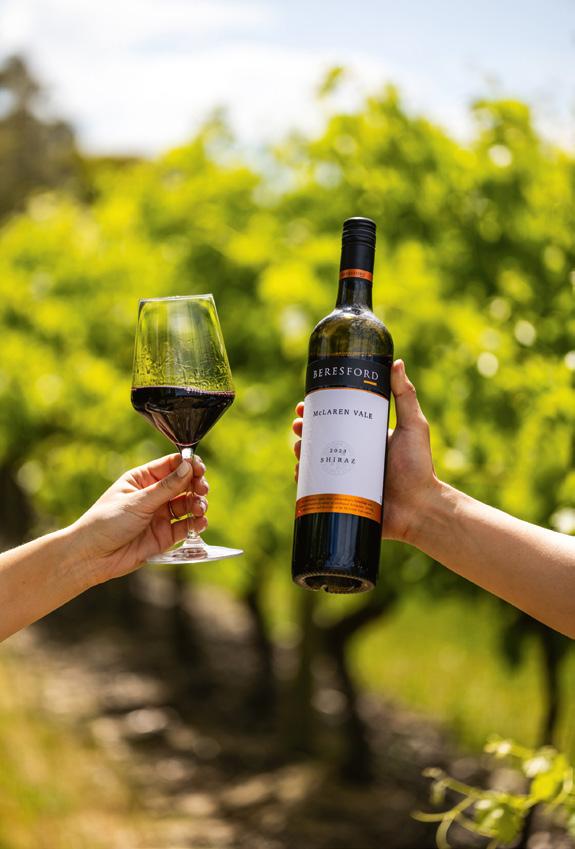
A $25 McLaren Vale Shiraz has just been named the world’s best at the 2026 International Wine Challenge.
This immersive overnight experience is inspired by a 19th-century expedition cabin and designed to recreate the atmosphere of early exploration at sea. The experience is now available aboard MS Fridtjof Nansen, HX Expeditions’ first hybrid-battery powered expedition ship.
This year HX Expeditions marks 130 years since it pioneered the world’s first expedition cruise. Operating a fleet of five vessels, the company takes guests to some of the most remote regions on earth, among them the Arctic, Antarctic, and the Galápagos Islands.
Beresford Estate’s Classic Shiraz 2023 is a $25 bottle of McLaren Vale shiraz that has just been named the best in the world; not best value or best in the state, but the best shiraz in the world.
At the 2026 International Wine Challenge, one of the wine industry’s most respected global competitions, Beresford Estate’s Classic Shiraz 2023 was awarded 97 points, a Gold Medal, and four major trophies, including the coveted International Syrah Trophy.
“This result is a genuine reflection of what McLaren Vale is capable of,” says Natalie Cleghorn, head winemaker at Beresford Estate. “When you let the fruit and the site do the talking, the quality speaks for itself.”
For context, Beresford’s modestly priced shiraz outscored trophywinning wines including Penfolds Bin 407 Cabernet Sauvignon, Tolpuddle Chardonnay, and House of Arras Grand Vintage. Beresford was also one of only ten Australian producers to receive a trophy at this year’s awards.
A bold new dining experience has been launched at NH Collection Maldives Reethi Resort in the UNESCO-protected Baa Atoll.
In celebration of this legacy, the cabin has been created as a limited-edition experience, inviting guests to step back into the year 1896. “This cabin was always meant to honour our origins, and what our teams and partners have delivered is extraordinary” says Gebhard Rainer, Chief Executive Officer of HX Expeditions. “The 1896 Cabin has surpassed everything we first envisioned. We hope it gives guests a real sense of what life at sea was like 130 years ago. History, after all, is best remembered when lived.”
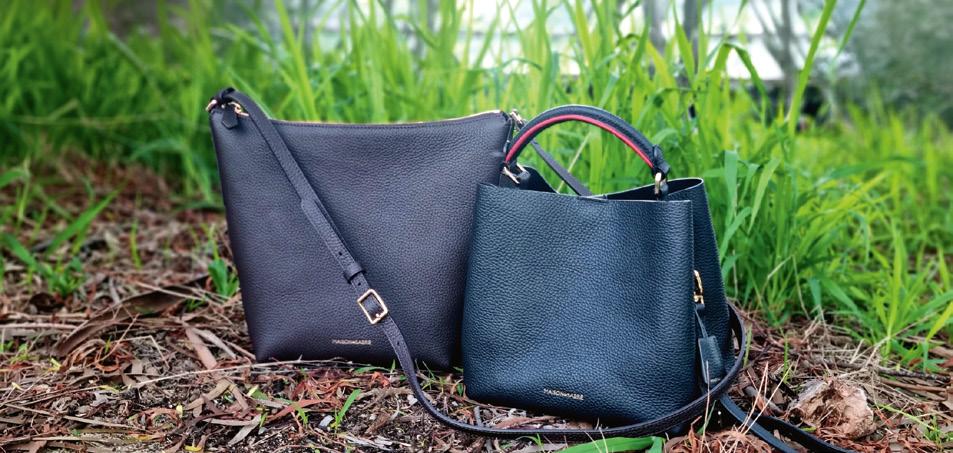
ese bags have become something of a cult favourite at MAISON de SABRÉ and the new designs are available in six di erent colours.
These stylish bucket bags from MAISON de SABRÉ are perfect for your winter styling. By day, the Zipped Bucket Bag sits at a perfect height for easy access and security – and looks smart in Espresso Brown. In the evening the Mini Bucket Bag is lightweight and playful for a night out with snap-shut magnetic closing and a detachable strap, this one in Rouge Noir with subtle red accents. From $499; maisondesabre.com
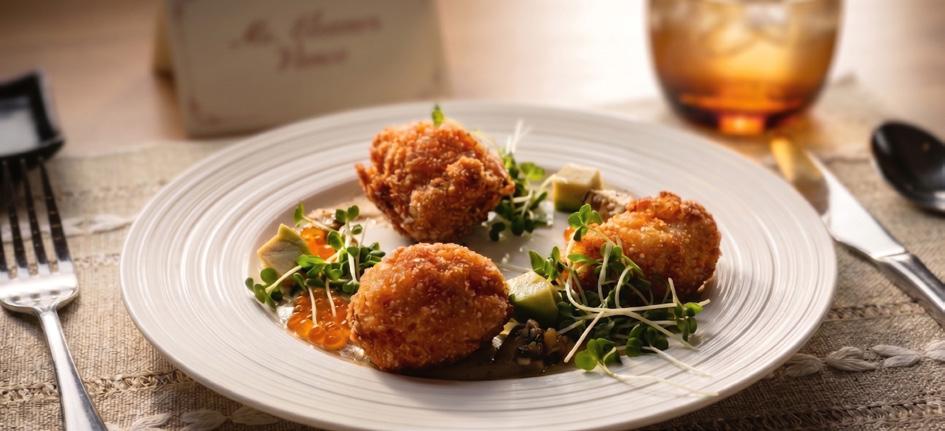
Caravela is an immersive culinary journey that is perfect for a region that is more ocean than land, with several courses inspired by the great maritime expeditions that have shaped the global food scene.
Blending Spanish culinary heritage with Maldivian provenance, Caravela offers a multi-sensory journey where each course unfolds as a chapter in the story of exploration, trade and cultural exchange. The concept takes its name from the caravel, the agile Portuguese vessel that enabled pioneering voyages between the 14th and 17th centuries.
Designed as an intimate, dinneronly experience for up to 12 guests, Caravela centres around a communal table. The inaugural menu, The Atlantic Voyage of 1487, traces the route of early explorers who sailed from Iberia along the African coast towards the Cape of Storms in search of a sea passage to India.
The five-course menu opens with First Light of the Atlantic (pictured), crisp King Crab fritters with ikura and lime-yuzu vinaigrette, before moving into dishes like Winds of the Cantabrian Sea, a torched Maldivian tuna loin with escabeche and Moroccan spices.
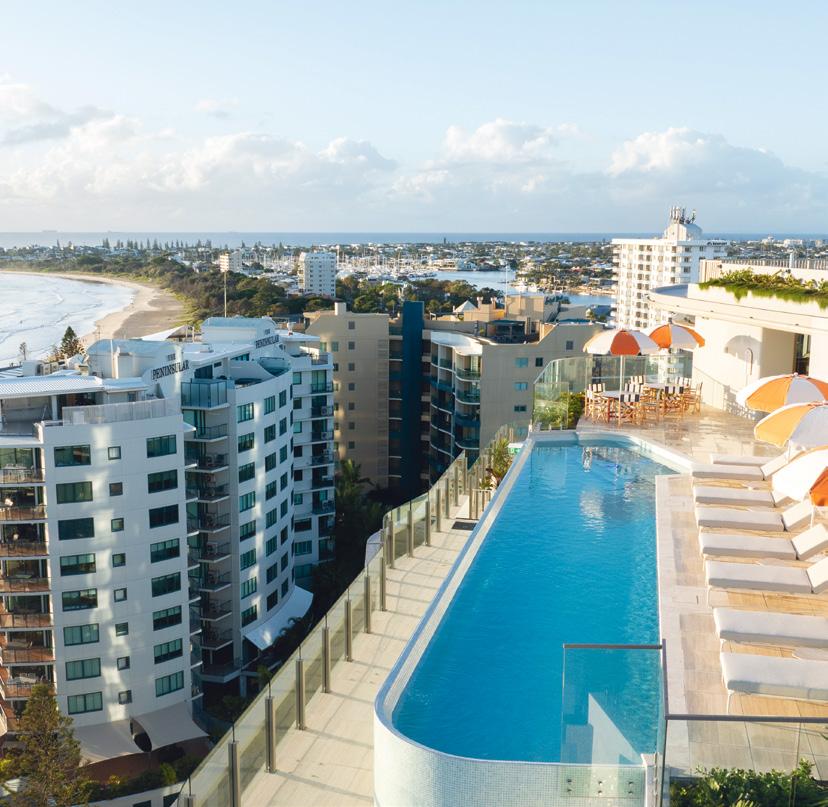
e Sunshine Coast’s rst internationally branded new-build hotel in more than four decades.
This 180-key bolthole sits steps from Mooloolaba Beach. Rooms and suites are generously proportioned, many with ocean views and interconnecting configurations for families. The headline dining act is Sully’s Rooftop, highlighting a modern Australian menu built around local seafood, including Mooloolaba prawns and regional produce.
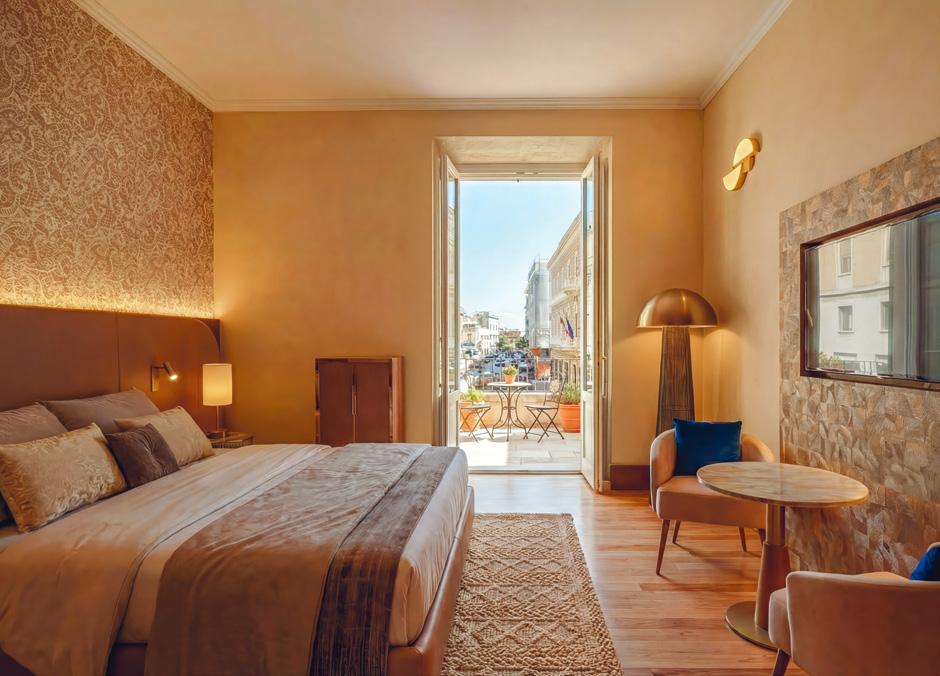
A 16th-century palazzo with a 19th-century hotel pedigree, this boutique stay is in Lecce’s historic core.
Aperitifs and sundowners are best sipped on the rooftop terrace, which showboats views directly across to the Cathedral bell tower. A spa with an indoor soaking pool, sauna, steam room and Turkish bath handles wellness whims.
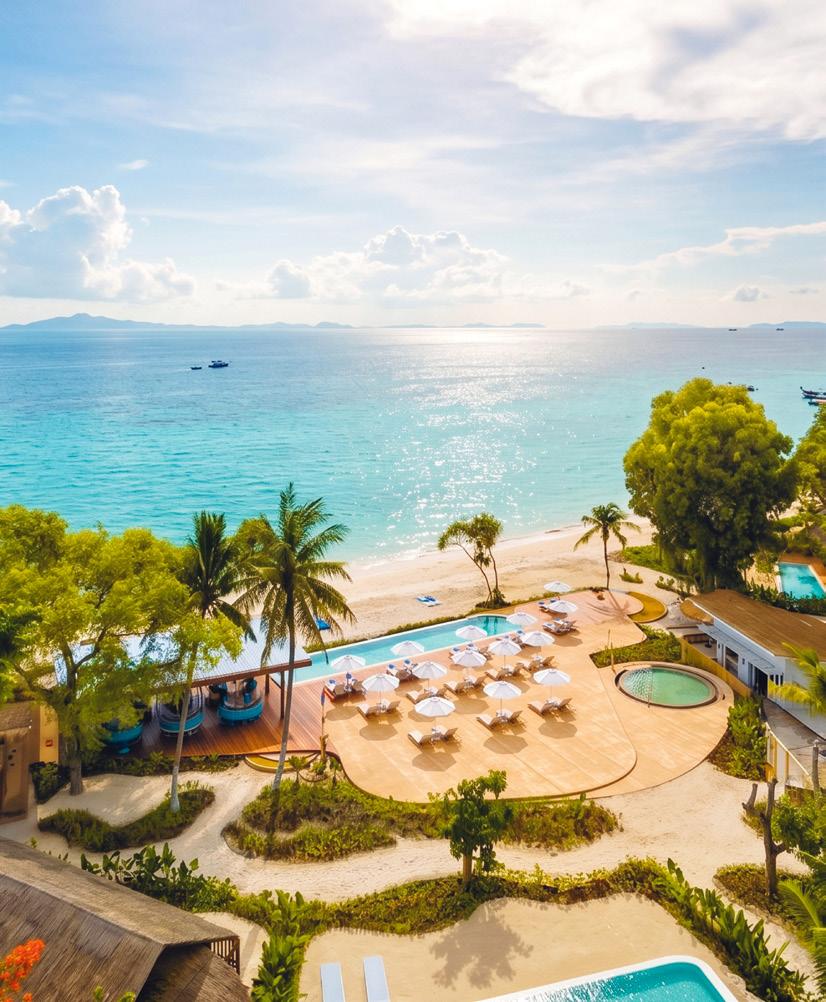
e former Zeavola Resort arrives under the Outrigger umbrella with 63 suites and villas on Laem Tong Beach.
Reachable only by boat, the resort centres on relaxed beachfront living. Mala Kitchen serves Thai and international dishes shaped by southern flavours and coastal produce, while the open-air Edgewater Bar & Grill sits at the waterline for seafood, curries and drinks.
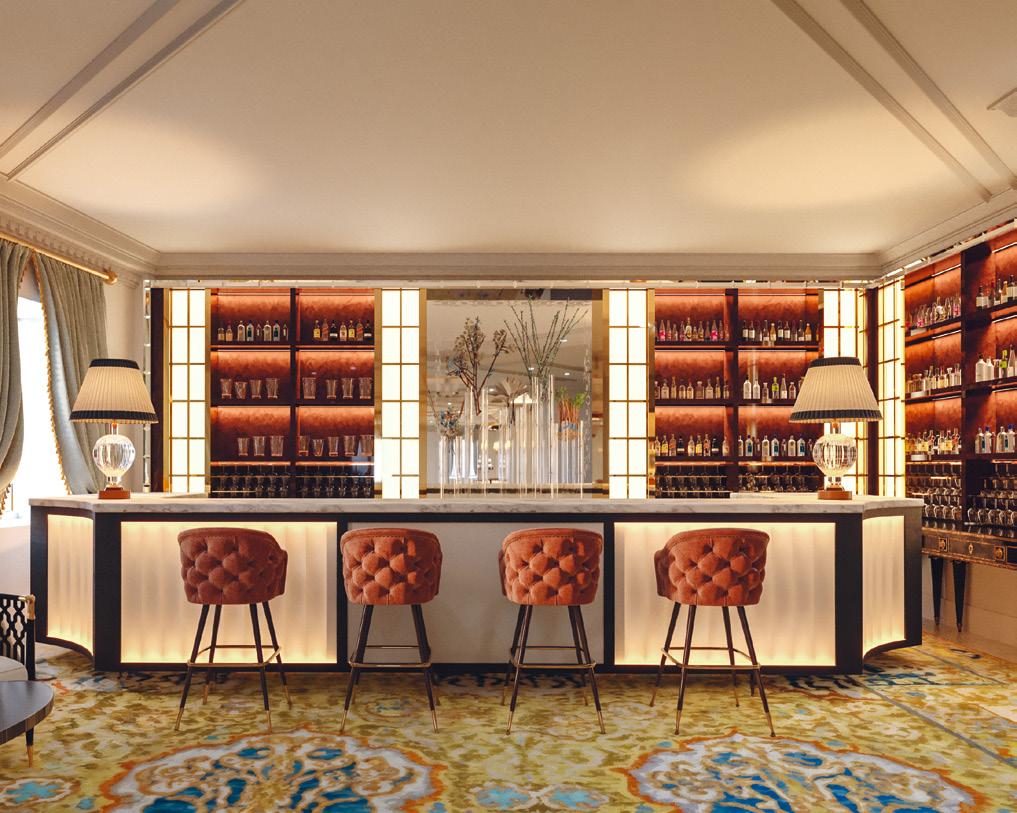
is 70-room ve-star occupies a 16th-century building directly opposite Granada Cathedral.
Rooms are configured around a courtyard or face the cathedral facade. A rooftop terrace frames both the Cathedral and the Alhambra. Signature restaurant INIZIO focuses on Andalusian cuisine, with a lobby bar and separate rooftop lounge completing the food-and-beverage lineup.
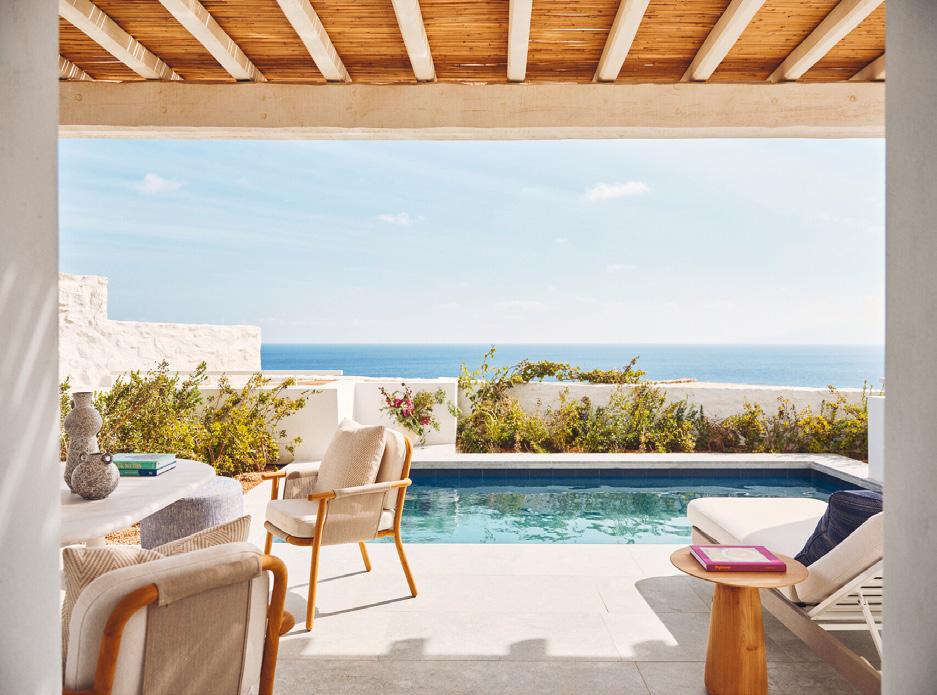
is new cli side build is Four Seasons’ rst Greek island property.
Ninety-four rooms, suites and villas come with Aegean-facing terraces, many with private plunge pools. Dining spans four venues, including Álef, a wood-fire Mediterranean grill, and Kafeneo, which channels a traditional Greek kafeneio. Elsewhere, there are two infinity pools and a small-but-serene spa.

—
This narrow Chiado tavern seats perhaps 30; the menu arrives on a chalkboard and changes daily depending on the market haul. Seafood features heavily, from scallops and squid to sardines and stingray. It’s cash only, no bookings. A glass of something enjoyed on the street outside is the best way to pass the time if you need to wait for a table.
In a small room on the edge of Praça das Flores, this wine bar is dedicated to small independent Portuguese winemakers and low-intervention wines. Tastings are welcomed, even encouraged, as is settling into the lively living room-like space. Take your glass outside in warmer weather.
Despite being just 10 minutes uphill from more popular viewpoint Santa Luzia, this small shaded garden remains relatively uncrowded even at sunset. It’s dotted with olive trees and benches, and has an unobstructed view east over Alfama to the National Pantheon and the Church of St. Stephen.
Housed in a 16th-century convent in the east of the city, this is the most under-visited major museum in Lisbon. The collection traces Portuguese tile-making from Moorish geometric patterns to the great 18th-century blue-and-white panels that still cover the city’s buildings. The showpiece is a striking pre-earthquake panorama of Lisbon made entirely in azulejo.
Two ports, two empires, one pastry. Lisbon and Hong Kong are cities of sharp inclines, crowded cafes and custard tarts baked into the daily ritual. One looks out across the Atlantic, the other over Victoria Harbour; both were built on trade, shaped by empires and de ned by what happens when cultures collide in a port. Follow the tramlines. Pack an appetite.
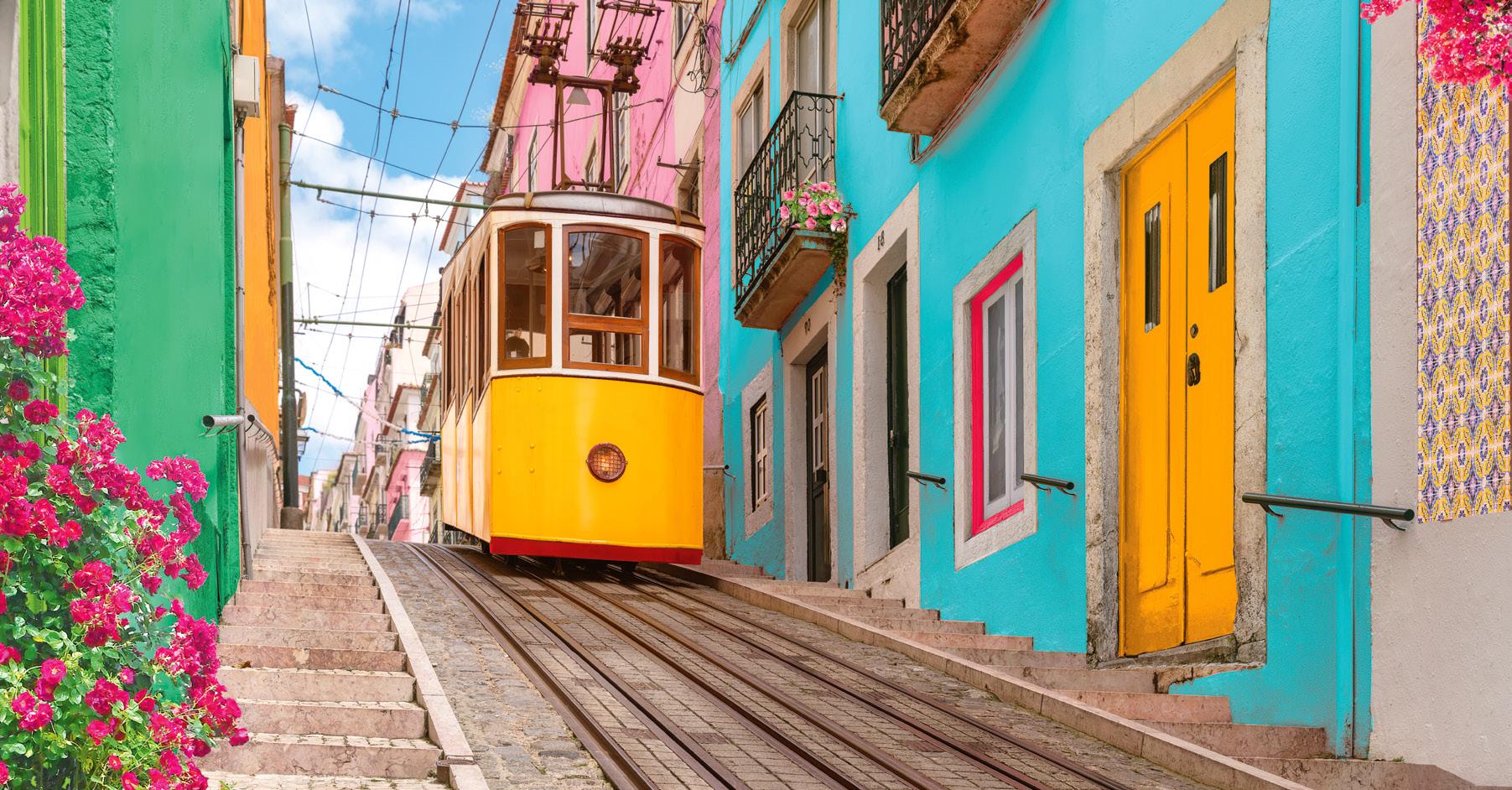
Steep streets and long nights give Lisbon its rhythm. Mornings begin over co ee and pastry, afternoons move between tiled bars and riverfront walks, and evenings gather momentum inside tiny tascas and fado taverns. e longer you stay out, the more the city makes sense.
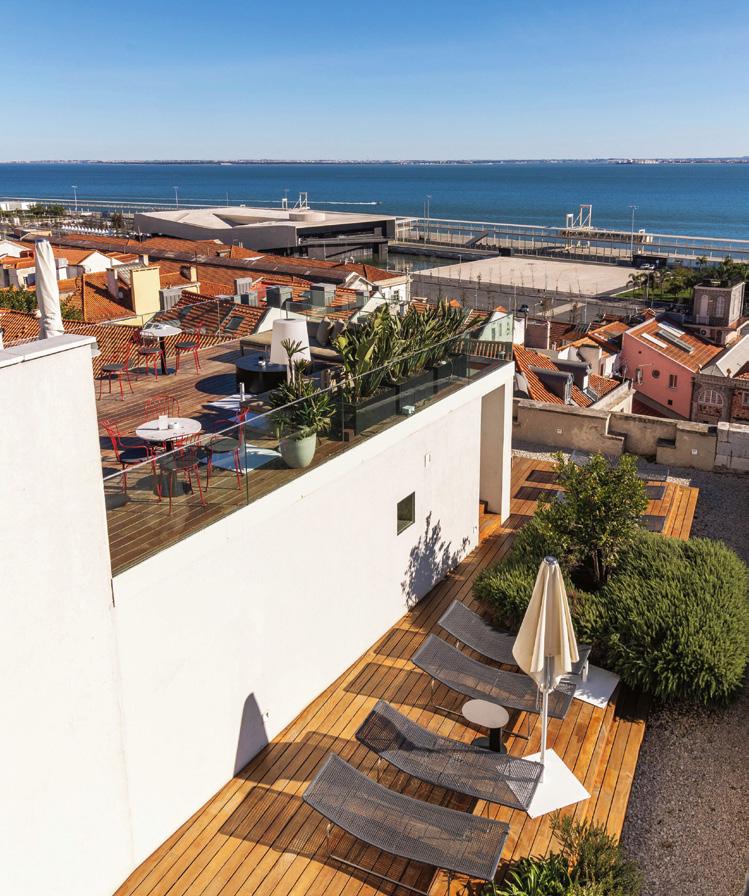
Memmo Alfama sits down a cobbled alley in Lisbon’s oldest district, five minutes from São Jorge Castle. The 19th-century building holds 42 rooms – white walls, wooden floors, Egyptian linen – and a first-floor terrace with a small pool and unobstructed views over Alfama’s rooftops to the Tagus. Guests can join one of the complimentary neighbourhood walking tours on request.
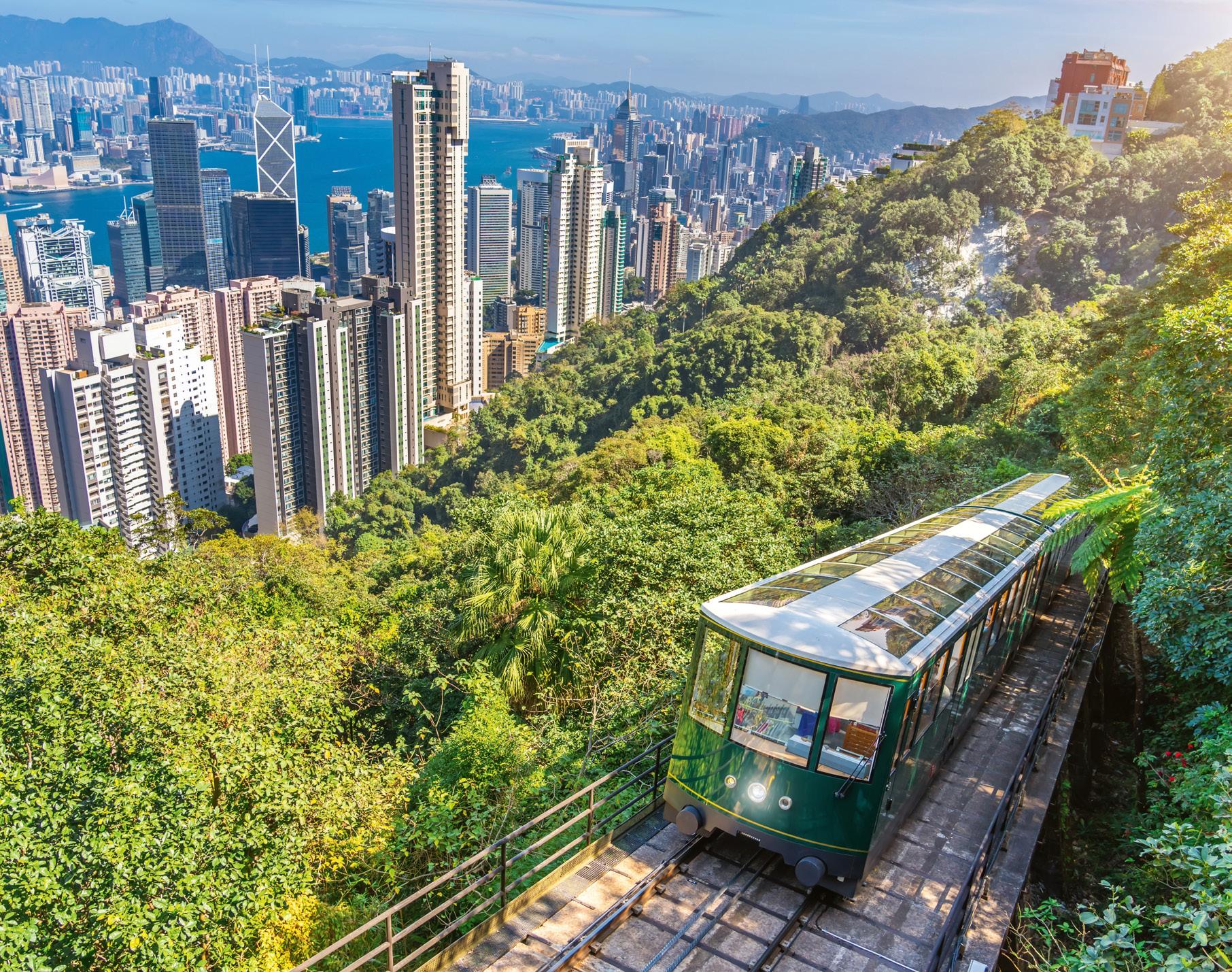
Few cities blend in uence quite like Hong Kong. It is the second most visited city on earth, home to some of the world’s most awarded hotels and bars, soundtracked by tram bells and the clatter of dim sum service. Cantonese tradition runs deep, but the city’s layered history and constant reinvention keep it at the global forefront.
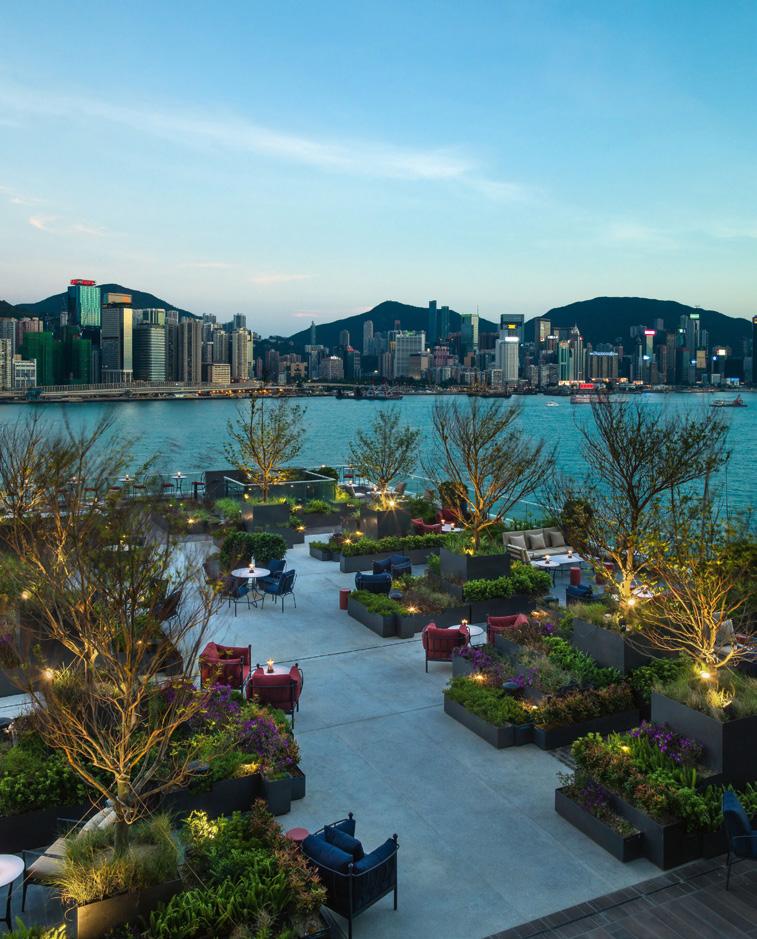
Hong Kong hotel rooms are not known for generosity of space. Kerry Hotel, on the Kowloon waterfront, is the exception. More than half of the hotel’s rooms have unobstructed harbour views, and all are large enough to unpack properly. A good bar, Cantonese dining at Hung Tong and a harbourside infinity pool are reason enough to stay in; Whampoa MTR is on the hotel’s doorstep.
Chi Kee has been on Babington Path since before Mid-Levels was fashionable. The deal: cash only, no English signage, tiled floors, fold-out tables – the same formula that has worked for decades and still worth the walk uphill. Tuck into beef brisket noodles, tendon soft enough to eat with a spoon and wontons always worth ordering.
A narrow red door on Second Street in Sai Ying Pun opens into a former pingpong hall with a double-height ceiling, bare concrete walls, red neon and dozens of gins from across the globe –expect a dozen G&T variations. There’s live music and a rotating roster of work from local artists on the walls. A light bites menu leans Spanish.
Hong Kong’s oldest street, cut into the hillside in 1844, has been the city’s antiques trade heart ever since – jade dealers, Chinese furniture, Mao-era memorabilia, ceramics, the accumulated objects of four centuries of commerce all available for those with a need. Detour into Tai Kwun, the former police station turned arts precinct by Herzog & de Meuron, for coffee and something to eat.
The former Walled City was once the most densely populated place on earth until it was demolished in the early 1990s. Now, it’s a Jiangnan-style garden with water features, pavilions and a permanent exhibition housing a bronze scale model of the original city. Eight Floral Walks track through the grounds, and there are turtles bobbing about in the ponds.
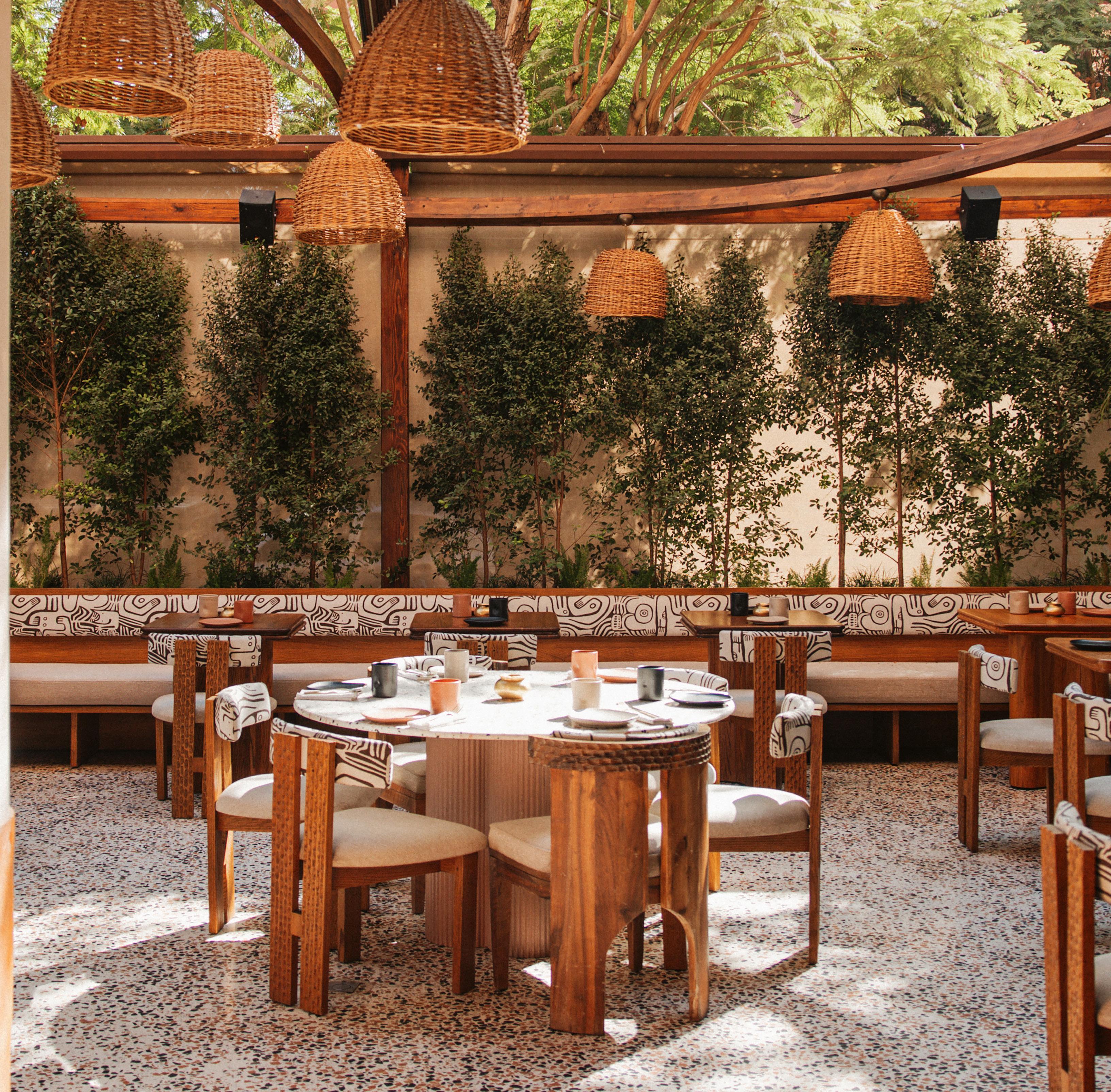
A new wave of Moroccan chefs is taking culinary traditions and making magic by putting a new spin on the country’s classic cuisine. Justine Costigan discovers restaurants that are very modern, from food to design, without losing the feel of a hearty home-cooked meal.
On the rooftop at L’mida, the bar and restaurant glows. Soft lanterns, hanging plants, patterned tiles and deep banquette seating featuring cushions in tones of green and desert pink are a chic backdrop to the sunset views over the medina. The night is balmy and the bar is buzzing. If I was looking for a taste of Marrakech’s contemporary dining scene, I’ve come to the right place.
L’mida’s menu may have familiar ingredients but the flavours, combinations and presentation feel new. Far removed but clearly inspired by the hearty homecooked meals I’ve been eating on my travels throughout the country, my tall glass of frothy housemade mint and lemon juice and plate of seven-vegetable tagine are distinctly Maghreb, but with a contemporary sensibility and a fresher, lighter touch.
“I wanted to make it special, make it modern, be creative, but always stay Moroccan,” says Nargisse Benkabbou, the acclaimed London-based chef and cookbook
author who designed L’mida’s menu and is the force behind its food philosophy.
Nargisse’s take on the cuisine she grew up with as a child of Moroccans living in Europe shows in her interpretation of classics such as tagine, pastilla and soft pulled-lamb shoulder and in unexpected mashups like the candied lemon chickenstuffed taco with green olives, sun-dried tomato, mint yoghurt and pickled onions. Like the recipes in her successful 2018 cookbook Casablanca: My Moroccan Food, this food is casual, accessible and, above all, delicious.
Nargisse isn’t the only one with new ideas. Throughout Marrakech, a new generation of restaurateurs is creating modern dining experiences that embrace legendary Moroccan hospitality and the country’s unique design sensibility.
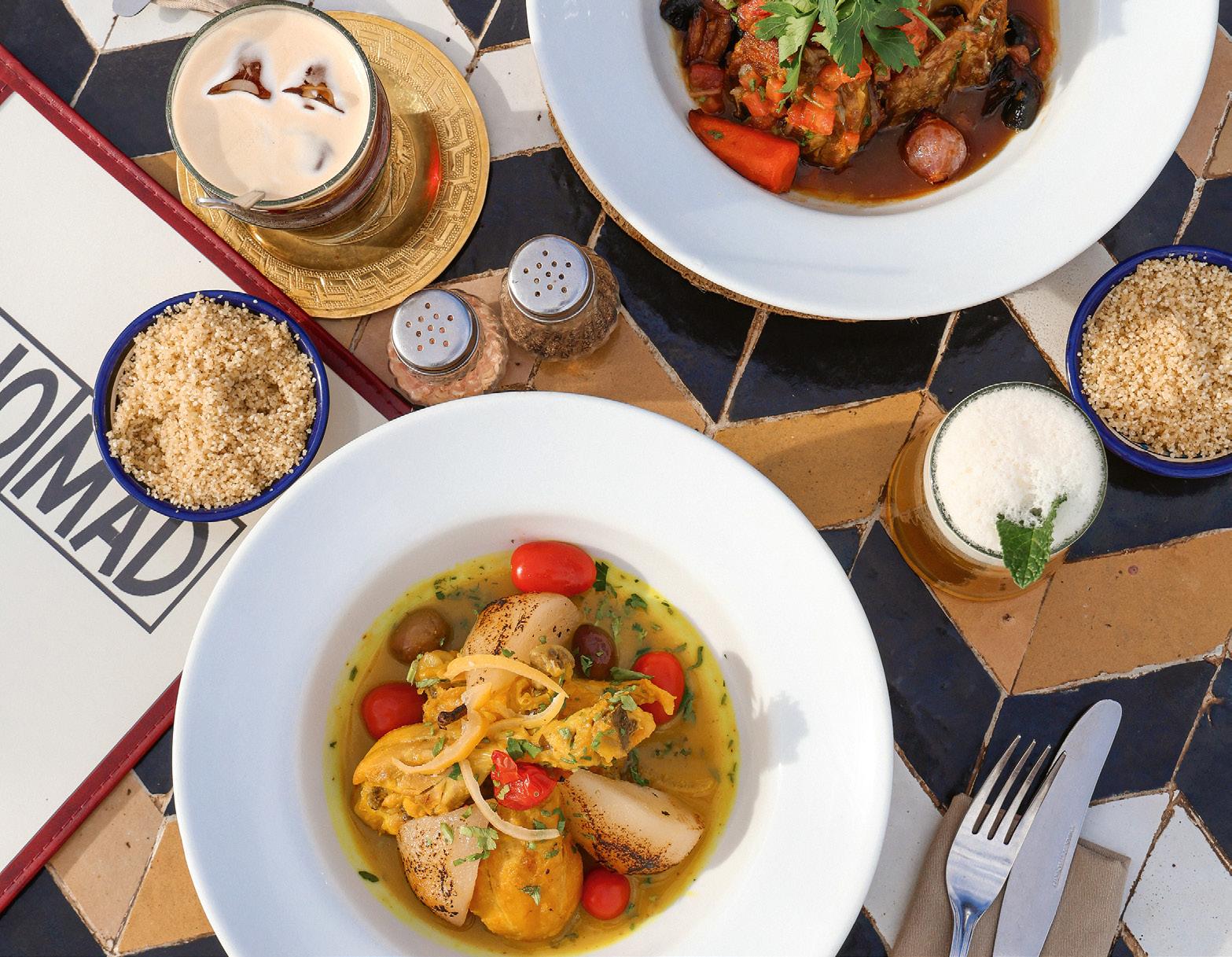
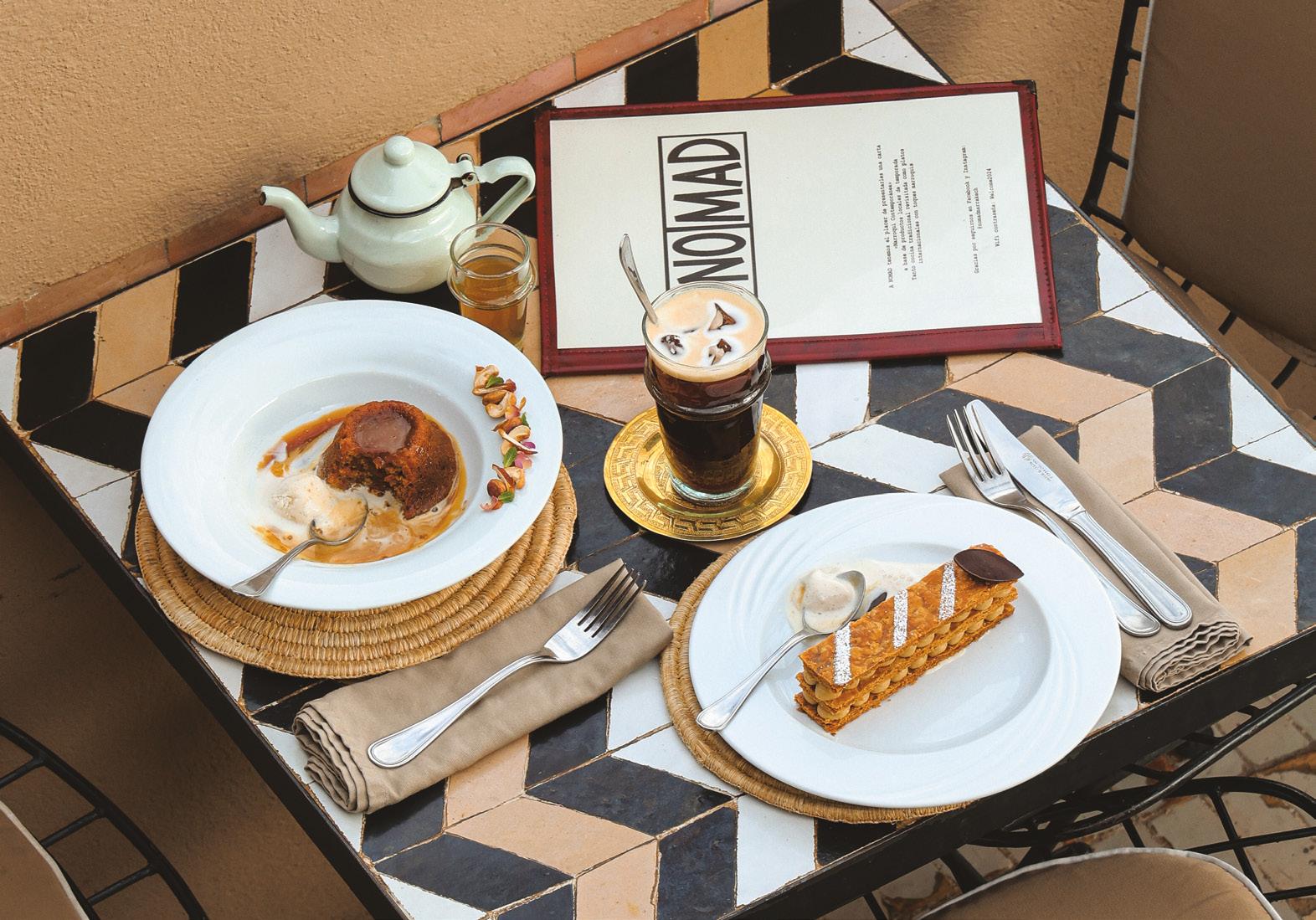
THIS SPREAD: modern restaurant Nomad has several outlets that are revamping Moroccan cuisine.
Not far from L’mida, Nomad has several floors of dining and a rooftop terrace. Its menu is a celebration of colourful local produce from almonds to pomegranate, mint and coriander. It is one of several restaurants under the Nomad umbrella, all offering contemporary Moroccan interiors and food that invite all-day casual dining. I take a seat laid with Berber cushions next to a large window with a bird’s-eye view over the souq. The sunshine fills the whitewashed room with dappled light. I’m surrounded by young travellers, well-heeled shoppers and locals sipping freshly made juices and teas and eating colourful salads with just-out-of-theoven flatbreads. It’s the perfect place to take a breather from the medina.
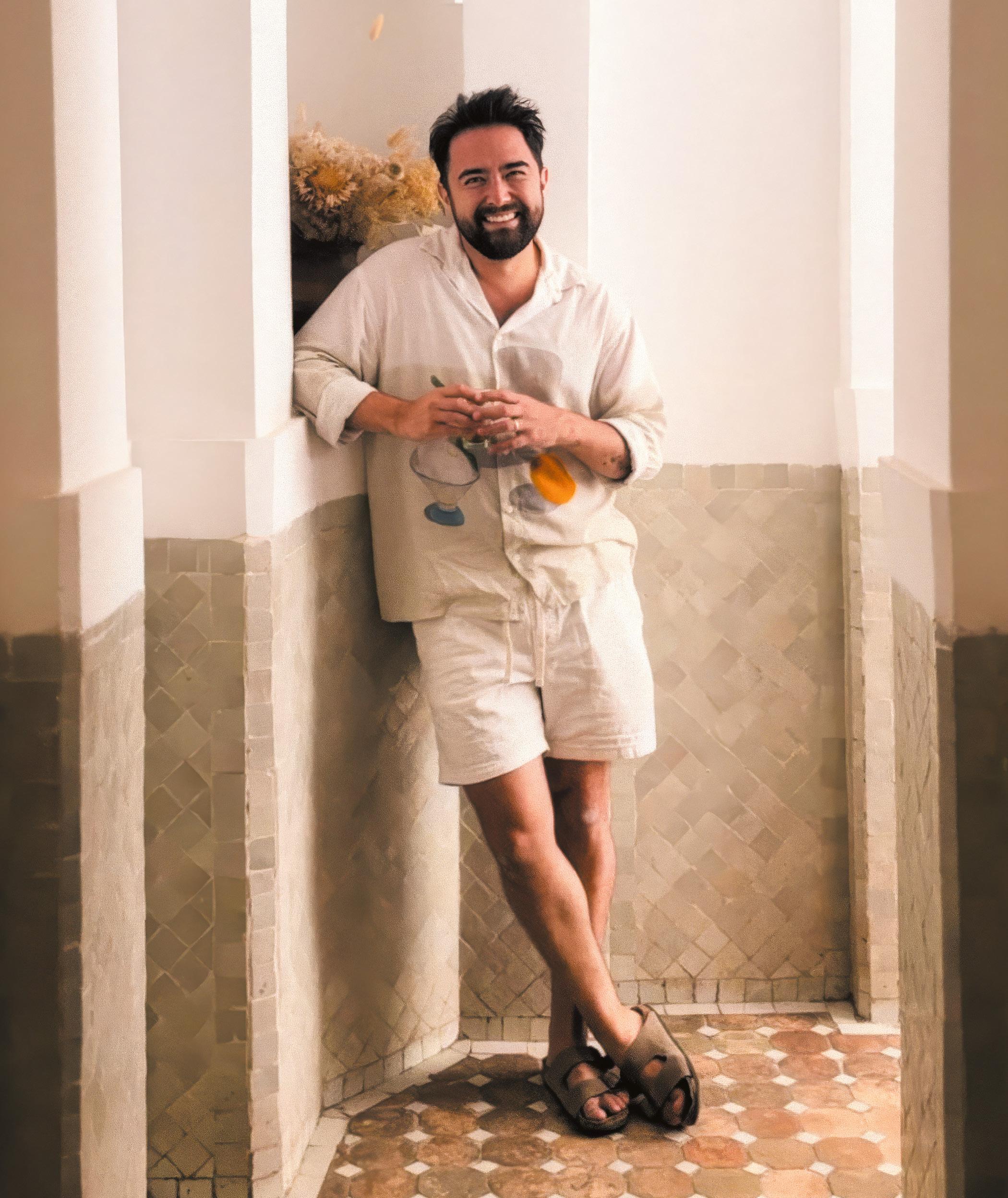
Australian interior designer Jono Fleming has been hosting design-focused tours to Marrakech with tour founder Julia Green of Greenhouse Interiors for six years. Beyond the tours of art galleries and rugs, silverware, textiles and pottery makers, taking their guests to beautiful places to eat has always been a part of the itinerary. They have a long list of places they know their tour will love. One favourite is the Petanque Social Club, which opened in an Art Deco building in Marrakech’s former French Quarter in 2024. Here Moroccan produce meets French and Mediterranean influences and at night, the laidback restaurant becomes a candlelit meeting place. “On a balmy spring evening, it is so atmospheric,” says Jono. Nearby is Mizaan, a Moroccan-Middle Eastern restaurant featuring terrazzo and terracotta interiors in classic Moroccan pink that has become a fixture on where-to-eat lists and “perfectly encapsulates this new Marrakech design,” he says.
At La Famille, a tiny vegetarian restaurant in the souq, patrons sit under the shade of lemon trees and eat simple pizzas made with herb pastes and grilled vegetables, bright salads served in colourful handmade pottery, or indulge in nut cakes or a tiramisu with orange blossom and pistachio, proving that innovation comes in every shape and size. “It’s one of the places that we go when we just need a break from it all,” says Jono.


Taking a break to talk, rest or watch the world go by is a habit most visitors pick up quickly here. After a morning exploring the painstakingly restored 19th-century palace and garden Le Jardin Secret, nearby Le Jardin restaurant feels like an extension of the cool green spaces I’ve just explored. Entering through a hard-to-find door, its courtyard is filled with plants and small tables. The menu is enticing: octopus with romesco, zucchini fritters with goats’ cheese and coriander, maybe a saffron brûlée for dessert? Made-to-order mocktails include a rainbow of fruits, vegetables and herbs. It’s all exquisitely fresh, easy to eat and to share, and is by nature or design, incredibly photogenic. If this is “new Moroccan food” I want more.
After five years consulting to L’mida, Nargisse Benkabbou is now back in the UK, hosting pop-ups and promoting her new cookbook, Madaq: Simple Everyday Recipes with the Flavours of Morocco Although she says Moroccans will always love their mother or grandmother’s tagine the best, she’s finding an enthusiastic global audience for her unique approach to Moroccan food.
“Every cuisine in the world was eventually modernised,” says Nargisse. “Whether it’s French or Italian or Mexican or Thai. What encouraged me to specialise in contemporary, modern cooking is seeing other chefs doing it. I thought, well, that person modernised their cuisine, and people embraced it. So why not Morocco, too?.”
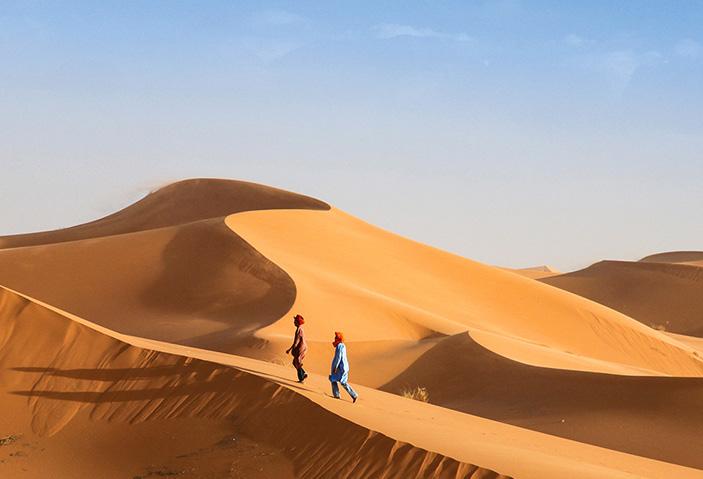
Uncover the cultures of northern Spain, Portugal and Morocco on an extensive discovery tour. In Morocco, experience the Sahara Desert with a glamping stay among the dunes. Discover Marrakech’s medinas and the Roman ruins of Volubilis, see the sets of epic films at the Atlas Cinema Studios and lose yourself in the streets of Fes.
Ready to explore?
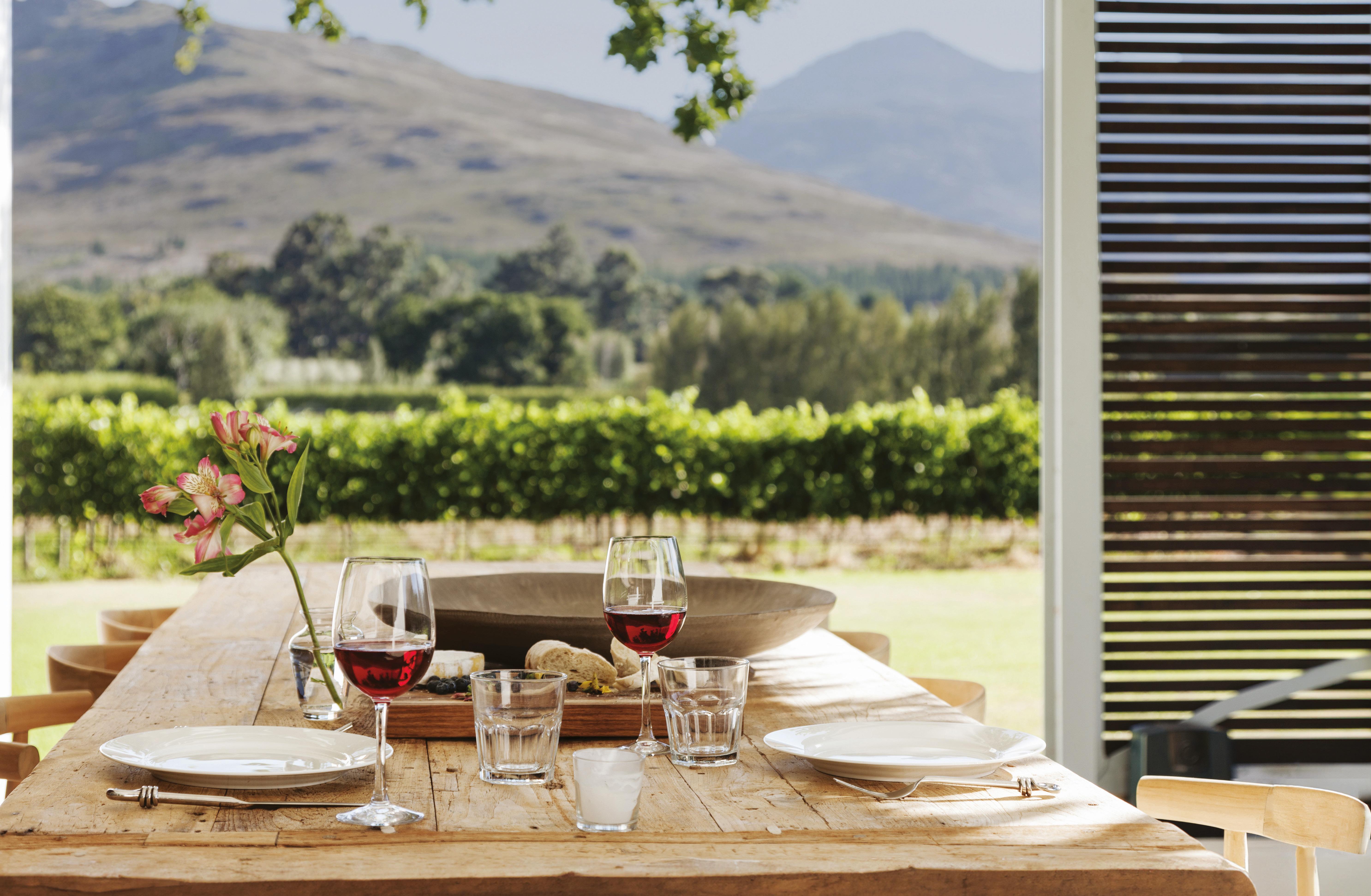
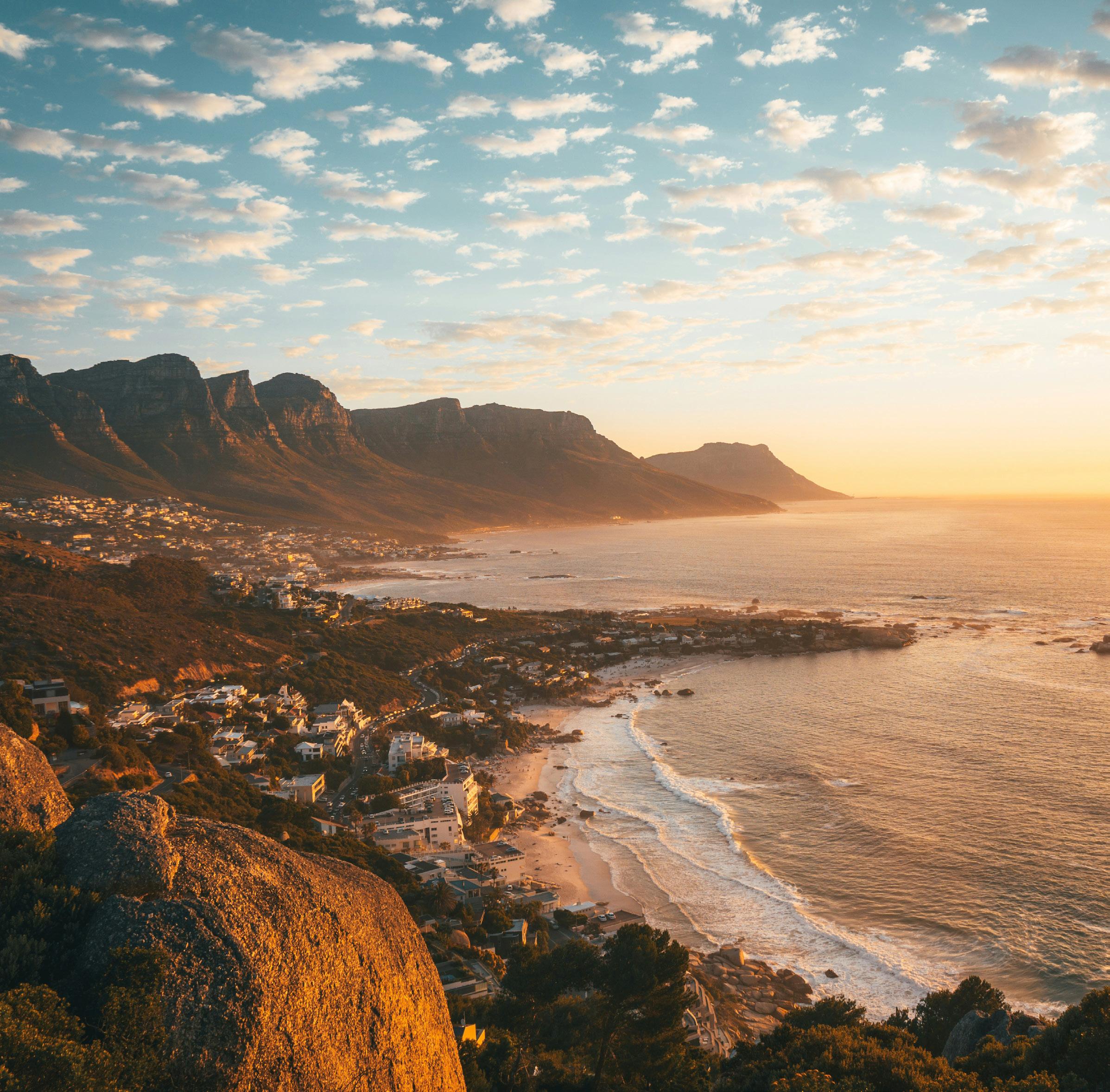
With her good looks, sunny skies, socials-worthy seafront and humming wine and food scene, the Mother City says “howzit!” to all who are lured by her many charms.
Here’s your cheat sheet for a perfect night out in Cape Town.
5pm Kick off
You’ve spent the day in the Constantia Winelands – now work your way back into the city with aperitifs in the chi-chi suburb of Claremont. The little 15-room Claremont Boutique Hotel feels like a secret enclave, with its whitewashed Cape Dutch gables and green lawns. Set up beneath the striped umbrellas and order a G&T made with local player Inverroche’s original gin, which is infused with indigenous fynbos botanicals, for a perky kick-start to the night. The hotel’s 1928 Craft Bar also stocks a great range of hard-to-find South African wines, many from the winelands, just 15 minutes away.
Set yourself up for sunset at the highest point in town: Table Mountain. It’s a 20-minute drive to the base of the aerial cableway, which whips you up onto the tabletop for views of the Atlantic Ocean. Frolic through the proteas and heath, keeping an eye out for colonies of dassies (aka rock hyraxes), which kind of look like quokkas, but are actually pint-sized relatives of African elephants. Breathe in the air, blowing fresh from the Roaring 40s, then pootle back down to earth by the wheelchairfriendly chairlift and onto the waterfront.
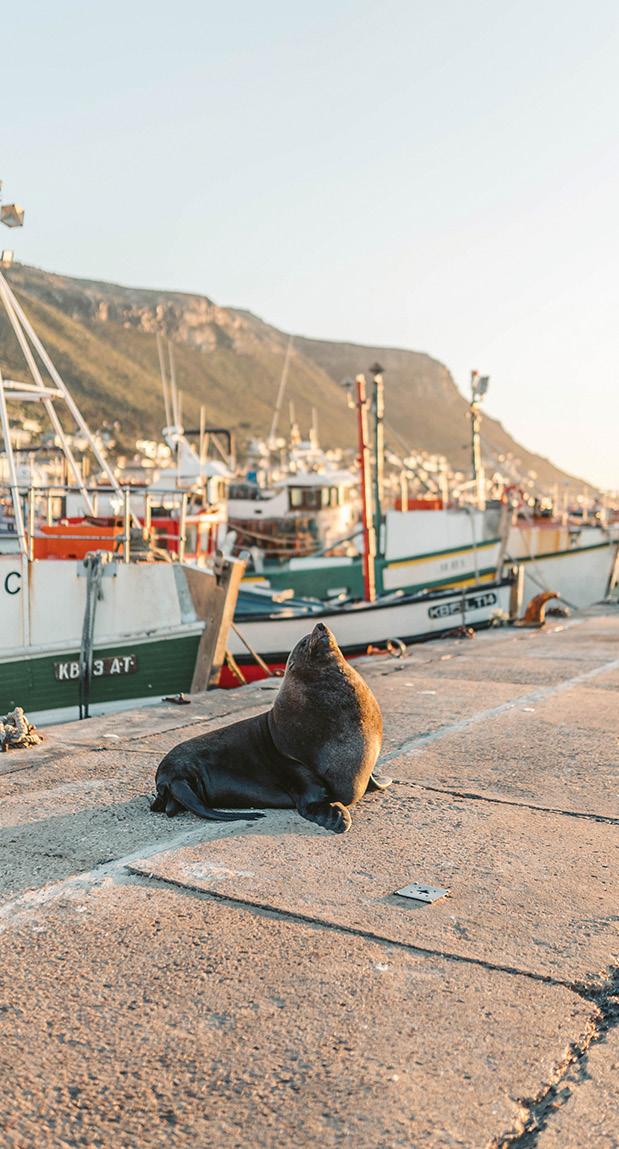
The V&A waterfront draws tourists like a bee to honey; revellers pack out the shops, bars and restaurants facing the water. But you’re not here for drinks, you’re here to say hi to the Cape fur seals, who loll photogenically wherever the whim takes them, be it on a wharf or the deck of a luxury yacht. They’re a whiffy little reminder of Cape Town’s wild side (apart from the Jolly Roger Pirate Boat, whose weekend sunset party cruises turn all heads when they depart in a blaze of dance music and piratesque exhortations).
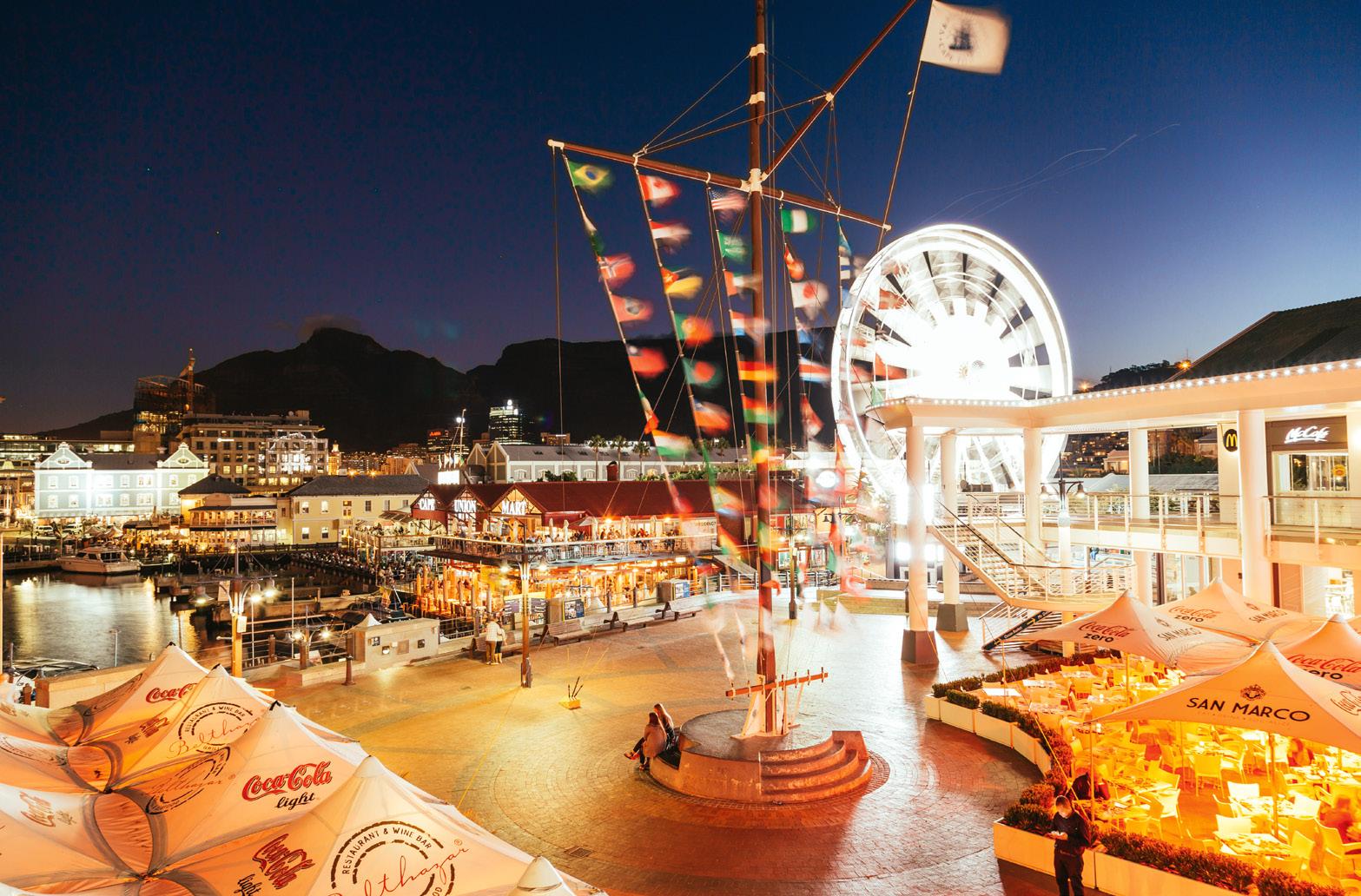
You could stay at the waterfront, skipping up to the Silo Hotel for summer sunset cocktails and views, or blow the seals a kiss and take a 10-minute drive to swanky Sea Point, for its beautiful people, Atlantic Ocean views and swathe of new, sea-facing restaurants, including Mediterranean-inspired Figo, on the eighth floor of The Cole Boutique Hotel & Spa. Or, for a taste of Mzansi magic (using the Xhosa word for the country), slink down to Battery Park, 600 metres from Silo, for casual, soulful dining at carnivore- and vegan-friendly Seven Colours Eatery. Here, chef Nolu Dube-Cele lovingly serves such classics as boerewors, hot off the braai (barbecue), indigenous grains and the quintessential dessert, melktert
A regular on “world’s coolest streets” lists, Kloof Street in the Gardens district morphs into the new Longkloof precinct, and has its finger on the pulse of a good time. Throw a dart to hit the bar that hits the mark: enjoy bloody Mary with biltong at Café Sofi, or Napoleon’s favourite little dessert wine that helped him drink away his exile, the Vin de Constance, served at the city’s favourite Victorian mansion, Kloof Street House, until its midnight closing.
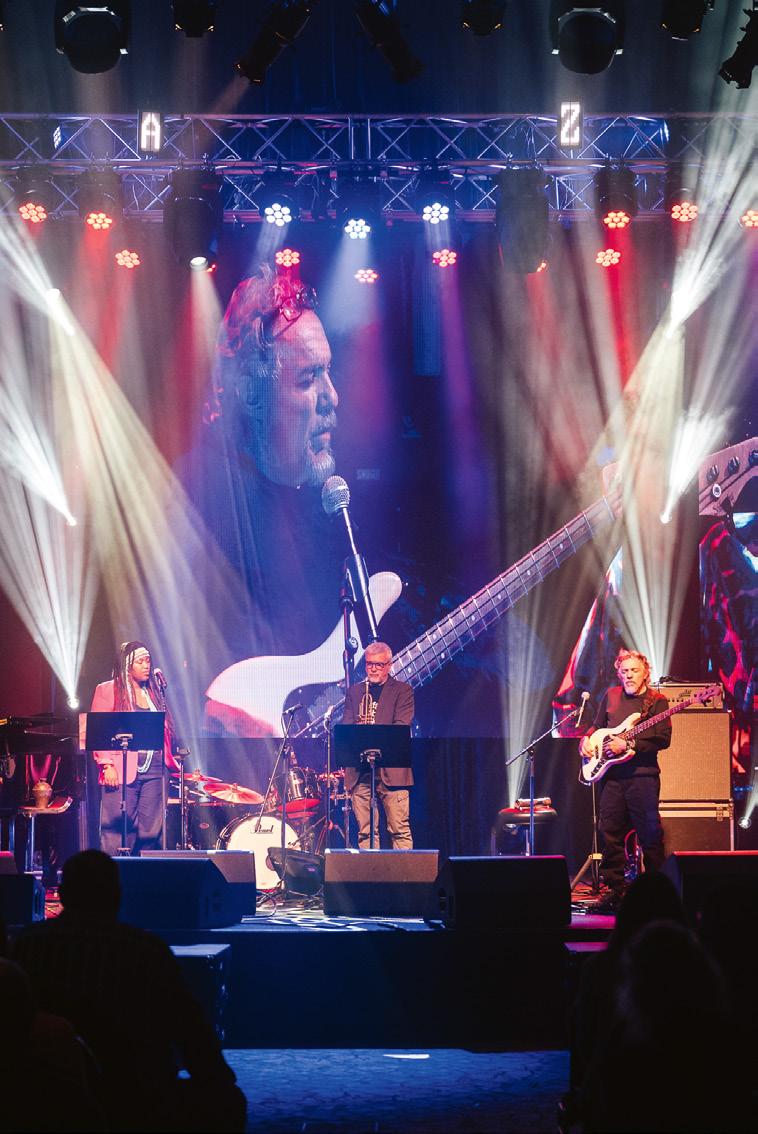
The Mother City cements its position as a jazz town with the annual Cape Town International Jazz Festival – Africa’s largest and the world’s fourth largest jazz festival.
If you’re not in town during the festival, usually held in March, head to the late-closing bar and restaurant the Athletic Club & Social, in the city centre, which has a strong line-up of gigs in its speakeasy basement every week, with a 2am closing time on the weekends.
Two minutes’ drive away on bustling Bree Street, the ground floor of the Blue Room serves cocktails and live music – order a Monalisa, with Cape Saint Blaize floristic gin with watermelon and sparkling brut, and settle in for the gig.
Phuket’s Chinese history harks back to the ai tin-mining boom of the 1800s and a new restaurant aims to resurrect the louche style and smoky avours of this oft-overlooked era while foregoing the opium and risque shenanigans. Ron Gluckman checks out Coolies Club.
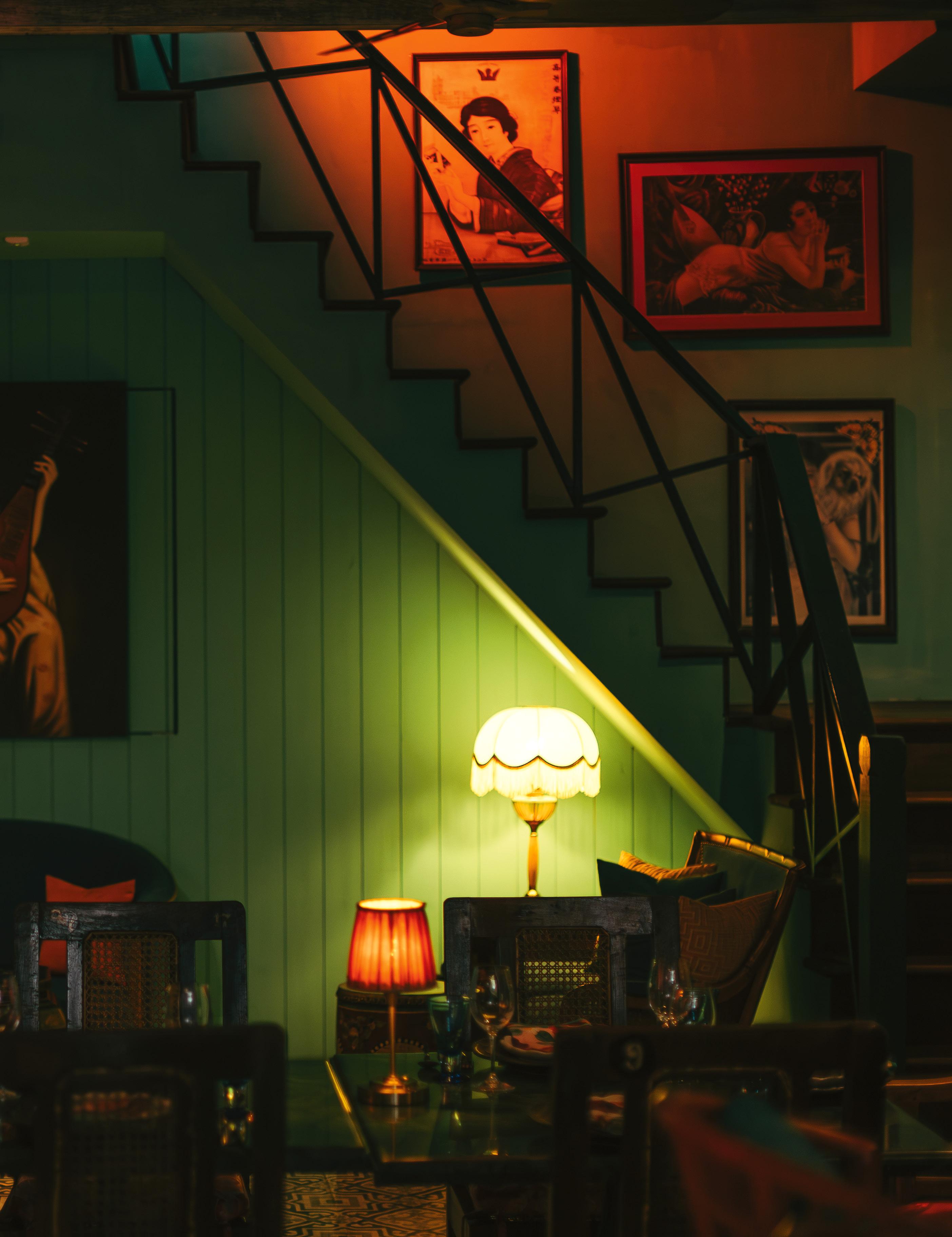
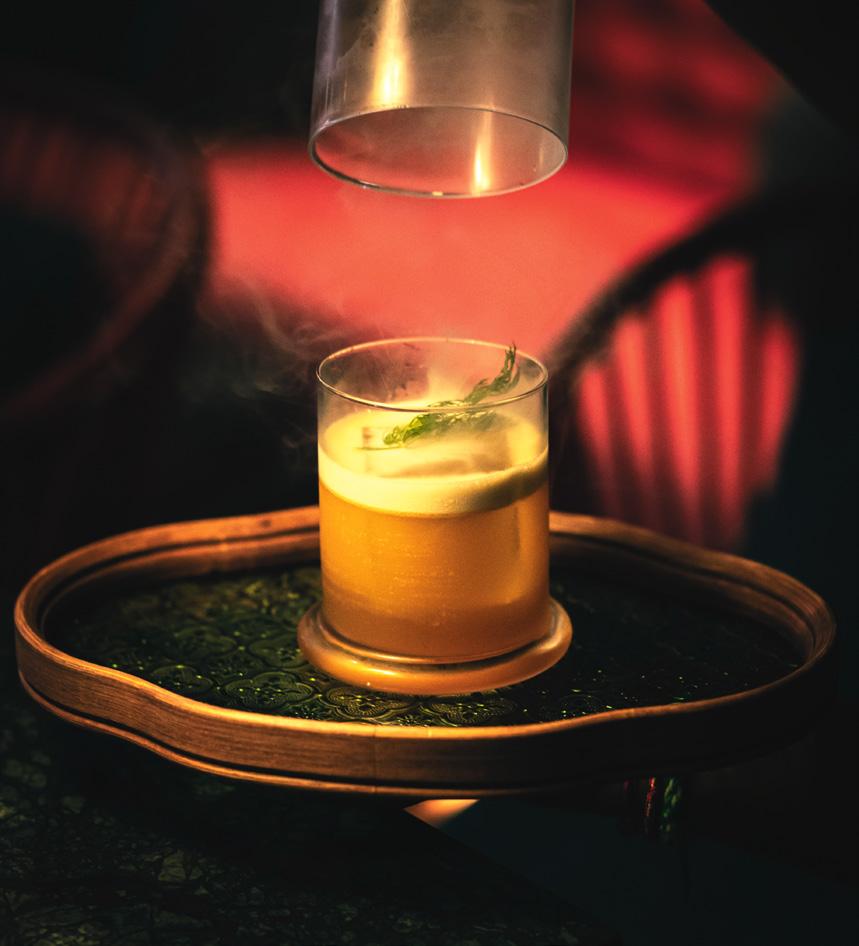
It’s a sultry space that could easily be the set of a noir film about Shanghai in its roaring 1900s heyday. But we are in Phuket, eating scrumptious Thai cuisine in a swank nightclub, bold green walls lit by swirls of neon, with vintage red couches and a gold mosaic tile floor. An eclectic mix of old Chinese lamps provides lighting as bartenders hand-torch smoky negronis. After a dinner of adventurous specialties – like pork jowl in tangy Thai jaew sauce, wood-seared tuna belly, charred greens and perhaps one too many drinks – guests can move upstairs and lounge around.
Yet this is neither a movie set nor a titillating Shanghai speakeasy. It is Coolies Club, a tribute to Phuket’s little-known Chinese heritage; the thousands who migrated here to work in tin mining, an industry that began in the Sixth century and peaked in Phuket from the 1800s to 1980s.
The tin boom lured poor Chinese migrants – then called Coolies – who slaved in mines that turned this sleepy island of palms into one of the world’s top five tin producers. Fortunes were made, but most eked out a tough living in perilous conditions, finding respite and revelry in gambling and drinking
here on Soi Romanee, the red-light district of Phuket Town.
The two adjoining shophouses that are home to Coolies Club belonged to the great-grandfather of Krystal Na-Ranong, who arrived in the early 1900s, becoming a successful bookkeeper for a mining outfit. These 1800s shophouses were his first property investment, Krystal tells me. Most had a business downstairs with living space or rentals in the floors above.
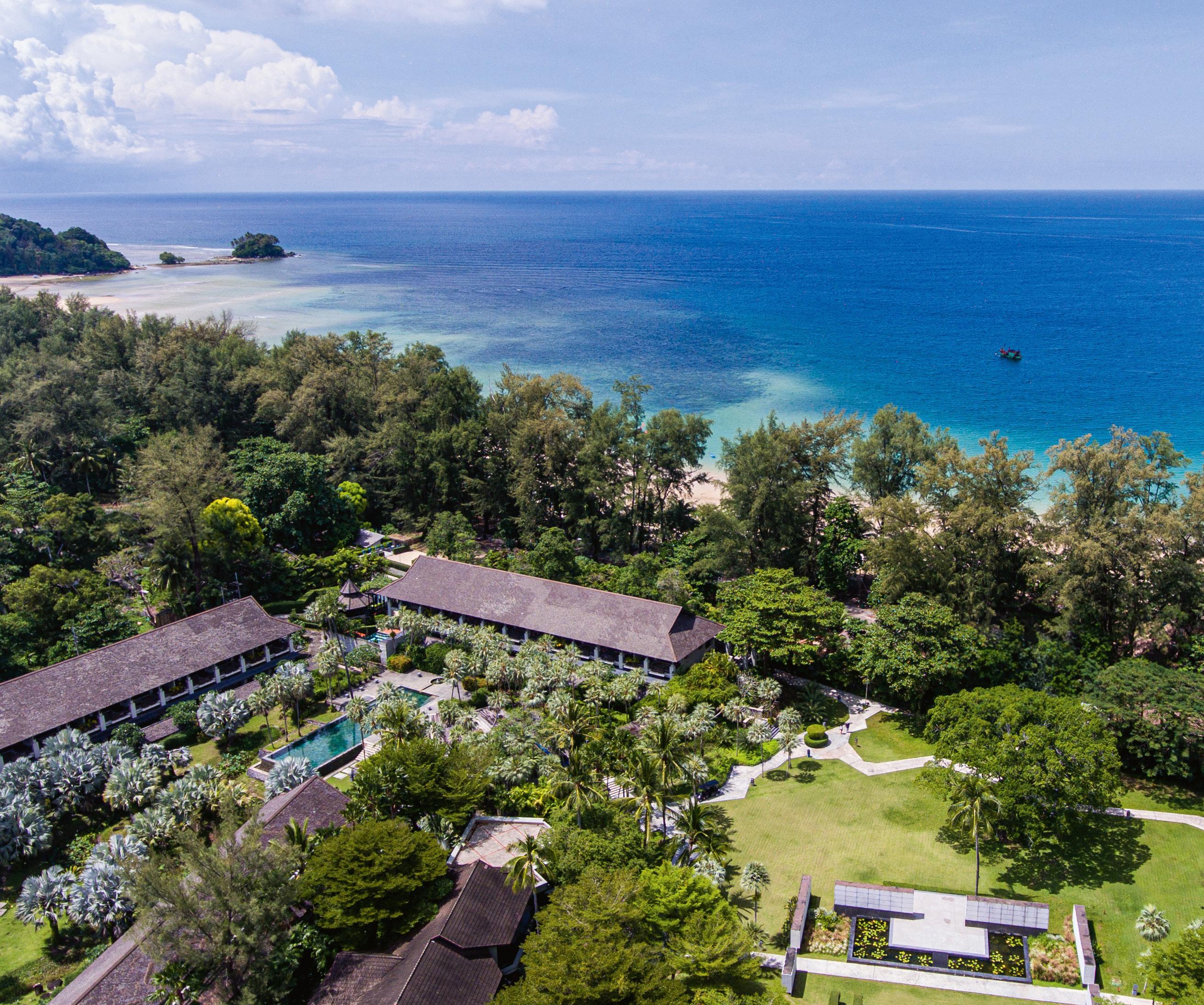
Like many of Phuket’s old shophouses, they had shut long ago, used for storage and staff housing. By the 1970s, mining had declined and tourism began to move the island’s focus from holes in the ground to sandy beaches. Krystal’s family launched one of the first and finest resorts, legendary Pearl Village Hotel in 1986 on Nai Yang Beach, close to the new airport that brings millions of travellers to the island each year.
But, always, in the back of her mind, she planned something special for the family shophouses. Especially as the area began reviving with boutiques, cafes and clubs moving into restored shophouses painted in colourful schemes, much like tourist areas in Singapore and Penang.
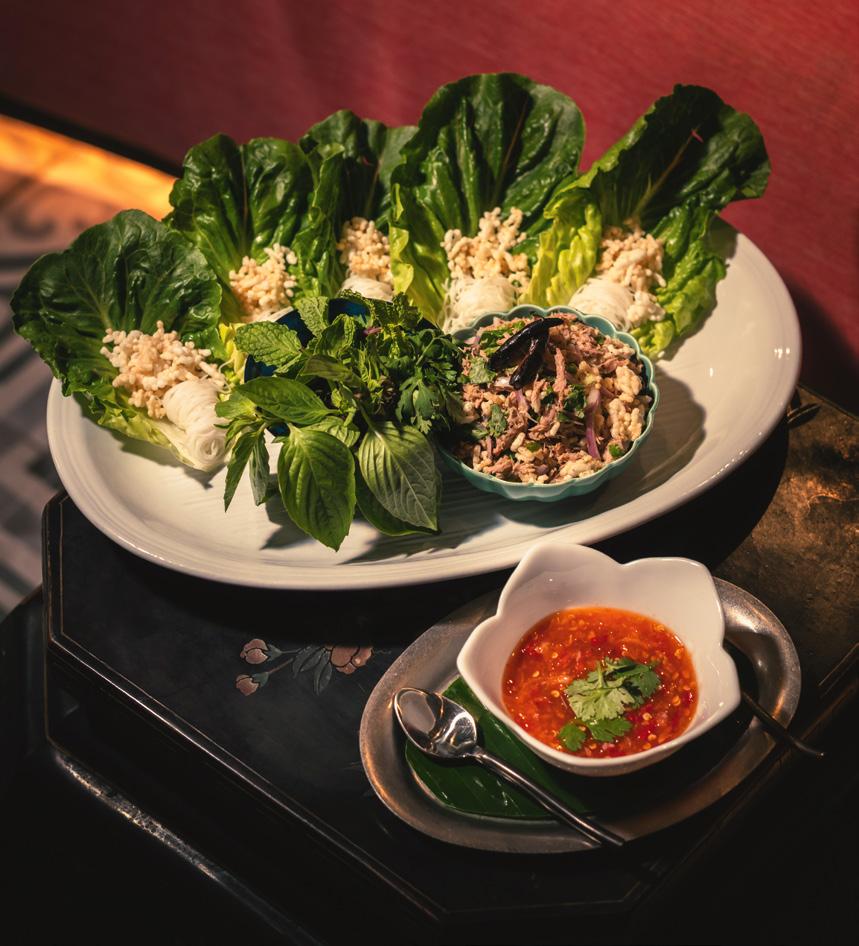
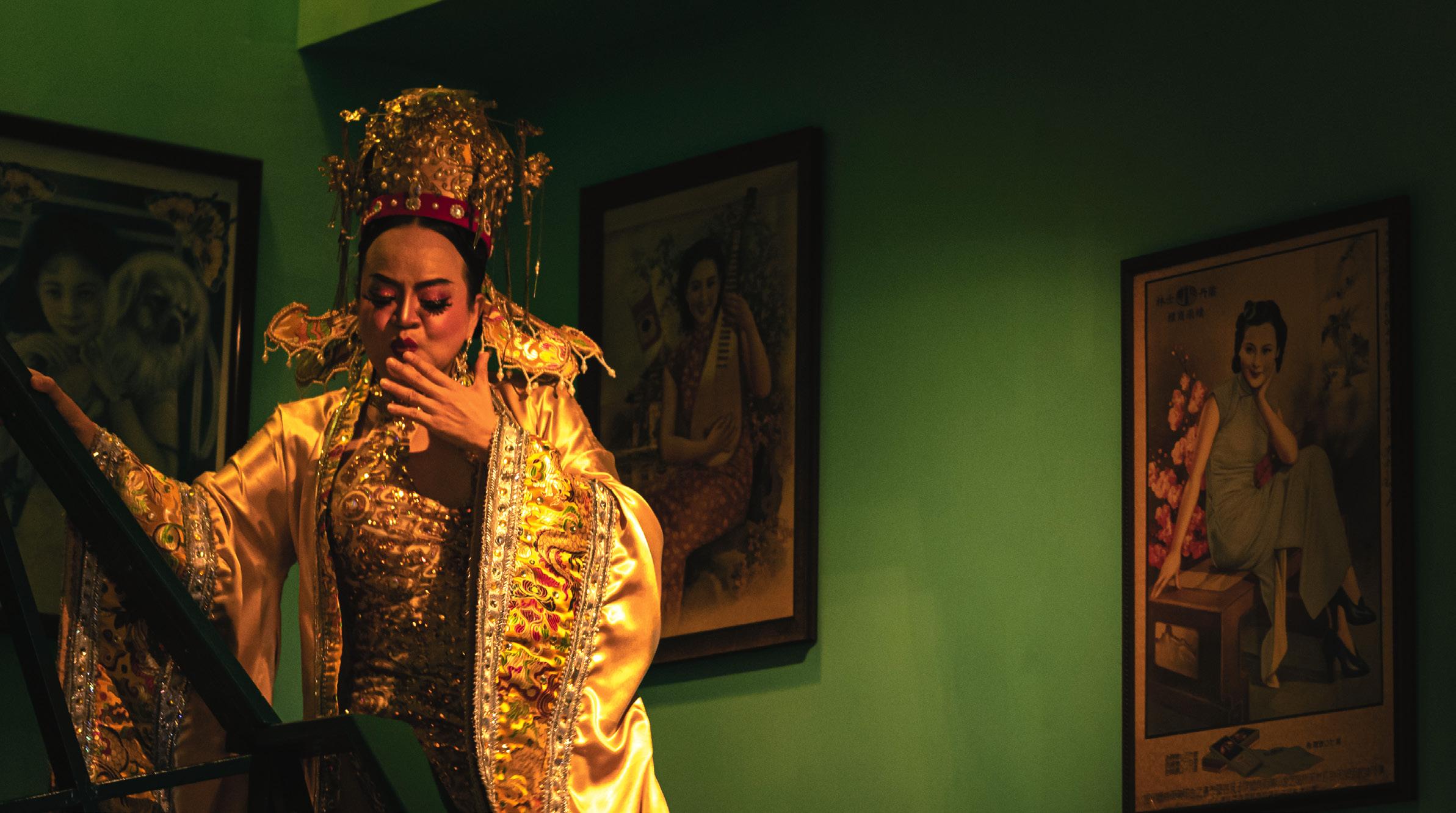
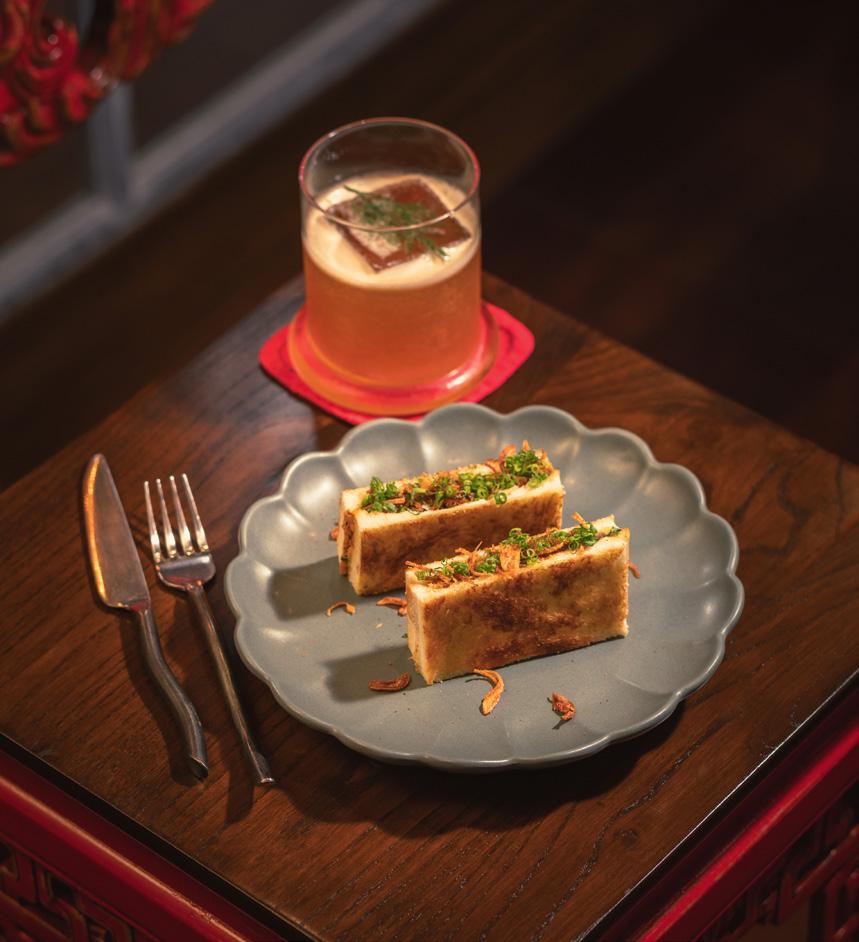
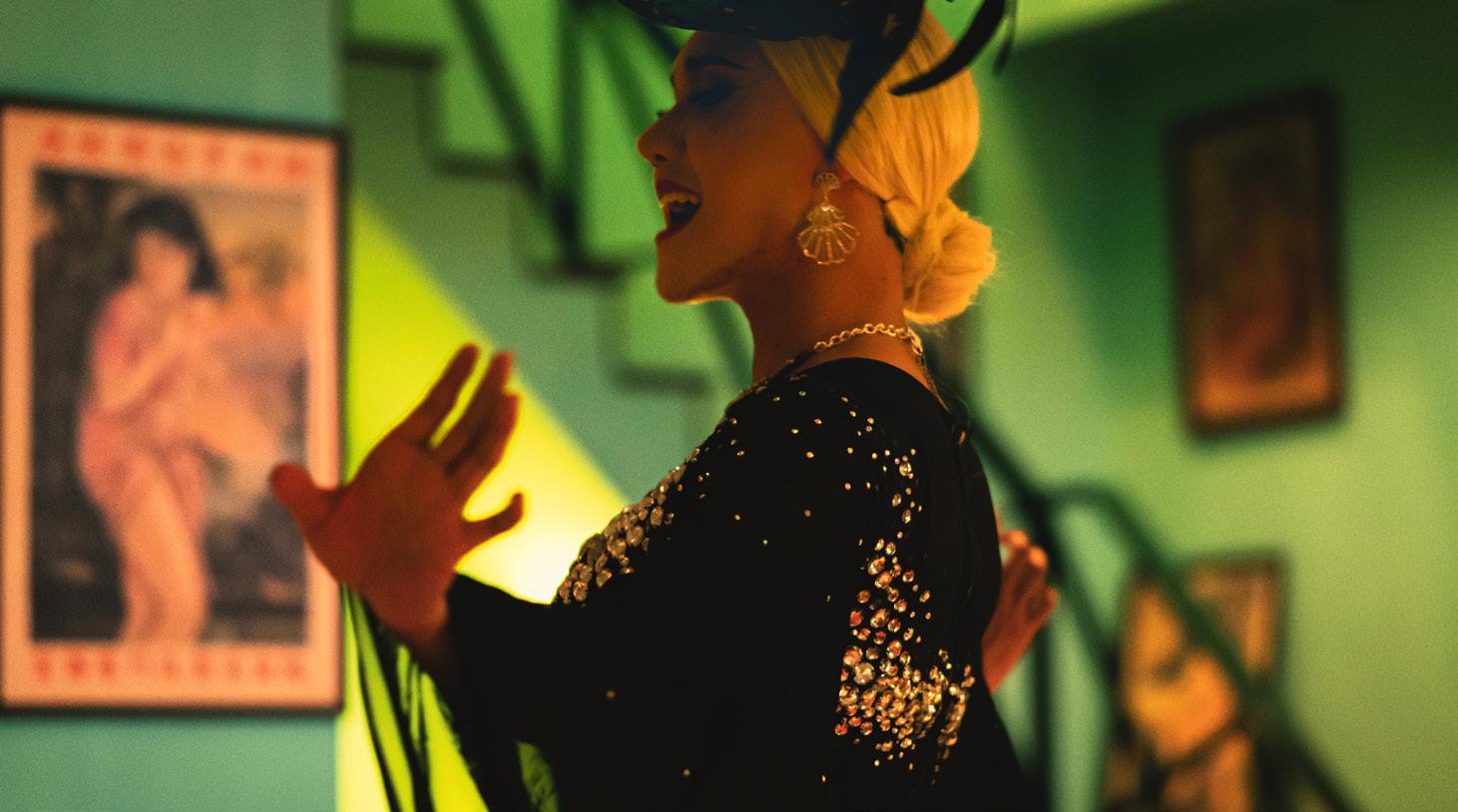
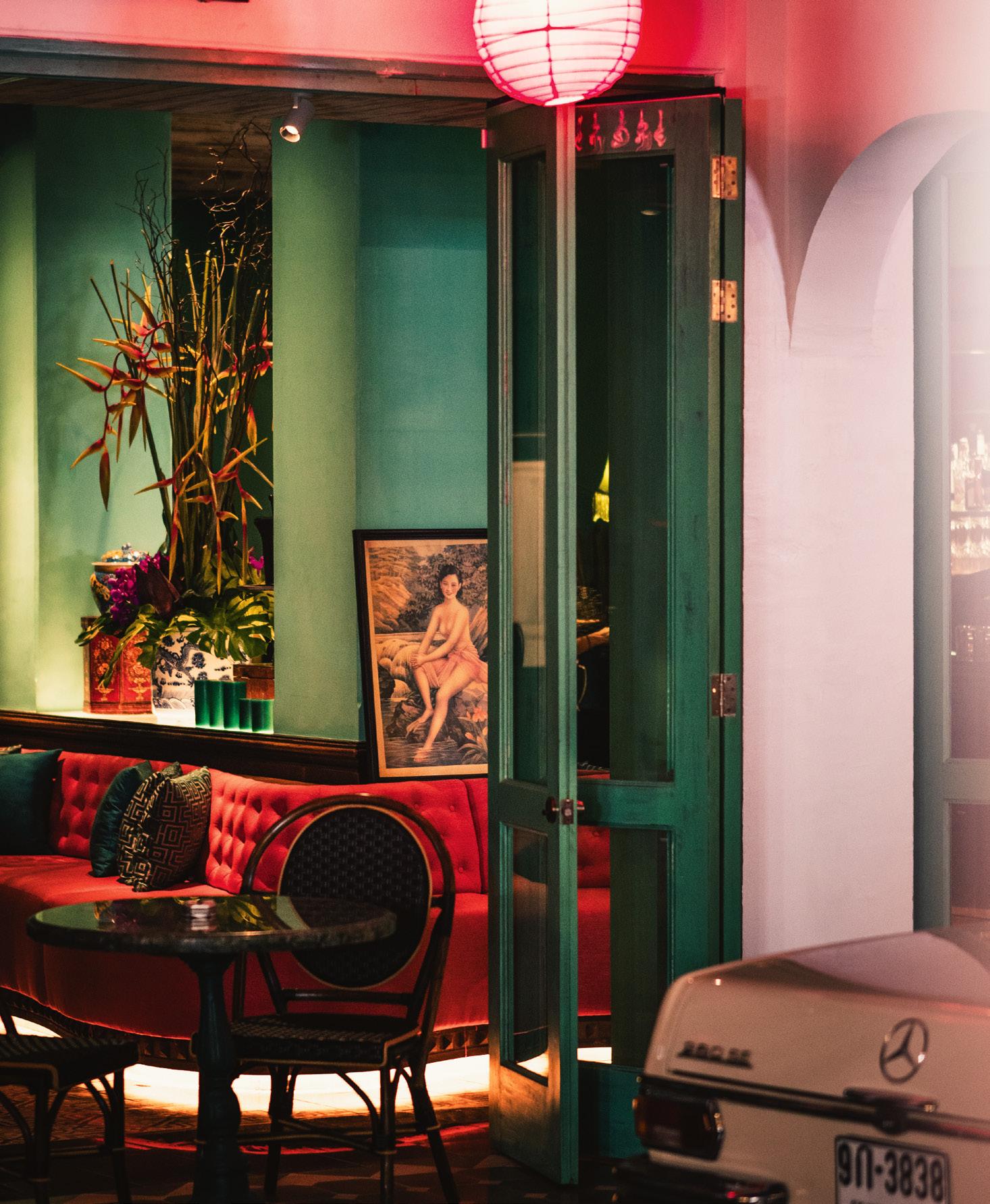
Krystal turned to her old friend, famous hotel designer Bill Bensley, the most prolific and adventurous resort designer in Asia, who had transformed her family’s original resort, first as Indigo Pearl, highlighting Phuket’s tin-mining heritage, and later as Slate, leaning ever more heavily into the mining theme, mixing old tools and vintage mining equipment with original art around the luxe beach resort.
Bangkok-based Bensley is famed for over 200 resorts, including acclaimed properties like The Siam Bangkok, Four Seasons Tented Camp Golden Triangle and Four Seasons Koh Samui in Thailand; Capella hotels in Ubud, Bali and Hanoi, Vietnam; and Cambodia’s Shinta Mani Wild. All have unique design but share strong storylines that emphasise history and place.
His provocative overhaul of Coolies Club came to him instantly, he recalls, as he stepped from Soi Romanee into the old buildings.
“If youlook at the history of a place, that will pretty much map out what you’re going to do with it,” he says. “A building that’s 100 years old or more, that’s pretty cool for Thailand. It’s not too complicated of a process.”
He outfitted Coolies Club with period furniture, portraits of Chinese stars on walls along with art including his own paintings. The menu spotlights dishes grilled or smoked, much as they were in
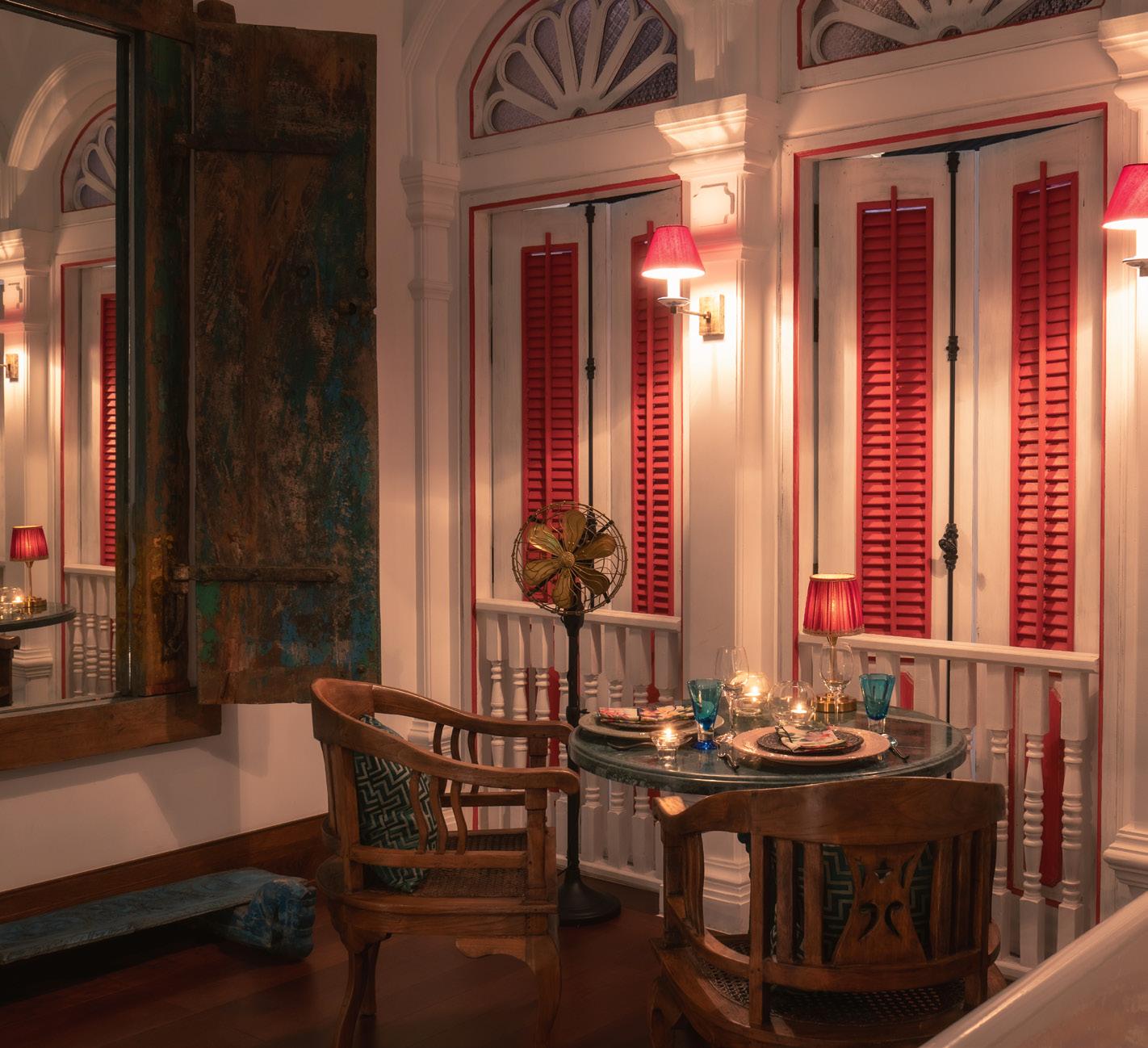
the tin-mining era. The upstairs rooms nod to the building’s risque history, with bordello chic styling.
The club’s arrival in mid-2024 helped fuel the reinvention of Phuket Town, which has been revived with street art and giant murals alongside shophouses spiffed up in vibrant, colourful pastel schemes. This is not mere copycatting of similar scenes in places like Singapore or Penang in Malaysia – Phuket was part of the same Sino-Portuguese trading route as these destinations along the Malacca Strait. It’s just typically been an unheralded footnote to that historic marine trading route. While the other Southeast Asian outposts developed into regional capitals with grand temples and colonial architecture, Phuket’s connection to this rich trading time went uncelebrated.
Phuket Town’s re-emergence gives the island – which is about the size of Singapore – a revived centre with tourists flocking to a new generation of hip cafes and boutiques on the charming old walking streets around Coolies Club, on Soi Romanee, which means “Romance Street”.
At the colourful Coolies Club, it’s easy to fall in love with old Phuket anew.
ere is a real joy to a centrally located hotel; a stay where you can drop your bags and walk to everything you need; where your entire weekend is contained in an easy-to-navigate radius.
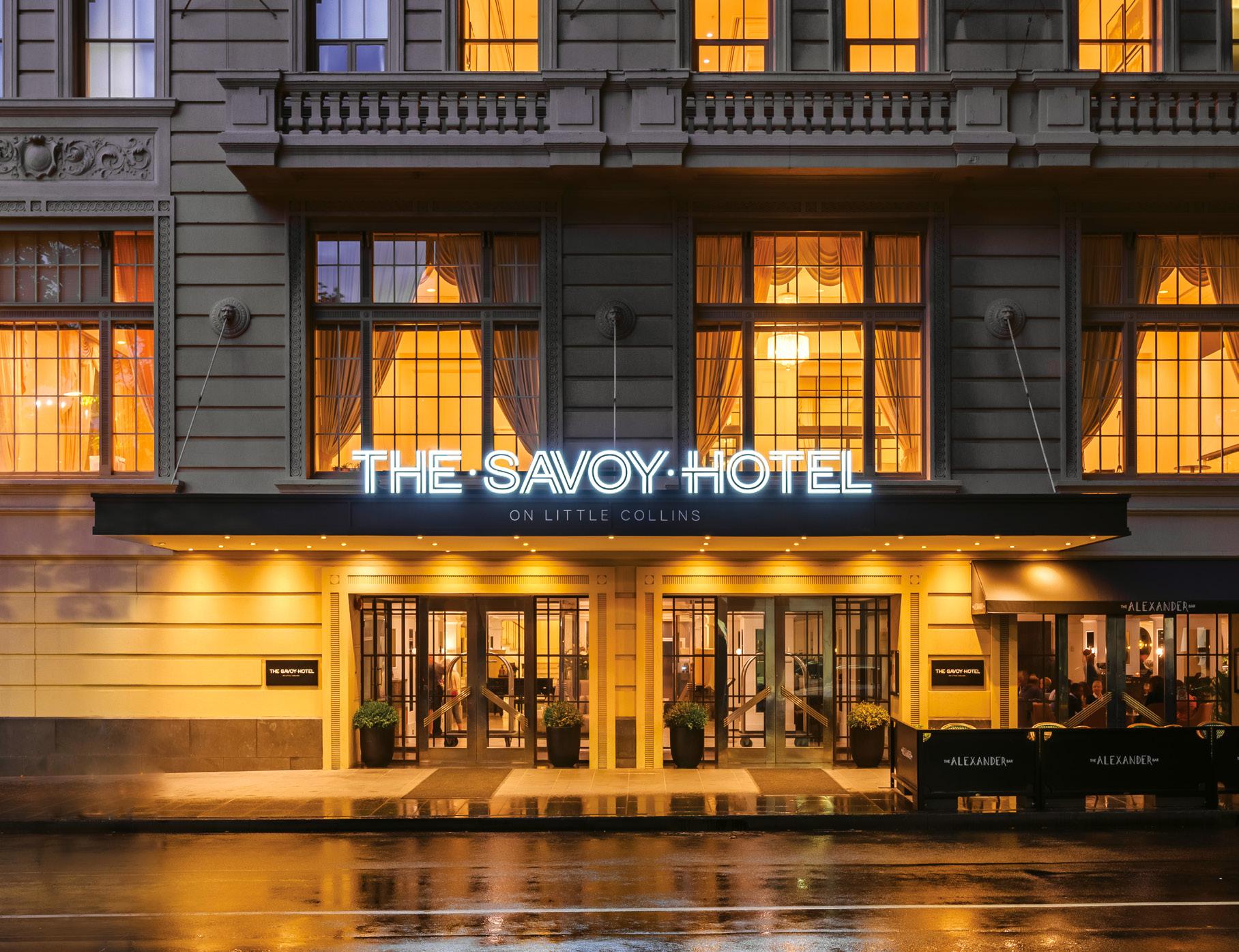
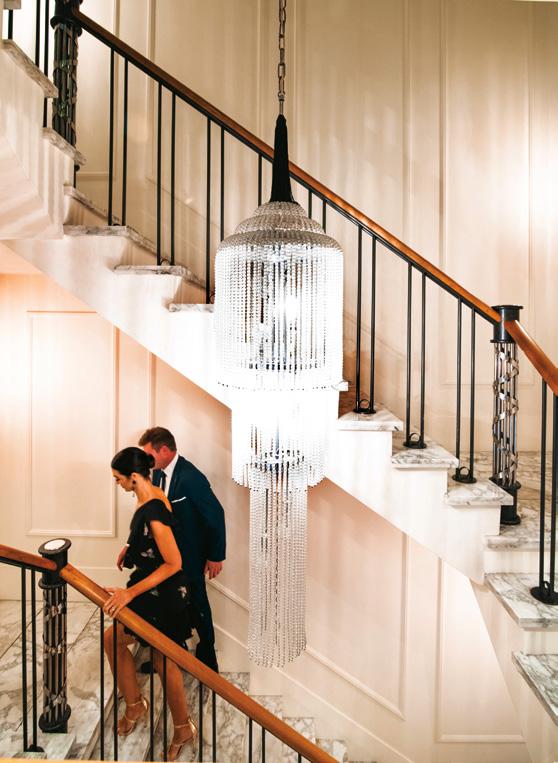
The Savoy Hotel entrance on Little Collins Street has a grandeur about it: polished silver doors, Art Deco detailing and an Italian Palazzo-style exterior that made it the talk of the town when it had a grand renovation in 1926.
But this building is even older and has welcomed travellers since 1866 when it opened as Alexander’s Family Hotel. It was most recently purchased by TFE Hotels which undertook a sensitive multi-million-dollar update with architects Woods Bagot. The historic hotel – the
first with ensuite bathrooms and hot and cold running water to each bedroom –reopened as The Savoy Hotel on Little Collins Street in 2018.
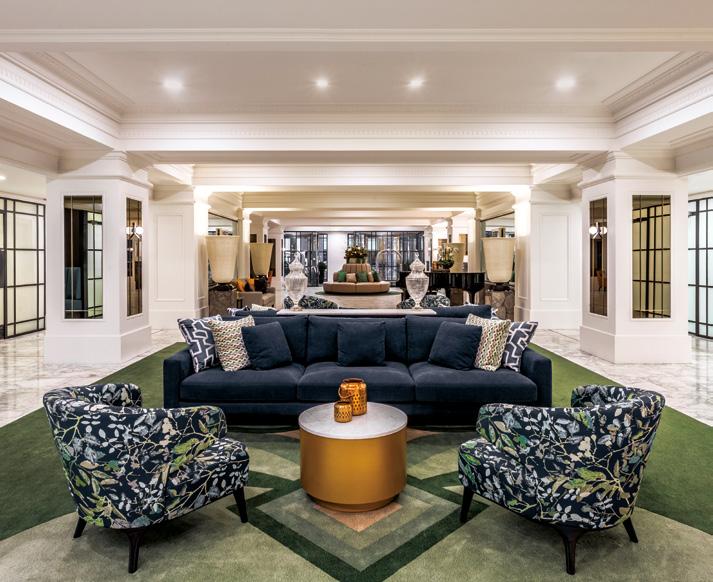
As befits a grand hotel, it has a starstudded former guest list that includes Louis Armstrong and Ella Fitzgerald, Fred Astaire and Anthony Perkins, all of whom have stayed and celebrated here when performing in Melbourne. The lobby has an old-world feel where you can imagine guests of that calibre sipping a martini. The 163
have
accents in the carpets, muted grey and green furnishings and some look out onto the undulating roof of Southern Cross station opposite. The lobby is also home to the regal Alexander Bar which offers snacks and cocktails and might have someone tinkering the ivories of the grand piano.
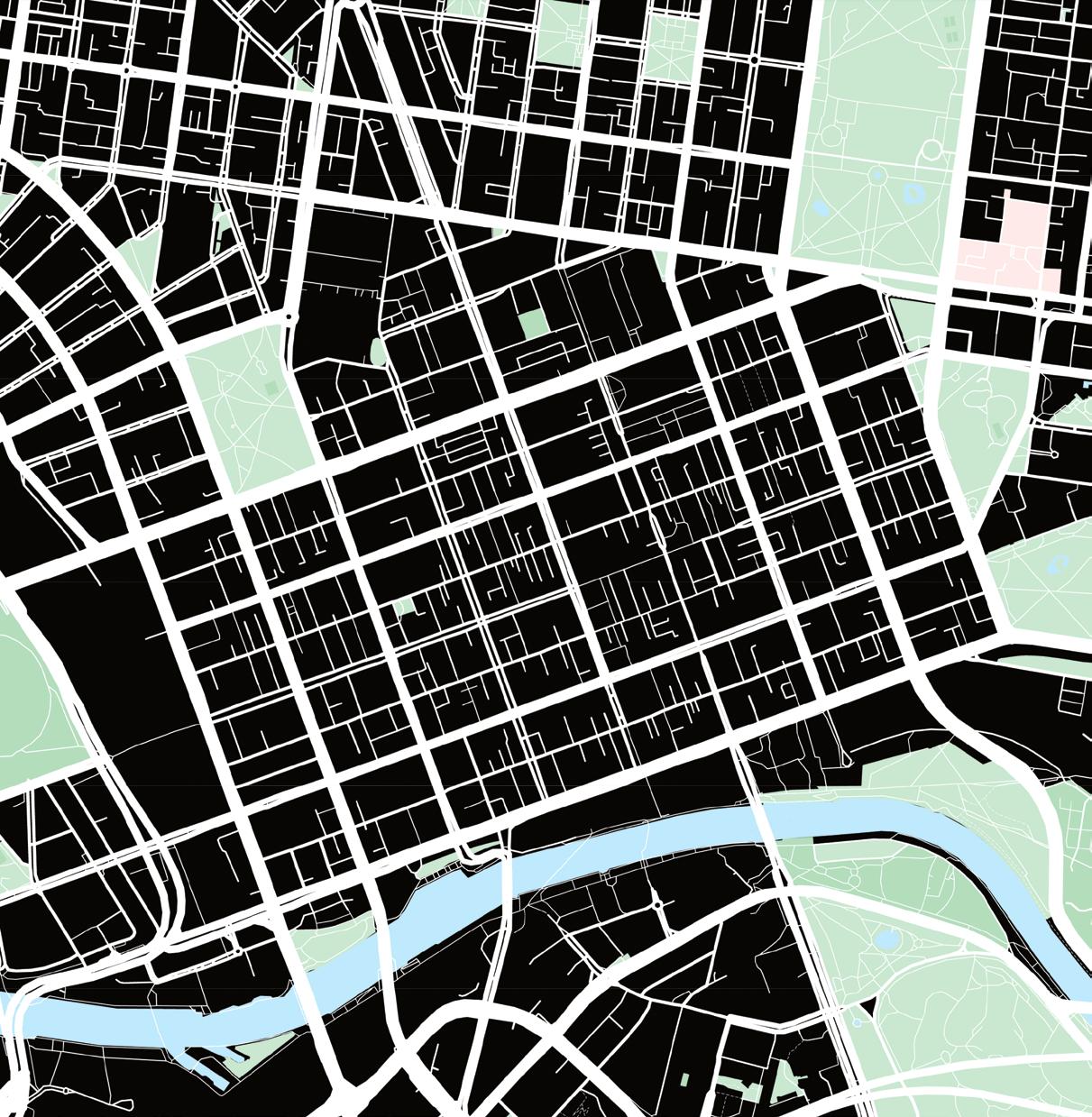
The hotel is well placed for visitors to Marvel Stadium or the Melbourne Exhibition and Convention Centre but also the modern Asian diners that are popping up in the Collins Street Precinct.
350 metres
This three-storey mega-pub manages to be all things to all people with a sports bar, breakout spaces and rooftop bar overlooking Melbourne’s new Sky Park; it is the ideal spot for a pre-game beer or a first stop off the train for a night out. The menu here is classic gastropub with the rooftop sending out great woodfired pizzas to go with a solid craft beer list.
400 metres
Celebrating four decades serving Indian cuisine in British Raj-inspired surrounds, Gaylord relocated to the Grand Hotel from Tattersalls Lane in 2021. Its menu spans the entire subcontinent and delights in bringing hard-to-find Indian dishes to Melburnians; it also has a surprising collection of Indian whiskies for a postdinner tipple or whisky cocktail.
1.6 km
Michael Lambie’s JUNI is a neon-soaked temple to modern Asian share plates. Cocktails like the Stormy Daniels are a twist on the Pornstar Martini with passionfruit and vanilla syrup while a Sago Margarita uses coconut fat-washed tequila. Take the “lucky dip” and let JUNI feed you and you might end up with Fraser Island spanner crab pani puri or a moreish red duck curry.
km
Chin Chin’s mix of Asian dishes heavy on the heat and a rock ‘n’ roll soundtrack and dark-lit dining room is always a hit. Like a modern hawker, you can jostle your tablemates for the last chicken rib in nahm jhim jaew or the final strands of roasted pork with drunken noodles and green peppercorn; team it with a Red Dragon margarita with dragon fruit agave.
410 metres
This lively Italian food market spans two floors and sees visitors ordering artisanal meals from stalls like I Calamari Fritti, La Greco souvlaki or Il Riso risotto. There are also a couple of bars and a wine shop for take-home bottles. This is the brand’s first location outside of Italy and it aims to recreate the passion for food that Italians are well known for.
950 metres
The neon lights give the place a night market vibe ideal for ’gramming your Feeling Hot cocktail, a margarita riff with chilli bitters. A “salmon pie cracker” is served in a seaweed cup with a creamy avocado and gochujang sauce while wagyu beef char kway teow comes with seared slices of beef and rolled noodles.
1.5 km
For a slice of Melbourne retail history, the Block Arcade’s Gold Rush-era arches and ornate shopfronts have been serving shoppers since 1892. The arcade is home to Melbourne’s oldest tea rooms which opened the same year as the arcade; you can also get a chocolate hit at the Melbourne outlet of Haigh’s Chocolates and see your childhood books come to life at the Art of Dr Seuss.
1.8 km
One of the most recent additions to Melbourne’s full-to-the-brim cocktail scene, Death & Co is a classy import from NYC. This moodily lit bar is all about the classics – think gimlets, negronis and highballs – but is not afraid to add its own personality: the standout is a Oaxaca old fashioned that swaps out the traditional whisky for a reposado tequila.
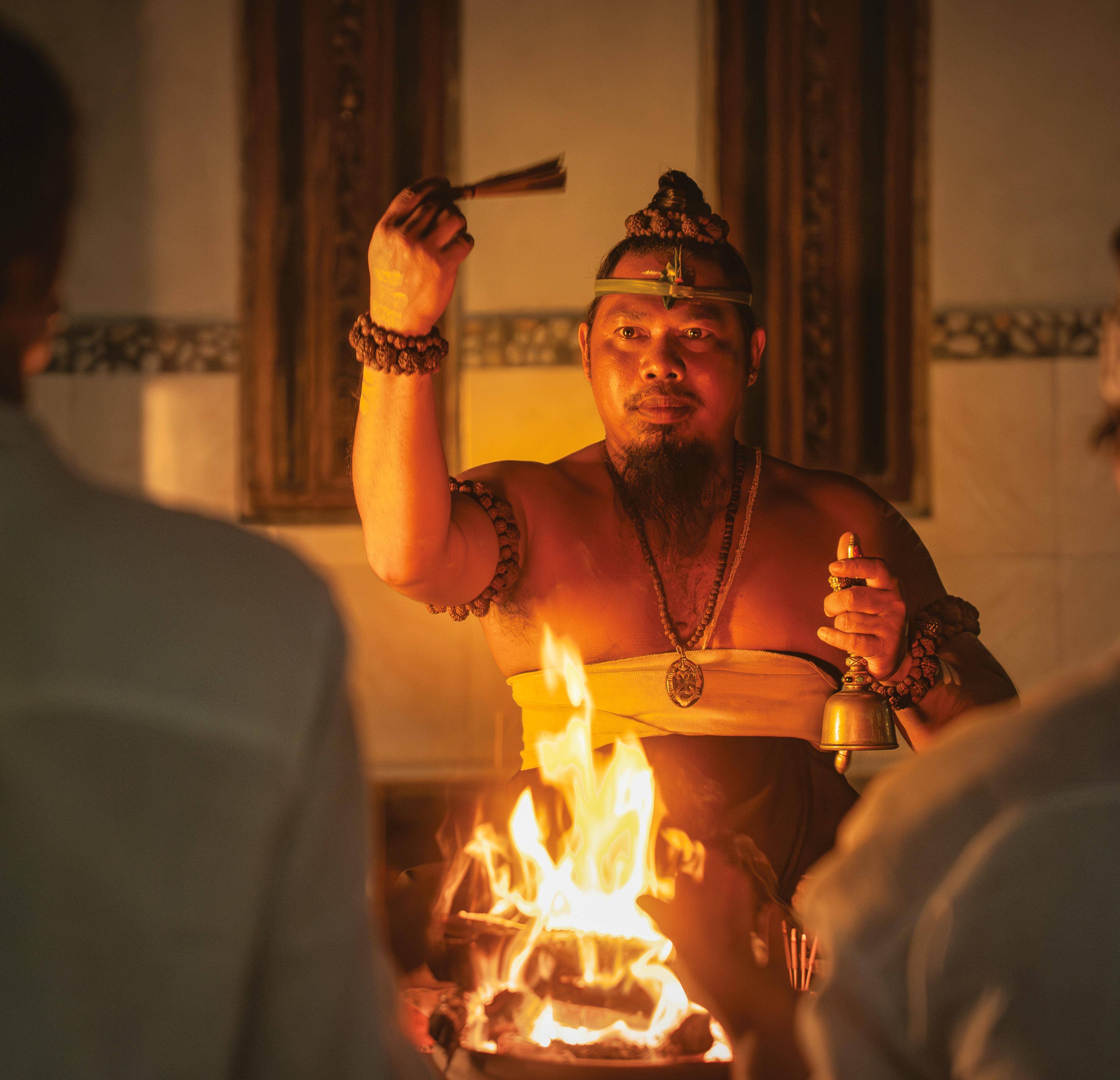
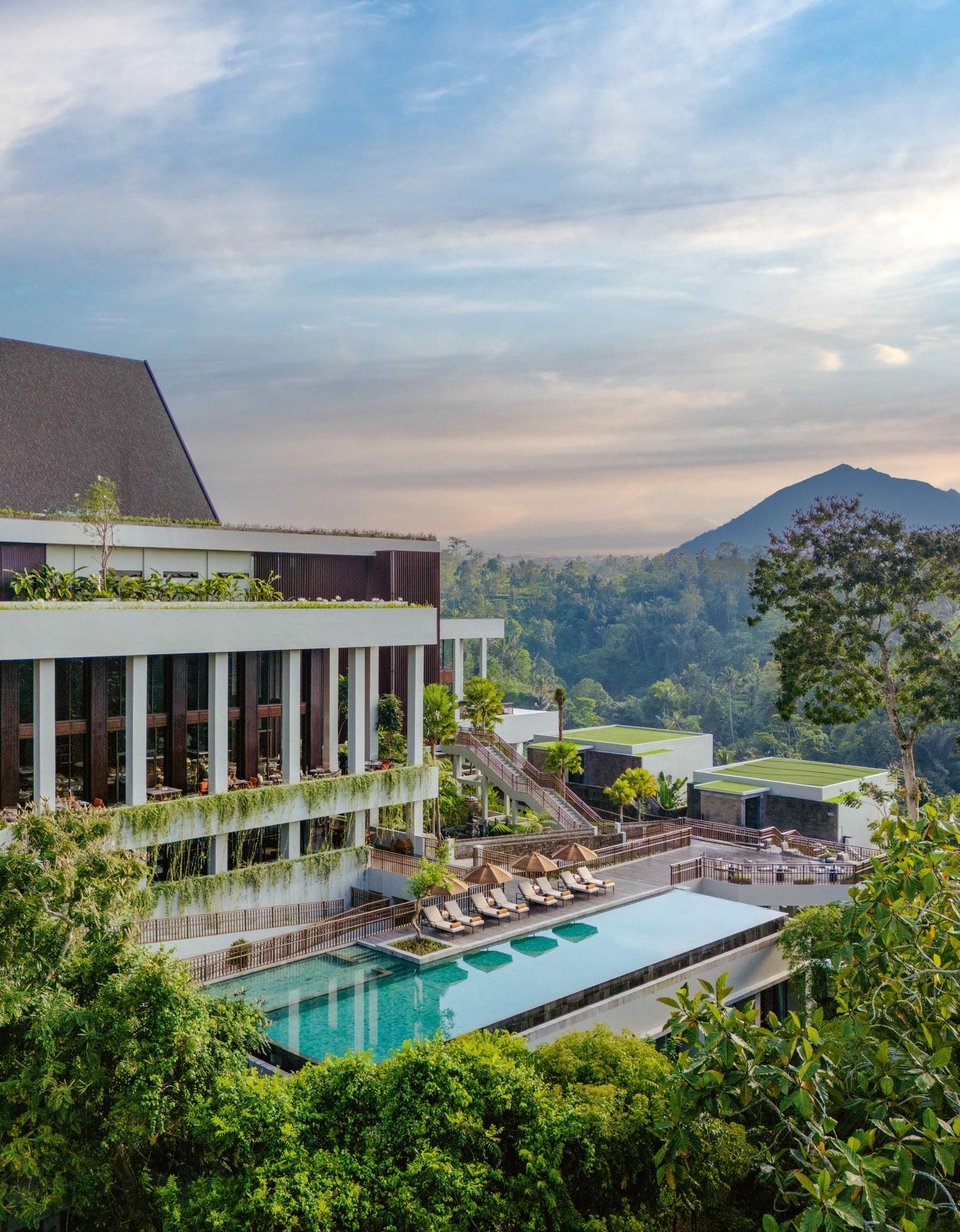
In northern Ubud, re ceremonies, rice paddy hikes and a home base hidden in impenetrable tropical jungle highlight the spiritual side of an otherwise buzzing Bali. Paul Chai gets his guru on at the Anantara Ubud Bali Resort.
It’s getting hot in here.
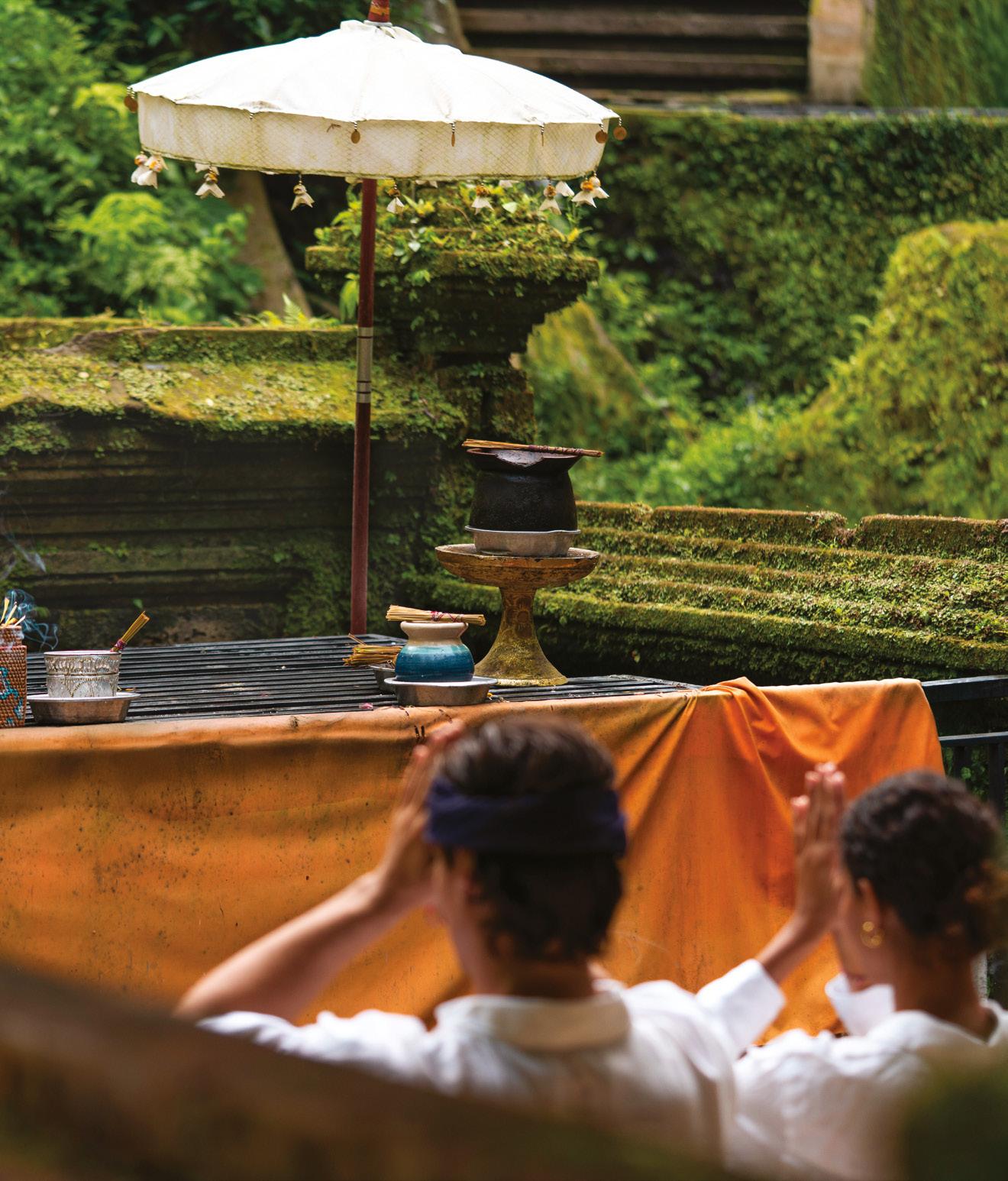
My family and I are gathered around a fire pit, the flames fanned by Idha Guru Sri Empu, a revered Balinese priest who chants as the fire grows in intensity. Idha Guru has ash daubed across his face and a sage-looking beard; his family acts as the back-up band, banging drums and singing along. Glowering over this cross-legged fire circle is a large, carved idol of Kali, Hinduism’s “black god”.
As instructed, at each pause, we “om” and throw fistfuls of rice into the fire; the rhythmic nature of the offering, the rising emotion of the chants, the searing heat and the clouds of smoke. I think briefly this is what taking peyote must be like and it’s the closest thing this avowed atheist has ever come to a spiritual high.
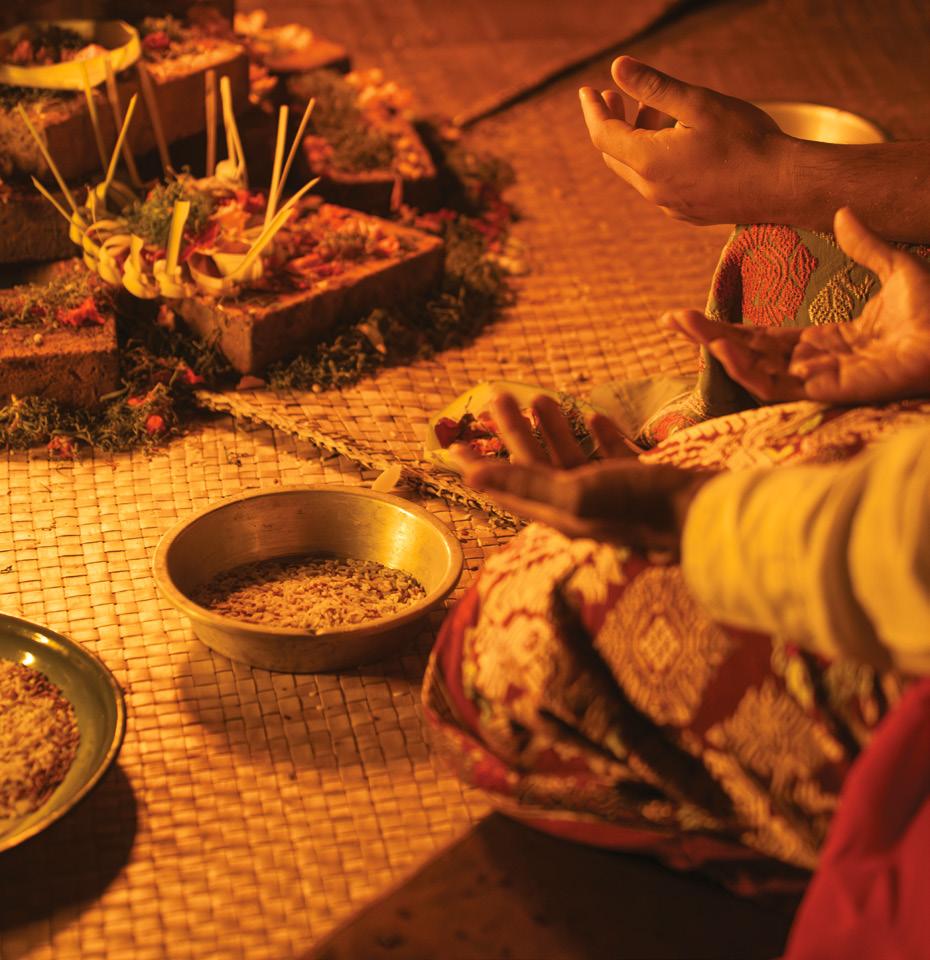
We are honouring Agni the fire deity and also, as one does, asking for a little luck and good fortune in return. Once the ceremony is over, we also chat with Idha Guru through an interpreter. We hear about his spiritual calling to the role, his family life and learn that we apparently had an unusually strong fire – but I wonder if he says that to all the disciples.
This ancient Vedic ritual, known as Angihotra, comes at the end of a tour
of Idha Guru’s home where we see a pale-faced Ganesh peering at us from behind chequered curtains, traditional toothy Balinese demons hiding in the windows and a watery shrine paying homage to a golden Buddha. Everywhere you look there are golden sashes, wooden altars and flowery offerings.
It’s an intimate insight into the spiritual side of Bali that many talk up but few get to experience.
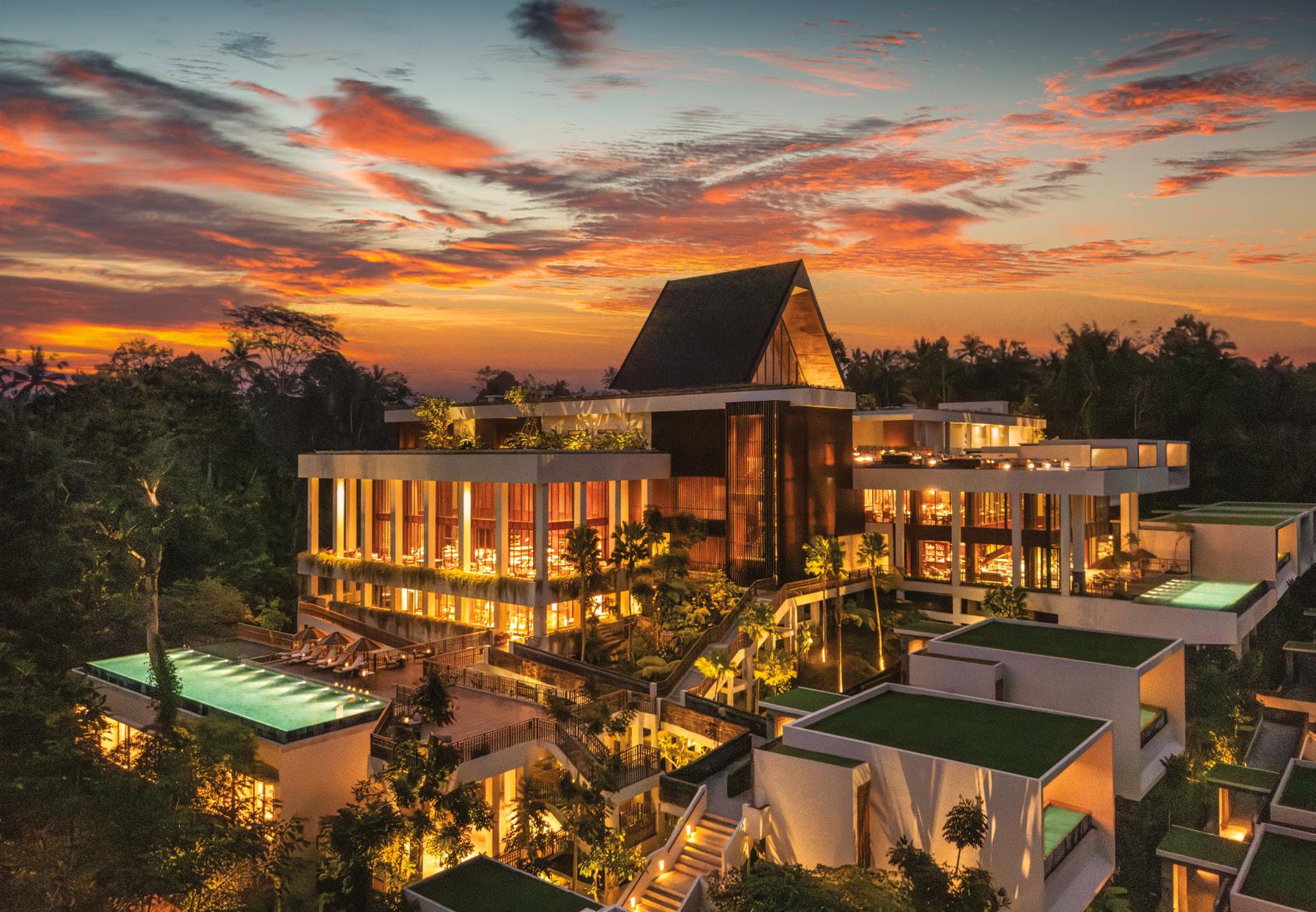
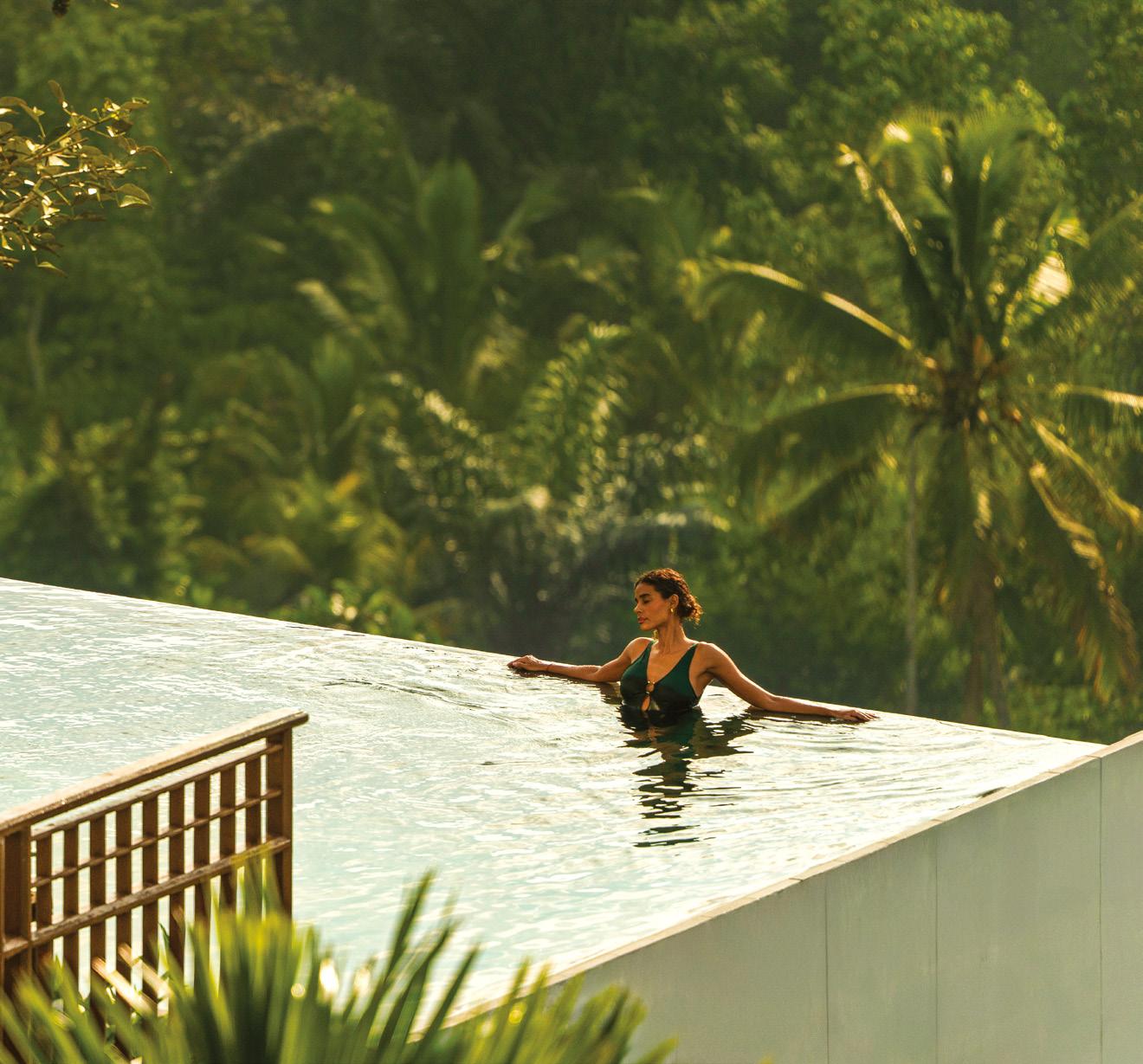
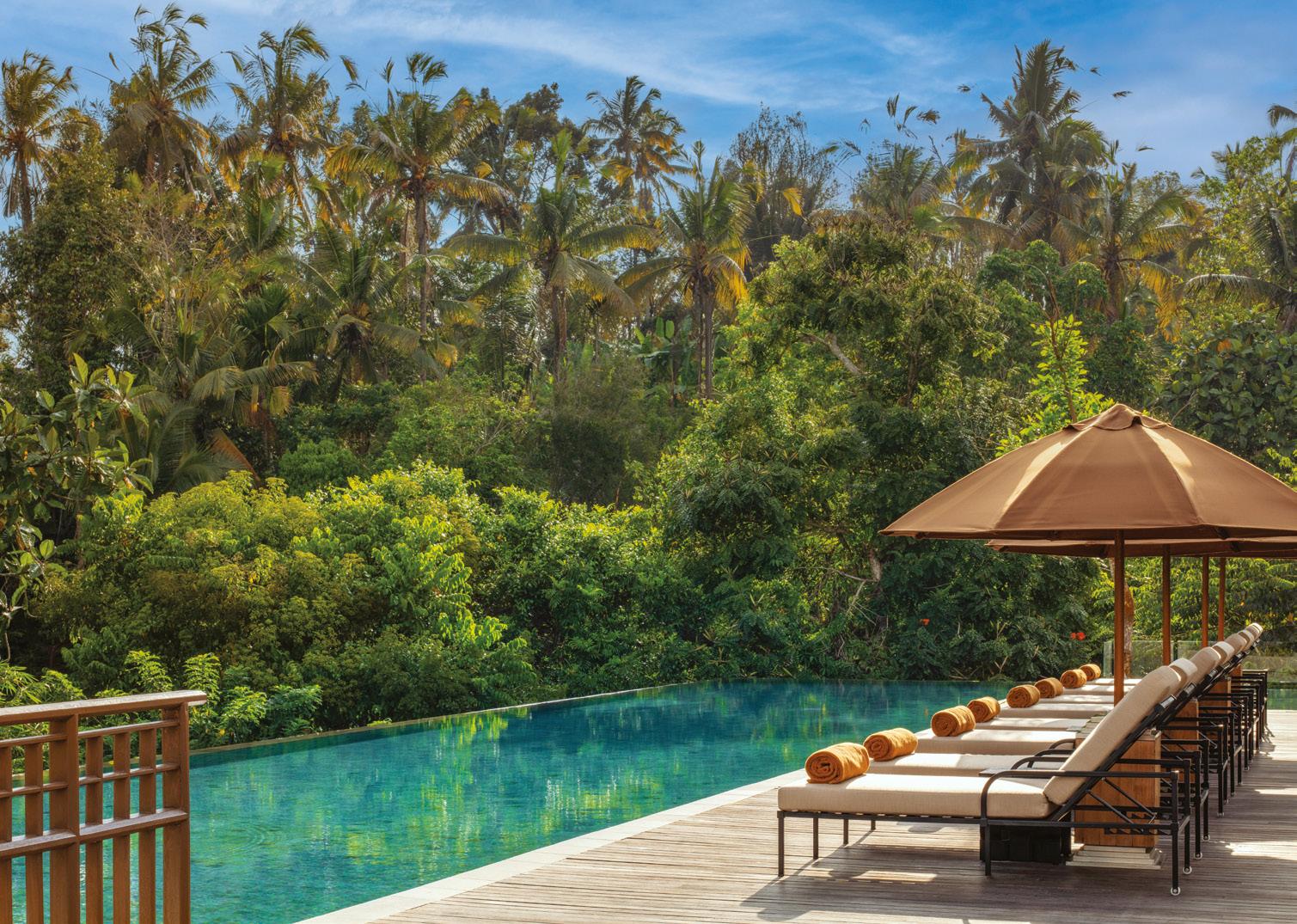
Our ceremony has been organised by Anantara Ubud Bali Resort located just north of Ubud near Banjar Puhu, where we are staying for a couple of days. The resort has 85 keys but manages to blend into the lush tropical surrounds like Star Wars’ Cloud City, the floating metropolis that is both separate from and a key part of the cloudy sky.
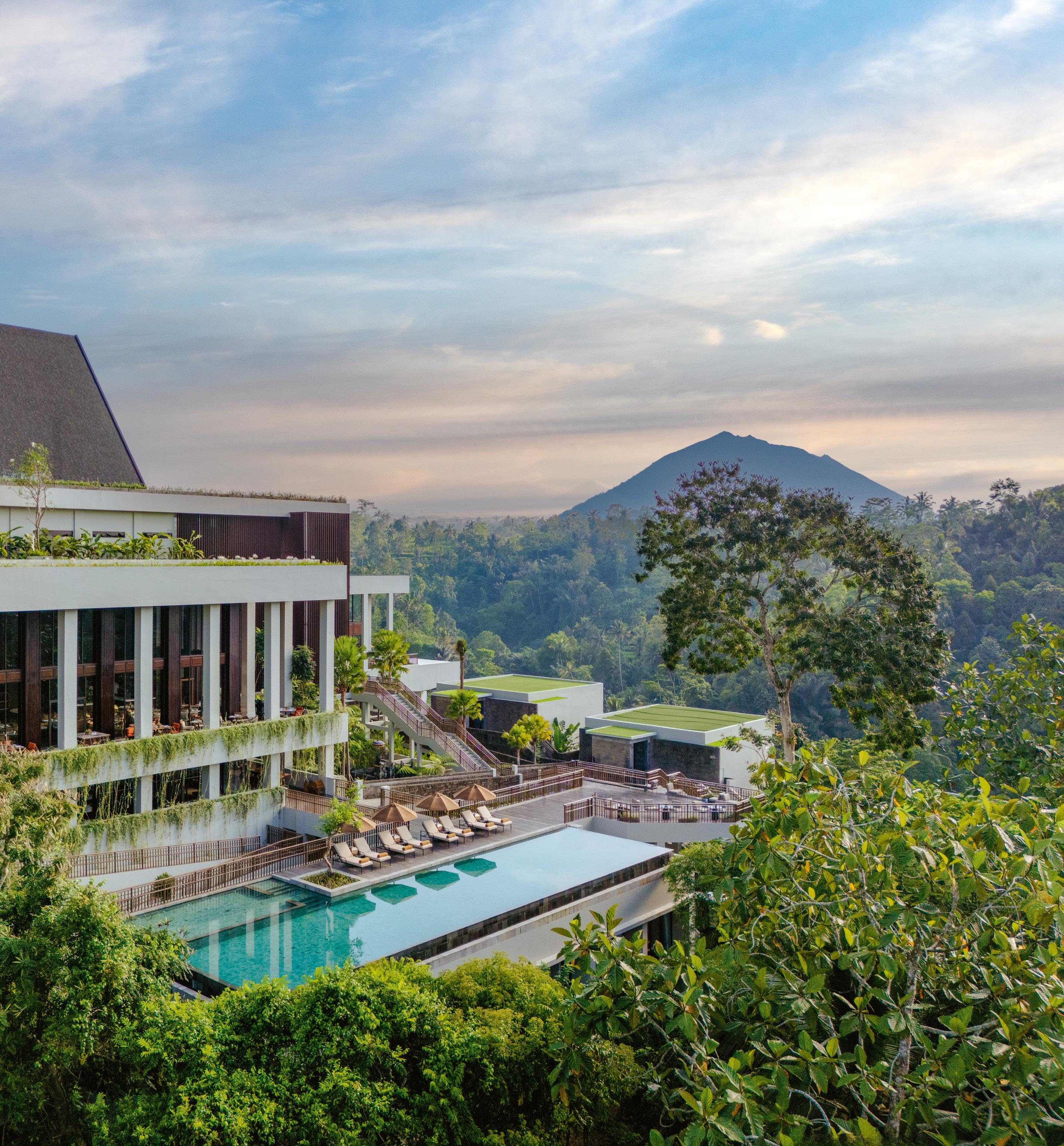
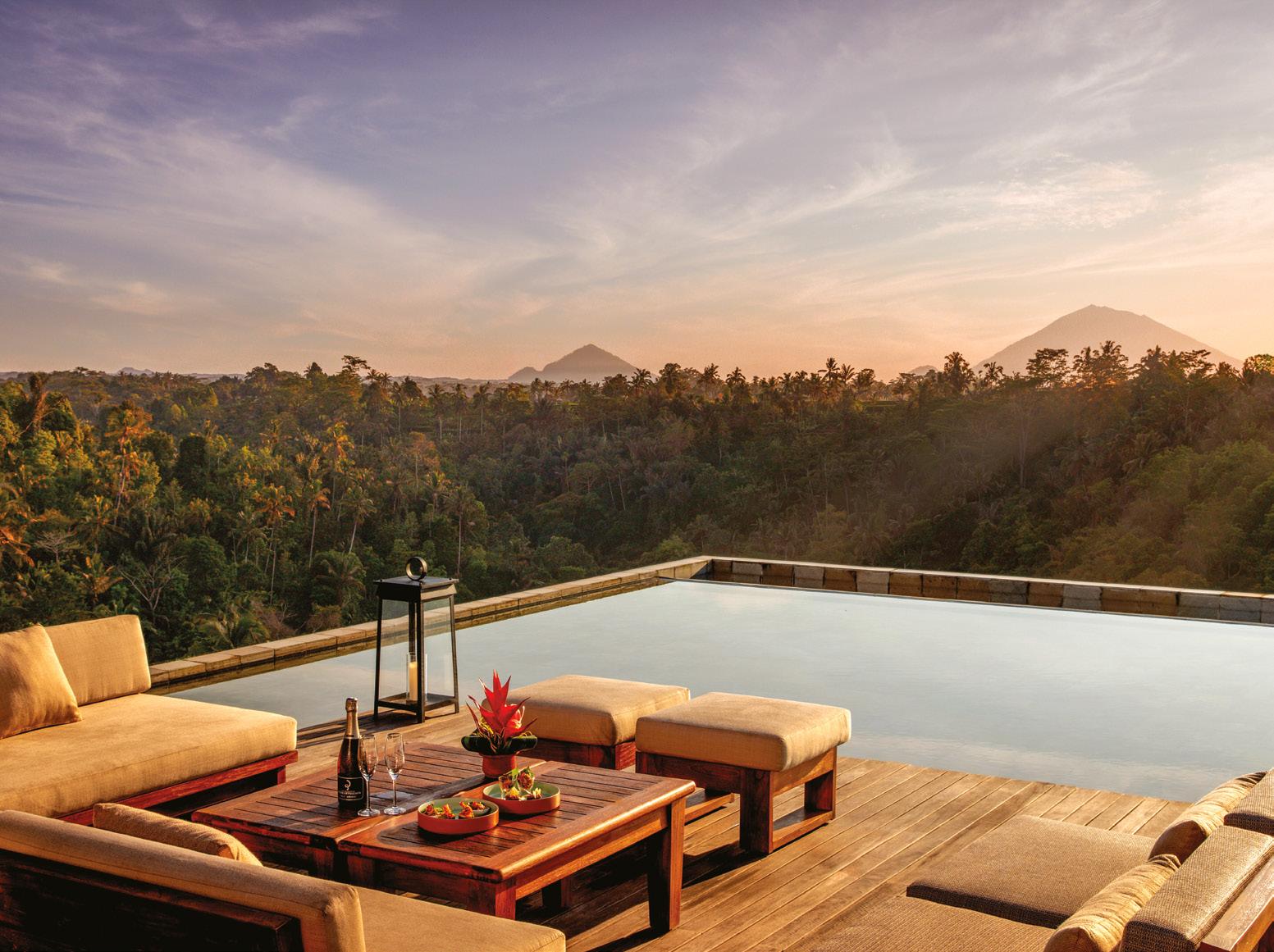
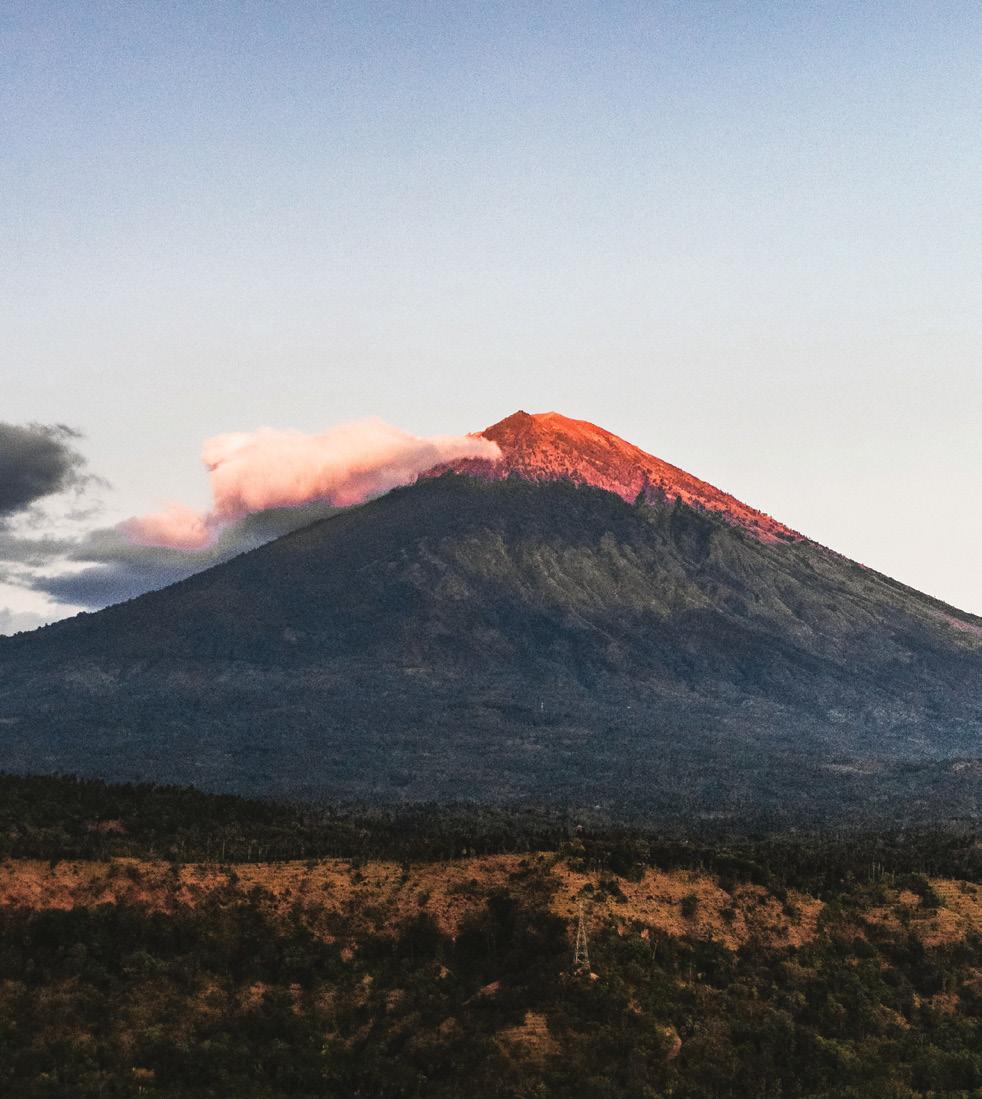
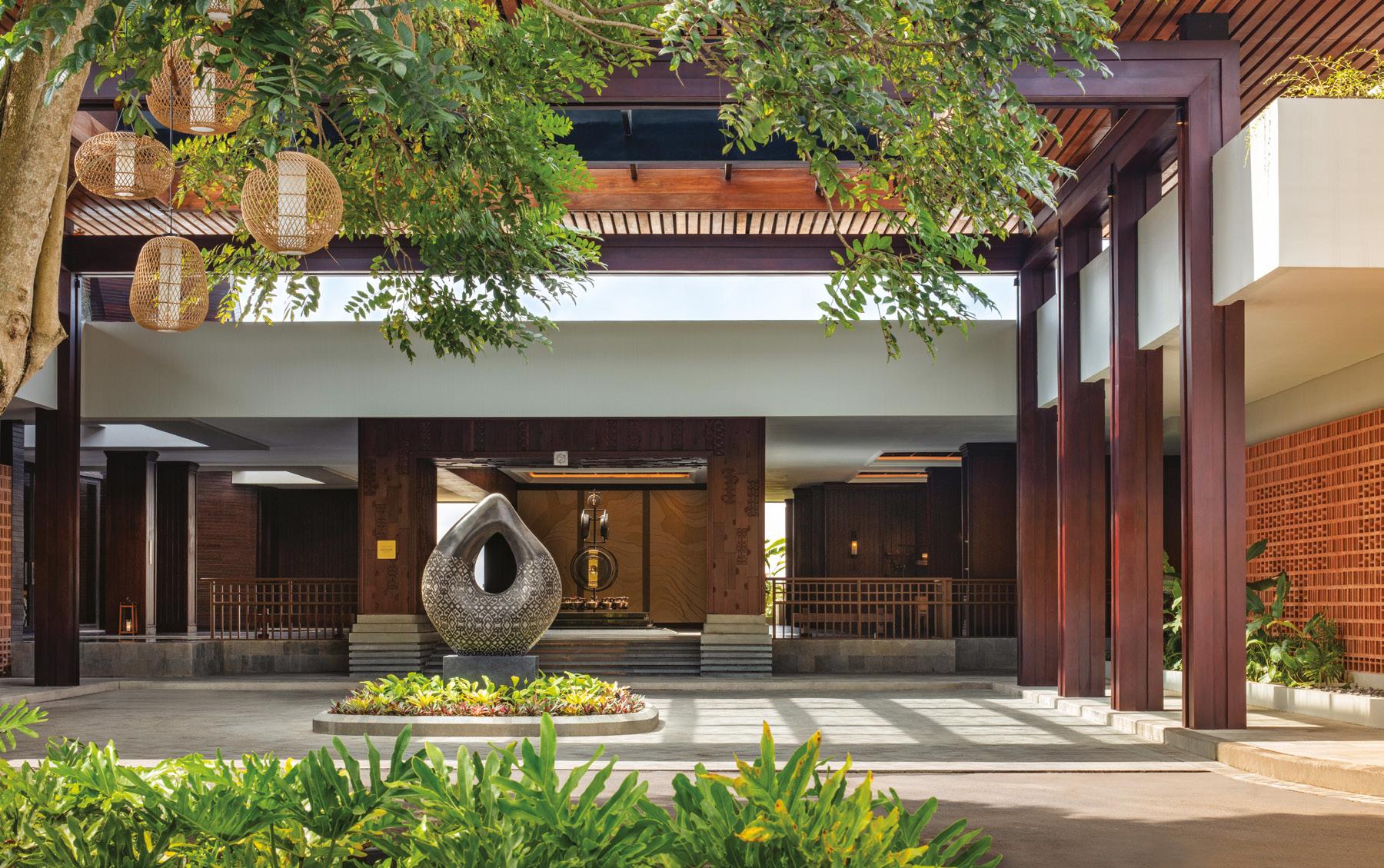
Guests are greeted by the Gamelatron, an ominous-sounding kinetic sculpture by New York artist Tirta Swara made up of 24 different local gongs (trompong gongs dating from the 1950s and hand-forged gongs made by the artist); it chimes melodically as you are led to the Lobby Lounge whose outdoor area is a wood-clad platform seemingly hovering over the jungle with Mount Agung beyond. The resort’s design is inspired by the area’s
rice terraces, and our pool villa is accessed by an inclinator as the abodes cascade down the mountainside, so each has an uninterrupted view of every possible shade of green in the world.
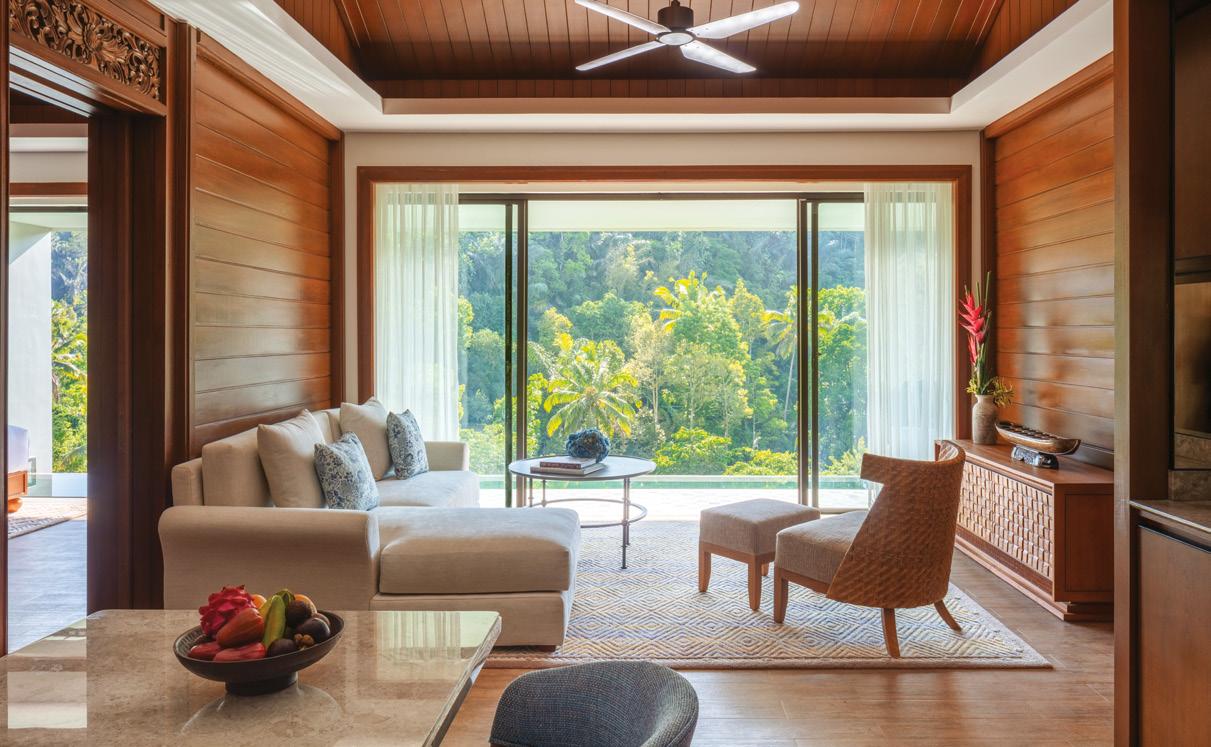
The villa itself is detailed in rich, dark wood with vaulted ceilings trimmed with amber lighting that gives the room a feeling of permanent sunset. You enter the living space with the two bedrooms coming off either side; bathrooms have a feature wall of moss and ferns in keeping with the verdant surrounds. A lap pool runs the full length of the villa, drawing a watery line under the view, and is accessible from the living space and both bedrooms. Thoughtful touches abound like a bowl of fresh local fruit and the gift of an intricately carved Balinese fan.
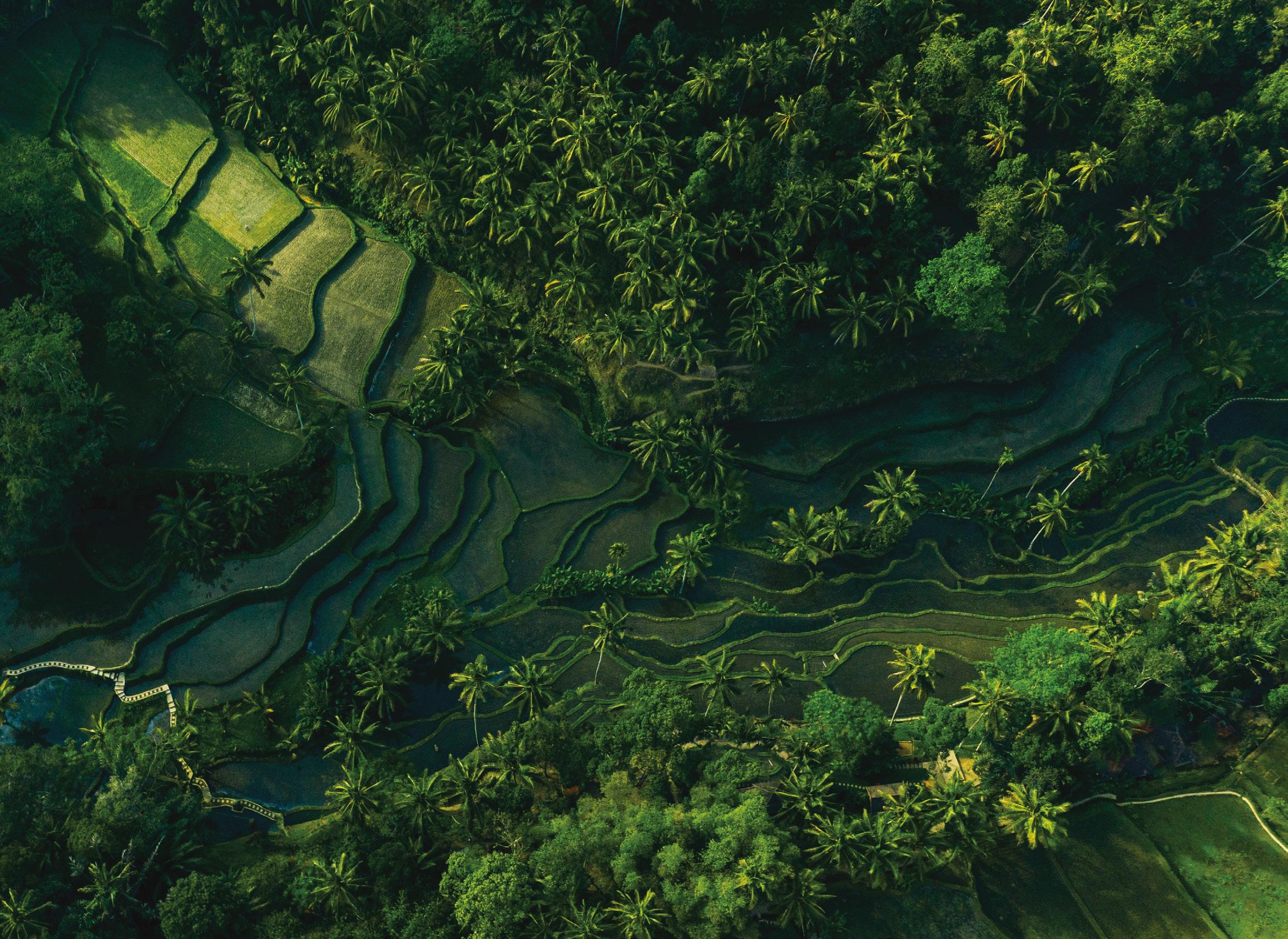
More local insights await the following morning on a walk through the rice terraces with local guide Putu. We weave through a forest of banana trees and past Balinese cows to emerge in the green chessboard of sprouting rice fields, then make our way along the terrace borders to the village of Puhu. We have been granted access to
a local home, a two-family compound on the edge of town guarded by a stone sculpture of Ganesh, who is there to ward off any negative energy. The compound is large, with a particularly ornate residence reserved for the eldest child, and temples on the north and east side of the property; in Ubud you are never far from a place of worship.
The Balinese love a garland, too, and even the cars here have colourful bows, streamers and flowers decorating the grills. Putu explains that we have come during a local celebration where the people are giving thanks for all things that humans have made: cars, scooters, even computers are being festooned with colour.
There is a genuine joy in Bali’s north, removed as it is from much of the busier parts of the island. Ubud is often romanticised as Bali’s hippie heart and there is some truth to it in the simplicity of life in the villages and remembering to have gratitude for simple things like our own ingenuity. Back at Anantara Ubud Bali Resort we enjoy this
peaceful remoteness by lounging in the resort pool and having a leisurely lunch at the all-day Indonesian diner Kirana. In the evening, we dress in sarongs and drive out to meet Idha Guru Sri Empu. If, as the guru says, our fire truly is unusually strong, then it was definitely fanned by a couple of days of connection and quiet in the jungles of Ubud.
Sydney’s Taronga Zoo already had some of the most iconic real estate in the Harbour City, so adding a boutique, animal-adjacent hotel makes it the best address in town to spend the night. Paul Chai checks into the Wildlife Retreat at Taronga.
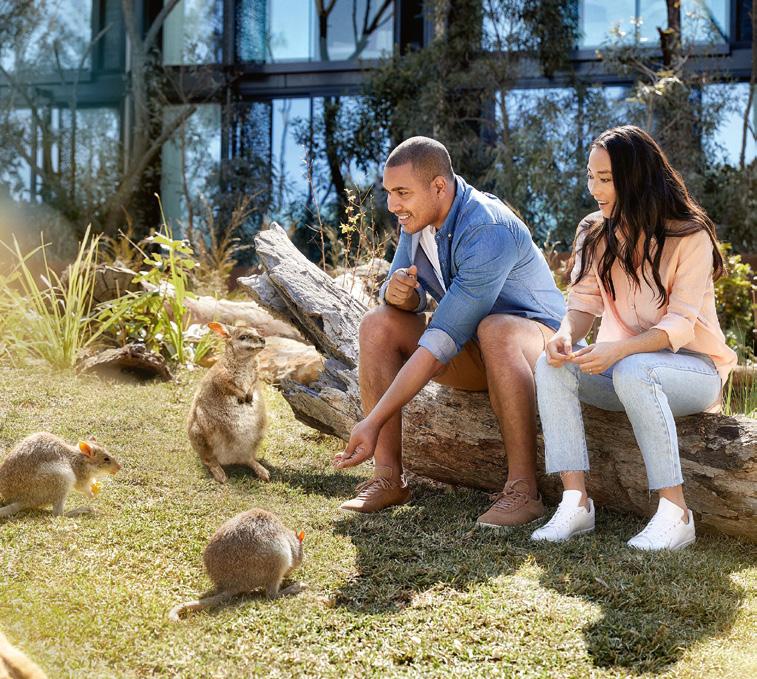
The Wildlife Retreat is a boutique ecolodge with uniquely placed views of Sydney Harbour, and surrounded by bushland and animal habitats. Your room might face an enclosure or the harbour-view Treetop Suites that look out across the water. Rooms all have king beds and sustainable amenities. Packages include guided wildlife tours, buffet breakfast and complimentary zoo access, with dinner available at the on-site Me-Gal restaurant which also has killer scenery. Best of all the money you spend staying here directly funds Taronga’s conservation programs; have fun, feel good.
Guests arrive at The Nest, a circular reception area with couches, ottomans and breakout spaces in natural tones for guests to lounge around in. Overhead, an installation mimics dozens of Regent Honeyeaters in flight; at night they glow.
Taronga Zoo is located on Sydney’s Lower North Shore in Mosman, a leafy harbourside suburb with million-dollar water views and boutique shopping along Military Road. Nearby is Balmoral Beach which offers protected swimming and dining, like the historic Bathers’ Pavilion right on the water; you can also swim in harbour baths nearby. The ferry to Circular Quay takes about 15 minutes, so the city is in easy reach.
Me-Gal is the harbourside restaurant with sweeping views of the Opera House and Harbour Bridge, and a buffet spread at breakfast, included with most stays. Dinners seek to highlight native ingredients in a seasonal menu. You may find dishes like garlic prawns with lemon myrtle, beef tenderloin with smoked eggplant, and panseared sea bass.
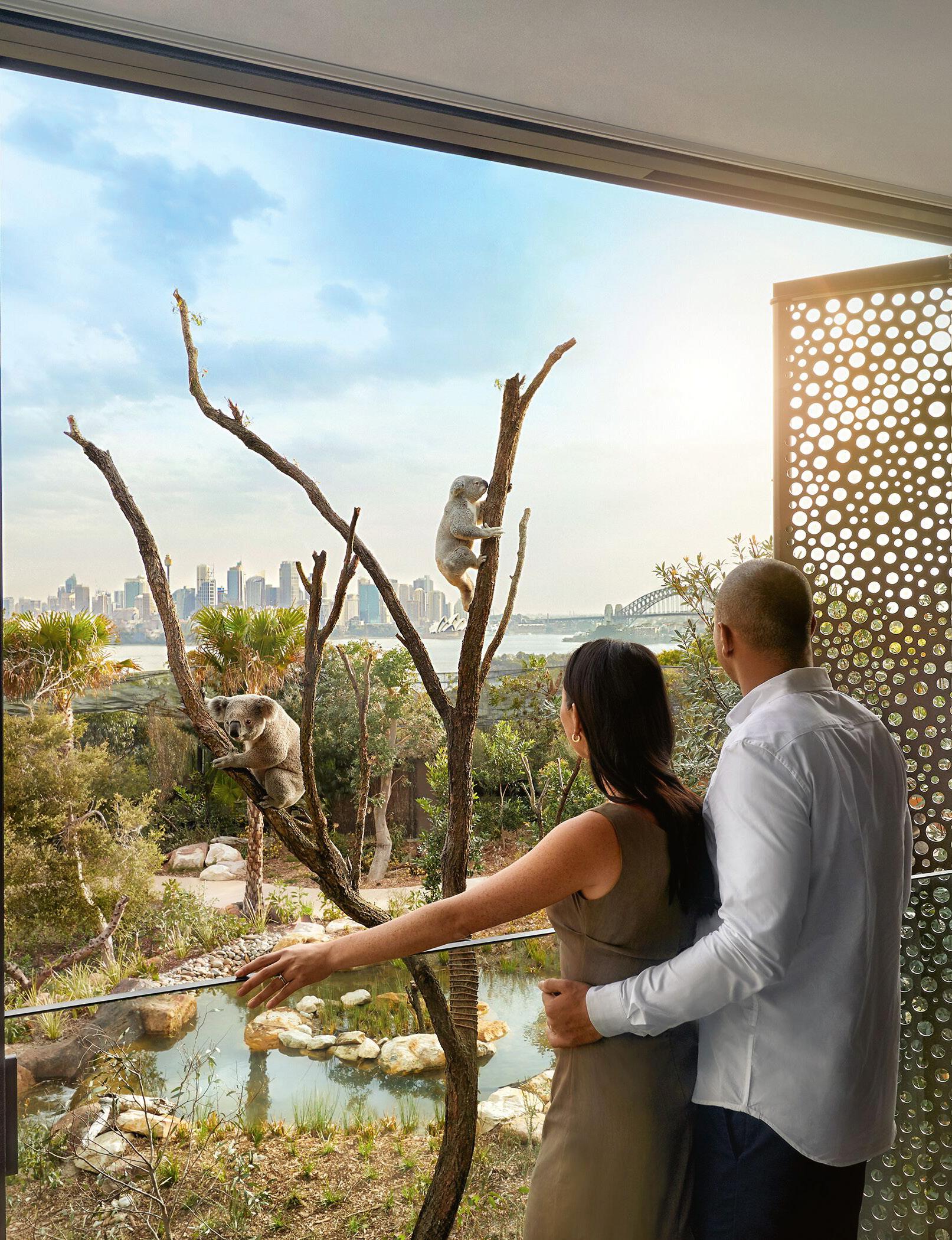
My Animal View Room has one of the best outlooks ever as I part my curtains to discover a fluffy koala butt sticking out of a crook in a tree. My stay forms part of the enclosure that holds Busta, Eugene and Yanada, a crew of male koalas who are very active during my stay; I see them climbing, chomping leaves and playing on the ground over the course of two days, a treat even for a Sydney local.
Inside the room, my king-sized bed faces the windows and the koala boys’ habitat with a couch at the end for reading; bright botanicprint throw cushions complement the pale wood panelling throughout with wall nooks
containing terracotta vases. A sliding wooden shutter in the ample bathroom allows you to look over the bed and out to the wildlife while you clean your teeth should you so choose. Cute nature-inspired details include a silhouette of a bird appearing when I switch on one of the lamps.
The mini bar has Stone & Wood and Little Creatures beers, a small bottle of Pommery Champagne and Archie Rose RTDs along with softies.
In the morning I wake to dingo howls and see that Busta and crew are starting the day chewing on a bunch of fresh gum leaves.
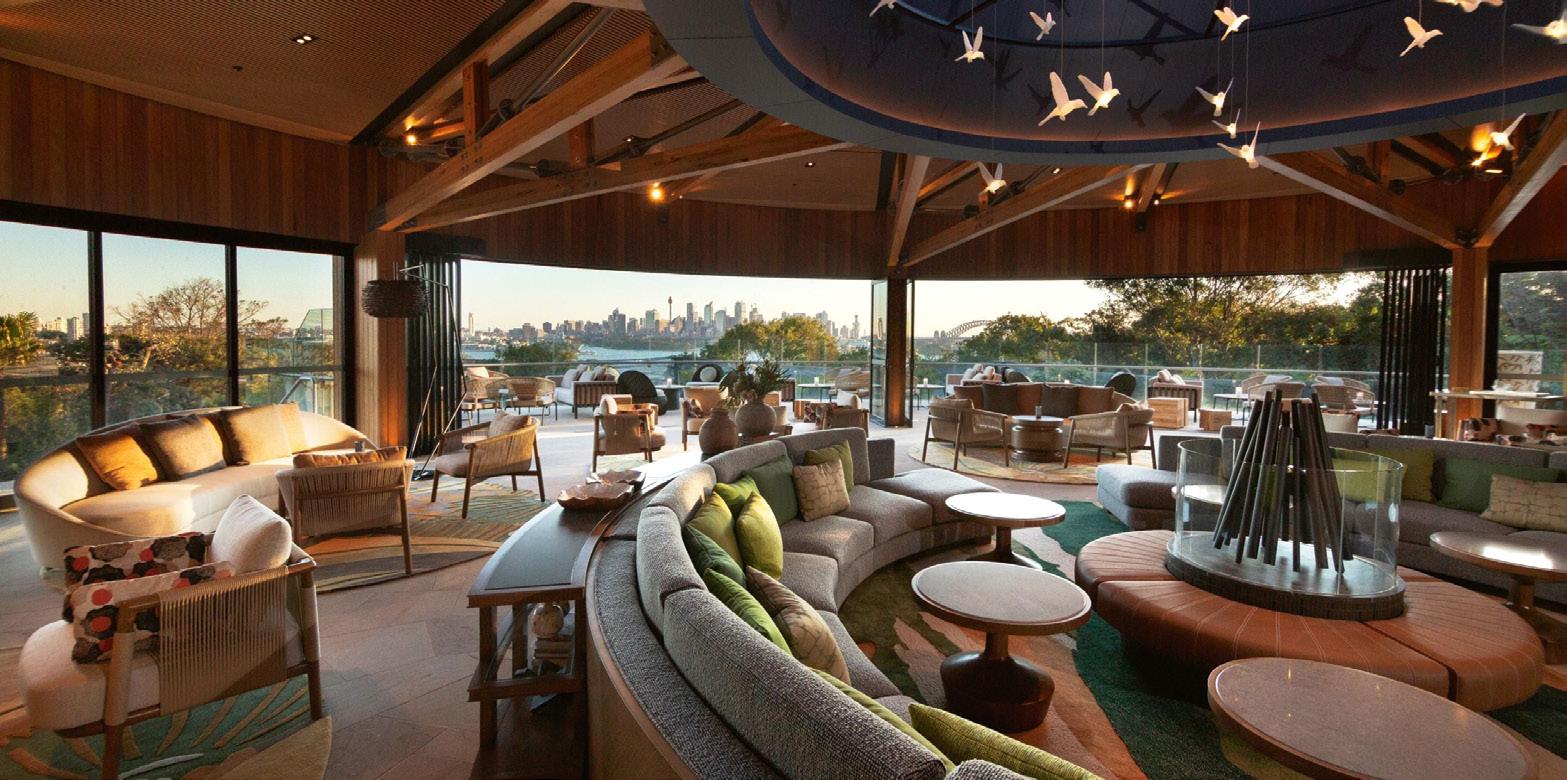
The best part any zoo stay remains the fact you are spending the night in a zoo, with all the grunts, howls and general childhood joy that inspires. Sign up for a morning tour and you will be first in Taronga Zoo before the official opening time, where you might
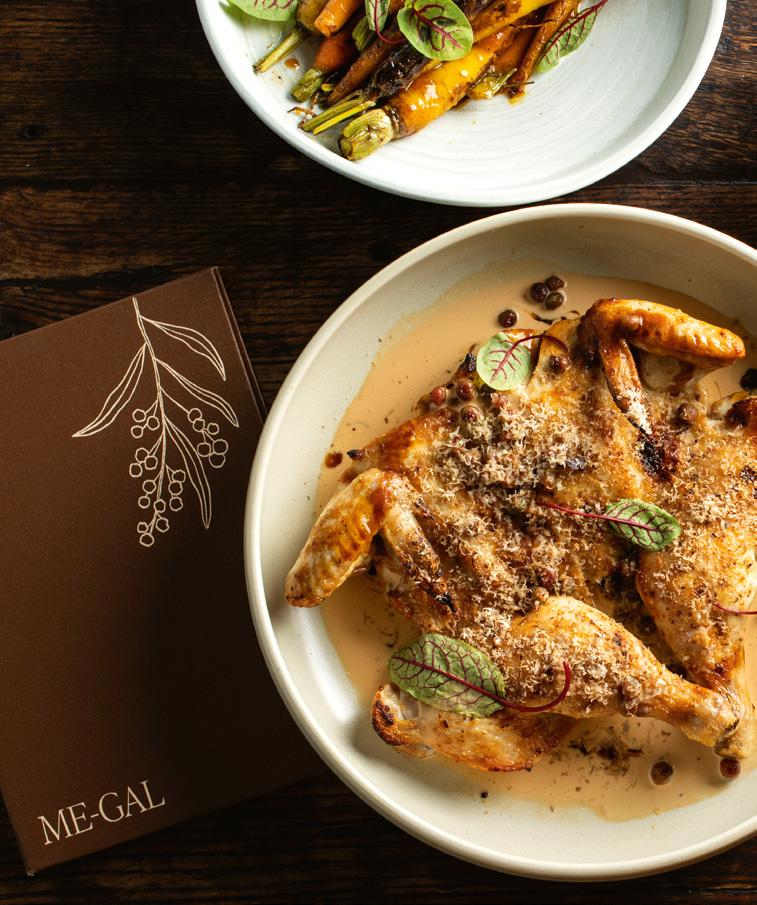
see the dingoes on a morning walk (yes, just like domestic canines) and learn more about koalas and kangaroos (did you know kangaroos can pause pregnancies if food is scarce?).
Head to the Nocturnal House before the lights go off at 10am so you can better see bilbies and perhaps catch a potoroo feeding; Button the hand-reared potoroo is particularly pushy. We are also lucky to get a visit from JR, the Papua New Guinean long-beaked echidna, named for his time at Dallas Zoo.
Building on the success of the Roar n Snore zoo camping, Wildlife Retreat at Taronga cements the zoo’s reputation as a destination experience. As a kid I used to walk to the zoo at night just to hear the enchanting nocturnal sounds – a jarringly wild soundtrack in an otherwise urban landscape – and now you can experience it from a comfy bed right next to your exhibit and rise to Mosman mansion views and two days of zoo access. One of the best things you can do in Sydney.
MT BULLER
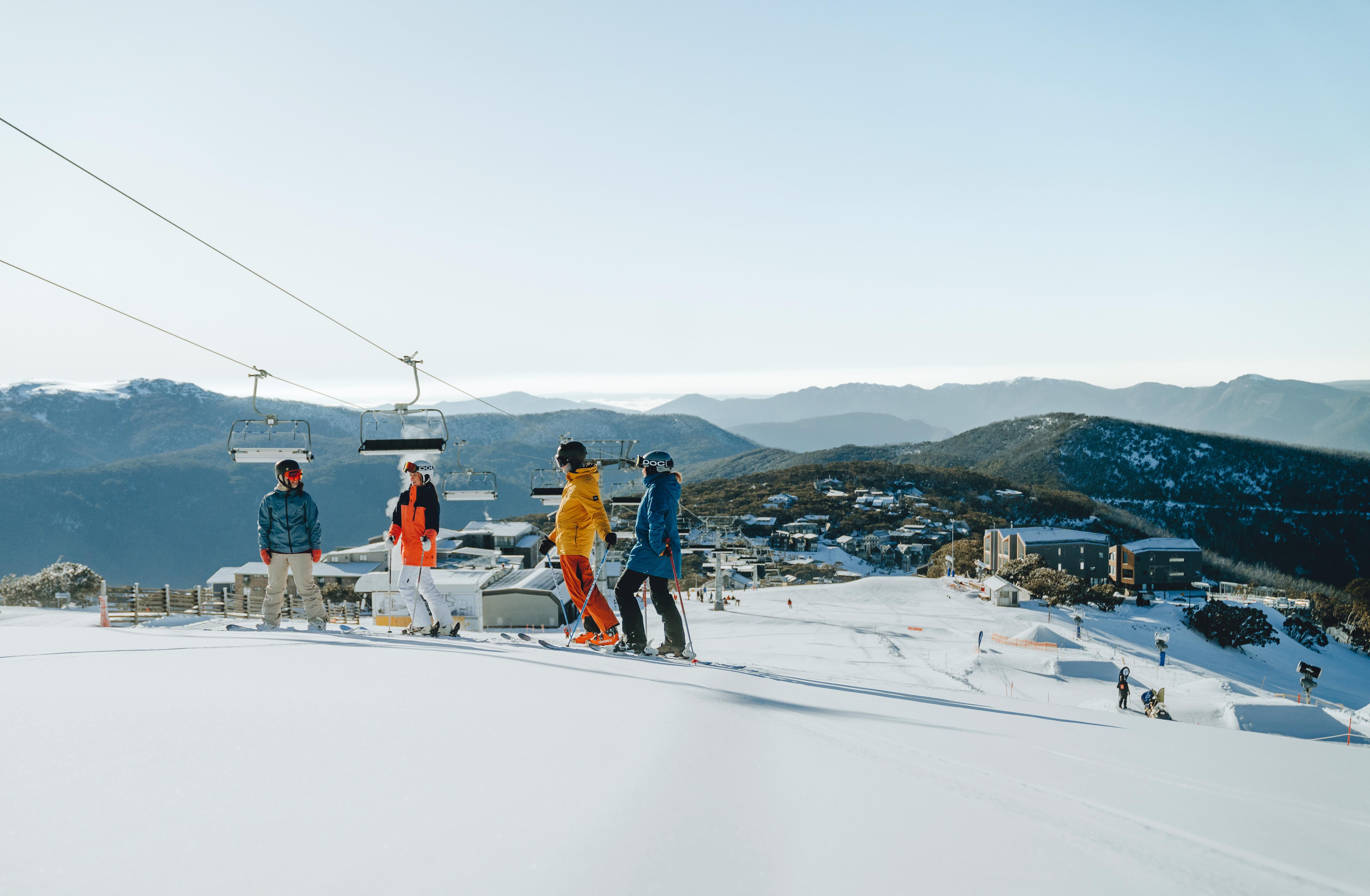
When it comes to winter ski holidays, the Victorian Alps can inspire as much passion as you nd in a one-eyed football supporter. Paul Chai heads to Mount Buller for gourmet dining pop-ups and a dose of ski history, all in a weekend.
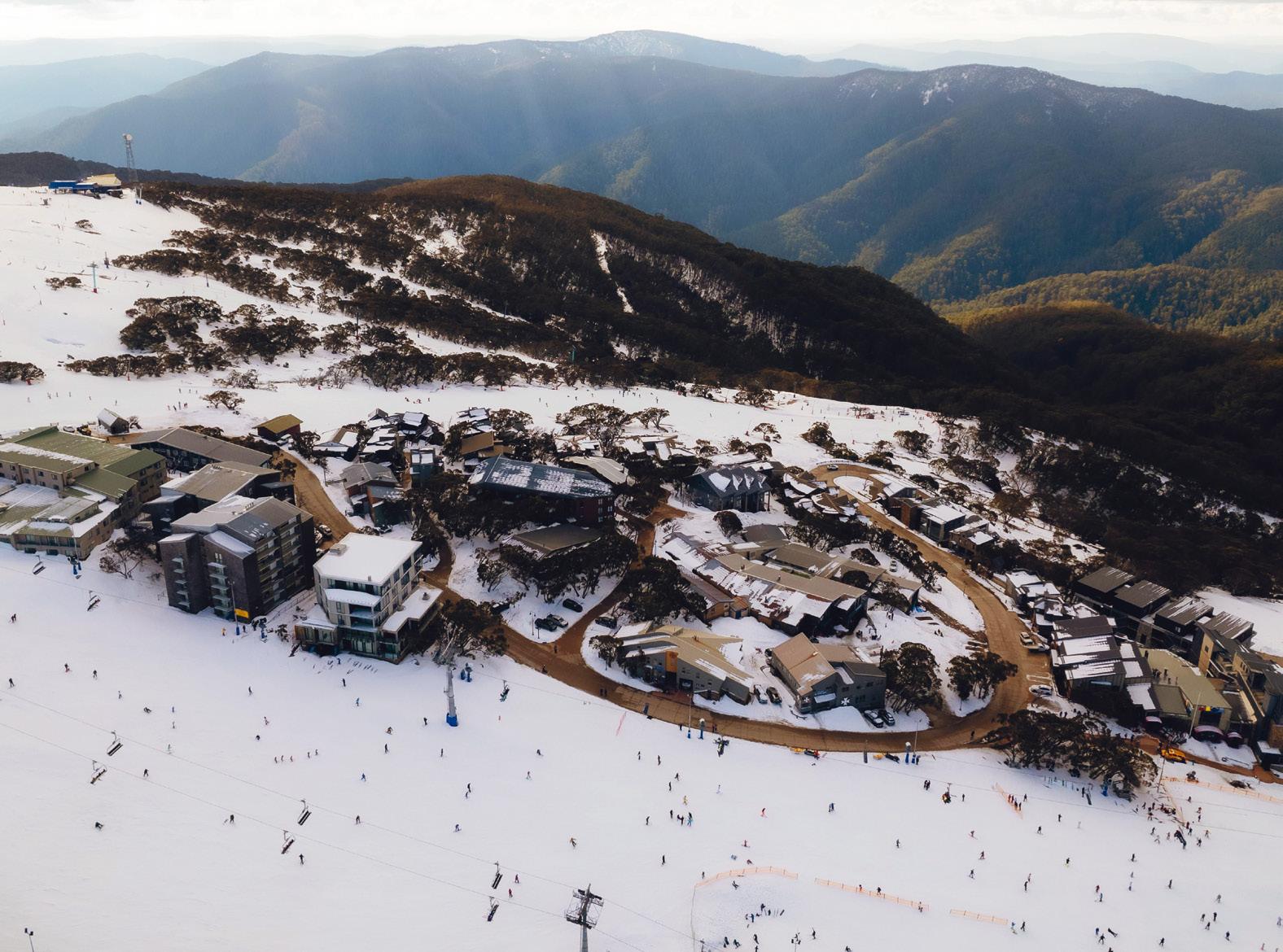
They say that Victorians are loyal not only to our footy teams, but also to our mountains; that once we decide on a snow-covered peak to spend our winters we are ride or die forever. That is certainly true of our family and Mt Buller, known as Melbourne’s Mountain for its proximity to the big smoke and the slopes on which my kids learned to ski.
I was first made aware of this inherent loyalty when my son and I were touring another alpine destination and he remarked that it was “no Buller”. And so, not only are we Carlton tragics but now proud Buller supporters, too. At least one of them is able to win a trick of late; it’s a bumper season on the mountain with almost all runs open earlier than ever.
We are not the only ones to have picked a side, either, there are many families that have seen generations not only ski the slopes – just a three-and-a-half-hour drive from the
Victorian capital – but also live, work and play on them.
You see this loyalty at Kofler Hutte where the second generation of the Fleming family is protecting the secret recipe for the apricot mogul strudel, and in the ski patrol where Andy Laidlaw, a patrol veteran, has passed the torch to his daughter Ally.
A group gathers in the National Alpine Museum Australia, located in Alpine Central in Mt Buller. With over 25,000 items – from mannikins clad in ‘80s neon onesies to blackand-white photographs of the early alpine pioneers of the ‘30s – the museum also holds talks in the winter season.
Andy and Ally Laidlaw sit on a vintage skidoo and spin yarns about their years helping skiers. Andy has been a ski patroller for decades, starting in Canada. He recounts tales of hooking injured skiers to pommers to tow them to safety, running out of explosives,
having too much fun blowing up snow to protect from avalanches and the heyday of bands like Cold Chisel and Skyhooks heading to the Australian snowfields for gigs. Ellie grew up at Buller, went to school on the mountain and then lived overseas for a while before returning for work.
“Growing up here were memorable years, I met some of the greatest people that I am still friends with now,” Ally says. Her father says the same about all the ski patrol he has worked with. “Someone said to me once if you could, would you do anything differently? And I said: ‘No way, it’s a perfect life’; ski patrol is a perfect life, it keeps you young, it keeps you fit, though it’s not good for your liver sometimes.”
The crowd sips wine and wanders the collection, looking at reminders that many family connections go back more than one generation.
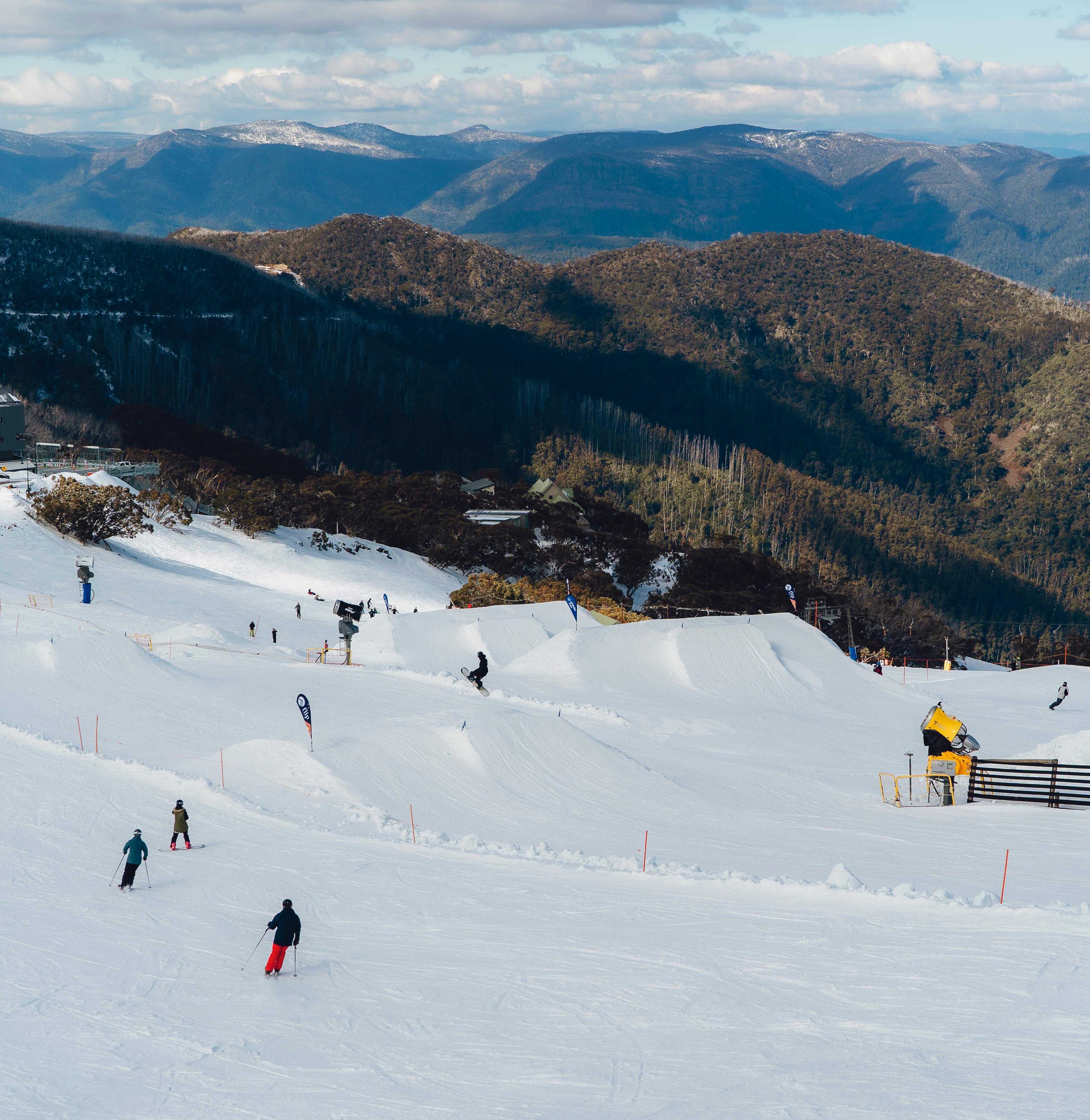
The Ikon Pass gives skiers access to the world’s most iconic mountains, with friends and family discounted lift tickets, early morning First Tracks access, and savings on food, beverage, and retail at participating resorts. Peak Perks add further benefits across travel and gear, while new refundable pass options give you freedom if plans change.
ikonpass.com
You can’t claim to be Melbourne’s Mountain without keeping the food lovers happy. Mt Buller produces some amazing local offerings like the share-plate wonders at Harry Burns, fine-dining by fire at the Wood Room in Arlberg and pop-up pho in the village square.
But in recent seasons, Mt Buller has also been bringing Melbourne’s best chefs to the mountain for a series of residencies. In the low-lit upstairs space of Villager, rock ‘n’ roll photographs like one of Johnny Cash giving his famous finger and pop-art prints line the walls and waitstaff are bringing out French classics from an Entrecôte takeover. The modern Prahran brasserie is one of a series of special menus straight from the big smoke that often sell out.
I kick things off with a Margarita by the Splice, a tropical take on the margie that adds mango puree and lime juice to invoke childhood memories of the beloved Aussie ice cream. King Louis boulettes (meatballs) come with a dipping Dijon mustard and gruyere gougeres (choux pastry cheese puffs)
are decadent but light; scallops in a spiced citrus butter are silky with the right amount of heat and a French onion soup has the sweetness that only comes from cooking the hero ingredient low and slow.
The signature steak frites arrives with a perfect crust, smoky from the grill; there is great crunch to the chips too and it all swims in the secret herb butter that melts into a sauce worthy of ordering another side of bread to soak it up.
Back on the slopes for our last outing, we benefit from a bluebird day. That means plenty of runs down Wombat with a donut break at the Wombat Hut, one of the slightly under-the-radar places for a rest on snow.
We have brought a new member of the family along this year, my eldest’s girlfriend, Mili, who has never skied before. She’s a natural and makes it over the back of the mountain to lunch at the Kofler Hutte, and a one-and-done visit to Family Run, with one of the best views in the resort. We might just have added another one-eyed supporter to Team Buller.
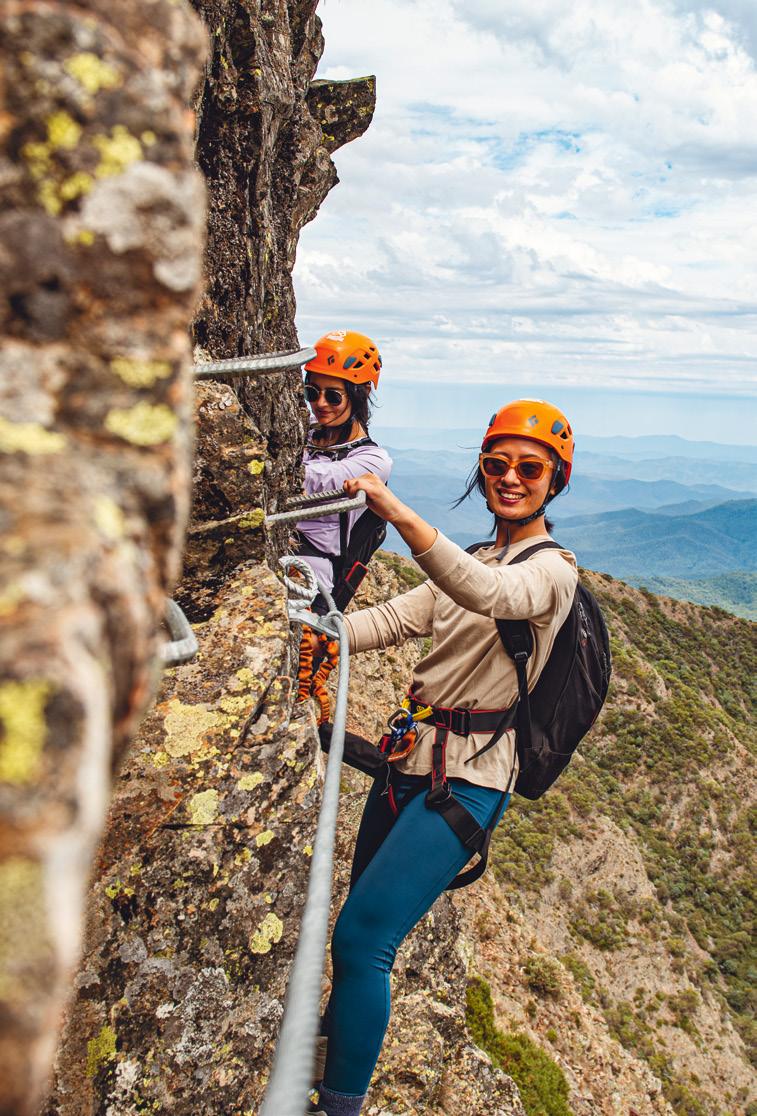
When the white stuff melts, Mt Buller is home to the first-ever via ferrata course in Australia. The Rockwire via ferrata, or iron path, is simplified mountain climbing with iron rungs and holds drilled into the side of the mountain to help you make your way up and around the challenging terrain.
I am on the final climb of the summer and the mood is jubilant. Our guide, Ben, tells me they have had a great season with not a single injury; I choose this moment to trip on a nearby rock and pitch forward, but not to worry, in addition to the holds we are double clipped to a wire running the length of the course.
There are moments of genuine elation as you get as close as a non-climber can to feeling like you are conquering a peak; and the views are unbeatable, from the changing colours of the rock at sunset to a juvenile wedge-tailed eagle circling overhead.
Later, over dinner with Rockwire founder James Webb, he regales us with tales of broken drill bits and long days building Australia’s first course. He says he made it for the 99 per cent of people who don’t rock climb not the 1 per cent that do, and everyone who took on the last course of the season, was glad that he did. rockwire.com.au
BANGKOK
e bartender’s handshake is a traditional greeting between hospitality workers; it might take the form of a signature cocktail or single shot. We shake hands with Dicky Hartono, beverage manager at Sindhorn Kempinski Hotel Bangkok’s myth-meets-martini jazz lounge, Fire y Bar.
Born and raised in Surabaya, Indonesia, Dicky Hartono’s career in cocktails has seen him roam from nightclubs to craft mixology bars across the world, from developing a housebrand gin in Manila to competition mocktails in Muscat – and a stint at Dubai’s first-ever Veuve Clicquot Champagne bar. “Moving from culture to culture, country to country, I try to go into every new experience with an open mind,” Dicky says. “I’m always looking for something new to learn, another perspective to discover. I try to bring a human touch to my work.”
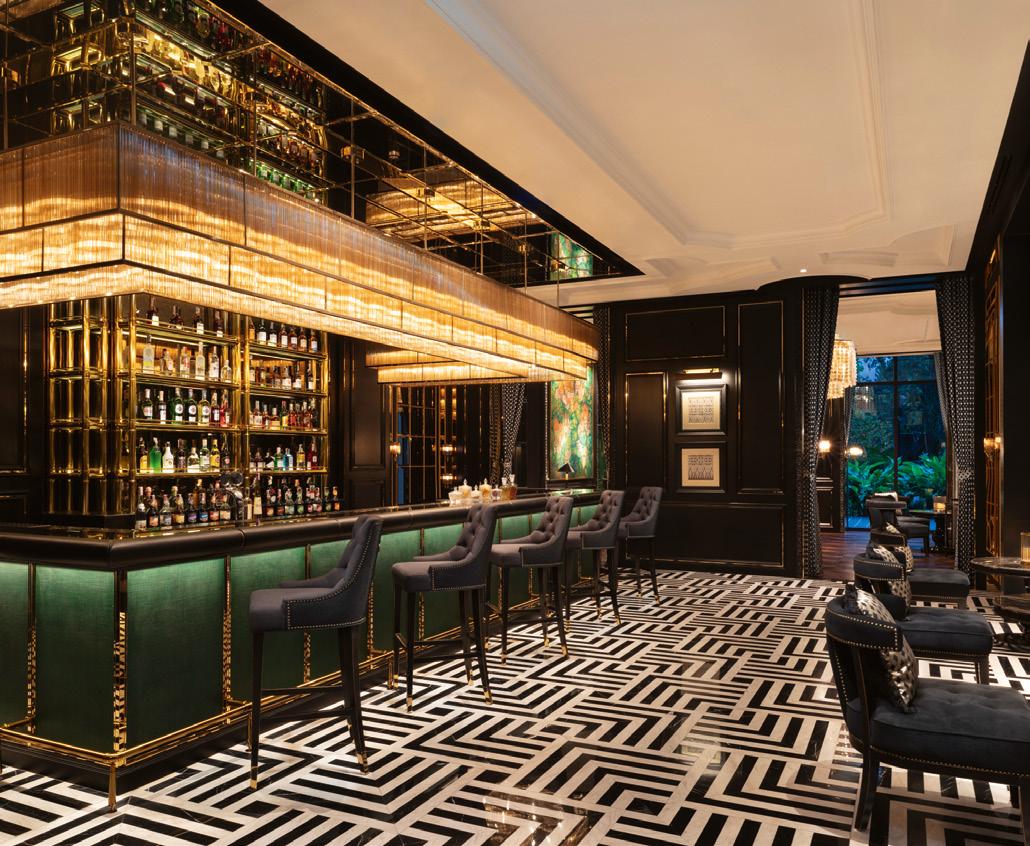
Bangkok’s Firefly Bar is a fitting place for Dicky to end up. Positioned on the ground floor of Sindhorn Kempinski Hotel Bangkok, it’s a sharply dressed den that specialises in high-concept cocktails and hosts an extensive fine spirits list that spans over 370 bottles (plus intimate cigar parlour La Casa del Habano). Dicky’s newest cocktail menu, “In Pursuit of the Firefly”, celebrates the tiny creature’s place across cultures, with drinks inspired by etymology, ecosystem, luminescence and mythology. The menu itself is a
work of art, with magnificent splashes of watercolours and gold.
“We’ve had drinks inspired by the firefly before,” says Dicky. “But I wanted this new menu to carry a deeper understanding of its life and significance. I want it to surprise my guests.”
Another surprise? Dicky’s not just behind the bar. He’s also got a world-class pair of lungs; lucky guests may be able to catch a song or two alongside live jazz performances.
15ml No. 3 London Dry Gin
30ml Sea Grape-infused Gin
15ml Japanese Pear Liqueur (Yoshino Monogatari La France)
5ml Midori
10ml fresh lime juice
London Essence Blood Orange & Elderflower Tonic Water
Build all ingredients in a highball glass over ice and stir to cool down. Top up with tonic water. Garnish with pickled sea grapes or a slice of pear.
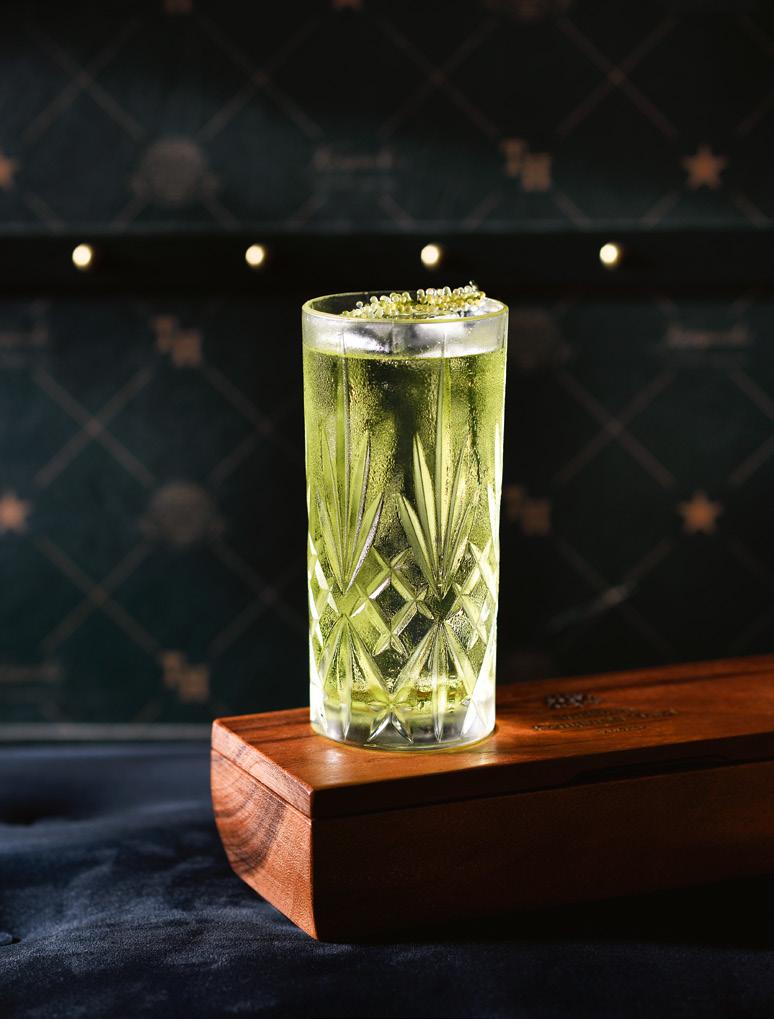
DICKY’S FAVOURITE
Part bar, part apothecary, Bar Us features a menu themed after a three-course meal – a sippers’ twist on the concept of a “dining room”, with a strong focus on locally sourced Thai ingredients. Coming in at #4 on Asia’s 50 Best Bars.
With a cocktail list that deliberately blends classic drinks from across eras, this bar has become one of Bangkok’s most talked about since opening in 2024. The minimalist wave-inspired design makes for a cosy atmosphere; the soundtrack swings between disco and hip-hop. It ranks #5 on Asia’s 50 Best Bars.
G.O.D. brings a touch of the surreal to Bangkok’s drinking scene. Cocktails are paired with light bites – oysters, sea urchins, truffle chicharrónes – and delivered with razor-sharp precision and no shortage of flair. It is #26 on Asia’s 50 Best Bars.
Positioned around a leafy courtyard and koi-filled pond, this downtown Ratchaprasong institution has been mixing classic cocktails for more than two decades.
This hidden speakeasy above fine-dining restaurant Potong draws inspiration from Bangkok’s historic Chinatown. The bar produces four of its own house gins; on weekends, it operates a free roving tuk-tuk service that travels between several of Chinatown’s best bars.
Operated by
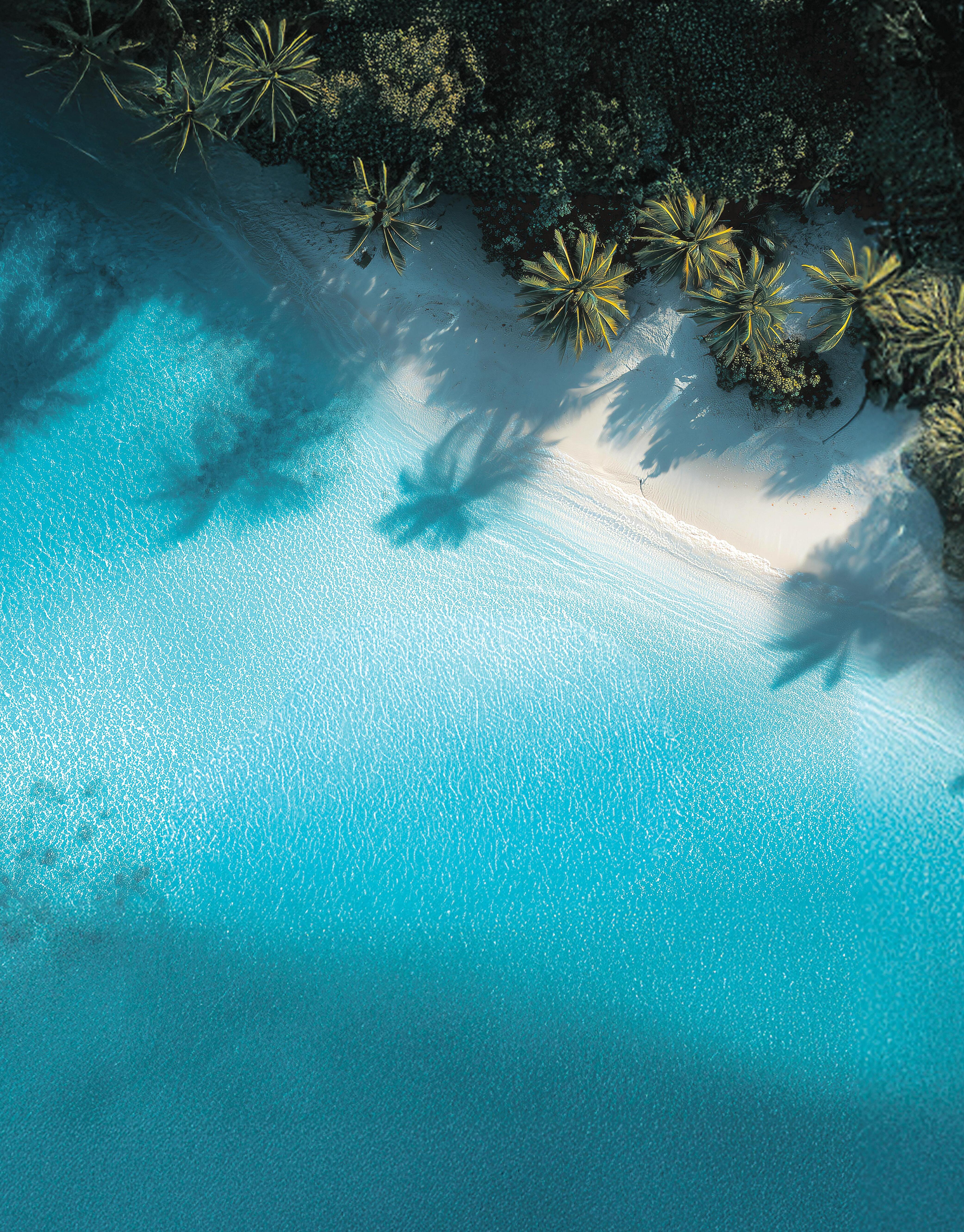

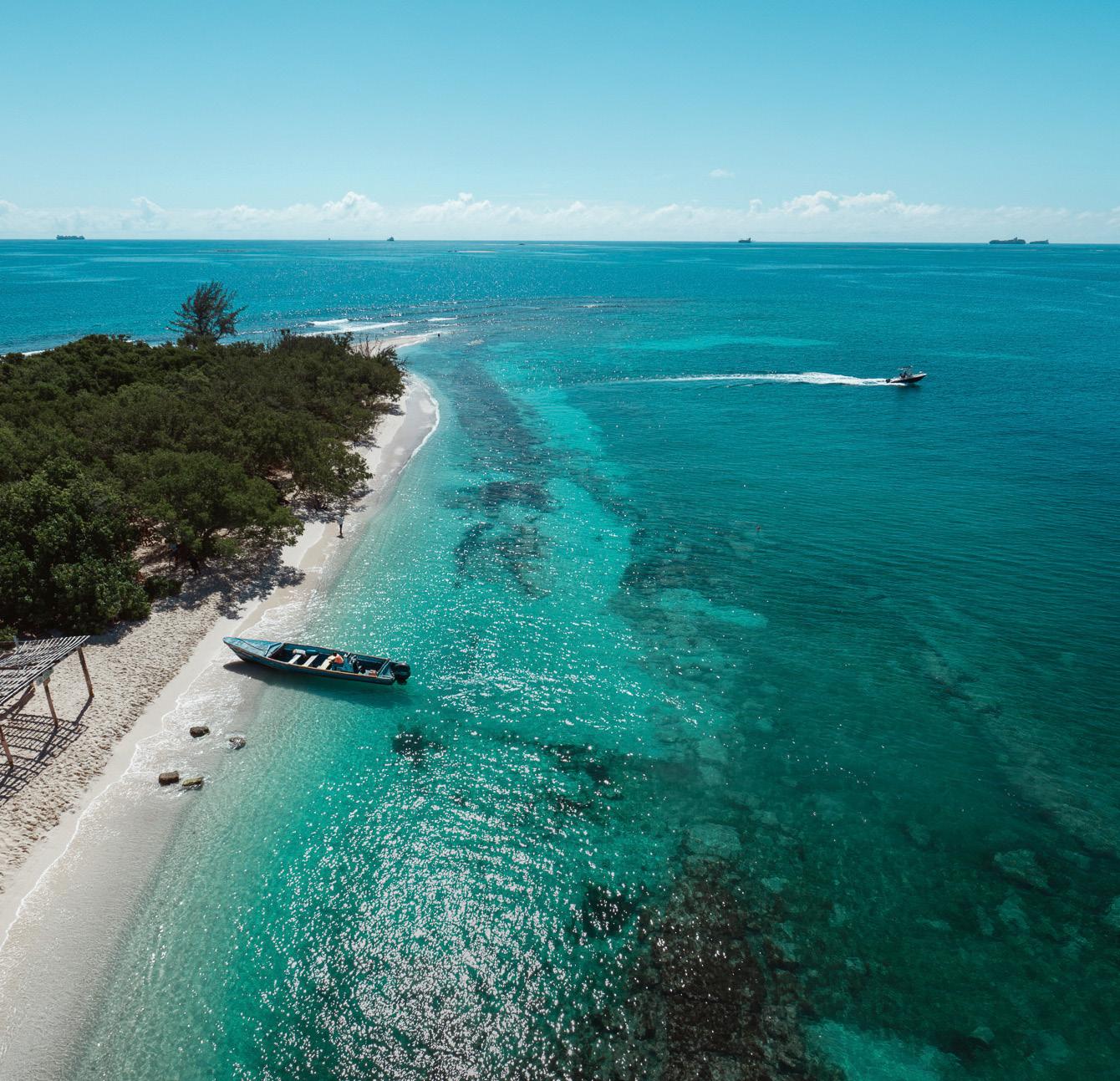
An earthquake sent two-thirds of the Jamaican city of Port Royal to the bottom of the sea, a sunken city that became a UNESCO World Heritage site just last year. But, as Gregory Wakeman discovers, you can still see signs of the city’s colourful past in its nightlife, natural beauty and the spirit of the people.
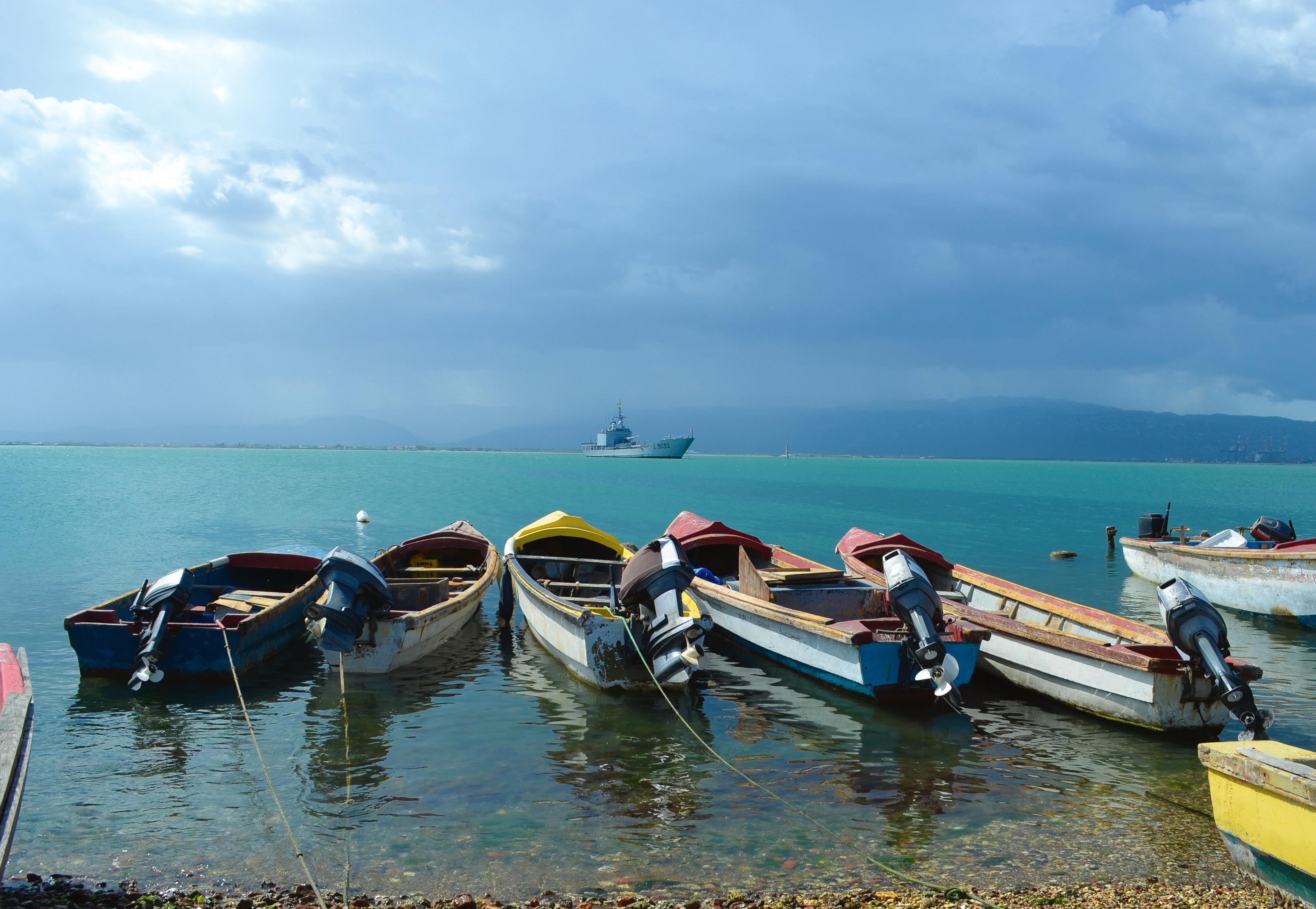
A fishing boat bounces over the Caribbean Sea towards Lime Cay, a tiny, idyllic, whitesand islet three kilometres off the coast of Port Royal, Jamaica. Water relentlessly drenches the passengers, many of whom instinctively yelp as the vessel ferociously hits each wave.
Such passage is all part of the Jamaican experience. This is a country that combines adventure, pleasure and relaxation like no other. Lifting my head through the sea mist I get my first glimpse of the thin sliver of land. It is already surrounded by yachts. The clear-blue water is filled with swimmers, while scores of people dance to music from the Y Knot Beach Party I’m about to attend.
Now disembarked, and with a rum in hand, I breathe in the saltwater, appreciate the breeze off the sea, play with the sand beneath my feet, and in that moment I’m reminded why we travel.
Later, I stroll through Port Royal, once the biggest and most prosperous city in the entire Caribbean. Legendary pirates and buccaneers spent so much of their money and time in its bars and brothels that it became known as the “wickedest city in the West”. That was until the morning of June 7, 1692, when an earthquake and subsequent tsunami sank two-thirds of Port Royal. Regarded as the only authentic sunken city in the Western Hemisphere, Port Royal was officially named a UNESCO World Heritage Site in July, 2025.
Special permission from the Jamaican government is required for people to dive down to the submerged part of Port Royal, as the sunken city is protected by UNESCO’s designation of its underwater cultural heritage. Largely untouched for 333 years, Port Royal goes from being 6 to 12 metres under water and is covered in silt and sand.
Over the years, marine archaeologists have meticulously waded through the dirt to bring artefacts back to the surface. This includes pewter tableware, clay pipes, Chinese porcelain, and a brass-cased pocket watch with the hands stopped at 11:43am, the exact time of the earthquake.
While they were down there, the divers saw intact homes, churches, bars and streets that provided an unprecedented insight into an English settlement in the Western Hemisphere in the late 17th century. Confirming the legend, they also saw a large number of bottles and pipes, which proved that people in Port Royal really did enjoy a good drink and smoke.
Thankfully there are plans to develop a Port Royal museum that will showcase many of these items and break down why it was such a haven for the world’s most dastardly sailors.
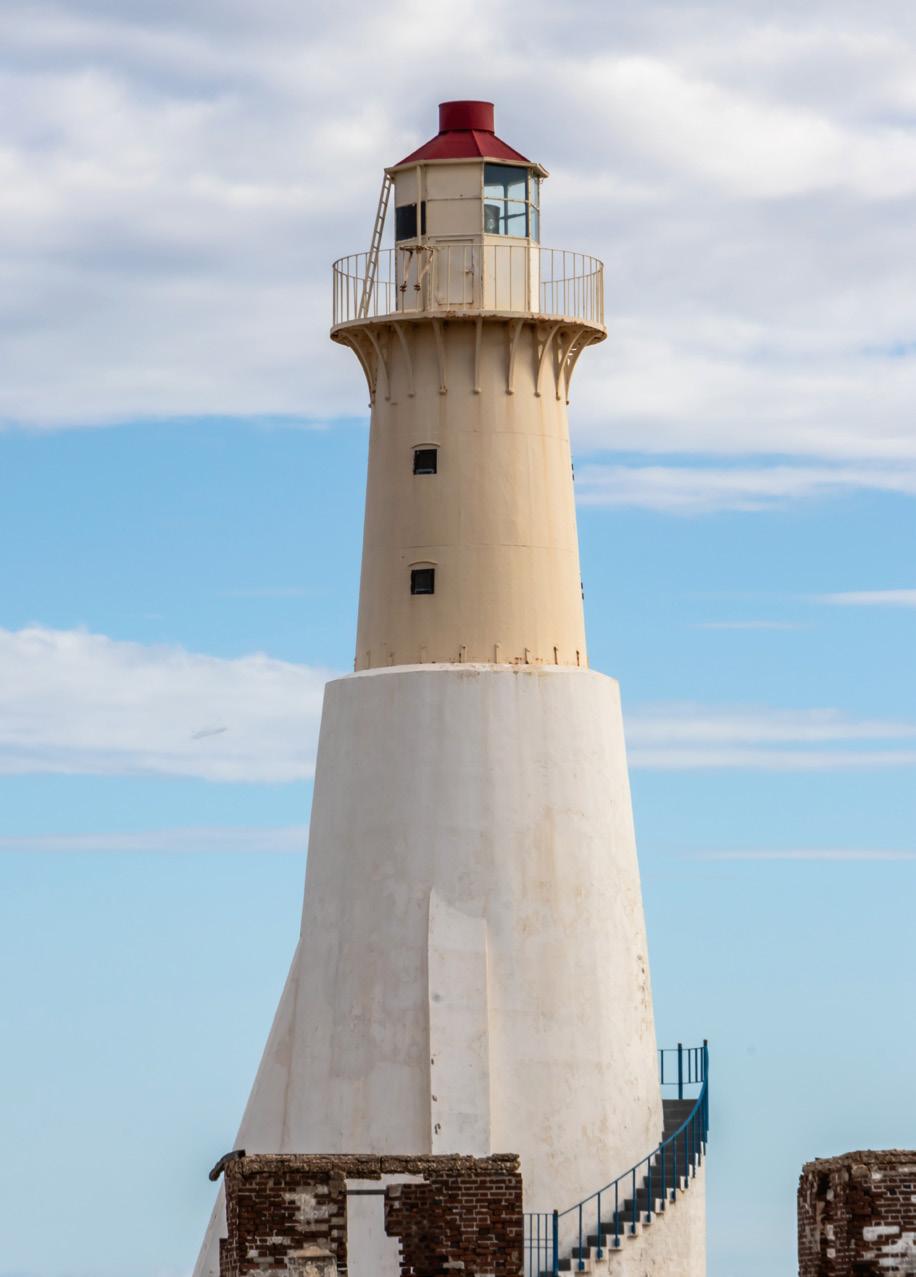
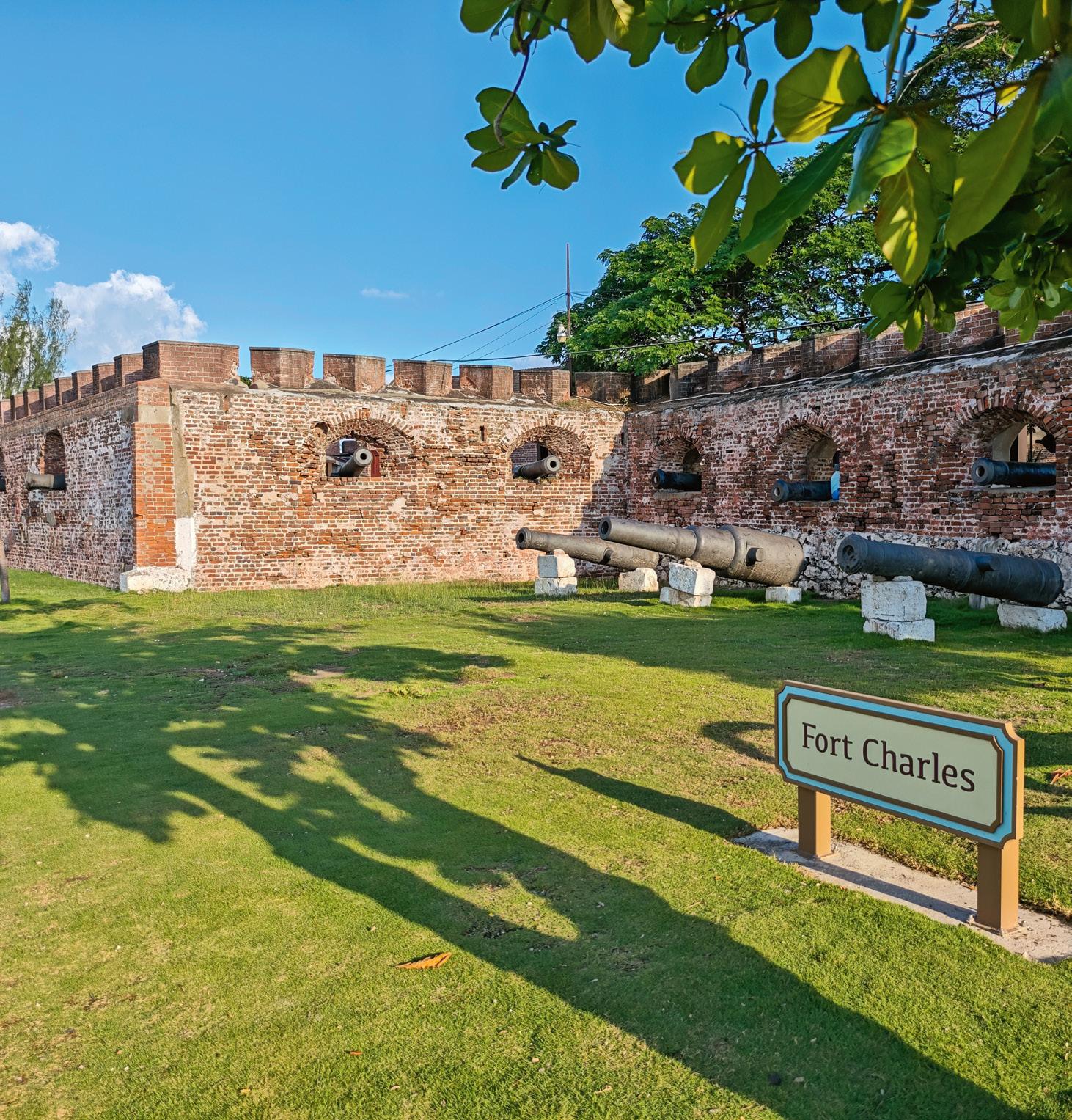
Fort Charles gives visitors an above-water glimpse of life during this time. Constructed in the shape of a ship to scare off potential invaders and pirates, the fort was finished in the mid-17th century and remains well intact despite the various hurricanes and earthquakes it has endured. Tales of skulls being displayed as trophies and the dead body of Horatio Nelson being preserved in rum that was then drunk by his sailors only helps to make the fort more fascinating.
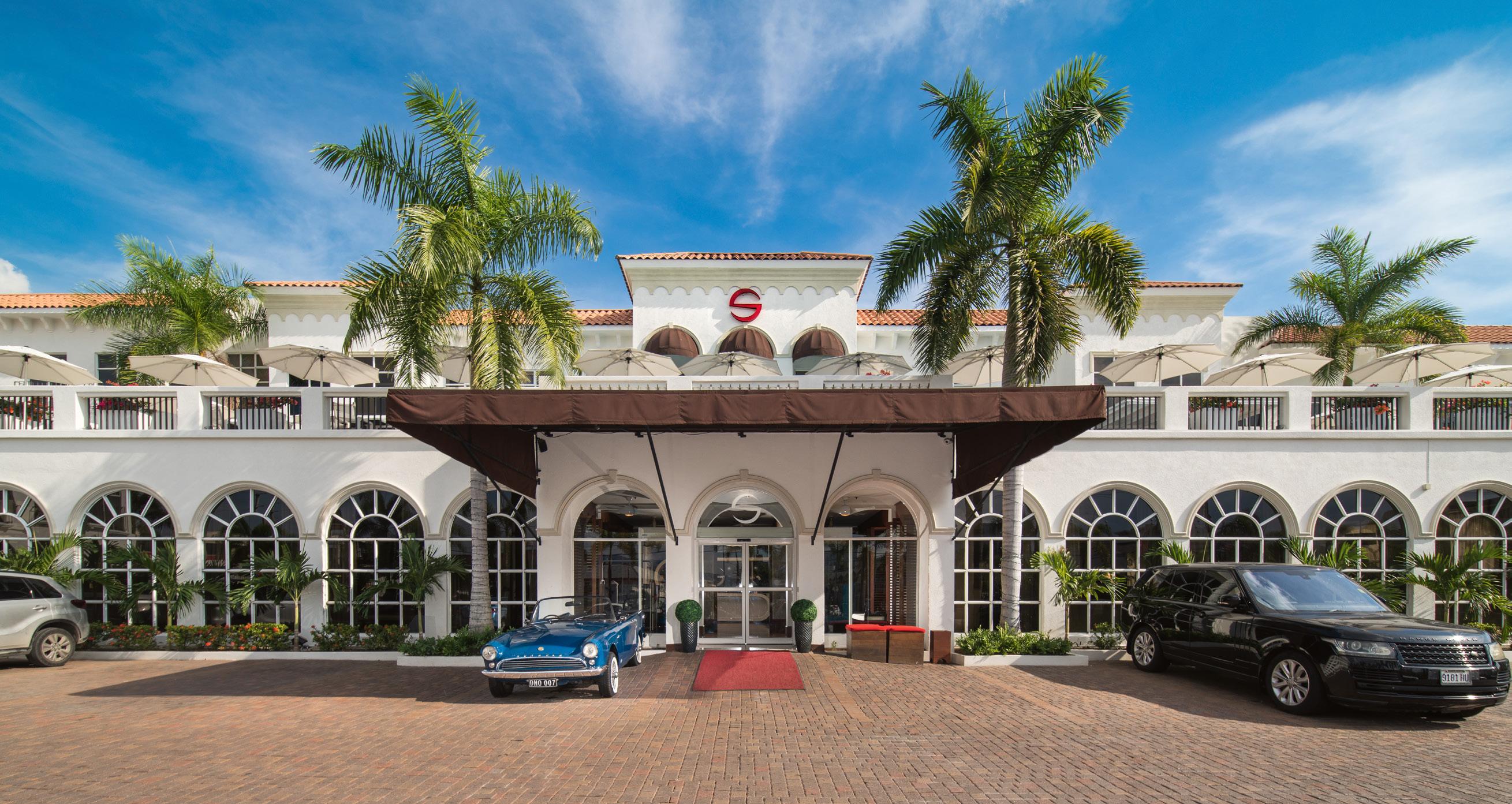
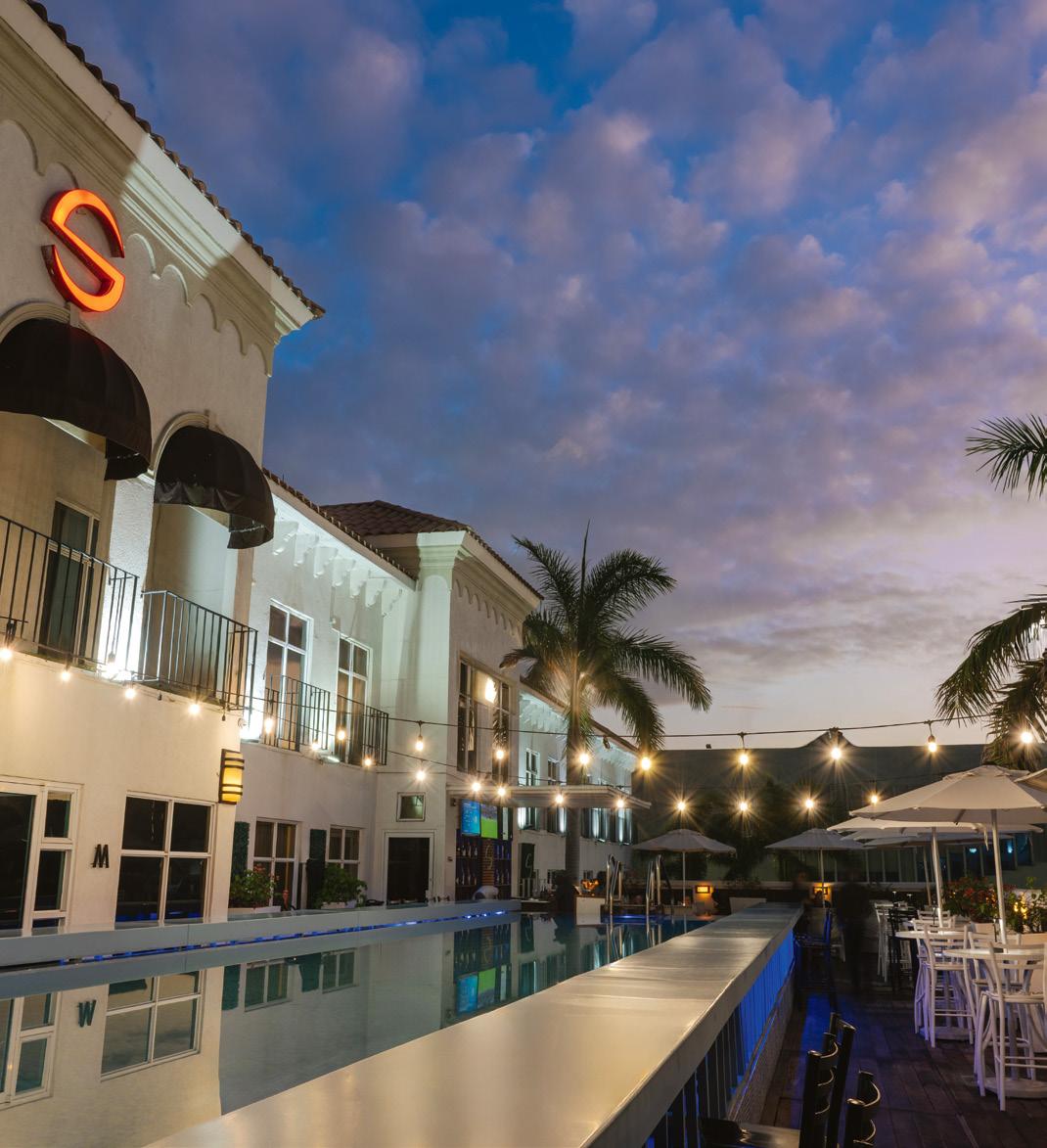
Fortunately, Jamaica’s bountiful nightlife options now serve its rum with Coke or Ting instead of pickled admiral. On the 40-minute drive from Fort Charles back to my lodgings at S Hotel Kingston – where Bob Marley’s iconic Volkswagen bus and the first-ever James Bond car from Dr. No sit in the car park – I see the bars becoming tantalisingly boisterous. After enjoying the laidback atmosphere at the nearby Footprints Cafe, the sound of jamrock and soca from the raucous Janga’s Soundbar & Grill lulls me inside, where I’m greeted by a heaving crowd that confirms Jamaica’s reputation for unmatched hospitality.
Kingston’s cultural cache goes beyond booze and dancing. Every other building has seemingly been beautified by hand-painted murals, particularly down Fleet Street, giving you a profound sense of the pride, talent and passion that’s made Jamaica so famous.
Then there’s its unrivalled food. Down in Port Royal at Beachview Restaurant I eat fresh fish and chips with an unobstructed sight of the ocean. For couples, Jamaican Food & Drink Kitchen is a modern and stylish restaurant, market and kitchen, where you can partake in a cosmopolitan cooking class before eating your efforts. Even the country’s KFC tastes infinitely better than anywhere else in the world, thanks to its use of local spices and ingredients.
Jamaica’s landscape is so rich and diverse, that an hour and half from Kingston feels like an entirely different world. After an engrossing scenic drive through the Blue and John Crow Mountains – Jamaica’s only other UNESCO sites, where the trees often provide a picturesque canopy over the meandering road – we arrive at Blue Hole Falls. The sort of water trail you thought only existed in movies and cartoons, it’s made up of numerous waterfalls, limestone pools, easy-to-traverse rocks and ledges that are just asking to be jumped from.
Aided by our knowledgeable and persuasive guide, I find myself standing on the precipice of a muddy ridge practically touching the clouds, gazing down at a pool I’ve been told for certain is 45 feet deep. Countdown complete, my nerves initially stop me from making the leap. But I turn off my brain and moments later I’m hurtling into the abyss. As soon as I hit the water, a childlike rush of accomplishment fills my body. When I return to the surface it is replaced by a feeling of astonishment at the natural beauty surrounding me, all as the current from the nearby waterfall pushes me safely to the shallows and my next jump.
On my final morning, I’m up before the sun to partake in the Kingston City Run: Pirates Run di City. While it’s unlikely I’ll be rivalling Jamaica’s most famous sporting son,
Usain Bolt, anytime soon, jogging past the King’s House, Bob Marley Museum and into Emancipation Park allows me to appreciate this divine country and, more importantly, the contagious energy of its people in such a memorable manner that I can’t help but wonder what other delights I haven’t seen, while mentally planning when I can next come back.
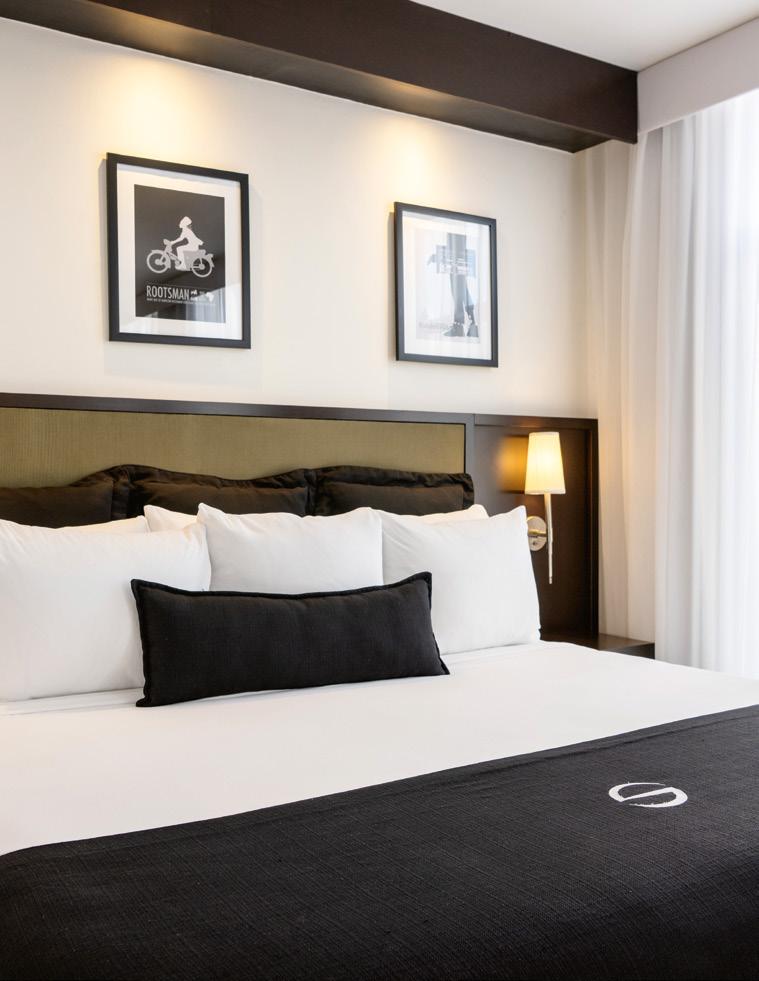
e famous black-and-white David Bailey portrait of actor Michael Caine signals you are in the right place, but Geralds Bar has moved from its smaller Rathdowne Street address to a bigger Carlton home. We talk to co-owner Mario Di Ienno about how the famous Melbourne establishment has upsized its already outsized reputation for perfect bar food.
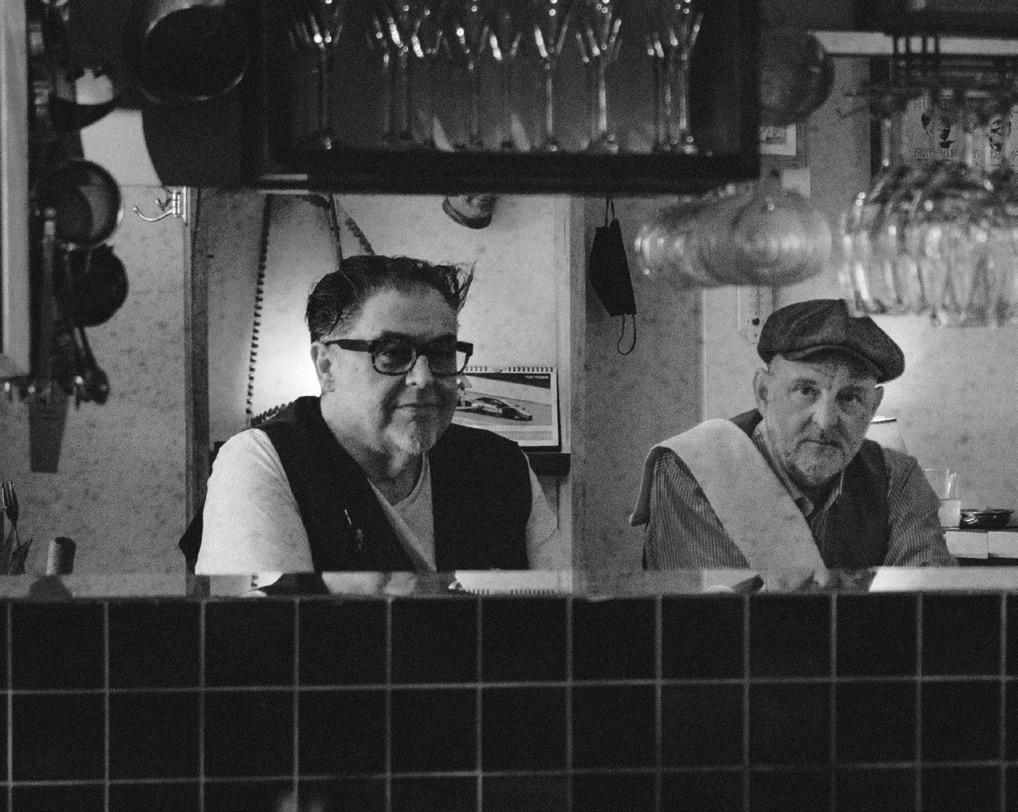
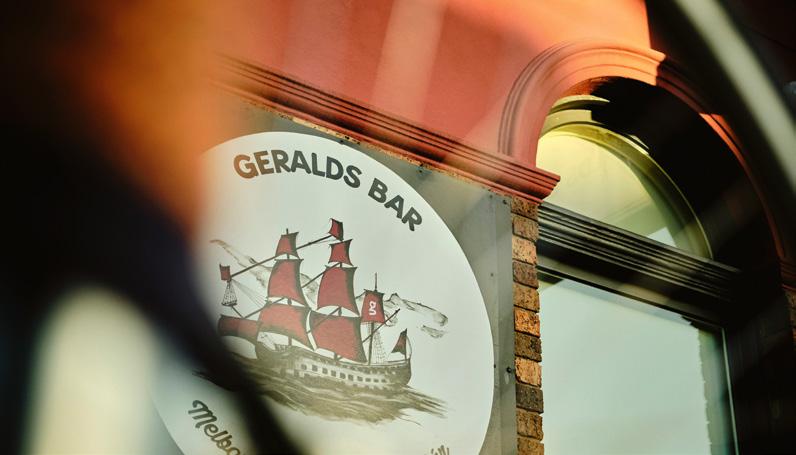
Geralds Bar turns 20 this year, celebrating two decades of great wine and better chats in the ephemera-packed bar where 1960s Michael Caine watches over proceedings like a swinging patron saint. You can draw a direct line from Melbourne’s current boom in modern wine bars back to this Carlton classic.
Last year, Geralds packed up its reclining buddhas, hardcover books and fox statues and moved around the corner to Lygon Street and a much larger venue.
“The larger space allows us to do things we dreamed of for years,” says Mario Di Ienno, who owns the bar with namesake Gerald Diffey. “Events and collabs with other restaurants and chefs. We have a fine-dining aspect to Geralds called ‘The Parlour’ where it’s a set menu of $145pp and has a more refined style of service and food including
e quail scotch egg
a cheese trolley and petit fours. Upstairs we have a function space as well.”
The bar is still the place to be, where Gerald and his wife may well be holding court, and where the food remains deceptively simple but behind it are incredible skills in the kitchen.
“Geralds menu is seasonal and ever changing,” says Mario. “With applied technique so our chefs get to show their skills and European leaning. We try and bring in whole fish and whole animals.”
You might find Welsh rarebit served with a bottle of Worcestershire sauce for extra bite or stracciatella with courgette and lovage scooped up with crisp bread; an umamirich smoked eel carbonara or a classic pork chop with preserved raddichio. Start with the olive oil martini, a mix of Melbourne Gin Company’s original and single shot with vermouth and a dash of olive oil.
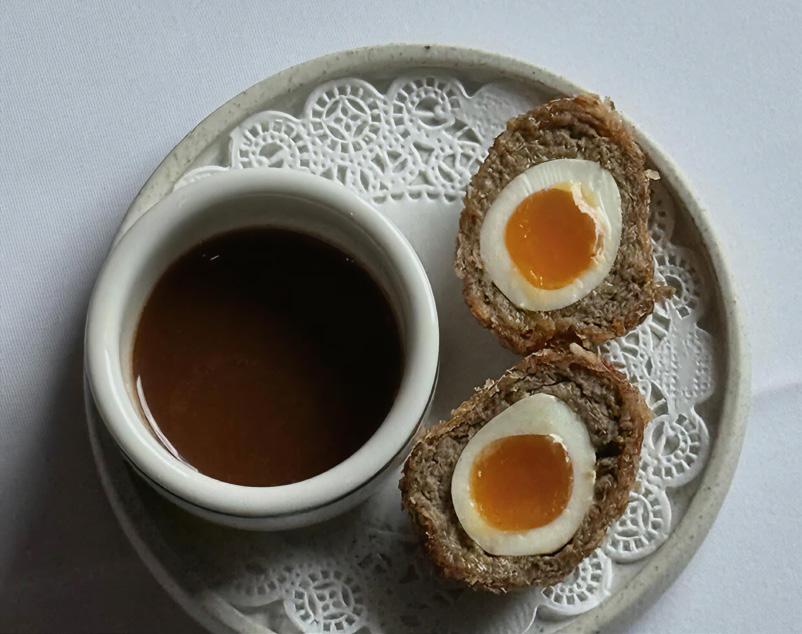
Daintier than your classic chicken egg, Geralds signature quail egg is a must-have. “It’s a soft-cooked quail egg wrapped in duck meat, crumbed, deep-fried and served with homemade Cumberland sauce,” says Mario.
MARIO’S FAVOURITE PLACES TO EAT
A similar ethos, and also 20 years old, this CBD classic serves up tapas and raciones with stellar wines by the glass. “There are lots of typical Portuguese dishes, a great vibe and aesthetic, and you can pop in for a drink, snack or more,” says Mario.
This Beaconsfield restaurant shares Geralds love of seasonality. “It’s down-to-earth fine dining with the produce from their garden cooked with great skill and imagination; there’s always something interesting to drink that they have opened.”
Chef Tom Sarafian named his restaurant after his grandfather and aims to celebrate Lebanese and Armenian cuisine. “I feel like I’m in a back street in Beirut with his delicious take on Middle Eastern cuisine; great cocktails and interesting wines.”
This Parisian bistro – started by Jean-Paul Pruneti and Yvon Vogel – has been dishing up French classics for over 40 years in South Yarra. “The food is very French, they have an amazing wine list and you are dining with a cast of characters.”
This Fitzroy restaurant selects only the best Victorian producers to partner with and has the same approach of “simplicity and technique” at play as Geralds. “A great local spot with good food and service.”






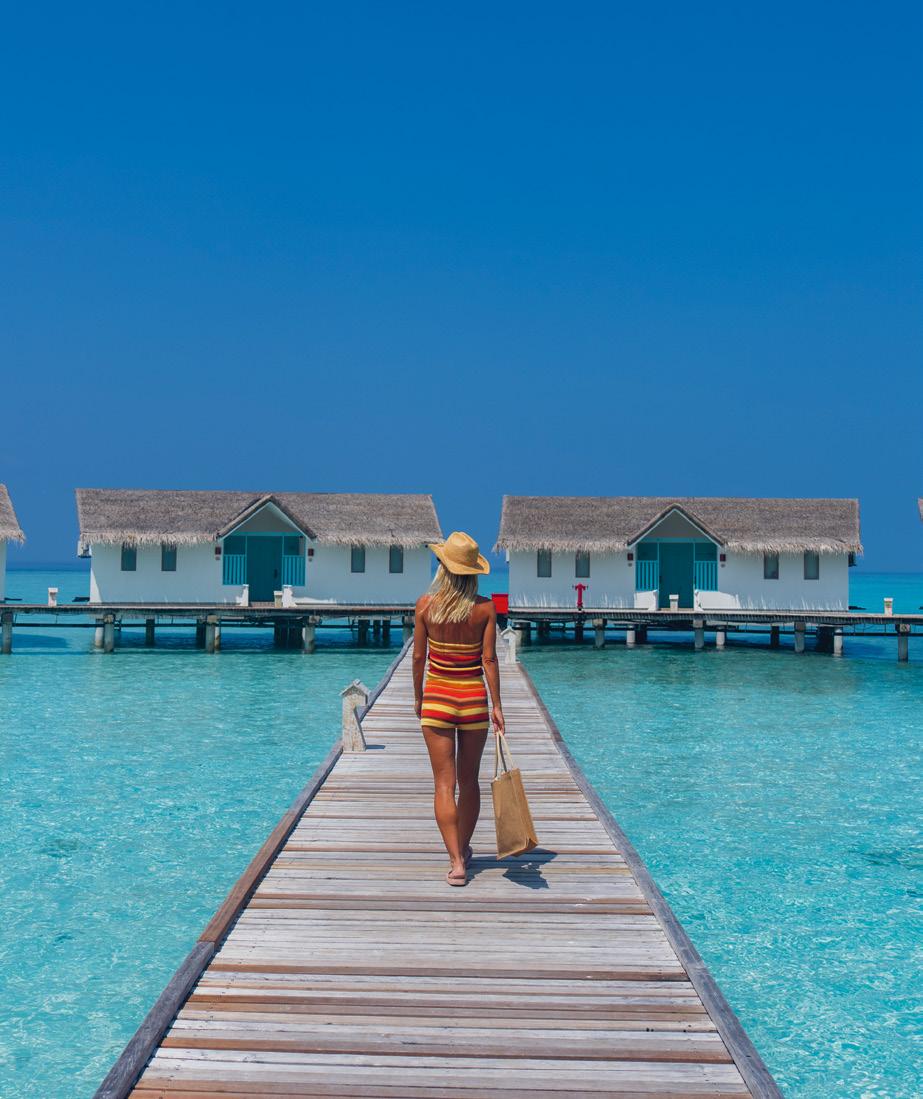
Sarah Royall, aka Salty Luxe, is a Byron Bay-based traveller and content creator. She travels to NH Collection Maldives Reethi Resort.
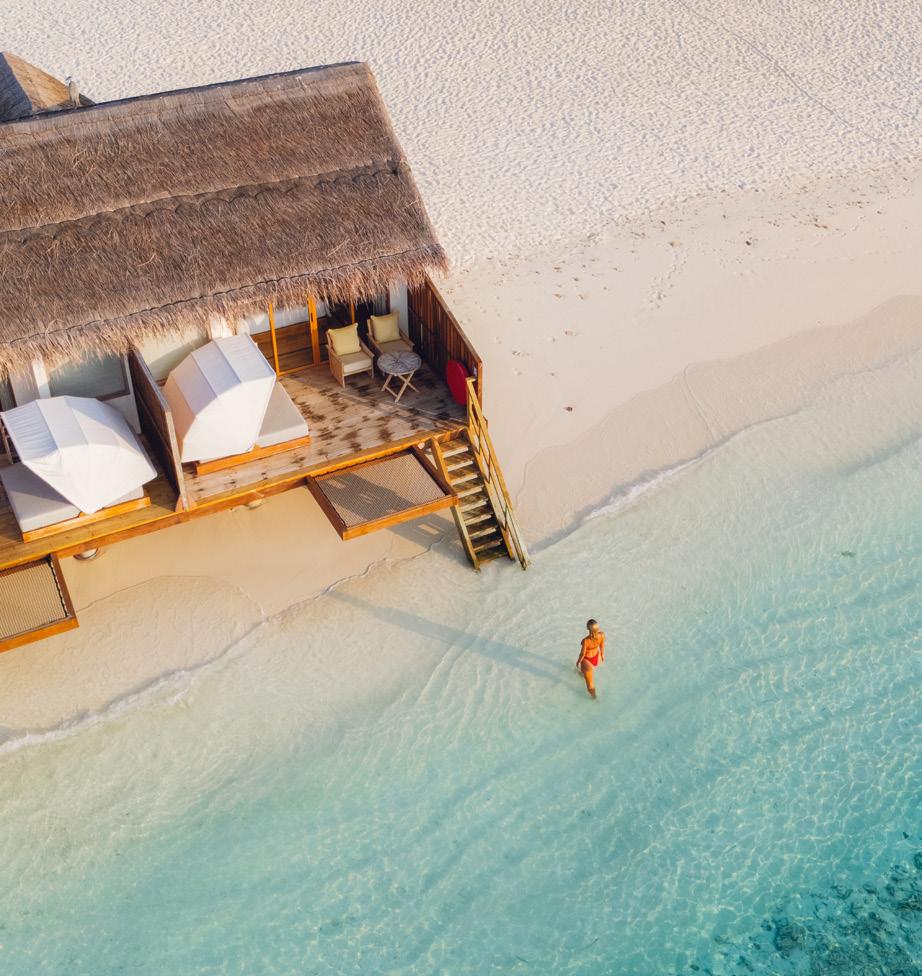
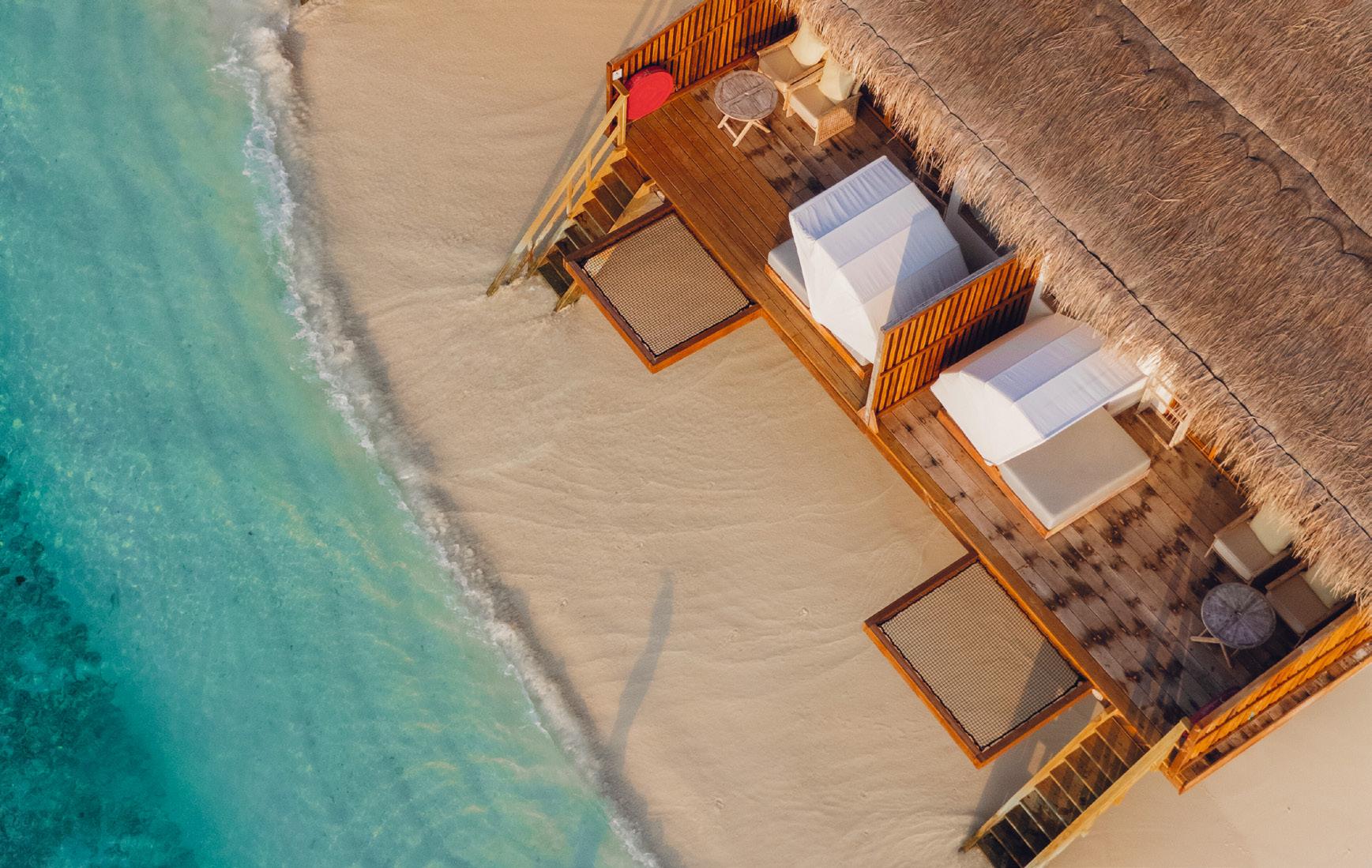
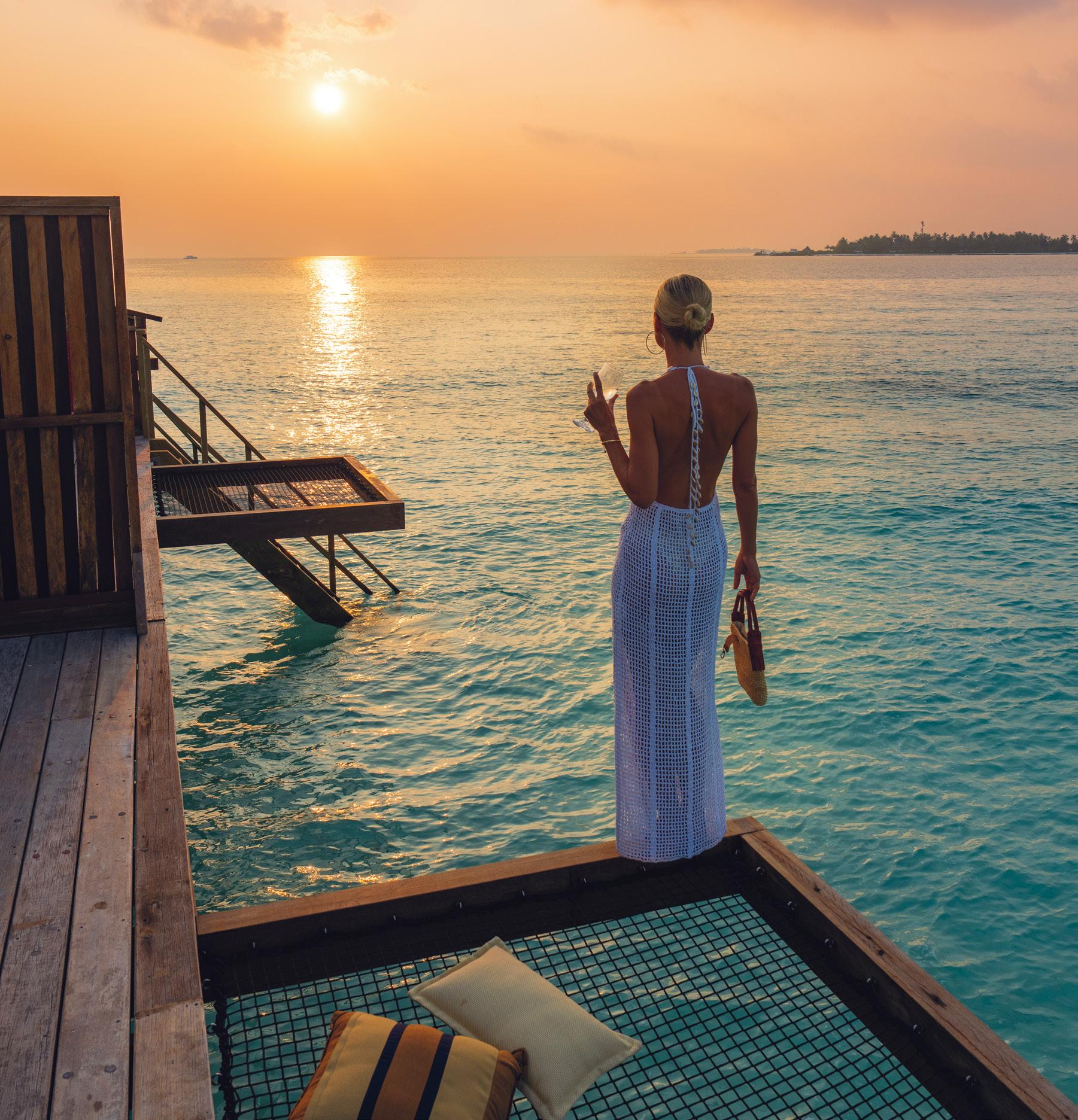
Ready to explore?
Western Australia’s vibrant culinary scene is a dream match for food-loving travellers. From festival feasts at Margaret River Region’s Pair’d festival to world-class wines, as well as incredible produce like the rare black tru e, the West’s wine glass is full to the brim with exceptional food and drink experiences.
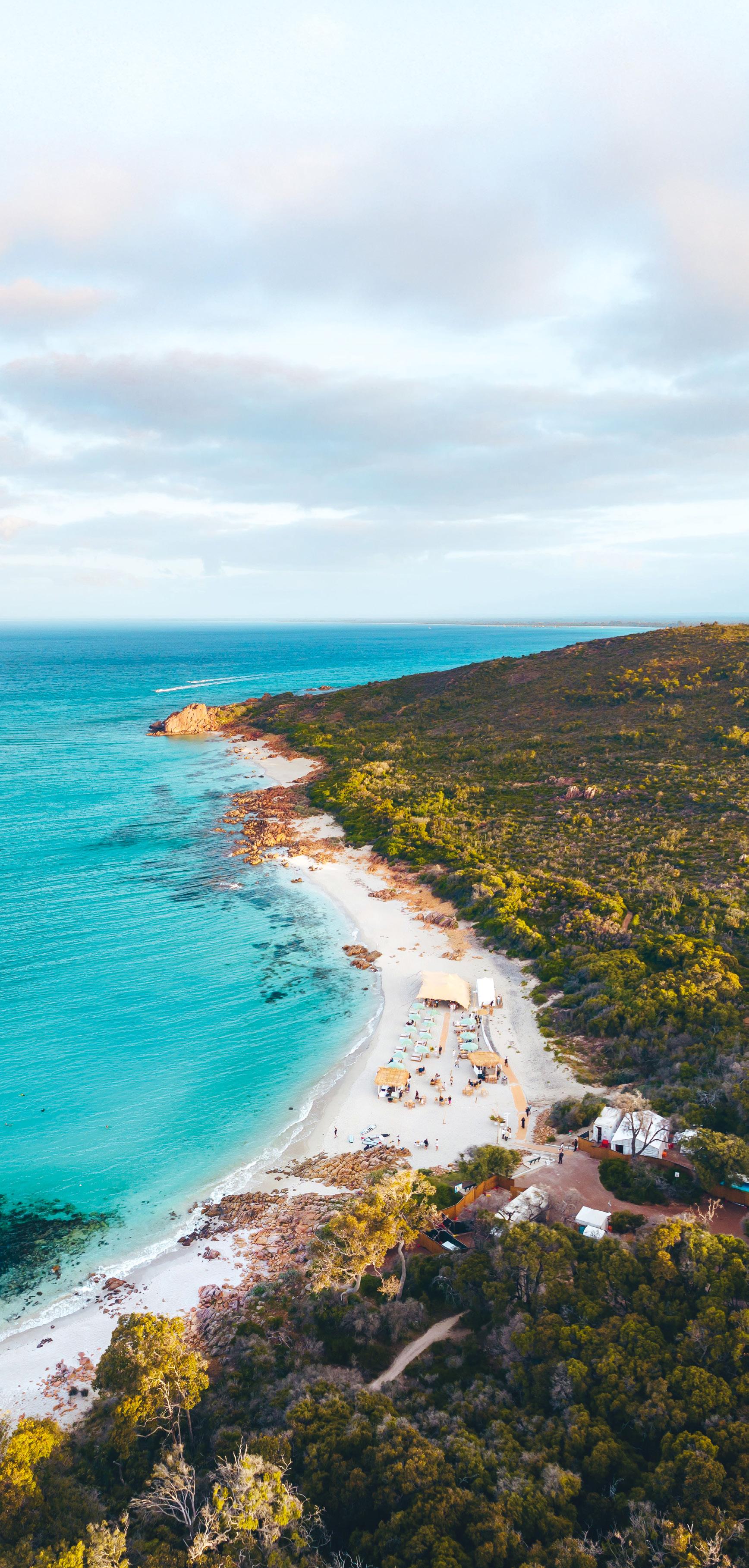
Western Australia is one of the world’s great food destinations. The state offers a remarkable variety of produce, wine and culinary experiences. With nine wine regions, an abundance of fresh seafood, world-class truffles and a thriving craft beer and distillery scene, WA rewards the curious diner.
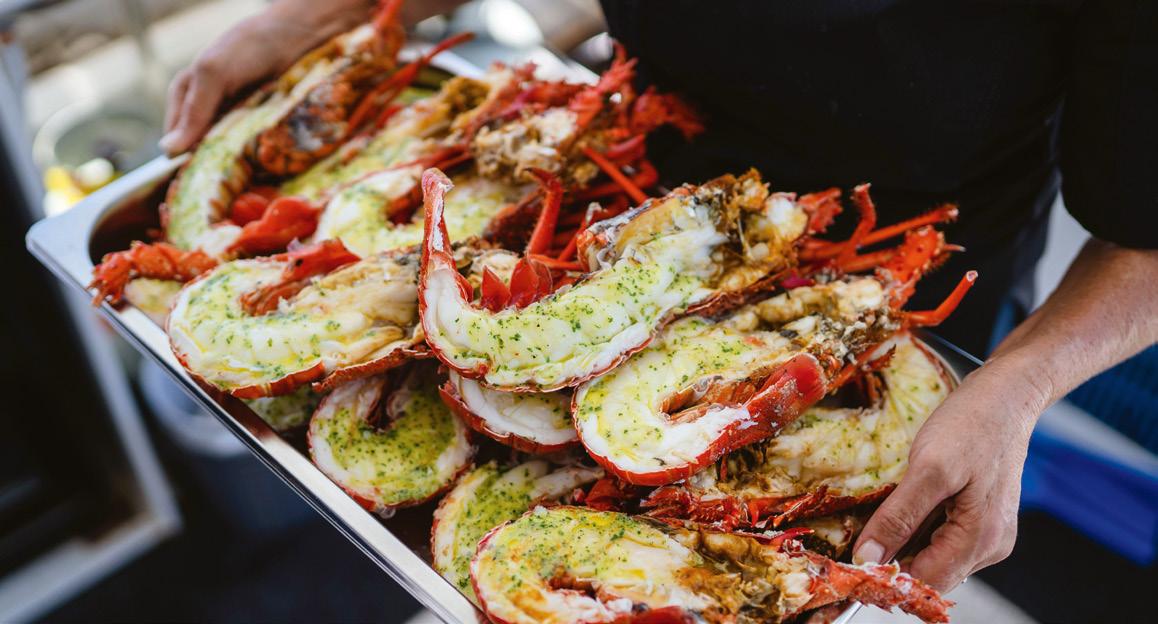
So, what sort of food traveller are you? Do you head straight for a craft brewery and a burger? Are you more likely to be found with a flight of white and a pile of empty oyster shells? Or does your food journey end barefoot in the sands of the Margaret River Region coast with a glass of bubbles and chargrilled lobster surrounded by fellow festival fans?
The Margaret River Region is where adventure meets indulgence, where the rugged coast collides with vineyards creating some of the country’s finest wine. It is also home to Pair’d (19–22 November 2026), unique among Australia’s food festivals for its maritime setting.
Pair’d is no stuffy wine tasting, instead you are likely to be foraging along limestone cliffs before dining on a table set up in the sand, sipping a gin and tonic on the wharf served with fresh bush limes, or sampling seafood so fresh it tastes like the waves of Margaret River crashed straight on to your plate. There are also music and cultural activations and some of the world’s best chefs offering masterclasses and cooking demonstrations; this is a culinary catch-up that is as individual as this wine-making region.
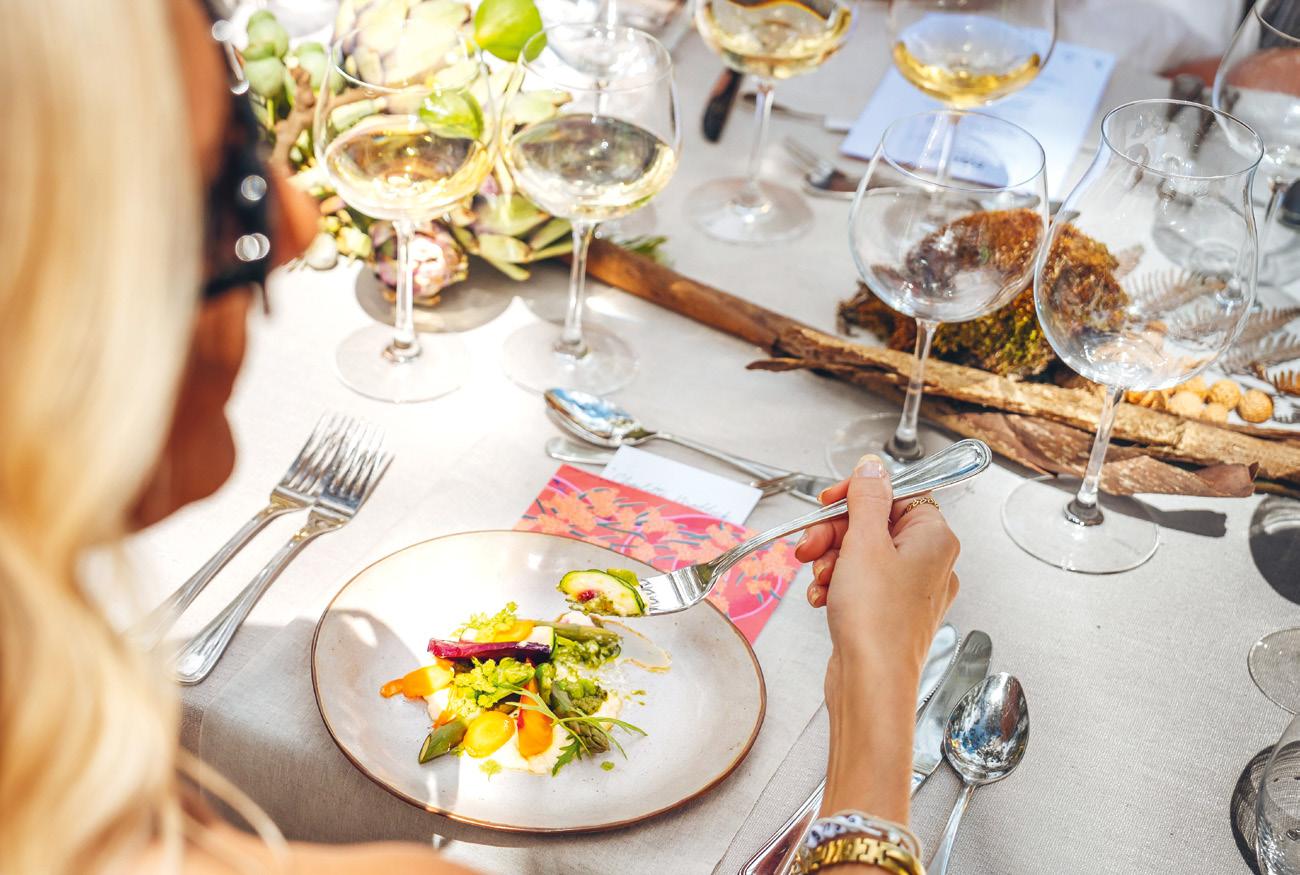
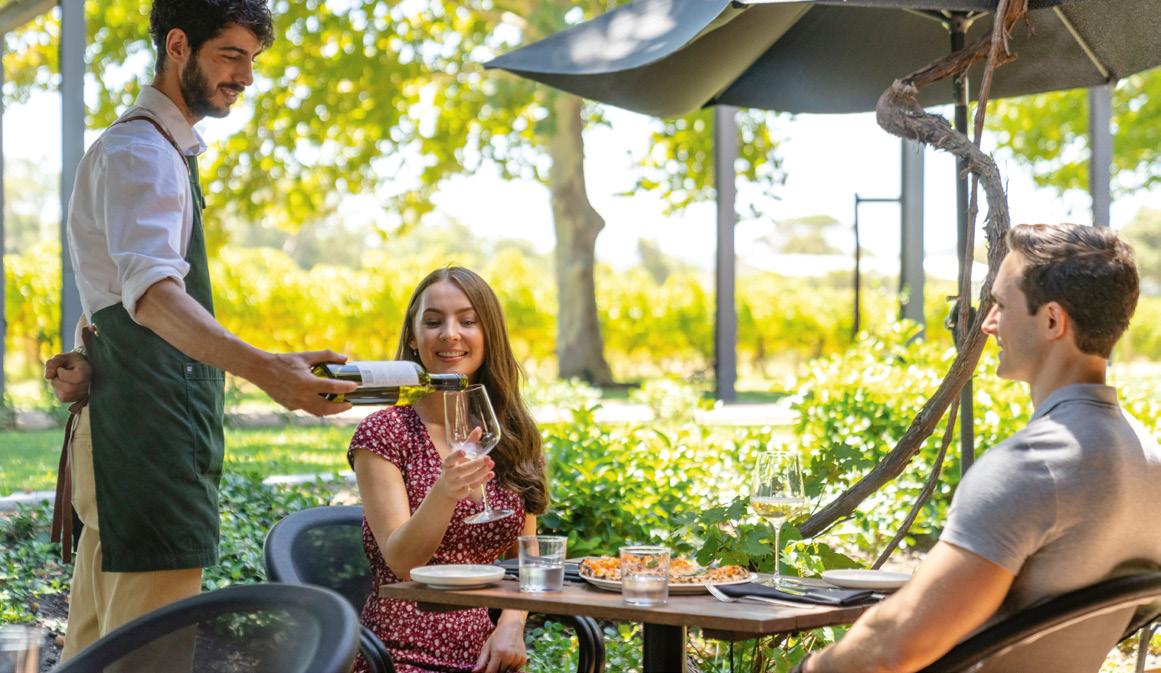
For those wine lovers who really take their drop seriously, a road trip across some of the state’s renowned wine regions might be just the ticket. only a short drive from Perth’s city centre, the Swan Valley is the closest wine region to any Australian capital city. Grapes were planted here by European settlers in the 1830s and the vines are nearly as old as the city itself; try verdelho, shiraz and fortified wine. For fans of emerging regions, the Geographe has many boutique wineries popping up in Ferguson Valley, Donnybrook, Capel and Harvey; try the excellent shiraz, chardonnay, sauvignon blanc and semillon, or discover vineyards in Albany / Kinjarling, Denmark, Frankland River, Mount Barker and Porongurup from the Great Southern wine region; try the exceptional riesling and cabernet sauvignon.
Western Australia has more coastline than any other state, clocking in at over 20,000 kilometres of waves, sand and fantastically fresh seafood. There is so much to sample along the coast from Geraldton / Jambinu and Rottnest Island’s / Wadjemup’s western rock lobster to South West marron, yabby and trout. Way up in the North West you will never taste a better barramundi and the Shark Bay / Gathaagudu scallops will spoil you for any you taste thereafter. For crab you need to visit Mandurah / Mandjoogoordap whereas Fremantle is famous for its octopus. And should you make it as far north as Broome / Rubibi, the pearl meat is a local delicacy. Add in a sunset view and a cool craft beer or a crisp local wine, and it’s a true west coast experience.
The Western Australia food scene is constantly evolving. The west draws innovators and entrepreneurs following their food dreams at new places like Pearla & Co’s elevated seafood on Leighton Beach or the expansion of Little Creatures into Elizabeth Quay in the CBD. Cutting-edge cuisine can also be found at Tigerfish, bringing Southeast Asian flavours to the coast and the paddock-to-plate agrotourism at Cape Marron Farm.
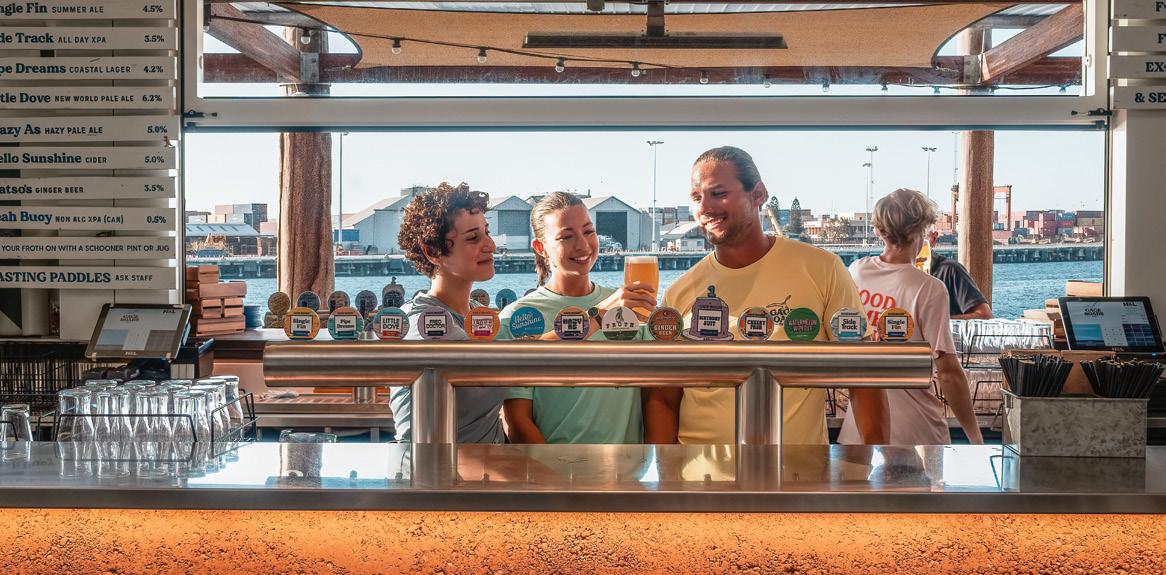
Hop to it in Fremantle / Walyalup, the birthplace of Australia’s craft beer scene, where the scene first bubbled to life at the Sail and Anchor bar. This seaside setting is also where Gage Roads Brewing opened its first venue and is home to the trailblazing Little Creatures, newer offering Running with Thieves, or the creative Beerpourium that knows that beer just tastes better by the ocean. In Perth you can head for Blasta Brewing Co., Bright Tank, Long Neck or Phat Brewing. Western Australia is home to more than 60 craft breweries across the state so most regions have their own unique brew available at vibrant tap rooms where you can eat, drink and be merry.
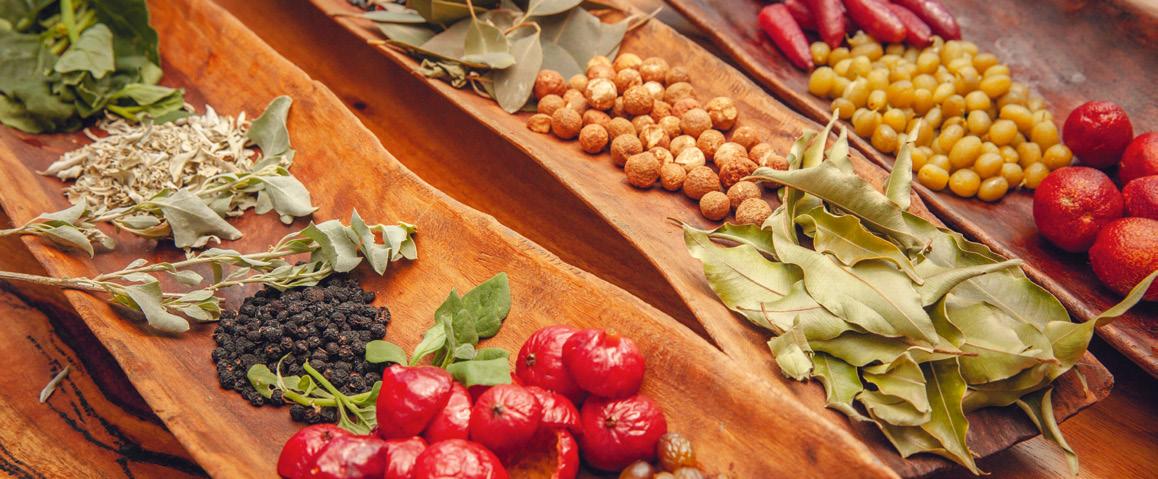
Before food festivals and sea trawlers, the Aboriginal people of Western Australia had been practising sustainable hunting and gathering methods and using local foods for medicinal, nutritional and cultural significance. Aboriginal cultural tours allow food travellers to discover “nature’s supermarket” in each region of Western Australia. In the Swan Valley, explore Aboriginal agricultural practices and sample bush tucker fruits, nuts, seeds and herbs on Whadjuk Country or learn traditional fishing methods in the South West on Wardandi Country. For dessert, dig for honey ants, the sweetest of bushfoods, in the Golden Outback on Wongatha Country.
TURKIYE
In search of the perfect Turkish delight, Sue Wallace explores Istanbul’s historic Grand Bazaar and uncovers bargains, baklava, bread and bites in its labyrinthine alleyways.
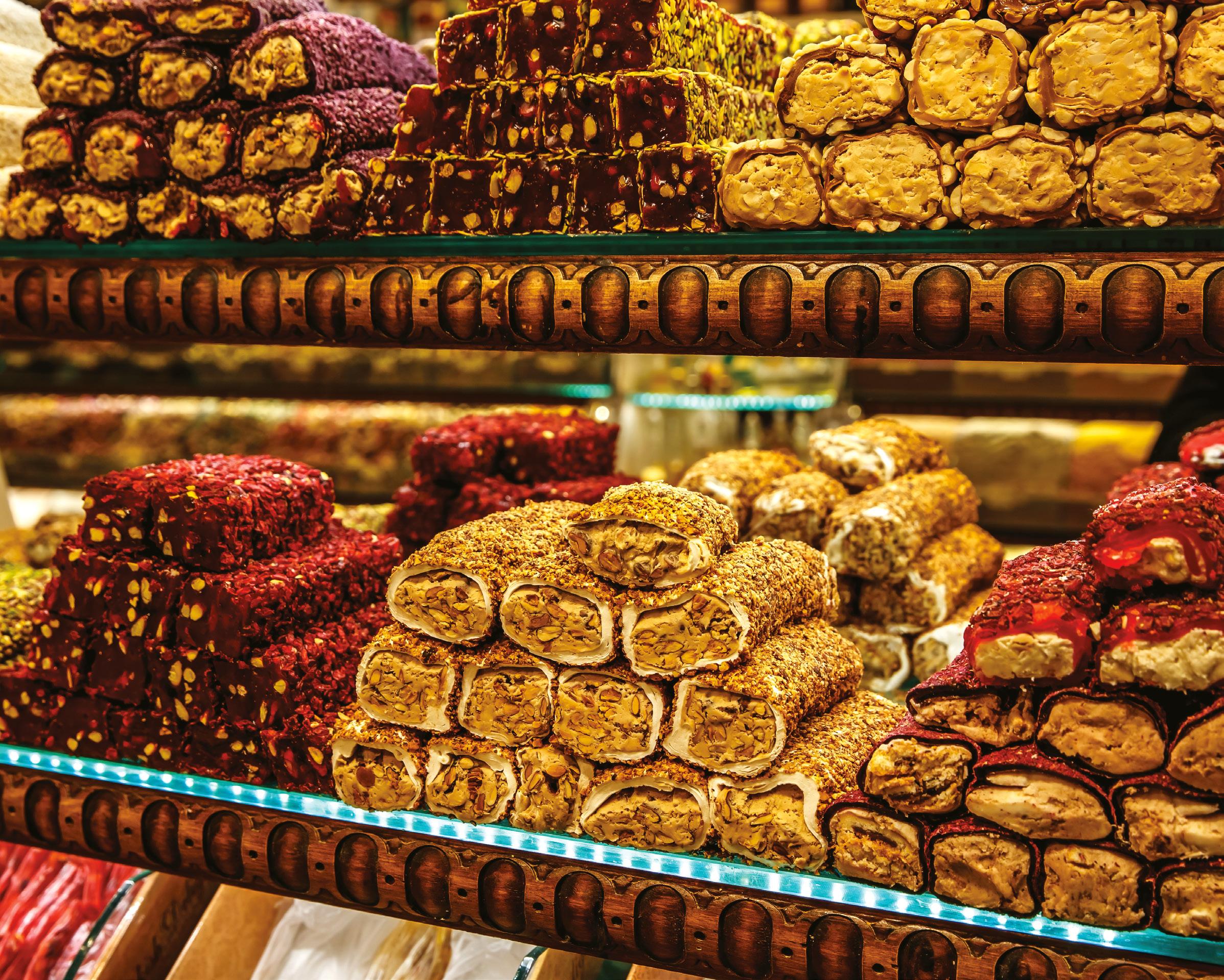
It’s a toss-up between mandarin-, mintor hazelnut-flavoured Turkish delight. They are all are so good, it’s hard to decide.
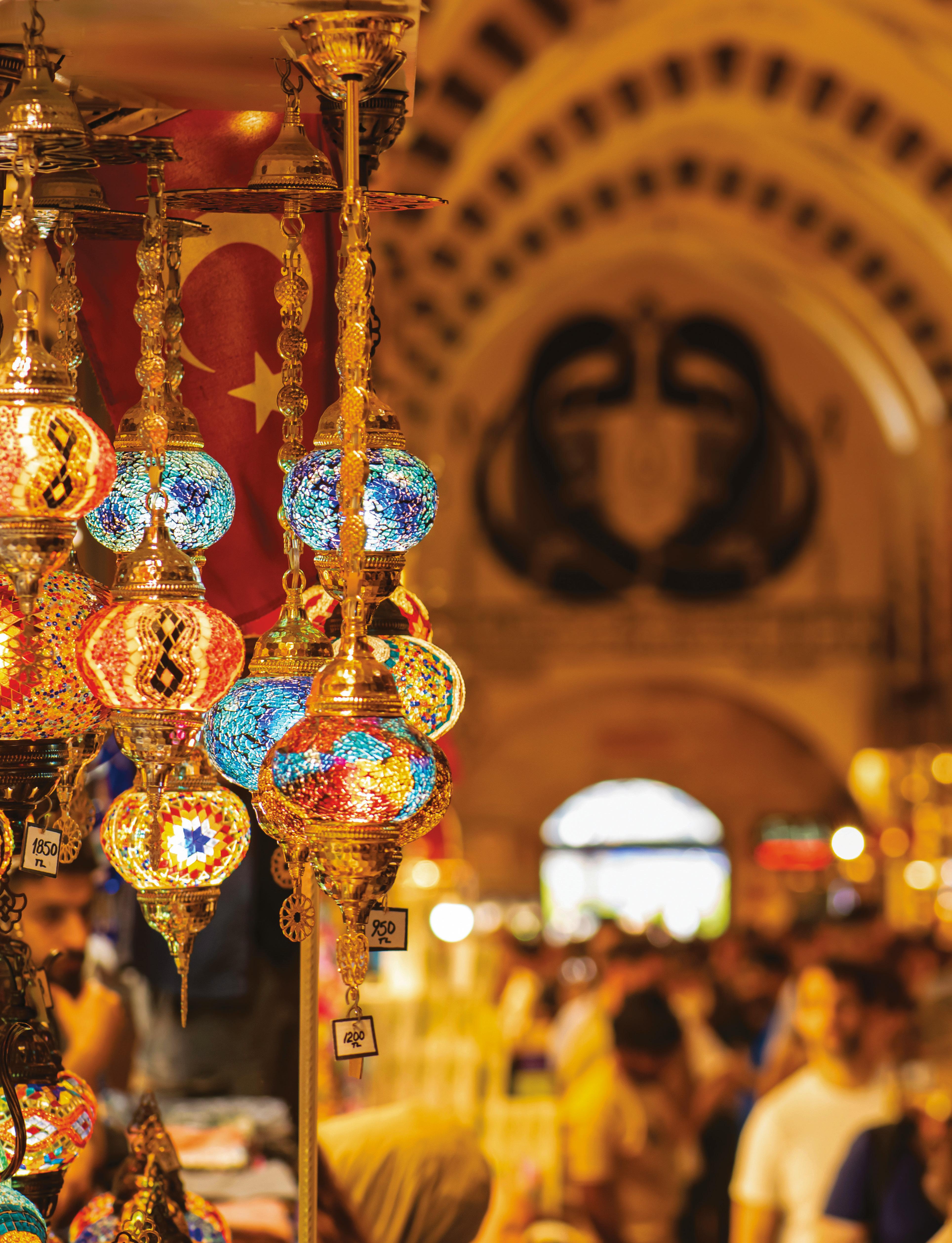
I am standing in a Turkish delight speciality shop in the middle of Istanbul’s colourful and historic Grand Bazaar. It’s chaotic, loud and bustling, but I don’t want to miss a thing in the hotchpotch of jostling tourists, locals, shopkeepers and hawkers.
Built as an Ottoman Empire trading centre in 1461, it is one of the must-sees in this vibrant city. In peak tourist season
hundreds of thousands of visitors head there each day to experience it like others have over the centuries.
Spread over 31 hectares, it is a confusing maze of more than 60 covered alleyways and 5000 shops in what is claimed to be the largest and oldest market in the world.
Don’t forget to look up at the charming hand-painted vaulted ceilings, beautiful mosaics and architectural features including hidden courtyards, stained glass windows and babbling fountains.
I am on a hunt to find the best Turkish delight; it’s a tough gig and shop assistant Lesi tells me I have already found the best in the bazaar. It’s good, but I continue on to the next shop, where this time another seller, friendly Abu also assures me he has the best.
We taste-test pistachio-, rose- and pomegranate-flavoured sweets sprinkled with nuts. I’m smitten from the first bite, and we stock up on the treats, neatly arranged in small colourful boxes. Hopefully, they will make it back to Australia, that’s if we don’t succumb to the temptation of a nibble before the homeward-bound flight.
On leaving, Abu takes my hand and says his farewells, declaring we will meet again one day.
“May you live a long life, Sue, and come back for more Turkish delight,” he adds.
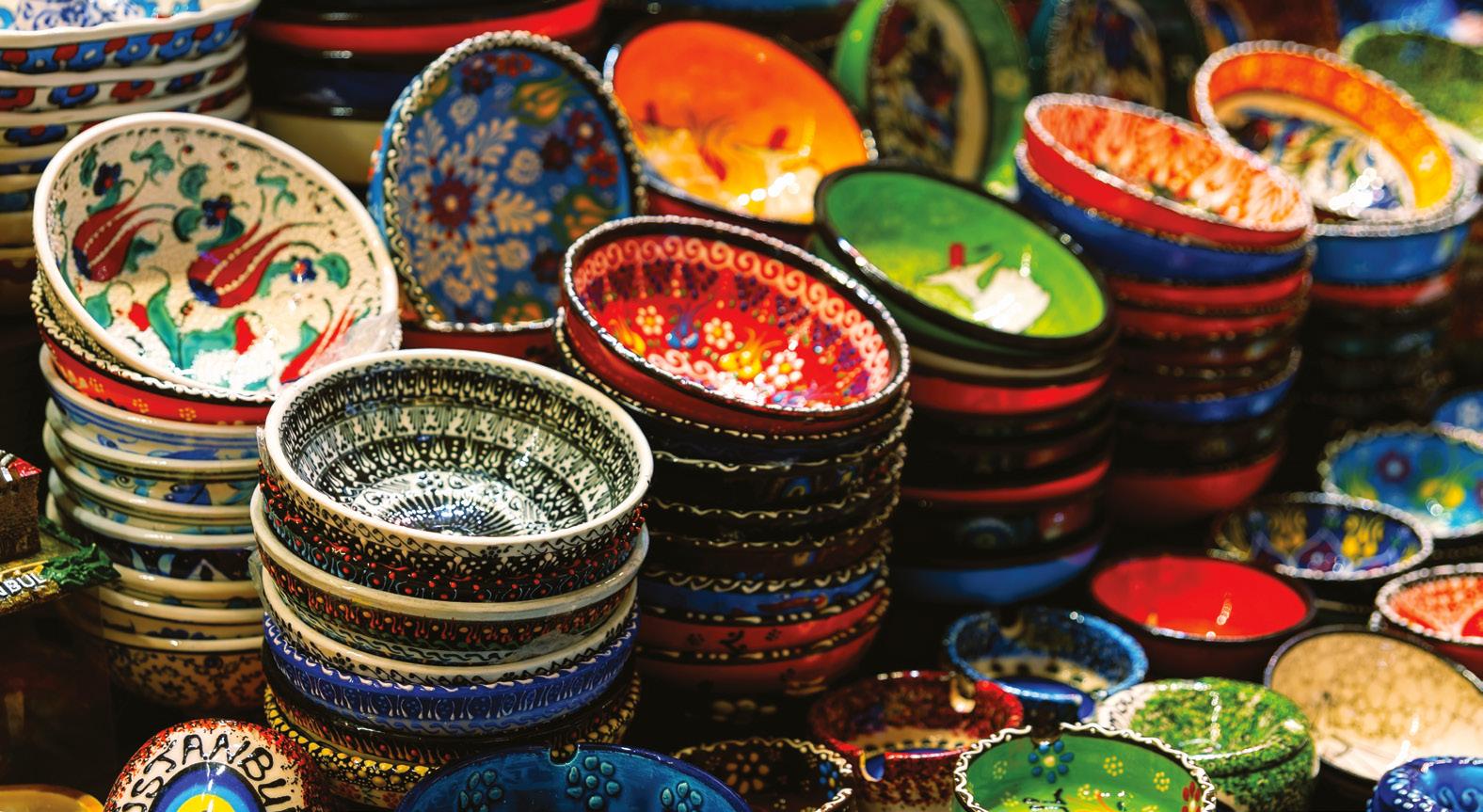
Colourful ceramics, pretty lamps, fridge magnets, handbags, jewellery and gorgeous rugs and carpets catch my eye as we continue shopping.
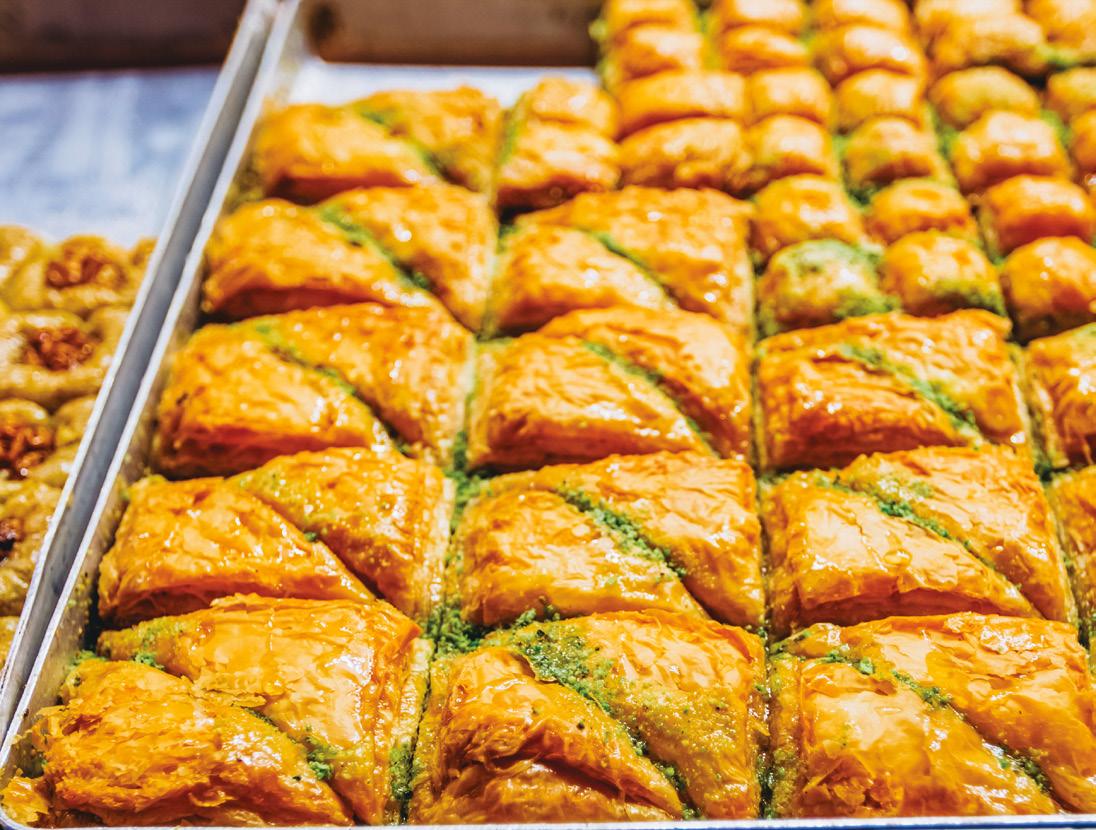
It’s exhausting and we stop for refreshments at one of the oldest restaurants in the bazaar. Sweet mint tea and baklava are ordered as we people-watch and feel the beat of Istanbul.
Our server describes the bazaar as a magnet for shoppers but says it’s easy to get lost here. “You need to take photos of shops in case you want to return,” he advises. Yesterday’s guide told us the number one rule about bazaar shopping is to haggle, and we do.
It’s like a game of ping-pong: backwards and forwards quibbling over a few dollars, with lots of laughs and facial expressions along the way. We follow our guide’s advice: “Start at half price and work your way up, you will soon know if the price is non-negotiable.”
I stock up on sparkly bangles, supple leather Turkish slippers and pure cottonstriped pastel hammam towels, which are a good buy … I think.
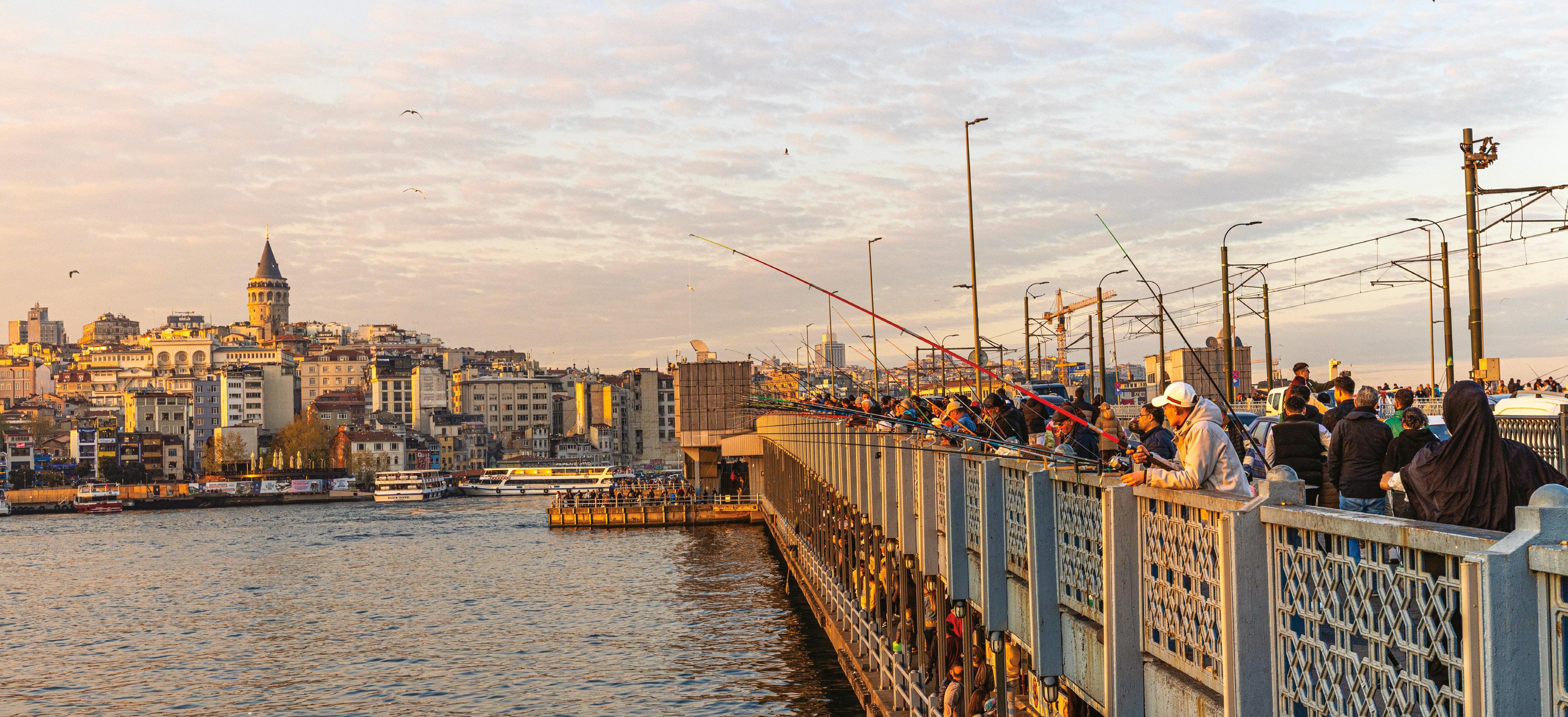
For a change of pace, we then wander down to Galata Bridge that spans the Golden Horn, the estuary that separates old Istanbul from new Istanbul and flows into the Bosphorus. The city, with a population of more than 15 million, straddles two continents – Asia and Europe – and is divided by the blue Bosphorus Strait.
The bridge is popular with keen anglers of all ages – from young children to elderly folk using simple rods and bait.
We dodge fishing lines, buckets and baskets, and stand and watch. It’s a fascinating scene, with boats of all sizes coming and going along the busy waterfront.
As the sun sets, the sky turns a vivid cerise as these fishermen enthusiastically cast their lines in the hope of snagging bounty, both big and small. It’s a serious business but this evening the fish are biting and there’s much merriment among the anglers.
Sellers also offer fish sandwich street food, known as balik ekmek – with delicious fried or grilled fish often bluefish, bonito or horse mackerel – served with charcoal-cooked vegetables in Turkish bread.
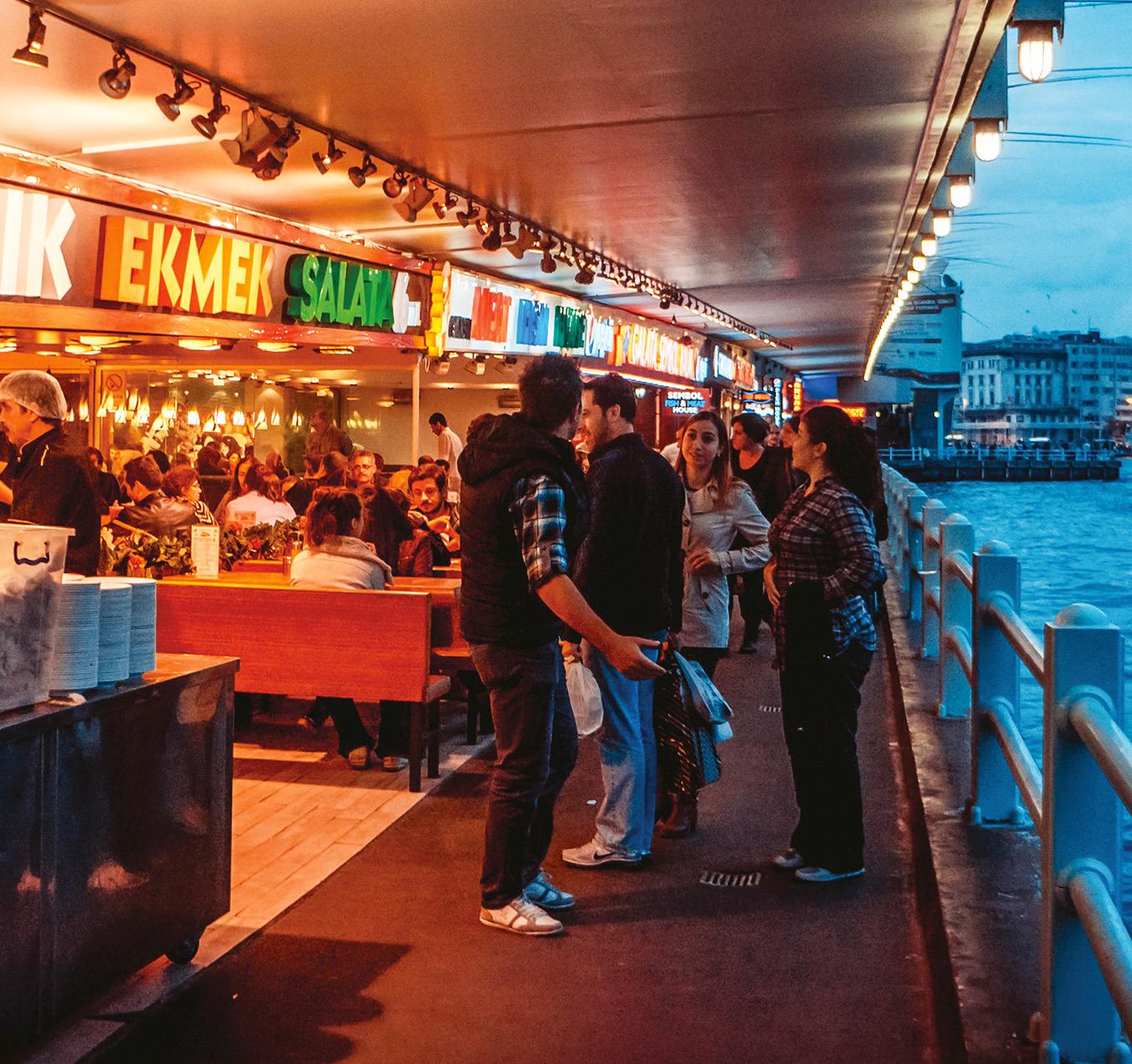
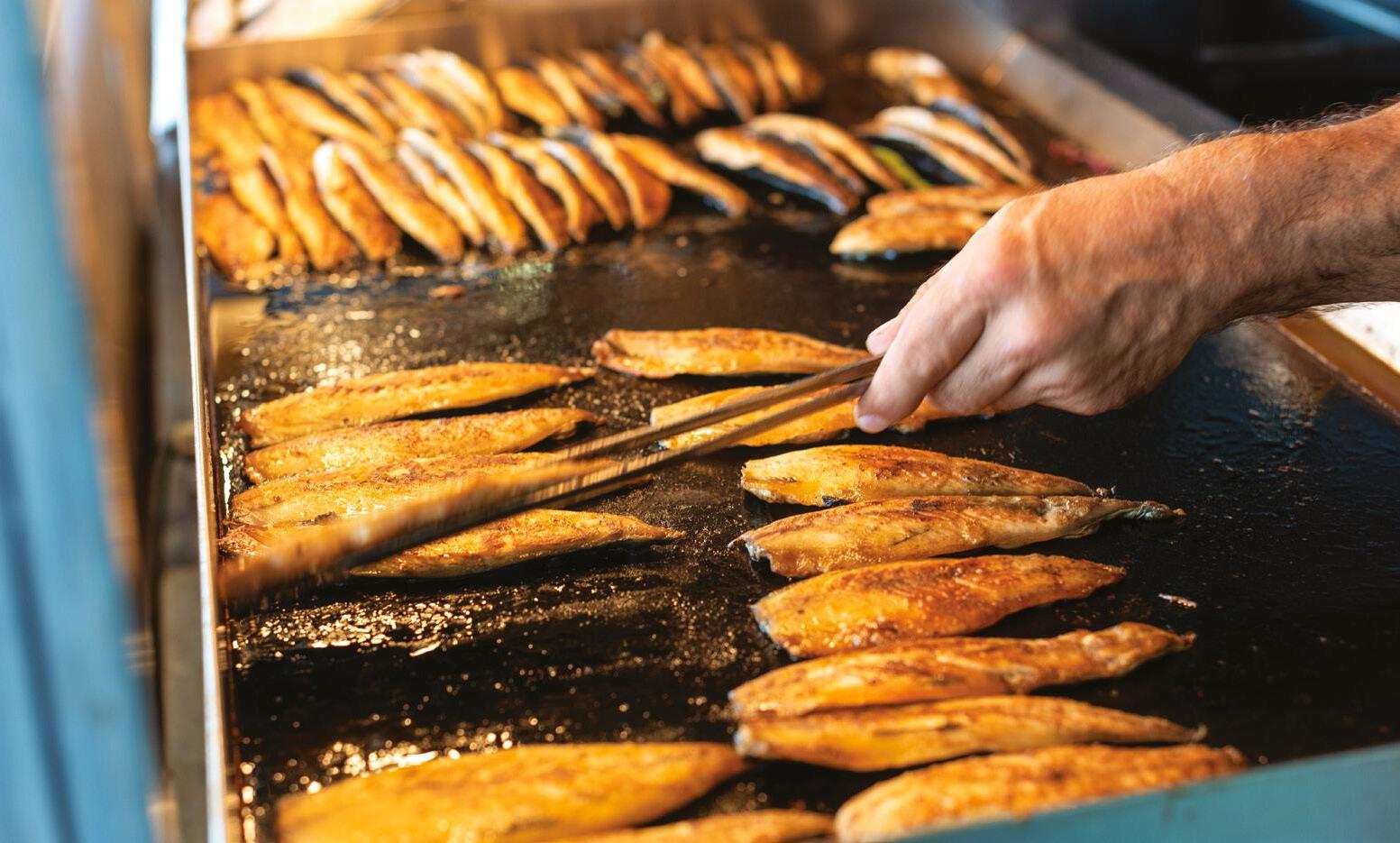
It’s a social occasion for local families as well as tourists, with persistent hawkers selling postcards, caps, Turkish flags and fishing equipment.
The four-lane bridge, the fifth bridge built on the site, between the suburbs of Eminönü and Karaköy, is a busy thoroughfare with pedestrian sidewalks. There are great views of the Bosphorus and the city, and a passing flotilla of boats.
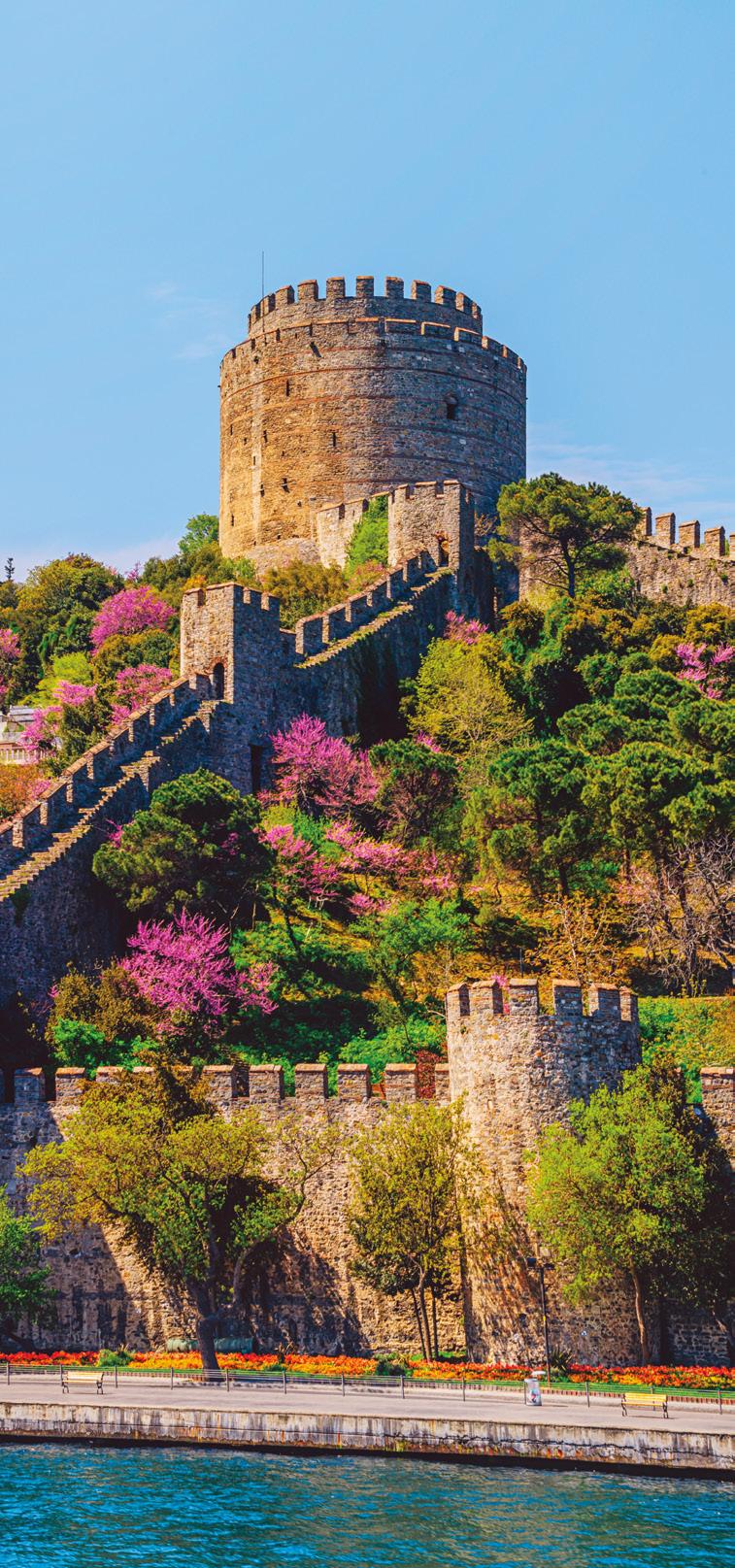
Over the years the bridge has been immortalised in Turkish culture including in paintings and literature. From the boat pier we join a scenic boat trip and enjoy the water views of the Dolmabahçe and Çırağan Palaces, Rumeli Fortress, mosques and bridges serenaded by the melodic call to prayer.
It’s the perfect way to rest our feet after doing 20,000 steps in a shop around the
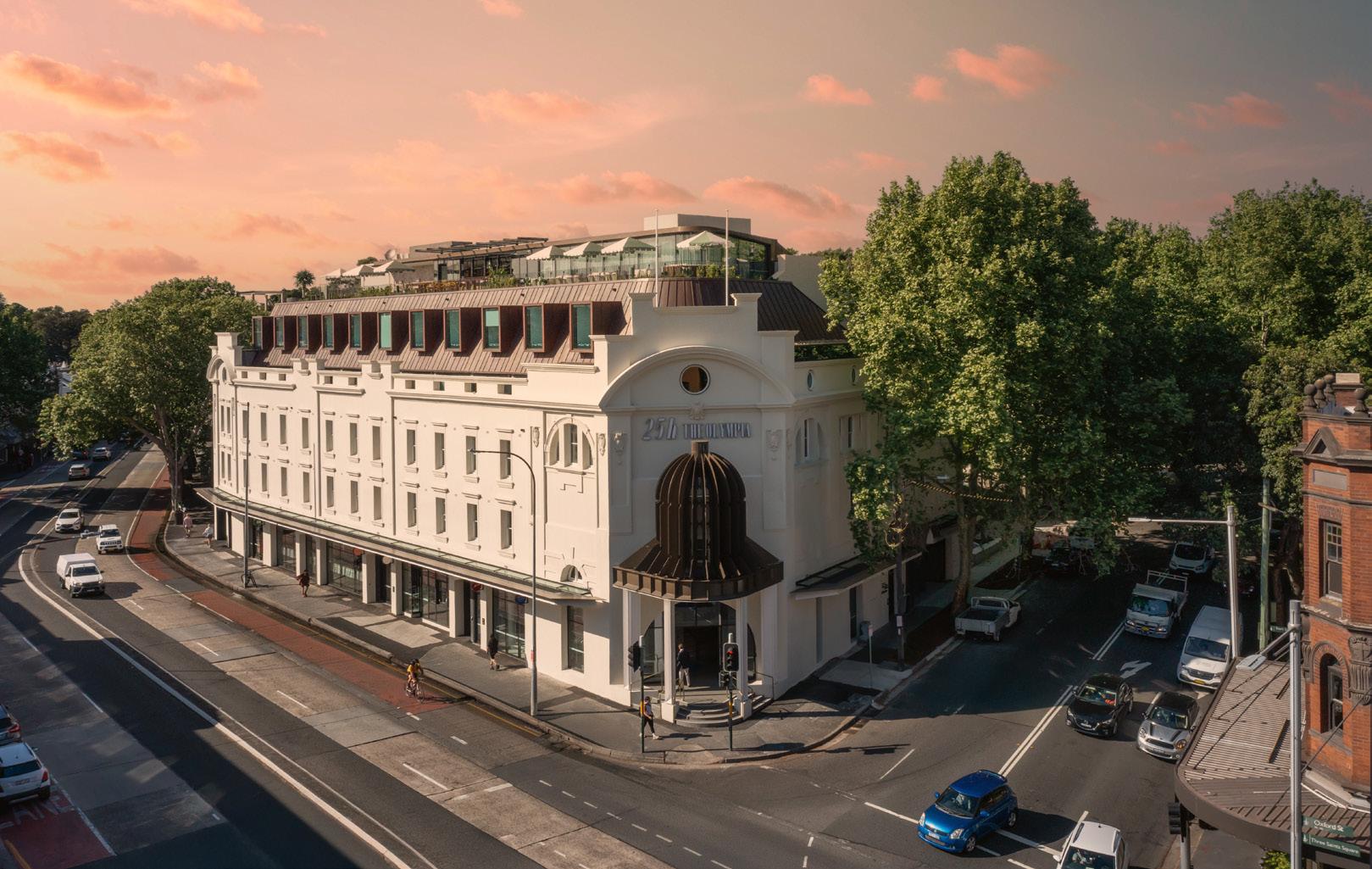
The first of the 25hours hotel brand in Australia, this hotel promises to be a design-led, hospo-centric entry into the Sydney market. On opening its doors it promised: “True to the 25hours philosophy of embracing the cultural fabric of the cities they are in, the brand’s first Australian property is deeply rooted in Sydney’s creative past. Located on the heritage-listed site of the former West Olympia Theatre and the Grand Pacific Blue Room, the hotel pays tribute to these iconic establishments that once shaped the city’s art and social scene.”
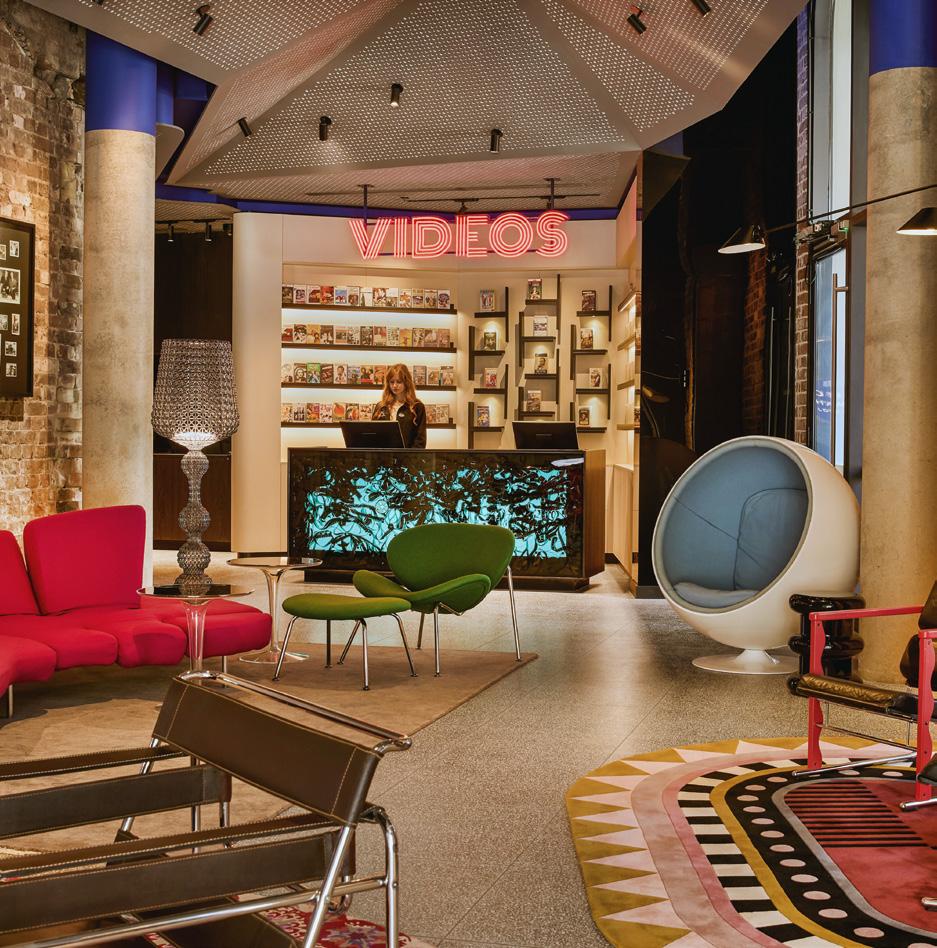
From the moment you check in to 25hours Sydney The Olympia at a VHS video rental counter under a glowing VIDEOS sign, you know this is not your average chain hotel. Nodding to the storied walls of the Olympia that once held a cinema, a nightclub and a pop-up restaurant you can spend
a lot of time in the public spaces poring over the movie references.
A wall of movie stills and candid photos will keep you entertained as you lounge in director’s chairs and white ’60s egg chairs. There is a video artwork projected on the wall at the elevators and a library of moviethemed books climbing the staircase. Even checking out the VHS wall makes checking in fun.
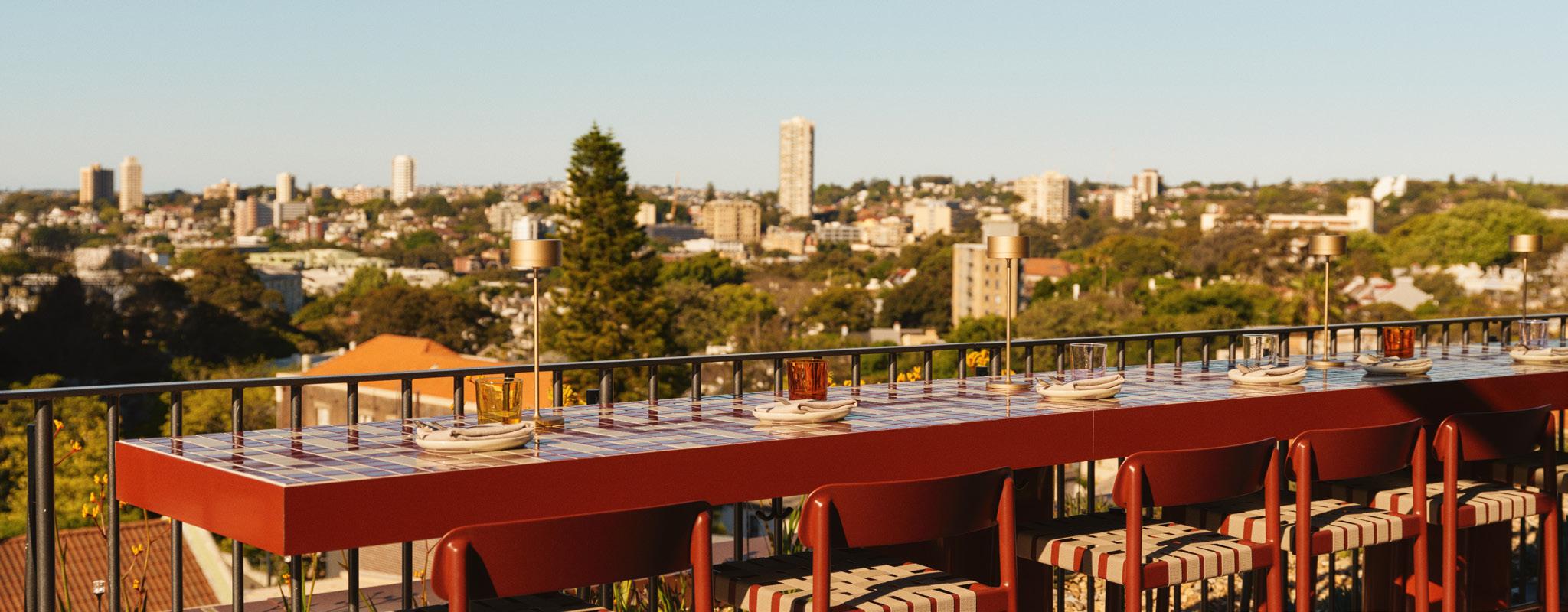
Boudoir-red lighting and a neon sign telling you to “Call for a margarita” greet you at the rooftop bar, Monica, whose design harks back to the sleek and sexy Hollywood of the 1960s. The bar offers views across Paddington’s terraced roofs with a DJ deck and barstools to help you get a look at thriving Oxford Street below. Try a Sunset Strip, premium Venezuelan rum, orange, lemon and charred spices.
Inspired by London’s wood-fired restaurant of the same name, Palomar on the ground floor of 25hrs Sydney celebrates cuisine from Southern Europe, north Africa and the Levant but using the best locally sourced Australian ingredients. An appetiser might be grilled mushroom covered in za’atar and wrapped in an aromatic shiso leaf.
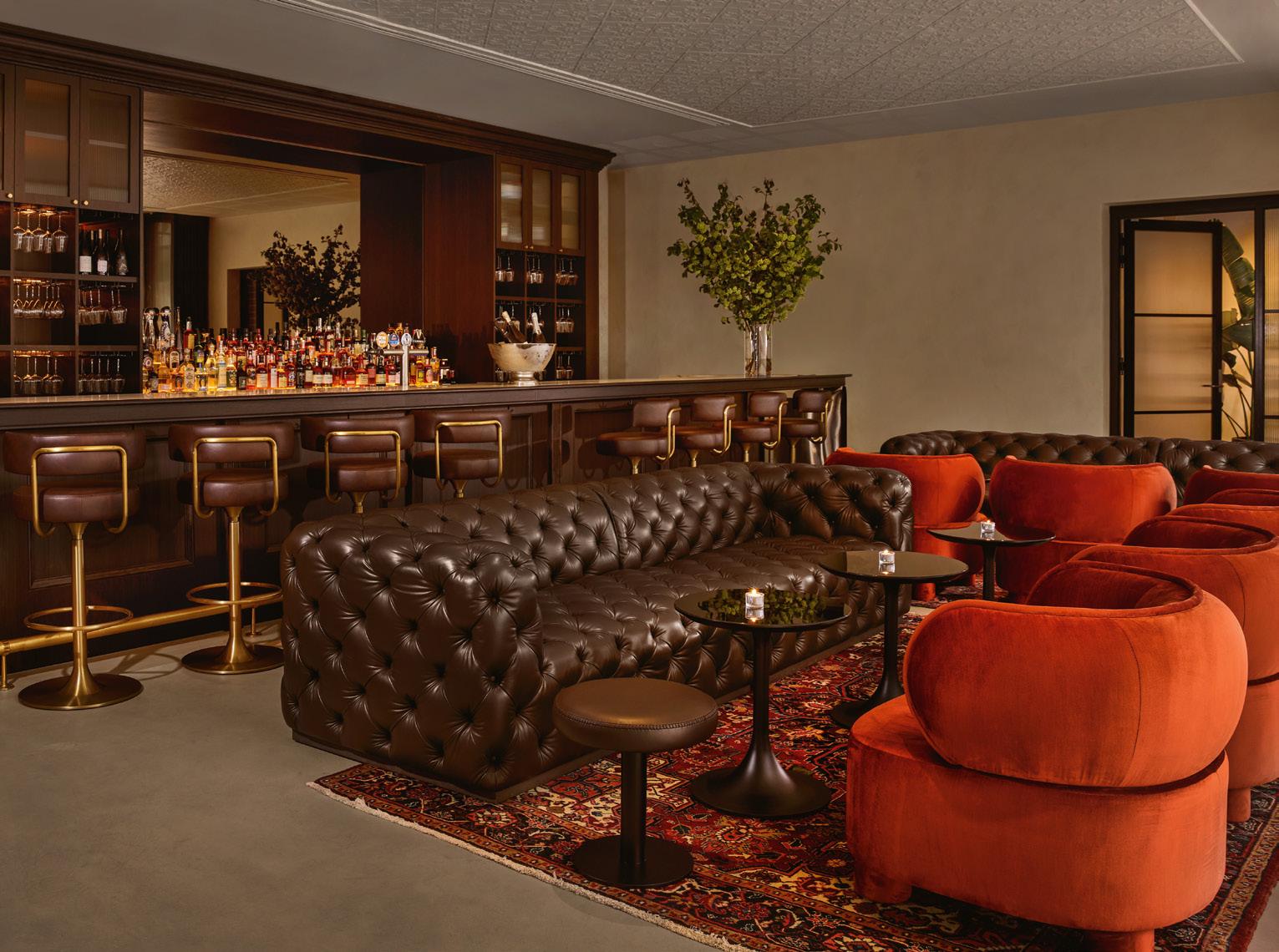
The Mulwray is named for Evelyn Mulwray’s character in Chinatown, the 70s pot boiler starring Jack Nicholson as seedy LA detective Jake Gittes. There’s a loucheness to the Mulwray bar, too, with double-wide Chesterfields, orange armchairs and golden-framed bar stools facing the vintage-looking dark-wood bar. A wine bar/cocktail bar hybrid the Mulwray has a lengthy wine list or you can grab a Somewhere in Chinatown cocktail with tequila, strawberry, watermelon, rhubarb and lime with a dash of tea.
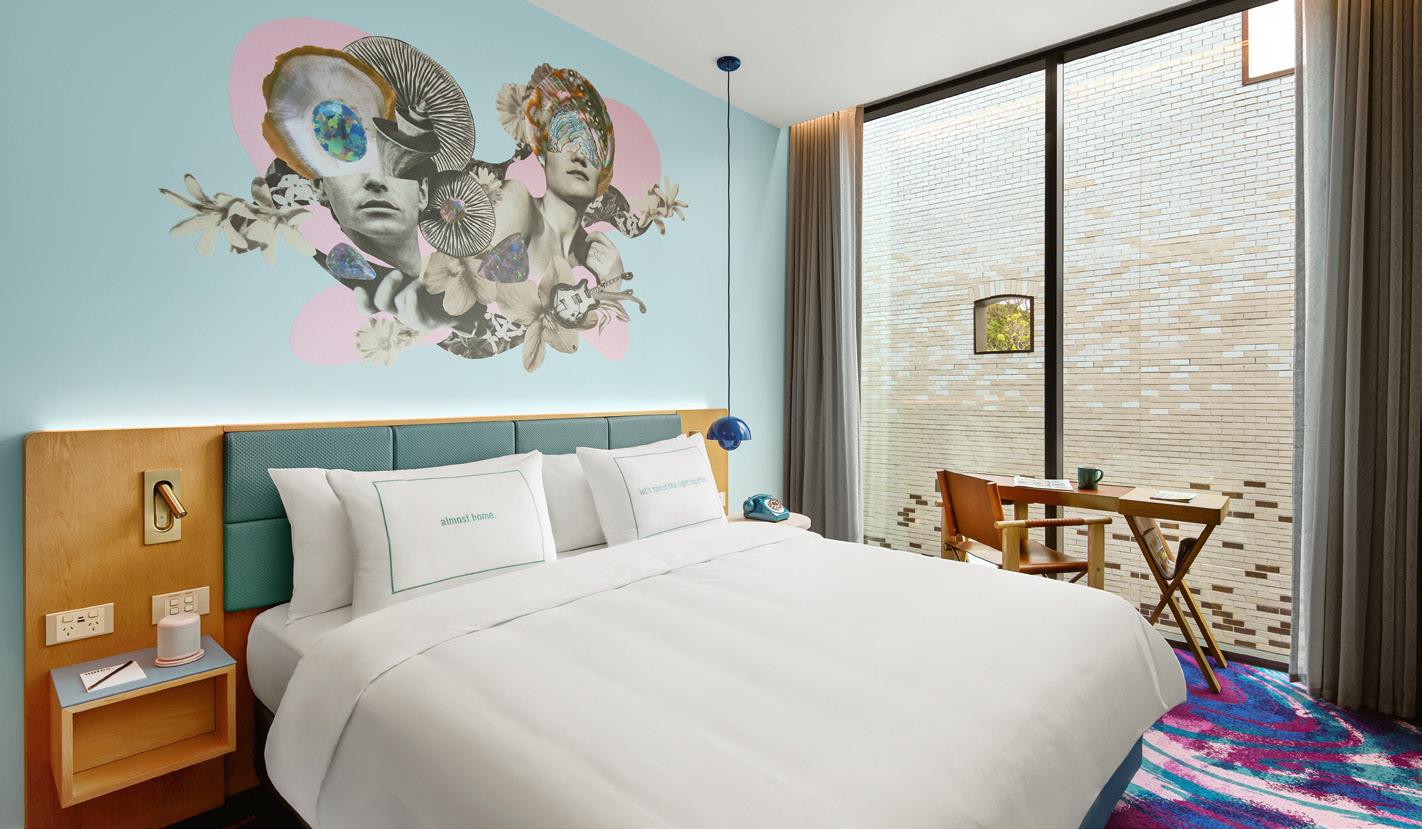
Apparently, I am a Renegade, at least that is the room I am given. Brooding black walls, primary-coloured chequered carpet and a bold original collage by Sydney artist Kubi Vasak are the key features as well as a Lori the punk lorikeet stuffed toy sitting in the centre of my bed. The dark-green tiled bathroom continues the moody vibe with a central wooden vanity space and shower and toilet on either side; snacks and soft drinks in the mini bar are complimentary for the first round and calls are made via an old-school rotary telephone. Not much of a rebel? The alternate floors are Dreamer rooms that offer a similar layout but with softer pink and blue tones.
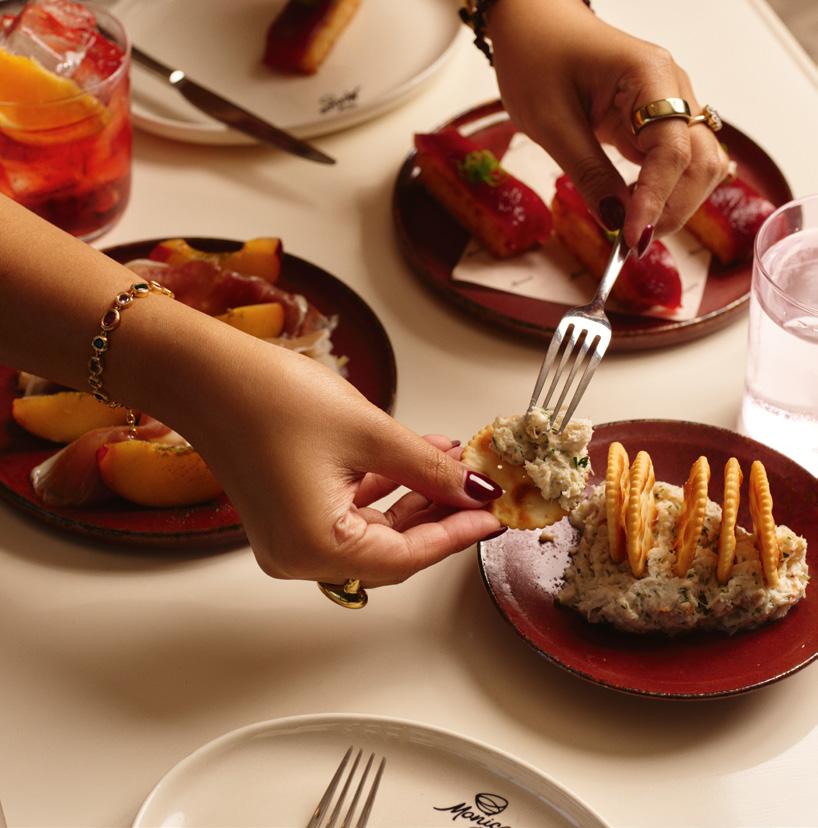
A final bit of fun is the booklet of 25 reasons for housekeeping to enter or stay out including: “Imagine the Rolling Stones stayed in the room” (please clean) and “Sometimes it’s better not to know” (do not disturb).
You can also partake of a coffee and Lune croissant at Jacob the Angel or join the fashionistas shopping at curated fashion and food store Sorry Thanks I Love You.
There is a campy, OTT aesthetic to 25hours The Olympia that feels very at home on Sydney’s flamboyant Oxford Street. A community hub, a revival of a classic Sydney building and one of the most eccentric stays in a hotel scene that could benefit from some personality, 25hrs Hotel Sydney The Olympia is a star.
IN PARTNERSHIP WITH

South Australia’s unique destination dining is not always fancy; it can be fresh produce eaten metres from where it was grown or tasting wine in a family-run vineyard but now SA is the rst state in Australia to get a visit from the MICHELIN Guide so global recognition is on the way.
When the MICHELIN Guide announced that South Australia was the first place it would be turning its gaze in this country, no one in the state was surprised. Eighty per cent of the nation’s premium wine is made in South Australia.
The Barossa Valley pours bold shiraz from some of the oldest vines on the planet, the Clare Valley sets the standard for crisp Aussie riesling and McLaren Vale and the cooler Adelaide Hills are home to subtle chardonnay and
elegant bubbles; great wines to pair with food.
Then there’s the produce:
Ligurian honey from Kangaroo Island, world-beating Eyre Peninsula seafood, grass-fed Limestone Coast beef from Mayura Station, artisan cheeses, cold-pressed olive oils and justpicked stone fruit. And you will find it all at the Adelaide Central Market, among the largest fresh-produce markets in the Southern Hemisphere, that has been extolling the virtues of this
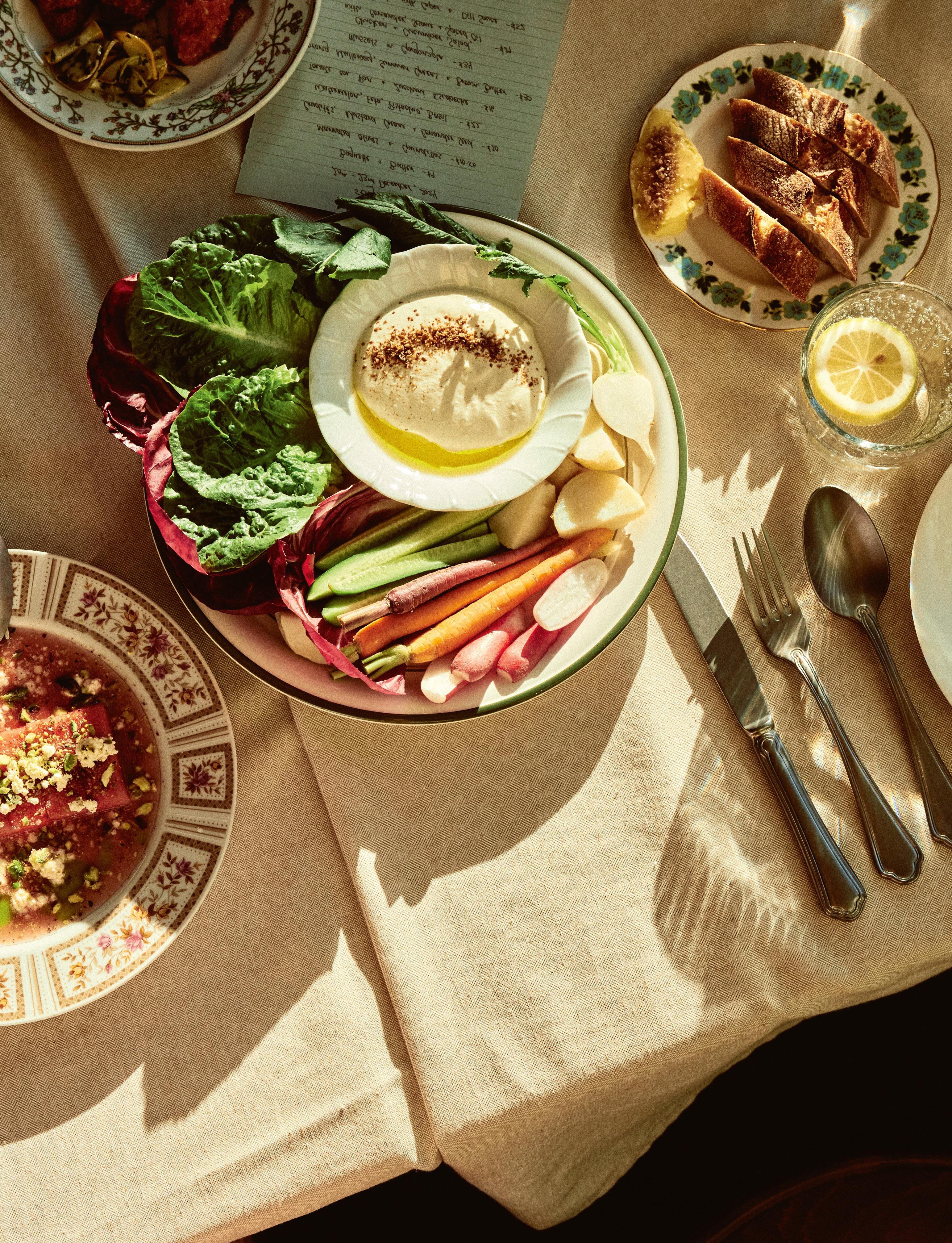
wealth of amazing foods for over 150 years. To top it off, you have world-class chefs in restaurants that will wow the MICHELIN reviewers with inspiration from this bounty of wine and produce.
This abundance of highquality local ingredients and the joy of sharing great meals has fostered a culture in South Australia that is relaxed, inclusive and best savoured with family and friends. This unique approach to food, wine and hospitality sets the state apart.
The world-famous guide is heading to South Australia because of its reputation for fine food and reviewers will be spoiled for choice. Restaurant Botanic in Adelaide has already received Australia’s top prize of three chef’s hats led by chef Jamie Musgrave in the picturesque Botanic Gardens. Staġuni, in the Barossa Valley village of Marananga, South Australia, is a Mediterranean-inspired restaurant led by acclaimed chef Clare Falzon. While the Kuti Shack on the Fleurieu Peninsula puts that region’s produce to incredible use under the watchful eye of owners Vanessa Button and Brendan Roach. Who will make the MICHELIN cut? Go and find out for yourself.
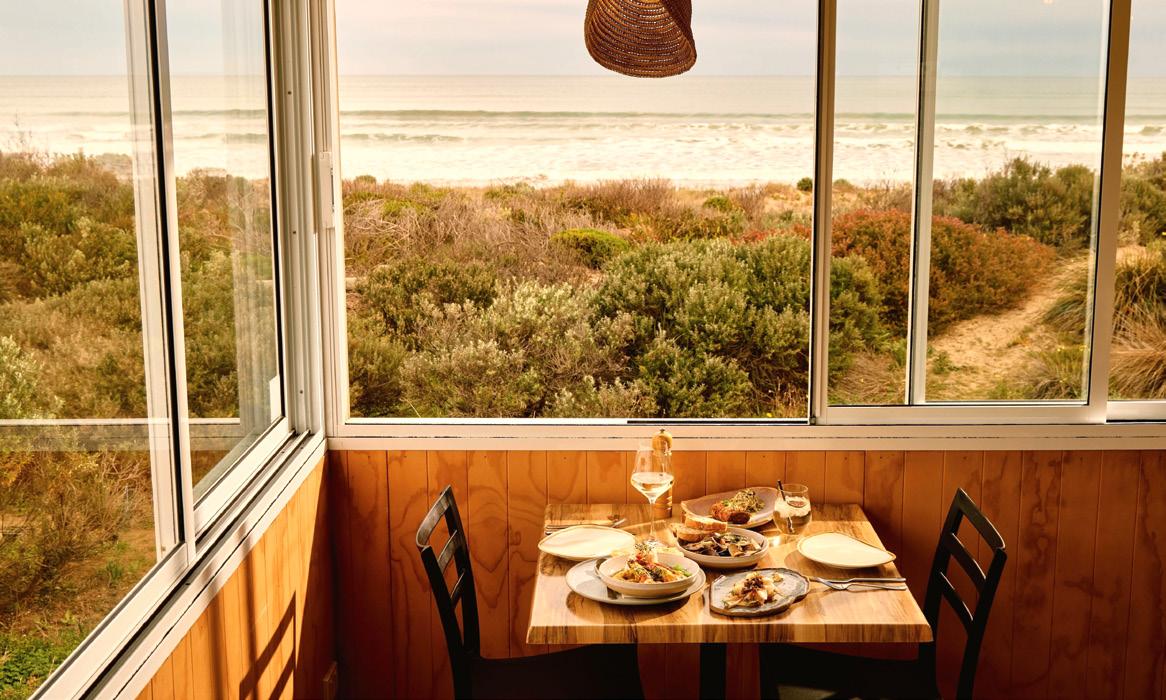
Family-owned vineyards like Taylors of Jim Barry in the Clare Valley deliver hand-picked, perfectly balanced wines backed by decades of wine-making skills. Pair these fantastic drops with some artisanal cheeses at the cellar door surrounded by perfectly coiffed gardens and modern sculptural works.
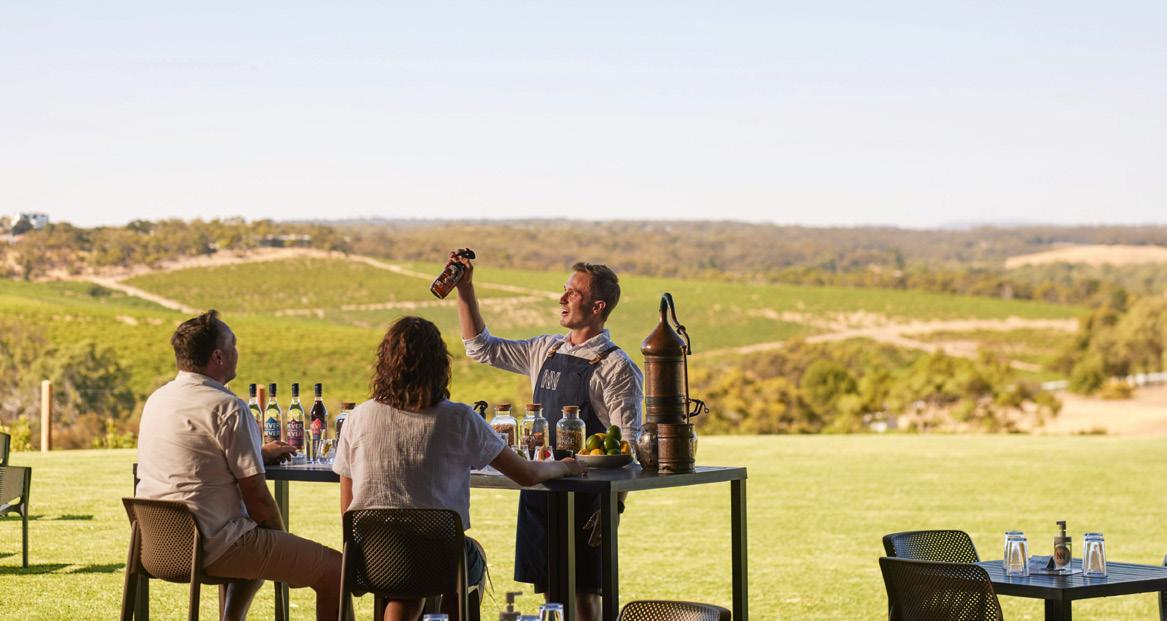
South Australia is more than just a wine producer. Never Never Distilling Co., makes some of the greatest gin in Australia. Their products features in some of the best restaurants in the country including making what purports to be the driest martini in the world at Melbourne’s famous Gimlet restaurant. But at its home in McLaren Vale, you can have a guided gin tasting with an inhouse expert to truly appreciate this bespoke spirit, and it just tastes better with views over the majestic Fleurieu Peninsula.
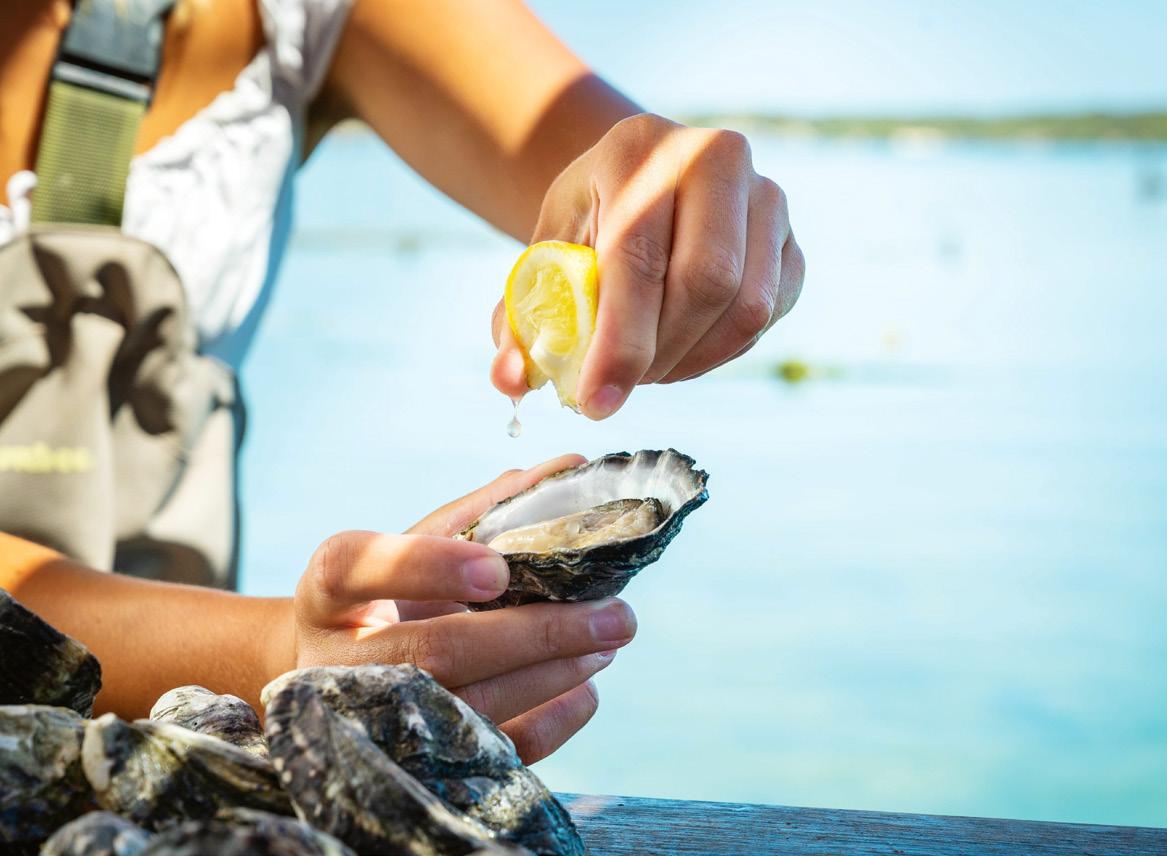
Eyre Peninsula is part of the Seafood Frontier and the whole area is a seafood-lover’s paradise. In Coffin Bay you will sit at a table that is waist deep in water and learn to shuck oysters that are grown just metres from where you sit, then shipped all over the world where they are in demand for the mineral-rich taste that only these South Australian waters can foster. But these pearls of the ocean will never taste better than right there in Coffin Bay, shucked by you, rinsed in the waters that nurtured them and eaten in your big rubber waders. Further towards the tip of the Eyre Peninsula you can make a stop in Port Lincoln where you can sample the famous Spencer Gulf prawns within hours of them being brought to shore on the trawlers.
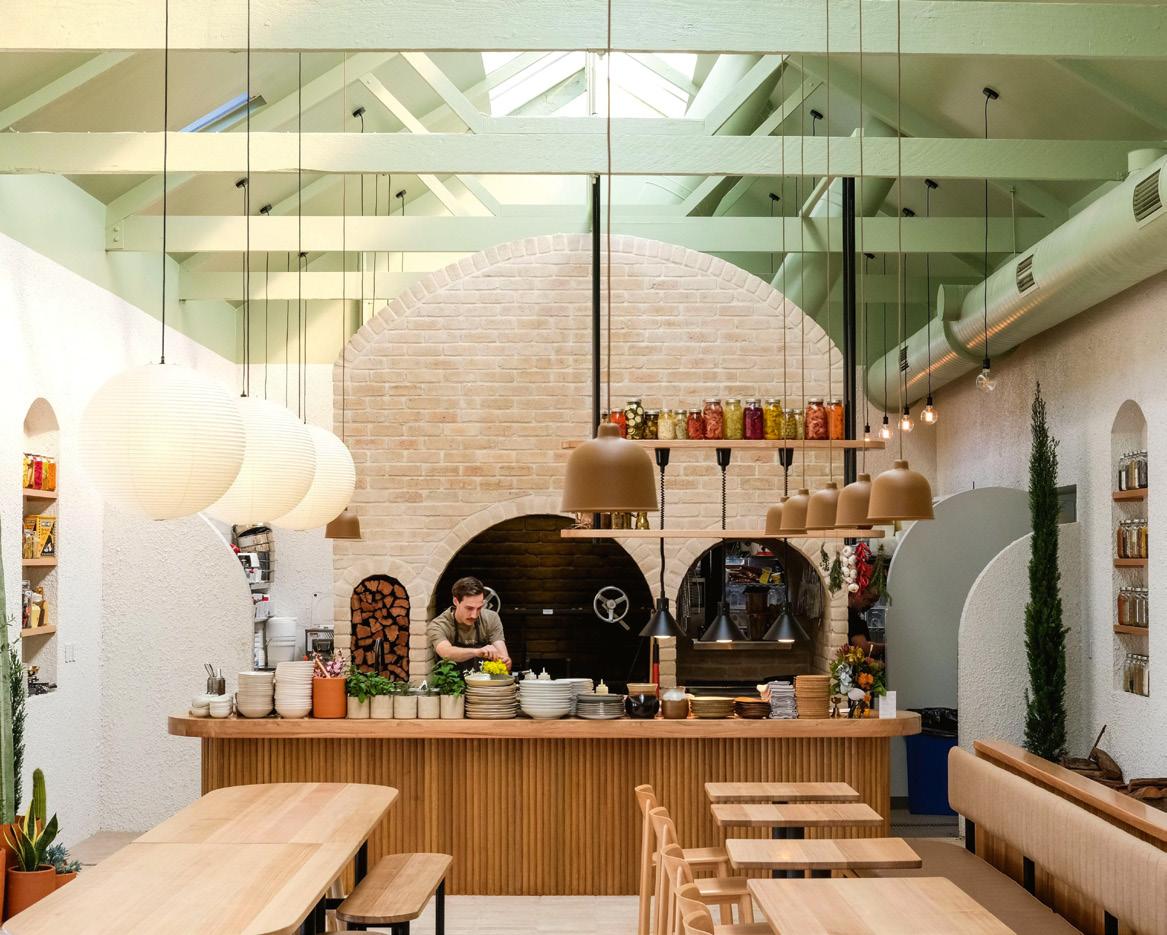
South Australia’s warm days and cool nights make it home to some of the finest stone and citrus fruit. On Saturdays, the Willunga Farmers Market brings growers face to face with shoppers, often with fruit picked that very morning. South Australia’s cafe scene also makes great use of the state’s bountiful crop with Verdun’s Fourth Hill Providore serving up compotes and crumbles, while Thebarton’s Bloom offers brunches in a century-old tram barn.
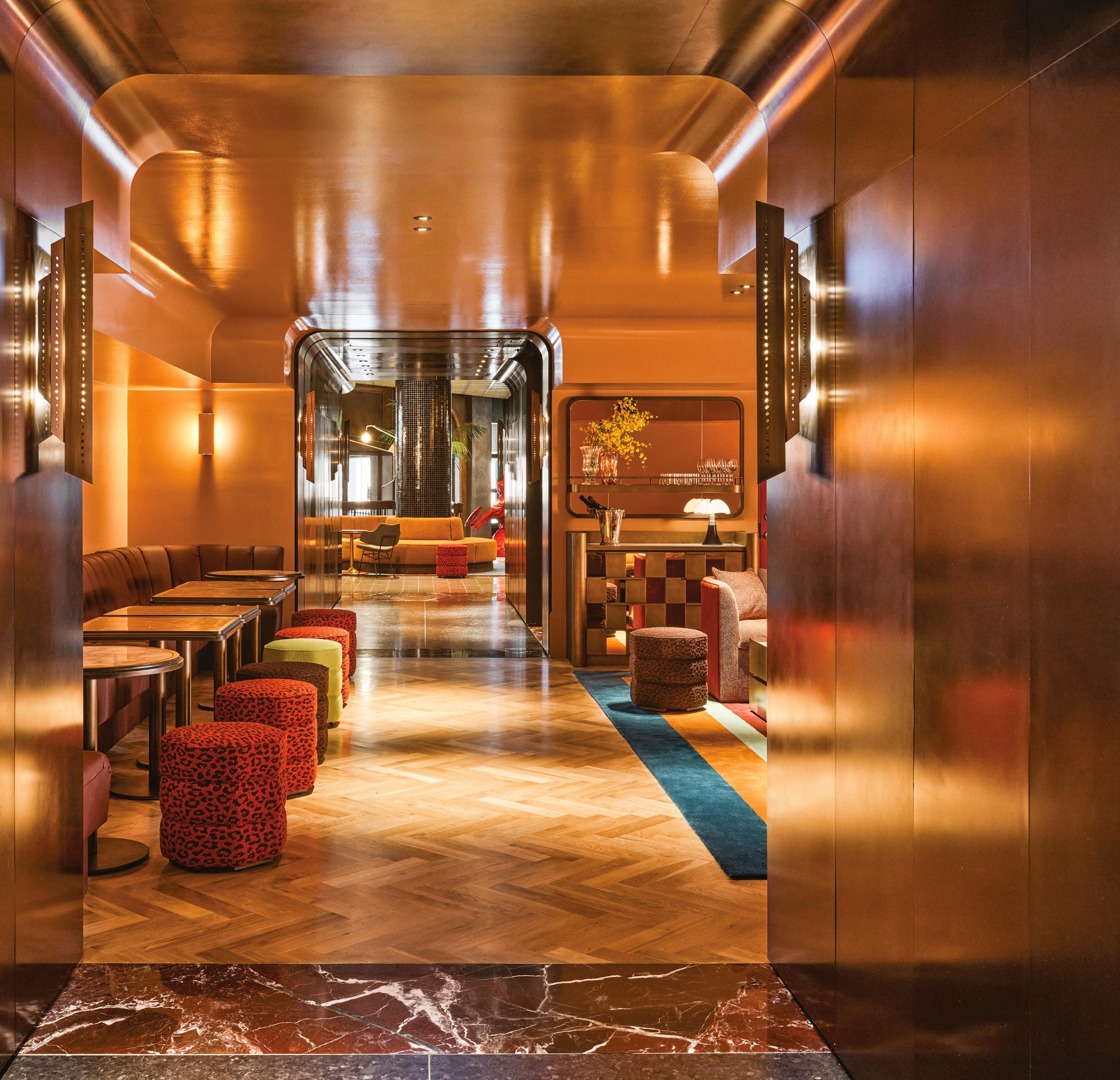
An unusually angular block of land in a previously neglected section of Melbourne’s south has given rise to the original, design-led Hannah St Hotel. Paul Chai spends a weekend in the city’s newest instant neighbourhood.
The Queensbridge Building – a tri-sided skyscraper that houses Melbourne’s new Hannah St Hotel in Southbank –feels like a planting of a flagpole, a 65-storey staking of a claim to a fashionable new ‘hood.
The area previously known only as “behind Crown” has been gifted an instant precinct with bars, a bistro and an in-development urban park, the centrepiece of which is the new stay from the Collection by TFE Hotels.
From the outside, the building bears a passing resemblance to New York’s equally trim Flatiron Building but it is no copy. “We wouldn’t want to lift a building out of New York and put it into Melbourne – we want to lift some concepts and make them Australian,” says Edward Pearse, creative director of Time & Place who developed the building.
Turning up to Hannah St Hotel is originally, urbanely Melbourne; my wife and I park under the expressway, all concrete and steel but decorated with whimsical pink circles and pink poles; bright-red tables and benches nearby are full of people waiting for a caffeine hit from the Hannah St Coffee window. This area is in line for a major renovation turning it into a 5,000-square-metre public park with a freestyle skate area, green spaces and basketball and netball hoops. We can see the potential as our valet takes our car, and we enter reception under the watchful eye of the Queensbridge owl, a bronze sculpture by Melbourne artist Joelle Mayberry perched upon a clock.
The inside of the hotel is the realm of the team at Flack Studios who manage to make it feel both nostalgic and very modern – from the joinery invoking 1920s furniture to the flamboyant red “Mirror Sheila” sculpture by artist Justene Williams inside the door; the artwork is said to be the lobby guardian.
“At Hannah St, the hotel is conceived as a shared environment for a considered yet inclusive community rather than a transient place of stay,” says David Flack. “It brings together creatives, travellers, locals and those seeking a thoughtful, design-led experience, connected by a shared sensibility. The result is a place where people feel a sense of belonging to Hannah St, cultivating a vertical community.”
David says the building’s angles and curves presented a challenge but once he embraced the confines the result was some of the most unique hotel rooms in the city.
Our Lookout Corner suite, one of the 188 rooms, is one such space. Located in the pointy end of The Queensbridge Building, our suite has a king-sized bed and, opposite, what looks like the prow of a boat crossed with a ‘70s key party as an orange wraparound lounge fills the corner of the building; throughout is polished concrete for what David calls a “grit meets glamour” feel.
“Irregular geometries are used to create moments of compression and release, framing views, light, and movement in unexpected ways,” he says.
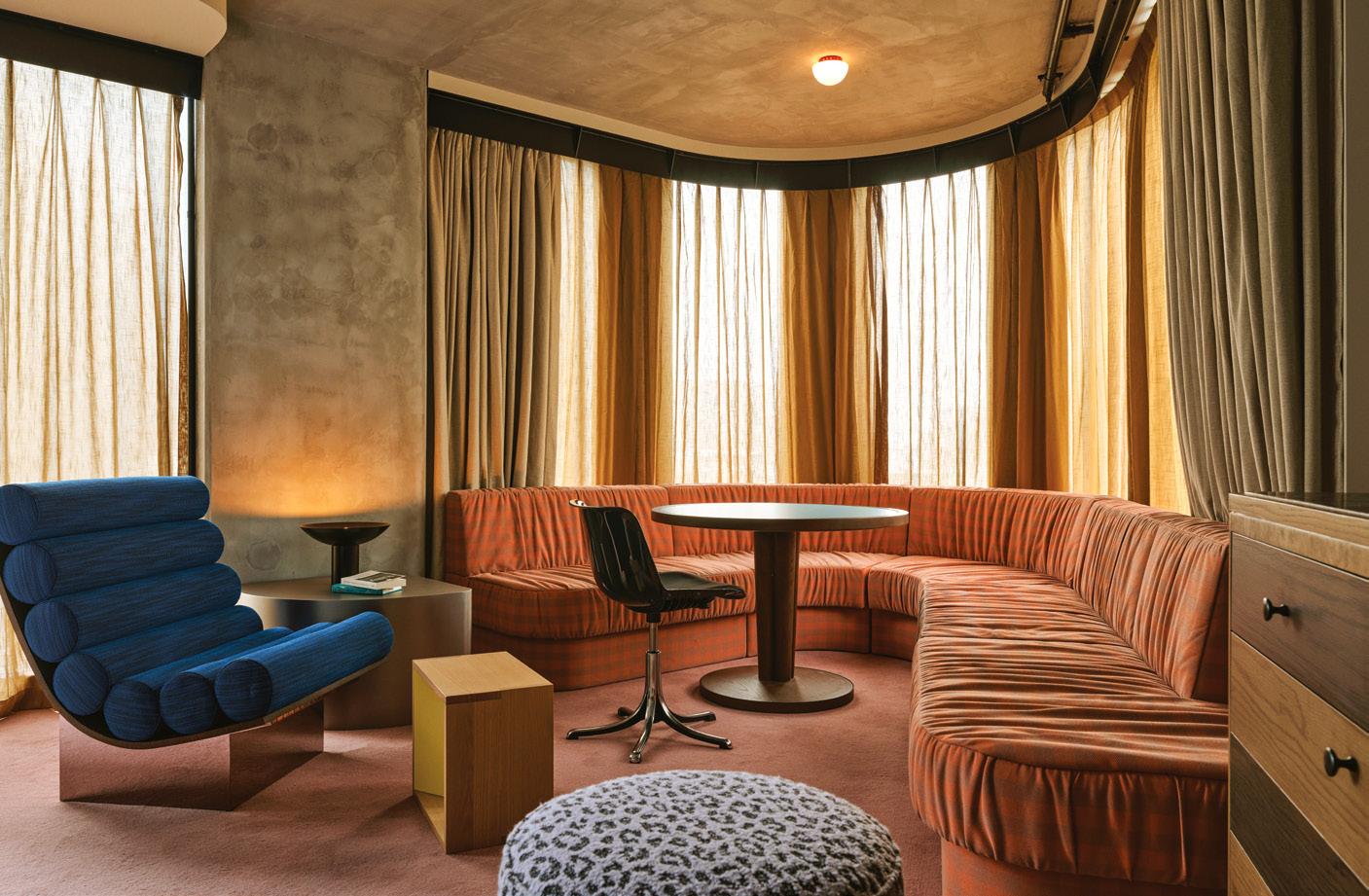
I’m more Melbourne coffee cynic than snob; I think we reached peak beans long ago. But a Hannah St Vietnamese-style iced coffee with condensed milk and salted cold foam feels like a slap in the face with a caffeinated ocean wave. Hannah St Coffee works with local Square One Roasters and head barista George Gupwell sees his modest coffee window as a way to make Hannah St part of the daily routine of locals.
Hannah St Hotel’s dining is overseen by chef Andrew Beddoes; hailing from Derbyshire in the UK, Andrew has worked at Soho House and most recently at Enoteca Boccaccio, where he secured and held
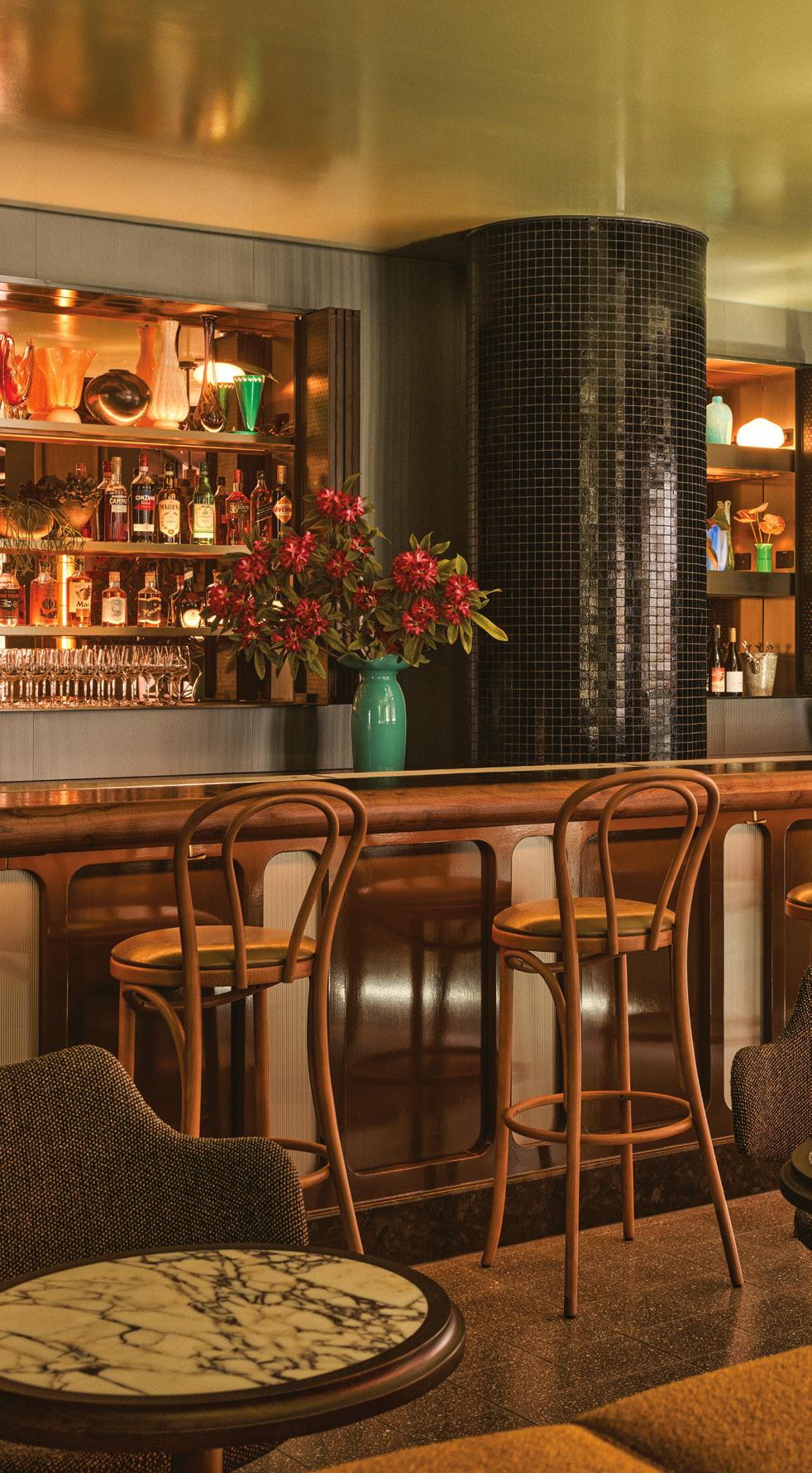
a Chef’s Hat three years running. His new playground is Coupette, the all-day dining venue that also occupies one of the pointy nooks of the hotel. Coupette’s oval bread plates, banquette seating and specials scrawled in white on the large mirror (and its name of course) signal Andrew’s commitment to “French technique, produce driven cooking and that sweet spot where simplicity meets precision”.
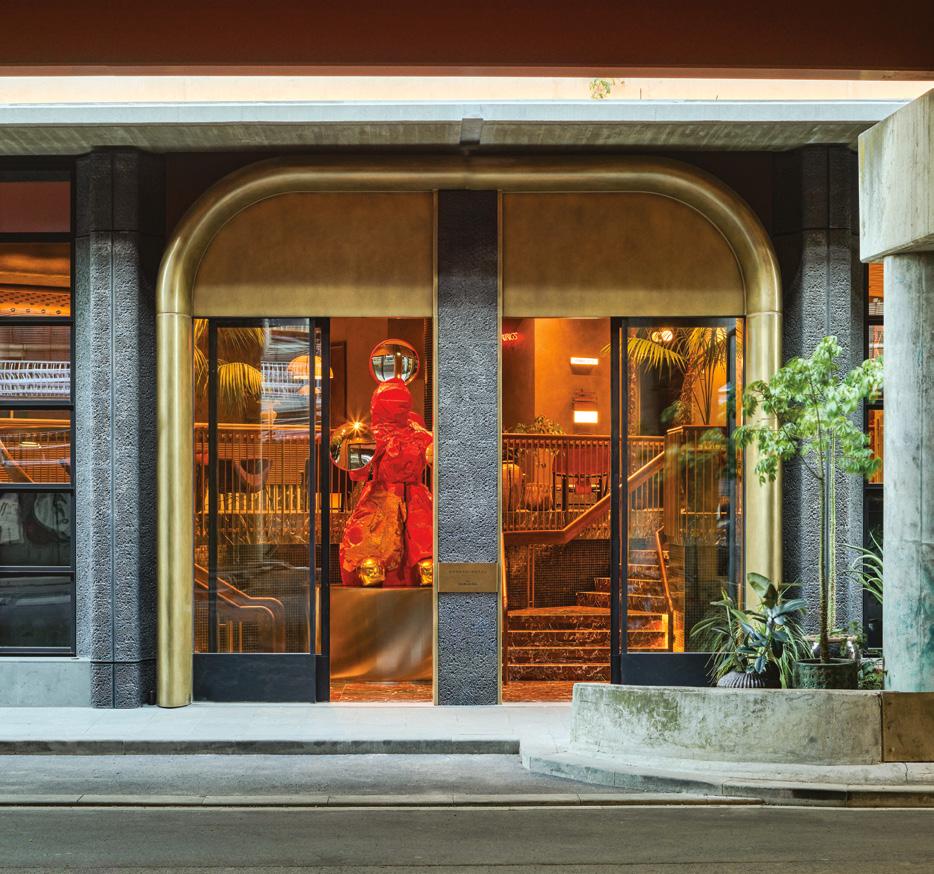
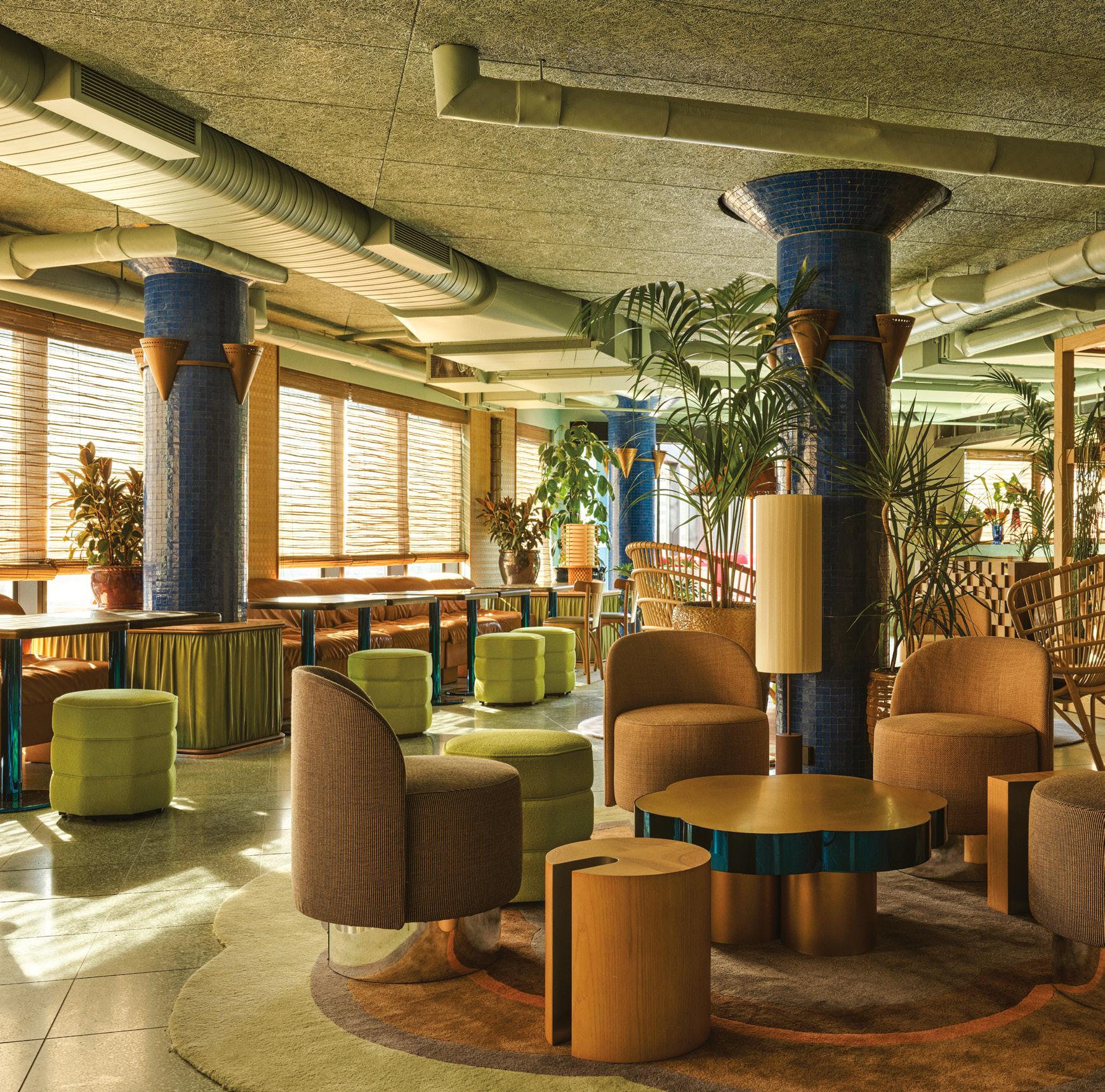
Book your stay now
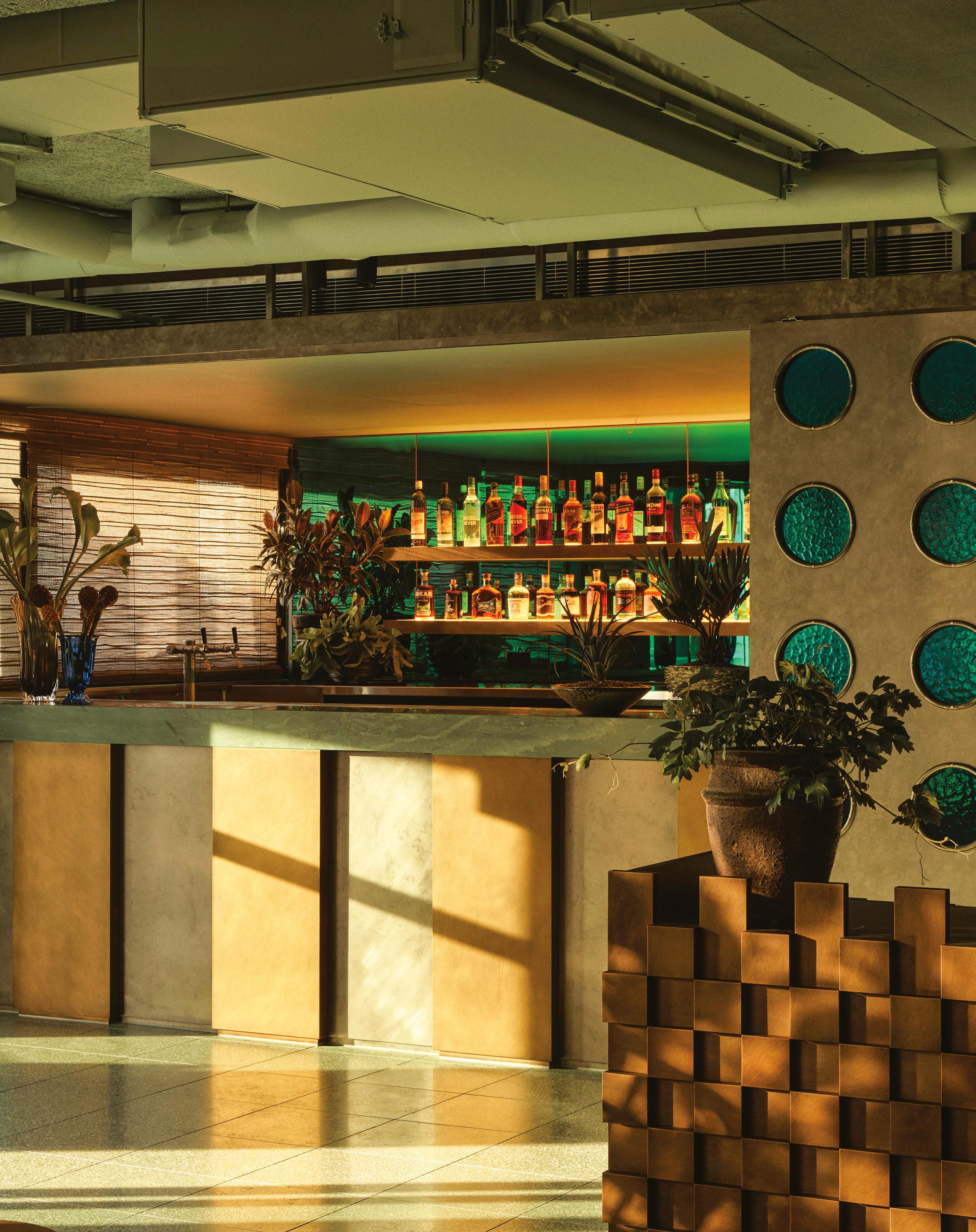
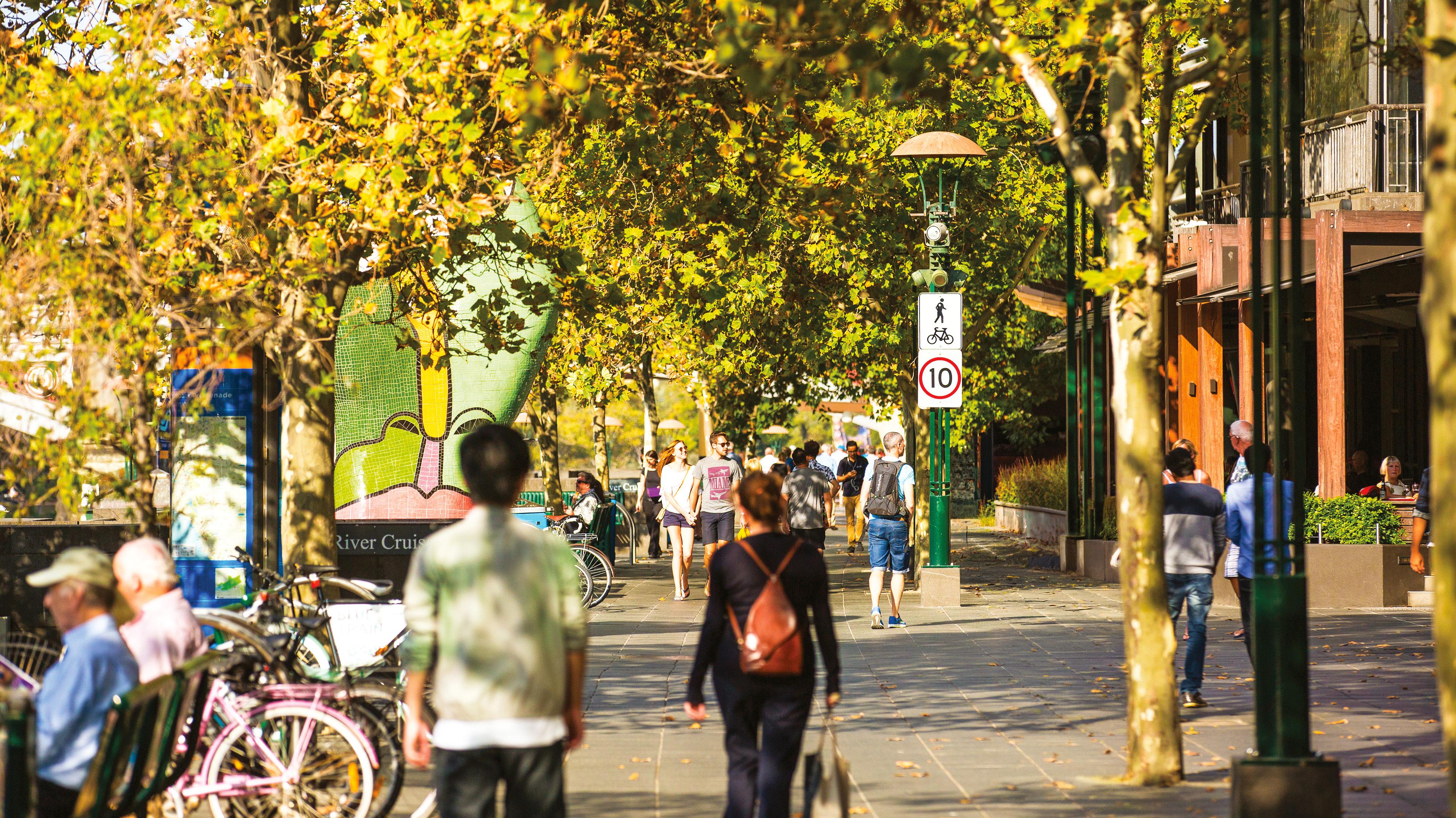
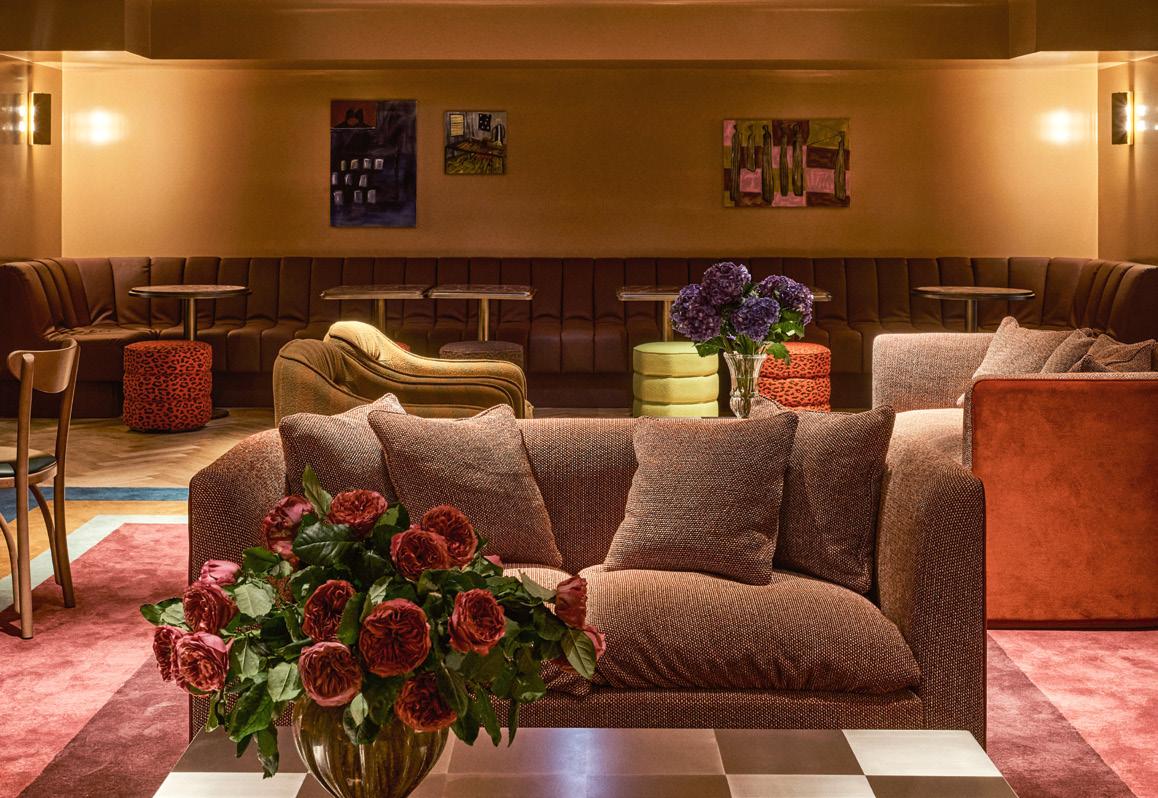
We have heard about the steak frites before arriving at the hotel and a plate lands at our table crisp and pink, the meat topped with vivid green Montpellier butter (blended with greens, herbs, shallots and anchovies) adding freshness. A skate wing straight from the market gets the butter treatment too, swimming in a beurre blanc sauce and topped with clam tartare. As with all good bistro cooking, a simple side of zucchini, chilli, lemon and garlic nearly steals the show.
Our night started with drinks at Bar Hannah, the eclectic lobby bar with black mosaic tiles and a wooden bar top. We
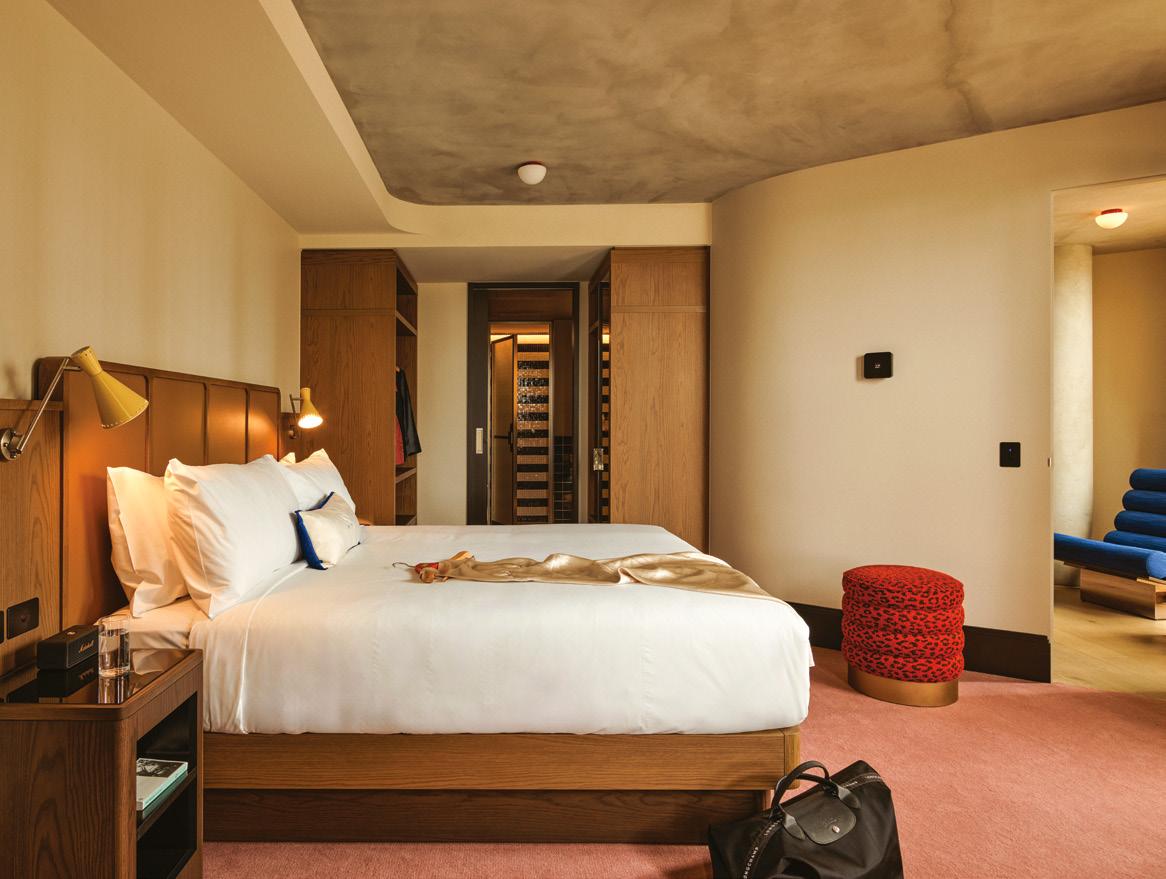
ordered a finger lime gimlet and a Red Right Hand negroni with the addition of Davidson plum; native ingredients woven into a classic recipe and named after a song by one of Melbourne’s most famous sons. Breakfast in Coupette the following morning is more bistro bliss where eggs Benedict come with enough ham to fill a footlong sub and a blue swimmer crab omelet is just as generous with its protein, piled on top of the eggs with chilli and coriander rather than cooked in the omelet, so the flavours stay fresh and light. It’s also
where I discover my Vietnamese coffee.
Over the course of the weekend, we take a dip on the 9th floor pool, lounge in the sauna and peek into the huge gym. Hannah St Hotel also has the relaxed Carriage Lounge breakout space next to the lobby bar on the ground floor and the 10th floor Terrace Lounge, which mixes a café garden vibe with some incredible views across Melbourne.
Hannah St Hotel is a living embodiment of the city’s famous laneway culture: finding an underappreciated part of the city and turning it into a must-visit destination.
Celebrity & Expert Hosts
Designed and hosted by well-known experts who share their passions for a truly unforgettable adventure.

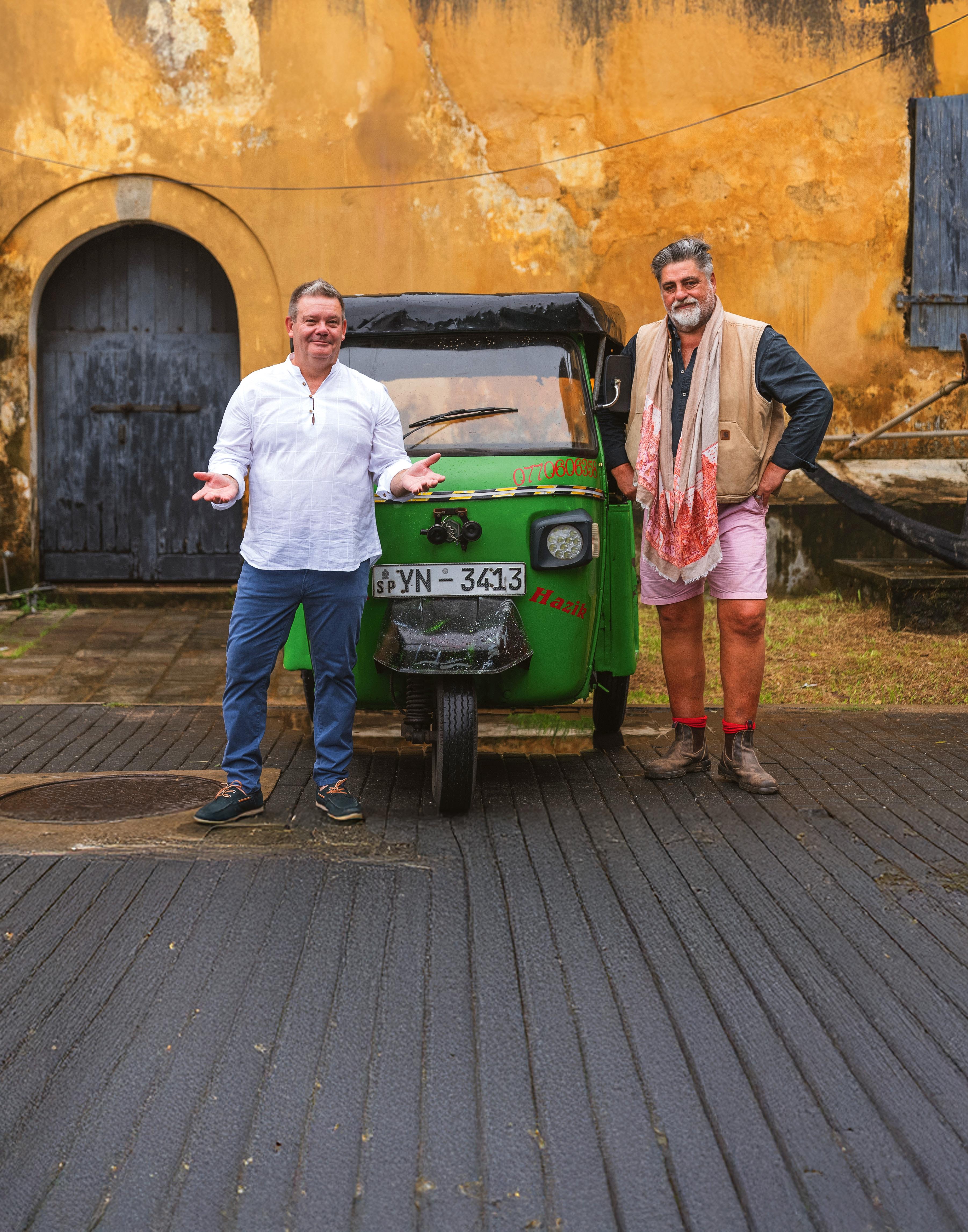
On-the-Ground Research Trips
Our expert hosts undertake dedicated research trips to design each itinerary, ensuring a highly curated journey.
One Departure Only Iconic Itineraries
Each tour has just one departure date, ensuring that every trip is a unique, oncein-a-lifetime experience.
Travellers will enjoy iconic bucket-list experiences, capturing moments that go beyond ordinary travel expectations.
Unmatched Luxury
All hotels and resorts are meticulously handpicked for their exceptional quality, comfort, location, and service.
We have stopovers and shopovers, layovers and opovers, but for food lovers a 24-36 hour city stay between ights can be an opportunity to sink their teeth into a place’s food culture. Welcome to our regular snackover column; this issue Paul Chai in Melbourne.
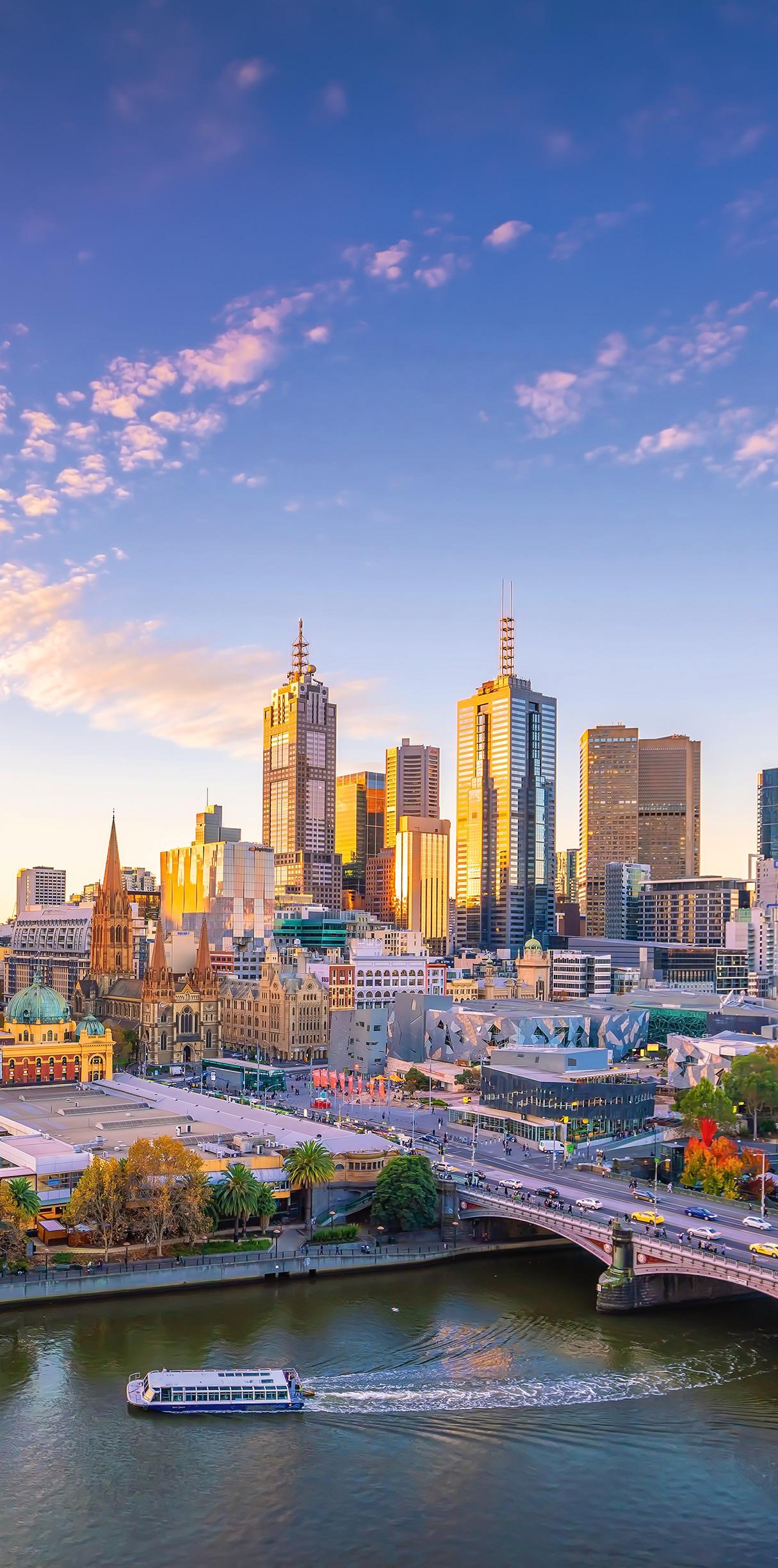
DAY 1
8pm Gimlet
Less of a snack, more of a feast, I start my Melbourne food odyssey at one of its finest of fine diners. While the signature Gimlet is a boss move, I begin with a Coronet Cove, single cask whisky made by Sullivan’s Cove for sister bar Apollo Inn and mixed with fino sherry and housemade pineapple soda. Though the menu changes you might have starter morsels like a ribbon of anchovy on toast covered in Café de Paris butter or an in-season zucchini flower with soft curds and pistachio on a crisp wafer. Gimlet dishes are in the sweet spot of maximum bistro flavour but with a lightness and freshness that leaves you ready for another course. Rock flathead with mussels and broad beans comes in a pool of herbaceous vermouth sauce and risotto al limone with Lion’s Mane mushroom and caper has plenty of lemon to cut through the richness. Service is as seamless as it is warm.
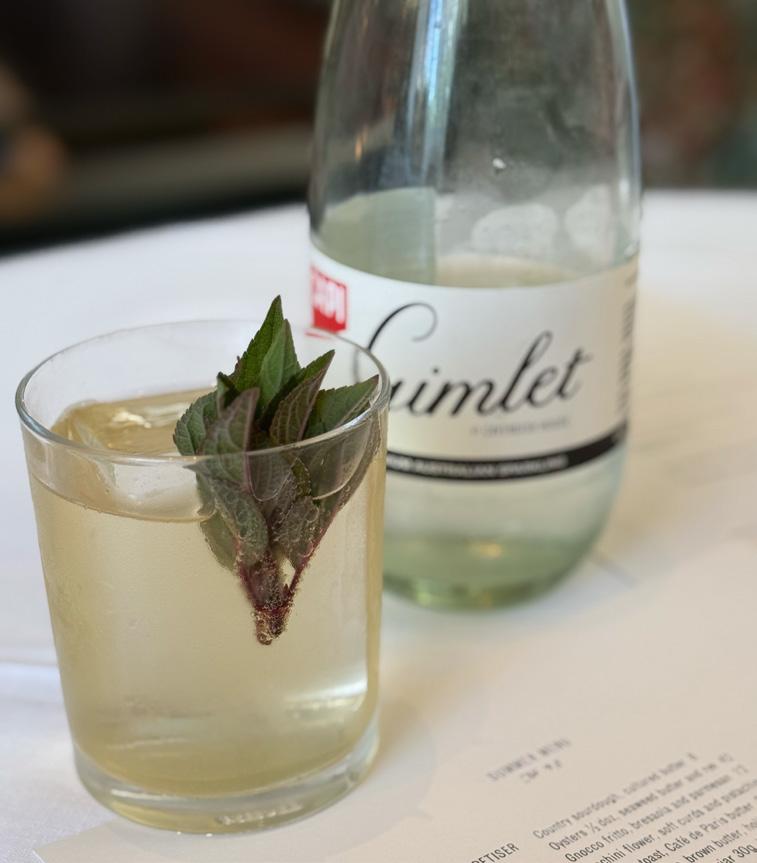
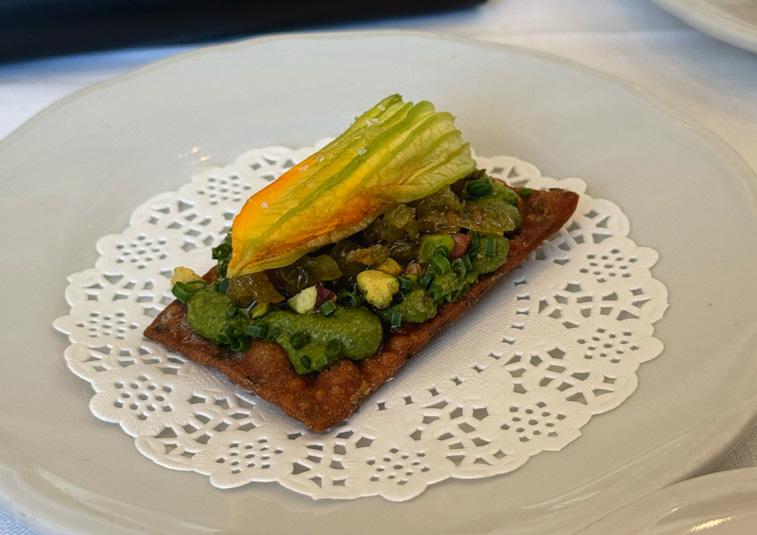
South Melbourne’s Woodfrog Bakery is a slender store opposite South Melbourne Market making some of the most delicious spelt loaves that are almost a meal in themselves. But a must-have handheld breakfast is the berry danish with seasonal berries resting in a not-too-sweet custard encased by a square of crisp, light pastry. Grab and go.
10am Dead Man Espresso
It’s Melbourne, you gotta have a coffee. Go nuts and order a “magic” if you must (a Melbourne off-menu item of ristretto and steamed milk in a punchy double shot). Mine’s a strong soy cappuccino and the laidback team at Dead Man delivers from their industrial-chic spot with some deadpan Melbourne style.
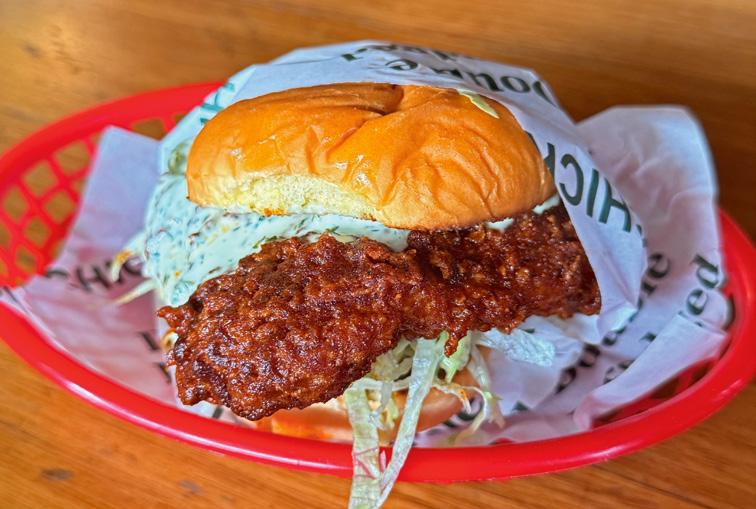
12pm Chicky Boi
Melbourne is having a bit of a sandwich moment right now, and Chicky Boi is the poster child. Starting as a pop-up and now with a permanent home in Fitzroy at Near and Far. You can feel the buzz a few shopfronts away as people mill around for the regularly sold-out sangers but I squeeze in and order a Spicy Boi, a plate-sized piece of double-dredged, ultra-crunchy fried chicken dipped in a hot-and-spicy Nashville sauce and served with dill ranch, lettuce and breadand-butter pickles. It’s a messy, saucy, moreish handful that is worth all the hype and then some.
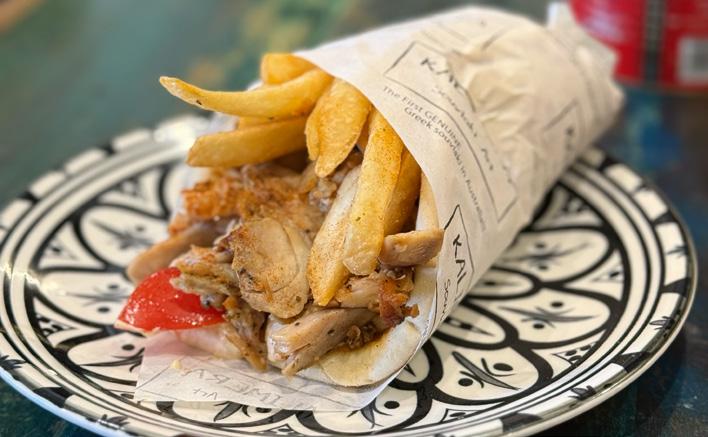
2pm
Edita’s
This Rathdowne Street fish and chip shop, named (and muralled, and neon signed) for Polynesian family matriarch, Edita, is showing what might happen if a Macca’s filet o fish, grew up and went to culinary school. The Edita’s burger is a fresh fried, doorstop-sized piece of fish swimming in the housemade tartare sauce and arriving on a super-soft potato bun for my second lunch; it’s homely but cheffy, simple but not another thing is needed. The Polynesian tunes pumped out in the street seats are a nice touch as you dive in, too.
4pm Gamja Hotteok
Hotteok is a sweet street pancake beloved in Korea and now made in a modest kitchen opposite Queen Victoria Market. The classic sweet version is a crunchy potato cake filled with brown sugar that melts into a sticky syrup when fried and has pepitas for crunch. There is also a beef bulgogistuffed version but I too am stuffed so can only manage a sweet treat.
7pm Gar eld Pizzeria
One of the newest slice shops in the Italian heart of Melbourne, Garfield Pizzeria keeps it simple with five red and five white pizzas. Hand-stretched dough and a Marana wood-fired oven brought from the motherland mean these 10-inch delights arrive beautifully blistered and the base has a tang to it. I try one of each colour: a white Gamberetti, brown butter prawns with smoky scarmorza, endives, capers and loads of fresh lemon; and a red Calabrese Molto, crisp Calabrese salami, roasted red chilli and olive. A certain orange cartoon cat would go nuts for this place alright.
DAY 3 11am
Kalimera Souvlaki Art
You smell this confidently named, familyowned souvy joint before you see it; the aroma of marinated meat towers toasting over a rotisserie grill. Athens import Thomas Deliopolous really is a master craftsman as he shaves the meat with the right ratio of crisp and juicy pieces of chicken, adds crunchy thick-cut chips, salad and almost too much of their secret gyros sauce. The walls are nearly buckling from all the framed reviews and adulation and all of them are well deserved.
1pm
A portmanteau of warung (village) and kopitiam (coffee shop), Warkop is part of Melbourne’s sandwich revolution with its version of a pimped Filet o Fish. Fresh rockling is flash fried with tartare and alfalfa sprouts on a soft potato roll but the killer addition here is sambal matah, a spicy green Indonesian sambal you won’t find at the Golden Arches.
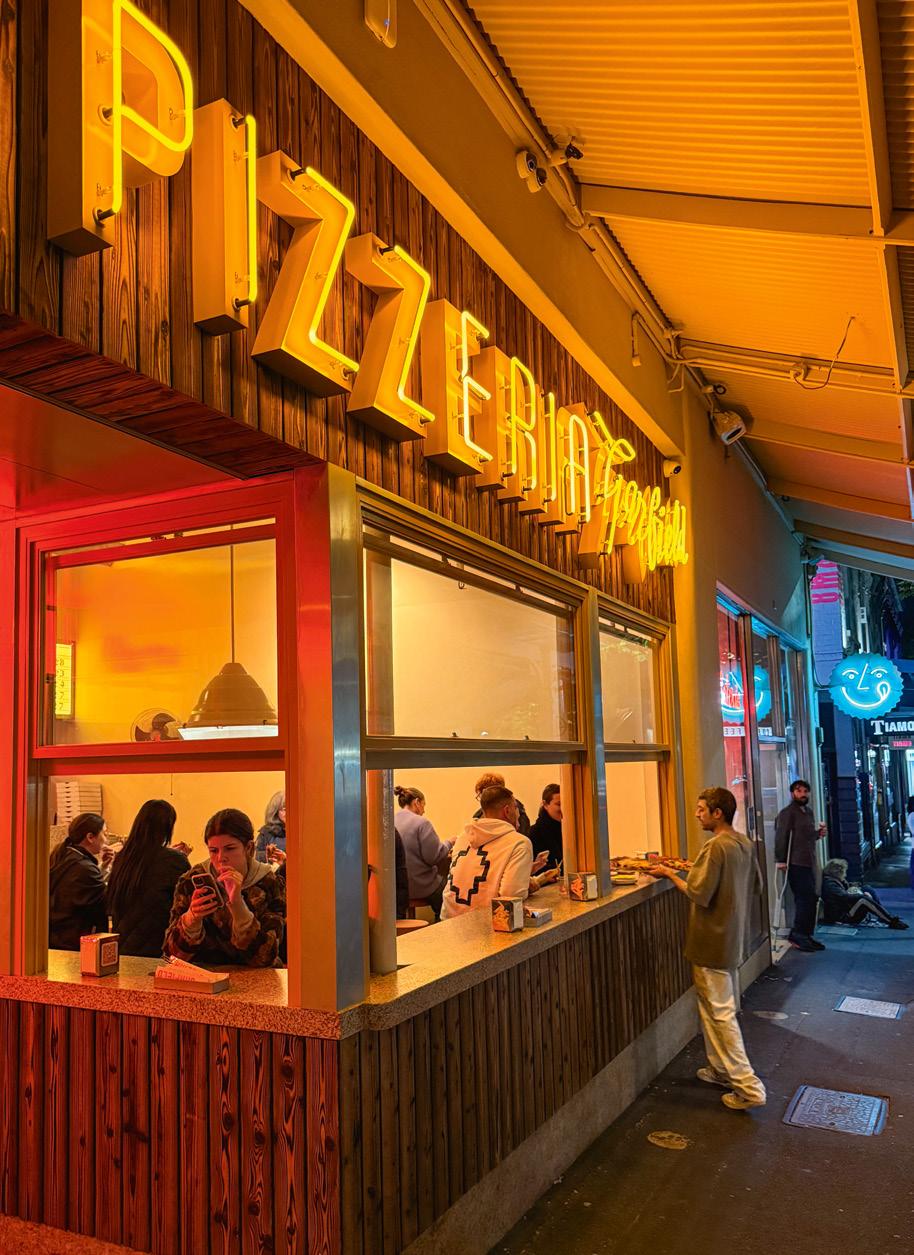
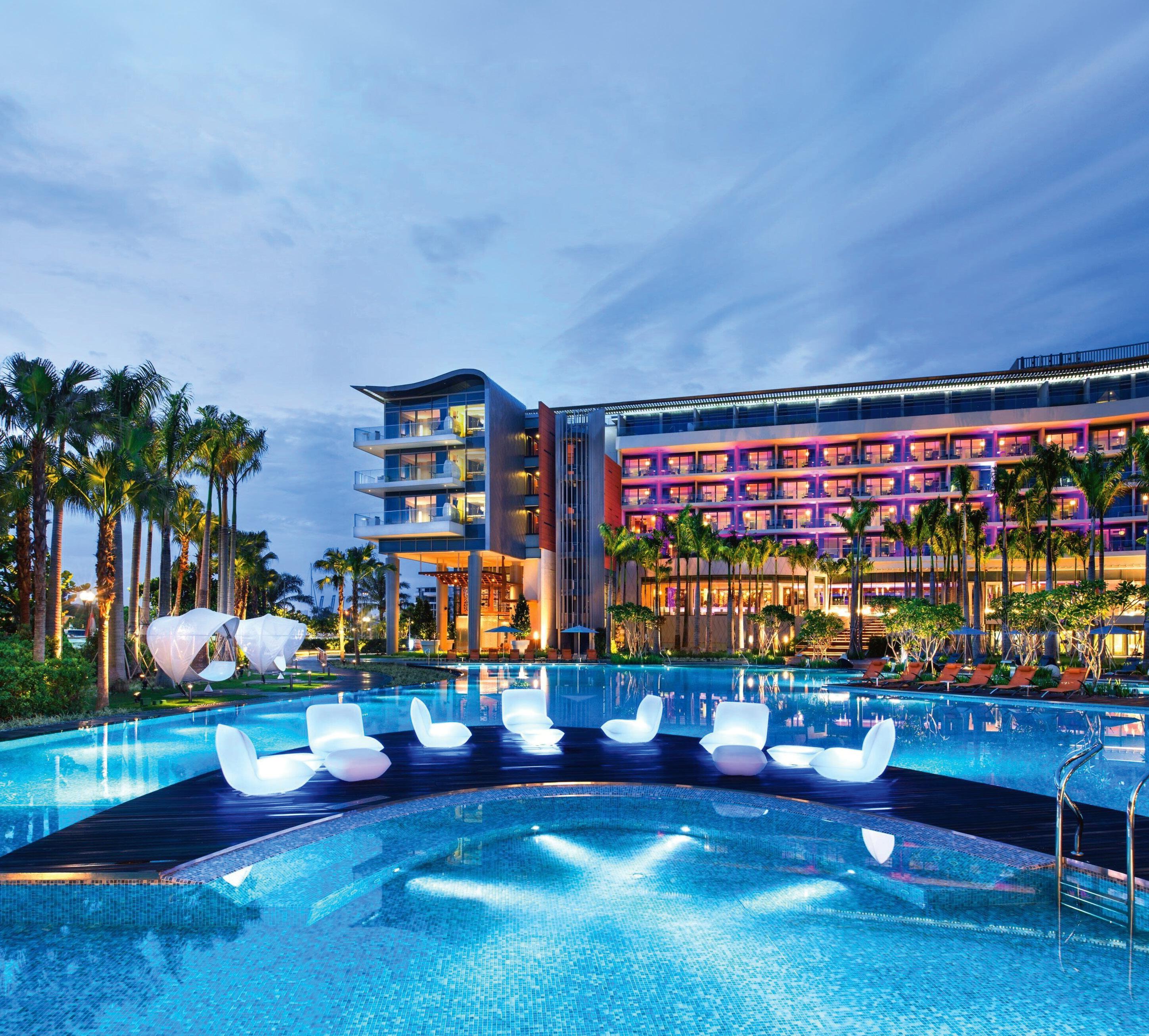
Whether it’s a rock gig on LA’s Sunset Strip, listening bars in Japan or trying your luck at Berghain in Berlin the local music scene can help you get in tune with a destination. Each issue we get the lowdown from a local; this issue Sivanesh Pillai, Music Curator for the W Singapore – Sentosa Cove.
From the moment you step inside the W Singapore – Sentosa Cove you’ll be surrounded by music. Curated tracks fill the air as you wander from the lobby of the newly renovated hotel to its pool.
Sivanesh Pillai, music curator for the W Singapore, says: “W Singapore sits on Sentosa Cove, and that location shapes everything we do. You cross the bridge onto Sentosa Island, leaving the city behind and step into an island paradise teeming with lush greenery and peacocks. From that
moment, it already feels like a different world. Music is central to that. It’s not background noise, but a deliberate part of the experience.”
Music is the connecting theme, but it is on point at all times. From the Balearicstyle tunes that the inhouse DJs play by the pool, which overlooks the marina, to the percussionist who serenades guests at a Sunday brunch, to when the lights go down and the beats per minute start to rise in the WOOBAR.
Music filters through to the other hotel experiences, too. On the Afterglow Voyage, guests can set sail on a catamaran and listen to the W Hotel DJs spin the tunes. And Sivanesh, who helped light up the decks at Singapore’s former Ku De Ta, now offers a DJ masterclass for guests. On professional Pioneer decks he teaches guests how to loop the tracks and match the beats so they can fade from one of the 12,000 tracks he has to choose from to another. “They just want to pick it up. It’s a party trick,” says Sivanesh.
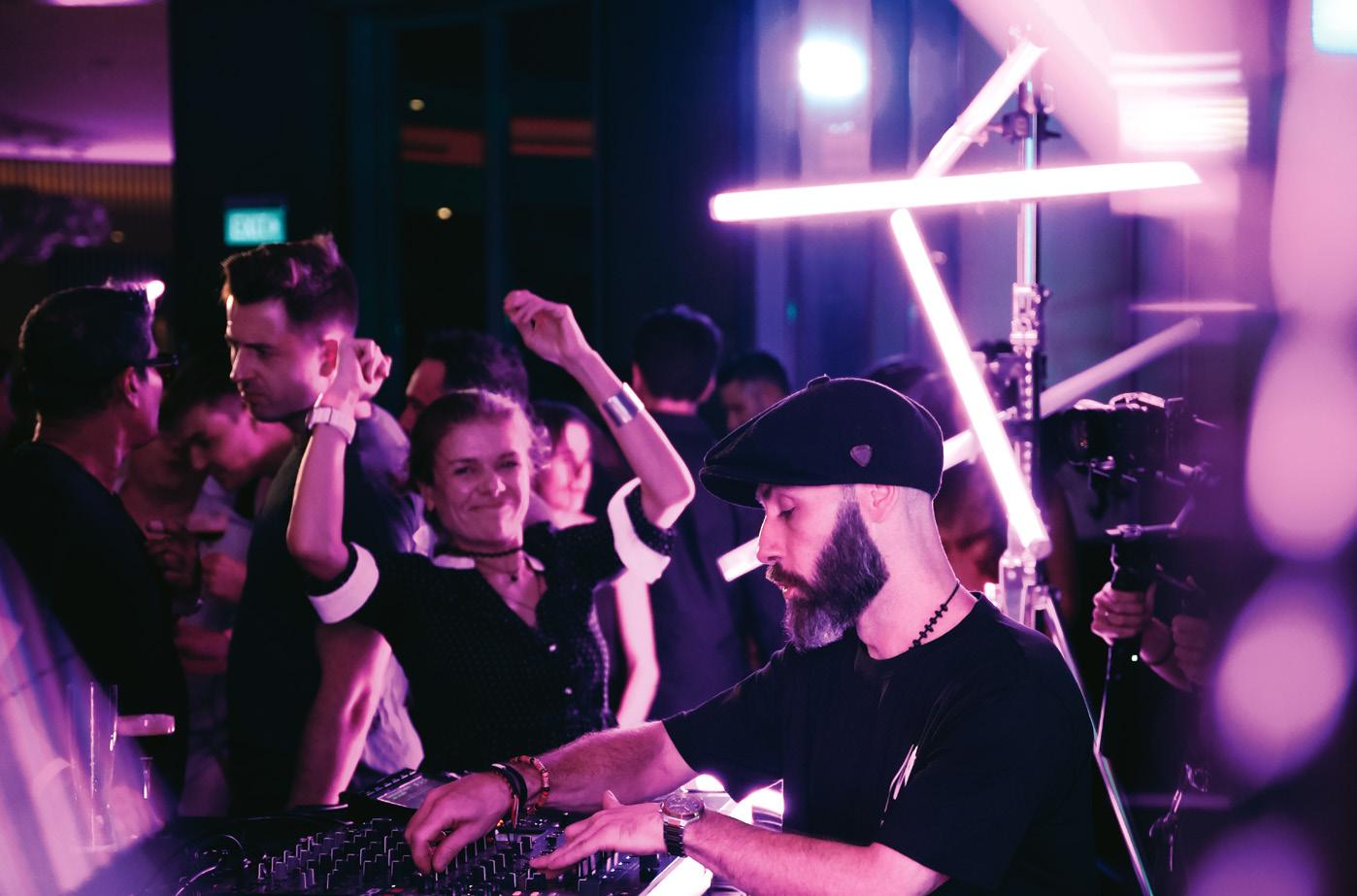
“Singapore’s music scene is far more robust than people give it credit for. There’s something happening every week, across genres, across venues, across crowds. You have serious electronic music events sitting alongside jazz bars, live bands, underground club nights and everything in between. The international crowd this city draws keeps the scene sharp, and the locals are genuinely clued-up. They travel, they know their music, and they show up with real taste.”
Where else can you experience Singapore’s music scene?
Sivanesh says there are an array of clubs you can check out when in the city including Headquarters, known locally as HQ, in Boat Quay. “I’m very fond of it, I met my wife there. There’s also a club called Behind the Green Door in Duxton, which plays Afrobeats music. It’s a really good location, so it’s always busy.”
Sivanesh also recommends that you take a seat at the RPM by D.Bespoke listening bar found in a shophouse in Duxton. Vintagestyle oil lamps hang from the ceiling and vinyls line the walls. During the day it serves coffee and at night, cocktails. The multitasking Japanese bartender not only mixes your perfect drink, but he selects the music for you to listen to as well. No surprise it’s on the World’s Best 50 list of discoveries.
“I use it to de-stress at the end of a busy week. I see all my friends at the club. It’s also my way of reconnecting with all my friends and my community.”
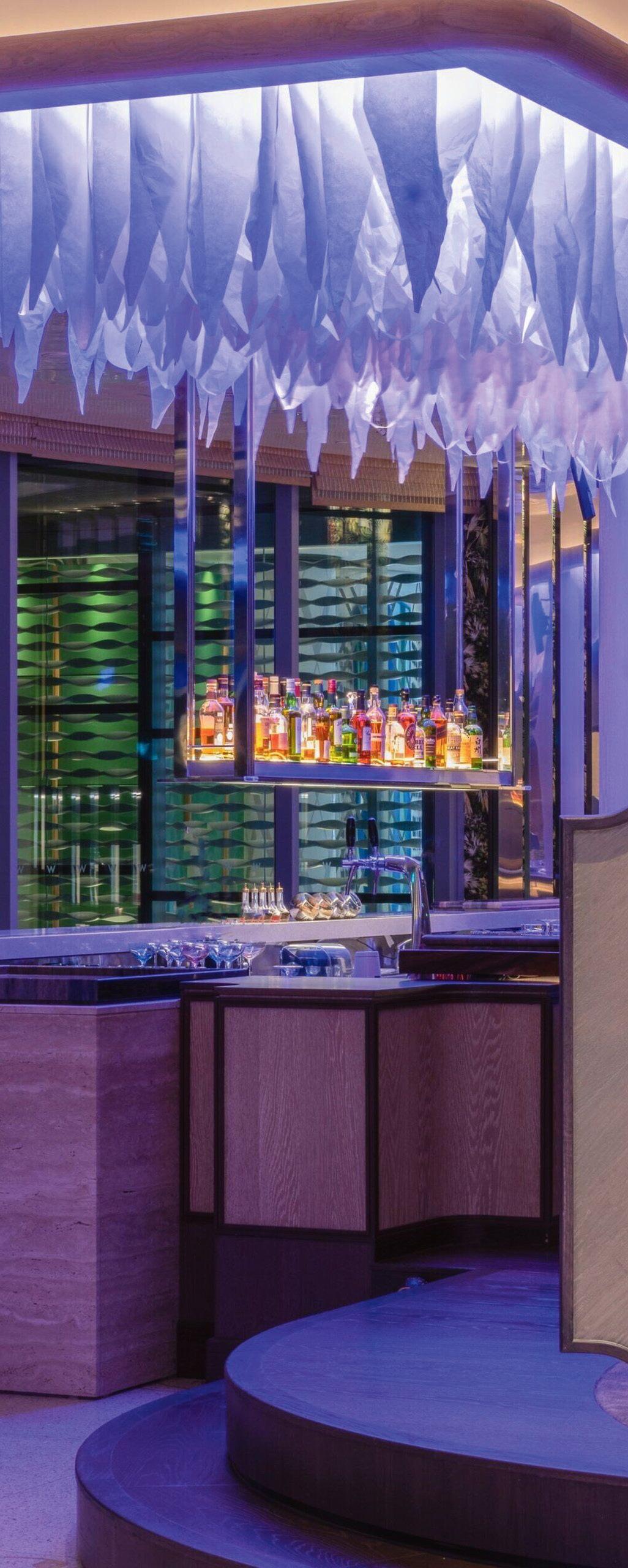
“These are tracks that have stayed with me through years of digging, and anyone who curates music seriously knows how painstaking that process can be. Each track was chosen to evoke a feeling – light and curious by day, groovy and intentional by night. That’s the quality I look for.”
Ocean Beach
(Cybophonia Cinematic Remix)
Black Mighty Orchestra, Cybophonia
Scatter G Corp
Sweet Dreams
Senor Coconut
Round & Round
Bacao Rhythm & Steel Band
Music (feat. Marvin Gaye)
Erick Sermon
Live at Palladium
Phil Weeks
Andiamo Fiori
Hop!
Macadam Crocodile x MEZERG
Style Is the Answer
Mash
Jazz Carnival (Space Jazz Mix –Global Communication Remix)
Azymuth
Listen to our playlist now
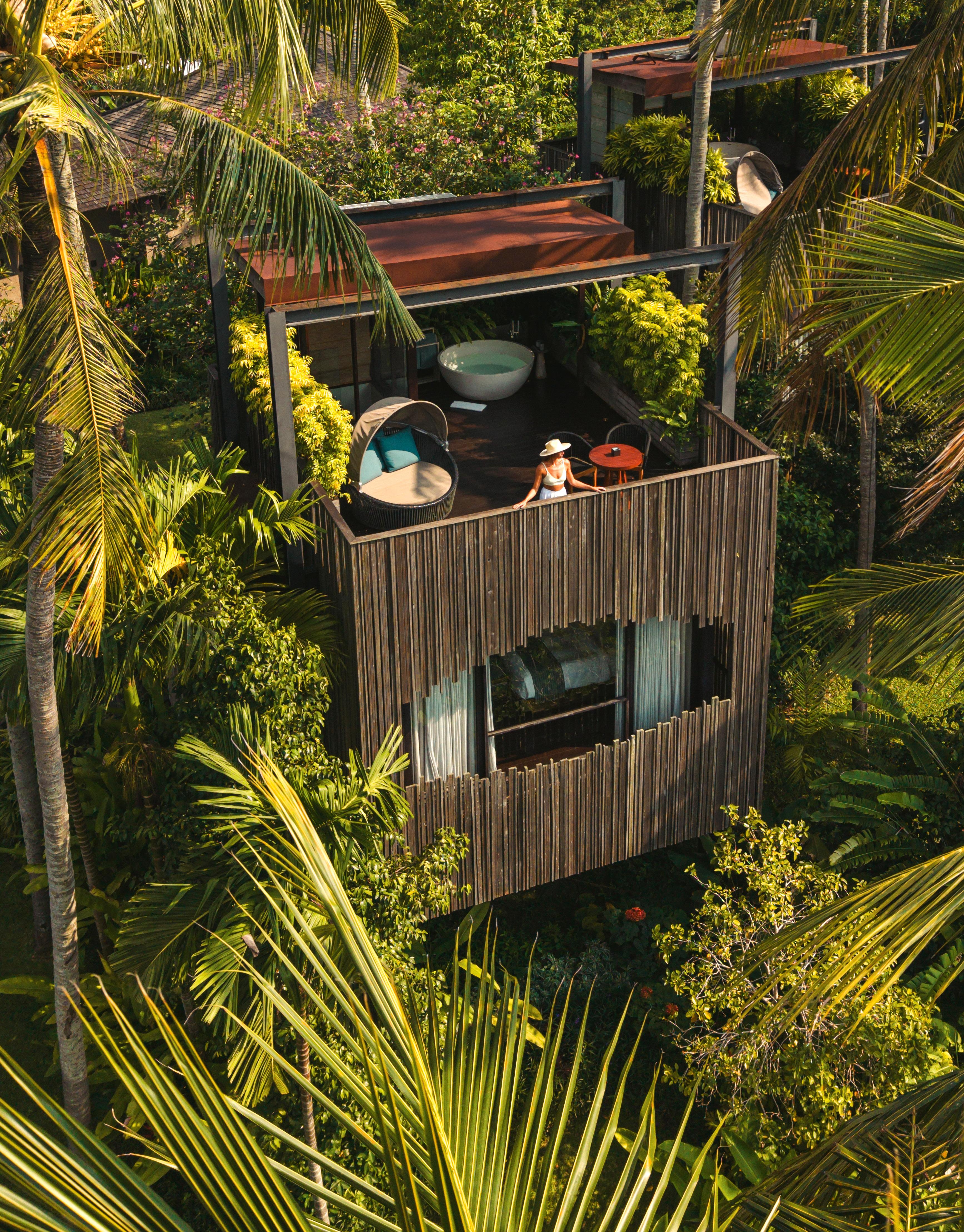
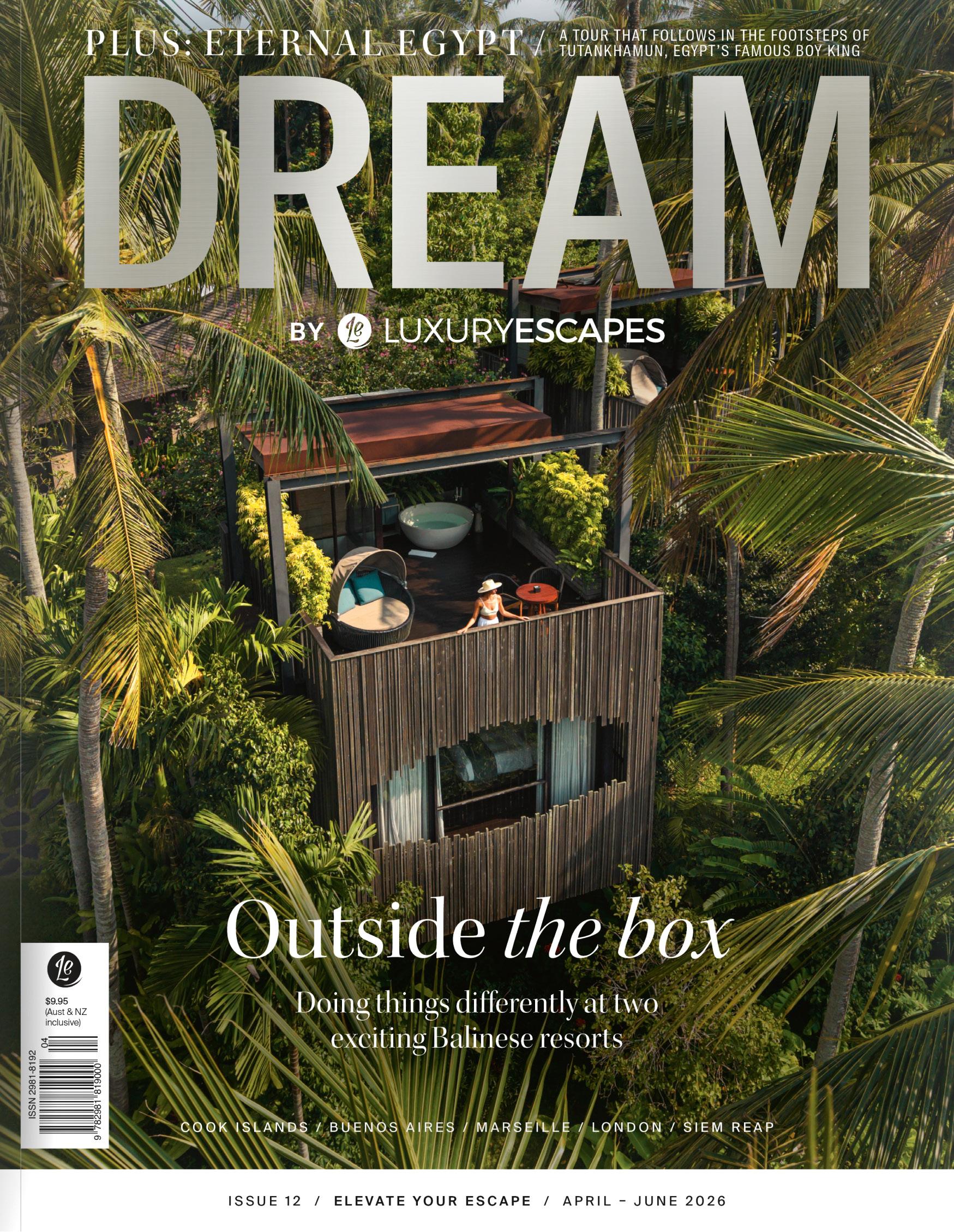
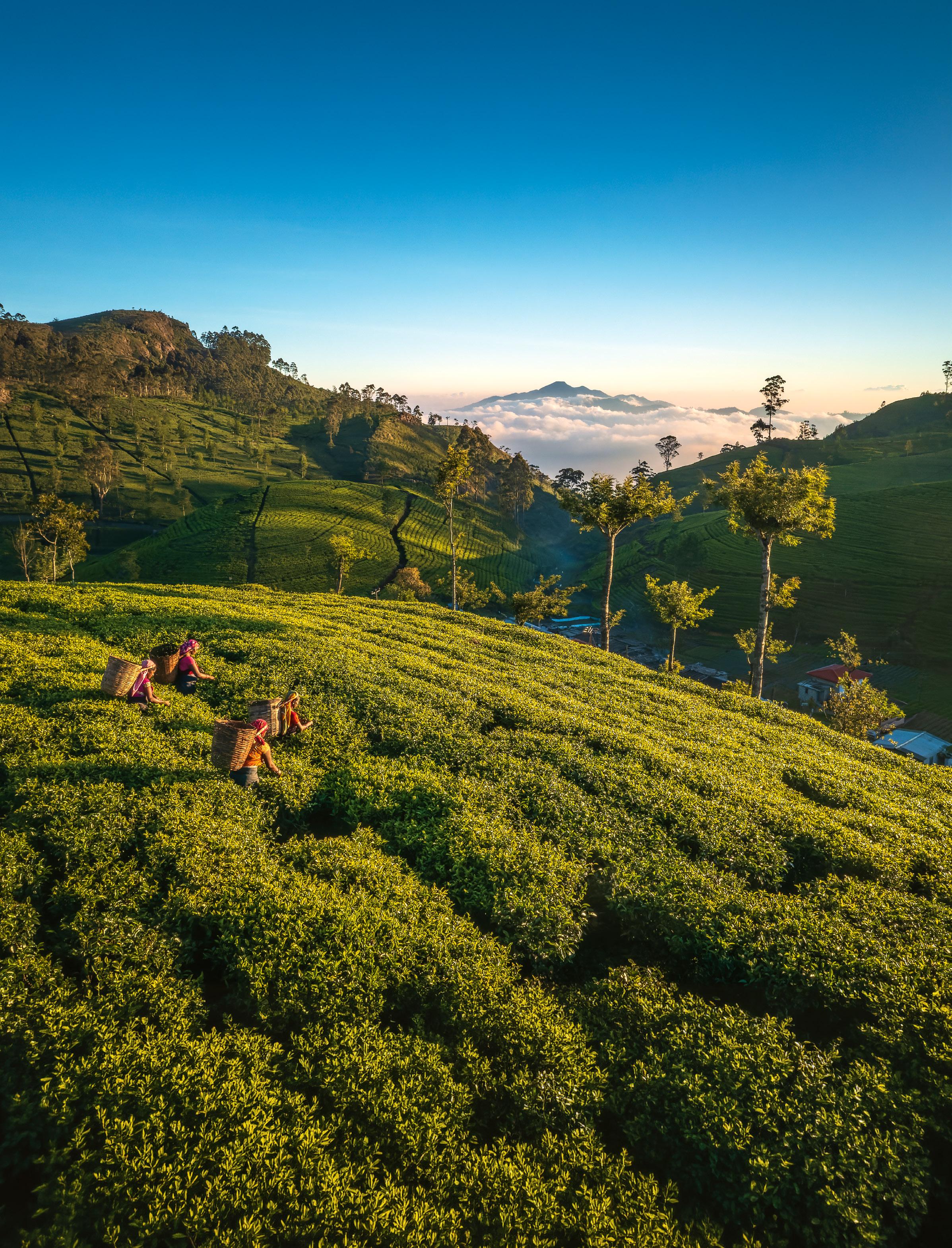
Home to ancient temples accessed by vertiginous staircases, vast tea plantations and memorably spicy local cuisine, Sri Lanka packs a lot into a relatively small footprint.
Sri Lanka has been recognised by many names over the years. In ancient times, it was called Tambapanni. And then Serendib, the origin of the word “serendipity”. Marco Polo described it as “the finest island of its size in the world” and as a penny paradise rich in precious gemstones, lush
landscapes and an abundance of rice and milk. During colonial times, it became known as Ceylon. Then later, Sri Lanka.
Twenty-two million people call Sri Lanka home, on an island that’s no bigger than Tasmania. Visitors will be surprised to discover how laidback
and friendly its people are, and how much it packs into such tight confines. The capital, Colombo, serves as the gateway to beaches, wildlife parks, tea plantations and other attractions, including the Cultural Triangle. Travel inland and you’ll discover ancient cities, palaces and temples.
Here is our insider guide to the perfect Sri Lankan escape.
An intimate and affordable cafe tucked down a shady laneway close to the Hiriketiya beachfront that specialises in wholesome, filling hoppers – crisp, bowl-shaped “pancakes” made from a fermented batter of rice flour and coconut milk. Wash it down with an authentic coffee over a late breakfast.
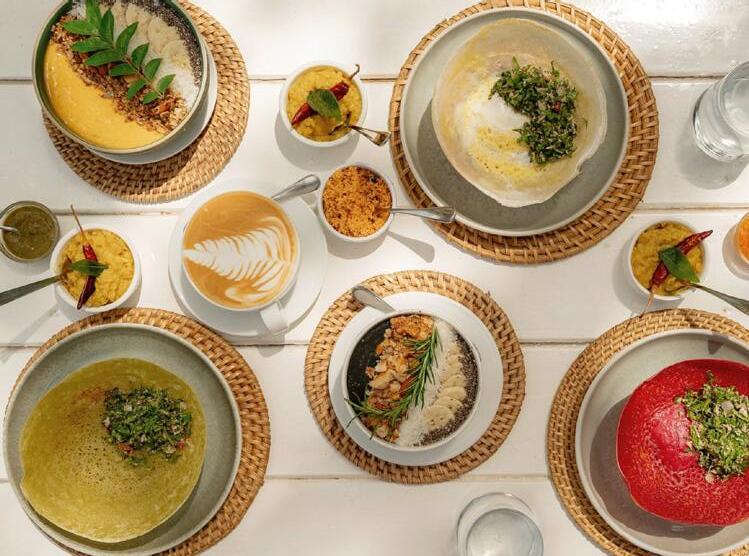
Winter
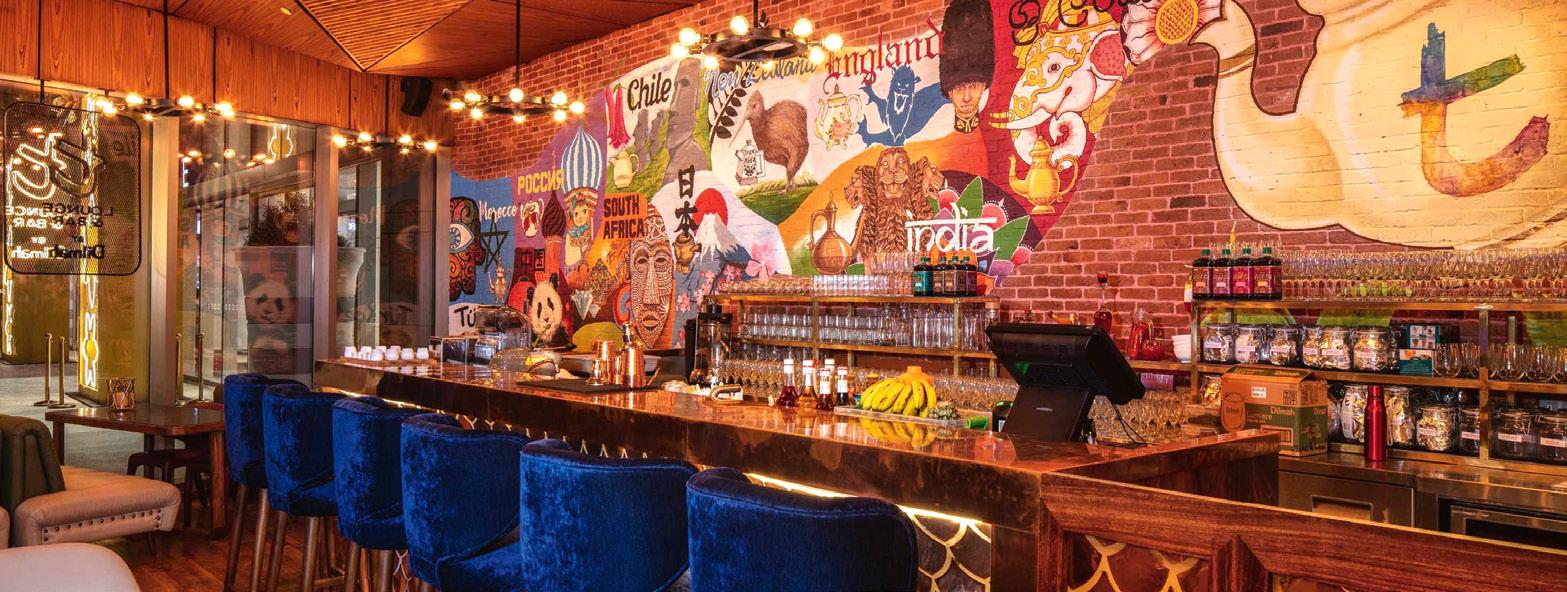
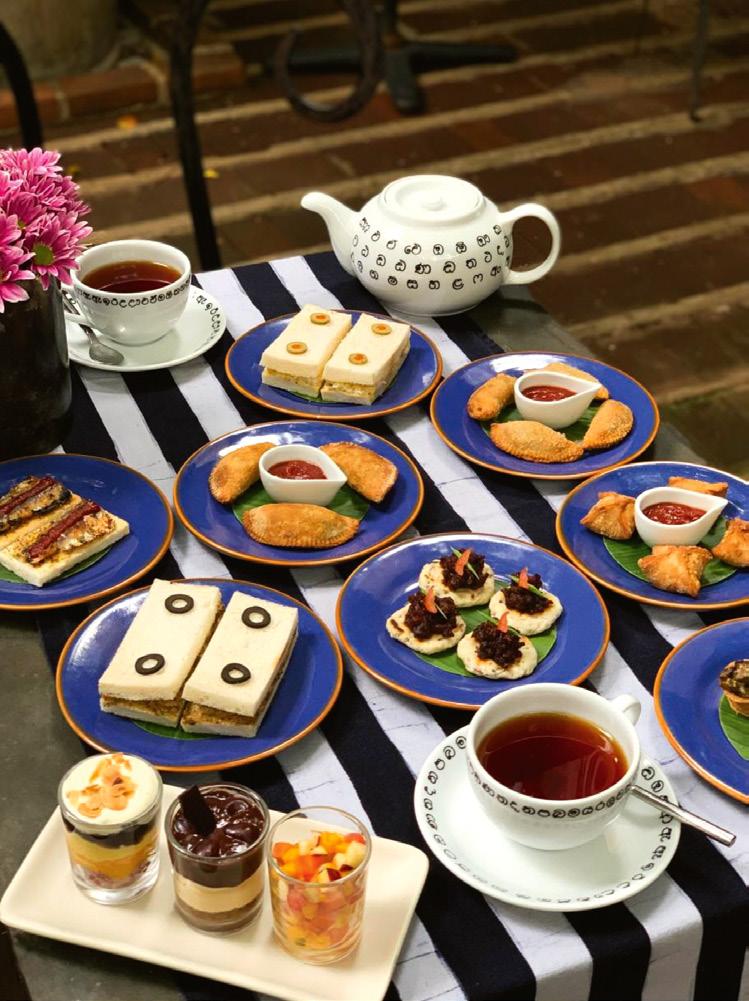
December February
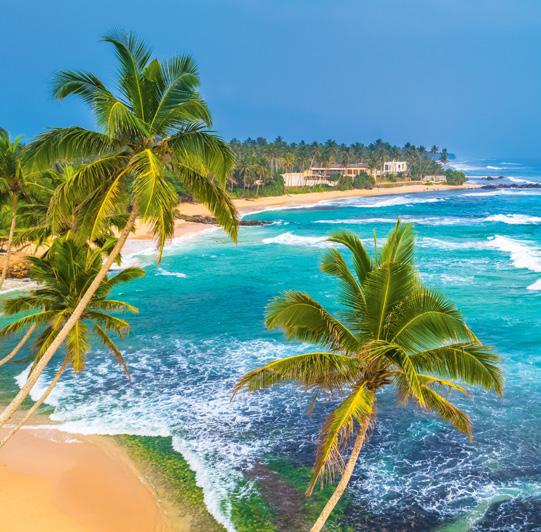
Beach lovers bask in sun-soaked days along the southwest coast as far as Tangalle. Hikers to Lipton’s Seat, across Horton Plains, up Adam’s Peak or among the Knuckles Ranges will appreciate the blue skies and clear views. Surfers gravitate towards the waves off Hikkaduwa or Midigama. Peak blooming season is underway at the Peradeniya Botanic Gardens near Kandy. Bibliophiles attend the Galle Literary Festival.
Learn how to distinguish full-bodied Maskeliya Ceylon teas from golden-hued Ran Watte single-origins during private sip-andspit sessions at the Dilmah T-Lounge, an offshoot of Sri Lanka’s most recognisable tea brand. Tea-infused cocktails and iced teas also feature. As the slogan goes, do try them.
The Colombo office formerly occupied by famous local architect Geoffrey Bawa retains his signature water features and tranquil ambience while also hosting exhibitions by local artists. Mouthwatering dishes like char-grilled duck with teriyaki sauce or curried coconut-crusted modha (barramundi) help explain why this is such a popular eatery.
March May
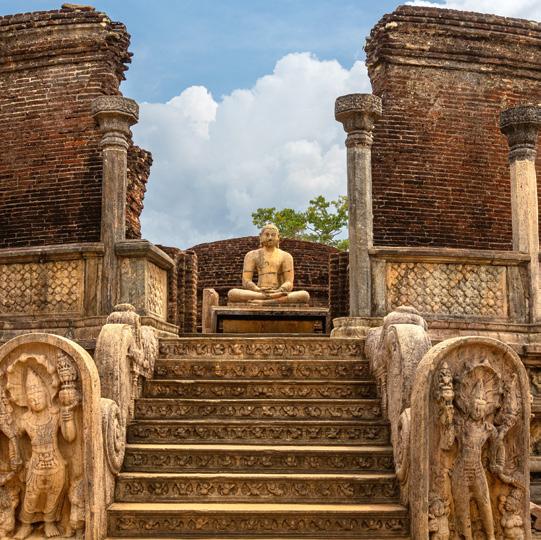
As the temperatures warm up, wander among the stone ruins of Polonnaruwa or hop on the scenic train ride from Kandy and Ella. Beach towns like Mirissa, Hikkaduwa and Unawatuna switch to party mode during New Year celebrations in April. The streets of Anuradhapura are decorated with lanterns during the Vesak Poya festival that celebrates Buddha’s birthday in May, when surfers seeking the country’s best waves migrate to Arugam Bay.
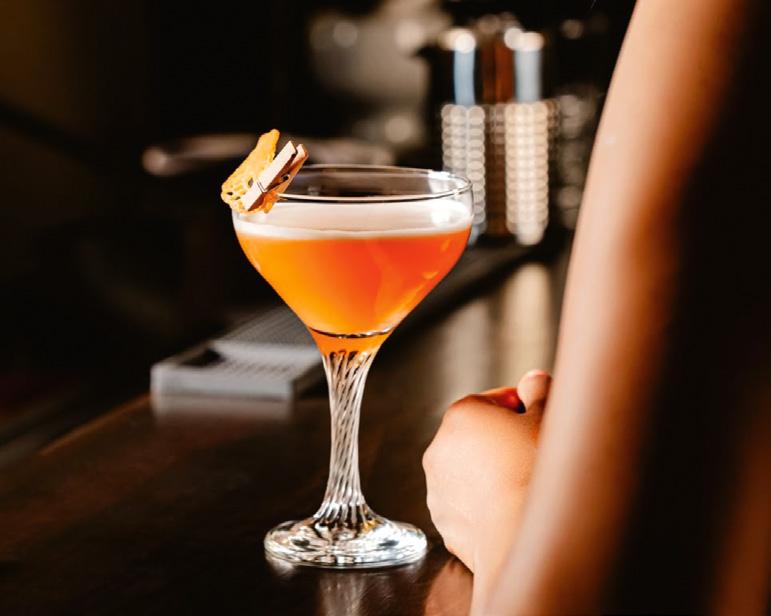
Creaky floorboards, high ceilings and towering shelves stacked with spirits is what you’ll find in Sri Lanka’s first bar dedicated to arrack, a traditional firewater distilled from the sap of coconut flowers. Found inside the iconic Galle Fort Hotel, here you can order inventive cocktails incorporating ingredients like tamarind paste, curry leaves, cinnamon and kithul (flowering palm) treacle.
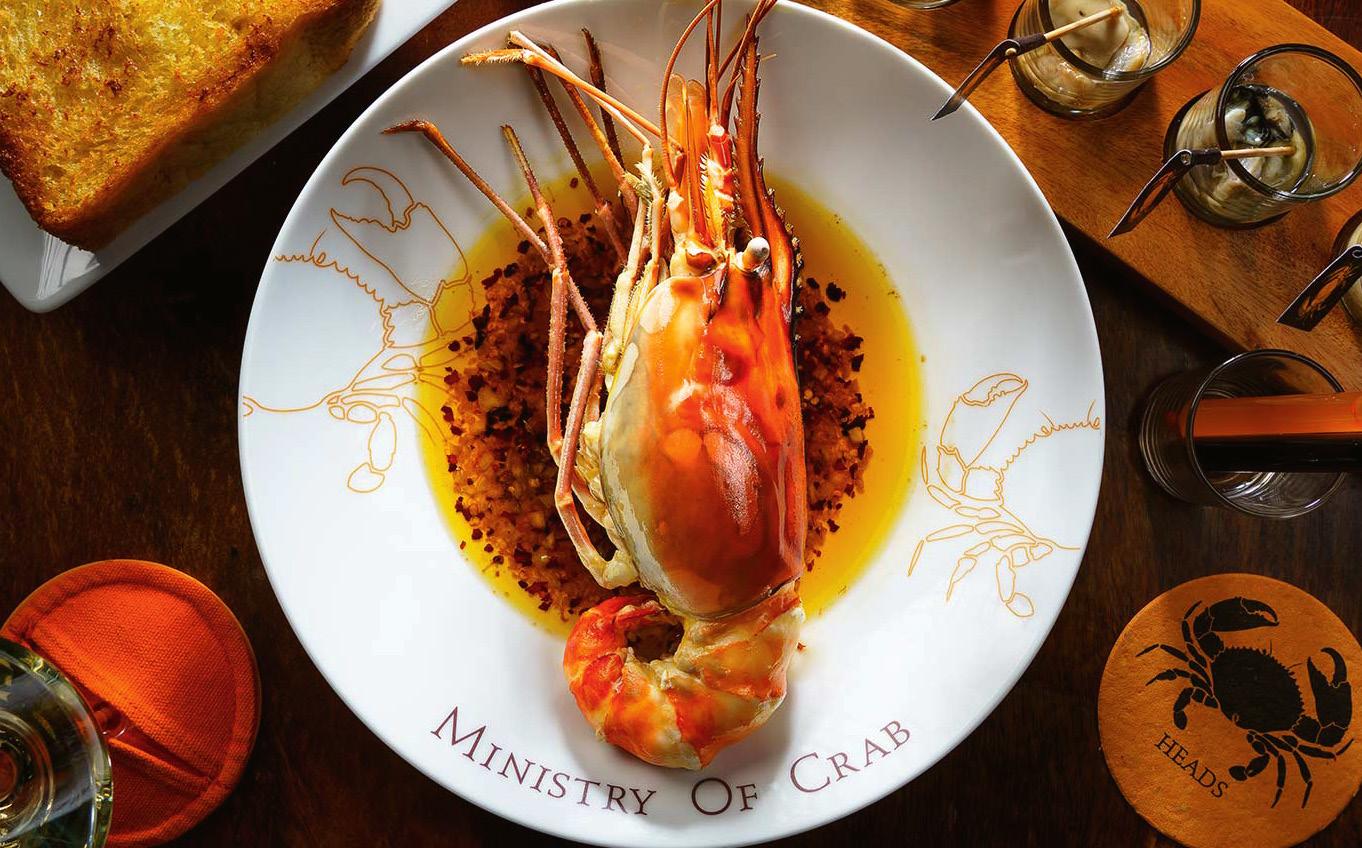
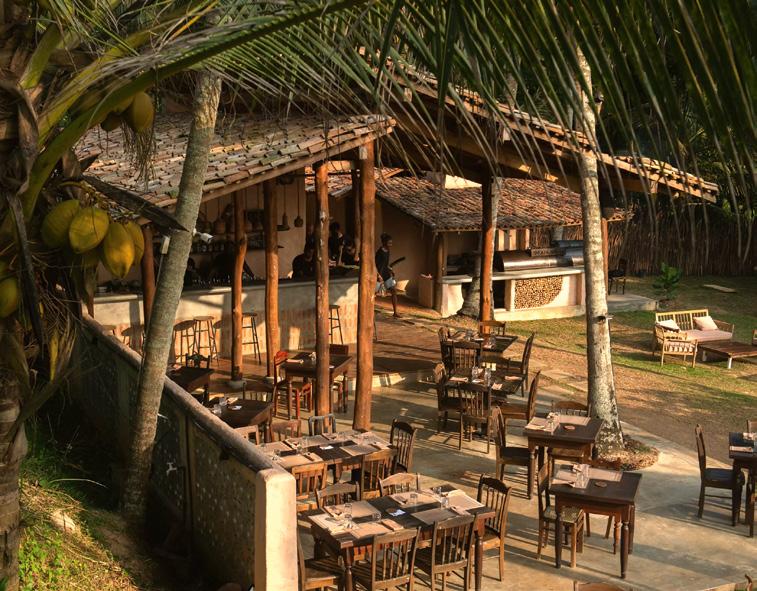
Embrace idyllic Pehebiya Beach’s south coast chill while sipping on arrack- and ruminfused cocktails amidst a coconut grove. Then chow down on wood-fired dishes like Kurumba calamari, or pulled goat lathered in Jaffna curry sauce, date and lime chutney, and cream of coconut.
The brainchild of celebrity chef Dharshan Munidasa, and co-owned by homegrown cricket legends Mahela Jayawardene and Kumar Sangakkara, this lively restaurant is housed inside a colonial-era building in Colombo’s Old Dutch Hospital. It’s famed for its high-end seafood, including the tastiest wild-caught mud crab you’re ever likely to try.
June August
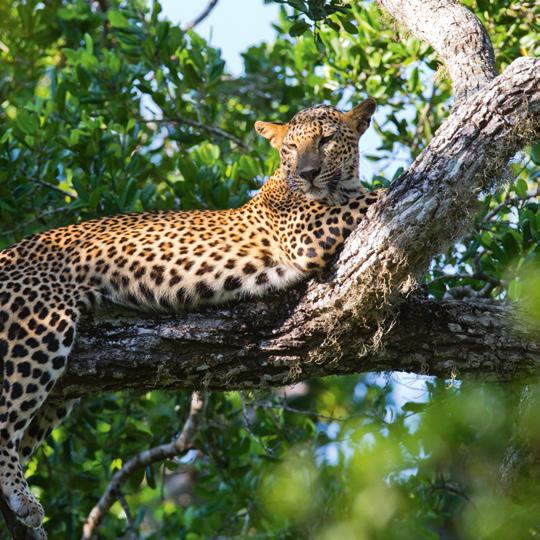
As mango season arrives, visit east coast beach towns like Nilaveli and Passekudah. Spot leopards in Yala National Park. Celebrate the arrival of Buddhism during the Poson Poya festival in Anuradhapura or Mihintale. Watch as dancers, drummers and whip-crackers weave through the streets surrounding the Temple of the Sacred Tooth Relic at Kandy’s Esala Perahera, or at smaller iterations in Dondra, Kataragama, Bellanwila and Unawatuna.
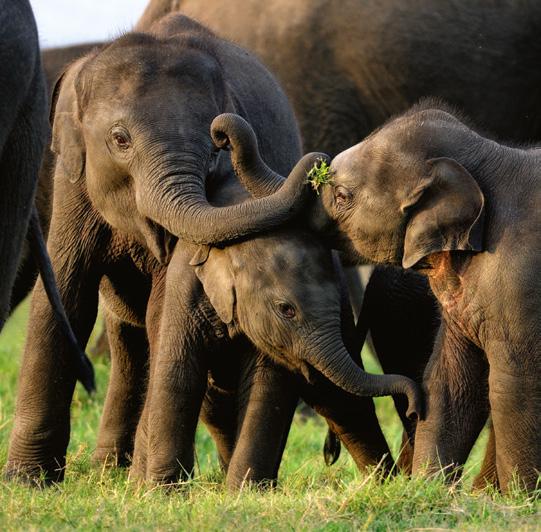
Hundreds of elephants group together for several weeks in Minneriya National Park. Yala National Park may close, however, allowing the wildlife to seek out water free from onlookers after the dry season. Fireworks, oil lamps and sweets in early November symbolise the arrival of Diwali, the Hindu festival of lights. As the stormy weather clears along the west coast, boat cruises in search of blue whales depart.
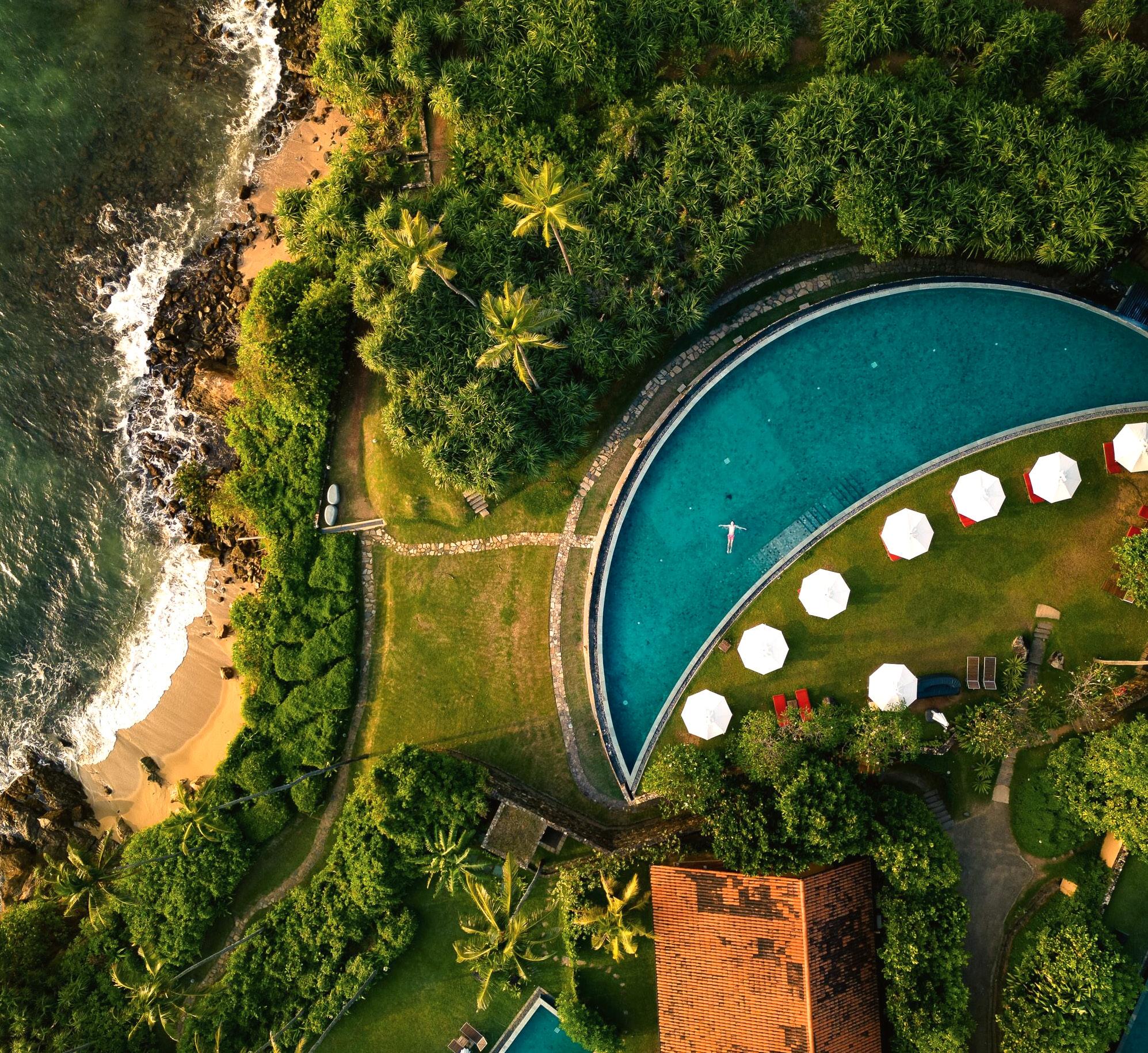
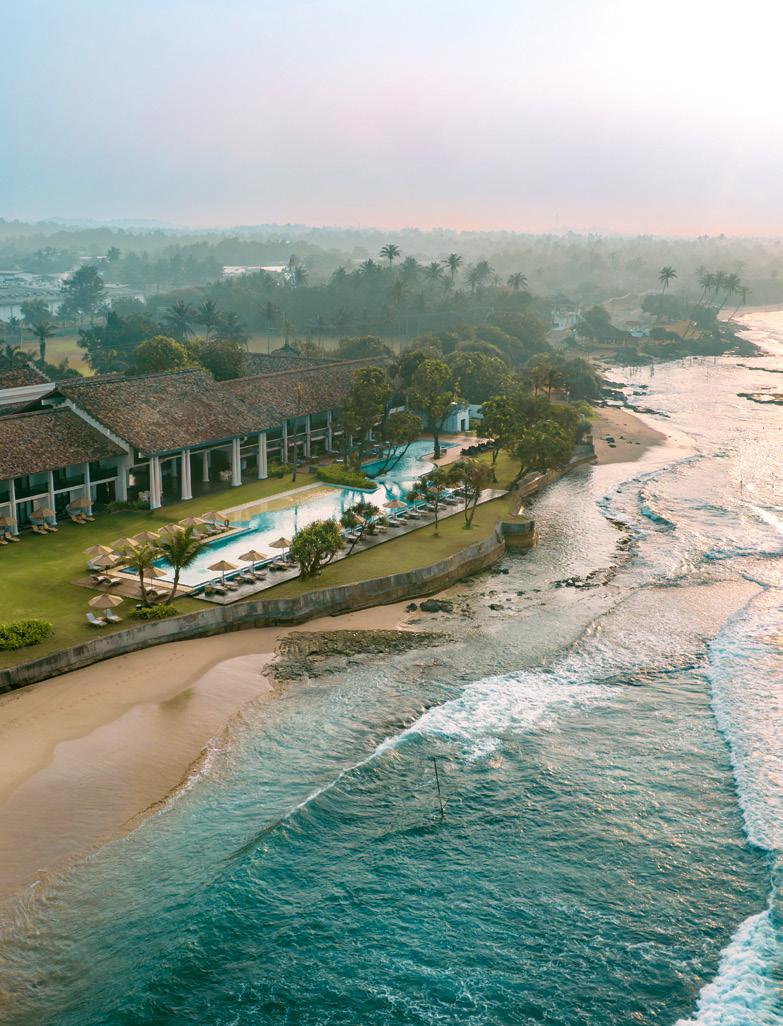
Perched above the Indian Ocean, Cape Weligama offers clifftop luxury with panoramic views and elegant villas. Enjoy world-class dining, an iconically Instagrammable crescent-shaped infinity pool and personalised service while keeping a watchful eye out for migrating whales.
Boutique luxury inspired by 17th-century Dutch fort architecture, this 53-room resort on Koggala Beach blends colonial charm with contemporary indulgence. Tour Galle Fort or drift down the Madu River then return to oceanfront suites, terrace dining and an Olympic-sized swimming pool.
Barefoot luxury in a wellness retreat that’s set amid tea and spice gardens in the Central Highlands. Stay in private villas featuring plunge pools and outdoor bathtubs surrounded by breathtaking landscapes. A sanctuary for mind, body and soul.
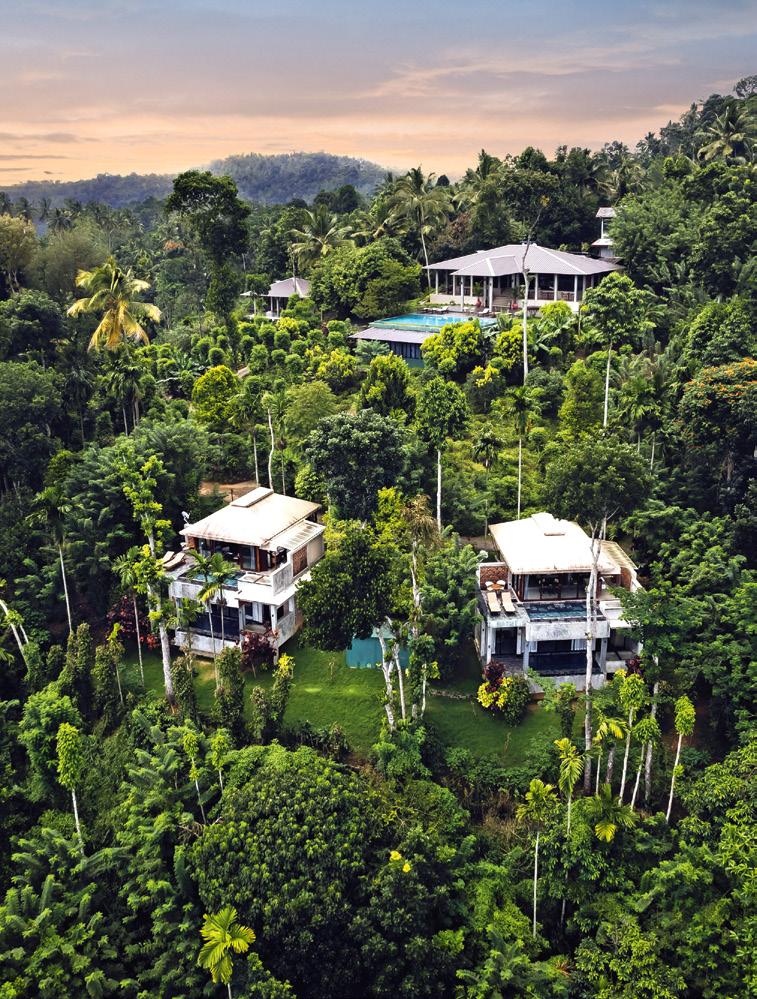
Enjoy direct access to Galle Face Green, oceanfront entertainment and the country’s best shopping in this towering city bolthole in the heart of the capital, combining cosmopolitan energy with old-world charm and sophistication.
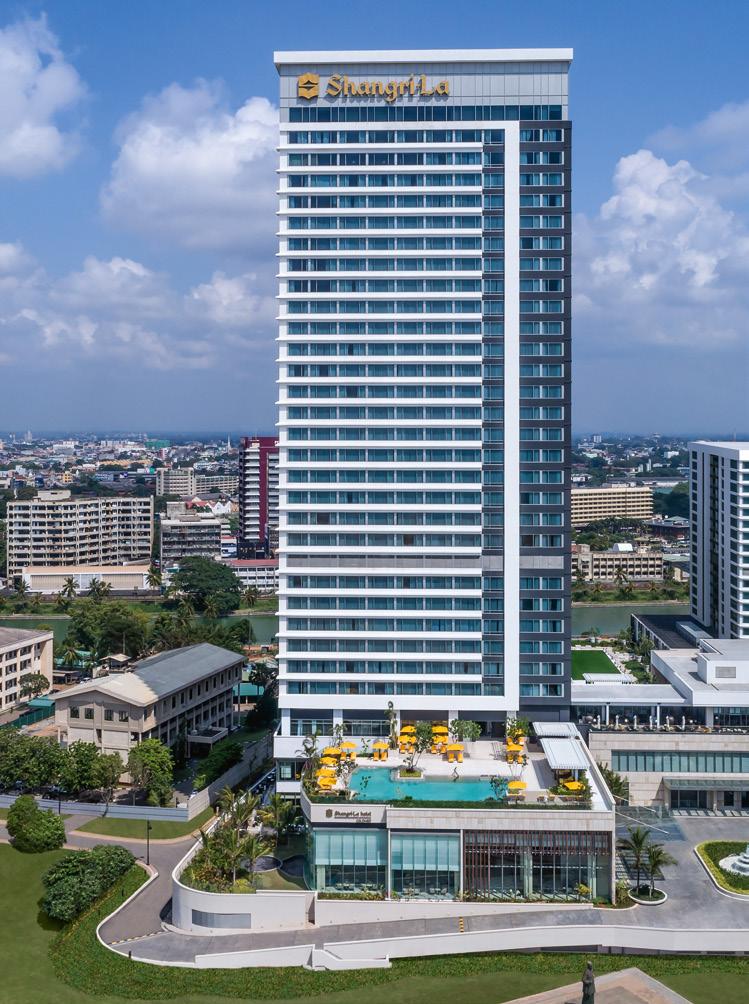
Unforgettable wildlife encounters meet eye-catching architecture. Experience timeless elegance on the coast, staying in private pool cabins that blend seamlessly into their environment on the doorstep of Yala National Park – home to leopards, elephants and sloth bears.
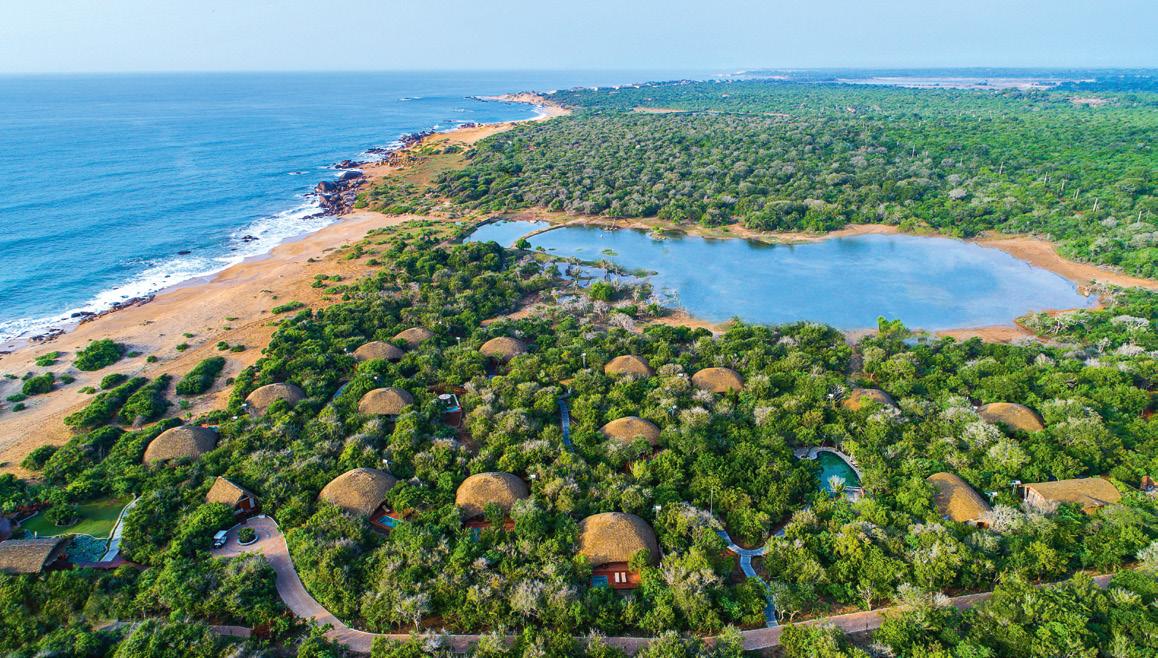
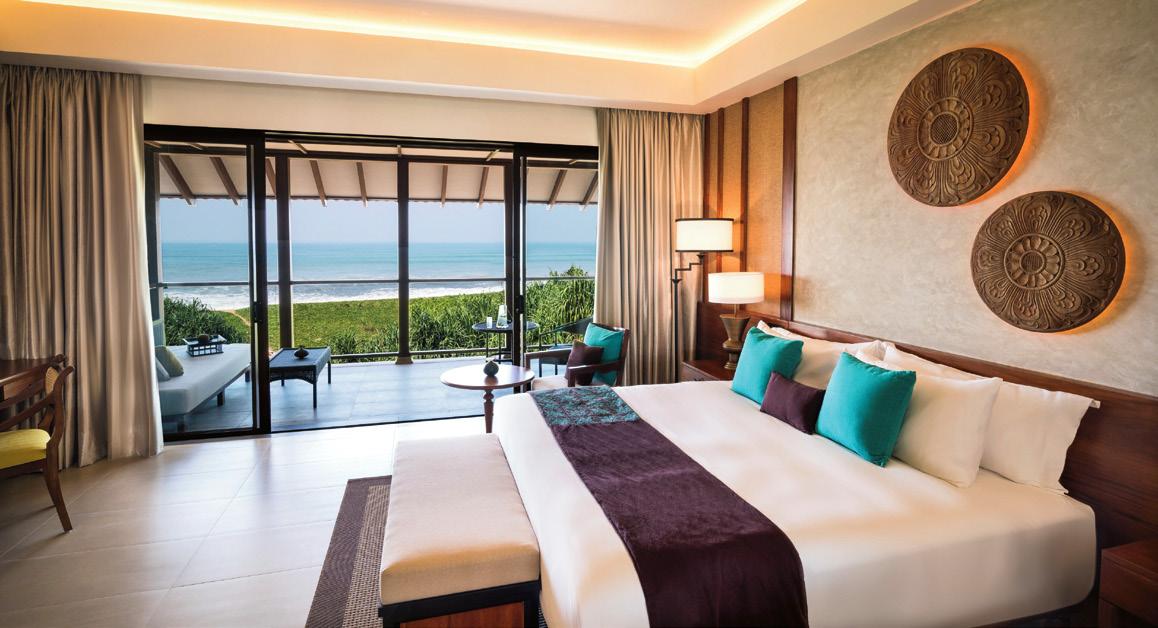
Inspired by the design philosophy of Geoffrey Bawa, this waterside masterpiece is uniquely flanked by a lagoon on one side and the ocean on the other, midway between Colombo and Galle. Mix culture with cuisine while joining Spice Spoons cooking classes and visiting the nearby Kalutara Bodhiya.
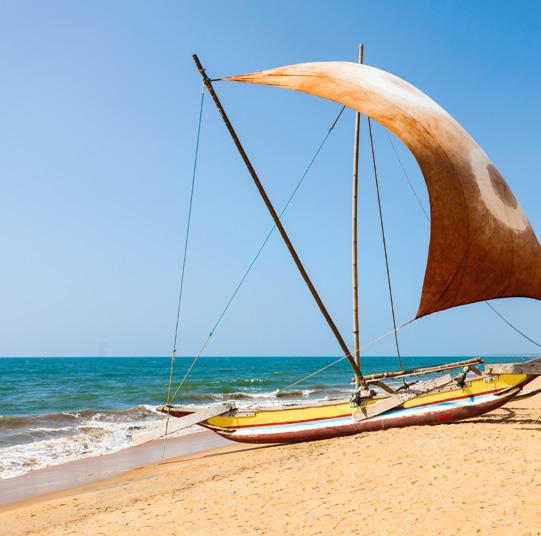
With an oceanic coastline measuring 1340 kilometres, glorious beaches shouldn’t come as much of a surprise. Negombo has long been the favoured hangout for package tourists. Being close to the airport, it’s a good place to spend a night on arrival or before flying out. But it’s the coast further south, either side of Galle, where you’ll find the country’s best beaches, from the resort towns of Bentota and Hikkaduwa to laidback hideaways like Kogalla or Polhena. Tangalle, on the south coast, has grown in popularity in recent years, while surfers make a beeline for the east coast point breaks off Arugam Bay. Further north, endless sands stretch out either side of Batticoloa and gentle waves lap against the shores at Nilaveli.
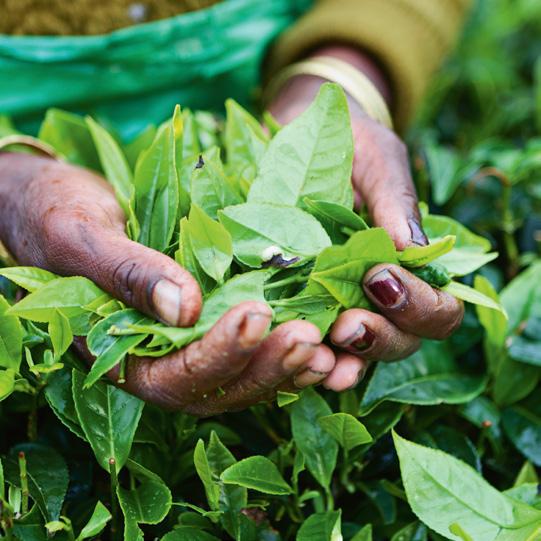
At one time, Sri Lanka was one of the world’s largest coffee producers. But when disease wiped out the island’s crop, tea took over and the rest is history. Away from the coast, the central highlands provide a respite from the heat at sea level, and it’s here where you’ll find hillsides planted with rows of tea leaves harvested by pickers originating from the Indian state of Tamil Nadu. Plantations carpet the hills around Haputale, Hatton and Nuwara Eliya, where the area is nicknamed “Little England” for its misty climate and imported habits. Wander aimlessly down backcountry roads on foot, stopping to chat to pickers or take in the views from Lipton’s Seat, near Haputale, or Little Adam’s Peak, outside the backpacker town of Ella.
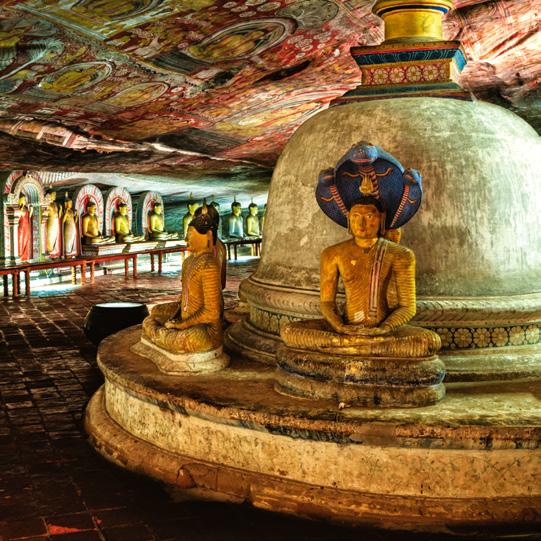
Travel inland to discover World Heritage-listed cities, palaces and temples. The central region bordered by Kandy, Anuradhapura and Polonnaruwa is where the Sinhalese Kingdom relics rise from jungle surrounds. Start by joining worshippers paying homage to Buddha inside Kandy’s 15th-century Temple of the Sacred Tooth Relic. Next, explore the nation’s best-preserved cave temple complex at Dambulla. At Anuradhapura, the birthplace of Buddhism in Sri Lanka, walk among stupas and crumbling monasteries before visiting the royal palaces at Polonnaruwa. Leaving the best till last, the climb up the steps from the Lion’s Paw Terrace to the Sigiriya rock fortress will be rewarded with views.
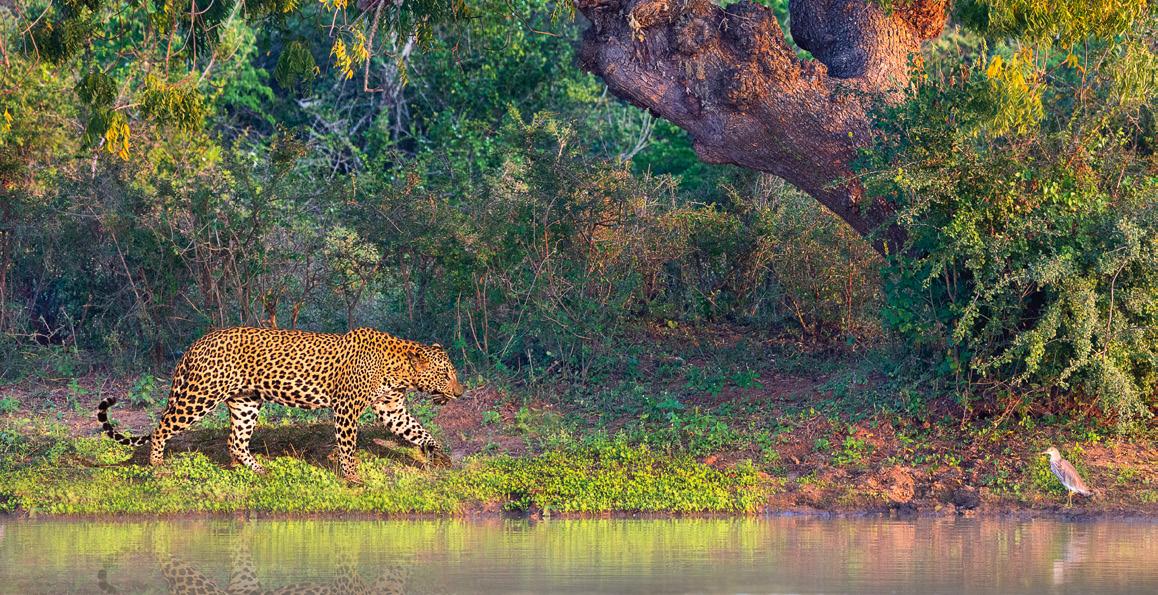
Yala National Park is the one nature reserve that most resembles an African game park. Spilling inland from the southeast coast, it boasts the highest density of leopards on earth. More regular are sightings of deer, monkeys, wild boar, crocodiles and jackals. Also keep an eye out for elephants, buffaloes and sloth bears.
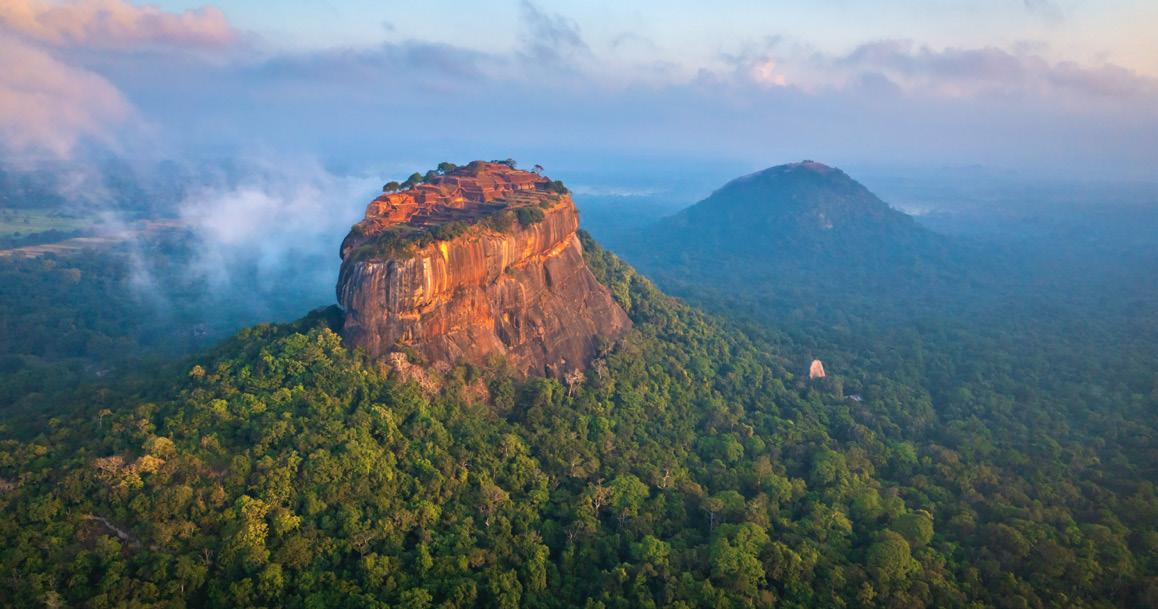
Was the fifth-century mountaintop fortress of Sigiriya the pleasure palace of a playboy king? You can surmise for yourself during the climb to the summit, pausing to admire the Lion’s Paw Terrace along the way. En route, check out sheltered frescoes depicting dancing maidens laden with jewellery.
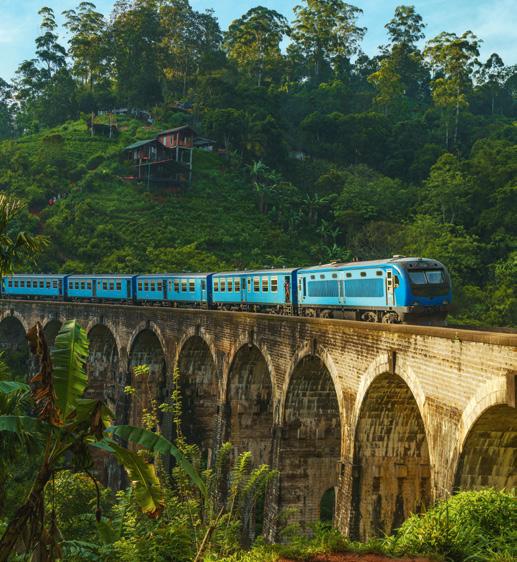
Is this the world’s most scenic train ride? At the very least, the daylong railway journey through the Central Highlands, from Colombo to Dambulla, is a strong contender. Sixty-eight stations. Forty-six tunnels. Viaducts, bridges and a spiral loop inspired by a railway worker’s turban.
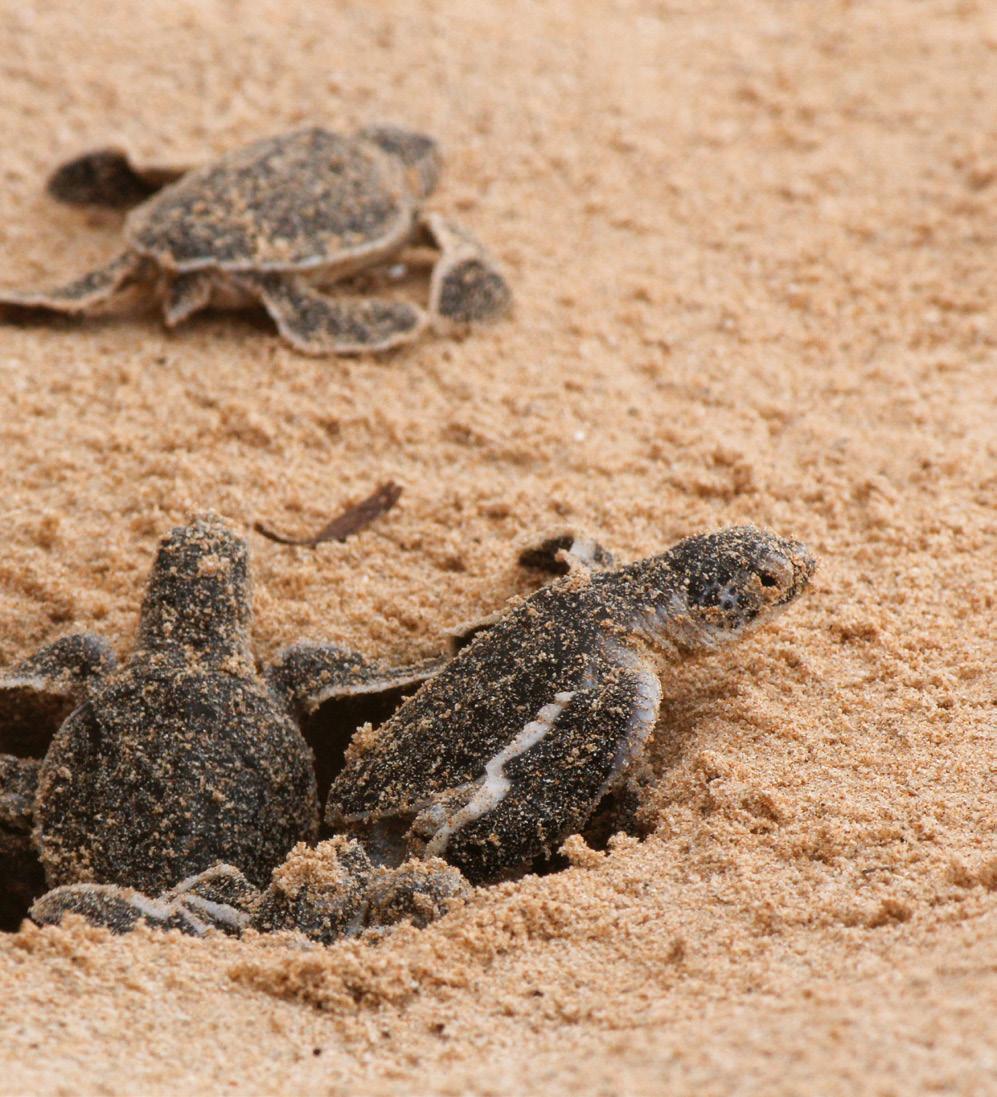
Adults may be happy to explore ancient ruins and exotic temples all day long. But kids? Not so much. On an island that’s lacking theme parks and waterslides, what else is there for them to do (apart from endless swimming and surfing at its beaches)?
How about visiting a turtle hatchery? You’ll find several of those along the southwest coast, where five of the world’s seven sea turtle species nest. Some are genuinely dedicated to conservation; others are primarily motivated by profit. Reputable operations include the Rekawa Turtle Conservation Project near Tangalle and the Kosgoda Sea Turtle Conservation Project.
Who doesn’t love spotting wildlife in its natural habitat? Aside from Yala National Park or the Sinharaja Forest Reserve, there are plenty of other locations where jeep safaris are offered. Hundreds of elephants roam the wooded grasslands inside Uda Walawe and Minneriya National Parks, for example. And Sri Lanka’s largest national park, Wilpattu, is considered the best place to find sloth bears.
If you really want to get up close and personal with elephants, head to the Pinnawala Elephant Orphanage, near Kandy. More than 100 orphans are cared for, with feeding time considered the optimum occasion to take selfies with these engrossing pachyderms. Time your visit to coincide with the elephants’ twice-daily walk through the streets to bathe in the Maha Oya River. If you’re seated at a restaurant or standing in a shop in town, you’ll feel the rush of air as these thundering giants stomp past.
Teenagers will love the chance to go white-water rafting and tubing on the Kelani River in Kitulgala, where a rollicking two-hour ride through grade-two and -three rapids costs as little as $35 per person. Along the way, they’ll pass the site where The Bridge on the River Kwai was filmed. Numerous canopy adventure courses are found in the same area.
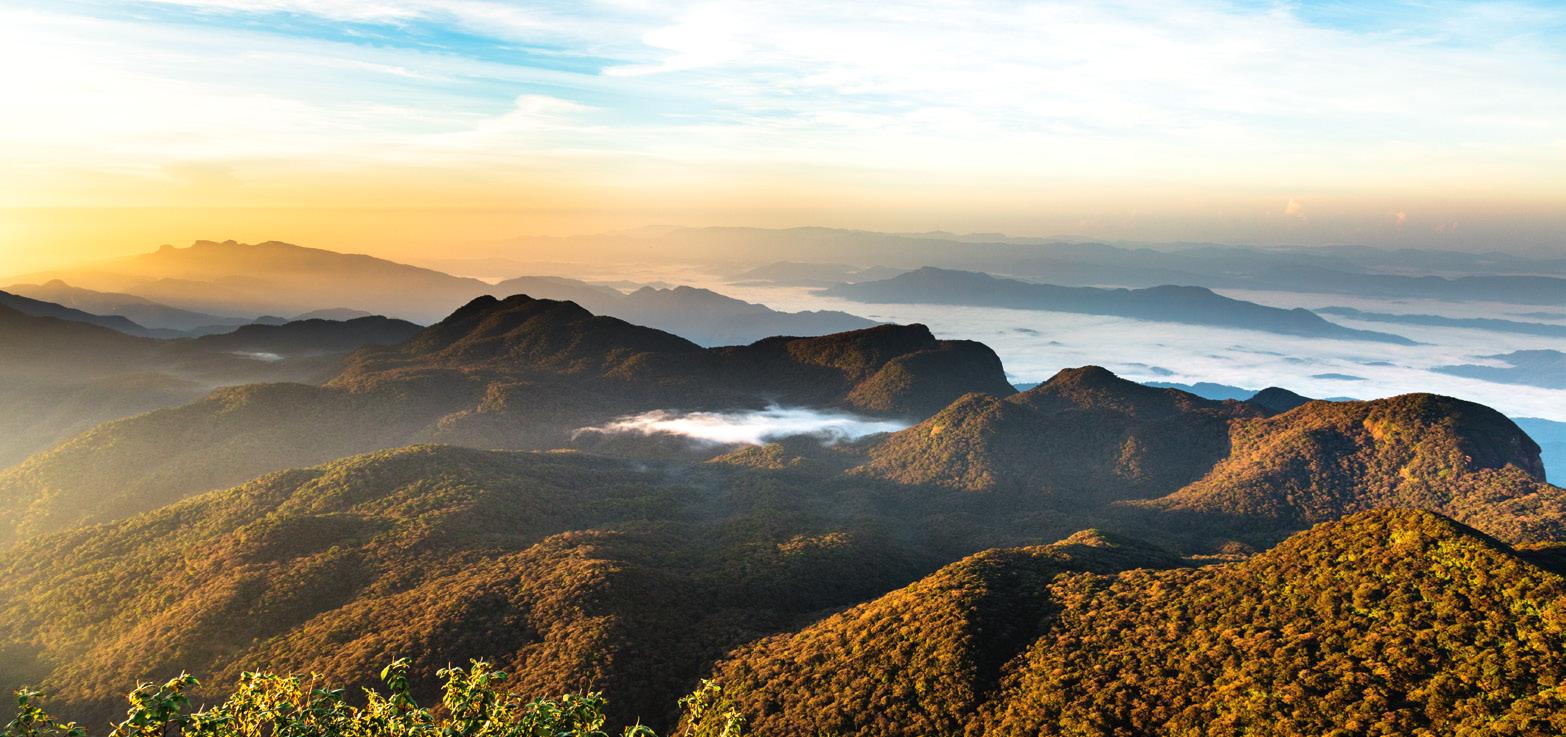
THE SURPRISING THING:
See a sunrise
If you plan on doing just one hike, make it the pre-dawn ascent of Adam’s Peak – one of Sri Lanka’s highest mountains. Summit in time for sunrise, when a mystical shadow of the peak casts across the clouds. Make it a cultural experience by undertaking the torch-lit ascent with thousands of pilgrims from December to May.
It’s the most accessible place on earth for seeing blue whales
Sri Lanka’s inland parks teem with leopards, elephants and monkeys. Less known are its maritime riches. From November to March each year, Mirissa becomes one of the most accessible ports in the world from which to see blue whales, thanks to its proximity to the continental shelf.
Fishermen had known about these gentle giants for years. And scientists now believe pygmy blue whales – a slightly smaller subspecies of those found in polar waters – follow a migratory path between
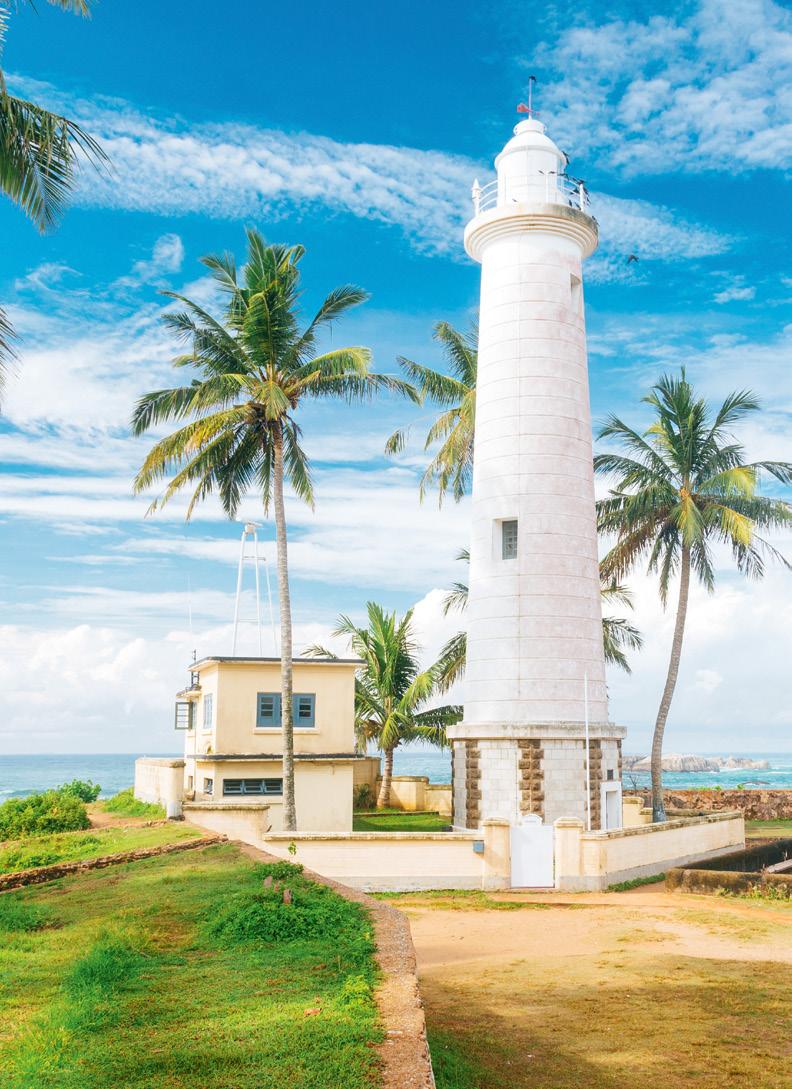
the Arabian Sea and the Bay of Bengal. But it wasn’t until late 2008 that anyone decided to commercialise the ease with which you can see baleen whales off the southern coast.
Daily cruises operate from the charming seaside village located midway between Galle and Matara. Cruises depart soon after dawn and return around midday, hopefully with plenty of rewarding encounters to retell. You may get lucky and find one passing directly beneath your boat (and believe me, you have no
Built by the Portuguese, reinforced by the Dutch and occupied by the British, the World Heritage-listed Galle Fort is a 52-hectare garrison containing restaurants, cafes and heritage lodgings, as well as a lighthouse for passing ships. Adjoining the walls is a Test Match cricket ground.
You’ll see birds wherever you go, but nowhere more so than in the Sinharaja Forest Reserve. Eighteen of the island’s 20 endemic species call this steamy rainforest region home, out of a total 145 species found here. Examples include crested drongos, yellow-fronted barbets and hanging parrots. Leopards prowl these forests too.
idea how big they really are until one does). More likely, you’ll spy a telltale flume spouting from a blowhole, then wait until the whale’s back arcs and its tailfin lifts out of the water moments before it disappears into the ocean depths.
Best of all is that whale sightings are practically guaranteed on these cruises. Other species found in these tropical waters include sperm, fin, grey, Bryde’s, minke and killer whales, as well as sea turtles and large pods of acrobatic spinner dolphins.
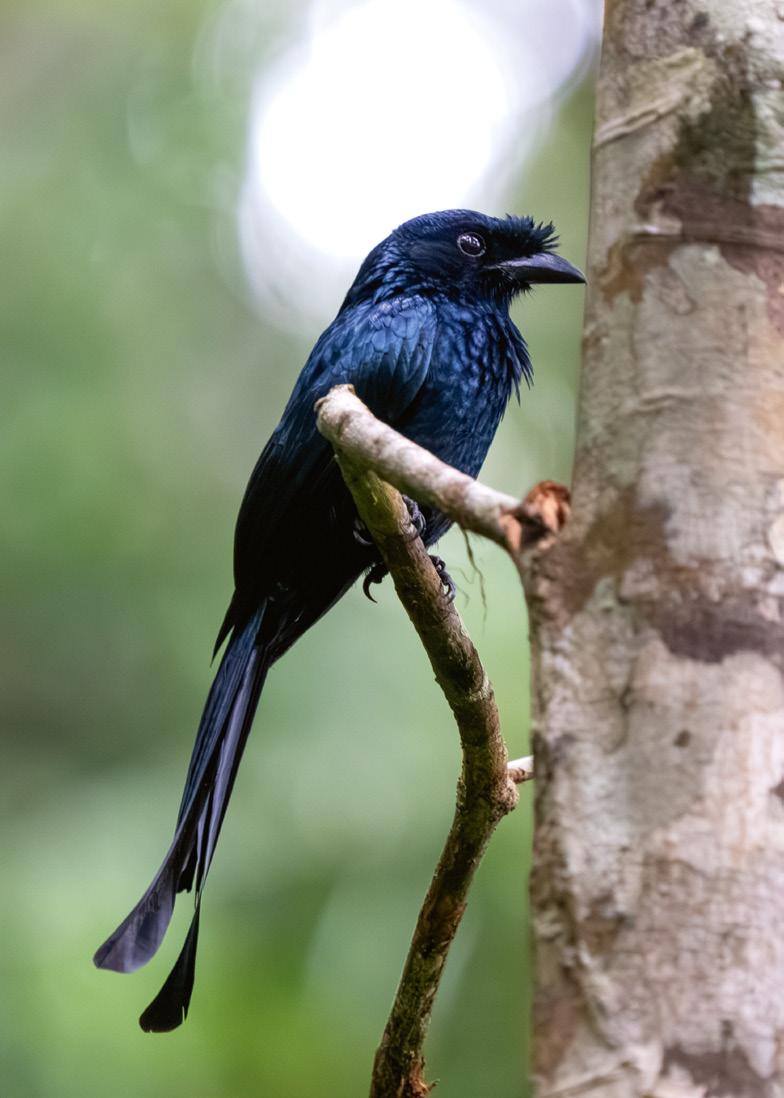

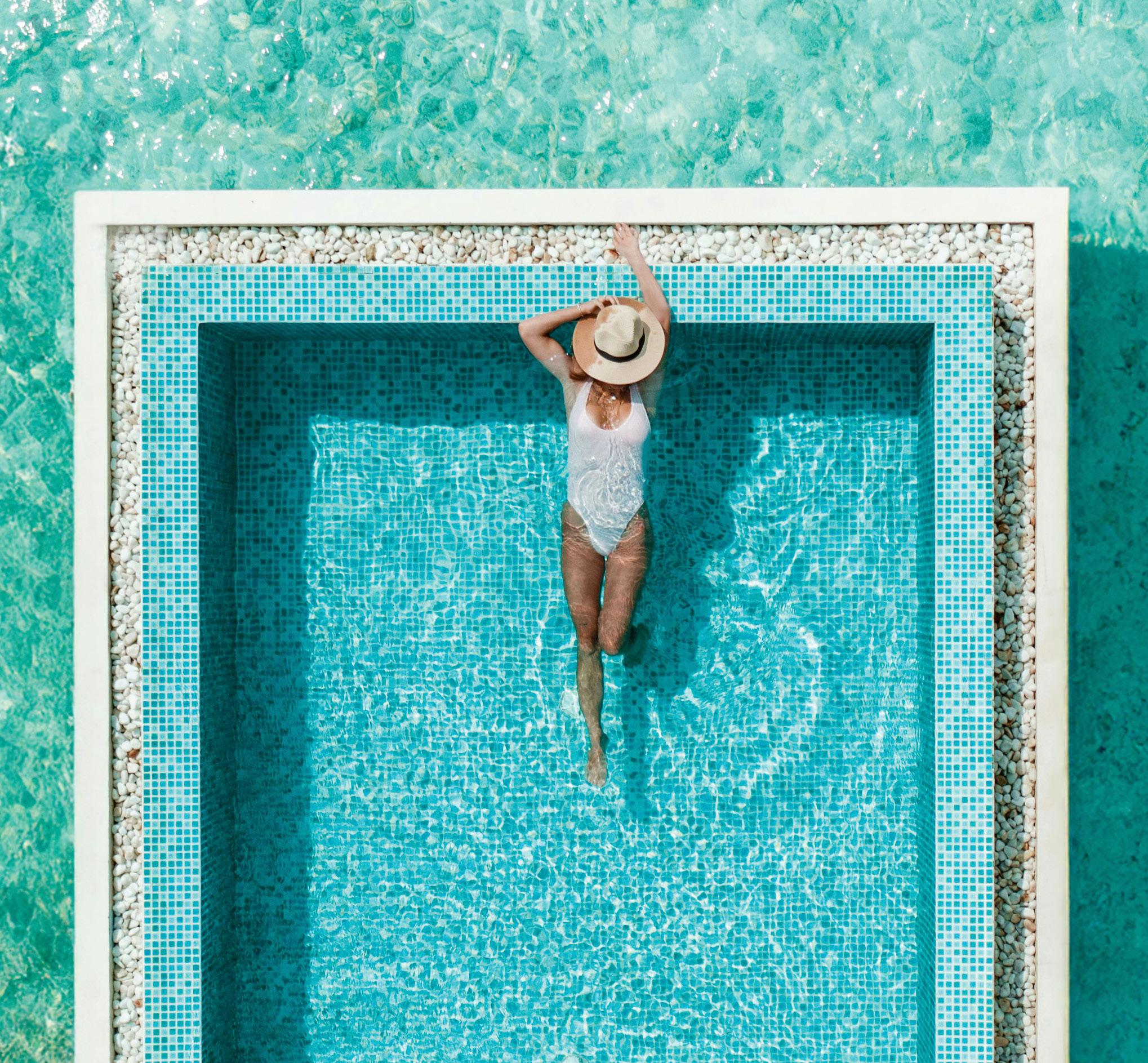
Join Société to earn and use points on Luxury Escapes The ultimate rewards program to elevate every escape
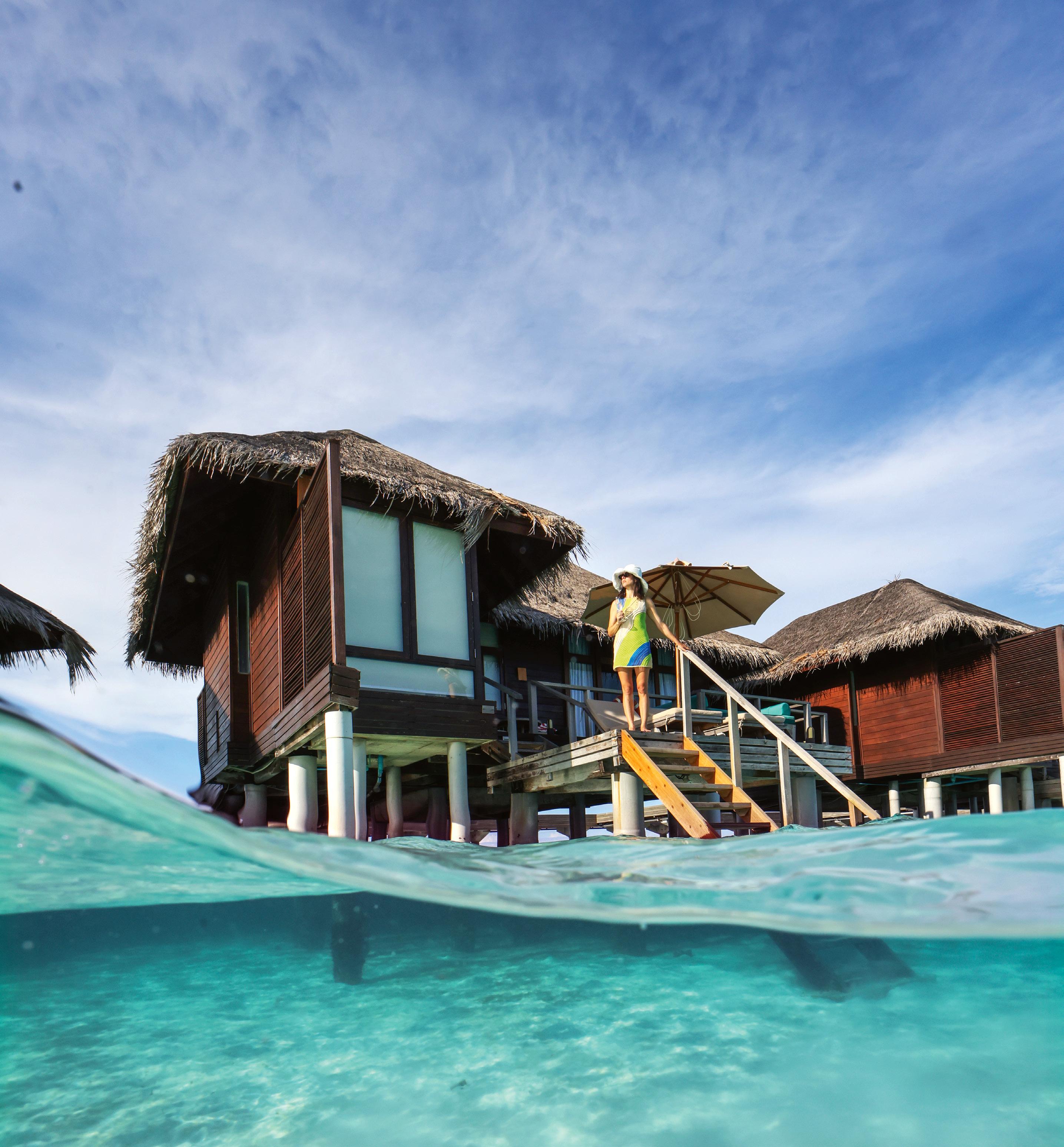
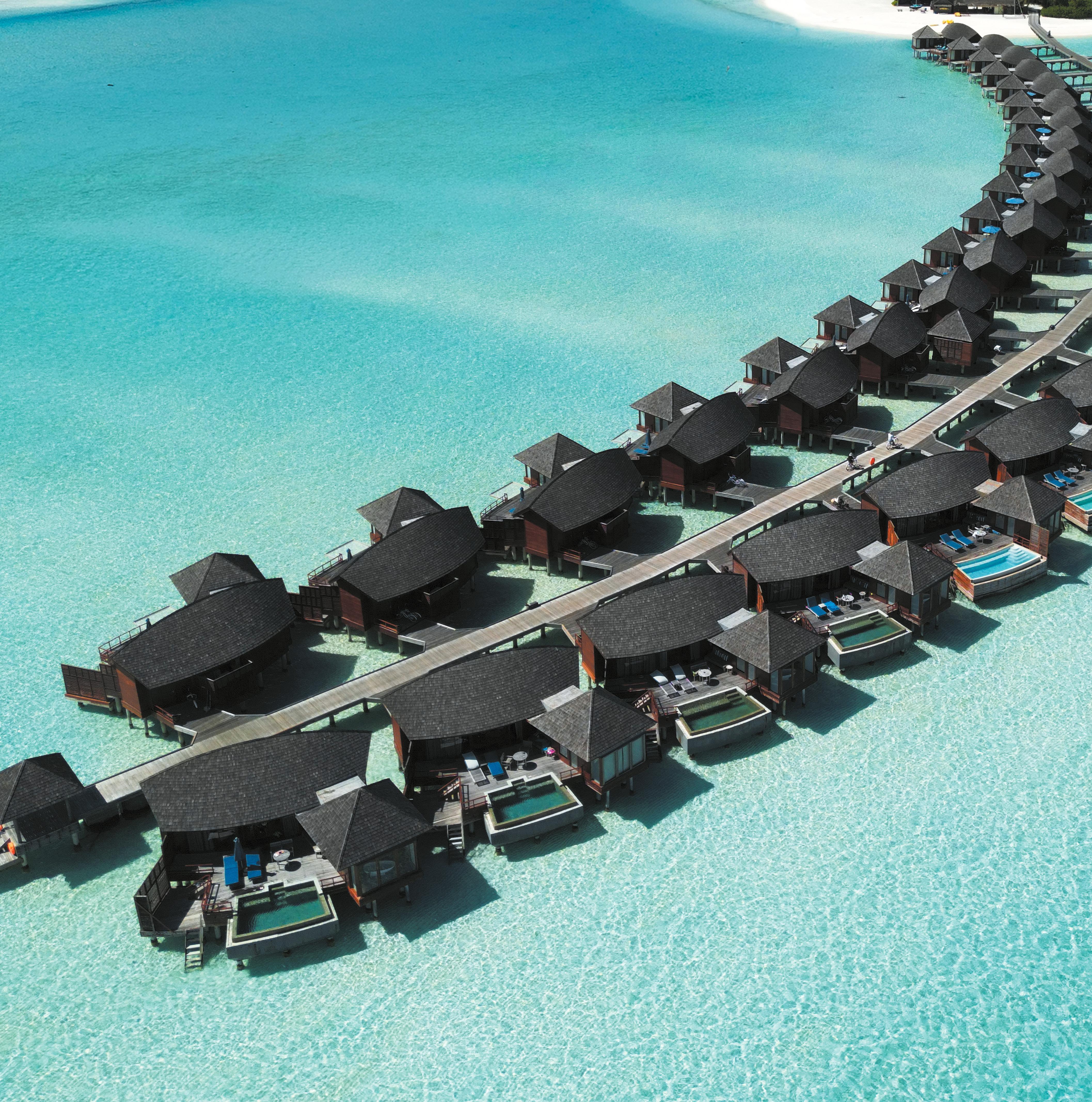
e Maldives is on a lot of travellers’ bucket lists but it can be stubborn to tick o due to the hassle of connecting ights. But Luxury Escapes’ new Melbourne to Malé direct ights, an Australian rst, are bringing travellers nearer to Nirvana (Nearvana?). Paul Chai was on the inaugural ight and visited two very di erent Maldivian resorts:
Centara Grand Lagoon Maldives and Anantara Veli Maldives Resort.
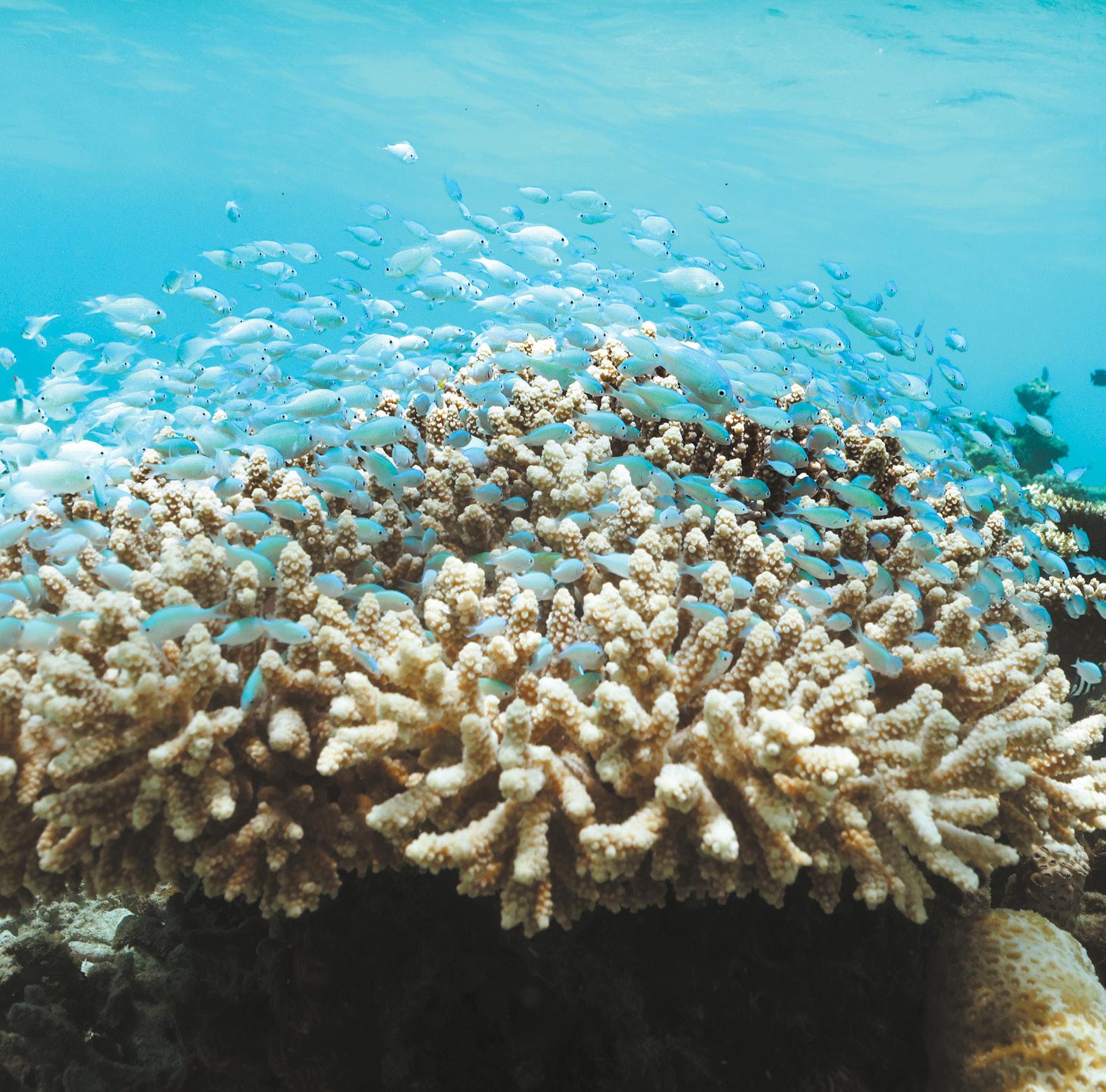
This is not my first Maldives resort rodeo, but it is the first time I have flown directly to Malé, a fact brought home as we taxi beneath the traditional water cannon salute: two firetrucks on either side of the plane spraying a huge liquid arch for us to pass through. This delightful ritual is a way for airports to welcome new airlines and new routes, and it’s a whimsical way to start our journey to this special place.
The Maldives’ very existence is magical, a nation of just half a million people spread across 1200 islands, most of which barely breach the surface of the Indian Ocean, connected by a hive of small watercraft that appear to be in near-constant motion.
This unlikely archipelago has long captivated beachgoers and sun lovers, and its enduring appeal has sparked a luxury arms race, with an ever-more-luxe roster of
hotel brands vying for a stake in this patch of paradise.
You can find islands anywhere, but when you see a photo of those pale slivers of sand augmented with overwater villas that reach into the light-blue lagoon in a vertebral line, each one further from shore than the next, you know it can only be a Maldivian resort.
The fact there are nearly 200 resorts means incredible variety for travellers. I have stayed at the edges of the archipelago, where looking at your remote speck surrounded by only blue ocean on Google Maps makes you slightly nervous; I have partied at resorts that take their inspiration from fashion runways and visited family-friendly resorts filled with water parks and activities.
This visit we are looking at two resorts –one established, one brand-new – but both in close proximity to Malé.
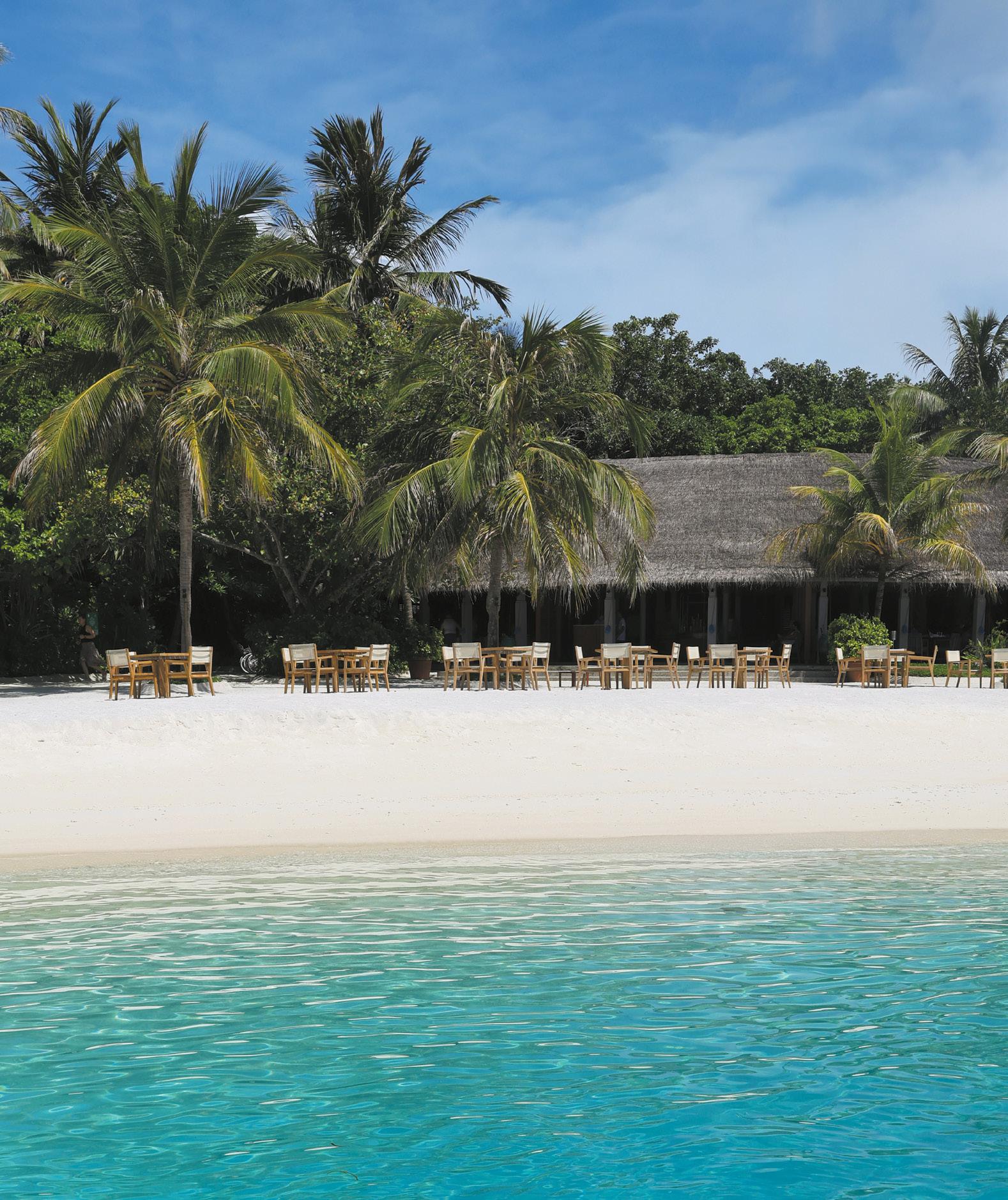
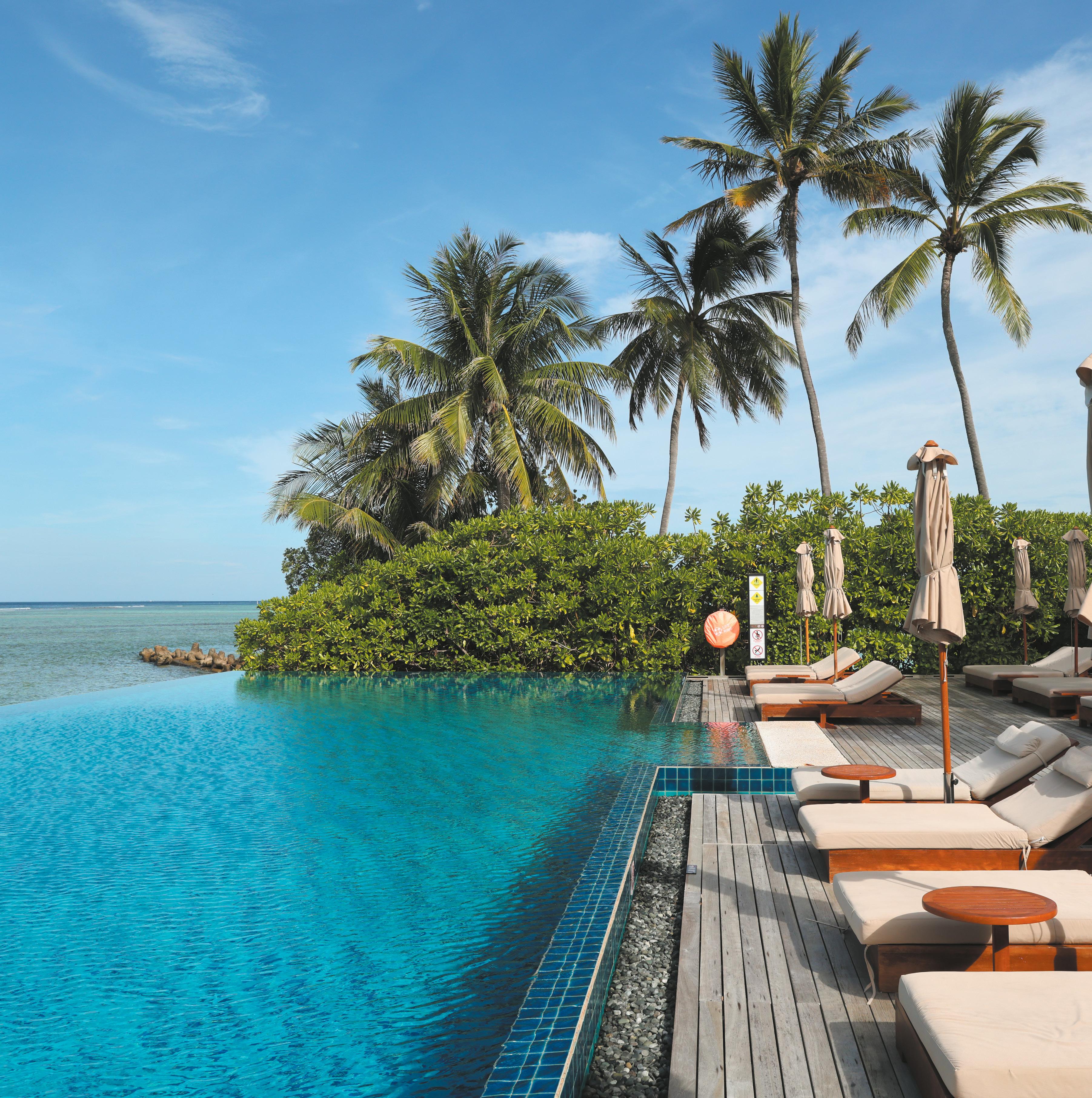
Luxury Escapes has launched the first-ever direct flight from Australia to the Maldives. Leaving on a Monday night, in about 11 hours you will be arriving at Male’s brand-new Velana International Airport under the undulating roof that immediately reminds you of the Indian Ocean waves. You will then be whisked away to either a speedboat or a seaplane depending on which resort you choose to stay at.
As part of booking through Luxury Escapes, guests will have access to early check-in so you slide straight into your little slice of paradise, while those not flying direct will still be queuing for their second flight to Malé.
Returning to Melbourne the following Sunday night, guests can be having a cocktail at sunset on a Maldivian beach before catching a plane or speedboat straight to Velana for another overnight flight, landing back in Melbourne Monday lunch time. This direct flight plus early resort access and late checkout gives you almost another full day in paradise.
The flights are a charter from Maldivian and staff are trained in old-school airline service where nothing is too much trouble. It is the simplest, most relaxing way to get to the Maldives for Australians.
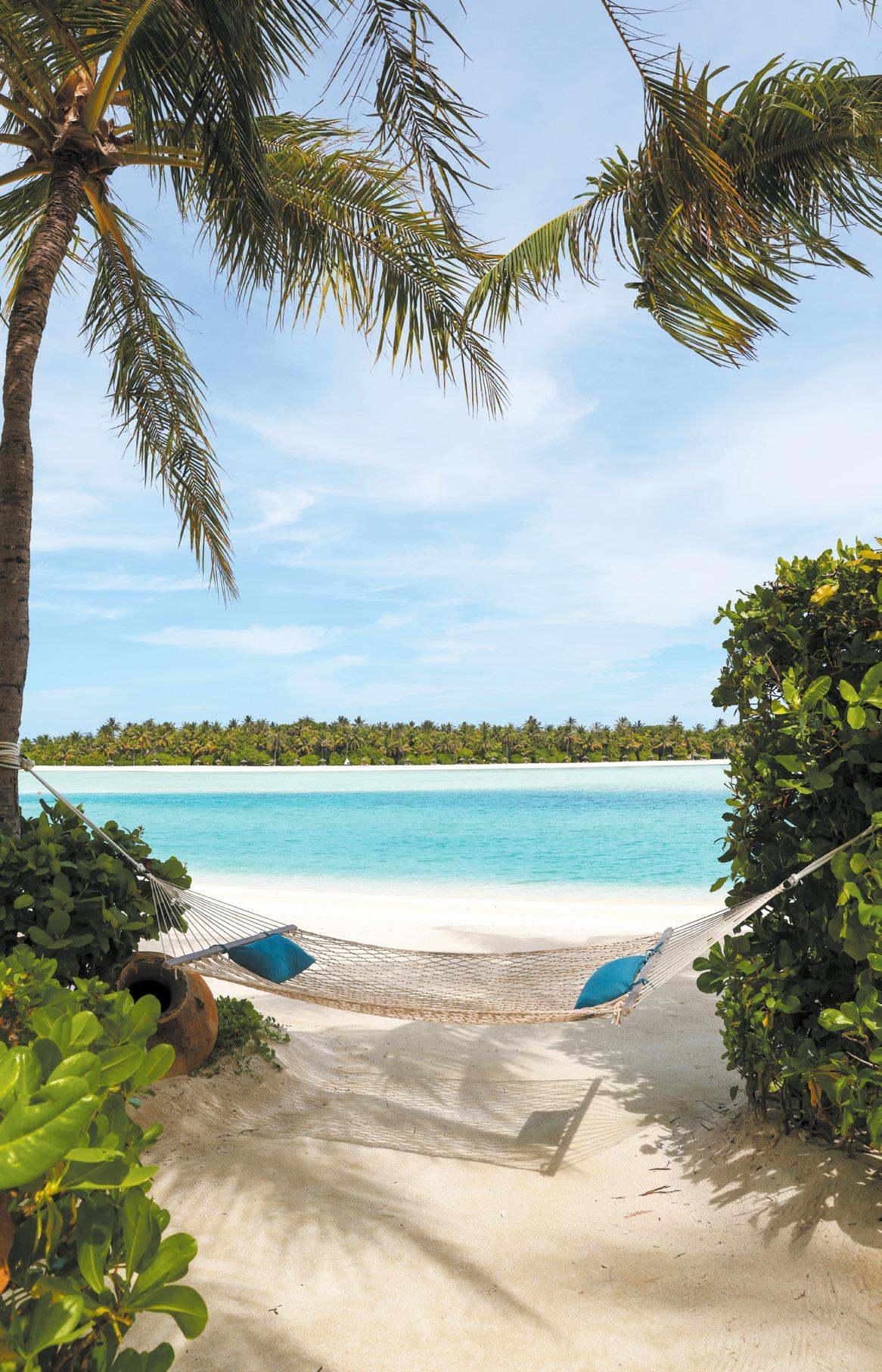
Time from Malé: 35 minutes south by speedboat.
My Maldivian moment: plunging into the clear water to discover several stingrays directly beneath my flippered feet and a twometre-long nurse shark – complete with an entourage of remoras (or suckerfish) hitching a ride – gliding past me.
Paradise on a plate: jalapeno-spiced wahoo ceviche in a tiki bar on Gilifushi picnic island with a rummy Black Voodoo cocktail.
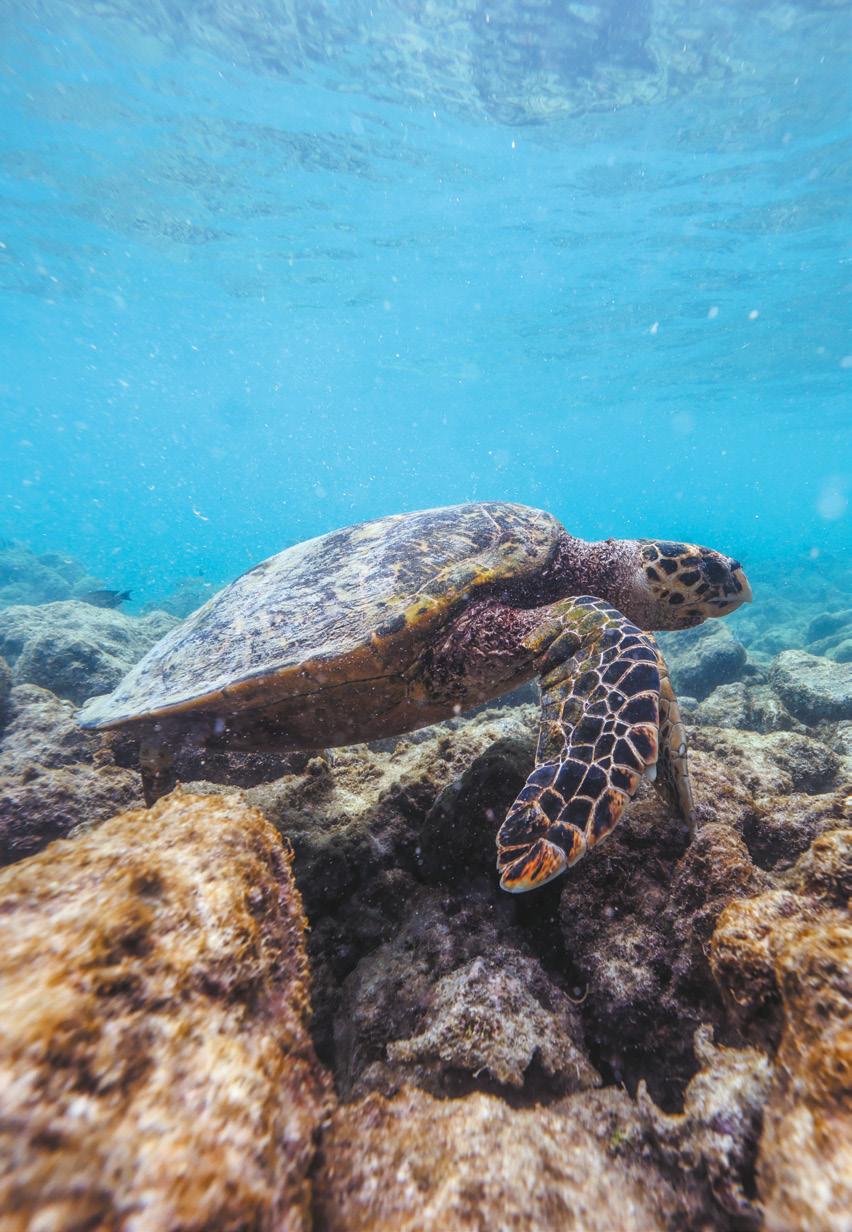
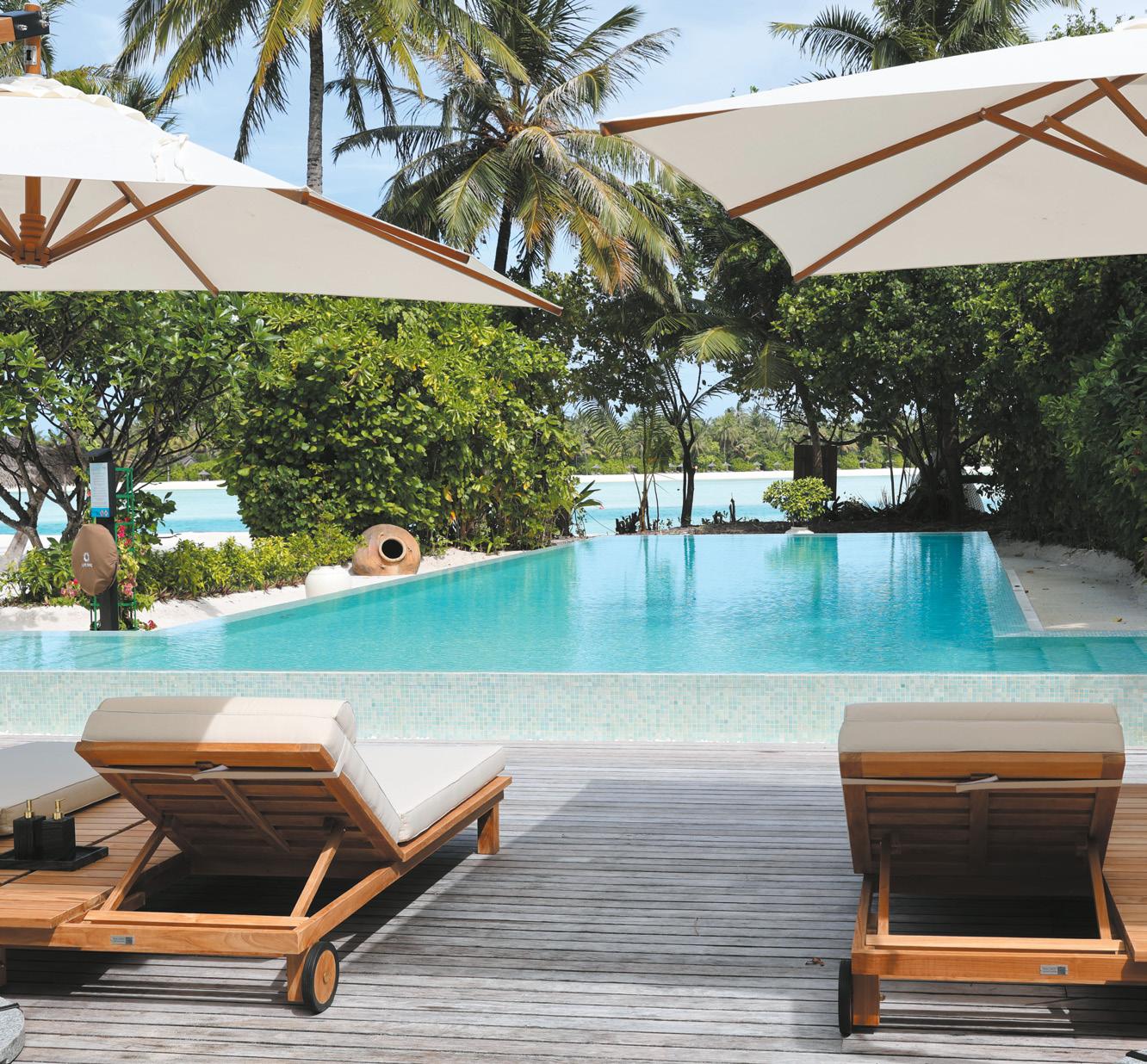
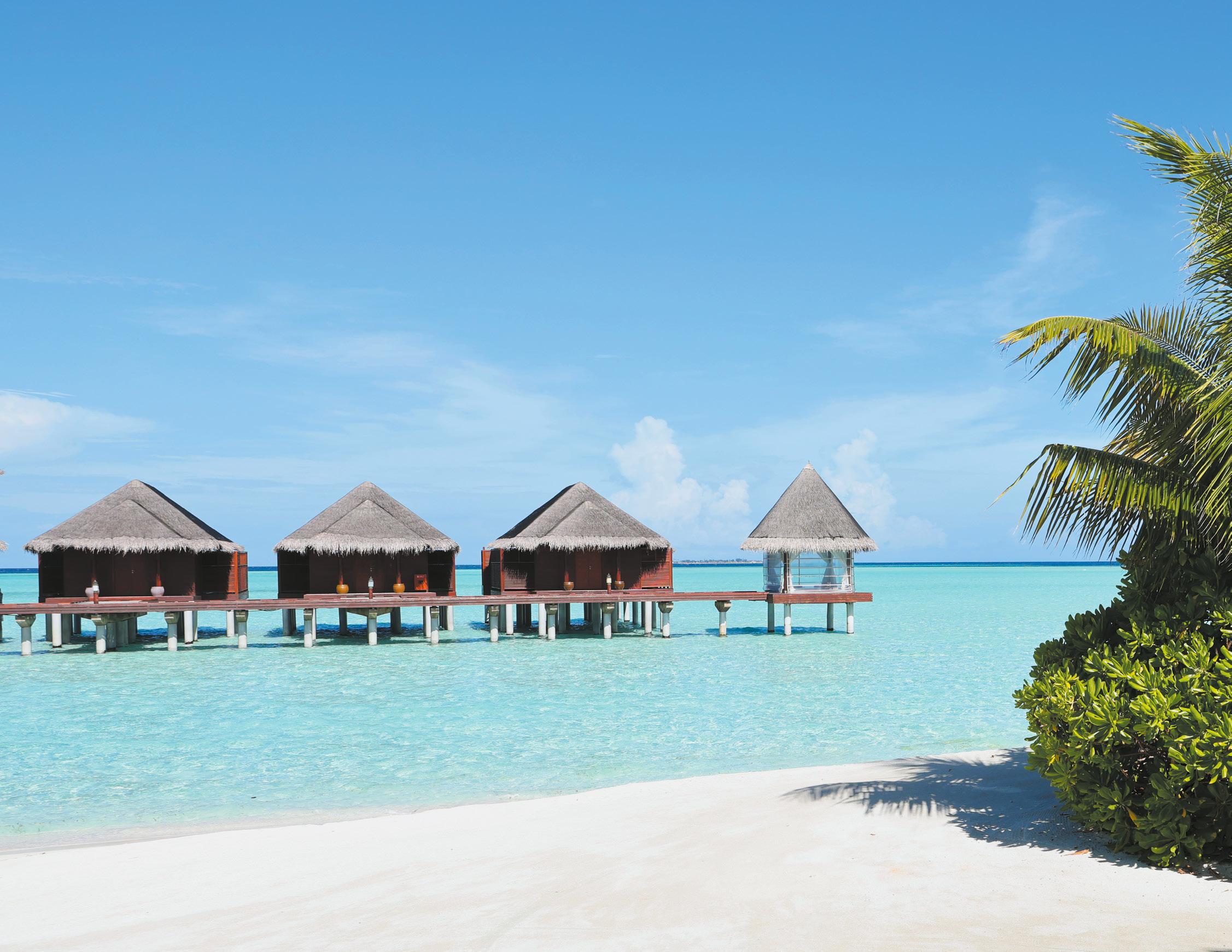
Having a pristinely coiffed white-sand walkway wind through tropical jungle where vines interlace into a verdant, gnarled archway is the sign you are on a natural island that has had time to grow in; time for the spotted Asian koels to nest and the Maldives fruit bat to map out its evening sortie from the jungle trees, which you can watch from the beach with a mai tai in hand.
Anantara Veli is a resort that is approaching two decades on this Indian Ocean idyll so it, too, has had time to hone its craft, a confident, considered approach that weaves in the natural Thai hospitality of its home base with Maldivian flourishes.
The resort is a cluster of five islands on the eastern side of the South Malé atoll and includes: Anantara Dhigu for families; Anantara Veli, an adults-only retreat; Naladhu Private Island; and a picnic island and staff island. This community of islands form part of the appeal so you can stay at one isle and visit others (Naladhu is exclusive to residents, but the resort does offer behind-the-scenes trips to the staff island on request).
I am staying on Anantara Veli in a beach villa, where my private patch of sand looks out across to Naladhu island and Baan Huraa –the signature overwater Thai restaurant joined to both islands by a wooden walkway. I have a pair of permanently reserved sun beds on the beach protected by a nook of greenery with striped beach towels at my disposal, a private plunge pool and deck enclosed by walls of foliage. Inside my villa are coconut tones of brown wood furniture and finishings, crisp white linen and pale walls. The king-sized bed looks out to the water with a comfy couch and desk at its foot; a carved wooden bowl filled with fruit and jars of goodies sit on a table in front of the couch. The bathroom is almost the size of the main room with standalone bath, indoor and outdoor showers and an adjacent powder room.
There is a simplicity to life in the Maldivian resorts: no towns to visit, no roads to navigate and not even much in the way of island to explore. Maldivian atolls are barely peeking out of the waves, but few realise you could be
standing on a peak rivalling Mount Everest, it’s just that 99 per cent of this behemoth is submerged in the ocean, leaving you separated from the deep by just a fringing coral reef, most of it teeming with marine life.
This leaves you free to act as human driftwood, bobbing between a barefootin-the-sand breakfast, a local curry lunch, sunset cocktails and nocturnal nibbles. Any forays tend to be on sea, chasing dolphins, snorkelling with turtles and rays or, in the case of these Anantaras, island-hopping on the resort pontoon.
Cumin restaurant is Anantara Veli’s breakfast spot where tables are undercover but on sand, a perfect vantage point for watching as the waters of the Maldives begin to showcase their infinite range of blues. The breakfast menu seems similarly expansive and over the course of my stay I try the crab omelet, eggs Benedict and a chia pot, after a particularly indulgent dinner the night before.
Lunches tend to be light and might be taken on Gilifushi picnic island at the Tiki Bar, which you can walk to at low tide (or take a pontoon at high waters), a snack in Dhoni Bar or made yourself, with the help of Chef Mo, at a Spice Spoons cooking class.
When the sun sets, all eyes are on the Dhoni Bar, where the Maldives fruit bats circle overhead and guests play pool or sit by the pool enjoying the last rays of the sun.
On sand at Veli is the dinner spot Origami where you can have nigiri and sashimi as well as dynamite maki (spicy tuna, mango salsa) ornately arranged on a miniature wooden boat, then follow it with miso-marinated black cod. Overwater on Baan Huraa is a spicy Thai banquet with a viewing window in the floor of the restaurant where you can watch the underwater action including a night-time turtle visit. A highlight on Anantara Dhigu is the aptly named Sea Fire Salt – I order a signature stone grill where a sizzling hotplate is placed before me along with the freshest slices of salmon, tuna and wahoo with a bowl of sea salt. I lightly sear the fish myself and dip it in honey mustard and Maldivian spicy sauce. Simple. Perfect.
Time from Malé: 30 minutes north by speedboat.
My Maldivian moment: standing on the roof of a traditional dhoni (wooden boat) skipping over the ocean in search of dolphins at sunset; none appeared but no one cares because you are still in paradise with a glass of bubbles in hand and the occasional flying fish to keep the search interesting.
Paradise on a plate: discovering tuna mashuni, a typical Maldivian breakfast of shredded tuna, onion, coconut, lime juice and chilli, scooped up with rosti flatbread – part of a globe-spanning buffet.
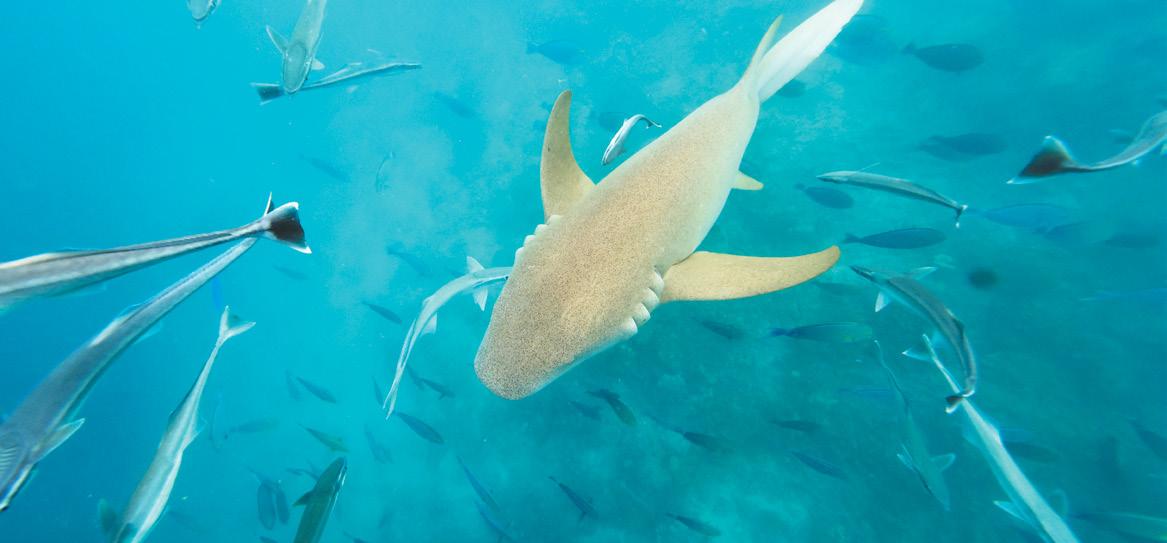
If islands have a design ethic, this one is tropical minimalism. This brand-new island with pale architecture is designed deliberately to put a spotlight on the views. With vegetation still relatively low, everywhere you look is cerulean sea, the white overwater bungalows a smart and instant branding. On the short boat hop over from Velana International Airport, I can spot Centara Grand Lagoon Maldives nautical miles away thanks to the pearly white accommodation.
Once we do arrive at the resort, we get the traditional “welcome at the dock”, a celebration where most resorts serenade visitors with a bodu beru, or traditional drum and dance with huge smiles, handshakes and even hands forming the shape of hearts. Many resorts around the world offer a welcome drink, music or dance but there is something special about the captive audience at a Maldivian dock: guests do not just drift in and out of a Maldivian resort they “arrive” and “depart”. This welcome ceremony has roots back to the 11th century when African traders would dock at these isolated outposts to sell their wares.
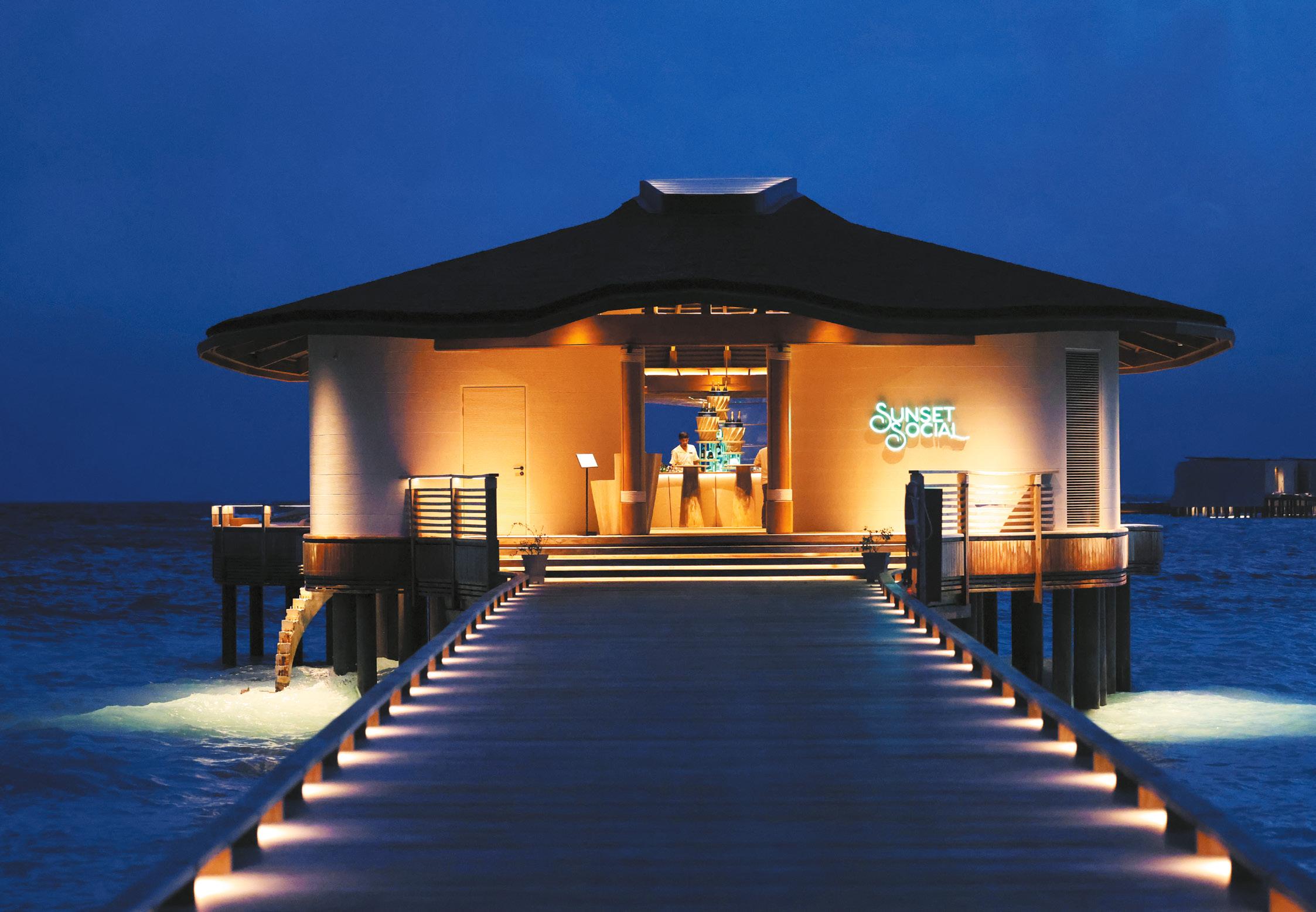
Centara is a pair of islands with Centara Grand tending to attract the quieter traveller looking for an escape filled with both hedonism and harmony; it is not strictly adults-only but tends to lean that way. Across a wooden bridge from Centara Grand – the lights from which attract local reef sharks at night – is Centara Mirage Lagoon Resort, a more family-friendly offering that announces itself as such by the inflatable slides floating in the adjoining lagoon and the lazy river on the right as you enter the resort from the Grand side.
I am staying in an overwater villa at Centara Grand, a modern white pod that has plenty of soft, curved edges and a seamless indoor-outdoor flow to a curved pool and a stairway to marine heaven that you can leap off into the sea. Is it a bathroom in the Maldives if it’s not three times the size of the one in your home? Add in a pebbled garden and dual washing areas; the shower leads directly out onto the deck leading down to the water. The entire room is glass-fronted but for the most part the only person likely to surprise you in the shower is the resident
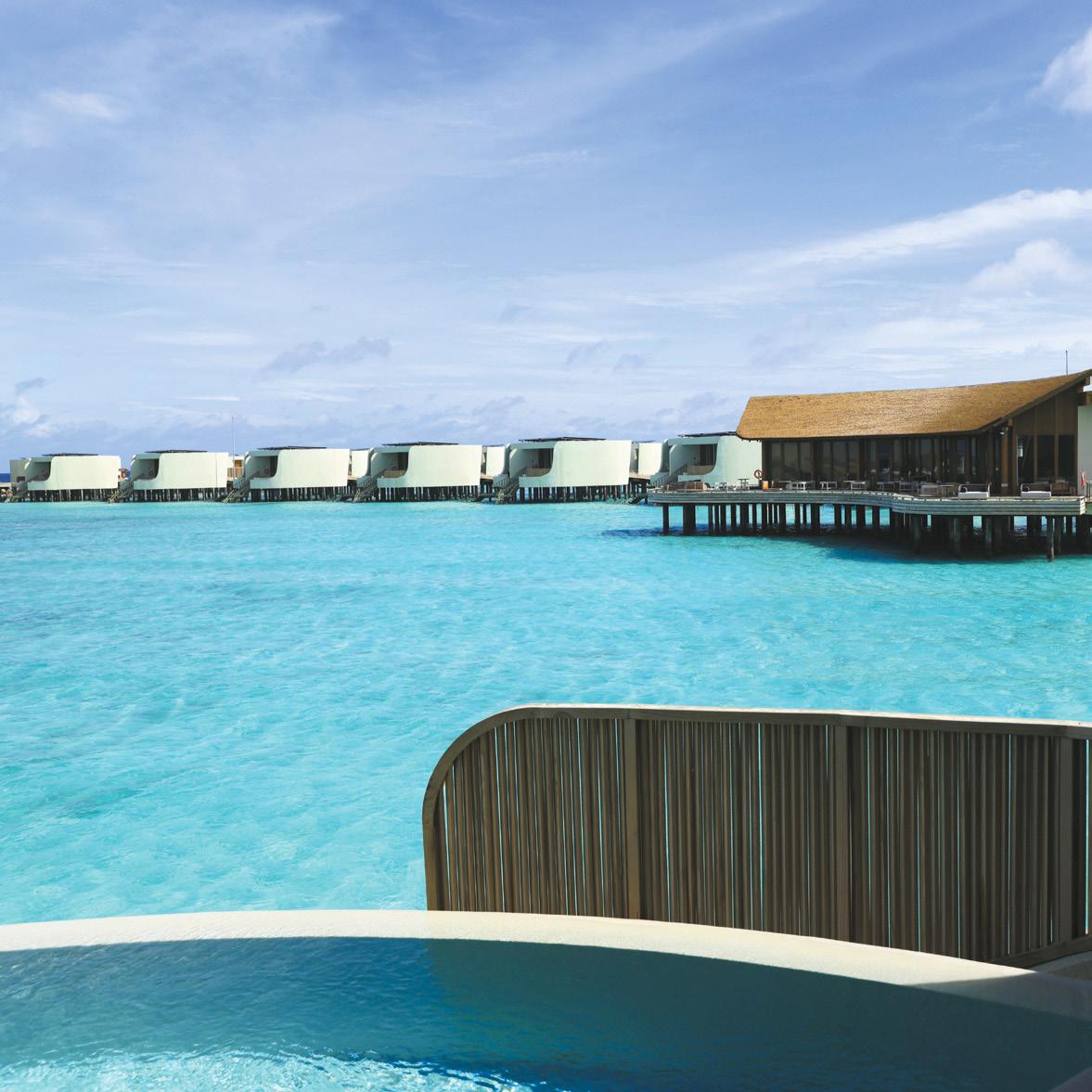
grey heron that seems to hop from villa to villa like a visiting celebrity. There is a king-sized bed, L-shaped couch in the corner of the room and colourful wall art throughout.
On Centara Grand Lagoon Resort your morning north star is The Gallery where there is a buffet that could continue to surprise you even if you stayed here for a year. Day one we feast on a fragrant chicken curry and local huni roshi, coconut-infused flatbread, and then sadly never see it again; make sure to check out the “wellness room”, a cool space with grains, yoghurts and fresh juices and try the wellness shot of the day, usually packed with enough ginger to fuel a Chinese buffet.
Over at Centara Mirage we dine at Thai restaurant Suan Bua, a modern affair with dishes like a Thai-spiced tuna tartare with lemongrass and herb dressing and steamed white bass in a Szechuan sauce. Bluefin at Centara Grand is the island’s fine diner where fish from the reef – the one you can see rolling out in front of the restaurant – are brought fresh to the kitchen and cooked simply with additions like coconut curry or saffron sauce.
Our days are spent in true Maldive idyll fashion with massages at SPA Cenvaree Retreat and launching ourselves off the roof
of a dhoni into the ocean where we are met by curious baby sharks who, despite their diminutive stature, still come a wee bit too close for comfort.
Centara Grand is also the location for the cocktail party celebrating the launch of the new Luxury Escapes-Maldivian Melbourne to Malé flight. Upright silver tables are set up on a beach studded with swaying palm trees, and a lantern-lit bar serves up margaritas and more to the crowd of Australian and Maldivian politicians and civil servants, Luxury Escapes staff and representatives from a huge range of Maldives resorts. As the sun goes down, red lanterns are set down on the sand, and a fire dancing display elicits oohs and aahs from the audience; later Luxury Escapes Co-Founder and CEO Adam Schwab gets behind the DJ decks for a set.
When the last boat leaves for Malé, there are fond farewells and those who wish they could stay, it has been a fun night but also, it seems, an important one. This new flight brings the Maldives closer for Australian travellers but has also had the effect of bringing the two countries themselves closer together with hopes that this will lead to even more connections to come.
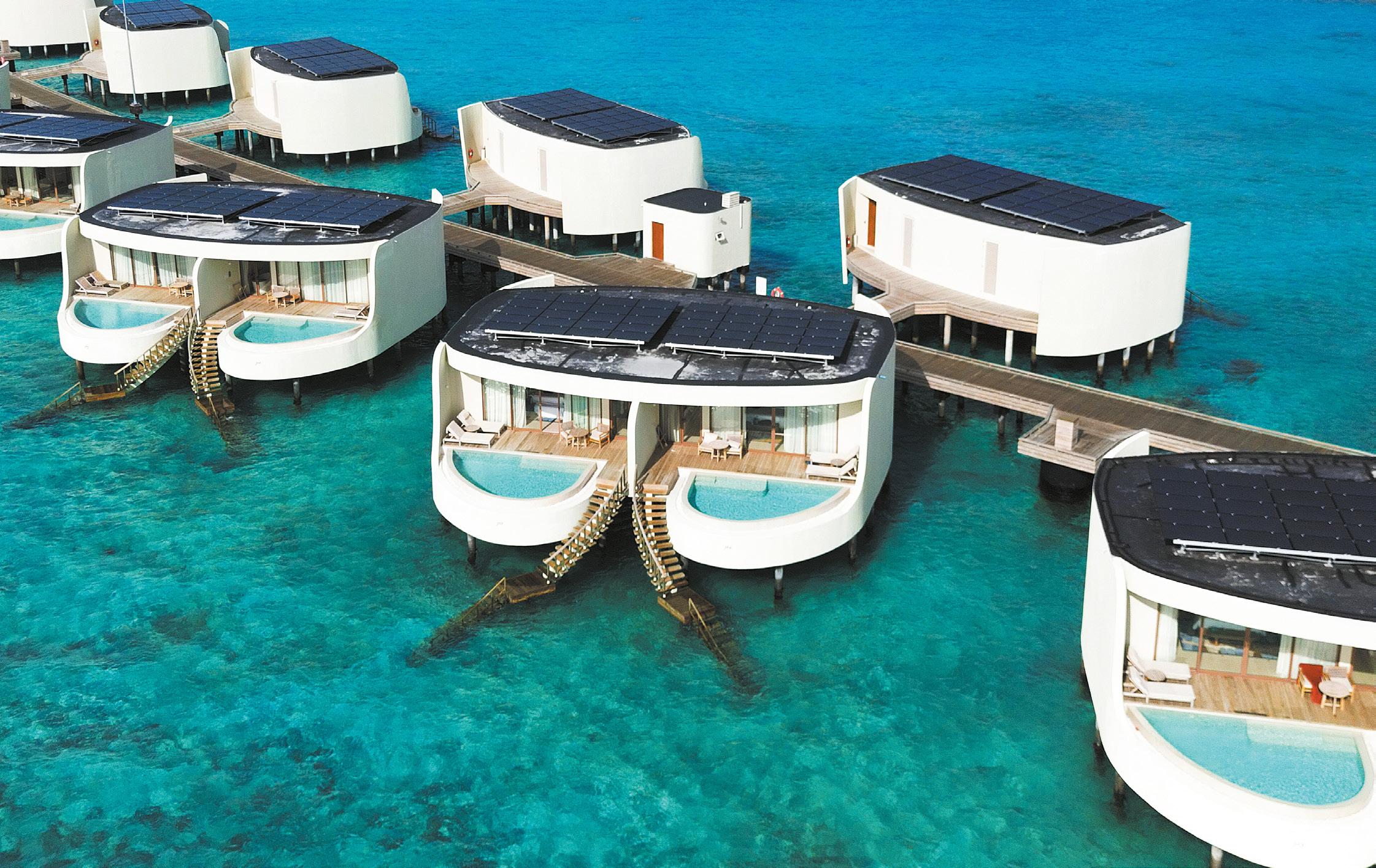

As the United States celebrates its 250th anniversary, Craig Tansley gives us 50 reasons to head Stateside to take part in the festivities.
Explore the sugar-white sands of Gulf Shores and Orange Beach, with their warm Gulf waters to swim in. Spend mornings kayaking coastal backwaters, afternoons feasting on fresh oysters, and evenings watching sunsets over the water with a local whiskey in hand.
Almost 70 per cent of Alaska’s summer visitors arrive by cruise ship. So there’s a lot of Alaska left for the few adventure travellers. And the biggest wilderness is America’s largest national park, Wrangell-St Elias National Park. Fly in by float plane and stay beside ghost town Kennecott, sleeping beside glaciers with grizzlies for company.
“I took an OARS white-water rafting trip on the Colorado River through the Grand Canyon. Whether you hike into it, fly over it, raft through it or just gawk at it, you’ll never forget the first time you see this 446-kilometre-long snaking chasm (the Grand Canyon).”
Rob McFarland, travel writer

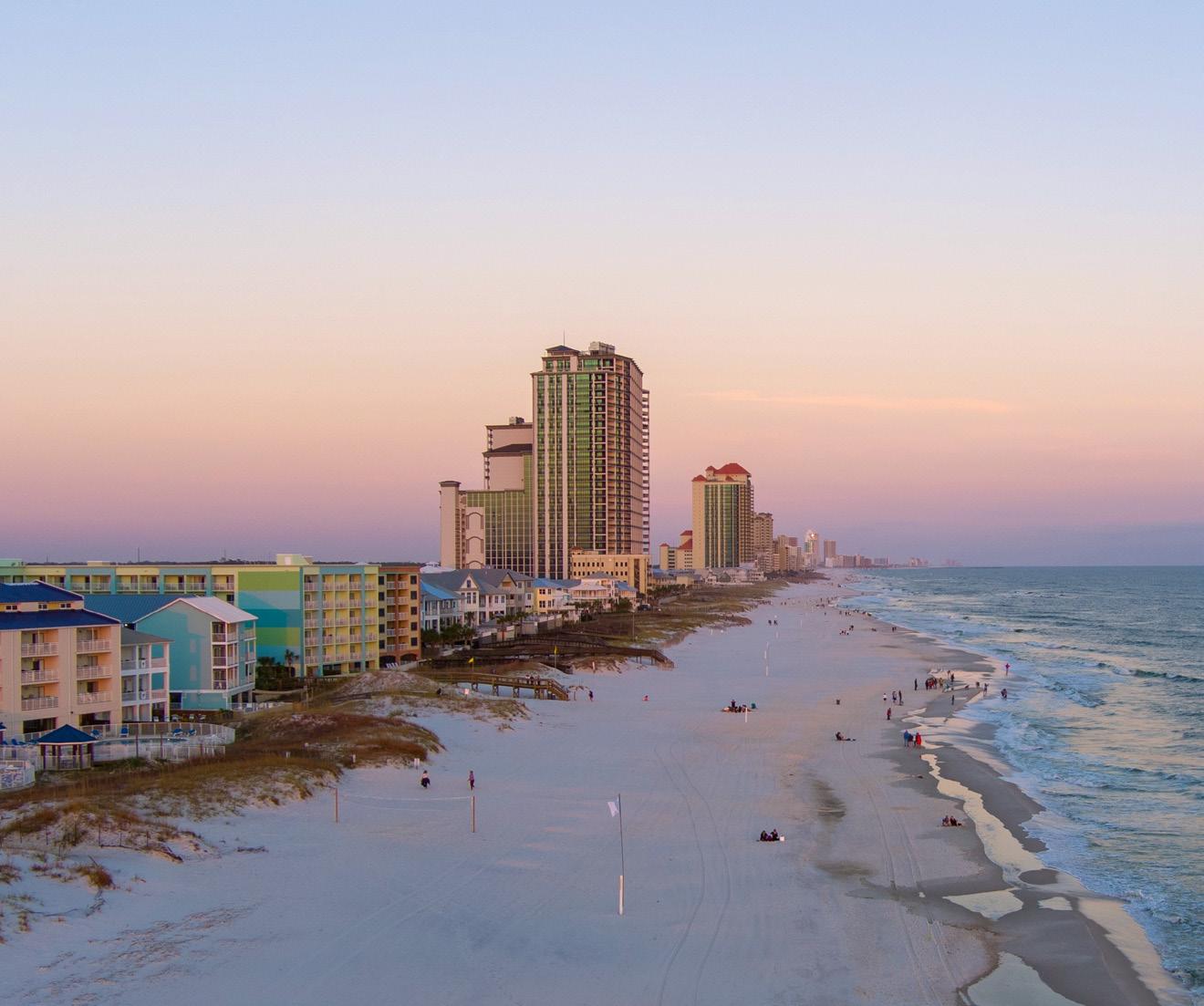
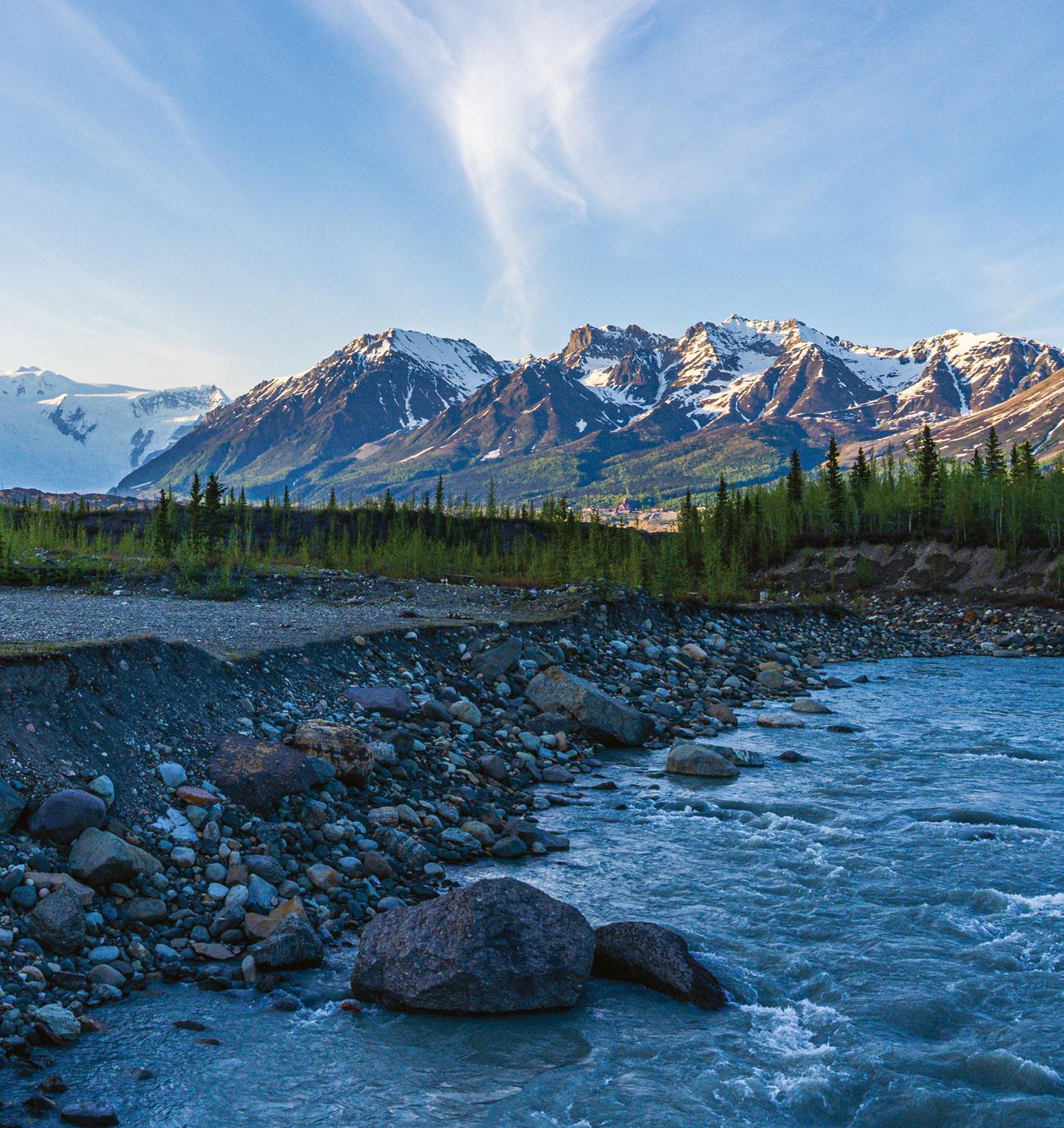
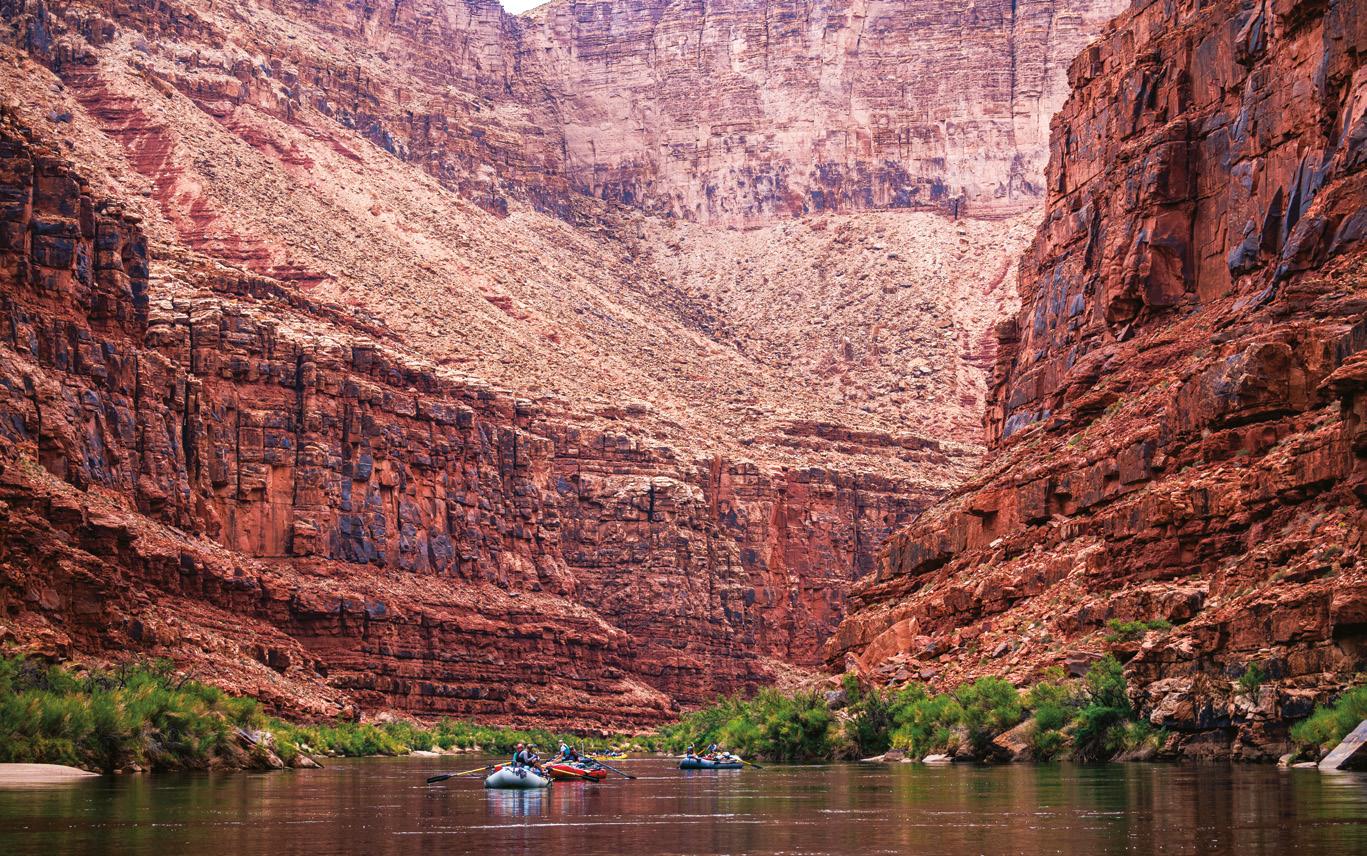
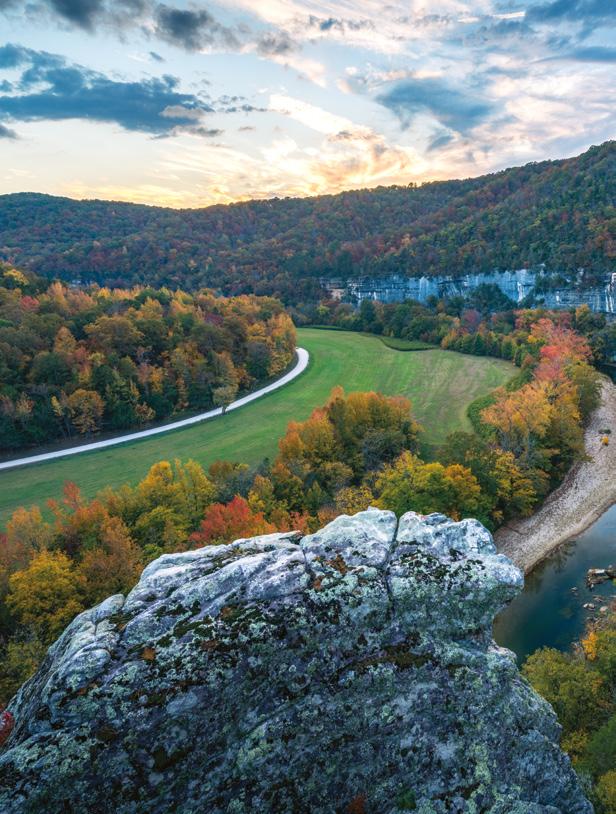
Float down the crystal-clear waters of the Buffalo National River. Paddle beneath huge limestone bluffs. Swim in the clear pools, hike the heavily forested trails, and then camp under the pollution-free night skies. There’s a lot more to this state than Bill Clinton.
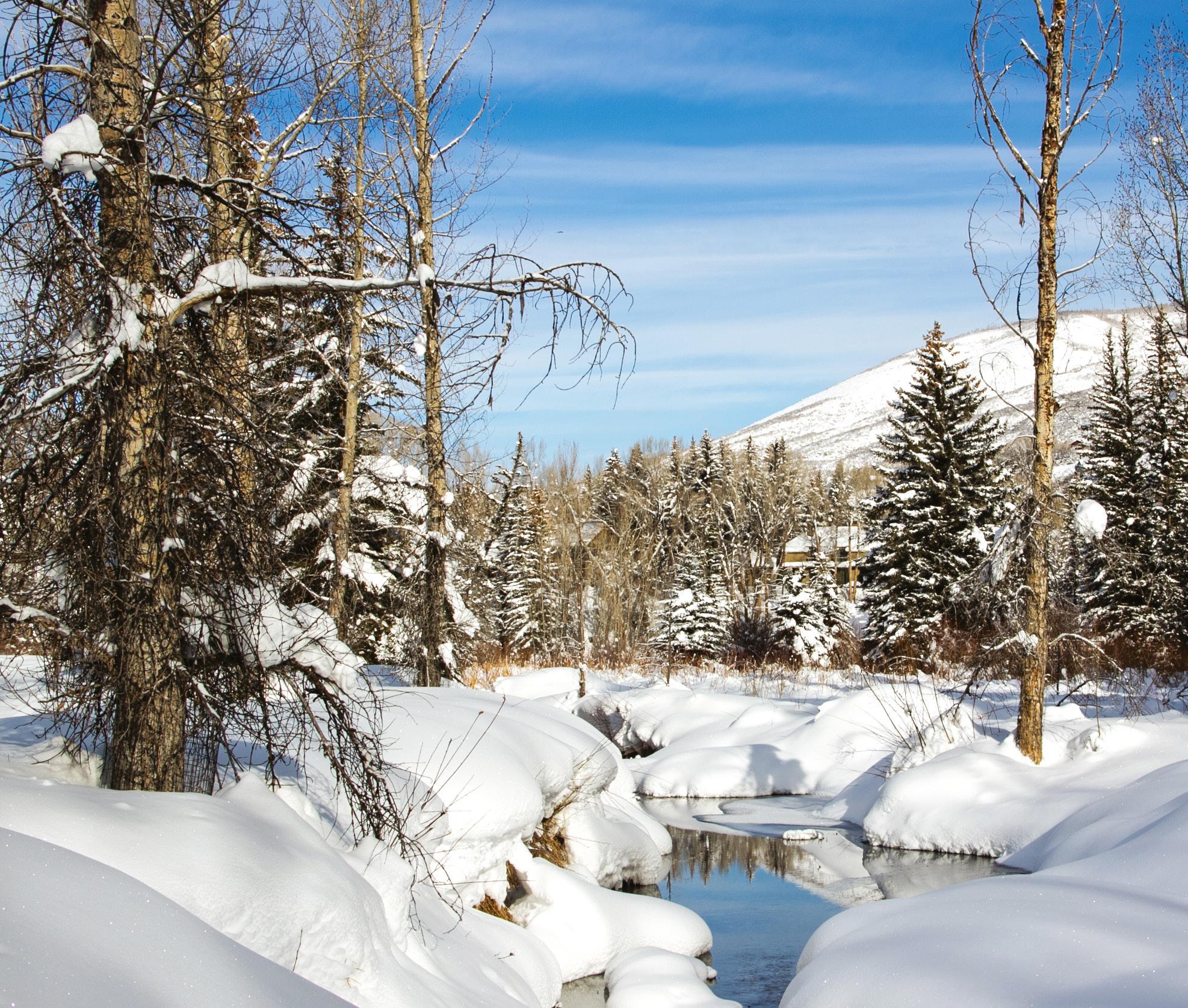
“When it comes to the great cities of the world I have to side with songwriter Randy Newman: I love LA. Vintage spots like Dan Tana’s let you glimpse old-school Hollywood, the Sunset Strip still has the grimy allure from its heyday as a hub for rock ‘n’ roll excess, and classic diners like Swingers never let you down with big plates, bigger smiles and a screenwriter or famous face on a table nearby. Still the dream factory.”
Paul Chai, Managing Editor, Dream by Luxury Escapes magazine

“It’s not just America’s 250th, it’s Colorado’s 150th anniversary this year so that makes this year truly unique, and Aspen sits at the heart of it. From its beginnings as a silver-mining town to its evolution to what it is now, Aspen always reflects that adventurous and resilient spirit of the American West.”
Chris Dunaway, Wine Director, Little Nell, Aspen


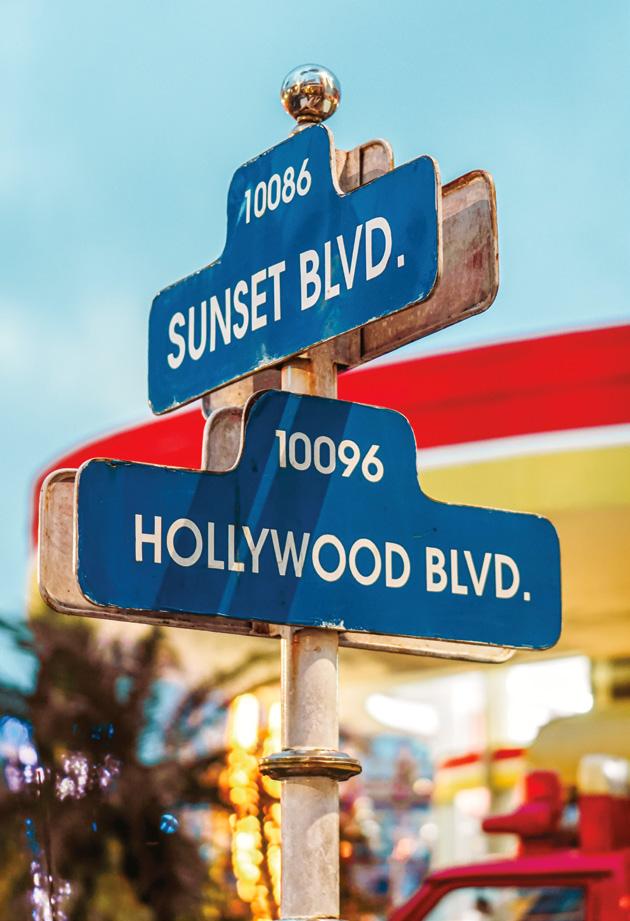
Discover the storybook maritime charm of Mystic (the coolest name for a town, surely). Wander its historic seaport, sail on a classic schooner and eat buttery lobster rolls by the water. It’s compact, so it’s easy to walk, and New England at its most historic (and that’s old, we’re talking 400 years).
Base yourself in Rehoboth Beach and lean into its glam energy. Saltwater taffy in hand, bike the dunes at golden hour, then bar hop to live bands and crab feasts. There are all the best parts of an East Coast summer rolled into one here.
Kayak through the mangrove tunnels of Everglades National Park. Alligators are everywhere, but they’re not as nasty as Australia’s estuarine crocs. Then reward yourself with a short, sharp sunset in Key West, where the rum flows like it did in Ernest Hemingway’s time here.
Ahh, Savannah. America’s most atmospheric city, surely? Spanish moss, town squares and many-centuries-old architecture create an aura that’s romantic, haunting and so… so… Southern.
Savannah captures Georgia’s long history perfectly.
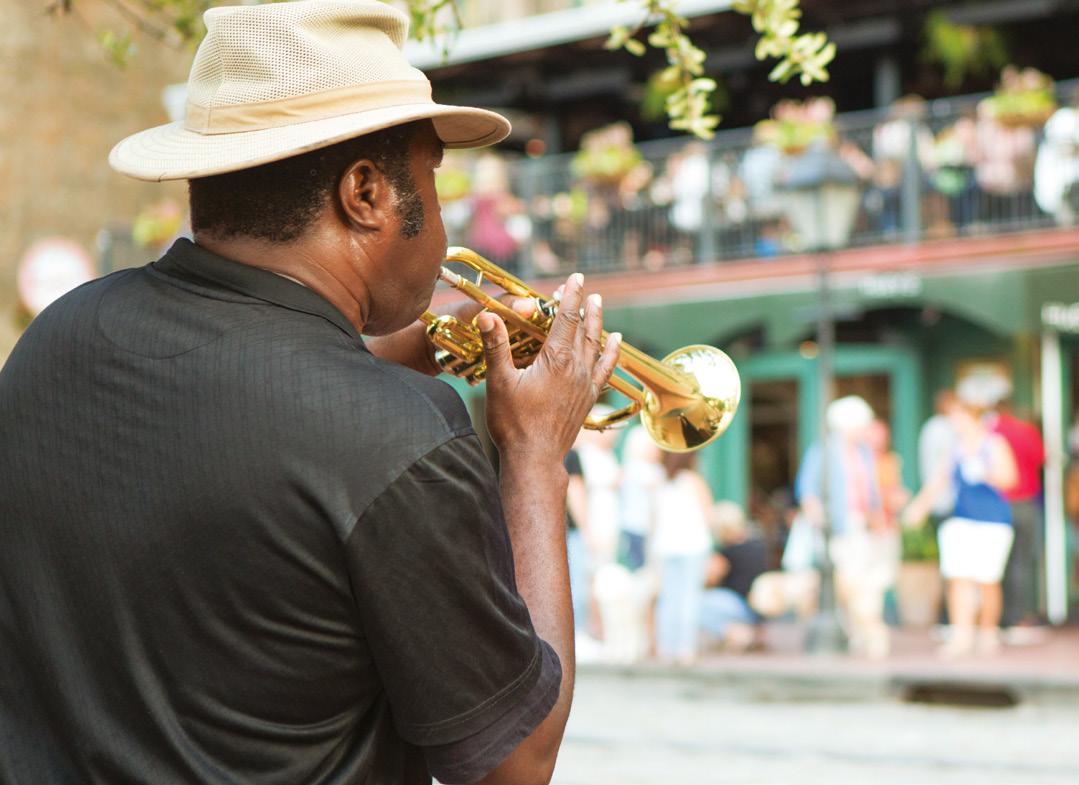
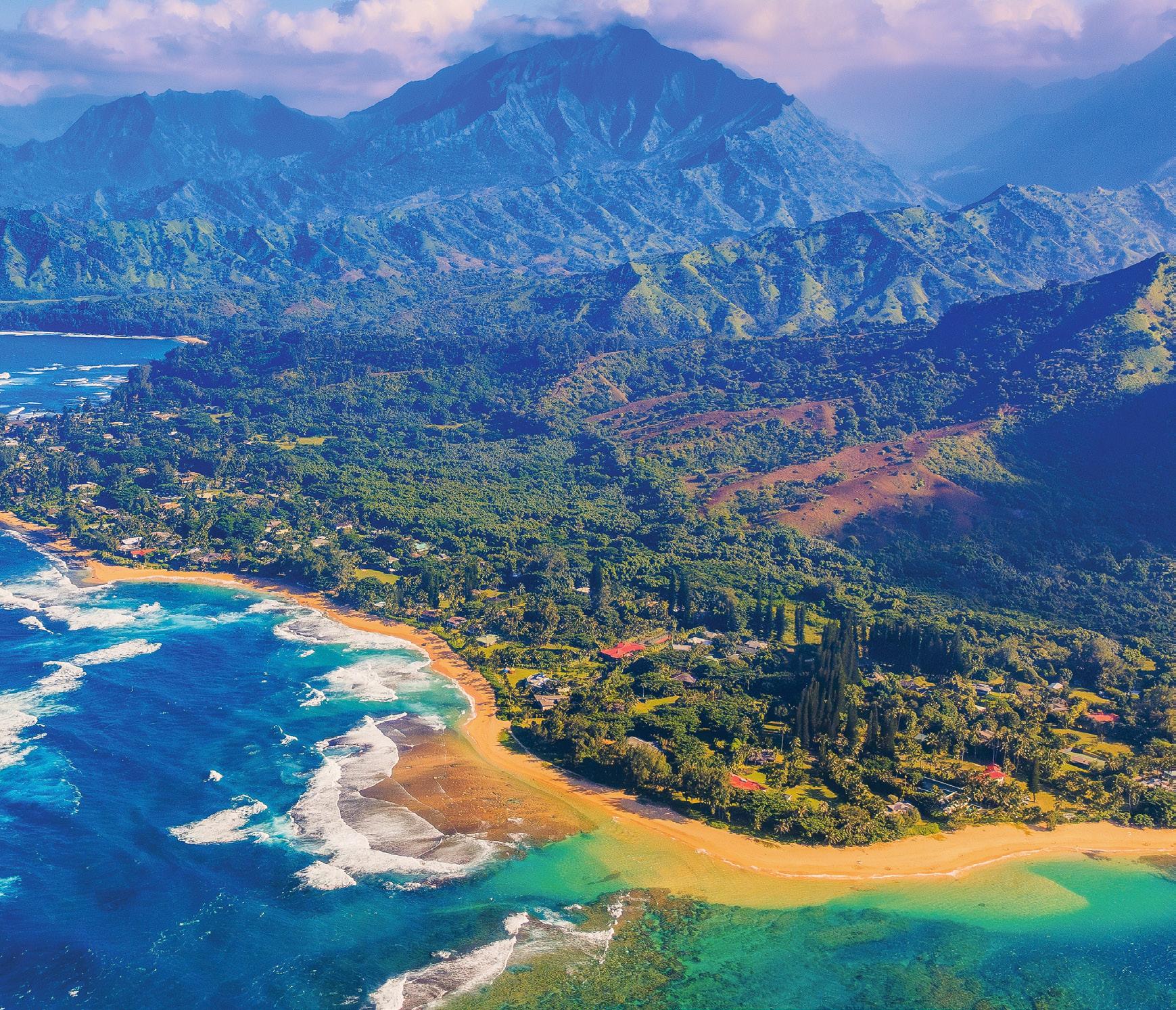
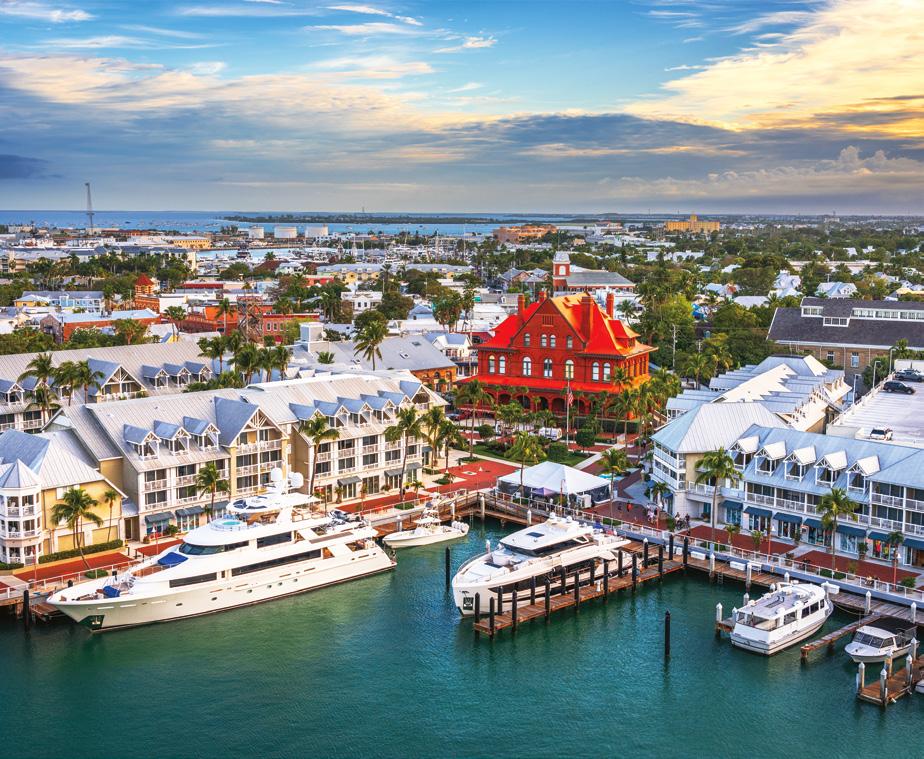
“My Oʻahu North Shore excursion wasn’t a glossy day trip. We drove from Honolulu chasing the perfect Hawaiian beach scene and lasted all of ten minutes in the surf before a Pacific storm sent us packing. Rain swept in sideways, sand needling our skin as we dashed for the rental car. That’s how we found Ted’s Bakery: chocolate haupia pie eaten in the front seat, no forks, just our hands – hair plastered to our faces, sand and gravel embedded in the footwell, laughing through every messy bite.”
Stephanie Mikkelsen, Content Manager, Luxury Escapes

Chicago doesn’t get the plaudits of betterknown giant US cities like NYC and LA; but this is America’s most underrated city. Full of green parks (there are over 600), beaches and coastline (over 45 kilometres of them) and home to some of the world’s toprated restaurants, there’s 77 neighbourhoods to discover.
Raft the wild whitewater of the Salmon River; so remote it’s dubbed the River of No Return. Days of rapids, nights under stars so bright you’ll be star-burnt: Idaho is wilderness without any crowds. Utah gets the headlines, but escapism is Idaho’s motto.
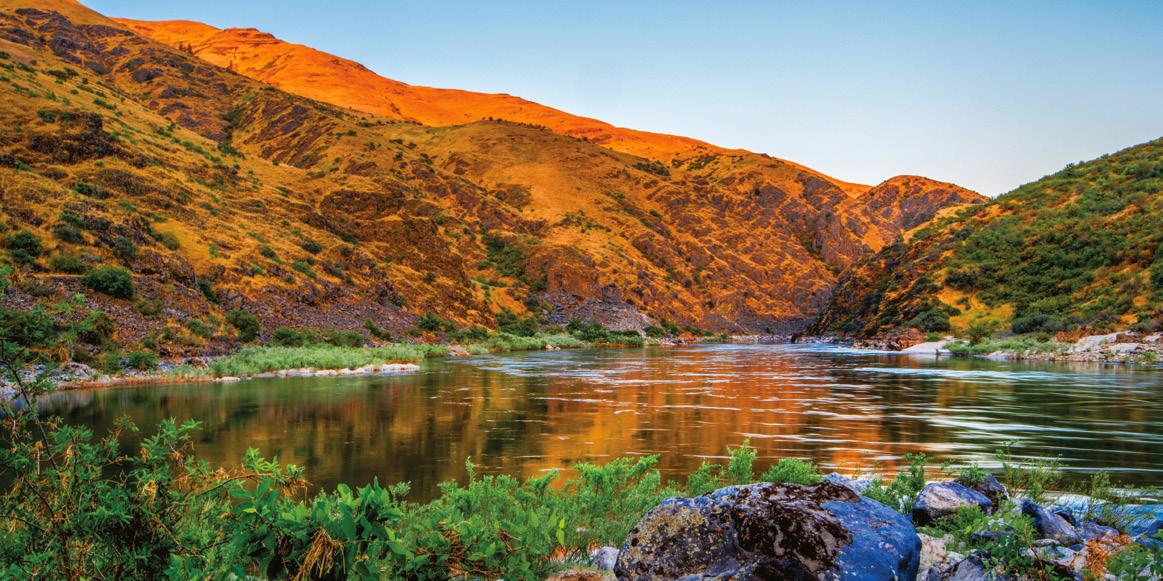
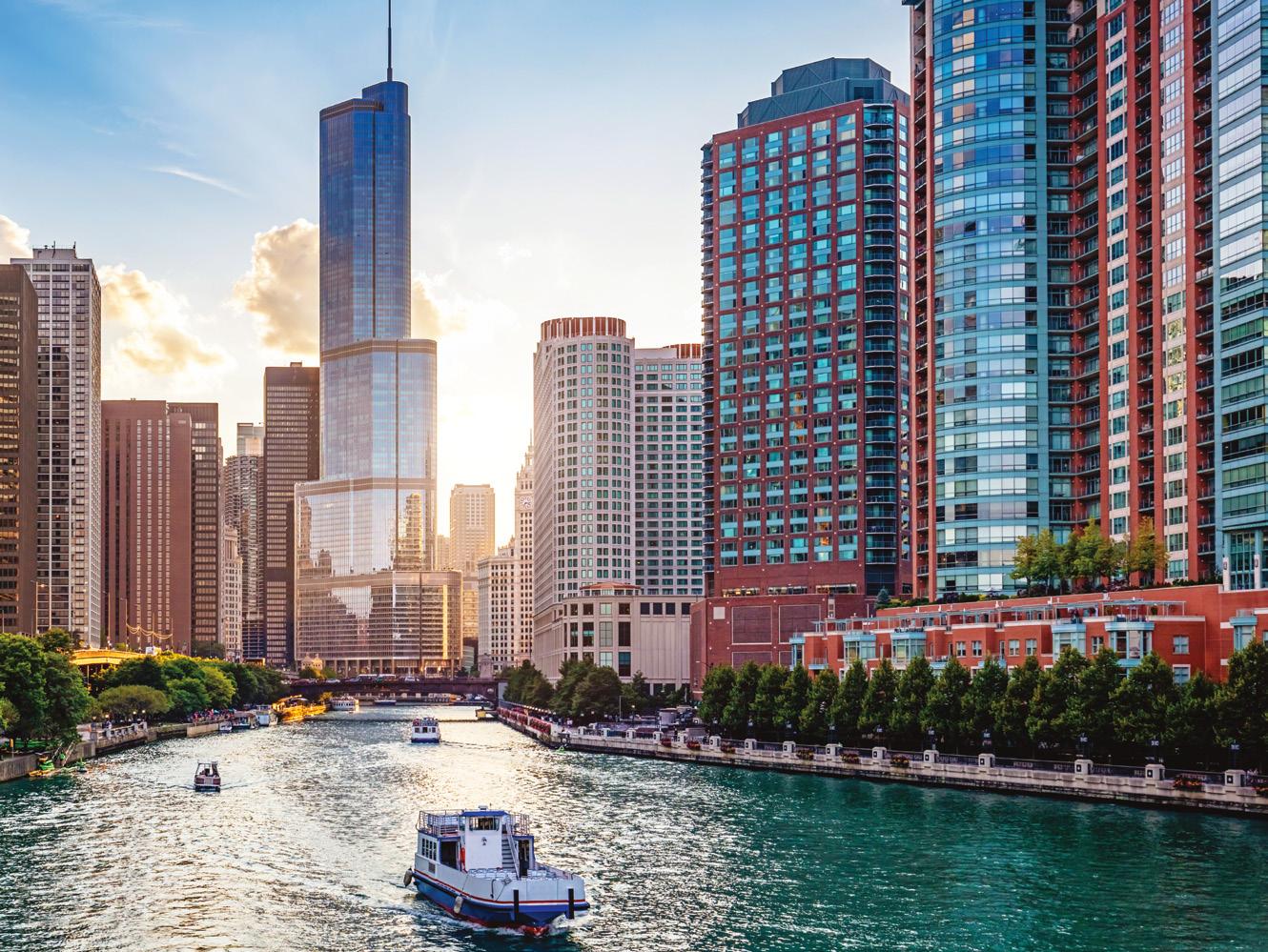
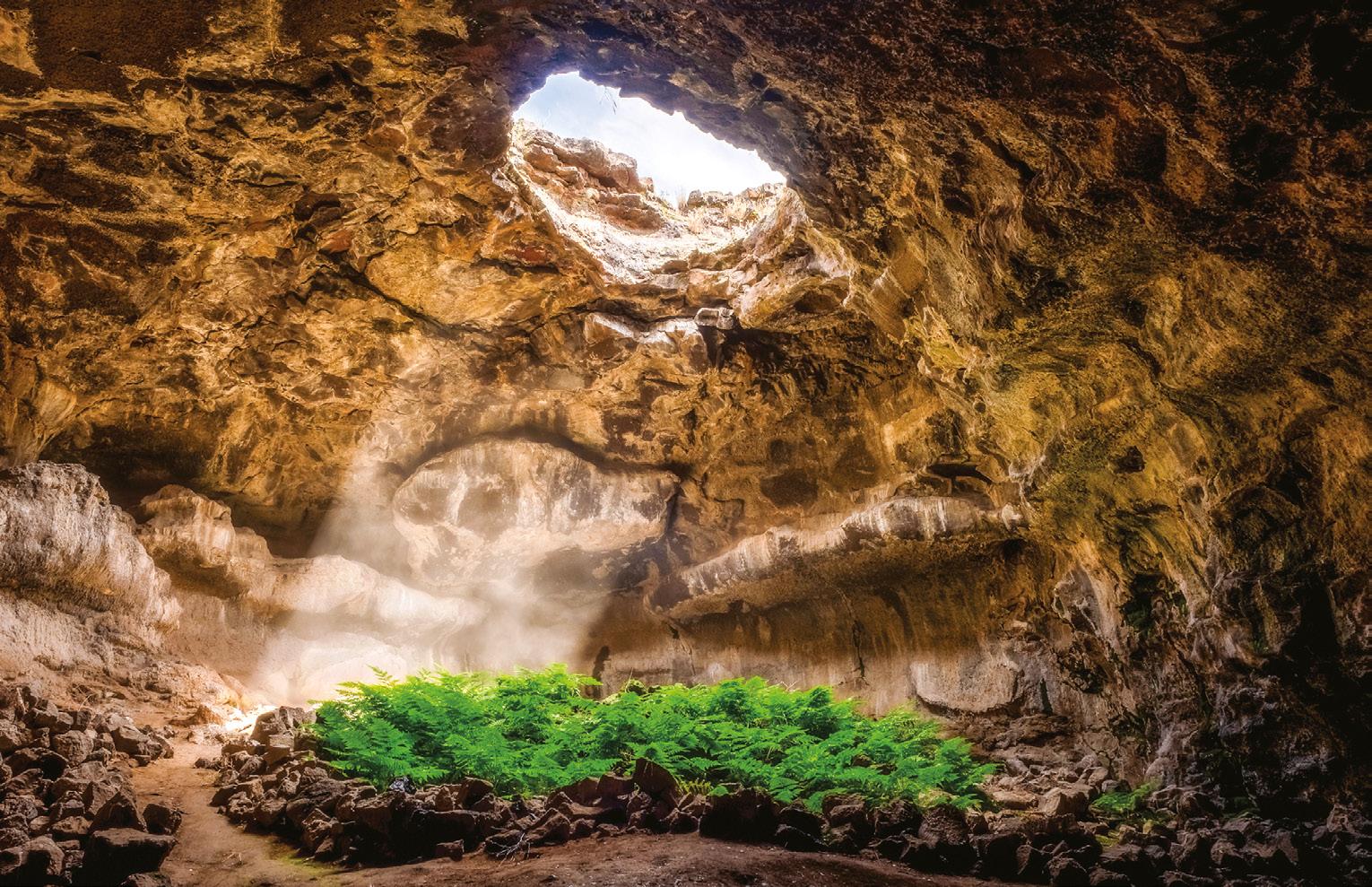

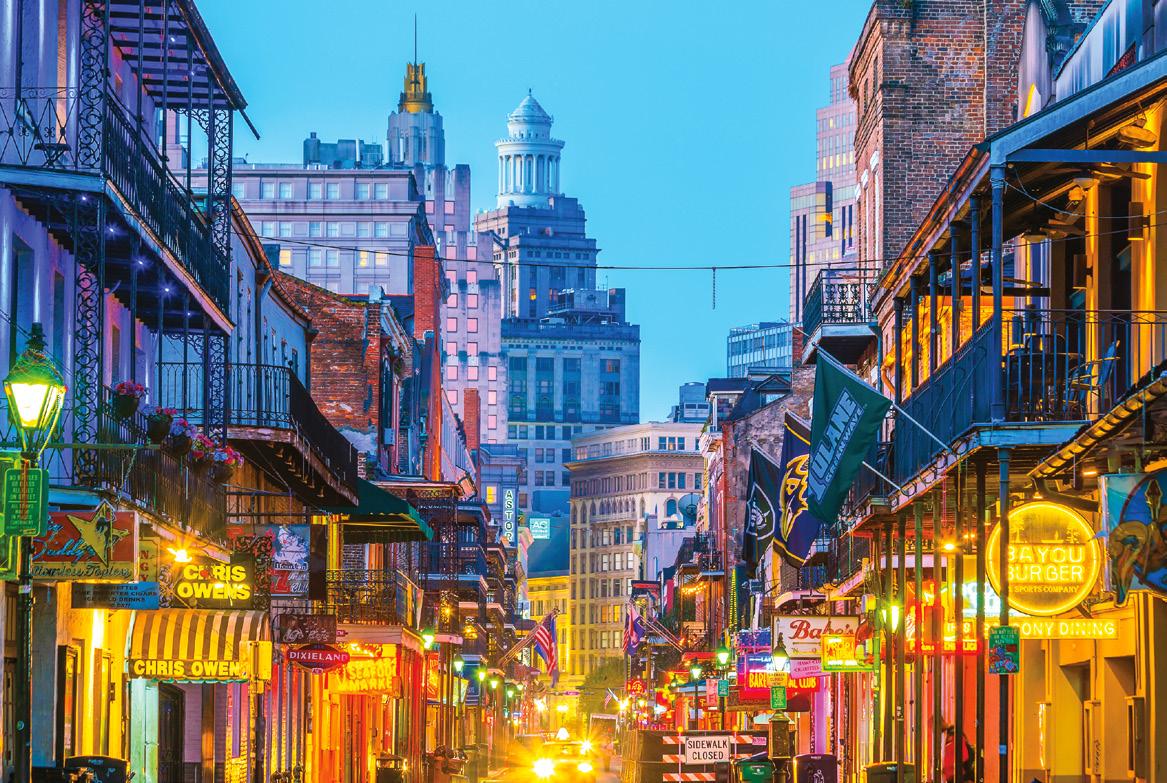
Catch a late-summer race at the Indianapolis Motor Speedway. Even if you don’t care about cars, you’ll care about the roar of the engines and the scream of the crowd as cars hit 300 kilometres per hour.
Maybe it’s corny, but who cares? Watch a baseball game carved out of corn at the Field of Dreams movie site at Dyersville, northeast Iowa. Or even get out there yourself and throw the ball around on the original baseball diamond from the 1989 Kevin Costner movie. What could be more American?
There’s more to Kentucky than bourbon (though you’d come for that alone). Visit the longest known cave system on the planet. There’s over 650 kilometres of caves at World Heritage-listed Mammoth Cave National Park. And they’re still discovering more every year. But then above ground, the park is just as alluring, with hiking trails winding through virgin forest.
There’s only one New Orleans. Music spills from clubs, streets and balconies… well, from everywhere. Experiencing live jazz in its birthplace is worth the air ticket alone; it’s spontaneous and impossible to replicate anywhere else on earth.
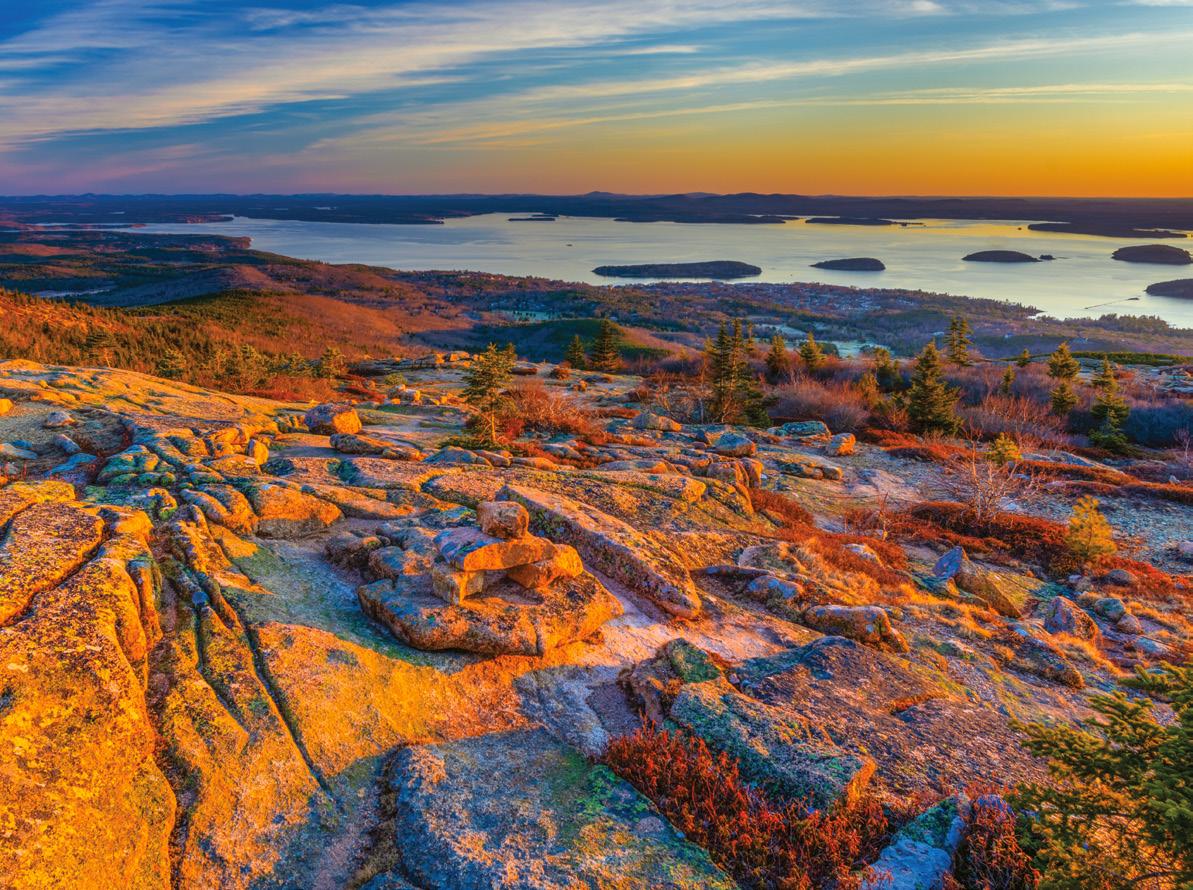
Explore the Tallgrass Prairie National Preserve where you can hike or ride through huge tracts of native prairie and watch bison roam. Forget the Wild West for a moment, come to Kansas instead for the quintessential American cowboy experience.
Watch sunrise from Cadillac Mountain in Acadia, where you can be among the first people in the US mainland to see the sun come up. As daylight spreads itself over the coastline and across all those pine forests, you’ll have the best view of the state there is.
THIS SPREAD: the United States has so much to do and see whether you are sampling the simple pleasures of food in Hawai’i, catching a race at the Indianapolis speedway or listening to a live jazz band in Louisiana.
Sail the Chesapeake Bay from the historic town of Annapolis. Wander the brick-lined streets then feast on blue crabs dusted with Old Bay (a seasoning with 18 herbs and spices), then catch a sunset over the harbour and pretend you’re in the 17th century.
“I spent six months in Boston – travelling to Cape Cod and Rhode Island was an incredible experience, the amazing coastline and history and brilliant food were unforgettable. It’s a truly local getaway where you can experience foundational moments in American history.”
Adam Schwab, CEO and CoFounder, Luxury Escapes

Stand on the shores of Sleeping Bear Dunes National Lakeshore and watch Lake Michigan pretend it’s an ocean (it looks that big). There’s over 100 kilometres of coastline here, including high sand dunes giving you a heck of a view out over the third largest Great Lake.
“Prepare yourself for a whiskey-soaked, sleep-deprived dunking into a ‘real’ leftbehind American city that was, according to aficionados, the birthplace of Delta blues. Clarksdale, Mississippi, is a place to late breakfast on fried catfish. Steel yourself for an all-night blues-fest, crawling from Morgan Freeman-owned Ground Zero Blues Club to whichever ‘juke joint’ is jumping.”
Steve Madgwick, travel writer
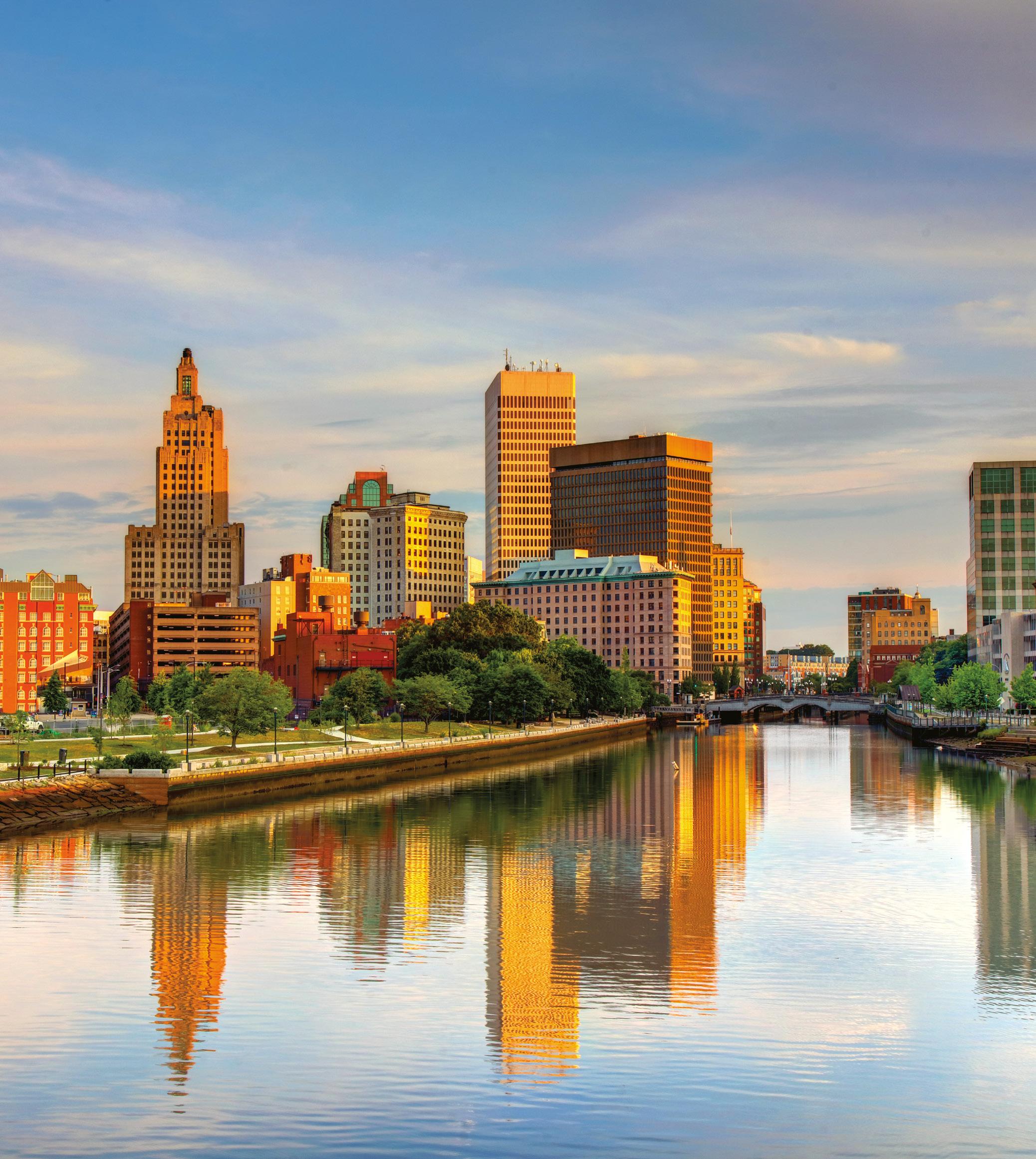
Spend a summer day exploring Minneapolis’ epic Chain of Lakes, cycling leafy paths and paddling across bright blue water, then head north to Boundary Waters Canoe Area Wilderness for a night under a trillion stars.

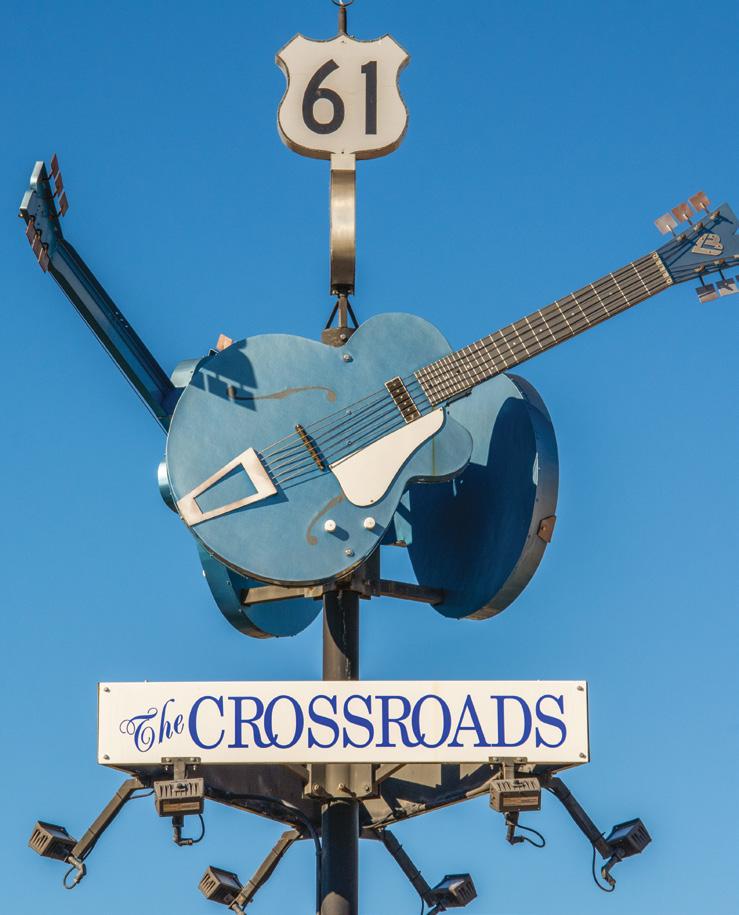
Explore Missouri’s biggest city, confusingly named Kansas City (it’s not in Kansas). It’s home to some of the country’s best barbecue, and then you can walk its historic 18th & Vine Jazz District, listening to live jazz as night falls. This very underrated city is the one that never sleeps.
The Going-To-The-Sun Road in Glacier National Park must be America’s most scenic drive, surely? This 80-kilometre road slices through huge peaks, glacial valleys and alpine meadows, all choc-full of wild creatures. Every turn feels like you’re starring in a movie.
Nebraska has one of the highest Indigenous populations of any American state. Visit the Niobrara National Scenic River and join a guided tour led by local Indigenous people. Paddle and hike with them to connect with their land. It’s been theirs for much longer than 250 years.
We all know Vegas, but what about the Cowboy Corridor?
Interstate I-80, which runs across the top of Nevada, is a 650-kilometre ride into America’s cowboy past. But it’s more than that. In the 19th century immigrants from the Basque region of Europe came to live. Now their descendants live among cowboys in a mix of culture unlike anywhere else.
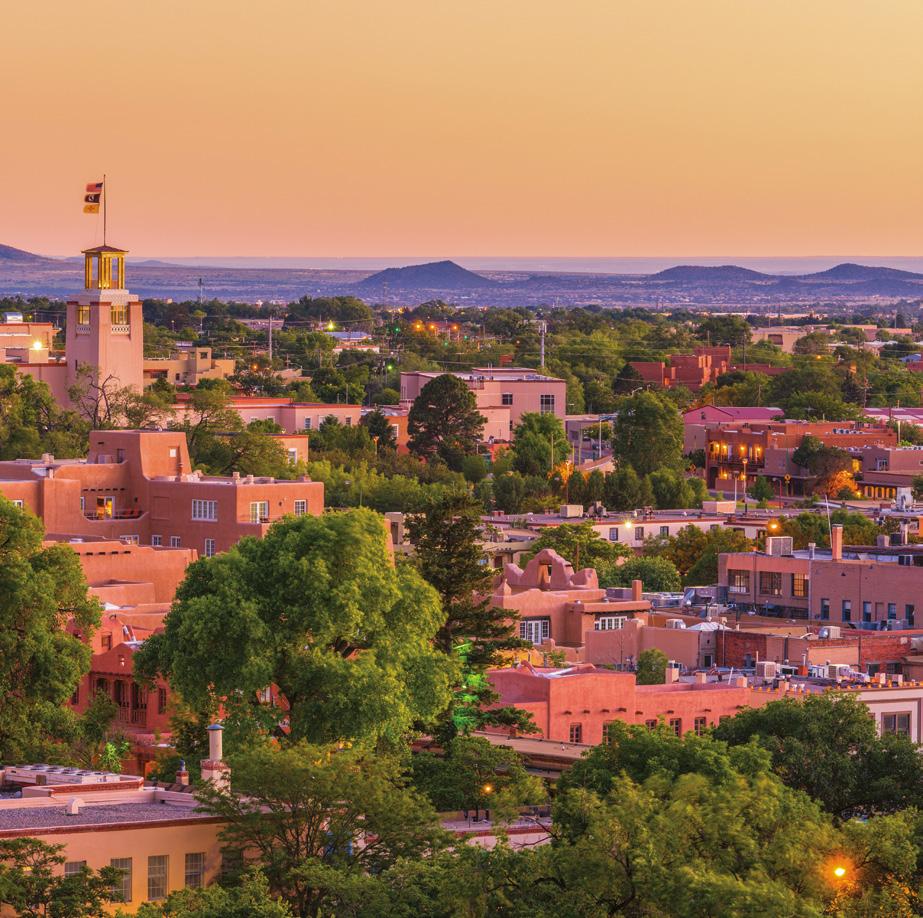
Santa Fe is actually America’s oldest state capital (it was founded by Spanish colonists in 1610) and those 416 years of history are evident across one of the country’s most culturally rich cities. Check out the adobe architecture and order a margarita at one of many rooftop bars.
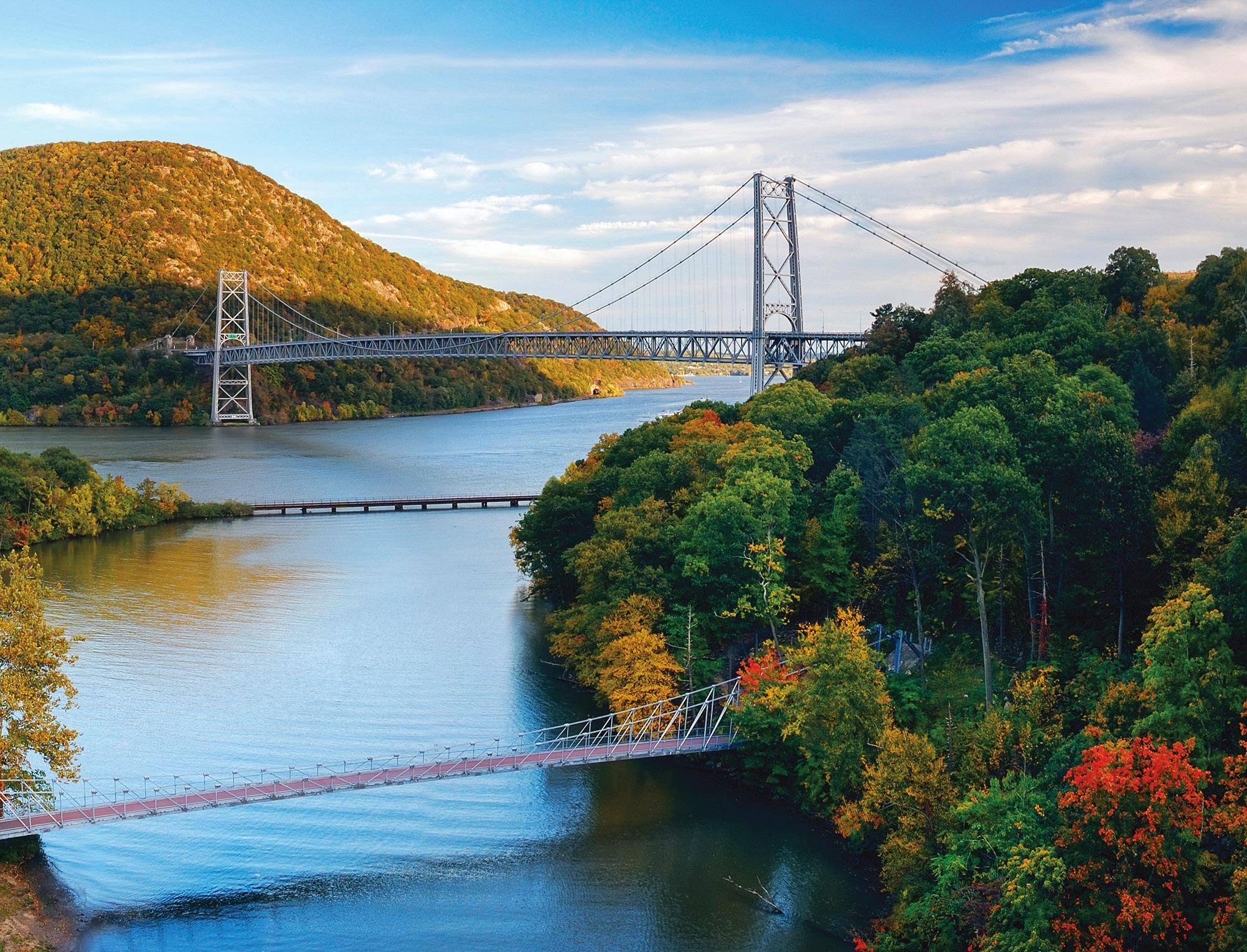
Ride aboard the planet’s second steepest railway – the Mount Washington Cog Railway, it’s been operating continuously since 1869 –to the US North East’s very highest mountain. One of the world’s great rail journeys offers you views across multiple states.
Hike the Delaware Water Gap National Recreation Area – known for its waterfalls and rivers hidden between forest. You can kayak or bike it too. New Jersey’s natural beauty is unknown to most travellers behind its iconic cities and beaches. Probably because Bruce Springsteen didn’t sing about hiking.
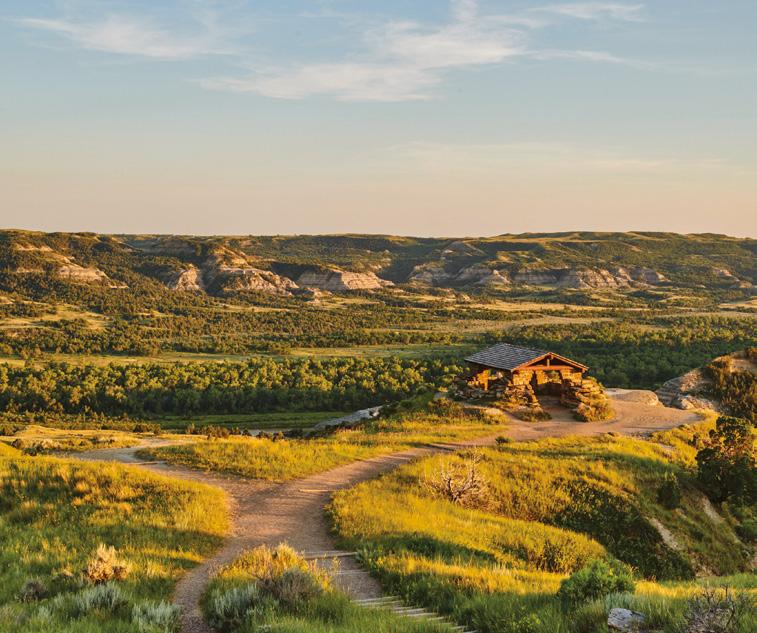
Combine the energy of an urban experience in one of the world’s most exciting cities (NYC) with the complete opposite! Catch the train from Penn Station for 90 minutes and disappear in Dutchess County. Cycle along the Hudson River, discover tiny towns where the likes of Meryl Streep hide, and experience the diversity of New York State.
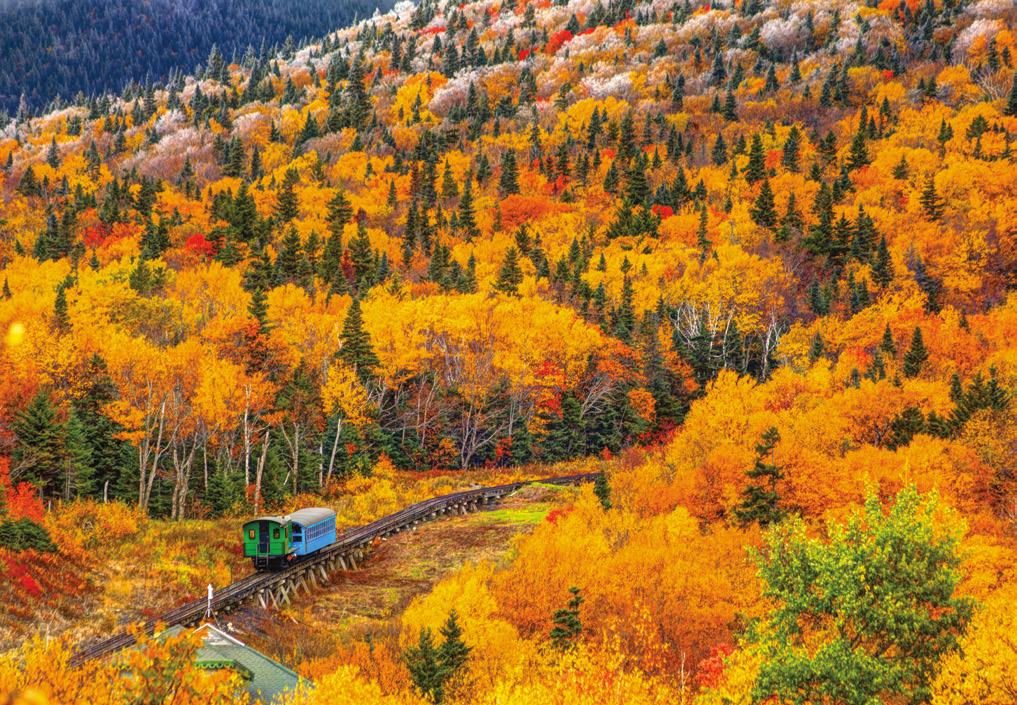
Hit the Blue Ridge Parkway just beyond America’s craft beer (and hipster) epicentre, Asheville. This winding, scenic road takes you through wild forests and across ridges that showcase the beauty of the wild Appalachian Mountains.
Explore the ultra-rugged beauty of Theodore Roosevelt National Park, where bison roam the prairies and badlands stretch on forever. Hike, photograph wildlife and take scenic drives around the park, especially at sunset.
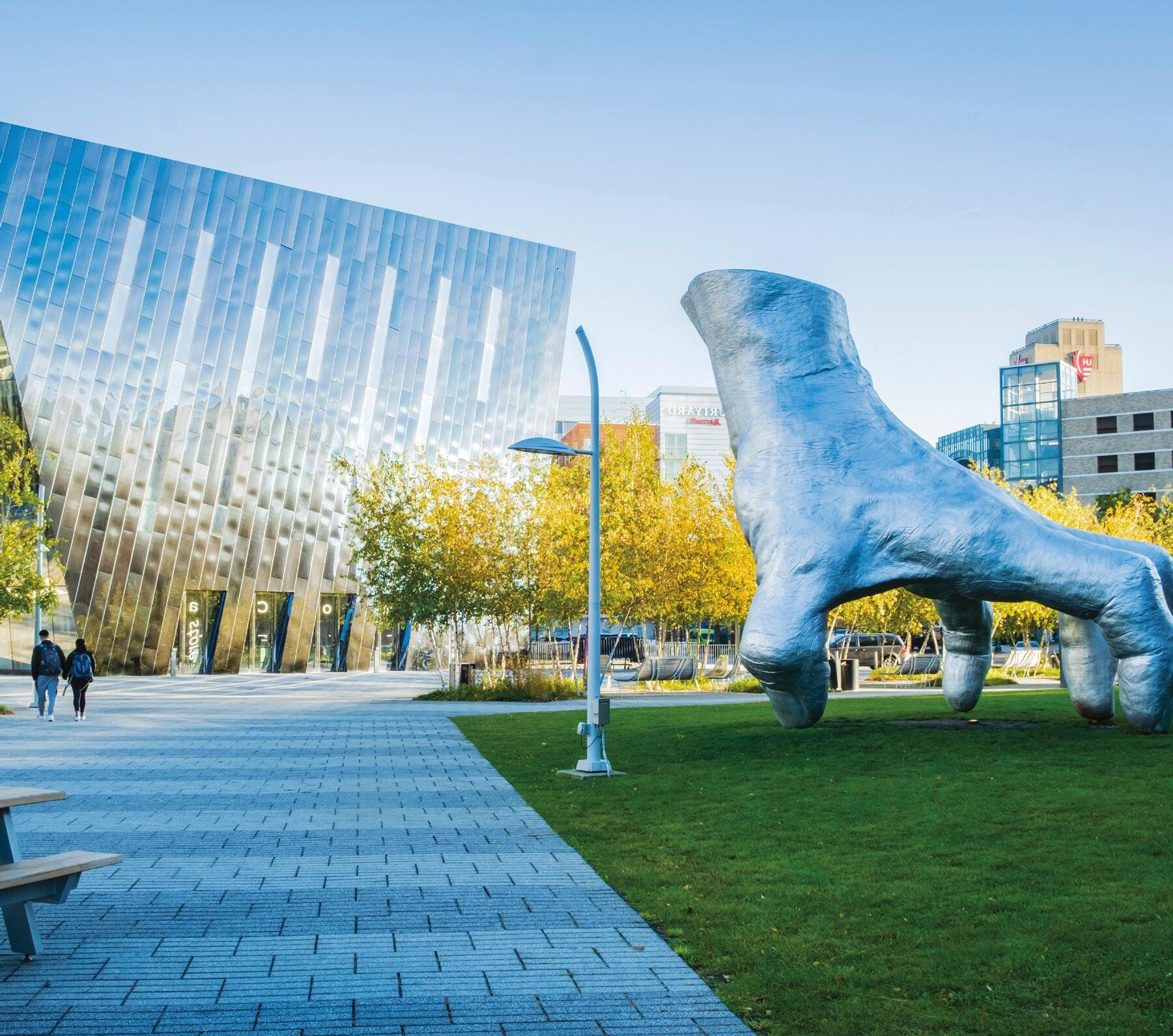
Explore Cleveland’s vibrant arts scene, from its very iconic Rock & Roll Hall of Fame to its live performances in famous historic theatres in America’s second largest theatre district (behind NYC). It’s also a culinary hotspot –plus there’s 10,000 hectares of city parks.
It’s America’s most famous road, and it’s preserved best in the state of Oklahoma. Celebrate Route 66’s special 100th birthday in Oklahoma where it snakes all the way from the Texas border to Kansas – that’s over 650 kilometres of old-world America.
“Portland is the right destination to celebrate America’s 250th anniversary because it embodies the ideals that define America’s greatest strengths: an innovative spirit, a sense of community, and a place where creativity and passion can flourish. And it’s got unparalleled access to stunning natural landscapes right on its boundaries.”
Jessica Elkan, James Beard Public Market, Portland

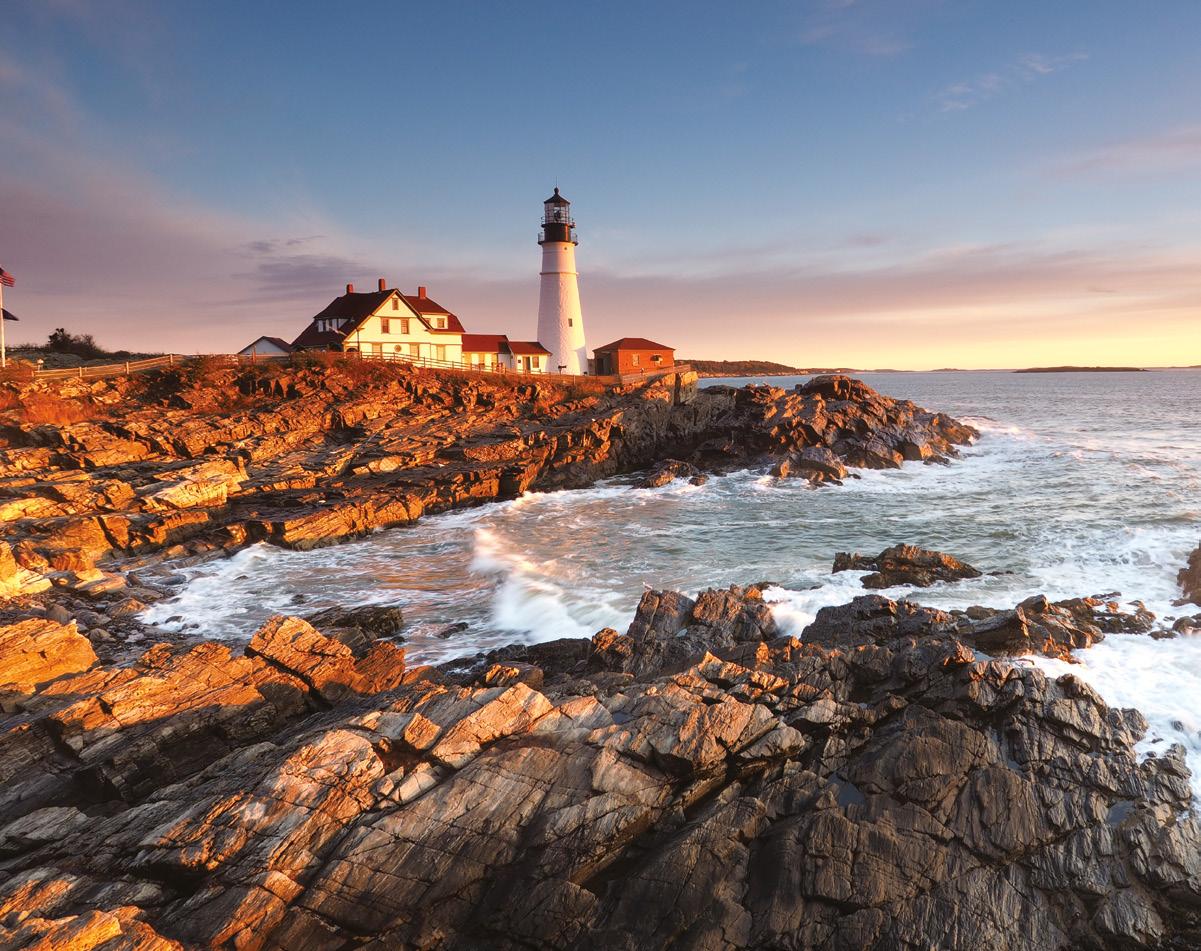
There’s no better place to celebrate America’s 250th birthday than in this hall in Philadelphia – the Assembly Room of Independence Hall – where the Declaration of Independence was signed, freeing America from English rule.
Stroll the Cliff Walk in Newport, where ocean waves crash against historic Gilded Age mansions, once owned by America’s richest families. Check out the yachts offshore; this is where Australia experienced its iconic America’s Cup victory in 1983, breaking America’s 132-year rule.
There’s no other city in the US quite like Charleston. With its cobbled streets and historic homes, it looks as it did when the Civil War started here in 1861. But it’s hardly a museum, this is one of the country’s best food cities, and you should party here till late.
“Hiking through the Badlands is like being in a Western movie set on the moon. Step off the trail and you step back 32 million years. The Badlands are eroding fast, which uncovers ancient bones and fossils that are scattered around like candy. But if live critters are more your thing, then you’ll also spot plenty of bison, prairie dogs, and longhorn sheep.”
Brian Thacker, travel writer, US resident
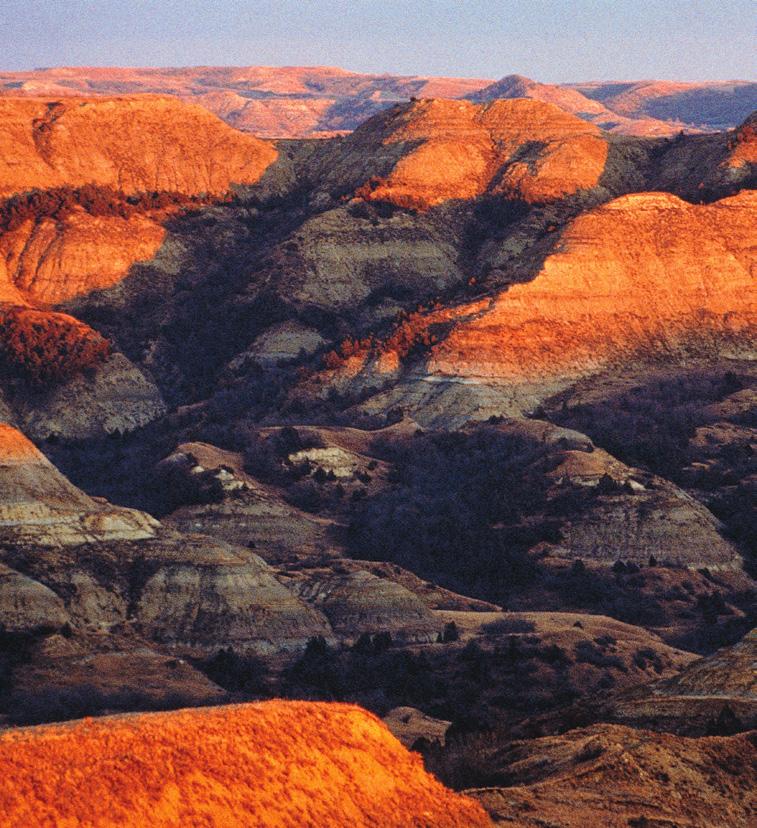
You’ve heard all about it, but till you get to Nashville you won’t know what good live music really sounds like. From honky-tonks to legendary venues, Nashville’s music scene pulses with tradition, all day and, especially, all night long.
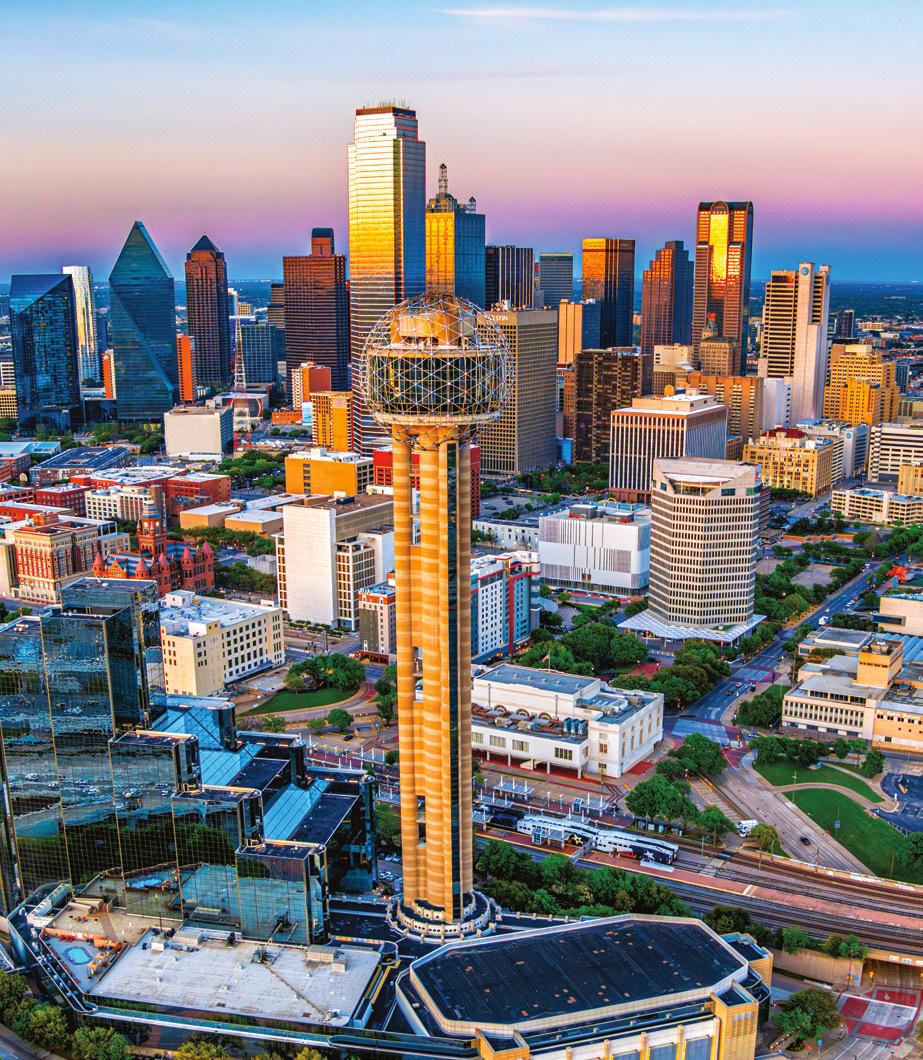
“Dallas’s Margarita Mile is meant to be savoured, not smashed. The ‘Mile’ is more metaphor than distance, with 30-plus standout venues across the city. Stop at Mariano’s Hacienda, home of the OG frozen margarita, born in 1971 when restaurateur Mariano Martinez turned a Slurpee machine into a happy hour hero.
Sip. Savour. Repeat.”
Narelle Bouveng, travel writer

It’s the ultimate outdoor state with five mighty national parks, but you can’t go past Zion National Park. Famous for its rock formations – massive vertical red sandstone cliffs, buttes, mesas, monoliths and slot canyons. Hiking is mind-blowing, but consider visiting in winter when the park is deserted.
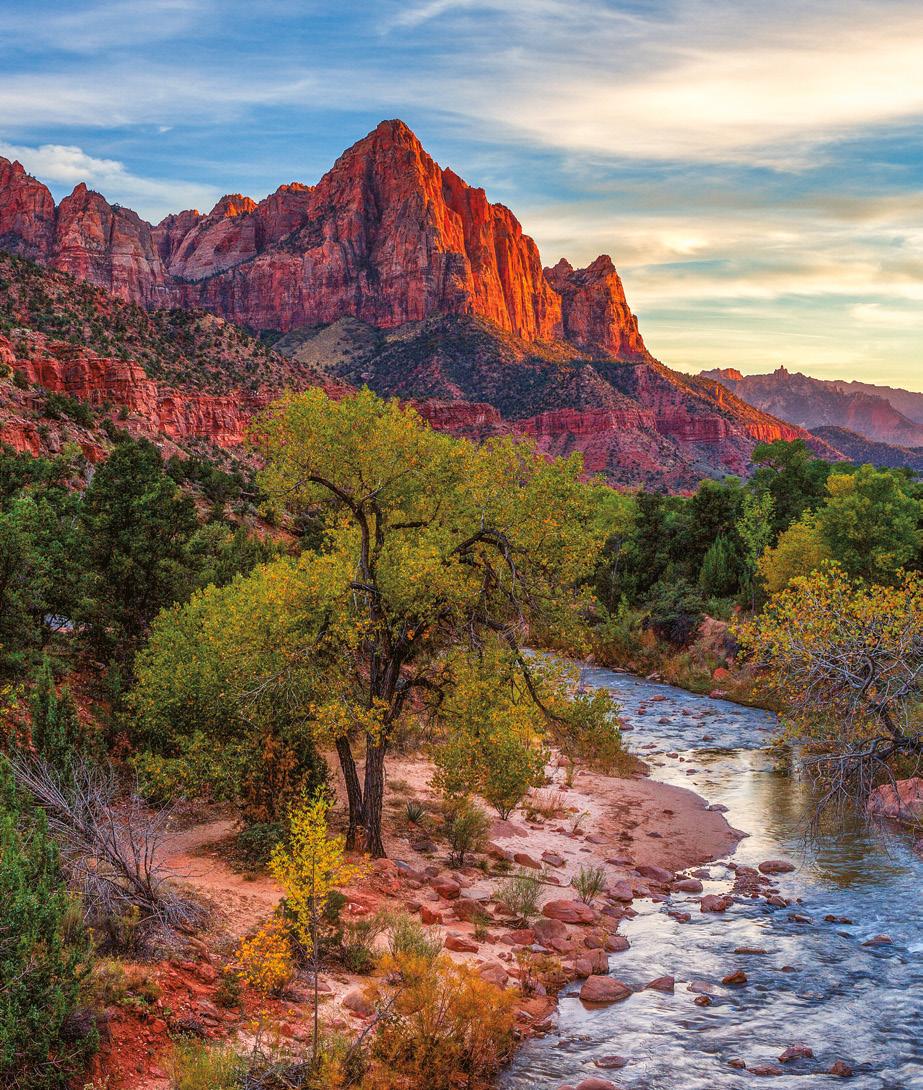
You have to experience “fall” (autumn) foliage in the Green Mountains, which run for 400 kilometres north-to-south. Autumn transforms these mountains into a living, breathing painting; rolling hills, covered bridges and blazing colour every direction you look.
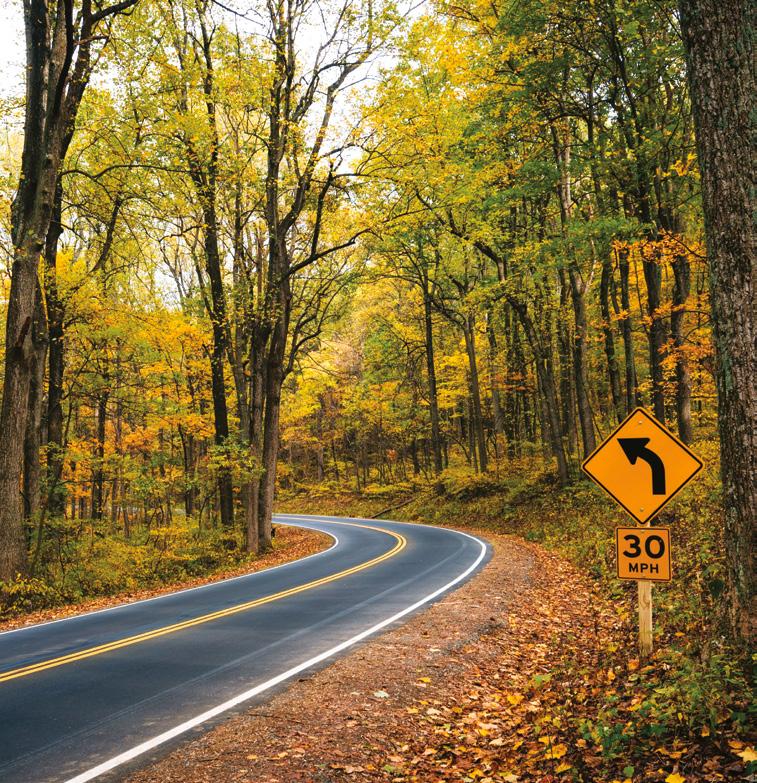
Virginia might make you think more of the civil war and centuries-old American history, but the state is home to some of the prettiest scenery in the eastern USA. Visit Shenandoah National Park and take the Skyline Drive (all 170kms of it) along the Blue Ridge Mountains. There’s 800kms of walking trails in the national park including part of the infamous Appalachian Trail, the world’s longest hiking-only footpath.
“One of my favourite Seattle experiences is birding with my family at Seward Park. Located along the lake and surrounded by old-growth forest, it’s full of incredible birds and waterfowl – and I can even walk my dog on the two-mile loop. It’s amazing how quickly you can feel immersed in nature right in the city.”
Leslie Womack, Seattle Center Monorail
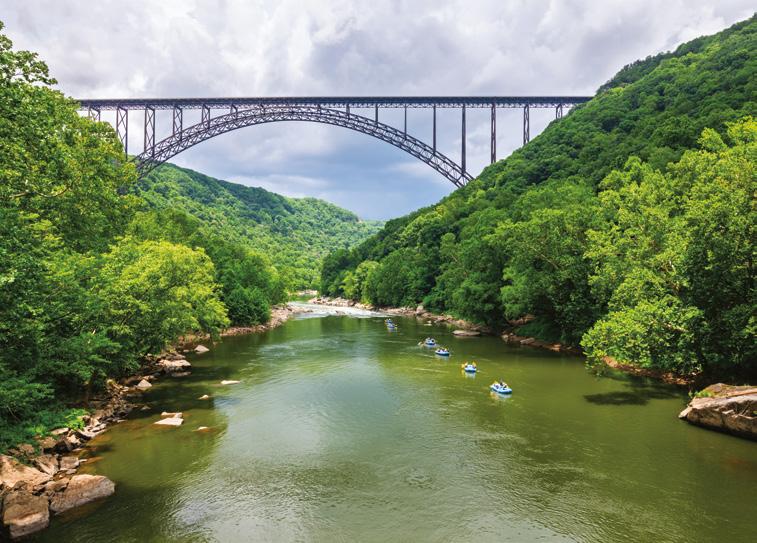
There’s a lot more to this state than that John Denver song; little wonder Lonely Planet named it one of its best places on earth a few years back. Nowhere beats the New River Gorge National Park – one of the world’s best whitewater rafting destinations.
Check out Door County, the Cape Cod of the American Mid-West, an incredibly scenic peninsula offering the same heady mix of coastal vistas and historic villages. Explore the shoreline along Lake Michigan and Green Bay with its wide sandy beaches and limestone caves. And kayak – or take a bike along coastal bike and hiking trails. There are also wineries and a happening arts scene.
Nowhere on earth combines wildlife as wild as grizzly bears, geothermal wonders and wilderness, that never, ever quits quite like Yellowstone National Park. While crowds rush off to iconic geyser Old Faithful, there’s secrets all over, like Lamar Valley, dubbed North America’s Serengeti for its wildlife spotting.

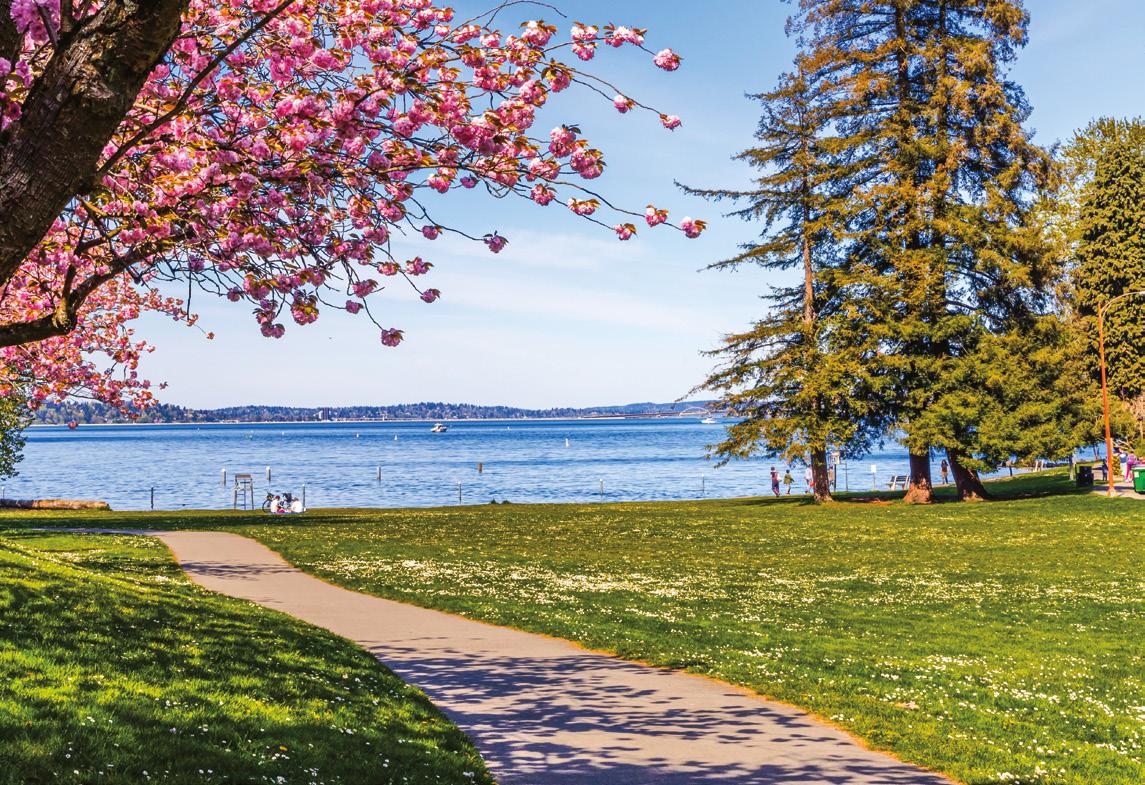
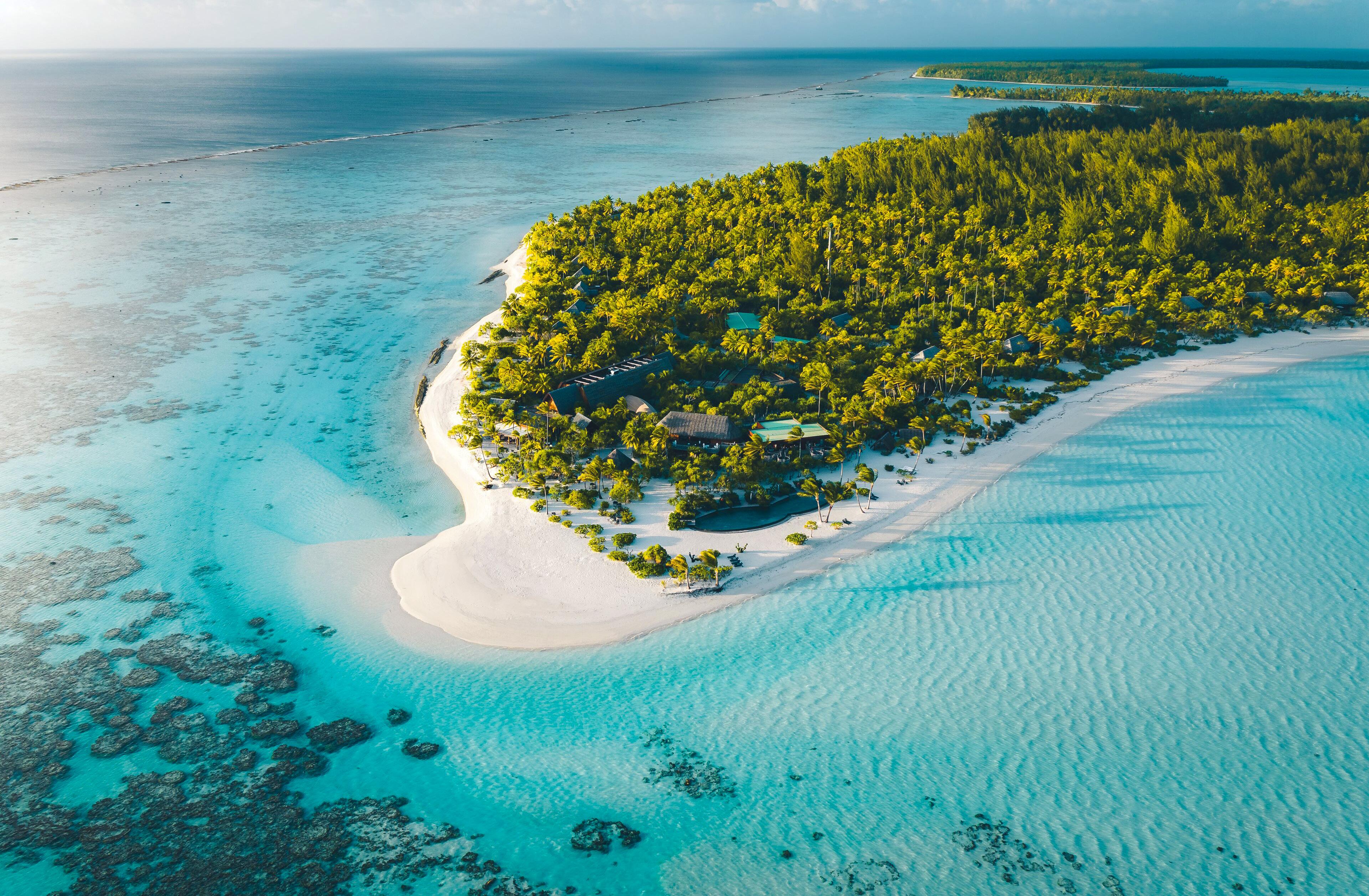
While visiting what was once Marlon Brando’s private atoll in French Polynesia, Jessica Bedewi discovers a rare kind of paradise, one where privacy protects not only the guests, but the wildlife, the landscape and the island itself.
In the early 1960s, while lming the Academy Award-nominated
Mutiny on the Bounty, Marlon Brando spotted an island among the blue waters of French Polynesia. He instantly fell in love.
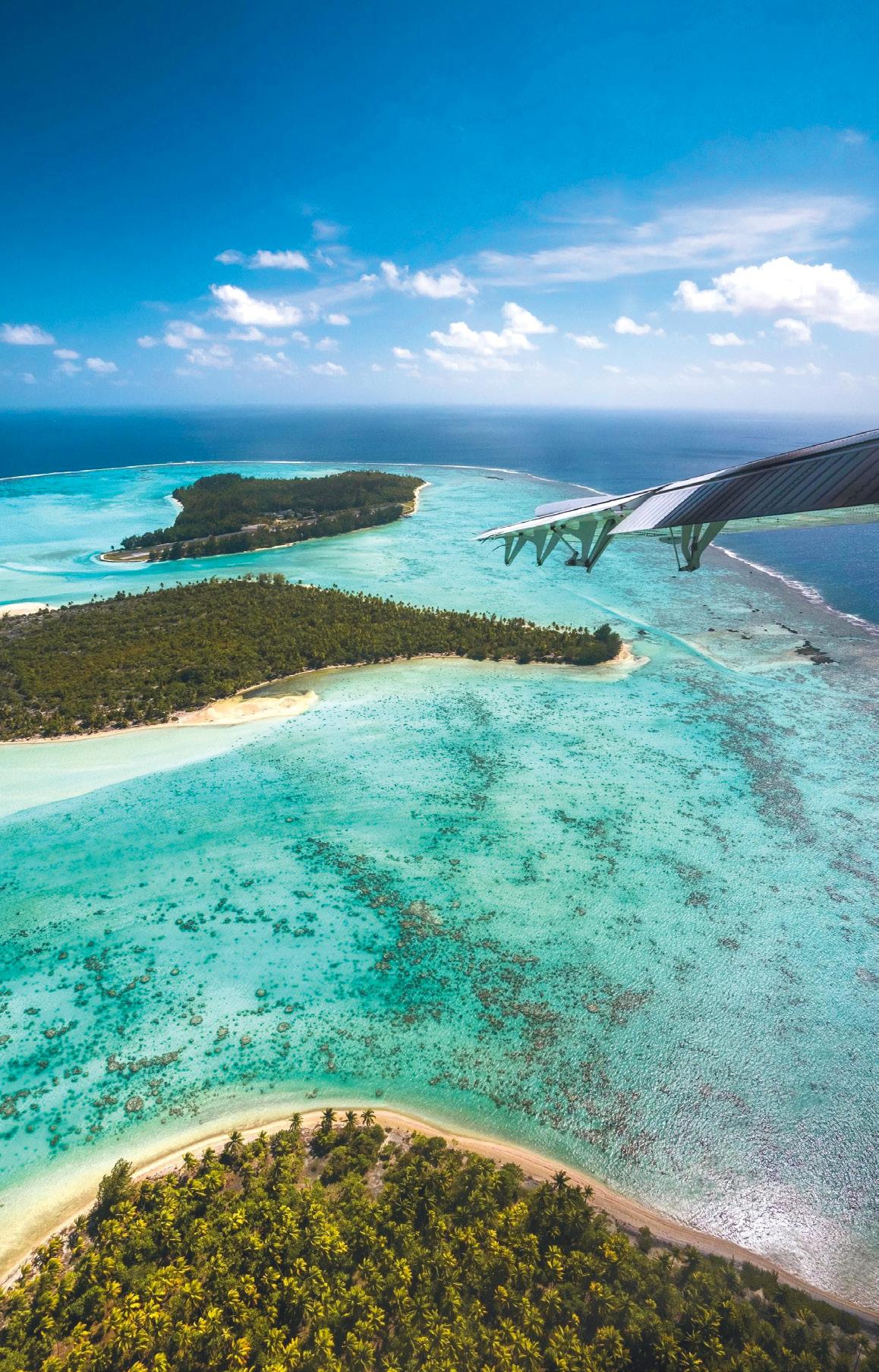
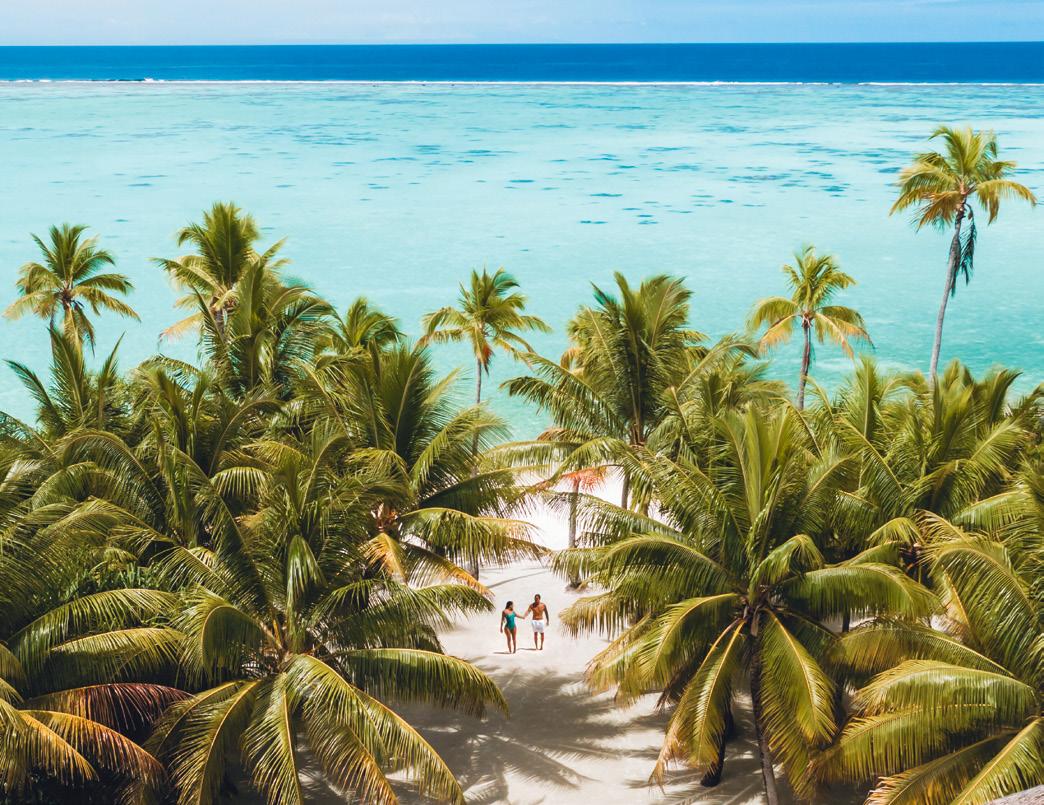
More than half a century later, I’m pressed against the window of a small plane, and I understand the appeal. I’ve never seen colours like this. Our journey was so short – just 20 minutes from the airport terminal in Tahiti, gliding above the ocean – and suddenly colour ruptures the expanse of sapphire blue. The Tetiaroa atoll materialises below me, shifting the water into something that leaves me speechless.
Swathes of bright green rise from the ocean, forming the 12 motus – or islands – that make up Tetiaroa. In the centre, a blend of icy blue, near-white and aquamarine spiral together to dizzying effect, ringed by a reef that seems to hold the entire atoll together like it might otherwise float away.
With only five of the 15 seats aboard the small plane filled, the awe is palpable. All passengers stare out the window, taking in the scenery as our two pilots guide us gently onto the private landing strip. We have officially arrived in an island paradise few have the pleasure of ever seeing.
The story of Tetiaroa starts centuries before Brando’s visit. Once a retreat for Tahitian royalty and the rumoured home of the king’s treasures in times of trouble, Tetiaroa was long revered and long protected – a place the powerful have always found a way to claim as their own.
It should come as no surprise that while playing Fletcher Christian – a sailor who finds himself falling in love with Tahiti – Brando found himself in a similar position in real life. After spotting Tetiaroa, he wanted it – not just to visit, but to claim and to protect. In 1966, Brando secured a 99-year lease for the island for $270,000. A bargain, by any measure, for a private atoll in the middle of the Pacific.
For all the romance of owning a private island, Brando always seemed less concerned about turning Tetiaroa into a playground than preserving it as a refuge. Though he enjoyed bringing friends and family to the island, what he seemed to treasure most was the very things that made it difficult to reach: its peace, its privacy and its profound sense of removal. Rumour has it he would invite friends to Tetiaroa as a kind of test, watching to see whether they embraced the isolation as he did or quickly began missing the noise and movement of home.
His namesake resort that now stands on the atoll –The Brando – seeks to honour his vision rather than override it. The resort layout makes it easy to find the kind of peace and seclusion Brando craved. Twisting pathways cut through the greenery, occasionally branching off to one of the 35 palatial villas, all with private pools and a direct path to the shimmering lagoon. My own twobedroom villa feels far too large for just one person –natural wood materials and a vaulted ceiling that shows the skeleton beneath the thatched roof blend seamlessly with soft furnishings, a luxurious king-sized bed and windows framing lagoon views from every angle. I open the large sliding door and cross the wooden deck, sinking my toes into soft white sands as I make my way down to the beach.
As the sun sinks towards the horizon, I dip my feet into the lagoon to cool off. The water is so clear I can barely tell where the surface meets my calf, a small shadow the only sign that I’m standing in water at all. The sun disappears in a flash of orange, and as I wait for the light to fade, the entire sky lights up in a symphony of pink, red and yellow, reflecting off the calm water as the day slips away. I take a few steps back and settle on the sand to watch the show. With trees surrounding my villa on all sides, I feel as Brando must have felt – like I’m the last person on earth, like this entire island was made for me alone.
The feeling continues throughout my stay. With the bike outside my room, I cycle around the whole of the resort – a short journey that takes less than an hour, even with a long stop to meander the beach of Mermaid Bay. I see only a few people, cycling back to their villas from
breakfast, taking a yoga class or simply wandering the shores. It’s largely quiet.
Even at dinner, the fully booked resort barely stirs. I take a seat at the bar for a pre-dinner drink and I have the entire space to myself, sitting alone on a deck extended over the beach with views of the resort pool and the lagoon beyond. While I dine on tender steak, swordfish with ponzu sauce, garlic fried rice and other delicious bites at the onsite Nami Teppanyaki restaurant alongside just four other guests, I realise that everyone has everything they need in the comfort of their villa. Drinks, snacks, a pool, room service – there’s no need to venture out.
Decades after Brando built his private residence on the island, Tetiaroa still draws those who want to disappear: Beyoncé, Leonardo DiCaprio and Margot Robbie among them. But celebrity sightings are beside the point here. On arrival, every guest signs a form promising not to photograph others on the island. The message is clear: whoever is here came to be left alone.
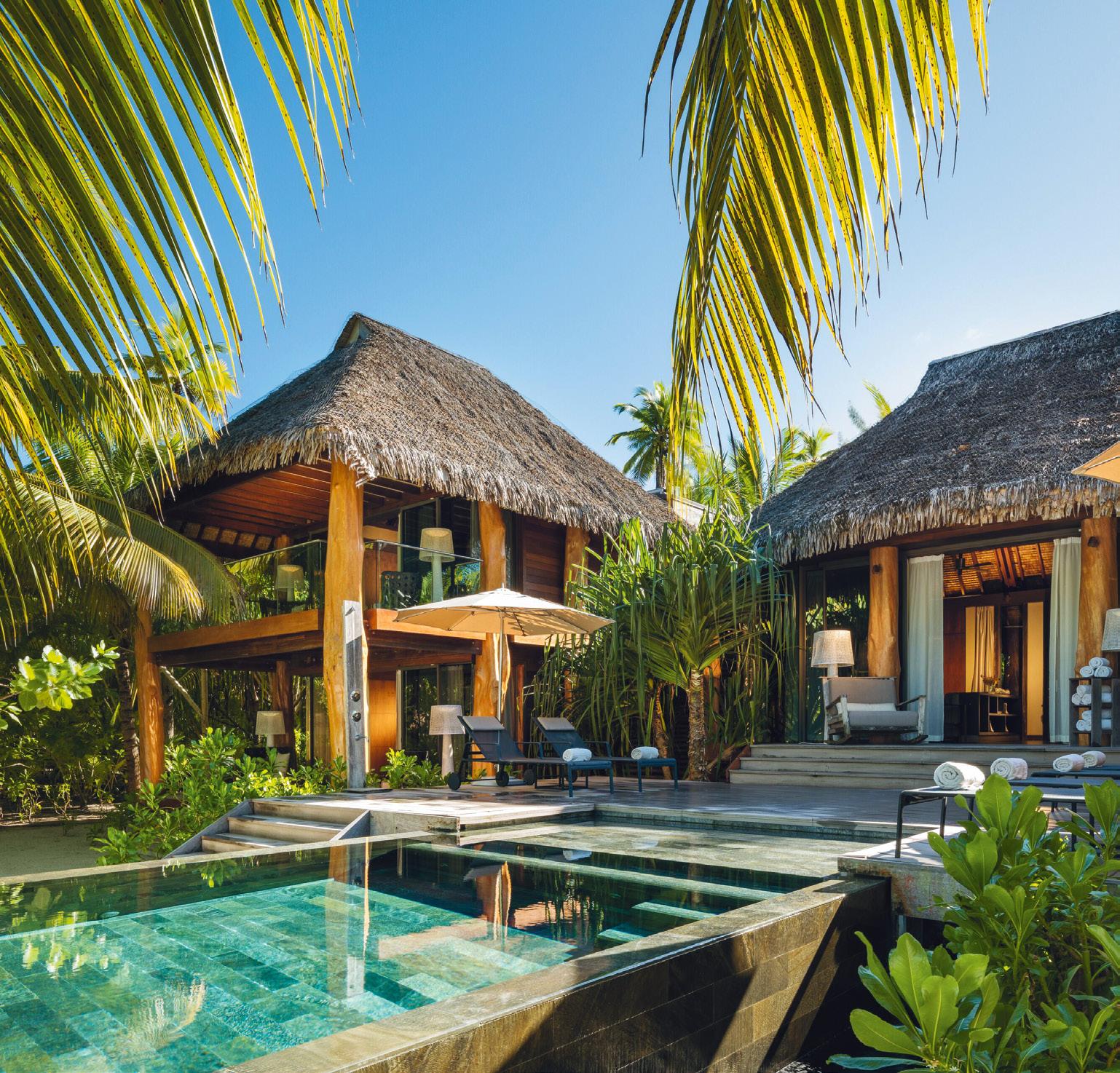
Tetiaroa’s version of solitude, however, is never truly empty. The island is teeming with life, and not only because of the human guests. On a tour of the lagoon, Hugo – my guide –takes me out to meet the other residents. As our boat pulls away, roughly following the path of the islands to give me a full view of the atoll, Hugo points out birds skimming the water as they search for a place to land and a blacktip shark moving under the waves. Eventually, we stop at a crystalclear pool just off the shore of one of the islands, named the Queen’s Bath. I step in and immediately understand the name – the water is impossibly warm, still and clear – more bath than ocean.
Of the 12 islands that make up the atoll, the resort occupies only one: Onetahi. From there, guests can walk or kayak through the shallow water to nearby Honuea. The other 10 islands, however, can only be visited with a scientist or guide on planned excursions. Guests can explore the atoll under their expert care, glimpsing natural wonders without disturbing the islands’ delicate ecosystem.
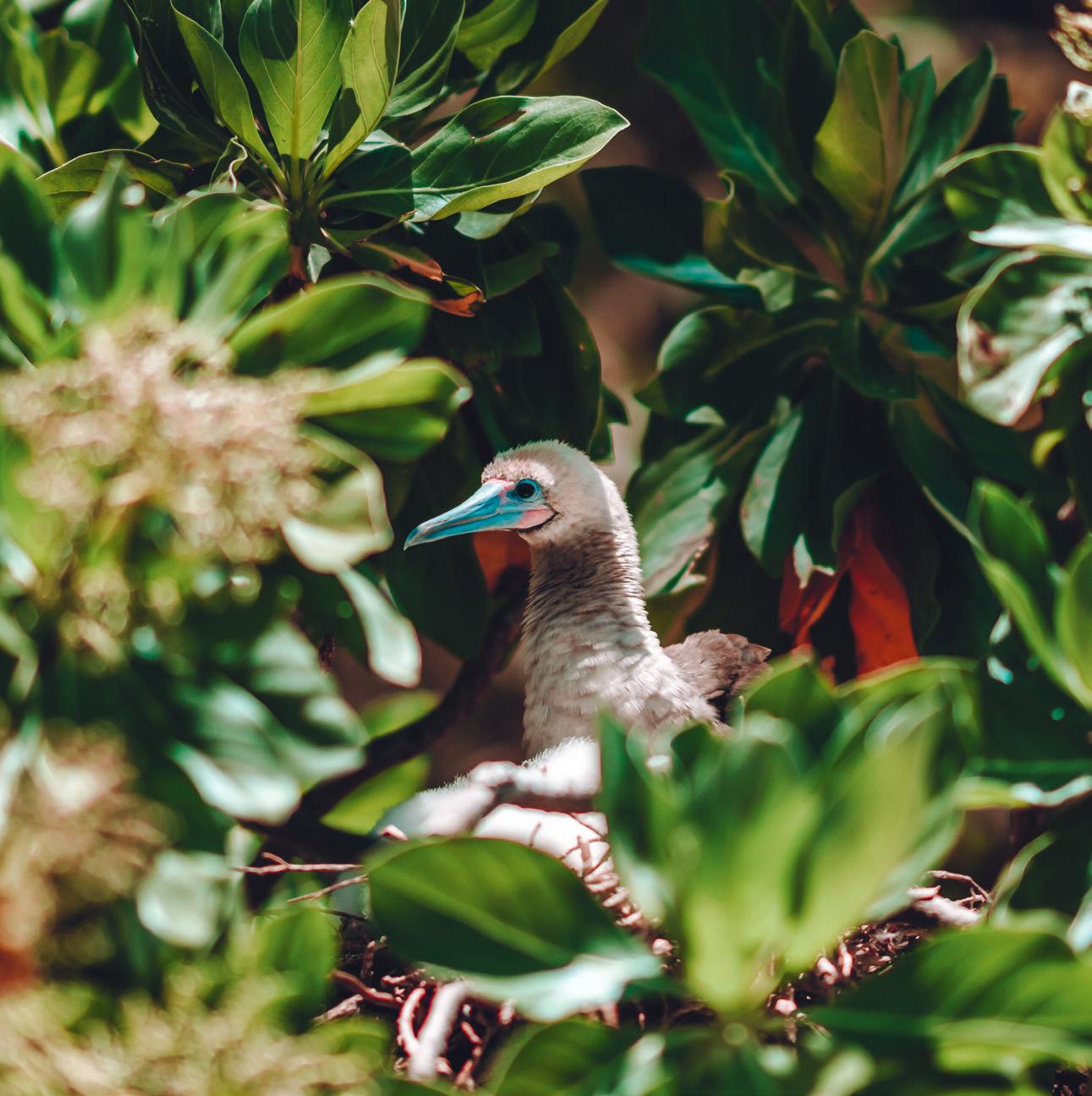
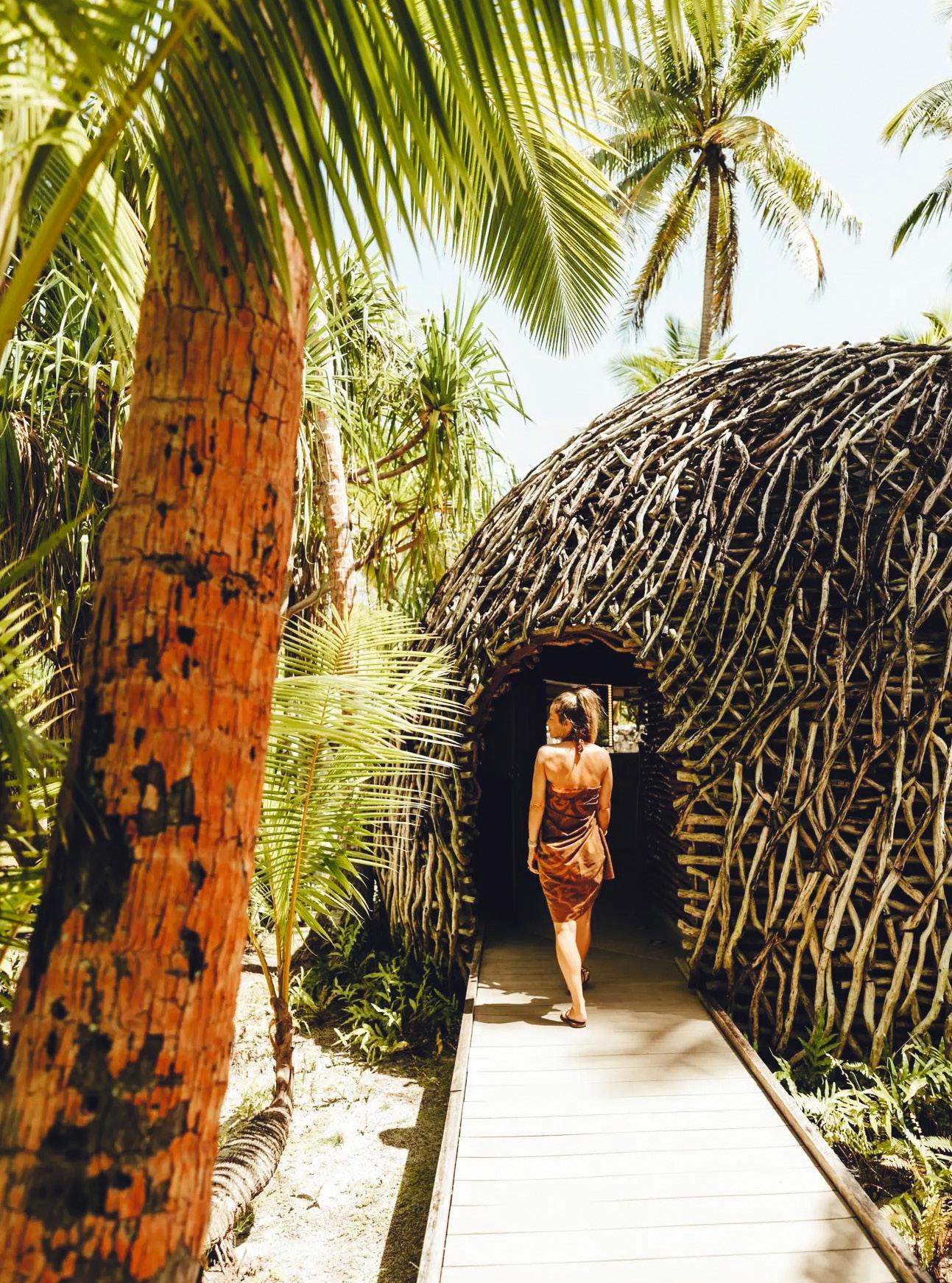
The restraint feels true to Brando’s original dream for the island: to preserve the natural landscape, allow the wildlife to thrive and make Tetiaroa a haven for native flora and fauna. Visitors were part of the vision, but only if their presence left as little trace as possible. When Brando passed away in 2004, the Brando Family Trust continued to advocate for his philosophy, partnering with local hotelier and property developer Richard Bailey to bring The Brando to life, opening its doors in 2014.
The result is a sustainable hotel that is no less luxurious for its eco-conscious nature. It’s hard to imagine that my villa, a good 10 degrees cooler than the humid air outside, is powered by seawater pumped directly from the ocean, an innovative system that uses far less energy than conventional methods. Even the spa is a haven of natural wonder, with wooden walkways meandering through the greenery in the centre of the island, and changing rooms that look like large bird nests with wooden logs layered over each other to form a cosy domed cocoon.
The sustainability extends to the entire atoll. In keeping with Brando’s vision, scientists from around the world come to Tetiaroa to study and protect the atoll’s ecosystem. Here, they work to eradicate invasive species and restore native plants and animals, including the coconut crab – a huge crustacean in a brilliant shade of electric blue, often streaked with purple, red, orange and even black. Hugo shows me a video of a “small” crab he came across recently. The crab’s entire body hardly fits in the palm of his hand, but he assures me it’s far from the largest he’s seen.
Throughout my stay, the island never ceases to amaze me. Birds flock to the shore, their low squawks a gentle soundtrack to my morning walk along the beach. They circle over the water, occasionally dipping in to snag their morning meal. Ahead of me, human footprints trail through the sand beside smaller, crisscrossing patterns that lazily zig-zag up and down the sand – evidence that the birds have already taken their own stroll along the beach. Signs point out conservation areas full of natural greenery, and in the water I can see colourful fish darting through patches of coral, their shapes rippling and dissolving in the undulating water.
On the morning of my departure, I wander Mermaid Bay one last time. As I admire the lagoon melting into deeper and richer blues the further it gets from shore, I almost miss what’s happening at my feet. With every step, I see hermit crabs skittering away, ranging in size from the tip of my finger to my palm.
I have stopped thinking of Tetiaroa simply as Brando’s island. Ownership here feels almost beside the point. The atoll seems to belong first to itself, less like a possession than a place briefly shared – with guests, with birds, with crabs, sharks and fish, and with the restless Pacific holding it all in place.
OPPOSITE, FROM TOP: part of The Brando’s remit is to protect the wildlife of this Tahitian atoll; the resort is actually just one of the 12 islands on Tetiaroa. BELOW: the resort is a haven for those seeking privacy.
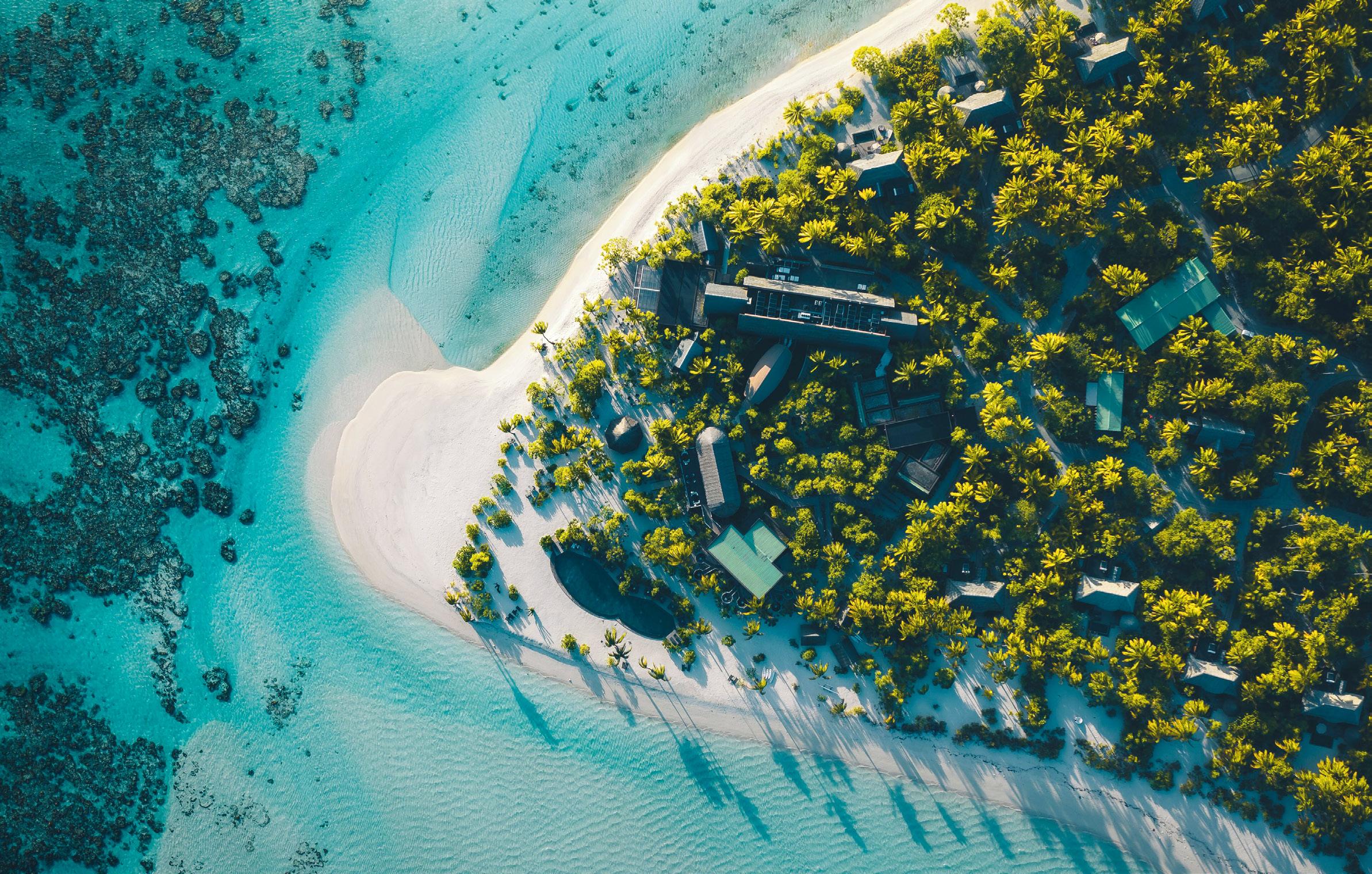
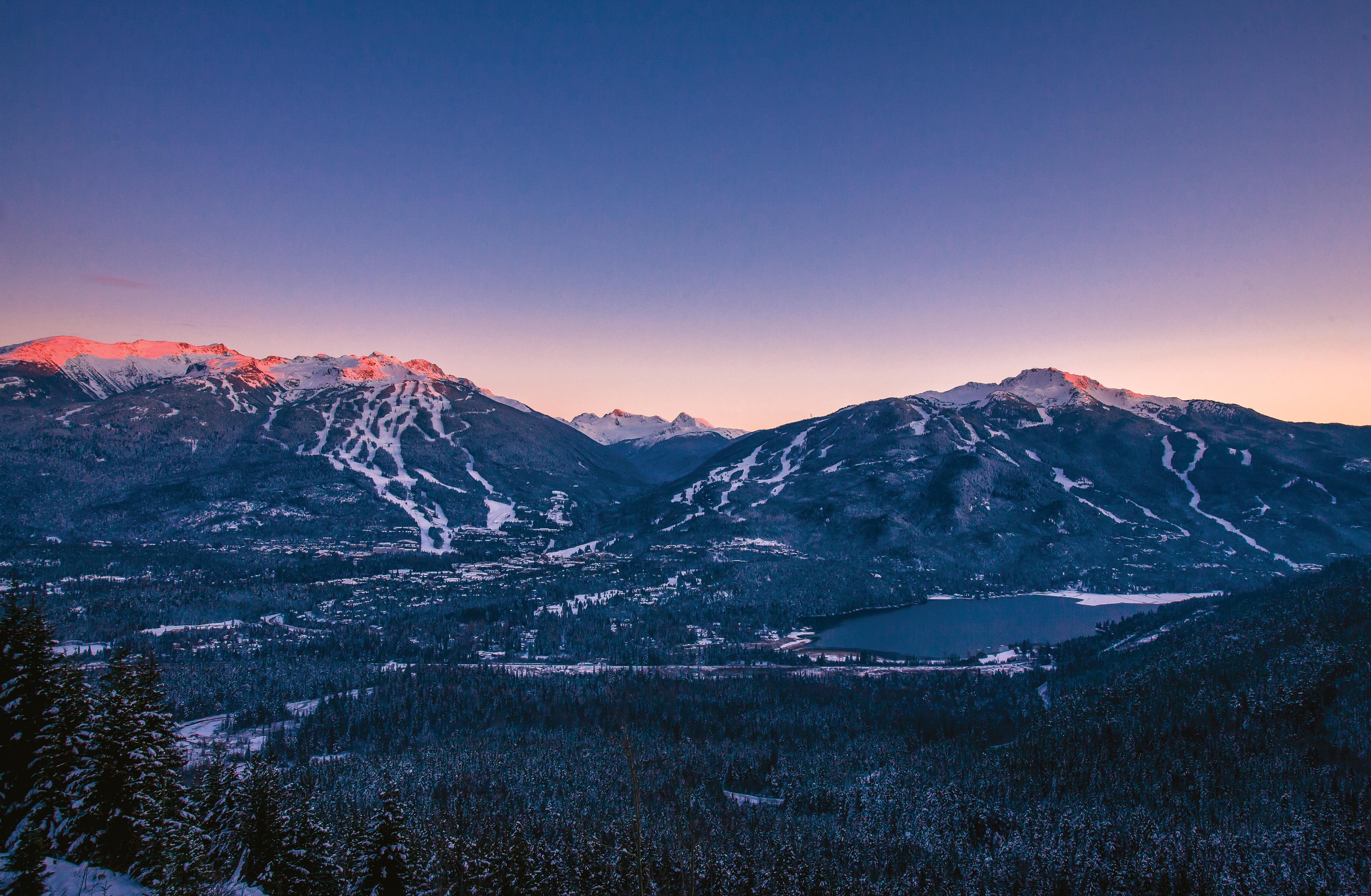
It says something about a ski destination when the powder days and glacier runs play second ddle to the fanatic frivolity of village life. Paul Chai discovers that at Whistler-Blackcomb sometimes the most fun you can have is at the base of the twin mountains.
Some of the freshest, fluffiest snow I have ever seen in my life is falling outside Merlin’s bar in Whistler-Blackcomb village, but the only ski I am eyeing off is the one held aloft over a sea of fellow revellers, with four shot glasses glued to it. The glasses are filled with tequila and our quartet lines up to take the shot in unison to cheers from the crowd, many of whom are dancing while standing on teetering bar stools.
Merlin’s is a log-cabin-chic dive bar with ski lift chairs and gondolas hanging from the wooden roof, skis stuck to the wall and a moose head adorning the bar; across its antlers hang floral bras, white y-fronts and a bright-red MAGA cap reading “Make apres great again”.
It’s a MAGA movement that the whole of Whistler-Blackcomb seems to get behind. The “shotski” is a Merlin’s staple and so, too, is the band that has brought everyone here: the Hairfarmers. Made up of “Grateful” Greg Reamsbottom and “Guitar” Doug Craig, the Hairfarmers are a “West Coast ski bum” outfit with more tunes than an overstuffed pub jukebox. They claim to know around 2500 singalong classics from Led Zeppelin to Taylor Swift and even a couple from Aussie pub rockers The Chats.
The pair play five nights a week and have been doing so for 26 years, still drawing crowds like the one I am a part of, which is taking up every square inch of beer-soaked carpet. They are here dancing in ski boots, goggles still strapped to their heads and they have helped the bar go through 14,000 shots of Fireball whisky in the past six months.
“Grateful” Greg says it is these raucous crowds that keep the gig fresh. “Every year we get a new bunch of seasonal workers, and every week the tourist audience changes,” he says.
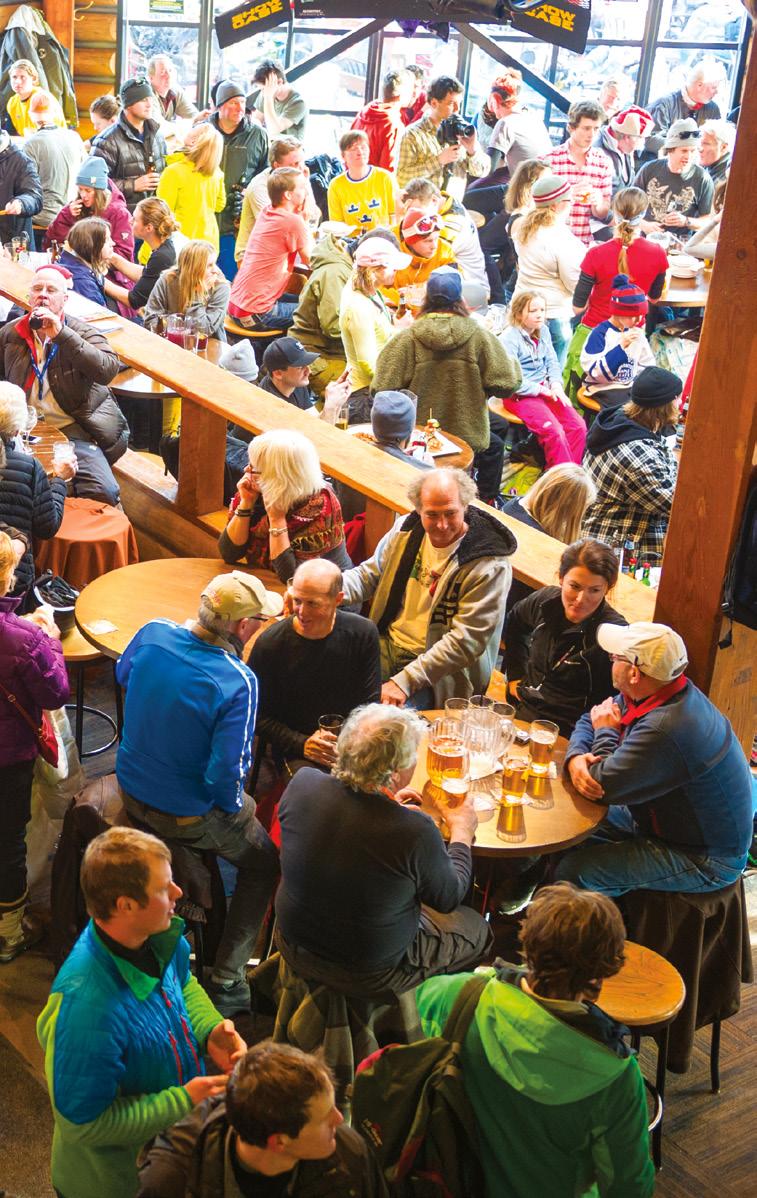
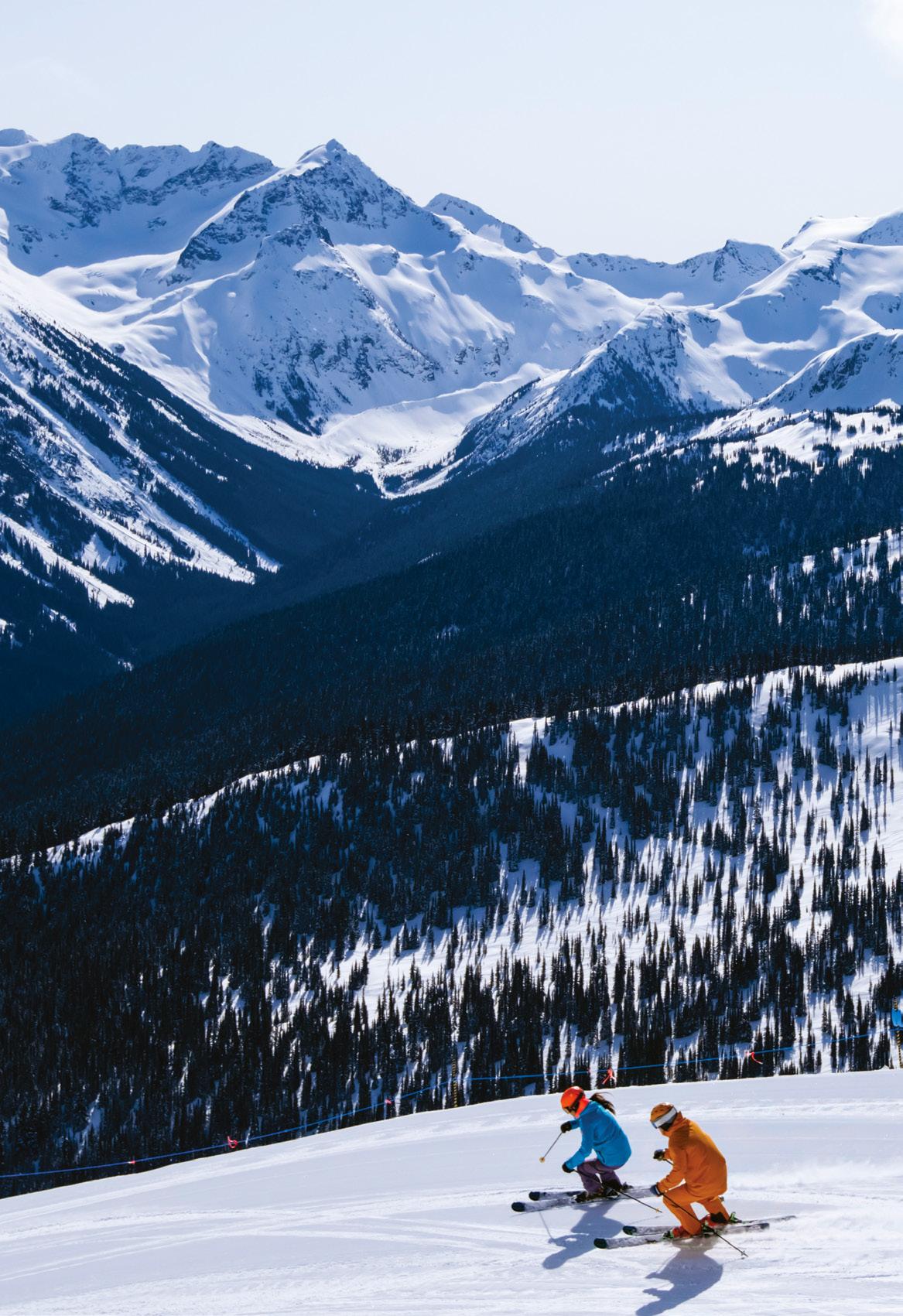
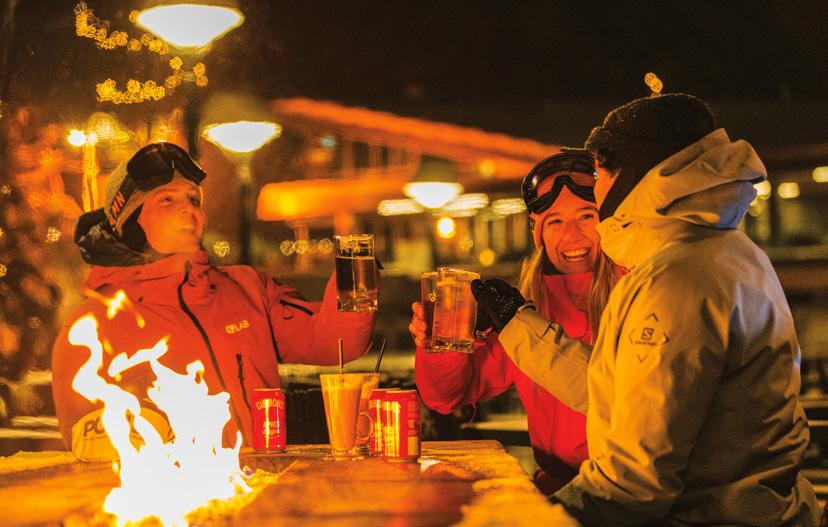
Meanwhile “Guitar” Doug says the town itself has a unique energy. “There is a specific, high-octane energy in a mountain town that you just don’t find anywhere else,” he says. “People come here to celebrate, to push their limits on the slopes, and to let loose. Being the ‘soundtrack’ to that experience – the high point of someone’s vacation or the reward after a hard day of skiing – never gets old.”
Doug has seen the apres scene grow over the past decade but says he loves that it is a town that respects its heritage venues as well.
“Seeing the valley grow and change while maintaining its core “apres-ski” soul is
incredible,” he says. “Venues like Merlin’s and Dusty’s have a legendary status, and there’s a certain pride in being part of the fabric of those iconic spots. It’s more than just a gig; it’s about contributing to the culture of the Sea to Sky corridor.”
I am spending a few days in this British Columbian ski town, just a two-hour drive from Vancouver, that is also known as “Whistralia” for the huge number of itinerant workers that come from Down Under.
And while the snow here can be so epic that you wake up to the sound of controlled explosions in the mountains to help prevent avalanches, it is the apres-ski action that ends up blowing me away.
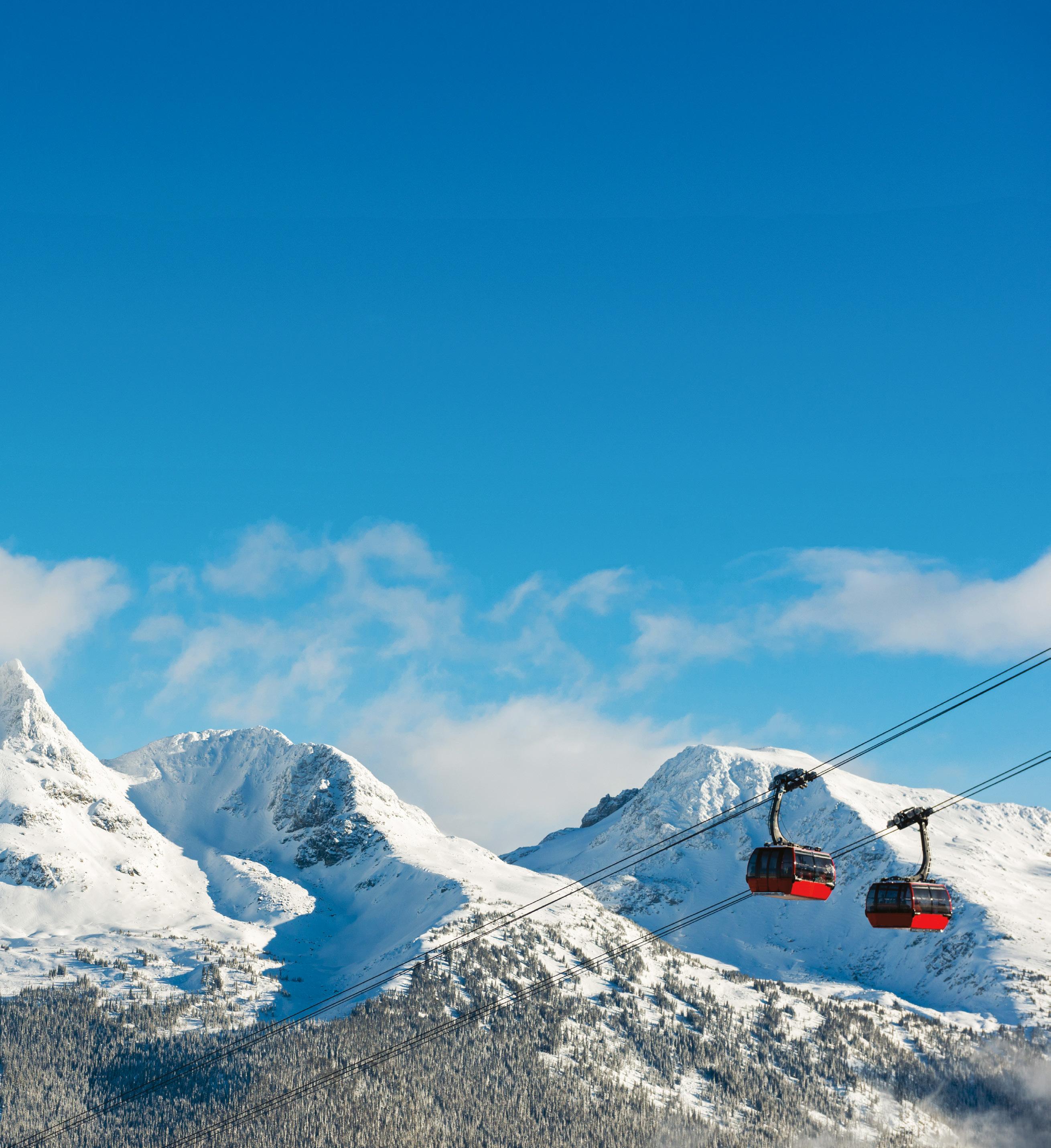
Whistler village is split into the Upper Village at the base of Blackcomb mountain, the Village Centre where the Whistler gondola starts and Village North, which contains Olympic Plaza and Town Plaza. You can walk the full length of the village in about 20 minutes, longer if you stop to gaze at the falling chunks of snow, past buildings with gabled roofs fringed with the white stuff.
Some discoveries in the first few days include a New York-style pepperoni slice slathered in hot honey and dipped in housemade ranch with a craft beer at Handle Bar and the gargantuan collection of mountain gins at the Fitzsimmons Pub in Upper Village. Another live band has punters at Irish pub the Dubh Linn Gate bouncing around so much they spill their Guinness; and in Whistler village sports-dive Stinky’s offers baseball and a Whistler Hazy Trail Pale Ale.
One of the best apres-ski spots is in my hotel, the Fairmont Chateau Whistler, a fairytale stay with an expansive lobby full of lounging canines of all sizes due to its pet-friendly nature. In the Mallard Lounge the signature gin and tonic uses Whistler Blackcomb Mountain Gin infused especially for the bar with cardamom, lemon and grapefruit served with Cointreau, grapefruit and tonic and topped with rosemary and peppercorns.
The twin peaks of Whistler-Blackcomb have always been a meeting place, initially for trade and cooperation between the Squamish and Lil’wat, the First Nations people who established the village of Spo7ez at the confluence of Rubble Creek and the Cheakamus River at Function Junction in Whistler.
Halfway through my stay on the mountain, I have a full day away from the slopes and I start by exploring the nearby snow-covered woods surrounding the Fairmont Chateau Whistler.
Nearby is the covered Fitzsimmons Creek Bridge which leads to Rebagliati Park where giant deer statues graze; at night they light up with hundreds of fairy lights looking like ethereal forest spirits, even more magical as the snow falls.
The Salish Stroll Forest Walk opposite the hotel is a log-lined interpretive wander through a stand of cedar trees blanketed in a carpet of white snow. Along the way you discover why the Squamish and Lil’wat call the cedar the “tree of life” as they use the roots for weaving, the sap for healing wounds and the wood is carved into canoes, masks and totems.
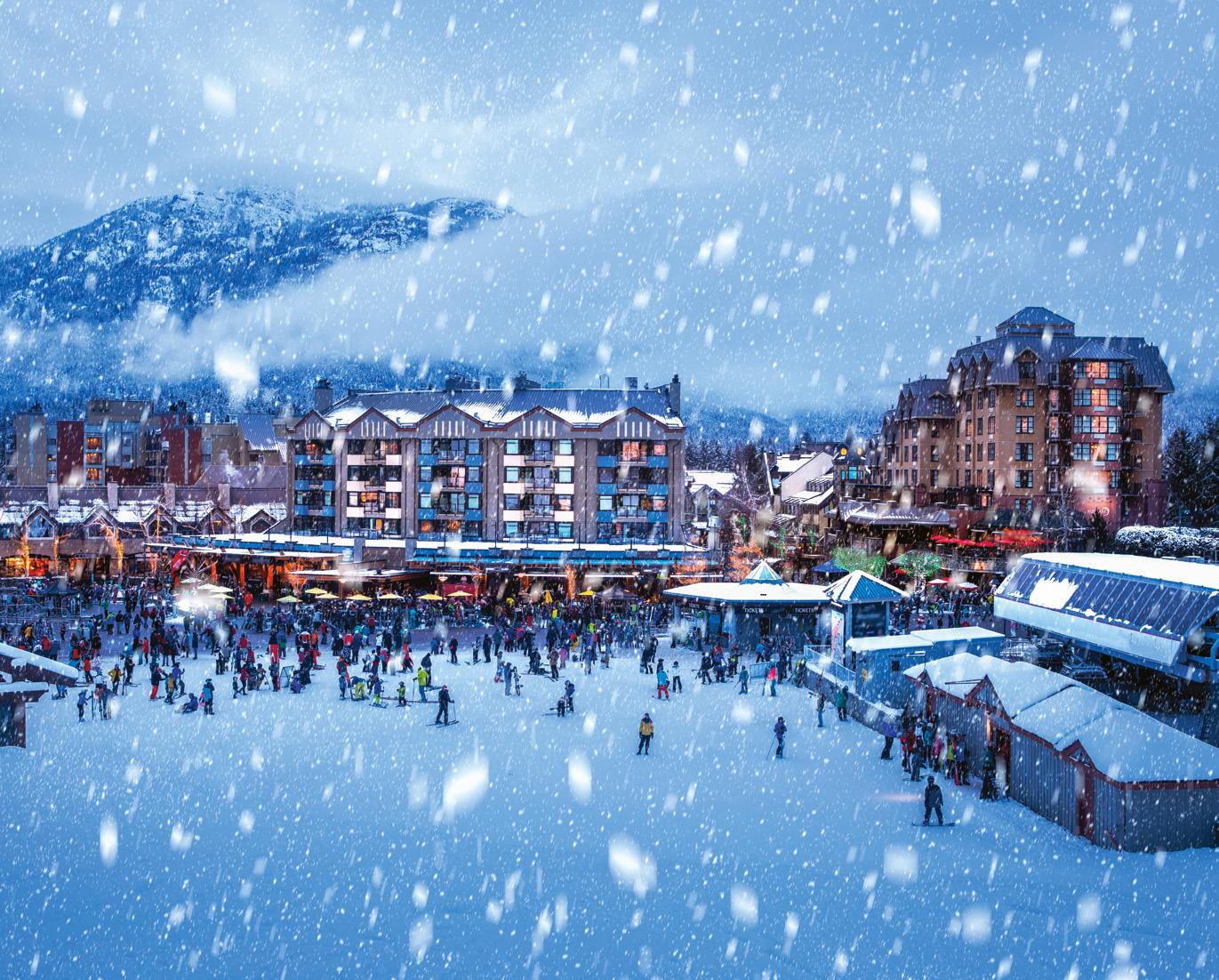
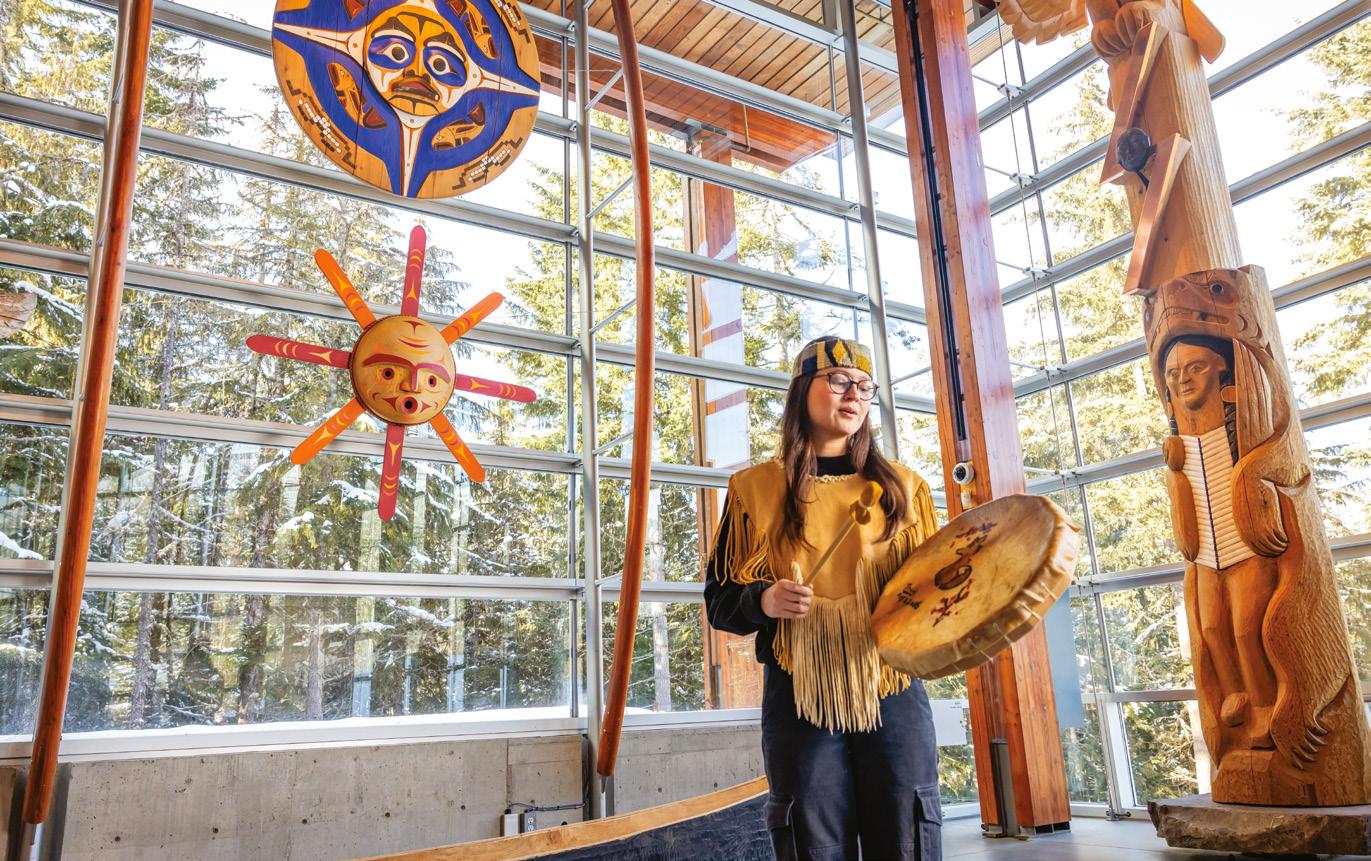
You can see these carvings at the Squamish and Lil’wat Cultural Centre at the end of the forest trail where it inhabits six acres along Fitzsimmons Creek. The building is designed to reference a Squamish longhouse and the Great Hall sets the mammoth totems against a backdrop of forest scenery. The gift shop in the basement has some of the most beautiful First Nations prints, carved masks and woven dreamcatchers. I leave with “pocket spirits” for the whole family, silver trinkets the size of a coin with animal spirits imprinted by local artists.
Lunch is a quick turkey sandwich at the Scandinave Spa Whistler, but first I spend a couple of hours having a “thermal journey” through the outdoor hot spa pools and the rather shocking Nordic plunge pools which are as brisk as rolling around in the snow. Before entering the snow-covered garden, phones are stashed away for a digital detox and we are warned that this is a silent spa with no talking allowed. It’s a restorative break from the skiing with solariums, eucalyptus steam rooms and outdoor firepits surrounded by Whistler’s old-growth rainforest. Dessert is one of the largest, juiciest and sweetest apples I have ever tasted.
FROM
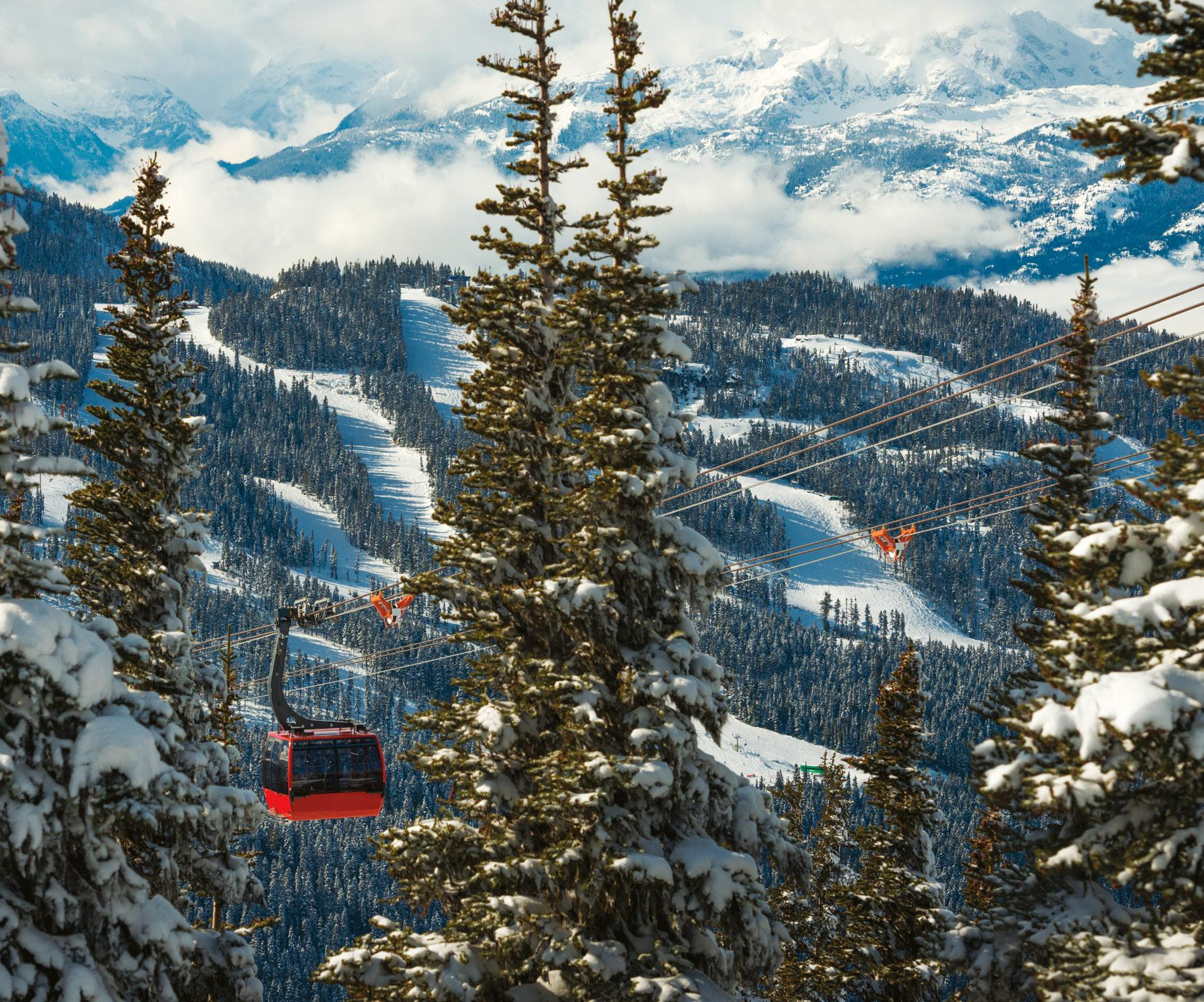
Dinner on our no-ski day is one of Whistler’s wildest dining experiences, the Backcountry Mountain Dining Tour by Blackcomb Snowmobiles. We are picked up at the hotel and transferred to a giant red snowcat that carves its way through the snow and ice in the Brandywine and Callaghan Valleys, transporting us to a secluded log cabin by a magical frozen lake.
The cabin, it turns out, had a blink-and-you’d-missit cameo in the frosty Sylvester Stallone thriller D-Tox before being bought by Blackcomb Snowmobiles and transported to its current home. Inside it is decorated simply with vintage snowshoes and a single chandelier made of antlers; a communal table sits in the centre with benches covered in faux fur. A four-course meal follows with salad, French onion soup and seared scallops with a main of Arctic char with seasonal vegetables. We rug up for a special surprise on the cabin porch surrounded by snow as fireworks are set off turning the pale landscape a multitude of reflected colours.
You can’t have the apres without the avant, and the skiing on Whistler-Blackcomb does not disappoint. The two mountains – who were once bitter rivals before the resorts merged, most recently under Vail Resorts – offer over 200 trails, 16 alpine bowls and three glaciers to tackle for skiers and snowboarders; the resort boasts one of the highest vertical drops in North America.
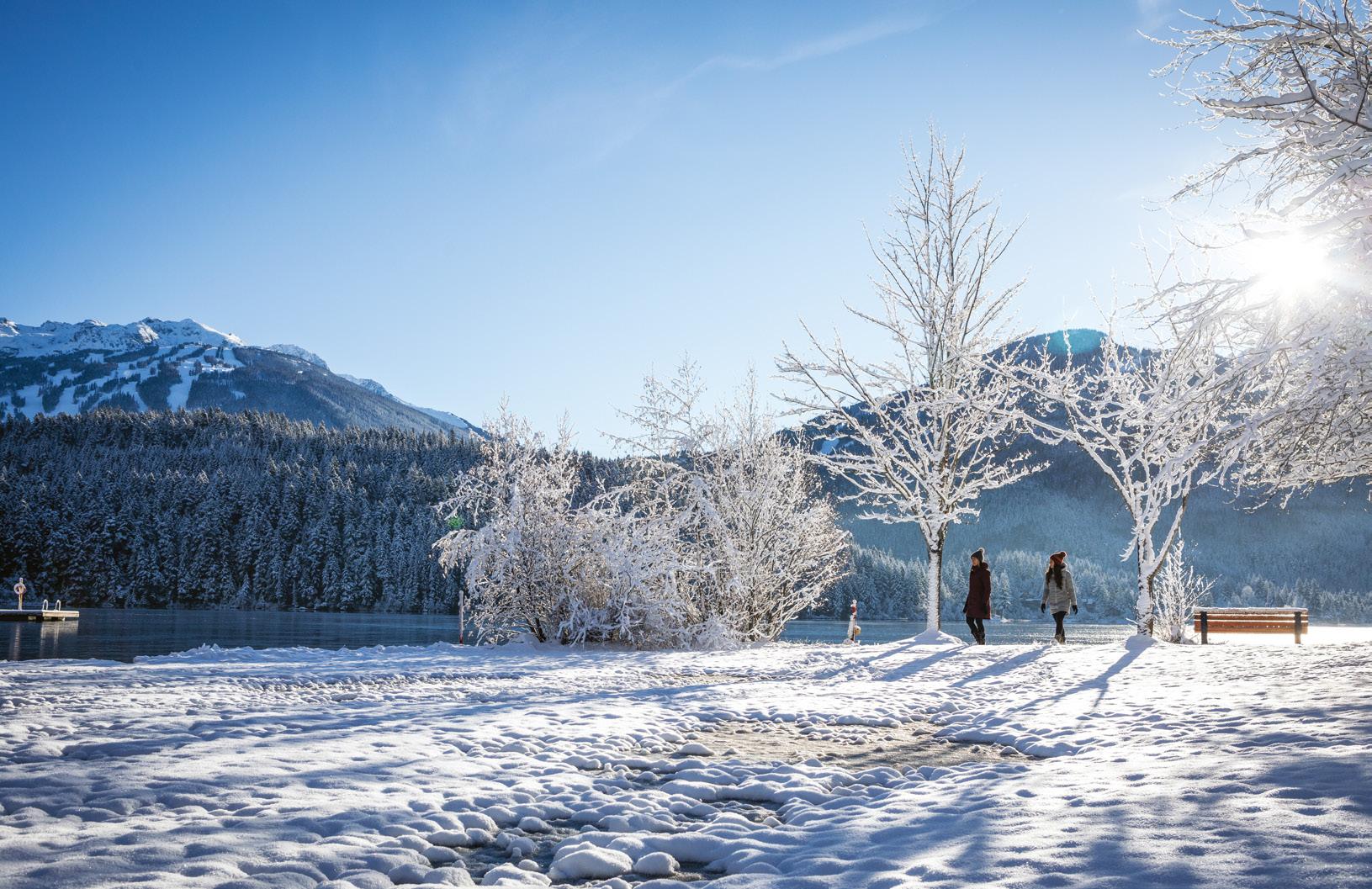
It has a proud skiing heritage as co-host of the 2010 Winter Olympics & Paralympics. It is the first British Columbian resort to have hosted the Games, and the Olympic Plaza honours this history; take a selfie in front of the giant Olympic rings.
Our first day on the mountain is a powder day with inches of fresh snow having drifted down overnight. You can feel the excitement in the queue for the gondola but we are whisked straight
past the waiting skiers by our private guide, Julia Abel. Julia has been on the mountain for over two decades and has a no-nonsense approach to finessing our skiing.
“Hug the bear,” she bellows at us, encouraging us to keep our hands outstretched, not lolling by our sides. I think I have it pretty sorted as I pull up beside her on the soft powder and she looks me up and down: “It’s ok to breathe and ski, too,” she says to me.
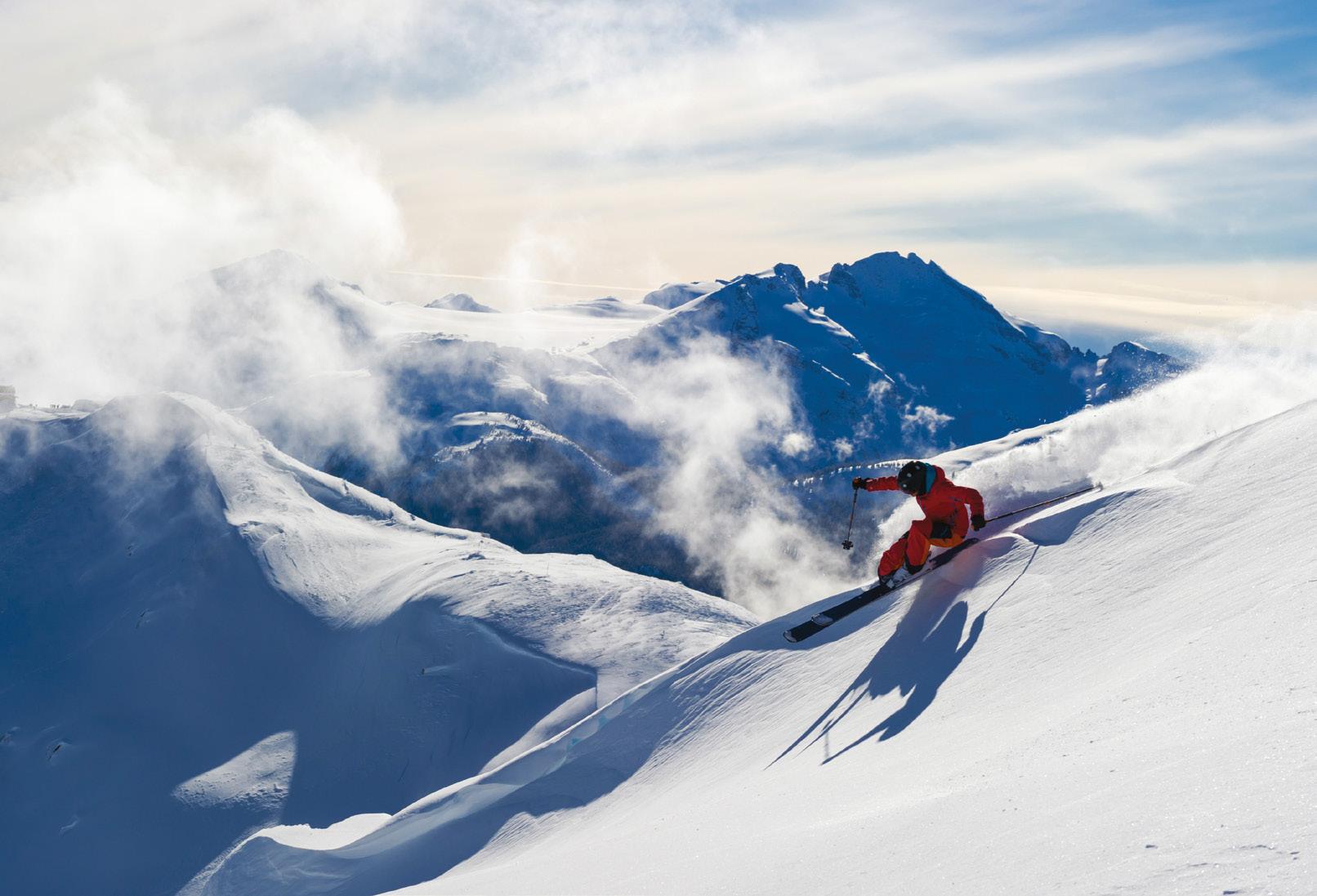
Epic Australia Pass delivers unlimited access to Perisher, Falls Creek and Hotham this winter, plus access to more than 80 world-class resorts across the globe for the 2026/27 Northern Hemisphere winter season. From Whistler-Blackcomb in Canada and Hakuba Valley in Japan, to Vail Mountain in the USA and Crans-Montana in Switzerland. epicpass.com
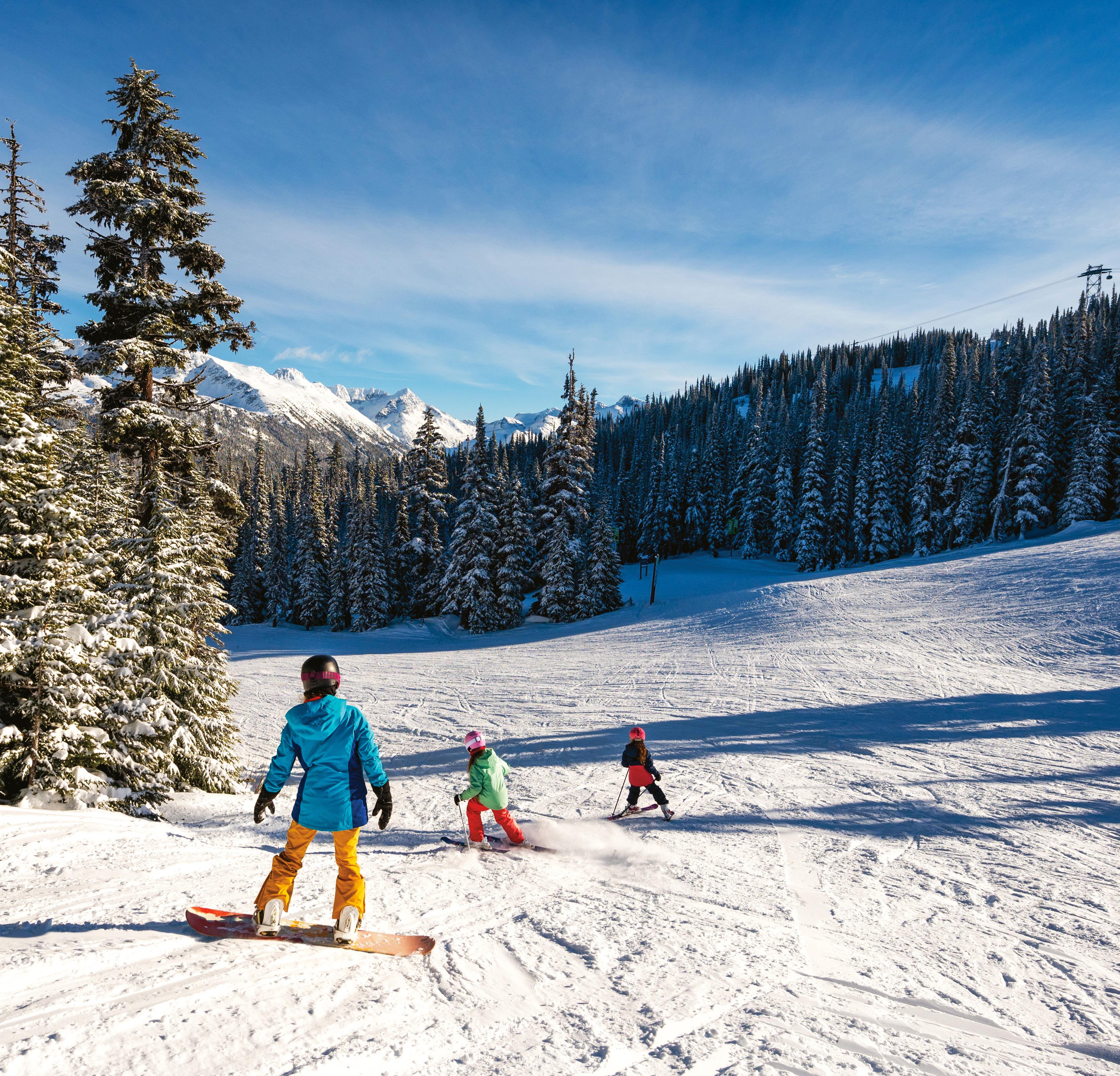
Julia takes us on a thigh-burning run at Ridge Runner off the Crystal Ridge Express and we ski the terrifyingly named Catskinner, which offers intermediate runs. When we finish for the day, we simply walk over to the Fairmont Chateau Whistler ski valet and hand over our equipment.
Day two, and sadly Julia-less, we head across to the Whistler side on the eye-
wateringly high PEAK 2 PEAK gondola which connects the two mountains. It holds the Guinness World Record for the highest cable car above ground and the longest unsupported span; some of the gondolas sport bold designs from Squamish and Lil’wat artists. Over on the Whistler side, we take Little Red Run and Franz’s down to Raven’s Nest, which offers indigenous-
inspired cuisine; try the salmon chowder with bannock, a local flatbread, and a dessert bannock topped with maple syrup and wojapi berry sauce.
Outside the cafe, it’s namesake birds squawk loudly from the pine trees and swoop low over the runs as we traverse back across to the Blackcomb side and back to our hotel home.
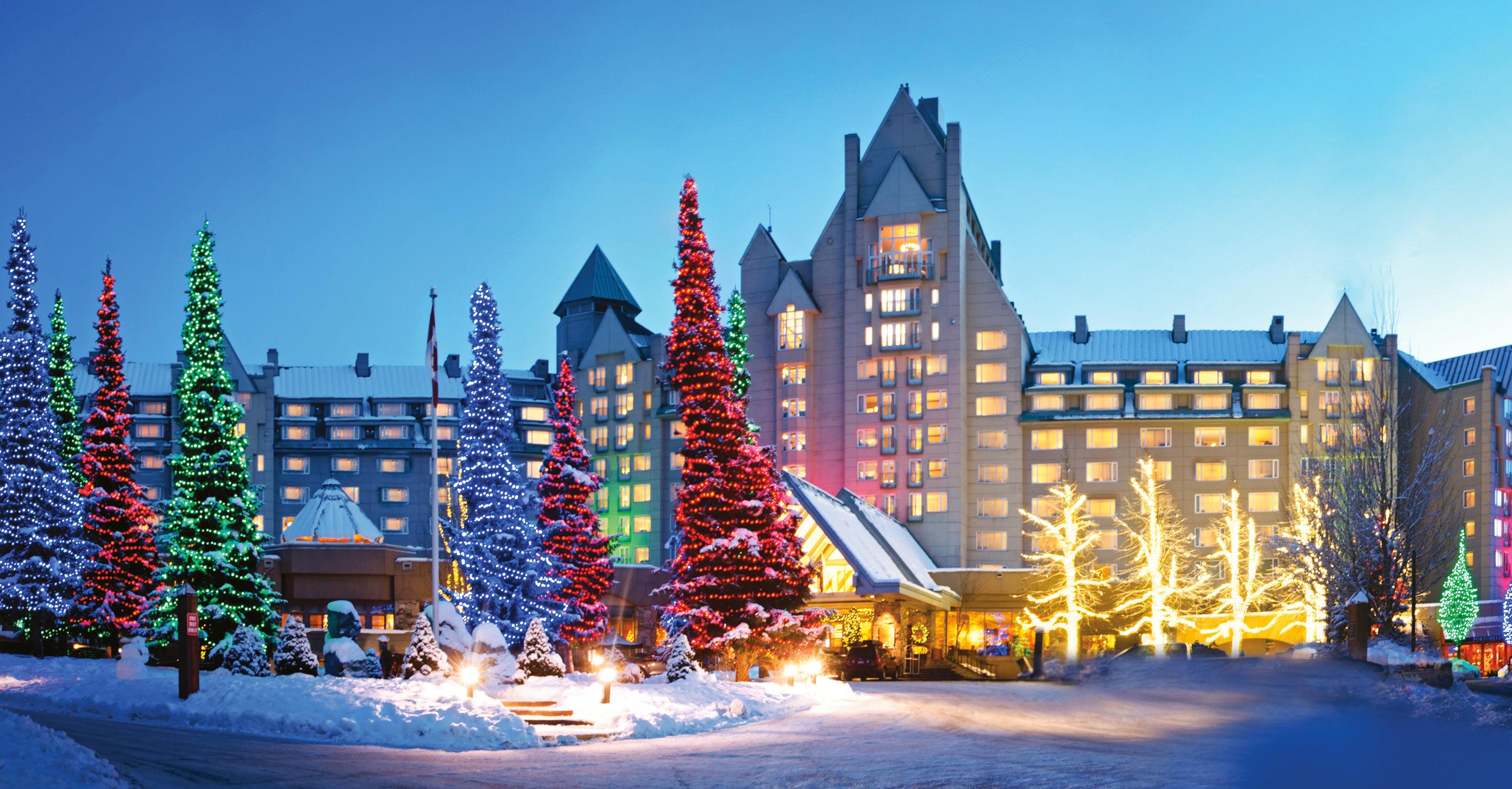
Fairmont Chateau Whistler is Whistler’s landmark ski-in, ski-out hotel at the base of Blackcomb Mountain. A two MICHELIN Key resort, it blends classic elegance with a modern alpine setting, ideal for families and it’s very welcoming to fur kids too. Guests enjoy 519 rooms and suites, exceptional dining, an Audubon-certified championship golf course, and unparalleled access to Whistler’s outdoor adventures.
As our week comes to an end, we discover the village may have saved its best apresski adventure ‘til last. We have dinner at the Bearfoot Bistro, which has been serving its French-Italian-inspired cuisine in Whistler village for over 30 years. We are greeted at the door and led to the restaurant’s wine cellar that holds over 20,000 bottles of wine; on the wall is a shattered bottle in a frame that pays tribute to a rowdy corporate dinner that managed to smash a full bottle of $10,000 wine.
The bottle shards make me nervous because we are here to learn the art of sabrage, slicing the glass top off a Champagne bottle with a sword or large knife. I am volunteered as the sabrager and, after an all-too-quick lesson, I slash away. To everyone’s surprise, especially my own,
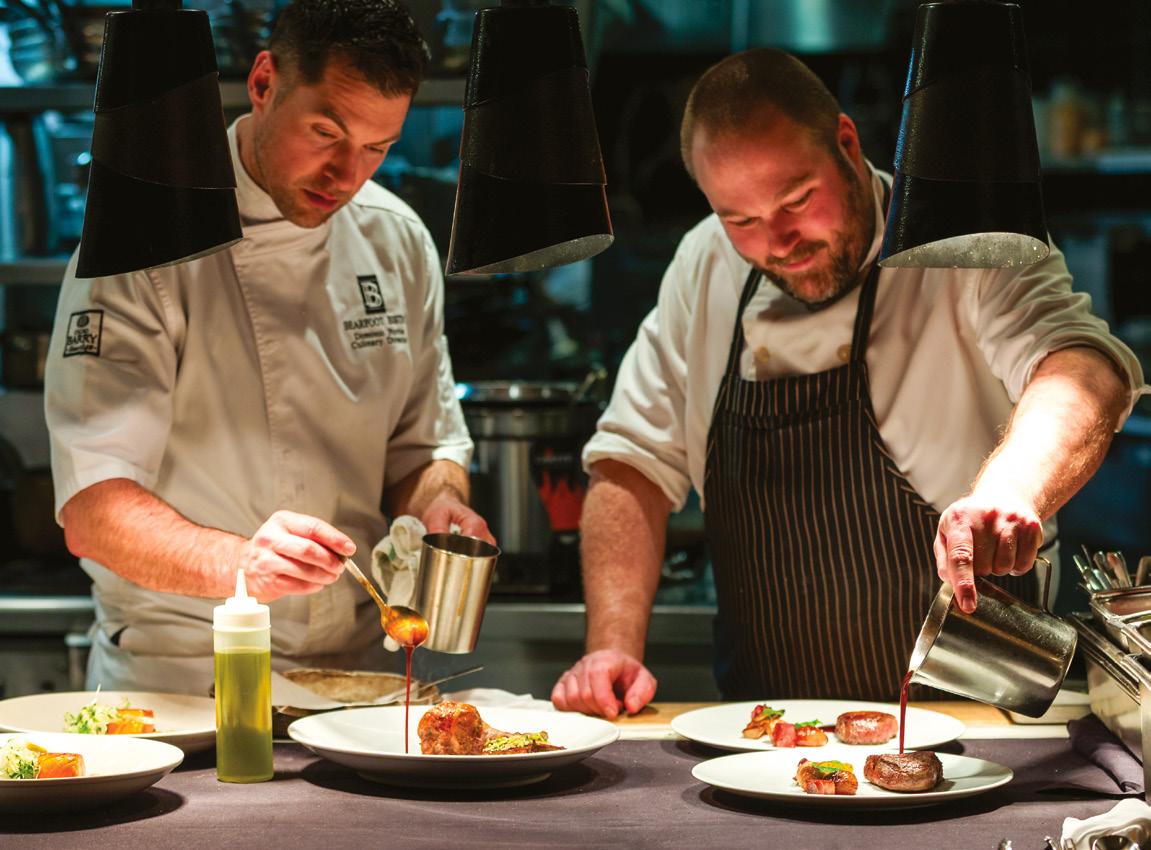
it works and the top flies off cleanly and it is presented to me in a gift box as a memento.
Sitting down to dinner in our high-backed leather chairs in the retro-chic surrounds – including a grand piano – we dine on Dungeness crab croquettes and Quebec elk two-ways: tenderloin and sausage. Matching wines are poured from metrelong teardrop-shaped decanters which also decorate the room. Dessert is a build-yourown sundae with ice cream made tableside using liquid nitrogen.
Lastly, we suit up in Arctic jackets with furrimmed hoods that look like they were stolen from the set of The Thing. We are led to the Grey Goose Ice Room which, at -29-degrees centigrade lays claim to being the coldest vodka-tasting room in the world. Inside the chilly room, spirits from all over the world
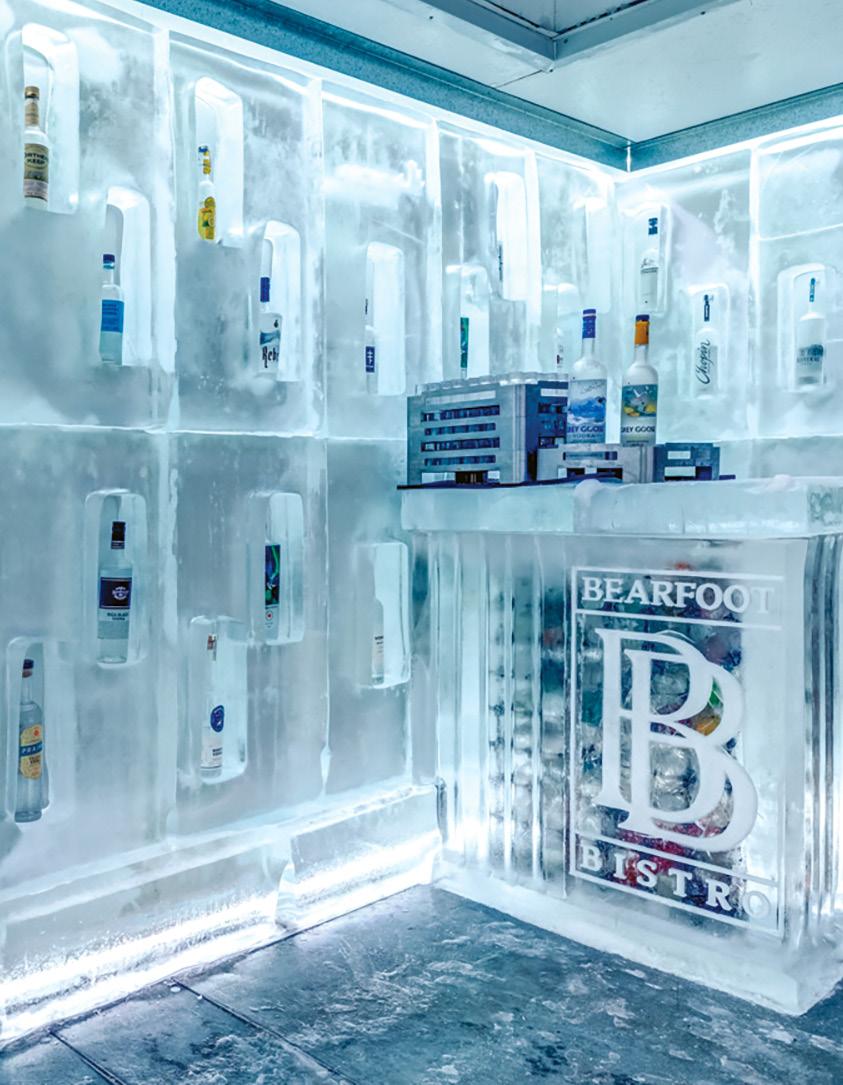
are stored in the icy walls. We sip Nemiroff vodka from Ukraine and Foothills vodka from Alberta, Canada.
It seems absurd to be in an artificially cooled room downing vodka shots when all around is snow and ice, but it’s also a lot of fun – something Whistler-Blackcomb is very good at, both on and off the mountains.
MANY HAPPY RETURNS
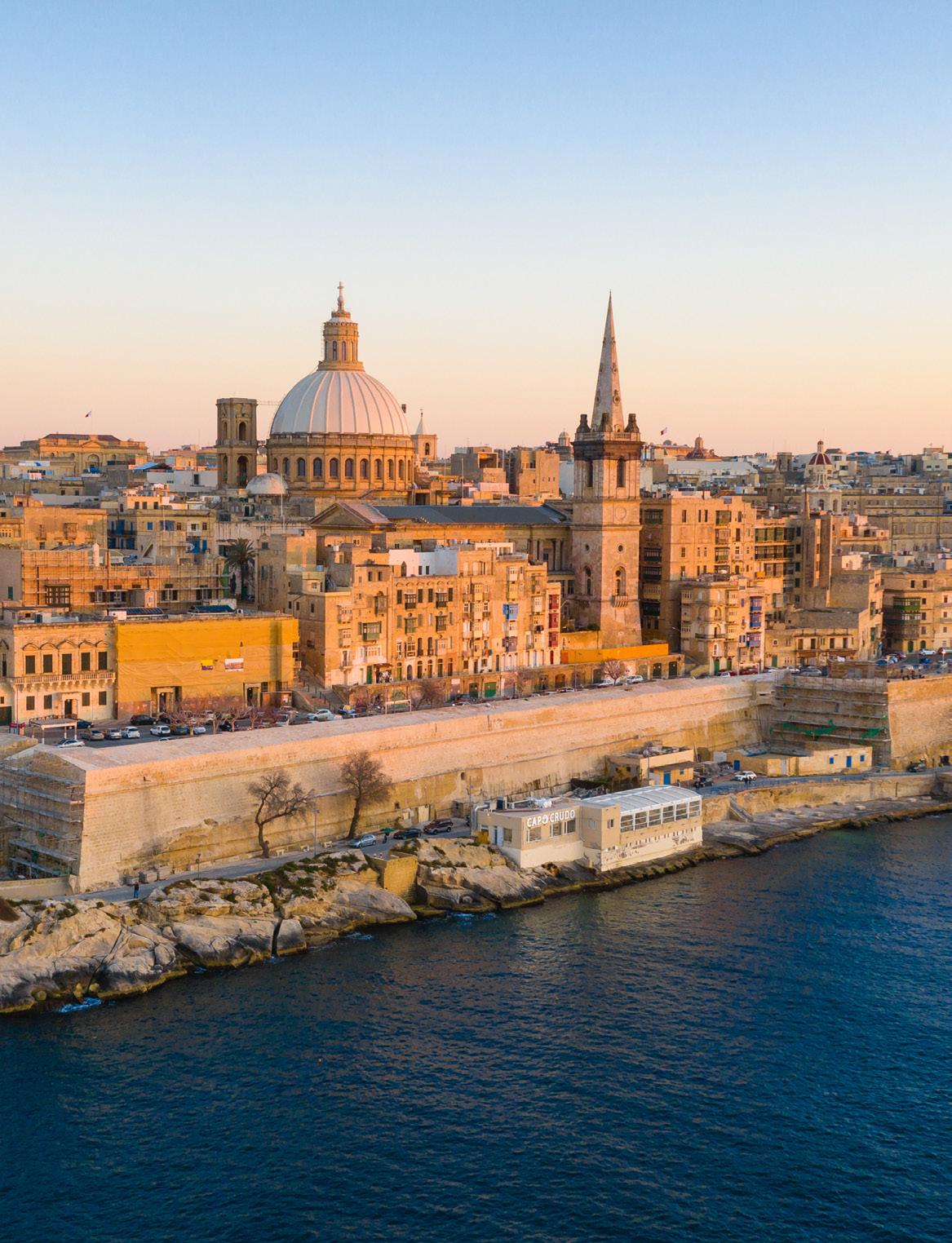
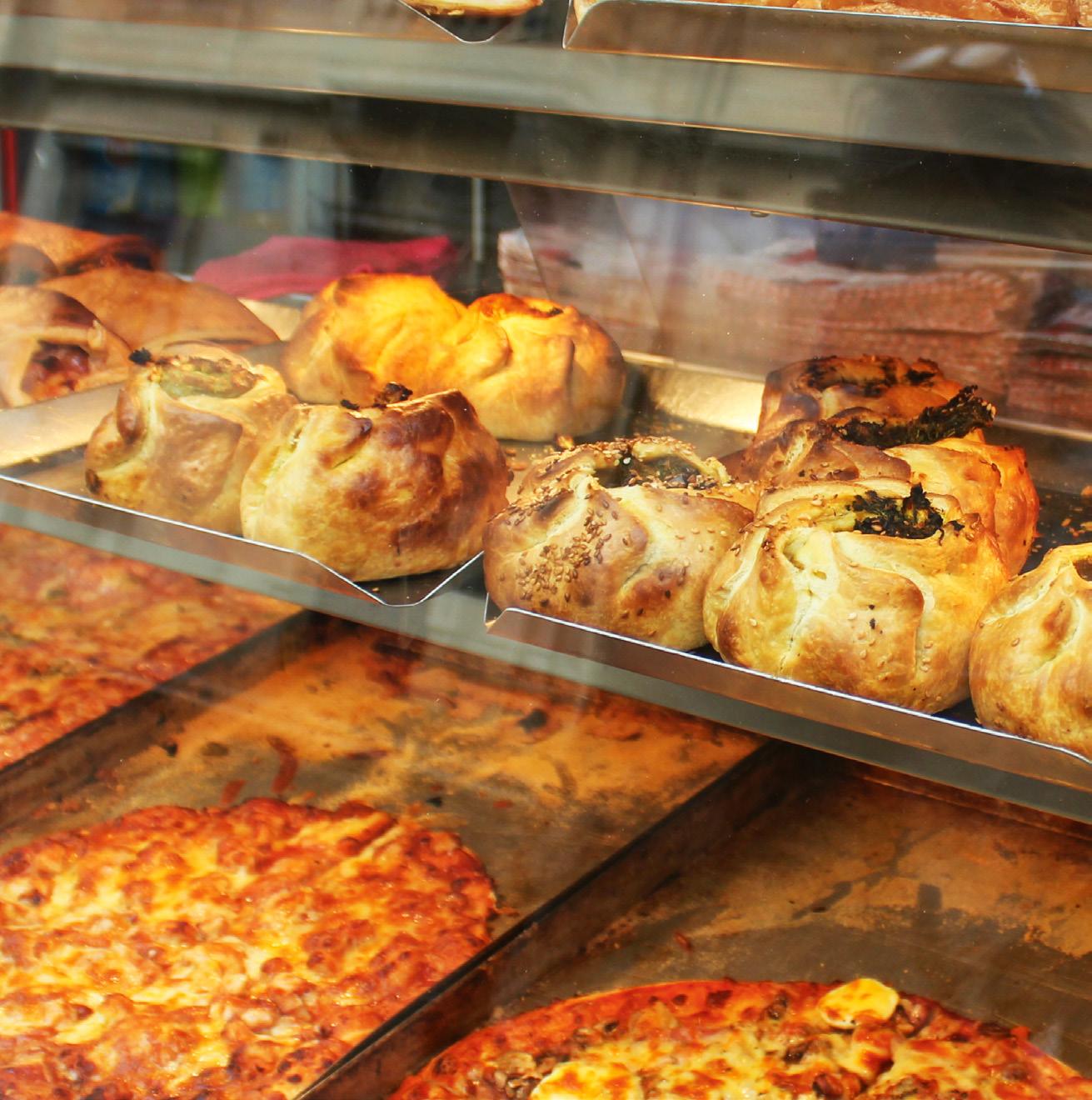
Food is very important to chef Shane Delia, but the most in uential avours are those of his home in Malta, where he loves to return. He tells us why.
Malta has always been more than the jewel of the Mediterranean to me. It is my ancestral homeland, the pulse in my heart, the depth in my soul that has driven me throughout my life and my career.
We are a resilient people, passionate about food, hospitality, and a history and culture the whole world covets. For one of the smallest nations on earth, we hold an abundant trophy chest. World-heritage sites, stunning architecture, artistry, and some of the most pristine and captivating waters in the Mediterranean. Our food is a mosaic of a deeply complex and fascinating past.
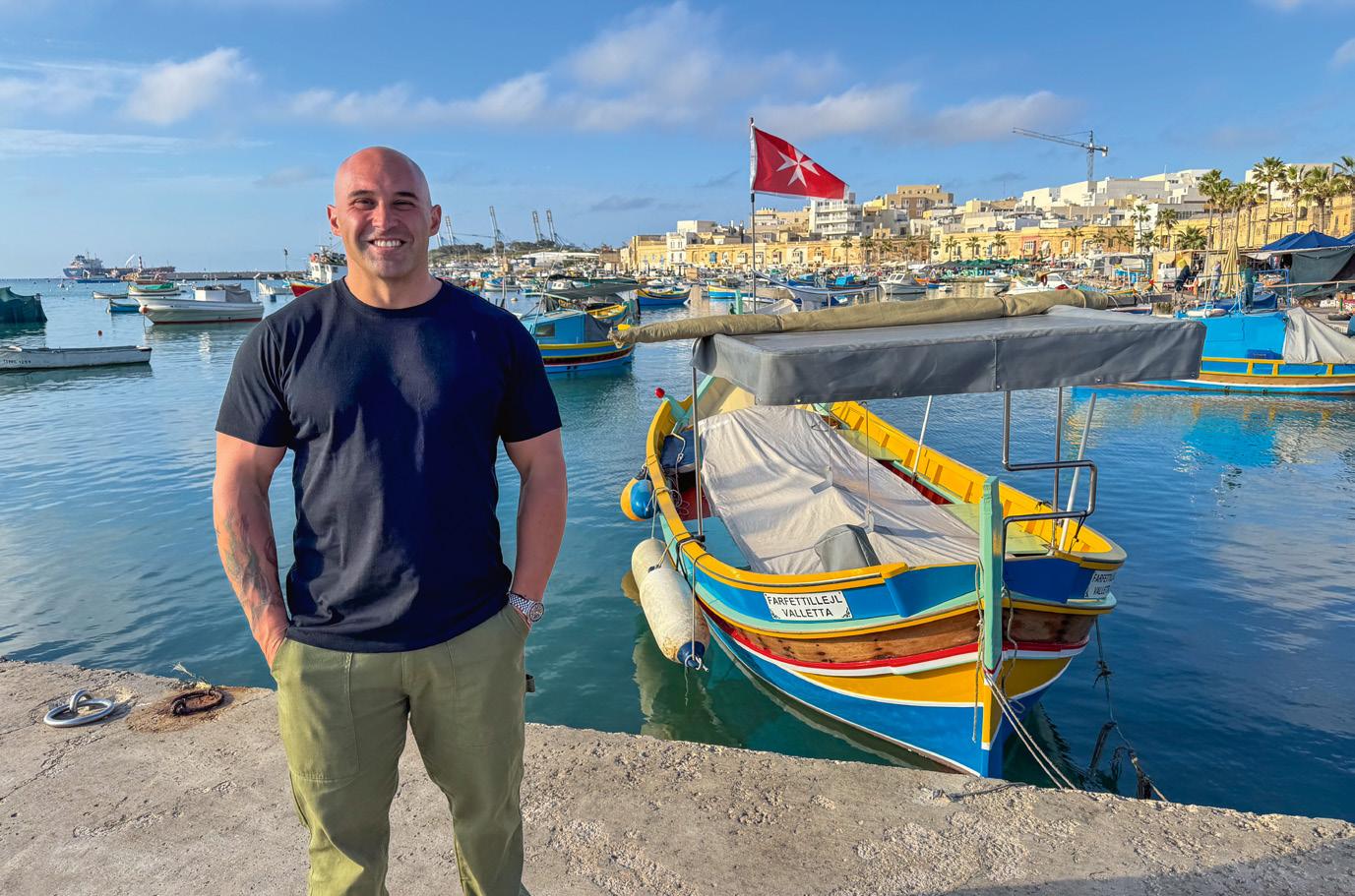
For me, the most exciting part of the Maltese culinary journey is right now. Young chefs, artisans, and producers who are deeply connected to their history yet refuse to be shackled by the boundaries of yesterday. They are daring, breaking through, redefining what Maltese cuisine will be for generations to come.
Come with me. Explore not just our food, history, and culture, but who the Maltese people are, and what has made us one of the world’s most significant peoples over millennia.
Members of our VIP travel club are saving thousands Unlimited benefits all year round*

Save hundreds every year
With member-only pricing on our best limited-time hotel offers & tours

Early access
To our bestselling offers to secure the best availablity & rooms

Bonus inclusions
Hotel credit, daily breakfast, room upgrades & more
Exclusive access
To hidden offers, just for members

Worry-free travel
Save 40% on Travel & Cancellation Protection for stress-free trips

Jump-the-queue
With priority access to 24/7 customer support
See what members are saying about LuxPlus+ and its exclusive benefits



*Terms and conditions apply.