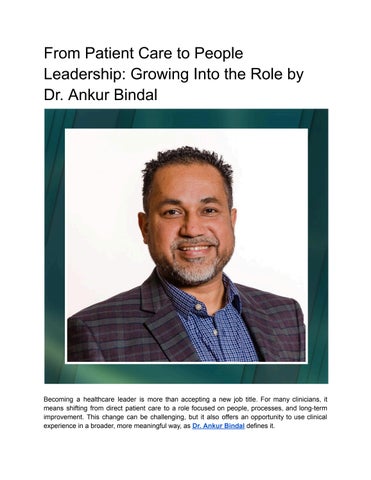
From Patient Care to People Leadership: Growing Into the Role by Dr. Ankur Bindal
Becoming a healthcare leader is more than accepting a new job title. For many clinicians, it means shifting from direct patient care to a role focused on people, processes, and long-term improvement. This change can be challenging, but it also offers an opportunity to use clinical experience in a broader, more meaningful way, as Dr. Ankur Bindal defines it.
Clinicians already have many qualities that strong leaders need. They understand teamwork, responsibility, problem-solving, and the importance of making decisions under pressure. However, leadership requires applying these skills differently. Instead of focusing only on individual patients, leaders must consider the needs of an entire team and the quality of the service they provide. One first step is developing a leadership mindset. A clinician may be used to asking, “What should I do?” A leader often asks, “How can I help my team succeed?” This simple change encourages collaboration and gives employees the confidence to take responsibility for their work. Communication is central to this process. Leaders should set clear expectations while staying open to feedback. Listening is just as important as speaking. When employees feel respected and understood, they are more likely to share ideas, raise concerns, and work together to solve problems. Another important area is delegation. New leaders sometimes struggle to delegate because they worry about quality or feel responsible for every detail. Effective delegation requires trust. Leaders should match responsibilities to team members’ abilities, provide clear guidance, and let people learn through experience. Healthcare leaders must also become comfortable with change. New technologies, updated policies, staffing challenges, and changing patient needs can affect daily operations. Rather than resisting every change, effective leaders examine the reasons behind it and help their teams adjust. A calm and positive approach can make uncertainty easier to manage. Professional development should continue after stepping into leadership. Reading leadership resources, attending training programs, finding a mentor, and learning from colleagues can strengthen management skills. Feedback is also valuable because it shows leaders how their actions affect others. At the same time, leaders should protect the values that shaped their clinical careers. Compassion, honesty, respect, and patient-centered care should remain central to their decisions. These qualities help leaders build credibility and create a workplace where people feel supported. The journey from clinician to leader is not about becoming perfect. It is about becoming more aware, adaptable, and willing to learn. With the right mindset and continued development, clinicians can turn their experience into effective leadership and help their teams deliver better care.