

Dear Reader,
Politics, both in America and across the globe, are real. They have real-life consequences. They affect our lives, the lives of those we love and those we will never meet.
That’s why we feel what we do here at Drake Political Review is important. The topics we tackle are not to be taken lightly. Although the public may often try to turn a blind eye to what is happening in the world around us, there is no denying that it is serious. In some

On March 1, 2026, Sgt. Declan Coady was killed in Kuwait during a drone strike. Coady was a second-year student at Drake, just 20 years old. The entire Drake community felt his loss deeply.
We dedicate this issue of DPR to Sgt. Coady. Please keep him in mind as you flip through these pages. Remember that each and every one of these stories affects real people. If nothing else, I hope you will read this issue with an open mind. Thank you for granting us the privilege of sharing it with you.
LET’S TALK POLITICS.





1ST PLACE
BEST MAGAZINE SPREAD
Emily Zeller – Fall 2024 Issue
HONORABLE MENTION
BEST MAGAZINE SPREAD
Tyler Strachan – Fall 2024 Issue
HONORABLE MENTION
BEST GENERAL NEWS STORY
Caroline Siebels-Lindquist – Fall 2024 Issue
PACEMAKER FINALIST
Spring 2025 Issue
Drake Political Review is an award winning publication. The magazine has received numerous Pinnacle awards for writing and design over the course of the last 11 years, as well as garnering two Pacemaker nominations. Both awards are presented by the College Media Association and serve to recognize the best student media in the country while also honoring organizational excellence.

West
“The U.S. Poet Laureate” S3E16

Parks & Recreation “Sister City” S2E5

Homeland “Marine One” S1E12


Erin Brockovich “Annabelle Daniels 714-4549346. 10 years old, 11 in May.”
BAILEY REES


The Trial of the Chicago 7 “They ended up working. The magic beans.”
GRACE

Veep
“Fundraiser” S1E1


Argo “There is a movie company in Hollywood right now that is funded by the CIA?” “Yes, sir.”

Last Week Tonight with John Oliver “Jimmy Kimmel Suspension” S12E23

Designated Survivor “Suckers” S2E5
Proposed legislation opened a conversation about student representation on the Board of Regents. Fear still lingers despite the bill’s failure.
Shortly after lawmakers returned to the State Capitol in January, the Iowa General Assembly introduced the University Governance Reform Act, otherwise known as House Study Bill 534, which would restructure the Iowa Board of Regents. The Board, with a total of nine voting members, oversees the policies, budgets and tuition of Iowa’s three public four-year universities.
The Iowa Board of Regents was first founded in 1909 during Iowa’s 33rd General Assembly; however, it wouldn’t have a student regent until 1973. After the University Governance Reform Act was proposed, it did not get enough votes to advance through the legislative cycle.
Fast forward to Jan. 21, 2026, when HSB 534 was introduced. The bill failed to pass through the first funnel, a deadline set by the Iowa Legislature meant to cut down the number of bills for debate in any given session. However, what it sought to do remains important to many. It aimed to change the Board’s structure by eliminating the Board’s sole voting student member. The position, if approved, would be replaced by an alternative voting member appointed by Iowa’s governor.
In addition to the voting members, the bill added seven ex officio nonvoting members, which comprised one student from each university, two state senators and two state representatives.
Other changes to the Board would have allowed the General Assembly to disapprove ongoing expenditures by the Board itself and the universities it represents through a joint resolution with the governor. This could allow government officials to intervene after spending decisions have been made.
Although the bill failed, students and professors are worried about the precedent that bills like HSB 534 set for future legislation.
“There was a real concern that younger people had been kind of shut out of the political process and in a part of the state government where there are decisions being made about people who are 18 and older, who are attending universities,” said Chris Martin, the president of the American Association of University Professors chapter at the University of Northern Iowa.
Martin said that student representation has been vital in overseeing public universities in Iowa.
“To demote that position to a nonvoting status, just to add another nonvoting member, seems to me a way to both get [the] nonpartisan student [removed] and just have it be a nonvoting voting member, and to add someone who would be approved by the current
Democrat or Republican governor and Republican legislature,” Martin said. “That seemed to me a way to kind of pack the Board.”
This is not the first time the Iowa legislature has introduced bills that could alter the decision-making factors of the Board.
“There are dozens of bills introduced, not just this year, but [also] last year through the Higher Education Committee that are directly related to the Regents,” Rep. Heather Matson, D-Polk County. “And from what I can tell, really curtail authority or change their structure, doing a number of things that are what I believe would be outside the scope of what the legislature should be doing.”
In a press release, the Iowa Higher Education Coalition stated that they oppose recent legislation, asserting that it targets the Board.
“All of these bills are not ideas the people of Iowa asked for,” the release said. “Instead, they are strategies to wrest control of Iowa’s public universities in service of a narrow national political agenda. In the long term, this is a dangerous path for the state’s most vital economic and cultural institutions.”
From the perspective of advocates, changes to the Board would improve transparency, accountability and oversight. However, Matson, who served on the subcommittee of HSB 534, wished for more clarity on what supporters of the bill were hoping to accomplish. “When we had the subcommittee, [I asked], what is the problem you are trying to solve with this bill? And to be honest, I couldn’t get an answer,” Matson said. “And it was one of those subcommittees where the chair of the subcommittee, who also happens to be the chair of the Higher Education Committee, was declining to answer questions at that time.”
Proponents of the bill point out that three student members would remain on the Board, although they would not be able to vote. The legislation aims to “replace the student member of the Board with a ninth member appointed by the governor,” thereby standardizing the process for selecting voting members.
“We all know that every voice matters, but when that voice has a vote, it is even more powerful,” Matson said. “The idea of taking a student vote off the Board of Regents, to me, is really concerning, and it’s taking away power.”
Advocates of the legislation further underscored the importance of bolstering legislative oversight, with provisions that would empower lawmakers to annul specific expenditures by the Board of Regents, addressing concerns regarding transparency and governance in university decision-making.
We all know that every voice matters, but when that voice has a vote, it is even more powerful.
HEATHER MATSON, POLK COUNTY REPRESENTATIVE
Zayden Reffitt, the Sioux City chapter leader of the advocacy organization Bitches Get Stuff Done, was fearful about the bill and what that would mean for student representation on the Board.
“I believe that this bill absolutely is meant to constrict the voice of the students and take it away,” Reffitt said. “It is meant to make it so students do not get an opinion on their education.”
Reffitt said that many Iowa State students have told him they are scared of what the removal of the student vote will mean for policies in the future.
“I see students scared they’re going to lose their voice,” Reffitt said. “I hear students are scared that they’re not going to be able to talk about the things that are affecting them.”
Representatives Taylor Collins, R-Des Moines, and Heather Hora, R-Washington, who also served on the subcommittee, did not respond to a request for comment on HSB 534 by the time this article was published.
WORDS ERIN WILBUR DESIGN ALLIE RAINES

During the 2024 election, economic strain resulting from the pandemic led many Americans to seek a candidate who promised relief. Then-candidate and now President Donald Trump campaigned on the economic strategy of tariffs — taxes imposed on imported goods and services. Trump said that tariffs would reduce inflation and lower consumer prices; however, after implementing these tariffs, the effects have been complex and unpredictable.
In Iowa and around the U.S., farmers have had to adapt to tariff-related uncertainty. From volatile markets to rising machinery costs, short-term difficulties not only imposed additional strain on farmers but have also prompted Americans to question the effectiveness of tariffs as a solution to the nation’s economic challenges.
Tariffs offer the potential to reduce the trade deficit and decrease reliance on other nations, said Angelos Lagoudakis, a professor of agricultural economics at Iowa State University. By making imported goods more expensive, tariffs theoretically encourage consumers to buy domestic products because they seem more affordable. However, these effects work better in the long-term and rely on stability and certainty in a volatile global market.
“The short-term effects of these tariffs are far more unpredictable,” Lagoudakis said.
In response to Trump’s initial tariffs in February 2025, China issued a series of retaliatory tariffs and restrictions. China’s decision to stop buying U.S. soybeans, Iowa’s largest agricultural export, has led to a surplus of the product for Iowa farmers. Consequently,

soybean prices fell, resulting in less revenue for farmers.
The speed at which these retaliatory actions were taken by China was surprising, with many analysts arguing it wasn’t the strongest economic move for the country.
“Tariffs are a power game,” Lagoudakis said. Although it may seem trivial, some nations place more value on the political statement their tariffs make than on the economic effect they may have.
In December 2025, Trump announced that the U.S. Department of Agriculture would provide $12 billion in one-time bridge payments to farmers, aiming to assist farmers affected by tariff-induced market disruptions. $11 billion of these payments will be used in the Farmers Bridge Assistance Program to support farmers who produce major row crops, like soybeans.
As of January 2026, China has agreed to resume buying U.S. soybeans. However, Trump’s announcement
that the U.S. will impose a 25% tariff on any country that buys from Iran — including China — has put this commitment, along with others, into question.
With nations such as the U.S. and China pursuing geopolitical and economic power, farmers have found themselves in the midst of a tariff war. Amber Crowley and her husband own a nearly 2,000-acre farm in northern Iowa, where they grow crops such as soybeans and corn, as well as alfalfa to feed their few hundred beef cattle. Like many farmers, Crowley’s business has been impacted by tariffs in several ways. However, Crowley said that while the effects of tariffs are real, they are rarely the sole cause of instability.
“From a marketing standpoint, tariffs can add a layer of complexity,” Crowley said. She is constantly watching the market to find the best time to sell her
products, but tariffs can make export markets more unpredictable as global demand drives prices up. The cost of imported potash, a water-soluble potassium compound crucial to ensuring maximum crop yield and quality, has been consistently rising since the tariff war began. While the majority of Crowley’s fertilizer is sourced domestically, farmers who source their fertilizer from outside the U.S. have had to budget for more drastic price increases.
Tariffs on nations such as Canada, from which the U.S. imports more than 85% of its fertilizer, have made prices increasingly unaffordable for independent farmers. However, this problem can be difficult to isolate to a single cause, as the price of fertilizer and its ingredients is shaped by myriad influences, from global energy costs to geopolitical issues.
While the price of agrochemicals has increased, Crowley’s farm is most impacted by rising machinery costs. Just like fertilizer and potash, a large portion of farm equipment is produced outside the U.S., and broad-based tariffs on metals indirectly affect the price of equipment.
“While some of that increase is due to general inflation, a portion can reasonably be attributed to tariffs being built into the price,” Crowley said.
From tractors to metal beams, China serves as a major manufacturing and exporting hub for farm machinery and equipment. Import and retaliatory tariffs, combined with existing inflation, have raised the cost of many products to a point of inaccessibility for many farmers, requiring them to adjust or forfeit earnings to afford what they need.
“Tariffs often feel more like a political or negotiating tool used by governments to influence trade relationships,” Crowley said.
Economic negotiations on a global scale are by nature unpredictable; even the mere threat of a tariff can cause disruptions in the market.
Since tariffs were first imposed, some nations have made agreements, and economies have begun to adjust, but long-term gains have yet to be realized. In February 2026, the U.S. Supreme Court ruled that Trump’s enactment of certain tariffs was unconstitutional. This decision, alongside the outcomes of other pending legal battles, will determine the future viability of tariffs imposed by the executive branch.

WORDS MICHAEL MCCLELLAND DESIGN BAILEY REES
Noncompliance with federal standards leaves students behind.
Over the past two years, Iowa has enacted major changes to state-level special education policy. These reforms have been framed as efforts to improve efficiency, accountability and student outcomes. At the same time, they have taken place alongside an important federal finding — one that raises questions about how the state oversees and monitors special education systems.
In 2024, the U.S. Department of Education released its Part B Differentiated Monitoring and Support Report, evaluating Iowa’s implementation of special education under federal law. The report indicated that Iowa had delegated significant oversight responsibilities to Area Education Agencies, which provide regional educational support, prompting concerns about whether the state was maintaining sufficient direct monitoring authority.
According to both state-level stakeholders and federal reporting, the monitoring concerns are not new. The findings stem from a federal review process that began several years earlier and have continued to appear in subsequent monitoring updates, remaining part of the broader policy landscape.
Special education policy operates at the intersection of federal mandate and state implementation. The Individuals with Disabilities Education Act establishes baseline protections for students with disabilities, while allowing states flexibility in how those protections are administered. However, states are ultimately responsible for ensuring compliance.
“The first force of review is the federal government’s ability to review state departments to determine whether they are complying with IDEA,” David Roston, a special education attorney, said. “The second is the Department of Education’s Office for Civil Rights, which hears complaints related to Section 504. The third is guidance from the Office of Special Education Programs, often in the form of letters that outline how schools should respond in specific situations.”
These layers of oversight are designed to ensure that students receive the services and protections guaranteed under federal law, including those outlined in Section 504 of the Rehabilitation Act of 1973. Central to these frameworks is the requirement that students receive a Free Appropriate Public Education, tailored to their individual needs. Through IDEA, students have the right to an Individualized Education Program, and through Section 504, they have a right to accommodations. Both Section 504 and IEPs are established through FAPE to achieve equal access to education.

At the same time, practitioners note that changes within the system are being felt by families, teachers, administrators and special education advocates around the state.
“This year, the number of calls I have received increased from three or four a month to three or four a week,” Roston said. “Something is going wrong, and I don’t know what it is.”
While the causes of this increase are not fully clear, they reflect a period of transition as districts adapt to evolving policies and expectations.
This year, the number of calls I have received increased from three or four a month to three or four a week. Something is going wrong, and I don’t know what it is.
DAVID ROSTON, SPECIAL EDUCATION ATTORNEY
Recent legislative changes have also altered the role of AEAs, which have historically provided shared services such as evaluations, therapy and consultations. Districts are no longer required to use AEAs for these services, allowing for greater flexibility in how supports are accessed.
“We know that under one of the laws the legislature adopted, school districts are no longer required to use AEAs for services,” Roston said. “They can hire other providers. The intent may have been to introduce flexibility or competition, but the long-term effects are still developing.”
The impact of these changes varies across the state. Margaret Buckton, who works with both rural and urban school advocacy organizations, said district size and capacity play a significant role in shaping how services are delivered.
“In all things, there’s an economy of scale,” Buckton said. “Very small districts can face challenges in hiring specialized staff, particularly for students with more intensive needs.”
In some cases, she noted, districts may partner with neighboring districts to ensure services are provided, particularly when resources are limited — creating what are known as ‘mini-AEAs.’
“There are some collaborative efforts,” Buckton said, including shared programs and therapeutic classrooms, “but there aren’t always enough resources to meet demand across all regions.”
These differences can create varying experiences for students and families. Federal law requires that all services outlined in an IEP be delivered, but implementation can look different depending on local capacity. “If a district can’t provide a service, they are required to find a placement that can,” Buckton said. “In some cases, that may involve transportation to another district, which can be a consideration for families.”


“There was a federal review that raised concerns about how oversight responsibilities were structured,” Buckton said. “In response, the state has taken steps to more directly manage compliance and monitoring.”
Perspectives on recent policy changes also differ across districts.
“Some districts appreciate having more control, while others are thinking through the financial and logistical implications,” Buckton said. “Providing services in rural areas can involve additional transportation and staffing considerations that aren’t always present in more densely populated districts.”
At the state level, efforts to strengthen oversight have expanded in recent years. “There has been increased guidance, training and monitoring from the Department,” Buckton said. “Some of that can feel like a significant shift for districts, particularly as new processes are implemented.”
Buckton said these changes are connected to earlier federal findings, which concluded that the state was relinquishing its oversight and compliance duties to AEAs.
Rep. Ann Meyer, R-Webster, and Rep. Skyler Wheeler, R-Sioux, lead the charge for education funding and policy in the state; neither responded to a request for comment on this topic.
As Iowa continues to implement recent policy changes, questions about oversight, capacity and consistency remain central to the conversation. The state’s approach reflects broader national discussions about how to balance flexibility, accountability and equitable access to services.
Ultimately, the effectiveness of these reforms will depend on how they translate into practice — particularly for students, families and educators navigating the system. As additional data becomes available and implementation continues, policymakers and stakeholders will be watching closely to assess how these changes shape outcomes across the state.




generally referred to as smog. Put simply, this figure represented the estimated dollar amount an individual placed on access to clean air.
As the Environmental Protection Agency stops monetizing mortality risks, experts are trying to predict the consequences for local communities.
In early January 2026, the Trump administration announced that the Environmental Protection Agency would stop estimating the monetary value of lives saved. This move was the result of the EPA’s decision to eliminate the metric known as the Value of Mortality Risk, or VMR, which had been a cornerstone of environmental cost-benefit analysis for decades. Now, many are left asking: what happens when the numbers used to weigh life-and-death decisions simply disappear?
According to leading air quality indices, children are increasingly staying indoors during recess, and local clinics are experiencing spikes in asthma cases. In the future, medical professionals anticipate families will plan their day around the air quality index almost as much as they plan around the temperature forecast. This growing habit of tracking environmental conditions has increasingly shaped policy and the health and safety concerns communities face along with it.
The VMR, introduced by the EPA in the early 2000s, estimated how much Americans were willing to pay for small reductions in their risk of dying from pollutionrelated health conditions. It focuses on the two main contributors of pollution-related deaths: fine particulate matter (PM2.5) — commonly associated with factory emissions and typically appearing as soot — and ozone,
In January, the EPA moved to strike the VMR from its future reports, effective immediately, citing concerns about the index’s inherent uncertainty. While the VMR is a calculation, it is based off projected values. Therefore, the finite dollar amount the VMR produced is speculative.
To justify this move, the Trump administration pointed to a Biden-era EPA decision that tightened PM2.5 emission limits on industrial facilities — a policy that had relied in part on that year’s VMR estimate to justify its projected benefits.
The EPA has since stated that while the VMR will no longer appear in its analyses, the agency will continue to monitor air pollution levels and explore appropriate methods for evaluating impacts on human health.
The VMR placed a dollar amount on factors like proximity to environmental risk, perceived threat and existing community efforts to reduce air pollution, ultimately producing a figure representing how much Americans valued avoiding pollution-related harm. The metric always sparked debate; some saw it as an essential policy tool while others viewed it as an unreliable approximation.
Historically, the VMR segmented the American population by demographic factors like age, but facing immense public outcry, particularly over what critics called a “senior death discount,” the EPA quickly moved away from demographic breakdowns.
The EPA maintains that it still factors these risks into its work, even without publishing a number.
“EPA, like the agency always has, is still considering the impacts that PM2.5 and ozone emissions have on human health,” said EPA spokesperson Carolyn Holran. “Not monetizing does not equal not considering or not valuing the human health impact.”


The response to the VMR’s elimination has largely broken along partisan lines. Supporters argue the change reflects a more practical approach to environmental regulation, free from reliance on figures they consider speculative. Critics, meanwhile, point to the EPA’s own Guidelines for Economic Analysis and the Office of Management and Budget’s Circular A-4, arguing these policies obligate the agency to provide environmental and economic analysis for public and external decision-making.
“Businesses and communities are actively losing the ability to make sound, data-driven decisions,” said former EPA researcher Bryan Klopack. “Having worked through multiple administrations, this change clearly crosses a partisan line.”
The Calm Before The Storm
tools to advocate for change.
The VMR’s removal is only one piece of a larger shift. With the EPA also rolling back the legal basis for greenhouse gas regulations on vehicles and power plants, the direction of U.S. environmental policy remains deeply uncertain, carrying significant implications for public health, industrial emissions and the country’s long-term climate strategy.
While the debate continues in political circles, subtler and more immediate consequences are already taking shape. Early industry data suggests some firms have begun rolling back internal emission-reduction policies, and experts anticipate a sustained decline in corporate sustainability efforts alongside a rise in emissions.
When the environmental costs and benefits aren’t equally represented, real lives are at risk.
BRYAN KLOPACK, FORMER EPA RESEARCHER
Most government agencies — at both the state and federal levels — have adapted to the elimination of VMR. Air quality bureaus have largely shifted to other cost-benefit frameworks.
“We still have a focus on aligning with EPA expectations,” said Matthew Snyder, representative from the Iowa Air Bureau. “However, with ambiguity from EPA shutdowns and how to phrase things, it’s taking more time to get answers, and it’s made us switch over more to finding our own data.”
Similarly, government agencies are finding ways to pivot. Analysts believe, however, that the deepest impact will be felt at the local level, in communities already burdened by elevated pollution. With fewer incentives for companies to limit emissions, neighborhoods near industrial facilities may face greater exposure to pollutants like PM2.5 and have access to fewer practical
The elimination of the VMR signals a broader shift in how environmental policy is shaped. Critics argue that political goals and public perception are increasingly displacing data-backed evidence. For many, losing the VMR suggests that environmental policy risks becoming a vehicle for political messaging rather than informed governance.
This shift towards political maneuvering is also projected to change how the public understands environmental issues. Rather than explaining tradeoffs and uncertainties with data tools like the VMR, policymakers may simplify complex problems into narratives that are easier to promote politically. While this makes policy debates more clear-cut to voters, it risks omitting details that help people understand the true costs and benefits of environmental action.
“When the environmental costs and benefits aren’t equally represented,” Klopack said, “real lives are at risk.”
WORDS MITCH DAVIS DESIGN BAILEY REES
Not all methods of connecting with legislators are effective. Here’s a guide to making an impact.
Many Americans care deeply about political issues and want to make an impact. However, popular strategies for taking action, such as signing a petition or dashing off an email to one’s legislator, are effectively invisible. Iowa state Rep. Timi Brown-Powers and Colorado state Sen. Matt Ball recommended a few dos and don’ts of communicating with your legislators in government.
Meet in Person
By having a face-to-face conversation with a legislator or staffer, you make a greater impression and signal commitment to the issue.
“The best way is to reach out and to try to set up a time to visit with me … whether that be a phone call or in person,” Brown-Powers said.
Establish Credibility
Make it clear why your perspective is important. There are different ways to do this: credibility can come from personal experiences, a position you hold representing a certain group, or scholarly knowledge. If you are useful, you will be influential.
On a bill that would impact credit unions, Ball spoke with a constituent who worked for one such union.
“We exchanged a few emails,” Ball said. “In the end, it had a significant impact on how I voted.”
Support Your Position
Whether the legislator is familiar with the issue you want to discuss or not, be prepared to explain the issue and support your position.
“[Constituents] are the expert [on] their topic or their concern, and they should feel comfortable reaching out and sharing and educating us,” Brown-Powers said.
Send AI-Written Emails
It’s easy to tell when emails or other correspondence have been written by AI. Sending an AI email shows that you don’t take the engagement seriously, giving the legislator little reason to take you seriously. AI also gets important facts wrong, which could result in an irrelevant message that asks the legislature to pass laws that already exist or misrepresents an issue.
“My office doesn’t typically respond to … emails that are auto-generated,” Ball said.
Rely on Generic Templates
While not as egregious as AI emails, sending an email that was copied and pasted from a template indicates little commitment to the issue.
“Make sure it is personal [and] not just a form letter,” Brown-Powers said. “Those are the things that we’re going to answer.”
Make Unreasonable
It is important that what you are asking for is something that the legislator is able to deliver. A request could be unreasonable for a variety of reasons, including a lack of clarity or legal authority. A request like “support farmers” is too vague to be actionable. In contrast, a request to “vote to extend corn subsidies” is specific and practical.
Be Abrasive
This should go without saying. Even if you have strong feelings about an issue, never browbeat or shame legislators. Abusive behavior is both wrong and ineffective.
The National Guard is often federalized, but who wields the power?
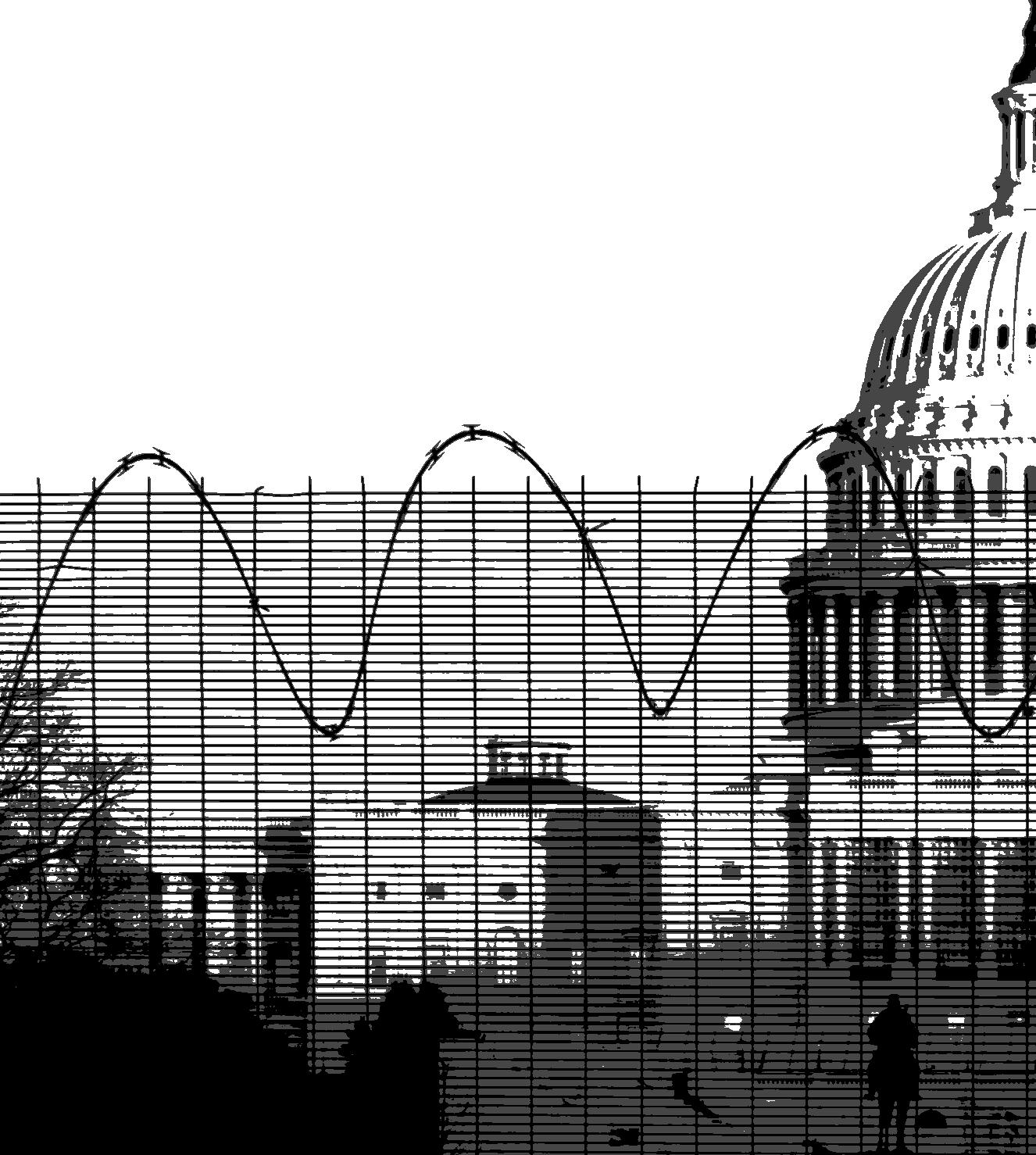
Mass deployments of the National Guard to numerous cities across the United States, beginning in June 2025, gave way to a game of jurisdictional tug-of-war. With the National Guard stuck in limbo between state and national power,
Americans are left wondering what the role of the Guard is and who is allowed to deploy it.
Established before the nation was even formed, the National Guard was an organized militia that existed solely to protect individual colonies and later states. The first organized fighting force was created to defend the Massachusetts colony in December 1636.
“The original purpose was to have a state military force under the command and control of a state governor, which was seen as much less of a risk to democratic governance than a federal standing army,” said Mark Nevitt, a professor at the Emory University School of Law. “That purpose is somewhat being upheld today, but the Guard is being asked to do more federal missions.”
States maintained control of their individual militias until the federal Insurrection Act of 1807 changed
everything. This act settled the National Guard under both state and federal jurisdictions, with it operating under state governors until the country reaches a crisis level high enough that the president finds it necessary to activate the National Guard, a highly contested threshold deemed arbitrary.
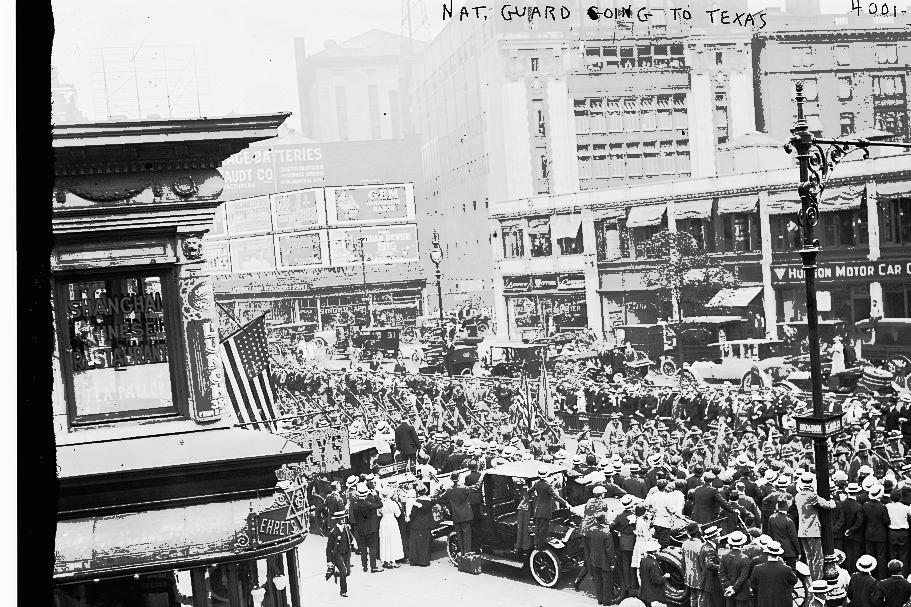
Since then, the government has called on the Guard in times of civil unrest, natural disasters, labor strikes, riots, public health emergencies and war. At the federal level, the National Guard has been activated at least 17 times, being sent to respond to crises such as the Los Angeles Riots in 1992 and Hurricane Katrina in 2005. Most recently, the Guard was deployed to numerous states to mediate protests against U.S. Immigration and Customs Enforcement.
The circumstances surrounding federal deployment show a pattern of civil unrest; whether that be protecting protestors or constraining them depends on the president in power. Andrew Wiest, a history professor at the University of Southern Mississippi, believes that Guard members are uniquely suited to handle these sensitive circumstances. “Guardsmen bring not only their military strength and training to bear, they bring their civilian job to bear too,” Wiest said. “These are citizen soldiers… If anyone is going to understand the people who are protesting, it’s the Guardsmen.”
The unique position of National Guard members as both citizens and soldiers is why governors and
presidents often rely on them to deal with matters of civilian conflict, peaceful or otherwise.
In March of 1965, President Lyndon B. Johnson sent the National Guard to Alabama to protect nonviolent civil rights protesters during the Selma to Montgomery marches.
In contrast, President George H.W. Bush sent the National Guard to Los Angeles to shut down riots and protests related to the police assault of an unarmed Black man — an act critics are comparing to President Donald Trump’s use of the National Guard in response to immigration protests that have turned destructive in Los Angeles.
At the federal level, the National Guard is primarily called upon under the Insurrection Act, although it was still considered a rarity until recent years. Federal use of the National Guard primarily forces the Guard to suppress protests and attempts to constrain citizens, considering these actions justified by the threat of domestic conflict.
At the state level, the National Guard is primarily activated to ensure the safety of citizens and promote order while ensuring individual liberties are maintained
— an ideology that dates back to the original state militias during the Revolutionary War era.
This question of jurisdiction grew contentious again in June 2025, when Trump issued an executive order federalizing the California National Guard and sending units to Los Angeles to stop protesters from interfering with ICE agents conducting immigration investigations.
California Gov. Gavin Newsom said that he did not consent to Trump assuming authority of the National Guard, and a federal judge ruled that Trump broke federal law by sending National Guard troops to L.A. The judge stated that the Trump administration did not have the legal backing to take control of the National Guard, and that Trump was forcing the Guard to act beyond the bounds of what it is legally permitted to do. U.S. District Judge Charles Breyer stated that the administration’s interpretation of the law would “permit a president to create a perpetual police force comprised of state troops, so long as they were first federalized lawfully.”
In January 2026, this power struggle was demonstrated again, this time in Minnesota — an exceptionally complex case with numerous layers of jurisdiction and militarized forces acting alongside and against each other.
The protests in the wake of the deaths of Renée Good and Alex Pretti, both unarmed protesters who were killed during encounters with ICE agents, as well as the prevalence of clashes between protesters and ICE agents, led Gov. Tim Walz to deploy the Minnesota National Guard to maintain peace between ICE agents
and Minnesotans. During this time, the Minnesota National Guard was seen passing out food and water to protesters, as well as wearing reflective vests to distinguish themselves from immigration enforcement.
This is one of the first clear examples of political tension between federal and state forces. Critics of the National Guard believe that the Guard’s actions are a political gesture of agreement, rather than simple peace enforcement. The matter is further complicated by Trump’s threats to federalize the Minnesota National Guard to disrupt and shut down protesters, contradicting the governor’s orders.
If the Insurrection Act is invoked by Trump, the direction of the National Guard and state authority will upend prior precedents, allowing the president much more control over these forces.
Wiest refers to the Insurrection Act as the “President’s big hammer.” If invoked, Wiest said, “All bets are off on how the government can use the military in its own country.”





On Jan. 3, 2026, U.S. Special Operations forces captured Venezuelan President Nicolás Maduro in his home in Caracas. What’s capturing the attention of Gen Z, however, is the rumors that began to spread across social media platforms shortly after Maduro’s arrest — rumors about the music that special forces were allegedly listening to.
The story goes that the Delta Team was listening to Chief Keef’s “Love Sosa.” Upon taking a very serious journalistic listen, there are some major critiques of the song.
The song itself is pretty basic, a traditional rap song with heavy bass, laden with bars dissing the haters. However, it sounds a little bit tacky — the sort of music one might hear coming from a middle schooler’s speaker.
Considering the evidence presented, it’s clear that the special forces, allegedly, enjoy a hype hip-hop beat

Maduro. The lyrics that will resonate the most include “DJ turn me up, ladies, this your jam” and “Imma throw this money while you do it with no hands,” showcasing the military’s confidence, charisma and charm all in one.
#2: “Formation” by Beyonce
A fabulous choice. An iconic song known for its confidence-boosting lyrics and booty-bouncing beat. Special forces should feel confident in their abilities, and this song is the ultimate choice. Lyrics including “I slay, I slay, I slay” and “I dream it, I work hard, I grind till I own it” will help special forces ensure they stay serving and working hard to accomplish their mission goals.
#3: “Not Like Us” by Kendrick Lamar
The reasoning for this song is simple; it inspires the idea that no one can compete with the Delta Team. The chorus of this hit song repeats, “They not like us, they not like us,” exemplifying the unprecedented nature of the Delta Force. Nobody is pulling stunts like the U.S. Special Forces. It’s a cheeky way of letting the world know they can’t get on that level of stealth.
#4:




While this song and its disco beat may seem starkly out of place amongst the hip-hop and rap songs above, it is a perfect ending to the playlist. Dua Lipa demands the audience watch her dance the night away, the same way the U.S. forces snuck out into the night with Maduro in hand. With the mission a success, it’s clearly time to celebrate.

President Donald Trump made history on Nov. 25, 2024, when he was re-elected to a non-consecutive second term after a long campaign characterized by fiery rhetoric and powerful promises. More than a year into his second term, how has the president followed through on those promises?
Promise 1: Tariffs on Foreign Nations
“[We’re going to] tariff the hell out of countries that have been taking advantage of us,” Trump said in a campaign speech in Georgia on Nov. 3, 2024.
In his first days in office, Trump’s executive orders increased the effective U.S. tariff rate from 2.5% in January to 27% in April 2025, the highest rate in a century. The Trump administration claimed that tariffs
promote domestic manufacturing and provide income that could replace federal income tax dollars lost due to other Trump policies.
On April 2, 2025, Trump signed what he termed “Liberation Day” tariffs, which enacted a minimum 10% tariff on almost every nation, and additional punitive tariffs on specific nations. The administration argued that these tariffs are allowed under the International Emergency Economic Powers Act.
“The tariffs did, in fact, generate a lot of money for the Treasury. However, they were not paid by the exporting countries,” said Karen Kedrowski, a professor of political science at Iowa State University. “They were paid by the importers. And now the federal Treasury is trying to figure out how to refund the billions of dollars collected in tariff taxes.”
The Supreme Court ruled on Learning Resources, Inc. v. Trump in February that those tariffs were illegal; the Constitution delegates trade power to Congress. Trump has since signed an executive order to maintain the 10% minimum tariff, which has led several states to sue.
The industries most impacted have been metals, manufacturing and electronics. The impact of Trump’s tariffs has been less destructive than many economists had predicted, partially because many have been altered or repealed. Still, the United States has not seen a resurgence of manufacturing jobs, and economists say that tariffs increase expenses and reduce earnings for businesses.
In August 2024, Trump promised at a campaign event in Atlanta that he would cut federal money to schools that push “critical race theory, transgender insanity and other inappropriate racial, sexual or political content.” Initial actions to follow through on these promises included executive orders targeting diversity, equity, and inclusion. These orders required schools and universities across the country to dismantle DEI offices and initiatives or risk losing federal funding.
Kedrowski explained that public K-12 schools are far less affected by these policies than colleges and universities because those schools are primarily funded by local and state governments, not federal money.
“Where it [anti-DEI policies] has the most leverage is colleges and universities in federal grants and contracts and student financial aid,” Kedrowski said.
In February 2025, the Department of Education sent “Dear Colleague” letters to educational institutions across the country to advise schools to comply with civil rights laws that prevent discrimination. Widely viewed as part of the Trump administration’s broader anti-DEI efforts in higher education, these letters warned of the consequences of noncompliance, which include loss of federal funding for education. A federal judge has permanently struck down the letter, ruling it unconstitutional.
The Trump administration believes that DEI initiatives based on racial or sex-based characteristics are discriminatory and unconstitutional, and frames the policies as meant to ensure meritocracy within educational environments.
Dozens of lawsuits are pending to challenge the administration’s anti-DEI policies. For now, many of Trump’s anti-DEI executive orders are still standing. However, legal experts speculate that the administration might pursue eliminating DEI through other means,
such as placing conditions on grant funding or suing educational institutions for noncompliance with antidiscrimination laws.
Immigration was a frequent talking point in Trump’s campaign speeches. Trump promised that on day one, he would end the “migrant invasion” and sign an executive order “ending automatic citizenship for the children of illegal aliens.”
On the evening of Jan. 20, the day he was sworn into office, Trump issued executive orders that declared a national emergency at the U.S.-Mexico border, blocking asylum seekers and refugees from entering the U.S. and ending birthright citizenship for those born to parents who are not permanent residents.
In his first year, Trump has focused on mass deportations, changes to legal avenues of migration and strict immigration enforcement via tactics such as mobilizing federal troops. As a result of the administration’s implementation of domestic immigration enforcement, border crossings have dropped sharply, and hundreds of thousands of people have been deported from the country.
Kedrowski believes that very few people had problems with Trump’s proposal to deport undocumented persons who had committed violent crimes in the United States.
However, she thinks that aggressive U.S. Immigration and Customs Enforcement tactics, such as arresting non-criminal and non-violent offenders legally in the country at green card hearings, detainee deaths, and the killings of Americans, have turned it into an unpopular policy.
“The implementation of Trump’s anti-immigration promise has turned out to be extremely unpopular, even among people who supported the idea initially,” Kedrowski said.
The Trump administration has argued that immigration in the United States poses a threat to national security. Still, many of these actions have sparked intense debate and protest across the country.
Trump’s attempts to revoke birthright citizenship have been found illegal in multiple federal courts. The Trump administration has also faced lawsuits regarding inhumane conditions at detention centers, visa bans, use of Department of Homeland Security and ICE tactics, and violations of constitutional rights. Many lawsuits are still pending.
WORDS GREY MURPHY DESIGN EVE LOEHRER
Since its creation in the aftermath of 9/11, four presidents have shaped the presence of ICE in the United States.
On Sept. 11, 2001, two planes hijacked by terrorists collided with the World Trade Center in a historically brutal attack on U.S. soil. As eyes around the country watched in horror, something undeniably shifted; the U.S. no longer felt safe. This tragedy triggered a complete reorganization of what’s now known as the Department of Homeland Security and, subsequently, the birth of the U.S. Immigration and Customs Enforcement agency. With this came an amplified focus on immigration for the U.S. government.
As the memory of 9/11 fades, ICE’s presence has morphed. The 22-year-old agency has garnered intense nationwide coverage throughout the years, drawing scrutiny from some and support from others. So how did one agency dedicated to protecting U.S. citizens become such a controversial topic?
ICE was formed on March 1, 2003, under President George W. Bush’s administration, as a part of the 2002 Homeland Security Act. Its operation throughout the early aughts was greatly influenced by the tragedy of 9/11, and throughout its existence, it has transformed from an agency created out of necessity into something completely its own within each administration, from Bush to Trump’s second term. The Obama administration’s ICE policies came into effect in 2014. Kristin Mohram, an immigration lawyer under the Owen Law Firm in Omaha,
Nebraska, said the Obama administration began to focus on directing how ICE prioritizes detaining people.
These policies outlined a deportation ranking system, following three tiers of priorities. Tier one consisted of the top priority. This included undocumented immigrants who were suspected of terrorism, involved in gang activity or convicted felons. Tier two prioritized undocumented persons convicted of significant or multiple misdemeanors, along with people who have abused the visa program and those who had unlawfully entered after Jan. 1, 2014. The final tier consisted of persons issued a final order of removal.
This prioritization reallocated ICE funding toward criminal activity, prioritizing as little as 13% of the total illegal immigration population, according to the Migration Policy Institute.
This fact is mostly due to the Obama administration’s use of prosecutorial discretion. ICE itself defines prosecutorial discretion as “the authority of an agency charged with enforcing the law to decide whether to enforce, or not to enforce, the law against someone.”
In the context of the Obama administration, ICE agents were trained to consider factors such as strong family and community ties and length of occupation when deciding whether to detain certain immigrants. Essentially, if the illegal immigrant had no other charges and had connections in the U.S., the chances of their being detained were low.
Under the jurisdiction of several Secretaries of the Department of Homeland Security — John F. Kelly and Kirstjen Nielsen during Trump’s first term and Kristi Noem during his second — the Trump administration had taken a vastly different approach.
During his first term in office, Trump issued three executive orders that overturned many of the Obama administration’s immigration policies. The new policies under Trump took an entirely new focus, rewriting their priorities to include a much larger population of noncitizens and leaving decisions concerning deportation up to individual officers.
Immigration has always been an issue that has tended to elicit really strong feelings. Trump capitalized on what is an easy target issue.
KRISTIN MOHRAM, IMMIGRATION LAWYER
“They eliminated domestic violence-based asylum,” Mohram said in reference to some of the laws passed during Trump’s first term in office.
This is in part due to a power called the attorney general’s session. The attorney general’s session, as Mohram explained, gives the attorney general freedom to take a case in the immigrant appellate courts and make a final decision without having to intervene through Congress.
Because the Board of Immigration Appeals is run under the Department of Justice instead of independently, Mohram said the attorney general has the freedom to intervene and make precedent decisions of any pending court cases they please. This executive aspect, combined with the ICE agency itself, made for a complicated and delicate system.
ICE agents were encouraged to detain those they perceived to be a national security threat, regardless of criminal activity, connection or time spent in the country.
“That becomes important because detention is a litigation strategy for the DHS. So their ability to detain people is how they deport people,” Mohram said.
While the Biden administration attempted to undo Trump’s official executive orders, Trump’s reelection in 2025 allowed the president to double down on his first term’s policies.
Based on a report by the New York City Bar Association, Trump’s second term not only reinforced 2017 policies but also came with new orders, such as orders that include directing agents to issue Notices to Appear to those whose applications for immigration benefits had been denied. This order would effectively end exemptions to deportation.
Alongside Trump’s executive order to reform birthright citizenship, the nation saw another shift in ICE’s role. Reform would mean that any baby born on U.S. soil to parents of non-legal status would not immediately become a U.S. citizen, which could broaden the impact of deportation. At the time of publication, the Supreme Court is hearing arguments related to this case.
“In my experience, immigration has always been an issue that has tended to elicit really strong feelings. Trump capitalized on what is an easy target issue,” Mohram said.
The immigration issue is inherently partisan. ICE and the immigration court are both run under departments with political appointees. Therefore, changes in these departments and agencies have been influenced by political agendas.
According to NBC News, as of February 2026, 46% of the U.S. populace strongly disapproves of Trump’s handling of immigration policy and the U.S. Border Patrol. These numbers are not all that different from trends in the past. Obama’s ICE policies, for example, were disliked by approximately half of the population.
The issue of immigration has been and will continue to be a complex topic; however, as the Trump administration continues to alter immigration law and policy in unprecedented ways, Americans are witnessing ICE’s power enter a more unpredictable era.

WORDS
The presence of ICE in Minnesota has led to suspicion and mistrust.
The federal government launched Operation Metro Surge on Dec. 1, 2025. This enforcement initiative deployed agents from U.S. Immigration and Customs Enforcement and U.S. Customs and Border Protection across the greater Minneapolis area to conduct targeted immigration raids and apprehend undocumented individuals. Just two days into the operation, Minneapolis Mayor Jacob Frey issued Executive Order 2025-02 barring federal agents from using city property for civil immigration enforcement operations.
By the end of the month, protests had erupted across the metro. Not only did people clash with ICE agents, but in some instances, they also went head-to-head with local police.
When ICE was founded in 2003, the goal was clear: prevent terrorism, enhance national security and enforce U.S. immigration law. The Bureau’s current mission statement remains largely unchanged, but the agency’s recent tactics have left critics questioning whether its current operations still serve that intended purpose.
The violence escalated in January when ICE agents shot and killed Renee Nicole Macklin Good, a U.S.-born mother of three. Two weeks later, Border Patrol officers fired multiple shots and killed Alex Pretti, a citizen and ICU nurse, as he recorded their activity. In both cases, witnesses say agents blocked medical personnel from providing aid.
When former DHS Secretary Kristi Noem called Good a “domestic terrorist,” protests ignited that consumed the Twin Cities and soon swept the nation. In response, Minneapolis and St. Paul, backed by the state, filed a federal lawsuit on Jan. 12 seeking a court order to end the operation in the metro area.
In early January, the Associated Press made public a DHS memo that explored a loophole in the Fourth Amendment. Previously used to prevent federal agents from entering civilian homes without a judicial warrant, the memo now argues that the amendment doesn’t expressly forbid an administrative warrant from authorizing forcible entry. Driven by Executive Order 14159, ICE agents are now encouraged to utilize all enforcement mechanisms, including deportation warrants, to carry out residential arrests.
On Jan. 20, ICE agents following these new directives forced their way into the home of Minneapolis resident and U.S. citizen ChongLy “Scott” Thao. The agents were allegedly seeking sex offenders in the area. Thao’s record was clean.
Thao told the AP that agents failed to show a warrant before bashing open his front door and pulling guns on his family. Agents then dragged Thao into the streets in his underwear in below-freezing temperatures.
Before the surge, the Minnesota attorney general had issued a formal legal opinion prohibiting local law enforcement from honoring ICE detainers — requests from federal authorities asking local jails to hold removable individuals for an additional 48 hours or to notify ICE before their release so federal agents can take custody. When ICE began operations in Minneapolis, the agency could still process its own detainees, but local law enforcement was legally barred from assisting.
Out of State, Out of Sight
Immigration lawyers such as Julia Decker, the director of public policy and public affairs at the Immigrant Law Center of Minnesota, were receiving a high volume of calls from detainees and family members.
“We didn’t know where they were being taken because they weren’t being taken to detention centers in Minnesota,” Decker said. “By the time we were getting phone calls, it was people calling from the tent camps in El Paso… hours or days later.”
In Missouri, Rekha Sharma-Crawford, an attorney with Sharma-Crawford Attorneys at Law, saw local detention centers “crushed” by out-of-state transfers.
“This is a numbers game,” Sharma-Crawford said. “If there are not that many undocumented people [locally], well, how are we going to convince people that we should be able to continue to do the crazy things that we’ve done in Minnesota? ‘Oh, we will create our own undocumented people.’”
To do so, DHS stripped away temporary protection status — a protection offered to individuals who are unable to safely return to their home countries — along with suspending deferred action benefits meant to protect individuals who entered the country as juveniles from deportation. DHS also took away work cards from people who had filed for asylum.
“People who had documents were deliberately and systematically made undocumented,” Sharma-Crawford said. “So now it’s a free-for-all.”
On Jan. 20, Executive Order “Protecting the American People Against Invasion” led to rapid policy changes that accelerated ICE operations by mandating the “total and efficient enforcement” of immigration laws. The order directs the federal government to cut funding to sanctuary jurisdictions and significantly increase the number of federal immigration officers. It also included language allowing the DHS Secretary to take all appropriate action “to ensure the efficient and expedited removal of aliens from the United States.”
While Supreme Court opinion No. 25A169 prohibits arrests based on ethnicity, the same opinion determined that if a seemingly non-white individual is spotted within specific contexts — such as speaking accented English or being present at labor pickup sites — agents may legally intervene.
Since immigration enforcement has largely been delegated to the executive branch, much of immigration law as Americans understand it stems from policy memos, explained Bryce Denton, a business immigration attorney at Dentons. These memos require no action from Congress and exist in a world of limited oversight from the court system.
“The federal government wants to say that they hold all the power,” Sharma-Crawford said. “It’s a propaganda-esque narrative that they’ve used for so long that local and state officials continue to think they don’t have power. But they do have power, and I think it’s time for them to take back that power.”
While Minnesota wasn’t the first state to face a federal surge under Trump, it was different from the outset.
By early January, PBS reported that ICE intended to make Operation Metro Surge the “largest immigration operation ever.”
Outreach programs such as Communities
Advancing Prosperity for Immigrants became central to the survival of many during the surge, said Monique Hernandez, the organization’s development and communications director. Many of the individuals and families CAPI serves today have come to the U.S. from Afghanistan, seeking asylum from the Taliban. Since Operation Metro Surge began, many of these immigrants have been undergoing “re-traumatization.”
“We had a woman tell us… ‘I keep thinking to myself, it’s better than there [in Afghanistan] with the Taliban, but I’m still so scared to leave my house,’” Hernandez said.
CAPI’s food shelf remained under constant surveillance during the surge. ICE vehicles parked across the street to videotape visitors, sent impersonators to pose as volunteers, and even followed staff during food distributions. “It just feels like being hunted,” Hernandez said.
The effects of Operation Metro Surge extended far beyond the immigrant community. Decker recalled the “eerie” sight of empty streets during what should have been rush hour as entire sectors of the community shut down. Even as national coverage shifts away, Twin Cities residents are still reeling.
“[ICE is] still here,” Hernandez said. “When the national attention goes away, when the cameras leave, people think it’s over, but it’s still happening.”
Social media trends pit 2016 against 2026. What does
WORDS
SEBASTIEN MEYERS DESIGN EVE LOEHRER
Alot can change in 10 years, and American politics has taken a shape no one could have predicted. This did not happen because of one election; however, there was an inflection point in the 2016 presidential election, when the television personality Donald J. Trump defeated Hillary Clinton, one of the most well-established figures in modern-day politics.
Leading up to election day, polls showed Clinton as the frontrunner. President Trump’s victory disrupted the political assumptions about who could succeed in politics and how campaigns are run. Politics, once predictable and stable, suddenly felt fast-moving and shaky.
In 2026, politics shapes how Americans consume social media and how people interpret everyday events. Unlike previous years when Americans could avoid politics outside of election cycles, a 2025 Pew Research study shows that political news is now considered unavoidable and emotional.
Before 2016, national politics were often dominated by familiar names and campaign messaging, which typically left voters feeling disconnected. This dissonance created space for candidates challenging the system.
Both Trump on the right and Bernie Sanders on the left appealed to deep voter frustration with establishment candidates. Their campaigns focused on outsider credibility and connection to ordinary Americans. Both candidates’ campaigns saw a surge in small donors. In the 2016 federal election, these small donations accounted for $1 billion of the total raised; however, that number skyrocketed in the 2020 federal election, which saw the same small donors raise $4 billion.
Since 2016, political campaigns have relied on social media as a critical way to reach voters. Platforms such as X and Facebook offer a cheaper way to reach target audiences, which has changed how campaigns operate.
“2016 was one of the first elections in which social media played a large role,” said Peter Owens, a campaign manager for Rep. Mariannette Miller-Meeks (R-IA). “Trump started tapping into the attention economy that already existed in the social media space.”
The Denny Center for Democratic Capitalism defines the attention economy as “a system in which human attention… is treated as a commodity.” Owens believes Trump flipped the idea of how social media is “supposed” to be used in campaigning on its head. The president made his social media feel like entertainment
rather than just a source of information. This has now become the norm for politicians in 2026 after seeing the success that Trump had in 2016 by capitalizing on this attention economy.
Exemplified best by his presence on X, Trump wrote in a blunt, conversational tone and leaned into controversy. While unorthodox, this launched him to the forefront of social media because he captured the attention of the nation.
In 2026, increased smartphone and social media use have resulted in a proliferation of news alerts delivered in near-real time. While this has made the world more informed, it has also drastically shifted people’s views on the media, creating the illusion of rising political violence.
However, Derek Holliday, an assistant professor of political science at George Washington University, has found that the majority of Americans oppose political violence. Holliday said that it is hard to identify a rise in political violence due to the lack of unification on how researchers define political violence.
“If you include things like protesting without a permit, you will get numbers in the double digits,” Holliday said. “But once you start getting to more extreme incidences, that poll is very much in single digits in many cases, indistinguishable from zero.”
Because social media allows people to instantly repost viral moments, smaller instances of political conflict are often brought to the forefront of social media feeds, making the little things seem more serious than they actually are.
Push notifications, alongside an algorithmically-driven feed, increase anticipation for the next conflict or controversy, making notifications feel anxietyinducing. Many therapists now describe this as a kind of news anxiety. Some therapists are even using a political lens when diagnosing patients because politics holds more emotional weight than it used to.
Courtney Ackerson, president of the American Mental Health Counseling Association, has adapted her diagnosis process as a result.
“It’s part of my clinical assessment now of how people take in news and how they feel about it,” she said. “News anxiety is not new… they now know how to code it better.”
Although data shows many adults admit social media is a distraction, it’s also linked to how they think about democracy and civic life. In 2026, a larger proportion of adults see social media as important for connecting with others about politics and social issues, as well as for expressing their views on these topics, compared to 2016.
Looking back from 2026, the transformation that began in 2016 goes far beyond a single election result. It has reshaped campaigning, media consumption, mental health and civic engagement.
Whether this shift will ultimately strengthen or strain U.S. democracy remains to be seen. Greater participation in grassroots politics suggests a more engaged public, yet constant tension, anxiety and division point to a high social cost.
It’s clear that the political world we inhabit today is far less predictable for voters than it was just a decade ago, and it shows no signs of slowing down.


How do different sides of the political spectrum define what it means to be American?
Patriotism, as defined by Britannica, is “a feeling of attachment and commitment to a country, nation or political community.” But this broad definition becomes more complicated when it intersects with today’s political landscape in the United States.
A 2025 Gallup poll reported that while 92% of Republicans consider themselves very proud to be an American, only 36% of Democrats responded in kind, suggesting that patriotism has become an increasingly partisan concept.
Party platforms, last updated in 2024, indicate that Republicans place more emphasis on patriotism, with the word “patriot” appearing four times. The Democratic platform only mentions the word once, in reference to President Donald Trump’s use of the word to describe individuals involved in the storming of the Capitol on Jan. 6, 2021.
Recently, however, it appears that some Democrats are trying to reclaim the term. More and more Democratic officials have been employing patriotic rhetoric. In 2025, Rep. Pat Ryan (D-NY) said, “patriotism does not belong to one party,” and Virginia Gov. Abigail Spanberger drew on the patriotic messaging of George Washington’s Farewell Address during her rebuttal to the State of the Union address in February 2026.
Still, it’s not clear whether Democrats define patriotism the same way that Republicans do.

According to Jason Gilmore, an expert in American exceptionalism — the belief that America is unique and holds an exemplary role in the world — and a professor of communications and media at Utah State University, Republicans have often exhibited stronger support for America as it is, while Democrats have endeavored to create change in America in the name of patriotism.
“[Republicans] tend to be more uncritical ... and Democrats tend to be a little more constructively patriotic,” Gilmore said.
Donna Hoffman, a professor of political science at the University of Northern Iowa, believes that division within patriotism stems from whether or not individuals think it’s appropriate to criticize a country’s actions.
“[Division] is in part because we do have different strands of political culture in the United States,” Hoffman said. “Are you viewing it critically or not critically?”
Hoffman applies this idea directly to partisan interpretations of patriotism.
“The Democratic Party has been more self-critical of patriotism many times, and the Republican Party has been more embracing of it wholeheartedly,” Hoffman said.
As a result, Republicans may read Democrats as hating their country, while Democrats may perceive Republicans as being unwilling to improve it.
“There has been an attempt by Republicans to kind of gain a sense of ownership over patriotism, like it’s their thing,” Gilmore said. “‘We’re the ones who are patriotic, we’re the ones who love America. We’re the ones that are the real Americans.’ [It’s] a rejection of the
notion that Democrats love this country.”
Gilmore also believes that media and social media have created a more competitive patriotism, as well as exacerbated partisan divides.
“[In the past,] you would see maybe one truck that had a big old American flag in the back. Now you see 17 trucks with American flags in the back,” she said. “What you’re seeing is, especially in media, this kind of notion that performative patriotism is real patriotism.”
Stars and Stripes Hoffman believes that shifts in patriotism may be connected to political rhetoric. She pointed to Barack Obama’s 2004 DNC speech as an example of a unifying patriotism. The speech was heavily woven with patriotic themes, proclaiming that “there’s not a liberal America and a conservative America — there’s the United States of America…The pundits like to slice-and-dice our country into red States and blue States…We are one people, all of us pledging allegiance to the Stars and Stripes, all of us defending the United States of America.”
military members, while excluding those he does not support.
“Trump came along and put [ownership over patriotism] on steroids. [He believes] that the real Americans are not just Republicans,” Gilmore said.
“They’re the people who love Trump.”

Division within patriotism stems from whether or not individuals think it’s appropriate to criticize a country’s actions.
Even though the speech is more than 20 years old, Hoffman believes its themes still remain relevant today.
“He was trying to use a foundation of patriotism to essentially say, look, we have more in common than we do apart,” Hoffman said.
Scholars such as Hoffman and Gilmore see Donald Trump as somewhat of an outlier in his use of patriotism. Rather than using it as a method to unite, he has often used the word “patriot” to praise certain individuals and groups, such as his supporters and
Divisive or Unifying?
Scholars disagree on whether the use of patriotism in political rhetoric is unifying or divisive.
Ryan Talbert, a professor of sociology at the University of Connecticut, believes that the divides between definitions of patriotism are too great to lead to unification.
“Patriotism is probably not going to unify us unless we get some charismatic leader that can help us, as people in this society, identify the similarities that hold us together as opposed to the differences that pull us apart,” Talbert said.
Gilmore believes disagreement over patriotism is inevitable. However, he said, the American political system depends on it.
In Gilmore’s words, “You can’t have a successful political candidate, especially not for the presidency, without having patriotism as part of their play for it.”
This unexpected theoretical financial indicator might be inversely related to recessions.
WORDS, PHOTO & DESIGN ALLIE RAINES
Every five years, the U.S. Census Bureau compiles data that economists use to measure the health of the economy and predict market trends. But what if there was a clue hiding right under the noses of millions of Americans?
Overlooked by the bureau, the tubes of lipstick carried in purses, stuffed in pockets and placed on bathroom counters are predicting trends with a pop of color.
While not economically proven, the lipstick index is a theoretical indicator that lipstick sales are inversely related to recessions. As money becomes tight for larger purchases, some researchers say a small beauty item helps relieve stress.
The chairman of Estée Lauder, Leonard Lauder, popularized the term during the 2001 recession, when, after the 9/11 terrorist attacks, many luxury goods struggled with sales, but lipstick was largely unaffected.
While the phenomenon’s name is a mere 25 years old, the increased sales it refers to can be traced back to the Great Depression.
A simple tube of lipstick can ease the anxiety of uncertainty, especially in times (like today) of economic unpredictability. Tomorrow, something bad might happen, but today, in the lipstick aisle, one has the power to control the immediate outcome.

“We are seeing less certainty about housing affordability,” said Jonathan Fox, Ruth Whipp Sherwin Endowed Professor and microeconomist at Iowa State University. “To satiate those fears of ‘I’m never going to be able to afford a house,’ you’re going to say ‘I’m not going to bother trying to save.’”
According to J.P. Morgan Global Research, the economy is expected to stay resilient throughout 2026 with a 35% probability of a U.S. recession. However, while this outlook is positive, individual consumers may have their own speculations.
“There’s all sorts of uncertainty that’s been created for political and economic reasons. The entire economy can be in rough shape… But you’re not the general economy,” said Fox. “Reacting as if that’s all impacting you doesn’t make a lot of sense.”
Whether or not Americans face political or economic stress, the country’s consumer culture continues to drive purchases. Lipstick or other in-fashion purchases cluttered around homes are motivated by trends and the advertising of big companies, not just the rhythm of the stock market.
“If you can be happy for $5 a day, oh my God, you should probably do that,” Fox said. “As long as those day-to-day decisions are not robbing from your future self, you’re doing what you need to do. You’re in good shape.”
When the federal government moved to cut excessive spending, the Corporation for Public Broadcasting went dark. Now, the future of American media is uncertain.
Since President Donald Trump returned to the Oval Office, he has used the federal government to crack down on partisan bias in news and entertainment media, affecting both public and private media spheres. While reducing the power of state-funded media companies, this wave of change has also complicated the way speech and expression are protected.
The Corporation for Public Broadcasting, or CPB, was created by Congress in the 1960s to fund media programming and encourage network diversity in a time when media was dominated by three TV networks —ABC, NBC and CBS. Under this new institution, NPR and PBS were established. Decades later, according to a 2025 Pew Research Center survey, the majority of Americans — on both sides of the aisle — do not perceive these outlets as fair or objective sources of news, yet 43% still support their continued funding.
The Republican-led Congress passed the Rescissions Act of 2025, cutting roughly one billion dollars from the CPB, effectively dissolving the organization. NPR and PBS will not be discontinued, but these cuts will still impact how Americans can access news and other broadcast content.
Local PBS and NPR stations receive varying funding levels depending on fundraising. At Iowa PBS, the CPB funded a quarter of employee salaries, accounting for roughly 20% of its overall annual budget. While most financial support comes from private donations, there is still a 20% gap from the loss of CPB funding. Because PBS is prohibited from showing paid commercials, it cannot generate revenue through traditional advertising like private media companies can.
While Iowa PBS hasn’t downsized its staff, many positions are open indefinitely, and 20% of programming was cut. Andrew Batt, the executive director of Iowa PBS, said many viewers may not have noticed the shift yet because the effects are almost invisible in the early stages.
“A lot of the new programming you see on public television specifically was funded two, three, four years ago,” Batt said.
Children’s shows, one of Iowa PBS’s core services, take even longer to develop because the “whole focus is on education and educational curriculum,” according to Batt.
This programming has been partially funded by Ready to Learn, a grant from the Department of Education intended for educational shows. PBS is still receiving this money, but it’s at risk after changes in the structure of the department.
“We are all in this entire system trying to find a way to raise philanthropically, to be more efficient,” Batt said. “That alone can’t replace that money. There’s going to have to be a reckoning at some point when it comes to how we fix these funding issues in public broadcasting.”
National broadcasts are faced with a different pressure, as many are receiving threats of lawsuits or removal from the air after making unflattering or controversial segments about Trump or his policies. These actions
have many concerned about what this will mean for free speech in the media. After the cancellation of Jimmy Kimmel Live and the 60 Minutes controversies, proponents and critics alike flocked to social media to share their thoughts.
This is nothing new, according to James McNab, a production freelancer and professor at Iowa State University. It is his belief that this outpouring of passion stems from a sense of ownership in media.
“Everything that we’re seeing in the media is in response to changing political, social, and economic climates,” he said. “We tune in and consume all this content. Of course, we’re going to have an opinion about it.”
While reducing political bias in media should theoretically create a fairer atmosphere of discourse, Americans disagree on the approach — and how much the government should be involved.
McNab said that there are unintended consequences that result from the government regulating and funding media, just like there are with the First Amendment. “It’s probably going to be another generation before we start to either accept that this is the way it is, or understand how to deal with it.”
JULY 2024
Skydance (a media and film company) and Paramount announce a merger worth more than $8 billion.
OCTOBER 2024
Trump sues Paramount after a “60 Minutes” Kamala Harris interview, which aired two clips showing different parts of a response about the Israel/Gaza war. CBS claims they edited for time purposes. Trump says CBS edited responses with “completely different, and far better, answers.”
MAY 2025
The informal deadline for the FCC’s Skydance-Paramount merger decision passes. Trump-appointed Chair Brendan Carr denies the lawsuit as a factor in the decision (or lack thereof).
JULY 2, 2025
Paramount settles the “60 Minutes” lawsuit for $16 million.
JULY 17, 2025
CBS announces “The Late Show” is canceled, ending in May 2026. Colbert often criticizes President Trump. CBS claims they ended Colbert as a financial decision, though the show averaged 2.5 million viewers nightly.
JULY 22, 2025
Paramount pays Trump the $16 million, finalizing the lawsuit.
JULY 24, 2025
The FCC approves the SkydanceParamount merger.
DEC. 21, 2025
Thirty-six hours before premiere, new CBS editor-in-chief Bari Weiss cancels “60 Minutes” segment about CECOT — a prison in El Salvador where U.S. deportees were sent under the Trump administration’s orders — citing fairness concerns. The episode was eventually leaked by Canadian broadcasts.
FEB. 2, 2026
The FCC investigates “The View” for violation of the equal-time rule following Texas Democratic Senate candidate James Talarico’s appearance. The equal-time rule gives equal broadcast time to all political candidates running for office, with an exception for latenight and talk shows.
FEB. 16, 2026
On “The Late Show,” Colbert said that CBS told him he could not interview their guest, James Talarico, for fear of equal-time rule violations. Colbert still interviewed Talarico, but shared the segment on YouTube (not regulated by the FCC) instead of on the air, seeing nearly triple the number of views his broadcast received.
MARCH 31, 2026
A federal judge ruled that Trump violated First Amendment protections when he signed an executive order last year that blocked funding for only PBS and NPR. In his decision, Judge Randolph Moss of the U.S. District Court for the District of Columbia writes: “The First Amendment draws a line, which the government may not cross, at efforts to use government power — including the power of the purse — ‘to punish or suppress disfavored expression’ by others.’”
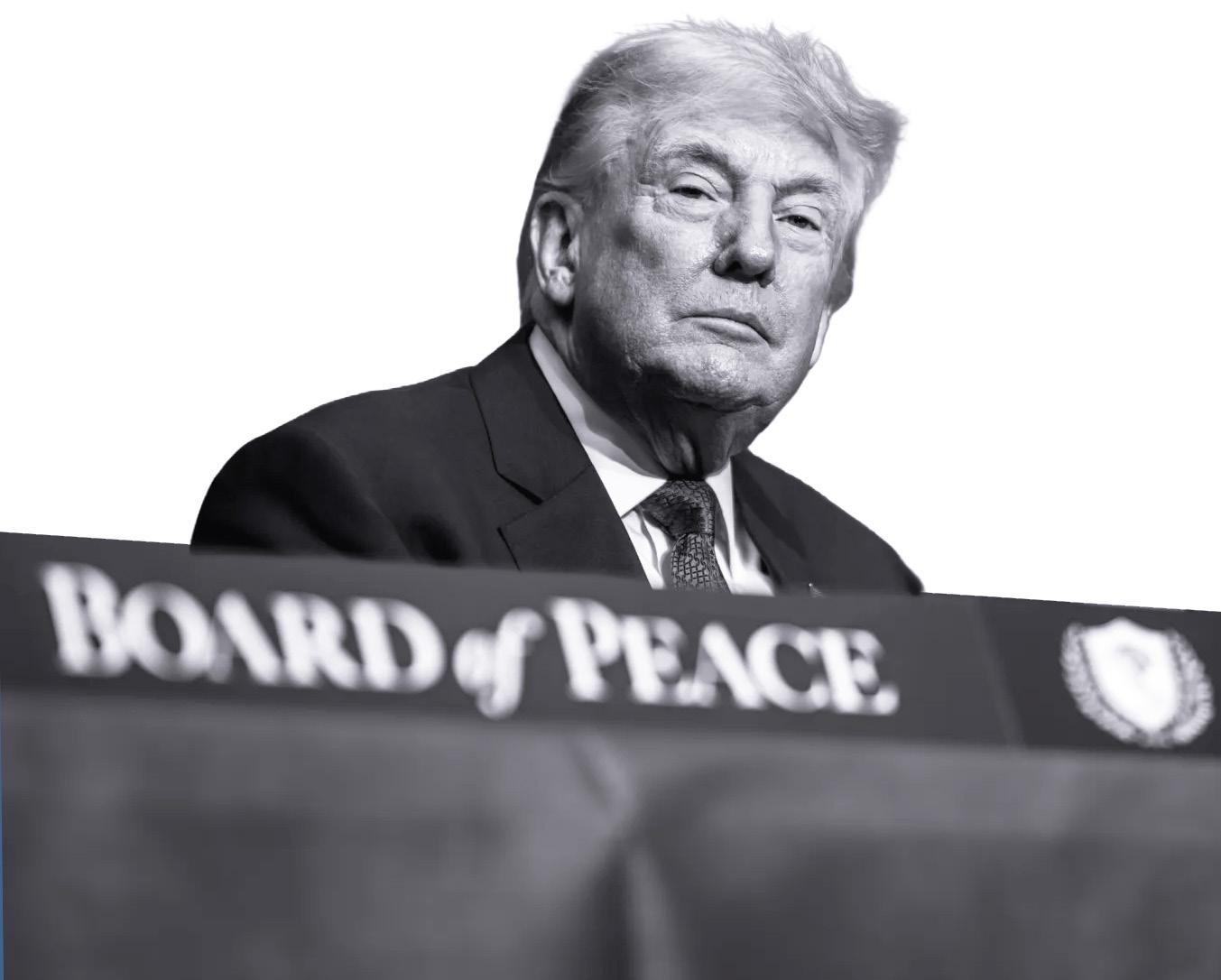
Trump’s vision for peace is challenging global problem-solving.
Peace is touted by politicians and leaders as a morally worthy aim to pursue. Governments across the world establish institutes to inform peace-centered policy decisions and prioritize diplomacy to aid in worldwide problem-solving. In short, peace is often conceptualized as being important.
Since the beginning of his second term, U.S. President Donald Trump has implemented institutional
changes that suggest he frames peace differently from recent American presidents. The United States Institute of Peace, originally founded to be an independent, nonpartisan think tank, has been seized by the Trump administration. As a result, a vast majority of USIP staff have been fired. Shortly thereafter, the institute was renamed the Donald J. Trump U.S. Institute of Peace. The institution is currently embroiled in legal battles regarding its name and independence.

Likewise, the State Department saw significant cuts to its staff and offices, with 45% of domestic offices dismantled. This decreased reliance on traditional methods of diplomacy has been countered by Trump’s preference for using personal envoys and military leaders as key negotiators.
“The U.S. foreign policy establishment, since the dawn of time, has been about America First. It’s always benefited us more than anything else. What it comes down to is a totally different conception [of America First],” said Elizabeth Shackelford, a former U.S. ambassador who resigned in protest of the Trump administration in late 2017. “What [Trump] sees as peace is a subjugation to either the U.S. or his own interests.”
Shackelford pointed to recent events in Venezuela as an example.
“The idea wasn’t that he wanted to put in the leadership that the country had voted for,” Shackelford said. “He wanted to reinforce leadership that would answer to his demands.”
Ronald McMullen, another former U.S. ambassador and professor of political science at the University of Iowa, sees Trump’s conception of peace differently.
“He primarily sees it as an absence of kinetic conflict,” McMullen said. “I think addressing killing, rather than the root causes, is his primary interest.”
Shackelford believes that Trump’s use of personal envoys in conducting high-level, high-stakes diplomacy is reflective of short-term thinking and hubris.
“That’s not how you develop a sustainable peace deal, and it’s not even clear that they’re trying to,” Shackelford said, referring to Iran negotiations (Note: this interview was conducted before the current military conflict between the United States and Iran). “Negotiation is a real skill set, and there are simple things you don’t do in a negotiation. There’s also the complete lack of history, knowledge and expertise that you need in order to succeed. And they just don’t really seem to value that kind of engagement or long-term thinking, and it costs us.”
Despite the challenges that Trump’s foreign policy approach poses to established norms of pursuing peace, there are specific elements of the international peaceminded system that Trump has expressed significant interest in.
Trump has made no secret of his desire for a Nobel Peace Prize, and many speculate that it may be a driving force behind his foreign policy priorities. Trump has repeatedly and falsely claimed to have ended multiple wars, saying that he’s “done more” for world peace than any other leader in history.
When the Nobel Peace Prize went to Venezuelan opposition leader María Corina Machado, Trump openly expressed his displeasure.
“It’s not just that the Trump administration wants to claim the wins and move on, but I think the Trump administration approaches with their own facts,” Shackelford said. “He just sees them [peace deals] as prizes. And he wants every prize in the book.”
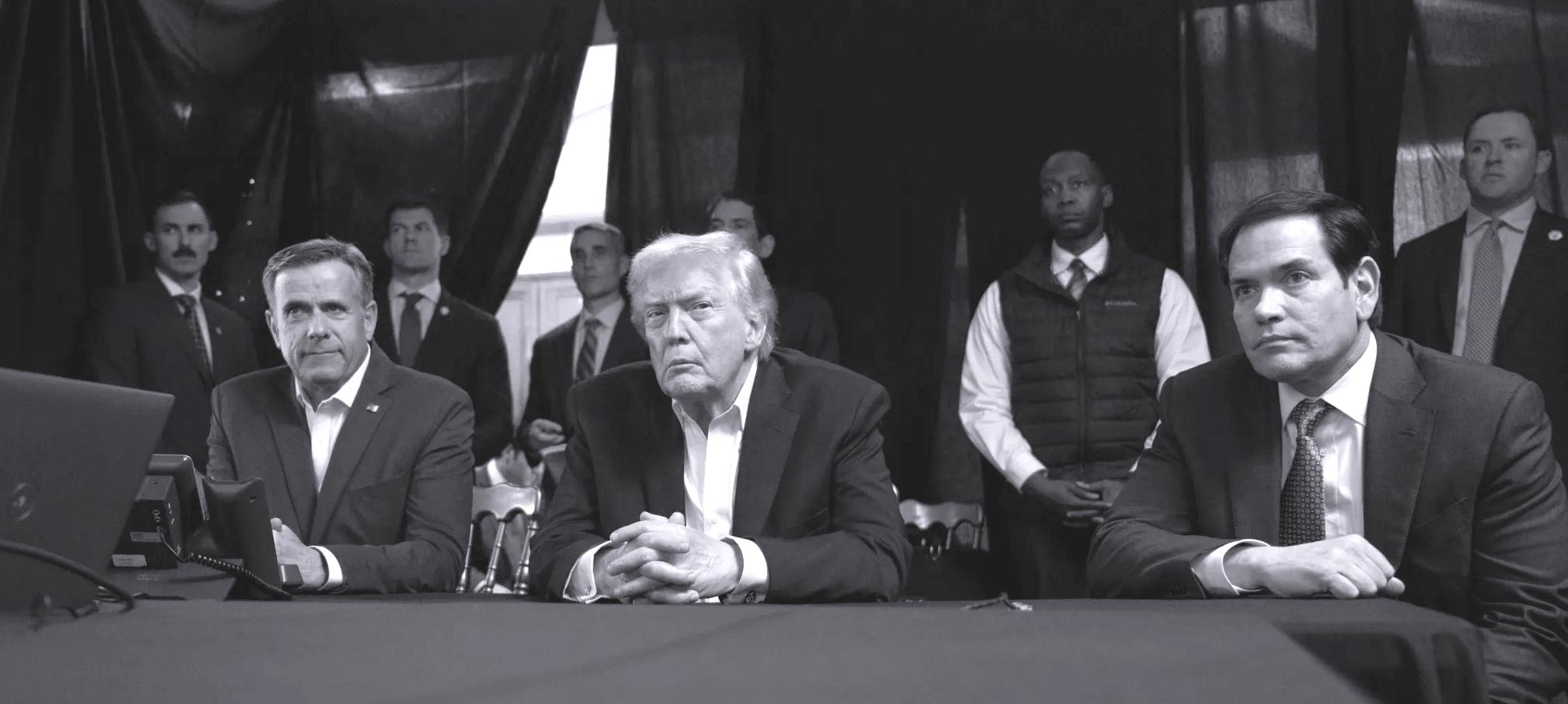

McMullen agreed.
“He thinks he should have it,” McMullen said. “It would be part of his legacy.”
After the United States forcibly removed the president of Venezuela on Jan. 3, Trump once again turned his attention towards Greenland, threatening to use military and economic force to ensure the semiautonomous island was placed under U.S. control. In an attempt to de-escalate, Norwegian Prime Minister Jonas Gahr Støre sent a message to Trump on behalf of himself and Alexander Stubb, President of Finland, conveying opposition to tariff increases against the two countries and raising the importance of dialogue concerning Greenland.
What [Trump] sees as peace is a subjugation to either the U.S. or his own interests.”
ELIZABETH SHACKELFORD, FORMER U.S. AMBASSADOR
As the purpose of peace is increasingly questioned, a new international body may be redefining its pursuit.
The Board of Peace was approved by the United Nations Security Council in September 2025 at Trump’s suggestion as a means of overseeing a peace plan for Gaza. It was formally established at the World Economic Forum in Davos in January 2026.
Originally, the Board was meant to function as a regulatory body for ceasefire negotiations between Israel and Hamas. But the Board has quickly become about far more.
In response, Trump wrote, “Considering your Country decided not to give me the Nobel Peace Prize for having stopped 8 Wars PLUS, I no longer feel an obligation to think purely of Peace.”
The government of Norway has no say in who is awarded the Nobel Prize.
Trump ended his response by calling for “complete and total control of Greenland.”
The structure of the Board hands Trump a vast majority of power. Trump is named as chairman for life with veto power and the sole power to determine his successor. He is also exclusively authorized to determine Board membership. All revisions to the charter must be approved by Trump.
Approximately 60 countries have been invited as of the date of this article’s publication. Some accepted their invitations, others have not responded and many have rejected them.
Countries that wish to be permanent members must pay a $1 billion membership fee, per Trump’s suggestion. Other countries may be members for three-year terms, subject to Trump’s personal approval. Approximately a third of the countries invited have signed onto the Board, the majority of which have authoritarian governments. No other major power has joined.
Fundamentally, the Board and Trump’s proposal for its usage look very little like the body proposed and approved in Security Council Resolution 2803, which authorized its creation. Notably, the charter signed in Davos makes no mention of Gaza. It does, however, grant the Board authority to address other conflicts when it deems that stability is at risk, potentially creating a ‘blank check’ of justification for foreign intervention.
Trump has said the Board might replace the United Nations because it doesn’t require the consensus of the U.N. Security Council. However, there is significant dialogue amongst scholars and experts about the extent to which the Board of Peace is even relevant in international relations.
“The relevance is that what he’s trying to do is redirect both funds and political currency away from the United Nations to an institute that is run solely by himself,” Shackelford said. “It’s all part of this big theme where he’s turning everything into a very personalist dictator approach. He’s trying to redirect multilateral, international efforts towards peace and security to something that he can control and wield in ways that suit his worldview.”
Ultimately, Trump’s approach to peace prioritizes power. Shackelford interprets this as a divergence from the post-World War II order that created relative stability.
“The world order that was established was created very specifically to move us past ‘might makes right,’” Shackelford said. “It’s [Trump’s approach] the complete antithesis to the theorizing around how the U.S. was going to maintain strength and peace as a hegemon. I think it’s very, very risky.”
McMullen also views Trump’s actions as subverting the pre-existing global order.
“There’s the old saying that with great power comes great responsibility, but Trump wants to modify that,” McMullen said. “So even with great power, the United States has basically no responsibility for maintaining the rules-based international system.”

Humans can’t predict the future, but they can bet on it.

The wager was settled long before the first play of the game — and millions were riding on it. The smart money was on Green Day’s Billie Joe Armstrong saying “MAGA” or “Make America Great Again” during the band’s performance of “American Idiot” before the start of the Super Bowl. The group is famously liberal. The NFL famously shies away from controversy. Armstrong didn’t mention either.
Those who bet against him walked away with a massive payday. But it didn’t come at the expense of a few friends, or even from some under-the-table bookie. It was done legally through Kalshi, the bet-on-anything app.


What Is a Prediction Market?
Technically, Kalshi and its main competitor, Polymarket, are prediction markets, not bookies. The apps allow anyone to bet on anything from crypto prices to sports games and, yes, national and global politics. But because Kalshi and Polymarket are regulated federally through the Commodity Futures Trading Commission, unlike sportsbooks, which are regulated at the state level and are generally more restrictive, prediction markets are perfectly legal for anyone 18 and older to bet on any event from anywhere in America. (The states of Nevada, Tennessee, Massachusetts, Arizona, Maryland, Connecticut and New Jersey have all either sent Kalshi and Polymarket cease-and-desist orders or have pursued legal action against the companies for operating unlicensed sports betting.)
Want to bet on who will win the majority in the House of Representatives? Done. The number of Federal Reserve rate cuts? Sure. Who will be the Republican nominee for president? Easy.
“The most interesting thing is it gives us real-time probabilities of what’s going to happen,” said Dustin Gouker, a consultant for the gambling industry and publisher of multiple prediction market newsletters. “Who will control Congress, who will win certain key elections, who will win the presidency?”
While these numbers are all speculation based on prediction markets, they still give a better picture than polling, as they update in real time based on the happenings of current events.
“Now, again, how accurate are those? Who knows?” Gouker said. “But it gives us a probability that I’d say is better than anything else we can do right now.”
These prediction markets aren’t just focused on big-ticket items either; they’ve become oversaturated with minor, timely predictions like how long a government shutdown will last, what the first lady will say in her speech and even the rescheduling of marijuana’s drug class.
A professional futures trader, who goes by the screen name Domer, has been betting on politics like this for the past 20 years.
“It’s taken the core principles, which is betting on political events and outcomes, and maybe who’s going to win an important award,” Domer said. “And it’s drawn the string out as much as possible to gamify quite a large number of things within that realm.”
Because every eligible American can vote in elections and place a bet on Kalshi, there’s debate around how these markets could impact people’s political views. Gouker believes that as the market hits critical mass, even a small amount of trading won’t manipulate the market.
“It doesn’t mean that people won’t try,” Gouker said. “But the market should regulate itself based on current odds.”
Domer recalls that the current administration plays a large part in the scale of the political market at a given time. The perceived chaos of the administration at a given time also increases the number of events to bet on.
“When you live in that type of environment, as we do now, it’s very hard to figure out where things stand,” Domer said.
There’s a worry with Kalshi and other prediction markets that users will trade based on insider information. While Kalshi says it will prevent this from happening, these markets are still in the early stages of critical mass. As users can bet on anything, who’s to stop someone in a position of power from betting on their own fortune?
Both Kalshi and Polymarket have instituted new bans on political candidates trading on their own campaigns. This same ban also stops anyone involved in college or professional sports from placing bets on their sport. While these changes are a start to addressing the insider trading problem, there is still speculation surrounding their effectiveness. Nevertheless, this isn’t how most professional futures traders approach the market.
“If you’re a prediction market trader, you cannot live in that fantasy world where you’re just interpreting every single thing through a partisan lens,” Domer said. “You have to be more dispassionate, and you have to be very fact-based.”
While multiple states wage war on the prediction markets, proposing and even passing legislation against mainly sports-related futures, it seems the prediction markets are here to stay.
The new administration is using controversial legal precedents to justify the extraction of Nicolás Maduro.
The United States shocked the world on Jan. 3, 2026, when its Delta Force captured Venezuelan President Nicolás Maduro and his wife, Cilia Flores, and brought them to the United States. The Trump administration’s Department of Justice had described Maduro as heading a “corrupt, illegitimate government” in its indictment, which charged him with four counts: narco-terrorism conspiracy, cocaine importation conspiracy, possession of machine guns and destructive devices and conspiracy to possess machine guns and destructive devices.
Appearing in court on Jan. 5, Maduro pleaded not guilty to all charges, asserting that he was the president of his country and had been kidnapped. Flores also pleaded not guilty.
“There was a kidnapping,” said Kathya Dawe, a law professor at the University of St. Thomas. “Strictly under a legal viewpoint, that is what happened.”
On Feb. 26, Maduro asked the presiding judge, U.S. District Judge Alvin Hellerstein, to dismiss his case on the grounds that the U.S. government was interfering with his defense by blocking the Venezuelan government from paying his legal fees. U.S. sanctions on Venezuela have so far prevented Caracas from covering the defense bill. Maduro’s attorney, Barry Pollack, argued that his client’s Sixth Amendment rights were being violated. On March 26, Hellerstein declined to dismiss the case but appeared to side with the defense, stating that “the right defense is paramount.” He added that he would issue a formal ruling at a later date.
At the time of publication, Maduro and Flores are being held at the Metropolitan Detention Center in Brooklyn. No date has been set for Maduro’s next court appearance.
Pollack has alluded to pretrial filings that would challenge the legality of the military operation that brought his client to the United States. He also claimed that Maduro, as president of Venezuela, has immunity from prosecution.
The claim of presidential immunity is contested because the United States does not recognize Maduro as the legitimate leader of Venezuela. The July 2024 election that returned Maduro to the presidency was widely considered fraudulent. Organizations such as the Carter Center and a UN panel of experts called the election unfair and undemocratic. Still, this immunity is extended to heads of state, irrespective of legitimacy.
In an emergency session of the Security Council, U.N. Secretary-General António Guterres expressed concern that international law had been violated. Article 2 of the U.N. Charter prohibits threat or use of force against the territorial integrity or political independence of any state.
Historically, the United States hasn’t been particularly concerned with upholding international law. In 1989, the Department of Justice released a memorandum opining that the president may order the FBI to investigate and arrest individuals for violating U.S. law, even if the FBI’s actions contravene international law. This memo has since been used to legally justify several such arrests — including the detention of Panamanian leader Manuel Noriega in Panama in 1990 and the forcible extradition of Humberto Alvarez-Machain, a Mexican national accused of killing an American Drug Enforcement Administration agent that same year.
There should have been a separation of powers. What the executive wants shouldn’t matter to the judiciary.
KATHYA DAWE, LAW PROFESSOR AT THE UNIVERSITY
Several lawmakers and critics of the president have argued that the extradition was also illegal under domestic U.S. law. The Constitution allocates the power to go to war to Congress; considering that Venezuela was subjected to bombing by U.S. forces after Maduro’s removal, some have posited that Maduro’s extradition was an act of war. However, the Trump administration has responded that the appropriate Congressional legislators were informed within 48 hours of the action.
Shortly after Maduro’s capture, former U.S. Attorney General Pam Bondi wrote on X that Maduro “will soon face the full wrath of American justice on American soil in American courts.”
The Department of Justice has, whether intentionally or not, raised a crucial legal question: Is it legal to try a Venezuelan national accused of violating U.S. law in a Southern District of New York court?
Dawe believes that federal prosecutors may attempt to claim universal jurisdiction over Maduro’s alleged crimes. But universal jurisdiction is a principle in international law, not a statute, so any such claim wouldn’t be grounded in hard law. She also notes that universal jurisdiction is a principle used for crimes like genocide, war crimes, crimes against humanity, slavery and piracy.
“It’s [universal jurisdiction] to prosecute for damages, not criminal prosecution. But the aim of this prosecution is criminal,” Dawe said. “You don’t kidnap for damage relief. What [Maduro] is being accused of is not one of the things that we use in the TVPA [Trafficking Victims Protection Act], the ATS [Alien Tort Statute] or universal jurisdiction.”
There are additional legal questions about the charge of narco-terrorism. There is no definition of narco-terrorism under international law or domestic U.S. law. An FBI law enforcement bulletin from 1987 — not a legal document or a policy definition —
defines narcoterrorism as the “involvement of terrorist organizations and insurgent groups in drug trafficking.” But even that reference raises further complications about what constitutes terrorism itself.
Regardless, there is legal precedent to support the idea that Maduro’s trial will proceed. In a similar maneuver, the United States invaded Panama on Dec. 20 1989, with the intention of removing de facto leader Noriega to stand trial in the United States on drug trafficking charges.
The Justice Department’s Office of Legal Counsel held the arrest as legal, although its legality under international law remains contested.
The Supreme Court ruled in United States v. Alvarez-Machain that a defendant’s forcible or illegal abduction “does not prohibit his trial in a United States court for violation of this country’s criminal laws.” That decision upheld what’s known as the Ker-Frisbie doctrine, which holds that illegal arrest methods do not negate a court’s jurisdiction. As such, arguments about the illegality of Maduro’s arrest are unlikely to have a significant bearing on the outcome of his trial.
Dawe acknowledges that the legal process is often influenced by an administration’s priorities, even if the judiciary is meant to be independent of political structures.
“If you look at the different countries that have been applying universal jurisdiction, it depends on political willpower,” Dawe said. “So I can see that the courts will continue the process because it’s in the interest of the government.”
Still, she emphasized that government interest shouldn’t set a legal agenda.
“There should have been a separation of powers,” Dawe said. “What the executive wants shouldn’t matter to the judiciary.”
While U.S. intervention in Venezuela shocked many, it’s not an isolated incident. The United States has a long history of using military force to intervene in foreign affairs and secure its interests abroad.
However, international law is often more normative than enforceable. Many areas of international law lack strict enforcement mechanisms, meaning that nations that violate the law are unlikely to face repercussions. In this case, the United States’ violation of international law might signify a break with the norms that underpin it — for example, territorial sovereignty, head of state immunity and political self-determination — but is unlikely to result in retaliatory action.
By kidnapping and trying Maduro, the U.S. government has effectively circumvented international customary and positive law, drawing fierce but mixed reactions. For now, legal questions are abundant, and answers are scant as the federal government moves forward with prosecuting Maduro.
During the writing of this article, dozens of law professors from more than 20 law schools across the country were contacted, as well as activists, diplomats and humanitarians. All but two did not respond. Of the two that did, one appears in this article, and the other declined to speak on the record.
In a world that grows more interconnected by the day, understanding global events means getting to know the leaders who shape our political stage.
The Chinese legislature abolished presidential term limits in 2018, meaning Xi Jinping — the general secretary of the Chinese Communist Party and president of China — could theoretically stay in power for life. There is no legitimate opposition party to challenge the CCP, which maintains control over Chinese society, including the media and speech. Human rights lawyers, activists and other dissidents have become targets of the Chinese government. Xi has also faced backlash from human rights organizations for his mass detention programs in Xinjiang, which the government has dubbed “re-education centers.” Reports estimate that as many as one million Uyghurs and other Turkic Muslims have been detained in these centers.
China’s influence in global health was on clear display during the COVID-19 pandemic, with Xi’s “Zero-COVID” initiative, which was in place until late 2022. In terms of finance, China is the world’s secondlargest economy. Different initiatives, such as the Belt and Road Initiative, launched in 2013, are working to build economic connections and infrastructure in other nations, especially in Southeast Asia, Latin America and Africa.
Mark Carney was elected the new head of the Liberal Party and prime minister of Canada in April 2025 following Justin Trudeau’s resignation, and is now overseeing a revitalization of Canada’s economy. Polling shows that Canadian citizens are most concerned with economic issues such as health care and housing costs. Perhaps because of his experience as governor of the Bank of Canada and governor of the Bank of England, Carney’s work on economic policy has garnered him approval ratings in the high 50s.
Carney’s approval rating topped out at 60% following the World Economic Forum in Davos, Switzerland, where he criticized President Donald Trump’s foreign actions, including his attempt to annex Greenland. Since Davos, Carney has been forming coalitions with middle powers such as Australia and India, working to build a united front independent from global superpowers. Carney has said that the global order is breaking down, calling it “a rupture, not a transition.”
Mohammed bin Salman Al Saud,
Mohammed bin Salman Al Saud, or “MbS,” is both the prime minister and the crown prince of Saudi Arabia. In his time in power, MbS has become known for a more liberal policy leaning compared to previous Saudi leaders. But as Human Rights Watch’s 2025 report cites, current discrepancies in women’s rights conflict with MbS’s “liberal” image. Under the Personal Status Law, women remain under the control of male guardians, and husbands may refuse food, clothing and housing if their wives do not properly perform their “marital duties.” MbS also has a long record of ordering the imprisonment and execution of political dissidents. Saudi Arabia plays a crucial role in the global economy because of its oil industry. One of the world’s top producers, Saudi Arabia’s output is key to regulating global oil prices. As a result, Saudi Arabia is both expanding its oil infrastructure and diversifying its economy to reduce its dependence on oil and global fluctuations.
As chairman of Saudi Arabia’s Public Investment Fund, MbS has invested tens of billions of dollars in hopes of strengthening the government’s international image. PIF purchases have ranged from ownership of the English Premier League team Newcastle United to the viral 2026 Riyadh Comedy Festival.
Narendra Modi — India’s prime minister since 2014 — is hailed as the most domestically popular leader of a major global power, with an approval rating of 67%, according to Morning Consult, a global data analytics company. During his time as leader of the Bharatiya Janata Party, a Hindu nationalist party, some have raised concerns over Modi’s treatment of religious minorities, specifically Muslims. Since his first election, India has seen rising waves of violence against Muslims. Modi himself has been known to use anti-Muslim rhetoric in campaign speeches.
With a population of over 1.4 billion people, India is the fastest-growing large economy in the world. This growth has been supported by a series of tax reforms and investment policies that prioritize business growth. Modi has also worked to form international trade partnerships and secure foreign investment, including Google’s recent $15 billion investment in an India-based AI data center.
Keir Starmer was elected as prime minister after a landslide victory for the Labour Party in the 2024 general election. Over time, Starmer’s approval ratings have fallen, making him the least-popular PM since polling began in 1977. As a result of poor approval ratings and public backlash against government ties to Jeffrey Epstein, several members of Parliament called for a vote of no confidence. However, the lack of an obvious successor to the premiership has prevented Starmer’s ousting.
Sentiment has soured between the U.K. and the U.S. following the implementation of Trump’s steep tariffs. This relationship worsened following Trump’s claim that the U.S. has “never really needed” British NATO troops. The comment led to global outcry, with critics citing the over 150,000 British troops that fought alongside the U.S. in Afghanistan following 9/11.
More broadly, Starmer’s foreign policy is informed by a form of pragmatic realism. While maintaining support for NATO and the EU, Starmer has refused to become involved in any ground wars and instead has focused on stabilizing foreign relations.



with a scholarship from The Harkin
The Harkin Institute offers scholarships, a vailable to u nde r g r aduate, g raduat e , and law students.
T h ese sch olarships were designed to expose students to policymakers and the p olic y m aking process, much like Senator Harkin experienced as an intern for C ongressman Neal Smith in the summer of 1969, an experience that inspired h i m t o p u r sue a c are er in public service .
S c h olars h i p s up to $6,00 0 can be app lied to housing, transportation, and ot h er qu alif i ed ed u c ati ona l e xp enses f or Summ er, Fal l, Spring, a nd J-Te r m i n t ernships. In most cases, funds will be paid by The Harkin Insti tute directly to ho u si n g and tra n spo r t ation providers.

Sca n QR code for more in f ormation and the app lication, or go to: b i t.ly/THIscholarships