PLUGGING IN:
AI Isn’t Just In Tech, It’s In Your Backyard.
Against the Boards: Junior Hockey SLAMS the Midwest.


PLUGGING IN:
AI Isn’t Just In Tech, It’s In Your Backyard.
Against the Boards: Junior Hockey SLAMS the Midwest.
PACEMAKER
Drake Mag was a 2024 Pacemaker Finalist
Honorable Mention for Best Magazine Cover, Eve Kelly
PINNACLE AWARDS
1st Place Magazine of the Year
1st Place Best Feature Photo Package, Jayden James
Honorable Mention Best Editorial Illustration, Tyler Strachan
I started with Drake Mag as a scared first-year. Then I was an associate editor getting my sea legs. Now, as EIC, I can’t believe my time with this magazine is coming to a close. My three years at this university have started and ended with this publication and I couldn’t be more excited to pass the editorial baton to Stella Pihlstrom, our next Editor-in-Chief.
The through-line in this issue is things where they don’t belong. Whether that’s hockey in the cornfields (p. 44), data centers in backyards (p. 54), or high fashion in warehouses (p. 58) — there are unconventional pairs that seem to make magic despite their unlikeliness. Yet, there are also times when things don’t possess that alchemy of connectivity like a Great Dane in a studio apartment (p. 9) or hot wax on your bikini line (p. 16). Either way, they make for a great story.
I’d like to dedicate this magazine to all those who feel they don’t belong — it’s a feeling that never fades or dissipates. Whether that’s in the Midwest, in your own skin, or in any pocket of life you occupy. I hope these stories show you how wonderful not belonging can be.
A special thanks to this bunch of remarkable creatives from the editorial, design, and photography teams. This book doesn’t come together without every single one of you. I’m grateful for your time, your raw talent, and for letting me wax poetic about a new TikTok I saw (and for sharing your best brainrot with me).
To Jeff Inman, who let me nag him with every style question and too many Google docs, your hours spent leaving comments never goes unappreciated.
Here’s to finding where you belong or daring to stand out.

EDITOR-IN-CHIEF
Amanda Favazza
ART DIRECTOR
Jordan Wyer
PHOTO DIRECTOR
Kaitlyn Wood
MANAGING EDITOR
Kylie Petty
ASSOCIATE EDITORS
Stella Pihlstrom
Liz Rosa
Caroline Siebels-Lindquist
ASSISTANT EDITOR
Sophia Juhler
DIGITAL MEDIA
DIRECTOR
Melodie Yang
WORDS
Allie Raines
Amanda Favazza
Anna Greenwaldt
Caroline Siebels-Lindquist
Jack Harrington
Kylie Petty
Lainey Arrol
Liz Rosa
Maria Moore
Melanie Kure-O'Reilly
Natalie Onkst
Sophia Juhler
Stella Pihlstrom
PHOTO
Mara Somogye
Maria Moore
Renee Vig
Sophia Juhler
Victoria Powell
DESIGN
Audrey Bissmeyer
Lauren Hafemeyer
Liz Rosa
Mara Somogye
Maria Moore
Megan McKinney
Molly McCracken
Ryley Roudabush
Stella Pihlstrom
The houseplant your zodiac sign is meant to grow
WORDS LAINEY ARROL | DESIGN MEGAN MCKINNEY

ARIES: Cactus
Bold. Direct. Passionate. Tough on the outside yet surprisingly soft within, you prove that strength and sensitivity can coexist. A cactus suits you perfectly: resilient, self-sufficient and thriving in bright light with minimal watering.

TAURUS: Ficus Lyrata
You crave comfort, beauty and stability; the Ficus lyrata mirrors that energy. It grows slowly but steadily, and once it finds the right corner to root into, it doesn’t want to be moved — it’s loyal and grounded, just like you.

GEMINI: Spider Plant
You’re curious and quick-witted. You adapt to almost any room you walk into like a spider plant in indirect light. If given the right resources, it never stops growing. Always reaching outward, you multiply connections everywhere you go.

CANCER: String of Pearls
You’re nurturing, intuitive and homeloving. Like you, the string of pearls bloom most in spaces that feel safe, stable and familiar, allowing them to truly shine. Give them warmth and subtle attention and it softens the entire room — exactly what you do.

LEO: Monstera
You love to be seen — and you deserve the spotlight. The monstera’s big, dramatic leaves match your bold personality perfectly. You light up every room you walk into and people can’t help but notice you.


VIRGO: ZZ Plant
Efficiency is your aesthetic. The ZZ plant thrives on restraint — tolerating low to bright light and preferring infrequent watering over constant fuss. Like you, it doesn’t need chaos to prove its resilience.

Anthurium
Intense and magnetic, you stand out effortlessly — just like an anthurium whose glossy blooms shine best in bright, indirect light with moderate watering. Bold yet strategic, your presence lingers long after you leave the room.


LIBRA: Calathea
Balance is an art form in your world. While slightly sensitive to certain environments, the calathea rewards thoughtful, consistent care with undeniable elegance.
Jade Plant
You crave adventure and are always thinking ahead — Like the jade plant, you grow steadily and optimistically. Low-maintenance and independent, they thrive without being micromanaged, just like a freedomloving, honest Sagittarius.

Rubber Plant
Disciplined and ambitious, you value hard work and patience, so while you might grow slowly, your results are remarkable. Similarly, the rubber plant stretches upward in bright, indirect light and strengthens when watered consistently.

Plant: Air Plant
You’re unique, unconventional and endlessly creative — and the air plant mirrors that energy perfectly. You flourish outside traditional expectations, much like an air plant that doesn’t need soil to thrive. They flourish with freedom and adapt to their surroundings.
Golden Pothos
You move through life like water — gentle but persistent. Golden pothos vines cascade beautifully in anything from low to bright light and bounce back easily once watered after drying out. Adaptable and endlessly growing, you bring softness and charm wherever you settle.


The Twin Cities Metro, but especially Minneapolis, has an incredibly rich art scene. Whether you’re a native or just visiting for the weekend, get a taste of what Minneapolis museums have to offer — without spending a dime.
2501 Stevens Ave.
Monday to Friday: 9 a.m-7 p.m. Saturday: 10 a.m.-4 p.m.
Closed Sundays
The Minneapolis College of Art and Design’s gallery (right next door to the Minneapolis Institute of Art) showcases artwork made by M.C.A.D. students and faculty, along with its permanent collection. The gallery varies throughout the year as different students present their projects; you never really know what you’re gonna get. There might be metal work sculptures that stand over ten feet tall, technicolor comic strips, or delicately woven wicker furniture. With work coming out of a school as diverse as M.C.A.D., the only guarantee is that you won’t be bored.
HOT TIP! Expect freebies — stickers, zines, and more!
725 Vineland Place
6 a.m.-midnight, daily
If you find yourself at the MSP Airport gift shop, you’re sure to see postcards of the Walker’s sculpture garden, keychains with cherries on spoons, or T-shirts with blue roosters on them. Granted, if you’ve seen it once, well, you’ve seen it. But locals still return to the sculpture garden time and time again. Young parents beg their children to stop climbing the rooster, and the townies take their midday jogs across the park. That’s the beauty of public art — its use is left in the hands of the public.
HOT TIP! Beware the restaurant attached to the Walker; it’s not cheap. Consider grabbing lunch somewhere nearby and bringing it with you while you’re enjoying the art.
1414 E. Franklin Ave.
Tuesday to Friday: 10 a.m.-5 p.m. Saturday: 12 p.m.-3 p.m.
Closed Sunday and Monday
This next stop is a perfect blend of arts and culture. The Minneapolis arts scene embraces and celebrates the American Indian population, with many galleries dedicated to showcasing
their work. All My Relations Arts (AMRA) stands out for its distinct contemporary edge, with nods to pop culture and an embrace of bright, pop-art-like approaches.
HOT TIP! Get a coffee pick-me-up at Pow Wow Grounds Coffee House, which is in the same building as AMRA.
1500 Jackson St. NE, Studio 144
Tuesday to Friday: 2 p.m. - 6 p.m. Saturday: 1 p.m. - 7 p.m.
Closed Sunday to Tuesday
Public Functionary is an artist-run gallery that hosts multiple exhibitions each year. Some curators are visiting artists, and others are staff members. Public Functionary’s mission is to uplift marginalized voices, who often find community in the arts. Depending on your energy level, this could be a shorter or longer end to your day. If you have the bandwidth, linger a bit and chat up the artists who will inevitably be hanging around their studios. They’re the ones that keep Minneapolis’ vibrant art community alive.
Getting your first pet is a big stepping stone along the path to becoming an adult. For once, you get to choose your friend and newest roommate. But before you head to your local pet store for all the furry fixings, make sure you’re ready to take care of a living thing besides yourself.
The first step in finding Fido is to decipher what breed matches your personality and lifestyle. That pomeranian you’ve always wanted can't be left alone during your workday, and that dobermann doesn’t fit in your studio apartment. For a comprehensive guide, visit the American Kennel Club website to see if any of them catch your eye, and remember to keep an open mind.
Checklist for first-time dog owners
Understand the time and cash commitments. “[A] big [reason for surrenders] is the amount of responsibility and the cost,” says Nic Graziano, Client Relations Supervisor of the Animal Rescue League of Iowa. Buying the monogrammed water bowl on Etsy is fun, but can you afford an unexpected vet visit? One study from Synchrony Financial estimated that dog owners spend about $2,000 annually just on food, care, and regular check-ups.
If you’re unsure of what breed is right for you, consider “dating” a few canines. Dinner and flowers aren’t necessary — just treats. Walk your neighbor’s poodle or foster that terrier to see if your dream breed might be your worst nightmare. Many shelters also let you take a dog out for the day.
Depending on where you live, cities and residences have breed restrictions. Basically, they prohibit some dogs — typically those classified as dangerous or high risk — from living on the property. Before you sign the adoption papers, check with your landlord and city ordinances to make sure the pitbull you just fell in love with can actually come home with you.
Add pet insurance to your annual doggy expenditure. “All of us humans have health insurance. Why don't we do it on our dog?” says Brian Madison, Adoption Supervisor of ARL-Iowa. It’s something that might seem silly, but it could save you hundreds down the line, especially if you choose
a breed with a history of health issues (see: smushedfaced dogs). The North American Pet Health Insurance Association found that in 2024, the average dog insurance premium was $62.44 per month. You’re only sacrificing about three Chipotle bowls for Snoopy’s health.
The days of making potions with your mother’s expensive hand creams and fragrances are long gone, but the idea of layering scents has lingered into the present. The idea is simple: find scents you like and stack them for an olfactory overload that is unlike anything on the market. Just follow a few rules to keep your crazy creations from becoming too pungent.
While there are no rules to how you stack, there are some surefire ways to help you not smell like the dusty perfume section of a department store. It’s best to stick to a maximum of three scents, but it’s also important to know the unspoken — but sensed — hierarchy of smells. Our noses can detect over five million scents, and certain scents are “stronger” than others.
What you decide to stack is your choice. Oils, spray-on perfumes and colognes, or even body mists will do the trick. Choose your product based on desired longevity (a mist will fade faster than an oil).
“The best way to scent stack is to first start with a body cream,” says Jordana Fortaleza, Creative Director and CEO of The Lyfestyle Co., a clean fragrance and beauty brand. “[Body creams or oils] make the scent last longer, and it's also nice to have hydrated skin.”
Lather on some unscented lotion or body butter for a dewy base that won’t overpower the first layer. Ensure your scented moisturizer will pair well with the other layers.
Fortaleza says a golden rule for scent stacking is: “Same [scent] family complements the same family.”
This roughly translates to stacking scents with similar bottom notes such as amber and vanilla, or musk and sandalwood. Ambers, tobaccos, musks, and even linens are great mild bases. Anything mossy or woody works well, too.
For the top of the stack, think of citruses, florals, and candies. The best scent stacks get “cooler” from bottom to top.
Like a Labubu on a Birken, some things are just meant to go together while others (we’re looking at you, JLo and Ben Affleck) just aren’t. Smells are like that, too. Kindred notes make for a unified smell profile. If you just start spraying everything from your vanity onto your wrist, you’re not going to get a cohesive result.
For Fortaleza, a personal favorite is the MIX:BAR Vanilla Bourbon perfume as a darker base topped with Dossier’s Citrus Matcha. The mixture creates a deep scent tied together with the musky base and lightened by bergamot.
If you’re feeling more experimental, try layering sweet grounding notes such as floral and amber. But it’s important to remember the hierarchy of smells when stacking this duo.
“You always want to avoid layering two very loud, competing scents,” Fortaleza says.
Decipher which scent is going to be the main character and then choose its sidekick accordingly.
It’s important to remember that everyone has unique pheromones which cause scents to smell differently on different people.
“It's really good to understand that chemistry with your body as well,” Fortaleza says.
The biggest benefit of scent stacking is that it’s versatile to how you’re feeling.
“What I love about fragrance is it just enhances the version of you that you want to be at that very moment,” Fortaleza says.
Whether you’re feeling like a tiger in the office or ready to be swept off your feet, you can simply rearrange your perfumes of the day to match that aura.
WORDS ANNA GREENWALDT
DESIGN RYLEY ROUDABUSH
Spruce up your space with some midcentury flair.
Midcentury modern is the best of both worlds: timeless and innovative. The style revolves around practical and minimalistic pieces, like a Birkin bag — it's functional, yet the beauty is in its design.
"[The furniture is] streamlined — [it’s] attractive, [it’s] simple, but functional," says Suzie Fredregill, owner of Funky Finds Vintage & Retro, in Des Moines, Iowa.
It's got that funky style from your favorite old movies, but you can see influences of it everywhere, from open floor living areas to generic geometric abstract art.
“You could probably make a case that [midcentury modern] never went away,” says Peter Scheidt, Assistant Professor of Wood and Material Studies at Iowa State University Influences are all around; you just need to know how to find them.
Midcentury modern dates back to the time when Baby Boomers were thriving.
Following World War II, people wanted designs that were different from the elaborate and formal prewar styles. As wood, plastic, glass, and metal became more accessible, designers were happy to oblige to the new demand. A huge boom in post-war industrialization caused the mass production of desks, chairs, couches, and even whole houses.
Now it’s coming back, and the furniture's well-crafted simplicity has stood the test of time.
Midcentury modern thrives in the living room. Small couches with shallow backs stand on short, pointed
legs, with a heavy, slightly coarse fabric and cushy armrests. Curved hanging lamps stretch tree-like with colorful domed covers, or low lamps have stained glass shades like drooping petals.
Don’t forget coffee tables, with glass or wood tops propped up by short spindly legs, so low you can sit on the floor to use them as a TV-dinner table. Mirrors are surrounded by geometric shapes like sun rays or encased in a wood teardrop frame. And the wood itself: It’s always mahogany or oak, or anything with a warm tone. For the floor, soft shag rugs fill the space and are easy to sink your feet into.
When in doubt, look for smaller furniture.
“Furniture from the '50s and '60s is smaller. So if you have a small apartment, then this is ideal, because this is the stuff that fits,” Fredregill says.
For color palettes, look for oranges, warm browns, mustard yellows, and dark greens.
Authentic midcentury furniture is beautiful and built to last, but going to antique stores can be expensive. However, it can be a great investment.
“Make sure it's a piece of furniture that you're really going to use and enjoy it … and then the cost is worth it,” Scheidt says.
Online stores like AllModern and West Elm often carry new versions of iconic midcentury pieces, which can be pricier. For easier-to-ship items that are lighter on your wallet, hit up IKEA.
The least expensive option also requires more digging. Garage sales, estate sales, and your local thrift store offer cheap furniture in various states of distress, but with some TLC and YouTube tutorials, you can fix them up or cover their flaws.

“You can use other pieces, like table runners, to hide [scratches] if they bother you, but every piece of furniture has a story to tell,” Fredregill says.
• Reupholster old chairs by replacing old fabric with new.
• Check what kind of wood it is before doing anything to the piece.
• Sand and stain surfaces to restore that warm wood color.
• Avoid aggressive stripping or sanding.
The '60s had plenty of fashion icons — Jackie Kennedy, Audrey Hepburn, Sharon Tate — but it only had one face: Twiggy.
Twiggy was a staple in my grandma's house. While I had posters of my favorite celebrities, my grandma cherished her fashion magazines. It was on her coffee table where Twiggy made her first appearance in my life, staring back from the cover of the July 1967 issue of Vogue
On the cover, she wore a green fur coat adorned with woven blue and pink flowers positioned just below each shoulder. Her makeup featured a bluish smoky eye on her right eyelid, while the left echoed the jacket’s floral motif, with a painted stem trailing down her cheek. To complete the look, Twiggy’s hair is slicked back, paired with chunky orange earrings, and her signature doll-like lashes.
Being the curious child I was, I tried copying the look with markers and crayons. It didn’t hold the same effect. But even now, the look is timeless. It’s more than a flower power look from the ‘60s, but a moment in how fashion was breaking barriers for women. It’s why Twiggy still inspires us to pay homage to her style.
In 2026, mod fashion is quietly resurging, with mini dresses and bold eye looks appearing on runways at Courrèges, Isabel Marant, Gucci, and Hermès. Twiggy's iconic style
transcends mere costumes or nostalgic moments; it serves as a vibrant inspiration for today's fashion enthusiasts seeking bold, playful, and confident looks. Amidst a resurgence of maximalist prints and retro influences, the mod movement — and Twiggy's lasting impact — merits renewed attention.
In the 1960s, Lesley Hornby rose to fame as Twiggy, captivating the fashion world on the covers of magazines like Vogue and Tatler, becoming the face of the mod fashion movement.
“In the 1960s, there was much more focus on youth-inspiring fashion, and Twiggy embodied that,” says Jean McElvain, the curator of the Goldstein Museum of Design, part of the University of Minnesota’s College of Design.
Twiggy’s boyish look was a step away from the traditional, feminine outfits that
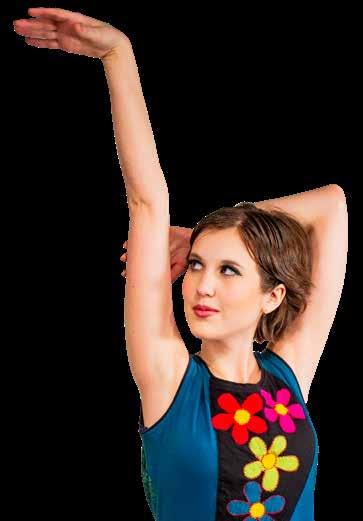
This mod icon redefined femininity with a bold, wearable style that still shapes fashion today.
WORDS NATALIE ONKST
PHOTO KAITLYN WOOD
DESIGN JORDAN WYER
women wore in the 1950s. Due to her lean silhouette, her fashion de-centered attention on the bust and hips, which appealed more towards an everyday kind of woman.
“I think the way that she was styled, the way that she wore clothes, challenged [femininity] in that it was much freer,” McElvain says. “But it was a much less constricting overall aesthetic in terms of what kind of foundation garments you needed.”
Although we love ‘60s fashion, not all of us can dig through endless thrift racks hoping that someone’s grandma recently emptied their closet. Luckily, Twiggy’s style doesn’t have to be expensive. All it takes is some colorful leggings, a chic dress, and an impressive eye look.
Bright colors are the defining palette of the 1960s. If you are brainstorming ways to make your outfit pop, try implementing bright-colored tights.
It’s rare to find a photo of Twiggy out of a mini dress. If you are looking for something to build your outfit from, this is the perfect pick.
“It doesn't have to be as short as they were worn in the ‘60s; something above the knee would definitely be associated with her,” McElvain says.
Styling a mini dress with tights, loafers, or a tailored coat can make the
silhouette feel more practical for the workplace. Choosing dresses with longer sleeves, higher necklines, or more tailored silhouettes can also help make the piece feel appropriate for everyday wear.
Another component that made Twiggy stand out was her bright doe eyes. Twiggy overemphasized her eyes and drew thick, spiky lashes on her lower lid while adding bright colors to her eyelid to attract more attention.
Christian Briceno, a makeup artist based in New York, recommends that when attempting a Twiggy-inspired eyelash look, to not overdo them.
“Twiggy’s lashes worked because they were graphic but controlled,” Briceno says in an email. “The biggest mistake now is going too thick, too black, too theatrical, when the goal is precision not costume.”
“Twiggy’s crease wasn’t blended; it looked like a new fold drawn onto the lid,” Birceno says. “The modern approach is to adapt that architecture to your eye shape rather than copying the exact line.”
To recreate Twiggy’s graphic eye look, use a matte shadow in cool taupe, charcoal, or muted grey-brown, and avoid any shimmer. Lightly sketch the shape before setting it with powder for precision. The line can be adjusted depending on eye shape, but keeping the edges soft and controlled maintains the clean, mod-inspired effect associated with Twiggy.
Makeup:
e.l.f. Power Grip Matte Primer
e.l.f. Soft Glam Satin Foundation
Benefit Hoola Lite Bronzer
Lancôme Blush Subtil (Rose Fresque)
Tarte Glow Tape (Pearl Glow)
e.l.f. Instant Lift Brow Pencil (Taupe)
Urban Decay Perversion Fine-Point Eye Pen
NYX Epic Inky Stix Cream Gel Eyeliner (Cyber Cyan)
e.l.f. Lash XTNDR Mascara

Ardell Faux Minx Wispies False Eyelashes
e.l.f Cream Glide Lip Liner (Mauve Aside)
e.l.f. Glow Reviver Lipstick (Loveslick)
M.A.C. Fix+ Stay Over Setting Spray
Hair:
Not Your Mother’s Frizz Control - Curl
Talk Sculpting Gel
TRESemmé Extra Hold Hairspray
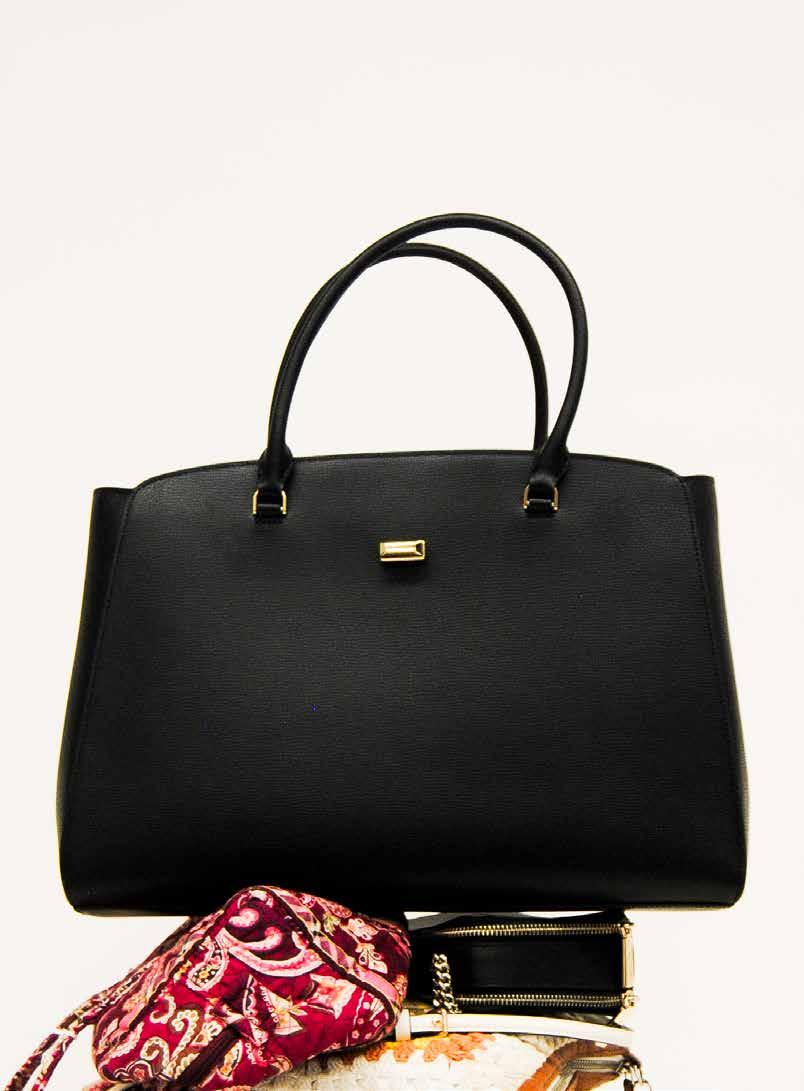
Why big bags are back and bigger than ever
WORDS MARIA MOORE
PHOTO
MARIA MOORE
DESIGN LIZ ROSA
Whether your wardrobe leans more masculine or feminine, big bags work for everyone. Just ask Jeremy Allen White. As long as it fits your aesthetic, then you're good to go.
Feminine aesthetics tend to lean towards tote bags, hobo bags, and oversized designer bags. Masculine vibes favor satchels, crossbody bags, messenger bags, and sturdy canvas totes. But no matter your preference, maxi bags can enhance an outfit; choosing bold colors, pins, and scarves can help turn a practical item into a fashion statement.
“A big bag can mean this person is practical, minimal, utilitarian … it can mean they follow and keep up with current fashion trends, it can mean both, and it can mean neither,” Adam Tweedy, Co-Owner of Fontenelle Supply Company, says in an email. “That's the cool thing about fashion and accessories, it's all for us to decide what something means and how it fits into our stable of choices.”
Big bags have evolved from a fashion accessory into an everyday survival tool because of the everyday essentials they hold. Depending on the occasion, your on-the-go tote bag or fashionable handbag can feel like both an emergency kit and a portable junk drawer.
After all, this is 2026, where fashion meets reality. With the spacious room, you’ll be prepared for anything that life throws at you. The bigger the bag, the better. Need to hit the gym after work or class? You can easily throw a workout set into your bag and go. Other times, you reach into your
bag for some Aquaphor only to discover hair ties, loose change, receipts, or even that unpaid parking ticket you’ve been meaning to pay. It may seem chaotic, but that socalled bottomless pit turns out to be incredibly convenient.
Just because you have a spacious bag doesn’t mean that it has to be a catch-all. If you're a person who dislikes chaos, choosing a bag with pockets and compartments can help keep everything organized. Or purchase an insert with additional pockets for even tidier tote.
“A big bag can be just another bag, or it can be a statement piece. Interesting fabrics like suede, patent leather, and braided materials can elevate the look of a bag,” Gail Scott, a stylist based in California, says in an email. “Embellishments like studs, embroidery, and stitching details add interest and are an opportunity to express personal style.”
Big bags need to be properly taken care of. They can easily collect granola bar crumbs and loose pennies, so cleaning them at least once a week helps maintain their longevity and appearance. Sweep a wet paper towel over the lipstick stain at the bottom of your bag, or throw your tote bag in your laundry pile (check the tag for proper washing instructions). Making sure your bags are taken care of ensures they stay stylish and functional for years to come.
Women’s hair removal isn’t that bad ... or is it?
“This is what makes it so insidious when people claim to simply ‘like shaving,’” Fahs says. “Yes, that may be true in some respects, but the desire to be hairless comes from frameworks and stories that value women as hairless, and in many ways, powerless.”
I lay on a table covered in protective film. The woman between my spread legs says, “You’re the perfect candidate for this.”
This isn’t a gynecologist appointment; I was getting a Brazilian wax for the first time.
TORTURE OR TRENDS?
Most women didn’t remove body hair before World War I. They just let it all grow. But then came the advertisements. Razor companies started targeting women, marketing female razors (hello pink tax), hair removal cream, and tweezers. After women tackled their legs and underarms, they were presented with a new area to shave: their vagina.
At first, that iconic ‘70s bush was en vogue. Slowly but surely, the landing strip got smaller, then non-existent.
“Pubic hair removal has been in ascendancy since the 1980s,” says Breanne Fahs, author of “Unshaved: Resistance and Revolution in Women's Body Hair Politics” and professor of Women and Gender Studies at Arizona State University. “[Pubic hair removal] was largely driven by pornography depicting an increasing number of women with no pubic hair.”
Fahs argues that there’s nothing we do or enjoy that hasn’t been informed by our social and cultural influences.
You can tell yourself you shave, wax, or get your nails done because you like to, but that’s not true. You’ve been directly or indirectly convinced that leg hair is bad and long nails look better. It’s part of American beauty culture; you can’t escape.
“Everybody of all genders has this idea that [while] everybody else might be doing it for trends, [they’re] doing it for [themselves],” says Rebecca Herzig, author of “Plucked: A History of Hair Removal” and professor of Gender and Sexuality Studies at Bates University. “None of us exist outside of social influence.”
During the two and a half weeks I went unshaved, I realized that for me, the waiting period is the worst part before the actual hot wax meets skin. I prefer mine bald. I do it out of habit and because I choose to listen to societal pressures and contort myself in the shower every four to five days. I’m flexible, which helps.
As for whether shaving, waxing, or abstaining makes you a ‘good’ or ‘bad’ feminist: “We’re all trapped by these forces and stuck within them, doing the best we can to navigate them,” Fahs says. “Beauty standards and norms make everyone lose.”
I was taking a big loss in possible pain and embarrassment and I don’t even get to say I’m a good feminist after.
Getting a wax is a whole other level of being perceived. Shaving doesn’t require getting half naked for a stranger to slather your ‘no no square’ in hot wax.
But guess what? For me, it wasn’t an agonizing experience.
My appointment was at 8:15 a.m. I woke up and practically wore my pajamas to my local wax shack. Dermatologist Dr. Hannah Kopelman advised me to "pick somewhere [where] they're gentle and very experienced.”
When I pulled up to the salon, the door featured its logo: a hairless cat. I was in good hands.
I was clearly the first appointment of the day; it was just me, my waxer, Bailee Wieden, and some 2018 radio hits playing overhead. Wieden instructed me to take off my pants, underwear and shoes. She left the room while I questioned my life choices up to this point.
“Your first wax anywhere is going to be spicy,” she says.
That was a great opening line.
She began applying the wax and making small talk. Obviously, talking about hobbies while someone removes all your pubic hair is totally normal.
Just as I open my mouth to tell her how far away I live from my parents, she rips the first strip off. It happened so fast that I couldn’t register what she had done.
The actual rip is quick, not too painful — it’s the sting right after that will get you. Sometimes the wax was extremely hot, which I thought was worse than the tear itself.
Wieden comforted my spiraling mind by telling me I grew my hair out perfectly and that I was “doing amazing” for a first-timer.
The true humiliation ritual was the backside. You have to flip onto your forearms with your behind in the air; thankfully, that was the final act.
I walked out $95 poorer, hairless, and with a free chapstick.
YOUR NEXT APPOINTMENT IN 4 TO 6 WEEKS I wouldn’t not get another Brazilian. The pain was tolerable for me, but pain is subjective, so wax at your own risk.
I had as much redness and irritation after my wax as I do after shaving, but it cut down my shower time and saved myself from doing the splits for about two weeks.
As with most things, the journey is more interesting than the destination: I learned that I can have normal conversations while half-naked with strangers, and now I can put my finger down when playing Never Have I Ever with the girls.
I imagined that after it would look like handsome Squidward. Shiny and bald. For more days than I would’ve thought, it was just red and sore — not sexy.
Go get a wax! Or don’t! You’ve probably made up your mind already.

Uncover your wellness blueprint with vita, pitta, and kapha.
Unfortunately, stress is a daily part of life, but there are ways to combat it that are holistically designed to help you. Enter Dosha: three different ways you may experience and fight stress. Tap into your Ayurvedic dosha for a blueprint to balance your center.
Ayurveda (“EYE-yer-VAY-da”) is an ancient Indian holistic philosophy that recommends ways to live a healthy and fulfilled life by balancing your mind, body, and spirit. The ayurvedic doshas — vata, pitta, and kapha (more on these in a second) — reveal how your mind and body respond to stress, and how you can return to a
balanced state. Everyone is born with a unique combination of the three doshas, and that combination never changes.
“Your baseline constitution will never change, but your state of imbalance is what's going to be in flux,” says Nishita Shah, senior faculty member at the Ayurvedic Institute in Asheville, North Carolina, and an Ayurvedic clinician.
Everything in your external environment — diet, routines, relationships, temperature, weather, work — alter each dosha, forcing you into a state of instability.
“As we grow up, life experiences shift, grow, and change us,” says Serena Arora, Creative Director and Resident Ayurvedic Practitioner for Peace Retreat Costa Rica. “Not feeling at ease in our own skin and our body will react with signs and symptoms requesting to be brought back into a state of equilibrium or balance.”
Each dosha is made up of a unique combination of the five elements — space, air, fire, water, and earth.
As you go through life, your doshas will move out of balance. Luckily, rebalancing is often as easy as treating your symptoms with the opposite effect. The key lies in which dosha is out of balance.
The vata dosha is the force that controls our movement and regulates our nervous system.
“Vata people walk, talk, and think fast, take initiative, but are easily fatigued, are quick to answer without thinking, and are challenged with being on time,” Arora says.
Balanced Vatas enjoy a somewhat irregular routine, might change careers often, and are lively and adventurous. An imbalance leads to impulsive behaviors, extreme changes in lifestyle, or a general sense of feeling ungrounded. When a Vata is out of balance, it may be difficult for them to lock into one activity at a time, leaving a string of unfinished tasks in their wake.


Re-balance vata with grounding principles and heat. Use a weighted blanket, put your feet on the ground, or take a long, hot bath. Avoid multitasking and stay calm and focused with a consistent routine.
The pitta dosha represents transformation in the body, like the metabolism of food.
“Their actions and ideas are penetrating. They tend to overwork, and perfection and precision are paramount,” Arora says.
Balanced Pittas love a challenge and have loads of courage and enthusiasm. An imbalanced Pitta may experience inflammation across the body, skin problems, heartburn, and digestive issues. Internally, they may feel anger and a need for control.
Bring pitta back into balance by cooling down. Practice slow exercises during cooler parts of the day, limit salt intake, and eat cooling, non-spicy foods.

The kapha dosha governs stability, structure, and moisture in your mind and body.
“A balanced Kapha person is calm and sweet, with excellent stamina and muscle strength,” says Dr. Amber Goshorn, Ayurvedic Doctor at The Lodge at Woodloch in Hawley, Pennsylvania.
Although they’re admired for their elegance, compassion, and endurance, an imbalanced Kapha may have congestion, a poor appetite, a foggy mind, constipation, and a slow start to tasks and their day.
“For Kapha people, stress turns into inaction,” Shah says. “There's so much overwhelm that it causes a lethargy to fold into the body, where you just don't know what to do next.”
Re-balancing kapha means getting that movement started. Go for a walk outside with a friend, vary your routine, and keep a clutter-free space.
1. Which most accurately represents your body type?
a. I’m tall with dark hair and eyes, have dry skin and hair, and cold hands and feet.
b. I have a medium frame, light eyes, and a regular metabolism.
c. I have soft skin and lustrous hair, a shorter and stockier build, clammy skin, and I gain weight easily.
2. What happens to your mood when you’re stressed out?
a. I’m easily fatigued, anxious, impulsive, and forgetful.
b. I’m easily agitated, irritable, competitive, jealous, and judgmental.
c. I often feel stuck and lacking motivation, and I get sluggish and possessive of loved ones.
3. What happens to your body when you’re stressed out?
a. I get bloated and constipated.
b. I get rashes, eczema, acne, and other kinds of inflammation.
c. I gain weight and experience chest congestion and sinus issues.
If you answered mostly A, you’re likely a light and adventurous Vata.
Mostly B means you may be a Pitta, fiery and enthusiastic.
Answering mostly C likely means you’re sweet and structured, a Kapha.
Read about how to rebalance your dosha in each section. This quiz is just the beginning of decoding your dosha makeup. To get more in-depth, take an online dosha quiz or talk to an Ayurvedic practitioner.
The Scandinavian Sleep Method combats the nightly blanket battle.
WORDS MELANIE KURE-O’REILLY | PHOTO RENEE VIG | DESIGN AUDREY BISSMEYER
For the past couple of weeks, I have fallen victim to the blanket thief. Just as I enter that perfect mode of sleep, I’m jolted awake by a chill. After a long day of classes, caffeine, and workouts, the last thing I need in my routine is this constant sheet stealer. So what do I do? Get rid of my boyfriend?
When I expressed my concerns to my Danish mother, she reminded me that my grandparents and great-grandparents never shared blankets. It had nothing to do with how much they loved each other; it was just routine. In Denmark, separate duvets are the norm. The Scandinavian sleep method focuses on keeping couples in the same bed but under separate covers to optimize sleep and minimize the nightly tug-of-war.
Dr. Likhita Shaik, sleep medicine specialist at University of Iowa Health Care, says when you sleep next to a partner, making movements such as simply rolling over, it acts as an external stimulus and can disrupt your sleep.
Not only is the blanket fight a stimulus, Shaik says, but a partner who uses a phone can impact your sleep quality. Removing those can make a big difference in the sleep you’re getting. To remove as many stimuli as possible, when I tried the Scandinavian sleep method out with my boyfriend, we had no phones in bed either.
The separation of duvets allows couples to minimize the blanket tango, and you can adjust your preferred blanket thickness, length, style, and color in ways that a shared blanket doesn’t allow. I typically run pretty cold during the

We all need good quality of sleep to be more present and more empathetic toward our partners in the relationship.
night, and my boyfriend runs warm, so my thick winter duvet isn’t exactly his favorite. He also likes to kick off the blanket and roll on top of it, to ensure I sleep as frigid as possible. So, realistically, something like separate blankets would be preferred for us, comfort-wise.
The main thing I noticed was that I felt more well-rested. Not once did I wake up to make any adjustments to the blanket. My boyfriend seemed to have slept better as well, but being the slightly clingy blanket stealer he is, he complained about the “wall” I put between us.
SCANDINAVIAN RELATIONSHIP SAVER?
The ability to customize your sleeping habits was intriguing to me, but I wondered if something like sleep separation would affect my relationship.
“We all need good quality of sleep to be more present and more empathetic toward our partners in the relationship,” says Dr. Yishan Xu, licensed clinical psychologist,
sexologist, and behavioral sleep medicine specialist. “If such a sleep arrangement could help with one partner's sleep quality, and the other partner is willing to accept it, then it may be a very positive thing for the couple.”
With a few honest attempts, I came to the conclusion that the Scandinavian sleep method may not work for my relationship. It was interesting to see how much external stimulus, like blanket sharing and sleep temperature, can affect your sleep, but it wasn’t quite enough for me to evict my boyfriend from sharing a blanket with me forever. One thing I will keep is the no-phones-in-bed rule, which removes blue light interruption, but also allows me to have meaningful pre-bedtime conversations with my partner.
Sleep methods aren’t one-size-fits-all, so although this one didn’t work for my relationship, it might work for yours. I may end up spending a few more nights out in the cold, but maybe I’ll come across a sleep method that incorporates the art of pushing the comforter burglar out of bed entirely.

What’s changed: The patients or the doctors?
WORDS & DESIGN STELLA PIHLSTROM
“Big boobs [aren’t] trending,” says Dr. Catherine Hannan, a plastic surgeon based in Washington, D.C. “Dolly Parton [boobs aren’t] a thing people ask for anymore.”
According to yearly reports released by the American Society of Plastic Surgeons (ASPS), the number of breast reductions performed annually has increased significantly post-COVID-19. In 2024 alone, nearly 77,000 cosmetic breast reductions were performed. That’s a 54% increase from just over 46,000 in 2019. Reports since 2022 have all stayed steadily above 70,000.
Increased visibility of breast reductions online might be causing the rising statistics.
In 2019 — before the surge in procedures — the Kim Kardashian slim thick look was all the rage. But now, with GLP-1s readily accessible from your phone with healthcare apps such as Hers, being Ozempic skinny and flat-chested is in.
Hannan has noticed an uptick in clientele following the rise of GLP-1s. In fact, she’s had more and more requests from patients to make their breasts “as small as possible.” Hannan has even had some clients get additional reductions after their breasts got larger again, often post-partum.
The decision to get a breast reduction is an emotionally complex one. It’s difficult to leave your body image at the door when you’re getting cosmetic surgery — even if the primary drive is reducing neck and back pain.
Emma Stroner, a recent college graduate who got her breast reduction three years ago, can attest to that.
“Young girls are surrounded by rhetoric that fuels unhealthy thought patterns and … I definitely fell victim to that,” Stroner says. “I thought that after [my surgery] I wouldn't have any issues with my image ... I thought it would solve [them]. It didn't at all.”
But in reality, it seems this rise in breast reductions has less to do with the patients and more to do with the doctors.
Breast reductions are simple enough: Typical cases don’t require overnight care, and you can be mostly back to normal within a week or two, barring
You’re really young ... You don’t know what you’re doing.
any heavy lifting. Sure, you get scars, but at least in my opinion, they’re kind of cool.
The main drawback you’ll hear from any doctor you consult — especially if you’ve never given birth — is the breastfeeding issue. There’s no way to know post-breast reduction whether or not you’ll be able to breastfeed.
“The anatomy [of the breast is] like a wagon wheel. [You] have the nipple with the milk ducts coming out … like spokes on a wheel,” Hannan says. “The way most surgeons do the dissection and removal, we disrupt about sixty percent of those milk ducts.”
Though according to Dr. Amir Mahan Ghaznavi, a plastic surgeon based in McNair, Virginia, the chances of being completely unable to breastfeed after surgery are slim.
“I usually tell [my clients that] 5-10% of patients may not be able to breastfeed,” Ghaznavi says. “It's not all or nothing; sometimes it's just harder for them to breastfeed.”
surgeons aren’t the gatekeepers of breast reduction referrals.
Despite the risks, tens of thousands of childless people get breast reductions every year. According to the ASPS, patients under 29 made up 27% of procedures in 2024.
“[Plastic surgeons aren’t] the gatekeepers of [breast reduction] referrals,” Ghaznavi says. “Those are usually done through primary medical doctors [or] OB-GYNs that patients see, and then they get referred to us.”
Stroner remarked that the attitude she received from some doctors was as if they were telling her “you're really young ... you don't know what you're doing."
Hannan mentioned that some of her own patients had shared stories of previous physicians — often male physicians — writing off their pain and telling them to wait until they’re sure.
“There are approaches to doctoring where it's very parental … that's more common in older doctors where you go to the doctor, the doctor tells you what to do, and you follow his instructions,” Ghaznavi says. “[The] modern physician-patient relationship is about shared decision-making.”
“As long as [my patients] understand what the risks and benefits are and have a clear understanding of that, it’s their decision,” Ghaznavi says.
Even if some patients are accused of getting a breast reduction too young or simply what others deem as ‘for the wrong reasons,’ most people are happy with their breast reductions. A 2012 study from the Annals of Plastic Surgery reported a 95% satisfaction rate among survey respondents.
“Very few things in life can make you look better and feel better,” Hannan says. “It's a perfect harmony of improved aesthetics and better quality of life afterwards.”
According to Stroner, if you want to get a breast reduction, there’s a question you need to ask yourself: “[Are you] wanting a breast reduction to feel more confident in your skin [or] are you trying to fit an ideal that's put on by somebody else?”
No matter your decision, it’s yours — not anyone else's. So long as your doctor believes you.



Serves: 8
Total Time: 10 minutes
Ingredients:
16 slices sourdough
1 1/2 tbsp olive oil (1/2 tsp per bread slice)
4 peaches, thinly sliced
16 oz. mozzarella cheese
16 slices prosciutto
4 cups baby arugula
Drizzle of balsamic glaze
Coarse salt and freshly ground pepper, for seasoning

Directions
1. Preheat the panini maker.
2. Brush 1/2 tsp of olive oil on each slice of sourdough.
3. Layer one slice of sourdough with 1 oz. mozzarella and half of a sliced peach
4. Season the peaches with salt and pepper. Top with a drizzle of balsamic glaze.
5. Add prosciutto, arugula, then another 1 oz. of mozzarella.
6. Top with the second slice of sourdough and transfer to the panini maker.
7. Grill until the cheese has melted and the bread is golden brown, 3 to 5 minutes.
8. Repeat until all sandwiches are prepared.
Serves: 8
Total Time: 30 minutes
Ingredients:
6 oz cream cheese, softened
3 tbsp honey, plus more for drizzle
1 sheet puff pastry, thawed
20 strawberries, hulled and thinly sliced crosswise
1/4 cup crushed pistachios

Directions
1. Preheat oven to 400˚F.
2. Beat together cream cheese and honey until light and fluffy, about 1 minute.
3. Place puff pastry sheet onto a parchment-lined baking sheet and spread honey whipped cream cheese onto the surface, in an even layer.
4. Spread strawberries over the cream cheese, leaving a 1/2 inch border, in a single, even layer, before stacking the remaining strawberries.
5. Fold in the 1/2 inch puff pastry border.
6. Bake tart until crust is golden brown, 18 to 22 minutes.
7. Drizzle the tart with honey and sprinkle pistachios over the top.

SPRITZ
Ingredients:
3 oz. Prosecco, chilled
2 oz. Campari
1 oz. sparkling water Orange slice, for garnish
1. Pour Prosecco, Campari, and sparkling water into stemless wine glass.
2. Stir gently to combine.
3. Garnish with an orange slice.
SPA SPRITZ
Ingredients:
2 oz. Lillet Blanc
3 oz. Prosecco, chilled
1 oz. club soda
Half a cucumber, sliced, for garnish
1. Pour Lillet Blanc and Prosecco into stemless wine glass.
2. Top with club soda.
3. Stir gently to combine.
4. Garnish with cucumber slices.


Fresh spritzes for a refreshing summer drink
CYNAR & GRAPEFRUIT SPRITZ
Ingredients:
2 oz. Herbaceous Cynar
1 oz. grapefruit juice
3 oz. Prosecco, chilled Splash of club soda Grapefruit slice, for garnish
1. Pour Herbaceous Cynar and grapefruit juice into stemless wine glass.
2. Top with Prosecco and club soda.
3. Garnish with a slice of grapefruit.



As flowers slowly creep from the ground and snow gradually melts away, reintroduce yourself to your old friend: color. Spring is all about a pastel color palette. Think pale yellows, blues, and greens, with browns, beige, and white to accent.
Peanut butter and jelly, Batman and Robin, linen and cotton… Some things are just meant to be. These breathable fabrics are perfect for warm days spent in the great outdoors. But don’t worry, they’re not so outdoorsy that they aren’t chic — you were always more of a glamper than a camper, anyway.


After the cooped-up cabin fever of winter, you and your clothes are both ready to loosen up. Flowy skirts, oversized button-ups, and baggy pants are both leisurely and fashionable. The comfort of loose clothes is perfect for picnics, too. No one wants to be shifting around in tight pants and short skirts when you’re trying to dig into some deli sandwiches.





Romance is in the air, and it's time to get cozy. Go for soft fabrics for maximum cuddlability. Elevating your spring look with a knit layer adds extra versatility — And the ability to lend it to your boo.
Go for chunky accessories to accent your lightweight look. Think big sunglasses, big shoes, and of course, a big bag.
Prediction markets like Kalshi and Polymarket let you wager on world events.
WORDS JACK HARRINGTON
DESIGN AUDREY BISSMEYER
You can bet on whether or not Jesus will return in 2027. You can also bet whether the Federal Reserve will cut interest rates, who will be the next prime minister of Nepal, and what the price of Bitcoin will be at the end of the year.
You can make those wagers on your phone in an instant. All it takes is a few bucks, an app like Kalshi or Polymarket, and the will to risk it all.
Welcome to prediction markets.
SO PREDICTABLE
Kalshi, Polymarket, and other sites are regulated, legal exchanges that allow people to bet on real-world events. Similar to future markets, which trade on future prices of commodity contracts and stocks, prediction markets require the purchase of a contract to bet on the outcomes of future events rather than on prices.
That’s a fancy way of saying people are betting on the outcomes of nearly everything.
“These platforms strip away friction,” says Med Yacoub, marketing director at Tradesk Securities. “Just a clean question and a price tied to probability. For younger users who are used to real-time interfaces and low cognitive load decision making, that format feels native.”
This new practice allows for an intermingling of gambling and financial trading. Prediction markets let anyone put down cash on politics, pop culture, economics, and nearly everything else.
Young people are jumping in. According to web analytics firm SimilarWeb, just over 17% of Polymarket’s audience is between 18 and 24, while 50% of its users are younger than 35. Kalshi’s audience is similar.
“Younger people already live in culture, discourse, and hot takes; prediction markets just put a price on it,” says Collin Sahagun, founder and CEO of Stelrix, a fintech infrastructure company.
As is the case with gambling of any kind, prediction markets come with risk. There is the ever-present threat of losing money or worse: addiction.
According to a 2023 Rutgers University study, 19% of 18-24-year-olds are at high risk for a gambling addiction. Prediction markets allow for more people to try gambling, and possibly lead to an increase in addiction.
“Retail investing and gaming have always shared risk impulses, but they lived in separate product categories. Brokerages called it investing [and] sportsbooks called it betting,” Yacoub says. “Prediction markets remove that separation and present both behaviors inside a regulated financial wrapper. That’s why adoption [of the apps] skews younger.”
As is the case with gambling of any kind, prediction markets come with risk. There is the every present threat of losing money or worse: addiction.
CRYPTO ... OF COURSE
Unsurprisingly, crypto has found its way into the prediction market game.
Polymarket and Kalshi decentralized prediction markets. Like Bitcoin, Etherium, Solana, and other cryptocurrencies, they operate on the blockchain, a digital ledger that tracks all transactions while operating outside traditional banking systems. This allows people to bet using crypto and for those bets to be made anonymously.
Market manipulation and insider activity aren’t just possible, but running rampant. This is not an easy game for those who don’t know the right people.
“The infrastructure side of crypto — settlement, programmability, and global movement of value — is where the real change is,” Sahagun says. “Over time, the best parts of crypto stop being called crypto; they just become part of modern finance.”
Calling decentralized markets modern finance doesn’t make them less risky. They’re currently unregulated. Market manipulation and insider activity aren’t just possible, but running rampant. This is not an easy game for those who don’t know the right people.
But that hasn’t stopped Kalshi and Polymarket from rapidly growing in the last year. A report coauthored by crypto companies Keyrock and Dune found that the volume of betting on prediction markets increased 130 times between early 2024 and the end of 2025.
Prediction markets have gone mainstream, but deciding whether that turns out to be a good thing or not is anyone’s guess — one you could probably bet on, too.
Bills, junk mail, and more bills. Getting the mail these days can be downright depressing. The postal system was invented to connect people, but when was the last time you received a real, personalized letter in the mail?
Pen palling (yes, it’s a verb now) brings that connection back. Instead of sifting through junk mail every time you open your mailbox, you’ll be surprised by a thoughtfully packaged letter written just for you.
Young adults around the world have begun sending snail mail as a slower-paced, screenless way to stay in touch with old friends and get to know new people.
Josephine Hallagin, a freshman at Iowa State University, began writing letters to friends and family members when she started college. With all the notifications we receive in a day, messages can lose their impact. She says writing letters is much more meaningful than texting or emailing.
“You can say ‘I love you’ to someone 100 times over text, but when you’re messaging about other stuff too, it gets lost,”
Hallagin says. “It’s different when it’s written down. It feels more permanent.”

Catarina “Cat” Silva has five pen pals she exchanges letters with regularly and shares about pen palling frequently on her YouTube channel, @CatsPlanner. She says taking a break from technology to write physical letters can be great for young people’s mental health.
“It makes the process of talking to someone much more personal,” Silva says. “I have to send the physical letter. They have to get it. They have to hold it in their hands, see my handwriting and everything.”
Bonus: sending something in the mail also allows you to include special goodies with your message.
“We exchange a lot of stickers and little trinkets, and it’s kind of like that person from across the world is getting a little piece of me,” Silva says.
KiKi Klassen has been writing letters since she was a kid and now runs her own mail club, Lucky Duck Mail Club. She sends nearly 1,000 recipients a letter, art print, and thoughtfully selected quote each month.
Klassen’s mail club is only one example of how sending letters can turn into an art form. Silva decorates the envelopes and letters she sends to her pen pals with scrapbook paper, stickers, and doodles.

“Doing all of the doodles and scrapbooking for the envelopes, I feel like it’s giving my art away to some person that will cherish it,” Silva says.
Letter writing can be just as beneficial for the sender as the recipient.
“You have to really think about what you’re saying and what you’re writing, more so than just a text or an email,” Klassen says. “It lends itself to being more intentional and more vulnerable. It’s therapeutic in a way.”
Pen palling also gives you the unique opportunity to look back on your past correspondence with someone. Both Hallagin and Klassen keep all the letters people write them and love looking back at them.
“I keep all of the letters that I get. I have a box that I put them all in and whenever I’m sad, I go back through and read them.” Hallagin says.
It might just be the thing that will save your future marriage.
WORDS CAROLINE SIEBELS-LINDQUIST
PHOTO SOPHIA JUHLER
DESIGN LAUREN HAFEMEYER
It’s time to introduce a third to your marriage — a lawyer.
40 percent of married people are sorting through paperwork and furiously signing their signatures to end their vows of devotion. If you don’t want to be like them, it’s high time you and your partner considered a relatively short document of your finances and other worldly assets.
It’s not a future any recently engaged couple wants to think about, but it might not be such a bad omen.
Yes, a prenuptial agreement might be another article of proof of the love you and your partner share. Along with your vows and all, of course.
A prenup is not really regarded as a symbol of everlasting love, in real life or on the screen (see: Charlotte on Sex and the City debating whether or not to go through with her marriage when the prenuptial contract lands in her lap).
There’s a reason asking your partner to sign a prenup doesn’t usually elicit lovey-dovey feelings. The very existence of a prenup is a written explanation of what will happen to your individual and accumulated wealth should your marriage go south.
Laurie Itkin, a divorce financial analyst in San Diego, California, credits the prenuptial agreement between her and her husband as a saving grace to their marriage.
“Without [the prenup], I suspect we would be divorced by now,” Itkin says.
While the sentiment might sound counterintuitive, a prenup really does take a burden off of you and your maybe oneday former spouse’s collective shoulders.
“A prenup helps couples get on the same page about earning, spending, saving, and investing,” Itkin says. “It starts the marriage off with financial transparency and clear expectations about financial roles in the marriage.”
To quote Marilyn Monroe in “Gentlemen Prefer Blondes:” “If a girl spends all her time worrying about the money she doesn't have, how is she going to have any time for being in love?”

Financial conversations can get hot fast, and not in a good way. It’s a difficult topic that’s built on a foundation of disagreement. Prenups make sure there are clear financial guidelines from both inside and outside the confines of your marriage.
“Imagine a marriage where fights over money are rare. That's my marriage,” Itkin says.
Ashley Tolakson, a family law attorney and founder of Tolakson Law in Des Moines, Iowa, says she’s seen an increase in young couples seeking prenup consultations.
“I would also say the younger generations are, at least in my experience, marrying a little bit later,” Tolakson says. “They're doing a lot of the work. They're having a lot of the hard conversations before they get married.”
Young people today seem to understand that marriage not only conjoins hearts and souls, but also bank accounts.
“Even if you're not going to get a prenup, I think it's smart to do premarital counseling,” Tolakson says. “Like, let's have some of the tough conversations now to see if we’re on the same page. Do we have the same goals?”
Claudia Johnson, a couples and sex therapist in Seattle, Washington, says that prenups are actually one of the most caring things a couple can do for one another.
“It’s not about planning for failure. It’s about eliminating doubt,” Johnson says. “Because drafting a prenup will probably spark discussions that many couples shy away from … Talking through these topics can actually improve your relationship by making assumptions explicit.”
A prenup can give your relationship and future marriage a more stable foundation — not free from earthquakes, but with a detailed plan for when they begin to tremble.
“Emotionally, a prenup can help you feel less afraid,” Johnson says. “We all come into relationships with subconscious fears
about money: being taken advantage of, becoming too dependent, losing autonomy. Having a clear agreement can help you both feel safe enough to show up for the relationship more fully.”
Where there is marriage, sometimes there is divorce, and prenups are nothing to be scared of. Staving off future arguments should be seen as a proactive, caring measure, not a reason to call off your engagement. Taking the time to make sure you and your partner will be taken care of if a split happens is an act of love.

Blake Zielinski never planned on living in Des Moines to play hockey. He didn’t even plan on playing hockey professionally. Despite starting to skate at four years old, the projected 2026 NHL draft pick didn’t know hockey would turn into his career.
“I was playing different sports when I was younger, and I didn't really know what I wanted to do,” Zielinski says.
Now Zielinski, originally from Berlin, New Jersey, is a forward for the Des Moines Buccaneers, a junior league hockey team in the United States Hockey League (USHL). And while it’s not the NHL — yet — spending a few years away from home might just get him there.


When you think of Iowa, hockey isn’t the first thing to come to mind. If we’re playing the word association game, hockey pairs nicely with Canada — not Iowa’s cornfields.
Most people know the NHL, but there’s an entire ecosystem of leagues underneath it. Rather than a simple process from minors to majors, going pro in hockey is like a never ending game of Shoots and Ladders.
Despite Iowa’s lack of ice notoriety, the state has teams on all tiers of the hockey ladder, a total of eight semi-professional hockey teams in a state that has seemingly no focus on the sport.
The USHL is harbored in the Midwest, which feels wrong with major hockey being either up north or on the East Coast (and Minnesota, but this isn’t about them). But there’s a reason for the seemingly odd location.
“[There are] non-traditional hockey markets predominantly in the Midwest,” says Frank Butler, the Senior Director of Player Personnel for the USHL. “For us, it’s fan interaction and communities.”
By anchoring in states with little to no major league sports, or in communities without bigger teams, the fan bases can latch onto these junior hockey teams with more dedication. It’s also an opportunity for these teams to engage in their community service initiatives with a higher impact.
“Being able to have a space and play in an area where you're kind of secluded, and you can focus on hockey, but it's not too heavily populated [is a benefit],” Butler says.
Starting off small can increase player focus and bring a warmer community environment while they’re away.

“A lot of people see [Canadian junior leagues] as better because it’s more professional,” says Bekah Benoit, the Digital Media Coordinator for the Des Moines Buccaneers.
The Canadian leagues are a quickmoving gambit where players move from youth hockey to the CHL, then go pro. In contrast, the USHL is more focused on the well-rounded development of the player on and off the ice.
Another aspect of this preparedness is in “instilling the culture and trying to provide kids with the skills that will make them successful outside of hockey,” Butler says.
While a large majority of USHL players will advance to NCAA teams, it’s not a guarantee. Skills like professionalism, manners, press training, and handling schedules are easily transferable once their hockey careers end. It ties back to the human aspect of the game — you can’t lead a team on the ice

until you know how to guide a group of guys off it. For the Buccaneers, that looks like online high school, community service, and leadership classes led by returning players.
While the USHL only allows 16 to 20 year olds, there’s no cap off age for success. No matter the age, the league molds a program for the player’s future.
“I’d say the average [years in the USHL] is one or two,” Benoit says.
“[But] you have some guys who maybe need or want more development, and some guys really love playing juniors.”
A majority of the Buccaneers will go to a four-year college and often play in another league after that.
“The USHL, they do such a good job with developing new, younger players to try and force them off to college and pro,” Zielinski says. “When I was given the opportunity to play here, I
had to take it, and I knew it was going to be the best development for me.”
Most USHL players are committed to play Division I hockey. The NCAA rulings used to state that CHL players couldn’t play hockey at American colleges since they’re paid a stipend. Now, all college athletes have the opportunity for NIL deals, making the old rules outdated. Despite the change, the USHL still prides itself on its relationships with college coaches and player development.

“We’re not worried about that side of things,” Butler says.
While they may have the Canadians beat on player advancement, there still remains the issue of fewer NCAA spots for USHL kids.
“What we try to do now is make our kids aware that the cream of the crop just got a bit tighter,” Butler says.
Young players know that if they get the call to play in the USHL, they better take it.
“They know if they have an entry point into the [USHL] … that that's a huge opportunity for them,” Butler says
The next step up is the AHL. It’s the purgatory of hockey, where you play until you’re called to something higher — the NHL.
“I really do believe that hockey is a solution for any problem,” says Kyle Weeden. He has good reason to be preaching in the name of hockey as he’s the Senior Director of Sales for the Iowa Wild.
He and his team are the reason Des Moines is a hockey town. The Iowa Wild, an AHL affiliate of the Minnesota Wild, have been in Des Moines for 12 years — a short amount of time for a non major team to build community.
Weeden didn’t grow up as a hockey fan, but his job of marketing the sport in Iowa has turned into admiration.
“It’s a unique opportunity to promote a sport that’s not the foundation of hockey,” Weeden says. “It’s fun to take a nontraditional sport here and make it something that can impact businesses and bring happiness to families.”
The goal is bigger than a smile on a child’s face: its bodies in the building and hopefully a winner at the end of the night.
“We're right up there in attendance to the top half of the league,” Weeden says.
Iowa has no major league sports teams. It's a hole that teams, like the Iowa Wild, can fill.
“We don't see it as a negative,” Weeden says. “It's just our situation, and we're super happy and lucky to be in such an awesome market.”
The number of young families in Des Moines and its suburbs are also an asset for Weeden and his team.
“Schools are so big for us. The expansion west and east is pretty major for us, too,” Weeden says. “We’re able to introduce hockey to a lot of new schools.”
They host reading programs where kids can redeem their reading logs for tickets. School choirs sing the national anthem before games, and their parents pack the stands. A partnership




with Scheels allows them to offer a six-week Junior Crash Course where 100 kids can learn to play hockey for free — gear included.
Of course, it couldn’t be Iowa hockey without some corn references. The Iowa Wild have a partnership with Iowa Corn where they built an outdoor ice rink in Carlisle, Iowa. And if it isn’t an icecovered corn field, the Wild also have a blow-up rink that travels with the promotional team.
“[The Wild is] anywhere we can introduce the game,” Weeden says. “It's good to be out in the community no matter what.”
Des Moines’ Casey’s Center is where the action happens. Players who have been crosschecked and battered long enough now play in the minor leagues, hoping to be the future of the Minnesota Wild. It’s a packed house, there’s a theme night, and the between-period
entertainment has made fans actually stay in their seats.
Game presentation is the biggest asset the Wild has. It makes first time fans come back for more and keeps season ticket holders comfortable in their 10-game package.
“It starts with the fan experience,” Weeden says. “We’re a minor league team, but it has to be major league.”
Creating in-game activations, securing enough kegs on $2 beer nights, and keeping ticket sales in check is the magic behind the scenes. That alchemy is tangible beyond the ice.
No matter the team — USHL, AHL, or NHL — there's no denying the batch of talent is getting younger.
“The players are just getting so much better,” Butler says. “They're starting to prepare and train like hockey players at a younger level.”
This makes Butler’s job easier. It’s also keeping the league alive while simultaneously ensuring that cities,
like Des Moines, maintain their status as a homeland for hockey.
“The hockey ops and whether the team’s winning or losing [goes away],” Weeden says. “It makes the relationships and the experience matter that much more.”
Catch Zielinski this season at a Bucs game, before he’s gone, off to the next place or even the NHL. But don’t worry, there’s a fresh crop of kids coming to the Midwest for seasons to come.
Sending boundaries with family members who keep crossing them.
Kristie De Garis, a dry stone waller from Scotland, stopped talking to her mother 18 months ago.
“I think a lot of people imagine estrangement as a snap decision, but it was something that, for me, took place over decades,” De Garis says.
The breaking point was when her 20-year-old daughter noticed a change in De Garis’ demeanor.
“I didn't feel like I had the emotional strength to do it up until that point, when my child said to me, ‘I don't like seeing you like this, so hurt and so confused, I feel like you're a different person,’” De Garis says.
Whether you’ve reached that point with a flaky friend from high school, ghosted a date with no explanation, or shunned the professor who didn’t
give you a letter of recommendation, chances are there’s someone who you decided no longer gets space in your life.
Things get more complicated when it’s a family member who no longer deserves that space. Estrangement from family isn’t an easy decision to make, and it comes with a suitcase of emotions — guilt, fear, sadness, and probably a bit of resentment.
Deciding to cut off a family member can have any number of valid reasons attached to it. Consistently being made to feel small is a legitimate reason to pull away from someone.
“If you’re considering going no contact, know that your experiences are real,” says Dr. Alissa Beuerlein, a licensed
professional counselor specializing in trauma. “We minimize our experiences and compare [them] to other families that are even more dysfunctional. But your experience is yours. If you feel unsupported or even harmed by your family, it’s a reasonable consideration to distance or even cut off contact from family.”
Even if the relationship is a quiet, smoldering ember, it can still burn you.
“The absence of a blowout doesn't mean the relationship is healthy,” says Keisha Saunders-Waldron, a licensed clinical mental health counselor supervisor and CEO of Confidential Confessions Counseling Services. “You don't need a dramatic reason to protect your peace.”
Lily Thrope, a licensed clinical
social worker, says the emotional immaturity of parents is a common reason young adults go no contact.
“Feeling that even if you do communicate your feelings with your parent, they actually don't want to or can't tolerate the big emotions [is reason to cut them off],” Thrope says.
Melanie Kure-O’Reilly, a college student and older sister of four, cut her dad off a few years ago due to his emotional unavailability.
“Trying to have that conversation with him is just not possible, because he won't take responsibility for anything,” KureO’Reilly says.
However, Kure-O’Reilly still has to see her father every so often when dropping off her little siblings or when making decisions to invite him to things — like her upcoming college graduation — to prevent a familial blowout. It adds a layer of emotion to every big decision she makes because estrangement gets complicated when contact isn’t fully broken.
“There's so much that we're told within our society about how these relationships should be and how you should feel and how hard you should try,” De Garis says. “If your experience deviates from that, it can feel very confusing.”
The question SaundersWaldron’s clients always ask is: “Am I allowed to do this?”
“They're asking for permission because somewhere along the way they were taught that family connection is unconditional and that walking away makes you the problem,” SaundersWaldron says.
Fearing emotional fallout is incredibly common; estrangement comes with immense stress.
Remember that holding conflicting feelings, while frustrating and confusing, is valid. The desire to go no contact and holding concerns for family can be simultaneously true.
“People expect to feel relieved when they go nocontact — and many do,” Saunders-Waldron says. “But what catches them off guard is mourning the relationship they wished they'd had rather than the one that actually existed.”
Kure-O’Reilly found herself focusing on what could — or should — have been.
“It was hard for me to understand that he really didn't care, and he wasn't going to reach out to me,” Kure-O’Reilly says.
In the midst of familial guilt, she still puts on a strong face for her siblings, who are still in her father's life.
“My siblings still needed me, and, as an older sister, you can't just cut them off completely,” KureO’Reilly says.
There’s no easy part of this process. Experiencing immense grief in this situation is valid and normal. It can also feel frustratingly unsatisfying, since it’s rarely an event of dramatic proportions but rather a silent act of hitting “block” in your contacts.
Social media has altered the reality of what it means to go no contact. It’s been helpful for some — providing online spaces for people to connect with others who cut off family members and recognize abuse — but detrimental for others when it comes to thoughts and perspectives on family estrangement.
“Thirty years ago, people could go no contact by moving across the country from their family. They didn’t always have to have difficult conversations about why they needed the distance,” Beuerlein says. “Now, this might lead to needing to block family members on social media or limit responses.”
#Nocontact is taking off, and Google searches have spiked in the past year, making it a newfound buzzword. While it’s great that the topic is losing its taboo nature, calling it a ‘trend’ is frustrating and, at times, insulting to people who have really gone through it.
“My clients aren't just navigating the emotional weight of the decision — they're managing it in front of an audience, which adds a layer
of shame and secondguessing that previous generations simply didn't face,” Saunders-Waldron says.
One of the most important things to figure out when going no contact is understanding why you’re doing it. The best thing you can do is focus on yourself — not what others believe.
“No contact works best as a decision made for yourself, not as leverage to change someone else's behavior,” SaundersWaldron says. “If this person never changes, never apologize[s], never acknowledges what happened, are you still okay with the decision? If the answer is yes, that is a decision you made for yourself so you can be happy.”
Even if you’re cutting someone off for the right reasons, it’s a decision that comes with a lot of discomfort.
“If you want to have the life that you value and feel like you deserve, you have to be willing to sit with some amount of discomfort,” Thrope says.
Boundaries can be like a game of tug-of-war, where the winner is allowed to govern the other’s feelings. Saunders-Waldron says it’s important to create relationship restraints so you never have to tug on that rope again. Protect yourself because the other person is out of your control.
Figure out specifically what you need and why. This reasoning will clarify your end goal when doubts start to creep in. Consider writing a permission statement — a mantra giving yourself consent to protect your peace — so when the guilt returns, you stay steadfast in your decision.
There is no checklist of offenses to keep track of, then cut someone off when they hit 10. Trust your feelings and what feels safe, and talk to a therapist if you’re unsure.
“Anything that costs you your peace is too expensive,” SaundersWaldron says.
There’s no cookiecutter version of permanent ghosting.
“This blackand-white idea doesn't have to be the only way that we approach boundaries with family,” Thrope says. “There are nuances … around how to process and set up a situation that feels mutually safe for you,
but also doesn't necessarily cut you off from your whole family.”
Trust can be rebuilt — especially if you set boundaries. Some people never talk to that family member again, while others get back in contact after a few months or even a few years of growth. But understand that reconnection may never happen.
“Sometimes people have the capacity to be who you would like them to be, and sometimes they don’t. Capacity matters. Unwillingness also matters,” says Dr. Celeste Simmons, a family forensic psychologist who frequently deals with families in conflict.
Focus on the relationships that currently support you instead of the ones that disappointed you in the past. De Garis acknowledges there’s a certain amount of privilege that comes with the ability to decide who gets to stay in your life, but she says everyone has some degree of control over it. You can decide what affects you, who you invite to big events in your life, and who you go to when you need help.
“I describe my life now as really carefully curated, and I think that's a good way to look at it,”
De Garis says. “We all deserve to curate our own lives."
WORDS ALLIE RAINES
DESIGN MARA SOMOGYE
Across Iowa’s landscape, between fields, farms, and right outside of towns, clusters of concrete structures have begun to loom over communities.
These large buildings — the components of an AI data center — are home to machines that always run. They hold hundreds of thousands of precise rows and columns. They compute millions of daily requests. These groups of structures can expand out to more than 4 million square feet — about 75 football fields. They constantly hum, generators going day and night.
The slew of buildings — and the sound and light they emit — could be mistaken for a small city on the horizon. But inside, these data centers are nearly devoid of life. Automation makes it possible for the buildings to employ a surprisingly small staff.
Which begs the question, why is Iowa so intent on inviting these sleepless cities into its towns?
Artificial Intelligence is everywhere. For some, it’s integrated into their homes, adjusting the thermostat and cataloging the fridge. For others, it’s acting as an office secretary, summarizing to-do lists and emails.
For AI to think, it requires computers — millions of computers — to generate responses. These computers live across the country in AI data centers. According to DataCenterMap.com, an industry-tracking website, Iowa alone has 95 data centers in ten markets, with the Des Moines area holding the majority — 69 are located in and around the capital city.
Data centers aren’t new. The first general data center was built in 1945. But data centers weren't specialized for AI until the 2010s. What’s the difference? Traditional data centers are for storage and website hosting. They require fewer computers, and in turn, the energy demand is lower with




safeguards,” Smith says. “We want to be good stewards of the environment
According to the Iowa Environmental since updated or developed a more towards extreme weather patterns, increasing water use, and pollution,
“The state government is meant to, in essence, play referee,” Smith says.
want to move to Iowa and you want to build a data center, fundamentally, you can do that, but we shouldn't be
companies are attempting to evade the responsibility of their impact on water. As of early March, Google was seeking to bypass the data center zoning rules
Palo is a city entirely within Linn County borders, but has no zoning restrictions specific to AI data centers. With Google bypassing the reporting and sustainability requirements, the damage to the water will still be felt in Linn County.
With the increasing private investment, AI data centers will not stop being built anytime soon. Even if
“On the energy side, they'll have to talk about their sustainability or energy efficiency practices that they're using,” says Jordan Oster, the energy program director at Iowa Environmental Council. “And on the water side, they'll have to talk about how they recycle and reuse water. Those are all positive steps.”

tradespeople remain conflicted on taking job offers, companies will find a way to get the AI data centers up and running.
“Companies taking advantage of smaller companies is harmful to bluecollar and working-class people. A lot of times, non-union work is done by someone not being paid what they're worth,” Widger says. “As long as these facilities are being built, I would much rather have a union hand building them.”
Many legislators in Iowa have begun proposing files and bills that detail transparency requirements for existing data centers and those yet to be built. For example, House File 2690, introduced in the 2026 session, requires the industry to increase oversight of resource consumption.
Thinking of individual impact can become disheartening in a system that relies on the economics of larger businesses and actions in a State House and Senate. Supporting these positive steps by contacting legislators is one way to stay engaged.
“I think transparency can make sure we're scrutinizing things correctly, but also bring reform and change,” Oster says. “We just can't turn away from it. We need to embrace it.”
AI is here to stay. Its impacts depend on how we decide to use it.
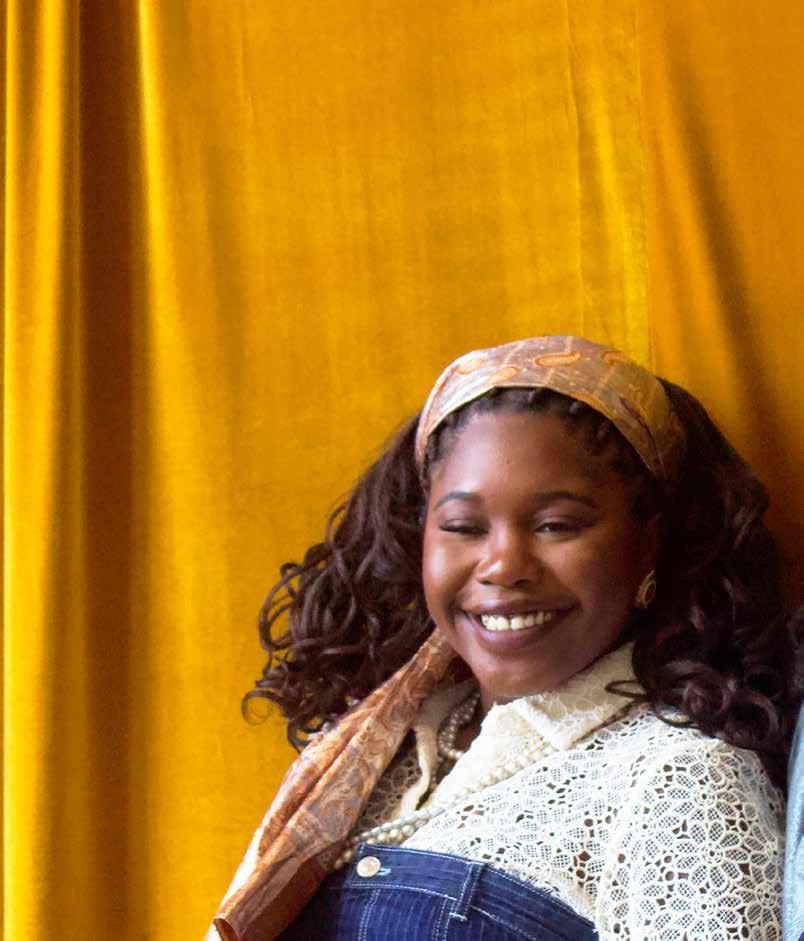


A Front Row Look at The Fashion Circuit, Des Moines’ Hottest Fashion Endeavor

If a bird pooped on me, I would take the event as a bad omen. And so did Sandrah Nasimiyu at first.
Co-creative directors Nasimiyu and Izzy Kelai are the founders of The Fashion Circuit, a pop-up fashion organization in Des Moines, Iowa.
Nasimiyu and Kelai were outside of the Des Moines Art Center — the first-ever venue they were exploring for a fashion show — when a bird decided at that moment to unload onto Nasimiyu’s shoulder — and her brand new purse. Naturally, the two made their way inside to clean up after the accident.
“The person at the reception desk said it’s good luck if a bird poops on you,” Nasimiyu says. “It didn’t feel like it at the moment, but we ran with it, and obviously it did [give us] luck because we’re here today.”
What they built was something the city didn’t quite know it needed: a fashion show that sits somewhere between runway, performance, and community gathering. It isn’t just a catwalk; it is a multi-faceted cultural experience. Models dance, designers tell stories, and the audience cheers.
“It should feel like a playground, like you are playing with your creativity,” Nasimiyu says. “Culture
is made up of fashion, art, music … they’re all interconnected. So why try to separate them?”
WHAT THE F*CK IS HIGH FASHION?
In a state most associated with corn and insurance, fashion can feel out of place. But that’s exactly what makes The Fashion Circuit work.
“I think we’re always cultivating our own fashion scene here, which is the beauty of it — we’re not just one thing,” Kelai says. “We’re in the nuance, we’re right in the middle of a lot of things.”
The two met through Swan Project, a local ballet organization. Kelai was dancing; Nasimiyu was working in marketing. They were pulled into the same project and quickly realized something clicked.
Their first collaborative idea was a fashion show. Kelai was immediately on board. From there, the two began building a system.
From the beginning, they knew what they didn’t want.
Traditional fashion spaces come with rigid expectations about body type, presentation, and even personality (America’s Next Top Model, we’re looking at you). There’s a kind of exclusivity that can feel more like a barrier than a standard.
Nasimiyu and Kelai moved in the opposite direction.
Their models are “everyday people” — friends, cousins, neighbors. Aspiring and experienced models find

their way in, too. There’s no single look or definition of beauty. All heights, weights, races, and genders belong.
“Fashion is for everyone,” Kelai says. “I want people to feel like they can wear what they want and walk on a runway without feeling like they have to go to New York or Los Angeles.”
Even the runway itself isn’t fixed. Since The Fashion Circuit is a pop-up, their shows are always in a different location. And the walk is whatever the model, designer, or coordinator decides. In one show, dancers performed alongside models. In another, models danced on the runway instead of walking.
“That’s not something you would see in a place that would be considered high fashion,” Nasimiyu says. “I feel the word ‘high fashion’ is a way to block people out — what exactly is the definition of high fashion and who decides what high fashion is?”


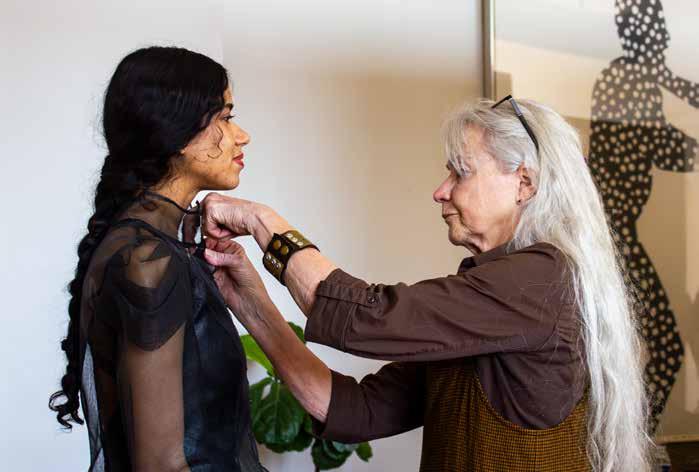
BACK TO THE BEGINNING
The first show was free. It had to be.
“We invested so much more money into that first show, but because you can’t expect people to pay for something they don’t know … we made it free for the public,” Nasimiyu says. Kelai hoped for 100 attendees based on social media interactions.
But the turnout was much more than the two had anticipated. Over 500 people were in attendance at the first show at OlsonLarsen Galleries in Valley Junction, West Des Moines.
“It was so packed inside that we got worried that the first department was actually going to get called,” Nasimiyu says.
People were standing, sitting on the floor, and standing on the grass or sidewalk
outside, trying to catch a glimpse inside.
“I got upset with some friends because they were late. They were like, ‘We’re sorry, we had to park eight blocks away.’ … Our community really did show up for us that day,” Nasimiyu says.
By the second show, they introduced tickets — unsure if the momentum would hold. It sold out.
Each show has evolved: new venues, new formats, and new energy. No two shows feel the same. Unpredictability is the point.
BEHIND THE CURTAIN
What happens on the runway is only part of the story. Behind the scenes, The Fashion Circuit is building something closer to an ecosystem.
“I think fashion can get very cliquey and there’s a hierarchy — [The Fashion Circuit] never feels like that,” says Addy Kaster, back of house production director. “We’re one big family. There’s no side gossip or pitting people against each other.”
Through its fellowship program, young people ages 15 and up are paired with experienced individuals to learn skills and gain realworld advice. Emerging designers create their own collection, participate in casting, fittings, and shows.
“It’s not [a traditional internship where you’re given base-level work … Your ideas matter. Your thoughts matter,” Nasimiyu says. “We want to hear what you think because it’s going to make the show better. You got selected because you’re a creative genius in your own right.”
Sara Markham was a design fellow last year, but now works on staff as the set design director. She had never made a full collection before, so the fellowship program offered the opportunity to start small and grow with the help of more experienced designers.
“[The fellowship program] opened more doors for me,” Markham says. “Then I got appointed to set design[er].”
Then there’s Pull Up & Stitch, a monthly workshop series rooted in community care. The price of admission is a donation to the local charity of the week. The event gives participants the opportunity to learn how to sew tote bags and other apparel while giving back.
“[The point of Pull Up & Stitch] was just to bring people together to try something new and give

back to the community,” says Rachel Gai, who coruns the Pull Up & Stitch program with Destiny Williams. “I think a lot of people are looking for ways to give back but also [to] see the fruit of that labor.”
The Fashion Circuit also introduced Sunday Sewcials — open networking events where models, designers, and community members can connect before show day.
There is no longer a definitive line between model and designer versus ordinary people. In an industry defined by competition and stiff beauty standards, The Fashion Circuit leans toward collaboration and diversity.
“There’s so many talented creatives in the Midwest, and it often gets overlooked
because people just don’t really think of Iowa as a hub for fashion,” says Trinity Lakose, photography director. “There’s a ton of super-talented and cool people here. [The Fashion Circuit] is giving them a place to thrive and foster community.”
Walking into the room of creatives buzzing around, you are immersed in a friendly frenzy. There is no competition or upturned noses, just a community of people working together.
“I feel like if we wouldn’t feel comfortable walking into a room that we created, then we definitely fucked up somewhere along the way,” Nasimiyu says.
MONEY MATTERS
Building something like this comes with realities that passion alone can’t solve.
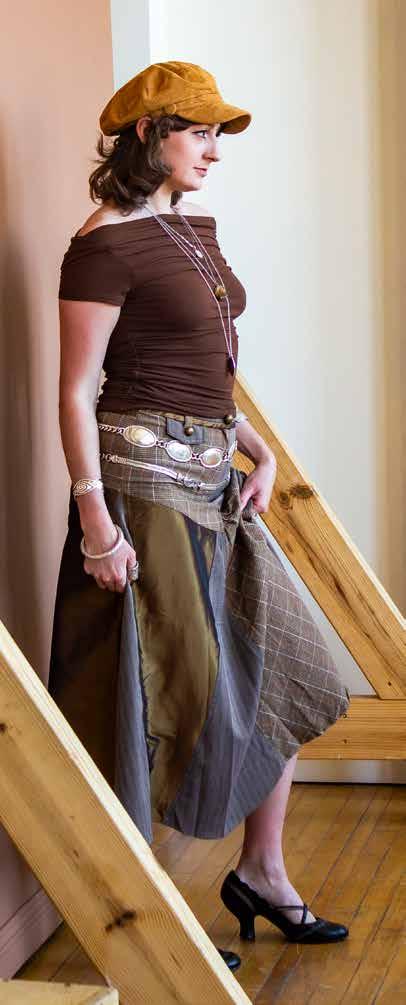


For their first year, Nasimiyu and Kelai self-funded everything. Their team, despite the long hours, worked on a volunteer basis.
“We did this for our community,” Nasimiyu says.
“[But] I do believe you should make money off the things you love. Being starving artists is not cute. It never has been.”
Their goal is sustainability, not just for themselves, but for everyone involved.
“[We’re] making sure people get paid so their needs are met and they don’t have to live in survival mode,“ Kelai says. “[If] we can take care of everybody’s needs, they can relax and have more time on their hands to create art from a different [mental] place.”
At the center of it all is the partnership between co-directors.
“I grew to love [Nasimiyu], just as she is. I never felt heard or seen working with someone [else],” Kelai says. “We give each other so much grace and love.”
They describe themselves as friends first. Then, collaborators who fill in each other’s gaps, who communicate through disagreements, and who keep showing up for The Fashion Circuit — and for each other.
On May 8, 2026, The Fashion Circuit will host its third show, Groove Theory, at The French Way in Des Moines.
Inspired by the 1970s, the event leans into a decade defined by boldness and self-expression, without replicating it directly. Designers are encouraged to interpret the era in their own way: through color palettes, silhouettes, or upcycled vintage pieces.
“It should feel like if the ‘70s got a chance to exist in 2026,” Nasimiyu says.
The audience is part of the vision, too. Guests are encouraged to dress the theme, becoming part of the immersive experience rather than just watching it.
For Nasimiyu and Kelai, the runway isn’t fixed to a single definition.
“A sidewalk can be a runway for God’s sake,” Nasimiyu says. “Anything can be.”
Their long-term vision stretches beyond Des Moines: traveling shows, a true “circuit,” with recognition across the Midwest and beyond. They want people from across the country to come to Iowa, not in spite of its location, but because of what is being built here.
When people think of fashion in the Midwest, they say they want The Fashion Circuit to come to mind first.



WORDS & DESIGN STELLA PIHLSTROM
DOWN
1. An international friend you send letters to.
2. Some people go no-____ with toxic family members.
3. Mid-_____ furniture.
4. Sensed with your nose. The last four letters of this word are the same as the first four letters of #3.
5. A document that says who gets the dog in the divorce.
6. North, South, East...
7. Things that are ___-y are popular, en vogue.
8. 1990s medical drama starring George Clooney and Noah Wyle.
9. Divides people into 12 personality types.
10. _____-parent, for those with green thumbs.
11. Ayurveda ______s.
ACROSS
1. Best done with a gingham blanket.
12. Sabrina Carenter’s hit 2024 single, with a music video featuring Jenna Ortega.
13. A mod fashion icon known for bold eyelashes.
14. Vintage. Groovy.
15. Currency of the future. Eg: Bitcoin.
16. A resource being hurt by AI data centers.
17. Our ____ feature is on pages 32 to 37.



Check out the latest editions of Periphery, Drake Mag, Drake Political Review and DUiN in Meredith Hall and across campus.


Drake University student media is supported by the Board of Student Communications and the students of Drake University.