Scholarly Research Journal for Interdisciplinary Studies, Online ISSN 2278-8808, SJIF 2021 = 7.380, www.srjis.com

PEER REVIEWED & REFEREED JOURNAL, NOV-DEC, 2022, VOL- 10/74

Scholarly Research Journal for Interdisciplinary Studies, Online ISSN 2278-8808, SJIF 2021 = 7.380, www.srjis.com
PEER REVIEWED & REFEREED JOURNAL, NOV-DEC, 2022, VOL- 10/74
1Researcher, Department of Law Dr. Babasaheb Ambedkar Marathwada University
2Research Guide, Assistant Professor, V.N. Patil Law College Aurangabad
Paper Received On: 25 DECEMBER 2022
Peer Reviewed On: 31 DECEMBER 2022
Published On: 01 JANUARY 2023
Abstract
The field of forensic science, which employs scientific methods to provide objective circumstantial evidence, is currently advancing at an ever-increasing rate. As a result, increasing amounts of scientific evidence are presented, which is often less and less understandable to non-scientists and grows increasingly sophisticated. Over the past 25 years, the area of forensic science has developed, leading to significant scientific advancements (DNA typing, physical evidence databases, related scientific instrumentation). The word "forensic science" is an umbrella term that includes various scientific fields and crosses practically all medical subject boundaries. This study examines how forensic services are used in crime investigation as perceived by police officers in India at various levels of designation. The data was gathered using a structured questionnaire and a purposeful sampling approach. The findings were statistically interpolated using the SPSS programme. This study discovered a lack of knowledge of various forensic services, specialised forensic divisions, and the use of forensic methodologies during crime investigation among police officers working at lower hierarchy levels (<50%). The findings of this study would make it easier to spot any gaps in the application of forensic services during the course of a criminal inquiry.

Keywords: Criminal trials, Evidence, Forensic, Justice, Reliability, India.

Scholarly Research Journal's is licensed Based on a work at www.srjis.com
Introduction
Our criminal justice system, particularly at the trial level, has already had and probably will continue to experience an almost shocking impact from the rapid development of emerging scientific tools, particularly the growing understanding qua forensic application of deoxyribonucleic acid. The criminal trial court has been where these new scientific approaches' forensic applications have been most prominently observed. Despite the fact that some sciences, like fingerprinting and blood typing, have been used in criminal prosecutions for a long time, the past 20 years have seen the development of many new types of forensic science
Copyright © 2022, Scholarly Research Journal for Interdisciplinary Studies
criminal evidence, including the now-ubiquitous use of DNA, hair and fibre analysis, new techniques for tool mark and ballistics analysis, thermal imaging, and purportedly scientific analyses of bite marks or handwriting. Beyond the issue of admissibility, these new forms of evidence provide hurdles to trial judges (C.E. Pratap, 2018). Criminal investigations and prosecutions now rely heavily on the gathering of forensic evidence and the use of forensic sciences. Without adoubt,forensicsciencehelps thejudiciarybyutilisingavarietyofscientific methods that go outside the purview of judges to help it resolve difficult criminal cases. The Court must evaluate evidence carefully and determine the foundation upon which it was based before it is permitted in a trial. This is the cardinal rule of criminal law. The value of scientific evidence in criminal investigations and trials is undeniable, but the role of the legal stakeholders and their ability to evaluate the evidence is a perennially contentious issue, not just in India but also globally. This short article's primary goal is to describe the difficulties trialjudgesencounterwhileexaminingtherelevant scientifictheoriesandmethods,whichmust meet the general acceptance criteria of the scientific community as a condition precedent for the admission of forensic evidence (C.f. C.E. Pratap, 2015).
"The application of science to those criminal and civil laws that are implemented by the police agencies in a criminal justice system" is the definition of forensic science. The field of forensic science deals with the application of scientific knowledge and technique to legal issues. Numerous fields, including biology, forensic chemistry, computer science, engineering, medicine, physics, and DNA profiling are used in the examination of evidence. For instance, biology aids in establishing the background of an anonymous suspect, physics is utilised to identify the blueprint of a blood scatter, and chemistry aids in determining the chemical makeup of various substances. As a result, the role of forensic science in criminal justice and the legal system is frequently undervalued and of the utmost importance. The concept of forensic science was not novel in ancient India because legal constraints were frequently applied to medical doctrine. One of the earliest proponents of using fingerprints to identify criminal offenders was Sir William Herschel. In the 1890s in Argentina and in 1902 in England, courts began to accept fingerprint evidence. Furthermore, the parameters of the Indian judicial system are followed bythe discipline of forensic evidence. Its purpose is to give guidance to those conducting criminal investigations and to give magistrates and judges accurate information they can fully rely on when making decisions on criminal and civil disputes. The resolution of both criminal and civil matters is aided by this (Lambert, 2007)
Copyright © 2022, Scholarly Research Journal for Interdisciplinary Studies
One of the key elements of the criminal justice system is forensic science. It mostly involves the examination of physical and scientific hints acquired at the murder scene. The distinctiveness (who) of the suspect who committed the crime is explained by forensic science. The nature (what) of the crime committed is expressly stated in the evidence. The circumstantial evidence also sheds light on the incident's timing. The crime scene/where of the offence is established bythe forensic evidence. The forensic inquiryalso looks at the offender's technique, or "how." comes to a conclusion regarding the crime's motivation. The forensic investigators reproduce the victim and the criminal's individual characteristics. Evidence is acquired during a criminal investigation from the scene of the crime or from a person who was an eyewitness to the entire action. The evidence is then examined in a crime lab, and the results are subsequently presented in court. Every crime scene is unique in its own way, and every case has its own unique obstacles. The study of physical evidence, the identification of the perpetrator using unique indicators like fingerprints, footprints, blood or hair samples, cell phones or other devices, cars, and weapons, are all important functions of forensic science in the criminal justice system. It links the offender and the victim together through items that he either left at the scene or fled with after the crime. On the other side, the accuser’s innocence is proven if the recovered hints do not connect the accused with the victim or the crime scene. Thus, forensic science also protects the innocent. The development of DNA technology as a contemporary approach to forensic science has given investigators a wealth of information that allows them to identify the offender solely on the basis of scientific evidence that he has left at the scene of the crime (Naicker, 2017)
Simply said, reliability refers to dependability. The general public's perception of forensic procedures' dependability has been negatively impacted by crime investigation movies and television's CSIseries, despite the fact that the truth is much different. It is not a decision based on facts, merely the public perception. In fact, for a variety of reasons, some forensic scientific procedures are currently losing favour with the legal community. The most significant one is undoubtedly the frequent reporting of serious incidents of miscarriage of justice in which forensic technique had a significant impact. It is possible to track down instances of poor forensic science and examples of injustice in India as well. In India, particularly in serious criminal instances, flawed and unreliable crime scene
Copyright © 2022, Scholarly Research Journal for Interdisciplinary Studies
investigations also create thepath for incorrect and dubious judicialdecisions. Thesignificance and necessity of thorough crime scene investigations cannot be understated, at least in cases of heinous crimes like rape and murder, especiallywhen there is no direct evidence to connect the crime with the offender, victim, and priceless crime scene materials. The way the crime scene investigation was carried out, how the chain of custody was maintained and secured, how the standard protocol was followed, etc. are all important elements in establishing the validity of the forensic scientific evidence in a court of law. Failures, excessively long delays, and impatient behaviour cannot be tolerated. The main issue is that trial judges can have a tendency to either overestimate or underestimate the scientific evidence presented to them for consideration of admissibility. When we talk about the validity of forensic scientific evidence in India, it is extremely important to divulge one key aspect. The case studies demonstrate that the defect may typically be identified from the very beginning of the criminal investigation, or more specifically, from the inspection of the crime site itself (Peterson J, 2011)
Greenwood P. et al. When analysed detective operations, they discovered that victims' input to the investigatingofficers at the crime site had the greatest influence on their abilityto predict whether a crime would be solved. Traditional investigative techniques and tangible evidence only play a relatively tiny part in resolving crimes. This study also discovered that although latent fingerprints are present in more than half of cases and physical evidence is present in the majority of cases, just 1% of those cases resulted in the identification of the offender (Greenwood P)
Forst B. et al surveyed after an arrest, case outcomes. This survey found that more than 70% ofarrestsresultedinnoconvictions.Theyidentifiedthreeelementsthatcontributedtothearrest and subsequent conviction: the presence of "physical evidence," the proximity of the crime to the arrest, and the presence of witnesses. However, the report didn't identifythe physical proof, and it wasn't known if it had actually been tested in a lab (Forst B).
Eisenstein and Jacob made an effort to assess how evidence affected actual case results at the court level, and they discovered a correlation between the strength of the evidence and the chance of conviction and the verdict charged. The grouping of different categories of evidence was lacking, preventingstudyof the influence of anysort of evidence, despite the fact that their processes were crude (Eisenstein J).
Peterson et al. disclosed the uses and impact of scientific evidence during the charging, plea bargaining, trial, and sentencing phases of the criminal justice process. With the exception of
Copyright © 2022, Scholarly Research Journal for Interdisciplinary Studies
narcotics, rape, and arson cases, the scientific evidence had little impact at the time of charging in the majority of criminal cases. In cases that were tracked from five separate jurisdictions, guilty pleas were the norm in more than 90% of the cases. Prosecutors were less likely to provide a plea deal when the scientific evidence was strongly linked to the crime. In contrast to the consequences of other evidence, a different study examined the relatively little role that scientific evidence played in decisions to convict a culprit. However, forensic evidence played a significant role in the sentencing process (Peterson J R. J.).
Narejo and Avais, forensic science, often known as criminalistics, is the use of scientific methods in the enforcement of criminal laws. It entails using technology and information in legal contexts. Forensic science comprises using cutting-edge technologies for the police's criminal investigative procedure, such as DNA profiling, computer science, and engineering. For instance, the outline structure of the blood scatter can be determined using physics science, but the imprints of the suspect can be determined using biology science, and the chemical makeup of drugs can be determined using chemistry. However, the use of forensic science in a criminal inquiry is restricted and underappreciated in the Indian criminal justice system. Sir William Herschel largely employed forensic science in the form of fingerprinting to identify the culprits in the crime. The fingerprint evidence was initially accepted by an Argentine court in the 1890s, and subsequently by an English court in 1902. Since ancient times, forensic science has been used in India's criminal justice system to examine cases and confirm the facts of crimes. By offering reliable evidence, forensic science aids investigators in identifying evidence against offenders and supports the Indian legal system (Narejo, 2012)
Singh (2013) conducted an inquiry into sexual dimorphism in the human sternum and made a comparison. This analysis was based on studies carried out by a number of researchers using various methodology and procedures. 343 sternums from 252 male and 91 female cadavers from a north Indian population were gathered and studied for this study. Significant variations were observed. When compared to demarking points, limiting points produced substantially greater sex accuracy scores. Among all the criteria and techniques taken into consideration, the combined length and sternal area were judged to be the best metrics. When sterna measures are compared, the changes in body composition, diet, the environment, the climate, etc. may all be attributed to secular changes in sterna measurements. In discriminant function analysis, the accuracypercentage oftheaccuratesex estimation ranged from 54.2%to 84.8%,andin logistic regressionanalyses, it ranged from 73.5%to 89.8%.Therefore,whilehavinghighersex-biases, the logistic regression method provides higher levels of sex determination accuracy. Because
Copyright © 2022, Scholarly Research Journal for Interdisciplinary Studies
radiographic investigations have intrinsic flaws that account for the discrepancies in bone measurements, forensic and anthropological research should favour bone specimens over radiographs for determining the sex of the sternum (Singh, 2013).
Rana (2020), as new technologies develop, the definition of forensic science is likewise evolving. It incorporates cutting-edge methods of research, including mass spectrometry, 3D printing, DNA analysis, and liquid chromatography, for the precise examination of the facts from the crime scene where police gathered physical evidence. Forensic science has many subfields, including pathology, odontology, biology, anthropology, and toxicology. While concentratingon Odontology,it also entails applyingscientifictechniquestolocatethevictim's body when it is placed in an unrecognizably awkward posture. By looking at the teeth, mouth, or body alignment, the victim is identified. DNA profiling is a technique used in forensic biology to identify a suspect using hair, blood, semen, or any other bodily tissue. Analyzing fingerprints is another method for locating the suspect. Examining the victim's cause of death and the time it occurred is part of anthropology. It also establishes the age, gender, and ancestry of the skeleton and aids in identifying victims when they are placed in an unrecognizably position. Toxicology involves looking at the victim and is primarilyused to look into incidents of accidents, sexual assault, and poisoning. In pathology, the victim's body is examined after death to determine the precise cause of death. So, it can be concluded that forensic science is a very helpful investigative discipline that aids in reviewing the cases by identifying the offenders/victims and methods of crime (Rana, 2020)
Menaker, Campbell, and Wells (2017) investigated how the forensic science and criminalistics scientific and technical literature concentrates on the laboratory techniques used to evaluate and interpret physical evidence gathered from the scenes of crimes. The scientific analysis of physical evidence gathered from crime scenes, victims, and suspects is often done at forensic science and criminalistics laboratories (Menaker, 2017)
Pragati Ghosh's research, forensic science is recognised as expert evidence under the Indian Evidence Act, 1872. An expert is a person with considerable knowledge in a field, knowledge that can be applied to render an expert opinion on the criminal case. The dead was shot and killed at gunpoint by the accused and the co-accused in Pantangi Balaram Venkata Ganesh v. State of Andhra Pradesh. The witness stated that the attacker was hurt when the shots were fired and thattheaccuser was wearing apink shirt at thetimeofthe incident.Thepink clothing, which was fully covered in blood patches, was found by the police after an investigation. In order to identify the offender, the police took it as evidence and sent it to the forensic lab for
Copyright © 2022, Scholarly Research Journal for Interdisciplinary Studies
DNA testing. The police concluded that the accuser was guilty based on the DNA test results they had obtained and other pieces of evidence. By identifying the suspect and supplying evidence for a crime, forensic investigations can thus be said to play a significant part in aiding investigative actions (Pragati Ghosh, 2018)
Chadda (2013), forensic evaluation is a crucial component of psychiatric practise. In many complex instances, forensic psychiatrists help the judiciary, playing a significant role in society. In India, regular psychiatrists perform the majorityof the forensic psychiatric practise. For a novice psychiatrist, doing forensic psychiatric evaluations is sometimes fraught with worry or panic. The purpose of the paper is to educate the audience on forensic evaluations so they can use them in practical contexts (Chadda, 2013).
The study contained a sample size of 80 police officers from the India, representing all ranks of Constable, Sub-Inspector, Inspector, and Deputy Commissioner. The data was gathered using a structured questionnaire and a purposeful sampling approach. Before the survey, the questionnaire underwent blind peer review and the necessary modifications were made. The survey's questions were all presented in both English and Amharic. The findings were statistically interpolated using the SPSS programme. Using the SPSS programme, the Pearson correlation coefficient approach was utilised to examine the correlation between the various study variables.
The sample profile information is shown in Table 1. The majorityof research participants were men (86.9%), and 66.9% had only completed high school. 15.5% of the respondents in the sample were female. 43.11% of the study participants were single, compared to 58.3% of married participants. Police Constables made up the largest percentage of those with this designation (43.11%), while Assistant Inspectors, Deputy Inspectors, Commandants, Chief Inspectors, and Assistant Commissioners were represented by 23.11%, 15.5%, 15.5%, 5.5%, and 2.6% of those with these designations, respectively. 32.6% of police officers have one to five years' worth of experience, 18.3% have eleven to fifteen years' worth, and 13.11% have sixteen to twenty years' worth. In the India police jurisdiction, only 2.6% of the police officers were found to have more than 30 years of professional experience
Copyright © 2022, Scholarly Research Journal for Interdisciplinary Studies
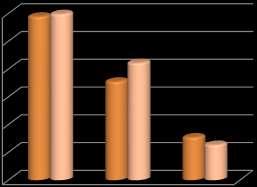
The primary respondent variables were divided into three groups (Yes, No, and Don't Know), and their corresponding levels of participation in various categories of crimes (crime against person, crime against property, traffic accident, and cybercrime) were identified in order to better understand the involvement of police personnel in the crime investigation. According to figure 1, the Hurt and Grievous category accounted for 62% of the instances that the police
Copyright © 2022, Scholarly Research Journal for Interdisciplinary Studies
investigated. The percentage of investigative experience for other crimes, like murder, attempted murder, rape, and attempted rape, is similar (56.9%) among police personnel.
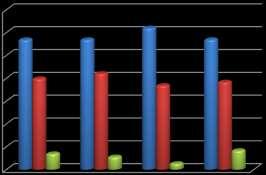
Based on their participation in various categories of crime investigations, such as handling crime suspects and witness investigations, questioning of suspects and victims of crime, receiving victim complaints, and tactical approach or conceptual analysis of crime incidents, police officers' roles in investigations have been evaluated.


Figure 2 shows that 59.8% of police officers were found to be equally involved in questioning suspects and addressing complaints from crime victims in addition to questioning suspects. About 56.9% of police officers had experience dealing with criminal suspects and witnesses and had a general awareness of the various methods used to investigate crimes.
Copyright © 2022, Scholarly Research Journal for Interdisciplinary Studies
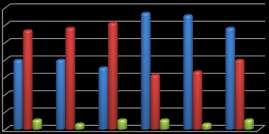
Figure 3 shows thesurveyresults on policeofficers'technical forensicunderstanding ofseveral methods for handling crime scenes, including evidence gathering, preservation, analysis of evidence, documentation, and sketching the scene. The majority of study participants had no prior experience examining evidence, and 58.3% had no idea how to preserve evidence at a crime scene. Technical proficiency was determined to be 66.9%, 65 5%, and 58 3% for sketching, videotaping, and documenting the crime scene, respectively. 5 5% of police officers who participated in the study had no knowledge of any forensic methods used in crime scene investigation.
The table 2 lists the several difficulties encountered by police investigators. Only 25.5% of police officers were permitted to use forensic investigation techniques in their crime investigation procedure, leaving 48.3% of them unable to do so. The
was that just 46.9% of police officers had authorization to perform forensic investigations. During their research, 35.5% of the respondents ran into a forensic services shortage. Another significant conclusion was that 43.11 percent of police officers said there weren’t enough forensic infrastructures in the Indian region.
Copyright © 2022, Scholarly Research Journal for Interdisciplinary Studies

investigations
Table 3 shows the inter-correlation matrix created using the Karl Pearson's correlation values between all the continuous variables chosen for the study. A high positive link between Designation and Forensic application in Investigation can be noticed in the Correlation Matrix (r=0.189; p=0.1 level). This suggests that the deployment of forensic services is significantly influenced by the hierarchical structure of the police system. Table:
Copyright © 2022, Scholarly Research Journal for Interdisciplinary Studies
*Correlation is significant at the 0.05 level (2-tailed)
** Correlation is significant at the 0.01 level (2-tailed)
Awareness of the forensic divisions
According to the correlation matrix, there is a significant positive association (r=0.303; p=0.1 level) between the designation and understanding of different forensic divisions. This shows that the role of the police officers was mostly when forensic involvement in criminal investigations was needed.
Conclusion
Theimportanceofutilisingsuchtechnologyin judicialproceedings and criminal investigations has grown in the Indian context. The commissions established to oversee criminal justice reforms have reaffirmed that integrating technology into crime detection can boost the effectiveness of the system. The pertinent laws have occasionally been changed to accommodatetheuseofforensictechnologiesin criminal investigations andcourtproceedings. Only a few thorough studies that evaluate cases from arrest to sentence exist, and the majority of research assessing the impact of forensic evidence on case-processing outcomes has been haphazard,focusingonjustoneortwodecisionphases.Thisisduetothedifficultiesintracking down and compiling a large amount of data as cases move through the many stages of inquiry, including arrest, lab analysis, adjudication, and punishment. To ascertain the opinions and requirements of the forensic science, a survey of police officers working in the India was conducted. About 50% of research participants were unaware of the usage of forensic services in their routine criminal investigations. It was clear that first responders like constables and sub-inspectors have little knowledge of forensic science compared to officers operating at higher levels of the police department's hierarchy, such as commissioners and inspectors. Key
Copyright © 2022, Scholarly Research Journal for Interdisciplinary Studies
players in the criminal justice system don't communicate well with one another, and financial resources aren't going toward the forensic process's front end. It is crucial that law enforcement receive greater training in using forensic science to generate investigative leads. This study stresses the urgent need to address police officers' forensic literacy, particularly with regard to fingerprint analysis, criminal investigative techniques, and cybercrime.
References
Greenwood P, Chaiken J, Petersilia J, Prusoff L. The criminal investigation process, Volume III: observations and analysis. Santa Monica, CA: The Rand Corporation
Forst B, Lucianovic J, Cox S. What happens after arrest? A court perspective of police operations in the District of Columbia. Washington, DC: Institute for Law and Social Research.
Eisenstein J, Jacob H. Felony justice: an organizational analysis of criminal courts. Boston, MA: Little, Brown.
Peterson J, Ryan J, Holden P, Mihajlovic S. The uses and effects of forensic science in the adjudication of felony cases. J Forensic Sci ;32:1730–53
Narejo, N., & Avais, M. A. (2012). Examining the Role of Forensic Science for the InvestigativeSolution of Crimes. Sindh Univ. Res. Jour.(Sci. Ser.) Vol, 44(2), 251-254.
Rana, P. (2020). Modern Techniques in Forensic Science and Their Function in Criminal Justice System: An Overview. Studies in Indian Place Names, 40(50), 3311-3323.
Pragati Ghosh, Evidentiary Value of Expert Evidence under Indian Evidence Act, 1872, http://www.shareyouressays.com/119180/evidentiary-value-of-expert-evidenceunderindianevidence-act-1872, (accessed on 26.05.2018
Chadda, R. K. (2013). Forensic evaluations in psychiatry. Indian journal of psychiatry, 55(4), 393.
Menaker, T. A., Campbell, B. A., & Wells, W. (2017). The use of forensic evidence in sexual assault investigations: Perceptions of sex crime investigators. Violence against women, 23(4), 399425.
Singh, J., & Pathak, R. K. (2013). Morphometric sexual dimorphism of human sternum in a north Indian autopsy sample: sexing efficacy of different statistical techniques and a comparison with other sexing methods. Forensic science international, 228(1-3), 174-e1.
C.E. Pratap, Evaluating the Scientific Validity of Forensic Evidence in Criminal Trials: Issues and Challenges, (2018) 4 MLJ (CRL) pp.5-13.
Faculty Working Papers. Paper 23. C.f. C.E. Pratap, Scientific Evidence in Criminal Investigation (2015), CTC Publications Private Limited, Chennai, p.228.
Lambert, E.G., Hogan, N.L., Nerbonne, T., Barton, S.M., Watson, P.L., Buss, J. and Lambert, J., (2007). Differences in forensic science views and needs of law enforcement: a survey of Michigan law enforcement agencies. Police Practice and Research, 8(5), pp.415- 430.
Naicker, K. (2017). The recruitment and Management of Agents in Undercover drug Trafficking criminal Investigations (Citied Dowling, J.L. 1979). Magister Technologies thesis, University of South Africa. Retrieved from .unisa.ac.za/ Retrieved on 11 February 2020
Peterson J, Sommers I, Baskin D, Johnson D. The role and impact of forensic evidence in the criminal justice process. Final report to the National Institute of Justice; 2010, Grant No. 2006- DNBX-0094. Washington, DC: National Institute of Justice, Research Report Digest-Issue 2, 2011.
Rana, P. (2020). Modern Techniques in Forensic Science and Their Function in Criminal Justice System: An Overview. Studies in Indian Place Names, 40(50), 3311-3323.
Copyright © 2022, Scholarly Research Journal for Interdisciplinary Studies
Saboohi, Misbah. "Fact Finding, Weight of Evidence & Reasonable Doubt in Civil & Criminal Trials." International Journal of Political Science, Law and International Relations (IJPSLIR) 7.1 (2017): 11-26.
Smith, L.L. and Bull, R., (2014). Exploring the disclosure of forensic evidence in police interviews with suspects. Journal of Police and Criminal Psychology, 29(2), pp.81-86.
United Nations Office on Drugs and Crime. (2009). Laboratory and Scientific Section,. Crime scene and physical evidence awareness for non-forensic personnel. United Nations Publications.
V. R. Dinkar, ‘Forensic Scientific Evidence: Problems and Pitfalls in India’, 79-84, IJFSP Vol. 3 (2015).
Copyright © 2022, Scholarly Research Journal for Interdisciplinary Studies