Ombuds O ce
Thought partners who listen in a safe, confidential environment.


Ombuds O ce
Thought partners who listen in a safe, confidential environment.
The Denver Public Schools (DPS) Ombuds team is excited to share the results of our work for the 2025-26 school year. This annual report provides information, data and potential options for improving the district based on the collective experiences and perceptions of visitors who have shared their challenges and experiences. Our goal is to enhance the culture and climate for all DPS employees.
Dr. Antoinette Hudson serves as the Ombudsperson for DPS. A DPS alumna, she has over twenty years of experience as a teacher, school leader and district leader. Dr. Hudson is a certified organizational ombuds practitioner (COOP), a certified mediator, and is certified in Alternative Dispute Resolution (ADR). She is dedicated to providing exceptional support and services to all DPS employees. As an ombuds practitioner and a member of the International Ombudsman Association (IOA), Dr. Hudson is committed to ensuring that fair and equitable practices exist within the district, enabling employees to thrive. The role of the organizational ombuds involves listening to employees and offering confidential support to help them identify options for resolving workplace conflicts and disputes, fostering an environment where everyone feels safe, secure and included.
We are grateful to Superintendent Dr. Alex Marrero for his unwavering commitment to sustaining the district Ombuds Office and supporting all DPS employees with access to our support and services at no cost, independent from other district departments.
Most importantly, thank you to the incredible employees who entrusted the Ombuds Office with your issues and concerns this school year. We recognize and appreciate your hard work, commitment and dedication to educating students during the 2025-26 school year. We look forward to supporting you during the 2026-27 school year.
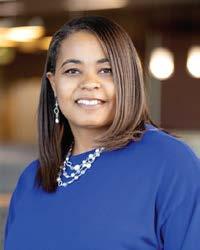
In Partnership and Service,

Dr.
Antoinette Hudson, Ombudsperson
The Ombuds assist and support DPS employees to ensure they receive fair and equitable treatment. We provide resources and information to help employees identify options for moving forward in the midst of conflict. Additionally, we provide informational training sessions to help equip DPS employees, leaders and managers to work together, find solutions to navigate through challenges, help build skills to address conflict, and to establish and maintain a more positive district culture and climate.
As Ombuds in DPS, we are members of IOA and follow a strict code of ethics and standards of practice. We are confidential, independent, impartial, and informal. If you are an employee, you can request our services free of charge by voluntarily contacting our office. In addition, we adhere to the DPS Ombudsman Charter Agreement, which is signed and endorsed by the superintendent.
In this report, we will refer to the individuals who meet with DPS Ombuds as “visitors” instead of “employees.” The term “visitor” is commonly used in organizations worldwide to describe individuals who meet with an Ombuds. Also, we use the gender-neutral term “Ombuds” instead of “Ombudsman” to refer to the work that we do.
In May 2023, we shared our first annual report with district employees. The annual report included information about the 116 visitors we met with from April 2022 through the end of March 2023. The preceding annual reports included 253 visitors in 2023-24 and 278 visitors in 2024-25.
In preparation for the 2025-26 school year, we planned to increase the breadth and quality of our conflict coaching support, professional learning sessions and the tailored tools we provide visitors to address conflicts and concerns raised by individual visitors, teams and leaders. Our support and services continue to help DPS employees identify conflicts and issues, proactively reduce the escalation of conflicts, improve communication, and foster collaboration and team cohesion. We are excited to share an update on our goals for the 2025-26 school year.
We provide professional learning opportunities to groups and teams: Administration of Conflict Dynamics Profile (CDP-I) and the Thomas-Kilmann Instrument (TKI) are both administered at the individual level. Results are private and confidential (not shared with others). Both assessments measure either conflict behaviors or conflict styles and are excellent resources designed to increase self-awareness and proactively improve conflict management skills.
Both assessments take approximately 20 minutes to complete. Once completed, the results are shared with you (informally), followed by a 1-on-1 coaching session or group facilitation training. In these sessions, we will review your CDP results, correlate the results with theory, and help employees better understand how to manage conflict and remain engaged in the workplace.
As part of our initiative to enhance the work environment and relationships among district personnel, we developed a series of professional learning training to facilitate across teams, departments, and employee groups. These sessions aim to equip employees with effective communication strategies they can utilize to reduce the escalation of conflict, resolve conflicts, or better understand how to navigate conflict successfully.
Professional Learning Sessions We Provide
• Team-building Opportunities.
• Build/Rebuild Trust.
• Going Further and Faster Together (Conflict Styles).
• Difficult Conversations.
• Significance of Nonverbal Communication.
• Effective Communication.
• Conflict Self-Awareness Training.
• Navigating Levels of Conflict.
• What’s in Your Conflict Toolkit?
• What is an Ombuds?
and Services We Provide to All DPS Employees
• 1-1 conflict coaching to assist with workplace concerns.
• Climate and culture work:
○ Listening Tours.
○ Climate Surveys.
• Administer Conflict Dynamics Profile and Thomas-Kilmann assessments to determine your individual conflict behavior and styles.
• Facilitate challenging conversations between DPS employees (visitors).
• Research and share information with visitors.
• Provide upward feedback (on systematic issues and trends).
• Tailored workshops and training at the request of leadership.
• Provide resource referrals for services within and outside of the district.
As Ombuds, it is an honor to serve all employees (visitors) in DPS. Meetings with visitors are confidential. We explain to each visitor that we do not identify their names. We do maintain demographic information, selfidentified by each visitor. For example, we maintain the following information to ensure we are serving all employees in DPS. Each visitor is asked to selfidentify by; ethnicity, gender, sexual orientation, age group, employee status, employment type, work location, position, and number of years worked in DPS. The self-identifiers we use are recommended by the IOA.
Ethnicity
Hispanic/Latinx 56
Asian 7
American Indian/Native American/Alaskan Native 8
African American Black/African 34
Bi-racial 11
White/Caucasian 146
Multi-racial 11
Prefer not to say 1
Native Hawaiian or Other Pac Islander 0
This annual report contains data collected from various sources, including 1-1 consultation meetings with visitors and Facilitated Conversations (or mediation) with pairs of employees.
Visitors decide where they prefer to meet with an Ombuds. We are available to meet before, during or after work/school hours and/or during the weekend, based on the visitor’s needs.
We meet with visitors for an hour initially with opportunities to schedule additional visits with an Ombuds as needed. Visitors meet with Ombuds by:
92 Virtually
80 In-person
One of the major responsibilities of the Ombuds Office is to raise systemic trends and “traffic” to district leaders. When different visitors bring similar issues to the Ombuds Office, systemic change may be needed in a department or throughout DPS. Therefore, with the permission of visitors, while maintaining confidentiality, Ombuds raise visitors’ concerns to leaders in district departments, divisions and to the superintendent as needed to improve working conditions and district climate and culture.
With visitor permission, we had 20 occasions to raise systemic trends to department leaders or to the superintendent.
The following two issues were most frequently identified by visitors during their meetings with the Ombuds.
1. Evaluative relationships (communication, supervisory skills and effectiveness, respect/treatment).
• Conflict between supervisors and direct reports; direct reports and supervisory relationship concerns.
○ Not valued, not listened to, micro-managed, inappropriate and inconsistent behaviors demonstrated by the supervisor.
○ Mistreated, not respected. Concerns with workplace behavior or conduct.
2. Peers and Colleagues (communication, respect, and treatment).
• Conflict between peers and colleagues.
○ Unresolved conflict or concerns. Passive, silent or harsh communication.
○ Mistreatment, not feeling valued or respected.
After Ombuds meet with visitors, we identify the main risks and potential impact that may occur as a result of the visitor’s issue of concern and the impact of their issues not being addressed or resolved.
These are the top three risks and potential impacts gathered from our data:
1. Loss of department productivity.
2. Mental health/trauma.
3. Potential for internal/external grievance.

As a result of meeting with DPS visitors, listening to their concerns and experiences, and identifying consistent issues from different visitors, we provide the following suggestions:
1. Provide ongoing and consistent training, coaching and support to DPS Team members.
• Address issues and concerns early to reduce the likelihood that they will escalate into conflicts or last longer than anticipated.
• Support DPS team members to avoid being viewed as conflict-avoidant by addressing conflicts early, thus supporting team cohesion, culture, climate, and the overall success of DPS Team members.
• Provide ongoing coaching and conflict-management support to supervisors to effectively build, lead and maintain strong relationships with employees.
• Help employees and supervisors navigate challenging situations, support skill development to listen to understand employee concerns, and provide approaches to lead and motivate teams.
• Develop leaders (whether new to a role or not) to engage in difficult conversations to address workplace conflict early, at the onset of concerns, and reduce ongoing conflict among peers and colleagues.
2. Improve communication.
• Identify effective communication practices that DPS team members can actively engage in when in conflict.
• Avoid passive or conflict-avoidant communication practices.
• Increase assertive communication practices to resolve conflicts.
• Employees want to express their opinions, feelings and experiences without formal repercussions. Continue allowing such places to exist in the district.
• Provide clear information about mediation services as an alternative approach to resolving disputes.
• Ensure DPS team members receive training to communicate and engage in difficult conversations with others to address workplace challenges. Such training can help reduce conflicts among peers, colleagues and supervisors and positively increase team cohesion, improving feelings of psychological safety.
We are committed to ensuring visitors have a positive experience when engaging with our office. We believe in constantly improving our services to visitors. To achieve this, we provide an anonymous survey to every visitor after each meeting. The feedback we receive from these surveys is used to improve our services and plan for the future.
For the 2025-26 school year, 64 visitors completed the satisfaction surveys, representing 23% of all visitors. The results indicate that 98% of the visitors who completed the survey would utilize the Ombuds Office again (or refer others).
If you did not have the option to seek the services of the DPS Ombuds Office about your issue/ concern, what action would you have taken? (visitors had the option to select more than one response to this question).
In preparation for the 2026-27 school year, we plan to:
Onboard, train and develop the newly hired Associate Ombuds.
Increase the quality of our conflict coaching support, professional learning training and the tailored tools we provide to DPS team members.
Continue to help DPS employees identify, address, and manage conflicts and issues, improve communication and foster collaboration and team cohesion.
This is a highly effective resource and I wish more people knew it was available and or felt comfortable accessing it. I don’t think people really understand that it is truly a third-party, and that it does not lead to any sort of formal processes.

The office was inviting and I felt heard and supported by the staff at the office.
Wonderful experience. Thank you! My experience was great!