





































































The notion of the so-called “wandering cop,” when police officers bounce from job to job, either through an unwritten code of silence from former places of employment or lack of scrutiny from short-staffed law enforcement departments eager to hire, has been a grave concern.


A recap of select categories of crime occurring in the past month in Birmingham, Bloomfield Township and Bloomfield Hills, presented in map format, plus a reminder about our online interactive map with story details on public safety incidents.


Duggan’s possible plans; new challenges for Benson; some of the latest poll projections; what the prediction markets now say; El-Sayed fanning the flames; among the billionaires; plus more. 22

43

Uncontrolled city pool party heats up STR concerns; competing offer for The Community House; Dollar Store coming to Birmingham; city increased water and sewer rates okayed; plus more.


GUIDE
Primary election candidates facing opposition and where they stand on the issues. 53















































We can’t wait to be part of your community, get ready!
Biography: A proud product of Metro Detroit, Dr. Bazzi earned his medical degree from Wayne State University School of Medicine and completed his residency at William Beaumont Hospital in Royal Oak, Michigan. With 8 years of experience he serves as a national trainer for Allergan Medical Institute, and in 2025 was recognized as one of the top five most utilized physician trainers in the country within the Allergan Medical Institute network.











PUBLISHER
David Hohendorf
NEWS EDITOR
Lisa Brody
NEWS STAFF/CONTRIBUTORS
Hillary Brody Anchill | Cris Braun | Dana Casadei | Tracy Donohue | Stacy Gittleman | Austen Hohendorf | Grace Lovins Jeanine Matlow | Katey Meisner | Gigi Nichols | Susan Peck | Carla Schwartz | Michael Scott | Mark H. Stowers | Gretchen Van-Monette
PHOTOGRAPHY/CONTRIBUTORS
Laurie Tennent | Matthew Cromwell | Theodore Michael | Mackenzie O'Brien
Laurie Tennent Studio
ADVERTISING DIRECTOR
David Hohendorf
ADVERTISING SALES
Mark Grablowski
GRAPHICS/IT MANAGER
Chris Grammer
OFFICE
970 E Maple Road / Ste. 3, Birmingham MI 48009 248.792.6464
MAILING
PO Box 1630 Birmingham MI 48012-1630
DOWNTOWN NEWSMAGAZINE GOALS/MISSION
The personnel at Downtown Newsmagazine bring a special commitment to the publishing effort, reinvesting in the local communities and working to make sure the Birmingham/Bloomfield area reaches its highest potential. Our mission dictates that we strive each month to provide a solid news and advertising product that local residents look forward to reading. Our goal is to build a community of informed citizens through the efforts of our passionate team. We are innovators producing products that go well beyond what others offer.
DISTRIBUTION/SUBSCRIPTIONS
Mailed monthly at no charge to most homes in Birmingham, Bloomfield Township and Bloomfield Hills. Additional free copies distributed at high foot-traffic locations in Birmingham/Bloomfield.
For those not receiving a free mail copy, paid subscriptions are available. To secure a paid subscription, go to our website (downtownpublications.com) and click on “subscriptions” in the top index and place your order or scan the QR Code here.

We welcome feedback on both our publication and general issues of concern in the Birmingham/Bloomfield community. Opinions can be sent via e-mail to news@downtownpublications.com or mailed to Downtown Publications, PO Box 1630 Birmingham MI 48012-1630. If you are using the mail option, you must include a phone number for verification purposes.


Since

Beachum and Roeser currently owns and manages upscale, conveniently
office properties in Ann Arbor, Auburn Hills, Bingham Farms, Birmingham, Bloomfield Hills, Plymouth, Southfield, and Troy.







































Downtown Newsmagazine’s Voter Guide for the August 4 primary election appears in this edition, along with our endorsement of candidates and issues on the ballot.
You can also view the Voter Guide at DowntownPublications.com
The endorsements will be repeated once again in our August print edition.

Like many residents, I was surprised and concerned to learn that the Birmingham City Commission authorized the expenditure of $5 million in taxpayer funds to purchase The Community House and its property without meaningful input or agreement from voting residents.
This action raises several important questions. It is not clear that operating such a facility aligns with the core responsibilities of city government, particularly given that the property has historically hosted private events such as weddings, parties, daycare services, and nongovernmental meetings. These are not traditional municipal functions.
Equally concerning is the absence of a publicly presented operational plan or short- and long-term financial projections accompanying this decision. The prior owner was unable to operate the facility profitably, which makes it reasonable for taxpayers to ask how the commission determined this acquisition would not become an ongoing financial burden.
Residents also deserve transparency regarding alternative proposals. It is my understanding that the Jewish Federation of Detroit expressed interest in the property, yet their offer was reportedly withdrawn without clear explanation. In an era where fairness and openness are emphasized, such decisions warrant full disclosure.
Birmingham has traditionally made strong efforts to engage residents when considering significant expenditures. That standard does not appear to have been met in this case. Citizens should expect greater transparency, accountability, and inclusion in decisions of this magnitude.
I hope residents will take note of this process and that city leadership will provide a full and detailed explanation of the operational and financial rationale behind this decision.
W. Douglas Weaver, M.D. Birmingham
My family’s business operated in Birmingham for more than sixty years, and although I no longer live in the city, I still care deeply about its future. The Community House has always been one of Birmingham’s most important gathering places, a space where people of all ages and backgrounds could come together. That purpose matters now more than ever.

We welcome your opinion on issues facing the Birmingham/Bloomfield communities. Although we do not have a fixed maximum length for letters sent to us, we recommend a maximum length of 175-200 words. We also reserve the right to edit letters for length if necessary. Opinions can be sent via e-mail to news@downtownpublications.com or mailed to Downtown Publications, PO Box 1630 Birmingham MI 48012-1630

The current conflict surrounding The Community House is troubling, not only because of the legal and financial issues, but because it has overshadowed the building’s original mission. This institution was created to serve the community, and any decision about its future should honor that intent.
Birmingham is experiencing a period of growth and renewed energy. Losing The Community House would be a loss for everyone. I hope Downtown Newsmagazine will continue to cover this issue with clarity and balance, as many of us with long ties to the city are watching closely.
JJ Benkert Bloomfield Hills
Stacy Gittleman's recent piece (June/Downtown) on the digital curriculum in Oakland County schools named something many of us have been watching with growing alarm, and something we are no longer content to simply watch.
I am a VP of Product at a technology company. I build the platforms, design the engagement systems, and understand the mechanics of how digital products capture and hold attention. I say this to make one thing clear: my concern about how technology is being used with our children is not a fear of the unfamiliar. It's the opposite. It's what you see when you know how these systems work.
The teachers quoted in this article — Mark, Debbi Daniels, Joe Leibson — are describing something real. When a child is on a device, the device is not neutral. It is actively competing for their attention. That is not a bug; it is the design. And when we place that competition inside a classroom and ask
a single teacher to outmaneuver it for 25 plus students simultaneously, we are setting everyone up to fail.
What gives me hope is that parents in Birmingham aren't waiting anymore. MAMA (Mothers Against Media Addiction), the chapter I lead locally, has been pushing Birmingham Public Schools on several fronts:
• A bell-to-bell smartphone ban, because Michigan's new classroom-only law is a floor, not a ceiling;
• reviewing our tech policy and use of tech in classrooms, from the hours student spend on devices to YouTube's open access on school Chromebooks; and
• reconsidering iReady's daily curriculum delivery, which relies on the same engagement mechanics that make commercial platforms so hard to put down.
These are not abstract concerns. Like the article states, Gen Z is the first generation in modern history to underperform its predecessors on virtually every cognitive benchmark, and researchers tie that directly to how digital technology is being used in schools. Birmingham can choose to lead on this, or it can wait to be led.
When I started the local MAMA chapter, I was struck by how much was already in motion. Wait Till 8th has gained real momentum in Oakland County. PAACT — Parents Allied for Accountability, Conduct, and Transparency — launched just weeks ago and already has families from all 13 Birmingham Public Schools showing up to board meetings and asking hard questions. ScreenWise Ann Arbor, MPASS, and REACT Tech are organizing across the region. And nearly 500 Birmingham families have signed petitions supporting a bell-tobell smartphone ban and a review of iReady. This is not a fringe movement. What I've learned is many parents are on board, they just are not aware of what is happening in the classroom and on these devices.
Birmingham has always prided itself on its schools. The private school heads I've spoken with describe their competitive advantage in one word: culture. The culture of a classroom where students are present, making eye contact, doing the hard cognitive work of being bored and working through it. That culture doesn't happen by accident. It is protected by policy, by leadership, by a community willing to say that some things matter more than convenience.
Thank you for your article.
Sahar Omrani
Birmingham



Oakland Confidential is a column of political gossip/news, gathered both on and off-therecord. We welcome possible items for this column which can be emailed to: OaklandConfidential@DowntownPublications.com. All sources are kept strictly confidential.

















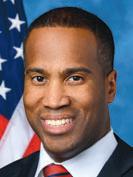

GAME OVER: As we all know, one week before the storied bipartisan Mackinac Policy Conference in late May, former Detroit Mayor Mike Duggan announced he was dropping his run as an independent candidate for governor in November. The question that has continued to circulate is why do it right before the Mackinac conference, which is sponsored by the Detroit Regional Chamber – which had endorsed Duggan early on. Despite rumors of a possible affair coming to light or a lucrative promised job, all sources point to one factor – lack of funds to feasibly go forward. While it was no surprise large sums were going to be spent by the Democratic and Republican party apparatus, Duggan learned that tech and financial titans on both coasts would not take the risk on his campaign. Despite very positive early polling, more recent polling indicate voters were coalescing behind traditional party candidates – Jocelyn Benson for Democrats, and John James, Mike Cox and Perry Johnson for Republican primary voters, narrowing the lane for Duggan. “Duggan’s running as an Independent was likely a mistake,” said Democratic strategist Joe DiSano, who said Duggan and his minions thought Benson would have been too fierce a Democratic primary competitor, especially as Democrats in 2024 were leaning more liberal than he was, leading him into the independent lane. “Benson may not have been as much of a threat as Duggan thought.” As for a possible position as president of University of Michigan? One source said he didn’t think Duggan would want that, while another said Duggan would not be “just handed the position, but if he’s interested, he’s definitely qualified and they’ll certainly talk to him,” noting Duggan has the business and health care business background, having successfully run the Detroit Medical Center before becoming Detroit’s head guy. “U-M’s health care system is a $12 billion health system out of a $15 billion U-M budget. It’s the fourth largest in the state. That’s huge. He doesn’t have a PhD or an academic background, but the academic institution is a smaller part today within a large university. Athletics are a huge business. It’s all business.”
HORNET’S NEST: Just when it looked like Secretary of State Jocelyn Benson’s gubernatorial race for the Democratic candidacy would be smooth sailing, with Mike Duggan dropping out and Genesee County Sheriff Chris Swanson barely making dent in the public’s radar, comes a brouhaha over a previous board position she held (2014-2018) with the Southern Poverty Law Center (SPLC), which recently was indicted by the an Alabama federal grand jury on 11 counts, including conspiracy to commit money laundering in its alleged effort to plant sources within white supremacist groups.

At the Mackinac Policy Conference, Benson said her position, which she held while she was dean of the Wayne State University School of Law, was mostly ceremonial, and she thought the indictment seemed “political and retaliatory,” noting the federal government operated similarly in the 1960s to go after civil rights organizations. Prior to this indictment, many have viewed the SPLC as a reputable nonprofit civil rights organization. Michigan’s House Republicans have called for an investigation of Benson’s involvement. One local Republican noted that GOP party members are using it as a “cudgel against her, along with her husband’s work on data centers.” Benson’s husband,, Ryan Friedrichs, is a vice president with The Related Companies, and until recently, managed Michigan-specific real estate projects, including large data centers.






POLL PROJECTIONS – SENATE: With the August 4 primary just a little over a month away and absentee voter ballots in the mailin late June, this month’s Magic 8 Ball predictions, or political polls, appear to be tightening in the senate and governor’s races. The viciously-contentious three-way race for the Democratic standard bearer for U.S. Senate, to replace retiring Senator Gary Peters (D-Bloomfield Township), will be a battle all the way to the ballot box.



According to an early June poll by the League for American Workers, U.S. Rep. Haley Stevens leads the field with 35 percent; former Wayne County Health Director Abdul El-Sayed has 31 percent; and state Senator Mallory McMorrow has plummeted to just 13 percent. Against Republican candidate former U.S. Rep. Mike Rogers, Stevens appeared the strongest candidate of the bunch, leading Rogers 48 percent to 41 percent. McMorrow led Rogers 45 percent to 42 percent; while El-Sayed was in a statistical tie, leading Rogers 43 percent to 42 percent. Not good news for Republican Mike Rogers, especially since polling firm League for American Workers is “right-wing, proworker conservative advocacy group,” according to their website.





POLL PROJECTIONS – GOVERNOR: Despite one top Republican stating, “No one can beat Jocelyn (Benson) right now,” Republican candidates are certainly determined to go for broke doing just that. According to a recent poll from the Mitchell Research, two-term Macomb County Congressman John James is in a statistical tie with former Attorney General Mike Cox, with James at 28 percent to Cox’s 27 percent, despite Cox noting that his campaign has spent “approximately $2.6 million this cycle to John James’ $4.4 million – yet James has dropped nearly 30 points,” Cox said in an email. Persistent candidate and selffunder Perry Johnson, who has spent over $20 million on TV ads blanketing the airwaves, is at 23 percent, and Senate Minority Leader Aric Nesbitt trails with just four percent. The Republican pack, which is whittled down by one, with Pastor Ralph Rebrandt losing an appeal to the Michigan Supreme Court to get on the primary ballot after it was determined he did not have enough signatures. “A lot of people in the party are very angry with James for leaving his (House) seat at risk of flipping, and he’s very aloof at events and leaves them very early,” said one Republican. “He doesn’t mingle at these Republican events. It’s like shooting fish in a barrel. If he’s not going table-to-table, he’s missing a huge opportunity,” which Cox and Nesbitt are taking advantage of. As for the contest against Benson, the same politico said, “If it’s John James or Mike Cox, Republicans will have a chance. But not if it’s Perry Johnson.”








As long as everyone continues to look at an array of shifting political polls, some still with 13-33 percent undecided participants just weeks out from the start of actual voting, we went back to the prediction markets, using the Polymarket online platform like we did on April 20 and May 17 In the race for the U.S. Senate seat, on April 20 Abduhl El-Sayed was pulling 51 percent and in May pulled 56 percent. On June 16 he had moved up to 72 percent. Haley Stevens remained in much the same position with 16 percent as opposed to 15 percent in late April and 13 percent in midMay. Mallory McMorrow numbers keep declining, from 35 percent on April 20 to 25 percent in May and now 10 percent on June 16. While we were at it, we took a quick look at the Democrat contest for the seat in Congress now held by Stevens. State Senator Jeremy Moss has moved from 91 percent in May to 97 percent in mid-June. Don Ufford dropped from five percent in May to two percent in June, while Aisha Farooqi fell from five percent to one percent. Keep in mind, the prediction online market is just one small step above the Magic 8 Ball, regardless of what’s said by those who give them as much credence as polls with high undecideds numbers.





FANNING THE FLAMES: Democratic Senate candidate Abdul El-Sayed –perhaps in a rabid effort for more attention, or because of his true sentiments –has been fanning the flames of antisemitism, stating at an event in Pontiac in late May that he struggles with whether “he believes Israel has a right to exist as a Jewish state,” according to Jewish Insider. On June 10, federal prosecutors indicted eight anti-Israel activists with University of Michigan affiliations for their roles in a set of coordinated terrorist attacks targeting U-M leaders and organizations over Israel and the Hamas war, including attacking the homes of former university prez Santa Ono and regent JordanAcker, along with the Jewish Federation of Detroit office in Bloomfield Township. One of the accused is a former paid staffer of El-Sayed’s campaign, Mariam Odeh of Dearborn. The indictment listed Odeh as the president of the organization Students Allied for Freedom and Equality or SAFE, which had its funding and recognition revoked. While his campaign tried to distance itself from her actions, stating she had not been part of the campaign since April 15, El-Sayed said at a campaign event in Dearborn, “It’s a lot more about what you’re advocating for that gets you indicted or not indicted, rather than what you did.” Elyssa Schmier, regional director of Anti-Defamation League of Michigan, responded to Jewish Insider, saying the allegations “paint a disturbing picture of individuals who sought to use fear, harassment and threats of violence to advance their cause.” “We cannot let terror campaigns like this run rampant on our universities, where they spread antisemitism, poison the minds of our youth, and threaten families’ safety,” Republican Senate candidate Mike Rogers said on X. Governor Gretchen Whitmer opined, “Violence, vandalism, threats, and intimidation are unacceptable. We must remain united in calling out hatred of any kind and continue working together toward peace in Michigan.”
YOUR TAX $$$ AT WORK: Congressman and candidate for governor John James (R) came in for criticism in late May and early June for his use of taxpayer funds to promote himself outside of his 10th district in violation of House rules on use of what is known as the franking privilege. Former Plymouth police chief Carl Berry, who lives in the congressional district served by Democrat Debbie Dingell, filed a formal complaint with the U.S. House Committee on House Administration, charging James used taxpayer funds for a You Tube ad that appeared in a number of districts beyond the district for James. The response from James office was basically that a third party vendor had in error scheduled the ad to reach a market of 450,000 persons rather than restricting the online promotion to the 250,000 persons in his congressional district. The formal response from the office of James was that the vendor was not paid for the larger distribution and future ads were being contained to abide by House rules. The rules violation by James became fodder for a number of critics, including gubernatorial hopeful Mike Cox (R), whose office issued a release saying: “Federal franking rules are clear - taxpayer-funded communications are intended to serve constituents, not to promote political ambitions or reach voters outside a member’s district.” The complaint about use of the federal franking privilege by members of Congress is nothing new. Detroit Congressman Shri Thanedar has been criticized for using franking for billboards along the Detroit area freeways and for television ads promoting the amount of pork he has brought back to his district. Thanedar broadcast commercials have been appearing in past weeks in the Detroit market. Use of franking is not restricted to members of Congress. Michigan lawmakers also have use of franking as evidenced by a mailing in May from state Senator Mallory McMorrow who is also a candidate for the U.S. Senate seat being vacated by Gary Peters of Bloomfield Township. None of McMorrow’s opponents in the race have made the franking mail piece an issue.




AMONG THE BILLIONAIRES: Republican Congresswoman Lisa McClain, who represents part of Oakland and Macomb counties in the U.S. House, became an internet darling after attending President Trump’s UFC event on the White House lawn in mid-June. A number of social media sites showed the congresswoman hanging with the likes of Mark Zuckerberg at the cage match event. She did receive some blowback online but responded by expressing support, saying it was a good way to honor America’s troops. Also did not hurt for the Chairwoman of the House Republican Conference to show up on Trump’s birthday. Meanwhile, McClain, days earlier, found herself stranded on a plane for an hour at Reagan International Airport because all air traffic was grounded due to an airshow rehearsal for the White house gathering. Joining her for the hour were Michigan Democrat Reps. ShriThanedar, Debbie Dingell and Rashida Tlaib

















Birmingham City Clerk Alexandria Bingham recently received the recognition of Oakland County Executive’s Oakland Together 40 Under 40 program, spotlighting top leaders in business and the community under 40 years of age. She was selected from 300 local applicants.
“I am delighted to be recognized,” said 35-year-old Bingham. “Public service is a huge part of my family. My grandpa was a Milford police officer and my mom introduced me to municipal work in Commerce Township by encouraging me to serve as an election inspector as soon as I was of age.”
The Waterford resident also fulfills roles as vice president of Oakland County Clerk’s Association and International Institute of Municipal Clerks.
“As a board member of the Oakland County Clerk’s Association (OCCA) I mentor other clerks, and help plan meetings and professional development to help all clerks in Oakland County,” said the influential Bingham.
The Oakland County Clerk’s association also does volunteer work around the community. Last year they assisted Disaster Relief at Work (DRAW), preparing supplies for those affected by floods and natural disasters. This year they are planning to work with Forgotten Harvest in September.
One of the most important aspects of Bingham’s responsibilities as city clerk is the city of Birmingham’s elections, and as an election specialist she takes her duties very seriously.
“Every election is important, whether it’s a long and complex ballot on a big election cycle or a small local election,” said Bingham, who administers the city elections.
Having confidence in her team to administer safe and secure elections is a huge point of pride.
“I am lucky to have a lot of amazing election inspectors in Birmingham because conducting elections safely is a team effort by the whole community,” she said. “On a fun note, my office is also involved in scheduling presentations for schools and scouting groups, and the occasional city hall wedding officiated by the mayor.”
Having been in her current position for over five years, Bingham sees firsthand some of the city of Birmingham’s strong points for residents. “Birmingham is extremely dedicated to public safety and service. Our police department and fire department have incredible response times, and our entire staff truly cares about every person in the city and their safety.” she said. “Birmingham is also fiscally sound, which is a critical part of the city’s success.”
Bingham attributes much of her personal success to her own curiosity and draws knowledge from her many mentors.
“I love picking people’s brains. Every person I talk to is an opportunity to learn something new, she said. “I have had so many amazing mentors in my life, from teachers and coaches in high school and college, and clerks in Oakland County and across the state. Birmingham has also been a wealth of exceptional influence. I am especially grateful to our former ethics board members who each served the city for 20-plus years before retiring, as well as to some of our exceptional election inspectors.”
An active equestrian, Bingham also loves swimming, snowboarding and outdoor activities.
“I recently spent a week riding native Icelandic horses across Iceland. That was an incredible experience with riders from all over the world and a few of my best equestrian friends in Michigan,” she said. “I also train my dog, Marvin, at Sit Means Sit, in Rochester Hills. My hope is to get him certified as a therapy dog in the near future so that we can be a part of Go Team Therapy Dogs that provide comfort in crisis at hospitals, nursing homes or anywhere people need their love.”
Story: Susan Peck

Photo: Laurie Tennent

ndrew Lyon was hired by the East Lansing Police Department as an officer in 2024.
By the time he resigned in April 2026, he was the subject of four internal department investigations. According to local reporting from WLNS-TV, in just
two years on the job, Lyon was under investigation for speeding through red lights during a pursuit without lights and sirens, running red lights, and speeding in a personal vehicle. He had also ignored direct commands from his superiors not to discuss a federal civil rights lawsuit, which two black men filed against Lyons for using pepper spray on them when they were arrested for an alleged altercation outside a restaurant. Lyons claimed he was breaking up a fight, although video surveillance from the restaurant showed there was no fight. In reality, one of the men who was peppersprayed and arrested was trying to deter the other from getting involved in a potential fight.
Lyon resigned on April 26 after only 21 months on the job. At the time, he faced 14 policy violations from his commanding officers, 11 of which were sustained. City officials would not reveal to the public Lyon’s reason for resigning.
According to the state’s policy-making body that sets
the rules and standards for all the state’s police officers, Lyon is still licensed to be a police officer in Michigan.
What is stopping a police officer like Lyons from picking themselves up and finding police work elsewhere?
The notion of the so-called
“wandering cop,” when police officers bounce from job to job, either through an unwritten code of silence from their former places of employment or lack of scrutiny from short-staffed law enforcement departments eager to hire, has been a grave concern of groups of civil rights activists, journalists and data analysts around the country.
After a decade of research, the non-profit Chicago-based investigative journalism organization known as the Invisible Institute in February of 2026 launched the National Police Index (NPI). The NPI is a nationwide effort to compile a database that contains decades of work histories of the nation’s police officers. The NPI currently contains
over one million records and aims to uncover acts of misconduct and where officers go after a problematic separation.
According to the organization’s website, the database serves as a tool to help communities, journalists, researchers, and attorneys investigate the track records and possible on-the-job negligence of law enforcement officers.
The database website is searchable to the public by the officer’s name, agency, start and end dates of employment. Separate downloadable spreadsheets for participating states list reasons for leaving the job including retirement, firing, or resigning.
So far, the database has collected information from 24 states, though some state data sets are more robust than others. The NPI obtained records through petitions filed under the Freedom of Information Act (FOIA). It was compiled by a team of journalists across the country and co-founded by the Louisiana Justice and Innocence Project.
WA N D E R I N G C O P S



Neither the Invisible Institute nor the Louisiana Justice and Innocence Project responded to multiple requests for comment.
Michigan is one of the states that has not disclosed its police records for the database, according to veteran Michigan journalist Steve Neavling. Neavling has been on the police beat for over 20 years. He is currently a reporter at the Detroit Metro Times, and before that wrote for the Detroit Free Press and was the creator of Motor City Muckraker. In his ongoing series on “wandering cops,” he uncovers what happens when police officers are fired for gross misconduct in one part of the state and then get hired to work again at another law enforcement agency. Neavling said that due to its heavily cloaked records, Michigan is one of the worst offenders in the country when it comes to this practice. Neavling said the information he and the Invisible Institute are trying to gather on the police for the database is not meant to benefit law enforcement departments in their screening practices. Rather, it is designed to serve the public who want to know who is policing their communities. He said including Michigan’s records in the NPI database would empower the public to track repeat offenders, and, if necessary, call to investigate certain hires with potential red flags.
“This database is for residents, residents who encounter police officers who can potentially mishandle them at traffic stops or verbally or physically harass them on the street,” Neavling said in an interview with Downtown. “Then, that resident can look up that officer on a database and could learn that they were fired from another department for similar behavior.”
Two years ago, the Invisible Project reached out to Neavling to help build the Michigan component of the database. The two organizations filed a FOIA request for the information, but the Michigan State Police (MSP) blocked the request.
In November of 2023, they filed a lawsuit against the state to obtain the records.
In 2024, State Attorney General Dana Nessel filed an amicus brief on behalf of the Detroit Metro Times and the Invisible Institute against the MSP, seeking more transparency and disclosure on the work histories of the state’s law enforcement officers. In a 2024 press release, Nessel’s
office disclosed: “As the Department of Attorney General also represents the (MSP) in the lawsuit, the department erected a conflict wall within the office to allow the Attorney General to take the contrary position.”
Nessel stated that the plaintiffs are not seeking sensitive information, such as officers’ home addresses or the identification of officers serving in undercover roles. “Transparency is vital to accountability, and to law enforcement’s commitment to serving their communities. To that end, it’s important that the Michigan State Police are held to the same FOIA requirements as other state agencies,” said Nessel in the press release.
In May 2026, a judge ruled in favor of the MSP keeping the names and employment histories of its officers out of the NPI.
Currently, Detroit Metro Times and the Invisible Institute are working with the University of Michigan Law School’s Civil Rights Litigation Initiative (CRLI) to appeal the decision.
In a statement emailed to Downtown, Skylar Parpan, a student attorney with the CRLI working on the appeal, stressed the importance of transparency from the state and releasing the requested information from the state under FOIA to be included in the NPI.
“A secret police force is fundamentally incompatible with a fair and free democracy,” Parpan said. “There cannot be transparency and accountability in policing if law enforcement identities are kept hidden from public view.”
Neavling said that Michigan is only one of two states in the country that does not subject the governor and lawmakers to FOIA.
“This is what makes Michigan uniquely bad when it comes to FOIA requests,” Neavling said. “It can take weeks or even months for government entities to respond, if at all. There have been few efforts on behalf of state lawmakers to create more transparency especially on the topic of who is policing our communities and their work histories. Michigan has a serious transparency problem.”
Neavling said that the FOIA requests did not ask for personal information such as home addresses or family connections.
“We requested the most basic information, the names of current and formerly certified officers and their employment histories,” Neavling said. “This information can help detect wandering cops who leave one department after misconduct and may resurface at another agency.
Michigan has been very difficult to get records on these issues. While some states handed over some records, Michigan is the one state that said we are not going to hand over any at all.”
In his reporting, Neavling has unsuccessfully made FOIA requests for the names and employment histories of every officer with the Detroit police. He said there
remains an unwritten, accepted rule that it is okay to hide the identities of Michigan’s police officers even though they are paid with the public’s taxes and are issued powerful tools such as weapons and patrol cars to do their work.
“It is a workforce that is cloaked in secrecy,” Neavling said.
Neavling admitted that smaller law enforcement departments, including those in readership area of Downtown, make announcements and take headshots of their new hires and post them openly on social media or their department websites. Neavling added that it is common practice for the MSP to take headshot photos of each graduate of its cadet program without listing names.
Downtown observed that the Detroit Police website lists the names of precinct captains and commanders but not the names of every patrol officer in its ranks. Outside of Detroit, Neavling said, Michigan, whose law enforcement entity is comprised of 83 sheriff’s offices and hundreds of smaller municipal police departments, makes it next to impossible to publicly access all the names and professional histories of every employed law enforcement officer in the state in one place.
Neavling said he has covered many stories where a police officer got into trouble at work, was dismissed from one department, only to find work in another.
Among the strangest is the story of Robert Priest.
Priest was an officer for the Warren Police Department for 25 years before he was fired in 2021. While on the job in Warren, Neavling reported he had interpersonal issues with a former Warren deputy police commissioner, Matt Nichols.
In late 2022, Priest was hired by the village of Romeo Police Department.
“When Priest received his patrol badge in Romeo, he conducted an illegal stakeout outside Nichol’s home in his patrol car, called it his ‘special project,’ waited for his ex-supervisor to leave his home, and then followed him in pursuit.”
Neavling said that through a FOIA request, he obtained a video of Priest pursuing Nichols in his patrol car after stalking him. Priest pulled Nichols over and issued him three traffic tickets. In the video, Neavling said Priest can be heard bragging about “three-banging” this officer, which he described as his “special project.” All the ticket issuances were later overturned in court.
Priest was fired from the Romeo Police Department in December 2023.
Neavling reported that the Warren Police Department then came under investigation because it failed to legally report to the Michigan Coalition Law Enforcement Standards (MCOLES), the overseeing government agency on policing, why officers such as Priest had been fired. In June of 2019, Nichols himself was terminated from the Warren Police Department under charges








of alleged assault of a shoplifting suspect.
Many times, when a department wants to fire an officer, Neavling has learned that to avoid drawn-out lawsuits, a department, instead of properly filing a separation due to misconduct, will ask the officer to resign, provided it will not report any character or misconduct issues to the state. That is why, Neavling said, there are so few officers on the MCOLES website listed as decertified.
“What we are seeing is oftentimes when an officer gets in trouble, for something like domestic abuse, for example, they will strike a deal with the police chief to say that this officer just quit,” Neavling said. “If they don’t report any character issues, there’s nothing the state could really do to make this officer uncertified, and this has become a common practice. What makes matters worse is that there is such a huge police shortage right now that a fired officer, in this case, can potentially get hired in a different or smaller department in the state that has many open positions to fill. The police shortage makes this issue even more relevant.”
Of all the repeat offender police in the state, the most notorious is the case of officer William Melendez, otherwise known as the “Robocop” of Inkster. When police chiefs interviewed by Downtown were asked to give an example of a wandering cop, conversations alluded to Inkster and what happened there a decade ago.
Inkster is one of the poorest inner-ring suburbs of Detroit. It has had challenges with corrupt officers that date back over a decade. In 2015, The Detroit News reported that the city’s crumbling infrastructure had just quietly closed its school district, and its police force numbers dwindled from 60 officers in 2012 to only 24 in 2015. At the time, Inkster suffered a revolving door of chiefs of police, as a string of them stepped into the position and then soon resigned.
In January of 2015, Melendez was fired and charged with felonious assault after he was caught on video beating a motorist on the head and face after a traffic stop, punching his victim 16 times in the face.
In April 2015, Wayne County Prosecutor Kym Worthy charged Melendez with assault. According to reports from the The Detroit News, Melendez was a rogue Detroit cop whose reputation for excessive use of force cost the city at least $1 million in legal settlements. Melendez was tried on federal corruption charges in a 2004 trial that portrayed him as the ringleader of a virtual police gang that planted evidence and threatened suspects. He was acquitted, along with other defendants.
In November 2015, Melendez was sentenced by a Wayne County Judge to serve a prison sentence of a minimum of 13 months to 10 years for police brutality. He spent 14 months behind bars and was released in January 2017.
A decade later, the Inkster force is trying to recover its trust with the public. Its police force is back to deploying over 60 officers, back to numbers not seen since 2011. In late
May, the department’s Facebook page photographed five newly hired officers, who were mostly black and two women, but did not reveal their names, and the department has open enrollment in seeking new officers to join its force.
Because of the visibility of this case, MCOLES in 2018 strengthened and tightened its police hiring regulations and procedures with a policy known as Public Act (PA) 128 which went into effect in January 2018.
PA 128 requires hiring agencies to request and review the reasons as to why an applicant left employment with a previous law enforcement agency. This record is required to be maintained in the Employment History Record kept by the state. Agencies receiving such a request to disclose the information must do so according to state law. The law provides liability protection from such disclosures for the former agency and allows an applicant due process to object to the information with an explanation.
Under PA 128, MCOLES on its public website also maintains records of police officers who have had their licenses revoked by the state. The site currently lists 20 officers and links to records listing their offenses, which range from ethnic intimidation, aggravated stalking, fleeing and eluding the scene of a crime, aggravated domestic assault or tax fraud.
MCOLES, each year under PA 128, puts 10 percent of the state’s law enforcement agencies under extra scrutiny in its hiring practices.
The policy states that simply obtaining these separation records only serves as a baseline for hiring agencies who must individually conduct comprehensive background evaluations, including fingerprint checks as well as psychological to determine if they are qualified to serve as officers.
Oakland County Sheriff Michael Bouchard, who has been head of government affairs for Major County Sheriffs of America for 24 years, said when it comes to hiring practices, what is more important than a connected national database like NPI are hiring practices at the state level and how policies like PA 128 are enforced. For years, he has been pushing for more rigorous hiring practices that require a comprehensive
background check for anyone who is hired to wear a law enforcement badge.
“I regret to say that this failure is happening more in-state than out of state,” admitted Bouchard. “Individual agencies are not doing their due diligence. I have been chasing this for many years.”
When it comes to screening practices conducted during police hiring, Bouchard has long maintained that he wishes to bring back the polygraph, or “lie detector test.”
Under the Michigan Polygraph Protect Act of 1981, however, using polygraphs to screen job candidates for police work is banned. According to the United States Department of Labor, the practice is widely used in Texas, California, Florida, Utah, Georgiaand Pennsylvania.
According to the United States Department of Labor, all 50 states allow law enforcement agencies to use polygraph tests for hiring police officers. While the Employee Polygraph Protection Act restricts private employers from using lie detectors, it exempts federal, state, and local government employers, including police departments. A handful of states — such as Michigan, Massachusetts, Minnesota, New Jersey, and Oregon — have state-level laws that restrict or completely prohibit government agencies from forcing applicants to take polygraph tests for employment.
“I took a polygraph test when I was hired, but the state legislature decided it was too intrusive,” Bouchard said. “That’s not helpful to us, because some people are very good liars. We can ask them questions, such as if they have multiple social media accounts, we can investigate. But what’s to stop them from hiding the fact that they have a secret account where they post content that is racist and hateful, or that they have violent tendencies? We may never know about them, and if it ever comes to light, it can make our agencies and our hiring practices look bad.”
When it comes to nationalizing a police enforcement database, Bouchard said the NPI was examined by the Major County Sheriffs of America and viewed as unhelpful and unreliable for weeding out bad apples from a hiring pool. For starters, he said it had no precise definition of misconduct, which can range from missing multiple days of work to a major infraction of the law.
“So, for the officer that was reprimanded or fired for calling in sick too many days, as a hypothetical, does he deserve to wind up on a national database to make him unemployable?” Bouchard asked. “This database does not solve the problem. The problem is hiring people repeatedly who shouldn’t get hired, and only a full investigation will prevent that.”
Before he was chief of police in the City of Bloomfield Hills, Jeff King was chief of police for Farmington Hills for five years and has served in law enforcement for over 30 years. Over his decades of service, he observed that fewer candidates are applying for vacant positions in law enforcement. Recruitment

for new officers has been tough, and this places an even greater emphasis on scrutinizing potential hires.
Prior to speaking with Downtown, King checked out the NPI database. At a glance of the information contained within the databases of participating states, he said the information he reviewed was not robust enough to give a full picture of any of the hundreds of thousands of listed officers and certainly should not be relied upon for making a hiring decision.
King objected to what he described as vague record-keeping in the database. The term “misconduct” can mean many things if not specified.
For example, King said years ago he hired a young man as a law enforcement officer in Farmington Hills. As a teen, about four years and 350 days before the exact day he applied, he received a trespass citation on his record. At the time, the Farmington Hills Police Department said if a person had even a misdemeanor on their record within five years of applying, they were technically ineligible for employment.
“Basically, this was someone who, as a kid, went with some of his friends off-road on their ATVs and trespassed on someone’s property,” King recalled. “When the police were alerted, his friends took off. He stayed behind to be honest, and he was the one who got the ticket.”
King said when he entered the profession in 1995 the slightest infringement, including a teen driving violation, would keep you out of contention for an officer position in law enforcement. Back then, he recalled there were times when 650 applicants applied for six jobs. Now, King said that 15 jobs can be posted, but only five people might apply. This is even tougher in municipalities like Bloomfield Hills, where first responders must be certified in both law enforcement and firefighting.
“As chiefs of police, we are the leaders and we set the tone of our departments in motion,” King said when it comes to the standards he holds for background checks on new hires. “Farmington Hills Police Department is one of the 10 largest departments in the state, and Bloomfield Hills is far smaller. But no matter the size of the department I reside over, my standards are the same. No one gets hired as an officer without me investigating or speaking and approving them for hire.”
King said his departments have used the standards set in PA 128 as the starting ground, and then he added additional layers of screening, which include background checks and visits to their current and past communities.
“I am confident that in Bloomfield Hills we will not be hiring someone with a violent past on or off the job, and I am confident that this is also the case in the majority of law enforcement departments in the state.”
King said in a recent hire of a dispatcher from Traverse City, he sent investigators up north to speak with the applicant’s former
supervisors. They also knocked on doors and met with an applicant’s neighbors and associates to get a thorough assessment of the person before they were hired.
“If you are interviewing at my department, I want to find the people you don’t want me talking to,” King asserted. “That’s how we can uncover the potential to see if an applicant has a history of abuse, financial fraud, lying, substance abuse, violent tendencies, or other integrity issues.”
Chief Ronald Wiles, director of the Michigan Chiefs of Police Association, said it is his job and the duty of his organization to provide professional development opportunities for the state’s law enforcement, enhance professionalism in the field, and advocate for legislation that affects public safety in the communities served.
In his position, he has had many discussions around the state with chiefs and sheriffs about the merits of including Michigan’s police in the NPI.
“It’s no secret that accountability and professionalism are essential to maintaining public trust in law enforcement, but we do believe that any system designed to ensure that agencies have that accurate information should be embarking on a thoughtful discussion on that topic,” Wiles said. “Whether or not Michigan’s law enforcement believes in having our records in the database is not as easy as a yes or no answer. In Michigan, we have multiple safeguards in place to try to prevent a repeat of what happened in Inkster. We have MCOLES and we now have PA 128.”
As he views the database now in its current form, Wiles said it can be potentially dangerous because even the data provided by the participating states lacks context.
“There is a big difference between an officer retiring or resigning for things that would not constitute a termination or a refusal to become an officer somewhere else,” Wiles said. “I think a database in that case can be somewhat problematic. It just lumps officers into this category that they were terminated or left a job under suspicion. Officers who separate from their agencies do so for many reasons, and most of them are not because they are a danger to the public.”
Wiles continued: “It’s dangerous just to have a database of officer names without having a further understanding of who those people are, what they represent, and why they are listed. If you have an officer who’s been retired for several years, should they be part of that database? It is unclear.”
Bloomfield Township Chief of Police James Gallagher examined the database. Generally speaking, from the states that included information on thousands of officers whose service dates back as early as the 1960s, he concluded that there is not enough information on officers to make it a valuable tool for any hiring or screening practices. Listing an officer’s hiring, termination, resignation, or retirement dates to suggest a work history is not enough. And given the “temperature” in the nation of hostility
towards police, Gallagher said he would not want the names of his officers so readily available to the public for safety’s sake.
“At times, we may on our social media put out a name and a picture of an officer for a more positive story, but as a chief, I would not want the names of all my staff so accessible with just one click,” cautioned Gallagher. “Our officer families do not need people doxxing them or worse, just because they are a police officer found in some kind of database. The data I reviewed there does nothing for me from a police standpoint about hiring somebody. That all comes out during our thorough background investigations held under Michigan’s standards, and I cannot speak for what the standards are in other states.”
Gallagher believes PA 128 is an effective way to vet a law enforcement professional’s work history. He said that with this law in place, chiefs like himself are required to release to the state any reason why an officer was separated from their employment.
Gallagher continued: “Though I was not chief back then, I know the Robocop case in Inkster is what really pushed the state to pass PA 128, which requires a terminating law agency to report reasons for a termination, even if it is in the form of early retirement (in the case that an officer has done something that would make me no longer want to retain their services as a law enforcement officer). Even if we sign a non-disclosure agreement with a departing officer, the law requires my department to notify MCOLES through full written documentation the reason for that termination. I am required to let MCOLES know if that person either retired under investigation, resigned under investigation, or retired in good standing.”
Gallagher said before PA 128, an officer could quietly walk away from a termination due to misconduct, and an NDA would stick. If an officer gave their agency a problem, they could be fired quietly, saving the firing agency the hassle of the police union or litigation, apply for work at a different agency, and the one they left could not be transparent about the reason for separation.
“Then the next agency hires that individual and they might learn the hard way that they are a problem because the terminating agency did not have to reveal anything,” Gallagher said. “But with PA 128 in place, it is now a crime for me as a chief


not to reveal an officer’s reason for termination if they apply elsewhere for a job at another agency.”
“Nobody dislikes a bad cop more than a good cop, but the lists of names of officers without any deeper context, as found on this database, are very dangerous,” Gallagher said. “My impression of the database is that it does not give me enough of the specifics of misconduct, what that specifically means. Now, if we are talking about wandering cops, that is an agency-specific problem, and some agencies, which I do not want to specify, have had a history of hiring wandering cops. Part of this problem can be attributed to shrinking hiring pools or lower wages that make it hard to attract people to the profession.”
In a statement released to Downtown, Troy Police Public Information Officer Edwin Julian said that his department has an extensive hiring and background investigation process, and it is extremely confident in the safeguards in place to thoroughly vet applicants before they are hired.
“Our background investigations are comprehensive and include a review of prior employment, criminal history, references, driving records, social media activity, and any other information relevant to an applicant’s suitability for a career in law enforcement,” Julian stated. “Applicants also undergo multiple interviews, psychological and medical evaluations, and additional screening before being considered for employment.”
Julian said as part of the process, the Troy department routinely contacts previous employers and law enforcement agencies where an applicant has worked. “We believe these measures provide a thorough assessment of an applicant’s character, integrity, professionalism, and overall fitness for the position.”
In the case of former employees, Julian said the Troy Police Department does not and would not agree to conceal substantiated misconduct or other relevant employment information as part of any separation agreement or negotiation. If contacted by another law enforcement agency conducting a background investigation, we provide truthful and accurate information consistent with applicable laws and employment practices.
“Ultimately, we place a significant
emphasis on hiring the right people and have a robust process in place to identify candidates who meet the high standards expected of Troy police officers. We are very confident in that process.”
Julian said his department has reviewed the NPI and its goal of increasing transparency and helping agencies identify officers with a history of misconduct.
However, the Troy Police Departemtn maintains that Michigan already has an established system through PA 128 that oversees the licensing and certification of law enforcement officers and can act against an officer’s license when appropriate.
“We believe that (PA 128) already serves an important accountability function,” Julian wrote. “In addition, we place significant emphasis on thorough background investigations and are extremely confident in our hiring process.”
Scott Grewe, chief of police for Birmingham, echoed the sentiments of his colleagues.
In a written statement to Downtown, he said: “The Birmingham Police Department conducts extensive background checks on new officers, which always include reviewing personnel files from previous agencies, and we would find any negative information prior to hiring a new officer, whether or not they were on a database somewhere.”
But Ben Grunwald, a professor of Law at Yale University Law School who was the lead author on a 2020 study, “The Wandering Officer,” published in the Yale Law Journal, said that databases such as the NPI are useful to the general public.
In this study, the first of its kind, Grunwald and a team of researchersexamined the employment records of all of Florida’s 98,000 full-time law-enforcement officers employed by about 500 agencies over 30 years. The research could be boiled down into three key findings: Each year, an average of around 1,100 officers who were previously fired — three percent of all officers in the state — worked for Florida agencies. Second, officers who were fired from their last job faced difficulty finding new work. Employment searches for them are longer and the work found is often at smaller law enforcement agencies with fewer resources located in communities with a large demographic of people of color. This is less common for those who were fired earlier in their careers.
Third, wandering officers are more likely than both officers hired as rookies or veterans who have never been fired to be fired from their next job or to receive a complaint for a “moral character violation.” The researchers could not determine the precise reasons for the firings, and the results suggest that wandering officers may pose serious risks, particularly given how difficult it is to fire a police officer.
Grunwald thinks that Michigan’s law officers should give the database a second look to see how the information is organized and how, with the right amount of digging, it can uncover red flags about the work histories of potentially troublesome officers.
“When we look at the National Police Index, all we may see is a list of officers and the dates that they started and ended jobs, and that may not be seen as super useful,” Grunwald said. “But perhaps the chiefs who looked at this database have not looked into the datasets that are more robust, and the depth and quality of the information, such as details on why an officer left one department to work at another, or revealing the reasons for dismissal, varies from state to state.”
And though law enforcement chiefs pointed to MCOLES and its list of revoked officers as proof of better transparency, Grunwald said there is a deeper kind of information that is lacking or blocked from Michigan’s screening protocols, and they are not getting the full picture.
“Many states post information about which officers get their licenses revoked, but that is different from the kind of information contained in the National Police Index,” Grunwald said. “That database lets the user know about the officers who have been fired and the reason they were fired. Very few officers get their licenses revoked and therefore can no longer work in the state. Many more get fired. “
Looking at the database from law enforcement’s perspective, Grunwald can see why they say it can be problematic.
“Some of the objections that the police chiefs have is that the databases don’t have much information in them, and that they don’t see much value in them, and they are right on one point, which is that posting this information online is not helpful for the police department,” Grunwald said. “When doing background checks on new job candidates, a police department already has access to this information, because the state policing agency is collecting it. So, police departments are not in any way benefiting from the data being posted online. They might be objecting to it, they might be saying, well, this is a lot of personal information being posted online, and that can be harmful for our officers.”
Ultimately, Grunwald said, having a national database on policing offers a costbenefit paradox to the policing profession and the public they are sworn to serve and protect. The cost to police officers is the possibility of losing some of their privacy or more people knowing their work history, outweighs the benefits to the public of bringing more transparency to the profession to avoid rehiring problem officers until the unfortunate or unthinkable happens, such as a member falling victim to brutality, assault, or even death by someone who should have never repeatedly been given a police badge.
“On the benefit side of having such a database is basic public accountability,” Grunwald said. “When we have police officers who have an enormous amount of power, and frankly, not that much training, and not a lot of governing what they do and how they conduct themselves while on the job, we need to have an accountability mechanism, and we need to make sure their work histories are public information.”




Bloomfield Hills resident Ryan Walker was motivated to create the Pine Lake Ultraman, a local 320-mile endurance event not only for the extreme physical and emotional athletic challenge but also for deeply personal reasons.
Growing up outside of Pittsburgh as the oldest child of teen parents, Walker admitted, “I had a complicated childhood. While my parents tried to make it work and do their best…I ended up having various parental figures through the years.”
His maternal grandparents and aunt played central roles in his earlier life to fill the gaps of his mother’s mental illness and addiction. He considered his grandfather his mentor and role model and lived with his “amazing” grandparents during summers when he attended University of Pittsburgh, majoring in communications and history. He helped care for his grandfather at the end of his life while he was suffering from Alzheimer’s disease.
Sadly, his mom also passed away, succumbing to mental illness and addiction.
“Life is always multifaceted – my mom stood for a lot of beautiful things. When I think of her the first word that comes to mind is compassion. She was always willing to step up and help others in meaningful ways…Growing up she was super involved and always our biggest supporter. My brother is two years younger, and we both played on the high school football team. She and my grandma used to make a pasta dinner every Friday night for the team.”
After graduating from college in 2004, Walker showed up at his aunt’s home in New York City with garbage bags holding his belongings. She let him live with her as he began his career in sales at ESPN. “I’ve been in advertising ever since,” he said.
Walker met his wife, Sara, a Troy native, in New York. They moved to Michigan in 2013, and bought their home in Bloomfield Hills the following year. The couple shares three children – Henry, Garrett, and Alaina – who all play flag football with Walker as their coach.
“This is such an amazing place to live and raise kids,” he commented.
Besides his love of family and sports, Walker works for The Trade Desk in Royal Oak, and is considering running for the Bloomfield Hills School District school board. He is also an endurance athlete who recently participated in a selfdesigned 320-mile endurance event to raise money for HOPE Shelters, a Pontiacbased nonprofit organization serving people experiencing homelessness – and to honor the people who taught him what it means to show up.
An official Ultraman is 320 punishing miles of swimming, biking and running over three days, with 12 hours to finish each day. Walker had many people join him for parts of each day. He plans to continue to raise money for HOPE Shelters via the Pine Lake Ultraman GoFundMe through mid-July.
“My wife, Sara, is my rock. She’s so supportive especially with the training schedule that goes into an event like this,” he shared.
Walker noted that he was turning 45 years old right before the Ultraman event and that his mom didn’t live to see this age.
“Through the loss, I’ve looked for ways to honor her and what she stood for. It started out small and has grown into bigger things.”
He reflected: “We all are going to be confronted with hard things in life. It’s important to push through and build resilience. I tell my kids not to be fearless but to feel the fear and do it anyway.”
Story: Tracy Donohue

Photo: Laurie Tennent

#1 individual agenT at Max Broock/Real Estate One (over 2,100 agents statewide)
#2 agenT for market area homes sold over the last 3 years









Over 25 Years as a Full TiMe agenT in Birmingham
Over $900 MilliOn in personal career sales (not team sales)




By Grace Lovins Birmingham
City Commissioners and Planning Board members continued a lengthy discussion on regulations for short-term rentals throughout the city during the Monday, June 15, joint workshop which at first was dominated by the issue of an out-of-control pool party at a rental home the prior weekend.
As planning board members have been looking into regulating shortterm rentals through the city’s zoning ordinance, they intended to pose several questions to the commission during the workshop to gain clarification. The review of the Birmingham’s regulations of rentals was prompted by an April 11 incident involving a party and gunshots at a short-term rental property in the city.
The beginning of the workshop included comments from city staff regarding an incident that took place over the weekend involving a homeowner renting out their pool on Westchester Street. Several city residents and news outlets reported a pool party that lost control, leading to multiple calls to police.
City manager Jana Ecker said that the incident took place at a residence that is not considered a short-term rental in the sense that short-term rentals were on the agenda. She stated that, while it wasn’t a shortterm rental, the pool party was illegal since the city’s zoning ordinance does not allow a private pool to be used for public events hosted by a third-party in a residential neighborhood.
Birmingham Police Department Investigations Captain Michael Simpson said that the Westchester homeowner was cited for three misdemeanors of permitting gathering of disorderly persons, breach of peace and public nuisance violations. He said the event host also received violations for gathering of disorderly persons and decibel level prohibitions. A few other traffic violations and a misdemeanor were issued after the party was shut down. Following roughly an hour of public comment from an overflow crowd of local residents regarding the pool party, commissioners and planning board members took up discussions on short-term rental questions posed by the board. The first question was if the commission had any interest in allowing the planning board to study possibilities

against problematic STRs.
Birmingham police were forced to close down a pool party in the 300 block of Westchester Street in the city after mounting complaints were phoned in to the department over noise, neighborhood streets jammed with cars and lewd public behavior by partygoers.
According to city officials, the police department and comments from neighboring homeowners who attended a June 17 joint city commissionplanning board meeting, a crowd of approximately 200 persons attended a pool party at the Westchester address which had been rented out by the homeowner.
The pool had been advertised for rent on a pool-rental online platform and a promoter reportedly organized the event. Police officials said that security personnel were at the house and checked those entering for weapons. Those attending the party were charged an admission fee.
Birmingham Police Department Investigations Captain Michael Simpson to city officials at the June 17 public meeting that officers were first dispatched to the home at 4 p.m. and returned five more times to the site after the initial visit. Noise level readings were taken at each visit and at 8:30 p.m. a decision was made to shut the party down.
Simpson said that department personnel were then called away for a motorcycle accident and were not able to remain at the home as the crowd was dispersed.
Simpson said that the homeowner and the renter have been issued citations and some party attendees were also later cited.
City manager Jana Ecker at the June 17 meeting said that the party was illegal because it is against local ordinances to operate a commercial endeavor like renting out the pool in a residential neighborhood.
Police Chief Scott Grewe, in a post online this week, conceded that the pool party should have been shut down much earlier and "should an event require intervention in the future, there will be police supervision to ensure the orderly and safe dispersal of attendees."
for allowing short-term rentals in the commercial and mixed-use areas of the city.
Planning board members noted that areas like the Rail District and Triangle District could prove to be good opportunities for allowing shortterm rentals and asked the commission to continue investigating it. Multiple commissioners disagreed with the point, saying that creating areas where short-term rentals are permitted could make enforcement more difficult as well as they could have negative impacts on the citizens living in the residential streets in those districts.
Commissioner Brad Host went so far as to attempt to motion for the immediate elimination of short-term rentals in the city, with the exception of owner-occupied rentals. His motion was not only deemed “inappropriate and ill-conceived” by one commissioner, but was considered not permissible by city attorney Tracy Gaudenzi given an active moratorium on new short-term rentals as well as the public noticing required to comply with the Open Meetings Act. Commissioners and board
Building official Jeff Zielke explained that, since the commission’s last update during their May 18 meeting, the city has issued about 73 tickets related to expired rentals, unlicensed rentals or other violations involving both shortterm and long-term rentals.
Zielke said the city is actively pursuing unregistered rentals and has sent a list to Airbnb where the matter has been escalated to the appropriate team. He said city staff are still waiting on a response regarding removal of the rental listings.
Planning director Nick Dupuis also joined the conversation, noting that the city’s planning board was looking for more direction before continuing their study on the rentals. Dupuis said the questions included whether the study should be limited to single-family residential neighborhoods, how they should approach owner-occupied or hosted rentals, whether to examine rental density and if the city should incentivize long-term rentals.
Commissioners reiterated that they intended to restrict rentals less than 30 days to the entire city. Commissioner Andrew Haig added that the planning board should pay attention to mixed-use or commercial districts as a U.S. Supreme Court ruling may have some impact on how they approach that portion of the zoning ordinance.
members continued on to discuss exceptions for owner-occupied or hosted rentals. Owner-occupied would mean the rental unit must be the owner’s primary address, occupied 183 days out of the year, and hosted rentals would mean the owner is actively staying at the address while the rental takes place.
The commission reached a consensus that no exceptions should be made for short-term rentals.
Ultimately, no formal action was taken by either the board or commission, but planning board members will continue to look into options for regulating short-term rentals through the city’s zoning ordinance.
By Grace Lovins
Continuing discussions on short-term rentals (STR) within the city of Birmingham, city commissioners received another report during the Monday, June 9, meeting which provided an update on current enforcement
Mayor Clinton Baller and other commissioners generally agreed that the board can disregard looking into rental density. The commission also agreed that there was no current interest in incentivizing long-term rentals.
No formal action was taken by the commission but, per commissioner request, a report on short-term rentals is anticipated to be given at every commission meeting going forward.
The review of the Birmingham’s regulations of rentals was prompted by an April 11 incident involving a party and gunshots at a short-term rental property in the city.
By Grace Lovins
The designs for modifications to the storefront windows of the building at 33877 Woodward, the former site of a CVS, set to be the home of Birmingham’s first Dollar Tree store, were approved with conditions by the city’s design review board during the Wednesday, June 3, meeting.
The unanimous vote comes after the design review board had





previously postponed the item during the May 6 meeting.
Planning director Nick Dupuis explained that Dollar Tree had made significant changes since the May 6 discussion, noting that a lot of work had been done to reduce the amount of windows that were blocked which had previously been a sticking point for the board.
Dupuis went on to explain that, while the applicant did address some of the board’s concerns, the proposal still violates the zoning ordinance because they are blocking some windows with things like shelving and the backs of walls. He said that the planning department’s recommendation would be to have Dollar Tree submit revised plans or obtain a variance through the zoning board of appeals.
The remaining problem areas included one window pane along Woodward where an office is proposed, one bay along the alley where an eight foot gondola remained in the plans, and a back-of-house area where there is a wall and vinyl left over from the former tenant, CVS.
Brian Easy of Northville-based M Architects, representing Dollar Tree in the midwest region, said they were seeking approval and “flexibility” from the board. Multiple board members, including board chair Keith Deyer, said they felt that the issues posed were self-induced hardships and the store had options to pursue that wouldn’t violate the ordinance.
In the end, board members voted unanimously, 7-0, to approve the design plans with the conditions that the plans are modified and resubmitted to meet the zoning ordinance or that the applicant heads to the board of zoning appeals for a variance, that the plans are reconfigured to switch the office space along Woodward to retail space, and that the city’s design review standards are met once the conditions are satisfied.
While Dollar Tree’s proposal to occupy the space on Woodward has stirred opposition, including an online petition with over 500 signatures, only one resident spoke during the public comments on the item.


The online petition, at change.org, basically challenges the location of the discount store which opponents say would not be a fit with the “community’s character and values.”
The online petition also raises safety issues with an elementary school located nearby and makes unsubstantiated claims that crime increases when Dollar Tree stores are located in a community.
By Grace Lovins
During the Monday, June 8, meeting, Birmingham City Commissioners adopted a resolution to support the 48th District Court continuing operations with three judges, joining an effort by court officials to preserve a judgeship slated for elimination under existing legislation should one of the judges retire or age out of their judgeship.
Court administrator Patrick Dunn said the original legislation passed in 2011 was driven by caseload numbers but the work of the court has changed over the last 15 years. While overall caseloads have improved compared with earlier years, Dunn said judges are now spending more time on old cases and filings within existing cases due to various legislative changes.
Dunn added that, per their estimates, the court is projected to handle more than 30,000 cases this year, pointing to an increase in general civil cases particularly connected to the no-fault auto insurance act reforms and record expungement related hearings.
Providing the commission with cost-related issues, Dunn explained that reducing the court to two judges would likely increase the cost to the local municipalities that fund the court.
He said that if the court lost a judge, it would need a magistrate in the courthouse Monday through Friday, mornings and afternoons, to help with the workload. The judge’s salaries are covered by the state, but the cost to hire a full-time magistrate would be placed on local communities.
Dunn and 48th District Court Judge Kimberly Small also said that the court’s ability to serve the public well would also be hindered by the loss of a judgeship. “These jurisdictions won’t be served well with two judges, both financially and in terms of the wait times for search warrants, for anything that happens…It’s going to be very difficult,” Small said.
Small, who has served on the bench for 30 years, disclosed that she is reaching the time in her life where she is thinking about her future but wants to make sure the court is set before her tenure is over.
The motion to adopt the resolution in support of the court maintaining current operations was unanimously approved in a 6-0 vote.


Federal Bankruptcy Judge Thomas J. Tucker has ruled that The Community House on Bates Street in downtown Birmingham can be sold to the city, rejecting a competing offer from the Julie and Mark Pulte Charitable Foundation.
The judge issued his opinion on Thursday, June 18, after listening to oral arguments on Wednesday, June 17, from two potential buyers, the City of Birmingham and the Julie and Mark Pulte Charitable Foundation
Originally the June 17 hearing had been scheduled to allow the judge to decide whether to approve of the sale to the city for $5.2 million but the Pulte foundation made a competing offer of $5.5 million on May 18.
Legal counsel for the Pulte foundation filed a notice with the court, noting that a motion to approve the sale to the city failed to notify the court of the competing offer. In its filing, foundation legal counsel said:
“The Debtor stated in its Sale Motion that the City of Birmingham’s offer was the highest and best offer for the Property. The (Pulte) Foundation’s offer is higher and better.” The foundation filing also noted that it would be able to close on the sale prior to the June 30 deadline when all creditors of The Community House are to be paid off, and listed a number of claims to support its contention that it would be the bet buyer. Among the claims was the statement that the foundation has experience running similar facilities while the city has yet to form a foundation board to run The Community House.
The Community House Association filed a motion with the court asking the judge to strike the filing from the foundation but the judge decided to deny the requested striking and determined to take oral arguments from all parties at the previously scheduled June 17 hearing which lasted about two hours.
In short, the judge ruled on July 18
that the Pulte foundation lacked standing in the case, having been an earlier bidder that offered a lower price than the city. The judge also offered that sale to the city was a good decision on the part of officials at The Community House.
The Community House Association filed for Chapter 11 bankruptcy reorganization in late March after a purchase agreement with the United Jewish Foundation of Detroit and the Jewish Federation of Detroit was terminated due to the fact that the city of Birmingham in 2025 filed suit in Oakland County Circuit Court to halt the announced sale of The Community House and refused to drop the lawsuit. The circuit court case was expected to drag on for many months beyond the proposed February closing date of the sale to the Jewish organization which had offered pay over the $7 million assessed value of the building.
Sale of The Community House was announced in early November of 2025 as officials shared plans to evolve into
the Birmingham Area Community Foundation to continue with its work with other nonprofits in the general area. Funding from the sale, according to officials, would be used to clear several million dollars of debt by the end of this June and continue to pay staff, with any excess funds to be used as seed money for the proposed new foundation.
The city’s circuit court lawsuit was filed within weeks of the sale announcement and centered in part on original deed restrictions for the property at 380 Bates Street in the central part of downtown Birmingham. While the city maintained that the sale violated deed restrictions, officials with The Community House maintained that they were following the restrictions. The circuit court case has been stayed once the federal case was filed.
Financial problems were faced by The Community House for years in advance of the Covid pandemic which only increased the challenges.























































By Dana Casadei
Innovated Energy Controls was awarded the contract for Bloomfield Township’s water and sewer control system upgrade by the board of trustees on Monday, June 8.
The company, based in Howell, came in with the lowest bid for the project at $747,350 with a 10 percent contingency. This was far below the other two bids, which were $982,909 and $1,394,600.
Funding for the water and sewer control system upgrades were included in this year’s township budget.
“The system we’re currently using is about 15 years old and incredibly outdated,” said Paul Horen, township public works superintendent.
Across Bloomfield Township, the water and sewer department operates and maintains nine pump stations, nine PRV (pressure reducing valves) vaults, five master meter/PRV vaults, one booster
station and one storage facility.
Each pump station uses a Multismart Pump Station Controller to monitor sewer levels and interface with a Motorola ACE3600 RTU (remote terminal unit) that provides a communications connection to the Supervisory Control and Data Acquisition (SCADA) system.
Those vaults are essential and communicate to the department of public works (DPW) garage via Motorola radios, which help monitor 24/7 the sewer level, water pressure and alert staff if anything has gone wrong.
“This is basically the heartbeat of the water and sewer department.” Horen said.
But because the system is so outdated the multi-smart controls have been discontinued, as have the Motorola units used for communications between the vaults and DPW, making it difficult to find replacements when need be.
According to Horen, the last time they had to get a Motorola radio replaced they struggled to find one locally and had to get one off of eBay.
This project will upgrade all nine of the township’s sanitary pump stations and water vaults with varying degrees of electrical equipment replacement and SCADA upgrades.
Horen said there will be no disruption to residents when this project begins.
“The only disruption that would happen would be if this doesn’t happen,” he said.
All three bids were reviewed by Hubbell, Roth & Clark (HRC) – the township’s consulting engineering firm. And even though the township has not worked with Innovated Energy Controls before, HRC has an Ann Arbor pump station project and found their performance to be satisfactory.
Both HRC and DPW recommended the township move forward with Innovated Energy Controls and the contract.
The vote to award the contract passed 5-1 with trustee Mark Antakli as the evening’s lone nay vote. Trustee Valerie Murray was not in attendance at the meeting.
By Grace Lovins
Updates to Birmingham’s water and sewer rate connection fee ordinance were unanimously adopted by city commissioners during the Monday, June 9, meeting, putting into effect recommendations made following a study conducted by engineering and architectural services firm Hubbell, Roth & Clark, Inc (HRC).
Finance director Mary Chavez explained to the commission that the changes, which take effect July 1, 2026, reflect HRC’s recommendations from the Water and Sewer Rate and Connection Fee Study. Chavez wrote in the memorandum included in the meeting packet that the study evaluated the city’s existing rate structure, utility costs, project capital needs and industry best practices.
Under the approved rates, water








will increase from $8.87 to $9.66 per 1,000 gallons, while sewer rates will increase from $12.88 to $13.62 per 1,000 gallons.Stormwater rates will also rise, with the EvergreenFarmington Sewage Disposal District increasing to $101 per quarter per Equivalent Storm Water Unit and the Southeast Oakland County Sewage Disposal District increasing to $84 per quarter.
The city will also replace its existing water meter charge with a new Ready to Serve fee. The fee will total $24.15 per quarter, combining an $18 water readinessto-serve charge and a $6.15 sewer readiness-to-serve charge. City materials describe the fee as a fixed charge meant to help cover system maintenance, billing, repairs, emergency readiness and debt payments, regardless of how much water a property uses.
Jamie Burton, vice president and treasurer of HRC and professional engineer, explained they are proposing three phases to address three different kinds of issues from 2026 through 2028. The first phase includes eliminating contributions from the city’s general fund.
The second phase is to discontinue using the city’s enterprise fund balance for capital projects and operating expenses, and increase investment in the capital improvement plan to support rate stabilization in the long run. The third phase, Burton said, would include building an emergency balance with the goal of eventually reaching $10 million.
“Instead of doing all of this at once … Step one: stop using the general fund,” Burton said. “Step two: stop the hemorrhaging of your savings account. Then, step three is to start building that back up to get a proper savings account both on water and sewer.”
Commissioner Therese Longe raised concerns about how residents would be educated about the change, specifically replacing the meter charge with a new RTS measurement. Chaves said staff prepared an FAQ document that will be included with the water bills and posted online.
In the end, commissioners voted unanimously to approve the changes to the ordinance.





















AUGUST 4, 2026


Birmingham, Bloomfield Township, Bloomfield Hills

Aisha Farooqi of Troy has a bachelors from U of M and a law degree from the University of Detroit Mercy. Farooqi has served as a county prosecuting attorney. She is a board member of Children Trust Michigan.
Israel – Hamas war
There is debate about what the ongoing role of our country should be in the Israel – Hamas war. Some critics are now calling for a limit on the offensive weapons we ship to Israel, often times with no advance approval from Congress. Should we be restricting our involvement?
I believe what’s happening in Gaza is a genocide. Entire families have been wiped out. Hospitals, schools, refugee camps, journalists, aid workers, and civilian infrastructure have been bombed while millions of Palestinians face displacement, starvation, and collective punishment. The world is watching a humanitarian catastrophe unfold in real time. I do not believe the United States should continue providing unconditional military support to Israel as these atrocities continue. Americans are struggling to afford housing, healthcare, groceries, and basic necessities while billions of taxpayer dollars continue flowing into war and weapons. I support a full arms embargo on Israel because there is no such thing as a defensive bomb. I also believe the Leahy Law must be enforced consistently and without exceptions.
The U.S. has been a major financial supporter of Ukraine in its war with Russia. But the current administration seems to have shifted its focus to the war we started with Iran. Do you favor continued support for Ukraine?
I believe Ukraine has the right to defend itself against Russia’s invasion, and I support humanitarian assistance for civilians impacted by the war. At the same time, I do not believe endless military escalation abroad should take priority over the crises Americans are facing here at home. The United States cannot continue treating every international conflict as an open-ended financial and military commitment while people struggle to afford day-to-day life. I support diplomacy, de-escalation, and accountability under international law. American foreign policy must prioritize peace, stability, and the well-being of the American people rather than endless involvement in overseas conflicts.
Do you support the current war with Iran? If it continues, should the president seek approval from Congress under the War Powers Act?
I am opposed to war in most circumstances, especially an illegal war with Iran being waged without proper congressional authorization and at the behest of a foreign leader. The Constitution is clear: Congress has the authority to declare war, and any prolonged military conflict with Iran requires congressional approval under the War Powers Act. Americans are tired of endless wars that cost lives, destabilize entire regions, and drain public resources while healthcare, housing, education, and infrastructure here at home continue to be neglected. It’s the same playbook Washington has relied on for generations. It’s also deeply disappointing to watch members of Congress who campaign as anti-war or progressive Democrats refuse to meaningfully challenge this escalation because doing so is politically inconvenient.
Do you support the current administration’s goals on immigration enforcement? Is there a need for reform of ICE officers and, if so, what do you recommend? Lastly, would you support further discussion of reform for the path to citizenship for those immigrant’s currently in this country rather than just an emphasis on expulsion?
I do not support the current administration’s approach to immigration, which has prioritized fear, mass detention, and family separation over due process and human dignity. I firmly support abolishing and prosecuting ICE and replacing it with an immigration system centered on accountability, constitutional rights, and humane enforcement standards. I also oppose the militarization of domestic immigration enforcement and support lawful pathways to immigration, including protections for DACA recipients and Dreamers. We cannot ignore that U.S. foreign policy directly impacts migration and displacement around the world. I support immigration reform that protects due process, keeps families together, and creates a fair pathway to citizenship.
Would you support a constitutional amendment that imposes some type of term limits on U.S. Supreme Court justices? Would you support a set of enforceable ethics restrictions on Supreme Court justices, similar to the 1973 code of conduct that now applies to all federal judges? Would you support expansion of the number of Supreme Court justices?
Yes, I support term limits for U.S. Supreme Court justices because lifetime appointments have contributed to a court increasingly disconnected from the American people and modern democratic norms. Our courts must serve the public, not wealthy donor networks or partisan interests. I also support enforceable ethics rules for Supreme Court justices similar to the Code of Conduct already applied to other federal judges. No
justice should be influenced by billionaires, corporate interests, or any president. And yes, I support expanding the Supreme Court. The size of the Court is not fixed in the Constitution, and after years of escalating partisan manipulation surrounding judicial appointments, I believe structural reform is necessary to restore legitimacy and faith in our democratic institutions.
Do you have any suggestions on how Congress should be addressing the current housing demand and the cost of housing for first time home buyers? Explain.
Too many families and young people are locked out of homeownership because wages have not kept pace with rising housing costs. In Congress, I will support policies that expand affordable housing, turn vacant properties into livable homes, crack down on private equity firms buying single-family homes, strengthen tenant protections, break up rental market monopolies, and invest in public transportation, so housing opportunities are not limited to the wealthiest areas. At the same time, I do not support overdeveloping the little green space we have left. Housing policy should prioritize sustainable development, smarter land use, revitalizing existing communities, and protecting the natural spaces that make our communities livable. I also support the American Homeownership Act and measures that expand down-payment assistance and first-time homebuyer programs.
Name your top three-five priorities if you are elected in November.
Lowering the cost of groceries, gas, housing, and utilities. Medicare for All. Banning corporate PAC money and getting big money out of politics. Opposing endless wars. Protecting our environment, water resources, energy grid, and green space from AI data centers.
Why should a primary voter select you over another candidate?
I’m an attorney, former prosecutor, and daughter of immigrants who has spent my career in public service, standing up for survivors of domestic violence and fighting corrupt landlords. I don’t take money from corporate PACs, AIPAC, utility PACs, or other special interest groups because holding public office means serving the constituents who put me there to begin with, not wealthy donors.
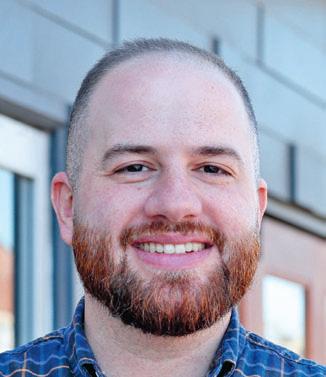
Jeremy Moss of Bloomfield Township has a degree in journalism from MSU. He is currently a member of the Michigan Senate and has served in the state House and on the Southfield City Council. His is active in party organizations, Temple Beth Ahm and the Unity Fund.
With the return of the remaining Israeli hostages and the agreement of a ceasefire, the US must play an active role to chart a path for two peace-seeking states to live sideby-side. Israel, the US, the UN and other partnering organizations on the ground must work together to expand access and deliver the humanitarian aid in Gaza. Israel is an allied democracy in the Middle East. Both Americans and Israelis are working through democratic means to move past the TrumpNetanyahu era. The allyship
between countries must be able to endure and United States must support Israel’s long-term security despite individual administrations and government coalitions.
Ukraine support
The United States must stand firmly with its allies, including continued support for Ukraine in its defense against Russian aggression. Both the United States and the European Union cannot cede a position of strength to adversaries like Russia and China that creates instability in the West. At the same time, Congress must exercise its constitutional war powers and ensure that America does not stumble into unnecessary or endless conflicts elsewhere. We can support Ukraine while also pursuing diplomacy, preventing escalation in the Middle East, and focusing on a foreign policy rooted in strategic alliances, democratic values, and long-term American security interests.
Previous US intervention in the Middle East still casts a long shadow. I came of age protesting a war led by a President who declared ‘Mission Accomplished’ too early, had no real plan to win the peace, took a brutal toll on US service members and civilians on the ground, and isolated America from the world. Donald Trump is even less prepared to lead military engagement in the Middle East and is about to enter a fourth month of a war he does not know how to get out of. Congress must reassert its constitutional role under the War Powers Act to ensure that decisions about military engagement are made deliberatively, transparently, and with meaningful oversight. We must prevent this President from entangling the United States in needless or unauthorized military interventions.
The cruelty and chaos caused by ICE cannot be repaired or reformed under Donald Trump and the agency must be dismantled. Congress should demand transparency in federal immigration enforcement and hold those who
acted illegally to account. We can both secure our border without allowing officers posing as masked vigilantes to erode due process and civil liberties. We need an interior agency with more rigorous training, increased oversight, and safer outcomes. Americans want an immigration system that is orderly, just and humane. We need to revamp the outdated visa system to balance our labor needs and those seeking economic opportunity. We must create legal pathways to citizenship for DACA recipients and for undocumented immigrants with long-standing ties to the US. Clearing up and reforming legal avenues for immigration will ease pressure at the border, reduce the number of people seeking asylum and illegal crossings, and strengthen our national security.
Supreme Court concerns
Michigan imposes age limits for judges on our courts, including the Justices on our State Supreme Court. I am in support of instituting age or term limits on the US Supreme Court. Members of this particular court have eroded our fundamental rights, appeared to bow to the whims of the President, and faced questions of ethical breeches. I believe no public official, especially on our highest court, should be above basic transparency and accountability. I support enforceable ethics rules, a code of conduct, and required financial disclosures for Supreme Court Justices similar to the standards that already apply to every other federal judge.
In the Michigan Senate, I led a bipartisan coalition of lawmakers, local communities, homebuilders and non-profits to draft new laws that incentivize creating more housing at attainable prices. Our legislation alleviates property taxes for residents to make needed home improvements and for developers to put blighted properties into proper use as new homes. These laws have infused our market with needed affordable housing and rehabilitated neighborhoods. We also enacted more incentives and savings for first-time home-buyers. Our federal government must find
similar innovative solutions to reduce costly hurdles to homeownership and I look forward to continuing this critical work in Congress.
We’re living through an affordability and democracy crisis fueled by Donald Trump’s chaos and recklessness. As chairman of the Michigan Senate Elections Committee, I’ve become an expert on election law. I’m prepared to get into this fight to pass the John Lewis Voting Rights Act, confront and defeat the SAVE Act, and stop Donald Trump from federalizing our elections. On costs, Congress must overturn the devastating impacts of Trump’s big awful bill that have increased costs on Michigan families. Too many Michiganders are one medical emergency away from financial ruin and we must fight to ensure every American can access affordable healthcare. And finally, Donald Trump is out of control. Across the country, MAGA Republicans are targeting voting rights, LGBTQ rights, abortion rights, public education, and so much more. In Congress, I will fight to protect civil rights and stand up to hate and political extremism.
I have a record of taking on Michigan’s biggest challenges. As Chairman of the Senate Elections Committee, I combatted election conspiracies in Michigan, implemented early voting, and expanded access to absentee ballots. As Michigan’s first out gay Senator, I added LGBTQ protections in our state’s civil rights law. And I was a founding member of our Legislature’s Gun Violence Prevention Caucus that led to the first gun safety laws in Michigan in a generation. With the stakes this high, Oakland County needs a tested leader to deliver results for those who need it most. That’s why I’m endorsed by Governor Gretchen Whitmer and more than 60 elected officials in the district. This is a critical moment in our country and I am a part of a new generation of leaders stepping up to take action and fight back.
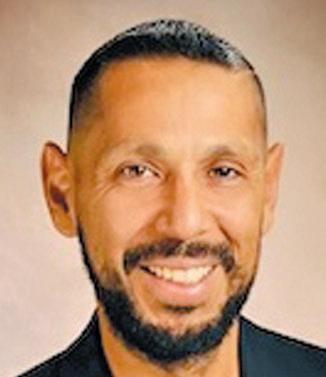
John Paul Torres of Waterford has a BA in political science from OU and a masters in public administration from U of M. He works as an administrator in the county court system; is a trustee on the Waterford School Board; and a former member of the Waterford Library Board.
Israel – Hamas war
The United States must ensure that taxpayer dollars never fund human rights abuses. I oppose sending offensive military support to Israel as their operations inflict civilian casualties and humanitarian crises across Gaza, Lebanon, and the wider region. Furthermore, Congress must reclaim its constitutional authority over military intervention, stripping unchecked power from the executive branch. We should not be engaged in war in Iran, nor should we be funding Israel with billions of dollars.
Ukraine support
I support funding and aid for Ukraine because it is a fundamental battle between democracy and autocracy. While I generally oppose unchecked foreign defense spending and “blank checks” for military interventions, standing against Russia’s expansionary war is a necessary exception.
Iran war
We are currently spending a billion dollars a day on the unjust and illegal war in Iran. Trump claims that our initial intentions for engagement
were to liberate the Iranian people, yet at the same time, the Trump administration was weaponizing ICE and killing our own people right here on American soil. Then our motives changed to stopping Iranian development of nuclear weapons. However, the Trump administration previously stated that it “obliterated” all of this nuclear weaponry in June of 2025. It is clear that we are headed into another Forever War (like Iraq or Afghanistan) if we continue on this same trajectory. I stand against this war, and will not vote to fund it. The President must absolutely seek explicit congressional approval under the War Powers Act. For too long, the executive branch has bypassed our laws to wage unauthorized conflicts, entangling our nation in endless foreign wars. Congress must reclaim its constitutional right to decide when we enter into war. No president is above the law, if military operations continue, the administration must immediately answer to Congress.
As the son of a former undocumented immigrant, this issue is deeply personal. I do not support the current administration’s methods and goals. Real enforcement means maintaining human dignity, due process, and absolute accountability, all of which are being violated under President Trump. The Trump administration has increased ICE’s budget to 70 billion dollars, lowered criteria and qualification for ICE agents, and are building detention centers all across the country. The results are inhumane and un-American. We must abolish ICE, however I do not disagree with border security/enforcement. ICE agents should be the most qualified of law enforcement officers, and they should respect the Constitution. I stand for abolishing ICE, but replacing the agency with a law enforcement unit that hires qualified experienced law enforcement officers. I support a law enforcement agency that prioritizes community policing and keeping families together. I have worked on the court end of law enforcement for 25 years. In that time I have helped put bad people in prison, had my life threatened
and my family’s life threatened. Unlike the masked ICE agents of the Trump administration, I have never once worn a mask to conceal my identity; because in America we all have a right to know who our accuser is. I support establishing a clear, consistent pathway to citizenship for those that have lived in our country as law-abiding community members for many years, including DACA kids and their parents. I served as a Congressional Fellow in Washington, DC and helped draft the early version of the DREAM Act, which is a pathway to citizenship for children brought to America through no choice of their own. The DREAM Act was used by the Obama administration as the template for DACA. It would be an honor and privilege to see that legislation through.
Supreme Court concerns
Yes, I fully support a constitutional amendment imposing term limits on Supreme Court Justices to end lifetime entrenchment and curb the influence of dark money. We must enact structural reforms to restore democratic accountability, strip unchecked power from an unelected majority, and ensure the highest court serves working-class Americans rather than wealthy special interests.The unchecked rise of dark money and corporate influence following the 2010 Citizens United ruling deals a constant blow to the working class. To fight back and protect everyday Americans, we must establish strict safeguards and transparency within the highest levels of our judicial system. I support the expansion of the Supreme Court specifically to match the historical precedent of aligning the judges with the existing number of federal judicial circuits.
Housing demand
First, we must take on the predatory hedge funds and corporate investors buying up land and single-family homes across our district. By turning affordable houses into high-priced rentals, they are artificially driving up purchase prices and shutting local families out of the market. Combined with high interest rates, buying a home is becoming an unachievable dream for the working class. In Congress, I will fight to
reign in corporate landlords and champion the expansion of FHA loans so every first-time homebuyer has a fair shot at the American Dream.
Affordability Crisis: To tackle deep inequality and the affordability crisis, we must fight corporate greed by ensuring corporations and billionaires pay their fair share. We should redirect federal spending from foreign wars to fund universal healthcare, tuition-free college, vocational training, union infrastructure jobs, and environmental protections. Immigration: We must face the issue head on by creating a compassionate, legal pathway to citizenship for millions of undocumented immigrants, including DACA recipients, while completely abolishing ICE.
Education: Investing in our children means a “whole child” educational approach. We must address staffing shortages and rising costs through robust federal funding, including increasing IDEA and restoring public school investments, while securing universal free school lunch and common sense gun laws to protect students.
I understand the struggles of the working class, and have shared their experience. My wife and I started out young, put each other through school while raising our first child. We utilized programs such as subsidized housing, WIC and head start. I understand first hand the importance of the programs the Trump administration is trying to cut. I’ve worked in government for 25 years, starting out as an entry level government employee and eventually worked my way all the way to the top of my field in government. I was part of a team of court administrators that lead massive youth justice reform in Michigan for the Michigan Supreme Court. In addition, I have been an elected school board trustee for 12 years (Waterford) and am a former Congressional Fellow.

Don Ufford of Bloomfield Township has both a BS and BA in engineering and an MBA from U of M. He has been employed by the Ford Motor Company and the Department of Commerce and the White House Made in America office staff.
We must end this humanitarian crisis in Gaza. Despite what Trump claims, the war has not stopped, over 70,000 Palestinians have been killed, and civilians are suffering every day from inhumane conditions. We also must recognize the role that Hamas had in starting this war on October 7, 2023, killing over 1,000 Israelis and taking over 250 hostages during the largest attack on Jews since the Holocaust. Israel absolutely has a right to defend itself. But that right cannot be invoked to dehumanize and kill Palestinian civilians. It’s clear that offensive weapons to Israel are killing Palestinian civilians, and because of that, I am against a blank check and blanket financial and military support for Israel. I will support defensive weapons such as Iron Dome, but I will not continue to fund this humanitarian crisis in Gaza. Israelis and Palestinians deserve to live in peace and dignity, and I will fight for a two-state solution. And within our community, we need to bring down the divisive rhetoric and bring people together so that Jews, Muslims, Christians, and people of all faiths, colors, and backgrounds can live in safety and dignity.
This war in Iran is wrong, and we never should’ve started it. The Iran war has been a major distraction from America’s core foreign policy objectives. The U.S. should continue to support Ukraine and our European allies in defending themselves against Russian aggression.
I was the first candidate in this race to say clearly that this war in Iran is wrong. From the start, there was no plan and no objective. Because of Trump’s war of choice, American service members are being killed and injured, and Americans at home are paying the price in higher costs for gas and groceries. Members of Congress need to have a backbone and re-assert their Constitutional authority by using the War Powers Act to end this war. I will immediately work to end this war, bring our troops home, and focus on making life better for Americans.
We need to abolish ICE. This is an agency that has lost its loyalty to the Constitution, due process, and the rule of law. Trump’s crackdown on immigrants has been a lawless attempt to target anyone who looks different - including American citizens - and anyone who disagrees with his personal agenda, as we saw with this administration’s murders of Alex Pretti and Renee Good. We are a nation of laws and must treat people fairly under the law. I will support comprehensive immigration reform, including protection of our borders, enforcement of customs rules, and efforts to create a pathway to citizenship for law-abiding undocumented immigrants.
Supreme Court concerns
Yes. Americans have lost confidence in the Supreme Court’s independence and ethical transparency. We need reform.
If you work full time, you should be able to afford a home by 30. The
best things we can do to bring down the cost of housing are to build more housing supply and eliminate reckless tariffs. As an engineer and someone who has spent my life building things, I know what that takes. I will work to pass Sen. Slotkin’s bill to declare a national housing emergency and build four million new homes.
I’m running to build good jobs in Michigan, protect our healthcare, lower costs, protect our democracy, and take on Washington corruption. To build good jobs here, we need to raise the federal minimum wage, protect the right to organize a union, and support our small businesses. I’ll fight for Medicare for All, and in the immediate, I’ll fight to protect the Affordable Care Act and strengthen Medicaid and Medicare. I’ll also fight to immediately lower costs by reversing Trump’s disastrous tariff taxes and making more of what we need here in America. As we fight to protect our democracy, I will do everything in my power to end Trump’s illegal war of choice in Iran. Finally, rooting out Washington corruption means banning Congressional stock trades, getting rid of Corporate PAC money, and creating term limits for those in office.
I’m the only candidate in this race who is not a career politician, has spent my life building things, and has raised a family here. I’m running for Congress because I believe that the same politicians who got us into this mess are not going to get us out of it. I was the first candidate in this race to reject all corporate PAC money, and I’ve pledged to reject all AIPAC money because I refuse to be influenced by special interest groups. I’m an engineer. I’ve spent my life building and fixing things here in Michigan. That’s going to allow me to bring a new approach to Washington, and fight for everyday people and working families.
The U S government reports, election after election, that the age bracket that turns out to vote less than any other is the 18-24 years of age group.
The youth vote in 2026 could be one of the more powerful voting blocks ever. But you must vote.
Call or visit your local municipal clerk’s office to register for the August 4 primary election.
Youth holds the power. Use it.
Birmingham, Bloomfield Township, Bloomfield Hills
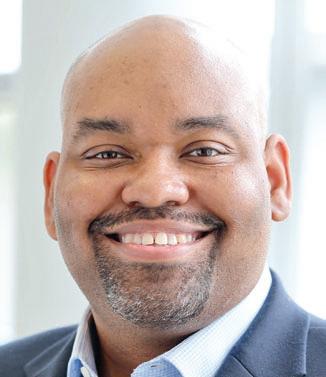
Jason Hoskins of Southfield has a BS degree in political science and a master in public administration from EMU and a law degree from University of Detroit Mercy. He is currently a member of the Michigan House of Representatives and was a member of the Southfield City Council. He is a member of the ACLU, Sierra Club and the local party organization.
Michigan is one of only two states where the state legislature and administration are not subject to Freedom of Information Act requests. Although Governor Whitmer has promised in 2018 to extend the FOIA to cover her office and the legislature and the senate pass legislation in 2025, the House has still left these bills in the House Government Operations Committee with no movement. Do you support extending the Freedom of Information Act to cover the legislative and administrative branches of state government?
I strongly support extending the Freedom of Information Act to cover the legislative and administrative branches of the government for the state of Michigan. Reforms such as allowing for FOIA requests within our state government would bring Michigan in line with over 40 other states throughout the country that have already implemented these standards. Michiganders have enjoyed the right to submit FOIA requests to their city council, public schools, public universities, and state government agencies for years
and I support extending that to the executive and legislators.
Large scale data centers have become an important issue in Michigan. Should the state be providing incentives to attractive large scale data centers? What regulations should be enacted to protect residents from possible increased electric rates and impact on water sources in the state? Lastly, there have been concerns that the state could intervene in the local approval process along the lines of what has been done on alternative energy projects in the state. Would you support the state taking more control of the local approval process?
The expansion of data centers, especially “hyperscale” facilities, has become a serious and legitimate concern for residents across Michigan and the country. Whether you face daily economic pressures, care deeply about the environment, are skeptical of promises made by large tech firms, or believe in transparency in government contracting, there is good reason to be paying close attention to this issue right now. As elected officials at the state level, we have a responsibility to listen to these concerns and respond with policies that match the seriousness they deserve. As a candidate for state Senate, I support requirements that data center projects be built with union labor, subject to local hire requirements and job quality standards that guarantee a living wage. I will also support local investments in workforce development to ensure that communities hosting these facilities share in their economic benefits. Additionally, I will support banning non-disclosure agreements between tech companies and local governments. The costs and impacts of these facilities cannot be hidden from the very communities that they affect. We must also ensure that data center developers pay their own way. Ratepayers should not face higher utility bills simply because a new data center comes to town. I support strong ratepayer protections that require data center developers, not
consumers, to bear 100 percent of the infrastructure, generation, and transmission costs needed to serve their facilities. I also support strict environmental and labor standards for data center development. Developers should be required to fully disclose water usage, adhere to rigorous efficiency and wastewater standards, and avoid sites that threaten aquifers, private wells, and sensitive ecosystems. They should also be required to achieve Energy Star, LEED, or equivalent certification, and to meet fair labor standards, prevailing wages, and safe working conditions. As a state Representative who has served a district slated for significant data center growth and as a former city councilman who has seen firsthand how important it is for local communities to retain control over decisions that affect them, I have a direct stake in getting this right. I strongly support preserving local control on this issue while significantly raising the regulatory floor for new data center development statewide.
There has been ongoing debate in both parties in Lansing about past and current administrations’ economic development policies for attracting new business to the state. What is you position on the current economic development efforts?
Last term, I had the privilege of chairing the House Economic Development and Small Business Committee, where I pursued a broader vision of what economic development in Michigan should look like. For me, economic development is not simply about offering incentives to corporations to relocate to our state. As chair, the most consistent message I heard from businesses of all sizes was that Michigan faces a significant workforce talent gap. Addressing that gap requires investing in the conditions that attract and retain talent: housing, childcare, transit, and a world-class education system. We also need to modernize our permitting processes and ensure that shovel-ready sites are available to developers and businesses looking to grow here. On incentives specifically: I believe
Michigan should move away from its current incentive-heavy approach. Most states do not offer incentives at the rate Michigan does, largely because they have already built the underlying infrastructure that makes their state competitive. We should be doing the same. If we make Michigan a place where people genuinely want to live and work, we will not need to rely on financial incentives as our primary recruitment tool. That is why last term I joined my colleagues in introducing the Make It In Michigan Fund, a proposal to transform Michigan’s existing SOAR Fund from a traditional incentive vehicle into a community-based investment accelerator focused on growing people and places, not just companies, while also including proposals for expanded housing and education funding. These are the investments that will make Michigan competitive for generations, not just for the next corporate announcement.
New taxes to offset Medicaid cuts
Michigan is facing major cuts to federal funds for Medicaid, thanks to the 2025 adoption of President Trump’s Big Beautiful Bill. To counteract these cuts, Governor Whitmer had proposed increased taxes on tobacco and vape products and new taxes on digital advertising, which were ignored by legislators in recent budget sessions. Would you support similar tax proposals in the future? Why or why not?
I support Governor Whitmer’s revenue proposals. The One Big Beautiful Bill Act is projected to cause nearly 300,000 Michigan residents to lose Medicaid coverage beginning in 2027. This is a public health crisis that demands a serious state-level response. When the federal government cuts funding for programs that millions of Michiganders depend on, states must find creative solutions to fill the gap. While I do not support increasing the tax burden on everyday working Michiganders as a matter of general principle, the proposals Governor Whitmer has put forward are targeted and reasonable. Her Medicaid stabilization package raises revenue through increases on tobacco
products, new taxes on vaping and non-tobacco nicotine products, a new tax on digital advertising, and updated tax structures on sports betting and online gaming. The proposals are predicted to collectively generate an estimated $780 million annually to offset lost federal dollars. These are not broad-based taxes on working families; they are targeted levies on industries and behaviors that carry their own public health costs. Protecting access to healthcare for our most vulnerable residents, including children, seniors, and people with disabilities is not optional. I would support similar revenue proposals in the future to provide the state a viable path to Medicaid stability.
Voters approved financial disclosure for all state office holders and candidates. Are you satisfied with the regulations developed by lawmakers or are there changes you think need to be made? Explain.
Michigan only recently passed its first-ever disclosure law, and while it was a step forward, it does not go nearly far enough. We need to expand requirements to cover more appointed officials and department heads. We should broaden gift disclosure rules. Under the current law, officials are only required to disclose gifts that lobbyists are already required to disclose under state law. They are not required to disclose gifts from other sources, and would not be required to disclose the kind of secret junkets taken by former House Speaker Lee Chatfield, who is under criminal investigation for alleged financial impropriety. We also should significantly increase fines and penalties for failing to file or filing inaccurate disclosures. A law without real consequences is not much of a law at all. Some states have independent ethics commissions with subpoena power which may help with accountability. I also believe transparency itself is a form of accountability. When the public can see what financial interests officials hold and what gifts they are receiving, voters can draw their own conclusions at the ballot box. An informed public is the
most powerful check on elected officials that exists.
What are the top three-five issues you want to address if you are ultimately elected?
My top three policy priorities are economic opportunity and affordability, civil rights and equal protection, and strengthening democracy and public trust because these issues directly shape people’s daily lives and Michigan’s future. Affordability - First, I will fight for economic opportunity and affordability by addressing the rising costs of housing, healthcare, childcare, and everyday life while expanding access to good-paying jobs. I also want to expand public transit options here in Michigan. Michiganders deserve more than just getting by; they deserve real opportunities to build stable, successful lives. Protecting Civil and Human Rights - Second, I will champion civil rights and equal protection because everyone deserves dignity, safety, and fairness under the law. That means protecting LGBTQ+ rights, workers’ rights, reproductive freedom, and equal opportunity so that progress reaches every community.
Strengthen Democracy - Third, I believe we must strengthen democracy and restore public trust in government. At a time when too many people feel disconnected or disillusioned, we need transparent, accountable leadership that puts people over politics. That means defending free and fair elections, passing the Michigan Voting Rights Act, increasing government transparency, reducing the influence of special interests, and ensuring government delivers real results. Democracy works best when people trust that their voices matter and that elected officials are accountable to them.
Why should a primary voter select you over another candidate?
Whether it’s been as a state Representative, Southfield city councilman, or as a legislative staffer for almost 10 years, I’ve been delivering results bringing
resources home – like the $25 million in appropriations I brought to my district, creating jobs – like when I created the Michigan Innovation Fund to help fund small businesses, and standing up for our rights when it mattered most – like when I banned conversion therapy in Michigan, protected IVF, helped expand the Elliott Larsen Civil Rights Act to cover the LGBTQ community and most recently introduced the Michigan Voting Rights Act in the Michigan House to help safeguard our democracy. Right now, too many people are struggling while some politicians play games. We need experienced leadership that knows how to get things done on day one. I’ve been in the room. I know how this works. I’m proven, tested, experienced and I know how to get the job done for my community.

of Bloomfield Township has bachelor degree in architectural engineering from Aleppo University and an MBA from U of M. She is president of Martini Construction Company and Great Estates Realty. Martini is active in local party organizations and in a number of community groups.
Yes, I absolutely support extending the Freedom of Information Act to cover both the legislative and executive branches of Michigan state government. Transparency and accountability are essential to building public trust in government. Citizens have a right to know how decisions are made, how public
resources are used, and who is influencing public policy. Michigan should not be one of the few states that exempts major parts of its government from public records laws. Expanding FOIA is a commonsense reform that will help increase transparency, strengthen accountability, and restore confidence in our democratic institutions.
I do not believe Michigan should provide incentives to multibilliondollar corporations to build data centers in our state. If a company chooses to locate here, it should do so because of Michigan’s workforce, infrastructure, and quality of life—not because taxpayers are subsidizing its profits. Data centers must be subject to strict regulations to protect residents from higher electric rates, excessive water consumption, noise, and environmental impacts. I support requiring a significant portion of their energy needs to come from renewable sources, ensuring that infrastructure upgrades are paid for by the operators rather than ratepayers, and establishing substantial green buffer zones around facilities to reduce noise, light pollution, and community impacts. I also strongly support local control. The state should establish clear environmental, energy, and landuse standards, but decisions about whether a specific project belongs in a community should remain with local governments and residents. Communities deserve a meaningful voice in determining their own future.
I support economic development policies that create good-paying jobs, strengthen local economies, and provide a clear return on investment for taxpayers. However, I am skeptical of large corporate subsidy packages that provide public dollars to profitable companies without strong accountability measures. Too often taxpayers assume the risk while corporations receive the benefits. Michigan should focus on investing in the fundamentals that attract businesses naturally: excellent
public schools, modern infrastructure, affordable housing, reliable energy, workforce development, and vibrant communities. I support targeted incentives when they are transparent, performance-based, tied to job creation and wage standards, and include clawback provisions if promised results are not delivered. Economic development should benefit Michigan residents and communities first, not simply maximize corporate profits.
New taxes to offset Medicaid cuts
I am committed to protecting Medicaid coverage and access to healthcare for Michigan residents. If federal funding cuts create significant budget shortfalls, I would be willing to consider revenue proposals, including taxes on tobacco and vaping products, because they both raise revenue and help discourage behaviors that contribute to long-term healthcare costs. I would also be open to exploring new revenue sources, but any proposal should be carefully evaluated to ensure it is fair, effective, and does not place an undue burden on small businesses. More broadly, I believe we should ask those most able to contribute to help protect essential healthcare services rather than forcing vulnerable residents to lose coverage or access to care. The goal should be maintaining healthcare access while creating a sustainable and equitable funding structure.
Financial disclosure
I support strong financial disclosure requirements because transparency is essential to maintaining public trust in government. Voters made it clear that they want greater accountability from elected officials, and I support that goal. While the current regulations are a step in the right direction, I am open to strengthening them if gaps remain. Financial disclosures should be detailed enough to identify potential conflicts of interest, easy for the public to access, and enforced consistently. Transparency helps combat misinformation, reduces the influence of special interests, and gives voters confidence that elected
officials are acting in the public interest rather than for personal gain.
My top priorities if elected are:
Protecting Democracy and Voting Rights – As someone who grew up under a dictatorship, I understand how fragile democracy can be. I will fight to protect voting rights, government transparency, civil liberties, and the rule of law.
Strengthening Public Education –
A strong public education system is essential to Michigan’s future. I will work to improve school funding, support teachers, and ensure every child has access to a high-quality education regardless of ZIP code. Addressing the Housing Crisis – As a builder and real estate broker, I understand the complexities of housing affordability. I will support policies that increase housing supply, expand homeownership opportunities, and make housing more affordable for working families. Expanding Renewable Energy and Modern Infrastructure – Michigan must invest in clean energy, grid modernization, and sustainable infrastructure while ensuring energy remains reliable and affordable for residents.
Creating Economic Opportunity – I will focus on policies that support working families, small businesses, workforce development, and goodpaying jobs so that all Michiganders can share in our state’s prosperity.
Why vote for you
Primary voters should choose me because I bring a unique combination of lived experience, professional expertise, and a proven commitment to public service. I grew up under a dictatorship and understand firsthand the importance of protecting democracy, voting rights, and individual freedoms. As an immigrant, small business owner, builder, real estate broker, and former university instructor, I bring perspectives and experiences that are often missing in government. I am also a housing expert who understands one of the most pressing challenges facing Michigan families. For nearly 30 years, I have been solving complex problems, negotiating solutions, creating jobs,
and building communities. I am not running to become a career politician—I am running because I believe Michigan needs leaders who understand real-world challenges and are willing to fight for public education, affordable housing, economic opportunity, renewable energy, and the protection of our democracy. Most importantly, I am running to serve the country that gave me my voice back and the community that welcomed me with open arms more than 30 years ago. Public service is my way of giving back to the nation that gave me freedom and the opportunity to build a life, raise a family, and pursue the American Dream.
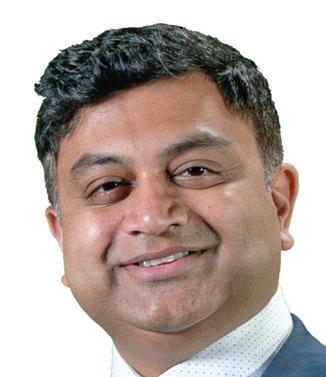
Rakesh Ramakrishnan of Birmingham holds a BS in economics and chemistry and an MBA in healthcare administration and an MD from Albany Medical College. He is an orthopaedic spine surgeon with Michigan Orthopedic Spcialists. He is active with the local Democratic club.
Government transparency
Michigan is one of only two states where the legislature and governor’s office are shielded from FOIA. Transparency should be the foundation of government and there is no defensible reason why Michigan does not conduct business this way. I fully support extending the Freedom of Information Act.
Data Center Farms
While data centers can bring jobs and investments to Michigan,
incentives should come with actual conditions. While I support targeted incentives, these should be tied to job creation benchmarks, environmental standards, and community benefit agreements. Residents should never bear the cost of corporate infrastructure through higher electric rates or compromised water supplies. I am wary of state preemption. Communities must have proper input in these decisions.
Michigan’s economic development strategy needs better accountability and transparency. I support incentive programs that are tied to verified outcomes. These investments should be subject to independent audits. Any renewals should be based on outcomes. Attracting business is important, but not at the cost of fiscal responsibility of public money.
New taxes to offset Medicaid cuts
As a physician, I see what happens when insurance coverage lapses: patient’s delay care which ultimately leads to shifting expenditures to higher cost services such as emergency rooms. Addressing government expenditures is not a simple answer, it is reasonable to evaluate taxes on tobacco and vape products. As for digital advertising tax, there are concerns about small businesses that rely on digital advertising to compete. We also have seen legal challenges in other states. Perhaps a tiered structure that would help protect small businesses could be agreed on. Cutting Medicaid is unacceptable but raising taxes is not simple and must be thoughtfully planned.
Financial disclosure
I fully support disclosure requirements. The regulations in place now are very basic and should be expanded on. The goal of government is to work for the people. It is clear in this era that this does not always happen. Laws begin with “We the people of Michigan enact…” We need the members of legislature to honor this statement and their office.
Birmingham, Bloomfield Township
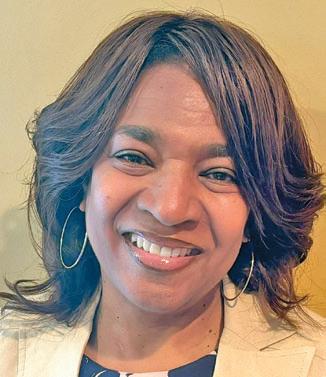
Charlie Gandy-Thompson of Royal Oak has a BS in computer engineering and a master in engineering management. She is self-employed as a consultant. And has not held an elected office.
Government transparency
Michigan is one of only two states where the state legislature and administration are not subject to Freedom of Information Act requests. Although Governor Whitmer has promised in 2018 to extend the FOIA to cover her office and the legislature and the senate passed legislation in 2025, the House has still left these bills in the House Government Operations Committee with no movement. Do you support extending the Freedom of Information Act to cover the legislative and administrative branches of state government?
No, I do not support a broad, onesize-fits-all approach to expanding the Freedom of Information Act without first understanding the reasons behind the current exemptions. I do support transparency and accountability in Michigan government. However, any changes should be carefully considered to ensure that appropriate safeguards are in place to protect sensitive information, security concerns, and individual privacy. A balanced approach is needed — one that increases transparency while maintaining necessary protections.
Large scale data centers have
become an important issue in Michigan. Should the state be providing incentives to attractive large scale data centers? What regulations should be enacted to protect residents from possible increased electric rates and impact on water sources in the state? Lastly, there have been concerns that the state could intervene in the local approval process along the lines of what has been done on alternative energy projects in the state. Would you support the state taking more control of the local approval process?
The goal should always be to protect Michigan residents and the state’s natural resources. Decisions regarding major developments that significantly impact communities should be made through collaboration between state and local governments. A shared decisionmaking approach helps ensure that projects are carefully evaluated for their environmental, health, and community impacts, while also considering broader state priorities. This balance is important to prevent harmful or poorly planned infrastructure and to ensure that developments provide real, measurable benefits to Michigan residents and do not negatively impact land, water, or quality of life.
There has been ongoing debate in both parties in Lansing about past and current administrations’ economic development policies for attracting new business to the state. What is you position on the current economic development efforts?
My goal is to support long-term investment in Michigan that attracts businesses, retains talent, and strengthens our economy for future generations. Michigan’s future economy must continue to lead in innovation, advanced manufacturing, and technology.
New taxes to offset Medicaid cuts
Michigan is facing major cuts to federal funds for Medicaid, thanks to the 2025 adoption of President Trump’s Big Beautiful Bill. To counteract these cuts, Governor
Whitmer had proposed increased taxes on tobacco and vape products and new taxes on digital advertising, which were ignored by legislators in recent budget sessions. Would you support similar tax proposals in the future? Why or why not?
Medicaid is a critical resource for many Michigan families, seniors, children, and individuals with disabilities who rely on access to healthcare. Cuts to Medicaid funding could have a detrimental impact on families and communities across our state. At the same time, Michigan must remain fiscally responsible. Reducing Medicaid funding often means the state must either increase taxes, reduce funding for other essential services, or shift costs onto hospitals, providers, and working families.
Voters approved financial disclosure for all state office holders and candidates. Are you satisfied with the regulations developed by lawmakers or are there changes you think need to be made? Explain.
Yes, I support increased financial transparency and accountability in government. I also support more detailed reporting of gifts and other benefits to ensure that elected officials are acting in the best interests of Michigan residents. Strengthening disclosure requirements helps build public trust and ensures greater visibility into how decisions are made and influenced.
Did you accept the returns of the presidential election in 2020?
Yes.
What are the top three-five issues you want to address if you are ultimately elected?
Economy, education and healthcare.
Why vote for you
Why should a primary voter select you over another candidate?
I bring over 27 years of leadership experience solving problems, building organizations, and bringing people together to achieve results. Michigan is at a critical point where we need leaders who are willing to ask the right questions, review existing systems, and develop solutions that work for residents across our state. Throughout my career, I have led organizational development and mergers — some of the most difficult challenges any leader can face. I successfully created processes, procedures, and budgets that earned support because I believe effective leadership comes from listening, building consensus, and focusing on results I have worked with everyone from CEOs to Kids, and I believe that when the goal is the same, you can work with anyone. I am running for office to represent Michigan residents and help create efficient, responsible, and forwardthinking plans for our economy, education, healthcare, infrastructure, and public safety. My focus is on delivering real solutions, building long-term opportunities, and ensuring Michigan remains a strong place to live, work, and raise a family.
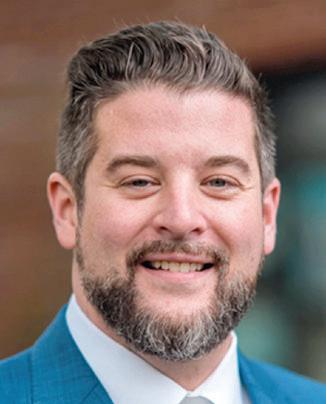
David Lauer of Beverly Hills has a BA in integrative studies at Oakland University and program studies in political science and philosophy at U of M. He is on the board of the Michigan Jewish Caucus and the national cabinet of the JFNA, and is a full-time candidate active in a number of party organizations.
We must hold our government officials to heightened levels of transparency, in terms of finances and communications. At a time when it is critical to restore good faith and strengthen our democratic party implementing The FOIA is a necessary step forward. For too long Michigan has fallen further behind in terms of Government integrity. I support SB 12 introduced by Senators Moss and Chang in a bipartisan effort highlighting the need for a FOIA Coordinator at the county, House and Senate levels and governor’s office. Michigan has failed in 10 of 13 categories, including public access to information, executive accountability, and legislative accountability. Our public deserves to hold our electeds accountable and to know what decisions are being made on their behalf.
Hold DC’s accountable: Must be in areas where the infrastructure can support them, avoiding sprawl in addition to strain on our environment. Never exploit tax loops that help Data Centers shift accountability to the public or onto other communities. Commits to prevailing wage standards, local hiring and safe workplace conditions. Pays all grid costs, upgrades and additional burdens so tax/ratepayers do not end up with rate hikes/fronting the bill. Limit water discharge and use. Where water is dumped, screen for potential contaminants and temperature. Must use existing municipal infrastructure for water delivery and must contribute to the water table. 100 percent renewable energy. Battery storage, clean energy utilization. No diesel or gas generators.
Under Governor Whitmer, innovative and promising economic plans have started and show great results. I will continue to build on their success while remembering: Michigan has many resources to build on such as excellent universities, a history and base of technological expertise and hard-working Michiganders. The Make in Michigan MIIMCF should be used to attract manufacturing investments in EV production, semiconductor production, defense and aerospace
industries. I will employ targeted tax relief for seniors and working families. This could take the form of rolling back the retirement tax and expanding the Working Families Tax Credit. All programs must be ruthlessly examined and re-examined for effectiveness and financial stewardship. I will drive down costs and champion the Rx Kids Program, Tri-share Childcare.
Medicaid is essential for the health of lower-income and working-class families and must be restored as much as possible. I support Governor Whitmer’s proposed new taxes. Studies show that steeper taxes on nicotine products lower rates of use and reduce cancer rates. Right now, vaping and nicotine pouch use among young people is skyrocketing. A digital tax on advertising would mainly affect tech monopolies such as Meta and Google who should be fairly taxed as opposed to traditional services and goods. The state attorney Ggeneral should advise on potential federal litigation problems under The Internet Tax Freedom Act. Other states are in federal court currently over digital taxes and what happens there might make this Michigan question moot.
Financial disclosure
I agree with the regulations set out in the Public Officers Financial Disclosure Act 281 of 2023 and subsequent amendments through PA14 of 2026. This Act clearly and strongly defines the expectations, requirements, exemptions, waiver options, and the reporting format. Reporting forms, deadlines, and the manner of submission are easily accessible. Public trust in decision making needs to be restored. Also, there must be the intent to prevent undue monetary influence, favors and future profit. I commend the work done to establish these clear expectations. However, recognition, clarification and action is needed to ban political contributions from regulated monopoly utilities and corporations seeking to influence the granting of government contracts. I am proud to have endorsed Michigan Money out of Politics.
the 2020 election because election officials at that time, Republicans and Democrats, testified that voting was secure, legal and could be trusted. Over 60 court cases have found the vote secure. Not one court has found otherwise. The following federal investigative organizations found no significant fraud election – the FBI, Dept of Homeland Security Cybersecurity and Infrastructure Security Agency, Dept of Justice, U.S. Election Assistance Commission, Attorney General Bill Barr. Red state and local investigations hoping to find fraud quietly faded away.
Equitable Healthcare We Can afford: Implementing a state heath exchange to create competition in the market. Capping Prescription costs and creating a statewide regulatory body to drive down prescription costs. Fortifying our Public Education System:. Teacher turnover and Brain drain to other states or districts impacts every classroom. Implementing 60k starting salary for teachers. Creating a statewide education cabinet to set clear and measurable goals and facilitate communication from the bottom up. Economic Development: A strong Michigan economy raises all boats. Most Michigan families are feeling stretched and even broken by high inflation, low wages and lack of opportunities. We can both rebuild Michigan and create economic prosperity by prioritizing future forward industries coupled with sustainable practices, transitioning old work forces to new high/green tech sectors.
Validity of voting returns
Yes, Absolutely I accept the results of
communities and political action. I bring a background of civilian run disaster relief services and high-level finance.
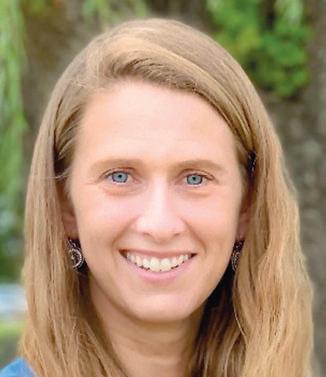
Melanie Macey of Royal Oak has a BS in political science, an MS in computer science and a law degree. She has served on the Royal Oak City Commission, the Royal Oak Library Board and the Royal Oak School District Justice, Equity, Diversity and Inclusion council.
Government transparency
As tenured Democrats are passing the torch, I’m stepping up as the next generation of legislators desperately needed in Lansing. I bring fresh ideas, new energy and I’m not as connected to traditional political cliques. This position is not a steppingstone, it’s a 12-year track with potential for a leadership position. I’m a full-time candidate and will bring that same commitment to the House. I’ll be a champion for Michiganders who are feeling alienated and marginalized. I have strong interpersonal skills, can work with diverse groups of people while retaining my core values. I spent over a decade building campaigns, advocating on capitol hill, organizing
Yes. I see no reason why I was subject to FOIA as a City Commissioner but would not be as a State Representative, where the decisions I make may affect millions of Michiganders. Michigan is one of the worst states in terms of government transparency, and exempting the legislature and governor from FOIA is one of the primary reasons for our low ranking. Voters deserve to know how decisions are made and who is influencing those decisions. I will proudly support efforts to extend FOIA to both the legislative and executive branches and strengthen transparency throughout state government.
The widespread pushback against large-scale data centers from across the political spectrum demonstrates that Michiganders believe we have gone too far in chasing data center approval without considering the costs to local communities. We cannot participate in a race to the bottom only to find out that all the benefits are going to large corporations at the cost of Michiganders’ health and
quality of life. In truth, we need to be addressing the overall impact of AI, as the insatiable demand for AI in all aspects of our lives is negatively affecting our world in far more profound ways than we are taking into account in the data center conversation. Leaving the development and regulation of AI in the hands of corporations that value making money above all other considerations is a dark prospect for our future. But, here we are. To answer the question about regulations, we need to consider how we can ensure data centers are not causing harm to our homes, families, and communities. It must be nonnegotiable that the data centers bear the cost of all electricity and water needs, that they reuse water and minimize usage, that they use renewable energy, and that the centers are built with union labor. There need to be agreements in place for ongoing regulation, including energy audits, water usage audits, environmental impact studies, and utility-rate monitoring, with the ability to shut it down if non-compliant. I do not support the state overriding local control in the approval process for data centers. If the project is truly beneficial, then I am confident local communities can support them through open, transparent public approval processes. If they are not beneficial for local communities, I see no reason for the state to force them on a community.
Michigan’s recent approach to economic development incentives has produced mixed results at best. We are not going to grow the Michigan economy by giving tax breaks and incentives to a small number of highly-profitable companies to open a few facilities in the hopes that the promised jobs materialize. The future of Michigan has to be a full reinvestment in people. A skilled workforce will attract business. Keeping our talented students in Michigan to develop their business ideas here will grow business. Rather than focusing on one-off incentive packages, we should invest in the fundamentals that benefit all Michiganders: education, infrastructure, housing, workforce development, and quality of life. Those investments will produce durable economic growth and make
Michigan a place where both businesses and families want to stay.
The Trump cuts to Medicaid threaten healthcare access for hundreds of thousands of Michiganders and place additional strain on hospitals and healthcare providers. We must increase spending on Medicaid and health care generally in light of the federal cuts. The duration of the cuts remains an open question that makes it challenging to address, but preserving healthcare coverage must be a priority. If more state revenue is necessary, I would prefer approaches that ask the most profitable corporations to contribute more rather than relying primarily on taxes that disproportionately affect working families. That said, I would support reasonable revenue measures, including those previously proposed by Governor Whitmer, if the alternative is reducing healthcare access, cutting services, or forcing vulnerable residents to lose coverage.
The financial disclosure laws implementing the measure approved by voters were an important step forward, but there is room for improvement. I appreciated efforts by AG Nessel to close remaining loopholes, but some remain. In particular, I believe we should address the asset carousel problem by requiring spousal financial disclosure and should increase penalties for knowingly filing inaccurate or misleading reports. Transparency and accountability are essential to maintaining public trust.
Yes. Michigan’s 2020 election was secure, accurate, and thoroughly reviewed.
Strengthening Public Education –
Fully funding public schools, expanding student support services, investing in career and technical education, and ensuring every child has access to a high-quality education. Making Michigan More Affordable – Lowering the costs of housing, healthcare, childcare, and utilities while supporting fair wages
and strong worker protections. Building Infrastructure and Sustainable Communities – Investing in roads, water systems, clean energy, public transit, and infrastructure that supports long-term economic growth and climate resilience. Growing Economy Through Workforce Development – Investing in workforce training, higher education, apprenticeships, and economic policies that help businesses succeed by investing in people rather than corporate giveaways. Protecting Democracy and Fundamental Rights – Defending voting rights, increasing government transparency, protecting reproductive freedom, and ensuring every Michigander’s voice is heard.
I bring a combination of experience, effectiveness, and commitment to public service that will allow me to make an impact from day one. For eight years, I served on the Royal Oak City Commission, where I worked through difficult issues, balanced competing interests, and delivered results for residents. As Policy and Government Affairs Director for Promote the Vote, I helped lead statewide efforts to protect voting rights, draft legislation, build coalitions, and advocate successfully for policies that expanded access to the ballot. I understand how government works at both the local and state levels, and I know how to bring people together to turn ideas into policy. Just as importantly, I am deeply committed to the values that brought me into public service in the first place: protecting democracy, defending fundamental rights, strengthening public education, safeguarding our environment, and creating economic opportunity for everyone. This is a critical moment for Michigan and for our country, where democracy itself seems to be at risk. I am ready to bring both the experience and the energy necessary to meet that moment and fight for the people I represent.
STATE SENATE 7TH DISTRICT / DEMOCRAT
Healthcare access and affordability: as a spine surgeon I have seen patient’s choose metween medication and rent, physical therapy and groceries, and delaying surgical care because they cannot afford to miss work. Education funding equity: every child deserves a well-funded school. Government transparency and accountability: FOIA reform, campaign finance disclosure, and data-driven legislating. Economic security for working families: living wages, worker protections, and job growth
I have lived the consequences of policies made in Lansing. As a physician, I have sat with patients who can’t afford their prescriptions, can’t take time off work, worry about their children’s schools. For me to treat a patient I have to understand their life. When I started to ask the difficult questions I realized the problem had to be solved from the inside. I bring medical training, evidence-based thinking, and a genuine connection to this district. Similar to my professional work, I will constantly demand better outcomes, treat every problem with the time it deserves, and put the needs of the people above my own. I am not a career politician. I am a physician, a father of three young children, and a neighbor who experiences the same pressures and concerns as the families I serve. When I worry about school funding, it’s because my kids are in these schools. When I fight for healthcare affordability, it’s because I see every day what happens when people can’t access care. Real world experience matters in Lansing. I have spent my career diagnosing complex problems, weighing evidence, and making decisions that directly affect people’s lives. I bring that same discipline and accountability to public service. I won’t learn on the job at voters’ expense: I already understand what’s at stake. District 7 deserves a representative whose life is genuinely shaped by the issues on the table, not someone who has built a career inside the political system. I am running because I believe the people of this district need a fresh voice with deep roots in this community and real skin in the game.
Birmingham, Bloomfield Township

Samantha Steckloff of Farmington Hills has a bachelor degree in political science. She is currently a member of the Michigan House and had served on the Farmington Hills City Council. She is active in local party organizations, along with the Michigan Fertility Alliance and Gilda’s Club of Metro Detroit.
Michigan is one of only two states where the state legislature and administration are not subject to Freedom of Information Act requests. Although Governor Whitmer has promised in 2018 to extend the FOIA to cover her office and the legislature and the senate passed legislation in 2025, the House has still left these bills in the House Government Operations Committee with no movement. Do you support extending the Freedom of Information Act to cover the legislative and administrative branches of state government?
I support extending Michigan’s Freedom of Information Act to cover both the legislature and the governor’s office because transparency is essential to public trust. Michigan residents deserve to know how decisions are made and how their tax dollars are spent, and our laws should reflect that expectation. I’m committed to advancing reforms that increase accountability and bring Michigan in line with the vast majority of states.
Large scale data centers have become an important issue in Michigan. Should the state be providing incentives to attractive large scale data centers? What regulations should be enacted to protect residents from possible increased electric rates and impact on water sources in the state? Lastly, there have been concerns that the state could intervene in the local approval process along the lines of what has been done on alternative energy projects in the state. Would you support the state taking more control of the local approval process?
Michigan can attract data centers, but only when companies follow our environmental and energy regulations and work in true partnership with the communities they want to join. I support incentives only when projects protect residents from higher electric rates, safeguard water resources, and deliver real local benefits. I do not support taking siting authority away from local governments; communities must retain control over land use decisions, and every project should be required to meet Michigan’s standards before moving forward.
There has been ongoing debate in both parties in Lansing about past and current administrations’ economic development policies for attracting new business to the state. What is you position on the current economic development efforts?
Michigan’s economic development efforts should focus on attracting new businesses while ensuring strong returns for workers and local communities. I support tools that help us compete nationally, but they must come with clear accountability, transparency, and measurable benefits like good paying jobs and long term investment. We should continue refining our approach to prioritize projects that strengthen local economies, support our skilled workforce, and deliver real value for taxpayers.
New taxes to offset Medicaid cuts
Michigan is facing major cuts to federal funds for Medicaid, thanks to the 2025 adoption of President Trump’s Big Beautiful Bill. To counteract these cuts, Governor Whitmer had proposed increased taxes on tobacco and vape products and new taxes on digital advertising, which were ignored by legislators in recent budget sessions. Would you support similar tax proposals in the future? Why or why not?
Yes, I have supported responsible revenue measures in the past, and I would consider similar proposals if they help protect Medicaid and ensure people can keep accessing the care they rely on. When federal cuts threaten our most vulnerable residents, the state has a responsibility to look at fair, sustainable options like tobacco, vape, or digital advertising taxes rather than cutting services.
Voters approved financial disclosure for all state office holders and candidates. Are you satisfied with the regulations developed by lawmakers or are there changes you think need to be made? Explain.
The new financial disclosure requirements are a meaningful improvement, and I’m glad Michigan voters pushed for greater transparency. As we implement the law, I’m open to refining it to ensure disclosures remain clear, useful, and accessible to the public. My priority is maintaining a system that strengthens trust in state government while respecting the intent of the voters.
Did you accept the returns of the presidential election in 2020? Yes or no.
Yes. I accepted the certified results of the 2020 presidential election, which were verified by state and federal authorities and upheld in courts across the country. The peaceful transfer of power depends on honoring certified outcomes, and
I believe respecting those results is essential to maintaining trust in our democratic institutions.
What are the top three-five issues you want to address if you are ultimately elected?
My top three issues are education, health care, and infrastructure. For public education, I plan to continue strengthening higher education by building on Michigan’s free community college program, closing remaining affordability gaps, and increasing funding for dual enrollment and CTE programs. I will also continue programs like free breakfast and lunch and invest in the supports students need to succeed. In health care, I hope to advance legislation that increases drug transparency to help lower pharmaceutical costs, expand access to fertility care by removing financial barriers, bring down overall health care costs, and protect Medicaid and Medicare from cuts. On infrastructure, I will build on our road funding work by prioritizing investments in water infrastructure and modernizing the systems communities rely on every day.
Why vote for you
Why should a primary voter select you over another candidate?
Primary voters should select me because I have a proven record of delivering results for the people of Michigan. With more than a decade of public service, I’ve helped secure major investments in education, expanded access to health care, and brought home funding to improve roads for Michiganders. I’ve consistently focused on solving problems and strengthening our communities, and my commitment to this district is long standing. I’m ready to continue that work with the same energy, accessibility, and accountability voters expect.
Bloomfield Township
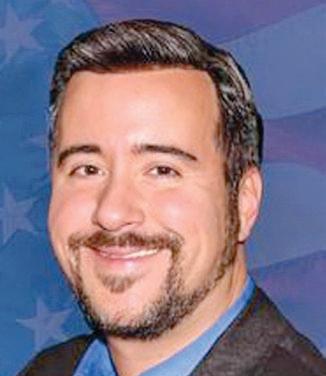
Hermon Barbe of West Bloomfield has a BA in arts,organizational communications from Western Michigan University. He is selfemployed as an investor and real estate sales. Barbe is involved with Stand up Michigan, Trail Life USA and the local political club.
Government transparency
Michigan is one of only two states where the state legislature and administration are not subject to Freedom of Information Act requests. Although Governor Whitmer has promised in 2018 to extend the FOIA to cover her office and the legislature and the senate passed legislation in 2025, the House has still left these bills in the House Government Operations Committee with no movement. Do you support extending the Freedom of Information Act to cover the legislative and administrative branches of state government?
Yes, I fully support extending the Freedom of Information Act to cover the legislative and administrative branches of our state government. Michigan needs more transparency from our elected officials, not less transparency.
Large scale data centers have become an important issue in Michigan. Should the state be providing incentives to attractive large scale data centers? What regulations should be enacted to protect residents from possible increased electric rates and impact
on water sources in the state? Lastly, there have been concerns that the state could intervene in the local approval process along the lines of what has been done on alternative energy projects in the state. Would you support the state taking more control of the local approval process?
When and if there is a substantial benefit to the people (i.e. job creation, reduction in infrastructure + energy costs, etc.) the state could consider providing incentives for companies to bring business to Michigan. However, I do believe that ultimately the approval process is at the local level. The state should not take more control of the local approval process. The final decision for any large-scale data center. To protect residents, any data center should pay for infrastructure upgrades to help prevent local energy rate hikes and use closed-loop cooling systems.
There has been ongoing debate in both parties in Lansing about past and current administrations’ economic development policies for attracting new business to the state. What is your position on current economic development efforts?
Sadly, since the pandemic Michigan has ranked 45th among the 50 states for job growth. The current economic development efforts tend to hurt small business growth, and do not provide an environment conducive to new jobs or thriving new businesses. If Michigan is to be an economic powerhouse again, we must eliminate payroll taxes on small businesses and reduce income tax & property tax. People and businesses need good reasons to come to Michigan, and make it make financial sense. Good paying jobs pay the best when government taxes get out of the way. Ultimately, government does not create jobs; rather it should help create an economic environment in the state, for businesses to grow.
New taxes to offset Medicaid cuts
Michigan is facing major cuts to federal funds for Medicaid, thanks to the 2025 adoption of President Trump’s Big Beautiful Bill. To
counteract these cuts, Governor Whitmer had proposed increased taxes on tobacco and vape products and new taxes on digital advertising, which were ignored by legislators in recent budget sessions. Would you support similar tax proposals in the future? Why or why not?
No, I am generally not a fan of increasing taxes or adding new taxes upon the people. An excellent and viable solution to offset Medicaid cuts should start with a Michigan Efficiency Government Audit (aka “MEGA” audit). As other 2026 candidates have proposed, a MEGA AUDIT will easily identify waste, inefficiency, and uncover government fraud to help fund any major cuts. The people of Michigan should not suffer at the hand of waste, fraud, and abuse found inside the Lansing swamp. Example: The Michigan Economic Development Corporation (MEDC) has a massive new scandal from a former executive committee member, who was recently charged with 16 felony counts, tied to a $20 million grant. Let’s follow the money, find the fraud, and not tax the people!
Voters approved financial disclosure for all state office holders and candidates. Are you satisfied with the regulations developed by lawmakers or are there changes you think need to be made? Explain.
Yes, I am satisfied with the regulations and approved financial disclosure for all state office holders and candidates. It is important for the voters to have transparency and communication from their elected officials, while still providing a certain degree of personal privacy to the candidates and state office holders.
Did you accept the returns of the presidential election in 2020? Yes or no.
No, I do not accept the returns of the 2020 presidential election. After five years of evidence gathering by investigators, grassroots organizations, and new whistleblowers coming forth, it is clear to me that the 2020 presidential election was absolutely stolen. How can I say that with confidence? Well, I personally worked
as a volunteer poll watcher in 2020, and again in 2022. I saw a good portion of the Detroit election fraud with my own eyes. The truth eventually comes out, and nothing can stop what is coming. Michigan did not have safe and secure elections, and we the people must have measures and protocols in place to audit the vote. Every precinct gets an audit, every time. No exceptions, no excuses.
What are the top three-five issues you want to address if you are ultimately elected?
Michigan’s state government is in immediate need of a massive financial audit. The bloated budget must be deflated, and ultimately the cash-flow returned to the people in the form of massive tax reductions. The (MEGA) audit comes first; the tax cuts immediately follow via income tax cuts for individuals and families. I would love to see property tax exemption and/or taxelimination for our senior citizens’ primary residences. For our seniors on fixed or reduced income, they will have the most to gain from property tax elimination.The Michigan government needs to work on creating an economic environment in which small businesses can thrive. Eliminating the payroll tax on small businesses will help attract people & business back to Michigan again.
Why should a primary voter select you over another candidate?
After 20+ years working in the private sector as a financial professional and solution consultant, I feel my talents and my life experience are now best suited to serve in Lansing. I am a husband, father, homeowner, and proud Michigander my whole life. The values of truth, justice, and righteousness are dear to my heart. I love communication and transparency, and we need more of that from our state officials. My life is based on faith, family, and freedom. I remind myself that freedom consists not in just doing whatever we like, but in having the right to do what we ought. If a primary voter wants a representative who holds to truth, logic, and common sense then they should vote for me in the primary. Learn more at Hermon2026.com.
Bloomfield Township, Bloomfield Hills

Roman Gaskey of Lake Orion has degrees from U of M in mathematics of finance and risk management and data science. He is employed as a strategy and product analyst with Altumatim. He is involved with a couple of local community groups plus is a committee member with the Oxford DDA.
Government transparency
Michiganders deserve more transparency when it comes to lobbyist and special-interest contacts with lawmakers and the governor, budget negotiations, earmarks, and “pet project” records. Extending the Michigan Freedom of Information Act to the legislature and governor’s office is an imperfect way to achieve this goal, because state-level FOIA statutes are specifically tailored to administrative agencies, not for the give-and-take of lawmaking and constituent work. Most states now apply their public records laws to the legislative branch in some fashion, but they pair that with carveouts to protect sensitive constituent information and candid internal deliberations. That’s the balance I’d look for here: we should open up calendars, lobbyist contacts, and spending records, while being careful not to expose private casework or turn staff level brainstorming into a chilling effect. So, I support the spirit of extending FOIA to cover the legislature and governor’s office. My decision to support specific legislation would depend on how it handles constituent privacy and legitimate deliberation.
Michigan should not be providing incentives to attract large-scale data centers. Data center developers are interested in our state because of our climate and access to water resources, so we have leverage to demand additional benefits from those seeking to build here. To prevent residential and small-business ratepayers from being forced to subsidize data centers, there must be a requirement that any data center builds out sufficient energy supply to cover all the potential demand for electricity it generates. Further, we must require utility companies to prove that any data center-related power agreement protects existing customers from stranded costs. The state should prohibit data centers from using fresh groundwater or municipal drinking water. Closed-loop cooling, water recycling, wastewater safeguards, and public reporting of water usage should be required. I am strongly opposed to the state taking more control of the local approval process. Local governments exist for a reason. Michiganders move to certain communities because they appreciate their unique character. Communities should have theauthority to decide on significant changes that affect infrastructure, land use, and quality of life. When it comes to my district, Bloomfield Township has enacted a data center moratorium. I support their right to do that. If Lansing tries to override the decisions ofthe communities in my district, I will stand with my constituents and fight to protectlocal control.
MEDC has failed Michiganders. Time and time again, recipients of economic development benefits do not create the number of Michigan jobs they promise, and they move economic activity out of Michigan the first chance they get. I want Michigan to compete aggressively for jobs, investment, and manufacturing. Instead, we reward political connections. Our state should be competitive for everyone, not just subsidized companies. Incentive design needs to be informed by accountability and results. For incentives tied to job creation, payroll growth, wage commitments, and workforce training, we should enact milestone requirements such that
payments are made only after specific targets are met. For projects requiring up-front capital, such as site readiness, infrastructure improvements, and strategic manufacturing, incentives need strong recapture provisions to repay our state should agreed-upon targets fail to be reached within a reasonable timeframe. We cannot continue a system where we socialize risk while privatizing profit. Michiganders deserve transparency, measurable results, and recourse when companies fail to deliver.
In my view, taxes on vices and unpopular goods and services are political gimmicks which generally fail. Without a broad base of goods, consumption taxes swing wildly based on consumer behavior and economic conditions, often capturing less revenue than projected. See the new twenty-four percent cannabis tax, for example. First and foremost, we must crack down on Medicaid fraud. Studies estimate that over six percent of Medicaid payments are improper. For our state, which often spends over $20 billion annually on Medicaid payments, this amounts to over $1 billion. To reduce this, we should implement existing tools powered by machine learning and AI to flag suspicious claims and correct improper billing. If more revenue is still necessary after reducing fraud, I would be open to targeted assessments on highly consolidated hospital systems or private-equityowned healthcare ventures if they are designed to address monopoly pricing and excessive facility fees—not to burden independent providers or increase patient costs.
I am always open to more transparency, but in general I am satisfied with the disclosure requirements. State office holders and candidates are required to report earned income sources over $1,000, employment-related agreements, assets held for investment valued at over $1,000, real property interests valued at over $1,000, securities/investments valued at over $1,000, and liabilities over $10,000 with certain exceptions. That said, I would be open to reasonable improvements, especially clearer
conflict-of-interest rules for when an official should recuse themselves from mattersinvolving a direct financial interest, as well as stronger transparency around gifts, travel, and other benefits connected to lobbyists or groups seeking state action.
We have a crisis of public trust in the results of our elections, and this is an issue I take very seriously. That’s why I support common sense measures such as voter ID and mandatory annual cleaning of the voter rolls. The fact that Democrat politicians are unwilling to support these measures creates an understandable distrust from many that bad actors are taking advantage of these gaps in the system.
Cost of living: We are in a cost-ofliving crisis. Whether it’s groceries, housing, childcare, healthcare, energy, or auto insurance, constituents of all backgrounds tell me they can’t keep up. I am focused on three expenses: housing, energy, and healthcare. For housing, we can financially reward municipalities for approving affordable single-family units, modernize the permitting process, and invest in training more skilled contractors. For energy, we can hold utility companies accountable for their performance—if they can’t improve service, then you get a rebate. And for healthcare, we can reform provider-insurer contracts to prevent monopolistic providers from preventing price competition. Economic opportunity: One of the biggest reasons I am running for office is to address the sad reality of so many young Michiganders leaving. We have top-tier trade schools and universities which produce capable professionals, but we don’t offer the opportunities available in other states after we invest ione-in, two-out rule— for every new regulation an agency creates, two must be consolidated or eliminated. That also means allowing people to keep more of what they earn by lowering taxes. Cutting the income tax will help young and working people, and we also need to cut property taxes to help homeowners and seniors. Government efficiency:Too much of your hardearned money is squandered on waste, fraud, and abuse. That’s why I support embracing technology to
crack down on Medicaid fraud. As I discussed earlier, we should implement modern tools to flag suspicious claims and correct improper billing. Public safety:Our state and our country have some of the highest crime rates in the developed world. Part of this is due to underinvestment in law enforcement, which is why I strongly support our first responders. However, it’s not enough to intervene during or after a crime is committed—we also must address the root causes of crime in the first place. That means a focus on mental health. Inpatient capacity in our state is abysmal, so I support investing in humane inpatient facilities to help those who need more than outpatient care. Further, that means a focus on recidivism. Being tough on crime is good, but being smart on crime is even better. Artificial intelligence: The world is changing fast, and I am alarmed by our state having no plan regarding the integration of artificial intelligence into our economy. I have spoken to many state legislators, and there is a lack of knowledge and interest in this issue. Different legislators can’t even agree on what committee would oversee AI. I studied mathematics and data science, so I understand this technology in theory. Further, I work for an AI startup in the legal tech space, so I understand how it’s affecting our economy in practice. I will spearhead efforts to create a select committee on AI.
Why vote for you
Politics as usual hasn’t served our country, and it certainly isn’t serving our state. When I talk to voters, regardless of their ideology and background, they are tired of the same types of people backed by career politicians. I’m running because I believe the next generation needs to step up for the benefit of all Michiganders. You don’t fix a broken system by waiting to inherit it, you fix it by changing it. My values and experiences are deeply rooted in this district. I grew up in Orion and Oxford, attending Lake Orion schools K through 12. After graduating valedictorian of my class, I earned a degree in mathematics and data science from the University of Michigan. Most people in my position would choose to leave Michigan for better opportunities, and, for a while, I assumed I would be one of those
people. But when I thought hard about my passions and what really mattered to me, I realized I had to step up. It deeply bothered me how out-of-state students would be so negative about the state I grew up in, so I decided that instead of being part of the problem by leaving, I would be part of the solution. This election should be about who will best represent and deliver for the people of our district. I’m proud to be running a grassroots campaign powered by conservative activists and hardworking volunteers, not lobbyists. You deserve someone who takes public service seriously and honors the commitments he makes. I am not running for this office as a steppingstone, and I will not quit on the people I ask to represent. So, if you trust the status quo, then I may not be your candidate. But if you want someone who will work to reverse Michigan’s managed decline, bring smart solutions to Lansing, and fight for a future where young people, working families, and seniors can afford to stay in our state, then I’m asking for your vote.
development that helps residents, not just corporations.
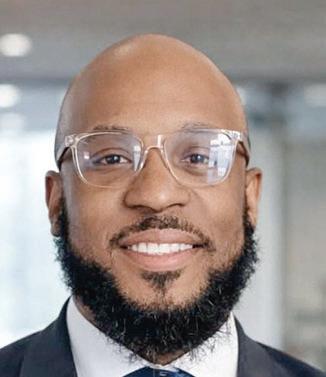
Brandon Young of Southfield has an associate degree in business management from Henry Ford College. He is founder and CEO of Safety Ops Specialists, He is a board member of Neway Works and Community Center of Rights and Equity.
Government Transparency
Yes. I support extending FOIA to cover the legislature and the governor’s office. The people pay for government, so the people deserve access to government records, with reasonable protections for privacy, security, and constituent services. Transparency builds trust.
Data Center Farms
I do not oppose technology or growth, but Michigan should not give away incentives without strong protections. Any data center incentive should require local jobs, clear water-use reporting, energycost protections for residents, environmental review, and full local transparency. I would not support the state taking away local control. Communities should have a major voice in approval decisions.
Michigan should compete for jobs, but incentives must be accountable. I support performance-based incentives tied to real jobs, wages, local hiring, small business opportunities, and clawbacks if companies fail to deliver. We need economic
I would be cautious about broad new taxes. I support protecting Medicaid, seniors, children, and working families, but any revenue proposal must be fair, targeted, and transparent. I would be more open to taxes on harmful products like tobacco and vaping than taxes that raise costs on small businesses or everyday residents.
I support financial disclosure because voters deserve to know whether elected officials have conflicts of interest. I believe the current rules are a good start, but they should be strengthened with clearer reporting, easier public access, stronger enforcement, and fewer loopholes.
Yes. I accept the certified results of the 2020 presidential election.
My top priorities are property tax stabilization and affordability, better access to healthcare, workforce development and job training, stronger education outcomes, and government transparency.
Primary voters should select me because I bring real-life leadership, business experience, and community service to this race. I am not running to protect a system. I am running to protect people — seniors, working families, small businesses, and residents who feel ignored. I know how to build teams, solve problems, and fight for practical results that improve people’s lives.



Award-winning artist Lauren Levato Coyne was an exceptionally curious child who began creating when she was just six-years-old.
“I was curious to the point of annoying everyone around me,” she joked. “And I’m still a very curious person. The very first thing I remember making was text and image-based. I did a drawing of a newspaper. I drew a picture of what the lead story was, which was the dust bunnies taking over the bedroom. I was interested in the arts from day one. At the age of six, I told people I was going to move to New York City and be a writer. I was always a creative person.”
Levato Coyne attended Cranbrook Academy of Art from 2018 to 2020.
“Cranbrook was the only graduate school I wanted to attend,” she said. “I describe it as a Montessori for adults. You are very self-directed, which is a good alignment for me. And I liked that it was a very small program.”
Levato Coyne earned a Master of Fine Arts in painting from Cranbrook Academy of Art. She also graduated from Purdue University and earned a certificate in political journalism from Georgetown University.
“I’ve been working in the arts basically since I left high school in 1997,” she said. “My passion lies in thinking and ideas. All the formats: drawing, painting, sculptures, essays – they are all a method of thinking.”
Levato Coyne trained as a political journalist and spent a decade working as a daily news reporter.
“I worked at The Times of Northwest Indiana,” she said. “I loved it. I wanted to be a newsie ever since I can remember. I wanted to be Lois Lane more than anybody. I think of journalism as a force of justice in the world.”
As a painter, sculptor and writer, Levato Coyne is inspired by the world around her.
“I have a very rich internal world,” she said. “I have a constant stream of words, images and sounds. I’ve just never been bored in my life.”
Levato Coyne won the 2026 AICA-USA Irving Sandler Award for New Voices in Art Criticism and the 2026 Artist in Residence Award from the Kinney Center for Interdisciplinary Renaissance Studies.
“It’s been phenomenal,” she said. “I had several years where I thought my career was utterly dead-in-the-water. It’s phenomenal every time you win an award, but especially meaningful after a dry spell.”
In addition to her art work, Levato Coyne teaches art in the Paleobiology and Oceanography departments at Williams College in Massachusetts.
“I love teaching art to scientists,” she said. “I’ve been invited into a lot of science classrooms. I absolutely love working with people who say they don't know how to draw. I show them how wrong they are. Art is my great equalizer –it's a human experience.”
Levato Coyne credits her success to a host of professionals who have helped her along the way.
“I’ve been working in the arts for almost 30 years,” she said. “It’s a very hard field to remain in. I wouldn't have gotten this far without teachers, collectors and everybody in between.”
Moving forward, Levato Coyne is focused on continuing to write and create extraordinary pieces.
“I think that sustainability is overlooked in our culture as we look at growth,” she said. “My biggest goal is to maintain what is happening right now: writing, visual work and teaching. They are all in a balance with each other right now. I’m just going to enjoy this rare, perfect moment.”
Levato Coyne lives her life with one very important sentiment.
“Don’t quit,” she said. “I truly believe this. Whatever your creative passion is, never give it up. It doesn't even matter if no one ever sees it. Do it for yourself.”
Story: Katey Meisner




Founded by Richard Grinstein, Grinstein Jewelry & Design, of Birmingham is celebrating its 50th anniversary this year. Born and raised in Detroit, Grinstein studied metalsmithing at Cranbrook Academy of Art
Since launching his career, he has been creating distinctive jewelry designs for his store while also crafting one-of-a-kind custom pieces for clients. He founded his business in Royal Oak in 1976 before relocating to Birmingham, first at 280 North Woodward and later to its current location at 162 South Old Woodward in Birmingham, in 1999. Reflecting on the move, Grinstein notes that Birmingham’s vibrant arts community was a major draw. At the time, the city was home to numerous art galleries, including Peggy deSalle’s Little Gallery on East Maple Road.
“Peggy showed Cranbrook artists and taught people that jewelry could be an artform,” he said. Inspired by both Art Nouveau and Modernism, Grinstein has developed a signature style that blends the organic beauty of nature with clean, contemporary design. While the influences may seem contrasting, they work harmoniously throughout his collections. “Most of my work, whether it’s Art Nouveau or Modernism, is inspired by nature,” said Grinstein. “One example is a design I created for more than 40 years that was inspired by locust leaves, which have a very simple shape.” Working in platinum, gold, palladium, and sterling silver, and incorporating unusual colored gemstones and diamonds, Grinstein creates pieces that combine artistry, craftsmanship, and lasting value. His work appeals to clients who view art as an integral part of their lives and seek jewelry that is both
beautiful and meaningful. In addition to Richard Grinstein’s original studio creations, Grinstein Jewelry & Design offers a full range of in-store services, including jewelry repair, pearl restringing, ring resizing, and professional cleaning. The store also features a carefully curated collection of fine antique jewelry.
OPTIK Birmingham, located at 247 W. Maple Road, is celebrating an important milestone: 25 years of serving the greater Birmingham community. Owned and operated by Dr. Joe Ales, OD, the practice combines comprehensive eye health care and vision correction services with an impressive collection of exclusive contemporary eyewear. Over the past quarter century, OPTIK Birmingham has flourished, growing fivefold since its founding and establishing itself as a destination for both eye care and distinctive eyewear.
“There are still some independent designers left on the planet who design and have their frames manufactured. I’ve been to their factories south of Paris, Berlin and north of Venice. More and more optical places and doctor’s offices are being bought out by large companies. So, in some sense, my work is old school. I have frame lines that you won’t find in other shops. These are handmade products that are well made. That’s why my business has always grown — you come in here and you have a unique experience,” said Ales. In addition to its unique selection of contemporary frame lines, OPTIK Birmingham boasts the largest collection of original, unused vintage eyewear in Michigan, offering customers access to rare and distinctive styles. On the vision health side of the practice, OPTIK features a team of four opticians who provide thorough and personalized eye care for both
adults and children. Services include comprehensive eye examinations, glaucoma screenings; digital retinal scans for early detection of macular degeneration; as well as diagnosis and treatment options for presbyopia and dry eye disease and more. As OPTIK Birmingham marks its 25th anniversary, the practice continues to blend personalized patient care, specialized expertise, and a carefully curated eyewear collection that sets it apart in an increasingly corporate optical marketplace.
Popular fast-casual restaurant chain Culver’s is set to open its first Bloomfield Township location this fall. The 4,060square-foot restaurant will be built at the northwest corner of the Lowe’s parking lot at 1801 S. Telegraph Road. The location is owned by franchisee Joe Zimmer, who also operates two other Culver’s restaurants in Lake Orion and Orion Township. The new restaurant will feature a drive-thru and outdoor patio seating. Known for its signature ButterBurgers, Culver’s menu also includes chicken sandwiches, chicken tenders, fish, salads, soups, onion rings, French fries, cheese curds, and corn dogs. For dessert, guests can choose from the chain’s frozen custard offerings, available in dishes and cones or malts, and shakes. Founded by the Culver family in 1984, the Wisconsinbased chain began franchising in 1988 and has grown to include 16 locations throughout Oakland County. The Bloomfield Township restaurant will be the first Culver’s in the community.
Business Matters for the Birmingham - Bloomfield area are reported by Gigi Nichols. Send items for consideration to GigiNichols@downtownpublications.com. Items should be received three weeks prior to publication.
Get the latest news online from the leading news organization for the Birmingham and Bloomfield area. Go to downtownpublications.com and register to receive our weekly and breaking news updates, oakland confidential, metro intelligencer, and the threatened planet newsletters from the local area's best website.

Ask people at Next what they want most as they grow older and the answer is remarkably consistent: independence. The ability to live in their own homes, drive their own cars and carry on with their daily activities without a second thought.
It may not be as obvious as other advice for longevity, but one of the best ways to achieve the goal of independence is through strength training.
Strength training for older adults is no longer a fringe idea, and luckily, Next offers over 20 different weekly classes to support strength, balance and general fitness.
The American College of Sports Medicine and the National Institutes of Health both recommend that adults over 65 engage in muscle-strengthening activities at least twice a week. The reason is simple: without deliberate effort, we lose muscle mass every decade after our thirties. Muscle loss is directly connected to the things we fear most about aging, falls, fractures and the slow erosion of the ability to do ordinary things.


Research published in the Journal of the American Medical Association found that older adults who regularly engaged in resistance training were significantly less likely to fall, recovered from illness faster, and maintained their ability to perform daily tasks years longer than those who did not.
This is exactly why Next offers senior-focused fitness classes. Unlike general gym environments that can feel intimidating or irrelevant, classes built specifically for seniors address the things that matter most in order to age well: balance, functional strength, flexibility, and fall prevention.
Next offerings range of classes, from Tai-Chi that has become quite popular as more doctors recommend it for its many health benefits, to all sorts of yoga classes, low-impact aerobics, stretching, strength training, line-dancing and barre balance, and that’s just to name a few. As an added bonus, when trying a new class at Next, we want to be sure it is a good fit, so the first class is always free, member or not. In these classes, taught by certified senior fitness instructors, movements are purposeful; squats that mimic rising from a chair, overhead reaches that keep shelves accessible and core work that protects the spine through the ordinary motions of the day.
Equally important is what happens beyond the physical. Fitness classes bring people together. Consistency builds community. That is exactly what happens three times a week after a morning “Limber-Up” class. Members congregate in the lobby, sipping their coffee and sharing stories. This friendship group forged at Next, now extends outside our doors as the group often gets together for picnics, holidays or simply offering support to one another.
That kind of quality in instruction, in community, in genuine care for every member, is what makes Next different. Our classes are designed with your whole life in mind: the stairs, the grandchildren, the garden, the grocery bags.
At Next, Your Place to Stay Active and Connected, that isn't just a tagline. It's what happens every single day.
Cris Braun is Executive Director of Birmingham Next



The Places To Eat for Downtown is a quick reference source to establishments offering a place for dining, either breakfast, lunch or dinner. The listings include nearly all dining establishments with seating in the Birmingham/Bloomfield area, and then some select restaurants outside the immediate area served by Downtown.
220: American. Brunch, weekends, Lunch & Dinner, daily. Reservations. Liquor. 220 E. Merrill Street, Birmingham, 48009. 248.646.2220. 220restaurant.com
5th Tavern: American. Brunch, weekends, Lunch & Dinner daily. No reservations. Liquor. 2262 S. Telegraph Road, Bloomfield Township, 48302. 248.481.9607. 5thtavern.com
Adachi: Japanese. Lunch & Dinner daily. Liquor. Reservations. 325 S. Old Woodward Avenue, Birmingham 48009. 248.540.5900. adachirestaurant.com
Andiamo: Italian. Lunch, Monday-Friday, Dinner, daily. Reservations. Liquor. 6676 Telegraph Road, Bloomfield Township, 48301. 248.865.9300. andiamoitalia.com
Beau’s: American. Brunch, weekends, Lunch & Dinner, daily. Reservations. Liquor. 4108 W. Maple Road, Bloomfield Hills, 48301. 248.626.2630. beausbloomfield.com
Bella Piatti: Italian. Dinner, Tuesday-Saturday. Reservations. Liquor. 167 Townsend Street, Birmingham, 48009. 248.494.7110. bellapiattirestaurant.com
Bell Bistro: American. Dinner, Tuesday-Sunday. Liquor. Reservations. 185 N. Woodward Avenue, Birmingham, 48009. 248.829.7900. bellbirmingham.com
Beverly Hills Grill: American. Breakfast, Lunch, Dinner, Tuesday-Sunday. Reservations. Liquor. 31471 Southfield Road, Beverly Hills, 48025. 248.642.2355. beverlyhillsgrill.com
Beyond Juicery + Eatery: Contemporary. Breakfast, Lunch & Dinner, daily. No reservations. 270 W. Maple Road, Birmingham, 48009; 221 Cole Street, Birmingham, 48009; 3645 W. Maple Road, Bloomfield Hills, 48301; 4065 W. Maple Road, Bloomfield Township, 48301; 1987 S. Telegraph Road, Bloomfield Hills, 48302. beyondjuiceryeatery.com
Big Rock Italian Chop House: Steakhouse. Dinner, daily. Reservations. Liquor. 245 S. Eton Street, Birmingham, 48009. 248.275.0888. bigrockitalianchophouse.com
Bill’s: American. Breakfast, weekends, Lunch, Wednesday-Sunday, Dinner, daily. Reservations. Liquor. 39556 Woodward Avenue, Bloomfield Hills, 48304. 248.646.9000. billsbloomfieldhills.com
Birmingham Pub: American. Brunch, weekends, Lunch, and Dinner, daily. Reservations. Liquor. 555 S. Old Woodward Avenue, Birmingham, 48009. 248.885.8108. thebirminghampub.com
Bistro Joe’s Kitchen: Global. Brunch and Lunch, weekends, Dinner, Tuesday-Sunday. Liquor. Reservations. 34244 Woodward Avenue, Birmingham, 48009. 248.594.0984. bistrojoeskitchen.com
Bloomfield Deli: Deli. Breakfast & Lunch, Monday-Friday. No reservations. 71 W. Long Lake Road, Bloomfield Hills, 48304. 248.645.6879. bloomfielddeli.com
Brooklyn Pizza: Pizza. Lunch & Dinner, daily. Liquor. No reservations. 111 Henrietta Street, Birmingham, 48009. 248.258.6690. thebrooklynpizza.com
Café Dax: American. Breakfast, daily, Lunch, daily. No reservations. Liquor. 298 S. Old Woodward Avenue, Birmingham, 48009. 248.283.4200. daxtonhotel.com
Café ML: New American. Dinner, daily. Liquor. Reservations. 3607 W. Maple Road, Bloomfield Township. 248.642.4000. cafeml.com
Café Origins: Global. Breakfast, Lunch & Dinner, daily. No reservations. 163 W Maple Road, Birmingham, 48009. 248. 248.742.4040. originsbirmingham.com
Casa Pernoi: Italian. Dinner, Monday-Saturday. Reservations. Liquor. 310 E. Maple Road, Birmingham, 48009. 248.940.0000. casapernoi.com
Churchill’s Bistro & Cigar Bar: Lunch & Dinner, daily. No reservations. Liquor. 116 S. Old Woodward Avenue, Birmingham, 48009. 248.647.4555. churchillscigarbar.com
Cityscape Deli: Deli. Breakfast, Lunch and Dinner, Monday-Saturday. No reservations. 877 W. Long Lake Road, Bloomfield Hills,
48302. 248.540.7220. cityscapedeli.com
Commonwealth: American. Breakfast & Lunch, daily. No reservations. 300 Hamilton Row, Birmingham, 48009. 248.792.9766. gocommonwealth.com
Dick O’Dow’s: Irish. Lunch & Dinner, TuesdaySunday. Reservations. Liquor. 160 West Maple Avenue, Birmingham, 48009. 248.642.1135. dickodowspub.com
Eddie Merlot’s: Steak & seafood. Dinner, daily. Reservations. Liquor. 37000 Woodward Avenue, Bloomfield Hills, 48304. 248.712.4095. eddiemerlots.com
Einstein Bros. Bagels: Deli. Breakfast & Lunch, daily. No reservations. 4089 West Maple Road, Bloomfield Hills, 48301. 248.258.9939. einsteinbros.com
Elie’s Mediterranean Grill/Bar: Mediterranean. Lunch & Dinner, Monday-Saturday. No reservations. Liquor. 263 Pierce Street, Birmingham, 48009. 248.647.2420. eliesgrill.com
EM: Mexican. Dinner, Tuesday-Saturday. Reservations. Liquor. 470 N. Old Woodward Avenue, Birmingham, 48009. 947.234.0819. embirmingham.com
Embers Deli & Restaurant: Deli. Breakfast & Lunch, Monday-Saturday. No reservations. 3598 West Maple Road, Bloomfield Hills, 48301. 248.645.1033. embersdeli1.com
Flemings Prime Steakhouse & Wine Bar: American. Dinner, daily. Reservations. Liquor. 323 N. Old Woodward Avenue, Birmingham, 48009. 248.723.0134. flemingssteakhouse.com
Forest: Continental cuisine. Dinner, TuesdaySaturday. Reservations. Liquor. 735 Forest Avenue, Birmingham, 48009. 248.258.9400. forestbirmingham.com
Greek Islands Coney Restaurant: Greek. Breakfast, Lunch & Dinner, daily. No reservations. 221 Hamilton Row, Birmingham, 48009. 248.646.1222. greekislandsconey.com
Griffin Claw Brewing Company: American. Lunch, Thursday-Sunday, Dinner, TuesdaySunday. No Reservations. Liquor. 575 S. Eton Street, Birmingham. 248.712.4050. griffinclawbrewingcompany.com
Hazel’s: Seafood. Brunch, weekends, Lunch & Dinner, Tuesday-Sunday. Reservations. Liquor. 1 Peabody Street, Birmingham. 248.671.1714. eatathazels.com
Honey Tree Grille: Greek/American. Breakfast, Lunch, Dinner, daily. No reservations. 3633 W. Maple Rd, Bloomfield, MI 48301. 248.203.9111. honeytreegrille.com
Hudson’s Place: Pizza/Coffee/Takeout. Breakfast, Lunch and Dinner, daily. No reservations. 1087 W. Long Lake Road, Bloomfield, 48302. 248.540.2266. hudsonsplacepizzeria.com
Hunter House Hamburgers: American. Lunch & Dinner, daily. No reservations. 33900 Woodward Avenue, Birmingham, 48009. 248.646.7121. hunterhousehamburgers.com Hyde Park Prime Steakhouse: American. Dinner, daily. Reservations. Liquor. 201 S. Old Woodward Avenue, Birmingham, 48009. 248.594.4369. hydeparkrestaurants.com
IHOP: American. Breakfast, Lunch, & Dinner, daily. No reservations. 2187 S. Telegraph Road, Bloomfield Hills, MI 48301. 248.333.7522. Ihop.com
Joe Muer Seafood: Seafood. Lunch & Dinner daily. Reservations. Liquor. 39475 Woodward Avenue, Bloomfield Hills, 48304. 248.792.9609. joemuer.com
Kaishin Izakaya: Japanese. Lunch and Dinner, Monday-Saturday. Reservations. Liquor. 176 S, Old Woodward Avenue, Birmingham, 48009. 248-731-7166. kaishinizakaya.com
Kaku Sushi and Poke’: Asian. Lunch, MondayFriday & Dinner daily. No reservations. 869 W. Long Lake Road, Bloomfield Township, 48302. 248.480.4785, kakusushipoke.com
Kerby’s Koney Island: American. Breakfast, Lunch & Dinner, daily. No reservations. 2160 N. Woodward Avenue, Bloomfield Hills, 48304. 248.333.1166. kerbyskoneyisland.com
La Marsa: Mediterranean. Lunch & Dinner daily. Reservations. 43259 Woodward Avenue, Bloomfield Hills, 48302. 248.858.5800. lamarsacuisine.com
La Pecora Nera: Italian deli. Breakfast, Lunch and Dinner, daily. No reservations. 135 Pierce St. Birmingham, 48009. 248.940.5613. lapecoraneradetroit.com
La Strada Italian Kitchen & Bar: Italian. Lunch, Wednesday-Friday, Dinner, Monday-Saturday. Reservations. Liquor. 243 E. Merrill Street, Birmingham, 48009. 248.480.0492. lastradaitaliankitchen.com
Leo’s Coney Island: American. Breakfast,
Lunch & Dinner, daily. No reservations. 154 S. Old Woodward Avenue, Birmingham, 48009. 248.593.9707. Also 6527 Telegraph Road, Bloomfield Hills, 48301. 248.646.8568. leosconeyisland.com
Lincoln Yard and Little Yard: American. Little Yard take-out hours: Breakfast, Lunch & Dinner, daily. Lincoln Yard hours: Brunch, weekends, Lunch & Dinner, daily. Reservations. Liquor. 2159 E. Lincoln Street, Birmingham, 48009. 248.653.5353. eatlincolnyard.com
Luxe Bar & Grill: American. Lunch & Dinner, daily. No reservations. Liquor. 525 N. Old Woodward Avenue, Birmingham, 48009. 248.792.6051. luxebarandgrill.com
Madam: American. Brunch, weekends, Lunch, Friday-Sunday, Dinner daily. Reservations. Liquor. 298 S. Old Woodward Avenue, Birmingham, 48009. 248.283.4200. daxtonhotel.com
Market North End: American. Lunch & Dinner, daily. Reservations. Liquor. 474 N. Old Woodward Avenue, Birmingham, 48009. 248.712.4953. marketnorthend.com
Marrow: American. Butcher shop and eatery. Breakfast and Lunch, Tuesday-Sunday. No reservations. 283 Hamilton Row, Birmingham, 48009. 734.410.0405 marrowdetroit.com/restaurant
MEX Mexican Bistro & Tequila Bar: Mexican. Brunch, weekends. Lunch & Dinner, daily. Reservations. Liquor. 6675 Telegraph Road, Bloomfield Township, 48301. 248.723.0800. mexbloomfield.com
Middle Eats: Mediterranean. Lunch and Dinner, daily. No reservations. 42967 Woodward Avenue, Bloomfield, 48093. 248.274.328. middleeats.com
Nippon Sushi Bar: Japanese. Lunch, MondayFriday, Dinner daily. No reservations. Liquor. 2079 S. Telegraph Road, Bloomfield Township, 48302. 248.481.9581. nipponsushibar.com
Olga’s Kitchen: American. Lunch & Dinner, daily. No reservations. 2075 S. Telegraph Road, Bloomfield Hills, 48302. 248.451.0500. olgas.com
Original Pancake House: American. Breakfast & Lunch, daily. No reservations. 33703 South Woodward Avenue, Birmingham, 48009. 248.642.5775. oph-mi.com
Phoenicia: Lebanese. Lunch, Monday-Friday, Dinner, daily. Reservations. Liquor. 588 S. Old Woodward Birmingham, 48009. phoeniciabirmingham.com
RH Rooftop: Brunch, Weekends, Lunch & Dinner, daily. Reservations. Liquor. 300 S. Old Woodward Avene, Birmingham, 48009. 248.614.6984 rh.com/us/en/detroit/restaurant
Roadside B & G: American. Lunch, FridaySunday, Dinner, daily. Reservations. Liquor. 1727 S. Telegraph Road, Bloomfield Hills, 48302. 248.858.7270. roadsidebandg.com
Salvatore Scallopini: Italian. Lunch & Dinner, daily. No reservations. Beer & Wine. 505 North Old Woodward Avenue, Birmingham, 48009. 248.644.8977. salsbirmingham.com
Shift Kitchen & Cocktails: Small Plates. Dinner, Tuesday-Saturday. Reservations. Liquor. 117 Willits Street, Birmingham, 48009. 248.452.1355. shiftbirmingham.com
Sidecar: American. Lunch and Dinner, daily. Reservations. Liquor. 117 Willits Street, Birmingham, 48009. 248.792.2380. and 1952 S. Telegraph Road, Bloomfield Township, MI 48302. 248-731-0087. sidecarsliderbar.com
Slice Pizza Kitchen: Pizza. Lunch and Dinner, daily. Liquor. 117 Willits Street, Birmingham, 48009. 248.792.3475. slicepizzakitchen.com
Snap Taco Birmingham: Mexican. Lunch and Dinner, daily. No reservations. 126 S Old Woodward Avenue, Birmingham, 48009. 248731-7266. snaptaco-birmingham.com
Social Kitchen & Bar: American. Lunch & Dinner, daily. Brunch, Saturday & Sunday. Reservations. Liquor. 225 E. Maple Road, Birmingham, 48009. 248.594.4200. socialkitchenandbar.com
Steve’s Deli: Deli. Breakfast, Lunch & Dinner, Monday-Saturday. Breakfast and Lunch, Sunday. No reservations. 6646 Telegraph Road, Bloomfield, 48301. 248.932.0800. stevesdeli.com
Streetside Seafood: Seafood. Lunch, Thursday & Friday, Dinner, daily. Liquor. 273 Pierce Street, Birmingham, 48009. 248.645.9123. streetsideseafood.com
St Roger Abbey: Patisserie. Breakfast, Lunch and Dinner, Wednesday-Sunday. No reservations. 215 N. Old Woodward Avenue,
Birmingham, 48009.
Sushi Hana: Japanese. Lunch & Dinner, daily. Reservations. Liquor. 42656 Woodward Avenue, Bloomfield Hills, 48304. 248.333.3887. sushihanabloomfield.com
Sy Thai Cafe: Thai. Lunch, Monday-Saturday, Dinner, daily. No reservations. 315 Hamilton Row, Birmingham, 48009. 248.258.9830. sythaibirmingham.com
Sylvan Table: American. Dinner, daily. Reservations. Liquor. 1819 Inverness Street, Sylvan Lake, 48320. 248.369.3360. sylvantable.com
Tallulah Wine Bar and Bistro: American. Dinner, Monday-Saturday. Reservations. Liquor. 55 S. Bates Street, Birmingham, 48009. 248.731.7066. tallulahwine.com
Terra Kitchen & Cocktails: New American. Lunch and Dinner, daily. Reservations. Liquor. 260 N. Old Woodward Avenue, Birmingham, 48009. 248.556.5640.dineterra.com
Teuta: Diner. Breakfast and Lunch, daily. No reservations.168 W Maple Road, Birmingham, 48009. 248.590.2113. teutabirmingham.com
Thai Street Kitchen: Thai. Lunch & Dinner, Monday-Saturday. No reservations. 42805 Woodward Avenue, Bloomfield Township, 48304. 248.499.6867. thaistreetkitchen.com
The Franklin: Oyster Bar. Brunch, weekends, Dinner, Tuesday-Sunday. Reservations. Liquor. 32760 Franklin Road, Franklin, 48025. 248.771.4747. thefranklinmi.com
The Gallery Restaurant: American. Breakfast, Lunch & Dinner, daily. No reservations. Beer & wine. 6683 Telegraph Road, Bloomfield Hills, 48301. 248.851.0313. galleryrestaurant2.com
The Moose Preserve Bar & Grill: American. Lunch & Dinner, daily. No reservations. Liquor. 2395 S. Woodward Avenue, Bloomfield Hills, 48302. 248.858.7688. moosepreserve.com
The Rugby Grille: American. Breakfast, Lunch & Dinner, daily. Reservations. Liquor. 100 Townsend Street, Birmingham, 48009. 248.642.5999. rugbygrille.com
Toast: American. Breakfast & Lunch, daily; Reservations. Liquor. 203 Pierce Street, Birmingham, 48009. 248.258.6278. eatattoast.com
Tomatoes Apizza: Pizza. Lunch & Dinner daily. Carryout. 34200 Woodward Avenue, Birmingham 48009. 248.258.0500. tomatoesapizza.com
Touch of India: Lunch, Tuesday-Thursday, Saturday & Sunday. Dinner, Tuesday-Sunday. No reservations. 297 E. Maple Road, Birmingham, 48009. 248.593.7881. thetouchofindia.com
Townhouse: American. Brunch, weekends. Lunch & Dinner, daily. No reservations. Liquor. 180 Pierce Street, Birmingham, 48009. 248.792.5241. eatattownhouse.com
Whistle Stop Diner: American. Breakfast & Lunch, daily; Liquor. No reservations. 501 S. Eton Street, Birmingham, 48009. 248.566.3566. whistlestopdiners.com
Wilder’s: American. Lunch, Monday-Friday, Dinner, daily. Reservations. Liquor. 458 N. Old Woodward Avenue, Birmingham, 48009. 248.771.0900. wildersbirmingham.com
ZANA: Modern American. Dinner, TuesdaySunday. Reservations. Liquor. 210 S. Old Woodward Avenue, Birmingham, 48009. 248.800.6568. zanabham.com
Ale Mary’s: American. Brunch, weekends, Lunch & Dinner, daily. Reservations. Liquor. 316 South Main Street, Royal Oak, 48067. 248.268.1917. alemarysbeer.com
Anita’s Kitchen: Middle Eastern. Lunch and Dinner, daily. No reservations. Liquor. 22651 Woodward Avenue, Ferndale, 48220. 248.548.0680. anitaskitchen.com
Bar Gabi: Modern Romanian. Dinner, Wednesday-Sunday. Reservations. Liquor. 23839 John R Road, Hazel Park, 48030. 248.629.4160. bargabi.com
Bella Limone: Italian. Dinner, TuesdaySunday. No reservations. Liquor. 100 S. Main Street, Floor 2, Royal Oak, 48067. 248.955.5725. bellalimone.com
Beppé: New American. Lunch, Saturday and Sunday, Dinner, daily. Reservations. Liquor. 703 N. Main St, Royal Oak, 48067. 248.607.7030. eatbeppe.com
Bigalora: Italian. Lunch & Dinner, daily. Reservations. Liquor. 711 S. Main Street, Royal Oak, 48067. 248.544.2442 bigalora.com
Blind Owl: International/American comfort. Lunch & Dinner, daily. Reservations. Liquor. 511 S. Main Street, Royal Oak, 48067. 248.216.1112. blindowlrestaurant.com
Blue Goat: Mediterranean. Lunch & Dinner, Monday-Saturday. Reservations. Liquor. 321 South Main Street, Royal Oak, 48067. 248. 965.9955. bluegoatroyaloak.com
Cafe Muse: French. Breakfast & Lunch, Wednesday-Monday. Reservations. Liquor. 418 S. Washington Avenue, Royal Oak, 48067. 248.544.4749. cafemuseroyaloak.com
Como’s: Pizza. Brunch, weekends. Lunch & Dinner, daily. Reservations. Liquor. 22812 Woodward Avenue, Ferndale, 48220. 248.677.4439. comosrestaurant.com
Crispelli’s Bakery and Pizzeria: Italian. Lunch and Dinner, daily. No reservations. Liquor. 28939 Woodward Avenue, Berkley, 48072. 248.591.3300. crispellis.com
The Fly Trap: Diner. Breakfast & Lunch, daily. No reservations. 22950 Woodward Avenue, 48220. 248.399.5150 theflytrapferndale.com
Grand River Brewery: American. Brunch, Saturday & Sunday. Lunch & Dinner, daily. No reservations. Liquor. 1 E. 14 Mile Road, Clawson, 48017. 248.607-3631. grandriverbrewer
Great Dane: American. Lunch, Thursday-Sunday, Dinner, daily. Reservations. Liquor. 112 S. Main Street, Royal Oak. 48067. 248.919.6330. thegreatdanepub.com
Gus’ Snug: Irish. Lunch and Dinner, daily. Reservations. Liquor. 38 S. Main Street, Clawson, 48017. 248.607.3631. gussnug.com
HopCat: American. Lunch & Dinner, daily. No reservations. Liquor. 430 S. Main Street, Royal Oak, 48067. 248.744.2544. HopCat.com
Howe’s Bayou: Cajun. Lunch & Dinner, TuesdaySaturday. No reservations. Liquor. 22949 Woodward Avenue, Ferndale, 48220. 248.691.7145. howesbayouferndale.net
Imperial: Mexican. Lunch and Dinner, daily. No reservations. Liquor. 22848 Woodward Avenue, Ferndale, 48220. 248.691.7145. imperialferndale.com
Inyo Restaurant Lounge: Asian Fusion. Brunch, weekends, Lunch & Dinner, daily. Reservations. Liquor. 22871 Woodward Avenue, Ferndale, 48220. 248.543.9500. inyorestaurant.com
JINYA Ramen Bar: Contemporary Japanese. Lunch & Dinner, daily. Reservations. Liquor. 129 S. Main St, Royal Oak, 48067. 248.955.4692. jinyaramenbar.com
Kacha Thai Market: Thai. Lunch and Dinner, Tuesday-Sunday. Reservations. 205 S Main Street, Royal Oak, 48067. 248.942-4246. KouZina: Greek. Lunch & Dinner, daily. No reservations. 121 N. Main Street, Royal Oak, 48067. 248.629.6500. gokouzina.com
Kruse & Muer on Woodward: American. Lunch, Monday-Saturday, Dinner, daily. Reservations. Liquor. 28028 Woodward Avenue, Royal Oak, 48067. 248.965.2101. kruseandmuerrestaurants.com
Lily’s Seafood: Seafood. Brunch, weekends, Lunch & Dinner, daily. No reservations. Liquor. 410 S. Washington Avenue, Royal Oak, 48067. 248.591.5459. lilysseafood.com
Masala: Indian. Lunch & Dinner, daily. Reservations. 106 S. Main Street, Royal Oak, 48067. 248.850.8284. food.orders.co/royaloakmasala
Mezcal: Mexican. Bruch, Sunday. Lunch and Dinner, daily. No reservations. Liquor. 201 E. Nine Mile Road, Ferndale, 248.268.3915. mezcalferndale.com
Noori Pocha: Korean. Lunch & Dinner, TuesdaySunday. No reservations. Liquor. 1 S. Main Street, Clawson, 48017. 248. 850.7512. nooripocha.com
Oak City Grille: American. Dinner, TuesdaySunday. Reservations. Liquor. 212 W. 6th Street, Royal Oak, 48067. 248.556.0947. oakcitygrille.com
Oak Parker: American. Brunch, weekends. Lunch & Dinner daily. No reservations. Liquor. 13621 W. Eleven Mile Rd, Oak Park, 48237. oakparker.com
One-Eyed Betty’s: American. Breakfast, weekends, Dinner, daily. No reservations. Liquor. 175 W. Troy Street, Ferndale, 48220. 248.808.6633. oneeyedbettys.com
Pita Post: Mediterranean. Lunch & Dinner, Tuesday-Saturday. No reservations. 2520 W. 14 Mile Road, Royal Oak, 48073. 855.535.5588. thepitapost.com
Pop’s for Italian: Italian. Brunch & Lunch, weekends, Dinner, daily. Reservations. Liquor. 280 W. 9 Mile Road, Ferndale,48220.
248.268.4806. popsforitalian.com
Redcoat Tavern: American. Lunch & Dinner, daily. No reservations. Liquor. 31542 Woodward Avenue, Royal Oak, 48073. 248.549.0300. redcoat-tavern.com
Rock & Brews: American. Lunch & Dinner, daily. Reservations. Liquor. 208 W Fifth Street, Royal Oak, 48067. 947.837.7625. rockandbrews.com/royal-oak
Ronin: Japanese. Dinner, daily. No reservations. Liquor. 326 W. 4th Street, Royal Oak, 48067. 248.546.0888. roninsushi.com
Royal Oak Brewery: American. Lunch & Dinner, Tuesday-Sunday. No reservations. Liquor. 215 E. 4th Street, Royal Oak, 48067. 248.544.1141. royaloakbrewery.com
The Modern Vegan: Vegan. Brunch, weekends, Lunch and Dinner, Tuesday-Sunday. No reservations. 304 N. Main St, Royal Oak, 48067. 248.206-7041. tmvrestaurants.com
Three Cats Café: American. Brunch, weekends, Lunch, Tuesday-Sunday, Dinner, Tuesday-Saturday. Reservations. Liquor. 116 W. 14 Mile Road, Clawson. threecatscafe.com
Tigerlily: Japenese. Brunch, weekends. Dinner, Tuesday-Sunday. Reservations. Liquor. 231 W Nine Mile Rd Suite A, Ferndale, 48220. 248.733.4905. tigerlilyferndale.com
Toast, A Breakfast and Lunch Joint: American. Breakfast & Lunch, daily. No reservations. 23144 Woodward Avenue, Ferndale, 48220. 248.398.0444. eatattoast.com
Tom’s Oyster Bar: Seafood. Lunch & Dinner, daily. Reservations. Liquor. 318 S. Main Street, Royal Oak, 48067. 248.541.1186. tomsoysterbar.com
Trattoria Da Luigi: Italian. Dinner, TuesdaySunday. Reservations. Liquor. 415 S, Washington Avenue, Royal Oak, 48067. 248.542.4444. trattoriadaluigi.business.site.com
Vinsetta Garage: American. Lunch and Dinner, daily. Reservations. Liquor. 7799 Woodward Avenue, Berkley, 48072. 248.548.7711. vinsettagarage.com
Voyager: Seafood. Dinner, Tuesday-Saturday. Reservations. Liquor. 600 Vester Street, Ferndale, 48220. 248.658.4999. voyagerferndale.com
Antica Nova: Italian. Dinner, Tuesday-Sunday. Reservations. Liquor. 1695 E. Big Beaver Rd, Troy, 48083. 248.422.6521. anticanova.com
Cafe Sushi: Pan-Asian. Lunch, Tuesday-Friday, Dinner, Tuesday-Sunday. Reservations. Liquor. 1933 W. Maple Road, Troy, 48084. 248.280.1831. cafesushimi.com
Capital Grill: Steak & Seafood. Lunch & Dinner, daily. Reservations. Liquor. 2800 W. Big Beaver Road, Somerset Collection, Troy, 48084. 248.649.5300. CK Diggs: American & Italian. Lunch & Dinner, Tuesday-Saturday. Reservations. Liquor. 2010 W. Auburn Road, Rochester Hills, 48309. 248.853.6600. ckdiggs.com
Ernie’s on the Creek: Modern Mediterranean. Dinner, Wednesday-Sunday. Reservations. Liquor. 543 N. Main St #201, Rochester, 48307. 248.710.8808. erniesonthecreek.com
Firebird Tavern: American. Brunch, weekends, Lunch & Dinner, Tuesday-Sunday. Reservations. Liquor. 4845 Rochester Road, Troy, 48085. 248.289.9650. firebirdtaverntroy.com
Hudson’s Café: Diner. Breakfast & Lunch, daily. Reservations, Liquor. 700 W Big Beaver Road, Troy. 48084. 248.509.7695. hudson-cafe.com
The Jackson: Modern American. Lunch & Dinner, Tuesday-Sunday. Reservations. Liquor. 184 N. Adams Road, Rochester Hills, 48309. 248.709.9453. thejacksonrestaurant.com
Kona Grille: American. Brunch, weekends, Lunch & Dinner, daily. Reservations. Liquor. 30 E. Big Beaver Road, Troy, 48083. 248.619.9060. konagrill.com
Kruse & Muer on Main: American. Lunch, Monday-Saturday, Dinner, daily. Reservations. Liquor. 327 S. Main Street, Rochester, 48307. 248.652.9400. kruseandmuerrestaurants.com
Loccino Italian Grill and Bar: Italian. Lunch, Monday-Friday, Dinner, daily. Liquor. Reservations. 5600 Crooks Road, Troy, 48098. 248.813.0700. loccino.com
The Meeting House: American. Brunch, weekends, Dinner, Tuesday-Sunday. No reservations. Liquor. 301 S. Main Street, Rochester, 48307. 248.759.4825. themeetinghouserochester.com
Metro Intelligencer is a monthly column devoted to news stories, tidbits and gossip items about what's happening on the restaurant scene in the metro Detroit area. Metro Intelligencer is reported/created each month by Gigi Nichols who can be reached at GigiNichols@DowntownPublications.com with news items or tips, on or off the record.
At the end of March, Samy Eid, owner of Chickpea Hospitality, announced the temporary closure of Birmingham’s Forest. The restaurant has officially reopened and is embracing its Italian identity, unveiling a revamped menu, expanded pasta program, and redesigned dining room. Although Forest has long incorporated managing partner and Chef Nick Janutol’s Italian-American roots— serving handmade pasta for the past decade, the restaurant was never fully perceived as Italian cuisine. Eid says that ambiguity stemmed partly from inheriting the Forest name and concept after purchasing the restaurant in 2015, as well as years spent balancing influences from continental American and European cooking. Now, the restaurant is leaning fully into Italian fare, with a renewed emphasis on house-made pasta and chef-driven specials. The updated menu features eight rotating pasta dishes, including pesto Genovese, fettuccine bolognese, raviolo, and linguine vongole, alongside seasonal additions and nightly chef specials. Janutol and Executive Chef Talia Clark are also introducing a range of scratch-made components, including house tomato passata and an Italian-inspired chili crisp. Additional menu highlights include chicken Milanese, veal chop, branzino, and four salad offerings designed to reflect Michigan’s seasonal ingredients through an Italian lens. Beyond the kitchen, Forest has undergone an extensive interior refresh. “We’ve made the restaurant a bit more moody,” Eid said in his newsletter. “All new surfaces, a brand-new back bar, new flooring, new wood, a brand-new sound system. Big upgrades that drive home the beautiful, emotionally resonant Italian dining experience you’re going to have here.”
735 Forest Ave, Birmingham forestbirmingham.com
Grey Ghost, the flagship restaurant of Four Man Ladder Hospitality, is marking 10 years in Detroit with a special anniversary celebration. From July 18–27, the acclaimed Midtown/Brush Park restaurant will host 10 Days of Greatest Hits, featuring favorite dishes and cocktails from the past decade. Returning menu items include Fried Bologna, Chicago-Style Oysters, Smoked Whitefish Dip, and Jerk Wings, alongside popular cocktails such as Grandma’s Garden, Pretty Magic, and Effeneff. The celebration concludes on July 28 with a multi-course family-style Anniversary Dinner showcasing chefs from across Four Man Ladder Hospitality. Participating chefs include Joe Giacomino, John Vermiglio, and Anthony Patton (Grey Ghost), Rah-ed Ghuma (Second Best), Connor Maxwell-McCabe (Basan), and Eric Lees (Little Ghost). Since opening in 2016, Grey Ghost has earned a loyal following for its inventive cuisine, nationally recognized burger, award-winning cocktails, and welcoming Midwestern hospitality. Named after a legendary Prohibition-era rum-running pirate, Grey Ghost was founded by chefs John Vermiglio and Joe Giacomino, who brought their shared culinary vision from Chicago to Detroit. Together with David Vermiglio and bartender Will Lee, they opened the restaurant at 47 E. Watson Street in 2016. Over the years, Grey Ghost has helped shape Detroit’s dining scene while expanding into Four Man Ladder Hospitality, which now includes Second Best, Basan, and Little Ghost. “Ten years later, we’re incredibly grateful to the guests, team members, and city of Detroit that have supported us along the way,” says Vermiglio. “This anniversary is a celebration of everyone who has been part of our story.” Reservations for both the Greatest Hits menu and the July 28th Anniversary Dinner are now available via Res. 47 Watson Steet, Detroit greyghostdetroit.com
Topa, a new Mediterranean-inspired rooftop cocktail bar atop the AC Hotel Detroit at the Bonstelle in Brush Park, has officially opened, bringing coastal cocktails, shareable small plates and skyline views to one of Detroit’s fastestgrowing neighborhoods. Developed by Roxbury Group and managed by Azul Hospitality, Topa is named after the Basque word meaning “to toast” or “to clink glasses,” Topa was designed to evoke the relaxed energy of the California coast while embracing Detroit’s urban atmosphere. The 11th-floor venue features indoor and outdoor seating with panoramic views of the city skyline. “Topa represents the next chapter of the hospitality experience at the AC Hotel Detroit at the Bonstelle,” said James Van Dyke, president of the Roxbury Group
Mon Jin Lau: Nu Asian. Dinner, daily. Reservations. Liquor. 1515 E. Maple Road, Troy, 48083. 248.689.2332. monjinlau.com
Morton’s, The Steakhouse: Steak & Seafood. Dinner, daily. Reservations. Liquor. 888 W. Big Beaver Road, Troy, 48084. 248.404.9845. mortons.com
NATA Detroit Kitchen and Cocktails: American/Mediterranean. Lunch & Dinner, daily. Reservations, Liquor. 3946 Rochester Road, Troy, 48083. 248.247.7962.
NM Café: American. Lunch, Monday-Saturday. Reservations. Liquor. 2705 W. Big Beaver Road, Troy, 48084. 248.816.3424. neimanmarcus.com/restaurants
Oceania Inn: Chinese. Lunch & Dinner, daily. Reservations. Liquor. The Village of Rochester Hills, 3176 Walton Boulevard, Rochester Hills, 48309. 248.375.9200. oceaniainnrochesterhills.com
Ocean Prime: Steak & Seafood. Lunch, MondayFriday, Dinner, daily. Reservations. Liquor. 2915 Coolidge Highway, Troy, 48084. 248.458.0500. ocean-prime.com
O’Connor’s Irish Public House: Irish. Lunch & Dinner, daily. Reservations. Liquor. 324 S. Main Street, Rochester, 48307. 248.608.2537. oconnorsrochester.com
Orchid Café: Thai. Lunch, Monday-Friday, Dinner, Monday-Saturday. Reservations. 3303 Rochester Road., Troy, 48085. 248.524.1944. orchid-cafe.com
P.F. Chang’s China Bistro: Chinese. Lunch & Dinner, daily. Reservations. Liquor. Somerset Collection, 2801 W. Big Beaver Rd., Troy, 48084. 248.816.8000. pfchangs.com
Recipes: American/Brunch. Breakfast & Lunch, daily. No reservations. Liquor. 134 W. University Drive, Rochester, 48037. 248.659.8267. Also 2919 Crooks Road, Troy, 48084. 248.614.5390. recipesinc.com
RH House: American. Brunch, weekends, Lunch and Dinner, daily. 2630 Crooks Road, Rochester Hills, 48309. No reservations. Liquor. 2630 Crooks Road, Rochester Hills, 48309. 248.586.1000. rh.house.com
RH Social: Pizza/Sports Bar. Brunch, Lunch, Dinner, daily. No reservations. Liquor. 6870 N. Rochester Road, Rochester Hills, 48306.248.759.4858. rochesterhillssocial.com
Rochester Chop House: Steak & Seafood. Lunch, Monday-Friday, Dinner, daily. Reservations. Liquor. 306 S. Main St., Rochester, 48307. 248.651.2266. kruseandmuerrestaurants.com
Ruth’s Chris Steak House: Steak & Seafood. Dinner, daily. Reservations. Liquor. 755 W. Big Beaver Road, Troy, 48084. 248.269.8424. ruthschris.com
Sedona Taphouse: American. Lunch & Dinner, daily. Reservations. Liquor. 198 Big Beaver Road, Troy, 48083. 248.422.6167. sedonataphouse.co
Silver Spoon: Italian. Dinner, Monday-Saturday. Reservations. Liquor. 6830 N. Rochester Road, Rochester, 48306. 248.652.4500. silverspoonristorante.com
Stumblebum Beer Co.: American. Lunch, Friday-Sunday, Dinner, Tuesday-Sunday. No reservations. Beer. 1965 W. Maple Road, Troy, 48084. 248.307.7204. stumblebumbeer.com
Too Ra Loo: American. Lunch & Dinner, daily. No reservations. Liquor. 139 S. Main Street, Rochester, 48307. 248.453.5291. tooraloorochester.com
Witch Topokki: Korean. Lunch & Dinner, daily. No reservations. 300 John R Rd suite a, Troy, 48083. 248. 307.7587. witchtopokki.com
Aurora Italiana: Italian. Dinner, daily. Reservations. Liquor. 6199 Orchard Lake Road, West Bloomfield Twp., 48322. 248.782.3000. auroraitaliana.com
Aurora on the Lake: Italian. Dinner, daily. Reservations. Liquor. 2323 Union Lake Road, Commerce Township, 48382. 248.360.6650. auroraitaliana.com
Cornbread Restaurant & Bar: Southern. Lunch & Dinner, Thursday-Tuesday. Reservations. Liquor. 29508 Northwestern Highway, Southfield, 48034. 248.208.1680. cornbreadsoulfood.com
Bigalora: Italian. Lunch, Monday-Saturday, Dinner, daily. No Reservations. Liquor. 29110 Franklin Road, Southfield, 48034. 248.544.2442. bigalora.com
The Fiddler: Russian. Dinner, Friday & Saturday. Reservations. Liquor. 6676 Orchard Lake Road, West Bloomfield Township, 48322.
248.851.8782. fiddlerrestaurant.com
Mene Sushi: Japanese. Lunch & Dinner, Thursday-Sunday. No reservations. Beer & Wine. 6239 Orchard Lake Road, West Bloomfield Township, 48322. 248.538.7081. menesususi.com
Nonna Maria’s: Italian. Dinner, TuesdaySaturday. Reservations. Liquor. 2080 Walnut Lake Road, West Bloomfield, 48323. 248.851.2500. nonamariasbistro.com
Pickles & Rye: Deli. Lunch, & Dinner, daily. No reservations. 6724 Orchard Lake Road, West Bloomfield Township, 48322. 248.737.3890 picklesandryedeli.com
Prime29 Steakhouse: Steak & Seafood. Dinner, daily. Reservations. Liquor. 6545 Orchard Lake Road, West Bloomfield, 48322. 248.737.7463. prime29steakhouse.com
Redcoat Tavern: American. Lunch & Dinner, Monday-Saturday. No reservations. Liquor. 6745 Orchard Lake Road, West Bloomfield Township, 48322. 248.865.0500. redcoattavern.com
Shangri-La: Chinese. Lunch & Dinner, Wednesday-Monday. Reservations. Liquor. Orchard Mall Shopping Center, 6407 Orchard Lake Road, West Bloomfield Township, 48322. 248.626.8585. dinesangrila.com
Stage Deli: Deli. Lunch, & Dinner, TuesdaySunday. No reservations. Liquor. 6873 Orchard Lake Rd., West Bloomfield Township, 48322. 248.855.6622. stagedeli.com
Vive: American. Lunch, Monday-Friday, Dinner, daily. Reservations. Liquor. 33080 Northwestern Hwy, West Bloomfield Township, 48322. 248.406.8065. viverestaurantmi.com
Yotsuba: Japanese. Lunch & Dinner, TuesdaySunday. Reservations. Liquor. 7365 Orchard Lake Road, West Bloomfield, 48322. 248.737.8282. yotsuba-restaurant.com
West Oakland
Volare Ristorante: Italian. Dinner, daily. Reservations. Liquor. 48992 Pontiac Trail, Wixom, 48393. 248.960.7771. ristorantevolare.com
North Oakland
Clarkston Union: American. Breakfast, Sunday, Lunch, & Dinner, daily. Reservations. Liquor. 54 S. Main Street, Clarkston, 48346 248.620.6100. clarkstonunion.com
Kruse's Deer Lake Inn: Seafood. Lunch & Dinner, daily. Reservations. Liquor. 7504 Dixie Highway, Clarkston, 48346. 248.795.2077. kruseandmuerrestaurants.com
The Fed: American. Brunch, Saturday & Sunday. Dinner, Tuesday-Sunday. Reservations. Liquor. 15 S. Main Street, Clarkston, 48346. 248.297.5833. thefedcommunity.com
Rudy’s Steakhouse: Steak. Dinner, TuesdaySunday. Reservations. Liquor. 9 S Main Street, Village of Clarkston, 48346. 248.625.3033. rudysprimesteakhouse.com
Via Bologna: Italian. Dinner, Monday-Saturday. No reservations. Liquor. 7071 Dixie Highway, Clarkston, 48346. 248.620.8500. joebologna.com
Union Woodshop: BBQ. Lunch, Sunday, Dinner, daily. No reservations. Liquor. 18 S. Main Street, Clarkston, 48346. 248.625.5660 unionwoodshop.com
Adelina: Italian. Dinner, Tuesday-Sunday. Reservations. Liquor. 1040 Woodward Ave, Detroit,48226. 313.246.8811. adelinadetroit.com
Alpino: Alpine cuisine. Brunch, Sunday. Dinner, daily. Reservations. Liquor. 1426 Bagley Street, Detroit, 48216. 313.524.0888 alpinodetroit.com
Ash-Bar: Breakfast, Lunch & Dinner, daily. Reservations. Liquor. 1509 Broadway Street, Detroit, 48226. 313.277.4736. ash.world/hotels/the-siren.com
Bar Pigalle: French. Brunch, Sundays. Dinner, daily. Reservations. Liquor. 2915 John R Street, Detroit, 48201. 313.497.9200 barpigalle.com
Barda: Argentinian. Dinner, WednesdaySaturday. Reservations. Liquor. 4842 Grand River Avenue, Detroit, 48208. 313.952.5182. bardadetroit.com
Basan: Asian. Dinner, daily. Reservations. Liquor. 2703 Park Avenue, Detroit, 48201. 313.481.2703. basandetroit.com
Bucharest Grill: Middle Eastern. Lunch & Dinner,
daily. No reservations. Liquor. 2684 E. Jefferson Avenue, Detroit, 48207. 313.965.3111. bucharestgrill.com
Chartreuse Kitchen & Cocktails: Seasonal American. Lunch, Friday, Dinner, TuesdaySunday. Reservations. Liquor. 15 E Kirby Street D, Detroit, 48202. 313.818.3915. chartreusekc.com
Cliff Bell’s: American. Dinner, Wednesday-Sunday. Reservations. Liquor. 2030 Park Avenue, Detroit, 48226. 313.961.2543. cliffbells.com
Coriander Kitchen and Farm: Farm to table. Lunch and Dinner, Thursday-Monday. Reservations. Liquor. 14601 Riverside Boulevard, Detroit, 48215. 313.338.9466. corianderkitchenandfarm.com
Corktown Taphouse: American and Mexican. No reservations. Lunch & Dinner, daily. Liquor. 1611 Michigan Avenue, Detroit, 48216. 313.362.8184. corktowntaphouse.com
Cuisine: French. Dinner, Tuesday-Sunday. Reservations. Liquor. 670 Lothrop Road, Detroit, 48202. 313.872.5110. cuisinerestaurantdetroit.com
The Eagle: The Eagle: American. Lunch & Dinner, daily. Reservations. Liquor. 3461 Woodward Avenue, Detroit, 48201. 313.334.4530. eaglerestaurant.com
El Barzon: Mexican. Lunch, Tuesday-Friday. Dinner, Tuesday-Sunday. Reservations. Liquor. 3710 Junction Street, Detroit, 48210. 313.894.2070. elbarzonrestaurant.com
Fishbone’s Rhythm Kitchen Café: Cajun. Lunch and Dinner, daily. Reservations. Liquor. 400 Monroe Street, Detroit, 48226. 313.965.4600. fishbonesusa.com
Freya: Price fixed. Dinner, Tuesday-Saturday. Reservations, Liquor. 2929 E. Grand Boulevard, Detroit, 48202. 313.351.5544. freyadetroit.com
Full Measure Brewing Company: Brew pub. Brunch, Weekends, Lunch & Dinner, daily. No reservations. Beer. 2700 Orleans Street, Detroit,48207. 313.818.3977. fullmeasurebrewing.com
Giovanni’s Ristorante: Italian. Dinner, TuesdaySaturday. Reservations. Liquor. 330 S. Oakwood Boulevard, Detroit, 48217. 313.841.0122. giovannisrestaurante.com
Green Dot Stables: American. Lunch & Dinner, daily. No reservations. Liquor. 2200 W. Lafayette, Detroit, 48216. 313.962.5588. greendotstables.com
HIROKI-SAN: Japanese. Dinner, TuesdaySunday. Reservations. Liquor. 1265 Washington Boulevard, Detroit, 48226. 313.597.8344. hirokisandetroit.com
Javier’s Downtown: Steakhouse. Dinner, daily. Reservations. Liquor. 1452 Brush Street, Detroit, 48226. 313.816.0007. javiersdowntown.com
Joe Muer Seafood: Seafood. Lunch, MondayFriday, Dinner, daily. Reservations. Liquor. 400 Renaissance Center, Detroit, 48243. 313.567.6837. joemuer.com
Johnny Noodle King: Japanese. Lunch & Dinner, daily. No reservations. Liquor. 2601 W. Fort Street, Detroit, 48216. 313.309.7946. johnnynoodleking.com
Leila: Lebanese. Dinner, daily. Reservations. Liquor. 1245 Griswold Street, Detroit, 48226. 313. 816.8100. leiladetroit.com
Lena: Dinner, Wednesday-Monday. Reservations. Liquor. 2720 Brush Street, Detroit, 48201. 313.262.6082. lenadetroit.com
Le Supreme: French. Brunch, weekends, Dinner, daily. Reservations. Liquor. 1265 Washington Boulevard, Detroit, MI 48226. 313.597.7734. lesupremedetroit.com
Lone Goat: British Pub. Lunch & Dinner, daily. No Reservations. Liquor. 33 John R Street, Detroit, 48226. thelonegoat.com
Mad Nice: Coastal Italian/American. Breakfast, Coffee Shop, daily, Brunch, Weekends, Lunch, Wednesday-Sunday, Dinner, daily. Reservations. Liquor. 4120 2nd Avenue, Detroit, 48201. 313.558.8000. madnicedetroit.com
Mario’s: Italian. Lunch, Saturday & Sunday, Dinner, Tuesday-Sunday. Reservations. Liquor. 4222 2nd Avenue, Detroit, 48201. 313.832.1616. mariosdetroit.com
Medusa: Italian. Dinner, Wednesday-Monday. Liquor. Reservations. 644 Selden St, Detroit, 48201. 313.798.3498. medusa-detroit.com
Mezcal: Mexican. Brunch, Weekends, Lunch and Dinner, daily. Reservations. Liquor. 51 W Forest Avenue, Detroit, 48202. 313.974.7441. mezcaldetroit.com
Midtown Shangri-la: Chinese. Lunch & Dinner,
Monday-Saturday. Reservations. Liquor. 4710 Cass Avenue, Detroit, 48201. 313.974.7669. midtownshangril-la.com
Oak & Reel: Italian Seafood. Dinner, Wednesday-Sunday. Reservations. Liquor. 2921 E Grand Boulevard, Detroit, 48202. 313.270.9600. oakandreel.com
Ostrea: Seafood. Dinner, Monday-Saturday. Reservations. Liquor. 536 Shelby Street, Detroit, 48226. 313.403.2111. ostreadetroit.com
Parc: New American. Brunch, Saturday & Sunday. Lunch & Dinner, daily. Reservations. Liquor. 800 Woodward Ave, Detroit, 48226. 313.922.7272. parcdetroit.com
Prime + Proper: Steak House. Dinner, daily. Reservations. Liquor. 1145 Griswold St, Detroit, 48226. 313.636.3100. primeandproperdetroit.com
Prism: Steak & Seafood. Dinner, ThursdaySunday. Reservations. Liquor. 555 E. Lafayette Street, Detroit, 48226. 313.309.2499. greektowncasino.com
Selden Standard: American. Dinner, daily. Reservations. Liquor. 3921 Second Avenue, Detroit, 48201. 313.438.5055. seldenstandard.com
Sexy Steak: Steakhouse. Dinner, daily. Reservations. Liquor. 1942 Grand River Avenue, Detroit,48226. 313.403.1000. sexysteakdetroit.com
SheWolf Pastifico & Bar: Italian. Dinner, Tuesday-Sunday. Reservations. Liquor. 438 Selden Street, Detroit 48201. 313.315.3992. shewolfdetroit.com
Sinbad’s: Seafood. Lunch & Dinner, daily. Reservations. Liquor. 100 St. Clair Street, Detroit, 48214. 313.822.8000. sindbads.com
Slows Bar BQ: Barbeque. Lunch & Dinner, daily. No reservations. Liquor. 2138 Michigan Avenue, Detroit, 48216. 313.962.9828. slowsbarbq.com/locations/corktown
Soraya: Japanese. Lunch, Tuesday-Thursday, Dinner, Monday-Saturday. Reservations. Liquor. 160 W Fort St, Detroit, 48226. 313.262.6078. sorayadetroit.com
Sullivan’s Steakhouse: Steakhouse. Lunch & Dinner, daily. Reservations. Liquor. 1128 Washington Boulevard, Detroit, MI 48226. 313.591.2495. sullivanssteakhouse.com
Sunda New Asian: New Asian. Dinner, TuesdaySunday. Liquor. Reservations. 33 W Columbia Street, Detroit, 482013. 313.462.4847 sundanewasian.com
Supergeil: Berlin Doner. Lunch & Dinner, Tuesday-Sunday. No reservations. Liquor. 2442 Michigan Avenue, Detroit, 48216. 313.462.4133. supergeildetroit.com
Tap at MGM Grand: American. Breakfast, Lunch, & Dinner, daily. No reservations. Liquor. 1777 Third Street, Detroit, 48226. 313.465.1234. mgmgranddetroit.com
The Apparatus Room: New American. Breakfast, Lunch & Dinner, daily. Reservations. Liquor. 250 W. Larned Street, Detroit, 48226. 313.800.5600 detroitfoundationhotel.com
The Block: American. Brunch, Weekends, Lunch & Dinner, Wednesday-Sunday. Reservations. Liquor. 3919 Woodward Avenue, Detroit, 48201. 313.832.0892. theblockdet.com
The Dime Store: American. Breakfast & Lunch, daily. No reservations. Liquor. 719 Griswold Street #180, Detroit, 48226. 313.962.9106. eatdimestore.com
The Peterboro: Chinese American. Lunch, Saturday, Dinner, Wednesday-Sunday. Reservations. Liquor. 420 Peterboro Street, Detroit, 48201. 313.462.8106. thepeterboro.com
Townhouse Detroit: American. Lunch & Dinner, daily. Reservations. Liquor. 500 Woodward Avenue, Detroit, 48201. 48226. 313.723.1000. townhousedetroit.com
Vecino: Mexican. Dinner, Tuesday-Sunday. Reservations. Liquor. 4100 3rd Ave, Detroit, 48201. 313.500.1615. vecinodetroit.com
Vivio’s Food & Spirits: American. Lunch & Dinner, daily. No reservations. Liquor. 2460 Market Street, Detroit, 48207. 313.393.1711. viviosdetroit.net
The Whitney: American. Tea Service, Friday & Saturday, Dinner, Wednesday-Sunday. Reservations. Liquor.4421 Woodward Avenue, Detroit, 48201. 313.832.5700. thewhitney.com
Wright & Co.: American. Dinner, TuesdaySaturday. No reservations. Liquor. 1500 Woodward Avenue, Second Floor, Detroit, 48226. 313.962.7711. wrightdetroit.com
Zuzu: Asian Fusion. Dinner, daily. Reservations. Liquor. 511 Woodward Ave suite 100, Detroit, 48226. 313.464.7777. experiencezuzu.com
“Our vision was to create a space that feels transportive, a place where guests can slow down, connect and enjoy an atmosphere inspired by the California coast while still being surrounded by the energy of Detroit.” Executive Chef Jorge Morales leads the kitchen with a Mediterranean-focused menu featuring seared halloumi, bacalao croquettes, barramundi skewers and charred lamb chops. The space itself weaves history into the design, featuring reclaimed wood sourced from the historic Cadillac Hotel in Lexington, Michigan, with indoor and outdoor seating overlooking the Detroit skyline. Topa joins The Conservatory and Bonstelle Playhouse as part of the AC Hotel Detroit at the Bonstelle hospitality campus.
14 Eliot Street, Detroit topadetroit.com
BESA, downtown Detroit’s Adriatic-inspired dining destination, has named Chef Brady Kelley as its new Executive Chef, marking a new chapter for the restaurant’s culinary program. The announcement comes alongside several new guest experiences, including a Thursday Date Night prix-fixe dinner for couples, monthly Sunday tasting events, and an ongoing weekly happy hour. A graduate of Schoolcraft College’s Culinary Arts program, Kelley brings experience from some of Michigan’s most respected kitchens. At age 25, he opened his first restaurant in Ann Arbor, earning statewide recognition for its creativity and distinctive culinary identity. Now, he is leading BESA’s evolving menu, which features shareable Small Plates and composed Large Plates inspired by Adriatic flavors. Signature dishes include Seared Halloumi with beets and kalamata compote, Mini Gyros with lamb and wagyu, and Pulled Lamb Shoulder with brown butter hummus. Large Plate offerings include Crab and Saffron Risotto, Grilled Trout, Pasta Trapanese, Lamb Chops, and Ribeye.
600 Woodward Avenue, Detroit besadetroit.com
Wright & Company located at1500 Woodward has announced that it will close as of July 3. Perched on the second floor of the historic Wright-Kay Building, the restaurant was helmed by James Beard Award semifinalist chef Marc Djozlija and became known for its contemporary American small plates, craft cocktails, and views of Woodward Avenue. Since opening in 2014, Wright & Company has been widely regarded as one of the pioneers of Detroit’s culinary renaissance, helping to establish downtown as a destination for innovative dining. In a social media post announcing the closure, the management thanked customers for their years of support while also signaling that a new chapter may be ahead for the space. “For more than a decade, you’ve made us part of your first dates, anniversaries, celebrations, late-night cocktails, and countless unforgettable evenings. What started as a restaurant became a gathering place, and that’s because of the people who walked through our doors. To every guest, team member, friend, and neighbor who has been part of this journey, thank you. Your support, loyalty, and memories have shaped Wright & Company into what it is today. While our dinner service is coming to a close, our story in this space is not over. We will continue hosting private events, celebrations, and special gatherings in the place we’ve proudly called home for the last 12 years.” For private event inquiries, email roxanne@wrightdetroit.com
A new café with deep cultural roots has arrived in Southfield. Palu Café, located on Greenfield Road, is an Armenian coffee shop and bakery, offering a unique blend of tradition, flavor, and community. Founded by Khatchig Kafafian, the café is more than a place to dine — it’s a heartfelt tribute to heritage, family, and connection. The name “Palu Café” honors the late May Kafafian, a beloved and influential member of the Armenian community who passed away in April 2015. Known for her generosity, resilience, and dedication to preserving Armenian traditions, May’s legacy lives on through the café’s mission and spirit. The name itself also reflects the family’s ancestral roots in the historic town of Palu, once a vibrant stop along the Silk Road with a significant Armenian population. This rich history shapes the café’s identity and inspiration. The menu showcases authentic Armenian flavors, with a focus on freshly made flatbreads. Highlights include zahtar flatbread—topped with thyme, sesame seeds, sumac, olive oil, cheese, and a medley of vegetables. Guests can pair these offerings with traditional Armenian coffee, espresso drinks, fresh-baked pastries, and other specialty items. “Each dish reflects a commitment to quality and cultural authenticity,” the founders say, “offering guests a true taste of Armenia.” 29255 Greenfield Road in Southfield
Voters in Birmingham, Bloomfield Township and Bloomfield Hills will be determining the fate of primary candidates and a few ballot issues in the Tuesday, August 4, election, either at the polls or through absentee ballots which are now being mailed out by municipal clerks. Reflected on voters’ ballots this year will be the standard bearers for November for U.S. Senate, governor, state Senate and House, and Congress.
Renewals for two public safety and road millages will face Bloomfield Township voters, and voters throughout Oakland County are being asked to support a county-wide school enhancement millage.
This is a primary election in which you will be deciding who best can represent your party in the November general election, so you must vote on candidates in just one political party.
We sent questionnaires to candidates in contested primary races other than U.S. Senate, the answers to which can be found in the special Voter Guide inside this edition or online at downtownpublications.com. Only those candidates who returned questionnaires were considered for endorsement.
This is one of the most hard-fought, expensive and contentious campaigns in the country, with three Democrats battling to take on Republican former Congressman Mike Rogers in November to fill a seat now held by Gary Peters who is retiring from the Senate. Our opinion in this race is formed by our familiarity with the three Democrat candidates, all of whom have local connections, have run for office in the past, along with our monitoring of debate sessions and policy positions each candidate has taken. And we used as our guiding principles the following: a primary election is intended to select the best person to carry the party banner against a general election opponent from the other party. As a result, we dismissed from consideration Abdul ElSayed, whose rising popularity among younger voters does not mean the larger portion of Democratic primary voters, an older set that consistently shows up in larger numbers to vote, will buy into his leftwing progressive platform. We also find as very troublesome his views and campaign activities relative to Israel, some say bordering on antisemitic, which leaves him even more vulnerable for the November race. Our second guiding principle has to do with recommending someone who can best hit the ground running if they were ultimately elected in November. So while we appreciate state Senator Mallory McMorrow, we think current Congresswoman HALEY STEVENS takes the lead on this issue. Stevens is a proven workhorse who has been in the U.S. House for four terms. We have seen Stevens work effectively on the key concerns for Michigan – education and manufacturing. Her “Manufacturing Mondays” have become her signature, returning to her district to learn and highlight manufacturing businesses and encourage women and girls in STEM education. Stevens has introduced and successfully steered a number of bills to signing, including the much-needed CHIPS package. Her resume also includes, before her first election to Congress, her critical work with the Obama administration that helped save the auto industry in this state. While not as charismatic or
digitally savvy as her fellow candidates, she is a nose-to-the-grindstone worker who gets the job done and has the skills and experience to represent the party in the general election. As a side note, we find it a bit less than honest that her two opponents are making an issue of her funding support from AIPAC, which bundles donations to candidates who support Israel and has been made into the convenient whipping boy in this race. This is a big-money contest where untold outside forces will weigh in financially to determine who will represent Michigan in the Senate, as her two opponents know well, having just picked up in just two recent incidents
$747,000 (El-Sayed) and $6 million (McMorrow) in outside PAC support.
U.S. House / District 11 / Democrat
(Birmingham, Bloomfield Township, Bloomfield Hills, most of Oakland County)
We are hard pressed to name a candidate more qualified to represent the Democratic party and possibly take over this district in Congress than JEREMY MOSS, who currently serves in the Michigan Senate following time in the state House and his early tenure on the city council in Southfield. He has innate leadership skills and has been a main driver on critical issues that have included women’s health care rights, LGBTQ+ rights, gun control, expanded voting, as examples. Moss has done this in many cases by working across the aisle. A good campaigner, he is Democrats’ best bet to be the party contender in November.
Michigan Senate / District 7 / Democrat (Birmingham, Bloomfield Township, Bloomfied Hills) This is one of the tougher decisions to make in this primary election. Three Democrats with well-thought out positions on critical issues, and the wherewithal to run a campaign in November if they survive the primary. One of the three, JASON HOSKINS, holds a definite edge, however, thanks to his years of service in the government trenches starting with the Southfield City Council, 10 years as a legislative aide in Lansing and his current House position. We think he would be the strongest standard bearer for the party. And if he were to win come the general election, he brings with him a track record on civil rights, including for the LGBT+ community, voting rights, reproductive rights and concerns for the small business community. We also feel confident in saying he would likely break with the powers that be if he felt potential legislation would not be in the best interests of constituents. Hoskins should be voters first consideration.
Michigan House / District 6 / Democrat (Most of Birmingham, part of Bloomfield Township) We think MELANIE MACEY should be voters’ first choice in this primary contest. Years of community service including on the Royal Oak City Commission, library board and time on a school district panel devoted to equity and diversity concerns.
Michigan House / District 19 / Democrat (Part of Birmingham and Bloomfield Township)
There’s no doubt that incumbent state Representative SAMANTHA STECKLOFF should be the Democrat
candidate heading into the general election. Her time on the Farmington Hills City Council and in the State House give her a solid understanding of the issues. She is a tried and proven member of the House and best equipped to represent the party in the contest for this district.
Michigan House / District 20 / Republican (Small portion of Bloomfield Township)
In this contest, only one Republican, Herman Barbe, returned answers to our issue questions. And in his case, he refused to accept the proven results of the 2020 presidential election, and we refuse to promote that cloudy line of thinking to any elected position of authority.
Michigan House / District 54 / Republican (Bloomfield Hills and art of Bloomfield Township) ROMAN GASKEY was the only Republican to respond to our questions, so it makes it difficult, but not impossible, for us to issue an endorsement in this contest. We will admit that he seems knowledgeable. We will accept his artfully dodging of our question about the validity of 2020 vote returns.
Bloomfield Township
Voters in Bloomfield Township are being asked to renew a public safety millage and a millage for road maintenance, both for 10 years. If approved, the police/fire millage would authorize up to 1.8428 mills. The road maintenance question would authorize up to .6575 of a mill. Both millage questions were last approved in 2016 and expire this year. We urge voters to approve them both.
All voters in Oakland County will decide the fate of a regional school enhancement tax of 1.5 mills for six years. State-wide voter approved Proposal A in 1994 allowed school districts to request added local taxes of up to three mills but only if all districts in a county agreed to put the same issue on the ballot and share equally on a per pupil basis the money generated by the tax. Eight counties in the state have a regional school tax, including Wayne and Macomb counties. If approved, all public schools and eligible public academies in Oakland County would receive about $788 per pupil each year. This regional approach would mean that some school communities, like Birmingham and Bloomfield Hills districts, would contribute more in taxes than they receive in return. In the Birmingham Public Schools, taxpayers would contribute about $11 million but only receive $6 million when the regional haul is shared with all districts. In the Bloomfield Hills School District, officials estimate their return as only about 47 percent of what local taxpayers would kick in each year. On the taxable value of $700,000 house, the cost would be $525 each year. The enhancement millage would first be collected this December. In a perfect world we would like to be magnanimous but we thought back in 1994 that this approach was flawed and our opinion has not changed. We urge a NO vote on this regional tax.