



























































This country has always had its share of vaccine-hesitant or anti-vaccination movements. They stretch back to the time when British scientist Edward Jenner discovered the antidote for smallpox in 1721. But now we have vaccine-hesitant officials running the government.
A recap of select categories of crime occurring in the past month in Birmingham, Bloomfield Township and Bloomfield Hills, presented in map format, plus a reminder about our online interactive map with story details on public safety incidents.
22 OAKLAND CONFIDENTIAL
Prominent Democratic fundraiser takes heat; El-Sayed and McMorrow battle; four months before the primary vote; Hollier changes 2026 race again; plus more.
41
An update on The Community House controversy; Birmingham community survey; moratorium on data centers; Papa Joe’s sold; blowback on township development; plus more.



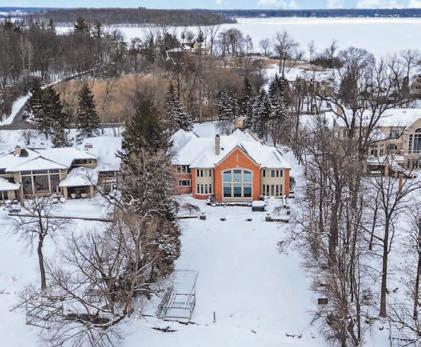


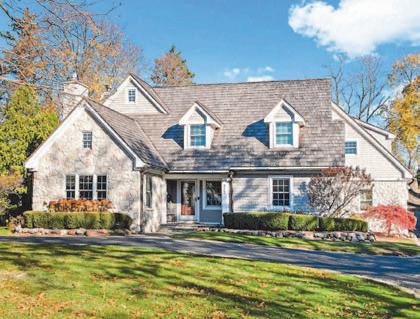





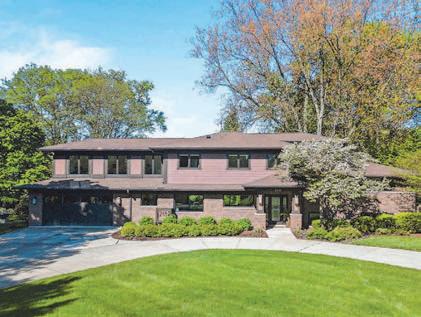






























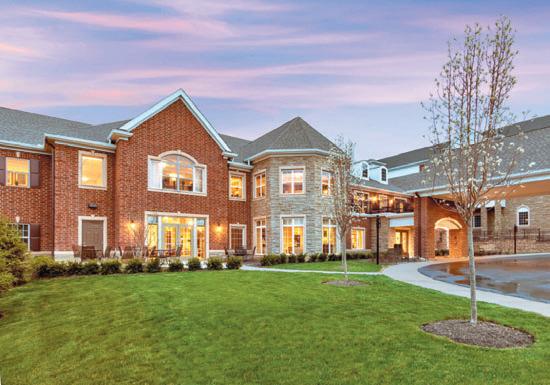
Jim Beachum and Dick Roeser, childhood friends, founded Beachum and Roeser 50 years ago in 1976. Initially the company built high quality single family homes and condominium properties. In 1979, the company’s focus shifted exclusively to the development and management of high quality, upscale commercial office properties which serve the medical, therapy, legal, financial and business services market in southeastern Michigan.


Beachum and Roeser properties are well known for their classic, traditional Williamsburg and Georgian architecture styles, which feature a meticulous attention to detail. Many of the properties have won awards for beautification and landscaping excellence. To date, Beachum and Roeser have developed nearly one million square feet of premiere commercial office space in southeastern Michigan.
Beachum and Roeser also expanded into third party property management services focusing exclusively on quality commercial office space. Third party property owners have appreciated the pride, commitment and outstanding service that the Beachum and Roeser team provides on a daily basis.
In 2005, William “Bill” Beachum, Jim’s son, joined the company after an exemplary law enforcement career as a Special Agent with the Federal Bureau of Investigation. When Bill came aboard he assumed responsibilities for broker relations, leasing, construction management and vendor management. In 2014, Bill was named President.
We here at Beachum and Roeser take great pride in the vision and accomplishments of our founders, Jim and Dick. They not only developed, owned and managed wonderful properties but most importantly established a rich heritage of trust and service. We operate with honesty and integrity. We value and respect our broker partners and tenants. We focus on serving our customer’s needs first and strive to exceed expectations in every one of our interactions.
Doing business with Beachum and Roeser provides a “different level of trust and service.”

Beachum and Roeser currently owns and manages upscale, conveniently located commercial office properties in Ann Arbor, Auburn Hills, Bingham Farms, Birmingham, Bloomfield Hills, Plymouth, Southfield, Troy


PUBLISHER
David Hohendorf
NEWS EDITOR
Lisa Brody
NEWS STAFF/CONTRIBUTORS
Hillary Brody Anchill | Cris Braun | Dana Casadei | Tracy Donohue | Stacy Gittleman | Austen Hohendorf
Grace Lovins | Jeanine Matlow | Katey Meisner | Gigi Nichols | Susan Peck | Carla Schwartz | Michael Scott | Mark H. Stowers
PHOTOGRAPHY/CONTRIBUTORS
Laurie Tennent | Matthew Cromwell | Theodore Michael | Mackenzie O'Brien
Laurie Tennent Studio
ADVERTISING DIRECTOR
David Hohendorf
ADVERTISING SALES
Mark Grablowski
GRAPHICS/IT MANAGER
Chris Grammer
OFFICE
970 E Maple Road / Ste. 3, Birmingham MI 48009 248.792.6464
MAILING
PO Box 1630 Birmingham MI 48012-1630
DOWNTOWN NEWSMAGAZINE GOALS/MISSION
The personnel at Downtown Newsmagazine bring a special commitment to the publishing effort, reinvesting in the local communities and working to make sure the Birmingham/Bloomfield area reaches its highest potential. Our mission dictates that we strive each month to provide a solid news and advertising product that local residents look forward to reading. Our goal is to build a community of informed citizens through the efforts of our passionate team. We are innovators producing products that go well beyond what others offer.
DISTRIBUTION/SUBSCRIPTIONS
Mailed monthly at no charge to most homes in Birmingham, Bloomfield Township and Bloomfield Hills. Additional free copies distributed at high foot-traffic locations in Birmingham/Bloomfield.
For those not receiving a free mail copy, paid subscriptions are available. To secure a paid subscription, go to our website (downtownpublications.com) and click on “subscriptions” in the top index and place your order or scan the QR Code here.

We welcome feedback on both our publication and general issues of concern in the Birmingham/Bloomfield community. Opinions can be sent via e-mail to news@downtownpublications.com or mailed to Downtown Publications, PO Box 1630 Birmingham MI 48012-1630. If you are using the mail option, you must include a phone number for verification purposes. MULTIPLE AWARD-WINNER FROM SOCIETY OF PROFESSIONAL JOURNALISTS




















Questions for Birmingham I have some questions for the Birmingham City Commission and city staff:
NEXT/YMCA:
a) The city owns the YMCA facility. What is the one-year operational cost to run the YMCA building and grounds? Heat, electricity, snow removal, cleaning, landscape, maintenance, etc.? b) What are the foreseeable major expenses for the next five years: roof, HVAC, repair, maintenance? c) What are any large capital costs expected in the next five years? d) Is there any plan to make Next facility fiscally selfsustaining, or is it just a big money pit?
THE COMMUNITY HOUSE:
a) If a magic genie gave TCH to the city free of charge, no cost, no debt, what would be the one-year operational cost to run the building and grounds? b) What are the foreseeable major expenses for the next five years? c) Large foreseeable capital costs in next five years? d) Any plan to make TCH fiscally self-sustaining? In the black or a money pit?


CITY PLANS:
a) How do the Next Senior Center and The Community House fit into the city’s vision/plan for the next 20 years? Is there a plan? Or is this all just ad hoc reactive decision making?
Chuck Moss
Birmingham (Chuck Moss is a former city commissioner, state lawmaker and most recently a member of the county board of commissioners)








Oakland Confidential is a column of political gossip/news, gathered both on and off-therecord. We welcome possible items for this column which can be emailed to: OaklandConfidential@DowntownPublications.com. All sources are kept strictly confidential.
SAY IT AIN’T SO: A prominent Democratic fundraiser, with significant ties to several local candidates running for state office in 2026, has been revealed to have had a grandfather who served in the Nazi regime’s Army in World War II. According to numerous publications, Kelly Neumann, a trial attorney from Traverse City and principal of Neumann Law Group who is serving as co-chair of the finance committees of Senate candidate Mallory McMorrow and gubernatorial candidate Jocelyn Benson, posted on Facebook and Instagram on November 11, 2024 – Veteran’s Day – honoring veterans, notably her grandfather, who was featured in the since-deleted posts, in several photos in full Nazi regalia, according to Jewish Insider, Fox News and MSN – including one in what appears to be an officer’s uniform. “Interesting story, I do not talk much about but my Grandfather, Albert Neumann, was on the German side in WWI & WWII.” She further wrote that he was one of her best friends. MSN noted that David Wolpe, a prominent American rabbi, shared the outlet’s article on her post to X and captioned it: “This is so outrageous I had to double check it wasn’t a hoax.” Following the reveal of Neumann’s family history in late January, she co-hosted a fundraiser for McMorrow, one of several she has cohosted, and she has co-hosted several for Benson – along with just about every Democrat who has run for office, past and present, from Governor Gretchen Whitmer and Senator Gary Peters to those currently running. Of course, Dem candidates likely never knew her history, and as one operative said, “She’s a very wealthy woman who posted an insane piece.” She hosted a fundraiser for U.S. Senate candidate Congresswoman Haley Stevens in March of 2025 which raised $50,000, right before she launched, and a December 2025 event for Jeremy Moss, who is running for Congress to replace Stevens.. Arik Wolk, a Stevens’ campaign spokesperson, rushed to distance the congresswoman from the fundraiser, telling Jewish Insider, “Haley rejects antisemitism in all forms, and has spent her career standing up to and calling out hate. Had Haley seen the post celebrating Ms. Neumann’s grandfather’s service to the SS, Ms. Neumann would not have hosted that event.” McMorrow’s campaign declined to comment on the record, noting Neumann is attached to most Michigan Democrats, past and present.


ROCK ‘EM, SOCK ‘EM: One day you’re friends, the next, foes. So it seems for Democratic U.S. Senate candidates Abdul El-Sayed and Mallory McMorrow. Currently the three-way race – Oakland Congresswoman Haley Stevens is the third, and most moderate leg of the stool – has seen the most acrimonious action between El-Sayed, a staunch progressive who counts Senator Bernie Sanders as his backer and mentor, and McMorrow, who straddles the center some days and further left others. El-Sayed has been accusing McMorrow of “stealing” some of his positions, such as his, and Sanders, ‘Medicare-for-All’ which firmly prohibits citizens from keeping their private medical insurance if it passes. At a recent union event in Washington DC, however, it seemed that El-Sayed was leaning McMorrow’s way, after she allegedly made clear while there was a need for improvements in healthcare, union members could keep their healthcare – and he seemed to say the same thing. According to Punchbowl, he also accused McMorrow of copying his positions on regulating data centers and her stance on ICE – as well as accepting PAC money in previous campaigns, something she currently is disavowing. “I said ‘abolish ICE’ back in 2018,” El-Sayed is quoted by Punchbowl .“Now one of my opponents is going to ‘ICE out’ protests, but won’t actually talk about what we do. So we get our ICE out, but then we’re going to reform ICE,” accusing her of “co-opting” his left-wing




positions. A lot of centrists – and right wing, too, for that matter – may feel that way about ICE these days.
















The heat now being generated by the U.S. Senate contest in Michigan has a great deal to do with the early voting dates for the August 4 primary election in Michigan. Technically, absentee ballots, the main way many voters participate, have to be available 40 days ahead of an election. With March just around the corner, there are about four months remaining before the electorate starts casting ballots, which is why campaigns are buckling down, worrying not just about candidate name identification numbers but also starting to draw issue contrasts with other candidates in the Senate contest. For Democrats in the Senate contest – Mallory McMorrow, Haley Stevens and Abdul ElSayed – most polling shows the race to be fairly close as we enter the next phase of the race. McMorrow has made substantial gains since she first announced for this office, but most polling shows the three contenders within a couple of points of each other when it comes to name recognition. But, depending on the poll, there is still anywhere from 15 to 30 percent of the voters either undecided on who they support or whether they have even heard of the candidates. On the campaign finance side, Stevens seem to be in the best shape. The Congresswoman raised $2.11 million in the last quarter of 2025 and has $3.05 million cash on hand. El-Sayed raised $1.77 million in the same time period and has $1.97 million cash on hand. McMorrow raised $1.74 million and has $1.24 million on hand. Several theories about this race abound. One, noted in a couple of national publications, has it that Stevens, considered the favored candidate by D.C. Democrats, is experiencing a softening in support due to low excitement in her campaign. Others posit that her cash advantage will serve her well as McMorrow, with a higher burn rate, will have to spend even more to boost her position in the coming months. Yet other prognosticators note that a state-wide contest is heavily determined by the votes cast in southeast Michigan, which could work to the advantage of Stevens.
Rogers, the assumed GOP standard bearer in the November election, raised $1.96 million in the last quarter and has $3.45 million cash on hand. But former U.S. House member Rogers, a Livingston County native who now claims residency in White Lake of Oakland County, just can’t seem to catch a break when it comes to his image. Part of his problem is that he was considered years ago to be more of a reasoned and traditional conservative who has transitioned into a Trump party suck-up in the hope his second run for the U.S. Senate from the Mitten State in 2026 will turn out better than when he ran agains incumbent Senator Elissa Slotkin just two years ago. Some of his critics point to how he spent his time after 14 years in the House as he reportedly built up his fortune counseling companies that had ties to China and his work with Saudi Arabia interests pushing for more relaxed regulations on their nuclear ambitions. Self-inflicted damage, to be sure. But his unflinching backing of the current administration’s tariffs have not helped, especially in light of a state report from last November showing that Michigan exports have taken a major hit. Wheat exports are down 89 percent; cherries, down 62 percent; apples, down 58 percent ;and soybeans, down 46 percent. And don’t forget the nearly $11,000 increased expense to build a new home with rising material costs. Rogers dismissive response: “The shoe is going to pinch every once in a while.” Now we have his response to the Trump threat to not opening the Gordie Howe Bridge which has been under construction since 2018: “The right thing to do.” Even The Washington Post, in a February editorial opinion piece, noted the problems facing Rogers, among them, “Tariffs are about as popular as an Ohio State bumper sticker at an Ann Arbor tailgate. Made in America increasingly feels like Taxed in Michigan.”
BUY AN OFFICE: As Democrats coalesce around Secretary of State Jocelyn Benson as their clear gubernatorial choice, as former Detroit Mayor Mike Duggan has staked out the independent lane, Republicans appear to be in a turmoil, despite Macomb/Oakland Congressman John James leading current polls. According to a prominent Republican with his ear to the ground, the MAGA crowd does not like James – and they














































likely won’t vote for him in the primary, despite what pollsters tell us. “He’s very religious when he talks, with a huge ego. But he’s an empty suit. He believes he’s going to be president one day,” the politico said. However, as we (and other media) have reported, President Donald Trump was very upset James decided to leave his 10th District congressional seat and run for governor without his permission – Republicans have a very narrow lead in the U.S. House. Further, it seems Mrs. James absolutely does not want to live in Macomb any more – she’s over it. Enter Bloomfield Hills businessman and failed (2022) gubernatorial candidate Perry Johnson – who after spending $8 million last go round and not even qualifying to get on the ballot – is now spending $9 million of his own dough in 60 days (you’re seeing lots of him on TV, aren’t you?) to make sure Michiganders know his name. He’s using the same political guru – John Yob – who failed to make sure his signatures qualified last time for the ballot, and for those wondering, yes, he believes he can win, according to the prominent Republican, who likens him to Trump in 2016. Johnson also added Parker Maddock, daughter of former Michigan GOP chair Meshawn Maddock and state Rep. Matt “Mad Dog” Maddock (R-Milford) to his team. “There’s a lot of ego. When you have money, you think you can do anything. He’s an efficiency expert. He says he’ll get rid of taxes. Some people believe it.” As for a coveted endorsement from Trump, the same Republican referenced Trump’s transactional history. “Johnson could write him a check for that endorsement.” He emphasized James will not receive Trump’s golden ticket. If not Johnson, who could? “Mike Cox (former Michigan attorney general) has represented Trump before. Tom Leonard and Aric Nesbitt are good, but Cox would be the best – he’s smart, he had a budget in the AG’s office, and he’s been very successful in the private sector. That says a lot.”
HOLLIER SCORECARD: Even we were having a tough time keeping track of what office former Michigan State Senator Adam Hollier is gunning for nowadays. Democrat Hollier, who served in the Senate for one four-year term starting in 2018, had set his sites on a U.S. House seat in 2020 but came in second in a large field of contenders in the party primary behind Shri Thanedar (D-Detroit). Hollier tried a second time in 2022 but his nominating petitions were ruled as fraudulent and he never made the ballot. Then last year he said he was giving another try for a seat in Congress but dropped that effort and announced last September that he would try for the party nomination this year for Michigan Secretary of State. The endorsements poured in from a number of local elected officials, among them, Oakland County Executive Dave Coulter. Then along comes lieutenant governor Garlin Gilchrist II who recently abandoned his campaign for governor in 2026 and jumped into the SOS contest. So Hollier in early February saw the writing on the wall. He dropped from the SOS race and announced that he would run once again for the Michigan Senate. This time for the third senate district which includes a portion of Detroit, Royal Oak, Clawson, Sterling Heights, Warren and Troy. Democrat Stephanie Chang now holds that Senate seat but she is facing term limits. It’s a Democrat-leaning district so the primary winner will likely be the next state Senator. Other Democrats have already announced for this Senate seat – Korey Hall, Eboni Taylor, Theodore Jones and Bobby Christian. If Hollier survives the primary, current term limitation rules say he could serve two more four-year terms in the Michigan Senate.





As if lifted from a “My Most Unforgettable Character” series, Detroit Country Day School teacher Beverly Hannett-Price is just that to students she has had the honor of teaching at the school for the last 33 years.
The passionate English teacher has been a groundbreaker and left an indelible mark on both her students and the educational community since beginning her teaching profession in Albion, Michigan, nearly 68 years ago.
Her lifelong achievements that broke the glass ceiling for women include: first female teacher in Detroit Country Day Upper School; first female Detroit Country Day Upper School Department Chair; and first female dean at Detroit Country Day School. Now the energetic 90-year-old has made history again. At a surprise ceremony in the school’s Performing Arts Center recently, Hannett-Price was presented with the Guinness World Record for the longest career as a language teacher (female).
“I’ve not only taught consecutively but I’ve only missed five days since I began in 1958,” added the still-spry educator. “I’ve had a lot of surprises in my long life but getting this award was one of the biggest.”
The tale of her career has gone global with major news outlets like People magazine, Associated Press, New York Post, television media and more, calling to talk with her about her storied life. Feeling a bit like a celebrity is nice but Hannett-Price would rather be known, as a colleague put it, “not only the length of her career but the depth of her influence.”
“I try to connect with every student I come in contact with and feel my job is to find a way to help make them be excited to learn and explore and grow into all they can be – and to encourage wherever they show a real passion,” she said.
Some notable student connections that have lasted through the decades include former Microsoft CEO Steve Ballmer, and Tony and Emmy Award winning actor and producer Courtney B. Vance, who flew in from Los Angeles to surprise her at the Guinness World Record ceremony. “She taught me to write and put thoughts together and I’ve stayed in touch with her because of that,” he was quoted as saying.
“We’ve been there for each other,” said the dedicated Hannett-Price. “I flew out to California last year when he was getting his star on the Hollywood Walk of Fame because I wanted to be there to support and celebrate with him.”
The late actor Robin Williams was a student at Detroit Country Day while Hannett-Price was teaching and her husband, also an educator there, had him in class. Williams crossed paths with the beloved English teacher and according to local lore, her impact helped create his Mrs. Doubtfire character with some of her nuances.
As a mother of two daughters who are also in education and a grandmother, Hannett-Price says she has no plans to retire anytime soon. When asked what legacy she feels she will leave the thousands of students she has impacted in her lifetime, the inspirational nonagenarian reflects on a favorite – Living Words Project – a creative initiative that blends language and art.
“I also tried to instill a love of the English language, requiring them to learn twenty new vocabulary words a week, something that will better them for the rest of their lives,” she said. “Finally, I hope they all take my philosophy that I tell all students on the first and last days of school, 'Be the best version of yourself you can possibly be. There’s only one of you. Stay curious, be open and accepting and a positive force that the world needs so much today.'”
Story: Susan Peck




BY STACEY GITTLEMAN
The United States of America was built on rugged individualism and free thinking. That being said, this country has always had its share of vaccine-hesitant or antivaccination movements. They stretch back to the time when British scientist Edward Jenner discovered the antidote for smallpox in 1721.
In the New World, Boston and parts of Massachusetts were suffering through a smallpox outbreak that was killing thousands, according to reports on the history of vaccines from the National Institutes of Health. Soon, a local reverend and two doctors established a variolation program that was positively received by many volunteer recipients. However, there were adversaries of the program. As smallpox spread, so did the vaccine controversy. At the height of the epidemic, a bomb was thrown into the reverend’s house.



Smallpox and the quest to eradicate it played a role in the Revolutionary War. In 1766, American soldiers under George Washington were defeated in Quebec by the British troops because of a smallpox epidemic that significantly reduced the number of healthy American troops. Soon after that, Washington mandated that all enlisting soldiers had to be variolated before they were put into military maneuvers.
Debates and movements against smallpox inoculation carried on well into the 18th and 19th centuries fueled by religious objections and fears that the vaccine itself would sicken recipients and mistrust of government-backed health mandates.
This led to the formation of the country’s first anti-vaccination leagues in the late 1800s.
According to reports from the College of Physicians in Philadelphia, the Anti Vaccination Society of America, the New England AntiCompulsory Vaccination League, and the Anti-Vaccination League of New York City waged court battles to repeal vaccination laws in several states, including California, Illinois and Wisconsin.
Between 1902 and 1903 Boston endured another smallpox outbreak that resulted in 1,596 cases and 270 deaths. The Board of Health of Cambridge, Mass., mandated all city residents to be vaccinated against smallpox.
City resident Henning Jacobson refused vaccination because he perceived that the law violated his right to care for his own body. In turn, the city filed criminal charges against him. After losing his court battle locally, Jacobson appealed to the U.S. Supreme Court. In 1905, the court ruled in the state’s favor, deciding that the state could enact compulsory laws to protect the public in the event of a communicable disease. This was the first U.S. Supreme Court case concerning the power of states in public health law.
“A look at literature going back into the 1800s shows that vaccine mandates were portrayed as being a horrific affront to personal liberties,” said Dr. David Gorski, a professor of surgery at Wayne State University. “For much of the modern era, popular culture has tended to caricature anti-vaccine activists as fringe or ‘granola’ left-wingers clustered on the coasts. When I first started writing on this topic, the stereotype of the anti-vaccine movement was that it was all these hippies from the West Coast, like in Marin County or San Francisco. But from the start, it was a false assumption to make it sound like there was not a right-wing component that was there all along.”
Gorski said in recent history, the anti-vax movement picked up steam through the Tea Party Movement.
“Since around 2010, the anti-vaccine movement decided it was a winning strategy to lean into the whole appeal to sentiments of freedom. And it worked. Over the next 15 years, there was a noticeable rightward shift in the political center of gravity of the anti-vaccine movement,” according to Gorski.
Then came the Disneyland measles outbreak in late 2014. According to records from the National Institutes of Health, the outbreak spread to seven states, Canada and Mexico and infected a total of 275 cases before it was finally declared over in April 2015.
The outbreak sparked debate about vaccine hesitancy and the vaccine opt-out movement. Afterwards, organizations like the American Academy of Pediatrics and the American Medical Association advocated aggressively for eliminating non-medical exemptions.
In turn, California in 2015 passed SB 277 that eliminated nonmedical exceptions in the state. But this legislation, according to people like Gorski, only further ramped up the drumbeats from the anti-vax movement to dig in their heels and resist vaccine mandates.
Conversely, in Michigan, Republicans at the state Senate in May 2025 introduced House Bill 4775 that would amend the Elliott-
Larsen Civil Rights Act to prohibit discrimination based on “vaccination status.” Additional proposed legislation would further prevent Michigan from enforcing vaccine mandates for schoolchildren and require the state to extend civil rights protections to residents who reject immunizations.
Downtown reached out several times to Rep. Jim DeSana, (RCarleton), the main sponsor of the legislation package, but he did not respond to requests for comment.
Anti-vaccination movements throughout the country’s history have come and gone. But according to experts interviewed here by Downtown, never has there been a time in American history when the anti-vaccine movement captured so much sway, its proponents and champions risen to such high levels in the federal government, as we are seeing today.
The United States of America is teetering on the edge of losing the measles eradication status it gained in 2000. Canada already lost its status in November 2025, so health officials say the United States will not be far behind.
Domestically, measles cases exploded from 285 in 2024 into the thousands in 2025, with the first three measles fatalities in the U.S. in a decade. Rather than addressing this public health crisis, current policy reversals are likely to accelerate this dangerous trend, and some are claiming that all safety guardrails have been removed from the nation’s vaccination program.
With the appointment of RFK Jr. as the head of the U.S. Department of Health and Human Services (DHHS), the country is experiencing a significant backslide in the direction of its vaccine policies, which some say has been a backlash against stringent public health measures from the COVID-19 pandemic era.
In June of 2025, RFK Jr. singlehandedly fired all 17 members of the Center for Disease Control’s (CDC) Advisory Committee on Immunization Practices (ACIP), the governing body that provides oversight and recommendations on vaccines, which was considered the North Star for the pediatric practice in the United States. He replaced them with new appointees, many regarded as pseudoscientists or plain out “quacks” who will advance an anti-vaccine agenda, some for their own personal gain, according to interviewed sources.
In December 2025, the newly formed ACIP scrapped the 34-yearold guideline that all newborns receive the Hepatitis B vaccine in the hospital, a measure that has been regarded as completely safe and a preventative measure against long-term chronic conditions like kidney disease and cancer.
In January 2026, the ACIP lowered recommended vaccinations from 17 to 11.
Three of the six immunizations the Centers for Disease Control and Prevention says it will no longer routinely recommend — against hepatitis A, hepatitis B, and rotavirus — have prevented nearly 2 million hospitalizations and more than 90,000 deaths in the past 30 years, according to the CDC’s own documentation.
The committee also dropped blanket recommendations for vaccinations against respiratory syncytial virus (RSV), meningococcal disease, flu and COVID, and now recommended only for children at high risk of serious illness or after "shared clinical decision-making," or consultation between doctors and parents.
RFK Jr.’s departure from established medical practices is considered so reckless and jarring to the state of American public health that Oakland County Congresswoman Haley Stevens on December 12, 2025, filed articles of impeachment demanding his removal, the same week a case of measles was reported in Oakland County.
Bolstered by a coalition of 14 Nobel Laureates and other scientists, Stevens’ articles of impeachment specifically pointed out
his dereliction of duty and his lying under oath to protect the nation’s vaccination program during his confirmation hearing.
The impeachment articles also include:
• Severely restricting access to vaccines, spreading absurd conspiracies, and putting lives in danger, including unfounded claims that Tylenol is harmful;
• Cancellation of research on mRNA vaccines;
• Closing resources working to prevent future pandemics;
• Hiring David Geier — who was disciplined by Maryland medical regulators for practicing without a medical license — to reinvestigate the long-discredited theory that vaccines cause autism.
“The threat RFK Jr.’s policies pose to Michiganders’ health and human safety is only growing,” Stevens told Downtown in a phone interview. “We’ve seen an uptick in measles cases after we achieved eradication in the United States and cuts to scientific research. I kept hearing from (bipartisan) parents, educators, scientists and community members about how frustrated, worried and helpless they felt. After an incredibly serious process of calling on him to reinstate funding, to listen to scientists, to reconsider, even to resign, I was given no choice but to act. Filing these articles of impeachment was my last resort — but it is still the right thing to do.”
Stevens views RFK Jr’s placement as the leader of the DHHS as a direct attack on science and a threat to Michiganders’ health and safety.
“What worries me most is that we are turning science upside down,” Stevens said. “We’re now seeing even polio potentially called back into question. Pregnant women are being blamed for taking something as basic as Tylenol. This is a rejection of science, and that rejection is putting the health and safety of people in Michigan at real risk.”
Stevens said she is hearing from the medical community in Michigan – members who span the political spectrum – and their concern as they watch their legacies of work and research and building health infrastructure is being undermined, while school officials are dismayed that overturning vaccine recommendations place schoolchildren in danger of exposure of diseases that are largely preventable through vaccines.
“In our schools, we are also seeing an expansion of non-medical exemptions in our schools that can expose other children to preventable disease,” Stevens said. “Parents are confused and scared because the long-standing vaccine recommendations they trusted are being undermined just as we see an increase in measles cases. When you give license to reject vaccines, you’re not just making a statement — you’re increasing the risk of outbreaks in our schools and our communities.”
Stevens, who is running for the U.S. Senate, said she understands the “long game” in Congress, said that this attack on public health cannot wait until after the midterm elections, saying “We have to keep the drumbeat up on the threats to the health and safety of Michiganders, especially our children.”
With RFK Jr. leading the drumbeat, egged on in a large part by the Make America Healthy Again (MAHA) movement, public health officials and academics of political science and philosophy say there has never been poured so much confusion onto the public as to how or when to vaccinate.
But are vaccine naysayers strong enough to influence the midterm elections? Sources interviewed by Downtown say the jury is still out.
Jess Steier, DrPH, PMP, is founder and CEO of Unbiased Science, an educational outreach organization that since 2020 has delivered public health messaging through social media, online symposiums, and investigative longform articles that reach over 30 million
people. At best, she said that there is a part of the American population that is not anti-vax, but confused. And currently, the CDC is only adding to this confusion.
“I don’t like the term anti-vax,” admitted Steier. “Not everyone who questions science is anti-science, and not everyone who has questions about vaccines are anti-vaxers. People are doing the best with the information that they have, and they may not have been exposed to the best, science-based information.”
“The majority of Americans still want access to vaccines and an immunization schedule for their children,” Steier stressed. “On one hand, you have scientific and medical organizations saying one thing, and now the federal government is saying another. That is leading to more confusion. Let’s just say it is a frustrating time to be in public health.”
Though she is not a political scientist, Steier said that the growing libertarian MAHA movement has a loud voice and the ear of elected officials and candidates.
Steir said people in the MAHA movement like RFK Jr. not because they understand any of his policy positions, but because he validates their frustration with institutions that seem disconnected from their lived experiences.
“The MAHA movement has tapped into their mamma bear instincts who believe they know what is best for their children and wish to find and advocate for their children’s health in an autonomous way,” Steier said. “From RFK Jr., we get this messaging that Americans are sick, that we have so many chronic illnesses, and we feel like there is something wrong and big changes are needed. RFK Jr. tapped into this. “
Recently, Steier participated on an online panel event with a nonpartisan nonprofit organization that aims to bridge the political divide on a multitude of issues. The topic of the debate was: “Is RFK Jr. good for America’s Health.”
Many admitted they had absolutely no idea of what policies RFK Jr. represented or what his qualifications were, but what they heard was that he represented a change to the status quo when it comes to public health.
On her organization’s Substack, she wrote about three observations she made from participating in this debate: Americans are desperate for a change to the status quo on how public health is approached, the COVID pandemic had a profound effect on the way the public views public and scientific health institutions, and social media circulates a plethora of misinformation on public health, including about vaccines.
Steier added that RFK Jr. has made matters worse by vilifying healthcare providers, pharmaceutical and insurance companies, accusing them of making a profit by keeping Americans sick.
She wrote: “This isn't just wrong; it's the systematic dismantling of some of our last remaining trusted messengers. It's one of the thorniest problems in science communication, and I honestly don't have a good solution.”
Another observer of the public’s perceptions of vaccines is Jennifer A. Reich, a professor of sociology at the University of Colorado in Denver. Reich is the author of the 2016 book Calling the Shots. Since 2007, she conducted hundreds of interviews with parents to understand their views on vaccines. She said there was a time when those who were skeptical or hesitant ran the gamut on the political, educational and socioeconomic spectrum. Now, she observed, it is mostly those who lean politically to the right.
What she is also observing is the amount of pressure put on parents these days to believe that they must take charge of the health and well-being of their children, and it is their responsibility to question mainstream authority.
“Before COVID, vaccine hesitancy was entirely nonpartisan,”
said Reich. “There were equal approaches to decision-making on vaccines on the left and the right. The families I interviewed came from conservative and progressive leanings, but they said very similar things about vaccines. That all changed after COVID, and it has become politicized in a way I had not seen before.”
Reich said vaccine hesitancy has grown stronger among conservatives and Evangelical Christians. This hesitancy centers around the COVID vaccine, but she fears this is spilling over into conventional preventative immunizations like measles, and suspects this hesitation is having a stronger hold in politics.
From a voting standpoint, Reich said her research shows that identity politics is stronger than ever. And how and when the United States loses its measles eradication status, as Canada just did last November, this may shape the way people vote this coming November.
“Electoral politics are complicated in ways they haven’t been in the past,” Reich said. “Research suggests that voting now is more tied to identity than issues compared to just a few decades ago. I think we're going to see this play out if people become unhappy if they sense that the institutions which they used to hold in high regard (like the CDC) are now seen as places of chaos.”
Reich added that even those who hold RFK Jr. in high regard, like those in the MAHA movement, may show very little support in what the CDC is doing in its making these changes to vaccine recommendations.
According to an October 2025 Washington Post and KFF “Survey of Parents” fielded just before the CDC announcement to cut recommended childhood vaccines, just 26 percent of parents thought the CDC recommended “too many” childhood vaccines, while 52 percent thought the CDC recommended “about the right amount” of vaccines for children. Sixteen percent of parents expressed uncertainty and were unsure of the agency’s recommendations. About 38 percent of parents surveyed identified as supporters of the MAHA movement.
In the survey, 56 percent of MAHA parents trusted RFK Jr. to provide reliable information about vaccines, more than twice the share of 23 percent of non-MAHA-supporting parents who say the same. While just nine percent of MAHA parents say they are “antivaccine,” 55 percent say they are “in the middle” when it comes to vaccines.
Reich said the MAHA movement believes in taking many aspects of health, including know-how on vaccines, into their own hands. Rather than putting trust into longstanding expertise of healthcare and public health professionals, the MAHA movement asks parents to “do their own research.”
In interviewing hundreds of parents on this topic, Reich has witnessed what this pressure looks like.
“In my interviews of parents, I learned that people are most critical of the ones who just follow recommendations (of their pediatricians) blindly, who don't question, who don't ‘do their own research,’” Reich said. “Good parenting is now defined as vigilance for one’s family and the ability to make individual and personalized decisions. The problem is, when it comes to public health and vaccines, it doesn’t work that way. In broader society, there are interventions we cannot just choose or not choose because they impact the people around us. The ability to control infectious disease is one of those things.”
Dr. Natasha Bagdasarian, Michigan’s chief medical executive, painted a sobering picture of where vaccination rates are heading in the state, as well as the number of families filing for non-medical exemptions for vaccines. She had hoped that after the pandemic, when vaccine rates tumbled, immunizations would pick up again. But only the opposite is occurring.
Bagdasarian explained that Michigan had worked for years to
improve childhood and school vaccination coverage.
With each state setting its own vaccination requirements to attend public schools, Michigan requires children entering kindergarten must have started their immunization rounds for Diphtheria. Tetanus, Pertussis. Measles, Mumps, Rubella, Varicella (chickenpox), Hepatitis B, and Polio.
By the time they enter the seventh grade, Michigan schoolchildren must have completed their immunization schedules for Diphtheria. Tetanus, Pertussis. Measles, Mumps, Rubella, Varicella, Hepatitis B, Polio, and Meningococcal conjugate.
By 2019, Bagdasarian said state childhood immunization rates for preschool-aged children had risen to 75 percent, not enough to reach the 95 percent needed for herd immunity, but it was going in the right direction. When COVID hit, that number plummeted to 69 percent. Her hopes that this was a temporary setback were dashed as vaccine rates continue to fall. Now, statewide, childhood vaccination rates for the age set of five and under are at 68 percent.
Vaccination rates are a little higher for schoolchildren by the time they reach kindergarten and the seventh grade, around 89-90 percent, but they are still below the rates set before COVID, which were averaged between 93-95 percent statewide.
From a bird’s-eye view, the numbers may not seem so bad. But at the granular, county-by-county or school-byschool level, Bagdasarian warned that the statistics get more concerning. From a geographic standpoint, Dr. Bagdasarian said there are distinct pockets and regions in the state where vaccination rates are low and medical exemptions are high. The number of pockets with low immunization rates – under 70 percent – is growing.
“In 2011, we had a geographic cluster of eastern and northern counties that had a vaccine coverage rate of less than 70 percent,” Bagdasarian said. “By 2017, there were only eight counties that had vaccination rates of under 70 percent. But by 2024, the number of counties with vaccination rates under 70 percent exploded. We see them in southeast Michigan along the Ohio border, in northwest Michigan, and in the northeast reaches of the Upper Peninsula. Now, most of Michigan’s counties have immunization rates that fall below 70 percent.”
With that said, the state’s building-by-building statistics of lower-than-needed vaccination counts show there is an evergrowing risk for an outbreak of the most contagious deadly disease known to man: measles.
“At the building level, we’ve got schools where 98 percent of people are vaccinated, and then we’ve got schools where 30 percent of students are vaccinated, or 40 percent of students are vaccinated,” Bagdasarian said. “What that means is, if there is a single measles case in one of those low vaccination schools, those schools will be shut down because of the potential for large outbreaks.”
Falling vaccination rates are coupled with rising non-medical exemption rates, giving parents in the state greater wiggle room to either put off or completely hold off from getting their kids vaccinated and still allowing them to attend school.
According to 2024 data from the Michigan Department of Health and Human Services, vaccination waivers are highest in counties in the thumb and in the western reaches of the Upper Peninsula, between eight and 22 percent. In Oakland County, between seven and nne percent of schoolchildren have vaccine waivers. Nationally, non-medical exemption rates for school vaccine mandates rose to nearly four percent in 2024–25, up from pre-pandemic rates of 2.5 percent. Seventeen states now report exemption rates above five percent.
Michigan does not allow nonmedical exemptions unless the child’s caregiver completes an inperson education requirement with their local county health department. This is an appointment
outside of their pediatrician’s practice. At the appointment, a public health nurse or educator reviews the diseases the vaccines prevent, explains risks and benefits of vaccination, answers questions and addresses concerns and ensure that parents are making an informed decision.
If, after the session, the parent still chooses not to vaccinate, the county health department issues an official stamped State of Michigan nonmedical waiver form.
Upon receiving this county-certified waiver, the public school records the exemption in their immunization system and keeps it on file. A new waiver is required when the child enters a new school level (from grammar school to middle school level) or when the child changes schools or school districts.
In February, the St. Clair County Health Department is easing the process for parents to attain non-medical vaccination waivers. It is reminding residents of their waiver rights, and allowing residents who seek waivers to bypass an educational session required by state rules before gaining a waiver.
“Michigan has one of the most liberal exemption policies for vaccines,” explained Bagdasarian. “Not only do we allow medical and religious exemptions, but we also allow any sort of personal philosophical reasons to be included as to why someone will not vaccinate their children. Our exemption rates have been going up, and our routine immunization uptake rates have been going down. This is a trend that took hold during COVID and I was hoping by now this trend would be turning in the other direction but it is not.”
Bagdasarian said public health and healthcare professionals must approach the issue of declining vaccination rates with empathy for parents.
“Every parent wants to make the best possible decision for their child,” Bagdasarian said. “There is not a parent in the world who is saying, ‘I’m going to use my child as a political card.’ Every parent wants to do the right thing for their kid.” Whenever I enter a conversation with parents, I understand they are seeking the best possible information to decide about vaccines. But there is a difference between parents who just want more information and those who weaponize distrust.”
Bagdasarian said that vaccines are the victims of their own success. Most people today have no living memory of seeing a child afflicted with polio in an iron lung, or a child in the hospital due to complications from mumps or diphtheria, for example.
“The success of vaccines has made these diseases invisible,” Bagdasarian said. “At times, we need to give the public historical context and some good storytelling to make them understand what life was like before we had a nationwide vaccination program.”
For example, it was just two generations ago that chickenpox was a common childhood disease. But chickenpox has harmful, if not life-altering, impact, as Bagdasarian remembers when she was a young doctor in her clinical rotations.
“I once cared for a young woman who was nonverbal and bedbound her entire life and had severe mental and physical disabilities,” recalled Bagdasarian. “This is because her mother had contracted chickenpox during her first trimester of pregnancy. And unless you have seen those types of outcomes, you don’t realize how horrific these diseases can be that are now easily preventable through vaccines.”
Bagdasarian also reminds the public of what life was like before the polio vaccine. Fears of spread were highest during the summer, when children could contract the disease in swimming pools.
“Every summer, mothers would be terrified if their kid got a fever, because they didn’t know if it was a passing (virus), or if it was polio, and their child was going to end up paralyzed,” Bagdasarian explained. “When the polio vaccine was finally licensed, church bells rang around the entire country. Mothers wept tears of joy
because they no longer had to be (scared of polio) anymore.”
Bagdasarian said that because of a myriad of false messaging, the same unanimous enthusiasm did not exist when vaccines for COVID emerged in the spring of 2021.
Though Bagdasarian would not specifically comment on RFK Jr., she noted that “disturbing seeds are being sown” at the federal levels of public health administration that do not serve parents or children.
Because of this confusion engineered by the CDC, pediatric practices across the country are parting ways with the agency and instead leaning into the recommendations and guidance of medical organizations such as the American Academy of Pediatrics (AAP), which is still adhering to old recommendations of 17 childhood vaccines.
The fact that the CDC can no longer be looked upon as the gold standard for setting public health benchmarks is devastating to public health officials like Kate Guzman, RN, health officer of Oakland County.
Regarding RFK Jr.’s decision to cut vaccine recommendations such as getting flu and COVID shots, Guzman was not surprised.
“I knew it in my gut that this was coming,” she said. “(The CDC dropping vaccine requirements) tells me what's coming next, which is further chaos regarding school vaccine requirements.”
To drill down more into the data on vaccine rates, the Michigan Department of Health and Human Services breaks down vaccine rates to the individual school building. Any school that does not have the “herd immunity” threshold of 95 percent or higher is marked in blue.
Guzman said throughout the state, including Oakland County, there is a lot of blue.
Guzman said if there is one measles case reported in any of the schools in the blue zone, they may be forced to shut down, and unvaccinated children are required to stay home until all the cases cease.
Guzman said each state has its own guidelines for vaccine rates and now she predicts that more states will begin following the CDC’s looser recommendations while others will stick to recommendations long established before the current Trump administration.
Asked if there has been anything coming down the pipeline about completely changing recommendations to getting vaccines by kindergarten, Guzman said there have yet to be any announcements.
“The CDC has made no updates on school requirements because from their standpoint, this is a state-by-state decision and not up to the federal government,” Guzman. “But while the CDC has yet to directly say ‘no, kids going into kindergarten should not or do not need vaccines,’ they are encouraging and promoting something called shared clinical decision making (SCDM).”
SCDM emerged as a concept as recently as 2019. It means that the decision to vaccinate be made jointly by the healthcare provider and the patient with consideration for the individual benefits and risks. But this has always been the case: the decision to vaccinate – whether it be a child or an adult - has always hinged upon a discussion between a doctor and their patients.
Unlike routine recommendations, SCDM vaccines are administered based on patient-provider discussions and individual preferences. The vaccines that now fall under SCDM include RSV vaccinations for adults 60 and older, pneumonia shots for adults 65 years and older, HPV vaccinations for adults aged 27 to 45 years, the meningococcal B vaccine for adolescents and young adults 16 to 23 years, and Hepatitis B vaccinations for adults 60 years and older with diabetes.
Guzman said the term is veiled language that only unnecessarily
complicates vaccine scheduling and places an undue burden on already stretched pediatric and primary care healthcare practitioners.
“Pediatricians will typically approach parents of their patients, tell them that this is the vaccination schedule, and the parent will be on board with the injections,” Guzman said. “The way I see it, you've got pediatricians who are struggling to keep up with a patient load that pays their bills and keeps their office doors open, and now they will have extra work because of the direction the CDC has gone by promoting the concept of shared clinical decision making.”
To offset the declining rates of vaccinations and to ease the burden of pediatric practices, Guzman is hopeful that this spring, her department will launch free classes for expectant parents to provide them with accurate education on vaccines and answer other questions about labor and delivery options. Guzman said that online class offerings will be taught by registered labor and delivery nurses as well as other public health educators regarding vaccine education.
“Let’s start from a place that every parent wants to do what is right to keep their child healthy,” Guzman said. “Each family should be making decisions based on their beliefs, values, and comfort level of risks (the minimum risk of complications from a vaccine versus the risk of contracting a life-threatening illness that can be avoided with vaccines). That is where I would like to hit this issue hard. Let’s develop spaces to have those individualized conversations as public health officials. Let’s take this burden off the pediatrician’s office and let us as public health officials have these in-depth conversations.”
Mark Navin, Chair of Philosophy at Oakland University, studies medical ethics issues and has long examined trends in public perceptions of vaccines. Instead of insisting on mandates, where pockets of the population are digging in and opting out through the increasing ease of acquiring non-medical exemptions, Navin said community, school, healthcare, and other institutional leaders must build back trusting relationships about healthcare and vaccines among a generation of parents and younger people who he said remain “broken” by the aftermath of the COVID-19 pandemic.
Navin and Lainie Friedman Ross, MD, PhD, Chair of the Department of Health Humanities and Bioethics at the University of Rochester Medical Center, co-authored “America’s Vaccine Policy Whiplash,” which was published in the October 2025 Journal of American Medicine.
The viewpoint piece examines vaccine hesitancy and anti-vaccine leanings from the intersection of weighing in on personal freedoms versus the needs of public health.
Navin said that immunization is one of the first decisions young parents make, and they need to understand the historic significance of vaccines in terms of public health while trusting the government and other institutions to make evidence-based immunizations for their children. Unfortunately, in the years following the COVID pandemic, that trust has waned.
“Outside of the development of clean water supplies through proper sewerage systems, vaccines as a public health innovation have saved more lives than anything else in the modern age,” Navin said. “But the idea of sticking needles into healthy babies only works if there is a high level of trust in the government institutions in power, and that parents believe these government institutions speak for them.”
Navin continued: “If you think about it, vaccination is a strange thing. We are taking the antigens of a virus or disease and injecting them into healthy babies. Parents are only going to do that if they trust the healthcare professionals and the institutions who have assured them that this is safe.”
He continued: “The problem is that many Americans, especially after the pandemic, have dropped out of many aspects of communal life, including connection to houses of faith, the public school system, or other communal gathering places that were once the glue of American society,” Navin said. “And among minority or marginalized
religious or immigrant communities, vaccine hesitancy can go one way or another depending on what leaders of those communities tell their constituents.”
A local example of this going in a positive direction, Navin said, occurred during the 2019 measles outbreak in southeast Michigan, which particularly impacted the religious Jewish community. When cases began to climb in Orthodox circles in places like Southfield and Oak Park, Navin said prominent rabbis and rabbinical boards released statements urging families to vaccinate their children, and vaccine clinics popped up at synagogues.
“After that measles outbreak, I heard from Oakland County health officials that they were pleased with what they saw from the leadership of southeast Michigan’s Orthodox Jewish community,” Navin said. “Those relationships saved the day, even if there may be at times distrust towards the local public health authorities. And where those relationships don’t exist, that’s where we get into trouble (with vaccination rates).”
Navin said a large component of gentle societal pressure to vaccinate is coming from the field of pediatrics.
Locally, one of those practices is Bloom Pediatrics with offices in Birmingham, Bloomfield, Detroit and Southfield.
Dr. Katie Schaffer, DO, FAAP, and managing partner of Bloom Pediatrics, said she is devastated about the changes to long-held vaccination recommendations at the federal level, at the fact that her practice can no longer list CDC recommendations for a vaccination schedule and instead uses that of the AAP and that she no longer has confidence in decisions and rulings made by the ACIS.
Schaffer said Bloom Pediatrics is known in the community for being vocally pro-vaccine, and family patients know this when they choose their practice for the care of their children. At the onset of the COVID vaccine administering phase, her practice deployed a “vaccine machine,” a purple-painted minivan giving a nod to the Mystery Machine of the Scooby Doo cartoon, where members of the practice parked in local school parking lots to give the vaccine to community members.
“What's happening at the federal level with DHHS and with RFK Jr. is a major insult to our profession,” Schaffer said. Though her practice rarely sends communications to its entire patient population, following the CDC ruling drop recommended childhood vaccines from 17 to 11, and it informed all its patients that they would be upholding the recommended vaccine regimen previously held before RFK Jr. took over.
“We have tried to stay apolitical, but when politics interfere with the health of our patients, we felt it was our duty to act,” Schaffer said. “Before the RFK Jr. confirmation hearing, we emailed our patients to contact their senators to express concern about his anti-vaccine stance. In my professional life, my charge is to look out for the public’s and children’s health. When political motives get in the way of that, we as a practice had to act. And the resounding responses from our patients were thanking us for standing up and paying attention. ”
The second and third times the practice reached out to its patient base was to inform them that they would no longer be following the new CDC guidelines about immunizations and they were particularly troubled about the CDC’s about face on the importance of getting COVID boosters to all healthy children and adolescents between the ages of six months and 22 years and then informed patients that it will continue to follow older guidelines of recommending vaccinations for hepB, hepA and meningitis.”
“I can't believe that in my professional life, I'm diverting from the Centers for Disease Control,” Schaffer lamented. “Just five years ago, we were waiting with bated breath for ASIC to approve the COVID vaccine for children and the CDC to sign off on it. We relied on them for assurance and guidance, and now, five years later, ACIP has been dismantled, its members replaced by non-doctors, non-scientists, and
anti-vaxxers. The departure (from conventional science and medicine) has been profound.”
Schaffer said with her offices open seven days a week, sometimes having vaccine clinics open until 8 p.m., Bloom Pediatrics is working to make vaccines as accessible as possible to patients.
But she is seeing a small but growing number of patients questioning if they should administer the hepB vaccine to their newborns in the hospital, and others dragging their feet on sticking to the practice’s vaccination schedule. Patients have up until the child is six months after birth to start their rounds of immunizations. At that point, Schaffer hopes that a sense of trust has developed between the patient and the practice’s doctors and nurses, and that the patient has gained an understanding and an education on the value of vaccines and a regimented vaccination schedule. If they do not comply after six months, they are instructed to seek out a different practice.
By law, the practice is required to keep CDC literature in the examination room and have parents read it before administering vaccines. But Schaffer instructs staff to read out new versions of vaccine precautions administered by the CDC, just in case they may sneak in a line linking the MMR vaccine to autism. She sees patients toggling between whether or not they want to get their kids immunized against the flu and COVID, depending on the number of sick people around them. This attitude of wavering on whether or not to get vaccines is beginning to seep into the decision to vaccinate for HepA and HepB.
“For the very first time, when I told a parent that we are ready to administer (to their child) HepA, the parent said she thought that was no longer on the list recommended,” Schaffer said. “I said, if you are referring to a list created by conspiracy theorists and anti-vaxers, then, yes, it is no longer recommended. But if you want to go by a list compiled by decades of peer-reviewed research and evidence and physicians who will back it up, then yes, vaccines like HepA and HepB are very much still on the list.”
The CDC’s reasoning for dropping the HepB vaccine for “low-risk” infants was that this has become the practice in countries like Denmark. RFK Jr. has repeatedly reasoned that our vaccination regimen should resemble the Scandinavian country of six million residents who enjoy universal, tax-funded coverage for all residents, focusing on equality and free access at the point of use for primary and hospital care. Within this care, all expectant women receive prenatal and postnatal care for themselves and their babies, often in the form of at-home visits.
“I don't know much about the Danish healthcare system,” retorted Schaffer. “I do know we are an entirely different country. I do know that in 1991, when we introduced the birth dose of HepB vaccine in infants, cases of HepB plummeted in this country. We don’t have the same accessibility to testing and then retesting pregnant women for HepB. The in-hospital vaccine of HepB is the catch-all safety net for all the newborn patients whose mom may not had the best prenatal care, or who never received prenatal care. That's why the vaccine is administered in the hospital within 24 hours of birth. By going around saying that the US should not have to against HepB because Denmark isn’t doing it is a misleading and detrimental to public health.”
WSU’s Gorski minced no words about how he feels about the head of the nation’s DHHS.
“He is systematically dismantling the nation’s vaccine program,” Gorski said. “His goal is nothing less than the elimination of vaccines, no matter what he says otherwise. We have never had an anti-vaccine activist in such a powerful position in the federal government. He is now stacking all the lower positions in the DHHS and the CDC with like-minded individuals, many of them quacks, cranks and pseudo-scientists.”
He continued: “RFK Jr. has spent over 20 years promoting outright
anti-vaccine misinformation and the distortion of science,” Gorski said. “To him, the hardened anti-vaxers are like those completely committed to something like a religion or a hardened political identity. You can’t change them easily. Maybe you can’t change them at all.”
But are the shifts in immunization policy and the sway of the MAHA movement strong enough to cause a shake-up at the ballot box in November?
Political scientists like the University of Michigan’s Josh Pasek are doubtful.
Pasek, a professor of political communication, has written about perceptions of the COVID vaccine.
While he has not specifically studied the political ramifications of this era of the CDC under RFK Jr., he does not see the upset of vaccination recommendations as a big enough issue to steer election outcomes in November. The CDC’s actions will be reflected in changing attitudes towards vaccines, not choosing a candidate, he said.
“By changing the norms at the government level, you likely are going to change people’s willingness to get vaccinated,” Pasek said. “That’s where we will see the change, rather than how people are going to vote.”
For vaccine policy to become a truly decisive electoral issue, Pasek said, many voters would have to see it as a top-priority issue, and enough of them would have to be willing to switch parties over it.
“Vaccines are not most people’s primary issue, and it is not the lens through which most see their politics through,” Pasek said. “Vaccines are one of the issues where the people who care more about it are a smaller group, but who tend to be more anti-vaccine. Those folks are going to be enthusiastic about this change to some degree, but it will not impact elections.”
Historically, Pasek said there used to be a liberal or left-leaning contingent within the vaccine-skeptical space, but that this group has drifted away from the Democratic Party.
Pasek said that most voters are not making their midterm choices based primarily on vaccine policy. Those who are deeply invested in this issue are often already parked in third-party or nontraditional political spaces rather than in the mainstream Democratic–Republican contest.
While RFK Jr. embodies a vaccine-skeptical, distrust-of-publichealth brand that resonates with a certain segment of the electorate, Pasek suggests that there isn’t a clear, parallel force inside Congress or the traditional midterm landscape driving vaccine skepticism as a central campaign plank.
Pasek said that while Congressional candidates will be mostly “inert” when it comes to platforming vaccines during their campaigns, the rise and validation of RFK Jr. at the federal level may be a signal for candidates further down on the ballot to pick up the baton on vaccine skepticism.
“If there is any place where I would imagine you would see voters changing their views on candidates, it is going to be at the state levels,” Pasek said. “In some states, candidates will be changing policies to match new CDC guidelines.”
Pasek said even rising rates of measles cases are not changing the minds of voters to switch parties and vote differently. He is especially doubtful that parents who refused to vaccinate their children will change the way they vote, even in the midst of the spikes we are now witnessing.
“If you refused to get an MMR vaccine for your child and your child has now gotten measles, are you going to switch to the other side of the issue? Probably not. Most likely, as we have seen, people are going to continue to rationalize their position.”




Ava Pruden is an award-winning swimmer who was diagnosed with significant hearing loss as an infant, but that has never stopped her determination to succeed.
“I wasn’t born with hearing loss. I actually passed my newborn screening,” she said. “They discovered (I had hearing loss) when I was two months old.”
Pruden, a 17-year-old junior at Seaholm High School in Birmingham, was first introduced to swimming as a young child.
“My mom put me and my brother on the swim team,” she said. “I immediately fell in love with swimming and my passion for swimming has only grown over the years.”
For preschool and kindergarten, Pruden was schooled with other children who were hard of hearing, but she later transitioned into public school.
“The transition was definitely difficult,” she said. “Before, I was surrounded by other kids just like me. So (public school) was harder and definitely more difficult to navigate.”
Despite the overwhelming obstacles, Pruden found her place.
“I would definitely say (my hearing loss) makes me stronger,” she said. “I’ve had to learn to advocate for myself. It’s been awesome to stand up for what I need to succeed. And my friends, over the years, have been very accepting. They see me as one of their friends and not any different.”
Still, her hearing loss poses challenges when she is swimming for the Seaholm High School team, but the school tries to accommodate her needs.
“On the Seaholm swim team, the starting equipment has a light that helps me to see when to go,” she sais.
Through hard work and determination, Pruden made the Deaflympics swim team and she was invited to compete in Tokyo, Japan, with other swimmers who have hearing loss. The experience gave her some ideas to bring back to her Seaholm team.
“When I’m on the block, I’m looking down. In Tokyo, there was a light on the box. It was at perfect eye level. I’m going to go to my athletic director this year about getting that here.”
The Deaflympics was an amazing experience for Pruden.
“Growing up, I didn’t swim with other kids who were hard of hearing. I felt very at home (at the Deaflympics),” she said. “We all had been through similar experiences. It was amazing. There were athletes from all over the world and 82 countries. When I found out about the Deaflympics, I made it my goal to go.”
Pruden not only competed, but she won the bronze medal in the Deaflympics. She enjoyed cohorting with the other athletes.
“One of the traditions is that we trade pins with different countries,” she said. “So I have those pins from other countries and that was so meaningful.”
The avid swimmer hasn’t had to go through life’s challenges alone. Her twin brother also has hearing loss.
“We go through the same experiences,” she said. “It’s something we can talk about and we can go to each other for anything.”
The encouragement and love from Pruden’s mother is something that cannot be overstated.
“My mom has always advocated for me,” she said.
Pruden wants to compete, once again, in the Deaflympics in 2029.
“It’s in Greece,” she said.
The young dynamo has a passion for audiology and hopes to pursue a career in that field.
“I want to become a pediatric audiologist,” she said. “I want to give back and help other kids like me.”
Story: Katey Meisner


It appears that it will be at least several months before the Business Court division of the Oakland County Circuit Court hears arguments in the lawsuit filed by the City of Birmingham against The Community House Association over the proposed sale of the iconic building on Bates Street in the downtown area of the city.
Officials for The Community House Association on November 3 of last year announced plans to evolve into the Birmingham Area Community Foundation to carry on the original mission of group and the sale of the building. Proceeds from the sale will be used, according to officials from The Community House (TCH), to retire debt and provide seed money for the new community foundation.
The city filed suit and asked the court for injunctive relief and attorneys for The Community House had filed a motion to have the lawsuit dismissed. The court weeks ago rejected the motion filed by TCH attorneys for dismissal of the case, with the judge citing legal deficiencies in the motion. At the same time, the judge granted a motion from the city for sanctions against the attorneys representing TCH and an order to have the law firm pay the city for the cost of defending against the ill-prepared dismissal motion. An amount of $11,763.50 was approved, according to court records.
The main issue in the legal case is the long-standing deed restrictions governing The Community House.
A buyer for The Community House, The United Jewish Foundation of Detroit and the Jewish Federation of Detroit, in recent weeks had been working on an agreement to purchase the facility for above the $7 million appraised value. The agreement will reportedly incorporate the deed restrictions.
The Birmingham City Commission on Monday, February 9, held a closed door session about the lawsuit and mayor Clinton Baller issued a statement to update the public on the legal battle.
According to the statement, the two sides in the lawsuit held a required session on Friday, February 6, to look at scheduling arguments in the court and were informed by the judge that it will be at least June before any issues can be argued before the court.
Both parties have also discussed
By Grace Lovins
The city of Birmingham is preparing to launch a comprehensive community survey aimed at gathering residents’ input on city services, infrastructure and further priorities to help shape policy and budget decisions in the coming years.
City commissioners reviewed the draft of the “Birmingham Engagement and Priority Assessment” survey during the Monday, January 26, meeting, following months of brainstorming and reviewing with city staff and community members. Assistant city manager Melissa Fairbairn said the work group was composed of two residents, two city commissioners and six city staff members, along with the firm Cobalt Community Research.
Fairbairn explained in the agenda packet memorandum that the survey questions are designed to measure residents’ satisfaction with city services, amenities and infrastructure, as well as learn more about their views on potential future projects and investments the commission might consider.
Topics covered in the survey include police and fire services, transportation and parking, utilities, parks and recreation, sustainability initiatives, city leadership and overall satisfaction with municipal operations, Fairbairn wrote.
Once the survey questions have been approved, Fairbairn said that Cobalt Community Research can produce the printed survey in about two weeks and mail them out to a sample size of 2,000 residents. She said they would also have the survey posted online for all residents that want to participate.
During commission discussion, several commissioners praised the work that went into the draft, but they raised concerns about the length of the survey and whether some of the questions would provide data the commission could act on. Some offered suggestions to refine the wording of certain questions, reduce the length of the survey and provide additional context for some of the more complex policy issues to ensure residents fully understand what they are being asked.
No formal action was taken during the meeting to approve the survey draft, but the commission provided feedback for Cobalt and the survey work group to fine tune the survey, which is expected to be conducted in coming months.

the lawsuit and, as part of the statement from Baller, the mayor said: “The city had presented in advance what it believes necessary for compliance with the deed restrictions and to protect the community’s interest in The Community House -essentially a rough draft of the city’s vision for what The Community House should be under any ownership. The buyer gave us some insight into what it envisions for use of the building at 380 S. Bates Street.”
As a result of the discussion, we all feel confident in saying that all of the participants on both sides would agree that while there was some overlap between the two visions, much more discussion and movement would be necessary for all to feel comfortably aligned.”
Baller’s statement to the community also said, “In the meantime, while we continue to seek a possible resolution, the city will continue to pursue its case to ensure
was brought to the planning commission by property owner Zack Sklar, owner and chef at Peas and Carrots Hospitality. If passed, it would allow for Bloomfield Hollow, Sklar’s proposed banquet hall in Bloomfield Township.
Bloomfield Hollow would host private events, such as weddings, receptions, and similar functions, and would have both indoor and outdoor activities on site. Sklar has proposed to be open seven days a week, from 8 a.m. to midnight, with the outdoor patios closed at 9 p.m.
The agenda item for the proposed text amendment to permit banquet halls in the research park district and B3 zoning districts brought out many Bloomfield Township residents, leading to over 20 participants during the evening’s public hearing that lasted almost an hour. Nearly every single person who spoke was opposed to the text amendment change.
While people were opposed to that change, their opposition was even greater towards what that proposed text amendment, if approved, would have allowed – the banquet hall Bloomfield Hollow. Vehicle access for Bloomfield Hollow would be from Franklin Road via a private unpaved drive access, and no access is proposed from any local residential street.
Currently, banquet halls are only permitted in the B-4 district, which presents a hardship to prospective banquet hall applicants since there are no parcels in Bloomfield Township zoned B-4.
that the deed restrictions and use restrictions are complied with. The city will begin the process of seeking documents and information from The Community House about its past and current plans and actions that led to the current situation.”
Baller announced weeks ago that the city would provide ongoing updates on the issue.
By Dana Casadei
A proposal for Bloomfield Hollow, a 15,815-square-foot event center on a vacant 18-acre parcel located west of Franklin Road and north of Square Lake Road in Bloomfield Township, was put on hold Monday, February 16, by the township planning commission which failed to approve an amendment to a zoning ordinance that would have allowed the project.
The request for the text amendment
Regarding Bloomfield Hollow’s location within the parcel, additional landscaping was proposed to provide buffering between the hall and nearby residential properties, with the closest house being approximately 180 feet to the south of the banquet hall.
The proximity of its location to the nearby neighborhoods was one of many concerns from residents, including a husband and wife who live in a house close to the proposed hall. Both were opposed to Bloomfield Hollow and said that 180 feet just isn’t far away enough, even with the additional trees.
Other major concerns brought up by residents were the sheer scale of this project, which could have up to 600 guests at a time; safety concerns with the venue having alcohol; worries of people from Bloomfield Hollow wandering around their property lines; the noise, especially if a proposed amphitheater were to be added eventually; and the negative impact this could have on their property values.







Residents also said they hadn’t been communicated with enough on this proposed project, with multiple people saying they didn't even know about it until an article appeared in a newspaper. Others mentioned all they had received was a postcard about Bloomfield Hollow coming into their neighborhood.
“It just felt like this was going beyond our backs,” said a Bloomfield Township resident.
“Apparently zoning doesn’t matter anymore,” said one Bloomfield Township resident. ”If you have enough money in this community – if you’re a developer with millions – you can have whatever you want.”
concerns about Bloomfield Hollow.
Since the planning commission voted to table their decision about the proposed text amendment, they also had to table their review of the site plan and special land use for Bloomfield Hollow.
The planning commission voted 5-0 on tabling both the text amendment and review of the Bloomfield Hollow site plan and special land use.
Planning commission members John Kelly and Thomas Petinga were not in attendance at the Monday night meeting.






After the public hearing on the amendment had closed, commission chair Jeff Salz wanted to make a few things clear to residents, some of whom said they thought the planning commission had decided to approve the text amendment long before the evening’s meeting,
“I’m going to tell you – who all made up your mind about me and accused me of doing all these bad things – that I’m not going to support changing the ordinance to put banquet hall into it,” Salz said. “I just don’t think to spot-zone is the correct thing to do. I don’t think I can support changing that in it.”
“I would argue it is you who have made up your minds about us before you even sat down,” he said.
As the planning commission meeting ended on Monday, planning commission member Andrea O’Donnell thanked Salz for running the meeting because it had not been an easy one.
“I’ve been on the board for 15 years, and this is probably the most contentious meeting I’ve ever attended,” said Bruce Selik, planning commission member. “It’s an insult to us, for the time and energy we put forth to represent you and the township and to make proper decisions.”
“This is not something to be taken lightly,” said Valerie Murphy, Bloomfield Township Trustee. “I think it’s all wrong – I didn’t plan on speaking tonight, but I felt strongly – I hope you think carefully for all the residents. I don’t think the community wants to see this in anyone’s backyards. Would anyone really want a banquet hall with 1,000 people regularly in our backyards?”
The planning commission voted unanimously to table the proposed text amendment change until they could get more information, and have developers and contractors work closer with neighbors to address their
By Dana Casadei
The Bloomfield Township Board of Trustees on Monday, January 26, approved a temporary moratorium on consideration of any data centers that may want to locate in the community.
The moratorium was projected to last about one year or until such time that the township has considered or developed regulations relative to data centers in the community. As approved by the board, the moratorium applies to the establishment, permitting, consideration, approval, location, construction, and/or installation of any data centers in the township.
“You’ll see a lot of communities –Northville Township, Livingston County, and Howell are doing this right now,” Andrea Bibby, Bloomfield Township Director of Planning, Building, & Ordinance, told the board. “We’re following suit in the sense that data centers are still very much an unknown entity, including what the impact is on local infrastructure, safety, security and the long-term impacts that they could have on land use.”
This specific moratorium was based on the recommendation from Bloomfield Township attorney Anthony Chubb, who has experience with data centers in other Michigan communities, an issue that is gaining a lot of media attention across the state.
Bibby told trustees that it would be a good practice to place a moratorium on any potential data centers until they are able to explore requirements for someone to be able to do so, and also consider where there would even be an opportunity within Bloomfield Township to put a data center.
“I think this is really important and I appreciate Anthony bringing this to our attention. It’s something that I’ve been watching with all the media attention around the state,” said treasurer Michael Schostak. “These
data centers are really impactful to the surrounding community… not only affecting the electricity and the grid infrastructure but also the water infrastructure, and the use of water that it takes to cool the machines inside the data center, how that could impact our water system. I think it’s very important that we move forward with this.”
The only way an application will be able to receive a wavier of the moratorium will be if they can prove to the board that their data center would not impact the health, safety, and welfare of Bloomfield Township, officials said. It would also have to be deemed reasonable by the board of trustees in exercising its legislative authority over land use regulation to remain consistent with the township zoning ordinance.
“We don’t have anything currently on the books with our ordinance that we feel would satisfactorily address some of the potential land use concerns that we have,” Bibby said.
By Grace Lovins
After discussions on a new senior and community center that would have served as the new home for Next senior services and the Birmingham YMCA fell through last year, Birmingham City Commissioners authorized city manager Jana Ecker during the Monday, January 26, meeting, to continue the project under the terms set up in the memorandum of understanding (MOU) signed by the city and Next in May 2023.
Ecker reiterated Next’s current situation, noting that the organization will need to be moved out of the building on Midvale Street in 2027 because the school district plans to use the entire building. She said the intention with bringing the item back to the commission was to make sure everyone was on the same page about moving forward with the original plan laid out in the MOU.
Since the city’s last discussions on the project, plans for a potential new building that would house Next and the Birmingham YMCA are no longer being pursued. The Birmingham YMCA, which sold the building to the city, announced earlier this month that, after 25 years, it would officially be closing its doors at the end of April but will continue summer programming offered at the location through the end of August.
Outlined in the MOU, the city was
to find a permanent home for Next which would occupy 75 percent or more of the building, enter a lease agreement negotiated between the group and the city and pay one dollar in rent per year, among other items. Ecker said that by moving forward, the next step would be to hire an architect to complete construction drawings laying out the renovations that would be needed for Next to move in.
Ecker said that Next is not able to utilize the upstairs and downstairs levels without major improvements, but the main floor has enough operating space for them to work with. Funds from the senior millage, passed in 2023, would be used to pay for building improvements necessary for Next to move in, she said.
Ecker also included in the agenda packet memorandum that improvements would be split into Phase I and Phase II, with Phase I including negotiations for a lease agreement with Next, completing construction drawings for specific upgrades and analyzing how unused space by Next could be used by the city. Phase II would look at renovations to the building space not being utilized by Next.
Lengthy discussion between commissioners alternated between trying to continue working with the YMCA, hitting pause until a lease negotiations have been finalized between the city and Next, and raising concerns over the operable square footage of the building in its current state.
Ecker and Next executive director Cris Braun both explained that moving forward and hiring an architect to complete the drawings would be helpful in negotiations when it comes to determining operable square footage, among other things, and they would like to keep the project moving forward.
Commissioner Therese Longe, mayor Clinton Baller and mayor pro tem Anthony Long each countered at various points in the discussion that the city has been told repeatedly by the YMCA that they are not willing to stay in the building at 400 E Lincoln. Ultimately, commissioners voted 4-3 to allow Ecker to move forward with the plans laid out in the MOU. Commissioners Andrew Haig, Brad Host and Bill Kolb voted against the motion.

Bv Dana Casadei
A temporary moratorium will halt the processing of permits for sports courts in Bloomfield Township after receiving approval from the board of trustees on Monday, Jan. 26.
“The balancing of property rights, as well as the impact to neighbors, is really important. I want our neighbors and community to invest in their properties, it’s important to them, but how do we do that with minimal impact to our neighbors? asked trustee Chris Kolinski.
Andrea Bibby, Bloomfield Township Director of Planning, Building, & Ordinance, seemed hopeful that the answer to that lies in the moratorium, which will allow for a deeper look into the township’s current standards for approving sports courts permits.
This moratorium – which is a temporary prohibition of an activity, in this case processing permits for sports courts in Bloomfield Township – will give the township an opportunity to not only take a closer look at the
current standards and see what should be adjusted, but also see how the township compares to the standards in other cities and nationwide, and gain some input from residents.
Some requirements that Bibby mentioned looking at during this time included their current sound technology requirements and acoustic screening, the size of sports courts and parcel/minimum lot size, appropriate setbacks and landscape provisions, impervious surface and drainage, formalizing lighting prohibition language in the ordinance, and fencing/netting requirements.
“This should help address this issue that’s becoming a larger concern township wide,” Bibby said.
It is not only becoming a larger concern but also there has been an increase in applications for sports courts over the last five years, going from nine in 2020 to 13 applicants in 2025, he said.
Currently, when someone wants to add a sports court of any type – which are treated as an accessory use/structure by the township – they are required to get approval by the
zoning board of appeals which can place restrictions on lighting and time of play to only allow it during the daytime hours and also require all sports courts to be screened and fenced from public view. Those evergreen plantings must meet or exceed the fence height for sports courts, which are required to be in the rear yard and 16 feet off lot lines in a permission request.
In addition to gaining permission approval, dimensional variances are often sought for those wanting their fencing to be over four feet and lesser setbacks, or a different yard location than what’s allowed, such as in secondary frontage instead of the rear. A drainage plan must also be reviewed to ensure there are no negative impacts to the area from the proposed sports court.
“I’m very much in favor of the moratorium. I think it’s very important that we take into consideration different things that we can do to not only minimize the impact on surrounding neighbors but also drainage… and there’s a number of other issues that are all important,” said trustee Neal Barnett. “I think in
addition to that, when we had the consideration of the Birmingham Athletic Club and pickleball, we saw firsthand the impact that we can have on mitigating sound and requiring sound abatement and different things that we can do. All these things need consideration to improve quality of life for the surrounding neighbors.”
There will be multiple next steps, starting with research of the history of sports courts in Bloomfield Township. There are also plans to hold a study session with township boards to gain feedback, engage with different home owner associations within Bloomfield Township, and seek additional resident input via survey.
After draft language is prepared, a public hearing will be held.
By Grace Lovins
Birmingham restaurant Snap Taco, located at 126 S. Old Woodward, was given the green light by the city commission during the Monday, February 9, meeting to pursue a


bistro license in accordance with the city’s bistro ordinance.
Snap Taco originally came before the commission in November during the initial bistro screening process, said planning director Nick Dupuis. A decision on Snap Taco’s request was postponed so they could review and improve their application.
At the November meeting, commissioners had trouble envisioning Snap Taco’s proposed plans for outdoor dining working out. Outdoor dining is a requirement for all bistros under the city’s bistro ordinance. The restaurant returned to the commission on Monday with three new potential designs for an outdoor dining area, which Dupuis noted in the agenda packet memorandum, all meet the zoning ordinance.
Commissioners pointed out that the proposed option A would not be approved right off the bat as it took away parking spaces. Multiple commissioners also pointed out that they were not fond of option C, demolishing the front area of the building to create an outdoor table, would be a last resort.
Commissioner Andrew Haig explained concerns he had about option B causing potential safety issues for people getting to and from their cars on the parking spots in front of the business along S. Old Woodward. The proposed design showed no space for drivers and passengers to get from the cars to the sidewalk without having to walk on S. Old Woodward.
While there were issues pointed out with the proposed designs, the commission was tasked with deciding if Snap Taco should be allowed to pursue a bistro license. Part of that process includes the restaurant going before the planning board to review their plans before coming back to the commission for final approval.
Ultimately, the commission voted 7-0 to permit Snap Taco to pursue a bistro license. Dupuis explained the restaurant will now work with the city’s planning department to incorporate the commission’s feedback into their proposed design, then head to the planning board for review.
By Grace Lovins
Birmingham brunch spot Teuta, located at 168 W. Maple, was back before the city’s planning board during their Wednesday, January 28, meeting with new plans for a potential outdoor dining area.
Planning board members reviewed the application and provided feedback during a pre-application discussion.
Planning director Nick Dupuis explained that Teuta was selected by the city commission last November to move forward with pursuing a bistro license. A requirement of the city’s bistro licenses is that an establishment must have outdoor dining.
Prior to being selected by the city commission to pursue a bistro license, Teuta attempted to obtain approval on outdoor dining plans multiple times last year with no success. Their previous plans for an outdoor dining platform were denied due taking up an ADA parking space and two other restaurants on the street, one across from Teuta, were already approved for
outdoor dining platforms.
During Wednesday’s meeting, Dupuis showed the board Teuta’s new approach: moving back the restaurant’s storefront to create space for outdoor dining.
Multiple planning board members said they thought the concept was a great idea, but showed concerns over proposed details like having curtains, movable planters and potentially too many tables in the dining area.
Some board members also showed concern over having tables located on the sidewalk on the other side of the proposed dining area.
The discussion concluded with board members encouraging revisions to remove the sidewalk tables, reconsider the movable elements shown in the plans like the movable planters, and take a look at the number of tables included in the proposed area to improve circulation.
Since the item was a preapplication discussion, no formal action or vote was taken by the board. Dupuis said he will communicate the board’s feedback to Teuta before they submit the plans for formal review by the board.

Alan T. Ackerman























Steven Jacob





George Dilgard
Christopher Dolan John Dorsey
Alan Ducatman
Allison
Cheryl Germeroth
Marilyn
Deborah
Maureen/Lawrence Grady
Ned
Marc
Jack Harned
Jill Harris
Arnold Hirsch
Amy Hochkammer
Garrett Hohendorf
Steven Howell
Sally Ingold
special email alerts when there is breaking news of interest. During the month we also send out our political gossip newsletter (Oakland Confidential) and each month we also email our restaurant newsletter (Metro Intelligencer). On a biweekly schedule we send out our Threatened Planet newsletter with aggregated environment stories from publications around the world.
We remain strong, but to continue offering our products at no charge, and continue to grow in terms of what we offer to readers, we ask local residents for community support in the form of donations.
Our thanks to those listed here who donated to support local journalism, and to donors who asked to remain anonymous.








Peter Robinson
Cynthia Rose
Peter Ruseckas
Dan Schechter
William Seklar
Ronald Sheffield
Larry Sherman
Keith Sirlin
Andrew Siudara
Jean Steed
Emily Tobias
David J. Underdown Jr.
Annie VanGelderen
Stef VanHellemont
Wendy Wagenheim
Robin Welford
Gail Whitty
Andrea Wilkins
Randi Yaffa
Stephani Yates
Publicity City PR
The Health Nut
The JAYNE Group
Walker Professional Writing Services
By Grace Lovins
Plans for a new pizzeria to be located at 600 N. Old Woodward, the former home of Café Succo in Birmingham, are on their way to the city’s commission for approval after the city’s planning board gave its recommendation during itsWednesday, January 28, meeting.
The proposed pizzeria, called Old World Pizzeria, currently has one other location in the state in Saginaw. City planner Leah Blizinski said the planning department viewed the plans as a simple swap out of different types of food.
The applicant representing the pizzeria explained that Old World Pizzeria specializes in made-fromscratch pizza. They intend to be open from 11 a.m. to 10 p.m. on weekdays, and open until midnight on Friday and Saturday.
Blizinski noted that the plans show no changes to the exterior of the storefront, and the interior of the building will function similarly to the
operations at the former Café Succo. The restaurant is expected to operate primarily as a ‘grab and go’business with a little bit of indoor seating.
Set to be located in downtown Birmingham’s O2 zoning district, Blizinski said the city’s ordinance requires the restaurant to obtain a special land use permit. She said that the restaurant will not serve alcohol, however, and does not have plans to obtain a liquor license.
During discussions, board members brought up the signage and outdoor space associated with the site. Blizinski said that signage would be reviewed later through a separate administrative process and would be required to comply with the city’s ordinance.
The applicant explained that the existing outdoor dining and sitting space is actually a common space for the building, not exclusive to the restaurant. Board members encouraged the pizzeria to work with the property owner to activate the space.
Ultimately, planning board members voted unanimously, 7-0, to recommend approval of the final site
plan and design as well as the special land use permit. The pizzeria will go before the city commission for final approval before it can open its doors.
The Birmingham Board of Education on Saturday, January 24, conducted interviews with candidates hoping to fill a vacancy on the board and then voted to approve Omar Odeh to fill the open board positionn.
According to the school district, during the selection process, Odeh shared his interest in contributing to the board’s work through collaboration and thoughtful governance. He expressed a desire to dedicate his time and abilities in service to Birmingham Public Schools and to work alongside fellow board members in support of students, staff, and families, a release from the district stated.
The district release also said that “As a father of two young children,
including one who will begin school this fall, Odeh brings a personal perspective rooted in community connection and public education. He noted an interest in supporting highquality instruction, student well being, and school environments where all students can thrive and succeed.
The vacancy on t he board was created by the resignation of trustee Jason Tejani. Odeh will serve until the November 2026 election when the board position will be on the ballot. The person elected this November will serve until December of 2030.
By Dana Casadei
The board of trustees kept their promise of consistent updates to Bloomfield Township residents on the 2025-2029 Strategic Plan at their January 26 meeting, during which supervisor Mike McCready gave an overview of all that’s been accomplished since last October.
“It’s a process that we’ve started,


375 Dunston
BLooMFieLD HiLLs - $3,700,000
Prestigious 1.69 acre 5 bedroom, 8.2 bath estate home includes gorgeous gourmet kitchen with double islands, four upstairs ensuite bedrooms (incl stunning primary suite) and 5th bedroom on first floor. Enclosed salt water pool room, 3 car garage, beautiful grounds. Geothermal heating/cooling.

28602 Venice
FaRMington HiLLs - $425,000
Beautifully updated open concept 2 bedroom, 2 bath ranch condo in peaceful Pine Knolls. Vaulted ceiling Great Room open to large renovated white kitchen. New flooring throughout. Large primary suite with vaulted ceiling, huge finished lower level. Two car attached garage.

864 cHestnut
BiRMingHaM - $1,750,000
Exceptional 2015-built 4 bedroom, 4.1 bath residence in desirable Triangle District walkable to downtown Birmingham. Large 60 foot wide lot allows for attached garage and great backyard space. Chef's kitchen open to Great Room, spectacular primary suite w/fireplace & wet bar. Finished lower level.

823 McLean
RoyaL oak - $349,900
Brick 3 bedroom, 1.1 bath bungalow in great shape includes nice kitchen w/granite counters & SS appliances and a large living room. Spacious upstairs primary bedroom. Great finished basement area with rec room and wet bar area. 1 1/2 car detached garage. New roof in 2024.

1592 WasHington
BiRMingHaM - $925,000
Spacious 3 bedroom, 3.1 bath move-in ready home with many updates. Beautiful kitchen, main floor office and hardwoods throughout first level. Expanded primary bedroom suite with vaulted ceilings. Fully renovated baths, second floor laundry, finished basement. Easy walk to downtown Birmingham.

758 cHesteR
BiRMingHaM - $3,750/MontH
Great price for an in town rental available for immediate move-in. Three bedroom, 1.1 bath colonial on a big fenced lot includes open kitchen with granite counters and all appliances. Front living room w/fireplace. Screened covered porch off the back. Dogs considered, no cats.

#2 agent for market area homes sold over the last 3 years
a tOp 10 agent (including teams) in Oakland county each of the last 15 years
25 Years as a Full tiMe agent in Birmingham
Over $875 MilliOn in personal career sales (not team sales)
#1 individual agent at Max Broock/Real Estate One (over 2,100 agents statewide)
Over $70 MilliOn personally sold in 2025
and hopefully it will help us all focus on where we’re going,” he said.
So far, it seems to be working given the multitude of updates discussed at the Monday night meeting for each of the strategic plan’s five priorities –vibrant lifestyle, welcoming community, enhance community character, reliable infrastructure, and best-in-class government.
Each strategic priority has multiple objectives, outcomes and performance measures to keep the board of trustees and township staff accountable for the work being done. The objectives were determined by Bloomfield Township department heads and two members of the board of trustees on the leadership board.
The first priority discussed was vibrant lifestyle, which focuses on building better relationships with local restaurants and businesses, partnering with other communities and community organizers on enhancing community and cultural events, developing an action plan to create outdoor spaces, and completing an inventory of potential green spaces and conducting a feasibility study.
Since last October when the strategic plan was passed, the township has met multiple performance measures in this area, including three new restaurants opening and one expanding, and nearly 600 new customers in 2025 at Senior Services, and the relaunch of Friendship Club to serve people experiencing dementia. Five ribbon cuttings were also held within the township and attended by McCready.
“I’ll continue to attend the ribbon cuttings… It’s a great way to welcome people in to our community,” McCready said.
The township is working closely with Oakland County Parks and Recreation on a few other performance measures. Those performance measures will be looked at more closely when they do their master plan review in December, McCready said.
Within the welcoming community strategy, a lot has been happening over the last few months.
“We have so many homeowners associations, and I’ve attended many of their meetings. I encourage other trustees to do the same,” McCready said. McCready mentioned that along with visiting more homeowner groups, there is an ambassador program in progress, with plans for it to be in place by December 2027. The township held Food Truck Wednesdays over the summer as a way to welcome others, and a good time to chat with residents. Electronic bulletin boards will help to promote more events within the township when they are installed within the next year, and the township
By Grace Lovins
Two Birmingham businesses are set to come before the city commission for review to see if commissioners will object to their liquor license renewals.
The commission voted to set the public hearings during the Monday, February 9, meeting.
Of the city’s 40 plus establishments with liquor licenses, two were recommended for a public hearing during which the commission will consider whether to file an objection to the restaurants' applications to the Michigan Liquor Control Commission. 220 Merrill and Sidecar/Slice/Shift, both located in the city’s downtown, were flagged for having multiple police contacts, and 220 Merril also had a $77,000 outstanding treasury violation.
Social Kitchen was originally on the list of businesses recommended for a public hearing, but city clerk Alexandria Bingham confirmed that the business paid up on everything and was moved to the approval list.
Birmingham police captain Greg Wald told commissioners that 220 Merrill and Sidecar/Slice/Shift were recommended for a hearing due to their staff being uncooperative when it came to incidents requiring a police presence. Over the last year, 220 Merrill has had six incidents requiring police and Sidecar/Slice/Shift has had three.
Ward explained that staff for both establishments have given the department’s investigators “the runaround” while conducting investigations. He noted that while some establishments not being recommended for a public hearing had more incidents requiring police response, staff at those businesses has been cooperative and willing to implement recommendations given by police.
During commission discussion, commissioners Andrew Haig and Brad Host both noted that 220 Merrill has had recurring issues, Haig calling the business a “frequent flyer” as their liquor license application was subject to a public hearing last year as well.
Commissioners voted 7-0 to approve the liquor license applications for all city businesses aside from 220 Merrill and Sidecar/Slice/Shift, which will each be the subject of a public hearing at a future meeting.

has been doing their best to continually update the website, including the established brand standards and website calendar. With their brand identity performance measure the township hopes to see an increase in everything from website clicks to high school government tours.
For those wondering about the third priority within the strategic plan, enhancing community character, clerk Martin Brook is revisiting Bloomfield Township’s tree preservation and protection policies to amend current zoning ordinances. The working team has begun to meet as of last October to update the tree preservation and protection policy/ordinance.
Brook isn’t the only trustee getting involved with leading items within the strategic plan. Treasurer Michael Schostak is leading the bicentennial committee celebration set for 2027.
Through the reliable infrastructure priority there is a 2028 goal to complete an organization-wide technology assessment to identify needs. Technology assessments for each department were completed last March, new technology and updates have been completed within the auditorium, and in April 2025, the road advisory committee was created to examine
our department of public works is putting in right now,” McCready said.
Another large focus is small cell wireless – an area that McCready and the board know is a problem in the township – which they are continuing to advocate for, especially regarding additional service areas and mainstreaming the permit process and increasing pole height. Brook and his staff are spreading this initiative.
Best-in-class government is the fifth priority under this strategic plan, and one where they are working to establish an employee retention plan, and an employee recruitment that streamlines the hiring process in departments like police and public work, two of the township’s largest departments, according to McCready.
Many of objectives under best-inclass government are being led by Schostak, who McCready said is already going great work in negotiating contracts, like the successfully negotiated three-year contract with all union employees for the township. He has also introduced a lifetime income program for non-pension employees. This will allow for employees who are close to retirement to covert all of some of their 401(a) and 457(b) accounts into a predictable monthly income stream. There’s also been the hire of Jennifer Haring, the new human resources director and the establishment of a human resources department, a huge priority for the township.
options for road improvements.
Another objective is to continue the capital improvement program, which the township has done already through the South Bloomfield Highlands water project and Vernor Estates water main project which was completed just as winter approached.
“I have to congratulate our engineering and department of public works for working on the South Bloomfield Highlands water project,” McCready said. “It was a very long, hardworking project, and for the neighbors who had to live with that, it was a very challenging situation for them.”
Public utilities in general – from the water meter replacement program to snow removal – are vital to many of the performance measures that fall under this priority.
In December alone Bloomfield Township had 17 events that needed snow removal when they would usually only have about four, McCready said. The township is now using a liquid road application that reduces cost and the environmental impact, and helps further along the performance measure to maintain/increase resident satisfaction with public utilities.
“It’s incredible the amount of time
The board passed the 2025-2029 strategic plan last October after months of working with consulting firm BerryDunn, township staff and residents.
“We guided the process but there were 3,000 community members who had a role in this plan… the township and the community should be proud of that,” said Michelle Kennedy, Berry Dunn project manager and lead facilitator, who presented the plan to the board in October.
The Strategic Plan ETC Community Survey allowed for BerryDunn to identify potential opportunities and would allow everyone to get involved in the strategic plan, from residents to trustees. It also utilized data from sources such as AARP and the census bureau to figure out the township’s livability index. Three community forums were held with township residents to gain input there, as well as through the data collected by community members through a social pinpoint site that allowed residents to answer surveys about the township. That site had over 2,000 visits, over 1,400 unique users, 92 hard comments and 572 survey responses.
For those interested in learning more, the entire progress report is on the Bloomfield Township website.









New dental practice opens Danyal Israil Dental has opened at 720 N. Old Woodward Avenue, Suite 201, in Birmingham. The practice was founded by Dr. Tiffany Danyal, DDS and Dr. Marian Israil, DDS whose shared philosophy emphasizes listening first, educating patients, and delivering care that is as intentional as it is precise. Dr. Israil earned her DDS in 2020 from the University of Detroit Mercy School of Dentistry. Dr. Danyal is also a graduate of University of Detroit Mercy School of Dentistry where she earned her DDS in 2012. The practice offers comprehensive general and preventive dentistry for patients of all ages, with care that evolves alongside families’ needs, from a child’s first dental visit to ongoing adult care. In addition, Danyal Israil Dental provides a full range of restorative services, including dental implant restorations, bridges, inlays and onlays, crowns, dentures, and tooth-colored fillings. Cosmetic offerings include teeth whitening, veneers, and Invisalign treatment. Looking ahead, the founders envision the practice growing beyond its local footprint. “As we look ahead, our vision is to evolve into a nationally recognized destination for full-scope cosmetic and restorative dentistry—a clinic defined not just by its results, but by its philosophy. Through continued innovation, advanced training, and design-driven care, we are building the future of dentistry— one that is smarter, more human, and undeniably elevated,” the team shared in a joint statement.
Beztak, a developer, builder and manager of luxury residential, senior living, commercial and industrial real estate throughout the United States has announced that The Enclave, its boutique luxury 55+ apartment community in downtown Birmingham, has received LEED Silver certification from the U.S. Green Building Council. The Enclave is located on Elm Street and sits adjacent to All Seasons Birmingham, part of Beztak’s awardwinning senior living portfolio. LEED (Leadership in Energy and Environmental Design) is the most widely used green building rating system in the world and is a globally recognized symbol of sustainability achievement and leadership. LEED certification recognizes buildings that are designed, constructed, and operated to improve environmental
performance while enhancing the health and well-being of residents.
“This is an important step in continuing to shape the future of how we develop communities,” said Sam Beznos, CEO of Beztak. “The Enclave was built to deliver an elevated residential experience while integrating sustainable design.
Achieving LEED Silver reflects our commitment to developing responsibly and creating long-term value for residents and the communities we serve.”
Kastler Construction Inc. is proudly celebrating 30 years in business.
Founded in 1996, Kastler Construction is an award-winning, full-service residential design-build firm serving metro Detroit and southwest Michigan. Specializing in custom homes, whole house renovations, and luxury remodeling, Kastler Construction is known for exceptional craftsmanship, attention to detail, and personalized service. Founded by Rick Kastler, the firm has built a reputation for delivering thoughtfully designed custom homes and high-end renovations that stand the test of time. What began as a passion for quality craftsmanship has grown into a full-service design-build firm known for its attention to detail, transparent process, and enduring client relationships. “For 30 years, our success has been rooted in our commitment to quality. That has built trust with our clients,” said Kastler, president of the company. “We are incredibly grateful to the families who have invited us into their homes and to our talented design team and tradespeople who share our commitment to excellence,” he added. Kastler was joined in past years by his partner, Paul Kozicki, who shares in day-today management of the firm. Kozicki and Kastler reside in Birmingham.
Kastler Construction has completed hundreds of custom homes and renovation projects, with many repeat clients and referrals from existing clients. The award-winning firm is recognized for its collaborative design-build approach, planning expertise, and hands-on leadership throughout every phase of construction.
Jim Beachum and Dick Roeser, childhood friends, founded Beachum and Roeser fifty years ago in 1976. Initially the company built high-
quality single family homes and condominium properties. In 1979, the company’s focus shifted exclusively to the development and management of high quality, upscale commercial office properties which serve the medical, therapy, legal, financial and business services market in southeastern Michigan. Beachum and Roeser properties are well known for their classic, traditional Williamsburg and Georgian architecture styles, which feature a meticulous attention to detail. Many of the properties have won awards for beautification and landscaping excellence. To date, Beachum and Roeser have developed nearly one million square feet of premiere commercial office space in southeastern Michigan. Beachum and Roeser also expanded into third party property management services focusing exclusively on quality commercial office space. Third party property owners have appreciated the pride, commitment and outstanding service that the Beachum and Roeser team provides on a daily basis. Beachum and Roeser currently owns and manages upscale, conveniently located commercial office properties in Ann Arbor, Auburn Hills, Bingham Farms, Birmingham, Bloomfield Hills, Plymouth, Southfield, Troy and West Bloomfield.
Elsa Arms, a Birmingham consignment and couture boutique, which opened just three months ago, has closed. The shop, located at 34164 Woodward Avenue, was owned and operated by HeeJun Arms. Arms says she has no plans to open the consignment boutique in another location.
Saint Croix, at 268 West Maple Road in Birmingham, has vacated its premises. Also closing its doors is Rotate Boutique, the luxury clothing and accessories resale shop that for seven years was at 361 W. Maple in Birmingham. After 14 years at 266 E. Maple in the city, jewelry designer Barbara Boz will be closing her Barbara Boz Boutique in Birmingham
Business Matters for the BirminghamBloomfield area are reported by Gigi Nichols. Send items for consideration to GigiNichols@downtownpublications.com. Items should be received three weeks prior to publication.
Get the latest news online from the leading news organization for the Birmingham and Bloomfield area. Go to downtownpublications.com and register to receive our weekly and breaking news updates, oakland confidential, metro intelligencer, and the threatened planet newsletters from the local area's best website.



Bloomfield Hills native Anna Ansari’s interest in Asian culture was sparked at an early age growing up as an Iranian American. Her fascinating journey evolved into a career as a writer focusing on the Asian continent, the immigrant experience and “the intersection of food, family and history.”
“My father is originally from Iran, and my mother is from Michigan. They met at Mercy Memorial Hospital in Monroe where he was a doctor and she was a nurse,” she explained.
Her recently published acclaimed book, “Silk Roads: A Flavor Odyssey with Recipes from Baku to Beijing,” weaves together essays, family photos and recipes celebrating the rich cultures and flavors of the Silk Roads – a network of ancient Asian trade routes from China to the Mediterranean Sea.
Ansari didn’t start out her career intending to write about her evolving passion for food and how it “moves across borders, carried in the memories and pockets of travelers and transplants” – but her life’s path led her to this calling.
Ansari was born in Canada during her father’s surgical residency and her family returned to southeast Michigan. They lived in Grosse Isle until moving to Bloomfield Hills when Ansari was 12 years old, where she started middle school at Cranbrook Schools. In 1998, she graduated at age 16 and deferred attending Columbia University to experience life in China through School Year Abroad (SYA).
“The diversity of southeast Michigan and Cranbrook as well as my SYA experience had a massive impact on me, my view of the world and my family’s role in it. Cranbrook’s traditional and experiential learning approach especially in writing encourages you to see the world around you… The intermingled and wholistic approach of art, beauty, food, culture and the world changes your perspective on how you want to order your life. I’m indebted to my education and my parents and the sacrifices they made.”
While in China, Ansari recognized similar flavors and seasonings as those in some of her Iranian family’s dishes. The “regional culinary connections that still bind these cultures together” would later become the inspiration for her debut book.
After graduating from Barnard College/Columbia University with a B.A. in East Languages and Cultures, Ansari earned her M.A. in East Asian Studies at Yale University. She worked in the nonprofit world for several years before furthering her education at Brooklyn Law School.
While working in New York as an international customs and trade attorney, she met her Scottish-born husband at a New Year’s Eve party in Scotland. She moved to London, England, and ultimately was drawn to a writing career that combined her interest in cooking with the many facets of her global life experience.
In addition to cooking, traveling, and writing for various publications, she spends time skiing and has “embraced British life” with a discovered interest in gardening.
The East London resident enjoys returning to her home state and “untouched” high school bedroom: “I love the warmth and familiarity of Michigan and always look forward to sharing it with my son and husband…Detroit is a gorgeous evolution of innovation and immigration. It is satisfying to discover new things –personal, cultural, culinary – that this area offers like Eastern Market.”
She added, “The Detroit area has always been rich and diverse ethnically, culturally, socioeconomically. I am privileged to have grown up here.”
Of course, the irony of Ansari’s current life as it relates to her interest in the ways food, ingredients and flavors move across borders is not lost on her: “I no longer live in my home country so now I’m the immigrant.
“I’m excited to teach my son about Iranian food and culture. Since I don’t speak Farsi or Turkish, I don’t have the language along with the heritage, but I can engage and communicate through stories, cooking and feeding my son the food.”
Story: Tracy Donohue



















Why does the City of Birmingham contract with Next, a nonprofit 501(c) (3), to provide senior services?
According to the National Council of Nonprofits, “A nonprofit service organization is mission-driven, operating for public benefit by delivering expertise, labor, and assistance to the community. Success depends on skilled employees who build meaningful relationships with those they serve.”
Nowhere is that definition more true than when you look at Next. Unlike every other municipally funded senior center in Oakland County, Next is a 501(c)(3). As an autonomous organization, Next has been the City of Birmingham’s senior service provider for the past 48 years. We have both the expertise and the efficiency to care for our senior community while saving the City and its taxpayers, a great deal in operating costs.
If a municipality provided senior services directly, conservatively, costs would double taking into account the added expense of personnel benefits, retirement wages, facility operations, insurance and administrative overhead.
Like many nonprofits, Next operates with a lean budget while still providing extensive senior program offerings and impactful support services to all Birmingham senior residents.

Take support services. Over a 12-month period Next typically provides Birmingham residents with approximately 9,000 hours of direct service conservatively valued at $180,000 in cost avoidance to taxpayers. These critical services allow residents to age in place, and remain healthy and independent, and are available to all senior residents free of charge, not just Next members.
As more residents begin to age and live longer, these services have become a lifeline to many. Some of the many support services we provide are simple transactions like scheduling reliable transportation or delivering a hot meal, but so much of what we do is delicate and very personal.
Asking for help is hard. It means coming to terms with lost independence and new limitations and sharing these struggles with friends and family. We take the time to build trust, and cultivate relationships that can make all the difference to the quality of a senior’s daily life, assuring our seniors are cared for with respect and compassion.
Another important advantage under our nonprofit model is our dedicated volunteers. Next is fortunate to have many volunteers that support our organization; as board members, office assistants, teachers and tutors, group facilitators, and team leaders. Our volunteers provide an estimated 3,855 hours of service each year, valued at over $100,000 using standard nonprofit accounting, an additional cost avoidance to the city. Without volunteers, our payroll would become much larger or our offerings much smaller.
Add in our ability to accept grants and donations, reach out to foundations and to fundraise; the advantages of partnering with Next as a nonprofit organization, become clear.
The City of Birmingham has made the wise decision to partner with Next for senior services, a model that continues to deliver exceptional value and exceptional service to Birmingham residents.
















































The Places To Eat for Downtown is a quick reference source to establishments offering a place for dining, either breakfast, lunch or dinner. The listings include nearly all dining establishments with seating in the Birmingham/Bloomfield area, and then some select restaurants outside the immediate area served by Downtown.
220: American. Brunch, weekends, Lunch & Dinner, daily. Reservations. Liquor. 220 E. Merrill Street, Birmingham, 48009. 248.646.2220. 220restaurant.com
5th Tavern: American. Brunch, weekends, Lunch & Dinner daily. No reservations. Liquor. 2262 S. Telegraph Road, Bloomfield Township, 48302. 248.481.9607. 5thtavern.com
Adachi: Japanese. Lunch & Dinner daily. Liquor. Reservations. 325 S. Old Woodward Avenue, Birmingham 48009. 248.540.5900. adachirestaurant.com
Andiamo: Italian. Lunch, Monday-Friday, Dinner, daily. Reservations. Liquor. 6676 Telegraph Road, Bloomfield Township, 48301. 248.865.9300. andiamoitalia.com
Beau’s: American. Brunch, weekends, Lunch & Dinner, daily. Reservations. Liquor. 4108 W. Maple Road, Bloomfield Hills, 48301. 248.626.2630. beausbloomfield.com
Bella Piatti: Italian. Dinner, Tuesday-Saturday. Reservations. Liquor. 167 Townsend Street, Birmingham, 48009. 248.494.7110. bellapiattirestaurant.com
Bell Bistro: American. Dinner, Tuesday-Sunday. Liquor. Reservations. 185 N. Woodward Avenue, Birmingham, 48009. 248.829.7900. bellbirmingham.com
Beverly Hills Grill: American. Breakfast, Lunch, Dinner, Tuesday-Sunday. Reservations. Liquor. 31471 Southfield Road, Beverly Hills, 48025. 248.642.2355. beverlyhillsgrill.com
Beyond Juicery + Eatery: Contemporary. Breakfast, Lunch & Dinner, daily. No reservations. 270 W. Maple Road, Birmingham, 48009; 221 Cole Street, Birmingham, 48009; 3645 W. Maple Road, Bloomfield Hills, 48301; 4065 W. Maple Road, Bloomfield Township, 48301; 1987 S. Telegraph Road, Bloomfield Hills, 48302. beyondjuiceryeatery.com
Big Rock Italian Chop House: Steakhouse. Dinner, daily. Reservations. Liquor. 245 S. Eton Street, Birmingham, 48009. 248.275.0888. bigrockitalianchophouse.com
Bill’s: American. Breakfast, weekends, Lunch, Wednesday-Sunday, Dinner, daily. Reservations. Liquor. 39556 Woodward Avenue, Bloomfield Hills, 48304. 248.646.9000. billsbloomfieldhills.com
Birmingham Pub: American. Brunch, weekends, Lunch & Dinner, TuesdaySunday. Reservations. Liquor. 555 S. Old Woodward Avenue, Birmingham, 48009. 248.885.8108. thebirminghampub.com
Birmingham Sushi Cafe: Japanese. Lunch & Dinner, daily. Reservations. Liquor. 377 Hamilton Row, Birmingham, 48009. 248.593.8880. birminghamsushi.com
Bistro Joe’s Kitchen: Global. Brunch, weekends, Lunch, Tuesday-Friday, Dinner, TuesdaySunday. Reservations. Liquor. 34244 Woodward Avenue, Birmingham, 48009. 248.594.0984.bistrojoeskitchen.com
Bloomfield Deli: Deli. Breakfast & Lunch, Monday-Friday. No reservations. 71 W. Long Lake Road, Bloomfield Hills, 48304. 248.645.6879. bloomfielddeli.com
Brooklyn Pizza: Pizza. Lunch & Dinner, daily. Liquor. No reservations. 111 Henrietta Street, Birmingham, 48009. 248.258.6690. thebrooklynpizza.com
Café Dax: American. Breakfast, daily, Lunch, daily. No reservations. Liquor. 298 S. Old Woodward Avenue, Birmingham, 48009. 248.283.4200. daxtonhotel.com
Café ML: New American. Dinner, daily. Liquor. Reservations. 3607 W. Maple Road, Bloomfield Township. 248.642.4000. cafeml.com
Café Origins: Global. Breakfast and Lunch, daily, Dinner, Monday-Saturday. No reservations. 163 W Maple Road, Birmingham, 48009. 248.742.4040. originsbirmingham.com
Casa Pernoi: Italian. Dinner, Monday-Saturday. Reservations. Liquor. 310 E. Maple Road, Birmingham, 48009. 248.940.0000. casapernoi.com
Churchill’s Bistro & Cigar Bar: Lunch & Dinner, daily. No reservations. Liquor. 116 S. Old Woodward Avenue, Birmingham, 48009. 248.647.4555. churchillscigarbar.com
Cityscape Deli: Deli. Breakfast, Lunch and Dinner, Monday-Saturday. No reservations. 877 W. Long Lake Road, Bloomfield Hills, 48302. 248.540.7220. cityscapedeli.com
Commonwealth: American. Breakfast & Lunch, daily. No reservations. 300 Hamilton Row, Birmingham, 48009. 248.792.9766. gocommonwealth.com
Dick O’Dow’s: Irish. Lunch & Dinner, TuesdaySunday. Reservations. Liquor. 160 West Maple Avenue, Birmingham, 48009. 248.642.1135. dickodowspub.com
Eddie Merlot’s: Steak & seafood. Dinner, daily. Reservations. Liquor. 37000 Woodward Avenue, Bloomfield Hills, 48304. 248.712.4095. eddiemerlots.com
Einstein Bros. Bagels: Deli. Breakfast & Lunch, daily. No reservations. 4089 West Maple Road, Bloomfield Hills, 48301. 248.258.9939. einsteinbros.com
Elie’s Mediterranean Grill/Bar: Mediterranean. Lunch & Dinner, Monday-Saturday. No reservations. Liquor. 263 Pierce Street, Birmingham, 48009. 248.647.2420. eliesgrill.com
EM: Mexican. Dinner, Tuesday-Saturday. Reservations. Liquor. 470 N. Old Woodward Avenue, Birmingham, 48009. 947.234.0819. embirmingham.com
Embers Deli & Restaurant: Deli. Breakfast & Lunch, Tuesday-Sunday. Dinner, TuesdayFriday. No reservations. 3598 West Maple Road, Bloomfield Hills, 48301. 248.645.1033. embersdeli1.com
Flemings Prime Steakhouse & Wine Bar: American. Dinner, daily. Reservations. Liquor. 323 N. Old Woodward Avenue, Birmingham, 48009. 248.723.0134. flemingssteakhouse.com
Forest: Continental cuisine. Dinner, TuesdaySaturday. Reservations. Liquor. 735 Forest Avenue, Birmingham, 48009. 248.258.9400. forestbirmingham.com
Greek Islands Coney Restaurant: Greek. Breakfast, Lunch & Dinner, daily. No reservations. 221 Hamilton Row, Birmingham, 48009. 248.646.1222. greekislandsconey.com
Griffin Claw Brewing Company: American. Lunch, Thursday-Sunday, Dinner, TuesdaySunday. No Reservations. Liquor. 575 S. Eton Street, Birmingham. 248.712.4050. griffinclawbrewingcompany.com
Hazel’s: Seafood. Brunch, weekends, Lunch & Dinner, Tuesday-Sunday. Reservations. Liquor. 1 Peabody Street, Birmingham. 248.671.1714. eatathazels.com
Honey Tree Grille: Greek/American. Breakfast, Lunch, Dinner, daily. No reservations. 3633 W. Maple Rd, Bloomfield, MI 48301. 248.203.9111. honeytreegrille.com
Hudson’s Place: Pizza/Coffee/Takeout. Breakfast, Lunch and Dinner, daily. No reservations. 1087 W. Long Lake Road, Bloomfield, 48302. 248.540.2266. hudsonsplacepizzeria.com
Hunter House Hamburgers: American. Lunch & Dinner, daily. No reservations. 33900 Woodward Avenue, Birmingham, 48009. 248.646.7121. hunterhousehamburgers.com
Hyde Park Prime Steakhouse: American. Dinner, daily. Reservations. Liquor. 201 S. Old Woodward Avenue, Birmingham, 48009. 248.594.4369. hydeparkrestaurants.com
IHOP: American. Breakfast, Lunch, & Dinner, daily. No reservations. 2187 S. Telegraph Road, Bloomfield Hills, MI 48301. 248.333.7522. Ihop.com
Joe Muer Seafood: Seafood. Brunch, Sunday,
Dinner daily. Reservations. Liquor. 39475 Woodward Avenue, Bloomfield Hills, 48304. 248.792.9609. joemuer.com
Kaku Sushi and Poke’: Asian. Lunch, MondayFriday & Dinner daily. No reservations. 869 W. Long Lake Road, Bloomfield Township, 48302. 248.480.4785, and 126 S. Old Woodward, Birmingham, 48009. 248.885.8631. kakusushipoke.com
Kerby’s Koney Island: American. Breakfast, Lunch & Dinner, daily. No reservations. 2160 N. Woodward Avenue, Bloomfield Hills, 48304. 248.333.1166. kerbyskoneyisland.com
La Marsa: Mediterranean. Lunch & Dinner daily. Reservations. 43259 Woodward Avenue, Bloomfield Hills, 48302. 248.858.5800. lamarsacuisine.com
La Pecora Nera: Italian deli. Breakfast, Lunch and Dinner, daily. No reservations. 135 Pierce St. Birmingham, 48009. 248.940.5613. lapecoraneradetroit.com
La Strada Italian Kitchen & Bar: Italian. Dinner, Monday-Saturday. Reservations. Liquor. 243 E. Merrill Street, Birmingham, 48009. 248.480.0492. lastradaitaliankitchen.com
Leo’s Coney Island: American. Breakfast, Lunch & Dinner, daily. No reservations. 154 S. Old Woodward Avenue, Birmingham, 48009. 248.593.9707. Also 6527 Telegraph Road, Bloomfield Hills, 48301. 248.646.8568. leosconeyisland.com
Lincoln Yard and Little Yard: American. Little Yard take-out hours: Breakfast, Lunch & Dinner, daily. Lincoln Yard hours: Brunch, weekends, Lunch & Dinner, daily. Reservations. Liquor. 2159 E. Lincoln Street, Birmingham, 48009. 248.653.5353. eatlincolnyard.com
Little Daddy’s: American. Breakfast, Lunch & Dinner, daily. No reservations. 39500 Woodward Avenue, Bloomfield Hills, 48304. 248.647.3400. littledaddys.com
Luxe Bar & Grill: American. Lunch & Dinner, daily. No reservations. Liquor. 525 N. Old Woodward Avenue, Birmingham, 48009. 248.792.6051. luxebarandgrill.com
Madam: American. Brunch, weekends, Lunch, Friday-Sunday, Dinner daily. Reservations. Liquor. 298 S. Old Woodward Avenue, Birmingham, 48009. 248.283.4200. daxtonhotel.com
Market North End: American. Lunch & Dinner, daily. Reservations. Liquor. 474 N. Old Woodward Avenue, Birmingham, 48009. 248.712.4953. marketnorthend.com
Marrow: American. Butcher shop and eatery. Breakfast and Lunch, Tuesday-Sunday. No reservations. 283 Hamilton Row, Birmingham, 48009. 734.410.0405 marrowdetroit.com/restaurant
MEX Mexican Bistro & Tequila Bar: Mexican. Brunch, weekends. Lunch & Dinner, daily. Reservations. Liquor. 6675 Telegraph Road, Bloomfield Township, 48301. 248.723.0800. mexbloomfield.com
Middle Eats: Mediterranean. Lunch and Dinner, daily. No reservations. 42967 Woodward Avenue, Bloomfield, 48093. 248.274.328. middleeats.com
Nippon Sushi Bar: Japanese. Lunch, MondayFriday, Dinner daily. No reservations. Liquor. 2079 S. Telegraph Road, Bloomfield Township, 48302. 248.481.9581. nipponsushibar.com
Olga’s Kitchen: American. Lunch & Dinner, daily. No reservations. 2075 S. Telegraph Road, Bloomfield Hills, 48302. 248.451.0500. olgas.com
Original Pancake House: American. Breakfast & Lunch, daily. No reservations. 33703 South Woodward Avenue, Birmingham, 48009. 248.642.5775. oph-mi.com
Phoenicia: Lebanese. Lunch, Monday-Friday, Dinner, daily. Reservations. Liquor. 588 S. Old Woodward Birmingham, 48009. phoeniciabirmingham.com
Roadside B & G: American. Dinner, daily. Reservations. Liquor. 1727 Telegraph Road, Bloomfield, 48302. 248.858.7270. roadsidebandg.com
Salvatore Scallopini: Italian. Lunch &
Dinner, daily. No reservations. Beer & Wine. 505 North Old Woodward Avenue, Birmingham, 48009. 248.644.8977. salsbirmingham.com
Shift Kitchen & Cocktails: Small Plates. Dinner, Tuesday-Saturday. Reservations. Liquor. 117 Willits Street, Birmingham, 48009. 248.452.1355. shiftbirmingham.com
Sidecar: American. Lunch and Dinner, daily. Liquor. 117 Willits Street, Birmingham, 48009. 248.792.2380. sidecarsliderbar.com
Slice Pizza Kitchen: Pizza. Lunch and Dinner, daily. Liquor. 117 Willits Street, Birmingham, 48009. 248.792.3475. slicepizzakitchen.com
Social Kitchen & Bar: American. Lunch & Dinner, daily. Brunch, Saturday & Sunday. Reservations. Liquor. 225 E. Maple Road, Birmingham, 48009. 248.594.4200. socialkitchenandbar.com
Steve’s Deli: Deli. Breakfast, Lunch & Dinner, Monday-Saturday. Breakfast and Lunch, Sunday. No reservations. 6646 Telegraph Road, Bloomfield, 48301. 248.932.0800. stevesdeli.com
Streetside Seafood: Seafood. Lunch, Thursday & Friday, Dinner, daily. Liquor. 273 Pierce Street, Birmingham, 48009. 248.645.9123. streetsideseafood.com
St Roger Abbey: Patisserie. Breakfast, Lunch and Dinner, Wednesday-Sunday. No reservations. 215 N. Old Woodward Avenue, Birmingham, 48009.
Sushi Hana: Japanese. Lunch & Dinner, daily. Reservations. Liquor. 42656 Woodward Avenue, Bloomfield Hills, 48304. 248.333.3887. sushihanabloomfield.com
Sy Thai Cafe: Thai. Lunch, Monday-Saturday, Dinner, daily. No reservations. 315 Hamilton Row, Birmingham, 48009. 248.258.9830. sythaibirmingham.com
Sylvan Table: American. Dinner, daily. Reservations. Liquor. 1819 Inverness Street, Sylvan Lake, 48320. 248.369.3360. sylvantable.com
Tallulah Wine Bar and Bistro: American. Dinner, Monday-Saturday. Reservations. Liquor. 55 S. Bates Street, Birmingham, 48009. 248.731.7066. tallulahwine.com
Terra Kitchen & Cocktails: New American. Lunch and Dinner, daily. Reservations. Liquor. 260 N. Old Woodward Avenue, Birmingham, 48009. 248.556.5640.dineterra.com
Teuta: Diner. Breakfast and Lunch, daily. No reservations.168 W Maple Road, Birmingham, 48009. 248.590.2113. teutabirmingham.com
Thai Street Kitchen: Thai. Lunch & Dinner, Monday-Saturday. No reservations. 42805 Woodward Avenue, Bloomfield Township, 48304. 248.499.6867 thaistreetkitchen.com
The Franklin: Oyster Bar. Brunch, weekends, Dinner, Tuesday-Sunday. Reservations. Liquor. 32760 Franklin Road, Franklin, 48025. 248.771.4747. thefranklinmi.com
The Gallery Restaurant: American. Breakfast, Lunch & Dinner, daily. No reservations. Beer & wine. 6683 Telegraph Road, Bloomfield Hills, 48301. 248.851.0313. galleryrestaurant2.com
The Moose Preserve Bar & Grill: American. Lunch & Dinner, daily. No reservations. Liquor. 2395 S. Woodward Avenue, Bloomfield Hills, 48302. 248.858.7688. moosepreserve.com
The Rugby Grille: American. Breakfast, Lunch & Dinner, daily. Reservations. Liquor. 100 Townsend Street, Birmingham, 48009. 248.642.5999. rugbygrille.com
Toast: American. Breakfast & Lunch, daily; Reservations. Liquor. 203 Pierce Street, Birmingham, 48009. 248.258.6278. eatattoast.com
Tomatoes Apizza: Pizza. Lunch & Dinner daily. Carryout. 34200 Woodward Avenue, Birmingham 48009. 248.258.0500. tomatoesapizza.com
Touch of India: Lunch, Tuesday-Thursday, Saturday & Sunday. Dinner, Tuesday-Sunday. No reservations. 297 E. Maple Road, Birmingham, 48009. 248.593.7881.
Metro Intelligencer is a monthly column devoted to news stories, tidbits and gossip items about what's happening on the restaurant scene in the metro Detroit area. Metro Intelligencer is reported/created each month by Gigi Nichols who can be reached at GigiNichols@DowntownPublications.com with news items or tips, on or off the record.
Café Cortina, is celebrating its 50th Anniversary with “A Timeless Table,” a year-long tribute to five decades of culinary excellence, family legacy, and community connection. Founded in 1976 by Rina and Adriano Tonon, Café Cortina began as a rustic country trattoria tucked inside a former apple orchard in Farmington Hills. Long before farm-to-table became a national movement, the Tonon family was quietly cultivating their own ingredients, honoring Italian agricultural traditions, and creating a dining experience rooted in warmth, authenticity, and human connection. Today, under the leadership of the family’s second and third generations — including Chef Ernesto Antopia and Café Cortina’s tenured culinary and hospitality team — the restaurant remains a popular destination for elevated Italian cuisine and immersive hospitality. The celebration begins with the 50th Anniversary Founders Dinner Series: La Notte Di Famiglia on Monday, March 16th.This one-night celebration features: historic dishes recreated from Café Cortina’s earliest opening days; family storytelling from founder Rina Tonon and special guests; and wine pairings from Tonon family’s ancestral region of Vittorio Veneto. The 50th Anniversary will continue throughout 2026 with a series of immersive events, including:The Culinary Evolution — a collaborative dinner with chefs and wineries for the Annual Spanish Dinner, June 29; Cortina in Fiore — an outdoor food, wine, and arts festival for three days in Traverse City, September 17-19; Una Notte d’Oro — a black-tie Golden Gala celebrating Detroit’s creative community, culinary arts, and Café Cortina’s enduring legacy, November 2. 30715 W. 10 Mile Road, Farmington Hills cafecortina.com
Cardoon Cafe and Provisions, a European-style bakery, café, deli, and provisions emporium, will open in this spring in Sylvan Lake. The all-day, counter-service concept is owned by Nicole and Tim Ryan—the team behind Sylvan Table—and led by Executive Chef Scott Martinelli, bringing “a neighborhood European sensibility focused on traditional baking, preservation, and seasonal cooking to the community.” Cardoon draws inspiration from classic European bakeries and neighborhood cafés, offering a menu rooted in old-world techniques and farm-to-table ingredients. The concept blends bakery, deli, and café cultures into a single space, designed for everyday visits—from morning coffee, pastry, and breakfast plates, to lunch sandwiches, afternoon charcuterie and cheese, and early evening drinks. The owners describe Cardoon as “a place where you can grab everything needed for your upcoming dinner party, and also enjoy a glass of wine and bowl of pasta before hurrying home after work.” Cardoon will feature a full-service deli, with fine meats and cheeses sliced to order, as well as a selection curated, and cut to the size of your preference. The food program highlights European bakery and deli classics, including schiacciata (Tuscan bread) and panuozzo (Italian pizza bread) sandwiches, fresh pasta, pizza, rustic breads, viennoiserie, and pastry. Signature offerings will include porchetta schiacciata, a Danish-style hot dog, mortadella and pesto panuozzo, Swedish cardamom buns, and a rotating selection of house-made sausages and cured-in-house charcuterie. Seasonal ingredients sourced from regional farms will guide the menu throughout the year. The beverage program will feature an all-day café menu centered on coffee, alongside a curated selection of beer, wine, and cocktails.
The James Beard Foundation has released the list of semifinalists for awards in national and regional categories. Many in the restaurant world consider this to be the Academy Awards for their industry. Nominees will be announced on March 31, and winners will be announced and celebrated at the James Beard Restaurant and Chef Awards ceremony on Monday, June 15, at the Lyric Opera of Chicago. Restaurant and Chef Awards feature 25 categories, which include national categories as well as regional chef honors, acknowledging excellence in culinary, pastry, and beverage programs. The awards are focused on honoring talent, innovation, and dedication across the U.S. food industry. Of local interest, the Foundation’s committee has named the following semifinalists from the state of Michigan: Best New Restaurant: Echelon Kitchen & Bar, Ann Arbor;
thetouchofindia.com
Townhouse: American. Brunch, weekends. Lunch & Dinner, daily. No reservations. Liquor. 180 Pierce Street, Birmingham, 48009. 248.792.5241. eatattownhouse.com
Whistle Stop Diner: American. Breakfast & Lunch, daily; Liquor. No reservations. 501 S. Eton Street, Birmingham, 48009. 248.566.3566. whistlestopdiners.com
Wilder’s: American. Lunch, Monday-Friday, Dinner, daily. Reservations. Liquor. 458 N. Old Woodward Avenue, Birmingham, 48009. 248.771.0900. wildersbirmingham.com
ZANA: Modern American. Dinner, TuesdaySunday. Reservations. Liquor. 210 S. Old Woodward Avenue, Birmingham, 48009. 248.800.6568. zanabham.com
Zao Jun: Asian. Lunch, Tuesday-Sunday, Dinner, daily. Reservations. Liquor. 6608 Telegraph Road, Bloomfield Township, 48301. 248.949.9999. zaojunnewasian.com
Aurora Italiana: Italian. Dinner, daily. Reservations. Liquor. 6199 Orchard Lake Road, West Bloomfield Twp., 48322. 248.782.3000. auroraitaliana.com
Aurora on the Lake: Italian. Dinner, daily. Reservations. Liquor. 2323 Union Lake Road, Commerce Township, 48382. 248.360.6650. auroraitaliana.com
Cornbread Restaurant & Bar: Southern. Lunch & Dinner, Thursday-Tuesday. Reservations. Liquor. 29508 Northwestern Highway, Southfield, 48034. 248.208.1680. cornbreadsoulfood.com
Bigalora: Italian. Lunch, Monday-Saturday, Dinner, daily. No Reservations. Liquor. 29110 Franklin Road, Southfield, 48034. 248.544.2442. bigalora.com
The Fiddler: Russian. Dinner, Friday & Saturday. Reservations. Liquor. 6676 Orchard Lake Road, West Bloomfield Township, 48322. 248.851.8782. fiddlerrestaurant.com
Mene Sushi: Japanese. Lunch & Dinner, daily. No reservations. Beer & Wine. 6239 Orchard Lake Road, West Bloomfield Township, 48322. 248.538.7081. menesususi.com
Nonna Maria’s: Italian. Dinner, TuesdaySaturday. Reservations. Liquor. 2080 Walnut Lake Road, West Bloomfield, 48323. 248.851.2500. nonamariasbistro.com
Pickles & Rye: Deli. Lunch, & Dinner, daily. No reservations. 6724 Orchard Lake Road, West Bloomfield Township, 48322. 248.737.3890 picklesandryedeli.com
Prime29 Steakhouse: Steak & Seafood. Dinner, daily. Reservations. Liquor. 6545 Orchard Lake Road, West Bloomfield, 48322. 248.737.7463. prime29steakhouse.com
Redcoat Tavern: American. Lunch & Dinner, Monday-Saturday. No reservations. Liquor. 6745 Orchard Lake Road, West Bloomfield Township, 48322. 248.865.0500. redcoattavern.com
Shangri-La: Chinese. Lunch & Dinner, Wednesday-Monday. Reservations. Liquor. Orchard Mall Shopping Center, 6407 Orchard Lake Road, West Bloomfield Township, 48322. 248.626.8585. dinesangrila.com
Stage Deli: Deli. Lunch, & Dinner, TuesdaySunday. No reservations. Liquor. 6873 Orchard Lake Rd., West Bloomfield Township, 48322. 248.855.6622. stagedeli.com
Vive: American. Lunch, Monday-Friday, Dinner, daily. Reservations. Liquor. 33080 Northwestern Hwy, West Bloomfield Township, 48322. 248.406.8065. viverestaurantmi.com
Witch Topokki: Korean. Lunch & Dinner, daily. No reservations. 300 John R Rd suite a, Troy, 48083. 248. 307.7587. witchtopokki.com
Yotsuba: Japanese. Lunch & Dinner, TuesdaySunday. Reservations. Liquor. 7365 Orchard Lake Road, West Bloomfield, 48322. 248.737.8282. yotsuba-restaurant.com
Volare Ristorante: Italian. Dinner, daily. Reservations. Liquor. 48992 Pontiac Trail, Wixom, 48393. 248.960.7771. ristorantevolare.com
North Oakland
Clarkston Union: American. Breakfast, Sunday, Lunch, & Dinner, daily. Reservations. Liquor. 54 S. Main Street, Clarkston, 48346 248.620.6100. clarkstonunion.com
Kruse's Deer Lake Inn: Seafood. Lunch & Dinner, daily. Reservations. Liquor. 7504 Dixie Highway, Clarkston, 48346. 248.795.2077. kruseandmuerrestaurants.com
The Fed: American. Brunch, Saturday & Sunday. Dinner, Tuesday-Sunday. Reservations. Liquor. 15 S. Main Street, Clarkston, 48346. 248.297.5833. thefedcommunity.com
Rudy’s Steakhouse: Steak. Dinner, TuesdaySunday. Reservations. Liquor. 9 S Main Street, Village of Clarkston, 48346. 248.625.3033. rudysprimesteakhouse.com
Via Bologna: Italian. Dinner, Monday-Saturday. No reservations. Liquor. 7071 Dixie Highway, Clarkston, 48346. 248.620.8500. joebologna.com
Union Woodshop: BBQ. Lunch, Sunday, Dinner, daily. No reservations. Liquor. 18 S. Main Street, Clarkston, 48346. 248.625.5660 unionwoodshop.com
Adelina: Italian. Dinner, Tuesday-Sunday. Reservations. Liquor. 1040 Woodward Ave, Detroit,48226. 313.246.8811. adelinadetroit.com
Alpino: Alpine cuisine. Brunch, Sunday. Dinner, daily. Reservations. Liquor. 1426 Bagley Street, Detroit, 48216. 313.524.0888 alpinodetroit.com
Ash-Bar: Breakfast, Lunch & Dinner, daily. Reservations. Liquor. 1509 Broadway Street, Detroit, 48226. 313.277.4736. ash.world/hotels/the-siren.com
Bar Pigalle: French. Brunch, Sundays. Dinner, daily. Reservations. Liquor. 2915 John R Street, Detroit, 48201. 313.497.9200 barpigalle.com
Barda: Argentinian. Dinner, WednesdaySaturday. Reservations. Liquor. 4842 Grand River Avenue, Detroit, 48208. 313.952.5182. bardadetroit.com
Basan: Asian. Dinner, daily. Reservations. Liquor. 2703 Park Avenue, Detroit, 48201. 313.481.2703. basandetroit.com
Bucharest Grill: Middle Eastern. Lunch & Dinner, daily. No reservations. Liquor. 2684 E. Jefferson Avenue, Detroit, 48207. 313.965.3111. bucharestgrill.com
Chartreuse Kitchen & Cocktails: Seasonal American. Lunch, Friday, Dinner, Dinner, Tuesday-Sunday. Reservations. Liquor. 15 E Kirby Street D, Detroit, 48202. 313.818.3915. chartreusekc.com
Cliff Bell’s: American. Dinner, WednesdaySunday. Reservations. Liquor. 2030 Park Avenue, Detroit, 48226. 313.961.2543. cliffbells.com
Coriander Kitchen and Farm: Farm to table. Brunch, Weekends, Lunch, Friday-Monday, Dinner, Friday, Saturday, Monday. Reservations. Liquor. 14601 Riverside Boulevard, Detroit, 48215. 313.338.9466. corianderkitchenandfarm.com
Corktown Taphouse: American and Mexican. No reservations. Lunch & Dinner, daily. Liquor. 1611 Michigan Avenue, Detroit, 48216. 313.362.8184. corktowntaphouse.com
Cuisine: French. Dinner, Tuesday-Sunday. Reservations. Liquor. 670 Lothrop Road, Detroit, 48202. 313.872.5110. cuisinerestaurantdetroit.com
The Eagle: The Eagle: American. Lunch & Dinner, daily. Reservations. Liquor. 3461 Woodward Avenue, Detroit, 48201. 313.334.4530. eaglerestaurant.com
El Barzon: Mexican. Lunch, Tuesday-Friday. Dinner, Tuesday-Sunday. Reservations. Liquor. 3710 Junction Street, Detroit, 48210. 313.894.2070. elbarzonrestaurant.com
Fishbone’s Rhythm Kitchen Café: Cajun. Lunch and Dinner, daily. Reservations. Liquor. 400 Monroe Street, Detroit, 48226. 313.965.4600. fishbonesusa.com
Freya: Price fixed. Dinner, Tuesday-Saturday. Reservations, Liquor. 2929 E. Grand Boulevard, Detroit, 48202. 313.351.5544. freyadetroit.com
Full Measure Brewing Company: Brew pub. Brunch, Weekends, Lunch & Dinner, daily. No reservations. Beer. 2700 Orleans Street, Detroit,48207. 313.818.3977. fullmeasurebrewing.com
Giovanni’s Ristorante: Italian. Dinner, TuesdaySaturday. Reservations. Liquor. 330 S. Oakwood Boulevard, Detroit, 48217. 313.841.0122. giovannisrestaurante.com
Green Dot Stables: American. Lunch & Dinner, daily. No reservations. Liquor. 2200 W. Lafayette, Detroit, 48216. 313.962.5588. greendotstables.com
HIROKI-SAN: Japanese. Dinner, TuesdaySaturday. Reservations. Liquor. 1265 Washington Boulevard, Detroit, 48226. 313.597.8344. hirokisandetroit.com
Javier’s Downtown: Steakhouse. Dinner, daily. Reservations. Liquor. 1452 Brush Street, Detroit, 48226. 313.816.0007. javiersdowntown.com
Joe Muer Seafood: Seafood. Lunch, MondayFriday, Dinner, daily. Reservations. Liquor. 400 Renaissance Center, Detroit, 48243. 313.567.6837. joemuer.com
Johnny Noodle King: Japanese. Lunch & Dinner, daily. No reservations. Liquor. 2601 W. Fort Street, Detroit, 48216. 313.309.7946. johnnynoodleking.com
Leila: Lebanese. Dinner, daily. Reservations. Liquor. 1245 Griswold Street, Detroit, 48226. 313. 816.8100. leiladetroit.com
Lena: Dinner, Wednesday-Monday. Reservations. Liquor. 2720 Brush Street, Detroit, 48201. 313.262.6082. lenadetroit.com
Le Supreme: French. Brunch, weekends, Dinner, daily. Reservations. Liquor. 1265 Washington Boulevard, Detroit, MI 48226. 313.597.7734. lesupremedetroit.com
Lone Goat: British Pub. Lunch & Dinner, daily. No Reservations. Liquor. 33 John R Street, Detroit, 48226. thelonegoat.com
Mad Nice: Coastal Italian/American. Breakfast, Coffee Shop, daily, Brunch, Weekends, Lunch, Wednesday-Sunday, Dinner, daily. Reservations. Liquor. 4120 2nd Avenue, Detroit, 48201. 313.558.8000. madnicedetroit.com
Mario’s: Italian. Lunch, Saturday & Sunday, Dinner, Tuesday-Sunday. Reservations. Liquor. 4222 2nd Avenue, Detroit, 48201. 313.832.1616. mariosdetroit.com
Mezcal: Mexican. Brunch, Weekends, Lunch and Dinner, daily. Reservations. Liquor. 51 W Forest Avenue, Detroit, 48202. 313.974.7441. mezcaldetroit.com
Midtown Shangri-la: Chinese. Lunch & Dinner, Monday-Saturday. Reservations. Liquor. 4710 Cass Avenue, Detroit, 48201. 313.974.7669. midtownshangril-la.com
Motor City Brewing Works: American. Lunch & Dinner, Tuesday-Sunday. No reservations. Beer & Wine. 470 W. Canfield Street, Detroit, 48201. 313.832.2700. motorcitybeer.com
Oak & Reel: Italian Seafood. Dinner, Wednesday-Sunday. Reservations. Liquor. 2921 E Grand Boulevard, Detroit, 48202. 313.270.9600. oakandreel.com
Ostrea: Seafood. Dinner, Monday-Saturday. Reservations. Liquor. 536 Shelby Street, Detroit, 48226. 313.403.2111. ostreadetroit.com
Parc: New American. Brunch, Saturday & Sunday. Lunch & Dinner, daily. Reservations. Liquor. 800 Woodward Ave, Detroit, 48226. 313.922.7272. parcdetroit.com
Prime + Proper: Steak House. Dinner, daily.
Reservations. Liquor. 1145 Griswold St, Detroit, 48226. 313.636.3100. primeandproperdetroit.com
Prism: Steak & Seafood. Dinner, ThursdaySunday. Reservations. Liquor. 555 E. Lafayette Street, Detroit, 48226. 313.309.2499. greektowncasino.com
Selden Standard: American. Dinner, daily. Reservations. Liquor. 3921 Second Avenue, Detroit, 48201. 313.438.5055. seldenstandard.com
Sexy Steak: Steakhouse. Dinner, daily. Reservations. Liquor. 1942 Grand River Avenue, Detroit,48226. 313.403.1000. sexysteakdetroit.com
SheWolf Pastifico & Bar: Italian. Dinner, Tuesday-Sunday. Reservations. Liquor. 438 Selden Street, Detroit 48201. 313.315.3992. shewolfdetroit.com
Sinbad’s: Seafood. Lunch & Dinner, daily. Reservations. Liquor. 100 St. Clair Street, Detroit, 48214. 313.822.8000. sindbads.com
Slows Bar BQ: Barbeque. Lunch & Dinner, daily. No reservations. Liquor. 2138 Michigan Avenue, Detroit, 48216. 313.962.9828. slowsbarbq.com/locations/corktown
Soraya: Japanese. Lunch, Tuesday-Thursday, Dinner, Monday-Saturday. Reservations. Liquor. 160 W Fort St, Detroit, 48226. 313.262.6078. sorayadetroit.com
Sullivan’s Steakhouse: Steakhouse. Lunch & Dinner, daily. Reservations. Liquor. 1128 Washington Boulevard, Detroit, MI 48226. 313.591.2495. sullivanssteakhouse.com
Supergeil: Berlin Doner. Lunch & Dinner, Tuesday-Sunday. No reservations. Liquor. 2442 Michigan Avenue, Detroit, 48216. 313.462.4133. supergeildetroit.com
Tap at MGM Grand: American. Breakfast, Lunch, & Dinner, daily. No reservations. Liquor. 1777 Third Street, Detroit, 48226. 313.465.1234. mgmgranddetroit.com
The Apparatus Room: New American. Breakfast, Lunch & Dinner, daily. Reservations. Liquor. 250 W. Larned Street, Detroit, 48226. 313.800.5600 detroitfoundationhotel.com
The Block: American. Brunch, Weekends, Lunch & Dinner, Wednesday-Sunday. Reservations. Liquor. 3919 Woodward Avenue, Detroit, 48201. 313.832.0892. theblockdet.com
The Dime Store: American. Breakfast & Lunch, daily. No reservations. Liquor. 719 Griswold Street #180, Detroit, 48226. 313.962.9106. eatdimestore.com
The Peterboro: Chinese American. Lunch, Saturday, Dinner, Wednesday-Sunday. Reservations. Liquor. 420 Peterboro Street, Detroit, 48201. 313.462.8106. thepeterboro.com
Townhouse Detroit: American. Lunch & Dinner, daily. Reservations. Liquor. 500 Woodward Avenue, Detroit, 48201. 48226. 313.723.1000. townhousedetroit.com
Vecino: Mexican. Dinner, Tuesday-Sunday. Reservations. Liquor. 4100 3rd Ave, Detroit, 48201. 313.500.1615. vecinodetroit.com
Vertical Detroit: Dinner, Tuesday-Saturday. Reservations. Liquor. 1538 Center Street, Detroit, 48226. 313.732.WINE. verticaldetroit.com
Vivio’s Food & Spirits: American. Lunch & Dinner, daily. No reservations. Liquor. 2460 Market Street, Detroit, 48207. 313.393.1711. viviosdetroit.net
The Whitney: American. Tea Service, Friday & Saturday, Dinner, Wednesday-Sunday. Reservations. Liquor.4421 Woodward Avenue, Detroit, 48201. 313.832.5700. thewhitney.com
Wright & Co.: American. Dinner, TuesdaySaturday. No reservations. Liquor. 1500 Woodward Avenue, Second Floor, Detroit, 48226. 313.962.7711. wrightdetroit.com
Zuzu: Asian Fusion. Dinner, daily. Reservations. Liquor. 511 Woodward Ave suite 100, Detroit, 48226. 313.464.7777. experiencezuzu.com
Best New Bar: Bar Chenin, Detroit (inside the Siren Hotel, Detroit); Best ChefGreat Lakes: (this category includes chefs from Illinois, Indiana, Michigan and Ohio) Javier Bardauil, Barda, Detroit; John Yelinek, Ladder 4 Wine Bar, Detroit; Andy Elliott and Emily Stewart Modern Bird, Traverse City; and James Galbraith, PostBoy, New Buffalo. jamesbeard.org
Hamlin Pub is gearing up to open its first downtown Detroit location at 313 Park Avenue, taking over the space formerly occupied by the Statler Bistro. The neighborhood pub has partnered with Vicari Restaurant Group, the former owner of the Statler Bistro, to bring its casual, sports-friendly concept to the heart of the city. The Statler Bistro, a French-American fine dining restaurant, opened in December 2021 and occupied half of the first floor of the City Club Apartments at the corner of Washington Boulevard and Park Avenue, facing Grand Circus Park. After facing increased competition and declining sales, the restaurant closed in summer 2025. Founded in Michigan in 1992, Hamlin Pub has grown into a popular local pub brand with 11 metro Detroit locations. The downtown outpost marks the brand’s first location within the city limits and is expected to open April 3 — just in time for Detroit Tigers Opening Day. The menu features classic American pub fare, including burgers and fries, tacos, wings, sandwiches, pizza, and salads, along with a rotating selection of draft beers, wines, and signature cocktails such as the Kentucky Mule and the Backyard Mary. With multiple TVs throughout the space, the pub is designed for game-day crowds. The downtown location promises to “stay true to the brand’s core while embracing the energy of the city’s sports and entertainment district.” 313 Park Avenue, Detroit hamlinpubs.com
Pine Hall, a cocktail bar and neighborhood tavern, will be Union Square Hospitality Group’s (USHG) first project in Detroit. Located on the 12th-floor rooftop of the Hudson’s Detroit building, developed by Bedrock, Pine Hall marks USHG’s debut in the city following its expansion announcement late last year. The bar is slated to open this spring. Pine Hall pays tribute to The Pine Room, the iconic wood-paneled restaurant once housed in the J.L. Hudson Department Store. The reimagined rooftop bar will offer sweeping views of downtown, including Comerica Park and historic Woodward Avenue. Guests can expect strong cocktails, cold beer, and a classic tavern menu designed for everything from quick stops to game days and lively nights out. The beverage program highlights Michigan spirits and regionally sourced ingredients, drawing inspiration from Midwestern craft traditions. Offerings include updated historic cocktails like The Final Countdown, a modern take on The Last Word, alongside drinks such as the Lemon-Lime Spritz. Non-alcoholic cocktails, a curated wine list, and a robust local beer program complement a food menu of familiar favorites, sharable bar bites, and comfort-forward mains. “Pine Hall is a neighborhood bar worthy of becoming a destination,” says USHG Founder and Executive Chairman Danny Meyer, “a locals’ joint that fits whatever the moment calls for.”
1208 Woodward Avenue, Detroit
It may still be a little gloomy outside but it’s good to know someone’s already thinking about baseball. Joe Louis Southern Kitchen, a restaurant brand honoring boxing legend Joe Louis, has announced plans to open its third location at 1528 Woodward Avenue, Detroit on the Tiger’s Opening Day — April 3. It joins two other locations in Detroit’s New Center and in Southfield. The eatery, led by Joe Louis’ son, Joe Louis Barrow II, and local restaurateur Johnny Cannon, offers an “all-day breakfast” concept. “Detroit helped shape my father. Preserving his name and keeping his legacy alive in the city he loved means the world to me and my family,” Barrow said in a statement. “As we prepare to open our third location, we are continuing to give something meaningful back to the city — inviting visitors, residents and sports fans to experience the values of excellence and community my father stood for.” Knock-out dishes play homage to Joe Louis—such as “The Weigh In” with whipped egg whites, infused with Swiss cheese, broccoli, sauteed spinach, mushrooms, tri-colored peppers, and onions garnished with avocado slices and “The Heavyweight Omelet,” which features a three-egg omelet, infused with spicy beef sausage, bacon, pork sausage, sautéed spinach, mushrooms, onions, and choice of cheese. The 4,000 square foot restaurant has seating for approximately 80 diners.
1528 Woodward Avenue, Detroit JoeLouisSouthernKitchen.com
We are led to believe that Birmingham officials and members of the city commission are nearing an end to work on a lease with the Next senior citizen group for the building at 400 E. Lincoln, the new home for this non-profit group which for decades has provided services and programs directed at the senior (50+) population in the city and neighboring communities. Our concern, however, is the rumor that some members of the city commission may be attempting to introduce a proposal that would claim part of this building for use by other members of the community, reminiscent of the mess of the past couple of years when officials lost focus on what voters said when they approved a millage for the new home for Next.
Just as some quick background, former city manager Tom Markus spent his last year and longer, when he returned to Birmingham, searching for a replacement home for Next, which come 2027 will be losing its space at the Midvale school which the Birmingham School District generously provided for Next because it serves residents of Birmingham and a few neighboring communities, all of which are part of the Birmingham Schools territory.
Markus, and Next Executive Director Cris Braun, individually and together, scoured the Birmingham area for possible commercial and other possible spaces as the new home for the senior non-profit. Finding nothing available, Markus recommended the city purchase the YMCA building at 400 E. Lincoln because the Y was leaving the city. The
Politics are a promise game. We all know that those running for office – and even once they're in office – offer a gallon of promises and usually deliver on a pint. So we are particularly pleased with the Bloomfield Township Board of Trustees, and Supervisor Mike McCready in particular, for keeping their commitment to the residents of the community on updates regarding the 2025-2029 Strategic Plan – something sorely lacking in the previous administration.
A transformative strategic plan, developed by the consulting firm BerryDunn, was unanimously approved by the board of trustees in late October 2024 under then-supervisor Dani Walsh, after campaigning on it in 2020. The ambitious and highly requested plan was accepted just one week before the 2024 election, and McCready took over as supervisor. The goal of the strategic plan, which saw high levels of community engagement, was to “create a roadmap for enhancing the prosperity and beauty of Bloomfield Township into the future.”
According to the township, the strategic plan is a work in progress which can and should adapt to the needs and desires of residents, businesses and employees. Identified as the top five priorities are: a vibrant lifestyle; welcoming community; enhancing the community's character; reliable infrastructure; and having a best-in-class government, all of
city paid $2 million for the building, with Next contributing a half million dollars to complete the deal. Agreements, approved by the city commission, were executed.
Voters were asked and gladly approved a threeyear millage – worth about $3.5 million – to fix up the existing building for use primarily by Next. In fact, a Memorandum of Understanding (MOU) in May of 2023 was entered into by the city and Next.
In case anyone has forgotten the details of the MOU, the legal agreement provides that “Next will lease approximately seventy-five (75%) or more of the square footage.”
In complete contradiction of the MOU, city officials spent over two years attempting to delve into a proposal that would have turned the E. Lincoln building into a community center, then the efforts shifted and the city considered building a new center at the site with a price tag of $30 million and most likely more, paid off by taxpayers over 20-25 years. A prime example of wasted time and considerable taxpayer funds.
Commissioners finally, last October, came to their senses and refocused their attention on a new home for Next, with incremental changes and improvements to the building, much like the library board has done over the last several years with the Baldwin Public Library.
But now we hear that special interests in the city and on the commission may want to make one last attempt to alter the plan for the Next home. Unconfirmed information we have is that some special interests will make an attempt to keep the
pool in the basement level still operating. Then we have heard that others may want to install a basketball court for use by community members. The faulty logic we hear is that Next won’t be using the lower level of the building when they first move in, so why not put it to use.
Sorry. We say to the special interests (including some rogue members of the commission who may personally use the very aged pool) and political gadflies who cannot let this project proceed as it should – no one expected the lower level of the building to be transformed on day one. The game plan was to rehab and improve the first floor for use by Next, and then determine how that group wants to use the lower level. When the building was first purchased, plans called for the pool to be filled in, and then changes could be made on an incremental basis.
Let’s remember that the city asked taxpayers to support a millage to convert the E. Lincoln building into a home for Next. Taxpayers responded and approved a three-year millage to do just that. Now it is time the city lived up to what it said would happen with the taxes. Someone from either the city or the commission needs to show some leadership before this situation gets out of control once again. Stop focusing on special interests and prioritize the community's seniors. Move ahead with preparing the building for Next and reject proposals to do anything that violates the MOU agreement from 2023.
which are being implemented by township department staff, with the guidance and direction from the township board. There is a metric and scoreboard to check in on the township's website.
Notably, McCready and township clerk Martin Brook and treasurer Michael Schostak are walking the walk by not only implementing many of the plan's priorities but reporting back to the board as well as the community – providing progress reports. We commend them not only on the transparency offered to all stakeholders, but by providing a true example of leadership for other board members, department heads and all employees to follow.
At the January 26 board of trustees meeting –which was open to the public, televised on local cable and available on the township's website for viewing – McCready gave an update on all they have accomplished since last October –significantly, the hiring of a human resources director, which Bloomfield Township, with well over 400 employees, had never previously had. McCready reported they are also hard at work establishing an employee retention plan along with an employee recruitment plan to streamline hiring for departments such as police and public works, two of the township's largest departments.
Creating a vibrant lifestyle has led to three new restaurants and another expanding just since last
October, McCready reported, nearly 600 new customers at the popular Senior Center in 2025, and the relaunch of Friendship Club to serve people experiencing dementia. As the township does not have any parks, a common request, they are actively working with Oakland County Parks and Recreation, a metric which will be updated in the next few months.
Brook is actively working to revisit the township's tree preservation and protection ordinance and to update many current zoning ordinances. Schostak is leading the bicentennial committee celebration set for 2027, along with best-in-government improvements, including negotiating union contracts.
Infrastructure, a less glamorous but critical topic, is an organization-wide goal, McCready emphasized, from internal, with new technology updates performed, to external, with water projects completed for the South Bloomfield Highlands and Vernor Estates neighborhoods.
We commend McCready for attending numerous homeowners' association meetings, creating a relationship and liaison between Township Hall and neighborhoods, along with his delegation of tasks and open dialogue with community members, within the township and Township Hall.