PARENT HANDBOOK
Dear Parents
I would like to extend a very warm welcome to you all and to give you an outline of the ethos and culture of Downside as an introduction to this handbook.
Downside’s ethos is rooted in Catholic and Benedictine values. They are the basis for our school, providing support and challenge in equal measure for our pupils.
We aim to work in partnership with families and to provide an environment that nurtures young people of integrity, who can think for themselves and stand up for their beliefs so as to make a positive difference in the world. The strength and confidence, which both pupils and staff draw from belonging to a community with a clear sense of shared purpose, encourages them to strive to achieve their potential and to support others to do the same.
Of course, we celebrate when our pupils get great results and achieve success beyond Downside, but most of all we want them to value themselves and others for who they are, not for what they have acquired or achieved. We view those achievements as the by-product of the values and work ethic we encourage as opposed to the singular aim. Resilience is the quality we most want for our pupils as they move through Downside and on into the world outside. We want them to be open to and embrace growth and change, to have the confidence to take on a challenge and do their best. Resilience is nurtured in individuals who are part of a community in which kindness and looking to the needs of others is the currency. At Downside, we strive to be just such a community.
We hope that this handbook will prove a useful reference guide as you and your family prepare for the beginning of next term. It is intended to give a sense of what day-today life at Downside is like and outlines some of the key policies and procedures of the School.
Best wishes
MIKE RANDALL Interim Head
THE HOUSES AND HOUSE TEAMS
There are five Houses for pupils in Downside School, two for girls and three for boys. Each House is run by a resident House Master or House Mistress (HsM), together with an Assistant House Master or House Mistress (AHsM) and, in some Houses, an additional resident House Tutor. Boarders and day pupils are fully integrated into the same Houses, each forming part of a Tutor Group. Each House also has a House Parent, whose role is to support the pupil’s day-to-day needs.
GIRLS’ HOUSES
Caverel House
House Mistress: Mrs Agathe Webb
Assistant HsM: Ms Molly Orme
Caverel is home to girls aged 13 to 18. Younger girls share four-bed rooms or two-bed rooms, Year 11 and Sixth Form girls have their own study bedrooms. Caverel House is named after Abbot Philip de Caverel. Born in 1555, he became Abbot of St Vedast’s at Arras in Normandy and later provided the monastic community with its first home at Douai.
Agathe Webb – House Mistress of Caverel House awebb@downside.co.uk
Isabella House House Mistress: Ms Amanda Ball Assistant HsM: Ms Lisa Packer
Isabella is home to girls afted 11 to 18, with a selection of shared bedrooms and study bedrooms for older pupils. Isabella House is named after Infanta Isabella Clara Eugenia of Spain and Portugal who gave permission for the establishment of the English Benedictine community of St Gregory’s, Douai, in 1606, and promised it protection.
Amanda Ball – House Mistress of Isabella House aball@downside.co.uk
BOYS’ HOUSES
Barlow House House Master: Mr Aaron Blumfield Assistant: Mr Conor O’Rourke
Year 9 boys share a comfortable dormitory, Year 10, Year 11 and Sixth Form boys have their own study bedrooms. Barlow House is named after St Ambrose Barlow, a monk of the community of St Gregory the Great, who was martyred in 1641.
Aaron Blumfield – House Master of Barlow House ablumfield@downside.co.uk
Roberts House House Master: Mr Joshua Freeman Assistant: Ms Michelle Leung
Year 9 boys share a modern and comfortable dormitory, Year 10 and above either share twin rooms or have their own study bedrooms. Roberts House is named after St John Roberts, a member of the community now at Downside, who was martyred in 1610.
Joshua Freeman – House Master of Roberts House jfreeman@downside.co.uk
Smythe House House Master: Mr David Pollard Assistant: Mr Jamie Gostlow
Smythe accommodates boys from Year 7 upwards. Junior boys share a modern comfortable dormitory, Year 9 and above share bedrooms or have their own study bedrooms as they progress though the school. The House is named after Sir Edward Smythe, a Catholic and former student of St Gregory’s, who offered the community shelter at his own house, Acton Burnell Hall, in Shropshire, after they were forced to flee from Douai in 1795.
David Pollard – House Master of Smythe House dpollard@downside.co.uk
VISION AND AIMS
Downside School’s vision as a Catholic and Benedictine school with Christ at its centre, is to be a bright light in education and to inspire service in our world.
OUR AIMS
1. To guide pupils and staff to encounter Christ through experience of a Benedictine community of faith
2. To be uncompromising in the pursuit of academic excellence
3. To foster a culture of unselfish love, integrity, humility and leadership through service
4. To develop the character and confidence of young people through sport and extra-curricular opportunities
5. To develop the school community’s facilities and resources through strategic stewardship.
STATEMENT OF BOARDING PRINCIPLES
Introduction
Downside is a traditional, Catholic, family orientated boarding School, and as such, the values and ideals of the Gospel and the Rule of St Benedict lie at the heart of the community here. Whilst Downside is a strong academic School, our aim is to develop the character of our boarders and day pupils alike, where the importance of moral courage, integrity and service is emphasised.
Aims
At Downside we aim to provide a safe, nurturing environment and strong close-knit community where all pupils actively live out the values and aspects of a Benedictine and Catholic education. Pupils have opportunities to develop their faith and spirituality and are guided to encounter Christ throughout all aspects of school life. The experience of living and working together helps pupils to develop personal discipline, active listening and social skills, self awareness, confidence, independence and compassion. Community life affords pupils opportunities to develop deeper cultural understanding and respect for those from different beliefs and traditions and to celebrate diversity.
We aim to promote a culture of unselfish love, integrity, humility and leadership through service and responsibility. Each pupil is challenged to embrace numerous academic, sporting and co-curricular opportunities and contribute purposefully for the benefit of the School and wider community.
Practice
Boarding, whether as a full boarder, or day+ boarder, is an inclusive and progressive community. Boarders are encouraged to embrace and celebrate diversity and to recognise the unique value of each individual.
The boarding environment actively promotes mutual respect, Benedictine values, compassion and concern for the individual. Pupils are expected to act with courtesy and good manners at all times.
Downside offers a rich and vibrant co-curricular programme through the week and at weekends to
provide opportunities for fun, challenge, celebrations, experience, teamwork, community-building and socialising.
The boarding Houses at Downside are split as follows:
• Smythe House is home to boys from Year 7-13; Roberts and Barlow Houses are home to boys from Years 10-13.
• Isabella is home to girls Years 7-13.
• Caverel is home to girls Years 9-13.
Each house is run by an experienced pastoral team, led by the House Master or House Mistress (HsM). They are supported by assistant HsMs, tutors and house parents. The Health and Wellbeing Centre supports the pupils and houses. It is staffed by experienced nurses and Health Care Practitioners and runs regular GP surgeries. There are three counsellors offering a range of different support for groups or individuals. Pupils also have access to an independent person. HsMs work closely in partnership with families to give individual, holistic care to each pupil. Downside’s boarding provision is managed by the Senior Leadership Team to ensure consistency and the highest standards in boarding and safeguarding systems, protocols and procedures.
Through the celebration of Mass, retreats, House prayers and Lectio Divina, pupils are given regular opportunities to deepen their faith and develop their spiritual lives. The School Chaplaincy comprises a Priest Chaplain and a Lay Chaplain, supported by student leaders and enriched by visits from members of the Manquehue movement. Together, they play a central role in the life of the School, encouraging pupils to serve others and raising awareness of the needs of vulnerable people through charitable work.
Pupil voice plays a crucial part throughout all aspects of the School. Pupils are encouraged to provide feedback and ideas for improving the quality of provision through student voice boxes in each house, prefect meetings, House councils and the School council.
THE SEVEN ASPECTS OF A BENEDICTINE EDUCATION
These seven aspects provide a valuable perspective on the key qualities of a Benedictine education.
1. Welcome and hospitality are key elements in a school where pupils and staff work together to form a kind, mutually supportive community, based on the core principle of Christian love. Careful, active listening is an essential part of positive human relationships, and this is emphasised at Downside, as young people are guided in how to live together within their Houses and the school community as a whole.
2. Reverence , as an intrinsic part of regular school worship, and as part of respect for each person’s individual human dignity, is a hallmark of life at Downside. It is part of the worship and love of God in Christ. This divine and human love draws the School into a communion whose members grow together in the love of truth and of one another. Humility enables people to live truly, communicating honestly with each other and God, enabling this love to develop.
3. Teaching and learning are central because of the need for our pupils to be skilled and educated people in a competitive world but also because our higher purpose is to grow in the knowledge of truth, which leads to God.
4. Personal discipline is something essential for the well-being of the individual and the community. It means that we are not enslaved by the world’s distractions but free to pursue higher ambitions, such as service and the positive pursuit of knowledge.
5. Downside emphasises the importance of living within a nurturing spiritual community; concern for the individual enables groups of individuals to live and grow together in a manner that fosters human flourishing.
6. Harmonious community life is the consequence of building communion; while there will always be some friction between communities, a spiritual purpose means that communion between people and with God is made possible.
7. There are many gifts in human life, if people are prepared to receive them. Through the Holy Spirit, the world is made full of beauty and wisdom; the stewardship of gifts , from the natural environment to human abilities, means that the whole world can benefit.
SCHOOL REGULATIONS
THE DOWNSIDE RULE:
The priority of a Gregorian is duty to others. He/she is obliged to act with courtesy and common sense for the good of the community. Any behaviour that causes discomfort, distress or danger does not conform to the rule.
REGULATIONS
Dress – Regulation Dress
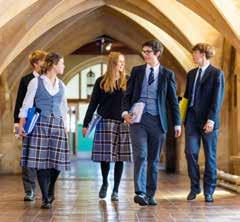
1. Girls: School blouse, jacket and skirt/trousers as supplied by the School Shop. Instead of the jacket, a maroon V-necked sweater may be worn. All girls in the Sixth Form may wear a black sweater. Tights should be black in winter but flesh coloured tights may be worn during the summer. Girls in Years 7-11 must have their hair tied back when in regulation dress.
Boys: Black shoes, a suit as supplied by the school shop, and a white shirt, to be worn with a tie and the collar buttoned. Instead of the jacket a black sweater, V-necked showing the collar and tie, may usually be worn. Any school tie to which the wearer is entitled is permitted. Prefects have the privilege of wearing their own ties. Socks are to be black or grey in colour. Two pairs of regulation trousers are necessary.
2. The School jacket is necessary for all pupils. It is worn at Mass and on other formal occasions.
3. Shoes must be flat, smart, black polished leather (not suede) with black soles.
4. Full regulation dress is to be worn during the working day. On Sundays it must be worn until after Mass. This includes pupils in the Schola Cantorum and those serving at the altar unless given special permission by a member of staff. Girls should have their hair tied back.
5. In the Refectory during the working week (Monday to Friday) for breakfast and lunch the appropriate clothing is regulation dress, subject to any exceptions issued from time to time to by the Deputy Heads or the Director of Pastoral Care. For supper during the working week the appropriate clothing is smart casual wear. At Saturday breakfast, regulation dress must be worn. Regulation dress / smart casual wear may be worn for meals from Saturday lunchtime through to Sunday supper.
6. During the Michaelmas and Lent Terms, no one may enter the Refectory wearing shorts, and hats are never to be worn indoors. At other times, shorts and trainers may be worn. Dirty, muddy clothes will not be permitted at any time.
7. All clothes must be marked with the owner’s name. Unmarked clothes (regulation and casual) will be disposed of by the Laundry after a short period.
8. Hair styles must be appropriate: for boys, cut neatly, short enough to show the collar and not to fall over the eyes. Shaven heads, and No. 1 haircuts, are not permissible. All pupils are expected to have neat, clean and presentable hair. Tinting or dying is not allowed, and yellow bleaching is not permissible. Extremes of hairstyles are not permitted. Pupils must be clean shaven. For safety reasons, pupils will be required to have their hair tied back for certain lessons (eg games) and when in full regulation dress.
9. While in regulation dress, and during the working day (7.30 a.m. to 5.00 p.m.), pupils below the Sixth Form may not wear visible make-up or nail varnish. Sixth Form pupils may wear discreet make-up, and clear nail varnish, if they wish.
10. Pupils are permitted to wear stud earrings. In regulation dress, bracelets may not be worn. In Sixth Form, one discreet ring may be worm. Other than in ears, no piercing should be on display at any time. For reasons of safety, all jewellery may have to be removed at certain times such as for sport.
11. Headphones or earpods should not be worn by pupils when in regulation dress during the working day unless a pupil requires them for studying.
12. Items of regulation dress may not be worn in combination with casual clothes. When regulation dress is worn it must be worn smartly.
13. Tattoos are not permitted.
PUPILS’ CONFIDENTIALITY
A conversation in which pupils make a safeguarding disclosure of a child protection nature, about themselves or someone else, to any member of staff, including the school’s designated safeguarding lead (DSL) or the deputy designated safeguarding leads (DDSLs), will be kept private. These persons may include the social services, the police, parents or other responsible persons. The DSL will tell the pupil involved to whom they will have to refer the matter, and will try to achieve the pupil’s agreement.
A conversation of a health and medical nature with a School nurse or doctor in the Health Centre will be kept confidential to the persons involved, unless in the opinion of the nurse or doctor the safety of children means the matter must be referred to the School’s DSL. In these cases, the nurse will tell the pupil concerned that such a referral will be made.
If a priest feels that a matter brought up under the seal of confession suggests that they or another child is a risk of harm, he will suggest that the pupil should discuss the matter with him or another member of staff outside the seal of confession.
In none of the situations above is confidentiality binding on the pupil who gives the confidence, though discretion is always important; a pupil may speak to another person about anything that happens in any of the situations above, especially if they feel they have been unfairly treated.
In all situations regarding sensitive pupil matters, staff must respect the confidentiality of anything said to them by a pupil, and only speak of the matter to the proper persons responsible for the pupil, i.e. the Head of Nursing Care, the pupil’s tutor, Housemaster/ Housemistress, the Director of Pastoral Care, the Deputy Head, or the Head. It is essential that, when information should be passed on to another person for the good of a pupil, it is passed on.
Confidentiality of pupils’ records: pupils’ medical records are confidential to them and the Health Centre staff, and are not shown to other persons, apart from those who have to check that the records are being properly kept (i.e. the School doctors).
If you require any further information please contact the School Office via hmpa@downside.co.uk
PASTORAL AND SAFEGUARDING LEADS
Mrs Michelle Pye , Head of Nursing, is the Designated Safeguarding Lead (DSL) at Downside School and can be contacted via mpye@downside.co.uk , 01761 235128.
Mr Michael Randall , Interim Head and Deputy Designated Safeguarding Lead (DDSL) and can be contactedvia mrandall@downside.co.uk , 01761 235102/101, is a Deputy Designated Safeguarding Lead
Mrs Belen Iglesias , Head of Years 10 &11, is a Deputy Designated Safeguarding Lead (DDSL) and can be contacted via biglesias@downside.co.uk and 01761 235100.
Mr Oliver Simper, Deputy Head (Co-Curricular), is a Deputy Designated Safeguarding Lead (DDSL) at Downside School and can be contacted via osimper@downside.co.uk and 01761 235100.
Mr Dafydd Jones is a Deputy Designated Safeguarding Lead (DDSL) and Director of Pastoral Care and can be contacted via djones@downside.co.uk and 01761 235100
Mrs Terri Wilcox is the Governor with responsibility for Child Protection at Downside School (twilcox@downside.co.uk , 07853 804716).
KEY NUMBERS
Somerset Direct: 0300 123 2224
Designated Officer at the Local Authority (formerly LADO) via Somerset Direct: 0300 123 2224
DBS confidential checking service: sensitive@dbs.gsi.gov.uk
DBS referrals helpline: 01325 953795
HEALTH CENTRE
WELCOME TO THE HEALTH CENTRE
We provide Health Care services to the pupils seven days a week, twenty-four hours a day during term time. The team of Health Care Practitioners are available for routine clinics through to medical emergencies. We have eight beds in the Health Centre. In addition to the expected medical provision, we can help with general health support and advice, and use a holistic approach in the delivery of care. We provide health education through a variety of means, including 1:1 and small group discussions, alongside patient information leaflets and health education resources, which are available for pupils to take away.
We encourage parents to meet the staff in the Health Centre at the beginning of a child’s first term and discuss any concerns they may have about their child’s health. Please disclose any ongoing health issues for your child or past significant events.
All new boarders are invited to a medical and any pupil with pre-existing medical conditions e.g. asthma/diabetes will be referred to the School Doctor shortly after joining the School.
General Information
It is School policy that a pupil cannot keep their own medication. Some pupils are able to self-administer in House but this is only after agreement with a member of the Health Centre team. All medication must be handed into the Health Centre and we will arrange for the pupil to access them as necessary. Your support in this matter is vital for the individual and the wider School community.
Services
We hold two General Practitioner clinics per week within the Health Centre, these appointments are booked by the Health Centre staff and are available to all boarders and any day pupils who are registered with the Oakhill Surgery (www.oakhillsurgery.co.uk). All boarders will be registered at Oakhill Surgery at the start of their time at Downside.
Asthma
All pupils with asthma will be offered the opportunity to attend regular asthma reviews with the practice nurse at Oakhill Surgery.
Physiotherapy
The School provides access to a private sports injury specialist who is able to meet with pupils at a time to suit them and who will liaise directly with parents. There is also access to the NHS Physiotherapy Service for those who would prefer.
School Psychotherapist
The School provides access to a Consultant Psychotherapist who runs weekly ‘drop-in’ clinics Tuesday and Wednesday afternoons and by appointment at other times. This is a confidential service and allows pupils the opportunity to address any issues that may be affecting their emotional health and wellbeing.
Accidents
We can arrange for pupils to be seen at the Minor Injuries Unit in Shepton Mallet or at the Emergency Department in Bath, if necessary. During the Michaelmas term a first aider is available every Saturday by the sports pitches at Downside School.
Off Games or Restricted Games
If you have a concern regarding your child’s fitness for games, please inform the Health Centre. We are able to give permission for a pupil to be off games if they are unwell or have sustained an injury. Please inform the Health Centre of any accidents or incidents during the holiday that require further care, together with any supporting documentation.
Admission to the Health Centre
If a pupil is unwell during term time they may have to stay overnight in the Health Centre. This will be decided after being assessed by the Health Care Practitioner in charge. The parent or guardian will be informed.
Prescriptions
If your child has a regular prescription, it should be in the original packaging, clearly prescribed to the child and have a supporting consultant’s or doctor’s letter attached. We order repeat and new prescriptions and collect them from the surgery when they are ready. If your child requires regular medication which is on repeat prescription, we ask that you share any information regarding the diagnosis at the time of application to ensure the Health Centre is able to assist when required.
Confidentiality and Consent
As health care practitioners, we work under a professional Code of Conduct, which states we offer a confidential service to patients in our care. However, if information has been disclosed which indicates that a pupil is at risk of harm and/or is at risk of harming another, we have a duty to share the information as part of our Safeguarding Practice. The pupil’s consent is not required in these circumstances, but we will always try to discuss it with the pupil first.
Health Needs
When a pupil first joins the School the parent will already have filled out and returned the medical history and signed consent forms for treatment and medication. Please update the Health Centre as a matter of priority if your child develops a medical condition, illness or injury during the course of their time in the School. If the medical condition, illness or injury occurs during a school holiday, please inform the Health Centre staff before your child returns to School.
Vaccinations
The Health Centre runs a vaccination programme in line with the NHS routine immunisation schedule. Any gaps identified in your child’s immunisation history will be discussed with you and/or your child. Travel vaccinations are available through the local surgery and parents are asked to fill out a travel health questionnaire and a consent form six weeks before travel. All pupils with a chronic illness e.g. asthma, diabetes, will be offered a yearly flu vaccination free of charge. Other pupils will be offered this vaccination for a small fee.
Dental Care
There is no School dentist. Boarders are expected to have routine dental treatment in the holidays.
Sports Mouthguards
All pupils will need a mouthguard for contact sports. These can be of the self-mouldable form, provided by OPRO. Parents wishing to take up the OPRO service must confirm this direct with OPRO via the web link provided in the online Downside School joining forms. An email will be sent to you regarding OPRO orders before term starts.
Sun Protection
We recommend that pupils provide their own sun protection lotion, no less than SPF30 for sports and on school trips during the warm weather.
Transport
Transport to medical appointments is organised through the Health Centre. Pupils will be accompanied by an official school escort (DBS checked) either in a taxi or transported via the escort; parents will be billed for any travel costs incurred. Alternatively, if parents live locally they may wish to take their son/daughter themselves.
The NHS for pupils with EU Settlement Scheme or Child Student Visa
For pupils who are currently under the EU Settlement Scheme, please note that you will be entitled to use the NHS Services. For those who are studying in the UK with a Child Student Visa, you will have been asked at the time of application to pay a healthcare surcharge as part of the application process, which entitles your child to access the NHS and wider services.
Contact: HCentre@downside.co.uk
TERM DATES AND ARRANGEMENTS
At the beginning of each term , pupils are expected to be back in their boarding house in the window of time as indicated on the website. The duty HsM will be in the boarding house from the time indicated. If your child is returning in advance of this time, please ensure you have made a prior engagement. We have three terms in the academic year: the Michaelmas Term (SeptemberDecember), the Lent Term (January-March) and the Summer Term (April-July).
At the end of term , arrangements are usually as follows:
Michaelmas Term ends with the School Carol Service in the Abbey Church, followed by a Reception. Parents are very welcome.
Lent Term ends at 11.30 on the last day of term.
The final day of the Summer Term is Prize Day. There is a service and Prize Giving Ceremony that takes place on the day; all parents are welcome to join the event and bring a picnic and enjoy meeting their children’s friends and families. For the Upper Sixth pupils and parents there is a Leavers’ Ball in the evening.
Half Terms
Half Terms begin at 12:45 and pupils may be collected at this time. The School will arrange transport for those needing to travel to airports. The Duty HsM will be in the building from 14:00 and the School does not accept responsibility for pupils before this time unless prior agreement has been made with your child’s HsM.
Requests to leave early or return late can only be granted if there is particular travelling difficulties, for example long-haul flights. Requests must be made in advance to the HsM.
Early/late accommodation may be available by emailing your child’s HsM.
Exeats
We hold two Exeat weekends in the Michaelmas Term and one in the Lent Term, and none in the Summer Term, as this is the shortest in the academic year.
Exeats are not mandatory for boarders who live outside of the UK. The School offers a programme of sport, culture and local activities (with plenty of rest included) for those who wish to remain in School. Parents will be asked at the start of each term to book their child’s places in advance. See Fees & Extras information on the website for details.
Authorised Weekend Leave
If a pupil wishes to go out of School during Saturday or Sunday but does not wish to be out for the night, they are required to seek permission from the Housemaster/ Housemistress, who must know the proposed times of departure and return.
Any absence from School which falls outside the above times, or which involves missing any class, or prevents a pupil from attending a sports fixture or other commitment, demands a special exeat. This is given only in exceptional circumstances following a written request to the HsM.
All transport requested of the School is to be paid for, even if, in the event, it is not used.
For further information on exeat, half term and end of term travel please find more information on the website: www.downside.co.uk/admissions/travel
Heathrow Airport Collection Point: A School chaperone will collect students from Terminal 3 from the designated meeting point at the collection time detailed in the termly travel information document. The designated meeting point in Terminal 3 is Cafè Nero, located near arrivals, outside security, Level 0.
A map showing the location of Cafè Nero, Terminal 3, is available here
For flights arriving at Terminal 5, please advise your child to use the free shuttle train to travel from Terminal 5 to Terminal 3. A member of staff will be waiting at the Cafè Nero store (a link can be found above).
This Heathrow Airport map shows where the two terminals are in relation to each other.
Please note: the above are private coach services for pupils of Downside School only.
All bookings made are a personal arrangement/contract of engagement between you as the parent or guardian, and Centurion Coaches, not with Downside School.
Taxi transport plans must be arranged directly by parents/guardians with any business you choose
A local taxi company, Atlas South West Ltd, offer service routes to Downside and you can make a booking directly with them via downsidetravel@gmail.com
Atlas South West Ltd are familiar with the practice of providing transfers for Downside and have experience of collecting and delivering pupils to our site.
Parents are advised to copy in the HsM to email communications so that they are fully informed of pupil’s travel plans.
OTHER SCHOOL INFORMATION (A-Z)
Alcohol and Tobacco
On formal occasions, which involve a set meal, pupils in the Sixth Form may be served wine or beer with the meal. Otherwise alcohol is forbidden. It is against the law to sell or supply alcohol to anybody under the age of eighteen except on formal occasions with a sit-down meal. It is against the law for anybody under the age of eighteen to purchase alcohol. Alcohol may not be brought into the School without permission from the pupil’s Housemaster/Housemistress.
Smoking or vaping is not allowed within the School and while the pupils are under the school’s control. It is illegal for persons under the age of eighteen to buy tobacco. Smoking materials and paraphernalia including e-cigarettes must not be brought into School.
Bedrooms & Furnishings
Each child has their own notice board in their bedroom, so please do encourage pupils to bring family photos or any decorations that will fit on a board as it really brightens up their rooms. It is recommended that pupils bring a bedside light (or order one to be delivered to their House). Pupils are welcome to bring their own duvet or can order one through the school shop. Please bring two named duvet covers. The school will provide the bottom sheet, the pillow and the pillow cases. If you would like to bring your own you are very welcome.
Cars & Bikes
No pupil may drive a car during term time, without the permission of the Deputy Head, except for permitted driving lessons, nor keep any motor vehicle at Downside or in the village. Driving instruction is not negotiated through the School. If permission to drive a motor vehicle has been granted by the Deputy Head, the pupil and his/ her parents/guardian must sign and abide by a ‘driving agreement’ document and car keys must be deposited with the pupil’s Housemaster/Housemistress on arrival at School.
Bicycles must have their owner’s name clearly marked on them, and their serial number should be given to the Housemaster/Housemistress. They must be locked when not in use,and kept in approved places. Passengers must not be carried on bicycles. Cycling off site requires both parental and School permission. Please see the Director of Pastoral Care to be placed on the list of approved offsite cyclists. Any pupil riding a bicycle on or off the School site must wear a helmet at all times.
Hitch-hiking is not allowed. No pupil may be driven in a car by any person other than parent, guardian, brother or sister unless his/her Housemaster/Housemistress has given specific permission. If the driver is under 25 years old, then written consent from parents is required.
CCTV
The School does have some CCTV cameras in place to deter theft and assist in its prevention, as well as to enhance security in potentially vulnerable areas of the School. There may be times when covert cameras are required, but they will only be employed where there is reasonable cause to suspect that unauthorised or illegal activity is taking place or is about to take place. Covert cameras can only be set up on the written authorisation or request of the Head or Deputy Head. Any such covert processing will only be carried out for a defined, limited and reasonable period, consistent with the objectives of making the recording and will relate to the specific suspected unauthorised activity. Pupils may not set up their own surveillance systems.
Electronic Equipment
Electrical equipment must be marked, PAT tested and be electronically safe with a single British 3-pin plug, and be approved for use. House Staff may wish to ask that items are checked before use. A list of banned electronic equipment will be distributed by the Head of Health and Safety and published in Houses. Cooking devices, heaters and kettles are not allowed to be brought into the School. Each boarding House has a well stocked kitchen and the House teams are always open to new ideas.
All pupils must have a device with a keyboard.
Extra-Curricular Activities
There are 70 extra-curricular activities for your child to be involved in including Combined Cadet Forces (CCF), Duke of Edinburgh Awards, mountain biking, debating, sign language, gardening and cooking. Pupils have the opportunity to sign up in the first week of term and do not need to choose them in advance.
Food and Meal Times
This is an important element of your child’s well-being and we are proud of the standard of catering provided by our specialist in-house catering firm, Holroyd Howe. All our meals are eaten together with staff in the Refectory (Ref). Saturday nights are the only time we eat in House with specially prepared meals and a chance for a more informal House get together. We cater for all tastes and have a wide variety of alternatives for those who have special dietary requirements.
Meals take place at the times published in Houses. Pupils are required to attend all meals, unless given leave of absence by their Housemaster/Housemistress.
Laundry
Each House has its own laundry day when uniform, sports kit and personal clothing may be handed in for washing. All clothing should be clearly named with a name tape. Bed linen and towels will be laundered by the School too. Whilst we take every care to ensure your child’s clothes are laundered carefully, please discourage pupils from bringing expensive clothing to school.
Libraries
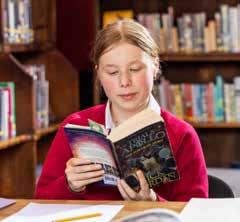
The Petre Library is open to all pupils and staff with a librarian who will support your child in their reading interests. Books may be borrowed according to the procedure published in the library.
Each department has its own library and many of the books can be borrowed. Reading lists can be obtained from Heads of Department. All libraries should remain quiet places for study and reflection.
Lost Property
Do not bring valuable equipment to School unless it is essential to studies or approved recreation. If your child has any valuable equipment, they will need to give a description of it that includes its serial number, colour and make to their HsM. It is their responsibility and yours as a parents to record and insure any valuable items. Any items that have been stolen, should be reported to the HsM by the pupil. This will be reported to the Director of Pastoral Care.
Mobile Telephones and Devices
Mobile devices may be used with permission from a classroom teacher or HsM in order to access approved learning platforms.
Mobile phones should not be used in lessons without permission from the teacher. We work extensively with pupils, through education in PSHE lessons to support the safe use of internet and devices, and expect pupils to treat one another with respect. The School accepts no responsibility for loss, or damage of a mobile telephone or mobile device.
The use of devices and mobile phones is governed by the Acceptable User Policy and Bring Your Own Device (BYOD) Policy. (See new joiner forms)
Pocket Money
The safest way to provide pocket money is with a bank card (there are several versions available with major banks). You can set-up the card before travel and preload their pocket money by bank transfer. These cards are available for young children and you will be able to set spending limits as well as top up the card and monitor their spending from home. They will be able to use the card to pay in shops or take money from ATMs just like a debit or credit card. If you wish, we can hold your child’s card safely for them while they are in School and issue it to them for excursions and shopping trips. There are many different providers of prepaid cash cards across the world and you will be able to find the most suitable one for you. Any pupil who has more than £30 in cash should hand it immediately to a member of the House staff. If neither of these is available it should be given to the House Parent.
School Policies
Our policies are available on the website and we would recommend that you take the opportunity to review them. www.downside.co.uk/parent-zone/policies
Uniform
School uniform is purchased through the School Shop’s page on the school website www.downside.co.uk/ school-uniform
The full list of Regulation Dress (uniform) and sports clothing is shared on the website and the New Joiner Forms (through the Parent Portal). There is very limited secondhand uniform available, and it can only be purchased directly at the school shop as it may have been altered substantially.
For boarders, uniform is sent from the School Shop (select ‘collection’ at check out), to the boarding house. Day pupils can collect their uniform by arrangement with the school shop.
When your child is trying on their uniform for the first time, please ask them to leave the labels on until they have confirmed that the sizing is correct. If it is not we can always exchange it for you.
If you have any queries regarding school uniform, please email Tracy Coles on shop@downside.co.uk
Parent Portal
All new parents will be contacted with information on how to log onto the School’s Parent Portal. The Parent Portal is an interactive view into your child’s life at School, including Reports, Rewards and Sanctions. . Information regarding the Parent Portal including your account log-in will be sent at the start of the academic year by the School Office. For enquiries please contact Nicola Cherry on ncherry@downside.co.uk .
Website – Sports Website www.downsidesport.co.uk
Your support and encouragement of our teams is most welcome both on the touchlines and by reading our published match reports. We hope that our sports website will make this support much easier for you and give you direct access to fixtures, team sheets and match results. For more information, please contact Director of Sport, Richard Jones, on rjones@downside.co.uk
Weekends
Weekends are busy and purposeful at Downside. On Saturdays Year 7-11 have a morning of lessons, whilst Sixth Form pupils take part in the Horizons programme. In the afternoon, there are sporting fixtures against other schools and training. At the star of every week the weekend programme is shared with all the boarding Houses. Pupils are asked to pick activities to take part in before the start of the weekend. Every Sunday after Mass, an accompanied trip to Bath is organised by a teacher, to offer the pupils an opportunity to get off site and do some shopping or take in the beautiful sights. For our older pupils, the weekend is also an opportunity to get some well deserved rest or catch up with their studies.
WiFi
As you would at home, precautions are in place to ensure that your child has access to safe and filtered WiFi. If your child enjoys audio books, it may be beneficial to have an eBook device to avoid being distracted by a mobile after lights out. The use of mobile phones is discouraged after lights out; and HsMs adopt practices that are appropriate to different year groups.
ONLINE SAFETY AND E-SAFETY POLICY
All pupils must read the School’s Acceptable Use Policy and must sign a letter to say that they will abide by it and this should be done in line with the E-Safety Policy. (Found in the online joiner forms)
Pupils may not:
a) Use proxy servers or VPNs to bypass the School’s ICT security system
b) Log-in using another person’s username and/or password
c) Download Zip (*.zip) files or executable (*.exe) files
d) Download illicit material
e) Make contact with anyone on the Internet, whose identity is unknown
f) Run any executable file, or any program capable of affecting the system registry
g) Run any hacking software, including those searching for files or passwords
h) Attempt to modify any computer in any way
i) Abuse copyright, or attempt to pass off downloaded work as their own
j) Use the dark web or Tor browsers.
All children at Downside School will have the opportunity to explore online safety as part of whole school initiatives, such as Safer Internet Day, or within PHSE and other lessons. Your child will be educated in the safe and respectful use of technology in a planned and progressive way, to help them understand how to make the most of digital opportunities while keeping themselves and others safe. This will include learning about online bullying, sexting and sharing of other inappropriate content, understanding their digital footprint and keeping personal information safe.
All networks in the school are subject to web filtering to reduce access to inappropriate content. However, due to the complexity of the Internet there is always a small chance that undesirable material may get through these filters and your child will therefore be educated about how to respond appropriately in such instances. Staff are also trained regularly in understanding online safety issues that pupils may face as part of our safeguarding training programme. Where online safety issues occur, staff will support pupils and provide relevant education.
We would recommend you take the time to read through Acceptable User Policy (which can be found on the Parent Portal) with your child, to reinforce the importance of following these guidelines, so that your child can make full use of the ICT provision within our school in a safe and responsible manner. These guidelines will be displayed across school and regularly referred to by staff when using digital technologies. Please note that it is School policy that pupils’ mobile phones should not be visible, distracting or used in lessons. If pupils use their phones in lessons, teaching staff have the right to confiscate the device.
EDUCATION GUARDIAN –GUIDANCE NOTES
Education guardianship
Parents of pupils at Downside School (the School) who are resident outside the UK must appoint an Education Guardian for their child in the UK. This is the case for all pupils irrespective of age, even for those aged 18 or over by the time they leave the School.
Why must an Education Guardian be appointed?
It is usual for independent schools to insist that overseas parents appoint Education Guardians for their children whilst they are at school in the UK. This is to ensure that there is somebody in the UK who can take responsibility for the child or young person and provide them with care and support when they are not in the care of the School. The Education Guardian should also be given legal authority to act on behalf of the parent(s) in all respects.
Who can be an Education Guardian?
An Education Guardian may be a family member, a family friend, a guardianship agency, a host family, or other responsible adult based in the UK. The Guardian must be aged 25 or older, unless a brother or sister of the child, when they must be over 21 years of age. The Guardian cannot live in university halls or shared accommodation with any other adult under 25 years of age.
Most overseas parents use a guardianship agency to act as Education Guardian.
Guardianship agencies typically arrange accommodation as well as acting as Educational Guardian for their students. Guardianship agencies will usually arrange accommodation for their students through host families, although sometimes other accommodation options will be used. Host families will then be responsible for providing the day to day care of the student, accommodation and meals. If the guardianship agency arranges accommodation for the child or young person, the agency will be responsible for ensuring the quality and safety of the accommodation including the necessary Disclosure and Barring Service (DBS) checks.
An Education Guardian must be resident in the UK at a suitable proximity to Downside School, preferably within 90 minutes travel, but no more than two hours, and be capable of providing care for a child in a happy home environment as would a responsible parent.
How is an Education Guardian appointed?
The responsibility for choosing an appropriate Education Guardian rests solely with the pupil’s parents. The parents are responsible in each case for satisfying themselves as to the suitability of an Education Guardian.
It is important to note that the School does not recommend any specific agency and parents are required to make their own checks into the suitability of any agency. The School is not able to arrange the appointment of an Education Guardian and is not able to arrange accommodation for any pupils (except when they are boarding at School).
It is expected that, other than when appointing a relative or close family friend, the pupil’s parents will appoint an Education Guardian via a reputable organisation, preferably a member organisation of the Association for the Education and Guardianship of International Students (AEGIS). AEGIS is the authoritative association for inspecting and accrediting guardianship agencies in the UK. AEGIS can be contacted via their website: www.aegisuk.net
Informing the School of a change of Education
Guardian Parents MUST inform the School as soon as possible if there are any changes to any details relating to the Education Guardian, including any change in Guardian. This is especially important if your child holds a student visa.
THE DUTIES OF AN EDUCATION GUARDIAN
An Education Guardian must:
• Be aware of all travel arrangements of the pupil at the beginning and end of every term, half-term and exeat. They must also be available to host the pupil in any emergency situation.
Please be advised that an Education Guardian holds full responsibility for the pupil(s) in their care in the event that the pupil is stopped or questioned by the UK Border Force or any immigration authority, whether upon departure from or return to the United Kingdom. At such times, the responsibility for the pupil does not lie with the school or its staff. It is the duty of the Education Guardian to ensure that all necessary travel documentation, permissions, and legal requirements are in place and to be available for contact or intervention if required by border authorities.
• Collect, if required, and accommodate the pupil it their own home at half-term, exeats and at the beginning/end of term if the pupil is unable to travel home and, if necessary, for the School holidays.
• Collect and accommodate the pupil in their home in the event that the child is excluded for non-payment of fees or suspended or withdrawn from the School for disciplinary or other reasons.
• Collect and accommodate the pupil in their home in the event that the School has to take emergency action, such as in the case of a pandemic, damage to part of the school or a partial closure of the School.
• Liaise with the HsM, Head of Nursing or other senior member of the School staff in connection with matters related to the health, welfare, travel plans and education of the child.
• Attend the School premises or any other location in case of emergency or if the child is unwell and if deemed necessary by the School, provided that the Education Guardian immediately informs the Parent(s) of what has happened.
• Collect and accommodate the child in their home in the event that the child is unwell and unable to attend School.
• Attend medical appointments with the child, if requested by the parent(s) to do so.
• Provide consent for the child to receive emergency medical treatment if necessary and only if the School is unable to contact the parent(s).
• Should the parent(s) request, the Guardian is welcome to attend, as appropriate, School events such as parents’ Conferences, Prize Day, Carol Service, House at Home, Sports Fixtures, Concerts and other instances in which the child is participating. In such circumstances, the Guardian is requested to inform the Housemaster/Housemistress in advance.
PROCEDURES FOR VISITORS
Downside take the following steps to ensure its premises are safe for pupils:
1. All staff and volunteers (recruited in accordance with Safer Recruitment Procedures) wear identity badges at all times.*1
2. ‘Visitors’ includes all persons arriving on the School site, who are not governors, members of staff, volunteers (for whom there are separate arrangements), or pupils of the School.
3. All visitors must report to Reception in the Old House of the Main Quad.*2 (Reception is staffed on weekdays between 8.30 and 5pm and on Saturdays between 9-12pm).
4. Visitors must display the visitor’s badge given and must sign the visitor’s book in Reception.
5. Visitor badges must be returned to Reception just before departure.
6. Visitors must be accompanied by a member of staff at all times.*3
7. Boarding Houses:
The boarding Houses are normally closed to visitors.
However, parents visiting their own children in their boarding House may do so after checking in with a member of the House staff and signing the House visitor’s book.
Parents are advised to contact the House to inform the House staff of the time they are arriving.
*1 Coloured lanyards are as follows:
Black – Staff
Yellow – Contractors
White – Governors
Green – Monastic Community / Abbey Staff
Blue – Residents
Purple – Volunteers
Red – Visitors
Pale Blue – Downside Association
*2 Exceptions:
1. Parents visiting their children in Caverel, Barlow or Isabella Houses, and who are not entering the Main School buildings. Parents visiting these Houses must report directly on arrival to the House staff on duty in the House at the time.
2. Parents visiting their children outside the hours when reception is staffed. Parents are advised to contact the House to inform the House staff of the time they are arriving.
3. Visitors to the Sports Hall or Swimming Pool for an external club or county event.
Visitors should make their way to the Sports Centre/Swimming Pool via the path from the Main School Quad.
Sign the register on arrival at the Sports Centre/ Swimming Pool.
Visitors should remain in the area designated for the activity they are attending.
*3 The exception to this is prospective parent visits who are given a school tour by a senior pupil (Sixth Form). These pupils are briefed by the admissions team. During examination periods or under special circumstances Year 7 and Year 8 pupils may be asked to take a tour.
It is recognised that there are certain times when parents and other visitors will enter the School without having to wear badges such as attending match teas, concerts, plays and other such events. On these occasions visitors shouldremain in the area in which the event is taking place.
It is also important to remember that at the start and end of term and at exeats parents/guardians can often be present on site without having to sign in and wear a badge, as they drop off or pick up pupils. Staff and volunteers are asked to be sensitive and polite in questioning those without badges to ascertain who they are and their reason for being on the School site. Concerns should be reported to a member of the SLT.
Pupils are advised never to pass on the School or House entry codes to visitors, whilst being at all times courteous. They are asked not to allow admittance to people who do not have a school identity badge or are unaccompanied. They should direct such visitors to reception or to a member of staff. If they are at all concerned about an unidentified stranger on the School site, they should report the matter to a member of staff immediately.
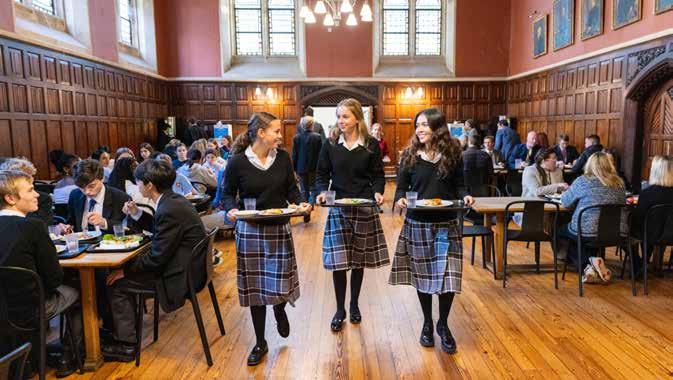
PERFORMING ARTS AT DOWNSIDE SCHOOL
Perform: Inspire: Serve
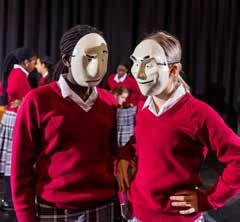
The Performing Arts Faculty is based in the O’Flaherty Music School and is the hub for all music, drama and dance activities that take place at Downside. Our experienced team of staff deliver academic music and drama lessons alongside individual instrumental, singing, dance and drama (LAMDA) lessons. We support our pupils in their development as performers in our bands, choirs, orchestras, other ensembles, plays, productions and events.
The information outlined is a guide to the day-to-day practicalities of individual music/dance/drama lessons, private practice and membership of the ensembles.
Ensembles and events
Downside offers a wide range of musical ensembles, and pupils will be encouraged to join those that best suit their voice or instrument. Singers can take part in Schola Cantorum (the main school choir), the Mixed Chamber Choir, Boys’ and Girls’ Chamber Choirs, and our close harmony group. Instrumentalists have options including String Ensemble, Concert Band, Orchestra, Brass Group, Pipe Band and Jazz Ensemble. For our rock and pop musicians we run a rock band mentoring group and a function band. Smaller chamber groups—such as String Quartets and the Junior Piano Trio—are formed as needed, providing further opportunities for collaborative music-making.
Throughout the year, the calendar is full of performance opportunities, with events such as the St Cecilia Concert, House Music Competition, Band Nights, Choral Concert, Music for a Summer’s Evening, regular Abbey services, and a variety of special one-off performances featuring professional musicians. We also run a more informal lunchtime concert series, known as Cloister Concerts, which offer pupils of any ability the opportunity to perform to a small and supportive audience.
Individual Music/Dance/Drama (LAMDA) Lessons
What do we offer?
We offer weekly lessons of 35 minutes for the following:
Music: Flute, Oboe, Clarinet, Bassoon, Saxophone, French horn, Trumpet, Trombone, Euphonium, Tuba, Violin, Viola, Cello, Double Bass, Piano, Organ, Harp, Guitar (Classical, Electric, Bass), Ukulele, Bagpipes, Singing, Songwriting, Drum kit, Tuned percussion.
Drama: Individual or paired LAMDA lessons
Dance: Ballet, Modern Jazz, Recreational Dance
Performing Arts extra costs
Please see www.downside.co.uk/admissions/fees for detailed information about individual costs.
Where do lessons take place?
All lessons take place within the Performing Arts Centre. Organ lessons take place in the Old Chapel or the Abbey Church as appropriate.
Lesson times and where to find them.
Timetables are published weekly on Friday afternoons on SOCs and displayed on the noticeboards in the Performing Arts Centre, the main school corridor and in houses. All lessons are shown in the SOCS School App for pupils. This will be explained to your child in their induction. Parents can also view this on My School Portal. For pupils in Years 7 to 11, lessons are rotated through the academic timetable, where possible, to avoid pupils missing the same academic lesson more than once either side of the half term holiday.
For Sixth Form pupils lessons are timetabled during study periods.
Performing Arts staff and House staff are all glad to help pupils to find out their lesson times and where lessons take place.
Clashes
If for any reason your child can’t make it to their lesson, they should see Mrs Maggs (Music Administrator) or email her at music@downside.co.uk at least 48hrs beforehand and she will do her best to rearrange the lesson.
Missed Lessons
Whilst we do our best to locate pupils if they do not turn up to a lesson, please be aware that parents will be charged for missed lessons unless this is caused by a clash with another school event.
Practice
Pupils may practise in any free room in the Performing Arts Department during the day (0830 - 1800). Pupils will be issued a swipe card so that they can access the facilities in the evenings and at weekends.
Notice to Stop Lessons
In the event that your child no longer wishes to continue with their Performing Arts lessons, parents are required to submit a request to stop in writing to the Director of Performing Arts, Mrs Karen Randall: music@downside.co.uk
The notice period is 9 lessons from the date that notice is received, this is because we have to give appropriate notice to the respective teacher, and continue to pay them throughout the notice period. Fees will be charged in lieu of notice.
Useful Contact Information
Director of Performing Arts: Mrs Karen Randall krandall@downside.co.uk
Director of Choral And Liturgical Music: Mr Peter Thomson pthomson@downside.co.uk
Music Administrator: Mrs Caroline Maggs music@downside.co.uk
DOWNSIDE SPORT
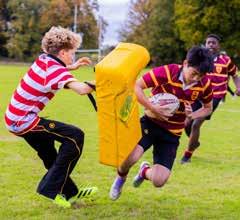
Our sports development philosophy for players and coaches is based on a positive mental attitude and exceptional work ethic. Our aim is to provide an extensive programme of sport and physical activity for every child to ensure that they can participate, excel and learn the value of being part of a team.
The Sports Department’s philosophy Discipline | Humility | Stewardship
Inspired by our Benedictine tradition, these values are at the heart of sport at Downside School. They guide everything we do and help us develop young people who are resilient, responsible and ready to succeed in sport, school and life.
Developing Every Pupil
At Downside, physical activity is an essential part of every child’s development. We believe every pupil has potential, and our focus is on talent development, helping each individual improve through hard work, teamwork and good character. Sport is for everyone, regardless of ability. We challenge every pupil to be “the best me I can be” in every aspect of School life. Every pupil takes part in physical activity and sport throughout their time at the School, building confidence, skills and a lifelong enjoyment of being active. For those who compete for the School, we also encourage them to develop their talents and perform to the best of their ability. Our sports programmes therefore provide a balanced range of team and individual sports that helps pupils:
• Understand and develop their physical abilities
• Build confidence and character
• Enjoy being active
• Achieve their personal best
• Reach high levels of performance where appropriate
Expert Coaching
Our major sports are led by experienced teachers and dedicated coaches, many of whom have competed at the highest levels. They are supported by a team of qualified Level 2 and Level 3 specialist coaches and teaching staff who provide excellent support for pupils across all age groups.
A Positive Coaching Philosophy
Our coaches are committed to helping every pupil reach their potential. We believe lasting success and a lifelong involvement in sport comes from creating a culture where effort, commitment and learning are celebrated. Great value is therefore placed on:
• Positive attitude
• Consistent effort
• Personal improvement
• Teamwork
• Respect and sportsmanship
A Growth Mindset
We encourage all pupils to develop the attitudes needed for long-term success, including:
• A growth mindset
• A willingness to learn and improve
• Strong movement and physical skills
• Confidence and resilience
• A sense of belonging within their team
As pupils progress, those competing at higher levels will also experience more performance-focused training and specialist coaching. We are proud of both the sporting culture at Downside and the achievements of our teams and individual athletes.
Athlete Development Programme
Our Athlete Development Programme supports sports scholars and other talented pupils through expert coaching, mentoring and personalised development. The programme encourages:
• High-quality coaching and mentoring
• Creative and critical thinking
• Problem-solving
• Personal responsibility
• Goal setting and regular feedback
• Participation in additional enrichment and co-curricular activities
By living our core values, pupils develop the habits needed for both personal growth and high performance, and we are proud to support many of our pupils in county, regional and national competitions, as well as involvement in performance academies and talent pathways.
Community Partnerships
We work closely with local clubs and regional academies to help pupils continue their sporting development both in and beyond school. Many of these clubs use the excellent sporting facilities at Downside School, making them readily accessible to our pupils. These partnerships include:
• Rugby: Midsomer Norton RFC, Frome RFC, Bath Rugby Academy, Bristol Bears Academy & Somerset County U17/U18 age groups.
• Hockey: Mendip HC, Shepton Mallet HC, Bath Buccaneers HC and Avon Junior County age groups.
• Netball: Frome Netball Club and Somerset Netball Academy
• Cricket: Midsomer Norton Cricket Club and Somerset County Cricket
• Tennis: Writhlington Tennis Centre
• Football: A range of local community football clubs
• Swimming: Norton Radstock Swimming Club
• Athletics: Somer Athletics Club
SPORT & GAMES PROGRAMME AT DOWNSIDE SCHOOL
The following sports or games are available during the three terms of the academic year, as follows:
Michaelmas Term
Year Group
Years 7 & 8
Years 9 & 10
Year 11 & 6th Form
Lent Term
Year Group
Years 7 & 8
Years 9 & 10
Year 11 & 6th Form
Boys
Rugby
Rugby
Rugby
Cross Country, Swimming
Girls
Hockey
Hockey
Hockey
Cross Country, Swimming, Badminton, Badminton, Football Health & Well-Being, Football
Boys
Hockey
Hockey
Hockey
Cross Country, Swimming
Girls
Netball
Netball
Netball
Cross Country, Swimming Football, Table Tennis, Squash
Health & Well-Being, Table Tennis, Squash
Summer Term
Year Group
Years 7 & 8
Years 9 & 10
Year 11 & 6th Form
Boys
Cricket, Tennis
Cricket, Tennis
Cricket, Tennis
Girls
Cricket, Tennis
Cricket, Tennis
Tennis, Athletics, Athletics, Swimming, Badminton, Swimming, Health & Well-Being
Volleyball, Sailing Badminton, Volleyball, Sailing, Cricket
SCHOOL TIMETABLE
Min Lessons: Master Timetable
1.55pm-2.05pm
9.00pm-9.10pm
DURING THE WORKING WEEK
CO-CURRICULUM
Co-curricular activities, clubs and societies at Downside provide vital experiences and opportunities, introducing pupils to new experiences, new life skills and new friends.
All pupils participate in the co-curriculum programme which runs throughout the week and on weekends.
With over 70 options to chose from, there is something for everyone – from adventure and sports to creative arts and service.
Army Advanced Platoon
Army Basic Platoon
Art Club
Art on Walls
Athletic Development
Badminton
Bath Soup Run
Bede Society (History)
Biblical Greek Club
Brass Group
Caving Trips
Care Home Visits
CCF (Army & Navy)
CCF Target (.22) Shooting Club
Chess Club
Clay Target Sunday Shooting Club
Close Harmony Group
Concert Band
Cricket - indoor net training
Cross Country Club
Debating Club - Abingdon Society
Development Tennis
Duke of Edinburgh Award
Dungeons and Dragons Club
Environmental Club
Fine Dining Society
Fitness Gym
Football
Gitar Ensemble
Golf Development & Leadership
Health & Wellbeing
International Committee
Italian Club
Jazz Club
Kayaking Club
Language Leaders (French Outreach)
Lectio Divina Group
Maths for Scientists
Medical Society
Mixed Chamber Choir
Model united Nations Club
Mountain Bike Club
Music Technology/Music Production
Netball
Paddlesport Club
Percussion Ensemble
Percy Jackson Society
Pipe Band
Rock Band
Rubik’s Cube Club
Rugby 7’s Training
Rugby Coaching & Leadership
Russian for Beginners
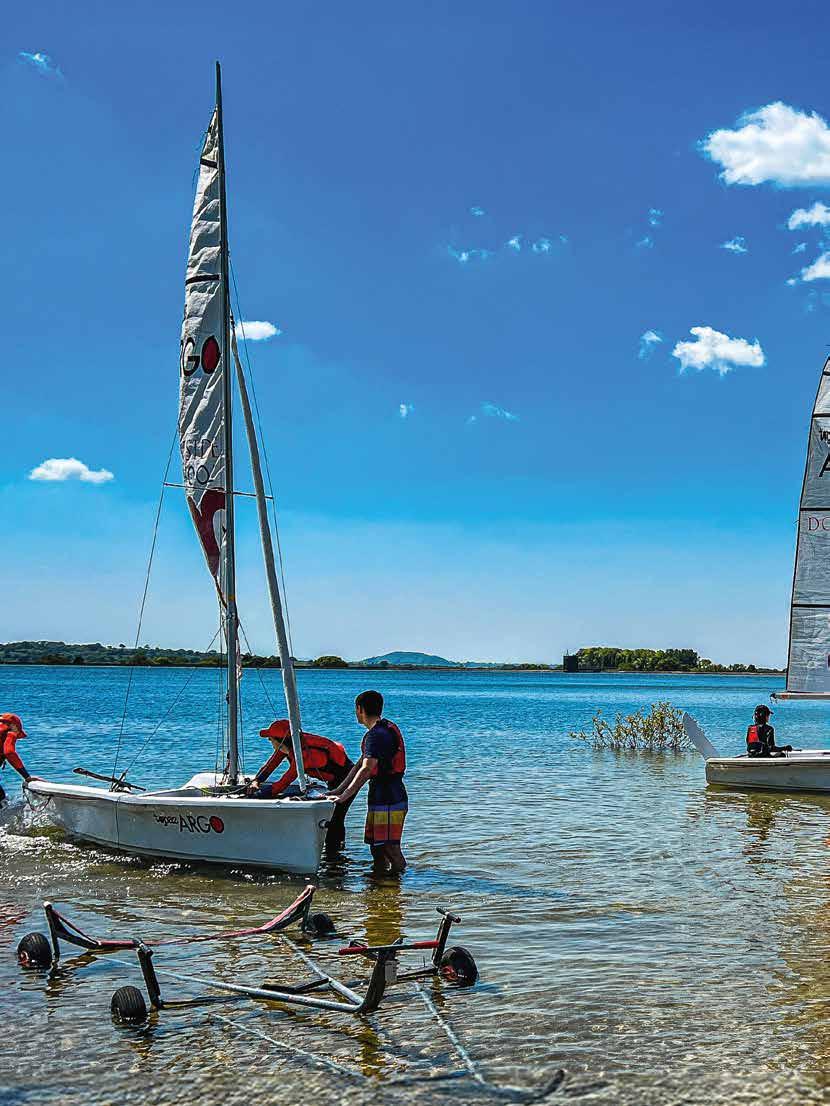
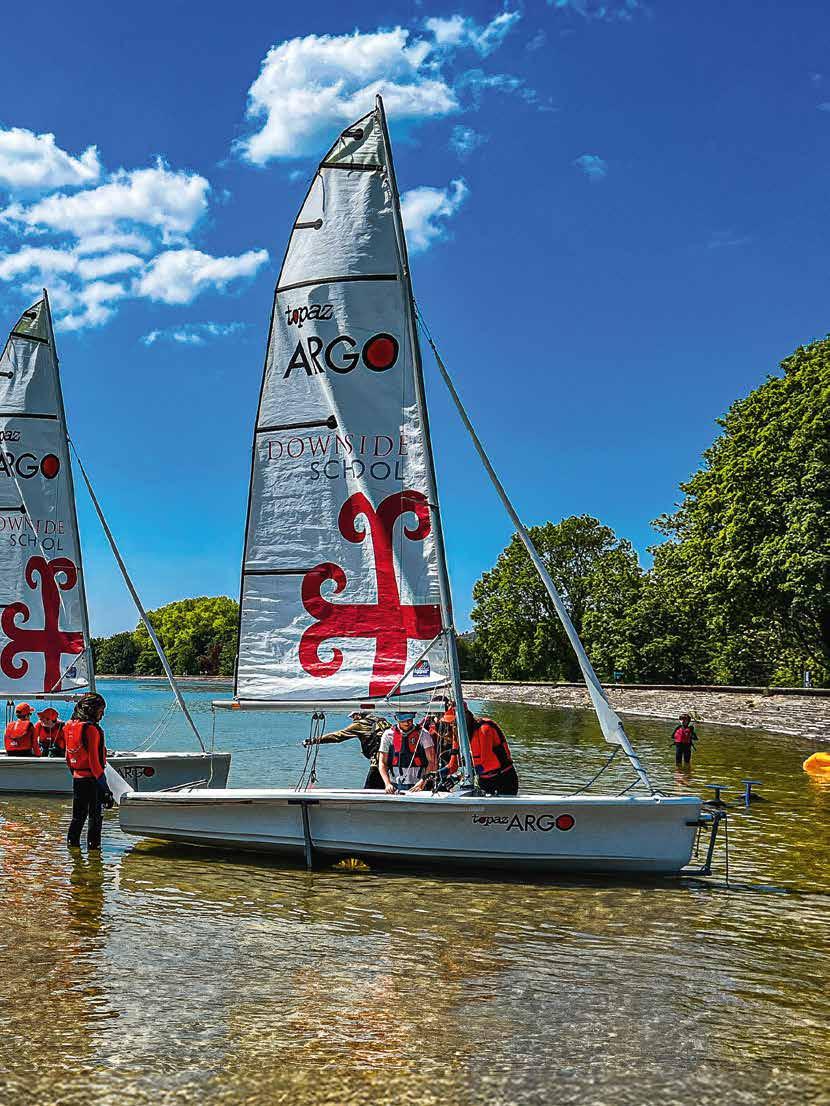
Sailing Club
Schola Cantorum
Sewing Group
Shooting Club
St John’s Society
St Teresa Young Leaders
Squash
String Ensemble
Swimming
Ten Tors
The Knowles Society
Volleyball
CHAPLAINCY
Chaplaincy is at the heart of the Catholic and Benedictine life of Downside. It accompanies pupils throughout their time at the School, offering opportunities to pray, serve others, take responsibility and find support. Through the rhythm of the year, pupils are encouraged to deepen their faith and contribute generously to the community.
Worship and Prayer
Mass is celebrated regularly in the Abbey Church and the Old Chapel. The whole School gathers in the Abbey Church on Sundays and important feast days. The optional Friday celebration at 7.40 a.m., held in one of its many atmospheric chapels, is popular with pupils and staff.
From Year 9 onwards, pupils may train as altar servers. Others contribute as readers or musicians and help to prepare worship.
The Sacrament of Reconciliation is normally available on Saturday mornings, with further opportunities during Advent and Lent. Pupils may also arrange another time with Fr Michael.
Faith, Scripture and Pilgrimage
Lectio Divina – the prayerful reading of Scripture – is a distinctive feature of life at Downside. Many pupils choose to join a voluntary weekly group. A short Bible passage is read slowly, allowing time to notice a word or phrase which stands out. Those who wish may then share an ‘echo’.
Senior pupils in the St John’s Community are supported in leading groups for younger pupils. These gatherings build relationships across year groups and provide regular space for prayer and conversation.
Preparation is available for Baptism, First Holy Communion and Confirmation, according to individual circumstances and in consultation with families.
The Sodality of Our Lady meets weekly after prep. Its history at Downside stretches back more than 400 years, and it continues to offer pupils a simple pattern of prayer and devotion to Our Lady.
Each year group takes part in an annual retreat, stepping away from the ordinary timetable to reflect on faith and the Benedictine values which shape the School.
Pilgrimages and visits may include journeys to Rome during half term and other places of Christian significance.
Leadership and Service
Upper Sixth pupils may apply to become Heads of Chaplaincy, Sacristy and Service.
The St Luke’s Community supports the worshipping life of the School. Its members prepare liturgies, serve at Sunday and House celebrations, deliver the Scripture readings, welcome the congregation and assist in the sacristy.
The St Teresa’s Community brings together Sixth Form pupils who promote service within their Houses and across the School. They help others to understand the work of the charities we support and encourage a response which goes beyond fundraising.
The weekly Soup Run gives Sixth Form pupils the opportunity to meet and serve people experiencing homelessness and hardship.
In Year 10, St Teresa’s Young Leaders combines weekly prayer with practical service. Pupils support different charities during the year and share their work with the wider School community.
The St Francis’ Community focuses on care for creation and responsible stewardship. Together, these groups allow pupils to contribute according to their interests and gifts.
Welcome and Support
The Chaplains are available to pupils who wish to discuss their faith, seek advice or talk through a difficulty. They are regularly present in classrooms and Houses, as well as at worship and retreats.
Fr Michael may usually be found in the Old House or the Old Chapel. Mr Paul Andrewartha is based in the Chaplaincy Centre, close to the Refectory. Both spaces are open and welcoming.
The weekly Chaplaincy calendar gives details of worship, meetings, service projects and other activities. It is available at the beginning of each week and posted on the Chaplaincy noticeboard.
Fr Michael Patey School Chaplain MPatey@downside.co.uk
Mr Paul Andrewartha Lay Chaplain PAndrewartha@downside.co.uk
OLD GREGORIANS & ST GREGORY’S SOCIETY
All pupils who attend Downside, whether for one term or seven years, become members of St Gregory’s Society and are known as Old Gregorians (OGs). Today, the Old Gregorian Community comprises over 8,000 individuals and is administered by the Development Office at Downside.
Dinners in London, Paris, Poland, Spain, Malta, Dublin and Hong Kong are regular fixtures in the OG calendar. There are OGs represented in most countries around the world always happy to meet up with others and offer professional support and mentorship.
Sport also flourishes under the auspices of the Society through the Wanderers Cricket Club, the OG Golfing Society, OG Rugby, OG Hockey and the OG Sailing Society amongst others.
The Development Office works with St Gregory’s Society by managing all administrative tasks and organising events and reunions. The Office holds the OG database, and manages the website and social media. Any OG who would like to visit Downside, or bring their friends and family, will always be guaranteed a warm welcome.
GREGORIAN PRAYER
Almighty Father, by the power of your Holy Spirit, grant that the whole Downside community may prosper in its devotion to you. Through Christ our Lord.


reception@downside.co.uk www.downside.co.uk
Tel: +44 (0)1761 235100