VOL. X NO. 3
jul-sep 2014
Medical Waste Management Serving Healthcare Facility Waste Management Professionals
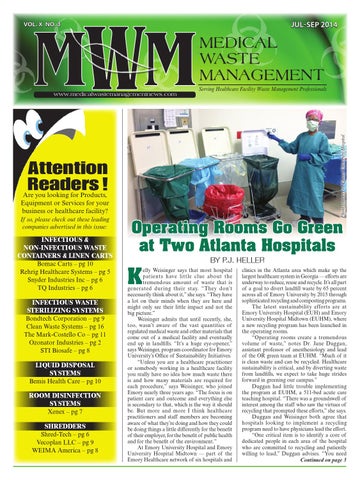
Photo courtesy of Emory University Hospital
www.medicalwastemanagementnews.com
Attention Readers !
Are you looking for Products, Equipment or Services for your business or healthcare facility? If so, please check out these leading companies advertised in this issue:
Infectious & Non-Infectious Waste Containers & Linen Carts Bomac Carts – pg 10 Rehrig Healthcare Systems – pg 5 Snyder Industries Inc – pg 6 TQ Industries – pg 6 Infectious Waste Sterilizing Systems Bondtech Corporation – pg 9 Clean Waste Systems – pg 16 The Mark-Costello Co – pg 11 Ozonator Industries – pg 2 STI Biosafe – pg 8 Liquid Disposal Systems Bemis Health Care – pg 10 Room Disinfection Systems Xenex – pg 7 Shredders Shred-Tech – pg 6 Vecoplan LLC – pg 9 WEIMA America – pg 8
Operating Rooms Go Green at Two Atlanta Hospitals
K
By P.J. Heller
elly Weisinger says that most hospital patients have little clue about the tremendous amount of waste that is generated during their stay. “They don’t necessarily think about it,” she says. “They have a lot on their minds when they are here and might only see their little impact and not the big picture.” Weisinger admits that until recently, she, too, wasn’t aware of the vast quantities of regulated medical waste and other materials that come out of a medical facility and eventually end up in landfills. “It’s a huge eye-opener,” says Weisinger, program coordinator for Emory University’s Office of Sustainability Initiatives. “Unless you are a healthcare practitioner or somebody working in a healthcare facility you really have no idea how much waste there is and how many materials are required for each procedure,” says Weisinger, who joined Emory nearly three years ago. “The focus is on patient care and outcome and everything else is secondary to that, which is the way it should be. But more and more I think healthcare practitioners and staff members are becoming aware of what they’re doing and how they could be doing things a little differently for the benefit of their employer, for the benefit of public health and for the benefit of the environment.” At Emory University Hospital and Emory University Hospital Midtown — part of the Emory Healthcare network of six hospitals and
clinics in the Atlanta area which make up the largest healthcare system in Georgia — efforts are underway to reduce, reuse and recycle. It’s all part of a goal to divert landfill waste by 65 percent across all of Emory University by 2015 through sophisticated recycling and composting programs. The latest sustainability efforts are at Emory University Hospital (EUH) and Emory University Hospital Midtown (EUHM), where a new recycling program has been launched in the operating rooms. “Operating rooms create a tremendous volume of waste,” notes Dr. Jane Duggan, assistant professor of anesthesiology and lead of the OR green team at EUHM. “Much of it is clean waste and can be recycled. Healthcare sustainability is critical, and by diverting waste from landfills, we expect to take huge strides forward in greening our campus.” Duggan had little trouble implementing the program at EUHM, a 511-bed acute care teaching hospital. “There was a groundswell of interest among the staff who saw the virtues of recycling that prompted these efforts,” she says. Duggan and Weisinger both agree that hospitals looking to implement a recycling program need to have physicians lead the effort. “One critical item is to identify a core of dedicated people in each area of the hospital who are committed to recycling and patiently willing to lead,” Duggan advises. “You need Continued on page 3
Mother Earth Will Love You (And So Will Your Accountant)
Our on-site ZERO emission bio-hazard waste treatment saves you u p to 50% on your waste management costs. Yes, you read it right. Using the power of ozone, our environmentally-friendly OZONATOR technology can quickly and safely treat your bio-hazardous waste on-site, while at the same time, saving you money!
OZONATOR Patented Technology
NG-3000
99.9999% sterilization with up to 90% volume reduction – up to 2,640 lbs. per hour
Coming Soon ... The NG-550!
2014
BENEFITS
• • • • • •
Zero emissions Clean, safe and environmentally-friendly Proven science and technology Averages less than $75 in energy in a 24-hour day Easy to use - any staff member can run it No special boxes, liners or refrigeration of waste
North American Biohazardous Waste Treatment Technology Innovations Award Recipient
for a cleaner, safer environment To find out how to make your facility cleaner and safer ... and the planet a better place to live,
visit www.OzonatorIndustries.com or call 1.306.791.0900
2
Medical Waste Management
jul-sep 2014
medical waste management
Operating Rooms Go Green at Two Atlanta Hospitals
PUBLICATION STAFF Publisher / Editor Rick Downing Contributing Editors / Writers P.J. Heller Todd Williams Sandy Woodthorpe Production & Layout Barb Fontanelle Christine Pavelka Advertising Sales Rick Downing Subscription / Circulation Donna Downing Editorial, Circulation & Advertising Office 6075 Hopkins Road Mentor, OH 44060 Ph: 440-257-6453 Fax: 440-257-6459 Email: downassoc2@oh.rr.com For subscription information, please call 440-257-6453. M e d i c a l Wa s t e M a n a ge m e n t (ISSN #1557‑6388) is published quarterly by Downing & Associates. Reproductions or transmission of Medical Waste Management, in whole or in part, without written permission of the publisher is prohibited. Annual subscription rate U.S. is $19.95. Outside of the U.S. add $10.00 ($29.95). Contact our main office, or mail-in the subscription form with payment. ©
Copyright 2014 by Downing & Associates
Printed on Post-Consumer Recycled Paper
Continued from page 1 people in every area of the hospital who are really dedicated to keep it on the front burner or keep it constantly in people’s awareness.” “I think it’s really important to have physician- and nursing-led interest,” Weisinger adds. “Our providers have a very strong voice. So when Dr. Duggan and I connected and I realized how passionate she was about this, she became the voice of all the physicians and all the nursing staff at EUHM. And the administration listened. “The administration hears our physicians more loudly and more clearly than sustainability staff members,” she says with a laugh. “Having physicians and nurses on board is very helpful.” Also important: having administrators who are able to dedicate the time to figure out the cost benefits. “If there’s a cost savings, it’s almost a shoe-in,” Weisinger says. “There’s almost no reason not to have a more comprehensive program.” She also advises hospitals to work with their suppliers to help figure out ways to reduce waste costs. The recycling efforts in the ORs required a rethink about room placement for bins for such things as red bag medical waste, medical instruments to be reprocessed and materials such as blue wrap, paper and plastic to be recycled. “The way many ORs are laid out, the red bag was the most convenient bin so everything would be tossed in there,” Weisinger says. “Everybody is busy, time is of the essence, so everything just gets tossed in the closest bin. So you have to think about the OR layout so the red bag bin isn’t necessarily the most convenient one and to get people to be a little more thoughtful about where they discard things. Part of it is reeducation and part of it is changing the layout of the room.” Medical technology company Stryker placed bins in every operating room to collect used medical equipment. Equipment collected includes laparoscopic devices, arthroscopic/ orthopaedic devices (at EUHM) and energy devices. Those devices are taken to a facility in Florida for recycling. Emory does not use any reprocessed medical equipment. Since April, EUH and EUHM have diverted more than 1,000 pounds of devices for reprocessing, resulting in a savings of more than $300 in disposal costs, according to hospital officials. Meantime, Stericycle, a healthcare compliance and sustainability partner, collects all clean plastic containers, clean plastic wrap and clean cardboard boxes, many of which package surgical and sterile medical equipment for recycling. The program was replicated at EUH, a 579bed adult tertiary care facility. EUH and EUHM are the primary hospitals in the Emory Healthcare system. “We have been busy training and orienting the operating room staff, nursing staff, hospital departments and our physicians about
the new waste management program,” says Toni Wimby, associate administrator at EUHM. “This new program will be a team effort for all involved and we are excited to have it up and running.” Looking at waste that was being generated at the hospitals, Weisinger found “really high” amounts of regulated medical waste and materials going to landfills while only a small amount of material was being recycled. “We wanted to sort of flip that,” she explains. “We wanted to recycle more and reduce what we sent to the landfill and regulated medical waste streams. We thought a comprehensive program that changed our operations and increased education to our staff and physicians was appropriate.” At the same time, Emory Healthcare — like other healthcare institutions nationwide — was looking at ways to cut costs. The total effort needed to be either cost neutral or result in cost savings. Initial estimates indicated a savings of tens of thousands of dollars annually from an array of landfill reduction initiatives for both hospitals. Because the pilot program is so new — it began in April and May — actual cost savings figures are not expected until later this year. Weisinger hopes to roll out the program to other Emory hospitals. For now, she expects the program will help push Emory toward its goal of reducing landfill waste by 65 percent by 2015. The diversion rate for the university is much higher than it is for healthcare and “we’re getting to the point where we’re doing almost everything we can do at the university. “With healthcare, there is such opportunity because we haven’t been doing nearly as much,” she adds. “It’s more complicated with the different types of wastes and regulations. Recycling and reducing medical waste protects public health by reducing emissions from methane — a potent greenhouse gas — and exposure to other toxins such as dioxins and heavy metals.” Recycling in the operating rooms is just the latest effort by the hospitals to be more sustainable. A sharps management system for both hospitals annually prevents the emissions of 87,545 pounds of carbon dioxide by not sending 150,011 pounds of plastic and 6,739 pounds of cardboard to landfills. Those numbers equate to not burning 4,509 gallons of gas and 1,656 home barbeque propane tanks. Stericycle has partnered with EUHM’s Environmental Services team to collect recyclable plastic, aluminum, glass and paper from common spaces such as waiting rooms, lobbies and administrative areas. EUHM is also participating in the Atlanta Better Buildings Challenge, with the goal of cutting water and energy use by 20 percent by 2020. Emory is the sixth largest consumer of power from Georgia Power. “We have a very big impact in our state and our region so we feel a Continued on page 8
jul-sep 2014
Medical Waste Management
3
medical waste management
U.S. Hospitals Face Little Chance of Ebola Outbreak, But Are Prepared For the Worst By Todd Williams
D
espite the portrayal of humanity threatening pestilences in popular entertainment such as “The Walking Dead” and “The Andromeda Strain,” the United States has little to worry about in West Africa’s latest and biggest outbreak of the dreaded Ebola virus. So far over 1,000 deaths in four sub Saharan nations have been reported, the most ever in any outbreak since the deadly hemorrhagic fever was first identified in Zaire in 1976 near the Ebola River. So far, the Ebola Zaire strain has been reported in Liberia, Sierra Leone, Guinea and Nigeria. That strain has up to 90 percent fatality rate in untreated cases. This outbreak is showing an average of 60 percent fatality, due to the quick response from international healthcare agencies as well as the local governments. Although the virus, so far, has been mostly limited to rural areas in three countries, the Nigerian cases are particularly disturbing because Nigeria is densely populated, with nearly 21 million people living in the largest city in Africa, Lagos. Experts fear this region will be very hard hit if the virus continues spreading and moves outside rural Africa. According to a report published in the New England Journal of Medicine, researchers following the latest Ebola outbreak conclude the first case of the virus’ latest onslaught was probably a two-year-old child who died in a small village in Guinea, near the borders of Liberia and Sierra Leone. Researchers believe the child contracted the disease and then passed it along to family members. Although the reservoir for Ebola is unknown, researchers believe it is often spread from fruit bats to primates, then along to humans who have eaten bush meat. The Ebola cases in Nigeria are believed to have originated with Liberian-American businessman, Patrick Sawyer, who after visiting his Ebola-stricken sister, traveled by air to Nigeria where he died after passing the disease to others. Had Sawyer not died in Nigeria, his plans were to return to his home in Minnesota, leaving many people to question what would have happened then. Experts note that a person can be infected with Ebola and not exhibit symptoms for up to three weeks. Ebola begins with flu-like symptoms including chills, headaches, muscle aches and fever. As the disease progresses, vomiting, bloody diarrhea, abdominal pain, sore throat and chest pain occur. The blood fails to clot and patients bleed from injection sites as well as into the gastrointestinal tract, skin, and internal organs. Two American healthcare workers with 4
Medical Waste Management
Photo courtesy of Emory University Hospital
the virus were intentionally returned to the U.S. for treatment recently, making them the first Ebola cases to enter the country. Officials at the Center For Disease Control (CDC) and Emory Healthcare in Atlanta, where the pair were recently hospitalized, insist every precaution was made to isolate the patients during their air flights to Atlanta, in a specially equipped aircraft, and their trip to Emory’s state-ofthe‑art isolation facility. According to the CDC, the other three hospitals in the country with specific isolation facilities like Emory, include the National Institutes of Health, Bethesda, MD, University of Nebraska Medical Center, Omaha, NE and St., Patrick’s Hospital, Missoula, MT. The pair, Dr. Kent Brantley and Nancy Writebol, were given an experimental drug that (as of the printing of this issue) appears to be working. Back in Africa, the fight against the spread of Ebola is continuing, with more cases and deaths reported daily. Officials at the CDC and the World Health Organization (WHO) point out that West Africa is a perfect breeding ground for the disease, with its many small villages, lack of basic sanitary conditions, superstitions, burial practices, few modern hospitals and an acute shortage of doctors and supplies. Workers on the front line of the disease report many rural people distrust aid workers, even going so far as to accuse them of bringing the disease to their villages. Then there are tribal burial customs that require relatives of the victim wash and kiss the corpse. Unfortunately, recently deceased Ebola victims are particularly contagious. Also, in West Africa, many rumors about the disease have spread such as that eating raw onions will offer protection from the disease while eating mangos will promote Ebola. The main reason experts all agree that Ebola is unlikely to effect the U.S. is that none of these criteria for the virus spreading quickly in Africa are present here. According to the CDC, though Ebola is
jul-sep 2014
aggressively infectious, meaning those who are infected are highly likely to get sick, it is not a very contagious disease, meaning it spreads slowly. If it were to come to the U.S., medical professionals would deal with it swiftly. Basically, says the CDC, we have the knowledge to recognize Ebola cases, quarantine the patients, and treat them as best as possible. This supportive care includes proper hydration, nutrition and antibiotics to help keep the immune system as strong as possible. The CDC has also taken the aggressive step of alerting healthcare workers in the US to keep an eye out for symptomatic patients who have recently traveled to West Africa and to track down any people who have come in contact with these patients. Since Ebola is not airborne, the CDC feels it is more easily controlled. Ebola, experts say is spread only by contact with the infected person’s bodily fluids including blood, feces, vomit, urine, sweat and semen. American medical facilities have the technology to eliminate contact with bodily fluids as well as highly skilled healthcare workers who are educated in diseases such as Ebola. “Any advanced hospital in the U.S., any hospital with an intensive care unit has the capacity to isolate patients. There is nothing particularly special about isolation of an Ebola patient other than it’s really important to do it right,” says Dr.Tom Frieden, CDC director. At Emory, where the two American healthcare workers were treated, all CDC recommended infection control measures using contact and droplet precautions, were followed. According to Betsy Hackman, Director, Infection Prevention, patients are placed in a private room containing a private bathroom with the door closed. Health care workers wear gloves, impermeable gowns, shoe covers, eye protection and a facemask when caring for patients. “Additional personal protective equipment could be required in certain situations such as copious amounts of bodily fluids present in the Continued on page 6
SAFETYCONTAINER DOES NOT STOP
WITH THE
SIMPLE DISPOSAL
See us at AHE Exchange Booth #234
RAPID REPLACEMENT
©2014 Rehrig Pacific Company
SECURE COLLECTION
AUTOMATED HANDLING
®
IT RUNS THROUGH THE ENTIRE CYCLE Rehrig Healthcare’s reusable Patient Sharps Containers are an integral part of the Sharps Tank Container System engineered to improve safety for healthcare staff and collection and transport personnel while providing added protection for the environment. These simple to use patient room containers exceed all federal safety standards and are approved for 600 cycles. Our scientifically validated decanting and cleaning system is laboratory proven to effectively clean and disinfect
Phone: (800) 421-6244 or (323) 262-5145 Email: info@rehrigpacific.com • Web: www.rehrighealthcare.com
our reusable sharps containers. Hands-free automation improves worker safety because it mechanically opens and dumps each container. Using reusable and recyclable containers improves sustainability and eliminates significant waste from landfills. Rely on Rehrig for sustainable solutions that improve safety and the environment.
A REHRIG PACIFIC COMPANY
jul-sep 2014
Medical Waste Management
5
medical waste management
U.S. Hospitals Face Little Chance of Ebola Outbreak
Continued from page 4
info@snyderplasticsolutions.com
www.medwastecontainers.com
www.shred-tech.com 6
Medical Waste Management
jul-sep 2014
environment,� she adds. Hackman also notes that the Emory staff has been highly trained to safely manage materials and regulated waste consistent with CDC and federal regulations In addition to working with U.S. hospitals to assure all protocols are being followed, the CDC has issued a Level 3 Travel Advisory urging that all non-essential travel to the affected countries be avoided. The CDC’s Frieden adds the travel advisory will allow those countries to focus on the outbreaks without worrying about new people coming into the region, while keeping air travel open to people who are headed to the countries to provide medical aid. In fact, the CDC is sending 50 additional experts to the stricken region over the next month or so to help fight the outbreak alongside hundreds of local and NGO health workers. Frieden also notes the CDC will be assisting in efforts in the region to prevent Ebola-infected people from boarding planes. If an infected person does get on board, there are protocols in place to identify the ill traveler and alert and possibly quarantine people who may have come in contact with the victim. And if somehow an infected person does manage to get to the U.S., Frieden says the CDC has quarantine stations at all major airports. About 10,000 travelers from the infected region typically visit the U.S. in a threeto four-month period. Ebola experts agree that if the West Africa outbreak continues to grow at the pace we’ve seen, it is highly likely we will see Ebola patients here in the U.S. However, these experts insist that the U.S. and other developed countries have the technology, training and knowledge of the disease to be able to ward off any widespread Ebola epidemic such as seen in West Africa.
www.tqind.com
sales@tqind.com
This Germ-Zapping Robot destroys superbugs. HAIs have dropped. Our customers have proven it. Xenex is proven in over 200 hospitals:
“It’s the fastest and most powerful technology available.”
53% reduction in facility C.diff infection rates 1 57% reduction in facility MRSA infection rates 2 12X better than manual cleaning alone for MRSA rooms 3
– Lynn Grudzielanek, Senior VP of Operations, Wheaton Franciscan Hospital
0 VRE recovered in isolation rooms 4 25% faster than chemical cleaning 5 Published Peer Reviewed Outcome Studies: 1. Cooley Dickinson in AJIC. 2. Cone Health System in JIP, 3. BMC Infectious Diseases 2014, 14:18, Research Article. 4. M.D. Anderson Cancer Center in ICHE. 5. Study at M.D. Anderson presented at IPS London 2013.
NOT ALL UV IS THE SAME. CONTACT US TO LEARN MORE. THE ONLY FULL SPECTRUM XENON UV DISINFECTION SYSTEM: PATENTED xenex.com www.xenex.com
|
800-553-0069
|
XEN106L2 MWM8_375x10.75.indd 1
7/9/14 4:28 PM
jul-sep 2014
Medical Waste Management
7
medical waste management
Operating Rooms Go Green
Continued from page 6
www.weimaamerica.com
info@weimaamerica.com
responsibility to reduce that impact for the greater good of our region and our state and to advocate for more sustainable policies and practices from our suppliers,” Weisinger says. “Emory is committed to upholding healthy communities for its patients, staff and the residents of Atlanta through its initiatives to reduce waste, energy and water consumption across the system” says Catherine Maloney, associate administrator at EUH. Other environmental efforts include collecting and composting preconsumer food waste from the hospital cafeterias (as well as throughout the Emory campus). Composting is done at a local facility; Emory then purchases the compost to use on its grounds. An estimated 22 tons per month of animal bedding from the university’s health sciences area is also composted. Emory Healthcare, meantime, has since 2007 donated more than 800,000 pounds of excess supplies and equipment to MedShare, a nonprofit that collects surplus medical supplies and equipment from hospitals, distributors and manufacturers and then redistributes it to qualified healthcare facilities in the developing world. MedShare reports that in 2013, it shipped 2 million pounds of supplies in 138 shipments to 28 countries. By donating excess supplies and equipment, Emory prevents still usable equipment from filling local landfills. Emory collected 159,000 pounds of supplies for MedShare in 2012. In another environmental move, Emory Healthcare is beginning to eliminate Styrofoam, such as water and coffee cups in some public areas and in break rooms, from its supply chain. Styrofoam is the brand name used for polystyrene foam, a petroleum-based plastic. Some cities, as well as restaurants and fast-food chains such as McDonald’s, have phased out the use of Styrofoam products. In addition to health concerns about Styrofoam, there are few options for recycling the material. “That’s one way that we’re increasing our landfill diversion and also improving public health and ‘walking the walk,’” Weisinger says.
rmckee@stibiosafe.com
www.stibiosafe.com 8
Medical Waste Management
jul-sep 2014
news briefs
Constitutionality Challenges to Model CA Drug Takeback Law
S
an Francisco, CA – Alameda County’s drug disposal law is facing continued opposition from pharmaceutical companies, reports FiercePharmaManufacturing.com. Three organizations, PhRMA, BIO and GPhA, which represent the drug making industry, brought the suit against the County. After an Alameda County federal court judge upheld the law, the trade groups that brought the suit to the U.S. Court of Appeals for the Ninth Circuit are now awaiting that court’s decision. “We are pharmaceutical producers, and they are requiring us to be waste disposal experts,” Michael Carvin, a lawyer for drug makers told the court, according to a SFGate article. He argued the “burden” the law puts Medical Waste on interstate trade would be unconstitutional. Alameda County enacted the disposal law as a community health 1/2 pg 4c horizontal and safety measure, requiring drug makers to cover the cost of operating 28 sites that receive unused drugs. The drug makers contend the disposal law is costly – $1.2 million per year – but County officials say the program should not run more than $500,000 annually. A statement issued by the trade groups said, “This proposed approach is impractical, inefficient and reflects an attempt on the part of the county to directly, significantly and unconstitutionally regulate companies whose connection with Alameda is nothing more than having introduced federallyapproved products into interstate commerce.” Judge N. Randy Smith, the judge who upheld the law in the first legal proceeding told media, “Why does it matter where it’s produced” if the drugs are taken in Alameda County, and create potential hazards there.” The case is being watched with interest because the Alameda County law is being used as a model for drug disposal programs in other states.
www.bondtech.net
THE MEDICAL WASTE SHREDDER THEY’VE BEEN HOPING FOR
Vecoplan Shredders Grant Two Wishes At Once! It’s A Medical Waste Shredder...
• Vecoplan has years of med-waste experience developing systems used in hospitals world wide for red bag processing • Use as the first or last step in your med-waste treatment system • Shreds sharps and other tough materials to an unrecognizable consistency • Turnkey medical waste sterilization systems
...And A Secure Destruction Shredder! • The same Vecoplan med-waste shredders have also been used for years for confidential data destruction. • Gain control of HIPAA compliance and costs by “in house” destruction of records, disks, drives and other media • Vecoplan shredders are AAA NAID compliant • Vecoplan shredders are currently being used in hundreds of secure destruction operations (336) 447-3565
vecoplanllc.com www.vecoplanllc.com
jul-sep 2014
Medical Waste Management
9
news briefs
Hospital Tap Water Suspected in Surgical Device Contaminations
G
www.bemishealthcare.com
www.bomaccarts.com 10 Medical Waste Management
jul-sep 2014
reenville, SC – Tap water is being viewed as the cause of an outbreak of Mycobacterium abscessus infections linked to four deaths at a hospital here, according to Wspa.com and FoxNews.com. An investigation by the South Carolina Department of Health and Environmental Control has zeroed in on tap water used at Greenville Memorial Hospital. “Although we use sterile water in or near the surgical sterile field, even something as seemingly safe as pre-surgery hand washing may have contributed,” said Dr. Robert Mobley Jr., the hospital’s medical director of quality. “At this time, we have not been able to find any single cause or process as the trigger for the outbreak.” Mycobacterium abscessus is commonly found in soil, water and dust, but rarely causes infection in healthy people, hospital officials said. According to the U.S. Centers for Disease Control and Prevention, infection is usually caused by injections of contaminated substances or through invasive medical procedures using contaminated equipment or material. An article on the CDC website says that Mycobacterium abscessus associated with healthcare can cause infections of the skin and soft tissues under the skin or lung infections in people with chronic lung diseases. Last March was when the first patient tested positive for the infection. All the infected patients had serious underlying medical conditions, a Greenville Memorial Hospital official told media. After an investigation assisted by the CDC and South Carolina’s health agency, the hospital instituted new operating room procedures, including filtering water and flushing scrub sinks. The DHEC investigation also looked at the possibility of medical device contamination, but hospital officials say the Greenville Health System and the Centers for Disease Control have not named two devices that might have been involved. “There is nothing to suggest that either piece of equipment provided the route for water to reach the surgical field, nor have any defects been found with the equipment,” a DHEC spokesman said. But one infection control expert, Dr. Lawrence Muscarella, disagrees. “Once you say there’s a device involved you have a responsibility to name it in my opinion because that way other hospitals in the surrounding communities and around the country are protected,” he said. DHEC said out of an abundance of caution one piece of equipment has been replaced with an alternative machine that does not use tap water. The other machine is being used without tap water.
news briefs
Surgical Safety Program Greatly Reduces Surgical Site Infections for Heart Operations
V
ancouver General Hospital in Vancouver, British Columbia, reportedly reduced its rate of cardiac surgical site infections (SSIs) using a “best practices bundle,” or combination of scientifically proven, up-to-date methods for reducing these potentially serious infections. The hospital’s new surgical patient safety program, which aligned with NSQIP best practices, quickly resulted in “a dramatic reduction” of SSIs, said Rael Klein, MD, FRCP, a study coauthor and an anesthesiologist at the University of British Columbia, Vancouver. Dr. Klein and other members of Vancouver General’s multidisciplinary cardiac surgery quality improvement team led the SSI reduction effort after finding that their average cardiac NSQIP SSI rate was 7 percent, about twice that of other comparable hospitals that participate in ACS NSQIP. The NSQIP database is the leading nationally validated, risk-adjusted, outcomes-based program to measure and improve the quality of surgical care in hospitals. The project’s goal was to reduce the cardiac NSQIP SSI rate to 2 percent, according to lead author Barbara A. Drake, RN, clinical quality and safety coordinator for Vancouver General Hospital. The team succeeded in lowering the infection rate to a NSQIP average of 1.6 percent in the nine months after fully instituting the surgical best practices bundle in July 2013, she reported. Ms. Drake attributed their success to involving all health care disciplines that care for cardiac surgical patients. The quality improvement team included surgeons, anesthesiologists, nurse practitioner, infection control specialist, quality coordinators, pharmacists, educators, nurse leaders, and staff nurses who championed the changes with their peers. After querying frontline providers and searching published best practices, the team identified several areas needing improvement. Specifically, the group improved guidelines for prophylactic antibiotic use so that providers routinely administered the proper, weight-based intravenous dose of antibiotic at the best time and gave the patient a
second dose if needed during long surgical procedures. In addition, patients received new types of wound dressings designed to reduce the chance of infection. The nurse practitioner led the team in standardizing the postoperative wound care of the surgical sites. Another change involved active warming of patients to normal body temperature once they were taken off the cardiac surgery bypass machine. Patients are deliberately cooled when on the cardiac bypass machine, but warming the patients as soon as possible can help reduce the chance of infection. Cold constricts blood vessels, hindering oxygen needed for healing, Ms. Drake explained. She said many of the new improvements came from information obtained from Safer Health Care Now, a program of the Canadian Patient Safety Institute in collaboration with other organizations. The team called the SSI reduction program CLEAN, an acronym that stood for the collected best practices, both existing and new: C: Clean hands before touching the dressing, chlorhexidine wipes applied to the body before surgery, clippers used for hair removal instead of shaving, and nasal decolonization (disinfecting the nostrils with ultraviolet light) performed L: Leave the dressing on for 72 hours postoperatively, and leave the pink chlorhexidine disinfectant on the skin for 6 hours after the operation E: Engage patients and staff on best practices for SSI prevention A: Appropriately use antibiotics N: Normothermia (normal body temperature), normal blood glucose (sugar), nutritious meals, and no smoking for patients Using the ACS NSQIP data sampling of 12 to 16 cardiac surgery cases a month, which is 20 percent of the surgical volume, the number of SSIs was tracked. From January 2012 to June 2013 the NSQIP SSI rate was 7 percent. Once the CLEAN protocol was fully implemented in July 2013, the SSI rate fell to 1.6 percent by the end of March 2014.
www.mark-costello.com jul-sep 2014
Medical Waste Management 11
Health Care can Save Green by Going Green Are you reAdy to creAte A culture of environmentAl stewArdship At your heAlth cAre fAcility? Practice Greenhealth has the knowledge and resources you need to become a recognized leader of sustainability in your community: customized AssistAnce—a sustainability expert will help you set goals and mark progress educAtion—webinars, seminars, sharing calls, conferences keep you current resources—checklists, case studies, step-by-step guides, waste tracking tools publicAtions—quarterly Greenhealth magazine and weekly eNews with the latest information reports—comprehensive benchmarking data illustrating the progress of the sector GreeninG the supply chAin® initiAtive—guides your environmentally preferable purchasing efforts GreeninG the or® initiAtive—money-saving ideas that envision the OR of the future AdvAnce your journey to sustAinAbility—join Practice Greenhealth. To learn more, contact Stan Cahill, Director of Membership, at 703.860.9794 or scahill@PracticeGreenhealth.org.
www.practiceGreenhealth.org/green
12 Medical Waste Management
jul-sep 2014
news briefs
Fabric Is New Weapon in Combatting Infectious Organisms
J
acksonville, FL – Baptist Health has partnered with a Florida healthcare uniform manufacturer whose revolutionary fabric has been shown to minimize the risk of infectious disease transmission, according to BaptistJax.com. Vestagen Technical Textiles of Orlando will be supplying Baptist Health with some 30,000 specialized staff and patient garments. Lab coats and scrub jackets will feature Vestex® textile technology, which has a durable fluid barrier, an antimicrobial and a special breathable material for wearer comfort. Baptist Health plans to introduce patient apparel featuring the same technology in September. The fabric’s fluid barrier binds to individual fibers, resulting in material that is highly repellent to bodily fluids, water, oil and dirt. This high repellency has been shown to synergize with Vestagen’s embedded antimicrobial technology to prevent organisms from being acquired and retained on the fabric. Soft surfaces, such as uniforms, are vectors for the spread of organisms in acute care settings. More than 6,000 Baptist Health inpatient staff with frequent patient contact, including nursing, imaging, respiratory therapy and environmental services members, are converting to the new uniforms during the phase one distribution. Staff uniforms will also be color-coded by function so that patients can more easily recognize who is caring for them. Baptist Health is investing more than $1 million in phase one, which includes staff uniforms and patient apparel made from Vestex. Hospital officials say the facility will continue to require the primary antibacterial strategies of hand washing, as well as rigorous cleaning of rooms and other surfaces, appropriate use of personal protective equipment, appropriate preparation of patients for surgery, and other measures.
Last February, the Society for Healthcare Epidemiology of America issued its recommendations on preventing transmission of health careassociated infections (HAI). The report referenced studies demonstrating that clothing of health care personnel, including the traditional white lab coat, may play a role in transmission of pathogens and that future studies are needed. The Centers for Disease Control and Prevention reports about one in 25 hospital patients has at least one HAI. The agency estimates that 2 million patients suffer from hospital-acquired infections every year and nearly 100,000 of them die. Hospital-acquired infections result in up to $4.5 billion in additional health care expenses annually. Other institutions have used the staff uniforms on a smaller scale, but Baptist Health is the first to institute the Vestex unifor ms system wide for staff with direct patient contact. Baptist Health is also the first to have Vestex patient apparel. “Health care worker safety equals patient safety,” said Uncas “Ben” B. Favret III, president and CEO of Vestagen. “Everyone knows that to reduce germs you wash hands and wipe surfaces between patients. But, it’s not feasible for staff to change uniforms between every patient. Baptist sets a new standard for safety with the adoption of Vestex as an additional evidence-based strategy for reducing environmental contamination. ‘Wash – Wipe – Wear’ is the new paradigm for a world-class health care experience.” Research on the Vestex uniforms published in Infection Control and Hospital Epidemiology documented a greater than 99.99 percent reduction in the super-bug MRSA on the Vestex uniforms compared to the nonprotective uniforms.
Product/Equipment Profiles NewGen Shredders from Vecoplan
V
Smarter Lighting for Safer Hospitals
V
ecoplan’s NewGen series of shredders feature direct drives to their cutting rotors, increasing torque and eliminating d r i ve b e l t s. W i t h n o dr ive belts to tighten or replace, maintenance time and costs are decreased p ro p o r t i o n a te ly. Sw i n g - u p screens, on NewGen shredders, provide a huge access portal to wear parts for quick and easy maintenance, as well as for clean out when changing the type of material being processed. NewGen models come equipped with externally adjustable bed knives, allowing you to easily maintain optimal cutting tolerances. This is especially important when shredding plastic films, paper, wood veneers, and other thin materials. These bed knives are also reversible to deliver twice the wear life. NewGen shredders also incorporate double sidewalls into their design. This feature virtually eliminates thermal transfer between the rotor and the bearings, decreasing wear and increasing the machine’s durability.
ital Vio manufactures a n d c u s to m i z e s overhead LED lighting that not only illuminates a room with white light, but simultaneously and effectively kills numerous gram negative and gram positive bacteria, as well as bacterial spores, yeasts, and fungi. The result is up to a 99.9% reduction in harmful bacteria like MRSA, C. diff, E.Coli, and Salmonella with the simple flip of a light switch. Vital Vio works by using a precise combination of wavelengths within the visible light spectrum to effectively kill bacteria. Our fixture is safe for prolonged human exposure and continuously cleans your facility throughout the day. Additionally, Vital Vio passes all international photo-biological safety standards. Vital Vio offers a clinically-proven, economical solution for the safe disinfection of any of your facilities sensitive areas. From the ICU to the ER, from your patient corridors to your hazardous waste processing areas, disinfecting your facility has never been easier.
For more information visit www.VecoplanLLC.com, contact info@VecoplanLLC.com or call 336-861-6070.
For more information visit our website at www.vitalvio.com.
jul-sep 2014
Medical Waste Management 13
news briefs
‘Superbug’ Bacteria CRE Spreads, C.diff Treatment Shows Promise
British Nursing Infection Control Experts Publish New Guidelines
N
L
ew York, NY – As one expert warns that the rise in carbapenemresistant Enterobacteriaceae, or CRE, cases in US hospitals is a “wake up call,” a promising treatment for Clostridium difficile, or C.diff, is on the horizon, reports NYDailyNews.com. Cases of carbapenem-resistant Enterobacteriaceae (CRE) increase every year. CRE, which can be fatal, can lead to urinary, lung, blood and other infections. The World Health Organization called it “one of the three greatest threats to human health.” A U.S. study followed 305 cases of the infection at Southeastern community hospitals from 2008 to 2012. The study findings are reported in Infection Control and Hospital Epidemiology, the journal of the Society for Healthcare Epidemiology of America. “A CRE epidemic is fast approaching,” said Dr. Joshua Thaden, one of the study’s lead authors. “We must take immediate and significant action in order to limit the transmission of these dangerous pathogens throughout our hospitals and acute care facilities. This is a wake-up call.” Meanwhile, a German study has isolated what may become an effective weapon to battle a range of treatment-resistant infections caused by bacteria – in humans, food processing and even agriculture. Scientists from Hamburg, Germany’s European Molecular Biology Laboratory are testing ways to engineer viruses called bacteriophages that can destroy bacteria by breaking down their walls. “Our findings will help us to engineer effective, specific bacteriophages, not just for C. diff infections, but for a wide range of bacteria related to human health, agriculture and the food industry,” said Ron Meijers, who led the research. C. diff., which has such effects as diarrhea, cramps, fever, dehydration and kidney failure, is blamed for deaths in hospitals and long-term care facilities. A January study from Infection Control and Hospital Epidemiology found that a quarter of health care workers have C. diff. spores on their hands. Limiting people-to-people transmission of the bug, as well as better diagnosis in the lab are two other ways of combatting infectious disease.
Proposed Bio-Med Facility Could Bring 500 Jobs to VT Community
N
ewport, VT – Though some residents here have expressed their concerns about the construction of a Korean bio-medical facility, others see the project as very promising, reports digital.vpr.net, Vermont’s Public Radio network. The company, AnCBio, makes medical devices, such as dialysis machines. But its lab division carries out research and development, including the production of stem cells for transplanting into damaged organs. The latter operation has some residents questioning its location in this four-season resort area that borders Canada. The city has granted AnCBio preliminary approvals for construction on the site of an abandoned ski wear manufacturing facility. Meanwhile, the company has applied for permits through the state’s Natural Resources Board (NRB). A public hearing in July drew a handful of residents, some of whom were merely concerned about traffic congestion in this small community of five thousand people. A few attendees asked how the company would handle its bio-medical waste, and others wondered about the impact of the modern structure on this idyllic area. An architect for the project offered reassurances about the building’s design and safeguards for community health related to disposal of medical waste. The ruling by the Vermont NRB could take months to become final, and additional permits will be required before construction can begin in April 2015. 14 Medical Waste Management
jul-sep 2014
ondon, England – The latest set of guidelines published by England’s National Health Service and Royal College of Nursing (RCN) and the Infection Prevention Society (IPS) is hoped to vastly improve infection prevention and control, according to NursingTimes.net. Importantly, the Infection Prevention and Control Commissioning Toolkit, provides organizations with two mandatory objectives: continued zero tolerance of MRSA blood stream infection and an ongoing focus on reducing Clostridium difficile (C. diff) infections. The NHS intends for the toolkit to be a useful resource for monitoring the causes and incidences of HAIs and for determining thresholds and breaches. Compliance issues are spelled out, as are reporting requirements. The toolkit states prescribed methods and the frequency of measurements for tracking HAI cases and follow ups. Requirements for public awareness campaigns and staff training in antiseptic procedures are handled also. The toolkit is being viewed as valuable for health and social care contracting teams, performance monitoring teams, safety and quality teams, commissioning leads for infection prevention and control, health and social care provider organizations and their subcontractors, in addition to general practitioners, local community health and wellbeing boards, among others. The use of public awareness campaigns is emphasized, particularly those that address the issue of antibiotic prescriptions.
Ultraviolet Light Reduces HospitalAcquired MDR organisms
V
alhalla, NY – Studies have concluded that many patients enter acute healthcare facilities carrying multidrug resistant infections, but now ultraviolet light technology may reduce the spread of these bugs, reports Healio.com. According to data published in American Journal of Infection Control, hospital-acquired multidrug-resistant organisms and Clostridium difficile (C. diff) can be reduced by using ultraviolet environmental disinfection. Adding UV technology to the room cleaning regimen following patient discharge is proving to be an effective weapon against MDR organisms in high-risk areas. UV disinfection cannot be used in an occupied room. “MDR organisms plus C. difficile are problematic in acute care settings and it’s known that C. difficile spores can remain stable in the environment for several months,” Janet Haas, PhD, RN, CIC, director of infection prevention and control at Westchester Medical Center in Valhalla, N.Y., told Infectious Disease News. “We found that ultraviolet disinfection correlated with a 20% decrease in MDR organisms plus C. difficile, and it was feasible to use in our acute care setting.” A retrospective study compared the rate of infections in the 30-month period before UV implementation (January 2009-June 2011) with the rate of infections in the 22-month period after implementation (July 2011-April 2013). Researchers looked at the impact of using UV equipment to detect thoroughness of room cleaning, along with standard staff precautions, such as hand washing. Although UV adds nearly an hour to the regimen, the rates of hospital-acquired MDR organisms plus C. difficile have been shown to decrease: 2.14 cases per 1,000 patient-days after implementation vs. 2.67 cases per 1,000 patient-days before implementation (rate ratio=0.8; 95% CI, 0.73-0.88). The rates for vancomycin-resistant enterococci (VRE), a common MDR organism, also began dropping. “As a trauma center, we wanted to get ahead of these organisms, but we could not use a technology that might interfere with our ability to immediately abort the cycle and use the room in case of an emergency,” Haas said. “Ultraviolet disinfection was a better choice for us than some of the technologies that require an airing out cycle.”
register today and save! SAVE THE DATE! SAVE THE DATE!
MW MW SS| | SS 2014 2014
2014 Security Shredding 2014 Security Shredding & & Medical Waste Conference Medical Waste Conference
Atlanta, 18-20, Atlanta, GA • GA November 18-20, 2014 2014 • November Galleria Centre CobbCobb Galleria Centre CONFERENCE CONFERENCE
Show to Generate We’llWe’ll Show You You HowHow to Generate NewNew Revenue Increase Profitability Revenue and and Increase Profitability on successful 2013’s successful Shredding & Medical Waste 2014 BuildingBuilding on 2013’s launch, launch, SecuritySecurity Shredding & Medical Waste 2014 will feature equipment and product companies that to supply the document will feature equipment and product companies that supply both to theboth document shredding and medical/pharmaceutical waste industries. This event will include shredding and medical/pharmaceutical waste industries. This event will include an exceptional lineup of educational designed to give the and insight and an exceptional lineup of educational sessionssessions designed to give you the you insight tools you to generate new revenue and increase profitability. tools that youthat need to need generate new revenue and increase profitability.
for Papers Call Call for Papers you interested in speaking at Security Shredding & Medical WasteIf2014? If Are youAre interested in speaking at Security Shredding & Medical Waste 2014? are an experienced professional in the industry, this invitation is your invitation to you are you an experienced professional in the industry, this is your to participate. Submit your ideaatonline at http://goo.gl/xhL6Ke for consideration. participate. Submit your idea online http://goo.gl/xhL6Ke for consideration. With questions, Eric at: Skates at: eric@semcoproductions.com or With questions, contact contact Eric Skates eric@semcoproductions.com or call (678) 822-9812. call (678) 822-9812. For information about exhibiting or attending theemail show,Tim email Tim Fearney For information about exhibiting or attending the show, Fearney at: tim@semcoproductions.com or call: (678) 822-9804. at: tim@semcoproductions.com or call: (678) 822-9804.
us online for conference hotel reservations, and more. Visit usVisit online for conference details,details, hotel reservations, and more. Registration is opening Registration is opening soon! soon!
www.ssmwexpo.com
WWW.SSMWEXPO.COM WWW.SSMWEXPO.COM Media Media Sponsors Media Sponsors Sponsors
Managed ByManaged Managed By By
CC C. TT II O P R O D U C T I PPORRNO ,D UU I N OSD ON N SS,, II N N C. C.
AA MINING MEDIA A MINING MEDIA COMPANY MINING MEDIA COMPANY COMPANY
jul-sep 2014
Medical Waste Management 15
Medical Waste Management www.medicalwastemanagementnews.com
VOL. X NO. 3
Serving Healthcare Facility Waste Management Professionals
jul-sep 2014
TOP STORIES U.S. Hospitals Face Little Chance of Ebola Outbreak, But Are Prepared For the Worst PAGE 1 Operating Rooms Go Green at Two Atlanta Hospitals PAGE 4 Constitutionality Challenges to Model CA Drug Takeback Law PAGE 9 Fabric Is New Weapon in Combatting Infectious Organisms PAGE 13 Ultraviolet Light Reduces Hospital-Acquired MDR organisms PAGE 14
www.cleanwastesystems.com
6075 Hopkins Road • Mentor, OH 44060
PRSRT STD
Ph: 440-257-6453 • Fax: 440-257-6459 Email: downassoc2@oh.rr.com
Mentor, OH Permit No. 2
U.S. Postage
PAID