Economy
Feels Unstable by Doug Pitassi

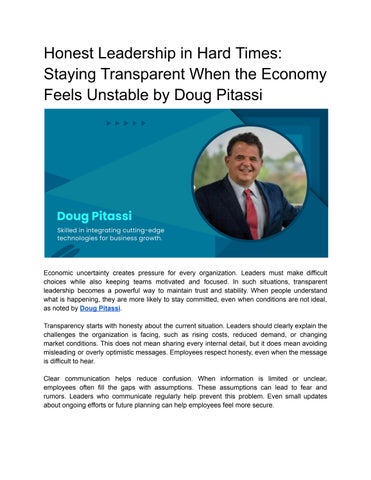
Economic uncertainty creates pressure for every organization. Leaders must make difficult choices while also keeping teams motivated and focused In such situations, transparent leadership becomes a powerful way to maintain trust and stability When people understand what is happening, they are more likely to stay committed, even when conditions are not ideal, as noted by Doug Pitassi
Transparency starts with honesty about the current situation Leaders should clearly explain the challenges the organization is facing, such as rising costs, reduced demand, or changing market conditions. This does not mean sharing every internal detail, but it does mean avoiding misleading or overly optimistic messages Employees respect honesty, even when the message is difficult to hear
Clear communication helps reduce confusion When information is limited or unclear, employees often fill the gaps with assumptions These assumptions can lead to fear and rumors. Leaders who communicate regularly help prevent this problem. Even small updates about ongoing efforts or future planning can help employees feel more secure
It is also important for leaders to keep their language simple and direct Complicated explanations can make situations feel more confusing than they really are. Straightforward communication ensures that everyone, regardless of their role, understands the message For example, if a company needs to reduce expenses, explaining the rationale clearly helps employees see the bigger picture.
Transparency also means being consistent. Mixed messages can damage trust quickly. Leaders should ensure that what they say aligns with their actions When employees see consistency between words and decisions, they are more likely to believe in leadership and remain engaged.
Another key part of transparent leadership is acknowledging uncertainty In unstable economic times, it is normal not to have all the answers. Leaders who openly admit this can still maintain credibility if they also explain what steps are being taken to find solutions This honest approach feels more real and relatable to employees.
Empathy also plays an important role Leaders should recognize that uncertainty affects people differently. Some may worry about job security, while others may feel stressed about changes in workload Acknowledging these emotions shows that leadership cares about people, not just numbers
Finally, transparent leadership encourages openness from both sides When employees are invited to ask questions and share concerns, it builds stronger communication within the organization. This two-way dialogue helps leaders understand real issues on the ground and respond more effectively
In challenging economic times, transparency is not just a communication style; it is a necessity It is a leadership responsibility By being honest, clear, and consistent, leaders can build trust that helps organizations remain strong even in times of uncertainty.