The Town Crier, East Grinstead Edition ISSUE17 February 2026
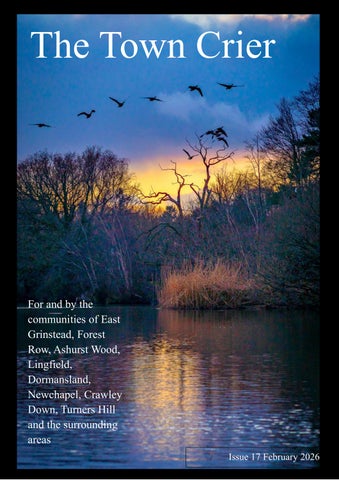
The Town Crier
For and by the communities of East Grinstead, Forest Row,Ashurst Wood, Lingfield, Dormansland, Newchapel, Crawley Down, Turners Hill and the surrounding areas
Issue 17 February 2026
to the February 2026 issue of your Town Crier community magazine
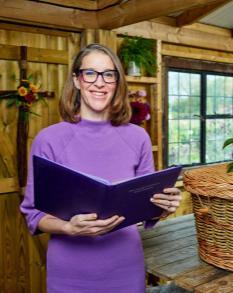
The cover photograph is by our resident genius with a camera, East Grinstead photographer, Russell Prain. Find him on Instagram.
Enjoy this month’s wealth of contributions from local charities, community groups, clubs, artists and businesses. communities.
If you are a charity or any form of not-for-profit group, club or enterprise you will not be charged for being promoted in this magazine.
If you are a small local business, we provide of space for you to advertise at very reasonable rates which you can find here.
The door is now wide open for your submissions for the March 2026 issue.
For more information tour the website or Email: egtowncrier@gmail.com
and Worse page 3
Down Ladies Choir page 12
Avocado Yeti page 14
History Group page 16
Chapter and Worse
This month's book musings by Miles McQ
Last month's musings ended with a mention of an author's death, and we'll start this month with another. The brilliant playwright Tom Stoppard is no longer with us. There is of course the argument that I am straying from my core subject of books, given that a playwright writes plays, which are primarily intended to be watched, even if they also appear in book-form. (This issue comes clearly to the fore in schools, where we mostly get introduced to Shakespeare in written form before we see anything acted...)
Though it is true that the magic of Stoppard's plays is better appreciated on the stage, they are so full of wit and intellect that they certainly reward being read also. On balance of course, rather than recommending going out to buy a copy of 'Rosencrantz and Guildenstern Are Dead' or 'Jumpers', I'd recommend getting tickets for 'Indian Ink' (Hampstead Theatre almost sold out, actually) or Arcadia' (being revived at The Old
Vic next month, which is where I saw the first run of 'R and G Are Dead' many years ago...).
But if you're a Stoppard fan then certainly buy the book 'Tom Stoppard, a Life' by Hermione Lee, an informative 900+ pages about his life and works.
Two months ago we were on about 'Winnie the Pooh'. Let's not forget that other childhood classic, 'Alice in Wonderland'. Well worth revisiting in its original form... It has also been 'revisited' quite a few times by other authors. A recent instance is 'Alice with a Why: Return to Wonderland' by Anna James. She is the author of 2 series of bestselling children's books: 'Pages and Co' and 'The Age of Enchantment' (neither of which I have read). Her Alice book is commendable if not outstanding. I'd rather recommend the 2-book set of 'Taking Wonderland: the Secret of Safe Passage' and 'Taking Wonderland: Truth and Transformation' by Martin Baynton.
Continued on next page
Miles McQ continued from previous page
He has written at least 50 other books, about which I confess to knowing nothing (his 'Jane of the Dragon' was made into a TV series apparently). However his 2 Wonderland books, while very different from the original, create an intriguing new adventure that sets
Wonderland up as an alternative world that the 'heroine' Ali has to visit to try to save various of her family members as well as many others adversely affected by that world, while using the original Wonderland books as coded guides to find the answers she needs. Actually quite dark, but intriguing. 'Curiouser and curiouser,,,'
Addition & Subtraction: Strategies That Work
Maths tutor, Helen Chisholm’s monthly column gives valuable tips on how to excel or help your children excel at maths.
Addition and subtraction sit at the very heart of maths. They are among the first skills children learn at school, yet they remain essential all the way through to GCSE and beyond. This month, it’s worth taking a closer look at how these skills are taught and how the right strategies can make all the difference.
Column Methods vs. Mental Methods
Many parents are most familiar with column addition and subtraction, and these written methods are still important, especially for larger numbers. However, children also need strong mental strategies. Being able to adjust numbers, partition them, or round and compensate helps pupils calculate efficiently and spot mistakes. Knowing when to use a written method and when to work mentally is a key part of mathematical confidence.
Understanding Regrouping (Borrowing)
Regrouping, often called “borrowing” or “exchanging”, can be a stumbling block if it’s taught as a set of rules rather than a concept. When children truly
understand that ten ones can become one ten (and vice versa), calculations start to make sense. This understanding relies heavily on secure place value knowledge and underpins later work with decimals and negative numbers.
Addition and Subtraction in Real Life
These skills are everywhere. Younger children practise them when sharing snacks or counting change. Older students use them to track scores, compare prices, calculate distances, or manage time. Asking children to estimate answers before calculating or explain how they worked something out strengthens reasoning at any age.
Strong addition and subtraction skills build fluency, resilience, and confidence. When children understand the why behind the method not just the steps they are far better prepared for more complex maths.
February is a great time to pause, revisit these foundations, and ensure they’re secure. Small, regular practice and meaningful discussion can make a big difference to long-term success in maths.
The East Grinstead Record Fair is back!
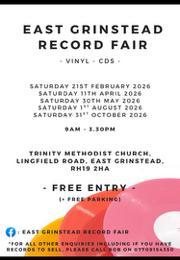
East Grinstead Record returns for the first time in 2026 on Saturday 21st February 9am till 3pm at the Trinity Methodist Church on Lingfield Road.
If you got a turntable for Xmas or are a seasoned collector anyway, we have thousands of records to choose covering all genres from all eras.
Some new faces are there to sell along with the many of the usual crowd, some will be playing tunes all day to keep the atmosphere musical!
Brightening Up the Town
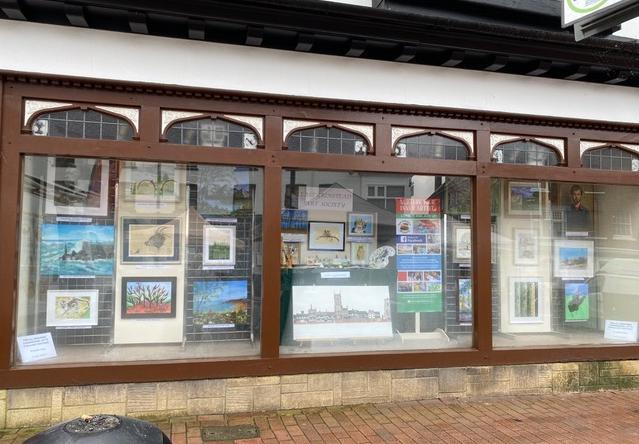
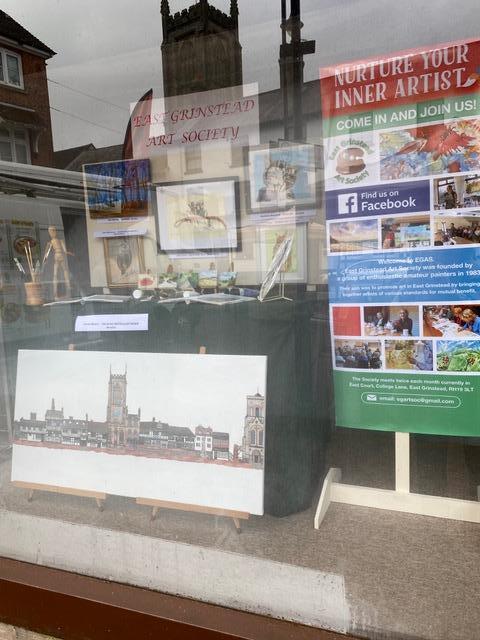
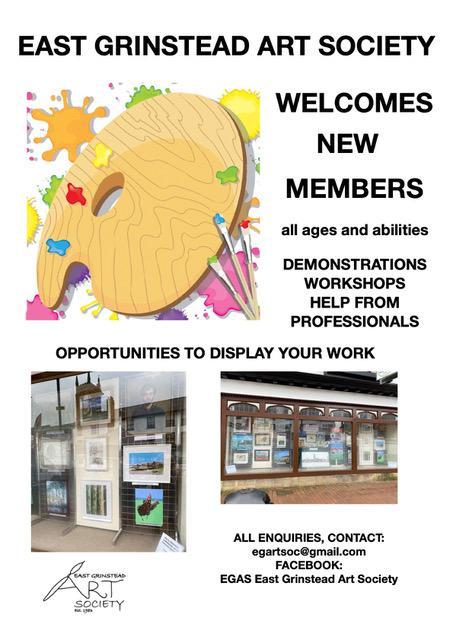
During the consultations at East Court regarding improving East Grinstead, the East GrinsteadArt Society asked about the many empty shops which give a very bad impression of the town.
They asked whether it would be possible for local societies to display in the empty shop windows to brighten up the town and make it more interesting for visitors.
As a result, Grahame Russell of the East Grinstead Business Association held discussions with the Broadley family about using their window in the High Street.
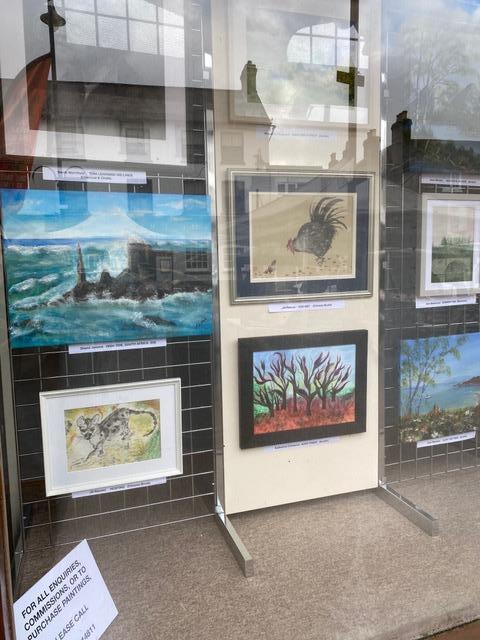
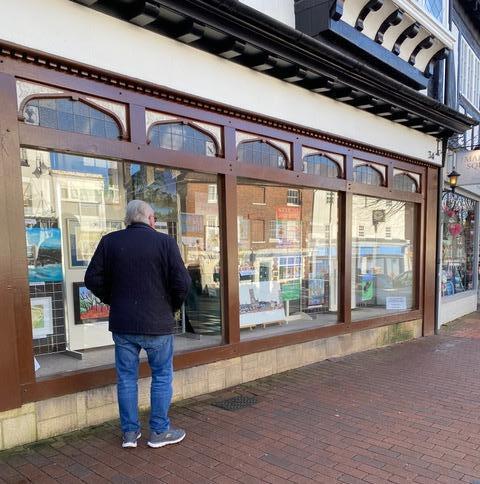
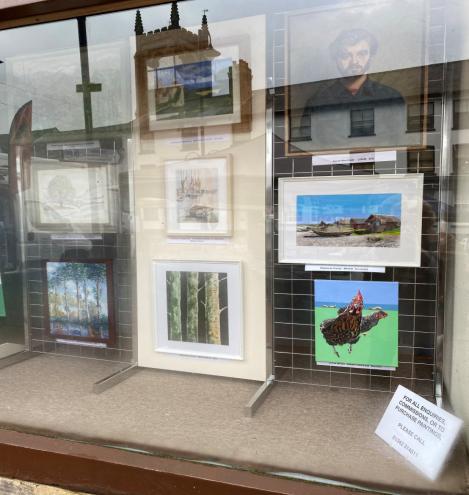
As a result, they kindly agreed that East GrinsteadArt Society could use three of their large windows to show artwork.
Continued on next page
Brightening up the Town continued from previous page
This is now live and the paintings will be changed on a three-monthly basis. We are very grateful to Grahame and to Simon and Alex Broadley for allowing us to do this and to contribute to the ambiance of the High Street.
The Crawley Down Ladies Choir
The Crawley Down Ladies returned early January with a successful “Come and Sing” free open evening during which we started learning a medley of songs from the
musical “Les Miserables”. This is one of the numbers from the Musicals which we will be performing at our Summer concert in June along a mix of other numberspop, folk, modern and classic, an eclectic mix.
We are an amateur, not-for-profit community choir who sing for the sheer joy of singing, meeting every Monday evening at 7.30pm in the Birch Room at The Haven Centre in Crawley Down where there is ample parking space available.
You can be assured of a most warm welcome should you wish to join us. As well as the two concerts in June and December each year, we hold social evenings and there is an annual choir meal in late Spring to look forward to.
Please see our website for more information: crawleydownladieschoir.co.uk
The Avocado Yeti
Town Crier columnist Alison Earnshaw recounts the ongoing progress of a window-sill garden project.
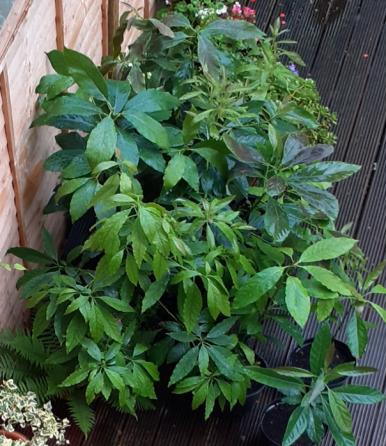
“From tiny acorns mighty oaks do grow”, the age-old saying tells us. That’s certainly the case, not for just for oak-trees but for the green and thriving foliage resulting from a window-sill avocado stone planting project we began some five years ago. Avocados are considered a nutritious fruit with their mono-unsaturated fats and high vitamin content. Personally, I’m not that keen on them, but I’m out-voted in the household and we get through quite a few in any given week. Having googled ‘growing avocado plants from stones’ we found various theories of how best to encourage a stone to sprout and duly tried out a few of them… suspending them balanced on a toothpick scaffold over water in a glass, soaking them and then planting in small pots; all with little result apart from rather sad and soggy looking avocado stones.
The avocados came to us, via East Grinstead branches of Waitrose and Sainsburys, from their various countries of origin… South Africa, Spain, Argentina and the Canary Islands.
A split in the stone, hardly visible to start with, was the first indication.
Then tiny shoots, a bit like beansprouts… and we were off! Multiple shoots from some of the stones, then leaves appearing, some uniform in colour, others variegated in various shades of green depending on the provenance of the stone; a South African avocado stone produced particularly spectacular results. We transferred each developing seedling to its own small pot until the length of the windowsill sported a full chorus line of avocado plants ranging from 6 inches to a foot high.
The next experiment was to see if our new plants could be moved outside for the Summer. They responded well to this, reaching their stalks and branches heavenwards with enthusiasm and imparting what we like to think is a rather glamorous and tropical rainforest vibe to our Sussex garden. Quickly outgrowing their pots, they soon had to be transferred again to larger containers. The weather cooled, and we brought them indoors again for the Winter. There were several more feet of growth and each year since then it has become more of a
Continued on next page
Avocado Yeti continued from previous page
challenge to find a space indoors big enough to over-winter them.
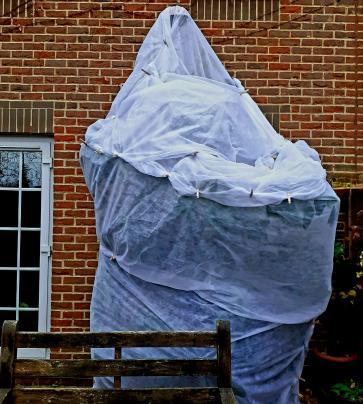
So here we are in February 2026 and we’re now in possession of 10 avocado trees… and ‘mighty oaks’ they are indeed! Higher than the first-floor windows in spite of regular pruning and now far too big to fit through the doors they can no longer be brought inside. So we pull the pots together in the most sheltered spot near the house, wrapping them in layers of garden fleece from local garden centres secured with clothes pegs. This process results in the ‘Avocado Yeti’, a white and rather spookily looming apparition which requires a bit of explaining to visitors.
The leafy plants themselves are much admired when we unwrap them again each summer but of course the big question is… how is our avocado fruit harvest coming along? Sadly, as yet there is no sign of even a single fruit so the supermarkets can relax, we won’t be setting up a rival avocado business in East Grinstead any time soon. But watch this space, should a tasty avocado appear on any of our trees this Summer the ‘Town Crier’ will be the first to know!
Alison is currently working on an original music and theatre production with 'Shot Full Of Rock & Friends'. To find out more go to: https://www.instagram.com/sh otfullofrock/ www.shotfullofrock.co.uk
Ford Manor/Greathed Manor
by Bill Stevenson
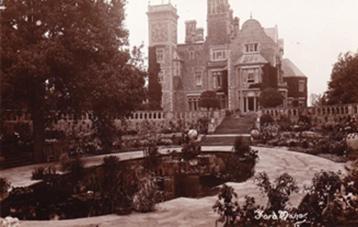
If you travel up the side road to the left of the Plough Inn, Dormansland, you will eventually arrive at Greathed Manor Retirement Home (pictured right). The building was originally called Ford Manor and was the second building of this name on the site
The original Ford Manor was built in the 15th Century as part of a large estate owned by the Gainsford family of Crowhurst Place. Its location is shown on a c1610 map held in the Hayward History Centre’s archive. It survived until the 1860s when it was purchased by Norman Morris, who arranged its replacement with the current building, which was completed in 1868.
The new building was built to the west of the original building with the original site used for outbuildings; stables, dairy, wash house, brewhouse, fruit store, lumber room and housemaid’s closet. After Morris’s death in 1874 it was purchased by the Spender-Clay family.
Capt. Herbert Spender-Clay M.C. owned it from 1885 to 1937. He served in the army from 1896 to 1902 and during WW1. He served as a local M.P. between 1904 and 1914, and from 1918 until his death in 1937. During this time, it became a centre for high society with visits from King George V, Queen Marie of Romania, Prime Ministers and Cabinet Ministers.
He was married to a local lass, Pauline Aster, daughter of Lord Astor of Hever. During WW1 Ford Manor became a convalescent home for wounded American officers. Pauline served as voluntary nurse, taking care and entertaining the officers. One of their three daughters, Rachel, married David Bowes Lyon of Glamis.
Shortly before their wedding the Spender-Clay’s were visited by David’s older sister, Elizabeth, her husband, Bertie, and their young daughter, also called Elizabeth.
Continued next page
Ford Manot continued from previous page
Bertie was better known as the Duke of York, later King George VI, his wife the late Queen Mother and their daughter our late Queen.
After Herbert’s death in 1937 the house was owned by his wife, Pauline, until her death in 1972. The property was then inherited by their eldest daughter Phyllis Nichols. The Nichols continue to own the property but in 1959 the house and gardens were leased to a nursing home group. In 1960 the name of the house was changed to Greathed Manor in honour of the founder of the nursing home group, Rear Admiral Greathed.
Our next talk is on Monday 9th March at the Jennings Hall, behind the Lingfield & Dormansland Community Centre, in the High Street, Lingfield. Penny Harris will speak about “Potholes, Pigs and Paradise”. The talks start at 8pm, with doors open from 7:30pm. Non-members are very welcome to attend our meetings - there is a £2.50 charge for visitors. For more details of future talks, see the “Events” page on our website, “rh7.org”.
If you have any historical queries about our area the please contact us by email at mailto:rh7histsoc@gmail.com.
VeryAffordableAdvertising
If you are a local business, you can promote your business for very low costs.
For example, a half-page ad in Town Crier costs just £25 per issue
Click here for more info
ACelebration of Women Vintage Tea for Tay
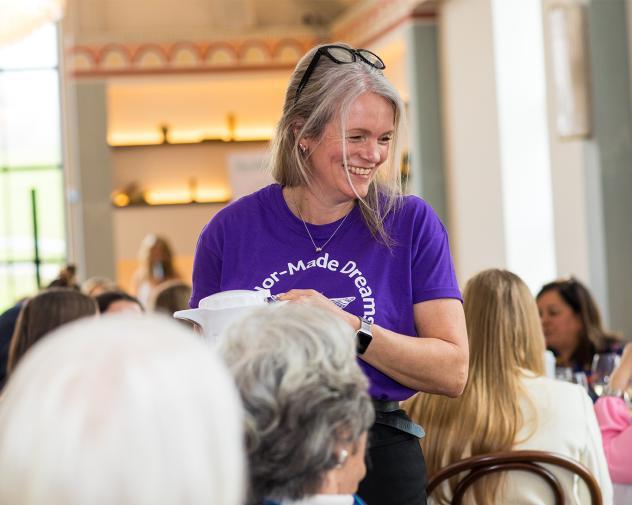
‘A Celebration of Women Vintage Tea for Tay’, Taylor-Made Dreams' annual flagship Vintage Tea for Tay event in recognition of International Women's Day, is back for 2026!
Each year we are joined by so many inspiring women, supporting children with life-limiting illnesses and in recognition of International Women’s Day. Each ticket supports the 10 services we provide at Taylor-Made Dreams, providing magical days out for TMD families, and quality time together away from the everyday routines of life-limiting illnesses.
Join us on Sunday 22 March, at the Crowborough Community Centre, for an afternoon tea that makes a difference.
Hear from inspiring female speakers; in previous years we were joined by BBC presenter Claudia Sermbezis, Davina McCall, as well as female health experts and TMD family members.
Tickets are now available at £60 per person, purchased as tables of ten. Please email TMD fundraiser Dave Richardson to purchase your tickets: dave@taylormadedreams.org.uk
From Small Faces to Space Oddity and Beyond
Bob Smith writes about the magic of collecting Vinyl
My name is Bob, I run the East Grinstead Vinyl Record Collectors fair. The first fair of 2026 is on Saturday 21st February 9am till 3pm at The Trinity Methodist Church in Lingfield Road RH192HA.
Steve at the Town Crier asked if I would do a little piece about collecting records, just to explain a few things about something that seems to appeal to many people for different reasons.
I have always been a keen follower of music since I was a young boy, my mum told me about a song by the Small Faces which grabbed my attention when I was 4 or 5, the song was “Sha La La La La La Lee”, you may have heard it?
I could tell you a story about an occasion I spoke to the singer Steve Marriott about him playing the song, but his response was not as I expected so maybe I should talk about that on another occasion!
Anyway, after hearing the Small Faces I took up to listening to all sorts of stuff, I had six siblings listening to Motown, Folk and Rock, so most things were covered.
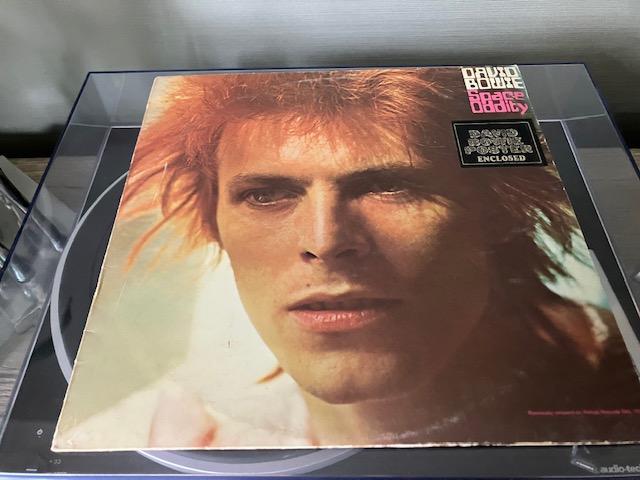
When I was about 8 a chap called David Bowie became well known, possibly
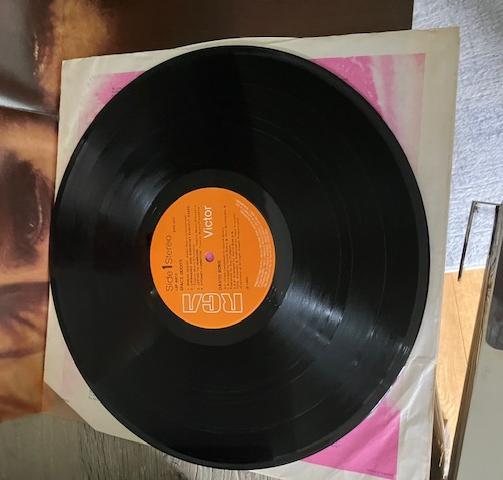
because he wrote a song about Space travel. At the time, the Apollo missions were big news, so I am sure that helped. Anyway, I saved my pocket money and bought the album, which I still have today; it has the original inner sleeve with lyrics, and my copy also had a poster, if you find a copy of the LP now with the poster, it makes a hell of a difference to the cost!!
I am someone who usually buys things I want to listen to, but there are many people who buy a particular vinyl, either for its value, for the label it’s on or maybe a connection to something else they particularly like - it can be a minefield.
Continued on next page
Bob Smith continued from previous page
If you have an interest in music, you should pop along to the fair, even just for a browse, there are usually tunes being played, yes on vinyl and the dealers all have an interest which I am sure they will be happy to talk with you about.
It’s free entry too!!
Apoem for Valetine’s Day
by Steve Cook, novelist and author
A Sonnet for my Valentine
(For my Wife)
Throughout our years my love hath grown more fine, The more I find of thee the more to love, ‘Til ev’ry day becometh Valentine’s As the heart’s red rose burgeons from its bulb, Or like the fruit that groweth on the vine Blessed by kindly climes and a gentle sun, Matures until it maketh sweetest wine And sipped by lips benign leaves thirst undone. When all around decays and dies with time And even mortal flesh at length succumbs, E’en yet do we defy that base design For love dies not but groweth yet more strong. And mine is stronger now than e’er it was And thou its inspiration and its cause.
Crier columnist, Dominique of Native French Tutors
Learning French, or any other language for that matter, can seem exciting and daunting at the same time. Let’s face it, the pronunciation is very different, and let’s not even talk about the grammar or the verbs! Just thinking about it can give you a headache.
But I totally believe that ANYONE can learn at least some French, for pleasure or so as not to feel so lost when you go abroad.
But first ask yourself: Why do you want to learn?
It is important to have a goal. Is it because you will be going on holiday to a French-speaking country and you need to be able to read the signs
continued on next page by Town
Learn French continued from previous page
and ask directions while there? It is true that a lot of French people understand or speak some English, but they are not necessarily fluent or confident with it, and in some areas, you will be hard put to find someone who speaks it much at all. So being prepared is a good idea. And learn to use hand and body language too, that does make life easier.
Once you have established why you want to learn, then decide how you will go about it.
There are plenty of alternatives:
• Courses on CD/DVDs. There are plenty of these available, you can even borrow some from the library.
• Courses online. Some are even free.
• Taking lessons. Preferably with a native French speaker for an authentic accent and expressions you won’t learn in books.
• Learn with a friend/friends or family, to make it more fun.
• There are some language apps. I do not know how good they are, I have never tried them, but they are probably worth using as part of your overall plan.
You also need to work out how much time you have to learn. Beware of claims such as “Be fluent in 3 months”. Unless you spend a lot of hours a week and can immerse yourself in the language and culture, I doubt that’s going to happen. Learning a language is not necessarily difficult, but it does require effort and consistency.
There are other things you can do to learn:
• Watch a French movie in French with English subtitles. Then as you progress, use French subtitles too.
• Read very simple books, a bit like “Spot the Dog”.
• Listen to French music, the French radio. Even if you don’t understand a lot of it, you’ll get used to the accent(s) and speed of talking (some of us Frenchies do talk fast I’m afraid).
• Get a cooking recipe in French and use it!
• Go to South Kensington in London if you can. It’s Little Paris! Go sit in the pancake café or in the bookshop and listen to people speak.
• Try to practise daily but if you can’t, then fine. The main thing is, don’t put pressure on yourself.
• Keep it fun, otherwise
Learn French continued from previous page
it’s like being back at school and no one wants that!!
• Make a list of words you want to retain and stick it on the fridge. Practise it every time you go past it.
• Whenever you can, for example if you bump into a French person, use what you know. Even if it’s just “Bonjour”!
Hope this helps!
For more information
Phone 7948702788 Or Email domicook64@gmail.com
Judith Looks at Love and Romance
Valentine's Day is only just around the corner so I thought that perhaps, this time, I should start with a mention of my own radio show on The Feel Good Station – Judith looks at Love and Romance! It goes out live every Saturday morning between 10:00 and 12:00 and it's packed full of love songs of all kinds and from every era. In addition to trying my best to get you into a romantic mood for the weekend, I have also made my show a platform for musical talent by including a feature which I call ‘In my Spotlight’, when I invite a musician or a singer to come on to my show to tell us a bit about themselves and I follow by playing a track of their music. The Feel Good Station, though based locally, goes out all over the world, so
if you are a singer/songwriter, or are maybe playing with a band, then this is an excellent chance to get your music out there. Of course I am always especially delighted to encourage local musicians, so do contact me through our Facebook page or you can message me direct on my own, Judith Thomson.
As well as my Saturday show I also copresent The Morning Magazine Show every weekday morning between 9:00 and 11:00 along with Lester Jones, and throughout the week we can offer you a great selection of shows from our many brilliant presenters, covering every type of music. You can listen at thefeelgoodstation.uk or on our Station App, Simple Radio, Deezer and Alexa. You can even listen through my website judiththomson.com where, if you wish, you can also discover my 17th century historical novels at the same time! We’re local, we’re fun and we’re here for YOU!
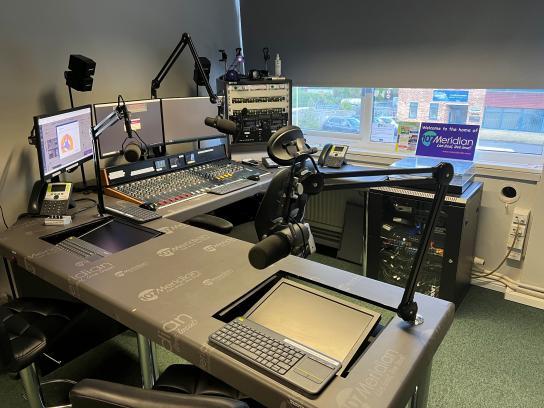
Why community radio
still matters - even if you never tune in on purpose
by Tim Graham of Meridian FM
Earlier this month, it was Community Radio Day and East Grinstead's own Meridian FM threw open its doors to highlight the important role we play within our area.
Most of us don’t sit down and decide to listen to the radio anymore. It’s just there - in the car, in the kitchen, quietly in the background. And when it works, you barely notice it at all.
But something has been changing.
Across the country, BBC local radio has reduced the amount of truly local programming, especially outside peak hours, while commercial radio has become increasingly networkedwith shows made many miles away and broadcast to large regions or even nationwide. That shift is largely driven by budgets and efficiency, and it’s understandable. But it also means fewer voices that genuinely sound like here.
That’s where community radio
comes in.
Community radio isn’t about chasing ratings or national audiences. It’s about everyday life. Local events, road closures, charity appeals, community groups, local sport, local conversations - the sort of things that rarely make it onto bigger stations but matter a great deal if you live nearby.
You might not think you “need” a local radio station. But when there’s heavy snow, a major traffic problem, a community fundraiser struggling for support, or simply a familiar voice talking about a place you recognise, suddenly it feels important again.
That’s why Meridian FM matters.
Run as a not-for-profit station by local volunteers, Meridian FM is at the heart of our community every day - not just the headlines, but the texture of local life. It gives space to voices you won’t hear elsewhere and provides opportunities for people of all ages to get involved,
Continued on next page
Meridian FM continued from previous page
learn new skills or simply feel connected.
You don’t have to be a radio enthusiast to benefit from that. Community radio is less about broadcasting at people, and more about quietly stitching a place together - especially at a time when so many local services are being scaled back or centralised.
Even if you only ever catch it by accident, having a station that truly belongs to the community is something worth holding on to.
Because once it’s gone, it’s very hard to get back.
You can hear Meridian FM on your radio (107 FM), online (at meridianfm.com) and on your smart speaker (just say "Play Meridian FM"). And we'd love to hear more from you - what do you want from YOUR community radio station? Email us anytime at admin@meridianfm.co.uk or give us a call on 01342 325825.
World Day of Prayer
this year will be for Nigeria and services will be held on Friday 6 March at Moat United Reformed Church in the morning at 10:30 am and in the evening at 7:30 pm. Refreshments available and a Fairtrade stall. Please do join us for this world-wide ecumenical event. We hope it will be very colourful, enjoyable and informative.
Big Brew and Spring Market 2026
This event will be held from 10am-12.30am on Saturday 7 March at Lingfield & Dormansland Community Centre in aid of Transform Trade. Stalls will include Fairtrade food, chutneys and jam, cheeses, cakes, Fair Trade crafts, pottery, the Coop, jewellery etc. Refreshments and raffle.
Meal and Quiz
Fairtrade EG/EG Museum will be holding their annual charity meal and Quiz at The Ghurka, Woodcock Hill on Monday 9 March. 6.30pm for 7pm.A 3-course meal for £25 with £9 for the charities. Good raffle. Book to the Ghurka 01342 325325.
Helping you live a freer, healthier life
This month, Samantha Ford of Unique Welllth presents
Rethinking Heart Health:
The Story We Were Told and What Matters Now
For most of our adult lives, we’ve been told a simple story about heart disease.
Eat too much fat, especially saturated fat, your cholesterol goes up, your arteries clog, and eventually you have a heart attack.
It’s a neat and persuasive story. It’s also incomplete and, in important ways, outdated.
For decades, fat was positioned as the villain. Early studies linked saturated fat with higher LDL (“bad”) cholesterol, and from there the message stuck. Low-fat foods flooded supermarket shelves, many of them highly processed and loaded with sugar. Fat was removed, but something had to replace it and that something was often refined carbohydrates. When researchers later looked more closely at what actually happened when people cut down on fat, the results were far less impressive than expected. Large reviews have shown that reducing saturated fat on its own has only a modest effect on heart disease risk, particularly when fat is replaced with refined
carbohydrates such as white bread, breakfast cereals and sugary snacks. In some cases, blood sugar control and triglyceride levels actually worsened.
In other words, it wasn’t just about the fat. It was about what people were eating instead.
Dietary cholesterol has also turned out to be far less powerful than we once believed. For most people, foods like eggs or prawns have only a small effect on blood cholesterol levels. Our bodies regulate cholesterol tightly, and much of what circulates in the blood is produced by the liver, not absorbed directly from food.
What this means in real life is that blaming butter, eggs and red meat for heart disease has distracted us from more important drivers of risk.
Today, many researchers agree that metabolic health is a far better predictor of cardiovascular risk than cholesterol alone. You can have “normal” cholesterol and still be insulin resistant, inflamed, carrying fat in the liver and quietly developing heart disease.
Continued on next page
Equally, some people have raised LDL cholesterol but a low overall
Rethinking Heart Health continued from previous page
Equally, some people have raised LDL cholesterol but a low overall cardiometabolic risk because their blood sugar, insulin, triglycerides and inflammation are well controlled.
Markers such as triglycerides, HDL cholesterol, fasting glucose and HbA1c often track more closely with realworld heart disease risk than total cholesterol does. There is also growing interest in apolipoprotein B (apoB), which reflects the number of atherogenic particles in the blood and appears to predict cardiovascular events more accurately than LDL alone.
This points to a much bigger picture.
Heart disease is not simply about fat in the blood. It is about how the whole metabolic system is functioning: how stable blood sugar is across the day, how much insulin the body needs to produce, how inflamed blood vessels are, how much fat the liver is storing, and how dominant ultra-processed food is in the diet.
If heart disease were discovered for the first time today, it is extremely unlikely that dietary fat would be blamed.
Instead, the focus would fall on a familiar cluster of metabolic problems: raised blood sugar and insulin levels, fatty liver, high triglycerides, low HDL cholesterol, excess weight around the middle, chronic inflammation, poor
Sleep, long periods of sitting, and diets dominated by ultra-processed foods.
This reframing matters because it changes what we actually do to reduce risk.
Protecting heart health isn’t about obsessing over numbers or cutting out entire food groups. It’s about creating the conditions in which the heart and blood vessels can thrive.
One of the most consistently supported approaches is a Mediterranean-style way of eating: mostly real, minimally processed food; plenty of vegetables and fibre; adequate protein; whole-food carbohydrates; healthy fats such as olive oil, nuts, seeds and oily fish; and fewer ultra-processed foods and added sugars.
Lifestyle matters too. Regular movement is important, but so is reducing long periods of sitting. Sleep plays a direct role in blood pressure, inflammation and blood sugar control. None of this requires perfection, extremes or a joyless life built around restriction.
Small, consistent changes: steadier meals, better sleep, more movement, fewer ultra-processed foods compound over time in ways that are genuinely powerful. Continued on next page
Rethinking Heart Health continued from previous page
If heart disease runs in your family, or you’ve been told your cholesterol, blood pressure or blood sugar are “a bit high”, the most helpful next step isn’t panic. It’s taking a step back and looking at the whole picture.
This is where a WELLth Check call can be a valuable starting point. We look at your lifestyle as a whole food, sleep, movement, stress and daily habits to identify small, realistic changes that could make the biggest difference to your health, energy and long-term wellbeing.
Follow the link to book your complimentary WELLth Check call. Your health is more than numbers and you don’t have to figure it out alone.
Heart Health Month: The Small Actions That Save Lives
When people think about heart emergencies, they often picture the dramatic moments flashing blue lights, urgency, and paramedics arriving at speed. But let’s go to the stages before all that, where it shows up in quiet homes, worried family members, and those crucial first minutes before an ambulance arrives.
Heart Health Month is a timely reminder that heart disease doesn’t usually start as an emergency. It develops slowly, often without obvious warning signs, and by the
time someone collapses, the heart has usually been under strain for a long time. This is why awareness, preparation and early action matter so much.
As responders, we regularly attend people who didn’t realise how unwell they were. Chest pain isn’t always sudden or severe. Symptoms can include pressure or tightness in the chest, breathlessness, nausea, dizziness, unusual fatigue, or pain spreading to the jaw, back or arm. These symptoms are sometimes brushed off as indigestion, anxiety or “just feeling off”. Continued on next page
Heart Health Month continued from previous page
Trusting your instincts and calling for help early can make a life-saving difference One of the most important things communities can do is know where help is available.
Public access defibrillators save lives, but only if people know where they are and feel confident using them. Modern defibrillators are designed to be safe and will guide the user step by step. They will not deliver a shock unless it is needed. In a cardiac arrest, using a defibrillator quickly alongside CPR can dramatically improve survival.
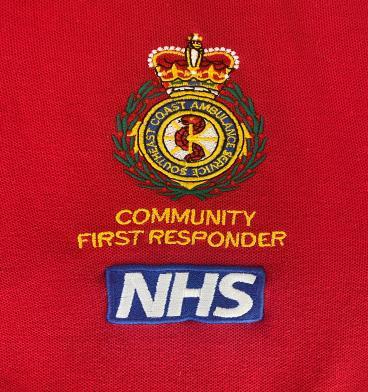
Community First Responders exist to bridge the gap between a 999 call and the arrival of an ambulance. We are local volunteers, often able to reach patients within minutes. Those minutes matter. Early CPR, early defibrillation and early reassurance can stabilise a situation and give someone the best possible chance.
But heart health isn’t only about emergencies. Prevention plays a powerful role too.
Many of the situations we attend could be made less severe or avoided altogether through earlier support, awareness and simple lifestyle changes. Regular movement, reducing long periods of sitting, getting enough sleep, managing stress and seeking help
sooner when something feels wrong all support heart health over time.
Isolation is another important factor. People living alone or feeling disconnected may delay calling for help because they don’t want to “cause a fuss”.
Knowing your neighbours, checking in during cold weather, and encouraging people to seek help when they need it can prevent small issues from becoming serious emergencies.
Heart Health Month is also an opportunity to reflect on our own readiness. Do you know how to perform CPR? Do you know where your nearest defibrillator is? Would you feel confident using one if someone collapsed in front of you? These are skills and knowledge that anyone can learn and may one day use.
As Community First Responders, we see first-hand the impact of fast action, calm reassurance and community awareness. Heart health is not just a medical issue; it’s a shared responsibility. By learning the signs, supporting each other and acting early, we can all play a part in saving lives.
Visit the British Heart Foundation website for more information
Thinking Outside the Box
by Kate Megson, The Purple Funeral Celebrant
We all have opinions and thoughts about every aspect of our lives –what will we eat tonight, what new series shall we start watching, but have you ever asked yourself what you would like for your funeral? Or have you asked a loved one about their wishes as to what they want to happen to their body following death, and how they would like their life celebrated?
Death is guaranteed to come to us all, but it shouldn’t be a taboo subject, talking about it doesn’t bring it on, and it can be an enlightening conversation to talk about how life can be celebrated.
There are so many options available to us now amongst the traditional and well know cremation and burial. What you are laid to rest in has developed so much over the last few years – you could be in a cardboard coffin which family members have decorated, a woollen shroud or even a mycelium pod which is a coffin made from mushroom spores.
You can opt for a natural burial in the beautiful natural burial sites in Sussex and Surrey – ensuring that you are laid to rest at one with nature and with minimal environmental impact.
Ashes can be incorporated into memory bears, vinyl records, memorial jewellery or glass to make a vase or a piece of art. Ashes can even be sent into space or scattered by drone over a favourite place.
Reduce costs by having an unattended cremation – so no mourners at the Crematorium, but then have a Celebration of Life event at a place that means something to you – the golf club, the beach or in beautiful woodland.
Your service can include your favourite pieces of music, play sound effects related to your interests like birdsong or a steam train. Photos of the memories you made in life can be shown on screens, and mementos of your passions can be displayed on your coffin or at your celebration of life.
You might like those attending to wear a particular colour or motif that really represents you. At a celebration of life event, guests can sing along to songs, dance, be invited to share memories or each given something to remember you by, such as wildflower seed balls which have your ashes incorporated into them.
You might think you don’t have any strong desires or wishes, but be brave, and start a conversation with someone, as when you talk about it, you will help those you leave behind to know what to do.
Continued on next page
The Purple Celebrant continued from previous page
As a funeral celebrant who leads services throughout Surrey, Sussex and Kent, it’s wonderful when family and friends are able to fulfil their loved ones wishes.
If you would like a Purple Plan to help capture your wishes, please email me at kate@thepurplecelebrant.co.uk, note down your thoughts, and file it away for when it is needed.
Small, positive changes can make a big difference in your life, especially when it comes to your finances.
by Fiona Straszynski
Try out these four tips and see how much money you can save
Create a budget
If your aim is to save money, creating a budget is one of the most important first steps. It’s a fantastic way to gain a clearer picture of your financial situation. First, establish what you spend your money on and how much income you have coming in. This will help you see where you can cut out or cut back on small expenses to increase savings in the long run.
Try cheaper alternatives, and if
Always compare prices
Things might not be cheap but there are often cheaper alternatives. We can sometimes go for a brand we’ve seen advertised because that exposure makes us trust it more than brands we haven’t heard of. However, just because a company doesn’t have a big advertising budget doesn’t necessarily mean what they’re selling won’t do the job you need it to do.
Continued on next page
CAP continued from previous page
Try cheaper alternatives, and if you like them, great, you’ve saved money! If you don’t, you can always go back to a brand you prefer if you decide it’s worth the extra cost.
Check out helpful websites
Finding out what the cheapest option is can sometimes be a challenge, but there are plenty of helpful websites to give you a good idea. Try moneysavingexpert.com for tips to help you save on a wide range of different things. Sign up to their weekly email newsletter to get the latest deals, guides and hacks directly from Martin Lewis and the MSE team. Attend a free money course
Free local money coaching and life skills courses can be super helpful to take your money management skills and financial confidence to the next level. Christians Against Poverty (CAP) runs these free courses in local communities for people of all faiths and none.
CAP is committed to fighting poverty and helping people to gain control of their finances. For more information visit capuk.org/help
The East Grinstead CAP Debt Centre supports East Grinstead and all the surrounding villages offering free, confidential, face-to-face debt help.
Fiona Straszynski – East Grinstead Debt Centre Manager
You’re not alone. We’re here to help! Call our FREE helpline on 0800 328 0006 or contact fionastraszynski@capuk.org on: 07897 001158
Three Common Marketing Mistakes Small Businesses Make
Monthly Marketing Tips by Alice Watkyn of Mouthy Marketing
Many small and micro businesses struggle with marketing for very predictable reasons. The same problems come up again and again, regardless of sector.
Copying big brands
Small businesses often copy what large brands do because it looks professional. A local café posts polished lifestyle photos because national chains do the same.
However, local customers usually want practical information first: opening times, menus, prices, parking, and how busy it gets matter far more. Marketing works better when it reflects how customers actually make decisions at a local level.
Running ads without the basics or a realistic budget
Ads are often treated as a quick fix –and when done right, they can work well.
However, all too often, you see a tradesperson running Facebook ads that link to a vague homepage. There is no service area, no clear call to action, and no easy way to get in touch. Clicks arrive and enquiries do not.
Cost expectations also cause issues. Small budgets disappear quickly when ads are left to run without testing, tracking, or a clear goal.
You need to be clear on how much ads cost and how much you can afford to spend per sale.
Inconsistent marketing
Posting regularly for two weeks, then going quiet for months, makes it hard for people to remember or trust a business.
Familiarity builds through repetition. Simple, realistic routines beat bursts of activity followed by silence. Consistency applies to messaging, visuals, and how often you show up. Inconsistency creates confusion.
These mistakes are common because they feel logical at the time. Fixing them starts with clarity, realistic expectations, and steady effort. Marketing becomes far more manageable when it supports how your business operates rather than fighting against it.
Don’t forget, the door is now open for you to send your submissions for next month’s issue!