By Randy Olson
By George L. Nitti
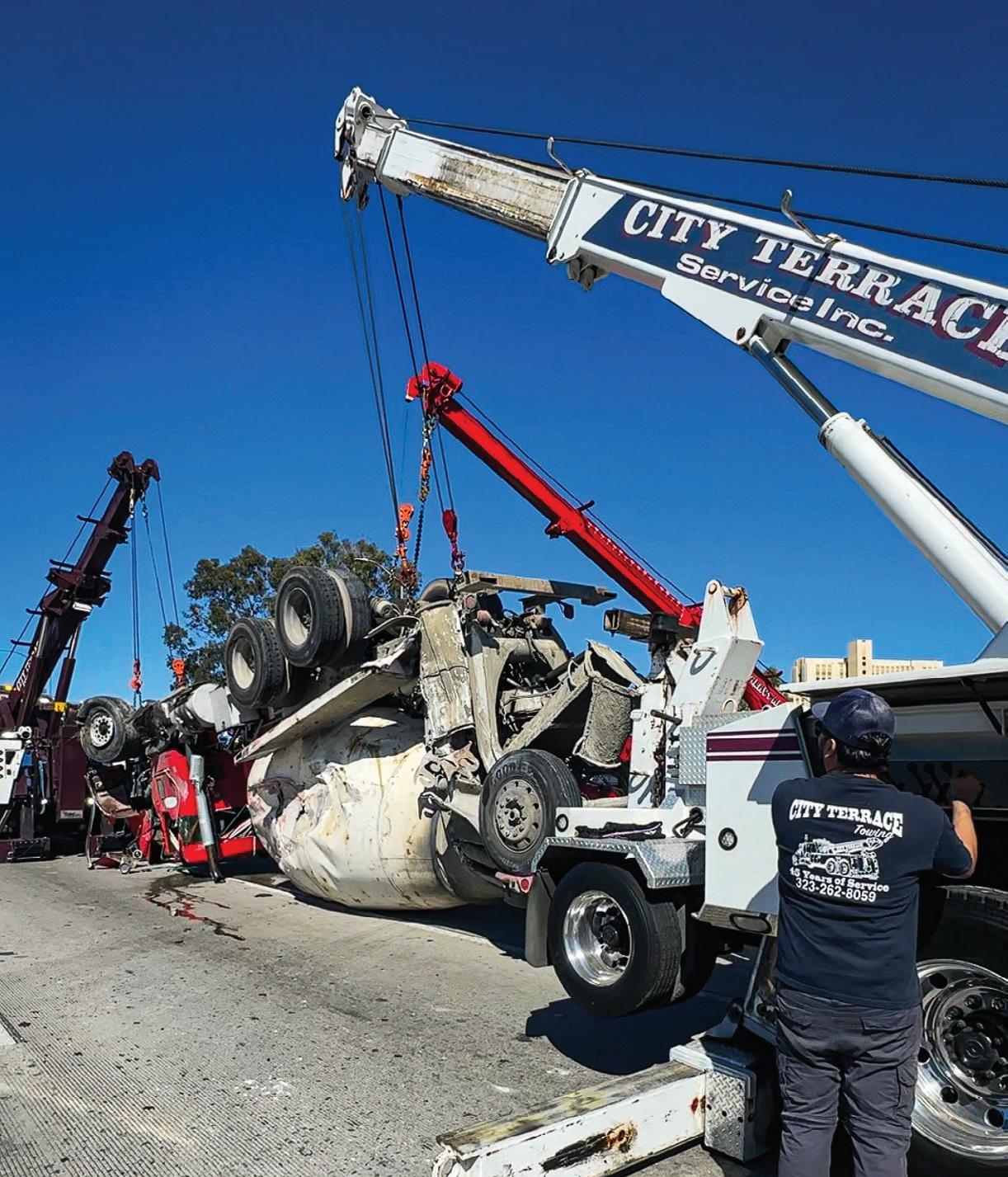
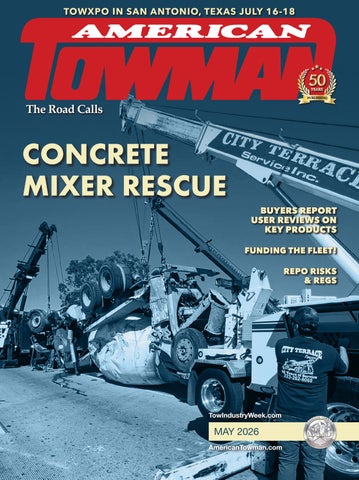
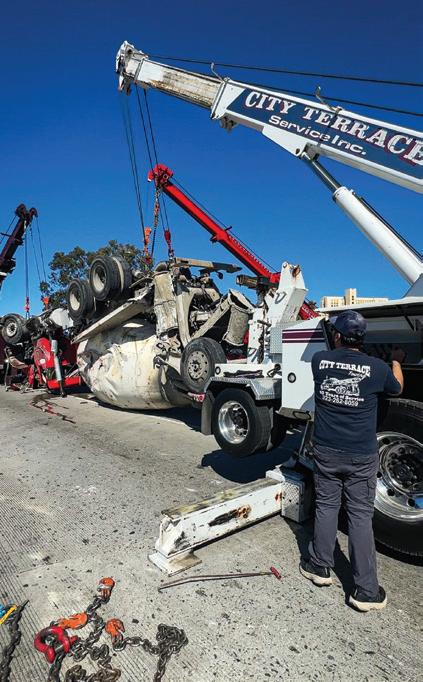
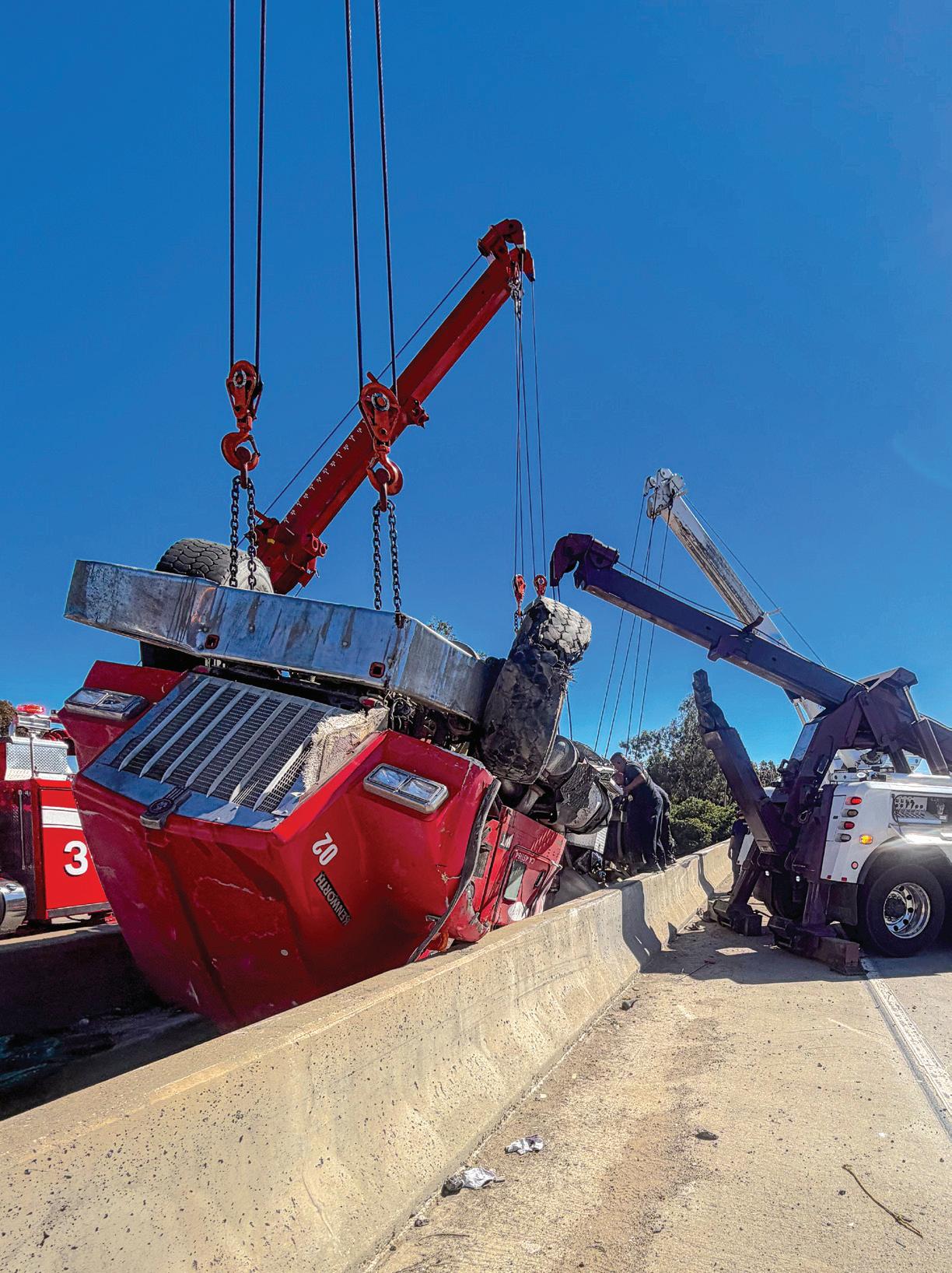
A recovery like no other for City Terrace Towing in Los Angeles when a 60,000 lb cement mixer flipped and got stuck between twin concrete barriers on a busy overpass. The 55-year family owned business executed the complex recovery with steady expertise, quiet confidence, and unwavering professionalism.

By AT Staff
By Mark Lacek


Dennie Ortiz Publisher
Just the other day, while reading a local newspaper, I came across an article mentioning that May 3-9 is National Small Business Week. This immediately caught my attention, as most towing companies fall directly into this category. During this time, the U.S. Small Business Administration highlights these
“engines of our economy,” stressing the grit and resilience of small businesses just like towing operations while also recognizing the mounting challenges they face, such as inflation and increasing regulatory burdens.
As operating costs rise and growing profits becomes more difficult, many towers are looking for ways to diversify. One promising option worth considering is the repossession sector, which can open the door to additional revenue and broaden your overall book of business.
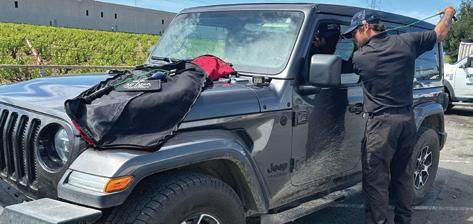
If you’re exploring this line of work, Repo Guru Mark Lacek offers a comprehensive look at repo regulations. Mark breaks down the key legal requirements to help ensure your business remains compliant and avoids costly legal missteps.
With legal considerations addressed, the next step is assessing new products and services, and the most reliable insight often comes from those already using it. Understanding why other companies prefer certain solutions can help guide smarter decisions for your own operation.
In this issue, we make that tiresome process a bit easier through our special section, The Buyers Report, which connects you directly with real customer experiences. To ensure that these reviews are genuine, our editorial team speaks directly with users to gather honest feedback on the products and services they rely on, giving you a trusted resource for your next purchasing decision.
While you’re in the purchasing mode, if wire or synthetic rope is on your radar, or you simply want to get a better understanding of this remarkable material, our Field Editor, Terry Abejuela, provides a detailed look at the history and growing popularity of this forceful fiber in this issue’s HandsOn Tech department.
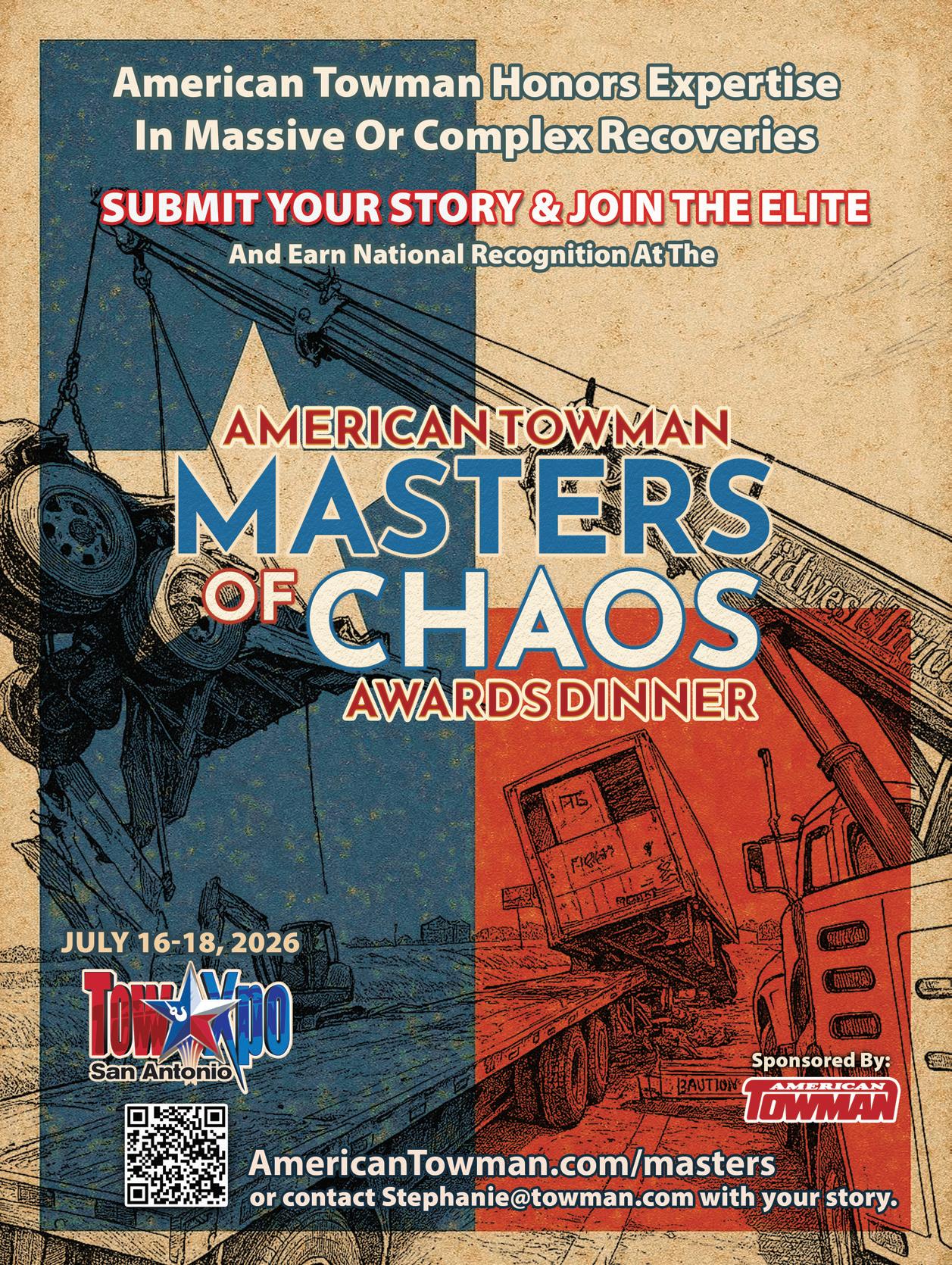
Equipping yourself with the right knowledge doesn’t stop at recovery gear, as it should include every service you perform in your business. Tire changes are one of the most commonly provided services by towing companies. However, essential equipment such as floor jacks and jack stands is often overlooked when it comes to proper and safe handling. Randy Resch explains best practices for using these everyday tools, and highlights the potential dangers of improper use.
Hope you enjoy the issue. As always, stay safe out there!

Steve Temple Editor
Without dwelling on all the details, I recently encountered a medical issue that was a wake-up call not only for myself, but also a close friend. He was experiencing similar symptoms, and ended up going to his doctor after seeing what I was going through. That proved to be a wise choice, as his condition was much more severe and needed immediate attention.
Hopefully this experience will encourage towers to look out for the health of their family and fellow towmen. Keep an eye on their well-being, and don’t hesitate to say something if they seem to be in need of either emotional support or medical attention. You’ll be glad you did!
itowman.com
americantowman.com
towindustryweek.com americantowmantv.com

A recent enforcement effort in New York City highlights a challenge familiar to tow operators nationwide: illegally parked commercial vehicles in residential areas. In the East Bronx, the NYPD’s 45th Precinct conducted an overnight operation targeting tractor-trailers staging along restricted roadways. More than a half-dozen vehicles were removed from the Throgs Neck Expressway service road and nearby streets. The operation featured a newly deployed 50-ton heavy-duty wrecker, funded through an $800,000 grant, enabling crews to safely remove large commercial units.
While enforcement efforts like this are typically local, similar parking challenges are being reported in municipalities across the country, putting added focus on heavy-duty towing resources and response capabilities.
Source: bxtimes.com
A judge has ruled that a December 2023 shooting in Harvest, Alabama, was not an act of self-defense, setting the stage for a June trial. The victim, 38-year-old Jason Click, was killed while attempting to repossess a vehicle, according to the Madison County Sheriff’s Office.
Click, owner of Ace Towing and BNS Recovery Services, was well known in the local towing community. He was later honored by hundreds in nearby Huntsville, Alabama with a “last call” tribute of flashing tow trucks.
Prosecutors say there was a valid repossession order for the Audi involved. The defendant, Warren Siao, claimed he believed the men were stealing his car.
Siao testified he heard a noise, retrieved a suppressed rifle, and fired multiple shots. Investigators recovered 16 shell casings. Video evidence showed Click rang the doorbell before removing the vehicle from an open garage. Prosecutors argued Siao did not reasonably fear for his life. The judge agreed.
Source: .waff.com and whnt.com
Legislation has been introduced in the U.S. Senate to better protect first responders and roadside workers operating near traffic, marking a federal effort to address a nationwide safety issue. Senators Dave McCormick (R-PA) and Catherine Cortez Masto (D-NV) unveiled the bipartisan Safe Roads for Those Who Serve Act, aimed at reducing injuries and fatalities among those working on or near roadways across the country.
The bill would establish national standards and guidance, requiring states to improve how they collect and analyze data on highway worker incidents. It also calls for stronger safety measures in federally supported infrastructure projects and would launch a nationwide public awareness campaign highlighting the dangers faced by law enforcement, EMS personnel, tow operators, and construction crews.
“Towing and recovery professionals put their lives on the line every day to
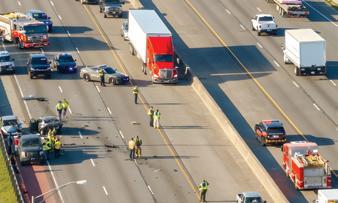
Bipartisan federal legislation aims to improve safety for roadside workers.
help motorists, protect first responders, and keep commerce flowing,” points out Bruce Bender, executive director of the Towing and Recovery Association of America (TRAA). “We are deeply grateful that Senators McCormick and Cortez-Masto have introduced the Safe Roads for Those Who Serve Act and have expressly included towing truck operators in promotion of the initiatives that protect them. TRAA proudly supports this legislation.”
Source: transportationtodaynews.com
The pressure facing repossession and towing is no longer isolated, but rather is part of a broader economic shift driven by surging fuel prices across the United States. According to The New York Times, gasoline prices have surpassed $4 per gallon, while diesel has spiked sharply due to global oil disruptions.
One repossession company reported burning more than 17,600 gallons of fuel to recover 1,630 units in a single month—an average of 10.8 gallons per job. With diesel rising from roughly $3.68 to over $5.50 per gallon, (and even higher in some areas), costs have increased by more than $21 per recovery, adding over $32,000 in monthly expenses.
Jamie Hagen, owner of Hell Bent Xpress, a trucking company, said rising diesel costs have effectively erased profit margins.
Towing operators are seeing the
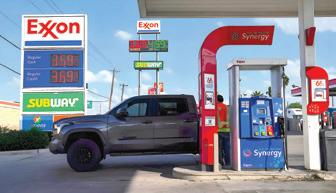
Towers have started to implement fuel surcharges due to the rising cost of fuel.
same trend. Luke York, President of the Maine Towing Association and owner of 201 Service Towing & Auto Repair in Skowhegan, Maine, said diesel prices in the state have jumped from about $3.92 to nearly $5.60 per gallon.
“I have started to implement fuel surcharges due to the rising cost of fuel, but it’s hard to charge mileage and hammer away on a fuel surcharge,” he said, underscoring the challenge of balancing rising costs with fair pricing.
Source: nytimes.com curepossession.com and TIW interview with Luke York
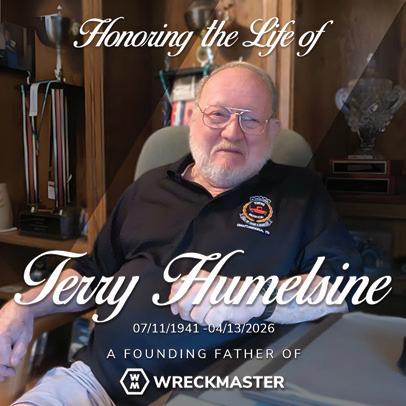
The towing and recovery industry mourns the loss of Terry Humelsine, a founding force behind WreckMaster and a pioneering educator who helped shape modern towing practices. He passed away on April 13, 2026.
Widely regarded as a cornerstone of the industry, Terry devoted his life to training operators across North America, emphasizing safety, professionalism, and doing the job the right way. Through WreckMaster, he educated thousands of tow professionals, many of whom credit him with changing the course of their career and saving lives. His influence was profound.
“Terry was one of my instructors 30 years ago and taught me everything I needed to know,” recalled Sean Travers. Another industry veteran who attended a week-long course in 2005 remembered him as “a class act,” adding, “Prayers to his family and the WreckMaster crew.”
Known for his attention to detail and unwavering commitment to excellence, Terry was more than an instructor, he was a mentor and a steady presence for those who had the privilege to learn from and work alongside him. His impact extends far beyond the classroom, living on in the daily work of operators who carry his lessons forward.
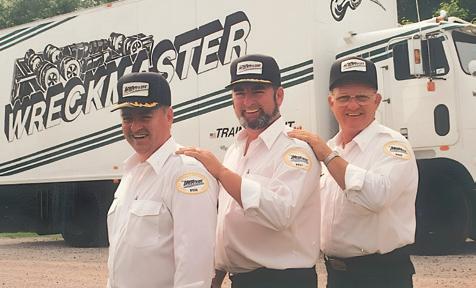
Justin Cruse, President of WreckMaster Inc., provided some personal background on the group photo of Ken Cruse, Donnie Cruse and Terry Humelsine: “I will never forget the day this photo was taken,” Justin recalls. “It was summer break, and I was about 12 years old when my Dad, Donnie told me to jump in the truck. We headed down to a spot near Lake Ontario with Terry and my uncle Ken, and that day I took this photo of the three founding fathers of WreckMaster in front of their very first training unit.
“At the time, I had no idea how much these three men would go on to shape not only an industry, but my own life and career. Their passion, their vision, and their commitment to doing
things the right way left a lasting mark on me—and I will always be grateful for their support and encouragement along the way.
“Over the years, I’d joke that I never received photo credit whenever I saw these pictures show up in American Towman. Today, it means something entirely different. Today, it’s a reminder of where it all started—and of the people who made it possible.
“Terry was one of a kind. He cared deeply about the towing and recovery community and dedicated his life to promoting safety, professionalism, and the power of working together.
“It brings me comfort knowing that Terry is now reunited with his loving wife, Mary—and that my dad was there to welcome him with open arms.
“Back in the early 90s, when this photo was taken, I’m sure none of them could have imagined what the next 30 years would look like. But moments like this remind us that we don’t always realize how far we’ve come until we take the time to reflect on where we started.
“Thank you, Terry— for everything!”
The American
Towman staff extends its deepest sympathies to the WreckMaster team, and to Terry’s family and those closest to him:
“One of the first truly unforgettable people I met in the industry back in the ’90s,” said Dennie Ortiz, Publisher and President of American Towman magazine. “He was a kindhearted man who wore his heart on his sleeve. I will miss Terry’s warm laugh, his genuine smile, and his gentle nature. The towing world was fortunate to have a professional like him—someone who shared his knowledge so freely and helped make the industry safer for so many. Our most heartfelt condolences go out to his family and the WreckMaster family.
“Thank you Terry. Your legacy will continue to guide the industry.”
Ellen Rosengart, AT’s Senior Account Executive, shared similar sentiments: “I met Terry many years ago at a dinner for both the American Towman and WreckMaster teams. Always there with his effervescent smile, he was a compassionate person who gave warm and loving hugs, and I was always on the receiving end of them. Although Terry was not tall, he was a mountain of a man and influenced many, many in this industry. He was a natural, a truly genuine person and Instructor to a generation of WreckMasters who will never forget him nor all that he taught them. Rest in peace, Terry.”
drum.
By Terry Abejuela
Since the earliest days of towing, the industry’s strength has been bound to steel, a symbol of its power and endurance. Steel chains, shackles, and winch lines—they have served the industry well and instilled confidence in tow truck operators who stretch the limits of their equipment. The metallic hum of the wire rope winching a vehicle from a ditch, the noise of steel chains being pulled out of tool boxes, and the weight of steel shackles, these are as familiar as the smell of hydraulic oil and diesel fuel.
While synthetic rigging isn’t new to the industry, today’s advanced technologies have produced stronger, more efficient, and truly effective fibers and products that help towers work more safely and with greater confidence.
Field Editor Terry Abejuela has 40-plus years of light-duty towing and recovery experience. He is also a light-duty Level 1 instructor for the California Tow Truck Association.
Nylon was one of the first synthetic materials used by towing professionals for web slings, because of their high strength-to-weight ratio, ability to absorb shock loads, and the ease of use. Nylon straps could be wider, distributing the load over a larger surface than chain, thus reducing the potential for damage to the casualty.
Developed by Dupont in the late 1930s, nylon’s surplus production following World War II expanded into industrial applications and later into civilian uses, including towing and recovery. Recovery straps and wheel lift securement straps were commonly made of nylon. However, nylon was susceptible to cutting, abrasion
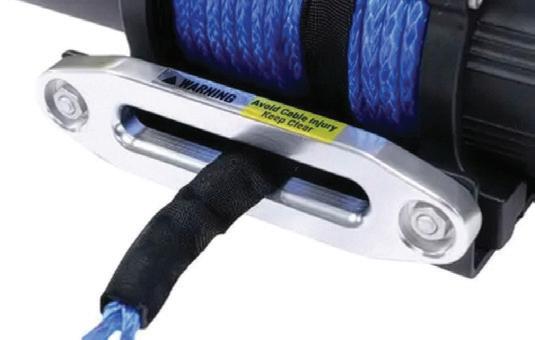
This fairlead is smooth to accommodate synthetic winch rope. Surfaces that make contact with synthetic rope must be free of burrs and rust to avoid damage to the fibers.
damage, and degradation from exposure to ultraviolet rays from the sun.
Most synthetic products used in the towing industry today are made with newer materials such as polyester and Ultra High Molecular Weight Polyethylene (UHMWPE) fibers. Synthetics over the last 15 or so years have begun to supplement or replace steel in products such as winch rope, chain, and shackles. Professional towers are redefining their approach to strength, safety, and efficiency as advanced synthetic materials continue to prove their superior performance and reliability.
Steel winch rope earned its place in the industry because of its toughness, predictability, abrasion resistance, and longevity. These ropes can withstand extreme loads, abrasion, and exposure to weather conditions. However, steel winch ropes are heavy, difficult to handle, and have the potential for serious injuries or even death from a dangerous snapback if it fails under a load. Steel rope acts like a whip loaded with kinetic energy that can recoil and shear through metal or a human body.
Also, steel winch ropes develop razorsharp wire splinters that easily slice through heavy work gloves and human skin, and require operators to manage even the winding of the rope on the winch drum. Improper winding of the steel winch rope on the winch drum is one of the most common causes of damages such as kinks and bends in the wire rope.
Synthetic winch ropes are engineered products designed for real-world punishment. They have been tested under extreme heat, abrasion, and torsional conditions. Moreover, synthetic winch

This seminar will cover inspection, working load limits, proper use, and the benefits of synthetics over steel products.
Terry Abejuela, American Towman. Saturday, July 18, 8 am
ropes are up to five times lighter than a comparably sized wire winch rope while providing greater strength. Synthetic rope floats on water, does not conduct electricity, and will not cause sparks.
As for winching, synthetic winch rope easily winds onto a winch drum and is able to withstand crossover winding without permanent damage to the rope. It is recommended that the operator maintain at least seven wraps of synthetic rope on the
drum that previously used wire rope, it is recommended that the drum is cleaned of all rust, de-burred and sanded down to a smooth finish to avoid damage to the rope.
This same practice applies to any snatch blocks or other sheaves the rope will run across. There are fairleads, snatch blocks and boom end cable guides made specifically for use with synthetic rope that have a smooth finish.
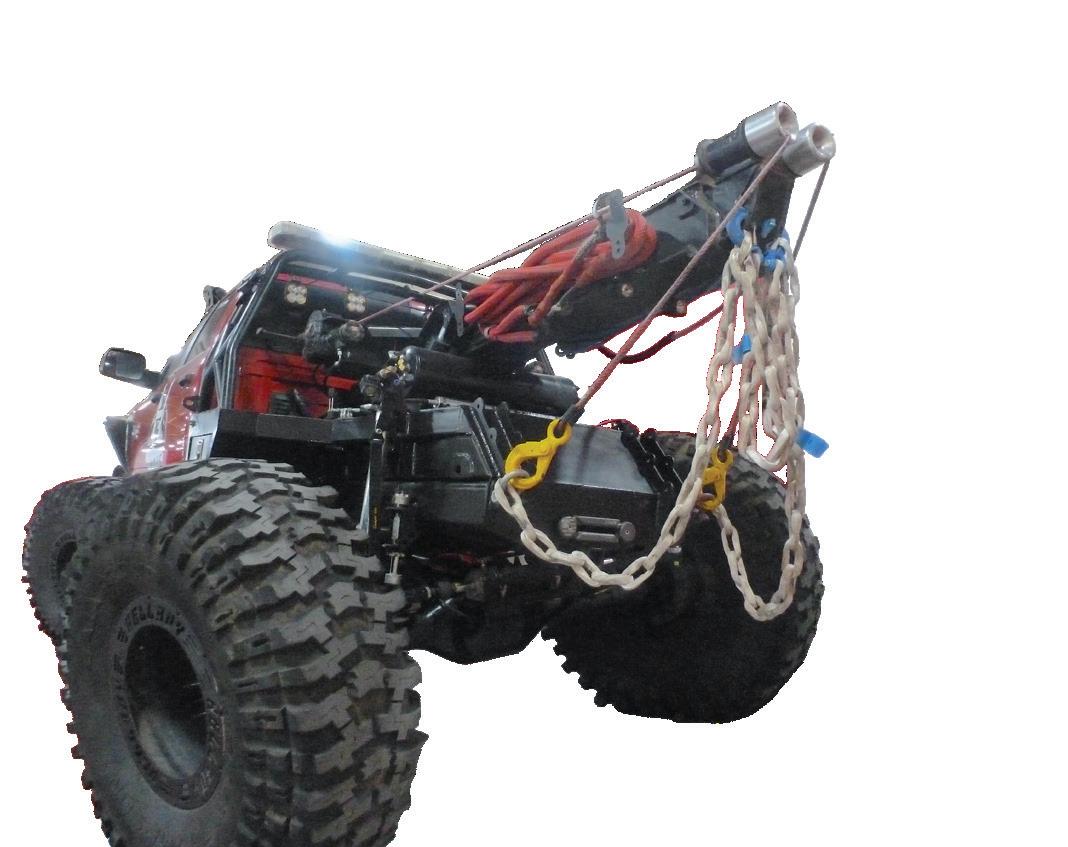
This tow truck specializes in off-road recovery and is equipped with synthetic winch ropes, synthetic chain and a synthetic kinetic recovery rope. Note the boom end rope guides are smooth to accommodate synthetic winch ropes.
Some operators are taking a hybrid approach, outfitting trucks with multiple winches by having some winches with wire rope and others with synthetic ropes to balance strength, durability, and safety for different recovery situations. Synthetic ropes are available in multiple colors, allowing for color coding of the winch lines to snatch blocks, winch rope hooks and controls, as well as matching company colors. Many tow operators carry additional extension wire ropes to extend the reach of their winch line. Because of the lightweight and ease of handling, synthetic is a great benefit when used as extension ropes. Carrying synthetic rope extensions down an embankment is much easier than steel ropes, allowing the operator to carry more length with less weight. Many operators are also using short sections of synthetic ropes for rim slings on
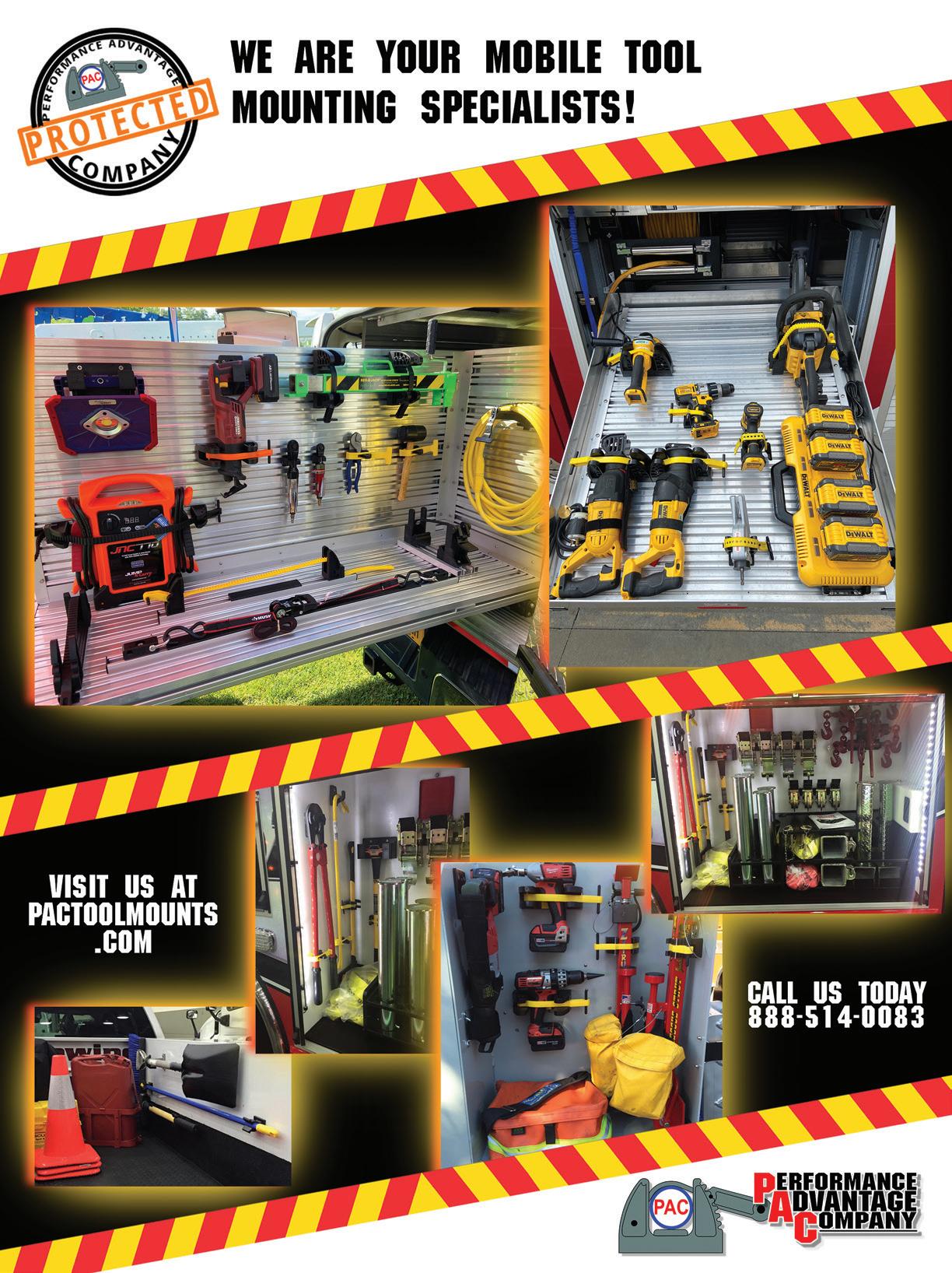
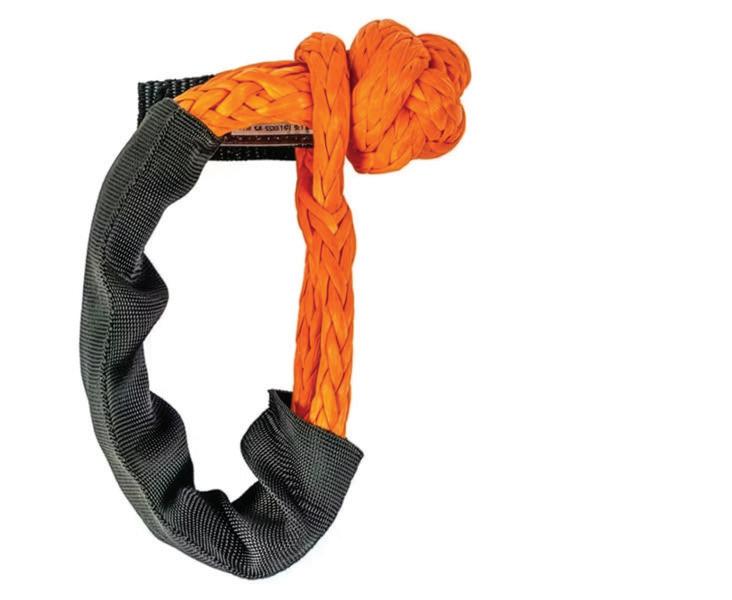
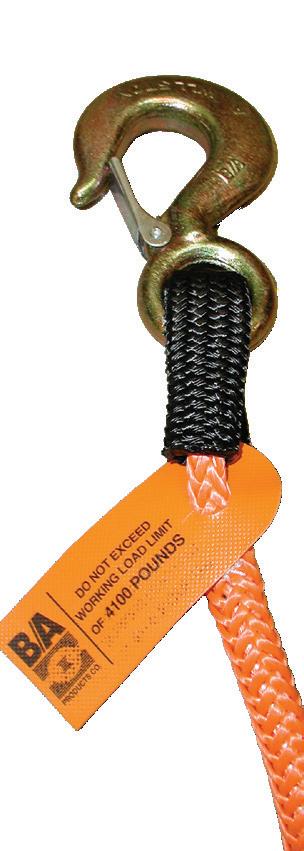
Synthetic soft shackles are a great alternative to traditional steel shackles. Lightweight and strong, they won't rust or corrode, are nonconductive, won't cause sparks, don't require any tools, and are safer than steel shackles.
Synthetic soft shackles are also working their way into the towing industry. Off-road enthusiasts were probably the first to recognize the benefits of synthetic soft shackles. They are a great alternative to traditional metal shackles with all the same benefits of other synthetic products. A synthetic soft shackle does not require any tools to install or remove, has less potential to cause damage to the casualty, won’t rust or
corrode, and is safer and easier for the operator to use.
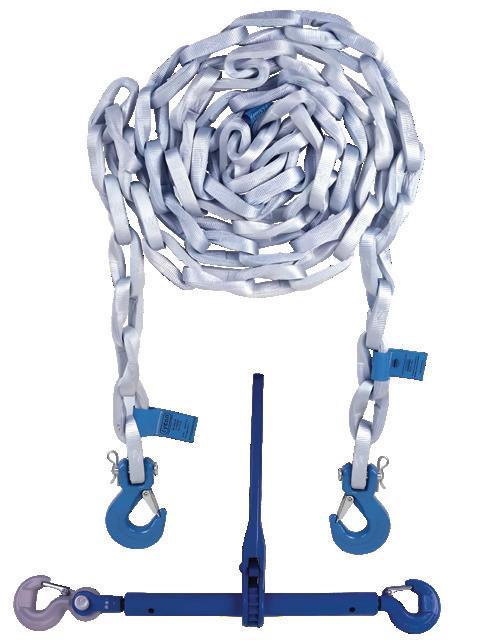
Synthetic chain is a relatively new innovation, having appeared in the towing industry about a decade ago. It has been used primarily in lashing, such as container securement on ships. Although not yet widespread in the towing industry, it offers the same benefits as other synthetics (safety, ease of use, lightweight, floats on water, does not conduct electricity, less potential for damage to the casualty, and will not cause sparks).
Regular inspection of synthetic products is required just like any other piece of equipment. Look for cuts, abrasion damage, and burns. Inspections should be conducted prior to each use, and on a monthly basis as well. Manufacturers of these products often provide pictures as visual examples of inspection and out-of-service criteria.
Up-front costs of synthetic products may be higher than their steel counterparts, but when the total cost of ownership is factored in—the weight based fuel savings potential, reduced maintenance, increased durability, less potential for injury and operator fatigue—the economic case for synthetics becomes clear.
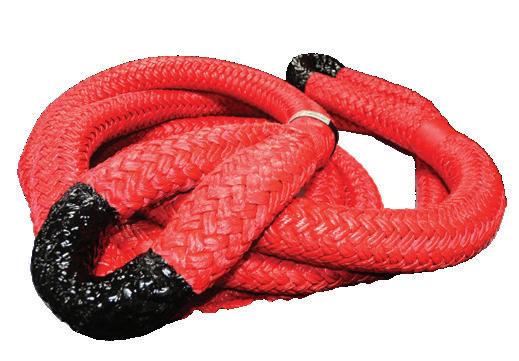
Beyond the safety and economic benefits, synthetics may also align well with a towing company’s environmental impact goals. Reduced vehicle weight improves fuel economy and lowers CO2 emissions. Synthetic products may also be recyclable and some manufacturers have established take-back programs to reclaim used fibers for industrial reprocessing.
With all of the benefits of synthetics for the towing industry, skeptics often
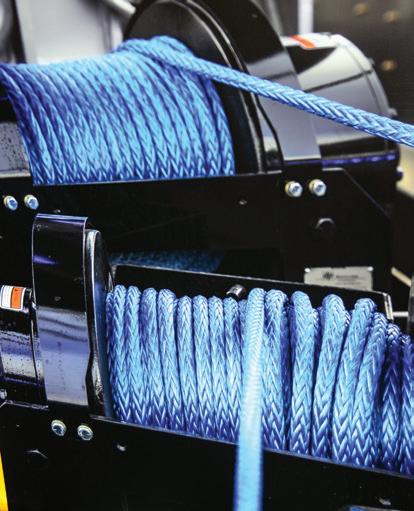
point out the relative sensitivity of synthetics to heat, UV exposure, abrasion and cutting. These are valid concerns, but with the advances in construction, coatings and the use of protective sleeves, such concerns can be mitigated. Polymer coatings seal fibers against moisture, mud, and oil. Fiber jackets protect the products in abrasive environments.
In an industry where every pound of weight saved and every injury prevented makes a huge impact, synthetic products offer a real alternative to steel for professional tow truck operators.



Randy Olson has over five decades of experience in sales and marketing for several leading towing and recovery distributors and equipment manufacturers. He has also been active in the industry promoting safety and education and is a member of The International Towing & Recovery Hall of Fame. Randy currently resides in Dallas, TX where he is the Sales and Marketing Manager for EdgeTec.
By Randy Olson
Adding that new tow truck or rollback to the fleet may be every tower’s dream, yet the real question is how to make the financing work. Maybe it starts with a trip to the next American Towman show, weaving through rows of gleaming trucks, or visiting an experienced distributor to find the perfect new or used truck.
Just as with buying real estate, it’s wise to get pre-approval for the financing before shopping to help establish a realistic price range before the search begins. This will ensure that when that dream machine is found, the deal can be closed right away. Unlike personal credit, where just about anyone can walk into a car dealership and drive out with a new vehicle, commercial credit is a little more complex, typically taking longer and requiring a multitude of documents.
“Lenders aren’t just looking at the truck, they’re looking at your business,” explains Jessie Bains, Equipment Finance Expert with Bidwell Financial Services.
“The key question is simple: can your business generate consistent income and support the payments?”
Due to this more involved approval process, a tow company owner might find that great wrecker, only to see it purchased by another party before financing is finalized. But a pre-approved loan gives towers the chance to compare terms and interest rates, and verify that the monthly payment is within their budget. As such, every tow operator’s business is different, so it stands to reason that financing will not be a onesize-fits-all.
For example, if a tow company runs many miles on company trucks and needs to trade them in quickly, it might make better sense to obtain a shorter-term loan to avoid ending up with a high-mileage, worn-out tow truck with loan payments still outstanding.
In addition, with interest rates, just like any other business, price is important, but building a trusted relationship with a lender also has value.
“Pick a finance partner for the long term,” advises Michael Hawkins, senior VP for Santander Bank. “A lender that knows a tow company’s business needs, with the ability to grow together. Rate is not everything.” ◀
Sometimes, a super-low interest rate is just too good to be true, and is often camouflaging additional fees or charges that are being added to the payments.
While few enjoy dealing with paperwork, providing precise and accurate information— such as the tow company’s legal business name, tax ID numbers, and personal information on the business owners—is crucial to help streamline and accelerate the approval process.
“It starts with good bookkeeping,” notes Paul Rottinghaus, president of Zip’s AW Direct. “Along with good personal credit, and three months of financial statements.”
Based on how long the company has been in business and/or the amount of the loan, some lenders may require additional documents such as tax or monthly bank statements.
“When lenders review a towing
business, they focus on one core question— how reliable is your income that will support the payments?” Bains says. “They look closely at whether revenue is tied to contracts, insurance work, or repeat clients, versus purely on-demand calls.” Also, consistency remains the most important element, she adds. On-time payments, responsible use of credit, and a well-managed profile help build confidence with lenders.
While providing these details matters, that doesn’t mean added costs for a tow company. Reputable vendors do not require a tower to pay application fees or put down any money before being approved.
If a transaction to purchase a new truck involves trading in an existing vehicle, consider whether the unit is already paid off and has a clear title. If money is still owed on the trade-in, the lender must be contacted for a copy of a payoff letter. Owners are often shocked to find out just how much is still owed and quickly realize they’re in a negative equity situation.
When trading in a financed vehicle before the loan is paid off, be sure to verify if there’s a prepayment penalty. Hawkins points out that a common mistake towers make is, “They don’t understand the repercussions of early-term payoffs.” But a finance partner might be willing to discount a payoff if there’s a good business relationship with the tow company. Often when financing a new unit through the same lender, those charges will be waived or at least reduced. Always base the loan term on the unit’s expected lifespan and
usage, rather than simply aiming for lower monthly payments.
One key factor in both applying for credit and running a towing business is building a solid, reliable credit history. Finance companies value long-term stability. Be sure to clean up any fraudulent, inaccurate, or outdated information. Red flags such as past-due payments for mortgage or child support, unpaid back taxes, and repossessions will have a negative impact on a favorable approval.
Maybe a tower co-signed for a family member or friend who has defaulted, and now it is coming back to haunt a company’s credit. Late or over-the-limit credit card charges may also negatively affect credit approval or severely diminish favorable terms.
Many credit issues can be resolved over the course of several months, and should be attended to prior to applying for new credit. Honesty and accuracy are important when working with a financing representative, as they want to earn a towman’s business, and can offer advice on fixing credit issues.
Using online sources to find a lender can be fast and convenient because it’s easy to compare rates, terms, and qualification requirements without visiting multiple offices or spending hours on the phone. The downside is that a tower may get less personal guidance, and it’s important to verify that the lender is reputable and that all fees and terms are clear before applying for any loan. Get a referral from a local equipment distributor or fellow tower who may have had experience with the lender in the past. ◀
When considering various lenders, also consider a finance source that specializes in towing, understands cashflow, equipment needs, and resale values, which can make the approval process smoother and the terms more practical. These lenders are often better equipped to structure loans around how towing units are actually used, helping owners match financing to real business demands, rather than generic lending standards.
Financing comes down to making sure business and personal credit is in order, and finding a lender that understands the tow industry. Comparing options and carefully choosing a financial partner will ultimately put the company in a stronger position for growth and keep the fleet moving forward.
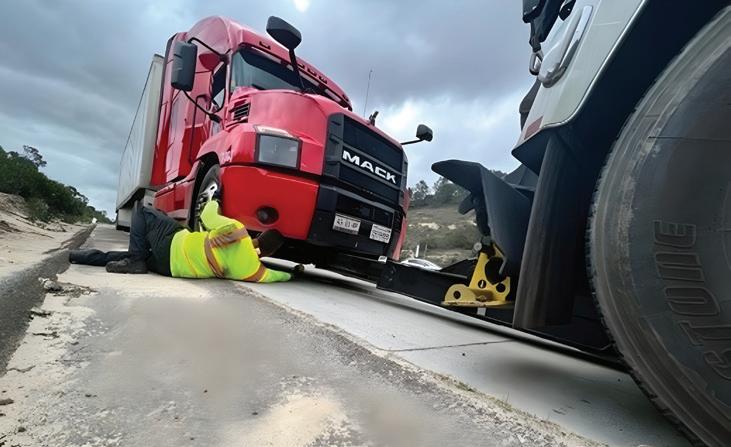
When roadside service requires tow operators to go under a lifted load, prepare the vehicle first by ensuring all safety equipment is in place.
By Randall C. Resch
TOperations Editor Randall C. Resch is a retired California police officer and veteran tow business owner, manager, consultant and trainer. He writes for TowIndustryWeek.com and American Towman, is a member of the International Towing & Recovery Hall of Fame and recipient of the Dave Jones Leadership Award. Email Randy at rreschran@gmail.com.
he process of jacking up or lifting towed vehicles presents significant safety risks. According to the National Highway Transportation Research Administration, (NHTSA), in 1994-1995 there were 102 incidents of jack collapses nationwide, with 4,822 people requiring emergency treatment.
In a more recent account directly related to the towing industry, on October 23, 2017, an Indiana tow operator was dispatched to a semi-truck with a flat tire. The towman worked to complete the tire service on the roadside around midnight, when a jack suddenly slipped and the semi fell on top of him. Although rushed to an area hospital, he succumbed to his injuries.
Providing tire and tow service to semitrucks, trailers, and construction vehicles represents a specialized niche within the towing industry. Experienced operators understand the heightened risks of
performing these services on highway shoulders, where limited workspace and high-speed traffic create exceptionally hazardous conditions. Tire service on large commercial vehicles often occupies the full width of the available space, as many trucks measure eight feet wide and barely fit within standard roadside shoulder lanes.
On the subject of tire-change safety, towers must acknowledge that floor jacks should never be used as load-holding devices, especially when operators or roadside workers crawl beneath lifted vehicles to perform underside work. Hazards are always present when towers, mechanics, and roadside technicians are on-scene to conduct flat tire services. Tow industry statistics indicate that as many as ten tow operators or company personnel were killed when the jacks they engaged either collapsed, the jack stands slipped, or other related mechanical circumstances caused a lifted load to drop.
Periodic operator training must include proper safety procedures when performing tire services and working beneath disabled vehicles. Every tire service, tow, or mechanical job, no matter the size, comes with real dangers.
Tow operators should never utilize a wheel-lift or under-reach to raise a wrecker’s rear wheels from the ground surface to gain access to the tow truck’s rear components. In an effort to speedup the process, towers may improperly stack steel rims atop one another, backed up and centered at the wheellift’s pivot-pin. By lowering the wheellift’s crossbar atop the rims, the truck’s hydraulics lift a the tow truck’s rear end to a service height for underside repairs. Unfortunately, towers will unwisely employ this method for working on the rear brakes or axles. This particular procedure is directly responsible for fatalities of tow operators, technicians, and company mechanics alike.
As one example of unsafe practices, a tow company’s repair area was preparing
for a weekend safety course. Several workers were lying under a lifted heavy wrecker preparing for a CHP inspection. The wrecker’s front was raised by a pair of squatty bottle jacks, with no additional support. There were no jack stands, no chocks, no blocks, no fall protection whatsoever. After the on-site manager was advised of this precarious situation, he immediately made the workers stop what they were doing.
For tow businesses conducting in-house repairs and roadside services, personnel should understand the dangers of working under disabled vehicles. Going under any lifted vehicle compromises the employee’s safety.
The subject of going under raised vehicles often sparks disagreement between business owners and industry trainers. While some insist there are occasions when going beneath a lifted load is necessary, others point out that getting under lifted loads increases the possibility of employees being crushed. Careful towers avoid crawling under vehicles altogether, opting instead for skates, dollies, or simply winching the vehicle onto a carrier deck.
Regardless of the reasons, a lifted vehicle is a dangerous vehicle. A vehicle elevated by floor and bottle jacks during a service call is unstable, and should carry no more than the
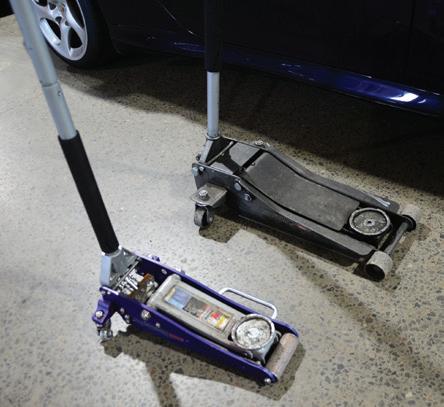

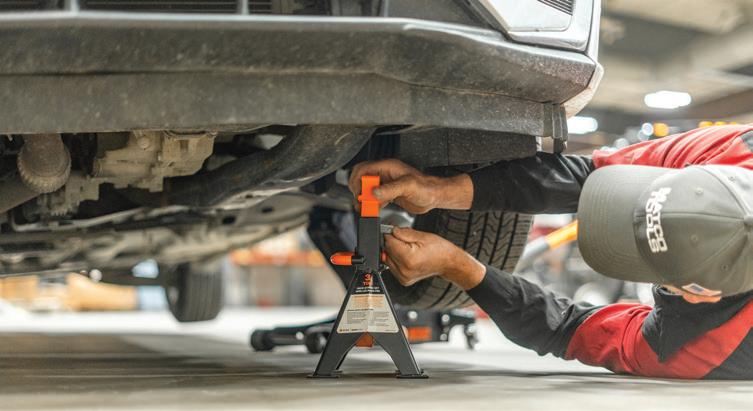
rated capacity. In addition, properly rated jack stands should be positioned under the suspension, along with hefty wood blocks under the tires, before any service and tow attempts are made.
The history of towing, service, and the mechanical repair industry clearly demonstrates that working under lifted loads has resulted in dozens of fatalities to towers, mechanics, and service technicians because something suddenly went wrong. When a vehicle is lifted, unless the lifting device is properly positioned and stabilized, there’s a very high probability the vehicle will tip or fall off the jack, crushing any workers below. Careful calculation and other safety measures must be employed.
Tragically, in the Spring of 1988, two Iowa tow company mechanics were crushed to death working under the rear of a light-duty wheel lift wrecker. “The men were doing routine repair work on the rear axle and differential of the truck,” stated a report from Iowa’s Fatality Assessment and Control Evaluation (FACE). “The back end of the truck was raised from the floor and supported by the hydraulic central arm of the wheel lift. One jack stand was placed under the hydraulic central arm of the wheel lift at the rear of the tow truck. One jack stand was placed under the central arm to gain more height.”
As investigators noted, “This is a common practice during maintenance of tow trucks, as the wheel lift hydraulics are both powerup and power-down, and therefore, are capable of raising the back of the tow truck.”
The investigation concluded that, “The front wheels were not chocked, therefore there was little resistance to the truck rolling backward. No additional jacks or supports were put under the truck before the men began work.” Inevitably, the truck rolled backward and fell onto both men.
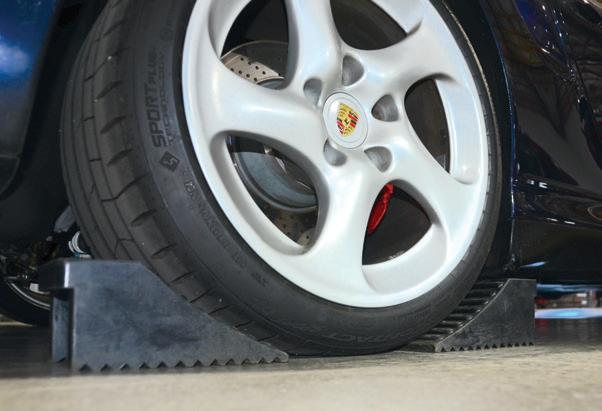
An equally dangerous practice is when workers stack two car rims together under the wheel lift’s pivot point; a risky practice that can cause a tow truck to fall with the slightest bump when surfaces slip or skip out (such as cement-to-metal, or metalto-metal surfaces).
Following are several risky situations to avoid:
• Lack of Situational Awareness: Recoveries and critical winching procedures commonly entail dangerous rigging and lifting. Tow operators often focus on the necessary recovery activities, and neglect to notice they might be standing directly under a dangerous lifted load, or the cable’s angle has the potential of swinging toward the tow truck.
• Not So Gentle Persuasion: Using tow slings, wheellifts, floor and bottle jacks is prohibited when a situation requires striking a stuck starter with a hammer. This is a dangerous practice that should never be considered as an option for starting vehicles.
• Pinned Underneath: Operators sometimes take remote control units with them while lying on their backs, directly under a vehicle’s lifted end, without using safety chains, ratchet-and-straps, or jack stands in place for primary safety. This practice usually occurs when towers shimmy under a lifted vehicle to position frame forks, remove drive shafts, or pop transmission linkages. Although vehicles can be lifted high enough to allow for crawling underneath, should something go horrifically wrong, escape becomes nearly impossible.
All of the aforementioned activities are highly hazardous and do not comply with applicable safety guidelines. Furthermore, company manuals must clearly define safety procedures that must be implemented before any work is attempted.
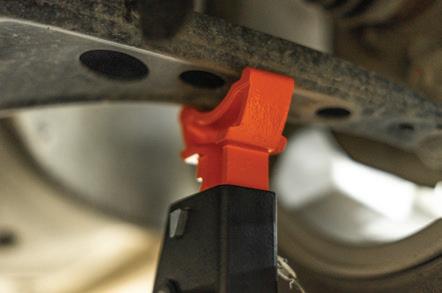
In yet another related incident, June 1987, a 72-year-old Illinois tow operator, preparing to remove a wrecked semi, positioned a power jack to raise the dilapidated chassis. During lift by the jack, the truck slipped from the jack, pinning the tower’s head to the ground. He died from his injuries five days later.
Regarding service type fatalities and injuries, the CDC, FACE and OSHA recommends that employees initiate best practices to ensure a safe service experience for roadside personnel. While there are many ways to work flat tire changes using bottle and hydraulic jacks, besides proper use of industry tools, consider the following recommendations:
• Tow operators providing service on the shoulder of a high-speed freeway are reminded to turn on emergency lighting to alert motorists to Slow Down, Move Over.
• An initial assessment upon arrival on scene must be, “Should I move it or work on it?” If the customer’s vehicle can be relocated elsewhere to perform service, instruct the vehicle’s driver to move it to a wider location, or limp down the shoulder and exit at a nearby ramp.
• The Federal rule on “Placement of Warning Devices” states that, “…whenever a commercial motor vehicle is stopped upon the traveled portion or the shoulder of a highway for any cause other than
necessary traffic stops, the driver shall, as soon as possible, but in any event within 10 minutes, place the warning devices as required.” If the commercial driver hasn’t placed triangles, arriving service personnel including tow operators shall
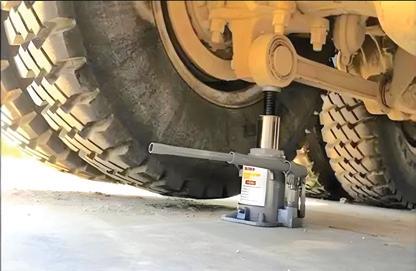
ensure triangles are in position.
• When conducting tire change services, consider whether law enforcement on scene can serve as a blocking vehicle. (Note, however, that this doesn’t guarantee against a pedestrian strike for anyone working the traffic side.)
• Ensure the tow vehicle’s emergency brake, and that of the customer’s vehicle, are both engaged, in order to prevent unintended rollaway.
• Position chocks on both sides of the tires not being raised by the jack.
• If a wrecker’s wheel lift is used to lift a vehicle for changing tires, attach all wheel-lift safety equipment including ratchet straps
• Always use load-rated jacks and stands. Don’t put cost savings over employee safety by ◀

Your Company’s
For tow owners seeking best practices, periodic training complies with OSHA and acceptable industry teachings. A focus on how-to develop periodic safety training. Randall Resch, American Towman. Friday, July 17, 11 am
purchasing cheap, substandard products. Select “best reputation brands” having the widest bottom plate and proper rating necessary to balance loads. Keep in mind that when semi-truck trailers or commercial vehicles pass at highway speeds, the passing vehicle’s bulk creates wind blasts and buffeting capable of rocking and dropping lifted vehicles.
• Work with slow precision, while ensuring that all safety precautions are in place.
• If the service scenario is too dangerous, know when to refuse handling the job.
While it’s widely recognized that formal training is expensive, especially in-house programs, floorjack and jack-stand safety are not among the usual topics. Owners are reminded that a lack of training often results in repeated damages, costly lawsuits, or ultimately, operator injury or fatality. Techniques mentioned here are processes of
towing, service, or recovery, and operators and technicians must be fundamentally aware that existing dangers are always present.
Using floor and bottle jacks can create dangerous on-scene situations not to be sidestepped or overlooked. There’re no reason wreckers can’t be outfitted with jack stands, other than the inconvenience of where they’ll be stowed when not being used. Adding a pair of aluminum stands is a great safety option to consider, costing approximately $800.
Perhaps the most important lesson to keep in mind is the safety message, “What are operator’s best practices for handling jack stands?” The use of jacks, jack stands, and tire change safety is a valid topic for periodic safety meetings. Safety must always come first—no call is worth injury or the loss of life.

George L. Nitti has written for American Towman since 2009. He started out as a news writer and now writes a weekly feature on TowIndustryWeek.com, Tow Illustrated, which spotlights the tow truck graphics.
For Ruben N. Gonzalez, a third-generation tower and son of Ruben Gonzalez Jr., co-owner of City Terrace Towing of Los Angeles, the call was unlike most recovery jobs.
By George L. Nitti
Michael Gonzalez
Lead operator of NRC Rotator
Ruben N. Gonzalez Lead operator 50-ton Century Rotator
Ricardo Sandoval Support
2017 Peterbilt 389 with a 50-ton Century 4-axle wrecker
2002 Kenworth with a NRC 50/65 CSR Rotator
2022 Peterbilt with a 50-Ton Century Rotator
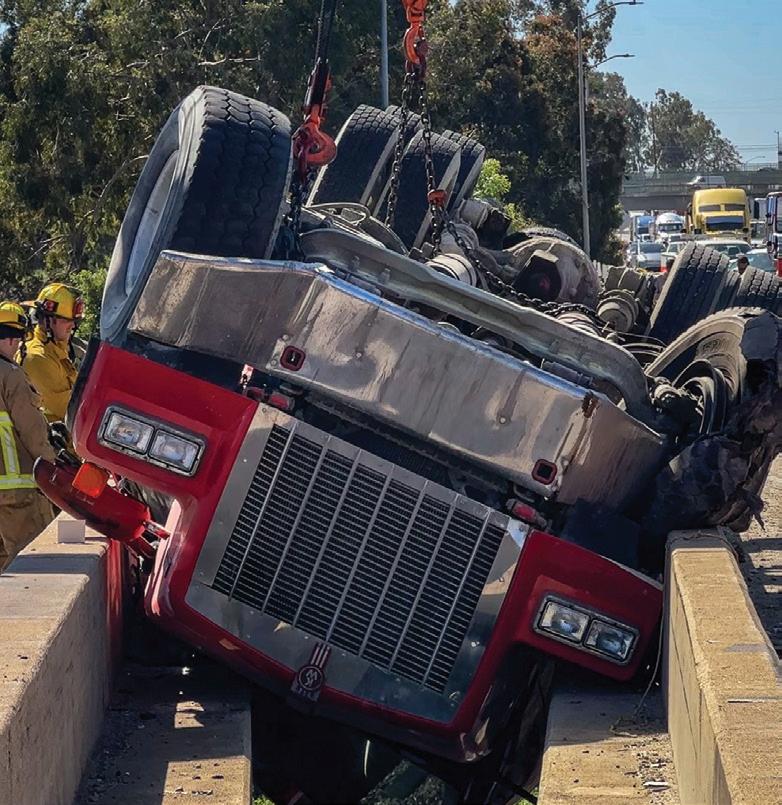
northbound 5 freeway to the 10 in Los Angeles. After allegedly being cut off, a fully loaded cement mixer carrying about 10 yards of concrete,
roughly 60,000 pounds, flipped over, and then got tightly jammed in the gap between two concrete barriers on the middle of an overpass.
“This one stood out,” Gonzalez said. “Not just because of how it landed, but because everything had to go right.”
The incident unfolded on March 7, 2026, along the transition from the

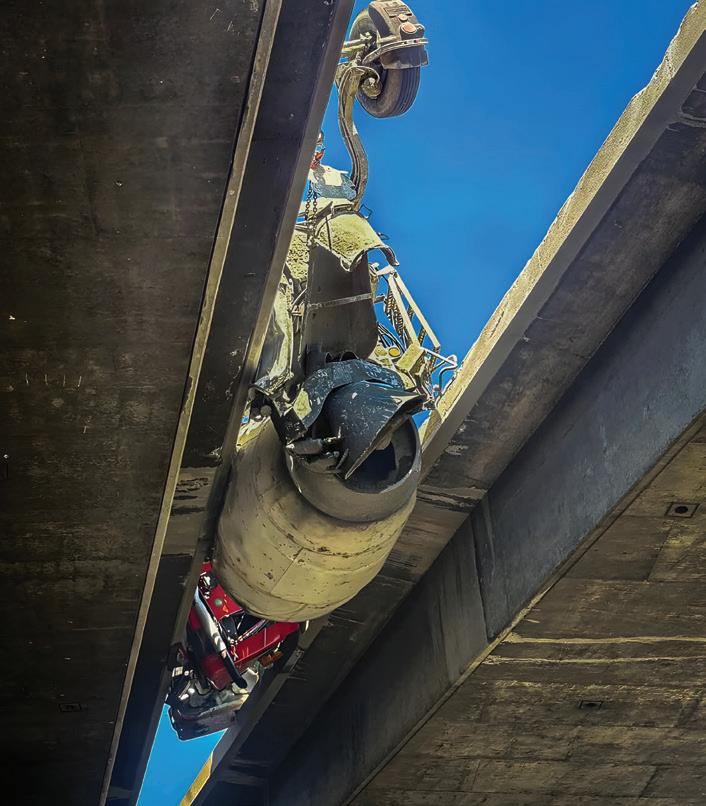
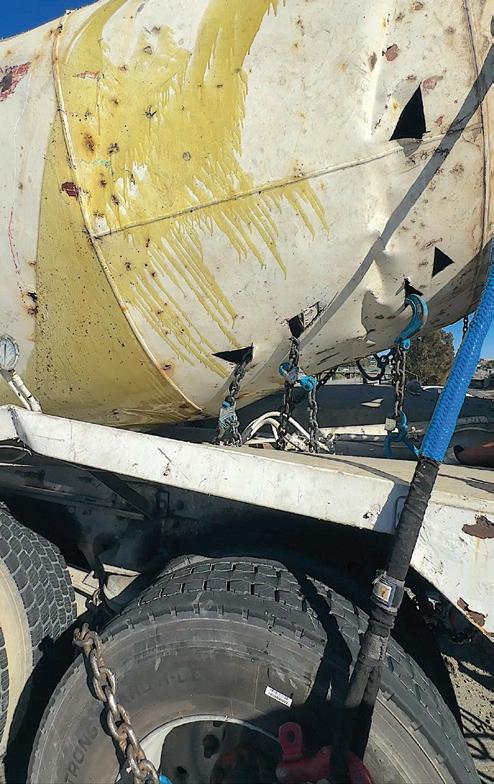
“If you’re looking up from under the bridge, the drum had mushroomed under it like a cork,”
Gonzalez recalled. “It was wedged in there.”
Even more critical, the driver was
trapped upside down in the cab. Before City Terrace Towing began recovery operations, the Los Angeles Fire Department worked to extricate the driver, who fortunately suffered only minor injuries. But the situation required immediate stabilization by heavy-duty operators to prevent a catastrophic secondary collapse.
“They were able to get him out right before we got there,” Gonzalez said. “All they asked us to do was secure the truck while they were working.”
This secondary stabilization fell to the Gonzalez brothers, Ruben N. and Michael, who positioned two rotators to hold and control the suspended load, ensuring firefighters could safely rescue the trapped driver. From there, the recovery shifted into a highly technical operation.
A 2022 Peterbilt Century 1150
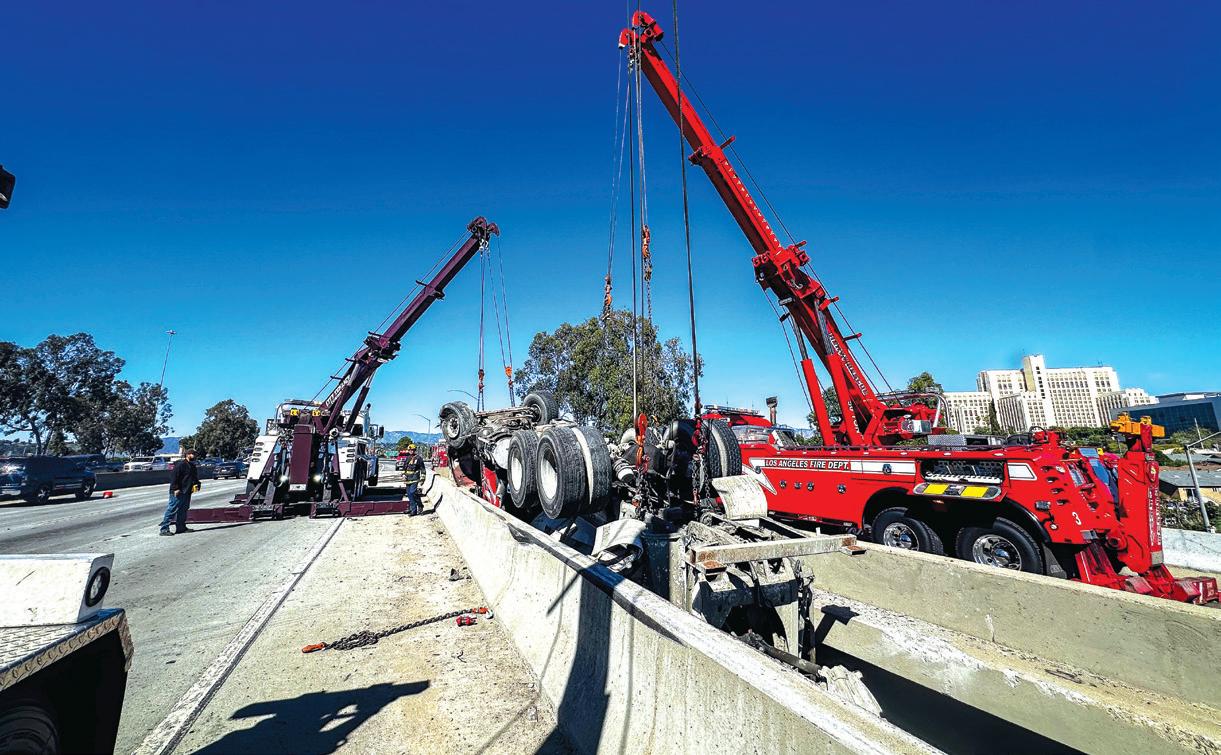
rotator was deployed to secure the load, while a 2002 Kenworth NRC 50-ton rotator and an additional 50ton unit were staged to assist. With the mixer suspended over active traffic lanes and live metro rail lines, the recovery demanded flawless precision and uncompromising focus in every move. Even the slightest mistake would lead to total failure, if not catastrophic consequences. Rigging presented one of the most complex challenges.
“Normally you’d just run the chain around the barrel,” Gonzalez explained. “But in this case, we had to drill holes and run half-inch chain through the drum itself.”
Using Grade 100 chain, crews fed rigging directly into the barrel and anchored it to the frame, an unconventional but necessary solution to prevent separation during lifting. Before any vertical movement could begin, the team had to unseat the mixer from its corked position.
“Before we could even lift it, we had to un-wedge it,” Gonzalez said. “We probably dragged it about 20 feet to get it free.”
As the truck began to move, additional hazards emerged. Exposed rebar from the damaged bridge repeatedly snagged the wreckage, while shifting concrete inside the drum altered load dynamics mid-operation.
“As we were bringing it up, it kept going lower and lower,” he said. “It was pretty challenging.”
Once freed, three rotators, including a 40-ton unit from LAFD, executed a synchronized lift and rotation, carefully bringing the mixer back onto stable ground.
Notably, while LAFD had a heavy rescue apparatus on scene, they operated in a support role, allowing the towing professionals to lead the recovery.
“The fire department was really helpful,” Gonzalez said.
“Working together made sure we got it done safely.”
The entire operation took approximately seven hours from arrival to finish.
Gonzalez, whose family has operated City Terrace Towing for more than 55 years with co-owner Miguel Martinez, notes that the recovery took place in a highprofile setting where visibility and reputation matter, what he describes as a “solid working footprint” of handling complex jobs without fanfare, and with consistency and professionalism.
“We’ve done bridge jobs before,” Gonzalez said. “But never a cement mixer like this. And never one where the driver was still alive.”
For Gonzalez, the takeaway was simple. “This wasn’t a standard overturn,” he said. “Between the weight, the wedge, and what was underneath it, there was zero margin for error.”
Product reviews of participating advertisers compiled by AT Staff in speaking directly with the users themselves.
American Towman’s annual Buyers Report is the go-to source for firsthand feedback on the companies, products and services that can enhance your towing business.
If you think it’s “just another advertisement,” that would not be accurate. To assemble this detailed section, we go to great lengths to reach out to real users by phone calls, texts and emails, in order to get real-world commentaries. It’s a task several months in the making, as tracking down all this information from tow operators, managers and business owners working 24/7 can be a challenge. Why go to so much effort? We do it for the benefit of towers to help them make informed decisions that directly affect their livelihood.
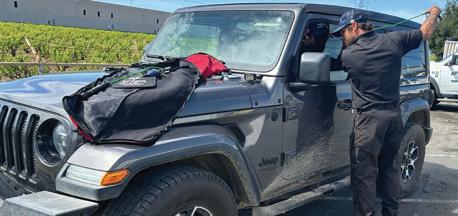
What I like most about these tools is how well they protect the vehicle while getting the job done. The rubber coating doesn’t scratch or tear up door seals, which makes a big difference in the field. The Slim Jims offer a solid selection for tougher locks, and the larger air bags are perfect for big trucks. I also appreciate the long bags; they fit everything, even the long-reach tools.
Austin Jones, Arrowhead Towing, Antioch, California
FOR THE JOB SITE, NOT JUST THE ROAD
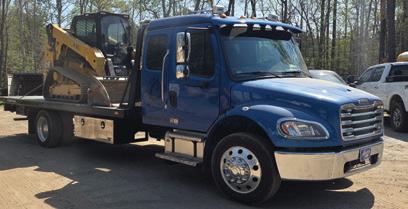
Our Freightliner rollback with a Chevron flatbed has become one of the most versatile pieces of equipment we own. We use it as a true workhorse—moving skid steers, mini excavators, pipe, trench boxes, fuel tanks, and even containers. It replaced trailers and made transport far more efficient. This is our second unit, and it exceeds expectations. After 20 years, Atkins remains a reliable partner we trust.
David Barnes, FSR Homes, Newnan, Georgia
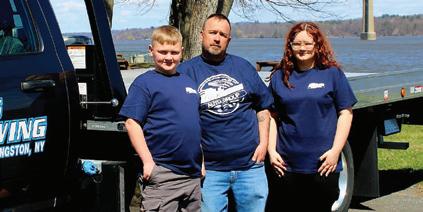
I’ve been working with All American Jerr-Dan since around 2020, and Randy Rudd has been outstanding. Whenever I need a truck, it’s delivered within a day or two. If there’s ever an issue, he handles it immediately, either sending help or covering the fix. He’s available 24/7, and I know I can always count on him.
Daniel Lewis Jr., Dan’s Towing, Kingston, New York
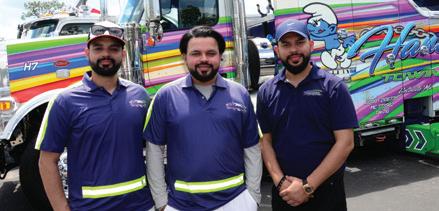
Our experience with All Roads West End Service has been phenomenal. We’ve been dealing with them for almost 20 years, and it’s always been top notch. They’ve always treated us right, which is the reason we stick with them. Kevin Bloom is an honest salesman who’s been wonderful to us. From wreckers to our M100 rotator, we trust them every time.
Dani Shahid and Umair Shahid, Hannan Towing, Beltsville, Maryland
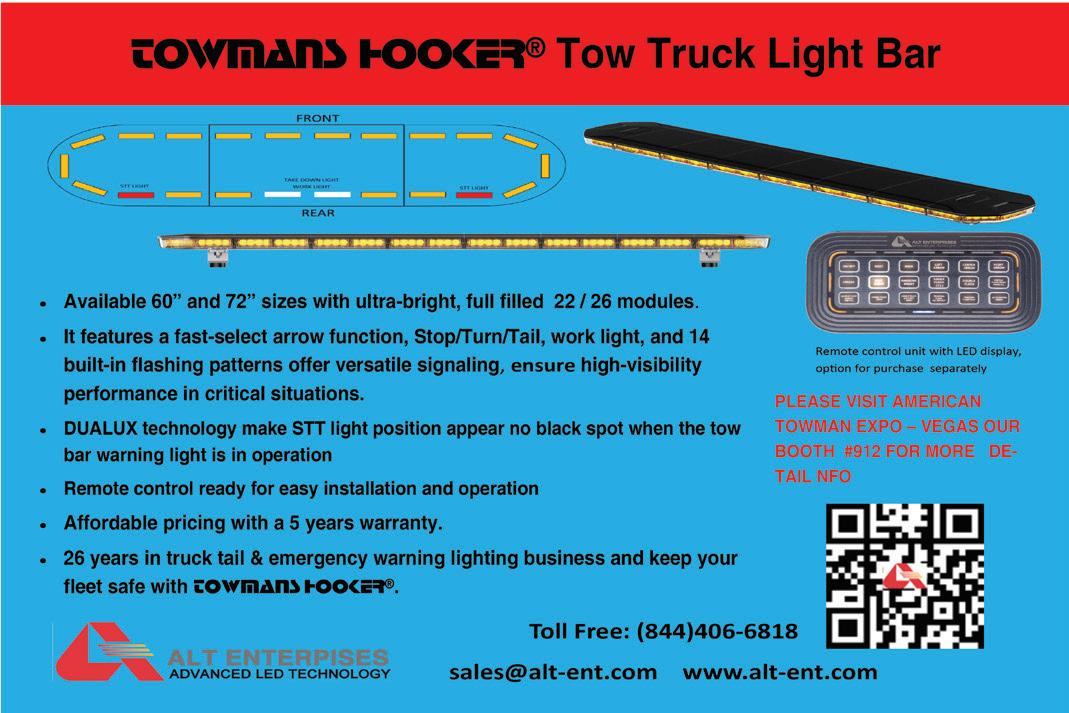
Alt Enterprises’ LED light bars are a dependable, cost-effective solution for our fleet. From roughly 300 units, we’ve seen only about a 1% failure rate, and even then, it was limited to small LED sections. Their low-profile design provides lower clearance, and they’re bright, easy to mount, and equipped with work lights and stop/turn functions our customers appreciate. Between the affordability, quick availability, and consistent reliability, they’ve become our go-to choice.
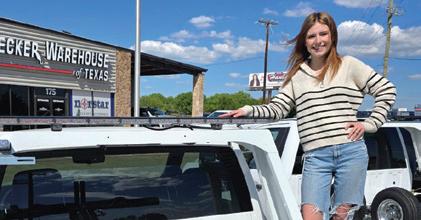
David Boone, Wrecker Warehouse of Texas, Garland, Texas
THE KNOWLEDGE THAT KEEPS TOWING MOVING FORWARD
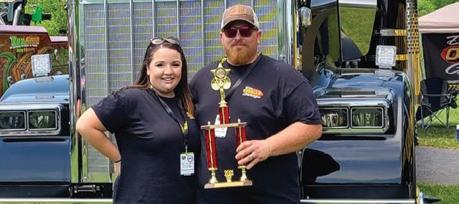
The American Towman webinars are invaluable to our industry. As a towing association president, I see how critical ongoing training is as laws, standards, and liability challenges evolve. What sets these apart is they’re often led by industry peers sharing real-world knowledge, which is incredibly important. If we’re not investing in education and communication, we’re risking our future.
Bethany Innella, Don Oralls Garage, Binghamton, New York
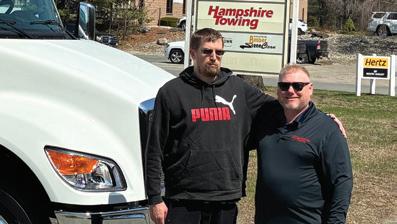
Working with Ascentium Capital has been about relationship. The main lender I deal with, Todd Chase, is responsive and that makes all the difference. In 2019 I bought a 60-ton Jerr-Dan rotator and they were instrumental in putting the lending package together. When COVID hit, everything was quiet, and they worked with me. Fast forward six years later, we still have the truck and continue to rely on them today.
Rob Johnson, Hampshire Towing, South Hadley, Massachusetts
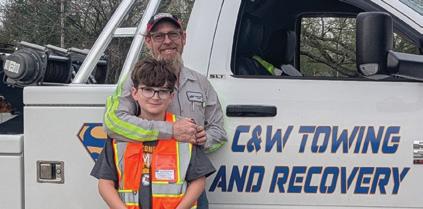
We switched to Austin Insurance after they reached out and have had outstanding service ever since. Todd Austin and his team treat us like family. They shop our rates yearly for best pricing, handle workers comp and building insurance, and are always responsive after hours when emergencies come up.
Curtis C. Collins, CNW Towing, Metropolis, Illinois
ADD has greatly helped us find the information needed to follow up and stick to our lien processes easier. It’s a no-brainer solution to a very frustrating problem!
Jade Fickert, Big Wheel Towing & Recovery, East Freetown, Massachusetts
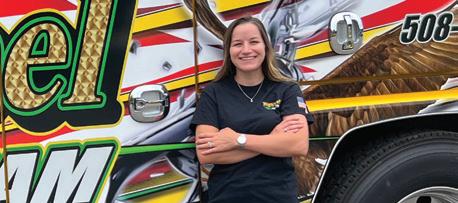
FABRICATION TOUGH, NO-FRILLS PERFORMANCE
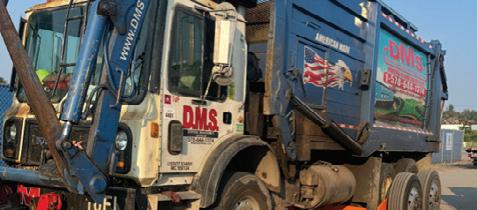
We’ve been using the dollies from Big D Fabrication for a couple of years now, and they’ve held up extremely well. They do exactly what they advertise—no frills, just get the job done. The strength and durability really stand out; they’re incredibly solid. We use them primarily for heavy-duty work, and they’ve handled everything we’ve needed. As far as manufactured wheel dollies, they’re the only ones we’ve used.
Joe Burke, Boots & Hanks, Scranton, Pennsylvania
CHEVRON COMMERCIAL A PARTNERSHIP THAT KEEPS US MOVING
Chevron Commercial Inc. has been a trusted partner since we bought our first wrecker in 1993. They’ve supported our growth and kept our fleet moving across Texas and Louisiana. Their service goes well beyond the sale—their parts team is always accessible and helps minimize downtime in a demanding industry. What started with one phone call has grown into a dependable partnership we truly value.
Josh Padia, Spanky’s Wrecker Service Inc., Beaumont, Texas
COLLINS DOLLIES THAT STAND THE TEST OF TIME
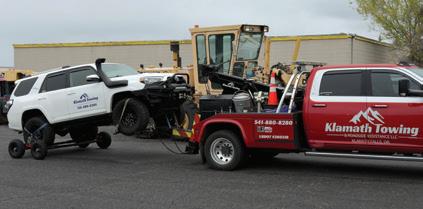
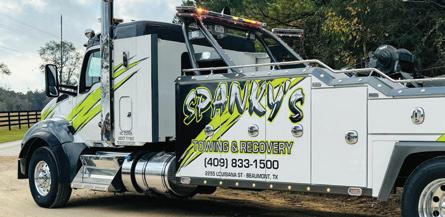
As an owner-operator in Klamath Falls, I rely on gear that protects my bottom line. I run my father’s original 4th-gen Collins Dollies from his 1988 Ford wrecker because they outperform anything on the market. After decades of use, the steel frames pull straight without bending or cracking. From off-road recoveries to 150-mile hauls, they remain cost-efficient and reliable. Proper maintenance has proven their value since 1988.
Elmer Tzin, Klamath Towing and Roadside Assistance, Klamath Falls, Oregon
TWO DECADES OF TRUSTED SERVICE AND RELIABILITY
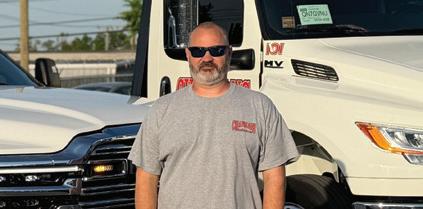
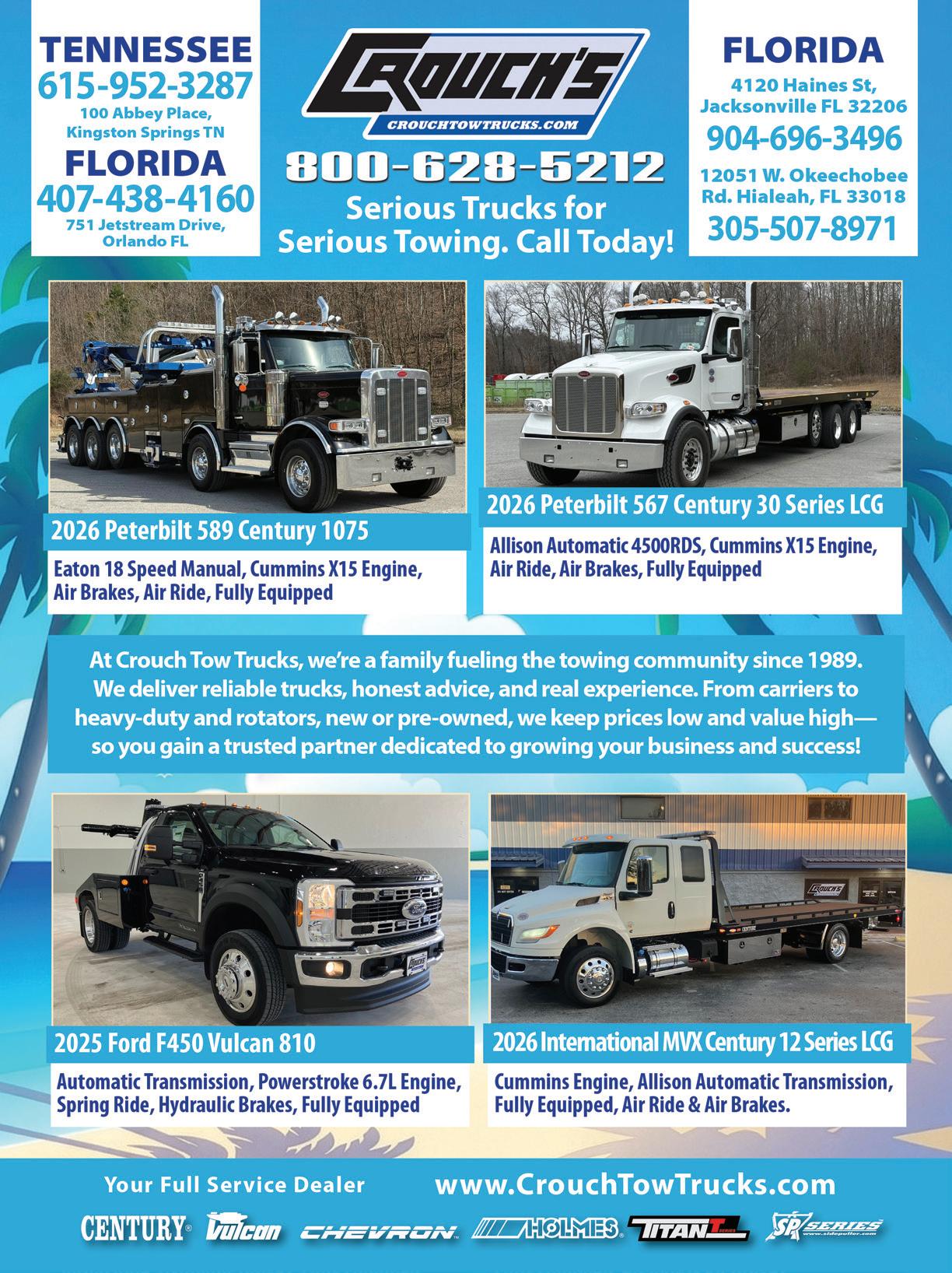
For nearly 20 years, Crouch’s Wrecker and Equipment Sales has been my go-to for truck builds and purchases. I recently added a 12 Series International flatbed and a Dodge Crew Cab to my fleet. Their service sets them apart—whether it’s quick repairs while I wait or picking up a truck for service, they always take care of me and keep my business moving without hassle.
CUSTOM BUILT MFG DEPENDABLE. WORKABLE. SIMPLE
We’ve been buying trucks from Custom Built since 2013. Since then, they’ve built about 12 heavy wreckers for us. What I like most is the workability—it’s all built for the operator, simple to operate and not overcomplicated. They really hold up under stress and heavy use, and their team always picks up the phone, gets parts quickly, understanding that downtime costs you money.
Drew Miller, S&M Repair, Goodland, Kansas
DUAL-TECH SERVICE THAT FEELS LIKE FAMILY
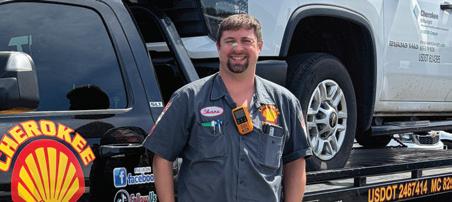
When I bought Cherokee Towing five years ago, it came with one DualTech truck—since then, we’ve added three more. Their customer service is unmatched. From custom orders to repairs and warranty work, everything has been seamless. They respond quickly, know us by name, and treat us like family. I can’t say enough great things about Dual-Tech.
OLD-SCHOOL VALUES, BACKED BY EXPERIENCE
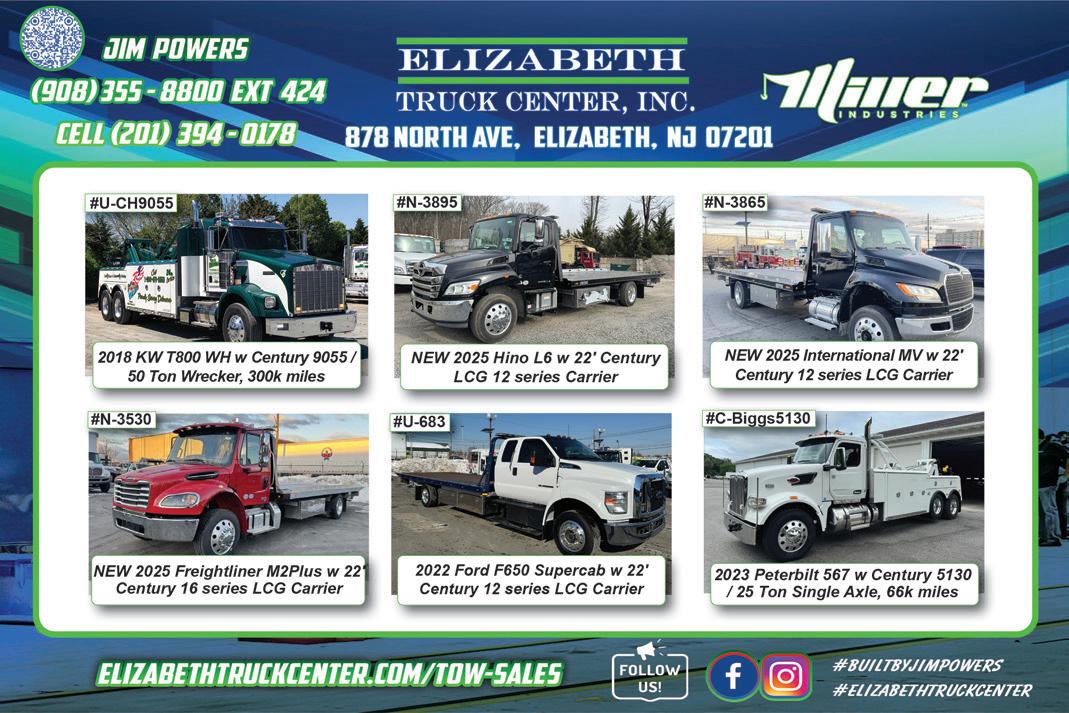
We have worked with Elizabeth Truck Center for 25 to 30 years, purchasing five tow trucks made by Miller Industries. We’ve built a strong relationship with Steven Pesce and Jim Powers, who combine old-school values with modern industry knowledge. Their guidance made upgrading to our 9055 and 1150 tri-axle rotators seamless, and their expertise has proven invaluable in real-world heavy recovery work and operations.
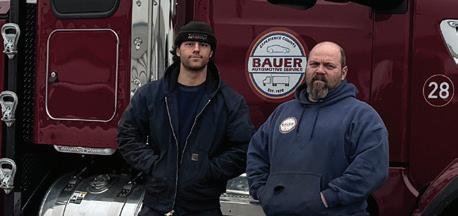
George Bauer, Bauer Automotive Truck Service, Chatham, New Jersey
EMCI WIRELESS SEAMLESS SETUP, STRONGER CONNECTIONS, SAFER ROADS
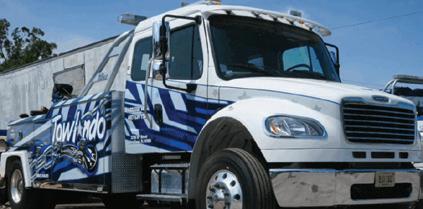
EMCI made the onboarding process fast and straightforward, from initial setup to delivery, handling everything efficiently with clear communication. Since implementing their radios, communication within our business has improved significantly from office to drivers in the field. The system created a more reliable, immediate way to stay connected throughout the day. Increased safety by reducing reliance on cell phones, drivers stay focused while maintaining communication with dispatch and team.
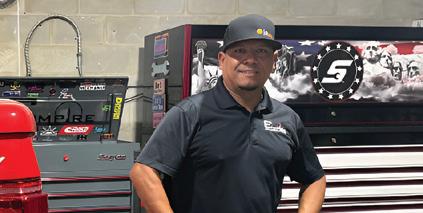
Guni Wheels can be described in one word: reliable. As a small business owner, I’ve seen how they’ve transformed our towing operations. They provide efficiency and convenience, especially with EVs and newer vehicles without spare tires. Guni Wheels help reduce downtime, prevent damage, and clear vehicles faster. We use 45/45S/56/80 options, with the Guni Wheel X a favorite. At Empire, we trust Guni Wheels to get the job done right.
FL
KEEPING OUR TRUCKS MOVING AND OUR PHONES RINGING
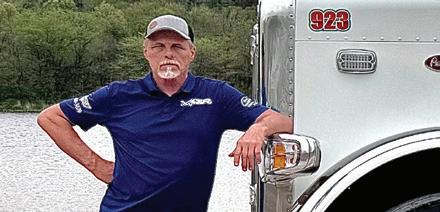
Heavy Duty Help has been a solid platform for ATR Towing. HDH puts our business in front of the right people and keeps our 65 trucks busy by replacing outdated methods, giving us real visibility into where our drivers are, and connecting us daily with heavy repair work, towing jobs, and breakdowns.
Heavy Duty Help has a great staff and is easy to work with.
Sky Martin, ATR Towing, Columbia, Missouri
TRUSTED, DOWN-TO-EARTH FINANCING THAT DELIVERS
We’ve been with Intek Truck Finance since 2017 to 2018, starting with our first lease, and they’ve financed eight or nine trucks for us. Justin and the team are down-to-earth, normal people that you can have a conversation with. Their rates are fair, and the service stands out. They recently helped us finance a Freightliner/NRC 20,000 lb. deck, and the entire process was handled smoothly from start to finish.
Rob True, True’s Service, Dowagiac, Michigan
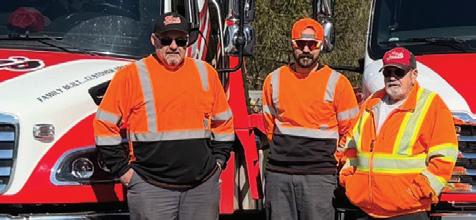
LODAR RELIABLE, SIMPLE, AND READY WHEN IT COUNTS
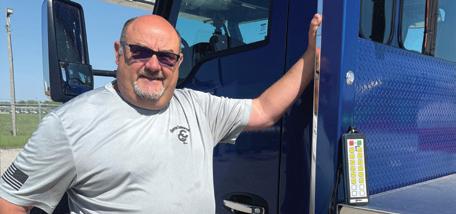
What I like about Lodar is its simplicity and reliability. The system is easy to work on and not overly complex, and whenever we call for support, the team is knowledgeable and helpful. The product is always available when we need it, and it performs consistently in the field. Our customers are satisfied after the sale, and it never lets us down when it matters most out on the job.
Keith Iberg, Chevron Commercial, Highland, Illinois
A REAL PERSON, NOT JUST A POLICY NUMBER
We use Lubnau Gonzalez Insurance because it feels like we’re working with a real person, not a corporation. Rob is incredibly responsive. You can call or text him and actually get answers. He’s honest, gives practical advice based on experience, and truly cares about our business. He even visits our tow yard to stay connected. That personal touch and genuine customer service make all the difference.
Marc Parmentier, Highway Towing LLC, Tome, New Mexico
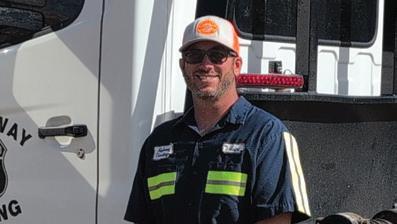
LOCAL, DEPENDABLE, AND EASY TO WORK WITH
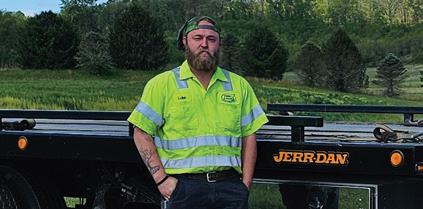
We recently purchased a 2025 Hino with a 22-foot Jerr-Dan carrier & SRS from McMahon Truck Center. We chose McMahon because they’re local, dependable, easy to work with, and they offer support when needed. We’re near their Columbus, Ohio store, and being close was also a major factor. We chose this truck for its dependability, versatility, and brand reputation, and Paul Blackston made everything go smoothly.
Towing, Bidwell, Ohio
METROCOM RELIABLE COMMUNICATION THAT JUST WORKS
We’ve been using Metrocom for nearly 10 years, and the service has been outstanding. Anytime I need radios or support, it’s one call and handled quickly—usually same or next day. The 4G LTE coverage is strong with no blackouts. Compared to past systems, it’s far more reliable. Great service, fast response, and no complaints.
Anthony Aquilino, Universe Towing, Bronx, New York
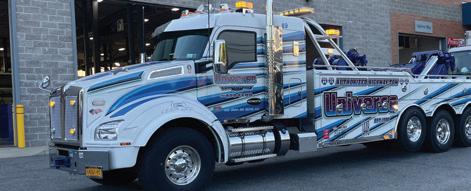
MIKE KEITH INSURANCE WHEN SPEED AND EXPERTISE MATTER MOST
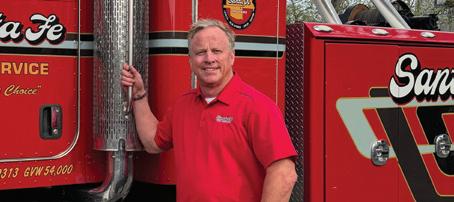
What really sets Mike Keith apart is their responsiveness and industry knowledge. Anytime we’ve had questions, needed certificates quickly, or faced a claim situation, they’ve been there immediately with clear guidance and support. In an industry where downtime can cost thousands, having a broker who moves fast and advocates for us makes a huge difference.
Jon Kupchin, Santa Fe Tow Service, Lenexa, Kansas
MILLER INDUSTRIES A PARTNERSHIP BUILT ON TRUST AND RELIABILITY
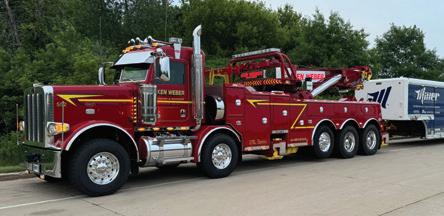
Working with Miller Industries has been a cornerstone of our operation. Our entire fleet—from light-duty carriers to heavy wreckers—is built on their equipment because of their consistency and reliability. Availability of parts and strong support through local partners and longtime reps make a real difference. Miller also stands out for its commitment to training and safety, bringing hands-on instruction to our team for years to come.
Jai Grunewald, Ken Weber Truck Service, Pewaukee, Wisconsin
A HANDS-ON PARTNER AND SUPPLIER OF NRC
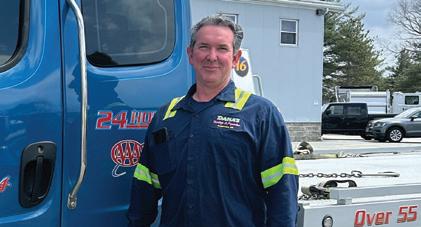
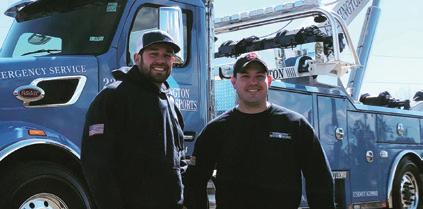
New England Truck Center has been a tremendous partner, especially with NRC micro bodies. We started working with them around 2020 when we purchased our first NRC builds. The workmanship on the NRC units is excellent, and their team is very hands-on from installation through support. They’re quick to respond when issues arise, including hydraulic line repairs, and keep our trucks on the road. We highly recommend their NRC work.
Our family has partnered with New England Truckmaster since 2009 and Miller Industries since 1976. From our first Holmes 440 to multiple Century 1150 rotators today, their equipment is unmatched. What sets them apart is how they treat customers like family. With exceptional support and innovation driven by feedback, they deliver advanced, driver-friendly trucks we rely on every day.
Patrick Vibert, Farmington Motor Sports, Farmington, Connecticut
MARKETING FROM PAGE 5 TO #1 ON GOOGLE SEARCH
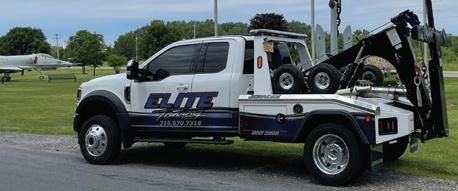
I’ll shoot you straight—it works for me. In upstate New York, the calls are coming in and the website they built is great. I can log in, see my leads, and it’s real user-friendly. They tweaked my keywords, got me to the top of Google, and stay in touch weekly. Before, I was paying Google and getting hosed.
Colin Schoen, Elite Towing & Recovery, Yorkville, New York
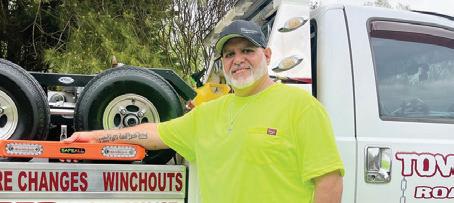
I’ve been using their light daily, and it has completely changed how I handle highway calls. The strobe is bright, easy to grab, and instantly warns passing drivers. I like that it mounts on a tailgate or van and rotates to shine exactly where needed. The battery life is unbelievable—I’ve only charged it once or twice. It’s lightweight, durable, thoughtfully designed, and truly a game-changer.
Cesar Torres (A.K.A Towman127), Towmans Roadside, Statesville, North Carolina
SANTANDER BANK EASY, RELIABLE FINANCING FOR THE LONG HAUL
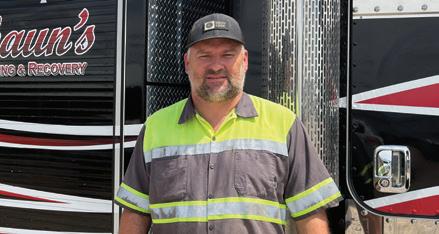
I’ve been working with Santander Bank for nearly 20 years, starting through AAA and continuing ever since. From Jim to Justin, the service has remained consistent—responsive, straightforward, and dependable. I finance multiple trucks each year, and the process is always smooth. Most recently, they handled financing on a new Ram seamlessly. It’s a hassle-free experience every time.
Shaun Healy, Shaun’s Towing, Fort Collins, Colorado
STIVERS FORD SOUTH EXCEPTIONAL SERVICE, EVEN FROM 2,000 MILES AWAY
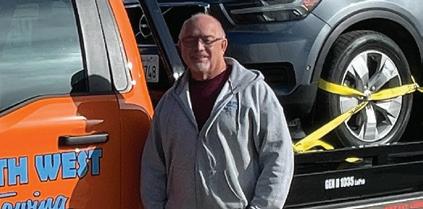
My first purchase with Stivers Ford South exceeded expectations. I found them while exploring gas chassis options and their strong deals stood out. The salesman was upfront, responsive, and accommodating, answering every question and providing detailed photos and information. Despite being 2,000 miles away, the experience was seamless. They even picked us up, took us to dinner, and ensured everything was ready. I’d absolutely do business with them again.
Myles Bois, South West Towing, Cathedral City, California
CONVENIENT STORAGE DELIVERED RIGHT TO YOUR DOOR
We rented this storage container, and it couldn’t have been easier. They delivered it to the back of the house and set it exactly where needed. It’s like renting storage, but you don’t have to go anywhere. The unit itself is lighter than a typical shipping container and easy to use. They were friendly, and now that we’re done, they’re coming to pick it up. Simple as that.
Gary Atashian, Hillside General Construction, Pasadena, California
TOWBOOK TRANSFORMS OPERATIONS AND CUSTOMER EXPERIENCE
Choosing Towbook has proven to be one of the best decisions we’ve made in the past three years. Their features streamline operations, improve response times, and keep everything running smoothly. The Quote Feature is a game changer. Recent updates allow photos and text-able links so customers can share locations, effectively streamlining quoting and improving conversions. We appreciate their responsiveness and adaptability, helping us stay organized and deliver better customer experience.
TOWING DISPATCH SERVICES
RELIABLE DISPATCH THAT KEEPS OPERATIONS MOVING
We rely on Towing Dispatch Services’ 24/7, 365-day support. Their team stays closely connected with our drivers and supervisors, integrates seamlessly with our dispatch system, and creates custom spreadsheets tailored to our needs. Fast, efficient call handling keeps operations running smoothly and gives our team something invaluable—more time at home with family.
Liz “Wiltse” Rumelhart, Wiltse Towing, Salem, Oregon
In my 10+ years in towing, overseeing 30+ rollbacks, wreckers, and tractor trailers, I’ve installed many strobe lights. The Infinita light bar is the best I’ve used, from easiest install to customizable LED colors, strobe patterns, and speeds, all controlled by a sleek in-cab unit. TowMate simplified installation to two wires. LEDs are powerful, work lights are bright, and their support shows real care, overall service.
Jason Wilkinson, ABC Towing, Trussville, Alabama
FAIR PRICES, RELIABLE SERVICE, AND LOCAL SUPPORT
I’ve been using Truckmax for about two years now and purchased two 50-ton wreckers and a couple of flatbeds. The service is always good. Jason and the team are great to deal with, their prices are fair, and being local in Tampa makes everything easier. Whenever I need something, I call them. They’re always there!
Alfredo Cruz, Alfredo Towing Services, Tampa, Florida
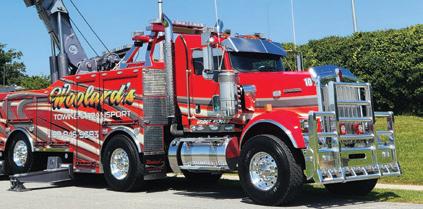
In the summer of 2022, we finalized our new Kenworth with a Jerr-Dan 5060 rotator—fully loaded, no corners cut. A light tower was a must. I’ve worked with Keith at Will-Burt for years, and being local made the choice easy. It’s been flawless. We’ve logged countless hours at accident scenes, night lifts, even a family gathering. The Will-Burt light tower has proven a worthwhile addition.
Mike Woolard, Woolard’s Automotive Towing & Transport, Washington, North Carolina
TURNKEY SUPPORT AND TANK-TOUGH BEDS MADE BY JERR-DAN
We’re Jerr-Dan all the way, and Wrecker Warehouse has been a huge part of that. Brent and his team have been keeping our trucks on the road 24/7. Even before he had Jerr-Dans, they handled all our service and warranty. The beds are built like tanks, and the relationships keep everything running smoothly. From truck sales to parts and service, this is the one stop shop in the wrecker business.
Matthew Gabeline and Shannon Taylor, Park and Tow Solutions, Dallas, Texas
ZERMENO’S
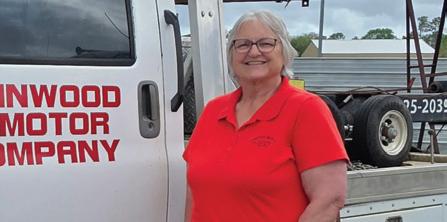
We’ve been doing business with York Insurance for about 25 years and they have always gone above and beyond. They reach out to more than one company, get comparisons on prices for renewal each year, and make sure we’re insured at the level we need. This year alone, they went back to the best bid and saved us more than $20,000. They truly feel like an extension of our family.
Kay Winwood, Winwood Motor Company, Santa Fe, Texas
I’ve been running Zermeno’s beds for six years, and their reliability stands out. They’re among the most durable, well-built beds I’ve used, with no major issues. Everything fits properly, nothing is thrown together, and it shows in their longevity. Their team is always helpful and responsive. For the quality, the pricing is very competitive. On a scale of 1 to 10, they’re well above a 10.
Robert Bloom, R&D Auto & Truck, Deerfield, OH
TOP-QUALITY TRUCKS AND SERVICE YOU CAN COUNT ON
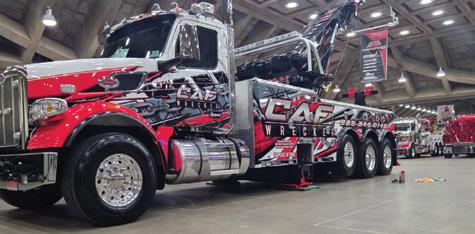
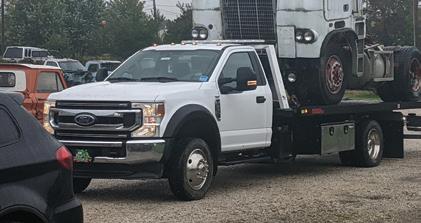
ZIP’s does a hell-of-a-job. They give you great attention and build some of the nicest trucks and equipment out there. I’ve bought a couple trucks from them, including a Dodge Ram 5500 rollback a few months back. Great people, quality builds, and they stand behind their work. One of the best places to buy trucks.
Chris Fernandez, CAF Wrecker, Hendersonville, North Carolina
Honk Technologies announced it has been acquired by the private equity firm Frontenac, while simultaneously completing its acquisition of CurbsideSOS, expanding its roadside assistance and accident-management platform.
The combined company will be led by former Grubhub executives, including CEO Adam DeWitt, Chairman Matt Maloney, COO Eric Ferguson, and CFO Morgan Hughes. The leadership team brings experience scaling large logistics marketplaces and consumer-facing platforms.
Executives said the company will focus on modernizing roadside assistance through AI-powered dispatch, real-time service visibility, and improved coordination among insurers, automakers, fleets, and roadside providers.
The integration of CurbsideSOS is expected to strengthen Honk’s nationwide provider network and further its goal of replacing traditional call-center dispatch systems with a real-time digital logistics layer.
Frontenac said it will support the company’s growth strategy through its CEO1ST investment approach, emphasizing operational leadership and acquisitions in the services sector.
Honk founder, Corey Brundage, said the deal accelerates efforts to improve accident response, secondary towing, and transparency across the roadside industry.
Source: businesswire.com
Previous California sales restrictions on select Ford Super Duty
diesel chassis cab models no longer apply, according to a recent dealer communication. The update affects diesel-powered F-550 and F-600 chassis cab units above 19,500-lbs GVWR that had previously been subject to sales and delivery limitations tied to California registration. Under the updated guidance, those vehicles can now be sold or delivered to customers who register them in any state, including California.
Ford also said that previously required attestations are no longer required for ordering F-550 and F-600 diesel chassis cabs. In addition, F-550 models equipped with Payload Plus Upgrade Package 1 (68M) and Payload Plus Upgrade Package 2 (68H) can now be sold or delivered to customers who register their vehicles in any state.
The dealer communication states that the previous EFC16671 notice is no longer valid. It also notes that the changes do not apply to any current or previous communications regarding F-650 or F-750 sales restrictions.
For fleets, the F-600 remains an important truck in Ford’s chassis cab lineup because it slots between the F-550 and F-650. Ford says the model delivers Class 6 capability, including a maximum GVWR of 22,000 lbs., in a package that is the same overall size as the F-550. That gives fleets a way to handle heavier payloads and
larger upfits without moving into a larger truck.
Ford also says the F-600 chassis cab is available with a standard 7.3L gas V-8 or an available 6.7L Power Stroke diesel V-8, along with 4x2 and 4x4 configurations. The truck also offers driver-assist features, onboard connectivity via a standard modem with 4G LTE Wi-Fi capability, and Ford telematics and data services to improve uptime, utilization, and fleet management.
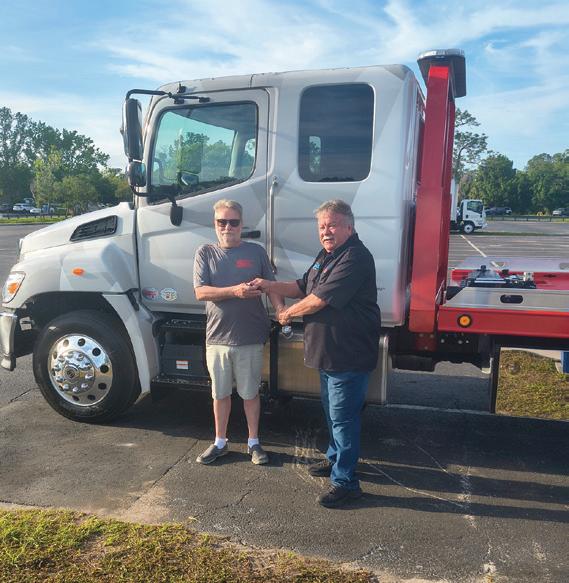
Miller Industries raffled off their Chevron 12-Series LCG Carrier on a 2026 Hino L-Series chassis. Proceeds from this raffle benefit the Professional Wreckers of Florida (PWOF) Education and Legislative Programs. These programs focus on supporting the towing industry through training, educational initiatives, and advocacy for legislation that benefits towers.
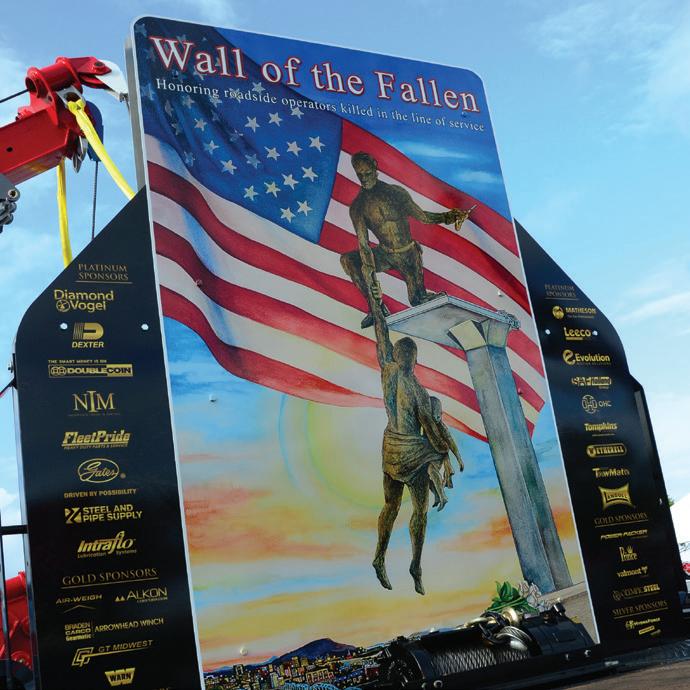
Landoll Celebrates its 40,000th Trailer
By Steve Temple
A40th wedding anniversary is traditionally known as the Ruby Anniversary, symbolizing a deep, lasting passion that has burned for

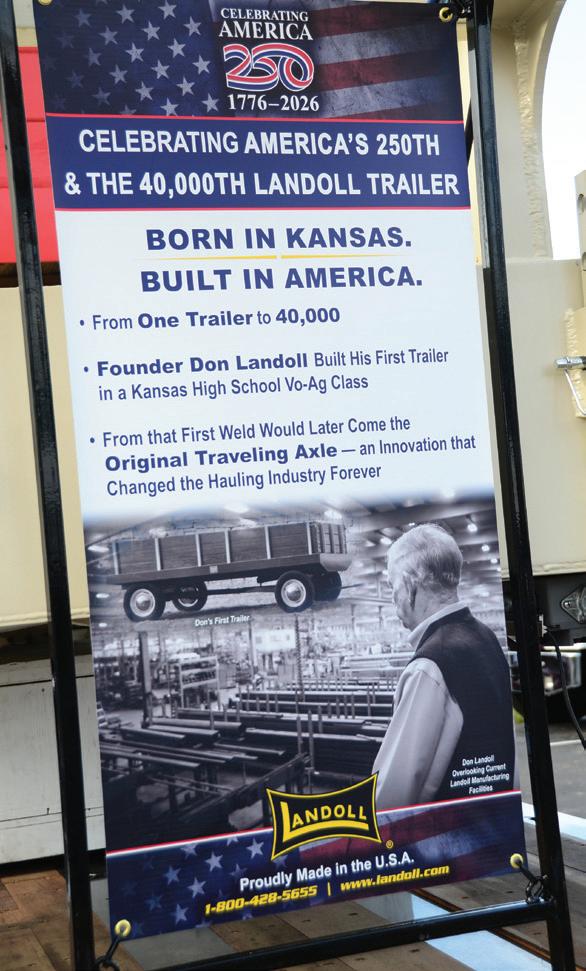
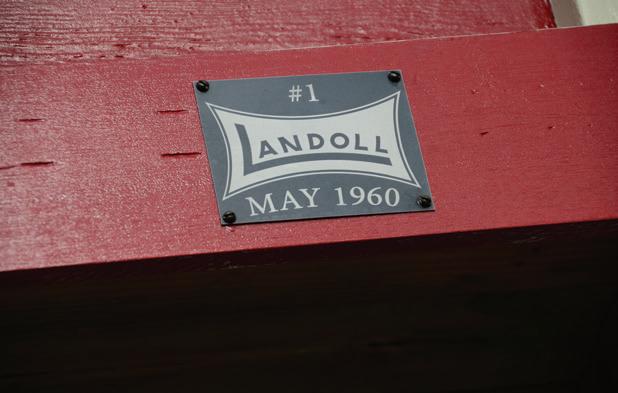
four decades. This is also an apt description of the Landoll Company’s character, dating back to 1960 when founder Don Landoll built his first trailer in his high school Vocational Agricultural (Vo-Ag) class for use on a farm. From this modest start he spent the ensuing several decades applying hands-on engineering to develop a line of innovative traveling-axle trailers, along with many other types of heavy equipment.
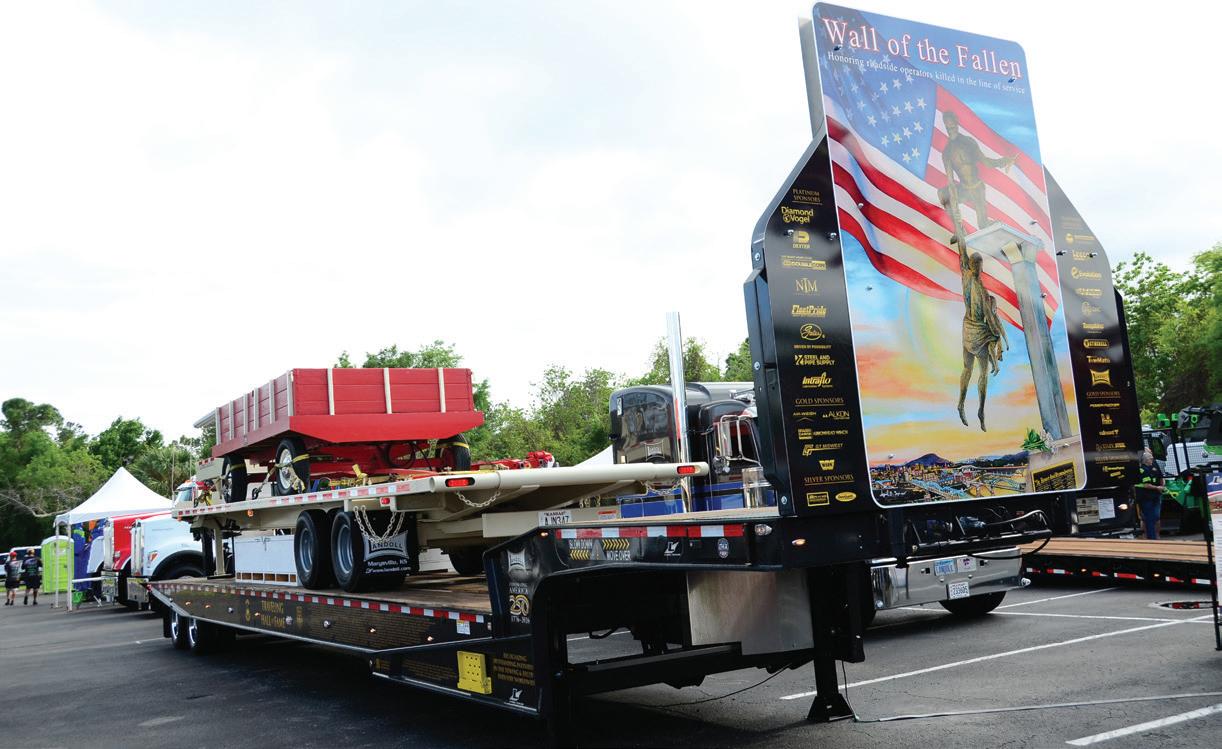
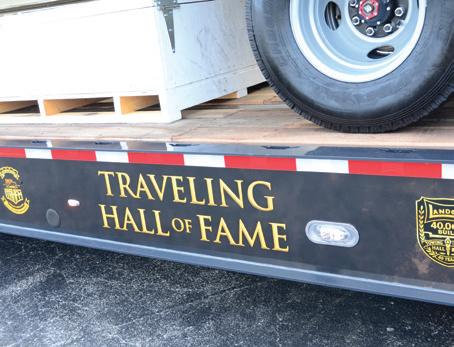
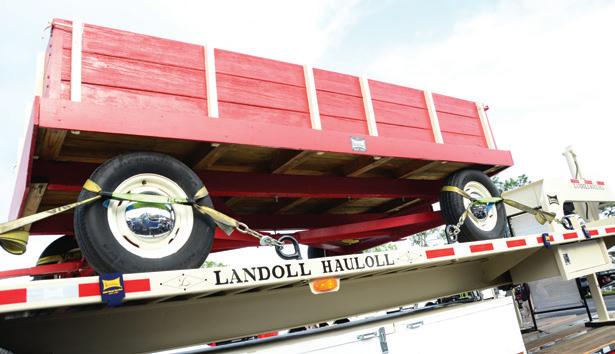
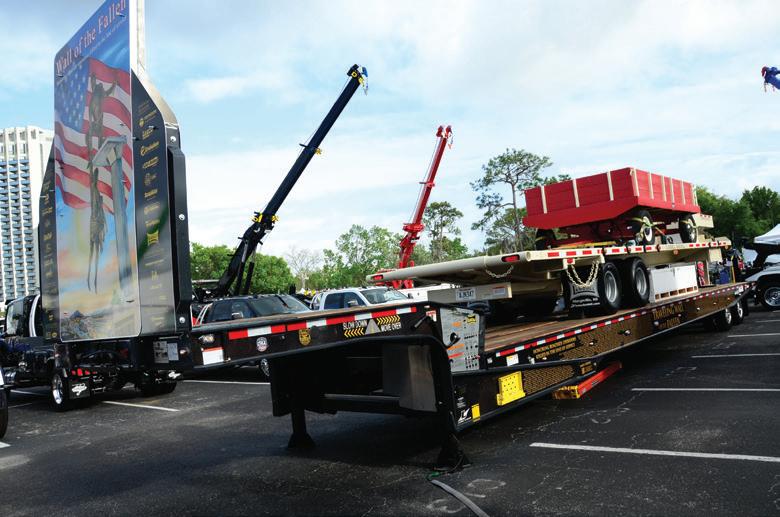
To commemorate this lengthy and enduring history, the company is donating a 53-foot Landoll 440 Series trailer to support the International Towing and Recovery Hall of Fame and Museum. This significant contribution represents trailer number 40,000 built by Landoll, marking a major milestone in the company’s manufacturing legacy. The donated trailer will play a central role in celebrating the 40th anniversary of the International Towing and Recovery Hall of Fame, honoring the industry’s achievements and the individuals who have shaped it. Proceeds from the trailer’s auction will help support the museum and its mission.
Prior to being auctioned on October 16, 2026, the trailer will be exhibited all across the country at various events and parades in order to raise awareness of “Slow Down, Move Over” and obtain

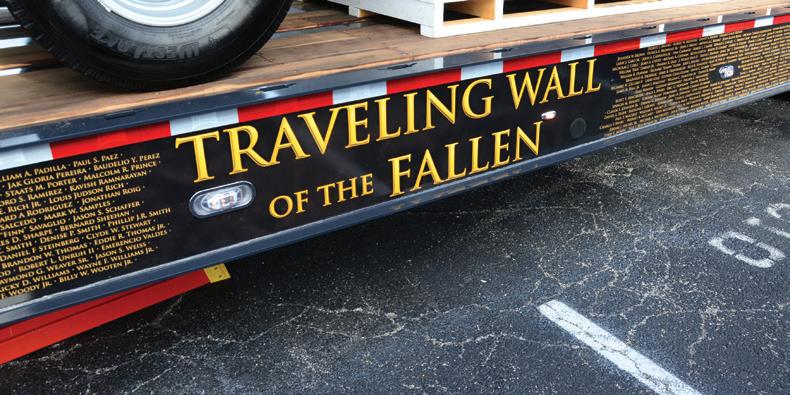
monetary pledges to support the Survivor Fund.
“Reaching our 40,000th trailer is a proud moment for Landoll, and we can think of no better way to commemorate it than by supporting an organization that honors service, sacrifice, and excellence within the towing and recovery

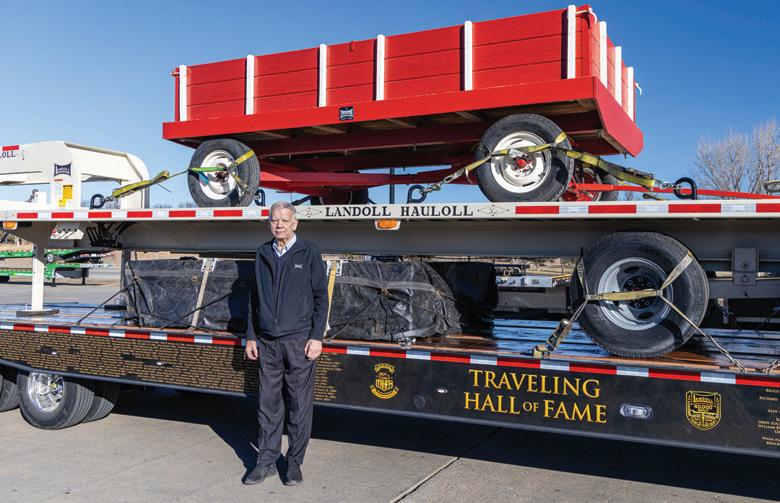
industry,” said Don Landoll, founder and president of Landoll Company. Don was inducted into the International Towing and Recovery Hall of Fame in 1997.
This donation reflects Landoll’s long-standing commitment to the industry and its continued support of organizations that preserve its history while investing in its future.
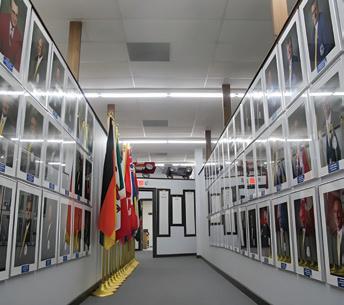
The International Towing and Recovery Hall of Fame and Museum (ITRHFM) has announced its Hall of Fame Class of 2026, marking the 40th year of honoring outstanding leaders in the towing and recovery industry. Nine inductees from across the United States and Mexico will be formally recognized during a ceremony on October 17, 2027 in Chattanooga.
“This year’s class represents the very best of our industry,” said ITRHFM President Bill Gratzianna. “Their commitment to sharing knowledge, advancing safety, and supporting others continues to elevate the profession.”
The 2026 inductees are Enrique Dueñas Rodríguez, John H. Gardner, Bob Huffman, James “Jim” Jennings Jr., Irvin Johns (posthumous), Martin D. Peacock, Jeff Poquette, Lee Roberts and Shannon Douglas Yates. Collectively, they represent decades of leadership, innovation and service, from building multi-generational businesses to advancing training, safety awareness, and industry standards. Their contributions include strengthening relationships between towing providers and national organizations, founding associations, supporting safety campaigns, and mentoring the next generation of professionals.
Source: einpresswire.com
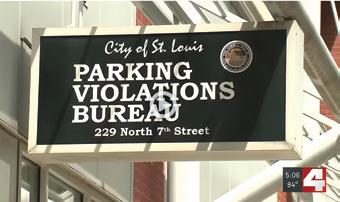
Drivers with outstanding parking tickets in St. Louis are now facing renewed enforcement, as the city resumes booting and towing vehicles for the first time since 2018. City Treasurer, Adam Layne, said the effort is already producing results, with more than $50,000 collected in just the first 10 days. During this same period, nearly 30 vehicles were booted as the city began easing back into enforcement.
The crackdown follows public frustration over abandoned vehicles and years of uncollected fines. Officials say enforcement will continue to ramp up strategically.
Parking fines range from $20 for meter violations to $100 for misuse of disabled parking spaces. Unpaid tickets double after 30 days and can quadruple after 45 days, significantly increasing costs. Vehicles that are booted or towed require full payment of all outstanding tickets, plus towing and daily storage fees before release. Unclaimed vehicles may be auctioned after 35 days, and unpaid fines can block registration renewals.
Source: firstalert4.com
In Southern California, unauthorized tow operators are again drawing attention as enforcement agencies warn of renewed crash-scene poaching activity. According to reporting by the California Post, one motorist was charged $3,000 to retrieve her vehicle following a crash. Disoriented at
the scene, she was approached by a tow truck driver who claimed affiliation with law enforcement. The driver obtained her signature under the premise of a no-cost tow and estimate, then transported the vehicle to a tow yard. When the owner later attempted to recover her vehicle, authorities advised that the signed document made the charges legally binding, limiting their ability to intervene.
The Los Angeles County District Attorney’s Office has issued warnings about so-called “tow truck bandits,” noting that some operators monitor emergency communications and respond to crash scenes without authorization, presenting themselves as legitimate service providers.
Source: nypost.com wideopencountry.com
A man was arrested after allegedly stealing a flatbed and crashing it in Gloucester County, New Jersey. Authorities say Dylan Davis now faces charges including carjacking and driving while intoxicated. Investigators determined the tow truck had been taken roughly a mile north of the crash site. An employee of Riehl’s Towing had stopped near Egg Harbor Road to secure a vehicle when Davis allegedly entered the truck and drove off. During the incident, the employee was thrown from the vehicle and injured.
Police said Davis drove erratically for about a mile, veering into oncom-
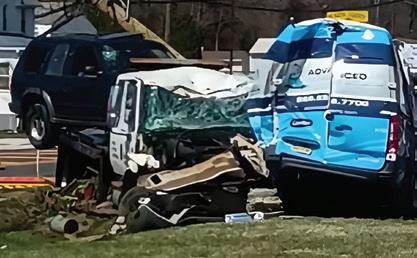
ing traffic and colliding with two vehicles. Both drivers were transported to nearby hospitals for treatment.
After the crash, Davis attempted to flee on foot but was quickly apprehended by a responding officer. Suspected of impairment, he was taken to Cooper University Hospital, where a court-authorized blood draw was conducted.
Source: cbsnews.com
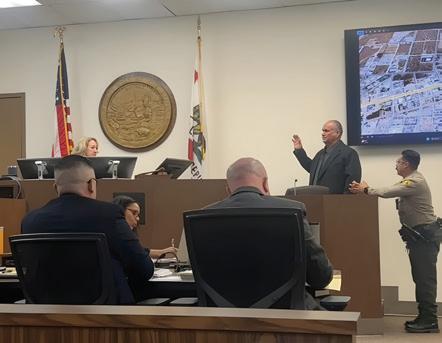
Troy Reynolds, a longtime tow truck driver with Hill’s Towing in Yucca Valley, California, returned to court March 24 for a jury trial stemming from a fatal hitand-run that killed 17-year-old Joshua Barreras on January 26, 2024. Barreras was found unresponsive on the center median of Twentynine Palms Highway and was pronounced dead at the scene.
The trial continued with testimony from lead investigator Detective Shane Crowl, who told jurors that body camera footage and debris collected at the scene helped identify Reynolds. Investigators determined the parts matched a Hill’s tow truck operating under the company’s sheriff’s rotation contract.
Jurors also viewed footage from a February search of the business, where Reynolds admitted he “got scared” after the collision. He testified that he believed something suddenly stepped into the roadway and that he panicked after the impact.
Reynolds is charged with felony hit-and-run resulting in death. He remains out on $500,000 bail as the trial continues.
Source: z1077fm.com
CONTINUED ON PAGE 68
By Mark Lacek
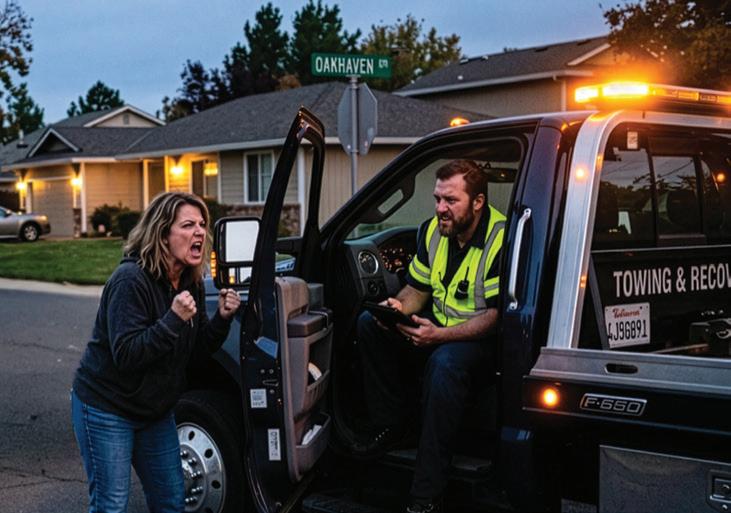
In 2024, a repo resulted in the death of the vehicle owner, a beloved Houston father. In the ensuing lawsuit against the tow truck driver, I was retained by the family’s legal counsel as an expert in the industry, with a specialized focus on repossessions, to write an expert opinion report. This tragic event amply demonstrates what a repo agent should never do, and the consequences of not obeying the laws governing the repossession process.

During the terrible incident, the man’s 11-year-old daughter stood by. Imagine how this young girl felt as she looked onto the street and saw her daddy lying there, open-eyed with blood flowing from his mouth. Did she fully understand why her daddy was not getting up? Her father’s car was hooked to the back of the tow truck that was driving away. Just moments earlier, she watched that same tow truck run over her daddy. When the realization that he was dead finally registered, she began to cry.
Footage from a nearby video camera captured the tow truck driver mishandling the entire process. The video showed the tow operator used his beacon lights when backing into the car. After hooking to the car, he got out of the tow truck and proceeded to fill out a condition report. He also spent
time taking photos. The tow driver moved slowly and spent a half-hour at the scene until the car’s owner and his 11-year-old daughter emerged from their apartment on their way to play at the local park.
Months later during deposition testimony, it was determined that the car’s owner approached the tow operator while he was taking photos of his car. The owner explained to the tow truck operator that he had made the payments that morning, which the the tow operator later acknowledged under oath.
“I have the receipt here to prove that I made the payments,” the owner reportedly stated. The tow truck driver testified that, “He told me to stop and unhook the car, and he would show me the payment receipts.”
The tow operator ignored the owner’s pleas to stop, told him he had the authority to repo the car, and then continued with the repossession process. The tow operator pulled out of the driveway and into the street. The girl watched as her father ran alongside the tow truck, begging the operator to stop, and fall to the ground. She then saw the tow truck run him over.
The car’s owner died in the street while his 11-year-old daughter stood on the sidewalk crying. The tow truck operator never stopped, although he testified under oath that, “I watched him fall in the mirror.” The tow operator proceeded to tow the car to his shop, which was located six miles away, while the man lay dying in the street. The driver of the tow truck was later charged with failure to render aid.
The tow truck operator handled this repossession entirely wrong. Furthermore, the lender failed to properly vet the assignment, and the tow driver should never have been sent to repossess any vehicle. Although experienced in towing, he had no training or knowledge of proper repossession procedures.
Some might think the car’s owner, who failed to make his car payment, put himself in danger when he chased the tow truck. However, the jury did
The training program was created to train tow truck personnel for precontact preparation, on site awareness, personal contact, and post recovery activities. Training sections include repossession laws, agent attitude, voluntary and self-help recovery, confrontational avoidance, dealing with irate consumers, trespass, and breach of peace. The course will provide training on commercial account repossessions
not think so and duly awarded the owner’s family millions of dollars for his wrongful death.
The court decided the responsibility for the incident did not rest with the customer who missed a car payment. Instead, the core accountability was placed on the lienholder, who it was determined failed to thoroughly evaluate and select a qualified vendor for the repossession. Although not automatic
such as tractor trailers, construction equipment and specialty collateral.
Certified Course:
Part I - 2-Hour Classroom Session Friday, July 17, 8 am - 10 am
Part II - 2-Hour Classroom Session Saturday, July 18, 8 am - 10 am
Mark Lacek, Commercial Asset Solutions & Ron L. Brown, Eagle Group XX.
in every case, courts across the country have ruled that a lender is responsible for the actions of their vendors.
Additionally, the tow company was also found liable for failing to ensure their employee had received comprehensive training in repossession laws and obtained
the proper credentials and/or certification. It was determined that these lapses in oversight and education directly contributed to the tragic outcome.
Early in his testimony, the tow operator was asked by the prosecutor, "Tell me what you know about breach of peace.” He replied, "I don't know what that is."
The tow operator was then asked, "What kind of training did you receive about repossessions?" He answered, "I didn’t get any specific repossession training because hooking up the car is done the same way." The lawyer then asked, "Why did you turn on your beacon lights when you were backing into the car?" The tow operator responded, "Because I wanted everyone to see me."
The tow truck driver’s answers were completely unexpected, leaving many observers stunned. It raised a troubling question: How could a towing company owner risk ◀
the lives of their drivers, the safety of consumers, and the future of the business, by neglecting essential training on in safety and compliance? Following the incident, the tow company was unable to secure insurance and soon went out of business.
Every tow company or tow operator needs to understand this: There are clear legal and operational distinctions between a repossession and a tow. Although the repossession and towing industries are basically similar, they are also quite different. While both professions often involve the use of specialized tow trucks and require operators to interact with consumers, the nature of their authority and the context in which they operate are significantly different.
Tow truck operators frequently work as first responders in collaboration with law enforcement during incidents such as traffic accidents, illegal parking, or
criminal actions that necessitate towing a vehicle. In these scenarios, tow operators are granted a certain level of authority on the roadways, and may even be exempt from specific rules to quickly clear roadways or accident scenes. Their actions are sanctioned by the unique needs of emergency or law-enforcement situations, and they follow protocols that provide them with a limited measure of official power.
Conversely, repossession operators, especially during selfhelp repossessions, do not possess the same authority. During a repossession, the tow truck operator has no official power. Without authority tow operators must rely on stealth and speed, hence the term “Hook & Book”.
Even with a letter of authorization from a lender, a repossessor holds no legal authority. Tow operators must recognize that a repossession letter of authorization is merely the lien holder’s acknowledgement. It provides only key details about their customer and the collateral, including year, make, model, VIN, and possible location. This lack of authority represents a critical distinction that differentiates repossession from conventional towing operations.
Understanding these distinctions is vital for both operators and the public alike, potentially avoiding conflicts and tragedies. The rules governing each profession are rooted in their respective responsibilities and the circumstances under which they are permitted to act. Unless tow companies thoroughly educate, train, and certify their employees in the self- help repossession process, both operators and consumers face increased risk of injury and severe consequences.





By Steve Temple
Miller Industries’ massive M100 rotator has handled all sorts of ultra heavyduty work, everything from raising the collapsed front of a hotel,
to hoisting a hefty military M60 battle tank. But an even more unusual job involved both assembling and then transporting a $45-million dollar underwater laboratory.
Dubbed “Vanguard”, this lab is a subsea human habitat from DEEP, an exploration firm that provides extended access to the ocean for research, conservation, and training. The habitat provides a dry living environment for a crew of four aquanauts, supporting missions lasting seven days or longer without the need to resurface.
This costly piece of equipment was readied for transport on February 26, 2026 from Sebastian, Florida on the central coast to an underwater home in the Florida Keys. The job required
Kauff’s Transportation Services’ specialized expertise and three Miller rotators (two 75-ton Century 1075 units and one 100-ton M100).
Before final transport, Kauff’s crew spent six months assisting in the final assembly of the lab, hoisting a couple dozen or so sensitive components and a special support stanchion weighing some 200,000 pounds.
Since the lab was housed in a lowceiling building, construction cranes couldn’t be used, making the Miller
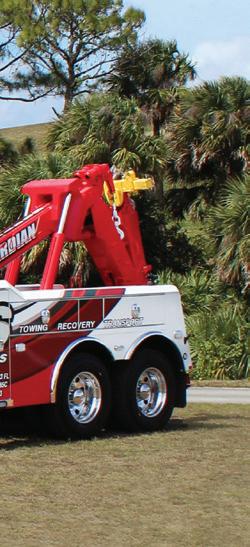
Engine: Cummins X-15
Transmission: Eaton 18-speed
Wrecker Body: Miller M100
Chassis: Peterbilt 389
Custom Features: specialized rigging; 3/4-ton to 35-ton shackles; Certex synthetic straps, extra bridles and chains; rearend gear ratio lowered for heavier loads; company logos by Nitro Graphics; support truck for the M100 has 12 bays for rigging and two spreader bars
rotators a far more versatile choice for such an intricate operation. Kauff’s East-coast manager of heavy-duty wreckers, Billy Hunter, oversaw the entire operation.
“I’m the guy that’s gotta answer if anything goes wrong,” Billy laughs. And there was plenty that could’ve gone wrong, starting inside the building for assembling the lab.
“The biggest challenge was only four feet of headroom,” he noted, which required using industrialgrade skates to support the massive
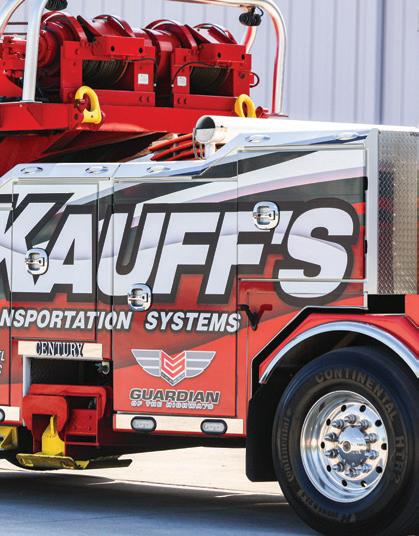
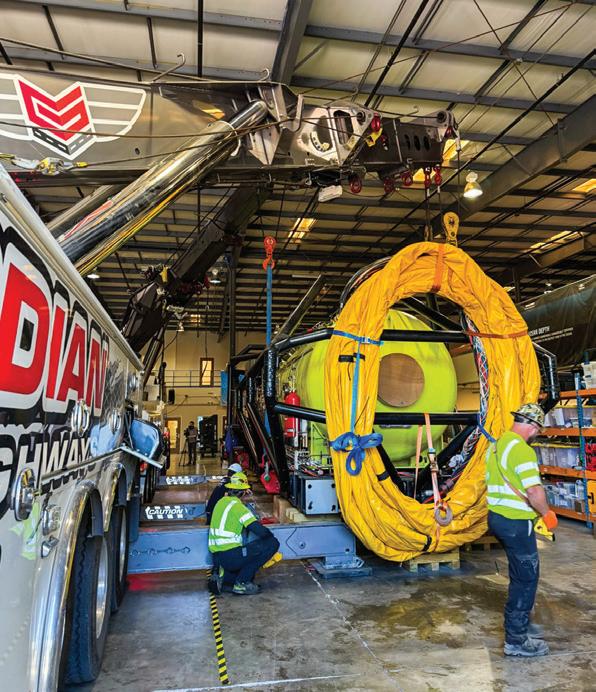
weight of the lab. Soft straps had to cushion the exterior, which was fitted with numerous oxygen and gas lines, along with sensitive electronic equipment.
After the lab was rigged, it was gingerly moved out of the building by one rotator in front, and two in the rear, with only six inches of clearance on each side. The lab was then lowered
slowly downhill, and had to take a lefthand, 90-degree turn to get to the transport trailer about 600 feet away.
“It was really slow and tedious, just crawling along,” recalled Billy. If it weren’t for the Miller rotators keeping things in check, the entire rig would’ve just rolled away, he
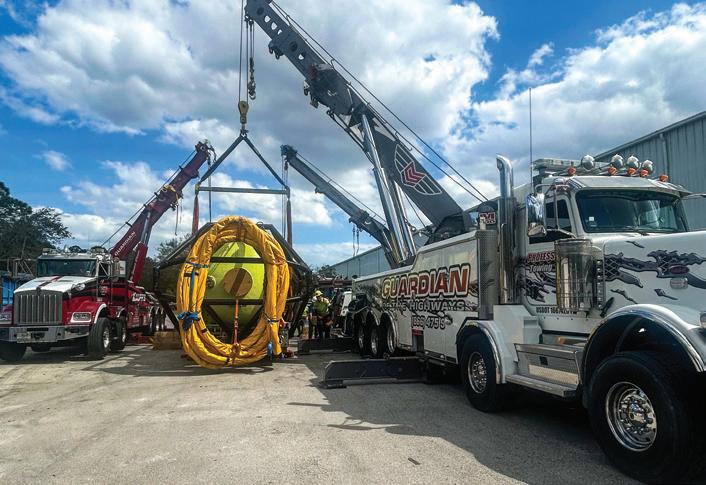
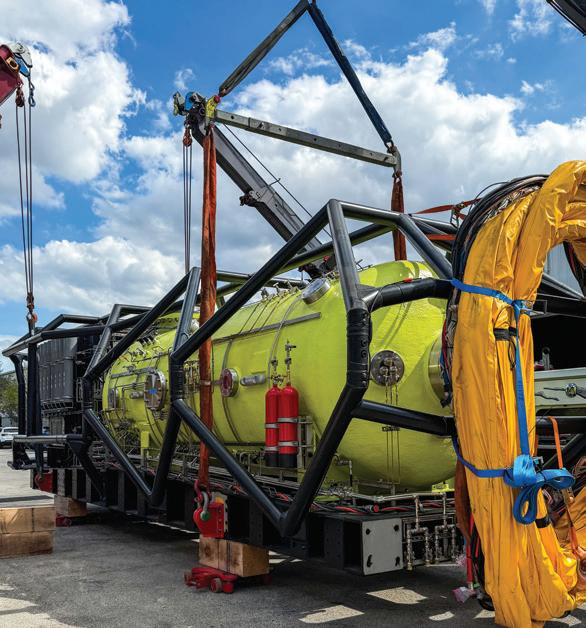
pointed out. The skilled operators handling in this challenging maneuver were Darren Jones and Chris Clapp on the 1075 wreckers, and Brian Asbel manning the 100ton M100.
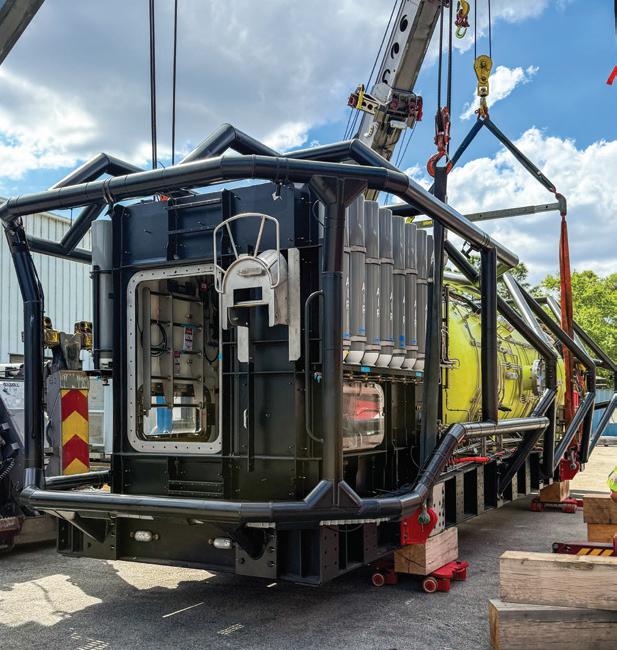
Once positioned next to a low-boy trailer, the front of the lab was lifted four feet off the ground by the M100 rotator, in concert with the other two rotators. All told, the meticulous transfer took about 11 hours.
Projects of this scale demand
careful coordination, engineered lifting plans, and the right heavyduty equipment all working together. Even Captain Nemo would be impressed by the teamwork and execution that made this complex nautical operation a success.
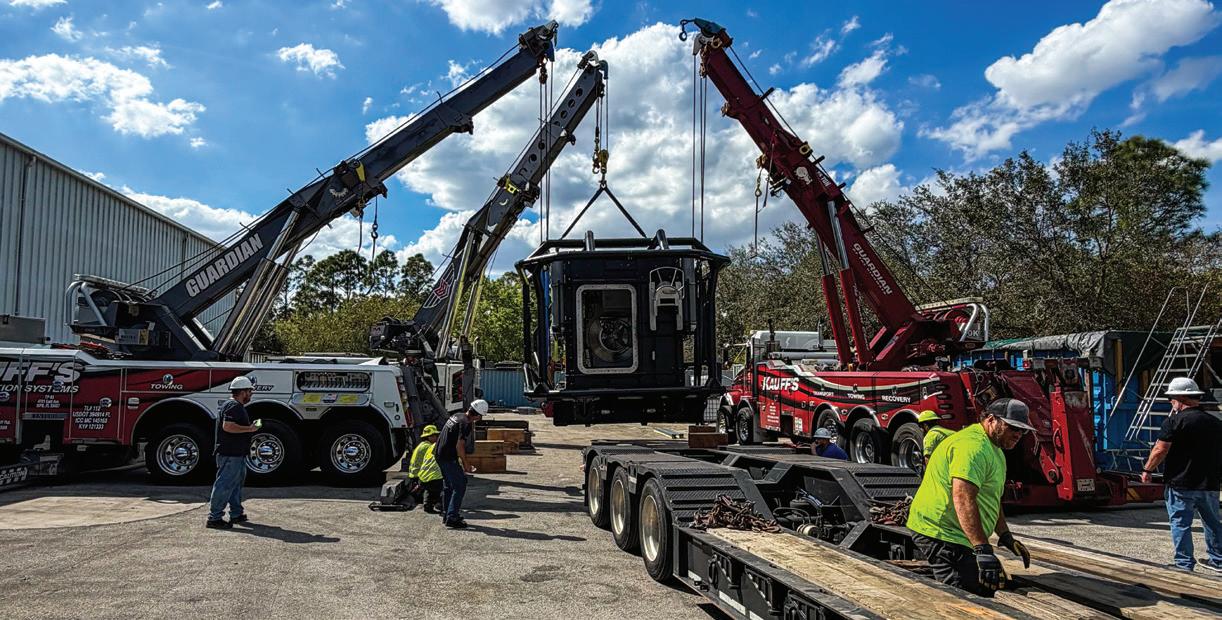
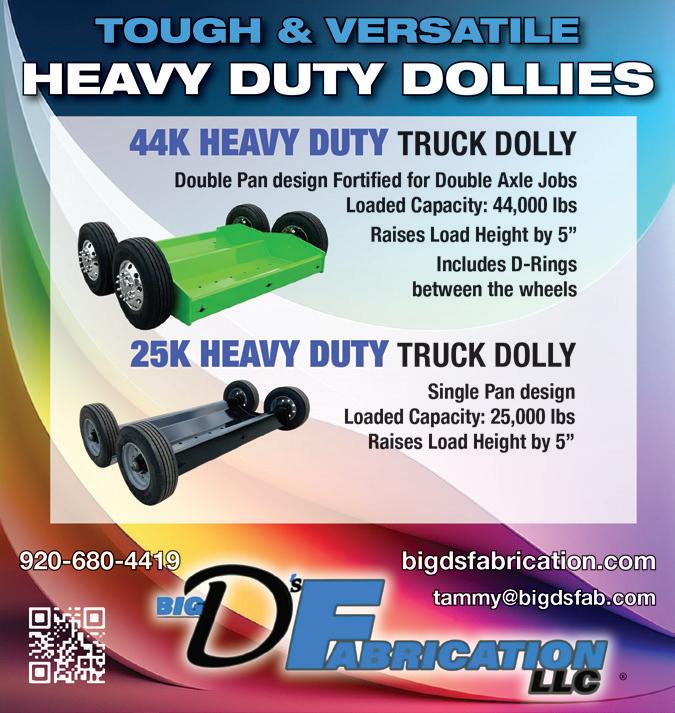
The U.S. Department of Justice has filed a lawsuit against S & K Towing, Inc. of San Clemente, California, alleging violations of the Servicemembers Civil Relief Act (SCRA) after the company allegedly auctioned vehicles belonging to active-duty military personnel without required court orders.
According to the complaint, between August 2020 and April 2025, S & K Towing sold or disposed of up to 148 vehicles, many towed from Marine Corps Base Camp Pendleton. Federal law requires towing companies to obtain a court order before selling vehicles owned by protected servicemembers, but officials say the company failed to comply despite contractual obligations to follow all applicable laws.
The lawsuit also alleges the company continued the practice even after being warned in May 2024 by a military legal assistance attorney. In some cases, vehicles were sold after the company had been informed the owners were in the military.
Source: justice.gov
Commercial vehicles, including many tow trucks, are set to face new safety scrutiny as the Insurance Institute for Highway Safety (IIHS) begins rating work trucks for crash avoidance and occupant protection.
The move could directly impact vehicles commonly used in the towing industry, such as the Ford F-Series chassis cab, as well as Ram and Chevrolet 3500-5500 chassis cab models that are routinely upfitted into wreckers and carriers. These trucks fall into the Class 3–5 category now being evaluated by IIHS.
Safety gaps remain a concern. Many of these platforms are not re-
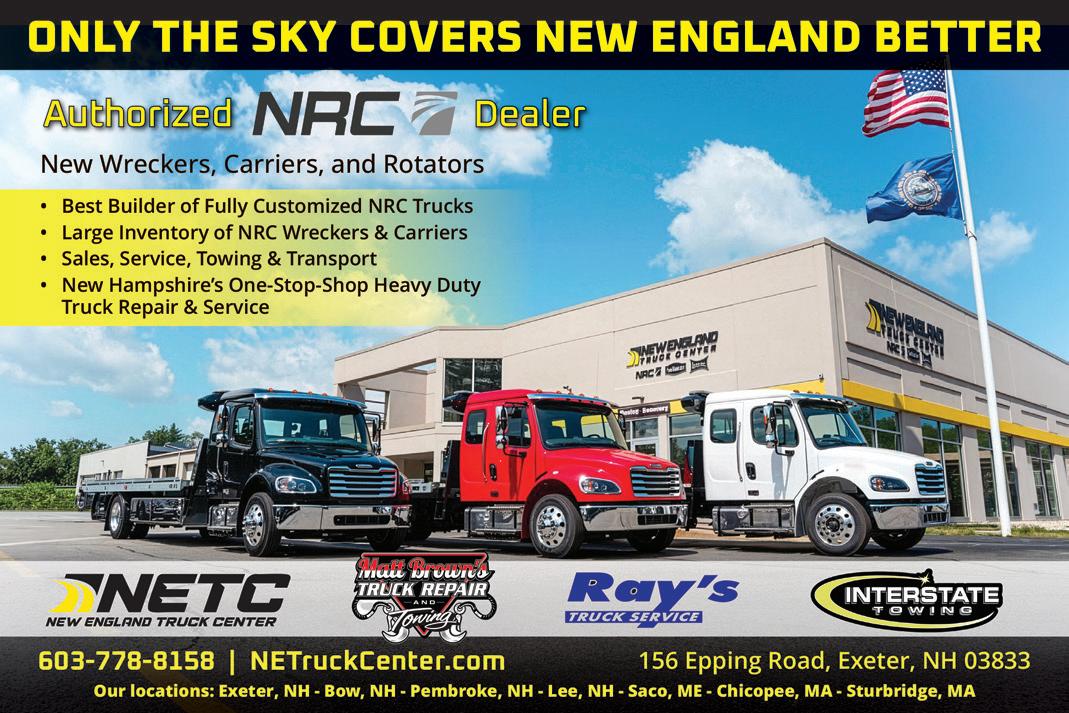
quired to include advanced systems like automatic emergency braking, blind spot monitoring, or even full airbag coverage. Yet they operate in highrisk environments, particularly roadside recovery where secondary collisions are a leading danger.
IIHS says 6,535 people were killed in crashes involving work vehicles in 2023, with most victims being other motorists.
Some manufacturers, including Ford, already offer advanced safety features on chassis cab trucks, showing broader adoption is possible. While improved safety could better protect tow operators and the public, industry experts warn it may also raise equipment costs and increase repair complexity.
Source: thedrive.com motorweek.org
Towing fees in Ithaca, New York increased for the first time since 2020, with changes taking effect April 1, 2026. The new base rate for a light-du-
ty tow, rose from $200 to $275. The new price includes services like winchouts and the use of dollies or flatbeds, which were previously charged separately. Other fee increases, including recovery services, climbed to $350 per hour, and after-hours vehicle releases, doubled to $100.
City Clerk Alan Karasin said the changes reflect rising costs for towing companies while balancing affordability for residents. Mayor Robert Cantelmo expressed concern about a proposed automatic 5% increase if future updates are delayed.
Ithaca’s move action mirrors similar rate increases in places like Arlington County, Virginia, and Connecticut, where officials say higher costs for equipment, labor and fuel are driving adjustments.
Source: ithacavoice.org
A tow truck driver was killed on Interstate 20 near Spur 408 and Mountain Creek Parkway in Dallas after being
struck by an allegedly intoxicated driver, according to authorities.
Guillermo Garcia, 66, had stopped on the shoulder to assist a 59-year-old motorist with a flat tire when a silver SUV veered off the roadway and hit him. Witness Jose Moreno-Mercado said Garcia was standing beside his tow truck when the vehicle suddenly swerved onto the shoulder.
Deputies responded, finding Garcia unconscious with severe head injuries. He was transported to Methodist Central Hospital, where he later died.
Investigators identified the driver as 41-year-old Selvin Omar Amador Morazan, who told deputies he looked down after receiving a call and realized he had struck something when he looked up. Authorities reported signs of intoxication, and he admitted to drinking earlier in the day. Morazan was arrested and charged with intoxication manslaughter, a second-degree felony in the state of Texas.
Source: cbsnews.com and fox4news.com
by Don Lomax
The U.S. Department of Justice has filed a lawsuit against S & K Towing, Inc. of San Clemente, California, alleging violations of the Servicemembers Civil Relief Act (SCRA) after the company allegedly auctioned vehicles belonging to active-duty military personnel without required court orders.
According to the complaint, between August 2020 and April 2025, S & K Towing sold or disposed of up to 148 vehicles, many towed from Marine Corps Base Camp Pendleton. Federal law requires towing companies to obtain a court order before
selling vehicles owned by protected servicemembers, but officials say the company failed to comply despite contractual obligations to follow all applicable laws.
The lawsuit also alleges the company continued the practice even after being warned in May 2024 by a military legal assistance attorney. In some cases, vehicles were sold after the company had been informed the owners were in the military.
Source: justice.gov
Commercial vehicles, including many tow trucks, are set to face new safety scrutiny as the Insurance Institute for Highway Safety (IIHS) begins
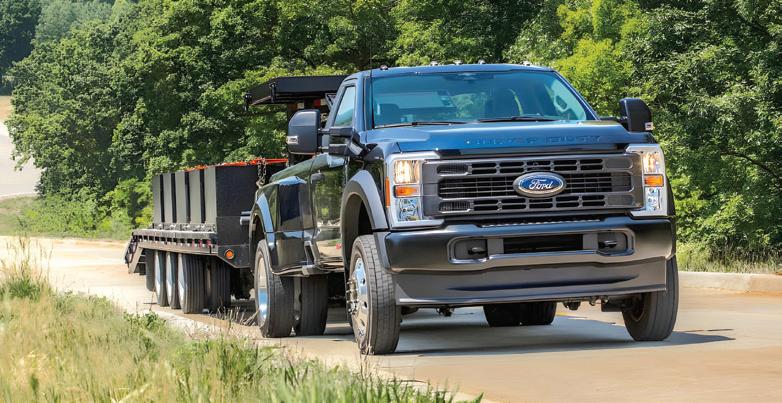
rating work trucks for crash avoidance and occupant protection.
The move could directly impact vehicles commonly used in the towing industry, such as the Ford F-Series chassis cab, as well as Ram and Chevrolet 3500-5500 chassis cab models that are routinely upfitted into wreckers and carriers. These trucks fall into the Class 3–5 category now being evaluated by IIHS.
Safety gaps remain a concern. Many of these platforms are not required to include advanced systems like automatic emergency braking, blind spot monitoring, or even full airbag coverage. Yet they operate in high-risk environments, particularly roadside recovery where secondary collisions are a leading danger.
IIHS says 6,535 people were killed in crashes involving work vehicles in 2023, with most victims being other motorists.
Some manufacturers, including Ford, already offer advanced safety features on chassis cab trucks, showing broader adoption is possible. While improved safety could better protect tow operators and the public, industry experts warn it may also raise equipment costs and increase repair complexity.
Source: thedrive.com motorweek.org
Towing fees in Ithaca, New York increased for the first time since 2020, with changes taking effect April 1, 2026. The new base rate for a light-duty tow, rose from $200 to $275. The new price includes services like winch-outs and the use of dollies or flatbeds, which were previously charged separately. Other fee increases, including recovery services, climbed to $350 per hour, and after-hours vehicle releases, doubled to $100.
City Clerk Alan Karasin said the changes reflect rising costs for towing companies while balancing affordability for residents. Mayor Robert Cantelmo expressed concern about a pro-
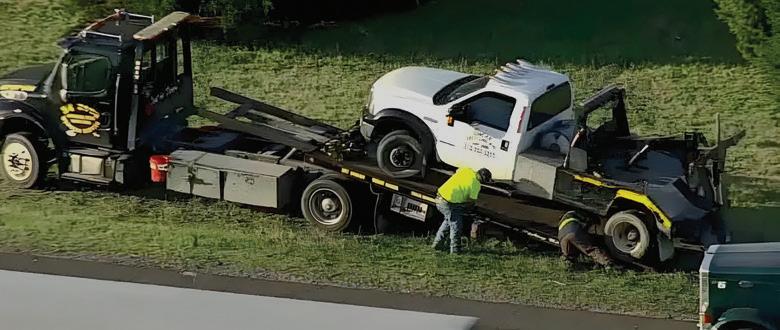
Towman Guillermo Garcia was struck and died while assisting a stranded motorist.
posed automatic 5% increase if future updates are delayed.
Ithaca’s move action mirrors similar rate increases in places like Arlington County, Virginia, and Connecticut, where officials say higher costs for equipment, labor and fuel are driving adjustments.
Source: ithacavoice.org
A tow truck driver was killed on Interstate 20 near Spur 408 and Mountain Creek Parkway in Dallas after being struck by an allegedly intoxicated driver, according to authorities.
Guillermo Garcia, 66, had stopped on the shoulder to assist a 59-year-old motorist with a flat tire when a silver SUV veered off the roadway and hit him. Witness Jose Moreno-Mercado said Garcia was standing beside his tow truck when the vehicle suddenly swerved onto the shoulder.
Deputies responded, finding Garcia unconscious with severe head injuries. He was transported to Methodist Central Hospital, where he later died. Investigators identified the driver as 41-year-old Selvin Omar Amador Morazan, who told deputies he looked down after receiving a call and realized he had struck something when he looked up. Authorities reported signs of intoxication, and he admitted to drinking earlier in the day. Morazan was arrested and charged with intoxication manslaughter, a second-degree felony in the state of Texas.
Source: cbsnews.com and fox4news.com
A long-established towing company in Mobile, Alabama, is pushing back against a 60-day suspension that temporarily removes it from the city’s police rotation list.
During a public hearing before the Mobile City Council, representatives for B&B Auto Wrecker argued the punishment is excessive following an incident involving a non-permitted vehicle. Police officials stated the company violated municipal rotation rules after determining a 2017 Dodge Ram tied to the company lacked proper
registration credentials for authorized towing activity.
Owner Brad Walker acknowledged the truck was not registered for rotation use but maintained it was insured and never used to perform a tow. Instead, he said, he was staging near parade routes to coordinate dispatch for properly permitted trucks.
Mobile Police noted the incident marks a second infraction involving unauthorized equipment presenting for service, reinforcing the department’s enforcement stance on rotation compliance.
Source: fox10tv.com
A massive recovery operation unfolded in Washington, Pennsylvania, after a 135,000-pound excavator fell 15 feet through a parking garage at a demolition site. The incident left the machine on its side in a deep hole, requiring specialized heavy-duty equipment to complete the recovery. ◀
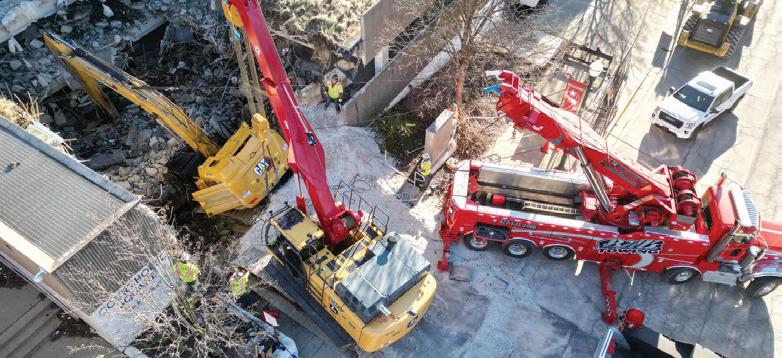
Bill’s Towing and Recovery responded with two powerful machines: a Century M100 rotator tow truck and a John Deere 470RR. Working together, the crews carefully planned and executed the complex operation.
Before lifting began, crews stabilized the excavator by filling in the ground beneath its tracks, and conducted multiple safety meetings. The M100 helped guide the lift while the 470RR provided the primary pulling force. After an initial challenge, operators adjusted their approach by re-
starting the excavator and repositioning its boom, allowing it to shift into a better position.
The excavator was eventually pulled free with combined mechanical force and its own power. The operator escaped injury and was medically cleared at the scene.
Source: thedrive.com
As prices rise across Georgia, diesel is seeing the sharpest spike,
leaving truckers and tow companies facing thousands of dollars in added costs. At Howard’s Wrecker Service in Cobb County, diesel powers every call—but it’s now straining the bottom line. AAA reports diesel prices have jumped about $1.65 in just a month, putting Georgia within 32 cents of a record high.
Howard’s operates 30 trucks, and logged 22,000 miles last week alone. With consumption rates at roughly seven miles per gallon, this surge translated into an extra $5,000 in fuel costs in a single week. The spike is being driven in part by global uncertainty, including conflict involving Iran, which continues to push oil prices upward.
Georgia lawmakers are considering suspending the state’s 37-cent diesel tax to provide some relief, though drivers say it won’t be enough.
“It’s crazy how fast it’s rising,” said operations manager Chris Williams, noting fixed-rate contracts make the hit even worse.
Source: fox5atlanta.com
by Don Lomax
The U.S. Department of Justice has filed a lawsuit against S & K Towing, Inc. of San Clemente, California, alleging violations of the Servicemembers Civil Relief Act (SCRA) after the company allegedly auctioned vehicles belonging to active-duty military personnel without required court orders.
According to the complaint, between August 2020 and April 2025, S & K Towing sold or disposed of up to 148 vehicles, many towed from Marine Corps Base Camp Pendleton. Federal law requires towing compa-
nies to obtain a court order before selling vehicles owned by protected servicemembers, but officials say the company failed to comply despite contractual obligations to follow all applicable laws.
The lawsuit also alleges the company continued the practice even after being warned in May 2024 by a military legal assistance attorney. In some cases, vehicles were sold after the company had been informed the owners were in the military.
Source: justice.gov
Commercial vehicles, including many tow trucks, are set to face new safety scrutiny as the Insurance Insti-
tute for Highway Safety (IIHS) begins rating work trucks for crash avoidance and occupant protection.
The move could directly impact vehicles commonly used in the towing industry, such as the Ford F-Series chassis cab, as well as Ram and Chevrolet 3500-5500 chassis cab models that are routinely upfitted into wreckers and carriers. These trucks fall into the Class 3–5 category now being evaluated by IIHS.
Safety gaps remain a concern. Many of these platforms are not required to include advanced systems like automatic emergency braking, blind spot monitoring, or even full airbag coverage. Yet they operate in high-risk environments, particularly roadside recovery where secondary collisions are a leading danger.
IIHS says 6,535 people were killed in crashes involving work vehicles in 2023, with most victims being other motorists.
Some manufacturers, including Ford, already offer advanced safety features on chassis cab trucks, showing broader adoption is possible. While improved safety could better protect tow operators and the public, industry experts warn it may also raise equipment costs and increase repair complexity.
Source: thedrive.com motorweek.org
Towing fees in Ithaca, New York increased for the first time since 2020, with changes taking effect April 1, 2026. The new base rate for a light-duty tow, rose from $200 to $275. The new price includes services like winch-outs and the use of dollies or flatbeds, which were previously charged separately. Other fee increases, including recovery services, climbed to $350 per hour, and after-hours vehicle releases, doubled to $100.
City Clerk Alan Karasin said the changes reflect rising costs for towing companies while balancing affordability for residents. Mayor Robert
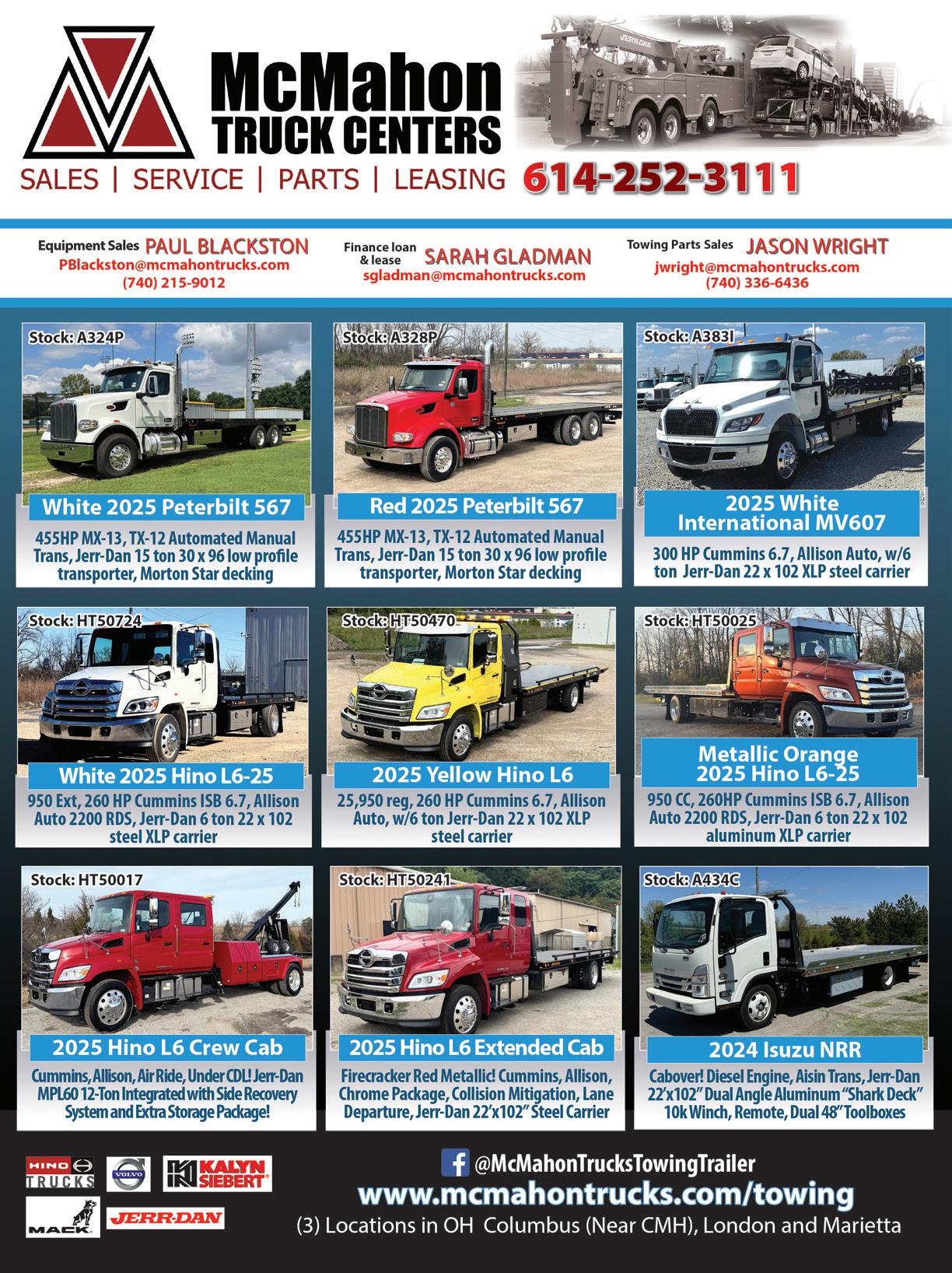
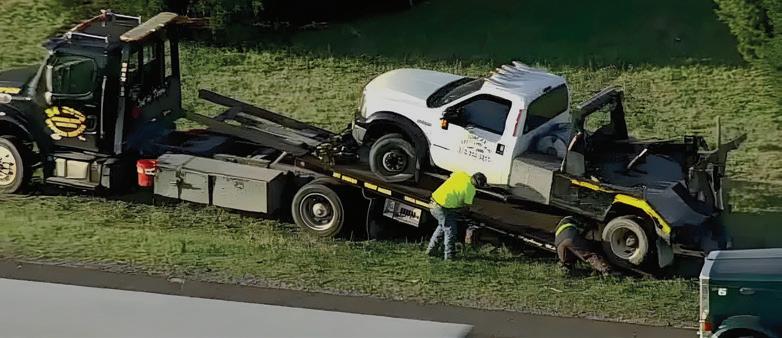
Cantelmo expressed concern about a proposed automatic 5% increase if future updates are delayed.
Ithaca’s move action mirrors similar rate increases in places like Arlington County, Virginia, and Connecticut, where officials say higher costs for equipment, labor and fuel are driving adjustments.
Source: ithacavoice.org
A tow truck driver was killed on Interstate 20 near Spur 408 and Moun-
tain Creek Parkway in Dallas after being struck by an allegedly intoxicated driver, according to authorities.
Guillermo Garcia, 66, had stopped on the shoulder to assist a 59-yearold motorist with a flat tire when a silver SUV veered off the roadway and hit him. Witness Jose Moreno-Mercado said Garcia was standing beside his tow truck when the vehicle suddenly swerved onto the shoulder.
Deputies responded, finding Garcia unconscious with severe head injuries. He was transported to Methodist Central Hospital, where he later died.
Investigators identified the driver as 41-year-old Selvin Omar Amador Morazan, who told deputies he looked down after receiving a call and realized he had struck something when he looked up. Authorities reported signs of intoxication, and he admitted to drinking earlier in the day. Morazan was arrested and charged with intoxication manslaughter, a second-degree felony in the state of Texas.
Source: cbsnews.com and fox4news.com
A long-established towing company in Mobile, Alabama, is pushing back against a 60-day suspension that temporarily removes it from the city’s police rotation list.
During a public hearing before the Mobile City Council, representatives for B&B Auto Wrecker argued the punishment is excessive following an incident involving a non-permitted vehicle. Police officials stated the company violated municipal rotation rules after determining a 2017 Dodge Ram tied to the company lacked proper registration credentials for authorized towing activity.
Owner Brad Walker acknowledged the truck was not registered for rotation use but maintained it was insured and never used to perform a tow. Instead, he said, he was staging near parade routes to coordinate dispatch for properly permitted trucks.
Mobile Police noted the incident marks a second infraction involving unauthorized equipment presenting for service, reinforcing the department’s enforcement stance on rotation compliance.
Source: fox10tv.com

by Don Lomax
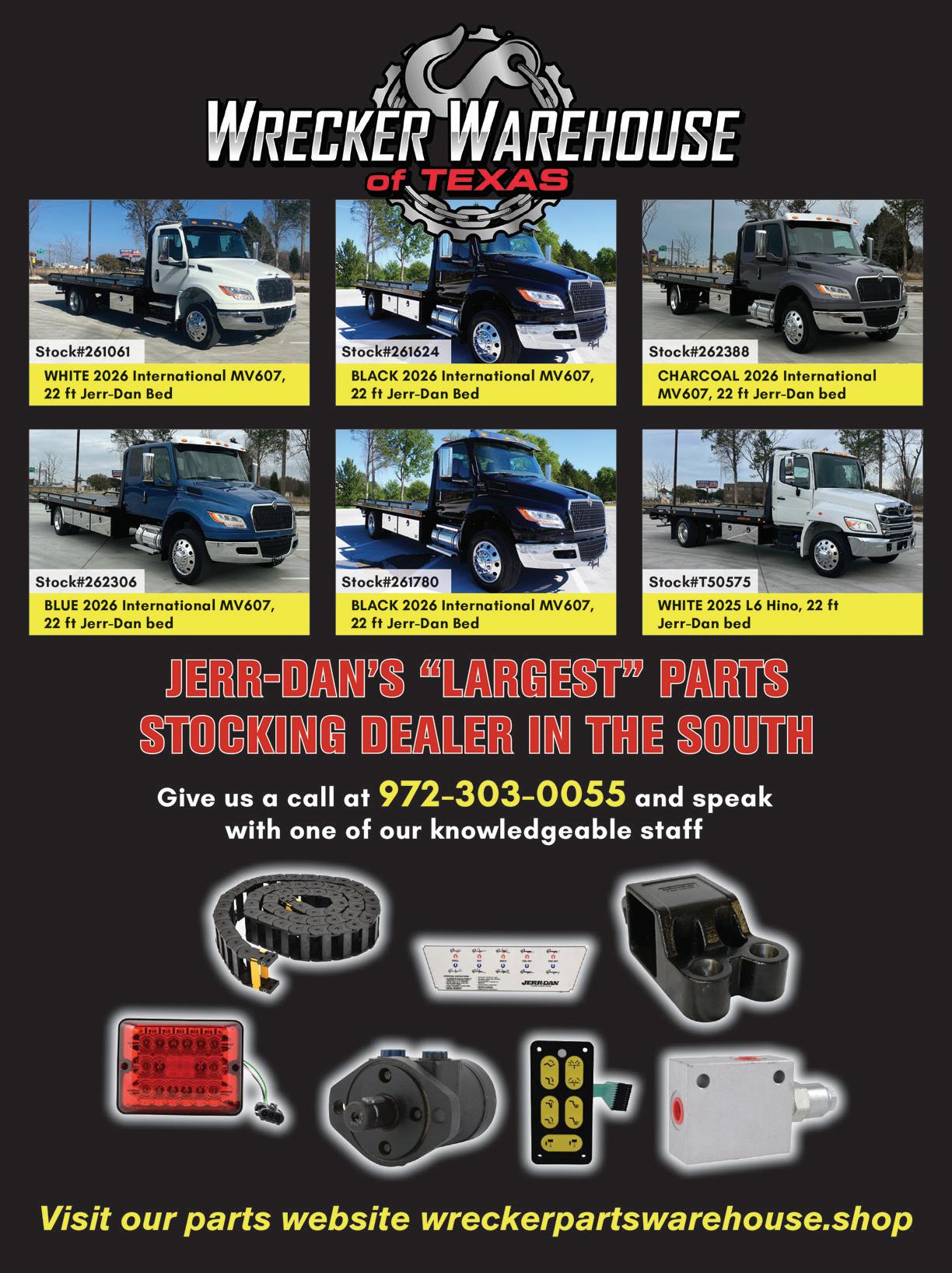
The U.S. Department of Justice has filed a lawsuit against S & K Towing, Inc. of San Clemente, California, alleging violations of the Servicemembers Civil Relief Act (SCRA) after the company allegedly auctioned vehicles belonging to active-duty military personnel without required court orders.
According to the complaint, between August 2020 and April 2025, S & K Towing sold or disposed of up to 148 vehicles, many towed from Marine Corps Base Camp Pendleton. Federal law requires towing companies to obtain a court order before selling vehicles owned by protected servicemembers, but officials say the company failed to comply despite contractual obligations to follow all applicable laws.
The lawsuit also alleges the company continued the practice even after being warned in May 2024 by a military legal assistance attorney. In some cases, vehicles were sold after the company had been informed the owners were in the military.
Source: justice.gov
Commercial vehicles, including many tow trucks, are set to face new safety scrutiny as the Insurance Institute for Highway Safety (IIHS) begins rating work trucks for crash avoidance and occupant protection.
The move could directly impact vehicles commonly used in the towing industry, such as the Ford F-Series chassis cab, as well as Ram and Chevrolet
3500-5500 chassis cab models that are routinely upfitted into wreckers and carriers. These trucks fall into the Class 3–5 category now being evaluated by IIHS.
Safety gaps remain a concern. Many of these platforms are not required to include advanced systems like automatic emergency braking, blind spot monitoring, or even full airbag coverage. Yet they operate in high-risk environments, particularly roadside recovery where secondary collisions are a leading danger.
IIHS says 6,535 people were killed in crashes involving work vehicles in 2023, with most victims being other motorists. Some manufacturers, including Ford, already offer advanced safety features on chassis cab trucks, showing broader adoption is possible. While improved safety could better protect tow operators and the public, industry experts warn it may also raise equipment costs and increase repair complexity.
Source: thedrive.com motorweek.org