

I. C.T Telecom SMT Line Essentials
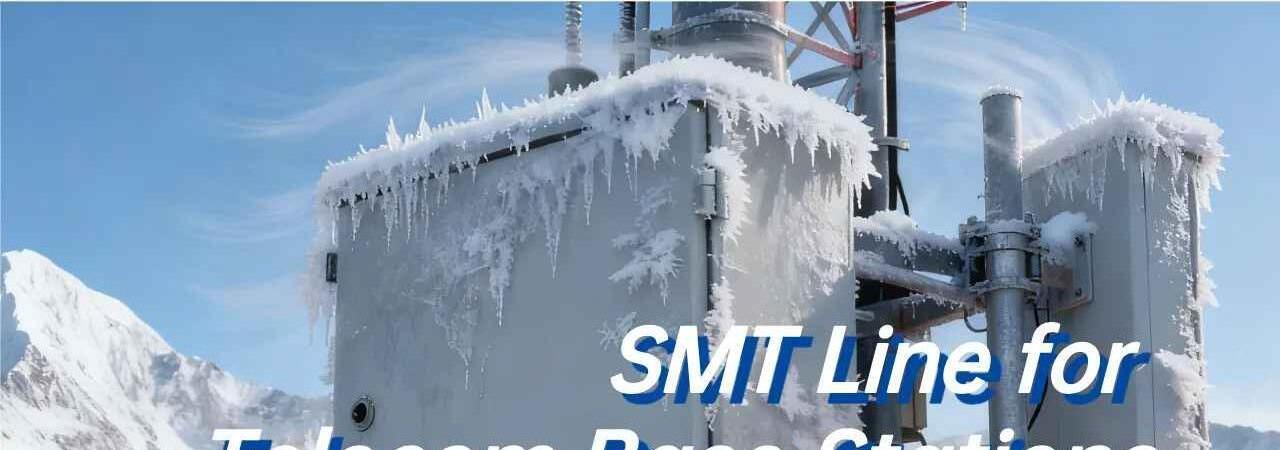

The salesman always leads with CPH numbers, like that's the only score that counts. I've heard the pitch more times than I care to remember But when the boards are for telecom base stations thick slabs of copper-heavy laminate meant to sit on towers through a decade of -40 °C winters and +85 °C summers, shaking with wind and vibration a different math takes over. One cracked joint out there doesn't just fail a test; it sends a crew up a mast, racks up downtime costs, and quietly chips away at network trust.
As a frontline engineer who's spent years tweaking gantries, profiling ovens, and chasing down intermittent defects, here's the straight view: speed is nice, but survival is non-negotiable.


Printing: Consistency Before Everything
These aren't thin consumer panels that forgive sloppy paste. Thick, multi-layer boards with high copper content pull heat unevenly and fight uniform deposition. You need a printer that doesn't drift when the ambient swings or the shift drags on.
Closed-loop squeegee pressure keeps volume steady across large pad arrays and dense RF zones Controlled stencil separation avoids smearing fine geometries Automatic temperature and humidity compensation holds paste viscosity in check no excuses for variation at 3 a m or high noon Miss any of that, and you're planting voids that only show up after years of thermal cycling.
Placement: Rigidity Wins the Long Game
Big power modules, broad RF shields, heavy BGAs they sit like anchors on the board. A machine chasing headline placement rates often vibrates just enough to throw coplanarity off over time What lasts is a mounter built with a reinforced frame, real-time fiducial correction, and stages that stay thermally stable.
Overall 0-1 SMT Machine Solution for Whole Factory
Sub-50 μm accuracy isn't flashy, but when it's held cycle after cycle without wandering, the joints don't fatigue early. Measured motion over frantic speed keeps everything aligned when the line has run a million boards.
Reflow: Heat That Soaks, Not Rushes
Thick copper drinks heat slowly. Short ovens create gradients hot spots that warp, cold shadows that starve solder. The ovens that earn their keep have ten to twelve zones, stretched tunnel length, and tight ±1–2 °C control across the entire surface
Nitrogen atmosphere quietly cuts oxidation and shrinks voids, giving intermetallics time to form strong and clean. Profiles tuned board by board, variant by variant, make the difference between passing final test and failing in some remote province years later.
Inspection: Eyes That Don't Forget
SPI checks paste volume and height before the board ever sees heat AOI catches the visible sins on the surface. X-ray looks inside BGAs and under RF cans where cracks hide Tie it all together with MES for board-level traceability and SPC to spot creeping trends before they become field returns.
When a tower goes quiet down the line, those logs become the map back to a marginal profile or a calibration slip no guesswork, just facts.
In the careful business of choosing telecom-grade SMT lines, the equipment that holds up shows the same patience the network demands: consistent thermal control, mechanical faithfulness, and service teams that stay responsive long after the install.
I C T configurations have proven that reliability in real deployments stable performance under demanding conditions and global support that keeps lines calibrated when uptime can't wait
The line you run today determines who climbs the tower tomorrow. Speed fades; endurance doesn't.
If your telecom builds need lines engineered for the long haul rather than the quick run, let’s talk configurations that match real-world endurance. Reach me at market@smt11 com