POSITIVE PARENTING HANDBOOK

Edited by: Manjushri Educational Services Illustration: Kunga Lhakyi
First Edition: October 2023
Reprinted: April 2024
Reprinted: August 2025
Published By: Department of Education
Central Tibetan Administration
Gangchen Kyishong, Dharamsala-176215 (H.P) India
Email: education@tibet.net/academic@tibet.net Phone: +91-1892 222572/222721




DEPARTMENT OF EDUCATION
Central Tibetan Administration
Gangchen Kyishong, Dharamsala - 176215, Distt. Kangra, H.P., India
Tel: +91-1892-222572, 222721 Email: education@tibet.net / academic@tibet.net
Website: www.sherig.org

1
Positive parenting is critical for proper physical, socio-emotional and cognitive development of our children. Poor parent-child relationships and parents’ inadequate involvement at home are strongly associated with a child’s increased risk of behavioral and emotional problems. Studies have shown that children who experience stressful and poor-quality childhoods are more likely to have physical and mental illness, perform poorly in school, have relationship issues, and are less likely to be a productive member of society.


This handbook provides parents with practical strategies to enable strong parent-child relationships and healthy all-round development of children keeping in mind the longterm goals of parenting. The handbook has reflection exercises to help parents relate to the topics based on their personal experiences and parenting practices.
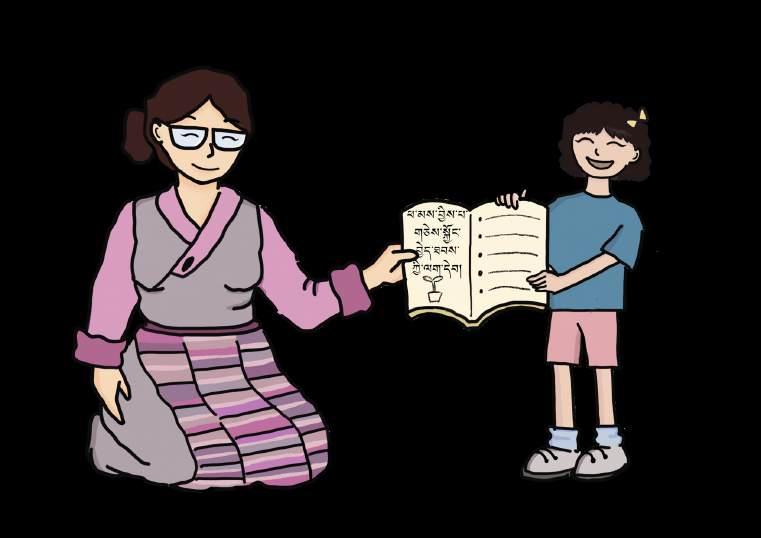

What Are Long-term Parenting Goals?
Raising a child from birth to adulthood is one the most important priorities of parents. However, many of us embark on this journey without ever thinking about the end goals for our children. So let us begin with a quick discussion on our long-term parenting goals. These goals should be the cornerstones on which we will build our parenting skills and strategies.


Reflection 1
Imagine it is a typical morning in your home. Your daughter is readying for school and it is getting late. What do you want her to accomplish on this morning? In other words, what are your parenting goals for that morning?
Your list may include: getting dressed quickly, eating quickly, brushing and cleaning quickly, do what you say right away and so on. These are your short-term parenting goals. Short-term goals are those that parents want to achieve right away. As parents, we often find ourselves preoccupied with trying to meet our short-term parenting goals. This is the reality of parenting for most of us.
Now imagine this. Your daughter is all grown up. You are about to celebrate her 25th birthday. Close your eyes and imagine what your daughter looks like at that age. What kind of person do you hope your daughter will be at that age? What are some of the key characteristics that you wish her to possess at that age?
Characteristics that I wish my daughter possesses at the age of 25…..

Did you include: good communication skill? Honesty? Confidence? An ability to think independently? Respect for others? Compassionate? Sociable? Kind and helpful? These are your long-term parenting goals. Long-term parenting goals are those that we as parents want to achieve by the time our children are adults. Long-term parenting goals usually take many years to achieve. But we must remember that these goals are at the heart of parenting. One of the greatest challenges of parenting is in accomplishing our long-term goals while also meeting the short-term goals. This is difficult because the two are often in conflict with each other.

Let’s go back to the example of your daughter getting ready for school. It is late and your child must eat breakfast, get dressed, brush her teeth and leave the home on time. But your child is getting distracted by other things. You become frustrated. You might yell at -or even hit her- to make her obey you. At this moment, you are focusing only on your short-term goal.

But what happens to your long-term goals? When you yell at or hit your child, are you teaching her how to be kind, patient and courteous? Are you teaching her how to solve problems without getting aggressive? The way we act in short-term situations is a model for our children. If we yell and hit when we are stressed, this is what they will learn to do. We often react to short-term frustrations at the cost of our long-term parenting goals. Yelling and hitting will only teach our child the opposite of what we want her to learn in the long-run. Every time we react this way, we lose an opportunity to show our child a better way.
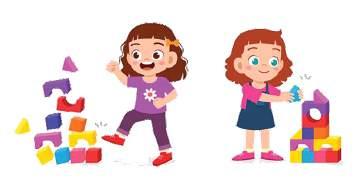
Positive Parenting Strategies
The following strategies will help us better meet our short-term goals without compromising on the long-term goals as parents.

The common saying “the apple does not fall far from the tree” is a reminder to us parents about the importance of being positive role models to our children. In fact, role modeling is one of the most powerful parenting strategies to achieving your long-term parenting goals. As parents we are our child’s first teacher, and our actions are far more powerful than the words of advice we give them.
ཀ ་ཟས་རིགས་ག་རེ་ཟ་མིན་སོགས་གནད་དོན་ཆེ་ཕ་མང་ཆེ་བ་ལ་འབ ལ་བ་ཡོད་པས་ནུས་པ་ཐོན་ག
How we behave sends a signal to our children about the kind of behaviors we approve of. And if what our children observe from us is different from what they are being told, they are likely to get confused and resentful. Role modeling works in relation with almost everything – from how we handle our emotions and how we respect other people to how much time we spend on devices and screens and how healthy we eat.




From the following list of actions, tick mark those that you often do while being with your child at home. Reflect on the kind of influence (positive or negative) these actions will have on your child, keeping in mind the power of role modeling and our longterm parenting goals.
S.No
1. fight with my spouse
While at home, I …..
2. spend too much time on my phone and the TV
3. hit my child when he/she misbehaves
4. read books during free time
5. admit my mistakes and apologize every time I am wrong
6. drink and smoke in front of my children
7. try to calm myself when I get angry and frustrated
8. use abusive words and yell at my spouse and children
9. respect others’ viewpoints although I may not agree with them
10. backbite about others and name-call people I don’t like in front of children
11. share equal responsibility in domestic chores like cooking, washing and cleaning
12. ignore the questions that my child asks out of curiosity
13. show kindness, especially to those who are less fortunate than I
14. eat healthy and do physical exercise
15. try new things out of curiosity and for the sake of learning




Validate your child’s emotions
ཡང་དེ་ལ་ངོས་ལེན་བ་དགོས་པ་དེ་རེད།
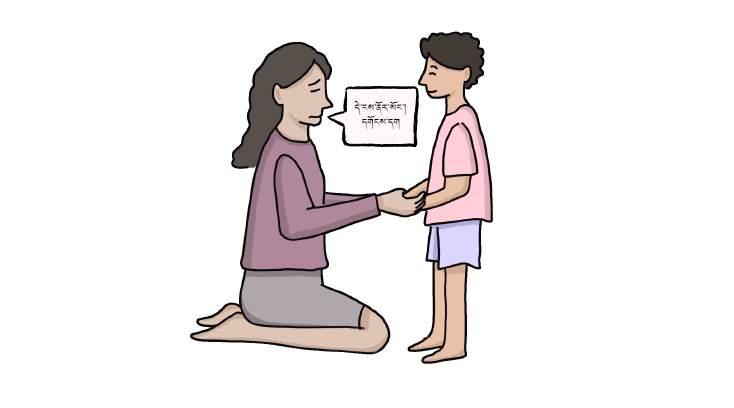
Emotional validation is one of the most powerful and valuable parenting skills. It means recognizing and acknowledging our children’s feelings or needs without being judgmental. It involves accepting their feelings even if they are negative (such as anger, jealousy and hatred). We don’t necessarily have to agree with our children to validate their emotions. We simply have to show that we hear and understand how they feel. Parents often make the mistake of correcting children’s behaviors without acknowledging the feelings that are responsible for those behaviors.


Emotional validation is crucial to children’s socio-emotional development and neglecting it would have long-term consequences. Children whose feelings are not validated would feel judged and rejected. As a result, it can lead to low self-esteem, which can carry on into their adult life. Such children would struggle to regulate their emotions and would be more prone to mental health issues. Emotional validation makes our children feel cared for and supported which is important for a healthy parent-child relationship.


You went out for shopping with your four-year-old son on a cold winter day. Just when you reached outside an ice cream parlor, your son insisted that he wants to have an ice cream. When you said “No!”, he began to cry loudly and refused to move unless you buy him an ice cream.
Situation

One day your daughter studying in the fourth-grade returned from school looking dejected. She told you how the science teacher scolded her today in front of the whole class for not doing her homework. She said she hates her science teacher.
How would you as a parent react in these two situations? What would you say to your son/daughter?
Situation 1
Situation 2
In the first situation, to respond to the child’s tantrum, many of us may say something along the lines of “No! I won’t buy ice cream. No one eats ice cream in winter!” or “If you don’t stop this now, I will never take you out for shopping from tomorrow!” or “Don’t misbehave like this! You are such a bad kid!”. Likewise, in the second situation our response could be something like, “Actually it is your fault. Do your homework on time in the future to avoid getting scolded like this. And by the way, it is not nice to say you hate your teacher”.
གལ་ཏེ་ང་ཚོས་གོང་དུ་ཕ་མའི་ངོས་ནས་རྣམ་འགྱུར་སྟོན་སྟངས་ལ་བསམ་གཞིག་བས་ན།
If we reflect on the above responses, we would realize that as parents our only interest is in correcting our children’s behaviors. And in doing so we often pass sweeping judgments about their character. There is not a single word in these responses to indicate that the child’s feelings were getting acknowledged. Such responses, instead of calming down children, would often make them feel more distressed.
Here are some examples of how responses with emotional validation may sound like in the above two situations:
Situation 1
I know you like ice creams.
I can tell how much you want to have an ice cream right now.
I can see that you are very upset for not getting an ice cream.
How I wish it was a hot summer day today so that I could buy you an ice cream.
Situation 2
Getting scolded in front of the whole class, that must have really embarrassed you.
It makes sense that you feel upset.
I feel sorry for what happened to you at school today.
I can tell that you did not like what your teacher did to you today.
Maybe, I would feel that way too if I were you.

There are three important steps to validate a child’s feelings:

Step 1
Notice
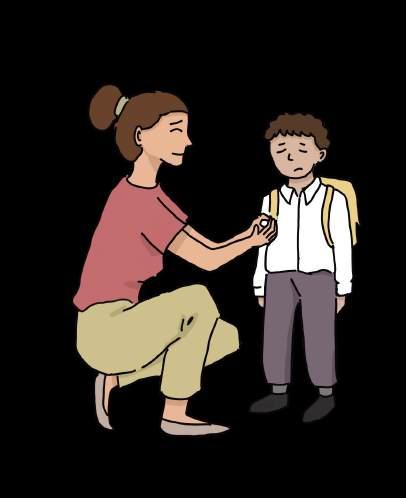
Don’t ignore when your child is upset. Confirm that you notice their feelings.
For example, Your friend ignored you when you tried to talk to him.
I heard that your team lost the basketball game today.
You don’t look okay. Did anything happen at school that bothers you?
Step 2
Acknowledge

Acknowledge your child’s feelings. If the child is able to speak, use empathic listening to hear them out. If the child is too young, teach them to name their feelings. For example:
You are angry because your sister pushed you.
Are you frustrated because you failed after trying so many times?
I understand why you are feeling bad.
You must be very upset because I did not wait for you.
It is okay to cry when you feel sad.
Here is the crucial step where many parents make a mistake. Parents often try to explain why the child should not feel that way or start giving advice on how they should feel instead. At this point, we simply need to stay with our child and express empathy. If we want to teach them to think differently, we can do it later when the child has calmed down. Therefore, we should avoid saying things like...
There is nothing to be afraid of. See how brave your brother is. It is not such a big deal. You should stop crying. It is actually your fault. Nobody is going to scold you if you follow the rules. Be strong. There are children who are suffering more than you do.


Give your child freedom to choose 3
པ་ནི་དམིགས་ཡུལ་དེ་མངོན་འགྱུར་ཡོང་བའི་ཐབས་ལམ་ཡག་ཤོས་ཤིག་ཡིན་པར་མ་ཟད། དེས་བ
If one of our key long-term goals as parents is to raise independent adults with good decision-making skills, giving children choices is one of the best ways to achieve it. In addition, it will help build their self-confidence and teach them responsibility. Once children make their own decisions it allows them to learn to manage both decisions and their outcomes (whether those outcomes are desired or not). Offering choices can also help limit or avoid tantrums. Children usually throw tantrums due to the underlying feeling of lack of control/power. Giving children developmentallyappropriate choices help avoid power-struggles between parent and child. It makes them feel powerful and in control of the situations.

Tips for giving choices:
Don’t give too many choices. Giving too many choices will overwhelm your child. Instead narrow the number of choices to two or three.
Make sure that the choices are developmentally appropriate. For instance, a four-year-old toddler can handle simple decisions like picking what to eat, wear and play with. But asking her to choose between two holiday destinations or two schools may not be age-appropriate.
Give choices such that we are fine with whatever the child chooses. For instance, if you want your child to read, asking them whether they want to read or not is not the right choice. Another way of asking the question could be “Which book do you want to read?” or “Do you want to read now or after dinner?”.
Sometimes children may struggle with making their own choices. Rather than deciding for them in such situations, it is better to provide additional information to help them make their own choices.

Now that we know the benefits of giving choices to children and the things to keep in mind while offering them choices, list the possible choices that you can offer to your child in a day.


Respect your child
ན་སད་ཆ་བཤད་པའི་སབས་སྣང་མེད་གཏོང་བ་བཅས་ནས་ཤེས་ཐུབ་ལ།
Respect here does not merely refer to the physical act of greeting and thanking your children. Respecting your child is about treating her just as you would treat a guest in your house. We often treat our children as if they are half human beings (probably because of their physical size). This can be seen in the ways we interrupt, talk over or ignore something a child says. It is also visible in the ways we speak to children when they make mistakes.
If we want to raise our children as respectful adults, it is important that we treat them with respect at home. As mentioned earlier, parents serve as the first and most important role model for everything a child does now and later in life. We have the power to show our kids how to respect others, particularly to those who are less powerful and privileged.

Reflection 5
Situation 1
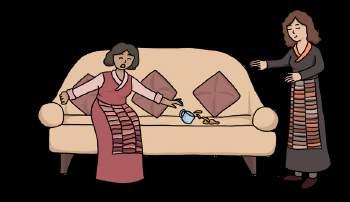
You bought an expensive cream-colored sofa to furnish your sitting room. A few days later, you invited your friend for tea at your home. She sat on the sofa holding a cup of tea that you served. Just when you two started chatting, the cup slipped from her hand and she spilled the tea on your newly-purchased sofa. How would you react? What would you immediately say to her? གནས་སངས།
Situation 2
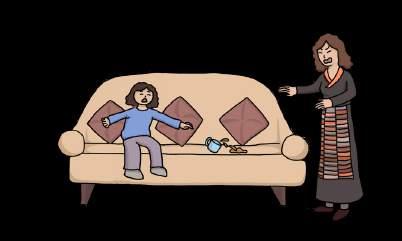
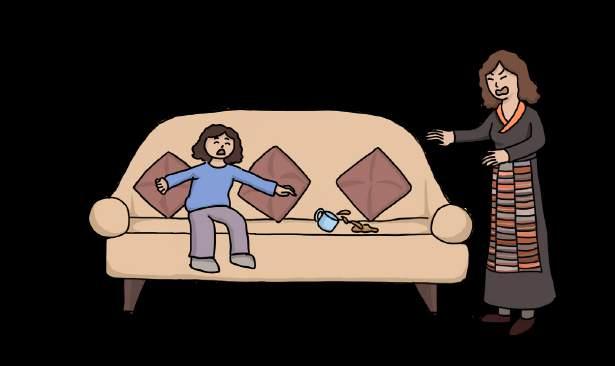
Now instead of your friend, if it was your four-year old son who spilled the tea on your new sofa, how would you react? What might you say to your son?
Would your reactions in the above two situations be more or less the same, or quite different?
In the first situation, you would most probably try to make your friend - who is embarrassed of what just happened - more comfortable. Although you might not have liked your new sofa being stained that way, you would say something like, “It is okay, don’t worry.” You would probably be smiling to ensure your friend that you mean what you just said. In other words, out of respect for your friend, you would be kind, polite, forgiving and gentle.
གདོང་མདོག་དམར་པོར་གྱུར་ཏེ་གཟབ་གཟབ་མ་བས་བར་གཤེ་གཤེ་གཏོང་ས
How different would your reaction be in the second situation despite knowing that the one who spilled the tea was just a four-year old toddler? Your face may immediately turn red and you may yell at your son for being so careless. You might even spank your child in anger and tell him how bad a son he is.
Why is there such a big difference in our responses to the two situations? Why don’t our children deserve to be treated with the same respect and dignity as we treat adults?
Five ways to show respect to your child:
Listen to your child

Allow your child to speak for herself, even if it feels like it’s taking quite a bit of time to get it all out. Use patience and eye contact, and refrain from interrupting or finishing her sentences. When you show your child that what she has to say matters, you show her to use her voice in all kinds of situations.
Don’t ignore your child’s questions

Curiosity is an important part of child development. If we snub or ignore children’s curious questions, we are not only treating them with disrespect, we are inhibiting their mental development and suppressing their curiosity of the world around them. It is important that we take time to honestly answer our children’s questions. If we don’t know the answer to a question, it is okay to admit our ignorance and clarify her doubt later.
Include your child in daily chores

Assigning age-appropriate household work to children have many benefits. By being included in the family duties, children feel valued and important. Through chores they develop self-esteem, confidence, responsibility and communication skills. Boys and girls aged 2-5 years can be given simple chores like cleaning up their toys and putting their dishes away after meals, and school-age girls and boys could be asked to fold their clothes, water the plants and help parents prepare meals.
Use kind words

When we model grace and courtesy, we are not only teaching our children the proper way to treat all people, we are instilling in them a sense of self-respect. Therefore, it is important to use kind words even when we are setting limits or dealing with them in trying situations.
Show trust in your child by allowing her to do for herself

Instead of jumping in constantly to help our children, it is better to first assume that they can do things by themselves. Trusting our children’s ability is an important way to show that we respect them.
Allowing a child to pour her own water, to get herself dressed or carry a bowl of dish from kitchen will empower her, boost her confidence and increase her ability to successfully perform tasks.

“Ruptures” are moments of conflict/disconnection between a parent and child. Sometimes ruptures are minor, like ignoring a child’s question and sometimes they can feel big; like a parent getting angry and yelling at a child. Ruptures are a normal part of not just parenting, but any authentic human relationship. It is okay for our children to learn that we parents are not perfect and can sometimes behave immaturely. However, what is most important is that whenever such ruptures occur, they are repaired without much delay. A repair is when a parent admits her or his mistake and immediately reconnects with the child. Following are a couple of examples of rupture and repair in parent-child relationships.
Rupture: Father angrily scolds his daughter for accidently breaking a flower pot while she was playing.
Repair: Father tells her daughter, “I yelled at you. I am sorry for scaring you. Next time I get angry, I will try to calm myself. I love you.”
Rupture: Mother ignores her son’s request to play with him while she was speaking with her boss on the phone. The child ran away sad and dejected.
Repair: Mother hugged her son after she hung up the phone and immediately apologized for ignoring him earlier.


Think of some moments of rupture that you had with your child in the last 2-3 days. Are they minor or major ruptures? Reflect on whether or not you tried to repair the ruptures? If not, what could you have done or said to reconnect with your child after those of moments of relationship ruptures with your child? What can you do now?
ད་པའི་ངོས་འཛིན་སྔོན་ཚུད་ནས་ཡོང་བ་གནང་ཐུབ་ཀ
The advantage of rupture and repair is that it can teach our children how to deal with negative emotions within the context of a loving and secure relationship. When a parent offers a sincere apology, it teaches the child how to come back from hurting someone inadvertently. When ruptures are not extreme (“extreme” ruptures include chronic sexual/physical abuse and prolonged neglect), and repairs are immediate, being an imperfect parent can actually help children become more resilient and better prepared for the imperfect world of adulthood.

ཚེའི་ནང་ཆེ་མཐོང་ལྡན་པའི་ལས་རིགས་ཐོབ་པ་དང་།
Instilling a love for reading in our children should be one of the key goals of parenting considering the myriad benefits of reading. Research suggests that children who read for pleasure are more likely to do well in school, have higher status jobs, and enjoy better overall wellbeing later in life. Reading helps children build concentration, curiosity, creativity, empathy and better vocabulary.

Five ways to instill reading habit in our children
Be a reading role model

No matter what you love reading, from magazines to novels to newspapers, let your child see that you’re reading. A child learns a lot just by observing the adults around them. So, if you are excited about reading, they will likely catch the same enthusiasm. On the other hand, if your child finds you glued to electronic gadgets most of the time, they may follow your lead and want to spend a lot of time on phone and TV.
Surround children with books

Ensure that there are enough age-appropriate books in your house.
Create a reading corner and include a collection of at least 20 picture books (for younger children). If possible, decorate the reading corner with paintings and sketches and furnish it with a comfortable mat and cushions so that your child wants to be in that space.
Include reading as part of your daily routine
Research has shown that even newborns can benefit from the experience of hearing books read out loud. The content often matters less than the sound of your voice. Studies have also shown that the number of words an infant is exposed to has a direct impact on their language and literacy development. So, you can raise a reader from the day your child is born!
Just make it a habit to share a book and read it before bedtime. You may also set daily 1530 minutes as family reading time during which all family members read together.

Allow children to choose their own books

One of the most effective ways to excite children about reading is to take them to libraries and bookstores. Allow them the time to look around and explore. They’re more likely to read something that they have picked out for themselves. Parents can always help them by narrowing down the choice and showing them a specific section of books, they might enjoy reading.
Don’t reward reading

Reading is inherently a joyful activity like playing outside in a park or enjoying an ice cream on a sunny day. By providing extrinsic incentives like money/goodies for reading, we force children into thinking that reading is a tedious task. Otherwise, why should parents reward them for doing it? If the goal is to help our children become life-long readers, offering rewards can prove counterproductive. We want our children to read for the love of it. If rewards become children’s primary motive for reading, they would invariably stop reading as soon as there is no one to reward them.

Gender equality at home

Are we a gender-equal community? Answer with YES or NO. List a few important reasons why you said either YES or NO to the question.

For those who responded with YES to the above question, some of the reasons supporting your response could be: equal opportunity for work, same opportunity to assume leadership positions for men and women, healthy gender ratio of students graduating and pursuing higher studies, and equal pay for men and women. These are of course positive signs indicating women empowerment and the progress our community has made toward gender equality. However, by no means, is the above list of reasons sufficient to conclude that we live in a gender-equal community.
The most significant influence on gender role development occurs in the family, with parents modeling and passing on to their children their own beliefs about gender. This is called “gender socialization”. The main influencers of gender socialization evolve and change throughout the life of an individual. During early childhood, the primary agents of socialization are parents, other caregivers and immediate family members. During adolescence, young people increase their capacity for independent decisionmaking. However, even when the level of parental influence gradually declines as a child grows, parents continue to be the primary influence.
Let us answer the following questions and see whether there is any shift in our views about gender-equality in our community.

As a parent/…..
1. Do you expect your daughter to help you more than your son with domestic chores?
2. Should the mother take a more active role in childcare and domestic chores at home than the father?
3. Does your son get more opportunities to be physically active than your daughter?
4. Do you have different behavioral expectations of your children based on their gender?
5. Are you as the husband more powerful than your wife…. OR Are you as the wife less powerful than your husband?
Gender equality begins at home. The examples that we parents set at home shape the way our children think about gender and equality. From breaking down gender stereotypes to sharing domestic works and educating young children about gender equality, parents play a vital role in raising adults who respect gender equality.
Be
Ways to

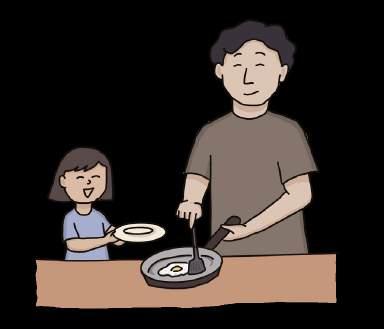
As husbands and wives, we can be positive gender role models to our children by speaking to each other with respect, sharing household chores, and handling important tasks together. Let our kids notice that we work together as a team, and are co-responsible for care work and household tasks. Let them see that it is not a woman’s duty to cook dinner for everyone in the family or a man’s responsibility to buy groceries from the shop. When our kids notice this, it will reflect in their behavior too.
Fathers should share in the care

Not only should husbands and wives share household responsibilities, but fathers should be engaged in the care of his child equally to the mother. At ages of childhood development, fathers can feed our children, read to them, and play with them in the home and outside.
Encourage children to share equal responsibility in household chores

Let our children help in the household work as per their age, equally, irrespective of the gender. Let them share the workload with us, whether it is washing dishes in the kitchen, chopping vegetables, hanging the washed clothes, going out to buy vegetable or washing the motorcycle. Both sons and daughters should be given every kind of work without earmarking them as girlie work and manly work.
Use storytelling to educate children about gender

Tap into children’s imagination and tell them stories of gender equality. Choose books that break common gender stereotypes like stories with brave women demonstrating leadership; select books wherein men are shown performing household chores, or women excelling in physical sports. We can also use stories to introduce our children to a range of male and female role models from everyday heroes like male nurses and female truck drivers to historical figures who helped change the world for better.
Allow children to express their feelings

All children, regardless of their gender, need to feel comfortable expressing their feelings. This is largely learned from how we parents respond to them when they express their emotions. For instance, when a young boy hears his father say, “stop crying like a girl”, it teaches him that there are boy and girl emotions. Such seemingly harmless words could have serious long-term consequences for children in terms of their temperament and mental well-being. Both boys and girls should feel like they can share their full emotions with their parents.
Share resources equally in the home

Make sure that both your son(s) and daughter(s) have equal access to family resources (such as clothes, shoes, books, or digital devices).
Treat spouses and other caregivers equally
The power dynamics between parents shape children’s perception of gender roles to a large extent. In many cultures, including ours, men are often the head of the family and the decision-makers. Women, on the other hand, are not allowed to take any important decisions independently. If we want to break these patterns for our children, we should try to be conscious of changing such gender roles in our homes. Both husband and wife and other caregivers should treat each other as equals. It is important for children to understand that fathers are not more important than mothers, or versa.