Natural Power. Precise Control. Total Integration

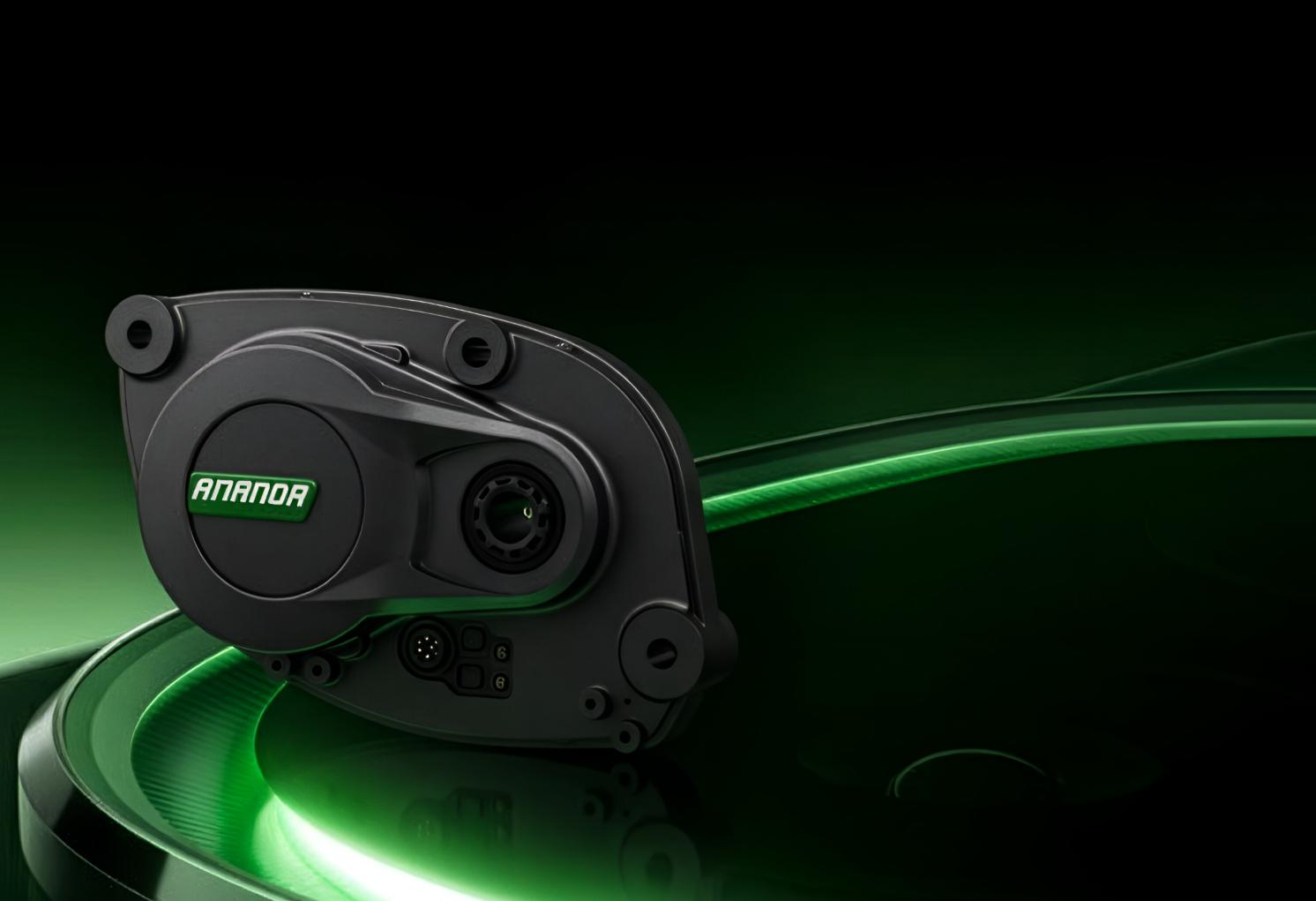
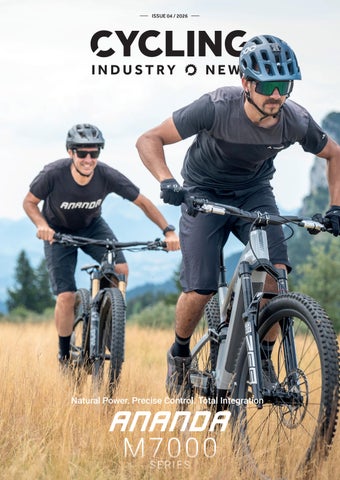
Natural Power. Precise Control. Total Integration
THIS issue of CIN lands as the season is finally underway. Wout van Aert and Franziska Koch scored victories in the ever-brutal Paris-Roubaix and Paris-Roubaix Femmes respectively, while the trade is cautiously eyeing the weather and hoping for a repeat of last year’s warm and dry spring/summer.
We now know that 2025 saw the UK cycle market officially return to growth, according to the BA stats, aided and abetted by the weather. Our own design team is furiously putting the finishing touches to our Market Data for the same period (results will be electronically posted to participants soon) and Germany’s ZIV has released its stats for 2025 too – revealing a resilient but-not-quite-as-resilientas-the-UK bike market (and it’s not every year we can say that). Overall though, the consensus does appear to be that ’25 was altogether more positive than the previous few years.
So the momentum is with us, it would appear. Weather aside, you could argue that market positivity has been hard won, not so much a reflection of a growing economy, more a case of battle-hardened businesses learning to work within tighter confines, possibly with fewer people, and with resilience a priority. Bosch, in its ‘Strategy 2030’ financial statement, said: “Bosch can deliver the future – even under unfavourable conditions” – that might be a shareholder-tailored statement but it sums up the point nicely.
For the cycling industry, like just about every other, the smart bet appears to be that this decade of disruption will continue to deliver exactly that: The ONS revealed the UK economy grew faster than expected (steady on, it was 0.5%) before the US-Israeli war with Iran began. Now the economic predictions are rather gloomy. We may wish for a repeat performance of last year’s weather, but further conflict and disruption is rather less welcome – we live in hope, but plan ahead with a sense of realism.

Jonathon Harker


Cycling Industry Chat www.cyclingindustry.news
Publisher Jerr y Ramsdale jerr y@cyclingindustr y.news
Editor Jonathon Harker jon@cyclingindustr y.news
Reporter Simon Yuen Simon@cyclingindustry.news
Sales Manager Lloyd Ramsdale Lloyd@cyclingindustr y.news
Head of Produc tion Luke Wikner production@cyclingindustr y.news
Designers Dan Bennett Victoria Arellano
by Stag Publications Ltd 18 Alban Park, Hatfield Road St.Albans AL4 0JJ t +44 (0)1727 739160 w cyclingindustr y.news @CyclingIndustry cycling-industry-news
The stats are in and they firmly back up the view that the workshop is growing in importance to the independent dealer trade. CIN brings the numbers together…
YOY
10% to 25% growth
26% to 50% growth
51% to 75% growth
76% to 100% growth
Over 100% growth
10% to 25% decline
26% to 50% decline
51% to 75% decline
76% to 100% decline
Over 100% decline
Last year, Germany’s bike market saw workshop sales grow 13%, according ZIV and Zukunft Fahrrad. Likewise, the Bicycle Association noted increased sales volumes in services (up 8%) in the UK market in 2025.
Cycling Industry News’ latest set of Market Data has a similar finding, with a little more detail for you, as seen in the table above. The big take home message is that workshop revenue is stable and, in the main, growing. For just over a third of CIN survey respondents, workshop revenue was flat (34%), but for a whopping 41% it was up 10-25%. Those seeing any kind of decline in workshop revenue was a modest 14%.
To further drill into the topic, the CIN Market Data examines what portion of business the workshop trade represents for dealers. For 30% of respondents, the workshop trade represents up to 20% of business, and for 18% its higher – 21-40% of overall trade.
These data sources align with that general consensus that the workshop is on the up. Throw in a few anecdotal reports that some dealers have switched to workshop-only models
or eschewed having a shop front in favour of a mobile van or workshop unit on a trading estate (though it’s difficult to quantify those reports) and that builds the picture further. It seems pretty reasonable that this trend will continue for the foreseeable, with the unpredictable economy and geopolitical situation casting doubt on a sudden upturn in consumer fortunes and subsequent ditching of maintaining existing bikes in favour of new models.
For distributors and brands, how they serve this market is becoming ever more important, while for shops and workshops, they’ll be plenty of focus on this area too: The recruitment and retention of workshop staff will be shifting up the priority list and general optimisation of the workshop resource will be in focus.
The 2026 CIN Market Data will be available soon, sent FOC to all survey participant and, for everyone else, available to purchase. Contact: jon@cyclingindustry.news for more details.
CLEAN FASTER
50% faster than using a rag & spray cleaner
INCREASE REVENUE
Quicker servicing, faster throughout
FLEXIBLE OPTIONS FOR EVERY BUDGET
Payment plans & subscriptions available
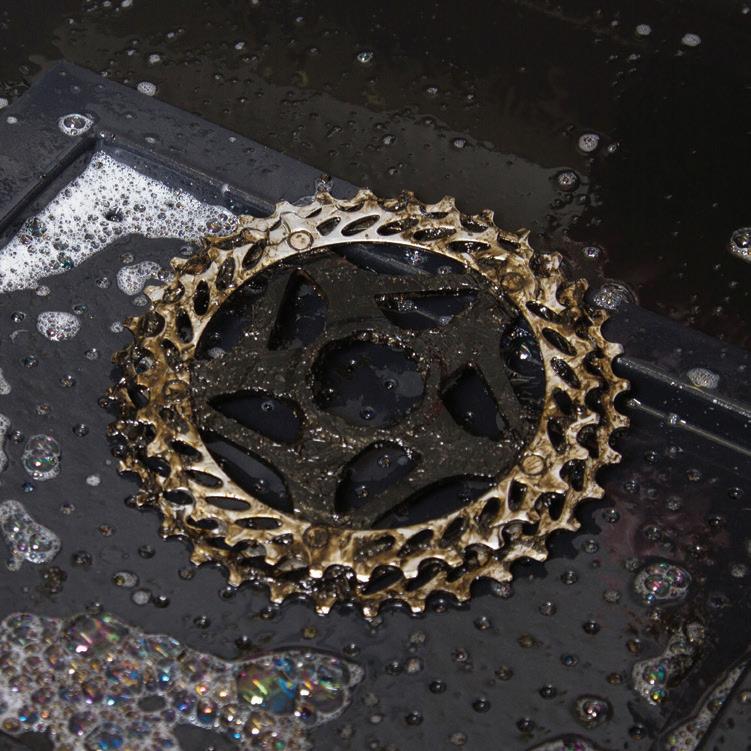
LESS MESS
Contained cleaning. Microbes keep fluid clean
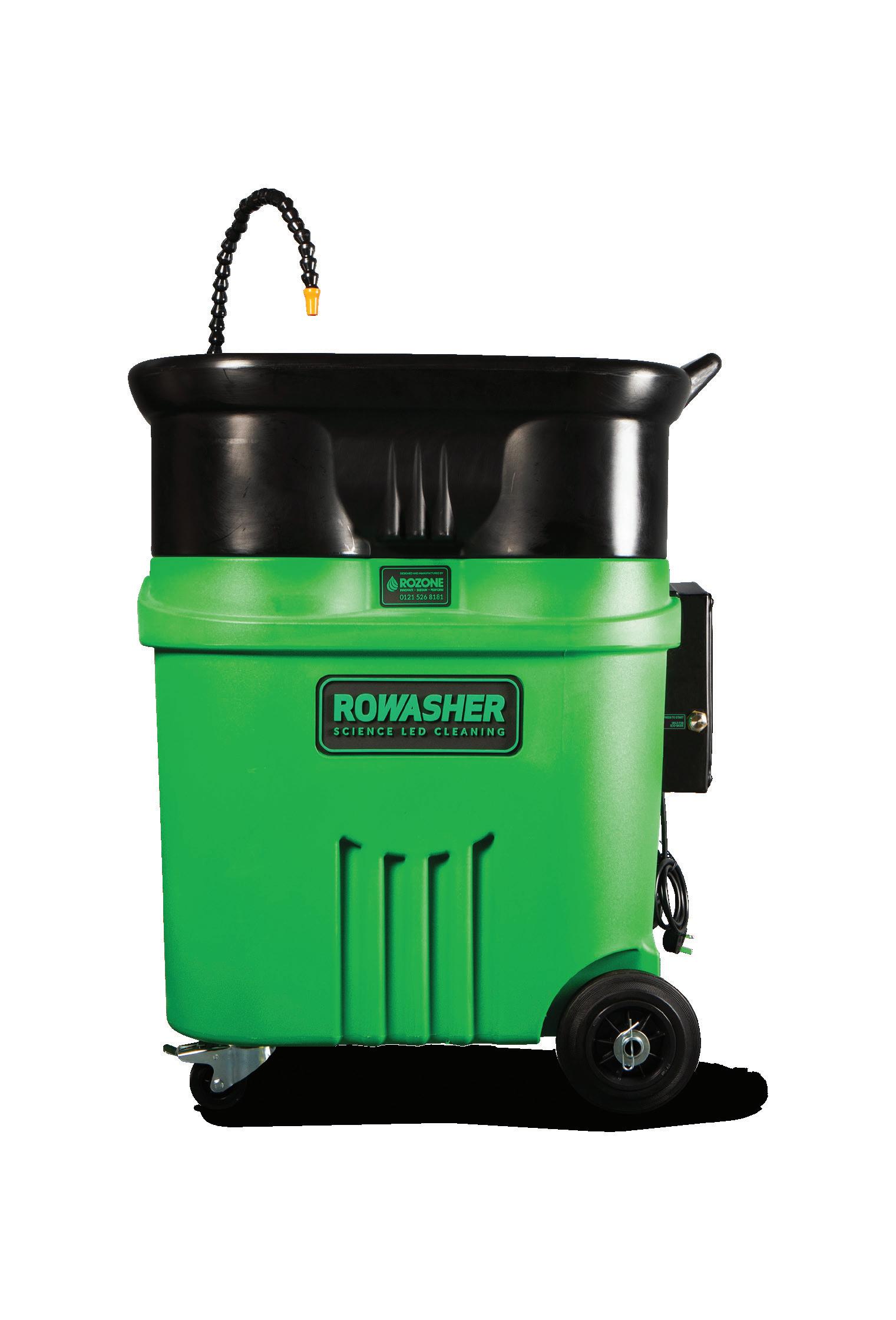
LOWER ENERGY COMSUMPTION
Eco-mode & double skinned tank reduce energy usage
PROVEN TECHNOLOGY
1000’s of components “ROwashed” every day
SPEAK TO YOUR AREA
SALES MANAGER FOR FURTHER INFORMATION


show loyalties and product standards alike. Werner Müller-Schell reports from Taiwan for Cycling Industry News
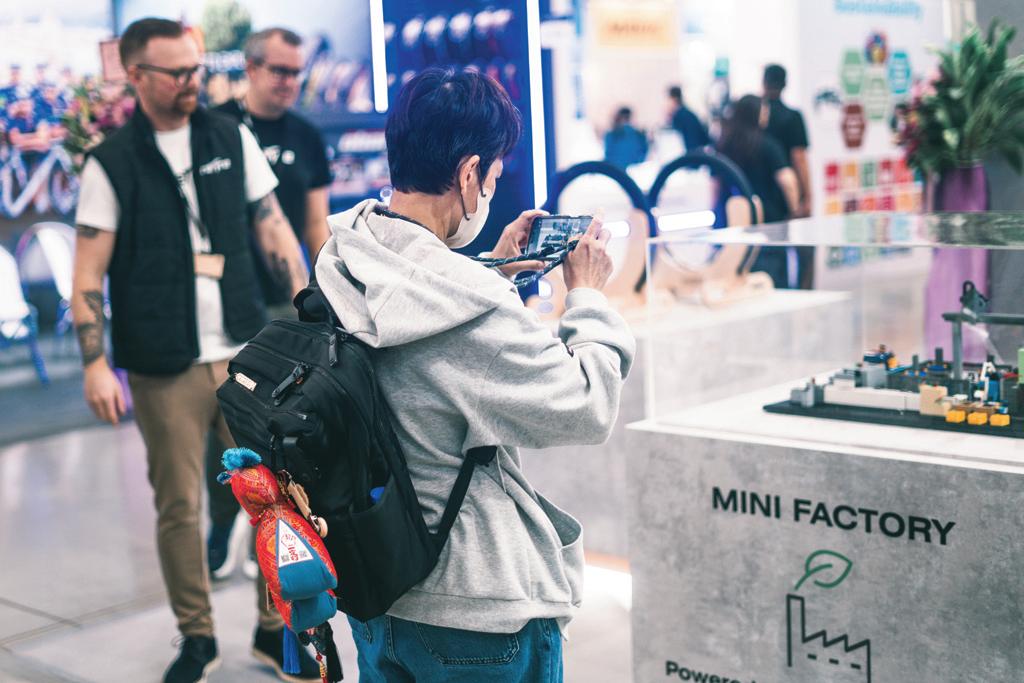
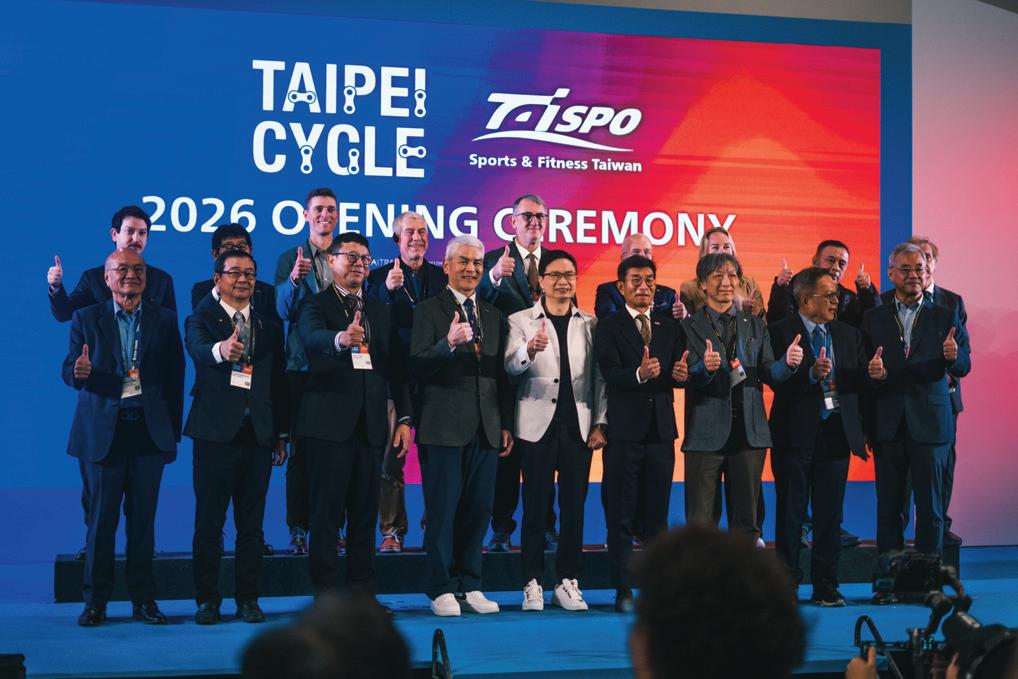
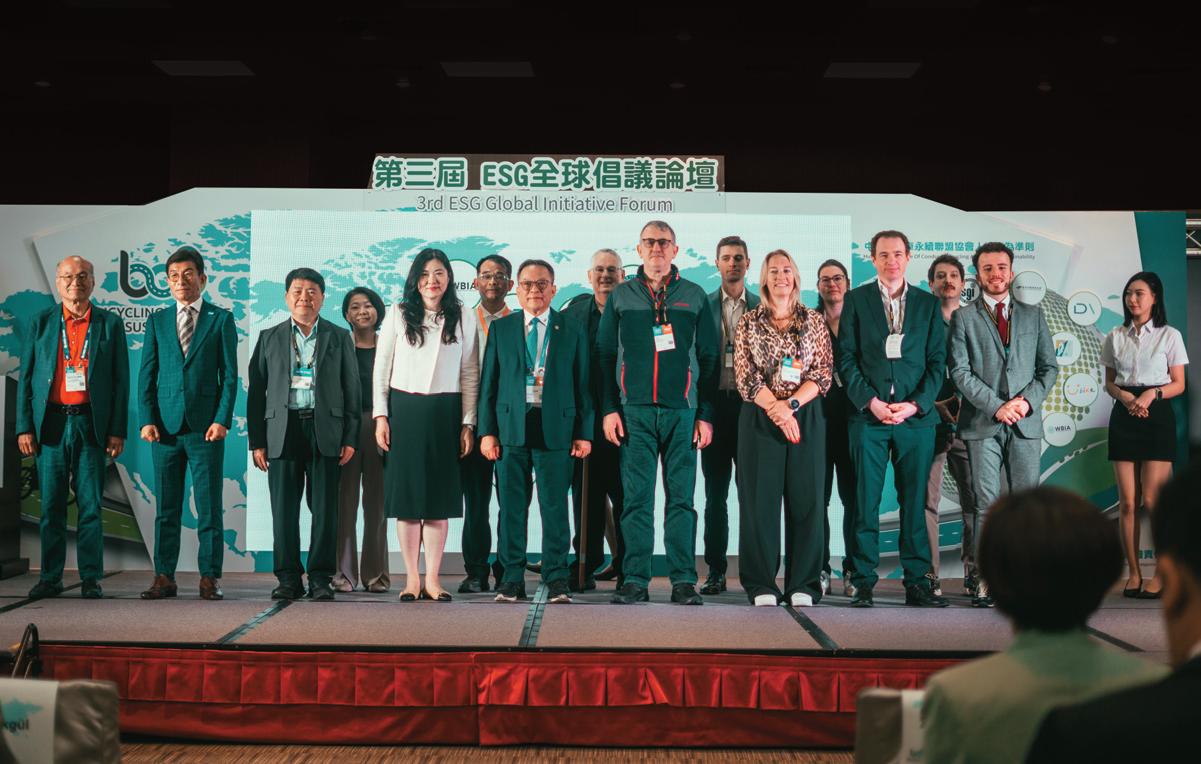
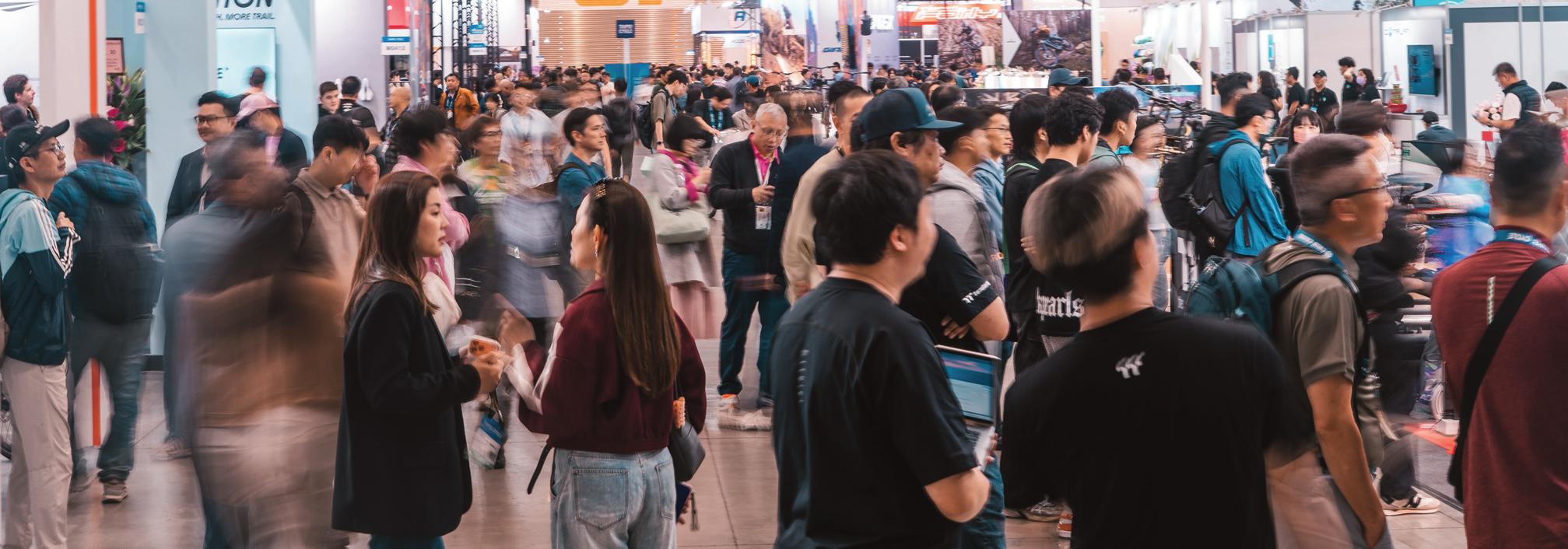
There is a moment, midway through any trade show, when the noise of the opening day has faded and the real conversations begin. At Taipei Cycle 2026, held over 25 to 28 March at the Nangang Exhibition Centre in Taiwan’s capital, that moment arrived early. The aisles were busy enough – more than 900 exhibitors filled 3,450 booths and the show's official theme, “Cycling to Wellness,” nodded dutifully toward healthy lifestyles, AI-driven sports technology and ESG-led manufacturing. But behind the carefully arranged product displays and the polished booth graphics, a different conversation was taking place: not about when the recovery would arrive, but about whether the structures that once held the industry together were still fit for purpose. The numbers offered little comfort to those hoping for a swift rebound. Traditionally, the latest market data from the Taiwan Bicycle Association (TBA) was communicated during the show. According to the TBA, Taiwanese manufacturers exported
was more buoyant – up 7.7% in the year
335,750 eBikes in 2025, a decline of 7.7% compared with 2024. Conventional bicycle exports fell far more sharply, dropping 23.9% to 691,219 units, while the value of those shipments declined 27.8% to $742.9 million. The one bright spot was pricing: the average export price of eBikes rose 7.7% to $1,990 per unit, and parts exports climbed 4.5% in volume and 4.7% in value to $1.47 billion – underscoring the enduring strength of Taiwan’s supplier network even as finished-bike orders continued to weaken. Giant, Taiwan’s largest manufacturer, reported a 16.9% revenue decline in the first nine months of 2025, while Merida’s contraction was a more moderate 8.5%. The message was familiar: the pandemic boom is over, inventories are still working down and the new normal looks leaner and slower than anyone had hoped. And yet, Taipei Cycle 2026 did not feel defeated. It felt recalibrated. International visitor numbers were visibly lower than in pre-pandemic years and several exhibitors noted that European
Distributor info and Catalog

and Latin American buyers had thinned out. But those who came were focused. Greg Grobler, CEO at component manufacturer BLKTEC, captured the prevailing tone: “We’ve had quite a few rough years after Covid, but hopefully, the next five years are going to look much better. Walking around the show, it's clear there’s a lot of positivity and a strong focus on mobility.” Ken Li, Head of Global PR and Marketing at the Giant Group, echoed the sentiment: “We’re seeing a surge in people riding for commuting, exercise and recreation. The development of eBikes is making cycling more accessible to a wider audience.” For Giant, Taiwan’s home show therefore remains “like
our home court — the best place to showcase new products and technologies to the world.”
Beneath the surface optimism, however, a structural shift was unmistakable. Syuan-Yo Lin, Marketing Manager at Taiwanese drive-unit specialist Hyena E-Bike Systems, put it bluntly in a widely shared post-show reflection: “This is not just a slow recovery. The system that used to hold the industry together is no longer working the same way.” Lin pointed to a telling behavioural change among international buyers: instead of attending both Taipei Cycle and China Cycle in Shanghai, many are now choosing one or the other — and,
under budget pressure, increasingly opting for China. “It is no longer just about capacity,” he said. “China now offers increasingly complete solutions, from components to electronics to commercial execution, all under strong pricing pressure.” At the same time, he observed, the industry has settled into what he called a “no commitment” mode — fewer joint development projects, shorter planning horizons and a default stance of “no purchase order, no development.” Individually rational, he argued, but collectively limiting.
The discussion around the growing importance of China Cycle was symbolic for another recurring topic


on the floor: the future of bicycle trade shows. The once undisputed position of Eurobike is increasingly questioned and Taipei Cycle 2026 added fresh fuel to a debate that had already been stoked by the successful editions of Velofollies in Belgium and Cyclingworld in Düsseldorf in the weeks before. Many of the people we spoke to noted that many companies were simply not planning to attend Eurobike — and those who were had often committed through contracts rather than conviction. That Eurobike's new Show Manager Philipp Ferger was not in Taipei surely didn't help the German exhibition turn the narrative around. For European exhibitors — more
than 60 were registered, led by Germany with 17 brands and Italy with 16 — Taipei in 2026 functioned less as a stage for product launches and more as a working forum. Felice Cusmai, Commercial Director at Pirelli's bicycle division, framed the rationale: “We believe that staying close to the market and to our customers is essential to truly understand its dynamics — especially at a time when the cycling industry faces several challenges.” Victor Luis, Chairman of Italy's Gruppo SRL (Cinelli, Columbus), stressed that Taiwan's importance extends beyond manufacturing: “This is where we meet our key supply chain partners, explore new product innovation, and
evaluate the next generation of materials, components, and integrated systems.” Markus Schulz, CEO of German component maker by,schulz, underlined the long-term logic: “The business plan of by,schulz is designed for years; especially in challenging market phases, we do not retreat.”
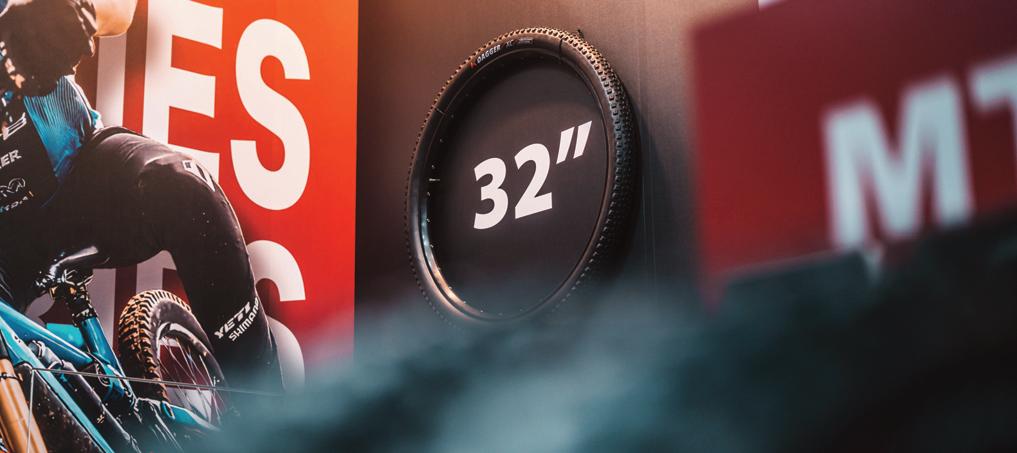
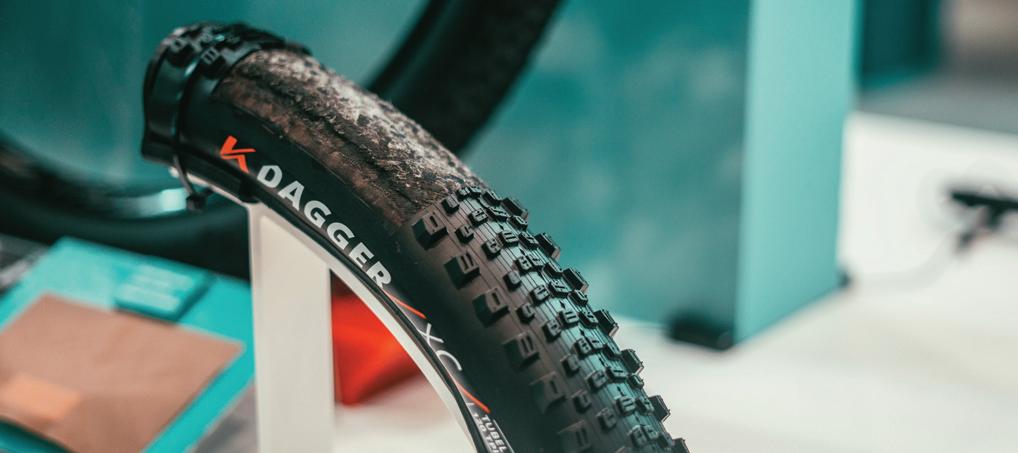
On the product side, the show was not without highlights. The most talked-about development was the growing momentum behind 32-inch wheels for mountain biking. Building on Maxxis’s introduction of a 32-inch tyre at last year’s edition, the 32-inch ecosystem is expanding: Kind Shock presented a USD fork with 150 millimetres of travel for the new wheel
size and Berd debuted a 32-inch carbon wheelset. Mark Vandermolen, Brand Manager at FSA/Vision, voiced the industry’s curiosity: “We’re seeing a lot of new developments at this year’s show, like the 32-inch wheel trend. I’m curious to see where that goes — if it will become the standard, as the 29er did for mountain bikes.”
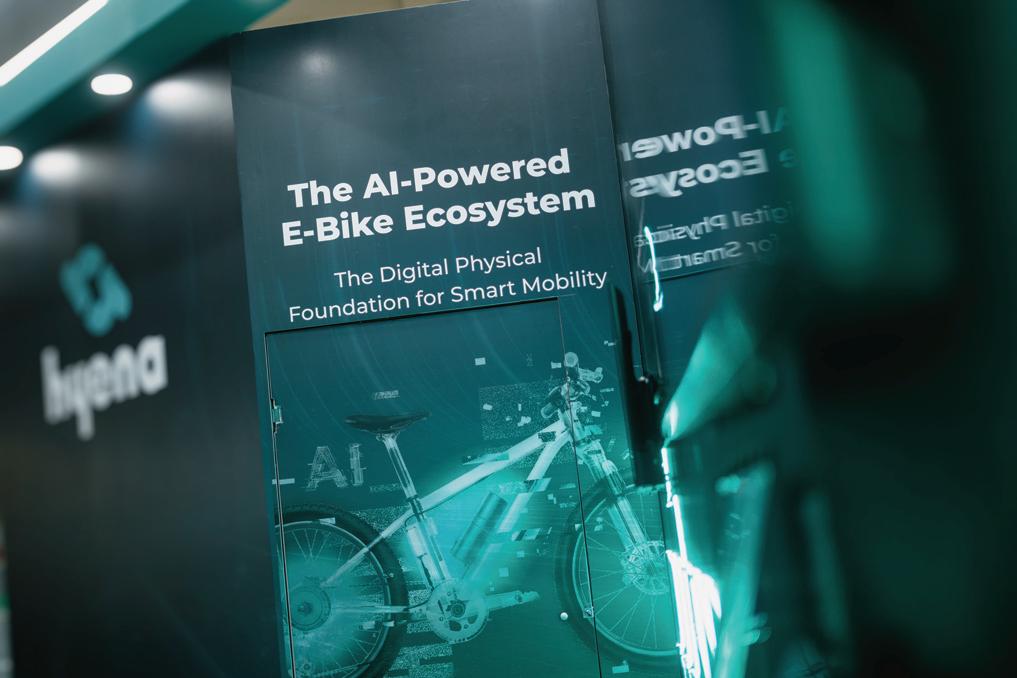
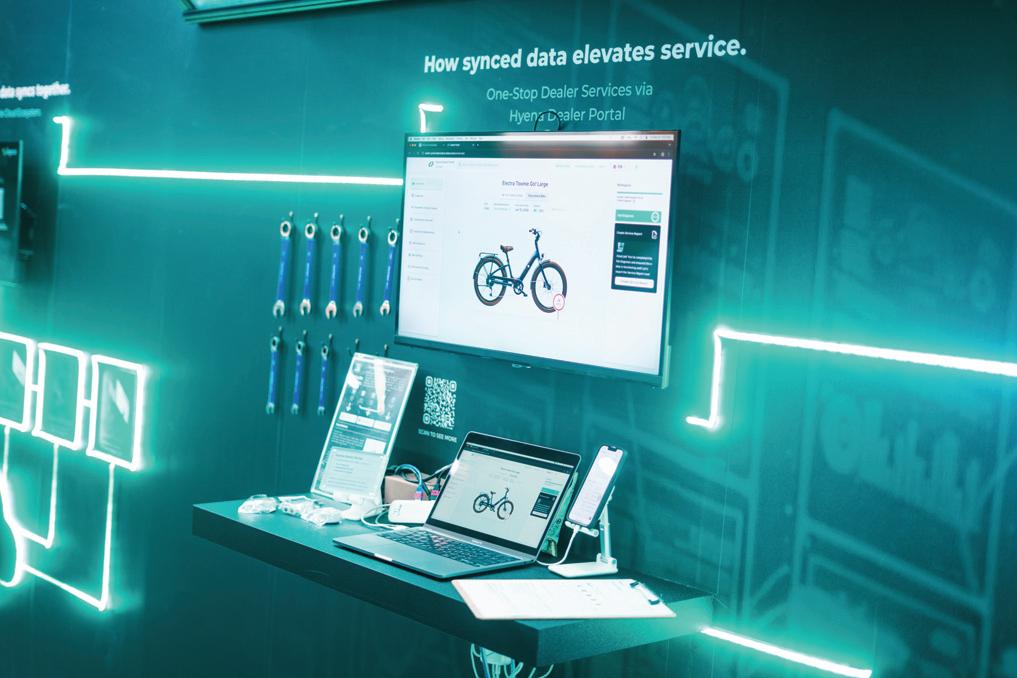
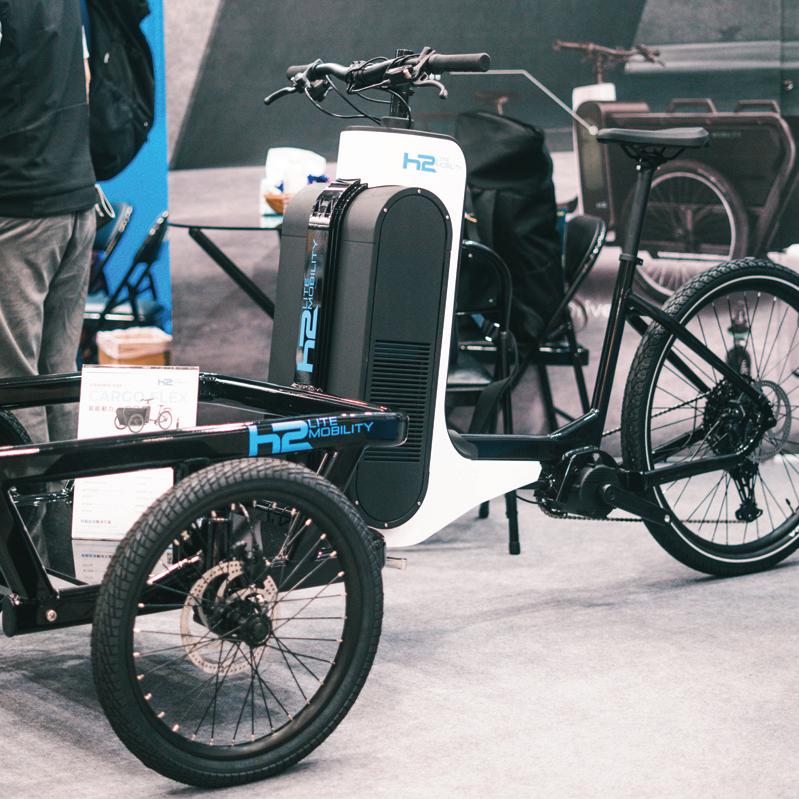
Meanwhile, AI and digital innovation continued to gain ground. Taiwanese drive-unit maker Hyena E-Bike Systems showcased an AI-powered service agent that gives bike shop mechanics conversational access to diagnostics, service histories and warranty processes — designed to resolve the bulk of dealer queries without a phone call to headquarters. Germany’s Messwerk drew attention with power-measuring pedals ahead of their market launch. And in a sign of how broadly the innovation spectrum is stretching, Taiwanese company H2 Lite Mobility presented a hydrogen-powered platform for lastmile cargo delivery, pitching solid-state hydrogen as a safer, faster-refuelling
alternative to lithium-ion.
Yet for all the forward momentum on the product side, the broader operating environment keeps pulling in the opposite direction. Geopolitical instability, rising energy costs and the ongoing disruption to shipping routes are squeezing margins across the supply chain. Ann Chen, spokesperson at Taiwanese saddle and component maker Velo, put it plainly: “Geopolitics acts as a trade barrier. For bicycle importers, increased costs due to additional taxes and inflation will likely lead to decreased consumer acceptance.” The knock-on effects are already visible: manufacturers face unpredictable production costs, buyers are making more conservative purchasing decisions and the pricing pressure is being passed down the chain. Yet Chen also struck a note of guarded resilience: “The companies that have survived the last years are better able to adapt to rapid changes. We've learned that no market is static.”
Leaving Taipei after four days of
conversations, meetings and booth visits, the mood was neither grim nor buoyant — it was rather clear-eyed. Taipei Cycle 2026 did not deliver the breakthrough recovery the industry has been waiting for but it did something arguably more important: it made visible the structural shifts that are reshaping the sector from within. Trade show loyalties are fragmenting, supply chain geographies are in flux and the relationship between brands and suppliers is becoming more conditional, more transactional. And the question of who sets the direction for the global bicycle industry — once answered almost reflexively with a handful of European trade fairs and Taiwanese factories — no longer has an obvious answer. The system is shifting. The industry is not collapsing, but the architecture that supported it is being quietly redrawn. Therefore, for those willing to read the signs, Taipei offered many clues.
Words: Werner Müller-Schell























Battery Passport
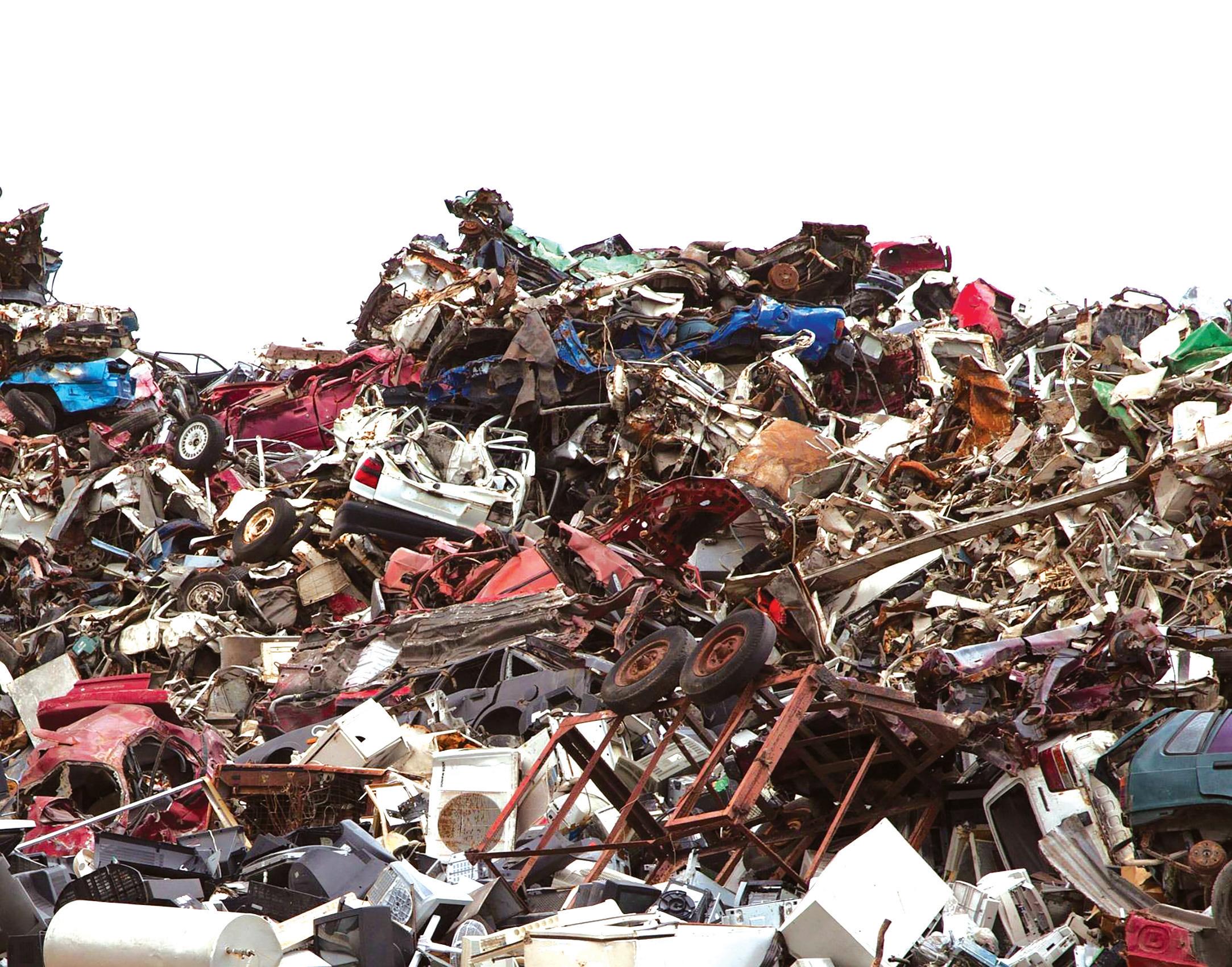
Circular economy: EU rules coming into force are designed to reduce the number of batteries heading for landfill
Forewarned is forearmed: A shake up of battery handling is becoming EU law early next year. Correspondent Jack Shaw looks at the implications…
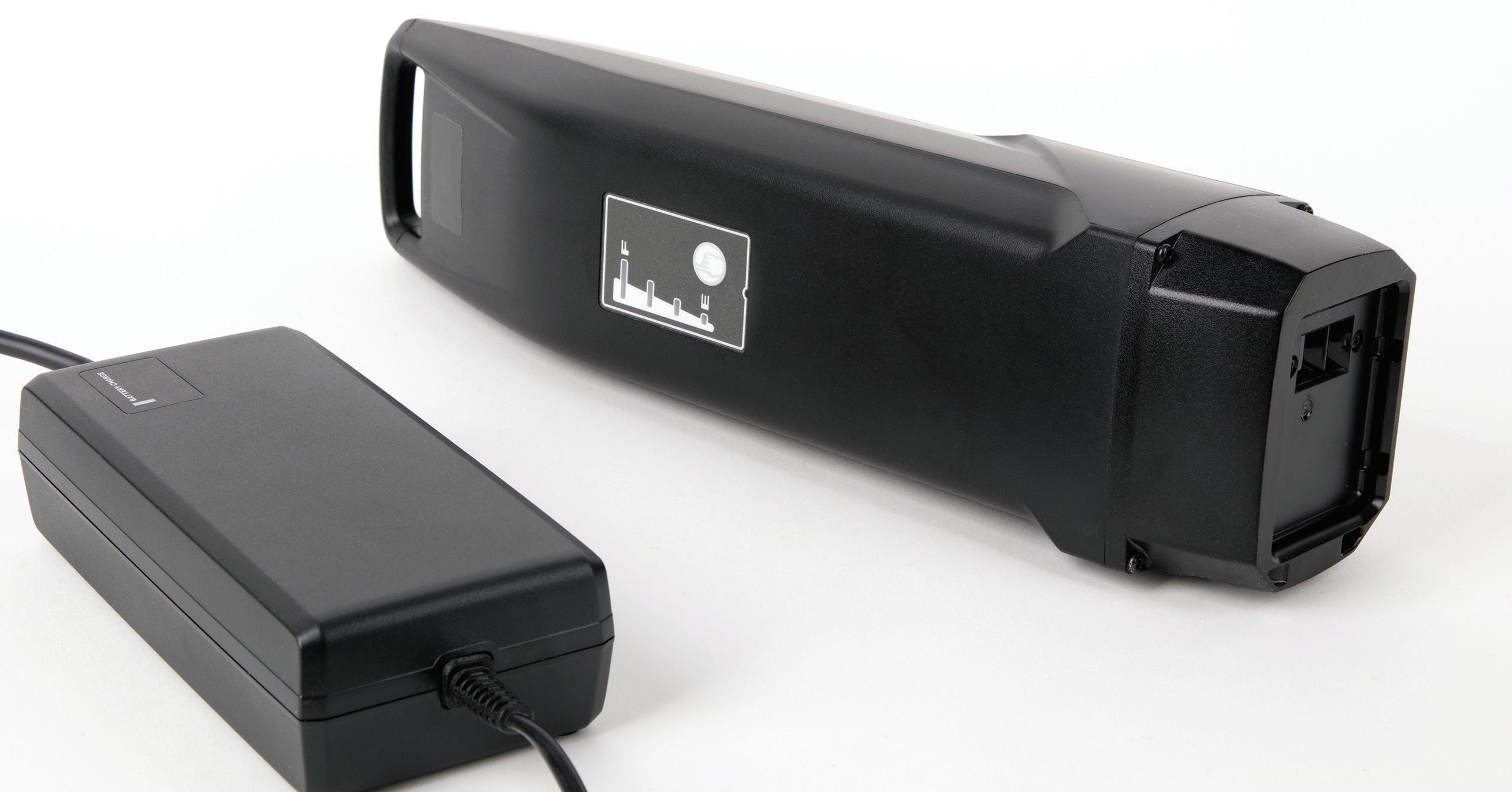
Battery Passport rules are moving from policy discussions into day-to-day commercial reality for the eBike industry. Under the EU Battery Passport regulation, most industrial and mobility batteries, including those used in eBikes, will need a digital record that documents their origin, composition, performance and life cycle data. The compliance deadline is February 2027, but the implications begin much earlier for retailers.
The regulation is designed to improve transparency, safety, and sustainability across the power cell supply chain. While manufacturers and OEMs carry the primary compliance burden, retailers sit at a critical junction between regulation, inventory decisions and consumer trust.
What is the Battery Passport?
The EU Battery Passport serves as a digital identity for each unit. Each compliant product, including in the US, will carry a unique identifier –
acting much like a mandatory version of the Forest Stewardship Council (FSC) certification for timber – typically accessed via a QR code. This information is linked to verified details on material sourcing, manufacturing standards, safety data, carbon footprint and state of health over time.
For retailers, the practical impact is that batteries will no longer be “black box” components. Information once locked inside proprietary systems will increasingly be visible, portable and auditable across the value chain.
Why should eBike retailers care now?
Although the legal deadline is February 2027, retailers must now operate on buying cycles that make early awareness essential. According to Alix Armour, the CIO of NOWOS, many independent bike shops are already making decisions that will determine their exposure to risk once the regulation takes effect.
“While battery OEMs need to get ready, their results reverberate onto
their customers and the whole value chain,” Armour says. “Most independent bike shops order their inventory 6 to 12 months in advance. By the time the February 2027 deadline arrives, bikes sitting in showroom floors will be those being ordered right now until mid-2026.”
While the timeline is a technical hurdle, it’s also a matter of brand integrity. Spencer Gillis and Steven Melendez, co-founders of PEDAL Electric, argue that the market is currently crowded with “one-off, cash-grab” brands that often cut corners on battery traceability.
“Those bikes may sell quickly today, but they expose retailers to real risk: safety incidents, lack of serviceability, and inventory that may not meet future compliance standards,” says Gillis. By focusing on the Passport now, they suggest retailers can align themselves with brands building for the long term rather than those merely reacting to deadlines.
“If shops order noncompliant stock















































today, they risk selling batteries that are noncompliant or ‘black box’ batteries, not easy to repair or disassemble or retrieve information from, while competitors are selling bikes with QR codes that prove their origin, safety and health,” she says.
Insurance considerations may also be a factor. Armour notes that some insurers are already exploring battery transparency as a factor in assessing fire risk and premiums. Retailers offering traceable, well-documented batteries may find themselves better positioned as these discussions evolve.
Inventory value and the risk of obsolescence
One of the biggest concerns among retailers is whether noncompliant inventory could become unsellable overnight. On this point, the regulation provides some reassurance. Armour states that batteries placed on the market before 18 February 2027, are legally allowed to be sold afterward. Shops will not be required to discard existing stock.
However, legality does not eliminate commercial risk. Armour emphasises that value perception will change once Battery Passport systems become familiar to consumers.
“I sure hope batteries don’t suddenly become obsolete because of this, as they are valuable and critical assets,” she says. “But there is a residual value risk. Once Passport Batteries become the standard, shops and consumers will likely view non-passport batteries as a liability.”
To mitigate this shift in value, Melendez and Gillis advocate for “disciplined inventory management.” This means forecasting more conservatively and prioritising suppliers that are already moving toward compliance. “The real protection comes from moving toward compliance now,” explains Melendez. “Retailers who work with brands already adapting their designs, documentation, and battery sourcing reduce the risk of stranded inventory and costly retrofits later.”
Retailers can take steps now to reduce the risk. Armour recommends asking suppliers for clear compliance road maps and reviewing contracts related to battery data access and spare parts availability. Inventory planning will also matter. Clearing out “black box” stock by late 2026 could help avoid awkward conversations with informed buyers.
Third-party services may also play a role. “Companies like NOWOS can now offer diagnostics and maintenance that include a digital record,” Armour says. “We recently ran a pilot with the operator Dott, applying a digital battery passport to batteries coming in for servicing to ensure they meet modern transparency standards.”
Beyond sales, the eBike Battery Passport aims to reshape service and repair dynamics. Under current conditions, many manufacturers restrict access to battery data through proprietary software, which is available only to authorised dealers. This limits independent
repair options and often pushes consumers toward full replacements.
The new regulation initially challenged that model. However, a revised proposal submitted to the European Parliament no longer requires manufacturers to provide independent repairers with access to Battery Management System data, as it’s deemed to be unsafe for inexperienced and untrained private individuals to risk repairing an eBike battery. Professional replaceability of eBike batteries is required, yet the trend toward fully integrated, non-serviceable designs continues.
While the initial suggestion was viewed as a “major win for the ‘Right to Repair,’” repairers can’t simply check a battery’s health without needing a different tool for every brand. It’s also ill-advised for individuals to open welded lithium eBike batteries. Popping out a single cell to replace is simply not realistic for people to do at home.
Retailers running trade-in programmes find it more viable when they can verify a unit’s condition, as disposal of lithium batteries is not easy. While there is a move toward more shared transparency, service departments will still need to resolve repair issues within the framework of branded software restrictions.
“The Battery Passport gives retailers clearer visibility into a battery’s history and specifications,” says Gillis. “Retailers can diagnose issues with more confidence, reduce guesswork, and make safer, more informed decisions about service versus replacement.” But for
Proud to be Look’s New UK Distributor
now, this technology will not be available to private individuals without training.
When manufacturers start sharing information with verified service departments, a circular battery economy might become a reality. According to Armour: “Independent Repair Operators, such as Nowos, will be able to repair more batteries, increasing the success rate and making servicing and repair more attractive for dealers.”
As Battery Passport regulations kick in, consumer awareness is likely to increase. While not every cyclist will scan a QR code on their first cycle, expectations around safety, longevity and transparency are already rising, especially in urban and fleet-heavy markets.
Retailers who can explain the new passport benefits in plain language may find it easier to build trust. Being able to show where a battery comes from, how it has been maintained and what condition it is in aligns with broader trends toward informed purchasing and sustainability.
Conversely, shops that appear unprepared may face uncomfortable questions. Why does one eBike offer detailed battery data while another does not? Why is a replacement battery harder to service or insure? These comparisons will not always favor older inventory.
Although the Battery Passport is an EU initiative, its influence extends beyond European borders. Armour describes

the EU as the regulatory gravity centre for the global battery industry.
“Because major battery manufacturers like Bosch, Shimano and LG operate globally, they are unlikely to create separate production lines for different regions,” she says. “They are designing for the strictest standard, which is the EU.”
In the United States, a federal battery passport does not yet exist, but related policies are moving in the same direction. The Inflation Reduction Act includes strict tracking requirements for battery material origins tied to tax credits, including those for electric vehicles. State-level right-to-repair and power cell waste laws also vary, creating a patchwork that could eventually converge around transparency principles.
For retailers operating internationally or sourcing global brands, assum-
“GREATER TRANSPARENCY SUPPORTS VERIFIED REPAIR, RESALE AND CUSTOMER CONFIDENCE. SHOPS THAT UNDERSTAND THE RULES AND COMMUNICATE THEM EFFECTIVELY MAY GAIN AN EDGE AS THE MARKET ADJUSTS”
As Battery Passport regs kick in, consumer awareness is likely to increase
ing alignment rather than divergence may be the safer planning strategy. While the US and UK aren’t yet fully aligned with the EU’s specific requirements, the direction of travel is the same. Melendez notes that principles around safety, transparency, and “extended producer responsibility” are converging globally. For global brands and their retail partners, preparing for the strictest standard now—the EU’s— is simply a hedge against the inevitable arrival of similar rules elsewhere.
EBike battery regulation represents a structural change in how batteries are documented, valued and serviced throughout their life. For eBike retailers, the most immediate risks lie in inventory decisions made too early or without clear supplier commitments.
Simultaneously, the regulation creates opportunities. Greater transparency supports verified repair, resale and customer confidence. Shops that understand the rules and communicate them effectively may gain an edge as the market adjusts. As Armour puts it: “A recommendation would be for bike shops to ask for ‘Battery Regulation Certified’ stock, forcing their brands to ensure their battery suppliers are ready.”
With February 2027 approaching, the question is less about whether a battery passport for eBikes will matter and more about which retailers will be prepared when it does.
commission.europa.eu/topics/health -environment_en












Yamaha is sticking to its specialities and keeping things simple, the brand tells CIN
Yamaha has eBike business heritage, but how does it stand out in a field of increasingly powerful competition? Mark Sutton sought to understand the B2B structure and the Japanese household name’s plans for 2026 and beyond, speaking with Yamaha’s Fabia Marzola
It’s perhaps not widely enough known that Yamaha has been in the eBike business longer than any other brand, that is, if we are talking about modern, pedal-assist eBikes. Better known as a giant of the motorcycle world, it was 1989 when the Japanese business started to dabble with the idea of placing a motor on a bicycle, achieving the world’s first production electric bike in 1993.
The business pioneered the use of a speed sensor on a bicycle, set against a bulky mid motor and paired to a very large and weighty lead acid battery hovering over the rear wheel. The result was a swept-back handlebar shopping bike with wildly disproportionate tubing on the downtube and seat tube. Nonetheless, the modern electric bike era really began here, and for that, we are all grateful.
As we all are well aware by now, heritage is one thing, staying power quite another, and the Yamaha eBike division of the 2020s has had plenty in the way of success stories and a few market-relevant hiccups too. Another piece of little-known trivia is that in 2024, it was a Yamaha Wabash gravel eBike, ridden by a round-the-world touring cyclist and motorcyclist, plus long-time Yamaha ambassador Nick Sanders, that scored the very first global circumnavigation on an electric
bike. By the way, Nick was in his mid60s when he achieved that feat, proving that you’re never too old to go big with the help of an electric bike.
Nick’s bike made it all the way around, but in light of batteries not being welcomed on board by airlines, a logistical feat of global battery sourcing on each new continent came into play. For Yamaha, which is a global powerhouse and brand name, this was no trouble. Registering up to 170-miles of pedal-assisted riding per day and covering 19,000 miles, Nick and his Yamaha Wabash made it around the globe by leaning on only a 500Wh battery and Yamaha’s 70Nm PW-ST motor. Again, the Yamaha eBike motor is written into the record books. Here is where the story diverges in terms of the hard goods, however. The Wabash, as with all other Yamaha electric bikes that did exist for a few years until relatively recently, is no longer in production. The wholesaling of Yamaha-brand eBikes halted at the end of 2025. On the reverse side of the coin, Yamaha showed its intent to remain and grow with the acquisition of the Brose eBike division in 2025, which will now integrate into the European business.
Sticking to its specialities
Speaking to Cycling Industry News, Yamaha’s Fabia Marzola tells us: “Now
the only location where you can buy Yamaha-branded electric bikes is in our native Japan. Otherwise, in Europe, we are wholly focused now on the production of electric bike motors and with a limited and focused range. We launched our own electric bikes really to test the market many years ago, but decided to focus our efforts and not bother our OEM customers with competing products.”
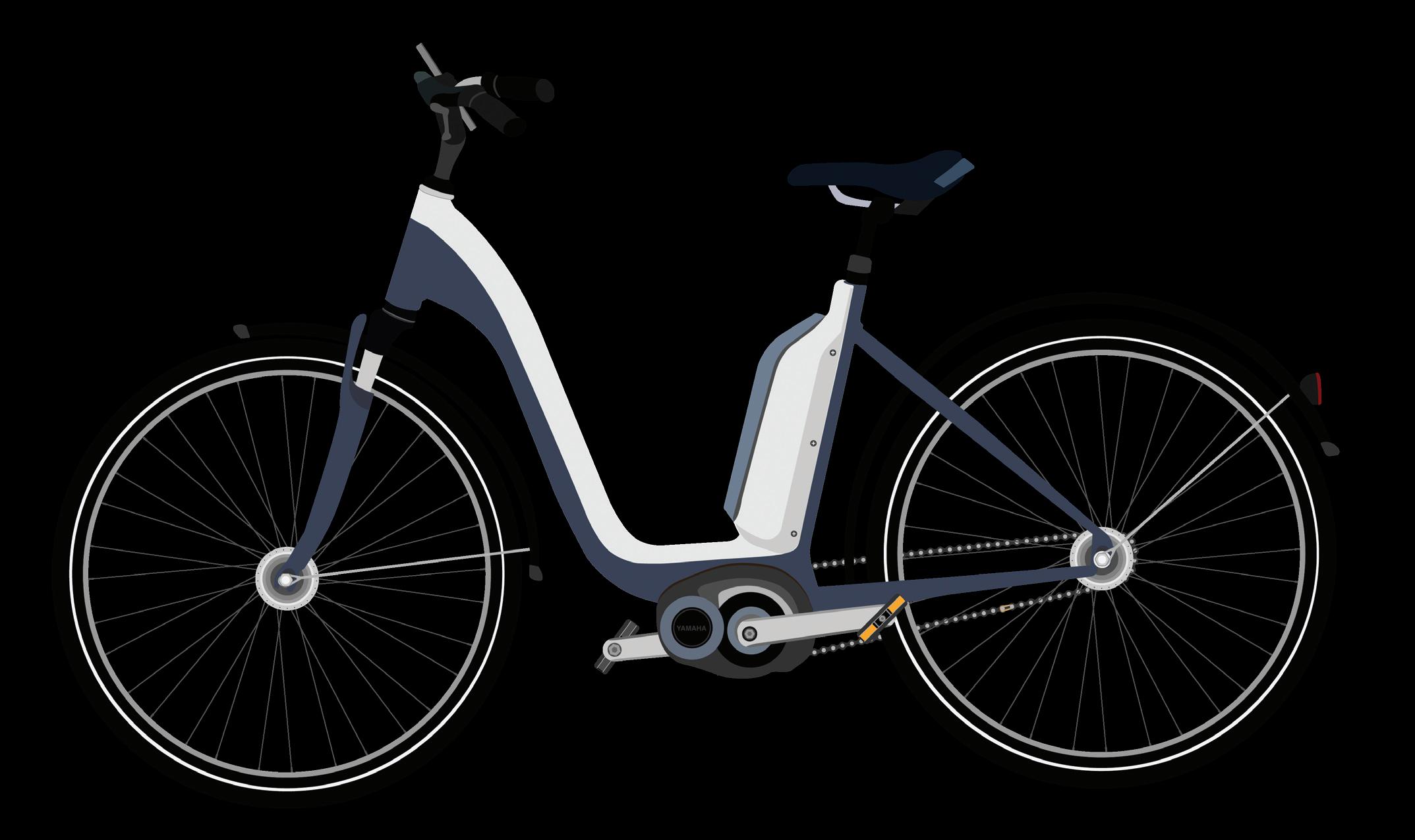
Where there is suddenly ample competition in the electric bike motor space, Yamaha is sticking to its specialities and, actually, keeping things very simple. There are only a trio motors presently in production, which are the mountain bike-suited PW-X4 with its 100Nm torque and 750W power peak, all enclosed in a slimline magnesium casing. At 2.6kg all in, this sporty drive unit is keeping the pace alongside the best of the rest and has found fans in European bike manufacturer Raymon.
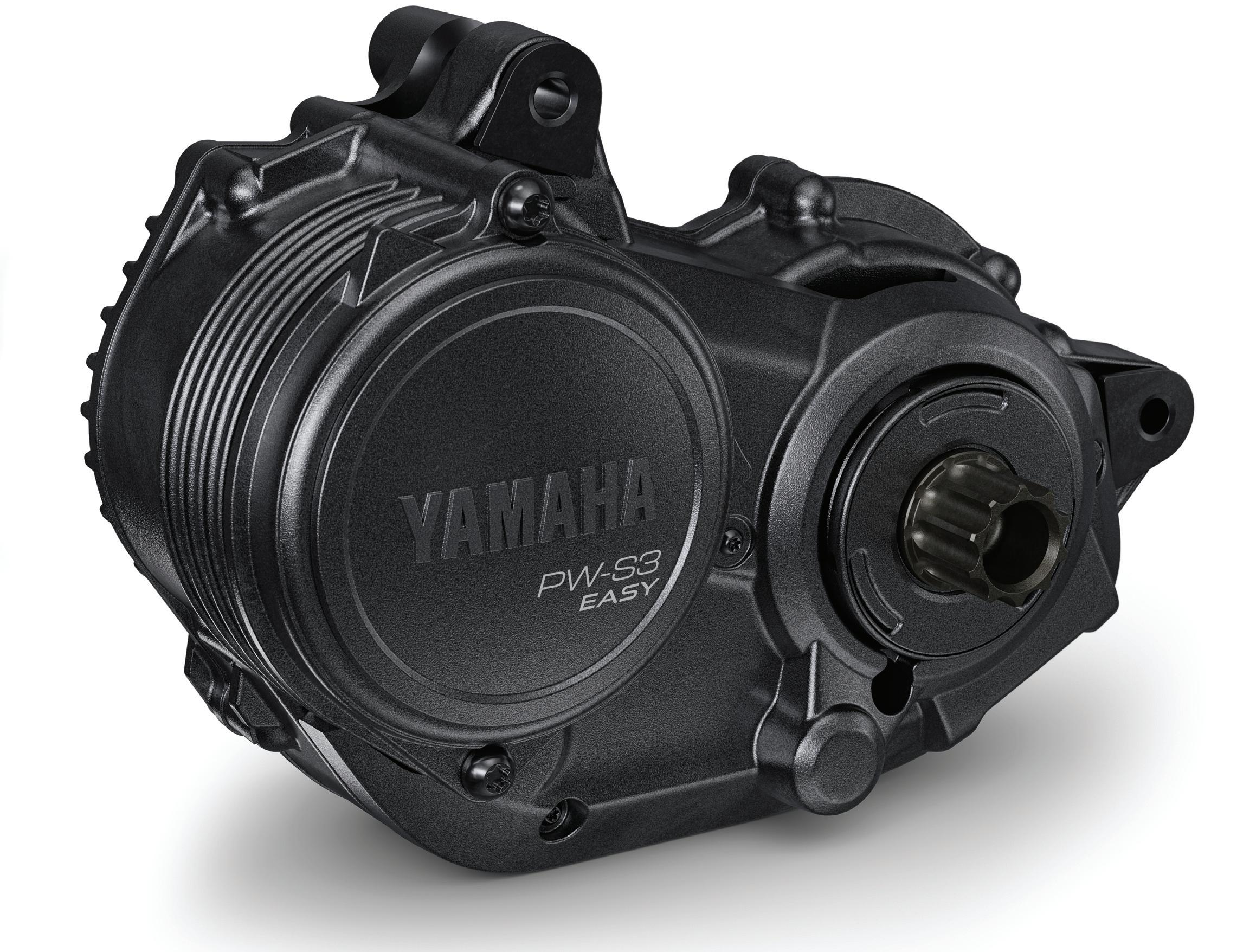
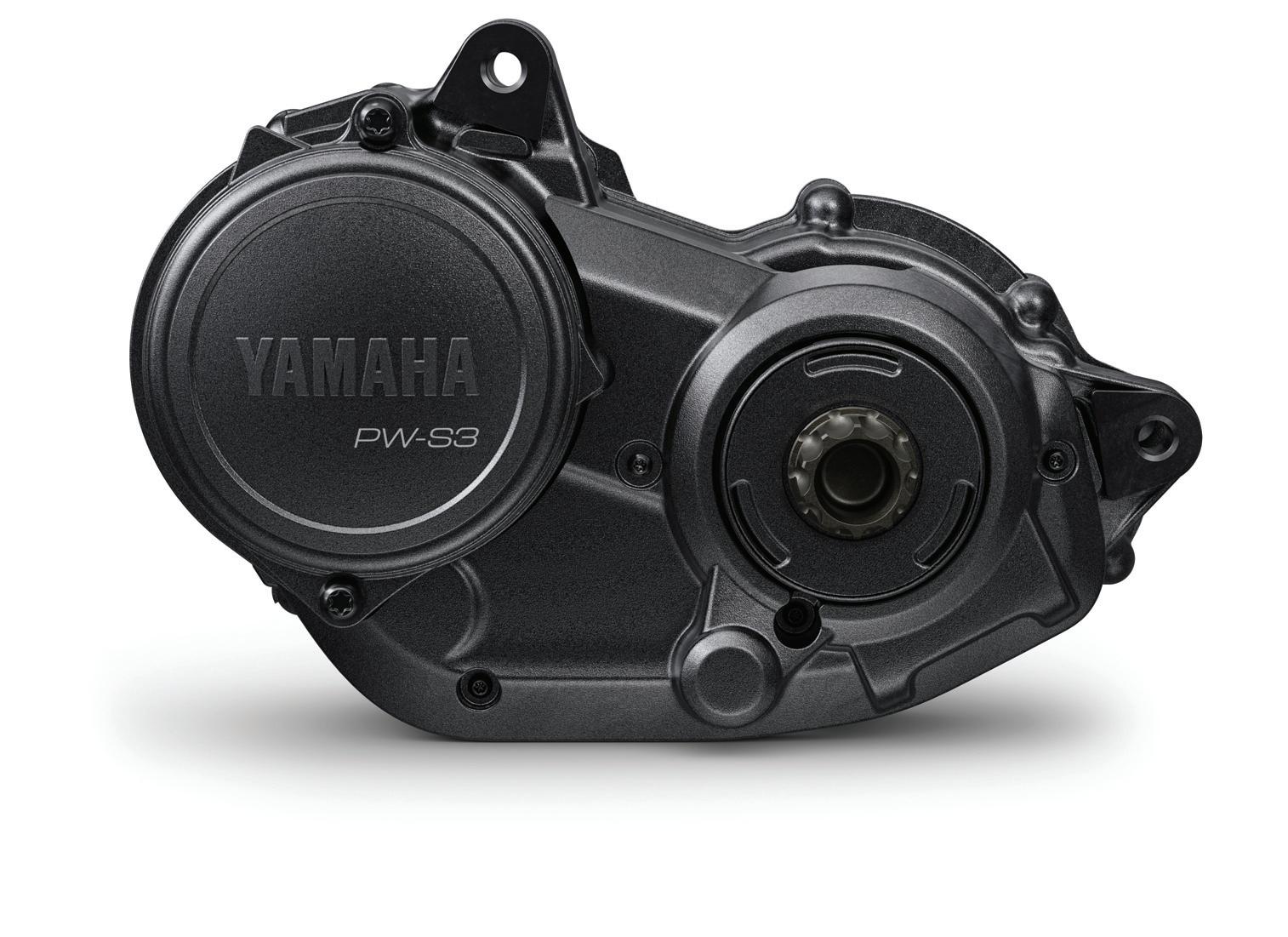
Then there is the PW-S3, city and trekking drive unit, which turns out an impressive 75Nm, making it a standout for torque support in this sector. Some of these motors have been spotted attached to Hero Cycles’ InSync brand eBikes, as well as with Decathlon’s eBikes.
Finally, the PW-Link 48V drives are the next-generation modular units built for interchangeability within the PWLink ecosystem, which has motors,
The wholesaling of Yamaha-brand eBikes halted at the end of 2025, but its intent to remain and grow in eBikes was signalled with the acquisition of the Brose eBike division in the same year
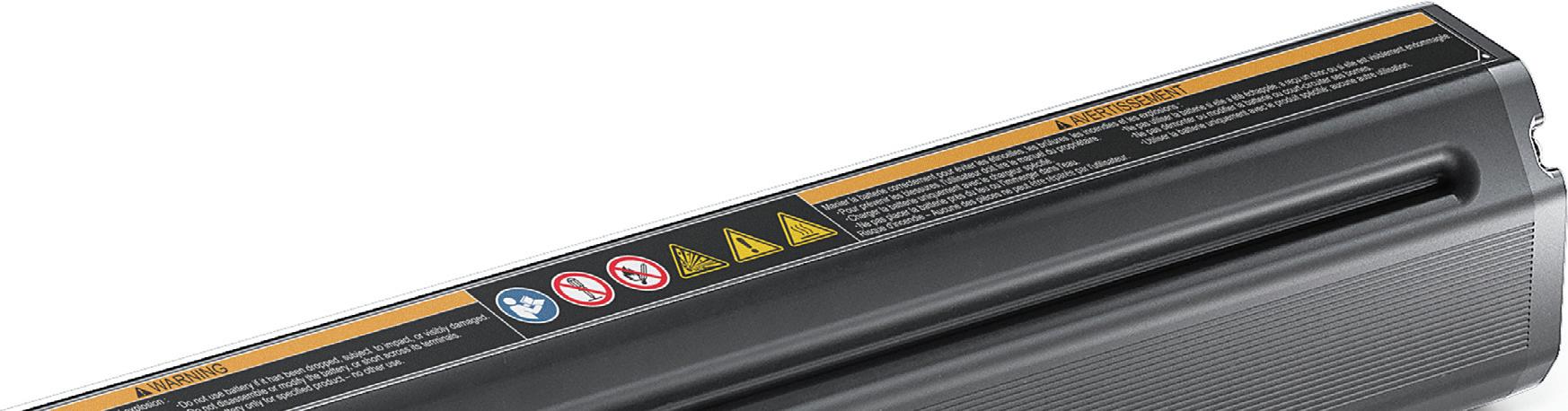
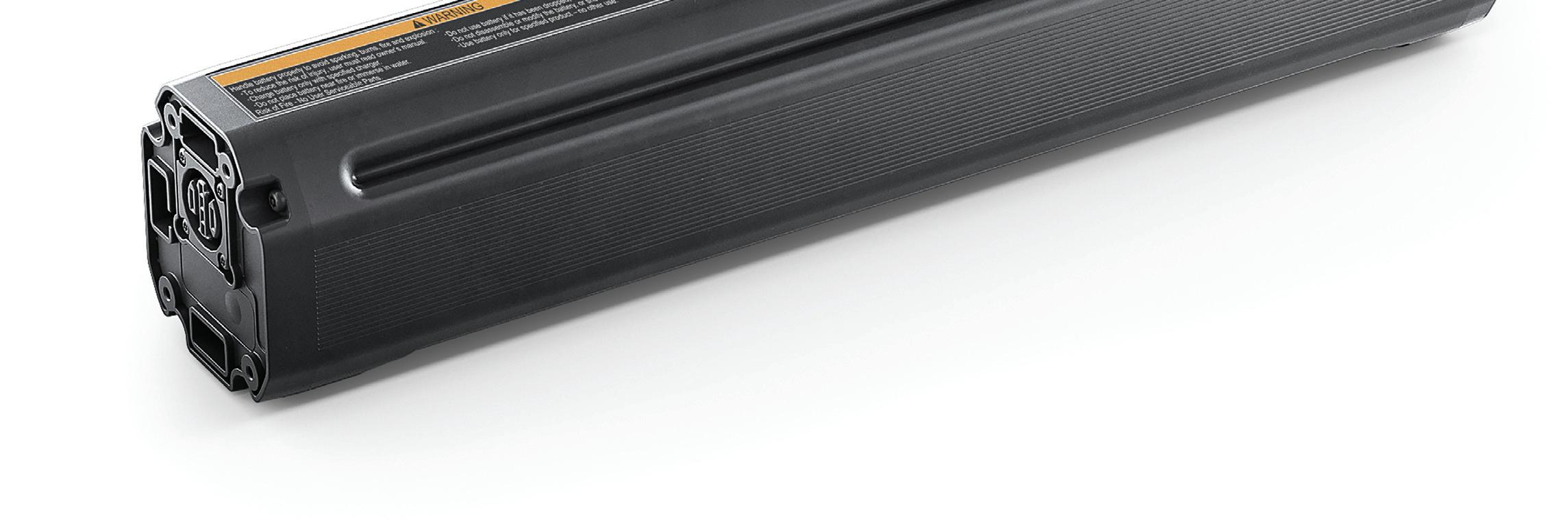
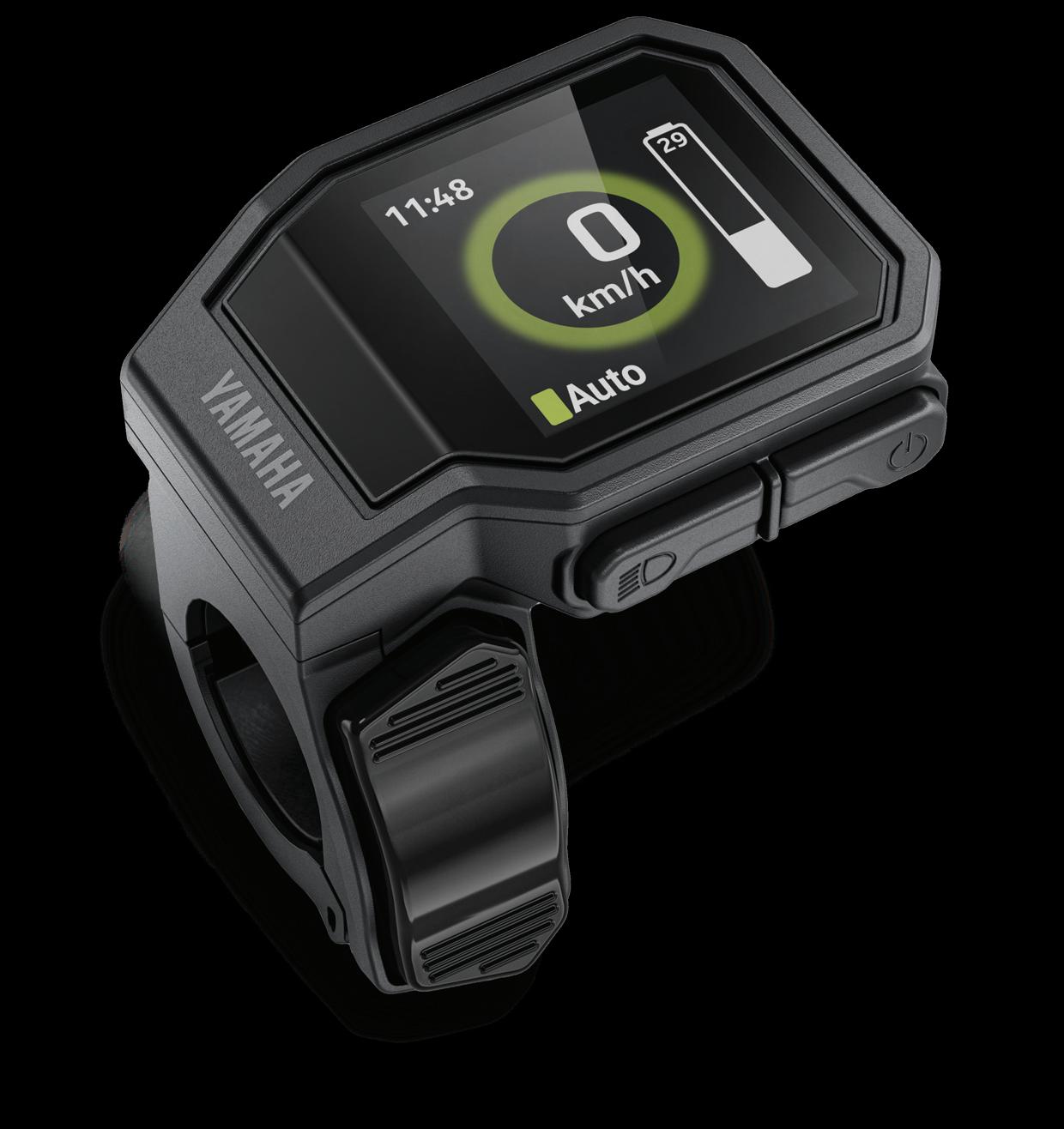
batteries and displays. It has things like Zero Cadence Technology, which delivers strong low-speed support, plus it is designed with third-party integration in mind, opening up the field of play to manufacturing partners to get creative. There is the option of either 560Wh or a whopping 840Wh PW-link 48V battery spec, gifting brands dual pricing and
“THEN THERE IS THE PW-S3, CITY AND TREKKING DRIVE UNIT, WHICH TURNS OUT AN IMPRESSIVE 75NM, MAKING IT A STANDOUT FOR TORQUE SUPPORT IN THIS SECTOR”
range options for their customers.
So, it is a consolidated and focused approach in a competitive arena. With manufacturing hosted in France, Japan and Taiwan, the firm is drawing on decades of electronics knowledge and expertise from its robotics division to precision engineer a product fit to compete in 2026. The French produc-
tion line, which launched to much fanfare two years ago, is just about wrapping up production of the previous generation’s 36V S2 motors and is soon to convert the production line to be ready for the next generation and has the scope to scale up when Yamaha deems the eBike market’s growth trajectory is firmly back on track.
“WE BELIEVE THE LONG-TERM SUCCESS OF THE CATEGORY LIES NOT IN PURSUING HIGHER PEAK POWER FIGURES...”
Stabilising demand
Fabio says of current order patterns, “Demand for electric bike motors was stabilised in 2025, especially in Germany. All in all, the market is settling at around five million units per year here. The arrival of DJI (now Avinox) created a lot of noise, and it seems they onboarded lots of new customers very quickly. It showed that if you come to the market with the right product, there is space for you. Yet Avinox is attacking the tip of the pyramid, but for Yamaha, though we are also not pitched as a cheap product, we recognise that the majority of the volume is the electric bicycle below €3,000.”
Another thing recognised by Fabio and Yamaha is the growing noise around eBike motor power. In acknowledging the progress of Motinova and Gabao, to name two more, Fabio says that Yamaha is striking a balance in its metrics to protect trail access and ensure responsible use of its motors.
On this, Fabio shares the time-tested Yamaha perspective. “Power ceilings such as 750W are frequently discussed within the industry and are generally sufficient to meet the performance demands of most terrains, when combined with optimised torque curves, calibrated assist algorithms, and the appropriate gearing.
“We believe the long-term success of
the category lies not in pursuing high er peak power figures, but in delivering balanced ride characteristics, refined power delivery, optimal thermal management, higher battery efficiency, system integration durability, and rider confidence. Sustainable growth will come from creating bikes that inspire loyalty through overall ride experience, not just motor output.
Back to pricing, and it’s clear that there is a thoughtful approach to value weighted against performance coming through the next generation motors and, as such, the motor systems are now moving from 36V to 48V, as well as beginning to factor in some significant user interface upgrades.
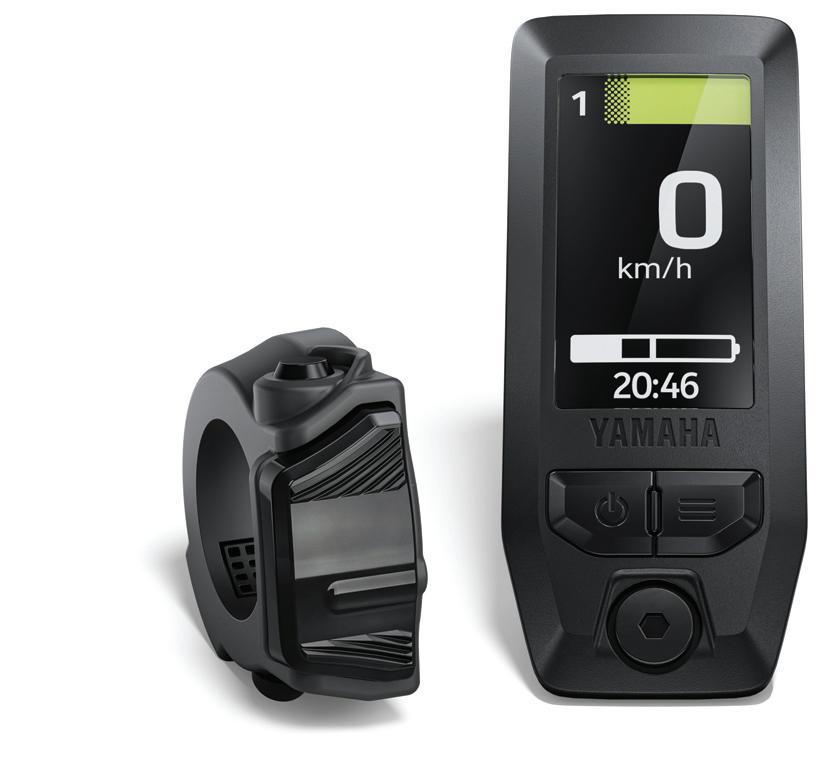
Fabio explains: “How the user interacts with the bicycle is via an app designed by us. Within that, there are features like geolocation, user authentication, rider and eBike statistics, health data, plus range and battery metrics. Overlaid are several layers of cybersecurity, inclusive of a system that can automatically disable the system if the battery is missing. In the beginning, only the bicycle dealer can authorise a system to work together, so this first user's security profile happens at the point of sale, all by the bicycle shop activating a QR code. Then the end-user gets an authentication key for the system.”
With 30 years’ experience in the field and being a Japanese company, Fabio
says that Yamaha takes a lot of pride in scoring way below the average for industry claims against its hardware, which is especially important on account of recent bombshell research from the University of Delft that shows that eBike motors are having a cluster of failures at between 16,000 and 20,000km, often down to simple things like a bearing failure. At this point, so found the research, 43% of users would likely dispose of the entire electric bike, rather than seek a fix. That, obviously, is something for motor makers to give deep consideration when it comes to quality control and serviceability.
On this note, Fabio concludes: “We started in 2025 with the deployment of a direct-to-dealer after-sales and service structure. We started in France last year and will now expand to other countries. A dealer working on any Yamaha system will be able to access our knowledge directly via a detailed online portal, where they can access troubleshooting, make claims on service parts and access the warranty process. Dealers can’t yet repair the motor themselves, but we are now looking at refurbished motors at a more reasonable price as part of our offering. In the motorcycle world, you can open the motor up to change parts, so that’s the vision once the broad network is trained.”
yamaha-motor.eu
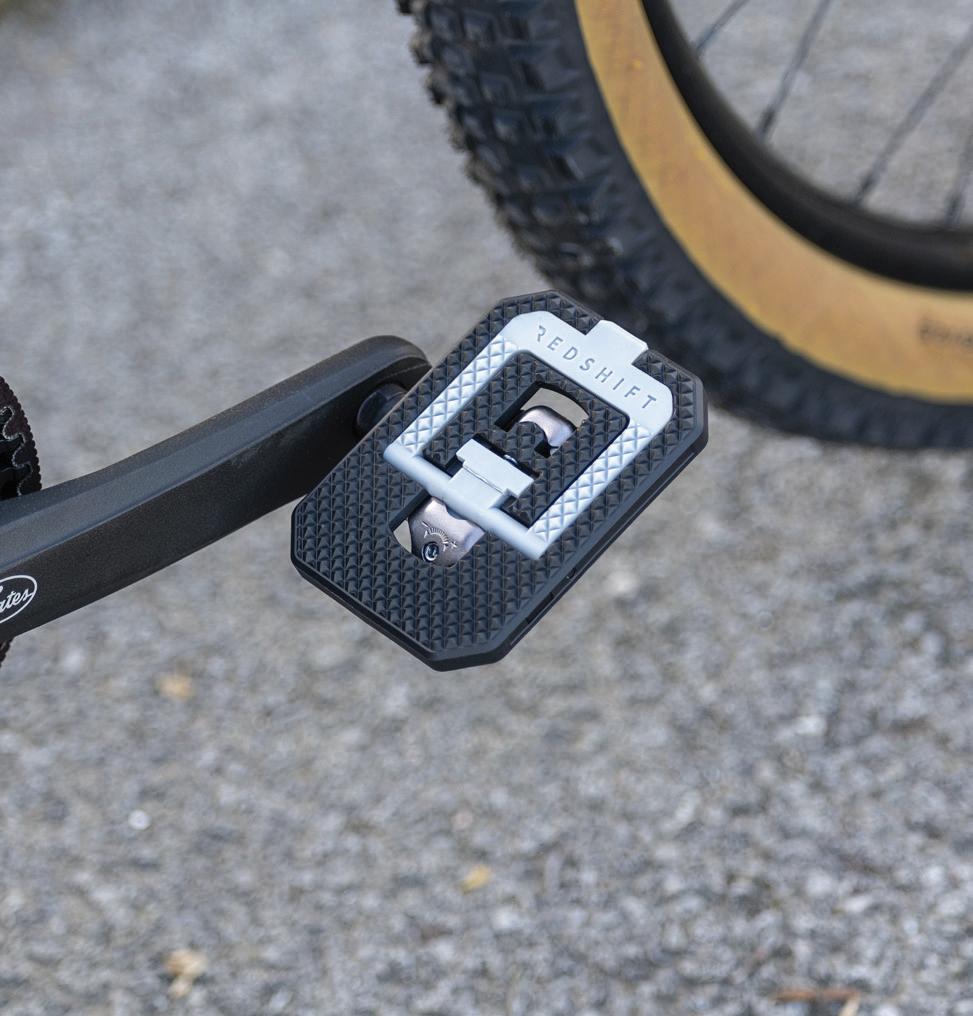
Mousetrap Pedal Adapters
Convert your SPD-compatible pedals to flats in seconds
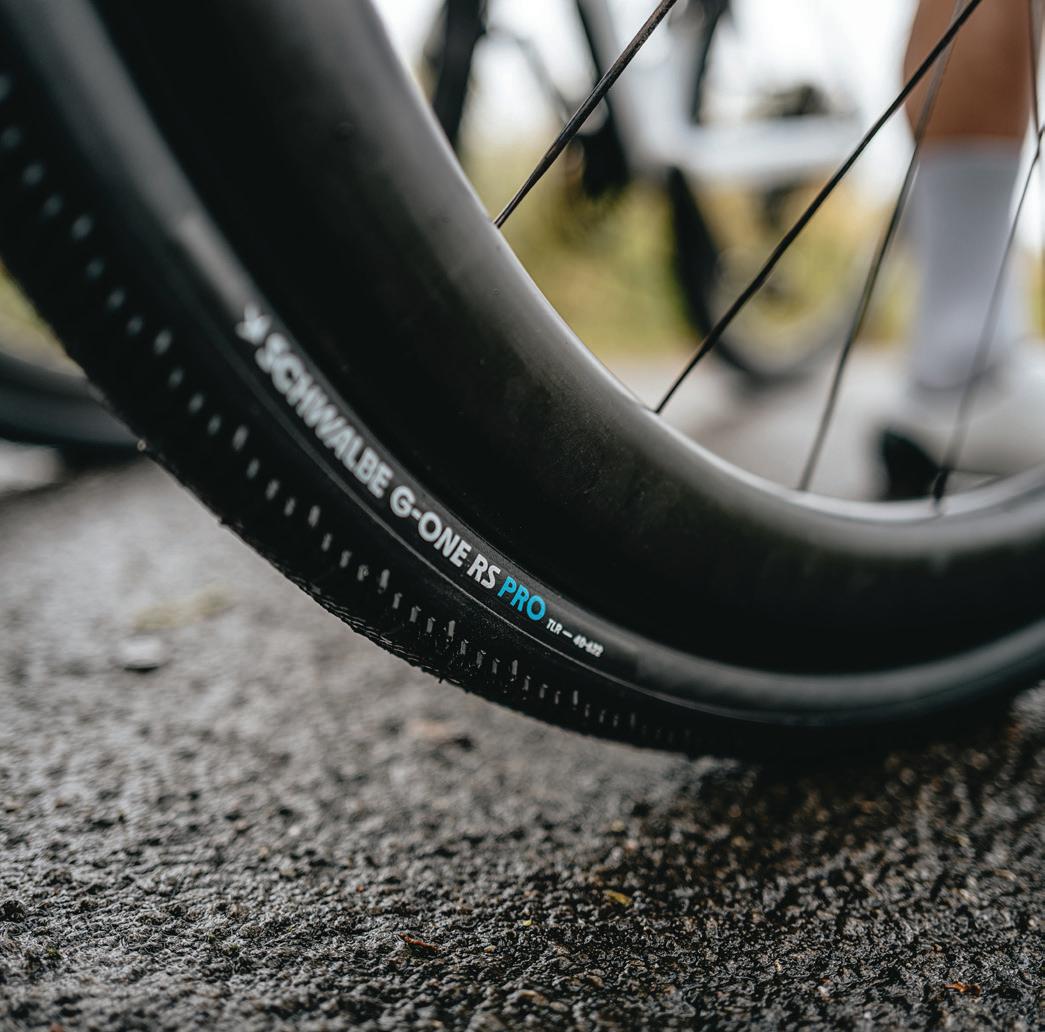
G-ONE RS PRO
The first choice for those who have only one goal in mind: speed.

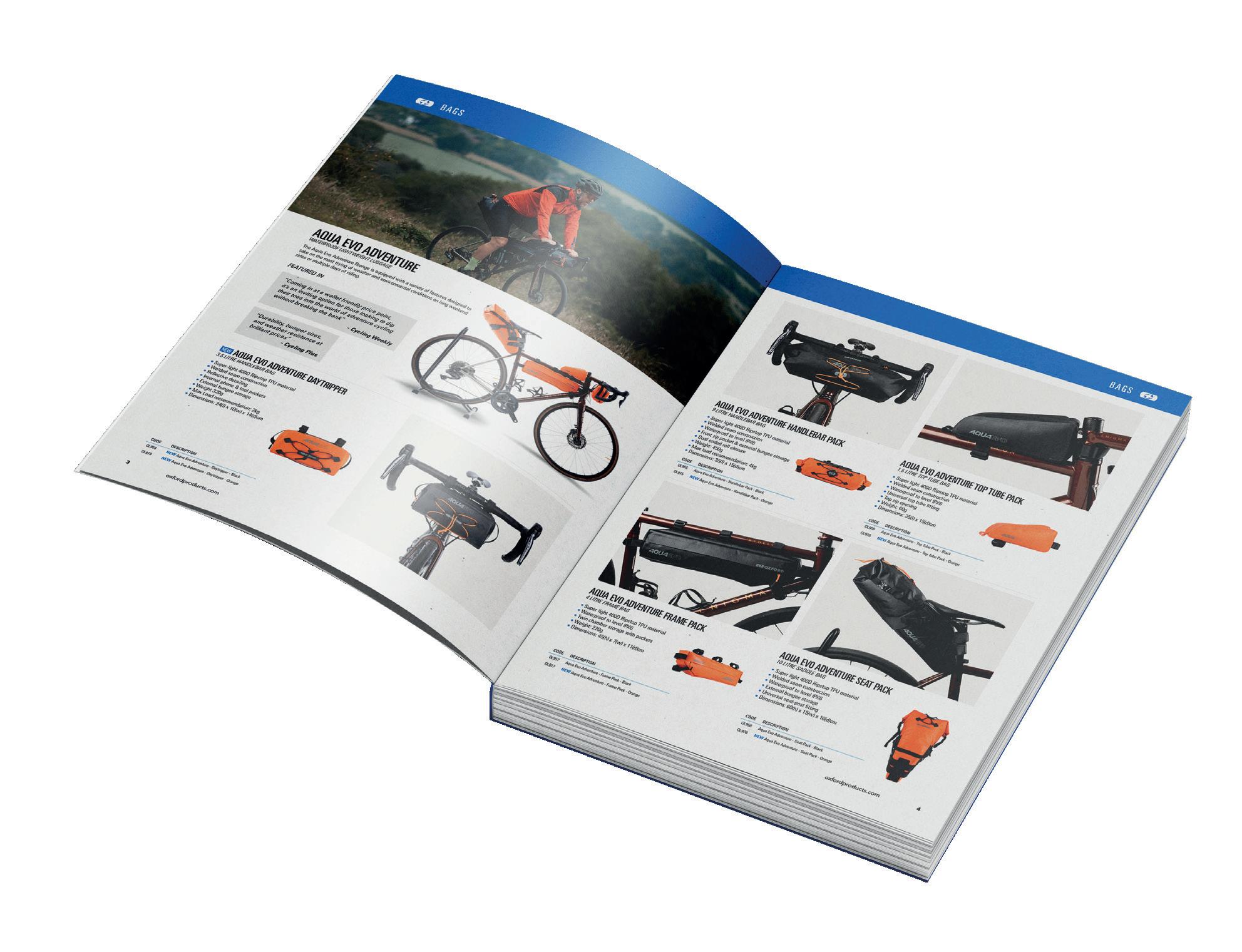
OXFORD ARE PROUD DISTRIBUTORS OF WE DO WE DO WE DO

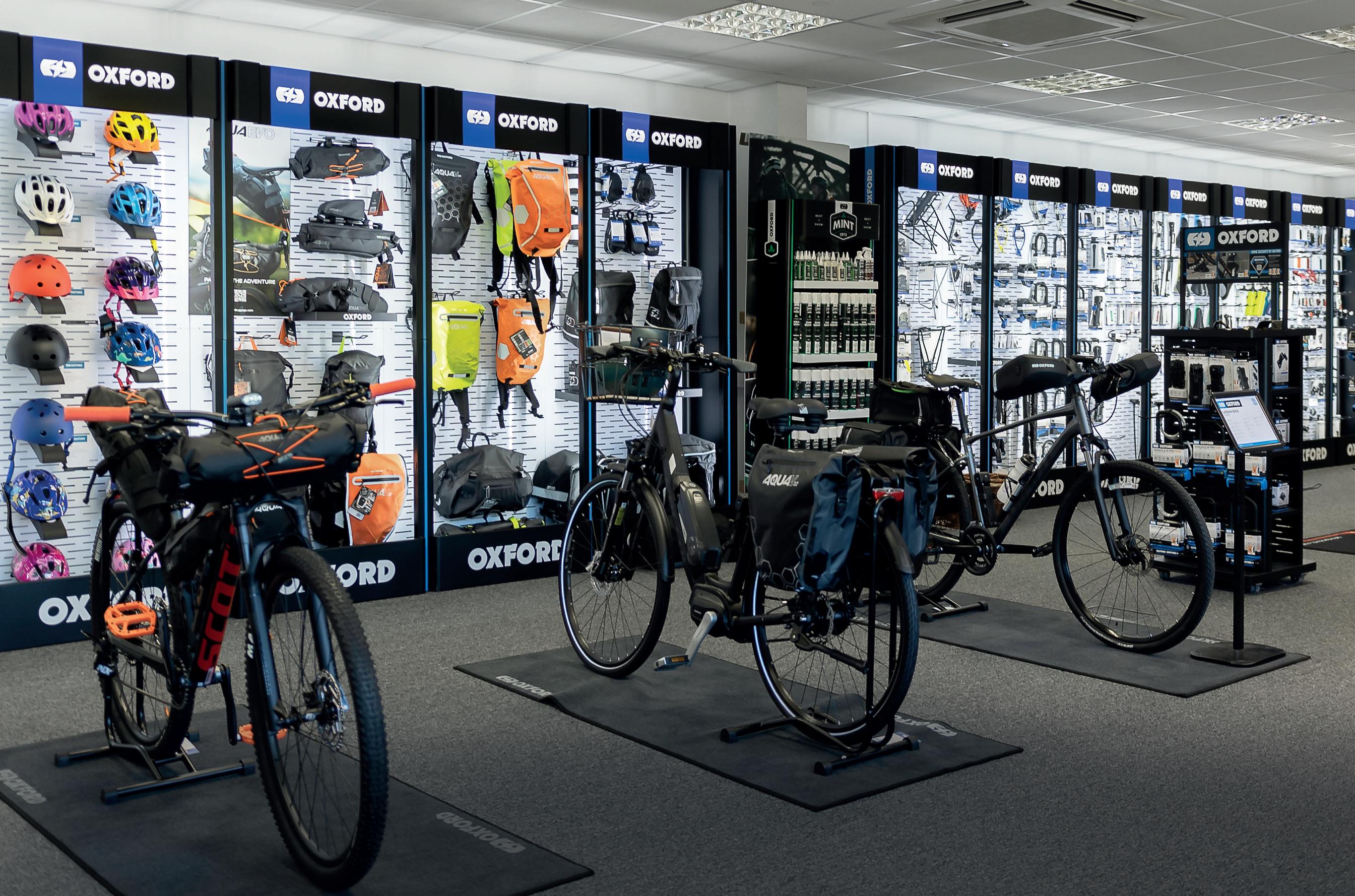
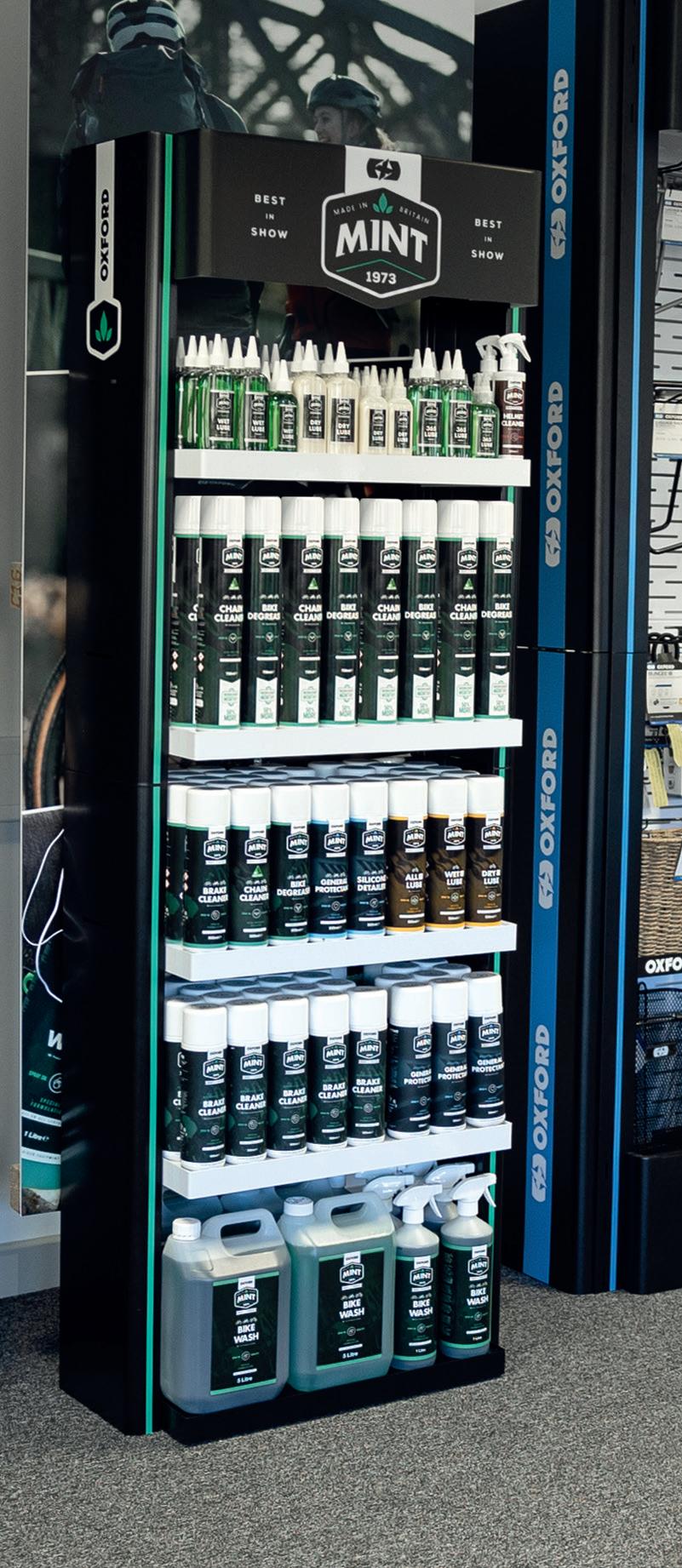
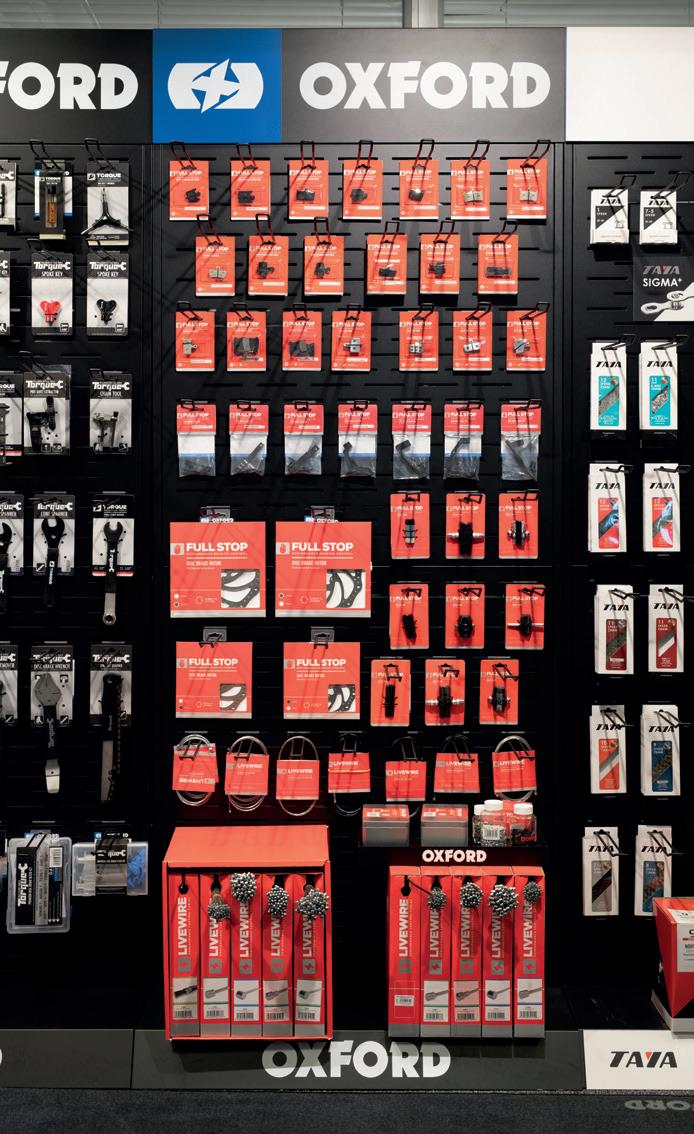
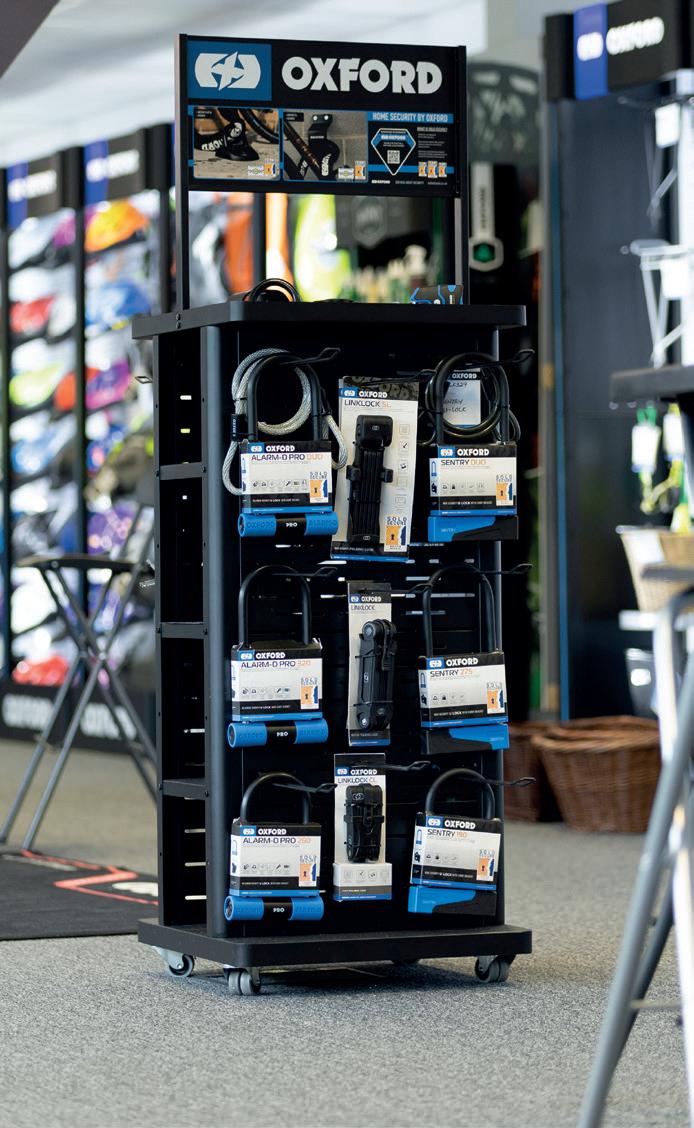
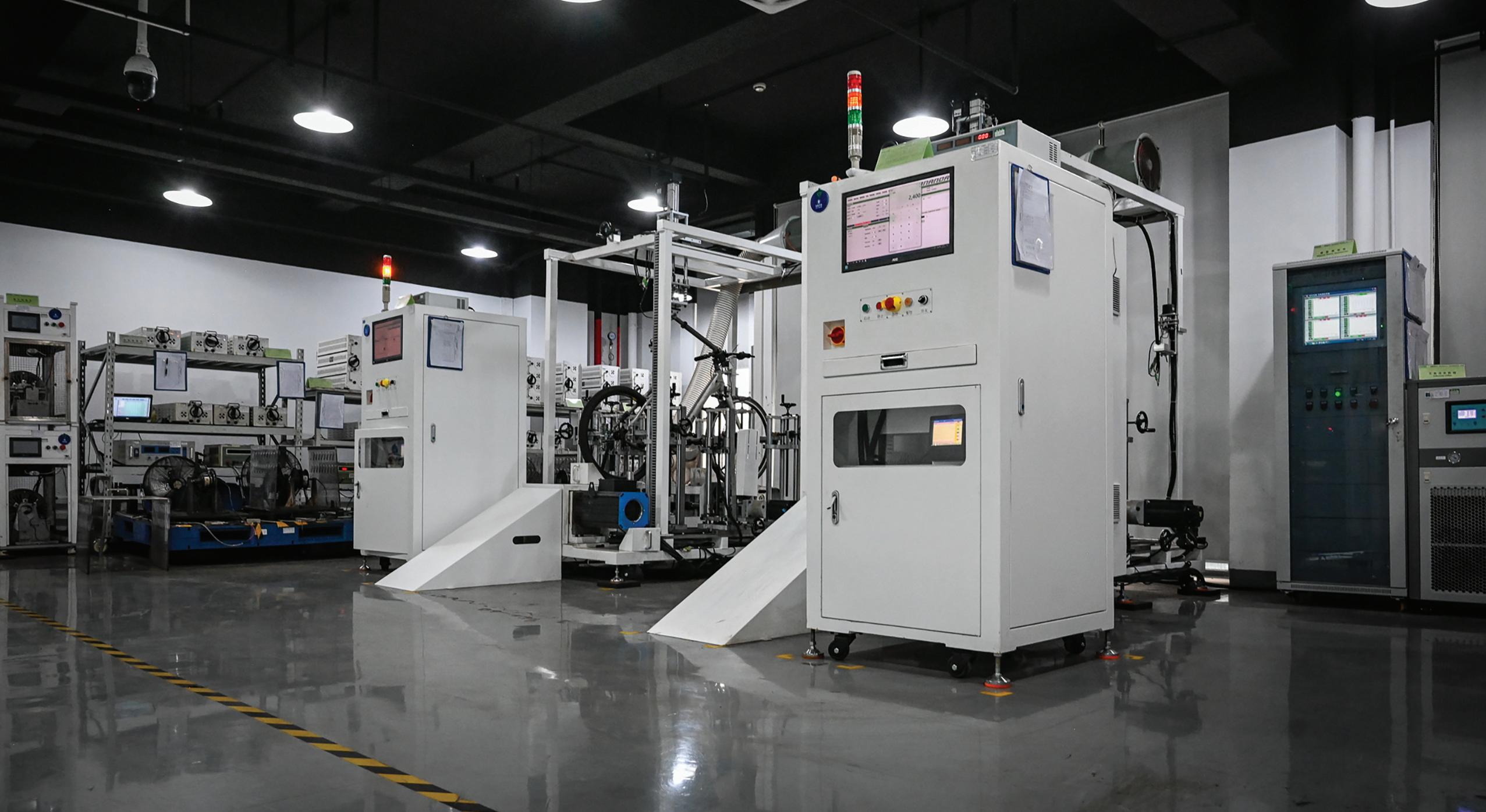
To achieve the right environment for our products to sell, we have designed a vast range of bespoke display systems. As part of our commitment to being the best supply partner to shops up and down the country, these are not only provided free of charge to our retail partners, but delivered, set up and merchandised in-store by our highly skilled team of ambassadors. They then return on a regular basis to provide refreshes and seasonal changes, in order to keep products selling all year round.
“HOW
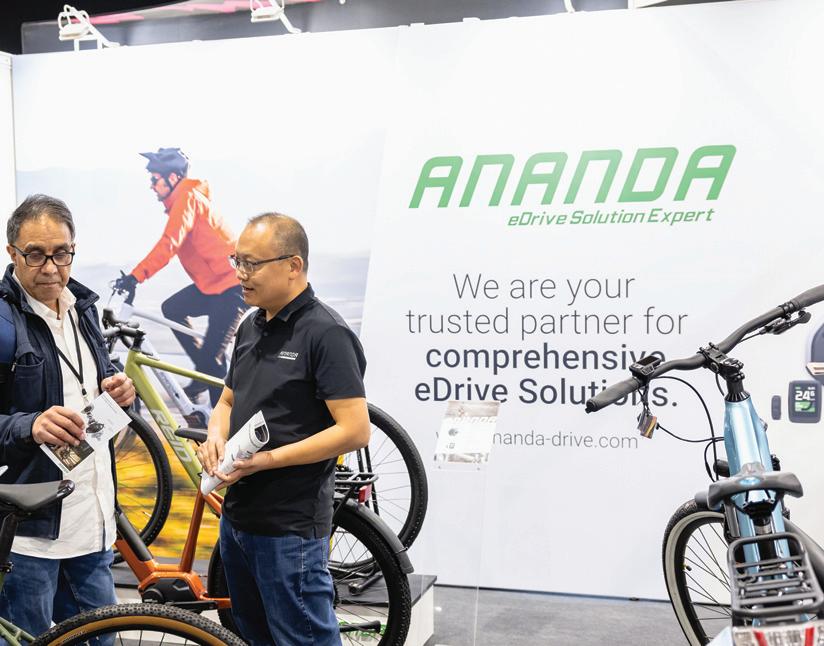
The eBike motor sector is a crowded one, which presents a challenge for an OEM when choosing a partner. Ananda explains how its decade-plus experience, deep investment in R&D and quality – and the fact it has hundreds of thousands of motors out there already –helps it rise above the competition…
As the eBike industry matures into a more quality-driven phase, we understand that brands are facing a critical question: Who can they truly trust? With hundreds of thousands of our motors already on the market and over a decade of expertise in e-mobility, we have become a trusted partner for bike brands worldwide. In a market still sensitive to overstock and supply chain disruptions, we know that the choice of a drive system partner has never been more strategic.
For us at Ananda, the answer lies not just in technical specifications, but in a deep industrial philosophy defined by an open approach, transparent systems, and an unwavering focus on long-term relationships. Our goal is to empower brands to create a competitive advantage without ever compromising on quality. But in an industry where scepticism is healthy, let us clarify what “Ananda Quality” truly means.
Consistency: One roof, one process The primary concern for any OEM is the loss of control over their supply chain. We stand apart with full vertical integration and high-volume manufacturing capacity. From motors to controllers, displays, and sensors, every step is executed in-house with Industry 4.0 precision. This is not simply the assembly of parts sourced
from external vendors; it is a closedloop system designed for reliability, scalability, and consistent excellence.
With six advanced factories across Asia and a dedicated EU logistics hub in Hungary, we ensure geographic deconcentration of risk while maintaining centralised quality control. It starts with the raw materials. By purchasing commodities like copper directly, we ensure metallurgical consistency, bypassing the risks associated with sub-tier supplier variations.
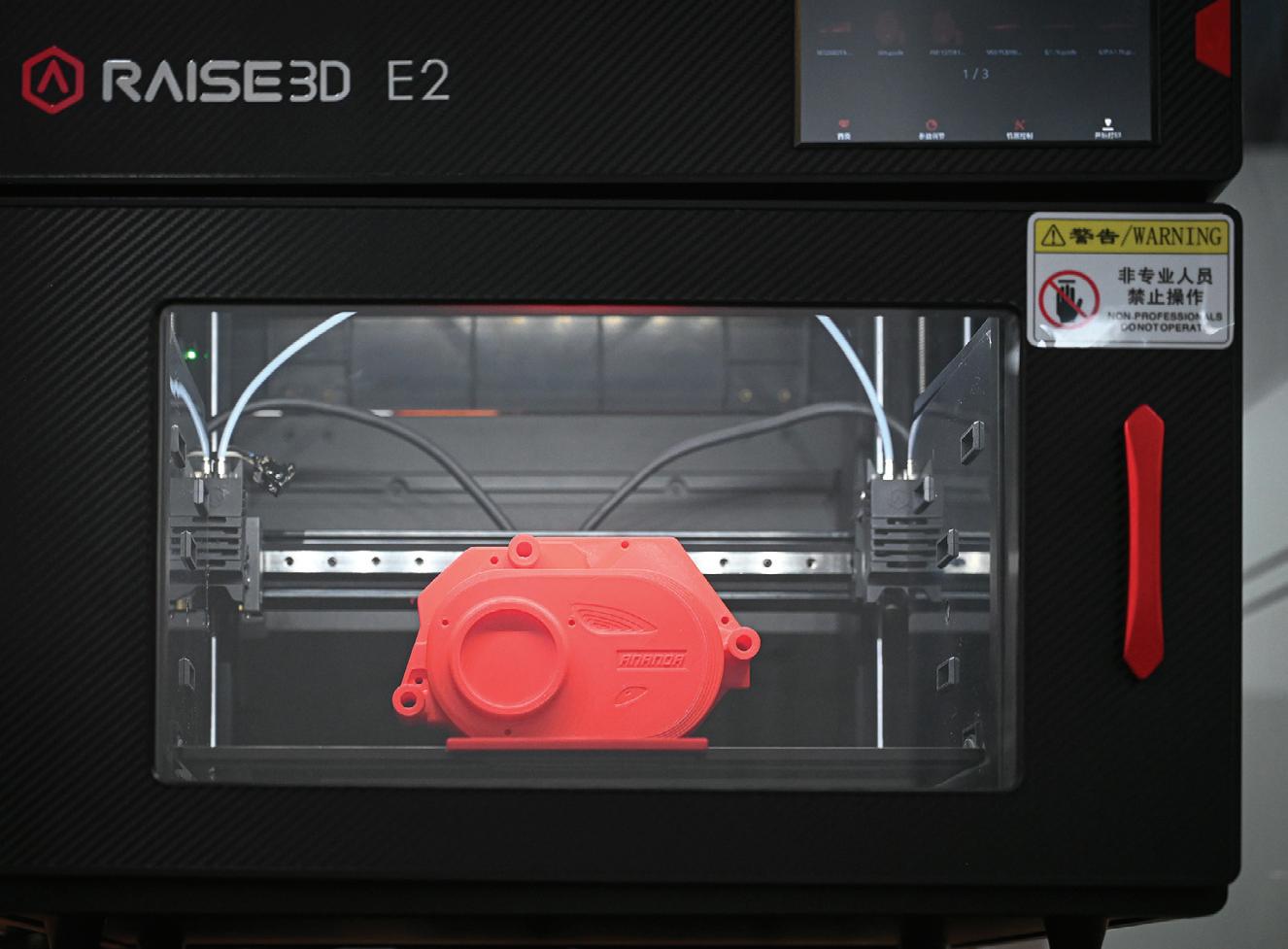
Precision engineering and advanced R&D Quality begins long before production. With over 205 employees dedicated to research and development across the company and a portfolio of 123 patents, our innovation engine is constantly running. Our R&D team leverages rapid prototyping via 3D
“AT OUR WUXI CAMPUS – THE HEART OF OUR PRODUCTION – WE DON’T JUST ASSEMBLE; WE CONTROL THE ENTIRE ECOSYSTEM”
printing to validate designs and ensure system integration before any component enters mass production. Every part is rigorously verified in our labs for waterproofing, noise levels, performance, torque, and vibration, ensuring that only the most durable designs move forward.
At our Wuxi campus – the heart of our production – we don’t just assemble; we control the entire ecosystem. Motor production relies on automated stator winding and robotic assembly, ensuring magnetic field consistency across every unit. Fully in-house PCBA and controller manufacturing using SMT (Surface Mount Technology) lines guarantees that the brain of the eBike is built to the same exacting standards as the motor itself. Each PCB receives a unique QR code, enabling complete lifecycle traceability from the moment a component is soldered to the end of its warranty life.
Validation first: The lab bench standard Before any motor reaches the mass production line, it must first prove itself on the test bench. For OEM partners, this is a critical step: they need to know that the system they are integrating into their frames has been pushed to its limits before committing to volume orders.
Our laboratory bench testing protocol subjects every new motor design to
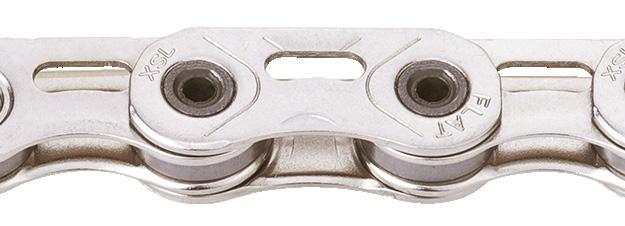
accelerated durability cycles, simulating years of use in weeks. We measure torque accuracy, efficiency curves, thermal behaviour under maximum load, and resistance to extreme conditions. Each motor must pass rigorous IPX water testing, salt spray corrosion resistance, and electrostatic discharge (ESD) verification. Only when a motor has completed this comprehensive bench validation do we freeze the design for mass production. This ensures that when we deliver systems to our OEM customers, they are receiving a product that has already been proven in controlled, repeatable conditions.
Real-world testing:
Feedback from European riders
But laboratory data alone is not enough. True quality reveals itself on the trails or on the road, in the hands of real riders facing real terrain. That is why we maintain a fleet of test bikes and collaborate with experienced riders across Europe to validate our systems in the field. For example, our M230 mid-drive motor recently completed its racing debut at the French eMTB National Enduro Championship, competing on steep climbs and challenging terrain against top-tier components. These field tests on trails or roads provide invaluable data. We collect feedback on ride feel, power delivery smoothness and real-world durability. Adjustments to firmware, torque response, and mode characteristics are refined based on direct input from riders who depend on our systems in demanding conditions.
Smart Factory: “Testing is a commitment, not a checkbox”
To guarantee long-term reliability, we have integrated a new generation of highend testing and assembly equipment, transforming our facilities into “Smart Factories” managed by real-time Manufacturing Execution Systems (MES).
1. Precision Assembly: We introduced Servo Press technology to replace manual assembly for critical components like bearings and gears. With force accuracy within ±1%, this ensures the mechanical longevity required for premium mid-drive systems.
2. Electronic Vigilance: Every unit we produce benefits from In-Circuit Testing (ICT) and Functional Circuit Testing (FCT). These automated systems validate PCB integrity before firmware is even loaded,
drastically reducing the risk of “Dead on Arrival” electronics.
3. The Premium Feel: We use advanced NVH (Noise, Vibration, Harshness) diagnostic chambers. Acoustic analysis ensures that every motor meets the sub-60 dB threshold required for a silent, premium riding experience that end-users expect.
4. Simulating Reality: Our new Controller Aging Test rigs simulate years of real-world thermal and electrical stress in a matter of hours, ensuring that the system’s performance remains stable under extreme loads and climates.
Certified Compliance and Global Standards
In a regulated industry, compliance is non-negotiable. Our products are designed and manufactured to meet the most stringent international standards. Every component undergoes dual-stage Final Quality Control (FQC) and Outgoing Quality Control (OQC), verified in collaboration with TÜV to ensure impartial quality validation. Full compliance with ISO standards, EN15194, UL2849, and RoHS directives guarantees that brands can bring their products to market with confidence, knowing they meet all safety and environmental requirements.
With an annual production capacity of 1.5 million displays (including TFT, OLED, and LED) and seven million motors, we have the scalability to partner with the world’s largest brands while maintaining the flexibility to adapt to specific project needs.
Our open system, supported by a closed feedback loop
True quality extends beyond our factory gates. This is where our open approach and our European service network become a unique quality asset.
With our service and logistics centres across Europe (Hungary, Netherlands, Italy, Poland, France), we provide rapid spare parts dispatch and localised technical support. But crucially, this network acts as our “Feedback Engine.” Field data and service reports are logged and reviewed weekly by our quality team.
This creates a direct line from the dealers or brands, back to our R&D department. If a specific issue arises in the field, it informs engineering adjustments in near real-time. It is a proactive, rather than reactive, approach to quality assurance.
“Your partner for the long haul”
In a shifting market, where short-term thinking can lead to costly mistakes, we are demonstrating that the right investments create the right partnerships. By maintaining full control over our processes – from raw copper to final firmware – and by relentlessly investing in testing protocols, we are building more than just motors. We are building confidence.
For brands looking to differentiate themselves, we offer a clear path: an open, reliable partnership where quality is the foundation for competitive advantage, not just a marketing claim.
www.ananda-drive.com
YOUR PARTNER TO HELP YOU BUILD YOUR BUSINESS


√ 24 years of experience √ Customer & sales support
√ Customized marketing activities √ Delivery from stock
√ Place orders 24 hours a day 7 days per week
For more info about our brands, send a message to sales@onewaybike.nl or give us a call: +44 1527 958331
Website: shop.oneway.bike
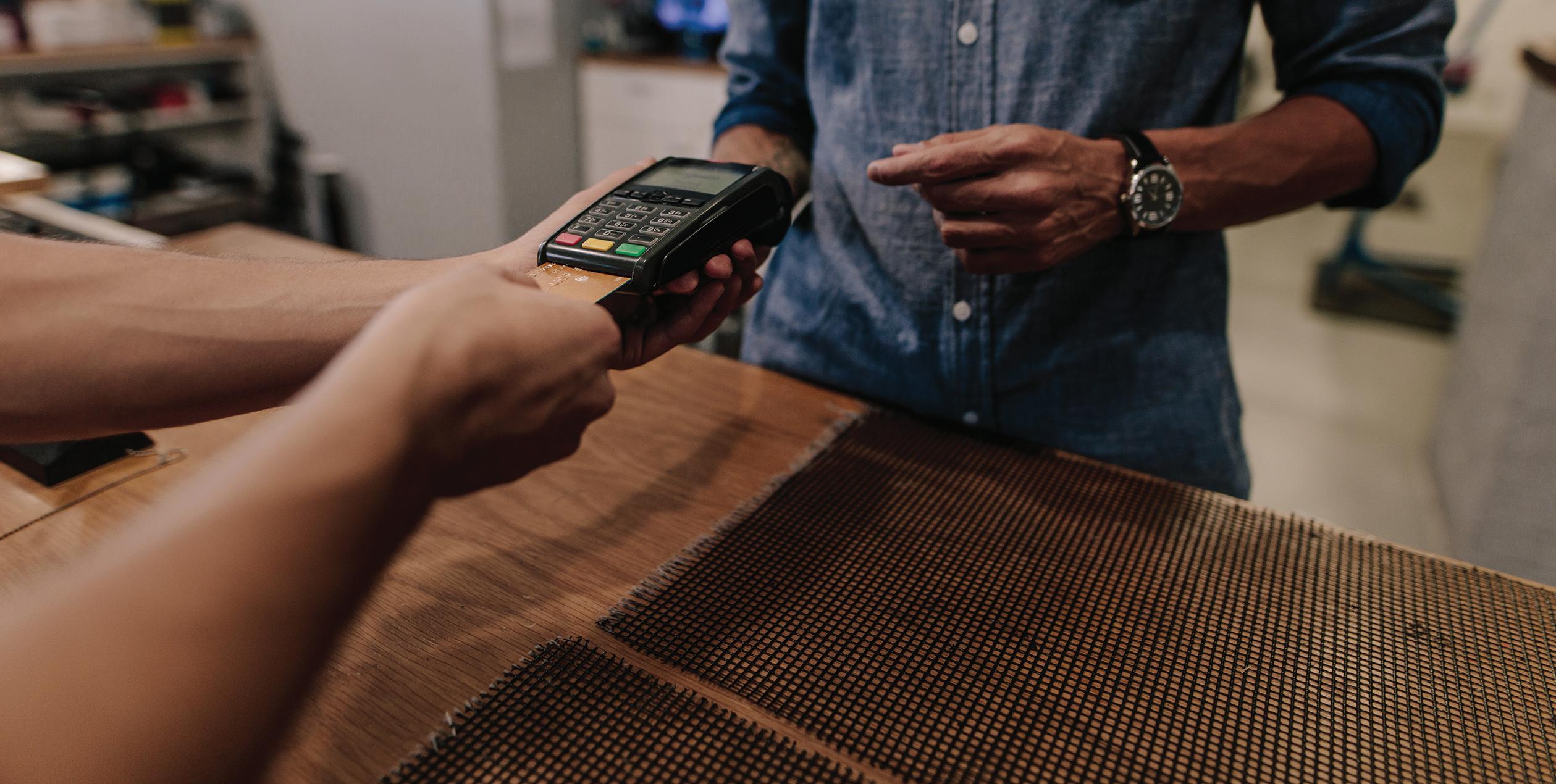
There’s more than one way to complete a sale on the bike dealer shop floor. John Styles talks tactics, techniques and ideas for retailers to utilise…
Based on what I hear in stores, the most uncomfortable parts of the sales process often seem to be the beginning and the end. In a previous sales-tips article we covered how to make a relaxed, comfortable (and useful) greeting that helps get the sale started. Here we talk about how to close the sale.
Of course “close the sale” is perhaps an uncomfortable phrase to begin with? It’s not one that fits naturally or is heard very often in the cycle trade. In some sales training courses, or high-pressure sales environments, it means not letting the customer off the hook, being persistent, pushing for the close. The “show me the money” part of the process.
In the bike industry, that kind of feels a little inappropriate, so perhaps we better talk about completing the sale. That feels a bit more comfortable, doesn’t it? What I’ve observed in thousands of conversations, in hundreds of stores, is that most staff, most of the time, respectfully wait for the sale to complete itself. There’s no pressure. And that’s a good skill; to give the customer time and space to
“WHAT I’VE OBSERVED IS THAT MOST STAFF, MOST OF THE TIME, RESPECTFULLY WAIT FOR THE SALE TO COMPLETE ITSELF”
make the decision themselves and say, “yes I’ll take it”. But it’s not the only skill, not the only way to complete a sale. Here are a few more:

As the name suggests, the assumptive completion means you act as if you assumed the customer is taking the goods, based on their previous statements and body language. So, for example you could say “I’ll just take these to the till”, or “I’ll just ring these up for you”. The message is kind of ‘OK, let’s go!’
The ‘alternative’ technique is typically a binary question. So, do you want to take the medium or the large? The grey or the black? Pay by cash or card? You haven’t had to ask if they are going to make a purchase, you’re skipping straight past to which one, or which way.

The financial decision is a variation on the alternative close and would typically be for a high value bike purchase. Here you’re exploring ways to pay, whether it’s 100% cash, or deposit and some sort of monthly payment. The decision may come down to “basic model and this way to pay” or “the upgraded model with the other payment option”.

Where you genuinely know that a product is in short supply, based on your real-time knowledge of supplier’s warehouses, it can be useful information for the consumer. The 6’5” rugby player who wants the size 62, in green, with ‘that group-set’, this season, needs to know that there is only one in the country, and there won’t be another one for at least six months. That’s not pressure, that’s being honest.
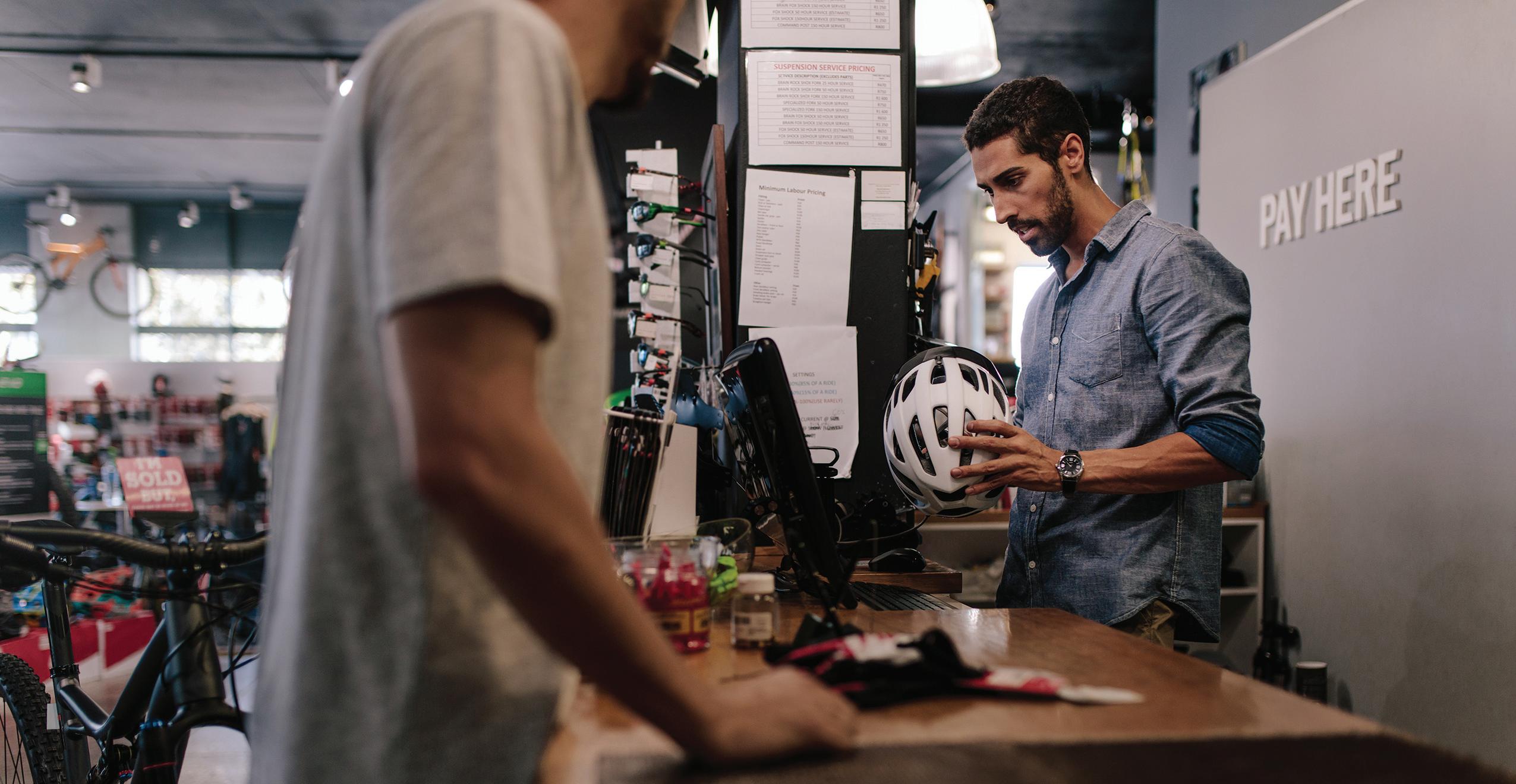

The summary is just a shortened version of how you summarised during the sale process, but you’re adding reassurance. Something is now appropriate because you have spent time developing rapport and trust. Reminding the consumer of the features, benefits and the motivation for purchase. Something on the lines of “Yes, I think you’re making the right choice with this, the medium is the best fit and the carbon frame is going to make all the difference when you get to that training camp, especially with the comfort for those longer
“TO CLOSE OR COMPLETE MORE SALES, YOU MAY WANT TO TRY SOME MORE, JUST TO BROADEN YOUR OPTIONS”
rides, I think this is the right choice if you want to take it today”. Typically, it summarises general features and the specific benefits they requested, not technical points.

Possibly the most uncomfortable of all of the questions (which might be why I don’t hear it very often), but asking for a simple yes or no is sometimes the way. Would you like to take that away today? Shall I ring that up? Do you want to go ahead with this one?

The administrative next-step doesn’t add new information but expands upon something you mentioned earlier in the conversation. For example, you might have mentioned lifetime warranty and free servicing. So, now you add a question which moves the
consumer to thinking about completing that part of the process: “shall we move to the till and start completing your details for the lifetime warranty?” Or perhaps “If we get started on the paperwork for this bike, we can also schedule your first free service, does that sound ok?”

Of course everyone develops their own style over time, learning as they go and you may recognise some techniques that you already use? To close or complete more sales, you may want to try some more, just to broaden your options. In the next Simple Sales Tips, instead of talking about gaining a sale, we’ll look at not losing one, with your new best friend – ‘NANI at the till’.
John Styles is a veteran of the cycling industry, having worked with leading distributors and brands across the sector. With a well-rounded perspective on the opportunities and challenges facing the sector, backed by a Bachelors Degree in Economics, John Styles is an expert consultant for the bike trade. Get in contact via johnstyles2002@yahoo.co.uk

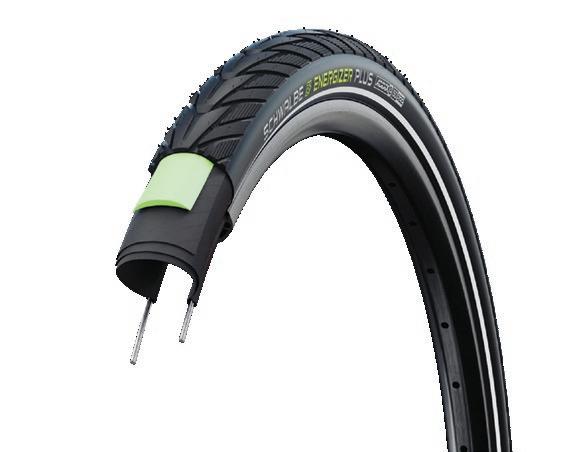
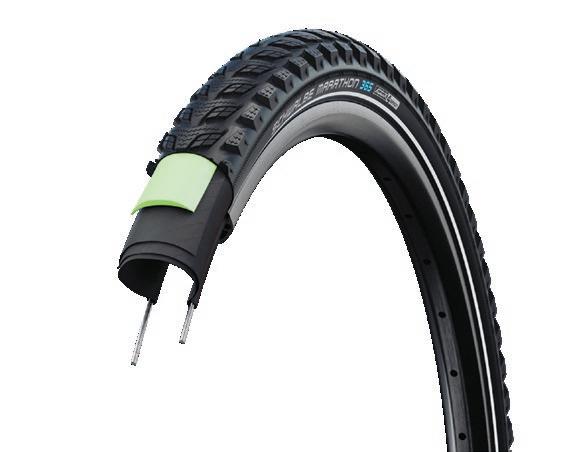
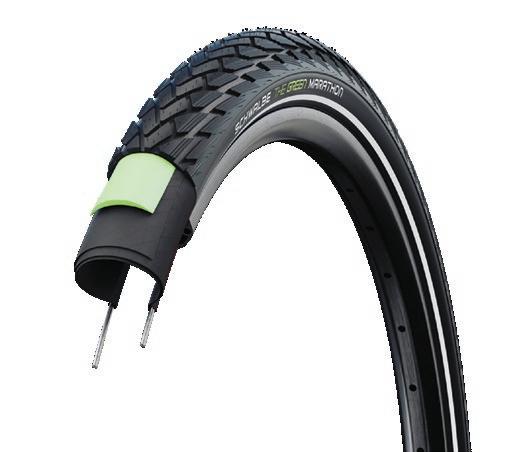
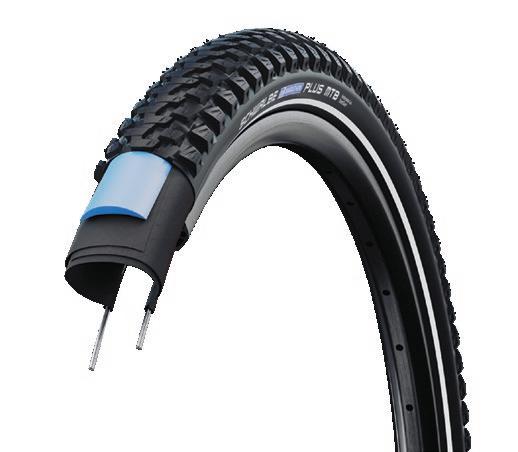

on a fuel that, arguably, should be left in the ground…
Few seemed to notice it, but in the past few years, the world has consistently exceeded the Paris Agreement targets to limit warming above the pre-industrial baseline 1.5 degrees, a global average that, while it does not sound like much, is already producing severe anomalies with dire consequences for the planet, none sharper than the imminent threat to a reliable food supply.
Last year and indeed many of the last five years have returned some of the worst harvests on record and for a country that imports 40% of its food, that’s not so good. 77% of climate scientists expect a rise of at least 2.5 degrees of warming by 2100 and yet the rate of heating is accelerating; the latest Potsdam Institute for Climate Impact Research trajectory showing an about 0.35 degree warming rate per decade. You read that right, per decade and little wonder, as a combination of fresh wars and a thirst for new AI data centres emerges. The latter, though in its relative infancy, already uses vastly more energy than the entire continent of Australia and Microsoft’s single largest data centre more than the whole of Los Angeles daily.
Why the stark beginning to a column in a bicycle industry magazine? It’s because I want to get the attention not just of our industry leaders, but of our leaders themselves. At this stage, we
simply must think differently about how we move society. Put frankly, the economic case to build for and even subsidise active travel has been screaming at you for decades, Chancellor(s).
Unless you’ve been living on an abandoned offshore oil rig, you won’t have missed that, at the time of writing, diesel is running north of £1.82 per litre and petrol above £1.55. This has enormous ramifications for our economy and the products that we sell in the bicycle industry and, if history is a guide, a recession follows oil shocks just like these.
Now, if you’re under the age of 40, your entire working life has been a succession of such events, so you’ll no doubt have heard the old bike industry adage that the bicycle does rather well in an economic downturn. Sometimes that’s true, it certainly was during Covid right up until a vaccine came to market, but it’s also somewhat exaggerated, in the UK, at least.
No crisis should go to waste, however, because the theory that the bicycle holds many answers to the problems people face when times are hard is backed up by hard data. At the risk of repeating statistics from prior columns, these are just some really key selling points for the bicycle and electric bike that I think it’s long past time we drilled down into concise marketing and lobbying messages:

1: The best way to curtail oil use is to incentivise people to move differently
As of 1 April, some European, Asian and Australasian countries had begun to heed the IEA’s advice to work from home, turn down the air conditioning, drive more slowly and generally travel less. The IEA did manage to recommend that some countries dilute fuel with a higher bioethanol mix.
Somehow, it’s totally overlooked that, in the UK, around 70% of our journeys under five miles are driven. That’s a distance cycled, sometimes faster, in 20 to 30 minutes in comfort. If we were to cater for cycling at a local level, in particular targeting school run arteries, congestion could easily be targeted with simple, cost-effective construction. According to INRIX, every driver in the UK lost 59 hours to traffic, costing £822 per driver, or £11 billion nationwide in 2025.
2: Less driving, equals less sick days, equals more productivity and smarter children
Remember under the Boris Johnson Government, when it was said that GPs were about to start prescribing cycling for certain physical and mental health conditions? Well, the bill for obesity alone to the NHS is over £100 billion per year and you can now set heart rate thresholds on some electric bikes to up the assistance in order that you
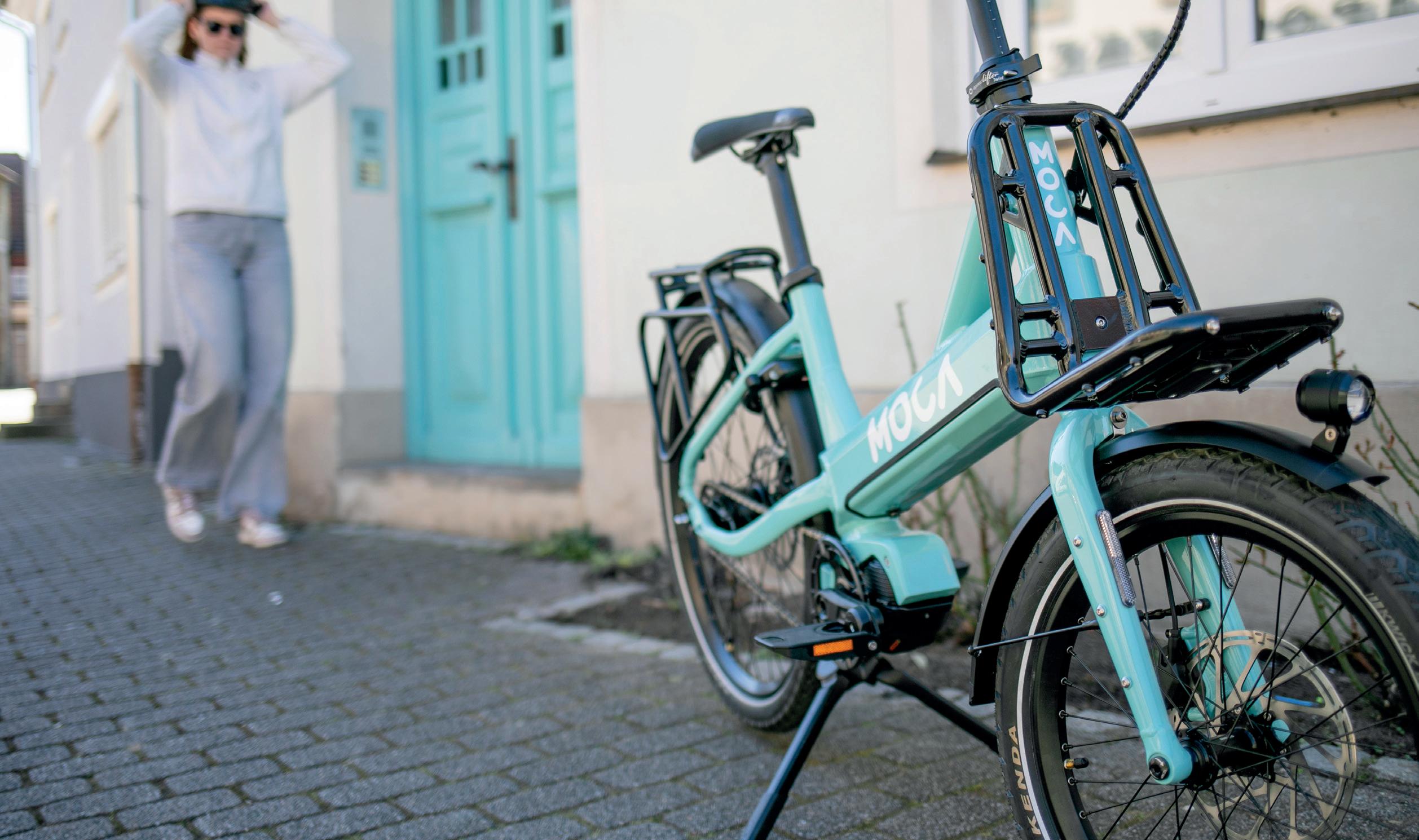



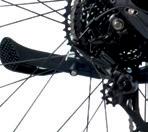

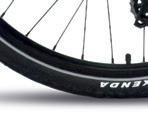


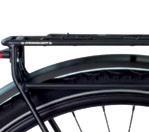
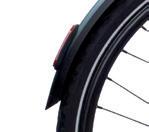



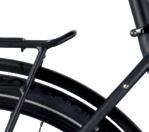

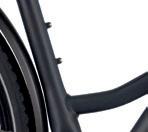
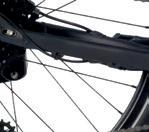
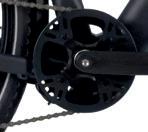




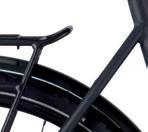








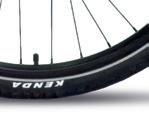






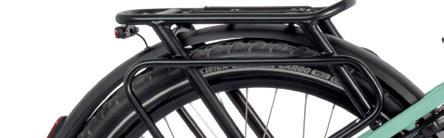
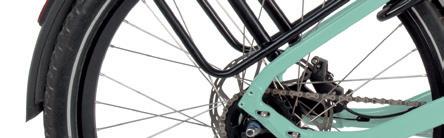
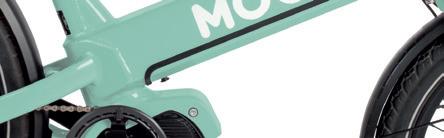
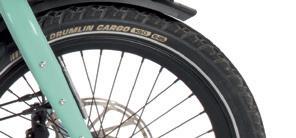
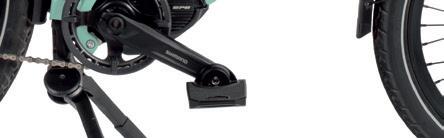
E-hybrid and compact E-cargo models designed to meet growing demand from city commuters and utility riders
Strong margins supported by a wide range of high-value accessories.
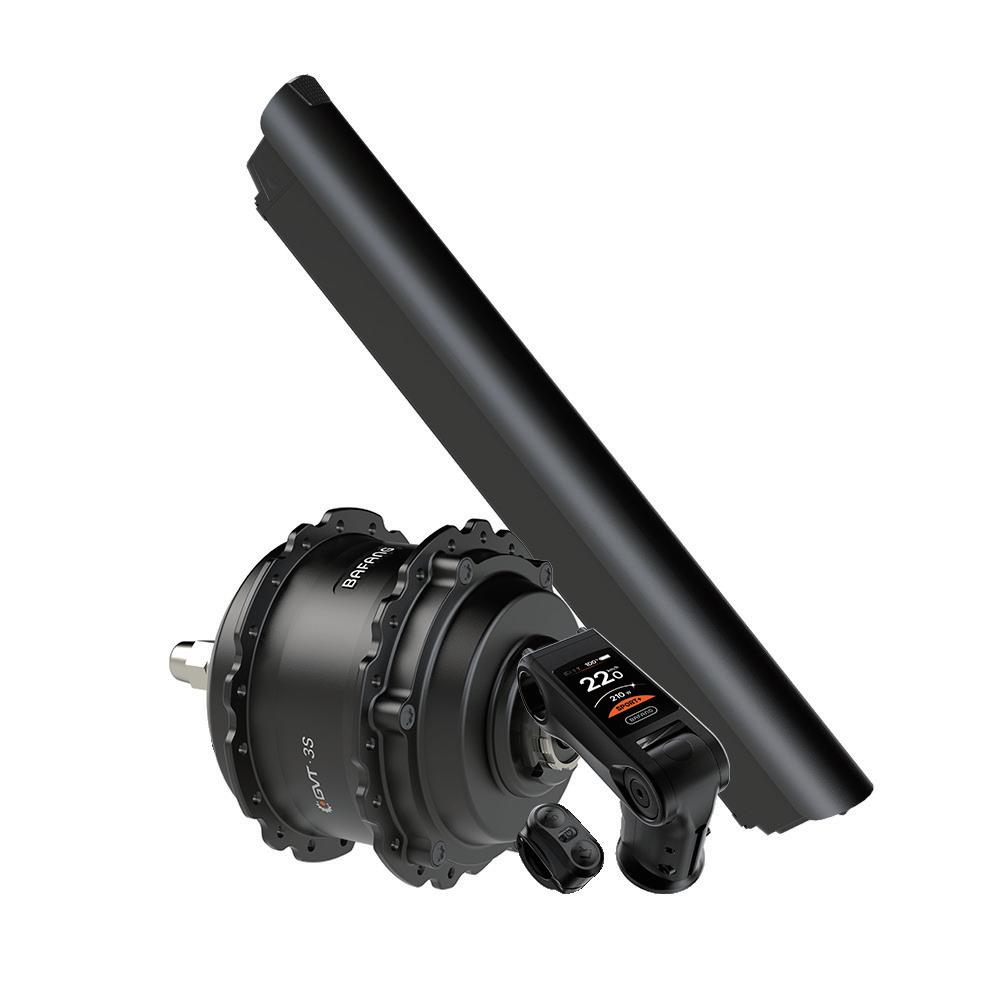
Bafang & Shimano Components, with full service and warranty with backup and spares in the UK.






EXCLUSIVELY DISTRIBUTED IN THE UK BY
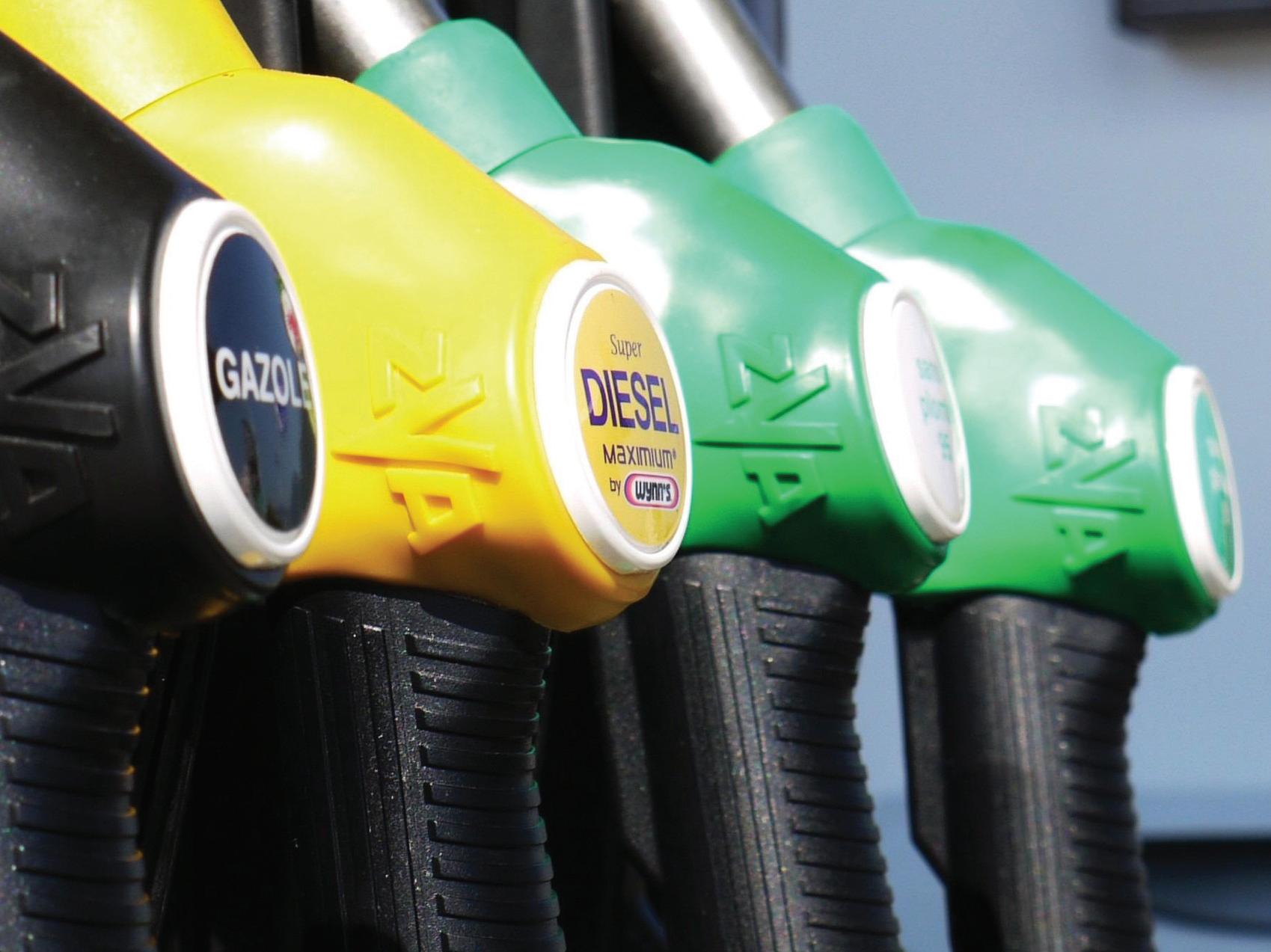
“THE PETROL AND DIESEL PUMP PRICE RISES HAVE ENORMOUS RAMIFICATIONS FOR OUR ECONOMY AND THE PRODUCTS THAT WE SELL IN THE BICYCLE INDUSTRY AND, IF HISTORY IS A GUIDE, A RECESSION FOLLOWS OIL SHOCKS JUST LIKE THESE”
don’t accidentally have a heart attack getting fit. So, whatever happened to that? A £12.7 million trial in 11 areas apparently did happen, but no results were ever published.
Meanwhile, an EU Urban Mobility Observatory joins the dots for us. In 2025, research found that “cycling 61 kilometres or more per week is associated with a lower risk of illness. On average, daily cyclists have 4.5 fewer sick days per year than their colleagues who drive.” Extrapolate this across the 34.3 million people in work in the UK and the chancellor could save a combined 1.54 billion sick days annually. What’s that worth to the economy? Using some data from the IPPR and HRnews, I was able to estimate around £2.1 billion.
Who said we need AI for productivity? We just need to cycle more. No, I’m serious, studies show that, particularly in children, when we habitually build physical activity into routines “activities that challenge their motor skills, such as balancing or coordination exercises, activate brain regions that
are responsible for cognitive processes like planning, decision-making, and problem-solving (Best, 2010; Shi et al., 2022; Veldman et al., 2019).”
Credit where it’s due, then, this Government has just handed BikeAbility £78 million in multi-year funding. The return on investment in backing our children is surely priceless.
3: Subsidise cycling:
Stimulate an industry, clean the air
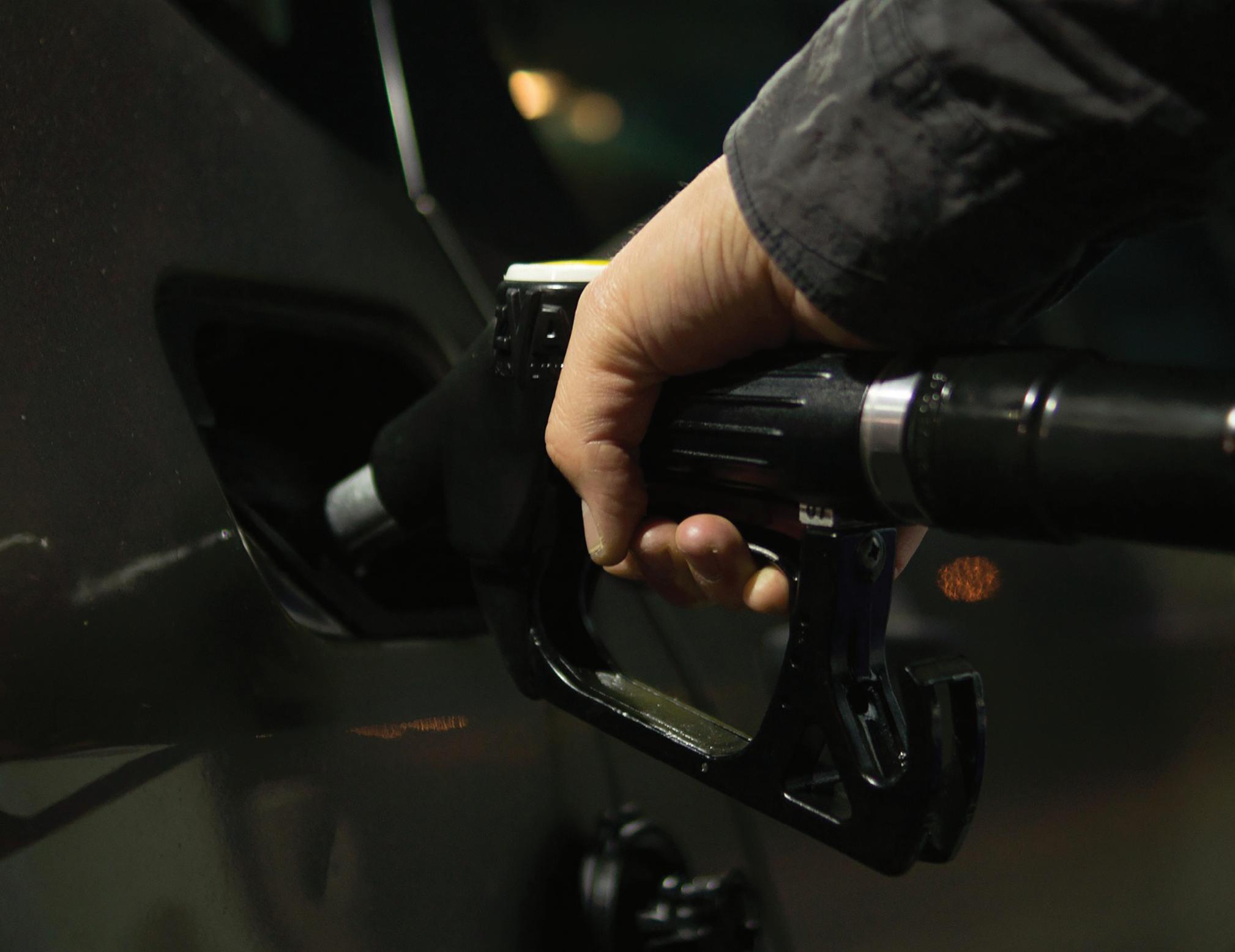
Did you know it only costs around one seventh of a penny per mile in sunk electricity cost to power an electric bike? Well, it did before the fuel crisis threatened to bump up our price per kWh. Perhaps your house runs on solar panels, in which case, maybe it’s technically free outside of your standing charges. In any case, based on a 50mpg efficiency and the aforementioned local garage diesel cost of £1.82 per gallon, a mile in my car is going to cost 17 pence, or nearly 120 times more expensive than the per-mile pedal assist option, excluding other cost comparisons.
Yes, the fuel crisis has thrown into focus the cost comparison mathematics again and the bizarre way that we pay for energy in the UK; the consumer is burdened to pay the cost of the most expensive feedstock in the mix (typically gas), regardless of whether, as happened in late March, over 80% of the grid’s energy came from renewables. Again, credit where it’s due, I think the Government understands this issue and is making some sensible adjustments.
That doesn’t help us much in the here and now, however, and arguably, what I’m about to write actually may cost the Treasury billions in lost motoring revenue, but save consumers plenty. That proposal is to introduce (even if temporarily) a subsidy on cycling products, as was put to work during Covid with the repair vouchers. Whether it is to remove the VAT from cycling goods and services, or to directly subsidise purchases, the results from around the globe speak for themselves.
Again, to repeat an all too familiar
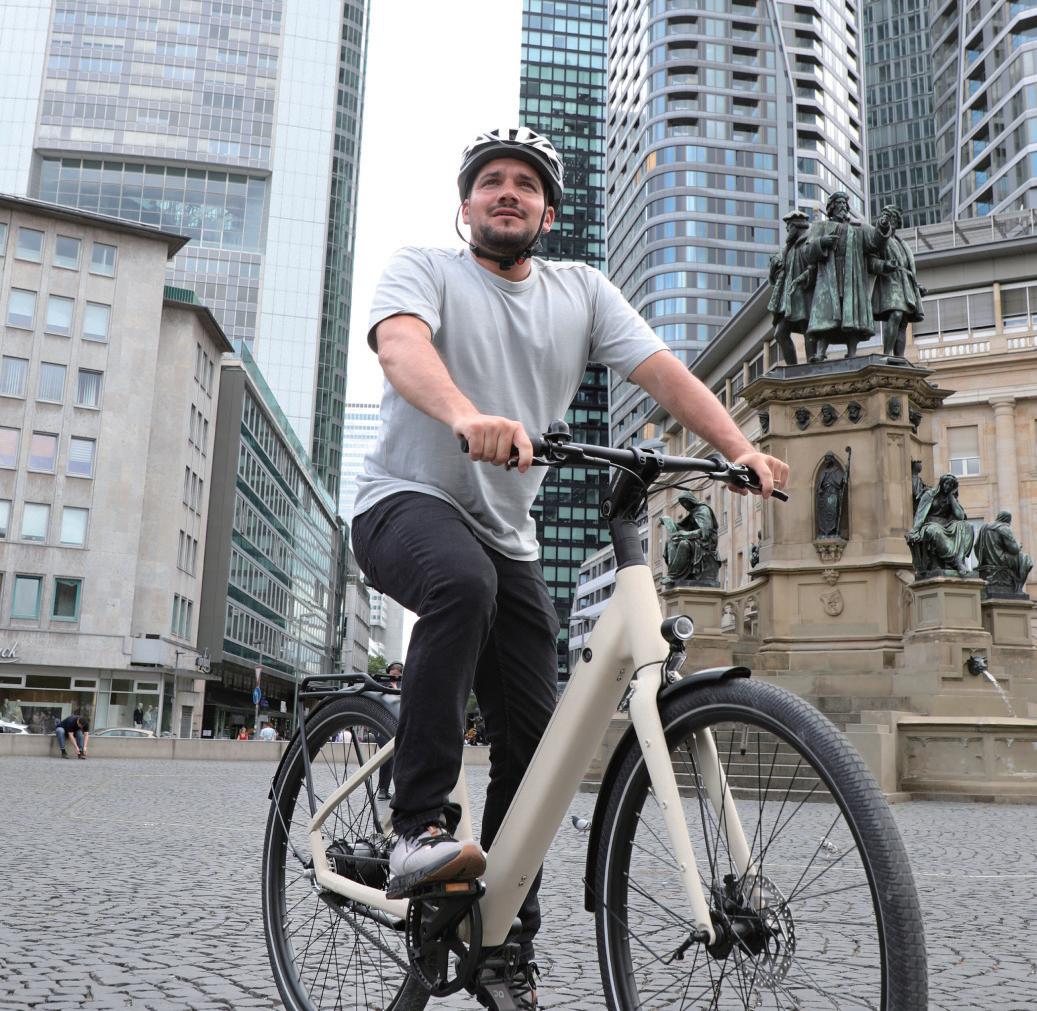




“SALES VIA THE CYCLE TO WORK SCHEME HAVE REPRESENTED AS MANY AS ONE IN FOUR SALES IN RECENT YEARS”

statistic, in France, where an electric bike subsidy was introduced, sales propelled from roughly the same 150,000 units the UK was selling, right up to 750,000 units before the subsidy was cut last year. The net result, along with the visionary overhaul of the infrastructure in Paris by mayor Anne Higaldo, was a capital city transformed. Perhaps most striking, beyond the drastic modal share pivot, was that air pollution dropped substantially. Nitrogen dioxide, which is harmful to the respiratory system, has fallen 45% in 10 years and fine particulate matter by 35%.
In the UK, where transport emissions are our largest source of greenhouse gases at around a quarter of all emissions, CBI Economics reveals that an expansion of London’s ULEZ scheme has delivered a 28% NO2 reduction, which is estimated to be good for the prevention of 600 premature deaths in the capital and 1,300 saved days of hospitalisation. To the economy, that’s worth 2.5 million working hours annually and £48
million in Gross Added Value. Separately, a World Bank Report put the cost of dirty air at $8.1 trillion, which is 6.1% of global GDP.
4: Cycle to work: Hold the knee-jerk reaction, there’s a £1.8 billion industry hanging in here
I have encountered some nervous reactions to this subject of late and it’s now a poorly kept secret that the cycle to work scheme was very nearly culled by Rachel Reeves’ team last year. Thankfully, that didn’t materialise and, of course, I say thankfully fully aware of the caveat that some wouldn’t have missed it. However, in recent years, sales via the scheme have represented as many as one in four sales within an industry that the Bicycle Association values, directly, at around £1.78 billion, exclusive of all the juicy positive externalities discussed here.
Let’s imagine, then, that the scheme was cut totally, not revised as would make far more sense. Coming at a time when we have had at least ten consecutive months of market growth,
that cut would potentially make 25% of bike and eBike sales in the very best case, hesitated upon and in the more likely worst case, not purchased at all. It’s widely accepted that electric bike sales and service trade has propped up the bike industry in recent years, and the former especially is actually seeing the specialist retailer segment outperform the generalist. The eBike is essentially keeping an independent retail sector going. Yet, given the higher prices, many of these are bought via the cycle to work scheme.
Now we know the scheme, as it stands, is about trade-offs. The structure has long irked independents who, fairly, are not happy to have their often thin margins scalped. It’s imperfect, it needs reform and expansion beyond PAYE. As I mentioned earlier, there are 34.3 million people working in the UK out of an ageing population of 69.8 million. Those who most need eBikes – the elderly wanting to stay fit, the disabled who want to stay mobile, and the unemployed who most need cheap transport – are largely locked out. Yet
“WHAT GOOD IS AN ECONOMY THAT DOESN'T WORK PARTICULARLY WELL FOR MANY PEOPLE, ON A PLANET THAT IS STARTING TO LOSE ITS ABILITY TO FUNCTION?”

if a Chancellor gave them access, theoretically, 150,000 electric bike sales could grow very easily to 187,500 per year and beyond very quickly.
The average sales price of bikes put through the cycle to work scheme do tend to be higher priced than a typical sale, with 34% of users putting their voucher against a bike or e-bike over £1,000. So cumulatively, there’s a lot of direct and indirect economic value not in cutting the scheme, but in refining it so that it is fair and equitable for all.
5: We can’t afford not to think differently
It’s full circle time. This data-rich deep dive is primarily pitched at dropping hints to the Chancellor that the economic case for cycling is enormous. Actually, the Department for Transport estimates that, at the very least, for every £1 spent £4 is returned and some data has gone as far to suggest that, all things considered, the figure is as high as £35 returned.
This is old ground; the Government knows this, the DfT commissioned the paper.

But what good is an economy that doesn’t work particularly well for many people, on a planet that is starting to lose its ability to function? This is the question that I think we should all be considering now, and our transport habits really matter in this context. Our reliance on fossil fuels has, for some time, been waning and were it not for AI’s energy demand growing exponentially, coal would be almost consigned to the history books too. Yet, here we are, fighting another war for the stuff, reviving dying demand, crashing the global economy almost on purpose.
If the scientists are right and the world is now warming at 0.35 degrees per decade, then we will have passed two degrees of global warming in our lifetimes, a threshold where even farmers will attest that agriculture becomes extremely difficult for much of the world.
There are now multiple studies that show that the cost of acting on climate will continue to be substantially lower

than the economic damage that is already happening. In fact, the UK Climate Change Committee calculated that the 2022 Russia-Ukraine oil shock was roughly equivalent to the entire cost of targeting net zero by 2050. How big is the current oil crisis compared to that war? According to the IEA, the Russian invasion equates to about 3 million barrels of oil lost per day, while the Strait of Hormuz crisis, which stops the flow of around 20% of the total global supply, is more than double at 8 million per day.
“IF CORRECT, THE STUDIES THAT SAY THE WORLD IS NOW WARMING AT 0.35 DEGREES PER DECADE MEAN WE WILL HAVE PASSED TWO DEGREES OF GLOBAL WARMING IN OUR LIFETIMES... A THRESHOLD WHERE AGRICULTURE BECOMES EXTREMELY DIFFICULT FOR MUCH OF THE WORLD”
This reliance on oil is helping nobody. Actually, it’s making us poorer, it’s dirtying our air, land and seas, and over the course of history, millions have died either directly or indirectly and will continue to do so. This should matter far more than any economic story I could tell.
So, tell me, Chancellor, will you chicken out and again freeze fuel duty at the next budget, again depriving the treasury of the true cost of a society that prioritises motoring’s negative return on investment? And why,
at approximately £156.5 million a year for four budgeted years, is the entire walking and cycling budget combined nearly 47 times smaller than the £7.3 billion local roads boost announced in December and 172.5 times smaller than the £27 billion 5-year major A roads and motorways budget?
I am reliably informed by Damir Huskic, the Managing Director of Laka’s Trade arm, which is actively researching the climate costs of moving people from cars to bikes, as well as building a circular economy of a simple fact. “For every 1,000 electric bikes on the road, 440 tonnes of CO 2 are saved per year. As part of an observed reduction in car usage of 17%.”
Herein lies a very simple answer to one of the UK’s most pressing issues –how to cut our largest source of emissions and unlock our economic constraints all at once. The savings here are immeasurable and our children will thank us for having the courage to act now.

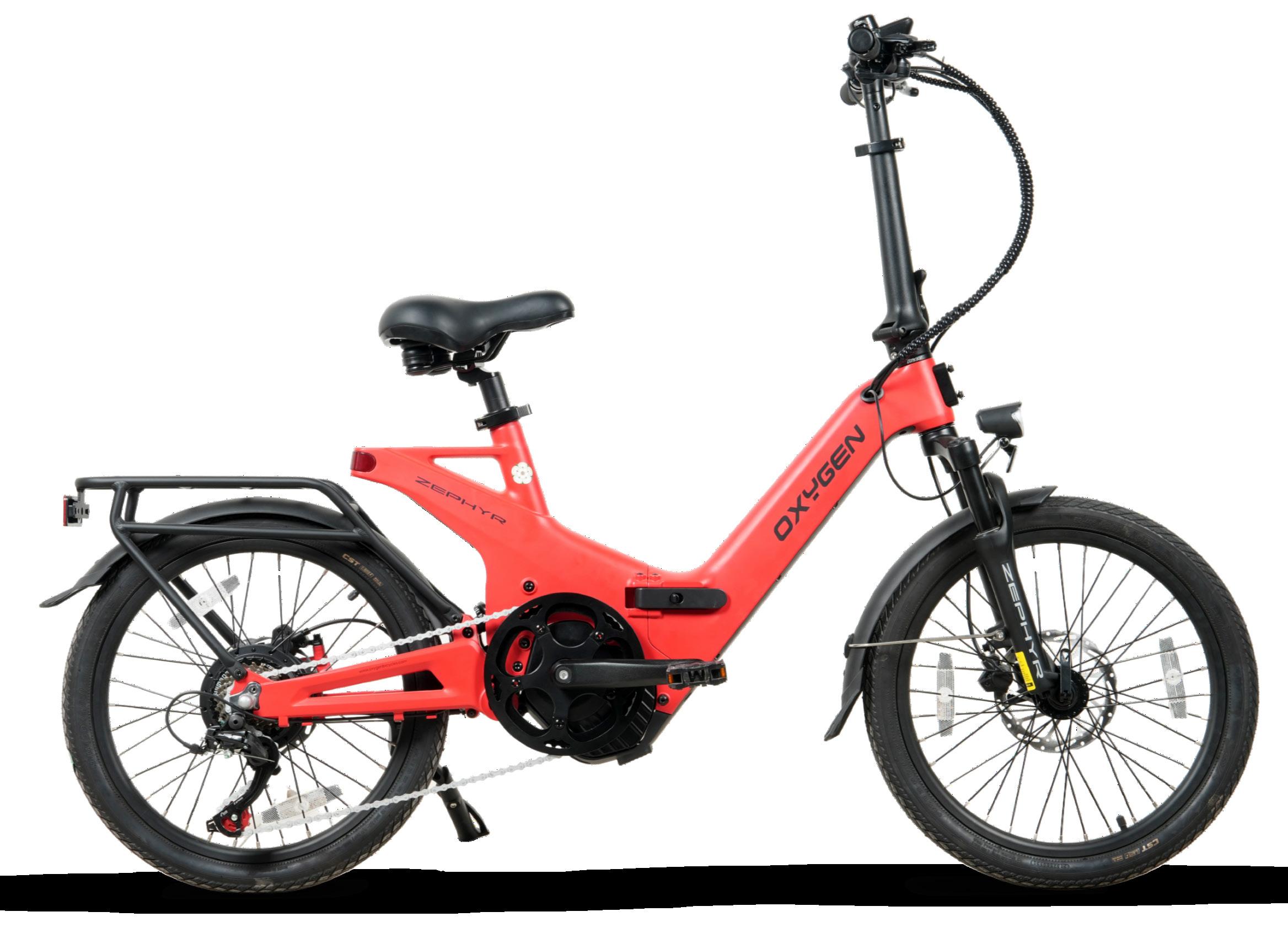
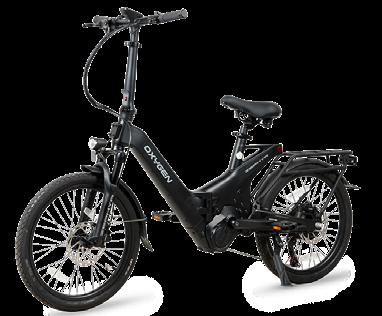
ZEPHYR FOLDING E-BIKE
Magnesium Frame • Tektro Hydraulic Brakes • 1KG Small
discrete 10.5Ah battery • Torque Sensor powered rear hub • Integrated Screen & Rear Light • Full Suspension • 7 Speed
Shimano Gearing • Mounting for Front Basket
Available in two colourways
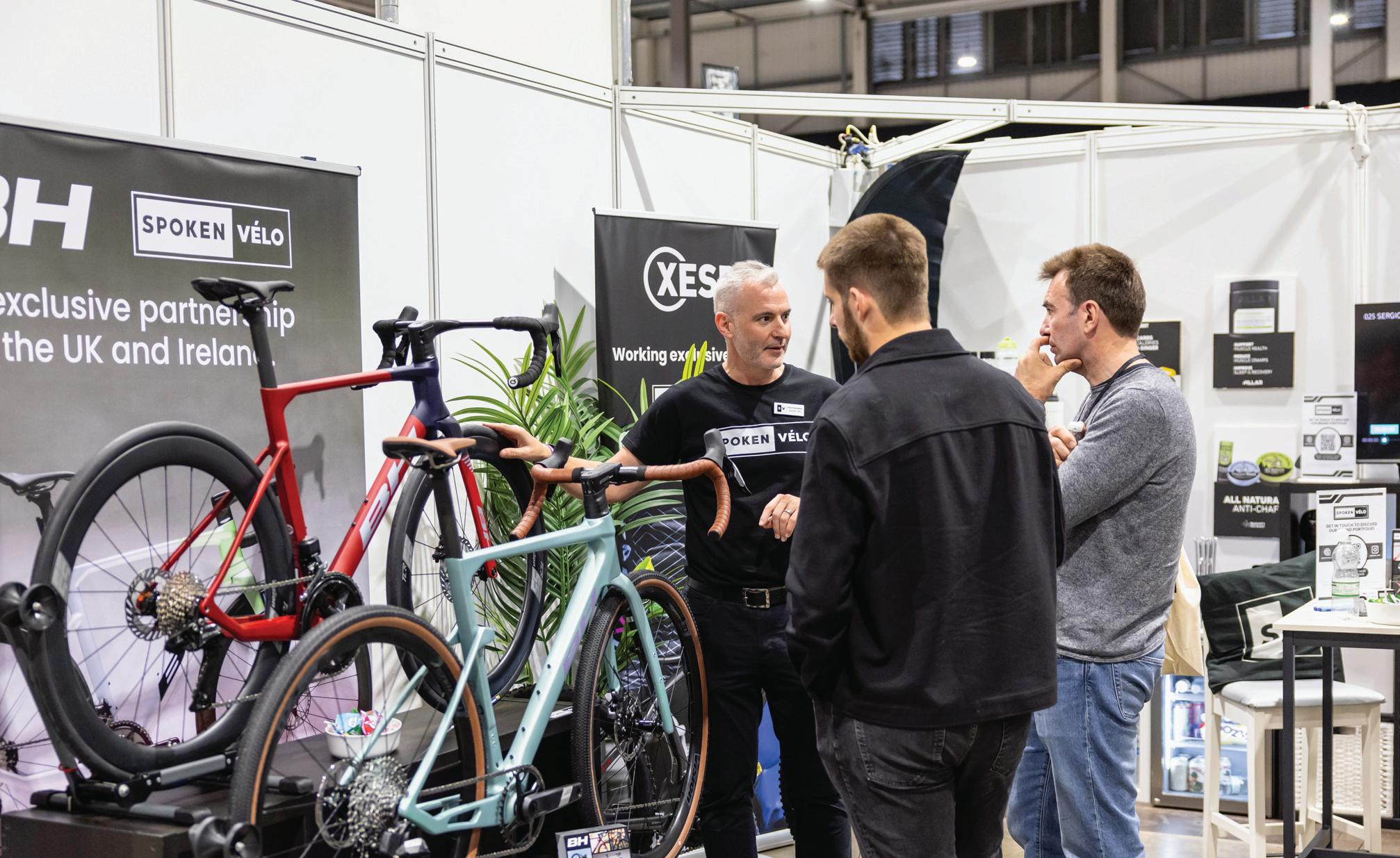
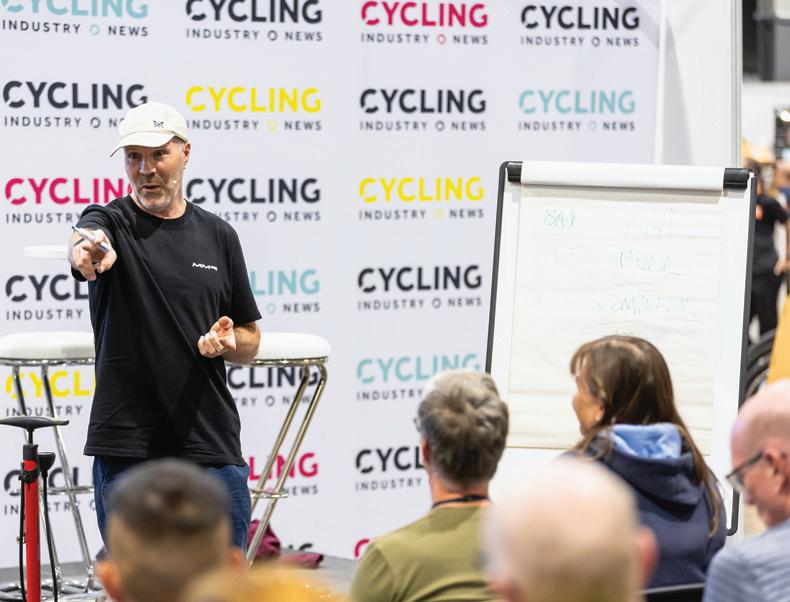
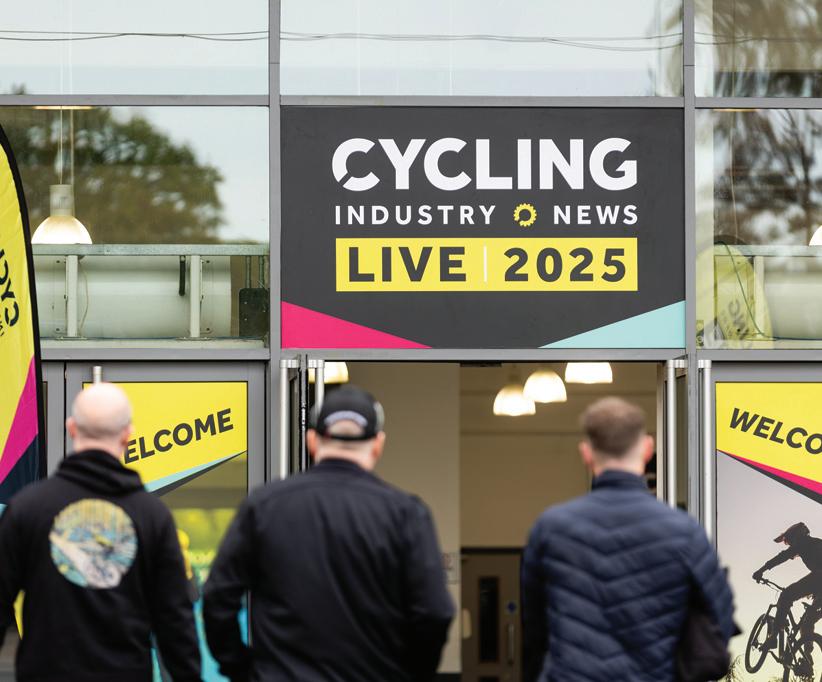
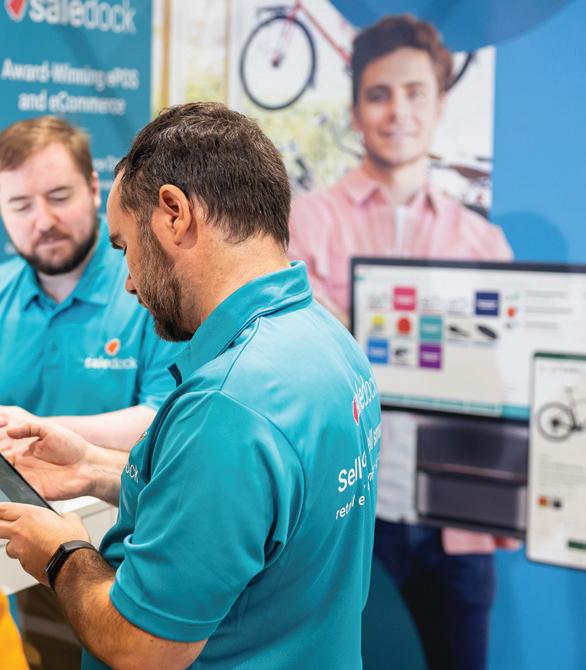
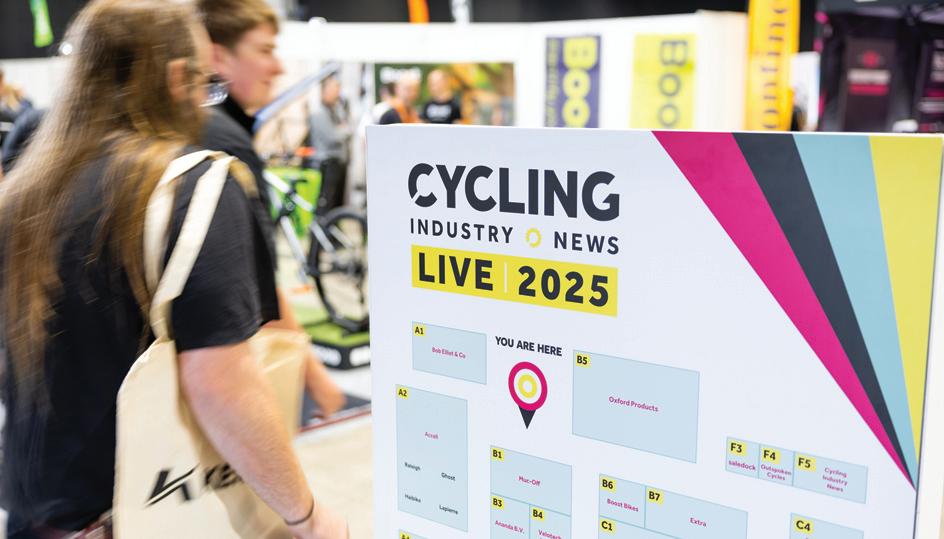
Getting face-to-face with the trade remains one of the vital draws for a trade show and Cycling Industry News Live plans to deliver on those at the NAEC Stoneleigh this September, with more exhibitors, new seminars, new products, networking opportunities and more…
It’s a curious thing; as the digital world has become an ever more vital conduit for us all to expand our reach and connect with customers, the value of getting face-to-face with your clientele has remained constant, or even more valuable, dare we say.
Time spent with existing and potential customers and suppliers is time well spent – it’s hardly a revelatory point to make, but it’s a reassuringly old-fashioned principle that still holds true. Of course, the organiser of CIN Live would say that, but we do have a few statistics to prove it – and no doubt anyone attending or involved with the other thriving UK bike industry events like COREbike and iceBike* or other house shows would attest, it’s absolutely true.
IN PERSON, SPEAKING DIRECT WITH BRAND
We’ve dug into our own Market Data project in formulating CIN Live, drilling down to what bike shops and workshops really want from a trade show.
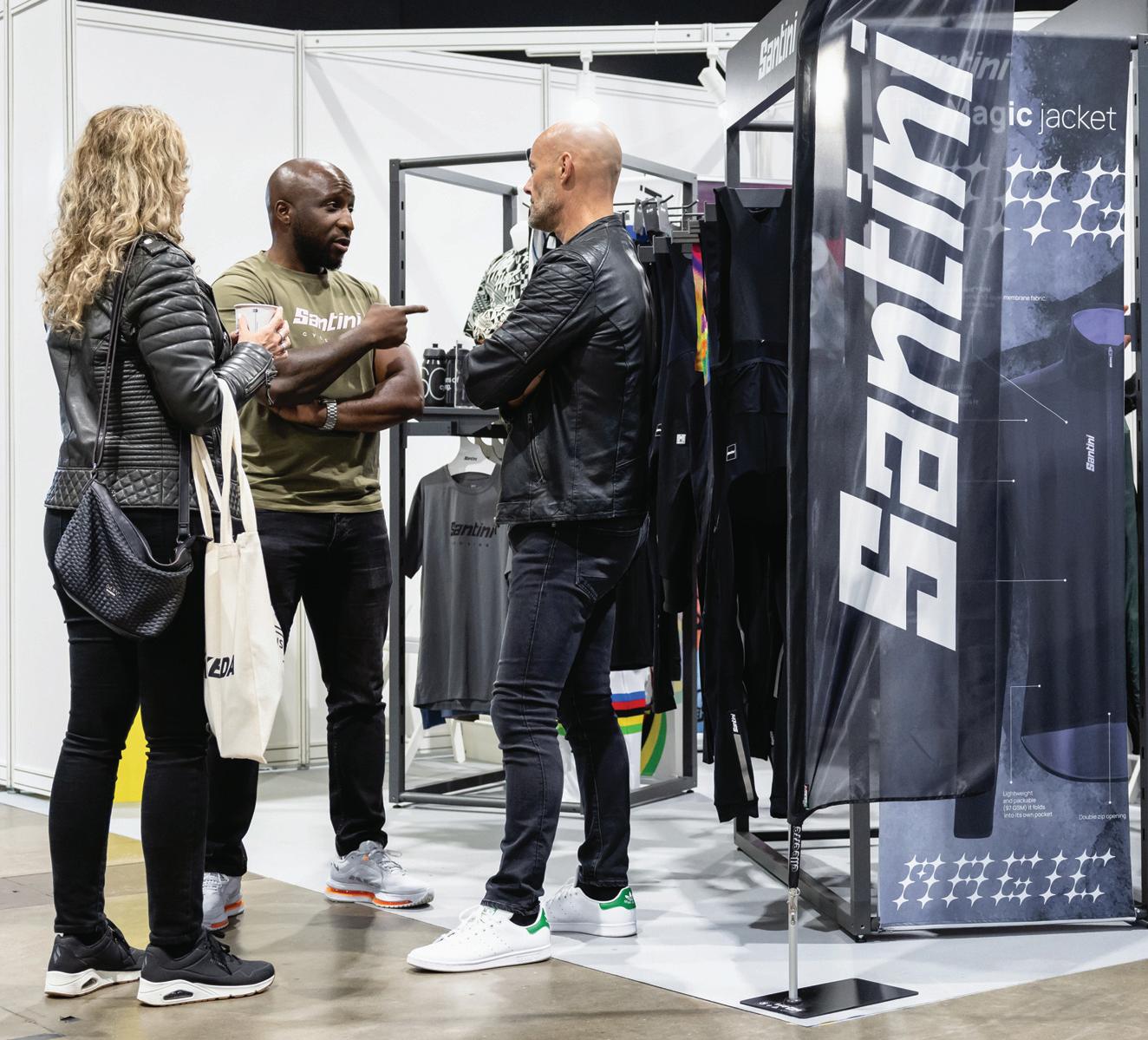

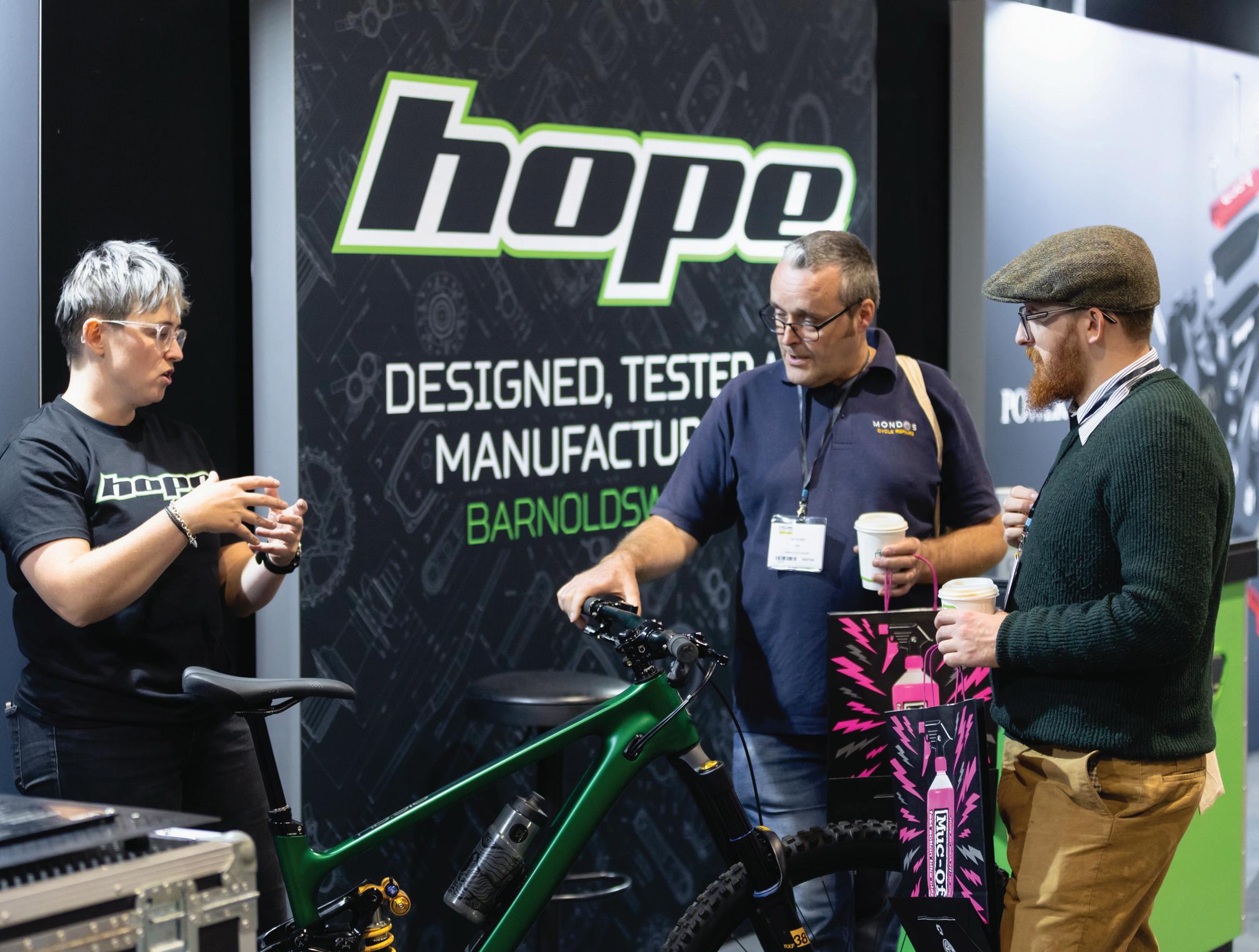
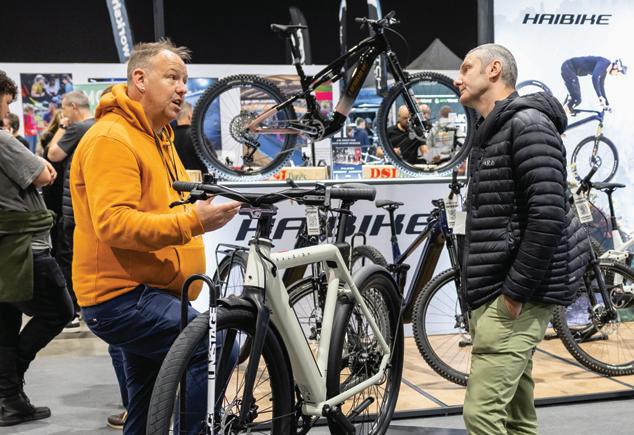
The Market Data report has repeatedly highlighted seminars and the latest set of data reveals that continues: 38% of bike shops and workshops attending trade shows place seminars as a key draw. Related, a huge 46% are interested in better retailing and product displays, echoing the point that engaged shops are keen to educate. Probably little surprise, but the opportunity for dealers to speak with brand managers directly is absolutely vital – 72% of shops view this as a key draw to a trade show. New products is almost as important (62%), while almost a third (32%) see accessing show deals as important draws to a show. At CIN Live, there’ll be plenty of all those and more.
Thanks to its timing, CIN Live will be an ideal opportunity for visitors to catch up with new brand signings by distributors, new product launches and a wider breadth of suppliers. The vast majority of exhibitors are returning and there’ll be new-for-the-show names too. Stay tuned to the site and mag for the latest on those.
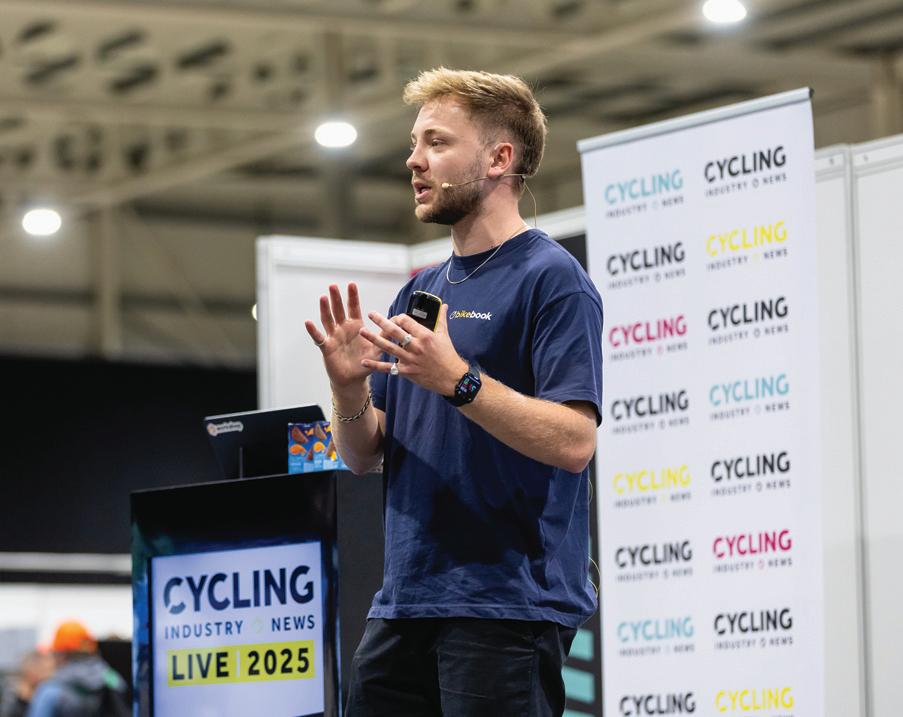
The seminar stage will once again be key to CIN Live and we’re currently combing the industry and beyond for expert speakers to bring insights into the trade. So, if thought leadership is your thing, or you’ve expertise to share, then let us know and express
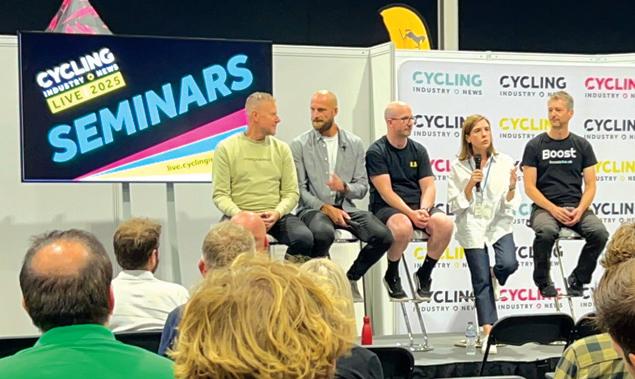
your interest before the end of May. Running Sunday 20 to Monday 21 September, Cycling Industry News Live is chance for the whole cycling industry to get under one roof to assess the market, see new products and brands, reinforce or forge new working relationships and partnerships as well as sit in a few seminars designed to help retailers and workshops with their businesses and provide insights into the broader market.
Prospective exhibitors can register interest at Lloyd@cyclingindustry.news
Visitors should watch this space and the official site live.cyclingindustry.news for when pre-reg opens later this year
NEWS LIVE 2026 run over 20-21 September at NAEC Stoneleigh, Warwickshire














WELDTITE
The North Lincolnshire care and maintenance specialist is using its domestic production credentials to sharpen pricing, push into the US market and carve out space in a crowded category. Werner MüllerSchell speaks with Dan Leather, Head of Sales, and CEO Paul Davis
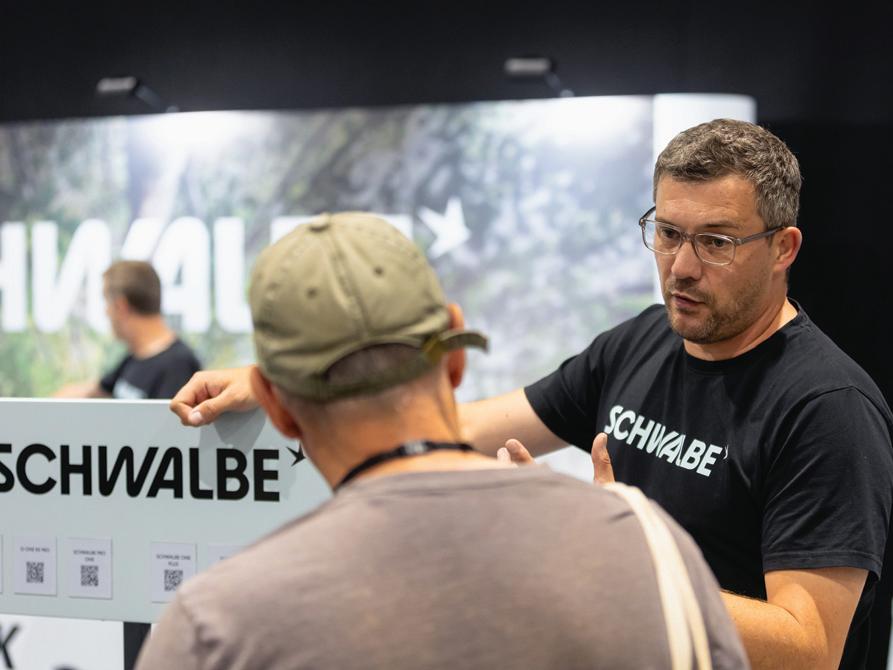
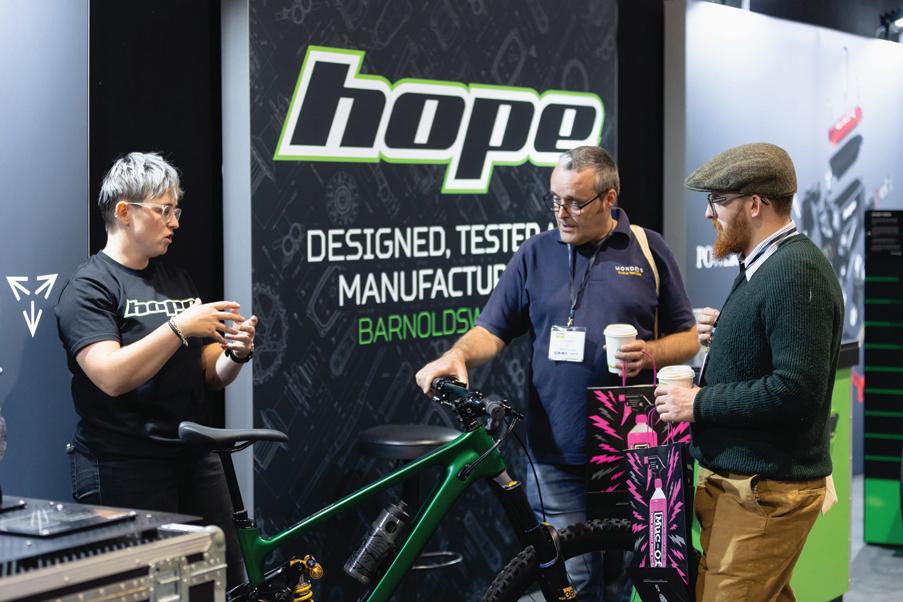
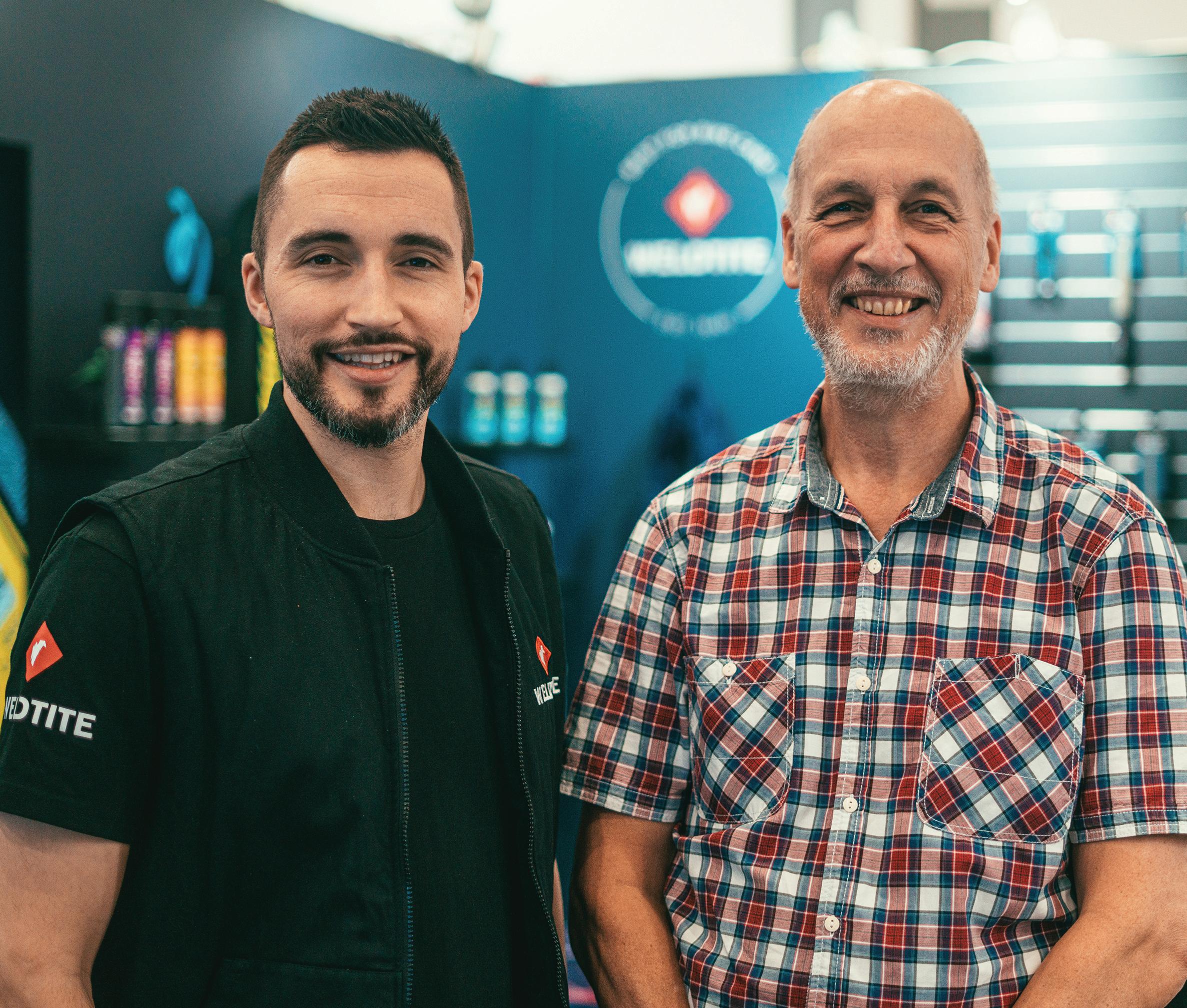
Few product categories in the bicycle business are as fiercely contested as care and maintenance. It is the small things that make the difference – or the USPs. British Weldtite has clearly taken that to heart, as a closer look behind the scenes of the care and maintenance specialist quickly reveals. One of those USPs is hiding in plain sight: a factory at home. All liquids in the range are blended and mixed at the company’s facility in Barton, North Lincolnshire — a fact that Dan Leather, Head of Sales, returns to repeatedly during our visit to the Weldtite booth at Taipei Cycle 2026. “Our supply chains are much shorter, and we can offer better pricing to distributors and better margins for retailers,” he says.
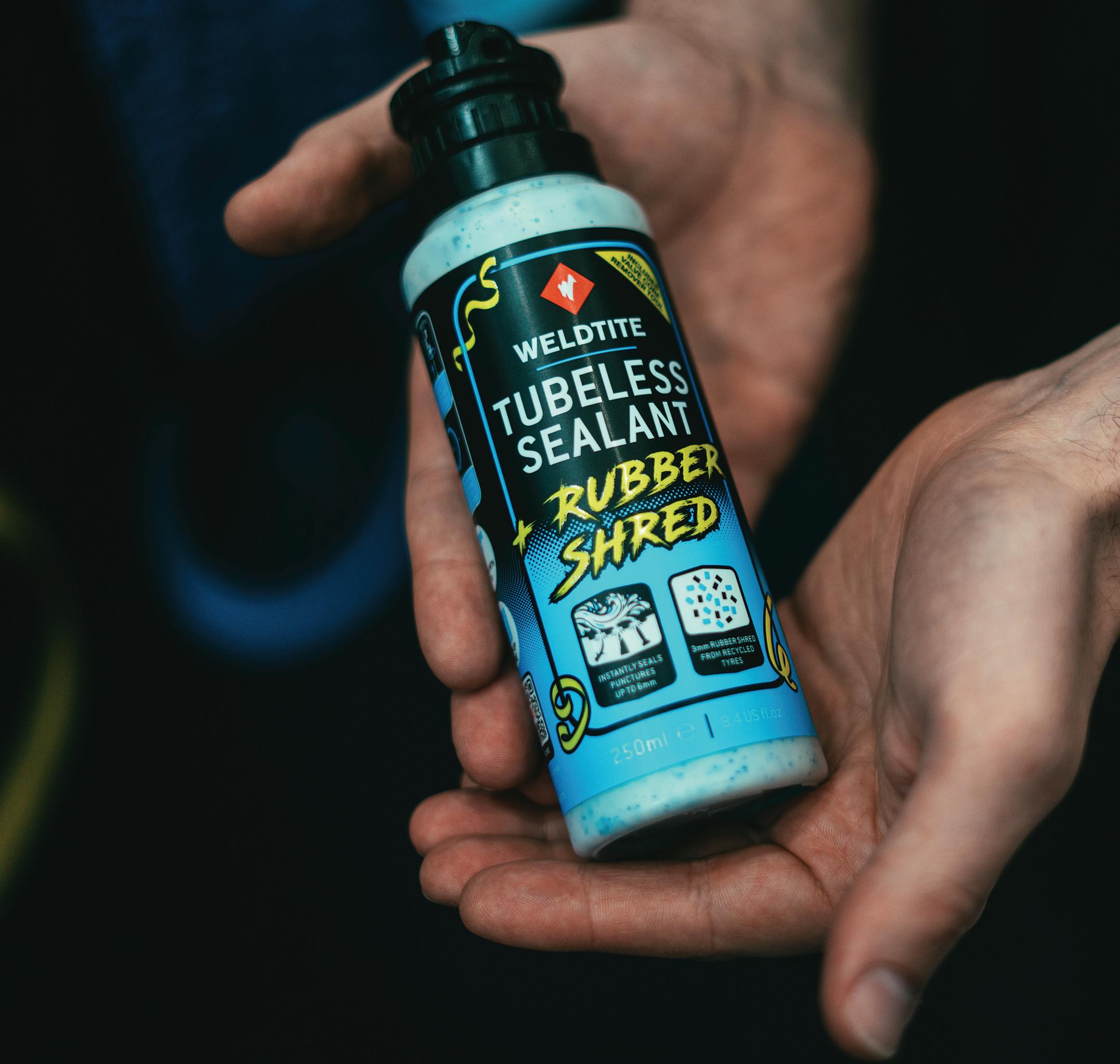
At the show in Taiwan, the North Lincolnshire-based company was showing new additions to its lubricant and sealant range alongside an expanded tools offering. The most notable product update is a reformulated wax chain lube with significantly increased wax content, designed to last longer on the chain and handle light rain – a timely development given the rapid growth of the waxing category. Also drawing attention was its tubeless sealant, recently reformulated to include rubber shred sourced from recycled tyres that would otherwise go to landfill. The sealant seals punctures up to six millimetres and ships with a purposeengineered cap housing integrated Presta and Schrader valve removers. “A 360-
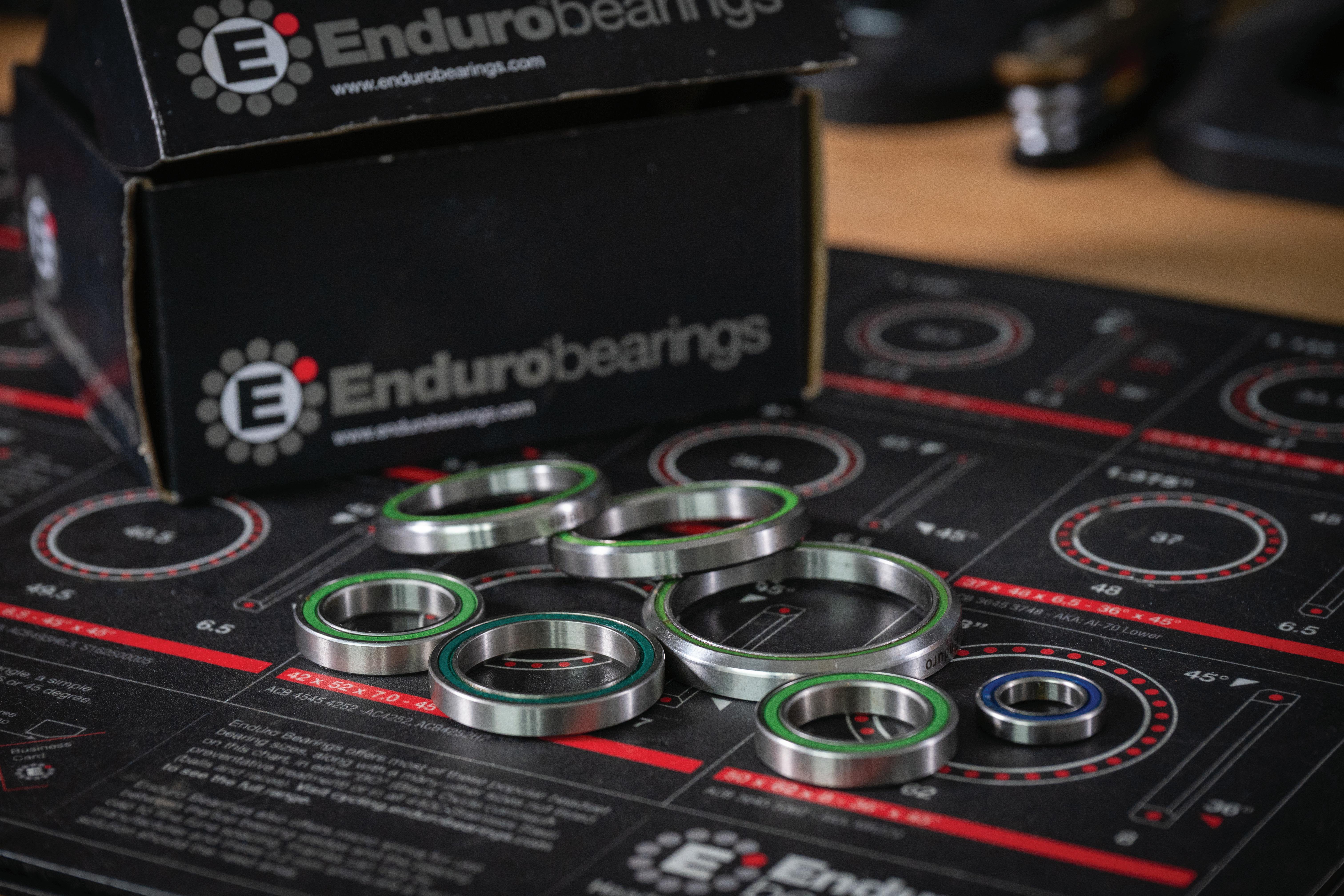
Contact your Area Sales Manager to learn more about the range •1996 - 2026
• The only bicycle-specific bearing company
• Larger balls, deeper grooves, dual-lip seals, specific greases
• Lifetime guaranteed components and bearings
• Most comprehensive range on the market
• Great pricing and availability
“THE SEALANT SEALS PUNCTURES UP TO SIX MILLIMETRES AND SHIPS WITH A PURPOSEENGINEERED CAP HOUSING INTEGRATED PRESTA AND SCHRADER VALVE REMOVER”
degree approach,” as Leather puts it. The bigger news, however, is geographic. Weldtite is already present in around 60 countries, but the United States has remained largely untapped. That changes this year. Just recently, the company shipped its first 40-foot container to the US, backed by a newly established entity – Weldtite USA – operating out of Miami. The distribution company was set up by a contact who originally came through Weldtite’s Irish
distributor and relocated to the US, bringing both familiarity with the brand and local market knowledge. Ecommerce will support early brand building, while the dealer network is built more gradually. “If you’re a bike brand entering the US, it's quite straightforward. Bike maintenance, however, is not like that,” said CEO Paul Davis, who was also present in Taipei. “You’ve got to win the hearts and minds of the bike shop owners. And that’s our goal.”
The learning from our visit to the Weldtite booth in Taipei: in a category where the margins between products are often slim and the competition relentless, Weldtite’s answer is consistent: manufacture it yourself, price it right, and build trust one workshop at a time. The small things, it turns out, add up.
weldtite.cc
Words and photography: Werner Müller-Schell



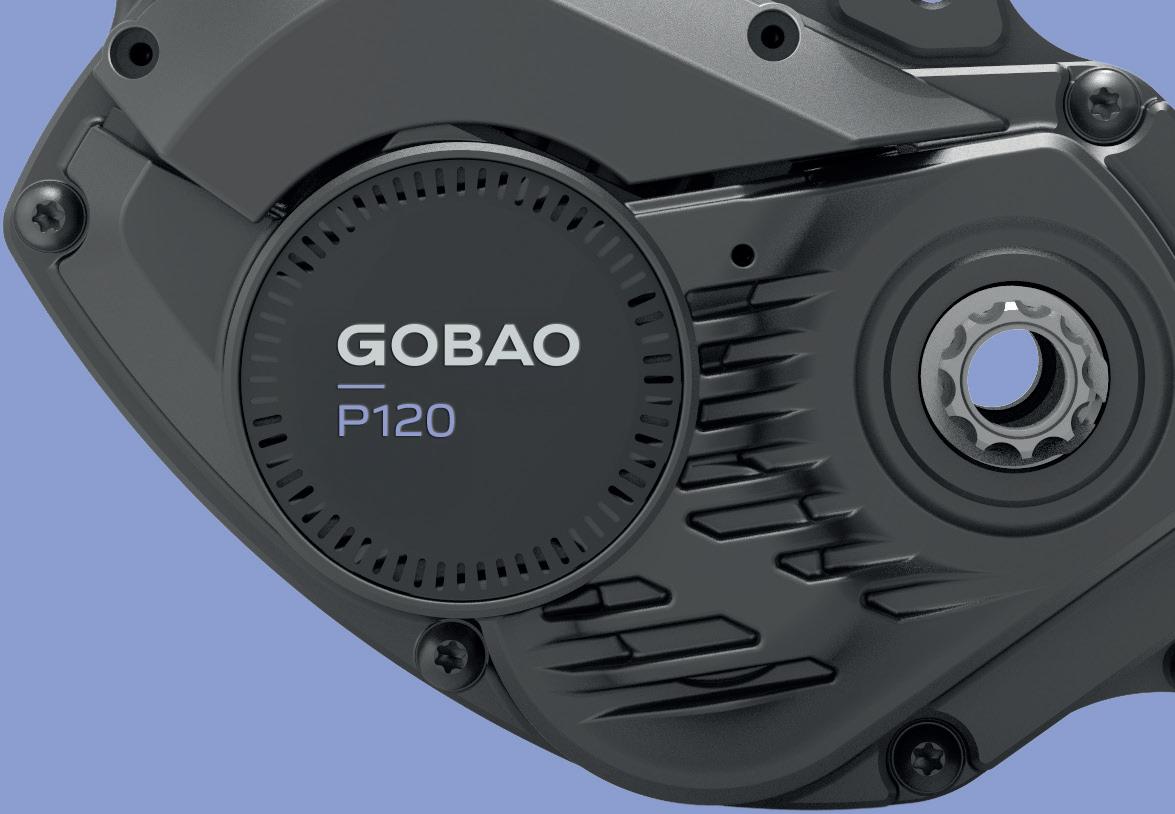
The emerging developer and manufacturer of e-bike drive systems, Gobao, is expanding its portfolio with a 120 Nm motor and numerous updates. A flexible system approach enables manufacturers to efficiently implement powerful, connected and customizable e-bike concepts.
www.gobao-ebike.com






The new drive turns 120 Nm of torque into dynamic acceleration and clearly noticeable power. At the same time, thermal performance remains stable, ensuring consistent power output. The result is an uncompromised riding experience. Although the P120 delivers more power than its sibling, the P100, the dimensions of the motor housing remain the same and the mounting points are identical. The motor can therefore be installed in existing motor mounts. Greater flexibility is hard to imagine.
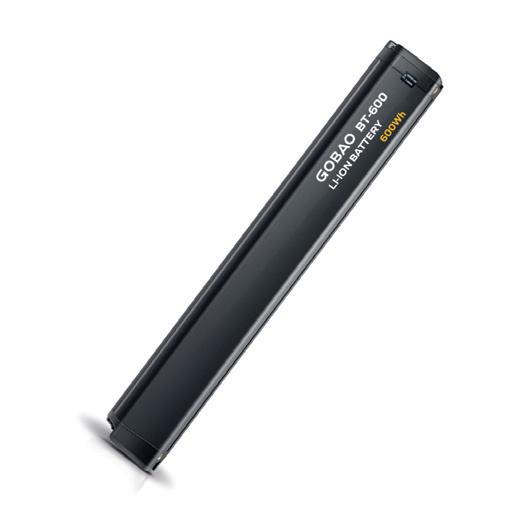




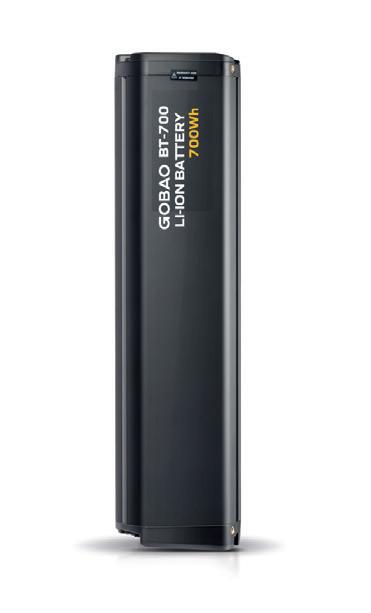
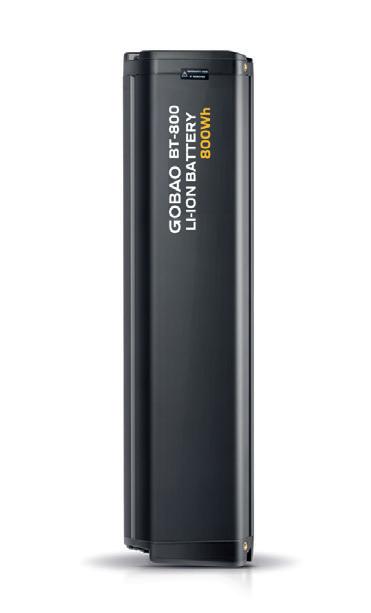

An exceptionally high energy density sets new standards in the industry. 700Wh , 3.8kg | 800Wh, 4.0kg | 600Wh, 2.9kg The dimensions of the 700 Wh and 800 Wh batteries are identical. This allows flexible integration across different bike concepts.
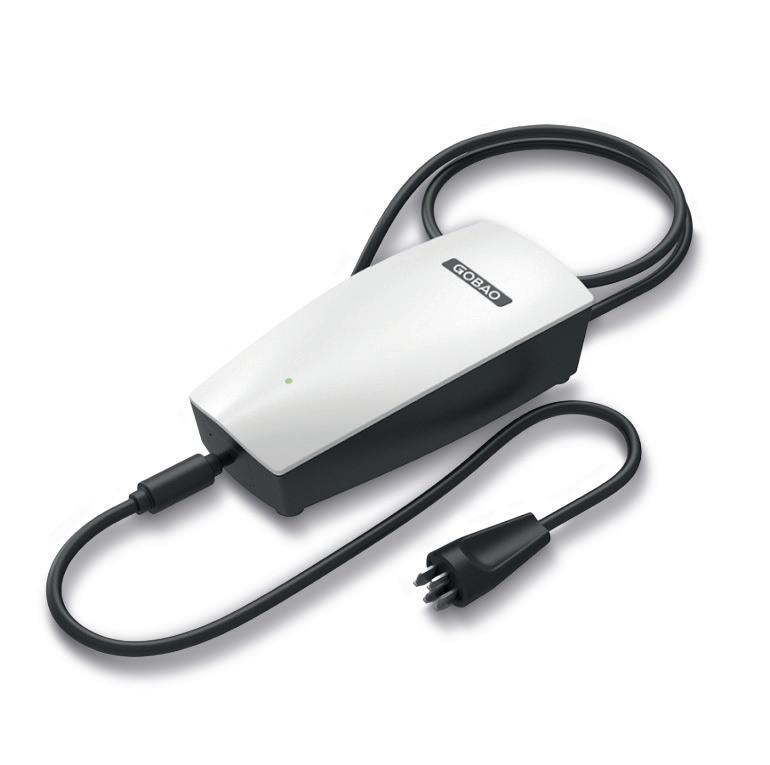
Fast charging with 6 A, 700 Wh in just 4 h.
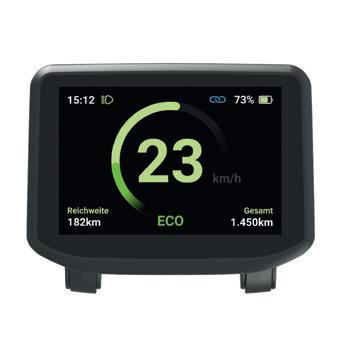
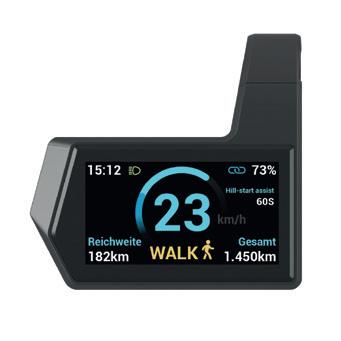
Two color displays are available. Together with the Gobao App, they form the interface between bike and rider.