LAW
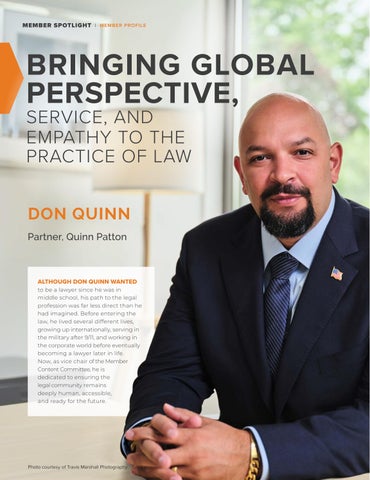
Partner, Quinn Patton DON QUINN
ALTHOUGH DON QUINN WANTED to be a lawyer since he was in middle school, his path to the legal profession was far less direct than he had imagined. Before entering the law, he lived several different lives, growing up internationally, serving in the military after 9/11, and working in the corporate world before eventually becoming a lawyer later in life. Now, as vice chair of the Member Content Committee, he is dedicated to ensuring the legal community remains deeply human, accessible, and ready for the future.
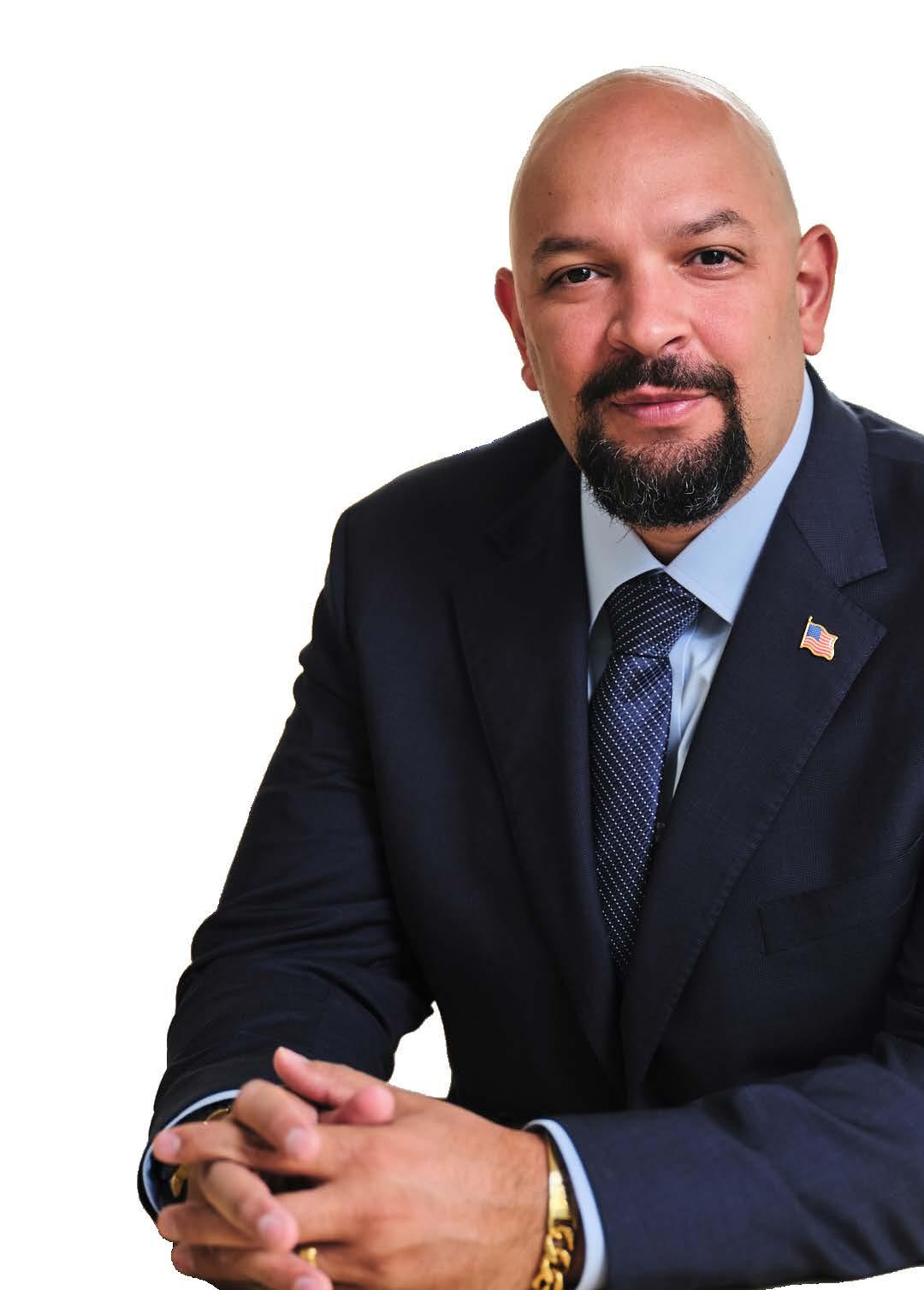
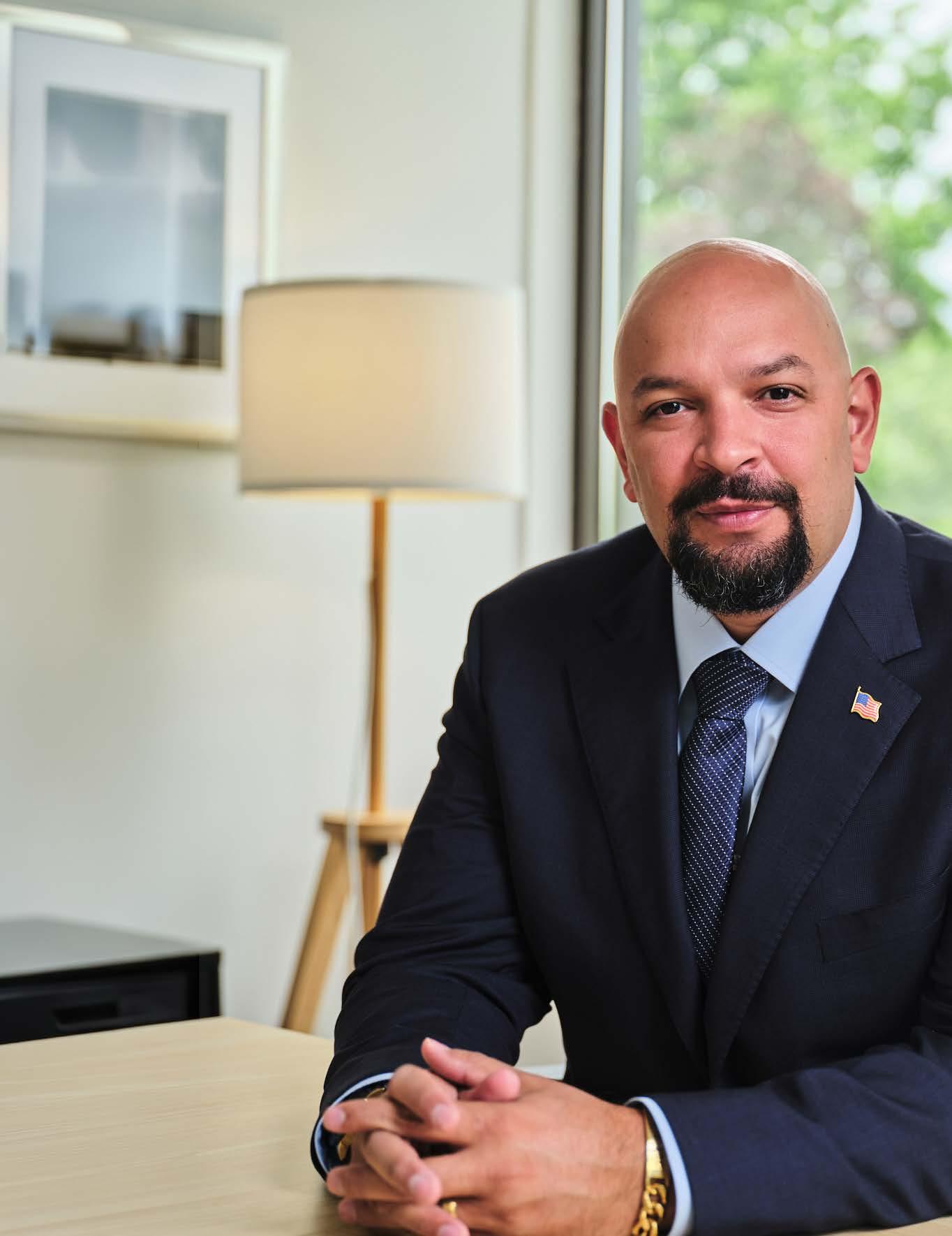
Photo courtesy of Travis Marshall Photography
Legal work is rarely just about statutes or pleadings. Sometimes it is about helping someone reclaim stability, dignity, and the ability to imagine a future again.
Why did you enter the legal profession?
When I entered the profession, I understood that the law was not simply about argument or prestige; it was about helping people navigate systems that often feel overwhelming when their careers, livelihoods, or identities are suddenly at risk. In many ways, becoming a lawyer was the convergence of everything that came before it: service, strategy, advocacy, and the belief that institutions work best when someone is willing to challenge them thoughtfully.
What is your fondest memory of your legal career so far?
One of my clients was determined to continue her legal fight despite having extremely limited financial resources. At one point, she began driving for DoorDash to help sustain the litigation. I still remember the moment we were able to tell her that her case had resolved with a substantial settlement. That resolution allowed her to purchase a home, begin a Ph.D. program, and relocate closer to her grandchildren in the Carolinas. Moments like that remind you that legal work is rarely just about statutes or pleadings. Sometimes it is about helping someone reclaim stability, dignity, and the ability to imagine a future again.
What makes you unique in your profession?
I think what makes my perspective somewhat unusual is that I entered the profession after several very different chapters in my life. I was born in the deep south, raised largely in India, returned to the United States as a teenager, served in the military after 9/11, became deeply involved in politics and public life, ran for office, raised seven children, and ultimately entered law school later than many of my peers.
Those experiences gave me a deep appreciation for how differently people experience institutions, authority, opportunity, and even the idea of belonging itself. They also taught me that most legal problems are never purely legal problems; they are usually personal, financial, emotional, and institutional all at once. As a lawyer, I try to bring that broader perspective into my practice. It allows me to connect with clients from very different backgrounds and to approach legal problems with both empathy and pragmatism.
Tell us a little about your biggest project related to your professional career right now.
Right now, much of my energy is focused on helping federal employees and veterans navigate a period of enormous uncertainty and institutional disruption. In recent years, we have seen waves of federal employees facing sudden investigations, terminations, disability-related disputes, and significant workplace instability. Many of these individuals dedicated decades of service, believing they had stable careers, only to find themselves abruptly fighting to protect their livelihoods and reputations.
That work is deeply personal to me because of both my military background and my belief that institutions have an obligation to treat people fairly, especially those who have devoted their lives to public service. My goal is not simply to litigate cases successfully, but to help create pathways for people to rebuild professionally and personally after incredibly difficult moments in their lives.
Running in parallel with that work is another passion project that matters deeply to me: helping to make the legal profession itself healthier, more accessible, and more sustainable for both lawyers and clients. Through bar leadership, mentoring younger attorneys, speaking engagements, and community involvement, I have become increasingly interested in how we create a profession that remains rigorous and excellent without becoming inaccessible or disconnected from the people it serves. Access to justice cannot simply be a slogan; it requires lawyers willing to invest in institutions, mentor the next generation, and rethink how legal services are delivered to ordinary people.
Tell us a little bit about your current role.
I am a partner at Quinn Patton, where my practice sits primarily at the intersection of employment law, civil rights, and federal employee representation across Maryland and the District of Columbia. A significant portion of my work involves representing federal employees, veterans, and individuals navigating workplace disputes during some of the most stressful periods of their professional lives. At the same time, I also advise employers and organizations on compliance, workplace practices, and risk management, which gives me the benefit of seeing workplace conflict from multiple perspectives.
“
The practice of law can be isolating at times, and organizations like the MSBA help remind attorneys that we are part of something larger than our individual cases or firms.
As a small, rapidly growing firm, my role extends well beyond litigation. On any given day, I may be in court, negotiating a resolution, mentoring younger attorneys, helping shape firm strategy, speaking with community leaders, or working on broader professional initiatives through organizations like MSBA, the D.C. Bar Association, and the Federal Bar Association. That variety is one of the things I value most about the profession.
As a combat veteran, how does your military background influence your approach to representing federal employees and veterans in cases against the Department of Defense and the Transportation Security Administration (TSA)?
My military background shapes both how I understand my clients and how I approach the systems they are fighting against. Military and federal institutions operate with their own spoken and unspoken rules, chains of authority, cultural expectations, and internal language. Having lived inside that environment gives me insight into how decisions are often actually made—not just how they appear on paper. That perspective can be invaluable when representing federal employees, veterans, or individuals dealing with agencies such as the Department of Defense or the TSA.
It also creates an immediate level of trust with many clients. Veterans, in particular, often feel frustrated by systems they once believed they were serving honorably. There is a certain shared vocabulary and understanding that helps clients feel heard without needing to explain every part of that experience.
At the same time, military service taught me discipline, adaptability, and the importance of remaining calm under pressure—all qualities that are critical in litigation and negotiation. The challenge sometimes is making sure I separate my own strong feelings about how veterans and federal employees should be treated from the strategic discipline required to achieve the best legal outcome for the client. Advocacy is most effective when passion is balanced with precision.
How has MSBA helped you in your legal career?
MSBA has helped make Maryland feel like home professionally. As someone who entered the legal profession later in life and through a somewhat unconventional path, the organization gave me not only access to
mentorship and professional development but also a genuine sense of community within the bar. Through committee work, leadership opportunities, and relationships built across practice areas, I have connected with lawyers at every stage of their careers, from solo practitioners to judges to some of the most experienced attorneys in the state.
What I value most about MSBA is that it creates space for lawyers to remain colleagues even in an increasingly polarized and high-pressure profession. The practice of law can be isolating at times, and organizations like MSBA help remind attorneys that we are part of something larger than our individual cases or firms.
You currently serve as Vice Chair of the MSBA Member Content Committee. In an era of rapid information exchange, what kind of content do you believe is most vital for keeping Maryland attorneys connected and informed?
I think the most valuable content today is both practical and human. Lawyers are constantly inundated with information—new cases, regulatory updates, AI developments, technological changes, and political shifts that can affect entire practice areas overnight. Attorneys absolutely need timely and substantive legal analysis, but they also need content that helps them navigate the broader realities of modern practice: mental health, professionalism, mentorship, law firm sustainability, client communication, and the changing expectations that younger lawyers bring into the profession.
I believe there is growing importance in creating content that allows attorneys across different practice areas, generations, and backgrounds to better understand one another. There is an urgent need to address the unstoppable rise of artificial intelligence in the legal world, which is, frankly, shaking some of the profession's foundational assumptions. We have to be willing to talk honestly about what AI means for advocacy, client trust, billing structures, access to justice, and even the future role of lawyers.
The Maryland legal community is incredibly diverse in both experience and perspective. Good member content should not simply inform attorneys; it should help strengthen the connective tissue of the profession itself.