C-stores are already well positioned to meet customers’ food needs—what changes can unlock increased growth?
The Total Package
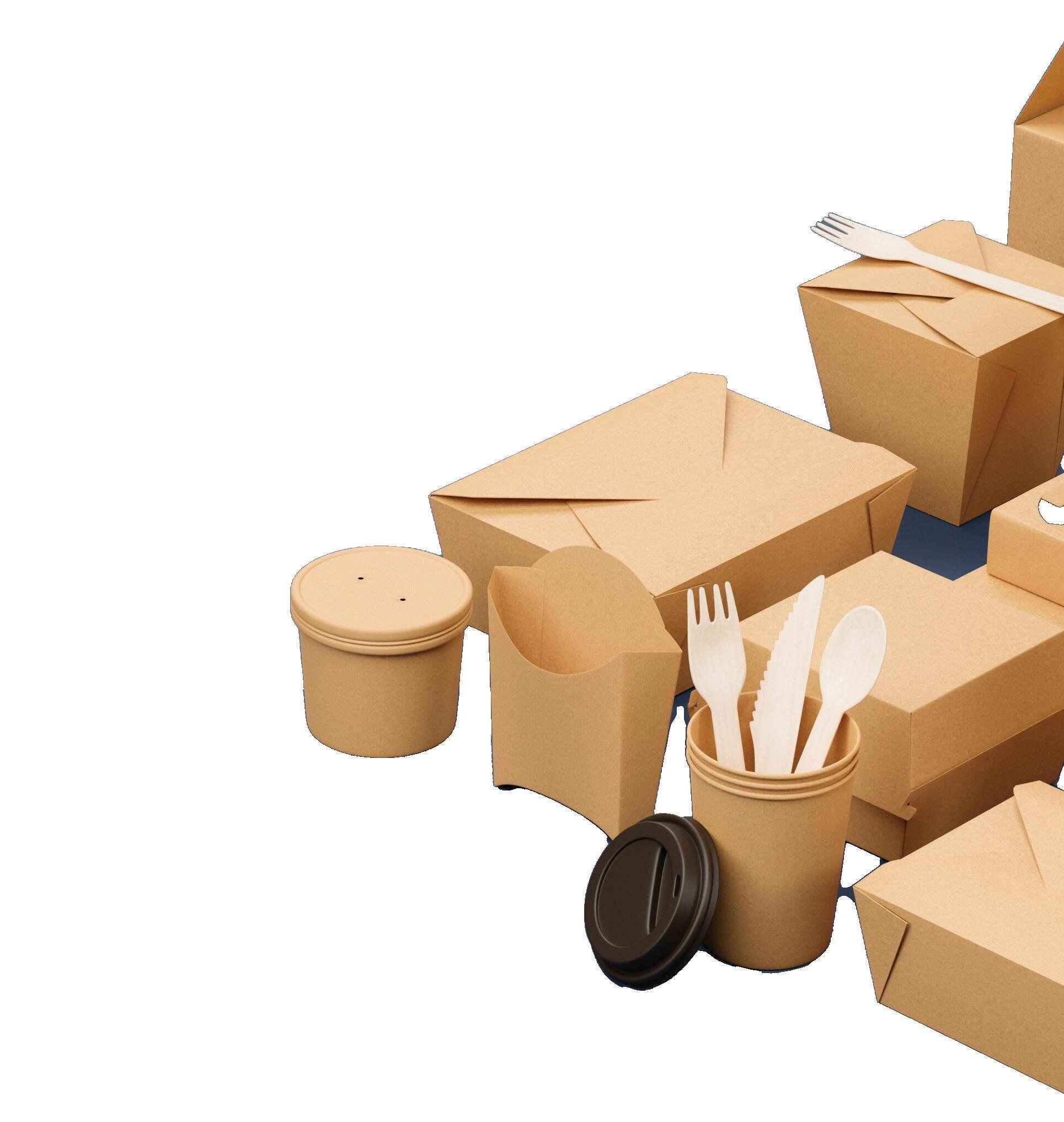
When shopper decisions happen in seconds, packaging can make or break a foodservice program. 45
Equipped for Success
It just takes a few key pieces of equipment for c-store operators to launch a strong foodservice program.
50 The Business of Food Safety
“Food isn’t food unless it’s safe,” emphasized retailers at the 2026 NACS Food Safety Forum. 56 The Future of Convenience Fuel Retail
This Q&A is brought to you by Infosys.
AI tools and quality data can help c-stores with everything from staff turnover to food waste to personalized offers.
Perking Up the Coffee Bar
60 What the Top 50 Fuel Retailers Do Well
The annual OPIS Fuel Leaders Report reveals that it’s not just about price. 68 Meet the Retail Engagement Committee
Everything NACS does is driven by members of the industry— these retailers and suppliers drive connection and change. 74 What
Hungry Customers Want
The NACS consumer survey explores what factors make a c-store foodservice offer compelling.
Subscribe to NACS Daily—an indispensable quick read of industry headlines and legislative and regulatory news, along with knowledge and resources from NACS, delivered to your inbox every weekday. Subscribe at www.convenience.org/NACSdaily.
NACS / JULY 2026
DEPARTMENTS
06 From the Editor
08 NACS News
18 Convenience Cares
20 Inside Washington
What does MAHA mean for the convenience industry? New priorities at the state and federal level will bring changes.
84 Fuels and Energy
IT’S A FACT
Packaged sweet snacks sales peak from 6-9 a.m.,
Monday through Friday.
CATEGORY CLOSE-UP PAGE 90
88 Gas Station Gourmet
90 Category Close-Up
The packaged sweet snacks category makes up a small but steady portion of in-store sales.
96 By the Numbers
PLEASE RECYCLE THIS
The presence of an article in our magazine should not be permitted to constitute an expression of the association’s view.
EDITORIAL
Jeff Lenard VP of NACS Media & Strategic Communications (703) 518-4272 jlenard@convenience.org
Ben Nussbaum Publisher & Editor-in-Chief (703) 518-4248 bnussbaum@convenience.org
TREASURER: Lonnie McQuirter, Director of Operations, 36 Lyn Refuel Station
OFFICERS: Chris Bambury, Bambury Inc.; Tom Brennan, Casey’s; Varish Goyal, Loop Neighborhood Markets; Charles McIlvaine, Coen Markets Inc.; Natalie Morhaus, RaceTrac Inc.; Travis Sheetz, Sheetz Inc.
GENERAL COUNSEL: Doug Kantor, NACS
MEMBERS: Lisa Blalock, BP North America Inc.; Brian Donaldson, Maxol Limited; Tony El-Nemr, Nouria Energy Corp.; Terry Gallagher, Gasamat Oil Corp./Smoker Friendly; Erin Graziosi, Robinson Oil Corp.; Raymond Huff, HJB Convenience Corp. (dba Russell’s); Mark Jordan, Refuel Operating Co.; Thomas Love, Love’s Travel Stops & Country Stores; Crystal Maggelet, Maverik Inc.; Rich Makin, Wawa Inc.; Brian McCarthy, Blarney Castle Oil Co.; Andrew Mitchell, Toot’n Totum Food Stores LLC; Jigar Patel, Fastime; Stanley Reynolds, 7-Eleven Inc.; Kristin Seabrook, Global Partners LP; Doug Yawberry, Weigel’s Stores Inc.; Scott Zietlow, Kwik Trip Inc.
PAST CHAIRS: Brian Hannasch, Alimentation Couche-Tard Inc.; Victor Paterno, Philippine Seven Corp.
SUPPLIER BOARD REPRESENTATIVES: Bryan Morrow, Chobani & La Colombe; Kevin LeMoyne, The Coca-Cola Co.
NACS SUPPLIER BOARD
SUPPLIER BOARD CHAIR: Bryan Morrow, Chobani & La Colombe
CHAIR-ELECT: Kevin LeMoyne, The Coca-Cola Co.
VICE CHAIRS: Mike Gilroy, Mars Wrigley; Jim Hughes, Supplying Demand Inc. dba Liquid Death; Danielle Holloway, Altria Group Distribution Co.
MEMBERS: Tony Battaglia, PMI U.S.; Ryan Calong; Jerry Cutler, InComm Payments; Jack Dickinson, Dover Fueling Solutions; Matt Domingo, Reynolds; Mark Falconi, Greenridge Naturals; Ramona Giderof, Diageo Beer; Adam Gryzbek, BIC Corp.; Kevin Kraft, Tropicana Brands; Jay Nelson, Excel Tire Gauge LLC; Jordan Nicgorski, JUUL Labs; Nick Paich, TriggerPoint Media; Bria Troy, PepsiCo Inc.; Melissa Vonder Haar, iSEE Store Innovations LLC; Jason Zagaria, Primo Brands; Derek Zahajko, CAF Inc.;
GENERAL COUNSEL: Doug Kantor, NACS
STAFF LIAISON: Bob Hughes, NACS
RETAIL BOARD REPRESENTATIVES: Tom Brennan, Casey’s; Scott Hartman, Rutter’s; Kevin Smartt, TXB
PAST CHAIRS: Vito Maurici, McLane Co. Inc.; David Charles, Cash Depot; Kevin Farley, Farley Retail Advisors
Subscriptions
NACS Magazine (ISSN 1939-4780) is published monthly by the National
of
Stores (NACS), Alexandria, Virginia, USA. Subscriptions are included in the dues paid by NACS member companies. Subscriptions are also available to qualified recipients. The publisher reserves the right to limit the number of free subscriptions and to set related qualifications criteria.
POSTMASTER: Send address changes to: NACS Magazine 1600 Duke Street, Alexandria, VA, 22314-2792 USA.
Enjoy Every Bite
You may not think of your customers as a foodie, but that’s how many of them think of themselves.
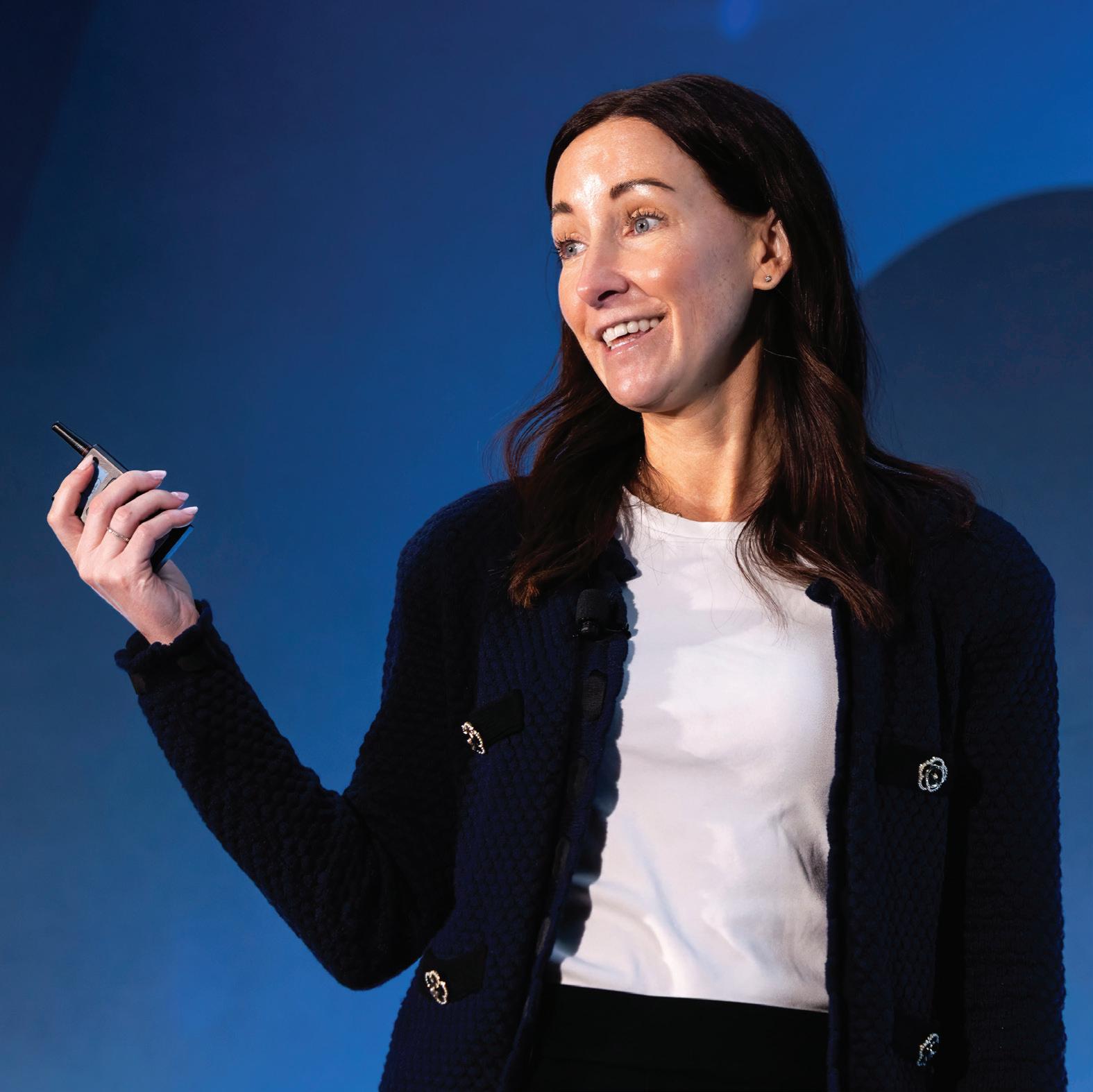
Caitlin Root, the executive vice president of customer experience at Datassential, shared her company’s insights on the typical c-store customer at the 2026 NACS State of the Industry Summit. Within this group, 41% identify as foodies.
Digging deeper, 47% of customers sit in the $25,000 to $75,000 income range, and exactly a third have kids in their household.
So picture a customer who is 35 years old, earns $50,000 a year and is a mom to a couple kids. It’s likely that a large percentage of your store is built to appeal to this person. But now add the foodie part. What does she see that’s enticing to her? What features or flavors can you put on the menu that would win her loyalty?
We have some help in this issue of NACS Magazine.
• Lauren Shanesy wrote an excellent overview of Root’s presentation at the NACS State of the Industry Summit. It starts on page 26. Lauren also covered the NACS Food Safety Forum, starting on page 50. This excellent event is one of my personal favorites on the NACS calendar due to the commitment our industry shows to serving food the right way.
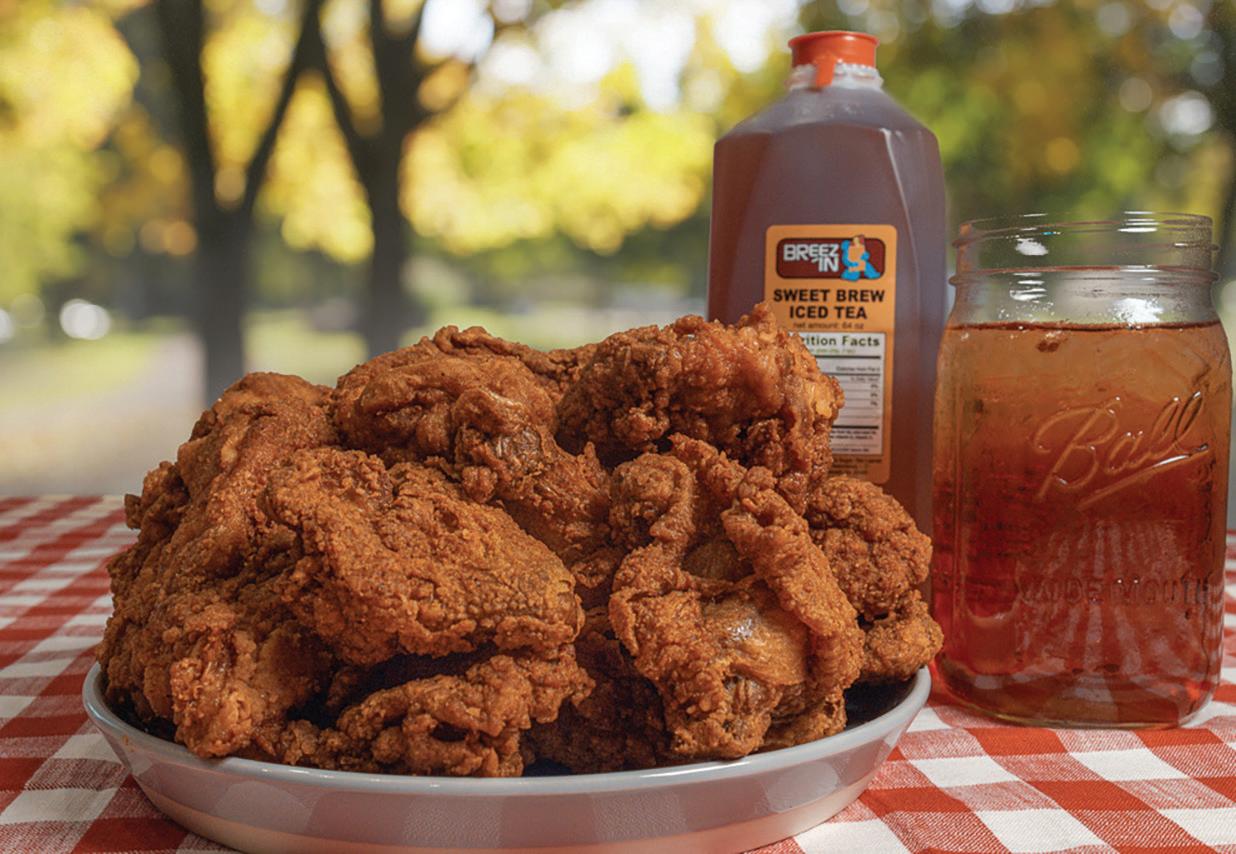
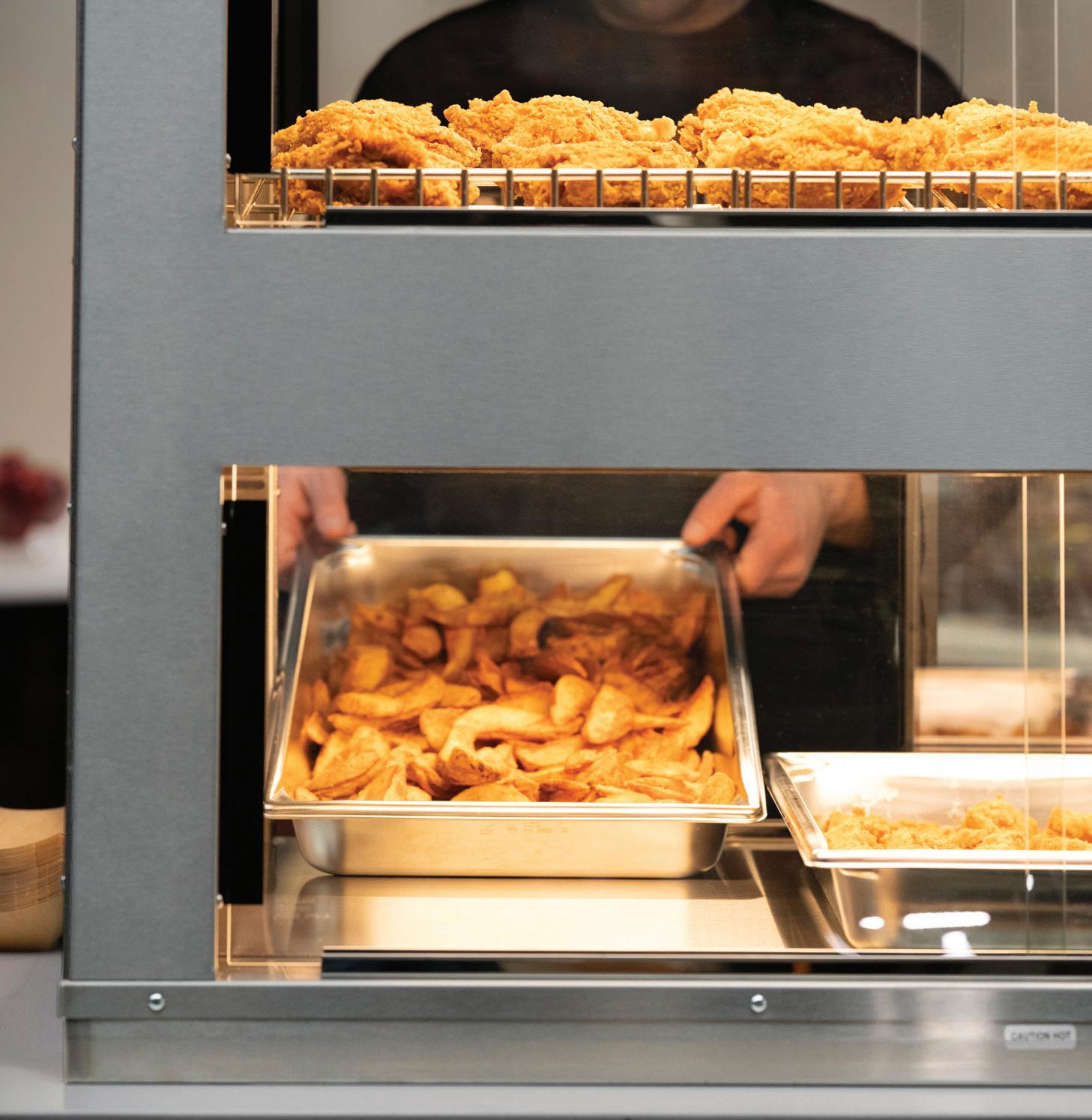
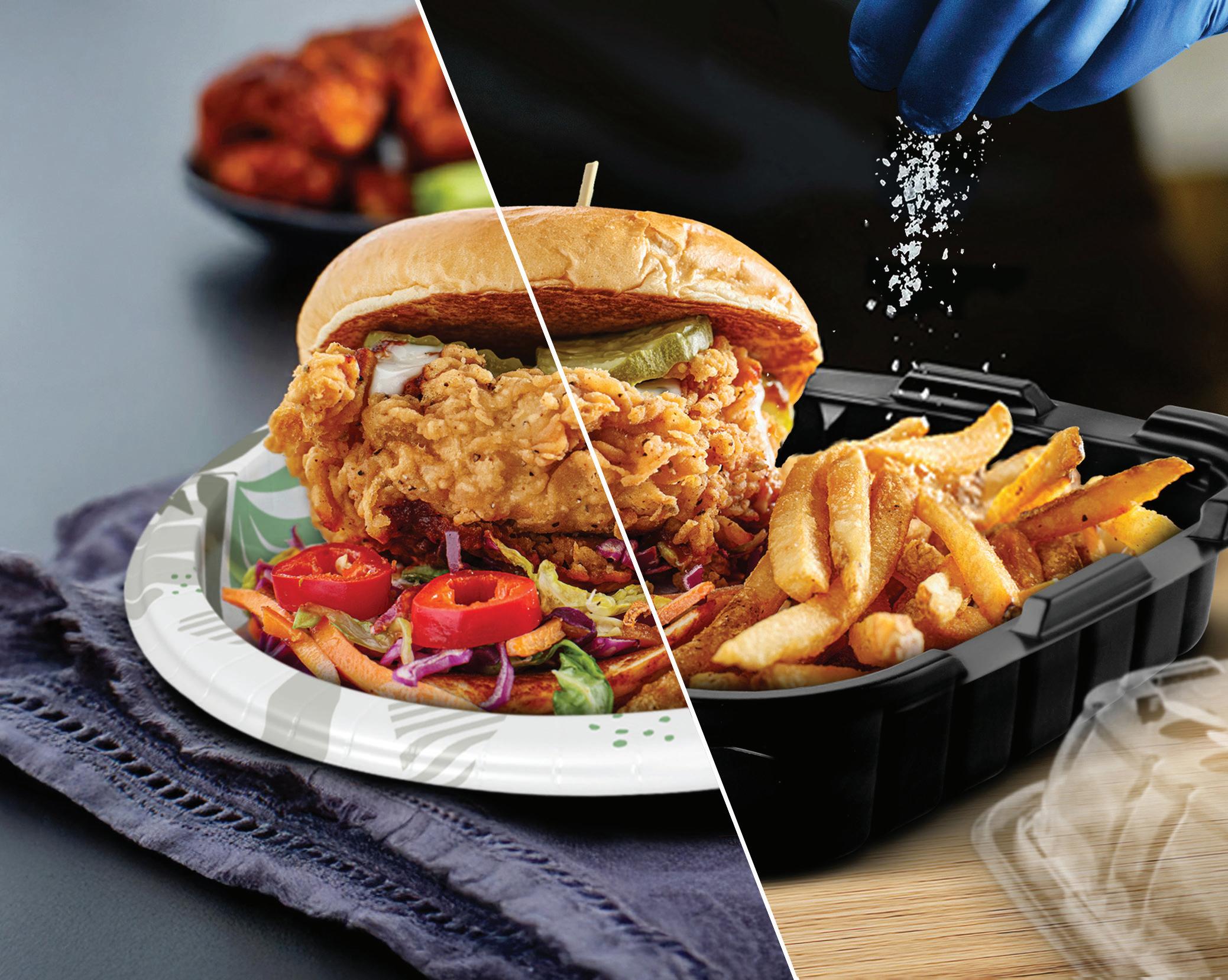
41% of c-store customers identify as foodies, and they’re looking for meals, snacks and treats that speak to them, including fried chicken.
• Pat Pape dove into fresh ideas for the coffee bar and the trending flavors and ingredients that are driving innovation in caffeination. Her article starts on page 38.
• Amanda Baltazar wrote about foodservice equipment for “small” operators—whether that means just having one store or having many stores with a small footprint. It’s a great overview of what’s trending on the equipment front with a few surprising ideas. Turn to page 45 for her article.
• Steve Holtz explores foodservice packaging, starting on page 32. To quote Steve: “In a category where seconds matter, the right package can be the difference between a onetime try and a new habit.”
You may have noticed that NACS has a revamped website and newsletter. One exciting new feature is our foodservice topic page. Bookmark convenience. org/topics/foodservice to stay in the know.
Ben Nussbaum Editor-in-Chief, NACS Media
Foodservice Fast Facts
Cold dispensed sales increased 6.0% year over year, the highest of any foodservice category. The latest foodservice numbers from the NACS State of the Industry Report® of 2025 Data show the profit potential of the category.
Shoppers said they visited a c-store because they were...
33.3% of c-store shoppers plan to go to a QSR within 30 minutes of their visit.
The top destination? Burger chains.
4 of the 5
foodservice categories (all but commissary) are among the top 10 gross profit contributors when tracked with merchandise.
Top decile companies made the foodservice sales compared to bottom decile operators.
6.8X
WARNING: This product contains nicotine. Nicotine is an addictive chemical.
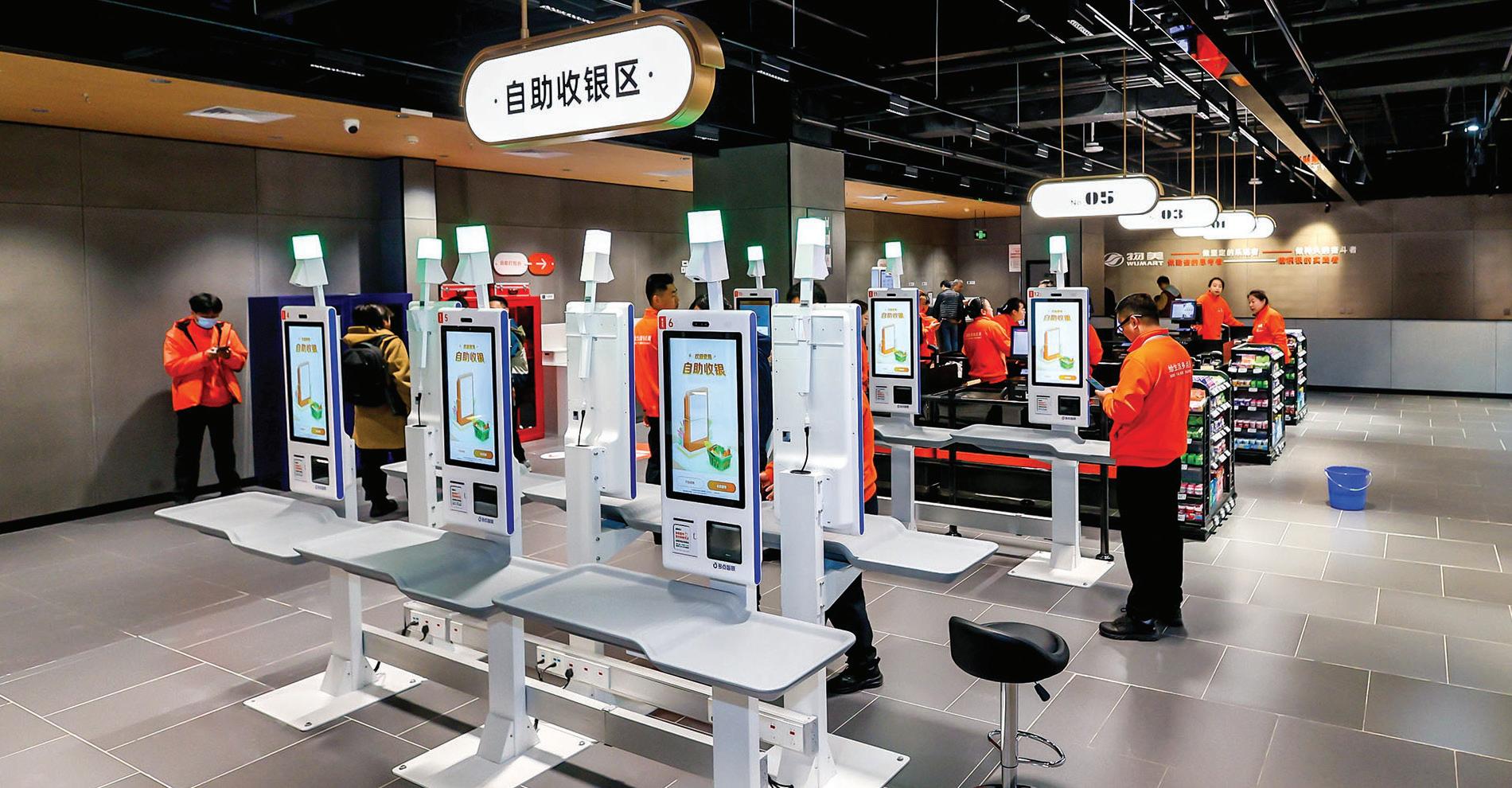
Wumart’s Xueqing Road store is an “autonomous, closedloop optimization ecosystem where AI acts as digital employees,” the company said.
Wumart Wins ‘Smartest Store in the World’
The retailer’s ‘AI-powered flagship’ in Beijing relies on digital employees to manage merchandise and operations.
Wumart’s Xueqing Road store, located in Beijing, China, is the inaugural winner of the “Smartest Store in the World” 2026 competition, hosted by Insight Research and NACS.
Wumart operates more than 1,500 stores across multiple formats in China and serves nearly 3 billion customer visits annually. In early 2025, Wumart transformed its Beijing Xueqing Road store into a “pioneering AI-powered flagship.”
Together with technology provider Dmall’s intelligent infrastructure, the companies said they “engineered an autonomous, closed-loop optimization ecosystem where AI acts as digital employees that can perceive, decide and execute tasks.” This includes an AI merchandise agent capable of managing smart assortments, dynamic pricing and automated replenishment and an AI store agent that acts as “the store’s intelligent central nervous system,” for 24/7 real-time monitoring of operational status, proactively analyzing data and directly intervening in execution workflows.
The competition also recognized two runners up: second place went to FairPrice Finest, Punggol Coast Mall, in Singapore and third place was Kavanagh’s Belsize Park in London.
Wumart was announced as the winner at the 2026 NACS Convenience Summit Europe in Warsaw, Poland, on June 17, as well as live on globalconvenience.com and LinkedIn. Accenture served as the official Knowledge Partner of the Smartest Store in the World competition, along with sponsors VenHub Global, Invenco Powered by Vontier and Plexor.
NACS Signs 2026 NACS Show
Keynote Speaker
Former ‘Saturday Night Live’ producer Lindsay Shookus will share guidance on building trust in a fast-paced environment.
For 20 years, Lindsay Shookus was a producer at “Saturday Night Live” (SNL), the most Emmy award-winning show in history and a four-time winner of the George Foster Peabody Award. At the upcoming 2026 NACS Show, which will take place October 6-9 in Las Vegas, you can see her in action at the Opening General Session on Tuesday, October 6.
Shookus ran SNL’s talent department and was responsible for booking the hosts, musical guests and cast for 415 live shows. She is a seven-time Emmy-winning and twotime Peabody-winning television producer, speaker and
Most recently, Shookus executive produced the HBO docuseries “Alex vs. ARod.” She was also executive producer of the “Miley Cyrus’ New Year’s Eve Party,” an associate producer on the critically acclaimed television show “30 Rock” and produced NBC’s “Adele: Live in New
On stage at the NACS Show, Shookus will share her experiences managing beloved SNL personalities and celebrity guests while navigating the pressure cooker of producing a live TV show, focusing on how to build relationships and trust in a fast-paced environment.
The 2026 NACS Show will take place October 6-9 at the Las Vegas Convention Center. Full conference registration includes access to all general sessions, 50-plus education sessions, the more than 435,000-square-foot Expo with over 1,200 exhibitors and the official NACS Show KickOff Party. Registration is now open. Visit nacsshow.com for more information.
NACS Foundation Awards 3 Lisa Dell’Alba Scholarships
The NACS Foundation is excited to introduce the first group of recipients for the Lisa Dell'Alba Convenience Industry Leadership Scholarship. This scholarship was created in memory of Lisa Dell’Alba, former president and CEO of Square One Markets who passed away in 2025. It honors her remarkable legacy of mentorship, service and leadership at Square One and throughout the convenience industry.
Individuals who have successfully completed the NACS Leadership for Success program were eligible to apply for the scholarship.
The first three recipients are:
• Derek Emig, RaceTrac
• Terry Hoffman, Zelmo's Zip In Convenience Stores
• Alyssa Snyr, S. Abraham & Sons
They will attend Cornell University's Executive Leadership Program in August, with full funding provided by the NACS Foundation’s Future Fund pillar. Cornell University has also committed to match one seat per year for the next 10 years.
These scholarships will help to shape future leaders and keep Dell'Alba’s spirit alive in the industry.
“There was no part of Lisa that wasn’t about giving back. She was more than passionate about our industry—she was passionate about the people. She led by example and inspired and motivated so many people,” said Henry Armour, chairman emeritus and CEO International of NACS.
To learn more about the NACS Foundation, visit conveniencecares.org.
Calendar of Events
AUGUST
NACS Executive Leadership Program at Cornell
August 2-6 | Dyson School, Cornell University Ithaca, NY
OCTOBER
NACS Show
October 6-9 | Las Vegas Convention Center Las Vegas, Nevada
NOVEMBER
NACS Innovation Leadership Program at MIT
November 1-5 | MIT Sloan School of Management Cambridge, Massachusetts
For a full listing of events and information, visit www.convenience.org/events.
Member News
RETAILERS
The Pilot Company hired Jeremy Osterstock as its new chief financial officer, according to a LinkedIn post.
“With more than two decades of global leadership experience, Jeremy is known for his focus on developing people, building strong teams and creating longterm value. His leadership and passion for working collaboratively and supporting organizations through growth and change will continue to help strengthen Pilot for the future,” Pilot said.
Maverik hired Nick Love as a marketing loyalty specialist. Love chose Maverik because of the people, the strength of the brand and a role that felt like the right fit, according to a LinkedIn post from the company.
Charles Bergeron joined Cumberland Farms as vice president of human resources. “I’m looking forward to working with leaders and teams across the organization to support talent, strengthen culture and help drive the company’s continued growth and success. I’m grateful for the opportunities and relationships that have brought me to this point and
excited to begin this new chapter,” Bergeron wrote on LinkedIn.
Alimentation Couche-Tard appointed Grant Morris as head of QSRs and made-toorder foodservice for Circle K convenience stores in the U.S. Morris has been with CoucheTard since 2019 and was most recently interim head of North America foodservice support. In his new role, Morris reports to Gary Brant, Couche-Tard’s vice president of North America foodservice and QSRs.
SUPPLIERS
Rachel Chin has been named sales coordinator at Flexeserve. Chin has made a dramatic impression on fellow team members and customers alike. From data analytics to logistics and reporting, Chin’s skillset has already broadened since taking on her new role.
The Hershey Company announced that Brent Cotten, head of global customer and industry affairs, will retire from The Hershey Company June 26, 2026, after 34 years with the company.
Cotten began his career with Hershey in 1992 as a sales representative in the Nashville district and went on to hold a series of leadership roles across sales and customer organizations. Cotten served as a trusted leader and industry ambassador for Hershey, representing the company across major U.S. trade associations, customer events and global industry forums.
Jack Link’s announced on LinkedIn it hired Jeff Caswell as president of North America at Link Snacks. Caswell brings decades of experience building and scaling world-class food brands, with leadership roles across companies like General Mills and Tyson Foods.
“Jeff is a proven leader with deep experience leading food and consumer packaged goods companies across large, complex organizations and highly entrepreneurial environments,” said Troy Link, CEO of Link Snacks. “He brings a strong understanding of consumer behavior, brand building, and what it takes to grow businesses in competitive categories.”
NACS in the know— send your updates to news@convenience.org
Rachel Chin
Jeremy Osterstock
Grab & Go Never Tasted So Good
& Go Never So
With more and more consumers to convenience stores for food driven demand for fresh, customizable meals, Structural Concepts can maximize your foodservice business.
With more and more consumers flocking to convenience stores for high-quality food options driven by demand for fresh, customizable meals, Structural Concepts can maximize your foodservice business.
Want It,
They Want It,
Make Sure You Have It
Sure You Have It
Effectively
Merchandise It
Merchandise It
Guarantee Its Going to be Fresh
Guarantee Its to be Fresh
Behind building the most innovative, energy-saving merchandisers, our goal has been to help our customers capture the attention of their shoppers, connect with them through the presentation of the fresh food displayed inside, and convince them to purchase.
Behind the most innovative, merchandisers, our has been to our customers capture the attention of their connect with them the of the fresh food displayed inside, and convince them to purchase.
NACS welcomes the following companies that joined the Association in April 2026. NACS membership is company-wide, so we encourage employees of member companies to create a username by visiting convenience.org/create-login. All members receive access to the NACS Online Membership directory and the latest industry news, information and resources. For more information about NACS membership, visit convenience.org/membership.
NACS HUNTER CLUB
BRONZE ProAmpac Cincinnati, OH proampac.com
RETAILERS
Rockies Market Amarillo, TX rockiesmarket.com
The Briad Group Livingston, NJ
2840616 Ontario Inc. Mississauga, Ontario, Canada
Etu Energias Distribuição SU SA Luanda, Angola etuenergias.co.ao
SUPPLIERS
Barberi International Doral, FL barberiinternational.com
Chenming Industry & Commerce Shouguang Co. Ltd. Shouguang, Shandong, China chenhongwood.com
Cybake Arvada, CO cybake.com
GDC IT Solutions Chambersburg, PA gdcitsolutions.com
Global Snus Vilnius, Lithuania camosnus.com
Guangxi Litelon Commercial Equipment Co. Ltd. Chongzuo, Guangxi, China litelon.com
Lane Valente Industries Smithtown, NY lviusa.com
Nature’s Path Richmond, British Columbia, Canada naturespath.com
North American Signs South Bend, IN northamericansigns.com
Octane Houston, TX getoctane.ai
Pak-it Displays Warminster, PA pakitdisplays.com
Shandong Yijia Glass Technology Co. Ltd. Zibo, Shandong, China sdyjglass.com
Sound Payments Jacksonville, FL soundpayments.com
Summerland Phoenix, AZ summerlandsales.com
Sunberry Farms Farmington Hills, MI sunberry.farm
Superior Electrical Mechanical & Plumbing Inc. Rancho Cucamonga, CA superioremp.com
Umbrava Hauppauge, NY umbrava.com
Update Energy Redondo Beach, CA drinkupdate.com
Vilgain Austin, TX us.vilgain.com
Vitlife America LLC Warrenville, IL vitlifecommercial.com
WAYS Energy Lexington, MS waysenergy.com
INTRODUCING
DISTINCTIVE CONSUMER APPEAL
Malibu’s vibrant packaging, escape-inspired identity, and approachable smoking experience offer 21+ adult tobacco consumers a differentiated option within the deep discount segment.
SMART EVERYDAY PRICING
Positioned as one of the lowest-priced offerings in-store, Malibu delivers strong value for price-conscious 21+ adult tobacco consumers.
STRONG RETAIL MOMENTUM
With broad retail distribution, impactful in-store visibility, and continued expansion, Malibu is resonating with both retailers and 21+ adult tobacco consumers in today’s valuedriven environment.
Spinx Raises Funds for Military Families
The Spinx Company hosted one of the stops for the crosscountry event in Greenville, South Carolina, to honor fallen U.S. service members and help financially support their children.
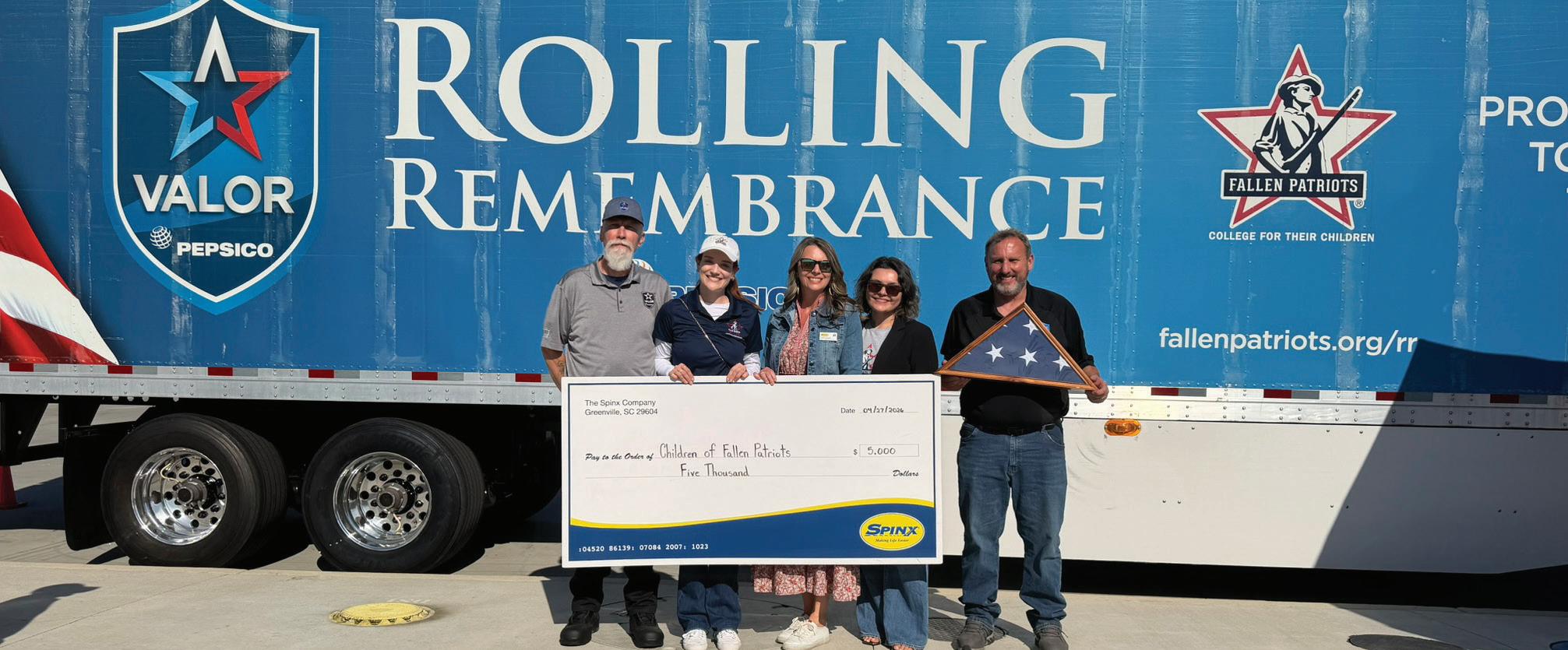
The retailer hosted a stop during PepsiCo’s annual Rolling Remembrance event and donated to the Children of Fallen Patriots Foundation.
South Carolina-based The Spinx Company hosted PepsiCo’s Rolling Remembrance relay stop on April 28 at Spinx #297 in Greenville.
The Spinx Company said the ceremony honors fallen U.S. service members while raising awareness and support for military families through the Children of Fallen Patriots Foundation.
During the event, Spinx made a $5,000 donation to the Children of Fallen Patriots Foundation. The nonprofit assists children who have lost a parent in the line of duty by providing scholarships, educational assistance and career support.
First started by PepsiCo in 2015, Rolling Remembrance is an annual cross-country relay of an American flag that was flown in war. The flag travels more than 14,000 miles from Seattle to New York to raise funds and pay respects to veterans. “Using normal business routes, PepsiCo’s extensive network of U.S. military veteran drivers will pass off a flag to each other at different relay points,” the retailer said.
According to Spinx, the flag was on a UH-60M Blackhawk Helicopter on a combat mission in support of U.S. and Coalition ground forces in the Kandahar Province of Afghanistan during Operation Enduring Freedom in 2012. “For our Gold Star families, seeing Spinx show up for them is a powerful reminder that their loved ones are not forgotten,” said Lily Long, director of development at the Children of Fallen Patriots Foundation.
In the Community
Every year, the convenience retail industry dedicates billions of dollars to advancing the futures of individuals and families in our communities. The NACS Foundation unifies and builds on NACS members’ charitable efforts to amplify their work in communities across America and to share these powerful stories. Learn more at conveniencecares.org.
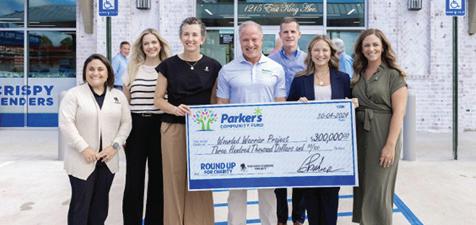
Parker’s Kitchen supported local veterans and service members in Georgia and South Carolina with a round-up campaign at all Parker’s Kitchen locations benefitting Wounded Warrior Project (WWP). In observance of National Military Appreciation Month, the company matched 50% of every customer donation throughout the month of May.
Parker’s Kitchen launched its third annual round-up campaign benefiting WWP in March 2026, matching 25% of every customer donation. The WWP round-up campaign will continue at all Parker’s Kitchen locations through July 5, 2026.
2 ONVO CELEBRATES NURSES
Pennsylvania-based Onvo celebrated Nurses Week May 6-12 by offering a special “Coffee for Caregivers” promotion at its 41 convenience and travel plaza locations across Pennsylvania and upstate New York. In addition to free coffee, select Onvo locations also featured “surprise-and-delight” moments throughout the week, with added giveaways and perks for nurses.
3 CASEY’S FUNDS CLASSROOMS
Casey’s General Stores said it distributed more than $1.3 million as of April 2026 in Cash for Classrooms grants to 100 K-12 public and nonprofit private schools across communities where Casey’s operates. The retailer said the annual program provides individual grants of up to $50,000 for physical improvements, material needs, teacher support and community engagement initiatives.
Since 2020, the program has raised $6.2 million, and this year’s $1.3 million total includes nearly $1 million in guest donations, just over $240,000 from Coca-Cola and $100,000 from Casey’s.
4 MIRABITO SUPPORTS LOCAL CHARITIES
New York-based Mirabito Convenience Stores completed another Mirabito Cares Round Up campaign and raised $60,000 for both The Upstate Foundation and Friends of Bassett. Each organization received $30,000. The campaign was held at 112 Mirabito Convenience Store locations across New York, Pennsylvania and Vermont during the month of March.
5 ONCUE SUPPORTS
‘POSITIVE
TOMORROWS’
Oklahoma-based OnCue partnered with Positive Tomorrows through its charitable cup program to support the organization’s work with children and families experiencing homelessness.
From January through March, OnCue donated 50 cents from each charitable cup purchased, ultimately raising $12,500 for the organization’s mission. As part of the partnership, OnCue team members volunteered at the school, spending time with students over lunch and afternoon recess.
6 PILOT HONORS MILITARY APPRECIATION MONTH
In May, Pilot celebrated Military Appreciation Month by continuing its work with the Miles of Good Foundation, an independent nonprofit formed and funded by Pilot. In recognition of Military Appreciation Month, the Miles of Good Foundation donated $125,000 to Hire Heroes USA. The nonprofit provides employment
assistance for service members and their spouses to help with transitioning to the civilian workforce.
Pilot said that since the Miles of Good Foundation was launched in 2026, it has contributed a total of nearly $400,000—in addition to the more than $4.4 million Pilot has given since 2020—to assist military members, veterans and their families.
REGULATOR’S BUSY YEAR:
What Does MAHA Mean for C-Stores?
BY MARGARET HARDIN MANNION
New priorities at the state and federal level will bring changes to the industry.
Food policy has had a busy year in Washington. The Make America Healthy Again (MAHA) agenda championed by Health and Human Services Secretary Robert F. Kennedy Jr. has driven a significant shift in the regulatory priorities of the Food and Drug Administration (FDA). The agency announced an ambitious 2026 work plan focused on food chemical safety, ingredient transparency and nutrition.
Separately, the compliance clock on the FDA’s Food Traceability Rule continues ticking, even with a recently extended deadline. None of these developments require alarm, but they may require attention.
FDA’S 2026 FOOD PRIORITIES UNDER MAHA
In January, the FDA released its Human Foods Program 2026 Priority Deliverables, a detailed outline of the agency’s food-related regulatory and policy work for the year. It is organized around three areas: food chemical safety, nutrition and microbiological food safety, with food chemical safety being the area most likely to affect what convenience retailers stock and sell in their stores.
Synthetic Food Dyes: The FDA has been working with the food industry to phase out petroleum-based synthetic dyes. Three were targeted for removal in 2025; the remaining six (Red No. 40, Yellow No. 5, Yellow No. 6, Blue No. 1, Blue No. 2 and Green No. 3) are the focus for 2026. The process is still voluntary and industry-driven rather than a regulatory mandate, though the FDA has signaled it may pursue formal action if voluntary progress stalls.
In February, the FDA also updated its labeling policy to allow products without petroleum-based colors to make “no artificial colors” claims,
providing a marketing pathway for reformulated products. Many major food manufacturers have already announced their own reformulation plans and timelines.
GRAS Reform: The Generally Recognized as Safe (GRAS) pathway allows companies to introduce certain food ingredients without formal FDA premarket approval, provided they meet the safety standard. Examples include common spices, preservatives and oils. The FDA is now developing a proposed rule that would require mandatory notification to the agency for any substance claimed to be GRAS.
A Note on the Politics
One of the defining features of the current food policy environment is that it doesn’t follow familiar partisan lines. MAHA is a Republican administration initiative, but its substantive concerns about food additives, nutrition, ultraprocessed foods and ingredient transparency overlap significantly with priorities that have long come from the left. The result is that food regulation has become an area of unexpected bipartisan interest.
The draft rule has been under White House Office of Management and Budget review since December 2025. A formal proposed rule is expected later this year. Such a rule, once finalized, would represent a structural change to how ingredients enter the food supply. It would not necessarily change which ingredients are permissible, but rather just the process by which they’re reviewed.
Post-Market Ingredient Reviews: The FDA has also begun systematic reassessments of certain food chemicals that have been in use for decades. Butylated hydroxyanisole (BHA), a common preservative found in fats and
oils, is the current focus, among several others. The FDA issued a Request for Information on BHA in February and has said it will take action if current safety standards are not met. These reviews represent a new commitment to consumers by revisiting ingredients that had been approved under older scientific frameworks.
THE STATE-LEVEL PICTURE
Federal action on most of these issues has moved more slowly than the conversation around MAHA would suggest. GRAS reform is still stuck in the federal rulemaking pipeline, and the dye phaseout remains a voluntary process. State legislatures, however, have moved more quickly.
In 2025, more than 140 bills were introduced across 38 states addressing food additives, synthetic dyes, ingredient labeling and related issues. A handful have become law. The result has led to a patchwork of rules in which the same product may face different legal requirements in
In 2025, more than 140 bills were introduced across 38 states addressing food additives, synthetic dyes, ingredient labeling and related issues.
different states depending on which state the product is bought or sold in. That patchwork represents a compliance challenge that grows more complex as state activity continues.
Timeline of Traceability Rule Pushbacks
The Food Safety Modernization Act (FSMA) is signed into law. Section 204 directs the FDA to improve tracking and tracing of food through the supply chain by establishing additional recordkeeping requirements for entities handling certain highrisk foods. The goal is to enable faster identification and removal of contaminated products during outbreaks.
The FDA works with food safety experts to execute food tracing pilot projects, and it uses this period to develop the framework that becomes the core of the final rule.
One of the food industry’s preferred outcomes at the federal level is preemption, meaning a uniform national standard that would establish consistent rules and reduce the compliance burden of navigating 50 different state regimes. A large coalition comprised of major food, beverage and agribusiness companies, known as Americans for Ingredient Transparency (AFIT), is pushing for preemption on issues such as ingredient labeling and GRAS. However, in a Congress that often remains gridlocked, whether preemption will be included in any federal ingredient legislation remains an open question.
TRACEABILITY REQUIREMENTS AND THE ROAD TO 2028
Separate from the MAHA agenda but still a top food safety topic, the FDA’s Food Traceability Rule (also known as FSMA 204) continues to move toward full implementation. The rule requires businesses that manufacture,
Advocacy groups sue the FDA for not meeting the statutory requirements set by the Food Safety Modernization Act, such as publishing a final rule by the specific congressional deadlines. The parties eventually reach a settlement, requiring the FDA to submit the proposed and final rules to the Federal Register by September 2020 and November 2022, respectively. The lawsuit effectively forces the FDA to act on a schedule it had been slow to meet on its own.
process, pack or hold certain “highrisk” foods to maintain detailed supply chain records and make these records available to FDA in electronic format within 24 hours of a request.
For convenience stores, the rule’s Food Traceability List includes products common in fresh food and graband-go products: fresh leafy greens, shell eggs, nut butters, fresh tomatoes and ready-to-eat deli salads. Operators who handle these items in any covered capacity will need to maintain rigorous records that are tied to key data elements at critical tracking events throughout the supply chain.
The original compliance deadline of January 20, 2026, has been extended—a win for the industry and an outcome that NACS and other food industry partners pushed for. NACS has long maintained that the rule’s recordkeeping requirements are confusing and burdensome for small-format operators and that meaningful compliance requires supply chain-wide coordination. FDA proposed a 30-month delay last spring,
and Congress subsequently directed the agency not to enforce the rule before July 20, 2028, effectively locking that timeline into law.
WHAT OPERATORS SHOULD BE DOING NOW
1. Check in with your suppliers on dye reformulation. Many manufacturers are already in the process of reformulating products to remove synthetic colors. It is worth understanding where your key vendors stand, both to anticipate any product changes and to be aware of potential supply disruptions if reformulation timelines are compressed.
2. Keep an eye on state legislation in your markets. State-level action on food additives and dyes is the most immediate near-term compliance variable, and it varies significantly by state. NACS is monitoring this landscape and will continue to push for federal preemption on Capitol Hill.
3. Start your FSMA 204 assessment. The 2028 deadline provides meaningful lead time, but implementing the traceability rule’s requirements will take longer than many operators expect. A useful first step is identifying which products in your fresh food program appear on the Food Traceability List, then having a conversation with your distributors about their compliance timelines. The FDA has published sample traceability plans and other implementation resources on its website.
Food policy in Washington is more active than it has been in years, and convenience retailers have a stake in how both the MAHA agenda and the food traceability rule play out. NACS is engaged on both fronts and will keep members updated as each issue develops.
Margaret Hardin Mannion is a NACS director of government relations. She can be reached at mmannion @convenience.org.
The FDA publishes the final Food Traceability Rule on November 15, 2022, with a compliance date of January 20, 2026.
On August 6, 2025, the FDA issued a proposed rule that would extend the compliance date of the Food Traceability Rule by 30 months to July 20, 2028. Later that year, Congress directed the FDA to delay enforcement until that date.
The FDA is hosting a quarterly public meetings to give the public an opportunity to share information on implementation of the Food Traceability Rule and areas of remaining concern, specifically as they relate to lot-level tracking and flexibilities for compliance.
2022
NACSPAC DONORS
NACSPAC was created in 1979 by NACS as the entity through which the association can legally contribute funds to political candidates supportive of our industry’s issues. For more information about NACSPAC and how political action committees (PACs) work, go to www.convenience.org/nacspac.
NACSPAC donors who made contributions in May 2026 are:
Carlton Austin The Coca-Cola Company
Dell Cromie Glassmere Fuel Service
Michael Davis
MichaelAngelo’s & More
Kirk Dickerson Dickerson Petroleum Inc.
David Espinal NACS
Edward Holmes Holmes Oil Company Inc.
Joseph Sheetz Sheetz Inc.
Barrett Sims Pak-A-Sak Inc.
Colin Yoder Brookwood Farms Inc.
“Every single customer that visits your c-store and goes up to the pump—that is a foodservice opportunity for you.”
This story covers a presentation from the 2026 NACS State of the Industry Summit. For in-depth coverage of this event, see the June 2026 issue of NACS Magazine.
Your Foodservice Offer Maximize
C-stores are well positioned to meet the foodservice needs of their customers, but can unlock increased growth.
BY LAUREN SHANESY
Foodservice accounted for 28.0% of in-store sales in 2025, according to the NACS State of the Industry Report® of 2025 data. The impact of foodservice on profitability is even greater, contributing 38.9% of in-store gross profit dollars in 2025.
“What I want you to take away is that every single customer that visits your c-store and goes up to the pump—that is a foodservice opportunity for you,” said Caitlin Root, executive vice president, customer experience at Datassential, on stage during the 2026 NACS State of the Industry Summit.
Multiple times per day, customers are making deliberate choices about what and where to eat. With foodservice demand evolving and consumer expectations rising, operators who rethink their approach—from menu strategy to daypart expansion—can unlock new traffic, higher margins and greater long-term relevance.
PLAY TO YOUR STRENGTHS
Across the broader foodservice industry, year-overyear growth in 2026 is expected to be modest at around 1%. But c-stores are projected to outpace the total market (1.7%), including quick-service restaurants (QSRs), which are projected to grow by 1.2%.
C-stores have two key advantages for capturing foodservice share: value and variety. “Customers are leaning on you because you’re convenient and you provide value. Those are the two pillars of your value proposition,” said Root.
According to research from Datassential, consumers are also consistently opting for prepared over packaged food, especially when it comes to impulse purchases. Nearly four out of five consumers are already purchasing prepared food at c-stores at least occasionally. Packaged goods make up 47% of impulse purchases at c-stores, down 6 points compared to three years ago, while prepared food purchases (38% of impulse purchases) are up 9 points.
“Consumers are going into your store and instead of buying a bag of chips, they’re leaving your store with a sandwich, a specialty beverage or a slice of pizza,” said Root. “Top performing operators are recognizing the incredible profit margins that can be obtained from foodservice. It’s a huge opportunity, and there’s a ton of profit available for you in this category.”
‘VALUE’ HAS A NEW MEANING
Value has defined retail foodservice trends for the past several years as inflation, economic headwinds and cost-conscious behavior impact consumer buying habits. “No matter what industry you’re in, value is top of mind,” said Root. “We are in a value wars era right now. Everyone is trying to steal traffic by promoting value.”
Meet Your Foodservice Customer
According to Datassential, today’s typical c-store foodservice customer is:
• A Millennial
• Middle income
• Likely has children in the household
• Cost-conscious, especially in the current economic environment
• A self-identified “foodie” who wants new flavors, trending tastes, unique products and to experiment with food choices
The key is not necessarily adding new items, but repositioning existing ones as affordable, everyday indulgences. 66% of consumers have a little treat at least once per week.
Source: Datassential
Value has always been synonymous with a low price, but expectations are changing. “Consumers are becoming more selective about the money that they’re spending. Selective doesn’t mean that they’re eating less. It means that they’re choosing more carefully,” Root said. According to Datassential, 64% of consumers say they want a good deal, but not at the expense of food quality or experience.
“We want it to be cheap, but we want the quality to still be there,” Root noted. “Taste now is more important than price. We’re not willing to give up quality, experience or freshness for price.”
Consumers are looking for affordable options where they feel like they’re getting the most bang for their buck. C-stores are already well positioned to meet this demand, said Root. Consumers perceive c-stores as a value-driven channel—and importantly, they perceive less price inflation there than at QSRs. In a recent survey, 57% of consumers noticed price increases at QSRs versus 41% at c-stores.
That 16-point perception gap is a “massive competitive advantage that c-stores have over every other restaurant site,” said Root. “Your value proposition is that you already offer value. So what we need to do is
6 Ways to Unlock Foodservice Profitability
At its core, successful c-store foodservice comes down to execution across a few key principles.
1. Maximize every visit. Each fuel stop represents a foodservice opportunity. What can your store offer to capture consumers?
2. Deliver value. Balance affordability with quality, freshness and experience.
3. Expand dayparts. Target mid-morning and afternoon to capture incremental traffic.
4. Embrace variety strategically. Keep the menu simple but layer in innovation through flavors, formats and customization.
5. Invest in beverages . Specialty beverages are highdemand, high-margin items.
6. Align with snacking behavior. Build offerings around frequency, indulgence and convenience, especially to capture “little treat” runs.
highlight the quality, the freshness and the uniqueness of your foodservice program to home in on how valuable your products are. Lean into that more.”
FILLING THE DAYPART VOID
C-stores can thrive in the morning and mid-afternoon snacking dayparts.
While Root’s data showed QSRs still dominate lunch and dinner, mid-morning and afternoon are two of the lowest-traffic periods for QSRs—making them prime opportunities for c-store operators to fill the gap.
These dayparts align with growing consumer behaviors like snacking, the desire for small indulgences and little treats and beverage-driven visits. Root said operators can capture this traffic by offering snackable prepared foods, grab-and-go meal components and beverage-led bundles.
“You can add in prepared food items during that mid-morning snack time. In the afternoon, think about what type of prepared food you can offer that will lead to additional purchases,” she said. “We also know that impulse purchasers are now getting more prepared foods. What type of items can you now offer during these timeframes? Is it prepared or specialty beverages?”
LEAN INTO LITTLE TREATS
One of the most impactful trends reshaping foodservice is what Root calls “little treat culture,” where consumers are replacing larger, more expensive indulgences with smaller, more frequent ones as a form of self-care.
“They decide, ‘I’m going to buy that $5 latte because I deserve it,’” Root said. According to Datassential, 50% of consumers snack regularly, 70% of Gen Z say they replace meals with snacks at least once per week and nearly one-quarter of consumers have a treat daily.
She added that the key is not necessarily adding new items, but repositioning existing ones—snacks, beverages, baked goods and hot foods that c-stores already have—as affordable, everyday indulgences. “C-stores already have everything that consumers are looking for,” Root said.
70% of Gen Z say they replace meals with snacks at least once per week and nearly onequarter of consumers have a treat daily.
Source: Datassential
64% of consumers say they want a good deal, but not at the expense of food quality or experience.
Source: Datassential
BANK ON BEVERAGES
Consumer interest in specialty beverages—from cold brew coffee and bubble tea to energy refreshers and dirty sodas—is rising rapidly.
“We cannot underestimate beverages right now. It is everywhere and it is a huge opportunity,” Root said.
According to Root, operators expect beverages to become even more important in the next few years and are targeting a few key areas of growth, including cold brew, bubble tea, matcha, fresh juices and agua frescas—an area where 37% of consumers say they want more options.
DEVELOPING MENUS AND DRIVING INNOVATION
In the competition for traffic, value-based limitedtime offers (LTOs) can draw in consumers with fresh and exciting twists on menu favorites. More operators are leaning into LTOs—from January 2025 to January 2026, the number of LTO launches across major chains and c-stores doubled, according to Datassential.
“When it comes to flavor innovation, you don’t need to create something totally new that you’ve never done before. You can stick with your staple menu items … and play with innovation around sauces or toppings,” Root said. “This allows operators to maximize the customers they can reach—and foodservice profitably.”
Lauren Shanesy is a writer and editor at NACS.
Flavor Trends That Drive Traffic
C-stores already have foodservice offerings that consumers are looking for. Instead of replacing or reinventing core categories, Caitlin Root, executive vice president, customer experience at Datassential, highlighted a few key places where retailers can take advantage of innovation opportunities to keep consumers engaged.
PIZZA
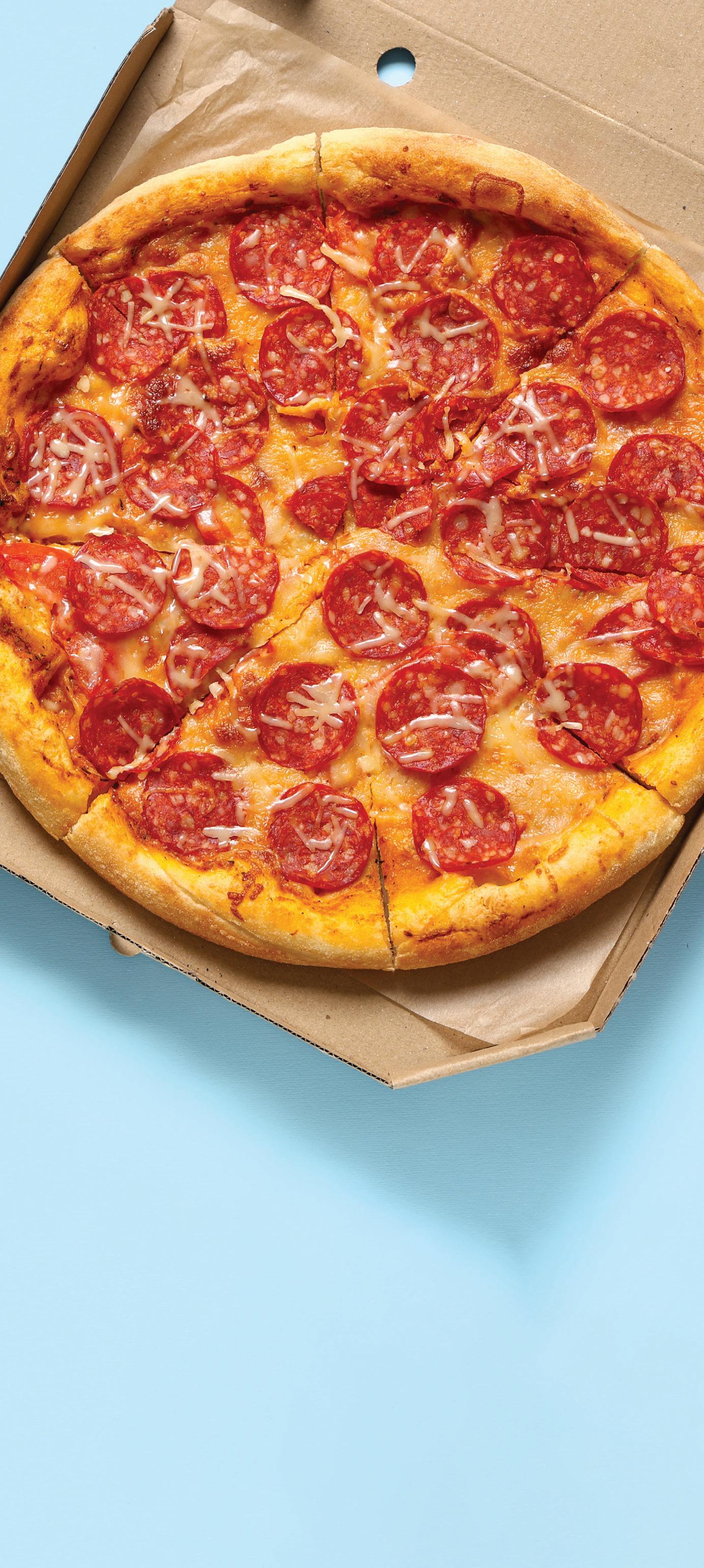
More than a quarter (27%) of c-store customers’ last prepared food purchase in a c-store was pizza. Operators are finding success with limited-time variations featuring bold sauces and toppings, Root said. Hot honey, chili-infused flavors and creamy options like vodka sauce or ranch dressing create excitement while maintaining operational simplicity, she explained.
CHICKEN AND PROTEIN
Protein continues to dominate consumer demand. “Everyone is talking about protein,” Root said. Flavor is key to differentiation, with spice profiles leading the way—especially sweet-heat combinations like hot honey and mango habanero, and global sauces such as Thai chili and jerk seasonings. At the same time, approachable options such as lemon pepper are gaining traction, with triple-digit growth. “Experimenting could be a dry rub, it could be a sauce or a dipping sauce on the side. It doesn't have to be difficult to implement,” said Root.
GLOBAL AND HANDHELD FOODS
Global flavors are also gaining momentum, particularly in portable, easy-to-eat formats. Items like tacos, tamales and calzones resonate because they meet multiple consumer needs: They’re convenient, portable, easily customizable and suitable for multiple dayparts.
THE Total
‘All your products need to be displayed properly’—or at least intentionally.
PACKAGE
BY STEVE HOLTZ
In a convenience store, food has seconds to win over a shopper. The store is busy, shoppers are moving quickly and the competition is often a glowing menu board down the street. But one of the most influential sales tools for foodservice isn’t a coupon, a menu panel or even the warmer location—it’s the packaging.
Packaging is part of the product: It shows off craftsmanship, keeps hot food hot (and crispy food crisp), prevents messy leaks and quietly advertises the brand wherever the food it eaten, whether at the office, on a jobsite or in a truck cab.
With curbside pickup and third-party delivery now standard expectations, packaging has also become a food-safety signal—tamper-evident, secure and built for the handoffs that happen outside the four walls of a store.
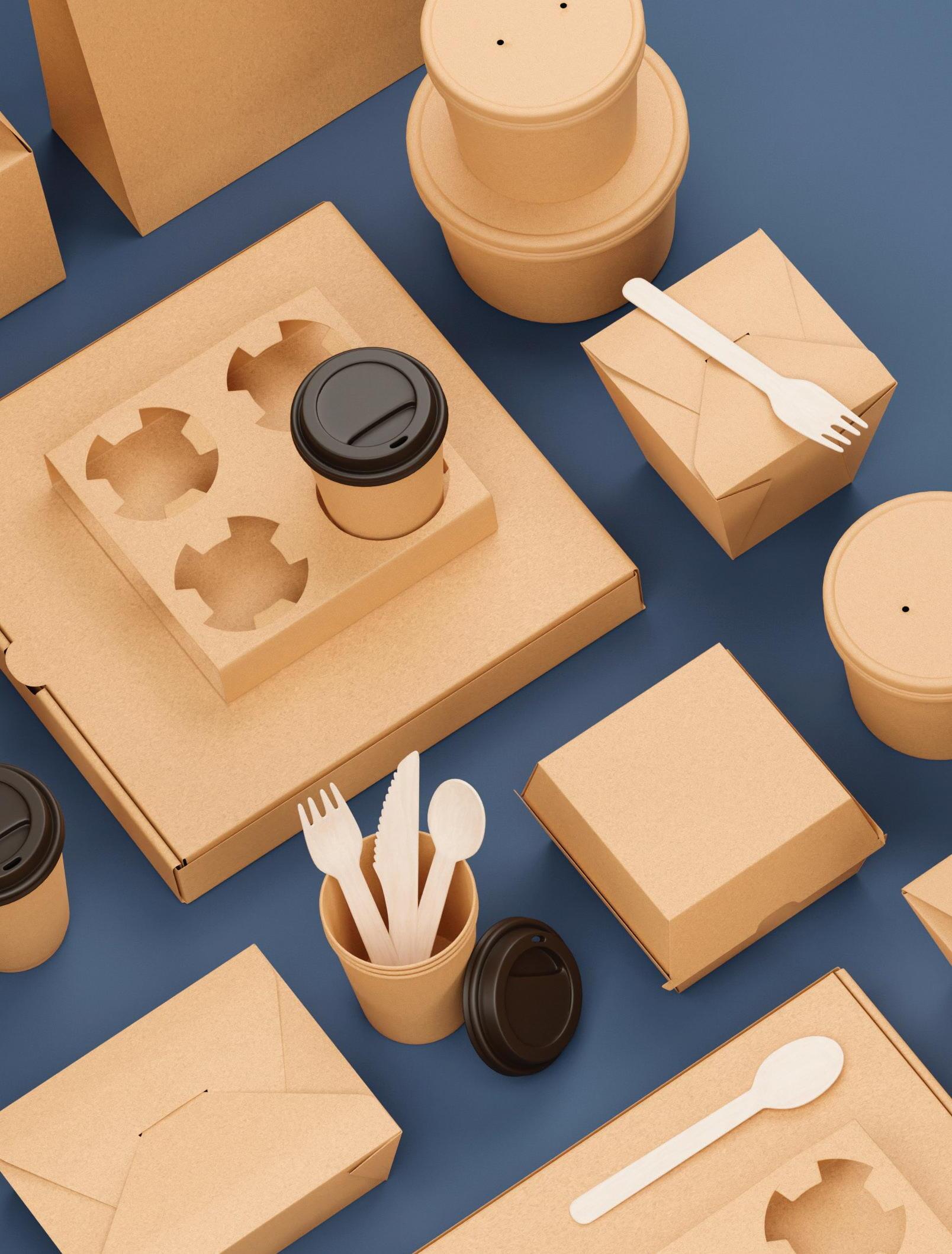
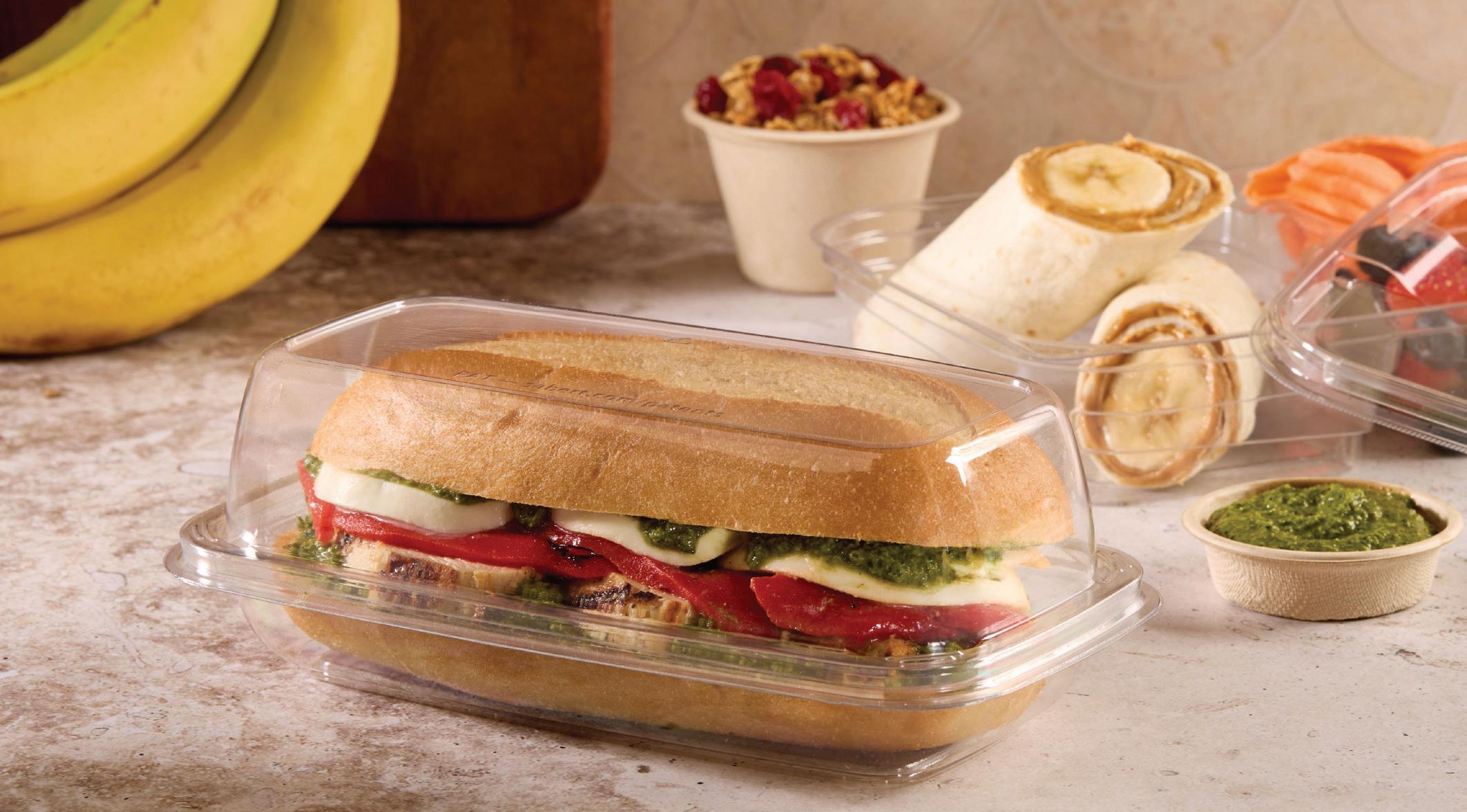
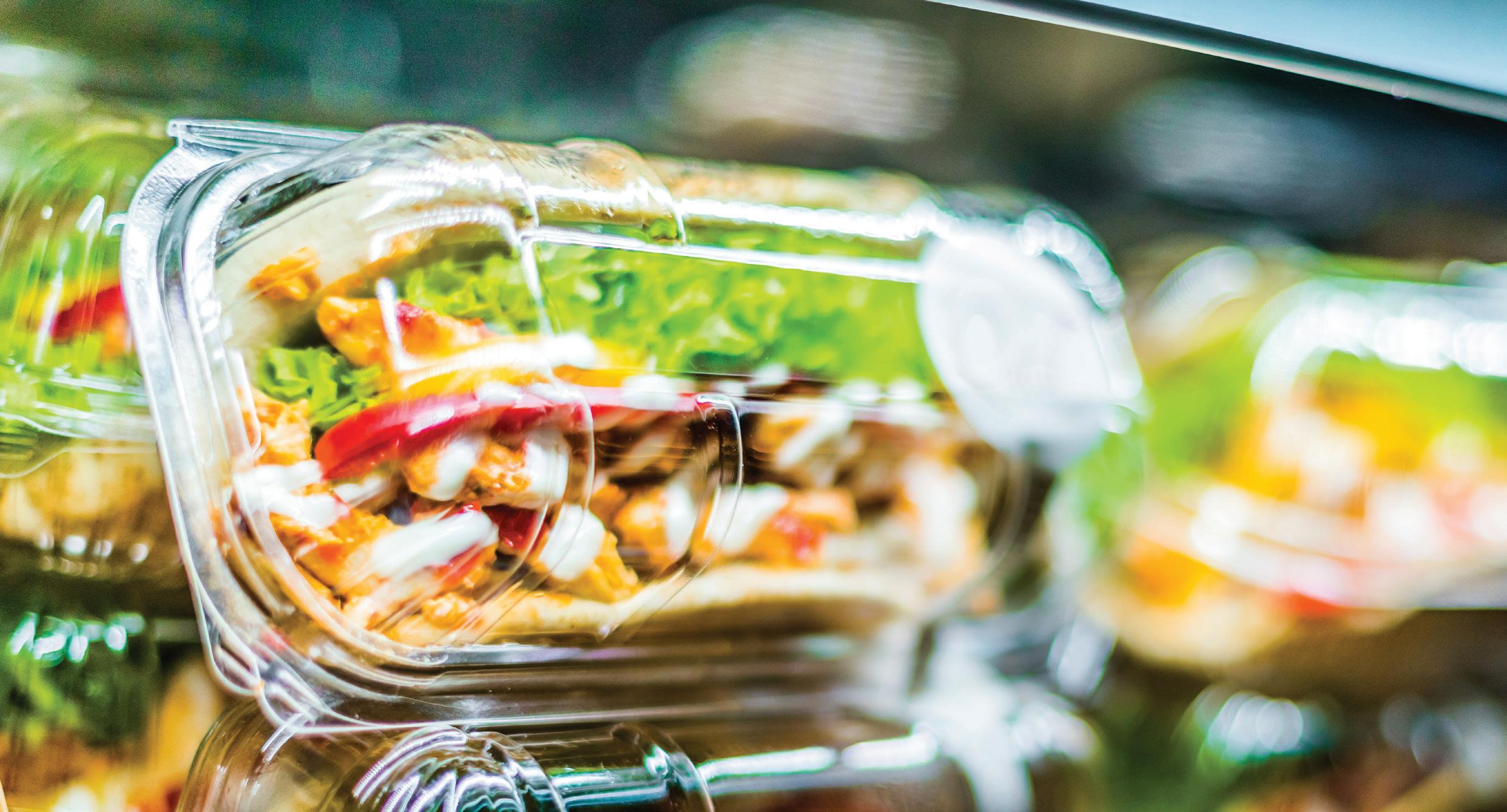
Clear packaging, like the Sabert samples pictured here, allows customers to assess the visual quality of the food before buying.
A SILENT SALESPERSON
When a retailer invests labor in made-to-order or chef-driven recipes, the package should do what a well-lit bakery case does: make the food look irresistible.
“You should let the products sell themselves,” said Jac Moskalik, who leads food strategy for Global Partners’ Alltown Fresh and Honey Farms brands. For Moskalik, the “carrier” needs to highlight food quality visually—and that often means packaging with a clear view.
“I’m a huge fan of windows,” Moskalik said. “If you’re going to invest in the labor to make something inside the store, you definitely want to show it off.”
In a channel built on speed and impulse, visibility matters: Customers buy with their eyes, especially when a sandwich, parfait or hot handheld menu item is competing with a dozen other quick choices on the path to the register.
That’s a far cry from the old approach of slipping a slice into a paper bag and calling it lunch.
“The days are over of putting something in a pizza bag and putting it on a warmer,” Moskalik said. “All your products need to be displayed properly.”
Just as importantly, the right package doesn’t just look better; it can extend hold time in a warmer or improve how a chilled item holds up in a cooler, protecting the quality that keeps customers coming back.
PERFORMANCE FIRST
In foodservice packaging, “performance” is more than whether a hinge snaps shut. Alexus Medina, senior director of product management at packaging manufacturer Sabert, sees performance as a three-part requirement: stackability, temperature management and merchandising ability.
A container has to keep its shape when it’s stacked in a pickup bag or wedged into a car’s cupholder; it has to withstand a hot rack, a refrigerated case or ambient display; and it has to make the product easy to shop.
That matters because “to-go” doesn’t always mean “to eat now,” Medina said. Customers might buy breakfast at 8 a.m. and not open the package until a mid-morning break, or they could purchase lunch for later in the day at the same time, she said. The package has to remain closed and intact so the food arrives as intended—without soggy bread, crushed toppings or dressing leaks that ruin the experience (and the customer’s willingness to reorder).
Clarity is part of performance, too. In chilled cases, condensation can fog a lid and dull the product’s appeal. “It’s hard to make a sale when it’s cloudy in the container for a customer to see inside,” Medina said. Whether the solution is a crystal-clear lid, better venting or a different material, the goal is the same: Keep the food looking fresh and appetizing from the first glance to the final bite.
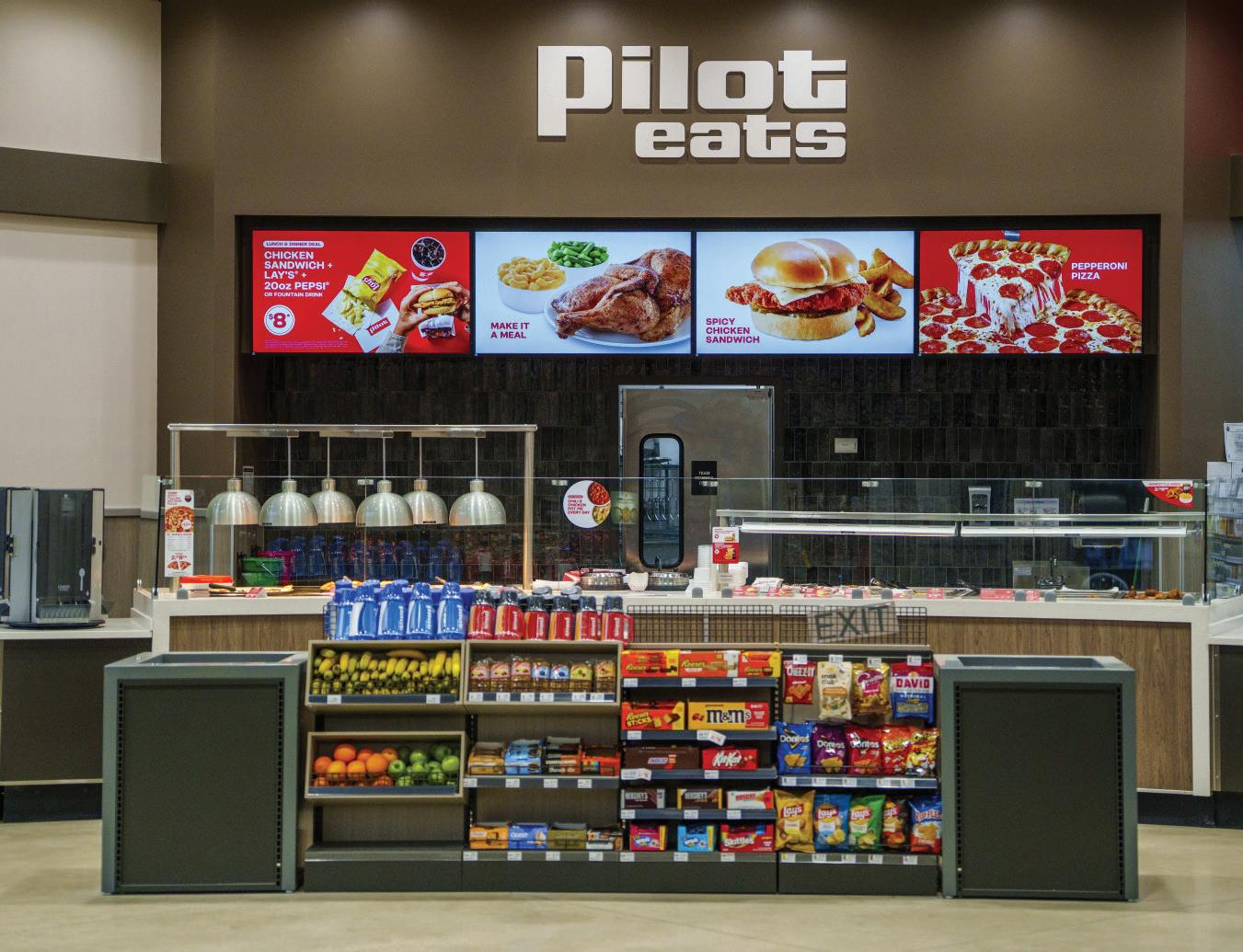
Pilot’s Is Ready to ‘eat’
Pilot is putting a sharper brand frame around the food it has been building for years in its travel centers and convenience stores.
In March, the retailer introduced Pilot eats, a new proprietary food brand designed to deliver “Food That Goes the Distance” across more of its network. The launch is backed by two concepts built for different missions: Pilot eats for a full hot deli offer, and Pilot eats Express for faster grab-and-go. The company says the goal is consistency in how food “looks, feels and travels,” with packaging and signage serving as the cues that help guests spot the program in-store.
The rollout started with two store transformations in Massachusetts and Florida.
“A lot of the food in the platform existed before Pilot eats,” said Sean Marrero, who joined Pilot as senior vice president of food and beverage in 2024. “How do we deliver the consistency of messaging to drivers at different locations that may have a different footprint experience? ... That to us is about connecting the brand dots. ... This allows us to tell that story.”
Pilot’s launch of its new Pilot eats and Pilot eats Express foodservice concepts began in March with “store transformations” in Chicopee, Massachusetts, and Ponce de Leon, Florida.
Goals of the rollout include:
• Scale: Pilot eats is slated to bring the company’s full hot deli menu to approximately 400 travel centers; Pilot eats Express targets approximately 200 locations.
• Signature items: The menu callouts include a Southern chicken sandwich, hand-roped pizza (sold by the slice or whole pie), and comfortstyle deli entrees like meatloaf, roasted chicken and mac and cheese.
• Packaging as a brand cue: New packaging and updated signage are part of how the brands will “come to life” as the rollout expands.
• Digital integration: The concepts are designed to be fully integrated into the Pilot app so guests can browse menus, place mobile orders and access rewards.
• Value: Pilot is also promoting meal deals as part of the program’s guest value strategy.
How to Choose Packaging Like a Product Developer
Retailers that succeed with packaging treat it like R&D.
Jac Moskalik of Global Partners said that when her team launches a new item or makes a packaging change, they conduct “due diligence” with suppliers and request samples. The evaluation starts with the basics— how it looks, how it merchandises and whether labels fit properly—then moves quickly into testing in cooler, warmer and ambient conditions to confirm the package doesn’t hurt the product’s integrity and shows off what the store wants to be known for.
That attention to detail is tied to labor economics. “If you’re going to invest the labor into making sandwiches, that sandwich should look like the best sandwich ever,” Moskalik said. Packaging is what protects that work on the shelf, under heat, and on the ride home.
Retailers that default to a single clamshell for every item often find themselves fighting the package instead of making it work for the food. A different approach is to match packaging to the menu, according to Medina: vented solutions for fried items and melts, tighter seals for saucy entrees and containers that present layered ingredients—think salads and bowls—without shifting during transit.
BUILT FOR HANDOFF
Current consumer realities have changed expectations for food packaging. “Order ahead and delivery is our reality now in convenience,” Moskalik said. “You have to definitely have the right packaging for the product to ship properly—if it needs to stay warm, if it needs to stay crisp or cold.”
That requirement forces retailers to test packaging not just in the store, but in the real world—stacked in bags, carried to cars and driven across town.
Alltown Fresh learned that lesson the hard way when it introduced a newer menu item: melts. The problem wasn’t the recipe, it was the ride home.
“How do you create a melt and keep the crust on the bread crispy?” Moskalik said. The team needed packaging that allowed the product to breathe, survive transit and still hold heat. It took longer to develop and source, with plenty of trial and error, but the payoff was a better bite and a product that could travel without compromising quality.
Hot-hold packaging is its own challenge. Put the wrong container on a heat rack and you may get warped plastic, soggy crusts or lids that fog. Moskalik said packaging for warmers and for transit “takes a little extra time” because teams have to consider vents, heat resistance and how the product will look after it sits, which is often longer than operators would like.
For manufacturers, the growth of delivery has “reset our performance standards,” Medina said.
Packaging now has to assume movement and multiple handoffs as the baseline. That includes stronger seals, better resistance to leaks and designs that stay stable when stacked with other items. The customer’s perception of quality is shaped as much by the condition of the bag as by the taste of the food.
Trust is also a critical part of the equation. Tamperevident features—whether built into a lid or applied as a sticker or seal—signal that the order is intact and hasn’t been tampered with. Customers want proof that “your delivery driver hasn’t broken into your order and enjoyed your meal,” Medina said.
In a competitive market, that small reassurance can preserve customer loyalty.
BRANDING TO-GO
Packaging doesn’t just protect food, it can extend the brand experience beyond the store. Once a foodservice program reaches meaningful volume, Moskalik sees packaging as a natural next step toward building loyalty and trust.
“If you have a pizza program that’s amazing, it’s so important to brand your pizza box,” she said.
Medina agreed, especially for food on the go. Branding on packaging allows the customer to “have that experience with a brand not only in the store, but also while you’re enjoying the food,” she said.
A logo, color system or distinctive design can make a handheld item feel premium and familiar at the same time, and it gives retailers more control over the guest experience once the food leaves the building. Is a plain white clamshell always a miss? Not necessarily. But Medina said retailers who default to the simplest option can be “missing an opportunity.” She encourages customers to consider not just today’s menu but the next one, choosing packaging that can grow with the program. The lowest sticker price doesn’t always reflect the total cost of the experience,
especially if one bad meal travels poorly, it could mean losing a repeat customer.
The same “make it easy to choose” design mindset is showing up across retail packaging. In April, Walmart announced it is redesigning its private label Great Value. It’s the first full packaging refresh for the retailer’s private label brand in more than a decade. While it will apply to household goods, it also includes almost 10,000 food and consumables items.
Walmart hopes to help shoppers spot key benefits faster, including prominent nutrition cues like protein content and gluten information, as well as more appetizing imagery. The company said the clearer system also helps store associates and fulfillment teams identify items quickly for online orders.
For c-stores, the lesson is familiar: Clarity sells, whether the product comes from the hot-hold case or is a fresh-made sandwich.
PACKAGING BY OCCASION
Packaging choices can also set the tone of a store or foodservice program.
Pilot Travel Centers introduced its new Pilot eats platform for most of its stores with a secondary Pilot eats Express brand for smaller sites. (See related sidebar on page 35.) While the two menus share many of the same options—pizza, chicken wings, sandwiches—the differing locations serve different types of customers, said Sean Marrero, senior vice president of food and beverage. He added that the packaging goes a long way to differentiate the two concepts.
“In our full Pilot eats locations, you’re going to have more of a plated-style container with utensils,” Marrero said. “So that is geared more toward someone who’s going to be spending time on site, not something that you’re going to be eating while you’re driving.”
In Pilot eats Express locations, the packaging leans into hand-held items and single-serve pizza boxes designed for quick, safe eating on the move.
“[In eats Express, we’ve] got more hand-held and clamshell pizza boxes that are designed for that single serving,” he said. “Our smaller stores are more of a means to an end; they’re not an end themselves. They’re there to help you get back on the road quickly.”
Pilot has framed that strategy as “Food That Goes the Distance,” a promise that the product is hearty, fresh and portable, whether the next stop is five miles away or a hundred. “We want to use food as a way to differentiate our brand,” Marrero said.
Similarly, Global Partners finds itself differentiating the packaging between its two major retail banners, Alltown Fresh and Honey Farms. The retailer presents Alltown Fresh as a premium, healthierfocused and locally sourced market, while Honey
“For our premium Alltown Fresh stores, we try to stay as close as we can to our footprint, so we have eco-friendly packaging, eco-friendly coffee bar supplies. ... We try to stay as clean as possible,” she said.
Honey Farms stores, however, offer more of a hybrid between that more modern packaging and traditional. “We have some clamshells, for example,” Moskalik said. “It’s a different guest experience.”
PACKAGING ON THE MENU
As convenience retailers push deeper into foodservice—expanding fresh programs, improving coffee bars and leaning into order-ahead—packaging is becoming a competitive advantage hiding in plain sight. The operators winning the food fight aren’t choosing packaging only by what’s in the distributor catalog; they’re choosing it the way they choose ingredients: based on how it performs, how it presents and what it says about the brand.
The good news is that the path forward is measurable:
• Start with the items that drive the most traffic and the most complaints.
• Test packaging the way customers use it—under heat, in the cooler, in a bag and in the car.
• Look for visibility that triggers impulse and seals that protect trust.
• Capitalize on branding that keeps your name attached to the meal.
In a category where seconds matter, the right package can be the difference between a one-time try and a new habit.
Steve Holtz is a c-store journalist with more than 20 years in the industry and president of Holtz Media Consulting.
UP THE COFFEE BAR
BY PAT PAPE
CLeading retailers and suppliers weigh in on what’s working, from matcha to mocha.
onvenience retailers with robust beverage bar sales can thank Dixie Cup for their good fortune. The Dixie Cup Company introduced the paper cup in 1907 in response to public health concerns over shared drinking implements, and that simple innovation paved the way for today’s portable beverage lifestyle. “Coffee-to-go” was born in 1964 when a Long Island 7-Eleven store began selling paper cups of java.
Almost 120 years after Dixie’s original invention, millions of consumers each day reach for a convenient cup to take their favorite drinks with them. What those shoppers put into their cups has also changed dramatically.
“C-store coffee bars have come a long way,” said Emily Wood Bowron Forehand, senior vice president at Red Diamond Coffee & Tea. “A significant percentage of consumers view convenience store coffee as high quality.”
Trending Flavor: Lavender
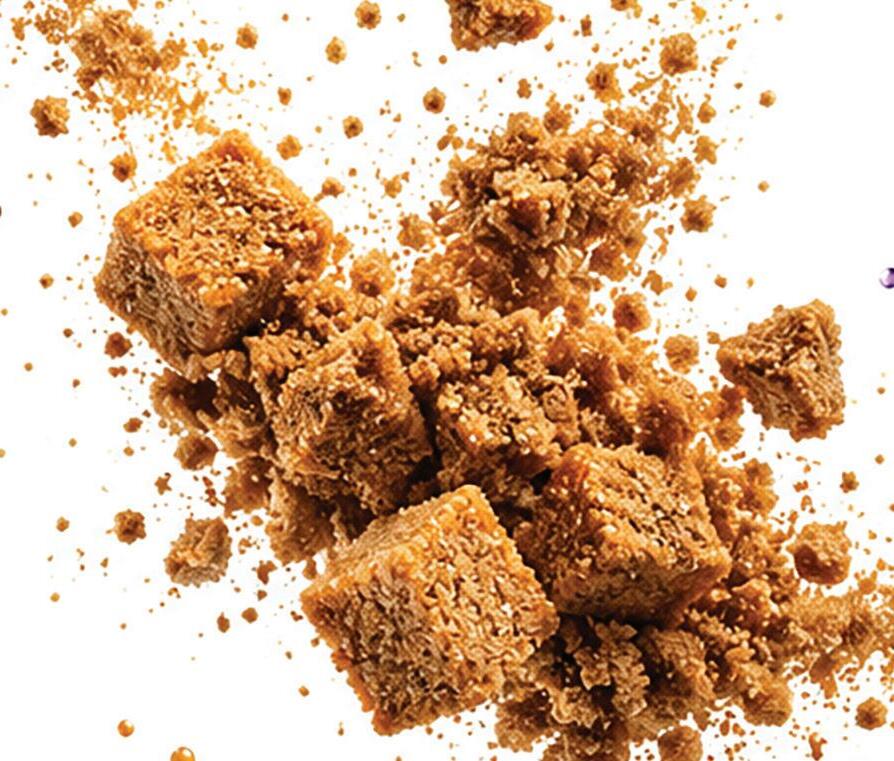
Trending Flavor: Brown Sugar
Trending Flavors
These are the fastest-growing flavors in coffee, according to food and beverage intelligence company Datassential. The menu penetration rate shows how widely a flavor has been adopted across restaurants that serve coffee, and how much it has grown in the last four years.
According to the 2025 NACS State of the Industry Report®, hot dispensed beverages accounted for 8.5% of foodservice sales, remaining flat year over year, while seeing a 5.4% dip in gross profits.
MIX AND MATCHA
A 2025 McKinsey and Company study found that consumers, especially Millennials and Gen Z, believe the right foods and beverages act as preventive medicine. Some reject chemicals,
sugars, artificial colors and flavors and instead seek out functional ingredients.
Matcha began appearing on coffee shop menus around 2019. Starbucks, Dunkin’, Dutch Bros and Peet’s have offered drinks featuring the strong, earthy tasting powder that contains numerous antioxidants. Matcha can be consumed hot or cold, unsweetened or blended with various flavors and sweeteners. But not all matcha teas are the same.
Expensive ceremonial-grade matcha is considered the highest quality version and is meant to be con sumed only as a beverage. Less pricey culinary grade matcha is used in baking, as well as for whipping up drinks. While some baristas follow tradition, others insist that the culinary grade product is more than adequate for concocting a healthy pick-me-up.
Wawa currently offers 12-ounce matcha drinks in vanilla, mint and chai flavors, starting at $4-plus, with upcharges for add-ins, such as almond milk or oat milk. Some independent coffee shops charge as much as $8 for similar matcha creations.
White Bison Coffee shops are often found inside or next to Twice Daily convenience stores. Both businesses are owned by Tri Star Energy of Nashville, which is keen on providing customers with unique LTOs and healthy beverage options. This spring, White Bison offered two matcha limited-time offers: Brown Sugar Cold Foam Matcha, which combined sweet brown sugar with the creaminess of cold foam, and a cold, sweettasting Matcha Frappe.
Trending Flavor: Salted Caramel
The number of U.S. coffee chains is on the rise.
Thanks to the growth of outlets like Dutch Bros, 7 Brew Drive Thru Coffee and Dunkin’, the coffee chain category added more than 1,000 new cumulative outlets last year. That’s a 3.2% increase in 2025 for a total of approximately 34,700 U.S. units, according to Technomic. Menu Penetration
4-Year Growth
2.0%
PROTEIN POWER
Protein has also become a top dietary priority. Cargill Inc. reported that in 2024, 61% of U.S. consumers said they increased their protein intake, compared to 48% in 2019.
Most protein that Americans consume comes from traditional sources. But in a Numerator survey published last year, 29% of respondents recognized ready-to-drink protein shakes as a viable protein source. That’s not news to Beverage Marketing Corporation, which notes that the consumption of RTD protein beverages jumped 11.5% in 2024.
Last fall, Starbucks introduced protein lattes and protein cold foam to the chain’s permanent menu throughout the U.S. and Canada. This year, the coffeehouse brand rolled out RTD Starbucks Coffee & Protein, which are available in grocery and convenience stores. Each 12-ounce bottle contains 22 grams of protein, along with assorted vitamins and five grams of probiotic fiber.
Currently, RTDs are the most practical way to sell protein coffee in c-stores. “The challenge is to offer the right product mix, a rich storyline and personalization options without a barista,” Forehand said.
CUSTOMIZATION CONTINUES
Despite all the new beverages with diverse flavors hitting the market, c-store shoppers still want to customize their own drinks (and post photographs of them on Instagram).
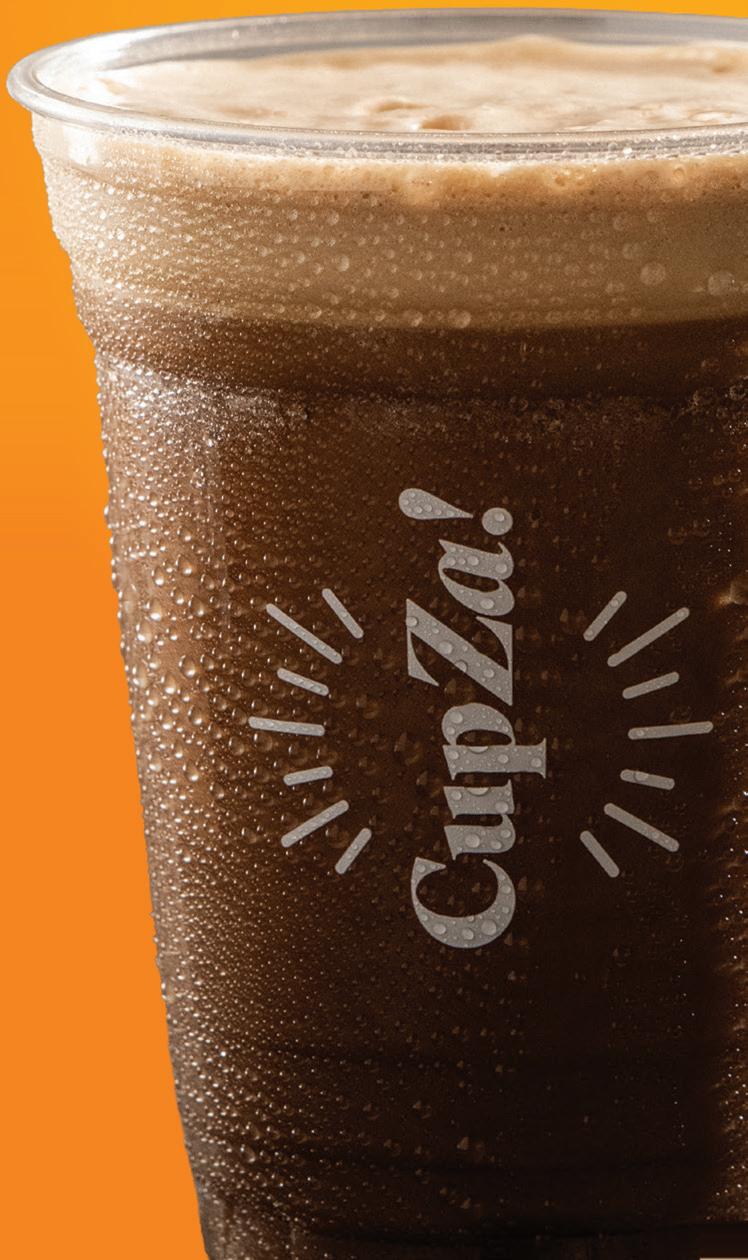
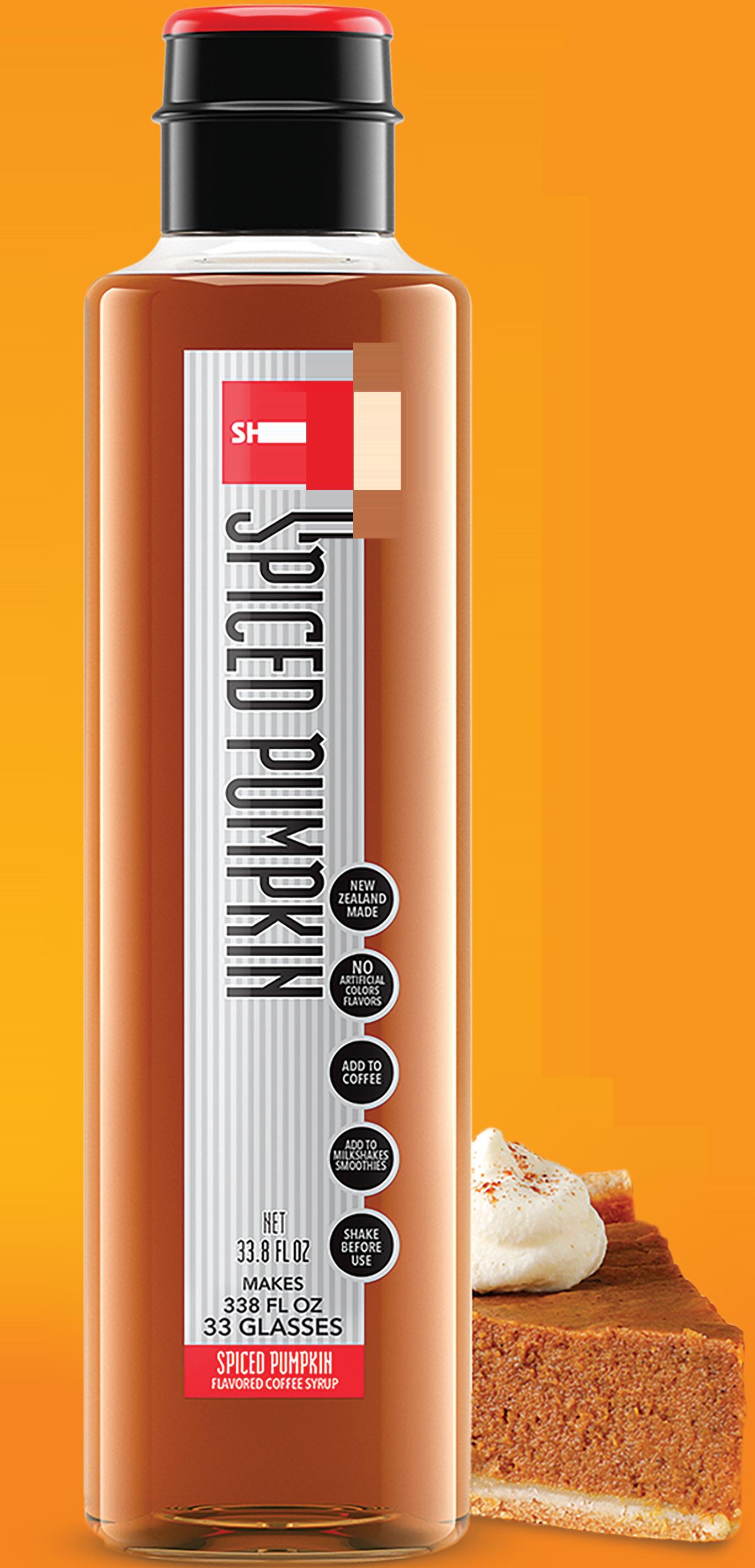
According to supply chain services provider The McLane Company, the global cold brew coffee market is currently valued at $1.2 billion and is projected to reach $4.2 billion by 2028. That’s why McLane created its turnkey CupZa! beverage program for convenience stores and offers SHOTT, a shelf-stable line of flavor concentrates customers can use to enhance hot and cold beverages.
For younger consumers making coffee at home, instant coffee is perking up.
According to NielsenIQ, dollar sales of instant coffee increased by 14.4% from July 2024 to July 2025. With coffee prices climbing, instant coffee is becoming a more attractive option to consumers who are looking for a good deal. And there’s been a lot of innovation in the space in recent years, including liquid concentrates and instant coffee mixed with protein powder.
“Customization will continue in 2027, 2028 and beyond,” said Javier Carro, senior product manager for coffee and beverages at McLane. “The young generations want innovation in cold drinks, and they want to mix assorted flavors with cold coffee. That’s what drives the coffee shops, and the same thing is happening with convenience stores.”
“Convenience shoppers increasingly expect premium coffee beverages like lattes, cappuccinos and mochas, but delivered in a way that fits a fast, self-serve or automated environment,” said Joe Gaines, senior director of U.S. sales at Costa Coffee, which is owned by The Coca-Cola Company.
“We’re seeing a strong demand for espresso-based beverages, alongside options that allow consumers to tailor their drinks, from milk choices to flavor add-ins, without adding friction to the experience.”
LTOS ARE MANDATORY
At Circle K, management carefully plans attractive LTOs and seasonal flavors to keep the coffee bar fresh and relevant.
“These offers help us deliver the unique experiences our customers expect when they visit our stores,” said Shawn Barnes, head of dispensed beverages for Circle K in
North America. “For example, seasonal favorites like pumpkin spice and peppermint are flavor profiles our customers look forward to. And earlier this year, we partnered with Turtles Chocolate to launch a limited-time Turtles Hot Cocoa nationwide in the U.S. at our coffee bar.”
LTOs are especially effective when they balance familiarity with a slight twist, such as seasonal flavors or variations on classic drinks, according to Gaines.
“In convenience retail, where decisions are often made quickly, recognizable flavors tend to perform best,” he said. “This spring and summer we’re returning with one of our most popular flavors: pistachio. It has a light, tangy flavor with the earthy, nutty tones that consumers love.”
McLane’s CupZa! will release several LTOs this year, including a Hershey’s Creamy Cold Brew and a few sweet tea options. SHOTT flavor concentrates also will receive some unique add-ins. “We have a passion fruit LTO, pumpkin spice LTO and a gingerbread LTO for the end of the year,” Carro said. “We’re always looking for innovation and something new to keep the category fresh. Our CupZa! mantra is ‘customization, innovation, and quality.’ Those are the kinds of things that drive our program.”
“Ultimately, scarcity drives engagement,” said Forehand, “and LTOs offer a sense of urgency and excitement that drives traffic and repeat visits.”
BEVERAGE PROGRAM UPGRADES
Improved technology in the brewing business has inspired several major retailers to upgrade their coffee programs. The goal is to give customers a superior beverage experience while helping the store team accomplish more in less time.
7-Eleven’s Coffee of the Future (COFU) machine is how the chain is reimagining the self-serve beverage experience. According to a 7-Eleven spokesperson, “COFU supports a consistent coffee experience while
Trending Flavor: Mint
streamlining operations. It offers hot and cold brew, specialty espresso beverages, multiple milk and syrup options, automated cleaning and multiple pickup points for faster service.”
Designed to automate and simplify beverage preparation, COFU is currently being tested in a limited number of stores as part of a broader set of equipment solutions the chain is evaluating.
Circle K continually reviews ways to tailor and broaden the coffee bar to ensure café-quality beverages. “Globally, we are making significant investments in our coffee equipment and ingredients, including beans, to support reliability and a consistent, great-tasting beverage,” Barnes said. “We evaluate enhancements through the lens of taste, safety, operational execution and consistency.”
QuikTrip recently upgraded store beverage bars with proprietary equipment that grinds coffee beans in-store and dispenses an assortment of drinks, including cold brew, hot chocolate and both hot and cold flavored lattes. QT’s new tea machine, which brews different teas at appropriate temperatures to ensure the best flavor, received the 2025 Kitchen Innovations award from the National Restaurant Association.
Casey’s surveyed customers and discovered that they wanted more variety from the chain’s coffee service. After dedicating months to developing a new program, Casey’s unveiled its Darn Good Coffee in almost 3,000 outlets.
“Looking ahead to 2026, we expect c-store coffee programs to continue closing the gap with traditional coffeehouses, particularly in quality, consistency and
Trending Flavor: White Chocolate
LTOs are especially effective when they balance familiarity with a slight twist.
menu variety. However, the approach will remain distinct,” said Gaines.
“C-stores are less focused on highly experimental beverages and more focused on delivering trusted, recognizable drinks at scale,” he said. “While coffeehouses may lead with niche or novelty items like bone broth coffee or coffee with lemonade, c-store operators are prioritizing offerings that have broad appeal and can be executed consistently across locations.”
Innovation and creativity are essential in today’s competitive c-store beverage environment, but a program can’t succeed on trends alone. The experts agree that beverage bar success begins with the basics.
“The key to a successful coffee program means starting with great coffee,” said Forehand.
“Then, operators can capitalize on the trends that are most relevant to their customers in a streamlined, efficient manner.”
than 20 years.
Pat Pape is a writer who worked in the convenience store industry for more
It just takes a few key pieces of equipment for c-store operators to launch a strong foodservice program.
EQUIPPED FOR
SUCCESS
BY AMANDA BALTAZAR
Many small convenience store operators, with a single location or a small chain, are looking to get into prepared foods.
“Everybody knows foodservice is the next revenue stream,” said Matt Chappell, corporate executive chef at Leo’s Market and Eatery in Greenfield, Indiana. The thing they’re wondering, he says, is “how do I capitalize on this idea?”
A solid foodservice program can be established and profitable with very few pieces of equipment, if they’re chosen carefully. But before operators consider equipment, they need to know what they’ll be serving.
“We like them to know their menu first,” said Jason Steiner, design sales consultant at C&T Design & Equipment Co., a broadline foodservice equipment dealer in Indianapolis, Indiana. “We
also need to know how that food product’s being produced— from scratch, or frozen, does it need to be held, are there assembly components or servingline components. Menu drives everything.”
“We always start with the menu,” says Michelle Fronsee, senior vice president of retail business development for equipment manufacturer Middleby. “We need to understand what you want to make and what you want to serve.” Secondly, she looks at how much space a c-store operator has, to understand how much she can fit in.
The most popular prepared foods in convenience stores are handheld items like sandwiches and wraps, which are offered by 88% of operators, according to Technomic’s 2025 C-store Food MultiClient Study. The report shows that 83% of operators offer breakfast foods and 71% serve pizza.
Within made-to-order food, pizza is most popular, offered by 67% of operators, followed by chicken sandwiches (54% of operators) and hot dogs (51% of operators).
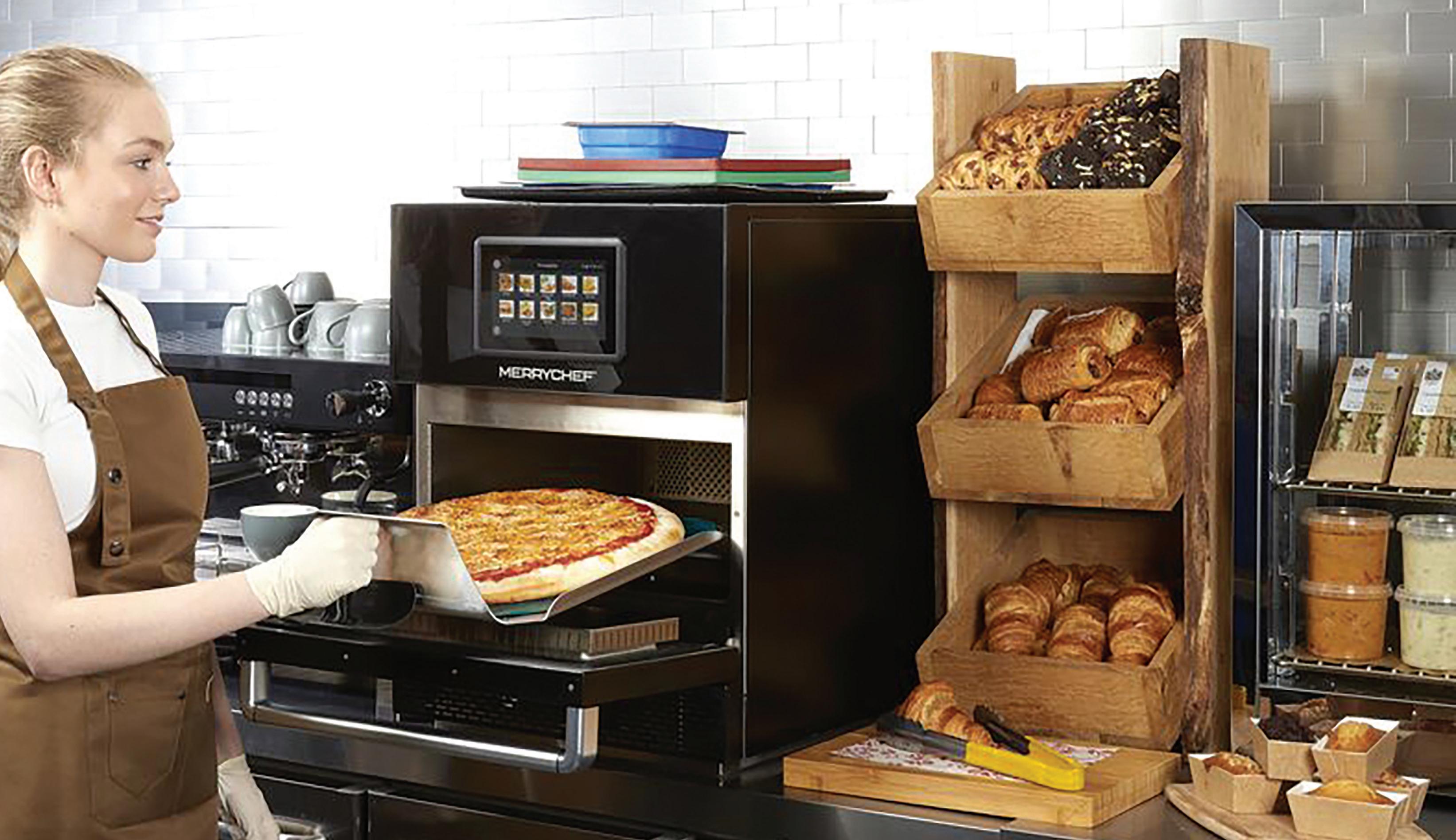
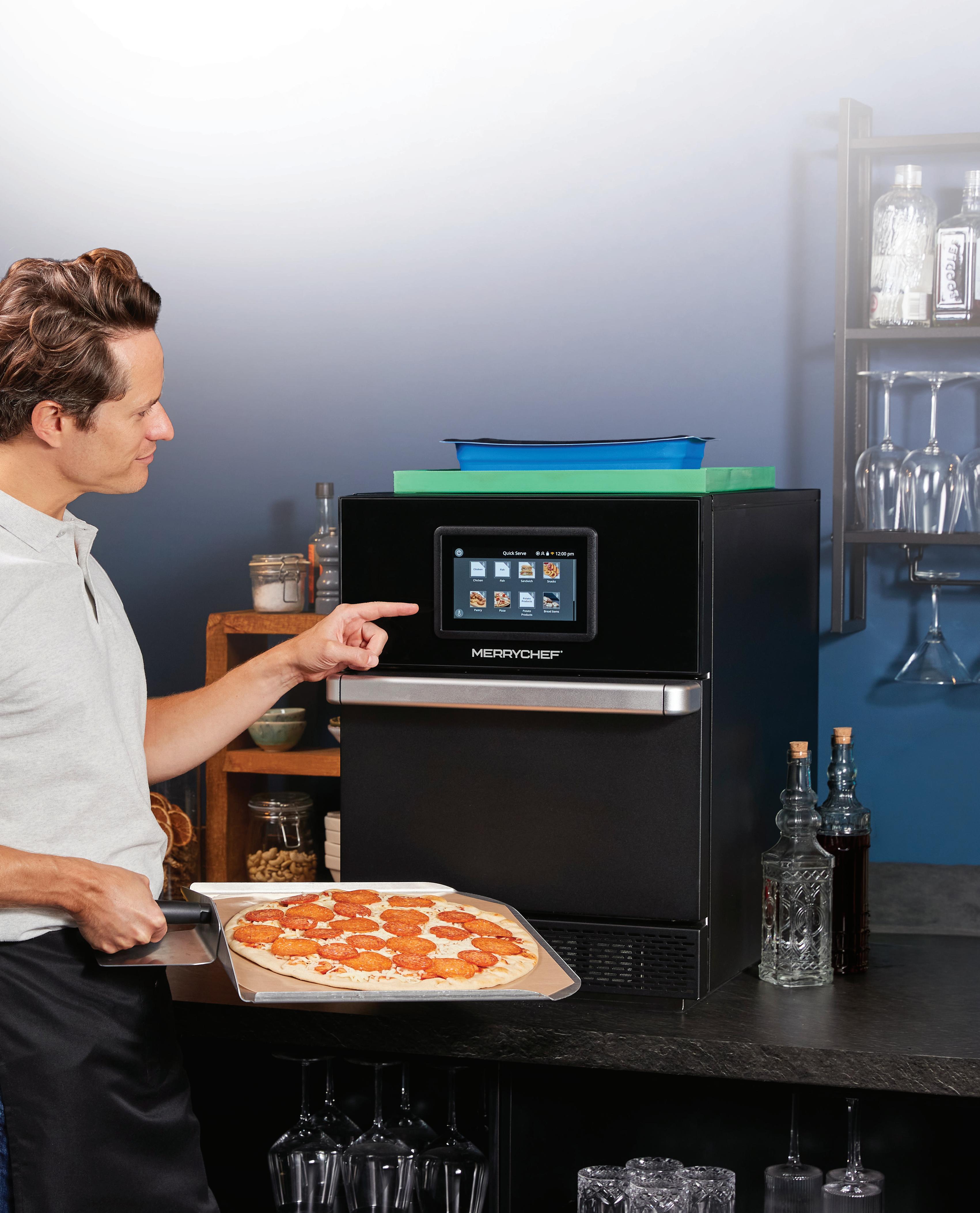
Merrychef, a high-speed oven manufacturer, maintains a large database of “Ready Recipes” that have been designed to work with their equipment.
“We work with chefs and culinarians around the world,” said Garamy Whitmore, general manager of Merrychef USA. “It’s a great resource for people to get new menu ideas.”
MULTIFUNCTIONAL EQUIPMENT
Today’s equipment tends to be multifunctional. Most manufacturers, Steiner said, offer speed ovens or combi ovens. The latter allow operators to roast, steam, bake, broil, retherm and poach foods; some speed ovens are divided, allowing different items to cook at different temperatures at the same time.
Operators “can produce a lot of menu items in a small footprint,” said Steiner. On top of that, these are very simple products to use; they can be programmed with the different food items a convenience store offers, then all an employee needs to do is press the button to heat or cook that item. “It’s one of those set-it-and-forget-it pieces,” Steiner explained.
Combination ovens are versatile by design. “It’s like a Swiss Army knife,” said Merrychef’s Whitmore. A single tool with a large number of applications allows operators to be flexible with their menus, offering different items throughout the day or between seasons.
“Today you might be baking pizza or air frying chicken, but tomorrow could be toasted wraps and next week could be protein bowls,” said Whitmore.
At Breez-In, a chain of four convenience stores headquartered in Prince George, Virginia, foodservice makes up 25% to 30% of the company’s business, excluding fuel. The stores used to have traditional ranges and ovens but switched to combi ovens for versatility five years ago. The combi, said COO David M. Bogese, “reduces the amount of guesswork you have to do.”
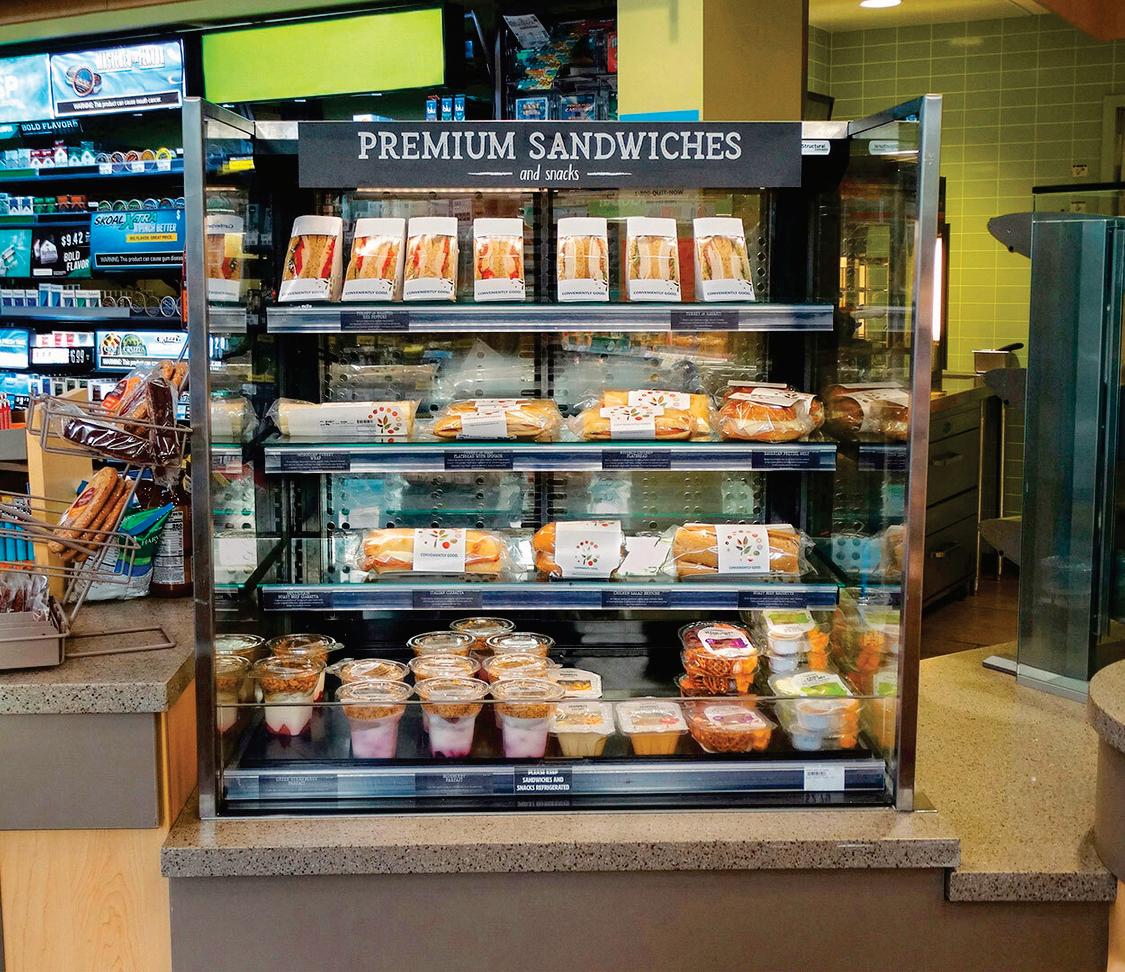
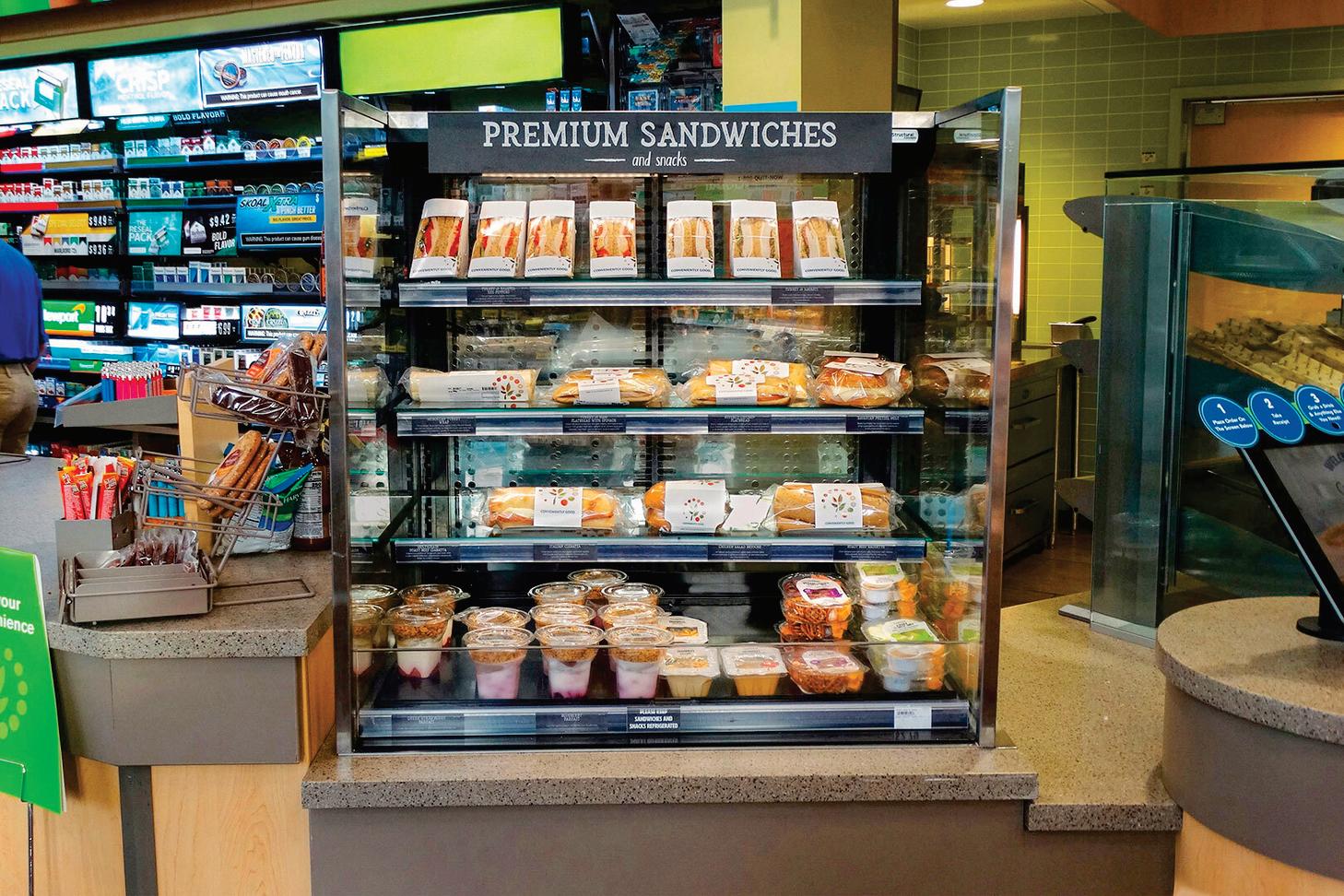
If consumers can’t see your food offering, they won’t consider it.
Leo’s Market and Eatery is known for its kolaches, which it previously cooked on-site in each store in double-stacked combi ovens. These ovens are “a versatile piece of equipment with a lot of different functions, because space-saving is always important,” said Chappell. “They were expensive but it really saved money because we didn’t need a steamer or a smoker and we’ve never had a fryer.”
Leo’s has now expanded to seven locations, and the retailer decided it would be a better strategy to have an 8,000-square-foot commissary—which also has double-stack combi ovens.
Alto-Shaam, a Wisconsin-based foodservice equipment company, offers two bundles to small operators getting started with prepared foods. For those who are primarily bringing in prepared foods, there’s a cook-and-hold oven and a hot food merchandiser; for operators cooking their own food the other bundle features a multicook oven, so that can be programmed so items are cooked at the touch of a button, and a hot food merchandiser. “Those two pieces can be the foundation for whatever small operators want to do,” said Ben Leingang, senior director of national accounts.
ALWAYS POPULAR: PIZZA
CD’s Quik Mart in Hopkins, Michigan, sells around 60 pizzas by the slice every day, as well as subs and salads. Co-owner Chris Kerber needs very little equipment for the pizzas, but one of the most important pieces is a tabletop dough sheeter that costs around $4,000. This flattens dough balls (which Kerber buys frozen) to a consistent thickness, so they’re ready to be topped. The store used to roll each one by hand.
Kerber also has a meat slicer, and says his meat “looks better, tastes better” and that the slicer “helps with portion control, because we can control the thickness,” he said.
Finally, offering pizza requires an oven. At CD’s Quik Mart, that’s a six-foot-long conveyor oven that can cook a pizza in just over five minutes. “We are pretty much cooking pizzas all day,” said Kerber.
This past winter, CD’s Quik Mart started offering breakfast pizzas because the store is busy early morning and Kerber received a lot of requests. “We sell them by the slice ($3 to $3.50) but within the first week, people started ordering the whole thing,” said Kerber.
Vollrath also offers a conveyor sandwich oven for convenience stores wanting to offer hot food. It’s a horizontal pass-through oven that can be set at different temperatures for anything from pizza to sandwiches, melting cheese and warming foods.
Foodservice Test Site
For c-store operators that don’t yet know what they want or need for their foodservice program, equipment manufacturer Middleby offers an innovation kitchen. Operators and chefs can come to this space and talk about ideas, test out equipment and recipes, watch demos, and figure out what equipment will work best for their menu and their company.
Creating a food program can be “overwhelming,” said Michelle Fronsee, senior vice president, business development, retail, “and folks who’ve never done foodservice programs before tended to do too much. If you do, you’re almost destined to fail. We have to try and pull them back, do a few things really well, execute together, then grow that to something else or get equipment you can add on to.”
This 40,000-square-foot kitchen is divided into vignettes— baking, frying, combi, steam, automation, etc. Sometimes operators visit the kitchen with an architect or consultant or their own dealer partner, or even a food company to see how a particular company’s food performs in that equipment, Fronsee said. “It makes it a lot easier for operators, particularly the small operators, as they don’t typically have the robust R&D department.”
INTO THE FRYER
Fried foods, especially chicken, are a perpetual c-store favorite. But fryers usually need a hood installed over them to transport grease and odors out of the building, and hoods are expensive. There are ways to circumvent installing a hood, if a convenience store can properly manage odors and heat produced through ventless equipment or a ventless hood system. Typically, ventless equipment uses a filter or a catalytic converter to eliminate grease and odors, Steiner said.
“Hoods are recommended if you can put them in because they get the grease-laden air out of the kitchen,” says Steiner. “But sometimes we can’t make that work so we use ventless equipment.”
Leo’s Market and Eatery “has taken the time to understand that putting a hood in there, even though they don’t necessarily need one, holds out the bad air and brings in the good air,” says Steiner.
Most Breez-In stores have two fryers, one of which is an open fryer and the other a pressure fryer. The latter is used for poultry products to keep them moist, said Bogese.
“If you’re seriously frying food we recommend exterior vented hooded systems,” Steiner said. The ventless hoods need to be cleaned out regularly “and that becomes a fairly expensive endeavor because the filter systems aren’t cheap and have to be replaced based on usage and that could be monthly, quarterly, semi-annually or annually,” he explained.
There are ventless countertop fryers that are suited to small batches of food (no more than three pounds) Steiner said. They can be an excellent way to offer some fried options. Operators need to ensure they clean the vents on these small fryers regularly to avoid odors and malfunctions. These can also add significantly to the heat in a building, he added. He advised operators opting for these to regularly schedule visits from HVAC technicians to ensure there’s sufficient fresh air in the kitchen.
ON DISPLAY
Stores offering hot foods for grab-and-go need a hot food display case, ideally one that’s humiditycontrolled, which helps keep fried foods like chicken strips and potato wedges crispy for hours.
Vollrath recently launched a new case that comes in three configurations—one that holds up to three steamtable pans, one that holds up to four and a self-serve case without doors that doesn’t control the humidity quite as well but allows customers to take their own food, said Becky Guenter, product manager for countertop equipment. These cases also have different zones so food can be held in each one at a different temperature.
Breez-In stores all have six-foot-long holding cabinets “which showcase what you’re offering so
88% of c-store operators serve handheld items like sandwiches and wraps.
Source:
Technomic 2025 C-store Food Multi-Client Study
you need a nice, appealing, merchandising cabinet,” Bogese said. These feature breakfast biscuits and sliders early in the day, then transition to fried chicken and lunch/dinner items. Pizzas go in a specific selfserve pizza warmer.
Alto-Shaam’s hot food merchandisers help retailers keep food hot and maintain quality for long periods of time. They have heat on each shelf and heat that radiates from above, too, said Leingang, which also helps prevent condensation on the products. These come in countertop models for smaller operators and floor-standing models, with front doors, rear doors or both.
Hunt Brothers Pizza is one of several providers offering turnkey solutions to the industry. Dee Cleveland, director of marketing, offers advice from the perspective of the company: “The most effective merchandising is simple, consistent, and easy for the consumer to understand in seconds.”
She offered three specifics:
• Visibility.
“If consumers can’t see your food offering, they won’t consider it. Clear signage at the entrance, at the counter and near high-traffic areas is critical.”
• Be disciplined in your messaging.
“One strong value message will outperform multiple competing messages,” said Cleveland. For Hunt Brothers, this means a focus on their “All Toppings No Extra Charge” offer. “It’s easy to understand and easy to remember.” Cleveland also emphasized the importance of consistency across locations: “Simple, repeatable merchandising wins over time.”
• Connect the product to the moment.
“Use merchandising to highlight occasions, such as combination meal deals, lunch, and dinner options,” said Cleveland.
Amanda Baltazar is a journalist who covers operations, design, marketing and trends for B2B publications.
SAFETY FOOD The Business of
“Food isn’t food unless it’s safe,” emphasized retailers at the 2026 NACS Food Safety Forum.
BY LAUREN SHANESY
Foodservice accounted for 28.0% of in-store sales in 2025, according to data from the NACS State of the Industry Report® of 2025 Data—that’s up from 22.5% in 2021 and 16.8% reported about 15 years ago.
But growing foodservice programs and expanding menus comes with elevated risk.
One of the most foundational and critical elements of a successful foodservice program is food safety, which protects public health, builds consumer trust and safeguards one of retailers’ most valuable assets: their reputation. “You don’t forget the first time food betrays you. … Nor do your customers,” said Betsy Craig, CEO and founder of MenuTrinfo, at the fifth annual NACS Food Safety Forum.
“Food safety is at the cornerstone of your reputation,” added Frank Gleeson, NACS
president and CEO, as he kicked off the event, which took place in Chicago on April 13. “It’s not a competitive advantage; it’s table stakes. … If you’re serious about foodservice, you’ve got to be serious about delivering safe food.”
At the 2026 Food Safety Forum, retailers and foodservice suppliers gathered to discuss the risks involved in foodservice, how to mitigate them, and how to protect both their store’s brand reputation and more importantly, customers’ health.
CULTURE OVER CHECKLISTS
For Scott Zietlow, CEO, president and chairman of Kwik Trip, and Doug Yawberry, president & CEO of Weigel’s, food safety starts at the top. Retail leaders need to build a culture of food safety both in their organizations and among their store teams. “You need to have buy-in from all the
leaders in the company, and then it follows all the way through,” said Zietlow.
At Weigel’s, Yawberry said the company embedded food safety into every role, not just the foodservice team. Instead of allowing district managers and store leaders to remain removed from food operations, the company requires anyone with a leadership position to work through a food role before advancing.
“Most of it is fear because they don’t touch it,” he said, referring to store leaders’ past hesitation around food operations. “But when they understand the ‘whys’ … it becomes inherent in them.”
Both CEOs emphasized the importance of training, and how it needs to underscore the reasoning behind food safety decisions and protocols rather than just adhere to instructions. Yawberry noted that foodservice team members are often making quick, risk-based decisions under pressure while in the kitchen, so they are trained on both execution and reasoning.
Kwik Trip has also implemented AI and other tech to help with instant, on-demand training reminders for employees while they’re in the kitchen. “Let’s say there’s a new product out. Yes, employees have gone through the training, but they’ve only done it once or twice,” said Zietlow. The company’s education tool will “pop up real time, just-in-time training, which shows you the video of how to do it again.”
One of the most practical strategies both leaders highlighted was simplification and reducing complexity to minimize risk.
Weigel’s invested heavily in a centralized commissary operation to take pressure off stores. Yawberry said the move reduced the number of in-store preparation steps, limited opportunities for cross-contamination and allowed employees to focus on execution and safety.
“We are [always] making gains to be able to sell safe product every single day.”
— Doug Yawberry, President and CEO, Weigel’s
“When we start simplifying our operation… our store teams can focus on safety,” Yawberry said.
However, he also noted that centralization concentrates risk. “It took 89 points of failure out of my system… and wrapped [them] into one point of failure,” he said.
While food safety is not a competitive advantage these days, a company culture that prioritizes food safety execution is, the CEOs emphasized. “It’s not that hard to do the right thing,” Zietlow said, but doing it consistently, sometimes across hundreds of stores, requires intentional leadership, tight systems and a culture where every employee understands their role in keeping customers safe.
PRIORITIZE RISK TO REDUCE INCIDENTS
About one in six people in the United States will get sick from foodborne illness each year, said Evan Powell, retail food protection manager at Kwik Trip, citing data from the U.S. Centers for Disease Control and Prevention (CDC). “That’s about 128,000 hospitalizations and 3,000 deaths.”
There are plenty of food safety risks an operator could focus on, but Powell and Donald W. Schaffner, Ph.D., an extension specialist in food science and a distinguished professor at
Rutgers University, noted that not all risks are created equal. Operators can optimize food safety by adopting a risk-based prioritization approach instead of a strictly compliance-based approach.
“Risk is a function of probability and severity,” said Schaffner, explaining that operators should identify and mitigate risks that happen frequently and risks that cause the most harm.
Most foodborne illnesses are caused by five preventable failures:
• Poor personal hygiene (especially handwashing)
• Contaminated equipment
• Improper cooking
• Improper holding temperatures
• Unsafe sourcing
“If you manage those top five risk factors, you’re going to mitigate the majority of your foodborne illness risk,” Powell said. “You’re going to be in pretty good shape.”
Operators also need to be realistic about human behavior, which isn’t always perfect. While the risks are preventable, they’re amplified by factors such as high employee turnover, inconsistent
“If we can’t do it safely, then we’re not going to do it.
— Scott Zietlow, CEO, President and Chairman, Kwik Trip
training, time pressure in stores and increasing menu complexity. “Every organization is working with finite time and resources. If coworkers washed their hands every time they were supposed to, they’d spend about a third of their time doing it,” Schaffner noted.
Simplifying processes and reinforcing key behavior at the most critical, high-risk moments, like washing hands after handling raw meat or using the restroom, can help operators reduce risk more effectively than trying to enforce perfect compliance.
Powell and Schaffner said that most food safety programs are still focused on compliance, meeting standards and protocols or passing inspections. And while those things are necessary, a risk-based approach will reduce unnecessary complexity and improve food safety by focusing on high-risk and high-impact behaviors. Managing food safety risk isn’t about doing everything, it’s about doing the right things well, they said.
ALL ATTENTION ON ALLERGENS
While foodborne illness is a systemic risk, allergens represent a different kind of threat— one that is immediate, personal and has the potential to be deadly.
“When we are talking about allergens, we’re talking about real people, real risk, real consequences,” said Craig of MenuTrinfo. “Allergen incidents can cause life-threatening harm, and they can do permanent damage to your brand’s reputation.”
About 33 million Americans have food allergies, she said, and the number has more than doubled in recent years. To add to that, every person with a food allergy’s friends, family and other members of the household might make dining decisions based on allergen safety, increasing the potential sphere of influence to as many as 85 million consumers.
One of the biggest contributors to allergen incidents is misinformation.
The CEO Criteria
During their CEO Perspectives on Food Safety conversation, Scott Zietlow, CEO, president and chairman of Kwik Trip, and Doug Yawberry, president and CEO of Weigel’s, offered actionable guidance for retailers looking to strengthen food safety programs.
“The number one reason for recalls isn’t necessarily allergic items on the inside—it’s the wrong label on the outside,” Craig said.
That includes incorrect packaging labels, outdated ingredient info or miscommunication between suppliers and operators. Failure in processes and systems related to food ingredients or lack of clarity also significantly contribute to allergen incidents.
Consumers want to know that a foodservice provider can handle special requests, prevent cross contamination and accurately tell them that an item is safe for them to eat in their store. “They might ask an [employee], ‘Hey, does this have this ingredient in it?’” Craig said. “They’re not necessarily asking you about the food … they’re asking you about your system.”
According to industry data cited during the session, more than half of guests with food allergies have experienced a reaction even after informing staff of their condition—meaning the retailer lacks the proper systems to prevent allergic reactions, Craig said.
It reinforces the need for redundant checks in labeling and food prep protocols, standardized processes, clear documentation and all employees being equipped with the proper allergy knowledge, she said.
1. Make food safety a leadership priority. Talk about it consistently, include it in your company wide messaging to all employee levels and hold leaders accountable to food safety standards. Food safety may happen in the kitchen, but it starts in the boardroom.
2. Invest in people, not just systems. Training is critical to mitigating food safety risks. Make sure employees have what they need to be successful in high-pressure or time-constrained situations.
3. Ensure leaders understand operations firsthand. Give employees across the organization hands on experience with foodservice—or even require it in Weigel’s case—to reduce fear and knowledge gaps.
4. Simplify wherever possible. Reduce in-store complexity—Weigel’s and Kwik Trip both have off-site food production facilities—and standardize processes across the organization.
5. Build strong regulatory relationships. Zietlow encouraged operators to avoid an adversarial approach with suppliers and regulators. “Develop a strong working relationship with them,” he said. “At the end of the day, everybody has the same goals.”
6. Know that food safety is a shared industry responsibility. “We all grow the industry as we become safer,” Zietlow said.
“When we are talking about allergens, we’re talking about real people, real risk, real consequences.
— Betsy Craig, CEO and Founder, MenuTrinfo
Foodservice accounted for 28.0% of in-store sales in 2025.
Source: NACS State of the Industry Report® of 2025 Data
“You cannot rely on people remembering,” Craig said. “You have to have policy.”
Additionally, ingredients may be safe, but if the environment they’re prepared in is not, then cross contamination can also lead to severe incidents.
Because of this, some operators are rethinking production strategies, exploring dedicated areas or even separate facilities for allergen-free products.
Staff training on allergens is critical to preventing potentially life-threatening situations. Employees must have access to clear, documented answers about ingredients and allergen safety and have the confidence to communicate them accurately to customers, Craig said.
MORE INNOVATION, MORE COMPLEXITY
“The pace at which the food industry has changed over the past 10 years is significantly faster than what it did even the 10 years prior,” said Nancy Wilson, senior director of quality assurance, risk management and safety at Wawa.
As retailers expand menus and push into more fresh prepared food, they are also expanding operational complexity. New ingredients, new equipment and new preparation methods can in many cases introduce new risks.
“The question is not whether we’re going to innovate,” said Wilson. “It’s how we innovate and keep food safety as a core pillar.”
The growing complexity of the supply chain is one of the main factors impacting food safety challenges and it can directly affect risk at the store level. Products are moving through more hands, more facilities and more processes before reaching the store, and each step introduces potential failure points.
“Supply chain complexity is one of the top reasons we’ve had an increase in Class I recalls,” Wilson said, noting that severe recalls have risen significantly in recent years.
Retailers need more visibility than ever: “How much of your supply chain do you really know?” she asked.
Wilson and other presenters underscored the need for strong, trusted supplier partnerships,
Out in the Open
Consumer trust is paramount to brand reputation. Today’s customers may not understand HACCP plans, health inspection codes or supplier audits, but they notice what they can see. Cleanliness and visible safe food handling practices shape a customer’s perception of your store when they choose to eat there or not.
At Weigel’s, creating open kitchens that moved food preparation into customer view had a measurable impact.
“When we put that kitchen out front, it resulted in 30% increases in food and 20-plus percent increases in inside sales,” said Doug Yawberry, president and CEO of Weigel’s.
emphasizing that retailers can’t manage risk in isolation. Because when something goes wrong, the customer doesn’t blame the supplier. “Your name is on that product,” Wilson said.
Jill Sump, FSQA supply chain manager at Casey’s General Stores, said that retailers and suppliers need alignment on standards, accountability and culture. Suppliers shouldn’t be treated as transactional vendors, but as partners who are integrated into the retailer’s food safety system and expected to meet the same standards for food safety protocols, communicate openly and continuously improve.
“When we align on strong supplier standards, share best practices and prioritize food safety culture, we don’t just protect our guests—we raise the bar for the entire industry,” Sump said. “It takes all of us, working collaboratively, to build consumer trust.”
Lauren Shanesy is a writer and editor at NACS.
Every July 24 (24/7 Day), the NACS Foundation unites convenience stores across America in recognizing first responders, medical personnel and American Red Cross volunteers who work around the clock, 24/7, to serve our communities. Now in its eighth year, the event unifies the collective efforts of 35,000+ convenience stores that honor and thank the extraordinary commitment of hometown heroes with items like a
Future
OF CONVENIENCE FUEL RETAIL THE
AI built over quality data can help c-stores with everything from getting ahead of turnover to reducing food waste to creating personalized offers.
WHAT ARE THE BARRIERS TO ENTRY FOR SMALL AND MIDSIZED OPERATORS WHEN IT COMES TO LEVERAGING DATA TO IMPROVE OPERATIONS?
Amit Sreedharan: Smaller operators can be incredibly effective in creating a strong, personal affinity with their customers. They know what their customers like and dislike (often on a personal level) and can react quickly to changing tastes and needs. These mom-and-pop operations represent the core of the industry and its entrepreneurial heart.
Just five years ago, many smaller operators couldn’t afford the software or hardware, meaning they had little
to no integration between the fuel controller, the POS system and the back office—and thus almost no data. Today, a 10-store operator can stand up backoffice analytics, digital ordering and a loyalty program in a single quarter. The only barriers we presently see are data quality and retailers’ understanding of the availability of affordable and scalable IT systems.
At Infosys, we work with everyone from the largest fuel retailers to true mom-and-pop shops. As AI adoption accelerates, it is redefining how individuals and organizations operate. Those who remain aware and adaptive will be best positioned to harness its full potential.
HOW HAS AI IMPACTED THESE BARRIERS TO ENTRY?
Amit: Thanks to pretrained AI models, small operators don’t need a data science team to do demand forecasting. Software as a service (SaaS) vendors are embedding AI into the workflows that operators already run. Vendor invoice reconciliation, labor scheduling that predicts traffic by daypart and assigns shifts automatically, planogram compliance via a phone camera—all of these are in production today, sometimes without the operator even knowing they’re using AI.
But there are new barriers. The first is data quality. Most small operators run on fragmented systems, and
without basic data integration, smarter models don’t deliver.
Five years ago, the question was money. Today the question is judgment.
HOW HAVE OPERATORS YOU’VE WORKED WITH IMPROVED THEIR BUSINESS?
Amit: Some operators have torn down their generic points programs and rebuilt personalized loyalty systems. They have seen app downloads more than double in a year. Active loyalty members grow faster than overall traffic, meaning new customers get acquired into loyalty before they become habituated transactional shoppers. The program shifts from a marketing expense to a customeracquisition engine that funds itself.
We’ve seen a transformation in pricing and foodservice as retailers have rebuilt their strategies using data instead of intuition. They cut underperforming SKUs and tuned daypart pricing to local traffic patterns. The ones who executed well moved prepared food from a small basket share to a meaningful one in 12 to 18 months. These same tools can also reduce food waste.
HOW CAN BUSINESSES LEVERAGE DATA TO BUILD CLOSER RELATIONSHIPS WITH CUSTOMERS?
Amit: A key one is loyalty programs built around personalized offers instead of one-size-fits-all discounts. By combining information like the time of day, weather and a customer’s demographic data and past purchase history, a personalized program can recommend items or offer discounts that are relevant to that specific person in that specific moment. It could also include geofenced, contextual offers in a mobile app or via text message. Multiple convenience retailers use this technology to push the right offer when a known customer is near a store—or already inside one.
Then there’s forecourt commerce that takes advantage of modern automobile digital systems. Automobiles hold data
that may include fuel level, the customer’s route and their preferred order. Multiple automotive manufacturers are running in-car commerce at meaningful scale. If operators don’t engage directly with these programs, the relationship with the fuel customer shifts to digital intermediaries. This is probably the single largest underappreciated use case for c-store data right now.
WHAT OTHER ADVANCEMENTS ARE YOU MOST EXCITED ABOUT?
Amit: With AI at the forefront of technology, we are seeing many exciting stories that will become core to the fuel convenience sector. For example, AI-based fraud detection software at self-checkout can make a big difference in loss prevention. The interesting consequence is what becomes possible afterward: Operators can expand the self-checkout footprint to stores where they were previously afraid of the loss exposure. Vision AI turns self-checkout from a margin liability into a labor productivity gain.
AI tools can also help with merchandise management. Some specialized AI ordering platforms for produce, bakery and deli are showing waste reduction numbers large enough to register at the CFO level. Shelf monitoring through computer vision (robots, fixed cameras, out-of-stock and planogram detection) is quickly moving from pilot to production. SKU-store-day demand forecasting sits underneath all of this.
In store safety, vision-based monitoring tools can track hazards, PPE compliance in food prep and parking incidents. Advanced AI software can also predict hardware maintenance life cycles better ensuring higher uptime of key equipment like coolers, freezers and even POS and fuel dispensers.
We are living through a period of rapid transformation, where store operations are steadily evolving toward autonomous models driven by robotics and intelligent systems. However, one principle remains constant: The human touch will always play a vital role, regardless of technological progress. This interview is brought
As AI adoption accelerates, it is redefining how individuals and organizations operate. Those who remain aware and adaptive will be best positioned to harness its full potential.
AMIT SREEDHARAN Business Head Energy –Europe and MEA – Energy, Services and Government Infosys
WHAT THE MOST EFFICIENT FUEL RETAILERS
DO WELL
Hint: It’s not just about price.
BY JEFF LENARD
“WHICH RETAILER IS THE STRONGEST—or most profitable—when it comes to fuel?”
That’s by far the most common question that OPIS hears every year. So, naturally, the company’s analytics team set out to define who were the strongest fuel retailers—and more importantly, why certain chains were stronger than others. OPIS developed an annual scorecard that provided answers and shared some of the results and commentary with NACS.
There are a lot of paths to success to become a top 50 retailer: Some are ultra competitive on price while others are not; some are companies with thousands of locations while others have just a few dozen; and some are well-known foodservice-first brands while others are well-known fuel brands. If there is one commonality, it’s that each of the top 50 companies has defined what they want to be known for and they lean into it.
With fuel gallons continuing to decline each year, this analysis of the most efficient fuel retailers in 2025 provides more than a listing of the best of the best; it’s a blueprint that companies can study to see how they can compete—or even thrive—in an incredibly competitive, dynamic marketplace.
How the Rankings Are Determined
Each year, OPIS provides NACS with a ranking of top fuel sellers using a comprehensive scorecard based on what OPIS knows about each company, including:
• An estimate of the gross profit on a gallon of gas, calculated using OPIS’s standard rack-to-retail margin methodology
• Location data from a third-party provider that tracks the number of times a device has visited a convenience store
• Monthly taxable gallon information reported on a state level by government entities
• A localized comparison of sites to others within a one-mile radius, which helps calculate a head-tohead “winning percentage”
• Demographic information to indicate which chains are in areas with the highest or lowest property values and household income, plus store density
Rankings for the OPIS Top 250 Retail Power Brands Report take into account weighted data based on what industry insiders say are the most important metrics. This article includes a small percentage of the rankings and analysis OPIS provides. If you’re interested in the full report, contact Brian Norris, executive director of retail fuels at OPIS, at bnorris@ opisnet.com.
Note that for comparative differentials on prices, decimal places have been truncated and numbers rounded for readability compared to the data provided by OPIS.
THE TOP 50 MOST EFFICIENT FUEL RETAILERS IN 2025
PRICE IS NICE— BUT IT’S NOT EVERYTHING
According to NACS consumer survey data, fueling is the top reason that people say that they go to convenience stores (44%), and the top reason they have a preferred store or brand is because “it usually has lower prices.” But other factors also resonate with consumers. Half (50%) say that quality fuel is important and 41% say that a loyalty program is something that they seek out.
That means that there are several ways that fuel retailers can boost their traffic, and that comes through in rankings looking at price differentials within the top 50 most efficient fuel retailers.
Pricing is clearly one of several factors that drive sales for the top 50 most efficient
LOWER PRICE DIFFERENTIAL LEADERS
HIGHER PRICE DIFFERENTIAL LEADERS
fuels retailers—but not the only one. Of the top 50, 25 have lower prices than competitors in their market, while 24 have higher prices. (One retailer, Royal Farms, has a competitive differential of less than 0.1 cent, putting it spot on with its competitors.) Taken together, the top 50 have prices that average 0.5 cents below the pricing of their competitors.
Most of the top 50 retailers have prices that range from about 2 cents per gallon less than their competitors to about 2 cents per gallon more than their competitors. However, there are some interesting outliers.
Among the top 10 retailers with the lowest relative prices, several strong fuel-first brands populate the list, while retailers with higher prices compared to their competitors may be more known for their overall store offer than their fuel.
PRICE MAY MATTER MORE IN 2026
In 2025, there was very little price volatility—only a 67-cent difference between the year’s low and high price. That meant that gas prices weren’t as top of mind as in some other years with greater volatility. That certainly has not been the case over the first half of 2026; at the end of May 2026, gas prices were approximately $1.70 higher than they were at the beginning of the year.
Fuel prices are much more top of mind with consumers, and that means that they are more likely to drive five minutes out of their way—or more—to find the best deal on fuel. But that may not hold true everywhere. Demographics also play a role, and price increases will change consumer behavior based on how much price increases affect their overall financial situation.
“In more affluent areas, a 20-cent price increase is not really affecting your monthly budget, but that can have a huge impact in areas where the median income is much lower,” said Brian Norris, executive director of OPIS retail data and project management.
Not surprisingly, in higher-income areas retailers are more known for their robust in-store offers or carwashes than for being a price leader. Meanwhile, in less affluent markets, retailers are much more competitive on price.
Hiring costs for each part-time sales associates increased 20% YoY to per person
Compare your costs against the 2025 HR Benchmarks
Source: 2025 NACS Talent Insights Dashboard
Conexxus develops strategic technology roadmaps and creates flexible data standards for companies who are implementing new tools and solutions to navigate the evolving retail environment with ease. Drive profitability. Streamline integration. Industry collaboration.
LEADERS IN MOST AFFLUENT MARKETS
The most efficient companies are also the ones most able to grow their store count— and market share.
LEADERS IN LEAST AFFLUENT MARKETS
NATIONAL LEADERS AND LOCAL LEADERS
The most efficient companies are also the ones most able to grow their store count—and market share. Ten of the top 50 most efficient fuel companies have at least a 1.1% national market share. Cumulatively, the top 10 command a 26.1% share of the national market. Meanwhile, while looking at the local level, 10 companies have at least a 28% market share.
The strong national brands generally have fuel prices that are slightly lower than their competitors’ prices—and for those that don’t, they are well-known for their food offers. Brands with the highest local market share are also seen as having lower prices than
their competitors. Perhaps unsurprisingly, there is a lot of overlap between these two segments—half of the top 10 for local market share is comprises strong national brands with large market shares.
HEAD-TO-HEAD EFFICIENCY
Taking together all the components of a store’s offer, including price, OPIS measures the percentage of times that a retailer was more efficient in gaining market share in direct competition with other brands in their markets.
“I think head-to-head winning percentage is a great metric, because it doesn’t just tell you the percentage of times you win against your competitors, it speaks to how powerful a brand is in the community,” said Norris from OPIS.
Brands that expand into new markets often see a decline in head-to-head efficiency, noted Norris, because it often takes time to build up brand recognition in a new market—outside of Buc-ee’s, of course.
WHAT IT ALL MEANS
It only takes a few minutes of watching any news broadcast to see a story about oil or gas prices. They clearly matter to consumers. But that doesn’t mean that the only strategy to win customers is to be a low-price leader. In looking at the top five fuel efficiency leaders from 2025, four of them are not considered “discounters.” Their offers go
NATIONAL MARKET SHARE
LOCAL MARKET SHARE
beyond fuel and are very identifiable to the communities in which they do business.
Whether or not they are companies that have a few dozen stores or a few thousand, they have one thing in common: They started small and grew because they had a formula that worked and also resonated with customers.
“They are at the top because of the way that their customers perceive them in their markets,” said Norris. “Customers know that they’re getting a fair deal on fuel, but they also know that it’s a nice clean store with a lot of different food options, a clean bathroom and friendly staff who people get to know over time.”
Jeff Lenard is NACS vice president of media and strategic communications.
MEET THE NACS RETAIL ENGAGEMENT COMMITTEE
Everything NACS does is driven by members of the industry— these retailers and suppliers drive connection and change.
NACS is a member-driven organization led by a 29-member Board of Directors, which provides advisory oversight through structured committees. The Retail Engagement Committee is a mix of larger to smaller operators and suppliers. This team of 22 members, along with NACS liaisons Jeff Burrell, April VanApeldorn and KC Kingsbury, work together to help NACS deliver a compelling offer to retailers of all sizes.
Some of their work focuses on various areas of retail operations, including technology and AI solutions. Committee members also leverage their own business acumen to offer guidance and resources applicable to human resources, foodservice industry trends.
The Retail Engagement Committee also helps strengthen support networks at the state and regional levels to bring ideas and solutions forward that help with regulatory compliance, as well as build direct pipelines for hyper-local representation.
Want to be more connected with NACS and the Retailer Engagement Committee? Contact our staff liaisons:
April VanApeldorn
DIRECTOR, RETAIL ENGAGEMENT WEST
KC Kingsbury DIRECTOR, RETAIL ENGAGEMENT EAST
Chris Bambury BAMBURY, INC. Committee Chair
Chris Bambury has been in the convenience and fuel industry for 24 years, currently serving as president of Bambury Inc. (dba Bonneau Markets), a fourth-generation family-owned company that has served the Northern California wine country region since 1922. He has served on NACS committees for almost 10 years and on the Board of Directors and Executive Committee for over five years.
Chris said that NACS has connected him with many great people over the years, which has helped him make his business the success it is today. “Seeing old friends and making new ones at NACS events keeps me excited about our industry every day.”
Paige Fickler
FICKLER OIL CO.
Paige Fickler has been in the industry full-time for five years—but the total rises to 16 years, if you include summers working as a cashier throughout her high school and college years. She is currently the general manager at Deer Lodge, Montana-based Fickler Oil Company, and is currently serving her second year on the NACS Retail Engagement Committee. “I find enjoyment in serving others and the communities I am a part of, which is why Day on the Hill has been my favorite NACS event,” Fickler said. “I was able to serve and represent the c-store industry on a national and state level, which was a highly rewarding experience.” She said that being an active NACS member has pushed her out of her comfort zone in a positive way.
Jeffry Harrison has been in the industry for 10 years and is currently the president of Rovertown. He has been participating in the NACS Show for the past 10 years and Rovertown is a Hunter Club supplier member.
“My favorite aspect of NACS is the friendships,” he said. “I genuinely look forward to any NACS Event making memories with my friends.”
“NACS has taught me everything about the convenience store industry. A decade ago, I didn’t know what a c-store was and now I’ve gained a wealth of knowledge,” said Harrison.
Sean M. Casey EXXON
Sean M. Casey joined the NACS Retailer Engagement Committee this year. His current role is US North retail sales manager at ExxonMobil, where he has worked for the last 31 years. “My favorite part about being a NACS member is the passion and breadth of knowledge of its members,” he said.
Tony Battaglia
Tony Battaglia has been in the c-store industry for 14 years at four companies; PepsiCo, Juul Labs, Tropicana Brands and PMI U.S. He currently leads the trade relations department at PMI U.S. Battaglia has been engaged with NACS for 12 years, serving on the Supplier Board and several committees, and attending events and Executive Education programs. His favorite memory of NACS is attending his first Convenience Summit Europe in 2015. “I enjoyed learning about how the industry works in other countries and seeing it firsthand,” said Battaglia.
Jeffry Harrison ROVERTOWN
PMI
Tumay Basaranlar ATLANTIS
MANAGEMENT GROUP
“Knowledge I’ve gained [has] helped me grow as a leader and contribute more meaningfully to the industry.”
Tumay Basaranlar has spent over two decades in the convenience and fuel retail industry and currently serves as CEO of Atlantis Management Group, which owns and operates convenience stores throughout the Northeast.
“Through NACS, I’ve gained valuable industry insight, peer connections and exposure to best practices that have directly supported my professional growth and strengthened my company’s strategic approach,” said Basaranlar. “Being involved has broadened my perspective on industry trends and challenges, while the relationships and knowledge I’ve gained have helped me grow as a leader and contribute more meaningfully to the industry.”
Basaranlar said that his favorite NACS experience has been participating in NACS events, where the combination of education, networking and real-world industry insights creates immediate value that he can bring back to his organization.
Jay Nelson
EXCEL TIRE GAUGE AND AIR EXCEL
With over 25 years in the convenience store industry, Jay Nelson is the founder and president of Excel Tire Gauge and Air Excel, a NACS Hunter Club member that specializes in the manufacturing of air machines and air vending solutions.
Nelson began his journey with NACS in 2007 and has been actively involved ever since. Over the years, he has served on the Exhibitor Committee and Ambassador Committee, and currently contributes to the Retail Engagement Committee and Supplier Board, while also supporting NACSPAC.
“There is no other competitive industry that is as close-knit and open as ours. The camaraderie and mutual support among members are truly exceptional. As our industry continues to grow, we all benefit—proving that a rising tide lifts all ships.”
John Peyton PAR PACIFIC
John Peyton has been in the c-store industry for 8 years and currently serves as Hawaii vice president of retail at Par Hawaii LLC. “I became involved with NACS shortly after joining the industry and was blown away at the first trade show I attended,” said Peyton. “I enjoy reading the ‘Category Close-Up’ in the NACS Magazine. It is a great way to gain insight in the category of focus while making comparisons to our own business.” Peyton attended the NACS Financial Leadership Program at Wharton in 2025. “Networking with colleagues from across the world while learning from the exceptional professors at Wharton was a great experience,” he said.
Gary Braaten
CHS
Gary Braaten has been with CHS for 22 years, most recently as director of retail development supporting a network of Cenex branded operators. His start in convenience retail goes back over 30 years to his college days with 7-Eleven.
“Throughout my career, NACS has been a constant source of inspiration and growth,” said Braaten. “I appreciated the organization’s focus on preparing members for what’s ahead while ensuring we manage current operations effectively.” He has found a lot of value in the NACS State of the Industry Summit: “Several years ago I heard my first futurist speaker at the event, and it left a lasting impression to be open-minded and think forward.”
Brad Haga CASEY’S
Brad Haga has been in the industry for 23 years and currently serves as senior vice president of prepared foods and dispensed beverages at Ankeny, Iowa-based Casey’s. He has been engaged with NACS for more than a decade. “My favorite aspect of NACS is always getting together with friends and associates that I don’t see that often,” Haga said. Something that he gained from NACS is the notion that there are always resources that one can lean on for support.
Chris Rosenberger
BP
Chris Rosenberger has been involved in the c-store industry for almost 30 years, with roles at Altria and BP. Currently he oversees BP’s branded fuel business along the East Coast. “I enjoy the opportunity NACS provides to interact with industry leaders, suppliers, customers and my peers,” he said.
Keith Slater FAMILY EXPRESS CORP.
Keith Slater has been in the convenience industry for nine years. He is currently the chief financial officer for Family Express Corp., located in Valparaiso, Indiana. This is his first year as a Retail Engagement Committee member. “My favorite NACS event is the NACS State of the Industry Summit, as it provides an open forum for information sharing and benchmarking across our business, as well as an opportunity to re-connect with friends and colleagues throughout the industry,” he said. “NACS really does incredible work to continue to grow and advance the industry each year.”
Tiffany Fraley INCONVENIENCE INC.
Tiffany Fraley is a relative newcomer to the convenience industry, but is learning fast as CEO of InConvenience Inc., a Chicago-based company focused on bringing stores back to life across small towns. “My favorite part of NACS is the people because everyone brings experience and connections, and more importantly, a genuine willingness to share and help each other,” said Fraley.
Terry Gallagher Jr. TCS LLC DBA GASAMAT/ SMOKER FRIENDLY
Terry Gallagher Jr. has been in the convenience industry since starting his career in the family business, Gasamat Oil Corp. of Colorado in 1984. He also founded The Cigarette Store Corp. in 1991. In 2003, the retail operations of GOCC merged into TCSC and the company now operates 344 Smoker Friendly, Tobacco Depot, Smoke N Go and Gasamat tobacco, fuel and liquor stores in 13 states.
“I have officially been in the industry for 42 years but I was pumping gas, washing windshields and checking customers oil as early as 6th grade,” said Gallagher, who attended his first NACS show in 1984. One of his most memorable NACS moments was “when Chubbie Checker played at the industry party in the 1980s and he pulled my wife, Windy, up on the stage and had her dance with him.”
Herb Hargraves SPRINT MART
Herb Hargraves has been in the c-store space for 22 years, and currently serves as the COO at Columbus, Mississippibased Sprint Mart.
“I have been engaged with NACS for 17 years, starting with attending the NACS Show, then assisting with the Transportation Energy Institute, participating in NACS surveys and editorial content,” said Hargraves. In the last few years, he has upped his engagement with NACS by supporting NACSPAC and serving on the Retail Engagement committee.
“My favorite aspect of being a part of NACS is the value it can bring to my team with the events/ forums/training that help them to continue to grow professionally,” said Hargraves.
Ben Wilsey JUMPSTART STORES
In the convenience and fuel industry for 21 years, Ben Wilsey currently serves as the director of operations for Wichita, Kansas-based Jump Start Stores Inc. He has been involved with NACS for nine years and joined the Retail Engagement Committee this year. “I’m excited to serve on the committee because it gives me an opportunity to learn from other leaders who are continually pushing our industry forward,” Wilsey said.
Wilsey values that NACS provides access to ideas, relationships and practical education that helps turn everyday operational challenges into growth opportunities. “NACS has broadened my perspective on retail engagement, customer experience and industry innovation,” Wilsey said, “and that growth has been meaningful to me both professionally and personally.”
MJ Tierney CIRCLE K EUROPE
MJ Tierney has been in the industry for more than 15 years with experience in operations and marketing at local, regional and global levels. Currently he serves as European head of marketing, covering Circle K’s presence in 12 countries in Europe.
Tierney has participated in many NACS events and education programs. including the NACS Marketing Leadership Program at Northwestern Kellogg.
“My favorite aspect of NACS is the annual NACS Show,” Tierney said, “as it brings together the best of the industry in one place—offering fresh ideas, meaningful connections, and a real sense of where the future of convenience retail is heading.”
Jason Read WAWA
“NACS gives me deep insights into not only my business but the greater c-store industry.”
Jason Read has been in the c-store industry for 10 years and currently serves as director of store operations for Media, Pennsylvania-based Wawa Inc. He has served on the Retail Engagement Committee for two years, supports NACSPAC and also serves on the NACS Foundation Board.
Read distinctly remembers attending his first NACS Show. “I was overwhelmed by the smells, energy and innovation as I walked the show floor. I left having connected with existing partners and making valuable connections.” He also attends the NACS Leadership Forum, and said that it “gives me deep insights into not only my business but the greater c-store industry and allows me to take back key learnings to my team.”
Blake F. Benefiel ALTRIA GROUP
“I have gained so much from being involved with NACS.”
A 26-year veteran of the c-store industry, Blake F. Benefiel is currently a director of accounts for Altria Group Distribution Company.
He has been engaged with NACS for 12 years and has served on a committee the entire time, as well as serving four years on the NACS Supplier Board. Benefiel’s favorite NACS event is the NACS State of the Industry Summit. “It gives me a real sense of what is going on in the industry and helps me be a better supplier foy my c-store customers.”
“I have gained so much from being involved with NACS,” said Benefiel. “If I have to say one thing, it would simply be access and relationships with some of the smartest people on planet Earth.”
UNITED PACIFIC
Mauricio Romero has been in the convenience retail industry for over seven years and currently serves as vice president of marketing and merchandising at Long Beach, California-based United Pacific. Over the past six years, he has been actively involved with NACS, participating in events and executive education as well as serving on the NACS Retail Engagement Committee.
“What I value most about NACS is the breadth of engagement it offers through education, collaboration and practical industry insights that supports retailers of all sizes,” said Romero. “NACS has broadened my industry perspective and strengthened how I approach priorities and long term planning, helping me bring practical value back to my organization and the industry.”
Brian Ferguson
EG AMERICA
Brian Ferguson currently serves New England-based EG America as chief marketing officer. He has been in the convenience industry for more than a decade.
Prior to joining EG America, Ferguson served as chief merchant for Pilot Company, the largest travel center operator in North America. Ferguson attended the Executive Innovation Program at MIT, and called it a “tremendous week with some of the smartest innovators in the world.” He also attended the Executive Leadership Program at Cornell. “A week to focus on individual leadership and advancement was refreshing and valuable,” he said.
Reflecting on what he has gained from NACS, Ferguson highlighted the robust and durable network of trusted business partners across CPG, supply, food and industry services.
Marc Daft DOVER FUELING SOLUTIONS
Marc Daft is the senior director of commercial for North America at Dover Fueling Solutions. He has spent nearly 20 years in the convenience retail industry, and says that he was drawn to its “essential role in keeping people and commerce moving every day.”
Daft has been engaged with NACS throughout much of his career, attending numerous NACS Shows and becoming a member of the Retail Engagement Committee in 2025. “I value the organization’s ability to bring together data, insight, and perspective across the industry,” he said.
“I want more retailers to experience this.”
Each year, Daft looks forward to the State of the Industry Summit. “It consistently provides actionable insights and a clear view of the trends shaping performance across the sector,” he said.
Mauricio Romero
What
Want
This is part four of a five-part series that explores exclusive NACS consumer data. This month’s article dives into consumer perceptions of foodservice in convenience stores. Next month we conclude the series with a look at customer experience.
BY JEFF LENARD
Foodservice in convenience stores has seen remarkable growth over the past two decades. In 2005, foodservice accounted for 11.9% of in-store sales. That percentage has more than doubled—foodservice accounted for 28.0% of in-store sales in 2025, according to numbers from the NACS State of the Industry Report®.
Looking back to 20 years ago, drug stores were seen as direct competition to c-stores, thanks to their expanding packaged food, beverage and merchandise selections. Today, with the growth of foodservice, quick-service restaurants (QSRs) are now seen as the convenience industry’s most direct competition. That competition has intensified as both formats fight for consumers’ on-the-go food dollars.
Convenience stores have one major advantage over QSRs, and it’s right in the name: They’re more convenient. Consumers may define that convenience based on location, hours of operation, one-stop shopping or fast service. But for the industry to reach the next level with foodservice, its food has to be perceived as more than convenient: It has to be food that people seek out.
Convenience Over Taste
According to the results of the latest NACS consumer survey, expectations are modest when it comes to foodservice in c-stores. Three out of four consumers say that they select convenience store food primarily because it’s convenient.
THINKING ABOUT FOOD, DO YOU THINK OF A CONVENIENCE STORE AS
…
About the Consumer Survey
Charts and insights are based on a national survey of 1,207 consumers conducted January 30-February 6, 2026, for NACS by national public opinion research firm Bold Decision (bolddecision.com). In some cases, total may not add up to 100% because of rounding.
76%
Simply a place to quickly grab some things to eat or drink
6%
Don’t know/ not sure
18%
More similar to a fast-food restaurant
WHICH BEST DESCRIBES C-STORES?
Just for snacks or fill-ins
A place where you can get a real meal
Opportunities Abound
Although the lingering negative perceptions around convenience store food are concerning, they also point to opportunities. In the survey, consumers also told NACS what they like—and what they want—from c-stores.
Worse, by a 3:1 margin, consumers define c-stores as a last resort for food as opposed to a destination. Also concerning is that only one in 11 frequent convenience store customers, defined as those who visit a c-store at least three times per week, say that they consider c-stores a destination for food (9%), the same percentage as the general population.
First, consumers like the broader selections at convenience stores that allow them to create their own self-defined combo meal, as opposed to the more limited options at QSRs. Three out of four consumers (75%) say that when buying a meal at a convenience store or QSR, it is at least “somewhat important” that they can select any snack or drink to go with their meal as opposed to only having combo meal choices, and 36% say it’s “very important.”
This preference gives c-stores a competitive advantage over QSRs. Retailers who can highlight “build-your-own” meals—mixing hot food with packaged snacks and drinks— can emphasize both convenience and customization without significantly adding operational complexity.
Second, c-stores have the advantage of speed of service. Consumers are nearly twice as likely to seek out premade food that is ready to grab and go than made-to-order food (35% versus 20%)—that presents a huge opportunity for attractively packaged and displayed commissary items. Those ages 50 to 64 are the most likely to opt for premade items (42%).
It takes time to change perceptions of food. More than seven in 10 consumers say that they think of convenience stores as places to get snacks, as opposed to meals. By a nearly 2:1 margin (29% to 16%), men are much more likely to say that c-stores are “a place where you can get a real meal.”
By offering both commissary and made-to-order food—and promoting it—retailers can offer consumers the flexibility they’re looking for. C-stores can win the competition with QSRs by focusing on the options that they provide: fresh, ready-to-eat items for customers in a rush and made-to-order options for those willing to spend a few extra minutes.
Third, a focus on fresh and healthy foods is a continuing trend that ties into commissary offers. Nearly one in three consumers (31%) who shop at c-stores say that they are likely to select fresh items like a fruit cup, salad or parfait— that percentage increases for customers aged 18 to 34 (39%) and frequent c-store customers (40%). In addition to fresh items, nearly one in four customers say that they are likely to purchase health bars (23%).
Still, it comes down to choice and addressing a specific occasion. While some consumers say their preference is to buy something healthier at a c-store, 64% say their preference is to get something indulgent.
recent experience inside the store, their perceptions of cleanliness in QSRs is set in place. C-store customers, on the other hand, can see the operations in the kitchen, seating area or the general floor space. Bathroom cleanliness remains essential, given that 31% say they used the restroom last time they went inside the store after purchasing fuel.
Trust in food quality hinges less on what’s on the menu and more on what customers see throughout the store. Cleanliness was cited by more than three in four consumers (77%), and an even higher percentage of women (80%). For retailers, this means that food credibility starts on the sales floor. Clean equipment, organized displays, minimal clutter and visible freshness can build confidence in c-store foodservice.
Consumers Expect Freshness and Taste
Keeping It Clean
Cleanliness is essential to growing foodservice sales. Most QSR customers don’t see kitchen operations or general cleanliness because the majority of orders come through the drive-thru. Because customers don’t have a lot of
Consumers say they make their food-purchasing decisions at c-stores based on their ability to customize, availability of grab-and-go choices, access to healthy options and cleanliness of operations. But to keep them coming back, it comes down to two factors: Is it fresh and does it taste good?
C-Stores Are Essential to SNAP Recipients
Convenience stores are a vital part of the Supplemental Nutrition Assistance Program (SNAP), with over 118,000 locations authorized to accept SNAP benefits, representing approximately 45% of all SNAP retailers.
Many financially challenged Americans rely on convenience stores to redeem their SNAP benefits, especially in urban and rural areas where they do not have easy access to traditional grocery stores or because they shop during hours when large-format food stores may be closed. The local convenience store is often their only outlet to redeem this benefit.
Whether or not they are SNAP recipients, consumers say that c-stores are important for fill-in grocery needs. Four in 10 Americans buy grocery items at c-stores (40%) and most (54%) cite c-stores’ extended hours of operation as important for purchasing groceries.
Freshness and taste led, but economic considerations, including price, value and portion size are also top of mind for consumers. Speed of service, a core c-store attribute, was in the bottom half of considerations for c-store food.
There also are some interesting preferences based on subgroups. Frequent customers are more likely to say portion size (55%), new or unique items (35%) and the ability to customize (44%) are “very important,”— all considerably higher than the public at large. Meanwhile, younger customers prize healthy options: 44% of respondents ages 18 to 34 say healthy options are “very important.”
Foodservice continues to be an important part of the industry’s future. By listening to what customers say they want and fulfilling their expectations, there’s no reason to think that the next 20 years won’t see growth as strong as the past 20 years.
Jeff Lenard is NACS vice president of media and strategic communications.
Cool New Products Guide
Dynamo Delay Wipes for Men Momentum Management - Dynamo Wellness
This advertorial-style guide of services and packaging appears monthly and is an information-packed tour of ideas and approaches that can change how consumers view your store or choose your brand. It spotlights the newest thinking in convenience and fuel retailing and gives you an advance look at ways of staying in front of industry trends. Products are categorized the same way we organize the Cool New Products Preview Room at the NACS Show each year in October— New Design, New to the Industry, New Flavors, Health & Wellness, Green (EcoFriendly), New Services and New Technology Products are considered “new” this year if they’ve been introduced since October 2025. The products featured here also can be seen in the Cool New Products Discovery Center at www.convenience.org/coolnewproducts Endurance & Desensitizing Wipes. Take the edge off without going numb. Just a quick swipe with this fast-drying wipe, the benzocaine works in 5 minutes. Gentle enough to feel everything, effective enough to stay in control. Two different strength formulas – Delay 4% and Max 7.5%. Each wipe is individually wrapped. Quick transactions for you, perfectly discreet for them. Available in a 144ct candy bowl counter display, and a 6pk pouch for your repeat clients.
Contact Us Today!
Phone: +1 310-446-1632
Email: Dan@momentum-management.com Expand your adult wellness category beyond just
To order, visit newrequest.bic.com
Energy Company
Monster Energy Ultra Red, White and Blue Razz
ZERO SUGAR FLAVOR UNLEASHED
“Here at Monster, we honor, respect and admire our heroes in camo and navy blues – past to present. As a show of appreciation to those who devote their lives to defend this great country, we created a new Ultra in their honor. Made with zero sugar, Ultra Red, White & Blue Razz is light, refreshing and super easy drinking. Loaded with our legendary energy blend to help you stay frosty and get after it.”
Bake’n Joy
Bake’n Joy Thaw & Serve Muffins
Flavors for Fall Fanatics
NEW FLAVORS
When the days get crisp and they’re in the mood to indulge in the season, give them the flavors they favor. These premium, fresh-quality, eye-popping muffins, made with Greek yogurt for a moist, texture, are now available in two irresistible seasonal flavors: Butterscotch and Apple Cider, both finished with sweet, crunchy Streusel topping. Plus, with their effortless thaw-and-serve format, these muffins offer ultimate simplicity for you. To learn more, visit bakenjoy.com
Krispy Krunchy Chicken®
Krispy Krunchy Chicken Krunch Boxes®
Krispy Krunchy Chicken Krunch Boxes®
NEW FLAVORS
Krispy Krunchy Chicken® Krunch Boxes deliver bold flavor and serious value in one craveable package. Each box features our signature hand-breaded, Cajun-marinated chicken, freshly prepared in small batches for that perfectly krunchy bite every time. Paired with a warm honey biscuit and your choice of classic sides like jambalaya or red beans & rice, it’s a complete meal that satisfies on the go. With customizable options and crowd-pleasing appeal, Krunch Boxes are designed to drive traffic, boost ticket size, and keep guests coming back for more. Freshly made, perfectly Cajun - just the way it should be.
NACS: National Association of Convenience Store
NACS THRIVR
Beat the online visibility gap and turn internet searches into in-store visits
If customers can’t find your store online, they’ll find someone else. Show up and stand out everywhere customers are searching by managing your online listings, reviews, and social engagement from one tool across 130+ platforms like Google and Yelp. Keep your store’s information accurate and respond to reviews from one place and gain immediate trust. For retailers who want big‑brand digital power at a small‑store price, NACS THRIVR is your essential tool to grow traffic and establish consumer trust.
Book at a demo and see how quickly you can transform your digital presence at convenience.org/talk THRIVR.
Stone Gate Foods
Tater Kegs
THE TATER THAT’S GREATER
Tater Kegs are shredded potato mixed with delicious flavors. All the best parts of a baked potato in the perfect handheld package. From the freezer, to the fryer, to the customer. Serve them in a variety of different ways and in many different applications. Great for to-go. Tater Kegs have a hold time of up to 4 hours under heat lamps. With all the uncertainties in the world today we should be able to be certain that our food always has great flavor, and Tater Kegs provide that comfort in every bite!
Tater Keg flavors include Bacon Cheddar Chive, Cheese Bomb, Bacon Jalapeno, Buffalo Chicken, Crab Feast, Chorizo Burrito, Breakfast Skillet & The Reuben. Request samples today at www.taterkegs.com!
The State of Transportation
BY JEFF LENARD
Supply chain issues and energy security will shape how we travel this year and in the long term.
“Transportation is not a side story to the economy. It is the economy,” stressed a speaker at the Transportation Energy Institute’s (TEI) annual conference, which took place in April 2026 in Fort Worth, Texas. “It affects prices, safety, convenience and consumer confidence.”
Everything that consumers buy depends upon transportation—whether by air, sea, rail or truck—and the transportation system is currently facing massive changes, both from technology advancements and from higher fuel prices.
And buckle up, because the overall sentiment from speakers was, “We’re in for a rough ride.”
licja Wójcik/Adobe Stock
THE IMPACT OF SUPPLY ISSUES
Echoing comments made a week earlier at the NACS State of the Industry Summit, speakers said that the conflict with Iran will fundamentally disrupt markets, and we are already seeing the impact, particularly related to diesel and jet fuel.
Overall, 40-50% of distillate (diesel fuel and home heating oil) moves through the Strait of Hormuz. In addition, it’s more difficult to reduce diesel demand compared to gasoline demand. While drivers may find ways to cut back on driving, diesel powers the trucking, farming and construction industries, and there are currently no alternatives to reduce demand.
Jet fuel has been in tight supply, particularly in Europe, since late April. During the conference, Lufthansa announced that it was cancelling 20,000 flights to save money as jet fuel prices skyrocketed.
“Energy security is a very real, tangible issue that we don’t yet realize in the United States,” noted one speaker. But it likely will be an issue this summer, particularly in California, if the conflict with Iran is not resolved and oil tanker traffic in the Strait of Hormuz does not return to normal.
There are some actions that the U.S. government can take to mitigate supply issues. For one, a continuation of E15 waivers that allow E15 to be sold in the summer months. E15 is a blend that is up to 15% ethanol, compared to 10% for conventional gas, which reduces the percentage of petroleum-based product in gas. In May, the U.S. Environmental Protection Agency issues temporary waivers that allow for E15 to be sold in the summer months, and the U.S. House of Representatives passed legislation to allow the permanent year-round sale of E15, but the bill had not passed through the Senate by early June. NACS has continually advocated for the yearround sale of E15 fuel.
NOTE : To encourage open dialogue of ideas, the Transportation Energy Institute follows the Chatham House Rule, which allows meeting participants to use information from a discussion, but prohibits revealing the identity or affiliation of the speaker.
Energy security is a very real, tangible issue that we don’t yet realize in the United States.
Another option is Reformulated Gasoline regulatory waivers. In the summer months, many populated areas require summer-blend fuel that has a lower Reid Vapor Pressure (RVP), which reduces emissions that can contribute to smog. Waivers allowing higher RVP fuels, which typically have a pressure between seven and nine pounds per square inch (psi) in the summer months, (depending upon regional requirements) help increase supply. Every one psi increase adds 2% in volume.
But for most of the country, which uses conventional fuels, waivers don’t have an impact because they are already using higher RVP fuels.
ADDRESSING PRICES
Right now, higher fuel prices disproportionally affect those who can least afford it: More than 71 million Americans struggled to pay their energy bills last year. While governments will need to address considerable issues related to supply, depending upon the region, some are addressing prices, at least temporarily. The U.S. has kicked around the concept of a “gas tax holiday” that would temporarily suspend the 18.4 - cent-per-gallon federal tax on gasoline and the 24.4-cent-per-gallon tax on diesel.
In April, Canada announced a temporary suspension of its national gas tax through September 7, 2026. The states Georgia, Indiana and Utah suspended theirs for varying lengths. However, none of these moves address supply.
LOOKING LONG TERM
The world energy market will look considerably different in the coming decades. The global population is expected to increase, led by growth in developing countries. These developing countries are expected to use 25% more energy by 2050, which will require more supply and related infrastructure. The Asian-Pacific region will see the most growth in transportation energy usage by 2050.
The increased demand for energy will create a bifurcated market, since developed countries have more stability, while the rest of the world could face outages and brownouts. Of the approximately 8.3 million people in the world, the “lucky 1 billion” who live in much more developed markets will have more quality access to energy.
“Developed countries will be dealing with CO2, poorer ones have different problems,” noted a speaker.
CHANGE IS COMING
Vehicle miles traveled haven’t changed much over the past few years, but how these miles are traveled has significantly changed. Today, an estimated 16% of vehicle miles traveled are related to e-commerce.
As autonomous vehicles grow in popularity, tech companies will need to grow their supply of vehicles.
Given that today’s new cars are basically computers with wheels, could a partnership be in the works with an auto manufacturer?
“You heard it here first: Within 10 years, big tech will buy at least one of the big three U.S. automakers,” noted a speaker.
This will be one of the big moments when we look back to see if policies that were created were sound and beneficial for the long term.
Percentage of U.S. vehicle miles traveled related to e-commerce 16%
Alphabet, the parent company of Google, might be a suiter, particularly as it looks to expand its Waymo fleet.
Also, EVs could also see strong growth. China dominates the EV market, with BYD now selling more EVs worldwide than Tesla. And Chinese EV sales are expected to surge, based on their lower price points through government subsidies and marketing efforts.
HOW LONG WILL REPERCUSSIONS LAST?
The oil shocks of the 1970s changed behavior and led to greater fuel efficiency and the growth of biofuels. Will the same hold true today?
“If it’s prolonged, it will affect policy,” noted one speaker. “When prices go up, politics get in the way,” noted another.
“When you’re in the moment—like right now— it can feel chaotic. This will be one of the big moments when we look back to see if policies that were created were sound and beneficial for the long term,” noted another speaker.
While we are facing very large energy challenges, there is room for hope, and that is one of the key elements of what the Transportation Energy Institute brings. Founded by NACS in 2013, the Transportation Energy Institute is a non-profit that evaluates market issues related to vehicles and the energy that powers them.
“Our biggest asset is we all have different opinions,” said one speaker, “yet we’re willing to work together to solve these big problems.”
Jeff Lenard is NACS vice president of media and strategic communications.
From South Africa to Louisiana
At Gaga’s General Store, a small community’s gathering place is reborn.
BY AL HEBERT
When a new customer pulls up to Gaga’s General Store, the first thought might be this is a good investment for the musician Lady Gaga. Of course, when you enter, it’s a different story. This c-store in the community of Beaver, just outside Oakdale, Louisiana, is owned by Trey and Zola Meyers.
If the pop star isn’t involved, what’s with the name? Zola explained that the name comes from her twin daughters. “One day my year-old plus daughter grabbed my face and said ‘Gaga,’” she said. “They called me Gaga. I was never called mommy.”
Zola grew up in South Africa and said that she always wanted to have a little store of her own.
“I always had a fascination with this store,” Zola said. “For years we’d stop here on family visits.” Around the same time that the Meyers decided to move to Beaver from Houston, the store came up for sale. “It was a God thing,” Zola said. The Meyers bought the store, which had been sitting vacant, and reopened it in 2025.
The name of Gaga’s General Market comes from Eden (left) and Elizabeth Meyers (right)—it’s what they call their mom, Zola (center), who said it was always her dream to run a store like this.
In addition to movie nights, Gaga’s also hosts trade days, which are basically big community garage sales.
WHAT’S ON THE MENU
Gaga’s has grab-and-go breakfast, but lunch and dinner are what really draw customers in. The store does a plate lunch every day and has a menu that rotates throughout the week. “We’re open six days a week. We close at seven and we serve until we’re closed,” she said.
According to Zola, the meatballs and Cajun sausage gravy is one of the most popular items. The meatballs and gravy come with homemade rice dressing, made from scratch using his grandmother’s recipe and with ground chuck. “It’s seasoned dirty rice, with a little kick to it,” said Trey.
Another big seller is the chicken picante, which is chicken simmered in a spicy tomato sauce that is also served over rice. “These old traditional flavors are hard to find,” said Trey. “We grew up on these dishes. We won’t forget those flavors.”
Hamburgers are always popular, especially when there’s something
unique about them. The burger at Gaga’s is made with a smoked meat patty. “It’s a secret recipe from a dear friend of mine,” said Trey. “He’s a retired competitive barbecuer.”
In addition, Trey barbecues every Saturday. “It’s marinated and slow smoked. It sells out.”
A COMMUNITY SPACE
Gaga’s sits on two acres and there’s plenty of room for community activities. The Meyers came up with a fun idea to bring locals together: movie night.
They have an inflatable movie screen that is about 18 feet high that they set up with big speakers. “It’s like on old fashioned drive-in movie,” said Trey.
“You can bring a lawn chair and sit where you want. Older folks who might not want to sit on a lawn chair can sit in their trucks.”
The Meyers run these events at no charge. “It warms my heart to sit there with the kids and enjoy the time,” said Trey.
In addition to movie nights, Gaga’s also hosts trade days, which are basically big community garage sales. “There’s a big turnout for trade days,” said Trey. “I think there was a need or desire. They just didn’t have a common place to do it.”
The previous owner of the store, Leman Vidrine, knew the importance of being connected to the local community. For 65 years it was the only shop
in Beaver. “If he was out cutting grass, customers could come in, get what they needed and leave an IOU or leave money and make their own change,” said Trey.
“It was a general store and a community center,” Trey recalled. “It still is a community center. If someone wants to have an event, we feel an obligation to host it.”
“We offer free coffee for senior citizens and law enforcement. It’s the right thing to do,” said Trey.
ONLINE CONVERSATION
“In the old days there was a message board in front of the store where you posted what’s going on. Now, it’s social media,” said Trey.
“I don’t see any other way that people would know about the food without Facebook. Word of mouth only goes so far. We have bloggers and TikTokers show up to try the food. We have people from Dallas, Florida, the Carolinas.” Trey said. “It’s nothing for someone to come from Lafayette or Shreveport for barbecue or for a plate lunch,” even though the trip is a couple hours.
“It was Zola’s dream to have a store. We’re not perfect, but our intentions are pure. ... We love this community,” said Trey.
Al Hebert (GasStationGourmet.com) is the Gas Station Gourmet, showcasing America’s hidden culinary treasures.
The Meyers family opened Gaga’s in 2025. For decades, the site had been home to the only store in the community of Beaver.
Small but Steady
Flat is the new up for packaged sweet snacks, as the category maintains its top 10 position inside the store.
BY CHRISSY BLASINSKY
NACS Category Definition: Packaged Sweet Snacks
For the packaged sweet snacks category, the key differentiator is that product is made, packaged and shipped by a manufacturer.
Pastries, donuts, muffins, etc. made on premises are defined as prepared food, while product that is made, wrapped and labeled at an off-site commissary is defined as commissary, per the NACS Category Definitions and Numbering Guide (see convenience.org/ categorydefinitions for the full guide).
In-store Sales Contribution
1.7%
1.7%
Packaged sweet snacks hold a sweet spot in our collective hearts and minds—a lunchbox surprise, an afternoon pickme-up or a pastry or muffin with morning coffee.
It’s a small category in terms of inside sales contribution (less than 2% in 2025), but a staple center store category. Even with relatively flat year-to-year in-store sales and gross margin contribution, packaged sweet snacks are go-to items for c-store shoppers who want a quick snack or indulgent treat.
Snack cakes/pastries/desserts lead with more than 55% of total category sales, per the NACS State of the Industry Report® of 2025 Data, followed by muffins/donuts and cookies.
In-store Gross Margin Contribution
2.0%
Snack Cakes, Pastries and Desserts Lead Category Sales
CSX, the engine behind category metrics and NACS State of the Industry data, provides current and customizable tools for financial and operational reporting and analysis in the convenience industry. Retailers can measure their company by any of the myriad metrics generated via our live database.
Contact Chris Rapanick at (703) 518–4253 or crapanick@convenience. org for a complimentary executive walkthrough.
If you’re looking to heat up packaged sweet snacks sales, keep an eye on the morning rush.
PDI Insights Cloud data for 2025 showed that packaged sweet snacks sales peak from 6-9 a.m., Monday through Friday. The sweet spot—is 7 a.m.—that hour sees the highest sales contribution from packaged sweet snacks (10.84% of total weekly sales).
The morning daypart is the favorable time to market coffee with a sweet breakfast treat. When looking at crossmerchandising opportunities, it’s no surprise that heat map data shows that weekly hot dispensed beverage sales
also peak between 6 and 7 a.m., with sales highest around 7 a.m. Monday through Friday.
There’s a good chance the morning customer is looking for portability, which the packaged sweet snacks category delivers. It’s much easier to eat a package of mini donuts on the go than a baked good that requires a fork and knife.
Sales during that 7 a.m. rush creep up slightly as the week goes on—on Mondays, that hour accounts for 1.67% of total weekly packaged sweet snacks sales, while on Friday it accounts for 1.97% of sales.
Mariusz Blach/Adobe Stock
Packaged Sweet Snack Sales by Daypart Heatmap
Percentage of sales during each hour of each day
NACS Category Packaged Sweet Snacks
Source: PDI Insights Cloud, January-December 2025
The Delicious History of Packaged Sweet Snacks
• Hostess’s Twinkies were originally sold with bananaflavored crème filling, but the vanilla-flavored crème variety quickly replaced the original.
• Not only is the Oatmeal Creme Pie one of Little Debbie’s top sellers, it’s also the company’s original snack cake, launched as a commercial product in 1960.
NEW ENTRIES DRIVE CATEGORY EXCITEMENT
While grocery stores drive unit volume, c-stores drive impulse purchasing, which makes the convenience channel a hotbed for new product launches.
Data from NielsenIQ (NIQ) showed that more than 150 new packaged sweet snacks products were introduced to the c-store channel during the first quarter of 2026. Line extensions brought excitement to fan favorites with new flavors such as a cappuccinoflavored Twinkie and a Boston cream pie Little Debbie sandwich cookie by McKee Foods.
During Q1 2026, the top seller in the convenience channel was Little Debbie Honey Bun Glazed, which also grew in unit count by 2%.
• Bimbo Bakeries USA, part of Mexico’s Grupo Bimbo, has American pop culture baked into its brand: Bimbo is a combination of the words “bingo”—the game of chance—and “Bambi”—the 1942 Disney movie.
• Until the 1940s, Tastykake made its deliveries up and
down the streets of Philadelphia the old-fashioned way—with a trademarked horse-drawn wagon.
• David’s Cookies was started in New York City in 1979 by classically trained French chef David Leiderman.
CakeBites Girl Scouts Thin Mints snack cakes were among the top-selling new items launched in c-stores in March. In February, Little Debbie debuted two new snack cakes to the c-store channel (yellow cake and strawberry shortcake roll) that were among the top new product entries for the month, per NIQ data.
Packaged sweet snacks sales peak from 6-9 a.m., Monday through Friday.
Source: PDI Insights Cloud
While grocery stores drive unit volume, c-stores drive impulse purchasing, which makes the convenience channel a hotbed for new product launches.
EXPANSION OF WELLNESS TRENDS
Someone taking GLP-1 medications may be avoiding sweet products altogether. However, there is room for better-foryou options that don’t tread into the alternative snacks category.
A recent Mintel report suggested that the convenience factor (foods that are easy, quick, portable) plays a major role in how consumers shop for sweet baked goods. Consumers are looking to satisfy cravings or enjoy a small treat—but that doesn’t mean they’re always looking for something super sugary.
Packaged sweet snacks have leaned into health and wellness, which are largely reflected in products that tout natural flavors (fruits, spices) and nutrient-rich ingredients like nuts and seeds, fiber and, of course, protein.
ADVERTISER INDEX
com altria com tobaccoissues com
bakenjoy com
us bic com/en_us
bostonbeer com
(404) 642-4967
com
SEE WHAT’S NEW IN OCTOBER
The best place to see what’s new in the packaged sweet snacks category is at the 2026 NACS Show, taking place October 6-9 in Las Vegas (nacsshow. com). Each year the NACS Show serves as the launchpad for thousands of new products and solutions for the global convenience retail industry.
If there’s a new product coming to the packaged sweet snacks category, you’ll find it—and sample it—at the NACS Show.
Blasinsky
Thank you to these advertisers who have demonstrated their support of the convenience and fuel retailing industry by investing in NACS Magazine.
(513) 769-7676 gmpopcorn com
Choosing Cheeseburgers
According to the 2025 NACS Convenience Voices study, 33.3% of convenience store shoppers said they were planning on buying food from a quickservice restaurant (QSR) within 30 minutes of visiting a c-store—up 7.6 percentage points since 2023. Across all six NACS regions, the top slot for QSR competition belonged to burger restaurants, but the rest of the list varied based on region.
Food Leakage Destinations Vary by Region
Of customers who said they were planning to visit a QSR withing 30 minutes, here’s the food they sought.
MORE THAN PRODUCTS, SOLUTIONS
Create experiences that keep customers coming back for more. Innovations that protect food quality, add convenience, and build trust turn guests into loyal regulars. Look for more from your packaging, paper products, cutlery, and more – look for solutions.