Architectural Intern | Royal Oak, MI | May 2024 - Aug 2025
Conducted research on the future of elementary school classrooms and created designs for hypothetical grade 3-5 classrooms
Drafted floor plans and section plans of high school renovations
Attended interview for public high school renovation project
Conducted research on the intersection between Artifical Intelligence and architectural drafting softwares to improve company efficiency
Created material and component library in Sketchup to increase efficiency in design process.
S3 Architecture
Architectural Intern | Farmington, MI | Jul 2023 - Aug 2023
Collaborated with architects to develop drawings of renovations for libraries in Metro Detroit.
Attended several meetings with contractors to discuss project specifications.
Researched city ordinances to ensure residential projects complied with restrictions.
Collaborated in drafting detailed plans using AutoCAD for residential projects.
Assisted in the duties of principal architect, including site visits and consulting with construction managers and city officials
Siemens
Technical Marketing Intern | Livonia, MI | May 2023 - Aug 2023
Developed and presented schematic design of five-story office building using CAD software as a framework for future facility construction
Conducted research on the implementation of Building Information Modeling into CAD software to increase creative collaboration between engineers and architects
Created promotional videos and flyers to increase engagement with company outreach programs by 30%
Volunteered at company-hosted summer camp and increased enthusiasm for STEM careers among middle school girls
WSP
Construction Management Intern | Detroit, MI | Jul 2022 - Aug 2022
Supported project manager in overseeing construction projects and ensuring safe and timely completion
Attended meetings with finance managers to ensure projects remained within set budget
Observed the design process of three bridges in Metro Detroit from schematic design to construction
Education
University of Michigan - Ann Arbor, MI
Bachelor of Science in Architecture
Minor: Real Estate Development
Expected May 2027
GPA: 3 7
Honors and Awards
University Honors
University of Michigan
Diversity Scholarship OHM Advisors, 2024
Richard F Freeman Scholarship Fund UNCF, 2024
Joseph B Olivieri Scholarship ASHRAE Detroit, 2024
Skills
Adobe InDesign
Adobe Photoshop
Twinmotion
Sketchup
Revit
AutoCAD
Rhino 3D
OBS Studio
Microsoft Suites
Team Collaboration
Organization
Time Management
Conflict Resolution
Activities
American Institute of Architecture Students Fundraising Chair
National Organization of Minority Architecture Students
Ladies League of Detroit - U of M Chapter
Black Student Union
Midnight Golf Program
Alumna
MORGAN
Undergraduate
University of
MORGAN SLOAN
Undergraduate Portfolio of Michigan
DESIGN SUMMARY
As a junior in the Bachelor of Science in Architecture program at the University of Michigan, my education has been grounded in a rigorous design curriculum that emphasizes both conceptual depth and technical precision. Studio courses challenge us to approach architecture as a mode of inquiry, using abstraction, diagramming, and iterative making to observe relationships between form, space, material, and context. We are encouraged to observe patterns, analyze systems, and develop designs through critical questioning and experimentation. Through this process, architecture becomes a response to site and program as well as a framework for exploring spatial relationships and social conditions.
1
Land Form
An exploration of topography and representation conventions
2
Undo
An abstraction of a given precedent
3
Redo
An interpretation of a given precedent onto an abstracted site
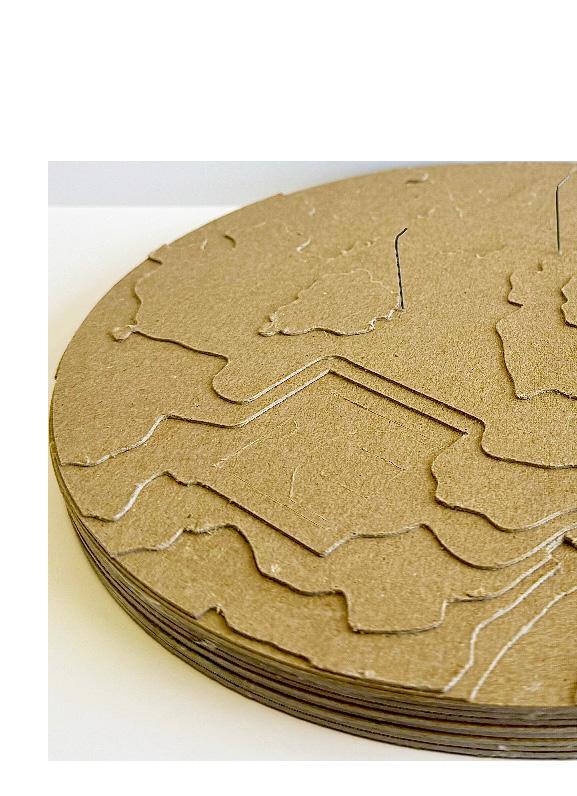
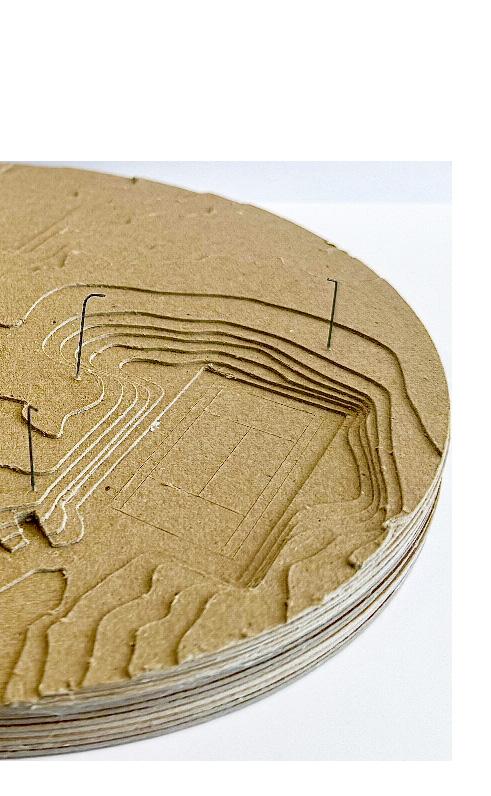
Land Form
An exploration of topography and representation conventions
Winter 2026
Architectural Design II (UG2)
This project began with an investigation into the representation and manipulation of topography by proposing changes to accomodate one tennis court and two half-basketball courts. The initial phase focused on learning to accurately draw landforms using contour conventions, developing an understanding of how terrain is communicated in two dimensions. From this drawing, I constructed both digital and physical models of the site, allowing me to study how proposed alterations translate from plan into three-dimensional space. Through this process, the exercise emphasized not only technical precision in drafting, but also a deeper awareness of how landform interventions reshape spatial and environmental conditions.
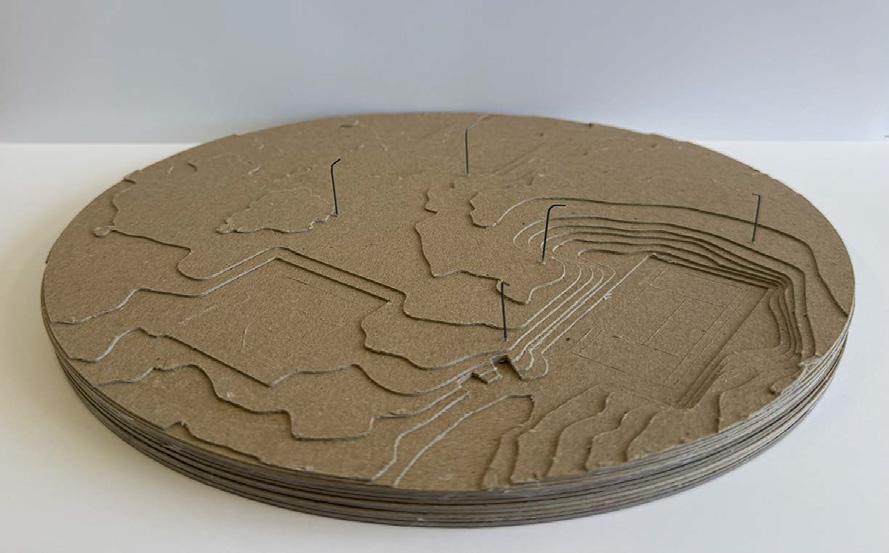
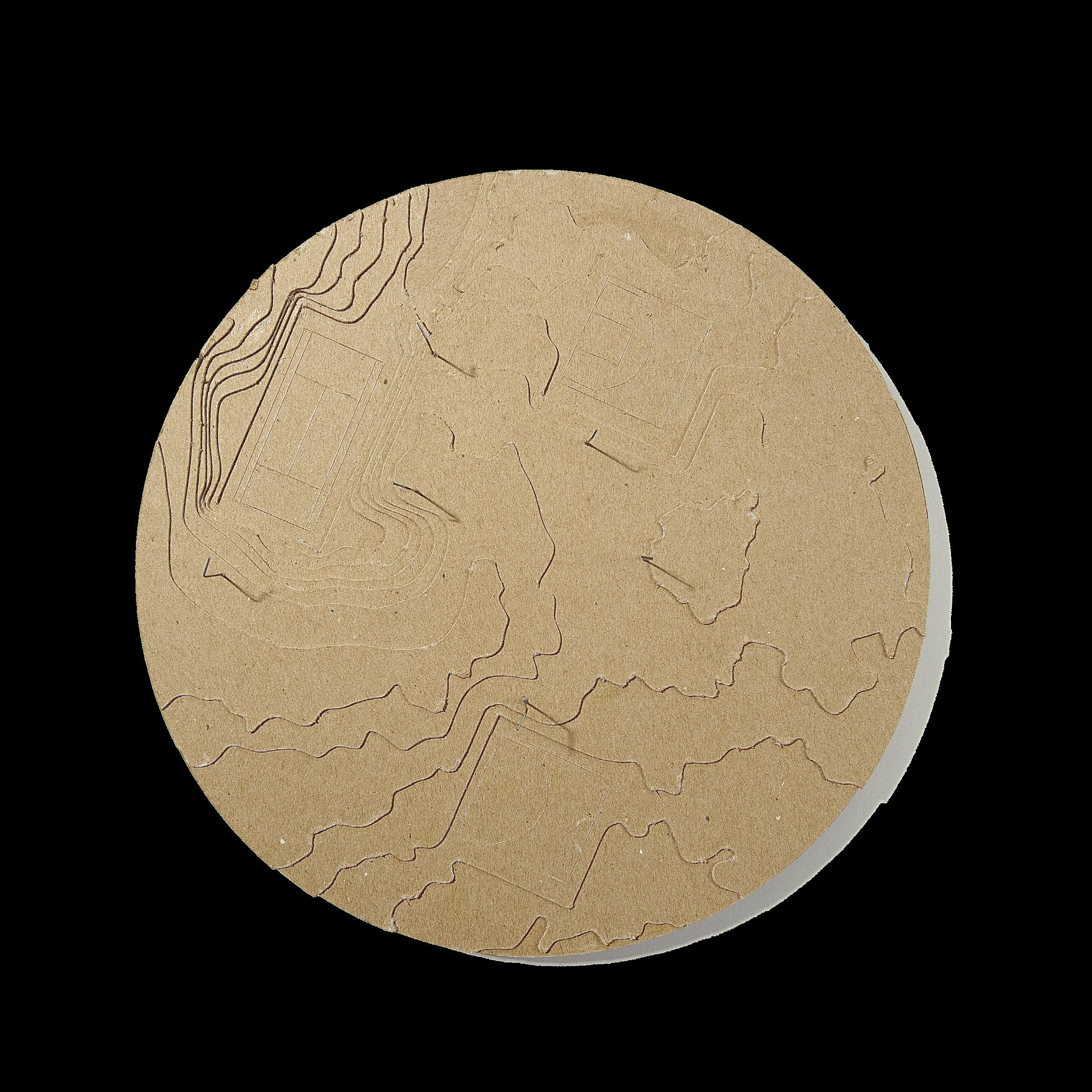
After constructing sletch models of the site exploring a variety of configurations, I created a scaled model using chip board to demonstrate the proposed changes to the topography. To accomodate the tennis and basketball courts, I used the existing landform to generate subtle spatial divisions between them. The natural amphitheater-like slope in the northeast portion of the site became an organizing feature; it shapes the primary entry sequence and houses the outhouse as a framed threshold element.
Undo
An abstraction of a given precedent
Fall 2025
Architectural Design I (UG1)
This project began with the analysis of a precedent house and the development of an abstract model that communicates its underlying spatial logic. Rather than replicating the building’s formal appearance, the assignment encouraged us to distill and reinterpret the relationships we observed. We were challenged to think abstractly, isolating the essential organizational ideas that give the house coherence. The goal was not to reproduce the precedent, but to translate its spatial and formal strategies into a clear conceptual construct that conveys an idea independent of literal form.
Precedent Study
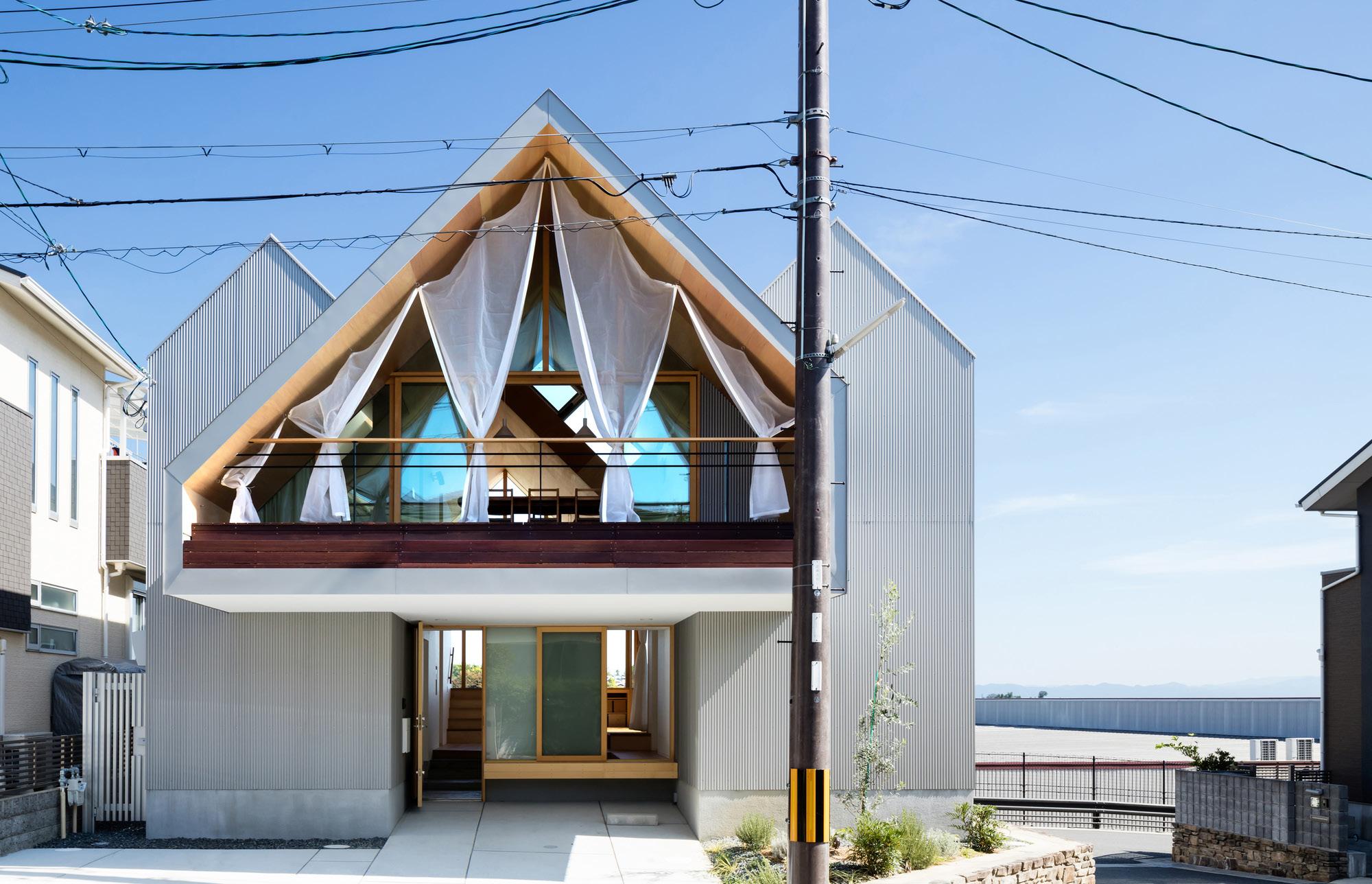
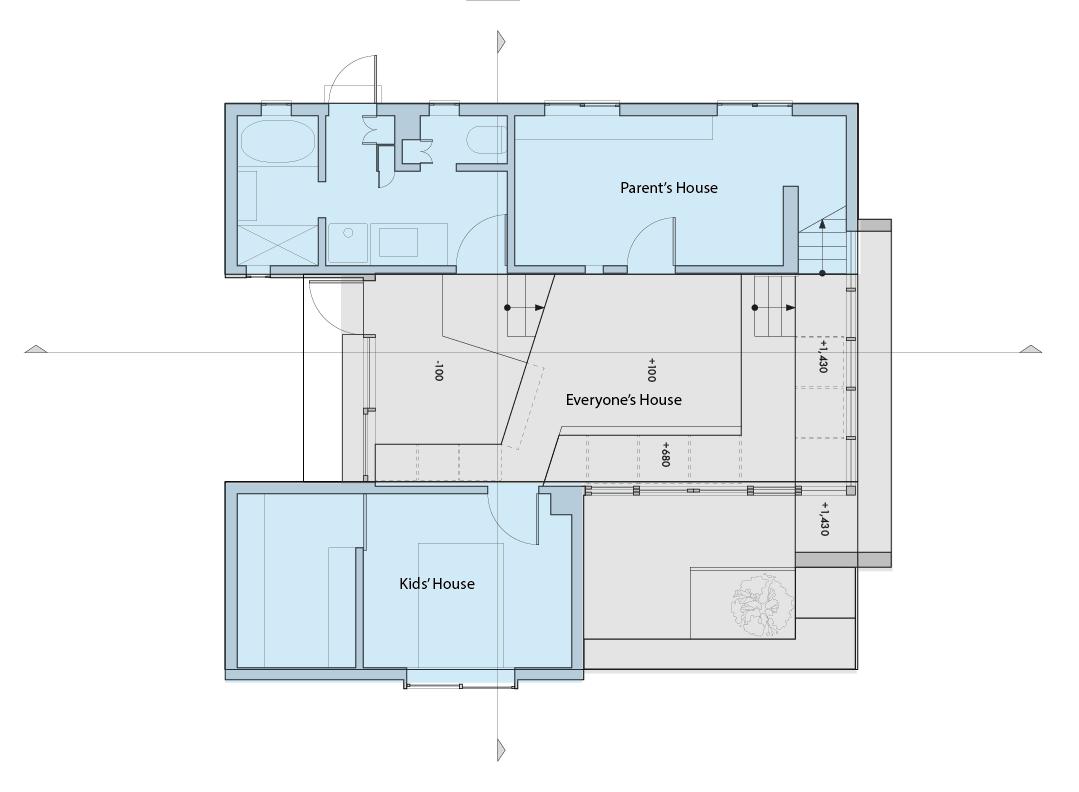
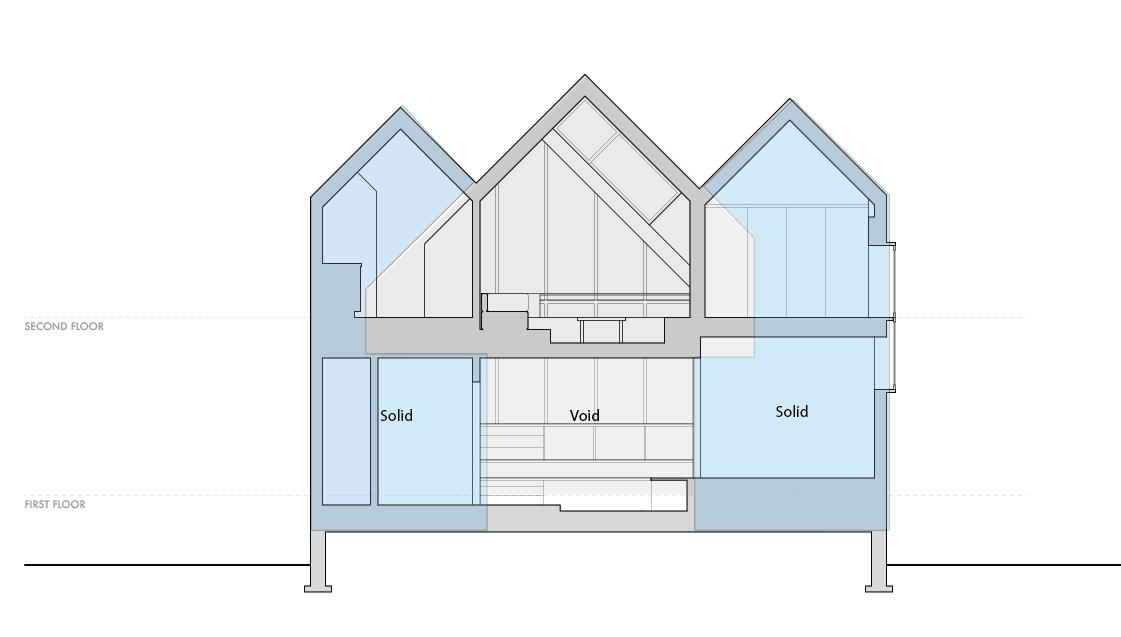
My assigned precedent, the Newtown House in Kyoto, Japan by Yukawa Design Lab, is organized around three conceptual components: the “parents’ house,” the “kids’ house,” and the shared “everyone’s house.” My analysis of drawings and sketch models explore how this relationship between two solid forms and a connecting void can be expressed through abstract form.
Photograph of the front facade of the Newtown house
First floor plan diagram showing the distinction between houses
Section diagram showing the perceived solid volumes and connecting void
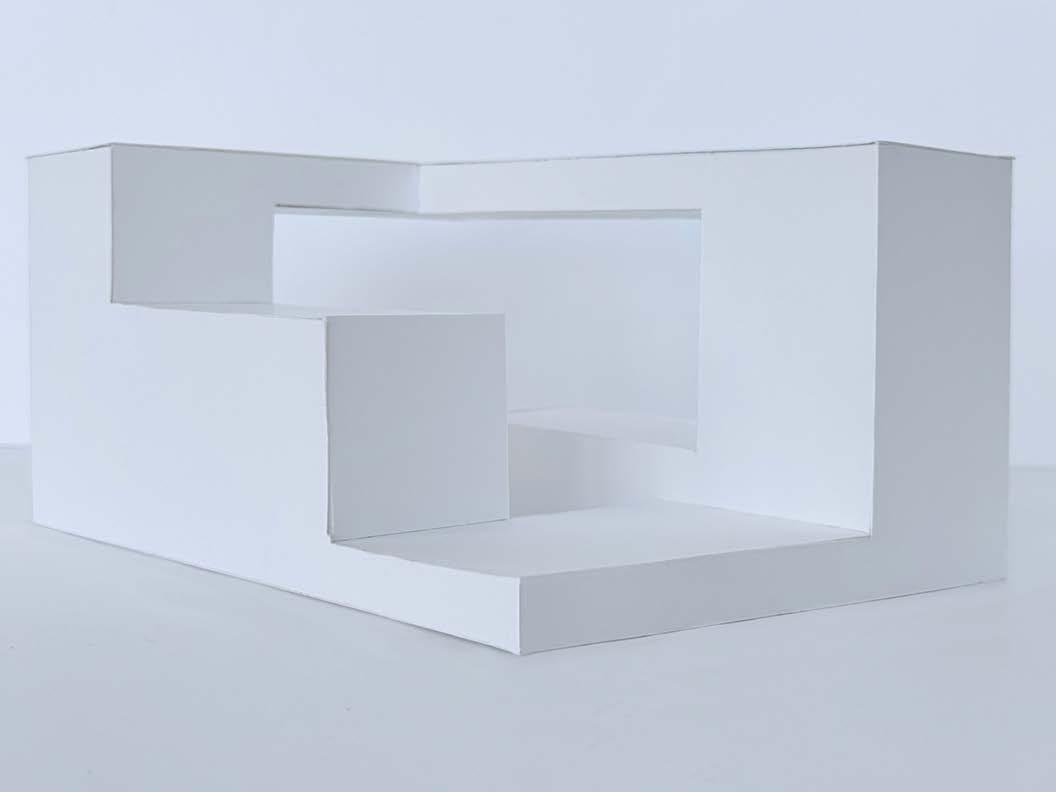
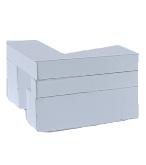
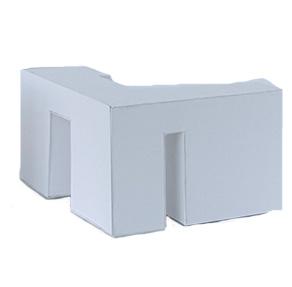
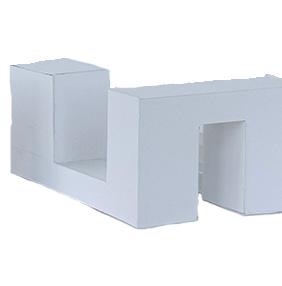
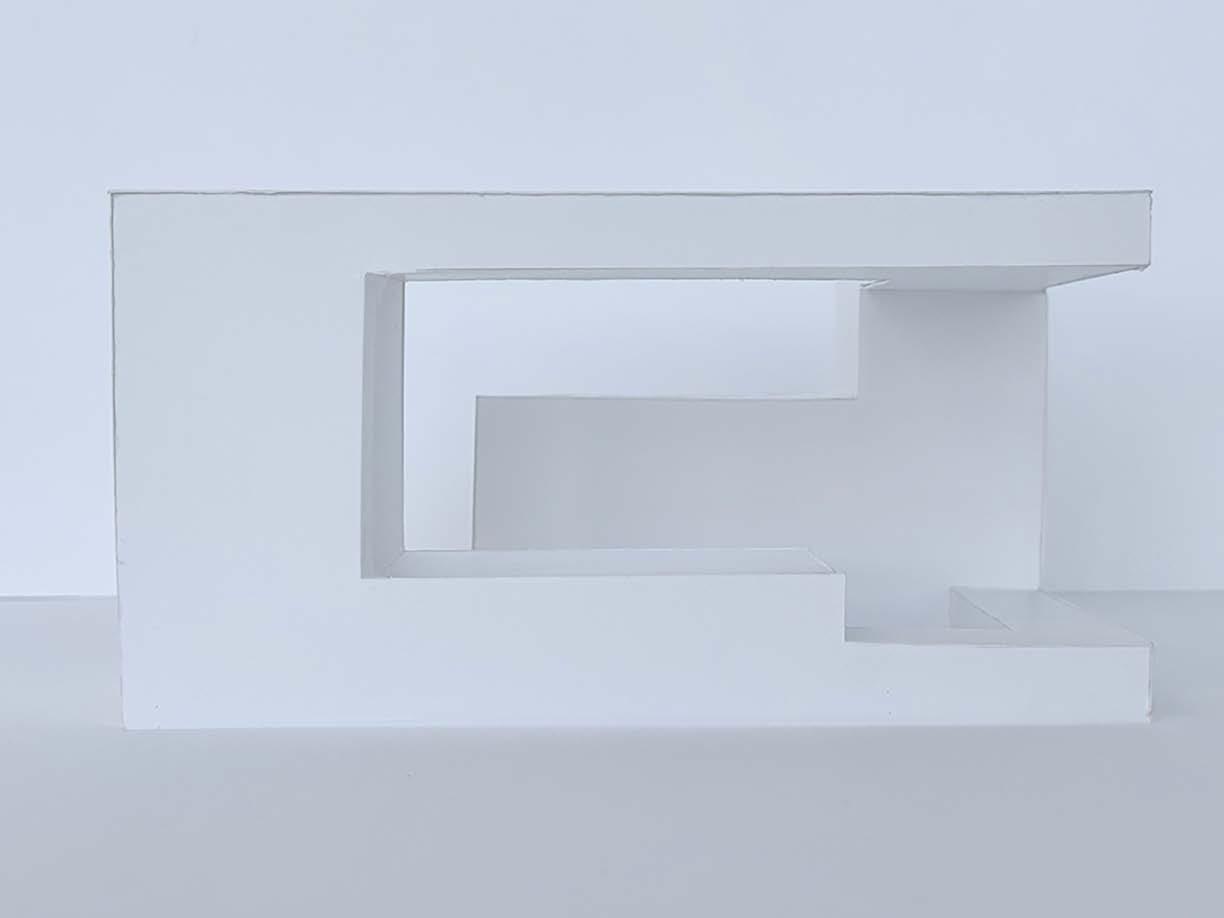
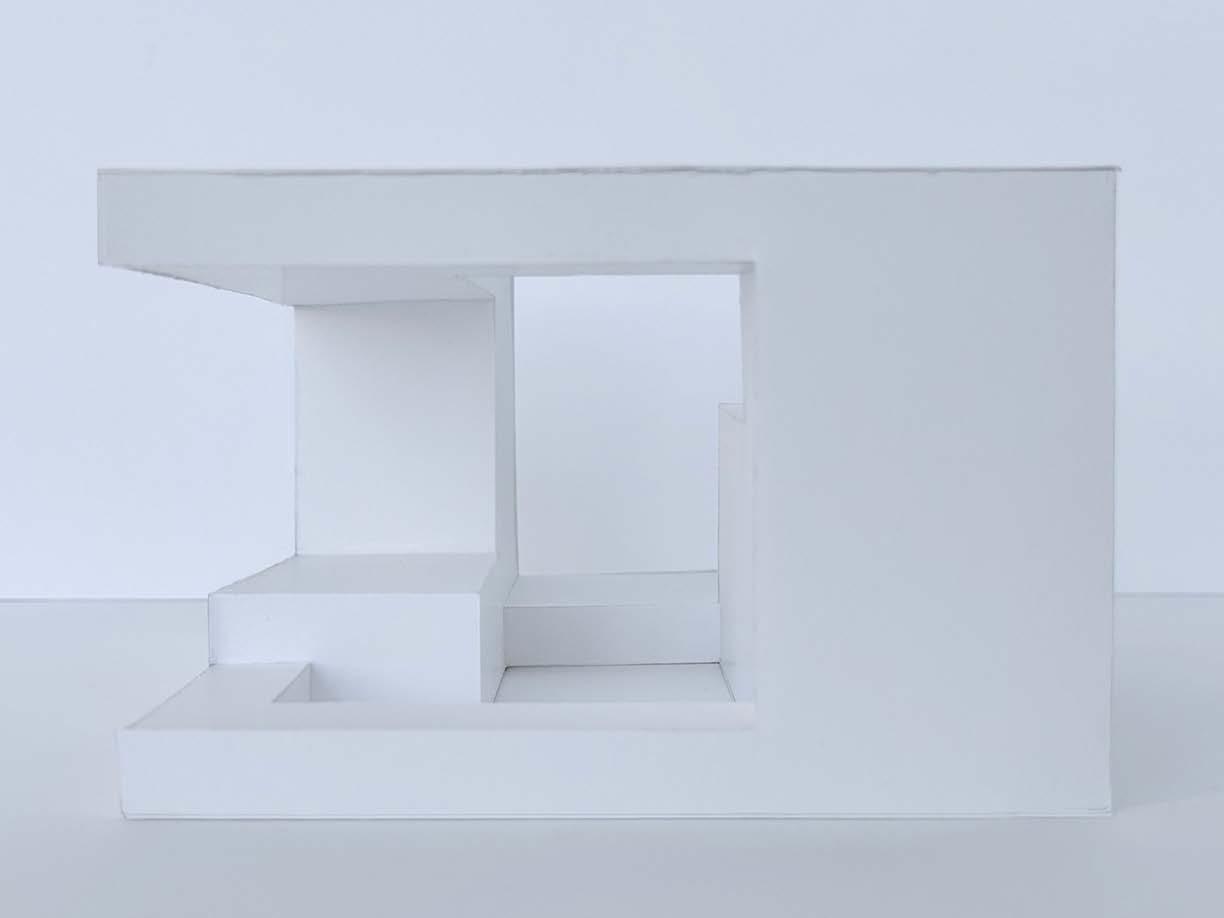
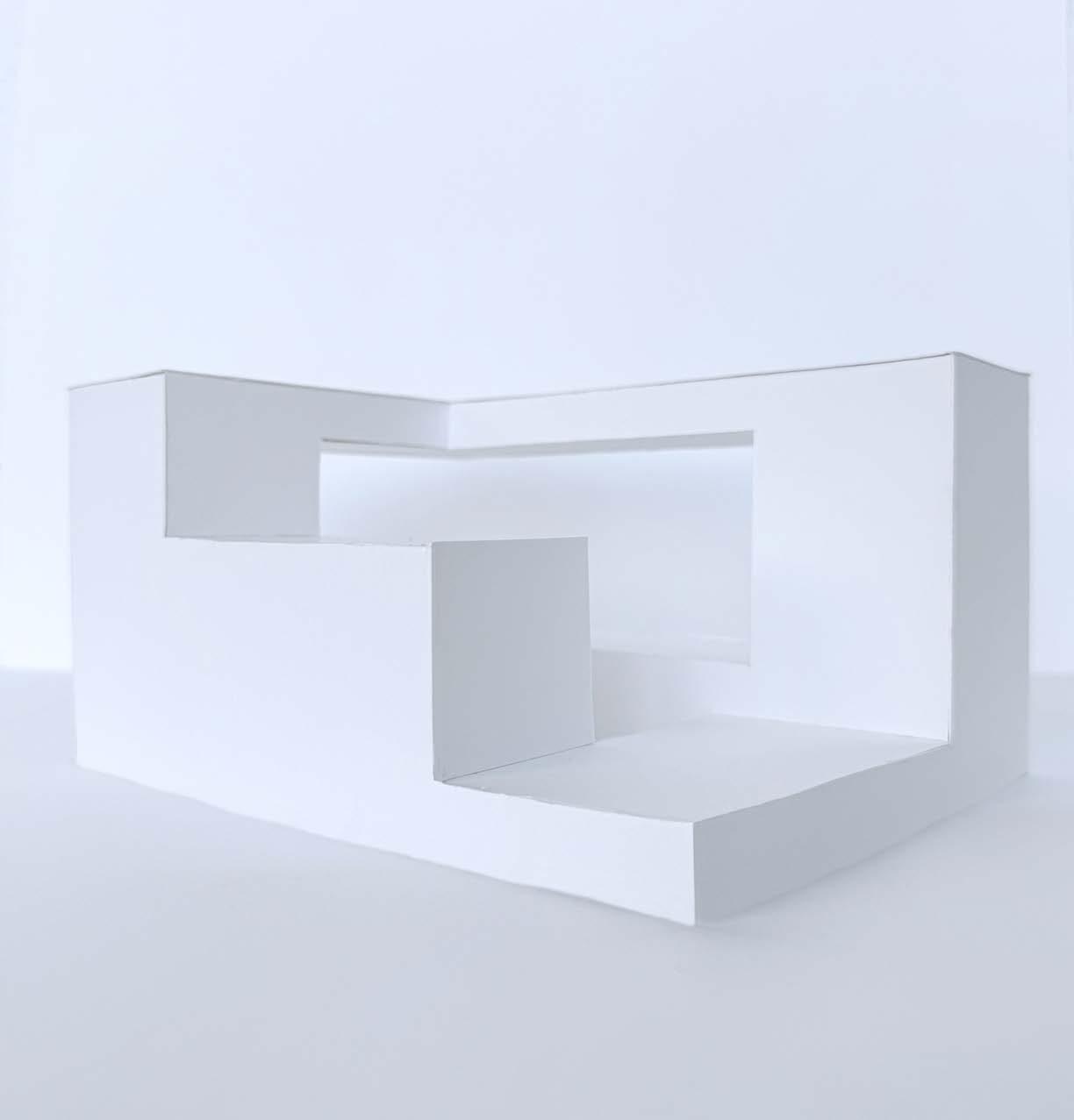
My final bristol model abstracts the spatial logic of the Newtown House through two slightly varied solid masses that intertwine in a near yin-yang relationship. A carved void cuts between them, acting as both a connector and separator. This void is not simply leftover space; it takes on its own distinct form, shaped by the tension of the solids that define it.
Redo
An interpretation of a precedent onto an abstracted site
Fall 2025
Architectural Design I (UG1)
Building on my analytical study of the Newtown House, this project asked us to reinterpret its spatial relationships within a new, abstracted site through the design of a single-family home.
Rather than replicating formal qualities, I translated the underlying organizational logic, the interplay between two distinct volumes and a unifying void, into a new architectural system.
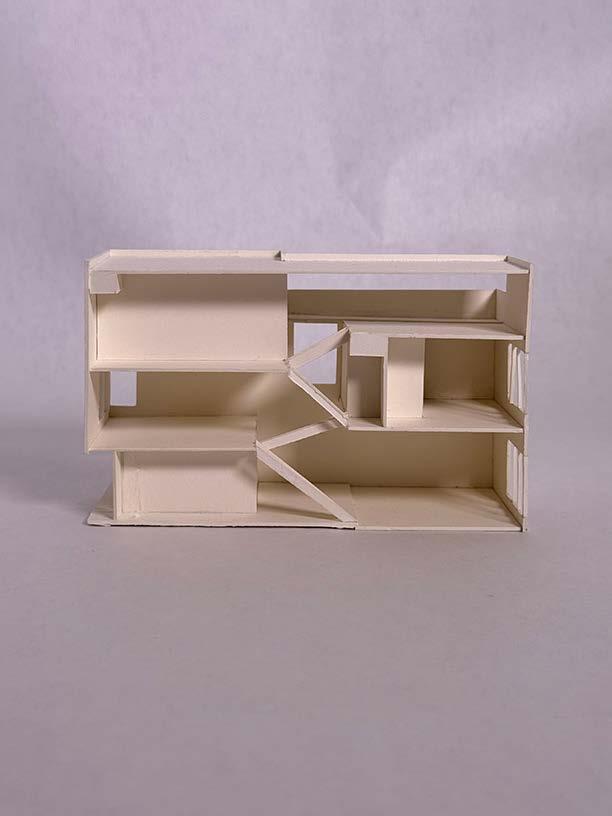
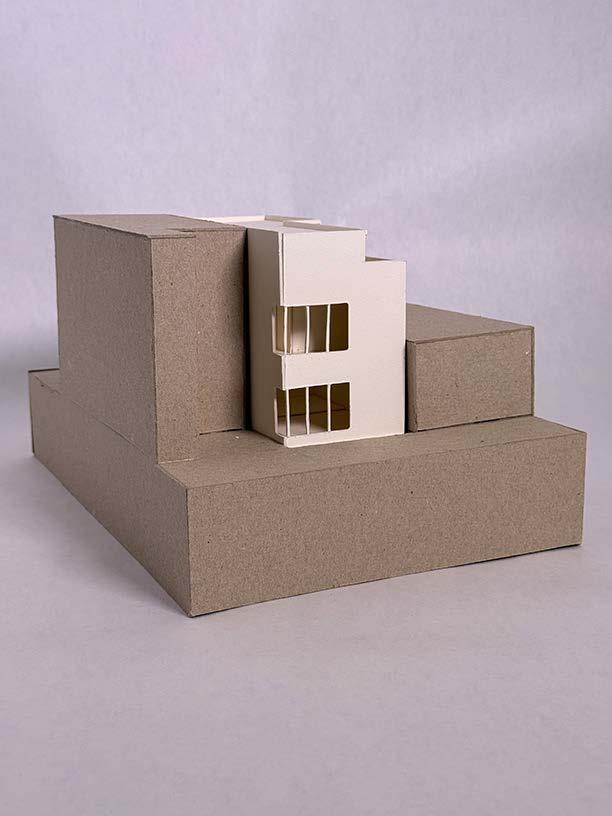
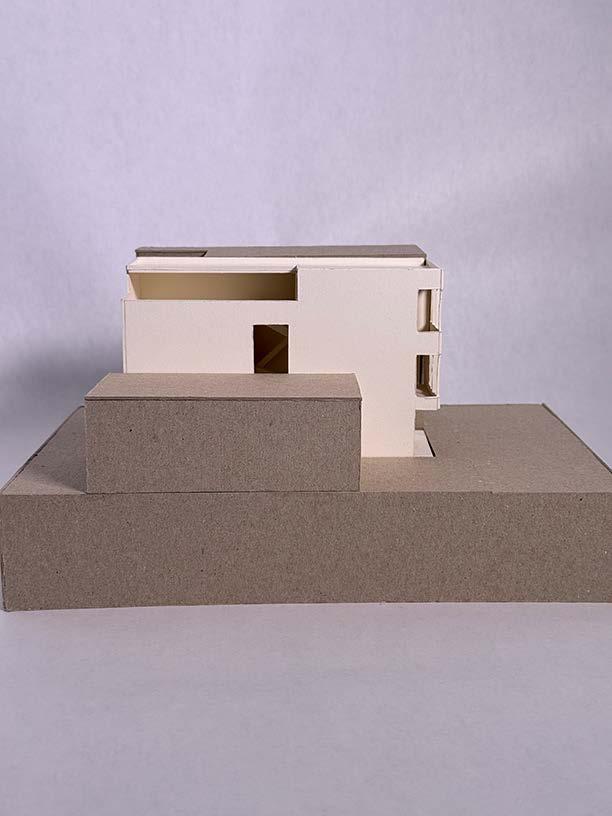
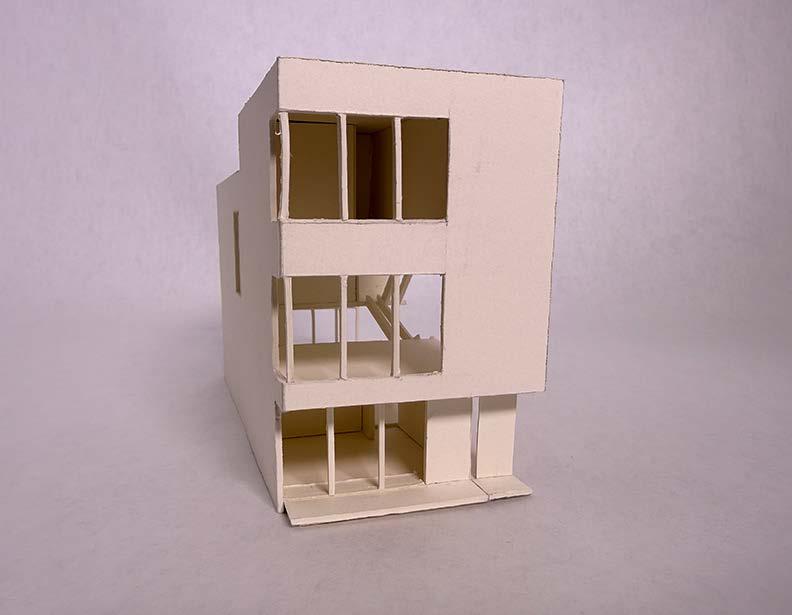
My approach builds on the idea of ‘three parts’ both horizontally and vertically. The house is organized around a central void that acts as a spatial hinge, while split levels on either side differentiate program and establish subtle gradations of privacy. These sectional shifts allow spaces to remain visually connected while physically separated, reinforcing relationships between family members without collapsing boundaries. The void becomes the experiential core of the home: a vertical and horizontal connector that mediates light, circulation, and sightlines.
Section 2
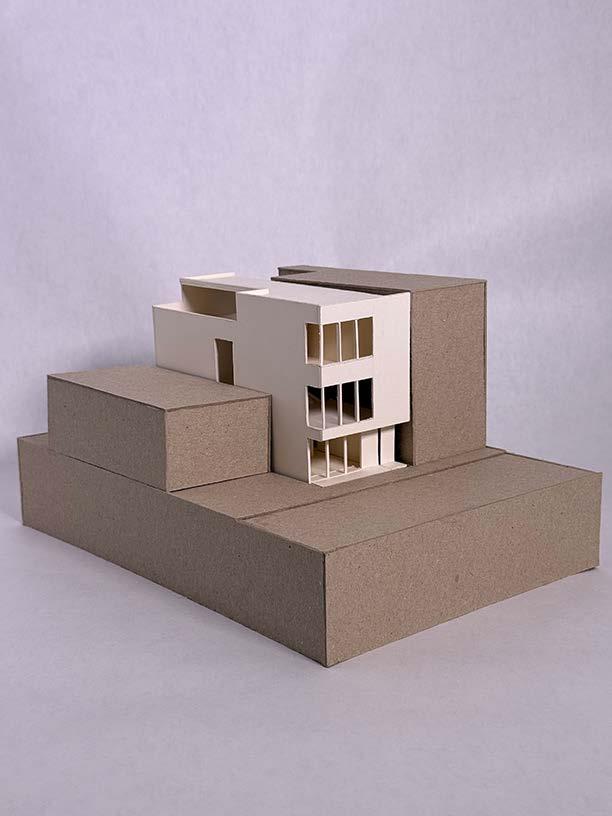
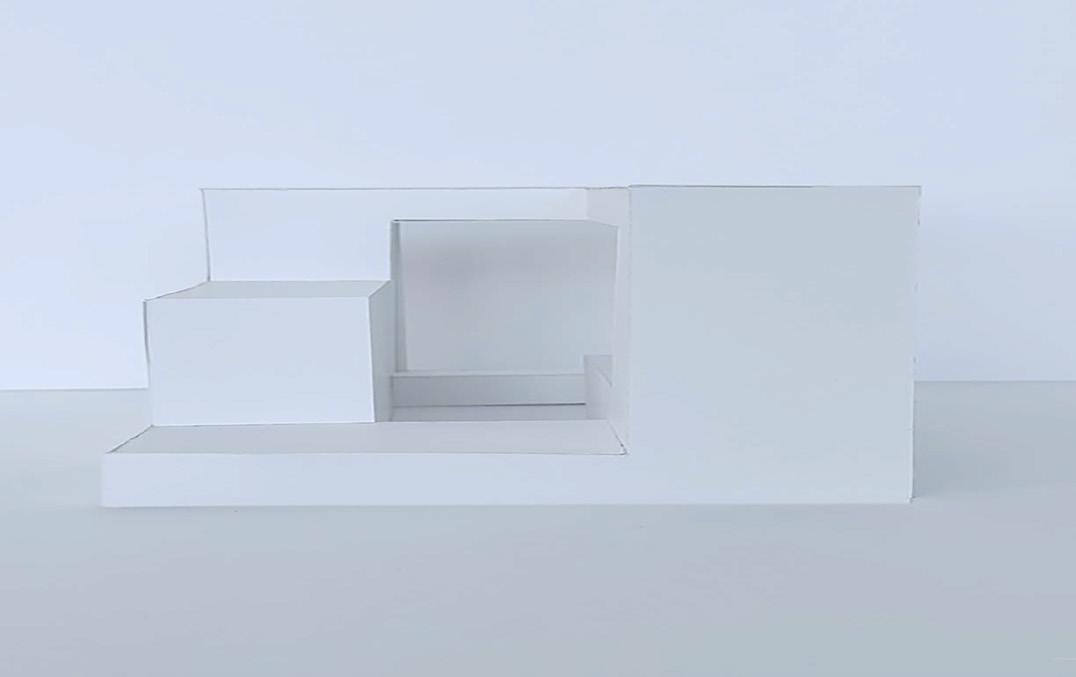
A scale model was developed alongside drawings to study massing, sectional relationships, and the central void while examining how the volume engages with the surrounding buildings.