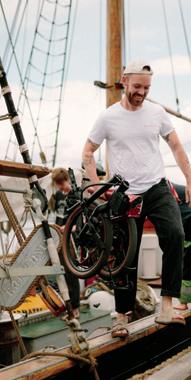
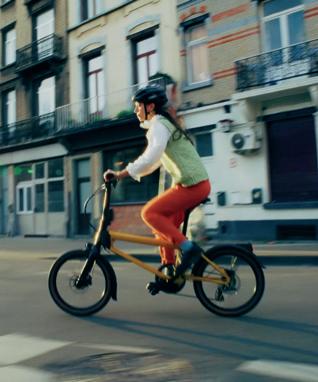
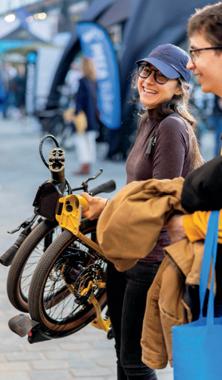
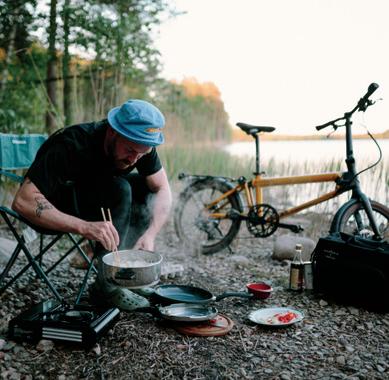
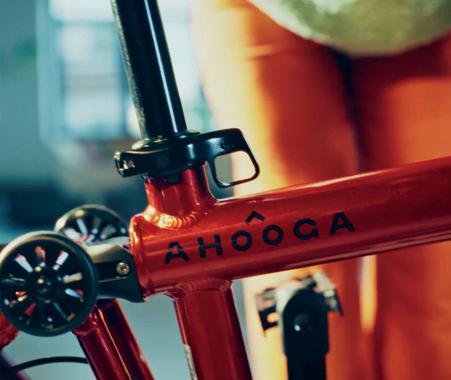
AS I passed through the barriers at the train station while commuting home, the ticket barrier staffer asked whether my folding bike was electric. Given recent news stories, my internal alarm bells started jingling. With some justification, it turned out.
I confirmed it was electric. He said it was hard to tell, the battery was hidden away. He then told me the bike wasn’t allowed on the train. I took a deep breath and calmly argued that wasn’t the case.
I have a lot of sympathy for staff on ticket barriers. I suspect they regularly see the worst kind of human behaviour, and the finer points of electric bike policy probably weren’t top of their list of stuff to remember. But it took a prolonged discussion and minutes of me scrolling through train operator policy on my phone (whilst nervously eyeing whether my train was about to depart) before I found the bit on Great Northern’s website that said folding electric bikes were allowed and I was duly let through to the platform.
It was a stressful experience, and a stark reminder that electric bikes confuse the hell out of the Great British public. Is it too much to say this is the greatest modern challenge the cycling industry is facing? The more time goes on, the more it seems so.
Jonathon Harker
IT CAN BE DONE AND IT IS BEING DONE…
…and there are some city councils who want to make it easier – for businesses to switch to cargo bike deliveries. Jonathon Harker sits in on Bristol City Council and BID’s event to help push the cargo bike for business transformation…
Ametal box in a municipal car park in Bristol is a long way away from the glamour and romance of the Tour de France, say, which happened to be underway during CIN’s visit to the multi-storey parking spot. It’s not the kind of location that immediately makes you think cycling, or the kind of place you expected to find yourself when you were initially dazzled by the lights of the cycling industry and leaped into the trade in the first place.
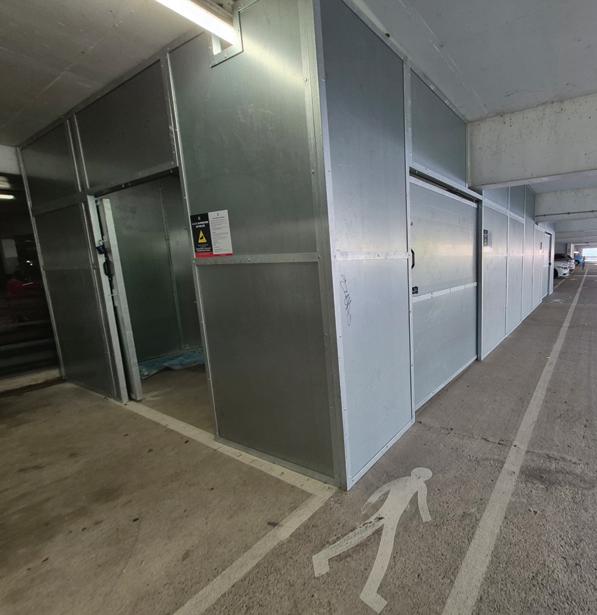
So why was your humble reporter happily lurking in a concrete car park and gazing at a metal box (pictured left)? Because it represents a very different side to cycling than le Tour. It’s a side the industry has only scratched the surface of so far: the use of bikes by businesses for last mile logistics. I piggybacked on a session where knowledgeable people asked sensible questions about the metal box (aka Bristol’s first Consolidation Hub), where oper-
ators will collect and sort goods from different suppliers, consolidate them and then send them off for delivery on cargo bikes: What was the insurance situation? What facilities were available for operators? Was there enough height clearance for a Transit style van to drop off goods at the hub? The loading bays, fire safety, lockable battery recharge points…
It can be done, it is being done and they want to make it easier for you to do it
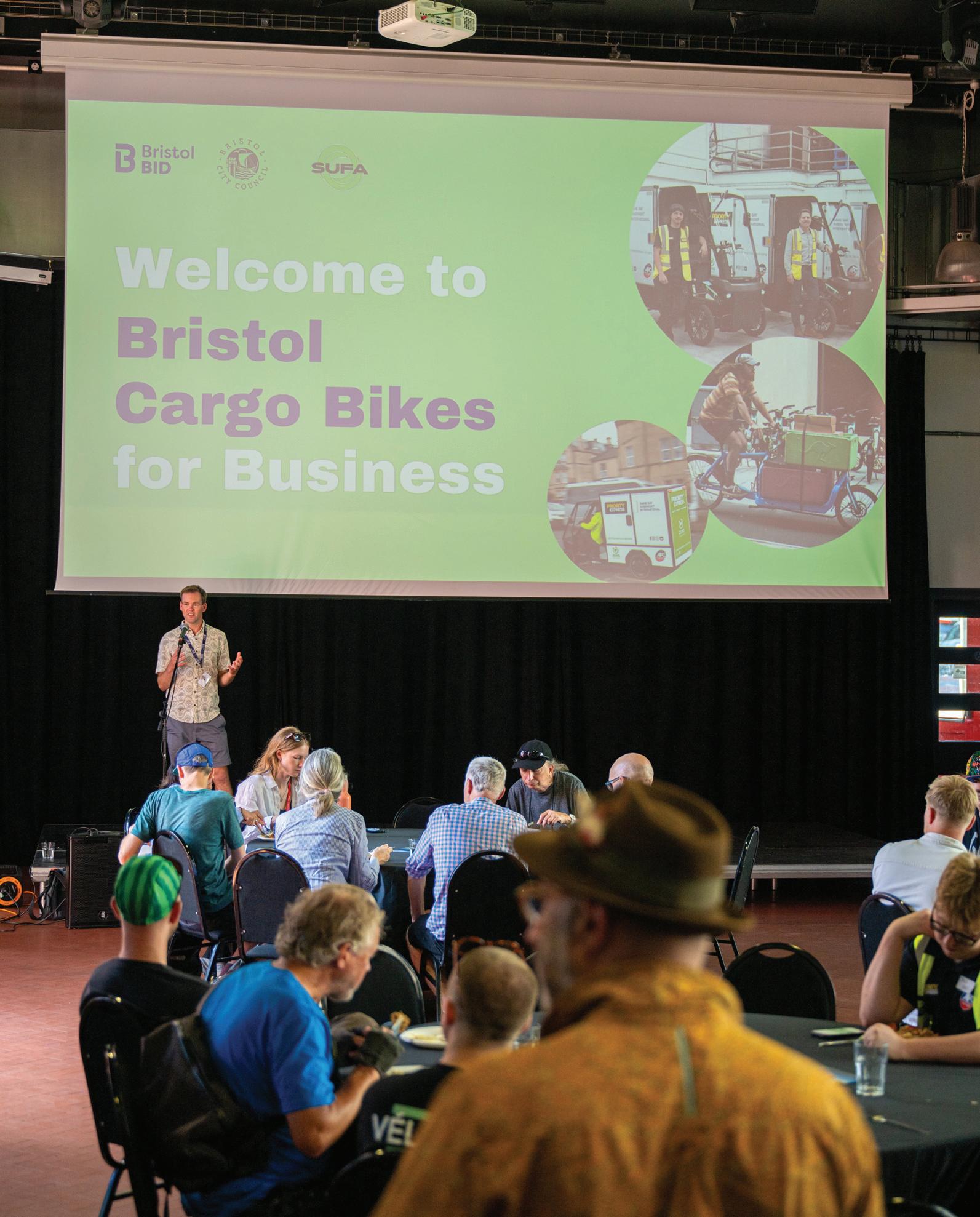
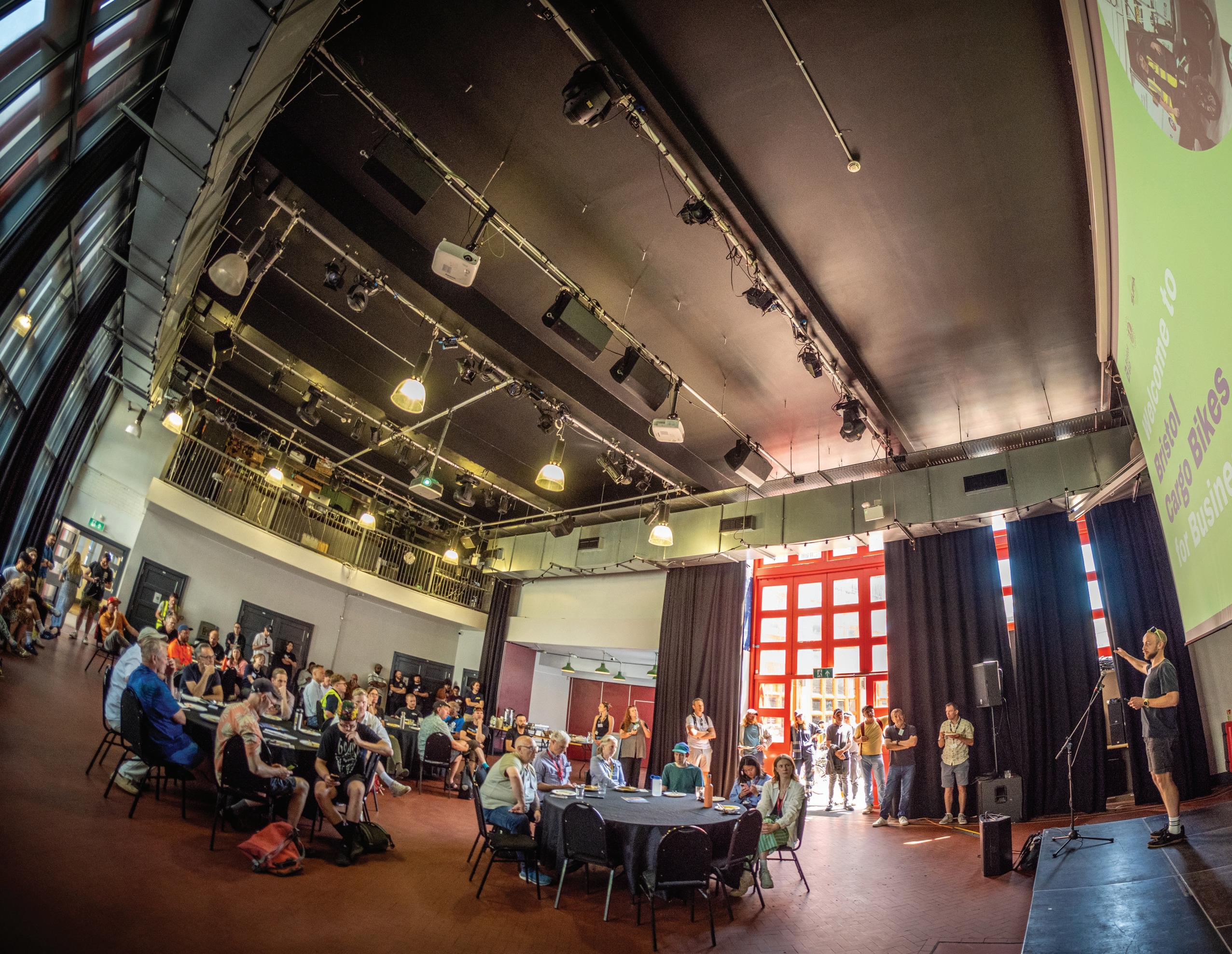
This is very definitely the practical, a-tob world of cycling logistics. We were gathered in aid of Bristol City Council and Business Improvement District (BID) joint event ‘Cargo Bikes for Businesses’. The aim was simple, to show businesses that it can be done, it is being done and Bristol City Council wants to make it easier to do, for organisations and businesses to make the switch away from cars and vans to make their deliveries.
All photographs are credited to:
Andre Pattenden
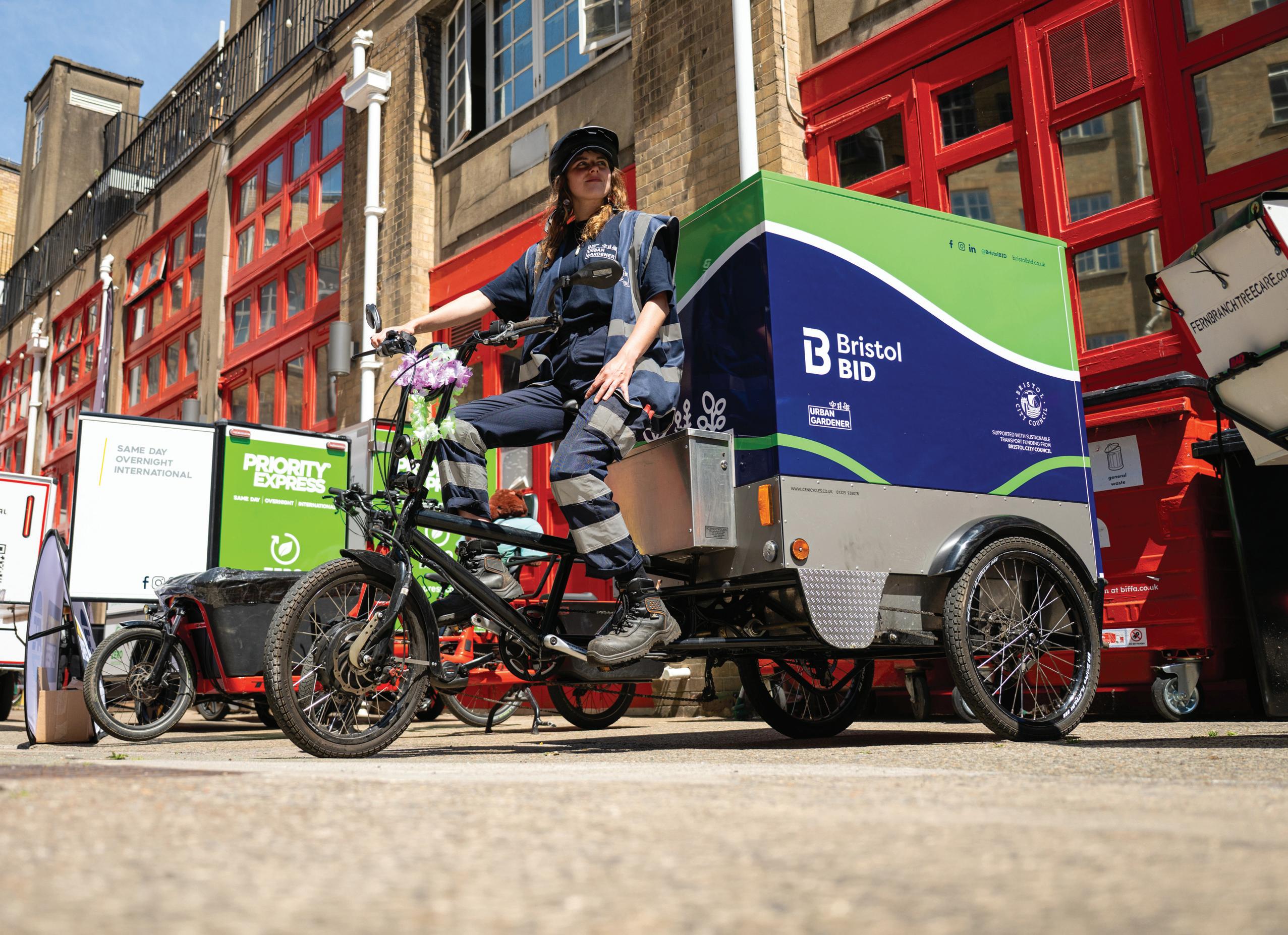
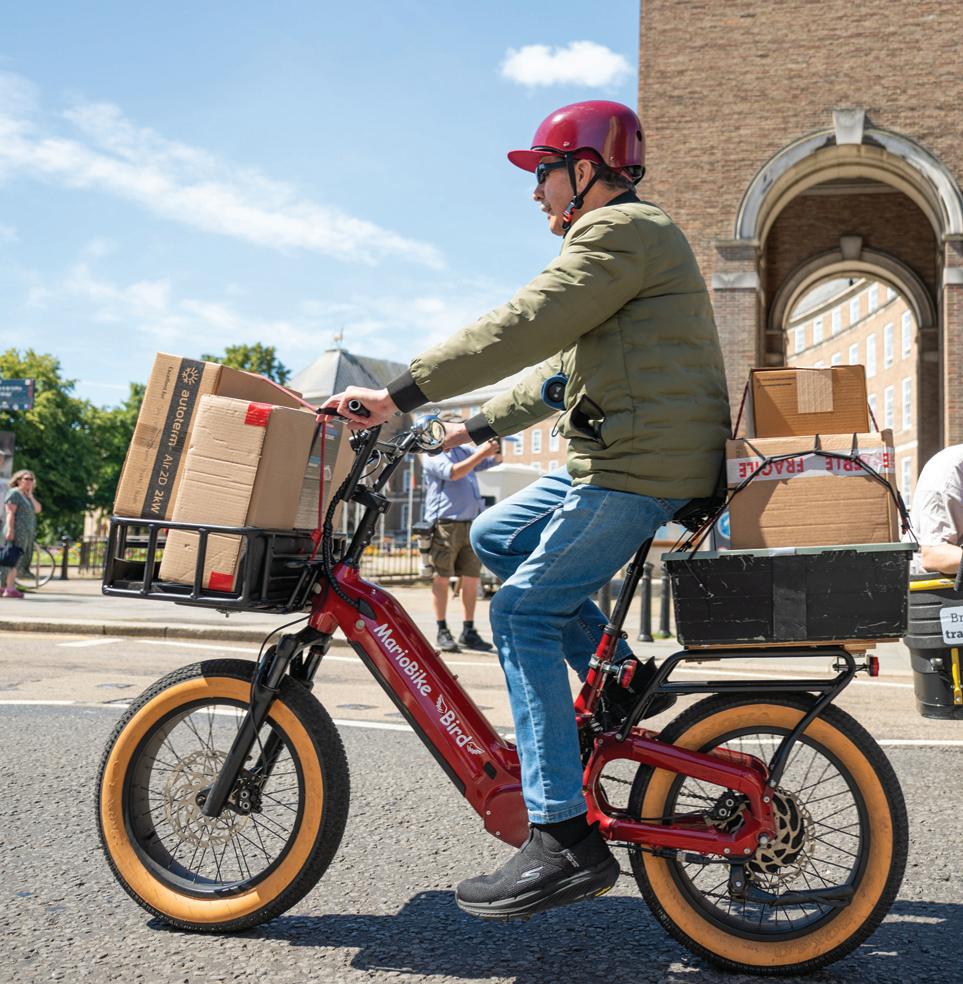
Above: Bristol City Council’s gardeners tend to the city’s green spaces via cargo bike, rather than a van
One of Bristol’s mini consolidation hubs
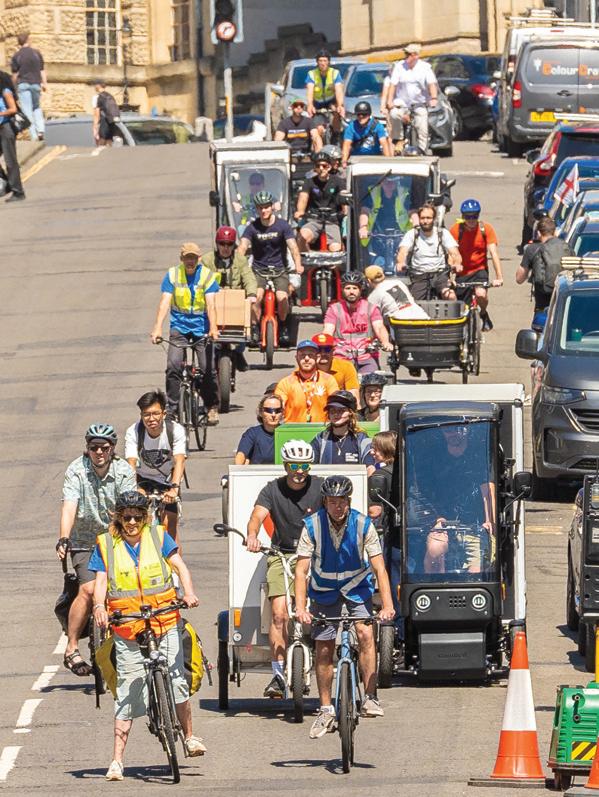
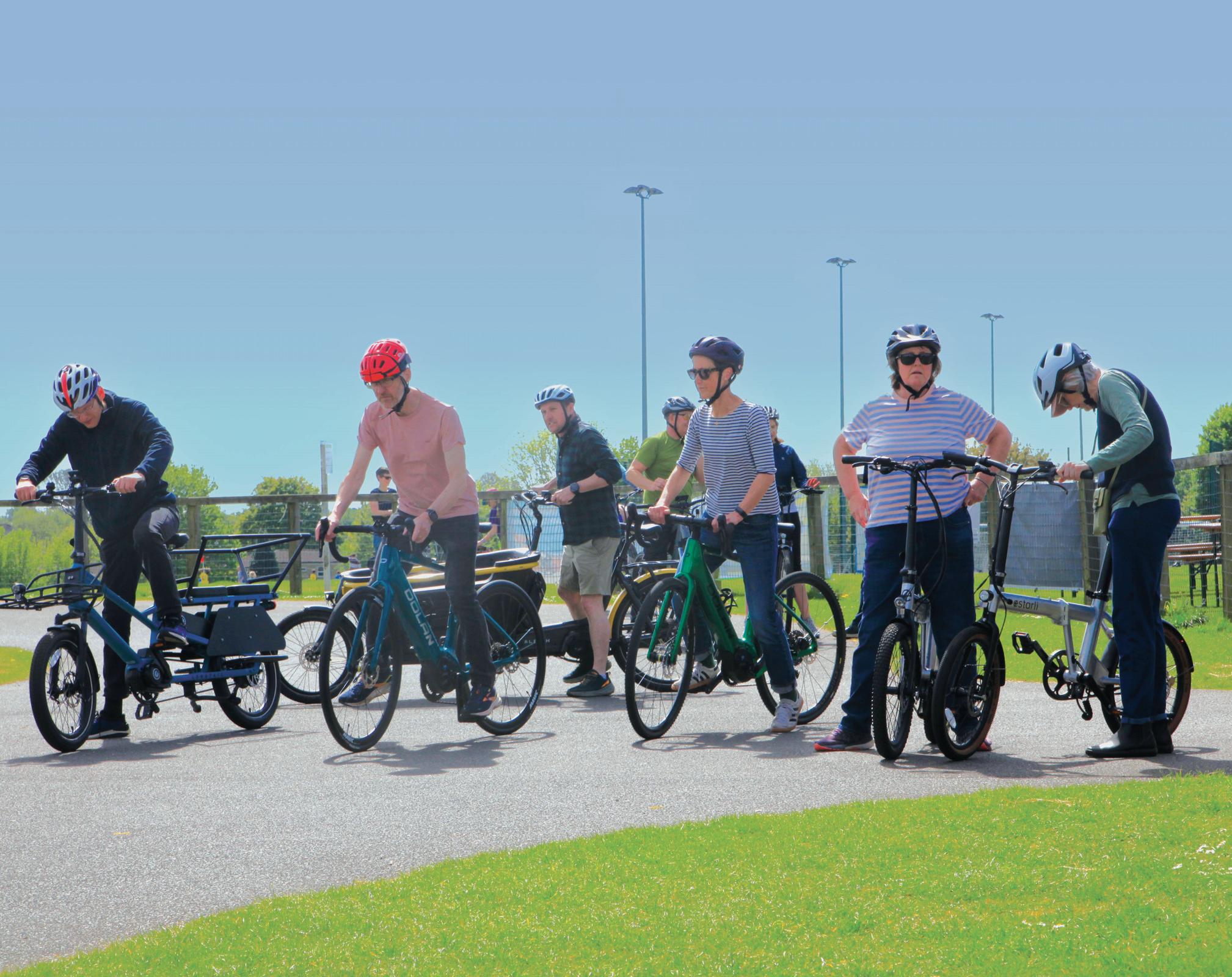
Kicking off with a ride around Bristol on cargo bikes, trikes, EAVs (electric assisted vehicles) and more, the event switched to a networking session connecting businesses with cargo bike brands, service providers and organisations which are trying to help. That was
followed up with a few short sharp talks. One of the killer speeches came from a local business that was saving money by operating its own cargo bike to make deliveries between its sites in and around the city.
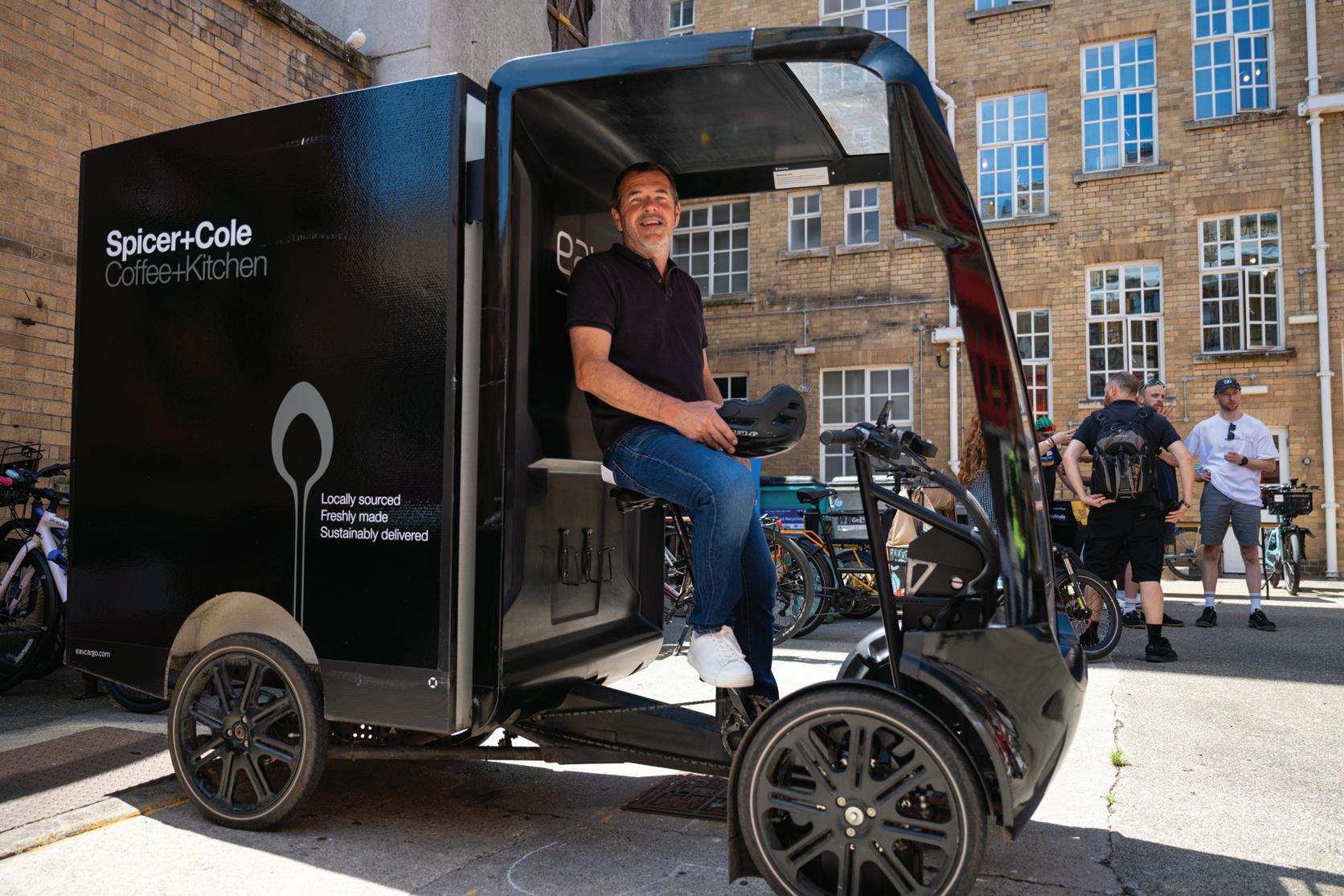
Are cargo bikes the fastest way to get goods around a city? Possibly not. But are they the most predictable? Chris Swift, Director of Spicer & Cole – a four-branch café business – said so, adding that access is easier than with vans, in some cases right up to a front door even in pedestrian areas. Swift explained how the business had experimented with a third-party delivery company using cargo bikes initially, before buying an EAV (50% funded by a grant from Bristol City Council). Now the business is a convert. Food damage has virtually been eliminated during transit, the vehicle is also seen as a positive billboard for the business. And the crux point, that hopefully made businesses sit up and listen closely, was that not only are cargo bike deliveries far more predictable, they are also cheaper than using a van.
Below: Chris Swift, Director of Spicer & Cole, has saved money and achieved more predictable deliveries through cargo bikes
Where does your bike shop and workshop fit it?
You might be one of the bike dealers who have been sceptical of the potential the last mile logistics sector could have for your business, or maybe not given it much thought. Let’s face it, you didn’t get into the trade to think about metal boxes in municipal car parks, it was more likely the glamour of le Tour or the thrill of hurling yourself down a mountain trail that lured you into the trade. But another killer speech was on the way, delivered by a bike shop and workshop.
Dexter Robinson of Holy Spokes, an independent workshop, delivered a speech helping businesses consider what kind of cargo bike they need, but also highlighted the fact that it was possible to operate a workshop business for the traditional leisure cycling market as well as offering fleet servicing for the growing cargo bike market. Working across those two sectors, Holy Spokes is adept at keeping standard bikes on the road as well as cargo bike and complex custom machines, be that an Iceni cargo trike,
EAV or something else. The firm also emphasised the need to service the bike regularly, likely to keep cargo bike operation cheaper in the long run.
Speeches also came from Holley Swanwick, Project Manager at Bristol City Council, who explained how the micro consolidation hubs will help Bristol hit its Net Zero targets. Tom Swithinbank from Bristol BID explained how Bristol is walking the walk, as well as talking the talk, for instance how its gardeners are using cargo bikes to transport tools when caring for the city centre green spaces. Lee Pugh, co-chair of the Sustainable Urban Freight Association (SUFA), also spoke about the broader support for the sector and its aim to work towards cleaner, fairer and more efficient deliveries.
It was the first event of its kind from Bristol City Council, but conversations indicated it probably won’t be the last. It was a pro-business, pro-net zero, procycling industry event that hoped to be an eye-opener to the possibilities that cycling logistics can deliver.
Cargo bikes, trikes, EAVs... you can smell the cleaner air from here
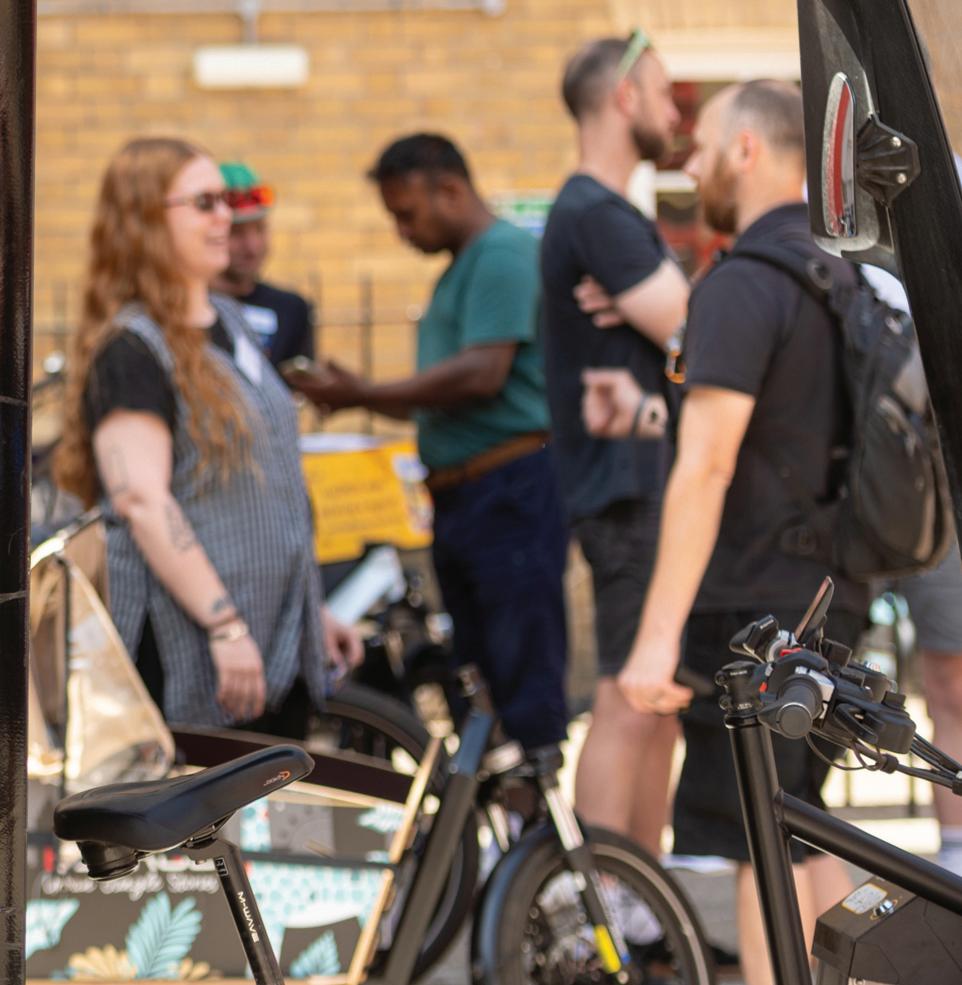
Brands, businesses and associated companies converge for the cargo bike event
All photographs are credited to: Andre Pattenden
Gallop Battery Factory
EBIKE BATTERY TECH EVOLVING AT A GALLOP
Gallop batteries. Never heard of them? Me neither, but the genesis springs from Bafang, with the founder and General Manager having very close ties – he was Mr Bafang. Now spun off into a separate entity, this company is pushing eBike boundaries. CIN examines how prismatic batteries have moved on in a year, and with eBike batteries continuing as the point where public perception and the industry clash, Chris Keller Jackson delves into the future for Semi Solid State battery technology…
Semi-Solid State batteries, the future is here, right now. Whilst visiting China in 2025 I saw production of ‘Prismatic Batteries’ at the Joycube Battery facility. These were definitively a side note in the tour to ‘normal cylindrical’ batteries, because they could not efficiently make Prismatic Batteries small enough in width to fit an internal cycle battery shape, that of a typical 18650 rechargeable cell, with a nominal height of 65mm, or a 21700 rechargeable cell at 70mm. These will be more like 80-plus mm when you include the wiring and battery casing, depending upon how the cells are oriented. However the cells are distributed, prismatic ‘flat pouch’ cells were considered a non-starter for internal use on eBike frames.
“IT DID NOT SHORT, OR COMBUST, YET IT CONTINUED TO PROVIDE ELECTRICAL OUTPUT, NO SMOKE, NO SPARK, NO DRAMA”
Some examples of in bike battery dimensions for reference:
• Bosch PowerTube 500, 13.4Ah at 84mm width
• Shimano BT-EN805, 14Ah at 80mm
• Joycube IT22 10.28Ah at 88.4mm width
Not wanting to make down tubes wider than they already are, it seemed that we were stuck with existing technology and existing Lithium Ion (LiIon), something that I’d come to challenge as part of a visit to T&D Power in Suzhou, China as part of a recent trade trip.
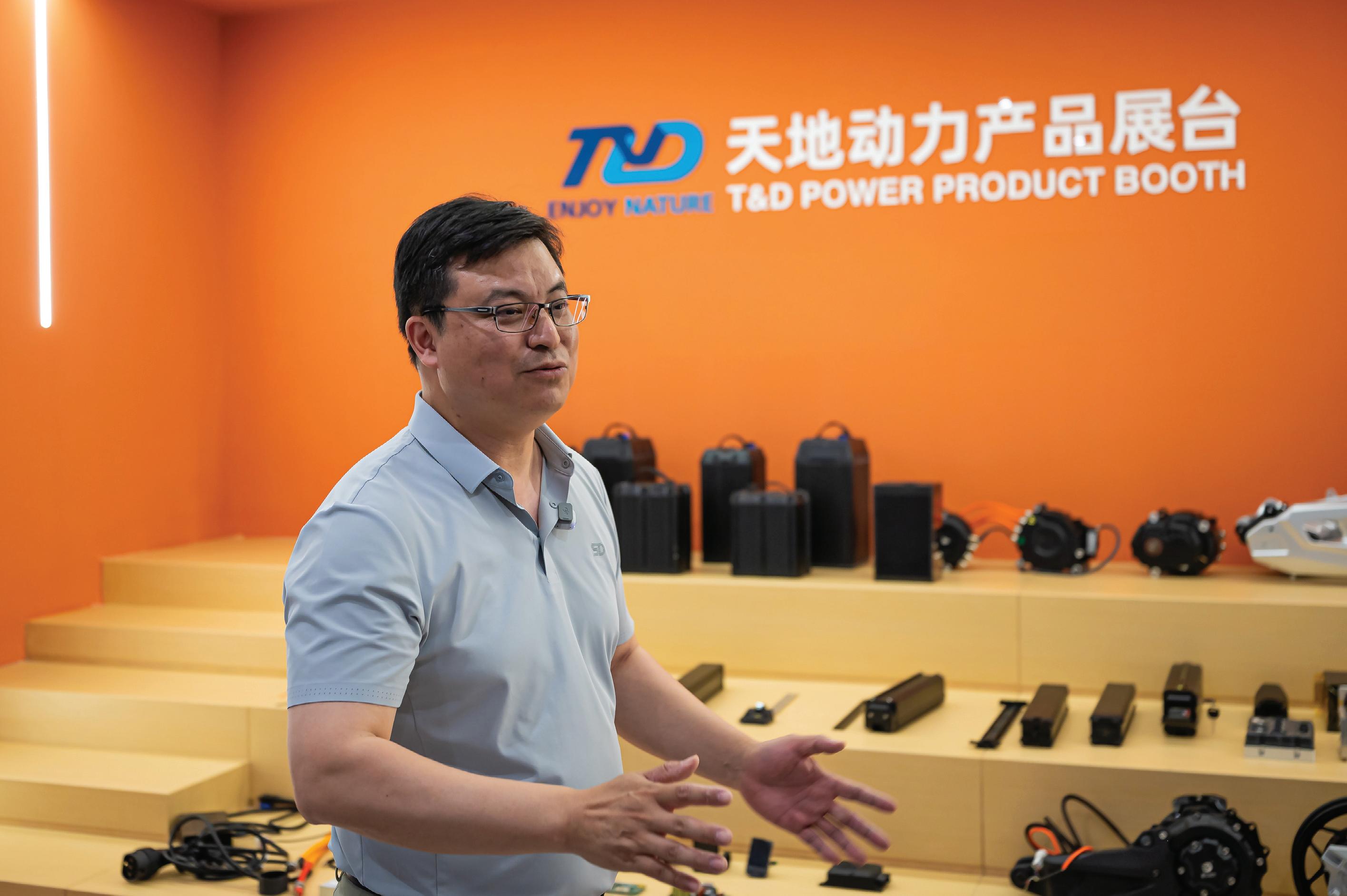
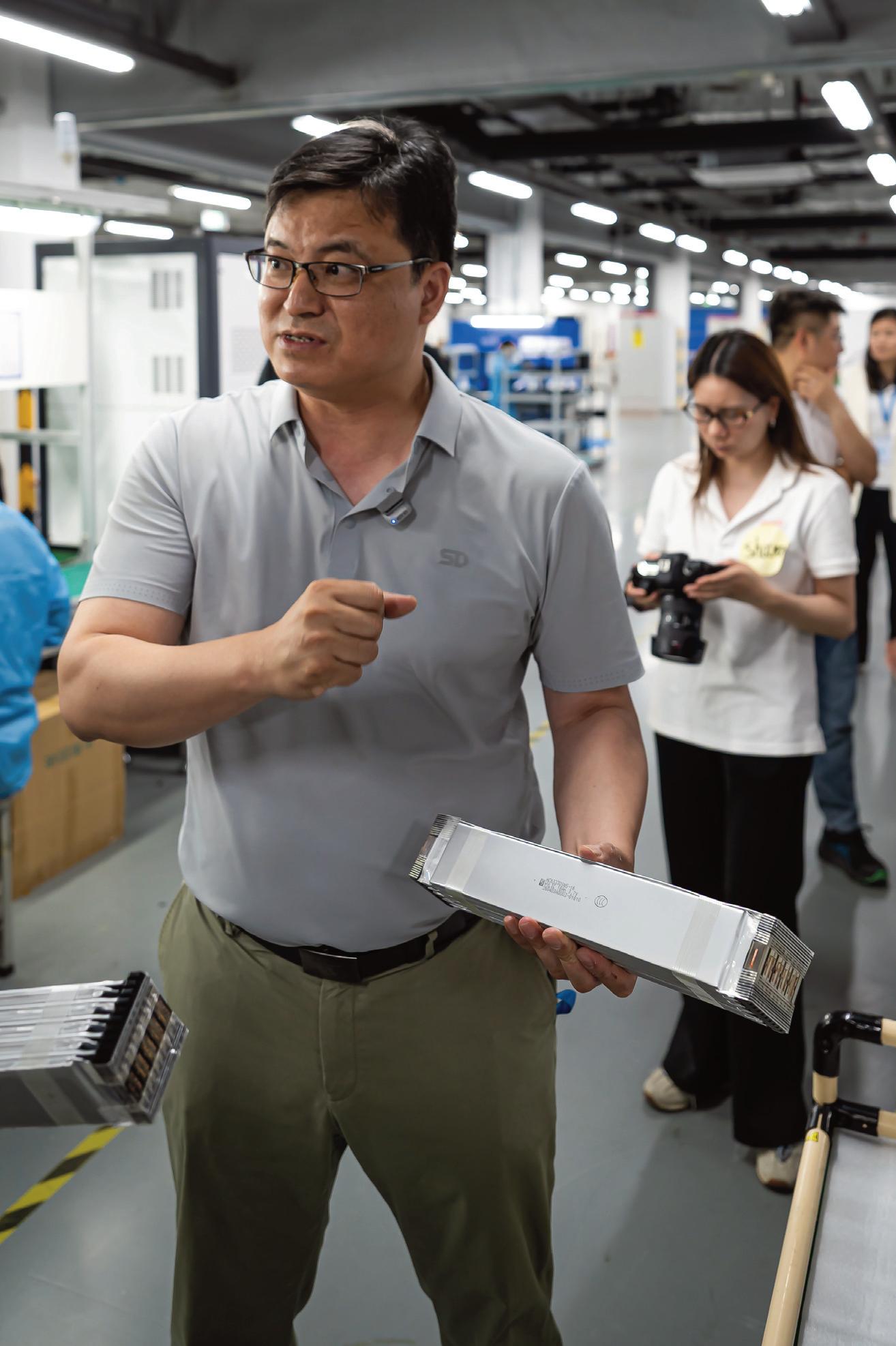
I had met Sunny He and Roberto Billato earlier in the week as part of the China Cycle trade event, and Sunny invited the team to check out their new facility right next door to Bafang, who we were due to visit later that week.
Sunny He demonstrates some of the models at China Cycle 2026
The connection with Bafang does not end there because Sunny was the cofounder of Bafang, the nature of that business we have discussed in previous reports within CIN.
In its early days of formation, the venture into Semi Solid State batteries formed part of Bafang itself. To allow more focus and development of potential solutions, the business split off into its own identity in 2024, that of Gallop Electric (Suzhou) Co., Ltd., trading under the name T&D Power. This new company has a focus on new battery technology.
With the inheren t prob lems of Lithium Ion, Sunny and the team of engineers, including 21PHD’s, are working on delivering Nickel Cobalt Manganese (NCM) pouch cells and have managed to perfect the technology to deliver significant advantages over Li-Ion, broadly better thermal properties, with a much reduced thermal runaway likelihood, higher energy density and cycle life of 1500 charges.
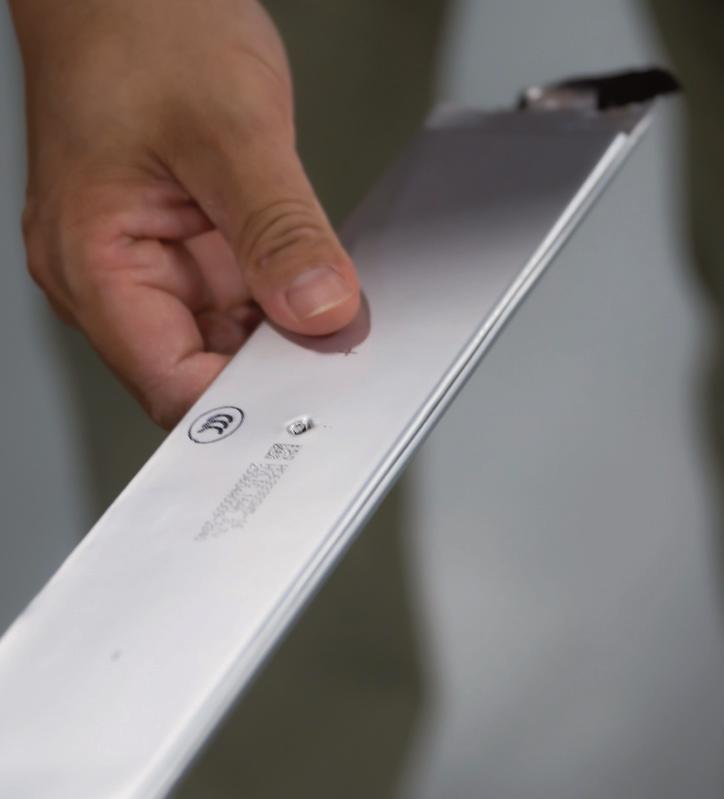
“UNLIKE CYLINDRICAL CELLS, THESE SEMI-SOLID STATE BATTERIES ARE FLAT AND APPEAR AS A SLIGHTLY SQUISHY ‘POUCH’, A BIT LIKE A TOOTHPASTE TUBE, WITH A MUCH REDUCED LIQUID CONTENT”
For those following with any interest, NMC battery technology is one of the strongest paths forward in this technology and is ideally suited to EVs and eBikes requiring high discharge rates and repeated charging cycles. Unlike cylindrical cells, these semisolid state batteries are flat and appear as a slightly squishy ‘pouch’, a bit like a toothpaste tube, with a muchreduced liquid content (73% less) than in a typical Li-Ion cell.
To continue the statistics around SSS batteries, an integrated downtube battery – typically found in an eMTB weighs in at 3.7kg, with 22Ah capacity and energy of 828Wh. The physical dimensions are 68 x 76 x 410 mm and is highly comparable with Li-Ion packs such as the Bosch PowerTube 800.
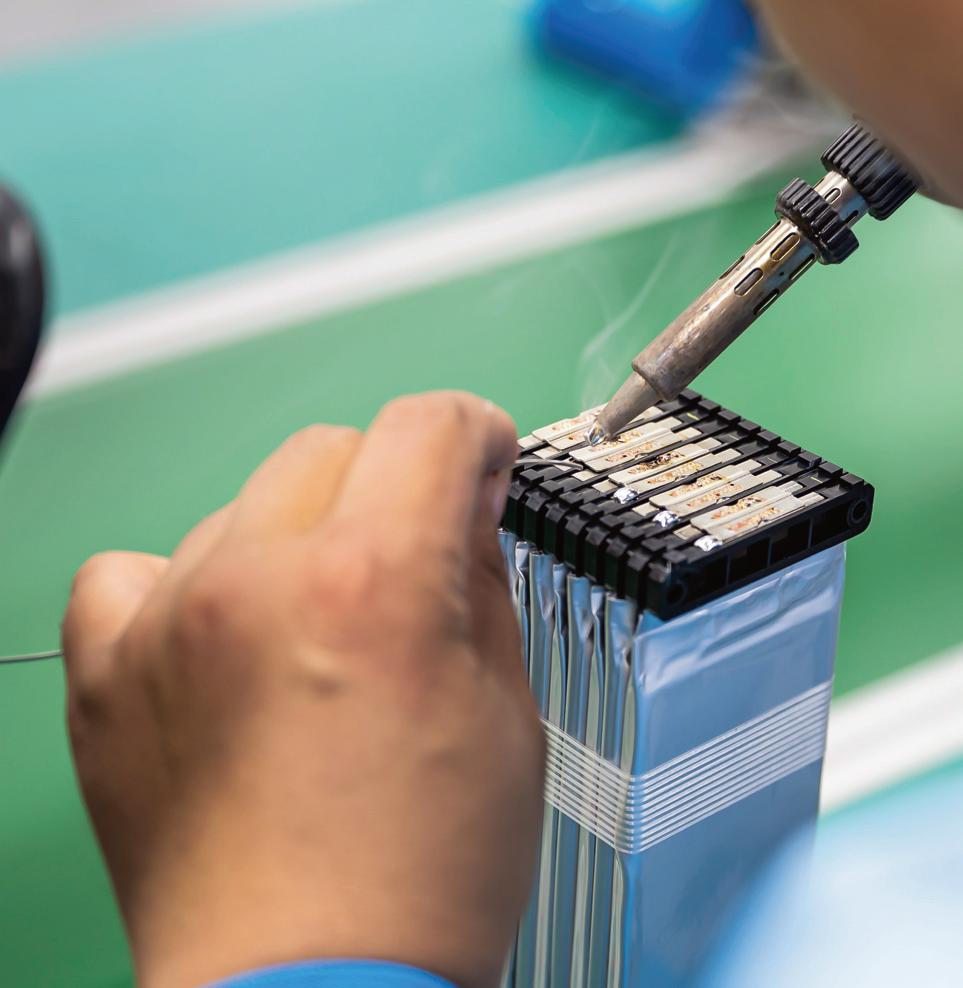
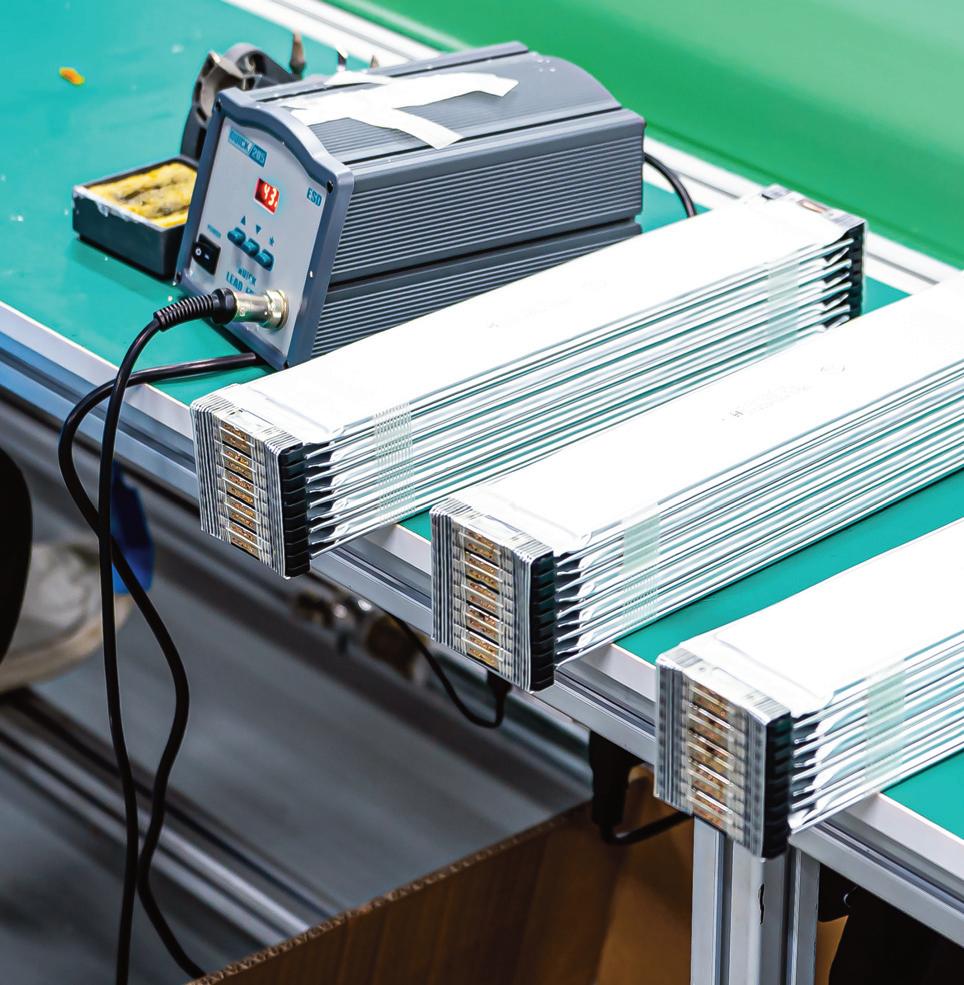
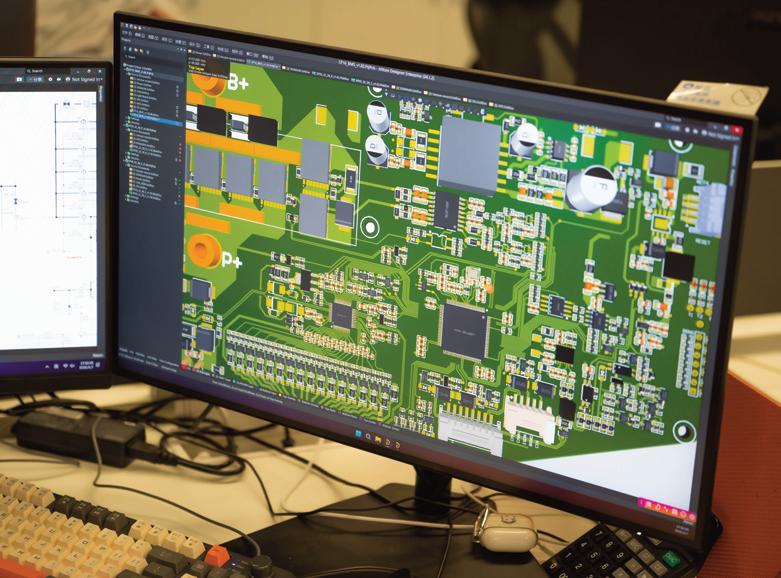
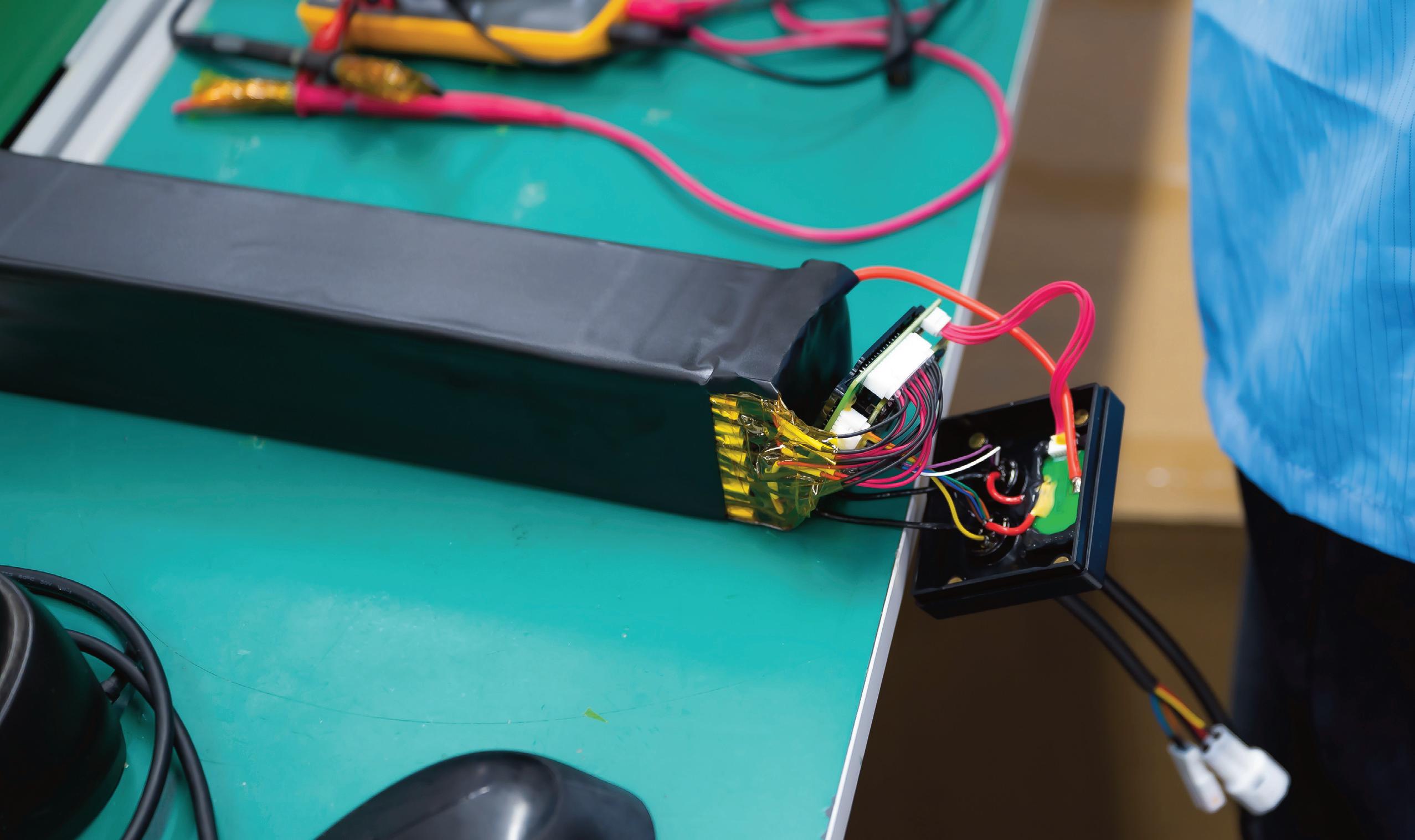
This specific battery above, (the T&D Power AE0610 core) is composed of 10 flat cell ‘pouches’ each 6mm thick and 330mm long by 63mm wide. These are much easier to assemble, both in time and handling, unlike traditional cylindrical cells which require more
Hand welding tails together to form a battery
Is this what the future of ebike battery tech looks like?
Sunny He shows off the raw battery before BMS connecting and wrapping
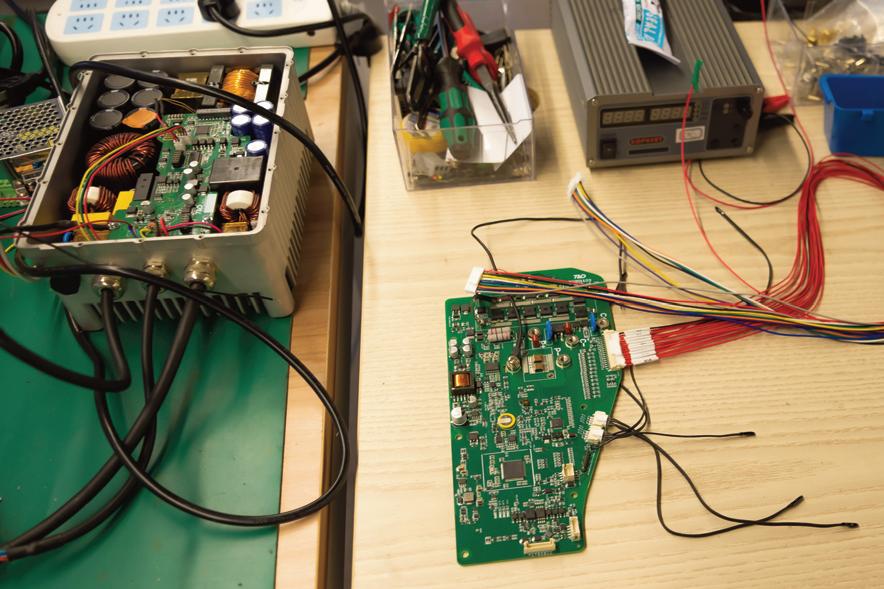
handling to assemble, a case to manage cell packaging and more sealing. This SSS ‘pouch’ derived battery is also IP67 rated, so dust and immersion proof, ideal for high power eBikes. When stacked together, a group of flat semi-solid state cells have almost no voids (unlike a group of stacked cylinders) and, as well as being more chemically energy dense, the form factor has been designed specifically to mimic a down tube application, virtually all the pack is made up of cells. When stacked, the battery needs no hard outer casing to hold the cells, in this instance, the battery is taped together. The Battery Management System (BMS) is then connected to the end and forms the solid mounting and connection point to the control and drive components. The cells, BMS and all the logic supporting the Battery is designed and made in-house, though the pouch cell manufacture is in a different facility.
Automation is very high on the agenda for Gallop, this helps refine
“A KEY ASPECT OF SEMI-SOLID STATE CELLS IS THEIR INHERENTLY MORE STABLE NATURE. WITH LESS FLUID INSIDE, THEY ARE LESS LIKELY TO SWELL AND HAVE A MUCH HIGHER THERMAL TRIGGER POINT”
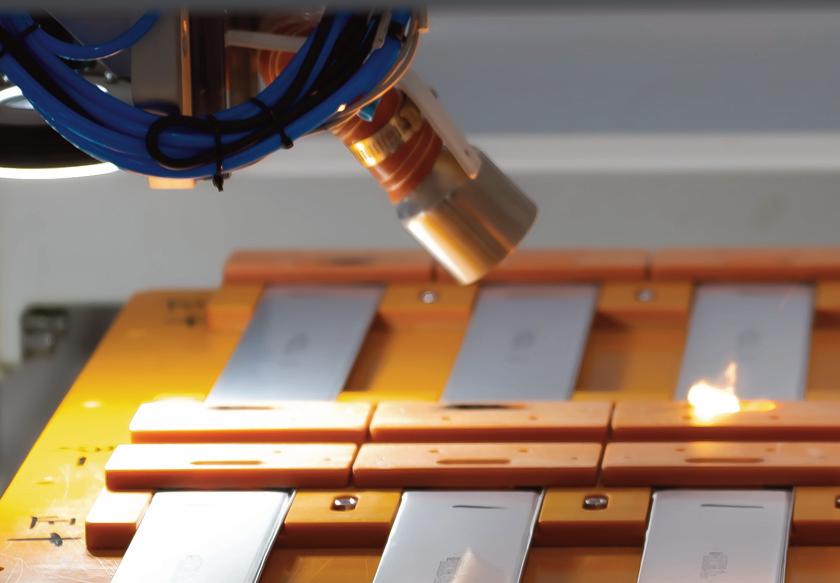
and standardise quality, decrease production time and build capacity within the process. Some parts of production were already automated, with individual cells having their ‘tails’ prepared by robot. We witnessed an operator hand welding the tails together to form the battery, on the opposite station was a robot being ‘taught’ how to perform the same job, using manual intervention and a jig that would be replaced over time with an automated handling process.
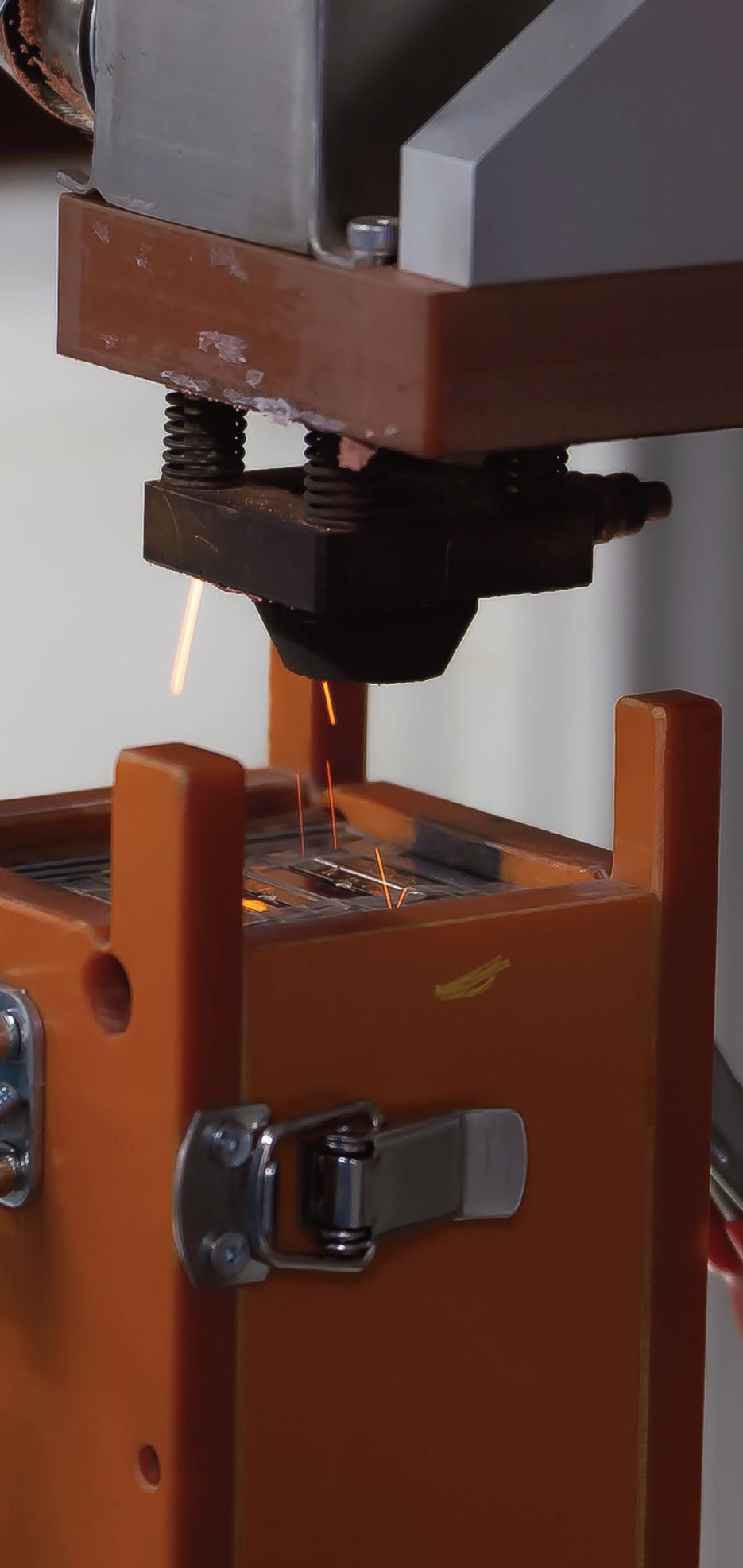
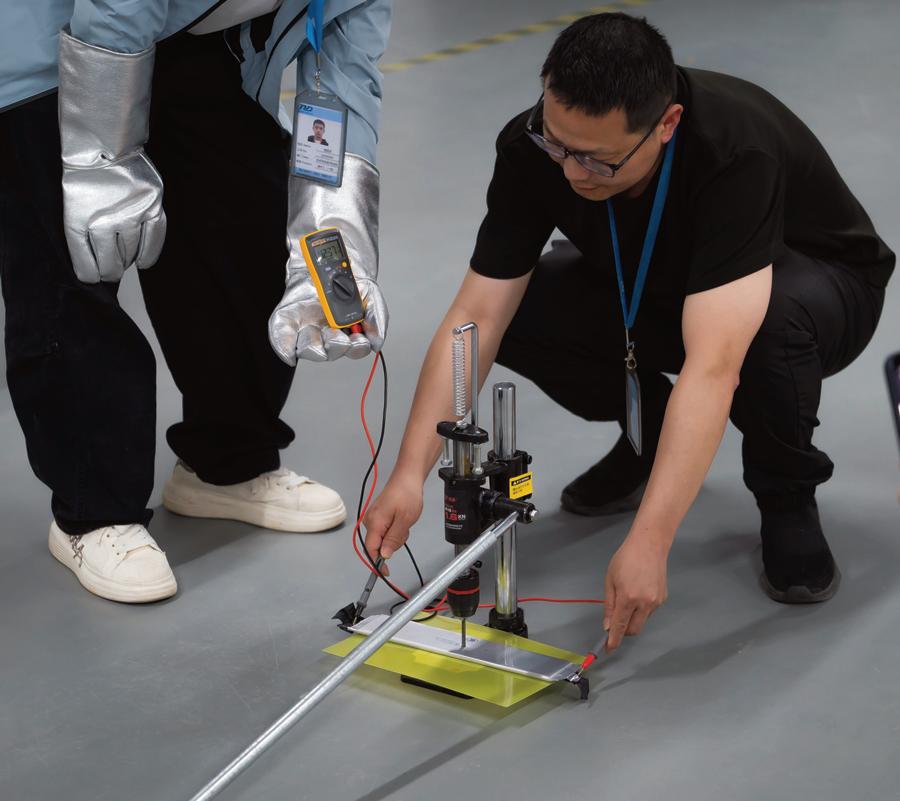
A key aspect of semi-solid state cells is their inherently more stable nature. With less fluid inside, they are less likely to swell (90% less), have a much higher thermal trigger point to potential runaway and do something no liquid battery cell can reliably do, pass the Needle Puncture Test, a Li-Ion cell will short under these circumstances. We witnessed this live demonstration with a single semi-solid state pouch cell, it was to us, a disappointment as nothing happened – that was the point of the test. It did not short, or combust,
Prototype BMS as used on larger vehicles
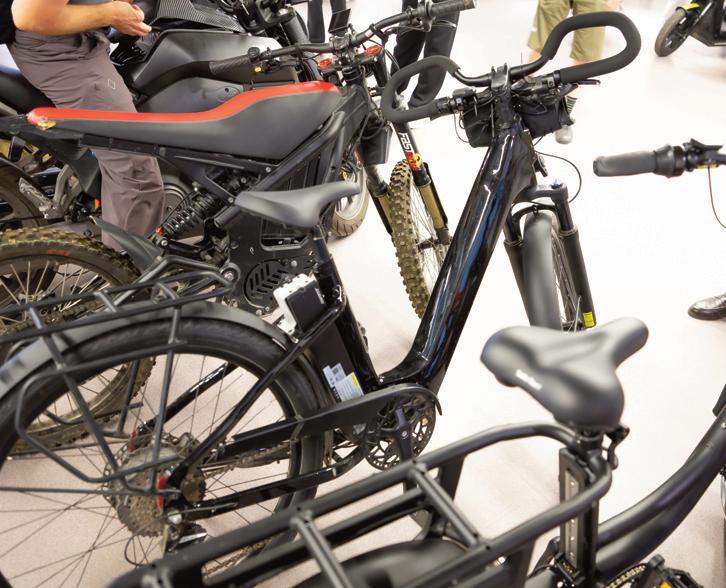
That Giant bicycle hidden amongst the two wheelers
Automated ‘tails’ preparing of individual pouch cells
Mid pin puncture test
R&D Battery Management System design workstation
A robot learning to weld tails together
Puncture test results, no drama
yet it continued to provide electrical output, no smoke, no spark, no drama.
Sunny and the other investors have sunk a lot of money into this venture, I’m told 2BN RMB, that equates to about £22m. Much of this has gone into R&D, but they are now making these semi-solid state batteries at pace, and with continued automation, costs will come down, and speed and throughput will increase.
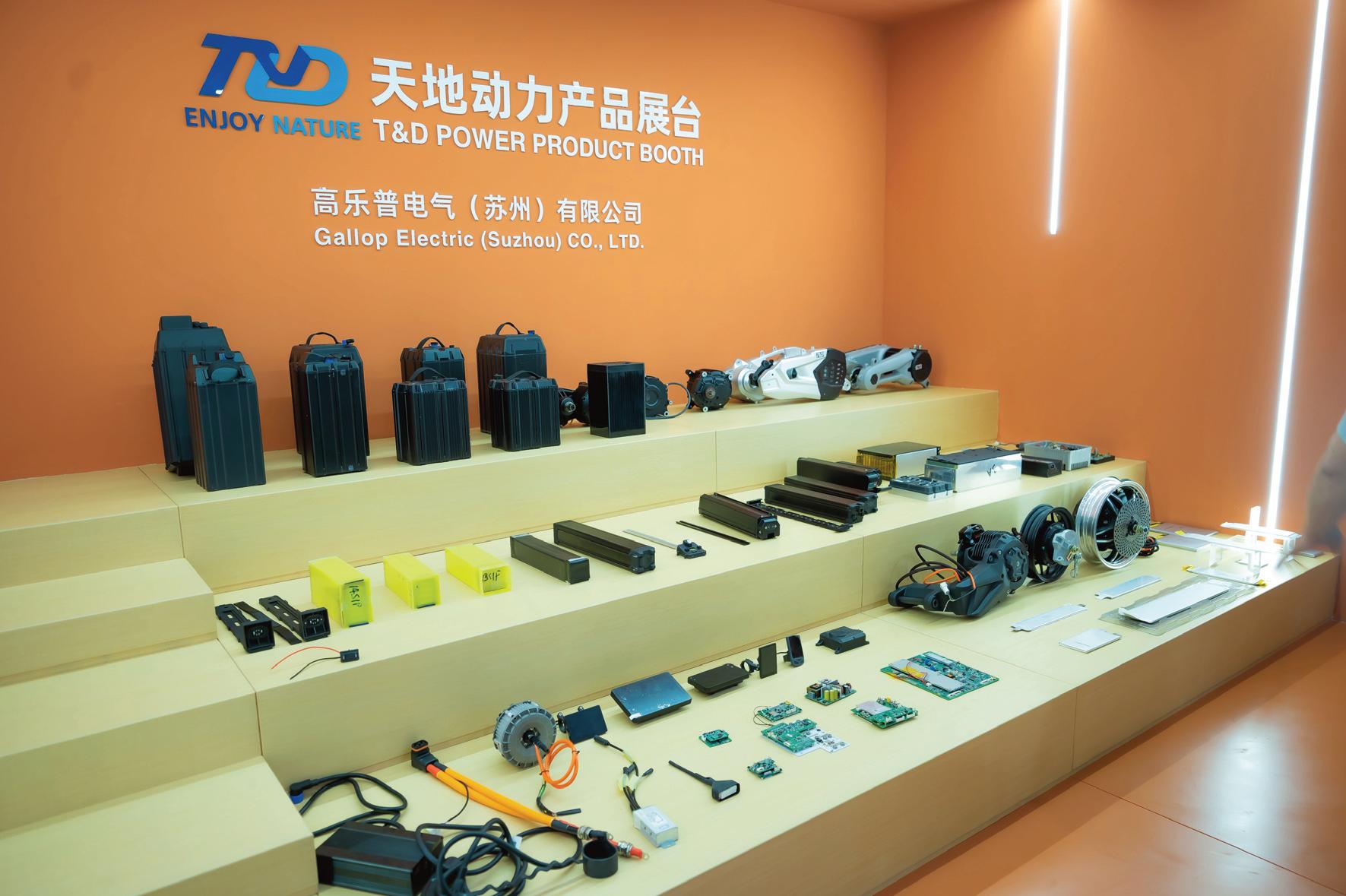
There is little point in delivering this technology without an outlet, and whilst the display area and the test product room had many and vari ous use cases, large field batteries, scooters, motorbikes and an impres sively powerful e-kart; the one that stood out, and an existing customer, is a Giant branded bicycle. Giant is recognised as the biggest bicycle designer and manufacturer world wide. This is a very big early win for the brand, and a big validation from a well-respected industry colossus (I did not want to use the term giant!)
As we went to press, there was
further validation of the technology in the form of an Eurobike gold award, citing the new generation of eBike batteries as a “game changer” – given the evidence and specifications on display, I couldn’t agree more. The
realised potential of this technology, the increase in safety, passing the all-important Puncture test and the increase in energy density pave the way for a brave new world for eBike batteries.
Once stacked and welded, the pack is taped for protection
A broad range of applications in the booth
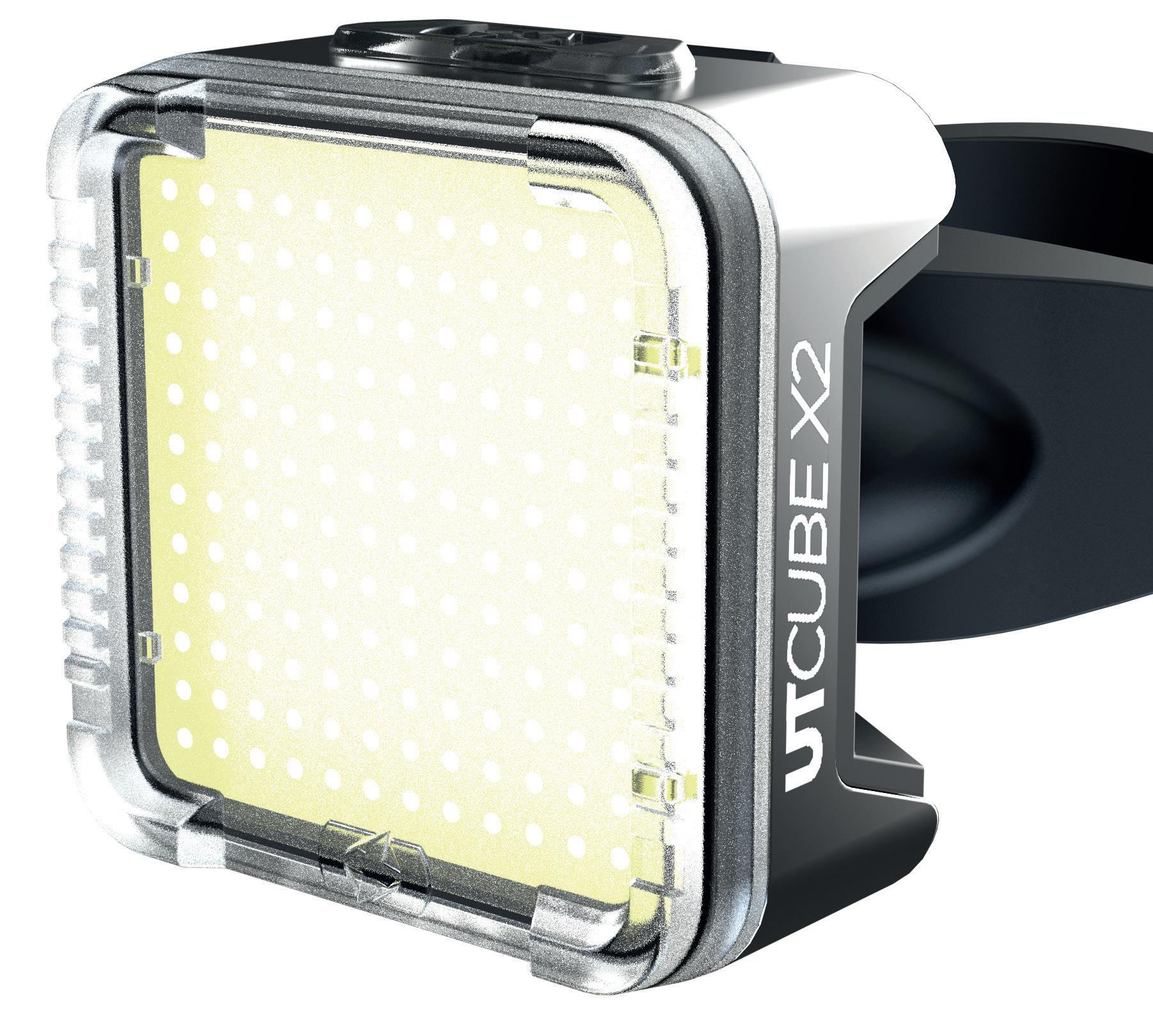
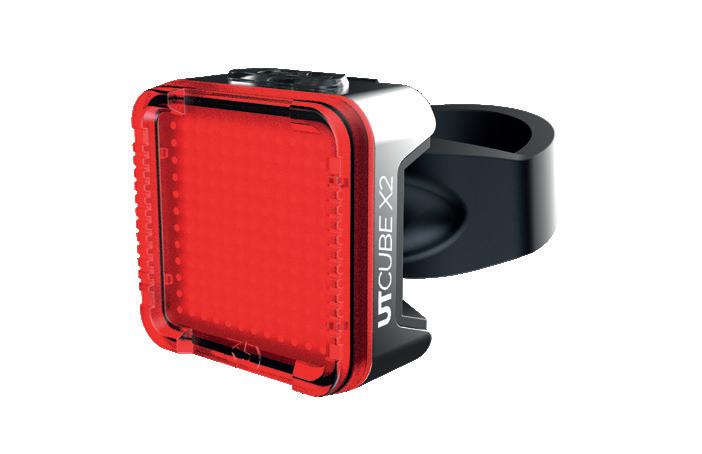
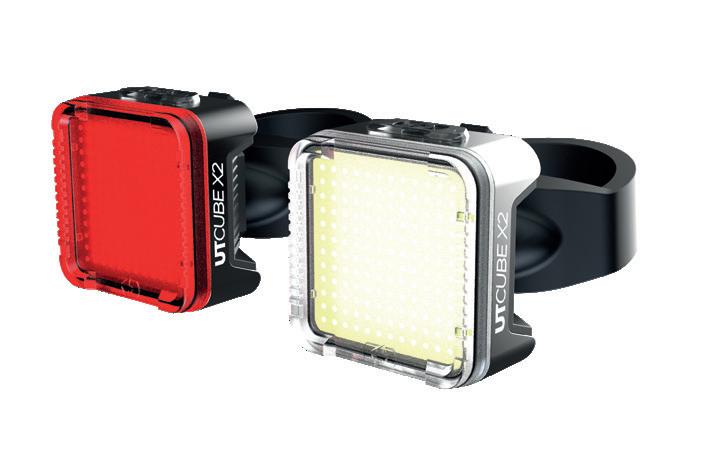
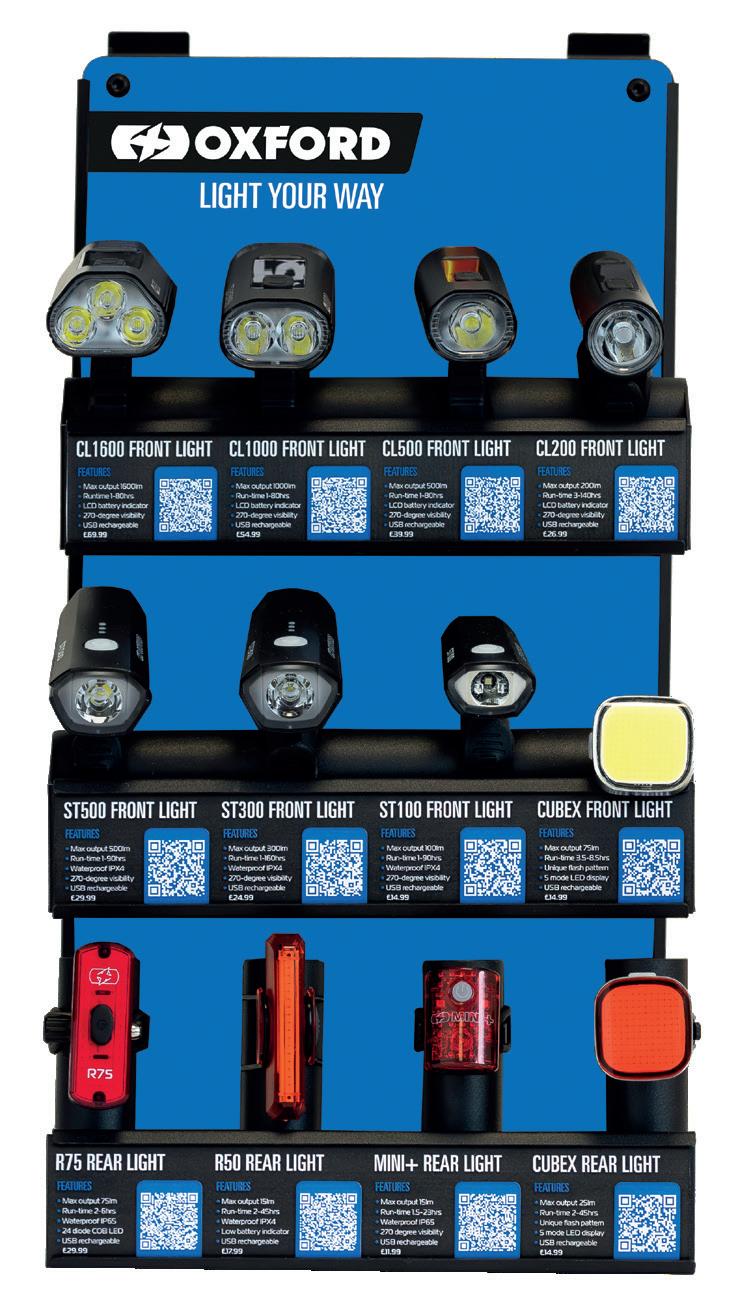
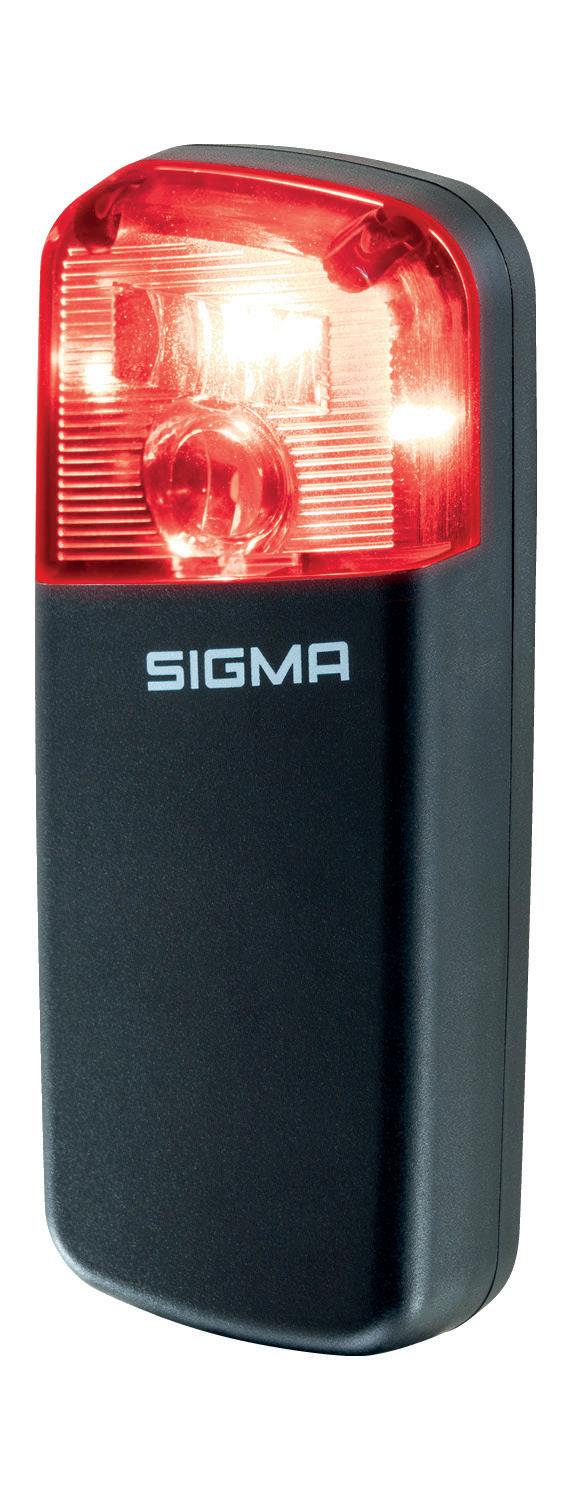
ULTRATORCH CUBE X2
• 75 Lumens (Front), 25 Lumens (Rear)
• 6 Modes - Smart Mode (Auto illumination in dark conditions), Constant, X-Flash, Night Flash, Day Flash, Pulse.
• Low battery indicator
• 270 degree visibility
• USB Rechargeable 3.7v 300mAh li-Pol battery
• Waterproof IPX4
• Tool-free handlebar (front) strap, seat post (rear) strap and micro-USB-C cable included
• Sensible stock-in commitment and up-to 60% margin opportunity for stockists.
• In-store POS solution available free to stockists.
• Not an Oxford Products customer? Email info@oxprod.com with your company details.
PROFILE MORE THAN A MOTOR
For years, the eBike drive market told a simple story: there was Bosch, and then there was everyone else. At Eurobike 2026, Cycling Industry News visited the Ananda booth to hear why that story is getting more crowded –and how a shared bracket became the company’s pitch to OEMs. Werner MüllerSchell reports…
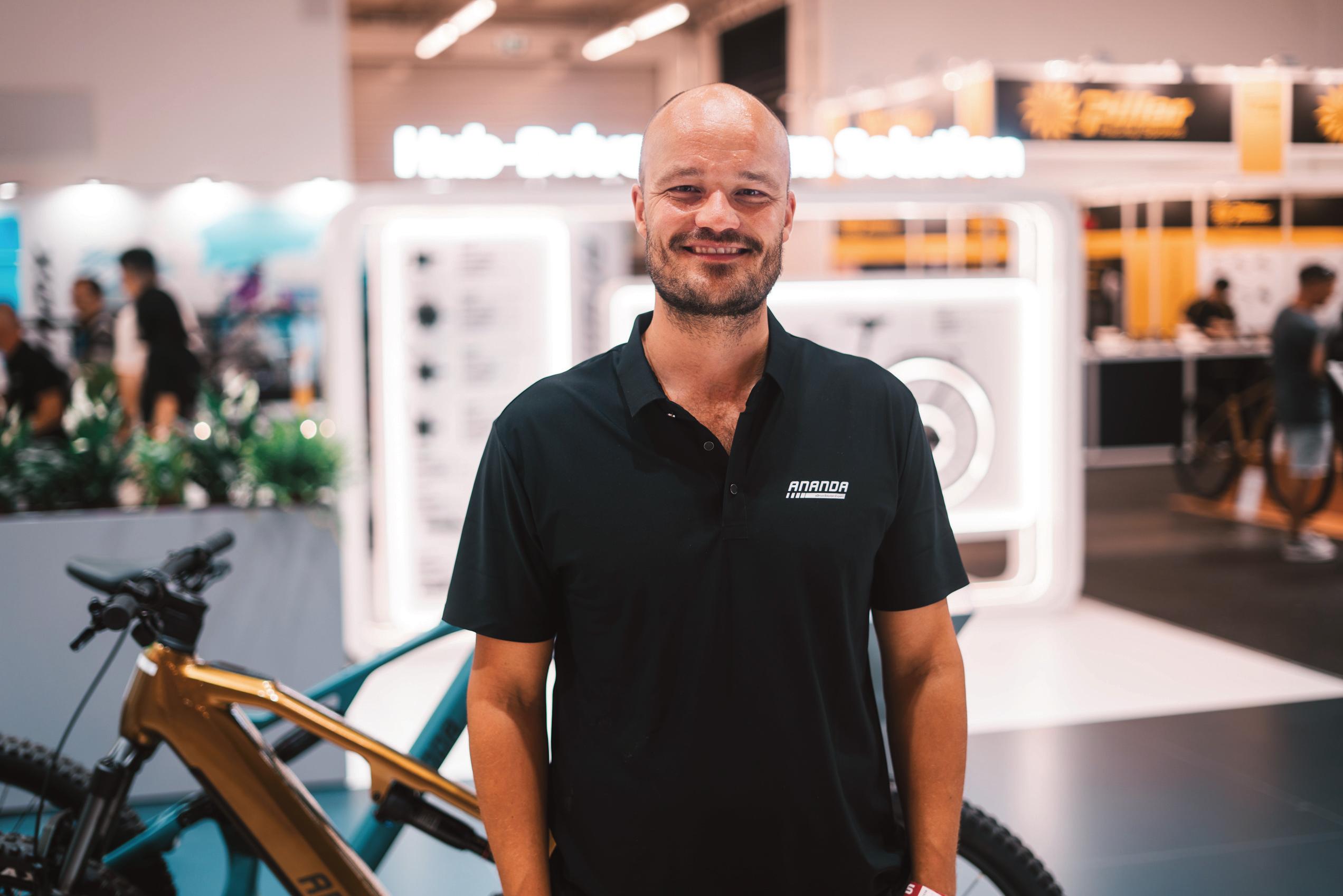
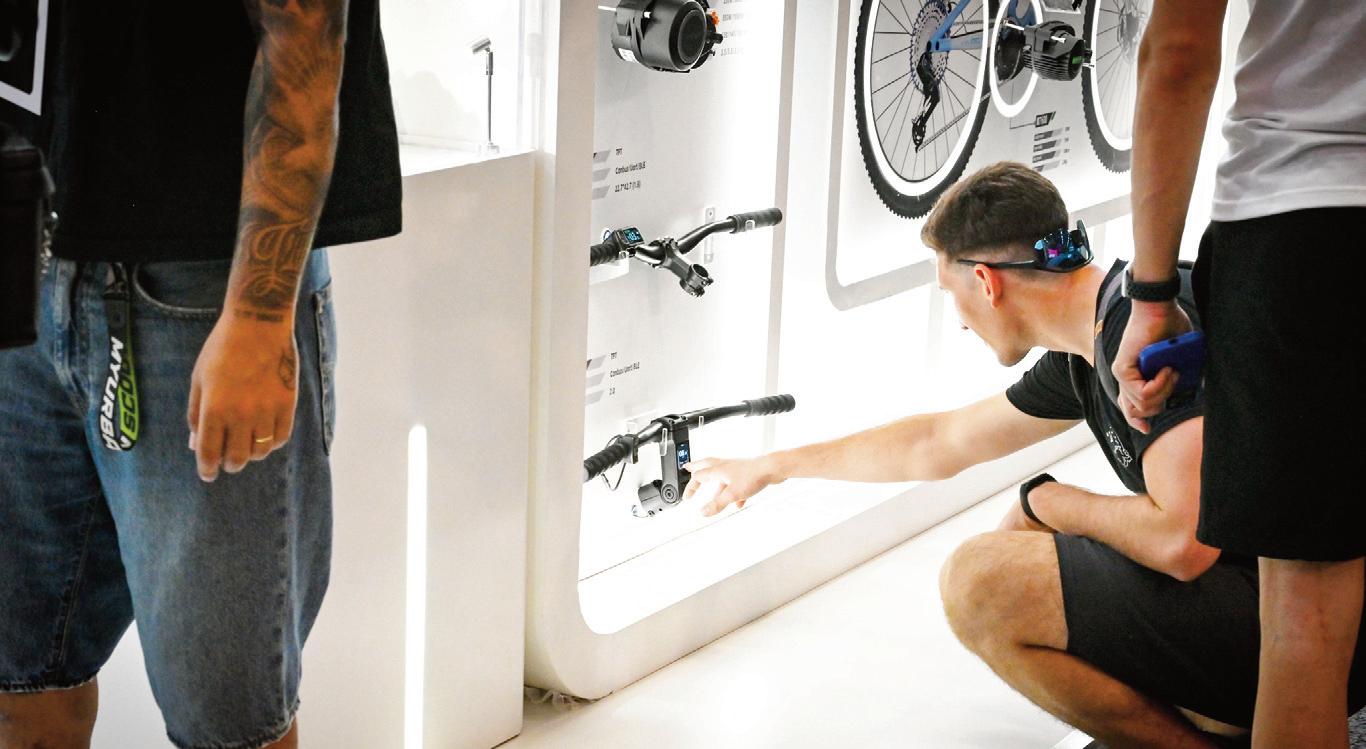
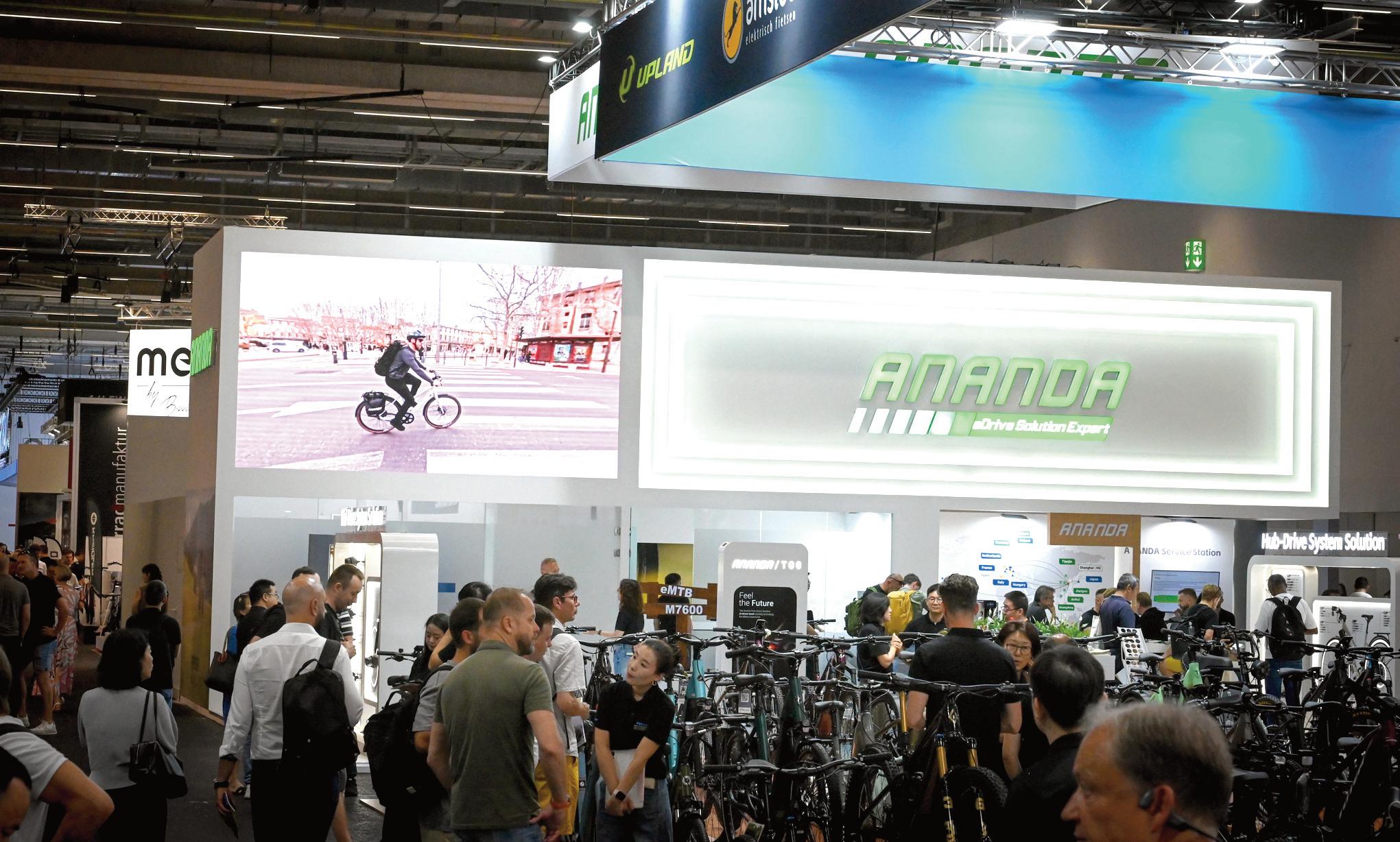
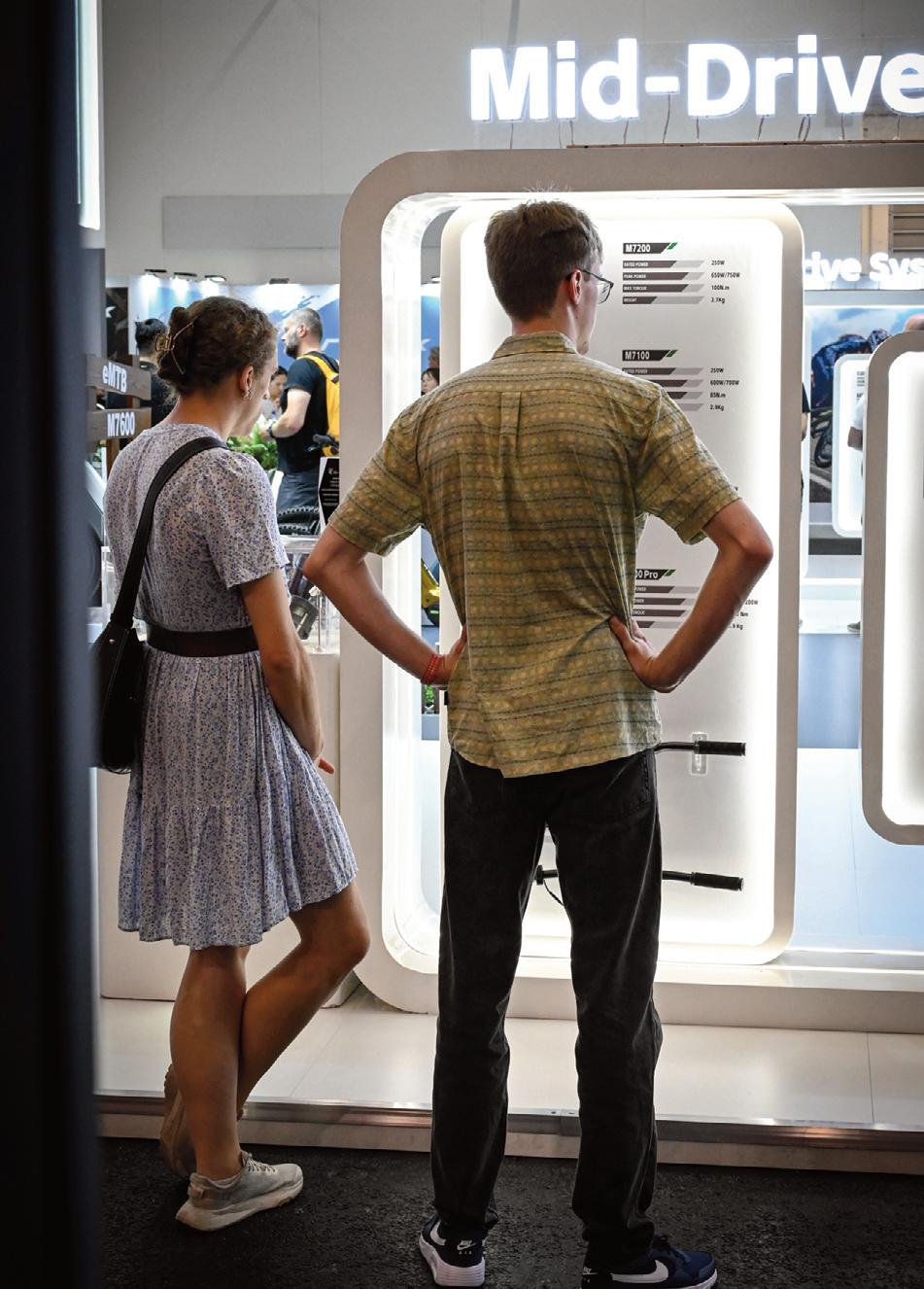
The drivetrain aisle in Hall 12.0 was one of the few places at this year’s Eurobike that felt genuinely alive. New names, fresh gearbox concepts and a wave of hub-motor comebacks have loosened a segment long defined by a single German brand. Among the companies working on that opening was Ananda — the Shanghai-based drive specialist that has steadily expanded into European projects over the past years. Its message in Frankfurt was less about any single motor than about how its motors fit together. “We don’t sell a motor, we sell a system,” Ruben Brinkman, European Marketing Coordinator at Ananda, fittingly says during an interview at the Ananda booth.
Founded in 2011, Ananda develops drive units for eBikes, e-motorcycles and e-scooters, with production bases in China, a plant in Vietnam, and a facility and service centre in Hungary, anchoring its European operations. Lately, the company grew a lot, backed by a research
team of more than 200 engineers and a portfolio of more than 120 patents. That expansion came during a stubborn downturn for the wider industry — though Ananda, like many suppliers, pointed to falling inventories and the first signs of a European recovery as grounds for cautious optimism heading into the second half of 2026.
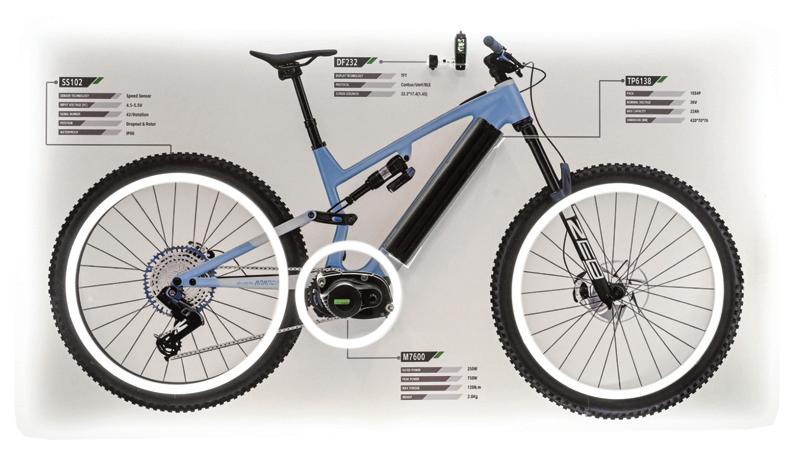
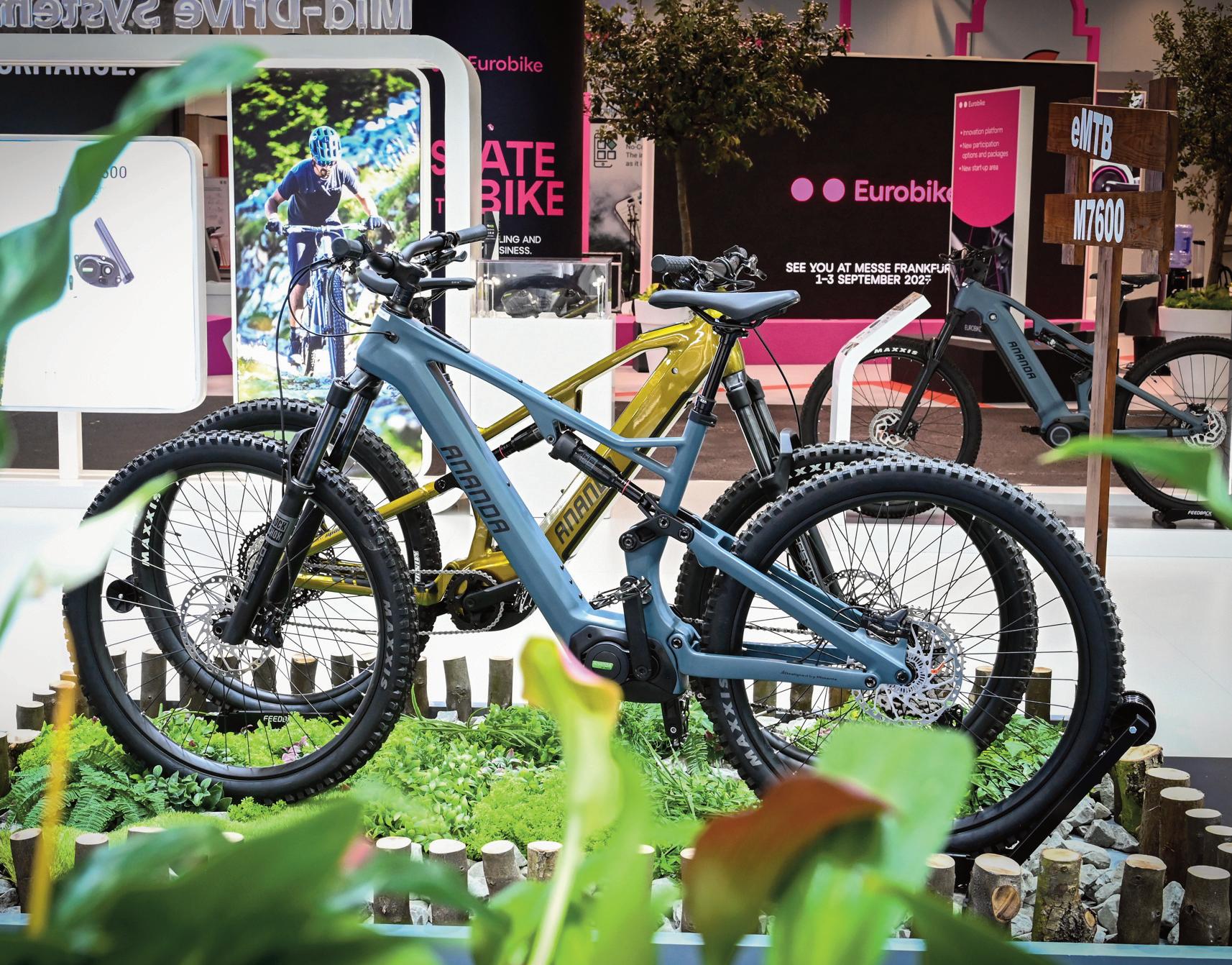
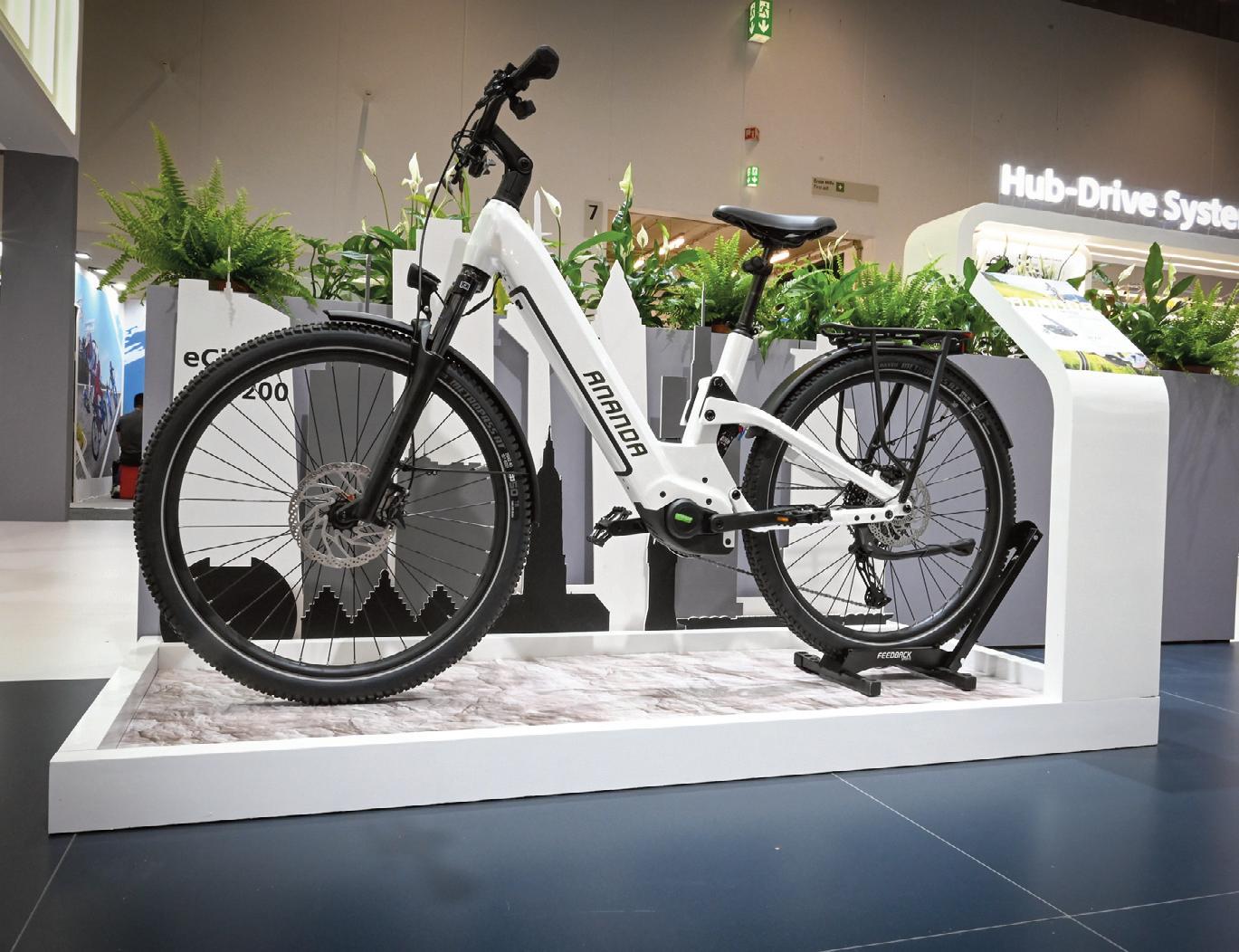
The centrepiece of the booth was the “M7000 Series,” presented not as a single product but as a scalable platform. The range spanned the 120 Nm “M7600,” rated up to 850 W peak power for aggressive eMTB use; the 100 Nm “M7200” for urban and trekking bikes; and the 85 Nm “M7100” for city bikes and high-volume projects — all sharing 36 V electronics. More importantly, the drive units share a common bracket standard, unified electronics and a consistent sensor logic. “It has the same bracket size, so we can give the OEM some freedom,” Brinkman explains. A brand speccing the “M7200”
ANANDA
Ruben Brinkman, European Marketing Coordinator at Ananda, on the brand’s Eurobike 2026 stand
PROFILE
on an e-trekking bike could move up to the “M7600” for more torque or down to the “M7100” without redesigning the frame around a new drive.
For Brinkman, that modularity answered a problem he heard repeatedly from OEMs buried in complexity. He cited one assembler building for 10 to 15 brands, with more than 1,000 variants. “It needs to be less complex — less variance
and more easiness in the assembly lines,” he says, noting that the shared standard reached beyond the motor to cabling, service documentation and OEM stockkeeping. Future Ananda motors, he added, would keep the same bracket compatibility. The approach mirrors the industry’s broader move toward platformbased integration and leaner logistics — a pitch aimed squarely at brands managing tighter budgets and fuller warehouses.
Brinkman was careful not to cast Ananda as a challenger to the established names, describing instead a market that was simply opening up. “The competition gets better,” he says, arguing that quality across suppliers had moved “very close or equal” to the market leader, while brands increasingly wanted freedom and diversity in their drive choices. He also pointed to a generational shift in spending: while an older cohort might pay €5,000 or €6,000 for a bike, younger buyers were capping out at €2,000 to €3,000. “The market needs cheaper solutions,” he said — the space Ananda has traditionally occupied, even as the “M7600” reaches toward the premium end.
Below: Modularity rules: OEMs need less complexity and variants, says the brand
ANANDA
PROFILE
approach is to offer a
“IF THE MOTOR AISLE IN FRANKFURT PROVED ANYTHING, IT WAS THAT THE ERA OF A SINGLE DOMINANT DRIVE SYSTEM IS GIVING WAY TO SOMETHING MORE PLURAL”
That breadth showed in the product news. Alongside the “M7000” platform, Ananda presented the “R820” — a new hub motor built for e-gravel riders: 40 Nm from a 2.0 kg unit, with a smart thru-axle and magnetic connector designed to make wheel changes painless, and slim enough to leave the bike nearly indistinguishable from an unassisted gravel machine. The award-winning “R900” hub motor, meanwhile, gained a manual mode alongside its automatic three-speed shifting. “Ananda is a company — we always keep improving,” Brinkman says.
If the motor aisle in Frankfurt proved anything, it was that the era of a single dominant drive system is giving way to something more plural. Ananda’s bet is that OEMs navigating a leaner market will value flexibility and cost as highly as raw output — a full system, in Brinkman’s telling, rather than a box on a spec sheet. “There was Bosch, and then the rest,” he says. Eurobike 2026 proved that the rest has begun to close the gap.
www.ananda-drive.com
Ananda has pinpointed a generational shift in spending, with the older cohort willing to spend larger numbers than younger buyers
Ananda’s
full system rather than “a box on a spec sheet”
Helmets and Eyewear
PROFILE
A LOT OF BOTL
For commuters and gym-goers, steel bottles have staked their claim for dominance. Botl has ambitions to do the same for cycling. Emma Karslake investigates…
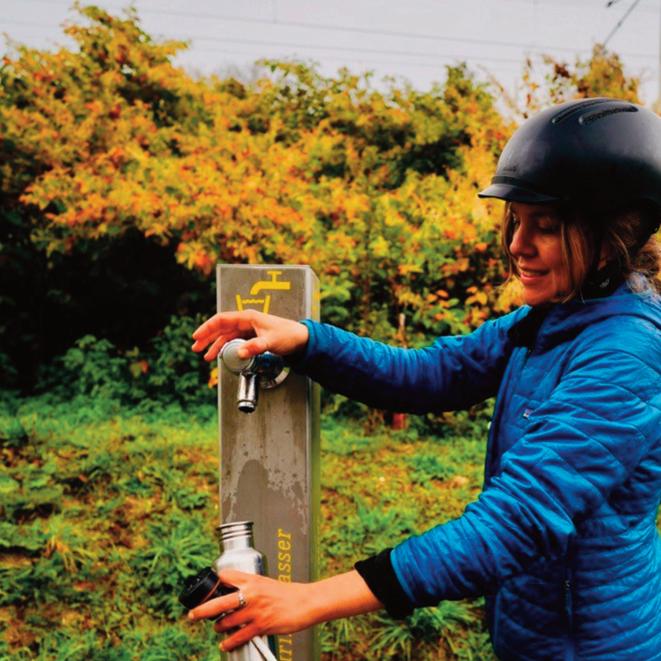
The phrase ‘steel is real’ usually applies to bike frames, but perhaps it could just as easily be extended to bidons. Growing scrutiny around both the health implications of drinking from plastic and the environmental impact of plastic has led to a rise in alternatives, from newer forms of plastics to aluminium and stainless. Yet in cycling, the familiar squeezable plastic bidon
Botl has been picked up by Team GB and Paralympics GB athletes
remains firmly entrenched.
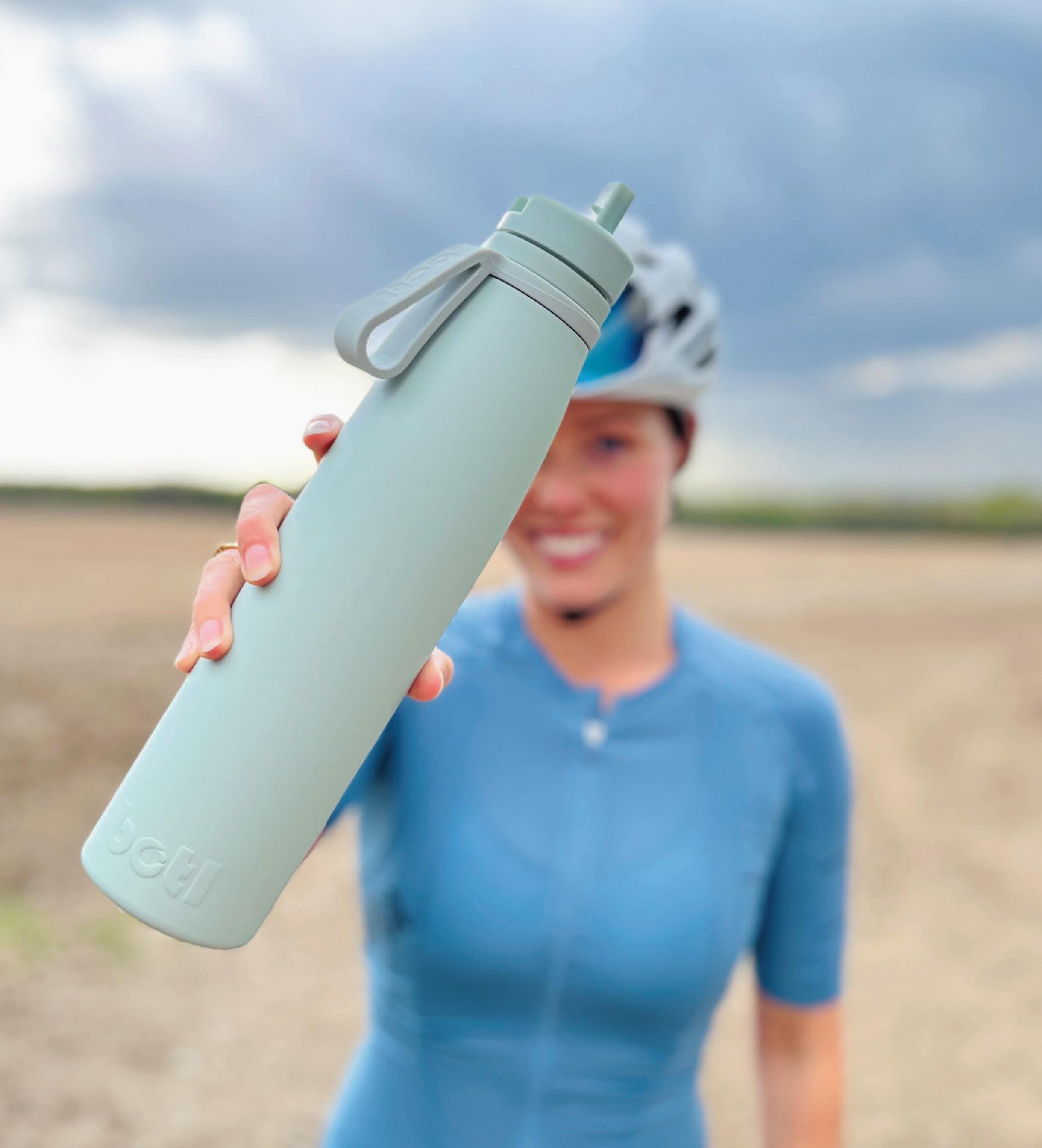
Botl has been attempting to challenge the status quo for two decades. Founded by industrial chemist Heather Nicholson, the business grew out of concerns about plastic exposure and a desire to offer a long-lasting alternative. Today, the company’s products are used by Team GB and ParalympicsGB athletes, and Botl is looking to extend its reach further into the cycling sector beyond commuters.
WHY STAINLESS STEEL?
“The only completely safe materials to drink out of are stainless steel and glass,” says Nicholson.
For cycling applications, glass is quickly ruled out on both safety and weight grounds, making stainless steel the obvious choice. Aluminium, meanwhile, is generally used with a plastic lining, meaning it does not eliminate concerns over plastic contact altogether.
Nicholson’s concerns stem from her background in chemical research and the long-running debate around bisphenols and phthalates (used to give a flexible quality to plastic), compounds associated with endocrine-disrupting activity. As BPA came under increasing regulatory scrutiny, manufacturers introduced alternatives such as BPS and BPF, which are less regulated but have been found to be poor alternatives from a health perspective. There are now growing calls to regulate BPS and BPF, underscoring a cycle in which plastic additive innovations tend to outpace regulation, creating uncertainty for manufacturers and brands.
Botl’s bottles themselves are made from food-grade 304 stainless steel, but the company has not eliminated plastic entirely. The caps use recycled ocean-bound polypropylene together with silicone seals and valves. According to Nicholson, polypropylene represents the safest available compromise for a practical sports bottle as it is the only plastic that doesn’t contain endocrine-disrupting chemicals. “We would love to have a completely plastic-free product, but it doesn’t seem to be feasible,” Nicholson says.
WHY ROLLING BACK PLASTIC IS PARTICULARLY IMPORTANT IN SPORTS HYDRATION
Cycling differs from many other everyday hydration contexts in the frequency and duration of exposure. A rider
may repeatedly fill up the same bottle across long training sessions, drinking at least as much water on the bike as during the rest of their daily activities combined, and so the share of their water in contact with plastics is high. This is compounded for endurance riders, who consume multiple bottles per ride.
The issue is exacerbated when cycling in hot conditions as heat increases the leaching of chemicals into the water.
PROMOTIONAL PRODUCT UNDER SCRUTINY
Promotional bidons have long been staples of events, teams and retail marketing. Yet the majority are inexpensive plastic products with relatively short lives. A premium stainless steel alternative costs significantly more, but potentially offers greater longevity and stronger environmental messaging.
Corporate branding forms a significant part of Botl’s business. At first glance, branded bottles might appear to contradict the company’s sustainability credentials. After all, companies frequently refresh merchandise, creating a cycle of replacement.
Nicholson argues that longevity changes the equation: “You can buy a really cheap plastic bottle to hand out, but people don’t keep them. Ours can stay on somebody’s desk for 12 years. It shows your logo and it shows that your company takes sustainability seriously.”
DESIGNING AROUND THE SQUEEZE BOTTLE
While metal or plastic may make little difference for a hiker’s bottle, cyclists face constraints such as the need for single-handed use, generous flow, and a secure and rattle-free fit into a bottle cage.
Botl’s answer to the impossibility of squeezing the bottle into the mouth is a fast-flowing straw system combined with an air valve. As liquid leaves the bottle, air enters to prevent a vacuum forming, maintaining a consistent flow.
The system has been developed around sports applications and is already used across other sectors, but translating the concept into competitive cycling still involves compromises.
Weight is one. Botl’s 500ml Tough Canteen weighs around 138g, whereas some lightweight plastic bidons come in at little over 50g.
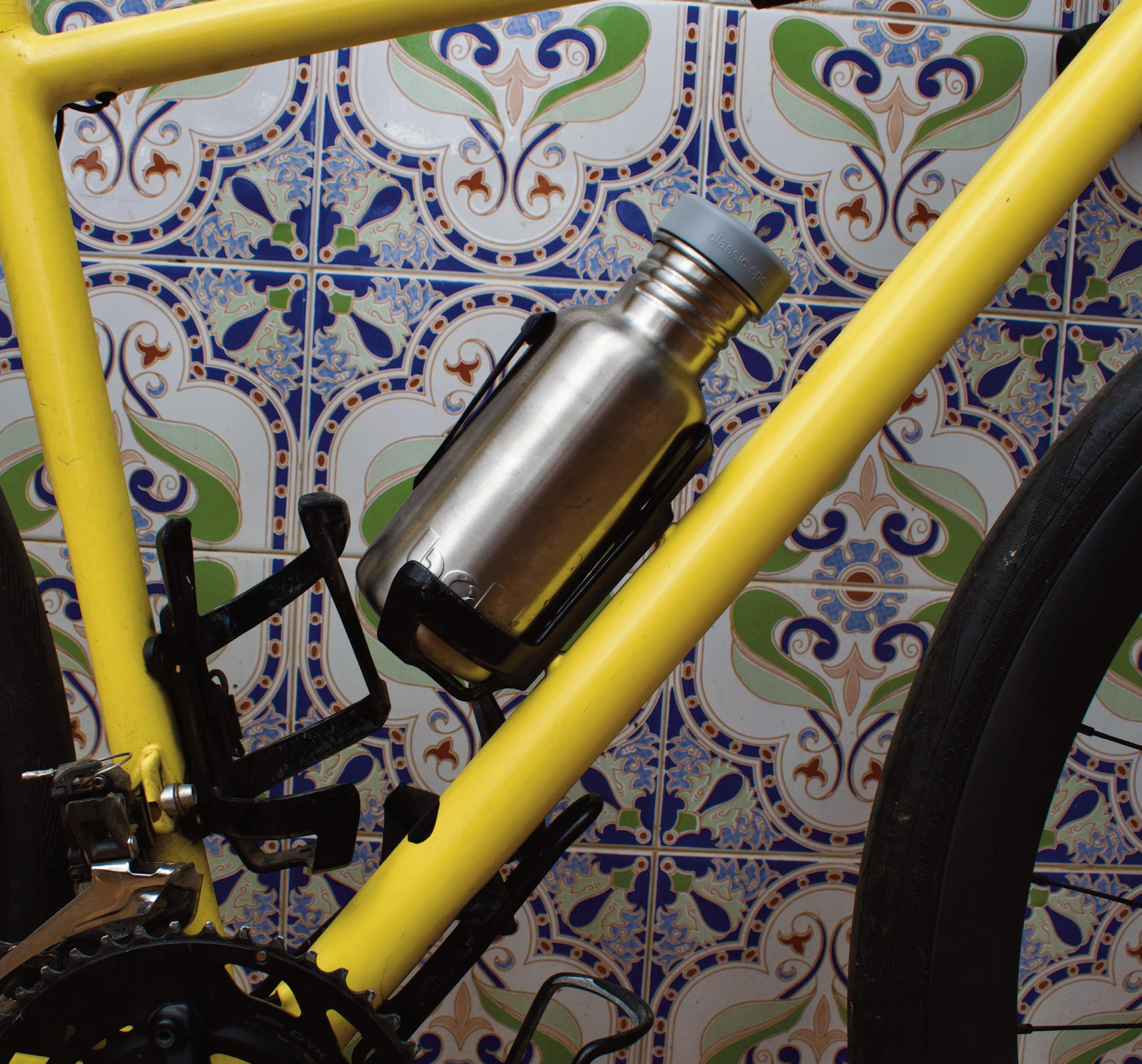
The interaction with the bottle cage
is another concern: riders may need to pair their stainless steel bottle with a soft sleeve if using a metal bottle cage, or opt for a plastic bottle cage. Otherwise, any give in the cage can lead to annoying rattling. The plain, uncoated stainless steel is the version most likely to stand the test of time for a bottle constantly going in and out of a holder.
These differences may matter little to commuters or leisure cyclists, but performance riders are notoriously sensitive to anything that affects weight, convenience or noise.
A BUSINESS MODEL BUILT AROUND LONGEVITY
Nicholson sees her products as a financial investment as well as an investment in the planet and the user’s health. She jokes that she is ‘quite proud of Botl’s terrible business model’.
The bottles carry a lifetime warranty and replacement caps remain available for decades. From a sustainability perspective, the approach makes sense. Commercially, it requires growth through new customers rather than repeat purchases.
Recycled materials also add cost. Using recycled ocean plastics for the caps is more expensive than using virgin polymers, while low-carbon logistics and supply chain standards further increase overheads.
The business ships products from China to the UK via slower sea freight routes and companies chosen for their eco-credentials in an attempt to reduce transport emissions. Manufacturing partners maintain ISO 14001 environmental certification alongside social responsibility standards.
None of these decisions maximise margins.
“We didn’t start the company to have a massive impact on GDP. We started it to do the right thing,” Nicholson says. That philosophy contrasts sharply with recent examples of product-driven trends that have generated huge spikes in demand, only to leave markets saturated. Nicholson points to the Stanley Cup phenomenon as an example of how products initially positioned as sustainable can ultimately contribute to overconsumption.
BRIDGING INTO PERFORMANCE CYCLING
Despite two decades in business, cycling remains only a small part of Botl’s customer base.
PROFILE
The company currently performs best among commuters and recreational riders, groups less concerned with marginal gains.
Botl already supplies outdoor retailers, but cycling shops are underrepresented among its stockists. Independent retailers can stock the products and personalise bottles with their own branding, potentially offering customers a longer-lasting alternative to the traditional promotional bidon.
Beyond stockists, Nicholson is seeking development partners: “I would love to develop something with a cycling brand or shop specifically,” she says.
Botl is looking to work with a cyclingrelated brand with similar sustainability goals. The aim is to develop a perfor-
mance-focused bidon that can appeal beyond commuters and leisure cyclists. This could be a bike manufacturer, a drinks supplement brand, or a related company with good access to rider feedback, a central element in ultimately producing the ideal product for competitive cyclists. The challenge is not simply producing a metal container. It is replicating decades of expectations built around the plastic bidon.
For now, the familiar squeeze bottle remains the default option for competitive cyclists. At the same time, offering plastic food and drink containers is increasingly associated with consumer perception risk. As sustainability and health considerations influence product development across the industry,
consumers may benefit from swapping out their bidons for stainless steel bottles, even if only for commuting.
A slow shift in hydration design
Whether stainless steel bottles ever replace the humble plastic bidon remains an open question. Weight, cost and decades of ingrained habits still favour the traditional squeeze bottle. Yet as the industry grapples with sustainability, health concerns and the value of long-lasting products, Botl’s experience highlights a broader challenge facing cycling businesses: how to sell durability in a market that has long relied on disposability.
www.onegreenbottle.com
The interaction with the bottle cage is a challenge: riders may need to pair their stainless steel bottle with a soft sleeve if using a metal bottle cage, or opt for a plastic bottle cage
Botl already supplies outdoor retailers, but cycling shops are underrepresented among its stockists
A MESSAGE TO MANUFACTURERS 2026
What bike dealers want – you don’t need a mind-reading device to discern the deepest desires of bike dealers. The answers are all here, thanks to the latest set of CIN Market Data results…
If bike, component and P&A manufacturers are wondering what opinions are held by their vital sales channels, then look no further. Bike dealers and associated businesses are pretty clear on what they want and, to be frank, the key things they want haven’t really changed all that much recently. But have the manufacturers been listening? That’s another story…
Model year churn
No doubt about it, retailers are resolutely against model year churn and have been for quite some time. The fact that it still is far and away the most popular response to this question does somewhat hint that manufacturers have been overlooking or ignoring these retailer requests.
There’s certainly a push-me-pull-you dynamic here –more model year churn indicates more innovation, newer shinier product and hopefully more reasons for customers to part with their money. On the flip side, model year churn means sales to clear stock (and cull margin), and therefore fairly regular discounting that savvy consumers will be watching for. Presumably, model year churn is working for someone somewhere in the supply chain or we wouldn’t be having this discussion. There’s maybe a further dynamic that is at play too, with a sizeable number of consumers increasingly looking for product that lasts – not least for sustainability concerns.
As retail evolves and the drive for shops to hold less stock continues, the model year churn could become less of an issue. But, here in 2026, it’s very much a concern for a whopping 73%.
Ease of service
There are two sides to every coin and it’s not hard to see the opposing dynamics regarding the next most popular request from shops to manufacturers – for ease of service to be a priority in design. Aesthetically pleasing product that tucks away cables, for example, looks attractive but automatically becomes more tricky to service – therefore more time consuming and costly for a workshop. The counter argument might be that such difficulty will push users and consumers to use professional workshops because they ‘have to’. Likewise you could argue that workshops must charge properly for the time it takes them to service tricky products, but communicating that to customers successfully is another (albeit worthwhile) challenge.
More recyclable packaging
Here’s another long-asked-for request from bike shops, but the wider conversation around recyclable packaging has moved on considerably – and regulation is now driving change where business has seemingly struggled to. This year, the EU’s Packaging and Packaging Waste Regulation (PPWR) is signing into law – by 2030, all packaging must be designed for recycling. Despite no longer being part of the EU, the UK will inevitably end up mirroring the regs, so by 2030 we should (at last) see this retailer request answered.
RRP £169.99
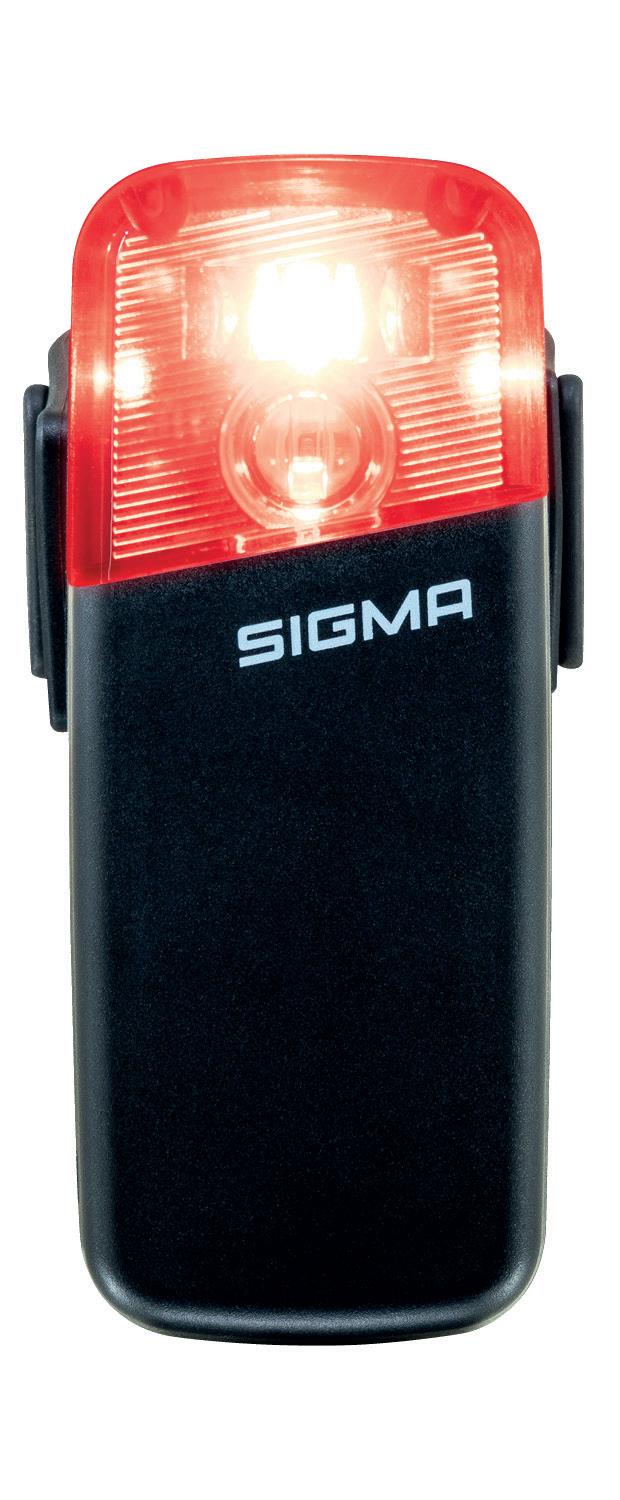
• 160m range radar detection (object detection up to 8 vehicles)
• 6 light modes (high, peloton, day flash, night flash, eco flash, radar only)
• Visible from up to 500 metres
• Compatible with any ANT+ computer
• LED brake light & emergency light function
Gobao
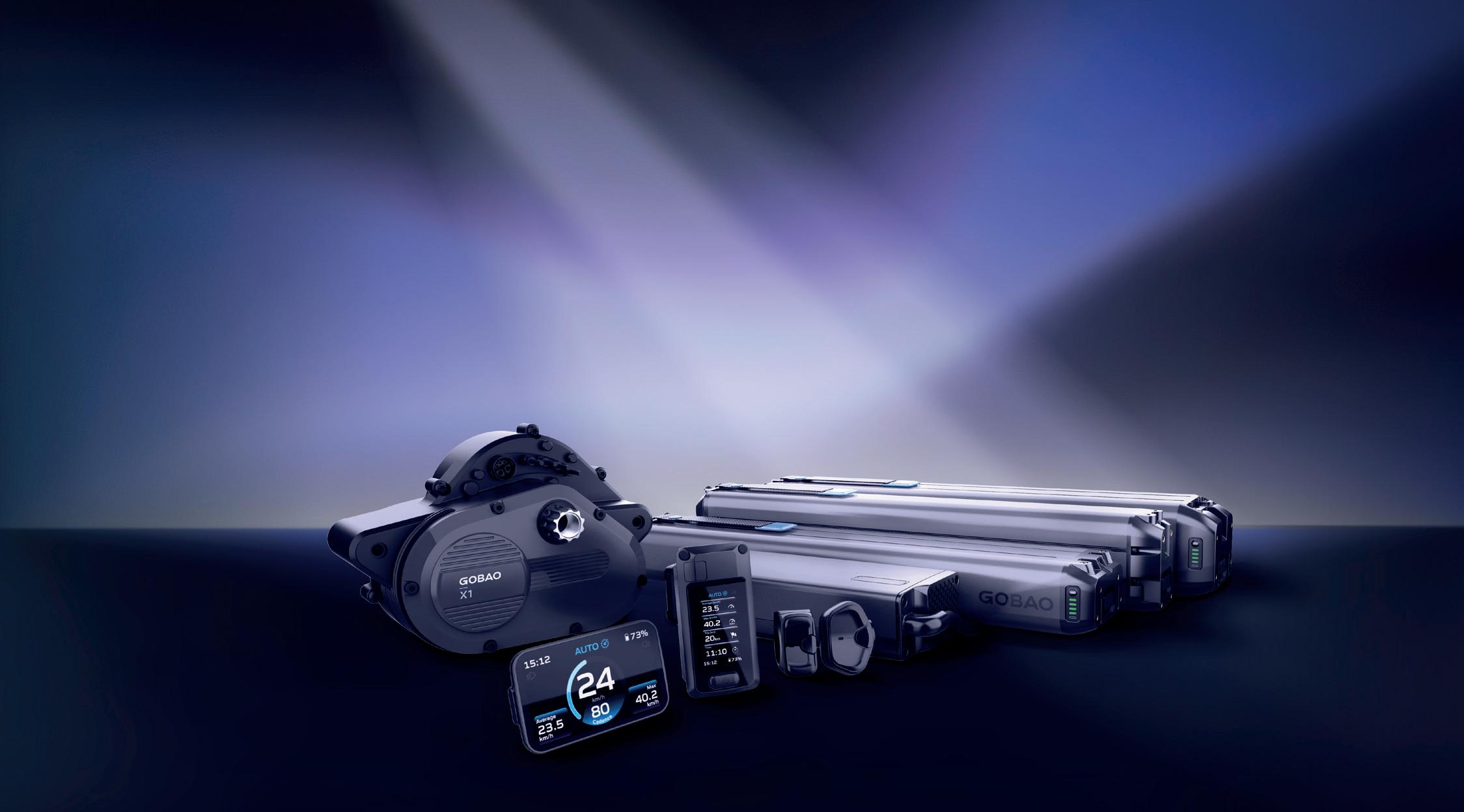
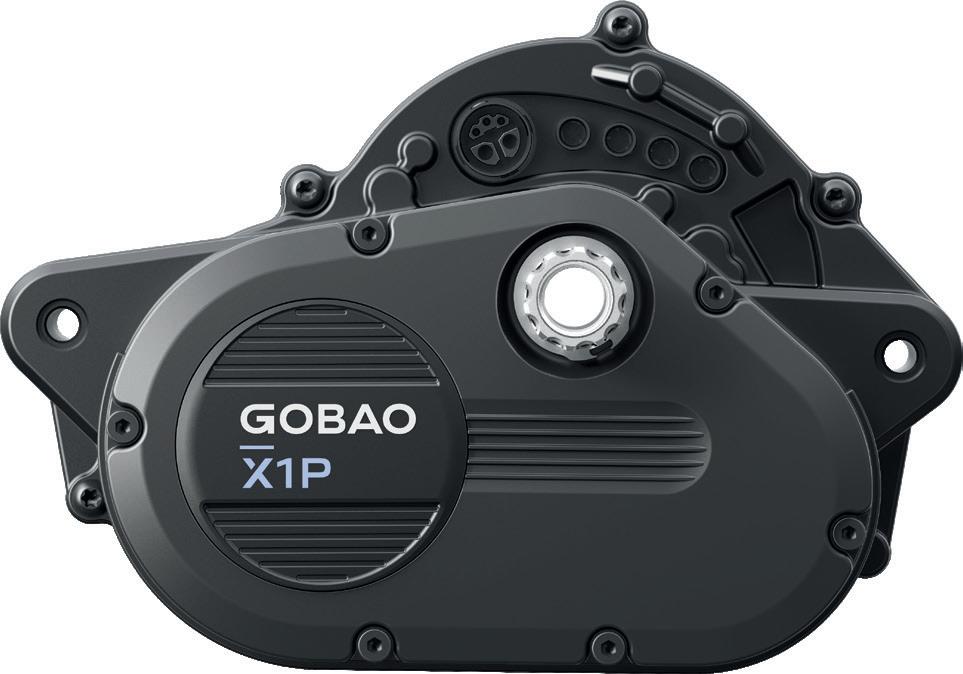
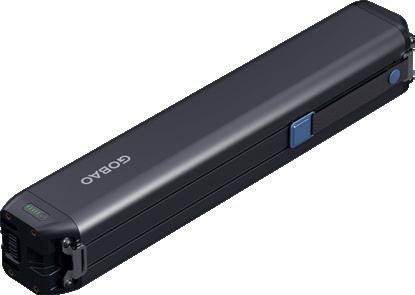
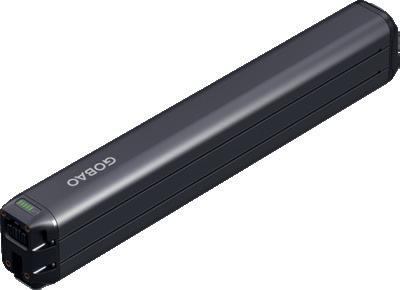
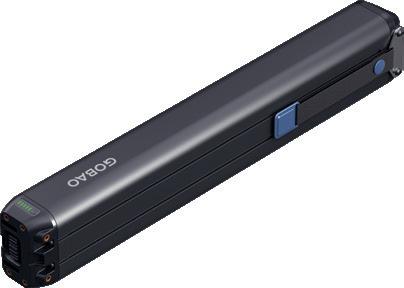
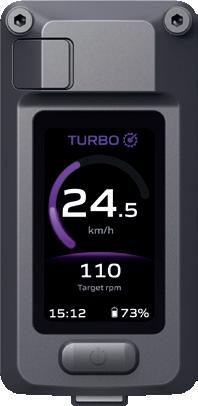
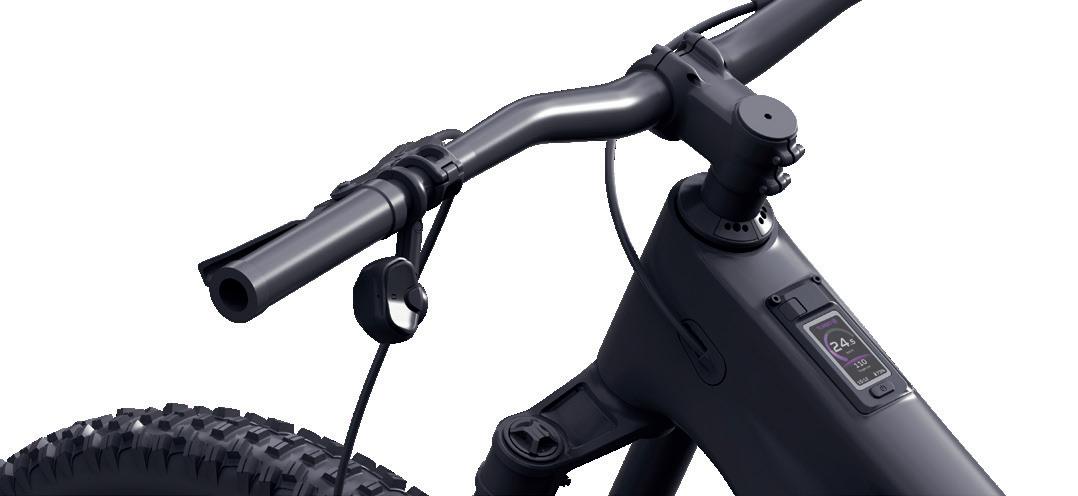
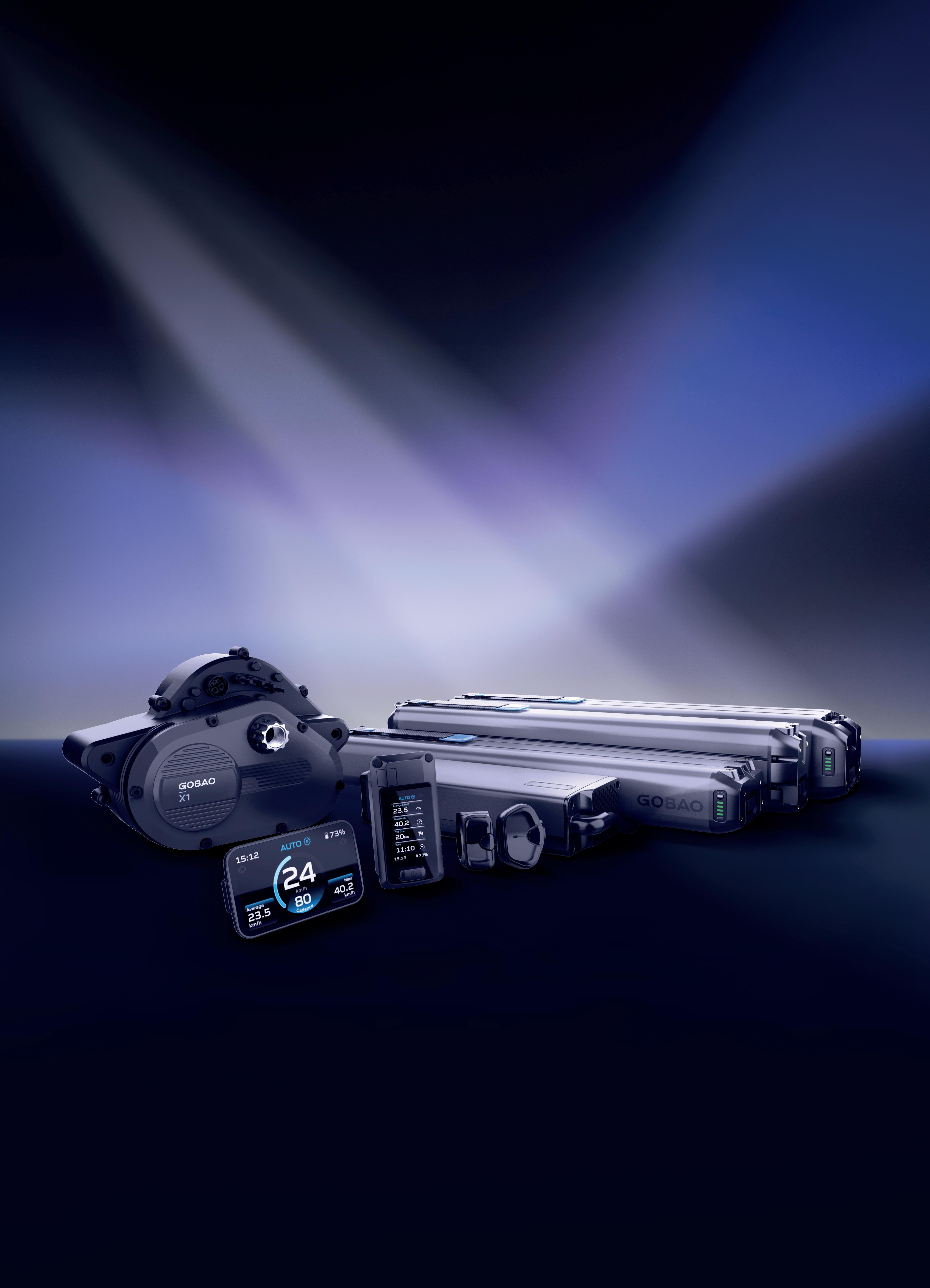
From E-Bike to Intelligent Bike. E-bike technologies are evolving rapidly. The next generation of Gobao already relies on connected systems. With the new System X, Gobao combines drive technology, digital services and software within a single platform, creating the foundation for the bike of tomorrow.
www.gobao-ebike.com
MOTOR & TRANSMISSION
At the heart of the system is a compact unit consisting of an electric motor and an electronically controlled continuously variable transmission (ECVT). During riding, the software continuously analyzes a wide range of riding parameters and automatically adjusts the transmission ratio. This keeps the motor operating within its optimal efficiency range at all times. The result is improved efficiency, reduced wear and a particularly smooth riding experience – with the option of fully automatic operation without manual shifting. Depending on the configuration, the system delivers up to 150 Nm of torque and 1,500 W of peak power.
FAST CHARGING
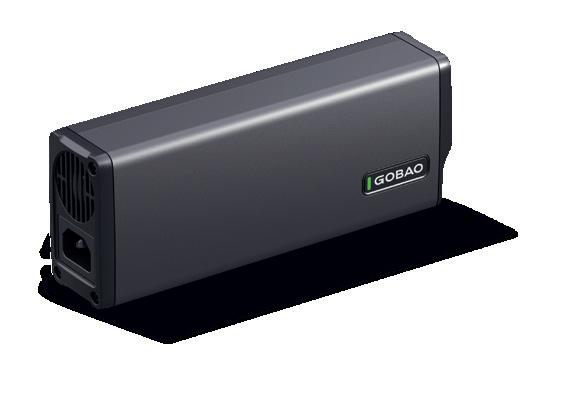
Short charging times are becoming a key convenience factor. With a charging capacity of 1.5 kW, the fast-charging technology enables charging times that are up to four times shorter than those of many conventional e-bike systems. This provides greater flexibility in everyday use and on longer rides.
CONNECTED TECHNOLOGY
System X combines hardware, software and digital services into a seamless ecosystem. The Central Control Unit (CCU) connects the drive system, connectivity and service functions. Remote access, active theft protection and geo-fencing are integrated directly into the system, adding enhanced security and convenience features to the e-bike.
All-in-one: electronic continuously variable transmission (ECVT), super charging (from 10 to 80% in 20 minutes) and CCU with anti-theft protection and geofencing …
(120 Nm / 1200 W) | X1P (150 Nm / 1500 W).
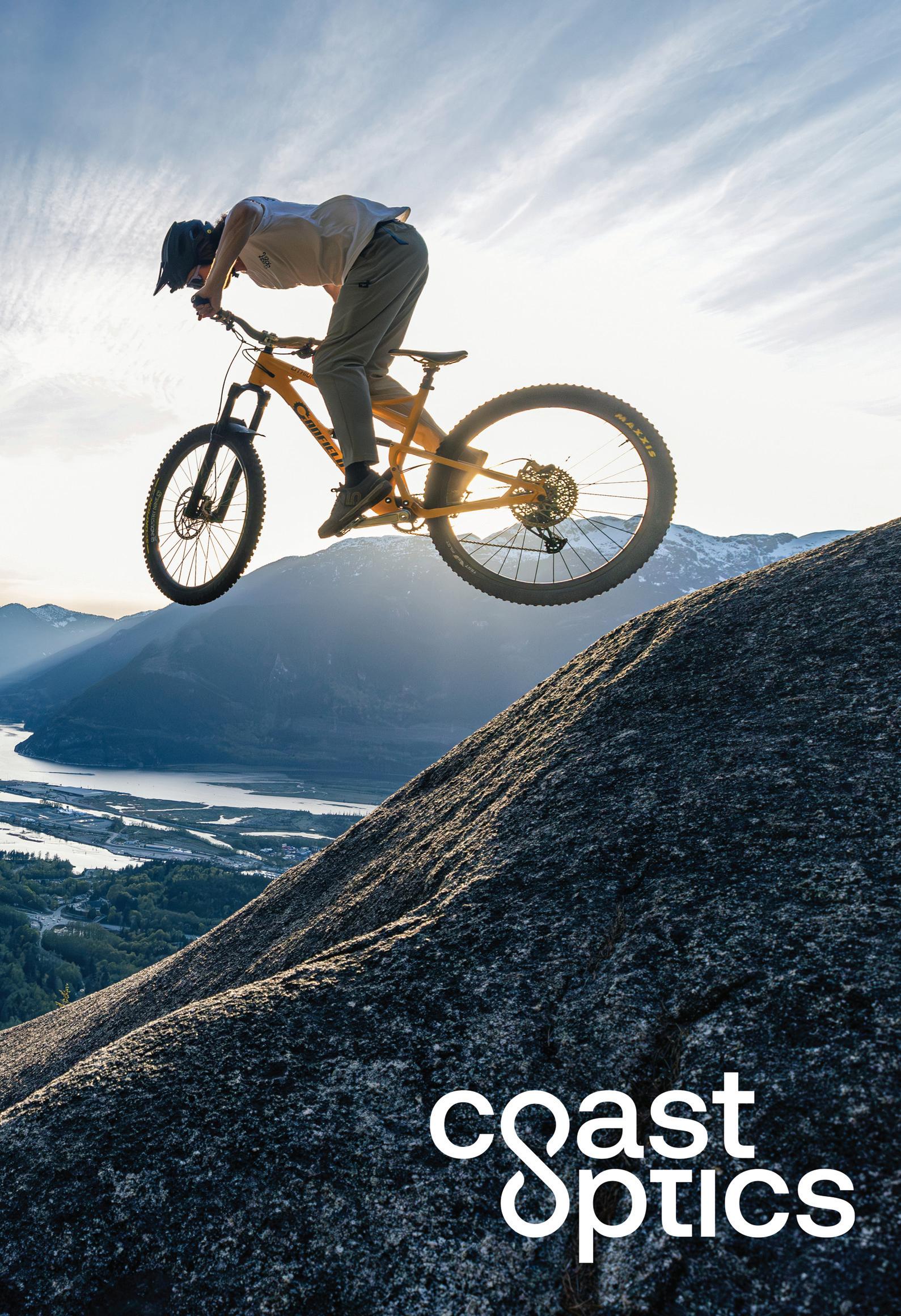
COAST OPTICS
PROFILE GOOD OPTICS
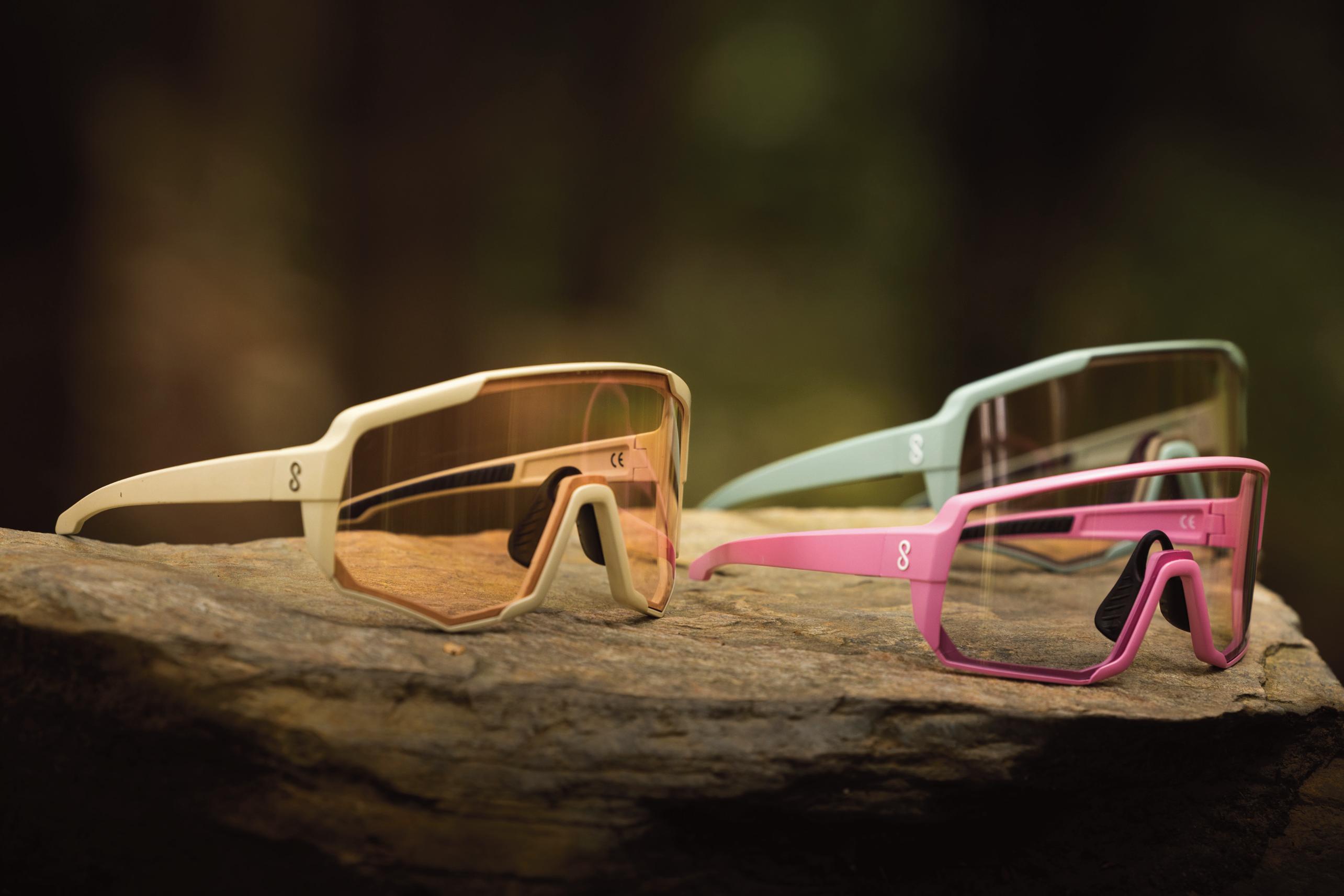
Reducing plastic waste and adopting more sustainable practice is good optics but for Coast Optics it became a foundational principle to do that and more. CIN delves into the journey of the brand and speaks to the founders about lifetime warranties, a lean product range to make life easier for shops and the big challenge of finding the perfect eyewear fit…
Can you fill us in on the history of Coast Optics?
Sam and I founded Coast Optics around five years ago with a shared frustration at the amount of plastic waste and material use in the industry. Originally from the UK, we were both working in a bike shop in Whistler at the time. I remember unboxing an order of goggles that had arrived in the shop, with a ridiculous amount of plastic packaging and I was amazed at the amount of waste. I jokingly said to Sam that I thought we could do better. He took it literally and we haven’t looked back since!
What makes Coast Optics different from other eyewear brands?
We’re a rider-owned, rider-first company that produces high-performance, sustainably sourced eyewear at an affordable price. We design and manufacture differentiators is our material use. We use biobased plastics and recycled materials where possible, without sacrificing
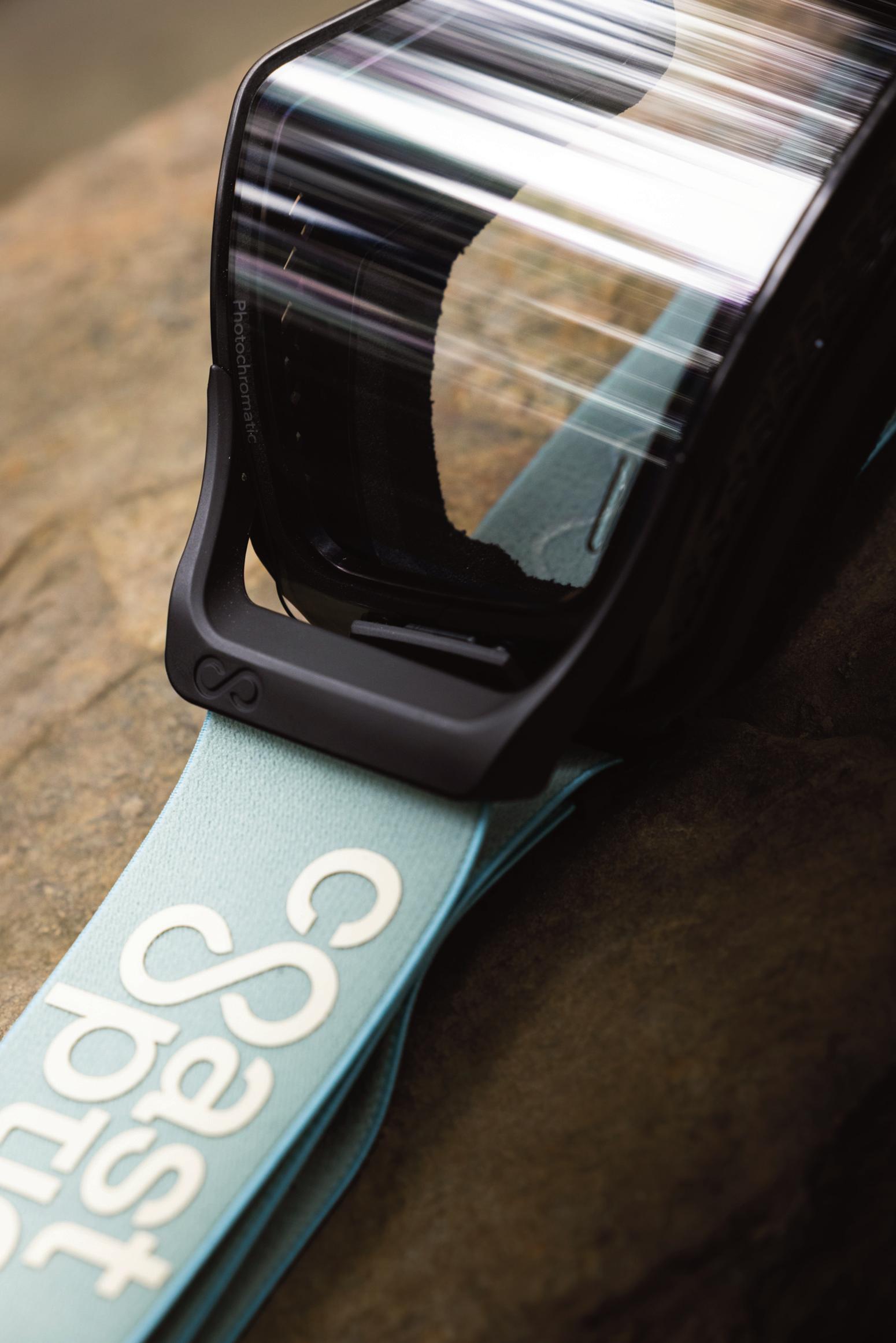
performance. We are also proud to offer lifetime warranty, which I think is pretty unique in this sector of the industry. In our designs, we have incorporated features including replaceable goggle straps, lenses, lens latches and nose pieces and offer these spares at an affordable price. This encourages our customers to replace only what is necessary and ultimately helps to reduce waste.
As cyclists that have worked in bike shops for years, we understand the importance of supporting local bike shops and have always prioritised this as the company has grown. We’re also keen to support local, grassroots riding scenes as much as we can, sponsoring local race teams, athletes and events.
What are some of the big challenges for bike shops when it comes to displaying glasses in-store and what kind of solutions does Coast Optics offer?
A lot of shops we chat to have very little space for eyewear displays or even
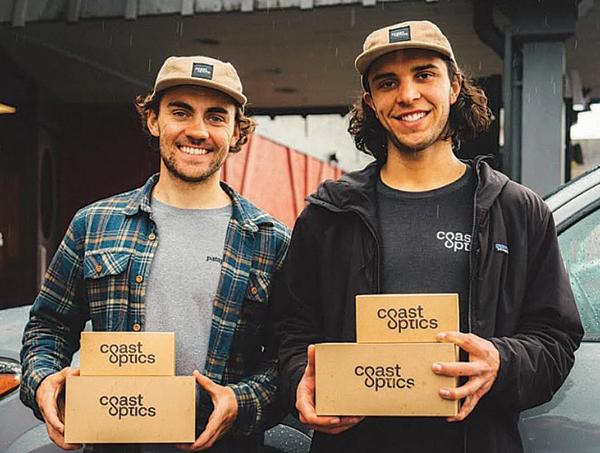
Coast founders Sam and Alex
PROFILE
COAST OPTICS
performing eyewear. You don’t. We hope to prove that you don’t have to spend an obscene amount of money to get a product that is going to perform flawlessly and last. Another misconception, more specific to us, is that we’re just another eyewear brand re-marketing open-mould eyewear. This isn’t true. We’ve reinvested heavily into the research, development, prototyping and manufacturing of all our products and their moulds.
What are some of the big optic technology developments in recent years?
I think the development of lens technologies is the big one. Lens manufacturing is now so advanced and affordable. I remember riding in the UK as a grom (young MTB rider) and having to put up with fogging glasses and goggles on most rides, not even being able to see a lot of the time. Now, anti-fog coatings have come so far, it feels like a thing of the past. AI and camera integration seems to be stealing the show at the moment as well. We’ll see how that goes. The technology seems cool, but I’m not sure it fully aligns with what we’re about.
What are some of the latest products and ranges from Coast Optics?
inventory. We often find shops have had to purchase a large amount of product to get any sort of buy-in or eyewear display. We’re proud to do things a little differently. We have very low quantity buy-ins and offer small counter-top displays for glasses and goggles, free of charge. We also have a very lean product range, with a limited number of SKUs, making it easy for dealers to carry the whole range without taking up too much space in the shop. Our pricing is also mirrored across our glasses and goggles, determined by lens selection, which keeps things nice and simple.
What are some of the biggest misconceptions when it comes to glasses/goggles for cycling?
There are definitely a few! I think the biggest one is that a lot of riders believe you have to pay a lot of money for the best
We found that one of the biggest challenges is finding the perfect eyewear fit, with face shape and helmet compatibility playing a key role in comfort and performance. Earlier this year, we launched our smaller-fit Echo line which has been really well received, complementing our existing NITA 2 and NITA XL models. We also have an exciting new product launch lined up for 2027 as well as some new athlete collaborations on existing models, so keep your eyes open for more news on that soon.
Circularity and sustainability seem pretty central to Coast Optics – is that fair to say? And can you tell us a bit about the longer-term plans to turn old frames into new ones? It’s only in certain territories for now?
Sustainability is at the core of everything we do. I know that sounds a bit greenwashy, but it really is. We know we’re not perfect, but we’re reinvesting and doing everything in our power to improve how we do things. We have big aspirations for this to impact the industry on a larger scale.
Our circularity scheme is something we launched from the offset. Customers send us their old Coast Optics eyewear at the end of the product’s life, in return for a discount on a new product. We then sort all the component parts, here in Whistler.
Life through a lens: lens tech has made giant leaps in recent years
"We found that one of the biggest challenges is finding the perfect eyewear fit, with face shape and helmet compatibility playing a key role in comfort and performance"
PROFILE
We’re currently stockpiling this material, whilst working with different manufacturers and plastic experts to develop new models, which will use this material. We hope to re-use as much of the returned product as we can – anything we can’t, we’ll recycle in the appropriate streams. We’re running this in Canada at the moment, but are working through the logistics of offering it further afield.
What does the future look like for Coast Optics?
We’re excited to keep creating cool products that riders are stoked on, whilst minimising our environmental impact. Sam and I are loving the journey of growing the business and building a community behind the product. We want to do everything within our
power to nurture this, continuing to attend as many events and shows. Our main focus in the coming years will be on product development. We’re constantly testing new materials, with higher recycled contents and refining our existing product line. We’re also working to expand into different international markets, whilst still being able to give our best service to existing dealers and distributors.
How do you support the UK market with customer service and technical support?
We support the UK market in close partnership with our distributor, Extra UK. They play a key role in representing Coast Optics locally, providing responsive customer service and technical support to dealers and end users across the region.
Extra UK has a strong understanding of the market and is well equipped to handle day-to-day enquiries, product guidance, and aftersales support. Alongside this, our team remains fully engaged and accessible, working in collaboration with Extra UK to ensure any queries or technical issues are resolved quickly and effectively. While support requirements have been minimal to date, we are committed to maintaining a high level of service and are always available to assist both Extra UK and our customers whenever needed.
Coast Optics are available to the UK and Ireland cycle trade via Extra UK and Cyclex.
www.extrauk.co.uk
Below: Coast Optics has plans for an extensive recycling scheme
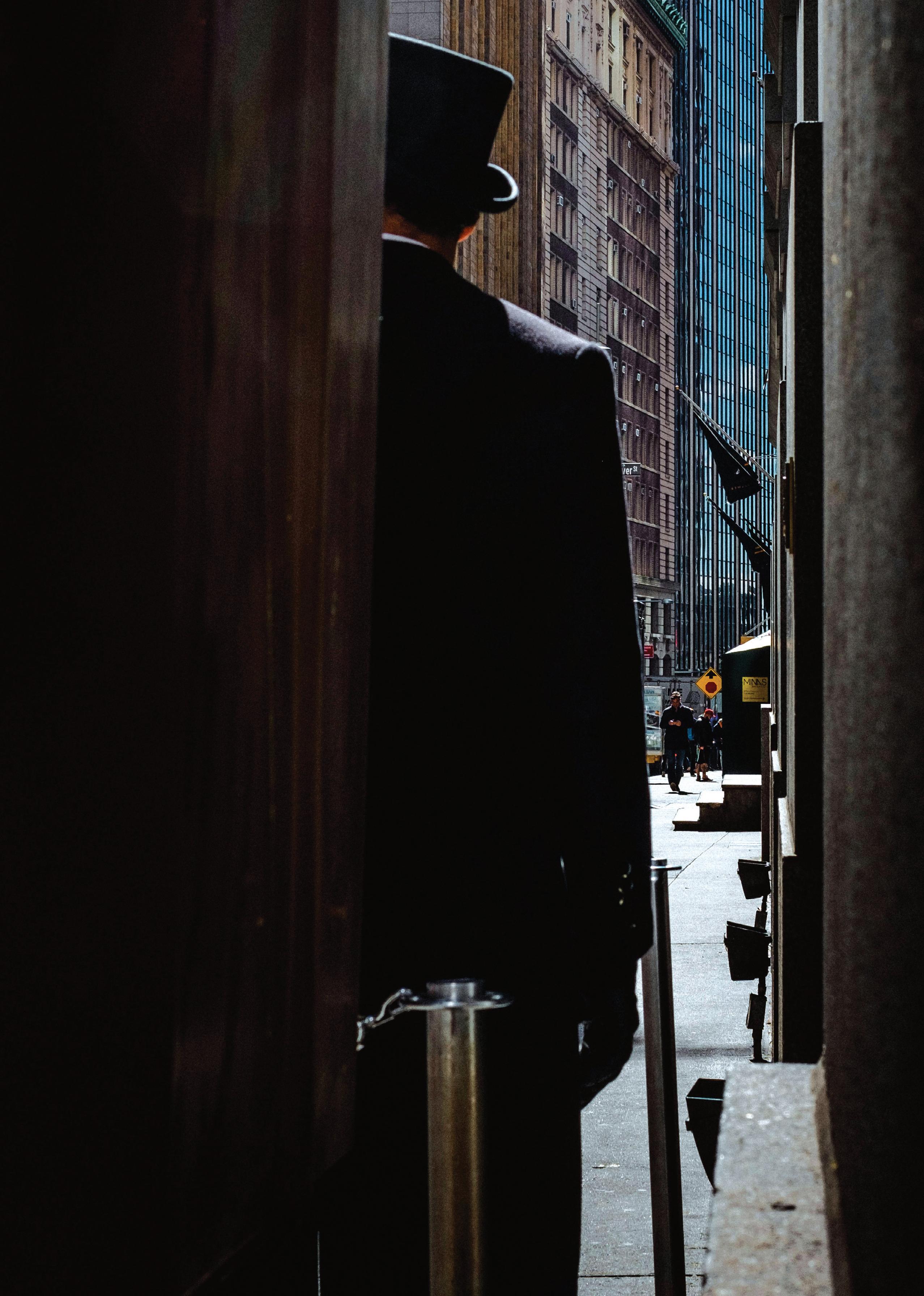
THE VALUE OF A DOORMAN
your shop window and primary chance at relationship building. Withdrawing from public view during times of stress can be a false economy, argues Mark Sutton…
The Doorman Fallacy is a term coined by behavioural economist Rory Sutherland and it perfectly encompasses a feeling I have got from the bike industry in the past three years in particular.
For those who have not encountered the idea, it follows this rough structure. A hotel or restaurant hires a doorman who, over the years, becomes the friendly face greeting customers, many of whom return time and again, becoming accustomed to the friendly smile and associate it with what lies beyond the doors. It signals from the off that the business cares from the moment you walk in.
Then comes along a financial advisor, who takes a top-level look at the business and advises that a doorman is not really necessary, nor is the accompanying salary. Most other businesses in town manage without. Besides, what does a doorman really do anyway? Let’s install an automated door and book the salary savings as a profit.
As time passes, guests start to ask what happened to the man who used to carry their bags. The man who would deem it no trouble to handle calling taxis. The man who would keep the front of house free from litter and provide a certain level of security and status at the door. The man who made the experience feel premium. Now that man works down the road at a
business that understands the value weighted against the cost. Now you have to rebuild the public face of your business, which has come to be viewed as having worse customer service, has an increasing volume of poor reviews online, and thus generates fewer bookings, and is seen as less premium. The financial advisor was the only one to profit from this situation.
In many ways, the 2026 edition of Eurobike encapsulated this feeling, though there are many-fold other reasons why Europe’s once undeniable must-attend show has since hollowed. It is by no means alone. With many marketing budgets and team sizes stripped back to the bone, many events are poorly staffed. A McKinsey survey of Chief Marketing Officers recently found that 8% have demanded a cut in marketing spend in the past year, many by up to 20% of the budget. This was a survey of large public companies.
My hunch is that the bike industry has seen similar budget cut demands, but arguably a reduction in headcount may be a larger issue. In this scenario, there’s a lot of pressure on a lessened resource to get better results from a narrower range of activity. In reality, what often happens is that under strain, that staffer will seek to minimise disruption, so will do the same as they did last year, but less of it. Data from Sporting Insights hinted at
this recently, with a survey of bike industry professionals revealing that 31% of brands expect to employ fewer people in the year ahead. You might argue that this means two-thirds might stay the same, or hire more, but that feels unlikely in this economic climate. In terms of the result on marketing via events, the outcome is typically an experience everyone – exhibitors and attendees – wishes to forget. Over two decades now, I have seen poorly staffed booths where lone members dare not proactively engage, and, worse I have seen booths where outward engagement lacks totally.
I have also seen businesses that go prepared. This year’s Eurobike will probably be remembered for the depth that Avinox and Gobao, in particular, offered. These disruptors could have bailed as so many did. Instead, they went all in, knowing they could become the story by focusing both on presence and innovation. There was no need to go that big, but word has it that Gobao’s booth occupied the space Bosch did the year prior. The doorman for everybody at the show had changed hands.
So, what makes a valuable experience for a visitor? There’s a front desk. They have contact details and a QR code check-in. They register the visitor’s details. The front desk knows the availability of staff. There’s a coffee
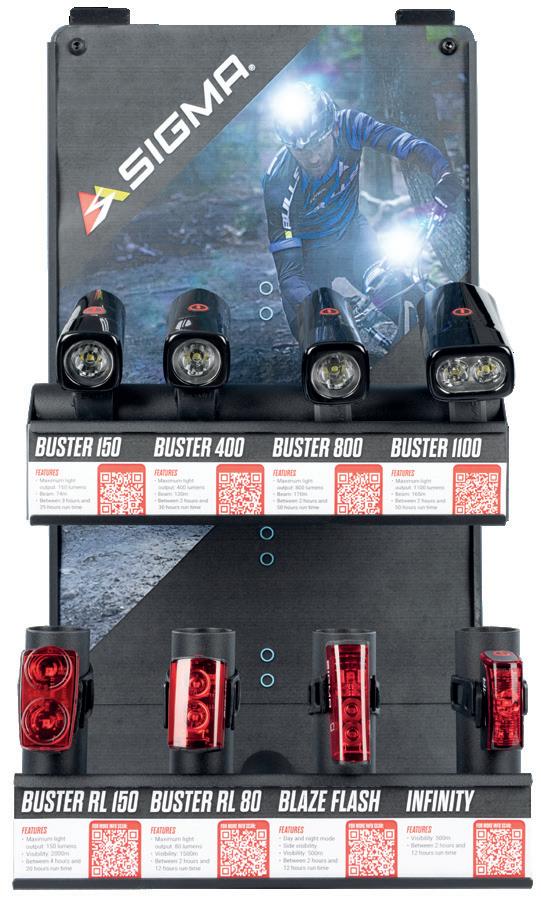
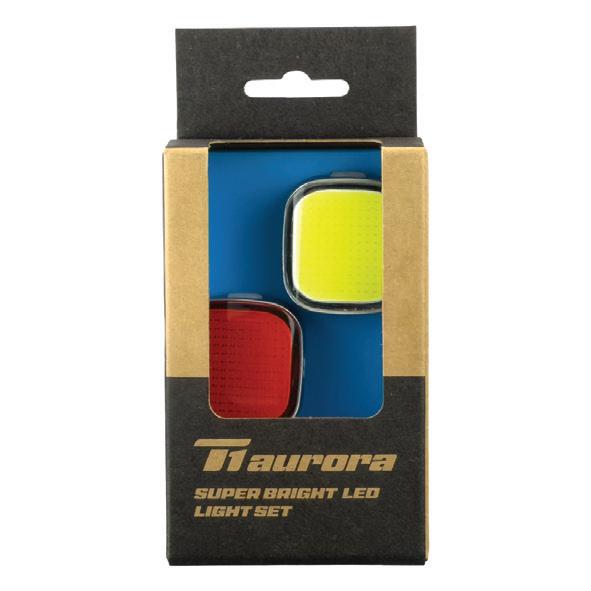
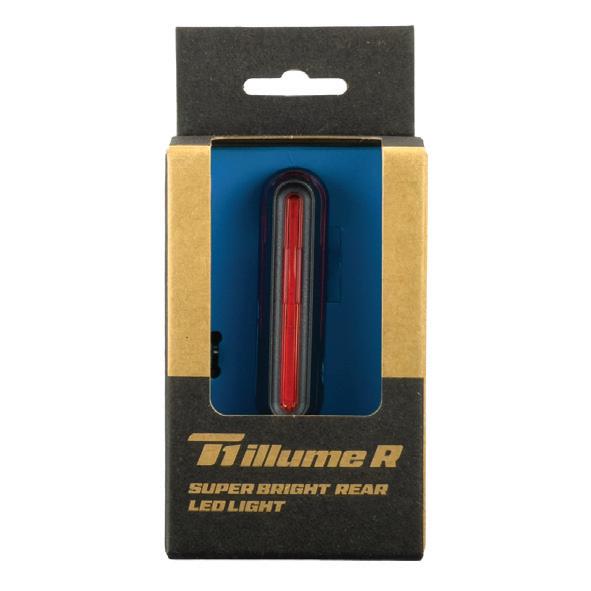
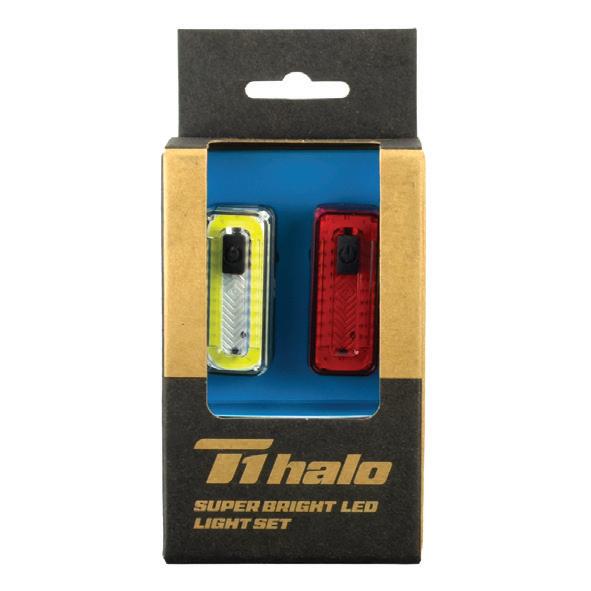
• Great models to help see and been seen
• A complete range in full retail packaging
• No buy in requirements
• Excellent dealer margins
• 140 diode LEDs
• IPX4
20 diode LED
Auto On/Off
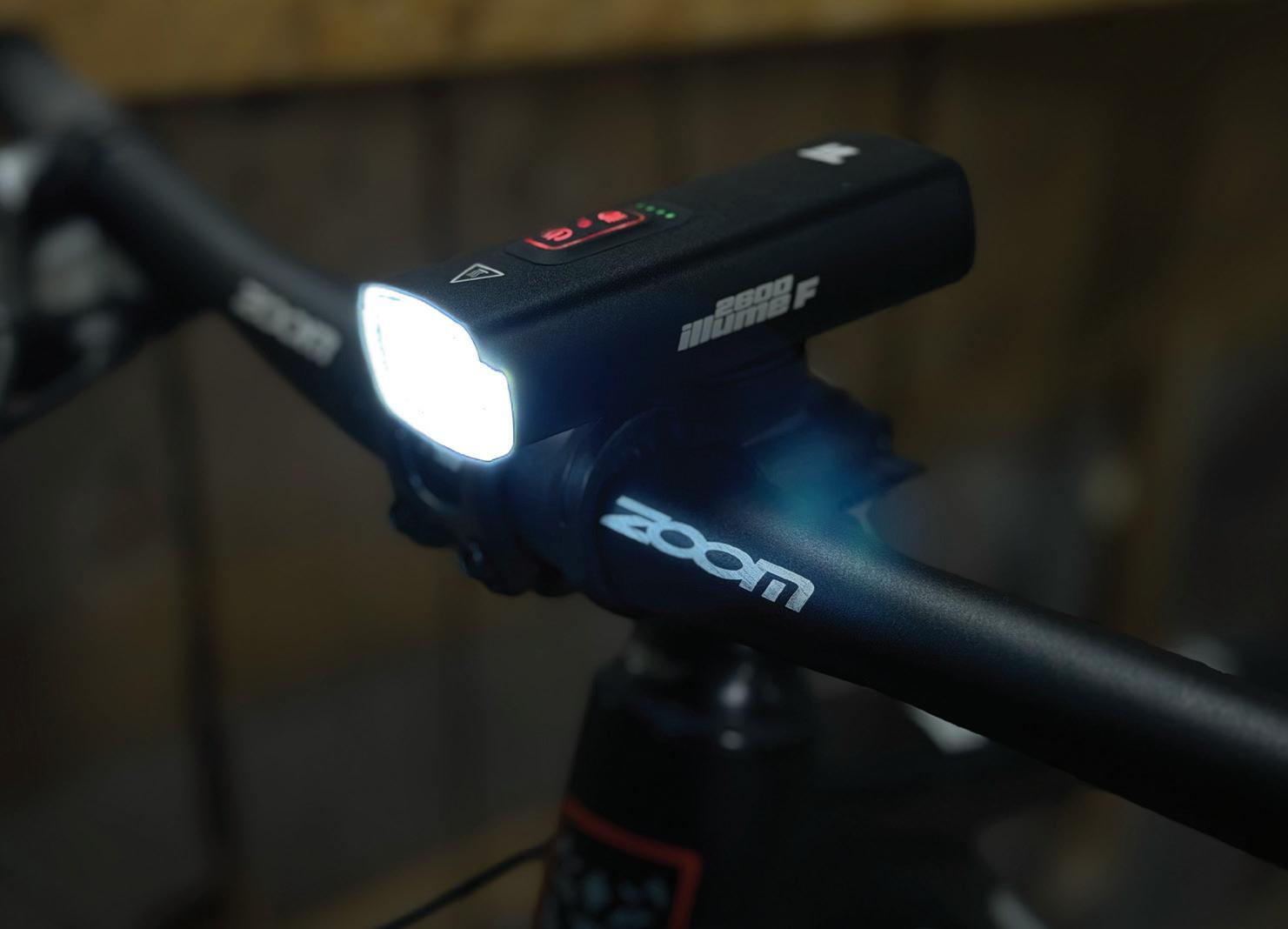
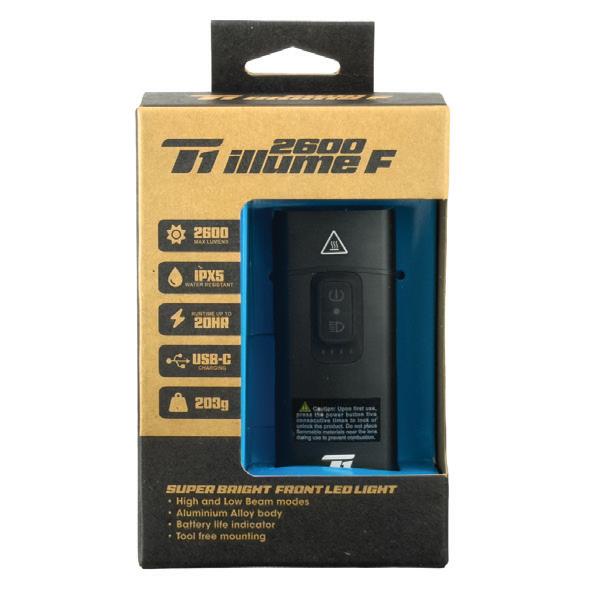
• 2600 Lumens
• High / Low Beam
• Up to 20hrs runtime
• USB-C
• RRP - £24.99
Up to 20hrs runtime
USB-C
RRP - £14.99
• Up to 20hrs runtime
• USB-C
• RRP - £59.99
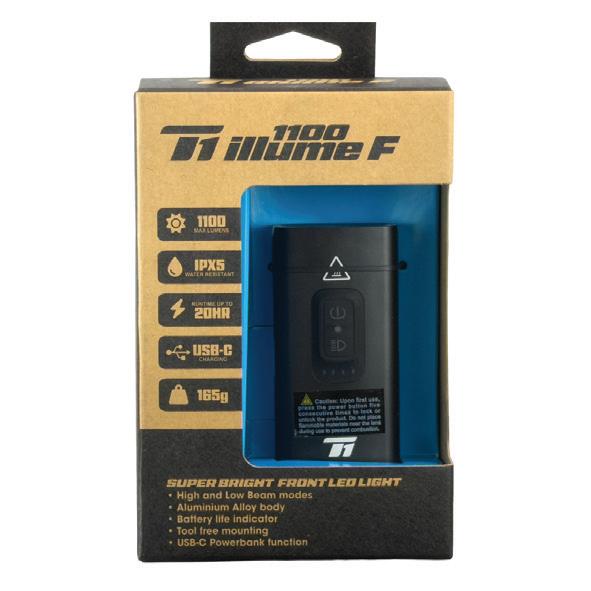
• 1100 Lumens • High / Low Beam • Up to 20hrs runtime
USB-C
RRP - £44.99
• 28 diode LEDs • IPX4 • Up to 8hrs runtime
USB-C
RRP - £19.99
“THE END-TO-END BRAND EXPERIENCE MATTERS FAR MORE WHEN DISPOSABLE SPEND IS TIGHT, AND THAT BEGINS WITH PERCEPTION OF TRUSTWORTHINESS”
already brewing, and places to wait. Nobody is standing around; everybody knows what they’re doing and when. Things are signposted, the lighting isn’t an afterthought, there are visuals that tell the story of the day. People can move without knocking things over; only the reasons to buy your brand are displayed. Anything that doesn’t tell a story is saved for the catalogue, which will be emailed to every registered visitor the day after the event.
Bikes and, more so, electric bikes, have to be sold in an active manner. So little is understood by the public at large about our product, no thanks to press misinformation. There will be questions. An experience can easily sell a bike, but not before the punter is comfortable with their own knowledge. Nobody wants to feel like a fool on the product-buying journey and that’s why your doorman is essential. Your friendly face, the one who greets with a simple question. Perhaps: “What do you already know about electric bikes?” or “What are your reasons for wanting to test ride today?”
If nobody is at the door, the encounter might instead go like this. Enter > look around for signage > head for the best lit area and start to browse > read a handlebar tag > get confused by jargon >stand in the aisle, look around, wonder why nobody has spoken to me yet > turn back toward the door.
Now this experience actually needn’t be a physical first impression. Again, at Eurobike, I spotted numerous quite obviously AI-generated slop banners. The kind that have not been checked for accuracy, that have distorted graphics that confuse, that have a similar design to next door’s, that tell me that less time was spent ‘designing’ than I would spend engaging. In this case, the doorman is your designer. The one who understood the brand’s story and was able to convey the history, the heritage, the emotion, the innovation, the customer connection, because they have lived it.
Now prominent across most professions, the AI shortcut that is deemed to be an efficiency or a cost saving, turns out to be short-sighted. An AI has not
experienced your business from the inside. It has not engaged your specific customer. It does not grasp the difference or the moat that your company has built. It certainly doesn’t know the nuanced differences between the different SKUs and compatibility issues that arise when mixing and matching drivetrain components, because it can’t get its hands dirty like a mechanic. From a publishing perspective, one thing I have heard on the grapevine is how baffled it is by the concept of model years, leading to year upon year of data scraping and amalgamation into something that, when presented, will be a mish-mash of spec sheets. After all, these models are only as good as the data they are fed, and historically, the bike industry has been bad at creating detailed, organised data.
Your doorman is the staff member who knows what’s compatible, how to meet a to-market cost, and knows how to communicate technical speak in jargon-free terms to the press, telling the story in a way that people can emotionally connect with. When they are done,
RIDE WITH CONFIDENCE
Distributor info and Catalog
“AT DEMOS, THIS BRAND STARTS WALKING THE TEST TRACK WITH CUSTOMERS TO MAKE SURE THEY ARE COMFORTABLE AND REASSURED. THE RELATIONSHIP BUILDING IS TIME WELL SPENT”
the press understands the statement; they are not guessing how to describe the bike based on a spec sheet change, or an AI’s interpretation of a prompt that cannot join the dots between a suspension upgrade and what that means for a bike’s enhanced capability.
Research from Morgan Stanley published in May suggests that European demand for goods deemed to be luxury remains fragile and uneven across categories, with concerns about job security weighing on discretionary spend forecasts. The war in Iran has further hampered what has been described as a K-shaped economy, which, in short, means that highincome consumers remain engaged with brands that have the perception of quality, illustrating the need to keep up appearances. All the while, aspirational consumers are facing major spending challenges. The bike industry has both of these clients, but, in the UK at least, it has more of the latter comparable to much of mainland
Europe. Those people are taking longer to make decisions, are looking for quality sources of information from expert voices and seek the ability to physically review the product before buying. The buying funnel is stretched as far as people’s disposable income.
The end-to-end brand experience matters far more when disposable spend is tight, and that begins with perception of trustworthiness, followed by engagement in how your particular product will enhance their lives above a competitor’s. For those consumers savvy enough to realise the complexity of what is both a consumer electronics product and a bicycle, that experience is usually accompanied by a visit to a physical retailer. This is attested to by the Bicycle Association’s Market Data, which this year revealed that generalist stores lost 10% in ebike sales volume, versus a 13% gain for the specialist retailer. The specialist retailer therefore gained a 12% value growth over the prior year’s take. Is this the result of the doorman? It’s
very hard to effectively sell the electric bike experience only online, at least for now, and the savvy shopper will no doubt recognise that eventually they will need to cultivate a local bike shop relationship for what is a technical product.
Looking back at nearly 20 years of bike shop visits, and more recently playing a part in organising the Cycling Electric Demo Day eBike test series, two doormen stick out in my mind. The first is the now rumoured to return from the grave Velorution. Running the best-known version of this business to date was a husband and wife team. I wrote for their magazine for a while, so I spent a lot of time in their store observing how they engaged customers. Actually, the magazine featured many of them. It photographed their fresh purchase and revealed how it fitted in with their lifestyle in a high paper stock magazine. The in-store experience was reflective of that interest in the customer, and house policy was that every single person would be greeted
“AT DEMOS, THIS BRAND STARTS WALKING THE TEST TRACK WITH CUSTOMERS TO MAKE SURE THEY ARE COMFORTABLE AND REASSURED. THE RELATIONSHIP BUILDING IS TIME WELL SPENT”
at the door and that quickly it a bike purchase would not be framed in dull language. There would be less talk of specs and more of a bike’s ability to become a lifestyle tool. The subsequent magazine profile might tell the story of a BBC presenter who cycled to cover a story, or a doctor who recognised the health benefits of active travel. The magazine, in a way, was the doorman and it felt premium, albeit probably costly to make.
A second meet and greet champion is the Jorvik Cycles team. Having just opened its third showroom and test track, this is a business that knows appointments and meet and greet. Often their customers have a special requirement for their trike, and so understanding the customer perspective is valuable both from a sales and an onward development perspective. At the Cycling Electric Demo Days, this brand starts walking the test track with customers to make sure they are comfortable, reassured, able to work
the controls and can ask questions during the experience. The relationship building is time well spent; the business is breaking sales records as a result of its time investment. This, in turn, has helped it expand its staff and up its marketing clout.
Now, if we look back at history, it’s well documented that advertising spend declined fast in the 1970s oil crisis and again after the 2008 financial crisis. We could well be in a similar moment right now. The old adage that cycling does well in a recession is debated, but we have never before been in a moment quite like this, where the electric bike has provided such a plain and obvious solution to people’s transport costs, to the transport emissions challenge, which now has risen from 26% to 30% of the UK’s emissions. Then there’s congestion, health and numerous other positive externalities that only a human being with a personality can sell. Your doorman knows how much fitter they feel
since they started cycling. They know how much they have saved cycling to work. They know how much faster it was versus driving. They know that you can oil a chain far quicker if you pop a bike in a workstand and hit walk mode on the controller, because no AI would have that level of ingenuity to seek out lifehacks like this and later add that value to the rest of the workshop staff.
Whose hard-fought experience is irreplaceable in the face of the promise of new technology? Who is going to tell our story in a way that sells and at a time when people are receptive to our ideas, or perhaps even forced to think differently about how they travel?
Know the value of your doorman. Not only their cost.
You can discuss the themes and topics of the above article (and anything else) in our Facebook group, Cycling Industry Chat.
PROFILE
a
BIKE MATRIX
ENTER THE MATRIX
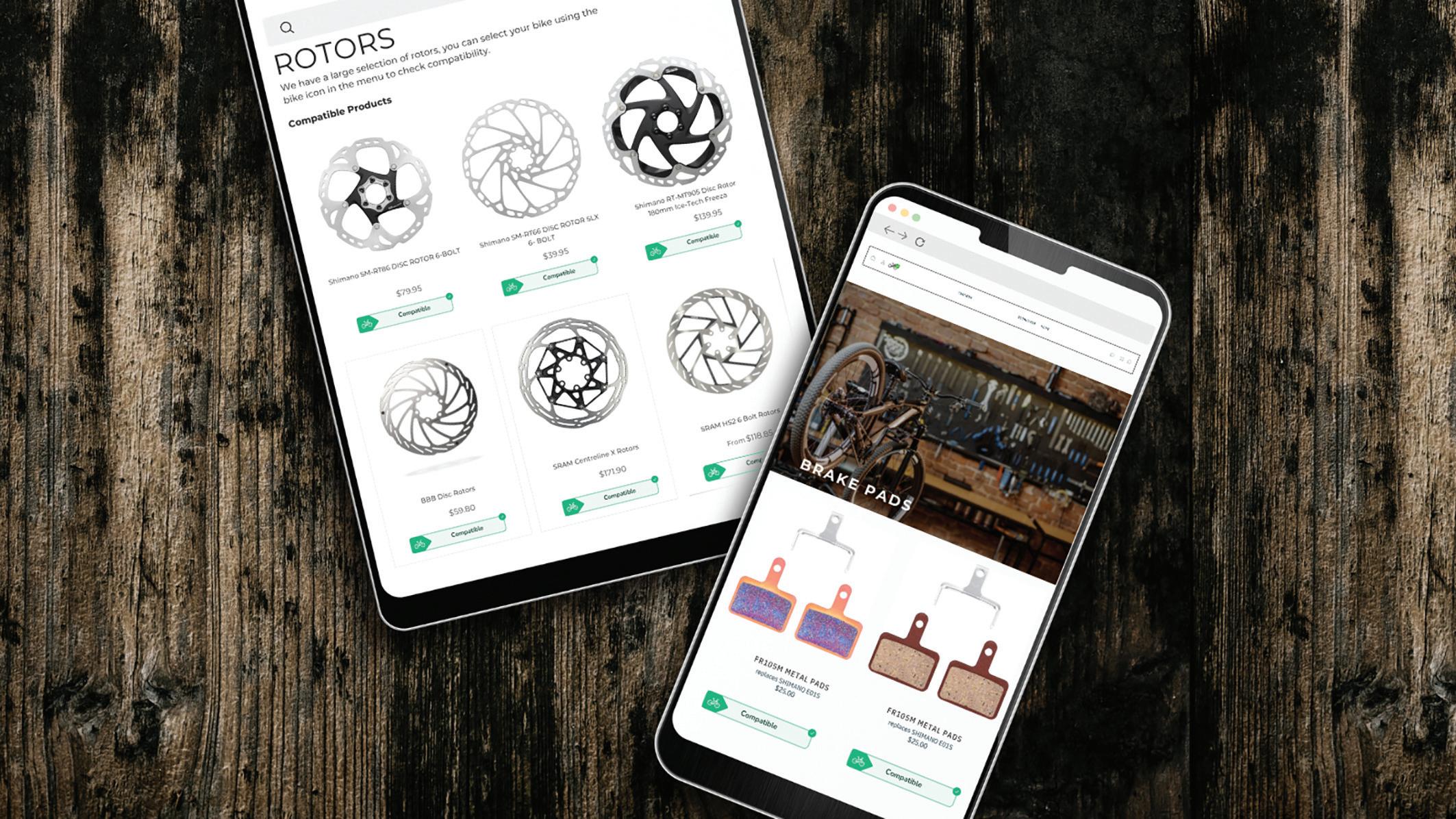
Will that part work with my bike? It’s the kind of question that can throw the proverbial spanner in a bike sale or – worse – lead to returns and administration post-sale when said customer discovers the part does not, in fact, work with their bike.
CIN catches up with the trailblazing compatibility solution Bike Matrix as it accumulates more brands, retailers and hints at some of the interesting lines for future growth…
founder Lyndal Bailey fills us in on the latest figures (correct at time of press):
“This time last year we had 75,979 detailed component records in the database. We’re now at 168,879.
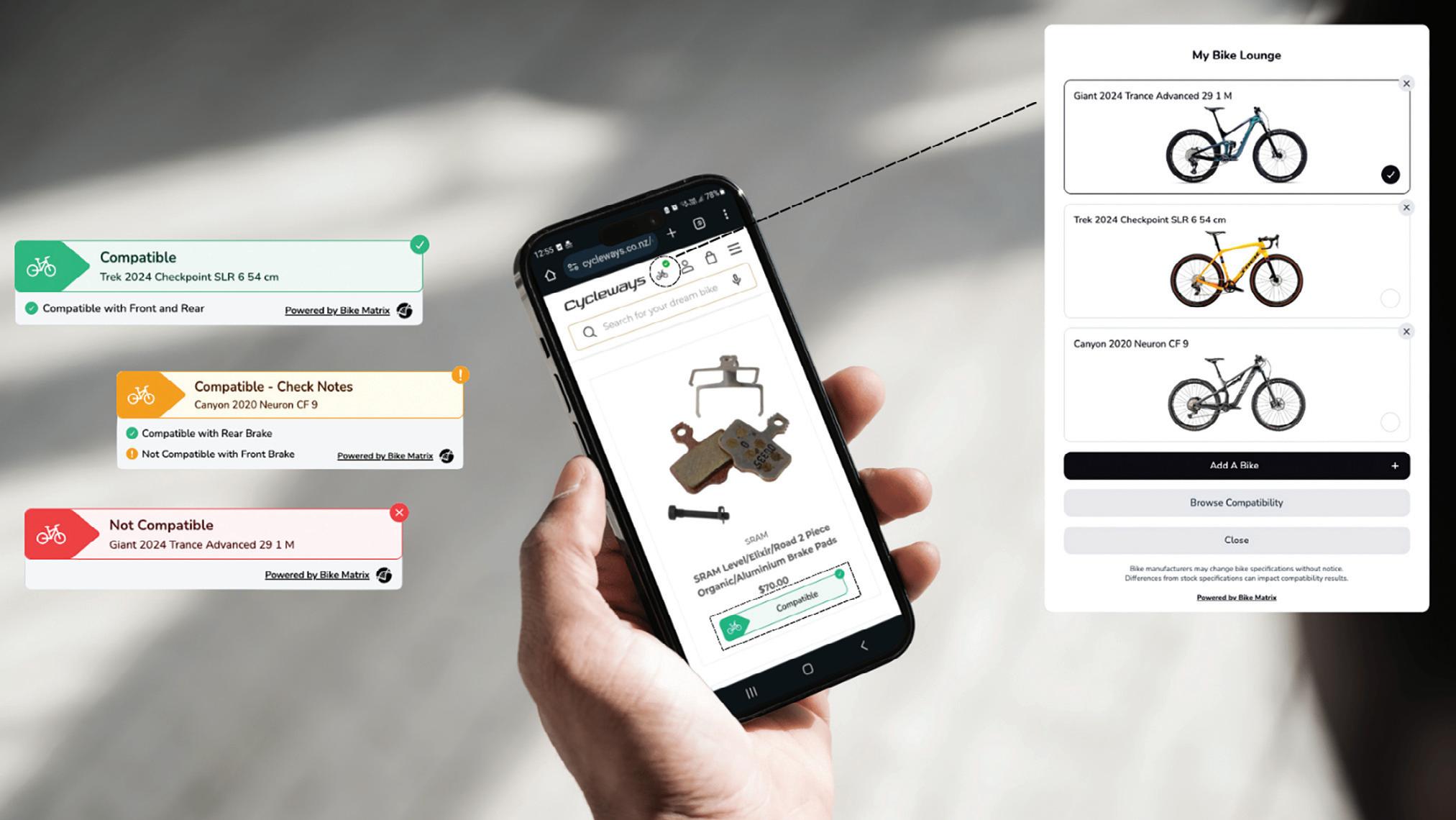
Regular readers will be aware that clever minds have been working on this problem and the result is Bike Matrix – a system that can integrate with online bike stores to instantly show riders which parts fit their specific bike, or can be used in your bricks and mortar shop so you can give customers a clear and decisive answer to a compatibility question. Doubtless also a huge benefit to workshops and mechanics everywhere, Bike Matrix has been bolstering its position with new partnerships, collaborations and solutions.
70 million compatibility checks a month
The key is obviously to have as many components within the database as possible, and Bike Matrix has been making fast progress on this front. Co-
“For bikes, we had 70,821 bike this time last year and we’re now at 115,407 of what we believe are likely to be some of the most accurate bike records in the industry.
“We can currently perform mechanicsled, live compatibility checks for standard and customised bikes across 18 product categories, including everything from bottom brackets, brakes, headsets, cassettes and chains through to tyres, wheels, axles and wheelsets.”
What’s more, those checks can now be performed across major bike brands – 25 of them – including some names you might have heard of: BMC, Cannondale, Canyon, Cervélo, Cube, Giant, Kona, Marin, Merida, Mondraker, Norco, Orbea, Pivot, Santa Cruz, Scott, Specialized, Trek, Voodoo and others.
Bike Matrix is now working with 150 brands, with some notable new additions
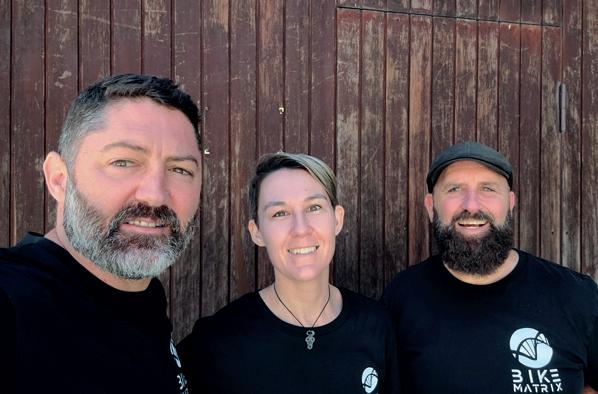
Bike Matrix founders Adam Barnes, Lyndal Bailey and Adam Townsend
Discovering whether
component is compatible with your bike after you’ve purchased it is not an ideal transaction. Enter... Bike Matrix
ONEWAY BIKE
YOUR PARTNER TO HELP YOU BUILD YOUR BUSINESS
√ 24 years of experience √ Customer & sales support
√ Customized marketing activities √ Delivery from stock
√ Place orders 24 hours a day 7 days per week
For more info about our brands, send a message to sales@onewaybike.nl or give us a call: +44 1527 958331
Website: shop.oneway.bike
PROFILE
including Campagnolo, SRAM, Mavic, Miche, Voodoo and Boardman.
Bailey explains that the Bike Matrix system is checking compatibility across around an incredible 70 million parts requests every month, a number that is growing month by month.
It’s the custom bike side of the platform that is also proving an exciting development: “Users on our customers’ websites are now creating around 4,000 custom bike records every month. That’s where a standard bike is taken into the Virtual Workshop, compatible components can be swapped out, and a unique build is created for that rider. We then assess compatibility against the current configuration of that bike.”
Shop buy-in
Bike Matrix has been making headway with some of the largest ecommerce players in the bike industry, including one of the very largest in the world –BIKE24 in Germany, There’s also BikeDiscount in the same nation, the UK’s Biketart, Pushys of Australia, Wolfi’s in UAE, Pyörä Varikko in Finland and All4Cycling in Italy. Rumour is that
there’s a few more major retailers being lined up, including one familiar name in the UK. Further collaborations are also underway, which will be revealed in due course…
Bailey explains: “BIKE24 continues to see great adoption of the solution, and they’re continuing to see strong results from it. We’re seeing similar results to those highlighted in the BIKE24 case study across our retailers that are measuring conversion rate, AOV and returns at the same level of granularity.
“We’re also starting to see customers move beyond simply using compatibility as a conversion tool. There are natural extensions of the data we’re already collecting and the problems we’re seeing across the industry — from more personalised marketing based on the rider and the bike they own, through to product recommendations that leverage what actually fits.”
Bike Matrix is securing funding to help it continue its path. It’s currently raising a NZD$3 million seed round to execute its “go-to-market strategy, scale our data ingestion and build out the delivery mechanism for our data analytics”.
Bailey adds that Bike Matrix is also
tackling a tantalising but often overlooked element of the cycling industry – the aftermarket: “One of the areas we’re particularly excited about is what we’re calling Post-Sale Intelligence (PSI). The aftermarket is still something of a black hole for the industry — once a bike leaves the showroom floor, there is very little visibility into what happens to it.
“We’re building the ability to shine a light on that post-sale behaviour and provide retailers, distributors, component brands and bike brands with detailed insight into what’s actually being fitted to bikes once they’re out in the real world. That means being able to understand which product types are in use across the global bike landscape, rather than relying solely on what was originally specified on the bike. We’re already collecting this data today, with plans to commercialise insights from early 2027.”
It seems likely that Bike Matrix will continue to work with more brands, attract more retailer buy-in and evolve its offering – not least in the aftermarket area – and it’s one we’ll watch with interest.
www.bikematrix.io
BIKE MATRIX
Bike Matrix is checking compatibility across 70 million parts requests every month, and growing
BATTLE FOR THE HIGH STREETS
Fully accepting that not all bricks and mortar bike shops are located on ‘the high street’ and are on retail parks, trading estates, off ‘a’ roads or – most likely – within local neighbourhood centres, the fate of the high street is nevertheless tied to all of these areas and more. It’s also a heated political topic that isn’t going away anytime soon…
The state of people’s local high streets is expected to have a big impact on the results of political elections in the coming years. That was the finding of a report earlier this year (“Labour risks election wipeout unless it improves Britain’s high streets, study finds”, The Guardian), that found many Brits equate the health of their local town centres with local pride and their perception of the state (and management) of the nation.
A University of Southampton study noted that “place-based resentment” is having an increased effect on who is in power at Westminster, and the phenomenon has not gone unnoticed. Current government Labour has created a £5 billion programme for locallyled plans to “revitalise town centres and bring vacant units back into use”.
Those with longish memories will remember that this topic has been a priority (or at least on the agenda) of previous governments too. Mary Portas was drafted in as a ‘retail czar’ during the Conservative/Liberal Democrat coalition to provide expert opinion on what government can do to
ensure the health of high streets, back in 2011. What that report did not do, understandably, was stem the tide of online retail growth.
Betting shops, vapes, barbers
and coffee shops
A good portion of the current growing retail sectors can be summed up as “things you can’t get online”. That’s a broad term, but it’s also a good summation of the reason why many UK high streets see a proliferation of hairdressers and coffee shops. It’s a logical result of a nation increasingly happy to purchase online (or drift to the local retail park), but is nevertheless broadly seen as the fault of local councils, and the national government at large. And some of that blame may well be justified.
What you can’t get online…
Add into that category of what you can’t get online: bike workshops. Like haircuts and coffee, it’s not impossible to have those things and services come to your front door, but current trends are not pointing that way just yet. Mobile
and ‘come to your door’ bike servicing and workshop services exist and are thought to be growing, but they remain the minority, with the vast majority of bike fixes, servicing and other servicing being done by physically taking bikes to shops and workshops.
Where would you make changes to bolster the ongoing health of your local high street?
So, dear reader, we invite you to consider what could be done by local and national government to assist bricks and mortar retailers. Could it be tougher taxes on pure online players (as Mike Ashley once suggested, prior to his group’s purchase of Wiggle)? Or perhaps tax relief akin to that coming to hospitality businesses, announced by new PM Andy Burnham?
Let us know what you think by emailing the editor jon@cyclingindustry.news or joining the debate at the Cycling Industry Chat group on Facebook.
Where are all the shoppers? Online or in the retail park?
LIVE 2026
A WHO’S WHO OF THE CYCLE TRADE
So, which exhibitors are you going to have a chance to see at the NAEC Stoneleigh…?
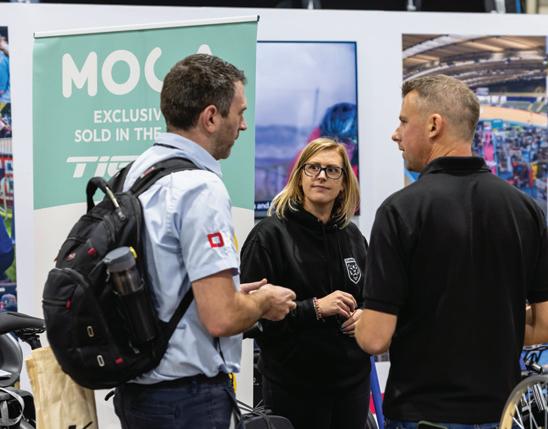
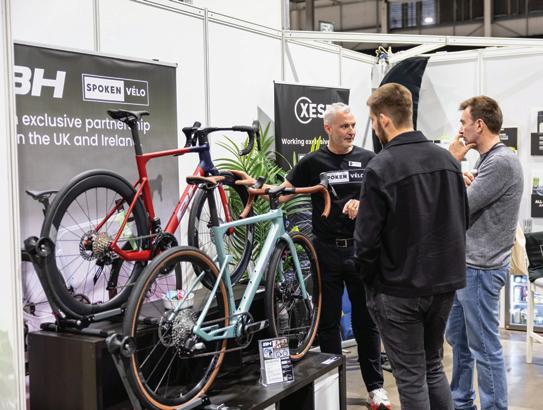
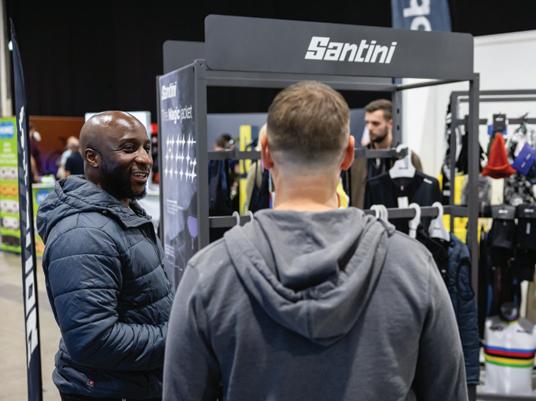
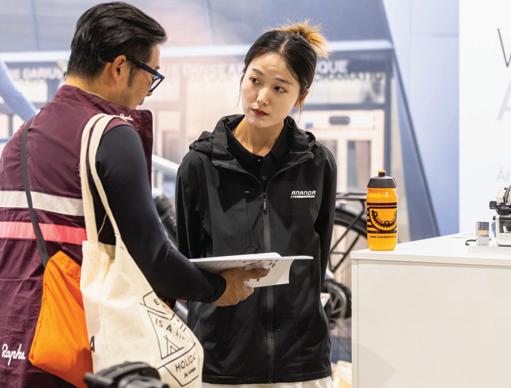
When you’re weighing up your time and deciding whether it’s worth venturing to Stoneleigh, Warwickshire for a few hours or more, there’s one element that might just swing things for you – no, not a free breakfast roll and drink…OK that might play a part (if so then make sure you arrive there before 11am). The exhibitor list is probably the key element.
The good news is that CIN Live 2026 has an extensive exhibitor list which has grown substantially since the show’s debut last year. There’s a wealth of new names joining the show for the first time plus a vast number of returnees, adding up to a handy ‘all-under-one-roof’ opportunity for visitors to see a sizeable bunch of brands from the industry in one hit…
The trade-only show runs over Sunday 20 and Monday 21 September 2026 at NAEC Stoneleigh and bike shops, workshops, mechanics, dealers, press and associated companies can now preregister to attend, through the official site: live.cyclingindustry.news
Please note the below list is correct at time of press. Check out the official site for the up to date exhibitor list and info.
live.cyclingindustry.news New
Returning for 2026
LIVE 2026
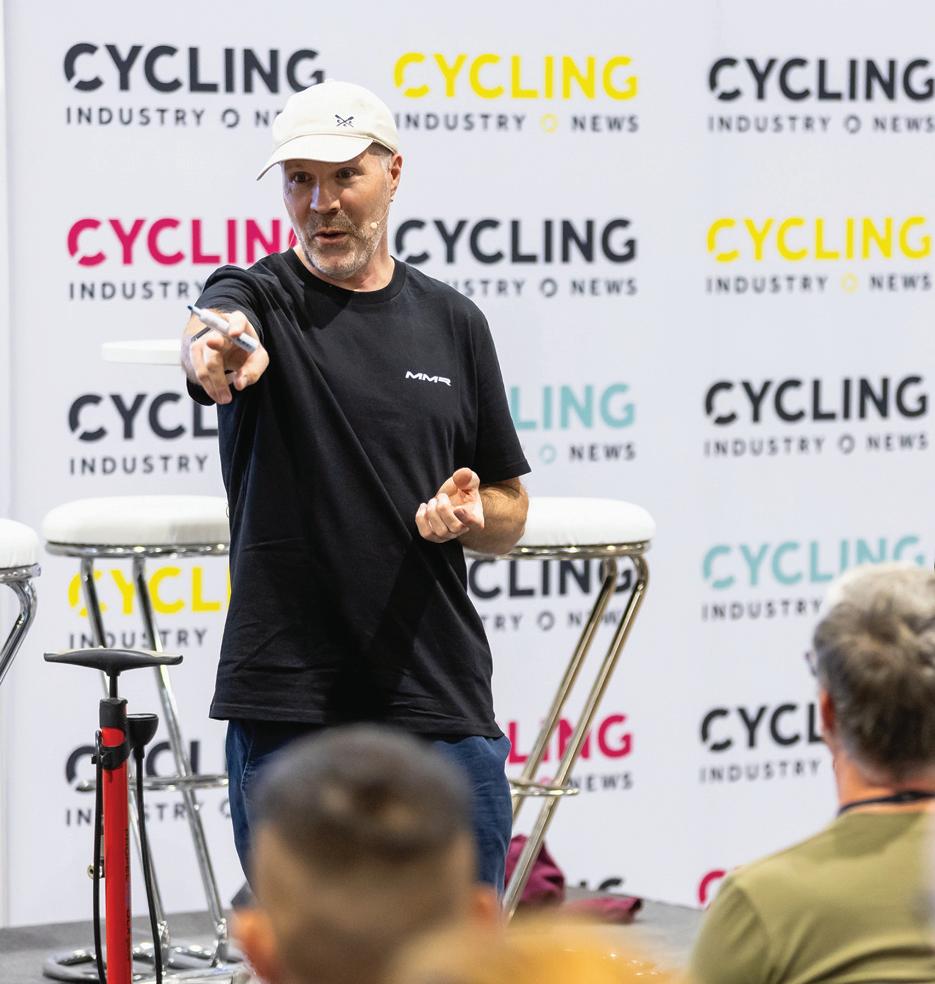
BOOST YOUR SHOP SALES WITH THE CYCLING INDUSTRY NEWS SALES WORKSHOP
CIN Live 2026 will feature chance to hone your sales techniques with a tips session and workshop with John Styles, one of the highlights from the seminar area planned for this September…
As the clock ticks down to Cycling Industry News Live 2026, the CIN Live seminar schedule is starting to take shape, including the return of the popular sales workshop, run with experienced bike sales expert John Styles.
Regular CIN readers will be familiar with John Styles’ long-running simple sales tips series within the magazine, and this workshop at CIN Live 2026 explores some of the ideas within those articles, as well as more, to help bike shops to boost their bottom line.
Pre-registration for CIN Live 2026 is now open, and the show itself runs over Sunday 20 to Monday 21 September 2026 at NAEC Stoneleigh, Warwickshire.
Running on Sunday 20 September only, the Cycling Industry News sales workshop will see the experienced salesman share expert learnings, best practices and effective sales habits gathered from a 30-plus years of visiting over 1,000 stores across the UK. With a “pick and mix” menu of more than a dozen quick insights, workshop participants can choose the sales habits they would like to practise and take away.
The workshop is suitable for everyone – from new starters to experienced sales staff or store owners looking to boost their sell-through. While the focus is on big-ticket bike sales, P&A, servicing and warranty conversations are also included.
Unfairly, the sales profession has to deal with a fair amount of negative baggage and cliches and –consequently – focusing on sales and sales training has often been sidelined, not least in the bike trade. Ultimately, however, businesses need sales, and companies within the bike trade are no different. This workshop sets out to help redress the balance and assist dealers with sales processes and ideas.
Stay tuned for details of more seminars as they’re confirmed over the coming weeks.
Cycling Industry News Live 2026, 20-21 September 2026, NAEC Stoneleigh #CINLive