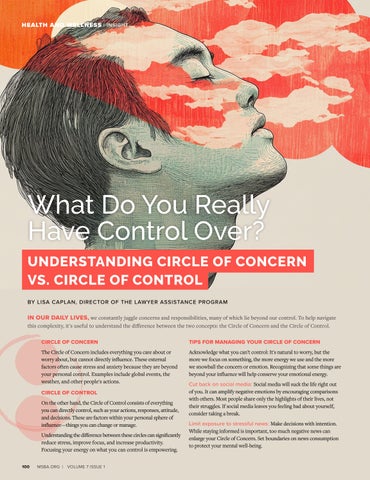
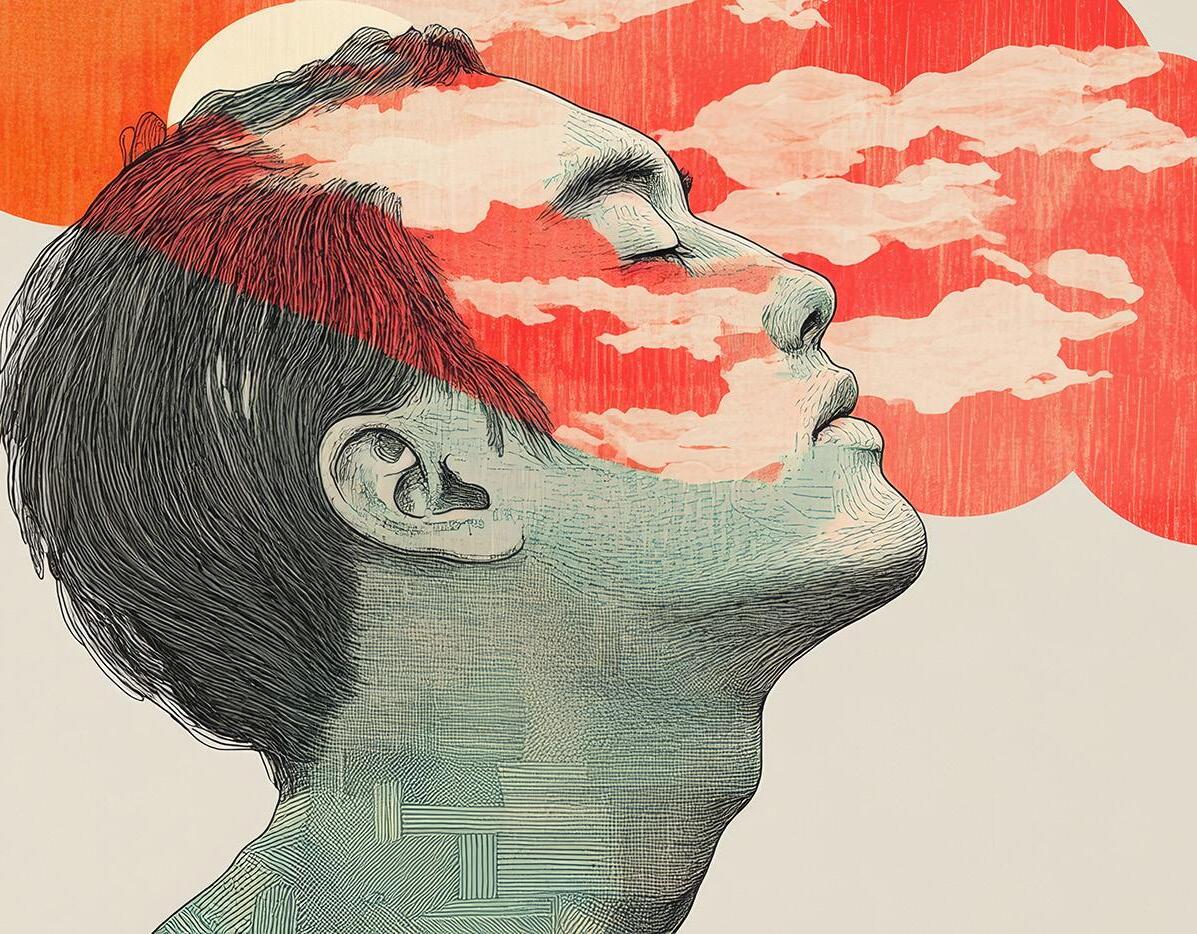
What Do You Really Have Control Over?
UNDERSTANDING CIRCLE OF CONCERN VS. CIRCLE OF CONTROL
BY LISA CAPLAN, DIRECTOR OF THE LAWYER ASSISTANCE PROGRAM
IN OUR DAILY LIVES, we constantly juggle concerns and responsibilities, many of which lie beyond our control. To help navigate this complexity, it's useful to understand the difference between the two concepts: the Circle of Concern and the Circle of Control.
CIRCLE OF CONCERN
The Circle of Concern includes everything you care about or worry about, but cannot directly influence. These external factors often cause stress and anxiety because they are beyond your personal control. Examples include global events, the weather, and other people's actions.
CIRCLE OF CONTROL
On the other hand, the Circle of Control consists of everything you can directly control, such as your actions, responses, attitude, and decisions. These are factors within your personal sphere of influence—things you can change or manage.
Understanding the difference between these circles can significantly reduce stress, improve focus, and increase productivity. Focusing your energy on what you can control is empowering.
TIPS FOR MANAGING YOUR CIRCLE OF CONCERN
Acknowledge what you can’t control: It's natural to worry, but the more we focus on something, the more energy we use and the more we snowball the concern or emotion. Recognizing that some things are beyond your influence will help conserve your emotional energy. Cut back on social media: Social media will suck the life right out of you. It can amplify negative emotions by encouraging comparisons with others. Most people share only the highlights of their lives, not their struggles. If social media leaves you feeling bad about yourself, consider taking a break.
Limit exposure to stressful news: Make decisions with intention. While staying informed is important, too much negative news can enlarge your Circle of Concern. Set boundaries on news consumption to protect your mental well-being.
By focusing on what you can control and accepting what you cannot, you’ll create more peace, satisfaction, and emotional resilience in your daily life. Balancing your Circle of Concern and Circle of Control can bring clarity, reduce stress, and increase your sense of fulfillment.
Practice acceptance: Embrace the things you can’t change. This can be done through mindfulness practices like meditation, which allow you to focus on the present and accept external circumstances without judgment.
Empathy, not responsibility: While it’s important to care about others, you don’t have to feel responsible for solving their problems. Offer support where you can, but release the need to fix everything.
TIPS FOR EXPANDING YOUR CIRCLE OF CONTROL
Focus on your actions: You may not control what happens to you, but you can control how you respond. Thoughtful, calm reactions to challenges expand your sense of control and help you stay grounded.
Set personal goals: Creating clear, actionable goals within your control gives you a sense of purpose and empowerment. Rather than worrying about the unknown, focus on what you can achieve today.
Listen to your body: I tell my clients that your body will talk to you, and if it needs to slow down and you don’t listen, it will slow down for you. This may come in the form of an illness or injury. Focusing on your body can help empower and ground you to the here and now.
Cultivate positive habits: Develop routines that promote physical and mental health, such as exercise, journaling, or effective time management. Habits create stability and reduce stress from external factors.
Shift your perspective: When facing challenges, assess what parts are within your control and focus on those. Reframing your approach can make problems feel more manageable. Develop emotional intelligence: Learn how to manage your emotions. While you
can't control external circumstances, you can control how you respond emotionally to them.
CREATING BALANCE BETWEEN THE TWO CIRCLES
Control your inner world, not the outer world: While the world around you is unpredictable, you can control how you react to it. Focus on cultivating internal balance rather than trying to control external circumstances.
Be proactive, not reactive: When faced with things beyond your control, take proactive steps to manage your responses. Whether it’s taking a break, reaching out to a friend, or using relaxation techniques, these actions help return focus to your Circle of Control.
Limit the “What-Ifs”: Constantly asking “What if?” can trap you in the Circle of Concern. Shift your focus to the present moment and what you can do now.
By focusing on what you can control and accepting what you cannot, you’ll create more peace, satisfaction, and emotional resilience in your daily life. Balancing your Circle of Concern and Circle of Control can bring clarity, reduce stress, and increase your sense of fulfillment.
Now that you have read the article, let’s practice taking control of what you can.
The Lawyer Assistance Program(LAP) has Assisted Thousands of Maryland Lawyers. For Confidential Assistance Call 888.388.5459
LAP provides free, confidential assistance to all Maryland lawyers, judges, law school students, and support staff by offering assessment, referral, and short-term counseling for personal concerns. If you are concerned about another lawyer, you can make an anonymous referral to LAP by contacting Lisa Caplan at her direct line, 443-703-3042, or at lisa@msba.org. We offer financial assistance for Mental Health and Addiction Treatment.