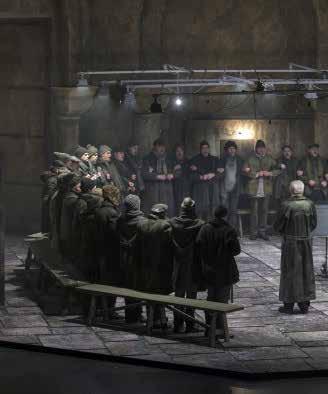
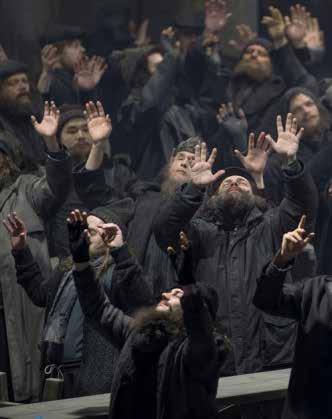
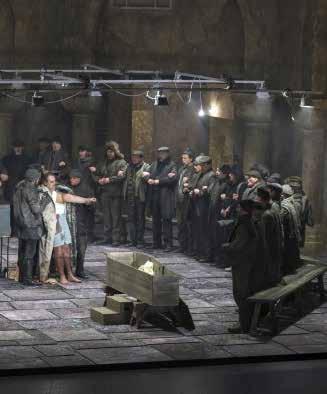
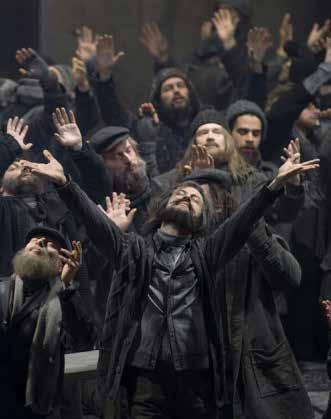
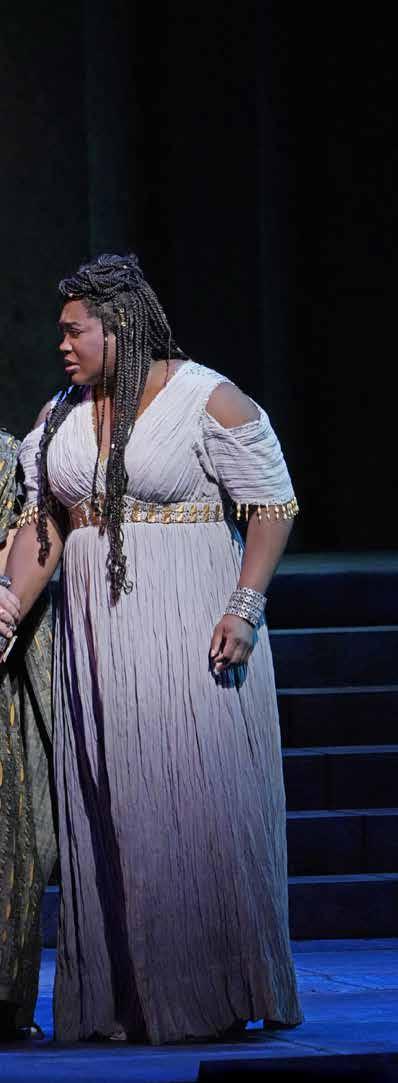
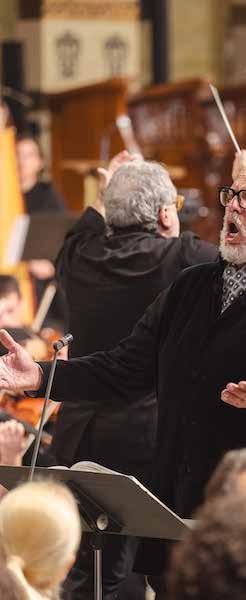
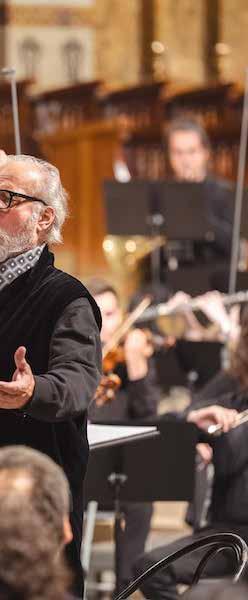
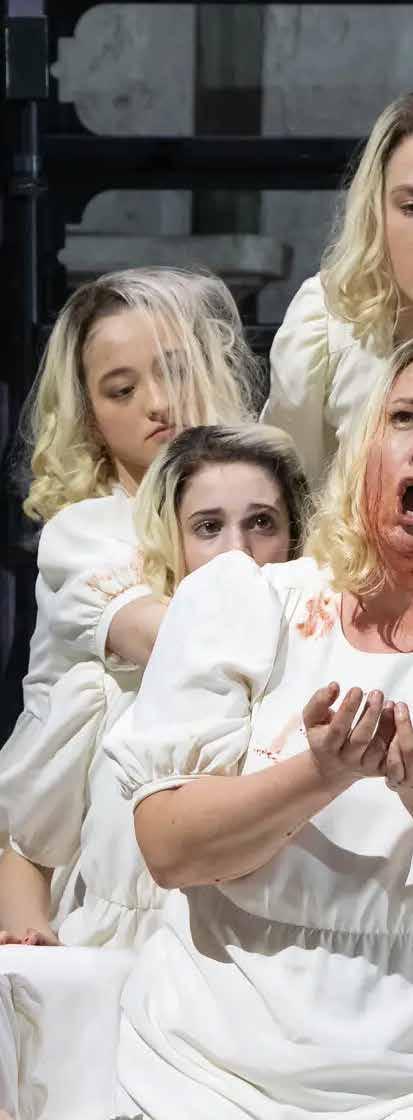
The editorial board and the magazine are not responsible for the writings and points of view of the critics that write their opinion on the “Critica” chapter of this publication.
The opinions published are the exclusive responsibility of their authors.
All images in this magazine, if not indicated otherwise, are used only here under the rules of article 32.1 (Citation and illustration of teaching) of the Intellectual Property Spanish Law 23/2006.
Lohengrin: Music and Art Magazine
Art Secrets Business S.L. NIF. B21768007
Sant Francesc d’Assis, 19 08911-Badalona (Barcelona) SPAIN www.lohengrin.cat info@lohengrin.cat
Instagram: @lohengrin_magazine
Depósito Legal : B 5523-2025
ISSN: 3081-3212
ISSN Digital: 3081-3220
Incipit
This second issue of Lohengrin represents the continuation of the dream of returning the world of opera, in the age of digitalization, back to paper. Like every utopia, it requires time and patience, and we were able to present the second issue thanks to some extraordinary contributors who participated in this issue without earning anything from it. This magazine has virtually no sponsors or institutions to support it, and the first issue was published thanks to a small but significant number of people who contributed their bit. The second issue is being published without support, and we hope the third will be released without any problems. In this August issue, we covered a large portion of the opera performances that take place in Europe during the summer, which is why we ultimately delayed its final publication. We preferred to prioritize quality over speed; we apologize to our subscribers. On the other hand, being the summer issue—it always will be—it contains a much larger number of musical reviews, and therefore is also presented to the reader later.
In addition, we were able to interview several internationally renowned singers, all of whom are practically associated with Wagner’s music. We’re also publishing as a Paper an excerpt from a recent doctoral thesis that was submitted to our blind peer review.
We hope you enjoy this issue, which is imbued with a deep love of music and a tremendous amount of work.
Incipit
Este segundo número de Lohengrin representa la continuación del sueño de volver el mundo de la ópera, en los tiempos de la digitalización, de nuevo al papel. Como toda utopía requiere su tiempo y paciencia y conseguimos presentar el segundo número gracias a unos colaboradores extraordinarios que participaron en este número sin ganar nada en ello. Porque esta revista no cuenta con patrocinadores prácticamente ni instituciones que la apoyen y el primero número salió gracias a una pequeña pero significante cantidad de personas que aportaron su grano de arena. El segundo número sale sin apoyos y esperemos que el tercero podrá salir sin problemas. En este número de agosto hemos cubierto una gran parte de los espectáculos de ópera que se suceden en el verano en Europa, por lo que finalmente hemos demorado su publicación final. Hemos preferido primar la calidad a la velocidad, pedimos perdón a los suscriptores. Por otro lado, al ser el número de verano -siempre será así- contiene mucha más cantidad de críticas musicales y por ello también se presenta más tarde al lector.
A parte, hemos podido entrevistar varios cantantes de gran prestigio internacional, todos vinculados prácticamente a la música de Wagner. Asimismo, publicamos como Paper un fragmento de una reciente tesis doctoral que se sometió a nuestra revisión por pares ciegos.
Deseamos que disfruten de este ejemplar que lleva dentro de sí mucho amor por la música y un trabajo enorme detrás.
LOHENGRIN
Music and Art Magazine
Num. 2, August, 2025
INCIPIT
8 Editorial
PORTRÄT / EN PORTADA
14 Catherine Foster
INTERVIEWS / ENTREVISTAS
40 Andreas Schager
48 Ólafur Sigurdarson
60 Lidia Fridman
REVIEWS / CRÍTICA
73 Opera / Ópera
155 Concerts / Conciertos
PAPERS
174 The Art of Affect: The Aesthetics of Wagnerism Beyond Form / Dagmar Thielen
ART NOTES / NOTAS DE ARTE
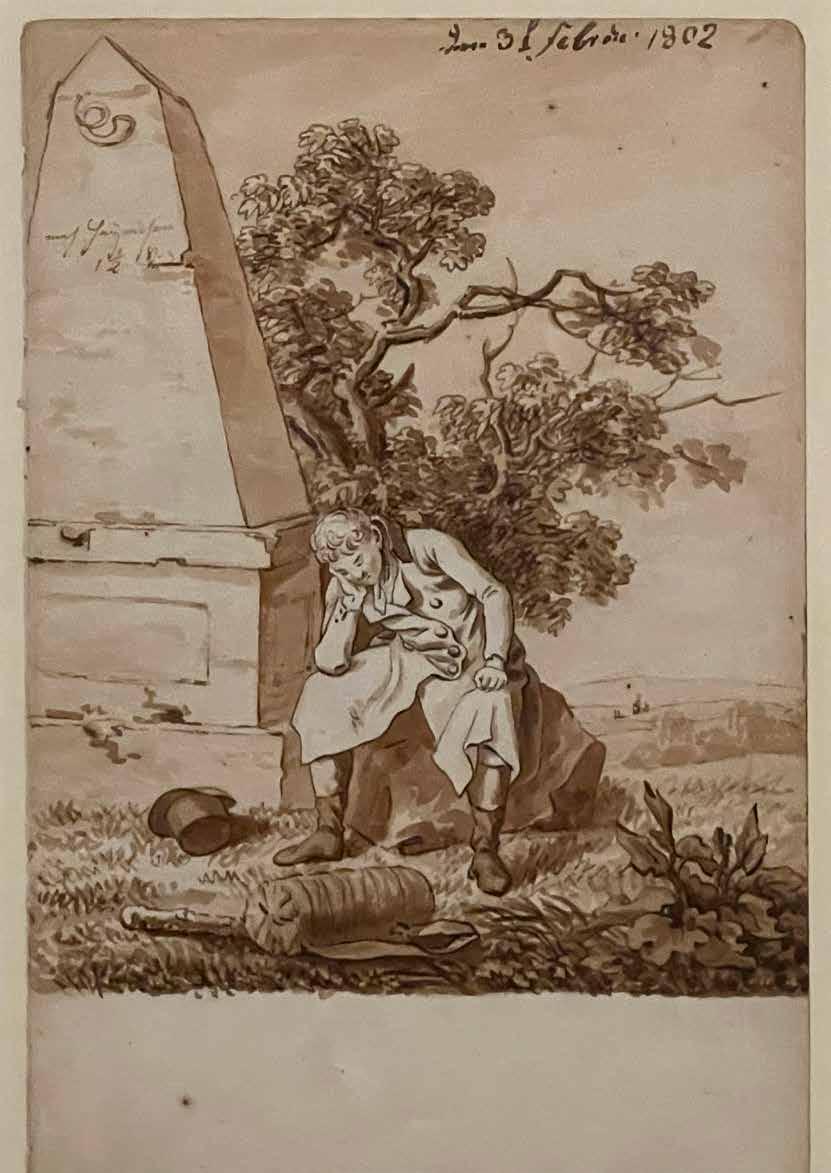
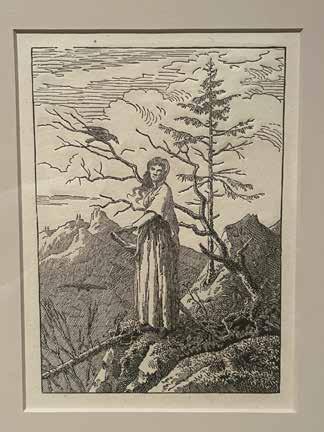
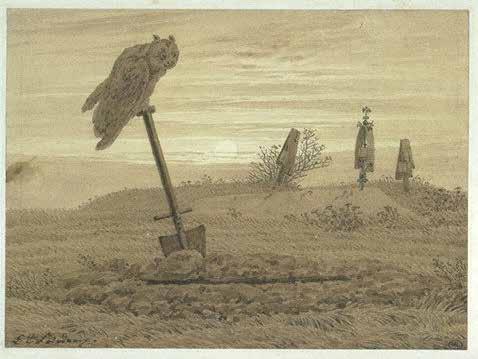
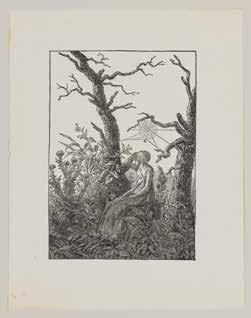
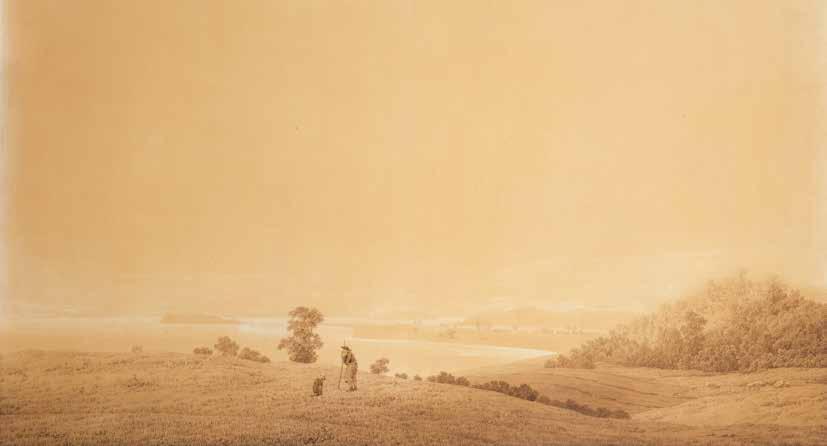
210 C. D. Friderich: El alma humana ante el abismo
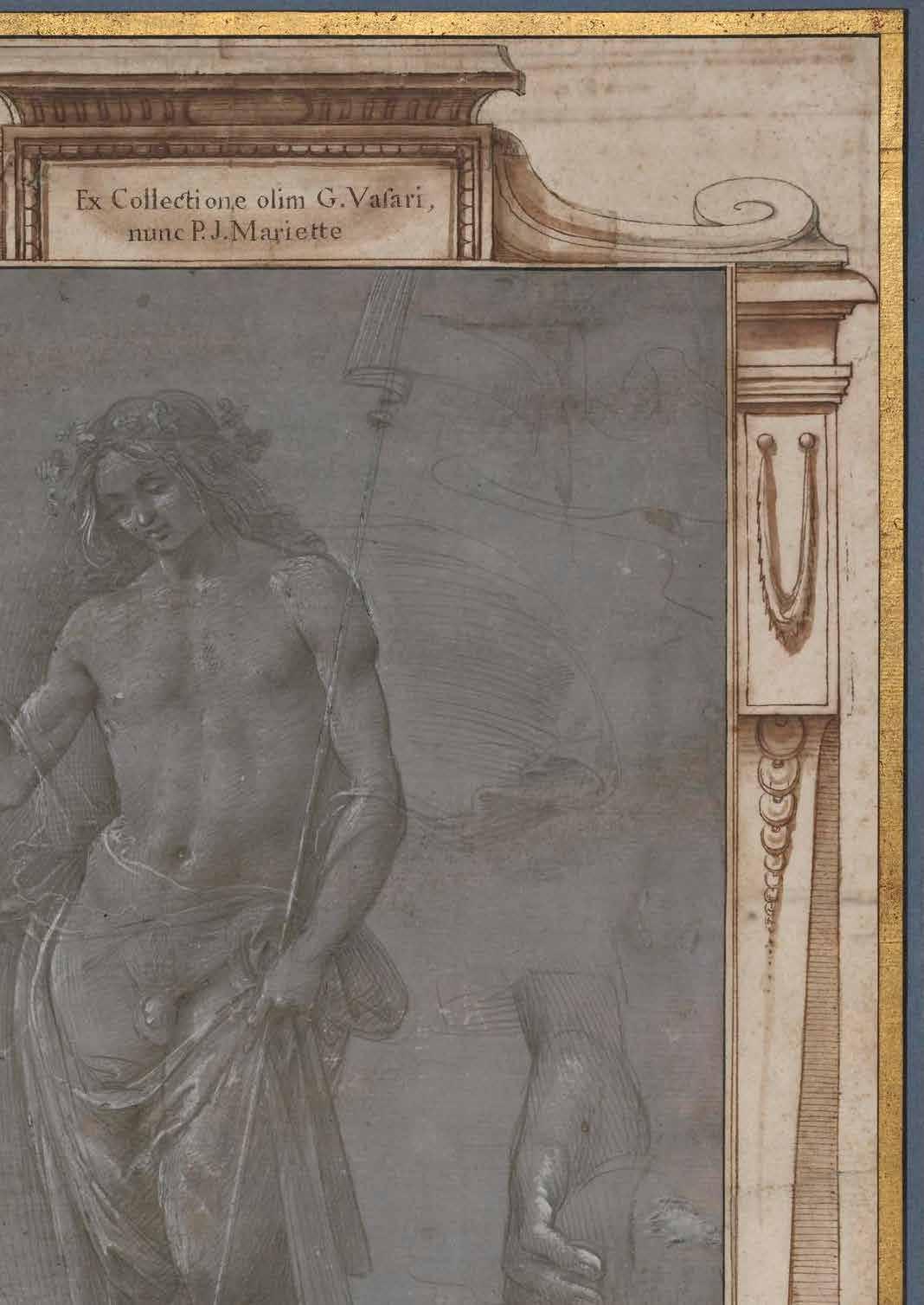
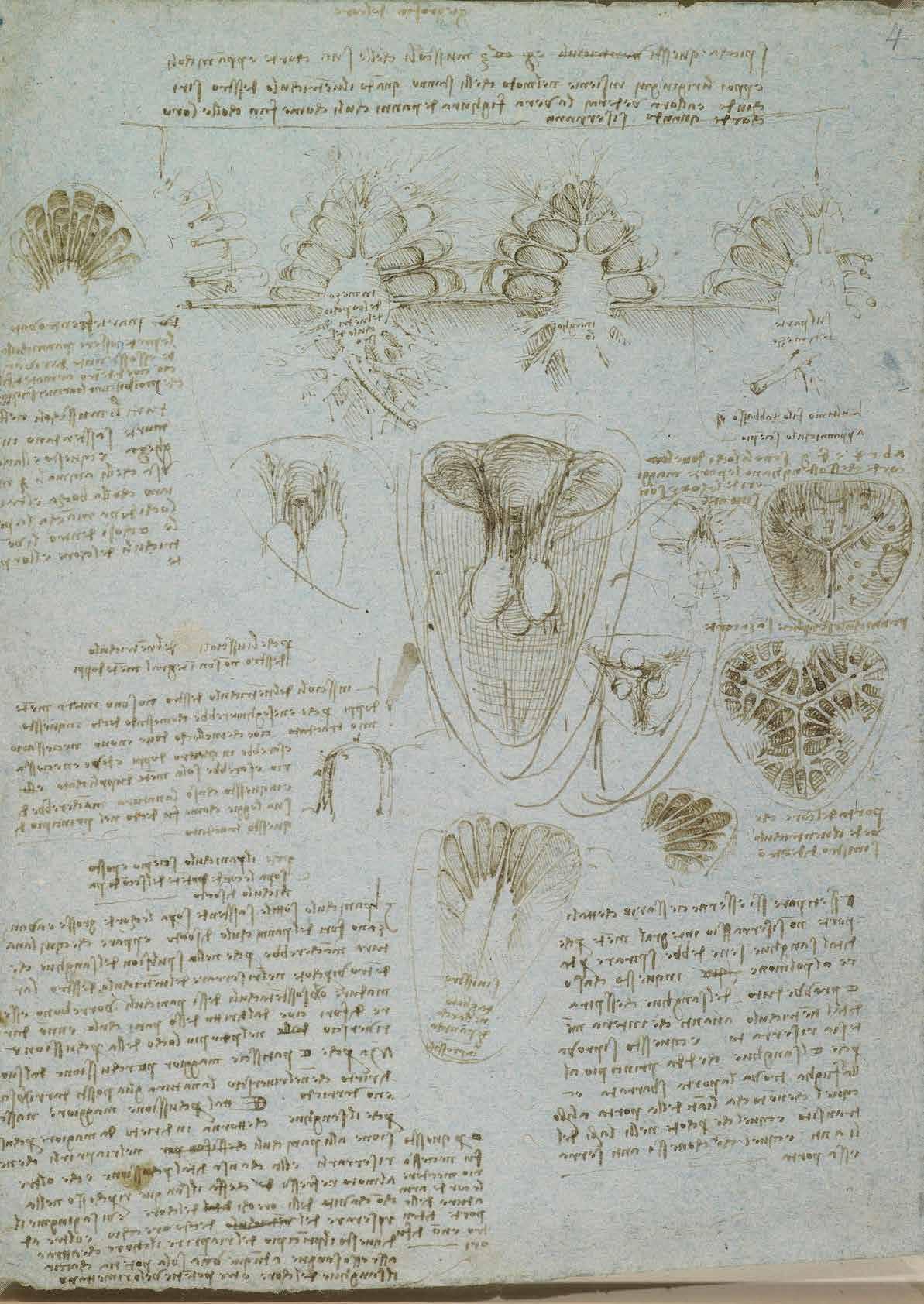
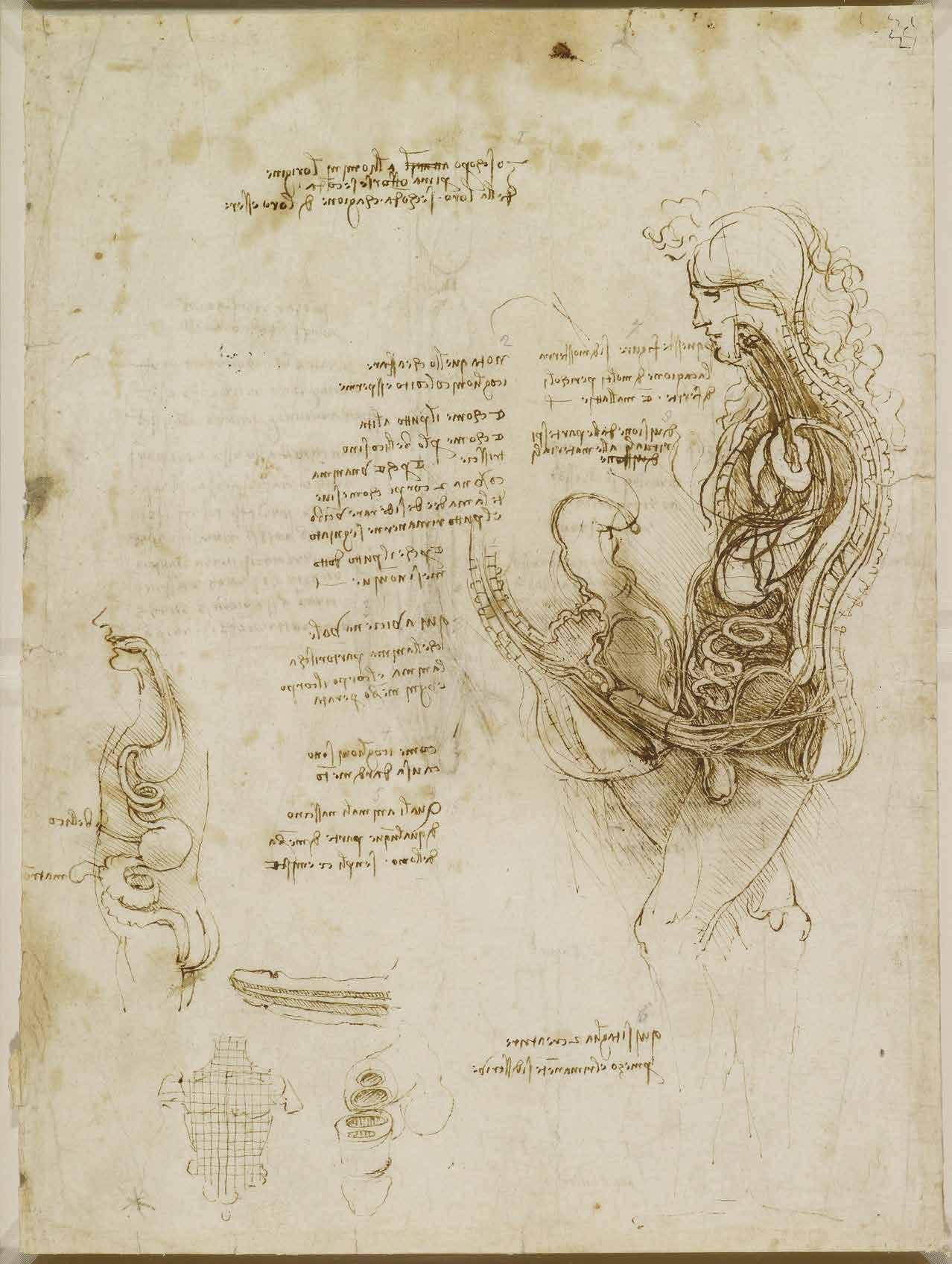
220 Leonardo: Homo disegnator: El hombre y su cuerpo en el dibujo renacentista
MUSIC NOTES / NOTAS DE MÚSICA
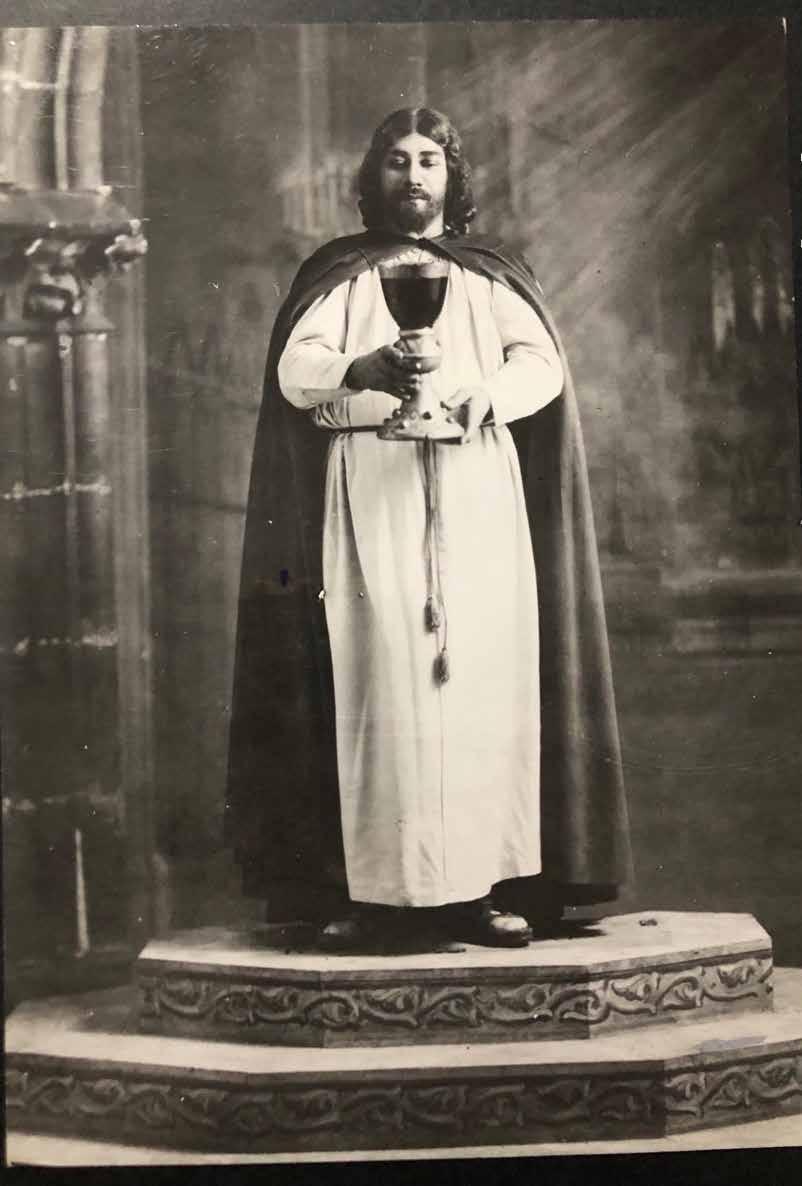
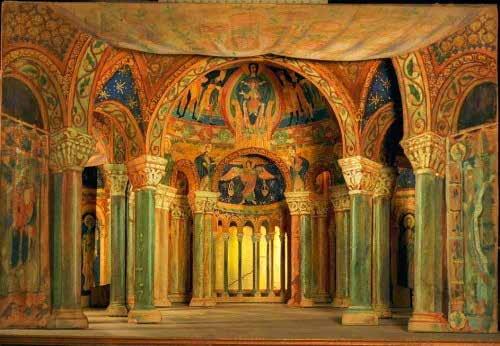
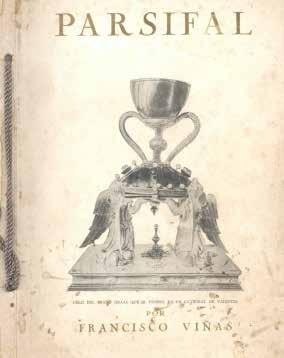
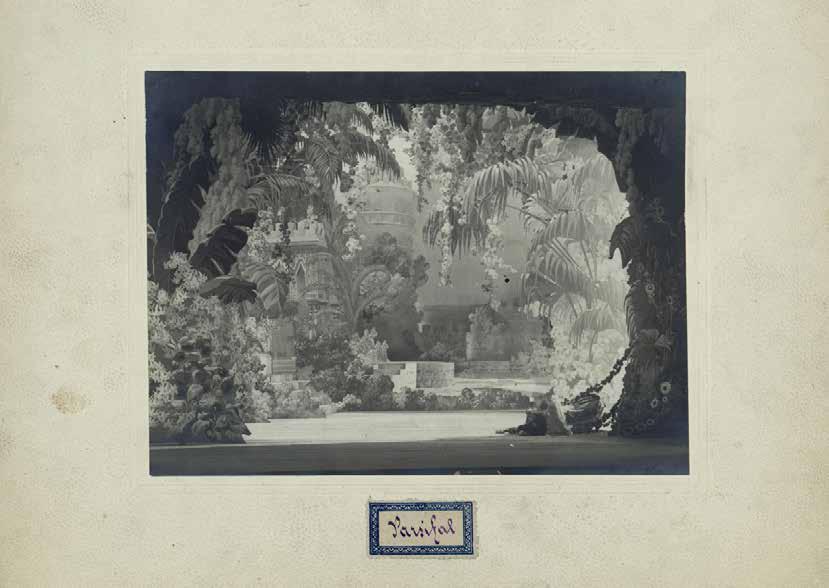
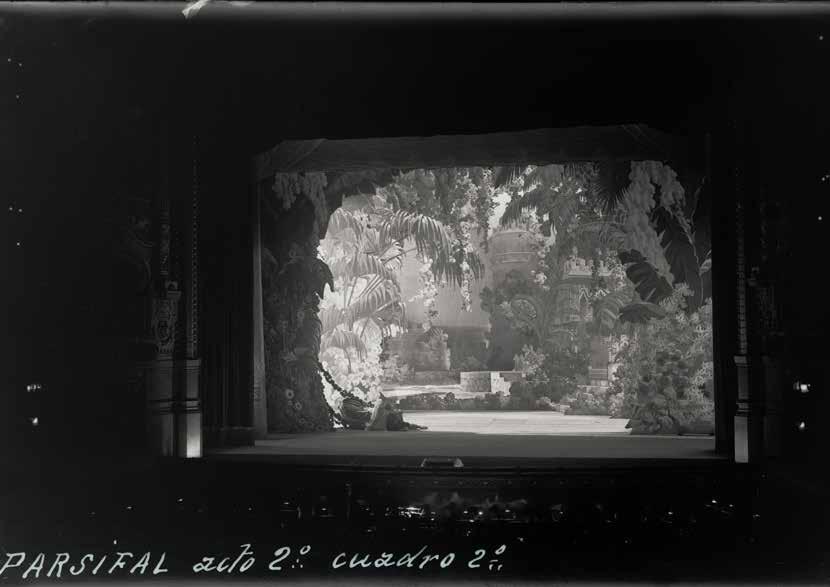
228 Parsifal: El gran mite musical que va seduir Barcelona
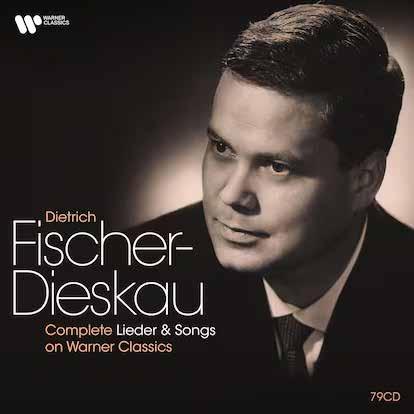
232 Centenari de Dietrich Fischer-Dieskau
DISCOGRAFIA SUBJECTIVA RECOMANADA
240 Lohengrin
Portrait En Portada
«My personal mantra is: if I can sing a role twice in one day, I know it’s a role I can do»
INTERVIEW WITH THE SOPRANO
Mrs. CATHERINE FOSTER
Catherine Foster is an iron lady, full of energy, vitality, and joy. Her beautiful performances exude strength, technical skill, and vocal perfection. This year, she is singing Brünhilde in Bayreuth again, for her 10th year, which will be her 11th year performing there since 2013. As you can read in this interview, in which she dedicated nearly an hour speaking with us with great humility and openness she can clearly handle situation, and we’re sure we will continue to hear her beautiful voice for many years to come. With great friendship he welcomed us in Cottbus the day before the first performance of Tristan und Isolde.
Dear Mrs. Foster, thanks for accepting our invitation this interview with us in these moving days for you. Firstly, what is your first memory of being moved by music?
If I had to have one memory of what sparked my interest in the classics it was hearing Fingals Cave in one of my music lessons there. I had always been singing - my grandmother used to say I could sing before I could talk! I always wanted to act in the school plays in primary school but always ended up being picked for the choir. I sang in the church choir from 8 to 18 where I learnt to read parts including stunning pieces like Handel’s Messiah. I tried many instruments starting with the recorder, piano, clarinet, trumpet, euphonium, never getting much further than grade 2 or 3 and never had the sticking power - my passion was and remains singing. Everything about singing and its flexibilities from solo to choral, a capella to singing with a 100 piece orchestra together with the technique to sing well, I am still passionate about.
What are your main musical references from the past?
When I did start branching out with singing lessons I listened to all the classics. At first I was very much into all the coloratura such as Joan Sutherland, and I used to sing the bell song with her, I would sing along with her, it felt easy and I know I upset a few work colleagues as I was doing it in the nurses home where I lived at the time ! It felt easy. Montserrat
Caballé, Renata Tebaldi, and Maria Callas were of course great heroins I would sing all the classical pieces, but, as you see no Wagner. It seemed a natural progression that my first role as a professional singer was Queen of the Night and that I continued to study, even into the Opera studio in London from 1998 to 1999, roles such as Lucia di Lammermoor, Ernani and Norma.
Do you feel pressure when interpreting a role that others have already performed in a certain way?
No not really, no. No, I have my voice and I go from the text, but no, I don’t feel pressure from others. I feel inspired, I think, is more the way to say it, I wouldn’t say pressured. If you feel that kind of pressure, then you’re putting that on yourself, that shouldn’t be there as a singer. And I think to be inspired and then in turn to inspire others to sing, that’s a great compliment.
Who have you learned the most from over the years with all your singing?
Well that has to be my first singing teacher, Pamela Cook. She was awarded an M.B.E for teaching and her choir Cantamus. She taught me from 1993 to 2013 when unfortunately, she died. I was never a member of her choir but it is quite famous in the UK. I always say I have my career only because of her and her teachings, the technique and skills she gave to me over 20 years was immeasurable.
What was your path like to finally focus almost exclusively on Wagner?
Oh, well, that would definitely be George Alexander Albrecht. He engaged me in Weimar to specifically do Elisabeth in Tannhäuser, which he had planned for his last opera as GMD there. I auditioned in September 2000 - 1 month after I got married - and started work at the theatre in May 2001. I started as with First Lady from
Die Zauberflöte and did my solo role debut as Mimi in La Bohéme in November 2002. My whole experience on stage to that moment was 3 productions as Queen of the Night, 1 production as Marianne Leitmetzerin in Der Rosenkavalier and cover ( with one show ) as Donna Anna in Don Giovanni all in the UK… Maestro Albrecht took a huge gamble with me, I went all out to be the best I could be. I spoke no German - to which Maestro Albrecht simply replied ‘she’ll learn’ and that
I did! So, in all honesty Maestro Albrecht was the second major influence in my career and put me well and truly on the road to Wagner. Wagner came to me I didn’t go to him and for that I am eternally grateful.
When I arrived in Weimar NO-ONE spoke English and I had no choice but to learn - just as a child does from listening on the street, very patient colleagues who corrected me as necessary and a lot of mistakes. I am told I have a good Weimar / Thuringia accent! I didn’t hear English spoken on the street in Weimar until 2006.
It was the best education I could have
had, I was learning it on the street and I had no choice because to communicate, I had to speak German.
But Wagner’s German is very different.
Wagner’s works are very different yes. It’s old German and, as is well known, he used the old alliteration ‘Stabreim’ in composing his text for Der Ring, something that stems back as far as the 9th century. I suppose for modern day English speakers it would be a little like trying to understand Shakespeare, isn’t it?
Language and literature have also been of great interest to me as well as human nature. In Der Ring and other Wagners works, I find myself luxuriating in a whole wealth of possibilities for interpretation and expression. I love singing in German - it is very expressive. I found out from a BBC documentary many years ago showing the path of how we came to speak the English of today, that German and English actually came from the same
island north of Denmark - way back when! Old English had the very same structure as German we just no longer use the ‘du’ form of English…thee and thou.
When I came to Weimar back in 2001, I realised very quickly I had to understand my own language and gramma in far deeper detail if I was going to move quicker on learning German. I then found a passion for really
delving into the librettos of all the operas I would be, have and still am performing.
It can´t be easy to memorise all these Wagner librettos...?
It takes time but, it takes as long as it takes. Some phrases come very quickly, and simply and other phrases require to be repeated again and again and again, sometimes only really coming after 2/3 productions. Isolde has to be the hardest role I have ever had to memorise the text. Wagner’s German can be incredibly complicated.
I’ve just done Tristan und Isolde again and it’s trying to get into the subtext as well as the text. Wagners whole opera is about transcendency, about an idea that is not quite tangible to the naked eye shall I say. It’s particularly difficult, especially with the fact of its tangibility and transcendency being open to so many variations of interpretation - which means of course as a singer we have to remain open to discover the particular direction a director wishes to take.
Who is Wagner referring to, what and where, when and how and who and what part of even the cosmos are we in? I have just done
two totally different interpretations one from my first intendant in Weimar which we will be reviving in Seoul in November - he comes from the ‘Schauspiel’ school of directing, and it is everything gentle and cosmos related and the other is the Ruth Berghaus interpretation in Hamburg where she focuses on the Earthiness and frustrations of Isoldetwo totally different perspectives but equally interesting and fascinating. I’ve done over 50 performances in 16 productions of Tristan und Isolde and I feel I am now really getting to know her!
In recent years, your repertoire seems quite focused—Brünnhilde, Turandot. Was this a conscious decision to protect your voice?
Ah, that makes me smile. In truth, it has very little to do with deliberate choice. Very few singers have the luxury of curating their careers entirely. One follows the path that opens, and in my case, it has led through roles like Elektra, Isolde, Brünnhilde, and Turandot.
However, I’ve also done Die Frau ohne Schatten, both Kaiserin in Dresden and then Fäberin in Mannheim and just recently at the Deutsche oper Berlin with Tobias Kratzer, my repertoire still includes Senta, Fidelio, and a concert version of Eglatine in Euryanthe by Weber with Janowski conducting.
Which is more difficult—Isolde or Elektra?
Each one is different with different kinds of difficulties. Each one of these dramatic roles has something that will trip you up if you’re not careful. Elektra - rehearsing her, one is in every rehearsal as she is never off the stage. It is short but as intense as you can get. This role truly is - can you do the rehearsals THEN can you sing the shows. One really needs three days between the shows with her. One to ‘die’ one to recover and one to prepare for the next show - I can’t remember which dramatic soprano said this but never a truer word! Sadly it is not always possible so anyone taking on this role has to know how to pace. Isolde - now that is a different kind of stamina - she is not the marathon rehearsal phase followed by the sprint version of doing a 1 hour 40 minute opera like Elektra, Isolde
is a slow build long distance runner - that just keeps getting longer. The focus and concentration is over 5 hours when the show actually starts. Brunnhildes stamina is needed for a minimum of 5 days over a ring cycleafter the long rehearsal phase - Singing Brünnhilde as separate pieces is a whole different matter than in an actual ring cycleI become almost a hermit!
In Die Frau ohne Schatten, die Fäberin is a very frustrated female. And so every time Strauss has her sing, it’s like she’s screaming all the time. So you have to find a way through not to scream constantly, to be on your technique and to be on the breath keeping a line in there and make it interesting as opposed to the person in the audience is like, oh my God, turn her off.
Isolde, she keeps repeating herself many, many times in slightly different ways. So, it’s the memorising of that and the first act for her is incredibly difficult, whereas it is the third act for Tristan. Isolde starts, she sings most of the first act with Branganne with Tristan only appearing shortly, he starts off with less to sing and they meet in the middle of Act two with O Sink Her Nieder, part ways from König Marke and he goes on to his marathon in the third act and Isolde gets at least an hour off, rests her voice and comes out and sings Mild und Leise. One of the most beautiful endings to an opera.
How do you prepare for a performance as demanding as Tristan und Isolde?
In much the same way I prepare for any major role: with unwavering focus. As the date nears, I begin withdrawing from conversation, from distractions, even from casual thoughts. Conversation depletes energy, and for long works like Götterdämmerung or Tristan und Isolde, preparation begins at least two days in advance.
It is a form of meditation—a quieting of the mind, a narrowing of attention. I review the text, allow the rhythms to settle into my body. When the time comes, it becomes not just a vocal performance, but a ritual of physical and mental discipline.
You seem to be a soprano who takes great care with rest and vocal preservation.
That’s true. To keep my mind as unoccupied as possible. I try and get rid of everything and I literally clear my desk. It’s like cleaning house. I clear my desktop, anything that’s on my mind, I clear it. And then I go to the theatre very early usually. If they’ve got a piano like Bayreuth and I’m on at four o’clock for Götterdämmerung, I’m there at 10.30 in the morning, I go to meditate, to be quiet, to use the piano. There’s nobody around.
I love it because nobody else turns up at that time. But for me, it’s part of the preparation that I can actually just be quiet and prepare in peace.
Sometimes, like in 2022 in Teatro di San Carlo, and Madrid in 2023, you’ve moved in at very short notice to sing Isolde. That sounds unimaginable.
I had been home to see my father in 2022, because he wasn’t very well. And literally, they asked me if I could fly that day. I had to say no as I was literally walking out the door to catch the overnight ferry to Amsterdam with my family to go home to Weimar with a fully loaded car and I was too far away from an airport for them to take me and then get back up to hull to catch the ferry home. As the performance was the day after next, I said, what I can do is take the ferry and then Robert can take me straight to the Amsterdam airport, which is what they did. They drove me to Amsterdam Airport and I flew straight to Naples the following morning. I rehearsed that afternoon and evening with maestro and took over the direction of the staging. Had the night to think about it and went on the next night.
Madrid in 2023 that was even tighter. I had literally just done Turandot the night before in Dusseldorf at the end of a run with them and the Royal Opera house in London and was, driving home along the motorway somewhere north of Frankfurt airport. I received a phone call from my agent asking, “how do you feel about going straight to Madrid for Isolde?” And I said, “well, I’m just on my way home,
voice feels great”. My agent said, well, drive home as its a question at the minute, and I explained that I was actually above Frankfurt airport now, and that if I drove home, I’d have to drive back the 300 kilometres to the airport. If possible could I get a definite yes or no, I’ll pull off somewhere to give time to decide and you let me know. All I had was an overnight bag with me for my last show in Düsseldorf. It comes to all of us at some point and I was quite willing to wait whilst my colleague decided properly if she could go on the following night - a very difficult decision - colds can disappear or get worse and trying to decide what will happen can only be done with advice from an ear nose and throat doctor.
I pulled off and I quickly had a call whereby I took the next plane to Madrid. I had nothing there and they were lovely. They found me an outfit to sing in because it was a concert, then I flew home the following day thinking I would not be coming back. Sadly for my colleague, they phoned me and said, could I go back and do the other performance on the 29th and the 6th? She was really not well and had made the right choice.
But how do you have the energy to do that?
I think the adrenaline kicks in. I’ve just done that in Dresden as well. They called me, I had just literally arrived at the park to take the boys for a walk at 9.30, was pulling up with them in the car and they were barking away. And I got a call from the agency. “Can you go for the dress rehearsal in Dresden at the second act of Tristan and Isolde today?” I went, oh, what time is the dress rehearsal? 2.30. And I went, oh, it’s 9.30 now. Yeah, I can do that.
So, I literally came home, packed an overnight bag and went and did the dress rehearsal and then I came home and went back to the concert. So thank goodness Dresden’s not very far away. That’s what jump-ins are. I mean, I’m not the only singer that does that. Such a beautiful concert, but it happens to all of us.
If singing for so many hours on stage is a matter of energy and vocal management, how do you manage to sing Mild und Leise with freshness, after such an arduous journey?
I’ve always had a lot of energy and my personal mantra is: if I can sing a role twice in one day, I know it’s a role I can do.
Before you ask - yes, I can sing all my roles twice in one day. Sometimes one has to because of the dispo in theatres which simply cannot be organised differently. I remember doing Elektra in Leipzig, they had a four hour stage and orchestra rehearsal with a double cast of Orest in the morning followed in the evening with the dress rehearsal. All full voice, so I’ve got that capacity.
Maybe it is a gift, I don’t know, but people do comment on the energy. I’ve always had a lot of energy.. which is why I know if I’m tired or if something’s not functioning, I know
something’s the matter. I don’t have any worry about any of these roles. No, never.
Which is the greatest complexity in Mild und Leise?
Technically, it must be prepared with absolute precision—there is no margin for error. Through years of experience (and mistakes), I’ve learned that tempo is everything. For me, the slower and steadier the tempo, the more fully I can inhabit the words, breathe the phrasing, and let the emotion rise like waves from the score.
Some conductors feel the impulse to accelerate at the phrase “in mich dringet, auf sich schwinget,” as if the text demands motion. But if you look closely at the score, there’s no written accelerando there. The temptation is understandable, but I believe it’s in resisting that urge that the true beauty of the passage emerges.
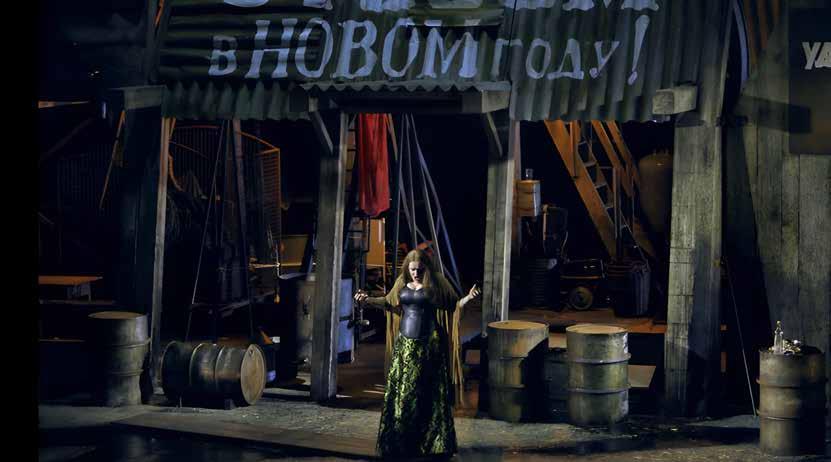
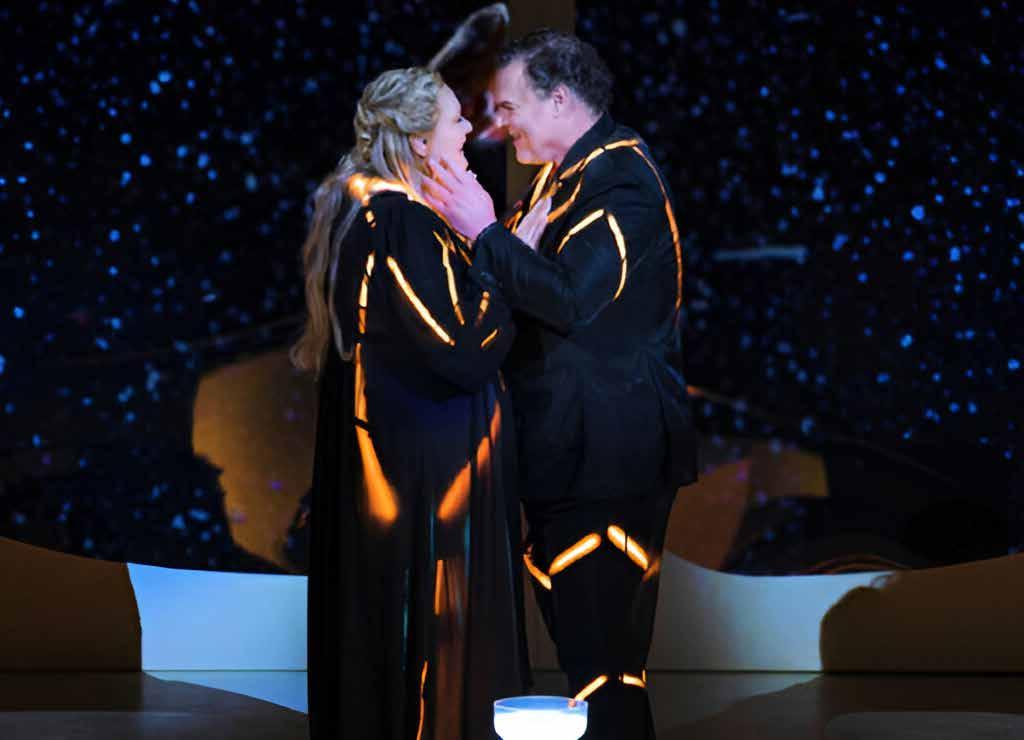
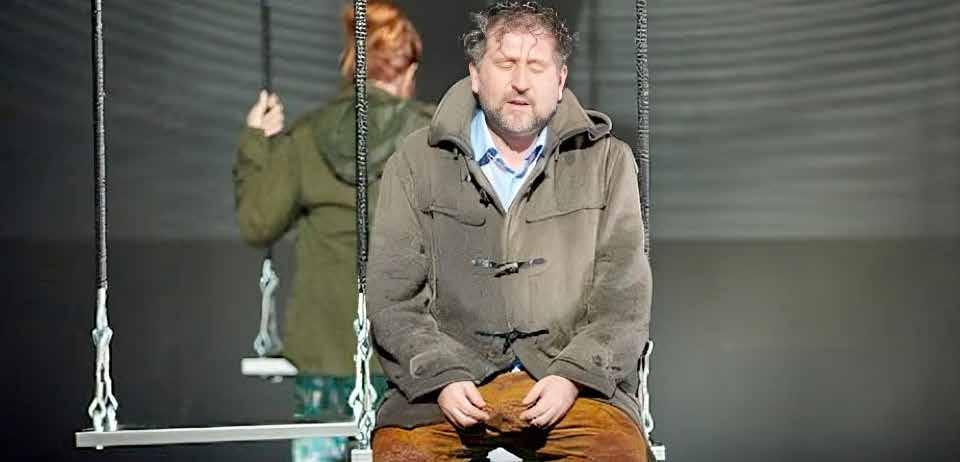
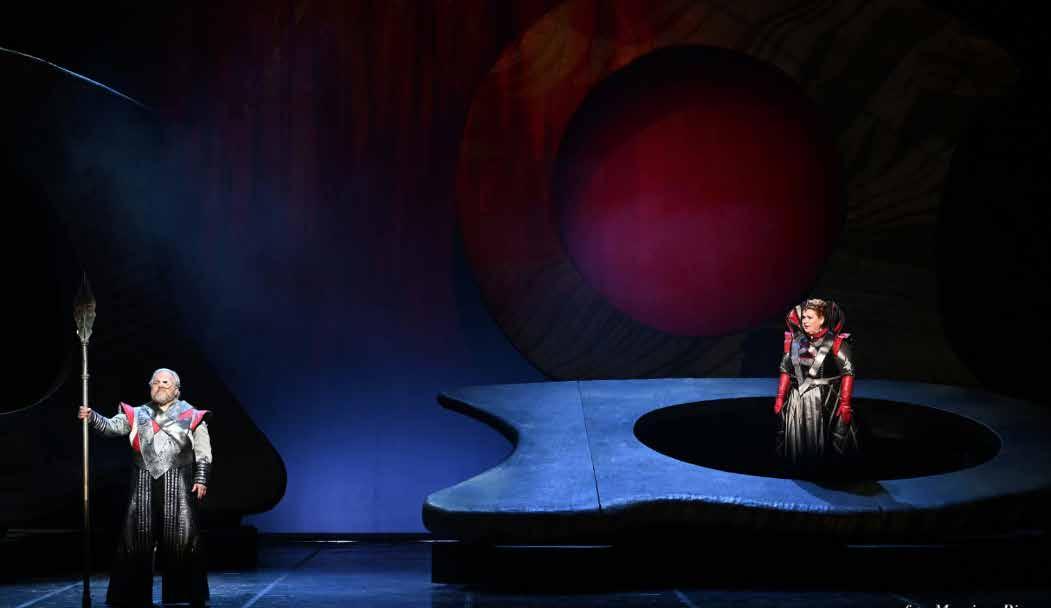
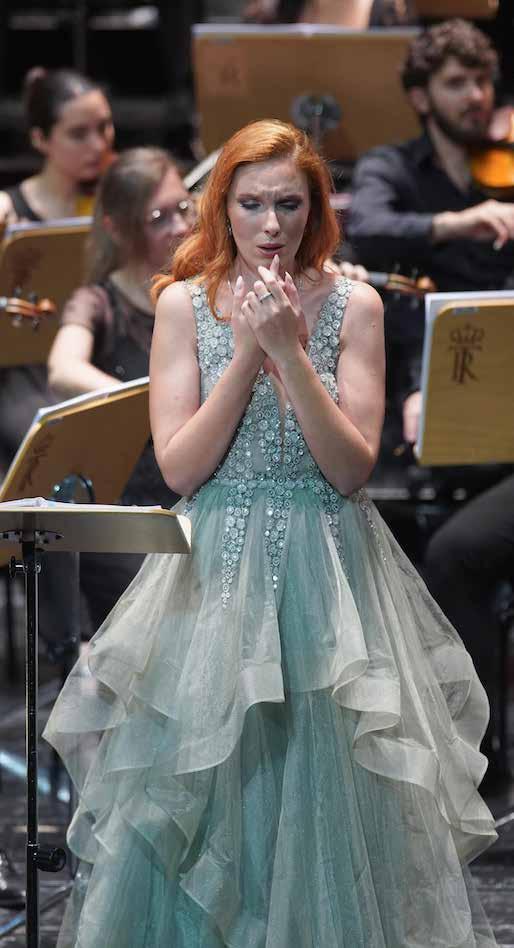
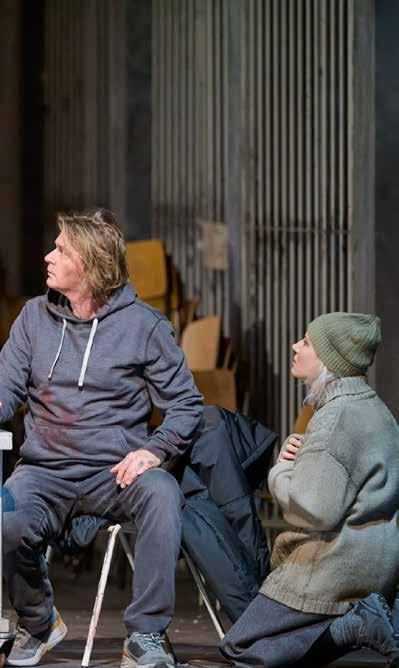
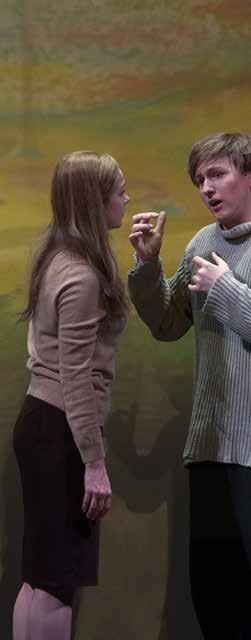
Richard Wagner: Tristan und Isolde - Staatstheater Cottbus, 2023
It’s a matter of balance—of pacing the phrasing so that the arc is sustained, not rushed. When done right, it becomes transcendent.
How does Catherine Foster, who has sung this role countless times, feel when singing it? Can one ever truly leave the music behind afterward?
It never truly leaves. The music lives in me. Even in moments of quiet—gardening, walking, resting—the phrases continue echoing in my mind. Tristan und Isolde has taken up residence in my inner world.
Soon I’ll return to sing it in Hamburg, so it’s firmly at the forefront now. But other roles await as well—Turandot in summer, Der Ring
Driving back from Cottbus just yesterday, I played three hours of Götterdämmerung in the car to begin bringing it back to the surface. My memory is like a filing cabinet: roles shift from drawer to drawer, but they’re all still there. Sometimes they play in my head even as I fall asleep—but thankfully, I can sleep.
You are singing Tristan und Isolde in Cottbus, Germany. What is so special about this production that brings together such extraordinary artists—Dohmen, Meier, yourself—in such a small place?
It began with friendship and history. Albert Dohmen, Christa Maier, Brian Register and I share the same agency, which played a role. But the origin goes deeper.
Stephan Märki, who directed this Tristan und Isolde, was my very first intendant in Germany. He and Alexander Albrecht were the ones who offered me my debut in Weimar. Years later, Stefan asked if I would sing Tristan with him again in Bern, a production originally planned for 2019. But he left Bern before it could happen—and took the concept with him.
Years later, when he became intendant in Cottbus, he asked if I would still consider doing it. I said yes without hesitation.
Stefan is a director of rare intelligence and sensitivity, and he builds productions around the strengths of his singers.
After the pandemic, we were all deeply grateful to have a project like this—to reconnect, to perform, to heal. And what a gem the theatre is! A beautiful Jugendstil house, the only one in Brandenburg.
Now the production is going to Seoul in November, and it has even been released on DVD. What began as a gesture among friends became something enduring and beautiful.
What would Catherine Foster recommend to a soprano who wants to take on Isolde for the first time?
Run (laugh). No—seriously, yes.
Begin with the first act. But more importantly, you must know your technique is secure—absolutely, unquestionably secure. You must be capable of singing for four or five hours a day, even if you’re marking, because stamina is forged in rehearsal. Personally, I don’t mark during rehearsals; I sing. That’s how one builds endurance.
You must also have command of dynamics. Kirsten Flagstad once said, “Do not sing Wagner unless you have a good technique.” And with every passing year, I understand her wisdom more deeply.
Wagner is filled with unseen pitfalls, hidden crevices you don’t even realize exist— until you fall into them. Hopefully, someone is there to help you climb back out. I’ve been fortunate to have such people guiding me, keeping me on solid ground.
Wagner expands the voice—it stretches it outward. It’s not something you consciously do; it happens. And that can be dangerous. You must constantly think slim. In my Walküre score, I’ve written reminders everywhere: “Rossini,” “Queen of the Night,” “slim, slim, slim.”
Some passages sit low, like Die Walküre, while others, like Siegfried, lie high in the voice, naturally helping you keep things lighter. But in the lower parts, if you allow the voice to broaden too much, the upper register becomes heavy—like hoisting a sack of potatoes to reach the high notes.
Wagner also writes what I call “Popeye phrases”—ping-pong, ping-pong, jagged and percussive. Your task is to create legato lines through that, to give the music fluidity and grace.
And most critically, you need ears. Someone on the outside—a coach, a trusted teacher—who listens with precision and keeps you from developing bad habits as you learn. That guidance is invaluable.
Do you think Turandot and Isolde have anything in common vocally?
Let me put it this way: next year will mark my 75th Turandot, and with every performance, I gain a deeper respect for her. The role may seem small—two arias and a duet—but my goodness, what arias they are.
She enters the stage completely cold—no warm-up, no build—and must immediately project over a massive orchestra. It’s not about screaming or vocal darkness; it’s about strength, breath, and line.
Elektra is orchestrated thickly, but in that opera, Strauss often pulls back when Elektra sings. Chrysothemis, on the other hand, must contend with constant fortes from the orchestra.
And let’s not forget: modern instruments are louder than in Wagner’s day. That’s why you need a sensitive conductor—someone who understands vocal texture and can shape the sound to support, not overwhelm.
You came to Bayreuth in 2013?
That’s correct. I made my debut in the 2013 Castorf production.
How did Bayreuth change you?
What can one say about singing Wagner at Bayreuth—The Sanctum Sanctorum for his music and in the very theatre built for this repertoire? The first time I stood on that stage and looked out, it was overwhelming.
Even now, when I drive over the hill and see Bayreuth lying in the valley, I cannot help but smile.
There’s a magic to it—not just the acoustics or the history, but the camaraderie. You walk through town, meet your colleagues in the canteen, and feel part of a living legacy.
I’ve been on the stage 11 years in Bayreuth as Brünnhilde and Isolde, I did a couple of years as Isolde, one year as Isolde and Brünnhilde, but as Brünnhilde, I’ve stood on the stage there 10 years this year.
That’s quite an achievement, isn’t it? That’s so much. Like wow. Incredible. Something that never entered my head when I embarked on my career as a singer. I don’t think it has changed so much as it has proven to me that anything is possible with determination, work and of course luck - this is not an easy business and I am fully aware of what it takes to get here. The journey has been and still is one of self awareness and fortitude.
Is it true that singing there is difficult because of the orchestra’s delay on stage?
I wouldn’t call it difficult—just different. You need time to adjust.
As a singer, especially one like me who tends to be ahead of the beat, I must learn to let go and relax into the space. Orchestras already play slightly behind the beat, and in Bayreuth, with the orchestra hidden beneath the stage, there’s an additional delay.
Wagner was, in essence, the first sound designer. He engineered a natural mixing system: the music rises up through the stage, blends with the voices, and reaches the audience already fused.
The result is stunning. And the musicians— ah, the musicians!—they are among the finest in the world. Everyone there shares a reverence for Wagner’s music. It’s a community bound by passion.
And how would you like the future to be for you?
To remain healthy, to continue singing. That is what I love above all else.
The year ahead is full of exciting projects, though I can’t yet speak of all of them. But
yes—Elektra, Turandot, and something quite special: Turandot at the Odeon of Herodes Atticus, beneath the Parthenon.
To sing under the stars in such a setting— how could one not be moved? I sang there once before, for the Maria Callas concert. It was unforgettable.
That’s what music does—it lifts us beyond ourselves. It transcends time, language, conflict. And that’s how it must remain. Music must speak, and speak freely, across every boundary.
«Mi mantra personal es: Si puedo cantar un papel dos veces en un día, entonces sé que es un papel que puedo interpretar.»
ENTREVISTA CON LA SOPRANO
Mrs. CATHERINE FOSTER
Catherine Foster es una dama de hierro, llena de energía, vitalidad y alegría. Sus hermosas interpretaciones destilan fuerza, destreza técnica y perfección vocal. Este año, vuelve a cantar Brünnhilde en Bayreuth, su décimo año consecutivo, que será su undécimo año actuando allí desde 2013. Como pueden leer en esta entrevista, en la que nos dedicó casi una hora con gran humildad y franqueza, es evidente que tiene una fuerza inconmensurable para afrontar cualquier situación, y estamos seguros de que seguiremos escuchando su hermosa voz durante muchos años. Con gran amistad nos recibió en Cottbus el día antes de la primera función de Tristan und Isolde.
Apreciada Mrs. Foster, gracias por aceptar nuestra invitación para esta entrevista en estos días tan movidos para usted. En primer lugar, ¿cuál es su primer recuerdo de sentirse conmovida por la música?
Si tuviera que recordar algo que despertó mi interés por los clásicos, sería escuchar Fingals Cave en una de mis clases de música. Siempre había cantado; mi abuela decía que cantaba antes que hablar. Siempre quise actuar en las obras del colegio en primaria, pero siempre me elegían para el coro. Canté en el coro de la iglesia desde los 8 a los 18 años, donde aprendí a leer partes, incluyendo piezas impresionantes como El Mesías de Händel. Probé muchos instrumentos, empezando por la flauta dulce, el piano, el clarinete, la trompeta y el bombardino, sin pasar nunca del segundo o tercer grado y sin conseguir la constancia necesaria. Mi pasión era y sigue siendo el canto. Todo lo relacionado con el canto y sus flexibilidades, desde el solista hasta el coral, a capella o con una orquesta de 100 músicos, junto con la técnica para cantar bien, me sigue apasionando.
¿Cuales son sus principales referentes musicales del pasado?
Cuando empecé a diversificarme con las clases de canto, escuchaba todos los clásicos. Al principio me gustaba mucho toda la coloratura, como la de Joan Sutherland, y solía cantar la canción de la campana con ella; cantaba junto a ella; me parecía fácil, ¡y sé que
molesté a algunos compañeros de trabajo porque lo hacía en la residencia de ancianos donde vivía por aquel entonces! Me parecía fácil. Montserrat Caballé, Renata Tebaldi y Maria Callas eran, por supuesto, grandes heroínas. Cantaba todas las piezas clásicas, pero, como pueden ver, nada de Wagner. Parecía una progresión natural que mi primer papel como cantante profesional fuera Reina de la Noche y que continuara estudiando, incluso en el estudio de la Ópera de Londres de 1998 a 1999, papeles como Lucia di Lammermoor, Ernani y Norma.
¿Siente presión al interpretar de determinada manera un papel que otros ya han desempeñado antes?
No, la verdad es que no. No, tengo mi voz y me inspiro en el texto, pero no, no siento presión de los demás. Me siento inspirada, creo que es más bien la forma de decirlo; no diría presionada. Si sientes ese tipo de presión, es porque te la estás imponiendo a ti misma; eso no debería ocurrir como cantante. Y creo que estar inspirada y, a su vez, inspirar a otros a cantar, es un gran cumplido.
¿De quién ha aprendido más a lo largo de los años?
Bueno, esa es por supuesto mi primera profesora de canto, Pamela Cook. Recibió la Orden del Imperio Británico (MBE) por su docencia y por su coro Cantamus. Me enseñó de 1993 a 2013, cuando, lamentablemente,
falleció. Nunca formé parte de su coro, pero es bastante famoso en el Reino Unido. Siempre digo que mi carrera se debe a ella y a sus enseñanzas; la técnica y las habilidades que me transmitió durante 20 años fueron inconmensurables.
¿Cómo fue su camino hasta llegar a centrarse casi exclusivamente en Wagner?
Bueno, esto no sería posible sin la persona
de George Alexander Albrecht. Me contrató en Weimar para interpretar específicamente a Elisabeth en Tannhäuser, que había planeado para su última ópera como Director General allí. Hice la audición en septiembre de 2000, un mes después de casarme, y empecé a trabajar en el teatro en mayo de 2001. Empecé como Primera Dama en La Flauta Mágica y debuté como solista como Mimi en La Bohéme en noviembre de 2002. Mi experiencia teatral hasta entonces se
limitaba a tres producciones como Reina de la Noche, una como Marianne Leitmetzerin in Der Rosenkavalier y una versión (con una función) de Donna Anna en Don Giovanni, todas en el Reino Unido... El maestro Albrecht se arriesgó mucho conmigo; me esforcé al máximo para dar lo mejor de mí. No hablaba alemán, a lo que el maestro Albrecht simplemente respondió: «Ya aprenderá», ¡y así fue! Así que, sinceramente, el Maestro Albrecht fue la segunda mayor influencia en mi carrera y me puso en el camino de Wagner. Wagner vino a mí, yo no fui a él, y por eso le estoy eternamente agradecido.
Cuando llegué a Weimar, nadie hablaba inglés y no tuve más remedio que aprender, como un niño, escuchando en la calle, con compañeros muy pacientes que me corregían cuando era necesario y cometiendo muchos errores. ¡Me dicen que tengo un buen acento de Weimar/Turingia! No oí hablar inglés en la calle en Weimar hasta 2006.
Fue la mejor educación que pude haber tenido; lo estaba aprendiendo en la calle y no tenía otra opción porque, para comunicarme, tenía que hablar alemán.
Pero el alemán de Wagner es muy diferente. Las obras de Wagner son muy diferentes, sí. Es alemán antiguo y, como es bien sabido, utilizó la antigua aliteración «Stabreim» al componer su texto para Der Ring, algo que se remonta al siglo IX. Supongo que para los angloparlantes actuales sería como intentar entender a Shakespeare, ¿no?
El lenguaje y la literatura también me han interesado mucho, al igual que la naturaleza humana. En Der Ring y en otras obras de Wagner, me deleito con una gran cantidad de posibilidades de interpretación y expresión. Me encanta cantar en alemán; es muy expresivo. Descubrí, hace muchos años, en un documental de la BBC que mostraba cómo llegamos al inglés actual, que el alemán y el inglés, en realidad, provienen de la misma isla
al norte de Dinamarca, ¡mucho tiempo atrás! El inglés antiguo tenía la misma estructura que el alemán, solo que ya no usamos la forma «du» del inglés… thee y thou.
Cuando llegué a Weimar en 2001, me di cuenta enseguida de que necesitaba comprender mi propio idioma y gramática con mucho más detalle si quería avanzar más rápido en mi aprendizaje del alemán. Entonces descubrí una pasión por profundizar en los librettos de todas las óperas que iba a representar, he representado y sigo representando.
¿No debe ser fácil memorizar los librettos de Wagner...?
Lleva tiempo, el tiempo que sea necesario. Algunas frases surgen con mucha rapidez y sencillez, mientras que otras requieren ser repetidas una y otra vez, a veces solo después de dos o tres producciones. Isolde es sin duda el papel más difícil que he tenido que memorizar. El alemán de Wagner puede ser increíblemente complejo.
Acabo de volver a interpretar Tristan und Isolde y estoy intentando adentrarme tanto en el subtexto como en el texto. Toda la ópera
de Wagner trata sobre la trascendencia, sobre una idea que no es del todo tangible a simple vista, por así decirlo. Es particularmente difícil, sobre todo porque su tangibilidad y trascendencia están abiertas a tantas variaciones de interpretación, lo que significa, por supuesto, que como cantantes debemos permanecer abiertos a descubrir la dirección particular que un director desea tomar.
¿A quién se refiere Wagner, a qué y dónde, cuándo y cómo, y en qué parte del cosmos nos encontramos? Acabo de hacer dos interpretaciones totalmente diferentes: una de mi primer intendente en Weimar, que reestrenaremos en Seúl en noviembre. Él proviene de la escuela de dirección “Schauspiel” y es una obra delicada y cosmopolita. La otra es la interpretación de Ruth Berghaus en Hamburgo, donde se centra en la terrenalidad y las frustraciones de Isolde: dos perspectivas totalmente diferentes, pero igualmente interesantes y fascinantes. He realizado más de 50 funciones en 16 producciones de Tristan und Isolde y siento que ahora la estoy empezando a conocer de verdad.
En los últimos años, su repertorio parece bastante definido: Brünnhilde, Turandot. ¿Fue una decisión consciente proteger su voz?
Ah, eso me hace sonreír. La verdad es que tiene muy poco que ver con una elección deliberada. Muy pocos cantantes se dan el lujo de controlar completamente su carrera. Uno sigue el camino que se le abre, y en mi caso, me ha llevado a través de papeles como Elektra, Isolde, Brünnhilde y Turandot.
Sin embargo, también he interpretado Die Frau ohne Schatten, tanto Kaiserin en Dresde como Fäberin en Mannheim y, recientemente, en la Deutsche Oper de Berlín con Tobias Kratzer. Mi repertorio todavía incluye Senta en Der Fliegende Holländer, Fidelio y una versión de concierto de Eglatine in Euryanthe de Weber con Janowski.
¿Qué es más difícil: Isolde o Elektra?
Cada una de ellas es diferente con
diferentes tipos de dificultades. Cada uno de estos papeles dramáticos tiene algo que te puede hacer tropezar si no tienes cuidado. Elektra: ensayarla, uno está en cada ensayo, ya que ella nunca baja del escenario. Es corto, pero tan intenso como puede ser. Este papel realmente es: ¿puedes hacer los ensayos y luego puedes cantar las obras? Realmente se necesitan tres días entre representaciones. Uno para “morir”, uno para recuperarse y uno para prepararse para la siguiente. ¡No recuerdo qué soprano dramática dijo esto, pero no existe palabra más cierta! Lamentablemente, no siempre es posible, así que cualquiera que asuma este papel tiene que saber cómo mantener el ritmo. Isolde: ese sí que es un tipo diferente de resistencia; no es el tipo de ensayo de maratón seguida de la versión de velocidad de hacer una ópera de 1 hora y 40 minutos como Elektra, Isolde es una corredora de largas distancias de desarrollo lento, que simplemente se alarga cada vez más. La concentración supera las 5 horas cuando comienza la obra. La resistencia en Brünnhilde se necesita durante un mínimo de 5 días en un ciclo entero del Anillo, tras la larga fase de ensayo. Interpretar a Brünnhilde como piezas separadas es muy diferente a cantarla en un ciclo del Anillo entero. ¡Me convierto casi en una ermitaña!
En Die Frau ohne Schatten, die Fäberin es una mujer muy frustrada. Y cada vez que Strauss la hace cantar, es como si estuviera gritando sin parar. Así que hay que encontrar la manera de no gritar constantemente, de mantener la técnica y la respiración, manteniendo la línea y haciéndola interesante, en lugar de que el público diga: “¡Dios mío, para!”.
Isolde se repite muchas, muchas veces de formas ligeramente diferentes. Así que debes tratar de memorizarla. Y, por supuesto, el primer acto para ella es díficil en este sentido, como todos sabemos, y el tercer acto para Tristan, es increíblemente difícil. Isolda empieza cantando la mayor parte del primer acto con Brangänne, y Tristan solo aparece brevemente. Él empieza con menos y se reúnen a mitad del segundo acto con O Sink Her Nieder. Se separan del Rey Marke y él continúa con su maratón en el tercer acto.
Isolde descansa al menos una hora, descansa la voz y sale a cantar Mild und Leise. Uno de los finales más hermosos de una ópera.
¿Cómo se prepara usted para una representación tan exigente como Tristan und Isolde?
De la misma manera que me preparo para cualquier papel importante: con una concentración inquebrantable. A medida que se acerca la fecha, empiezo a retirarme de la conversación, de las distracciones, incluso de los pensamientos casuales. El diálogo agota la energía, y para obras largas como Götterdämmerung o Tristan und Isolde, la preparación comienza con al menos dos días de antelación.
Es una forma de meditación: aquietar la mente, concentrar la atención. Reviso el texto, dejo que los ritmos se asienten en mi cuerpo. Cuando llega el momento, se convierte no solo en una interpretación vocal, sino en un ritual de disciplina física y mental.
Parece usted una soprano que cuida mucho el descanso y la conservación vocal.
Es cierto. Para mantener mi mente lo más desocupada posible, intento desocuparme de todo y literalmente limpio mi escritorio. Es como hacer limpieza. Limpio mi escritorio, todo lo que me preocupa, lo limpio. Y luego suelo ir al teatro muy temprano. Si tienen piano como en Bayreuth y canto a las cuatro en Götterdämmerung, llego a las 10:30 de la mañana, voy a meditar, a estar en silencio, a usar el piano. No hay nadie alrededor.
Me encanta porque no aparece nadie más a esa hora. Pero para mí, es parte de la preparación poder estar en silencio y prepararme en paz.
A veces, como en 2022 en el Teatro di San Carlo y en Madrid en 2023, usted llegó con muy poca antelación para cantar Isolde. Eso suena inimaginable.
Había estado en casa para ver a mi padre en 2022, porque no se encontraba muy bien. Y, literalmente, me preguntaron si podía
volar ese día. Tuve que decir que no, ya que estaba saliendo para coger el ferry nocturno a Ámsterdam con mi familia para volver a Weimar con el coche lleno, y estaba demasiado lejos del aeropuerto para que me llevaran y luego volviera a Hull para coger el ferry de vuelta. Como la función era al día siguiente, les dije que lo que podía hacer era coger el ferry y que Robert me llevara directamente al aeropuerto de Ámsterdam, y así lo hicieron. Me llevaron al aeropuerto de Ámsterdam y volé directo a Nápoles a la mañana siguiente. Ensayé esa tarde y noche con el maestro y me encargué de la dirección de la puesta en escena. Tuve la noche para interiorizarlo y salí a cantar la tarde siguiente.
Madrid en 2023 fue aún más difícil. Había interpretado Turandot la noche anterior en Düsseldorf, al final de una temporada con ellos y la Royal Opera House de Londres, y estaba conduciendo a casa por la autopista, en algún lugar al norte del aeropuerto de Fráncfort. Recibí una llamada de mi agente preguntándome: “¿Qué te parece ir directamente a Madrid para Isolde?”. Le dije: “Bueno, voy de camino a casa, la voz me parece genial”. Mi agente me dijo: “Bueno, conduce a casa, porque es una pregunta ahora mismo”. Le expliqué que, de hecho, estaba sobre el aeropuerto de Fráncfort y que si conducía a casa, tendría que conducir los 300 kilómetros de vuelta. Si me dan un sí o un no rotundo, haré una parada en algún lugar para tener tiempo de decidir y me avisas. Solo tenía una maleta para mi último concierto en Düsseldorf. A todos nos pasa en algún momento, y yo estaba dispuesta a esperar mientras mi compañera decidía si podía ir la noche siguiente. Una decisión muy difícil: los resfriados pueden desaparecer o empeorar, y solo con la ayuda de un otorrinolaringólogo se puede decidir qué pasará.
Paré y enseguida me llamaron para tomar el siguiente avión a Madrid. No tenía nada allí y fueron encantadores. Me buscaron ropa para cantar porque era un concierto, y luego volé a casa al día siguiente pensando que no volvería. Para mi desgracia, me llamaron y me preguntaron si podía volver a la otra actuación del 29 y del 6.
¿Pero cómo encuentra usted la energía para hacer eso?
Creo que la adrenalina sube. Acabo de hacer eso también en Dresden. Me llamaron, justo había llegado al parque para sacar a pasear a los perros a las 9:30, estaba llegando con ellos en el coche y no paraban de ladrar. Y recibí una llamada de la agencia: “¿Puedes ir al ensayo general en Dresden para el segundo acto de Tristan und Isolde hoy?”. Dije: “¿A qué hora es el ensayo general? A las 2:30”. Y dije: “Ah, ya son las 9:30. Sí, puedo ir”.
Así que, literalmente, volví a casa, preparé una maleta, fui al ensayo general y luego volví al concierto. Menos mal que Dresden no está muy lejos. Para eso están los jumps-in. O sea, no soy la única cantante que lo hace. Un concierto precioso, pero nos pasa a todos.
Si cantar durante tantas horas sobre el escenario es una cuestión de energía y gestión vocal, ¿cómo consigue cantar Mild und Leise
con frescura, después de un recorrido tan arduo?
Siempre he tenido mucha energía y mi mantra personal es: si puedo cantar un papel dos veces en un día, entonces sé que es un papel que puedo interpretar.
Antes de que pregunten, sí, puedo cantar todos mis papeles dos veces en un día. A veces es necesario debido a la disponibilidad en los teatros, que simplemente no se puede organizar de otra manera. Recuerdo haber hecho Elektra en Leipzig; tenían un ensayo de cuatro horas con escenario y orquesta con un reparto doble de Orestes por la mañana, seguido por la noche del ensayo general. Todos con la voz al completo, así que tengo esa capacidad.
Quizás sea un don, no lo sé, pero la gente comenta sobre mi energía. Siempre he tenido mucha energía... por eso sé que si estoy cansado o si algo no funciona, sé que algo
Richard Wagner: Tristan und Isolde - Staatstheater Cottbus, 2023
anda mal. No me preocupa ninguno de estos papeles. Nunca.
¿Cuál es la mayor complejidad en Mild und Leise?
Técnicamente, debe prepararse con absoluta precisión; no hay margen de error. A lo largo de años de experiencia (y errores), he aprendido que el tempo lo es todo. Para mí, cuanto más lento y constante sea el tempo, más plenamente puedo habitar las palabras, respirar el fraseo y dejar que la emoción surja como olas de la partitura.
Algunos directores sienten el impulso de acelerar en la frase «in mich dringet, auf sich schwinget», como si el texto exigiera movimiento. Pero si se observa con atención la partitura, no hay ningún accelerando escrito. La tentación es comprensible, pero creo que es cuando se resiste a ese impulso que emerge la verdadera belleza del pasaje.
Es una cuestión de equilibrio: de marcar el ritmo del fraseo para que el arco sea sostenido, no accelerado. Cuando se hace bien, se vuelve trascendente.
¿Cómo se siente Catherine Foster, quien ha cantado este papel innumerables veces, al interpretarlo? ¿Es posible dejar atrás la música después de interpretarlo?
Nunca se va del todo. La música vive en mí. Incluso en momentos de tranquilidad —jardinería, paseos, descanso— las frases siguen resonando en mi mente. Tristan und Isolde se ha instalado en mi mundo interior.
Pronto volveré a cantarla en Hamburgo, así que ahora está firmemente en primer plano. Pero también me esperan otros papeles: Turandot en verano, Der Ring
Ayer mismo, volviendo de Cottbus, canté tres horas de Götterdämmerung en el coche para empezar a revivirla. Mi memoria es como un archivador: los papeles cambian de cajón en cajón, pero todos siguen ahí. A veces suenan en mi cabeza incluso mientras me duermo, pero por suerte, puedo dormir.
Está cantando Tristan und Isolde en Cottbus, Alemania. ¿Qué tiene de especial esta producción que reúne a artistas tan extraordinarios —Dohmen, Meier y usted misma— en un espacio tan reducido?
Todo empezó con la amistad y la historia. Albert Dohmen, Christa Maier, Brian Register y yo compartimos la misma agencia, lo cual influyó. Pero el origen es más profundo.
Stephan Märki, quien dirigió este Tristan und Isolde, fue mi primer intendente en Alemania. Él y Alexander Albrecht fueron quienes me ofrecieron mi debut en Weimar. Años después, Stefan me preguntó si volvería a cantar Tristan und Isolde con él en Berna, una producción originalmente planeada para 2019. Pero él se fue de Berna antes de que pudiera ponerse en escena y se llevó la idea.
Años después, cuando asumió el papel de intendente en Cottbus, me preguntó si aún lo podría considerar. Dije que sí, sin dudarlo. Stefan es un director de una inteligencia y una sensibilidad excepcionales, y construye producciones en torno a las fortalezas de sus cantantes.
Después de la pandemia, todos estábamos profundamente agradecidos por tener un proyecto como este: para reconectar, para actuar, para sanar. ¡Y qué joya es el teatro! Una hermosa casa de estilo Jugendstil, la única en Brandeburgo.
Ahora la producción se traslada a Seúl en noviembre, e incluso se ha lanzado en DVD. Lo que empezó como un gesto entre amigos se convirtió en algo perdurable y hermoso.
¿Qué recomendaría Catherine Foster a una soprano que quiere interpretar a Isolde por primera vez?
Correr (risas). No, en serio, sí.
Empezar con el primer acto. Pero lo más importante es que tu técnica sea segura, absoluta e incuestionablemente segura. Debes ser capaz de cantar cuatro o cinco horas al día, incluso si estás calificando, porque la resistencia se forja en los ensayos.
Personalmente, no califico durante los ensayos; canto. Así es como se desarrolla la resistencia.
También debes dominar la dinámica. Kirsten Flagstad dijo una vez: «No cantes Wagner a menos que tengas una buena técnica». Y con cada año que pasa, comprendo mejor su sabiduría.
Wagner está lleno de trampas invisibles, grietas ocultas que ni siquiera te das cuenta de que existen, hasta que caes en ellas. Ojalá haya alguien ahí para ayudarte a salir. He tenido la suerte de contar con estas personas guiándome, manteniéndome en tierra firme.
Wagner expande la voz, la estira hacia afuera. No es algo que se haga conscientemente; sucede. Y eso puede ser peligroso. Hay que pensar constantemente en la finura. En mi partitura para Walküre, he escrito recordatorios por todas partes: «Rossini», «Reina de la Noche», «finura, finura, finura».
Algunos pasajes son graves, como Die Walküre, mientras que otros, como Siegfried, son agudos, lo que ayuda a mantener la ligereza. Pero en las partes más graves, si se permite que la voz se ensanche demasiado, el registro superior se vuelve pesado, como levantar un saco de patatas para alcanzar las notas agudas.
Wagner también escribe lo que yo llamo «frases de Popeye»: ping-pong, ping-pong, irregulares y percusivas. La tarea es crear líneas legato a través de eso, para darle a la música fluidez y gracia.
Y lo más importante, necesitas oídos. Alguien externo —un entrenador, un maestro de confianza— que te escuche con precisión y te evite desarrollar malos hábitos a medida que aprendes. Esa guía es invaluable.
¿Cree que los papeles de Turandot e Isolde tienen algo en común vocalmente?
Permítanme decirlo así: el año que viene cumpliré mi 75.ª Turandot, y con cada interpretación, siento un mayor respeto por ella. El papel puede parecer pequeño —dos arias y un dueto—, pero ¡madre mía, qué arias!
Entras al escenario completamente fría —sin precalentamiento ni preparación— y debes proyectar inmediatamente la voz sobre una orquesta enorme. No se trata de gritos ni de oscuridad vocal; se trata de fuerza, aliento y línea.
Elektra tiene una orquestación densa, pero en esa ópera, Strauss a menudo se acota cuando Elektra canta. Crisótemis, por otro lado, debe lidiar con los constantes puntos fuertes de la orquesta.
Y no lo olvidemos: los instrumentos modernos son más fuertes que en la época de Wagner. Por eso se necesita un director sensible: alguien que comprenda la textura vocal y pueda moldear el sonido para acompañar, no para abrumar.
¿Usted llegó a Bayreuth en 2013?
Así es. Debuté en la producción de Castorf de 2013.
¿Cómo cree que Bayreuth le ha cambiado?
¿Qué se puede decir de cantar a Wagner en Bayreuth, el Sancta Sanctorum de su música y en el mismo teatro construido para este repertorio?
La primera vez que subí a ese escenario y miré hacia afuera, fue sobrecogedor. Incluso ahora, cuando conduzco por la colina y veo Bayreuth en el valle, no puedo evitar sonreír.
Hay magia en ello: no solo la acústica o la historia, sino la camaradería. Caminas por la ciudad, te encuentras con tus colegas en la cantina y te sientes parte de un legado vivo.
Llevo 11 años en el escenario de Bayreuth como Brünnhilde e Isolde, un par de años como Isolde, un año como Isolde y Brünnhidle, pero como Brünnhilde, este año llevo 10 años en el escenario.
Es todo un logro, ¿verdad? Es muchísimo. ¡Guau! Increíble. Algo que nunca se me pasó por la cabeza cuando empecé mi carrera como cantante. No creo que haya cambiado tanto, ya que me ha demostrado que todo es posible con determinación, trabajo y, por supuesto, suerte. Este no es un negocio fácil y soy plenamente consciente de lo que se necesita para llegar hasta aquí. El camino ha sido y sigue siendo de autoconciencia y fortaleza.
¿Es cierto que cantar allí es difícil por el retraso con el que el sonido de la orquesta llega al escenario?
No lo llamaría difícil, solo diferente. Se necesita tiempo para adaptarse.
Como cantante, especialmente para alguien como yo que tiende a adelantarse al ritmo, debo aprender a soltarme y relajarme en el espacio. Las orquestas ya tocan ligeramente por detrás del ritmo, y en Bayreuth, con la orquesta oculta bajo el escenario, hay un retraso adicional.
Wagner fue, en esencia, el primer diseñador de sonido. Diseñó un sistema de mezcla natural: la música se eleva por el escenario, se funde con las voces y llega al público ya integrado.
El resultado es impresionante. Y los músicos —¡ah, los músicos!— están entre los mejores del mundo. Todos allí comparten una reverencia por la música de Wagner. Es una comunidad unida por la pasión.
¿Y cómo le gustaría que fuera el futuro para usted?
Mantenerme sano, seguir cantando. Eso es lo que más deseo.
El año que viene está lleno de proyectos emocionantes, aunque todavía no puedo hablar de todos. Pero sí: Elektra, Turandot y algo muy especial: Turandot en el Odeón de Herodes Ático, bajo el Partenón.
Cantar bajo las estrellas en semejante escenario… ¿cómo no conmoverse? Canté allí una vez, en el concierto de Maria Callas. Fue inolvidable.
Eso es lo que hace la música: nos eleva más allá de nosotros mismos. Trasciende el tiempo, el idioma, el conflicto. Y así debe seguir siendo. La música debe hablar, y hablar libremente, a través de todas las fronteras.
«The secret and power lies in the emotions of music»
INTERVIEW WITH TENOR ANDREAS SCHAGER
The Austrian tenor Andreas Schager is the heroic tenor par excellence of our time. No one can compare to his energy, power, stage presence, and even the timbre and beauty of his voice. His interpretations of the roles of Tristan and Siegfried are uncomparable, and some of them have become forever etched in the minds of his listeners. These performances are characterized by great vocal and scenic character, with a vocal projection that never wavers or loses its powerful force. Schager is the kryptonite of the Wagner stage. We were able to interview him in his native Austria.
Thank you for agreeing to this interview with Lohengrin magazine.
With pleasure and warm greetings to the readers.
First, I would like to ask you to tell us about your first memory of listening to music as a child and what inspired you to work as a musician later on?
We loved making music on our farm, especially during the summer haymaking in the barn. There was usually a barbecue for everyone who helped out, and even the neighbors’ children would come along with their instruments and make music together. I always have fond memories of that. Making music was always associated with something positive for me. I really became passionate about classical music when I heard recordings by Fritz Wunderlich when I was 14 or 15. That planted the seed that would sprout years later.
What does the name Wagner mean to you today?
Richard Wagner became the artistic center of my life. In this respect, I cannot overstate the significance of his name.
Did Wagner change your life or did you develop further with Wagner?
“We step into the same rivers and do not step back in.” This philosophical insight from
Heraclitus really says it all. Every path we take changes us. Our decision is to choose the direction at life’s crossroads. I have been privileged to walk the “Wagner Path” for 16 years now, and I have been richly rewarded time and time again.
Today, there’s no other Tristan in the world with more stage and vocal power than you. I saw you knocking over furniture with all your might while singing the Duet of Infinite Love from the second act of Tristan und Isolde in Bieito’s production. Your energy was shocking; it seemed as if it would never end. How do you do it? How do you find the energy to keep it up for so many hours?
The secret and power lies in the emotions of music. My credo is: “Emotion creates the sound.” If you only think about producing the sounds while singing, it would drain your energy. Singing and the voice are always an expression of emotions.
It is said that Schnorr von Carolsfeld, the first Tristan, died of exhaustion. Do you think one can die of exhaustion after singing Tristan?
No, quite the opposite. After a fulfilling performance, I’m always so full of energy that I feel like, “Right, let’s do it again.”
Is Tristan the most difficult role to sing? What was the most difficult role you’ve ever sung?
I don’t like the term “difficult role.” It focuses on the problems and difficulties, and
e that’s exactly what causes problems. If you ask me which role is the most challenging and fulfilling, Tristan is definitely right up there. Is it possible to rest or sleep after singing such captivating and endless music?
Hahaha, not for a few hours, but after about three hours, yes.
How does Andreas Schager prepare to sing Tristan?
With rest, an hour of sleep and fasting. Which Tristan production did you like best and why?
That’s difficult for me to say. There were always fascinating approaches: Tcherniakov, for example, explained the character Tristan’s childhood traumas, which he demonstrated on stage through superimposed scenes and actors playing Tristan’s parents. That was fascinating. In Bieto’s version, the entire opera was essentially Tristan’s single fever dream. Also fascinating.
Unfortunately, I can’t answer that question.
What other opera roles would you like to sing?
I’m open to that. I only really get to know the characters during rehearsals. By doing them. I already had the chance to sing Otello in Vienna, albeit with a very short rehearsal
period. I would love to rehearse this role again in a new production.
How do you react when you receive criticism, like with your last Freischütz in Vienna?
My Max received mostly high praise from critics, but the production itself was a failure, which, to be honest, I couldn’t quite understand. Personally, I felt very good about it.
How would Andreas Schager introduce opera to young people?
My advice is always to keep an open mind and let the incredible live music work its magic on you. “Being enchanted” is essential for a lasting love affair with opera itself.
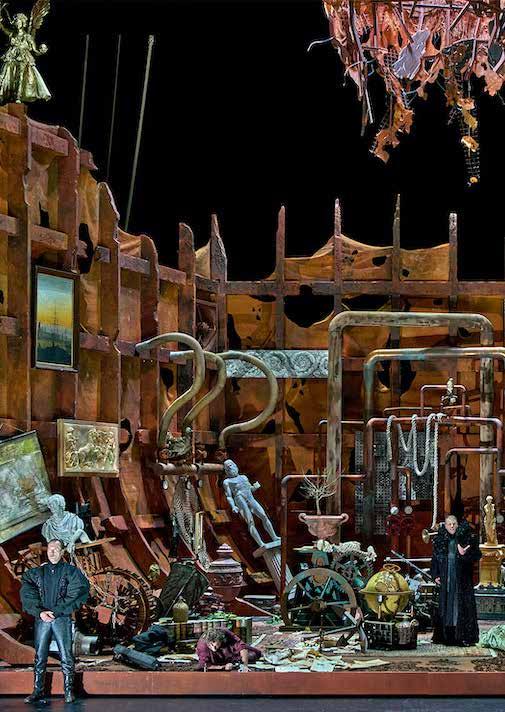
Richard Wagner: Tristan und Isolde - Bayreuther Festpiele, 2024
Andreas Schager, tenor austriaco, es el Heldentenor por excelencia de nuestros días. Nadie puede compararse con su energía, potencia, fuerza escénica ni con el timbre y belleza de su voz. Sus interpretaciones del rol de Tristan, así como de Siegfried, son inigualables y algunas de ellas han quedado grabadas para siempre en la mente de los que le han escuchado. Interpretaciones dotadas de gran carácter vocal y escénico y con una proyección de la voz que nunca se acaba ni nunca pierde su potentísimo fuelle. Schager es la criptonita del escenario wagneriano. Le pudimos entrevistar en su Austria natal.
Gracias por aceptar la entrevista con la revista Lohengrin.
Con mucho gusto y un cálido saludo a los lectores.
Primero, me gustaría pedirte que nos cuente sobre su primer recuerdo escuchando música cuando era niño y ¿qué le inspiró a trabajar como músico más adelante?
Nos encantaba hacer música en nuestra granja, sobre todo durante la siega del heno en el granero durante el verano. Solíamos hacer una barbacoa para todos los que ayudábamos, e incluso los hijos de los vecinos venían con sus instrumentos y hacían música juntos. Siempre guardo buenos recuerdos de aquello. Para mí, hacer música siempre fue algo positivo. Me apasioné por la música clásica cuando escuché grabaciones de Fritz Wunderlich a los 14 o 15 años. Eso plantó la semilla que germinaría años después.
¿Qué significa para usted hoy el nombre Wagner?
Richard Wagner se convirtió en el centro artístico de mi vida. En este sentido, no puedo dejar de recalcar la importancia de su nombre.
¿Wagner cambió su vida?
“Nos adentramos en los mismos ríos y no volvemos atrás”. Esta reflexión filosófica de Heráclito lo dice todo. Cada camino que
tomamos nos transforma. Nuestra decisión es elegir la dirección en las encrucijadas de la vida. He tenido el privilegio de recorrer el “sendero Wagner” durante 16 años, y he sido recompensado abundantemente una y otra vez.
Hoy en día, no hay otro Tristan en el mundo con más potencia escénica y vocal que usted. Lo vi derribar muebles con todas sus fuerzas mientras cantaba el infinito dueto del Amor del segundo acto de la producción de Bieito en Viena. Su energía era impactante; parecía que nunca se acabaría. ¿Cómo lo logra? ¿Cómo encuentra la energía y la mantiene durante tantas horas?
El secreto y el poder residen en las emociones de la música. Mi lema es: «La emoción crea el sonido». Si solo piensas en producir sonidos al cantar, te agotará la energía. El canto y la voz siempre son una expresión de emociones.
Se dice que Schnorr von Carolsfeld, el primer Tristan, murió de agotamiento. ¿Cree que uno puede morir de agotamiento después de cantar Tristan?
No, todo lo contrario. Después de una buena actuación, siempre estoy tan lleno de energía que pienso: «Bueno, hagámoslo otra vez».
¿Es Tristan el papel más difícil de interpretar? ¿Cuál ha sido el papel más difícil que ha interpretado?
Richard Wagner: Tristan und Isolde - Wiener Staatsoper, 2022
No me gusta el término “rol difícil”. Se centra en los problemas y las dificultades, y eso es precisamente lo que causa los problemas. Si me preguntas qué rol es el más desafiante y gratificante, Tristan sin duda está entre los mejores.
¿Es posible descansar o dormir después de cantar una música tan cautivadora e interminable?
Jajaja, por unas horas no, pero después de unas tres horas, sí.
¿Cómo se prepara Andreas Schager para cantar Tristan?
Con descanso, una horita de sueño y ayuno.
¿Qué producción de Tristan le gustó más y por qué?
Me resulta difícil decirlo. Siempre hubo enfoques fascinantes: Tcherniakov, por ejemplo, explicó los traumas infantiles del personaje de Tristan, que demostró en escena mediante escenas superpuestas y actores que interpretaban a sus padres. Eso fue fascinante. En la versión de Bieto, toda la ópera era esencialmente un único sueño febril de Tristan. También fascinante.
Lamentablemente, no puedo responder a esa pregunta.
¿Qué otros papeles de ópera le gustaría cantar?
Estoy abierto a eso. Solo conozco realmente a los personajes durante los ensayos, interpretándolos. Ya tuve la oportunidad de cantar Otello en Viena, aunque con un periodo de ensayo muy corto. Me encantaría volver a ensayar este papel en una nueva producción.
¿Cómo reacciona usted cuando recibe críticas, como en el caso de su último Freischütz en Viena?
Mi Max recibió en su mayoría grandes elogios de la crítica, pero la producción en sí fue un fracaso, algo que, siendo sincero, no pude comprender del todo. Personalmente, me sentí muy bien al respecto.
¿Cómo presentaría Andreas Schager la ópera a los jóvenes?
Mi consejo es mantener siempre la mente abierta y dejarse llevar por la increíble música en vivo. Quedarse fascinado es esencial para una pasión duradera por la ópera.
The Icelandic baritone, Ólafur Sigurdarson, is an all-rounder with boundless energy and positivity. The color of his voice seems to rise from the depths of the earth, but it’s not just the unique beauty of his timbre that characterizes him, but the power with which he can project it on any stage for hours on end and without a trace of fatigue. We heard him sing a magnificent Kurwenal in Bayreuth, where his performance as Alberich is also a memorable highlight. Now, in June, at La Scala, he sang this same role in McVicar’s production, with a sonority of extraordinary beauty. At the Liceu, he dazzled with his Telramund, an occasion on which we interviewed him thanks to the Círculo del Liceu. In Salerno, he sang his first Wotan in May, which was also spectacular. He attended us with great humility and always with a big smile.
You speak a perfect German. Did you learn it in Germany?
Yes, I’ve been living in Germany for almost 17 years now. When I first came, I wasn’t sure if I would stay. It wasn’t easy at first, because Danish is my second language. But Wagner German is a completely different world.
So you were born in Iceland. What is the musical tradition like in your country? And how is music education like there?
Iceland has a very strong musical tradition. Although we are a small country with fewer than 400,000 inhabitants, music plays a major role. Initially, literature was the focus, but later, music developed rapidly. The first opera performance in Iceland actually didn’t take place until 1951 – very late. But our small population made development all the more rapid.
Today, Reykjavík has a conservatory and numerous music schools. I would say the standard is quite high, with many Icelandic singers going abroad – to Europe, and occasionally to the USA. Iceland has produced many outstanding voices. The singing tradition is extremely vibrant. I always say: Where three Icelanders come together, a quartet is formed.
Which musical memories do you have from your childhood?
I grew up in a musical environment. My father is a professional musician, composer, and violinist. He had a recording studio for 30 years, where I also worked extensively. My grandfather was the first double bassist in the Icelandic Symphony Orchestra, also played in opera and pop music, and was also a composer.
Music was omnipresent. I started playing the violin at an early age and sang as a child. I was always in the choir in high school. Music was always present—it was literally on the kitchen table.
You came to Saarbrücken as a soloist. How did you get there?
I came to Germany relatively late. Before that, I had worked almost exclusively in Great Britain – I studied in London and Glasgow. It wasn’t until 2007 that I stepped in for a production in Saarbrücken. I didn’t know the city until then, and my German was still very rudimentary. At that time, I was already 38 years old, and my voice was increasingly developing in a dramatic direction – Wagner seemed a natural fit.
The Saarbrücken Opera quickly offered me a permanent engagement. The General Music Director at the time was Constantin Trinks, a renowned Wagner expert. In 2009, I sang my first Wagner role under his direction: Telramund in Lohengrin in Luxembourg. This
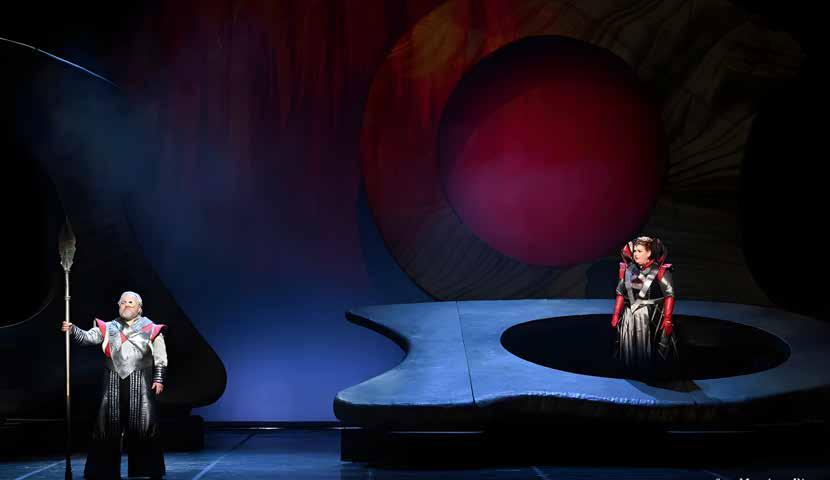
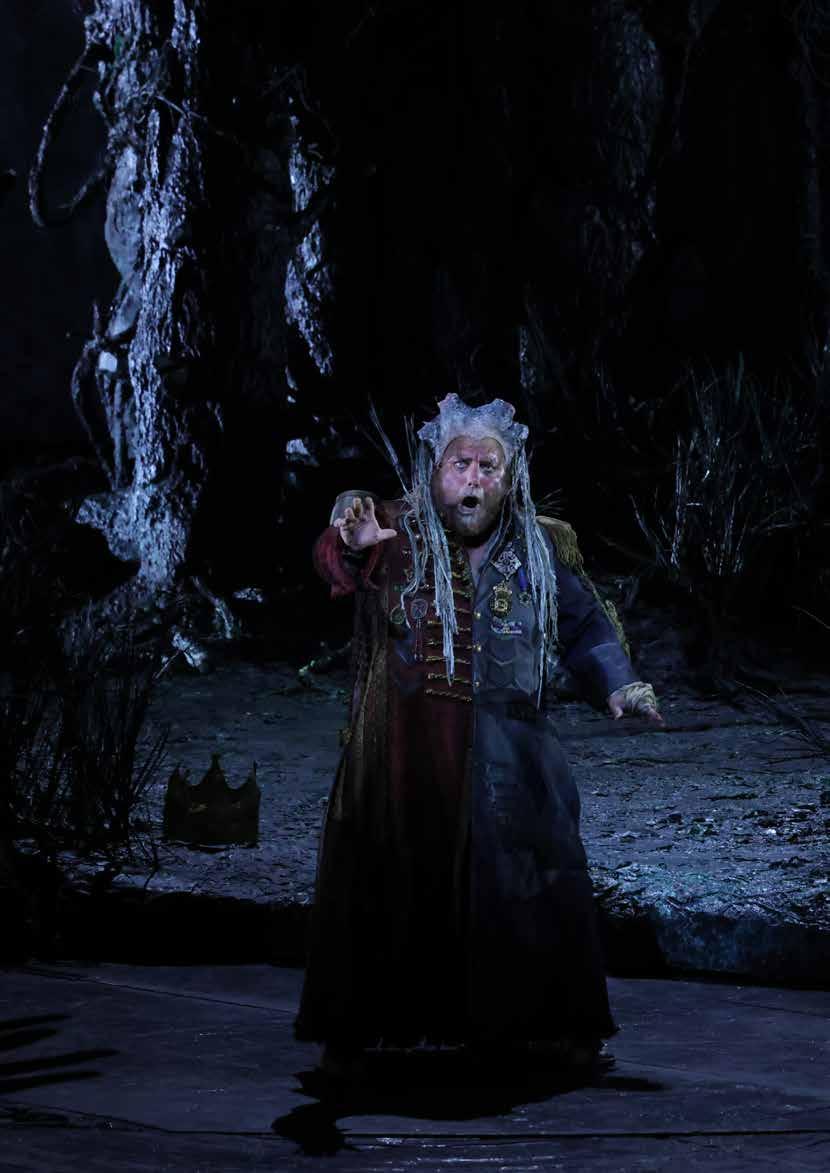
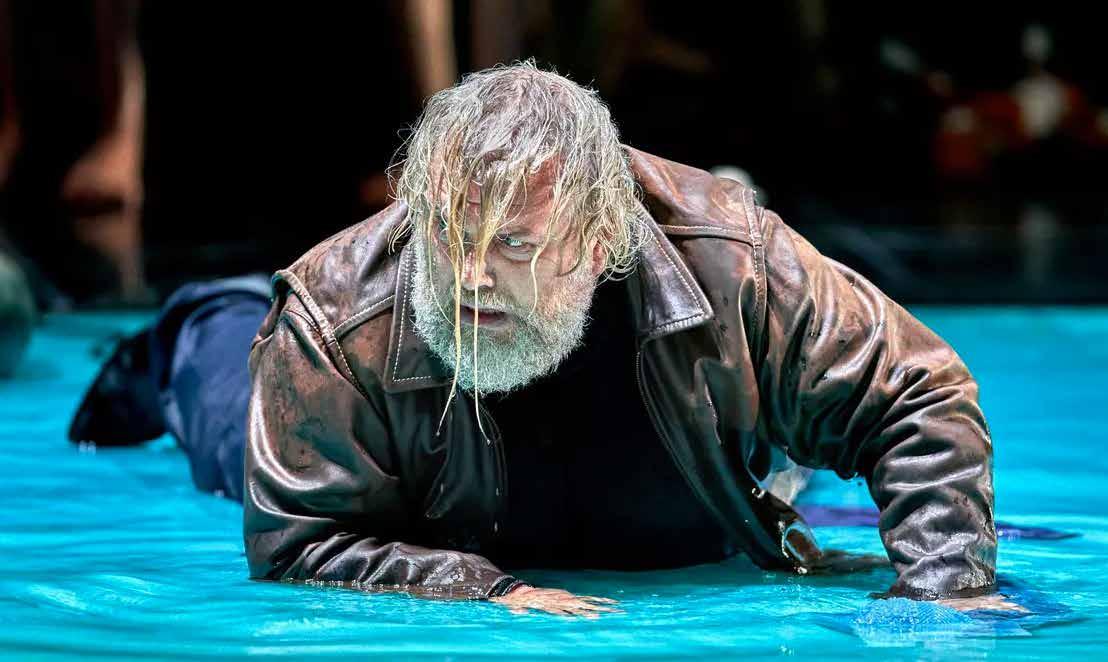
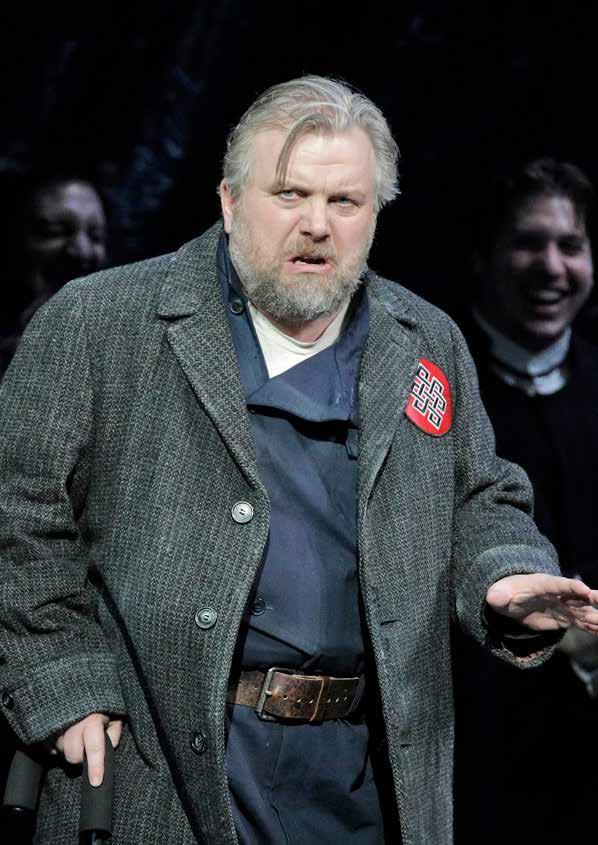
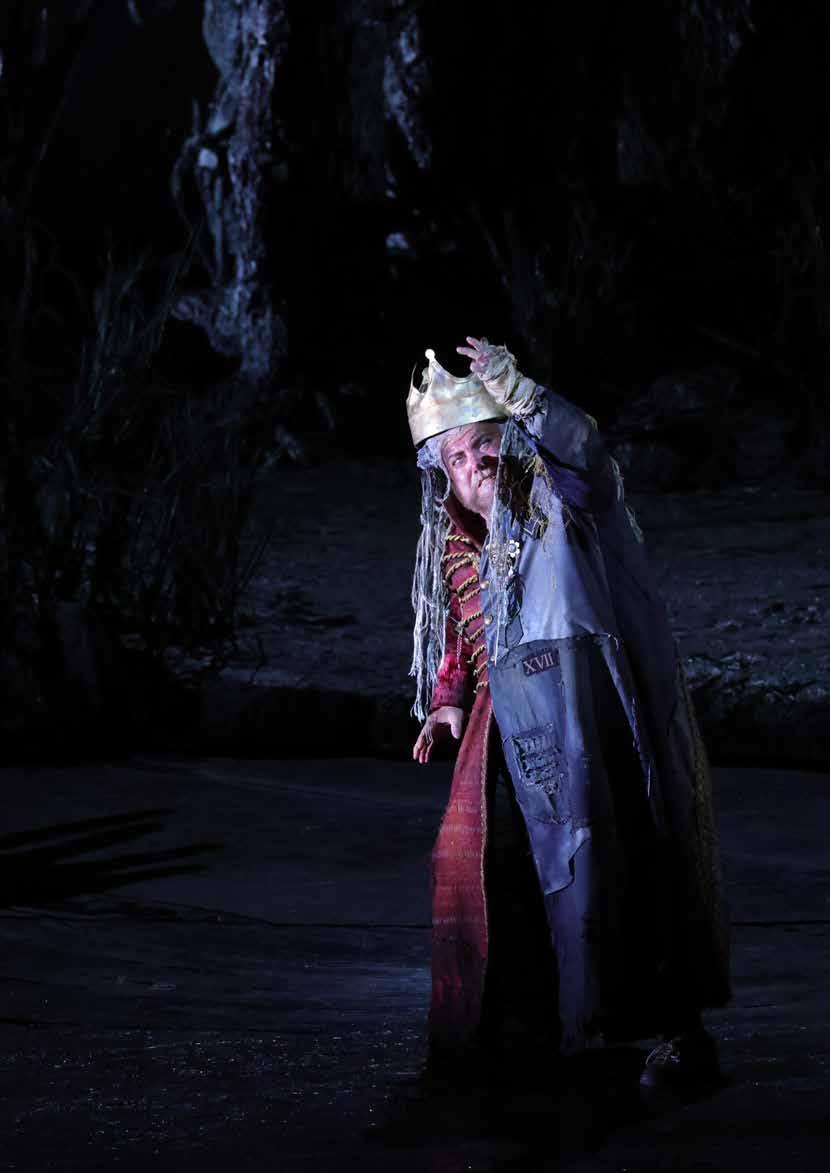
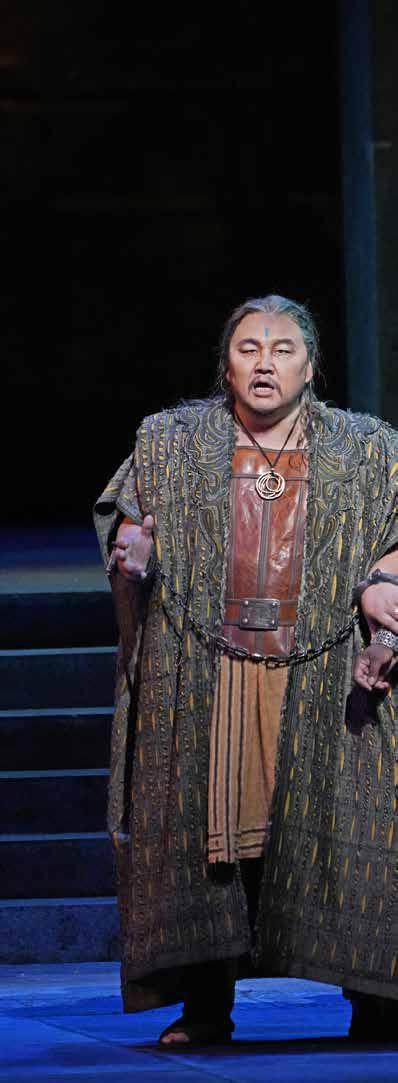
Ólafur Sigurdarson as Wotan in Die Walküre at Teatro Verdi di Salerno, 2025
was followed by Klingsor and Alberich in Darmstadt – the path was paved.
A decisive moment came in 2017, when Maestro Trinks suggested me for Lohengrin in Prague – in a production by Katharina Wagner. We worked together excellently. In 2019, I received an invitation to audition in Bayreuth – and I was successful. My first role there was Alberich – a highlight of my career.
Today, you’re almost exclusively a Wagner singer. Is it difficult to break away from Wagner again?
Maybe I don’t even want it. However, I still have Italian roles in my repertoire—Scarpia in Tosca, for example, most recently in Leipzig. I love Verdi and Puccini. The Italian repertoire complements the Wagner repertoire very well and is healthy for the voice. Technically, I don’t notice much difference.
What is the biggest difference between Wagner and Italian composers?
In terms of content, Wagner’s work focuses heavily on the text. In Italian opera, arias sometimes serve more as musical moments, whereas in Wagner’s work, every word is meaningful.
Are there any roles you would still like to sing?
Oh yes. Wotan is coming up soon. And a big dream would be Hans Sachs in Die Meistersinger von Nürnberg—a monumental role, but it suits my voice well. The music is incomparable.
Where you will take soon the role of Wotan in Die Walküre?
In fact, I’ll be singing Wotan in Die Walküre for the first time in three weeks – in Salerno, Italy. It’s a special role that I’ve wanted to prepare for a long time. In Iceland, it had been scheduled and canceled several times due to the coronavirus pandemic. Now it’s finally happening – with the Sofia National Opera, performing in Salerno.
Your Holländer interpretations were also well-known...
Yes, i have sung it many times – since 2014, in America, Scandinavia, Germany, and Prague. A wonderful match.
Which role has been the most difficult for you so far?
Telramund – without question. A very demanding role, both technically and vocally.
Ólafur Sigurdarson as Alberich in Siegfried at Teatro alla Scala, 2025
The orchestra is massive, the part is highpitched, and it’s dramatically ungrateful. But this is recognized within the professional world. Verdi’s Rigoletto is also not easy – very nuanced between lyricism and drama.
We saw you in Katharina Wagner’s production of Lohengrin, where you sang inside the water of a dirty pond and also laying on the floor –did you enjoy that?
Yes, very much so. Working with Klaus Florian Vogt is a pleasure, even though I’m regularly beaten to death or murdered by him—a joke among colleagues. The production was beautiful, especially since it was canceled in 2020 due to the coronavirus pandemic. It was all the more wonderful to finally perform it at the Gran Teatre del Liceu—my first operatic performance in Spain.
What do you think when the audience protests against the direction, like on the premiere of this Lohengrin?
Such reactions are usually directed against the production, not the singers. And it shows that the audience reacted emotionally— which is better than indifference. Often, such controversial productions later become
audience favorites. It’s important that the artists are treated with respect on stage and I can say that with Katharina Wagner we have always been treated wonderfully on stage.
How do you manage to have so much voice energy on stage?
I love my job. Of course, there are aspects that are strenuous, but being on stage with colleagues and a wonderful orchestra like here in Barcelona – that’s a gift. It gives you energy back. Andreas Schager, whom you mentioned, is a fantastic colleague. Our collaboration has always been inspiring – for example, in Tristan und Isolde and Siegfried in Bayreuth.
What would you say to young people to get them excited about opera?
Today, we struggle with the so-called “attention span.” People are used to consuming content in 30- or 60-minute chunks. Opera requires more patience—but if you bring young people to the theater, they are often enthusiastic. Opera is a total work of art. I have sung arias and spoken to young people in many schools in Iceland—and it touched them deeply.
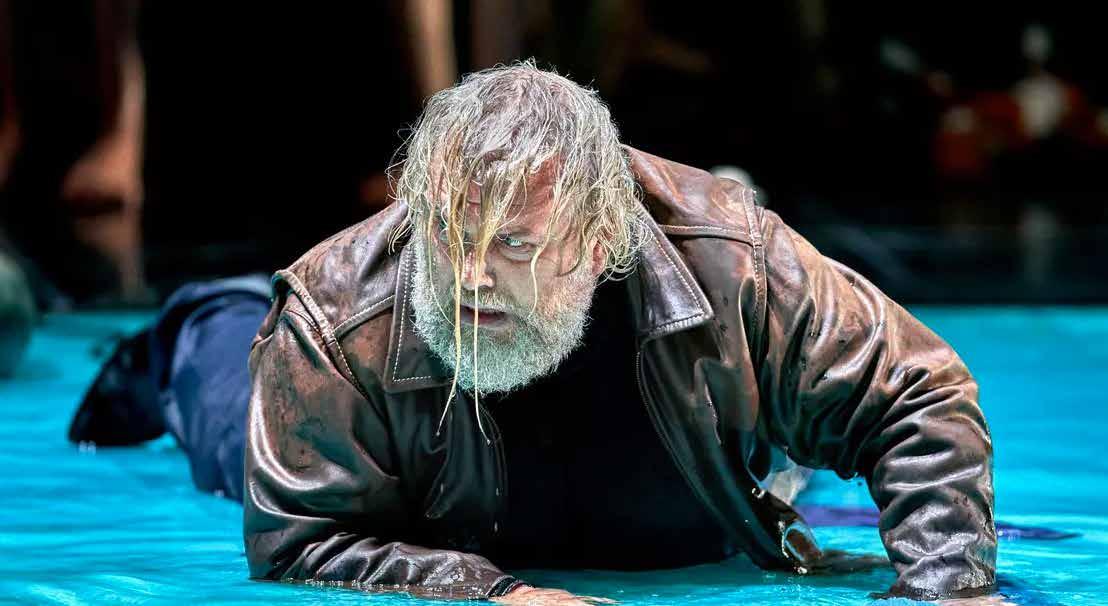
Ólafur Sigurdarson as Alberich in Das Rheingold at Bayreuther Festspiele, 2024
El barítono islandés Ólafur Sigurdarson es un artista todoterreno con una energía y positividad desbordantes. El color de su voz parece surgir de las profundidades de la tierra, pero no es solo la belleza única de su timbre lo que lo caracteriza, sino la potencia con la que puede proyectarla en cualquier escenario durante horas sin parar y sin rastro de fatiga. Lo escuchamos cantar un magnífico Kurwenal en Bayreuth, donde su interpretación de Alberich también es hito memorable. Ahora, en junio, en La Scala, interpretó este mismo papel en el Siegfried de la producción de McVicar, con una sonoridad de extraordinaria belleza. En el Liceu, deslumbró con su Telramund, ocasión en la que le entrevistamos gracias al Círculo del Liceu. En Salerno, cantó su primer Wotan en mayo, que también fue espectacular. Nos atendió con gran humildad y, en todo momento, con una enorme sonrisa.
Usted habla un alemán perfecto. ¿Lo aprendió en Alemania?
Sí, llevo casi 17 años viviendo en Alemania. Cuando llegué, no estaba seguro de si me quedaría. Al principio no fue fácil, porque el danés es mi segunda lengua. Pero el alemán de Wagner es un mundo completamente diferente.
Nació en Islandia. ¿Cómo son la tradición musical y la educación musical en su país natal?
Islandia tiene una tradición musical muy sólida. Aunque somos un país pequeño con menos de 400.000 habitantes, la música desempeña un papel fundamental. Inicialmente, la literatura fue el foco, pero posteriormente, la música se desarrolló rápidamente. La primera representación de ópera en Islandia no tuvo lugar hasta 1951, muy tarde. Sin embargo, nuestra pequeña población aceleró aún más el desarrollo.
Hoy en día, Reikiavik cuenta con un conservatorio y numerosas escuelas de música. Diría que el nivel es bastante alto, y muchos cantantes islandeses emigran al extranjero, a Europa y, ocasionalmente, a Estados Unidos. Islandia ha producido muchas voces excepcionales. La tradición musical es extremadamente vibrante. Siempre digo: donde tres islandeses se unen, se forma un cuarteto.
¿Qué recuerdos musicales tiene usted de su infancia?
Crecí en un ambiente musical. Mi padre es músico profesional, compositor y violinista. Tuvo un estudio de grabación durante 30 años, donde también trabajé extensamente. Mi abuelo fue el primer contrabajista de la Orquesta Sinfónica de Islandia, también tocó en ópera y música pop, y además fue compositor.
La música era omnipresente. Empecé a tocar el violín de pequeño y cantaba de niño. Siempre estuve en el coro del instituto. La música siempre estaba presente; estaba literalmente en la mesa de la cocina.
Llegó a Saarbrücken como solista. ¿Cómo sucedió eso?
Llegué a Alemania relativamente tarde. Antes de eso, había trabajado casi exclusivamente en Gran Bretaña; estudié en Londres y Glasgow. No fue hasta 2007 que me presenté para una producción en Saarbrücken. Hasta entonces, no conocía la ciudad y mi alemán era aún muy rudimentario. Por aquel entonces, ya tenía 38 años y mi voz se desarrollaba cada vez más hacia lo dramático; Wagner me pareció la opción ideal.
La Ópera de Saarbrücken me ofreció rápidamente un contrato permanente. El director musical general en aquel momento era Konstantin Trinks, un reconocido experto
en Wagner. En 2009, canté mi primer papel wagneriano bajo su dirección: Telramund en Lohengrin en Luxemburgo. A esto le siguieron Klingsor en Parsifal y Alberich en Das Rheingold en Darmstadt; el camino estaba allanado.
Un momento decisivo llegó en 2017, cuando el maestro Trinks me sugirió para Lohengrin en Praga, en una producción de Katharina Wagner. Trabajamos juntos de maravilla. En 2019, recibí una invitación para una audición en Bayreuth y la conseguí. Mi primer papel allí fue Alberich, un momento culminante de mi carrera.
Hoy en día, usted se ha convertido casi en un barítono exclusivamente wagneriano. ¿Es difícil volver a separarse de Wagner?
Quizás ni siquiera lo quiera. Sin embargo, todavía tengo papeles italianos en mi repertorio: Scarpia en Tosca, por ejemplo, que canté recientemente en Leipzig. Me encantan Verdi y Puccini. El repertorio italiano complementa muy bien el de Wagner y es muy saludable para la voz. Técnicamente, no noto mucha diferencia.
¿Cuál es la mayor diferencia entre Wagner y los compositores italianos?
En cuanto al contenido, la obra de Wagner se centra principalmente en el texto. En la ópera italiana, las arias a veces sirven más como momentos musicales, mientras que en la obra de Wagner, cada palabra tiene un significado.
¿Hay algún papel que aún le gustaría cantar?
Ah, sí. Pronto cantaré Wotan. Y un gran sueño sería interpretar a Hans Sachs en Die Meistersinger von Nürnberg: un papel monumental, pero que le sienta de maravilla a mi voz. La música es incomparable.
¿Dónde será próximamente el papel de Wotan en Die Walküre?
Justamente cantaré Wotan en Die Walküre por primera vez en tres semanas, en Salerno, Italia. Es un papel especial que llevaba mucho tiempo deseando preparar. En Islandia, se había programado y cancelado varias veces debido a la pandemia del coronavirus. Ahora por fin es posible, con la Ópera Nacional de Sofía, que se viaja hasta Salerno.
Sus interpretaciones como Holländer son también muy conocidas...
Sí, lo he cantado muchas veces, desde 2014, en Estados Unidos, Escandinavia, Alemania y Praga. Un papel maravilloso.
Ólafur Sigurdarson as Alberich in Siegfried at Teatro alla Scala, 2025
¿Cuál ha sido el papel más difícil para usted hasta ahora?
Telramund, sin duda. Un papel muy exigente, tanto técnica como vocalmente. La orquesta es colosal, la tesitura donde debo cantar es aguda y dramáticamente desagradecida. Pero esto casi solo lo reconocenn los compañeros del mundo operístico. El Rigoletto de Verdi tampoco es fácil: está lleno de matices entre el lirismo y el drama.
Le vimos en la producción de Lohengrin de Katharina Wagner, donde cantó dentro del agua de un estanque sucio y también tirado en el suelo. ¿Disfrutó como un niño, verdad?
Sí, muchísimo. Trabajar con Klaus Florian Vogt es siempre un placer, aunque a menudo me golpea hasta la muerte o me asesina -una broma entre colegas-. La producción ha sido preciosa, sobre todo porque se canceló en 2020 debido a la pandemia del coronavirus. Ha sido aún más maravilloso poder presentarla finalmente en el Gran Teatre del Liceu, mi primera función operística en España.
¿Qué piensa usted cuando el público protesta contra la dirección, como en el estreno de este Lohengrin?
Estas reacciones suelen dirigirse contra la producción, no contra los cantantes. Y demuestra que el público reacciona con
emoción, lo cual es mejor que la indiferencia. A menudo, estas producciones controvertidas se convierten posteriormente en las favoritas del público. Lo más importante es que los artistas sean tratados con respeto en el escenario y con Katharina Wagner puedo decir que siempre recibimos un trato genial.
¿Cómo logra tener tanta energía en el escenario?
Me encanta mi trabajo. Claro que hay aspectos que son agotadores, pero estar en el escenario con colegas y una orquesta maravillosa como la de aquí en Barcelona es un regalo. Te devuelve la energía. Andreas Schager, a quien mencionaste, es un compañero fantástico. Nuestra colaboración siempre ha sido inspiradora, por ejemplo, en Tristan und Isolde y Siegfried en Bayreuth.
¿Qué les diría a los jóvenes para entusiasmarlos con la ópera?
Hoy en día, tenemos dificultades con la llamada “capacidad de atención”. La gente está acostumbrada a consumir contenido en fragmentos de 30 o 60 minutos. La ópera requiere más paciencia, pero si llevas a los jóvenes al teatro, suelen mostrarse entusiasmados. La ópera es una auténtica obra de arte. He cantado arias y he hablado con jóvenes en muchas escuelas de Islandia, y les ha conmovido profundamente.
«empathy can be a key to gaining certain experiences that you may never have again»
INTERVIEW TO THE SOPRANO LIDIA FRIDMAN
Lidia Fridman, born in Samara, Russia, forged her career in Italy, where she has now sung all the great dramatic roles of bel canto in some of the best theaters in the country. In 2025 she launched the career on the international stage with his debut at the Wiener Staatsoper in the role of Norma and, very recently, at the Teatro Real with the concert version of I Lombardi alla Prima Crociata. His voice is unmistakable and beautiful, even if very young, with contrasts that come from the most deep tones of dark colour, to the most fine bel canto high notes, that seem to be made of the finest crystal. She received us in Rome, a few hours before the premiere of Lucrezia Borgia.
You’re now singing roles that are truly challenging for your young age. For example, you’re currently singing Lucrezia Borgia at the Constanzi in Rome, and the last time anyone sang it there was Sutherland. Why?
Let’s say that I start from my natural voice, that is, having a naturally dark voice, the choice of repertoire—I wouldn’t say limited, because that’s the wrong word—but obviously a certain type of repertoire that young sopranos usually begin their careers with is a bit out of the question for me, either because of the color of my voice or because I would look ridiculous in two-tone roles like Amina, for example. I have very little to do with it, even physically. So my teacher and I did some work to understand what the right solution was, what repertoire was comfortable for my voice, and so we chose this form of dramatic bel canto
Don’t you have a certain respect for singing an opera here in Rome, after Sutherland sang it last?
I don’t make comparisons. Obviously, it’s a great honor to know that the last singer who did it was Joan Sutherland, but I do the best I can with my vocal abilities and my voice. I’m always trying to improve. This is the key to my thinking: I can’t imitate her, we are two completely different voices, I can’t compare myself to her.
It seems like you’ve been singing dramatic roles lately, but also villains like Macbeth and now Lucrezia. How do you manage to play such evil characters?
I love it because it lets me vent everything I can’t do in real life. I do it on stage: I poison, I kill, I murder, I hide. It’s beautiful, I like it, I feel great. I sleep well afterwards.
As the director of Lucrezia Borgia, Valentina Carrasco, says: Lucrezia Borgia was a monster, right? Each of us has a dark side. It depends: some show it, others keep it quiet, others hide it. But in the end, even the projections you see on stage, which even the clothes are made of, show you that the set is a kind of X-ray to create a connection between all of us. All of us humans are made of flesh and blood, we all have good and bad things, but it depends on how we behave. No one is good or bad.
What surprises you most about this work? It’s unknown to many.
It’s not well known opera, right. Because if you say “opera” to someone who perhaps doesn’t frequent the theater, they immediately say, “I know: Madame Butterfly, Tosca, Traviata...” Lucrezia Borgia, yes, it’s an opera that’s performed very rarely. Despite all this, I’ve sung it, as I mentioned, several times before. The most beautiful thing, in my opinion, is that Lucrezia Borgia is a historical figure who, especially here in Rome, needs no in-
troduction. The Romans know her very well because she’s a character who’s part of the history of this city.
Do you think Lucrezia is a very difficult role?
This role is divided into three parts, three acts, three independent entrances. The first part, in which we see Lucrezia as mother, is a very idyllic, very ethereal part, in which we somehow don’t yet see her wickedness. The second part is the dramatic part, in which she even challenges her husband, and we already see her character at this moment. In the third part, obviously, everything awakens, where everything falls apart. For the soprano, this is the most beautiful part, and also the most difficult, obviously virtuosicly speaking.
But since these three parts are so different, let’s say that the difficulty lies not only in virtuosity but also in highlighting her state at every moment.
Being so young, you sang in Italy’s most important theaters. But what was your path to this point?
I think there’s a lot of talk about age these days, much more than in the previous century. If we think about Callas, for example, who made her debut just now—I don’t want to lie, but I think she sang La Gioconda in Verona at 24, which is much heavier in terms of vocals than Lucrezia Borgia. They’re two different worlds. I don’t know when I’ll sing La Gioconda, so it might be a role that on paper seems lighter, easier, but for a certain type of voice, it’s much more difficult. Every voice is unique. I never aimed to sing at the Rome Opera or La Scala or Vienna. Things come as you work, perfect yourself, accept challenges, and so the journey develops. Roles have always been difficult. Lucrezia Borgia was perhaps my third role because I debuted five years ago at 23, and that was really beautiful because everything was built on very little experience.
Now I’m trying to build on my experience. But it’s not the only way; in my opinion, empathy is more important for understanding characters. It can be very helpful to read a book, watch a movie, and have the empathy to feel what people are feeling, how characters develop, or even just talk to people. I think empathy can be a key to gaining certain experiences that you may never have again.
What are your next singing challenges?
My next challenge will be Donizetti again, Anna Bolena, with which I’ll debut at La Fenice in Venice. Then there’s Norma in Vienna, which will also be my debut in Vienna.
Do you think you’ll sing Shostakovich’s Lady Macbeth of Mtsensk someday?
Yes, I would like but.. I’d been asked to sing it a few times, but I’d always turned it down, primarily because of my vocal ability. It’s a repertoire that intrigues me, but right now it’s not exactly good for me. I’ve got so much Verdi now, singing with such agility, so I’d prefer to stick to that line.
That opera is beautiful, but vocally it’s very challenging. I can do it, but I need time to transition through this repertoire. Above all, I need time to get back into shape to sing the agility repertoire. So, it’s possible, but for now, there’s no point. Let’s just say it takes time, which I don’t have.
Do you have any other roles you would like to sing in the future?
I’d love to sing Roberto Devreux, I’d love to sing Medea and my baroque repertoire, which no one offers me right now. Wagner? Yes, one day, one day, as I say, when I get tired of doing the agility and singing high notes, I’ll think ahead. I’d love to, but the point is always the same as with Shostakovich. That is, singing a much more sustained, much more restrained repertoire without having the bursts of agility, without touching the limits of extension, the voice becomes a little lazy, and that’s right, but then, of course, you can always fix it, but it takes time.
How did you get from your native Russia to Italy and now you speak a perfect Italian?
I came here nine years ago. I was 19. I finished my singing studies in my hometown in Russia, Samara, and I wanted to move. Coming to study here in Italy to experience a bit of the inside story, experience the language, experience the style, experience opera in the place where it was born. From there, I entered the conservatory, began attending classes, and already in my third and fourth year, I began working. It was first an opera studio production in collaboration with the theater, and then I made my debut. I attended the Rodolfo Celletti Belcanto Academy by Martina Franca, and from there, came my debut at the festival, where everything began.
In recent months, you made your debut at the Vienna State Opera with Norma and Freddie di Tommaso. What was the debut like for you, and what’s it like singing with Freddie?
Debuting at the Vienna State Opera was a truly significant moment. Norma is a monumental role, one of the most complex and intense in the repertoire, and performing it in such a prestigious theater was a great honor.
Of course, this wasn’t my European debut: I’ve already had the pleasure of performing several times in Germany and Belgium, but performing for the first time in Vienna was especially meaningful.
The atmosphere at the Staatsoper is unique: there’s a deep musical tradition that permeates every corner of the theater. The Viennese audience is wonderful: attentive, knowledgeable, and at the same time very, very warm.
Singing with Freddie De Tommaso was a pleasure: he has a wonderful voice and is a generous artist. Working together was simple and natural.
You also made your debut in Madrid with I Lombardi alla Prima Crociata. Tell us about your feelings and how you were received in Spain?
My debut at the Teatro Real with I Lombardi was a powerful experience. Giselda is perhaps one of the most difficult roles for a soprano: a true technical and expressive challenge, requiring strength, control, and great vocal stamina.
It was a great pleasure to work with Daniel Oren, who led the production with great musical sensitivity.
The warmth of the audience in Madrid was surprising, and the applause after the final performance was truly moving: a moment of pure emotion, which confirmed to me how deeply engaged the audience was.
Lidia Fridman, nacida en Samara, Russia, ha forjado su carrera en Italia, donde actualmente ha cantado casi todos los grandes roles del bel canto en algunos de los mejores teatros del país. Este 2025 ha lanzado su carrera internacional con su debut en la Wiener Staatsoper en el papel de Norma y, muy recientemente, en el Teatro Real con la versión concierto de I Lombardi alla Prima Crociata. Su voz es inconfundible y bella, aunque aún muy joven, con contrastes que van desde unas tonalidades graves de color oscuro, hasta unos superagudos belcantistas que parecen hechos de un cristal finíssimo. Nos recibió en Roma, pocas horas antes de la prémiere de Lucrezia Borgia
Ahora canta papeles que suponen un verdadero reto para su corta edad. Por ejemplo, está cantando Lucrezia Borgia en el Teatro Constanzi de Roma, y la última vez que alguien la cantó allí fue Sutherland. ¿Por qué?
Digamos que parto de mi voz natural, es decir, tengo una voz oscura por naturaleza. La elección del repertorio —no diría limitado, porque no es la palabra correcta—, pero obviamente cierto tipo de repertorio con el que suelen empezar las jóvenes sopranos, está un poco descartado para mí, ya sea por el color de mi voz o porque me vería ridícula en papeles de dos tonos como el de Amina, por ejemplo. Tengo muy poca influencia, incluso físicamente. Así que mi profesora y yo trabajamos para encontrar la solución adecuada, qué repertorio se adaptaba bien a mi voz, y así elegimos esta forma de bel canto dramático.
¿No siente cierto respeto por cantar una ópera aquí en Roma, después de que Sutherland la cantara por última vez?
No hago comparaciones. Obviamente, es un gran honor saber que la última cantante que lo logró fue Joan Sutherland, pero hago lo mejor que puedo con mis habilidades vocales y mi voz. Siempre intento mejorar. Esta es la clave de mi razonamiento: no puedo imitarla, somos dos voces completamente diferentes, no puedo compararme con ella.
Parece que últimamente ha estado interpretando papeles dramáticos y a la vez malvados
como Macbeth y ahora Lucrezia. ¿Cómo logra interpretar personajes tan malvados?
Me encanta porque me permite desahogar todo lo que no puedo hacer en la vida real. Lo hago en el escenario: enveneno, mato, asesino, me escondo. Es hermoso, me gusta, me siento genial. Duermo bien después.
Como dice la directora de Lucrezia Borgia, Valentina Carrasco: «Lucrezia Borgia era un monstruo, ¿verdad?». Cada uno de nosotros tiene un lado oscuro. Depende: algunos lo muestran, otros lo callan, otros lo ocultan. Pero al final, incluso las proyecciones que se ven en el escenario, de las que está hecha incluso la ropa, te muestran que el decorado es una especie de rayos X para crear una conexión entre todos nosotros. Todos los humanos estamos hechos de carne y hueso, todos tenemos cosas buenas y malas, pero depende de cómo nos comportemos. Nadie es bueno ni malo.
¿Qué es lo que más le sorprende de esta obra? Es una obra desconocida para muchos.
No es una ópera muy conocida, cierto. Porque si le dices “ópera” a alguien que quizá no frecuenta el teatro, inmediatamente dice: “Ya sé: Madame Butterfly, Tosca, La Traviata...”. Lucrezia Borgia, sí, es una ópera que se representa muy pocas veces. A pesar de todo, la he cantado, como ya he dicho, varias veces. Lo más bonito, en mi opinión, es que Lucrezia Borgia es una figura histórica que, sobre todo
aquí en Roma, no necesita presentación. Los romanos la conocen muy bien porque es un personaje que forma parte de la historia de esta ciudad.
¿Cree que Lucrezia es un papel difícil?
Este papel se divide en tres partes, tres actos, tres entradas independientes. La primera parte, en la que vemos a Lucrezia como madre, es muy idílica, muy etérea, en la que, de alguna manera, aún no vemos su maldad. La segunda parte es la dramática, en la que incluso desafía a su marido, y ya vemos su personaje en ese momento. En la tercera parte, obviamente, todo despierta, donde todo se desmorona. Para la soprano, esta es la parte más hermosa, y también la más difícil, obviamente virtuosamente hablando.
Pero como estas tres partes son tan diferentes, digamos que la dificultad no radica solo en el virtuosismo, sino también en resaltar su estado en cada momento.
Siendo tan joven, ha cantado ya en los teatros más importantes de Italia. ¿Pero cuál fue su camino hasta llegar a este punto?
Creo que hoy en día se habla mucho de la edad, mucho más que en el siglo pasado. Si pensamos en Callas, por ejemplo, que debutó joven —no quiero mentir, pero creo que cantó La Gioconda en Verona a los 24 años, un papel mucho más pesado para la voz que Lucrezia Borgia—, son dos mundos diferentes. No sé cuándo cantaré La Gioconda, así que puede que sea un papel que en teoría parezca más ligero, más fácil, pero para cierto tipo de voz, es mucho más difícil. Cada voz es única. Nunca me planteé cantar en la Ópera de Roma, ni en La Scala ni en Viena. Las cosas llegan a medida que trabajas, te perfeccionas, aceptas retos y así se desarrolla el camino. Los papeles siempre han sido difíciles. Lucrezia Borgia fue quizás mi tercer papel, porque debuté hace cinco años a los 23, y fue realmente hermoso porque todo se construyó con muy poca experiencia.
Ahora estoy intentando construir sobre mi experiencia. Pero no es la única manera; en mi opinión, la empatía es más importante para comprender a los personajes. Puede ser muy útil leer un libro, ver una película y tener la empatía para sentir lo que sienten las personas, cómo se desarrollan los personajes o incluso simplemente hablar con ellas. Creo que la empatía puede ser clave para vivir ciertas experiencias que quizás nunca vuelvas a vivir.
¿Cuáles son sus próximos retos de canto?
Mi próximo reto será de nuevo Donizetti, Anna Bolena, con la que debutaré en La Fenice de Venecia. Luego está Norma en Viena, que también será mi debut en Viena.
¿Cree que algún día cantará Lady Macbeth de Mtsensk de Shostakovich?
Sí, me encantaría pero... Me la han pedido varias veces, pero siempre la rechazo, principalmente por mi capacidad vocal. Es un repertorio que me intriga, pero ahora mismo no me sienta del todo bien. Tengo tanto Verdi ahora, cantando con tanta agilidad, que prefiero ceñirme a esa línea.
Esa ópera es hermosa, pero vocalmente es muy difícil. Puedo hacerlo, pero necesito tiempo para adaptarme a este repertorio. Sobre todo, necesito tiempo para ponerme en forma y cantar el repertorio de agilidad. Así que es posible, pero por ahora no tiene sentido. Digamos que lleva tiempo, y ahora no lo tengo.
¿Tiene algún otro papel que le gustaría cantar en el futuro?
Me encantaría cantar Roberto Devreux, me encantaría cantar a Medea o mi repertorio barroco, que nadie me ofrece ahora mismo. ¿Wagner? Sí, algún día, como digo, cuando me canse de la agilidad y de cantar sobreagudos, pensaré en el futuro. Me encantaría, pero la cuestión es siempre la misma que con Shostakovich. Es decir, cantar un repertorio mucho más sostenido, mucho más contenido,
sin tener los grandes momentos de agilidad del bel canto, sin tocar los límites de la extensión, la voz se vuelve un poco perezosa, y es cierto, pero luego, por supuesto, siempre se puede arreglar, pero lleva tiempo.
¿Cómo llegó desde su Rusia natal a Italia y consiguiendo hablar un italiano perfecto?
Llegué aquí hace nueve años. Tenía 19. Terminé mis estudios de canto en mi ciudad natal, Samara, Rusia, y quería mudarme. Vine a estudiar aquí, a Italia, para vivir un poco de la historia, el idioma, el estilo, la ópera en su lugar de origen. De ahí entré al conservatorio, empecé a asistir a clases y, ya en el tercer y cuarto año, empecé a trabajar. Primero fue una producción de un estudio de ópera en colaboración con el teatro, y luego debuté. Asistí a la Academia di Belcanto Rodolfo Celletti de Martina Franca, y de ahí vino mi debut en el festival, donde empezó todo.
En los últimos meses, debutó en la Ópera Estatal de Viena con Norma y Freddie di Tommaso. ¿Cómo fue su debut y cómo fue cantar con Freddie?
Debutar en la Ópera Estatal de Viena fue un momento verdaderamente significativo. Norma es un papel monumental, uno de los más complejos e intensos del repertorio, e interpretarlo en un teatro tan prestigioso fue un gran honor.
Claro que este no fue mi debut europeo: ya había tenido el placer de actuar varias veces en Alemania y Bélgica, pero actuar por primera vez en Viena fue especialmente significativo.
El ambiente en la Staatsoper es único: hay una profunda tradición musical que impregna cada rincón del teatro. El público vienés es maravilloso: atento, conocedor y, al mismo tiempo, muy cálido.
Cantar con Freddie De Tommaso fue un placer: tiene una voz maravillosa y es un artista generoso. Trabajar juntos fue sencillo y natural.
También debutó en Madrid con I Lombardi alla Prima Crociata. Cuéntenos qué sintió y cómo le recibieron en España.
Mi debut en el Teatro Real con I Lombardi fue una experiencia impactante. Giselda es quizás uno de los papeles más difíciles para una soprano: un verdadero reto técnico y expresivo, que requiere fuerza, control y una gran resistencia vocal.
Fue un gran placer trabajar con Daniel Oren, quien dirigió la producción con gran sensibilidad musical.
La calidez del público madrileño fue sorprendente, y los aplausos tras la función final fueron realmente conmovedores: un momento de pura emoción que me confirmó la profunda implicación del público.
The emperor goes naked even if they try to dress him
Don Carlo, Giuseppe Verdi Wien, Wiener Staatsoper 23th March 2025
Voices: Roberto Tagliavini, Joshua Guerrero, Étienne Dupuis, Vitalij Kowaljow, Dan Paul Dumitrescu, Nicole Car, Elina Garanca, Ilia Staple, Hiroshi Amako, Ileana Tonca. Conductor: Philippe Jordan. Production: Kirill Serebrennikov.
Don Carlo became a laboratory for the study of antique costume. Serebrennikov’s staging made no sense. An attempt at modernity that completely marred the opera’s plot, rendering it incomprehensible and boring. The recourse to banners, graffiti, etc. already seems repetitive and facile. Although the antique costumes, when they appeared, were truly fascinating, it was clear that Serebrennikov, by inventing the story of the antique costume restoration workshop, was only seeking to economize on the production of an opera where costumes are always the most expensive element. The vocal cast, perhaps due to the need to adapt to this pointless modernity, was weak and hardly up to the standard of Verdi’s magnum opus. Particularly noteworthy was the strength of Roberto Tagliavini’s Philip II, one of the only voices that shone that evening, along with Vitalik Kowaljow’s Grand Inquisitor, another great voice worth highlighting. Étienne Dupuis as Rodrigo was adequate, but lacked the grandeur the role requires. Nicole Car’s Elisabetta was the other big surprise of the evening, with an extraordinary voice that gave us the only major female delight in the cast. Elina Garanca, Eboli, and Joshua Guerrero, in the role of Don Carlo, didn’t have their best night. They were both very uneven, Guerrero more so than Garanca, who was unbalanced even in the famous duet with Rodrigo. Philippe Jordan’s conducting was widely applauded, although the Vienna State Opera Orchestra didn’t sound as good as it usually do
El emperador siguió desnudo aunque intentaron vestirlo
Don Carlo, Giuseppe Verdi Wien, Wiener Staatsoper 23 Marzo 2025
Voces: Roberto Tagliavini, Joshua Guerrero, Étienne Dupuis, Vitalij Kowaljow, Dan Paul Dumitrescu, Nicole Car, Elina Garanca, Ilia Staple, Hiroshi Amako, Ileana Tonca. Director: Philippe Jordan. Producción: Kirill Serebrennikov.
Don Carlo se convirtió en un laboratorio para el estudio del vestuario antiguo. La puesta en escena de Serebrennikov carecía de sentido. Un intento de modernidad que desvirtuó por completo la trama de la ópera, volviéndola incomprensible y aburrida. El recurso a pancartas, grafitis, etc., ya resulta repetitivo y superficial. Si bien el vestuario antiguo, cuando apareció, fue realmente fascinante, era evidente que Serebrennikov, al inventar la historia del taller de restauración de vestuario antiguo, solo buscaba economizar en la producción de una ópera donde el vestuario siempre es el elemento más caro. El reparto vocal, quizás debido a la necesidad de adaptarse a esta modernidad sin sentido, fue débil y apenas estuvo a la altura de la obra maestra de Verdi. Particularmente destacable fue la fuerza del Felipe II de Roberto Tagliavini, una de las pocas voces que brillaron esa noche, junto con el Gran Inquisidor de Vitalik Kowaljow, otra gran voz que merece la pena destacar. Étienne Dupuis como Rodrigo estuvo bien, pero le faltó la grandeza que requiere el papel. La Elisabetta de Nicole Car fue la otra gran sorpresa de la noche, con una voz extraordinaria que nos regaló la única gran sorpresa femenina del reparto. Elina Garanca, Eboli y Joshua Guerrero, en el papel de Don Carlo, no tuvieron su mejor noche. Ambos estuvieron muy irregulares, Guerrero más que Garanca, quien estuvo desequilibrado incluso en el famoso dúo con Rodrigo. La dirección de Philippe Jordan fue ampliamente aplaudida, aunque la Orquesta de la Ópera Estatal de Viena no sonó tan bien como suele hacerlo. HK
A magnificient Iolanta
Iolanta, Piotr I. Tschaikowski Wien, Wiener Staatsoper 24th March 2025
Voices: Ivo Stanchev, Boris Pinkhasovich, Dmytro Popov, Attila Mokus, Daniel Jenz, Simonas Strazdas, Sonya Yoncheva, Monika Bohinec, Maria Nazarova, Daria Sushkkova. Conductor: Tugan Sokhiev. Director: Evgeny Titov.
Iolanta, premiered in 1892 in St. Petersburg, is a work full of colors and musical textures that quickly envelop you in a rapid chromatic whirlwind where the orchestration is exotic and captivating. Tchaikovsky’s opera is so rarely performed that, since Mahler presented it in 1900 in Vienna, it had never been staged again until this March 24th. The staging by Evgeny Titov, Rufus Didwiszus, and Martin Gebhardt is extraordinary. It made the Viennese Coliseum explode in an explosion of visual color that complemented Tchaikovsky’s musical chromatic ranges perfectly. In Vienna today, Iolanta emerged from the waters like a Botticelli Venus and quickly moved to the same master’s Primavera Garden, where nymphs dressed by Annemarie Woods in an extraordinarily Botticellian manner awaited her. That Garden of Eden, between Botticelli and the symbolic nature of Daphne in Klimt’s The Kiss, remained frozen on the stage for two hours of intense visual pleasure. It’s a shame about the new obsessive trend of bathing singers in water; it’s starting to get tiring, although here it’s forgiven for the reference to Botticelli’s Venus.
Tchaikovsky’s Venus, sung by Sonya Yoncheva, was crystalline and powerful in the high notes, less intense in the low notes, but she created an extraordinary Iolanta, although at times lacking the vocal power that she possesses. Dymtro Popov performed a remarkable Vaudémont. His voice is delicate and possesses a timbre of unusual beauty, but in the high notes it is so lyrical and refined that Tchaikovsky’s orchestral color hides it. Boris Pinkhasovich’s Robert was excellent, despite a certain vocal delivery that sometimes seemed harsh. Ivo Stanchev, in the role of King René, showcased the power of his voice and his lower register, magnificently interpreting the famous aria from the second scene. Simonas Strazdas’s voice as Bertrand was extraordinary; he is a once-in-a-thousand-years-old bass from
beyond the grave. Daniel Jenz, as Almerik, and Attila Mockus as the physician Ibn-Hakia, did not shine, although their vocal and dramatic effort was evident.
Tugan Sokhiev conducted Tchaikovsky’s colorful and chromatic work with skill, but it lacked romantic force and energy; it left me cold. But the visual spectacle, coupled with the enveloping music, is a marvel not to be missed because it is performed every 125 years.
Una magnífica Iolanta
Iolanta, Piotr I. Tschaikowski Wien, Wiener Staatsoper 24th March 2025
Voices: Ivo Stanchev, Boris Pinkhasovich, Dmytro Popov, Attila Mokus, Daniel Jenz, Simonas Strazdas, Sonya Yoncheva, Monika Bohinec, Maria Nazarova, Daria Sushkkova. Director: Tugan Sokhiev. Producción: Evgeny Titov.
Iolanta, estrenada el 1892 en San Petersburgo, es una obra llena de colores y texturas musicales que te envuelven rápidamente en un rápido torbellino cromático donde la orquestación es exótica y cautivadora. La ópera de Tchaikovsky es tan poco
representada que desde que Mahler la presentó en 1900 en Viena, nunca más hasta este 24 de marzo se había puesto en escena. La puesta en escena de Evgeny Titov, Rufus Didwiszus y Martin Gebhardt es extraordinaria. Hizo estallar el coliseo vienés en una explosión de color visual que complementaba las gamas cromáticas musicales de Tchaikovsky a la perfección. En Viena hoy, Iolanta salió de las aguas como una Venus de Botticelli para trasladarse rápidamente al jardín de la Primavera del mismo maestro, donde unas ninfas vestidas por Annemarie Woods de forma extraordinariamente botticelliana, le esperaban. Ese jardín del Edén, entre Botticelli y la naturaleza simbólica de Dafne del Beso de Klimt, quedó petrificado en el escenario durante dos horas de placer visual intenso. Lástima de la nueva moda obsesiva con hacer bañar a los cantantes en agua, ya empieza a cansar, aunque aquí se perdona por la referencia a la Venus de Botticelli.
La Venus de Tchaikovsky interpretada por Sonya Yoncheva fue cristalina y potente en los agudos, menos intensa en los graves, pero creó una Iolanta extraordinaria, aunque a veces falta de la fuerza vocal que ella tiene. Dymtro Popov interpretó un Vaudémont notable. Su voz es delicada y posee un timbre de belleza insólita, pero en los agudos es tan lírica y fina, que el color orquestal de Tchaikovsky la esconde. El Robert de Boris Pinkhasovich fue excelente a pesar de una cierta emisión de la voz que a veces resultó áspera. Ivo Stanchev, en el papel de rey René, mostró la potencia de su voz y de su registro más grave, interpretando magníficamente la célebre aria de la segunda escena. Extraordinario la voz de Simonas Strazdas como Bertrand, es un bajo de ultratumba para el recuerdo, de los que se dan una vez cada mil años. Daniel Jenz, como Almerik y Attila Mockus como el médico IbnHakia, no brillaron, aunque se notó el esfuerzo vocal y dramático.
Tugan Sokhiev dirigió la colorista y cromática obra de Tchaikovsky con corrección, pero le faltó fuerza romántica y más energía, me dejó frío. Pero el espectáculo visual, sumado a esa música tan envolvente, es una maravilla que no hay que perderse porque se da cada 125 años. ET
Voices: Benjamin Bernheim, Marina Viotti, Jean-Sébastien Bou, Sandra Hamaoui, Marc Scoffoni, Yuri Kissin. Conductor: Marc LeroyCalatayud. Director: Christof Loy
The Théätre des Champs Elysées rarely achieves supreme success with the operatic productions they bring to the stage. But this time, with Christof Loy’s production, already seen at La Scala, but featuring Benjamin Bernheim’s stellar voice, they were crowned as the best Parisian opera house for the month of February 2025. In this Werther, Bernheim was the supreme God, and Parisians praised him even more. His romantic phrasing, his balanced and beautiful voice, his idol-like bearing, created a unique character. It wasn’t exactly the romantic and classical Werther we’ve heard from Kraus and others; it was Massenet’s Bernheim. A delightful performance that at times seemed more reminiscent of a French chanson singer than Massenet’s Werther, but it was still an unforgettable marvel. In every aria and every moment that Bernheim opened his mouth, we ascended to seventh heaven. Marina Viotti was also splendid, but no one could outshine the great Bernheim in his role, who dominated the entire cast. Leroy-Calatayud’s musical direction was neither very romantic nor very balanced, but the orchestra sounded very good. Christof Loy’s production is a delight. The lighting, the color schemes, the costumes, the stage movement, the passing of the seasons reflected in the interior of that 1920s house— everything was excellent. A production that will run for years and tour Europe. Loy creates an extraordinary version of Werther, set in the happy, or not so happy, 1920s.
Voces: Benjamin Bernheim, Marina Viotti, Jean-Sébastien Bou, Sandra Hamaoui, Marc Scoffoni, Yuri Kissin. Director: Marc LeroyCalatayud. Producción: Christof Loy
Pocas veces el Théätre des Champs Elysées consigue un éxito supremo con las producciones operísticas que lleva al escenario. Pero esta vez, con la producción de Christof Loy, que ya se vió en La Scala, pero con la voz estelar para los franceses de Benjamin Bernheim, se coronaron como el gran teatro de ópera de París durante el mes de febrero de 2025. Bernheim en este Werther fue el Dios supremo y los parisinos lo alabaron aún más. Su fraseo romántico, su voz equilibrada y bella, su porte de ídolo masculino, crearon un personaje irrepetible. No fue exactamente el Werther romántico y clásico que hemos escuchado de Kraus y otros, fue Bernheim de Massenet. Una interpretación deliciosa que a veces parecía recordar más a un cantante de chanson francesa que al Werther de Massenet, pero igualmente fue una maravilla inolvidable. En cada ária y en cada momento que Bernheim abrió la boca, subimos al séptimo cielo. Marina Viotti estuvo también espléndida pero nadie podía eclipsar al gran Bernheim en este papel, que se comió a todo el reparto. La dirección musical de Leroy-Calatayud no fue ni muy romántica ni muy equilibrada pero sonó muy bien la orquesta. La producción de Christof Loy es una delicia. Las luces, los cromatismos, el vestuario, el movimiento escénico, el paso de las estaciones del año reflejado en el interior de esa casa años 20, todo fue, excel·lente. Una producción que durará años y recorrerá Europa. Loy crea una extraordinaria verisón de Werther llevada a los felices, o no tanto, años 20.
Don Carlos in color
Don Carlos, Giuseppe Verdi Paris, Ópera Bastille 4st April 2025
Voices: Christian van Horn, Charles Castronovo, Andrzej Filonczyk, Alexander Tsymbalyuk, Sava Vemic, Marina Rebeka, Ekaterina Gubanova, Marine Chagnon. Conductor: Simone Young. Production: Krzysztof Warlikowski.
At the Bastille, a French version of Don Carlo was staged, a rarely performed version. Theatrical performances, although very far from the 16th century and the story of Don Carlo, were highly visual and well-crafted. Particularly striking were the costumes, which were imbued with a color scheme that made it seem more like one was at a modern-day wedding of the English crown than in 16thcentury Spain. Van Horn’s Philip II stood out above all others, with marvelous vocal and interpretive depth. Filonczyk’s Don Carlo was rather weak, while Filonczyk’s Rodrigo was marvelous. Tsymbalyuk’s voice from beyond the grave of the Grand Inquisitor was magnificent. Marina Rebeka’s Elisabeth was stellar, dramatic, and supremely beautiful. Gubanova’s Eboli was equally impressive. The orchestra, conducted by Simone Young, enhanced Verdi’s French version with great power and beauty. I find Young’s performance in Verdi very interesting. It’s a shame that at the Bastille we’ve become accustomed to a tendency toward general bad manners: plastic bottles being opened repeatedly during the music, various noises, applause out of time and before the music has finished... which is unacceptable.
Don Carlos, Giuseppe Verdi Paris, Ópera Bastille 4s Abril 2025
Voces: Christian van Horn, Charles Castronovo, Andrzej Filonczyk, Alexander Tsymbalyuk, Sava Vemic, Marina Rebeka, Ekaterina Gubanova, Marine Chagnon. Director: Simone Young. Producción: Krzysztof Warlikowski.
En la Bastille se puso en escena un Don Carlo en su versión francesa, que se representa muy poco. Escénicamente, aunque muy lejos del siglo XVI y de la historia de Don Carlo, fue una obra muy visual y bien trabajada. Principalmente los vestidos, dotados de un colorismo que parecía más bien que uno se encontrase en una boda actual de la corona inglesa que en la España del siglo XVI. Destacó por encima de todos el Felipe II de Van Horn, con una profundidad vocal y interpretativa maravillosas. El Don Carlo de Filonczyk resultó bastante flojo, mientras que el Rodrigo de Filonczyk fue maravilloso. La voz de ultratumba del gran Insquisidor de Tsymbalyuk era apoteósica. La Elisabeth de Marina Rebeka fue estelar, dramática y de una belleza superior. La Eboli de Gubanova estuvo a la misma altura. La orquesta dirigida por Simone Young, realzó la partitura verdiana en su versión francesa con gran fuerza y belleza. Young en Verdi me resulta muy interesante. Lástima que en la Bastille nos acostumbramos a una tendencia a la mala educación general: botellas de plástico que se abren durante la música y repetidamente, ruidos varios, aplausos fuera de tiempo y antes de que la música termine.... lo cual es inadmisible.
HK
Salome at Wiener Staatsoper
Salome, Richard Strauss
Wiener Staatsoper
10st April 2025
Voices: Jennifer Holloway, Tomasz Konieczny, Jörg Schneider, Stephanie Houtzeel, Hiroshi Amako. Conductor: Yoel Gamzou. Production: Cyril Teste.
On April 10, 2025, the Vienna State Opera presented the final performance of this season’s Salome by Richard Strauss, in a production by Cyril Teste. Set around an opulent bourgeois dinner table where wine flows freely, Teste paints a portrait of a broken family. Salome is caught between Herod’s obsessive desire and the emotional coldness of her mother.
At the heart of the staging lies Salome’s childhood trauma, which haunts the entire performance. A younger version of the protagonist appears throughout the evening— silent, watchful, a projection of fractured memory. This concept culminates strikingly in the “Dance of the Seven Veils”, enhanced by close-up video projections and subtle scents in the auditorium: a custom-made perfume by Francis Kurkdjian lingers in the air. Both Jennifer Holloway as the adult Salome and her child double perform the dance—interchangeably, and with haunting detachment. The result is a moment of unsettling psychological depth. A spontaneous round of applause immediately after the scene—stylistically questionable and typically taboo in a 100-minute Strauss drama— nevertheless underscored the impact.
Joel Gamzou led the Vienna State Opera Orchestra with rich textures—at times, too rich. For long stretches, the orchestra simply played too loudly, overwhelming much of the cast. Only Tomasz Konieczny as Jochanaan managed to rise above with commanding vocal clarity and stage presence—unquestionably the highlight of the evening. Jennifer Holloway started off vocally restrained but grew steadily into the role, delivering a deeply expressive final monologue. Jörg Schneider (Herod) and Stephanie Houtzeel (Herodias) offered strong character work but were vocally overshadowed. Hiroshi Amako gave an expressive performance as Narraboth but, like others, struggled to compete with the orchestral volume.
All in all, this was a focused, psychologically detailed production with striking theatrical
imagery and some strong vocal performances— though the musical balance left room for improvement.
AJL
Salome en la Wiener Staatsoper
Salome, Richard Strauss
Wiener Staatsoper 10 de abril de 2025
Voces: Jennifer Holloway, Tomasz Konieczny, Jörg Schneider, Stephanie Houtzeel, Hiroshi Amako. Director: Yoel Gamzou. Producción: Cyril Teste.
El 10 de abril de 2025, la Ópera Estatal de Viena presentó la última función de Salomé de Richard Strauss, en una producción de Cyril Teste. En torno a una opulenta mesa burguesa donde el vino fluye libremente, Teste pinta un retrato de una familia rota. Salomé está atrapada entre el deseo obsesivo de Herodes y la frialdad emocional de su madre.
En el centro de la puesta en escena se encuentra el trauma infantil de Salomé, que atormenta toda la función. Una versión más joven de la protagonista aparece a lo largo de la velada: silenciosa, atenta, una proyección de la memoria fragmentada. Este concepto culmina de forma impactante en la “Danza de los Siete Velos”, realzada por proyecciones de vídeo en primer plano y sutiles aromas en el auditorio: un perfume hecho a medida por Francis Kurkdjian flota en el aire.
Tanto Jennifer Holloway, como la Salomé adulta, como su doble infantil, interpretan la danza, indistintamente y con una distancia inquietante. El resultado es un momento de espeluznante profundidad psicológica. Una ronda de aplausos espontáneos surgieron inmediatamente después de la escena —estilísticamente cuestionable y típicamente tabú en un a ópera de 100 minutos de Strauss—, sin embargo, subrayó el impacto de la escena.
Joel Gamzou dirigió la Orquesta de la Ópera Estatal de Viena con ricas texturas, a veces demasiado opulentas. Durante largos tramos, la orquesta simplemente tocó demasiado fuerte, abrumando a gran parte del elenco. Solo Tomasz Konieczny, como Jochanaan, logró destacar con una claridad vocal imponente y una presencia escénica impresionante, sin duda el punto culminante de la velada. Jennifer Holloway comenzó con una voz contenida, pero fue evolucionando progresivamente en el papel, ofreciendo un monólogo final profundamente expresivo. Jörg Schneider (Herodes) y Stephanie Houtzeel (Herodías) ofrecieron un sólido trabajo en sus personajes, pero se vieron eclipsados vocalmente. Hiroshi Amako ofreció una expresiva interpretación como Narraboth, pero, como otros, tuvo dificultades para competir con el volumen orquestal.
En resumen, esta fue una producción centrada y psicológicamente detallada, con una impactante imaginería teatral y unas sólidas interpretaciones vocales, aunque el equilibrio musical era mejorable.
AJL
A musically rich Chénier
Andrea Chénier, Umberto Giordano Wiener Staatsoper
12st April 2025
Voices: Michael Fabiano, Sonya Yoncheva, George Petean, Daria Shushkova, Monika Bohinec. Conductor: Pier Giorgio Morandi. Production: Otto Schenk.
On April 12, 2025, Umberto Giordano’s Andrea Chénier returned to the stage of the Wiener Staatsoper in Otto Schenk’s storied 1981 production — a staging that remains a hallmark of traditional opera craftsmanship. With its richly detailed sets and historically faithful direction, the production offers a time capsule of operatic classicism. Under the baton of Pier Giorgio Morandi, the evening unfolded with musical solidity, carried above all by a cast of standout vocalists.
Visually, Schenk’s production is a tribute to period realism — ornate, meticulous, and unyieldingly static. While the opening tableau impresses with its opulence and lively composition, the staging becomes increasingly rigid from the second act onward. The set remains virtually unchanged, save for minor props, and the inclusion of two full intermissions after the first and second scenes only compounds the sense of inertia.
Musically, however, the performance soared. Michael Fabiano, in the title role, gave a commanding performance marked by secure high notes, elegant phrasing, and unwavering vocal presence. His Chénier balanced poetic sensitivity with impassioned declamation, particularly in the third act, where his dramatic instincts came into full focus. Opposite him, Sonya Yoncheva shone as Maddalena di Coigny. She combined youthful spontaneity with vocal maturity, her voice blooming in both radiant high notes and warm lower phrases. Her interpretation of “La mamma morta” was delivered with touching sincerity and remarkable musical control — a highlight of the evening. With Luca Salsi indisposed, George Petean stepped in as Carlo Gérard, offering a solid, if initially cautious, portrayal. As the evening progressed, he found his stride, delivering his arias with depth and resonance, particularly in the opera’s final act. Among the supporting cast, Daria Shushkova as Bersi and Monika Bohinec as Madelon stood out with vivid vocal color and dramatic conviction. The Wiener Staatsoper chorus also impressed,
especially in the ensemble scenes of the first two acts, contributing to the production’s emotional weight.
This Chénier was, above all, a celebration of vocal artistry within a traditional framework — a performance steeped in operatic grandeur. In a season marked by the passing of Otto Schenk, the revival served as a poignant reminder of his enduring influence at the Wiener Staatsoper.
AJL
Una Chénier musicalmente rica
Andrea Chénier, Umberto Giordano Wiener Staatsoper 12 de Abril de 2025
Voces: Michael Fabiano, Sonya Yoncheva, George Petean, Daria Shushkova, Monika Bohinec. Director: Pier Giorgio Morandi. Producción: Otto Schenk.
El 12 de abril de 2025, Andrea Chénier, de Umberto Giordano, regresó a los escenarios de la Wiener Staatsoper en la histórica producción de Otto Schenk de 1981, una puesta en escena que sigue siendo un sello distintivo de la artesanía operística tradicional. Con sus escenografías ricamente detalladas y una dirección históricamente fiel, la producción ofrece una cápsula del tiempo del clasicismo operístico. Bajo la dirección de Pier Giorgio Morandi, la velada se desarrolló con solidez musical, impulsada sobre todo por un elenco de vocalistas excepcionales.
Visualmente, la producción de Schenk es un homenaje al realismo de época: ornamentada, meticulosa e inflexiblemente estática. Si bien el cuadro inicial impresiona por su opulencia y vivaz composición, la puesta en escena se vuelve cada vez más rígida a partir del segundo acto. La escenografía permanece prácticamente inalterada, salvo por algunos detalles menores, y la inclusión de dos intermedios completos después de la primera y la segunda escena no hace más que acentuar la sensación de inercia.
Musicalmente, sin embargo, la actuación se elevó. Michael Fabiano, en el papel principal, dio una actuación dominante marcada por notas altas seguras, fraseo elegante y presencia vocal inquebrantable. Su Chénier equilibró la sensibilidad poética con la declamación apasionada, particularmente en el tercer acto, donde sus instintos dramáticos se enfocaron por completo. Frente a él, Sonya Yoncheva brilló como Maddalena di Coigny. Combinó la espontaneidad juvenil con la madurez vocal, su voz floreciendo tanto en notas altas radiantes como en frases más bajas y cálidas. Su interpretación de “La mamma morta” fue entregada con conmovedora sinceridad y notable control musical, un punto culminante de la noche. Con Luca Salsi indispuesto, George Petean intervino como Carlo Gérard, ofreciendo una representación sólida, aunque inicialmente cautelosa. A medida que avanzaba la noche, encontró su ritmo, entregando sus arias con profundidad y resonancia, particularmente en el acto final de la ópera. Entre el reparto secundario, Daria Shushkova como Bersi y Monika Bohinec como Madelon destacaron por su vívido colorido vocal y su convicción dramática. El coro de la Ópera Estatal de Viena también impresionó, especialmente en las escenas corales de los dos primeros actos, contribuyendo a la carga emocional de la producción.
Este Chénier fue, ante todo, una celebración del arte vocal dentro de un marco tradicional: una interpretación impregnada de grandeza operística. En una temporada marcada por el fallecimiento de Otto Schenk, la reposición sirvió como un conmovedor recordatorio de su perdurable influencia en la Ópera Estatal de Viena.
AJL
Meistersinger at conservatory
Die Meistersinger von Nürnberg, Richard Wagner
Deutsche Oper, Berlin 12th April 2025
Voices: Thomas Johannes Mayer, Albert Pesendorfer, Gideon Poppe, Simon Pauly, Philipp Jekal, Joel Allison, Jörg Schörner, Clemens Bieber, Burkhard Ulrich, Magnus Vigilius, Elena Tsallagova. Conductor: Ulf Schirmer Director: Jossi Wieler, Anna Viebrock, Sergio Morabito.
The Deutsche Oper Berlin opened the Holy Week with a Wagner festival, staging several of Wagner’s works. The first was Die Meistersinger von Nürnberg in a dramatic, brilliant, and colorful production set in a conservatory, that of Dr. Pogner. The Deutsche Oper choirs and orchestra sounded extraordinarily beautiful, with a well Wagner reading conducted by Ulf Schirmer with great tenacity, full of contrasts and the required sonic power.
Among the voices, Walther von Stolzing stood out, as Magnus Vigilius, a tenor with precise technique and extraordinary command of the fiato, who filled the theater with the clear color of his voice. Elena Tsallagova’s Eva was spectacular, with a very powerful and beautiful vocal projection. Thomas Johannes Mayer’s Hans Sachs, a very difficult role, was uneven and at times lacking in timbre, which in such a long role can be tedious. Albert Pesendorfer as Veit Pogner surprised the audience with the quality and consistency of his performance. Philipp Jekal as Beckmesser lived up to the role and demonstrated a gifted voice. Tobias Kehrer, despite his minor role, has an extraordinarily colorful voice.
Maestros Cantores en el Conservatorio
Die Meistersinger von Nürnberg, Richard Wagner
Deutsche Oper, Berlin 12 de Abril de 2025
Voces: Thomas Johannes Mayer, Albert Pesendorfer, Gideon Poppe, Simon Pauly, Philipp Jekal, Joel Allison, Jörg Schörner, Clemens Bieber, Burkhard Ulrich, Magnus Vigilius, Elena Tsallagova. Director: Ulf Schirmer Producción: Jossi Wieler, Anna Viebrock, Sergio Morabito.
La Deutsche Oper de Berlín abrió la Semana Santa con un festival wagneriano, poniendo varias de las obras de Wagner en escena. La primera fue Die Meistersinger von Nürnberg en una producción efectista, brillante y colorista ambientada en un conservatorio, el del Dr. Pogner. Los coros y la orquesta de la Deutsche Oper sonaron de forma extraordinariamente bella y con una lectura de Wagner dirigida por Ulf Schirmer con gran tenacidad, llena de contrastes y de la fuerza sonora requerida.
Entre las voces destacó sobre todo el Walther von Stolzing en la voz de Magnus Vigilius, un tenor con una técnica precisa y un dominio del fiato extraordinario que llenó el teatro con el color claro de su voz.
espectacular y con una proyección de la voz muy potente y bella. El Hans Sachs, papel muy difícil, de Thomas Johannes Mayer fue desigual y en muchos momentos sin fuerza tímbrica, lo cual en un papel tan extenso puede resultar tedioso. Albert Pesendorfer como Veit Pogner sorprendió al público por la calidad y empaste de su interpretación. Philipp Jekal como Beckmesser estuvo a la altura del papel y demostró tener un regalo de voz. Tobias Kehrer, a pesar de su papel tan secundario, tiene una voz de color extraordinario.
HK
La Eva de Elena Tsallagova resultó
Vocal Ecstasy in the Deutsche Oper
Tannhäuser, Richard Wagner
Deutsche Oper, Berlin 13th April 2025
Voices: Klaus Florian Vogt, Herman Tobias Kehrer, Elisabeth Teige, Samuel Hasselhorn, Kangyoon Shine Lee, Joel Allison, Jörg Schörner, Gerard Farreras, Lilit Davtyan. Conductor: John Fiore. Production: Kirsten Harms.
The Deutsche Oper continued its Wagnerian Easter Festival with a vocally and musically wonderful performance: Tannhäuser and the Sängerkrieg at the Wartburg.
The vocal cast was of a high caliber, almost as if the Deutsche Oper had rented Bayreuth itself. In fact, the two main roles were sung by Klaus Florian Vogt and Elisabeth Teige, the same singers from Bayreuth. Florian Vogt was on one of his best vocal days. His interpretation of the role of Tannhäuser was brilliant, full of strength and vigor, and with a vocal projection that pierced the walls of the Berlin coliseum.
Elisabeth, and here she also sang the role of Venus. She knew how to combine the dramatic quality that each role demands without losing breath or vocal beauty. Her Elisabeth is one of the best of our time, and the audience appreciated it, bursting into applause after each act. H.T. Kehrer’s Landgraf was wonderful, with a deep, rich voice and excellent acting. Hasselhorn gave a good performance as Wolfram, very compact and melodic, although his beautiful voice was often swallowed up by the orchestral sound.
The Deutsche Oper chorus sang seamlessly and brilliantly, with a tight and moving sound. John Fiore managed to make the Deutsche Oper orchestra shine with his sound, with an interpretation very in keeping with the score and the still romantic expressiveness of this Wagner.
Kirsten Harms’ staging was traditional in its first two acts, although in the first, the knights on horseback were inaudible, for some reason due to poor acoustic planning. The last act took place in a kind of war hospital, completely destroying the dramatic force and the Wagnerian text. Fortunately, the singers, chorus, and orchestra made us forget the staging we were witnessing.
HK
Extásis vocal en la Deutsche Oper
Tannhäuser, Richard Wagner
Deutsche Oper, Berlin 13 de Abril de 2025
Voces: Klaus Florian Vogt, Herman Tobias Kehrer, Elisabeth Teige, Samuel Hasselhorn, Kangyoon Shine Lee, Joel Allison, Jörg Schörner, Gerard Farreras, Lilit Davtyan. Director: John Fiore. Producción: Kirsten Harms.
La Deutsche Oper continuó su festival de Semana Santa wagneriano con una apuesta maravillosa vocalmente y musicalmente: Tannhäuser und der Sängerkrieg auf Wartburg.
El cast vocal era de alto nivel, casi como si la Deutsche Oper hubiera alquilado Bayreuth mismo, de hecho los dos papeles principales fueron cantados por Klaus Florian Vogt y Elisabeth Teige, los mismos cantantes de Bayreuth.
Florian Vogt estaba en uno de sus mejores días vocales. Su interpretación del rol de Tannhäuser fue brillante, llena de fuerza y vigor y con una proyección de voz que atravesó las paredes del coliseo berlinés. Elisabeth Teige es la Elisabeth por excelencia y además aquí también cantaba el papel de Venus.
Supo combinar la dramaticidad que cada uno de ellos exige sin perder el fiato ni la belleza vocal. Su Elisabeth es una de las mejores de nuestro tiempo y el público lo supo apreciar rompiendo en aplausos después de cada acto. El Landgraf de H.T. Kehrer estuvo maravillosoo, con una voz de color profundo y una interpretación excelente. Hasselhorn como Wolfram tuvo una buena interpretación, muy compacta y melódica, aunque su bella voz quedaba frecuentemente engullida por el sonido orquestal. El coro de la Deutsche Oper cantó empastado y brillantemente, con un sonido compacto y emocionante. John Fiore consiguió hacer resplandecer con su sonido la orquesta de la Deutsche Oper, con una interpretación muy acorde con la partitura y la expresividad aún romántica de este Wagner.
La puesta en escena de Kirsten Harms era tradicional en sus primeros dos actos, aunque en el primero, los caballeros subidos a unos caballos, por alguna razón de mal planteamiento acústico ni se oían. El último acto acontecía en una especie de hospital de guerra, destruyendo por completo la fuerza dramática y el texto wagneriano. Suerte que los cantantes, el coro y la orquesta nos hicieron olvidar la puesta en escena que estábamos presenciando.
HK
Musical perfection with Strauss
Arabella, Richard Strauss
Wiener Staatsoper
13st April 2025
Voices: Wolfgang Bankl, Camilla Nylund. Michael Volle, Sabine Devieilhe, Michael Laurenz, Ilia Staple. Conductor: Christian Thielemann. Production: Sven-Erci Bechtolf.
»Oh, dieses Wien!« – a line from Hugo von Hofmannsthal’s libretto to Arabella, and a fitting epigraph for the performance at the Vienna State Opera on April 13, 2025. The opera, set in a nostalgic vision of 1860s Vienna, returned to the repertoire in a revival of SvenEric Bechtolf’s refined and time-tested staging.
Bechtolf shifts the action to the 1930s, evoking the elegance of the interwar years with polished hotel interiors, stylish costumes, and a sense of carnival melancholy. The festive atmosphere of Shrove Tuesday permeates the staging, culminating in the brief but dazzling ballroom scene of Act II — a microcosm of fading glamour and fleeting emotion.
At the podium stood Christian Thielemann, a conductor whose affinity with Richard Strauss’ music is nothing short of masterful. Under his baton, the Vienna State Opera Orchestra delivered a performance of exceptional clarity and balance. Every instrumental voice was allowed to blossom, meticulously shaped and subtly shaded. Thielemann’s interpretation avoided superficial brilliance, instead plumbing the deeper layers of Strauss’ score with patience, precision, and a deeply breathing musical line.
The cast was led by Camilla Nylund in the title role, whose lyric soprano soared with grace and control through Strauss’ expansive vocal lines. She shaped Arabella’s emotional arc with both warmth and elegance. Michael Volle’s Mandryka was a commanding presence — vocally robust, expressive in diction, and dramatically nuanced. Sabine Devieilhe brought clarity and lightness to Zdenka, delivering agile, emotionally engaging singing. As Matteo, Michael Laurenz offered moments of lyrical beauty, though occasionally overpowered by the orchestra. Special mention goes to Ilia Staple as the Fiakermilli, who brought style and vocal precision to her brief, high-flying scene.
Arabella inhabits a world that balances operetta charm with psychological subtlety. One of its most memorable symbols is a simple
glass of water, offered as a gesture of love. In that spirit, a metaphorical glass is raised to all those who brought this revival to life!
Voces: Wolfgang Bankl, Camilla Nylund. Michael Volle, Sabine Devieilhe, Michael Laurenz, Ilia Staple. Director: Christian Thielemann. Producción: Sven-Erci Bechtolf.
»Oh, dieses Wien!« – Un verso del libreto de Hugo von Hofmannsthal para Arabella, y un epígrafe apropiado para la función en la Ópera Estatal de Viena el 13 de abril de 2025. La ópera, ambientada en una visión nostálgica de la Viena de la década de 1860, regresó al repertorio en una reedición de la refinada y atemporal puesta en escena de Sven-Eric Bechtolf.
Bechtolf traslada la acción a la década de 1930, evocando la elegancia de los años de entreguerras con refinados interiores de hotel, elegante vestuario y una sensación de melancolía carnavalesca. La atmósfera festiva del Martes de Carnaval impregna la puesta en escena, culminando en la breve pero deslumbrante escena de salón del Acto II: un microcosmos de glamour que se desvanece, una emoción fugaz.
En el podio se encontraba Christian Thielemann, un director cuya afinidad con la música de Richard Strauss es magistral. Bajo su dirección, la Orquesta de la Ópera Estatal de Viena ofreció una interpretación de excepcional claridad y equilibrio. Cada voz instrumental floreció, meticulosamente moldeada y sutilmente matizada. La interpretación de Thielemann evitó la brillantez superficial, explorando en cambio las capas más profundas de la partitura de Strauss con paciencia, precisión y una línea musical profunda.
El reparto estuvo encabezado por Camilla Nylund en el papel principal, que como soprano lírica se elevó con gracia y control a través de las expansivas líneas vocales de Strauss. Dio forma al arco emocional de Arabella con calidez y elegancia. La Mandryka de Michael Volle tuvo una presencia imponente: vocalmente robusta, expresiva en su dicción y dramáticamente matizada. Sabine Devieilhe aportó claridad y ligereza a Zdenka, ofreciendo un canto ágil y emotivamente cautivador. Como Matteo, Michael Laurenz ofreció momentos de belleza lírica, aunque en ocasiones eclipsados por la orquesta. Mención especial merece Ilia Staple como Fiakermilli, quien aportó estilo y precisión vocal a su breve y emotiva escena. Arabella habita un mundo que equilibra el encanto de una opereta con la sutileza psicológica. Uno de sus símbolos más memorables es un simple vaso de agua, ofrecido como gesto de amor. Con ese espíritu, ¡brindamos metafóricamente por todos aquellos que dieron vida a este renacimiento!
The Staatskapelle is the Holy Grail
Parsifal, Richard Wagner
Staatsoper unter den Linden, Berlin 15th April 2025
Voices: Lauri Vasar, René Pape, Andreas Schager, Tómas Tómasson, Tanja Ariane Baumgartner, Stefan Cerny. Conductor: Philippe Jordan. Production: Dmitri Tcherniakov.
The Staatskapelle is the Holy Grail. The lights went out, and from the moment that the double basses, cellos, and bassoons played the first A, we were no longer in this world. This orchestra, conducted by Philippe Jordan, is otherworldly. We drank from the chalice of musical and vocal perfection. René Pape resurrected us from the depths with an incomparable voice, to drink the blood of the Wagnerian wound. Schager exploded with the power of his marvelous voice, accompanied by this evening’s great discovery: Tanja Ariane Baumgartner’s galactic Kundry. Lauri Vasar gave us his blood in a chalice of the most sacred vocal color, and we drank it delightedly. Dimitri Tcherniakov, for the first time, broke away from the DDR style and transposed Parsifal into a profound Gulag or an underground chamber in the deep steppes of Boris Gudonov’s time. Aside from its flower-power second act, its Russian sacred festival wonderfully delved into the Christian contradiction of the anthropophagic rite of the Eucharist. An unforgettable Parsifal
Parsifal, Richard Wagner Staatsoper unter den Linden, Berlin 15th April 2025
Voices: Lauri Vasar, René Pape, Andreas Schager, Tómas Tómasson, Tanja Ariane Baumgartner, Stefan Cerny. Conductor: Philippe Jordan. Production: Dmitri Tcherniakov.
La Staatskapelle es el Santo Grial. Las luces se apagaron, y desde el momento en que los contrabajos, violonchelos y fagotes tocaron el primer La, ya no estábamos en este mundo. Esta orquesta, dirigida por Philippe Jordan, es de otro mundo. Bebimos del cáliz de la perfección musical y vocal. René Pape nos resucitó de las profundidades con una voz incomparable, para beber la sangre de la herida wagneriana. Schager explotó con la potencia de su maravillosa voz, acompañado por el gran descubrimiento de la noche: la galáctica Kundry de Tanja Ariane Baumgartner. Lauri Vasar nos dio su sangre en un cáliz del color vocal más sagrado, y lo bebimos con deleite. Dimitri Tcherniakov, por primera vez, rompió con el estilo de la RDA y transpuso Parsifal a un profundo Gulag o a una cámara subterránea en las profundas estepas de la época de Boris Gudonov. Además de su segundo acto, inspirado en el poder de las flores, su festival sagrado ruso profundizó maravillosamente en la contradicción cristiana del rito antropofágico de la Eucaristía. Un Parsifal inolvidable.
Die Gipsform ist nicht fest geworden
Norma, Vincenzo Bellini
Staatsoper unter den Linden, Berlin 16th April 2025
Voices: Rachel Willis-Sorensen, Dmitry Korchak, Elmina Hasan, Riccardo Fassi, Maria Kokareva, Junho Hwang. Conductor: Francesco Lanzilotta. Production: Vasily Barkhatov
Only one day after the great and stellar Parsifal, we experienced a totally bad Norma in the same place. But it was a total triumph for Elmina Hasan as Adalgisa. A solid, balanced, powerful, and beautiful bel canto voice that promises an extraordinary future. Dmitry Korchak was a delicate and noble Pollione with a Bellini-like timbre and perfect technique. Willis Sorensen was good as Norma, although she still needs to mature in this role. Vasily Barkhatov’s Gipsformerei was interesting at first, but I dare not even comment on the audacity to suggest that Norma will die in a oven, even one for plaster figures -which, by the way, don’t require an oven to be hard-. I never thought I’d experience something like this in Berlin; an insult to history, disrespectful and totally disturbing and failed production. I’ll never understand the continued support of the Staatsoper to russian stage director, it seems that there are no german or european ones.
Staatsoper unter den Linden, Berlin 16t Abril 2025
Voces: Rachel Willis-Sorensen, Dmitry Korchak, Elmina Hasan, Riccardo Fassi, Maria Kokareva, Junho Hwang. Director: Francesco Lanzilotta. Producción: Vasily Barkhatov
Tan solo un día después del magnífico y estelar Parsifal, pudimos una pésima y insultante Norma en la misma Staatsoper, algo inexcusable. Pero fue un triunfo total para Elmina Hasan como Adalgisa. Una voz de bel canto sólida, equilibrada, potente y hermosa que promete un futuro extraordinario. Dmitry Korchak fue un Pollione delicado y noble con un timbre a lo Bellini y una técnica perfecta. Willis Sorensen estuvo bien como Norma, aunque aún necesita madurar en este papel. La Gipsformerei de Vasily Barkhatov fue interesante al principio, pero no me atrevo ni a comentar sobre la audacia de sugerir que Norma morirá en un horno crematorio, incluso uno para figuras de yeso —que, por cierto, no necesitan horno para endurecerse—. Nunca pensé que viviría algo así en Berlín; un insulto a la historia, una producción irrespetuosa, totalmente perturbadora y fallida. Nunca entenderé el soporte continuado a los directores de escena rusos que hace la Staatsoper, parece que no haya directores de escena alemanes o europeos.
Brilliant Khovanshchina in Salzburg
Khovanshchina (Хованщина), Modest Mussorgski Salzburger Osterfestspiele 2025 21h April 2025
Voices: Vitalij Kowaljow, Thomas Atkins, Matthew White, Daniel Okulitch, Ain Anger, Nadezhda Karyazina. Conductor: Esa-Pekka Salonen. Production: Simon Mcburney.
Finnish Radio Symphony Orchestra, Slovak Philharmonic Choir and Salzburger Festspiele und Theater Kinderchor
The evening began with an air of conceptual overload: an oppressive soundscape, cryptic Russian projections, and a dense, visually static set suggested a conventional piece of cerebral Regietheater. The first act felt difficult to access, even overwhelming. Yet from the second act onward, the production gained a striking sense of momentum and inner logic. The use of space became increasingly dynamic, with shifting stage architecture and layered video projections—most notably during the “Dance of the Persians”—that opened up new perspectives and added visual resonance. This spatial fluidity acted as a through-line, keeping the tension taut until the final scene. Acts IV and V, in particular, offered powerful theatrical climaxes, culminating in a hauntingly composed final tableau.
Two standout performances carried the evening vocally and dramatically. Nadezhda Karyazina’s portrayal of Marfa was a triumph— musically refined, dramatically nuanced, and emotionally gripping. Equally commanding was Vitalij Kowaljow as Prince Ivan Khovansky, whose resonant bass and forceful stage presence lent the character a truly menacing authority. The combined choirs—the Slovak Philharmonic Choir and the Bach Choir of Salzburg—delivered an impressively rich, blended sound. However, like several soloists, they struggled with clear Russian diction, which affected the intelligibility of the text throughout. Esa-Pekka Salonen led the Finnish Radio Symphony Orchestra with precision and structural clarity, though his cool, analytical approach at times lacked the visceral intensity and emotional weight that Russian repertoire demands. The orchestral sound was polished and responsive, yet emotionally somewhat detached.
Notable was the subtle integration of electronic textures and transitional soundscapes crafted by Gerard McBurney (brother of director Simon McBurney), which linked the orchestration by Shostakovich with Stravinsky’s choral finale. These sonic extensions enriched the score without overshadowing it— providing an atmospheric bridge that deepened the opera’s meditative and apocalyptic mood. In all, this Khovanshchina is a visually and dramaturgically potent production—deeply resonant, politically charged, and artistically cohesive. Next stop for this co-production: the Metropolitan Opera in New York!
Salzburger Osterfestspiele 2025 21 de Abril de 2025
Voces: Vitalij Kowaljow, Thomas Atkins, Matthew White, Daniel Okulitch, Ain Anger, Nadezhda Karyazina. Director: Esa-Pekka Salonen. Producción: Simon Mcburney.
Finnish Radio Symphony Orchestra, Slovak Philharmonic Choir and Salzburger Festspiele und Theater Kinderchor
La velada comenzó con un aire de sobrecarga conceptual: un paisaje sonoro opresivo, crípticas proyecciones rusas y una escenografía densa y visualmente estática sugerían una pieza cerebral convencional de un Regietheater. El primer acto resultó difícil de abordar, incluso abrumador. Sin embargo, a partir del segundo acto, la producción adquirió una sorprendente sensación de ritmo y lógica interna. El uso del espacio se volvió cada vez más dinámico, con una arquitectura escénica cambiante y proyecciones de video en capas —sobre todo durante la “Danza de los Persas”— que abrieron nuevas perspectivas y añadieron resonancia visual. Esta fluidez espacial actuó como hilo conductor, manteniendo la tensión tensa hasta la escena final. Los actos IV y V, en particular, ofrecieron poderosos clímax teatrales, que culminaron en un cuadro final de composición cautivadora.
Dos actuaciones destacadas dominaron la velada vocal y dramáticamente. La interpretación de Marfa por parte de Nadezhda Karyazina fue un triunfo: musicalmente refinada, dramáticamente matizada y emocionalmente cautivadora. Igualmente imponente fue Vitalij Kowaljow como el Príncipe Iván Khovansky, cuyo bajo resonante y su contundente presencia escénica otorgaron al personaje una autoridad verdaderamente amenazante. Los coros combinados —el Coro Filarmónico Eslovaco y el Coro Bach de Salzburgo— ofrecieron un sonido impresionantemente rico y armonioso. Sin embargo, al igual que varios solistas, tuvieron dificultades para lograr una dicción rusa clara, lo que afectó la inteligibilidad del texto en todo momento. Esa-Pekka Salonen dirigió la Orquesta Sinfónica de la Radio Finlandesa con precisión y claridad estructural, aunque su enfoque sereno y analítico a veces careció de la intensidad visceral y la carga emocional que exige el repertorio ruso. El sonido orquestal fue pulido y receptivo, aunque emocionalmente algo distante.
Destacó la sutil integración de texturas electrónicas y paisajes sonoros de transición, obra de Gerard McBurney, que conectó la orquestación de Shostakovich con el final coral de Stravinsky. Estas extensiones sonoras enriquecieron la partitura sin eclipsarla, creando un puente atmosférico que profundizó el tono meditativo y apocalíptico de la ópera. En definitiva, esta Khovanshchina es una producción visual y dramatúrgicamente potente: profundamente resonante, con carga política y artísticamente cohesiva. Próxima parada de esta coproducción: ¡la Metropolitan Opera de Nueva York! AJL
An undisputed constellation of bel canto monarchs at Gran Teatre del Liceu
La Sonnambula, Vincenzo Bellini Gran Teatre del Liceu, Barcelona 22h April 2025
Voices: Nadine Sierra, Xabier Anduaga, Sabrina Gárdez, Fernando Radó, Carmen Artaza. Conductor: Lorenzo Passerini. Production: Barbára Lluch
An undisputed constellation of bel canto monarchs at the Gran Teatre del Liceu. It’s in this repertoire that Nadine Sierra’s voice and technique shines, making her the absolute diva. It’s been a while since the Liceu have heard a tenor with a bel canto voice like Javier Anduaga’s; he joins the pantheon of the greats like Kraus; his voice is extraordinarily beautiful and powerful. With Sabrina Gardez, another great bel canto voice of fascinating color is born. Fernando Radó was an extraordinary count, profound and technically brilliant in the first act, somewhat tired in the second. The musical direction was very uneven and at times it seemed as if it was Nadine or Anduaga who were conducting the orchestra. The production, already well known, is colorful and pleasant, especially with the magnificent lighting by Urs Schönebaum that gave the scenes mannerist colors of extraordinary poetic quality. Also the ballet by Metamorphosis Danza was completely magnificient. An opportunity to hear a unique cast.
Una constelación indiscutible de monarcas del bel canto en el Gran Teatre del Liceu
La Sonnambula, Vincenzo Bellini Gran Teatre del Liceu, Barcelona 22h de Abril de 2025
Voces: Nadine Sierra, Xabier Anduaga, Sabrina Gárdez, Fernando Radó, Carmen Artaza. Director: Lorenzo Passerini. Producción: Barbára Lluch
Una constelación indiscutible de monarcas del bel canto en el Gran Teatre del Liceu. Es en este repertorio donde la voz y la técnica de Nadine Sierra brillan, convirtiéndola en la diva absoluta. Hacía tiempo que en el Liceu no se escuchaba a un tenor con una voz belcantista como la de Javier Anduaga; se une al panteón de los grandes como Kraus; su voz es extraordinariamente hermosa y poderosa. Con Sabrina Gardez, nace otra gran voz belcantista de fascinante colorido. Fernando Radó fue un conde extraordinario, profundo y técnicamente brillante en el primer acto, algo cansado en el segundo. La dirección musical fue muy irregular y, a veces, parecía que fuera Nadine o Anduaga quienes dirigían la orquesta. La producción, ya bien conocida, es colorida y agradable, sobre todo con la magnífica iluminación de Urs Schönebaum que confería a las escenas coloraciones manieristas de una poética extraodinaria. También el ballet de Metamorphosis Danza fue completamente magnífico. Una oportunidad para escuchar a un elenco único.
HK
In fernem Biergarten
Lohengrin, Richard Wagner
Opernhaus Zürich
22h April 2025
Voices: Piotr Beczała, Simone Schneider, Martin Gantner, Anna Smirnova, Christof Fischesser, Michael Kraus. Conductor: Axel Kober. Production: Andreas Homoki
This April, the Zurich Opera House presented a production of Lohengrin by Andreas Homoki. The mythical Brabant transformed into an Alpine village in southern Germany, in an idyllic 19th-century setting. The stage design transports us to a kind of biergarten or inn where everything happens. The traditional German costumes, lederhosen and dirndl, added some color to a scene that had never changed. All the hours of the Wagnerian show condensed into a village tavern—how boring!
Fortunately, we witnessed a musical apotheosis in every sense. The Zurich Opera House choir sang powerfully, with poise, and a sound of enormous beauty that moved us. Axel Kober conducted the orchestra with power, brilliance, and speed that saved us from the deplorable stage show. The reading of the prelude was brilliant, and the following acts were always full of orchestral color and a wonderful musical interpretation that cannot be faulted.
Beczala is the king of Lohengrin. His Lohengrin is already a classic, and from the Grasserzhälung to Heil dir, Elsa, his voice was always stellar, with an extraordinary range of sound and a technical and German diction mastery that is unsurpassed. Simone Scheinder’s Elsa was luminous and full of drama and vocal power at the same time. Baritone Martin Gantner had a vocal presence of enormous depth and beautiful color, singing the difficult role of Friedrich von Telramund extraordinarily. Anna Smirnova’s Otrud was sublime and overwhelming, especially in the second act, when her voice seemed to sound like Brünnhilde’s. The rest of the cast was at the same level of excellence. A wonderful Lohengrin vocally, but poor in the stage. Watching In fernem Land sung by Beczala lying on the floor of a Bavarian tavern was the best way to close your eyes and dream of a white swan.
Lohengrin, Richard Wagner Opernhaus Zürich 22 de Abril de 2025
Voces: Piotr Beczała, Simone Schneider, Martin Gantner, Anna Smirnova, Christof Fischesser, Michael Kraus. Director: Axel Kober. Producción: Andreas Homoki
La Opernhaus de Zürich presentó este abril una producción de Lohengrin a manos de Andreas Homoki. El mítico Brabante se convertía en un pueblo alpino el sur de Alemania, en un ídilico siglo XIX. La escenografía nos traslada a una especie de Biergarten o posada donde todo acontece. Los vestidos típicos alemanes, Lederhosen y Dirndl, daban algo de color a una escena que nunca cambió. Todas las horas del espectáculo wagneriano condensadas en una taberna de pueblo, que aburrimiento!
Por suerte, asistimos a una apoteosis musical en todos los sentidos. El coro de la ópera de Zürich cantó con fuerza, empaque y con un sonido de enorme belleza que emocionó. La dirección de Axel Kober dirigió la orquesta con fuerza, brillantez y una velocidad que nos salvó del espectáculo escénico deplorable. La lectura del preludio fue brillante, los actos que le siguieron estuvieron en todo momento llenos de color orquestal y una maravillosa interpretación musical a la que nada puede reprocharsele.
Beczala es el rey de Lohengrin. Su Lohengrin es ya un clásico y desde el Grasserzhälung hasta el Heil dir, Elsa, su voz estuvo siempre estelar, con una amplitud del sonido extraordinaria y un dominio técnico y de la dicción alemana que es insuperable. La Elsa de Simone Scheinder fue muy luminosa y llena de dramatismo y potencia vocal a la vez. El barítono Martin Gantner tuvo una presencia vocal de profunidad enorme y un color bellísimo, cantando de forma extraordinaria el díficil rol de Friedrich von Telramund. La Otrud de Anna Smirnova fue excelsa y apabullante, sobre todo en el segundo acto, cuando su voz pareció oirse como una Brünnhilde. El resto del cast estuvo al mismo nivel de excelencia. Un Lohengrin maravilloso en lo vocal, pobre en lo escénico. Ver In fernem Land cantando por un Beczala tumbado en el suelo de una taberna bávara, era lo mejor para cerrar los ojos y soñar en un cisne blanco.
The final performance of Kirill Serebrennikov’s Parsifal at the Vienna State Opera on April 23, 2025, marked the conclusion of this year’s Easter series with an evening of extremes. Violence, media critique, a refusal of redemption – and in between, moments of striking musical and theatrical finesse.
Serebrennikov sets Montsalvat in a prison, which transforms over the course of the opera from a place of confinement and brutality into a more open space. The knights of the Grail appear as inmates, while Gurnemanz is cast as a tattooing manipulator, orchestrating relations between guards and prisoners. Kundry, here reimagined as a journalist for Klingsor’s glossy magazine, documents the harsh male world with her camera and biting cynicism – until she violently breaks free from it. It’s a radical departure from Wagner’s concept of salvation, clearly informed by Serebrennikov’s own experience with state violence and media repression in Russia.
Visually, the production is relentless. Tight scene choreography, constant set transformations (especially in Act I), and an almost excessive use of video projections keep the audience visually overstimulated – at times too much so. Yet amidst the brutality, the stage action remains consistently gripping, even if, by the end of the evening, one leaves the theater with a sense of unease rather than the hoped-for transcendence.
Musically, conductor Axel Kober faced the challenge of bridging Wagner’s metaphysical sound world with the raw physicality of the staging. The Vienna State Opera Orchestra performed at its usual high standard, but Kober often opted for broad tempi that occasionally hindered the dramatic flow and cost the evening some of its inner tension.
Vocally, the cast was near-ideal. Klaus Florian Vogt, stepping in at short notice, delivered a clear and haunting Parsifal – one
of his signature roles. At his side, Anja Kampe impressed as a formidable Kundry: both vocally and dramatically compelling, with searing high notes, resonant lows, and a raw power that suited the production perfectly. Günther Groissböck’s Gurnemanz began somewhat reserved but grew steadily in presence as the evening progressed. Together, Vogt, Kampe, and Groissböck offered a Parsifal interpretation of rare cohesion and quality. Despite the staging’s emotional demands and provocations, this was an evening that lingered. A Parsifal that defiantly resists the sacred – and precisely for that reason opens new perspectives.
La última representación de Parsifal de Kirill Serebrennikov en la Ópera Estatal de Viena, el 23 de abril de 2025, marcó el final de la serie de Pascua de este año con una velada de extremos. Violencia, crítica mediática, rechazo a la redención, y entre medias, momentos de impactante fineza musical y teatral.
Serebrennikov sitúa a Montsalvat en una prisión, que a lo largo de la ópera se transforma de un lugar de confinamiento y brutalidad a un espacio más abierto.
Los caballeros del Grial aparecen como reclusos, mientras que Gurnemanz es un manipulador tatuador que orquesta las relaciones entre guardias y prisioneros. Kundry, aquí reimaginada como periodista de la revista de Klingsor, documenta el duro mundo masculino con su cámara y un cinismo mordaz, hasta que se libera violentamente de él. Se trata de una ruptura radical con el concepto wagneriano de salvación, claramente influenciado por la propia experiencia de Serebrennikov con la violencia estatal y la represión mediática en Rusia.
Visualmente, la producción es implacable. La coreografía precisa de la escena, las constantes transformaciones del decorado (especialmente en el primer acto) y un uso casi excesivo de proyecciones de vídeo mantienen al público visualmente sobreestimulado, a veces demasiado. Sin embargo, en medio de la brutalidad, la acción escénica se mantiene siempre cautivadora, incluso si, al final de la velada, uno sale del teatro con una sensación de inquietud en lugar de la anhelada trascendencia.
Musicalmente, el director Axel Kober se enfrentó al reto de conectar el mundo sonoro metafísico de Wagner con la cruda fisicalidad de la puesta en escena. La Orquesta de la Ópera Estatal de Viena interpretó su alto nivel habitual, pero Kober optó a menudo por tempos amplios que, en ocasiones, obstaculizaron la fluidez dramática y restaron tensión interna a la velada.
Vocalmente, el reparto estuvo casi ideal. Klaus Florian Vogt, que llegó con poca antelación, ofreció un Parsifal claro y cautivador, uno de sus papeles emblemáticos. A su lado, Anja Kampe impresionó como una formidable Kundry: convincente tanto vocal como dramáticamente, con notas altas abrasadoras, bajos resonantes y una potencia bruta que se adaptaba perfectamente a la producción. El Gurnemanz de Günther Groissböck comenzó algo reservado, pero creció en presencia a medida que avanzaba la noche. Juntos, Vogt, Kampe y Groissböck ofrecieron una interpretación de Parsifal de una cohesión y una calidad poco comunes. A pesar de las exigencias y provocaciones emocionales de la puesta en escena, esta fue una noche que perduró. Un Parsifal que se resiste desafiante a lo sagrado y, precisamente por esa razón, abre nuevas perspectivas.
AJL
Graffiti Lohengrin
Lohengrin, Richard Wagner
Wiener Staatsoper 27th April 2025
Voices: Klaus-Florian Vogt, Anja Kampe, Camilla Nylund, Jordan Shanahan, Günther Groissböck. Conductor: Christian Thielemann. Production: Jossi Wieler and Sergio Morabito.
When a house like the Vienna State Opera stages Lohengrin with Christian Thielemann on the podium, Klaus Florian Vogt in the title role, and a top-tier cast including Camilla Nylund and Anja Kampe, the result is nothing short of the best constellation currently imaginable for this opera anywhere in the world. High praise is due to the company for assembling such artistic firepower.
Thielemann, one of the true romantics on the conductor’s podium, drew from the Staatsopernorchester a sound that shimmered between mystical radiance and dramatic weight. Every transition was finely etched, the dynamic contours carefully sculpted, and the Act III prelude thrillingly alive. One could sense: this is music Thielemann deeply inhabits – a Lohengrin interpretation that sets a new standard.
Klaus Florian Vogt, who had only recently appeared on the same stage as Parsifal, once again excelled in one of his signature Grail roles. With his unmistakable, almost ethereally bright tenor, he soared above the staging’s conceptual frame and delivered a performance marked by clarity and impeccable diction, though with somewhat limited stage presence. That he approached the character more through musical precision than theatrical expression ultimately fit a Lohengrin that, in this production, felt more deconstructed than celebrated. Camilla Nylund appeared somewhat detached from the directorial vision of Elsa as her brother’s murderer – a reading that felt both awkward and unconvincing. Musically, however, she offered a consistently compelling performance, marked by secure top notes and expressive phrasing. The costumes she was given in the opening and final scenes, unfortunately, did little to enhance her presence and at times seemed outright unflattering. The undisputed dramatic highlight of the evening was Anja Kampe as Ortrud, who brought immense energy and focus to the stage. Her portrayal was intense, meticulously crafted,
and entirely believable. One had the impression that the directorial team invested the most time and care in her character – and it paid off. Kampe commanded the stage with vocal power and dramatic authority.
Jordan Shanahan, making his role debut at the Staatsoper as Telramund, sang with a robust voice and strong presence, though his appearance leaned more toward urban rebel than nobleman. Günther Groissböck brought his usual authority to King Heinrich – his bass may not have been at its absolute best that night, but it still carried enough weight to leave a strong impression.
Less successful was the production by Jossi Wieler and Sergio Morabito. While aiming for a deconstructive interpretation, the staging at times drifted into absurdity. Why Gottfried appears as a zombie at the end to kill Elsa remains incomprehensible, even with the greatest interpretive generosity. The visual aesthetic – somewhere between bleak desolation and urban graffiti – lacked historical or symbolic grounding. The few coherent directorial choices were overshadowed by an overall concept that felt arbitrary and incoherent. Yet with music-making of this caliber, the visual inconsistencies faded into the background. Lohengrin lives and breathes through its score – and on this evening, it was nothing short of breathtaking.
Lohengrin, Richard Wagner Wiener Staatsoper 27 de Abril de 2025
Voces: Klaus-Florian Vogt, Anja Kampe, Camilla Nylund, Jordan Shanahan, Günther Groissböck. Director: Christian Thielemann. Producción: Jossi Wieler and Sergio Morabito.
Cuando una casa como la Ópera Estatal de Viena presenta Lohengrin con Christian Thielemann en el podio, Klaus Florian Vogt en el papel principal y un elenco de primer nivel que incluye a Camilla Nylund y Anja Kampe, el resultado es nada menos que la mejor constelación imaginable para esta ópera en cualquier parte del mundo. La compañía merece un gran elogio por reunir tal potencia artística. Thielemann, uno de los verdaderos románticos en el podio, extrajo de la Staatsopernorchester un sonido que oscilaba entre el resplandor místico y la carga dramática. Cada transición estaba finamente grabada, los contornos dinámicos cuidadosamente esculpidos y el preludio del Acto III, emocionantemente vivo. Se podía sentir: esta es una música que Thielemann habita profundamente: una interpretación de Lohengrin que establece un nuevo estándar. Klaus Florian Vogt, quien recientemente había aparecido en el mismo escenario que Parsifal, brilló una vez más en uno de sus papeles más representativos del Grial.
Con su inconfundible y casi etéreo tenor, se elevó por encima del marco conceptual de la puesta en escena y ofreció una actuación marcada por la claridad y una dicción impecable, aunque con una presencia escénica algo limitada. El hecho de que abordara el personaje más a través de la precisión musical que de la expresión teatral encajó en última instancia con un Lohengrin que, en esta producción, se sintió más deconstruido que celebrado. Camilla Nylund se mostró algo distante de la visión del director de Elsa como la asesina de su hermano, una interpretación que resultó torpe y poco convincente. Musicalmente, sin embargo, ofreció una actuación consistentemente convincente, marcada por notas altas seguras y un fraseo expresivo. El vestuario que se le proporcionó en las escenas iniciales y finales, lamentablemente, no contribuyó a realzar su presencia y, en ocasiones, resultó ser completamente poco favorecedor. El momento dramático más destacado de la noche fue Anja Kampe como Ortrud, quien aportó inmensa energía y concentración al escenario. Su interpretación fue intensa, meticulosamente elaborada y totalmente creíble. Daba la impresión de que el equipo de dirección había invertido el máximo tiempo y cuidado en su personaje, y la actuación dio sus frutos. Kampe dominaba el escenario con potencia vocal y autoridad dramática. Jordan Shanahan, quien debutaba en la Staatsoper como Telramund, cantó con una voz robusta y una fuerte presencia, aunque su apariencia se inclinaba más hacia la de un rebelde urbano que hacia la de un noble. Günther Groissböck aportó su habitual autoridad al rey Enrique; su bajo quizá no estuvo en su mejor momento esa noche, pero aun así tuvo la fuerza suficiente para causar una profunda impresión.
Menos acertada fue la producción de Jossi Wieler y Sergio Morabito. Si bien buscaba una interpretación deconstructiva, la puesta en escena a veces caía en el absurdo. Por qué Gottfried aparece como un zombi al final para matar a Elsa sigue siendo incomprensible, incluso con la mayor generosidad interpretativa. La estética visual, a medio camino entre la desolación y el grafiti urbano, carecía de fundamento histórico o simbólico. Las pocas decisiones coherentes de la dirección se vieron eclipsadas por un concepto general que parecía arbitrario e incoherente. Sin embargo, con una creación musical de este calibre, las inconsistencias visuales quedaron relegadas a un segundo plano. Lohengrin vive y respira a través de su partitura, y esa noche, fue sencillamente impresionante.
Aida Jones
Aida, Giuseppe Verdi
Metropolitan Opera House, New York 1st May 2025
Voices: Moris Robinson, Brian Jagde, Elina Garanca, Angel Blue, Krzysztof Baczyk, Yongzhao Yu, Tessa McQueen, Amartuvshin Enkhbat. Conductor: Yannick Nézet-Séguin. Production: Michael Mayer.
A marvelous MET production where Aida takes place in the time of Indiana Jones, who this time discovers the ancient Egypt of Aida. All of this is achieved with extraordinary sets, primarily utilizing audiovisual projections.
Elīna Garanča’s triumph as Amneris. NY has rejuvenated her, the overwhelming voice that she has, sounds better than ever before, from the depths of her characteristic color to the brilliant power of her high notes, she was stellar. Jagde and Blue were two other stars of this unbeatable cast, whose final duet was on par with the best Aida historic casts. Enkhbat was an Amonasro with unbeatable character and vocal beauty. Robinson was a Ramfis with an extraordinary voice that could awaken a Pharaoh. Nézet-Séguin conducted with tenacity, but lacked energy and was uneven sometimes. Mayer’s staging is an extraordinary new milestone for the story of Aida staging, a marvelous application of new technology on opera. It’s a shame about the somewhat childish choreography by Oleg Glushkov, which contradicts the support to Ukraine that the MET announces in every booklet.
Aida, Giuseppe Verdi Metropolitan Opera House, New York 1 de Mayo de 2025
Voces: Moris Robinson, Brian Jagde, Elina Garanca, Angel Blue, Krzysztof Baczyk, Yongzhao Yu, Tessa McQueen, Amartuvshin Enkhbat. Director: Yannick Nézet-Séguin. Producción: Michael Mayer.
Maravillosa producción del MET donde Aida sucedía en los tiempos de Indiana Jones, quien esta vez descubre el Antiguo Egipto de Aida. Todo realizado con extraodinarias escenografías utilizando sobre todo proyecciones audiovisuales. Gran triunfo de Elīna Garanča como Amneris. NY la ha rejuvenecido; su voz arrolladora suena mejor que nunca, desde la profundidad de su característico color hasta en la brillante potencia de sus agudos; estuvo estelar. Jagde y Blue fueron otras dos estrellas de este elenco imbatible, cuyo dúo final estuvo a la altura de los mejores elencos históricos de Aida. Enkhbat fue un Amonasro con un carácter y una belleza vocal inigualables. Robinson fue un Ramfis con una voz extraordinaria que podría despertar a un faraón. Nézet-Séguin dirigió con tenacidad, pero careció de energía y a veces fue irregular. La puesta en escena de Mayer constituye un hito extraordinario en la historia de las puestas en escena de Aida, una maravillosa aplicación de las nuevas tecnologías a la ópera.Fue una lástima la coreografía algo infantil de Oleg Glushkov, que contradice el apoyo a Ucrania que el mismo MET anunciaba en los folletos y por todas partes.
ET
Parsifal in Montsalvat
Parsifal, Richard Wagner (Prelude and 3rd Act in Concert Version)
Monestir de Montserrat
1st May 2025
Voices: Nikolai Schukoff, Albert Dohmen, José Antonio López, Isabelle Cals. Conductor: Josep Pons.
On the occasion of the Millennium of Montserrat, all the stars have conspired to bring the Greal of music to the Catalan Sanctuary. The tradition and belief linked to Montserrat and the Greal is as Wagnerian as it is also obscure, we can never forget that Himmler was welcome at Montserrat for the same reason, potentially during the Millennium it has been a perfect day for historical memory to reflect on. Here the Young National Orchestra of Catalonia, the Cor del Mil·lenari, the Escolania de Montserrrat and members of the Schola Cantorum, conducted by Mestre Josep Pons, has bring the prelude to Parsifal and the third act of the sacred wagnerian festival to an excited and exultant publicum. A fragment of Parsifal that has been extraordinary and at the highest musical level, sad that the emotions passed over the indisputable musical quality, especially when the choir of the Escolania was singing from the choir of the Basilica at the end of the third act. A moment that no one will forget, neither the singer Nikolai Schukoff who was crying. Pons has taken Wagner’s music to the highest level with energetic direction that was Wagnerian to the core. Nikolai Schukoff was an exuberant and profound Amfortas, Albert Dohmen took the Parsifal to the highest shores of perfection and José Antonio López also was perfect. A sacred spectacle that consecrated the sacred Wagnerian form like never before and converted Montserrat forever into Montsalvat, despite the acoustics of the Basilica do not follow the Wagner ideal, but the miracle of the Graal was done.
Parsifal, Richard Wagner (Versió concert del Preludi i del 3r. Acte) Monestir de Montserrat 1 de Maig de 2025
Veus: Nikolai Schukoff, Albert Dohmen, José Antonio López, Isabelle Cals. Director: Josep Pons.
En motiu del Mil.lenari de Montserrat, tots els astres s’han conjurat per portar el Greal de la música al Santuari català. La tradició i creença lligada a Montserrat i al Greal és tan wagneriana com també fosca, mai es pot oblidar que Himmler va ser rebut a Montserrat pel mateix motiu, potser durant el Mil.lenari caldria una jornada de memòria històrica per reflexionar-hi. Ahir la Jove Orquestra Nacional de Catalunya, el Cor del Mil·lenari, l’Escolania de Montserrrat i membres de la Schola Cantorum, dirigits pel mestre Josep Pons van portar el preludi de Parsifal i el tercer acte del festival sagrat wagnerià a una basílica emocionada i exultant. Un fragment de Parsifal que va resultar insuperable i d’altissim nivell musical, malgrat que les emocions passaven per sobre de la indiscutible qualitat musical, sobretot quan el cor de l’Escolania cantava des del cor de la basílica al final del tercer acte. Un moment que ningú oblidarà, ni el cantant Nikolai Schukoff que es va emocionar ja als assajos, ni cap dels presents. Pons va portar la música de Wagner al màxim nivell amb una direcció enérgica i wagneriana fins la mèdula. Nikolai Schukoff fou un Amfortas exhuberant i profund, Albert Dohmen portà el Parsifal a les màximes cotes de perfecció i José Antonio López també estigués al mateix nivell. Un espectacle sagrat que consagrà el la sagrada forma wagneriana com mai abans i convertí per sempre Montserrat en Montsalvat, malgrat l’acústica de la Basílica no sigui la ideal per Wagner, però el miracle del Graal s’ha produït.
Gesamtkunstwerk in New York
Salome, Richard Strauss
Metropolitan Opera House, New York 2nd May 2025
Voices: Elza van den Heever, Peter Mattei, Gerhard Siegel, Michelle DeYoung, Scott Scully, Tamara Mumford, Piotr Buszewski.
Conductor: Yannick Nézet-Séguin.
Production: Claus Guth
Breathtaking Salome at the MET Opera. Salome is a chromatic and harmonic universe of enormous musical and vocal complexity, and indeed, for the audience, it is like a struck by a hammer to the temple. Nézet-Séguin transforms this universe into an entire planetary system, with perfection, depth, contrast, and drama. His mastery in conducting this Strauss is stellar. Elza van den Heever becomes a breathtaking Salome. Her voice makes the entire theater tremble, despite the power of Strauss’s orchestration. The color of her voice moves from the most atavistic to the most brilliant nuances, leaving us forever confined in the prison of the Baptist. Peter Mattei’s Baptist resonated with a hammering voice of extraordinary color and power. He manages to create a St. John that you will never forget. The rest of the cast, including Gerhard Siegel, Piotr Buszewski, and Michelle deYoung, were equally powerful and brilliant. The production by the great Claus Guth is the best we’ve ever seen. It leaves you overwhelmed, as if a tornado had entered you through your eyes. Vocally, visually, and musically, Salome at the MET is absolute perfection.
Metropolitan Opera House, New York 2 de Mayo de 2025
Voces: Elza van den Heever, Peter Mattei, Gerhard Siegel, Michelle DeYoung, Scott Scully, Tamara Mumford, Piotr Buszewski. Director: Yannick Nézet-Séguin. Producción: Claus Guth
Impresionante Salomé en la Ópera del MET. Salomé es un universo cromático y armónico de enorme complejidad musical y vocal, y, de hecho, para el público, es como un martillazo en la sien. Nézet-Séguin transforma este universo en un sistema planetario completo, con perfección, profundidad, contraste y dramatismo. Su maestría al dirigir a este Strauss es estelar. Elza van den Heever se convierte en una Salomé impresionante. Su voz hace vibrar todo el teatro, a pesar de la potencia de la orquestación de Strauss. El color de su voz oscila entre los matices más atávicos y los más brillantes, dejándonos para siempre confinados en la prisión del Bautista. El Bautista de Peter Mattei resonó con una voz potente de extraordinario color y potencia. Consigue crear un San Juan inolvidable. El resto del elenco, incluyendo a Gerhard Siegel, Piotr Buszewski y Michelle deYoung, estuvieron igualmente poderosos y brillantes. La producción del gran Claus Guth es la mejor que hemos visto jamás. Te deja abrumado, como si un tornado te hubiera entrado por los ojos. Vocal, visual y musicalmente, Salomé en el MET es la perfección absoluta.
Poor Barbiere
Il Barbiere di Siviglia, Gioachino Rossini
Metropolitan Opera House, New York 3rd May 2025
Voices: Lawrence Brownlee, Davide Luciano, Isabel Leonard, Nicola Alaimo, Alexander Vinogradov, Eleomar Cuello. Conductor: Giacomo Sagripanti. Production: Bartlett Sher.
This Barbiere at the MET was very poor. Sagripanti’s conducting seemed erratic and uneven, and the overall performance was poorly rehearsed. The voices of Isabel Leonard and Alexander Vinogradov stood out; the rest were not up to par with a venue like the MET. This morning’s performance was often weak and boring. Added to this were the loud laughter, untimely applause, and a variety of expressions that drowned out the music. It seemed more like a small-cabaret performance than an opera at the MET. It’s a shame to see an opera in such an unattractive form.
ET
Musically brillant Figaro
Le Nozze di Figaro, Wolfgang Amadeus Mozart
Metropolitan Opera House, New York 3rd May 2025
Voices: Luca Pisaroni, Rosa Feola, Maurizio Muraro, Elizabeth Bishop, Emily d’Angelo, Adam Plachetka, Aaron Blake, Jacquelyn Stucker. Conductor: Joana Mallwitz Production: Richard Eyre.
A musically brilliant and thrilling performance thanks to Joana Mallwitz’s extraordinary, methodical, yet energetic direction. The vocal cast is very powerful, with wonderful voices such as Maurizio Muraro, Adam Plachetka, Luca Pisaroni, and Jacquelyn Stucker, all at the highest technical and vocal level. The staging is striking and innovative, creating a visually beautiful show. It’s a shame about the unpleasant and rude concert of laughter and untimely applause from the audience, which prevented us from hearing the extraordinary music that Mallwitz emanated with enormous beauty from the pit.
Metropolitan Opera House, New York 3 de Mayo de 2025
Voces: Lawrence Brownlee, Davide Luciano, Isabel Leonard, Nicola Alaimo, Alexander Vinogradov, Eleomar Cuello. Director: Giacomo Sagripanti. Producción: Bartlett Sher.
Muy deficiente Barbiere en el MET. La dirección de Sagripanti parecía errática y desigual, poco ensayado en general. Destacaron sobre todo las voces de Isabel Leonard y Alexander Vinogradov, el resto no estaba a la altura de un lugar como el MET. Esta sesión de mañana resultó floja y aburrida en muchos momentos. Además, a ello, se le sumaban las carcajadas a todo volumen, los aplausos fuera de tiempo y más variadas expresiones que ocultaban la música. Parecía más una representación de un teatro pequeño de cabaret que una ópera en el MET. Una pena ver una ópera de esa forma tan poco atractiva.
ET
Un Figaro musicalmene brillante
Le Nozze di Figaro, Wolfgang Amadeus Mozart Metropolitan Opera House, New York 3 de Mayo de 2025
Voces: Luca Pisaroni, Rosa Feola, Maurizio Muraro, Elizabeth Bishop, Emily d’Angelo, Adam Plachetka, Aaron Blake, Jacquelyn Stucker. Director: Joana Mallwitz Producción: Richard Eyre.
Una actuación musicalmente brillante y emocionante gracias a la extraordinaria, metódica y a la vez enérgica dirección de Joana Mallwitz. El elenco vocal es muy potente, con voces maravillosas como las de Maurizio Muraro, Adam Plachetka, Luca Pisaroni y Jacquelyn Stucker, todos de altísimo nivel técnico y vocal. La puesta en escena es impactante e innovadora, creando un espectáculo visualmente hermoso. Es una lástima el desagradable y grosero concierto de risas y aplausos inoportunos del público, que nos impidió escuchar la extraordinaria música que Mallwitz hizo emanarcon enorme belleza desde el foso.
ET
Flight in Wonderland
The Tale of Tsar Saltan, Nikolái Rimski-Kórsakov Teatro Real, Madrid 10th May 2025
Voices: Ante Jerkunica, Svetlana Aksenova, Bernarda Bobro, Stine Maria Fischer, Carole Wilson, Bogdann Volkov, Nina Minasayan, Evgeny Akimov. Conductor: Ouri Bronchti. Production: Dmitri Tcherniakov
The Tale of Tsar Saltan was a true venture into the unknown by Teatro Real, an opera house that often makes these kinds of moves. And in this case, they did so with a wonderful staging by Tcherniakov. A poetic and less daring than usual, Tcherniakov had a childlike and brilliant tone that delighted everyone. However, he couldn’t resist to add his usual deconstructive flourish by turning Prince Guidon into a child with autism. The idea was good, and tenor Bogdan Volkov’s performance was magnificent theatrically, but it bordered on an exaggeration that those who are familiar with autism couldn’t possibly find it appropriate. That exaggeration bordered on serious mental illness, and autism isn’t that. For the rest, the fanciful colorism, the visual beauty, the captivating set design, the brilliant Alice in Wonderland-style costumes... everything was delightful. Just like RimskyKorsakov’s musical piece, a small operatic piece full of color and nuance, with the celebrated Flight of the Bumblebee as its climax. A work that is generally unknown, except for the aforementioned Flight, but we can be so grateful to be able to see it on stage with such mastery.
The vocal cast was uneven. Ante Jerkunica’s Tsar was the most notable voice in the cast, with extraordinary vocal power and color. Bogdan Volkov was extraordinary in his stage performance, but more restrained in his vocals. Nina Minasayan, as the Swan, has a voice of fragile and crystalline beauty, but it sometimes faded in the face of the orchestra and didn’t shine as brightly as the role allows. Svetlana Aksenova’s Tsarina was endowed with vocal strength and a powerful timbre that was also very appealing. Bronchiti’s musical direction had moments of varying intensity and speed that fell short of the piece’s standard, but the Real’s orchestra, as always, continued to crown itself as the best opera orchestra in Spain.
HK
Vuelo en el País de las Maravillas
El Cuento del Tsar Saltan, Nikolái Rimski-Kórsakov Teatro Real, Madrid 10 de Mayo de 2025
Voces: Ante Jerkunica, Svetlana Aksenova, Bernarda Bobro, Stine Maria Fischer, Carole Wilson, Bogdann Volkov, Nina Minasayan, Evgeny Akimov. Director: Ouri Bronchti. Producción: Dmitri Tcherniakov
El Cuento del Tsar Saltán fue una verdadera apuesta por lo más desconocido por parte del Real, un teatro que está realizando este tipo de apuestas a menudo. Y en este caso lo hizo con una maravillosa puesta en escena de Tcherniakov. Un Tcherniakov poético y menos atrevido de lo habitual, con un matiz infantil y brillante que encantó. Eso sí, no pudo dejar de poner su broche deconstructivo habitual, al convertir al Príncipe Guidón en un niño con autismo. La idea estuvo bien y la interpretación del tenor Bogdan Volkov era magnífica en lo teatral, pero rallaba una exageración que a los que conocen de cerca el autismo no les podía parecer para nada correcta. Esa exageración rallaba la enfermedad mental grave y el autismo no lo es. Por el resto, el colorismo fantasioso, la belleza visual, la escenografía cautivadora, los geniales vestidos a lo Alice in Wonderland... todo resultó delicioso. Tal como lo es la obra musical de Rimski-Kórsakov, un pequeña pieza operística llena de color y matices, con el broche del célebre Vuelo del Moscardón. Una obra muy desconocida en general, menos el mencionado Vuelo, pero que es de agradecer poderla ver en escena y con tal maestría.
El cast vocal estuvo desigual. El Tsar de Ante Jerkunica fue la voz más destacable del reparto, con una fuerza vocal y un color de voz extraordinarios. Bogdan Volkov fue extraodinario en su interpretación escéncia, más parco en lo vocal. Nina Minasayan, como Cisne, tiene una voz de belleza frágil y cristalina pero que se apagaba ante la orquesta algunas veces y no brillaba lo suficiente que el rol permite. La Zarina de Svetlana Aksenova estuvo dotada de corpulencia vocal y una fuerza tímbrica que también resultó muy atractiva. La dirección musical de Bronchiti tuvo momentos de distinta intensidad y velocidad que no resultaban a la altura de la pieza, pero la orquesta del Real, como siempre, siguió coronandose como la mejor orquesta de ópera de España.
Verdi is more relevant than ever
Don Carlo, Giuseppe Verdi Bayerische Staatsoper, München 17th May 2025
Voices: Rachel Willis-Sørensen, Stephen Costello, George Petean, Erwin Schrott, Dmitry Belosselskiy Conductor: Ivan Repušić. Production: Jürgen Rose
Verdi’s almost four hours long liberty epos begins in the forest of Fontainebleau. Don Carlos, the Infante of Spain, and Elisabeth of Valois, who was once promised to him and was now –as we have all seen on afternoon television – to marry his father, the King of Spain, meet for the first time. A romance ensues that would forever sever the bond between father and son. And you don’t get it. Stephen Costello succeeds in eliciting more than steel from his voice only in the fifth act. The role could also have used more variety of emotion in the other four,especially in the love scenes with Elisabeth, which are rather lengthy at times. His voice is bright and clear, but it sometimes lacks the ability to modulate between emotion and power, between love and struggle. In addition, it sometimes lacks the strength to assert itself against the masterfully performing Bavarian State Orchestra under Ivan Repušić. His voice is perfectly suited to the friendship duet with the Marquis of Posa. The intimacy and desperate woundedness in his interplay with Elisabeth is however hard to believe in the first four acts. The same applies to the acting between Don Carlos and Elisabeth itself which was characterized by a certain passive passionlessness and sterility, even against the background of Don Carlos crawling across the floor on his knees for 40 percent of their scenes together.
Rachel Willis-Sørensen, whose acting, especially with Stephen Costello, was unfortunatelyalso “restrained”, if you want to put it nicely, sang a multi-layered and technically flawless role. It oscillates brilliantly between despair, anger, pride and longing. The excellent George Petean as the Marquis of Posa, who, inspired by the fight for freedom for Flanders, ultimately arouses King Philip’s suspicions and gives his life for Don Carlos, also succeeds in doing the same. Unfortunately, Don Carlos loses his nerve five minutes later and informs his father that he has had the wrong revolutionary assassinated. (But that’s not Stephen Costello’s fault.) Philip’s pain about that discovery is just as easy to buy
as any other emotion. Erwin Schrott, who has long since stepped out of the shadow of his ex-partner, which cannot be said of all his expartner’s, is the hero of the evening: his acting is multi-layered, as is his voice. When his powerful fortissimo blazes out, the eardrums vibrate even in row 17. He embodies the cruel ruler tormented by insecurities quite simply perfectly, as does Dmitry Belosselskiy as the diabolical Grand Inquisitor.
Jürgen Rose’s sinister production from the year 2000 – a good 50 years younger than the surtitle projection technology of the Bavarian State Opera – has its highs and lows. In parts, the author of these lines would have wished for a little less reluctance to work. Because for long stretches, a meter-high crucifix has to do the work of pointing out that religious fanaticism overshadows everything in this drama all by itself. When the production then sets the tone and there are suddenly 200 people on stage, when heretics are burned at the stake – the place, incidentally, where the Bavarian State Opera’ s surtitle projection technology belongs – and when processions with children, crucified saints and other accessories parade across the stage, the effect is of course all the more powerful.
A weak ruler under the thumb of religious fanatics and an imperative love that brings out the worst in people: Verdi is more relevant than ever. One wishes that at some point he would no longer be.
Verdi es más relevante que nunca
Don Carlo, Giuseppe Verdi Bayerische Staatsoper, München 17 de Mayo de 2025
Voices: Rachel Willis-Sørensen, Stephen Costello, George Petean, Erwin Schrott, Dmitry Belosselskiy Conductor: Ivan Repušić. Production: Jürgen Rose
La epopeya de libertad de Verdi, de casi cuatro horas de duración, comienza en el bosque de Fontainebleau. Don Carlos, infante de España, e Isabel de Valois, quien una vez estuvo prometida a él y ahora, como todos hemos visto en la televisión por la tarde, iba a casarse con su padre, el rey de España, se conocen por primera vez. Surge un romance que rompería para siempre el vínculo entre padre e hijo. Y no lo entienden. Stephen Costello logró extraer algo más que acero de su voz solo en el quinto acto. El papel también podría haber tenido más variedad de emociones en los otros cuatro, especialmente en las escenas de amor con Isabel, que a veces son bastante largas. Su voz es brillante y clara, pero a veces carece de la capacidad de modular entre la emoción y la fuerza, entre el amor y la lucha. Además, a veces le faltó la fuerza para imponerse ante la magistral interpretación de la Orquesta Estatal de Baviera bajo la dirección de Ivan Repušić. Su voz encajó a la perfección en el dúo de amistad con el Marqués de Posa. Sin embargo, la intimidad y la desesperada herida en su interacción con Isabel resultaron difíciles de creer en los primeros cuatro actos. Lo mismo ocurrió con la actuación entre Don Carlos e Isabel, caracterizada por cierta pasividad, desapasionamiento y esterilidad, incluso con Don Carlos arrastrándose de rodillas por el suelo durante el 40% de sus escenas.
especialmente con Stephen Costello, fue lamentablemente también “restringida”, por decirlo suavemente, interpretó un papel complejo y técnicamente impecable. Osciló brillantemente entre la desesperación, la ira, el orgullo y la añoranza. El excelente George Petean como el Marqués de Posa, quien, inspirado por la lucha por la libertad de Flandes, finalmente despierta las sospechas del Rey Felipe y da su vida por Don Carlos, también logró lo mismo. Desafortunadamente, Don Carlos pierde la compostura cinco minutos después e informa a su padre de que ha ordenado el asesinato del revolucionario equivocado. (Pero eso no es culpa de Stephen Costello). El dolor de Felipe por ese descubrimiento es tan fácil de comprender como cualquier otra emoción. Erwin Schrott, quien hace tiempo que salió de la sombra de su expareja, algo que no puede decirse de todas sus exparejas, fue el héroe de la velada: su actuación fue multifacética, al igual que su voz. Cuando su poderoso fortissimo resonó, los tímpanos vibraron incluso en la fila 17. Encarnó al cruel gobernante atormentado por las inseguridades con absoluta perfección, al igual que Dmitry Belosselskiylo hizo como el diabólico Gran Inquisidor.
La siniestra producción de Jürgen Rose del año 2000 —cincuenta años más joven que la tecnología de proyección de sobretítulos de la Ópera Estatal de Baviera— tiene sus altibajos. En algunos momentos, el autor de estas líneas habría deseado un poco menos de reticencia a trabajar. Porque durante largos tramos, un crucifijo de un metro de altura tiene que señalar por sí solo que el fanatismo religioso eclipsa todo en este drama. Cuando la producción marca el tono y de repente hay 200 personas en escena, cuando los herejes son quemados en la hoguera —el lugar, por cierto, donde se ubica la tecnología de proyección de sobretítulos de la Ópera Estatal de Baviera— y cuando procesiones con niños, santos crucificados y otros accesorios desfilan por el escenario, el efecto fue, por supuesto, aún más poderoso.
Un gobernante débil bajo el yugo de los fanáticos religiosos y un amor imperativo que saca lo peor de la gente: Verdi es más relevante que nunca. Uno desearía que en algún momento ya no lo fuera.
FP
Rachel Willis-Sørensen, cuya actuación,
Vocally compelling, theatrically overloaded – an operatic journey weighed down by too much baggage
Cavalleria rusticana - Pagliacci, Pietro Mascagni - Ruggiero Leoncavallo Bayerisches Staatsoper, München 22th May 2025
Voices: Yulia Matochkina, Rosalind Plowright, Jonas Kaufmann, Ivan Gyngazov, Wolfgang Koch, Ailyn Pérez. Conductor: Daniele Rustioni. Production: Francesco Micheli
Director Francesco Micheli set out to explore themes of migration in the new Munich production of Cavalleria rusticana and Pagliacci – specifically the Italian migration to Germany during the 1960s. Turiddu doesn’t die in a duel, as the libretto dictates; instead, he boards a train from Palermo to Munich and is later transformed into Pagliacci’s Canio. A bold concept – but sadly, it stops at the concept. What unfolds is a staging caught in a tangle of conflicting ideas and underdeveloped direction. Cavalleria rusticana unfolds in bleak black and white, with little dramatic action on stage. The result is less timeless ritual and more static theatre. Ironically, the production’s brightest element is the lighting – crafted by Alessandro Carletti with sensitivity and precision.
Vocally, the evening fares far better. Yulia Matochkina, as a permanently pregnant Santuzza, sings with impressive depth but is dramatically left adrift – her character’s motivations remain unclear. Ivan Gyngazov gives a solid performance as Turiddu, Rosalind Plowright brings compelling fire to Lucia, and Wolfgang Koch offers a dependable Alfio.
Relief comes with Pagliacci: Ailyn Pérez is a revelation as Nedda – electrifying, radiant, and vocally luminous. Jonas Kaufmann delivers a strong Canio, though the production’s central conceit falters: Turiddu and Canio are meant to be one and the same man, yet this idea is neither convincingly staged nor musically realized. Instead, three performers share the role –Gyngazov, Kaufmann, and actor Oliver Exner as a non-singing doppelgänger. The result feels more muddled than meaningful.
Second part leans heavily on clichés: checkered tablecloths, football signage, mozzarella and pasta – a buffet of stereotypes that add little insight into the migrant experience the production claims to portray.
The audience’s reaction reflected the mixed success of the evening: enthusiastic applause for the vocal performances, muted appreciation for the conducting (Daniele Rustioni), and divided response to the direction.
Vocalmente convincente, teatralmente sobrecargado: un viaje operístico lastrado por demasiado equipaje.
Cavalleria rusticana - Pagliacci, Pietro Mascagni - Ruggiero Leoncavallo Bayerisches Staatsoper, München 22 de Mayo de 2025
Voces: Yulia Matochkina, Rosalind Plowright, Jonas Kaufmann, Ivan Gyngazov, Wolfgang Koch, Ailyn Pérez. Director: Daniele Rustioni. Producción: Francesco Micheli
El director Francesco Micheli se propuso explorar temas de migración en la nueva producción muniqueña de Cavalleria rusticana y Pagliacci, específicamente la migración italiana a Alemania durante la década de 1960. Turiddu no muere en un duelo, como dicta el libreto; en cambio, sube a un tren de Palermo a Múnich y posteriormente se transforma en el Canio de Pagliacci. Un concepto audaz, pero lamentablemente, se queda ahí.
Lo que se desarrolla es una puesta en escena atrapada en una maraña de ideas contradictorias y una dirección poco desarrollada. Cavalleria rusticana se desarrolla en un sombrío blanco y negro, con poca acción dramática en escena. El resultado es un ritual menos atemporal y un teatro más estático. Irónicamente, el elemento más brillante de la producción es la iluminación, creada por Alessandro Carletti con sensibilidad y precisión.
En cuanto a las voces, la velada fue mucho mejor. Yulia Matochkina, como una Santuzza con un embarazo permanente, canta con una profundidad impresionante, pero se queda dramáticamente a la deriva: las motivaciones de su personaje no están claras. Ivan Gyngazov ofrece una sólida interpretación como Turiddu, Rosalind Plowright aporta una pasión cautivadora a Lucia, y Wolfgang Koch ofrece un Alfio fiable.
El alivio llega con Pagliacci: Ailyn Pérez fue una revelación como Nedda: electrizante, radiante y vocalmente luminosa. Jonas Kaufmann ofreció un Canio sólido, aunque la idea central de la producción flaquea: Turiddu y Canio están destinados a ser la misma persona, pero esta idea no fue convincentemente escenificada ni musicalmente realizada. En cambio, tres intérpretes compartieron el papel: Gyngazov, Kaufmann y el actor Oliver Exner como un doble que no cantaba. El resultado resultó más confuso que significativo. La segunda parte se basaba en gran medida en clichés: manteles a cuadros, carteles de fútbol, mozzarella y pasta; un abanico de estereotipos que aportan poca información sobre la experiencia migrante que la producción pretende retratar. La reacción del público reflejó el éxito desigual de la velada: aplausos entusiastas para las interpretaciones vocales, un reconocimiento moderado a la dirección (Daniele Rustioni) y una respuesta dividida a la dirección.
KD
Delightful Pastore at the Arcadia
Il Re Pastore, Wolfgang Amadeus Mozart Opera di Roma
23th May 2025
Voices: Juan Francisco Gatell, Miriam Albano, Francesca Pia Vitale, Benedetta Torre, Krystian Adam. Conductor: Manlio Benzi. Production: Cecilia Ligorio.
Il Re Pastore, one of those jewels of Mozart’s almost adolescent craftsmanship that can almost never be seen live. Opera Roma has brought another great jewel with a marvelous scenery to Rome’s Teatro Nazionale. The staging by Cecilia Ligorio and Gregorio Zurla was extraordinary and beautiful. Manlio Benzi’s musical direction emanated a pure and sublime Mozart. Miriam Albano’s Aminta was beautiful, compact, and crystalline in color, especially in „L’amerò, sarò costante,” where she was extraordinary. It’s a pity that this role wasn’t staged with a countertenor or sopranist.
Francesca Pia Vitale is the Mozartian revelation of this production, with stunning technique and voice. Benedetta Torre as Tamiri also filled the small theater with color. Krystian Adam was a powerful and striking Agenore. Juan Francisco Gatell also completed the cast with a flawless performance. HK
Il Re Pastore, Wolfgang Amadeus Mozart Opera di Roma 23 de Mayo de 2025
Voces: Juan Francisco Gatell, Miriam Albano, Francesca Pia Vitale, Benedetta Torre, Krystian Adam. Director: Manlio Benzi. Producción: Cecilia Ligorio.
Il Re Pastore, una de esas joyas de la maestría casi adolescente de Mozart que casi nunca se puede ver en vivo. La Ópera Roma ha traído otra gran joya con una escenografía maravillosa al Teatro Nazionale de Roma. La puesta en escena de Cecilia Ligorio y Gregorio Zurla fue extraordinaria y hermosa. La dirección musical de Manlio Benzi emanó un Mozart puro y sublime. La Aminta de Miriam Albano fue hermosa, compacta y de un colorido cristalino, especialmente en “L’amerò, sarò costante”, donde estuvo extraordinaria. Es una lástima que este papel no contara con un contratenor o una sopranista.
Francesca Pia Vitale es la revelación mozartiana de esta producción, con una técnica y una voz impresionantes. Benedetta Torre como Tamiri también llenó de color el pequeño teatro. Krystian Adam fue un Agenore poderoso e impactante. Juan Francisco Gatell también completó el reparto con una actuación impecable.
HK
Giulio Cesare in spiaggia
Giulio Cesare, Georg Friedrich Händel Gran Teatre del Liceu, Barcelona 25th May 2025
Voices: Xavier Sabata, . Jan Antem, Tereaa Iervolino, Helen Charlston, Julie Fuchs, Louise Alder, Cameron Shahbazi, José Antonio López, Alberto Miguélez Rouco. Conductor: William Christie. Director: Calixto Bieito.
We witnessed one of the last productions of the absent Calixto Bieito, or rather, the Calixto Factory. And we must say that these new productions are weak, lacking in power, and bear nothing to do with the stage power of the classic Bieitos. This is now a Calixto in decline, like the one in Paris’s Ring of the Nibelung. We were fortunate to have Michael Bauer’s lighting, which was the only visual and powerful aspect of the show, especially at the end. But neither the scenography, which was entirely pointless, nor the costumes, nor the dramaturgy, were of any interest.
The vocal cast was a very different matter. Helen Charlston’s Sesto is crystalline and sublime. Her interpretation of Cara Speme was sublime and delicate. Cameron Shahbazi as Tolomeo, with a divine countertenor voice, powerful and exuberant in color, was one of the discoveries of the evening. Teresa Iervolino’s Cornelia is highly dramatic, vivid, and vibrant. His performance of “Priva son d’ogni conforto” was heavenly and marvelous. Alberto Migueléz Rouco as Nireno was also a great discovery of the evening. A dominant countertenor voice, powerful in the high notes, and with a long way to go. Jan Antem and José Antonio López were excellent. Sabata has a beautiful and clear falsetto, but he always lacks vocal power, becoming dull at times. In this production, he was frequently inaudible, drifting into the hollow of the stage, especially when he sang from above the inexplicable Bieto’s hulk. Julie Fuchs was a vocally and theatrically seductive Cleopatra, with a projection that was sometimes difficult to hear and drowned out by the orchestra, but with a unique beauty and precise vocal technique. William Christie was a patient and skilled worker who successfully achieved the sound of the experimental orchestra assembled for the event. Any conductor would have failed at such a premature and overly improvised invention, but the great
William Christie accepted the unacceptable and achieved a musical reading of the score of highest quality, albeit with certain nuances. You can’t improvise a Baroque orchestra à la Bayreuth; but in any case, if you wish, it could be a future-proof option to gather together each year to play Baroque repertoire at the Barcelona Coliseum for a few months, offering the Barcelona audience a repertoire in which Madrid surpasses us, and this would give the orchestra solidity, unity, and more quality sound.
Giulio Cesare, Georg Friedrich Händel Gran Teatre del Liceu, Barcelona 25 de Mayo de 2025
Voces: Xavier Sabata, . Jan Antem, Tereaa Iervolino, Helen Charlston, Julie Fuchs, Louise Alder, Cameron Shahbazi, José Antonio López, Alberto Miguélez Rouco. Director: William Christie. Producción: Calixto Bieito.
Fuimos testimonio de una de las úlimtas producciones del Calixto Bieito absente o, más bien dicho, la Calixto Factory. Y debemos decir que estas nuevas producciones son flojas, con poca fuerza y ya nada tienen que ver la potencia escénica de los clásicos Bieitos, esté es hoy un Calixto en horas bajas como el del Anillo del Nibelungo de París. Suerte tuvimos de las luces de Michael Bauer que fueron de lo único visual y potente del espectáculo, sobre todo al final. Pero ni la escenografía, sin sentido alguno, ni el vestuario ni la dramaturgía tuvieron interés alguno.
Muy diferente capítulo fue el cast vocal. El Sesto de Helen Charlston es cristalino y excelso. Su interpretación de Cara Speme fue sublime y delicada. Cameron Shahbazi como Tolomeo con una voz de contratenor divina, potente y de colores exhuberantes, fue uno de los descubrimientos de la noche. La Cornelia de Teresa Iervolino es de gran dramaticidad, plástica y vibrante. Celestial y maravillosa fue su interpretación de Priva son d’ogni conforto Alberto Migueléz Rouco como Nireno también fue un gran descubrimiento de la noche. Una voz de contratenor dominante, potente en agudos y con mucho camino por delante. Jan Antem, José Antonio López, estuvieron correctos. Sabata tiene una falsete bello y claro, pero la fuerza vocal le falta siempre, tornándose la voz opaca en algunos momentos y en esta producción muy frecuentemente no se le oía bien y la voz se iba hacia el hueco del escenario sobre todo cuando cantaba desde encima del inexplicable armatoste bieteño. Julie Fuchs una Cleopatra seductora vocal y teatralmente, con una proyección a veces difícil de escuchar y tapada por la orquesta, pero con una belleza única y una técnica vocal precisa. William Christie fue un paciente y hábil trabajador que consiguió con buen resultado hacer sonar el experimento de orquesta que se formó para el evento. Cualquier director habría fracasado ante tal invento prematuro y demasiado improvisado, pero el gran William Christie, aceptó lo inaceptable, y consiguió una lectura musical de la partitura de altíssima calidad pero con ciertos matices. No se puede improvisar una orquesta barroca a lo Bayreuth, en todo caso, si se quiere, podría ser una apuesta de futuro que cada año se reuniera para tocar repertorio barroco en el coliseo barcelonés durante unos meses, ofreciendo al público de Barcelona un repertorio en el cual Madrid nos supera, y esto le daría solidez, compactación y más sonido de calidad a la orquesta. ET
Lydia Steier’s dazzling production meets Philippe Jordan’s musical brilliance
Tannhäuser, Richard Wagner Wiener Staatsoper 1st June 2025
Voices: Clay Hilley, Ekaterina Gubanova, Malin Byström, Martin Gantner, Günther Groissböck. Conductor: Philippe Jordan. Production: Lydia Steier.
With Tannhäuser, Philippe Jordan took his final bow as Music Director of the Vienna State Opera – and he did so in top form. His reading of Wagner’s score was urgent, richly nuanced, and alive with dramatic energy. Under his baton, the Vienna State Opera Orchestra delivered a luminous, characterful performance, supported by a superb chorus. If anything, there were moments where greater vocal sensitivity would have been welcome, but overall, Jordan brought out the full emotional scope of this masterwork.
In the title role, Clay Hilley offered remarkable stamina and emotional commitment. While the tone of his tenor occasionally sounded tight, his interpretation – especially in the Rome Narrative – was gripping and vocally assured. Ekaterina Gubanova was a powerful and seductive Venus, commanding the stage with earthy sensuality and dramatic flair, even if her upper register occasionally edged toward shrillness. Malin Byström, recovering from illness, sang a clear, lyrical Elisabeth who took time to unfold but grew steadily in presence and depth, especially in the final act. Her return at the end – whether as a ghost or vision – added a haunting note of transcendence. Stepping in as Wolfram, Martin Gantner brought warmth and quiet intensity to the role. His “O du mein holder Abendstern” was a highlight – especially within a production that subtly hinted at Wolfram’s unrequited love for Tannhäuser. Günther Groissböck delivered a commanding Landgrave, sonorous and elegant, and added just the right touch of theatrical irony.
Visually and conceptually, Lydia Steier’s staging was a triumph. The Venusberg became a decadent cabaret world; the Wartburg, a surreal cabaret-theatre hybrid; and the third act unfolded in a stark liminal space of emptiness and flickering icons. Steier approached
Wagner’s opera not as sacred monument but as living theatre – bold, ironic, layered with meaning. Her eye for detail and ability to sustain tension kept the production engaging from start to finish. There was barely a dull moment: every scene felt intentional, rhythmically alive, and visually striking.
This Tannhäuser was a true spectacle –richly imaginative, musically compelling, and emotionally charged. It’s the kind of production that rewards repeated viewing, not just for its sonic beauty, but for its layered theatrical vision.
Lydia Steier’s dazzling production meets Philippe Jordan’s musical brilliance
Tannhäuser, Richard Wagner Wiener Staatsoper 1 de Junio de 2025
Voces: Clay Hilley, Ekaterina Gubanova, Malin Byström, Martin Gantner, Günther Groissböck. Director: Philippe Jordan. Producción: Lydia Steier.
Con Tannhäuser, Philippe Jordan se despidió por última vez como director musical de la Ópera Estatal de Viena, y lo hizo en su mejor momento. Su interpretación de la partitura de Wagner fue apremiante, rica en matices y llena de energía dramática.
Bajo su dirección, la Orquesta de la Ópera Estatal de Viena ofreció una interpretación luminosa y llena de carácter, con el apoyo de un magnífico coro. Si bien hubo momentos en los que se hubiera agradecido una mayor sensibilidad vocal, en general, Jordan logró plasmar toda la dimensión emocional de esta obra maestra. En el papel principal, Clay Hilley ofreció una resistencia y una entrega emocional notables. Si bien el tono de su tenor en ocasiones sonó tenso, su interpretación, especialmente en la Narrativa de Roma, fue cautivadora y vocalmente segura. Ekaterina Gubanova fue una Venus poderosa y seductora, dominando el escenario con una sensualidad terrosa y un estilo dramático, incluso si su registro agudo en ocasiones rozaba la estridencia. Malin Byström, recuperándose de una enfermedad, interpretó una Elisabeth clara y lírica que tardó en desarrollarse, pero que cobró presencia y profundidad de forma constante, especialmente en el último acto. Su regreso al final, ya fuera como fantasma o como visión, añadió una nota evocadora de trascendencia. Martin Gantner, quien interpretó a Wolfram, aportó calidez y una serena intensidad al papel. Su “O du mein holder Abendstern” fue un momento culminante, especialmente en una producción que insinuaba sutilmente el amor no correspondido de Wolfram por Tannhäuser. Günther Groissböck interpretó a un Landgrave imponente, sonoro y elegante, y añadió el toque justo de ironía teatral.
Visual y conceptualmente, la puesta en escena de Lydia Steier fue un triunfo. El Venusberg se convirtió en un decadente mundo de cabaret; el Wartburg, en un híbrido surrealista de cabaret y teatro; y el tercer acto se desarrolló en un espacio liminal desolado, vacío e iconos parpadeantes. Steier abordó la ópera de Wagner no como un monumento sagrado, sino como un teatro vivo: audaz, irónico, cargado de significado. Su atención al detalle y su capacidad para mantener la tensión mantuvieron la producción cautivadora de principio a fin. Apenas hubo un momento aburrido: cada escena se sentía intencional, rítmicamente viva y visualmente impactante.
Este Tannhäuser fue un verdadero espectáculo: ricamente imaginativo, musicalmente cautivador y con una gran carga emocional. Es el tipo de producción que merece ser vista repetidamente, no solo por su belleza sonora, sino por su visión teatral multifacética. AJL
Cosima’s Parsifal
Parsifal, Richard Wagner
Glyndebourne Festival 2025 11th June 2025
Voices: John Relyea, Kristina Stanek, Audun Iversen, Daniel Johansson, John Tomlinson, Ryan Speedo Green, Ekaterina Chayka-Rubinstein. Conductor: Robin Ticciati. Production: Jetske Mijnssenr.
In the 91st edition of the Glyndebourne Festival, the long-awaited premiere of Parsifal, Richard Wagner’s farewell work, took place. This production marked the first encounter of Dutch director Jetske Mijnssen with Wagner’s work and her debut at Glyndebourne. Thus, the premiere became a significant event for the festival, not only meeting expectations but also exceeding them at various moments. From the very first act, it was evident that we were witnessing a family drama: the opening scene evokes the Great Hall of the Villa Wahnfried in Bayreuth, under a set design by Ben Baur and lighting by Fabrice Kebour. Kundry appears characterized as Cosima Wagner, present from the beginning and returning in the second act, just like the flower maidens, all dressed and styled like her (costumes by Gideon Davey). Mijnssen sets the story in 1882, the year of its premiere, focusing on the dynamics of a dysfunctional family. Her approach seems drawn from the works of authors like Chekhov and Ibsen.This bold choice bears fruit by presenting a deeply fractured family around Amfortas, who cries out in vain for healing through the Grail, whose power sustains the community. Gurnemanz, portrayed as a priest at the family table, concludes the scene with bitter tears, reflecting the tragic decay of the environment. The treatment Parsifal receives also reveals this fracture: when invited to the table, he is brutally attacked by the knights as punishment for refusing to nourish the Grail. Parsifal emerges as the outsider who intrudes upon this closed world, perhaps the only one capable of freeing those trapped in their mutual suffering.Moreover, Mijnssen establishes a rivalry between Amfortas and Klingsor, reminiscent of the one between Wotan and Alberich in The Ring of the Nibelung, symbolizing a struggle between light and shadow. However, this opposition also suggests the possibility of reconciliation. It is Parsifal who makes this possible: in the second
act, thanks to a poignant appearance of the memories of his mother Herzeleide and of Kundry, who reaches understanding through compassion. His personal evolution leads him to forgive Klingsor—a fallen angel—and guide him to Monsalvat in search of redemption. The final scene radiates a profound tragic and human intensity, enhanced by Wagner’s sublime music.”Daniel Johansson delivered a convincing performance as Parsifal; however, his tenor voice occasionally lacked the warmth and fullness that this fundamental role demands.”
The cast, exceptional as a whole, achieved perfect harmony with the scenic proposal, creating moments that resonated deeply. John Tomlinson provided a commanding presence in the unusual and active role of Titurel in the first act. John Relyea shone as Gurnemanz, displaying great empathy, clarity of diction, and impeccable phrasing, accompanied by his resonant bass timbre. Audun Iversen stood out as a poignantly human Amfortas, both in his acting and his fitting bass-baritone voice, always tinged with suffering. Kristina Stanek offered a versatile interpretation of Kundry, with a powerful and bright voice, enriched by total commitment. Although Daniel Johansson was a convincing Parsifal in his acting, his voice sometimes lacked the warmth and fullness expected in this crucial role. Ryan Speedo Green made a strong impression as Klingsor, and the flower maidens excelled both in their singing and acting. The Glyndebourne Chorus, under the direction of Aidan Oliver, delivered vibrant singing, both on stage and from the background, fulfilling the particular scenic concept.Robin Ticciati, the festival’s musical director, chose moderately broad tempos with the London Philharmonic Orchestra, not shying away from a certain pathos that, in this theatrical and musical context, proved fully justified and effective. The orchestra provided a performance of the highest quality, surpassing even the expectations of Bayreuth. Thus, a successful and memorable premiere was realized.
Voces: John Relyea, Kristina Stanek, Audun Iversen, Daniel Johansson, John Tomlinson, Ryan Speedo Green, Ekaterina Chayka-Rubinstein. Director: Robin Ticciati. Producción: Jetske Mijnssenr.
En la 91ª edición del Festival de Glyndebourne, se llevó a cabo el tan esperado estreno de Parsifal, la obra de despedida de Richard Wagner. Este montaje marcó el primer contacto de la directora holandesa Jetske Mijnssen con la obra wagneriana y su debut en Glyndebourne. Así, el estreno se convirtió en un evento significativo para el festival, no solo cumpliendo con las expectativas, sino superándolas en varios momentos. Desde el primer acto, se hizo evidente que estábamos ante un drama familiar: la escena inicial evoca el Gran Salón de la Villa Wahnfried de Bayreuth, bajo una escenografía de Ben Baur y una iluminación de Fabrice Kebour. Kundry aparece caracterizada como Cosima Wagner, presente desde el principio y regresando en el segundo acto, al igual que las muchachas-flor, todas vestidas y peinadas como ella (vestuario de Gideon Davey). Mijnssen sitúa la historia en 1882, el año de su estreno, centrándose en la dinámica de una familia disfuncional. Su enfoque parece extraído de la pluma de autores como Chéjov e Ibsen.Esta audaz elección da frutos al presentar una familia profundamente desgastada en torno a Amfortas, quien clama en vano por sanación a través del Grial, cuyo poder sostiene a la comunidad. Gurnemanz, que se presenta como un sacerdote en la mesa familiar, concluye la escena con lágrimas amargas, reflejo de la trágica decadencia del entorno. El trato que recibe Parsifal también revela esta fractura: al ser invitado a la mesa, es brutalmente agredido por los caballeros como castigo por negarse a alimentar al Grial. Parsifal se erige como el forastero que irrumpe en este mundo cerrado, tal vez el único capaz de liberar a los que sufren en su dependencia mutua.Además, Mijnssen establece una rivalidad entre Amfortas y Klingsor, que evoca la de Wotan y Alberich en El anillo del nibelungo, simbolizando una lucha entre luz y sombra. No obstante, esta oposición también sugiere la posibilidad de reconciliación. Es Parsifal quien lo hace posible: en el segundo acto, gracias a
una conmovedora aparición de los recuerdos de su madre Herzeleide y de Kundry, que alcanza la comprensión a través de la compasión. Su evolución personal lo lleva a perdonar a Klingsor —un ángel caído— y a guiarlo hacia Monsalvat en busca de redención. La escena final irradia una intensa carga trágica y humana, realzada por la sublime música de Wagner.”Daniel Johansson ofreció una interpretación actoral convincente como Parsifal; sin embargo, su voz de tenor, en algunos momentos, careció de la calidez y plenitud que este papel fundamental demanda.”
El elenco, excepcional en su conjunto, logró una armonía perfecta con la propuesta escénica, creando instantes que resonaron en lo más profundo del alma. John Tomlinson aportó una presencia imponente en el poco habitual y activo papel de Titurel en el primer acto. John Relyea brilló como Gurnemanz, mostrando gran empatía, claridad en la dicción y un fraseo impecable, acompañado de su resonante timbre de bajo. Audun Iversen destacó como un Amfortas desgarrador, tanto en su actuación como en su adecuada voz de bajo-barítono, siempre impregnada de sufrimiento. Kristina Stanek ofreció una interpretación versátil de Kundry, con una voz poderosa y luminosa, enriquecida por una entrega total. Aunque Daniel Johansson fue un Parsifal convincente en lo actoral, su voz a veces careció de la calidez y plenitud esperadas en este papel crucial. Ryan Speedo Green dejó una impresión contundente como Klingsor, y las muchachas-flor se destacaron tanto por su canto como por su actuación. El Coro de Glyndebourne, bajo la dirección de Aidan Oliver, ofreció un canto vibrante, tanto en escena como desde el fondo, cumpliendo con el particular concepto escénico.Robin Ticciati, director musical del Festival, eligió tempos moderadamente amplios con la London Philharmonic Orchestra, sin evadir un cierto patetismo que, en este contexto teatral y musical, resultó plenamente justificado y efectivo. La orquesta brindó una interpretación de altísima calidad, superando incluso las expectativas de Bayreuth. Así, se consumó un estreno exitoso y memorable.
Voices: Klaus-Florian Vogt, Wolfgang Ablinger-Sperrhacke, Michael Volle, Ólafur Sigurdarson, Ain Anger, Christa Mayer, Camilla Nylund, Francesca Aspromonte. Conductor: Alexander Soddy. Production: David McVicar.
Indeed, David McVicar’s production of The Ring des Nibelungen is destined to become a Wagnerian classic par excellence. His Ring is respectful of the Wagnerian text and also lends it greater grandeur. The stage design, with its oriental overtones, is superb. In the case of Siegfried, it is monumental and apotheotic, with stellar moments such as the great skeleton representing Fafnir or the forest of female forms, all with an innovative beauty that takes the Ring to another level. But that’s not all. In this Siegfried, even one of the longest moments, which in other productions is unbearable, the forging of Notung by Siegfried, is here extraordinary. Never in recent times has anyone been able to respect, albeit with a renewed language, what a forging process is, but McVicar does it with an extraordinary amount of detail. Siegfried hammers on a sword broken on the anvil, places it in a furnace to soften the metal, and pours the resulting liquid into a mold. From the mold, a new sword emerges, which he puts back in a furnace, and the same sword emerges, but vibrant red (even though it’s a Star Wars sword from a Chinese children’s show, it was convincing). From there, he cools it in a barrel, and the final sword emerges, which he retouches with hammer blows.
Vogt was tasked with singing this role and hammering on the anvil, and he played it like a madcap. As great stage and vocal animal that Vogt is, he could handle it all. Obviously, it was noticeable that his voice wasn’t at its best, but his technique is so brutally good and his physical strength is also so great, that he sang a spectacular Siegfried. Ablinger-Sperrhacke’s mime reminded me of some of the best mimes in history; he was overwhelming and comical, as he should be. Michael Volle was at his finest in the final monologues of Wotan, giving us an extraordinary Wotan. Although his role in Siegfried is small, Sigurdarson as Alberich once again demonstrated that he is the king in this role and that the strength and profound beauty
of his voice are unrepeatable, truly moving. Ain Aiger, whom we heard at La Monnaie, is a singer with a beautiful voice from beyond the grave and perfect technique, which allowed him to sing a magnificent Fafner, although it was crudely amplified by the PA system, something no longer acceptable—the only flaw in this production. Christa Mayer’s Era was weak and lacking in power, although the beautiful color of her voice can still be heard at times. Brünnhilde in Nylund is not my favorite; she lacks vocal strength, and I feel that she has not yet matured enough in the role. The voice of the forest bird, sung by Francesca Aspromonte, was infinitely beautiful, the great discovery of the evening.
Alexander Soddy conducted this time with grandeur and energy, with appropriate tempos and a tight-knit orchestra that sounded very good, although at times some inconsistencies were audible. In short, the production is extraordinary and must be seen a second time when La Scala offers it in its entirety next season.
Voces: Klaus-Florian Vogt, Wolfgang Ablinger-Sperrhacke, Michael Volle, Ólafur Sigurdarson, Ain Anger, Christa Mayer, Camilla Nylund, Francesca Aspromonte. Director: Alexander Soddy. Producción: David McVicar.
Efectivamente, la producción del Ring des Nibelungen de David McVicar está llamada a convertirse en un clásico wagneriano por excelencia. Su Ring es respetuoso con el texto wagneriano y además le aporta mayor grandeza. La escenografía con un tamiz oriental es superba. En el caso de Siegfried es monumental y apoteósica, con momentos estelares como lo son el gran esqueleto que representa a Fafner o el bosque de formas femeninas, todos con una belleza innovadora que lleva el Ring a otro nivel. Pero no es solo eso, en este Siegfried, hasta uno de los momentos más largos y que en otras producciones resultan insufribles, la forja de Notung a manos de Siegfried, aquí se convierte en extraordinaria. Nunca en los últimos tiempos nadie fue capaz de respetar, aunque con lenguaje renovado, lo que es un proceso de forja, pero McVicar lo hace con una cantidad de detalles extraordinarios. Siegfried pica con el martillo sobre una espada partida en el yunque, la pone dentro de un horno para ablandar el metal y el líquido resultante lo pone en un molde, del molde saldrá una espada nueva que vuelve a poner en un horno y sale la misma espada pero rojo vibrante (aunque sea una espada Starwars del chino para niños dio el pego). De allí la pone a enfriar en un barril, sale la espada final que retoca a golpes de martillo.
Vogt fue el encargado de cantar este papel y picar sobre el yunque y lo hizo enfermo. El gran animal escénico y vocal que es Vogt pudo con todo. Obviamente se notó que su voz no estaba en su mejor día, pero su tecnica es tan bestialmente buena y su fuerza física es también tan grande, que cantó un Siegfried espectacular. El Mime de Ablinger-Sperrhacke me recordó a algunos de los mejores Mime de la historia, fue arrollador y cómico, como debe ser. Michael Volle estuvo en uno de sus mejores momentos en los mónologos finales de Wotan, nos regaló un Wotan extraodinario. Aunque en Siegfried su papel es pequeño, Sigurdarson como Albe-
rich demostró otro vez que es el rey en este papel y que la fuerza y belleza profunda de su voz son irrepetibles, emocionó de verdad. Ain Aiger, al que ya oímos en La Monnaie es un cantante con una voz de ultratumba bellísima y una técnica perfecta, que le permitió cantar un Fafner magnífico aunque amplificado de burda manera por megafonía, algo ya no tan aceptable, el único error en esta producción. La Era de Christa Mayer estuvo floja y con poca fuerza, aunque el color bello de su voz aún deja oírse en algunos momentos. La Brünnhilde de Nylund no es santo de mi devoción, le falta fuerza vocal y considero que no tiene el papel aún lo suficiente maduro. La voz del pájaro del bosque cantada por Francesca Aspromonte resultó de una belleza infinita, el gran descubrimiento de la noche.
Alexander Soddy dirigió esta vez con grandeza y energía, con tempos adecuados y una orquesta compactada que sonó muy bien, aunque en algunos momentos se escucharon algunos desajustes. En definitiva, la producción es extraordinaria y debe verse por segunda vez obligatoriamente cuando la Scala la ofrecerá en la temporada próxima entera.
Rusalka opens at the Liceu with a hypnotic and uneven reading, marked by stage symbolism and the delivery of Asmik Grigorian and Piotr Beczała
Rusalka, Antonín Dvořák
Gran Teatre del Liceu, Barcelona 22th June 2025
Voices: Piotr Beczała, Asmik Grigorian, Karita Mattila, Alexandros Stavrakakis, Okka von der Damerau. Conductor: Josep Pons. Production: Christof Loy.
With the theatre completely full and palpable expectation, the Gran Teatre del Liceu raised the curtain on June 22 to present the new production of Rusalka by Antonín Dvořák. The opera, not common on Barcelona stages, arrived in a staging by Christof Loy loaded with metaphors and with one of the most celebrated sopranos of the moment, Asmik Grigorian, as the protagonist. All this, under the musical direction of maestro Josep Pons, who knew how to offer a delicate and controlled reading as usual.
Loy’s stage proposal, which had already premiered this production at the Teatro Real, is committed to a background that is at least peculiar: the action is set in a gray and decadent theatre, with a minimalist and cold set design. Rusalka is not a mermaid, she is presented as a lame dancer, who appears at bed and moves with crutches, in an explicit metaphor about the desire for transformation and freedom. This scenic element, instead of limiting the action, loads it with a constant physical tension that accompanies the character until the moment of the pact with the witch Ježibaba, when the nymph gains mobility and can dance again, literally, on tiptoe. The symbolism is dense, even repetitive, but it achieves moments of authentic visual poetry.
The vocal cast had Asmik Grigorian as its central figure. The Lithuanian soprano offered an interpretation full of nuances, very careful in the scenic aspect. However, the most anticipated moment of the night, the famous Song to the Moon, was surprisingly muted. Loy placed the protagonist lying on a bed, in a gesture of extreme vulnerability, but this negatively affected the projection of the voice and the expected beauty of the character.
Grigorian’s timbre, usually bright and with generous projection, was muffled, and the magic of this aria lost some of its evocative force. If singing is already a challenge, it is even more so when lying down. However, the singer regained her vocal brilliance and authority as the performance progressed, with an intense and emotionally devastating third act.
Musically, this aria is a key moment, not only for its fame, but for its emotional weight within the dramaturgy. Written in D flat major, a key of enigmatic and ethereal atmosphere, Dvořák constructs an almost magical sound space. This key, and its minor relative B flat minor, create a subtle contrast between hope and sadness, between light and shadow. The Moon Song moves within this emotional boundary: the melody flows like a calm river but is charged with desire, and the modulations to minor keys introduce doubts and fragility. It is an aria that does not seek to explode, but rather to seduce with delicacy. In Liceu premiere, this subtlety was undermined by an unfavourable stage position, which hindered vocal expressiveness and reduced the moment to a visual gesture rather than a sound one.
Alongside him, Polish tenor Piotr Beczała played a convincing prince, with elegant lines and enough dramatic power to sustain the complex evolution of his character. His onstage chemistry with Grigorian was believable, especially in the moments of conflicting intimacy in the second act with all the nymphs provoking sexual desire on stage. In a short but decisive role, Karita Mattila imposed herself as the Foreign Princess with sharp phrasing and an imposing stage presence, giving life to an almost expressionist character. Okka von der Damerau was a Ježibaba of great vocal and theatrical authority, with a touch of dark sarcasm that enriched the role. Greek bass Alexandros Stavrakakis brought nobility and contained pain to the character of Vodník. It is also worth highlighting the good work of the Liceu Choir, which solidly solved the demands of a highly difficult Czech text and could be heard quite well in the background.
The Liceu Symphony Orchestra excelled in the aquatic textures that run through the entire score. The strings sounded with a charming softness, while the brass and woodwinds offered well-measured contrasts, although at times they covered the voices that were too blurred. A constant dramatic pulse was maintained, enhancing the symphonic passages with amplitude and intensity.
The performance lasted almost four hours with intermissions, which made it essential to take the occasional refreshment in the hall of mirrors, the heat is already noticeable. The dramatic rhythm was sustained and the proposal, despite some debatable points, captivated a good part of the audience. The final ovations were generous, with particular intensity for Grigorian and Beczała.
With this production, the Liceu recovers a work from the Slavic repertoire that had been played very little in the theater. Loy’s reading divides opinions, especially for its excess of contrasting concepts and aesthetic coldness with very little decoration, but it also offers moments of undeniable beauty. The balance between music and scene was not perfect for my taste, but the general high artistic level and the quality of the cast made this Rusalka a show that will remain in the memory of the season.
hipnòtica i desigual, marcada pel simbolisme escènic i l’entrega d’Asmik
Grigorian i Piotr Beczała
Rusalka, Antonín Dvořák
Gran Teatre del Liceu, Barcelona 22 de Juny de 2025
Veus: Piotr Beczała, Asmik Grigorian, Karita Mattila, Alexandros Stavrakakis, Okka von der Damerau. Director: Josep Pons. Producción: Christof Loy.
Amb el teatre ple fins dalt i una palpable expectació, el Gran Teatre del Liceu va alçar el 22 de juny el teló per presentar la nova producció de Rusalka d’Antonín Dvořák. L’òpera, poc habitual als escenaris barcelonins, va arribar en una posada en escena de Christof Loy carregada de metàfores i amb una de les sopranos més celebrades del moment, Asmik Grigorian, com a protagonista. Tot plegat, sota la direcció musical del mestre Josep Pons, que va saber oferir una lectura delicada i controlada com és habitual.
La proposta escènica de Loy, que ja havia estrenat aquest muntatge al Teatro Real, aposta per un rerefons si més no peculiar: l’acció s’ambienta en un teatre gris i decadent, amb una escenografia minimalista i freda. Rusalka no és una sirena, és presentada com una ballarina coixa, que apareix dins del llit i que es mou amb crosses, en una metàfora explícita sobre el desig de transformació i llibertat. Aquest element escènic, en lloc de limitar l’acció, la carrega d’una tensió física constant que acompanya el personatge fins al moment del pacte amb la bruixa Ježibaba, quan la nimfa guanya mobilitat i pot tornar a ballar, literalment, sobre les puntes. El simbolisme és dens, fins i tot reiteratiu, però aconsegueix moments d’autèntica poesia visual.
El repartiment vocal tenia en Asmik Grigorian la seva figura central. La soprano lituana va oferir una interpretació plena de matisos, molt cuidada en l’aspecte escènic. Tanmateix, el moment més esperat de la nit, el famós Cant a la Lluna, va resultar sorprenentment apagat. Loy va situar la protagonista estirada en un llit, en un gest de vulnerabilitat extrema, però això va afectar negativament la projecció de la veu i a la bellesa esperada del personatge. El timbre de Grigorian, habitualment brillant i de projecció generosa, va quedar esmorteït, i la màgia d’aquesta ària va perdre part de la seva força evocadora. Si ja és tot un repte cantar, encara
ho és més fer-ho estirada. Malgrat això, la cantant va recuperar brillantor i autoritat vocal a mesura que avançava la funció, amb un tercer acte intens i emocionalment devastador.
Musicalment, aquesta ària és un moment clau, no només per la seva fama, sinó pel seu pes emocional dins de la dramatúrgia. Escrita en Re bemoll major, una tonalitat d’atmosfera enigmàtica i etèria, Dvořák construeix un espai sonor gairebé màgic. Aquesta tonalitat, i la seva relativa menor Si bemoll menor, creen un contrast subtil entre esperança i tristesa, entre llum i ombra. El Cant a la Lluna es mou dins aquesta frontera emocional: la melodia flueix com un riu tranquil però carregat de desig, i les modulacions a tonalitats menors introdueixen dubtes i fragilitat. És una ària que no busca esclatar, sinó seduir amb delicadesa. El dia de l’estrena, aquesta subtilesa es va veure perjudicada per una posició escènica poc favorable, que va dificultar l’expressivitat vocal i va reduir el moment a un gest visual més que sonor.
Al seu costat, el tenor polonès Piotr Beczała va representar un príncep convincent, amb línies elegants i suficient potència dramàtica per sostenir la complexa evolució del seu personatge. La seva química escènica amb Grigorian va ser creïble, especialment en els moments d’intimitat conflictiva del segon acte amb tot de nimfes tot provocant desig sexual en l’escenari. En un paper breu però decisiu, Karita Mattila va imposar-se com a Princesa Estrangera amb un fraseig tallant i una presència escènica imponent, donant vida a un personatge gairebé expressionista. Okka von der Damerau va ser una Ježibaba de gran autoritat vocal i teatral, amb un punt de sarcasme fosc que va enriquir la funció. El baix grec Alexandros Stavrakakis va aportar noblesa i dolor contingut al personatge del Vodník. Cal destacar també el bon treball del Cor del Liceu, que va resoldre amb solidesa les exigències d’un text en txec d’alta dificultat i se sentia prou bé de rere fons.
L’Orquestra Simfònica del Liceu va excel·lir en les textures aquàtiques que travessen tota la partitura. Les cordes van sonar amb una suavitat encantadora, mentre els metalls i fustes oferien contrastos ben mesurats encara que a moments tapava les veus que quedaven massa difuminades. Es va mantenir un pols dramàtic constant potenciant els passatges simfònics amb amplitud i intensitat.
La funció va durar gairebé quatre hores amb els entreactes, cosa que va fer indispensable prendre algun que altre refrigeri al saló dels
miralls, la calor ja es nota. El ritme dramàtic va ser sostingut i la proposta, malgrat alguns punts discutibles, va captivar bona part del públic. Les ovacions finals van ser generoses, amb especial intensitat per a Grigorian i Beczała.
Amb aquesta producció, el Liceu recupera una obra del repertori eslau que havia sonat molt poc al teatre. La lectura de Loy divideix opinions, sobretot pel seu excés de conceptes contraposats i la fredor estètica amb molt poc decorat, però també ofereix moments d’una bellesa innegable. L’equilibri entre música i escena no va ser perfecte pel meu gust, però l’alt nivell artístic general i la qualitat del repartiment van fer d’aquesta Rusalka un espectacle que quedarà en el record de la temporada.
Voices: Anna Netrebko, Yusif Eyvazov, Ivo Stanchev, Alexey Markov, Boris Pinkhasovich, Elena Zaremba, Dan Paul Dumitrescu, Elena Maximova, Stephanie Maitland, Maria Nazarova, Hans Peter Kammerer. Conductor: Michael Güttler. Production: Vera Nemirova .
Moments before the performance, a brief wave of panic swept the audience: a staff member announced a cast change. Was Netrebko out? A sigh of relief followed—it was the conductor. Michael Güttler stepped in for the ill Timur Zangiev.
What unfolded was a strongly cast and musically satisfying rendition of Vera Nemirova’s 2007 production—an atmospheric, intelligent staging that resists superficial spectacle in favour of psychological precision. Johannes Leiacker’s set remains essentially unchanged throughout, a cool, industrial frame subtly redefined through lighting and movement. Within this static architecture, shifting scenarios suggest post-Soviet Russia: an orphanage, a funeral, a fashion show. One particularly striking touch: the Countess, costumed as a tsarina, enters through the auditorium just before intermission!
Netrebko’s Lisa adds another significant Tschaikovsky role to her repertoire. Vocally, she impressed with her trademark rich lower register and gleaming top notes. There were moments—brief but potent—of genuine vocal luminosity. Interpretively, however, her Lisa remained somewhat distant; the emotional vulnerability of the character only partially emerged. Compared to her fierce portrayals of Abigaille or Lady Macbeth, this more introspective role seemed less naturally aligned with her dramatic instincts.
Yusif Eyvazov, as Hermann, offered vocal power in abundance, with a bright upper register and undeniable presence. Yet he sometimes lacked finesse: sustained notes tended to overstay their welcome, and dynamics were pushed to excess. Still, his portrayal complemented Netrebko’s well enough, and his commitment was evident throughout. The evening’s real standout was baritone Boris
Pinkhasovich as Prince Yeletsky. His aria “Ya vas lyublyu” became a moment of exquisite stillness—beautifully phrased, emotionally honest, and warmly received by the audience. Elena Zaremba’s Countess began somewhat understated, but her portrayal deepened as the evening progressed, culminating in a gripping ghost scene. Elena Maximova (Polina/ Daphnis) delivered a solid if somewhat subdued performance; scattered boos at curtain call felt unwarranted. The supporting cast—including Alexey Markov (Tomsky), Ivo Stanchev (Sourin), and Andrea Giovannini (Tchekalinsky)—formed a cohesive and reliable ensemble.
This Queen of Spades doesn’t aim to reinvent Tschaikovsky’s opera but succeeds through intelligent direction, committed performances, and a distinctive visual world. Netrebko offers a respectable, if not revelatory, Lisa; Pinkhasovich captivates; and the last-minute conductor change proves musically seamless. A rewarding night at the opera—for longtime fans and newcomers alike.
Pikovaya dama, Piotr Ilyich Tchaikovsky Wiener Staatsoper 24th June 2025
Voces: Anna Netrebko, Yusif Eyvazov, Ivo Stanchev, Alexey Markov, Boris Pinkhasovich, Elena Zaremba, Dan Paul Dumitrescu, Elena Maximova, Stephanie Maitland, Maria Nazarova, Hans Peter Kammerer. Director: Michael Güttler. Producción: Vera Nemirova .
Momentos antes de la función, una breve oleada de pánico invadió al público: un miembro del personal anunció un cambio de elenco. ¿Netrebko no estaba? Un suspiro de alivio siguió: era el director. Michael Güttler sustituyó al enfermo Timur Zangiev.
Lo que se desarrolló fue una interpretación con un elenco sólido y musicalmente satisfactorio de la producción de Vera Nemirova de 2007: una puesta en escena atmosférica e inteligente que evita el espectáculo superficial en favor de la precisión psicológica. La escenografía de Johannes Leiacker se mantiene esencialmente inalterada en todo momento, un marco fresco e industrial sutilmente redefinido mediante la iluminación y el movimiento.
Dentro de esta arquitectura estática, los escenarios cambiantes sugieren la Rusia postsoviética: un orfanato, un funeral, un desfile de moda. Un toque particularmente llamativo: ¡la condesa, vestida de zarina, entra por el auditorio justo antes del intermedio!
La Lisa de Netrebko añade otro importante papel de Tschaikovsky a su repertorio. Vocalmente, impresionó con su característico registro grave y sus brillantes notas altas. Hubo momentos —breves pero potentes— de genuina luminosidad vocal. Sin embargo, interpretativamente, su Lisa se mantuvo algo distante; la vulnerabilidad emocional del personaje solo emergió parcialmente. Comparada con sus feroces interpretaciones de Abigaille o Lady Macbeth, este papel más introspectivo parecía menos acorde con sus instintos dramáticos.
Yusif Eyvazov, como Hermann, ofreció una potencia vocal desbordante, con un registro agudo brillante y una presencia innegable. Sin embargo, a veces le faltó fineza: las notas sostenidas tendían a prolongarse demasiado y
la dinámica se llevaba al extremo. Aun así, su interpretación complementó bien la de Netrebko, y su compromiso fue evidente en todo momento. La verdadera estrella de la noche fue el barítono Boris Pinkhasovich como el príncipe Yeletsky. Su aria “Ya vas lyublyu” se convirtió en un momento de exquisita quietud, bellamente fraseado, emocionalmente honesto y cálidamente recibido por el público. La Condesa de Elena Zaremba comenzó algo discreta, pero su interpretación se profundizó a medida que avanzaba la noche, culminando en una conmovedora escena de fantasmas. Elena Maximova (Polina/Daphnis) ofreció una actuación sólida, aunque algo contenida; los abucheos dispersos al final del telón resultaron injustificados. El reparto secundario, que incluía a Alexey Markov (Tomsky), Ivo Stanchev (Sourin) y Andrea Giovannini (Tchekalinsky), formó un conjunto cohesionado y fiable.
Esta Dama de Picas no pretende reinventar la ópera de Tschaikovsky, pero lo consigue gracias a una dirección inteligente, interpretaciones comprometidas y un mundo visual distintivo. Netrebko ofrece una Lisa respetable, si no reveladora; Pinkhasovich cautiva; y el cambio de director de última hora resulta musicalmente impecable. Una noche gratificante en la ópera, tanto para los fans de siempre como para los recién llegados.
AJL
Die wahre Meistersinger: Musical apotheosis in Bayreuth
Die Meistersinger von Nürnberg, Ricard Wagner Bayreuther Festspiele 2025 25th July 2025
Voices: Georg Zeppenfeld, Jongmin Park, Martin Koch, Werner van Mechelen, Michael Nagy, Jordan Shanahan, Daniel Jenz, Matthew Newlin, Gideon Poppe, Alexander Grassauer, Michael Spyres, Matthias Stier, Christina Nilsson, Christa Mayer, Tobias Kehrer, Tihl Faveyts, Patrick Zielke. Conductor: Daniele Gatti. Production: Matthias Davids.
Yesterday, July 25, 2025, the Bayreuth Festival opened its doors to the politicians and the most dedicated audiences with a new production of Die Meistersinger von Nürenberg, Wagner’s most political work. What ensued was a musical apotheosis of quality, beauty, and undeniable craftsmanship. Daniele Gatti’s musical direction, vital and powerful yet methodical and vibrant, offered us an extraordinary version of the Meistersinger that will live long in the memory.
The vocal cast was equally extraordinary, full of quality and beauty. Without a doubt, tenor Michael Sypres was crowned yesterday as one of the best Walther von Stolzings in recent history. The powerful timbre and crystalline color of his voice projected throughout the wooden theater in a surprising way. His vocal energy was present throughout the opera’s lengthy 4 hours and 20 minutes, not counting the pauses, but he reached the end of “Morgenlich leuchtend im rosigen Schein” with his voice already somewhat tired, struggling to cope with the orchestral power. He could have saved his energy in the first and second acts. But the clarity and beauty with which he interpreted Walter’s song forgives everything; he is undoubtedly a powerful Heldentenor. Another impressive revelation was Veit Pogner’s performance in the voice of Jongmin Park. His vocal depth resonated throughout the Festspielhaus, in a Veit Pogner of a beauty that will never be forgotten. Georg Zeppenfeld’s performance as Hans Sachs, the most difficult role in this opera, was fine, but he lacked the power or the ability to rise above the orchestra at times. He was, at times, tedious and somewhat monotonous, although he
fulfilled the extremely difficult task of singing this role with the desired technical perfection. The voice of tenor Matthias Stier as David was an interesting discovery. This tenor’s voice is delicate and brilliant, although in the higher register it sometimes loses the balance of color of his most beautiful register. Cristina Nilsson’s Eva was extraordinary, endowed with brilliance and a vibrant, youthful color. Michael Nagy’s performance, both vocally and theatrically, was noteworthy, as was Tobias Kehrer’s wonderful voice.
The Festpielchor sounded with overwhelming beauty and power despite the changes it had to face in the last year. Matthias Davids’s staging was tedious and uninnovative in the first two acts, producing a rather traditional Meistersinger, which was fortunately saved by Andrew D. Ewards’s stage design. But the third act, now closer to the theatrical provocations of the new Bayreuth, could have been accepted if not for something that is becoming worrying: the obsession with creating stage noise that drowns out the music. The end of the second act was dominated by a massive stage fight, the noise of which completely drowned out the Wagner music being played by the orchestra. The same was true during some of the most important musical moments of the third act. This is unforgivable. The giant, multikultitutticolori inflatable cow was even funny, but drowning out the music with stage noise is simply too much. Despite everything, these Meistersinger´s have been a musical gem that is now eternal.
Die wahre Meistersinger: Apoteosis musical en Bayreuth
Die Meistersinger von Nürnberg, Ricard Wagner Bayreuther Festspiele 2025 25th July 2025
Voces: Georg Zeppenfeld, Jongmin Park, Martin Koch, Werner van Mechelen, Michael Nagy, Jordan Shanahan, Daniel Jenz, Matthew Newlin, Gideon Poppe, Alexander Grassauer, Michael Spyres, Matthias Stier, Christina Nilsson, Christa Mayer, Tobias Kehrer, Tihl Faveyts, Patrick Zielke. Director: Daniele Gatti. Producción: Matthias Davids.
Ayer, 25 de julio de 2025, el Festival de Bayreuth abria sus puertas a los políticos y al público más asiduo, con una nueva producción de Die Meistersinger von Nürenberg, la obra más política de Wagner. Y lo que se produjo fue una apoteosis musical de calidad, belleza y factura incontestable. La dirección musical de Daniele Gatti, vital y pontente pero metódica y vibrante, nos ofreció una versión de los Meistersinger extraordinaria y que perdurará en la memoria.
El reparto vocal fue igualmente extraordinario y lleno de calidad y belleza. Sin lugar a dudas, el tenor Michael Sypres se coronó ayer como uno de los mejores Walther von Stolzing de la historia reciente. La fuerza tímbrica y el color cristalino de su voz se proyectaban por todo el teatro de madera de una forma sorpredente. Su energía vocal estuvo presente durante las larguíssimas 4 horas y 20 mintuos que dura la ópera, sin contar las pausas, pero llegó al final de “Morgenlich leuchtend im rosigen Schein”, con la voz ya algo cansada, costandole bastante sobreponerse a la fuerza orquestal, pudiendo haber ahorrado energía en el primer y segundo acto. Pero la claridad y belleza con la que interpretó la canción de Walter, lo pedona todo, es un potente Heldentenor sin duda. Otra revelación impresionante, fue la del Veit Pogner en la voz de Jongmin Park. Su profundidad vocal resonó por todo el Festpielhaus en un Veit Pogner de una belleza que nunca podrá olvidarse. Georg Zeppenfeld como Hans Sachs, el papel más difícil de esta ópera, estuvo correcto, pero no tenía ni la potencia ni la capacidad a veces de sobresalir por encima de la orquesta y resultó, a ratos, tedioso y algo monótono, aunque cumplió la difícilisma tarea de cantar este rol con la perfección técnica desea-
da. Resultó un descubrimiento interesante la voz del tenor Matthias Stier como David.La voz de este tenor, es delicada y brillante, aunque en el registro más agudo algunas veces pierde el equilibrio del color de su registro más bello. La Eva de Cristina Nilsson estuvo extraordinaria y dotada de brillantez y un color vibrante y joven. Cabe destacar la interpretación de Michael Nagy, tanto en lo vocal como en lo teatral y, a su vez, la maravillosa voz de Tobias Kehrer.
El Festpielchor sonó con una belleza y fuerza arrolladora a pesar de las novedades que tuvo que afrontar en el último año.
La puesta en escena de Matthias Davids, resultó tediosa y nada innovadora en los primeros dos actos, dando unos Meistersinger demasiado tradicionales, que por suerte la escenografía de Andrew D. Ewards salvó. Pero el tercer acto, ya más próximo a las provocaciones escénicas del nuevo Bayreuth, podría haberse aceptado de no ser por algo que empieza a ser preocupante: la obsesión por crear ruido escénico que tape la música. El final del segundo acto estuvo dominado por una multitudinaria pelea en escena, cuyo ruido, tapó por completo la música de Wagner que la orquesta interpretaba. Lo mismo durante algunos de los momentos musicales más importantes del tercer acto. Esto es imperdonable. La vaca inflable gigantte multikulti, tutticolori, tuvo hasta su gracia, pero ocultar la música con estruendo escénico es ya demasiado. A pesar de todo, estos Maestros Cantores, han sido una joya musical que ya es eterna.
ET
The Ring, at the end, was much better
Der Ring des Nibelungen, Ricard Wagner Bayreuther Festspiele 2025 26th, 27th, 29th and 31th July 2025
Voices: Catherine Foster, Klaus-Florian Vogt, Michael Spyres, Vitalij Kowaljow, Jennifer Holloway, Mika Kares, Michael Kupfer-Radecky, Gabriele Scherer, Tomasz Konieczny, Nicholas Brownlee, Mirko Roschkowski, Daniel Behle, Christa Mayer, Christina Nilsson, Anna Kissjudit, Olafur Sigurdarson, Ya-Chung Huang, Patrick Zielke, Tobias Kehrer, Katharina Konradi, Natalia Skrycka, Marie Henriette Reinhold. Conductor: Simone Young. Production: Valentin Schwarz.
The final year of the Ring des Nibelungen in Valentin Schwarz’s staging. It’s not a staging that I find appealing or very in tune with the Wagnerian text, but year after year, Schwarz has refined it, and this latest production has perhaps been the best. Furthermore, 2025 confirms Simone Young’s crowning achievement as an extraordinary interpreter of Wagner’s musical heritage. Her conducting is both energetic and nuanced, with the drama the score requires. Despite this, I can confirm for the second year that the moment I like her conducting least is the beginning of the third act of Die Walküre; it lacks energy and sound.
This year has also been a year of innovations. Tomasz Konieczny was at one of his best, and his Wotan sounded like never before. Catherine Foster also crowned another year of her Brünnhilde with mastery, but she seemed much more tired than usual. Olafur Sigurdarson’s Alberich was stratospheric. The Icelandic baritone is currently an undisputed king of opera in any role he faces, but his Alberich is the true gold of this production. Vogt as Siegfried is also utter perfection, always without a hint of fatigue. Michael Spyres, for the second year, gave us an extraordinary Siegmund, making it clear that he is the Heldentenor of the future. Completely marvelous was Jennifer Holloway’s debut as Sieglinde, a voice that will remain in Bayreuth for years; the theater seems perfectly tailored to her stellar voice. Brownlee’s Donner was fine, but the fatigue from simultaneously singing Wotan in Munich was noticeable. Christina Nilsson’s Freia was crystalline and delicate, reaping enormous success, as was
Anna Kissjudit’s marvelous Erda. In short, what we will miss most about this production will be the wonderful and unique musical quality and human quality of the vocal cast that has composed it year after year.
Der Ring des Nibelungen, Ricard Wagner Bayreuther Festspiele 2025 26, 27, 29 y 31 de Julio de 2025
Voces: Catherine Foster, Klaus-Florian Vogt, Michael Spyres, Vitalij Kowaljow, Jennifer Holloway, Mika Kares, Michael Kupfer-Radecky, Gabriele Scherer, Tomasz Konieczny, Nicholas Brownlee, Mirko Roschkowski, Daniel Behle, Christa Mayer, Christina Nilsson, Anna Kissjudit, Olafur Sigurdarson, Ya-Chung Huang, Patrick Zielke, Tobias Kehrer, Katharina Konradi, Natalia Skrycka, Marie Henriette Reinhold. Director: Simone Young. Producción: Valentin Schwarz.
Último año del Ring des Nibelungen en la puesta en escena de Valentin Schwarz. No es una puesta en escena que me resulte atractiva ni muy acorde al texto wagneriano, pero año a año, Schwarz la ha ido perfilando y este último ha sido quizá el mejor de esta producción. Además en este 2025 se confirma la coronación de Simone Young como una extraordinaria interprete de la herencia musical wagneriana. Su dirección es enérgica y matizada a la vez, con el dramatismo que la partitura requiere. A pesar de ello, confirmo por segundo año, que el momento en el que menos me gusta su dirección es el principio del tercer acto de Die Walküre, le falta energía y sonido.
Este año ha sido además un año de novedades. Tomasz Konieczny estaba en uno de sus mejores momentos y su Wotan sonó como nunca antes, asimismo Catherine Foster coronaba otro año más de su Brünnhilde con maestría pero se le notó mucho más cansada de lo habitual. El Alberich de Olafur Sigurdarson fue estratosferico, el barítono islandés es actualmente un rey incontestable de la ópera con cualquier papel que se le ponga delante, pero su Alberich es el verdadero Oro de esta producción. Vogt como Siegfried es también la perfección total, siempre sin ningún indicio de cansancio. Michael Spyres, por segundo año, nos regaló un Siegmund extraordinario donde dejó claro que es el Heldentenor del futuro. Completamente maravilloso fue el debut de Jennifer Holloway como Sieglinde, una voz que en Bayreuth se quedará para años, el teatro parece estar hecho a la justa medida de su voz estelar. El Donner de Brownlee estuvo correcto, pero se notó el cansancio de estar cantando Wotan a la vez en München. La Freia de Christina Nilsson fue cristalina y delicada cosechando un éxito enorme, asimismo como la Erda maravillosa de Anna Kissjudit. En resumen, lo que más echaremos de menos de esta producción, será la maravillosa e irrepetible qualidad musical y calidad humana del cast vocal que la ha compuesto año tras año.
A stellar Lohengrin
Lohengrin, Ricard Wagner
Bayreuther Festspiele 2025 1st August 2025
Voices: Piotr Beczała, Elza van den Heever, Olafur Sigurdarson, Miina-Liisa Värelä, Mika Kares, Michael Kupfer-Radecky. Conductor: Christian Thielemann. Production: Yuval Sharon.
When Wagner’s Lohengrin returned to the Grüner Hügel this summer, Bayreuth welcomed not only the revival of Yuval Sharon’s much-discussed (and desired) “blue” staging from 2018, but also the return of Christian Thielemann to the podium—a reunion greeted with the kind of jubilation rarely seen even at these Festspiele.
The production, with stage and costume designs by Neo Rauch and Rosa Loy, still divides opinion after seven years. Its Delftblue aesthetic dominates: clouds shimmering in silver light above painted landscapes, a community of Brabantians costumed as fluttering, winged creatures in bulbous trousers, and Elsa’s orange gown set starkly against the cobalt background. By the finale, her brother Gottfried reappears in lurid green foliage, suggesting a half-formed allegory of culture and technology versus nature. It is whimsical, even charming at times, but resists deeper interpretation, functioning more as a dreamlike backdrop than as a probing concept.
What no one questioned, however, was the electricity in the pit. From the very first bars of the Vorspiel, Thielemann revealed once more his uncanny ability to transform Wagner’s score into an experience of both intimacy and overwhelming force. It was the kind of conducting that turns familiarity into revelation—an irresistible reminder of why Thielemann is regarded as Bayreuth’s supreme Wagnerian.
The cast assembled was of equally high calibre. Piotr Beczała, now deeply settled into the title role, remains a Lohengrin of both elegance and ardour. His phrasing in the Gralserzählung—delicately shaded, suspended on finely judged pauses—was simply spellbinding, even if elsewhere his timbre sometimes tilted toward operetta-like sweetness. Elza van den Heever, in her Bayreuth debut as Elsa, sang with a glowing upper register and emotional commitment, pairing youthful vulnerability with regal poise. As Ortrud, MiinaLiisa Värelä, also making her Bayreuth debut,
alternated between sly insinuation, venomous fury, and near-demonic seduction—her vocal steel perfectly suited to the character’s manipulative power. Olafur Sigurdarson, recently Alberich in the Festival’s Ring, proved again a formidable Wagnerian villain as Telramund, his baritone muscular and darkly resonant. A late cast change brought Andreas Bauer Kanabas to Bayreuth for the first time, stepping in for the indisposed Mika Kares as King Heinrich. Far from sounding like a replacement, Bauer Kanabas delivered one of the evening’s finest performances: majestic in presence, sonorous in tone, and crystal-clear in diction. His success was one of the evening’s great surprises. Michael Kupfer-Radecky lent the King’s Herald authority and warmth, while the quartet of noblemen (Martin Koch, Gideon Poppe, Felix Pacher, Markus Suihkonen) sang with refinement and ensemble unity.
In the end, Bayreuth’s Lohengrin revival offered almost ideal conditions: a distinguished cast, a production that remains visually striking if conceptually elusive, and, above all, Thielemann’s return in commanding form. His conducting infused the performance with urgency and grandeur, crowned by Beczała’s luminous Gralserzählung. It was an evening that confirmed Bayreuth’s unique aura—where music, voices, and tradition fuse into something unmistakably Wagnerian.
Lohengrin, Ricard Wagner Bayreuther Festspiele 2025 1 de Agosto de 2025
Voces: Piotr Beczała, Elza van den Heever, Olafur Sigurdarson, Miina-Liisa Värelä, Mika Kares, Michael Kupfer-Radecky. Director: Christian Thielemann. Producción: Yuval Sharon.
Cuando el Lohengrin de Wagner regresó al Grüner Hügel este verano, Bayreuth dio la bienvenida no solo al resurgimiento de la tan discutida (y deseada) puesta en escena “azul” de Yuval Sharon de 2018, sino también al regreso de Christian Thielemann al podio, una reunión recibida con el tipo de júbilo que rara vez se ve incluso en estos Festspiele.
La producción, con diseños de escenografía y vestuario de Neo Rauch y Rosa Loy, aún divide la opinión después de siete años. Su estética azul de Delft domina: nubes brillando con luz plateada sobre paisajes pintados, una comunidad de brabantianos disfrazados de criaturas aladas y revoloteantes con pantalones bulbosos, y el vestido naranja de Elsa contrasta marcadamente con el fondo cobalto. Para el final, su hermano Gottfried reaparece en un follaje verde chillón, sugiriendo una alegoría a medio formar de cultura y tecnología versus naturaleza. Es caprichosa, incluso encantadora por momentos, pero se resiste a una interpretación más profunda, funcionando más como un telón de fondo onírico que como un concepto inquisitivo.
Lo que nadie cuestionó, sin embargo, fue la electricidad en el foso. Desde los primeros compases del Vorspiel, Thielemann reveló una vez más su asombrosa capacidad para transformar la partitura de Wagner en una experiencia de intimidad y fuerza abrumadora. Fue el tipo de dirección que convierte la familiaridad en revelación: un recordatorio irresistible de por qué Thielemann es considerado el wagneriano supremo de Bayreuth. El elenco reunido fue de igual calibre. Piotr Beczała, ya profundamente integrado en el papel principal, sigue siendo un Lohengrin de elegancia y ardor. Su fraseo en el Gralserzählung —delicadamente matizado, suspendido en pausas finamente calculadas— fue sencillamente fascinante, aunque en otros momentos su timbre a veces se inclinaba hacia
una dulzura operetiana. Elza van den Heever, en su debut en Bayreuth como Elsa, cantó con un brillante registro superior y compromiso emocional, combinando la vulnerabilidad juvenil con el aplomo regio. Como Ortrud, Miina-Liisa Värelä, también haciendo su debut en Bayreuth, alternó entre la insinuación astuta, la furia venenosa y la seducción casi demoníaca: su acero vocal se adaptó perfectamente al poder manipulador del personaje. Olafur Sigurdarson, recientemente Alberich en el Anillo del Festival, demostró una vez más ser un formidable villano wagneriano como Telramund, su barítono musculoso y oscuramente resonante. Un cambio de reparto tardío trajo a Andreas Bauer Kanabas a Bayreuth por primera vez, reemplazando al indispuesto Mika Kares como el rey Enrique. Lejos de sonar como un reemplazo, Bauer Kanabas ofreció una de las mejores actuaciones de la noche: majestuosa en presencia, sonora en tono y cristalina en dicción. Su éxito fue una de las grandes sorpresas de la noche. Michael Kupfer-Radecky le brindó al Heraldo del Rey autoridad y calidez, mientras que el cuarteto de nobles (Martin Koch, Gideon Poppe, Felix Pacher, Markus Suihkonen) cantó con refinamiento y unidad de conjunto.
Al final, el reestreno de Lohengrin en Bayreuth ofreció condiciones casi ideales: un elenco distinguido, una producción que sigue siendo visualmente impactante aunque conceptualmente elusiva y, sobre todo, el regreso de Thielemann en una forma imponente. Su dirección infundió urgencia y grandeza a la actuación, coronada por la luminosa Gralserzählung de Beczała. Fue una velada que confirmó el aura única de Bayreuth, donde la música, las voces y la tradición se fusionan en algo inconfundiblemente wagneriano.
Macbeth, Giuseppe Verdi Salzburger Festspiele 2025 14th August 2025
Voices: Vladislav Sulimsky, Tareq Nazmi, Asmik Grigorian. Natalia Gavrilan, Joshua Guerrero, Davide Tuscano, Ilia Kazakov, Trevor Haumschilt-Rocha, Jonas Jud, Brett Pruunsild. Conductor: Philippe Jordan. Production: Krzysztof Warlikowski.
Konzertvereinigung Wiener Staatsopernchor Wiener Philharmoniker
Krzysztof Warlikowski’s staging of Verdi’s Macbeth at the Salzburg Festival bears all the hallmarks of his signature aesthetic. Costumes in a vaguely interwar 20-30s style, surreal film quotations, and constant video projections unfold in a cold, turquoise-hued space reminiscent of an oversized waiting hall. Childhood and its perversion form the central motif: masked children, unsettling film clips of abandoned infants, and grotesque images such as a baby doll served at Macbeth’s banquet reinforce the theme. While these images can be haunting, the production often circles around psychoanalytic symbols rather than addressing the drama’s concrete questions of power, ambition, and guilt. The second half in particular loses momentum, with a monotonous set and an ending that lacks dramatic urgency.
Musically, Philippe Jordan drives the Vienna Philharmonic with relentless force, yet also shapes moments of genuine dramatic energy. The orchestra’s storms of sound vividly mirror Verdi’s world of violence, though balance with chorus and soloists occasionally falters. Vladislav Sulimsky’s Macbeth gains in intensity as the evening progresses: his portrait of a fragile man trapped in delusion acquires nuance despite some uneven vocal control. Tareq Nazmi brings gravitas with his resonant Banco, while Joshua Guerrero delivers a Macduff aria of moving despair.
At the center stands Asmik Grigorian’s Lady Macbeth – fierce, charismatic, and dramatically magnetic. Her steel-edged timbre and commanding stage presence make her the undeniable highlight of the evening, even if her diction and sheer vocal weight occasionally jar against Verdi’s own preference for a darker,
rougher sound in this role. What she may lack in rawness, she more than compensates with psychological acuity, embodying both ruthless ambition and eventual unraveling. This is her production! The result is a night of striking imagery and powerful musical moments that impress more through surface and intensity than through coherence. Above all, it is Grigorian’s Lady Macbeth that endures in memory, while Warlikowski’s staging, for all its spectacle, convinces only in parts.
Macbeth, Giuseppe Verdi Salzburger Festspiele 2025 14 de Agosto de 2025
Voces: Vladislav Sulimsky, Tareq Nazmi, Asmik Grigorian. Natalia Gavrilan, Joshua Guerrero, Davide Tuscano, Ilia Kazakov, Trevor Haumschilt-Rocha, Jonas Jud, Brett Pruunsild. Conductor: Philippe Jordan. Production: Krzysztof Warlikowski.
Konzertvereinigung Wiener Staatsopernchor Wiener Philharmoniker
La puesta en escena de Krzysztof Warlikowski de Macbeth de Verdi en el Festival de Salzburgo conserva todas las señas de identidad de su estética característica. Vestuario con un estilo vagamente propio de los años 20 y 30 de entreguerras, citas cinematográficas surrealistas y constantes proyecciones de vídeo se despliegan en un espacio frío y turquesa que evoca una enorme sala de espera. La infancia y su perversión conforman el tema central: niños enmascarados, fragmentos inquietantes de bebés abandonados e imágenes grotescas como una muñeca servida en el banquete de Macbeth refuerzan el tema. Si bien estas imágenes pueden resultar inquietantes, la producción a menudo gira en torno a símbolos psicoanalíticos en lugar de abordar las cuestiones concretas del drama: poder, ambición y culpa. La segunda mitad, en particular, pierde fuerza, con una escenografía monótona y un final carente de urgencia dramática.
Musicalmente, Philippe Jordan impulsa a la Filarmónica de Viena con una fuerza implacable, pero también crea momentos de auténtica energía dramática. Las tormentas sonoras de la orquesta reflejan vívidamente el mundo violento de Verdi, aunque el equilibrio entre el coro y los solistas flaquea ocasionalmente. El Macbeth de Vladislav Sulimsky gana intensidad a medida que avanza la velada: su retrato de un hombre frágil atrapado en el delirio adquiere matices a pesar de un control vocal irregular. Tareq Nazmi aporta seriedad con su resonante Banco, mientras que Joshua Guerrero ofrece un aria de Macduff de conmovedora desesperación.
En el centro se encuentra Lady Macbeth de Asmik Grigorian: feroz, carismática y dramáticamente magnética. Su timbre de acero y su imponente presencia escénica la convierten en el punto culminante indiscutible de la velada, aunque su dicción y su imponente peso vocal a veces chocan con la preferencia del propio Verdi por un sonido más oscuro y áspero en este papel. Lo que le puede faltar en crudeza, lo compensa con creces con agudeza psicológica, encarnando tanto la ambición despiadada como la eventual desintegración. ¡Esta es su producción! El resultado es una noche de imágenes impactantes y momentos musicales impactantes que impresionan más por su superficie e intensidad que por su coherencia. Sobre todo, es Lady Macbeth de Grigorian la que perdura en la memoria, mientras que la puesta en escena de Warlikowski, a pesar de todo su espectáculo, convence solo parcialmente.
AJL
Concerts / Conciertos
Malher and Currentzis a true Resurrection
Symphony No. 2 in C minor «Auferstehung», Gustav Malher.
Gustav Malher’s Symphony No. 2 in C minor marks a turning point in the composer’s output, for the first time structured in 5 movements and composed for large symphony orchestra, mixed choir, two soloists (soprano and alto), organ and an off-stage instrumental ensemble of brass and percussion. The symphony is presented as a narrative programme which begins with an Allegro Maestoso, Totenfeier, and through a continuous crescendo reaches its climax in the fourth movement with the lied Urlicht, aus Des Knaben in the voice of the mezzo, and ends in the fifth movement ‘Auferstehung’ with text by Gottlieb Friedrich Klopstock and Gustav Mahler himself in which the choir and soprano participate.
The ensemble MusicAeterna conducted by its founder Teodor Currentzis offered an impressive version of the Malherian symphony. As is his custom, Currentzis revisits the work in depth, searching for its spiritual and theatrical essence. He is a conductor who leaves no one indifferent with his interpretations, with many followers and some detractors, but there is no doubt about his serious personality, his rigour and profound knowledge of the works. In his conducting, his gestures stand out, his whole body is at the service of the music, which, although for some, may at times be somewhat histrionic, is clear, precise, very personal and enveloping. His use of dynamics is outstanding, taking them to the maximum, his personal conception of phrasing, which he knows how to transmit to all the members of the ensemble, allowing him to create an indescribable sonorous magic throughout the work, especially in the overwhelming fourth movement, with a fine performance by Maria Barakova, and leading us to the final explosion of the fifth with the intervention of the choir and the soprano. So both the ensemble MusicAeterna and the Cor Ibercamera under the direction of Mireia Barrera and the
soloists Sophia Tsygankova soprano and Maria Barakova alto, under the masterful direction of Currentzis, offered us a version alto, under the masterful direction of Currentzis, offered us a version of this symphony of great musical and emotional level. An unforgettable concert.
Malher, marca un punto de inflexión en la producción del compositor, por vez primera la estructura en 5 movimientos y compuesta para gran orquesta sinfónica, coro mixto, dos solistas (soprano y contralto, órgano y un conjunto instrumental de metales y percusión fuera de escena. La sinfonía se presenta como un programa narrativo que empieza con un Allegro Maestoso, Totenfeier, y mediante un crescendo continuado llega a su punto álgido en el cuarto movimiento con el lied Urlicht, aus Des Knaben en la voz de la mezzo, para terminar en el quinto movimiento “Auferstehung” con texto de Gottlieb Friedrich Klopstock y el propio Gustav Mahler en el que participan el coro y la soprano.
La agrupación MusicAeterna dirigida por su fundador Teodor Currentzis ofreció una impresionante versión de la sinfonía malheriana. Como es su costumbre, Currentzis revisa en profundidad la obra, buscando la esencia espiritual y teatral de la misma. Es un director que con sus interpretaciones a nadie deja indiferente, con muchísimos adeptos y algún que otro detractor, pero de lo que no cabe duda, es su seria personalidad, su rigor y profundo conocimiento de las obras. En su dirección, destaca la gestualidad, todo su cuerpo está al servicio de la música, que, aunque para algunos, a veces resulte algo histriónica, es clara, precisa, muy personal y envolvente. Destaca la utilización de las dinámicas llevándolas al máximo, su personal concepción del fraseo, pero que sabe transmitir a todos los integrantes del conjunto, lo que le permite crear una magia sonora indescriptible a lo largo de toda la obra, a destacar el sobrecogedor cuarto movimiento, con una buena intervención de Maria Barakova y conducirnos a la explosión final del quinto con la intervención del coro y la soprano. Así que tanto la agrupación MusicAeterna como el Cor Ibercamera bajo la dirección de Mireia Barrera y las solistas Sophia Tsygankova soprano y Maria Barakova contralto, bajo la magistral dirección de Currentzis, nos ofrecieron una versión de esta sinfonía de gran nivel musical y emocional. Un concierto inolvidable.
MJFB
La sinfonía núm. 2 en do menor de Gustav
Nadine Sierra, new queen of Liceu
Concert with various pieces.
Nadine Sierra, soprano
Orquestra Simfònica del Gran Teatre del Liceu
Pablo Mielgo, conductor
Gran Teatre del Liceu, Barcelona
6th April 2025
Nadine Sierra, new queen of Liceu. A lesson of fiato and technical perfection. Many were also entertained by her theatrical talent. The solidity of her performances of Gilda and Violetta was clearly unrivaled. She filled the Liceu with high notes, some of which will remain forever in the theater and in the memories of all those who couldn’t stop applauding.
As mentioned, their interpretations of Sempre libera from La Traviata, or Caro Nome—the first encore—from Rigoletto, took us to a state of ecstasy unmatched even by Saint Teresa of Avila. We were astounded as Bernini’s Saint Teresa with her dramatic flair, technical perfection, and display of breath and high notes. When we awoke, we found other pieces that weren’t up to the same standard. Their interpretations of Vissi d’Arte, Regnava nel silenzio, Deh!, Vieni a non tardar, and Je veux vivre were even less mature than the aforementioned pieces. They were musically impeccable, but not at the same level. It was noticeable that the concert was poorly prepared because it had to be sung as a duet with Pretty Yende, who was indisposed at the last minute. Consequently, the program underwent changes that turned it into a concert with a very varied selection of pieces, or, I would say, too varied. Mozart, Donizetti, Verdi, Puccini, Mascagni, Charpentier, Gounod, Chapí, Bernstein, Consuelo Velázquez... practically all that was missing was Bruce Springsteen and Claudio Monteverdi. We were able to go from two masterpieces like “Caro Nome” and “Sempre Libera,” sung like never before, to listening to “West Side Story,” other Broadway pieces, or “Bésame Mucho.” Nadine can afford it, but for her voice, such a concert is a horror, and for the audience, generally the soprano’s number one fans, it is a marvel. However, a more complete and less varied program would have been appreciated.
In any case, Nadine Sierra is crowned the new queen of the Liceu. We haven’t heard so much applause and bravo since Gruberova’s legendary last recital, but the American singer
is still far from reaching the perfection of the legendary Gruberova.
It’s worth noting that the orchestra sounded particularly improvised and underrehearsed, and Pablo Mielgo’s conducting was equally so, so we can safely say that the person who actually conducted the orchestra—with some memorable moments best left unremembered— Nadine Sierra, is poised to become a great conductor in the future.
Nadine Sierra, nueva reina del Liceu
Concierto con varias piezas.
Nadine Sierra, soprano
Orquestra Sinmfónica del Gran Teatre del Liceu
Pablo Mielgo, director
Gran Teatre del Liceu, Barcelona
6th de Abril de 2025
Nadine Sierra, nueva reina del Liceu. Una lección de fiato y perfección técnica. Muchos también se divirtieron con su talento teatral. La solidez de sus interpretaciones de Gilda y Violetta fue claramente inigualable. Llenó el Liceu de notas agudas, algunas de las cuales permanecerán para siempre en el teatro y en la memoria de todos aquellos que no pararon de aplaudir.
Como ya se mencionó, sus interpretaciones de Sempre libera de La Traviata, o Caro Nome —el primer bis— de Rigoletto, nos llevaron a un estado de éxtasis inigualable incluso por Santa Teresa de Ávila. Quedamos asombrados como la Santa Teresa de Bernini con su dramatismo, perfección técnica y despliegue de aliento y notas agudas. Al despertar, encontramos otras piezas que no estaban a la altura. Sus interpretaciones de Vissi d’Arte, Regnava nel silenzio, Deh!, Vieni a non tardar y Je veux vivre fueron incluso menos maduras que las piezas mencionadas. Fueron musicalmente impecables, pero no al mismo nivel. Se notó que el concierto estuvo mal preparado porque tuvo que cantarse a dúo con Pretty Yende, quien se indispuso en el último minuto. En consecuencia, el programa sufrió cambios que lo convirtieron en un concierto con una selección de piezas muy variada, o, diría, demasiado variada. Mozart, Donizetti, Verdi, Puccini, Mascagni, Charpentier, Gounod, Chapí, Bernstein, Consuelo Velázquez... prácticamente solo faltaron Bruce Springsteen y Claudio Monteverdi. Pudimos pasar de dos obras maestras como “Caro Nome” y “Sempre Libera”, cantadas como nunca antes, a escuchar “West Side Story”, otras piezas de Broadway o “Bésame Mucho”. Nadine se lo puede permitir, pero para su voz, un concierto así es un horror, y para el público, generalmente los fans más fieles de la soprano, una maravilla. Sin embargo, se habría agradecido un programa más completo y menos variado.
En cualquier caso, Nadine Sierra es coronada como la nueva reina del Liceu. No habíamos escuchado tantos aplausos y ovaciones desde el legendario último recital de Gruberova, pero la cantante estadounidense aún está lejos de alcanzar la perfección de la legendaria Gruberova. Cabe remarcar que la orquesta sonó especialmente improvisada y poco ensayada y la dirección de Pablo Mielgo lo fue igualmente también, con lo que podemos asegurar que quién realmente dirigió la orquesta -con momentos sonoros que mejor no recordar-, Nadine Sierra, apunta maneras para ser una gran directora en el futuro.
ET
In Wolken verschwunden
Matthäus-Passion, Johann Sebastian Bach
RIAS Kammerchor Berlin
Akademie für Alte Musik Berlin
Justin Doyle, conductor
Voices: Elisabeth Breuer, Anna Lucia Richter, Patrick Grahl, Thomas Hobbs, Matthew Brook, Stephan Loges.
Palau de la Música Catalana, Barcelona
9th April 2025
“In Wolken verschwunden” Saint Matthew was resurrected by the brilliant voice of Patrick Grahl, and we were lost among the clouds for three hours. The tenor sang an exuberant and perfectly Bach-like Saint Matthew with a powerful voice and inexhaustible energy. Elisabeth Breuer and Anna Lucia Richter also sang with great beauty, filling the Palau with their respective vocal colors. Bass Matthew Brook, as Jesus, marked his path to Calvary with a thoughtful, deep voice. Bass Stephan Loges, also bass, gave us stellar moments with his voice from beyond the grave, such as when, after several hours of music, the famous aria “Mache dich, mein Herze, rein” arrives, destined to fill our hearts with Christian peace. Loges filled our entire souls, accompanied by AKAMUS, emanating a sound that seemed to come directly from the heavenly Jerusalem. Never before has the Palau heard Bach’s Passion with such perfection, color, and depth as the Rias Kammerchor and the Akademie für Alte Musik. They are out of this world. After listening to Justin Doyle lovingly cultivate Bach’s musical legacy, it takes us days, or weeks, to return to Earth.
In Wolken verschwunden
Matthäus-Passion, Johann Sebastian Bach
RIAS Kammerchor Berlin
Akademie für Alte Musik Berlin
Justin Doyle, director
Voces: Elisabeth Breuer, Anna Lucia Richter, Patrick Grahl, Thomas Hobbs, Matthew Brook, Stephan Loges.
Palau de la Música Catalana, Barcelona
9 de Abril de 2025
“In Wolken verschwunden” San Mateo fue resucitado por la brillante voz de Patrick Grahl, y nos perdimos entre las nubes durante tres horas. El tenor cantó un san Mateo exhuberante y perfectamente bachiano con una voz portentosa y de energía inagotable. Elisabeth Breuer y Anna Lucia Richter cantaron también con gran belleza y llenando el Palau de sus colores vocales respectivos. El bajo Matthew Brook como Jesús marcó con voz meditada y grave su camino al Calvario. El también bajo Stephan Loges nos regaló momentos estelares con su voz de ultratumba, como cuando después de varias horas de música, llega la célebre ária Mache dich, mein Herze, rein destinada a llenar nuestros corazones de paz cristiana. Loges nos llenó el alma entera acompañado por la AKAMUS, emanando un sonido que pareció venir directamente de la Jerusalén celeste. Nunca antes el Palau había escuchado la Pasión de Bach con tanta perfección, color y profundidad como la del Rias Kammerchor y la Akademie für Alte Musik. No son de este mundo. Después de escuchar a Justin Doyle amasar con cariño el legado musical de Bach, tardamos días, o semanas, en volver a la Tierra.
Johannespassion, Johann Sebastian Bach (Robert Schumann version)
Sächsischer Kammerchor
Deutsche Philarmonische Akademie
Takahiro Nagasaki, piano
Fabian Enders, conductor
Voices: Dana Hoffmann, Alice Lackner, Robert Pohlers, Bernhard Hansky, Philipp Kaven, Manuel Pollinger.
Philarmonie Berlin, Kammermusiksaal
14th April 2025
During Holy Week, the Berlin Philharmonic orchestra scheduled a concert featuring a completely unusual piece: Bach’s St. John Passion, in Robert Schumann’s version. An extraordinary version where, for example, the basso continuo, which we are so accustomed to hearing today with organ music, is played with a piano. Listening to Bach with piano accompaniment is very strange given the recent trend for performances with antique instruments, but it brought me back to my childhood, listening to versions of the Brandenburg Concertos conducted by Casals with the Marlboro Festival Orchestra performed on a modern piano, and I thoroughly enjoyed it. Fabian Enders’ performance of this minimalist Passion was out of this world, full of perfection, nuances, extraordinary musical silences, and an almost religious virtuosity that left the audience in total ecstasy. Particularly noteworthy was the Japanese pianist Takahiro Nagasaki, who seemed to play with hands made of ivory, a delicacy whose delicate quality still resonates in our memories. It was like listening to a minimal jewel of immense value in a remote place. ET
Una joya de delicadeza extrema
Johannespassion, Johann Sebastian Bach (versión de Robert Schumann)
Sächsischer Kammerchor
Deutsche Philarmonische Akademie
Takahiro Nagasaki, piano
Fabian Enders, director
Voices: Dana Hoffmann, Alice Lackner, Robert Pohlers, Bernhard Hansky, Philipp Kaven, Manuel Pollinger.
Philarmonie Berlin, Kammermusiksaal 14 de Abril de 2025
La Philarmonie de Berlín programó durante la Semana Santa, un concierto con la interpretación de una pieza completamente inusual de escuchar: la Pasión según san Juan de Bach, en la versión de Robert Schumann. Una versión extraodinaria donde por ejemplo el bajo contínuo, que estamos tan acostumbrados hoy a oírlo con música de órgano, suena con un piano. Escuchar a Bach con acompañamiento de piano es algo muy extraño después de la moda de los últimos tiempos por las interpretaciones con instrumentos antiguos, pero volví a mí infancia donde escuchaba las versiones de los conciertos de Brandeburgo dirigidos por Casals con la orquesta del Festival de Marlboro interpretadas con piano moderno y disfruté mucho. La intepretación de esta Pasión minimalista a manos de Fabian Enders, fue algo de otro mundo, lleno de perfección, matices, silencios musicales extraodinarios y una virtuosidad casi religiosa que dejaron al público en éxtasis total. Cabe destacar sobre todo al pianista japonés Takahiro Nagasaki que pareció tocar con manos de marfil, cuya delicadeza aún suena en nuestro recuerdo. Fue como escuchar una diminuta joya de imenso valor en un lugar récondito. ET
Voices: Anna El-Khashem, Mari Askvik, Nick Pritchard, Edwin Crossley-Mercer.
Grand Théatre de Provence, Aix-enProvence (Festival de Päques Aix-enProvence)
20th April 2025
«Eröffnet Ihr Himmel» the heavens of resurrection was open like never before with Les Talens Lyriques and the Namur Chamber Choir conducted by Christophe Rousset. His interpretation of Bach was sublime. The orchestra was a unique instrument with a pure, precise, and crystalline sound. Its instrumentalists are unrivaled, especially the precision and clarity of the harpsichordist and the heavenly and meticulous color of the first violinist. The Namur Chamber Choir was on the same level with a compact and vibrant sound. Rousset’s direction is forceful, yet methodical and imbued with a rich Baroque philology. If the gates of heaven did not open when Nick Pritchard and the two wooden flutes played «Sanfte soll mein Todeskummer», then heaven does not exist. Today in Aix-en-Provence, the performance of this aria was one of the best Bach performances I have ever heard; We were in another, better world for a few minutes. The other voices were sometimes opaque and their melody was lost among the orchestral sounds. Although El-Khashem’s vocal purity stood out, always with a beautiful color, although today somewhat attenuated by an allergic indisposition. «O kalter Männer Sinn! Wo ist die Liebe hin?» We need more love like the one we’ve heard with this music. ET
Eröffnet Ihr Himmel
Osteroratorium, BWV 249
Cantante BWV 66 «Erfreut euch, ihr Herzen»
Johann Sebastian Bach
Les Talents Lyriques
Choeur de chambre de Namur
Christophe Rousset, director
Voces: Anna El-Khashem, Mari Askvik, Nick Pritchard, Edwin Crossley-Mercer.
Grand Théatre de Provence, Aix-enProvence (Festival de Päques Aix-enProvence)
20 de Abril de 2025
«Eröffnet Ihr Himmel», el cielo de la resurrección se abrió como nunca antes con Les Talens Lyriques y el Coro de Cámara de Namur dirigido por Christophe Rousset. Su interpretación de Bach fue sublime. La orquesta fue un instrumento único con un sonido puro, preciso y cristalino. Sus instrumentistas son inigualables, especialmente la precisión y claridad del clavecinista y el color celestial y meticuloso del primer violín. El Coro de Cámara de Namur estuvo al mismo nivel con un sonido compacto y vibrante. La dirección de Rousset es contundente, pero metódica e imbuida de una rica filología barroca. Si las puertas del cielo no se abrieron cuando Nick Pritchard y las dos flautas de madera interpretaron «Sanfte soll mein Todeskummer», entonces el cielo no existe. Hoy en Aix-enProvence, la interpretación de esta aria fue una de las mejores interpretaciones de Bach que he escuchado; estuvimos en otro mundo mejor por unos minutos. Las demás voces eran a veces opacas y su melodía se perdía entre los sonidos orquestales. Sin embargo, la pureza vocal de El-Khashem destacaba, siempre con un hermoso color, aunque hoy algo atenuada por una alergia. «O kalter Männer Sinn! Wo ist die Liebe hin?» Necesitamos más amor como el que hemos escuchado en esta música.
Well tempered Giulio Cesare
Giulio Cesare in Egitto, HWV 17, Georg
Friedrich Händel
The English Concert
Harry Bicket, conductor
Voices: Louise Alder, Paula Murrihy, Beth Taylor, Christophe Dumaux, John Holiday, Meili Li, Thomas Chendall, Morgan Pearse.
Carnegie Hall, New York
4th Mai 2025
The English Concert landed at Carnegie Hall in New York on a stop on their American tour, performing Handel’s Giulio Cesare.
Bicket’s conducting was methodical, measured, and faithful to the Baroque, creating a Giulio Cesare of unparalleled beauty. The English Concert sounded like something out of Paradise, as Carnegie Hall is an acoustic paradise right in the heart of the city. The British orchestra’s period instruments filled the hall for over three hours, emanating a heavenly sound that left the audience speechless.
The vocal cast, which dramatized the opera to a certain extent by entering and exiting the stage and using improvised props, was also exceptional. Soprano Louise Alder stood out above all else with her Cleopatra. The trio of countertenors was sublime, with a few minor differences. The two baritones also managed to reach deep into our souls. But it was really Cleopatra in Alder’s voice that captivated us forever.
ET
Un Giulio Cesare bien temperado
Giulio Cesare in Egitto, HWV 17, Georg Friedrich Händel
The English Concert Harry Bicket, director
Voces: Louise Alder, Paula Murrihy, Beth Taylor, Christophe Dumaux, John Holiday, Meili Li, Thomas Chendall, Morgan Pearse.
Carnegie Hall, New York
4 de Mayo de 2025
The English Concert aterrizó en el Carnegie Hall de New York en una parada de su gira americana en la que interpretaron Giulio Cesare de Händel.
La batuta de Bicket es metódica, pausada, fiel a lo barroco y creó un Giulio Cesare de belleza inigualable. The English Concert sonó como en el Paraíso y es que el Carnegie Hall es un paraíso de la acústica en pleno centro de la ciudad. Los instrumentos de época de la orquesta británica llenaron la sala durante más de 3 horas emanando un sonido celestial y que dejó al público sin palabras.
El cast vocal, que teatralizó la ópera en cierto modo entrando y saliendo del escenario y con cierto atrezzo improvisado, fue también excepcional. La soprano Louise Alder destacó por encima de todo con su Cleopatra. El trío de contratenores era sublime con algunas pequeñas diferencias. Los dos barítonos también consiguieron llegar a lo profundo de nuestra alma. Pero fue realmente Cleopatra en la voz de Alder la que nos cautivó para siempre. ET
On 9 May, the Palau de la Musica Catalana closed the Palau Grans Veus cycle with a recital dedicated to Schwanengesang (Swan Song) and other lieder by Franz Schubert, performed by the baritone Andrè Schuen and the pianist Daniel Heide.
This collection of 13 lieders composed by Schubert at the end of his life, catalogued as D. 957, in contrast to other collections he uses poems by different authors, Ludwig Rellstab, Heinrich Heine and Johann Gabriel Seidl, and yet maintains a certain thematic unity. In the present concert, the performers also alternately included other lieder.
Andrè Schuen possesses a great vocal and musical quality that makes him an ideal interpreter in this genre, in which he performs with an irreproachable style, with total control of the instrument, a great quality of emission and nuances, a colour always at the service of the expression and narration of the texts, all bordering on excellence.
It is worth highlighting the rapport and complicity shown throughout the concert by both performers, Schuen and Heide, who, playing with dynamics, phrasing, the introduction of dramatic pauses, sound planes, the continuous dialogue of voice and piano, all in favour of a great performance with which they managed to create moments full of beauty, musicality and emotion, with which they made the audience fall in love.
Una gran voz al servicio del Lied
Andrè Schuen & Daniel Heide
Schwanengesang, Franz Schubert
Palau Grans Veus
Palau de la Música Catalana. Barcelona
9 de Mayo de 2025
El Palau de la Musica Catalana el pasado 9 de mayo cerró el ciclo Palau Grans Veus , con un recital dedicado al Schwanengesang (EL canto del cisne) y otros lieder de Franz Schubert, a cargo del barítono Andrè Schuen y el pianista Daniel Heide.
En esta colección de 13 lieder compuesta por Schubert al final de su vida, catalogada como D. 957, al contrario de otras colecciones usa poemas de autores distintos, Ludwig Rellstab, Heinrich Heine y Johann Gabriel Seidl, y a pesar de ello mantiene una cierta unidad temática. En el concierto que nos ocupa, además, los intérpretes incluyeron alternativamente otros lieder.
Andrè Schuen es poseedor de una gran calidad vocal y musical que hace de él, un intérprete ideal en este género, en el que se desenvuelve con un estilo irreprochable, con un control total del instrumento, una gran calidad de emisión y de matices, un color siempre al servicio de la expresión y narración de los textos, todo ello rozando la excelencia.
Cabe destacar la compenetración y complicidad que a lo largo del concierto mostraron ambos intérpretes, Schuen y Heide, que, jugando con las dinámicas, el fraseo, la introducción de pausas dramáticas, los planos sonoros, el dialogo continuo de voz y piano, todo ello en pro de una gran interpretación con la que consiguieron crear momentos llenos de belleza, musicalidad y emoción, con los que enamoraron al público.
Voices: Paul-Antoine Bénos-Dijan, Thomas Walker, Katharina Ruckgaber, Alexander Chance, Helena Rasker, Matthias Winckhler.
Palau de la Música Catalana. Barcelona
14h Mai 2025
Handel took 20 days to compose Tamerlano, while René Jacobs transformed it into an immortal performance in just 3 hours with the help of six brilliant singers and the excellent Freiburger Barockorchester. We witnessed a spectacle of pure Baroque musical philology that transformed Handel’s piece into an ecstasy of sonic perfection, infinite color, and expression.
Paul-Antoine Bénos-Dijan filled every corner of the Palau de la Música with the beautiful power of his falsetto, making the role of Tamerlano shine. His interpretation of “A dispetto d’un volto ingrata” left the audience breathless. Few countertenors sing with such skill and vocal humility, without any ornamentations, yet achieving a stunning result. Alexander Chance’s Andronico was equally impressive, with a lively, muscular color and a beautiful performance. Thomas Walker as Bajazet was extraordinary, although at times his voice was overwhelmed by the orchestra. Ruckgaber delivered a crystalline, delicate, and beautiful Asteria. Helena Rasker completed the cast with a commanding and technically extraordinary voice.
There is no substitute for King René; his readings of the Baroque repertoire are now sacred verse, and so is this Tamerlano.
ET
Chiara splende la musica del Re René
Tamerlano, HWV 18, Georg Friedrich Händel
Freiburger Barockorcester
René Jacobs, director
Voices: Paul-Antoine Bénos-Dijan, Thomas Walker, Katharina Ruckgaber, Alexander Chance, Helena Rasker, Matthias Winckhler.
Palau de la Música Catalana. Barcelona 14h de Mayo de 2025
Händel tardó 20 días en componer Tamerlano, René Jacobs en solo 3 horas lo ha convertido en una interpretación inmortal con la ayuda de 6 cantantes brillantes y la excelente Freiburger Barockorchester. Hemos asistido a un espectáculo de pura filológica musical barroca que transformó la pieza de Händel en un éxtasis de perfección sonora y color e expresión infinita.
Paul-Antoine Bénos-Dijan llenó cada rincón del Palau de la Música con la fuerza bellísima de su falsetto haciendo brillar el papel de Tamerlano. Su interpretación de “A dispetto d’un volto ingrato” dejó al público sin aliento. Pocos contratenores cantan con tal destreza e humildad vocal sin artilugios però consiguiendo un resultado apoteósico. El Andronico de Alexander Chance estuvo a la misma altura, con un color vivaz y musculado y una gran belleza en la interpretación. Thomas Walker como Bajazet fue extraordinario aunque a veces cansado la voz quedaba superada por la orquesta. Ruckgaber hizo sonar una Asteria cristalina, delicada y preciosa. Helena Rasker completó el cast con una voz imponente y técnicamente extraordinaria.
El rey René no tiene sustituto, sus lecturas del repertorio barroco son ahora ya verso sagrado y este Tamerlano también.
A Morning of Transcendence: Muti and the Vienna Philharmonic at Salzburg
FRANZ SCHUBERT
Symphony No. 4 in C minor D. 417 — ‘Tragic’
ANTON BRUCKNER
Mass No. 3 in F minor for soloists, mixed choir and orchestra WAB 28
Voices: Ying Fang, Wiebke Lehmkuhl, Pavol Breslik, William Thomas.
Concert Association of the Vienna State Opera Chorus
Vienna Philharmonic
Riccardo Muti, Conductor
Salzburger Festspiele 2025
Grosses Festpielhaus
15th August 2025
On the radiant morning of August 15th, the Feast of the Assumption, the venerable Riccardo Muti—seemingly untouched by time at 84—led the Vienna Philharmonic in a performance that bridged centuries and spirits, uniting Schubert’s youthful drama with Bruckner’s towering devotion.
Schubert’s Tragic Symphony, penned by a 19-year-old whose genius had not yet fully unfolded, opened the program. Though originally composed for modest forces, Muti and the Philharmonic unveiled its latent grandeur with sweeping strings and meticulous detail. What began as an introspective whisper soon gave way to surging energy and vivid textures, the orchestra dancing between restraint and urgency. The Andante glowed with lyrical grace, the Menuetto pulsed with rustic charm, and the finale chased shadows with a bright but restless heart—Schubert’s youthful voice echoing with unexpected complexity.
Then came Bruckner’s Mass in F minor, and with it, a shift from the intimate to the immense. Written half a century later, it is a work of sacred scale and emotional vastness. Muti embraced its symphonic ambition wholeheartedly, sculpting waves of sound
that shimmered with both clarity and spiritual weight. The Vienna State Opera Chorus—joined by radiant soloists Ying Fang, Wiebke Lehmkuhl, Pavol Breslik, and William Thomas—answered the challenge with a sound both powerful and prayerful. The Sanctus sparkled with joy, while the sprawling Benedictus—impossibly long for modern liturgy—stretched toward the divine, its operatic beauty testifying to Bruckner’s deep sense of the sacred. Finally, the Agnus Dei brought the journey to a close: solemn, tender, and ultimately transcendent, its final chords dissolving into stillness like incense in cathedral air.
It was a morning steeped in reverence and revelation—two composers, two centuries apart, drawn together by a conductor whose baton seemed to summon not just music, but something greater. In Muti’s hands, Schubert sang, Bruckner soared, and the heavens, if only briefly, felt within reach.
Una mañana de trascendencia: Muti y la Filarmónica de Viena en Salzburgo
FRANZ SCHUBERT
Symphony No. 4 in C minor D. 417 — ‘Tragic’
ANTON BRUCKNER
Mass No. 3 in F minor for soloists, mixed choir and orchestra WAB 28
Voces: Ying Fang, Wiebke Lehmkuhl, Pavol Breslik, William Thomas.
Concert Association of the Vienna State Opera Chorus
Vienna Philharmonic
Riccardo Muti, Director
Salzburger Festspiele 2025
Grosses Festpielhaus 15 de Agosto de 2025
En la radiante mañana del 15 de agosto, festividad de la Asunción, el venerable Riccardo Muti —aparentemente inafectado por el tiempo a sus 84 años— dirigió a la Filarmónica de Viena en una interpretación que conectó siglos y espíritus, uniendo el drama juvenil de Schubert con la imponente devoción de Bruckner.
La Sinfonía Trágica de Schubert, escrita por un joven de 19 años cuyo genio aún no había alcanzado su máximo desarrollo, abrió el programa. Aunque compuesta originalmente para un público modesto, Muti y la Filarmónica revelaron su grandeza latente con unas cuerdas envolventes y un detalle meticuloso. Lo que comenzó como un susurro introspectivo pronto dio paso a una energía oleada y texturas vívidas, con la orquesta oscilando entre la contención y la urgencia. El Andante resplandeció con gracia lírica, el Menuetto latió con encanto rústico y el final persiguió las sombras con un corazón brillante pero inquieto: la voz juvenil de Schubert resonó con una complejidad inesperada.
Luego llegó la Misa en fa menor de Bruckner, y con ella, un cambio de lo íntimo a lo inmenso. Escrita medio siglo después, es una obra de escala sagrada y vastedad emocional. Muti abrazó su ambición sinfónica con entusiasmo, esculpiendo ondas sonoras que brillaban con claridad y peso espiritual. El Coro de la Ópera Estatal de Viena, acompañado por los radiantes solistas Ying Fang, Wiebke Lehmkuhl, Pavol Breslik y William Thomas, respondió al reto con un sonido a la vez poderoso y devoto. El Sanctus resplandecía de alegría, mientras que el extenso Benedictus, increíblemente largo para la liturgia moderna, se extendía hacia lo divino; su belleza operística atestiguaba el profundo sentido sagrado de Bruckner. Finalmente, el Agnus Dei puso fin al viaje: solemne, tierno y, en definitiva, trascendente, sus acordes finales se disolvieron en la quietud como incienso en el aire de una catedral.
Fue una mañana impregnada de reverencia y revelación: dos compositores, con dos siglos de diferencia, unidos por un director cuya batuta parecía evocar no solo música, sino algo más grande. En manos de Muti, Schubert cantó, Bruckner se elevó y el cielo, aunque solo fuera por un instante, se sintió al alcance de la mano.
Barenboim once again calls for peace with an act of musical courage
RICHARD WAGNER
Siegfried Idyll in E major WWV 103
FELIX MENDELSSOHN
Piano Concerto No. 1 in G minor op. 25
ENCORE
FRYDERYK CHOPIN
Mazurka Nr. 23 D-Dur op. 33/2
LUDWIG VAN BEETHOVEN
Symphony No. 3 in E-flat major op. 55 — ‘Eroica’
Lang Lang, Piano
West-Eastern Divan Orchestra
Daniel Barenboim, Conductor
Salzburger Festspiele 2025
Grosses Festpielhaus
15th August 2025
Daniel Barenboim reappeared in Salzburg this summer leading his West-Eastern Divan Orchestra. After being sidelined due to a serious illness, Barenboim made a titanic effort to set the musical tone of a terrible summer for the project he founded with Eward Said in 1999. I believe Barenboim wanted to demonstrate that the music of peace, dialogue, and understanding still lives on and that not even severe illness can stop it, and a miracle happened in Salzburg, even though they had already played at the Waldbühne a few days earlier.
Barenboim conducted the West-Eastern Divan Orchestra in a powerful program that included Mendelssohn’s Piano Concerto No. 1—with the energetic and expressive Lang Lang as soloist—and Beethoven’s demanding Symphony No. 3. The selection was deliberate: the Mendelssohn concerto provided style and virtuosity, while the Beethoven symphony allowed Barenboim to delve into emotional depth and structural complexity. Furthermore, the opening with the poetic fragment from Siegfried Idyll reminded us of Barenboim’s great period conducting in Bayreuth, thanks to the masterful interpretation of the WestEastern Divan.
This return joins other legendary ones in Salzburg’s history, but it carries a unique emotional charge. Barenboim’s return to highlevel performing has been interpreted as a
powerful testament to his devotion to music. Some even interpreted his choice of program as a metaphor for hope and renewal.
Artistically, the collaboration between Barenboim and Lang Lang created a fascinating generational and stylistic contrast. The Chinese pianist’s lively and nuanced performance was praised for its energy, and the synergy between soloist, conductor, and orchestra was described as exceptional and electrifying. The long final ovation sealed an unforgettable evening, one that will remain in the history of the Salzburg Festival and European classical music.
Barenboim vuelve a reinvidicar la paz con un acto de valentía musical
RICHARD WAGNER
Siegfried Idyll in E major WWV 103
FELIX MENDELSSOHN
Piano Concerto No. 1 in G minor op. 25
BIS
FRYDERYK CHOPIN
Mazurka Nr. 23 D-Dur op. 33/2
LUDWIG VAN BEETHOVEN
Symphony No. 3 in E-flat major op. 55 — ‘Eroica’
Lang Lang, Piano
West-Eastern Divan Orchestra
Daniel Barenboim, Director
15 de Agosto de 2025
Daniel Barenboim reapareció este verano en Salzburgo al frente de su West-Eastern Divan Orchestra. Después de estar apartado de los escenarios debido a una enfermedad importante, Barenboim hizo un esfuerzo titánico para marcar el compás musical de un verano terrible para el proyecto que fundó junto a Eward Said en 1999.
Creo que Barenboim quería demostrar que la música de la paz, el diálogo y el entendimiento aún vive y que ni la enfermedad severa la puede parar y se hizo el milagro en Salzburgo, aunque ya habían tocado en la Waldbühne unos días antes.
Barenboim dirigió la Orquesta WestEastern Divan en un potente programa que incluyó el Concierto para piano n.º 1 de Mendelssohn —con el enérgico y expresivo Lang Lang como solista— y la exigente Sinfonía n.º 3 de Beethoven. La selección fue deliberada: el concierto de Mendelssohn aportó estilo y virtuosismo, mientras que la sinfonía de Beethoven permitió a Barenboim ahondar en la profundidad emocional y la complejidad estructural. Además, el comienzo con el poético fragmento del Idilio de Sigfrido nos recordó la gran época de Barenboim dirigiendo en Bayreuth, gracias a la magistral interpretación del West-Eastern Divan.
Este regreso se suma a otros legendarios en la historia de Salzburgo, pero conlleva una carga emocional única. El regreso de Barenboim a la interpretación de alto nivel se ha interpretado como un poderoso testimonio de su devoción por la música. Algunos incluso interpretaron su elección de programa como una metáfora de esperanza y renovación.
Artísticamente, la colaboración entre Barenboim y Lang Lang creó un fascinante contraste generacional y estilístico. La interpretación vivaz y matizada del pianista chino fue elogiada por su energía, y la sinergia entre solista, director y orquesta fue descrita como excepcional y electrizante. La larga ovación final selló una velada inolvidable, que permanecerá en la historia del Festival de Salzburgo y de la música clásica europea.calidad vocal y musical que hace de él, un intérprete ideal en este género, en el que se desenvuelve con un estilo irreprochable, con un control total del instrumento, una gran calidad de emisión y de matices, un color siempre al servicio de la expresión y narración de los textos, todo ello rozando la excelencia.
Cabe destacar la compenetración y complicidad que a lo largo del concierto mostraron ambos intérpretes, Schuen y Heide, que, jugando con las dinámicas, el fraseo, la introducción de pausas dramáticas, los planos sonoros, el dialogo continuo de voz y piano, todo ello en pro de una gran interpretación con la que consiguieron crear momentos llenos de belleza, musicalidad y emoción, con los que enamoraron al público.
A magician of the piano
Jean-Paul Gasparian, piano
Transcriptions of opera for piano, Franz Liszt
25th Festival de Sant Pere de Rodes
Monestir de Sant Pere de Rodes
20th August 2025
On Wednesday, August 20, the Sant Pere de Rodes Music Festival, in the year of its 25th anniversary, presented the very young French pianist Jean-Paul Gasparian. The choice of the program was something that already encouraged a trip to the wonderful Romanesque monastery from which the best views of the Cap de Creus Natural Park can be observed. An entire program dedicated to the exquisite adaptations of operas for piano by Franz Liszt, with only one exception that was difficult to understand given that Liszt had a thousand of other versions of operas adapted for piano. The Romanesque acoustics of the nave of the church of Sant Pere de Rodes are not at all easy for a pianist, because it is very likely that the piano will resonate or sound too loud, as has happened on other occasions. But Gasparian is a piano magician, as was the great Liszt, and he knew how to make the piano sound in a way that has never been heard in Sant Pere de Rodes. When his porcelain hands, with an extremely delicate pulsation, approached the keys, a sound of extraordinary beauty and musical maturity enveloped us. Gasparian demonstrated a precise and clean technique, perfectly dominating the pedal that he always adapted extraordinarily to the difficult acoustics mentioned. The strength and maturity of his interpretations is also extraordinary, especially in the face of such a complex repertoire as the one he offered. Wagner’s excerpts of Tannhäuser and Mild und Leise from Tristan und Isolde, were extraordinary played with a high sense for the melodic phrasing. ET
Un mago del piano
Jean-Paul Gasparian, piano
Transcripciones de ópera para piano, Franz Liszt
25 Festival de Sant Pere de Rodes
Monestir de Sant Pere de Rodes
20 de Agosto de 2025
El miércoles 20 de agosto, el Festival de Música de Sant Pere de Rodes, en su 25.º aniversario, presentó al jovencísimo pianista francés Jean-Paul Gasparian. La elección del programa ya animaba a una visita al maravilloso monasterio románico desde el que se contemplan las mejores vistas del Parque Natural del Cap de Creus. Un programa entero dedicado a las exquisitas adaptaciones de óperas para piano de Franz Liszt, con una sola excepción difícil de entender, dado que Liszt tiene mil versiones más de óperas adaptadas para piano. La acústica románica de la nave de la iglesia de Sant Pere de Rodes no es nada fácil para un pianista, pues es muy probable que el piano resuene o suene demasiado fuerte, como ha ocurrido en otras ocasiones. Pero Gasparian es un mago del piano, como lo fue el gran Liszt, y supo hacer que el piano sonara de una manera nunca antes escuchada en Sant Pere de Rodes. Cuando sus manos de porcelana, con una pulsación extremadamente delicada, se acercaron a las teclas, nos envolvió un sonido de extraordinaria belleza y madurez musical. Gasparian demostró una técnica precisa y limpia, dominando a la perfección el pedal, adaptándolo siempre a la perfección a la difícil acústica mencionada. La fuerza y madurez de sus interpretaciones también son extraordinarias, especialmente ante un repertorio tan complejo como el que ofreció. Los fragmentos del Tannhäuser y el Mild und Leise de Tristan und Isolde de Wagner, fueron tocados de forma extraordinaria, con un gran sentido del fraseo melódico.
The true nature of Lied
Andrè Schuen & Daniel Heide
33th
Schubertíada
Canónica de Santa Maria de Vilabertran
21th August 2025
At the Canónica de Vilabertran (Girona), two true masters of Lied, already familiar with the Schubertiada de Vilabertran, gave a masterclass in Lied. The programme included Richard Strauss’s Frühlingsgedränge, Richard Wagner’s Wesendonck Lieder, Alexander von Zemlinsky’s Turmwächterlied und andere Gesänge. To close, once again with Richard Strauss, they performed Allerseelen, Breit’über mein Haupt, Ruhe!. We can say that this was one of the highlights of this year’s Festival: the audience enjoyed a masterclass on how to perform the Lied, thanks to the musicality and emotion displayed. Although Schuen started off somewhat coldly at the beginning of Strauss’s piece, he soon displayed his great vocal talents, which allow him to perform at the highest level. In the Wagnerian Wesendonck Lieder, usually performed by sopranos, they achieved one of the highlights of the evening, paying special attention to the expressive subtleties of the text, in absolute symbiosis with Heide
The second part began with songs by Zemlinwsky, works that are not often performed but are of great beauty and power, in which the baritone and pianist achieved extraordinary depth. In the final section, they performed five Strauss lieder, closing the evening with the famous Morgen! which left us breathless. While André Schuen was sublime, we cannot overlook his alter ego, the magnificent Daniel Heide, who demonstrated his great pianistic and musical talent. With their total rapport, both artists take music to the highest level. I must confess that I would very much like to hear him in a solo recital. Those of us who had the pleasure of enjoying this evening will have memories that will last a lifetime. The air in the Canónica was filled with emotion and absolute communion with the performers, filling it with almost religious silence at the end of each set, only to explode minutes later with ovations worthy of an anthology. Although it was not necessary and is not usual in their concerts, they treated us to two encores, Zueignung by R. Strauss and Entflieh’mit mir und sein mein Weib by R. Schumann.
MJFB
La veritable naturalesa del Lied
Andrè Schuen & Daniel Heide
33 Schubertíada
Canónica de Santa Maria de Vilabertran
21 d’Agost de 2025
A la Canònica de Vilabertran (Girona), es va viure una veritable lliçó de Lied a càrrec de dos veritables dominadors del lied ja habituals a la Schubertiada de Vilabertran. El programa el constituïen el Frühlingsgedränge de Richard Strauss, els Wesendonck Lieder de Richard Wagner, el Turmwächterlied und andere Gesänge d’Alexander Von Zemlinsky i per cloure de nou Richard Strauss amb Allerseelen, Breit’über mein Haupt. Podem dir que aquest va ser un dels punts àlgids del Festival d’aquest any, els allí presents varem gaudir d’una màster class de com cal interpretar els Lied, per la musicalitat i emotivitat desplegada. Si en els Strauss inicials, podríem dir que Schuen va començar una mica fred, no van trigar gaire a aflorar les seves grans dots vocals que li permeten fer un desplegament interpretatiu d’altíssim nivell. En els Wesendonck-Lieder wagnerians, habitualment interpretats per sopranos, van aconseguir un dels punts àlgids de la vetllada, fent especial atenció a les subtileses expressives del text,en simbiosi absoluta amb Heide
La segona part, va començar amb cançons de Zemlinsky, obres no gaire programades, però de gran bellesa i força, en les que baríton i pianista van assolir una extraordinària profunditat. En el tram final van abordar 5 lieders de Strauss, tot tancant la vetllada amb el famosíssim Morgen! Que ens van deixar sense respiració. Si Andrè Schuen va estar excels, no podem deixar a banda al seu alter ego, el magnífic Daniel Heide, que va mostrar la seva gran qualitat pianística i musical que amb una total compenetració tots dos, porten la música al mes alt nivell, he de confessar que personalment m’agradaria molt sentir-lo en un recital com a solista. El públic que vam tenir el goig de gaudir d’aquesta vetllada en tindrem un record dels que perduren. A la Canònica l’aire es va omplir d’emoció i la comunió absoluta amb els intèrprets la va omplir de silencis quasi religiosos en acabar cadascun dels blocs, per esclatar minuts desprès amb ovacions d’antologia. Malgrat no feia falta i no es habitual en els seus concerts, ens van regalar amb dos bisos, Zueignung de R.Strauss i el Entflieh’mit mir und sein mein Weib de R. Schumann.
MJFB
PAPERS
Fig 6: The experience of the sanctified and the sacred, not through God, but through art.
Seymour Millais Stone: Parsifal and the Holy Grail, oil on canvas, 121.9 x 86.3 cm., ca. 1877. Sold at Christies London (South Kensington) for GBP 7,200 on 26th may 2005 at Auction 5592 (British and Victorian Paintings)
Fig 7.
The Art of Affect: The Aesthetics of Wagnerism Beyond Form
Dagmar Thielen dagmar.thielen@kuleuven.be Faculty of Architecture
Catholic
University of Leuven, Belgium
Abstract:
Modern scholarship on Wagnerism has often deemed the movement chaotic or vague or has positioned it within a satellite construction to its famous instigator. This article reconsiders Wagnerism as a pan-European aesthetic movement through the lens of affect theory, arguing that its coherence lies not in formal unity but in the expression of a shared emotional resonance. Drawing on 19th-century concepts of Einfühlung and contemporary affect theory, it analyses Richard Wagner’s Gesamtkunstwerk as an intentional emotional apparatus that, through a fusion of affective techniques, aimed at personal transformation and lasting impact. Analysing case studies such as Gustav Mahler, Virginia Woolf, and the Mathildenhöhe artist colony, this paper proposes a renewed methodological lens for understanding Wagnerism’s genesis, function, form, and impact.
Keywords: Richard Wagner, Wagnerism, Affect Theory, Gesamtkunstwerk, 19th-century Art
Introduction
“How could it happen that in thinking about art, in reading the art object, we missed what art does best?” It is with this observation that the English art historian Simon O’ Sullivan opens his 2001 article The Aesthetics of Affect: Thinking Art beyond Representation, concerning the emotional effect of art and the diminishing importance of this emotional effectiveness in favour of a focus on its history and the deconstructive rationalisation of its representation.1 The rise of the systematic categorisation within social and natural sciences during the 19th century has affected not only art history as a scientific and educative discipline, but has also had an impact on the continuously evolving construction of the Western canon and on how art as a whole is presented and made available to the public. Whereas questions of subject, style and quality guided early and mid-19th century historiographic connoisseurship on its quest for provenance and temporal and geographical style demarcations, questions of representation and rationality came to dominate late 19th century art history. The emotional effect of art, its resonance often evoked through Ekphrasis, had taken up a central position in late 18th century Romantic aesthetic, and had evolved in art theory during the early 19th century, where concepts such as the Beautiful, the Sublime and the Genius had continuously further re-defined art’s aesthetic aim.2 The study of art and its history, however, increasingly rationalised as the 19th century continued, with art historians such as Jacob Burckhardt (18181897) and Heinrich Wölfflin (1864-1945) emphasising historicism, visual analysis and scientific objectivity.3 The affective dimension of art took a more contested position when Romantic ideals persisted in the production of art during the late 19th century, especially in pan-European movements such as Symbolism, the academic study of art, even art theory dealing with emotion in art specifically, sought to distance itself from subjective experience and increasingly prioritised empirical methods and historical documentation over personally felt affect. While this shift has increased factual art historical knowledge, it has simultaneously diminished the recognition of emotional impact as a scientifically valuable element, one that could reveal meaningful patterns in perception, psychological resemblances, or the potential for a shared unity of emotional responses across style periods and cultural trends.4
1 Simon O’Sullivan, “The Aesthetics of Affect: Thinking Art beyond Representation” in Angelaki 6 (3): 125.
2 A Philosophical Enquiry into the Origin of Our Ideas of the Sublime and Beautiful (1757) Schlegel, Athenaeum Fragments, nos. 116, 238; Immanuel Kant, Critique of Judgment (1790). Trans. from German to English by Werner S. Pluhar (Hackett Publishing, 1987), 23–29.
3 Anthony Grafton, “Jacob Burckhardt: History and the Art of Seeing,” Journal of the History of Ideas 57, no. 3 (1996): 473-493; Heinrich Wölfflin, Principles of Art History: The Problem of the Development of Style in Later Art, Trans. by M.D. Hottinger (New York: Dover Publications, 1950).
4 Michael Ann Holly, “Picturing Cultural History,” In Past Looking: Historical Imagination and the Rhetoric of the Image, Cornell University Press, 1996), 29–63.
Fig. 1: Portrait of Robert Vischer from: Porträtsammlung deutscher Kunsthistoriker, Archiv des Kunsthistorischen Instituts der Universität Bonn.
Fig. 2: Robert Vischer: Über das optische Formgefühl (Titelpage).
Hermann Credner, Leipzig 1873. (Bayerische Staatsbibliothek)
This paper proposes the question with which O’Sullivan opens his article on the emotional effect of art be extended to the study of the 19th century, pan-European aesthetic movement of Wagnerism, the cultural movement that grew around the works, vision and person of the German composer Richard Wagner (1813-1883) during the second half of the 19th century. Specifically, this paper seeks to address the problem that, in examining Wagnerian art, scholars and critics have often focused on formal or stylistic analysis yet have simultaneously labelled Wagnerism’s aesthetic as “hard to define”, “chaotic” and “vague”, since the movement, because of Wagner’s vast impact, is connected to an array of different stylistic elements within movements of Modernism.5 Simultaneously, Wagnerism has been called “cult-like” and has received little scholarly treatment as an aesthetic movement in its own right. Instead, its artistic expressions or key figures have typically been studied in relation to other modernist movements, to Wagner himself, or independently, based on their own perceived importance. Wagnerism as an independent movement has not been analysed nor treated as having a unifying aesthetic paradigm, so its status as a singular aesthetic movement has often been disregarded. This paper as well as the PhD project connected to it aim to offer an alternative way of looking at the movement, arguing that a deeper understanding of the movement can be found in the shared affective aims of Wagnerian works of art, and in what they seek to do on an emotional, experiential and imaginative level, rather than in their rare formal similarities. This research proposes that the common ground of expressions of Wagnerism lies in its pursuit of a profound affective resonance, a shared aspiration to evoke emotional transformation, rather than in any strictly defined aesthetic style or other formal elements. This paper aims to reframe Wagnerism’s apparent chaos as the defining characteristic of its ideological cohesion, unified by the personal intimacy of the expression of an emotional resonance, by using the term of the Wagnerian affect as the movement’s unifying principle. It views the Wagnerian affect as a feeling of intimate recognition catalysed by Wagner’s work and its staging, which is carried into the lives and practices of those who encountered it. It is this collective experienced inner resonance, which is individually expressed, that this paper identifies as the core of Wagnerism and as its enduring common denominator. Through this lens, it aims to study Wagnerism not as a chaotic or cult-like aesthetic quirk, but as a unified movement, defined by the expression of a singular feeling. To theoretically support this alternative view on the movement and to show its use in the analysis of Wagnerism’s expressions, this paper is divided into three parts. It will first frame the concept of the affect in contemporary 19th and early 20th century writings on the subject, as well as in recent art theory. Following this theoretical groundwork on the affect, the paper will turn to Richard Wagner himself, analysing
5 Alex Ross, Wagnerism: Art and Politics in the Shadow of Music (London: 4th Estate, 2022), 11.
Fig. 3: Ruth Schramm (Fotografin in München): Portrait of Wilhelm Worringer, circa 1960, Germanisches Nationalmuseum, Deutsches Kunstarchiv, Bestand von Wilhelm und Marta Worringer.
him as a Gefühlstechniker, or a “technician of feelings”. It will briefly investigate the specific affective strategies Wagner used in his music dramas to achieve an emotional, transformative effect in his audience that would continue to resonate within them after they had left the opera house. Building on both the previously outlined theory on the affect and Wagner’s own affective techniques, this paper will then define the Wagnerian affect as a methodological lens for the study of Wagnerism. Lastly, this paper will trace the transformative afterlife of the affect as first materialised by Richard Wagner in expressions of Wagnerism across three short case studies of artists and their expressions from the late 19th and early 20th centuries, being Gustav Mahler’s (1860–1911) account of a performance of Parsifal, Virginia Woolf’s (1882-1941) book The Waves and the Mathildenhöhe artist colony near Darmstadt, Germany, to demonstrate the practical use of the aforementioned methodological lens on Wagnerism. It should be noted that this paper, the methodology it uses, and the case studies it analyses, does not aim to provide a detailed study of Wagner’s work or of Wagnerism, it only aims to provide a focused starting point for an alternative view on the movement. In doing so, it hopes to open up new avenues for understanding how the arts operate not only through form and representation, but through resonance, immersion, and the deep structures of feeling that continue to shape artistic expression across time.
Affect: History, Theory and Use
The term “affect” is diversely interpretable and used in fields of philosophy, psychology, biology and neuroscience and art history. The art theoretical approach to the concept of the affect has its roots in late 19th century art theory. In 1873, German philosopher Robert Vischer (1847-1933) introduced the concept of Einfühlung, which can be translated to “empathy” or “feeling into”, in an art theoretical context in his book Über das optische Formgefühl: Ein Beitrag zur Ästhetik (On the Optical Sense of Form: A Contribution to Aesthetics). Vischer’s theory on Einfühlung revealed a process by which individuals projected their emotional and sensory experiences onto external objects, particularly on objects in art and nature. Vischer gave the concept of Einfühlung a central role in the general aesthetic experience, writing that it allowed individuals to emotionally and sensorially connect with the forms and subjects of art. Through this empathetic engagement, objects would take on a subjective significance, transforming an otherwise passive observation into an experience that carried a personal sense of meaning.6 This process allowed individuals to project their own feelings and sensations onto external forms, through which a profound
6 Robert Vischer, Über das optische Formgefühl: Ein Beitrag zur Ästhetik (Leipzig: Hermann Credner, 1873), 23–25.
Fig. 4: Worringer, Wilhelm Robert: Abstraktion und Einfühlung. Ein Beitrag zur Stilpsychologie (Titelpage), Inaugural-Dissertation zur Erlangung der Doktorwürde, Philosophischen Fakultät der Universität Bern, Heuser’sche Verlags-Druckerei, Neuwied 1873. (Universitätsbibliothek Heidelberg)
Pages 116-117: Fig. 5: After a drawing by Louis Sauter: Richard Wagner conducts Beethoven 9th Symphony in Markgräflichen Opernhaus on 22th Mai 1872, colored wood engraving, 1872, Bernd-Mayer-Stiftung, Bayreuth
connection between subject and object could form.7 This connection, although often experienced visually or audibly, is a bodily phenomenon, happening on the level of the physical and the emotional rather than on the rational. The concept of Einfühlung continued to evolve with theorists such as the Austrian art theorist Aloïs Riegl (1858-1905) and the German art historian Wilhelm Worringer (1881-1965) who conceived interpretations on the emotional and psychological reasoning behind expressions of visual art.8 Einfühlung there evolved to a conceptual framework for discussions on the active perceptual experience of a spectator’s dialogue with a work of art. Worringer’s 1908 Abstraktion und Empathie: Ein Beitrag zur Stilpsychologie (Abstraction and Empathy: A Contribution to the Psychology of Style) is perhaps one of the most influential historical touchpoints in the early theorisation of affect within aesthetics. In Abstraction and Empathy, Worringer rejected the Kantian notion of the sameness of the human experience of nature and the experience of art, which had overlapped eachother through the both Romantic experience of Beauty and the shift of the centrality of the artist’s work in favor of the spectator’s experience of Beauty. In other words, Worringer noted that in Modern aesthetics, aesthetic objectivity had made place for aesthetic subjectivity, with the emotions of the viewer as its starting point, rather than the aesthetic itself. Worringer called this, the theory of empathy, or Einfühlung. 9 Einfühlung thereby entailed a desire to identificational art, which meant representational art that reflected the material world truthfully. Worringer linked productions of realist art to historical periods of cultural stability and peace, stating that this is when Man was at most in harmony with the material world and therefore desired to “feel into” its reflection. Einfühlung thereby meant a psychological process where an individual projected their own feelings onto artistic forms. These projections could then lead to an experience of exchange and transformation, creating a feeling of an organic unity between the observer and the object observed on the level of the physical, the psychological and the emotional.10 Opposite Einfühlung, Worringer placed the concept of Abstraktion, or abstraction. He thereby stated that Man, during periods of anxiety and social unrest, sought to psychologically stabilise himself via productions of abstract art, with which he imposed clarity and structure on his confusing surroundings.11 Through the dichotomic lens of empathy and abstraction, Worringer provided a further framework in the history of the psychological analysis of art and its audience, which formed an alternative to the historical or narrative-based studies on the subject.
7 Juliet Koss, “On the Limits of Empathy”,in The Art Bulletin (88, 1): 2006, 140-141.
8 Ibid., 139.
9 Moshe Barasch, Theories of Art: From Impressionism to Kandinsky, vol. 2 (New York: NY UP, 1998), 172.
10 Wilhelm Worringer, Abstraction and Empathy: A Contribution to the Psychology of Style, trans. from German to English by Michael Bullock (New York: International Universities Press, 1953), 14–23.
11 Barasch, Theories of Art, 180- 181.
Within this emerging framework the emotional resonance of a work became the key to understanding both its form and its cultural function.
The relationship of the 19th century term of Einfühlung with the contemporary art theoretical concept of the affect becomes clear when looking at art theory by aestheticists such as the aforementioned Simon O’Sullivan (°1953) and the French philosopher Gilles Deleuze (1925-1995). There, the feeling of affect is poured into the conceptual mold of being the emotional effect a foreign body, such as an object of art, has on the self. This can be defined as a reaction in or on the body at a level of matter, as something visceral that is extra-discursive, as a moment of intensity. The affect can be understood and figured rationally, but only as a re-presentation of the Ur-affect had by the body that experienced it. This original, lived affect is frozen in time and space and can only be experienced, not touched or explained in its full effect.12 Even though the affect entails a direct, visceral feeling, both concepts emphasise the embodied response on the level of the physical and the emotional of the body on a work of art. Rooted in the history of Einfühlung and similar to it, the affect brings on an extra dimension. Whereas Worringer and other theorists of Einfühlung adhered pleasure and comfort to an observer’s experience of it, theorists of the affect relate its result to spheres of emotional transformation and a higher level of consciousness. More than pleasure or comfort, an experience of the aesthetic affect results in Catharsis, or a transformative emotional purification, which can be described as a sudden experience of the world in truth without the minds’ own inherent subjectivity and as the conversion of the subjectively human into the objectively post-human.13 This objectivity experienced through the affect entails a transformative reconnection of the individual, as part of a collective audience, to the greater whole to which humanity belongs. This self-reflective reconnection to an internal higher level of consciousness, an experience that is evoked by the affect of a foreign body, seeps from the materiality of the body into the immaterial of the soul and leaves it irreversibly changed or, in other words, affected.14
Cause and Affect: Wagner’s Emotional Effect
The 19th century theory of “feeling in to” has been connected to the experience of Wagner’s Total Work of Art during the time of its first performances. As a
12 O’Sullivan, “The Aesthetics of Affect”, 126.
13 T.J. Scheff, Catharsis in Healing, Ritual and Drama (Berkely: University of Los Angeles Press, 1979), 46.
14 O’Sullivan, “The Aesthetics of Affect”, 126-127.
forementioned art historian Juliet Koss describes in her 2006 article On the Limits of Empathy, philosopher Friedrich Nietzsche used words such as Mitleid, or Miterlebnis, which translates to “feeling with” or “experiencing with” in connection with the specifically Wagnerian experience, more than twenty years before Worringer wrote on the concept. According to Nietzsche, Wagner’s Gesamtkunstwerk evoked a completely new understanding and “experiencing with” of the spectator’s senses through a simultaneous spiritualisation of the physical and the sensualisation of the spiritual.15 Wagner never explicitly used the concept of the affect or its 19th century counterpart Einfühlung in his theories but, without using these words, Wagner constructed his works and their spatial surroundings with the specific intent to elicit as strong of an emotional, transformative feeling on the level of the body, as is evident from the opening speech when laying the foundational stone of the Festspielhaus on the 22nd of May 1872:
“[…] sobald er [der Zuschauer] seinen Sitz eingenommen hat […] Zwischen ihm und dem zu erschauenden Bilde befindet sich nichts deutlich wahrnehmbares, sondern nur eine […] Entfernung, welche das durch sie ihm entrückte Bild in der Unnahbarkeit einer Traumerscheinung zeigt, während die aus dem “mythischen Abgrunde” geisterhaft erklingende Musik, […] ihn in jenen begeisterden Zustand des Hellsehens versetzt, in welchem das erschaute scenische Bild ihm jetzt zum wahrhaftigsten Abbilde des Lebens selbst wird. 16”
“As soon as he [the viewer] has taken his seat,[...] There is nothing clearly perceptible between him and the image to be seen, [...] which shows the image [...] in the unapproachability of a dream apparition, while the music sounding ghostly from the ‘mystical abyss’ [...] transports him into that enthusiastic state of clairvoyance in which the scenic image he sees now becomes the truest image of life itself.17”
Wagner here speaks of the evocation of the Schopenhauerian concept of Hellsehen, or seeing more clearly within oneself, as the result of the embodied experience of his works of art.18 This Hellsehen, or clairvoyance, can be associated with the aforementioned concept of Catharsis which translates to “clarification” or “insight”, and can be seen as central to Wagner’s Kunstreligion, which entailed a religious
15 Koss, “On the Limits of Empathy”, 139-140.
16 Richard Wagner. Das Bühnenfestspielhaus zu Bayreuth: nebst einem Berichte über die Grundsteinlegung desselben (Berlin: Fritzsch, 1873), 23-24.
17 Author’s translation from German to English: ibid.
18 J. Dombois, ‘Richard Wagner und der Schlaf: Biographie - Musikästhetik -Festspieldramaturgie.” (PhD diss.: Technische Universität Berlin, 2007), 119.
Fig. 7: Carl Emil Doepler: Wotan (Die Wälkure), final design for the 1876 premiere of Der Ring des Nibelungen in Bayreuther Festspiele from: Doepler, Carl Emil: Der Ring des Nibelungen von Richard Wagner: Figurinen Erfunden und Gezeichnet, Berliner Kunstdruck- und Verlags-Anstalt, Vormals A. & C. Kaufmann, Berlin 1889.
experience not through God, but through art.19 This “clarification” entailed a new mode of understanding of reality on the level of the emotional. The cathartic and transformative power of Wagner’s operas operated as the very mechanism through which his art sought to achieve its highest aim, being the revelation of the pure Truth of humanity, not to the intellect, but to what Wagner referred to as the Gefühlsverständnis, or the emotional understanding. This concept implies an empathetic, intuitive grasp of Truth at the emotional, embodied level rather than the rational level. In this framework, art is not a goal in itself, but a communicative means, a vehicle for transmitting this deeper truth. Each individual art form employed within the Total Work of Art contributes to this process by striving to render its specific expressive capacity with the greatest possible clarity and intensity, working collectively to awaken a unified, affective recognition in the audience. Wagner further elaborated on this goal in his 1851 essay Oper und Drama:
“Dem dichtenden Verstande liegt nun, für den Eindruck seiner Mitteilung, gar nichts am Glauben, sondern nur am Gefühlsverständnis. Er will einen großen Zusammenhang natürlicher Erscheinungen in einem schnell verständlichen Bilde darstellen, und dieses Bild muß daher ein den Erscheinungen in der Weise entsprechendes sein, daß das unwillkürliche Gefühl es ohne Widerstreben aufnimmt, nicht aber zur Deutung erst aufgefordert wird; […]20“
“For the poetic mind, when it comes to the impression it seeks to convey, belief is of no concern, only emotional understanding matters. It aims to present a vast coherence of natural phenomena in an image that is quickly grasped, and this image must correspond to the phenomena in such a way that the involuntary feeling accepts it without resistance, without being first called upon to interpret it; […].21 ”
Through a process Wagner called the emotionalising of the intellect, or die Gefülswerdung des Verstandes, the composer aimed to have the audience distance themselves from their rational Will in order to directly experience, rather than intellectually comprehend, the Catharsis of the Gesamtkunstwerk, which was the direct revelation of an individually experienced yet collectively felt Higher Truth.22 Even though Wagner sought to emotionalise the intellect and create works of art
19 Philip Westbroek, De werkplaats van de meester: Richard Wagner’s ideeën over muziekdrama, (Utrecht: Uitgeverij Ijzer, 2024), 103.
20 Richard Wagner, Oper und Drama (Leipzig: Verlag J.J. Weber, 1851), 161.
21 Author’s translation from German to English, ibid.
22 Richard H. Bell, Theology of Wagner’s Ring Cycle II: Theological and Ethical Issues (Eugene, Oregon: Cascade Books, 2020), 277.
Jacopo Zucchi: Ciclo mural de la Galleria de Palazzo Ruspoli, Palazzo Ruspoli al Corso, Roma
Fig. 8: J. Albert (Münich): Franz Betz as Wotan in the first Die Walküre in Bayreuth with Carl Emil Doepler dress, 1876, Metropolitan Opera Archives.
that had a highly emotional impact, his Gesamtkunstwerke were conceived with great premeditation and rationality. They were meant to transform and linger and to create a new form of collective consciousness that would result in the final breakdown of a society which, according to Wagner, was not true to its own Humanity anymore, with a culture that focused chiefly on entertainment and luxury.23 With this specific goal in mind, Wagner was what can be called a Gefühlstechniker, or a “technician of feelings”.24
To achieve a transformative Hellsehen through his works of art, Wagner employed a comprehensive array of affective techniques and merged them in the Wagnerian Gesamtkunstwerk. These techniques can be divided into five large components that make up the Total Work of Art as Wagner materialised it, being myth, music, staging and architecture, artistic self-fashioning and theory. The brief analysis of these techniques in this paper is structured sequentially according to the composer’s artistic production process, which starts with the writing of the prose and libretti, is followed by composing and the conceptualisations of staging and architecture and his artistic self-fashioning. Throughout this structure, Wagner’s theoretical writings will be used as an important causal source for the use and interpretation of these affective methods.25 The structure of the second part of this paper allows for both a clear visualisation of the methodic practicality of Wagner’s artistic process, drawing emotion back into the sphere of the intellectual in order to precisely define its affect, as well as offering a timeline of the build of Wagner’s work of art that follows the maker’s logic. Wagner’s creative process should thereby not be viewed as strictly lineair in nature. His artistic and theoretical work evolved through a process of refinement, where ideas were continuously adapted, expanded, and reintegrated. Wagner’s creative process as a whole was dynamic and recursive, allowing for reinterpretation and reconsideration across different phases of his career. To safeguard its focus within this short format, this paper will not conduct a detailed analysis of Wagner’s works, their history, structure, contents or stagings, but it will analyse these elements briefly and only in sofar as Wagner used them to create the desired affect as described in his opening speech for the laying the foundational stone of the Festspielhaus.
23 Richard Wagner, Geschriften over Parijs, trans. from German to English and annotated by Philip Westbroek (Utrecht: Uitgeverij Ijzer, 2018), 143-160.
24 The term Gefühlstechniker was conceived as part of the 2022 exhibition Richard Wagner und das deutsche Gefühl in the Deutsches Historisches Museum, Berlin. See: Deutsches Historisches Museum. Richard Wagner und das deutsche Gefühl. exh. cat. Ed. by Raphael Gross, Katharina J. Schneider, and Michael P. Steinberg (Berlin, Darmstadt: Deutsches Historisches Museum; wbg Theiss, 2022).
25 For a full overview of Wagner’s Musikdramen, including the dates of their first conceptualisations, and a comprehensive list of Wagner’s writings and their respective dates, please refer to Philip Westbroek, De werkplaats van de meester: Richard Wagner’s ideeën over muziekdrama, (Utrecht: Uitgeverij Ijzer, 2024), 298-309.
The first affectual method Wagner used to create an embodied and transformative emotional resonance in his audience was the narrative content of his opera’s, for which he forged new mythopoetic worlds based on old, yet increasingly nationalised and idealised myths and multiple religious traditions. A renewed interest in myth as a whole did not start nor end with Wagner. Since the early Renaissance, myth had already gained prominence alongside the rise of the bourgeoisie who increasingly distanced themselves from the Christian symbolism that had dominated medieval religious art in favour for a more anthropocentric cultural framework. This shift allowed myth to become a powerful vehicle for expressing collective identities, political ideals, and philosophical aspirations, a trend that reached a new intensity in the 19th century as the search for spiritual alternatives to institutionalised religion reshaped European cultural life in the wake of the continent’s revolutions and turbulent political reforms.26 This escapist mindset was embodied aesthetically by
26 Stefan Arvidsson, “Wagner and the Rise of Modern Mythology,” In The Cambridge Companion to Wagner’s Der Ring des Nibelungen, ed. by Mark Berry and Nicholas Vazsonyi. Cambridge Companions to Music (Cambridge: Cambridge UP, 2020), 70-71.
Fig. 9: Haus Wahnfried anno 2023, author’s own photograph
the Romantic movement, which longed for the other, the surreal, the spiritual and the past, which was often idealised and mythicised.27 19th century nationalism and its aestheticised concepts such as Gottfried von Herder’s (1744-1803) Volksgeist, or Folk Spirit, further reinforced an expression of national myths, legends and fairytales in art.28 Romanticism’s influence on the revival of the reimagined past and the evolution of Europe’s modern chauvinism created a cultural landscape with a focus on the expression of the spiritual, the mythological and the individual, whether national or personal. Richard Wagner’s aesthetically foundational Zürich writings (1848-1851) show both an embeddedness in this cultural Zeitgeist as well as the aim to construct a new, regenerative narrative structure that combined these facets of contemporary culture with the overarching, utopian ideology to bring Man back to a cathartic higher consciousness of himself. Following principles of the German philosopher Ludwig Feuerbach (1804-1872), Wagner stated that human beings had projected their own highest ideals onto external religious deities, alienating themselves from their true nature in the process. The destruction of these deities, or at least of Man’s belief in them, would bring Man back to himself and release him from his estrangement to his true, collective Self.29 Wagner’s aim to bring Man back to himself can be linked to Hegelian term of self-alienation, or Entfremdung, in which the initial condition of human consciousness is separated from its true nature. Overcoming this selfalienation is essential for achieving absolute knowledge, or absolutes Wissen, where consciousness fully understands itself as a differentiated unity of subjectivity and objectivity. This process of self-realisation involves the reconciliation of consciousness with its own essence, ultimately overcoming fragmentation to recognise itself as a unified spiritual totality.30 To make Man aware of his True Self, an awareness he aimed to bring to the previously mentioned Gefühlsverständnis, Wagner relied on myth as an affective vessel. Wagner viewed myth as an intuitive form of knowledge produced by the Volk, or the people as a collective whole, which he saw as indicative for its power to be universally relevant and recognisable. Wagner viewed his mythopoeia not as a story invented by a composer, but as something that came forth naturally out of the Volk and was regenerated and fused until its utmost affective strength.31 Wagner’s view on myth and his use of the sacrificial motif was materialised to its utmost in Götterdammerung (1876), the last music drama in the Ring des Nibelungen tetralogy which depicts the downfall of the gods through the
27 Stewart Spencer, “The ‘Romantic Operas’ and the Turn to Myth,” In The Cambridge Companion to Wagner, ed. by Thomas S. Grey. Cambridge Companions to Music (Cambridge: Cambridge UP, 2008), 67.
28 Ardvidsson, “Wagner and the Rise of Modern Mythology”, 71.
29 Westbroek, De werkplaats van de meester, 63-66
30 S. Debnath, “Concept of Alienation in Hegel’s Social Philosophy,” J. Indian Counc. Philos. Res. 37, 52 (2020). https://doi.org/10.1007/s40961-020-00189-4.
31 Westbroek, De werkplaats van de meester, 97-98;
Fig. 10: Leonard Berlin-Bieber: Signed Photograph of Gustav Mahler, 1893, Berlin/Hamburg, Auctioned by RR Auction, New Hampshire (USA), 10th March 2010, Lot 682
pursuit of the Ring of the Nibelungen, forged from the gold stolen from the daughters of the Rhine river by the dwarf Alberich, who denounced love in favour of earthly possession. The opera follows Siegfried’s betrayal of Brünnhilde, manipulated by the schemes of Hagen, the son of Alberich, whose curse drives the plot toward inevitable destruction. The narrative culminates in the destruction of Walhalla, the home of the Gods, symbolising the collapse of the divine order and the restoration of natural balance as the Rhine River reclaims the ring and the reign of Man begins. Wagner used a combination of Germanic and Norse myths and classical mythological archetypes to forge this last part of the tetralogy, which was meant to communicate the true Self of Man as directly and universally as possible. Each character, motif, action and object thus have a universality to them. The ring in the opera, for example, famously becomes a symbol, meaning a direct, distilled embodiment of a concept and not an allegory or a signifying element to an external idea, for universal feelings and motives of power, greed and decay, which not only represented Wagner’s own feelings about contemporary cultural and political life, but can be applied to the human experience overall. The previously described presence of an increasing awareness toward myth and spirituality in the European collective cultural reception made Wagner’s use of myth as symbolic structures a clear, emotionally communicative tool. Because the timeless audience can recognise themselves and their surroundings and feelings in Wagner’s archetypes, their emotional involvement increases and so does the resonance and impact of Wagner’s aesthetic aim.
When viewing Wagner’s music drama’s as highly complex, multifaceted crystalline symbolic structures, the symbolic motives in its myths would represent a first, individually multifaceted, affective layer. The second layer of affective technique is Wagner’s musical structures, harmonic, melodic as well as orchestral. An important facet of this musical affectiveness is Wagner’s approach to orchestration. Wagner supported and balanced his mythopoetic narratives with an “orchestral voice”, which expresses that which can not be spoken through words, being the emotional content of the text. Wagner places the leitmotifs that voice these emotions and are intertwined with the objects, characters, places, feelings and actions in the text central to his drama’s, stating that, before the audience has felt an emotion, they have heard the music, which lingers on in their emotional sphere and develops itself as a memory.32 Wagner’s music itself is thereby constructed to envelop its listener in a vast sonic landscape that builds tones densely and accumulatively through long symphonic periods, playing with space and time, and thus creating an emotional
32 Westbroek, De werkplaats van de meester, 93-94.
build-up and temporal stand-still within the audience. Wagner’s music thus acts as a second affective method, creating a second layer of secondary emotional resonance or affect.33 A third affectual method is Wagner’s conceptualisations of staging and architecture. Wagner’s view on architecture as part of the production and staging of his music dramas comes across quite concisely in his 1849 essay Das Kunstwerk der Zukunft, or The Artwork of the Future and is expressed materially in the Bayreuther Festspielhaus (1872). Even though all artforms are presented in a non-hierarchical structure within Wagner’s Gesamtkunstwerk, the composer addresses a more supportive role to architecture within his theories. For Wagner, art was not the end goal, but rather a means to an end, and the art forms were a way to communicate that goal as clearly and affectively as possible. Architecture not only had to facilitate and house the Wagnerian Gesamtkunstwerk, but it also had to facilitate the collective, transformative experience within its audience that was the goal of that Gesamtkunstwerk:
“Die Architektur kann keine höhere Absicht haben, als einer Genossenschaft künstlerisch sich durch sich selbst darstellender Menschen die räumliche Umgebung zu schaffen, die dem menschlichen Kunstwerke zu seiner Kundgebung nothwendig ist. […] Im vollkommenen Theatergebäude giebt bis auf die kleinsten Einzelheiten nur das Bedürfnis der Kunst Maß und Gesetz.[…] In der Anordnung des Raumes der Zuschauer giebt das Bedürfnis nach Verständnis des Kunstwerkes optisch und akustisch das nothwendige Gesetz, dem, neben der Zweckmäßigkeit, zugleich nur durch die Schönheit der Anordnungen entsprochen werden kann; denn das Verlangen des gemeinsamen Zuschauers ist eben das Verlangen nach dem Kunstwerk, zu dessen Erfassen er durch Alles, was sein Auge berührt, bestimmt werden muß.34”
“Architecture can have no higher purpose than to create, for a community of people expressing themselves artistically, the spatial environment necessary for the presentation of the human work of art. […] In the perfect theatre building, down to its smallest details, only the needs of art should determine its form and rules. […] In the arrangement of the audience space, the need to understand the artwork—both visually and acoustically—sets the necessary law, which must be fulfilled not only through practicality, but also through the beauty of the arrangement; for the desire of the collective spectator is, in fact, the desire for the artwork itself, and everything that touches the eye must be designed to guide them toward grasping that artwork.35”
33 It is important to note that these affectual facets are not structured in a hierarchal manner within the Total Work of Art but rather strengthen each other’s qualities and fuse together to form a work of art that feels as unified as it is complexly layered.
34 Richard Wagner, Das Kunstwerk der Zukunft (Leipzig: Otto Wigand, 1850), 187-188.
35 Author’s translation from German to English, ibid.
The architecture of the theatre house was just as vital for the evocation of the Wagnerian catharsis as Wagner’s stagings, and the composer constructed both elements with an infamous amount of attention to detail. As British scholar Patrick Carnegy writes so tellingly in his 2006 book Wagner and the Art of the Theatre, the composer became notorious for his endless last-minute changes to text, stage directions, décor and music and often held dozens of rehearsals until he felt he had reached an acceptable outcome. Between 1862 and 1864, Wagner held more than seventy rehearsals for Tristan und Isolde at the Vienna Court Opera, and his seemingly endlessly detailed stage directions on everything from visuals to placement, costume design, spatial impressions, light and stage techniques are a testament to the crucial role they played in bringing his operatic vision to life 36 As German art historian Gundula Kreuzer writes in her 2018 book Curtain, Gong, Steam: Wagnerian Technologies of Nineteenth-Century Opera, Wagner aimed to simulate a fictional world as if it was a natural reality, and camouflaged all evidence of staging for his audience, making it appear as out of nothing.37 This aim was connected to Wagner’s concept of realism, which was not meant to be mimetic, but rather pseudorealistic. It was meant to lean onto the being as realistically close to the feeling that was meant to be portrayed, rather than to actual reality. This view of reality shines through Wagner’s directions for the designs of the stage costumes for the Ring. When Wagner received the first designs, made by a team under supervision of the actor Reinhard Hallwachs (1833-1872) and with some adjustments made by Wagner’s main patron, king Ludwig II of Bavaria (1845-1886), Wagner felt the opulent, historicised costumes were not at all reminiscent of the visuals he had in mind for his gods and heroes. In a letter to conductor Hans Richter (1843-1916), Wagner stated that the costumes needed to be changed, and that all gold jewellery had to be removed, as it did not fit into the storyline of the Ring, where gold was yet to be discovered and made known to the gods.38
Wagner’s dominant, energetic and somewhat excentric personality, on display throughout his letters, diary, work and witness accounts, forms the centre of his artistic self-fashioning, which this paper treats as the fourth affective method Wagner used to create an embodied emotional resonance within his audience. Recent studies on Wagner have not yet fully addressed the ways in which the composer’s houses, personal life, creative process, and extensive social networks functioned as integral parts of his broader aesthetic oeuvre, despite their significant role in shaping his artistic vision and public influence. For Wagner’s Kunstreligion to be truly impactful, his followers needed to see him as a composer who embodied the visionary artist capable of creating such works. Wagner thereby inserted the motif of pilgrimage into his self-presentation and networking, drawing members of the European
36 For a detailed account of Wagner’s great involvement in every detail of the stagings of his works see Patrick Carnegy, Wagner and the Art of the Theatre (New Haven: Yale University Press, 2006), 56; 64; 15.
37 Gundula Kreuzer, Curtain, Gong, Steam: Wagnerian Technologies of Nineteenth-Century Opera (Oakland, CA: University of California Press, 2018), 15.
38 Carnegy, Wagner and the Art of the Theatre, 64.
and American bourgeoisie, royalty, and avant-garde to his residences to experience both his artistic vision, as well as himself firsthand and to become part of his carefully curated circle of artistic disciples.39 Material spatial expressions of Wagner’s self-sanctification can be seen most clearly through the architectural layout and interiorities of the Bayreuth Haus Wahnfried (1872), Wagner’s last primary residence. In the earliest drawings for the architectural blueprint of the house, of which each step of the building process was overseen by Wagner himself, the composer had allowed for his own gravesite to be a permanent part of the residence, purposely creating a physical locus for the worship of himself and his art and turning his former home into his eternal resting place.40 The fifth and final affective Wagnerian method is found in Wagner’s theoretical writings. These texts, especially the Zürich writings, precisely outline Wagner’s aim for a unified, regenerative work of art that serves the people of the future and guides them to an individually felt, collectively experienced higher conciousness. Wagner’s writings profoundly influenced the broader currents of European Modernism, inspiring a wide range of artists, writers, and thinkers who sought to transcend conventional artistic boundaries.
Through an analysis of Wagner’s affective methods, this paper defines the Wagnerian affect as the individually felt yet collectively experienced internalised echo of the sudden, transformative experience of subconcious understanding and recognition on the level of the emotional of the complete and true self of Man, both individual and collective, outside of the material Will, through the Total Work of Art. This paper uses this lens to explore the cathartic dimension of Wagner’s Total Work of Art, and its generating of a lasting emotional resonance and the subjective yet collective memory thereof.
The Wagnerian Affect: Expression, Transformation, Afterlife “Schwerlich könnte ich Dir schildern, was es mit mir jetzt ist. Als ich keines Wortes fähig, aus dem Festspielhause hinaustrat, da wußste ich, daß mir das Größte, Schmerzlichste aufgegangen war, und daß ich es unentweiht mit mir durch mein Leben tragen werde 41”
39 For testimonies of this see Cosima Wagner’s diaries, ed. by Martin Gregor-Dellin and Dietrich Mack, trans. and introducted by Geoffrey Skelton, 2 vols (New York and London; Harcourt Brace Jovanovich, 1978; 1980).
40 Markus Kiesel, Mildner, Joachim. ed. Wahnfried: Das Haus von Richard Wagner, (Regensburg: ConBrio Verlaggeselschaft, 2016), 38-39.
41 Cited in Constantin Floros, Gustav Mahler (München: Verlag C.H. Beck, 2010), 19; Added below the original citation is author’s translation of said citation from German to English.
Fig. 11: George Charles Beresford: Virginia Woolf, 1902
“Hardly could I describe to you what it is like for me now. When I stepped out of the Festspielhaus, incapable of uttering a single word, I knew that the greatest and most painful revelation had just been made to me, and that I would carry it with me, unprofaned, for the rest of my life.”
This is how the young Austrian composer Gustav Mahler described his experience of Parsifal, Wagner’s final and most sanctified Musikdrama, in a letter to the German archaeologist Friedrich Löhr (1859–1924).42 Mahler attended the performance in 1883 at the Festspielhaus in Bayreuth, where the Bühnenweihfestspiel, or “stageconsecrating festival play”, left him profoundly moved. Struggling to articulate what he had witnessed, he described the experience as an overwhelming revelation, one that he felt would remain with him for the rest of his life. He conducted many of Wagner’s works, and Wagnerian influences permeated his own compositions. Wagner’s leitmotivic structuring, the attachment of narrative and meaning to musical motifs, deeply shaped Mahler’s approach to musical storytelling, while Wagner’s use of spatiality in music, his ability to construct vast sonic landscapes, also left a lasting impression. Mahler’s symphonies, much like Wagner’s operas, create immersive experiences where music functions not only as sound but as an environment in which the listener is enveloped. 43 Mahler’s sense of transformation through the Wagnerian work of art, a feeling of having momentarily entered a world beyond the material that profoundly altered his perception, finds an echo in an essay by Virginia Woolf, written for The Times in 1909, titled Impressions at Bayreuth:
“… and here at Bayreuth, where the music fades into the open air, and we wander with Parsifal in our heads through empty streets at night […] we are lifted out of the ordinary world and allowed to merely breathe and see […].44”
Woolf describes a state of detachment from the ordinary and the material, a transition into an altered consciousness where one is left only with perception itself. Through Wagner’s music the listener, according to Woolf, encounters their most unencumbered self, letting the confines of the external world momentarily dissolve. Much like Mahler’s experience, Woolf’s reflection speaks to the profound affective and psychological power of Wagner’s art, a force capable of suspending
42 Ibid.
43 For a short but concise overview of Wagner’s influence on Mahler see Genevieve Arkle, “Mahler Encountering ‘Parsifal’: The Impact of Wagnerian Aesthetics and the Legacy of Wagner’s ‘Parsifal’ on the Life and Works of Gustav Mahler.” In Wagner News, 2020: 25-41. ; For Mahler’s use of spatial dimensions in his music as influenced by Wagner, such as the use of “concealed sound”, which makes certain tones sound either closeby or far away, thus creating spatial affect through the sense of hearing see: Thomas Peattie, Gustav Mahler’s Symphonic Landscapes (Cambridge: Cambridge University Press, 2015), 41-42.
44 Virginia Woolf, “Impressions at Bayreuth” in eds. Mary Lyon, Books and Portraits: Some further selections from the Literary and Biographical writings of Virginia Woolf (London: The Hogarth Press, 1977), 22.
time, altering perception, and revealing a reality beyond the tangible. Wagner left a lasting impression on Woolf. Her 1931 book The Waves is laced with references to the narrative of Parsifal and her use of cyclical images of both man and nature are reminiscent of Wagner’s Leitmotifs, or emotionally charged artistic motifs.45
Both Mahler and Woolf describe a real-world impact of the Wagnerian affect as constructed by Richard Wagner. Both artists describe their emotions, but also their feelings towards the other-wordly, sanctified aesthetic space of Bayreuth. Even though both are affected in a cathartic manner and have let the resonance of this transformation seep into their own work and life, the feelings they describe differ greatly. While Mahler speaks of a shock-like experience, Woolf’s interpretation of her affect is more dream-like and liberating in nature. These differences in their individual experience of the affect result in a different personalised transformation of that affect through their expressions of Wagnerism. Yet their collective experience of the Wagnerian work of art is of such impact on their emotional understanding and work, that it coherently resonates as Wagnerism.
Woolf’s references to Wagner in The Waves are of a more covert, structural nature. Visible for those that are familiar with Wagner’s music or his use of emotionally charged symbolic structures. In contrast, literary Wagnerism is more often associated with explicit tributes or direct allusions to Wagner’s works, such as the tripartite poem The Death of Richard Wagner (1883) by the English poet Charles Algernon Swinburne (1837–1909). This work mourns, praises, and adores the then recently deceased composer as a cultural and spiritual leader, reflecting a more overt, personcentered form of Wagnerism. When looking at these few examples, which represent the variety in the diversity of the appearance of Wagnerism throughout different artistic media, it becomes clear that it is not possible to define artistic expressions of Wagnerism, either visual, in written format or musical, according to a coherent system of artistic style. In fact, Wagnerism does not necessarily require any direct connection to Richard Wagner himself, whether subtle or explicit. An example of an expression of Wagnerism detached from Wagner is the Mathildenhöhe artist colony near Darmstadt, established in 1899 by Grand Duke Ernst Ludwig of Hesse (1868–1937) to promote modern art and establish Darmstadt as a cultural centre. The colony brought together the Die Sieben artist group, including Peter Behrens (1868–1940), Joseph Maria Olbrich (1867–1908), and Hans Christiansen (1866–1945).46 The group sought to create a total artistic environment that would symbolize a sanctified, collective way of life, using architecture, design, and ritual to express a higher truth. The colony’s layout reflected this vision, with each building representing a different aspect of this unified artistic ideal. For instance, the Ernst Ludwig House served as
45 Victor Vargas, “Parsifal in India; or, Empty spaces of disarticulation: Wagnerian influences in the works of Virginia Woolf and E. M. Forster”, In Literature and Belief ( 32:1/2) : 2-3.
46 Kai Buchholz and Klaus Wolbert hrsg. Centenarium- Einhundert Jahre Künstlerkolonie Mathildenhöhe Darmstadt (Darmstadt: Häusser Media V erlag, 2003), 18-19.
both a central atelier and a gathering space for artistic rituals.47 The colony’s first exhibition in 1901 made this artistic vision tangible. During the opening, Behrens, dressed in a white robe and framed by a choir of fifty voices, presented the audience with a crystal as a symbol of a higher truth, accompanied by a performance of Georg Fuchs’s (1868–1949) Nietzschean poem Das Zeichen 48 Despite the clear parallels to Wagner’s Gesamtkunstwerk, with its emphasis on collective experience, artistic ritual, and the merging of multiple art forms, the members of Die Sieben did not make any direct artistic or written references to Wagner as an influence on their artistic philosophy or the design of the site itself. In her 2010 book Modernism after Wagner American art historian Juliet Koss attaches this case studies of the Mathildenhöhe colony to Wagner’s ideological legacy through the lens of the Gesamtkunstwerk and the aforementioned Modernist concepts of empathy and abstraction. In doing so, Koss frames Wagner’s influence as being more impactful than just what has often
47 Koss, Modernism after Wagner, 101–118.
48 Buchholz, Centenarium- Einhundert Jahre Künstlerkolonie Mathildenhöhe Darmstadt, 99.
Fig.11: Wedding Tower and Russian Chapel, Mathildenhöhe Darmstadt
been deemed the cult of Wagnerism.49 Yet broader scholarship on the movement of Wagnerism is yet to do the same.
In breaching the known boundaries of what had been regarded as artistically possible, Wagner set a new paradigm for modernist art. The innovations made by Wagner and the new bar set for the artistic aim in Modernism is shown by these examples. In providing this brief overview of the use of the methodological lens of the concept of the affect on the movement of Wagnerism, this paper hopes to provide an alternative route in considerations on Wagnerism by demonstrating the presence of an emotional communality, one that emerges through the interplay of a collectively experienced yet individually felt emotional response which shaped Wagnerism not just as an idolising trend, but as a cultural movement which, through its diversity, became entangled with modernist aesthetics and its concepts of art, space, ritual, identity and politics. Through an analysis of the active purpose of art, of what it seeks to do rather than what formal qualities it possesses, understanding on Wagnerism may be diversified as a dynamic and evolving phenomenon that repurposes, transforms, imitates, or admires a common feeling Wagner’s work evoked, extending its influences beyond its original framework into broader aesthetic, artistic and social contexts.
Ardvidsson, Stefan. “Wagner and the Rise of Modern Mythology.” In The Cambridge Companion to Wagner’s Der Ring des Nibelungen, edited by Mark Berry and Nicholas Vazsonyi, 70-71. Cambridge Companions to Music. Cambridge: Cambridge UP, 2020.
Barasch, Moshe. Theories of Art: From Impressionism to Kandinsky. Vol. 2. New York: NY UP, 1998.
Bell, Richard H. Theology of Wagner’s Ring Cycle II: Theological and Ethical Issues
Eugene, Oregon: Cascade Books, 2020.
Buchholz, Kai and Klaus Wolbert hrsg. Centenarium- Einhundert Jahre Künstlerkolonie
Mathildenhöhe Darmstadt. Darmstadt: Häusser Media Verlag, 2003.
Burke, Edmund. A Philosophical Enquiry into the Origin of Our Ideas of the Sublime and Beautiful. 1757.
Carnegy, Patrick. Wagner and the Art of the Theatre. New Haven: Yale University Press, 2006.
Debnath, S. “Concept of Alienation in Hegel’s Social Philosophy.” J. Indian Counc. Philos. Res. 37 (2020): 52. https://doi.org/10.1007/s40961-020-00189-4.
Dombois, J. “Richard Wagner und der Schlaf: Biographie - MusikästhetikFestspieldramaturgie.” PhD diss., Technische Universität Berlin, 2007.
Floros, Constantin. Gustav Mahler. München: Verlag C.H. Beck, 2010.
Grafton, Anthony. “Jacob Burckhardt: History and the Art of Seeing.” Journal of the History of Ideas 57, no. 3 (1996): 473-493.
Gross, Raphael, Katharina J. Schneider, and Michael P. Steinberg, eds. Richard Wagner und das deutsche Gefühl. Berlin, Darmstadt: Deutsches Historisches Museum; wbg Theiss, 2022.
Grun, Constantin. Arnold Schönberg und Richard Wagner - Spuren einer außergewöhnlichen Beziehung. Göttingen: V&R Unipress, 2006.
Holly, Michael Ann. “Picturing Cultural History.” In Past Looking: Historical Imagination and the Rhetoric of the Image,29–63. Cornell University Press, 1996.
Kant, Immanuel. Critique of Judgment. Translated by Werner S. Pluhar. Hackett Publishing, 1987.
Kiesel, Markus and Joachim Mildner, eds. Wahnfried: Das Haus von Richard Wagner. Regensburg: ConBrio Verlaggeselschaft, 2016.
Koss, Juliet. Modernism After Wagner. Minneapolis: University of Minnesota Press, 2010.
Koss, Juliet. “On the Limits of Empathy.” The Art Bulletin 88, no. 1 (2006): 140-141.
Kreuzer, Gundula. Curtain, Gong, Steam: Wagnerian Technologies of Nineteenth-Century Opera. Oakland, CA: University of California Press, 2018.
O’Sullivan, Simon. “The Aesthetics of Affect: Thinking Art beyond Representation.” Angelaki 6, no. 3 (2001): 125.
Peattie, Thomas. Gustav Mahler’s Symphonic Landscapes. Cambridge: Cambridge University Press, 2015.
Ramirez, Miguel J. Anton Bruckner and the Reception of His Music: A History of Dichotomies and Controversies.Rochester: University of Rochester Press, 2024.
Ross, Alex. Wagnerism: Art and Politics in the Shadow of Music. London: 4th Estate, 2022.
Scheff, T.J. Catharsis in Healing, Ritual and Drama. Berkeley: University of Los Angeles Press, 1979.
Spencer, Stewart. “The ‘Romantic Operas’ and the Turn to Myth.” In The Cambridge Companion to Wagner, edited by Thomas S. Grey, 67. Cambridge Companions to Music. Cambridge: Cambridge UP, 2008.
Sutton, Emma. Aubrey Beardsley and British Wagnerism in the 1890s. Oxford: Oxford University Press, 2002.
Vischer, Robert. Über das optische Formgefühl: Ein Beitrag zur Ästhetik. Leipzig: Hermann Credner, 1873.
Wagner, Cosima. Cosima Wagner’s Diaries. Edited by Martin Gregor-Dellin and Dietrich Mack. Translated and introduced by Geoffrey Skelton. 2 vols. New York and London: Harcourt Brace Jovanovich, 1978-1980.
Wagner, Richard. Das Bühnenfestspielhaus zu Bayreuth: nebst einem Berichte über die Grundsteinlegung desselben.Berlin: Fritzsch, 1873.
Wagner, Richard. Das Kunstwerk der Zukunft. Leipzig: Otto Wigand, 1850.
Wagner, Richard. Geschriften over Parijs. Translated and annotated by Philip Westbroek. Utrecht: Uitgeverij Ijzer, 2018.
Wagner, Richard. Oper und Drama. Leipzig: Verlag J.J. Weber, 1851.
Westbroek, Philip. De werkplaats van de meester: Richard Wagner’s ideeën over muziekdrama. Utrecht: Uitgeverij Ijzer, 2024.
Wölfflin, Heinrich. Principles of Art History: The Problem of the Development of Style in Later Art. Translated by M.D. Hottinger. New York: Dover Publications, 1950.
Woolf, Virginia. “Impressions at Bayreuth.” In Books and Portraits: Some Further Selections from the Literary and Biographical Writings of Virginia Woolf, edited by Mary Lyon, 22. London: The Hogarth Press, 1977.
Art Notes Apuntes de Arte
Caspar David Friedrich: Wanderer am Meilenstein, 3. Februar 1802, Staatliche Graphische Sammlung, München. Foto: Eloi de Tera
El alma humana ante el abismo
Caspar David Friedrich: The Soul of Nature Metropolitan Museum of Art, NY 8 de febrero – 11 de mayo de 2025
El abismo del alma humano es infinito y se acrecienta aún más delante de la inmensidad de la naturaleza. El abismo que plasmó Hölderlin en sus poemas, sobre todo en su Empédocles. El abismo de la melancolía que Caspar David Friedrich reprodució en sus obras pictóricas. Friedrich solía hacer excursiones a menudo, solo muchas veces, con algún amigo, otras veces, a la búsqueda de los paisajes del alma, del abismo del ser ante la naturaleza, pero sobre todo de aquello que más lo representa, la niebla. Quien ha visto alguna vez como en la alta montaña, la niebla puede aparecer en segundos y dejar tus sentidos ciegos y sordos por completo, sabe de la vulnerabilidad del ser. O quien ha visto, en las altas cimas, las nieblas aparecer de la nada y moverse a gran velocidad bajo los pies, ha conocido la fuerza romántica de la naturaleza que ya Friedrich buscó en el siglo XVIII.
Friedrich fue un gran cazador de nieblas que después en su estudio de Dresden plasmaba en lienzos de una fuerza romántica sin igual. Un sol fulminante de primavera ilumina como un campo de trigo, el césped de Central Park y caminamos bajo la frialdad de los rascacielos que lo rodean, hasta llegar al caótico Metropolitan Museum of Art esquivando variopintos vendedores de hot dogs o de mango con chamoy y algunos paseadores de perros en grupo, pingüe oficio neoyorkino. Entre la muchedumbre que se agolpa en el museo, no hay una lógica para encontrar la exposición temporal dedicada a Caspar David Friedrich.
En las salas hay cierta cantidad de público interesado básicamente en los grandes hits de la exposición, como el Caminante sobre del mar de niebla. Pero no tanta como la hubo en sendas exposiciones organizadas el año anterior en Alemania con algunas de las mismas obras, parece que la estética romántica de Friedrich no casa excesivamente con la metrópolis del capitalismo. Los retratos del abismo humano ante la naturaleza, las metáforas sobre la muerte, la melancolía del hombre de Friedrich, parecen ser un oasis de irreal en medio de la selva del capital.
Algunos de los grandes clásicos de Friedrich como el ya citado Der Wanderer über dem Nebelmeer, Mondaufgang am Meer, Der Mönch am Meer o Frau am Fenster -esta última inspiró a Dalí para su Gala en la ventana- se distribuían a lo largo de varias habitaciones, acompañados de infinidad de otros lienzos y dibujos venidos de todo el mundo y de algunas colecciones norteamericanas, eso sí, ninguno de los grandes Friedrich del Hermitage de San Petersburgo que tampoco estuvieron en las exposiciones de Alemania del año anterior, por evidentes razones bélicas.
Ya entre 2005 y 2006 Jean Clair incluyó algunas de estas piezas en su memorable gran exposición sobre la Me-
Caspar David Friedrich & Christian Friedrich: Die Frau mit dem Raben am Abgrund, 1803, MET, NY. Foto: Eloi de Tera
Porque el abismo del alma humana y el concepto de la melancolía ante la grandeza del Todo, que ya fue descrito por Burton o más tarde por Panofsky, es el núcleo sobre el que gira la obra de este gran pintor romántico.
A un lado, casi en la primera sala, una pared sin nadie amontonado encima me sorprende por contener al completo los dibujos más maravillosos del primer Friedrich. Aquel joven aún traumatizado por la muerte de su hermano al precipitarse debajo un bloque de hielo que aún no era lo suficientemente grueso y que dibuja constantemente la melancolía y los símbolos asociados a la muerte. Con tinta marrón esboza magistralmente a un caminante atormentado que se ha parado al lado de un mojón de piedra en el acto de la introspección en su propia alma. Las aguadas y los trazos son de una belleza sin parangón.
Al lado, están expuestos unos ejemplares extraordinarios de los únicos tres grabados del maestro alemán. Tres xilografías que fueron estampadas en una edición muy limitada en su época y de la que existen poquísimos ejemplares hoy: Die Frau mit dem Spinnennetz zwischen kahlen Bäumen, Die Frau mit dem Raben am Abgrund y Knabe auf ei-
nem Grab schlafend. Grabados que Friedrich dibujó y su hermano menor talló sobre madera. Los tres son brillantes e iconográficamente muy densos, sobre todo Die Frau mit dem Spinnennetz, que tiene reminiscencias del grabado renacentista, Georg Pencz principalmente. Todos siguen la misma búsqueda interior del alma humana y las referencias a la muerte, con incisiones profundas que en los tres ejemplares del MET adquieren un tintaje brillante, fresco y vibrante, donde la tinta parece haber penetrado en el papel ayer mismo.
El MET exhibía otro dibujo en gran formato de sus colecciones: Eastern Coast of Rügen with Shepherd. La fuerza serena e infinita del paisaje te atrae y eres una víctima de esa misma inmensidad, como el diminuto pastor que la observa. En este dibujo, Friedrich despliega toda su capacidad para llevar la pintura de paisaje al límite y la convierte en espejo de lo más hondo del alma humana, como en el siempre arrollador Der Mönch am Meer que viajó desde Berlín a Nueva York para cambiar para siempre la retina de los neoyorkinosque vieron ese paisaje aprés la tormenta, la tormenta del alma.
Caspar David Friedrich & Christian Friedrich: Die Frau mit dem Spinnennetz zwischen kahlen Bäumen, 1803, MET, NY.
Foto: Eloi de Tera
Caspar David Friedrich: Eule am Grabe, 1834, Louvre, RF 35803, Recto, Département des Arts graphiques.
Foto: Eloi de Tera
La infinita exposición de lienzos del pintor alemán requería de horas de meditación delante de cada uno de los atardeceres, noches de luna o de las mañanas llenas de niebla donde Friedrich condensa su propia alma atormentada, pero la fugacidad de los tiempos modernos y de la adicción al selfie no permitía tal ejercicio de calma. Pero entre todos los lienzos conocidos, destacaba el fantasmagórico bosque en el que un caminante se dispone a entrar vigilado por un cuervo de color eléctricamente negro, un bosque que puede parecer la imagen de la misma muerte anunciada. Un bosque que entronca con las pinturas del propio Altdorfer, también en el tamaño diminuto del lienzo, aunque el cuervo me hace pensar también en Bruegel el Viejo. Esta obra, cuya belleza es aplastante, contiene una doble reflexión sobre la profundidad oscura del alma humana, porque fue confiscada a los nazis por ser su propietario judío y ha sido devuelta a sus herederos que la han depositado en préstamo al MET.
La poética de Caspar David Friedrich terminaba en una sala final donde mi propia alma llena de melancolía se emocionó con dos de los muchos dibujos de aves rapaces descansando sobre cementerios a la luz de la luna que realizó el maestro: Eule am Grabe y Landschaft mit Gräbern und Geier
Soprendía, en el primero, la enorme belleza del búho y los trazos meticuloso de todo el dibujo entero, donde otra vez, las aguadas marrones evocan la misma perfección poética del Hölderlin final. Además este dibujo esconde otro emocionante secreto. David d’Angers visitó a Friedrich en Dresden el año 1834 y mientras estaba en el taller del maestro alemán, este le regaló el dibujo a d’Angers y el francés recordó el emotivo momento en sus Carnets:
« ... quand je l’ai prié de mettre son nom au bas d’un dessin qu’il m’avait donné, représentant une fosse sur le rebord de laquelle le fossoyeur avait planté sa pelle, et sur laquelle est perché un hibou, et la lune qui éclaire cette scène de tombeau. Il laissa tomber un peu d’encre dessus ... »
De las manos del escultor David d’Angers pasó a la colección de los reputados anticuarios del papel, los hermanos Prouté que lo regalaron posteriormente al Louvre.
Dr. Eloi de Tera
Caspar David Friedrich: Eastern Coast of Rügen with Shepherd, 1805–6, MET, NY. Foto: Eloi de Tera
Caspar David Friedrich: The Chasseur in the Forest. 1814, MET, NY (en depósito temporal de la colección particular a la que fue devuelta recientemente después del expolio nazi)
Foto: Eloi de Tera
Homo disegnator: El hombre y su cuerpo en el dibujo renacentista
Leonardo - Dürer: Meisterzeichnungen der Renaissance auf farbigem Grund Albertina, Viena
7 de marzo – 9 de junio de 2025
La Albertina de Viena constituye de por sí una de las mayores colecciones de dibujos antiguos del mundo y son muy pocas las veces que se pueden admirar algunas de sus piezas más emblemáticas en directo si no se visitan como especialista sus reservas. La entidad vienesa empezó el 2025 con una exposición gigantesca sobre el dibujo sobre papel de color en la época del Renacimiento. Una exposición que de forma extraña no fue publicitada y cuyo título Leonardo - Dürer: Meisterzeichnungen der Renaissance auf farbigem Grund, resultaba poco atrayente para la máxima importancia que tenían las piezas expuestas. Porque no solo se exponían dibujos de valor artístico incalculable y que casi nunca se ven en directo, sino que, además, se exponían casi 200 piezas. La exposición podía resultar interminable, pero uno salía de allí consciente de haber gozado de algo único e irrepetible y de haber absorbido más belleza de la que uno puede absorber ni en un año entero.
Dibujar sobre papel azulado con lápiz blanco y negro es una técnica poco frecuente, pero que a lo largo de la Historia del Arte algunos artistas han utilizado, sobre todo, aunque no solo, en el Renacimiento. Y uno de los mejores artífices fue Albrecht Dürer. Una sala intermedia lucía en sus paredes la mayoría de los dibujos sobre azul de Dürer. Cabezas de belleza idealizada, una mujer desnuda reclinada en un espacio geométrico, una cabeza de viejo muy realista y las célebres manos orando. Este último, Betende Hände, un estudio preparatorio para el altar que debía pintar para el mercader textil Jakob Heller, no es un estudio ni un esbozo realmente. Es una obra de arte finita y universal, además de ser única y un ca-
non de perfección renacentista. El dibujo es la primera plasmación de la Idea del artista, y este es el nuevo concepto del Renacimiento: la Idea, véase Panofsky, es una obra de arte ya desde el momento en el que el artista la crea en su mente y la deja sobre un papel, aunque sea lo que antes del Renacimiento sería un esbozo para quemar. Así, por ello, pero en sentido contrario, Michelangelo Buonarroti quemaba sus dibujos, en este caso para esconder su proceso creativo y mitificar más su persona, además de poseer un perfeccionismo que acrecentaba esta inclinación a la piromanía artística. Las manos de Dürer son, pues, un manifiesto artístico de la modernidad renacentista y quien las vio en directo en Viena este año, notó como las líneas del lápiz brillaban aún delante de sus ojos, como si Dürer hubiera acabado pocos minutos antes de dibujar sobre el papel azul. La fuerza del trazo vibra e ilumina inexplicablemente y después de verlo, ya puedes irte de la exposición porque la mente está saciada de belleza.
Pero aún quedaban infinitas salas llenas de dibujos de Baldung Grien, dibujos de los principales artistas del Renacimiento italiano, extraordinarias impresiones de los chiaroscuros de Antonio da Trento y otros, principalmente un ejemplar de belleza inaudita que perteneció al coleccionista del barroco Mariette, etc.. Y por si fuera poco, una reunión de dibujos de Leonardo y de algunas hojas del códice Windsor. Alguno de los rostros idealizados de mujer de mano de Leonardo, sus estudios de caballos para la Adoración de los Magos y de los posteriores para el monumento Sforza o alguna cabeza grotesca de la época milanesa. Pero entre todo esto, una hoja del códice Windsor dónde Leonardo disecciona el ventrículo derecho del corazón y la válvula tricúspide con enorme detalle y precisión. Además, en estas hojas, el genio no solo dibuja lo que ve, sino que lo describe todo al detalle en infinitos textos escritos al revés. Lo que en otras hojas de sus códices son anotaciones breves, aquí se convierte en un verdadero tratado de medicina. Y, de hecho, el contenido de toda la
exposición es el hombre, el hombre del Renacimiento, aquel que es la medida de todo, aquel que es estudiado hasta en sus interiores por Leonardo. La obsesión del nuevo mundo antropocéntrica. La belleza del hombre idealizada, su cuerpo, sus defectos, su alma y sus entrañas. Leonardo es un ojo clínico que entra en lo más profundo, su curiosidad es infinita, ya sea el esqueleto que permite a un pájaro volar, como las aguas de la Luna, la anatomía del caballo o los submundos del interior del cuerpo humano. Y no solo entra y dibuja y describe el esqueleto, el sistema linfático, el circulatorio, los órganos, el cerebro, etc.. Si no que entra también dentro de ellos, como el que busca la piedra filosofal allí escondida, y los disecciona al límite. A veces también imagina, o no, como cuando disecciona dos cuerpos en el acto de fornicar, una hoja que siempre me plantea, cuanto de fantasía hay en las disecciones de Leonardo en algunos casos y cuanto de realidad. Y cabe remarcar que la disección de cadáveres estaba prohibida en la época de Leonardo. El cuerpo del hombre en todo su esplendor natural e interior, como nunca se ha visto antes. El homo disegnator, el hombre del Renacimiento que todo lo dibuja y en su máximo extremo, Leonardo, esta era la profundidad del tema planteada simplemente en el título de la exposición como Leonardo - Dürer, pero que una vez vista, queda claro que en el universo renacentista nada es simple. Y menos aún cuando hablamos de la representación del hombre sobre el papel, en este caso el papel en color.
Dr. Eloi de Tera
Raffaellino del Garbo: Studies for a Resurrection, with Christ rising from the tomb and hand studies. Silverpoint, heightened with white, over blind stylus, on grey prepared paper, 1495-1497, British Museum
Leonardo da Vinci: The right ventricle and tricuspid valve (Codex Windsor), c.1512-13, Pen and ink on blue paper, Royal Collection Trust, Windsor
Leonardo da Vinci: The hemisection of a man and woman in the act of coition (Codex Windsor), c.1490-92, Pen and ink, Royal Collection Trust, Windsor
Music Notes Apuntes de Música
A Merletti (fotogràf): Foto del tenor Francesc Viñas com a Parsifal
Parsifal: El gran mite musical que va seduir Barcelona
L’obra de tota una vida
Parsifal va ser el resultat de 37 anys de reflexió i treball per part de Richard Wagner. Aquesta òpera colossal té una vinculació molt especial amb Barcelona. La seva primera representació oficial fora de Bayreuth es va celebrar el 31 de desembre de 1913 al Gran Teatre del Liceu, amb l’estrena pública el 2 de gener de 1914. Des d’aleshores, la ciutat va reforçar encara més el seu arrelat esperit wagnerià, reconeixent en aquesta obra una fita transcendental de l’art líric.
Una història simbòlica i plena de misteri
L’acció de Parsifal té lloc als jardins del Temple del Grial. El rei Amfortas, víctima d’una ferida profunda causada per la llança sagrada, viu en un dolor constant. Aquesta llança ha caigut en mans de Klingsor, símbol del mal i de la corrupció espiritual.
Kundry, a les ordres de Klingsor, és l’instrument de temptació que ha d’apartar els cavallers del seu camí. En aquest escenari irremeiablement fosc emergeix Parsifal, un jove pur i sense malícia. El seu viatge el porta al castell de Klingsor, on recupera la llança, trenca el poder del mal i, finalment, guareix la ferida d’Amfortas. La seva puresa i la seva determinació el converteixen en redemptor, assumint el rol de nou rei del Grial i alliberant tota la comunitat.
El mite del Grial i Montserrat
L’atracció pel misteri del Grial no s’ha limitat mai a l’escenari operístic. Durant la Segona Guerra Mundial, Heinrich Himmler va viatjar a Barcelona obsessionat per aquesta relíquia de poder. Allotjat a l’antic Hotel Ritz, es va dirigir a Montserrat convençut que el Montsalvat wagnerià era, en realitat, la muntanya catalana.
Himmler defensava que el Grial es trobava allà, però la comunitat monàstica ho va desmentir.
Així, la llegenda es va mantenir en l’àmbit del símbol i no pas en el de l’objecte tangible.
La bemoll major: la tonalitat de la llum interior
Musicalment parlant, Parsifal està impregnat de significat. Wagner escull La bemoll major com a tonalitat fonamental de l’obra. Aquesta clau, lluny de ser una elecció casual, és hereva d’una tradició expressiva que ja havia utilitzat Beethoven per transmetre amor, puresa i serenor en obres com la Sonata Patètica
A Parsifal, La bemoll major esdevé la tonalitat de la llum. Enmig d’una òpera plena de conflictes espirituals i penombres, aquesta tonalitat simbolitza el bé, l’esperança i la puresa. Cada vegada que emergeix, la seva ressonància aporta una claror que guia tant l’oient com el protagonista en el seu viatge de descoberta i redempció.
Oleguer Junyent Sans: Escenografia dels actes 1er i tercer de Parsifal, Centre de Documentació Museu de les Arts Escèniques Institut del Teatre de Barcelona, ITB, Barcelona
Els motius musicals com a camí interior
L’arquitectura musical de Parsifal es fonamenta en tres motius essencials que es presenten ja a l’obertura: el tema principal, el tema del Grial i el tema de la Fe. Aquests motius no són estàtics. Evolucionen al llarg de l’obra, a mesura que ho fan els personatges i les seves experiències.
El mateix Parsifal, representat inicialment per un tema pur i ingenu, és descrit musicalment amb més profunditat i maduresa quan, ja al tercer acte, ha comprès el seu destí.
De manera similar, el motiu de la Fe passa d’una rigidesa inicial a una expressió més harmònica i profunda, reflectint la transformació espiritual del protagonista i de tota la comunitat.
El missatge final: la llum triomfa sobre la foscor
Al final de l’obra, Parsifal culmina el seu viatge espiritual. Després de gairebé cinc hores de música d’una intensitat extraordinària, assumeix el lloc com a nou rei del Grial. La seva acció redemptora posa fi a la foscor i al patiment.
La música, impregnada de La bemoll major, embolcalla aquest moment amb un halo de serenor i transcendència. La llum triomfa, no només sobre l’escenari, sinó dins de cadascun dels qui escolten.
Parsifal no és només una òpera; és una experiència que connecta amb el més profund de l’ànima humana. La seva música i el seu missatge continuen interpel·lant generacions, en un diàleg etern entre el mite i l’esperança.
Roger Romance
Vilomara, Junyent, Mestres Cabanes i Alarma: Escenografia de Parsifal al Liceu de l’acte II, quadre II, desembre de 1913 i gener de 1914, Arxiu de la Societat del Gran Teatre del Liceu
GRANS VEUS
Centenari del Naixement de
Dietrich Fischer-Dieskau
(Berlín, 28 de maig de 1925 – Starnberg, 18 de maig de 2012)
“The most significant singer of the 20th century.” (Leonard Bernstein)
La veu que va dialogar amb un segle
Quan el 28 de maig de 1925, al cor d’una Berlín encara marcada per les oscil·lacions de la República de Weimar, nasqué Dietrich Fischer-Dieskau, ningú podia preveure que aquell infant es convertiria en la consciència sonora del segle XX. Parlar del “segle del seu naixement” no és només fixar una data històrica, sinó resseguir un període convuls i fascinant en què la música, i especialment l’òpera, es trobà obligada a reinventar-se per sobreviure als seus propis cataclismes. Entre dues guerres, enmig d’ideologies irreconciliables i d’un progrés tècnic vertiginós, el jove baríton acabà esdevenint la veu que interpretava, traduïa i, sovint, reconciliava aquest món trossejat.
La dècada de 1920 fou un laboratori estètic: la Viena post-mahleriana buscava nous llenguatges, l’òpera italiana, amb Puccini a punt d’acomiadar-se, reflexionava sobre el seu futur, i els nous mass media començaven a codificar el consum musical. A Alemanya, el llegat de
Wagner encara era omnipresent, però les ombres de la dissonància schoenbergiana creixien i prometien un trencament radical. Fischer-Dieskau neix, doncs, en una cruïlla: la tradició germànica més solemne, el Lied, la polifonia coral, la gravetat filosòfica del text, topa amb l’avantguardisme que reclama emanciparse de qualsevol jerarquia harmònica. Aquest xoc d’universos anirà definint el seu estil, ric en matisos i, alhora, meticulosament fidel a la paraula.
Per entendre l’artista, cal veure l’home que creix sota la boira de la Gran Depressió, l’ascens del nacionalsocialisme i la mutilació cultural que aquesta ideologia imposà. Berlin, que abans del 1933 era un mosaic de cafès intel·lectuals, cabarets provocadors i laboratoris d’òpera d’avantguarda, es convertí en un teatre vigilat on només ressonava la música permesa pel règim. El jove Dietrich, format al cor d’una família humanista, aprengué ben aviat que fer música era, també, un acte de resistència moral. Aquest primer aprenentatge, que l’art pot ser refugi, però també testimoni, marcarà tota la seva trajectòria.
Quan esclata la Segona Guerra Mundial, Fischer-Dieskau és cridat al front; i és precisament allí, entre campaments i hospitals militars, on descobreix el poder sedant del Lied. Cantant Schubert als companys ferits, entén que la veu pot cohesionar identitats angoixades i donar un sentit efímer a l’absurd. El segle que l’ha vist nàixer li exigeix, sense compassió, que sigui intèrpret i metge alhora: el curador d’unes ferides que transcendeixen la carn i s’endinsen en l’ànima col·lectiva.
A partir d’aquest pròleg, l’article s’endinsarà, en la dialèctica entre el món exterior i el laboratori interior del cantant: la reconstrucció de l’Alemanya derrotada, el ressò internacional dels seus primers recitals, el diàleg constant entre text literari i color vocal, i la manera com va esdevenir una brúixola ètica i estètica per a la interpretació del Lied i de l’òpera. Però abans de tot això, cal fixar una idea fundacional: el segle XX, amb tota la seva grandesa i les seves cicatrius, no sols fou l’època de Fischer-Dieskau; fou l’instrument que ell tocà fins a extreure’n la més humaníssima de les melodies.
Reconstruir el silenci: la postguerra i el debut escènic
Quan les sirenes de la capitulació s’esvaïren l’abril de 1945, Berlin era un mapa de runes físiques i espirituals. Entre els maons escampats i els teatres calcinats, l’esperança de tornar a sentir música semblava una fantasia distant. Tanmateix, fou aquí, en l’exacte punt on la devastació inspirava mutisme, que Dietrich FischerDieskau trobà la seva primera plataforma. El jove estudiant de musicologia, alliberat recentment d’un camp de presoners a Itàlia, es presentà als hospitals de la capital per oferir lieder de Schubert i Wolf a soldats i civils esfondrats. Aquells recitals improvisats, sense decorats ni orquestra, serien l’assaig general d’una carrera destinada a demostrar que el minimalisme pot contenir tot l’univers de la tragèdia humana.
La reconstrucció alemanya també necessitava símbols renovats, i la Städtische Oper (encara sense sostre estable) adoptà Fischer-Dieskau com a emblema d’aquesta nova sensibilitat: rigorosa però empàtica, respectuosa amb el passat però moralment alerta. El seu debut operístic de 1947 com a Rodrigue, Marquès de Posa, a Don Carlo mostrà un baríton de timbre juvenil, sorprenentment flexible i d’una dicció gairebé quirúrgica. El crític Hans Heinz Stuckenschmidt ja aleshores parlà “una veu que declama la veritat del text abans fins i tot de situar la nota”1. En aquell Posa, el cantant projectava una noblesa ferida que connectava sense filtres amb un públic encara en duel.
La nova tecnologia i el laboratori del Lied
El segle XX no només marcà un canvi moral, sinó també tècnic. El disc de 33 rpm, introduït comercialment al 1948, permeté fixar íntegres cicles de lieder en un sol disc, i Fischer-Dieskau, amb el pianista Gerald Moore, es convertí en pioner d’aquest catàleg sonor. Les sessions d’EMI a Abbey Road i a la Königliches Opernhaus documentaren, entre 1951 i 1955, la seva llegendària lectura de Winterreise. Per primer cop, el món podia sentir, i tornar a sentir, el drama de Wilhelm Müller sense la interrupció dels canvis de cara. El segle
que el veu néixer, mitjançant el vinil, amplificava la seva intenció de “llegir” la música com qui llegeix poesia: cada consonant un signe, cada dinàmica una modulació emocional.
Aquesta possibilitat de permanència fonogràfica generà, tanmateix, un nou repte: la temptació de confondre la perfecció tècnica amb la veritat interpretativa. Fischer-Dieskau, en lloc de perseguir l’estèril exactitud, optà per cultivar la polisèmia. En cada presa, alterava lleument el rubato, pentinava el color vocàlic per servir matisos de resignació o d’ironia, i deixava constància que el Lied és més un estat d’ànim que no pas una peça de porcellana. Gràcies a aquest mètode, la seva discografia es convertí en un palimpsest en què la mateixa cançó podia ser un difús autoretrat un any, i un testimoni polític l’any següent.
El diàleg amb la literatura alemanya
El segle XX visqué la ressaca de les avantguardes literàries i la fractura ètica de la literatura alemanya després de 1945. Fischer-Dieskau, apassionat lector de Thomas Mann i de Rilke, entenia que la paraula cantada podia reptar la vergonya col·lectiva. Quan interpretava Eichendorff o Goethe, no invocava només la nostàlgia romàntica; subratllava, amb accent i pausa, les zones fosques que indicaven una Alemanya a la recerca de redempció. El seu Barbier de Sevilla a Salzburg (1956), per exemple, transformà Figaro en un brúixola moral: cada girada retòrica del barber era un recordatori que la lluminositat rococó podia carregar-se de sàtira i crítica social.
Al final de la dècada, Fischer-Dieskau ja era la veu de referència no sols per al Lied, sinó també per a un repertori operístic que anava de Mozart a Berg. En un món encara ferit, ell escenificava la hipòtesi que l’òpera podia ser laboratori d’ètica: un espai on la història es conjura per no repetir-se. La seva ascendència sobre directors com Karl Böhm o Herbert von Karajan responia, precisament, a la clara consciència textual i al desig de reconciliar emoció i intel·lecte.
1 Fischer Dieskau, D. (1989). Reverberations: The Memoirs of Dietrich Fischer Dieskau (R. Hein, Trad.). New York: Fromm International Publishing Corporation. (Edició original en alemany publicada el 1987 com a Nachklang)
Entre murs i ponts: la guerra freda com a escenari líric
La dècada de 1960 convertí Fischer-Dieskau en molt més que un fenomen vocal: esdevingué, sense pretendre-ho, un diplomàtic cultural en plena guerra freda. El mur de Berlín, alçat la matinada del 13 d’agost de 1961, seccionà literalment la ciutat on havia après a respirar el Lied. Però allò que el formigó separava, la música ho podia travessar. Quan aquell mateix any debutà al Metropolitan de Nova York com a Wolfram (Tannhäuser)2, la premsa nordamericana remarcà que el baríton arrabassava als clichés propagandístics la idea d’una “nova Alemanya”: culte, autoconscient i, sobretot, disposada a dialogar.
En els llindars d’aquella rivalitat ideològica, la seva agenda era gairebé un mapamundi: París amb Ferenc Fricsay, Londres amb Sir Georg Solti, Moscou amb Kirill Kondrashin. Per a cada capital, un missatge implícit: la paraula alemanya podia sonar a memòria, sí, però també a futur compartit. Mentre els governs negociaven corredors aeris i límits nuclears, Fischer-Dieskau intercanviava enciclopèdies de matisos amb públics que descobrien Schumann o Brahms com a llengua franca. El segle del seu naixement li conferia així una funció nova: el cantant com a emissari, cada frase un pont, cada silenci un respir entre blocs.
Complicitats creatives: Britten, Henze i el segell de la contemporaneïtat
Fidel al seu temps, el baríton refusà quedar atrapat en una vitrina de repertori romàntic. Benjamin Britten l’escollí per a l’estrena discogràfica del War Requiem (1963)3, una obra que sublimava els horrors bèl·lics en oració polifònica. Fischer-Dieskau hi aportà una veu de cinisme líric que feia tremolar els versos de Wilfred Owen: un soldat que, havent vist l’abisme, canta perquè ningú oblidi on mena el fanatisme. Aquell enregistrament es convertí en símbol d’esperança transnacional, i tot el context històric, la Crisi dels Míssils de Cuba encara recent, hi ressonava com un orgue subterrani.
També Hans Werner Henze, exiliat voluntari a Itàlia per distanciar-se de l’ambient conservador
de la RFA, trobà en Fischer-Dieskau el còmplice ideal per a Elegy for Young Lovers (1961) i per al Prinz von Homburg (1964). El baríton donà contorn humà a l’ambigüitat política d’aquelles partitures, demostrant que el cantant podia ser dramaturg i sociòleg alhora. El segle XX, tan afamat de noves sonoritats, aconseguia així integrar-se en la seva veu sense renunciar a la intel·ligibilitat textual.
L’era de la pantalla i la multiplicació del rostre
Amb la televisió entrant als salons europeus, Fischer-Dieskau va entendre que el closeup exigia un nou alfabet d’inflexions. Els realitzadors, fascinats per la seva capacitat de modular emocions amb un simple alçament de cella, convertiren la seva figura en icona popclàssica. En gravacions de la BBC explicava l’arquitectura d’un Lied a milions d’espectadors que, des del sofà, descobrien la metàfora com si fos notícia d’última hora. El cantant articulava així un renovat contracte social: l’alta cultura no era territori exclusiu, sinó conversa domèstica.
Aquest nou règim d’imatge posava també el focus sobre la seva gestualitat com a lector: llibreta en mà, subratllava consonants, anotava punts de respiració, interpel·lava l’espectador a l’exegesi compartida. El segle de la reproductibilitat tècnica, trobava en Fischer-Dieskau un exemple viu d’aura que es reconfigura sense dissoldre’s: la proximitat de la càmera amplificava, en comptes d’esgotar, el misteri d’una veu que semblava llegir pensaments.
Un llegat en expansió
Quan la Universitat Yale li conferí el doctorat honoris causa el 1974, el discurs d’agraïment fou un advertiment contra l’autocomplaença: “La tradició només és viva si es mou”4. Tal era la seva brúixola: cap arrel sense saba, cap pàgina sense la tremolor del present. En el cor d’un segle traumàtic, el baríton havia convertit la lliçó històrica en metodologia artística: escoltar abans de cantar, comprendre abans de projectar. I, potser el més rellevant, actualitzar sense trencar el fil invisible que unia Schütz, Bach, Schubert i ell mateix.
Quan a començaments dels anys setanta FischerDieskau acceptà d’impartir les primeres classes magistrals a Hitzacker, molts imaginaren una lliçó convencional de tècnica vocal. Ell, en canvi, convertí l’aula en un laboratori d’interpretació textual. Exigia als alumnes que recitessin els poemes abans de tocar una sola nota: “Si el vers no és carn viva, la música serà pròtesi”5 Aquell mètode, mig filològic, mig psicoanalític, s’estengué aviat al Mozarteum de Salzburg, a la Musikhochschule de Munich i a la Schubertiade de Schwarzenberg, fins a institucionalitzar-se com la “línia Fischer-Dieskau”: identificar la imatge poètica, graduar la respiració en funció de l’oració i, finalment, deixar que la melodia sigui conseqüència, no decorat.
Col·laboradors i conspiradors del piano
Cap itinerari docent hauria estat complet sense el diàleg constant amb els seus pianistes. Amb Gerald Moore trobà la pintura a l’aquarel·la; cada acord era un rentat de llum sobre el timbre. Jörg Demus li oferí el clar-obscur d’un gravat expressionista, mentre que Christoph Eschenbach preferia la pinzellada granítica, gairebé orquestral. Daniel Barenboim aportà una densitat filosòfica, la consciència que un Lied de Schubert pot contenir la dialèctica de Hegel. Fischer-Dieskau aprofitava aquestes diferències per demostrar als estudiants que l’acompanyament no és fons, sinó narrador paral·lel: “Escolteu la mà esquerra del vostre pianista”6 allí s’hi amaga el text que el poeta no gosà escriure.
El cantant escriptor
Allò que ensinistrava a l’aula ho fixava després al paper. Els volums Die Welt des Liedes (1974), Nachklang (1982) i Klangbilder (1996) no són simples memòries, sinó tractats d’estètica pràctica. Hi desplega una cartografia de metàfores, “el vibrato és tremolor de consciència”, “l’atemporalitat és una dinàmica interior”, que avui continua essent manual d’estudi per a musicòlegs. En aquestes pàgines, el segle XX dialoga amb la tradició sense reverències: cita Adorno al costat de Schubert, Rilke al costat
5 Notes meves de classes al ESMUC del Mestre Wolfgan Rieger 6 ídem
de Mahler, i defensa que l’intèrpret modern ha de maniobrar entre història i present com un funàmbul que només evita caure si avança.
De l’escenari a la batuta
Cap a 1970 el baríton, inquiet per descobrir l’arquitectura total de les obres, inicia una modesta però reveladora carrera de director. A la capella de St. Martin-in-the-Fields dirigeix la Passió segons sant Mateu de Bach; a Münich, simfonies de Mozart i Ein deutsches Requiem de Brahms. No buscava lluïment, sinó perspectiva: “Quan has cantat dins la catedral, vols pujar al campanar per escoltar el ressò”. Aquesta mirada global l’ajudà a refinar encara més la seva pròpia dicció com a cantant, convertintse en exemple pràctic per als estudiants que el seguien: entendre l’orquestra per situar-hi la veu amb humilitat.
El comiat
Fischer-Dieskau s’acomiadà de l’òpera el 1978 amb un Falstaff a Zurich; el seu últim recital de Lied arribà el 31 de desembre de 1992, al Nationaltheater de Munich, amb un Schwanengesang que sonà com epíleg i testimoni. Alemanya acabava de reunificar-se, i el cantant, conscient que la seva veu havia acompanyat el segle de murs i reunions, decidí callar mentre encara podia triar el color del punt final. “Una veu és també silenci previst”, confessà en roda de premsa. Mai més no interpretà en públic, però continuà ensenyant, escrivint i pintant aquarel·les, un altre exercici de modulació, ara cromàtica, fins ben entrada la dècada del 2000.
Rebrotar en altres veus: els hereus
Quan Thomas Quasthoff irrompé a mitjan anys noranta, la crítica el proclamà “l’hereu espiritual” de Fischer-Dieskau. No fou una hipèrbole: el baix-baríton hannoverià assumia la mateixa responsabilitat textual, el mateix equilibri entre tendresa i rigor analític. A les seves classes magistrals, Quasthoff citava sovint la consigna fundacional del mestre, “el poeta és el primer compositor”, i la transmetia a una generació que ja no coneixia la guerra freda, però sí el soroll de la cultura digital. Igualment Matthias Goerne (nascut el 31 Març 1967), format a Leipzig però nodrit dels enregistraments de Fischer-Dieskau, convertirà la introspecció en gest èpic: cada
sospir, una confessió; cada consonant, una ferida històrica.
Aquests deixebles i d’altres com Christian Gerhaher (nascut el 24 Juliol 1969), o Florian Boesch (nascut el 17 Maig 1971) han exportat la “línia Fischer-Dieskau” que comentàvem fa una estona, més enllà de la germanitat. Als EE.UU., barítons com Nathan Gunn (nascut a Indiana 1970) incorporen el mateix culte a la paraula; a Àsia, els intèrprets de Lied a Seül i Tokyo fan servir subtítols bilingües inspirats en la metodologia d’anàlisi textual que el berlinès havia instaurat: cada metàfora explicada abans de cantar-la. Així, l’empremta del segle XX no es dissipa, es ramifica.
La memòria remasteritzada
Que la discografia de Fischer-Dieskau sigui reeditada en format d’alta resolució (24-bit/192 kHz) ha transformat l’experiència d’escolta7. El Winterreise de 1955 amb Gerald Moore, quan es re-mastersitzà el 2014, revelà subtileses que la cinta analògica havia velat: un fil de vibrato sota la paraula “irrlicht”, o el rubato microscòpic que anticipa la paraula “Täuschung”. Plataformes com Qobuz, Idagio i Apple Classical han inclòs notes interactives on, clicant una estrofa, apareix el facsímil del poema subratllat pel propi cantant. D’aquesta manera, el segle digital no només conserva el llegat: l’amplifica, l’anota i el converteix en tutorial viu.
Conscients d’aquest potencial, els arxius de la Bayerischer Rundfunk i de la BBC han obert fons de filmacions HD on es veu Fischer-Dieskau dirigint la respiració dels alumnes, deturantlos a mitja síl·laba per afinar-ne la semàntica. A YouTube, conferències com “Schubert und die Dichtung” (Munich, 1991) superen el milió de visualitzacions i entren als currículums universitaris com a material docent obligatori. Així, la veu que un dia ressonà en gramòfons de baquelita ara circula per auriculars Bluetooth sense pèrdua d’autoritat.
Centenari 2025: celebració i diagnosi
El 28 de maig de 2025, coincidint amb el centenari del seu naixement, Berlin ha programat un Fischer-Dieskau-Fest que sintetitza el seu credo. A la Philharmonie, Goerne i Barenboim
recrearan la Schöne Müllerin amb projeccions de les aquarel·les del propi baríton; la Staatsoper presentarà un cicle de masterclasses obertes on alumnes de cinc continents treballaran Mahler Lieder davant del públic, emulant l’antiga càtedra ambulant. Paral·lelament, la HumboldtUniversität organitza un simposi titulat “Klang und Gewissen” on musicòlegs, historiadors i filòsofs disseccionaran la relació entre ètica i interpretació al segle XX.
Però el centenari també és mirall crític. Diverses veus, especialment de l’òpera contemporània, reclamen ampliar el cànon més enllà de l’eix germànic. La resposta, paradoxalment, també es troba en Fischer-Dieskau: la seva obstinació per llegir la poesia com a brúixola pot aplicar-se a Mompou o Ginastera. Celebrar-lo plenament implica, per tant, reinterpretar la seva filosofia en nous idiomes sonors.
La intel·ligència artificial i l’ombra de la veu
En el llindar del 2025, programes de síntesi vocal com DeepSinger han generat demos on un avatar digital re-crea el timbre de FischerDieskau en peces que ell mai no va gravar, com el cicle Let Us Garlands Bring de Finzi. El debat és candent: és legítim “allargar” la veu d’un artista quan ell mateix va triar el silenci com a epíleg? Les fundacions que custodien el seu llegat, de moment, exigeixen etiquetatge clar i contextualització educativa. Ironies del segle que ell va humanitzar: ara la tecnologia pot clonar-lo, però no la seva consciència textual. Potser aquesta dissociació, so sense intenció, és la millor advertència que ens deixa: la veritat interpretativa no es troba al timbre, sinó a la paraula que el mou.
Cap al final de la travessa
Mentre les escoles de cant incorporen realitat virtual per simular acústiques, els joves intèrprets encara busquen en els enregistraments en blanc-i-negre la lliçó que cap plugin no pot substituir: la lentitud de l’estudi, la disciplina humanista que el segle d’acer exigí a una gola d’argila. Fischer-Dieskau no va envellir amb nostàlgia; va envellir amb memòria activa. I el seu segle, el XX, continua respirant a través de cada estudiant que, pronunciant la d’explosiva de “Wanderer”, entén que l’art és la biografia del seu temps destil·lada en alè.
El futur que ressona quan calla la veu
Arribats a la fi d’aquesta travessa, descobrim que Dietrich Fischer-Dieskau no fou només un fenomen vocal sinó un mètode per llegir la història. Des de l’albor convuls de 1925 fins al mosaic híbrid de 2025, la seva presència ha funcionat com una constant crítica: recordar-nos que cap progrés tecnològic, cap revolució estètica, cap victòria geopolítica no té sentit si la paraula perd densitat humana.
El Llibre d’Estil que va deixar escrit, recitar abans de cantar, escoltar abans d’emetre so, interrogar el poema abans de manipular-lo, és avui més urgent que mai. Les aules virtuals i les veus sintetitzades poden clonar timbres de luxe, però mai no reproduiran la consciència que sosté una consonant carregada d’història. En aquest panorama, l’herència de Fischer-Dieskau actua com a brúixola ètica: cada vegada que un jove intèrpret tria el gris de l’ombra allà on el lluent vibrato seria més fàcil, està reivindicant el seu llegat.
El silenci com a última cadència
Quan la seva veu real cessà a l’escenari la nit de Cap d’Any de 1992, alguns temeren que el Lied retrocediria a un racó d’erudició melancòlica. Però el silenci triat fou un gest de confiança: deixava l’espai buit perquè el segle següent hi pronunciés els seus propis versos. Avui, davant les noves crisis, climàtiques, socials, identitàries... l’acte de cantar paraules alienes amb plena responsabilitat personal es converteix en exercici de ciutadania. Fischer-Dieskau ens ho va ensenyar sense proclames: cada Lied és un micro-referèndum sobre la veritat; cada frase ben dita, un petit antídot contra la banalitat del reggaeton.
Ponts que no s’acaben mai
Si el mur de Berlín va caure el 1989, és perquè durant dècades molta gent es va reclamar una mateixa humanitat des de banda i banda, també a través de la música. Fischer-Dieskau convertí la seva veu en passarel·la entre antagonismes: romàntic i dodecafònic, vinil i streaming, vell continent i nous mercats culturals. Aquest pont roman
inacabat, perquè sempre hi haurà noves riberes tecnològiques o socials per connectar. Però la tècnica per erigir-los ja la coneixem: escoltar, llegir, comprendre, i només llavors cantar.
El corol·lari d’un segle
Potser, al final, el que millor defineix el baríton berlinès és la seva capacitat d’haverse mantingut fidel al nucli i, alhora, permeable a tot allò que el seu segle li posava al davant. Visqué l’edat dels gramòfons de certa fragilitat i se n’anà quan la música flotava a la núvol digital; presencià dues Alemanyes i una reunificació; passà de la dissonància considerada blasfèmia a la postmodernitat on tot pot conviure. I en cada mutació hi posà la veu, sí, però sobretot la paraula.
Per això commemorar el seu centenari no és un exercici de nostàlgia, sinó de diagnosi: preguntar-nos si avui, en temps d’hipertextos, deepfakes i scroll infinit, encara estem disposats a aturar-nos l’espai d’un Lied, sentir el pes específic d’un verb i deixar-nos commoure per una pausa. Si la resposta és afirmativa, vol dir que la lliçó de Dietrich Fischer-Dieskau continua viva; si és negativa, potser haurem perdut molt més que una forma d’art.
Schubert va concloure Winterreise amb la figura enigmàtica del rodamon que fa girar la maneta del seu orguenet, sense saber si algú arribarà mai a escoltar la seva música. Fischer-Dieskau, intèrpret i testimoni d’un segle convuls, també va fer girar aquella maneta però amb una convicció profunda: que algú, potser lluny, potser cent anys més tard, necessitaria aquella melodia per recordar-se que encara és humà i no una IA. Que així sigui. I que el segle que comença ens trobi, encara, escoltant Música de veritat.
Roger Romance
DISCOGRAFIA SUBJECTIVA RECOMANADA
Nota preliminar: En cap moment s´ha buscat intencionadament l´aprovació general alhora de fer la recopilació d´aquesta discografia. És com diu el títol: “subjectiva”. Efectivament, no s´ha intentat fer una relació i recopilació total de gravacions disponibles al mercat sinó que ha estat una selecció totalment personal de les gravacions que crec, honesta i humilment, hom ha de conèixer. Segurament hi haurà qui trobarà mancances flagrants i hi haurà d´altres que no hi estaran gens d’acord. Demano les més sinceres disculpes.
La discografia ha estat generosa amb Lohengrin. S´hi poden trobar enregistraments de tota mena: complets, amb talls, seleccions o brani, “aries” soltes, versions en diferents idiomes a l´alemany preceptiu, de qualitat sonora extraordinària o gravacions en viu dels anys trenta o posteriors que semblen haver estat fets sota el foc d´un bombardeig enemic.
Aquí en trobareu algunes d´elles amb el repartiment de personatges en el següent ordre:
Director / Lohengrin, Elsa, Ortrud, Telramund, Rei / Orquestra / Any / Segell.
Rudolf Kempe / James King, Heather Harper, Grace Hoffmann, Donald McIntyre, Karl Ridderbusch / Cor i Orquestra del Festival de Bayreuth / 1967 / ORFEO
Gravació en viu del festival que ha esdevingut un dels epítoms de les versions d´aquest títol wagnerià. Cal destacar principalment, un James King jove, valent i d´una capacitat canora extraordinària que dona el punt d’elegància precisa al personatge del cavaller del cigne i una de les direccions orquestrals
més fabuloses que es poden sentir en tota la discografia. Rudolf Kempe, per alguns menystingut, dirigeix l´orquestra amb una sensualitat que et deixa mut i en pot extraure, juntament amb el cor del Festival, els matisos més ocults de la partitura wagneriana. L’àudio, extret dels arxius originals de la Radio de Bavaresa està a nivell d´una gravació d´estudi on queda palesa la mítica acústica del teatre de Bayreuth.
André Cluytens / Sándor Kónya, Leonie Rysaneck, Astrid Varnay, Ernst Blanc, Kieth Engen / Cor i Orquestra del Festival de Bayreuth / 1958 / Myto
Possiblement la meva versió preferida. No supera ni en so ni en alguns altres aspectes la versió de 1959 amb direcció de von Matacic però és en termes generals una de les interpretacions més rodones i etèries de Lohengrin mai gravades en viu i en directe. Kónya és un cavaller del cigne de somni, de conte de fades, ideal per l´aura romàntica i fantàstica del personatge, un autèntic Lohengrin líric (en contraposició a alguns impostors que es defineixen com a lírics en la actualitat). Leonie Rysanek és una Elsa portentosa, de recursos inimaginables, sensual, dolça, imponent i extraordinària (la versió de 1959 és amb el mateix Kónya i amb Elisabeth Grümmer. Poc podem dir de la Grümmer a part de caure rendits als seus peus. Ambdós creen la parella protagonista més perfecte de la discografia). Astrid Varnay és tot allò que esperem de la malvada Ortrud: vigor, cos, certa foscor, timbre poderós, aguts de pur metall i el caràcter necessari per
encarnar a un dels personatges més odiosos del repertori. La resta són més discrets però completament en el seu lloc.
Erich Leinsdorf / Lauritz Melchior, Elisabeth Rethberg, Kerstin Thorborg, Julius Huehn, Emmanuel List / Cor i orquestra del MET de New York / 1943 / Diverdi (altres cases)
Gravació dedicada a nostàlgics dels gloriosos anys 40. Bona part dels cantants, d´origen jueu, eslau, i/o germànic van fugir del terror del Tercer Reich i van establir-se en un MET en plena època daurada de recursos infinits. Els repartiments d´aquest anys del coliseu novaiorquès fan marejar a qualsevol. Els més grans noms de la lírica mundial es van trobar en el mateix lloc en el mateix moment. Aquesta versió n´és un bon exemple. El tenor wagnerià o “heldentenor” per antonomàsia com Melchior fa gala de la seva fama com un dels cantants més incommensurables de la història. La Rethberg és una Elsa prodigiosa, exquisida i de somni que utilitza tots els seus elements vocals per a servir amb total devoció la partitura. Compta a més a més amb una de les millors Ortrud de la fonografia com és Kerstin Thorborg, mezzo dúctil, carnosa i superlativa. Poc a dir dels fabulosos Huehn i List a part de la participació d´un joveníssim Leonard Warren en el cast. Tot i que Leinsdorf aplica els talls de rigor en aquell temps, la gravació és un pur somni només tacat per la deficient sonoritat tot i haver estat extreta dels arxius radiofònics americans.
Joseph Keilberth / Wolfgang Windgassen, Eleanor Steber, Astrid Varnay, Herman Uhde, Joseph Greindl / Cor i Orquestra del Festival de Bayreuth / 1953 / DECCA, Teldec (altres cases)
Tot i ser una altra versió en viu i en directe efectuada al Festspielhaus de Bayreuth el so és francament molt bo excepte alguna estridència en algun moment de lluïment del metall. Tots els protagonistes donen autèntiques lliçons de cant que haurien de ser escoltades als conservatoris de tot el món per ensenyar com s´ha de cantar Wagner. Windgassen és un cavaller d´una perfecció de línia, estil i cant que et deixa sense paraules. Si bé la soprano americana Eleanor Steber no es va prodigar massa en el món wagnerià, crea una Elsa dolça i irreprotxable. Les seves facultats vocals, immenses, ataquen el personatge sense fissures amb una seguretat que encara avui dia sorprèn. La parella més malvada de la història de l´òpera està perfectament representada per una Varnay en plenitud de facultats i un Uhde a la seva alçada. Els demés són la representació d´aquest anys al festival, elegància, perfecció, veu, actitud i morbositat al servei de la música. Joseph Keilberth no es queda enrere amb una direcció sensual però al mateix temps dramàtica, poderosa i potser en algun moment massa estentòria però en resum, admirable. Gravació ideal per aquells que només vulguin tenir un o dos versions de Lohengrin a la estanteria de casa.
Wolfgang Sawallisch / Jess Thomas, Anja Silja, Astrid Varnay, Ramon Vinay, Franz Crass / Cor i Orquestra del Festival de Bayreuth / 1962 / Philips, DECCA
Aquesta gravació va ser prohibida pel propi Wieland Wagner a causa de l´estat vocal, ja una mica mermat dels seus protagonistes. Thomas es queda una mica curt amb el seu Lohengrin, tot i que el defensa amb total mestria. La Silja intenta crear una Elsa tan innocent que potser es passa de frenada convertint-la en una dona avorrida. La parella de protagonistes malvats està ja gran i la veu de Varnay sona fatigada. El cas del tenor xilè Ramon Vinay és una mica més acusat. Obligat a tornar a la corda de baríton, tal i com va començar, la veu sona molt cansada i en alguns moments sembla que s´ensorri. Tot i aquests punts, certament negatius, la gravació és esplendorosa. La massa coral sona fabulosament i la direcció de Sawallisch és d´una elegància, ritme i timbre que et sorprèn que hagi estat un director a vegades tan discutit i defenestrat. Trenquem una llança per aquesta versió per a tot aquell que vulgui gaudir d´un Lohengrin en qualitat quasi d´estudi i d´una sonoritat que convida a pujar el volum i molestar els veïns.
Herbert von Karajan / Rene Kollo, Anna Tomova-Sintow, Dunja Vejzovic, Sigmund Nimsgern, Karl Ridderbusch / Cor de la Staatsoper de Berlín i Orquestra Filharmònica de Berlín / 1976 / EMI
Gravació dedicada als fans irreductibles de Karajan. Direcció pomposa però plena de detalls orquestrals poques vegades escoltats tot i que Wagner (que ningú s´enfadi) no era el principal fort del mestre alemany. Els procediments sonors i tècnics són fabulosos i el cast, d´un avorriment sorprenent, et deixa amb un regust agre excepte la sempre sensacional Dunja Vejzovic. Veu generosa, fosca però amb tints metàl·lics i brillants que dona a la discografia, una Ortrud a la alçada de les més grans. Va ser una mezzo magnífica però una mica menystinguda i que mereix ser més recordada i admirada.
RARITIES
Fritz Busch / René Maison, Germain Hoerner, Marjorie Lawrence, Fred Destal, Alexander Kipnis / Cor i Orquestra del Teatro Colón de Buenos Aires / 1936 / MELODRAM, ARCHIPEL
Magnífic repartiment en un teatre que era considerat com el Met d´Amèrica del Sud on també refugiats que fugien del Tercer Reich van trobar les millors condicions i van ser sobradament benvinguts. El vaixell New York – Buenos Aires va estar molt atrafegat aquests anys. Trobem els extraordinaris i habituals del MET com Alexander Kipnis, fabulós i Marjorie Lawrence, incommensurable. La seva biografia va ser portada a la pantalla per Hollywood amb la pel·lícula “Melodia Interrompuda” protagonitzada per Eleanor Parker i la veu de Eileen Farrell). Maison és una veu etèria i Busch un monstre del podi de direcció. El so és deficient, però el document val la pena tot i que els cors canten en italià i castellà.
Lovro von Matacic / Fritz Uhl, Victoria de los Angeles, Christa Ludwig, Carlos Alexander, Franz Crass / Cor i Orquestra del Teatro Colón de Buenos Aires / 1964 / (varies cases)
Document per a fans de Victoria de los Angeles ja en declivi però amb moments màgics que es contraposen a una Ludwig completament desbocada i brillant que accentua la competició. Males llengües deien que la seva rivalitat era fàcilment palpable a l´escenari. Cal destacar la presència de l´Herald de Gianpiero Mastromei que es destacaria mundialment en el repertori italià. En aquestes funcions de 1964 va ser la última vegada que el cor argentí cantava la seva part en italià.
Samuel Samoussoud / Ivan Kozlovsky, Elisabeth Schumskaja, Eugenia Smolenskaja, Ilja Bogdanov / Cor i Orquestra de la Radio de la República Soviètica a Moscou / 1949 / WALHALL, MELODIJA, MYTO
Versió rara, curiosa i interessantíssima que compta amb un dels fenòmens vocals més extraordinaris del segle XX: Ivan Kozlovsky. Tenor fabulós de registre greu cavernós i aguts rutilants, posseïa una línia de cant pura, lírica i perfecte per al rol de Lohengrin. La resta és tant competent com desitjable tenir cantants d´aquesta categoria avui dia. No és una versió per a puristes: està cantada enterament en rus.
Gabrielle Santini / Gino Penno, Renata Tebaldi, Elena Nicolai, Carlo Guelfi, Giulio Neri / Cor i Orquestra del Teatro San Carlo de Nàpols / 1954 / HRE (altres cases)
Versió que tampoc agradaria a qualsevol purista de l’obra wagneriana doncs està cantada enterament en italià com es feia habitualment en aquella època a Itàlia i a bona part dels teatres d´Europa. Les curiositats d´aquesta representació en viu al teatre napolità recauen en un grup vocal d´excepció que si cantessin en alemany en el més pur i estricte estil, faria les delícies de qualsevol. Nicolai és una Ortrud portentosa, Giulio Neri un dels millors baixos italians de la història. Penno un tenor sensacional i Renata Tebaldi una Elsa de somni. Es diu que el propi Wieland Wagner li va dir a Tebaldi que si estudiava alemany i s´aprenia les diferents parts, seria la reina de Bayreuth. El so és discutible.
Heinz Tietjen / Franz Völker, Maria Müller, Margarete Klose, Joseph von Manowarda / Cor i Orquestra del Festival de Bayreuth / 1936 / TELDEC
Aquesta gravació que es va fer en circumstàncies sòcio-polítiques complicades és el fidel reflex d´una manera de fer Wagner pròpia del moment i el lloc. Artísticament és un somni fet realitat amb les millors veus del moment que no van fugir cap a Estats units o Sud-Amèrica. Maria Müller és un monument, Margarete Klose la perfecció i Völker le reencarnació de Lohengrin. És una selecció de les funcions que es van donar al Festspielhaus l´estiu de 1936.
Es poden trobar en altres segells, seleccions i fragments aïllats extraordinaris amb els cantants més dispars. És aconsellable escoltar a cantants com Lotte Lehmann, Maria Cebotari, Tiana Lemnitz, Gertrude Grob-Prandl, Kirsten Flagstad, les germanes Konetzni, Helen Traubel, Birgit Nilsson, Ingrid Bjoner, Marianne Schech i un llarg etc.
Ferran Compte
LOHENGRIN
Music and Art Magazine
HOW TO SUBSCRIBE TO OUR MAGAZINE:
To subscribe to our magazine Lohengrin, that will appear every 3 months in paper and digital, although we prefer always paper, can be done paying the annual subscription price that is 150€ for paper in Europe including shipping costs (100€ for Spain including shipping costs) and 65€ for digital.
You can also become a patron of our magazine from 160€ to the quantity everyone desires, with that modality the person will be always written on every issue as patron and will receive the magazine for free.
Contact us for more information: info@lohengrin.cat / www.lohengrin.cat
CÓMO SUSCRIBIRSE A NUESTRA REVISTA:
Para suscribirse a nuestra revista Lohengrin, que se publica trimestralmente en papel y digital (aunque preferimos siempre la versión en papel), puede hacerlo pagando la suscripción anual: 150 € para la versión impresa en Europa (gastos de envío incluidos, 100 € para España) y 65 € para la digital.
También puede hacerse mecenas de nuestra revista desde 160 € hasta la cantidad que desee. De esta manera, se le informará siempre sobre cada número como mecenas y recibirá la revista gratuitamente.
Contáctenos para más información: info@lohengrin.cat / www.lohengrin.cat